Category: News

  • A fugitive pornographer, his troubled son, and missing women: 5 takeaways

    A fugitive pornographer, his troubled son, and missing women: 5 takeaways

    What started as a routine car stop in Philly quickly evolved into a mystery concerning the fate of two missing women — and a boarded-up home in Olney that contained a confounding set of clues.

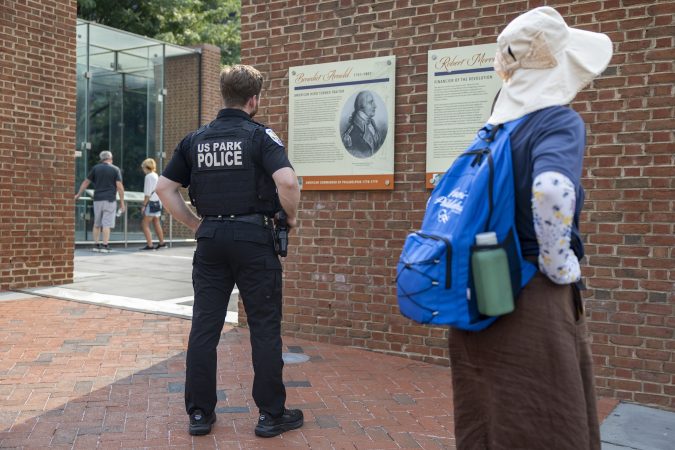
    In June, police encountered 44-year-old Eugene Horsch with a woman near Independence Mall, carrying drugs, illegal guns, and fake IDs. One of them featured the name of Blair Tonzelli, a woman who has been missing for three years.

    That led local and federal investigators to Horsch’s twin house in Olney, where they unearthed an array of disturbing evidence, including vats of chemicals, notes describing serial killings, and Tonzelli’s bank cards. Tonzelli’s case also resurfaced questions about Amy McHale, who was last heard from at the Olney house in 2016 and is the ex-wife of Eugene Horsch’s deceased father, Raymond “R.C.” Horsch.

    Eugene Horsch remains in jail on illegal gun and drug charges, as well as one count related to carrying fake federal law enforcement credentials. No bodies have been found, and police have not charged him with any crimes related to the women.

    Despite the disturbing evidence found in the Olney home, the investigation is clouded by the unusual lives and predilections of Eugene Horsch and his father, who was an erotic filmmaker and photographer obsessed with depicting sexualized violence against women in addiction — many of whom he lured to his home studio with drugs.

    To unravel the backstory behind the case, The Inquirer interviewed more than 30 people familiar with the Horsch family, reviewing hundreds of pages of police documents, court records, newspaper clippings, and archived interviews. The result is a portrait of a thrill-seeking criminal artist and his son as they navigated seaside New Zealand, rural Bucks County, and the drug markets of Kensington.

    Here are five takeaways from our weeks of reporting:

    Raymond ‘R.C.’ Horsch’s directorial debut was a violent pornographic film financed by a Philly mob associate.

    Raymond Horsch was a bookish engineer from Bucks County who underwent a sexual awakening during the so-called Golden Age of Porn in the 1970s. His 1973 film, The Erotic Memoirs of a Male Chauvinist Pig, was financed by Philly mob associate Sam “The Barber” LaRussa, a nightclub owner and friend of Nicodemo “Little Nicky” Scarfo, who went on to run the Philadelphia-area Mafia.

    The low-budget movie depicts rape, bondage, underage sex, and the titular character’s violent relationship with a drug-addicted woman.

    These hypersexualized themes would become a constant fixation of Raymond Horsch’s later life and artistic works.

    Raymond and Eugene Horsch have long criminal histories.

    In the late 1970s, Raymond Horsch was busted for printing counterfeit money, and then a few years later for running a methamphetamine lab. He skipped bail after the second arrest and absconded to coastal New Zealand after stealing the identity of a real-life chemist.

    He married a longtime girlfriend, who gave birth to his son, Eugene, while Raymond Horsch was an international fugitive. Raymond Horsch worked in the port city of Timaru at a chemical plant thanks to his adopted alias and a forged Stanford diploma.

    He was ultimately caught in New Zealand with five fake passports and fled back to the U.S. He was apprehended in Florida and returned to Philadelphia, where he was sentenced to federal prison.

    Raymond Horsch recruited dozens of women in addiction by trading drugs if they agreed to appear in his pornographic art.

    Between stints as a porn actor and director, Raymond Horsch searched the streets of Kensington for women in addiction to use, in his description, as models. He asked one of his son’s high school friends to star in one of his films. He recruited another woman with a classified ad for a housekeeper. He offered them cash and drugs in exchange for sexual favors and to appear in films or photographs, which often featured simulated acts of violence or death.

    After he was arrested in the 2000s on another drug charge, he lost his home in Chalfont. Both father and son moved into the home in Olney, which they had inherited from relatives, and Raymond Horsch allowed some of the women he recruited to reside in the home, sometimes for years.

    At least five women connected to Raymond Horsch died of accidental drug overdoses.

    Krista Killen lived off and on in the Horsches’ Olney house from 2016 until her death last year at the age of 47. Killen, who had been estranged from her family, told friends that Raymond Horsch was never violent toward her and that she cared deeply for him.

    But she told friends that she was scared of Eugene Horsch. She told two friends that one night, she was asleep when Eugene shattered her bedroom door and threatened to kill her. Raymond, then 80, had to pull his son away.

    In late 2024, within a span of a few months, doctors had to amputate part of Killen’s leg, her beloved tabby BabyCat died of a brain tumor, and Raymond Horsch died of a lung condition, leaving her alone in the Olney home with Eugene. Three months after Raymond’s death, Killen died of an overdose. Eugene Horsch shared the news on Killen’s own Facebook page. He wrote that he and Killen were in love and had planned to get married, something her friends said was not true.

    Raymond Horsch said his art blended facts with his violent fantasies, and he wanted people to wonder what was true.

    Investigators are reviewing Raymond Horsch’s films and self-published novels, some of which depict various ways to murder women. He casts himself in some of the stories as an “empathetic” serial killer who preys on addicted women and kills them to end their suffering. The books are billed as true stories that include both real details from Horsch’s improbable life story and passages that he concedes are fictitious — noting that he wanted readers to parse fantasy from reality.

    In a scene from one of his novels, Raymond Horsch describes how he dissolved a body with chemicals in a bathtub. Is it just another of his violent fantasies? Complicating that question is the fact that a woman told investigators that Eugene Horsch told her he knew how to dissolve a body with chemicals, making it small enough to flush down a toilet.

    Read the full story here.

  • Hanwha vs. Holt: How New Jersey lost a shipyard

    Hanwha vs. Holt: How New Jersey lost a shipyard

    Hanwha Philly Shipyard says it needs a lot more space outside its 110-acre South Philadelphia complex to win lucrative U.S. Navy contracts, turn the money-losing facility profitable, and hire up to 1,000 union welders and metalworkers.

    The Korean-owned yard’s leaders thought they had found just the place, four miles by barge down the Delaware River at the New Jersey-funded Paulsboro facility, vacated by the offshore wind industry when President Donald Trump killed that program. In December, Hanwha agreed to take over the lease.

    But port operator Holt Logistics refused approval and sued to block the deal. After months of lobbying, Hanwha has given up and is now collecting offers from southern states that hope Hanwha will invest a big chunk of the $5 billion it has pledged for U.S. shipbuilding into their yards and future workers.

    Philadelphia Shipyard as seen from southbound I-95 in 2024.Alejandro A. Alvarez / Staff Photographer

    This despite the fact Hanwha’s proposal enjoyed support from federal, state, and local officials and even made it into the U.S. military budget for fiscal year 2026, which called for $110 million “to support shipbuilding industrial capacity” and steel fabrication in a manufacturing facility “formerly used for offshore wind manufacturing.”

    Paulsboro Mayor John Giovannitti estimates that on a given day, there are fewer than 50 workers at the port.

    Leo Holt, whose century-old company runs ports in Gloucester City and South Philadelphia, said he’s not completely averse to manufacturing around the Paulsboro terminal after his family’s plans to beef up container and bulk shipping there accelerate.

    Hanwha declined to comment, confirming only that the shipyard is still looking for space “in the U.S.”

    A rendering of a 600-acre shipyard that the Port of Tampa Bay has offered to build for Hanwha. Port Tampa Bay

    What went wrong?

    Since the early 2010s, New Jersey borrowed and spent more than $500 million building a Paulsboro wharf, highway ramps, and other facilities to attract big employers to the port. It replaced lost oil industry jobs and also compensated for nearby Camden’s loss of piers due to Holtec Inc.’s redevelopment in that city’s aging port district.

    In borrowing documents and news releases, the public spending was justified by predictions that the port would draw hundreds, even thousands, of port and industrial jobs, which in more than a decade have yet to arrive.

    Paulsboro sublets the facility to Holt as the port operator. Holt paid $1.6 million to use the property last year.

    At the urging of then-Gov. Phil Murphy, then-State Senate President and iron workers union leader Steve Sweeney, then-Paulsboro Mayor John Burzichelli, and other officials, Holt in 2020 agreed to let EEW, a global pipemaker based in Germany, build supports up to 400 feet long and 40 feet across for the federally subsidized offshore wind-electric generation facilities that its Danish partner Orsted planned to locate off the New Jersey coast.

    Orsted canceled in 2023, citing rising costs. Trying to cut his company’s losses, EEW executive vice president Esben Strandgaard began looking for new tenants, attracting more than 200 inquiries and initiating talks with Hanwha.

    Hanwha needed the landlord’s permission to take over the lease. Hanwha Defense USA president Tom Anderson, a retired Navy rear admiral, and the Holts met last fall to discuss the proposal.

    Instead of approving, the Holts sued, challenging EEW’s authority to pick a replacement and demanding control of the facility.

    Hanwha, aided by its political supporters, tried to make a deal, but Holt stood firm. In March, Hanwha canceled the agreement.

    What the Holts want

    “The north star for redevelopment at Paulsboro has been marine terminal operations,” said Leo Holt, president of the Gloucester City-based company. “We stretched to assist the state in any way we could,” but “Hanwha was never a part of the plan, nor was shipbuilding.”

    Holt spoke of the failed industrial proposals — wind, shipbuilding, and others to build power plant equipment on site — as an obstacle, not a goal.

    “The detour imposed on New Jersey is over, and the road is clear to the Paulsboro Marine Terminal,” he said. “We were glad to see that the page was turned on the detour.”

    Holt Logistics, which has been expanding containerized cargo facilities on both sides of the river, has shipped containers to Paulsboro and hopes to augment Paulsboro’s current port tenants, Holt said.

    Those include Novolipetsk Steel (NLMK), owned by Russian billionaire Vladimir Lisin, which due to Ukraine war sanctions stopped importing Russian steel through the port for its plant in Farrell, Pa., and has switched to steel from Latin America, East Asia, and other countries, according to Holt.

    The port also ships containers to the U.S. Navy base in Rota, Spain, and to ports in Cyprus, Israel, and other Mediterranean countries.

    More than a container port

    New Jersey has spent more than half a billion dollars improving the Paulsboro site with a wharf, highway connections to I-295, and other public works, the mayor said.

    “I’m not aware of Paulsboro people, Gloucester County people, working there right now,” said Burzichelli, now a state senator and a supporter of both the wind and the Hanwha projects.

    New Jersey invested in the BP site to make it more than a container port, Burzichelli says.

    “That [state-built] wharf was designed to handle any industry, and the public investment was designed to create the maximum amount of high-paying jobs that can be created,” he said.

    The port section “was always intended to be a bulk port,” requiring plenty of longshoremen’s labor, and “certainly not a container port,” which “take up a lot of space but don’t generate big jobs,” Burzichelli said.

    “They don’t pay taxes the way an [industrial] building will pay,” he added.

    The Holts’ “choices and the interest of the state of New Jersey, the interests of Gloucester County, and the interests of the borough of Paulsboro, are not aligned, at this point,” Burzichelli said. “I hope we can get them aligned.”

    Mayor Giovannitti said, “We thought we had a deal last year with Hanwha” but are left with “a $750,000 hole in our budget” — the annual payment, in lieu of taxes, that EEW and its partners paid the borough while it was operating. The town’s annual budget is $13 million.

    Instructors and graduates of the union-backed preapprenticeship program Global Skills Union Pathways Project at Philly Hanwha Shipyard in February.GSUPP

    What Paulsboro could offer

    Strandgaard says he’s not surprised Hanwha decided not to “waste any more of their time” on Paulsboro: “They could not see themselves working with a hostile landlord.”

    It’s an ideal site for shipbuilding or any other industry that needs a deep water port, he said. But “Holt Logistics really controls what comes in and out. This was very upsetting, for us and Hanwha, that Hanwha with the support of the Navy did not have enough leverage.”

    Other East Coast sites would take a year or more to prepare. “The beauty of Paulsboro is they could start the day after” concluding a deal, Strandgaard said.

    He said he was surprised the new administration of New Jersey Gov. Mikie Sherrill didn’t make landing Hanwha a priority.

    Sherrill was “disappointed that EEW could not reach an agreement with Hanwha or other parties despite the state’s efforts to facilitate discussions and bring stakeholders together,” spokesperson Maggie Garbarino said in a statement.

    Holt’s goal: A modern marine terminal

    On any given day, between 500 and 900 Holt employees are moving cargo at the company’s South Jersey operations, Holt said. He declined to estimate how many of those were in Paulsboro.

    According to tax records, the port handled about 250,000 tons of cargo last year. That’s less than one-tenth of all South Jersey Port Corp. cargoes.

    Holt called the state “vital partners in the renovation of the facility. We are working to have both marine operations and manufacturing operations. But we cannot be deterred from taking it where we promised: to be an active modern marine terminal.”

    He said he expects the Sherrill administration will prove to be more congenial to the Holts’ vision for the property — “manufacturing, distribution, or anything” that makes sense to his family.

    South Jersey officials say they haven’t given up. “The people of Paulsboro were told this was about jobs, jobs, jobs, and those would be manufacturing jobs. Not stacking containers four high with automated forklifts,” Giovannitti said.

    Burzichelli still hopes Hanwha and Holt can be brought to the same page. “Many of us still don’t think we are done with manufacturing,” he said.

  • What happens when a village goes up for sale? St. Peter’s is ripe for more housing, but poses challenges.

    What happens when a village goes up for sale? St. Peter’s is ripe for more housing, but poses challenges.

    Doug Reeser first came to St. Peter’s Village as a youngster, running along the rocks at French Creek, like so many locals and tourists still do. As an adult, the charm of the quirky little village drew him and his partners to open a branch of their cidery business there three years ago.

    He’s one of many wondering what could change when the village goes up for auction in September, with more than a hundred home lots and a smattering of businesses available to the highest bidder.

    “There’s lots of positive energy around what’s happening, so I think generally everybody would love to be able to see that continue,” said Reeser, owner of Excursion Ciders at the Snug. “I know personally we’d love to stay there. We anticipate some changes with new ownership. We hope that we can absorb them, but obviously, it’s not unlimited change that we can handle.”

    The auction, scheduled for Sept. 30 at 2 p.m. at the Desmond Hotel Malvern, will put up for sale roughly 83 acres of the historic 19th-century village that sprung up in the Gilded Age, thanks to its rich mineral resources and its proximity to the creek. It became a recreational destination, one that people are still drawn to because of its scenic location. Visitors are able to take a dip, hike the nearby trails, and enjoy the artsy downtown.

    Nestled in Warwick Township — which has a population of roughly 2,600, according to newly released estimates from the U.S. Census Bureau — the small village could see a bump in residences, if initial development visions are seen through. The land, zoned for residential and neighborhood business, offers 121 subdivided home lots for development. A commercial core — which boasts dining and retail — is composed of both privately owned businesses and leased storefronts that will be picked up by the new owner. Thirteen commercial buildings, totaling about 43,500 square feet, are included in the auction, according to the site.

    The auction site teases mixed-land use development potential “suitable for major builders, venture capitalists, historic preservationists, and entrepreneurs.” The auctioneer, Douglas Clemens, said previously they had seen thousands of messages of interest — but who ultimately purchases the property remains to be seen.

    And concepts of high- and low-density housing from the previous owner — the Piazza family, which runs the Piazza Management Co. and owns multiple Main Line car dealerships, is listed on associated parcels — haven’t exactly come to fruition, and the site could be a challenge for new owners given its rural location.

    Reeser is among the renters who would love to see current businesses stay, and some rehabilitation of the historic buildings that have suffered some neglect in recent years, he said. He doesn’t think anyone would be opposed to more foot traffic in town, but too much could tip the scales.

    “There is this rural charm there, and that is part of what the village has built its reputation on over the years,” he said. “So, if development could be done with an eye towards preservation and minimal impact, I think that would be great.”

    The 83-acre St. Peter’s Village — a historic destination in Chester County will be sold at an absolute public auction to the highest bidder in September. Steven M. Falk / For The Inquirer

    What could residential development look like?

    The property offers an opportunity for someone to develop housing to the north and east on the available land, said Matt Edmond, executive director of the Chester County Planning Commission.

    Land development plans available through the auction site previously have laid a densely populated housing development near the commercial core on roughly 36 acres. Generally, that’s a good thing, Edmond said.

    “Our villages are kind of like small towns, and when they have a walkable commercial core, you want more dense housing in and around there to support those businesses to increase foot traffic,” he said of Chester County.

    An aerial view of one proposed development — which the current owner envisioned as a densely populated townhouse, twin, and single-family neighborhood — shows several completed homes.

    Eight buildings are unfinished, Clemens said. One finished building is occupied, and the lease would move over to the new owner.

    Farther back, on roughly 45 acres, a sketch plan posted on the auction site offers larger lots for lower-density housing. A unpaved road was established ahead of building.

    In the county’s comprehensive plan, there are areas called “rural centers,” built around larger villages, Edmond said. There are similarities among those places: a commercial corridor on a main road, with streets fanning out for walkable neighborhoods. St. Peter’s could become a rural center, if the previous vision was fulfilled. The growth would be somewhat akin to Marshallton or Unionville, other Chester County villages that people enjoy visiting.

    St. Peter’s scenic, rural location offers a bit of a unique problem. Though the village isn’t far from Elverson or Pottstown, it’s still a bit out of the way. Reeser, the business owner, has found the village to be seasonal, with business bolstered by an occasional social media post. In the winter, the cidery, open on Saturdays and Sundays, is frequented by locals.

    The 83-acre Saint Peter’s Village, a historic destination in Chester County, will be sold at an absolute public auction to the highest bidder in September.Steven M. Falk / For The Inquirer

    “The whole village, by and large, is somewhat off the beaten path. It’s not really near a highway. It’s certainly not near transit. There isn’t a whole lot around it,” Edmond said. “That’s probably one reason why the current owners couldn’t quite make it work, because the market just wasn’t quite there yet to do that sort of thing in that sort of place.”

    But just because the village has had challenges with finding footing for residential development, that doesn’t mean it’s ripe for other types of development — such as a data center, other industrial sites, or even a major shopping center.

    The village is listed on the National Register of Historic Places, which doesn’t necessarily safeguard it from demolition. But it provides some protections, particularly if government funds are being used.

    Plus, its current zoning would have to be changed, and the infrastructure and conservation easements don’t “lend itself towards intense development,” Edmond added.

    “I think a lot of people are worried about that because they do see other parts of the county developing more intensely,” he said. “Every community is different, and Warwick Township is still very rural, and so it wouldn’t be surprising if a new owner tried to develop consistent with the character and the nature of Warwick, and certainly Warwick leaders would be looking for that type of development within their boundaries as well.”

    The 83-acre St. Peter’s Village, July 2026. Steven M. Falk / For The Inquirer

    Rich in natural resources

    The auction site notes the property’s “valuable subterranean mineral rights, including documented iron ore deposits, adding a rare investment dimension.” Those materials once bolstered the village’s economy, transporting its iron to Philadelphia. But it also became a place of leisure: a getaway for city workers, a majestic retreat to a scenic place.

    The village is surrounded by outdoor recreation, with state game lands adjacent to the property. French & Pickering Creeks Conservation Trust holds easements on a portion of the land. The easements are perpetual, and must be honored.

    Karl Russek, conservation director at French & Pickering Creeks Conservation Trust, anticipates the organization will be in conversation with the prospective bidders, working closely with future owners “to help them understand those limitations, and [we] are open to seeing what they have to offer and how the conservation value of the property might be improved.”

    But “much remains to be seen” for what could come to the land, he said.

    “St. Peter’s Village, and the area around it, is a very special place and has been a very special place for generations of families in this area. I took my kids down there when they were little. My peers remember spending time there when they were younger,” Russek said. “It’s a community hub in many ways, and so obviously many folks in the area are very invested in what ultimately happens, as are we as an organization.”

    Reeser hopes to see a purchaser who understands all of what makes it beloved — its natural beauty, its historic buildings, and its unique setting.

    “Change is inevitable, most likely, in this situation,” he said. “But if we could keep sort of what’s made it special alive, I think that would be great.”

    This suburban content is produced with support from the Leslie Miller and Richard Worley Foundation and The Lenfest Institute for Journalism. Editorial content is created independently of the project donors. Gifts to support The Inquirer’s high-impact journalism can be made at inquirer.com/donate. A list of Lenfest Institute donors can be found at lenfestinstitute.org/supporters.

  • Man killed in West Philly shooting

    Man killed in West Philly shooting

    A man was shot and killed late Monday afternoon in West Philadelphia, police said.

    Just before 5:20 p.m., police responded to a report of a shooting near the intersection of North 54th and Arlington Streets.

    The man, who was not identified, was taken by police to Lankenau Medical Center. He was pronounced dead at 5:36 p.m.

    Police reported no arrests.

  • Philly asks Third Circuit for new President’s House hearing, saying ruling set a dangerous precedent

    Philly asks Third Circuit for new President’s House hearing, saying ruling set a dangerous precedent

    Philadelphia is asking a federal appeals court for a redo on the President’s House, saying the court’s June ruling that allowed President Donald Trump’s administration to swap the exhibit at the historic site limited the ability of judges to restrain the executive branch.

    The city is seeking a new hearing in front of the entire U.S. Court of Appeals for the Third Circuit, or the same three judges who issued a unanimous ruling in June that held the city has no rights over the displays at George Washington‘s Philadelphia home.

    The ruling created a catch-22, the city’s attorneys said in Monday’s court filing, not only for the President’s House Site but also for the ability of federal courts in the Philadelphia area to review government actions broadly.

    The Third Circuit found that the abrupt removal of the slavery exhibit from the President’s House could not be challenged under the statute that governs final actions by federal government agencies. The removal, the appeals court said, was not an “agency action” or “final.”

    “Both holdings are wrong, and both are of exceptional importance,” the city’s filing said.

    Thomas M. Hardiman, the judge who wrote the June opinion, said the removal was not a “final” action because the government afterward proposed new panels for the site.

    The city contends that the court supplied a road map for federal agencies to evade challenges in court. Under this precedent, the federal government can evade courts’ review by “announcing — even mid-litigation — that it might do something else later,” the city said.

    The judges opened the door for a federal agency to defeat a lawsuit over its conduct simply “by pointing to what it might do next,” according to Philadelphia’s filing.

    It is rare for circuit courts to hold rehearings in front of the original or the full courts, which is known as en banc, said Adam Crews, a professor at Rutgers School of Law.

    “The court will not grant rehearing en banc when the panel correctly states the law and the contested issue is simply the application of the law to specific fact,” Crews said.

    Even if the entire court agrees to hear the case, the city might not find a sympathetic audience.

    A majority of the court’s 14 members have been appointed by Republicans, and six were named by Trump.

    The panel that issued the June ruling consisted of Hardiman, a George W. Bush appointee; Luis F. Restrepo, a Barack Obama appointee; and Peter J. Phipps, who was appointed by Trump.

    The city filed the request for reconsideration hours before the deadline to appeal the June order, and at a time when Mayor Cherelle L. Parker’s law department is in transition.

    City Solicitor Renee Garcia, who resigned last week, argued the case on behalf of the city at a January district court hearing. U.S. District Judge Cynthia M. Rufe issued a blistering opinion and an injunction ordering the restoration of the exhibits, which was later overturned by the Third Circuit.

    Parker appointed Monique Galloway, who worked for the U.S. Attorney Office in Philadelphia, as the city’s next solicitor.

    Monday’s filing still carried Garcia’s name, who remains in the role until early September.

    The Trump administration swapped the President’s House exhibit under the shadow of darkness last month, in the early morning hours after the MLB All-Star Game. The new panels have been criticized for their lack of focus on the experience of the nine people held in bondage by Washington in his executive mansion and for whitewashing the first president’s culpability in slavery.

    The Department of the Interior last month spent $181,430 on new mobile surveillance trailers for the site, citing “safety concerns” following the installation of the new exhibit.

    The National Park Service and Department of the Interior did not immediately respond to a request for comment.

    Advocates for the original exhibit, including Avenging the Ancestors Coalition and city leaders, vowed to keep fighting to restore the removed panels to the site. Michael Coard, leader of Avenging the Ancestors Coalition, said last month the group was exploring new legal strategies.

    “This site, Sixth and Market Streets, is the only site where George Washington lived on federal property — that federal property was known as America’s first White House — and Black people were enslaved,” Coard said from the President’s House on the day the exhibit was swapped. “There’s only one place where that happened. Right here.”

  • The death of an immigrant held at Delaney Hall brings fresh focus to the ICE facility in Newark

    The death of an immigrant held at Delaney Hall brings fresh focus to the ICE facility in Newark

    A 41-year-old man from El Salvador who was detained at the Delaney Hall ICE facility has died, the U.S. Immigrations and Customs Enforcement confirmed Monday evening hours after his family and a member of Congress spoke out about the incident.

    Delaney Hall, a privately operated detention center under contract with ICE, has been the site of turmoil during President Donald Trump’s immigration crackdown. It’s been the target of complaints almost since it reopened in 2025. Elected officials have clashed with the federal government over accessing the facility, and altercations between law enforcement and protesters outside the facility went viral earlier this summer.

    On Monday, immigrant rights group Cosecha New Jersey shared a video identifying the person who died as Edwin Jeovanny López Cornejo.

    María Cornejo, who identified herself as his mother, said in Spanish in the video that the hospital called her to inform her of her son’s death, and that his heart was not beating when he arrived.

    “There is this pain that has struck me now — it’s not just me who’s been struck by it, yet there are many people in this country who are growing tired of this pain,” his mother said in Spanish.

    “If they don’t ensure that justice is served, well, they’re going to keep doing this forever, and we don’t know how many more people we’ll have to lose in this country,” she added. “Hardworking people. People who aren’t involved in other things, but who devote themselves to their work.”

    Shortly after that video streamed on Facebook, U.S. Rep. Rob Menendez, a North Jersey Democrat, said in a video on X that he was showing up for an unannounced oversight visit to Delaney Hall. A few hours later, he said ICE confirmed López Cornejo’s death.

    “We asked certain medical questions which ICE couldn’t give us answers to,” he said. “We have to request it or his family has to request it, which we will.”

    Later on Monday, ICE said in a statement that López Cornejo experienced a medical emergency while in custody and was pronounced dead at University Hospital in Newark after medical staff “responded immediately” and called emergency services.

    The agency said the cause of his death is pending further medical review on Monday evening, but Sen. Andy Kim attributed it to a heart attack and cardiac arrest in a video he posted on X later that night.

    Kim, whose office said it was notified of the death Monday morning, noted that López Cornejo already had a habeus corpus case open arguing for his release due to his medical issues.

    “I’m not going to jump to conclusions, but we have to get answers to what happened to Edwin to understand all of what transpired,” the South Jersey Democrat said.

    Cornejo said her son took medicine for blood pressure, diabetes, and seizures. She said that while she does not know for sure whether he had access to his medicine, she believes ICE neglected to provide it to him, leading to his death.

    She said she last spoke on the phone with her son on Friday — the day before his death — when he said that he felt ill and part of his face and hand had fallen asleep. He told her he was taken to the doctor that day and they were going to run some labs, but he didn’t say when.

    ICE said López Cornejo “received proper medical care and was seen by medical professionals.”

    Menendez said he learned that López Cornejo “complained of difficulties that he was having” on Saturday and collapsed at Delaney Hall, where CPR was performed before he was taken to the hospital.

    Cornejo said her son had been in the U.S. for 20 years and was a hard worker. She said he had a 12-year-old daughter who had not been able to see him since he entered the facility six weeks ago. He previously told her on the phone that his hands turned purple from the handcuffs he was arrested in.

    Danilo López, who identified himself as López Cornejo’s brother, said in the video he doesn’t know why his sibling was detained because he had a valid work permit.

    “I wouldn’t wish the pain we’re going through right now on anyone, and I don’t want this to keep happening,” he said. “Because it hurts so much — it leaves a void, it leaves a daughter orphaned, and above all, it leaves an irreparable void in the family. And that’s why I’m asking for justice for my brother.”

    According to ICE, López Cornejo was arrested by U.S. Border Patrol “for illegally entering the United States without inspection” in August 2006 and he was sent back to El Salvador that October.

    He later returned to the United States at an “unknown date” before he was arrested in Plainfield in Union County in June, according to ICE.

    Sebastiana Cornejo, who identified herself as López Cornejo’s aunt, said in the video that he was arrested on his way to work.

    She blamed her nephew’s death on ICE detaining him and called for the Trump administration to stop its mass deportations, and “that they stop separating families, leaving children orphaned with no one to care for them.”

    “Why are they detaining so many working people?” she said. “We immigrants don’t harm anyone; we come to work, not to harm anyone.”

    Democratic Gov. Mikie Sherrill said her administration is working with the state’s congressional delegation “to gather all the facts surrounding his death,” but noted that the state health department continues to struggle to access the whole facility for an inspection, which is at the heart of one of New Jersey’s court battles with Trump.

    “Every effort to block oversight raises serious questions about what is happening inside Delaney Hall and what those operating the facility are trying to hide,” she said. “This tragedy is another painful reminder of why Delaney Hall should be closed.”

    Sen. Andy Kim (D., N.J.) stands between federal agents and demonstrators in an attempt to prevent a clash outside the Delaney Hall migrant detention center in Newark, N.J., on May 25.DAKOTA SANTIAGO

    Turmoil at Delaney Hall

    Detentions have surged across the nation, from about 38,000 when Trump took office to more than 70,000 in January and standing at about 66,000 as of July. Delaney Hall, a gray, two-story building in an industrial area of Newark, has been a key part of that infrastructure.

    It has also been the site of protests, complaints, and political fights between the Trump administration and New Jersey Democrats since its doors opened in May 2025.

    Last year, Newark Mayor Ras Baraka was arrested outside the facility before his charges were dropped. U.S. Rep. LaMonica McIver, a North Jersey Democrat, still faces federal charges over an altercation outside the facility on the same day.

    And over Memorial Day weekend, reports of a detainee hunger strike exploded into violence between demonstrators and ICE officers and later between protesters and New Jersey State Police.

    Kim was pepper-sprayed outside the facility as he tried to quell tensions between ICE and demonstrators, and Sherrill faced pushback from her own supporters for unleashing state police.

    Federal officials insisted there was no hunger strike and said detainees there and elsewhere in the system were being held in safe and humane conditions.

    Delaney Hall is important to ICE officials who move detainees across the country and the world, because it offers easy access to major highways and to airports in the New York metro area. It also offers the Trump administration a stage for highly publicized battles against “sanctuary politicians” it believes should thank ICE for removing murderers, rapists, pedophiles, and drug traffickers off the streets.

    Research by Syracuse University professor Austin Kocher showed that 88.3% of detainees at Delaney have no criminal convictions. On a typical day the facility holds about 850 detainees, though the New Jersey Vindicator reported that about 120 were suddenly bused away during the July 4 weekend.

    Deaths in ICE custody

    At least 22 people have died in ICE custody so far this year, according to DHS data, provoking outrage from immigrant allies who blame poor medical care, unhealthy conditions, and lack of agency training.

    Human Rights Watch, a nonprofit watchdog group, calculated that more than 50 people died in ICE custody in the first 500 days of Trump’s term — the highest rate in more than a decade. It’s more than two and a half times as high as during the first Trump administration, and stands nearly four times that of the Biden administration, Human Rights Watch said.

    ICE says the health of detainees ranks among its highest priorities, and national detention standards require it to provide comprehensive medical, dental, and mental health care from the moment someone arrives at a facility.

    The federal agency says some people who are detained may not have received prior, reliable care for existing conditions. And some people may never before have had comprehensive medical care at all.

    In December, a 41-year-old Haitian national named Jean Wilson Brutus died one day after entering Delaney Hall, succumbing to what ICE said was suspected natural causes following a medical emergency. ICE said agents tried to revive him and EMS performed life-saving measures but he died in the hospital.

    Menendez said on Monday that another individual who had been in custody at Delaney Hall died just weeks ago at University Hospital after a possible seizure.

    Amol Sinha, executive director at the ACLU of New Jersey, said in a statement Monday that López Cornejo’s death is “another devastating result of the rampant inhumane conditions” at detention centers across the country.

    “The Trump administration’s detention and deportation machine continues to terrorize and traumatize communities at an unprecedented level, yet numbers cannot encapsulate the grief and devastation that these abuses cause,” he said.

  • Trump admin asks colleges to agree to reforms. Penn is a member of the group that helped draft them.

    Trump admin asks colleges to agree to reforms. Penn is a member of the group that helped draft them.

    The University of Pennsylvania, Rutgers University, Pennsylvania State University, and Princeton University belong to a national university group whose leaders helped the U.S. Department of Education develop a new list of reforms it would like all colleges to adopt by the end of the year.

    U.S. Secretary of Education Linda McMahon on Monday sent a letter to colleges asking them to agree in public statements on their websites to wide-ranging reforms that include cracking down on protests, hiring more conservative faculty, combating grade inflation, taking steps to ensure there aren’t “covert” attempts to use race-conscious admissions practices, and containing tuition costs, among other changes.

    There is no plan to sanction schools that don’t sign on, but those that do could be in line to get more research funding, according to Bloomberg, the first to report on the letter, citing a White House official.

    The latest effort by President Donald Trump’s administration to reshape higher education at least initially appears to be getting a warmer response than the list of demands made in its controversial compact that was rejected by most universities, including the University of Pennsylvania, last year.

    The reforms were developed with the help of four university presidents from the Association of American Universities, including the group’s board chair and vice chair, according to Bloomberg.

    “We’d much rather be a partner than play the guessing game as we have been,” Douglas Girod, president of the University of Kansas and board chair, told Bloomberg.

    AAU president Barbara Snyder told Bloomberg she planned to call on her member colleges to support the plan.

    Penn is one of 71 research universities nationally and in Canada that belong to the group. The university did not respond to a request for comment on whether it planned to participate.

    Penn last October rejected the White House’s university compact, which would have given the school preferential consideration for federal funding in exchange for agreeing to operational demands. Many groups on campus had spoken out against the compact, and Penn president J. Larry Jameson in a letter to the federal government at that time said he outlined areas where Penn found “existing alignment” with the compact and where the school had “substantive concerns.”

    “For the good of the nation, university leadership must seize this occasion to drive essential reforms — a process some began by adopting positions of institutional neutrality and improving policies related to campus protests,” McMahon wrote in her letter Monday. She called on all colleges to “describe to the American public your commitments to rigorous teaching, pathbreaking research, and national service — commitments that make our universities a bedrock institution of the American republic.”

    She acknowledged that not every college’s response would be the same, but presented schools with a series of questions that they should address. Among them are:

    “How will your institution ensure admissions decisions are based on merit, achievement, and your university’s educational purpose?”

    “How will you guarantee that unruly and violent protesters do not harass students or disrupt classes, research, public lectures, and campus operations?”

    “How will your faculty hiring and evaluation practices support academic vitality and ensure that all relevant perspectives are taken seriously?”

    “What can your school do to contain costs, improve pricing transparency, and ensure that every academic program equips students to repay their loans?”

    “How will your school protect academic programs from foreign influence and safeguard the integrity of the research enterprise?”

    McMahon also warned against allowing academic disciplines to foster political and social goals.

    “When disciplines skew toward one side of the ideological spectrum, the truth-seeking function of the university suffers and public trust declines,” McMahon wrote.

    Penn State said its leadership team had received the letter and is reviewing it.

    Rutgers said it also had received the letter and “welcomes constructive dialogue with federal and state policymakers and remains focused on providing an excellent, accessible education that advances research to serve New Jersey and the nation.”

    Princeton did not immediately respond to a request for comment.

    “We look forward to learning more from the Department of Education about this effort and collaborating to advance shared goals,” Waded Cruzado, president of the Association of Public & Land Grant Universities, said in a statement. Penn State, Rutgers, Temple University, and the University of Delaware are part of that group.

    The other three AAU presidents involved in drafting the new reforms include Andrew Martin at Washington University in St. Louis, Michael M. Crow at Arizona State University, and Ron Daniels at Johns Hopkins University.

    Temple is not a part of AAU, but Temple president John Fry has worked closely with Crow, whose university sponsors the University Innovation Alliance that Temple joined last year. The alliance is a national organization of public universities aimed at finding innovations to improve learning and increase college attendance, retention, and graduation rates ― especially for low-income students ― then scaling those innovations across campuses. It was founded by 11 presidents including Crow.

    Fry at the time described Crow as a mentor and said that he had known him for more than 30 years. They started presidencies simultaneously in 2002, Fry at Franklin and Marshall College in Lancaster, and Crow at Arizona State.

    In a statement, Temple said it was “carefully reviewing” the letter from McMahon.

    “Upon initial review, much of what is outlined in the letter is consistent with core tenets of what we do as a university,” the school said. “Our approach will continue to be guided by our mission and our strategic plan.”

    Martin, of Washington University, told Bloomberg that he planned to respond to the McMahon letter.

    “My expectation is this letter will have some things in it not everybody will agree with, but that universities will consider it,” he told Bloomberg. “Certainly compared to the compact, I think this is a step in the right direction.”

  • 25 states sue over Trump’s new tariffs, calling them ‘pretext’ to replace his old ones

    25 states sue over Trump’s new tariffs, calling them ‘pretext’ to replace his old ones

    WASHINGTON — Twenty-five states sued the Trump administration Monday over its latest tariffs, calling them a pretext for replacing import taxes the Supreme Court struck down in February.

    The United States last month imposed double-digit tariffs on 59 countries and the European Union, charging that they had not done enough to crack down on imports produced by forced labor. The new tariffs took effect just as the clock ran out on temporary tariffs President Donald Trump had turned to after the Supreme Court defeat.

    “After losing at the Supreme Court, the administration is once again trying to illegally raise taxes on families and businesses with a new round of tariffs,” said New York Attorney General Letitia James.

    Joining New York in the lawsuit announced Monday are Arizona, California, Colorado, Connecticut, Delaware, Hawaii, Illinois, Kentucky, Massachusetts, Maryland, Maine, Michigan, Minnesota, Nevada, New Jersey, New Mexico, North Carolina, Oregon, Pennsylvania, Rhode Island, Virginia, Vermont, Washington, and Wisconsin.

    Pennsylvania Gov. Josh Shapiro, who joined the suit in his official capacity, posted about in on X Monday afternoon.

    “Donald Trump is once again trying to impose his disastrous and illegal tariffs. So we’re taking him to court — again. The President’s tariffs have injected unnecessary chaos and confusion into Pennsylvanians’ lives — and have raised prices across the board for our farmers, small businesses, and families,” Shapiro said. “We’ve won in court before to protect Pennsylvanians from the costs of Trump’s disastrous trade war — and the Supreme Court has already ruled his tariffs unlawful — so now we’re going back to court to stop him yet again.”

    Trump, who argues that high tariffs will revive American manufacturing, last year overturned decades of U.S. policy that favored lower tariffs and ever-freer trade. Invoking the 1977 International Emergency Economic Powers Act, or IEEPA, he imposed double-digit tariffs on imports from almost every country, saying America’s longstanding trade deficit amounted to a national emergency.

    But the Supreme Court ruled that IEEPA did not authorize tariffs. The decision forced the administration to send refunds to importers who’d paid the tariffs. Eager to make up the lost revenue, Trump turned to temporary 10% worldwide tariffs. But they expired at midnight July 24.

    Now he’s tapping more durable tariffs under Section 301 of the Trade Act of 1974, which permits the president to impose import taxes and other sanctions against countries found to engage in unfair trade practices. Trump used Section 301 to impose big tariffs on China in his first term, and they survived court challenges.

    The administration this time invoked Section 301 to impose the forced-labor tariffs, which range from 10% to 12.5% and hit countries that provide 99% of American imports.

    “The United States is using its lawful authority to obtain the elimination of unreasonable acts, policies, and practices that burden U.S. commerce,” White House spokesperson Kush Desai said. “A foreign country’s failure to impose and effectively enforce a prohibition on the importation of goods produced with forced labor is unreasonable and burdens U.S. commerce, including American workers, and must be addressed. Section 301 tariffs have proven to be a legally durable tool since the President’s first term, and they remain so now.”

    The states’ lawsuit follows two other lawsuits filed in The Court of International Trade in July by small businesses that also challenged the 301 tariffs.

    Both of those lawsuits argue that the government didn’t adequately establish its case against each specific economy or spell how the tariffs will eliminate the specified practice they are being levied for, as required by Section 301.

  • A new trial is ordered for a man convicted in the slaying of Philly police officer in 2012

    A new trial is ordered for a man convicted in the slaying of Philly police officer in 2012

    A Philadelphia Common Pleas Court judge on Monday ordered a new trial for a man serving a life sentence for the death of a police officer in 2012, reportedly citing the connection of disgraced ex-homicide detective Philip Nordo to the case.

    Court records show that Judge Jennifer Schultz vacated the 2014 murder conviction of Rafael Jones, who was sentenced the following year to life in prison without the possibility of parole for the fatal shooting of Officer Moses Walker during a street robbery after the end of his shift on Aug. 18, 2012.

    KYW Newsradio reported the judge cited the case’s connection to Nordo, who was convicted in 2022 of sexually abusing witnesses and suspects.

    During Nordo’s trial, one of his accusers was an informant in the Walker homicide investigation who said Nordo helped steer a $20,000 reward to the man and then, years later, raped him.

    Multiple cases involving Nordo, including murder convictions, have been overturned in recent years.

    District Attorney Larry Krasner said he would address the order for a new trial at a news conference Tuesday.

    Police Commissioner Kevin Bethel said in a statement: “I am disappointed by today’s decision, particularly for the family of Officer Moses Walker and every member of this Department who continues to carry his loss.”

    Bethel added: “At the same time, we respect the court and the legal process. We remain confident in the evidence surrounding this case and believe that, when the process is complete, the individual responsible for Officer Walker’s murder will continue to be held accountable and will never again walk free.”

    Jones and Chancier McFarland were arrested during the homicide investigation. McFarland pleaded guilty and testified against Jones as part of a deal with prosecutors to avoid life in prison.

    A lawyer for Jones could not be reached for comment. According to court records Monday, Jones was being held at the State Correctional Institution in Chester City.

    Shortly before dawn on Aug. 18, 2012, the 40-year-old Walker left the 22nd District station at 17th Street and Montgomery Avenue in North Philadelphia dressed in civilian clothes — shorts, athletic jacket, and baseball cap — and carrying a backpack and wearing earphones.

    Walker was targeted, McFarland testified, because he looked like a student from nearby Temple University — “an easy mark.”

    McFarland testified that Jones shot Walker when the officer reached for a weapon.

    After Walker collapsed at Woodstock Street and Cecil B. Moore Avenue, McFarland said, he grabbed the officer’s iPod and earphones before taking off.

  • After allegations of a ‘toxic climate’ at Frankford High, the school will have a new principal for the first time in a decade

    After allegations of a ‘toxic climate’ at Frankford High, the school will have a new principal for the first time in a decade

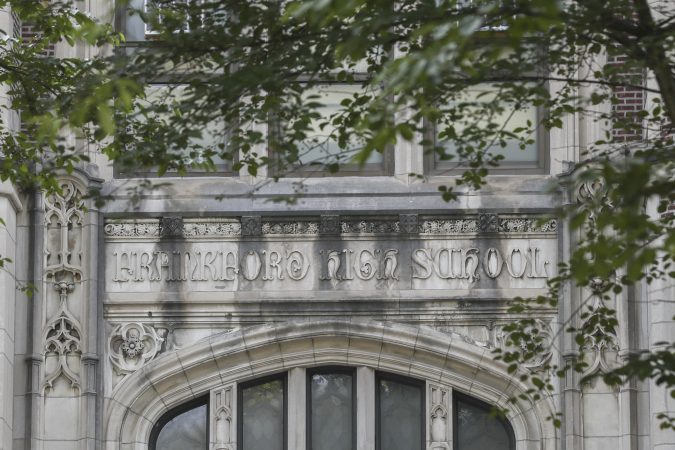
    For the first time in more than a decade, Frankford High is getting a new principal.

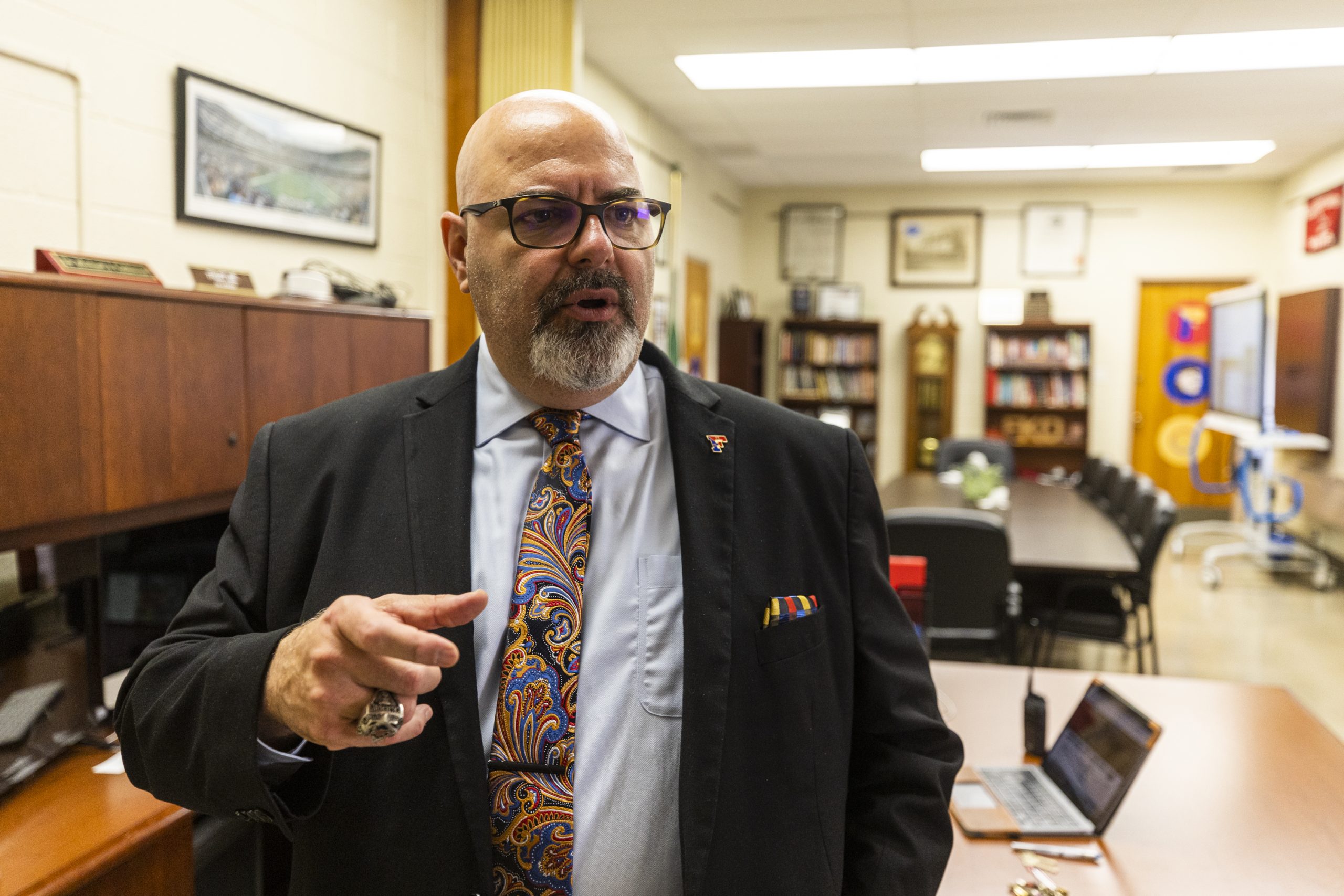
    Michael Calderone, who has served as Frankford’s principal since 2015, told the staff on Friday that he’s leaving to become the interim principal of Dobson Elementary in Manayunk.

    Calderone’s move comes after the district conducted an audit of what some staff said was a “toxic” climate at the school and serious allegations about Calderone, including that he struck a student and retaliated against teachers who spoke out against him.

    District officials did not comment on the results of the climate audit, but typically do not discuss personnel matters.

    Calderone said, in a letter sent to Frankford staff and obtained by The Inquirer, that the move to Dobson “holds tremendous personal and professional significance for me” because he began his career there, as teacher and dean.

    “Returning to lead the school where I first developed my passion for educational leadership feels very much like a homecoming and has always been a dream of mine,” Calderone wrote.

    Noah Tennant, the interim associate superintendent for secondary schools, said in an email to Frankford staff that Calderone “is a school leader with a proven track record of improving student outcomes, leading school transformation, and building collaborative systems. His leadership and contributions to the Frankford High community will leave an indelible impact on all he served.”

    Mary Jackson, a retired Philadelphia principal who’s served as Frankford’s interim leader in the past, will be “guest principal” while the district searches for a replacement for Calderone, Tennant said in the letter.

    “In the coming months, the district will initiate a process to identify the next permanent principal who will continue the important work underway and ensure every student and staff member is supported,” Tennant wrote.

    A Frankford climate audit

    The first public hint of controversy happened in early 2026, when Frankford’s budget, like spending plans across the school system, was shrunk because of district-wide cuts. Calderone ordered a number of teachers’ jobs cut out of seniority order, a move that was protested by the Philadelphia Federation of Teachers, and ultimately overturned.

    The PFT and teachers say the targeted educators — whom Calderone said he moved to advance academic goals — were ones who had spoken out against him, they told The Inquirer.

    At the same time, a number of current and former Frankford staff raised allegations about significant culture issues at the school, and the district conducted the audit.

    Michael Calderone is shown in his office at Frankford High in this 2023 file photo.Tyger Williams / Staff Photographer

    According statements from multiple staffers made to the district and PFT and obtained by The Inquirer, Calderone, who earned citywide recognition for his work at the comprehensive high school, was a volatile leader who forced out many capable staffers.

    Some staff said the principal screamed at adults and students on multiple occasions. They also said he made improper requests, including asking teachers to provide grades for students in classes they did not teach.

    Others said he spoke openly about intentions to get rid of staff members who were not allies, to force out staff who he believed were opposed to him.

    Two staffers also told the district that Calderone punched a student who had assaulted multiple Frankford staffers. The staff did not report the assault when it happened because they were afraid for their jobs, they said.

    Other Frankford staffers agreed that there was widespread discord at the school, but say those who opposed Calderone contributed to the toxicity.

    Arthur Steinberg, PFT president, who had previously said that he did not believe Calderone was fit to run Frankford “or any school at all,” in a statement Monday commended the Frankford staff who brought concerns to the administration.

    “Thanks to their bravery and persistence, Frankford will be a healthier, more positive place to learn and work for all,” Steinberg said. “It is our hope that whoever is assigned to replace Dr. Calderone is able to reset the working environment for staff, so that Frankford is once again the warm, welcoming school community it was before he arrived.”

    ‘Thank you for your trust’

    Calderone, in his letter to Frankford staff, said he was particularly grateful for the community’s resilience during a tough time — the hulking main Frankford building was shut for multiple years because of asbestos issues, with students scattered between multiple buildings. He said he was also proud of Frankford’s aviation and hospitality programs, launched during his tenure at the school.

    “Thank you for your trust, your partnership, and the memories we have shared,” Calderone wrote. “I have every confidence that Frankford High School will continue to thrive and achieve great things. I wish you all the absolute best. Frankford will always be the ‘Home of Champions’. But never forget: every champion was once just a contender who refused to give up. I ask you to carry that relentless, unbroken spirit with you into every new day. Thank you for letting me walk this path alongside you.”

    Calderone will be moving to a very different school than the one he’s led for 11 years.

    Frankford educates about 900 students in its massive Oxford Avenue building. Dobson, a K-8 on Umbria Street, educates about 250, though both have large populations of students with disabilities.

    Dobson’s former principal, Khloe Williams-Lawani, accepted another job in the school system.