Category: News

  • WHYY and Penn State take next step to transfer ownership of WPSU

    WHYY and Penn State take next step to transfer ownership of WPSU

    WHYY is one step closer to taking ownership of Pennsylvania State University’s public radio and television station, WPSU, with a new Federal Communications Commission filing.

    WHYY and Penn State filed an application with the FCC late last week to transfer WPSU-FM and WPSU-TV, among other properties, to WHYY for a sale price of $1, according to commission records. The station said in a statement that it was “pleased to have reached an agreement with Pennsylvania State University that marks an important milestone.”

    “We are appreciative of Penn State’s partnership throughout this process, as they have been integral to ensuring uninterrupted service for WPSU’s viewers, listeners and communities,” the station added. “Our shared goal is to preserve and strengthen WPSU’s longstanding mission of providing trusted local journalism, educational programming and community storytelling for the enjoyment and enrichment of generations to come.”

    The FCC needs to approve the deal before it can be completed, the station said. It was not immediately clear how long that process could take, but the review period typically includes a 30-day window during which the public may submit comments.

    The application’s submission marks the latest step in a lengthy process. In October, Penn State trustees unanimously approved a revised proposal to sell WPSU’s operating assets to WHYY, which itself revived a path to keep the station alive following a previous failed deal.

    Under the approved agreement, WHYY is to continue operating WPSU for at least three years following the station’s sale, and give current employees the opportunity to interview for roles under the new leadership. About 44 employees remained at the station following layoffs in June last year, The Inquirer previously reported.

    Previously, WHYY said it was working to raise funds to support WPSU to allow it to continue broadcasting.

    In September, WPSU’s days appeared to be numbered, with Penn State saying it planned to wind down the station’s operations and lay off employees by the end of June. The station’s annual budget was funded largely by the university coupled with federal dollars, the latter of which had been slashed after President Donald Trump’s administration stripped away federal funding for public media, The Inquirer previously reported.

    School trustees in September unanimously voted down a plan for WPSU’s sale to WHYY, largely citing concerns about $17 million in subsidies Penn State would have to provide to WHYY over five years as part of that deal. Under the plan approved in October, the university said last year, WHYY agreed to raise funds itself.

    WPSU began broadcasting more than 70 years ago. When it was faced with a possible closure last year, university leaders said that they received about 1,300 public comments about the station, many of which urged the school to reconsider its decision to wind down operations. WHYY president and CEO Bill Marrazzo later said WPSU would “continue to be here” for listeners.

    “WHYY and WPSU are joining forces to expand what is possible — strengthening local journalism, creating new educational opportunities, and developing innovative ways to deliver the content people value most,” Marrazzo said last year.

  • CDC expands largest known cyclospora outbreak to 15 states

    CDC expands largest known cyclospora outbreak to 15 states

    The Centers for Disease Control and Prevention is expanding the largest known cyclospora outbreak to 15 states, adding six states where illnesses have been traced to shredded iceberg lettuce sourced from central Mexico, according to three individuals familiar with the investigation.

    Missouri, which is reporting 1,095 cases, is one of the states being added, according to a state health department spokesperson. The number of state cases jumped dramatically in the past week. Patients who were interviewed at length by state and local investigators said they consumed Taco Bell before getting sick, spokesperson Lisa Cox said.

    Information was not immediately available about the five other states. The individuals spoke on the condition of anonymity to discuss an ongoing investigation.

    The expansion marks a significant widening of the outbreak. On Monday, Michigan health officials announced that two people have died in the cyclospora outbreak there, the first deaths confirmed in the United States related to the microscopic parasite. Both people had underlying health conditions that may have been affected by the intestinal illness and dehydration.

    On July 24, federal officials had linked illnesses in nine states to the outbreak. The CDC has said epidemiological and trace-back data continues to show that iceberg lettuce from Taylor Farms de Mexico was contaminated with the parasite that has made people sick.

    The newly linked states join Illinois, Indiana, Kansas, Kentucky, Michigan, Ohio, Oklahoma, Pennsylvania, and West Virginia.

    Taylor Farms recalled shredded iceberg lettuce sourced from central Mexico on July 17 after investigators linked the product to illnesses among people who had eaten at Taco Bell. The company said the lettuce was distributed from June 29 through July 16 through food-service channels and retail stores in 27 states.

    Federal investigators so far have publicly linked illnesses to only a portion of the states where the company said the recalled lettuce was distributed. Federal officials are also investigating outbreaks and illness in more than two dozen states that have not been linked to the 15-state outbreak. The sources of other outbreaks have not been identified or tied to Taylor Farms.

    Taylor Farms has declined to provide additional details, including how many pounds of product were covered by the recall and where shredded lettuce was distributed before June 29. A Taylor Farms spokesperson did not immediately respond to a request for comment.

    During foodborne-illness outbreaks, the CDC is charged with trying to identify the food sickening Americans, relying on labor-intensive disease detective work that includes detailed interviews with people about what they ate, where they ate it, and when. The Food and Drug Administration works to determine who produced the contaminated food and works with food companies to stop it from being sold. The FDA also tries to identify how the food may have become contaminated.

    The new cases being reported don’t necessarily mean the risk is still ongoing, experts have said. The true number of sick people in the multistate outbreak is probably higher than the number reported, and the outbreak may not be limited to the states with known illnesses, the CDC has said.

    The incubation period is long, and some people recover without medical care and are not tested for cyclospora. Recent illnesses may not yet be reported because it can take as long as six weeks to determine if a sick person is part of an outbreak.

    “We’re always trying to figure out what is the risk today of going and eating a salad, for example,” said Craig Hedberg, a professor at the University of Minnesota’s division of environmental health sciences.

  • Booker Rowe, celebrated trailblazing Black violinist with the Philadelphia Orchestra, has died at 85

    Booker Rowe, celebrated trailblazing Black violinist with the Philadelphia Orchestra, has died at 85

    Booker Rowe, 85, of Philadelphia, award-winning violinist, the first Black musician to play with the Philadelphia Orchestra and the Nashville Symphony String Quartet, the second permanent full-time Black player in the Philadelphia Orchestra, teacher, mentor, and role model, died Friday, July 31, of complications from pneumonia and sepsis at Jefferson Abington Hospital.

    A lifelong musician — he played piano at age 5 and violin at 11 — Mr. Rowe was invited by famed music director Eugene Ormandy in 1968 to become the first Black musician to perform with the Philadelphia Orchestra. He was a substitute violin during most of the 1968-69 season and returned for good in 1971 as the orchestra’s second Black permanent full-time member.

    Mr. Rowe stayed for 49 years.

    “My first day, I came in late from New York, and the orchestra was already rehearsing, and I sat myself down on the last stand to play,” Mr. Rowe told The Inquirer’s Peter Dobrin in 2020. “The sound was amazing. It was like stereo all around me. The stage was slanted down, and when the brass and winds would play I had to brace myself with my right leg from being blown off stage. It was just so beautiful.”

    For five decades, until his retirement in 2020, Mr. Rowe played with half a dozen elite conductors and traveled the world in the orchestra’s second violin section. He and his colleagues gave thousands of memorable performances at the Academy of Music, the Kimmel Center, and the Mann Center in Philadelphia, Carnegie Hall and the Lincoln Center in New York, and the Saratoga Performing Arts Center in Saratoga Springs, N.Y.

    They played at the 1993 World Series at Veterans Stadium, for Pope Francis in 2015, and at the Vail Music Festival in Colorado. They played in Europe, South America, Asia, and elsewhere around the world.

    This photo of Mr. Rowe (left) appeared in the Daily News in 1993Newspapers.com

    In 1973, the orchestra made a historic 10-day, five-concert cultural exchange tour in China, and Mr. Rowe told the Daily News afterward that he visited a commune and returned with Chinese instruments. In 2008, he mingled with former Secretary of State Alexander Haig and other international notables after a concert in Beijing.

    In 2013, he posed for pictures with the Chinese welcoming contingent at Shanghai Airport. “Booker was such a kind soul, and his passion, his artistry, and his humanity are woven into who we are,” Yannick Nézet-Séguin, the orchestra’s music and artistic director, said in a tribute.

    Ryan Fleur, the orchestra’s president and chief executive officer, said: “He was a warm and steadying presence in our orchestra.”

    Born in Kentucky, Mr. Rowe and his family moved to North Philadelphia when he was 2. His father was a singer, and his mother played piano, and they “pushed me in the direction of classical music,” he told the Daily News in 1981.

    He became concertmaster for the West Philadelphia High School orchestra, the All-City high school orchestra, and the old all-Eastern Conference college orchestra. He earned a bachelor’s degree in music at Temple University in 1963 and a master’s degree in music at Yale University in 1968.

    Before Philadelphia, he played solo in New York and with symphony orchestras in Nashville, New Haven, Conn., and Washington. Later, he played with the old Symphony Club of Philadelphia, the Lansdowne Symphony Orchestra, and other local groups.

    Mr. Rowe (left) stands with fellow musicians Andre Watts (center) and Renard Edwards.Courtesy of the family

    He also got freelance gigs with Sammy Davis Jr., Isaac Hayes, Smokey Robinson, the Supremes, Barbra Streisand, Aretha Franklin, and other stars. He played with chamber music ensembles around the country and gave dozens of free concerts for children, churches, and community and scholarship fundraisers.

    He championed racial and ethnic diversity, and was active with the Philadelphia Orchestra’s cultural diversity initiative. He sought and performed work by Black and other minority composers, and mentored dozens of colleagues and students.

    He encountered at least one racist incident that first year in Philadelphia and told the Daily News in 1981: “The time was right for an Afro-American in the Philadelphia Orchestra. It was just a matter of finding somebody who was ready.”

    Mr. Rowe and his family lived in Center City, East Mount Airy, and Germantown. Courtesy of the family

    A friend said on Facebook: “His legacy and historical contributions are unparalleled.”

    Mr. Rowe taught at Settlement Music School and gave private lessons. He earned music and service awards from City Council, the American Foundation for Negro Affairs, and other groups.

    In 2019, he was asked to advise young musicians in a video interview for the Philadelphia Orchestra website, philorch.ensembleartsphilly.org. “Practice, practice, practice,” he said. “But also enjoy, enjoy, enjoy. Do it with love in your heart.”

    Booker Taliaferro Washington Vance Rowe Jr. was born Dec. 10, 1940, in Lexington, Ky. In Philadelphia, he studied at the old Philadelphia Musical Academy and Settlement Music School, and his father worked at RCA Victor records in Camden. So their home was always filled with music.

    Mr. Rowe (rear center) stands with Philadelphia Orchestra colleagues and members of the Chinese welcoming contingent in 2013.

    Jan Regan / Philadelphia Orchestra

    He met soprano Patsy Baxter at a Philadelphia Orchestra concert, and they married in 1970 and had a son, Landis, and a daughter, Vivian. They lived in Center City, East Mount Airy, and Germantown, and visited his family often back in Kentucky and Tennessee.

    Mr. Rowe enjoyed puzzles, hiking and kayaking with his family, and tai chi. Friends noted his “kindness,” “million-dollar smile,” and “cheerful presence” in Facebook tributes.

    “He liked people,” his wife said. “He liked socializing. He liked to stick with one thing and concentrate on it.”

    His son said: “My father and I always had a good time together, and we never knew when playful sparring would break out.”

    Mr. Rowe and his wife, Patsy, married in 1970.
    Jose F. Moreno / Staff Photographer

    His daughter said: “He was very fiery and lovable. He was always who he was. He was one of a kind.”

    In addition to his wife and children, Mr. Rowe is survived by a daughter-in-law, Maria, two granddaughters, and other relatives.

    A celebration of his life is to be held later.

    Mr. Rowe (rear second from left) enjoyed time with his family.Courtesy of the family
  • Netanyahu says no Israeli withdrawal from Gaza until Hamas has been completely disarmed

    Netanyahu says no Israeli withdrawal from Gaza until Hamas has been completely disarmed

    DEIR AL-BALAH, Gaza City — Israeli Prime Minister Benjamin Netanyahu said Tuesday that Israeli forces will not withdraw from their current lines in Gaza until Hamas has completely disarmed.

    In remarks on social media, Netanyahu suggested there were differences between Israel and the Trump administration over a recent deal announced to disarm the militant group.

    The agreement called for Hamas to begin disarming and for Israel to halt its strikes and begin withdrawing from Gaza. It was part of an October ceasefire agreement that ended major military operations but has stalled on other fronts. Netanyahu instead said disarmament should come first, and that Israeli forces would continue to “do whatever is necessary to protect themselves, our territory, and our citizens.”

    The Trump administration “sent us a draft. We did not agree. It is not our draft. We sent our comments,” Netanyahu said. “This is our position. We stand firm on our interests, I believe both wisely and resolutely.”

    Earlier on Tuesday, Palestinians gathered for a mass funeral of more than 100 bodies finally recovered from a deadly Israeli strike in Gaza in 2023. More than 300 people were killed on Nov. 22, 2023, weeks into the war with Hamas, when warplanes flattened a residential block in Gaza City’s Sabra neighborhood.

    Around 40 bodies were recovered soon afterward in a frantic scramble of rough tools and bare hands, but most were buried deep beneath the rubble. Reports of the high number of victims in one of the war’s deadliest attacks took days to reach the public in the chaos just before its first ceasefire.

    Over the weekend, first responders dug through the destroyed buildings and recovered remains of 112 victims, including 40 children, according to the Civil Defense, a rescue agency operating under the Hamas-run Interior Ministry.

    It said 157 bodies still have not been found.

    “The only crime of these martyrs was that they remained steadfast and resilient in their homes, believing that these homes would protect them,” one relative, Taysir al-Hassayna, told the Associated Press following the funeral prayers.

    For the missing, it’s “as if their bodies had evaporated without a trace.”

    The current ceasefire has allowed recovery of remains

    Only now are some bodies of people killed in the war’s ferocious early months slowly being recovered, as a fragile ceasefire that took effect in October allows such efforts to push ahead in parts of devastated Gaza.

    Those discoveries have contributed to the war’s rising toll. The Hamas-led militant attack on southern Israel on Oct. 7, 2023, killed around 1,200 people and saw 251 taken hostage. Israel’s retaliatory offensive has killed more than 73,377 Palestinians, including since the ceasefire, Gaza’s Health Ministry said.

    At least 7,400 people have been reported by relatives to still be under the rubble, Zaher al-Waheidi, head of the ministry’s records department, told the AP. The true number is likely thousands higher because in some cases entire families were killed in a single bombing, leaving no one to report the missing, al-Waheidi has said.

    The people mourned on Tuesday were from a residential block belonging to the Hassayna and Abu Sharia clan, and many were related. The Associated Press has identified at least 60 families across Gaza who lost 25 or more family members during the first three months of war.

    On Tuesday, the remains of the victims, wrapped in Palestinian flags, were laid in rows on the ground. Many were marked with photos, and flower petals were scattered around all. Hundreds of people surrounded the bodies for funeral prayers, some standing on the rubble.

    Following the prayers, people carried the bodies on stretchers along a narrow street lined by destroyed buildings and buried them in a nearby cemetery.

    Gaza is struggling to rebuild amid ceasefire violations

    The ceasefire halted much of the fighting, but at least 1,252 people have been killed in Gaza since it took effect, according to the territory’s Health Ministry. The ministry, part of the Hamas-led government, maintains detailed casualty records that are seen as generally reliable by U.N. agencies and independent experts. It does not give a breakdown of civilians and militants but says women and children make up most of the dead.

    Israel says its strikes are against militants who endanger its soldiers, took part in the Oct. 7 attack, or carry out other violations. Five Israeli soldiers have been killed since the ceasefire.

    Gaza remains largely shattered. Most of its 2 million Palestinians are displaced, many living in tent camps where poor conditions and overcrowding have led to rodent infestations and outbreaks of infectious diseases such as chickenpox.

    Each side has accused the other of violating the ceasefire, and negotiations on further steps have largely stalled. Hamas has held onto its weapons, despite agreements to disarm, and the Israeli military has refused to withdraw and controls over half the territory.

    The Board of Peace official overseeing Gaza’s postwar transition, Nikolay Mladenov, on Monday met with Netanyahu, in part to discuss a new disarmament deal the U.S.-created board has reached with Hamas.

    Last week, President Donald Trump announced an agreement that calls for Israel to cease its military operations in Gaza and for Hamas and its allies there to halt all militant activity. After the text of the agreement was released, Israel said it had “serious security concerns.”

  • Trump’s arch could harm the integrity of many of Washington’s historical sites, report says

    Trump’s arch could harm the integrity of many of Washington’s historical sites, report says

    WASHINGTON — President Donald Trump’s proposed 250-foot-tall memorial arch could disrupt the historical significance of dozens of sites near its planned location, according to an assessment by the National Park Service.

    Many of Washington’s monuments, buildings, and sites have been carefully planned over the decades to reflect significant moments in the nation’s history and evoke symbolism in being connected by sightline to other sites.

    The proposed towering gilded arch, which last month received initial approval from a key federal commission, would impact the “integrity” of dozens of those historical properties because it would change “character-defining visual and spatial relationships” between them.

    The NPS report, published Monday, said the immediate project area is located within the Memorial Avenue Corridor cultural landscape, “a nationally significant historic designed landscape extending between the Lincoln Memorial in Washington, D.C., and Arlington National Cemetery in Arlington, Virginia.”

    One of the most obvious elements the report cited is that the arch would break alignment between the Lincoln Memorial, Memorial Bridge, and Arlington House that was formerly Confederate Gen. Robert E. Lee’s home.

    “The bridge alignment and associated ceremonial landscape were intended to physically and symbolically unite North and South through a coordinated monumental composition extending across the Potomac River,” the report said.

    The report puts a snag in a project that has sailed through several steps of the approval process in front of planning bodies stocked with Trump appointees and allies.

    The proposed arch is one of several projects the Republican president is pursuing to leave his lasting imprint on Washington. With the potential to change the city’s sightlines, it has already sparked opposition, including through a lawsuit filed by a group of veterans and a historian.

    The arch design, proposed by Trump, has already received early approval from the U.S. Commission of Fine Arts. The commissioners were all appointed by Trump. The National Capital Area Planning Commission approved the site and preliminary plans at its July meeting. The commission is expected to take up the matter again at its September meeting.

    The arch is one of several projects Trump has proposed that are involved in litigation. The plaintiffs, three veterans and a historian, have challenged its construction, saying it requires Congressional approval.

    “Our claim is essentially that none of this has any authorization to be happening in the first place,” said Nicolas Sansone, an attorney with Public Citizen Litigation Group representing the plaintiffs. Authorization of the construction of a monument “in the core of Washington, D.C., on National Park Service land” requires an act of Congress, he said.

    The National Park Service assessment confirms what the plaintiffs have said the construction will do to the symbolic and solemn area, he added.

    “I think it’s very significant that the National Park Service itself understands that this is the effect that it’s going to have,” Sansone said.

    The White House did not immediately respond to a request for comment.

  • DA Larry Krasner to appeal overturned murder conviction in 2012 killing of Philly cop Moses Walker Jr.

    DA Larry Krasner to appeal overturned murder conviction in 2012 killing of Philly cop Moses Walker Jr.

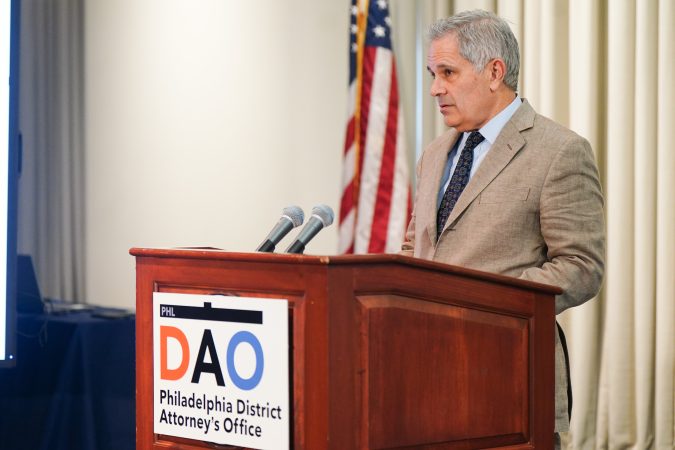
    District Attorney Larry Krasner on Tuesday said he strongly disagreed with a judge’s decision to overturn the murder conviction of a man who killed Philadelphia Police Officer Moses Walker Jr. in 2012 and vowed to appeal.

    Krasner said Common Pleas Court Judge Jennifer Schultz, who handed down the ruling Monday, was “legally incorrect” in vacating the conviction of Rafael Jones, who is serving life in prison for killing the officer during a street robbery at the end of his shift.

    In deciding that Jones deserved a new trial, Schultz cited the case’s connection to disgraced ex-homicide detective Philip Nordo, who was convicted in 2022 of sexually abusing witnesses and suspects for more than a decade.

    But Krasner, speaking at a news conference alongside Walker’s mother and Roosevelt Poplar, president of Lodge 5 of the Fraternal Order of Police, said Jones’ conviction was different from others involving Nordo that have since been reevaluated.

    “We believe now that Rafael Jones is guilty — that he murdered Moses Walker Jr.,” Krasner said.

    If the appellate court denies the district attorney’s appeal, he added, “we will be retrying this case. We have a lot of evidence to do so. And we will be retrying it vigorously.”

    Jones’ attorney, Jason Edward Parris, said Tuesday afternoon that the vacated conviction represented justice.

    If jurors heard Jones’ case today, Parris said, they would have information about Nordo’s sex abuse crimes involving informants in homicide investigations that was not available at the time of Jones’ trial.

    “I don’t think anybody should be comfortable with someone serving life in prison based in part on an investigation done by an officer who is now doing 49 years [in prison] for crimes committed during the investigation of this case,” Parris said.

    Walker, 40, was shot and killed shortly before dawn on Aug. 18, 2012.

    The officer had just left the 22nd District station in North Philadelphia dressed in civilian clothes when Jones and another man, Chancier McFarland, targeted him in a robbery, prosecutors said.

    Jones fired at Walker after the officer reached for his gun, according to prosecutors. Both men were arrested, and McFarland pleaded guilty and testified against Jones as part of a deal to avoid life in prison.

    Years later, during Nordo’s sexual abuse trial in 2022, one of his accusers testified that the detective had steered him toward a $20,000 reward and later raped him.

    Though Krasner acknowledged the “messy history” that came with Nordo’s involvement in Jones’ case, he said the district attorney’s office was confident in the conviction.

    There were multiple pieces of evidence that pointed to Jones’ guilt, he said, including a murder confession that was not introduced at trial because Jones did not testify, and McFarlane’s eyewitness account of the crime.

    “We concluded years ago that this conviction was in the category that should not be disturbed,” Krasner said.

    The district attorney’s office will appeal Schultz’s ruling to Superior Court, a process Krasner said could take up to two years.

    Poplar, the FOP president, said he had faith that Krasner’s office would prevail.

    “Yesterday was a tough day,” he said, echoing comments made by Police Commissioner Kevin Bethel, who said he was disappointed by the ruling.

    Walker’s mother, Wayniya, said she and her family “would not allow these latest developments to weaken us.”

    “We remain confident justice will prevail,” she said, adding that she hoped that the death of her son, not the vacated conviction of his killer, would “remain at the center of this case.”

    “No decision rendered can alter what happened on Aug. 18, 2012,” she said.

  • Trump orders changes to new helipad after weeks of around-the-clock work

    Trump orders changes to new helipad after weeks of around-the-clock work

    President Donald Trump has directed contractors to redo weeks of work on his planned White House helipad, frustrated with its appearance and questioning whether the slope of the White House lawn needs to be changed, according to two people who spoke on the condition of anonymity to discuss his private comments.

    Trump has made the helipad a priority, ordering that work begun in June be completed by a state visit in September, but was dissatisfied with the results, the people said. The White House’s South Lawn, where the helipad is being built, slants downward. Trump has expressed a desire for a landing pad that sits level with the horizon, prompting contractors to disassemble their work and consider whether to start by changing the lawn itself, the people said.

    Photographs obtained by the Washington Post on Tuesday show how contractors have taken apart their work, including a 100-foot-wide granite presidential seal that was beginning to take shape last week.

    Construction crews having been working around the clock on the project, which Trump hopes will wrap up before Chinese President Xi Jinping visits in late September, the Post reported last month.

    It was unclear how much additional cost or time the latest changes would add to the $5 million-plus project, which is being paid for by Lockheed Martin. It owns the company that manufactures the helicopters.

    Lockheed Martin did not immediately respond to a question on Tuesday about whether it had been asked to cover any additional costs. Clark Construction, the firm that is working on the project, referred questions to the White House, which did not comment on the president’s specific changes.

    “For years, the White House has desperately needed a proper Helipad on White House grounds that will allow the President to land safely and also protect the beautiful South Lawn grass from the fierce exhaust fumes of the incredible Marine One,” spokesperson Davis Ingle said in a statement. “Thanks to President Trump, the White House has never looked better, and it will only continue to get better under his leadership.”

    Helipads should be flat for safety but do not need to be perfectly horizontal, to ensure water runoff, according to federal recommendations. The South Lawn, used for decades by helicopters that transport the president, slopes downward about 20 degrees in some places, the White House has previously said. That exceeds the recommended slant for helipads. The area chosen for the new helipad is flatter than other places.

    The helipad will be near the South Portico, the traditional landing site for Marine One, the call sign for whichever helicopter is being used for the president. The project is intended to address a long-running problem: The new generation of Marine One helicopters runs the risk of burning the lawn.

    The VH-92A Patriot, manufactured by Sikorsky Aircraft, has exhaust vents that aim heat down, making grass-scorching likely. Sikorsky, which is owned by Lockheed Martin, spent years working with administration officials to find a solution before Trump approved the planned helipad.

    In the meantime, Trump is using the Ellipse — a park south of the White House — as a temporary landing zone for Marine One.

  • N.J. attorney general sues Amazon over delivery driver network she says is bad for workers

    N.J. attorney general sues Amazon over delivery driver network she says is bad for workers

    New Jersey Attorney General Jennifer Davenport filed the state’s fourth open lawsuit against Amazon on Tuesday, accusing the tech giant of creating worse work conditions for lower pay through its “anticompetitive” delivery driver network.

    “Today, my office is acting to stand up for thousands of New Jersey delivery drivers who are being exploited every day by one of the world’s biggest, richest corporations,” Davenport said at a news conference.

    The suit homes in on Amazon’s Delivery Service Partners (DSPs) program, which the company advertises as an opportunity for prospective entrepreneurs to open their own business while partnering with the tech giant by managing a local system of drivers. But these businesses are beholden to Amazon, Davenport argues, and the tech giant’s system prevents drivers from unionizing or getting better work conditions.

    “These are the workers who bring Amazon packages to our front doors,” she said. “They often show up in Amazon vans, wearing Amazon vests, carrying boxes with the Amazon logo on them. And in our view, they are working longer hours in worse conditions and for less money because of Amazon’s anticompetitive behavior.”

    These drivers earn “significantly less” than drivers for UPS, FedEx, and the U.S. Postal Service, according to the complaint.

    The complaint describes a work environment of employee surveillance, union busting, and drivers having no choice but to urinate in water bottles to meet Amazon’s metrics.

    “They must accept invasive surveillance that monitors their every moment and action while at work and face the possibility of immediate termination for the smallest infraction or failure to meet these unreasonable requirements,” the complaint states.

    Steve Kelly, a spokesperson for Amazon, pushed back strongly on the claims made in the suit and accused Davenport of choosing to hold a news conference rather than seeking a greater understanding of the program.

    “This complaint is not grounded in fact. The Attorney General’s characterization of the DSP Program and the claims about working conditions are just wrong. The truth is, DSPs are independent business owners who make their own decisions about hiring, fleet management, and capacity planning — and they choose whether to work with other companies besides Amazon,” Kelly said in a statement.

    “Had the Attorney General bothered to look at the facts, they would have also seen that the vast majority of routes are finished on-time or early — built on real-world data accounting for stop complexity, traffic, and geography. DSPs manage their drivers’ workday and route execution, and DSP employees are free to choose their employer and associate with who they want, full stop.”

    Kelly said the company was confident that it would prevail in court.

    On its website, Amazon advertises the DSP program as providing “the unique opportunity to create jobs in your neighborhood and lead a team that delivers gifts, textbooks, and pet food to your community.”

    But Davenport’s office argues that the DSPs “are anything but independent.”

    “Rather, Amazon keeps control of the levers that matter — setting demanding operational requirements, monitoring driver performance, controlling route allocations, and restricting DSPs from hiring one another’s drivers — with exploitative consequences for the drivers themselves,“ her office said in a release.

    Davenport also alleges that Amazon monitors DSP workers with artificial intelligence and cameras inside the vehicles they drive, and that the company has intimidated and retaliated against drivers who were suspected of union organizing.

    The complaint cites an incident in Queens, N.Y., in which Amazon allegedly sent drones to blacklist striking workers. It also cites an instance in Edison where workers were allegedly told that labor organizing could endanger DSP’s partnership with Amazon, putting their jobs in jeopardy.

    The suit claims also accuses Amazon of blacklisting workers who support unionization from a broad network of DSPs, and cites workers who were terminated after their bosses learned they supported labor organizing.

    Amazon is the dominant purchaser of this delivery driver labor, and since it is about buying rather than selling, their alleged anticompetitive practice is called a monopsony, rather than a monopoly. Davenport’s office said this is the first time a state has filed a monopsony complaint.

    It adds to a list of court battles with the company.

    In September 2023, former Attorney General Matthew Platkin joined the Federal Trade Commission and other states in suing the tech giant for allegedly maintaining a monopoly. Last October, Platkin filed one complaint over the company’s treatment of pregnant people and workers with disabilities, and another over how Amazon classifies certain workers as independent contractors and therefore denies them rights and benefits.

    Davenport’s lawsuit Tuesday is the first lawsuit against Amazon filed under Democratic Gov. Mikie Sherrill’s administration, but the state’s top lawyer said the three other cases are ongoing.

    The complaint, filed in the U.S. District Court for the District of New Jersey, alleges violation of the federal Sherman Antitrust Act and New Jersey’s Antitrust Act and seeks damages for DSP drivers and for Amazon to stop the alleged behavior.

  • Why is honoring John Galliano at next year’s Met Gala controversial?

    Why is honoring John Galliano at next year’s Met Gala controversial?

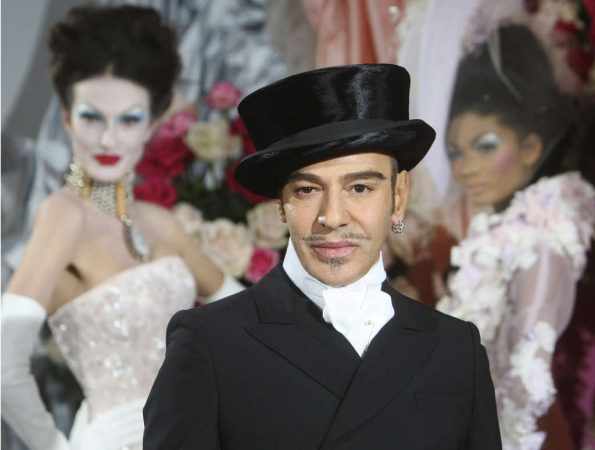
    The next Met Gala is nine months away, but it’s already sparking charged opinions. The controversy centers around the Costume Institute’s decision to honor one designer at its next exhibit: John Galliano, a lauded fashion designer with a checkered past.

    Galliano’s exhibit at the Met will be significant, marking only the third solo show for a living designer in the gala’s history. (The others were Rei Kawakubo in 2017 and Yves Saint Laurent in 1983.)

    But it’s not all pierced leather and newspaper print (just two of the designer’s many signature elements). In 2011, Galliano was infamously canceled after his conviction in a Parisian court over a series of racist and antisemitic comments.

    It cost him his job leading Dior. At the time, Galliano said his alcohol abuse sparked the outburst.

    After “two years of exile‚” the designer’s career bounced back. Now, it will be showcased at length. Still, the Met is working to emphasize that the exhibit would not shy away from the problematic aspects of Galliano’s history.

    “His career isn’t defined by a moment — something that he will live with for the rest of his life. The exhibition won’t shy away from any of the darkness in John’s past,“ Anna Wintour told Vogue. Wintor is the global editorial director of Vogue, chief content officer of Condé Nast, and Met Gala chairperson responsible for the event’s programming. “It’s part of what has shaped him. The show will take in the full arc of his career and grapple with all of it.” Wintour is a longtime champion of Galliano and his work.

    The exhibit’s announcement — and the rehashing of Galliano’s comments — come during a time when antisemitism is surging globally. Fashion expert and professional thrifter Virginia Chamlee says the Met is equipped to accurately cover an influential artist without sanitizing the ugly parts.

    Still, Chamlee noted, the biggest publicity draw for the Met’s annual exhibit is the televised red carpet walks leading up to the gala itself — not the exhibition that follows. She’s concerned that whatever efforts the Met has devoted to accountability could be lost to the larger audience.

    “So there’s a real risk here,” Chamlee said. “Even if the museum intends to offer a complete examination of Galliano’s complicated legacy, it may come off as a straightforward celebration of someone who said things so heinous and racist that they were charged and fired for them.”

    Met Gala attendees often wear looks by or inspired by the artists being honored, meaning Galliano’s pieces will likely be worn on celebrities whose looks will be photographed and televised prominently.

    Fashion influencer and writer Ashley Ballard has collected vintage Galliano Dior-era pieces for years.

    “It’s undeniable that Galliano’s time at Dior had a ripple effect on fashion and greater culture,” she said. The designer’s work redefined haute couture with immersive fashion shows, used historical references in fashion, and often bled into pop culture, with top celebrities wearing his designs.

    “It’s key for us to remember that pioneers from this time period [1996-2011] — particularly Galliano and Alexander McQueen — created pieces that challenged high fashion as an institution,” Ballard said.

    Citing Galliano’s incorporation of subcultures into his art, breaking the traditional molds of luxury fashion, Ballard called the designer’s work art that “bridged the gap between traditional fashion houses and audiences that historically were considered an afterthought.”

    Ballard said the controversy over honoring Galliano was valid.

    “This doesn’t exist in a vacuum, and people have the right to be upset by what was said 15 years ago,” she said. “[But] as a culture, if we genuinely care about minimizing hatred and the effects of addiction, it’s imperative that we support rehabilitation and reconstruction, offering the possibility that change is possible and welcomed — otherwise we become participants in the continuity of harm.”

    Here’s everything else you need to know.

    Who is John Galliano?

    Galliano, 65, is a British designer who has worked for some of the industry’s top fashion houses, including Christian Dior, Givenchy, and Oscar de la Renta.

    At the peak of his career, he served as Dior’s creative director for nearly 15 years. Galliano went on to work for Maison Margiela from 2014 through 2024.

    Earlier this year, Zara announced a two-year creative partnership with Galliano.

    What work is John Galliano best known for?

    While at Dior, Galliano’s haute couture and ready-to-wear collections were hailed as among the best of the best.

    He designed the fashion house’s signature Saddle Bag, premiering in 2000 and remaining a staple shape.

    He’s also responsible for iconic looks, including the newspaper dress worn by Sarah Jessica Parker’s Carrie Bradshaw in Sex and the City, and model Kate Moss’ 2011 wedding dress.

    “Galliano’s work as a fashion designer is very highly regarded [and collectible],” Chamlee said. “Just look at the asking price [$375,500] of this Galliano for Dior Homme menswear leather skirt. The industry also largely welcomed him back years ago.”

    Why was Galliano canceled?

    Galliano made a string of antisemitic and racist comments in 2010 and 2011, leading to his conviction in an antisemitism trial held in Paris.

    Galliano was recorded at a Paris bar making drunken, antisemitic comments to a group of Jewish women.

    The video recording surfaced in February 2011, just before Paris Fashion Week. Dior suspended and ultimately fired the creative director.

    Galliano was tried by French authorities under national laws against antisemitic speech, where he was found guilty and ordered to pay €16,500 (about $19,000) in fines and damages. He also lost a compensation case against Dior in labor court.

    What happened to Galliano after Dior fired him for his antisemitic comments?

    Galliano spent years involved in public and private efforts to rehabilitate.

    The 2024 documentary High & Low — John Galliano suggests Galliano was overworked and abusing alcohol and drugs when he made the disparaging comments. The documentary features interviews and analysis on Galliano’s efforts to repair the harm he’d done.

    After a period of silence, alcohol rehabilitation, and outreach to Jewish organizations, some of the designer’s fashion peers and religious leaders began publicly forgiving him.

    Notably, Anna Wintour has repeatedly championed Galliano’s work, both in the early days of his career and later, after his period of cancellation.

    She reportedly helped the designer secure funding over the years, as well as his positions at Givenchy and Dior prior to his conviction and at Oscar de la Renta in 2013. In March, he announced his partnership with Zara.

    Wintour and Galliano met with Jewish leaders to discuss the planned Met Gala showcase, according to the New York Times.

    The Times quoted Jonathan Greenblatt, chief executive of the Anti-Defamation League, as saying: “We believe John Galliano has genuinely worked through the issues that led to his antisemitic outburst years ago in Paris, and we have long since accepted his apology.”

    Greenblatt added: “His efforts to repair the damage his words caused and to learn from that incident should be applauded.”

    What has the Met said about the Galliano exhibit?

    In a news release Friday, the museum promised John Galliano: Horizons would address the good, bad, and ugly of Galliano’s career.

    “It will directly address the rupture caused by his antisemitic, racist, and anti-Asian conduct in 2010 and 2011, which resulted in his dismissal from Christian Dior and his eponymous label and his conviction by a Paris court for public insults based on race, religion, ethnicity, or origin,” the release said. “It will also consider his subsequent treatment for substance addiction and his later public acknowledgment of his actions. Rather than presenting a conventional narrative of disgrace and redemption, the gallery will examine how memory, experience, cultural values, and historical circumstances continually reshape the reception of a designer’s work.”

    Have other ‘canceled’ designers been honored at the Met Gala?

    Several Met Gala showcases and exhibitions have been considered controversial over the years, but experts say this time is different.

    This year’s Met Gala faced backlash and boycott threats for accepting a corporate sponsorship from Amazon founder Jeff Bezos. A “Ball Without Billionaires” counterprotest, which took the form of a grassroots fashion show, took place outside the museum’s entrance.

    The celebration for Yves Saint Laurent in 1983 was criticized for being the first to celebrate a living artist. Critics and art historians suggested the precedent could lead to a promotional advertorial-style treatment for an active brand.

    In 2023, the gala’s Karl Lagerfeld showcase — which highlighted the late designer’s work for Chanel, Fendi, and Chloé — was criticized for celebrating a man known for a history of fatphobic, misogynistic, anti-Me Too, and anti-immigrant views.

    “Lagerfeld had a long record of cruel and discriminatory public comments … But Galliano’s conduct was explicit enough to result in his firing and a criminal conviction,” said Chamlee. As a living designer, Galliano stands to benefit professionally and financially from the renewed attention, she added.

    When is the 2027 Met Gala?

    The Met Gala will take place May 3. John Galliano: Horizons will premiere to the public May 9 and be on display through Jan. 9, 2028.

    The Associated Press contributed to this article.

  • Trump keeps making threats. Washington and the world have stopped flinching.

    Trump keeps making threats. Washington and the world have stopped flinching.

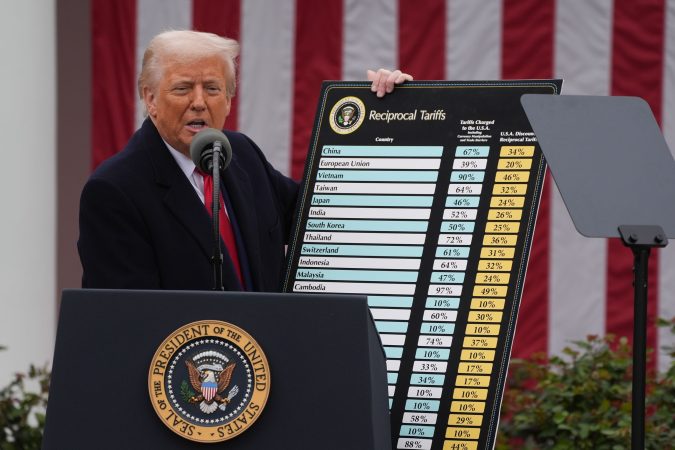
    LONDON — When President Donald Trump strode into the Rose Garden in April 2025 brandishing a poster board of tariff hikes, the world leaped as if a fire alarm had gone off. Markets shed trillions of dollars, envoys rushed to Washington, and more than 75 governments scrambled to negotiate, some scrapping carefully prepped countermeasures in a rush to cut deals.

    Sixteen months later, the flabbergasting threats keep piling up — to weaponize trade, annex Canada, seize Greenland, abandon NATO, annihilate Iran — but the alarm bells have gone quiet. World leaders are slower to rattle as they’ve seen the president increasingly fenced in by courts, rebuffed by Congress, and strung along by Tehran — his ultimatums evaporating and poll numbers sinking.

    When Trump announced a fresh barrage of tariffs last month, this time based on accusations of child labor violations to skirt limits imposed by the Supreme Court, the world didn’t shriek — it shrugged. France’s central bank governor predicted little impact. Britain proclaimed its exporters largely unaffected. Mexico’s economy minister waved it off as one tariff simply replacing another.

    The financial markets, inured to the bluster, hardly moved.

    As Trump nears the midpoint of his second term, officials and analysts say, one of his signature powers — to bluster on social media, shock, spark panic, and convert that panic (“thank you for your attention to this matter”) into the outcomes that he wants, has begun to fade. The bully pulpit of the presidency remains, but the audience is no longer quaking in the pews.

    “We are getting used to these daily announcements,” said Brando Benifei, an Italian member of the European Parliament who chairs its delegation for relations with the United States. “We don’t take them so seriously anymore.”

    At home, Trump continues to dominate the national conversation and drive the policy agenda. Still, the president was unable to muscle the Republican-controlled Senate into leaving the Epstein files under seal or passing his signature Save America Act. This week, he had to make concessions to get his nomination of Todd Blanche as attorney general back on track.

    Abroad, most consequently, Iran refuses to bend under American bombs and reopen the Strait of Hormuz, and Russian President Vladimir Putin persists in his war in Ukraine. Europe met Trump’s recently renewed demands for Greenland with a collective sigh, and trading partners have shrugged off the latest tariffs.

    For a world weary of the United States’ capacity to disrupt, the bombast is baked in, the threats are frequently bluffs, and the president who relishes shock and awe, in the end, often backs down.

    The stock trader’s refrain of “TACO” — Trump Always Chickens Out — has begun to take hold in more world capitals, said Jeremy Shapiro, director of the U.S. program at the European Council on Foreign Relations think tank.

    “I’ve been a little surprised at how much his bluster has worked until now,” Shapiro said of the bravado that rattled the world at the start of Trump’s second term. It was effective, he said, because it drew on the “awesome power and deep, long-stored-up diplomatic capital of the United States” — reserves, he said, that Trump has “finally started to blow through.”

    Officials “are starting to notice that he’s kind of a bully, and is quite easy to scare,” Shapiro said.

    Last year’s “Liberation Day” tariffs were hollowed out within days by carve-outs and delays. The steep levies he threatened against European allies over Greenland were withdrawn in Davos, Switzerland, in January for a vague “framework” that Denmark never accepted and has yielded no major change.

    China met his threat of 100% tariffs by refusing to blink, then used its chokehold on rare-earth minerals and a halt on U.S. soybean purchases to force Washington into a climbdown — a lesson in how standing tough often causes Trump to bend that other governments have also learned.

    Brazil’s president, Luiz Inácio Lula da Silva, ignored a 50% tariff designed to derail the prosecution of former president Jair Bolsonaro, who was convicted of charges related to fomenting an armed coup and sentenced to 27 years anyway.

    Nowhere is the erosion of Trump’s bluster-power starker than in Iran, where the United States and Israeli initiated a bombing campaign that killed the country’s supreme leader and other top officials but left the Islamic regime intact and with a stranglehold on the Strait of Hormuz, a vital conduit for global energy supplies and other cargo.

    Trump issued a cascade of ultimatums demanding that Tehran reopen the strait, notably threatening to annihilate Iranian “civilization” if it refused. The strait stayed shut. Iran did not fold, even under existential threat, and Trump quietly shifted his stated goals on regime change and on Iran’s stockpile of enriched uranium.

    “Between threats, then bombing, then backing off, what he’s radiating to the Iranians is that he’s desperate,” said Ronald E. Neumann, a career Foreign Service officer and U.S. ambassador to Afghanistan, Bahrain, and Algeria under Presidents Bill Clinton and George W. Bush. “As experienced bargainers, that means you don’t have to lower the price.” Neumann also put it less diplomatically: “The way Trump bargains,” he said, “I wouldn’t give him money to go to the carpet bazaar.”

    Trump’s browbeating also failed to pull European countries into his Iran campaign. He threatened Spain with a total trade embargo after it refused assistance, leaned on Britain, France, and Germany to reimpose U.N. sanctions, and hinted he might not honor America’s NATO obligations. But those allies refused to get more deeply involved the war — and some countries, namely Spain and Italy, have closed their bases or airspace to it.

    When Trump threatened to cut off trade with Spain, said one EU diplomat, officials seemed more inclined to dismiss the comments as rhetorical bluster, with many having learned from experience that his outburst would fizzle if ignored. But this diplomat, who spoke on the condition of anonymity to discuss delicate relations, conceded that Trump’s unpredictability made such calculations difficult.

    “It can be tricky,” the diplomat said, citing Trump’s military operations against Iran. “He doesn’t always chicken out.”

    To be sure, Trump has shown he is willing pull the trigger.

    To the surprise of his America First base that expected retrenchment, not adventurism, he has deployed the U.S. military more aggressively abroad than any recent president — seizing Venezuela’s Nicolás Maduro in a January raid by Special Operations forces, bombing Tehran a month later, and ordering dozens of lethal strikes on alleged drug boats across the Caribbean and Pacific.

    At home, he sent National Guard troops on patrol in Washington, D.C., and his immigration crackdown has thrown American cities into turmoil, with masked federal agents sweeping workplaces and courthouses — raids that sometimes turned deadly and ignited protests.

    But even the willingness to use force has not bought the deference it once did. Increasingly, officials and politicians at home and abroad are willing to challenge Trump’s threats — or ignore them.

    “Europe is noticeably less prone to panic,” said Mujtaba Rahman, managing director for Europe at the Eurasia Group consultancy. “European governments are increasingly distinguishing between Trump’s rhetoric … and the policies that ultimately emerge.”

    The pattern reaches into the Gulf, where officials have grown inured to Trump’s style of deal making, analysts said.

    Last month, Washington and Riyadh announced an agreement on Saudi Arabia’s civilian nuclear program only for Trump to post later on Truth Social that the deal was contingent on Saudi Arabia joining the Abraham Accords.

    Saudi officials found the claim surprising and annoying given that they had already trumpeted the agreement across their own channels, said Andrew Leber, a Middle East scholar at the Carnegie Endowment for International Peace, the Washington-based policy institute.

    “At this point, they have dealt enough with Trump deals to know that such exasperating and inconsistent moves have become the norm,” Leber said.

    For much of Trump’s first year back, European capitals ran the same strategy of flattery and appeasement they believed had contained him before. European Commission President Ursula von der Leyen flew to Trump’s Scottish golf resort to settle a trade fight on his terms. Britain invited him for an unprecedented second state visit.

    Leaders now are still willing to flatter Trump, especially in private, but they are less willing to offer the concessions he wants, according to a European diplomat who has been involved directly in talks with the administration.

    “Behind closed doors they are still putting it on thick because they know it works,” said the diplomat, who spoke on the condition of anonymity to discuss sensitive interactions. “This is a president who can significantly soften his position in the course of a single meeting. But that doesn’t mean you give in. That is true more than ever.”

    Greenland was a turning point, the diplomat said, because Trump’s threats evaporated against united European opposition. China, too, showed that pushing back could bend the president, as did Brazil, whereas Europe’s surrender to Trump’s initial trade barrage merely led to further demands from him.

    “I think people are saying, well, we don’t want to provoke him unnecessarily, but we can’t really make him happy,” said Neumann, the former ambassador.

    Learning to mute Trump’s threats won’t necessarily make the rest of his term easier to navigate, analysts said. Doing so could even make things less predictable if Republicans lose one or both of their majorities in Congress in the midterm elections and Trump turns to more unilateral executive actions.

    “It could be super dangerous,” Shapiro said. “Trump is not somebody who will go quietly into the night. He will rage about his loss of capacity and he will look for other ways to take risks with American power.”