Category: News

  • Authorities arrested a man with ammo and apparently monitoring security at Trump golf course near LA

    Authorities arrested a man with ammo and apparently monitoring security at Trump golf course near LA

    RANCHO PALOS VERDES, Calif. — A California man carrying ammunition and with a gun in his car was arrested Sunday at President Donald Trump’s Los Angeles-area golf course after appearing to monitor security preparations two days ahead of Trump’s fundraiser there, authorities said Tuesday.

    The Los Angeles County Sheriff’s Department said the man was taking photos and video and had a 16-round magazine with ammunition in his pocket. Authorities recovered a loaded pistol in his car. Law enforcement searched his home Monday and found a plethora of firearms, magazines, and ammunition, body armor, and notebooks with “concerning statements.”

    The sheriff’s department announced the arrest as Trump was preparing to arrive for a fundraising dinner for the Republican National Committee at the Trump National Golf Course in the suburb of Rancho Palos Verdes just south of Los Angeles.

    The 38-year-old man was arrested for allegedly carrying a concealed firearm and possessing prohibited ammunition. The sheriff’s department said the man was being investigated by the El Segundo Police Department for robbery.

    The sheriff’s department said there is “no credible threat to our communities.”

    A jury in 2025 found a man guilty of trying to assassinate Trump at the president’s Florida country club.

  • Kepple’s Carpet Inc., a family-owned company in Camden County, has filed for bankruptcy

    Kepple’s Carpet Inc., a family-owned company in Camden County, has filed for bankruptcy

    Family-owned Kepple’s Carpet Inc., which has served the South Jersey region for more than 30 years, has filed for Chapter 11 bankruptcy protection.

    The West Berlin-based company reported less than $50,000 in assets in its bankruptcy petition filed on July 22. The company could owe up to $500,000 in unsecured creditor claims, the filing shows.

    Some of Kepple’s largest outstanding debts include $138,000 across three financing firms, more than $60,000 in state taxes, and over $50,000 owed to Comcast Business, the filing shows.

    The company also owes its landlord $29,000 for their sprawling Cushman Avenue showroom featuring floor-to-ceiling carpet and flooring samples.

    Chapter 11 allows the company to continue operating under court supervision while it restructures its finances and develops a plan to repay the debt over time.

    Neither Kepple’s Carpet nor the company’s bankruptcy attorney returned multiple requests for comment. The large showroom was open for browsing Tuesday morning as signs indicated staff were away on a consultation.

    Kepple’s filing comes as the American flooring industry grapples with inflation and tariffs.

    About 70 independent flooring retailers closed their doors in 2025, industry publication Floor Focus reports.

    After tariffs were put in place early last year, prices of imported goods rose by about 6.2% relative to the levels predicted by pre-tariff trends, and domestic goods increased by 3.6% between March and October, according to research from the Harvard Business School Pricing Lab.

    The price of carpets and other floor coverings increased the most of any industry, data showed, with prices surging by as much as 54.6% for imports.

  • Family of the man who died in ICE custody in N.J. calls for release of medical records and closure of Delaney Hall

    Family of the man who died in ICE custody in N.J. calls for release of medical records and closure of Delaney Hall

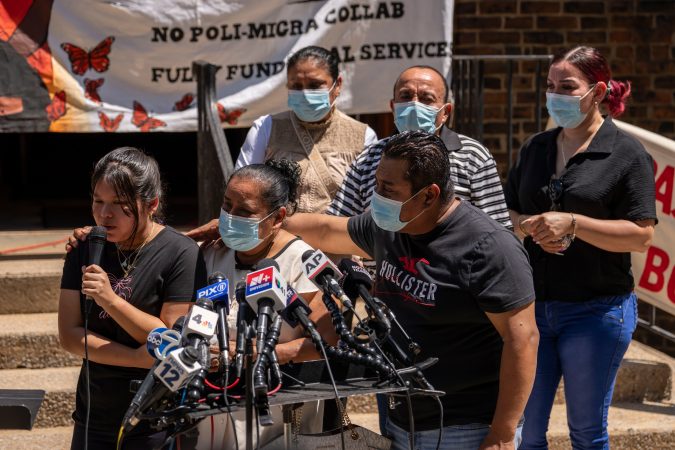
    The family of an immigrant from El Salvador who died in ICE custody in New Jersey on Tuesday outlined a list of demands for state and federal officials that they said would bring justice after his death.

    Edwin Jeovanny López Cornejo, 41, whose family said he had been living in the U.S. for two decades, died in ICE custody on Saturday after having a medical episode at Delaney Hall in Newark. The privately run ICE facility has been the subject of complaints of poor conditions, ongoing protests, and the site of clashes between federal officials and elected Democrats.

    “On the same day, we were both dead, the only difference was his heart stopped beating,” his 12-year-old daughter Ashley López said at a news conference held outside the Reformed Church of Highland Park on Tuesday streamed by Cosecha New Jersey, an immigrant-rights group. “I am going to grow up without a father. They did not even let me see him one last time before he died.”

    “We had so many plans, we will never do them, because they are heartless monsters,” she added.

    López Cornejo’s family members have accused ICE of neglecting to provide proper medical care to him, an accusation the federal agency denies. His mother María Cornejo questioned whether ICE gave her son his medicine for high blood pressure, diabetes, and seizures. He was detained in Plainfield in North Jersey on June 18.

    ICE said Monday evening that López Cornejo’s cause of death was pending further medical review, but Sen. Andy Kim shared later that night that he died of a heart attack and cardiac arrest. Kim said López Cornejo already had a habeas corpus case calling for his release due to his medical issues.

    (function(){function e(){window.addEventListener(`message`,function(e){if(e.data[`datawrapper-height`]!==void 0){var t=document.querySelectorAll(`iframe`);for(var n in e.data[`datawrapper-height`])for(var r=0,i;i=t[r];r++)if(i.contentWindow===e.source){var a=e.data[`datawrapper-height`][n]+`px`;i.style.height=a}}})}e()})();

    While speaking at the news conference, Danilo López, the brother of López Cornejo, called for an independent investigation of the incident by New Jersey Attorney General Jennifer Davenport, a release of his brother’s medical records by the facility’s owner GEO Group and ICE, the closure of the detention center and the release of all those detained. He also asked Gov. Mikie Sherrill to open an investigation into health protocols at the center.

    “I know that there’s nothing that will bring my brother back but if we feel our pain now maybe we can avoid other deaths,” Danilo López said in Spanish.

    Davenport’s office said Tuesday it “can neither confirm or deny an investigation at this time.”

    Sherrill has called for the shuttering of Delaney Hall amid a broader battle over President Donald Trump’s immigration crackdown. Her administration is in various court fights with Trump’s administration, including one attempting to gain access to Delaney Hall for a full state health inspection.

    Activists have repeatedly called for Delaney Hall to shut its doors but the Trump administration has made clear it’s not closing the facility anytime soon as it holds a crucial role in the president’s mass deportation operation.

    U.S. Rep. Analilia Mejia, a progressive Democrat who represents a North Jersey district, said at the news conference that she’s spoken to people inside Delaney Hall during oversight visits who say they’re being denied their medication and proper medical care.

    “We must all use this moment to lift our voices and say not one more,” said Mejia, whose opposition to ICE was a key part of her platform to succeed Sherrill in Congress.

    A spokesperson for U.S. Rep. Bonnie Watson Coleman, a Central Jersey Democrat, said her office gets calls from families saying their loved ones aren’t receiving their medication and are getting moldy food inside the facility.

    Trump officials and allies have denied there are issues inside Delaney Hall, including U.S. Rep. Jeff Van Drew, a South Jersey Republican who, prior to this incident, visited the facility and called it clean and “well-run” with “medical care, recreation, and other basic services.”

    ICE said it provides “comprehensive medical care” to people in the facility, including 24 hour emergency care.

    “While in custody, Lopez-Cornejo received proper medical care and was seen by medical professionals,” the federal agency said in a statement.

    Danilo López said that his brother had told him over the phone that he had to fill out a form to just get Tylenol at Delaney Hall and it could be days before he received it.

    María Cornejo accused ICE of lying about giving her son proper medical attention.

    “I just want justice for my son and for my granddaughter who is going to grow without a father,” she said in Spanish.

    Danilo López said Tuesday he didn’t know why his brother was detained because he had a valid work permit, but ICE said López Cornejo was arrested by the U.S. Border Patrol “for illegally entering the United States without inspection” in August 2006 and was sent back to El Salvador that October before returning without permission.

    López Cornejo’s daughter, Ashley, said Tuesday that “no one is illegal on stolen land,” a common refrain from immigrant rights activists.

    Her mother, who was not named, called the incident the result of a systemic failure.

    “From the bottom of my heart I feel the system failed Edwin,” she said in Spanish. “Failed my daughter, failed me as a mom, and failed all those other kids who are suffering like my daughter is.”

  • Iran and Oman make progress on a deal to reopen the Strait of Hormuz, officials say

    Iran and Oman make progress on a deal to reopen the Strait of Hormuz, officials say

    CAIRO — Iran and the Gulf Arab state of Oman have made progress toward a deal to reopen the Strait of Hormuz, a potential breakthrough that could help wind down the war in the Middle East, regional officials said Tuesday.

    Under the emerging agreement, ships would enter the Persian Gulf through an Iranian-controlled route and exit through a route controlled by Oman, with service fees charged for providing security and preserving the maritime environment, two regional officials told the Associated Press.

    They said negotiations are still underway and that the final agreement could take a different form, with any deal linked to lifting the U.S. blockade on Iran’s ports. The officials spoke on condition of anonymity to discuss the sensitive negotiations unfolding behind closed doors.

    Any agreement formalizing Iran’s control of the strait would mark a significant strategic victory for Tehran. For that reason, the U.S. could seek to block the deal by refusing to lift the blockade. The strait was an open international waterway before the U.S. and Israel attacked Iran on Feb. 28.

    A U.S. official familiar with the negotiations said that any “temporary” routes established through the strait would not involve approvals by Iran or charges. The official, who was not authorized to comment publicly and spoke on condition of anonymity, said the U.S. remains committed to returning to the status quo in which “no party controls the lanes or the ability to transit through them.”

    U.S. President Donald Trump is under mounting pressure to end an unpopular war that has driven up gas prices ahead of midterm elections and drawn down U.S. supplies of some munitions. In recent days, he has again whipsawed between threatening massive strikes and voicing support for diplomatic efforts.

    In an exchange with reporters on Monday, Trump reiterated his public stance that he’s opposed to tolling in the strait. “I’m not going to let them charge,” Trump said. “Anybody’s going to charge, we’ll charge.”

    U.S. and Iranian officials confirm progress without giving details

    Iranian Foreign Ministry spokesperson Esmail Baghaei said the bilateral talks with Oman are focused on “establishing safe inbound and outbound shipping lanes,” routes that “uphold sovereign rights while also addressing the national security considerations of both Iran and Oman.”

    “The final results of these negotiations will be announced once concluded,” he added, in remarks carried by Iran’s state-run IRNA news agency.

    U.S. Secretary of State Marco Rubio, speaking to reporters at the State Department, said, “There’s been progress made in those talks, but not finality yet. We’re hoping that will happen very shortly.”

    Rubio has previously ruled out any deal that would give Iran control over the strait, saying last month that it would create a “very dangerous precedent” for other parts of the world.

    Treasury Secretary Scott Bessent told CNBC that “there is a chance we may have a deal today or tomorrow to open the strait and move towards a more normalized position in this conflict.”

    Asked whether there would be tolls for movement through the strait, Bessent said: “I think it would be freedom of movement.”

    The potential agreement between Iran and Oman was first reported by the New York Times.

    Cargo ship reports strike in Strait of Hormuz

    Meanwhile, a cargo ship reported being “hit by an unknown projectile” in the strait off the coast of Oman, the United Kingdom Maritime Trade Operations Center said, without providing further information on the ship, including what flag it was sailing under or whether it was carrying cargo.

    The ship sustained damage, according to British maritime security firm Ambrey, which did not elaborate.

    In recent weeks, Iran had repeatedly attacked ships using a route running close to Oman that is overseen by the U.S. military and intended to bypass Tehran’s control.

  • The Danube River’s water is dropping so low that World War II ships are emerging

    The Danube River’s water is dropping so low that World War II ships are emerging

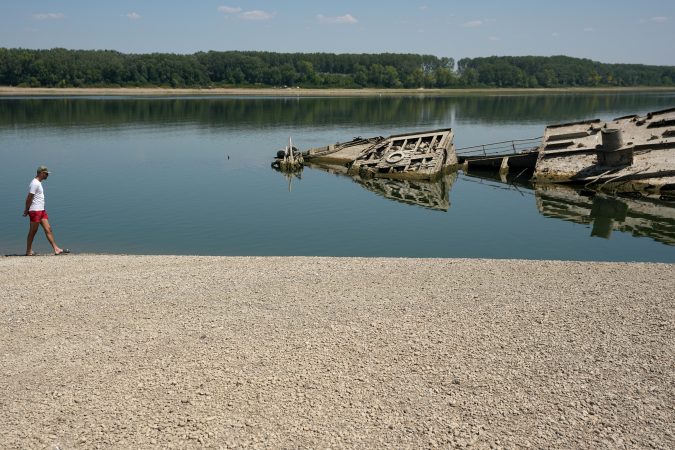
    PRAHOVO, Serbia — Water levels on the Danube River, the second longest in Europe, have dropped so low because of drought that the hulks of dozens of World War II German battleships are emerging into view.

    They are a curious distraction from the summer heat crisis. The Danube’s record low water levels also have forced power plants to the brink of shutting down, and governments across Central and Eastern Europe are taking steps to conserve electricity.

    In the middle of the river separating Serbia and Romania near the Serbian port of Prahovo, a rusty hull is now visible along with a broken mast where the Nazi flag used to fly.

    The ships, some still laden with weapons, belonged to Nazi Germany’s Black Sea fleet that the Germans deliberately sank as they retreated from Romania and as Soviet forces advanced deeper into Europe near the end of the war.

    Historians say up to 200 German warships were scuttled in September 1944 near Prahovo in the Danube gorge as they came under Soviet fire. The idea behind the deliberate sinking was to slow down the Soviet advance in the Balkans. But Nazi Germany surrendered months later, in May 1945.

    The sight of the old warships is a reminder that the Serbian government, with European Union financial support, has long been trying to do something about them. Some were removed from the river by Communist Yugoslav authorities, but most have remained because of the explosives they carried.

    Now, however, authorities are trying to keep traffic moving on the Danube, which flows through 10 nations, as the dropping water levels create dangerous conditions. Experts have linked the unusually hot weather to global warming and other factors.

    Krsta Brandic, a Prahovo resident, said the low water levels have almost stopped ship traffic: “As you can see, the (big) ships can’t pass anymore.”

  • Leonardo DiCaprio and Jeff Bezos lead $200M project to save 100 of globe’s most threatened species

    Leonardo DiCaprio and Jeff Bezos lead $200M project to save 100 of globe’s most threatened species

    LOS ANGELES — Foundations funded and co-founded by Leonardo DiCaprio and Jeff Bezos have launched an initiative committing $200 million to revive 100 of Earth’s most threatened species, including endangered lemurs, salamanders, pangolins, pigs, and echidnas.

    DiCaprio’s Re:wild and the Bezos Earth Fund are leading the Phoenix Species Project, the groups announced Tuesday. They call it the largest single fund in history dedicated exclusively to recovering critically endangered species.

    DiCaprio has for years been developing the idea of a major concerted effort to help species whose habitats and future existence are threatened by climate change.

    In 2021, he and Re:wild co-founder Wes Sechrest, a biologist who serves as the organization’s CEO, met with the Amazon-founding mega billionaire Bezos and his wife, former TV news reporter and host Lauren Sánchez Bezos. He serves as chair and she as vice chair of the Bezos Earth Fund.

    The meeting led to a series of conversations with local governments, environmental groups, and Indigenous people on how best to reverse the decline of their most vulnerable species. Those conversations eventually led to the Phoenix Species Project.

    Animals the initiative is seeking to sustain include:

    – The golden-crowned sifaka, a lemur from Madagascar

    – The Hickory Nut Gorge green salamander, a lungless tree-dweller that lives only in a small canyon in North Carolina.

    – The Visayan warty pig, endemic to islands in the Philippines.

    – Mexico’s Cozumel harvest mouse, which lives only on an island off the Yucatán Peninsula.

    – The pink land iguana, found only on Wolf Volcano in the Galápagos Islands.

    – The Malayan pangolin, also known as the Sunda pangolin, native to Southeast Asia.

    – Tanzania’s pancake tortoise, named for its flat, flexible shell.

    – The starry night harlequin toad, known and named for its black-and-white evening sky appearance, found only in the mountains of Colombia.

    – Attenborough’s long-beaked echidna, a monotreme, or mammal that lays eggs, from New Guinea named in honor of the 100-year-old naturalist and narrator-of-nature David Attenborough.

    The project’s goals include giving long-term sustenance to successful but fleeting smaller efforts.

    “We’ve protected the golden-crowned sifaka for years on a budget that would never match what this species deserves, but letting it go extinct was never an option,” Tiana Andriamanana, executive director of Association Fanamby, one of the groups getting a grant from the initiative, said in a statement. “This funding, this global platform, and technical support change what is possible.”

  • Chipotle pulls jalapeños from some restaurants as health officials investigate salmonella outbreak

    Chipotle pulls jalapeños from some restaurants as health officials investigate salmonella outbreak

    CHICAGO — Chipotle Mexican Grill said Tuesday that it had removed jalapeños from some of its restaurants after determining the peppers could potentially be tied to a salmonella outbreak public health officials are investigating.

    In a brief statement, Chipotle maintained that the “health and safety of our guests and employees is our highest priority” — and that it had pulled the jalapeños out of an abundance of caution and “replaced them with product from different growers” in all locations where a previous common lot had been distributed.

    The company did not specify where the initial peppers came from but noted that the jalapeños in question were sent across multiple states to several retailers.

    The Minnesota Department of Health on Tuesday confirmed that it was investigating a salmonella outbreak tied to several Mexican-style, quick-service restaurants — with jalapeños as the suspected source. Officials identified 110 cases in the state. Chipotle made up the majority of those where they were able to reach affected consumers for an interview — who ate at the chain between mid-June and mid-July — but not all.

    “Based on all the evidence so far, the food that made people sick was served at other restaurants as well,” Carlota Medus, senior epidemiologist supervisor in the MDH’s Health Foodborne Diseases Unit, said in a statement.

    Medus said Chipotle had been cooperative over the course of the investigation — and that given the measures the company put in place, his department was not concerned about the chain at this time. Still, he said it was “too soon for us to know if the outbreak is ongoing” and that it’s possible contaminated food is being served elsewhere.

    MDH noted that other states are contributing to the investigation, without elaborating further. On the federal level, the Food and Drug Administration is conducting the traceback probe — covering but not limited to jalapeños.

    The FDA on Tuesday confirmed it initiated its traceback investigation “of multiple ingredients” on July 22, in response to a cluster of salmonella illnesses identified by both state officials and the Centers for Disease Control and Prevention. In a statement, the agency said it appreciated Chipotle’s cooperation and that it would “provide additional information if and when there is an actionable public health update.”

    The CDC did not respond a request for further comments Tuesday afternoon.

    Symptoms of salmonella poisoning include diarrhea, fever, severe vomiting, dehydration, and stomach cramps. Most people who get sick recover within a week. Infections can be more severe in young children, older adults, and people with weakened immune systems, who may require hospitalization.

    Shares of California-based Chipotle Mexican Grill plunged nearly 10% on Tuesday.

  • Runaway online rumors sparked frantic rush by migrants to the Spanish territory of Ceuta

    Runaway online rumors sparked frantic rush by migrants to the Spanish territory of Ceuta

    FNIDEQ, Morocco — It started with Instagram posts that suggested Spain’s border with Morocco was opening up. Then came Facebook users tracking coast guard patrols and TikTok videos showing where to swim.

    After many shares and comments, thousands of Moroccans became convinced that Europe was suddenly within reach.

    Within hours, young people began heading toward the border with the Spanish territory of Ceuta in North Africa. Packed buses rolled into the neighboring Moroccan city of Fnideq. Regional trains filled up. Taxis did too.

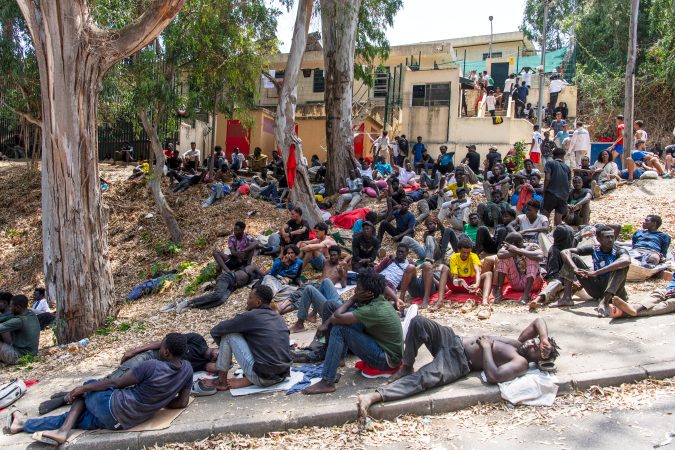
    By the time authorities reacted, some 72,000 people had reached Ceuta in just a few days, the largest migration surge between Morocco and Spain in years. More than 80 migrants died on both sides of the border, including some who drowned and others who were killed in a stampede, authorities said.

    Nearly all of the surviving migrants soon returned, but the fallout from last week’s events will linger.

    Rumors started online

    In the northern Moroccan city of Larache, about 93 miles from Ceuta, three friends watched a video posted by an Instagram account called Haraga Ceuta claiming the border would be open. Haraga refers in Moroccan dialect to young migrants who destroy their identification papers and try crossing illegally into Europe.

    The post convinced Anas Amrani, Yahya Harak, and Ismail Atik that it was worth risking the journey.

    For migrants hoping to reach Spanish territory, the most common route begins in Fnideq, where many attempt the roughly 3-mile swim around the border breakwater. Others leave from the nearby village of Belyounech.

    One TikTok video mapped the exact route swimmers should follow.

    On Facebook groups such as Fnideq Bab Sebta, users shared screenshots from vessel-tracking platforms to identify moments when coast guard patrols appeared lighter. Some sought advice on using inflatable boats. Others advertised wetsuits for sale.

    “I saw online that the border was open, and I decided to go,” said 17-year-old Omar Danbor from Fnideq, walking back exhausted along the coast.

    It’s unclear who was behind the claims that the border was open or who operated many of the social media accounts, several of which were deleted soon after the crossings. The Associated Press contacted several accounts but received no response.

    The surge to Ceuta touched a political nerve in Europe, and the European Union is investigating what happened. The EU’s migration commissioner expressed concern Tuesday about online disinformation but didn’t identify a specific culprit.

    Chaos unfolded at the breakwater

    As migrants reached the shores of Ceuta, mass chaos erupted at a narrow concrete breakwater where many tried to climb onto land.

    According to multiple migrants interviewed by AP, people rushed to scramble over the slick rocks at the same time, pushing and climbing over one another. Several said they saw people knocked back into the water and forced beneath others, leaving them unable to resurface as migrants sought to reach land.

    “I stepped on the face of a dead man while I was climbing out. I hope God forgives me and all those whose bodies were found,” said Lahcen Kalouch, a Moroccan migrant who reached Ceuta before returning home distraught.

    At least 72 people died on the Spanish side of the border. Another 11 died on the Moroccan side.

    Tens of thousands of migrants have since returned to Morocco, either after being expelled or leaving by choice because of a lack of shelter, food, and water in Ceuta.

    Some misinterpreted Spain’s new migration measures

    Some migrants misunderstood recent legal developments in Spain, including Prime Minister Pedro Sánchez’s immigration regularization measures and a court ruling limiting authorities’ ability to immediately return migrants who swim into Ceuta.

    Sánchez’s recent efforts to regularize migration were meant only for people already living in Spain prior to Jan. 1, the majority of whom hail from Latin America and entered Spain legally but overstayed their visas. But some in Morocco misinterpreted his policy, believing they would be allowed to stay. That belief spread online.

    “Pedro Sánchez is a liar. He told us if we came, we would get jobs and papers, but they sent us back,” said Adam Assil, a migrant from Casablanca, even though Sánchez never made such a promise.

    While attempts to reach Ceuta are common, migration activists said this episode was different because of the way rumors snowballed online, encouraging thousands of people to head toward the territory at the same time instead of in smaller, scattered groups.

    Failures happened on both sides of the border

    Moroccan authorities said the migration wave was not spontaneous. The Interior Ministry blamed the “exploitation of the digital sphere” and “the spread of misinformation.” Officials offered no evidence but said an investigation had been opened. Spain’s government made similar statements.

    Ceuta officials said they had warned the Spanish government of a surge in arrivals before the massive crush on Thursday. The Spanish Interior Ministry said Monday that it had not received “any report or warning regarding the mass arrival of people in Ceuta,” and it praised cooperation with the Moroccan authorities in sending most of the migrants back.

    “Nobody addressed how these individuals managed to breach the border,” said Mustapha Azaitraoui, a Moroccan geographer specializing in migration dynamics. “If a large group of people can cross the border under these circumstances, it suggests a broader security issue that has yet to be acknowledged publicly.”

    Migrants reject government claims of smuggling

    Both Morocco and Spain blamed the Ceuta crisis on human smugglers and trafficking networks, saying organized criminal groups encouraged the mass crossings.

    But returning Moroccan migrants interviewed by AP largely rejected that explanation.

    “No one smuggled me there. I wanted to go of my own free will, but that country is not worth all this sacrifice,” Kalouch said.

    “There are no mafias. The border was open, and I crossed. But now I regret it,” said Danbor, his clothes still wet after making the journey back.

    The Spanish Interior Ministry said investigations into smuggling networks are ongoing and noted that Spain and Morocco have carried out joint operations against trafficking groups. The Moroccan Interior Ministry did not respond to questions about smuggling networks.

    Several politicians and experts have suggested it would be impossible for so many to cross without Moroccan complicity. A high-ranking Moroccan diplomat appeared to push back against that.

    “It would be reductive to say that Morocco should have used force to stop the migrants,” said the diplomat, who spoke on condition of anonymity because the issue is highly sensitive in Morocco. “We are not Europe’s police.”

    The lack of jobs is a key factor

    Morocco’s economy is projected to grow by 4.5% this year, boasting major factories, advanced ports, and ambitions to become a regional hub for the car industry.

    Yet for many young Moroccans, that transformation has not translated into stable work. Youth unemployment remains high, with 37% of people ages 15 to 24 out of work. Among university graduates, unemployment stands at nearly 20%. The dream of migration is often reinforced by stories of relatives who left and returned with cars, new clothes, and foreign currency.

    One of those who breached the border was a 16-year-old who grew up a few dozen miles from Ceuta. Europe had always seemed a dream close enough to see, yet impossibly far.

    So when he saw a post on Facebook suggesting the border was open and thousands were making it across, he joined the rush.

    Days later, he was back in Morocco, crying as he asked strangers for money for a taxi home.

    “They fired tear gas at me and beat me with batons. There’s nothing for me there,” said the teen, who spoke on condition of anonymity out of fear of being stigmatized following his failed border crossing attempt.

    “I just wanted to provide for my mom,” he said, wiping his tears.

  • Todd Blanche’s nomination for attorney general clears critical hurdle after deal with GOP holdouts

    Todd Blanche’s nomination for attorney general clears critical hurdle after deal with GOP holdouts

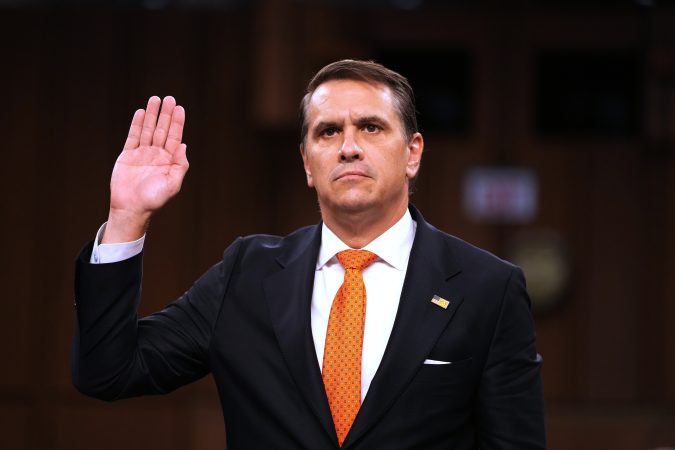
    WASHINGTON — Acting Attorney General Todd Blanche cleared a critical hurdle Tuesday in his bid to be confirmed to the post after swaying Republican holdouts on a Senate committee to advance his nomination for a floor vote.

    The Senate Judiciary Committee voted 12-10 along party lines in support of the nomination of President Donald Trump’s former personal attorney, who has aggressively pushed the Republican administration’s priorities since taking over from Pam Bondi in April.

    The vote followed a deal struck late Sunday between Blanche and two Republican senators — John Cornyn of Texas and Thom Tillis of North Carolina — who had been threatening to block his confirmation over the settlement of Trump’s lawsuit against the Internal Revenue Service regarding the president’s leaked tax returns.

    The full Senate could vote later this week on Blanche’s nomination. If all Democrats oppose him, Blanche can only afford to lose two Republican votes if Sen. Mitch McConnell of Kentucky, who was hospitalized after a fall, does not return before then.

    Cornyn and Tillis backed Blanche’s nomination after the Justice Department confirmed in writing that it wasn’t moving forward with a $1.8 billion fund to compensate Trump allies who believe they were prosecuted for political purposes, which the administration announced as part of the settlement.

    After days of negotiations, Blanche issued an order Sunday evening confirming “beyond any doubt, that there is no Fund.”

    Democrats complain about the fund

    Democrats say Blanche’s order doesn’t go far enough to prevent the Trump administration from reviving the fund after the acting attorney general’s confirmation and have called for legislation to permanently bar it.

    The order also doesn’t stop the administration from compensating Trump allies — including people who attacked the Capitol on Jan. 6, 2021 — through a previously established process that allows people to file claims for damages if they believed they were wronged by the government.

    The fund “can easily be revived with a new order from the Department of Justice 15 minutes after Mr. Blanche is confirmed as attorney general,” said Dick Durbin of Illinois, the top Democrat on the committee.

    Cornyn and Tillis had also pressed for clarification on a separate part of the settlement that would grant Trump and members of his family immunity from tax audits.

    Under the deal, the Justice Department clarified in writing that the tax audit immunity agreement applies only to claims open at the time of the settlement and does not protect Trump from examination of future tax filings. It also makes clear that only the parties that brought the lawsuit — Trump, two of his sons, and the Trump Organization — are covered by the tax agreement.

    Cornyn said his reasons for backing Blanche go beyond the deal struck Sunday, adding that he believes the Justice Department needs a “stabilizing force” at the helm.

    “The Department of Justice does not need a temporary, unconfirmed nominee as our nation’s top law enforcement official. Trump needs someone in this role, as well, with a strong legal mind,” Cornyn said.

    Blanche’s independence has been called into question

    Blanche has faced intense scrutiny regarding his ability to maintain independence from the White House, the Justice Department’s pursuit of the president’s political foes, and the agency’s handling of files related to disgraced financier Jeffrey Epstein’s sex trafficking investigation.

    But it was the settlement of Trump’s $10 billion lawsuit against the IRS that threatened to derail Blanche’s nomination, forcing a delay in the committee vote last week amid pressure from the two Republican senators, who are not returning to Capitol Hill after their terms end in January.

    Republican Sen. Chuck Grassley, who chairs the committee, said Tillis and Cornyn’s demands were “common sense.” Grassley said the senators’ concerns about the “Anti-Weaponization Fund” and the IRS settlement were shared by many other lawmakers, including himself.

    “I’m grateful that they as well as Mr. Blanche and the White House worked in good faith to solve them, formally rescinding the fund, clarifying the scope of the release of claims has put this issue to bed once and for all,” Grassley said.

    Trump’s lawsuit has been sharply criticized because of the highly unusual way it was handled, with the president challenging an agency overseen by the executive branch he leads. A judge last month slammed the case as an improper exercise in self-dealing and referred one of Trump’s attorneys who filed it for potential disciplinary action.

    Blanche was an important figure for Trump’s defense

    Blanche, a former federal prosecutor and key member of Trump’s defense team as the Republican battled four indictments, arrived at the Justice Department last year as deputy attorney general. He was elevated to acting attorney general following Bondi’s failure to meet Trump’s demands to successfully prosecute his perceived political opponents.

    While Blanche insisted he wasn’t auditioning for the permanent post, he moved swiftly to accelerate investigations into Trump foes and advance other White House priorities, drawing condemnation from critics who say he has not shed his title as Trump’s personal lawyer.

    Shortly after Blanche took the top post, the Justice Department moved to indict longtime Trump adversary James Comey, the former FBI director, on charges of threatening the 47th president by posting a social media photograph of seashells in the numerical arrangement of “86 47.”

    Comey’s lawyers have accused the Justice Department of misleading judges, submitting documents containing false statements, and withholding key facts to bring what the defense described as a politically motivated prosecution.

    Blanche separately appointed Joseph diGenova, a former Justice Department prosecutor from the Reagan administration, to oversee a Florida-based investigation into whether former law enforcement and intelligence officials conspired over the last decade to undermine Trump.

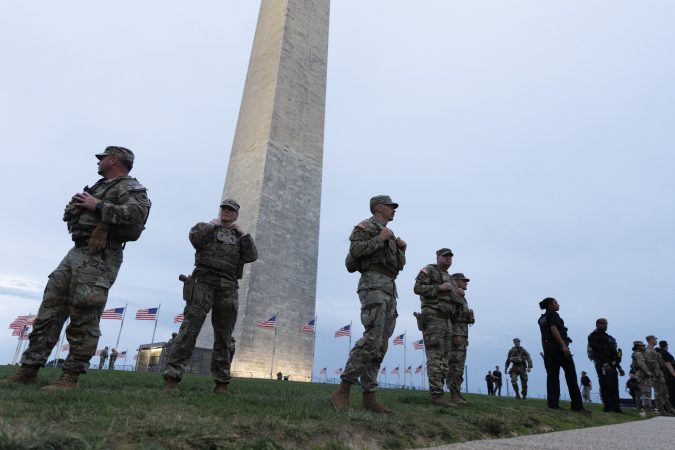
  • Trump’s National Guard deployment in D.C. set to cost additional $1.4 billion

    Trump’s National Guard deployment in D.C. set to cost additional $1.4 billion

    The Pentagon’s deployment of National Guard troops to Washington, D.C., is set to cost an additional $1.4 billion through the end of the Trump administration, according to information provided to Congress and reviewed by the Washington Post.

    The estimate, which encompasses October 2026 through January 2029, adds to the hundreds of millions of dollars spent on the mission to date. While the administration has not disclosed the full cost of the mission so far, the new figure represents the most comprehensive accounting yet of President Donald Trump’s unprecedented use of the military to patrol the nation’s capital — an operation fiercely criticized by many Democrats and civil liberty advocates.

    The information was provided to Sen. Elizabeth Warren (D., Mass.), a member of the Senate Armed Services Committee, by Jules Hurst III, Trump’s nominee to become the Pentagon’s comptroller, as part of his confirmation process. Hurst is set to be confirmed in a bloc of Trump administration nominees as soon as this week.

    The administration deployed National Guard personnel to Washington in August 2025, after Edward Coristine, a former staffer in Elon Musk’s U.S. DOGE Service initiative to slash the federal government, was assaulted in an attempted carjacking. The National Guard will maintain a presence in D.C. until January 2029 or “until the president says the mission is over,” Brig. Gen. Leland Blanchard II, the interim commanding general of the D.C. National Guard, told reporters in a news briefing Monday.

    The cost estimate provided to Warren assumes a deployment of about 2,500 National Guard personnel. There are approximately 4,600 service members in the city now, Blanchard said, part of a temporary surge coinciding with summer events to commemorate the 250th anniversary of the signing of the Declaration of Independence.

    Democrats have called the deployment a wasteful use of military resources and an infringement on Americans’ civil liberties, and they have pressed Defense Secretary Pete Hegseth to justify the mission as the Pentagon faces urgent budget shortfalls because of the Iran war and other military operations.

    “The National Guard are not pawns and taxpayer dollars are not a piggy bank for Trump’s political stunts,” Warren said in a statement.

    In testimony to the Senate Appropriations Committee last month, Hegseth acknowledged the Defense Department is facing financial pressure but repeatedly blamed the situation on the Biden administration’s management of the military.

    The Pentagon did not immediately respond to a request for comment.

    Since returning to office, Trump has deployed active-duty and National Guard units to American cities on controversial missions to stop crime or protect federal immigration agents. Academics and researchers who specialize in politicization and the military, along with local officials in some of the targeted communities, have argued that the operations violate laws barring the military from engaging in domestic law enforcement.

    Some state and local governments, including Washington, have challenged the deployments in court.

    The Congressional Budget Office estimated in January that the administration’s National Guard deployment in Washington cost $223 million through the end of 2025. It said deployments in Los Angeles, Memphis, Chicago, and Portland, Ore., together cost an additional $273 million in 2025.

    CBO has estimated that each additional month of deployment in Washington would cost about $55 million.

    Trump’s record $1.5 trillion defense budget request for fiscal 2027 includes $2.3 billion in funding for domestic use of the military, including $605 million for the National Guard mission in Washington.

    In a separate request to Congress for $67 billion in additional funding to help cover the costs of the Iran war, the Trump administration also requested $800 million for the National Guard. Sen. Patty Murray (Wash.), the Appropriations Committee’s top Democrat, said during last month’s hearing with Hegseth that those funds would go toward extending the D.C. deployment.

    Blanchard, the National Guard general, defended the mission, noting that last month the Trump administration signed a $292 million contract to move National Guard members into local apartments from hotels in and around Washington. The move, Blanchard said, will save $90 million on lodging and transportation costs over the course of the contract.

    He said, too, that service members have responded to about 800 medical emergencies — performing CPR and applying tourniquets on gunshot victims, and administering 325 doses of Narcan, a drug used to treat overdoses.

    While Trump officials have repeatedly asserted the National Guard was necessary to help address a crime emergency in the city, D.C. police data shows violent crimes this year have remained about the same from this time in 2025. Property crimes, including burglary from cars and motor vehicle theft, have decreased by about a quarter. When the National Guard was deployed last year, crime rates were near a six-year low, according to federal data.

    National Guard personnel in Washington are supposed to yield to local police for law enforcement activities, such as arrests, said Michael Perloff, the senior staff attorney for the American Civil Liberties Union’s D.C. chapter. But their orders leave open gray areas, including how personnel should respond in an emergency or when under threat, he said.

    “National Guard members aren’t trained to handle those situations,” said Perloff, whose organization is challenging the mission’s legality in court.

    The service members deployed in D.C. have been tasked with a variety of missions, such as guarding the Reflecting Pool in front of the Lincoln Memorial and cleaning up garbage on city streets.

    In November, two National Guard personnel were shot while patrolling the city blocks away from the White House. One died from her injuries.

    Rahmanullah Lakanwal, an Afghan national charged in the shooting, pleaded not guilty in June. He is facing a possible death sentence if convicted.