Category: News

  • Saudi Arabia, Turkey, and Pakistan have signed a key defense agreement

    Saudi Arabia, Turkey, and Pakistan have signed a key defense agreement

    ANKARA, Turkey — Saudi Arabia, Turkey, and Pakistan signed a defense agreement on Friday that would treat an attack on one as an attack on all three, officials said, solidifying cooperation among the three regional powers at a time of growing security concerns.

    The agreement was signed in the Saudi holy city of Mecca by Saudi Crown Prince Mohammed bin Salman, Turkish President Recep Tayyip Erdogan, and Pakistan’s Prime Minister Shehbaz Sharif, according to statements from all three countries.

    The so-called Mecca Joint Defense Agreement between the three Sunni Muslim-majority states brings together oil-rich Saudi Arabia and nuclear power Pakistan as well as Turkey, which has NATO’s second-largest army and a rapidly growing defense industry. It would increase cooperation and deterrence at a time of increased regional uncertainty and threats from the war in Iran.

    Commitment to joint deterrence

    “The agreement is intended to strengthen collective deterrence against any act of aggression, and stipulates that any armed attack against any one of the three states shall be regarded as an attack against them all,” the statements read.

    “It further provides for the enhancement of all aspects of defense cooperation among the three States,” the statements said.

    Saudi Arabia, whose critical infrastructure and oil facilities have come under attack as part of the war in Iran, has been looking to diversify its defense partnerships.

    In September, Pakistan and Saudi Arabia signed a mutual defense pact that also defines any attack on either nation as an attack on both.

    The agreement also comes amid rising tensions between Turkey and Israel over Gaza and other regional conflicts, including the war in Iran and Lebanon.

    The deal highlights how far relations between Saudi Arabia and Turkey have shifted toward alignment and partnership, after being highly strained just a few years ago, including over the killing of Saudi journalist Jamal Khashoggi in Istanbul by Saudi operatives.

    Iran criticizes the deal

    In Iran, Ebrahim Rezaei, a member of the Iranian Parliament’s National Security and Foreign Policy Commission, criticized the deal on X, saying it would not bring security to Saudi Arabia.

    “The Saudis should know that a paper agreement with Turkey and Pakistan will not bring them security, just as years of one-sided ‘milking’ by the Americans did not bring them security. Change your policies so that you do not have to #BegForSecurity from others,” he wrote.

    Saudi Arabia says deal is not a military axis or religious bloc

    A statement from Saudi Arabia insisted that the agreement does not amount to a military pact and would not affect the kingdom’s existing partnerships.

    “The agreement does not represent any orientation toward building a military axis or sectarian/religious bloc, and it is not linked to nuclear endeavors or an arms race, but rather to building sustainable self-reliant capabilities,” the statement read. “The agreement does not come at the expense of the Kingdom’s strategic and strong relations at the Gulf, Arab, and international levels.”

    Erdogan said the agreement was based on “collective deterrence” and would deepen cooperation in defense, support joint defense industry projects, and bolster efforts to combat terrorism.

    “The agreement, which also reaffirms the right of defense as defined in Article 51 of the UN Charter, targets no country and is open to the participation of all brotherly countries that aim for the peace, prosperity, and stability of our region,” the Turkish president said on X.

    A Turkish government official described the agreement as “purely defensive in nature” and “not against any specific actor.” The deal does not annul or replace any bilateral or multilateral agreements between these states or with other states and organizations, the official said. He spoke on condition of anonymity because he was not authorized to discuss the issue publicly.

    Long‑standing security ties

    Sharif described the agreement as a “historic pact” that would serve as a “shield of peace” for the three countries and the wider Muslim community.

    In a post on X, he also praised Pakistan’s army chief, Field Marshal Asim Munir, saying his “untiring efforts and utmost dedication” had contributed significantly to the agreement.

    In Islamabad, defense analyst Abdullah Khan described the agreement as a natural evolution and formalization of decades of strategic ties among Pakistan, Saudi Arabia, and Turkey, saying a changing regional security environment and the evolving nature of warfare had increased the need for closer cooperation.

    Khan said the pact was “purely defensive” and not directed against any country, with collective deterrence intended to raise the cost of aggression and prevent conflict.

    The analyst said the three countries bring complementary strengths to the arrangement: Pakistan’s military experience and expertise in managing escalation, Saudi Arabia’s economic strength and regional influence, and Turkey’s advanced defense technology and industrial capabilities.

    Abdolreza Davari, an Iranian analyst and former politician, downplayed the risks the new defense pact poses to Tehran as it seeks to assert control over the Strait of Hormuz. Iran has already shown it can stand up to two of the world’s leading military powers, the U.S. and its ally Israel, he said.

    “What difference does it make? Will it be more difficult than the pressure the U.S. and Israel have created on Iran? Is the power of the U.S. and Israel greater or these three countries?” he said in a phone call from Tehran.

    Turkey and Pakistan unlikely to engage in large troop deployment

    Hamish Kinnear, a Middle East analyst for the risk intelligence company Verisk Maplecroft, said Turkey and Pakistan were unlikely to send large numbers of troops to assist Saudi Arabia. The deal was expected to allow deeper coordination in diplomacy, defense production, and technology transfer.

    “Token deployments are possible, but it is doubtful that Ankara and Islamabad want to become heavily involved in an anti-Houthi military operation. Pakistan, which already held a bilateral collective defense pact with Saudi Arabia, has not been a significant partner in anti-Houthi operations so far,” Kinnear said in an emailed note.

    “More likely is increased Ankara-Islamabad-Riyadh coordination on diplomacy, weapons development, and technological transfer, with Saudi capital boosting the defense sectors of Turkey and Pakistan,” he added.

    Ozgur Unluhisarcikli, director of the Ankara office for The German Marshall Fund think tank, said the agreement was the culmination of the countries’ shared concerns over regional fragmentation, civil conflict, and armed nonstate groups.

    “This is a reflection of their growing desire for greater regional stability,” Unluhisarcikli said.

  • Senate confirms Hamilton to lead FEMA and clears more than 70 other Trump nominees

    Senate confirms Hamilton to lead FEMA and clears more than 70 other Trump nominees

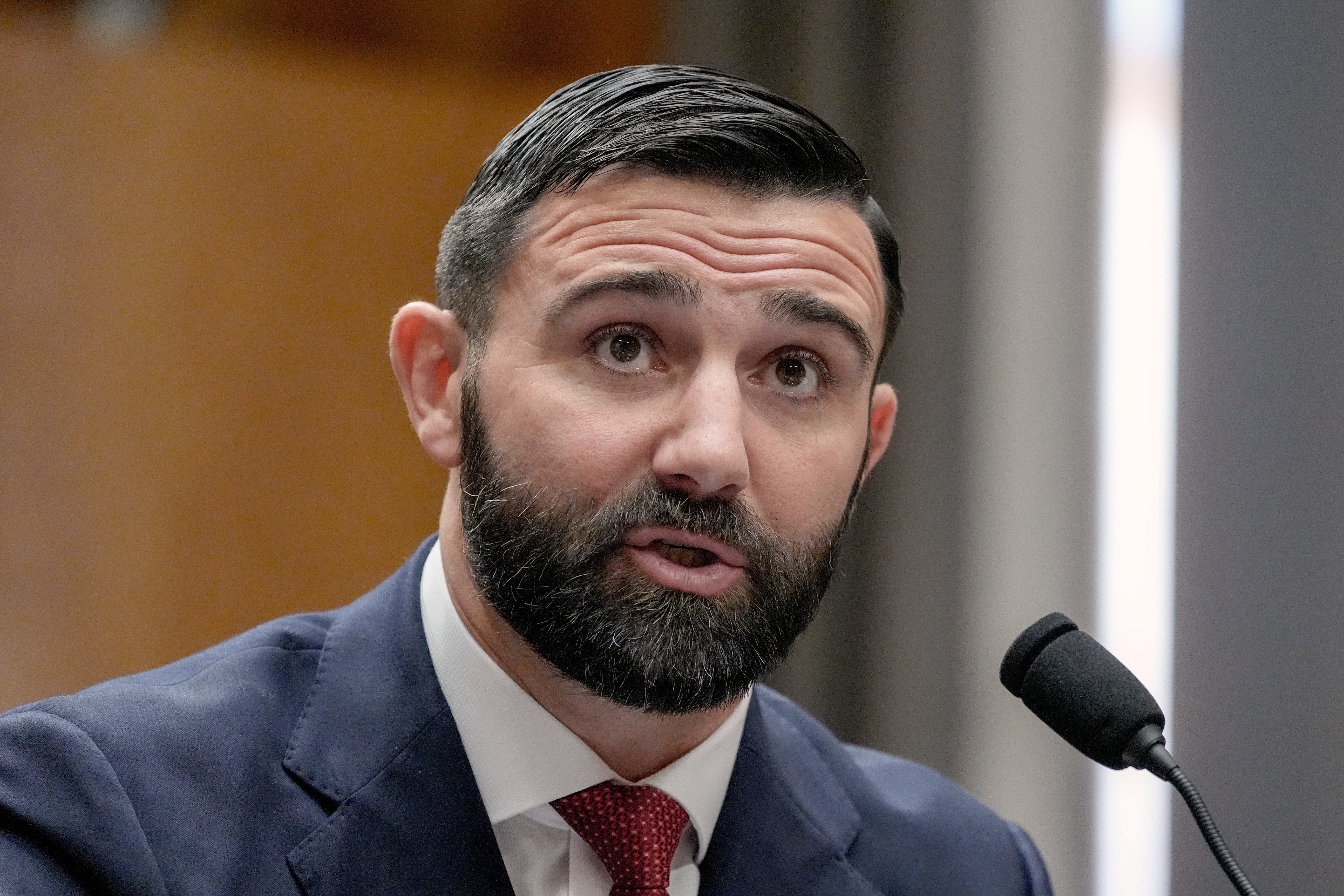
    The Senate on Friday confirmed Cameron Hamilton as head of the Federal Emergency Management Agency, returning the former Navy SEAL to the embattled agency he led temporarily last year only to be fired after he publicly opposed eliminating it.

    Hamilton was among a group of 74 nominations approved by the Senate, including President Donald Trump’s pick to lead the Transportation Security Administration, David Cummins, and his choice for ambassador to Brazil, Daniel Perez.

    Upon his swearing in, Hamilton will take over an agency whose future has been uncertain since Trump threatened to get rid of it days into his second term. Hamilton’s nomination signaled that Trump may be moving on from that idea, but his Republican administration is still promising drastic changes in how the government handles disasters.

    Hamilton will have to shepherd that overhaul while stabilizing an agency of more than 20,000 employees recovering from Kristi Noem’s chaotic tenure as Department of Homeland Security secretary, during which FEMA saw mass staff departures, disruptions to grant programs, and delays of disaster aid.

    While her successor, former Oklahoma Sen. Markwayne Mullin, has worked to reverse some of the upheaval, Democrats are accusing Trump of politicizing disaster relief. Trump has approved 80% of disaster requests from Republican governors but only about 60% from Democratic governors, a July analysis by the Associated Press found.

    In his June hearing before a Senate committee, Hamilton pledged to advocate for FEMA and its workforce while promising to ensure FEMA is “objective, is fair and reasonable, follows the law, and is consistent in the approach to how we adjudicate and process claims and requests for disasters.”

    He also maintained that the agency is burdened by bureaucracy and cannot be expected to respond to every disaster. “We would need to strike a new balance to encourage cost reasonableness and cost savings,” he said.

    Hamilton was fired from a temporary role leading FEMA

    Hamilton had limited emergency management experience before Trump named him FEMA’s temporary leader in January 2025. Formerly a critic of the agency, Hamilton has said he came to appreciate FEMA’s mission. His tenure proved short after he broke with Noem and other DHS officials over FEMA’s future.

    “I do not believe it is in the best interest of the American people to eliminate the Federal Emergency Management Agency,” Hamilton told a House panel in May 2025. He was fired the next day.

    His stand drew admiration among some emergency management professionals.

    “It tells you exactly who he is and how he will lead when the pressure is highest and the easy answer is the wrong one,” Pete Gaynor, FEMA administrator in Trump’s first term, said in a statement supporting Hamilton’s confirmation.

    The National Emergency Management Association said it welcomes Hamilton as the FEMA administrator.

    Still, some FEMA staffers have remained wary of Hamilton’s role in controversial decisions last year like canceling a multibillion-dollar resilience grant program.

    FEMA has been an agency under siege

    Hamilton will take over in the middle of a busy summer disaster season that has already brought destructive wildfires and dangerous flooding and as FEMA manages more than 1,000 open disaster declarations. He will be FEMA’s first permanent administrator in Trump’s second term, overseeing an agency eager for stability.

    More than 4,300 employees separated from FEMA in the 2025 budget year, more than 1,500 through voluntary reductions, resulting in a “loss of institutional knowledge and experienced personnel,” according to a Government Accountability Office report.

    Since replacing Noem in March, Mullin has rehired for some eliminated positions and rescinded a rule that any expense greater than $100,000 needed to be approved by the secretary’s office — a requirement that backlogged billions of dollars in disaster aid.

    But DHS has also introduced policies stirring up new controversy. Twenty-five states and the District of Columbia sued the Trump administration last month over new election security requirements in FEMA counterterrorism grants to states.

    The Trump administration and lawmakers are advocating for sweeping changes to federal disaster response. At a meeting of governors last weekend, Mullin called FEMA “bloated.”

    “The biggest reform you’re going to see is more responsibility is going to go back to your states,” Mullin said, with “FEMA there for worst of the worst, not every storm.”

    In May, a Trump-appointed FEMA Review Council recommended major changes to how the federal government supports states, tribes, and territories during disasters. That could speed assistance but might reduce how much and how often FEMA helps. Many of the suggested changes require congressional action.

    Gaynor told the AP he expects that Hamilton will work quickly to make changes within his authority. “I think his biggest priority in general is making the whole recovery system simpler for disaster survivors, for states and locals to navigate, to make it less of mystery, and cut out red tape,” Gaynor said.

    Senate approves 74 nominations, including for airport security

    Other nominees confirmed included Cummins as head of the Transportation Security Administration, an agency also facing persistent challenges, particularly after this year’s record partial government shutdown left TSA employees working for weeks without pay. The funding lapse prompted thousands of officers to call out of work and about 1,100 to quit.

    Cummins is a former senior vice president at the government contractor Serco, which runs air traffic control towers at 60 American airports. He is taking over as the Trump administration seeks to expand private airport screening and cut thousands of TSA jobs.

    The Senate also confirmed Perez, a close friend of Secretary of State Marco Rubio and a former speaker of Florida’s House of Representatives, to be the next U.S. ambassador to Brazil.

    Perez has been central to an ongoing diplomatic dispute between the Trump administration and the government of Brazilian President Luiz Inácio Lula da Silva.

    Earlier this week, the State Department said the Brazilian government’s refusal to accept Perez’s appointment was a main reason for its decision to revoke the visa of Brazil’s ambassador to the United States. International diplomatic protocols demand that host countries approve any foreign ambassadors before they can take their posts.

  • Commodore Barry Bridge is getting a paint job and restoration, and traffic is jammed

    Commodore Barry Bridge is getting a paint job and restoration, and traffic is jammed

    Canvas shrouds the Commodore Barry Bridge as workers blast clean and repaint the high steel trusses holding up the roadway.

    The $220 million project, expected to finish in 2028, has caused havoc this summer with commuter and Shore-bound traffic on a crucial link between Delaware and Gloucester Counties.

    Traffic is squeezed into one lane in each direction from 7 p.m. to 5 a.m., and residual morning delays have been reported. Crews sometimes also have to close lanes or temporarily stop all traffic during daytime to move equipment and materials.

    It is a major undertaking for the Delaware River Port Authority, the bistate agency that owns and runs the Commodore Barry, as well as the Walt Whitman, Ben Franklin, and Betsy Ross Bridges.

    As they move along the 13,912 feet of the bridge, industrial painting crews first sandblast layers of old paint and protective coatings that have built up over the years.

    They work from suspended platforms in enclosed spaces of canvas, with containment systems that capture the gritty material used to clean the steel, lead-based paint, and other grime.

    Although that up-in-the-air work is most visible to motorists, massive repairs are going on underneath, on the deck, and in the support structures below that, including the piers in the river.

    Crews are removing crumbling concrete and replacing it, repairing the drainage system, and installing 14,000 feet of new electrical conduits and wire, DRPA officials say.

    The rehab began in spring 2025, with replacement of the movable “zipper” barrier that separates lanes of bridge traffic. It was finished last summer.

    The bridge opened in 1974 after five years of construction.

    Earlier, people relied on ferries to cross from one state to another.

    In 1930, the Chester-Bridgeport Ferry began running, with a capacity of 60 cars per trip. Six years later, the ferry’s boats were added to the federal highway system, as moveable parts of U.S. Route 332.

  • Appeals court rules Trump can’t build White House ballroom without congressional approval

    Appeals court rules Trump can’t build White House ballroom without congressional approval

    WASHINGTON — A federal appeals court on Friday ordered President Donald Trump’s administration to halt construction of its $400 million ballroom at the White House because the project lacks congressional approval.

    Trump doesn’t have the unilateral authority to build a 90,000-square-foot ballroom where the White House’s East Wing stood before he ordered its demolition last fall, according to the decision by a three-judge panel from the U.S. Court of Appeals for the District of Columbia Circuit.

    The Republican president said in a post on social media that he would be appealing what he called an “unjust decision” to the U.S. Supreme Court.

    Friday’s ruling marked the second time this week the Trump administration has made headlines for construction plans that have been called into question. An assessment by the National Park Service found that a 250-foot-tall triumphal arch that Trump has proposed building could compromise the historical significance of dozens of sites near its planned location on a traffic circle between the Lincoln Memorial and Arlington National Cemetery.

    In a 2-1 decision on the ballroom, the appeals court sided with historic preservationists who sued to stop construction of the massive structure, which has begun to rise aboveground on the east side of the White House, according to the most recent aerial photos of the site. The court said it would stay its ruling for two weeks to give the administration time to appeal to the U.S. Supreme Court.

    “Whether or not a massive ballroom should be constructed is for Congress to decide and is not a matter for Executive self-help,” the court wrote.

    “This holding has nothing at all to do with whether the proposed ballroom is desirable, or not, as a matter of policy. This ruling does not even necessarily mean that the Defendants may not ultimately construct the ballroom.

    “What it does mean,” the court continued, “is that the Defendants may not do so during the district court’s expeditious litigation without securing Congress’s authorization, as the Constitution and laws require.”

    Trump insists Congress’ approval is unnecessary

    The president reacted to the ruling with a lengthy post on social media in which he quoted from a dissenting opinion issued by Judge Neomi Rao, whom he nominated. He also described the plans for the facility to include bomb shelters, a hospital and medical facilities, “Top Secret Military Facilities,” and other security features.

    “The Military and Secret Service are viewing this horrendous, politically motivated, and unlawful ruling as a National Security threat to our Nation in that the entire Complex is being built for the protection of our Country and, additionally, all future Presidents,” Trump wrote.

    After the lower court earlier this year ordered a halt to aboveground construction, the president argued that permission from Congress to build the ballroom was unnecessary because public money was not being used to pay for it.

    Trump has said he has raised hundreds of millions of dollars from corporations and wealthy people, including himself, to cover the construction costs.

    But the Trump administration requested $1 billion for the ballroom, which Congress refused in May. In June, Democrats warned that $350 million in funds from a tax cuts law appeared to have been redirected for the ballroom.

    The National Trust for Historic Preservation, the nonprofit organization that brought the lawsuit against the Trump administration, said Friday’s decision affirmed “the American people’s right to voice their opinions about the historic places they cherish,” including the White House.

    “From the beginning, our position has been clear and consistent: the law states that only Congress can authorize the construction of a ballroom at the White House,” Brent Leggs, the group’s president and CEO, said in a statement. “We are pleased with the DC Circuit Court’s decision to uphold the District Court’s preliminary injunction, which although stayed for 14 days will block any above-ground ballroom construction unless and until Congress takes action.”

    The divided appeals court panel upheld an April 16 order from Leon for the Trump administration to halt aboveground work on the ballroom. Leon, who was nominated to the bench by Republican President George W. Bush, allowed construction to continue on underground work on a bunker and other “national security facilities” at the site.

    The appeals court case was assigned to Judges Rao, Patricia Millett, and Bradley Garcia. Millett was nominated to the court by Democratic President Barack Obama. Garcia was nominated by Democratic President Joe Biden. Both Millett and Garcia backed the decision, while Rao opposed it.

    Preservationists challenge Trump in court

    The National Trust for Historic Preservation sued to challenge the project in December 2025, a week after completion of the East Wing demolition to make way for a ballroom that Trump says would hold 999 people.

    Government lawyers have argued that the project — the biggest structural change to the White House in more than 70 years — must move forward because it includes critical security features to guard against a range of threats, such as drones, ballistic missiles, and biohazards.

    “These upgrades, alterations, and improvements are essential to protecting the President, his family, and his staff, as well as the White House itself, and the entire project flows from them,” government attorneys wrote in a court filing.

    Attorneys for the preservation group countered that the lack of a White House ballroom doesn’t constitute a national security emergency.

    “That commonsense conclusion is not clearly erroneous, and there is no basis to disturb it,” they wrote.

    In an initial ruling that the government also appealed, Leon barred aboveground work on the ballroom from proceeding without congressional approval. In response, the appeals court instructed the judge to reconsider the national security implications of stopping construction.

    In his most recent decision, Leon ordered a stop only to the aboveground construction of the planned ballroom. The judge stressed that the White House is free to proceed with underground work, including the construction of any bunkers, military installations, and medical facilities.

    On April 2, Trump’s ballroom won final approval from the 12-member National Capital Planning Commission, which is charged with approving construction on federal property in the Washington region.

  • Senate passes sweeping Russia sanctions bill negotiated by the late Sen. Lindsey Graham

    Senate passes sweeping Russia sanctions bill negotiated by the late Sen. Lindsey Graham

    WASHINGTON — The Senate overwhelmingly approved a punishing Russian sanctions package Friday, the result of a yearlong campaign by the late Sen. Lindsey Graham to reinforce U.S. support for Ukraine and try to force President Vladimir Putin’s hand as the grinding war drags on.

    The bipartisan legislation, which passed the Senate 86-11, would penalize countries that continue to buy Russian oil, gas, and other exports, seeking to deprive Putin of revenues fueling the war. It comes after Ukrainian President Volodymyr Zelensky visited the Capitol hours after Graham’s funeral, met with senators from both parties, and watched from the gallery as the Senate took the first procedural votes last week on the sweeping legislation.

    “Today, President Zelensky is watching from Ukraine — and Putin is watching from Moscow,” said Sen. Richard Blumenthal (D., Conn.), who had worked with the late South Carolina senator on the package.

    “I would like to think Lindsey Graham is watching, too,” he said. “Today we say to the people of Ukraine: You are not alone. And today we say to Vladimir Putin: You will not conquer Ukraine.”

    The sweeping show of force from the Senate is the most substantial move yet during President Donald Trump’s second term to shift the dynamic of the more than four-year war, which has now churned longer than World War I. Congress has struggled to ensure U.S. funding and munitions flow to Ukraine, but Trump has given a nod to the sanctions package, putting pressure for the House to take it up for a vote and send it to the White House for his signature.

    Graham and Blumenthal had announced a deal with the White House on the sanctions legislation on July 10 after more than a year of negotiations with the White House. Graham, who had just returned from Ukraine, died suddenly the next day, likely from an aortic tear.

    The bipartisan package that carries Graham’s name allows the president to impose tariffs on the world’s top five purchasers of Russian oil or natural gas, including China and India. It provides exceptions for countries that import less than 15% of their natural gas from Russia and are taking steps to reduce those imports.

    The legislation also includes sanctions on Putin, senior Russian political and military leaders, Russian financial institutions, and Russian energy projects. It would expand U.S. sanctions to target older, reflagged oil tankers that Russia uses to circumvent existing U.S. sanctions on Russian oil and energy revenues.

    Democrats and some Republicans have been wary of giving Trump broad authority to slap tariffs on imports that have spiked prices for goods, worried about inflation and high costs of living for Americans. Those voting against the final package were mostly progressive Democrats.

    The negotiated bill also includes waiver authority for the president, allowing the White House to waive sanctions or restrictions if the president certifies to Congress that the waiver is in the national interest.

    Sen. Darline Graham (R., S.C.), who was appointed by the state’s governor to fill her brother’s seat, said he was determined to bring an end to the Ukraine war, and she was honored to carry on his work. “This legislation hits Putin where it hurts,” she said.

    Bill sends ‘a moral signal’ to Ukraine and its allies

    Zelensky told senators during last week’s private meeting at the Capitol that Ukraine is making gains in the war, but still needs more help from the U.S. He publicly thanked them for the sanctions package and said it would send a “big signal” to Ukraine and its allies of U.S. support.

    Republican Sen. Todd Young of Indiana, who attended the meeting, said the sanctions legislation “is important as a moral signal to a country that is weary and tired, though holding its own.”

    New Hampshire Sen. Jeanne Shaheen, the top Democrat on the Foreign Relations Committee, said advancing the legislation now, ahead of Russia’s own elections, will put pressure on Putin to seriously revisit prospects for a peace deal. And she warned that every time the U.S. backs away from tough actions, Russia ramps up its attacks.

    “If we can’t shut down the funding for the war machine that Russia is using against Ukraine, then they’re going to keep at it,” she said.

    Some say the bill would give Trump too much tariff power

    The Senate defeated an amendment by Republican Sen. Rand Paul of Kentucky and Democratic Sen. Ron Wyden of Oregon that would have removed the new tariff authority for Trump. Paul says it would be too costly for taxpayers, while Wyden and other Democrats say they don’t want to give Trump any new authority to impose tariffs.

    “We’ve got folks who are walking an economic tightrope here in America,” Wyden said.

    Sen. Raphael Warnock (D., Ga.), who had held up passage of the package over the tariff authority, said he received a written commitment from the Trump administration through U.S. Trade Representative Jamieson Greer that ensures guardrails. The tariffs would be lifted once the countries are no longer on the lists of those purchasing Russian oil and gas, or helping to evade sanctions, he said.

    “We should not have to choose between putting a check on Putin’s aggression and putting a check on this president’s tariffs regime,” Warnock said. If Trump “oversteps his power, we will see him in court.”

    Other Democrats say that while they are wary of giving Trump any new powers, they don’t want to jeopardize the help for Ukraine.

    “Weighing that against the boost for Ukraine, I think it’s important to support Ukraine right now,” said Connecticut Sen. Chris Murphy (D., Conn.).

    Package next goes to the House

    The momentum from the Senate is expected to press the House to act swiftly on the Russia sanctions package when lawmakers return to session at the end of the month.

    The House had already passed a separate measure in June that would provide security and reconstruction aid to Ukraine and sanction key segments of the Russian economy.

    That package pushed by Democrats drew bipartisan support from Republicans, overriding objections from GOP leaders who warned the bill would undermine negotiations designed to achieve a comparable but stronger result.

  • A Mayfair man faces an additional civil rights charge for trying to burn down a Northeast Philly mosque, feds say

    A Mayfair man faces an additional civil rights charge for trying to burn down a Northeast Philly mosque, feds say

    A Mayfair man accused of trying to set fire to a Northeast Philadelphia mosque is now also facing a federal civil rights charge, according to the U.S. Attorney’s Office.

    Vincent Lang was arrested last month and charged with a federal arson-related offense for allegedly throwing an incendiary device into the Northeast Philadelphia Islamic Center on July 5.

    On Thursday, prosecutors announced that they’d also moved to indict Lang on a count of damaging religious property, something U.S. Attorney David Metcalf said “demonstrates our resolve to protect our core constitutional liberty of religion.”

    Lang, 60, has been in federal custody since he was arrested for the arson offense, which carries a five-year mandatory minimum prison sentence if he’s convicted.

    The new charge means Lang faces a maximum possible prison sentence of 40 years, prosecutors said.

    His federal defender declined to comment Friday.

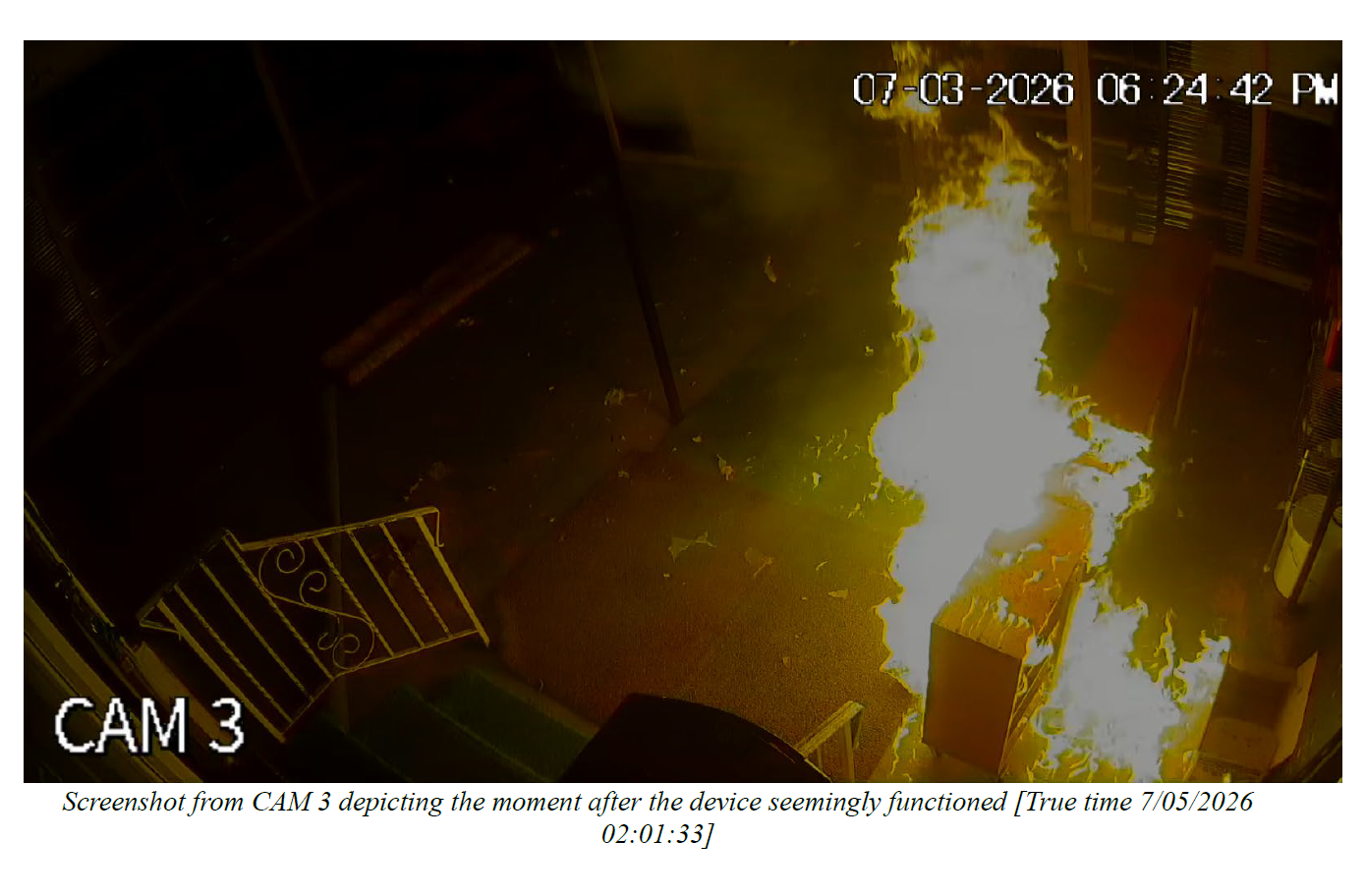
    Image from security video of fire started by an incendiary device on July 5 at the Northeast Philadelphia Islamic Center.U.S. Attorney's Office

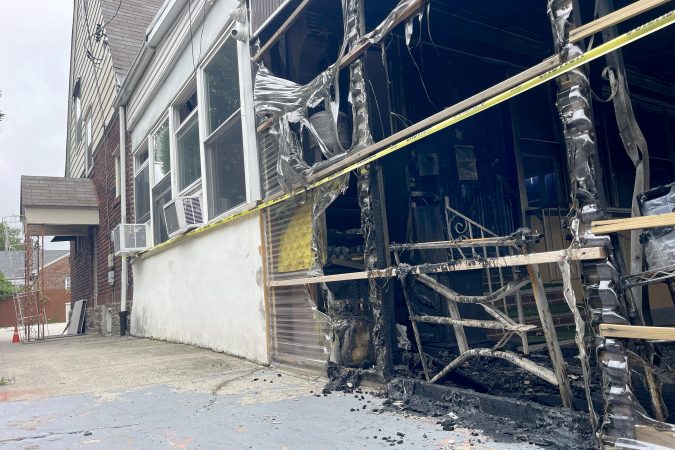
    Lang is accused of attacking the mosque, on the 1400 block of Tyson Avenue, on July 5 around 2 a.m. The building was unoccupied at the time and no injuries were reported, but its front porch sustained significant damage.

    Two days after the attack, authorities received a tip that Lang was involved. Investigators who surveilled his house found his black SUV with handwritten messages and stickers saying things like “White Pride” “F- Islam,” and “Federal Terrorist Hunting License,” prosecutors said.

    On social media, investigators also found what they believed to be accounts linked to Lang that had expressed anti-Islamic views as well as comments on the arson investigation, prosecutors said. One of the posts about the investigation said: “How can it be a hate crime they might have done it out of love,” prosecutors said.

    The local chapter of the Council on American-Islamic Relations, or CAIR, applauded what it called a thorough and meaningful investigation into the attack.

    “This indictment sends an important message that attacks targeting houses of worship because of their faith are not ordinary crimes, they are assaults on the fundamental civil rights and religious freedom of entire communities,” said Dr. Ahmet Tekelioglu, executive director of CAIR-Philadelphia.

  • More than 50 bodies found improperly stored and decomposing at Chicago funeral home

    More than 50 bodies found improperly stored and decomposing at Chicago funeral home

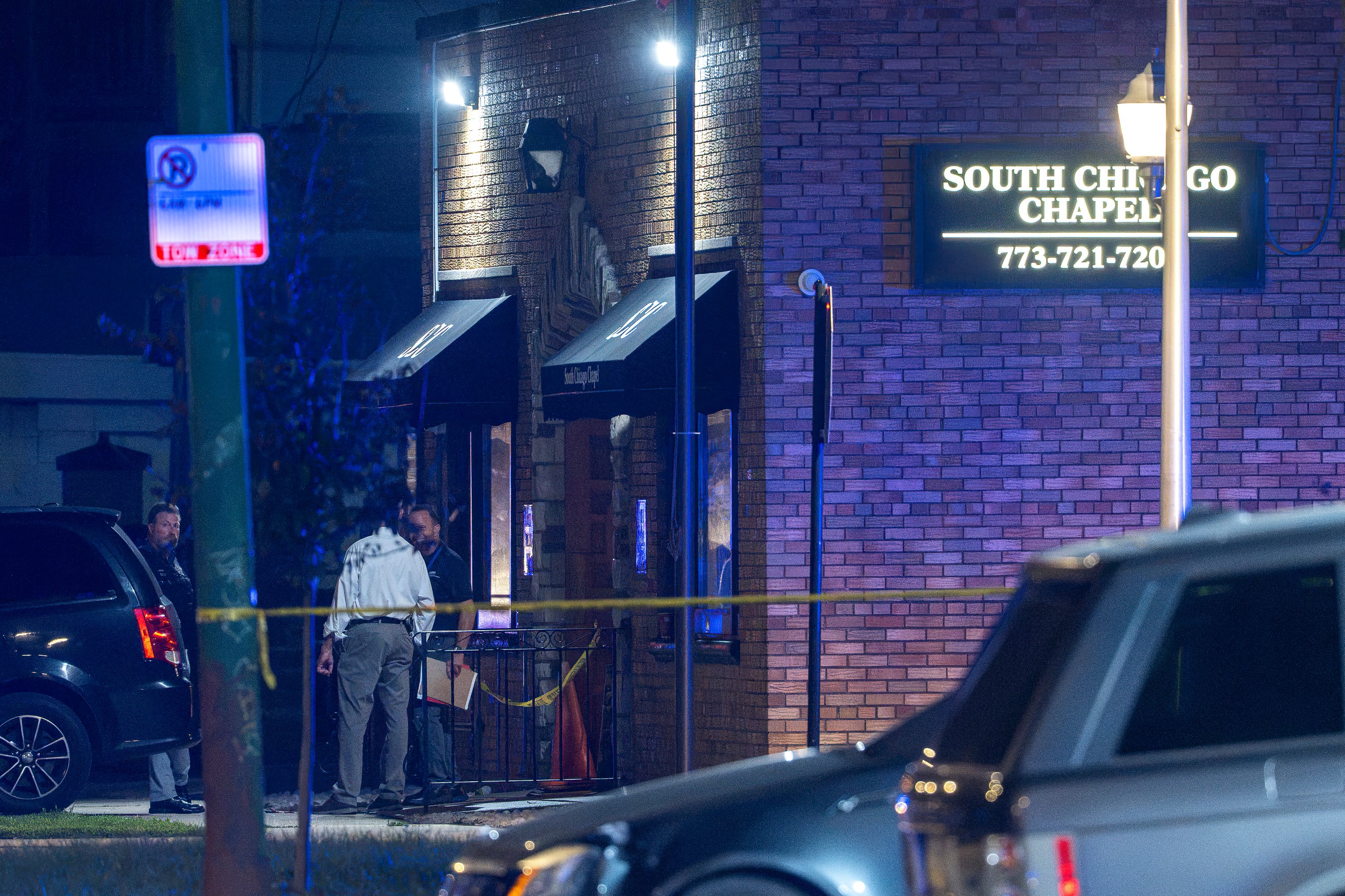
    CHICAGO — More than 50 bodies were found improperly stored and decomposing Thursday at a Chicago funeral home run by a couple who previously operated a crematory that was similarly shut down because of mishandled remains, authorities said.

    Illinois state officials, meanwhile, suspended the license of one of the funeral home’s directors, alleging bodies were being kept in an unrefrigerated area in “deplorable conditions.”

    The Cook County Medical Examiner’s Office said it was notified by state and local officials that bodies were being stored improperly at South Chicago Chapel, and investigators and forensic pathologists were dispatched. The remains were in various states of decomposition, officials said.

    “Staff is assessing the conditions of the remains, searching for documentation regarding identification of the decedents as well as death certificates. This process could take several days to ensure proper disposition,” the medical examiner’s office said in a statement.

    Police said Friday that their preliminary statement on the case incorrectly said that fire department officials declared the scene a hazardous materials incident.

    No arrests have been announced, but city police said detectives are investigating.

    Neighbors told local media outlets that there was a horrible smell coming from the funeral home area.

    Messages for the funeral home were left by phone and through its website Friday.

    State business records show that funeral director Johanna Morgan incorporated South Chicago Chapel Inc. in 2022 and her funeral director’s license was temporarily suspended on Wednesday.

    The state Department of Financial and Professional Regulation said the license suspension was due to “a finding that Respondent’s continued practice is a danger to the public safety, interest, and welfare due to Respondent allowing multiple decedents to be kept in an unrefrigerated area with deplorable conditions including rodent infestation, causing decomposition and maggot infestation of the bodies.”

    The state business records also list Clark X. Morgan as the funeral home’s president. The Department of Financial and Professional Regulation said it revoked the funeral director license of a Clark X. Morgan and fined him $10,000 in 2024 for practicing with an expired license and “unprofessional conduct” that it did not specify.

    State Comptroller Susana Mendoza said Friday that Johanna and Clark Morgan previously ran a crematory in Chicago Heights, south of Chicago, which had its license revoked last year after authorities discovered improperly stored bodies and hundreds of cremated remains that had never been returned to their families.

    Mendoza said many of the bodies at the crematory were stacked on top of each other and not refrigerated.

    “Horrified. Again,” Mendoza said in a statement. “The discovery of decomposing remains waiting to be laid to rest this week at a South Side funeral home is heartbreaking and an abomination. These are people – someone’s mother, father, sister, brother, child, or friend, and they deserve better.”

    Both Johanna and Clark Morgan are listed in Cook County court records as defendants in connection with lawsuits involving Heights Crematory in Chicago Heights, south of Chicago.

    Public records show Johanna and Clark X. Morgan live at the same address in the Chicago suburb of Evergreen Park, and an obituary for Johanna Morgan’s mother lists her husband as Clark. Phone messages were left Friday for numbers listed in public records for Johanna and Clark Morgan, as well as for an attorney listed in records as their business agent.

    South Chicago Chapel’s website says the funeral home is “dedicated to providing compassionate care and personalized services to support families during life’s most challenging moments.”

    The case is the latest in a series of incidents involving mishandled remains over the past three years.

    Last month, police arrested two men in Pueblo, Colo., for allegedly mishandling at least two dozen decomposing bodies and other remains found behind a hidden door in a funeral home.

    That followed the discovery of 18 bodies in various stages of decomposition at a funeral home in Georgia in 2024. In 2023, nearly 200 decomposing bodies were found in a building in Colorado, and another 31 decomposing bodies were discovered at an Indiana funeral home.

  • Cape May, Woodbine water systems targeted in cyberattack. Here’s what we know.

    Cape May, Woodbine water systems targeted in cyberattack. Here’s what we know.

    Two South Jersey towns were victims of cyberattacks last week targeting the water supplies of municipalities across the country.

    Officials in Cape May and Woodbine, both in Cape May County, confirmed their water systems were hacked in the early morning hours of Monday, July 27. While both systems were impacted for about 12 hours, officials say water never stopped running and remained safe to consume.

    “Water treatment, water supply, and monitoring systems continue to operate safely, and routine testing confirms that the water supply remains safe,” Cape May City Manager Paul Dietrich and Woodbine Mayor William Pikolycky said in a joint statement.

    Both said no personal data or customer information was compromised.

    “Most of our systems in Woodbine and Cape May aren’t automated. It’s not online,” Cape May Mayor Zack Mullock told 6abc. “That really saved us.”

    In Cape May, hackers changed the IP address of the water department’s computer system, temporarily locking out officials, according to Dietrich. No water pumps were disrupted, and none of their systems were altered.

    “They just went in and said, ‘Hey, hi, we’re here.’ And left,’” Dietrich told KYW NewsRadio.

    Cape May’s water system also supplies water to West Cape May, Cape May Point, Lower Township, and the U.S. Coast Guard Training Center.

    In Woodbine, about half an hour north of Cape May, the city provides water to about 5,000 people, including campgrounds.

    Similar to Cape May, communications were cut off to Woodbine’s water monitoring system, which was reactivated manually a few hours later. Pikolycky said the impact was minimal, similar to what happens during a power outage.

    “We don’t have a complicated system,” Pikolycky said. “A couple bad actors interrupted our operation a bit, drove us a little nuts. That’s all.”

    No issues in Philadelphia

    At least seven states have been targeted in a wave of cyberattacks on water systems in the U.S., according to the FBI, but so far Pennsylvania doesn’t appear to be among them.

    The Pennsylvania Department of Environmental Protection said there have been no reported attacks on local water systems in the commonwealth, and offered guidance to operators to help prevent future incidents.

    A Philadelphia Water Department spokesperson said the city hasn’t been impacted by cybersecurity threats and “maintains an established cybersecurity program focused on protecting operational integrity and ensuring we are prepared to respond effectively to potential cyber incidents.”

    Who is behind the cyberattacks?

    A water tower in Plymouth, Minn. Ellen Schmidt

    It remains unclear who is targeting local water systems across the country.

    Thirty water facilities were targeted by cyberattacks in Minnesota, according to officials, and nine were impacted in Michigan. Similar to what happened in New Jersey, water systems continued to operate, and there were no impacts on public health.

    “After remotely accessing internet-facing devices, the actors changed the IP addresses and passwords, resulting in a loss of monitoring and control functionality,” the FBI said in a statement.

    Last month, the Cybersecurity and Infrastructure Security Agency — part of the Department of Homeland Security responsible for cybersecurity — released a joint statement with the FBI and CIA linking Iran to a broader range of cyberattacks targeting the same type of hardware hit in Cape May and Woodbine.

    “Iranian cyber actors continue to target U.S. critical infrastructure, and the FBI is committed to identifying, disrupting, and imposing costs on those responsible,” Brett Leatherman, assistant director of the FBI’s Cyber Division, said in a statement.

  • Chris Rabb’s former campaign treasurer was charged with wire fraud for routing money into her own bank account

    Chris Rabb’s former campaign treasurer was charged with wire fraud for routing money into her own bank account

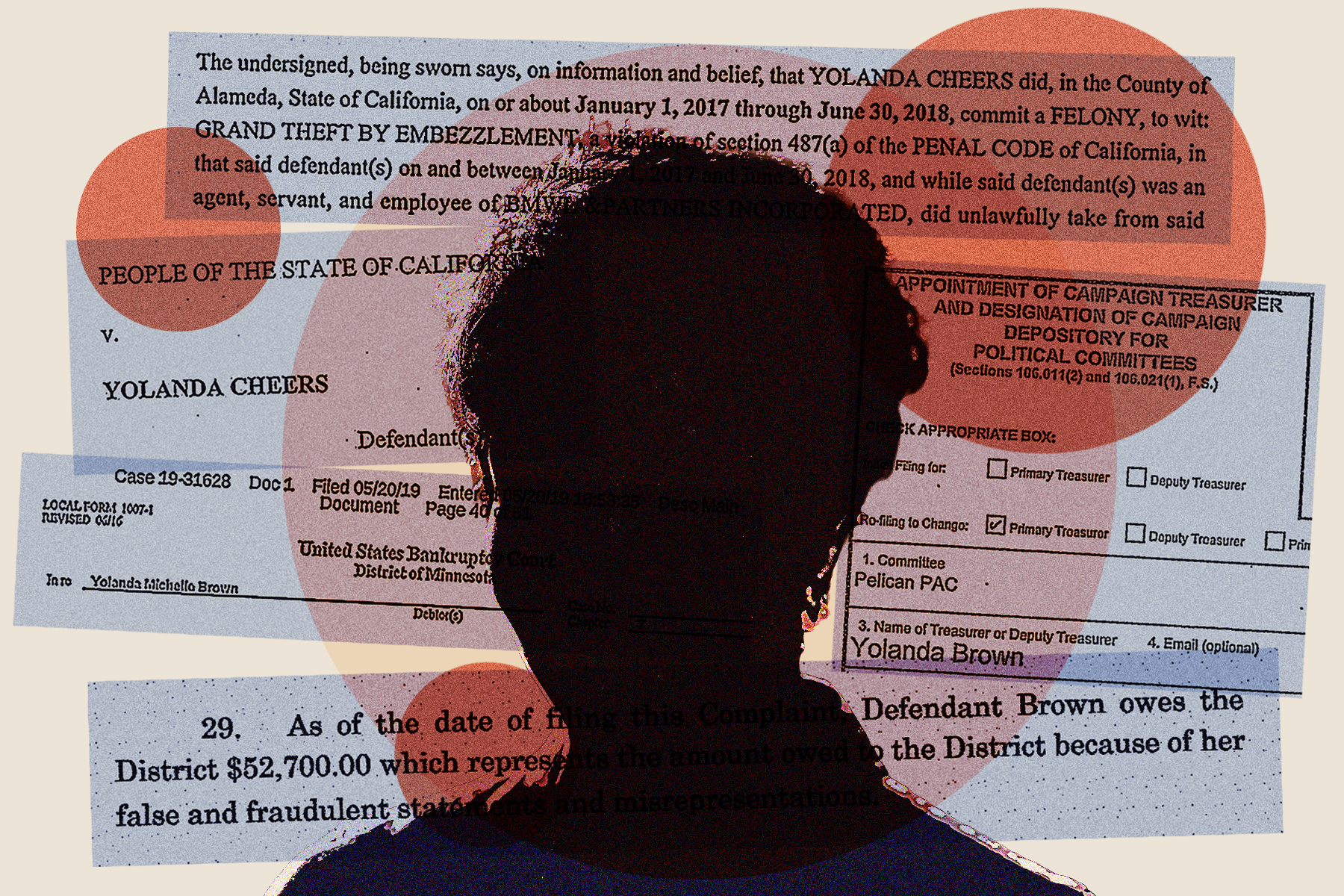
    A Florida-based political consultant who once worked as the campaign treasurer for Philadelphia congressional candidate Chris Rabb was charged Friday with wire fraud after she defrauded more than 20 clients out of about $1 million, according to federal prosecutors.

    Yolanda Brown was charged in federal court in Philadelphia with one count of wire fraud, according to documents unsealed Friday. She was charged by information, which typically indicates a person intends to plead guilty.

    She did not have an attorney listed in court records, and attempts to reach a lawyer who previously represented her were not immediately successful.

    Brown had been under scrutiny for months over allegations from campaigns in several states that she had mismanaged, embezzled, or taken unauthorized withdrawals from accounts meant to support political candidates.

    And Rabb accused her earlier this year of making unauthorized withdrawals from his campaign accounts, saying he had fired her and reported the allegations to federal authorities.

    State Rep. Chris Rabb greets supporters on Tuesday, July 28, 2026.Tom Gralish / Staff Photographer

    While Brown worked on Rabb’s campaign in 2025 and early 2026 — identified in court documents only as “Political Campaign #1″ — prosecutors said she set up new bank accounts on which she could serve as a signatory. She then transferred $19,000 into one of those accounts, they said, and went on to steer about $6,000 into her personal bank account without Rabb’s knowledge.

    In April, Rabb’s campaign said it identified about $160,000 that had been routed into the account Brown had set up. But it was not clear Friday how much of that may have been embezzled for Brown’s personal use, and it is also not uncommon for prosecutors to formally charge a more limited scope of wrongdoing if a defendant has agreed to plead guilty.

    Still, in charging documents, prosecutors said Brown, who ran Brown Financial & Consulting Services Group and worked primarily with Democrats, committed her fraud against Rabb actions as part an “overall scheme” in which she defrauded about 20 clients out of more than $1 million. Prosecutors did not name the other victims, or offer details on how the other cases unfolded.

    Brown has been accused of other wrongdoing in recent years.

    Earlier this year, Ken Welch, the mayor of St. Petersburg, Fla., said Brown embezzled more than $200,000 from his campaign committee. Another Florida-based political consultant also accused Brown of wiring $25,000 out of PAC’s bank account.

    And in 2024, Brown — who also used different surnames, including her married name, Yolanda Rumph — pleaded no contest to felony embezzlement in California, where prosecutors said she stole from two different companies, including a nonprofit. She was ordered to pay $330,000 in restitution but served no jail time.

    An attorney for Brown, Khambrel Davis, told The Inquirer earlier this year that one of Brown’s employees — not Brown — had actually committed the most recent fraud in Philadelphia and Florida.

    But the employee had since disappeared, Davis said, and “everyone’s just assuming [Brown] must have done this. They’re kind of putting together this narrative that she’s just this habitual thief.”

    Rabb — a longtime state representative who won a competitive Democratic primary this spring in the state’s 3rd Congressional District — declined to comment.

  • Police reforms in Quakertown are needed after student ICE protest, Bucks County NAACP says

    Police reforms in Quakertown are needed after student ICE protest, Bucks County NAACP says

    A leader of the Bucks County NAACP and a state legislator on Friday called for reforms in the Quakertown Borough Police Department, saying an investigation that cleared Police Chief Scott McElree of criminal wrongdoing for placing a teenage protester in a choke hold during a confrontation with students earlier this year should not end scrutiny of the incident.

    NAACP president Adrienne King joined State Rep. Napoleon Nelson in urging Quakertown police to adopt stronger use-of-force policies to prevent a similar response in the future. Nelson, a Montgomery County Democrat, also said he plans to introduce legislation establishing statewide restrictions on choke holds and expanding the use of body-worn cameras, among other aims.

    The calls for change came a week after the Bucks County District Attorney’s Office concluded its almost six-month independent investigation into a Feb. 20 brawl that broke out as students protested ICE enforcement. The investigation concluded that while McElree was the “precipitating factor” in the violence — and confirmed that he held a 15-year-old girl in a choke hold for at least eight seconds — he neither committed a crime nor violated his department’s policies.

    In a 20-page report, investigators noted that Quakertown police have no policy restricting choke holds or other neck restraints and that Pennsylvania law likewise places no limits on their use. But investigators said McElree’s decision to engage with the students was “calamitous” and “led to confusion and trauma for an entire community.”

    A panel of four members of the Police Chiefs’ Association of Bucks County had previously concluded that McElree had acted reasonably during the incident. On Friday, the group issued a statement saying it disagreed with investigators’ characterization of McElree’s actions as “calamitous.”

    Investigators also concluded that several students continued assaulting McElree after it became apparent he was a police officer. McElree, who was 72 at the time, suffered what investigators described as “extensive and serious bodily injury,” including fractured ribs, multiple cuts, and a concussion.

    Five students were charged with aggravated assault and various misdemeanors in connection with the confrontation, though their cases were later resolved through diversion agreements.

    On Friday, King and Nelson said Quakertown’s lack of policies governing choke holds underscored the need for reform, regardless of the district attorney’s conclusion that McElree had not acted criminally. “No criminal charges,” King said, “cannot mean no accountability.”

    After George Floyd’s death at the hands of Minneapolis police in 2020, then-Bucks County District Attorney Matt Weintraub announced that all 39 law enforcement agencies in the county had committed to adopting use-of-force policies that met nationally recognized best-practice standards, including restrictions on choke holds.

    But by the start of this year, King said, 13 agencies — including Quakertown’s police department — had yet to update their policies.

    In a statement Friday, borough attorney Peter Nelson said the NAACP’s characterization of Quakertown’s policies was incorrect, saying that the department had adopted the proposed standards before Weintraub announced the countywide initiative. He said borough officials had reached out to the NAACP “to discuss their misunderstanding of our policies.”

    Separately, the district attorney’s office said Friday that Quakertown’s police department does not currently have updated policies in place and that District Attorney Joseph Khan is urging the borough to adopt them.

    Khan considers the adoption of the standards by all law enforcement agencies in the county “a matter of unfinished business” that he “is committed to helping complete,” spokesperson Manuel Gamiz said.

    McElree, who also serves as the borough’s manager, did not return a phone call seeking comment Friday.

    Nelson, the state representative, said the legislation he plans to introduce would include “commonsense measures to help ensure what happened” in Quakertown does not “continue to go unanswered.”

    Meanwhile, the Peace Center of Bucks County plans to host four “listening circles” in Quakertown, where residents will be invited to discuss how the conflict affected their lives.

    Barbara Simmons, the organization’s executive director, called the gatherings an “opportunity to cultivate empathy” in a community that has remained deeply divided since the confrontation.

    The sessions are expected to begin next week, with dates, times, and locations to be posted on the center’s website.