Category: News

  • N.J. Attorney General’s Office investigating fatal shooting of Millville man by law enforcement

    N.J. Attorney General’s Office investigating fatal shooting of Millville man by law enforcement

    The New Jersey Attorney General’s Office said Friday it was investigating the fatal shooting of a 47-year-old Millville man by a sergeant with the Cumberland County Prosecutor’s Office.

    On Thursday morning, police responded to a report of a domestic disturbance on the 300 block of Hazel Boulevard, the attorney general’s office said. During an encounter inside a residence, Cumberland County Prosecutor’s Office Sgt. John Borelli fatally shot Shaun Murphy, the attorney general’s office said.

    The attorney general’s office said a gun was recovered from the scene.

    Under state law, the attorney general’s office is required to investigate all deaths that happen during encounters with law enforcement.

  • In South Jersey, a police standoff ended with a man fatally shot

    In South Jersey, a police standoff ended with a man fatally shot

    An hours-long standoff with police at a home in Millville, N.J., on Thursday ended with a man fatally shot, the New Jersey Attorney General’s Office said.

    The attorney general’s office said it is investigating the shooting. Last night, the Attorney General’s Office of Public Integrity and Accountability identified the man who shot as Shaun Murphy, 47, of Millville. The officer was identified as Cumberland County Prosecutor’s Office Sgt. John Borelli.

    The deadly encounter happened at a white, two-story suburban home near Holly Heights Elementary School and a patch of woods, according to video footage and maps of the area.

    Police showed up outside the house on Hazel Boulevard around 8 a.m. Thursday, according to TV news reports.

    Neighbors described a standoff as police spoke to a man in the house with a loudspeaker, 6abc reported.

    News camera footage showed one window of the home was shattered. Police tape wrapped the property. A New Jersey State Police crime scene investigation unit van was parked outside.

  • 4 men charged with sex trafficking of 2 women in Camden area

    4 men charged with sex trafficking of 2 women in Camden area

    Four men have been charged with sex-trafficking two women in Camden, coercing them with violence, threats, and drugs, New Jersey Attorney General Jennifer Davenport said Friday.

    Keith B. Woodson, 40, of Camden, Lee A. Byrd, 62, of Philadelphia, Raymond H. Cooper, 48, of Sicklerville, and Andre A. Lindsey, 41, of Woodlynne, were charged by indictment with first-degree racketeering, first-degree conspiracy to commit human trafficking, first-degree promoting organized street crime, and related offenses.

    Woodson allegedly met one victim when she was getting off a bus in Camden and enticed her with the promise of making $1,000 a day, prosecutors said. The woman, who was dependent on narcotics, agreed. She allegedly turned over the money she was paid for sex acts to Woodson, who supplied her with ecstasy, Percocet, and Adderall.

    When she disobeyed Woodson, he allegedly choked her until she passed out and threatened to kill her and her family, prosecutors said.

    Woodson allegedly threatened violence against a second woman’s family if she tried to leave, and told her he expected her to see four to five men daily, Monday through Friday, prosecutors said.

    Woodson allegedly posted photos of the second woman on illicit sex websites to attract customers, and he allegedly solicited men from a bar and a convenience store he frequented, authorities said.

    Prosecutors said Woodson rented hotel rooms, bought supplies, and arranged meetings between the woman and patrons and collected the money that was paid to the woman, who feared that he would hurt her physically or withhold food.

    The other defendants are also accused of trafficking the second woman, driving her to various hotels, standing watch outside, and then collecting the money, prosecutors said. Cooper also allegedly provided Woodson with drugs to give to the second woman.

    All four men carried guns, Davenport said.

    “This indictment describes a cycle of violence and abuse that was used to force the victims into prostitution,” Davenport said in a statement.

    “People engaged in human trafficking exploit vulnerable victims for financial gain, and we will always work to hold them accountable and provide help and support to the victims,” Davenport said.

  • N.J. attorney general announces investigation into detainee deaths at Delaney Hall

    N.J. attorney general announces investigation into detainee deaths at Delaney Hall

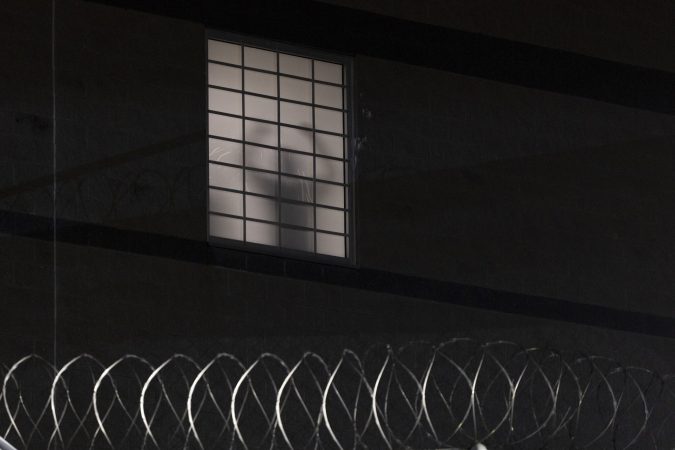
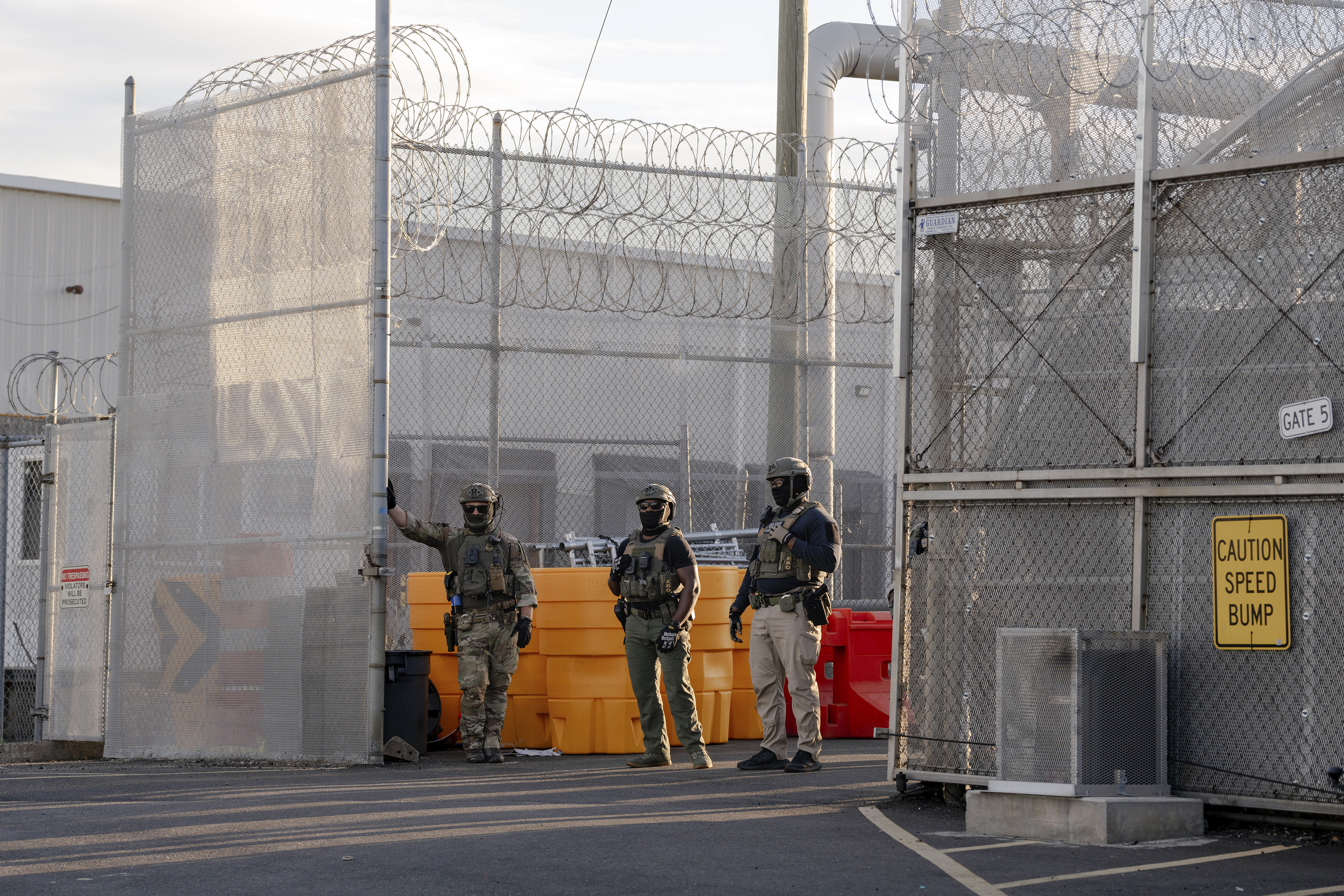
    New Jersey Attorney General Jennifer Davenport announced Friday that her office’s civil rights division is investigating the operation of Delaney Hall, the privately run ICE facility in Newark where several detainees have died.

    Davenport said the investigation will look into how the facility is run by the GEO Group Inc. and whether its employees have violated the civil rights of people detained there, citing reports about conditions and the deaths.

    On Aug. 1, Edwin Jeovanny López Cornejo, 41, died in ICE custody after having a medical episode at Delaney Hall. His family said he had been living in the United States for two decades.

    Concerns have been raised about the death in December of Jean Wilson Brutus, a 41-year-old Haitian, shortly after he arrived at Delaney Hall.

    Congressional Democrats this week alleged that a third person at the facility had died.

    Critics say detainees at Delaney Hall endure poor conditions. The facility has been the subject of ongoing protests and clashes between federal officials and elected Democrats.

    File photo of Immigration and Customs Enforcement agents watching protesters at Delaney Hall, an immigration detention center, in Newark, N.J., on June 7, 2026.LEXI PARRA

    “New Jersey has both a legal and a moral duty to stand up for the civil rights of people within our state,” Davenport said in a statement.

    “For people who are held involuntarily, including by a private corporation like GEO Group, those rights include the right to humane treatment and adequate medical care,” Davenport said.

    “We will take every action available under law to safeguard these core legal principles. We ask individuals to share their personal experiences with us so that we can take action to ensure that rights are protected,” she said.

    Anyone with information that could be helpful for the investigation can contact the New Jersey Attorney General’s Office Division of Civil Rights at AffirmativeEnforcement@njcivilrights.gov.

    A spokesperson for the GEO Group referred questions to U.S. Immigration and Customs Enforcement.

    Spokespersons for ICE and the U.S. Department of Homeland Security could not be reached for comment Friday evening.

    The Trump administration has previously rejected calls for Delaney Hall to be closed as it pursues mass deportations.

    Gov. Mikie Sherrill said in a statement that the investigation was necessary.

    “We’ve heard the reports of disturbing conditions and have been heartbroken by recent deaths of detainees at the facility,” Sherrill said.

    “ICE and The GEO Group have continued to block our efforts for a full health inspection and there are now reports that visitations have been stopped. We will not tolerate a facility that abdicates any transparency and accountability,” Sherrill said.

    “I have long opposed private detention facilities, and my position is clear that Delaney Hall should be closed. My administration will continue to do everything in our power to hold ICE and The GEO Group accountable to New Jersey laws,” the governor said.

    On Thursday, U.S. Sen. Cory Booker (D., N.J.) called for the closure of Delaney Hall but was rebuffed by Senate Republicans.

    “A body count is not normal. A mother’s son whose face went numb the night before is not normal. Edwin Lopez Cornell’s death was preventable. Keeping Delaney Hall open is another deliberate decision to let it continuing,” Booker posted on social media.

    Also on Thursday, all nine House Democrats in New Jersey sent a letter to Homeland Security Secretary Markwayne Mullin and acting ICE Director David J. Venturella asking for detailed information about the deaths and conditions at the facility.

    “Three deaths, repeated allegations of medical neglect, restricted oversight, and less public transparency are a terrible track record of care for individuals in your custody,” the Democrats wrote.

    “At this point, the question is no longer whether ICE knows what is happening inside Delaney Hall. It is, ‘why does ICE continue to allow the GEO Group to put lives at risk?’” they wrote.

  • A Russian retail giant’s warehouse burns after Ukraine’s latest long-range drone attack

    A Russian retail giant’s warehouse burns after Ukraine’s latest long-range drone attack

    Ukrainian long-range drones hit a warehouse of Russia’s biggest online retailer in the Ural Mountains, more than 1,200 miles from the two countries’ border, local officials and the company said Friday.

    Ukraine has regularly hit targets in the distant Urals this year and has even struck a Russian oil refinery in western Siberia, nearly 1,550 miles from the border. The attacks are examples of how Kyiv has used drone innovation as a key part of its response to the invasion by its much bigger enemy more than four years ago.

    Its successes have drawn international interest and drone cooperation agreements with nine countries, with further deals being negotiated with 15 other countries, according to Kyiv officials.

    Wildberries said its warehouse in Yekaterinburg, Russia’s fourth-largest city, was set ablaze by the attack. Most merchandise wasn’t damaged, the company said, unlike at some of the more than a dozen other Wildberries depots struck by Ukraine in recent weeks that have burned down.

    The regional governor, Denis Pasler, said three drones hit the warehouse’s roof. Artyom Zhoga, the Kremlin’s representative in the region, said that 800 people were evacuated from the warehouse and nobody was hurt.

    Kyiv is trying to rattle the Russian public and the Kremlin with the attacks.

    Russian President Vladimir Putin chaired a meeting Friday of the country’s Security Council. He said in televised opening remarks that the meeting would focus on additional measures to “strengthen … protection of infrastructure facilities” but gave no further details.

    Ukraine presses on with plans for new weapons

    Ukrainian President Volodymyr Zelensky is pushing for his country to keep up the pace of technological development, especially in air defense systems to help stop Russian ballistic missiles that are exploiting Ukraine’s shortage of American-made Patriot interceptor missiles and battering civilian areas.

    A joint European anti-ballistic development program is already underway, Zelensky said late Thursday, with 10 countries engaged in developing an anti-ballistic shield. Europe is concerned about Moscow’s ambitions on the continent beyond Ukraine.

    “Ukraine is capable of producing its (anti-ballistic) missile and launcher, while our partners will provide the necessary components and critical elements — radars, sensors, and everything else required,” Zelensky said on social media. “An anti-ballistic program of our own — one that is truly large-scale — will greatly benefit everyone in Europe.”

    At the same time, Ukraine is working on manufacturing its own ballistic missiles to use against Russia. “The tests have shown strong potential. We need to turn this into a real weapon,” Zelensky said.

    Defenders are under pressure in eastern Ukraine

    Ukrainian front-line defenses in eastern regions, meanwhile, remain under strain as Russia’s bigger army looks for a breakthrough after months of minimal advances that Western analysts and officials say have had a high cost for Moscow in troop casualties.

    Ukraine has been evacuating children from Kramatorsk, one of the four eastern Donetsk region cities that make up the Ukrainian so-called Fortress Belt. The line of four large and heavily defended cities, about 30 miles long, has been key to denying Moscow its goal of seizing Ukraine’s industrial heartland.

    The head of the Donetsk region’s regional military administration, Vadym Filashkin, said Friday that more than 800 people, including 91 children, were evacuated over the previous 24 hours.

    Ukraine has been deploying midrange strike drones to disrupt Russia’s supply lines and slow its advance.

    Zelensky said that the recently appointed commander-in-chief of the Ukrainian armed forces, Maj. Gen. Mykhailo Drapatyi, reported to him Friday about the military situation in Donetsk.

    He said in a social media post that they reached “an understanding of how to strengthen” Ukraine’s defenses there but gave no details.

    Russia and Ukraine sustain nightly drone attacks

    Russia’s air defenses downed 203 Ukrainian drones from late Thursday through early Friday, the Defense Ministry in Moscow said.

    Over the past week, the Russian military struck 31 bulk cargo vessels and three tugboats that operated “in the interests of the Ukrainian armed forces,” it said.

    It added that late Thursday two ships were hit by Geran-4 drones in the Black Sea east and southeast of Odesa and one was struck in the Ukrainian port of Chornomorsk.

    In other attacks, the ministry said that the military hit a facility assembling long-range drones in Okhtyrka in the Sumy region on Thursday. It also released a video of a train purportedly carrying military equipment struck by a Geran drone and then an Iskander ballistic missile near Vyshneve in the Dnipropetrovsk region.

    Meanwhile, Russia attacked Ukraine with 147 long-range strike drones overnight, according to the Ukrainian air force.

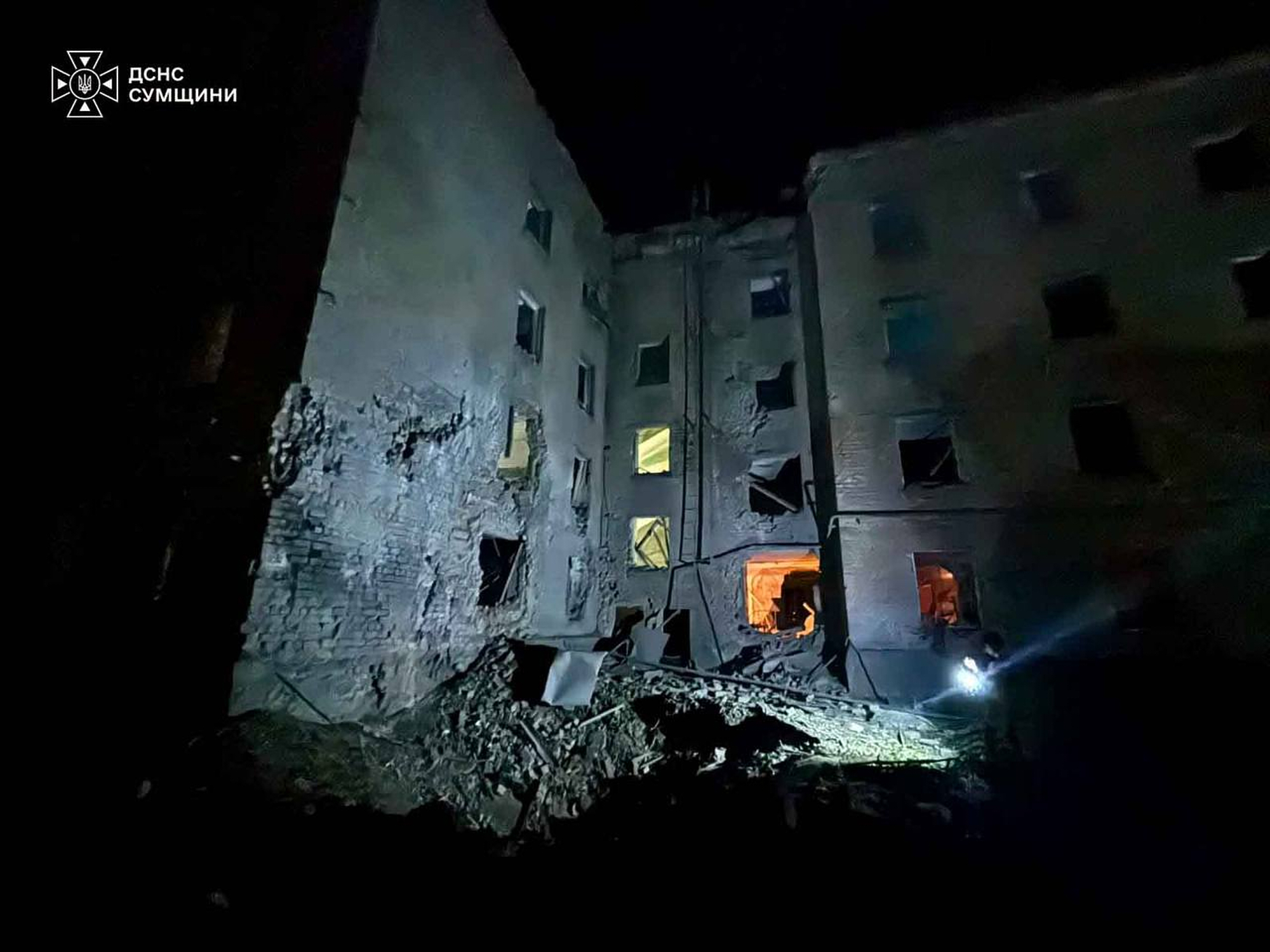
    In Ukraine’s northern Sumy region, a Russian drone struck a busy market Friday morning, wounding 10 people, authorities said.

    Russia also launched glide bombs and drones of various types at the regional capital, according to the head of regional administration, Oleh Hryhorov.

    The attack targeted residential buildings, transport, and infrastructure, wounding two people, he said.

  • 2 soldiers killed in Lebanon in the first Israeli deaths since June truce with Hezbollah

    2 soldiers killed in Lebanon in the first Israeli deaths since June truce with Hezbollah

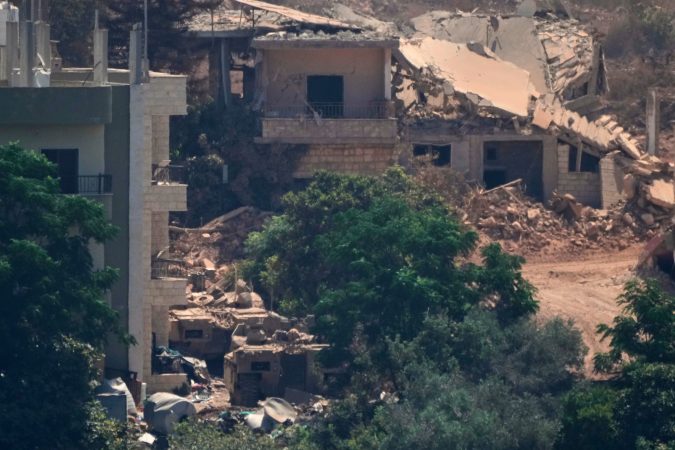
    BEIRUT — Two Israeli soldiers were killed in an explosion in southern Lebanon, Israel’s military said Thursday, the first Israeli deaths since a shaky truce between Israel and the Lebanese militant group Hezbollah began nearly two months ago.

    Four other soldiers were seriously wounded, the military said. An Israeli military official, who spoke on condition of anonymity in accordance with the army’s policy, said that “an explosion was detonated” when the soldiers entered a site in the village of Majdal Zoun and that the nature of the explosive was under review.

    Israeli media reported the two deaths a day earlier.

    The Israeli army launched strikes Wednesday in southern Lebanon in response to what it described as Hezbollah’s violation of the ceasefire and called on residents of the village of Mansouri to flee — the first such warning Israel has issued in Lebanon for weeks.

    Lebanon’s Health Ministry said one person was killed and 12 wounded in an Israeli strike in the town of Tebnine Wednesday and another eight wounded in overnight strikes on the village of Burj al-Shemali. Artillery shelling also targeted the areas of Mansouri and Majdal Zoun, the state-run National News Agency said.

    There was no statement from the Iran-backed Hezbollah.

    The latest Israel-Hezbollah war erupted on March 2, when Hezbollah fired rockets across the border two days after the U.S. and Israel launched their attacks on Iran. More than 4,000 people have been killed by Israeli strikes in Lebanon since then, including hundreds of civilians. About 40 soldiers and three civilians — including a military contractor — have been killed on the Israeli side.

    A precarious truce between Israel and Hezbollah has largely held since June 20, but Israeli forces have continued to occupy swaths of southern Lebanon and to carry out periodic airstrikes and shelling.

    The U.N. peacekeeping force in southern Lebanon known as UNIFIL said it had recorded 113 projectiles launched by the Israeli military on Wednesday, the highest number recorded since June 21.

    The latest escalation came as Lebanese and Israeli negotiators met in Rome to discuss implementation of a June 26 deal reached between Israel and the Lebanese government under which Israeli forces are supposed to withdraw from areas they occupy in southern Lebanon and allow the Lebanese army to take control, in exchange for Hezbollah’s disarmament.

    Hezbollah has refused to disarm and opposed the direct Lebanon-Israel talks. It was not a party to the deal. The group has accused the Lebanese government of making too many concessions without guaranteeing an Israeli withdrawal.

    Wednesday’s talks ended early due to the escalation on the ground, but resumed on Thursday.

    The talks in Rome have focused on implementation of “pilot zones” where Israeli forces would withdraw and the Lebanese army would take control. Implementation began last month with an initial pilot zone in an area that wasn’t occupied by Israeli forces but had previously sustained Israeli fire.

    The Lebanese army entered the town of Zawtar al-Gharbieh and some civilians returned, although many came only to find their homes destroyed and left again.

    A diplomat familiar with the negotiations who spoke on condition of anonymity because they were not authorized to comment publicly said earlier this week that Lebanon had asked for the next pilot zone to be either in the town of Khiam or Bint Jbeil. Both areas saw heavy fighting in the latest Israel-Hezbollah war and are currently occupied by Israeli forces.

    But U.S. Ambassador to Lebanon Michel Issa suggested ahead of the three-day talks that no new pilot zones would be immediately implemented, saying that “moving too quickly risks jeopardizing the very civilians this process is meant to protect.”

  • Student kills at least 7 people at a high school and a home outside Bangkok, officials say

    Student kills at least 7 people at a high school and a home outside Bangkok, officials say

    NONTHABURI, Thailand — A student opened fire at a high school outside Bangkok on Friday, killing at least five people and wounding more than 20, according to authorities, who said he also appeared to have killed his two grandparents at the family home earlier in the morning.

    The 14-year-old shooter took his own life at the school, officials said.

    Five school staff members, including teachers and administrators, died in the shooting around 10 a.m. at Debsirin Nonthaburi School in Nonthaburi province northwest of Bangkok, Deputy Interior Minister Polapee Suwunchwee said at the scene.

    The boy also killed his grandparents at the home he shared with them prior to the school shooting, Polapee said.

    Bangyai Hospital, about 3 miles from the school, said 23 people were wounded, of whom 10 were in critical condition, with most suffering gunshot wounds. Earlier reports gave conflicting casualty numbers.

    A witness said students hid inside a classroom while they heard gunshots from another building before police officers knocked on the door and cleared a way for them to leave the building.

    Amporn Niamfuang, who owns a restaurant 160 feet from the school, said there was the sound of a single gunshot and then a pause.

    “And then there were multiple continuous shots,” Amporn said, recalling the narrow road outside the restaurant filling with fleeing students. “Students were running scared and pouring onto the street. Young girls were holding each other’s hands and crying. I went inside to hide.”

    Prime Minister Anutin Charnvirakul, speaking after touring the school, confirmed reports that the shooter was 14 and had killed himself. He said the student had shown signs of stress connected to school.

    The gun, described by police as small and compact, was legally registered to the student’s grandfather, he said.

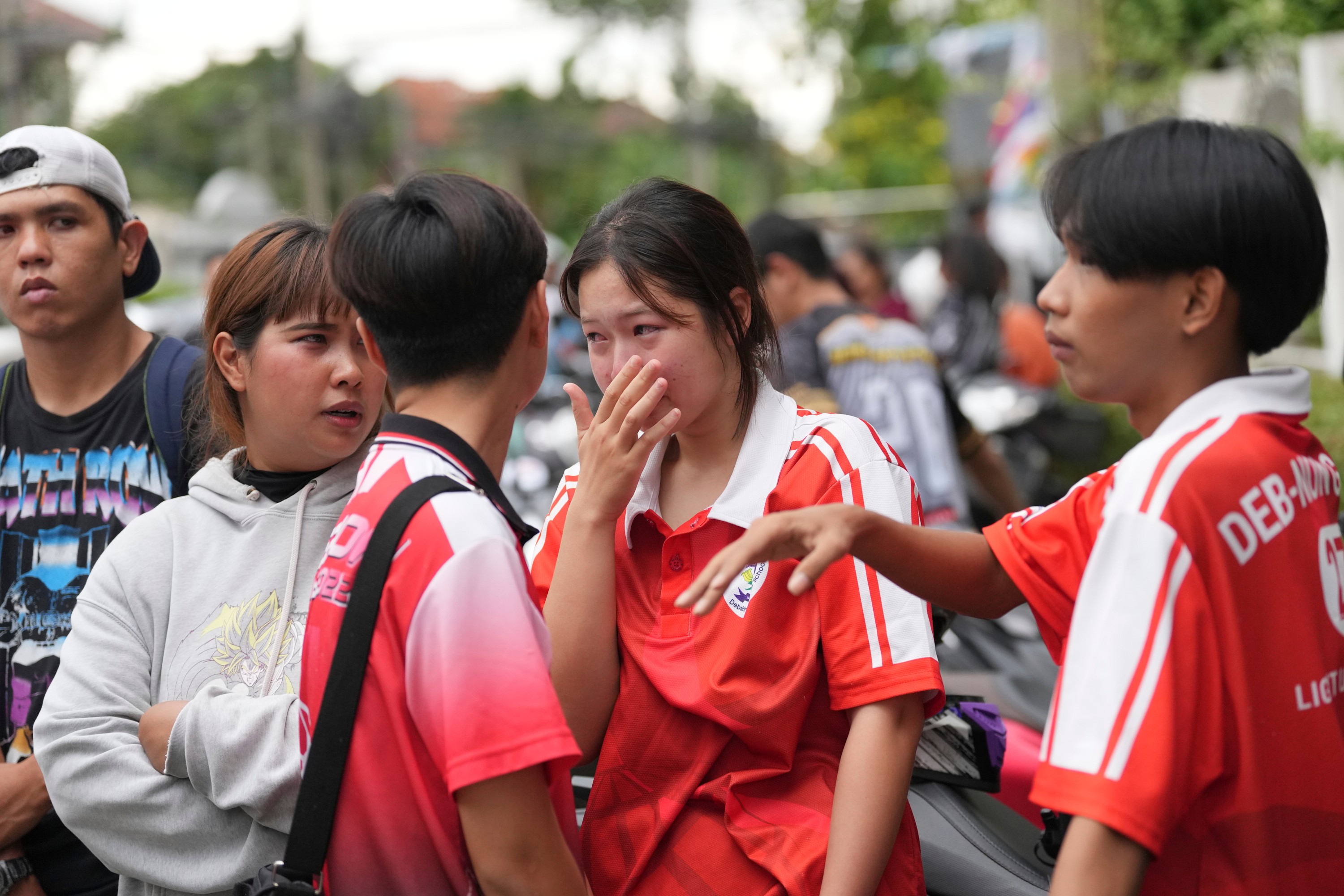
    About an hour after the shooting, people stood outside comforting one another as police and first responders walked around the co-educational state school, which has an enrollment of about 3,000 students ranging from 12 to 18 years old.

    All classes will be suspended from Monday through Friday, and school staff have been instructed to work from home during that time, the school said.

    Police find grandparents dead at family home

    After the shooting, police went to the student’s home and found both grandparents dead of apparent gunshot wounds, regional police Commander Wattana Yeejeen said.

    The student appeared to have shot them before attending school as normal. He waited until classes started and began shooting inside his classroom before walking out and firing more shots, police spokesperson Trairong Piwpan said.

    The boy fired more than 20 shots and police found he still had 30 rounds after shooting himself, he said.

    Several family members, including his uncle and sisters of the grandfather who were at the family home while police investigated, said he usually kept to himself and was a good student.

    The family members said they were unaware of any troubles he faced at home or school.

    Thailand has high rate of gun owners

    Thailand has one of the highest rates of gun ownership in Asia, second only to Pakistan and far surpassing its other Southeast Asian neighbors.

    Data collected in 2017 by the groups Small Arms Survey and GunPolicy.org in their last extensive international study found civilian gun ownership in Thailand was about 15.1 guns per 100 people, compared with less than one per 100 in neighboring Malaysia.

    Thailand had 3.49 deaths by firearms per 100,000 people, according to 2023 statistics published by World Population Review. That puts it well behind parts of Latin America and the Caribbean, but relatively high in Asia. Only the Philippines is higher in Southeast Asia.

    In February, a 17-year-old stole a gun from police and opened fire at a public high school in southern Thailand, briefly taking people hostage in a two-hour attack that killed one person and injured two others.

    A 14-year-old boy was accused of a 2023 shooting at a major Bangkok shopping mall.

  • White House drafting order on vaccines, autism despite pollsters’ warnings

    White House drafting order on vaccines, autism despite pollsters’ warnings

    White House officials are drafting an executive order focused on the childhood vaccine schedule and autism, according to four people familiar with the matter. The order would continue to spotlight a divisive issue that Republican pollsters have warned carries political risk ahead of November’s midterm elections and would follow the confirmation of a new CDC director who has promised to uphold the scientific integrity of the agency.

    The aim is to focus on the vaccine schedule, research around autism, and parental choice, according to three people familiar with the matter, who like others spoke on the condition of anonymity to share internal deliberations. Further details and timing of the order remain unclear, and it is subject to change.

    The effort underscores President Donald Trump’s determination to elevate vaccine policy within the administration even as a federal judge has halted Health Secretary Robert F. Kennedy Jr.’s sweeping overhaul on this front, including changes to the childhood immunization schedule.

    The development also comes after a federal advisory committee on autism last month released a draft update to a federal strategic plan that sets priorities for autism research and serves as a blueprint for federal research funding.

    In a statement Thursday, White House spokesperson Kush Desai said, “President Trump has been clear: America must have the best childhood vaccine schedule in the world.”

    He added: “The Administration remains steadfastly committed to delivering on this presidential priority with Gold Standard Science for the countless parents whose questions and concerns about vaccinations have been ignored or mocked.”

    Trump has questioned whether the number of childhood vaccines can cause autism, despite decades of research finding no link. At a Cabinet meeting last week, Trump asked Kennedy for an update on autism research.

    “We will have an answer for you,” Kennedy replied.

    Kennedy, the founder of a prominent anti-vaccine group, has long disparaged vaccines and argued they have not been properly studied, including during an appearance on CNN last weekend. The comments have alarmed medical experts who say commonly administered shots are safe and effective.

    In recent months, Kennedy has publicly leaned into his health department’s quest to improve food and drug pricing instead of vaccines. But behind the scenes, Kennedy’s allies are continuing work to reshape the federal apparatus guiding vaccines, including crafting studies to research a wide range of vaccine-related questions, including whether routine immunizations are linked to autism, autoimmune disorders, and other medical conditions.

    After a federal judge halted the Department of Health and Human Services’ reduction of immunizations in the childhood schedule, the Trump administration released an executive order in late May directing the health department to realign the schedule with those of other developed countries that recommend fewer shots. It was not immediately clear how the new executive order would differ from the earlier directive.

    ‘It’s a personal issue for him’

    Trump last year announced moves that he said would combat the rise of autism in the United States. The president in September warned pregnant mothers against taking Tylenol and touted the potential of leucovorin as an autism treatment.

    “I told them … we have to find out” the causes of the condition, Trump said, flanked by Kennedy and other administration officials at the White House.

    The warnings from Trump and U.S. health officials on acetaminophen, the active ingredient in Tylenol and hundreds of other medications, represented a major shift in public health guidance. Research has yet to bear out the president’s claims on Tylenol and leucovorin.

    Trump has privately questioned why his administration has yet to release new recommendations on vaccines and urged his deputies to move faster, according to two people who spoke on the condition of anonymity to describe internal discussions. The Wall Street Journal first reported that Trump was pushing to prioritize the study of vaccines and autism.

    “It’s a personal issue for him,” said one of the people, an administration official with knowledge of Trump’s comments. Trump has repeatedly invoked his own theories on the rise in autism, shaped by conversations with friends and advocates. Trump has previously said that he and his wife, first lady Melania Trump, deliberately spaced out childhood vaccines for their 20-year-old son, Barron.

    Trump has repeatedly pressed Kennedy on his agency’s autism efforts in public cabinet meetings, including five minutes of back-and-forth during an October meeting.

    “I’m addressing it the best I can as a nondoctor, but I’m a man of common sense,” Trump said then.

    ‘Never betray the science’

    On Wednesday, the Senate confirmed Erica Schwartz to helm the Centers for Disease Control and Prevention, which makes recommendations on vaccines.

    The CDC has been without a permanent leader for most of Trump’s second term. Susan Monarez, who served in the role for less than a month, told senators she was fired last year after Kennedy pressured her to support changes to the childhood vaccine schedule.

    During her confirmation hearing, Schwartz was repeatedly pressed by senators on whether she would defend the CDC’s scientific integrity if political directives conflicted with the evidence. She pledged that she would “never betray the science” but stopped short of saying she would publicly oppose Kennedy if he directed the agency to take actions she believed were unsupported by scientific evidence.

    Schwartz said she had not reviewed a CDC webpage that suggests a connection between childhood vaccines and autism, and declined to say whether it should be removed. She said, however, that the existing medical evidence does not support a link.

    In July, the Interagency Autism Coordinating Committee released a 336-page draft strategic plan. Some advocates say the draft from the federal autism advisory committee shifts the field toward investigating autism as a result of medical injury, despite decades of research showing that autism is primarily rooted in genetics and early brain development. Although the plan does not explicitly identify vaccines as a cause of autism, critics say references to a potential “exposure or biological event” that might lead to autism echoes the framework long advanced by Kennedy and others who have promoted the debunked claim that vaccines cause autism.

    The autism advisory committee was reconstituted earlier this year by Kennedy, who appointed members who have echoed his controversial views and advocated for unproven treatments.

    The draft strategic plan “doesn’t mention or describe the cause of medical injury, but we can read between the lines,” said Alison Singer, president of the Autism Science Foundation. “The President and the HHS Secretary have been very vocal in the past about their belief that vaccines cause autism, as have several public members of the new federal IACC in their past statements, despite overwhelming scientific evidence to the contrary.”

    Singer said the concern is less about what the draft says than the research agenda it establishes.

    Current research suggests that autism is largely written into our biology. Scientists have identified hundreds of genetic variants that collectively shape the developing brain. The evidence now points more clearly in one direction: Autism begins before birth and is not caused by vaccines or any single environmental factor. Vaccines are the one environmental factor that have been studied most extensively, she said, and large studies across multiple countries have found no evidence that they cause autism.

    But an executive order linking childhood vaccines to autism could be viewed as providing “backup ammunition and another legal document,” one administration official said on background, to revisit vaccine-related research in a final version of the strategic plan.

    Kennedy was slated to visit the Atlanta-based CDC on Friday, where he was to participate in a ceremony marking the first anniversary of a gunman spraying hundreds of bullets at the agency’s headquarters. Investigators said the gunman appeared motivated by distrust of coronavirus vaccines.

  • Haverford College and Jewish group settle lawsuit over antisemitism allegations

    Haverford College and Jewish group settle lawsuit over antisemitism allegations

    Haverford College and a Jewish group suing the school over its handling of antisemitism allegations have reached a settlement, according to federal court documents.

    The documents in the U.S. District Court for the Eastern District of Pennsylvania did not include details of the settlement, but a lawyer for the plaintiffs says Haverford President Wendy Raymond’s statement to the college community immediately following the settlement announcement Friday was part of it.

    “I want to take this opportunity to publicly acknowledge that those members of our community with a commitment to the state of Israel as the Jewish homeland have been deeply hurt by events that have transpired on our campus since Oct. 7, 2023, and that that constitutes a failure on our part,” wrote Raymond, who leads the 1,470-student highly selective liberal arts college on the Main Line. “We commit ourselves to doing better going forward.”

    The lawsuit was filed in May 2024 as tensions mounted on many college campuses, including Haverford, in the wake of the Israel-Gaza war, following Hamas’ 2023 attack on Israel. In their complaint, the plaintiffs, three students and the group Jews at Haverford, alleged that the college discriminated against Jews by tolerating antisemitic speech and failing to adequately support Jewish students, some of whom have been shunned on campus and prohibited from participating in group discussions where the war was discussed.

    They are represented by an attorney for The Deborah Project, a public interest think tank that defends the rights of Jewish people facing discrimination in the education system.

    Raymond, in her statement, repeatedly stated that students who support Zionism, which she defined as “the right of the Jewish people to self-determination and statehood in the land of Israel,” are welcome at Haverford and will have “equal access” to all educational programs and activities.

    “Harassing, excluding, or seeking to silence Jewish community members on the basis of their beliefs, their commitment to Jewish observance, or any other element of their Jewish identity, including Zionism, is anathema to the college’s core principles of trust, concern, and respect,” she wrote, noting that the policy applies to offices, classrooms, and student-led organizations and activities.

    She said such behavior is a violation of college policy and that those who engage in it would be subject to disciplinary action, and that no Haverford professor can discriminate against or treat differently students based on their commitment to Judaism, Israel, or Zionism.

    Support of Zionism has been a flashpoint in the debate over what constitutes antisemitism, with some arguing it’s wrong to conflate antisemitism with anti-Zionism.

    Lori Lowenthal Marcus, an attorney for The Deborah Project, which represents plaintiffs, called the settlement “fantastic.” She said Raymond’s statement was part of the settlement, and Marcus said she would be releasing more details on Saturday.

    “Plaintiffs are very pleased that they will be protected and respected on Haverford’s campus,” Marcus said Friday.

    Stating that students who support Zionism will be protected was important to plaintiffs, she said.

    “It’s a new form of antisemitism, saying, ‘Oh, no, I don’t hate Jews, I just hate Zionists,’” she said. “For a Jew to hear that was incredibly painful and led to students really hiding their identities when no one should be forced in any way to hide their identity, including Jewish students who believe in the right of Israel to exist as a Jewish state.”

    When the complaint was initially filed in May 2024, one student, Ally Landau, a women’s basketball player who has since graduated, was named in addition to the group Jews at Haverford. Since then, two others were added with their initials.

    In their complaint, plaintiffs said, the college failed to condemn Hamas’ attacks on Israel even though it had issued past statements in support of other minority groups, including Black people following the murder of George Floyd by police.

    Among other allegations, the group said that a professor called students who supported Israel “racist genocidaires,” which the college did not challenge, and that the school allowed students to host an event where it was asserted that Israel had intentionally infected Palestinians with the coronavirus.

    Haverford at the time declined to comment on the lawsuit.

    A federal court in February 2025 dismissed the lawsuit, calling the complaint “sprawling and disorganized,” but the plaintiffs refiled.

    In May 2025, Raymond was grilled by a congressional committee investigating colleges’ handling of campus antisemitism allegations. She drew fire for reluctance to answer questions about discipline in such incidents, especially in specific cases.

    She also issued a statement at that time, saying that the college “came up short” in dealing with the conflict and said both she and Haverford can do better.

    “To Jewish members of our community who felt as if the college was not there for you, I am sorry that my actions and my leadership let you down,” she wrote at the time.

    The Haverford chapter of the American Association of University Professors, a group of nine Jewish faculty and staff, and more than 50 Jewish students at Haverford had written letters to the committee or issued statements in support of Haverford.

    The faculty and staff group, noting they are diverse with some supporting Israel and others not, said at that time they “do not feel that our college is a hotbed of antisemitism.”

    “We are all deeply concerned by how you are weaponizing our pain and anguish for your own purposes …,” the students wrote to the congressional committee. “It is a blatant assault on our Black, Brown, transgender, queer, noncitizen, and Palestinian peers.”

    Since the congressional committee hearing, tensions have at times continued to flare. Earlier this year, Haverford vowed to make changes in its event policies after a talk by an Israeli journalist speaking on campus was disrupted, including by a protester who shouted through a bullhorn “Death to IOF,” or Israeli Occupying Forces, a name critics use to refer to Israel Defense Forces, and “Shame.”

    In her statement to the campus community Friday, Raymond said it is never acceptable to let disagreements over the policies and actions of government “descend into the realm of discrimination, harassment, or bias.

    “All members of the Haverford community who wish to express their considered perspectives must do so respectfully while allowing others to do the same.”

    The two sides said in court documents they agreed to settle in order “to avoid the further expense, disruption, and uncertainty of litigation, all without admitting liability.”

    Raymond, a molecular biologist who has led the college since July 2019, announced last November that she would step down in June 2027.


  • Beloved author Benjamin Alire Sáenz, first Latino PEN/Faulkner winner, dies at 71

    Beloved author Benjamin Alire Sáenz, first Latino PEN/Faulkner winner, dies at 71

    NEW YORK — Benjamin Alire Sáenz, an award-winning fiction writer and poet who drew upon his sexuality and his life on the Southern border, has died at age 71. He was the first Latino to win the PEN/Faulkner prize.

    Mr. Sáenz, who produced a story collection that won the PEN/Faulkner prize and a young adult novel that received acclaim from readers and reviewers and condemnation from censors, died last week in El Paso, Texas, after a lengthy illness, according to a spokesperson for Simon & Schuster Children’s Publishing. Additional details were not immediately available.

    Mr. Sáenz, born in Old Picacho, N.M., was an ordained Catholic priest who eventually left the order and came out as gay. His Aristotle and Dante Discover the Secrets of the Universe, the story of two Mexican American boys falling in love, was published in 2012 and received a pair of citations for outstanding LGBTQ+ literature: a Stonewall Honors Book Award and the Lambda Literary Award.

    Hamilton playwright Lin-Manuel Miranda, who narrated the audio edition and helped produce a 2023 film adaptation, wrote in an Instagram post that he was “heartbroken” over Mr. Sáenz’s death.

    “Rest easy, maestro,” Miranda wrote. The movie starred Max Pelayo and Reese Gonzales as the title characters and also featured Eva Longoria.

    The novel’s love story led to its being removed temporarily from a school district in Granbury, Texas, and to bans in Russia and in Belarus.

    Mr. Saenz’s other books included the sequel Aristotle and Dante Dive into the Waters of the World, the poetry collection The Book of What Remains, and such adult novels as In Perfect Light and Names on a Map.

    He received the PEN/Faulkner award in 2013 for Everything Begins & Ends at the Kentucky Club, a story collection set in El Paso, and across the border in Juarez, Mexico. Starting in the 1990s, he taught for decades at the University of Texas at El Paso, where he had received a master’s degree in creative writing. He served as chair of the school’s creative writing department before retiring in 2016.

    Next month, Simon & Schuster will publish When the World Was Happy, which draws in part upon the loss of his niece in 1990 in a Las Cruces, N.M., bowling alley shooting. He was reminded of that tragedy by the 2022 school shooting in Uvalde, Texas.

    “That was when I decided that this was not gonna leave me alone until I wrote about it,” he wrote in an author’s note shared by the publisher. “I wanted to write a book about how people survive and live through something as senseless as this.”