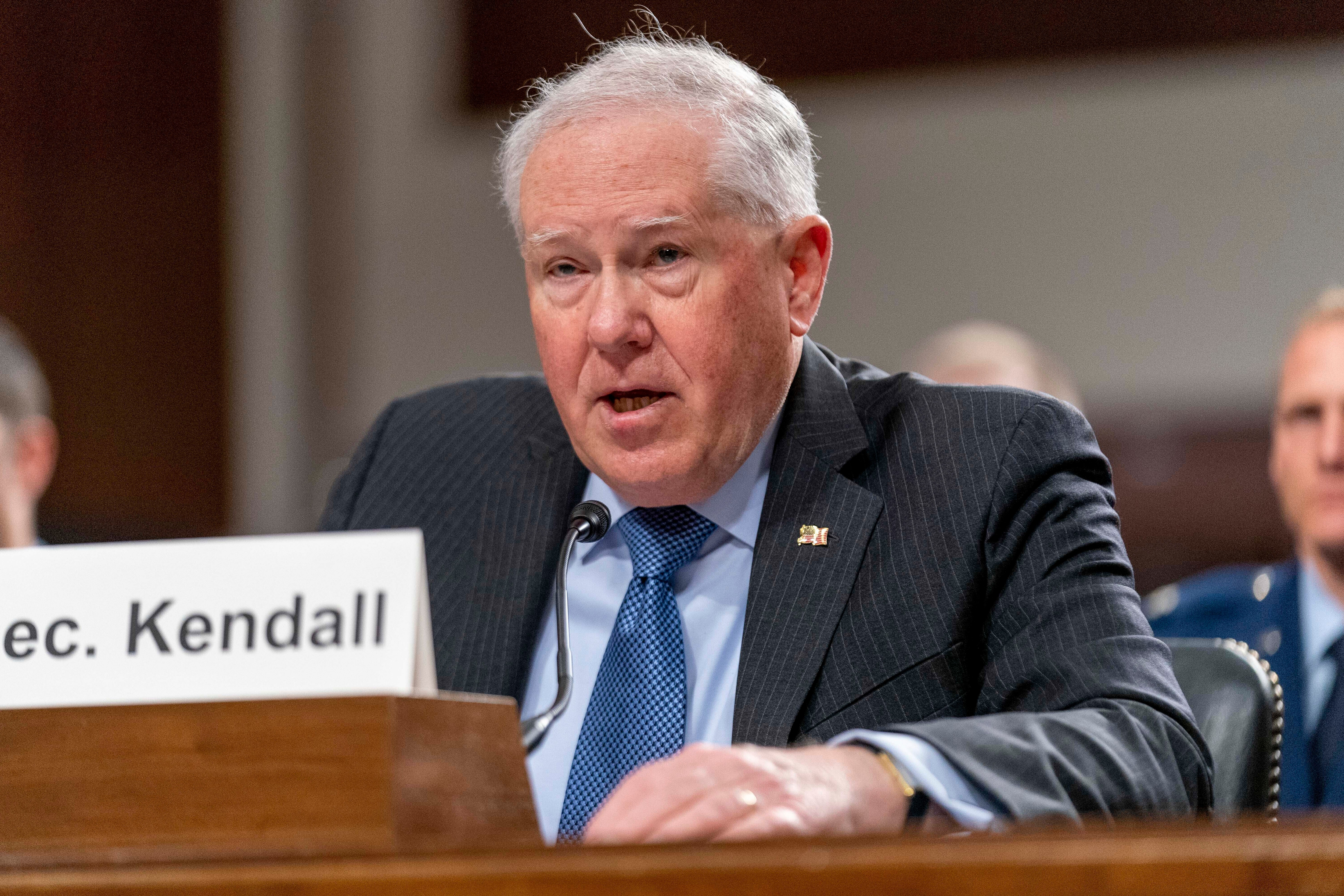
The Trump administration has revoked the security clearance of Frank Kendall, who served as Air Force secretary under President Joe Biden, accusing him of disclosing classified information about Air Force One to the media.
Kendall has recently been quoted in the New York Times and the Wall Street Journal, in stories scrutinizing the security features of the Boeing 747 gifted by Qatar, the plane President Donald Trump is using as his official presidential aircraft.
Kendall told the Times that he was “surprised to see this plane used outside the U.S.,” given how speedily it was modified after the Qatari royal family gave it to the United States. To the Journal, Kendall expressed skepticism that the plane had been “maxed out” with security features, as Trump has said it would be.
In an X post Friday night, Pentagon spokesperson Sean Parnell said Kendall was being stripped of access to classified information and his ability to hold any sensitive position following “unauthorized disclosure of classified information regarding Air Force One’s capabilities.”
“Safeguarding classified information is a non-negotiable duty. Those who violate that trust forfeit the privilege of access and any role requiring it,” Parnell wrote.
Kendall could not immediately be reached for comment Saturday. The former Air Force chief, who also served in the Defense Department during the Obama administration, told the Journal he was “mystified” by the revocation of his security clearance.
“I’ve been extremely careful to not say anything that could be classified, and as far as I know I have not said anything classified,” Kendall said, adding that so far he had not been told what classified information he had supposedly revealed.
The luxury airplane gifted by Qatar has raised ethical, legal, and security concerns since Trump announced the unusual arrangement last year. Fresh questions about the new Air Force One’s security arose last month after Trump switched jets at the last minute for part of his travel back from the NATO summit in Turkey.
Trump denied that security concerns were behind the switch of planes for the first leg of his trip — but also suggested that Iran could have tried to attack his plane, saying he was “number one on their list” of people to assassinate.
The White House said last month that Trump would tentatively return to flying on an older Air Force One while the Qatari-gifted jet received unspecified “additional upgrades and enhancements” that would take about a month to complete.
The Senate narrowly voted to confirm Todd Blanche as attorney general early Saturday morning, cementing President Donald Trump’s former criminal defense lawyer as the head of the Justice Department despite rare pushback from Republicans that had left his nomination in doubt.
Sen. Bill Cassidy (R., La.) provided the crucial vote for Blanche as two other Republicans — Sens. Lisa Murkowski of Alaska and Susan Collins of Maine — sided with Democrats against the nominee. Sen. Mitch McConnell (R., Ky.), who has been absent from the Senate since he suffered a fall in June, missed the vote.
The 50-49 vote at 4:31 a.m. — right before the Senate left for a five-week recess — gives Blanche the imprimatur of Senate confirmation in a job he has held on an acting basis since Trump fired former attorney general Pam Bondi in April.
But it hardly amounted to a full-throated endorsement.
Cassidy, despite voting in Blanche’s favor, joined Murkowski and Collins in publicly raising questions about the politicization of the Justice Department under Trump. The three also voiced concerns about Blanche’s role in a controversial deal struck this spring to resolve the president’s legal claims against the IRS — an agreement that included a now-scuttled proposal for a $1.8 billion fund to compensate people who claimed they were victims of political prosecutions.
Two other Republican senators — John Cornyn of Texas and Thom Tillis of North Carolina — expressed similar reservations and threatened earlier in the process to vote against the nomination, although both ultimately backed Blanche.
Explaining his decision, Cassidy described it as a choice between Blanche — who before his time as Trump’s personal lawyer had spent years as a federal prosecutor and a partner at a prestigious Manhattan law firm — and the possibility that Trump might pick someone worse.
“Mr. Blanche is not perfect, and he will tell you this, but the choice is not between perfection and Mr. Blanche,” Cassidy said on the Senate floor Friday. “It is between Mr. Blanche and another acting attorney general who may not run the department as effectively under President Trump and who, indeed, may not be as good as Mr. Blanche.”
For his part, Blanche said after the vote that he was “deeply honored by the trust and confidence President Trump has placed in me” and thanked the Senate for staying late for the vote.
“To the dedicated public servants of the Department of Justice,” he said in a post to social media, “thank you for your work each day to uphold the law and keep our country safe.”
With the confirmation fight now behind him, Blanche sheds the “acting” part of his title and, with it, any doubt about his authority as the head of a cabinet agency that Trump has made central to his second-term agenda.
Since returning to the White House last year, the president has eroded the Justice Department’s long tradition of independence, demanding it pursue prosecutions of his political enemies and directing resources toward rewarding his allies.
Meanwhile, the department has been ravaged by vacancies, low morale among career staff, and increasing credibility problems with federal judges.
Blanche, first as Bondi’s No. 2 and then as the department’s acting leader, has played a central role in that transformation, although his boosters in Congress have praised his efforts to step up fraud enforcement, prosecute illegal immigration and combat violent crime.
“America is safer with Todd Blanche at the helm of the Justice Department,” said Sen. Chuck Grassley of Iowa, the Republican chair of the Senate Judiciary Committee.
Cassidy called aspects of Blanche’s track record troubling, but he cited the bond Blanche built with Trump as he defended him in four criminal cases during his years out of office. The senator said he hoped that trust would strengthen Blanche’s ability to talk the president out of decisions that run contrary to the rule of law.
But Democrats insist that, at every turn, Blanche has proven unable — or unwilling — to do just that.
Since becoming acting attorney general, Blanche has defended the president’s “right” to intervene in criminal investigations and his controversial pardons of those who attacked the U.S. Capitol on Jan. 6, 2021. He has breathed new life into probes of Trump critics, including investigations of former FBI Director James B. Comey, former CIA Director John Brennan and Cassidy Hutchinson, a former White House aide from the president’s first term who testified against him in Congress.
“This nation deserves an Attorney General who loves the Constitution more than he loves the President. Sadly, for our nation, Todd Blanche, is not that person,” Sen. Dick Durbin of Illinois, the top Democrat on the Senate Judiciary Committee said in a statement Saturday.
But it is the out-of-court deal Blanche announced this spring to resolve a lawsuit the president filed against the IRS earlier this year, over the leak of his tax returns to the media, that has drawn the most unified criticism from lawmakers.
In addition to the taxpayer-backed nearly $1.8 billion payout fund, the deal also extended unusual tax protections to Trump, two of his sons and their businesses, shielding them from any preexisting tax audits.
Lawmakers from both parties decried the agreement, describing the proposed payouts as a “slush fund” designed to reward Trump’s allies, and denouncing the tax provisions as a corrupt exercise in self-dealing from a president who has often complained of burdensome audits.
Facing bipartisan pressure, Blanche walked back plans for the fund. But Cornyn and Tillis, both of whom are not running for reelection after Trump declined to support them, demanded written assurances from Blanche that the president would not later reverse that decision before they agreed to support his nomination.
Blanche ultimately relented, issuing statements late last Sunday declaring the fund officially dead and clarifying that the deal’s tax provisions protected the Trumps only from past tax audits and would not prevent the IRS from reviewing their finances in the future.
But critics have questioned whether Blanche’s written pledges hold any legal weight, given that they were not signed by Trump and his legal team, and could be ignored by the president at any point.
Murkowski raised that possibility in a statement Friday announcing her decision to vote against Blanche’s nomination. The only reason the payout fund was now off the table, she said, was because Blanche needed Senate support for his nomination.
“Once we vote, that will end, and there is no telling what the future holds,” she said.
“The country needs an attorney general who will check the worst impulses of this administration,” Murkowski added. “I hope Mr. Blanche is able to achieve that if confirmed, but I simply do not have confidence that will be the case.”
On a mild April day, 12-year-old Sam Okyere reviewed his wish list with his mom during their drive to the Make-A-Wish Foundation’s Bala Cynwyd office.
First choice: Legoland andDisney World.
Second choice: meeting Eagles Jalen Hurts and Saquon Barkley.
Third choice: hanging out with Philly rapper Lil Uzi Vert.
But when Sam, his mom, and two members of the Make-A-Wish crew squeezed into the office’s tiny Lego-themed room for the official discussion, something different flashed to mind.
“I want to help the homeless,” Sam told them.
Sam has sickle cell disease.He’s endured a lifetime in and out of hematologists’ offices, white-knuckling through blood transfusions and bursting into hospitals when “pain crises,” agonizing sensations caused by disruption in the blood flow, tore through his body. This was his chance to do one completely selfish thing, and he chose to be selfless.
“Are you sure this is what you want to do?” Maude Gambrah, Sam’s mom, asked as she started the car to drive them home to Drexel Hill. She knew Sam had a soft spot for homeless people. He was always encouraging her to give money to panhandlers around Philly. But this was his only wish.
“Yeah, Mommy,” he responded. “This is what I want to do.”
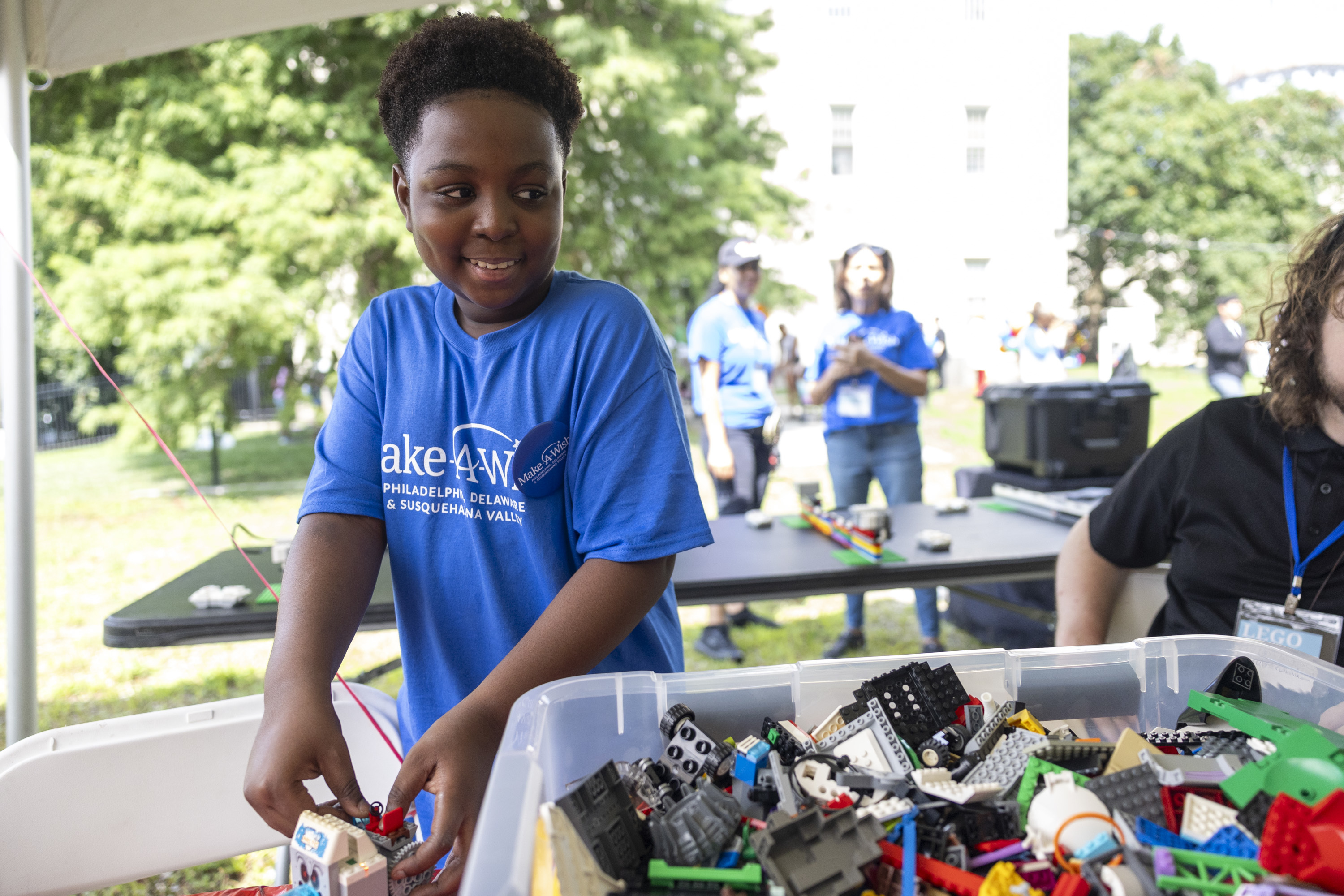
Make-A-Wish settled on Families Forward Philadelphia, a homeless shelter in West Philly, as the recipient of Sam’s wish and hosted a monthlong donation drive for the facility leading up to “Sam’s Perfect Day” last month. The carnival-style extravaganza on the shelter’s front lawn, attended by dozens of families experiencing homelessness as well as Sam and his family, featured Lego displays, a petting zoo, a Lego-inspired bounce castle, and water ice provided by Sam’s family’s Southwest Philly water ice business, Willkay’s.
Making a wish a reality
Word of the wish quickly spread around the office of Make-A-Wish Philadelphia, Delaware, & Susquehanna Valley following the April meeting. Anika Goyal, one of the staffersresponsible for carrying out wishes, knew this one had to be hers.
The chapter, which grants about 335 wishes a year, regularly fulfills shopping sprees, vacations to Disney World, and room makeovers, but it rarely gets one like Sam’s, Goyal said.
So Goyal got to work. Sam emphasized that helping homeless children, specifically, was important to him, so Goyal selected Families Forward as the beneficiary shelter because it emphasizes keeping families intact during their stays.
She reached out to small businesses and nonprofits — as many as she could find that also had Make-A-Wish connections. Oshun Family Center, which Goyal asked to host a table on Black maternal health and to distribute childcare kits, was founded by a mom of a Make-A-Wish recipient. Jam-Rock Kitchen, a local Jamaican restaurant owned by another Make-A-Wish family, slathered up their jerk chicken and spiced up their rice and peas for the big day.
Goyal also looped in staff at the King of Prussia Lego store, a former contestant on the reality TV competition series LEGO Masters, and Swoop, the Philadelphia Eagles mascot, to make the event quintessentially Sam.
Alana Deluca, manager at King of Prussia’s Lego store, talks to Sam Okyere, 12, during his Make-A-Wish donation drive and block party.Tyger Williams / Staff Photographer
“It’s not about him,” Goyal said. “But it is about him.”
As Goyal and the Make-A-Wish team prepared the logistics, Sam contended with a life-altering decision. Sickle cell can be treated through a bone marrow transplant. The ideal donor is a sibling who is a match. Will Okyere, Sam’s 25-year-old brother, was. So Sam and his family scheduled a transplant for the end of August. The process starts with chemotherapy and ends with in-home isolation for several months, requiring Sam to miss most of his seventh-grade year with his friends.
“It’s a bummer,” Sam said. “But, it’s like, anything to get me better.”
“I just want to get sickle cell over and done with,” he added.
Sam Okyere, 12, hanging out with his friend Mosiah Saddick, 12, during Sam’s Perfect Day at Families Forward Philadelphia homeless shelter.Tyger Williams / Staff Photographer
While sickle cell disease is not inherently fatal, it can increase the risk of life-threatening infections, acute chest syndrome, stroke, and chronic organ damage, particularly without medications or interventions such as a bone marrow transplant or gene therapy.
Cynthia Norris, Sam’s attending hematologist at Children’s Hospital of Philadelphia, who referred Sam for the wish, said he stood out among all her eligible patients because he has the most severe variation of the disease and has had a number of complications. His grace and thoughtfulness, she said, also set him apart.
“He’s just a very special young man,” Norris said. “He has so much empathy.”
Sam Okyere, 12, with his dad Akwasi Okyere, Delaware Blue Coats mascot Coaty, and Philadelphia Eagles mascot Swoop during Sam’s Perfect Day Make-A-Wish donation drive and block party at Families Forward Philadelphia homeless shelter.Tyger Williams / Staff Photographer
Living out a perfect day
After months of waiting and preparation, Sam’s Perfect Day finally arrived.
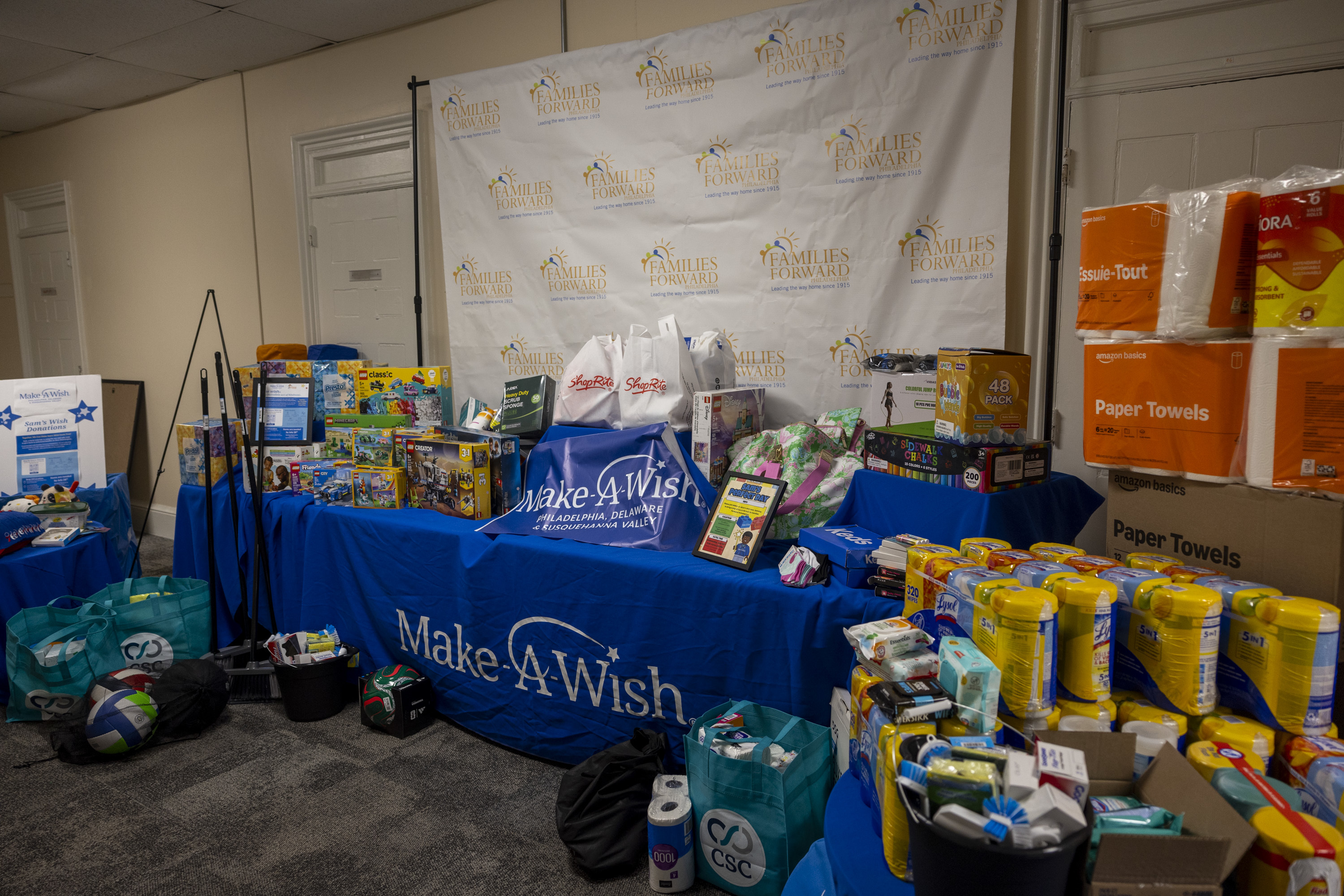
Shiny new yellow, red, and blue soccer balls and Hula-Hoops lined the main hall of the Families Forward office building. Tubs along the mirroring wall brimmed with sunscreen bottles, toothbrushes, and soap. A giant poster sandwiched in the middle bore Sam’s likeness in Lego form — tiny Afro and all.
Some of the donations for Sam Okyere’s Perfect Day Make-A-Wish donation drive and block party.Tyger Williams / Staff Photographer
Families Forward could never have afforded this bounty on its own, said Jessica Main, the nonprofit’s chief development officer. Grant money the shelter receives is often tied to specific types of services like mental health and education. Its budget for toys and recreational materials is around $3,000 annually, Main estimated. That would probably barely cover the glimmering new basketball hoop and sports equipment Sam’s donation drive brought in.
Sam Okyere, 12, with his sister, Kayla, at the petting zoo during his Make-A-Wish donation drive and block party at Families Forward Philadelphia homeless shelter.Tyger Williams / Staff Photographer
Sam nestled into a blue canvas chair in the petting zoo as two goats nibbled food out of Dixie cups he held in each hand.
“I’m naming this one Ashton,” Sam announced to no one in particular, looking at a brown and white goat.
“Food! Anybody want food,” he shouted to the tiny goats (one wearing a feathered bowler hat), bunnies, and one black pig that dragged its rotund paunch on the ground wherever it went.
Sam Okyere, 12, is holding Penelope the pig at the petting zoo during his Make-A-Wish donation drive and block party at Families Forward Philadelphia homeless shelter in Philadelphia, Pa., on Wednesday, July 29, 2026.Tyger Williams / Staff Photographer
“Zane, Kai, Lloyd,” he said, pointing at two goats and then the pig, naming all after characters on his favorite show Ninjago, which the uninitiated will be unsurprised to learn is a show about Legos.
Soon a 3-year-old named Saga, wearing a white dress smattered with images of heart-shaped lollipops, entered the petting zoo enclosure, mouth agape as she stood eye-to-eye with the recently named Ashton the goat and gently patted the silver nubs on either side of its bony head. This was her first experience with farm animals.
Her mother, Quechera Jowers, 32, followed closely. The pair have lived at the shelter for about four months.
“I’m not going to lie, it’s a little nostalgic,” Jowers said, taking in the carnival sights as they waited in line for cotton candy, which, based on crystallized red formations encrusted around Saga’s mouth, it appeared she’d already indulged in.
Throughout the afternoon, gleaming toddler cheeks transformed into butterfly wings, kitten whiskers, and dragon scales with face paint. Pink and purple beads were strung into friendship bracelets, and technicolor swimsuits (each child got one through Sam’s donation drive) grew soaked from a sprinkler raining down on the kids as they descended an inflatable slide adjoined to the bounce castle. Navigating the pipe system of the old converted asylum-turned-shelter facility was the challenge of the morning, Main said.
Beyoncé blared from a portable DJ booth, chubby fingers grasped balloons on strings and absentmindedly released them into the stratosphere, and a topless toddler with wild curls boogied near the mouth of a bubble machine, a diaper band peeking out from his khaki shorts.
Sam Okyere, 12, is trying out the DJ set with Nashirah Felder, of Fishtown, during his Perfect Day Make-A-Wish donation drive and block party at Families Forward Philadelphia homeless shelter in Philadelphia, Pa., on Wednesday, July 29, 2026.Tyger Williams / Staff Photographer
Sam, meanwhile, alternated between the Lego games, petting zoo, and basketball station.
After discreetly lowering his game controller in the middle of a Lego joust, allowing a friend to overtake his spacecraft and win the game, Sam sauntered over to the goats situated in a kennel in the back of a truck to bid them farewell.
Sam Okyere, 12, plays against Corey Samuels, 41, of Princeton, N.J., a LEGO Masters winner, during his Make-A-Wish donation drive and block party at Families Forward Philadelphia homeless shelter in Philadelphia, Pa., on Wednesday, July 29, 2026.Tyger Williams / Staff Photographer
“I don’t want them to leave,” he mused as he delicately scratched a tan one on the chin and, with an understated graciousness rare to find in adults, let alone children, allowed the petting zoo staff to take them away.
As the afternoon drew to a close, Sam settled into a chair in the hallway full of donations and futzed with a small Lego vehicle. An event organizer informed him that the Lego store employees offered to gift him all the leftover toys. Sam politely declined and requested they instead be given to the kids at the shelter.
Asked in the final moments what could have made Sam’s Perfect Day more perfect, he contemplated.
Philadelphia’s chief paramedic said in a whistleblower lawsuit that he was stripped of his leadership position for sounding the alarm about allegations of favoritism in the city’s fire department.
Jason Centofanti, who joined Philadelphia’s emergency medical services in 2007, says fire department leadership punished him for escalating a report accusing a captain of being lenient with a subordinate who had failed to fill outrequired patient records because of a personal friendship.
Centofanti, who was elevated to the role of fire paramedic services chief last year, investigated and suspected the captain attempted to cover up the conduct by falsifying an official record. But when Centofanti elevated these concerns, the suit says, he was met with a brick wall and punished.
His plight made its way to the Philadelphia Office of the Inspector General and the fire commissioner, according to the complaint. Even though some higher-ups acknowledged the retaliatory nature of his transfer in conversation with Centofanti, the suit says, it was not enough to stop it.
The lawsuit, which was filed Wednesday in Common Pleas Court, accuses the city of violating whistleblower protections and asks a judge to order the city to end the retaliation against Centofanti, pay him for lost wages, and compensate him with more than $50,000 in damages.
A spokesperson for the city’s law department declined to comment on the active litigation. Amanda Martinez, Centofanti’s attorney, said in a statement that the lawsuit speaks for itself.
Centofanti launched an investigation in January shortly after a lieutenant complained to him about the captain’s favoritism, according to the complaint.
The lieutenant also accused the captain of harassment, but the lawsuit does not describe the nature of the allegation.
Centofanti discussed the allegation with the accused captain, and escalated a report to department leadership and human resources.
During the investigation, Centofanti came to believe that the captain had altered a document to cover up the alleged conduct, the lawsuit says.
“Plaintiff explicitly stated that he believed that [the captain] submitted a falsified document for an official PFD investigation,” according to the complaint.
The aftermath of the investigation was not what Centofanti expected.
Martin McCall, a deputy commissioner for EMS, moved the captain to a new building at her request “to shield her,” the suit says. McCall also informed Centofanti that due to “work performance” he was being transferred back to field duty, according to the complaint, despite the chief’s work having been rated “superior” and “satisfactory” in a recent performance evaluation.
McCall also moved the lieutenant to a new post because, the suit says, she made the accused captain “uncomfortable.”
“The two reporters of the wrongdoing … were being transferred to less desired positions and punished for speaking out,” the lawsuit says.
Centofanti went to the department’s top leaders and claims they were sympathetic. But that sympathy did not change his fate. An official whistleblower complaint with the city’s inspector general was not enough to reverse the transfer, either.
He was formally transferred out of EMS administration to a field assignment in May, the suit says. His office schedule was replaced with a field rotation that requires nights, weekends, and holidays, according to the complaint. Centofanti lost his office, staff, and car.
Coworkers have been taunting Centofanti since he returned to the field, the complaint says.
“When are you going to learn to shut your mouth,“ one captain texted him, according to the complaint. ”Enjoy your paycut.”
In late July when I covered Montgomery County’s District Attorney announcing charges in connection with two assaults in a Cheltenham High School football locker room, I knew the story was something we would be writing about for some time.
Aware that we used the same photo, taken in 2018, with stories about the high school hazing leading up to the indictments, I left from the DA’s office across the street from the Courthouse in Norristown and drove to the school in Wyncote to take “fresh” ones.
I wrote last week about the web’s appetite for photos. But there’s another kind of photo: the thumbnails that are attached to every story, whether or not they are “live” photos.
Most of those little horizontal photos — none are verticals — of flashing police lights or yellow tape; headshots of politicians; city street scenes and skyline, or many, many photos of signs and buildings are file photos.
Like the 2018 one of Cheltenham High School. And the July 2026 version — in a variety for views — that I made last week, that already have and will be used again and again.
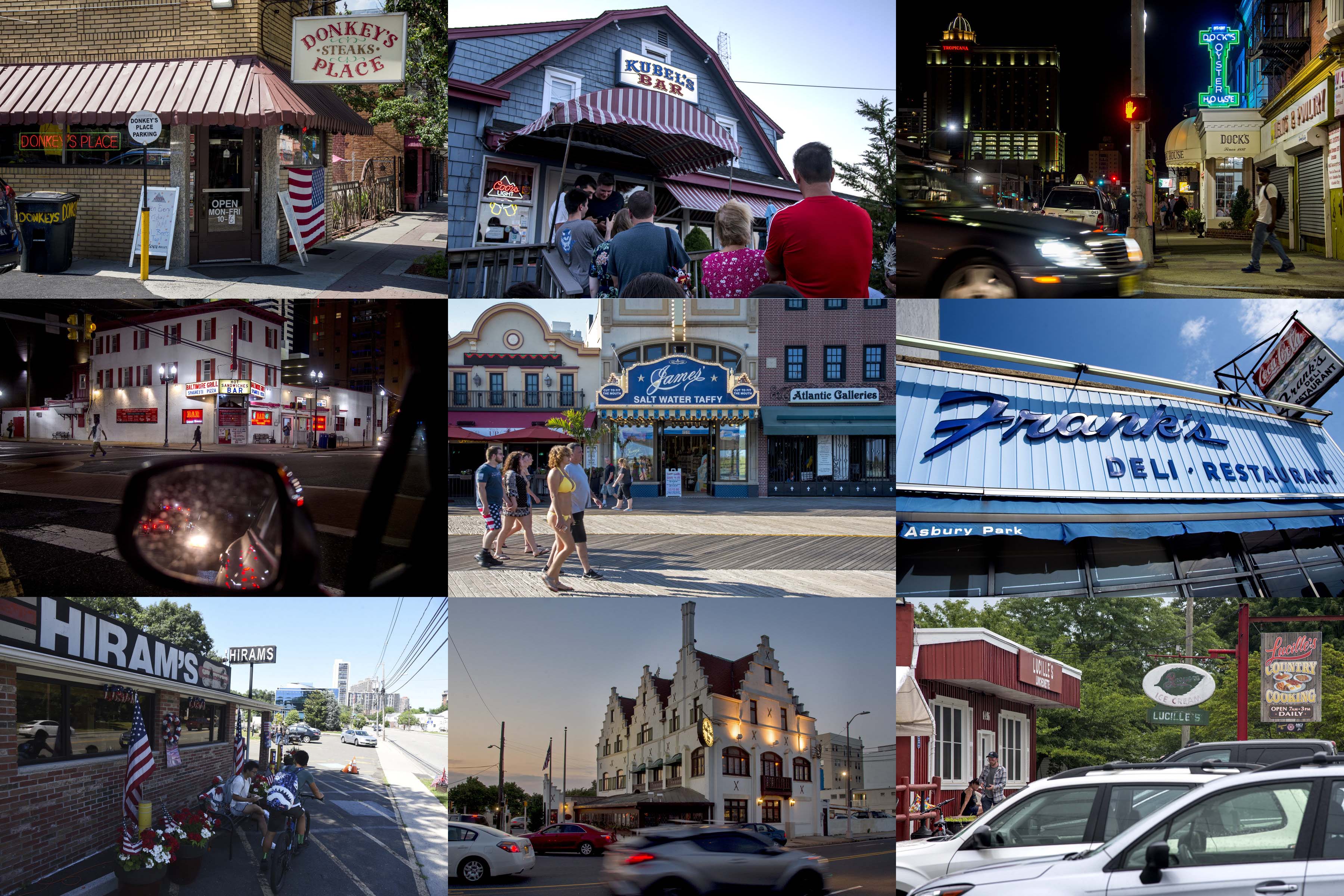
The frame at the top was made with a aperture of f/22 so I could get both signs in focus, at shutter speed of 1/15 second to blur the passing cars. Getting the window was just good luck.
I thought of file photos this week when another one of mine was used in a story about N.J. Gov. Mikie Sherrill declaring a steak place in Camden has better cheesesteaks than the “millions” she has tried in Philly.
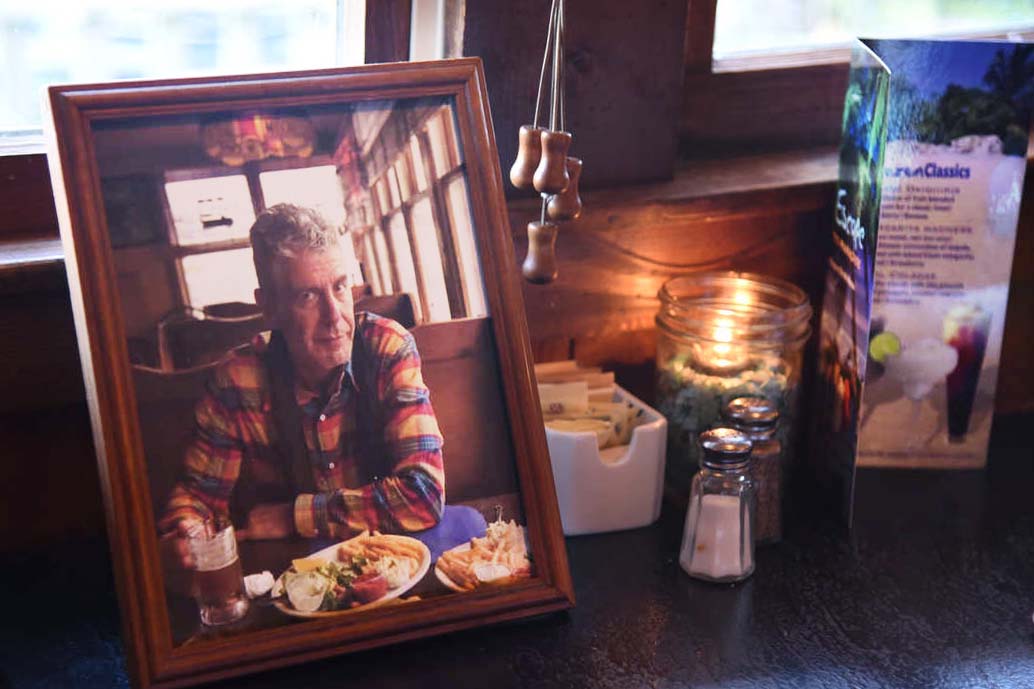
After celebrity chef Anthony Bourdain died in 2018 I set out to photograph — and eat — at some of the food destinations he visited on his Emmy Award-winning CNN show Parts Unknown.
The booth at Kubel’s in Barnegat Light, where Bourdain ate clams with his brother, Chris.TOM GRALISH / Staff Photographer
Following in the footsteps of the globe-trotting adventurer, I flew not to some far-flung place with exotic cuisine but drove instead to all 10 spots he featured in an episode on the food and culture of his home state, New Jersey.
It was one of my top 10 favorite stories of my career. Foodstagrammers had visited many of the places featured in the episode but I couldn’t find any foodies who had been to all of them.
Each one had its own history, personality, and flavor, but together all captured exactly what Bourdain loved about New Jersey: community and authenticity, and incredible food without the pretense.
Donkey’s Place in Camden was one of the most memorable. I made three trips there for the story, and took hundreds of photos while sitting at the bar with cheesesteak aficionados and talking with third generation owner Rob Lucas (his grandfather, Olympic boxer Leon Lucas, had a punch they said was like the kick of a mule).
I could go on about the memories served at each of the places Bourdain was drawn to, but getting back on the file photos track, of all the photos I made that summer, the one image that gets reused the most often is one from Donkey’s, made as I was walking to my car after my last visit.
I paused, waiting for anyone to walk in or out. I’d just spend a couple hours there, and it was slow by then, mid-afternoon, and the light wasn’t that great anyway, so I took a quick picture and left, figuring it’s close by (compared to the other places) and I could come back at lunchtime later.
Of course that never happened before the story published, and the straightforward photo of the outside of the restaurant was used. I had lots of other really good photos (if you haven’t already, click through the embedded gallery). So, no big deal. Except that exterior view ends up being the only photo in our photo library with the Donkey’s sign so it gets used every time we write about the place! And the only picture among the dozens from all the other nine places that ever gets republished (I really need to go back and update).
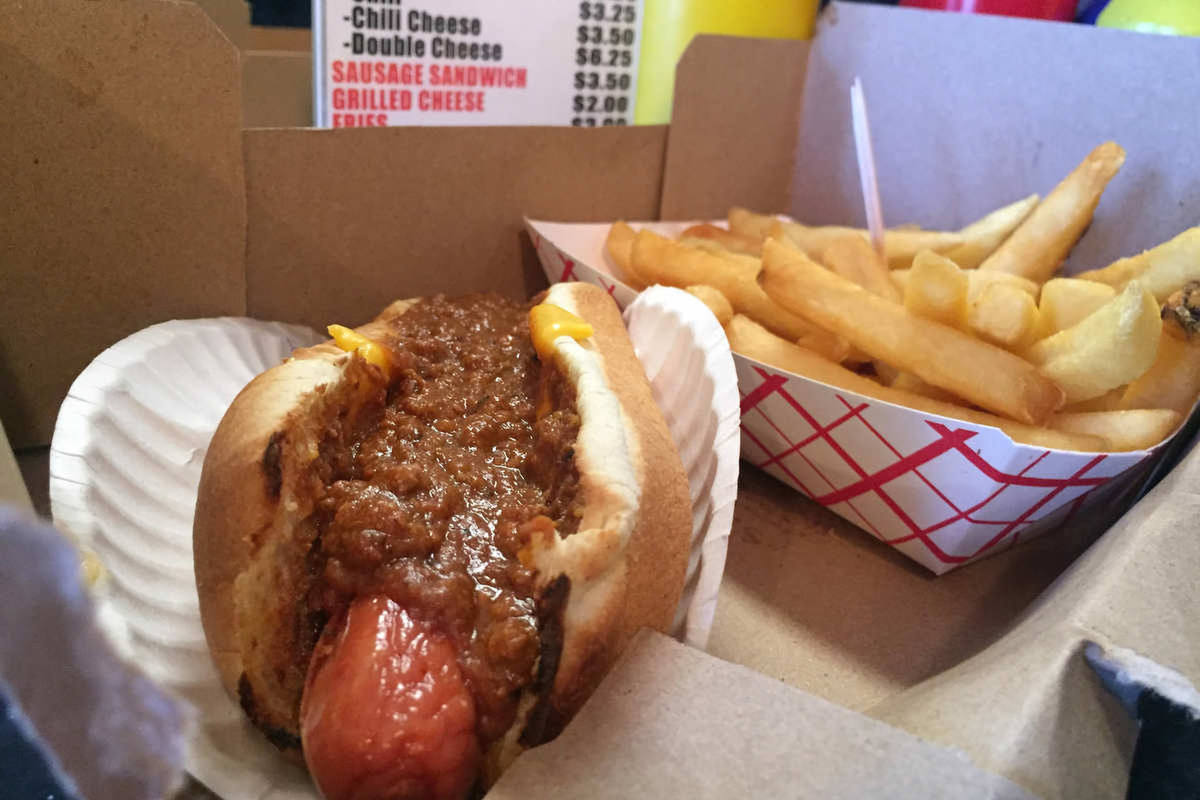
The “ripper” fried hot dog and French fries (with wooden toothpick) at Hiram’s Roadstand, in Fort Lee, one of ten eateries Anthony Bourdain visited in a 2015 episode of his ‘Parts Unknown” TV show in New Jersey.TOM GRALISH / Staff Photographer
Another file photo I have updated, among my most-published, is a photo I first took at the University of Pennsylvania. We do lots of stories there, and once while leaving a parking garage, I noticed a logo on the window of the elevator.
I rode it up and down, over and over, looking for the cleanest spot on the glass, trying different camera exposures — just like with the Cheltenham signs — and getting different angles in the background.
I have also photographed sculptures, signs, and scenes around campus when on other assignments, but the parking garage image seems a favorite whenever a generic Penn file photo is needed.
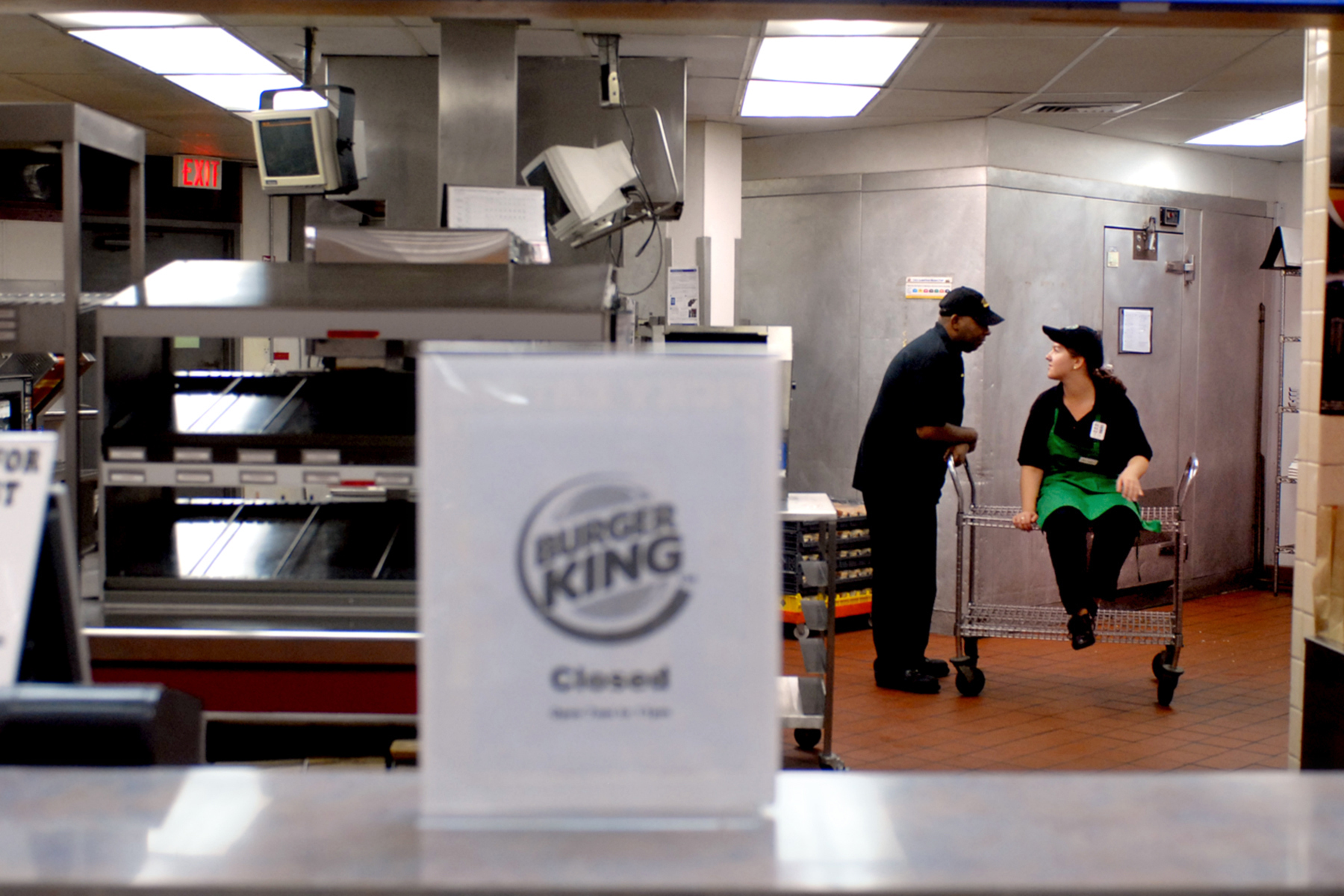
Finally, in the early days of the web, my most-used file photo was one I made during this column’s first summer (then, in 2007, called a blog). While making weekly roadtrips and posting every day or two about the places and pictures I went, I spent one late night that faded into early morning.
Rahsan Allen (left) and Tanya Krekmanova talk in the closed Burger King during a break at 4:45 a.m. July 19, 2007, on their night-shift jobs at the North Neshaminy Service Plaza, Westbound on the Pennsylvania Turnpike. They make up two thirds of the overnight shift at the rest stop. Allen works at the Travel Mart and Krekmanova is a Starbucks barista. She is a university student in Sofia, Bulgaria, one of twenty-four International students working at the rest stop. The others come from Russia, Turkey and the Ukraine, for four months with the U.S. State Department’s Summer Work and Travel Program.Tom Gralish / Staff Photographer
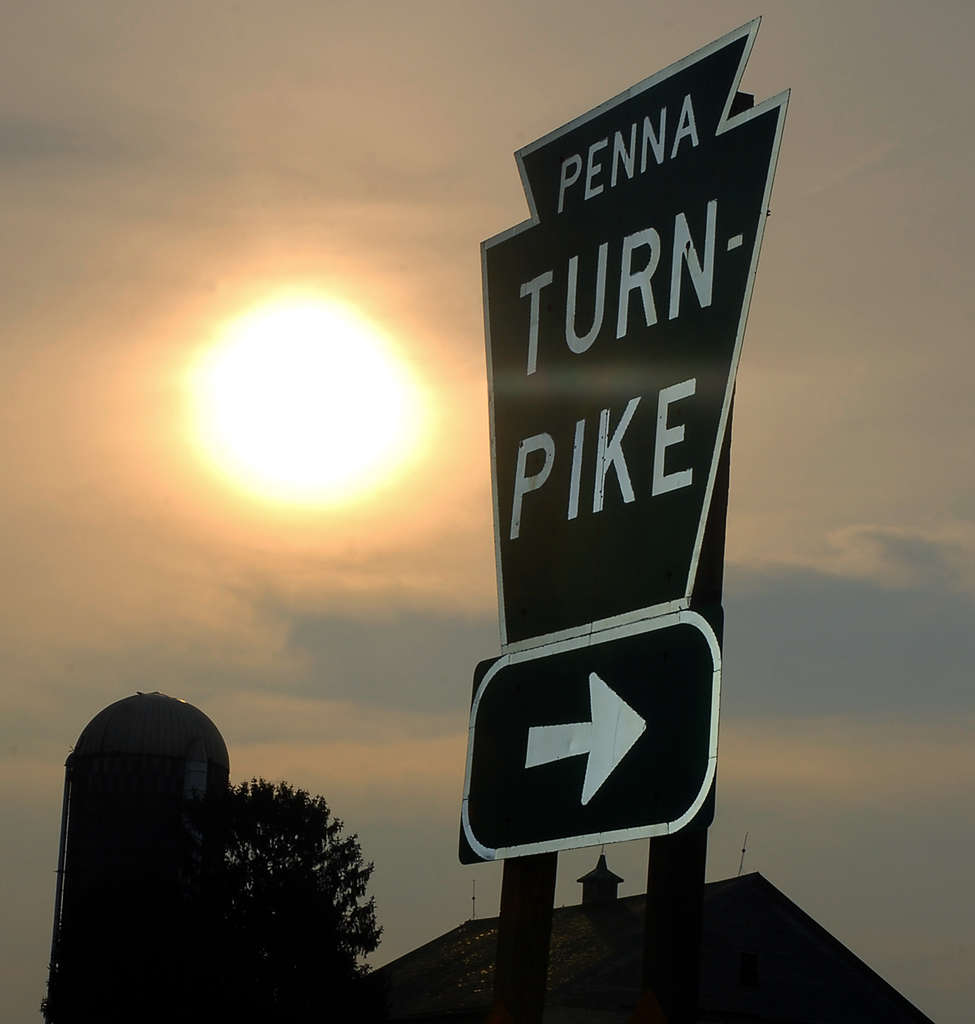
I stopped at service plazas along the Pennsylvania Turnpike. The story is here — but with only one photo (a future column will lament how even when stories get archived by newspapers the pictures that accompanied them are often not saved).
While getting on and off the turnpike at different exits to backtrack, I photographed the sun rising behind a turnpike sign. It was a vertical, but has been recropped many times to fit the web’s 3:2 thumbnail ratio.
I guess you could call it one of my “greatest hits.” My legacy.
Since 1998 a black-and-white photo has appeared every Monday in staff photographer Tom Gralish’s “Scene Through the Lens” photo column in the print editions of The Inquirer’s local news section. Here are the most recent, in color:
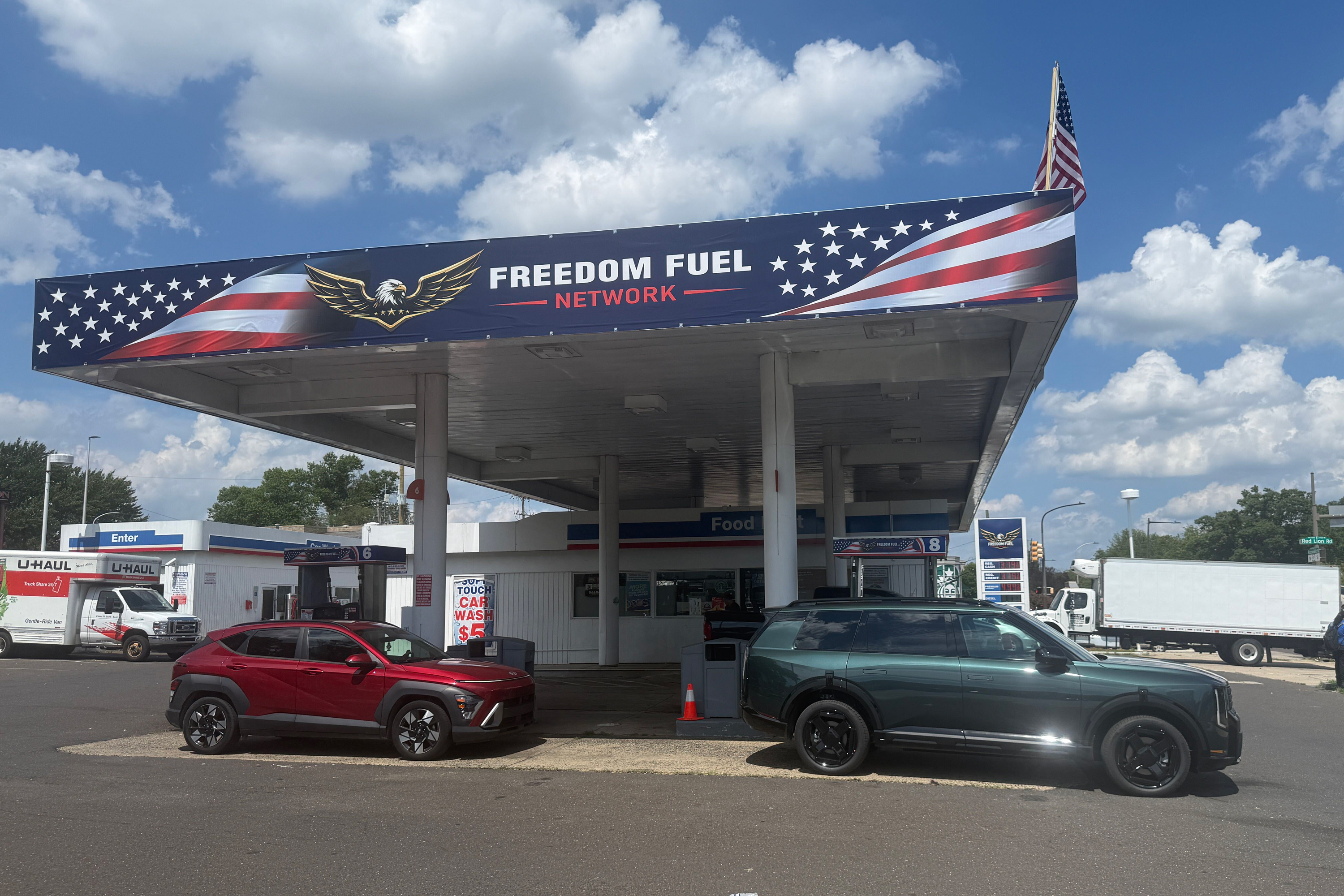
Philadelphia drivers looking to save a few bucks at the pump streamed into the city’s newest Freedom Fuel station Friday afternoon, even while the station’s deep discounts remain a mystery.
The station, located in Bustleton on Roosevelt Boulevard, is one of four new Freedom Fuel locations added this week. The other three are in New Jersey, including one all the way up in Morris County.
The gas network, which was promoted by both the White House and President Donald Trump last month, is now up to 29 stations across the Philadelphia region, stretching east to the Jersey Shore.
(function(){function e(){window.addEventListener(`message`,function(e){if(e.data[`datawrapper-height`]!==void 0){var t=document.querySelectorAll(`iframe`);for(var n in e.data[`datawrapper-height`])for(var r=0,i;i=t[r];r++)if(i.contentWindow===e.source){var a=e.data[`datawrapper-height`][n]+`px`;i.style.height=a}}})}e()})();
Nearly all the pumps were full at Philly’s newest Freedom Fuel spot Friday afternoon, with the station selling a gallon of regular gas for $3.79 a gallon. That’s nearly 35 cents a gallon less than a Wawa just up Roosevelt Boulevard, where a gallon of regular gas went for $4.13 on Friday.
A nearby Lukoil was a bit closer to Freedom Fuel’s prices, offering a gallon of regular gas for $3.99.
An enduring mystery remains how Freedom Fuel has been able to consistently offer lower prices than nearby competitors.
Experts told The Inquirer Freedom Fuel was likely suffering losses for selling fuel at such a low price, especially since many of the company’s stations don’t have robust convenience stores or car washes to create revenue.
“It becomes unsustainable,” Eliezer Fich, a finance professor at Drexel University’s LeBow College of Business, told The Inquirer last month. “Unless prices go down. But if they do, they go down for everybody.”
According to public records, the newest Freedom Fuel station is owned by Celik Plaza II l.l.c., which had previously run it under a “Red Lion Fuel” banner. Engin Celik, who is listed as a principal with the company, according to documents reviewed by The Inquirer, did not respond to a request for comment.
Philly Freedom Fuel station faces closure after failing inspection
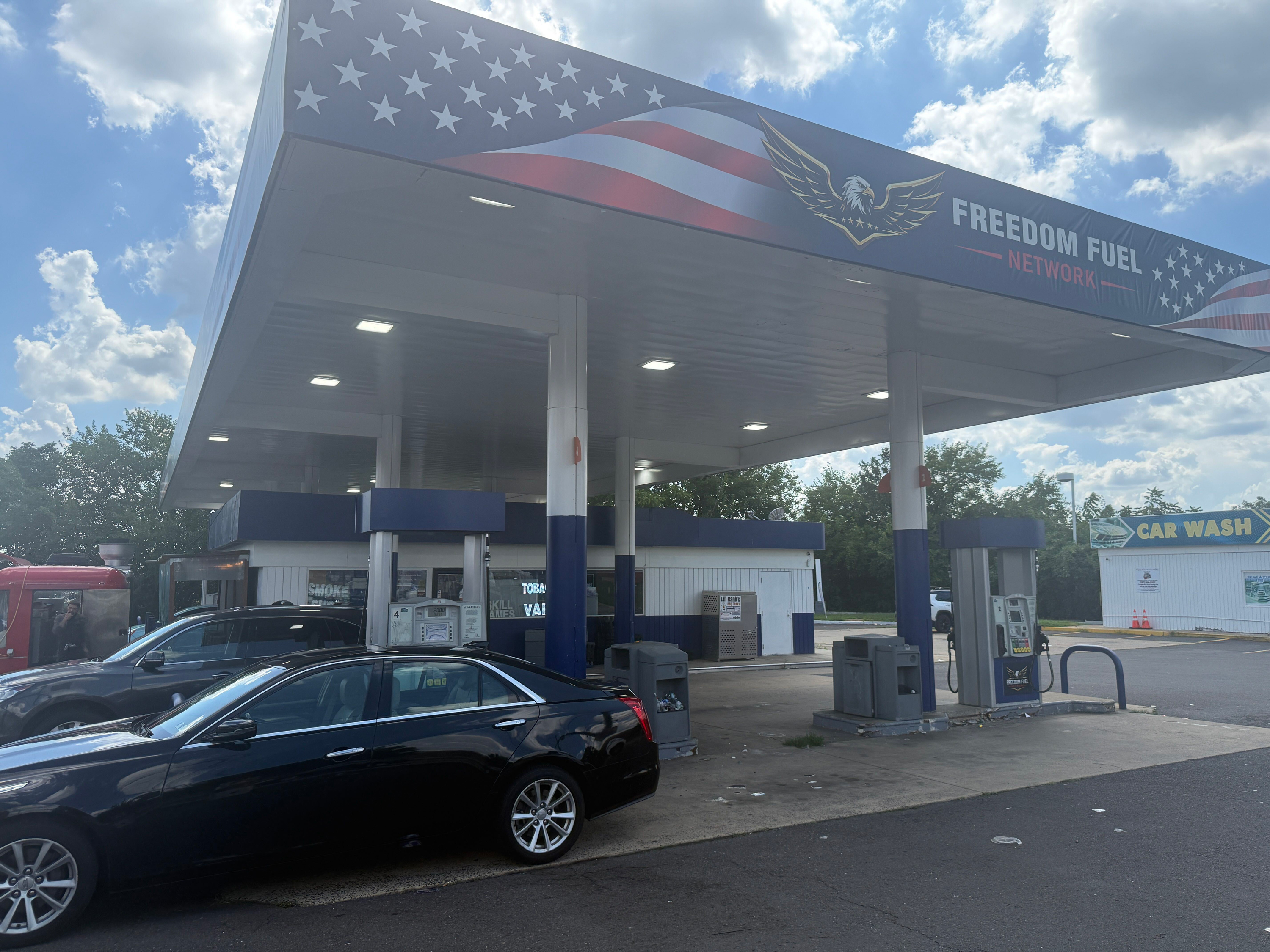
The Freedom Fuel station on Bustleton Ave. in Philadelphia. Dana Munro / staff
While Freedom Fuel is adding locations, it could soon lose one in Philadelphia.
The station on Bustleton Avenue, one of at least six locations linked to Cherry Hill developer Shamikh Kazmi and his brother Syed Kazmi, has an expired fuel dispensing license and failed an inspection last week, according to city records.
If unresolved, the station could be forced to close by Sept. 4, according to a city spokesperson.
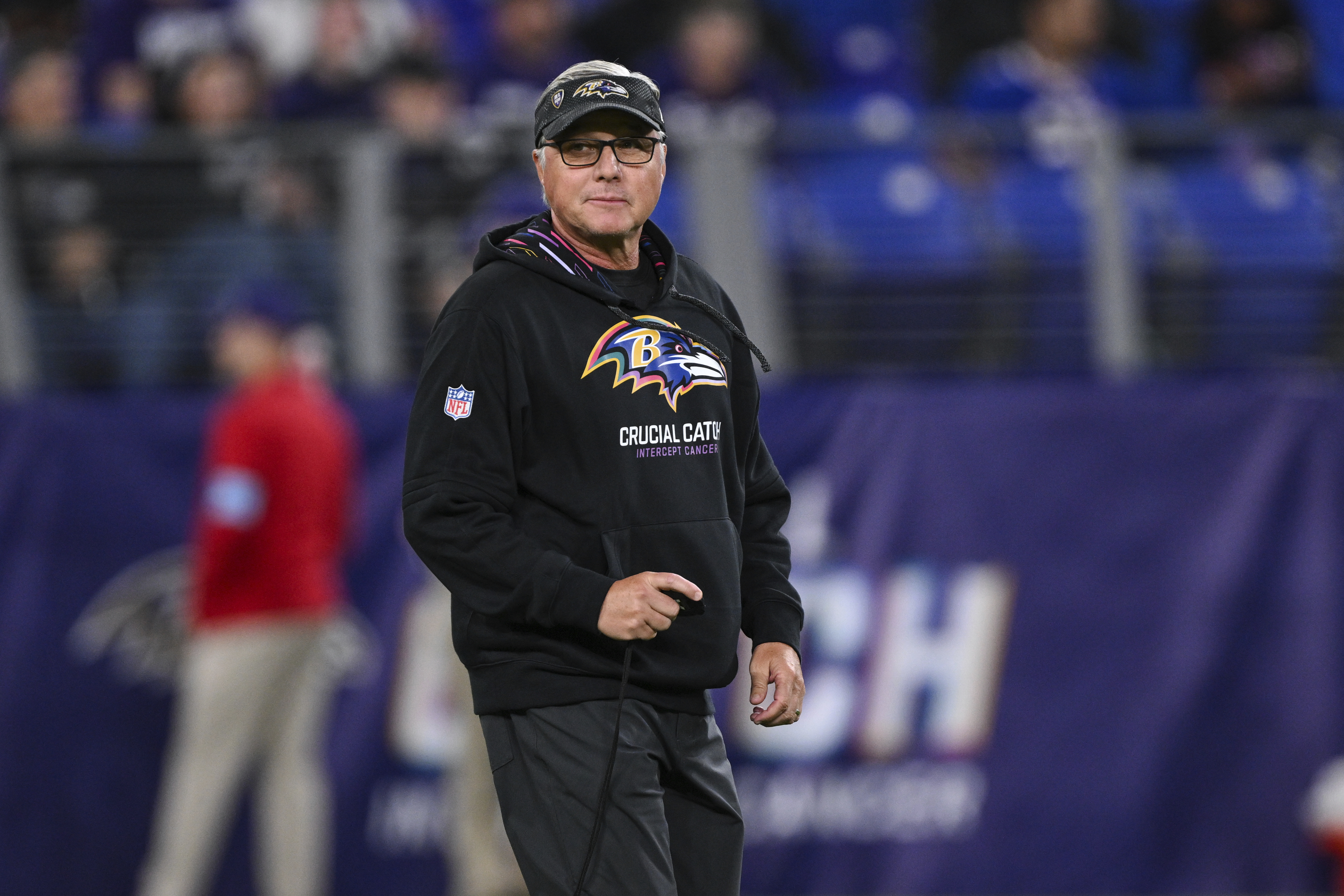
Ravens special teams coach Randy Brown signed Freedom Fuel’s formation papers. Terrance Williams
While Freedom Fuel’s launch was proudly promoted last month by Trump, the company’s owners have remained quiet about the enterprise and how they’re able to maintain low fuel prices.
A White House spokesperson previously told The Inquirer Freedom Fuel is a private company receiving no government subsidies and not accessing fuel at a lower cost.
“Freedom Fuel Network is a privately owned and proudly patriotic company — along with its convenience store operators, haulers, sign companies, and operational partners — that answered President Trump’s call to action to lower prices at the pump,” the company said in a statement on its website.
Baltimore Ravens assistant coach Randy Brown, the former mayor of Evesham Township, N.J., and a self-proclaimed “proud Trump supporter,” signed Freedom Fuel’s certificate of formation in Delaware on June 23. Brown has declined to comment on the enterprise.
Former commodities trader Yoni Gontownik also signed the certificate of formation, and has not responded to requests to comment. Gontownik and his wife, Bellen, have hosted Republican fundraisers through NORPAC, a New Jersey-based political action committee supporting pro-Israel lawmakers in both parties.
Staff writer Ryan W. Briggs contributed to this article.
The Phillies spent the trade deadline doing the baseball equivalent of rearranging an entire office while everyone was still working.
Luis Arraez arrived to play second base. Bryson Stott moved to third, where he had all of two major league games of experience. Alec Bohm slid over to first. Bryce Harper returned to right field for the first time since 2022. Trea Turner, despite having the roughest defensive numbers of the bunch, stayed exactly where he was.
Stott’s response was basically: Tell me where to stand. Harper volunteered to move before the trade was even finished. When the two-time MVP agrees to return to the position where he tore his UCL four years ago because it’s what gives the team the best chance to win, everyone else loses the right to be precious about their assigned seat.
For one night, the whole thing looked inspired. Arraez drove in two runs in his debut, Harper caught everything hit his way, and the Phillies won, 5-0. Then Wednesday arrived with an 11-inning loss, two injury scares, six runs allowed in the final frame, and a reminder that moving the furniture around does not repair the entire house.
Still, the Phillies needed something different, and different is certainly what they got. Arraez has already brought the bat and the energy… the rest of the lineup just has to remember where it’s playing.
Katherine Ross, left, and John Pacewicz, right, get married in Love Park surrounded by friends and family and their dog Hoagie, in Philadelphia, October 8, 2025.Jessica Griffin / Staff Photographer
LOVE Park’s 1,000th wedding: A+
The average wedding comes with a carefully curated guest list.
A LOVE Park wedding comes with whoever happens to be walking through Center City that afternoon.
Maybe there’s a SEPTA train rumbling underneath. Maybe someone wanders into the background of your photos. Maybe a guy with a microphone decides this is also the perfect place for his performance. Whatever happens, it’s part of the ceremony, which really is part of the allure.
Shapiro’s cameo in the sequel to Dreams and Nightmares only lasts a few seconds, but it’s enough to make you rewind and ask, “Wait… was that Josh Shapiro?” Turns out it was. The footage came from a backstage meeting at the One Philly: Unity Concert.
It actually makes perfect sense given Shapiro and Meek’s long relationship through criminal justice reform. But context disappears pretty quickly when you’re watching one of Philadelphia’s most iconic rap songs and the governor suddenly walks onscreen.
There are certain questions guaranteed to start an argument in Philadelphia. Pat’s or Geno’s? Wiz or Cooper Sharp? Is Dallas Goedert underrated?
This week, Reddit tackled another one: Does ketchup belong on a cheesesteak? The answer, according to multiple Philadelphians, is… maybe.
The comments were surprisingly reasonable. Plenty of people argued that a great cheesesteak shouldn’t need ketchup, but a dry one absolutely benefits from it. Others pointed out that “salt, pepper, ketchup” has been a standard order for decades, while one former South Philly steak shop worker declared, “The ketchup pump is there for a reason.”
The real plot twist wasn’t ketchup, though. It was the original poster casually revealing that his wife puts mayo and pickles on her cheesesteaks… and dips plain cheese pizza in ketchup. Suddenly, everyone stopped arguing about him.
For once, Philadelphia found common ground.
Los Angeles Dodgers’ Tarik Skubal reacts after a play at home plate during the sixth inning of game against the Chicago Cubs on Tuesday in Chicago. (AP Photo/Melissa Tamez)Melissa Tamez
The Dodgers do it again: D
The Dodgers traded for Tarik Skubal, because apparently the two-time defending World Series champions with Shohei Ohtani still needed the two-time reigning Cy Young winner.
It’s the baseball equivalent of the kid who already got the biggest slice of birthday cake asking if anyone’s going to finish theirs.
The Dodgers have built one of the best organizations in sports. They draft well, develop prospects, spend money, and somehow all at once. GOOD FOR THEM.
It’s also exhausting (and boring). Part of what makes sports fun is believing more than one team has a legitimate shot. When the same handful of franchises keep adding MVPs and Cy Young winners, it starts to feel less like a pennant race and more like everyone else is competing for second place.
Still, nobody in the clubhouse seemed interested in panicking. Stott said the Phillies aren’t scared of anyone, and Schwarber’s message was simpler: First, make the postseason. October has humbled plenty of superteams before.
Still… it would be nice if the Dodgers took a trade deadline off every once in a while.
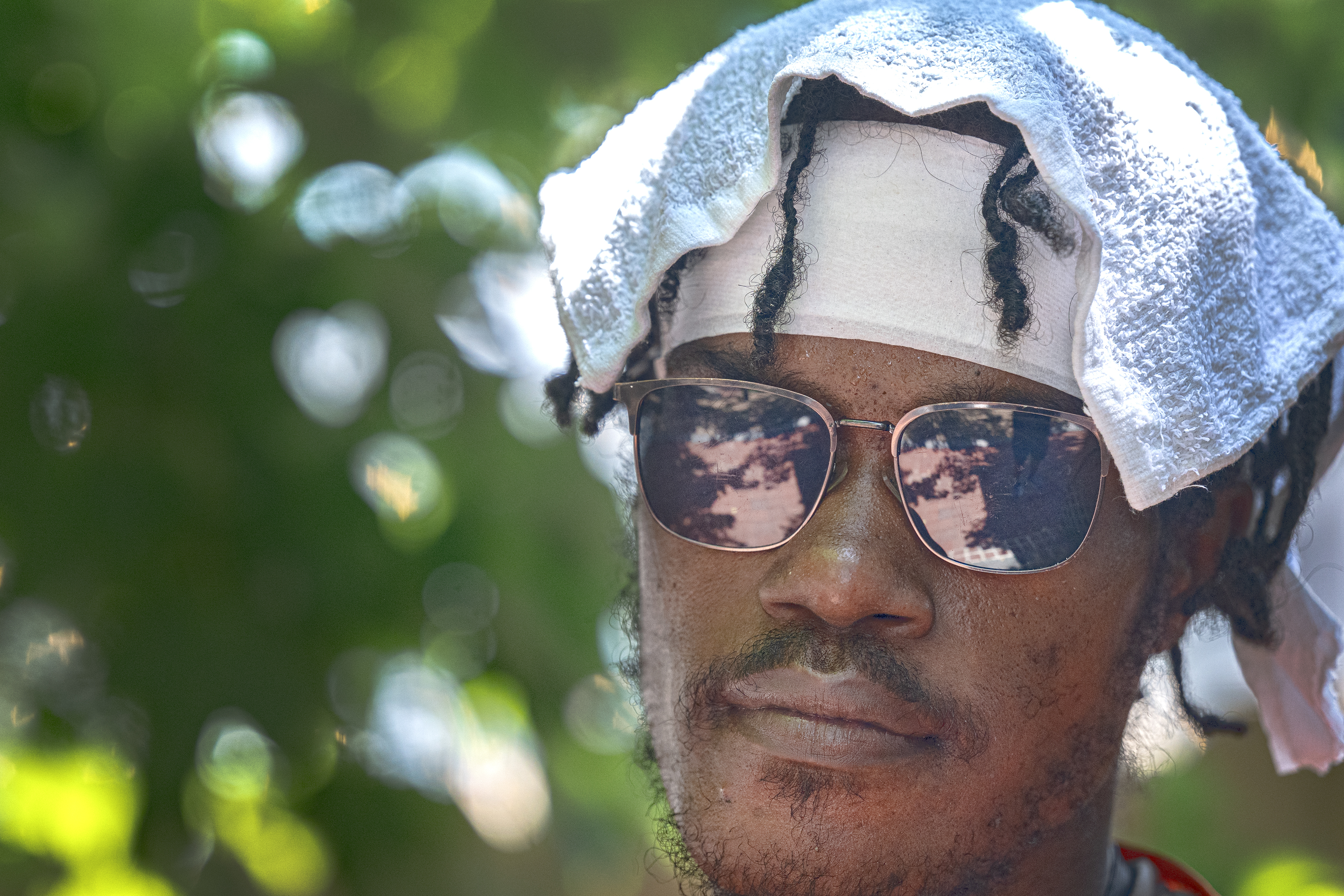
David Elder cools off with a cold towel draped over his head as he walks through South Philadelphia on Thursday, Aug. 6, 2026. Forecasters are predicting a heat wave across the region over the next several days.Jose F. Moreno / Staff Photographer
Summer’s greatest hits: F
The forecast has basically been on repeat for weeks now.
The weather has reached the point where nobody asks, “Is it supposed to rain today?” We just assume the answer is yes and hope it doesn’t happen during the 15 minutes we’re outside.
The worst part is the false hope. Every time the forecast teases a “slight relief,” it lasts about 12 hours and then we’re right back to sweating through our shirts and wondering whether the afternoon commute will include flash flooding.
A Black Philadelphia firefighter headed to court after suing the city for discrimination over his hair may get some help from a recently passed law.
Last November, Gov. Josh Shapiro signed the Pennsylvania CROWN Act, reshaping the statewide landscape for such cases. The law, which amends the Pennsylvania Human Relations Act, bans discrimination based on hairstyle, texture, or type.
The firefighter’s lawsuit argues that the city broke both the Pennsylvania Human Relations Act and a city ordinance by discriminating against him due to his hair. The lawsuit seeks compensation and a change in the fire department’s hair policy. The city declined to comment for this article.
According to one legal expert, the CROWN Act’s passage reflects a shifting understanding of how Black hair is viewed in a workplace setting.
“The Pennsylvania CROWN Act makes clear harassment and other acts of discrimination on the basis of characteristics that are historically associated with one’s racial identity, like a Black worker’s locs or skin complexion, constitutes unlawful race discrimination,” said D. Wendy Greene, a professor at Drexel University’s Thomas R. Kline School of Law who is not involved in the case.
Similar laws have been passed in 30 states, according to a legal advocacy website. On the local level, a similar rule already was enshrined in the Philadelphia Fair Practices Ordinance.
‘A measure of time’
The plaintiff, 42-year-old Bariq Fluellen, said he has always wanted to work in a field where he could help people. His uncle was a firefighter, and he remembers emergency workers arriving at his home after his father died from a heart condition. “I knew these people were here to help,” he said, and he wanted to be like them.
After a stint in college and a couple of years working at the former Manayunk Paperworks to support himself and two children, Fluellen took the civil service test and was hired as a firefighter at age 29.
“I was elated. I knew it could be a career and not just a job for me. I knew that I would be able to sustain my family and myself and have a little extra just because of the opportunity the fire department provides,” Fluellen said.
Firefighter Bariq Fluellen. Now that the court is ready to hear his case, a new state law known as the CROWN act is in place. The law bars employers and schools from establishing policies against Black hairstyles.Jessica Griffin / Staff Photographer
Fluellen said that as he navigated the stresses of the job, he embraced Rastafarianism, a religion often associated with reggae music that originated in Jamaica in the 1930s.
To Rastafarians, hair is “a measure of time” and a symbol of one’s connection with a higher power, Fluellen said. And, like most Rastafarians, Fluellen began growing out his hair.
But as his hair grew, Fluellen got the attention of some fire department officers who were not happy about it.
Fluellen’s lawsuit said he suffered “severe and persistent harassment based on his race” because his locs made it impossible to comply with the fire department’s hair policy. The lawsuit argues that the policy goes against the state and local rules.
The lawsuit says the harassment began around 2021 when, at a firefighter’s funeral, a senior captain made a comment about Fluellen’s hair to his supervisor.
His boss threatened to cut his hair, threatened to write him up, and often “singled out and humiliated” Fluellen in the company of other firefighters, the lawsuit states. The harassment caused him humiliation and physical pain due to stress and prevented him from advancing in his career, the complaint states.
One key question is whether his lengthy locs kept him from wearing his protective gear. Fluellen emphasized that he created videos showing his supervisors that it did not.
Nor did his hair affect his work as a ladderman sometimes tasked with rescuing people trapped in burning buildings, Fluellen said.
“When I put all my gear on, you cannot see skin, hair, or anything else, from head to toe,” Fluellen said.
A test
Fluellen’s attorneys at the Public Interest Law Center first filed the lawsuit last summer, but the case sat for a year with the Pennsylvania Human Relations Commission before it was moved to Common Pleas Court in Philadelphia.
The CROWN Act, which passed a few months later, was a bonus, said Fluellen’s attorney, Meghan Binford of the Public Interest Law Center.
“It shows that attitudes are catching up with the law,” Binford said. The city has a Monday deadline to respond to the lawsuit, she said.
“I think that we have a very strong case, because Bariq has shown that this does not affect his ability to do his job.”
To Greene, the law professor, the case may also be a test for how Pennsylvania courts handle the issue at a time when many federal judges weighing the 1964 Civil Rights Act have supported employers over workers.
“Many federal courts that have decided similar racial discrimination cases under Title VII have not protected Black workers from this pervasive form of racial discrimination but, rather, have protected employers who perpetuate racial inequality,” Greene said.
In these cases, employers were not required to show that rules banning a Black employee’s hair were “actually related to bona fide health and safety concerns, or their ability to perform the job at hand,” Greene said.
In addition, employers were not required to show that grooming policies were enforced equally and without racial bias, Greene said. Both of these issues will be essential in Fluellen’s case.
Despite all the stress, Fluellen said, growing out his locs has been an important spiritual experience — and one that has garnered some support from other Black firefighters in the 3,500-person department.
“Especially the women, in particular Black women who wear their hair in cultural hairstyles, like individual braids, have reached out to me, and said they agree with what I’m saying, and we can still do the job,” Fluellen said.
Pediatrician Daniel Taylor opened a crisp hardcover book and began reading to a 5-year-old patient inside an exam room at the clinic at St. Christopher’s Hospital for Children.
“I am laughter that falls like —,” Taylor read, pausing.
“Rain!” the little girl finished, smiling.
“That was amazing,” Taylor said to the girl’s mother, LaShonda Williams, 35, of East Mount Airy. “That’s nice phonetic awareness.”
Williams’ daughter, Xylo, already grasped context and recognized some words. Both crucial skills for school readiness as she prepares for kindergarten this fall.
Xylo and her two siblings — 12-year-old Isaac and 9-month-old Xymia — each got a new book suited for their ages during Wednesday’s checkup. Seated on her mother’s lap, Xymia pointed to a carrot in the First Book of Colors, demonstrating a skill infants ideally master by age 1.
Taylor is one of a growing number of pediatricians who are using books to measure developmental milestones, bolster literacy, and connect with families.
LaShonda Williams and her children, 12-year-old Isaac and 9-month-old Xymia, read together during a checkup at the Center for the Urban Child at St. Christopher’s Hospital for Children.Jessica Griffin / Staff Photographer
The program, “Reach Out and Read,” a national nonprofit literacy group that started in Boston, is celebrating its 25th year at St. Christopher’s in North Philadelphia and its 30th anniversary at the Children’s Hospital of Philadelphia (CHOP) in West Philadelphia.
Participating pediatricians model reading aloud for parents and prescribe reading to children during each well-visit from birth to age 5, although St. Christopher’s program extends into early teens. The children keep the books, building home libraries.
“North Philadelphia is considered `a book desert,’ where there aren’t a lot of bookstores — i.e., none — and families don’t have a lot of children’s books in their homes,” Taylor said. “Just like food insecurity and trying to feed people food. Here we’re trying to feed people with words and books.”
Caregivers often don’t have time or don’t feel safe traveling to their local library in city neighborhoods with high crime, Taylor said.
Taylor helps run “Reach Out and Read” out of the hospital’s Center for the Urban Child, which he described as “an outpatient academic pediatric integrated practice” that sees about 48,000 children a year. There, families can access both medical treatment and social services.
LaShonda Williams, 35, of East Mount Airy, with three of her four children during a checkup with pediatrician Daniel Taylor. Williams, a special education assistant teacher at Wissahickon Charter School, said she’s a big proponent of reading to her children. Jessica Griffin / Staff Photographer
The burgeoning brain
The Pennsylvania chapter of “Reach Out and Read” has grown from three clinics at CHOP in 1996 to 264 pediatric practices today, mostly in the Philadelphia region. Now, local organizers say they plan to expand the program statewide by an additional 100 sites within the next few years.
Pediatrician Trude Haecker, one of the founders of CHOP’s “Reach Out and Read” program, said parents who get a book during a well-visit are two and a half times more likely to read to their child. The research also shows that reading is an important part of the brain development that occurs within the first three years of a child’s life, Haecker said.
“The brain is burgeoning, so in the first three years of life, 80% of your brain is formed,” Haecker said in an interview last week. “There’s a million neurons a second being formed in that first year of life, which is incredible. So having that ability to engage with that child changes that child’s brain.”
Reading to your child also helps offset adverse childhood experiences, like divorce or substance use, Haecker said.
“We’re also really changing that child’s lifetime trajectory,” she added. “It’s really magical.”
A recipe for school success
An estimated 46% of children in the Philadelphia school district are not prepared with the skills they need to start kindergarten. Those children lag in vocabulary, language, reading, and listening skills, according to Taylor.
One of the greatest predictors of whether a teen will graduate from high school is how well they read by third grade, which is directly tied to their speaking skills at age 3, Taylor said.
“So we’re trying to get as many books in the home as possible so that a 3-year-old is saying three-word sentences and a lot of words,” he said.
Taylor said St. Christopher’s raised more than $120,000 last year for new books through its annual basketball tournament fundraiser. The program has given out nearly 1 million books, written in English and about a dozen other languages, since 2001, he said.
“This is one of the most joyous things we do,” Taylor said. “It’s not giving shots; it’s giving immunization against potential future literacy issues.”
Pediatrician Daniel Taylor, co-director of the “Reach Out and Read” program at St. Christopher’s Hospital, organizes the books he selects for his patients before entering an exam room. He has books in 12 different languages, including Urdu, Hmong, and Arabic. He also gives children culturally diverse books in which they can see themselves. More than 90% of his patients are Black or brown.Jessica Griffin / Staff Photographer
A 70-year-old man died Friday evening after he was found fatally shot inside a car in the city’s Hunting Park section, police said.
Around 6:25 p.m., police responded to the 4300 block of North Seventh Street, where they found the man inside a gray BMW with a gunshot wound to his upper chest.
Police transported the man, who was not identified, to Temple University Hospital, where he was pronounced dead at 6:28 p.m.
Inspector D.F. Pace said the man was probably driving at a different unknown location when he was shot and he possibly was trying find help when the BMW crashed into a parked car.