Betty J. Wilson, 92, of Cherry Hill, celebrated longtime South Jersey teacher, singer, poet, mentor, community advocate, volunteer, and two-time chapter president of Alpha Kappa Alpha Sorority Inc., died Thursday, July 16, of cancer at her home.
Mrs. Wilson taught elementary school students in Bordentown, Bridgeton, and Mount Laurel from the early 1960s to the late 1990s, and served as two-time president of the Mount Laurel Teachers Association. She was named one of the country’s top teachers in 1972 by the old Outstanding Teachers of America Association and told the Courier-Post: “Children are our most valuable asset. If we don’t give them the proper training early, there’s not much chance for the future.”
Her family called her “dynamic and outgoing” in a tribute, and her daughter, Saundra Umstead-Capers, said: “She was a born leader and had a commanding presence.”
Mrs. Wilson championed discipline and parental participation in school and at home, and told the Courier-Post: “Most of our children are allowed to talk first and ask too many questions before complete directions are given. … If the child is used to directives, he won’t resent authority. And in life, we all have to take directions from someone else no matter who we are.”
She represented Mount Laurel teachers during sometimes contentious contract negotiations with Board of Education officials and helped improve teacher benefits and job protection through the New Jersey Education Association.
She joined Alpha Kappa Alpha in 1953 at what is now Virginia State University. Later, she cofounded local AKA chapters in Cherry Hill and Voorhees, served as two-time president of the Theta Pi Omega chapter in Cherry Hill, and was recognized by national AKA officials for her contributions.
Friends called Mrs. Wilson “a phenomenal woman” and “a beautiful, smart, professional woman” in online tributes.Courtesy of the family
The theme of her sorority presidency was service, scholarship, and Black American heritage, and she helped establish social service, public speaking, and scholarship programs. “Her presence,” sorority colleagues said in an online tribute, “will be profoundly missed.”
As a singer, Mrs. Wilson had a soaring soprano voice, and she took lessons in high school and college. She performed on a local TV station in Western Pennsylvania when she was young and sang with a traveling choir in college and for the school president.
She also wrote poetry for years and acknowledged the one-year anniversary of the 1999 death of her husband, Wilbur Wilson, by writing in 2000: “Your legacy stays with us and shall always light the way/We thank God for your presence and your sharing every day.”
She lobbied locally for the Civil Rights Act and the Voting Rights Act in the 1960s, and volunteered with the Rancocas Valley chapter of the Links and the South Jersey chapter of the Continental Societies. She served on the education committee at Evergreen Baptist Church in Palmyra and tutored the children of many church members.
In online tributes, friends called her “a phenomenal woman” and “a beautiful, smart, professional woman.” One friend said: “She impacted so many lives, especially the students she taught.”
Betty Jane Atkins was born April 6, 1934, in Library, Pa., about 12 miles south of Pittsburgh. The oldest of nine children, she was an honor student and the lead singer in every musical during her years at the old Snowden Township High School.
She attended Mt. Zion Baptist Church in Library, earned scholarships to attend college, and graduated with a bachelor’s degree in education at Virginia State.
Stylish and sophisticated, Mrs. Wilson was a popular figure on the college campus. She was selected by the football team to represent it on their homecoming float in 1953, and she served as the school’s Miss Valentine in February, Miss Apple Blossom in the spring, and Miss ROTC.
She was an engaging storyteller and, her daughter said, “a lot of fun.”
“Sister Wilson embodied the ideals of an Alpha Kappa Alpha woman,” sorority colleagues said, “elegant, poised, and gracious.”
In addition to her daughter, Mrs. Wilson is survived by a granddaughter, three sisters, a brother, and other relatives. Two sisters and two brothers died earlier.
Visitation with the family is to be from 6 to 8 p.m. Friday, Aug. 7, at Boyd Funeral Home, 1458 Mt. Ephraim Ave., Camden, N.J. 08104. Services are to be at 11 a.m. Saturday, Aug. 8, at Evergreen Baptist Church, 602 W. 3rd St., Palmyra, N.J. 08065.
Donations in her name may be made to Evergreen Baptist Church, 602 W. 3rd St., Palmyra, N.J. 08065.
“This year has tested our community in ways none of us anticipated,” Scriven said in a resignation letter released by the district. “I have come to believe that the district is best served by a fresh start under new leadership, and that stepping aside now is the right and necessary step to allow Cheltenham to move forward.”
The resignation is effective immediately.
“The board has accepted Dr. Scriven’s resignation, and we thank him for his dedicated service to Cheltenham public schools,” school board president Leah Mulhearn said in a statement. She said Cheltenham’s director of business services, Joshua Sweigard, would serve as acting superintendent, pending a vote by the board at its next meeting Tuesday.
After canceling last year’s football season in October amid hazing allegations, the Montgomery County district announced in January that an investigation it commissioned had concluded that a “student-on-student” assault occurred on Sept. 3, witnessed by nearly 20 students.
The district failed to uncover that an earlier assault had occurred in August, Montgomery County prosecutors said. A grand jury report characterized the district’s investigation as flawed from the beginning, saying employees were dismissive when the 15-year-old victim’s mother reported on Sept. 7 that he’d been assaulted, and had wrongly taken the team’s head coach, Terence Tolbert, at his word that he didn’t instruct the boy not to tell his parents.
The employees included Tolbert. who was among the coaches charged with endangering the welfare of a child and conspiracy, “in every step” of their investigation, according to the report.
Scriven responded in a statement last week, saying that Tolbert wasn’t involved in planning the investigation. The superintendent said that “every report brought to the district’s attention was addressed based on the information available at the time.”
He didn’t respond to a number of questions about other failures alleged by the grand jury, including that employees were confused about mandatory reporting requirements, and that five football coaches lacked state-required clearances for completing training on reporting child abuse.
Football parents have also expressed frustration with the district’s response to the assaults, which also led to the cancellation of the upcoming season. Some told the Inquirer this week they urged Cheltenham not to hire Tolbert due to alleged bullying during his tenure as Abington’s coach.
In May, the school board had expressed its support for Scriven, sending a community message that acknowledged “concerns around safety and student conduct” that had challenged the district.
“Five years ago, the board invested in Dr. Scriven and his vision for the district. We continue to support him and his vision. He is a strong strategic thinker,” the board said in the May statement.
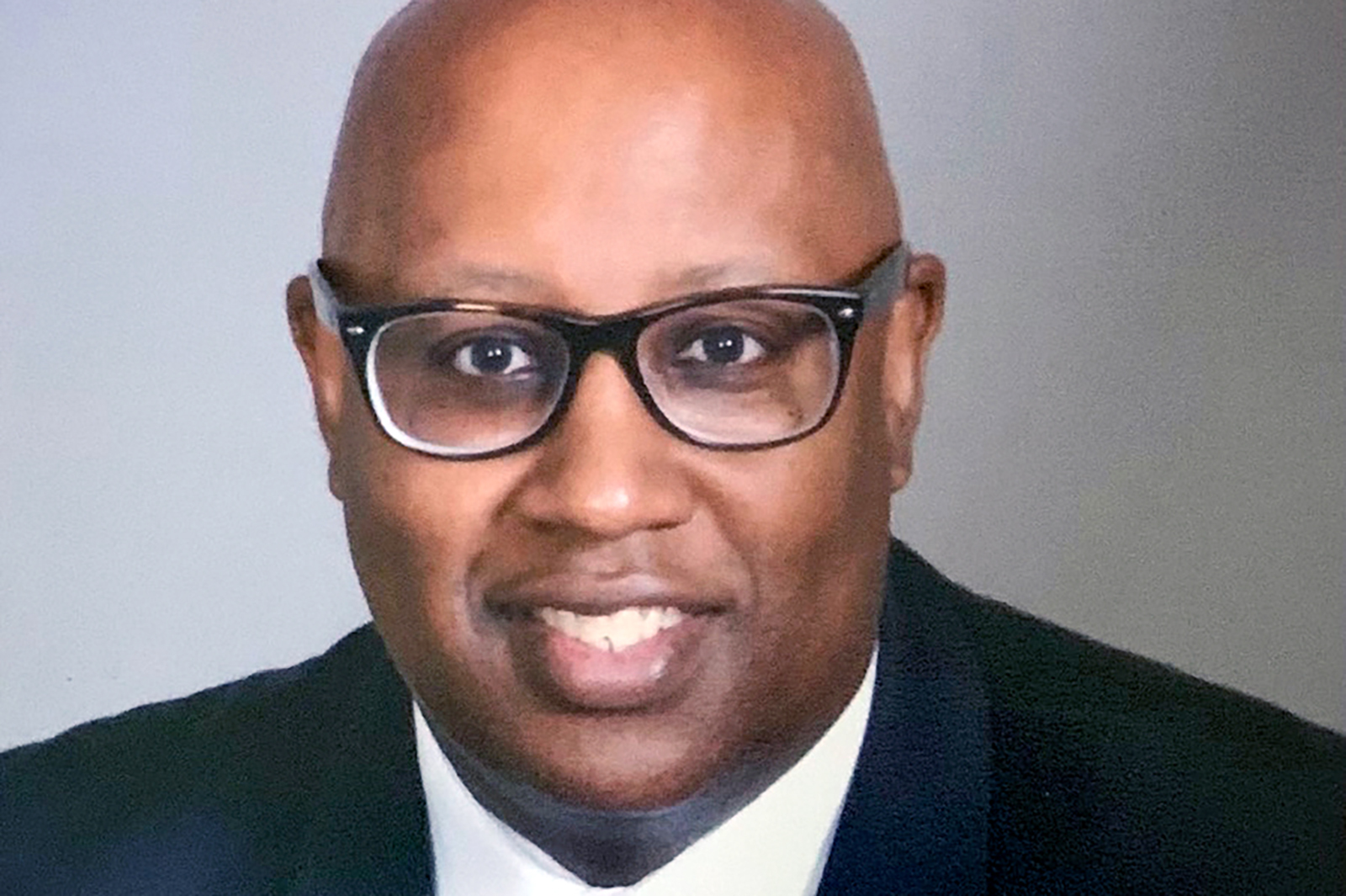
“Serving this district has been one of the greatest privileges of my life,” Scriven said in his resignation letter Thursday. He said he was “deeply proud of the work we accomplished together, and I remain hopeful for Cheltenham’s continued success.”
Editor’s note: This story has been updated to correct the year that Brian Scriven graduated from Cheltenham High School. He graduated in 1983.
Immigration advocates say at least 10 people have been arrested by ICE at Philadelphia International Airport since July 12, including a 68-year-old grandmother and the young babysitter of three children.
That comes amid a nationwide push by the Trump administration to increase arrests at American airports, spurring immigration attorneys to warn noncitizens with limited documentation that travel has become risky, including for those with valid work permits or pending applications for relief.
“People might not think Philly is being targeted, but we are,” said Vivian Chang, executive director of Asian Americans United, an advocacy group. “They’re trying to threaten people, trying to intimidate them — you can’t work freely, you can’t travel freely, you can’t fly.”
She said the arrests in Philadelphia include three people originally from Indonesia and others from India, Ukraine, China, Chile, and Argentina. Another person, a religious leader, was briefly taken into custody and released, she said.
Chang described the arrests in Philadelphia as especially troubling because the airport is owned and operated by the city.
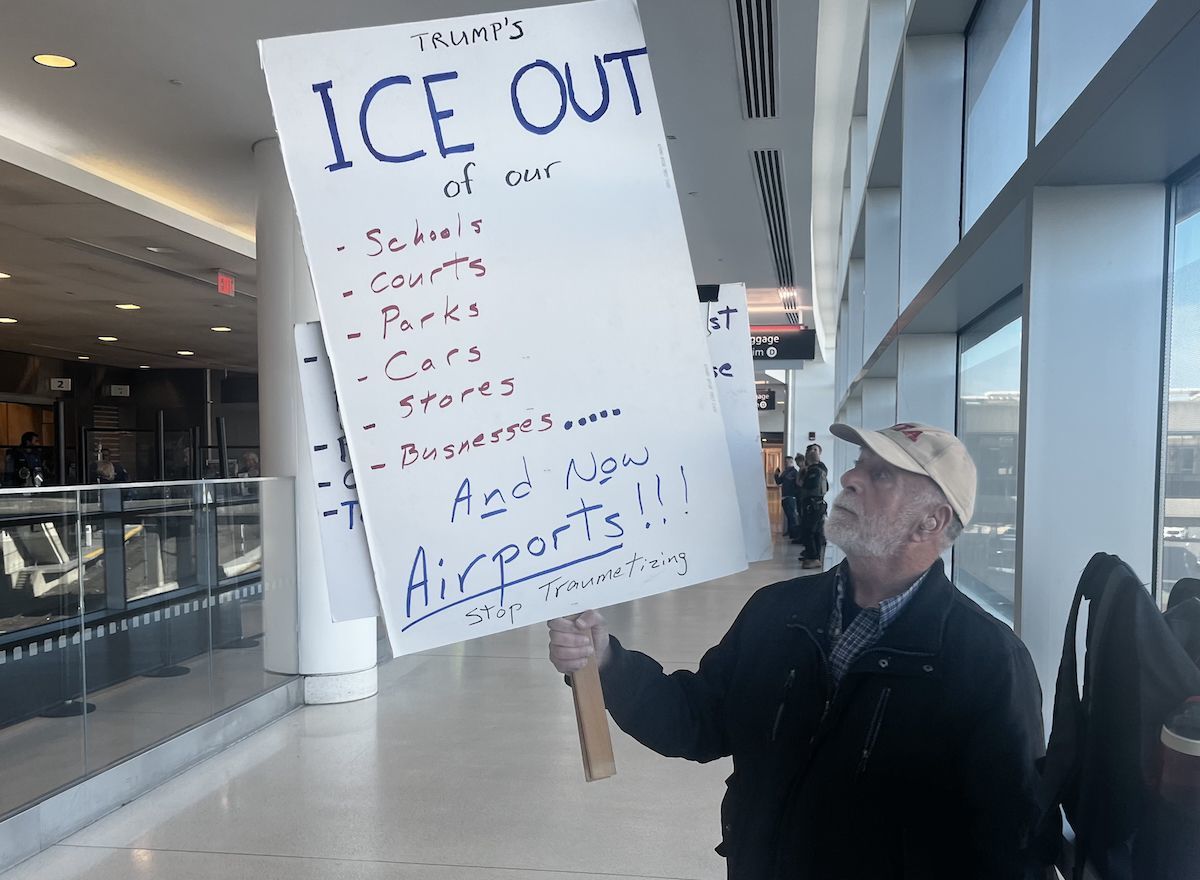
She questioned why that property would not be subject to Philadelphia’s recent “ICE Out” legislation, which bars U.S. Immigration and Customs Enforcement from conducting operations on city-owned lands and bans access to city-owned spaces, absent a judicial warrant.
Steve Papelian, 73, drove more than an hour from Nazareth, Pa. to the Philadelphia International Airport to protest the deployment of ICE agents to international airports across the U.S. on March 24. The former school teacher believes that ICE should target criminal activity, not “moms and pops with kids,” he said.Henry Savage / Staff
Sam Scavuzzo, chief of staff for the city law department, said in a statement that “federal law enforcement access to particular areas of the airport is governed by federal law.”
A spokesperson for the Department of Homeland Security said airport arrests are occurring because the Trump administration “reversed the horrendous Biden-era policy that allowed aliens in our country illegally to jet around our country.”
“Under President Trump, DHS will no longer tolerate this. This administration is working diligently to ensure that aliens in our country illegally can no longer fly unless it is out of our country to self-deport.”
The department said “being in detention is a choice,” and the federal government is offering people who are here without permission a $2,600 payment and a free flight home.
Self-deportation can preserve the right to later come back to the U.S., absent the penalties that accompany a government deportation.
DHS said people who do not leave voluntarily “will be arrested and deported without a chance to return.”
On July 11, what started out as a fun soccer trip for a South Philadelphia babysitter ended with her being arrested and ultimately moved across the country to an ICE detention center in New Mexico.
Steven Melchiorre, 35, a health worker, said that at 7 a.m. that day he dropped off his girlfriend, Iliana Lick, 30, to fly to Kansas City. Originally from Buenos Aires, she planned to see the Argentina national team play in the World Cup.
On July 11, what started out as a fun soccer trip for a Philadelphia babysitter ended with her being arrested and ultimately moved across the country to an ICE detention center in New Mexico. Iliana Lick legally entered the U.S. in 2023, though her visa later expired. She cares for the children of two South Philadelphia families.Courtesy of Steven Melchiorre
She texted Melchiorre from inside the airport to say the line was short, then did not answer his reply.
After a while, he said, Lick phoned, crying, to say she had been arrested by ICE. She was moved from Philadelphia to the Cambria County prison, which holds prisoners for the agency in south-central Pennsylvania, and in the following days was transferred to ICE facilities in Louisiana, Texas, and New Mexico.
Late Friday afternoon, an immigration judge in New Mexico set bond for Lick at $10,000, according to her boyfriend. He immediately began working to post that bond and bring her home. It was not clear how quickly Lick might be released.
DHS said Lick was arrested during a targeted operation, having overstayed her visa.
The department noted that work authorization or a pending application for immigration relief, both of which Lick has, do not confer legal status to be in the United States.
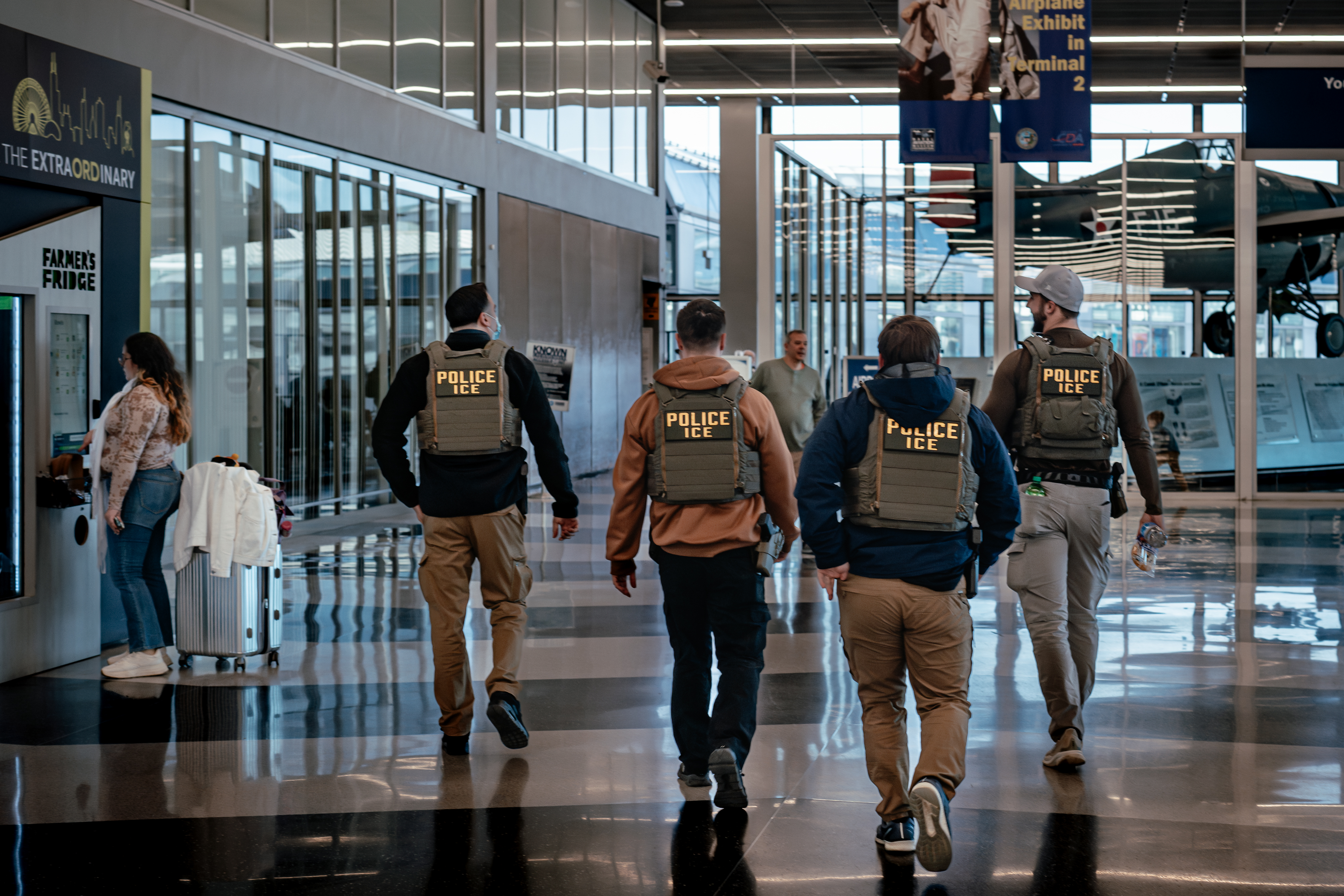
ICE began to deploy agents at U.S. airports in March, and the move was announced as a way to assist at checkpoint lines during a partial government shutdown.
The deployment quickly proved controversial, as travelers and labor unions objected, saying the agents were intimidating and lacked aviation training.
A group of federal immigration officers walk through O’Hare International Airport in Chicago on March 23, 2026. From large cities like Chicago and Las Vegas to small suburbs outside Milwaukee and San Antonio, immigrants have been picked up and detained at courthouses, ICE check-ins and traffic stops, with daily arrests doubling in the last week of June and continuing to climb.JAMIE KELTER DAVIS
Airports rank among the most sensitive public spaces in the country, traversed by millions of people, including U.S. citizens, noncitizens, and mixed-status families, California immigration lawyer Andrew Neitor wrote for the American Immigration Lawyers Association, a legal group.
The introduction of ICE agents, he said, blurs critical lines between airport security and immigration enforcement, around what authority is being exercised and by whom, and over the legal protections due to people who may be arrested.
“ICE was not intended to be omnipresent in daily civic life,” Neitor said. “Yet its footprint has expanded from courthouses to neighborhoods, workplaces, and even parking lots, shifting from targeted enforcement to visible, normalized presence.”
Last year, the Transportation Security Administration and ICE signed a memorandum of agreement that outlined how ICE would share information with TSA to identify people in whom ICE was interested, according to the memo, obtained through the Freedom of Information Act by the watchdog group American Oversight. The agreement said sharing the data would enhance national security, transportation safety, and immigration management.
On Tuesday, U.S. Rep. Rashida Tlaib of Michigan introduced a bill, the No TSA Data for ICE Act, that would bar the agencies from coordinating to conduct what her office called “a dramatic violation of privacy rights.”
The bill would ban TSA from sharing passenger names, birth dates, and other data that enable ICE to target immigrants who are in the process of changing status, including those awaiting visa extensions or who recently married U.S. citizens.
“TSA is readily offering up our immigrant residents to suffer at the hands of ICE agents so they can fulfill their daily arrest quota,” Tlaib said in a statement. “Immigrants should be able to safely fly in this country without the fear of arrest or deportation.”
Today ICE is making record numbers of arrests across the country, not only at airports but also at places that were once considered off-limits, including routine immigration check-ins.
A hat belonging to Iliana Lick sits on a table in the home she shares with her partner, Steven Melchiorre, in the Point Breeze neighborhood of Philadelphia on Tuesday, Aug. 4. Lick has remained in ICE custody since her detention at Philadelphia International Airport on July 11, 2026.Erin Blewett / For The Inquirer
In June in Philadelphia, a 36-year-old survivor of slavery who had fled Mauritania, a mostly desert land in West Africa, filed suit in federal court over the issue. He accused ICE of having unlawfully rescinded a policy that generally allowed immigrants to pursue their cases without fear of arrest.
Nationally, the rate of ICE arrests topped 1,300 a day in June, and grew again to a record 1,474 a day during the first 11 days of July, Syracuse University professor and immigration-data analyst Austin Kocher reported.
Some of those being arrested at airports had legally entered the United States, then stayed after their visas expired. That includes some, like Lick, who were seeking to legally change their immigration status while in the U.S.
Lick, now of Point Breeze, legally entered the country in 2023. She held and extended a visa, and holds work authorization and a REAL ID driver’s license, her boyfriend said. She was trying to adjust her status before her visa expired and continued to do so afterward, Melchiorre said.
Lick works taking care of three children for two South Philadelphia families.
Britni Zahodnick and her husband, Zane Schultz, have employed Lick as a babysitter for their two young children, ages 4 and 1, for more than a year. They described her as soft-spoken, kind, attentive, funny, thoughtful, and a good listener.
“She was very quickly thought of as family,” Schultz said.
Trust does not come easily for any parent preparing to place their children in another’s hands, but Lick won theirs, the couple said.
“All the things you would look for in a caretaker for your kids,” Zahodnick said.
Illiana Lick with partner Steven Melchiorre in New York City. On July 11, what started out as a fun soccer trip for a Philadelphia babysitter ended with her being arrested and ultimately moved across the country to an ICE detention center in New Mexico. Iliana Lick legally entered the U.S. in 2023, though her visa later expired. She cares for the children of two South Philadelphia families.Courtesy of Steven Melchiorre
Melchiorre acknowledged that ICE had legal authority to detain Lick. He said people should follow immigration laws — but the couple thought Lick was doing so. They did not know domestic flights were in question, having flown in the past without incident.
Melchiorre said he was surprised and frustrated by her arrest, “because Iliana has not committed any crime, hasn’t missed any fees, hasn’t missed any court dates. She wasn’t trying to dodge immigration. Being detained, it’s similar to how criminals are treated.”
Sen. Bill Cassidy (R., La.) said Friday that he will vote to confirm Todd Blanche as attorney general, giving President Donald Trump’s pick to lead the Justice Department the last expected vote he needs to be approved by the full Senate.
Cassidy made the announcement on the Senate floor just hours after Sen. Lisa Murkowski of Alaska, another critical GOP vote, said she would oppose Blanche’s nomination. Sen. Susan Collins (R., Maine) announced earlier this week that she would also be voting no.
But with Cassidy’s support now in hand, the Senate’s Republican leadership is expected to move forward with a vote on Blanche’s confirmation as soon as Friday after weeks in which the acting attorney general’s prospects appeared to be in doubt.
With all Democrats expected to oppose Blanche and Sen. Mitch McConnell (R., Ky.) absent for health reasons, a no vote by Cassidy would at minimum have forced an embarrassing delay in the full Senate’s confirmation vote.
Cassidy said Friday he shared concerns raised by Murkowski and Collins over the “politicization” of the Justice Department under Trump and the controversial deal Blanche oversaw this spring to settle Trump’s claims against the IRS, which included a now-scuttled plan for a nearly $1.8 billion fund to compensate people who claim they were victims of political prosecutions.
But the senator couched his decision to back Blanche, who previously served as Trump’s personal defense lawyer, as a choice between the current nominee and the prospect that Trump could pick someone worse.
“Mr. Blanche is not perfect, and he will tell you this, but the choice is not between perfection and Mr. Blanche,” Cassidy said. “It is between Mr. Blanche and another acting attorney general who may not run the department effectively under President Trump and who, indeed may not be as good as Mr. Blanche.”
He added: “I’ll be criticized for this vote. What’s new?”
The fact that Blanche’s nomination was in doubt at all early Friday and hinging on Cassidy’s vote underscored the growing unease that has emerged in some corners of the president’s party over the Justice Department’s direction.
It also highlighted the extent to which Trump’s attacks on GOP lawmakers whom he deems insufficiently loyal have prompted an increased willingness among Republicans to buck his demands.
Cassidy lost his bid for reelection this year after Trump backed his GOP primary rival, Rep. Julia Letlow (R., La.). He has repeatedly criticized the president since then and threatened to vote against administration priorities.
“I have a history with Mr. Trump, but that history does not matter one bit,” Cassidy said Friday in explaining his vote on Blanche.
The senator said he came to his decision after weeks of conversation with Blanche and current and former Justice Department officials, including former attorney general William P. Barr. Barr resigned late in Trump’s first term amid disagreements over the president’s false claims that the 2020 election had been stolen.
Barr, Cassidy said, advised him to back Blanche’s nomination, suggesting that as the lawyer who guided Trump through the criminal prosecutions he faced during his years out of office, Blanche had established a unique trust with the president, which could enable him to talk Trump out of bad decisions.
“I am realistic that President Trump can be unrelenting,” Cassidy said. “This will be true no matter who the attorney general is. And this is the rationale for having a Senate-confirmed attorney general with more leverage to push back.”
Since returning to the White House last year, Trump has eroded the Justice Department’s long-standing tradition of independence while demanding it pursue prosecutions of his political enemies and reward his political allies.
Blanche has overseen many of those efforts serving first as the No. 2 official under then-Attorney General Pam Bondi and then as the department’s acting head after Trump fired Bondi in April. He has defended the president’s “right” to interfere with criminal investigations and his controversial pardons of those who attacked the U.S. Capitol on Jan. 6, 2021.
Democrats have decried Blanche as a uniquely dangerous nominee who thus far has proved unable or unwilling to talk the president out of decisions that run contrary to the rule of law. As his confirmation battle has worn on, more and more Republicans have expressed similar concerns.
Earlier this week, Sens. John Cornyn (R., Texas) and Thom Tillis (R., N.C.), two members of the Senate Judiciary Committee, had threatened to kill Blanche’s nomination in committee over reservations they harbored about the out-of-court deal Blanche oversaw to resolve Trump’s lawsuit against the IRS over the leak of his tax returns to the media.
In addition to the taxpayer-backed payout fund, the deal also provided unusual tax protections to Trump, two of his sons, and their businesses, shielding them from any preexisting tax audits.
The fund proposal drew immediate bipartisan backlash with Democrats deriding it as a “slush fund” designed to reward Trump’s allies, forcing Blanche to walk back the proposal days after its announcement.
But Cornyn and Tillis, who are leaving the Senate after this year after tangling with Trump, demanded written assurances from Blanche that the president would not later reverse that decision before they agreed to support him.
Blanche ultimately relented, issuing statements late Sunday declaring the fund officially dead and clarifying that the deal’s tax provisions protected the Trumps only from past tax audits and would not prevent the IRS from reviewing their finances in the future.
But critics have questioned whether Blanche’s written pledges hold any legal weight, given they weren’t also signed by Trump and his legal team, and could be ignored by the president at any point.
Murkowski raised that possibility in her statement announcing her decision to vote against Blanche’s nomination Friday. The only reason the payout fund was now off the table, she said, was because Blanche needed Senate support for his nomination.
“Once we vote, that will end, and there is no telling what the future holds,” she said, adding later: “The country needs an attorney general who will check the worst impulses of this administration. I hope Mr. Blanche is able to achieve that, if confirmed, but I simply do not have confidence that will be the case.”
Despite pledging his support for Blanche, Cassidy echoed Murkowski’s concerns. He said Blanche showed “poor judgment” in signing off on Trump’s IRS deal and added that he was “particularly concerned about episodes of apparent lawfare — DOJ bringing suits against political enemies.”
The Justice Department has, at the president’s demand, launched probes of critics including former FBI director James B. Comey, New York Attorney General Letitia James (D), former CIA director John Brennan, ex-White House aide Cassidy Hutchinson, and Democratic lawmakers who recorded a video this year calling on military service members to resist illegal orders.
“A never-ending cycle of prosecuting political enemies undermines the rule of law, degrades the public’s trust in our institutions, and makes our politics more extreme when we need to unite to solve the big problems of our time,” Cassidy said.
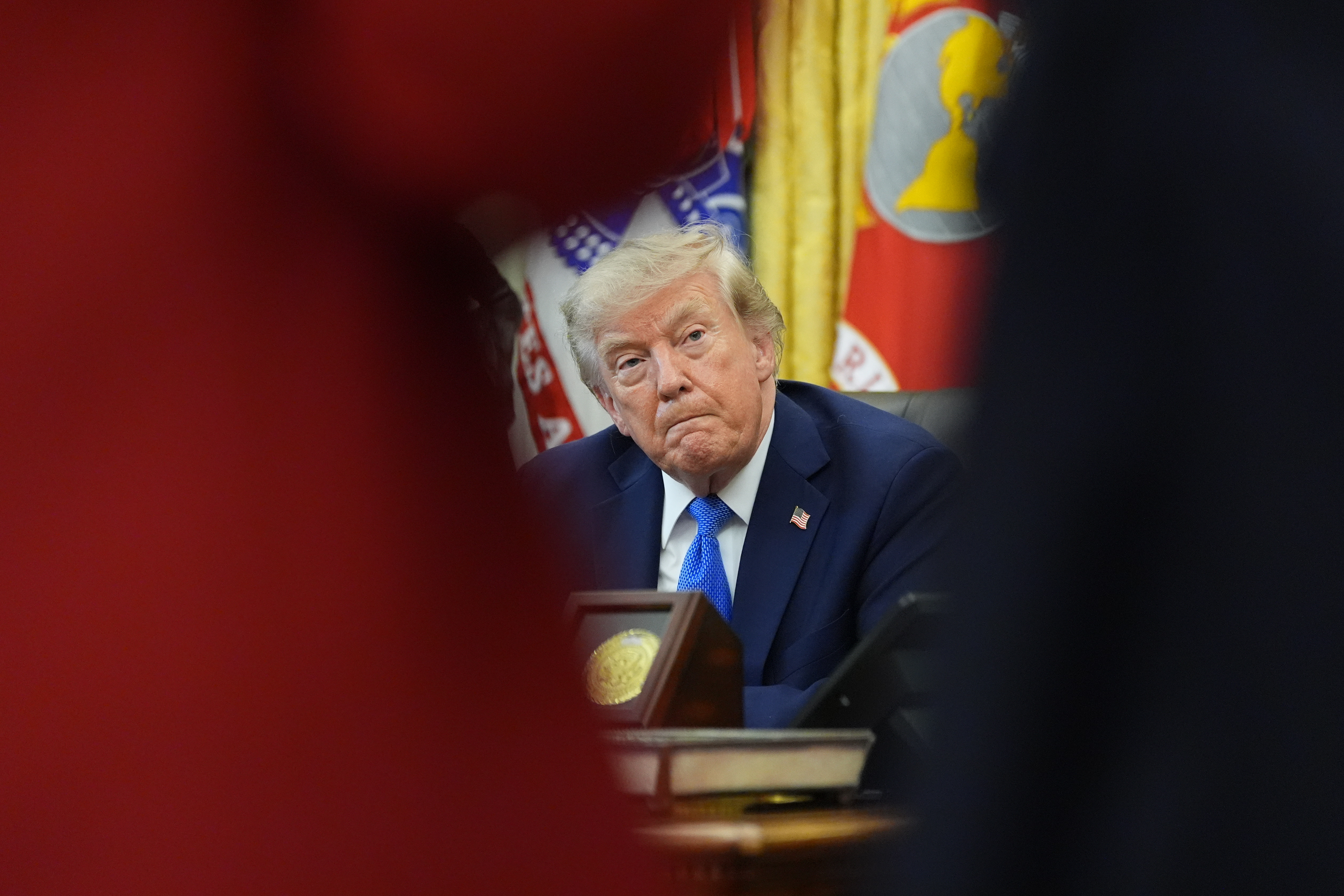
President Donald Trump took another stab at restricting automatic citizenship for people born in the United States after the Supreme Court rejected his earlier attempt.
In two executive orders signed Thursday, Trump reached for different legal maneuvers to test the limits of the 14th Amendment’s guarantee of birthright citizenship.
The first order said children would be ineligible if born to “alien enemies,” members of foreign terrorist organizations, or foreign lobbyists. The second order said children of people who fraudulently request tourist visas for the purpose of giving birth in the U.S. would not become citizens.
Trump harshly criticized the Supreme Court’s June decision reaffirming that the 14th Amendment grants citizenship to nearly everyone born on U.S. soil, including the children of undocumented immigrants, striking down his executive order from the first day of his second term.
The new orders marked a fresh effort to overcome that setback and deliver on a campaign promise by expanding the categories of people who the administration argues fall outside the constitutional guarantee. Constitutional scholars broadly agree that the president lacks the authority to eliminate birthright citizenship unilaterally.
“We had a bad decision, very unfair decision,” he told reporters in the Oval Office on Thursday. “Our country suffers because of it, and we’re ending it a different way.”
The new orders were certain to face legal challenges, and if they survive, would affect far fewer people than the original. An estimated 15 million undocumented immigrants live in the U.S., while only a few thousand people are foreign lobbyists registered with the Justice Department.
No significant populations of U.S. residents are designated as alien enemies or foreign terrorists, making that provision largely symbolic. The administration faces ongoing litigation over whether it can deport alleged gang members by treating them as alien enemies.
The second executive order draws on the president’s authority under the Immigration and Nationality Act to control international travel, according to White House Deputy Chief of Staff Stephen Miller, who appeared with Trump at the signing.
“People come here, pretend to be a tourist, pretend to be a visitor, say they want to go to Disneyland, they want to go visit a monument or go to a national park. But the real reason they’re here is to have a child, to make that child automatic citizen, leave our country and then have a U.S. citizen child,” said Miller, arguing that lying on a visa application amounts to fraud and invalidates the visa.
There is no official data on “birth tourism.” In 2024, fewer than 10,000 babies were born in the U.S. to people with foreign addresses, out of 3.6 million total live births, according to data from the Centers for Disease Control and Prevention analyzed by the nonpartisan Migration Policy Institute.
Trump’s initial executive order sought to deny automatic citizenship to children of unauthorized immigrants and foreigners on temporary work, student and tourist visas — a population that some studies found numbers more than 150,000 a year. That order was based on a reinterpretation of the 14th Amendment, which was ratified in 1868 and grants citizenship to those born on U.S. soil who are “subject to the jurisdiction” of the federal government.
Two coalitions of Democrat-led states and several immigrant rights groups filed more than half a dozen lawsuits against the Trump administration. Those challenges led multiple federal courts to temporarily halt the administration from implementing the citizenship ban.
A divided Supreme Court upheld birthright citizenship in June in one of the most closely watched cases of the recently concluded term. Writing for the 5-4 majority, Chief Justice John G. Roberts Jr. said the framers of the 14th Amendment intended to extend citizenship to virtually all people born on U.S. soil with limited exceptions for the children of diplomats and others.
“Citizenship, then and now, was the right to have rights — to freely participate in our political community. The Framers of the Fourteenth Amendment extended that promise to ‘every free-born person in this land,’” Roberts wrote. “We keep that promise today.”
The Trump administration had argued for a narrower reading of the amendment, saying its language did not apply to people who were here illegally or temporarily because they had not demonstrated the necessary political allegiance to the country.
The Supreme Court’s ruling marked a major loss for Trump, who had attended the oral arguments at the high court in April, becoming the first sitting president to do so.
Amanda Frost, an immigration law professor at the University of Virginia, said significant parts of Trump’s new executive orders appear largely unconstitutional and at odds with the Supreme Court’s decision.
“This is my very clear legal take: He cannot issue an executive order that saying that children of birthright tourism — even if the mother violates immigration law to come to the United States — are not U.S. citizens,” Frost said.
Likewise, David Bier, an immigration expert at the libertarian Cato Institute, said Trump cannot credibly argue that undocumented immigrants in the U.S. who are declared by his administration as “enemies” of the country are not subject to the jurisdiction of the U.S. government.
“None of the [Supreme Court] justices adopted the logic that illegal immigration is an invasion or any of those types of thing,” Bier said “None of the conservatives used that line of argumentation.”
Bier added that the president’s efforts on birthright tourism are “pretty obviously contrary to what the Supreme Court just ruled and are likely to get no further than the prior order did.”
Immigration and Customs Enforcement is moving to equip officers with body cameras in the next two months but the agency’s policy gives it broad control over what footage will be made public by specifying any releases must be in its “best interests.”
After years of delays, ICE said its field officers nationwide will have body-worn cameras by the end of September. The rollout comes after recent fatal shootings by officers enforcing President Donald Trump’s immigration crackdown have intensified pressure for accountability that the cameras could provide.
But the agency’s body-worn camera policy could mean taxpayers who are pitching in tens of millions of dollars to pay for the cameras may be kept in the dark about some high-profile confrontations, at least in their immediate aftermath.
The policy says ICE will promptly release video of shootings and other encounters in which its agents cause death or serious injury only after determining “it is in the best interests of the agency” to do so. That gives its director discretion to release recordings that reflect well on the agency’s image while working to keep others secret, experts on body camera policies said.
Such selective releases are routine in some law enforcement agencies but usually not so clearly contemplated in policy, according to professor Christopher Schneider of Brandon University in Canada, a co-author of the new book Police Body-Worn Cameras: Media and the New Discourse of Police Reform.
“In some ways, ICE is saying the quiet part out loud,” he said. “Body-worn cameras are being used as contemporary image-work tools to present the police to the public in the most favorable way possible.”
Body camera policy allows withholding some video
The policy requires officers to activate cameras during routine enforcement activities, including while making arrests, executing search warrants and responding to emergencies.
After shootings or other serious confrontations, a committee that includes top ICE officials and lawyers will review footage and recommend whether to release it promptly, according to the body camera policy issued in February 2025.
If the answer is yes, the recording could be released within 72 hours. But if the ICE director finds that “specific and compelling circumstances” justify withholding the video, they have the authority to block or indefinitely delay the release, the policy says.
The policy does not elaborate on such circumstances, and ICE did not respond to a question from the Associated Press about how it would make such decisions.
Practices vary widely in the U.S. In Chicago, a police watchdog agency routinely releases body camera video of shootings and other serious use-of-force incidents within 60 days. In Philadelphia, the police department very rarely uses its discretion to release video of specific incidents and has no policy for when to do so.
Even when footage is released, ICE’s policy will require the redaction of all officers’ identifying features such as their faces, names, and badge numbers to preserve their privacy.
Schneider, who has studied body cameras since their use began spreading a decade ago, said he does not expect ICE to release footage of fatal shootings like those last month in Houston and Maine.
He noted ICE’s sister agency, Customs and Border Protection, has not released footage of the January shooting of Alex Pretti in Minneapolis even though it was captured on agents’ cameras. CBP Commissioner Rodney Scott told lawmakers in February that the video and other materials were under investigation and would be made public “when it’s appropriate.”
ICE says all officers will have cameras by end of September
ICE spent $30.9 million in July to purchase body camera equipment from Axon, the Arizona-based company that also manufactures Tasers, federal spending records show.
Neither shooting was recorded with body cameras. That news angered members of Congress, who had given ICE $20 million to purchase body cameras in a bill passed to end a partial government shutdown on April 30.
ICE said body cameras have been sent to more than half its field officers and the rest will receive them by the end of September. That timeline pushes back estimates from earlier public statements. Maine Republican Sen. Susan Collins, who backed funding for cameras, said last month that the agency informed her they would be deployed by the end of August. ICE had said earlier that they would be issued by mid-September.
ICE officers working in the Houston area, where the agency sent more than 800 cameras, are among those who have started training, according to U.S. Rep. Henry Cuellar, a Texas Democrat and member of the House Appropriations Committee.
At least one member of every arrest team will be required to have a camera, the agency said.
“I think the American people need to see what that officer sees and hears,” White House border czar Tom Homan said July 19 on CBS News’ Face the Nation. “And if you look at the data, body cameras actually exonerate agents more than they, you know, provide evidence of wrongdoing.”
Schneider said he expects ICE to release recordings that promote the agency’s mass deportation program by portraying officers as brave and immigrants as dangerous criminals.
“Much of what law enforcement does is convince the public that we need them and feel safe and they do all this good stuff for us,” he said. “The more bad stuff the public sees, the more angry the public gets. And this causes problems for the police brand.”
ICE has taken years to adopt body cameras
ICE began testing body cameras in 2021 during President Joe Biden’s administration and distributed 1,400 devices three years later, saying use would expand as funding became available.
After returning to office in 2025, President Donald Trump rescinded a Biden order that required federal law enforcement agencies to use body cameras.
ICE did not buy body cameras even after it received a historic $75 billion infusion in Trump’s signature policy bill in 2025 and began hiring thousands of new officers. The two July purchases from Axon were made through an existing government contract that began in 2023, records show.
“This is not hard to deploy, but they’ve slow-rolled it,” said Jason Houser, who was ICE chief of staff under Biden and helped implement the agency’s pilot program.
Houser said the Trump administration should have equipped officers with body cameras when it expanded mass arrests and traffic stops. Doing so only after several shootings and pressure from Congress “is clearly a political response” that will not make officers or the public safer, he said.
“This doesn’t fix the problem of putting officers in a place where they’re not trained or equipped to carry out the style of operations that the administration is asking them to do,” he said.
The Trump administration has refunded about $100 billion in tariffs in response to the Supreme Court ruling that declared the tariffs illegal, according to a new court filing this week.
Major corporations are getting huge refunds: $2.2 billion for Apple, $1.3 billion for Ford, $600 million for Amazon. (Amazon executive chairman Jeff Bezos owns the Washington Post.)
While some companies have said they will use the refunds to reduce their prices, experts say not to expect many price cuts. Kimberly Clausing, a UCLA professor who served as a tax policy official under the Biden administration, said some companies don’t feel confident enough to change their prices based on the revoked tariffs, since President Donald Trump has replaced those levies with others that are also likely to be partially or completely thrown out by courts.
“If you’re a firm, you’re wondering what the tariff policy is,” Clausing said. “Some of that pass-through to consumer prices has been slower than you might think if it were really permanent policies. That’s good news in the short term for consumers, but it also means you won’t necessarily see as big a swing in the other direction.” She noted that some companies were simply “gambling” all along that the import taxes would be thrown out in court, rather than raising prices much in the first place.
Even if they paid higher costs because of the now-invalidated tariffs, most American households won’t see any of the refund money directly.
The Tax Foundation estimates that the average U.S. household spent an extra $1,000 as a result of the tariffs in 2025, most of it relating to the specific tariffs that have been overturned.
Because Trump has since replaced most of those tariffs with new ones authorized in a different way, the organization estimates the average household will pay about $900 extra in 2026.
So why aren’t many individual consumers getting compensated alongside big companies?
In response to the Supreme Court ruling, U.S. Customs and Border Protection set up a process for requesting refunds. To use the system, the payers have to be registered with the government as an “Importer of Record” or an authorized Customs broker — in other words, not just someone who ordered an item on the internet that was made in a foreign country and ended up paying more for it.
If you paid a tariff on something you had shipped to you by UPS or FedEx, you can look up your tracking number for the shipment on the companies’ websites. If the companies got money back for your shipment, they are supposed to send you the refund.
Amazon said in a quarterly earnings call that it plans to send refunds to individual customers in limited cases for which it can identify customers who paid more due to tariffs. The company said it would “proactively contact” those customers but did not provide more information about how it would find them.
Some other companies that raised prices to accommodate the tariffs are taking heat for not passing on the refunds. Customers are suing Ford and Costco, among others.
Alan Sykes, a trade law expert at Stanford Law School, said he doesn’t think the customers have much to go on.
“They willingly paid the higher price. Ford could have raised the price of the car for any arbitrary reason. … You don’t have a claim,” Sykes said. “Certain companies are saying they’re going to lower their prices going forward … not because of a legal imperative, but a public relations logic.”
Matilde Bombardini, an economist at the University of California at Berkeley, said she understands the logic of a customer who wants money back.
She said research suggests that importers who paid 10% more because of the tariffs typically charged their customers about 3% more and absorbed the rest. “Costco’s getting back the whole 10%,” she said. “Conceptually, we could all agree that the 3% should go back to the consumers.”
She noted that the refunds are likely unprecedented in scope. The tariffs that were invalidated applied to almost all categories of goods from every country in the world, though there were some exemptions.
In the court filing this week, a Customs and Border Protection official said companies have filed more than 178,000 valid claims to refund tariffs on more than 25 million imports since the claim system opened in April, leading to more than $100 billion in refunds and interest so far.
A high school history teacher and a lawyer are spending their summer in Camden sprucing up the city where they have lived and worked —by providing free lawn care.
And a third-generation South Jersey business makes stainless-steel food carts that spin their wheels on Shore boardwalks, huge theme parks, and military bases across the world.
Plus, a man who pleaded guilty recently for stalking a TV news personality is the same person who was arrested for allegedly threatening Gov. Mikie Sherrill, and more news of the day.
P.S. As we wrap up another week, we want to thank you for your continuing support. We’re still new, so please tell us how we’re doing by taking our survey.
Childhood friends Brian Turner and Keith Benson have cut nearly 100 lawns in Camden since June.
Turner is a Camden High teacher and Benson is a lawyer at a Cherry Hill firm.
The duo are providing the service for free and limit it to the city boundaries. They use their own equipment, and the only payment they’ll take is the occasional bottle of water.
It’s their way to give back to the city and spruce up the community.
A Camden-rooted business may have built your favorite food cart.
For 74 years, Custom Mobile Food Equipment has handmade stainless-steel food wagons and trucks.
The company’s products have found their way onto Shore boardwalks, U.S bases in Japan, and iconic theme parks such as Disney World and SeaWorld.
The Hammonton-based company has navigated food trends and consumer behavior changes. VP David Kyle is confident it’ll outlast recent inflation, global competition, and import tariffs.
A man who recently pleaded guilty to stalking a Philly TV news personality is the same person who was arrested in January for allegedly making threats to New Jersey Gov. Mikie Sherrill when she was a U.S. representative.
A sports coach at a Gloucester Township high school was charged with sexual assault of a student, Camden County Prosecutor Grace C. MacAuley said Thursday. He was taken into custody Wednesday.
Burlington County will host a breastfeeding celebration and resource fair in Mount Holly today. Local organizations, vendors, and health professionals will be available to provide information.
JP Morgan Chase has four new Chase Bank locations under development in Berlin Township, Blackwood, Deptford, and Washington Township, and it continues its expansion into South Jersey, 42 Freeway reports.
We asked readers about etiquette of playing ball on the beach via the Shore Line group chat.
Here are a few of the responses:
Many years ago a bunch of guys were playing Frisbee. The Frisbee hit me in the face along with the guy diving for it. I lost a tooth from the force of the hit and also needed root canal. They should be far from the crowds.
The beachgoer needs to relax. They are kids and we all did it as kids. It’s a public place and to expect kids not to be playing is ridiculous.
Hello from Wildwood Crest! Our borough lifeguards maintain a very publicized posted rule about playing ball at the beach: only on the “Back Beach.”
Where do you land? Do you accept that potentially getting hit is part of the price of enjoying a day on a public beach? Or do you think it should be limited to a dedicated zone? Be part of conversation and email Rosenberg at downtheshore@inquirer.com.
📸 Photo of the week
Springhouse Farms, of nearby Upper Township, offers a wide variety of produce at the Sea Isle City Farmers Market.Vernon Ogrodnek / For The Inquirer
🫑 One last fun thing to do: South Jersey is known for its produce for a reason, and not much is more peaceful than perusing farmers markets on a weekend morning.
Enjoy your weekend, and I’ll be back in your inbox on Monday. 📧
By submitting your written, visual, and/or audio contributions, you agree to The Inquirer’s Terms of Use, including the grant of rights in Section 10.
With the afternoon sun beating down, Keith Benson and his childhood friend Brian Turner meticulously tended to a lawn in Camden’s Parkside neighborhood on a recent Friday.
They took turns pushing a red lawn mower that left neat lines in the lush grass. They edged up the perimeter and pulled weeds from the sidewalk in front of the property on Bradley Street.
A short time later, the pair completed the job, packed up their equipment and sped off to their next assignment in Benson’s burgundy Ford-150 pickup.
They didn’t get paid and they didn’t want any payment, except possibly a cold bottle of water.
Keith Benson and his childhood friend Brian Turner help residents and the community by providing free lawn care, in Camden, N.J., July 31, 2026.Jessica Griffin / Staff Photographer
Benson, a Camden High history teacher, and Turner, a litigator and personal injury lawyer at a Cherry Hill law firm, are spending the summer working for free. They want to give back to the city where they have lived and worked.
“I’m grateful to be able to do it,” said Benson, 46. “We have to pass that on.”
Benson was looking for something to do when the school year ended in June. He came up with the idea and enlisted Turner to help.
They shared their plans mainly through word of mouth, friends, and social media posts. The response has been overwhelming and the two have been fielding text messages and calls to schedule appointments.
Since June, they have cut nearly 100 lawns, including 14 repeat cuts, Benson said. They hope to get back to every lawn once a week, he said. The free service is limited to Camden, and they use their personal equipment.
“When they text us, we go,” said Turner, 47, of Cinnaminson. “We always show up when we say we will.”
Camden Mayor Victor Carstarphen launched a “Camden Strong” campaign several years ago and has encouraged residents to help spruce up the community. That initiative is cleaning up neighborhoods, removing bulk trash, and restoring public spaces.
This summer, too, residents such as Elton Custis have been cleaning up their blocks on Saturday mornings for a half hour to support Camden Strong. Custis compiled a list of more than a dozen mostly elderly neighbors for Benson and Turner for the free lawn cutting. They completed them all, he said.
“I just love the fact that they started this,” Custis said. “They didn’t wait for anybody’s approval. They just got it done. They have been a godsend, that’s for sure.”
As the temperature approached 90 degrees, Benson and Turner made their fourth stop of the day on Bradley Street. They have worked on the hottest days of the summer, stopping only for inclement weather.
They cut a vacant lot adjacent to a home where Ted Davis Jr., the son of the city’s first Black judge, now resides. They also mowed his backyard.
“They’re true to their word, when they say it’s free,“ said Davis, a retired personal trainer and high school coach. ”I offered to pay but they declined.”
Davis said he was not surprised by the undertaking. He met both as teenagers when the signed up to train with him at his Smart Jox business.
“I respect them very much,” Davis said. “It’s not a lot of people who are doing what they are doing.”
Keith Benson and his childhood friend Brian Turner help residents and the community by providing free lawn care, in Camden, N.J., July 31, 2026.Jessica Griffin / Staff Photographer
Earlier that day, Turner, a former assistant Camden city attorney, had stopped in his office at Malamut Law firm and worked for several hours. The firm has supported his community service, he said.
Benson and Turner met in 1996 their sophomore year at Moorestown Friends School. Benson transferred from Cherry Hill schools.
“We didn’t like each other at first,” Benson recalled.
“He hated me,” Turner said.
They became friends that summer when Benson’s father, also named Keith, forced them to sign up for a basketball camp. The elder Benson was unaware of the tension, but believed the young Black men in a predominantly white school should be friends.
Both men graduated from Rutgers-Camden where both played basketball and Turner was named the New Jersey Athletic Conference’s Player of the Year in 2002.
Left to right: Rutgers-Camden basketball teammates Keith Benson, Robert Scott, and Brian Turner circa 2002.Courtesy of Keith Benson
Both also earned doctorate degrees — Benson in education and Turner in law. Benson lives in Camden and the two conducted basketball clinics at Camden High this summer.
“Now, they are ridiculously fast friends,” the elder Benson said. “Their friendship is beautiful and I love it.”
Whistling and humming as they worked, Benson and Turner quickly finished up the lawn on Bradley Street. There was some friendly bantering about whether the lines in the grass were perfectly straight.
“We do argue all the time,” Benson said.
“Sometimes, he doesn’t listen,” Turner quipped.
Next, the pair moved to South Eighth Street to cut the lawn in front of a rowhouse. They also cut the adjacent properties, including in front of a boarded up property on the corner.
Keith Benson and his childhood friend Brian Turner help residents and the community by providing free lawn care, in Camden, N.J., July 31, 2026.Jessica Griffin / Staff Photographer
They mowed eight lawns for the day. Both said they hope to inspire others to find ways to help their neighbors and the city.
Think you know your news? There’s only one way to find out. Welcome back to our weekly News Quiz — a quick way to see if your reading habits are sinking in and to put your local news knowledge to the test.
Question 1 of 10
Sixers fan Joey Abel went viral for sunburning his back down the Shore with a faux LeBron James jersey outlined with sunscreen. But for work, he actually lives here:
CorrectIncorrect. XX% of other readers got this question right.
Abel works in insurance in New York. For the past few months, the 28-year-old has been surrounded by hordes of Knicks fans, reveling in their long-sought championship. It hasn’t been pleasant for the lifelong Philadelphia sports team fan. When James’ signing was announced, he took action the only way he knew how.
Question 2 of 10
Employees at this Philly museum adopted their first union contract this month:
CorrectIncorrect. XX% of other readers got this question right.
Fabric Workshop and Museum employees are the latest museum workers to get a union contract. The 22 workers covered by the new contract are represented by the AFSCME District Council 47, Local 397, and work in visitor services, education, marketing, and communications roles, among other jobs.
story continues after advertisement
Question 3 of 10
Irish singer Glen Hansard was working on an album in Philadelphia before his death. Who was his producer and key collaborator on the unnamed project?
CorrectIncorrect. XX% of other readers got this question right.
Beginning in 2025, and continuing this past winter, Hansard spent weeks working on an album with producer Charlie Hall of the War on Drugs. Hansard first came to Elm Street to work with Hall and his crew in March 2025 and then again in January this year.
Question 4 of 10
Who is the Met’s Costume Institute honoring and spotlighting for its 2027 exhibit?
CorrectIncorrect. XX% of other readers got this question right.
John Galliano, a lauded fashion designer with a checkered past, will be honored at next year’s Met Gala. The decision has sparked mixed reactions because of Galliano’s past, which includes a racist and antisemitic rant that ended his career at Dior.
Question 5 of 10
Relics from the now-closed Gillian’s Wonderland Pier are up for sale following the beloved attraction’s closure. They’re on the market at an antique shop here:
CorrectIncorrect. XX% of other readers got this question right.
Nearly two years after the iconic Ocean City, N.J., boardwalk amusement park closed, and with the future of the site still uncertain, 20 of the kitschy and spooky disembodied artifacts from Wonderland remain unsold at Obnoxious Antiques in Burlington.
Subscribe to The Philadelphia Inquirer
Our reporting is directly supported by reader subscriptions. If you want more journalism like this story, please subscribe today.
A vast collection of 19th-century manuals focused on this topic has made its way into the Library Company of Philadelphia’s shelves:
CorrectIncorrect. XX% of other readers got this question right.
Fruits of Philosophy is one of 1,500 19th-century clandestine hardcovers that are part of the Library Company’s most recent set of acquisitions from respected medical historian, author, and avid book collector Charles E. Rosenberg. The books focus on sex, sexual health, abortion, self-pleasure, birth control, and more — all of which were considered extremely taboo topics at the time.
Question 7 of 10
Local music producer Will Yip recently spoke with The Inquirer about one of his fandoms. The Grammy winner has an extensive collection of:
CorrectIncorrect. XX% of other readers got this question right.
Yip became a part of what he calls an “underground market” of people who become friends as they help each other find game-used Phillies memorabilia. He has hundreds of jerseys that he keeps in storage and has lost track of how much money he’s spent over the years.
Question 8 of 10
Independence Mall is getting a new sculpture. What will the sculpture portray?
CorrectIncorrect. XX% of other readers got this question right.
A 46-foot-long sculpture of Benjamin Franklin’s “Join or Die” snake is set to be unveiled this fall on the Liberty Bell Center block of Independence Mall, near the corner of Fifth and Chestnut Streets. The sculpture will feature eight pieces that represent segments of the snake’s body. These will be carved out of granite, each marked with the initials of the respective colony it’s meant to represent.
Question 9 of 10
Which popular figure was seen across the Philly area sampling local pizza slices for future social media content?
CorrectIncorrect. XX% of other readers got this question right.
Dave Portnoy, the Barstool Sports founder and “One Bite Pizza Reviews” host, made at least five stops in the region, leaving some pizzeria owners celebrating and others refreshing social media to learn their scores.
Question 10 of 10
Ellen Yin’s newest Philly restaurant, Bar Cicci, is promoting itself as an all-day:
CorrectIncorrect. XX% of other readers got this question right.
Bar Cicci will bring Italy's slower-paced drinking culture to Rittenhouse Square as an all-day aperitivo bar, with a menu of small plates, old-school Italian pastries, and spritzes.
Your Results
You have skipped .
You scored XX out of 10.
The average reader scored XX out of 10
Seems like you’ve been skimming more than reading there, buddy. There’s always next week.
You’ve read some articles (or made some educated guesses) but we wouldn’t come to you first for our local news recaps. Better luck next week!
Do you work here? You’re a local news stan with the latest updates on Philly happenings. Your friends definitely ask you for summaries on what’s going on and it shows.