Category: News

  • For the Phillies, suddenly it’s summer as they play the Braves in Atlanta

    For the Phillies, suddenly it’s summer as they play the Braves in Atlanta

    Whether the Phillies experience a Red October remains to be seen, but they are in for a Red September in Atlanta with summerlike temperatures and what looks to be a hitter-friendly atmosphere.

    On a Tuesday in which the sun was fighting mightily to prove its existence over Philadelphia — in what has been an unusually gloomy September — the skies over Atlanta were perfectly clear and forecast to stay that way through the next three afternoons.

    Highs there Tuesday afternoon should crest in the mid-80s, said Todd Vaughan, meteorologist with the regional National Weather Service in Peachtree, Ga.

    That would be about 20 degrees warmer than it was Sunday, when the Phillies beat the Tampa Bay Rays in South Philly to make the postseason.

    Temperatures may make a run at 90 degrees Wednesday and Thursday afternoons, when the humidity would also be increasing, said Vaughan. As for winds, “They’ll be less than 10 mph,” he said.

    On Sunday, in dismal, rainy Citizens Bank Park, winds were gusting to 29 mph.

    As for what could go wrong with the Atlanta forecast, Vaughan said, “The forecast confidence is pretty high.”

    An aside: If the best-of-three series goes to a third game, the Phillies’ Aaron Nola is on record as saying he loves to pitch in the heat. However, he also has given up a lot of long balls this season, and meteorologist Paul Dorian, who maintains a “Home Run Index” based on weather variables, said conditions would be favorable for homers this week.

    No rain would be expected in Atlanta until Friday night, at which time the Phillies would be on the West Coast for their next series or heading back home for the winter.

    If they return to Philly by Friday, they may rediscover that Ernest Hemingway was on to something with The Sun Also Rises, with clear skies and highs in the Atlanta-like 80s.

    In fact after Tuesday, the sun should reign over Philly through the week, said Alex Staarmann, meteorologist at the weather service in Mount Holly. Highs are expected to be in the 70s Tuesday and Wednesday, and low 80s on Thursday.

    You may have noticed a Vitamin D shortage this month. Overall, skies have been more than 70% cloud-covered since Sept. 1, according to weather service sky data, in what normally is one of the sunnier months.

    “It’s been an unusually cloudy month for September, Staarmann said.

    The clouds are due back this weekend. Rain is possible Friday night into Saturday, he said, and maybe more on Sunday.

    If the Phillies have their way, they’ll be in Los Angeles playing in the Division Series.

  • State reps ask Pa. attorney general to investigate the Philly schools for alleged discrimination of Jewish students

    State reps ask Pa. attorney general to investigate the Philly schools for alleged discrimination of Jewish students

    A group of state representatives asked Pennsylvania Attorney General Dave Sunday to investigate whether a “systemic pattern of discrimination” against Jewish students occurs in the Philadelphia School District.

    Citing a congressional investigation into Philadelphia and other districts, and reports of antisemitic incidents against city students, members of the Pennsylvania House Republican leadership and Martina White, a Republican representing Philadelphia, wrote to the attorney general urging a probe.

    “The Office of Attorney General must ensure that Jewish students have a safe learning environment that is free from discrimination within the SDP,” the representatives wrote in the letter, which was sent Monday. “We ask you to investigate this matter to determine if any criminal activity occurred and take the appropriate action your office deems necessary.”

    Monique Braxton, district spokesperson, said the school system “strives to create welcoming and inclusive environments that allow our students to feel safe and heard” and has “taken steps to protect and educate students and staff against antisemitism and other forms of hate and remains committed to fostering learning environments where all students and staff feel safe and supported.”

    Sunday’s office did not immediately respond to a request for comment.

    The state representatives, in their letter, brought up allegations that some district educators “promote antisemitic content in their classrooms.”

    In 2024, the district agreed to a settlement with the U.S. Department of Education’s Office for Civil Rights after an investigation found it had not adequately investigated repeated claims of antisemitism, taken appropriate steps to respond to the claims, or maintained necessary records around the alleged acts.

    The incidents that prompted that settlement included a swastika drawn on a door, antisemitic slurs, and allegations of social media-based harassment by district teachers and administrators after Hamas’ Oct. 7, 2023, attack on Israel, and Israel’s subsequent military operation in Gaza.

    “Local parents have repeatedly indicated that these behaviors and this antisemitic atmosphere continue to persist throughout the SDP,” the representatives wrote. “Jewish students, like all students, should be able to learn in an environment that is free from discrimination.”

  • Senate resoundingly approves sweeping college sports measure

    Senate resoundingly approves sweeping college sports measure

    WASHINGTON — The Senate on Monday approved a sweeping remake of collegiate sports regulations in an effort to restore stability to an athletic landscape that has been upended by constant transfers, frequent shifts in conference membership, and an infusion of money from wealthy boosters eager to lure top talent.

    Known as the Protect College Sports Act, the bill passed by an overwhelming bipartisan vote of 77-22, making it one of the last major pieces of business to be tackled by lawmakers before the midterm elections. It was a bid by Congress to lay out significant new rules and standards governing popular college sports that are a mainstay of American life as well as a path to an education for student athletes.

    Authors of the legislation, which faces an uncertain future in the House, said aggressive congressional intervention was necessary because a series of legal rulings had sowed chaos in college sports. They warned that the current financial path of colleges and universities was unsustainable, would decrease competition, and could cause schools to jettison less popular sports that were not as lucrative as football.

    “It would be nice if college sports could somehow magically fix itself, but this is a matter of law, federal law, and it is only Congress that can fix it,” said S. Ted Cruz (R., Texas), a chief proponent of the bill.

    But it has run into fierce opposition from Black lawmakers and others who say the measure restricts opportunities for players, many of them Black, while doing little to hold down the pay or mobility of top coaches.

    The legislation would limit college athletes to one transfer before they would have to sit out a season, as they had in the past before court rulings opened the transfer “portal,” spurring thousands of athletes to try to change schools each year. It also would set eligibility at five years. It would protect the right of college athletes to receive compensation for their “name, image, and likeness” and institute guarantees for scholarships and healthcare.

    The measure also would grant the NCAA, the governing body of college sports, a limited antitrust exemption while remaining silent on collective bargaining by student athletes. It attempts to discourage schools from jumping from conference to conference and it imposes new restrictions on agents for athletes.

    “Sports is about any given Saturday,” said Sen. Maria Cantwell of Washington, the lead Democratic sponsor of the bill. “It is not about whether you have a billionaire in your backyard. It is about whether you can coach and recruit and develop and maintain and have academic performance and have fairness.”

    Despite the Senate approval, opponents blasted the measure as unfair to players. An amendment to cap coaching salaries at $5 million and limit their contract buyouts to one year’s salary was defeated Monday as the authors beat back a series of proposed changes. Democratic opponents also were unhappy with the lack of clarity about future collective bargaining.

    “It’s a bill for the control and power of the NCAA and member institutions,” said Sen. Cory Booker (D., N.J.), a top opponent of the legislation. “It is not about athletes who are winning their rights, winning court cases, gaining leverage, and now are having that taken away from them.”

    But resistance to the bill was no match for the major sports conferences, state schools, big-name coaches, and other powerful interest groups that got behind it, including airing television spots that featured high-profile figures such as Deion Sanders, the former professional sports star who is now the head football coach at the University of Colorado.

    “The colleges and the conferences and the boosters flooded this place,” said Sen. Christopher S. Murphy (D., Conn.), another leading opponent of the bill. “It is a hard slog when the players have no money and no representation. Ultimately, this is going to be really bad for student athletes and destructive of the college sports model because these kids aren’t going to stick around very long if they are not getting paid what they are worth.”

    Others said Congress should have stayed out of the fight.

    “The people who oversee the post office now want to run college sports. What could go wrong?” said Sen. Rand Paul (R.,Ky.). He said he doubted that the founding fathers ever envisioned that “Congress would one day be in charge of dictating the rules for college sports.”

    With the House scheduled to be in recess until after the midterm elections, there is at present no clear path for the legislation to pass before Congress reconvenes in mid-November. Whether Republican leaders would take it up after the elections is unclear. Lame-duck agendas can be notoriously tricky. But President Donald Trump is an enthusiastic supporter of the legislation and could put pressure on the House to act.

    The measure is strongly opposed by members of the Congressional Black Caucus. Rep. Hakeem Jeffries (D., N.Y.), the minority leader who is in line to become speaker if Democrats win the House, has repeatedly expressed reservations. He called the legislation a “work in progress.”

    “I share many of the concerns that have been articulated by both the Congressional Black Caucus and the NAACP,” Jeffries said.

    Those groups contend that by limiting transfers and capping the overall amount of compensation paid to athletes, the proposal shifts the balance of power back to the schools and coaches after athletes won new rights through the courts. On the other side of the issue, some House Republicans favor explicitly declaring that student athletes are not school employees, limiting their bargaining capacity.

    “They have problems on both the left and the right in the House of Representatives,” Murphy said. “We are going to continue to fight this bill.”

    This article originally appeared in the New York Times.

  • E-scooters are too dangerous to recommend, Consumer Reports says

    E-scooters are too dangerous to recommend, Consumer Reports says

    Consumer Reports said it no longer recommends any brand of e-scooter, citing higher top speeds for the popular vehicles and a sharp nationwide increase in rider injuries.

    In 2017, about 10,500 people were injured on e-scooters, and by 2024 there were nearly 80,000 injuries — a jump of 662%, according to the U.S. Consumer Product Safety Commission.

    Children account for more than 45% of all e-scooter injuries, according to a study published by Johns Hopkins Children’s Center researchers.

    Consumer Reports tested 13 e-scooter models in August, and said they were much faster than in 2022, when it first tested the devices.

    “The most common top speed for e-scooters now is 20 mph,” said Bernie Deitrick, a Consumer Reports engineer who oversees e-scooter testing. One model had a top speed of 28 mph, “almost twice as fast as the models we tested in 2022,” he said.

    Four years ago, the top speed for the scooters Consumer Reports tested was 15.5 mph.

    Some e-scooters on the market today, called hyper scooters, can hit speeds of 75 mph or more. Consumer Reports did not test them and says they shouldn’t be used.

    People took 58 million trips on shared e-scooters in 2025, an increase of 29% year over year, the National Association of City Transportation Officials found in a survey of 31 cities where the public can rent the devices per ride, along with shared bicycles and e-bikes.

    That doesn’t count the millions of e-scooters sold to private owners, estimated at about 1.4 million last year.

    The federal government has not established safety rules for e-scooters sold to consumers. Consumer Reports found that there is no comprehensive voluntary standard from manufacturers of e-mobility devices, and independent industry laboratories have not developed one either.

    “Consumers simply cannot trust that manufacturers are putting safety first as long as e-scooters come with such glaring hazards,” William Wallace, CR’s director of safety advocacy, said in a statement.

    “If this industry is going to help reduce injuries, they need to agree on a set of strong baseline standards to make sure all e-scooters are designed and built to be safe,” Wallace said.

    States have varying regulations for e-scooters and e-bikes and some allow municipal governments to establish stricter rules.

    Since electric scooters are not defined in Pennsylvania law, it is illegal to operate them on public highways, including sidewalks, bike lanes, and roads, according to PennDot.

    People can ride e-bikes in Pennsylvania as long as they have electric motors smaller than 750 watts and do not exceed 20 mph.

    New Jersey rolled out the toughest laws in the nation this summer for e-bikes and e-scooters, requiring licenses for riders based on age, vehicle registration, and even liability insurance for faster models.

    Electric scooters that have a top speed of 19 mph are treated as bicycles and do not require licensing or registration under New Jersey law.

  • Chester County roadwork to watch out for this week

    Chester County roadwork to watch out for this week

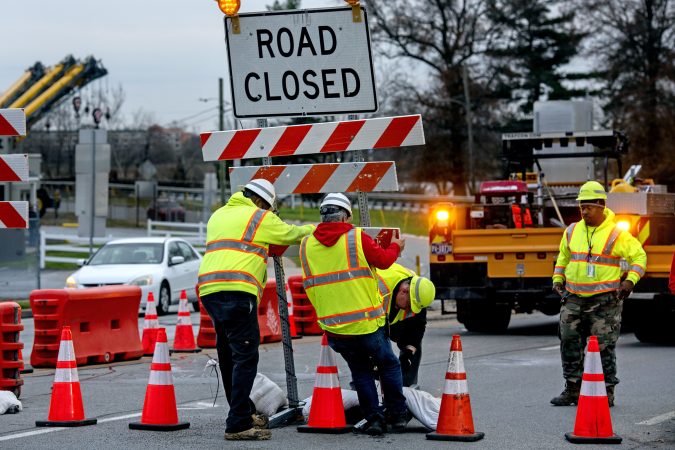
    Roadwork will cause detours, delays, and closures in more than a dozen municipalities throughout the county this week, including disruptions on Routes 23, 30 and 252.

    Here are the traffic changes you need to know, starting Sept. 29:

    • Caln Township: Fisherville Road will be closed between North Bailey and Caln Meetinghouse Roads from 7 a.m. to 3 p.m. from Sept. 30 to Oct. 6.
    • City of Coatesville and Caln, Sadsbury, Valley, and West Caln Townships: There will be a moving weeknight lane closure on westbound Route 30 between Airport Road and Kings Highway from 7 p.m. to 5 a.m. through Oct. 2 for line painting.
    • East Bradford Township: Peco work closing Copeland School Road between Dunmoore Lane and Frank Road is expected to continue on weekdays from 9 a.m. to 3 p.m. through Oct. 30. Ravine Road is closed for road bank stabilization, a project that’s expected to continue through the winter.
    • East Brandywine Township: The township’s paving program is slated to continue through late September or early October. Paving work will impact Crawford and North Buck Roads and Summerhill Drive. There will also be chip seal treatment on Marshall and Highspire Roads.
    • East Caln Township: There will be a lane closure on Bell Tavern Boulevard, with intermittent work expected through Oct. 7, as the township undertakes stormwater infrastructure work.
    • East Pikeland and Schuylkill Townships and Phoenixville Borough: Work on Route 23 is expected to continue through Oct. 30, resulting in weekday lane closures on Bridge Street at the Nutt Road intersection. Work takes place from 9 a.m. to 3 p.m.
    • Honey Brook Township: Starting Oct. 1, the Cupola Road bridge over the east branch of Brandywine Creek will be closed for repairs for about five weeks.
    • Honey Brook and West Nantmeal Townships: Chestnut Tree Road will have a lane closure between Cupola and Creek Roads and Manor Road from 8 a.m. to 4 p.m. through Oct. 2 for resurfacing work.
    • Kennett Township: East Hillendale Road will be closed between Bayard and McFarlan Roads for utility pole work from 8 a.m. to 3 p.m. through Oct. 2.
    • Pocopson Township: Paving work is slated to get underway in October, impacting parts of Parkerville Road and Four Streams Drive. Exact timelines for the work haven’t been announced.
    • Spring City Borough: There will be about three days of intermittent lane closures from Sept. 28 on North Main Street between East Bridge and New Streets for Peco’s gas main replacement project. Work will take place between 9 a.m. and 3 p.m.
    • Tredyffrin Township: There will be overnight weekday closures on Route 252 between Lancaster Avenue and Swedesford and Howellville Roads from 7 p.m. to 5 a.m. through Nov. 21 for utility construction. Also expect some delays between 9 a.m. and 3 p.m. near Timber Lane and Tory Hill Road through early October for Peco work.
    • Upper Uwchlan, Uwchlan, and West Whiteland Townships: Line painting on Pottstown Pike between Byers Road and Bartlett Avenue will result in moving lane closures through Sept. 30. Work will take place overnight from 10 p.m. to 6 a.m.
    • West Brandywine Township: Expect alternating lane closures on Caln Meetinghouse, Germany Hollow, North Hawthorn, and South Hawthorn Roads; Brandywine and Laurel Drives; and Castle and Reason Lanes for base repairs through Oct. 5.
    • West Caln Township: Paving-related work will take place on Ruthland Avenue and North Bonsall, Reservoir, and Zaleski Roads through Sept. 28, resulting in road closures.
    • West Chester Borough: There will be intermittent road closures on the 400 to 600 blocks of West Rosedale Avenue on weekdays from 7 a.m. to 3:30 p.m. through Oct. 2 for Peco’s gas main replacement project. The 600 block of North Walnut Street will also be closed from 9 a.m. to 3 p.m. on Oct. 1 for tree work.
    • West Whiteland Township: Work at the intersection of Ship Road and Lincoln Highway, including for new traffic signal poles, is expected to continue into mid- to late-October, resulting in possible delays.
    • Willistown Township: Paoli Pike will be closed between Frazer Avenue and Cedar Hollow Road from 9 a.m. to 3 p.m. through Oct. 2 every day but Sundays for Peco work.

    This suburban content is produced with support from the Leslie Miller and Richard Worley Foundation and The Lenfest Institute for Journalism. Editorial content is created independently of the project donors. Gifts to support The Inquirer’s high-impact journalism can be made at inquirer.com/donate. A list of Lenfest Institute donors can be found at lenfestinstitute.org/supporters.

  • A Gloucester County elementary school has moved to remote learning after a flea infestation

    A Gloucester County elementary school has moved to remote learning after a flea infestation

    Students at Aura Elementary School in Elk Township are learning remotely until further notice as the district responds to a flea infestation in the building.

    Aura, which teaches kindergarten through sixth grade, closed the school for two days starting Sept. 17 to treat the infestation, first through an organic treatment and then with a chemical treatment, said Fran Ciociola, superintendent of Delsea Regional School District in Gloucester County. Staff first noticed the fleas in the library.

    Students then learned off-site temporarily at Hardingville Bible Church and Total Turf in Pitman, Ciociola said, but then the county required Aura to move to remote learning instead.

    There is no timeline yet for when students will return to in-person class, and it is unclear whether the fleas have spread.

    “The treatment has been ongoing and we hope to be back in the building soon,” Ciociola said in an email.

    James Rambo, Elk Township’s mayor, posted Monday on Facebook offering “any township support that could help get our students back in the classroom sooner.”

    “Our shared priority is getting our children back into a safe learning environment as quickly as possible,” Rambo wrote.

    Other South Jersey school districts have faced closures of their own this September. Camden County’s Lindenwold School 4, which went remote after fire damage earlier this month, reopened last week.

    Plus, the first day of school for students in Mantua Township was pushed back after storms left thousands without power and roadways blocked.

  • From motorcycles to booze, U.S. ban on $1 billion worth of Canadian imports goes into effect

    From motorcycles to booze, U.S. ban on $1 billion worth of Canadian imports goes into effect

    WASHINGTON — U.S.-Canada relations, already tense, are likely to deteriorate further after the United States went ahead early Tuesday with a decision to ban nearly $1 billion worth of Canadian imports, including alcoholic beverages, dairy products, and motorcycles.

    The ban amounts to barely a ripple in $880 billion worth of annual two-way trade between the two northern neighbors. But it marks another ratcheting up of President Donald Trump’s second-term trade war with America’s longtime ally and trading partner.

    The import ban “certainly won’t do anything to help the trade tensions between the United States and Canada,” said trade attorney Patrick Childress, a partner at Holland & Knight and a former U.S. trade official.

    The latest sparring began over the summer when Trump reached back to a Great Depression law to impose 50% tariffs on about $20 billion worth of Canadian imports, charging that Canada discriminates against U.S. dairy, auto, and alcoholic beverage producers. Canada promptly counterpunched with tariffs of 15%, 25%, or 50%, matching U.S. imports dollar for dollar.

    To punish Canada for retaliating against his tariffs, Trump decided to ban a list of Canadian products, effective 12:01 a.m. Eastern time Tuesday.

    Economic impact likely to be modest

    The economic impact is likely to be minimal. Childress noted that the products on the banned list were already facing Trump’s tariffs. ”For a lot of these goods, the 50% was already acting as a de facto ban by making importation from Canada into the United States uneconomical,″ he said.

    Jacob Jensen, director of trade policy at the center-right American Action Forum think tank, calculates that the ban would cover $967 million worth of Canadian imports, based on 2025 numbers. Of that, 87% would be alcoholic beverages that the U.S. targeted because of some Canadian provinces responding to Trump’s provocations by banning U.S. booze from store shelves.

    Also banned are some dairy products — including the milk byproduct whey. The two countries have long clashed over Canada’s attempts to protect its dairy industry from foreign competition by imposing hefty tariffs once dairy imports have exceeded a quota.

    The ban also covers motorcycles. Bombardier Recreational Products (BRP) in Quebec confirmed that its three-wheel Can-Am Spyder and Canyon motorcycles “will be excluded from importation into the U.S.’’ But BRP said the impact likely won’t be felt until next year because it has completed most production and shipments for the current season.

    Independent spirit distillers and beer brewers are expected to bear the brunt of the ban more than some well-known Canadian brands that may have workarounds. For example, Crown Royal can ship its whisky in bulk for processing, bypassing the ban. And beer maker Labatt Brewing Co. has some bottling operations in the U.S., exempting some of its beer from the ban.

    Diageo, which owns Crown Royal, and Anheuser-Busch InBev, which owns Labatt, did not respond to requests for comments.

    A distillery just across the Detroit River in Canada has stopped shipping whiskey to Michigan due to the ongoing tariff war and Trump’s ban on Canadian alcohol. “It’s really unfortunate,” said Danielle Moldovan, director of marketing at the Wolfhead Distillery in Amherstburg, Ontario. “We are a border town. The Americans are great friends of ours, and they visit our distillery on a daily basis.”

    Moldovan is worried about the long-term impact on Wolfhead’s business. Buyers in Georgia were interested in importing the distillery’s Coffee Whisky. And its Michigan importer was considering its Vanilla Almond Biscotti and Banana Caramel Vodka. But “those products are going to be put on hold right now until we have further clarification about what’s going to happen, how long this ban’s going to last,” Moldovan said.

    “This marks yet another escalation in the trade war that may result in further retaliation on the Canadian side,” Jensen said. He expects Canadian exporters and U.S. importers “impacted by these bans will be highly motivated” to demand that trade officials on both sides find some way to reach a “resolution of this whole ordeal.’’

    A threat to U.S. goal of a North American trade pact

    The impasse imperils efforts to renew the U.S.-Mexico-Canada Agreement, a North American trade pact Trump pressured America’s neighbors into accepting in his first term and which he once declared “the most modern, up-to-date, and balanced trade agreement in the history of our country.”

    The deal allowed most goods to cross North American borders duty free. But since returning to the White House last year, Trump has announced a series of tariffs that have clouded the future of trade in the region.

    Longtime ally Canada moves rapidly to find new trading partners

    Trump has directed most of his ire at Canada. He is openly seeking to pull Canadian manufacturing south. And he has inflamed public opinion in Canada by repeatedly suggesting that the country become America’s 51st state.

    Canadian Prime Minister Mark Carney came to power last year on a promise to stand up to Trump. In addition to retaliating against Trump’s tariffs — China is the only other country to do so, with very different results — Carney has sought to reduce Canada’s reliance on the United States, which last year accounted for more than 70% of Canadian exports.

    “There is now a price to be paid for access to the United States market,” Carney said earlier this month. The Canadian prime minister wants to double Canada’s non-U.S. trade over the next decade.

    Carney has embraced the prospect of Canada becoming the European Union’s first associate member.

    And he said last week that trade negotiations with India are making “good progress” and that the two countries are aiming to conclude talks by the G20 summit in mid-December.

    Carney also broke with the U.S. earlier this year, striking a deal with China to allow a limited number of Chinese electric vehicles into Canada at a sharply reduced tariff in exchange for China lowering tariffs on Canadian canola.

    “We take note of the coming into force of the Administration’s previously announced trade measures,” said Gabriel Brunet, a spokesperson for Canada-U.S. Trade Minister Dominic LeBlanc. ”Our first priority remains on protecting and supporting Canadian workers, farmers, families, and businesses from these unjustified actions. Our core focus is on what we can control: building strength at home, diversifying our partnerships abroad, and building Canada strong for all Canadians.”

    Trump expressed confidence that the Canadians would cave in.

    “They’re gonna come in and they’re gonna say, ‘Sir, we are sorry,’” he told reporters Monday. “They’ve treated the United States very, very badly. I think a deal will be made but it’s gonna be fair.”

    Trade attorney Childress said the standoff is likely to continue for months, not weeks. The import bans and the tariffs so far “probably won’t cause enough economic upheaval to force either party back to the negotiating table,’’ he said.

    Mae Anderson, Rob Gillies, and Mike Householder contributed to this article.

  • Philly schools are missing thousands of students. District employees are knocking on doors to get them back.

    Philly schools are missing thousands of students. District employees are knocking on doors to get them back.

    The Philadelphia School District is thousands of students under its enrollment projections this school year — and with an important funding deadline looming, Superintendent Tony B. Watlington Sr. is sending officials knocking on doors to drum up business.

    Central office staff and school workers have been asked to fast-track “Enrollment Acceleration,” a new, district-specific program directly engaging families that have left the Philadelphia school system, The Inquirer has learned.

    District staff — up to and including chiefs and assistant superintendents — are fanning out across the city, pounding the pavement to try to connect with reluctant families face-to-face. The door knocking began in the last two weeks.

    The effort is driven by a shrinking student body in district schools and an Oct. 1 deadline to report enrollment — which drives district funding — to the Pennsylvania Department of Education.

    District schools were 4,236 students under their projected enrollment as of Sept. 17, according to internal documents obtained by The Inquirer. District-run alternative programs had 1,051 fewer students than planned.

    The school system had projected 116,898 in district schools by Sept. 17, and 2,757 in alternative schools. Instead, its enrollment was 112,662 in district schools and 1,706 in alternative schools.

    Asked to comment on the enrollment decline, a district spokesperson said it was too early to estimate annual enrollment because the state’s verification process does not conclude until Oct. 30. But, Monique Braxton said, it’s part of a nationwide trend of dwindling public school enrollment.

    “The district’s goal is to get district operated schools as close as possible to that of last year’s number of approximately 116,898 students, such that we can grow our enrollment next school year,” Braxton said in a statement.

    Enrollment is down virtually everywhere in the city.

    Just two of 15 networks did not lose students, according to the Sept. 17 figures — Learning Network 9, a geographic network of elementary and middle schools in Kensington, Bridesburg, Port Richmond, and Frankford, and Learning Network 15, a network of magnet schools across the city.

    Voting with their feet

    Once the 2026-27 school year began Aug. 24, it became quickly clear that there were fewer district students in seats than expected.

    Many factors likely play into the enrollment decline.

    Though academics have generally been improving in the school system — Philadelphia was tops in the nation in its learning rate post-pandemic, according to research out of Harvard and Stanford — the district still struggles, with most students unable to read (33%) or do math (25%) at grade level.

    (Philadelphia charter schools’ performance is slightly worse in reading, 31%, and slightly worse in math, 20%.)

    Also a likely factor is the effect of the school board voting recently to close 17 schools in the next several years. Officials have said they are doing so to improve academic outcomes for all students, amid 70,000 empty seats citywide, a stock of aging buildings and decades of underfunding, and emphasized that in addition to the closings, they plan to spend billions on renovating 169 of the buildings they’re keeping open — though most of that plan is unfunded.

    There are other reasons, too: Some staff say the current political climate has fears of ICE keeping some students out of school. And cyber charter enrollment is growing, with some Philadelphia families choosing the virtual option because of safety fears for their children as the city grapples with a gun violence epidemic.

    “The district is a hard sell for some families,” said one central-office employee who was not authorized to speak about the enrollment decline. “You have a lot of families who have just unfortunately lost faith in a lot of the offerings that we have, and they’re voting with their feet.”

    A full-court press

    Since the surprise decline became apparent when school started, “we’ve been working hard to close the gap,” the employee said.

    At first, schools were directed to reach out themselves via calls and emails to students they expected to enroll but who never showed up. Soon, almost-daily briefings on closing the enrollment gap began, and have continued.

    Next, the administration moved to canvassing events, asking central office employees and school staff to volunteer to go out in pairs into neighborhoods to reach families. Canvassing also includes trips to neighborhood barbershops, laundromats, and corner stores “trying to convince students to return back to the district, rather than remain in whatever other option they decided on.”

    About 75 employees volunteered for the effort, the employee said. It is still ongoing.

    Some schools and departments pushed back against the call to directly appeal to students, with officials they didn’t feel comfortable sending staff into neighborhoods. Others are going out, the employee said.

    The campaign is an extraordinary step, said the employee.

    “I’ve never known an assistant superintendent or anyone going so far as this, being part of canvassing,” said the employee source.

    Much is at stake.

    “Our funding is based on numbers,” the employee said. (Both state and federal funding are tied to enrollment.)

    And the district has generally been shrinking for decades.

    In 1999, just after the first charter schools opened in Pennsylvania, the district enrolled 205,199 students in its schools. By 2025, that number was 113,735. (An additional 64,469 students were enrolled in charters.)

    The district’s enrollment rose once in the last decade: in 2024-25, jumping by 1,841 students to 117,956. Watlington said he believed the next year’s drop happened because of large-scale SEPTA bus route changes at the start of the school year.

    ‘Warm conversations’

    A second employee involved in the recent recruitment efforts said the call to canvass came with surprising urgency.

    “They said, ‘It needs to be done in the next two weeks, because our numbers have to go to the state Oct. 1,’” said the employee, who also asked to not be identified because they were not authorized to speak about the enrollment push.

    The second employee was paired with another volunteer. They received a several-page handout with instructions about how to conduct the visits, and a suggested script.

    “We’re reaching out because we want to make sure your child has a clear plan for school and see how we can support you,” the second employee said.

    Canvassers were told to ask if the family planned to return their children to the district, to begin a “warm conversation” and to help families with information about how to register for district schools. They were told to help address any barriers to registration.

    Teams were told their safety is paramount, asked to not enter homes, and reminded to end a visit if either team member feels unsafe.

    “Remember,” one handout said, “you are there to understand, inform, support and connect — not to convince.”

    The second employee wasn’t especially enthusiastic about canvassing, but felt pressure to do so.

    “What can I say on somebody’s doorstep to get them registered in the school district? Nothing,” the employee said.

    The first employee said they were not having success with families.

    “The houses I’ve been to haven’t been very responsive,” the employee said. “But I’ve been having very cool conversations with neighbors.”

    Many families aren’t home or don’t answer the door, and the employee doesn’t blame them. They could be mistrustful of authorities or people they don’t know or worry about their safety.

    Four people involved in the “come-back-to-the-district” effort said they were skeptical it would help the school system reach its projections.

    “It’s going to yield something, but it’s not going to yield enough to cover up the fact that we’re several thousand away from meeting our projection of 116,000,” the employee said.

  • How a planned steel mill in Iowa reveals Trump’s midterm strategy

    How a planned steel mill in Iowa reveals Trump’s midterm strategy

    President Donald Trump, staring down a rough midterm season for Republicans, unveiled plans for an Iowa steel mill project Monday that he said would plug billions into the economy and create construction jobs in a state hit hard by his policies.

    Voters in Midwestern states were crucial to delivering a second election win to Trump, but now, those voters are among the hardest hit by tariff-driven manufacturing costs and a rise in fuel prices driven by the war in Iran. When a reporter in the Oval Office asked him Monday why several Republican candidates in Iowa were working so hard to protect their seats, Trump seemed mystified.

    “I don’t know,” said Trump, who is traveling to several states this week ahead of the midterm elections. “I love Iowa. I’ve always been very strong with Iowa.”

    The project in Iowa is one of several job-creation announcements Trump is expected to make as he traverses the country. He will travel to several reliably conservative states this week, including Oklahoma and Alabama. He is also scheduled to visit Ohio this weekend in support of Republican Sen. Jon Husted, an embattled incumbent facing several challenges, including a lack of name recognition among some of the state’s most devoted conservatives.

    Trump said Monday that he would also visit Iowa, where he hopes the planned steel mill will boost prospects for Republicans in tight races — and perhaps his own fortunes as a kingmaker who has asked supporters to pretend he is on the ballot in November. Americans have signaled that they are doing just that, but in a way that could backfire on him. The war in Iran and the cost of living have both eroded his support.

    So Trump has leaned into the promise of the mill, which is part of an $18 billion investment from Mesabi Metallics. Supporters of the project say it will be one of the largest steel mills in the world when it is completed.

    In the Oval Office on Monday, Trump, several Cabinet members and Iowa Republicans said the project would remind voters that Trump’s policies have created jobs. Rep. Mariannette Miller-Meeks, R-Iowa, who is facing a tough reelection race and who last week voted to curb Trump’s war powers, appeared to be behind Trump, telling reporters that the steel mill could create some 6,000 construction jobs and 1,750 permanent jobs, with salaries that could exceed $100,000 a year.

    “We’re going to mine it in America. We’re going to mill it in America, and we’re going to make it in America,” Miller-Meeks said.

    Mesabi Metallic is owned by Essar Group, a Mumbai-based conglomerate controlled by one of India’s wealthiest families. The Iowa mill project follows another initiative led by Mesabi: a $2.5 billion iron-ore mine and pellet plant in Nashwauk, Minnesota.

    That project, described as the first new operation of its kind in the state in about 50 years, has been supported by EXIM Bank, a U.S. federal import-export bank that announced it would extend loans to the company worth up to $10 billion. Some analysts consider the EXIM loan to be risky because Mesabi has faced financial problems and significant delays over the years.

    Alec Varsamis, a spokesperson for EXIM, said that Mesabi had so far been granted a $770 million loan for the iron-ore mine in Minnesota.

    “We are operating at no cost to the taxpayer, and we are on track to repay our congressional appropriations to the U.S. Treasury,” Varsamis said.

    In the Oval Office on Monday, Trump said that the project would go forward even if control of Congress changed hands, or if a “less friendly” president took over. Rewant Ruia, chair of Mesabi’s executive board, and Ravi Ruia, co-founder and vice-chair of the Essar Group, were also in the Oval Office for the announcement.

    The company filed for bankruptcy protection in 2016 and has been entangled in a lawsuit with Cleveland Cliffs, another steel manufacturer.

    Mesabi executives have leaned on a Trump-world insider as the company has sought to expand its footprint in the United States. The company hired Jason Miller, a longtime Trump adviser, as its lobbyist, paying him at least $240,000 through his company SHW Partners, according to lobbying disclosure records. The government of India also hired Miller’s company, paying $150,000 per month for “strategic counsel, tactical planning and government relations assistance on policy matters before the U.S. government,” according to federal filings under the Foreign Agent Registration Act.

    On Monday, Miller said in a text message that he had stopped his work as a lobbyist for Mesabi and deregistered at the end of July. He has since joined the administration as an unpaid special government employee. He was not present in the Oval Office.

    Rewant Ruia, chair of Mesabi Metallics, spoke in the Oval Office on Monday, and said the new steel plant in Iowa “will use the latest technology and will compete head-to-head with any steel plant in the world on size, quality and on cost.”

    Robert Weissman, co-president of Public Citizen, a nonprofit consumer advocacy organization that tracked Miller’s lobbying on behalf of Mesabi and the Indian government, said that the extension of potentially billions in taxpayer-backed loans from EXIM Bank deserved more scrutiny because of Miller’s role.

    “In any other administration, this would be treated as a monumental scandal,” Weissman said. “But in this one, it’s just another day.”

    Iowa Gov. Kim Reynolds, a Republican who attended the Oval Office event, said in a statement that the deal would be transformative for her state.

    “Our commitment in Iowa to fiscal responsibility, tax competitiveness, and long-term economic stability has created one of the nation’s strongest environments for business investment,” she said. “Now, this opportunity will fundamentally change the economic trajectory of our state and the entire region for decades to come.”

    The steel mill project is part of a broader election-season attempt by Trump to push back against widespread voter frustration with his policies, including tariffs that have been punishing for American manufacturers, particularly in the Midwest.

    Trump and his advisers believe that any polling predicting a blowout for Democrats is overrated, and to some degree, they have history on their side. On Monday, Trump again called recent polling “fake,” and complained that the news media had not appropriately trumpeted employment numbers, 401(k) account gains and a host of other accomplishments.

    “Nobody talks about all of the incredible things,” Trump said.

    But this is not 2016, or 2024. In 2026, Americans are deeply unhappy with the cost of living and frustrated with the war in Iran, which has driven up prices further. In response, Trump has taken to calling the concept of affordability a Democratic hoax, while promising that prices will come down as soon as the war ends.

    “We’re going to win that war very soon. That’ll be over, and the gasses, gas prices, will come tumbling down,” Trump said, forecasting the future. “So nobody else could have done that. Nobody else.”

    Trump’s self-congratulatory messaging on the war has done little to help GOP candidates in tough races across the country. In the past week, Republicans running for Senate seats in Iowa and Michigan have called on Trump to end the conflict. A slate of other candidates, including two running for governor in Wisconsin and Michigan, and Husted in Ohio, also have said that the war needs to end, and soon.

    This article originally appeared in The New York Times.

  • Penn and Community College of Philadelphia launch an academy for West Philadelphia businesses

    Penn and Community College of Philadelphia launch an academy for West Philadelphia businesses

    A new, free educational program for West Philly small businesses is launching this fall, giving them access to faculty from the University of Pennsylvania, through a partnership with the Community College of Philadelphia.

    The deadline to apply is fast approaching, with instruction starting next month.

    Students of the Penn-CCP Entrepreneurship Academy will learn from Penn faculty, other entrepreneurs, and business advisers in three-hour weekly classes, as well as coaching sessions and office hours.

    The initiative aims to increase the opportunity for businesses that are connected to the West Philadelphia area. Participants should be registered in the neighborhood, have operations there, or its owner can live there.

    But the rules seem flexible: Because the program’s priority and focus is to help Philadelphia-based businesses, including nonprofits, interested owners are encouraged to apply even if they do not live in Philadelphia. Even businesses with no revenues can apply, but priority will be given to those generating revenue.

    West Philadelphia has “no shortage” of entrepreneurial talent, said Franne McNeal, executive director of the academy, but what it lacks most is resources.

    “Business owners here have less access to strategy, legal fluency, capital networks, and the kind of advice that turns a small business into a bigger one,” McNeal said. “The biggest gap I see is the owner with four employees who cannot figure out how to get to 14.”

    The academy’s curriculum is divided into four stages: build the foundation, strengthen the structure, prepare for growth, and put the plan into action.

    Students will learn about creating a business strategy, the right structure for their company, branding, and protecting intellectual property. Instruction will also cover financial literacy, workforce management, marketing and sales, and how to present to a potential investor.

    “We’re going to cover the foundational elements of growing a business,” faculty director Praveen Kosuri said. “Everything from business planning and strategy to structuring and branding.

    Besides learning how to build a business, participants are expected to gain confidence in identifying business risks, asking the right questions, and knowing when to seek specialized advice. The program is also intended to foster meaningful relationships between founders, faculty, practitioners, and members of Philadelphia’s entrepreneurial community.

    Each business owner will submit a business plan and pitch, along with a 90-day action plan, for faculty feedback.

    “They’ll have a funder-ready plan, the financial fluency to defend it, and practitioners in the room helping who know the Philadelphia capital landscape,” she said.

    While the academy is tuition-free, McNeal and Kosuri noted that participants will have to put in significant time.

    The 10 weekly sessions in West Philadelphia will take place from 6-9 p.m. beginning in late October through January.

    “Participants need to show up each week to learn, to work on their businesses, and to support the others in the class,” said Kosuri. “We hope it sets them on a path that continues to lead them to their goals.”

    Although start-up businesses can apply, the program seems more geared toward already established companies, whose owners want to take their companies to the next level.

    Unlike other programs I’ve seen, the academy is establishing a specific measurable goal that will hold both its leaders and students accountable: getting the businesses involved to achieve between $1 million to $10 million in revenues within three years.

    McNeal says the program is a pilot and its success will be measured by participants’ success.

    “Attendance and satisfaction scores are easy to report but revenue and employment are slower and harder, and they are the only numbers that mean anything, so those are the ones we are building the tracking for,” she said.

    “We will be judged on whether we come back,” she said.

    Applicants can apply online.

    The priority deadline is Oct. 1, but applications submitted later will be reviewed on a rolling basis if space remains.