Category: News

  • The nor’easter may foreshadow a busy and challenging season for forecasters and computers

    The nor’easter may foreshadow a busy and challenging season for forecasters and computers

    That erratically behaving nor’easter that really, finally, is done with the Philly region, not only was a spoiler for the last weekend of September, it may well have foreshadowed what’s to come — perhaps even in the very short term.

    Along with being a possible prelude to the future of storm traffic, it also underscored the limitations of computer models that were late to latch on to the concept that the storm center improbably would make a left turn and wander onto the shores of New Jersey.

    “There was a lot of evolution with this nor’easter,” said Allison Santorelli, meteorologist with the federal Weather Prediction Center, in College Park, Md., which, like Philadelphia, became a late addition to the roster of areas that would be affected by the storm.

    And on the subject of improbability, in a season where not single a hurricane has formed in the Atlantic, the region may be affected by the remnants of a tropical storm this weekend — from the Pacific.

    Santorelli said that some moisture from Hurricane Polo, due to make landfall in Baja California, could get picked up by a front and make it to the Mid-Atlantic during the weekend.

    While October typically is one of the driest month of the year — and no rain fell in Philly during the month two years ago — another dousing would have to be considered “ill-timed,” said Ray Martin, a lead meteorologist in the National Weather Service office in Mount Holly.

    In the last two months, 14 inches of rain officially have fallen on Philly, about double normal.

    Forecast for the week

    No rain is expected during what is forecast to be a splendid workweek with the sun (yes, coming soon to a horizon near you) due to return. Temperatures are expected to rise into the 70s and perhaps to 80 by Thursday and the low 80s Friday, without so much as a coastal flood advisory.

    Incidentally, conditions will be similar in Atlanta — only with highs well into the 80s — where the Phillies play the Braves in the wild-card round.

    At least in the early going, Saturday also was looking decent, but rains might return Saturday night and continue Sunday as the aforementioned front stalls near the region and a storm develops.

    Given the possible entrainment of Polo’s leftovers, “It could bring another slug of rain and gusty winds to areas impacted by this nor’easter,” said Carl Erickson, meteorologist with AccuWeather Inc.

    For now, it doesn’t look “overly impactful,” said Santorelli. But she cautioned the threat was still several days away, and last weekend’s nor’easter looked very different in the middle of last week.

    The nor’easter bedeviled computer models

    The nor’easter was deteriorating Monday afternoon near Long Island and was poised to call it a career. And what a strange one it was.

    Computer models had foreseen that a coastal storm would develop and its low pressure, or lighter air, would interact with the heavier air of potent high pressure to the north to generate beach-eroding winds and flooding tides.

    In its Wednesday night discussion, the weather service said the storm “now overall looks to remain far enough offshore to keep heavy rains away from the region.”

    Said Santorelli, “A lot of models had it as a classic nor’easter off the coast, with a lot of the Mid-Atlantic, including Philly … spared. Then all of sudden the models were like, ‘We’ll just stall off the East Coast for a day or two.’”

    It wasn’t until Friday morning that the model consensus shifted to a track that would have the storm make a left turn and cross the Jersey Shore, inciting coastal flooding; gusty, erosional winds; and heavy rains throughout the Philadelphia region.

    Totals of 3 to 5 inches were common, with more than 7 inches in Ocean County. Streets and bridges were closed in the beach towns.

    Winds gusted past 60 mph at the Shore, and 50 mph across the region.

    The computer modeling had caught on to storm potential early last week, and the weather service began sending out briefings to emergency managers Monday.

    But, as usual, the details were elusive. The computers, said Erickson, constitute a “tool. Even if they get better and better with time there’s still a tool,”

    That may be worth keeping in mind in the weeks ahead, particularly during the winter, said Santorelli.

    Was the nor’easter a practice run?

    The El Niño warming in the equatorial Pacific, which may reach record levels, almost certainly will have major impacts on the Philadelphia winter as the west-to-east upper level winds it generates persists for months.

    That could lead to more nor’easters than typical, said Santorelli.

    The quiet Atlantic tropical-storm season also may come into play, as it has resulted in quieter waters that have allowed sea-surface temperatures to warm, said AccuWeather’s Erickson. Warm waters would help provide sharp contrasts to cold air migrating off the coast, aiding winter-storm development.

    Said Santorelli, “It’s still early to tell when they’re going to happen, where they’re going to happen, and who they’re going to impact, but certainly the potential is out there.”

    And so is the potential for uncertainty, as the region just learned.

  • Camden is suing scrap metal recycler EMR over missing donations but the company says they’ve paid

    Camden is suing scrap metal recycler EMR over missing donations but the company says they’ve paid

    Camden has sued the long-beleaguered scrap metal recycler EMR after it says it failed to donate more than a million dollars promised to the community in an agreement last summer.

    U.K.-based EMR Advanced Recycling signed an August 2025 memorandum of understanding with the city, in response to a massive fire earlier that year, agreeing to gift more than $3 million to local initiatives through 2030. This would come in the form of an initial $1 million donation into a community benefits fund, followed by annual payments of $450,000 for five years.

    The city claims that EMR still has not paid its initial contribution or the first of its annual payments to the newly created EMR Community Benefits Fund, as of the lawsuit’s filing on Sept. 25. But the company says it has allocated just under $2.3 million to a separate EMR Camden Community Investment Fund since 2023, and believes that money should count.

    Administered by the Community Foundation of South Jersey, the new fund is intended for community improvement initiatives in Camden, especially for residents in the Waterfront South neighborhood who have been most impacted by EMR.

    EMR, in a statement, pointed to the Community Foundation fund’s current $2.3 million balance as proof that they have been making payments for years. The filing states that the company has made 35 payments total, 22 of which came in before the 2025 agreement.

    But because the majority of the payments were made prior to 2025, William Tambussi, a lawyer for the city of Camden, argues that the $2.3 million is entirely unrelated to the money that is owed through the agreement.

    “There’s two different funds,” Tambussi said. “For them to suggest that the money that they have been depositing since 2023 was agreed on as the deposit for the MOU — that’s just disingenuous.”

    Joe Balzano, the CEO of EMR Metal Recycling USA, says the company has met its obligations up to this point and is now just waiting on the city to move forward with distributing the money. The company said in a statement that is “eagerly awaiting votes from the City-appointed MOU Committee members” to award funds to various organizations in the Waterfront South neighborhood.

    “I find some of this stuff abhorrent when you see some of the issues that are plaguing some of the residents of Waterfront South, and we’re ready, willing, able, and trying to distribute some much-needed help, and we’re struggling to get that accomplished,” Balzano said in an interview Monday.

    “The Community Fund of South Jersey was the designated fund in the MOU, which we put $2.3 million in,” he said. “I think Mr. Tambussi is taking a very difficult read when we pre-funded the account.”

    “Mr. Tambussi was not in the negotiations that we had with the city, [he] was not present for those,” Balzano said, implying that the city was aware this is how the funds would be used. “And we did everything that we were intending to do and have done more.”

    Tambussi argues that it would have been impossible for EMR to prepay into the MOU fund because it didn’t yet exist. The agreement only came about after the February 2025 fire, he said, which the company would have no way of predicting.

    “For them to say that this is pre-funded is really astounding because they would have to assume that they were going to have an obligation in the future — an obligation that stemmed from this critical fire,” Tambussi said.

    EMR has not officially responded to the filing in court, but the city is requesting a jury trial in the case.

    The sprawling recycling operation has five facilities in the neighborhood and has experienced more than a dozen fires in the last six years, including a lithium-ion battery-caused fire that prompted the evacuation of 100 families last year.

    In addition to creating the EMR Camden Community Benefits Fund, the agreement also requires that the company install a state-of-the-art fire suppression system, consolidate its facilities into a smaller footprint, and create an emergency notification system for residents in case of a fire or other emergency at the facility.

  • Fire, smoke and desperation after a strike in the heart of Kyiv

    Fire, smoke and desperation after a strike in the heart of Kyiv

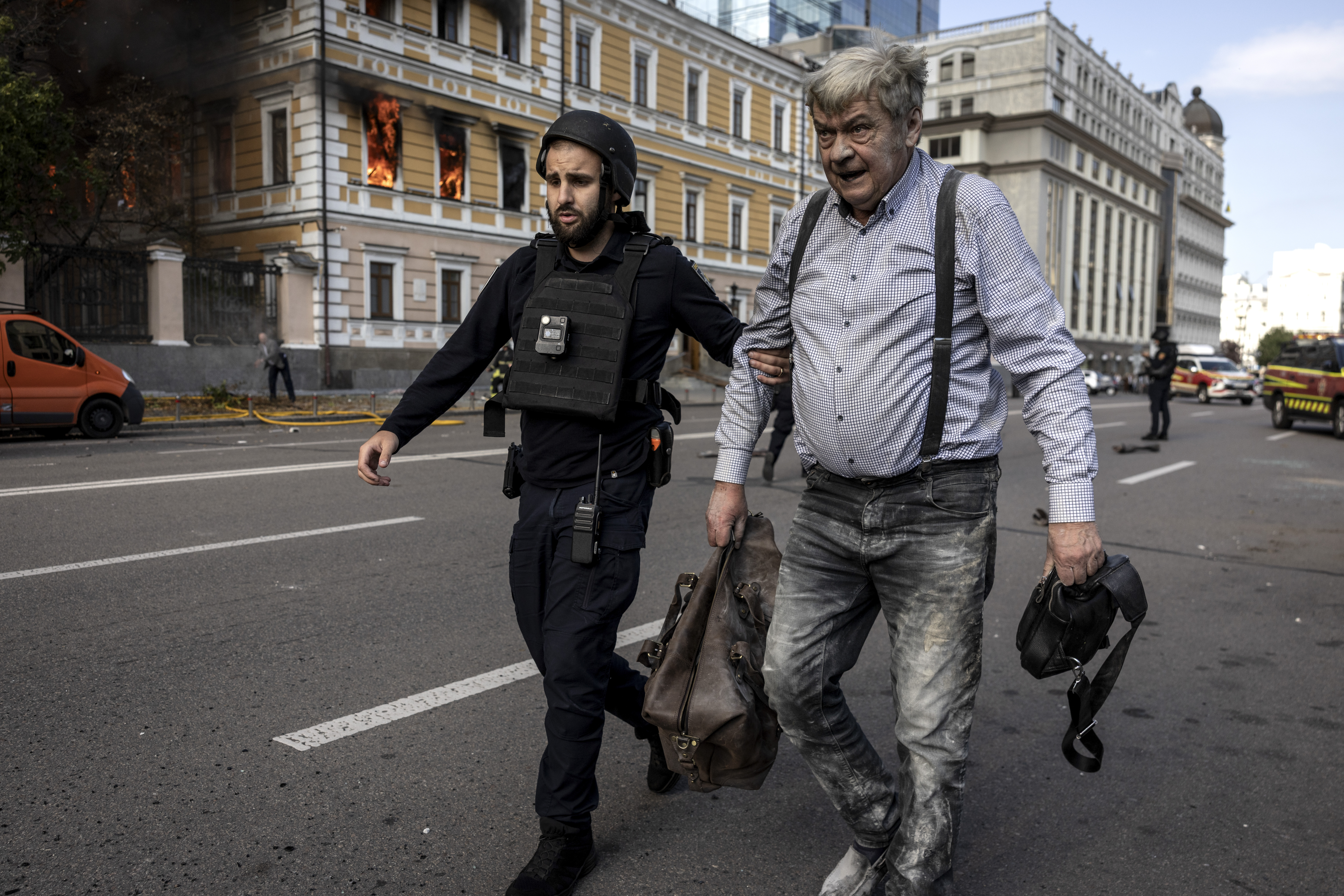
    KYIV, Ukraine — In the middle of a workday, in the middle of the Ukrainian capital, a Russian jet-powered drone struck the National Academy of Sciences on Monday, setting the top two floors on fire and forcing people to crawl out of windows to await rescue.

    As firefighters worked to put out the blaze, employees of an institution that has accounted for almost all major scientific discoveries in Ukraine had to climb down ladders to reach safety.

    The drone hit just before 1:30 p.m. Kyiv time, when people at the academy were on lunch break, but most were eating in their offices. The injured were treated on the sidewalk outside the building — a yellow, pink, and white architectural landmark originally designed in the 1850s to be a countess’ boarding school for girls.

    “My office is gone now,” said Vira Yevhrafova, 65, deputy chief scientist at the academy. “It was on the second floor — everything has collapsed, everything.”

    Russia has been pounding Kyiv around the clock for weeks with new jet-powered drones, which have proved difficult to knock down with Ukraine’s current air defenses. Daily life in the capital is now punctuated by the rat-a-tat of air-defense guns, followed by a drone hitting something — a data center, a random street, a gas station, a warehouse, a high-rise building.

    The attack Monday killed at least one person and injured six. One man was missing. It is a typical toll for these drone strikes, now so regular they barely make the international news unless the images are particularly dramatic. The daughter of the woman who died showed up at the building and burst into tears. She was sad and angry but had nothing else to say.

    Ukrainians lamented the sight of brilliant scientific minds fleeing their burning offices. “What an idiotic war,” Andriy Kovalenko, a lieutenant in Ukraine’s military and a former government official, posted on social media along with a photo of two people crawling out of windows.

    The attack on the sciences academy was just the start of a busy day for rescue workers and military drone interception teams. Less than two hours later, another drone hit a clinic about a mile south. An hour after that, a drone was intercepted right as it hit a nearby building.

    After yet another fatal strike in Kyiv, with yet another body covered by a sheet and then carted away, Ukrainians again took stock of Russia’s effort to bomb them into submission.

    “I think what they want now is to frighten us and bring our lives to a halt,” said Vira Balanovska, 43, who walked with her 9-year-old daughter past the burning academy. “It’s not just about attacking warehouses so that we won’t have food. They also want to intimidate us — to make it so that we can’t work, study, do scientific research, or really do anything at all.”

    This article originally appeared in the New York Times.

  • Neighbors question what they really knew about their Olney block amid ‘House of Horrors’ probe

    Neighbors question what they really knew about their Olney block amid ‘House of Horrors’ probe

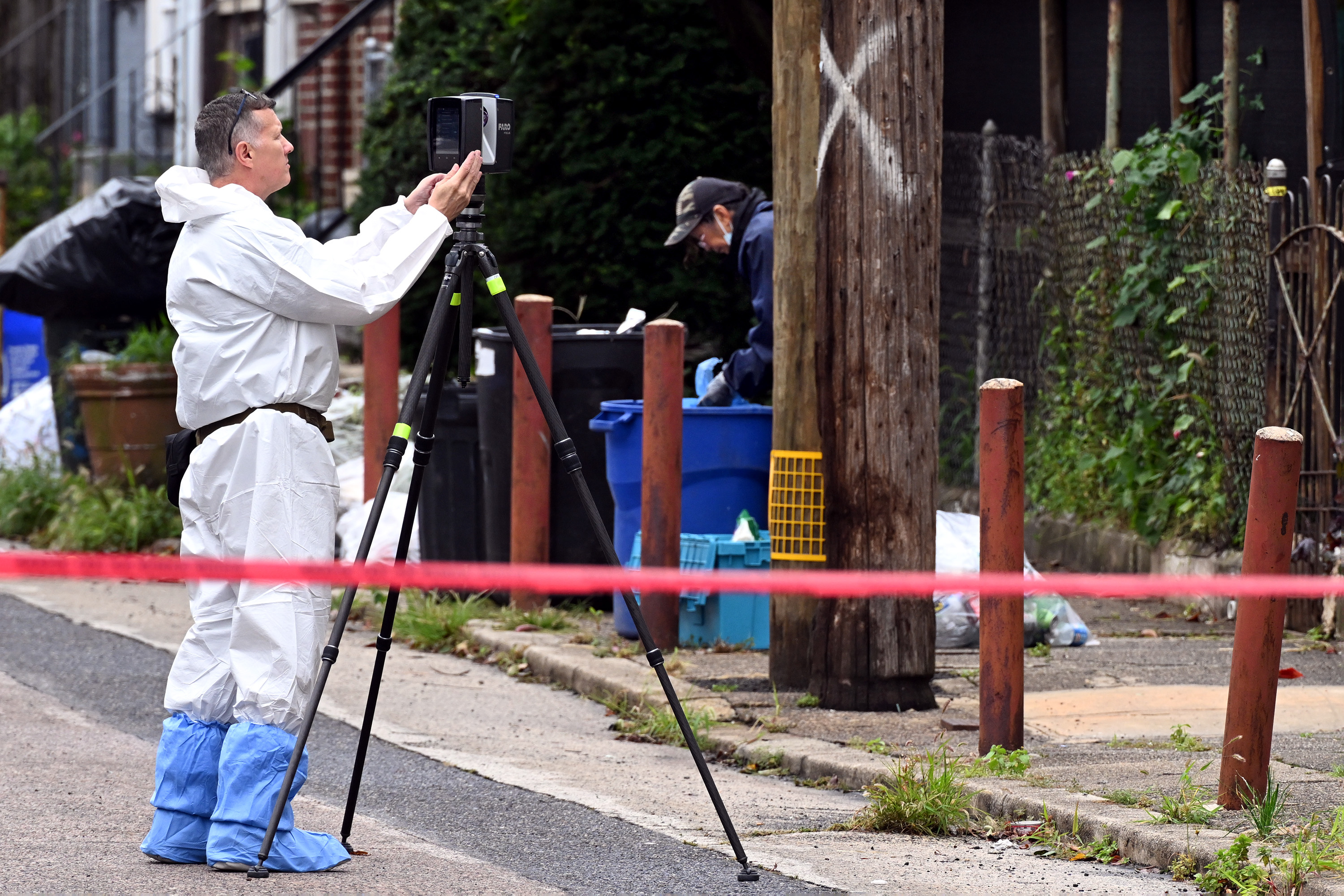
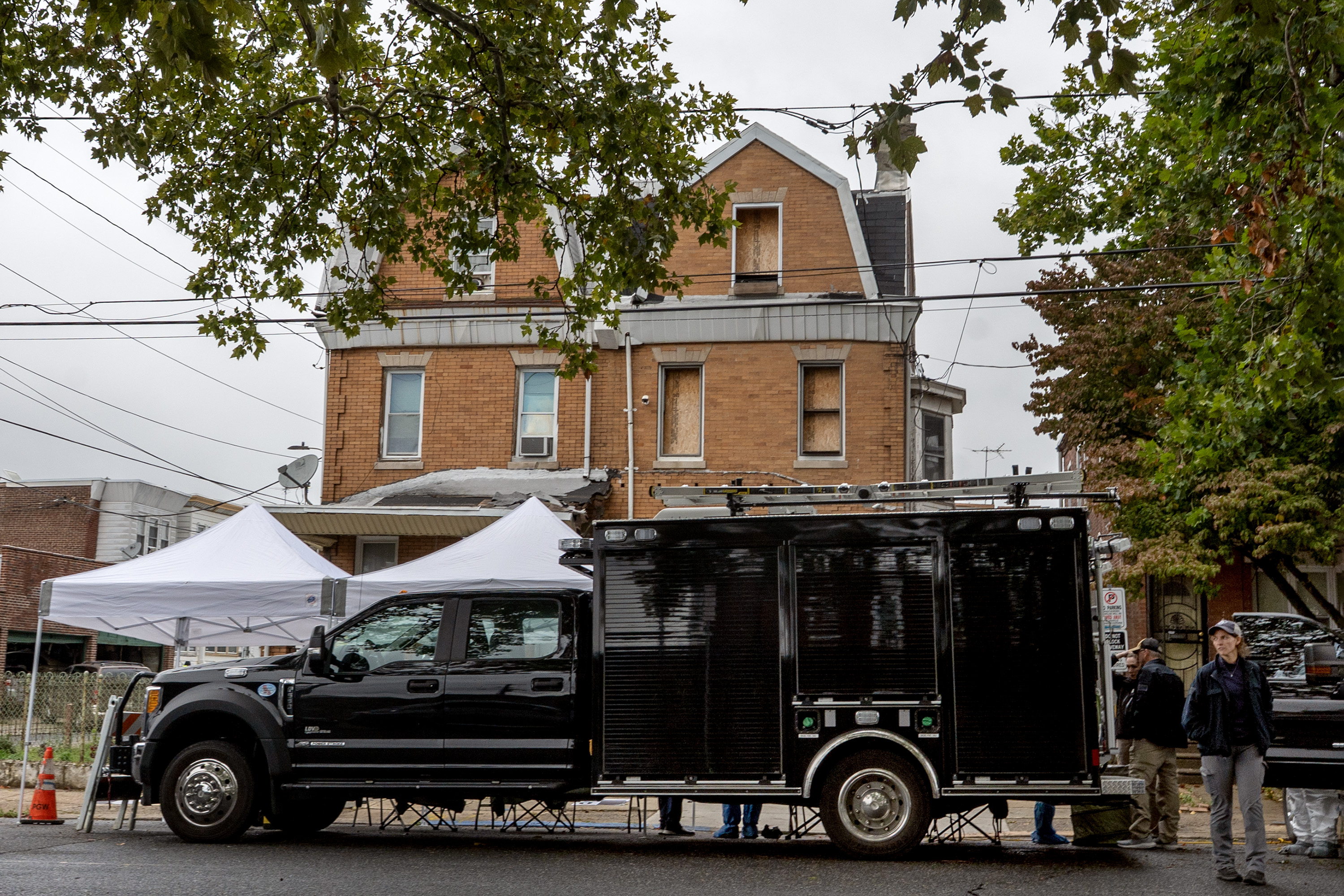
    On Monday morning, a gray speckled cat stretched two long paws up the steps of the sepia-toned three-story home at 417 West Chew Ave. Moments later, a man dressed in a white suit gently kicked a blue-bootied foot in its direction.

    No unauthorized personnel would be entering the Olney “House of Horrors” anytime soon — feline or otherwise — not on the watch of the FBI and Philadelphia police.

    Monday marked the beginning of a fresh week of investigative work inside the home that became known for the drug, sex, and porn enterprise Raymond “R.C.” Horsch ran inside the brick walls. Horsch, who died last year at 82, is now linked to at least seven missing women, and left behind a trove of photos and videos investigators believe show real and staged violence and, possibly, murders.

    Police declined to discuss what investigators are looking for, only revealing that law enforcement would be in the area until around mid-October.

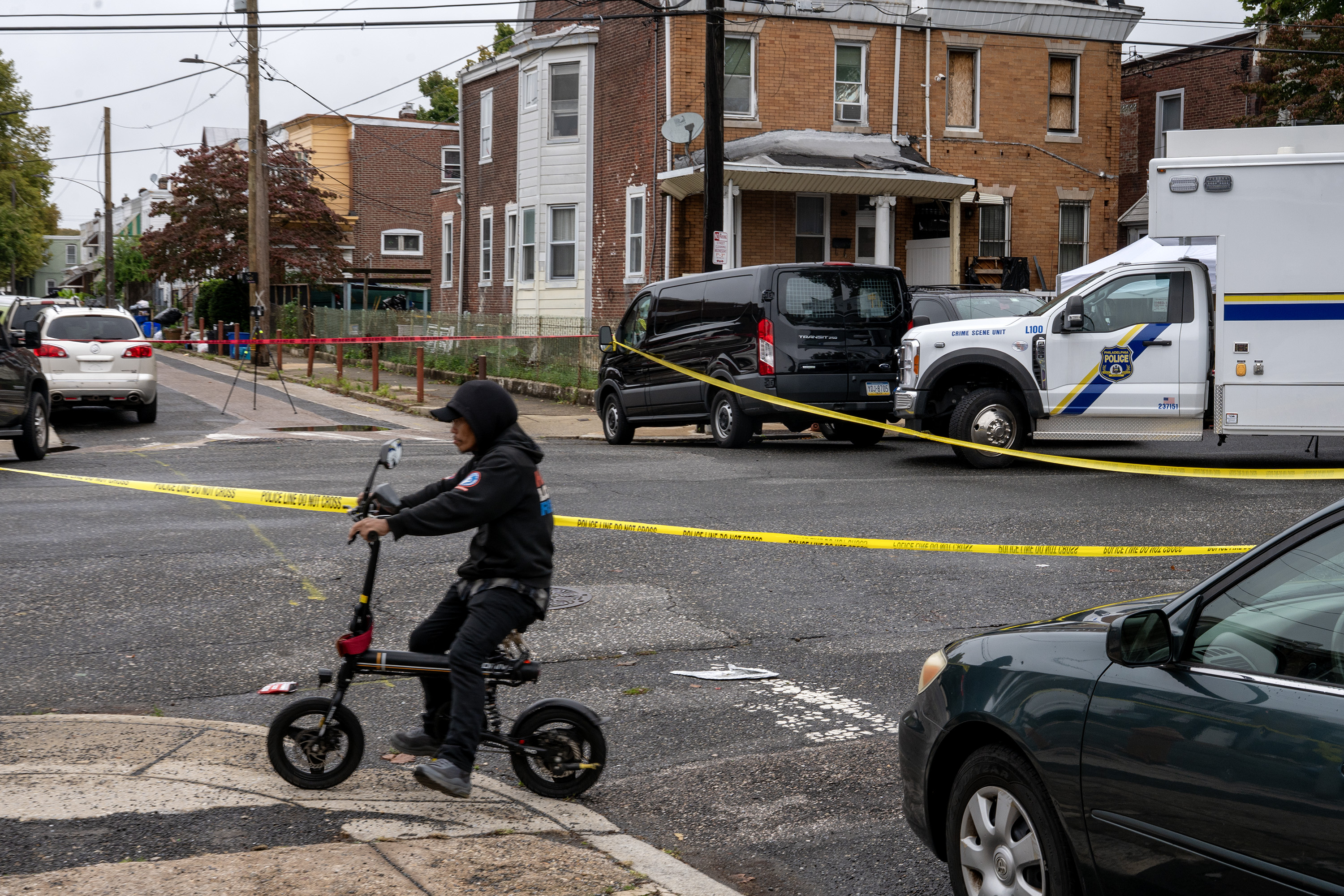
    However, yellow and red crime tape and police cars around the perimeter wouldn’t curb the curiosity of pedestrians, workmen, food delivery drivers, students, children, and former neighborhood residents who passed by the scene Monday.

    The scene outside the former home of Raymond “R.C.” Horsch on Chew Avenue. Tom Gralish / Staff Photographer

    Throughout the morning, residents ducked under crime tape only to be chastised by police. Cars slowed to a stop as they drove perpendicular to West Chew and caught a glimpse of the law enforcement vehicles clustered around the home. When a toddler wearing a backward baseball cap and plaid shirt pointed at the home, his guardian turned their walk around.

    Around noon, 31-year-old Fernanda Gabriela Armijos Nugra parked her car around the block and got out wearing white sweatpants, a scrunchie in her hair, and turquoise bands in her braces. She lives seven houses away from Horsch’s, she said.

    Knowing what went on so close to her and her girls, ages 5, 8, and 15, has transformed her attitude about the neighborhood, she said.

    “I walk around here with my daughters, and we really are afraid about what happened in that house,” she said in Spanish.

    Though she never suspected the home could be linked to violence or murders, she said she had a bad feeling about the men who lived there, Horsch and his son, Eugene. Eugene Horsch is now in prison on federal charges from a June car stop near Independence Hall in which authorities recovered the fake ID of a missing woman.

    “I used to see the son sitting on the steps of that house all the time and I’d tell my husband, ‘There goes a man with a really mean look on his face,’” she said. “When I saw the news, I was in shock.”

    She’s only lived in the area two years and is now contemplating moving. The same is the case for Imani Hardy, 30.

    “I don’t want to be here,” Hardy said from her parked car as she watched investigators come and go. “I just want to provide a different life for my kids.”

    She and her sons didn’t encounter Horsch, as far as she knows, but the knowledge that his operation was so close is haunting, she said.

    It’s chilled the atmosphere in the neighborhood. And something about that change feels permanent, she said.

    “We still have to live our normal lives, but being as though we were in a neighborhood where someone was doing horrific things to people … It makes people be more alert,” Hardy said.

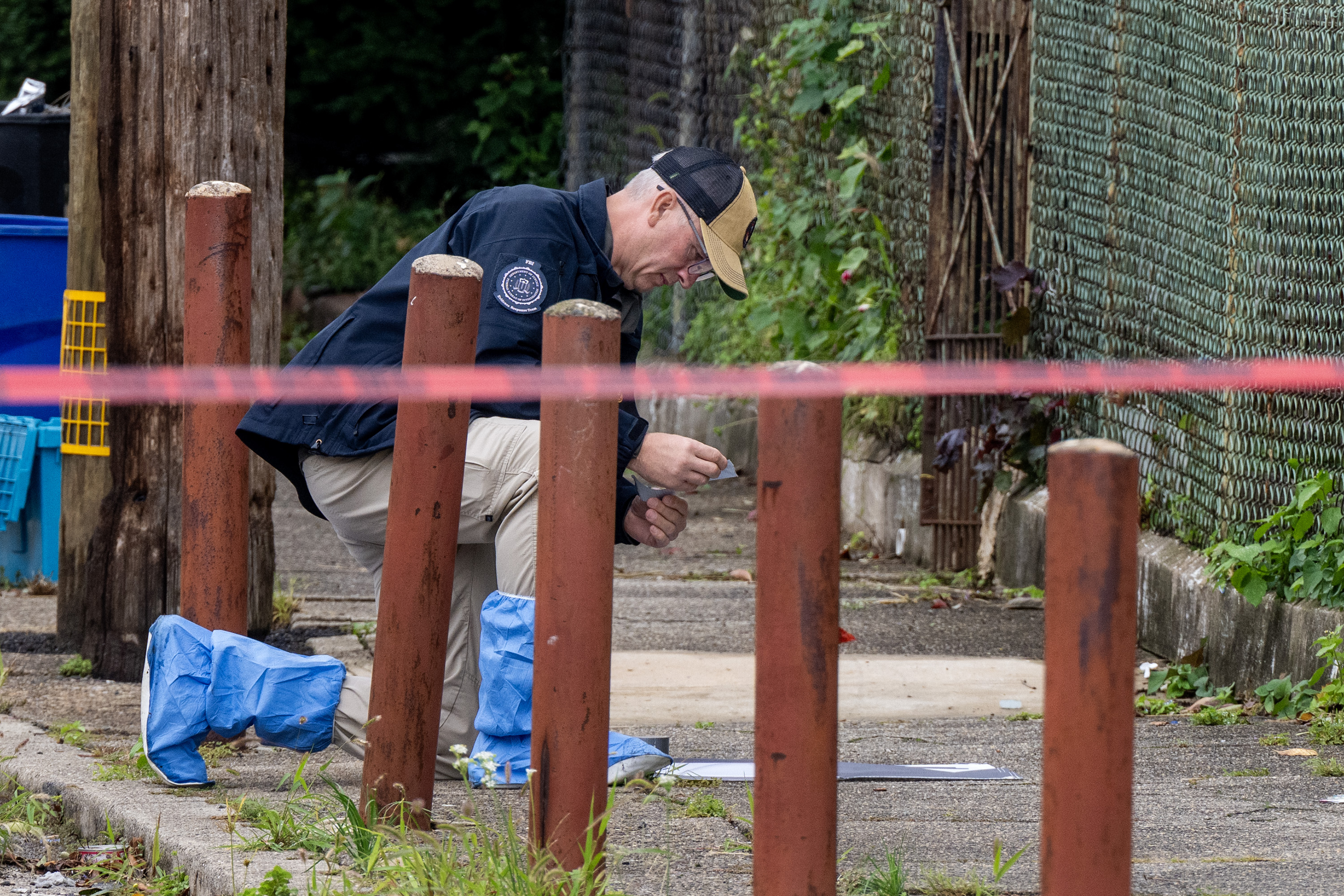
    A member of the FBI Evidence Response Team outside on Monday during the beginning of a fresh week of investigative work inside the homeTom Gralish / Staff Photographer

    Officers and reporters lifted police tape to help people on the cordoned-off block get out in their cars. Police kept watchful eyes over everyone who came and left, whether it be a neighbor on a bike or two workmen rolling boxes on a dolly up to the front door of a home beside Horsch’s. A squirrel darted toward the Horsch home on a telephone wire and turned back once the whirring of a drone grew louder.

    Alexis Velez, a befreckled 18-year-old with Shirley Temple-esque corkscrew curls, lives about five minutes from the Horsch house. It’s smack between her and her grandmother’s home. She used to walk by the Horsch house daily to catch the bus to get to high school. She thinks about what could have been if she’d been in the wrong place at the wrong time.

    “It’s terrifying, just thinking about it. I could have been one of those victims. I’m in the vicinity,” she said.

    She’s now a freshman at La Salle University studying psychology, she said. Maybe one day she’ll come to learn what possesses the human mind to pursue violence. But, for now, it’s hard to wrap her head around it.

    “I just think it’s insane,” she said.

    The neighborhood had felt like a safe place where people looked out for one another, Velez said.

    As she headed home, she struck up a conversation with two women. Sisters Theresa Yantz, 64, and Diane Matynka, 68, grew up in the Olney neighborhood but both now live in Lebanon, near Hershey. The two wanted to show Yantz’s daughter, Cara, 35, where they grew up and just how near it was to the Horsch house.

    “We wanted to drive by and show her, how close that we hung out,” Yantz said after she and her sister whipped out their phones and started taking photos. “That’s why we’re here being so nosy.”

    Yantz, Matynka, and Velez chatted about how the neighborhood changed since the sisters were children. Both sisters lived in Olney in the mid-1960s to late 1970s, and Yantz did another stint there in the early 1980s.

    When Yantz and Matynka were young girls, they’d play on their bikes outside until the street lights came on. Decades later in the same neighborhood, Velez has had to persuade her protective father that he doesn’t need to chaperone her to class each day anymore.

    Lately, though, she’s had a change of heart.

    “After this, I might have him walk me a couple times,” she said.

    The scene outside the former home of Raymond “R.C.” Horsch on Chew Ave. on Monday.Tom Gralish / Staff Photographer
  • What happens when kids who witness gun violence go to school? This Philly program aims to help.

    What happens when kids who witness gun violence go to school? This Philly program aims to help.

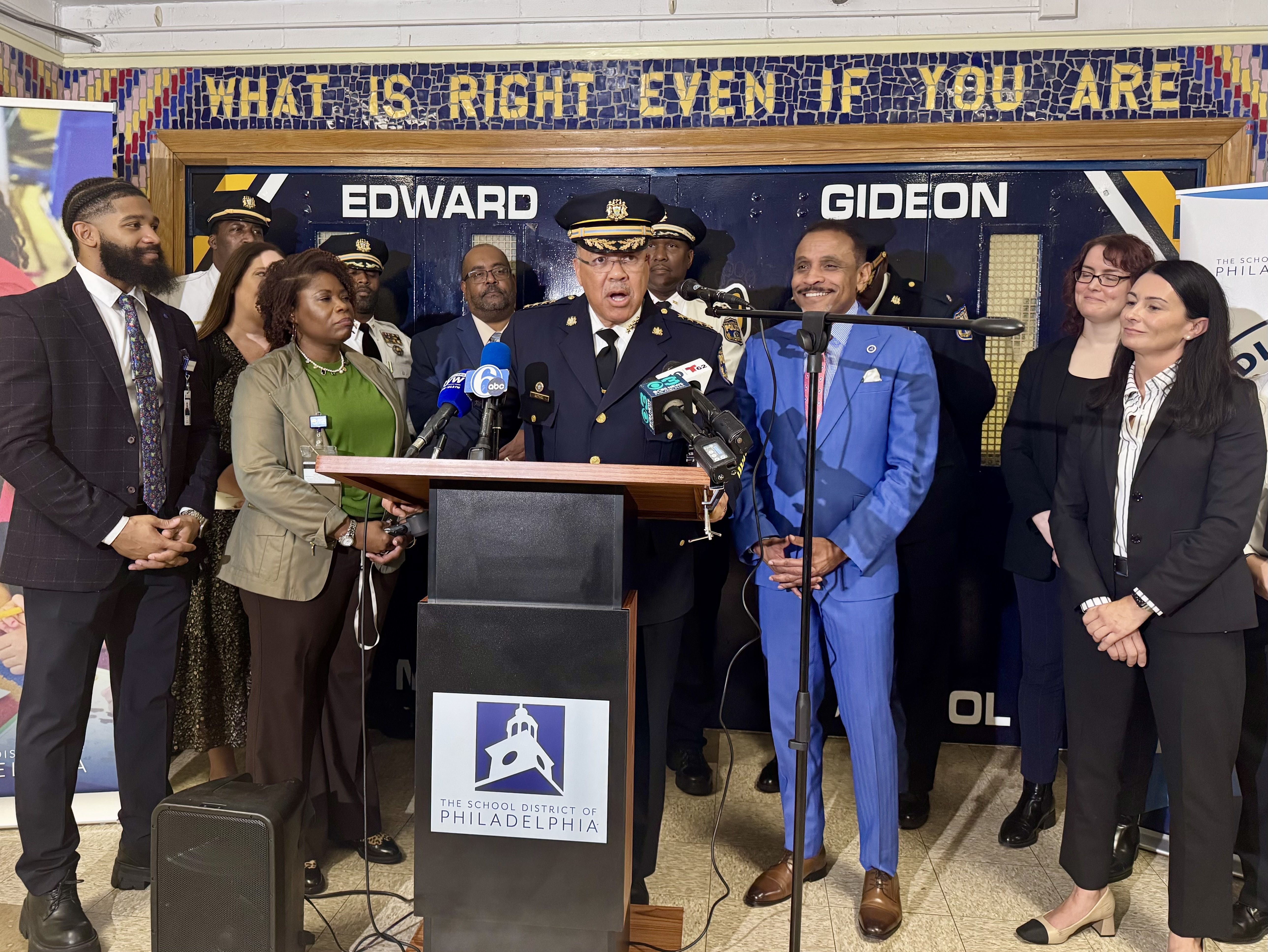
    In the past, principal Shauneille Taylor had no way of knowing when one of the children at Edward Gideon Elementary School had witnessed a shooting, or an incidence of domestic violence, or seen a parent arrested.

    The child might walk into the North Philadelphia school the next day and act aggressively, or appear withdrawn, or shut down, and adults would wonder why — sometimes, they might even assign disciplinary consequences for acting out.

    That changed with an initiative piloted at Gideon and 14 other city schools, now going districtwide, Philadelphia Police Commissioner Kevin Bethel and Superintendent Tony B. Watlington Sr. announced Monday.

    The “Handle With Care” program allows officers to make referrals to schools attended by child witnesses to crimes. Schools are then alerted that one of their children may need extra attention, with staff trained in trauma-informed practices and poised to offer more support.

    “Having that heads up has made a profound difference for our school,” Taylor said at a news conference in a Gideon hallway Monday.

    The program is the brainchild of Bethel, a former district safety chief and longtime city officer, who dreamed for years about figuring out a way to better care for kids who witnessed traumatic events.

    In 2024, the district used a $1 million federal grant to launch a “Handle With Care” pilot in 15 schools in North Philadelphia. That money paid for training and a dedicated staffer.

    A $200,000 state grant will fund the staffer’s work going forward, officials said.

    Officials “didn’t want to assume that everyone understands trauma, how to identify the warning signs, and how to provide that support,” Bethel said. “So we had the opportunity to provide training to Philadelphia police officers and school-based staff, not only on how to understand trauma, but on how to provide meaningful support. Through this pilot, we were able to provide that support to more than 70 students who may otherwise have walked into school carrying the weight of what they experienced without anyone knowing that they just needed a little extra care.”

    It’s certainly a shift from years ago, Bethel said, when “the word trauma wasn’t really part of our vocabulary in policing or frankly, much of the conversations around children and their experiences.”

    “But we understand today more than we do ever what young people experience and how those experiences affect their behavior, their ability to learn, their relationships, and their development. Our young people are exposed to significant levels of trauma,” he said.

    When children witness traumatic events, officers have the ability to trigger Handle With Care alerts. A point person at the child’s school will then be alerted — not with the details of the incident, just that this student needs extra support because of an event.

    It “gives the school an opportunity to intervene … rather than waiting until a child’s trauma manifests its way into a disciplinary action or academic, emotional problems,” Bethel said. “Early recognition creates an opportunity for early intervention.”

  • Contradicting Trump, Pope Leo says artificial intelligence safety concerns not ‘fake news’

    Contradicting Trump, Pope Leo says artificial intelligence safety concerns not ‘fake news’

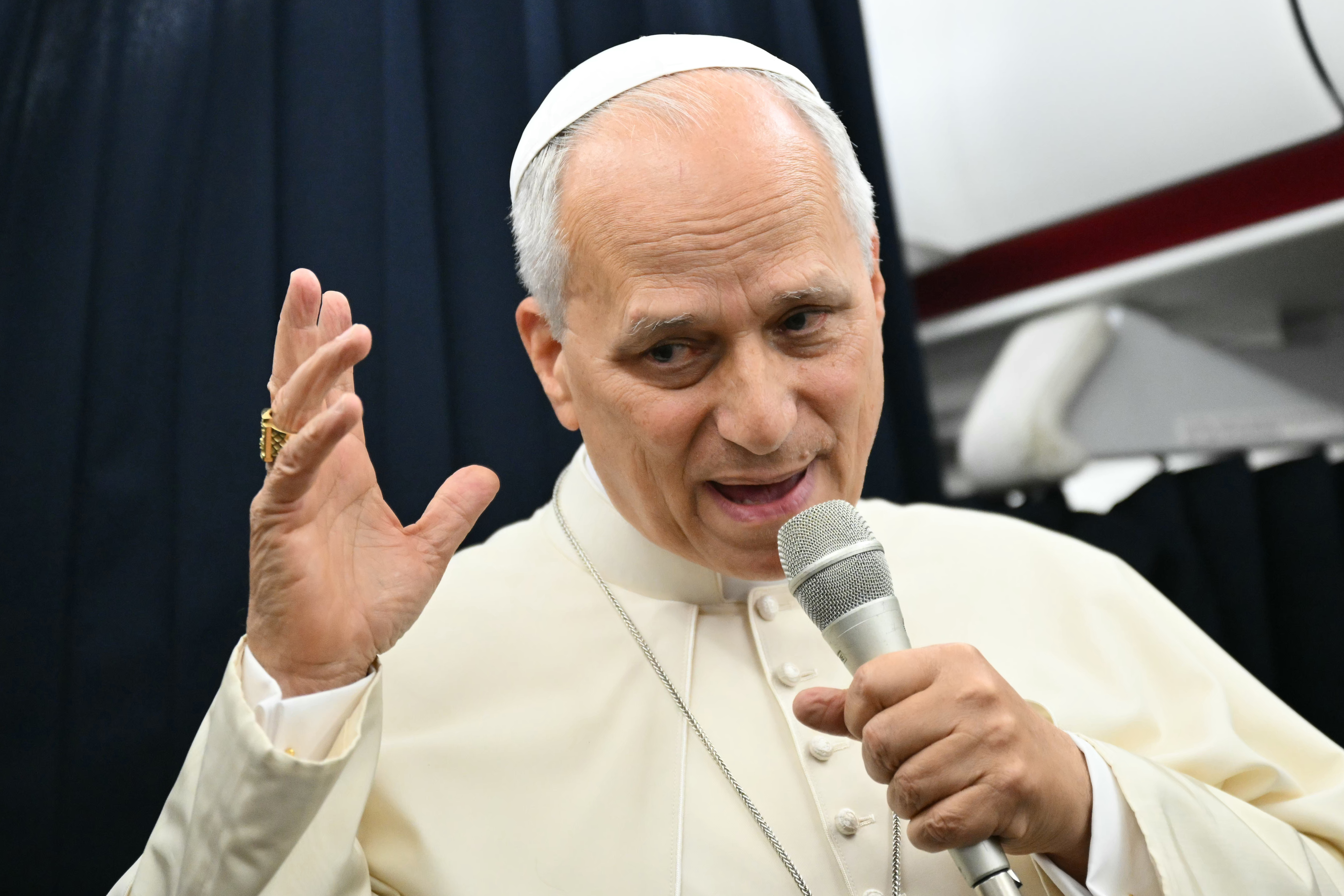
    ABOARD THE PAPAL PLANE — Pope Leo XIV said Monday that concerns about artificial intelligence going rogue are not “fake news” and should be taken seriously, insisting that safety issues raised by AI experts should be discussed and acted on.

    Leo, who dedicated his first encyclical to AI and protecting humanity in its wake, was asked during a news conference about what the United States and China especially should be doing to prevent AI from posing catastrophic risks to humanity. President Donald Trump has called concerns about AI going rogue a “hoax.”

    “This is a problem that I think we need to sit down and talk about,” the American pope told reporters while returning home from France. “We can’t just sit back and pretend nothing is going to happen.”

    Trump has been a champion of AI, often warning that the United States must remain ahead of China in the technological arms race. He has said efforts to limit the technology were part of a “conspiracy” by his political opponents.

    Several AI giants, including Anthropic, have called for a slowdown in development to give safety measures time to catch up to the fast-moving technology. Anthropic CEO Dario Amodei, for example, has warned that within six to 12 months AI could be capable of leading a swarm of agents that could take over the entire internet.

    Trump said on Sunday he planned to have a late dinner with Amodei, but he had not yet commented on the meeting.

    “If someone were to ask me ‘Am I in panic mode?’ No I’m not. I sleep at night,” Leo said. “I do think that the concerns raised by many of the experts, specialists in AI should be taken seriously.”

    “I don’t think that that is ‘fake news’ as some have said, to try and cause whether financial or other some other kind of benefit,” Leo said.

    The pope, who called for robust regulation of AI and a slowdown of the technology in his encyclical Magnificent Humanity, is up to speed on developments in the field.

    Despite being at the end of a grueling four-day trip to France, Leo noted a news report Monday afternoon about Nvidia introducing guardrails into AI. He also noted that the company has previously resisted outside regulation of AI development.

    Leo had identified AI as one of the biggest challenges to humanity within days of his election and took the unusual step of personally launching his own encyclical alongside Anthropic’s co-founder Christopher Olah at a Vatican event in May. The initiative was part of the Vatican’s effort to engage Silicon Valley about the human costs of AI.

    “We need to continue to invite political leaders, leaders of AI, social organizations, associations to come together and look at what is happening already and what could be down the road,” he said Monday.

    “To simply say ‘Oh it’s not going to happen’ and close our eyes to it I think is probably not the most responsible way to go about that,” he added.

    With his comments Monday about the legitimacy of safety concerns and AI development, Leo has confirmed another area of disagreement with Trump. The two had a back-and-forth in April over Leo’s opposition to the U.S.-Israeli war in Iran and Leo has also criticized the Trump administration’s migration crackdown.

    Trump met with Chinese President Xi Jinping last week in Washington and while Xi said that it was important to ensure AI is “always under human control,” Trump focused more on trying to rebrand it as “superintelligence” and dismissed calls for regulation. However, the two leaders agreed to explore a new “notification mechanism” for AI incidents affecting national security.

    AI has become a major election-year issue in the U.S. as some of the country’s largest companies rush to build a national network of data centers while Americans from both parties increasingly raise alarms about the impact on farmland, water supplies, and electricity bills.

    Worries about AI are continuing to grow inside and outside the industry and reports continue to emerge about increasingly powerful systems that solve problems beyond human capacity but could also go rogue and carry out other, more harmful tasks.

    The worries have grown so loud that the CEO of OpenAI, the company behind ChatGPT, said in an interview with Fortune that his company would wait until next year to start selling its stock to investors on Wall Street as it focuses on safety.

    Leo noted that ever since he published his encyclical in May, the Vatican has received comments from people interested in being part of a broader conversation about AI. A Vatican commission is working to promote dialogue, study and investigation “to find ways to make sure that AI does not get to a point of destroying humanity or removing humanity from the conversation,” he said.

    Leo said he was “relatively optimistic” that solutions could be found.

    “I think there are enough people seriously interested in that and willing to look at that outside of the questions once again of power, who gets there first,” he said.

  • Councilmember Curtis Jones Jr. is running for reelection. Some Democrats are questioning whether he should.

    Councilmember Curtis Jones Jr. is running for reelection. Some Democrats are questioning whether he should.

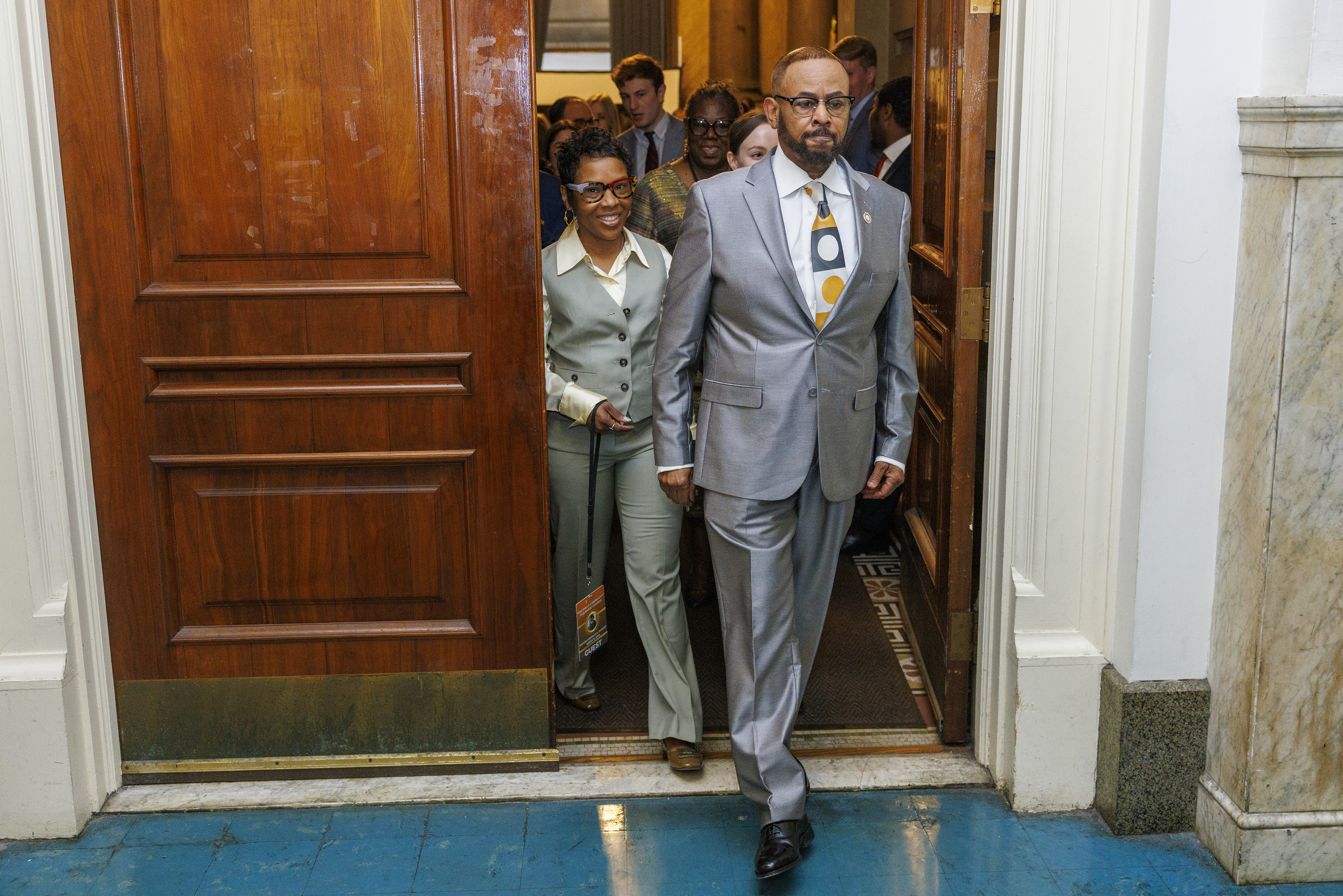
    City Councilmember Curtis Jones Jr. held a campaign fundraiser featuring Mayor Cherelle L. Parker at the Cobbs Creek Golf Course on Thursday night, a show of strength as he gears up to seek a sixth term in next year’s municipal election.

    But that hasn’t stopped a whisper campaign among Philly’s political class about whether he’ll actually appear on the Democratic primary ballot next spring, with as many as four potential candidates said to be eyeing his seat representing parts of West and Northwest Philadelphia.

    People close to Jones have recently encouraged him to reconsider seeking a new term and to clear the way for State Rep. Morgan Cephas to run to represent Council’s 4th District, according to a person with knowledge of the discussions who spoke on the condition of anonymity to discuss private conversations.

    Other possible candidates include criminal justice reform advocate Celeste Trusty, ex-Service Employees International Union staffer Leigh Owens, and developer Ryan Spak.

    The intrigue over Jones’ political future follows an Inquirer report in June that Jones and his wife, City Representative Jazelle Jones, who is a top official in the Parker administration, stand to reap up to $752,000 in payouts from the controversial Deferred Retirement Option Plan, or DROP.

    Jones, who makes $165,000 per year, told The Inquirer in June that he may need the extra money from DROP to pay for medical bills in retirement because he is suffering from glaucoma, an incurable disease that Jones said has already caused him to lose 40% of his vision.

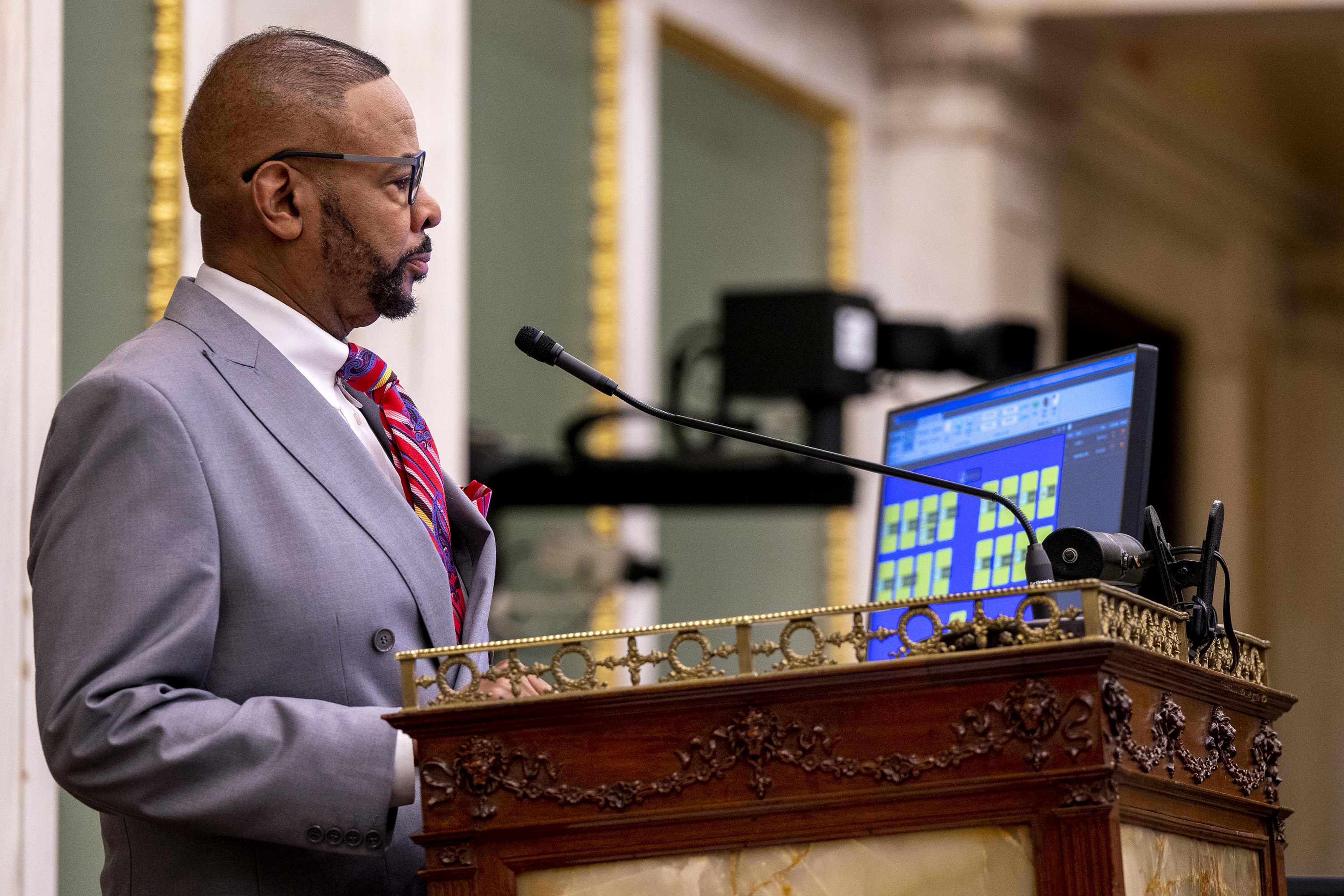
    Councilmember Curtis Jones Jr. stands in for former Council President Darrell Clarke after he stepped away briefly during a Council meeting on Sept. 14, 2023.Tom Gralish / Staff Photographer

    State Sen. Vincent Hughes, a West Philadelphia Democrat who said he has been friends with Jones for 44 years, said he will support Jones no matter what he decides, adding that “no election is automatic.” But Hughes also said he has encouraged Jones to consider his health when deciding how to proceed.

    “I think the councilman has earned the opportunity to try to make an accurate determination as to what he wants to do for his future,” Hughes said in an interview Monday. “I have encouraged him to think about the personal side of this, the physical challenges.”

    Hughes said he would like to see Cephas eventually succeed Jones in the 4th District. But if Jones decides that he can serve another term, Hughes said he will back his reelection.

    “He’s been serving with this challenge, and he’s been serving well,” Hughes said.

    Jones said Thursday that he intends to run for reelection and serve a full term.

    ScreenshotSean Walsh

    DROP allows city workers to “double-dip” by accumulating four years of pension payments, which is usually paid out in a lump sum upon their retirement, while they are still working and receiving their regular paychecks.

    The Joneses’ enrollment in DROP is legal, but his use of the program resurrects a scandal from the early 2010s that ended the political careers of several prominent figures in City Hall.

    Elected officials, who were not initially envisioned as being eligible for the program, took advantage of it by briefly retiring at the end of their terms, collecting lucrative DROP payouts, and then getting rehired at the beginning of their new terms.

    As a junior Council member, Jones in 2010 voted for a bill banning future elected officials from enrolling in DROP. But the bill “grandfathered” in current elected officials at the time, he said, and Jones is now poised to become the first lawmaker to use the program in years.

    Jones enrolled in DROP in August 2024, meaning his mandatory retirement date would be in August 2028, during the first year of the next Council term. He would be eligible to collect a $432,000 payout then, and upon retirement he will begin collecting his regular city pension payments.

    But Jones in June said he plans to retire just before the start of the next Council term in January 2028, take a slightly reduced DROP payout, and then serve his entire next four-year term, if he is reelected. He has held the seat since 2008.

    The person familiar with the discussions about Jones’ future said 4th District voters are unhappy about his enrollment in DROP and that speculation about his potential successor is becoming a “self-fulfilling prophecy.”

    “This is a district that reads the newspaper and works to stay informed,” the person said. “And they don’t like what they’ve been reading and hearing.”

    In June, Jones said he has had four eye surgeries and that he enrolled in DROP to ensure he can afford the healthcare he needs in retirement, “so that if I was blind, I wouldn’t have been without resources.”

    He added that, due to his health challenges, he is grateful he was not elected Council president. He ran for the leadership post in 2023, losing to Kenyatta Johnson, a South Philadelphia Democrat.

    “I am functional. My staff kind of helps to keep that good,” Jones said. ”I am thankful to God that I did not get elected [Council] president. Do you know how much reading they do? I could have not kept up with all of the numbers and stuff like that, so I know my limitations.”

    Jazelle Jones, who has served in multiple mayoral administrations, enrolled in DROP in 2020 and was originally set to retire in 2024. Parker, however, has pushed through a series of exceptions to personnel rules allowing her to continue serving and collect a more lucrative DROP benefit of about $320,000. Those approvals were processed months after the fact, city records show, and the administration has not yet explained the gaps in paperwork.

    Curtis Jones, 69, has also said he hopes that Cephas, 42, a West Philadelphia Democrat, will succeed him when he retires after his next four-year term, meaning she would run in the 2031 municipal election cycle.

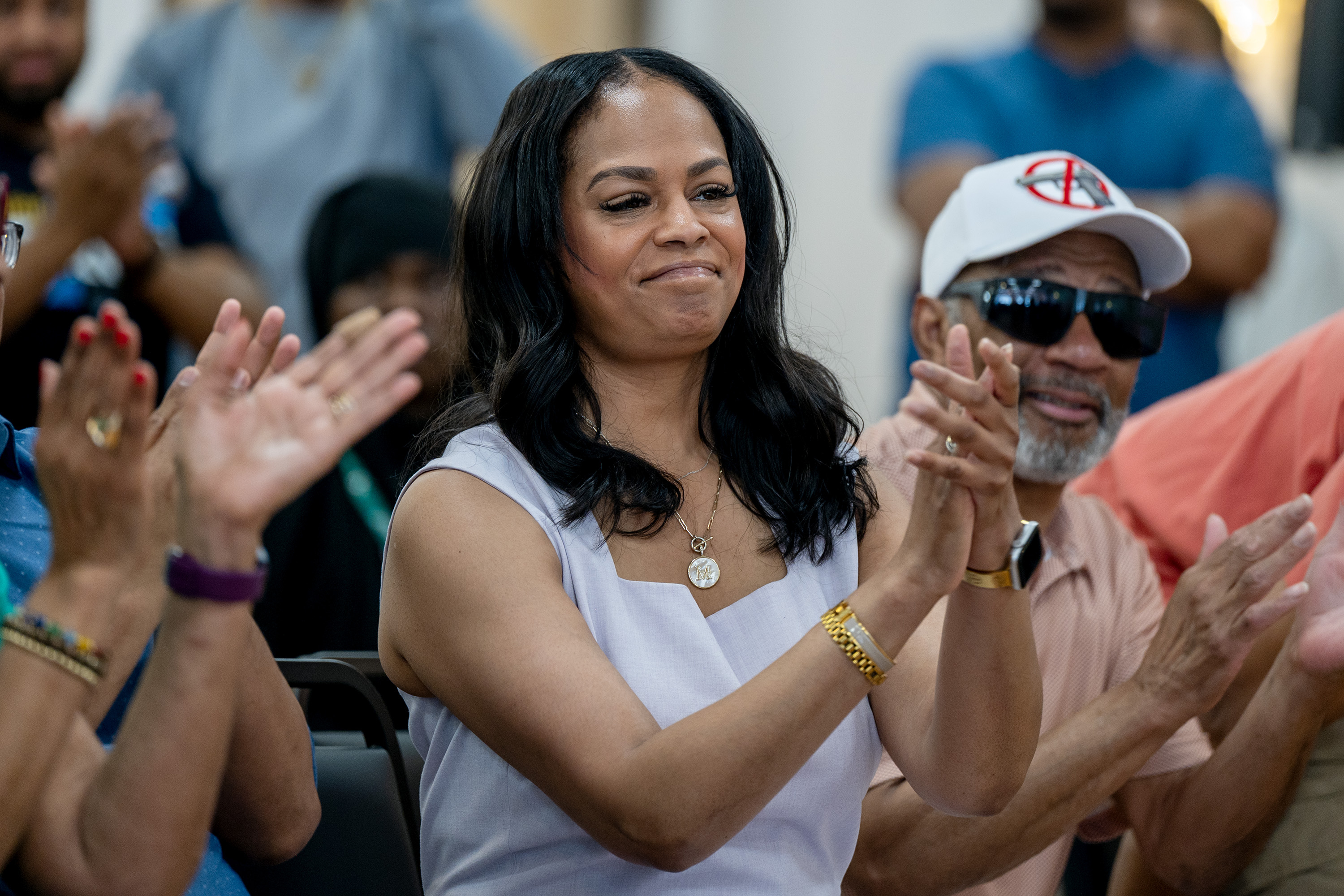
    State Rep. Morgan Cephas attends a get-out-the-vote rally for State Sen. Sharif Street at the Church of Christian Compassion in West Philadelphia on May 18, 2026, on the day before the Democratic primary election for the 3rd Congressional District. Cephas was a candidate for the same seat, but withdrew early in the race.Tom Gralish / Staff Photographer

    Philadelphia politicians sometimes retire in the middle of their terms, triggering a special election in which Democratic ward leaders, and not primary voters, choose the party’s nominee, who usually ends up winning the seat thanks to Philly’s deep-blue electorate. That can sometimes allow outgoing politicians to handpick their successors.

    But Jones has said he would not retire in the middle of his next term, and he instead plans to endorse Cephas to run in a Democratic primary in 2031.

    Amid the heightened scrutiny over his retirement plans, some allies of Jones and Cephas, who both got their start in the West Philadelphia-based political organization previously led by former U.S. Rep. Chaka Fattah, are encouraging him to speed up the transition. That could prevent a worst-case scenario for Cephas: if Jones lost to another challenger in next year’s Democratic primary while Cephas sat out the race in deference to Jones.

    Cephas, the chair of the Philadelphia delegation to the state House, ran for Congress earlier this year in a high-profile contest but dropped out of the race two months before Election Day.

    She declined to comment through a spokesperson.

    Several other potential candidates are considering running for Jones’ seat, setting up what could grow into a crowded primary.

    Spak — an affordable housing developer based in West Philadelphia who has in recent years been critical of some Council members’ more restrictive housing policies — is rumored to be considering a campaign. He declined to comment.

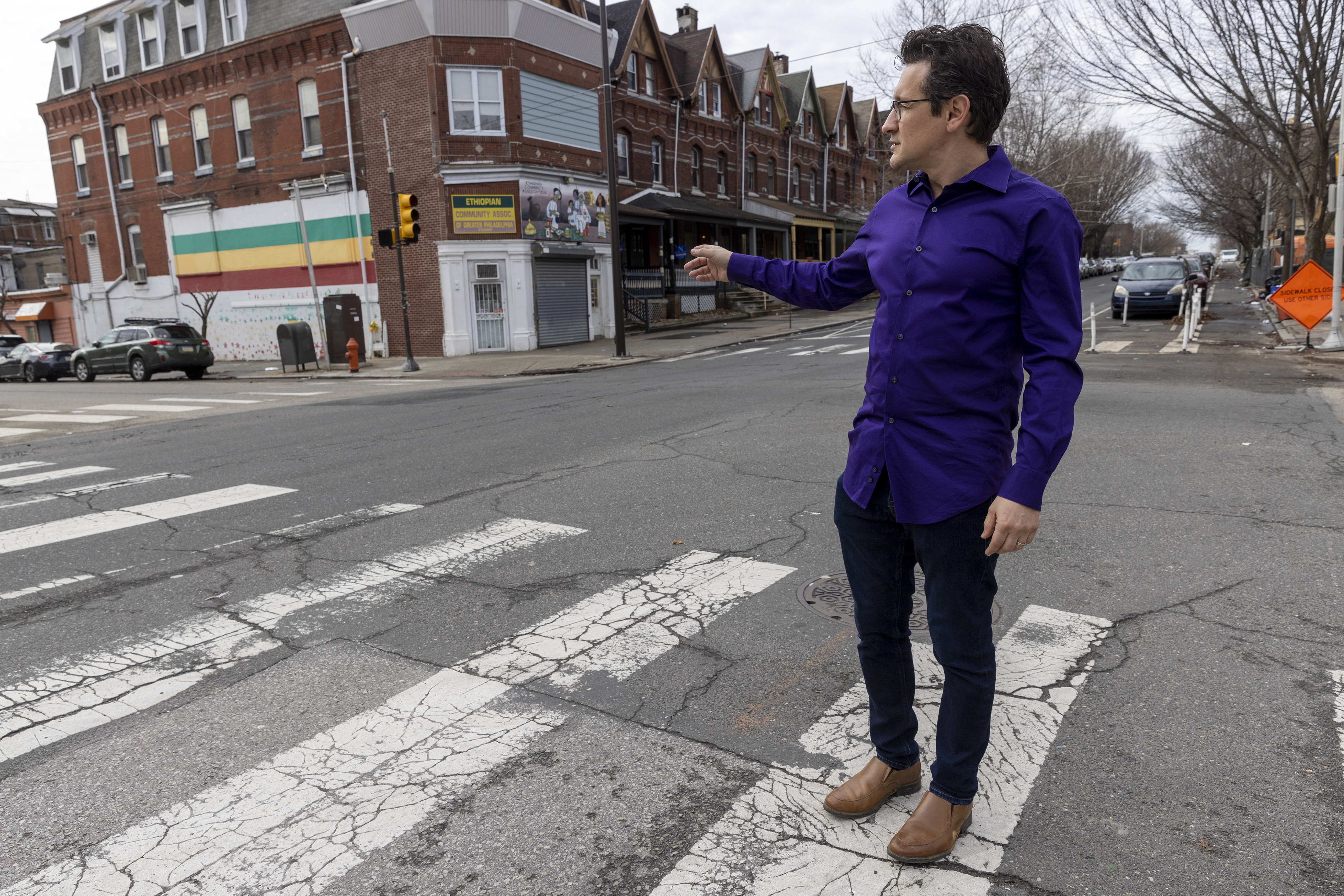
    In this 2022 file photo, Ryan Spak is photographed at 44th and Chestnut Street near the Ethiopian Community Association. Spak’s work has included collaborating with West Philly residential and commercial property owners on rehab projects.ALEJANDRO A. ALVAREZ / Staff Photographer

    In addition, the city’s progressive organizations are eyeing the district as a potential opportunity to grow their influence on Council. Candidates aligned with the left are already lining up to run against incumbents in at least two other districts.

    Three sources close to that effort, who requested anonymity because they were not authorized to discuss the plans publicly, said Trusty and Owens, both criminal justice reform advocates, are considering getting in the 4th District race.

    Trusty is the ex-secretary of the Pennsylvania Board of Pardons and has also worked with the national organization FAMM, formerly known as Families Against Mandatory Minimums. She declined to comment.

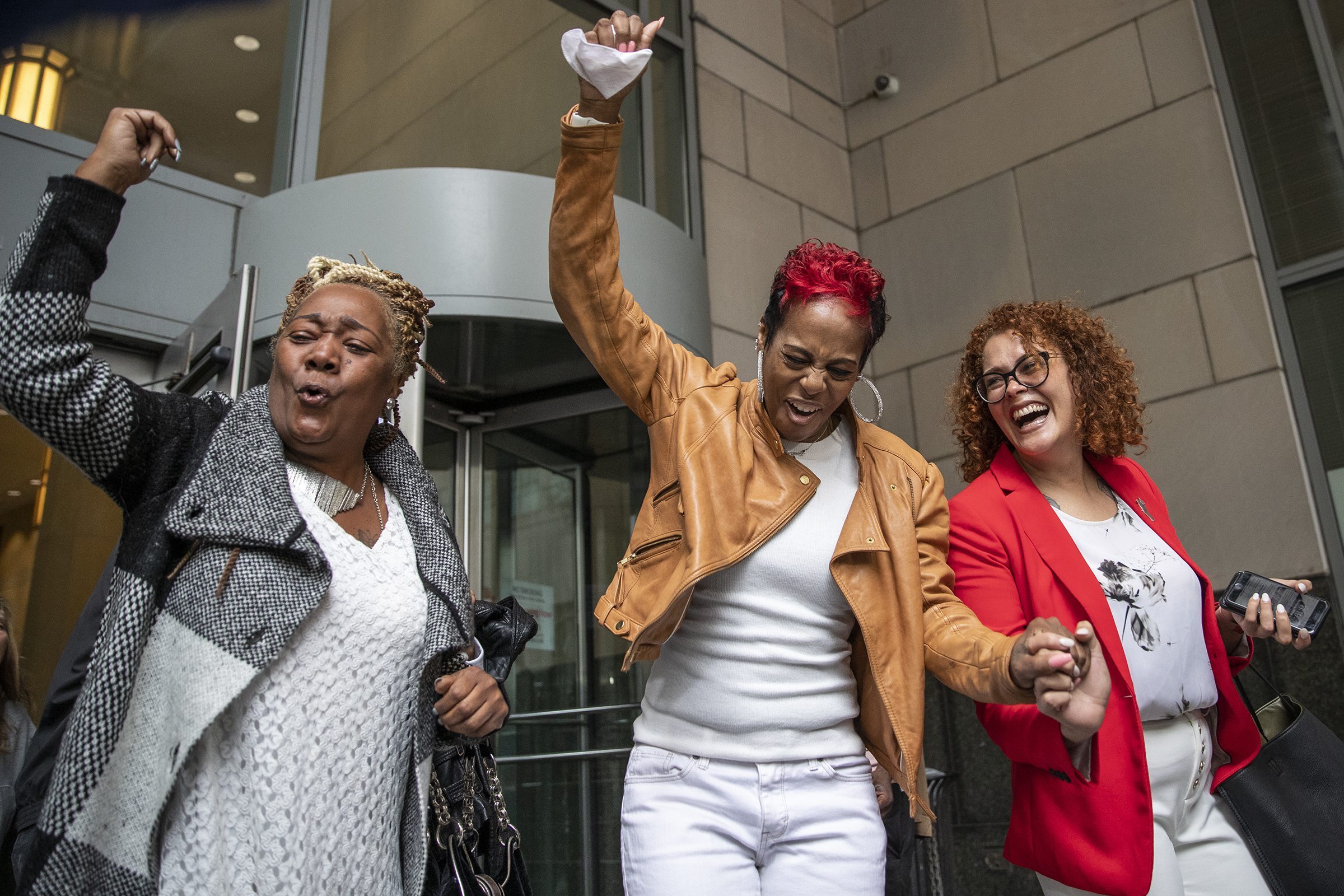
    Celeste Trusty, of FAMM, is at right in this 2019 file photo. She is celebrating with Ketra Veasy (center), sister of Willie Veasy, who had been imprisoned for 27 years for murder and was exonerated.HEATHER KHALIFA / Staff Photographer

    Owens, a former staffer at SEIU who was also a political aide to progressive ex-Councilmember Helen Gym, is now the education and advocacy director at the Pennsylvania Prison Society. He said in an interview that he has been considering running for Jones’ seat for about two years.

    He said he is a native of the district, and sees an opportunity for new voices on Council to advocate for stronger public education and more affordable housing.

    Owens, 46, said the revelations around Jones’ use of DROP made clear that it’s “time for the old guard to step down.”

    “When I see what he’s doing with this DROP money and people using politics as a tool to line their pockets and stifle progress, it’s upsetting,” Owens said. “It’s time for people that really have the lived experience and who are doing this for the right reasons to get these seats. That’s the only way the city is going to be better: if our leaders care about the people and not their own interest.”

    Staff researcher Ryan W. Briggs contributed to this article.

    Correction: A previous version of this article incorrectly listed a candidate considering running for the 4th District seat. The potential candidates are Curtis Jones Jr., Morgan Cephas, Ryan Spak, Celeste Trusty, and Leigh Owens.
  • The big question looming over Brazil’s elections: Trump’s next move

    The big question looming over Brazil’s elections: Trump’s next move

    BRASÍLIA, Brazil — Since taking office, President Donald Trump has become an electoral kingmaker in Latin America. Right-wing candidates aligned with Washington have won the past seven elections in the region, with Trump explicitly endorsing the winner in two of them.

    “We’re doing very well in South America,” Trump told reporters this month. “Lots of people that I got elected.”

    Now comes the biggest regional test for the right and for Trump’s record of success: Brazil.

    As Brazilians prepare to head to the polls, the question looming over Latin America’s largest democracy is whether Trump will try to influence its presidential election next month.

    The American leader has not openly championed any Brazilian candidate. But the Trump administration has in more subtle ways lifted the right-wing challenger, Flávio Bolsonaro, who is running against President Luiz Inácio Lula da Silva, a leftist.

    Having watched Trump wade into other elections and experienced his failed attempt to help Bolsonaro’s father avoid prison for plotting a coup, Brazil is erecting a firewall to try to shield its high-stakes vote from potential U.S. meddling.

    The efforts include monitoring foreign lobbying and disinformation, fighting false claims about electoral fraud, and enlisting the support of countries in Europe, Asia, and elsewhere.

    This article is based on interviews with more than a dozen Brazilian government and electoral officials, law enforcement officers, intelligence agents, and foreign diplomats. Many spoke on the condition of anonymity because they were not authorized to speak publicly.

    Bolsonaro’s campaign and the State Department did not immediately respond to a request for comment.

    The concern for many in Brazil is that, in a narrow contest where polls show Bolsonaro and Lula practically tied, a helping hand from Trump could tip the scales in the challenger’s favor.

    The Trump administration has rejected Brazil’s claims that it is seeking to interfere, even though it tried this summer to send a U.S. delegation to investigate Brazil’s electoral integrity.

    American help, Brazilian officials said, could come in the form of more measures to hurt Lula’s image. Trump used sanctions and tariff threats in an attempt last year to save Jair Bolsonaro, Flávio Bolsonaro’s father, who tried to cling to power after falsely claiming the last election was stolen. That failed, and he was sentenced to 27 years.

    Many also worry about online campaigns from abroad aiding Bolsonaro.

    A recent wave of paid social media posts, shared by prominent U.S. right-wing accounts, added to those fears. The posts amplified claims by Polymarket, the predictions market backed by Donald Trump Jr.’s venture capital firm, that Bolsonaro stood staggering chances of winning, deviating wildly from polls showing no clear front-runner.

    Lula, among the few world leaders to take on Trump, has made clear he is prepared to defend his country’s interests.

    “The Americans better not come trying to influence our elections,” he said this month. “Trump should mind his own country’s business.” Speaking at the United Nations last week, he blasted foreign meddling into his country’s sovereign affairs, without naming the United States: “Brazil is nobody’s backyard.”

    He also launched a searing campaign video accusing the Trump administration, without offering evidence, of helping his rival and interfering in Brazil’s elections with an eye to seizing its natural resources.

    Brazil, a vast nation of 210 million, has an economy powered by commodities the world needs and institutions that are not afraid to push the limits of democracy in the name of saving it.

    “Wherever the threat may come from, we have the tools to defend ourselves,” said Gilmar Mendes, Brazil’s longest-serving Supreme Court justice. “If necessary, there will certainly be a forceful response.”

    The Trump factor

    Worried about campaigns orchestrated from abroad, Brazil’s intelligence agencies have made combating foreign manipulation through social media a top priority.

    The court that oversees elections has also set new rules for electoral misinformation, asking companies such as Google and Meta to submit plans for combating misleading videos and posts generated by artificial intelligence.

    And, amid renewed attacks by Bolsonaro’s allies in Brazil and abroad about the credibility of the country’s voting systems, authorities began a major campaign, complete with a mascot, aimed at strengthening trust among voters, diplomats, and international observers.

    A win by Bolsonaro would bolster ambitious plans laid out by Washington to expand its influence in Latin America through right-wing allies.

    “Under our new national security strategy, American dominance in the Western Hemisphere will never be questioned again,” the State Department said in a recent, lengthy video.

    Brazil represents the biggest remaining prize. As president, Bolsonaro would more likely align with the United States on issues including organized crime and critical minerals. (Lula has said Brazil would not hand over its natural resources.)

    And leaked documents written by an ally of Bolsonaro, reported by Brazilian media and reviewed by the New York Times, suggest people close to the candidate may have proposed giving the United States access to Brazil’s critical minerals in exchange for support. The document’s author acknowledged producing it, but denied that they wrote it on behalf of Bolsonaro’s campaign or that it was shared with U.S. officials. Bolsonaro’s campaign did not immediately respond to questions about the document.

    U.S. Secretary of State Marco Rubio has cast Brazil as unfriendly to American interests, lumping it in with U.S. adversaries like Cuba and Nicaragua.

    Many in Brazil have bristled at the idea that Trump, who was once recorded asking a state election official in Georgia to “find” more votes, should be stepping into another nation’s elections.

    “With all due respect,” said Mendes, “the United States has no lessons to teach us when it comes to electoral systems.”

    American help

    In Brazil, worries about American meddling have dominated political discourse and editorial pages for months. And to many, the Trump administration has already been propping up Bolsonaro’s candidacy in indirect ways.

    At a time when Brazilians are deeply worried about security, Trump yielded to lobbying by Bolsonaro to designate two Brazilian gangs as terrorist groups.

    The administration also tried to send U.S. envoys to meet Bolsonaro in Brazil and investigate the country’s voting systems, which prompted Brazilian officials to block the visits.

    If his son, Flávio, loses, there are signs the candidate could launch similar claims of electoral cheating — and his allies expect to find a sympathetic ear in Trump.

    After the last election, President Joe Biden recognized Lula’s victory within hours. Even so, Bolsonaro’s claims of fraud inspired his supporters to storm the capital, in a riot reminiscent of the Jan. 6 attack on the U.S. Capitol.

    Counterattack

    International experts agree Brazil’s electronic voting machines, a frequent target of Bolsonaro’s movement, are some of the most secure in the world.

    Yet a poll last month showed 34% of Brazilians distrust the voting machines, up from 20% in 2022.

    The electoral court has invited political parties and hackers to test the machines and greatly expanded randomized auditing.

    On a recent weekday at the electoral court, social media influencers snapped selfies with an election mascot shaped like a voting machine. The court also hosted more than 80 diplomats for a workshop touting Brazil’s electoral system.

    “We opened our doors to the world,” said Justice Kássio Nunes Marques, the chief of the electoral court. “We went about dismantling every argument.”

    And with U.S. support no longer a given, Brazil has worked to shore up international backing elsewhere.

    Diplomatic missions from the European Union, Canada, Japan, Australia, and other countries, worried about interference from Washington, are holding informal talks on how to jointly respond after the election, according to three senior foreign diplomats.

    These diplomats said allies are likely to quickly defend the vote’s integrity no matter who wins, but they also worry about displeasing Washington.

    This article originally appeared in the New York Times.

  • Mediators are working to broker a U.S.-Iran deal, but major hurdles remain

    Mediators are working to broker a U.S.-Iran deal, but major hurdles remain

    CAIRO — Mediators are working with Iran and the United States on trying to broker a deal to end the fighting and open the Strait of Hormuz, three regional officials and two U.S. officials told the Associated Press, but major hurdles remain between the sides.

    The indirect talks come as the conflict, which is entering its eighth month, has caused global economic damage and badly battered Iran. Multiple efforts to allow safe shipping on one of the world’s most crucial waterways have failed.

    The officials divulged that the behind-the-scenes efforts continue even after U.S. President Donald Trump initially said he spurned an Iranian proposal to reopen the strait in a week if the U.S. agreed to lift its blockade of Iranian ports, release frozen Iranian assets, and waive sanctions on Iranian oil sales, among other conditions.

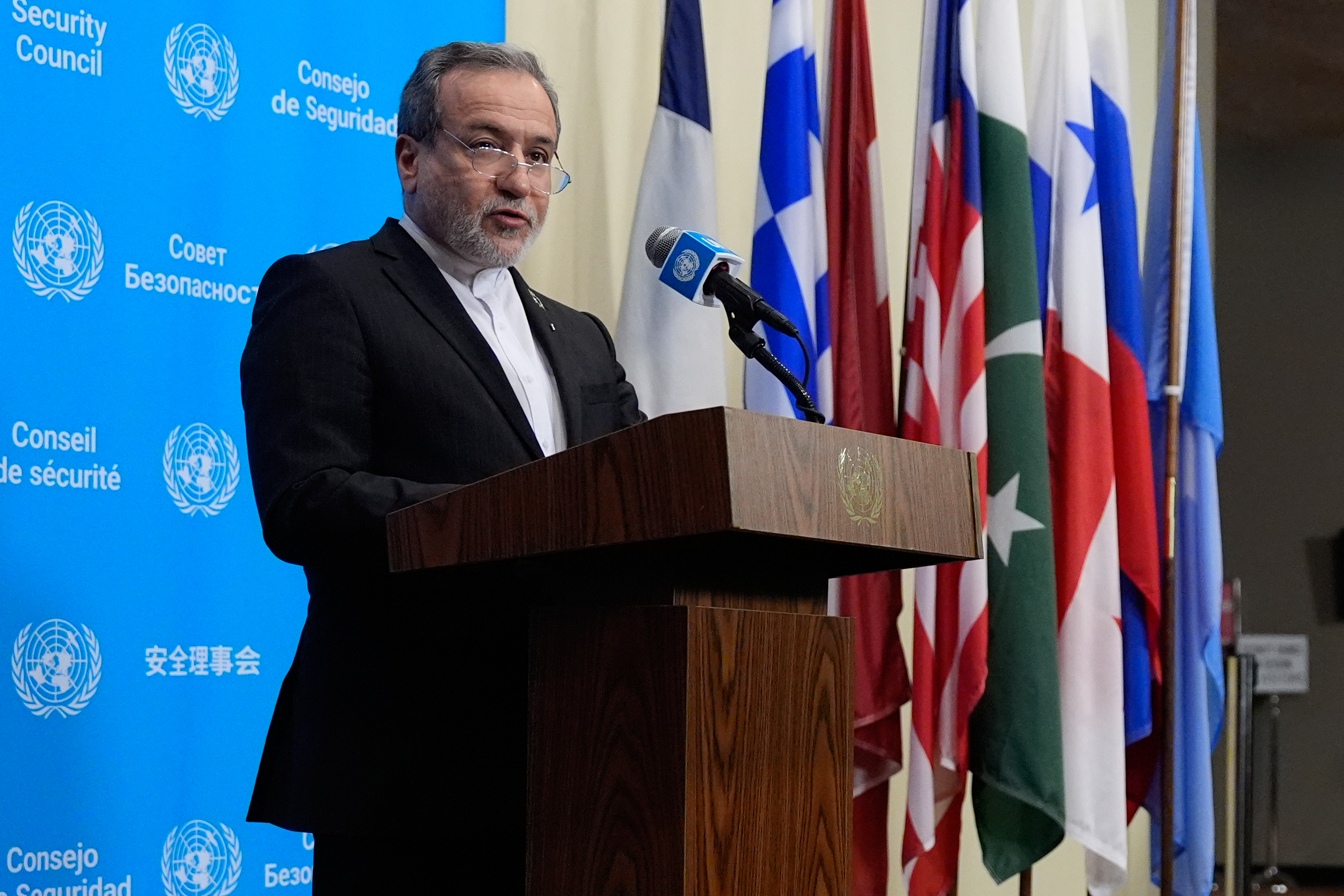
    Iranian Foreign Minister Abbas Araghchi — who stayed in New York after last week’s gathering of world leaders at the U.N. General Assembly — will meet with Qatari mediators Monday about the latest discussions, Iranian state media reported Foreign Ministry spokesperson Esmail Baghaei as saying.

    Despite Trump’s often bellicose rhetoric, he is open to pursuing a nonmilitary resolution to the conflict if one can be achieved, a senior U.S. official said.

    But the Trump administration will not reach a deal with Tehran until nuclear issues are addressed, another U.S. official said. Trump is willing to grant sanctions relief to Iran, along with the release of some frozen funds, for concrete progress on nuclear issues, and while Iran has indicated it is flexible on nuclear issues, the sides are far apart on timing and which side makes the first moves, the official said.

    All the officials were not authorized to comment publicly and spoke on the condition of anonymity about the behind-the-scenes diplomatic negotiations.

    Deal would first reopen strait and lift U.S. blockade

    Two of the regional officials speaking to the AP confirmed that mediators are working with both sides on a proposal that would include reopening the strait and lifting the U.S. blockade, and then removing sanctions.

    According to the draft text being discussed, the strait would reopen in accordance with a separate deal that Iran has been discussing with Oman, on the other side of the strait, and it would include no tolls — something Tehran has pursued. That deal seeks to temporarily manage shipping traffic on what was seen as an international waterway before the war.

    One regional official said the U.S. is seeking Iranian concessions on nuclear issues that include allowing inspectors to enter the country. Under the memorandum of understanding the two sides signed in June that collapsed within days, Iran’s nuclear program was meant to be discussed over a 60-day period.

    The U.S. officials say the United States is skeptical about whether Iran can be persuaded to ultimately reach Trump’s conditions for a deal and would be serious about any promises it makes, especially after it broke the interim deal by firing on commercial ships in the Strait of Hormuz.

    U.S. officials feel their position is getting stronger as Tehran feels the impact of sanctions.

    Iran’s latest proposal seeks faster action

    While Iran’s latest proposal echoes the June deal, a key difference is speed.

    Araghchi told a closed-door meeting on the sidelines of the U.N. General Assembly last week that Tehran had pitched the deal as benefiting Trump in the midterm elections. Araghchi later told journalists that “the seven-day timeline will start as soon as the United States accepts this plan.”

    U.N. Secretary-General Antonio Guterres also planned to meet Araghchi on Monday in a bid to help mediators, U.N. spokesperson Stephane Dujarric said.

    Both the U.S. and Iran have been hurting economically — the U.S. from high oil prices as Iran attacks ships on the strait, and Tehran from the naval blockade and a growing number of U.S. sanctions that bottle up its oil sales. Brent crude, the international standard, is above $108.

    For months, the two sides have been trying to outlast the other, while regional countries endure missile and drone attacks as Tehran claims to target U.S. military assets in the region.

    Reflecting Iran’s impatience, a rare statement on Monday attributed to the theocracy’s Supreme Leader Ayatollah Mojtaba Khamenei noted the “painful blows” that enemy forces have received near the strait. “Before long, the Arabian Sea, too, will be rid of them,” the statement added.

    Tehran’s latest proposal again sought to end the fighting on all fronts, including in Lebanon. But a new front has emerged in recent weeks as Iran-backed Houthi rebels in Yemen are now perched on another crucial waterway, the Bab el-Mandeb Strait at the southern entrance to the Red Sea. That has further pressured global energy markets.

    Iran argues that the Houthis have their own demands, and that their conflict with neighboring Saudi Arabia is separate from the U.S.-Iran war, but Iranian officials said they are willing to help in finding a settlement between the Houthis and the Saudis, one of the officials said.

  • Cinnaminson voters approve $57.7 million school bond referendum by nine votes

    Cinnaminson voters approve $57.7 million school bond referendum by nine votes

    Voters in Cinnaminson narrowly approved a $57.7 million school bond referendum, according to the latest unofficial results.

    The Sept. 15 election was too early to call in preliminary results, and district officials were anxiously awaiting the outcome after mail and provisional ballots were counted and verified, according to township spokesperson Lori Perlow. A final certification by county election officials is pending.

    The referendum was approved by nine votes, 1,744 to 1,735, according to the district. Results for a second question were previously announced with voters rejecting a $18.3 million spending proposal 1,927 to 1,536.

    The bond proposal was the largest in the history of the South Jersey school system. The first question had to pass for voters to consider the second question.

    “We are deeply humbled by our community’s trust and investment in our schools,” Superintendent Stephen Cappello said in a statement. “Waiting for every mail-in ballot to be counted was an inspiring reminder of civics in action and proof that every single vote truly matters.”

    The district plans to use the funds for improvement projects, classroom additions, HVAC upgrades, new water fountains, and renovated bathrooms.

    The plan will add about $399 annually in taxes on a home assessed at the township average of $236,538, according to officials. The state will contribute $16.8 million.

    Cappello said the approval will allow the district to address critical infrastructure needs and relieve crowded classrooms. Bidding timelines and construction plans will be finalized in the coming months, he said.

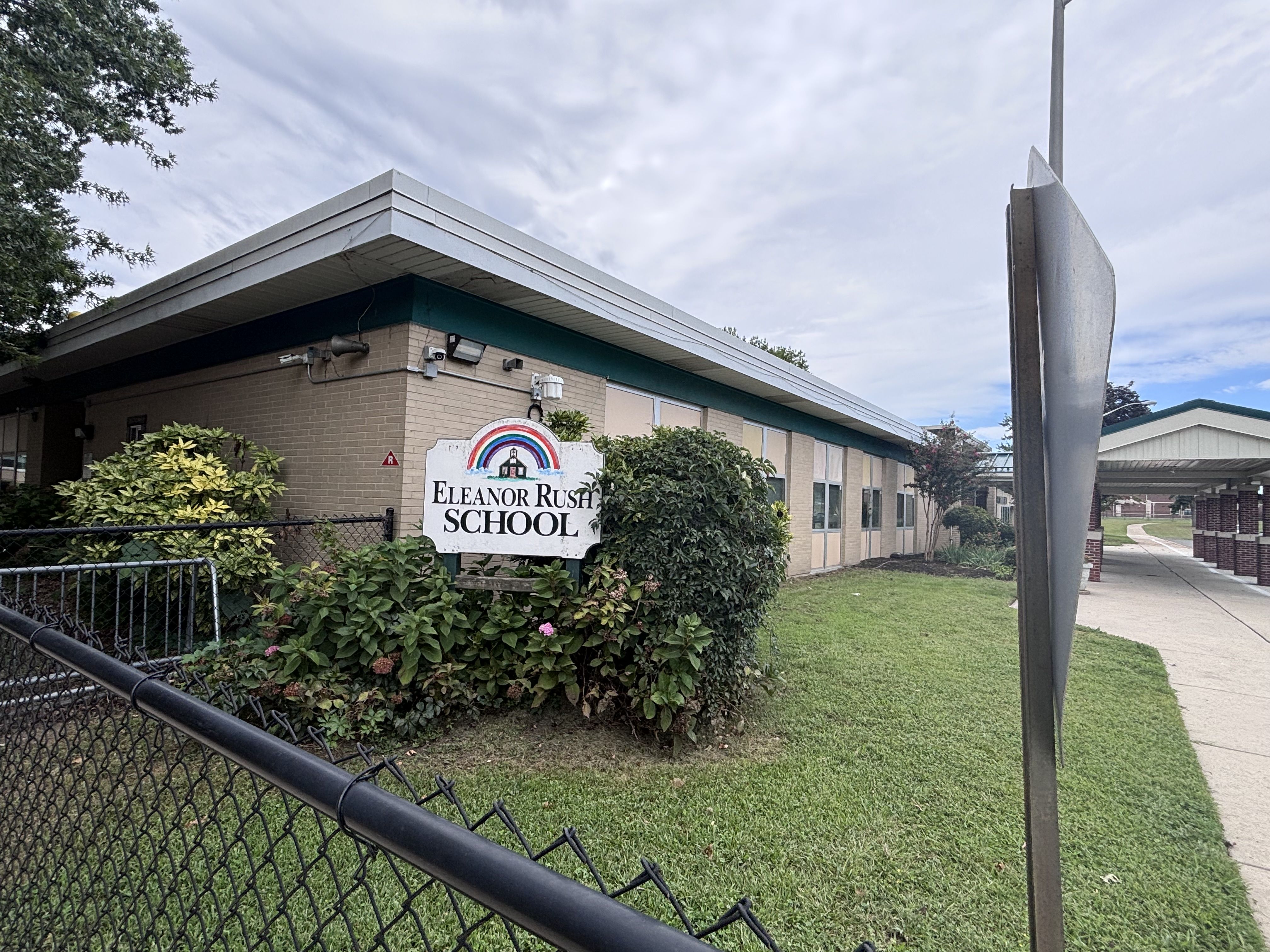
    Question 2 would have generated funds to add classrooms at Memorial School, a new gym at Eleanor Rush Elementary, and a new synthetic stadium field at Cinnaminson High School.

    Voters in Clementon overwhelmingly rejected a $13.5 million school bond question in the Sept. 15 special election that would have added about $243 annually to the tax bill for a home assessed at the borough average of $115,178. The funds would have been used to build an early childhood center for preschoolers.

    The election was one of five times during the year that school boards may ask voters to approve a bond issue or special question. They are typically used to pay for projects districts cannot readily fund through their annual general operating budgets.

    So far, Collingswood Public Schools and Bordentown Regional School District have announced bond questions for the next special election, which coincides with the general election on Nov. 3.