Category: News

  • Trump administration prepares to ask tax filers if they are U.S. citizens

    Trump administration prepares to ask tax filers if they are U.S. citizens

    WASHINGTON — The Trump administration is preparing to add a question on next year’s tax returns asking people whether they are a citizen or legally authorized to work in the United States, expanding an attempt to cut tax refunds for immigrants or push them out of the tax system entirely.

    In a draft version of Form 1040, the primary tax form, the IRS this month included a new section that asks filers to check a box “Yes” or “No” to answer the question: “At the time you file your return, are you, and your spouse if filing jointly, a U.S. citizen, U.S. national, or an alien lawfully authorized to work in the U.S.?”

    The additional question comes as part of what the Trump administration has said is an effort to prevent immigrants lacking permanent legal status from receiving federal tax benefits. But many tax credits require recipients to have valid Social Security numbers, meaning previous tax forms already screened immigrants living in the country illegally from receiving them. That fact has led several tax and immigration experts to conclude that the question is simply intended to scare people out of filing their taxes at all.

    That fear first emerged last year, when the IRS shared addresses it had on file for roughly 47,000 people with Immigration and Customs Enforcement. Federal law closely guards access to information submitted on tax returns, and several courts have blocked the IRS from sharing bulk data with ICE. Still, even if the IRS may not be able to legally do so, the addition of the citizenship question could reawaken concerns about the agency using its vast stores of information to help detain or deport people.

    Immigrants lacking permanent legal status pay tens of billions in combined federal income, payroll, and local taxes every year. Since they do not have valid Social Security numbers, these immigrants are among the people who can use a separate nine-digit code called an individual taxpayer identification number to file their taxes. The IRS has not in recent history asked taxpayers about their immigration status, and has instead sought to encourage every U.S. resident to file their taxes.

    “The IRS doesn’t need this information to administer the tax law,” said Nina Olson, a former IRS official and the executive director of the Center for Taxpayer Rights, which sued the IRS over its previous data sharing with ICE. “The only reason you have that attestation is to deter people.”

    At the same time, the Treasury Department is moving forward with a push to cut off immigrants with legal status from receiving the full value of several tax credits. The administration has said those new rules are targeted at “illegal aliens,” but in reality they would affect recipients of Deferred Action for Childhood Arrivals, or DACA, as well as immigrants on work visas, among others.

    The question on tax forms and the stricter eligibility rules are the latest signs that the IRS has become a tool in the Trump administration’s anti-immigration agenda, an important shift for an agency that for decades was narrowly focused on collecting taxes. Tax preparers and lawyers said the Trump administration’s new tax credit rules are stricter than the eligibility rules approved by Congress and threaten to create confusion for millions of tax filers next year.

    President Donald Trump has in recent months also sought to build a database of U.S. citizens, and he has proposed excluding noncitizens without green cards from the census. The new tax return question would most likely not be able to feed into those other efforts, though, because of taxpayer privacy laws. The proposed changes would probably draw legal challenges.

    The IRS did not respond to a request for comment. A representative of the Treasury Department said the citizenship question on tax forms would “provide the IRS important and necessary information to help ensure tax benefits go where the law directs” without addressing specific questions about the changes.

    “That rationale doesn’t hold water,” said Brandon DeBot, a senior attorney adviser at New York University’s Tax Law Center. “The government already has all the information it needs for whether someone is eligible for a tax credit.”

    The overall effort began to take shape in August, when the Treasury Department proposed regulations outlining the new restrictions for four refundable tax credits: the earned-income tax credit, the child tax credit, the adoption tax credit, and the American Opportunity tax credit, which covers education costs. In general, tax credits offset the amount of tax that someone owes, but refundable tax credits can go further, providing a payment to a filer that is larger than the balance of owed tax.

    The Treasury regulations would, for the first time, define the money received through the tax credits — the amount beyond the tax owed — as a “federal public benefit.” That would subject this portion of the tax credit to a set of eligibility requirements laid out in a separate 1996 law, rather than the rules Congress wrote for the tax credits specifically.

    Under tax laws passed by Congress, three of the four credits are already limited to people with work-authorized Social Security numbers, while the adoption credit is available to a broader pool. The proposed regulations would, instead, require recipients to be a “qualified alien” under the terms of the 1996 law, called the Personal Responsibility and Work Opportunity Reconciliation Act.

    Several categories of immigrants are authorized to work — and therefore have Social Security numbers — but do not count as “qualified aliens” under that law. Beyond DACA recipients and people with work visas, residents with student visas or temporary protected status would no longer be able to receive the full amount of the tax credits because they are not “qualified aliens.”

    “This isn’t about undocumented immigrants, no matter how much they advertise it as such,” said Margot Crandall-Hollick, a researcher at the Tax Policy Center, a think tank. “This is about going after people who are allowed to be here and allowed to work here.”

    The additional question on Form 1040 asks only if someone is a citizen, a U.S. national, or authorized to work — and not whether the filer is a “qualified alien,” meaning that the answer would not be relevant to enforcing the Treasury’s new rules. Reflecting that, the IRS released a draft of a separate additional form that directly asks if someone is a “qualified alien.”

    Those hoping to receive the full value of the tax credits will now have to know whether their immigration status aligns with the complicated definition of “qualified alien.” That added complexity could cause some people who are in fact “qualified aliens,” like green card holders, to not claim the full value of the tax credits. The Treasury regulations warn of penalties for people who fill out the forms incorrectly, a potential deterrent for uncertain filers.

    “The design of these questions is to confuse and scare the people. Tax preparers are completely unprepared to figure out whether someone is a qualified immigrant,” said Sarah Krieger, senior policy counsel at the National Immigration Law Center. “People are just going to be chilled or deterred from filing their taxes or claiming credits they’re eligible for.”

    This article originally appeared in the New York Times.

  • Immigrant shot by ICE in Austin is charged with assault

    Immigrant shot by ICE in Austin is charged with assault

    The Justice Department filed assault charges Tuesday against a Venezuelan immigrant shot by a federal immigration officer in Austin.

    An unsealed affidavit said the man, Wilber Garcés Pérez, struck a U.S. Immigration and Customs Enforcement officer in the torso with his vehicle’s side-view mirror as he fled the scene of a traffic stop Sept. 20. He then led that officer and another on what was described as a high-speed pursuit.

    The first ICE officer, identified only as “L.G.,” later shot Garcés in the upper back through the back right window of Garcés’s car, the affidavit said. Garcés had attempted to strike the officer with his car, “causing the officer to fire his pistol,” the Justice Department said in a news release.

    Garcés could face up to 20 years in federal prison if convicted, authorities said. A detention hearing is scheduled for Friday.

    The government’s account of the shooting contradicts the initial public accounts provided by Garcés and his attorney, Kate Lincoln-Goldfinch, who said last week that the ICE officers had not activated their law enforcement lights before ramming his car. They said he thought it was an aggressive driver and attempted to pull over but did not lead the officers on a vehicle pursuit before being shot.

    However, video clips of the encounter indicate that Garcés drove away after he was initially stopped by officers. The officers asked Garcés “to place the car in park and step out,” according to the affidavit. He ignored the request and about one minute later “abruptly closed the window and drove off.”

    A day after the shooting, while in custody in an immigration detention facility, Garcés used a tablet computer to call into a news conference arranged by his attorney and told reporters that he had been briefly hospitalized and then sent to the ICE detention facility with a bullet still lodged near his spine.

    L.G. was not wearing a body camera, the affidavit said. The other officer was wearing a camera but turned it off as the officers pursued Garcés in their SUVs, it said.

    L.G. was a relatively new officer who had previously worked at another federal law enforcement agency and joined ICE during the Department of Homeland Security’s hiring spree last year, the Washington Post has reported.

    DHS has faced mounting criticism from former officials who say the recruits were put into active duty before being adequately vetted and trained. In recent months, the agency has begun quietly firing some of the recruits over poor performance or red flags that some former officials said should have been identified earlier.

    ICE has faced scrutiny for officer-involved shootings in recent months, including two fatal shootings in Houston and Maine in July. The agency has ramped up arrests as part of President Donald Trump’s push for mass deportations.

    In several instances, federal judges have dismissed charges against people who were arrested or shot by immigration officers, including Marimar Martinez, a U.S. citizen who was injured in Chicago last year, after evidence emerged that contradicted the government’s accusations.

    ICE acting director David Venturella said over the summer that body cameras would be disseminated to every officer by the end of August following the fatal shootings in Houston and Maine by officers who did not have cameras recording when they fired their weapons. One of those officers was a recruit who had a volatile history, according to relatives and court records.

    An agency spokesperson told the Post in late August that DHS had enough body cameras to equip all ICE officers nationwide. But in early September, Homeland Security Secretary Markwayne Mullin said at a news conference that the cameras had not yet been fully distributed and that only officers assigned to make arrests in the field would be given the devices.

    It was unclear why the officer in Garcés’ shooting was not wearing a body camera.

  • Burlington County’s Pinelands will be the focus of a new climate change study

    Burlington County’s Pinelands will be the focus of a new climate change study

    A large part of South Jersey’s sprawling Pine Barrens region will be the focus of a new climate change study.

    The Burlington County Southwest Pinelands Regional Resiliency Study will assess the climate change threats facing Evesham, Medford, Medford Lakes, Shamong, and Tabernacle, and it will be led by the New Jersey Department of Environmental Protection (NJDEP) in partnership with Burlington County and the nonprofit Pinelands Alliance.

    The study will also include suggestions for how these towns can better recover from future climate events such as wildfires, floods, heatwaves, and more.

    “Climate change is no longer abstract or theoretical; it’s now a physical reality impacting our communities and infrastructure,” Burlington County Commissioner Deputy Director Allison Eckel said in a statement. “No part of Burlington County is immune, and Burlington County’s Pinelands towns are increasingly at risk from more frequent and intense wildfires, inland flooding, droughts, heatwaves, storms, and other impacts from climate change.”

    Experts will utilize climate and environmental data, impacts from past weather events, and more to identify the region’s climate vulnerabilities and develop resiliency action plans, according to a statement from the county.

    Burlington County and each of the participating towns will also be eligible for up to $350,000 in grant funding from the NJDEP to put the resiliency plans in place.

    The county expects to begin work on the study in early 2027 and to conduct various workshops and surveys to get public input, said Burlington County spokesperson David Levinsky.

    The Pinelands study comes not long after the county completed a similar climate change resiliency investigation of the Route 130 corridor stretching across 11 municipalities and along the Delaware River and its tributaries.

    The previous study took a little more than a year to complete, Levinsky said, and officials predict that the timeline for the forthcoming work will be similar.

    “The Route 130 Corridor Study generated substantial public input and engagement from our Delaware River communities and resulted in recommendations for each municipality to take to mitigate climate change threats,” Eckel said. “We’re excited to partner with the NJDEP again on this new study focused on our Pinelands towns and the climate challenges unique to them. We’re hoping to get the same kind of public engagement, and that the end result is an action plan that helps these communities become better prepared.”

    Both studies are part of the agency’s Resilient NJ program, established in 2014 to help communities across the state plan for potential climate change impacts.

  • Judge blocks U.S. from tying emergency grants to election changes

    Judge blocks U.S. from tying emergency grants to election changes

    The Trump administration cannot withhold emergency preparedness grants from states that do not change how they conduct elections, a federal judge ruled Monday.

    The Federal Emergency Management Agency warned state and local governments in June it would withhold up to 20% of some terrorism-preparedness grants unless officials demonstrated that they were exploring a transition to paper ballots or verifying voters’ citizenship. The grants, totaling $1 billion each year, help harden urban areas against terrorist attacks, develop anti-terrorism plans, and conduct terrorism drills.

    The changes to elections that FEMA sought were in line with President Donald Trump’s false and largely debunked claims of widespread voter fraud.

    A group of local governments in Tennessee, Texas, and Ohio sued FEMA and the Department of Homeland Security, its parent agency, over the move last month, arguing the federal government did not have the power to force changes to how they conduct elections. They also said the rules would disenfranchise eligible voters.

    Judge Amir H. Ali of the U.S. District Court for the District of Columbia, an appointee of President Joe Biden, agreed that the conditions exceeded the administration’s power over elections and ordered them stricken from the grant programs’ application process.

    FEMA and Homeland Security officials did not immediately respond to a request for comment on the ruling.

    The ruling follows several actions by the Supreme Court addressing Trump’s push to exert more control over elections before the midterms. This month, the court blocked changes to mail-in voting but approved increased screenings for ineligible voters.

    This article originally appeared in the New York Times.

  • New California law bans officers from using gloves that deliver electric shocks

    New California law bans officers from using gloves that deliver electric shocks

    SACRAMENTO, Calif. — California Gov. Gavin Newsom signed a law Tuesday banning local, state, and federal law enforcement officers from using gloves that can deliver painful electric shocks to people.

    The ban on shock gloves will take effect next year and remain in place until 2030. It comes weeks after U.S. Immigration and Customs Enforcement moved to equip its officers with the gloves, which are designed to gain compliance from combative individuals. Last month, the agency awarded a nearly $17 million contract to buy 6,000 pairs.

    “Trump has put his political interests above the health, safety, and livelihood of American families,” Newsom said in a statement. “California is taking action to strengthen transparency, accountability, and oversight around immigration enforcement in our state.”

    The law is the latest example of how Democratic-led states have been pushing back against President Donald Trump’s immigration enforcement efforts since he took office last year. In California, lawmakers passed at least two dozen bills this year seeking to fortify immigrants’ rights, restrict cooperation with federal immigration agents, and tighten regulations on immigrant detention facilities, among other things.

    Nationwide, 17 states with Democratic-led legislatures have passed a total of more than 100 pro-immigrant bills this year, according to an Associated Press analysis using the bill tracking software Plural. The most common purpose is to limit cooperation with federal immigration enforcement agents.

    Democratic California Assemblymember LaShae Sharp-Collins said she introduced the shock-gloves legislation to “put a pause” on law enforcement’s use of the devices while the state examines their potential risks. The law requires the state’s Justice Department to study their safety and report to lawmakers by 2029.

    “There’s a lot of unrest and a lot of uncertainty,” she said in an interview. “A lot of people are scared.”

    The law will again test the state’s authority to restrict federal agents amid the Trump administration’s immigration crackdown. A federal judge earlier this year blocked the state’s first-in-the-nation law barring federal officers from wearing face coverings, deeming it too selective because it applied to local and federal law enforcement but exempted state officers.

    Lawmakers passed a new bill this year to make the ban apply to all officers. Newsom signed that legislation.

    Kevin Johnson, a professor emeritus at the University of California, Davis, School of Law, said courts are likely to ultimately rule that the state cannot bar federal officers from wearing shock gloves or face coverings. The laws are well-intentioned, he said, but likely conflict with the Supremacy Clause of the U.S. Constitution, which generally sets federal law as supreme over conflicting state law.

    “The state has very limited, if any, powers in dictating to the federal government how its officers are armed,” he said.

    California law enforcement groups broadly opposed the ban.

    Sacramento Sheriff Jim Cooper, a Democrat and former state lawmaker, said banning shock gloves “really makes no sense” because they are among the nonlethal tools officers can use if necessary.

    “When the federal government does something, the state Legislature wants to ban it,” he said at a news conference. “They’re making our job harder.”

    Sharp-Collins said ICE’s plan to use shock gloves was the catalyst for the ban. But she cited their use by other officers, including a case in which a Kentucky family alleges a man died after being tased and shocked with the gloves dozens of times while in law enforcement custody in 2024.

    State Sen. Scott Wiener, a San Francisco Democrat who wrote last year’s mask ban, also authored this year’s measure to expand it to state officers.

    “California must use every available tool to stand up for our communities under attack from ICE’s secret police terror campaign,” he said in a statement after it passed the Legislature.

  • Israeli settlers stop soldiers from returning Palestinians to their home

    Israeli settlers stop soldiers from returning Palestinians to their home

    TEL AVIV, Israel — More than 100 Israeli settlers attacked Palestinians and soldiers in the West Bank when the military tried to return a Palestinian family to their home after they were forced out, with authorities accused of not doing enough to confront a rising tide of settler violence.

    The Israeli government, military, and police have been condemned for failing to protect Palestinians in the occupied territory after a surge of settler attacks resulted in few arrests and stoked international criticism.

    In the latest outburst of violence overnight Monday, the settlers set fire to Palestinian homes and wounded three Israeli border police officers when the soldiers tried to return the family, the Toubassis, to their home in the village of Jalud, north of the city of Ramallah, the military said in a statement. Three people were arrested, according to the Israeli police, who said in a statement that they had opened an investigation into the attack.

    The family members were forced to leave their home in July after repeated settler attacks on the property. In August, the Israeli military said in a statement that it had created a closed zone in the area to prevent nonresidents from entering. But Palestinians documented Israeli soldiers standing by as settlers went in and out of the Toubassi house or even playing ball with them in the yard.

    The Supreme Court this month ordered the military to ensure the safe return of the Toubassis after settlers took over their home. Under international law, the military is responsible for maintaining law and order and protecting Palestinians living in the West Bank because Israel is an occupying power, a principle that is recognized by Israeli courts. The military said the soldiers filmed playing with the settlers had been removed from combat duty, according to the Supreme Court decision.

    Overnight, after the family had returned to the property, a group of settlers set fire to a vehicle at the house and threw stones at the building, according to Mahmoud Toubassi, one of the family members. The military evacuated the family members about an hour after they had returned when settlers moved to set the house alight, Toubassi added.

    “Without the army, we would have not been able to leave,” he said.

    The military said in a statement that it had been unable to return the family members to their home because of the violence.

    Settler violence against Palestinians in the West Bank has soared, according to U.N. data, especially since the start of the war in the Gaza Strip, which was ignited by the Hamas-led attack on Israel on Oct. 7, 2023. So far in 2026, at least 23 Palestinians have been killed in incidents linked to clashes with settlers, according to the U.N. humanitarian office.

    International pressure on Israel to rein in settler attacks has grown in recent weeks. This month, Britain, Canada, and France banned trade with Israeli settlements in the West Bank. Most of the international community considers the settlements to be illegal.

    In recent months, settlers have besieged Palestinian families in their homes or forced them out, including in Jalud and in neighboring villages. The violence has been widely condemned, including by Mike Huckabee, the U.S. ambassador to Israel, who this month called settlers who attacked Palestinians “terrorists.”

    In a statement released by his office, Prime Minister Benjamin Netanyahu of Israel condemned the violence targeting the Toubassis. He added that “the handful of rioters are not representative of the law-abiding settler public in Judea and Samaria,” using the biblical name of the West Bank.

    Last week, Netanyahu said in a speech to the U.N. General Assembly that settler violence against Palestinians was down to 150 “juvenile delinquents.” But Israeli former security officials and human rights groups say that the problem is far broader. A group of prominent Israelis, including more than three dozen retired army and air force generals, has accused the Netanyahu government of failing to check what they termed “Jewish terrorism.”

    Instead of being able to sleep in their own beds after Israeli troops escorted them back home, the Toubassis watched as their home was attacked again.

    “It broke my heart to see the fire eating up the house,” Toubassi said.

    This article originally appeared in the New York Times.
  • FBI vows to pursue ShinyHunters hackers after personnel data theft

    FBI vows to pursue ShinyHunters hackers after personnel data theft

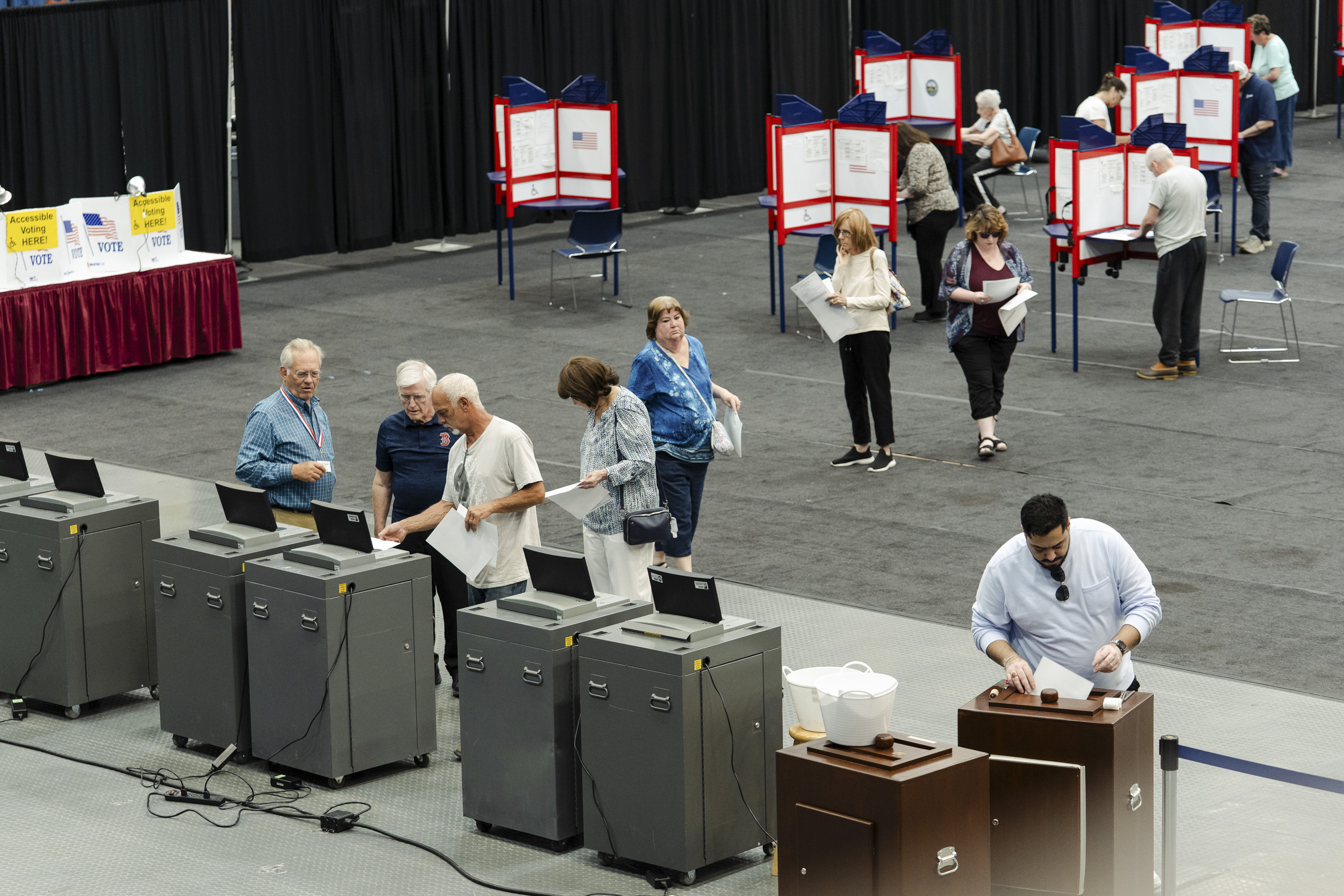
    WASHINGTON — The FBI on Tuesday warned the criminal hacking gang that stole vast amounts of its sensitive personnel data that it would aggressively pursue its members as it promoted the recent arrest of one of its suspected associates.

    In a video posted online, Brett Leatherman, the head of the FBI’s cyber division, said the bureau had worked with authorities in the Netherlands. The authorities recently arrested a 24-year-old convicted of cyberattacks on suspicion of aiding in data thefts and extortions tied to the group, known as ShinyHunters.

    News of the arrest and its possible links to the group surfaced earlier this week, but Leatherman’s remarks are the first significant public statement from the FBI about the hackers since the agency’s breach of its online jobs portal was revealed last week.

    Leatherman did not specifically mention the FBI hack in the video, but made clear the bureau has stepped up its pursuit of the notorious hacking collective.

    “We’re confident you have seen or heard things in recent days that the public has not,” Leatherman said. “Other groups believed anonymity or their friends would protect them, and they were wrong. Arrests have a way of changing who is willing to talk, and seized infrastructure has a way of showing us who’s left.”

    Looking directly into the camera, Leatherman said, “We know how to find you.”

    An email account ShinyHunters uses to correspond with reporters did not immediately respond to a request for comment on the video. On Monday, it denied that the Dutch person who was arrested had ties to the group.

    “That individual has no association with us,” ShinyHunters said in an email. “Frankly, we are laughing.”

    Leatherman’s promise to pursue ShinyHunters, as well as a social media post Tuesday by FBI Director Kash Patel, came as the bureau was scrambling to assess the damage from the breach. A large tranche of data — including names, home addresses, details about spouses and other family members, secretive job titles, and much more — on potentially all FBI employees was stolen in the hack.

    In announcing its theft, ShinyHunters had given the FBI a deadline of the end of Tuesday to comply with its demand to revise or remove a public advisory the bureau issued in May stating the hackers engaged in a variety of harassment and intimidation tactics to coerce hacked victims into payment. The group said it was angry about the characterization, which it denied, and suggested it would leak the stolen data online.

    On Monday, the group issued a statement saying that it would not leak the private material and contending that it never planned to do so.

    Leatherman did not say when the arrest occurred in the Netherlands, but a Dutch news release stated it took place two weeks ago, before ShinyHunters disclosed its hack of the FBI. It is not clear when that breach first occurred, but in an email, the group told the New York Times that the attack happened last week.

    ShinyHunters is considered one of the most notorious and capable cybercriminal enterprises in the world. The group is believed to have breached more than 140 organizations and extorted $70 million since last year, Leatherman said, and has often targeted third-party vendors and cloud-based platforms.

    This article originally appeared in the New York Times.
  • For the Phillies, suddenly it’s summer as they play the Braves in Atlanta

    For the Phillies, suddenly it’s summer as they play the Braves in Atlanta

    Whether the Phillies experience a Red October remains to be seen, but they are in for a Red September in Atlanta with summerlike temperatures and what looks to be a hitter-friendly atmosphere.

    On a Tuesday in which the sun was fighting mightily to prove its existence over Philadelphia — in what has been an unusually gloomy September — the skies over Atlanta were perfectly clear and forecast to stay that way through the next three afternoons.

    Highs there Tuesday afternoon should crest in the mid-80s, said Todd Vaughan, meteorologist with the regional National Weather Service in Peachtree, Ga.

    That would be about 20 degrees warmer than it was Sunday, when the Phillies beat the Tampa Bay Rays in South Philly to make the postseason.

    Temperatures may make a run at 90 degrees Wednesday and Thursday afternoons, when the humidity would also be increasing, said Vaughan. As for winds, “They’ll be less than 10 mph,” he said.

    On Sunday, in dismal, rainy Citizens Bank Park, winds were gusting to 29 mph.

    As for what could go wrong with the Atlanta forecast, Vaughan said, “The forecast confidence is pretty high.”

    An aside: If the best-of-three series goes to a third game, the Phillies’ Aaron Nola is on record as saying he loves to pitch in the heat. However, he also has given up a lot of long balls this season, and meteorologist Paul Dorian, who maintains a “Home Run Index” based on weather variables, said conditions would be favorable for homers this week.

    No rain would be expected in Atlanta until Friday night, at which time the Phillies would be on the West Coast for their next series or heading back home for the winter.

    If they return to Philly by Friday, they may rediscover that Ernest Hemingway was on to something with The Sun Also Rises, with clear skies and highs in the Atlanta-like 80s.

    In fact after Tuesday, the sun should reign over Philly through the week, said Alex Staarmann, meteorologist at the weather service in Mount Holly. Highs are expected to be in the 70s Tuesday and Wednesday, and low 80s on Thursday.

    You may have noticed a Vitamin D shortage this month. Overall, skies have been more than 70% cloud-covered since Sept. 1, according to weather service sky data, in what normally is one of the sunnier months.

    “It’s been an unusually cloudy month for September, Staarmann said.

    The clouds are due back this weekend. Rain is possible Friday night into Saturday, he said, and maybe more on Sunday.

    If the Phillies have their way, they’ll be in Los Angeles playing in the Division Series.

  • State reps ask Pa. attorney general to investigate the Philly schools for alleged discrimination of Jewish students

    State reps ask Pa. attorney general to investigate the Philly schools for alleged discrimination of Jewish students

    A group of state representatives asked Pennsylvania Attorney General Dave Sunday to investigate whether a “systemic pattern of discrimination” against Jewish students occurs in the Philadelphia School District.

    Citing a congressional investigation into Philadelphia and other districts, and reports of antisemitic incidents against city students, members of the Pennsylvania House Republican leadership and Martina White, a Republican representing Philadelphia, wrote to the attorney general urging a probe.

    “The Office of Attorney General must ensure that Jewish students have a safe learning environment that is free from discrimination within the SDP,” the representatives wrote in the letter, which was sent Monday. “We ask you to investigate this matter to determine if any criminal activity occurred and take the appropriate action your office deems necessary.”

    Monique Braxton, district spokesperson, said the school system “strives to create welcoming and inclusive environments that allow our students to feel safe and heard” and has “taken steps to protect and educate students and staff against antisemitism and other forms of hate and remains committed to fostering learning environments where all students and staff feel safe and supported.”

    Sunday’s office did not immediately respond to a request for comment.

    The state representatives, in their letter, brought up allegations that some district educators “promote antisemitic content in their classrooms.”

    In 2024, the district agreed to a settlement with the U.S. Department of Education’s Office for Civil Rights after an investigation found it had not adequately investigated repeated claims of antisemitism, taken appropriate steps to respond to the claims, or maintained necessary records around the alleged acts.

    The incidents that prompted that settlement included a swastika drawn on a door, antisemitic slurs, and allegations of social media-based harassment by district teachers and administrators after Hamas’ Oct. 7, 2023, attack on Israel, and Israel’s subsequent military operation in Gaza.

    “Local parents have repeatedly indicated that these behaviors and this antisemitic atmosphere continue to persist throughout the SDP,” the representatives wrote. “Jewish students, like all students, should be able to learn in an environment that is free from discrimination.”

  • Senate resoundingly approves sweeping college sports measure

    Senate resoundingly approves sweeping college sports measure

    WASHINGTON — The Senate on Monday approved a sweeping remake of collegiate sports regulations in an effort to restore stability to an athletic landscape that has been upended by constant transfers, frequent shifts in conference membership, and an infusion of money from wealthy boosters eager to lure top talent.

    Known as the Protect College Sports Act, the bill passed by an overwhelming bipartisan vote of 77-22, making it one of the last major pieces of business to be tackled by lawmakers before the midterm elections. It was a bid by Congress to lay out significant new rules and standards governing popular college sports that are a mainstay of American life as well as a path to an education for student athletes.

    Authors of the legislation, which faces an uncertain future in the House, said aggressive congressional intervention was necessary because a series of legal rulings had sowed chaos in college sports. They warned that the current financial path of colleges and universities was unsustainable, would decrease competition, and could cause schools to jettison less popular sports that were not as lucrative as football.

    “It would be nice if college sports could somehow magically fix itself, but this is a matter of law, federal law, and it is only Congress that can fix it,” said S. Ted Cruz (R., Texas), a chief proponent of the bill.

    But it has run into fierce opposition from Black lawmakers and others who say the measure restricts opportunities for players, many of them Black, while doing little to hold down the pay or mobility of top coaches.

    The legislation would limit college athletes to one transfer before they would have to sit out a season, as they had in the past before court rulings opened the transfer “portal,” spurring thousands of athletes to try to change schools each year. It also would set eligibility at five years. It would protect the right of college athletes to receive compensation for their “name, image, and likeness” and institute guarantees for scholarships and healthcare.

    The measure also would grant the NCAA, the governing body of college sports, a limited antitrust exemption while remaining silent on collective bargaining by student athletes. It attempts to discourage schools from jumping from conference to conference and it imposes new restrictions on agents for athletes.

    “Sports is about any given Saturday,” said Sen. Maria Cantwell of Washington, the lead Democratic sponsor of the bill. “It is not about whether you have a billionaire in your backyard. It is about whether you can coach and recruit and develop and maintain and have academic performance and have fairness.”

    Despite the Senate approval, opponents blasted the measure as unfair to players. An amendment to cap coaching salaries at $5 million and limit their contract buyouts to one year’s salary was defeated Monday as the authors beat back a series of proposed changes. Democratic opponents also were unhappy with the lack of clarity about future collective bargaining.

    “It’s a bill for the control and power of the NCAA and member institutions,” said Sen. Cory Booker (D., N.J.), a top opponent of the legislation. “It is not about athletes who are winning their rights, winning court cases, gaining leverage, and now are having that taken away from them.”

    But resistance to the bill was no match for the major sports conferences, state schools, big-name coaches, and other powerful interest groups that got behind it, including airing television spots that featured high-profile figures such as Deion Sanders, the former professional sports star who is now the head football coach at the University of Colorado.

    “The colleges and the conferences and the boosters flooded this place,” said Sen. Christopher S. Murphy (D., Conn.), another leading opponent of the bill. “It is a hard slog when the players have no money and no representation. Ultimately, this is going to be really bad for student athletes and destructive of the college sports model because these kids aren’t going to stick around very long if they are not getting paid what they are worth.”

    Others said Congress should have stayed out of the fight.

    “The people who oversee the post office now want to run college sports. What could go wrong?” said Sen. Rand Paul (R.,Ky.). He said he doubted that the founding fathers ever envisioned that “Congress would one day be in charge of dictating the rules for college sports.”

    With the House scheduled to be in recess until after the midterm elections, there is at present no clear path for the legislation to pass before Congress reconvenes in mid-November. Whether Republican leaders would take it up after the elections is unclear. Lame-duck agendas can be notoriously tricky. But President Donald Trump is an enthusiastic supporter of the legislation and could put pressure on the House to act.

    The measure is strongly opposed by members of the Congressional Black Caucus. Rep. Hakeem Jeffries (D., N.Y.), the minority leader who is in line to become speaker if Democrats win the House, has repeatedly expressed reservations. He called the legislation a “work in progress.”

    “I share many of the concerns that have been articulated by both the Congressional Black Caucus and the NAACP,” Jeffries said.

    Those groups contend that by limiting transfers and capping the overall amount of compensation paid to athletes, the proposal shifts the balance of power back to the schools and coaches after athletes won new rights through the courts. On the other side of the issue, some House Republicans favor explicitly declaring that student athletes are not school employees, limiting their bargaining capacity.

    “They have problems on both the left and the right in the House of Representatives,” Murphy said. “We are going to continue to fight this bill.”

    This article originally appeared in the New York Times.