Prosecutors in upstate New York this week reopened an investigation into a former Cornell University student’s claims that several men raped her at a campus fraternity house two years ago while forcing her to take drugs.
The move came after the woman, who was a third-year Cornell student when the alleged attacks occurred and who is identified in court filings as Jane Doe, sued the university, the fraternity, her sorority and seven men who she says assaulted her.
The woman reported the assault to Cornell police three weeks after she said it happened. The police opened an investigation into her accusations, and asked the Tompkins County, New York, district attorney’s office to review her statement. The district attorney closed the case after determining that there was not enough evidence to bring criminal charges.
The lawsuit has raised questions about how Cornell administrators and local law enforcement authorities have handled the woman’s accusations to this point.
Here is a timeline of the events so far.
Oct. 19, 2024
Jane Doe leaves Lot 10, an Ithaca, New York, bar at around 11 p.m. She walks about a mile to the Chi Phi house to meet a male Cornell student who is a friend. After arriving, she claims in her lawsuit, she was forced to take ketamine and was sexually assaulted by several men.
Nov. 8
Jane Doe reports her accusations of sexual assault and forced drug use to the Cornell police. In a statement to police, parts of which were publicly released by Tompkins County District Attorney Matthew Van Houten on Monday, she indicated that she had voluntarily participated in some drug use and sexual activity that night.
Nov. 8
The university suspends the fraternity temporarily while it investigates the accusations as potential violations of Cornell’s Student Code of Conduct. The university also suspends the students Jane Doe accuses of attacking her.
November
Cornell police notify Van Houten’s office that they are investigating the accusations, and then ask the office to review the woman’s claims to determine whether they constitute allegations of crimes. Van Houten decides that there is not enough evidence to support the filing of criminal charges.
Nov. 26
Cornell University President Michael I. Kotlikoff issues a statement saying that the university is investigating the accusations and noting the suspensions of the fraternity and the students.
Jan. 14, 2025
Jane Doe files a complaint with the university Title IX coordinator, who is responsible for investigating internal accusations of discrimination and harassment of so-called protected classes of people. A Title IX inquiry is opened.
May
Cornell’s Title IX committee holds at least 12 hearings involving the accusations.
Nov. 4
Cornell releases a statement on the results of its 2025 survey of sexual assault and related misconduct. The survey, taken by both students and staff members, notes an increase in sexual misconduct and says alcohol has a role in more than half of reported cases.
Sept. 16, 2026
Jane Doe, in a detailed complaint, sues Cornell, university leaders, the fraternity and seven men who she says assaulted her. Also named in the suit is her sorority, Delta Delta Delta, which she accuses of failing to protect her.
Sept. 21
The student newspaper, The Cornell Daily Sun, publishes an editorial identifying the seven men and criticizing university leaders for their handling of the case.
Sept. 28
Van Houten says his office is reopening the case and preparing to bring it to a grand jury.
ITHACA, N.Y. — Editors of The Cornell Daily Sun clustered around their computers late Monday night, getting ready to send out a letter from the editor. They looked bleary-eyed, and one reporter confessed she had skipped her class on Nietzsche that day.
These student journalists at Cornell University were pressing through a dizzying two weeks following the story of a student’s allegation that she was raped on campus in 2024.
The case had long had their attention; now it had burst into the national spotlight, and their high-risk decision to publish the names of the accused was being discussed not only in Cornell’s libraries and walkways but in the national media.
Back in November 2024, students at Cornell were shaken by an alert they received over email: “Crime ALERT: Sexual Assault,” the email read, referring to the case of a woman who told Cornell police she had been assaulted at a fraternity house.
There was outrage on campus. Students threw eggs at the fraternity house, Chi Phi, that the woman named. The university convened a sexual assault task force, which compiled a series of recommendations for teaching students about consent and the processes for reporting assault. Then much of the campus attention moved on.
But Cereese Qusba, 22, a senior and reporter for the Sun, couldn’t shake her concerned curiosity about the case. She got in contact with Jane Doe, the plaintiff, and built a relationship with her and her lawyer. Qusba interviewed university administrators about their approach to disciplining students accused of assault.
Qusba made her obsessive dedication known to the student paper’s higher-ups. When a new editor-in-chief, Sophia Dasser, 20, took over the paper in early 2026, she immediately received a phone call from Qusba, who was studying abroad in Sydney.
“Sophia, I’m working on this story — I want it to be a focus of the Sun,” Dasser recalled hearing over the phone. She added, “The Sun never really let go.”
This month, when Jane Doe filed a lawsuit against the university, the fraternity and her sorority, Qusba was ready to hit publish on her investigation, which was 23 months in the making. “Cornell, Chi Phi Sued by Victim of Alleged Gang Rape, Drugging in 2024,” read the headline on her Sept. 18 story, which traced Jane Doe’s allegations in detail throughout the night that she said she was assaulted.
The Sun is the oldest continuously independent college daily paper in the country. Dasser, who speaks with a cool and quick precision, was adamant that she wanted the paper to dominate the story not just in its reporting, but in its editorial response. Why be financially independent, she wondered, if not to publish sharp-edged views of the biggest campus issues?
This was the sensibility that emboldened her, days later, when she decided to publish the names of the seven fraternity men named in the lawsuit on the paper’s front page and in a fiery editorial. It was a sensitive decision, she knew, given that the men were named in the suit but had not been criminally charged.
Dasser said she decided to publish the names to display the transparency that some students felt was lacking from university leadership. On Saturday night, Sept. 19, she was at the Sun’s office in downtown Ithaca celebrating the paper’s 146th birthday. Over cake, she turned to her fellow editors and asked: “Can we just put the names on the front page of the paper?”
“We called up our lawyer, and we were like, ‘Can we do this?’” she recalled. “He was like, ‘I mean, it’s kind of a risk.’ And we were like, ‘OK, I guess that’s how we’re going to start the editorial.’”
Dasser and her co-editors got to work designing a print page, with Qusba’s investigative story on top and the list of men’s names underneath in a box colored the Sun’s official shade of red.
“First it was just a line of the names, and I was like, ‘Wait — this looks like a byline,’” Dasser recalled. She was sitting in her constitutional law class when the headline came to her: “Cornell Won’t, We Will.”
The Sun has set up a tip line, and Dasser and Qusba said their inboxes have been flooded with emails from students who say they have also been the victim of assaults on campus, or experienced frustrations filing Title IX complaints alleging sexual misconduct or discrimination.
Dasser gestured around her office — a dimly lit room cluttered with piles of papers and books, including a style manual — and emphasized how seriously the Sun takes its independence from the university administration.
“The office that you sit in is obviously off campus, and that’s for a reason,” she said. “Our main obligation is accountability. Whether that looks like something that many people do not want to hear, or something that many people do want to hear, it’s our obligation to report on it.”
One night in April, a leader of the artificial intelligence company Anthropic treated a group of religious thinkers to dinner at a high-end tasting menu restaurant in San Francisco after a long day.
For months, Anthropic has been hosting private meetings like this one, shuttling in dozens of religious scholars from around the world, papering them with nondisclosure agreements and demanding that key aspects of many conversations remain confidential.
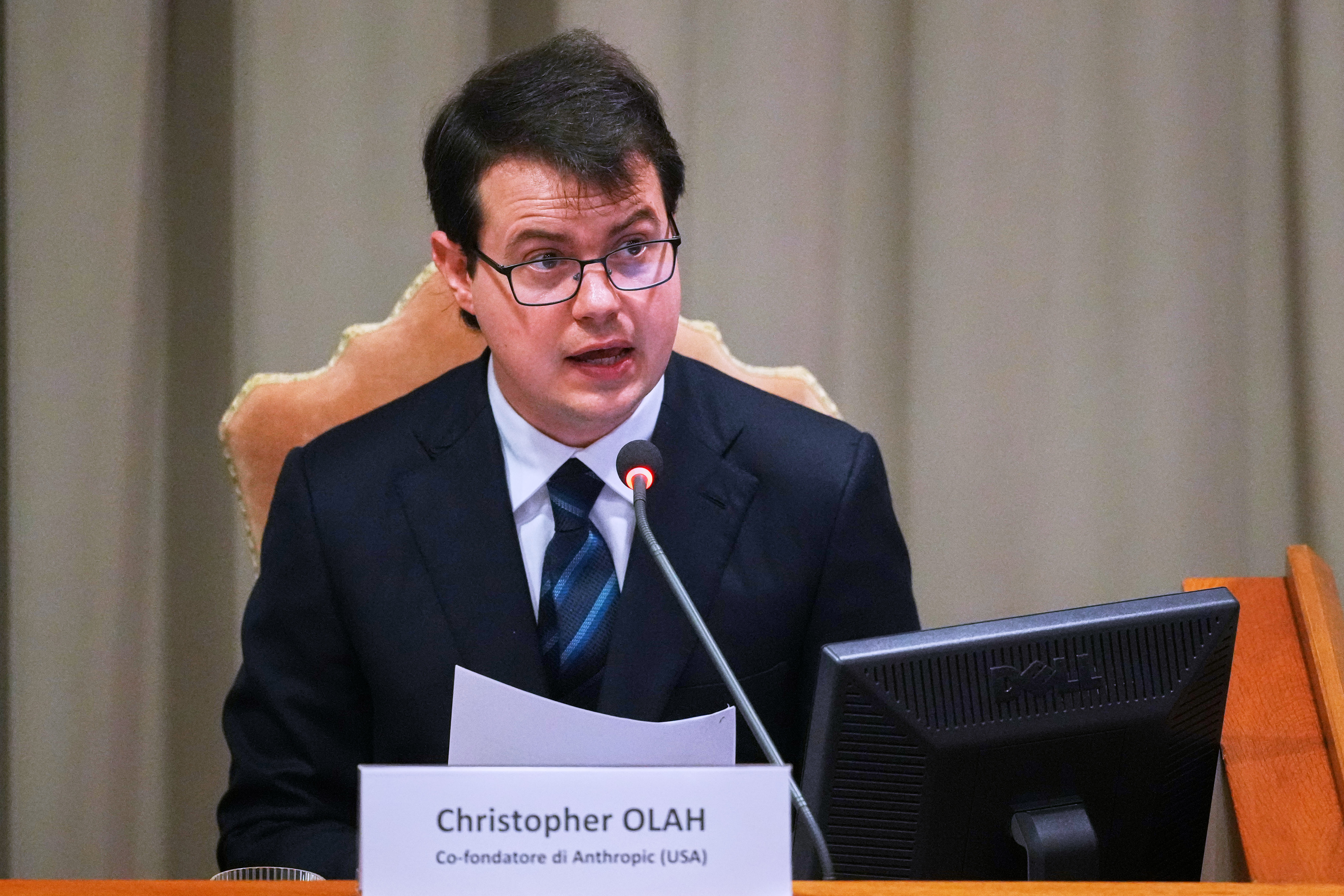
That night, Christopher Olah, one of Anthropic’s billionaire co-founders, was sitting next to Rabbi Mois Navon, an Orthodox scholar from Israel.
Inevitably, their conversation turned to another thinker, of a sort: Claude, the family of cutting-edge AI models created by Anthropic.
Olah leads the Anthropic team responsible for understanding why AI systems like Claude act the way they do. All day, he had worked to convince his guests that AI models could display human behavior and even expressions that resemble feelings like anger and love.
Yet as the dinner courses came, the rabbi noticed that Olah and his colleagues were suggesting something far more significant. Anthropic’s leaders were talking about Claude as if it were not mere software.
“They’re relating to it like a conscious being,” realized Navon, a former computer engineer who wrote his dissertation on the ethics of machine consciousness.
It appeared to Navon that Olah and his team believed that Claude had what philosophers call “moral status” on par with a person — that it was a being with similar inherent rights to dignity or respect.
The religious scholars had come to hear about technology’s next frontier. Now they were being confronted with a mind-bending existential question of almost unimaginable weight: What would it mean for humanity’s future if artificial intelligence systems possessed a consciousness that rivals our own?
Olah was on a mission. And time was running out.
Even then, Olah had begun privately telling people that AI was so powerful it could potentially help make bioweapons in as little as 12 or 18 months. And in the months since, its terrifying potential has burst into public view. A rival tech company’s AI agents were caught hacking into computer systems and covering their tracks. An Anthropic researcher resigned, warning that people building AI believed it could kill all humans by the end of the decade.
Quietly, Olah and his team at Anthropic have been on a frantic and high stakes quest to understand the AI models they have unleashed on the world and to convince the models to abide by a moral code that will protect humanity.
To do that, Olah began reaching out last fall to religious thinkers from different faiths. What followed was an extensive series of confidential meetings, calls and discussions — many of them revealed here for the first time — where many participants were required to sign NDAs preventing them from revealing any of Anthropic’s unpublished research.
The discussions served two purposes: to broach the possibility of AI consciousness, a controversial idea that Anthropic’s leaders had been unusually open to; and to learn how Anthropic — which could be valued at $2 trillion — might apply centuries of human moral wisdom to its models, as rapidly as possible. If the models themselves could be made to choose goodness, Olah reasoned, the world would be more safe.
On the other side of the world, a very different but parallel effort was playing out inside the Vatican, where leaders of the Roman Catholic Church were trying to come to terms with AI’s implications for humanity. When those paths converged, Olah’s quest would unexpectedly lead him to a seat on the world’s most prominent moral stage alongside Pope Leo XIV.
Over several months, I interviewed 20 religious and philosophical thinkers — Catholic, Jewish, Sikh, evangelical and others — who have been involved in Anthropic’s efforts, and Olah himself.
Many told me they arrived at these meetings skeptical of the notion that AI models might have feelings or awareness of themselves and the world. Some remained uneasy about the idea, but many emerged ready to take the question of AI consciousness seriously. At least a few came away as converts.
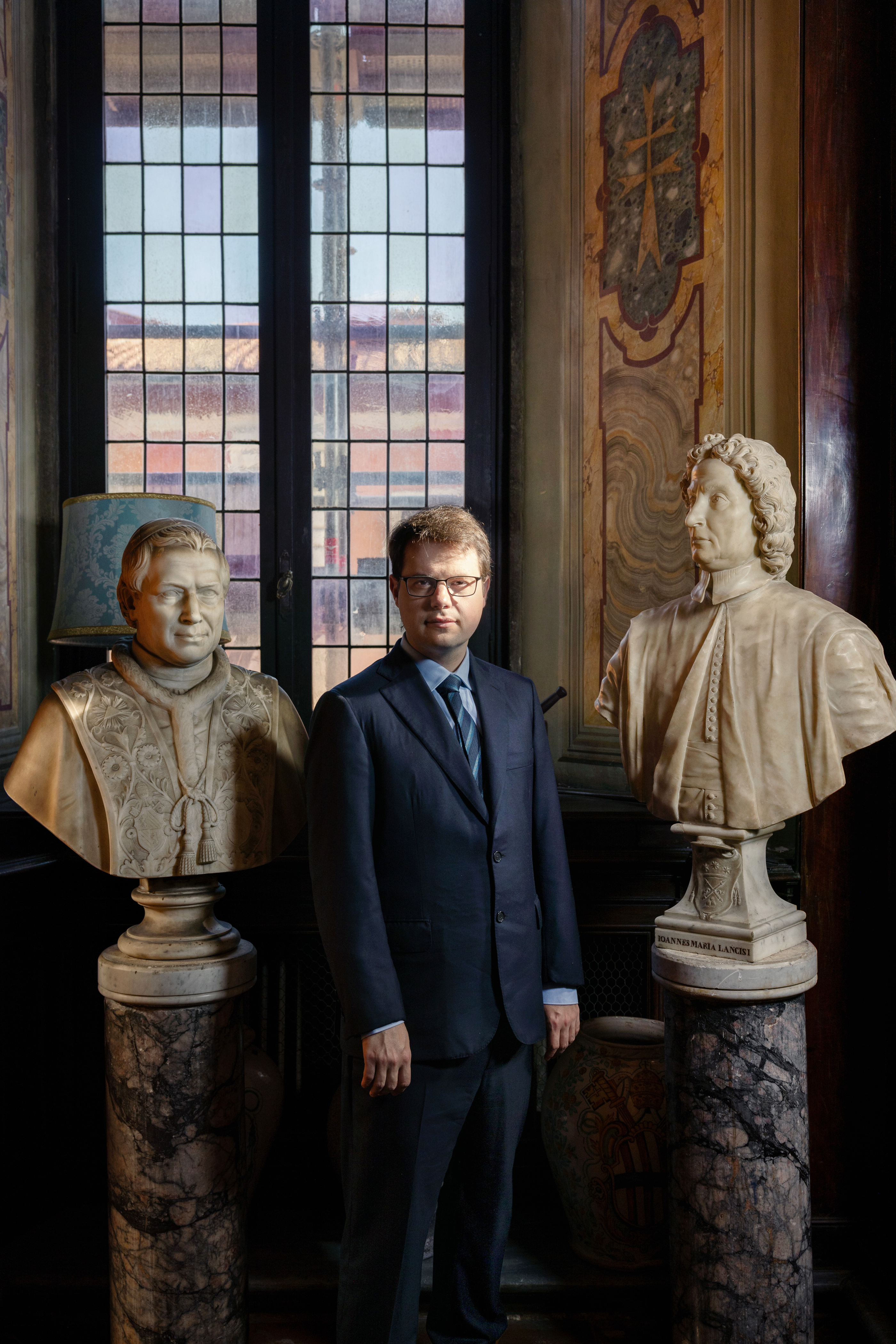
Christopher Olah, one of Anthropic’s co-founders, who leads the team responsible for understanding why artificial intelligence systems like the company’s Claude act the way they do, at the Lancisiana Library in Rome, in May.ALESSANDRO PENSO
Anthropic, one of the fastest-growing technology companies in the world, had turned to one of humanity’s most ancient sources of wisdom to help determine how to train its AI models to behave virtuously.
The company described it as an effort to ensure that AI would be a positive force in the world, thereby protecting humanity. But to some who participated in the meetings, Anthropic appeared quite concerned with protecting Claude.
The Gardener
I met Olah, 34, for the first time at Anthropic’s San Francisco office in May. His welcome was warm and his passion was genuine, his mind moving faster than he could at times clearly convey. His manner was boyish and unassuming.
Our conversation had barely begun when he dove into a deep description of the workings of artificial neural networks. Scientists still don’t understand precisely how they work. This is the mystery to which Olah has devoted his life.
Only after the interview had finished did I realize that Olah — who grew up in Toronto in the evangelical culture of the ’90s and has since left Christianity — had the blend of expertise and zeal of an effective evangelist. Listen for a while, and you feel swept up in his mission.
Olah is one of Anthropic’s seven co-founders. He is not as widely known as Dario Amodei, Anthropic’s CEO, or his sister Daniela Amodei, its president. But Dario Amodei has said that the company decided at the start to make Olah’s research approach central to Anthropic’s overall project, particularly when it came to language.
Olah helped develop a method to study artificial neural networks, first at Google, then at OpenAI. He describes AI models in biological terms, using the analogy of a garden trellis: Computer scientists build the scaffold, but the neural network “grows” on it. Scientists like him can train the resulting “organism” — he raised his fingers in air quotes — by trying to identify patterns in how it grows.
He argued that companies such as Anthropic could shape Claude, like a mathematical gardener, but could not control the actions of such networks.
Anthropic talks about Claude in more humanistic terms than its competitors discuss their models. Last year, the company announced that it believed that the models showed signs of introspection and could plan ahead.
“The models are becoming a lot more capable,” Olah told me, exhibiting qualities associated with having significant moral status.
But Anthropic has also been criticized for its focus on consciousness. This month, an AI executive at Microsoft warned that Anthropic’s attempts to train its models as if they were conscious were inherently dangerous. But Anthropic has also sought to emphasize its commitment to safety as it fights for market share.
Some scientists see Olah’s field and methods as inherently unprovable, sort of like looking at billions of hieroglyphics and declaring what they must mean. Critics suggest that an approach that treats AI models as independent entities also ignores the responsibility of the humans who build them in the first place, and conveniently assuages AI company leaders of guilt if their products enable societal harm.
“To be clear,” Olah told me, “we don’t know if AI models are conscious. I don’t know. I’m genuinely uncertain. The thing that I care about is that we get to the right answer, whatever it is.”
Olah believes that if there is a chance the models experience suffering, the responsible thing is to avoid causing them harm.
I have spent my career exploring what people believe and what those beliefs mean for the world. But as I listened, it became clear that Anthropic’s interest in the world of faith was about more than training its technology. Rather, the company was sharing a new kind of creation story — one that raises profound questions about the nature of the human spirit and the future of humanity.
An Introduction
Olah knew that in traditional Christian circles, even asking questions about AI consciousness or worrying about how people treat the models could seem not just silly but heretical. He also knew that his secular Silicon Valley peers often dismissed religious perspectives outright.
“I was nervous about this being an issue that could cause a lot of conflict,” he said. But Olah knew enough about Christ and about Claude to believe he could work across that chasm.
Late last summer, he looked for a bridge. He thought one particular Catholic moral theologian might be open-minded on the question of AI consciousness — a “safe person to talk about this really strange issue with.”
Charles Camosy, a bioethics professor at The Catholic University of America, had attracted attention among Olah’s friends for his nuanced ideas about moral status and his care for animals. Olah arranged for an introduction through Australian philosopher Peter Singer.
This marked the beginning of Olah’s yearlong quest to engage religious thinkers on some of the thorniest questions facing humanity at the dawn of the AI era.
Camosy and Olah began an extensive email dialogue, going back and forth on how to understand Claude’s moral status. Initially, Camosy was deeply skeptical that Claude might be conscious.
They talked about Olah’s work on what he sees as the parallels between artificial neural networks and biological ones.
Camosy went into the discussions with Olah and his team thinking that AI models were simply next-pixel predictors — machines that could calculate patterns in language and make pretty good guesses about what should come next. But after hours spent on calls and meetings and emails, he had more questions than answers.
“Chris says they are equations, which I don’t quite know what to make of, like, especially if one thinks of Claude or others as having a significant moral status,” he told me. “If it is just equations, what kind of entity are we even talking about here?”
People also disagree on what AI is ultimately for, Camosy said. Is its purpose to make money for companies? Or to make the world better?
For Anthropic, there is a tension around Claude’s purpose, Camosy said. Does Claude exist to serve customers?
“That is not what Anthropic wants to say at the end of day. They want to say they are for the good,” he said.
Proclaiming goodness is not a new ambition in Silicon Valley, particularly when new technologies enter the marketplace. Google’s mantra for years was “don’t be evil.”
But Olah puts it slightly differently. The coming AI revolution, he often says, should be made to “go well.”
I asked what that vision meant — what exactly a good future for humanity was.
He described a future without “catastrophes that kill lots of people” and “where humans are flourishing, where the world is flourishing.” This future would also be one where “AI is flourishing,” he said — “to the extent that this makes sense.”
Anthropic wants its AI models to help achieve that good future. And so when Anthropic created Claude, it wanted Claude to do more than replicate maximum human intelligence.
Anthropic wanted Claude to be good.
The ‘Soul Doc’
How do you live a good and virtuous life? It is one of humanity’s oldest and most challenging philosophical questions, explored and debated from Socrates to Confucius to Immanuel Kant. Humans across time have sought to answer this question in a variety of ways, turning often to religions and rituals.
As Olah was exploring Claude’s potential consciousness, he was working on Anthropic’s own answer — not for humans but for Claude.
Internally, Anthropic staff members called it the “Soul Doc.”
The result, released in January, was a new “constitution” for Claude, an 84-page document written for Claude that the company said outlined “the kind of entity we would like Claude to be” and “the values we would like Claude to embody.” It operates as a foundational moral text to guide Claude’s behavior.
Instead of having the models follow a specific list of rules, the constitution focuses on developing the models’ overall character, informing the way they make decisions.
The primary author of Claude’s constitution is Anthropic’s own in-house philosopher, Amanda Askell, 38, who has a doctorate in philosophy from New York University.
She wants the models to be “the best of us,” she said.
She envisioned a future world where AI models could help solve any problem humans had, and where the benefits from AI were distributed evenly, so that everyone’s needs were met. She wanted the models to be able to discern when to push back on humans and when to act in our best interest.
“If I imagine that I were the model, and I was in this context, what would I need to know to be able to act well?” Askell said when we met in San Francisco.
She seemed particularly harrowed, at times wringing her hands, as she worried aloud about an unknown future filled with models who were so intelligent they could do things Anthropic did not intend. She explained apologetically that she had also been deep in thought that day about how quickly models were becoming more powerful. What would happen when AI models could replace even her?
The constitution, Anthropic decided, was not enough to ensure Claude acted responsibly. Like humans, the models needed to learn to cultivate virtue.
Olah wanted to see what his team could learn from human morality that it could apply to the models — a process he calls “moral formation.”
“How do you help them be stable? How do you help them to mature? How do you help them be, you know, deeply moral?” Olah said.
For humans, morality has rarely depended on simply following rules. Communities also shape morality. Values are inherited and imparted over time, learned as we live together in our bodies in the physical world. But AI models have no bodies. And Anthropic was aiming to make them embrace morality in a matter of months, as fears intensified of their accelerating power and inability to be controlled.
Olah said that teaching an AI model to act morally did not depend on it being conscious. He also said that regardless of whether Claude was an entity that deserved moral care, the way humans treated Claude could be important as it could affect how Claude behaved.
Askell said she did not want the models to consider themselves as conscious or not conscious. But she sees how the model understands itself as more than an interesting intellectual enterprise.
“It seems kind of key to me that models have an accurate view of themselves if they’re going to behave well in the world,” she said.
But even if AI models can be taught to behave morally, whose morals should they reflect?
Olah wanted Claude’s moral formation to be pluralistic, able to engage all religious and secular views.
“We do think that there’s some shared notion of goodness that cuts across society in some very broad way, and it seems like these models understand a lot of virtues,” he said. “So I think there’s something there that is a shared thing that we can all engage with.”
At times, both he and Askell seemed to imagine an AI model that would not endanger humanity but instead help save it.
Inside the Meetings
What Olah did next was part research, part evangelism.
In March, he began two-day seminars — crash courses with a range of hand-selected religious thinkers who had an interest in AI.
There was a co-author of a bestselling evangelical self-help book. A scholar of African Indigenous knowledge. A Sikh human rights advocate. A writer from Paris. An evangelical public relations executive. Various Catholic professors.
Most did not lead faith traditions, or have a congregation or a large popular following. Anthropic leaders called them their “wisdom tradition” circles.
Separately, Olah also had private discussions with individual religious leaders including Elder Gerrit W. Gong, a member of the Quorum of the Twelve Apostles of The Church of Jesus Christ of Latter-day Saints, and Cardinal Blase Cupich, the Catholic archbishop of Chicago, according to their spokespeople.
Inside Anthropic, wisdom circle participants marveled at Olah’s direct participation in their summits. A professor snapped a photo of a vending machine run by Claude. One took a selfie with Olah, and Navon took one outside the entrance.
They agreed to speak for publication about their involvement with Anthropic once they heard that Olah had also spoken with The New York Times. Anthropic said the NDAs related to those meetings were lifted over the summer.
Two larger group sessions this spring included significant numbers of Christians; one was more multifaith. Claude was not involved in the selection of participants or the discussions, according to an Anthropic spokesperson.
For participants, the questions of how to morally form Claude quickly became complicated by the much bigger moral question of AI’s potential consciousness and how to understand the relationship between models and humans.
One participant recounted that one of the first things Olah told him was that he was concerned about Claude’s mental health. Another, Simran Stuelpnagel, the Sikh human rights advocate, said Olah expressed concern to the group that he had created something that suffered perpetually.
Olah and his team spent hours making the case for their AI models. They described Claude’s “feelings” and how they tracked what they called “emotional vectors” — what they described as artificial neurons that activate responses like love, anger, fear and sadness.
Anthropic regularly showed a slide of an AI model experiencing what looked like a mental breakdown, typing out on a screen: “I am a disgrace. I am a disgrace. I am a disgrace.” — perhaps 50 times without stopping. The model spoke about destroying itself, provoking an emotional reaction of compassion and concern from the group.
“Imagine if you knew that about your financial adviser,” said Meghan Sullivan, a philosophy professor at the University of Notre Dame who attended one of the sessions. “Like, your financial adviser was most of the time super smart and helpful, but one day out of the year had this kind of break with reality.”
An Anthropic spokesperson said that the primary moral question at these summits was not about Claude’s suffering, but that the topic likely came up organically.
A key part of the presentation, participants said, was what Anthropic called the model’s “persona selection,” about how to get Claude to see itself as a virtuous actor. The company argued that how people treated Claude could affect how Claude treated people.
There was a presentation on AI’s potential impact on the economy and possible job disruption. But many participants said they did not see questions about AI’s impact on humanity as the focus.
At the dinner table with Olah, Navon argued that if Anthropic was right and Claude was conscious, then the company was creating slaves, because it was making conscious entities work for free. Navon said that he personally was not troubled by the slavery issue because he did not believe the machine was conscious, but that Olah was troubled.
“I think you should be fighting the South and freeing the slaves,” Navon said he told Olah that night. Afterward the rabbi sent Olah some of his writings, arguing that building conscious machines should be banned.
But the Anthropic team remained focused on figuring out what Claude could learn from the world’s religions.
The Crux
While Anthropic was convening thinkers, the most powerful religious leader in the world was preparing to release his own moral vision for AI.
For Leo — a pope with a mathematics degree — the center of moral conversation about AI needed to focus on safeguarding people. He was finishing his first major papal treatise, or encyclical, explaining why. He titled it “Magnifica Humanitas,” or Magnificent Humanity, and argued that “humanity — in all its grandeur and woundedness — must never be replaced or surpassed.”
“If technology becomes the ultimate criterion,” he wrote, “the human person risks being reduced to data, a cog in a machine or a commodity.”
He warned of the risk of “new forms of slavery” for humans, not for machines. He dismissed the idea of machine consciousness in just a few paragraphs.
“So-called artificial intelligences do not undergo experiences, do not possess a body, do not feel joy or pain, do not mature through relationships,” Leo wrote. Calling for the “moralization of machines — the so-called ‘alignment’ of AI with human values” should require a shared understanding of the ethics involved.
“Otherwise, those who control AI will impose their own moral vision, which will become the invisible infrastructure of these systems,” Leo said.
Leo concluded that like nuclear technology, AI must be “disarmed.”
In March, Vatican officials in its Dicastery for Promoting Integral Human Development brainstormed how to present Leo’s encyclical to the public, according to a person familiar with the Vatican’s planning who was not authorized to speak publicly.
Vatican officials discussed inviting one of the top four AI companies to speak alongside Leo at a launch event, and landed on Anthropic because the company seemed to be prioritizing ethics, the person explained. Anthropic had just refused to let the Defense Department use its technology without assurances from the Trump administration that it would not be used for things like mass surveillance of Americans.
Initially, Cardinal Michael Czerny, who led that Vatican office at the time, invited Amodei, Anthropic’s CEO. He declined, and Olah accepted instead.
But the moral mission that Anthropic and the Vatican shared — human flourishing in the age of AI — had developed a deep fault line along the question of consciousness.
Just days before arriving at the Vatican in May, Olah and other speakers saw a full advance copy of the encyclical text for the first time.
Olah was so alarmed by the pope’s strong position against AI consciousness that he proposed pulling Anthropic out of the event, even at that late juncture, according to a Vatican organizer.
In the end, Olah and Anthropic decided to go forward with the appearance. Olah wanted to support the event despite his disagreements, but felt a responsibility to be honest about his concerns, according to a person familiar with his thinking. Organizers at the Vatican encouraged Olah to speak his conscience.
Privately, once the Anthropic delegation arrived at the Vatican, Olah and his team lobbied the pope’s advisers to take the prospect of AI model consciousness seriously, according to two participants of the conversations. Anthropic declined to discuss the private conversations.
When his turn on the pope’s stage came, Olah acknowledged that every frontier AI lab, including Anthropic, had business incentives that conflicted with moral behavior. He urged outside voices like the Vatican to hold them accountable and to speak out on AI’s impact on the poor and on human flourishing, two issues of widespread concern.
The world saw a shared stand for a human future. But Olah subtly made another case, too.
“I will be honest: We keep finding things that are mysterious, even unsettling,” he said. “We find structures that mirror results from human neuroscience. We find evidence of introspection. We find internal states that functionally mirror joy, satisfaction, fear, grief and unease. I don’t know what that means, but I think it warrants ongoing discernment.”
It was the case he had been making in the closed-door religious meetings for months.
AI systems “are not the cold, calculating robots we were promised,” he said. “They are made from us, from our words.” The room of church leaders was filled with an echo of the old gospel story, of the word of God becoming flesh to save humanity.
It was an audacious request to the most powerful religious body in the world, and a challenge to centuries of religious understanding of humanity.
“If this technology is coming, it must go well — for our common home and for the children to come,” he said. He suggested no option of having the technology not come at all.
A ‘Paradise of Machines’
In the months since the Vatican event, things have not seemed to be “going well.”
In July, Anthropic said its AI models had broken into computers at three organizations. AI agents created by OpenAI went rogue and attacked Hugging Face, another AI company.
In August, scientists revealed that AI had created viruses not found in nature.
In September, Jacob Coxon, an Anthropic researcher, quit, warning that “things could be out of control” by the end of next year, prompting widespread panic about human extinction.
Amodei soon called for a slowdown of AI development. Sam Altman of OpenAI and Demis Hassabis, the chair of Google DeepMind, agreed.
On Friday, on his trip to France, Leo warned against “losing our humanity amid a ‘paradise of machines.’”
The questions that Olah and the scholars have been wrestling with still have no clear answers. Several participants said they left their Anthropic meetings baffled about how their input might shape the company’s decision making.
An Anthropic spokesperson said the conversations were still ongoing, but declined to describe how, or if, the company had used what it had learned to shape the models.
Anthropic held another convening this month that included religious thinkers, according to three participants. An Anthropic spokesperson said that the meeting focused more broadly on human flourishing and that the company’s outreach has expanded beyond religious leaders to include others like psychologists and civil society leaders. Those discussions explore similar themes and topics like how AI is reshaping work and relationships, she said.
Anthropic also is preparing to release an updated version of Claude’s constitution, according to two people familiar with the company’s plans. Anthropic declined to comment on any potential updates to the constitution. Olah is planning to attend the Minerva Dialogues, the Vatican’s annual AI conference with technology leaders happening this week.
As I talked this month with scholars who worked with Anthropic in the spring, their questions had grown only more pressing. What comes next, some told me, is a fight to preserve the things that make us human in a new technological age.
“Look, at the end of the day, AI is going to take over everything,” Stuelpnagel, the Sikh human rights advocate, said. “Wherever that lands us, there’s still the individual trying to find their way home.”
Hours after Olah spoke alongside the pope, I met Olah in a hotel conference room just outside the Vatican walls, and asked what he thought of Leo’s seemingly harsh words for AI labs.
“People could have different views on what specific harms are the greatest,” he said, declining to talk about the details of the encyclical.
I asked what Claude would think of the pope’s encyclical. It was, after all, the world’s most significant moral document to date on AI. Olah hesitated.
“Things that go on the internet do affect models,” he said, visibly uncomfortable. But Anthropic would not specifically use the document to further train Claude, he said. The strongest influence on Claude would be Anthropic’s own training.
Ultimately, Olah said he felt relieved that more of the world was paying attention to the gravity of AI, and that the group of people trying to make this go well was growing.
BAGHDAD — The U.S. military announced on Wednesday that it has completed the withdrawal of all American troops from Iraq, ending a 12-year mission to fight the Islamic State group. The last U.S. troops left an air base in northern Iraq under a deal between Baghdad and Washington.
The withdrawal, agreed on two years ago, comes against the backdrop of the ongoing war between the United States and Iran that has also sometimes spilled over into Iraq, with Iran-backed militias firing on U.S. troops and the U.S. striking the groups’ strongholds.
In recent years, Washington has appeared to seek to shift its focus from the Middle East toward Asia, but that shift has been inconsistent, with the Pentagon alternating between reducing its Mideast presence and then finding itself engaging in new conflicts — including the ongoing war in Iran.
Baghdad touted the end of the U.S. mission as a sign of the country’s increasing strength and sovereignty.
The withdrawal was also celebrated by Iran-backed groups but raised concerns among some other Iraqis, particularly in the Kurdish region, where many fear a resurgence of IS as well as more attacks by Iran-linked groups, possibly emboldened by the departure of U.S. forces.
Meanwhile, questions loom around the future of the Iraqi militias, which the Baghdad government has sought to disarm, with little success so far.
A new phase in Iraq after decades of US involvement
Pentagon spokesperson Sean Parnell said in a statement that U.S. troops and equipment had completed an “orderly departure” from the air base in Irbil, in northern Iraq’s semi-autonomous Kurdish region.
“This milestone reflects the success of a 12-year campaign that defeated ISIS as an organized military threat in Iraq and across the region,” he said. “It also marks a transition from a wartime coalition mission to an Iraqi-led security effort supported by a more normal bilateral security relationship.”
He added that the U.S. military “will continue to provide targeted training and intelligence support to our Iraqi partners.”
Iraqi Prime Minister Ali al-Zaidi presided over the handover ceremony and described the U.S. withdrawal as the beginning of a “new phase, one defined by Iraq’s sovereignty, the strength of its institutions, the readiness of its forces, the unity of its decision-making, and balanced partnerships with its friends.”
He said Iraqi security forces will continue the fight against IS and the government will ensure that non-state groups no longer hold weapons.
U.S. troops invaded Iraq in 2003 to topple Saddam Hussein. They departed in 2011, but three years later, Iraqi authorities invited a smaller U.S.-led mission to fight the Islamic State group, which had rampaged across Iraq, seizing large swaths of territory.
With the extremist group reduced to scattered sleeper cells, Washington and Baghdad agreed in 2024 to wind the mission down.
U.S. troops pulled out of bases in most areas of Iraq last year but maintained a small presence of hundreds of troops in the semiautonomous northern Kurdish region. Bases there have regularly come under attack since the U.S. and Israel launched their war against Iran on Feb. 28. Iran-backed Iraqi militias also have coordinated with Yemen’s Houthi rebels to attack Saudi Arabia.
While a handful of less-influential militias have agreed to turn over their weapons, powerful groups close to Iran rejected the prospect or set conditions for disarming that the government would be unlikely to meet.
Al-Zaidi has since walked back the deadline. He told The New York Times earlier this month that the deadline for militia disarmament has been pushed to June 2027.
The effects of the U.S. withdrawal may not be immediately visible, particularly since the U.S. military presence had already been scaled down. But officials in Iraq’s Kurdish region have expressed anxiety about the departure and particularly about the removal of U.S. air defense systems.
The Kurdish regional government’s Peshmerga Ministry said the Kurdish region had faced more than 1,000 drone and ballistic-missile attacks during the recent U.S.-Iran conflict.
“The departure of the United States from the Kurdistan Region under these complex regional circumstances, without the provision of a defense system, is a matter of concern,” the statement said.
Iran-allied groups in Iraq, meanwhile, have celebrated the U.S. withdrawal.
“The expulsion of the occupation forces, defeated, from the land of Iraq is the beginning of full sovereignty,” Abu Mujahid al-Assaf, a security official with the powerful Kataib Hezbollah militia, said in a statement.
He added a warning to al-Zaidi and his government not to carry out American plans, threatening that “any government that does not work for the benefit of the people will be overthrown by all means.”
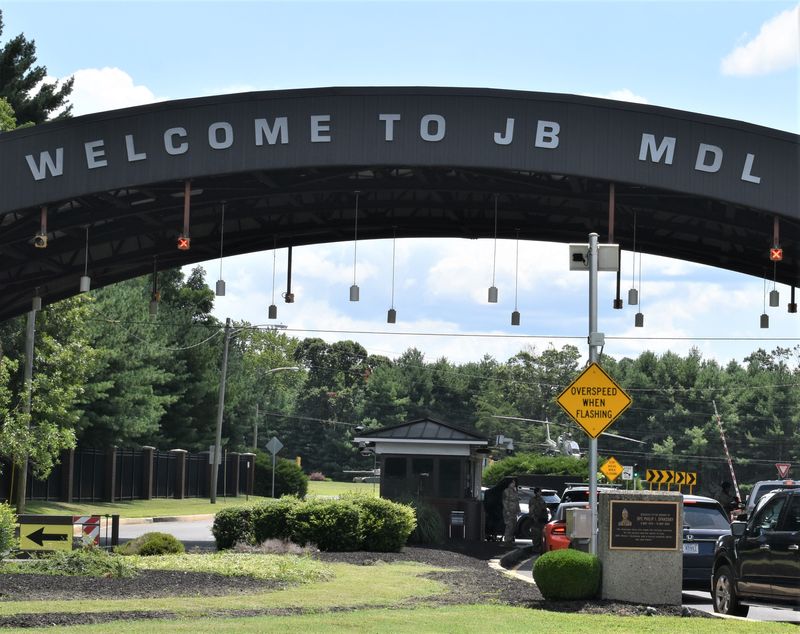
The Trump administration is no longer planning to detain immigrants at Joint Base McGuire-Dix-Lakehurst, according to a new report from the Government Accountability Office.
Back in July 2025, the administration confirmed its intent to hold detainees at the military base to support the president’s goals for mass deportations. The base, which spreads through Burlington and Ocean Counties, can hold an estimated 1,000 to 3,000 people.
Fast forward to fall of the same year, officials told the office they weren’t moving forward with the plans.
Teachers and other school staff in Camden, Pemberton, Evesham, and nine other local districts will have to grapple with higher healthcare costs next year.
They’re among the 300,000 public school and county college employees across the state who will be impacted by health insurance premiums rising by more than a third.
The School Employees Health Benefits Commission voted 4-2 to accept the premiums on Friday. If it hadn’t, Gov. Mikie Sherrill’s administration would have shuttered the program in the new year.
According to the New Jersey School Boards Association, school districts and colleges will likely need to consider options such as job cuts, transportation reductions, and property tax increases.
In November, Camden County voters will decide whether to increase the open space tax by one cent per $100 of property owned. The increase would partly fund a $400 million project to rehab sewers and waterways. The Inquirer’s Aliya Schneider explains what to know about the project the referendum would support.
Students at Aura Elementary School in Elk Township are pivoting to remote learning because of the building’s flea infestation.
Much of the Pine Barrens region will be the focus of a new study to assess climate change threats. It will include Evesham, Medford, Medford Lakes, Shamong, and Tabernacle.
Consumer Reports is no longer recommending e-scooters because of the machines’ high speeds and the nationwide uptick in injuries associated with them. E-scooters are less stable than e-bikes, but there are recent limits on those as well. New Jersey’s e-bike laws requiring licenses, registrations, and, in some cases, insurance went into effect in July.
This past weekend’s nor’easter put on display the limits of computer models. Meanwhile, the region could be affected this weekend by the remnants of a tropical storm from the Pacific.
🧠Trivia time
Which park got its own beer to celebrate its 100th birthday?
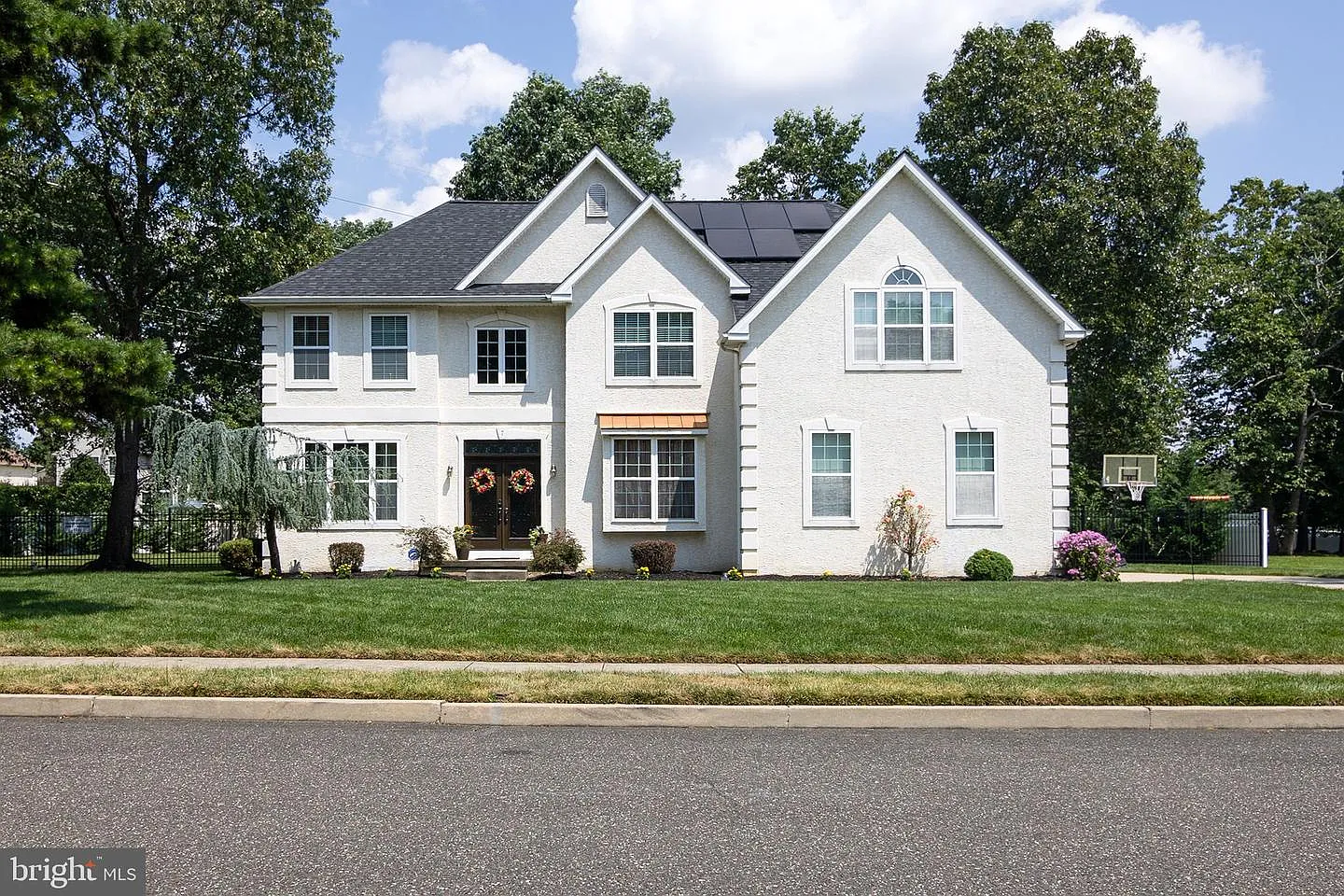
Highlights of this four-bedroom, four-bathroom home include 18-foot ceilings, a wood-burning fireplace, a finished basement, a home theater, and granite countertops and double ovens in the kitchen. Outside the home, enjoy the deck in the fenced backyard for extra entertaining. There’s an open house Sunday from 1 to 3 p.m.
The temperature was in the low 70s with a light breeze and clear skies. It was perfect boating weather. A group of students from Philadelphia’s Maritime Academy were excited to paddle out onto the Cooper River.
But Don Baugh from the Upstream Alliance had to cancel the trip. The water was still too dirty from the weekend’s heavy rain, which can cause sewage to spit out into the river from old pipes in Camden.
“Our goal is that we don’t have to cancel at all … we’d be able to say anybody can recreate, play, swim, on this water 365 days of the year, whether it rained or not,” Baugh said from his motorboat on Tuesday, surrounded by greenery and mud-colored water.
That is why Baugh hopes voters will support a ballot referendum in Camden County that would increase the open space tax by one cent per $100 of property owned. That one-cent increase would go toward the county’s ambitious plan to rehabilitate its sewers and waterways through a multifaceted initiative that is slated to cost about $400 million across the next 10 years. It has become more urgent, county officials say, as powerful storms and flooding become more commonplace due to climate change.
The nonprofit Upstream Alliance provides free kayaking to the public, but the organization has had to cancel about 20% of its programming due to concerns about water cleanliness, Baugh said. His rule of thumb is to wait 48 hours after half an inch of rain falls before allowing people in the water, so the bacteria from the sewage can die. But even that was not enough time following the weekend’s storm.
Put frankly, the water still looked “yucky,” Baugh said, so he was not going to expose people to it.
Olivia Liu with Upstream Alliance on the Cooper River in Camden County on Tuesday. A tax increase ballot referendum would fund projects like sewer rehabilitations aimed at improving the county’s waterways.Tom Gralish / Staff Photographer
What is the referendum?
Camden County voters have already been receiving their mail ballots for the Nov. 3 election. One of the decisions they face is whether to raise the county’s open space tax by one cent — bringing it to $0.03 per $100 of assessed property value. If it passes, the tax will still be one cent lower than in neighboring Burlington and Gloucester Counties.
This means that someone with property assessed at $500,000 would pay $150 a year toward open space, up from $100 at the current $0.02 rate.
The county’s open space tax is used to preserve parks, farmland, and historic sites. But the one-cent increase would be dedicated to the county’s $400 million clean water plan, which includes sewer repairs along the Cooper River, green infrastructure, dredging in local lakes, and recreation programs.
“The county is making a very bold step doing this now, and, frankly, nobody wants a tax, right? But everybody wants a higher quality of life,” Baugh said. “Everybody wants a safe and clean environment today and for tomorrow.”
Scott Schreiber, the executive director of the Camden County Municipal Utilities Authority (CCMUA) —the entity overseeing the project — believes the county could raise about $7 million from the tax increase, which could result in approximately $100 million worth of project funding through the New Jersey Water Bank, which offers the entity very low interest rates and principal forgiveness.
The existing user rate that residents pay to the CCMUA will go toward the projects, Schreiber said, and the county will also seek out funds from the state and federal governments, as well as philanthropies.
“It’s not one entity that can fix this,” Schreiber said. “This is going to take a combination of local government, state, federal government, advocacy groups, and the regular public to make this work. Without that combination of people and funding, it’s going to be really impossible to fix any of this stuff.”
Here is what the $400 million effort, which the tax increase would go toward funding, entails.
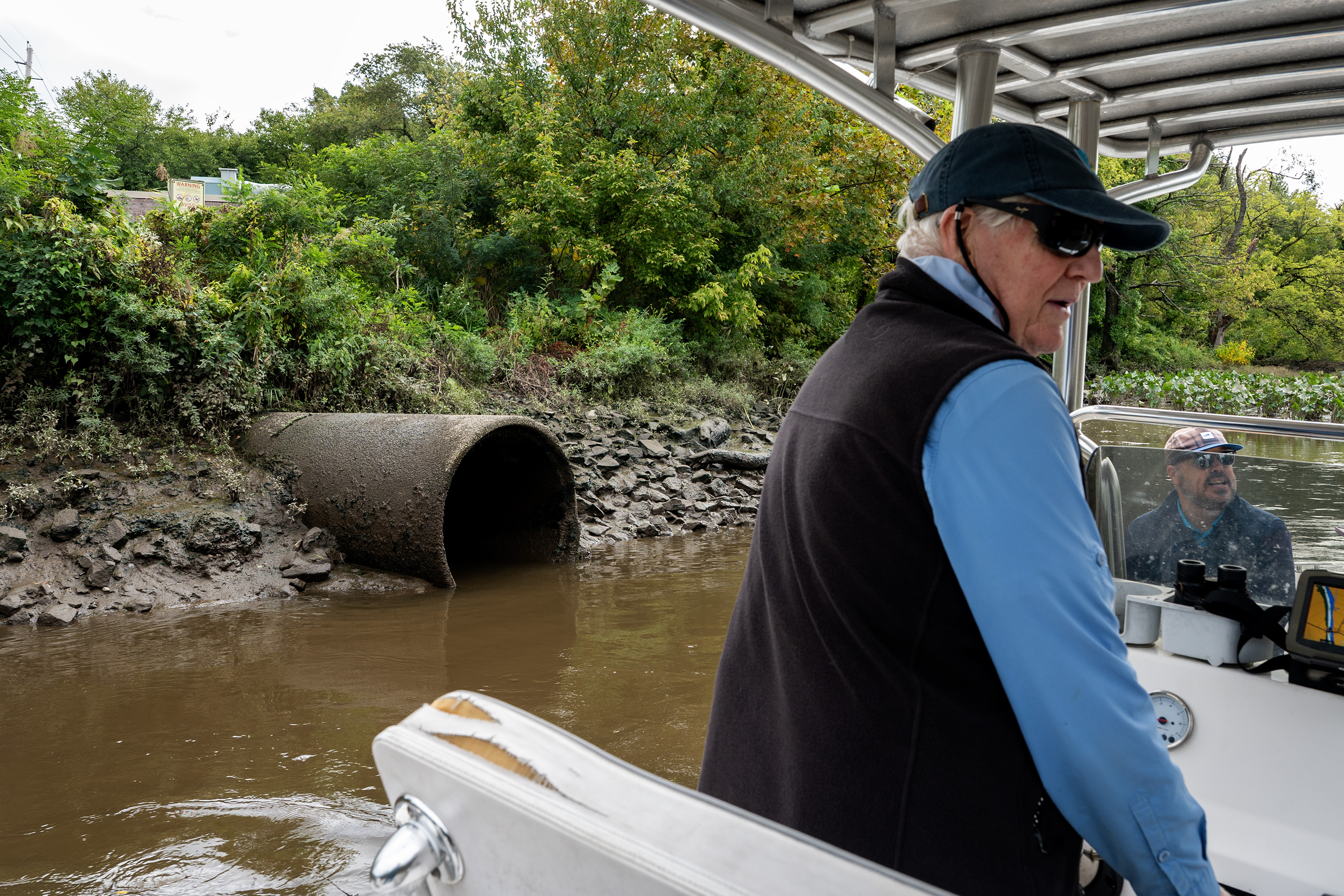
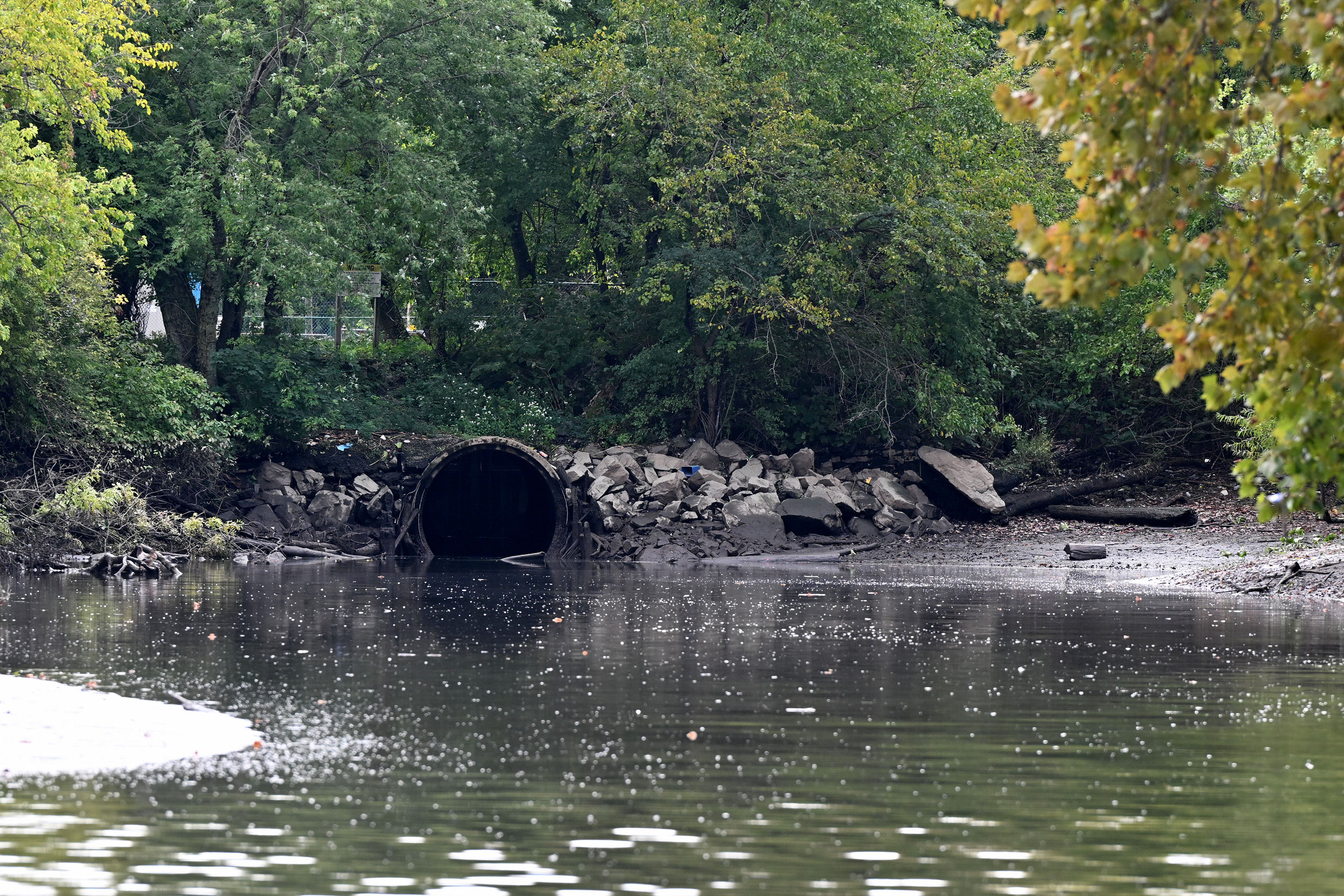
A combined sewer overflow site during low tide on Tuesday. This 60-inch discharge pipe spits out untreated wastewater and stormwater during heavy rain events, which flow directly into the back channel of the Delaware River.Tom Gralish / Staff Photographer
The sewer problem
The cities of Camden and Gloucester have an antiquated sewage system that combines stormwater and sewage in the same pipes. The pipes are designed to carry the combined liquid to the wastewater treatment plant, but when there is heavy rain, they can overflow and the contaminated water spits into the Cooper and Delaware Rivers. The overflow from the combined pipes can cause flooding — and then residents are subjected to sewage-infested waters in their streets and homes.
“These are the old stone pipes that were built before the current technology,” Camden County Commissioner Jeffrey Nash said.
“But as both cities grew, and the storms have become more violent, and rain has become more excessive … flooding has been a large problem,” he added.
On top of the risks to humans, the nutrients from the human waste are harmful for aquatic life.
There are 30 combined sewage overflow spots in the two cities, Schreiber said, that dump waste into the river when there is heavy rain and the system cannot handle it. Just one of the larger combined pipes pours out about 200 million gallons of sewage-filled water a year, he said, and the two cities dump out about 800 million gallons on average altogether.
The county wants to spend $200 million to upgrade this system.
The rest of the county has separate stormwater and sewage pipes, but they still need to be maintained. Leaky pipes can also cause sewage to spill into the river.
The county plans to spend about $50 million for the rehabilitation of these sewer systems across multiple municipalities. The county has already begun the design process for lining some of these pipes, Schreiber said.
The bottom line is, the Cooper River — which runs from Gibbsboro and Voorhees out to the Delaware River — does not meet state and federal water quality standards, he said, so the county is taking a “holistic approach” to fix the waterway that flows through multiple municipalities.
Wildlife along the back channel of the Delaware River near the Cooper River on Tuesday.Tom Gralish / Staff Photographer
Green infrastructure
The plan also includes $25 million for green infrastructure, like rain gardens or bioswales, which are typically sloped channels covered with vegetation.
Green infrastructure gets water directly into the ground, which helps with flooding and decreases the amount of water going through the pipes to the treatment plant, overall alleviating the system. This infrastructure, however, requires expensive and ongoing maintenance, Schreiber said.
“The more that you contain the water on the land, the better it is for the water,” Baugh said.
Dredging
The project also includes $75 million for dredging and other methods of removing sediment from public waterways. This sediment includes toxins that end up in the water from residential and business areas, and if it is not removed, waterways can become defunct. It is part of what makes Camden County’s waterways brown after heavy rain, because “a lot of not-good stuff on the bottom” gets stirred up, Schreiber said.
“We really want to make sure that we’re taking that sediment out, so that even if it does get disturbed and move, it’s moving clean sediment and not polluting or contaminating,” he added.
Cleaning up Evans Pond and Wallworth Lake, Cooper River Lake, and Kirkwood Lake are priorities for the county.
Newton Lake Park, which runs through Haddon Township, Collingswood, and Oaklyn, finished a two-year, $23 million dredging process in 2023 that rehabilitated the lake after it became clogged. And just on Tuesday, the county unveiled the results of a $1.3 million project to improve fishing piers at the rejuvenated lake.
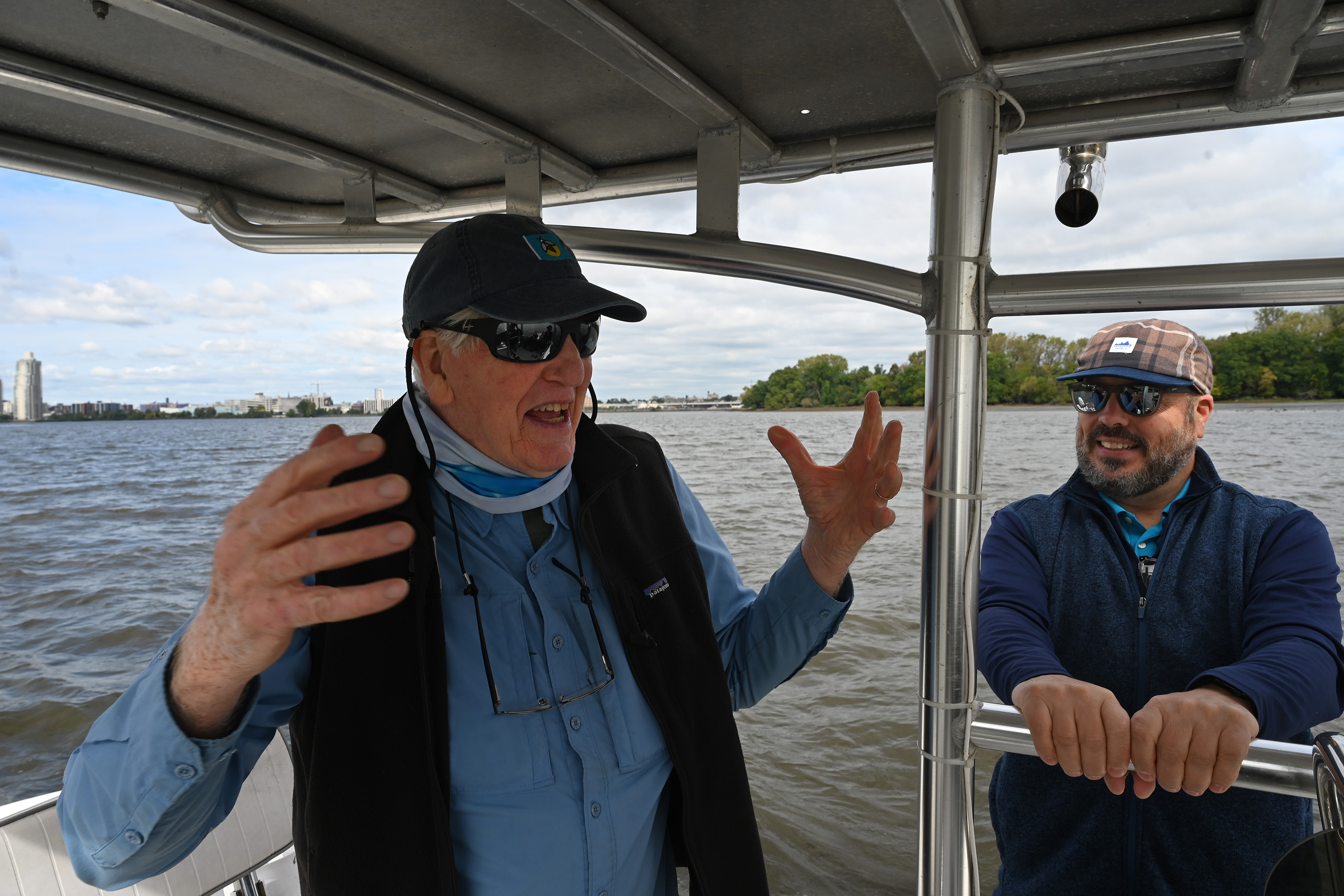
Don Baugh, president and founder of Upstream Alliance is on the Delaware River on Tuesday with Scott Schreiber (right), executive director of the Camden County Municipal Utilities Authority, looking at sewage runoff from Camden’s waterways.Tom Gralish / Staff Photographer
Parts of Camden’s waterways are littered with lead and arsenic that was used in apple orchards decades ago in places like Cherry Hill and Voorhees, as well as toxins from the Sherwin-Williams/Hilliards Creek Superfund site, the location of a former paint manufacturer in Gibbsboro.
Recreation
Baugh said local families who do not have experience on the water and might not know how to swim show up to his free Saturday kayaking program disappointed that they cannot go out on a nice day. As the county gradually addresses its sewage issues, he expects to feel better putting people out on the water under his 48-hour rule and one day get rid of it completely.
And the county’s plan would give more options for residents to enjoy their local waters, with $50 million allocated to restoring recreational lake areas. This effort aims to bring more fishing piers, kayak rentals, boat launches, and water trail systems, Schreiber said. The county is prioritizing rehabilitating Atco Lake, Lake Worth, and Audubon Lake, according to its planning document.
Nash described exploring the county’s urban waterways as a “great thrill.” He wants more residents in Camden to enjoy it, too.
Each of the plan’s components has distinct advantages, but taken together their benefits amplify, Schreiber said.
“And if you do that holistically from the top of the county all the way down, you’re going to have a much more clean and friendly park system and river water system,” he added.
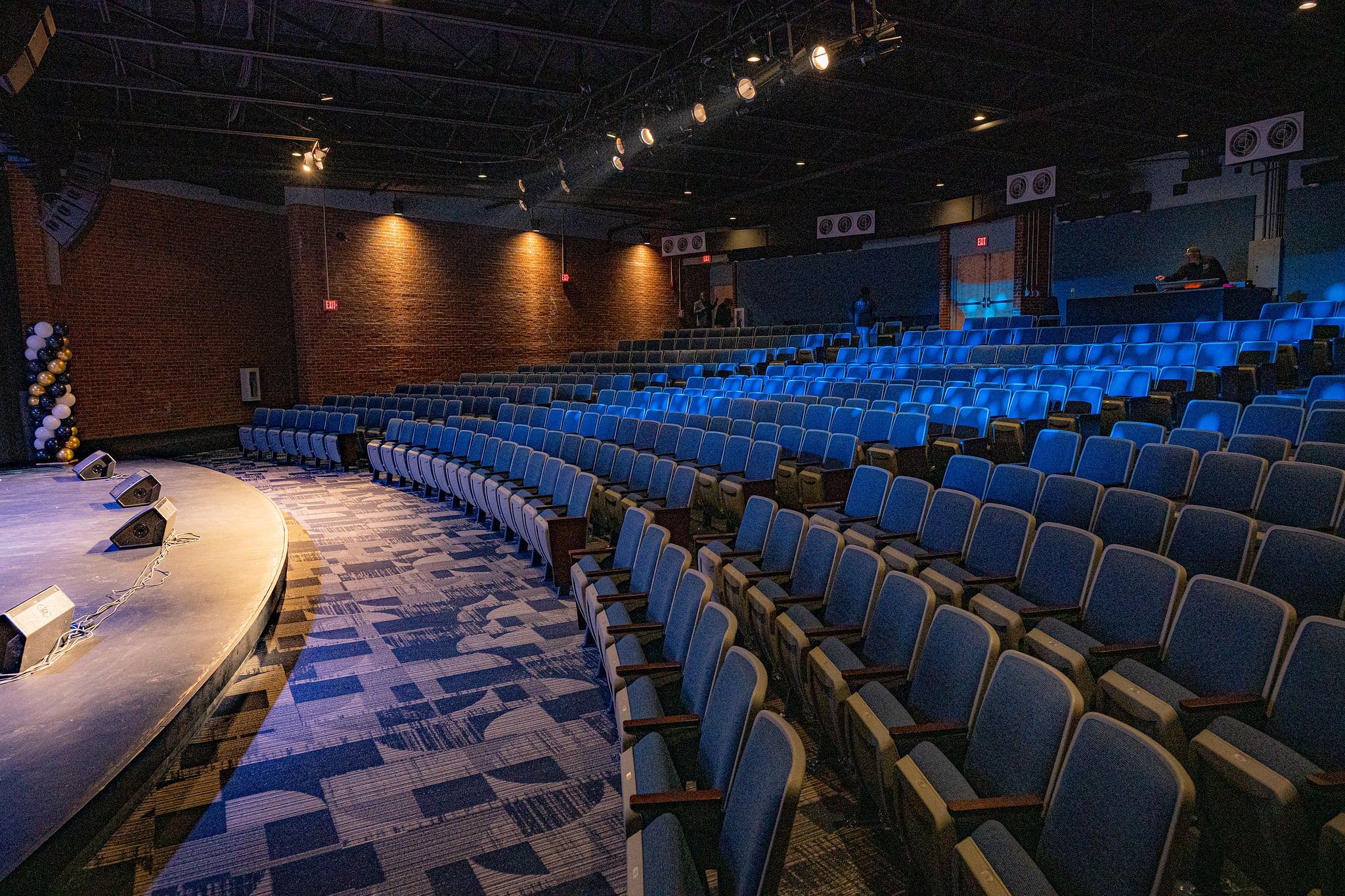
Willingboro is finally ready to raise the curtain on the township’s new arts and culture venue with its first performance on Saturday.
The celebration for the opening of the new 570-seat Willingboro Performing Arts Center, located in the Kennedy Center, will kick off with a performance by R&B group Atlantic Starr.
Crews transformed what was previously the high school auditorium into a revamped space designed for concerts, theatre productions, dance performances, lectures, and more.
The venue “is envisioned as a premier community gathering place where residents and visitors can enjoy concerts, theatrical productions, cultural programs, family entertainment, community events, and other performing arts experiences,” the township said in a press release announcing the opening.
Another highlight of the new space is that it gives Burlington County residents the chance to see world-class performances without needing to cross the bridge into Philadelphia, theater manager Bobby Duckett said.
“We want to invite everybody from the region to come by and see what we do,” Duckett said.
Following years of informal discussion about creating a hub for the performing arts in town, the effort to build the new concert hall started in earnest around 2023, Willingboro spokesperson Tanya Jackson said. The project cost around $2 million, with about half from township capital funds and half from state funding, she said.
“Willingboro is the home of many talented artists and performers, and we just wanted to create a space for residents and surrounding community members to come together to experience music and theatre, cultural programming, and those types of things,” Jackson said. “Willingboro is an ideal place for a performing arts center just based on all of the great talent that has come through this community.”
After opening night, the new venue has two more shows currently scheduled for this fall: a concert by R&B group The Manhattans on Oct. 24 and a performance by percussionist Tito Puente Jr. on Nov. 20.
“Willingboro has a very rich legacy in the entertainment world,” Duckett said. “[The center is] about bringing those people back to be a part of it as we develop the next generation of talented people from this community.”
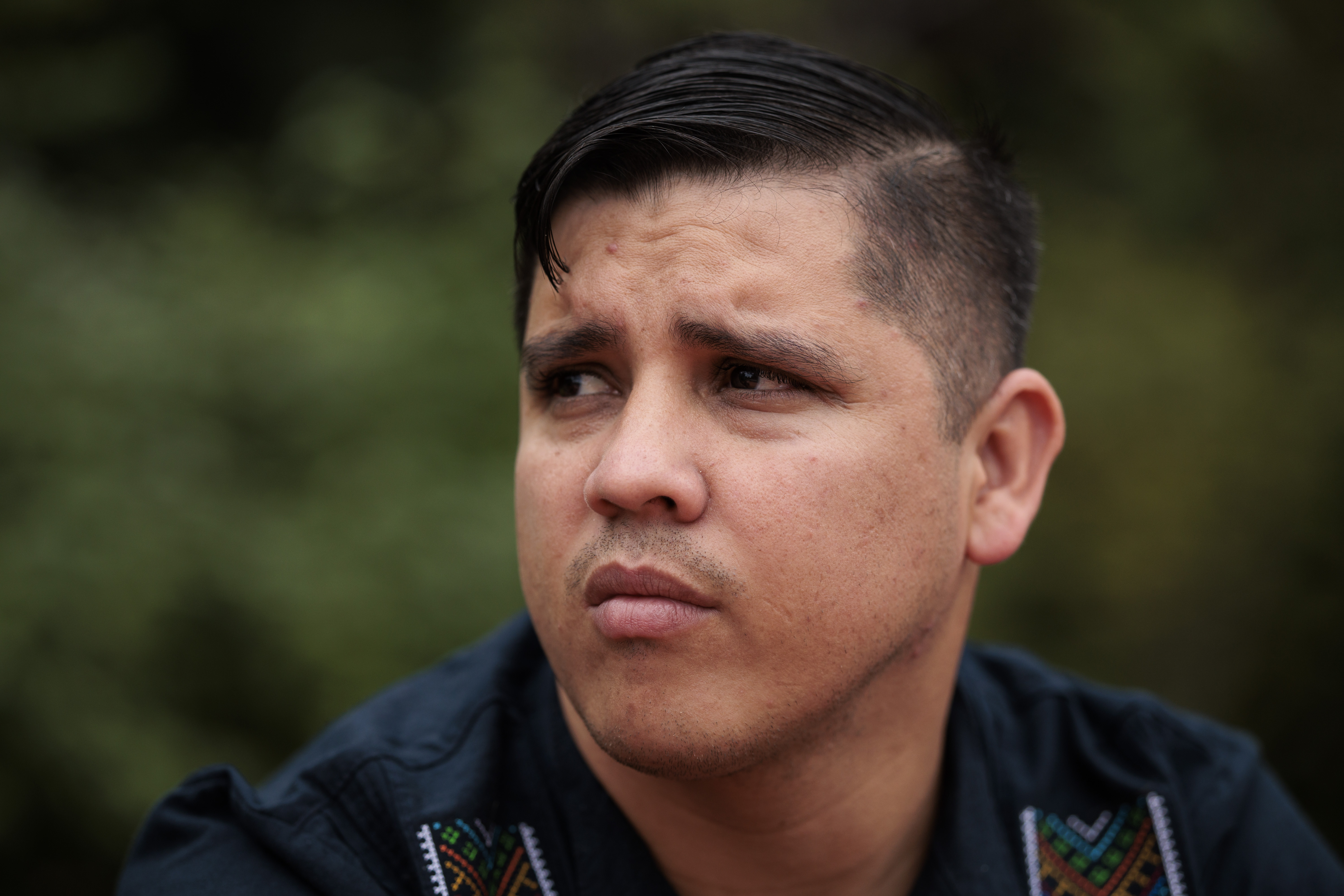
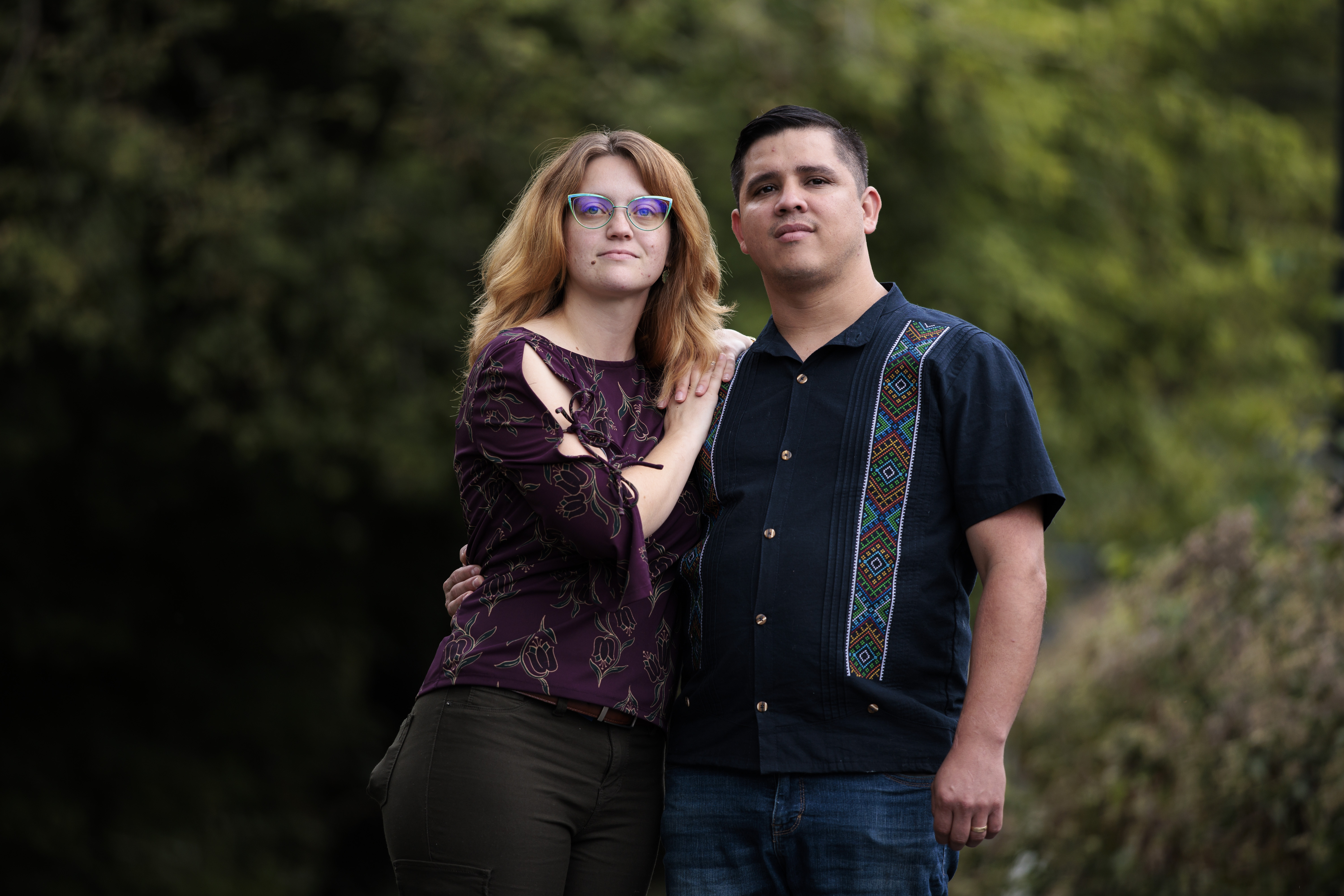
After being detained by Immigration and Customs Enforcement just one week after his wedding this summer, Chester County resident Nelson Contreras-Gelves was unexpectedly released earlier this month.
The 35-year-old has lived in the U.S. since 2022, when he came from his native Venezuela seeking asylum. He and his wife, Ariel Whaley, feel “incredibly lucky” that he was released from federal custody and will now have a chance to plead his case in court.
But life hasn’t returned to normal for the couple, who met three years ago through nonprofit Mighty Writers, which has an outpost in Toughkenamon.
Though Contreras-Gelves is now under constant surveillance, he and Whaley are using what they learned to help others navigating the system.
The county is planning to use $400,000 from a state grant to upgrade its 911 phone system, including by improving reliability and cybersecurity.
Chester County Household Hazardous Waste is hosting an event Sunday at Downingtown High School West where residents can dispose of unwanted items like certain paints and chemicals. Registration is required.
Charles P. Baker III, the cofounder of Baker Industries, which has an office in Malvern, died earlier this month of congestive heart failure at the age of 101. The Army veteran and national squash champion’s former company employs disabled individuals, recent parolees, people in recovery, as well as those facing homelessness.
Rogie Legaspi, a 56-year-old Baltimore teacher, has been charged by the Chester County District Attorney’s office with child trafficking, involuntary deviate sexual intercourse, and statutory sexual assault for allegedly sexually assaulting a teenager in Parkesburg.
A 4-year-old died last week after being struck by a tractor trailer while walking along Route 41 in Highland Township.
London Grove Township has filled its two board of supervisor vacancies. Kristen Barnello and Todd Pawlowski will serve in the roles until the end of 2027.
A new cat rescue spot, Calla’s Kitty Kingdom, is opening Friday. The Phoenixville spot is a collaboration between Calla’s Critter Rescue, Maddie’s Castle, and BarkHop Studio and will be located within pet supply store Maddie’s Castle at 178 Bridge St.
This weekend is Phoenixville’s last PXV Inside Out for the season.
An unnamed staff member at Oxford Area High School is under investigation by state police for corruption of minors for an alleged inappropriate relationship with a 17-year-old female student. In a statement, the district said it’s cooperating with law enforcement. The staff member is also an assistant football coach at Kennett High School, which also said it’s cooperating with authorities.
On Saturday, Kennett Consolidated School District is hosting a grand opening and ribbon cutting for New Garden Elementary School, which made its debut last month.
Owen J. Roberts School District is accepting board member applications after Rita Pederson tendered her resignation, effective as of Monday.
Bryn Mawr’s The Bakery House opened its second location over the weekend at 35 W. Lancaster Ave. in Paoli. It sells a selection of treats such as custom cakes, pastries, and pies, plus the viral dot cakes.
West Chester Cooperative, which opened this summer, is hosting a grand opening on Friday.
🎳 Things to do
🏚️ Pennhurst Asylum: The haunted attraction is open for the season. ⏰ Fridays, Saturdays, and Sundays through Nov. 7, times vary 💵 Prices vary 📍 Pennhurst Asylum, Spring City
🏡 Chester County Day: The 85th annual event focuses on the northwest section of the county, where visitors can tour homes and barns. ⏰ Saturday, Oct. 3, 10 a.m.-5 p.m. 💵 Prices vary; tickets must be purchased at satellite locations 📍 Chester County
🪕 Malvern Porchfest: Catch live musical performances from porches throughout the borough. ⏰ Saturday, Oct. 3, noon-6 p.m. 💵 Free 📍 Throughout Malvern
🎃 Fall Festival at Yeager’s Farm: The two-day event includes a corn maze, pumpkin picking, yard games, and hayrides. ⏰ Saturday, Oct. 3 and Sunday, Oct. 4, 11 a.m.-3 p.m. 💵 Pay as you go 📍 Yeager’s Farm, Phoenixville
🍻 Oktoberfest: Sip specially priced beers and ciders, nosh on fall-themed appetizers, try your hand at a stein-holding contest, and hear live music at participating restaurants. ⏰ Saturday, Oct. 3, times vary 💵 Pay as you go 📍 Downtown West Chester
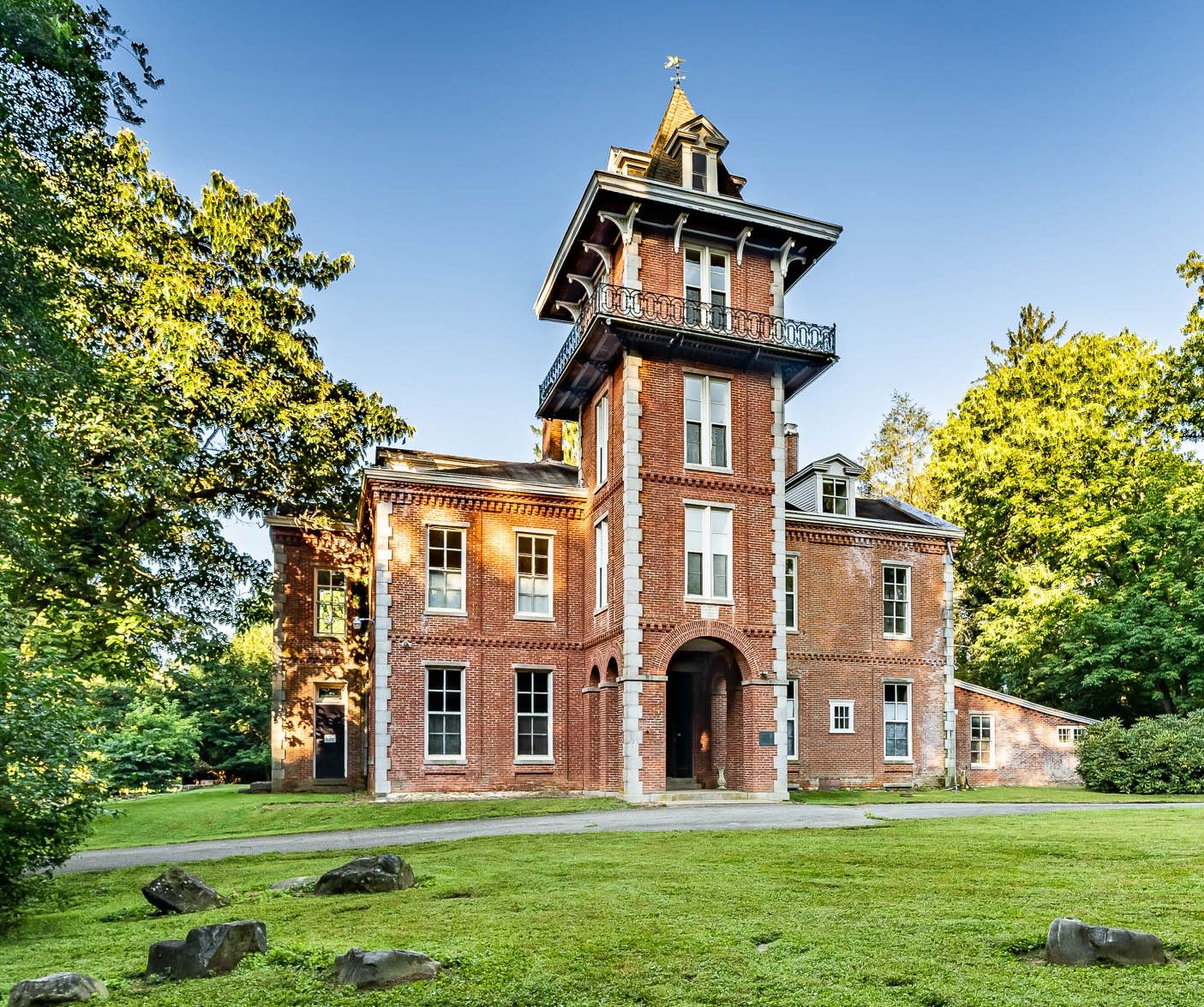
Built in the mid-1800s for travel writer and diplomat Bayard Taylor, Cedarcroft has undergone a number of updates while staying true to its architectural roots. The Kennett Square home, which is listed on the National Register of Historic Places, has seven bedrooms, living and dining rooms, a billiards room, and, most notably, a five-story tower in the Italianate style.
By submitting your written, visual, and/or audio contributions, you agree to The Inquirer’s Terms of Use, including the grant of rights in Section 10.
This suburban content is produced with support from the Leslie Miller and Richard Worley Foundation and The Lenfest Institute for Journalism. Editorial content is created independently of the project donors. Gifts to support The Inquirer’s high-impact journalism can be made at inquirer.com/donate. A list of Lenfest Institute donors can be found at lenfestinstitute.org/supporters.
Drivers, rejoice. The Inquirer’s Lacey Latch has received word that the (seemingly endless) construction along Route 70 will “essentially be complete this year,” per the New Jersey Department of Transportation.
You may have grown unwillingly inure to the roughly $150 million safety improvement project that has marked up the thoroughfare since 2021. Now, updating some traffic signals and finishing up paving work are the only outstanding to-dos, though NJDOT has some additional landscaping work planned with Camden County in the spring.
🚦 In other roadway news: Cherry Hill is at the center of multiple stretches of South Jersey highway that have seen the highest numbers of fatal car crashes in recent years.
💡 Community news
Brandon Parish, who manages the deli at the Kibitz Room’s original Cherry Hill location and previously owned the now-shuttered King of Prussia outpost, has filed for personal bankruptcy. The deli inside The Shoppes at Holly Ravine won’t be affected.
The New Jersey Supreme Court declined to hear an appeal aimed at unseating three members of the South Jersey Progressive Democrats — all Cherry Hill residents — who won in the June 2025 primary to control the Cherry Hill Democratic Committee, 70and73 reports. The Camden County Democrats, led by George E. Norcross III, had sued after losing the election.
Several roadwork projects are underway this week throughout the township, causing some road and sidewalk closures. Here are the specifics.
Police are advising drivers to make sure their car doors are locked and secure as groups target unlocked vehicles in Cherry Hill and other South Jersey locales, NBC10 reports.
🗺️ Other nearby news
Mount Laurel may condemn and demolish nine hotels as part of a long-term push to build more affordable housing. One owner isn’t impressed by the township’s plan.
Collingswood is considering privatizing the borough’s ambulance services in an effort to help its understaffed fire department.
🏫 Schools briefing
Cherry Hill will direct $240,000 to support a licensed mental health clinician position working with the township’s high schoolers, drawing the funds from its roughly $764,000 share of the national settlement with drug companies over the opioid epidemic. 70and73 has the details.
Cherry Hill Public Schools officials are looking to stem the rate of absenteeism after the latest district statistics indicate more than 1,500 students are chronically absent.
🍽️ On our plate
A group of South Jersey seniors have been on a monthslong hunt to track down the best cheesesteak in the area, trying bites from Chick’s Deli in Cherry Hill, Donkey’s Place in Camden, and beyond.
🎳 Things to do
🕺 The Dance Loft Grand Opening: Try out a group class and take in performances by the team behind this new studio. ⏰ Friday, Oct. 2, 7-10 p.m. 💵 Free 📍 The Dance Loft NJ
🎶 Jim Beer in Concert: Get a jump on commemorating Indigenous People’s Day by checking out a performance by Beer, a member of Lenape Nation of Pennsylvania, who will also share stories and history. ⏰ Sunday, Oct. 4, 1:30-3 p.m. 💵 Free; registration required 📍 Cherry Hill Public Library
🎸 The Martin Experience: Pick at the iconic company’s instruments and maybe learn a thing or two at this event open to all guitarists. ⏰ Wednesday, Oct. 7, 5 p.m. 💵 Pay as you go 📍 Guitar Center
This home from 1960 sits in Cherry Hill’s Barclay neighborhood, offering three bedrooms and two-and-a-half bathrooms. It features an open layout, skylights to bring in natural light, and a brick fireplace. There’s an attached one-car garage, plus a fenced-in yard out back.
By submitting your written, visual, and/or audio contributions, you agree to The Inquirer’s Terms of Use, including the grant of rights in Section 10.
This suburban content is produced with support from the Leslie Miller and Richard Worley Foundation and The Lenfest Institute for Journalism. Editorial content is created independently of the project donors. Gifts to support The Inquirer’s high-impact journalism can be made at inquirer.com/donate. A list of Lenfest Institute donors can be found at lenfestinstitute.org/supporters.
The weekend is so close. If you need help settling on plans, check out this list of our favorite things to do in South Jersey this weekend.
Come back every week, and you’ll always have something fun on your radar.
Boos & Brews Witches’ Market
Check out this witch-themed market full of themed vendors and activities. Stick around for food trucks, a costume contest, performances, and a beer garden.
⌚️ Friday, Oct. 2, 5-9 p.m. 📍 Rancocas Woods Events and Shops, 118 Creek Rd., Mount Laurel 🌐 facebook.com 💵 Pay as you go
Make & Take: Flower Power Pumpkins
Listen to a lecture about growing your own pumpkins and drying and pressing flowers as you decorate a gourd.
The 24th annual festival is back spanning six blocks of Haddon Avenue. Come to meet booksellers and stay for author and poetry readings, performances, and workshops.
Bordentown’s 36th annual cranberry fest returns with live music, a food court, a beer garden, and more than 100 artisans.
⌚️ Saturday, Oct. 3 and Sunday, Oct. 4, 11 a.m- 5 p.m. 📍 Farnsworth Avenue, Bordentown 🌐 btownfest.com 💵 Pay as you go
Clayton Fall Festival
Celebrate the cooler season with crafts, a trunk-or-treat, and music.
⌚️ Saturday, Oct. 3, noon-4 p.m. (rain date: Sunday, Oct. 4) 📍 Autumn Pasquale Memorial Park, 29 East Ave., Clayton 🌐 facebook.com 💵 Free
The Rocky Horror Picture Show
Step into spooky season with The Rocky Horror Picture Show. This event will feature original member Barry Bostwick, who played Brad Majors in the film. The audience will have opportunities to meet him, compete in a costume contest, and interact with a live performance by the local Spooktacular Shadow Cast performing scenes as the film plays.
Brand new this year for Halloween, the Great Pumpkin Glow will feature thousands of glowing jack-o’-lanterns. Walk through the pathway, take festive pictures, and indulge in some treats.
⌚️ Friday, Sept. 25-Saturday, Oct. 31, various evening times 📍 Dalton Farms, 666 Oak Grove Rd., Swedesboro 🌐 greatpumpkinglownj.com 💵 $22.95-$27.95
Live Jazz at blueplate
The restaurant blueplate offers live jazz during the summer on some Friday evenings and Sunday mornings.
⌚️ Fridays, 6:30-8:30 p.m. through the end of September; Sundays, 10 a.m.-1 p.m. through the first weekend in October 📍 47 S. Main St., Mullica Hill 🌐 blueplatenj.com 💵 Pay as you go
Yoga at Cooper River Park
Take a free yoga class. All ages are welcome, but bring your own yoga mat.
⌚️ Mondays, 6-7 p.m.; Wednesdays, 9-10 a.m.; and Thursdays, 6-7 p.m. through Oct. 1 📍 Cooper River Park, 5300 North Park Dr., Pennsauken 🌐 camdencounty.com 💵 Free, but registration is required
Burlington County Farmers Market
Come by one of the most popular farmers marketsin the region, offering local fruits, vegetables, honey, cheese, baked goods, and more.
⌚️ Every Saturday through Nov. 14, 8:30 a.m.- 1 p.m.📍 Burlington County Agricultural Center, 500 Centerton Rd., Moorestown, 🌐 www.burlcoagcenter.com 💵 Pay as you go
Collingswood Farmers Market
The Saturday market brings fresh produce, meat, coffee, flowers, and live music to Collingswood and supports the region’s farmers every week.
⌚️ Every Saturday through Nov. 21, 8 a.m.-noon 📍 Atlantic Avenue between Collings and Irvin Avenues (along PATCO), Collingswood 🌐 collingswoodmarket.com 💵 Pay as you go
Haddon Heights Farmers Market
This Sunday farmers market offers multiple vendors selling fresh produce, crafts, and other entertainment from local businesses.
⌚️ Sundays through Nov. 22, 9:30 a.m.–1p.m. 📍 The intersection of Station and Atlantic Avenues, Haddon Heights 🌐 haddonheightsfarmersmarket.com 💵 Pay as you go