When Lisa Duvall hosted a sixth birthday party for her son three years ago, she had to make sure Xavier Taylor, her best friend’s kid, was last in the piñata line.
“I knew when he swung, it was going to bust open!” wrote Duvall, a Tabernacle resident, in a text Thursday recalling that moment. “I wanted to give the other kids a chance because he swung so hard.”
That’s because Xavier, then 9, was a Maple Shade Youth Baseball player, and a good one at that, Duvall wrote.
Now, she is thinking back on those memories as Maple Shade mourns Xavier’s death, months after the 12-year-old boy was struck in the head by a baseball before one of his youthgames in May.
Xavier, a brother, son, and athlete, died Wednesday after months in the hospital. His 13th birthday would have been next week. People in South Jersey and beyond are sharing their grief and Xavier’s impact on their communities.
Xavier Taylor, of Maple Shade, poses with his family.Yvonne McCall
The All Things Foundation, a Christian nonprofit created by Xavier’s family after his injury, aims to connect local baseball players to faith. Gregory Taylor, Xavier’s father and a retired firefighter, is the chair.
“To every person who prayed, to every family who left a porch light on, to every child who placed a baseball bat outside their front door, to every church, every friend, every stranger, every believer who stood with the Taylor family, thank you,” the post read. “You became part of a story that only God could write.”
People in Maple Shade and beyond have spent the last five months hosting prayer vigils, raising money, and displaying yard signs and T-shirts honoring Xavier’s name and the number 6, his jersey number. In June, the Ben Franklin Bridge lit up blue for him, and professional athletes, from Phillies catcher Garrett Stubbs to the Tampa Bay Rays, have posted videos in support.
Now, Xavier’s loved ones and his community members are continuing that support after his death.
Yvonne McCall, a longtime family friend who lives down the street from the Taylors, has been Xavier’s honorary aunt, Titi Von, since he was born. McCall remembers his “little round face,” his “little butt chin,” and his tendency to drool as an infant.
Xavier Taylor, of Maple Shade, as a baby.Yvonne McCall
She teased him for years for all the bruises on his legs in the summertime, earned from sports and tripping over himself while bouncing off the walls. He played hockey and football, too, but baseball was the activity that really stuck.
He knew everything about baseball trivia, McCall said, and even created an LLC with his brother to collect and sell baseball called Big Jawn Sports Cards.
Xavier liked to make people laugh, too. When McCall and her husband planned to renew their vows, they recruited Xavier to teach his uncle to dance. On a recent 4 a.m. flight to Tulsa for his oldest brother’s wedding, Xavier wore a red, white, and blue sequined cowboy hat on the plane.
When the sun came up, it reflected on the ceiling, and McCall had to beckon him to take it off to avoid waking up his fellow passengers.
Xavier Taylor, 12, poses with family in a red, white, and blue cowboy hat on a family trip for his older brother’s wedding.Yvonne McCall
“He was an absolute ham. He was funny. He was silly. He was charming,” McCall said. “You know people, when they smile, their whole face smiles? That was our boy.”
About a week before Xavier’s injury, Mai-Lin Taylor, Xavier’s mother, texted Duvall to let her friend know that she had finally gotten to see Xavier hit a home run. It was her first time watching. His mom reacted so loudly Xavier could hear her from the outfield, Duvall wrote.
“The void he leaves is enormous,” Duvall wrote. “But my hope is that his life will be an example to others what it means to love the Lord, live with joy, and make the most of the time we’re given.”
Xavier Taylor (right) poses with his friend Lucia Duvall shortly after their baptisms in Lucia’s pool.Lisa Duvall
Bill Galloway, Xavier’s baseball tournament coach for the last six years, is still in shock. He said Xavier never knew how to sit still and would feign throwing and catching balls during slow moments while playing shortstop on the field. During breaks, he would fill his mouth with gum to amuse his friends.
When he wasn’t at a tournament, he could not sit still, either. Since Xavier was friends with Galloway’s son, Xavier would wander back and forth past their Ring camera until they had to check the door and say hello.
“You don’t know what your son did for me,” Galloway remembers telling Xavier’s dad recently. “Keeping me grounded on the baseball field. When things got serious, it was just a game.”
The Maple Shade Township Council released a statement Thursday inviting community members to illuminate their properties, windows, and porches blue through Nov. 27 to honor Xavier’s life.
“Xavier brought our community together in ways that words cannot adequately describe,” council members wrote.
A yard sign supports Xavier Taylor in Maple Shade.Mia Messina / Staff
“Our baseball family is grieving alongside the Taylor family. While we know there are no words that can take away this pain, please know that our thoughts, prayers, and love are with them,” the association wrote in the statement. “Xavier was one of our own, and this loss will forever leave a hole in our baseball community.”
No details were available on funeral services for Xavier.
Sarah DiPhillipo, a family friend of the Taylors’ and a spokesperson for All Things, said the nonprofit plans to host worship clinics for local athletes this winter and hopes to someday build sports facilities and fields in honor of Xavier.
When he played baseball, Xavier’s mom always reminded him, “You can do all things.” The mantra was written on his hat and his glove, and is now part of the nonprofit.
“Xave would be on board. He lived and breathed Jesus and baseball. What other way to honor him than doing this?”DiPhillipo said. “I know he’s cheering us on from heaven.”
LONDON — Iran has kept up its unrelenting attacks on ships passing through the Strait of Hormuz, including multiple attacks this week on the same tanker that left one sailor missing.
The rate of attacks so far this month and last month has more than doubled compared with the previous seven months, according to an analysis of data compiled by The New York Times.
According to official reports and analysts who track the activity in the region, attacks have averaged roughly one per day in and near the Strait of Hormuz, a critical waterway that had carried one-fifth of the world’s oil and liquefied natural gas shipments before the United States and Israel attacked Iran in February.
But the assault Tuesday on a tanker that had already been disabled late Monday night raised new alarms in the shipping industry.
After the vessel, the Tara Gas, was struck once, Iran issued warnings to salvage tugboats providing assistance, said Dimitris Maniatis, the CEO of Marisks, a maritime risk consultancy. A second attack forced the crew of the Tara Gas to abandon the ship, he said. As of Thursday morning, smoke was still rising from the vessel, satellite images showed.
Throughout the war, Iran has used attacks to try to force shippers to comply with its claim to control navigation in the strait. Most of the strikes have been single hits that often disable vessels. At least 27 seafarers have been killed and 32 injured, according to official tallies and reporting by the Times. At least five sailors are missing.
“The incident may indicate a deliberate effort to extend the effects of an initial attack by discouraging or preventing rescue, recovery and salvage operations,” Maniatis said. Vessels carrying gas or other hazardous material would be particularly vulnerable.
The Tara Gas, which was carrying liquefied petroleum gas, was struck by an unidentified projectile that caused a fire in the engine room. The vessel issued a distress alert, according to several maritime risk firms.
Initial reports indicated that the crew members were safe.
The next day, however, the vessel was attacked a second time, resulting in a fire, according to the U.K. Maritime Trade Operations center, which is run by Britain’s Royal Navy. The explosion could be seen from miles away, and the crew was forced to abandon the ship, with sailors jumping into the water before being rescued by local tradesmen in small boats, according to open-source video that has been verified by maritime experts.
Of the 25 crew members, all of whom were from India, one was reported missing and two were hospitalized with severe burns, according to Manoj Yadav, who leads the union representing Indian sailors.
The rest of the crew members were evacuated to Khasab, Oman, and search-and-rescue operations were continuing, Yadav said.
Sarbananda Sonowal, India’s minister of ports, shipping and waterways, said in a post on social media that the Indian government was coordinating with the ship management company and regional rescue authorities to locate the missing sailor.
About two-thirds of ships that have been attacked since the start of the war in Iran have sustained only minor damage and were able to continue their journeys, according to an analysis of U.K. Maritime Trade Operations center warnings. Most of the rest have been salvaged by vessels that towed them away, though last month two vessels sank. There have been a small number of reported incidents in recent weeks of Iranians targeting salvage vessels.
Martin Kelly, the CEO of Orbital Risk Intelligence, a maritime risk firm, said he believed Iran’s aim was to stop ships from passing through the strait. He did not think their intention was to harm rescuers, but to ensure that ships could not be salvaged. This raises insurance costs and could serve as a deterrent to shipowners.
“The longer the ship is on fire, the higher the cost of salvage,” he said.
Oil shipments through the Strait of Hormuz have picked up considerably since the early months of the war, in large part because the U.S. military has run an extensive operation to shield vessels from Iranian drone and missile attacks. But oil exports through the strait have not fully recovered to prewar levels.
Similarly, global oil prices are higher than they were before the start of the war, though they are down from recent highs. The price of Brent crude, the global benchmark, was around $93 a barrel Thursday — down more than $20 a barrel since late October — as global supply finally caught up with demand. Even as more oil flows from the Middle East, the higher prices have pushed businesses and consumers to find ways to use less fuel.
The United States has carried out intermittent strikes on Iran, including this week, as peace talks have stalled. Iran has attacked fewer ships this month than in October, the most dangerous month since the start of the war, in which more than 38 attacks took place.
Iran’s neighbors in the Persian Gulf also face heightened threats. Kuwait and Bahrain, an island nation in the Persian Gulf, said Wednesday that they had intercepted Iranian aerial attacks. The attack on Kuwait, which Iranian state media said had been aimed at U.S. air defense systems and missile launch platforms, was the first Iranian offensive against the country in about two months. Bahrain, which hosts the U.S. Navy’s 5th Fleet, has reported several attacks since Friday.
CINCINNATI — Fiona, the hippo whose premature birth and fight for survival at the Cincinnati Zoo turned her into a global sensation nearly a decade ago, died Thursday from complications after swallowing a knit hat that was accidentally flung into her enclosure more than a week ago.
“It is with extreme sadness that we share with you the devastating news that Fiona did not make it after multiple attempts from our amazing vets and keeper team to help her through what ended up being a medical emergency,” the zoo said in a statement.
The zoo said Monday that Fiona was undergoing care around the clock after swallowing the hat more than a week ago.
Before she died, veterinarians had been keeping Fiona hydrated, giving her treats, and monitoring her every move, the zoo said. They even borrowed a vibration plate from a horse farm, encouraging her to stand on it several times a day in the hopes that the shaking would help move things along through her digestive tract.
“Despite multiple attempts to move the hat out of her system, it was ultimately too much to overcome,” the zoo said. “The team performed necessary supportive care today in an attempt to save her, but it was not successful and she did not recover.”
Grace Brooks, of Cincinnati, and her two children, ages 3 and 5, had Fiona on their minds when they arrived at the zoo Thursday, before her death was announced. Her kids have been talking about Fiona at preschool, she said.
“They know all about Fiona, and we have lots of books about her,” Brooks said.
The zoo was mostly empty, though a small crowd was gathered inside the “Hippo Cove,” where two other hippos were swimming.
Even without Fiona in the cove, her presence was felt. There’s a holiday-themed Fiona statue just outside the entrance, and the gift shop has an entire wall filled with hippo-themed shirts, coffee mugs, shot glasses and books, including “A Very Fiona Christmas” and “You’ve Got This, Fiona.”
Cincinnati Mayor Aftab Pureval posted on social media that the city was heartbroken.
“Fiona was a symbol of perseverance and joy in Cincinnati. She brought smiles to so many faces, from kids to parents to visitors from around the world,” he said.
Fiona was under close care
Fiona captivated people worldwide after her premature birth in 2017. She swallowed the hat about 11 days ago after a zoo visitor tossed it in the air. A ceiling fan caught and catapulted the hat through a small opening above the area’s viewing windows.
It was an accident, said zoo spokesperson Michelle Curley.
Before she died, Mike Wenninger, the zoo’s director of animal health, said veterinarians had sedated her twice to evaluate her condition.
An ultrasound on Tuesday showed some bunching of her intestines, Wenninger said. They also conducted a colonoscopy using a 9-foot scope, but were unable to detect anything, he said.
Surgery would have been challenging
Specialists told the zoo that surgery wasn’t an option for full-grown hippos, the zoo said.
Hippos have a digestive system that would make Fiona’s situation tricky, Jack Kottwitz, an assistant professor at Michigan State University’s College of Veterinary Medicine, said before her death was announced.
“They have a multichambered stomach for digesting plants — sort of like a cow — but they don’t regurgitate and chew cud like a cow does,” Kottwitz told The Associated Press in an email.
Surgery would have been a major logistical challenge for many reasons, he said.
In order to find the hat, multiple incisions would have been needed during a very long surgery, he said. But hippos are notoriously difficult to anesthetize and have skin over 2 inches thick in places.
Jan Hawkins, doctor of veterinary medicine at North Carolina State University, said Fiona’s situation was difficult because it was hard to tell exactly where the hat was.
“You just don’t know because you can’t do the normal imaging and things that you can do in some of the smaller animals, or even horses,” Hawkins said.
Other zoo animals have also died from eating foreign objects
Zoos around the world have warned for years about the dangers posed by objects that are tossed or blown into animal habitats.
Two years ago, a rare antelope choked to death after eating the plastic lid from a squeezable fruit pouch at a zoo in Tennessee. A polar bear at a German zoo died in 2014 after swallowing a jacket dropped into his enclosure by a visitor.
Fiona became a sensation after Harambe’s death
Fiona survived her first health scare when she was born six weeks premature. She weighed just 29 pounds, which was less than the lowest recorded birth weight for her species at that time.
Fiona was unable to nurse, so a zoo staffer hand-milked her mother. The zoo recorded her progress with photos and videos, while fans worldwide followed her progress online.
Her survival brought an uplifting turn for the Cincinnati Zoo after months of backlash over the shooting of Harambe, the gorilla who became a pop culture phenomenon after he was killed because a child got into his enclosure.
Roughly 40,000 people are expected to run in the Philadelphia Marathon Weekend races Saturday and Sunday, but a new lawsuit says not all runners are treated equally.
Three nonbinary athletes say the race violates city antidiscrimination law because the marathon and half marathon do not offer a nonbinary registration option in the professional divisions.
Athletes can register as nonbinary in the open division, which is meant for the wider public, but runners must register as male or female to compete for a larger cash prize, extra accommodations offered to elite runners, and prestige.
Winter Parts, Reed Williams, and Miche Palmer — nonbinary runners who have run in Philadelphia Marathon races in previous years — filed the lawsuit against the city and race director Kathleen Titus on Tuesday in Common Pleas Court.
“The Philadelphia Fair Practices Ordinances has a very specific protection prohibiting discrimination on the basis of gender identity,” said Maia Goodell, the attorney representing the runners.
The suit asks a judge to find the city violated the Philadelphia Fair Practices Ordinance, order the race to end its discrimination against nonbinary athletes, and award the three runners damages.
A spokesperson for the Philadelphia Law Department declined to comment, as did Titus through a spokesperson.
The run clubs met with Titus ahead of the 2023 race to advocate for a nonbinary professional registration option that would offer “equal benefits, status, and prize money,” the suit says.
Professional runners who qualify receive free registration and special starting positions, and may be eligible for complimentary travel and accommodations. The elite runners also receive additional support on race day, such as special hydration stations.
“We brought up examples from other races. We discussed things like qualifying standards. We tried to address any practical questions that were being raised,” said Josh Fernandez, president and executive director of Queer Run.
But the marathon would not open professional registration for nonbinary athletes.
The nonbinary runners’ placements would have garnered them additional prize money had there been a professional division, the suit says.
Reed Williams (left), who finished first, with Nicholas Dill (right), who came in third ,in the nonbinary division of the 2024 Philadelphia Marathon Sunday, Nov. 24, 2024 pick up their awards after finishing.Tom Gralish / Staff Photographer
Williams placed first in the nonbinary open division in 2024 and won $4,000, the suit says, instead of the $10,000 the professional division winners won.
Parts first ran the Philadelphia half marathon in 2021, and had to register as male despite identifying as nonbinary.
In 2022, Parts finished as the first nonbinary runner in the marathon’s open division, the suit says. The top prize for the fastest male or female runner was $10,000, but Parts received nothing.
“We’re not in this for the money,” Parts said. “We’re in it for the equality.”
Even after allowing nonbinary registration, much of the event’s infrastructure did not adapt to serve the new category, the suit says.
After top runners crossed the finish line in 2022, marathon staff directed male athletes to one direction and female athletes to another direction, the 28-year-old Pennsylvania State University graduate student said. Fatigued from running 26.2 miles, Parts had to pick a side because there was no nonbinary option despite the registration option.
Even though they are nonbinary, Parts likes having a feminine presentation. But fearing some people would assume they registered as a woman to rank highly, the runner chose to join the men.
The runner was forced to choose how to be misgendered, they said, because the system did not accommodate nonbinary runners.
“I think a lot of those people don’t understand how much mental difficulty we got through in trying to avoid these kind of difficult situation,” Parts said.
When the results of the 2022 race were published online, all nonbinary runners were assigned either male or female, the suit says.
The following year, Williams witnessed nonbinary runners misgendered at the finish line, the complaint says.
Williams and Parts are not running this year, the suit says. Parts will be on the sideline to cheer on friends and other nonbinary runners. Among them will be Palmer, who decided to run with training partners despite the discrimination, according to the suit.
“It’s a complicated set of emotions,” Parts said ahead of the weekend. “It sucks that this race is not fully including us.”
A developer wants to raze twin homes and two other buildings to build 20 apartments atop a retail space as part of a larger plan to build up Glenside Avenue.
The proposal, known as Glenside Crossing South, would combine four parcels between Stitch Central and the New Street intersection, about a quarter mile from the Glenside SEPTA Regional Rail stop, according to a proposal submitted to Montgomery County on Oct. 8.
A twin, a single-family home with a closed storefront on the bottom, and an auto body shop would be demolished to build a three-story structure with about 6,000 square feet of ground-floor commercial space, plus parking.
The twin and the apartment above the closed storefront are currently occupied, said Brian Regli, the developer and the CEO of Revere Suburban Realty.
Regli’s firm already owns all four parcels through two different entities, according to business and property records.
The project’s proximity to the Regional Rail station aligns with long-term goals for Cheltenham Township to build denser housing near mass transit.
Regli said he began getting rezoning approval from Cheltenham in 2022 to build denser structures on the four parcels and to replace the strip of offices his company owns across the street.
The county completed a review earlier this month. Cheltenham’s planning commission will consider the project at its Nov. 23 meeting, township spokesperson Lauren Walter said. It would then go to the building and zoning committee for review in December.
If the 20-unit plan is approved, Regli said, he expects to finish construction as early as 2028.
In place of the office spaces, which currently host two doctors, two elected officials, and other businesses, Regli hopes to build 60 apartments, in addition to about 20,000 square feet of commercial space, though he hasn’t submitted that proposal yet.
Regli, who lives in the same Cheltenham home he grew up in, said he’s excited to help bring denser development to the township’s transit corridors.
“Cheltenham is finally saying ‘yes’ to something,” Regli said. “I’m glad to be a part of it.”
This suburban content is produced with support from the Leslie Miller and Richard Worley Foundation and The Lenfest Institute for Journalism. Editorial content is created independently of the project donors. Gifts to support The Inquirer’s high-impact journalism can be made at inquirer.com/donate. A list of Lenfest Institute donors can be found at lenfestinstitute.org/supporters.
Meat thieves struck again in Philadelphia, this time stealing $30,000 worth of beef from a refrigerated trailer parked overnight in the Northeast, police said Thursday.
At least some of the meat was later recovered, police said.
Shortly before 4:20 a.m., police were called to the 11600 block of Caroline Road for a reported theft of 3½ pallets of beef.
The driver told police he had parked his tractor-trailer on Caroline Road ahead of a scheduled delivery to a wholesale meat and seafood distributor on Red Lion Road. He said he was later awakened by movement coming from the trailer.
The driver looked out and saw two masked males dressed in black removing boxes of meat, he told police. He also noticed a dark-colored minivan and a dark-colored sedan parked behind his trailer.
He sounded his horn, but the thieves continued removing the merchandise before eventually leaving, he said.
Police found that the trailer’s lock and security seal had been cut, and about $30,000 in beef was stolen.
Some meat was later recovered after an off-duty SEPTA Transit Police officer noticed stacked boxes in the area of the 2800 block of East Pacific Street around 4:45 a.m.
The recovered merchandise was returned to the owner, police said.
Police did not say how much of the stolen beef was recovered.
Anyone with information regarding this incident is encouraged to contact the Northeast Detective Division at 215-686-3153 or submit an anonymous tip through the Philadelphia Police Department’s tip line at 215-686-TIPS (8477).
COPENHAGEN, Denmark — Denmark’s parliament on Thursday approved a hard-wrought deal with Greenland and the United States to strengthen security in the Arctic and North Atlantic, a final step aimed to defuse months of tensions over the Trump administration’s pressure about a possible U.S. takeover of the vast, mineral-rich island.
The trilateral deal — between U.S. President Donald Trump and Danish and Greenlandic leaders — paves the way for more U.S. bases in Greenland, a semiautonomous territory of NATO ally Denmark. It also eases tensions in the Atlantic alliance and with the European Union over Trump’s repeated calls for the vast island to become part of the U.S.
U.S. Secretary of State Marco Rubio said Thursday the deal “will make us all safer, stronger, and more secure.”
“This agreement modernizes the United States-Denmark-Greenland defense partnership and bolsters the national security of the United States and our allies in NATO,” Rubio wrote on X. “Looking forward to more cooperation in the future.”
The 109-0 vote in the Folketing amounts to a final step: The deal enters into force once the parliaments of Denmark and Greenland have signed on, followed by formal notification of the United States in a diplomatic note.
Greenland’s parliament approved the deal earlier this month, also with no opposition.
“Today is a big day,” Danish Prime Minister Mette Frederiksen wrote on Facebook. “It hasn’t been an easy process.”
She said the agreement respects Denmark’s sovereignty and territorial integrity, and the right of Greenlanders to self-determination.
Greenlandic Prime Minister Jens-Frederik Nielsen wrote on Facebook that Thursday’s vote proved that Greenlanders can stand firm in their rights while also finding solutions through dialogue and cooperation.
“We have been through a difficult time, during which many people here at home have been concerned about our country and our future,” he said. “I hope that today’s decision will help bring greater calm and a sense of security.”
The U.S. ambassador to Denmark, Kenneth Howery, welcomed the “strong support” in the Danish parliament for ratification of the deal “paving the way for it to enter into force.”
“The agreement is a tremendous accomplishment, one that modernizes our partnership for the security challenges of the future and bolsters the security of the United States, the Kingdom of Denmark, including Greenland, and all of NATO,” he wrote on X.
The aim is to bolster the U.S. military presence on Greenland but keep the self-governing island under Danish control. It would still apply if Greenland eventually chooses independence.
Trump and the leaders of Greenland and Denmark signed the deal in September in New York, after months of quiet, behind-the-scenes negotiations to address his security concerns and Danish and Greenlandic fears of a possible U.S. takeover.
Under the deal, which builds on a defense agreement dating to 1951, the United States can expand its military presence on the island and “modernize and expand” its activities at the remote Pituffik Space Base in the northwest.
The U.S. can also set up “defense areas” at Narsarsuaq in the south and Mestersvig in the east of Greenland, and can establish additional defense areas in the territory and strengthen its military operations or sites.
The three sides expressed support for a stronger NATO engagement in the Arctic, and for allowing the U.S. military access to Greenland to defend the NATO area — including through the ” Golden Dome ” defense system.
After repeated U.S. warnings about the threat in the region from geostrategic rivals Russia and China, the agreement says only NATO members can establish manned or unmanned military installations on Greenland.
For weeks, Democrats and environmental groups have been torn apart by a bill making its way through Congress. The measure, known as the Bipartisan American Affordability and Jobs Act (BAAJA), would ease the way for the development of vast wind and solar farms, and ensure data centers pay their fair share for electricity — but it also would spur fossil fuel development and, according to some lawyers, eviscerate existing environmental laws.
Experts say that however you view the bill, it will fundamentally transform America’s environmental laws. “No one alive has experienced a proposal of this magnitude for the environment,” said Danny Cullenward, an economist and lawyer at the University of Pennsylvania’s Kleinman Center for Energy Policy.
The measure could pass the Senate as soon as this week and then would head to the House. Here’s what it would actually do for clean energy, data centers and fossil fuels.
Data centers
Data centers would have strict requirements on financing their own power if the bill passes. The public roundly dismissed data centers during the midterm elections, with voters opting to restrict or slow such development in 40 of 41 local ballot races around the country. The only exception was North Dakota, where an 845-person town called Harwood voted against increasing data center oversight.
Currently, data centers have to pay for either their general cost of operating on the existing power grid, or the cost of any additional upgrades and transmission lines needed to serve them. That “either/or” policy means some of those costs could be passed on to consumers — although so far, the impacts seem to be small.
If the bill passes, data centers will have to pay for both — ensuring that those extra costs aren’t passed on to the consumer.
“The bill takes a pretty hard line on data centers,” Daniel Palken, director of infrastructure for energy and permitting at Arnold Ventures, a philanthropy that supports the bill, said in a briefing last week. “It’s virtually starting to err on the side of having data centers pay strictly more than their costs.”
Clean energy
Two of the Senate’s most dedicated climate hawks — Sheldon Whitehouse (D, R.I.) and Martin Heinrich (D, N.M.) — sponsored the bill, in large part because of how it would improve the large power lines that can carry solar and wind power across long distances.
“In many parts of the country, clean energy tends to be the cheapest and fastest-to-deploy energy,” said Ben Schifman, a senior technology fellow at the Institute for Progress and a former environmental lawyer. “But it has a real problem, and the problem is that it can’t get from where it’s needed to where the population centers are.”
The United States currently builds around 500 miles of high-voltage transmission lines every year — a tiny fraction of the roughly 5,000 miles the country needs to add per year to support the build-out of the grid. One infamous power line, the SunZia line from New Mexico to Arizona, took 17 years to gain final permitting approvals. Currently, states can block or indefinitely delay lines that they don’t think would provide local benefits, slowing the pace of building.
The bill would require utilities to upgrade existing transmission lines and give the Federal Energy Regulatory Commission a stronger role in planning and executing new high-power lines. Experts estimate that it would cut the time for new transmission lines to be approved from more than 10 years right now to around five or six years.
“In the status quo it’s very easy, comparatively speaking, to build fossil fuel infrastructure, fossil fuel pipelines — but very difficult to permit and build transmission lines,” Schifman said. The bill, he says, helps fix this problem, unlocking more wind and solar development. “If clean energy were on an even playing field, it would be winning,” he added.
Chad Whiteman, vice president of environment and regulatory affairs at the U.S. Chamber of Commerce, says that the bill would help lower prices by allowing a greater build-out of all types of energy, including renewables. “If we want to address climate, if we want address it in the time frame that scientists say we have to, then you have to be able to build those clean energy resources,” he said.
Fossil fuels
For some environmental groups, the problem with the bill is that even if it would unlock clean-energy development, it also could unleash more coal, oil, and gas development. The bill takes aim at the National Environmental Policy Act, a decades-old law that requires agencies to evaluate the environmental impact of a project that is on federal land, has a federal permit, or has federal funding. Currently, this review process takes almost four years, on average, and NEPA violations can result in a project’s approval being paused indefinitely or even revoked by the courts.
The new legislation says that a court can send the environmental review back to be revised but that during that revision, the project can still go forward. Critics say this amounts to repealing the law altogether.
“Does NEPA need to be reformed? You bet it does,” said David Bookbinder, a longtime environmental lawyer. “This isn’t that. This is simply repealing it.”
Abigail Dillen, president of the environmental law firm Earthjustice, says the bill would dramatically undercut environmental groups’ ability to fight polluting projects. “Our system is still built for oil and gas,” she said. Earthjustice opposes the bill.
Supporters say that the bill helps to fix a broken system, in which projects can be stalled for years or even decades. “Our permitting process is really, really bad,” Xan Fishman, executive vice president of the energy program at the Bipartisan Policy Center, said in a briefing. “It started with really good intentions, but it’s morphed into this process that takes years and years and years to get a yes or a no.”
Some research suggests the bill would give a slight edge to clean energy, although a small one. According to the research company Rhodium Group, the bill would spur development of both fossil fuels and clean energy, lowering greenhouse gas emissions by around 3% by 2040. But depending on how the next decade and a half goes, Rhodium also noted that it may not reduce emissions at all compared with the status quo.
Endangered species
Some other provisions of the bill also have been controversial. The bill would require that the “best available science” be used for the Endangered Species Act, which critics say could allow courts to leave out some emerging research when evaluating a species. It also would allow states to conduct endangered-species reviews, instead of the U.S. Fish and Wildlife Service — states that may not have the ability or desire to carry out those reviews.
“Any state that does not take the issue of endangered species seriously, the ESA is a dead letter,” Bookbinder said.
The bill also includes language around “project certainty,” a provision intended to help developers avoid a future president torpedoing projects that they don’t like. (For example, President Donald Trump has targeted wind farms, and both Presidents Barack Obama and Joe Biden halted the Keystone XL pipeline at different points.) The bill prevents the federal government from interfering with projects that already have all their applicable permits.
Some lawyers and environmentalists worry that it will make it harder for groups to fight projects that were given permits illegally: A president could issue permits during his or her term that would then be impossible to revoke. “You can imagine — maybe there’s a next ballroom to build,” Dillen said, referring to Trump’s White House project.
But others say that this provision has been fixed by language added during the amendment process, including to say that “certainty” affects only projects that obtained their permits legally.
“I am beyond satisfied that this is not going to produce the parade of horribles that people think it would,” Schifman said.
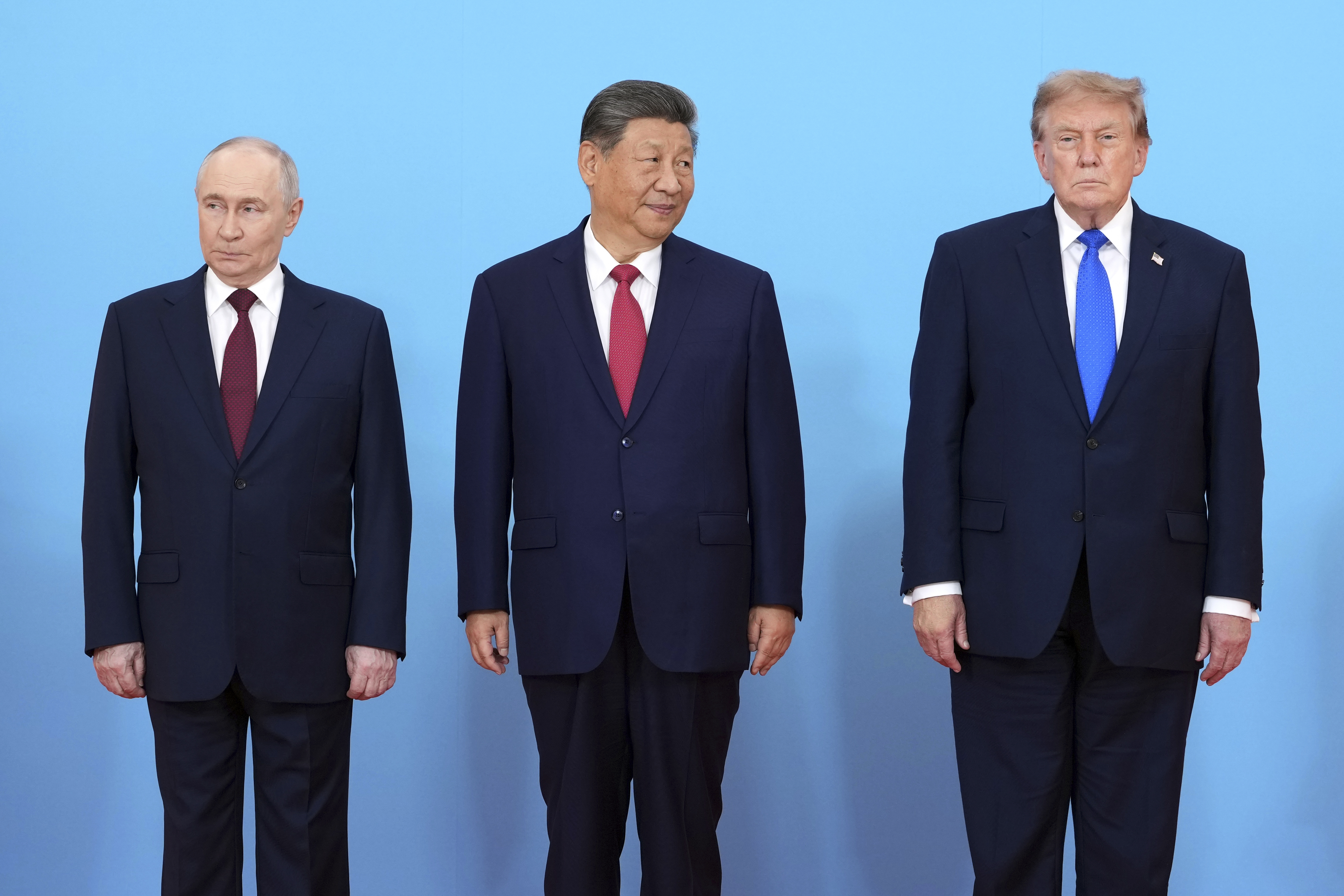
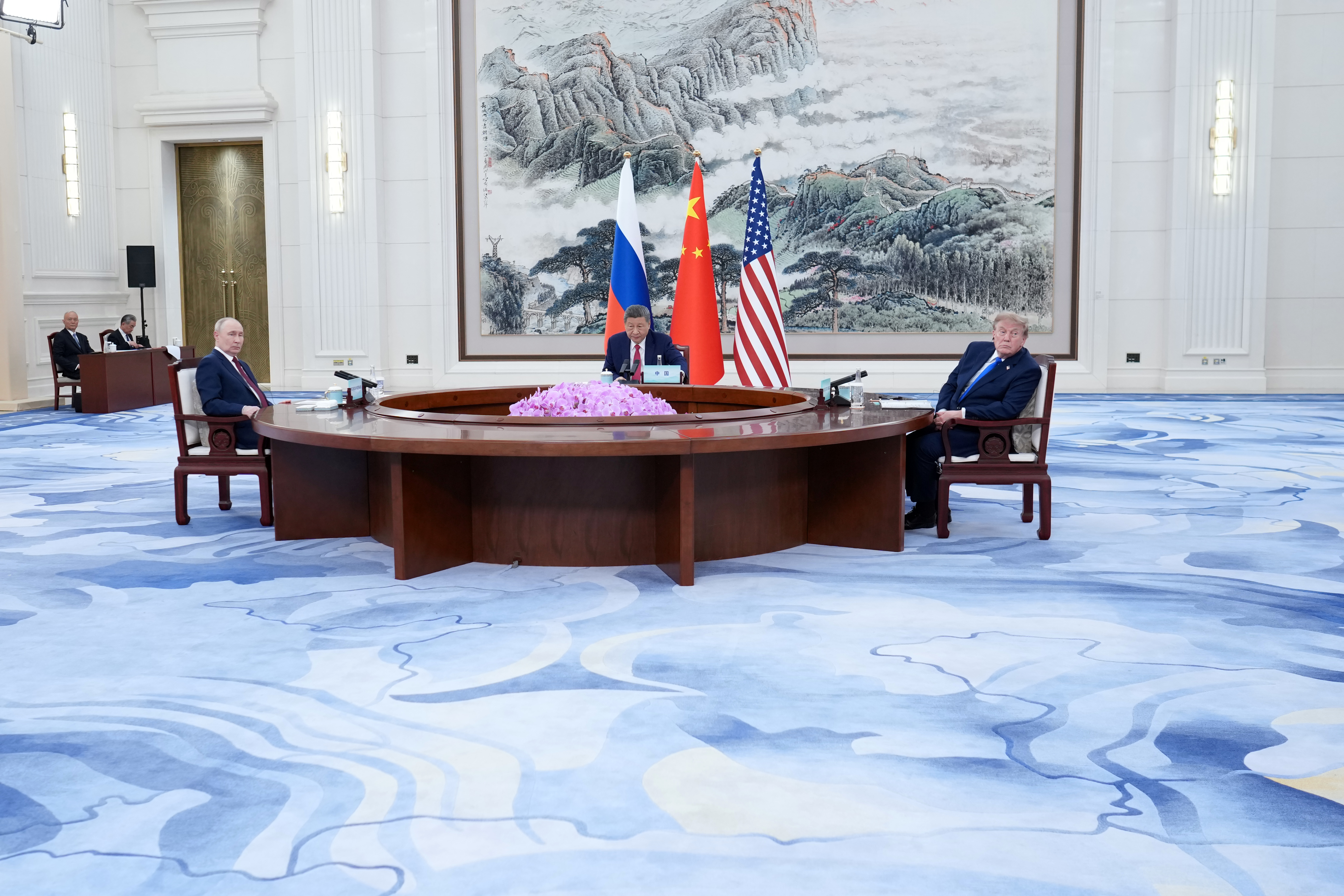
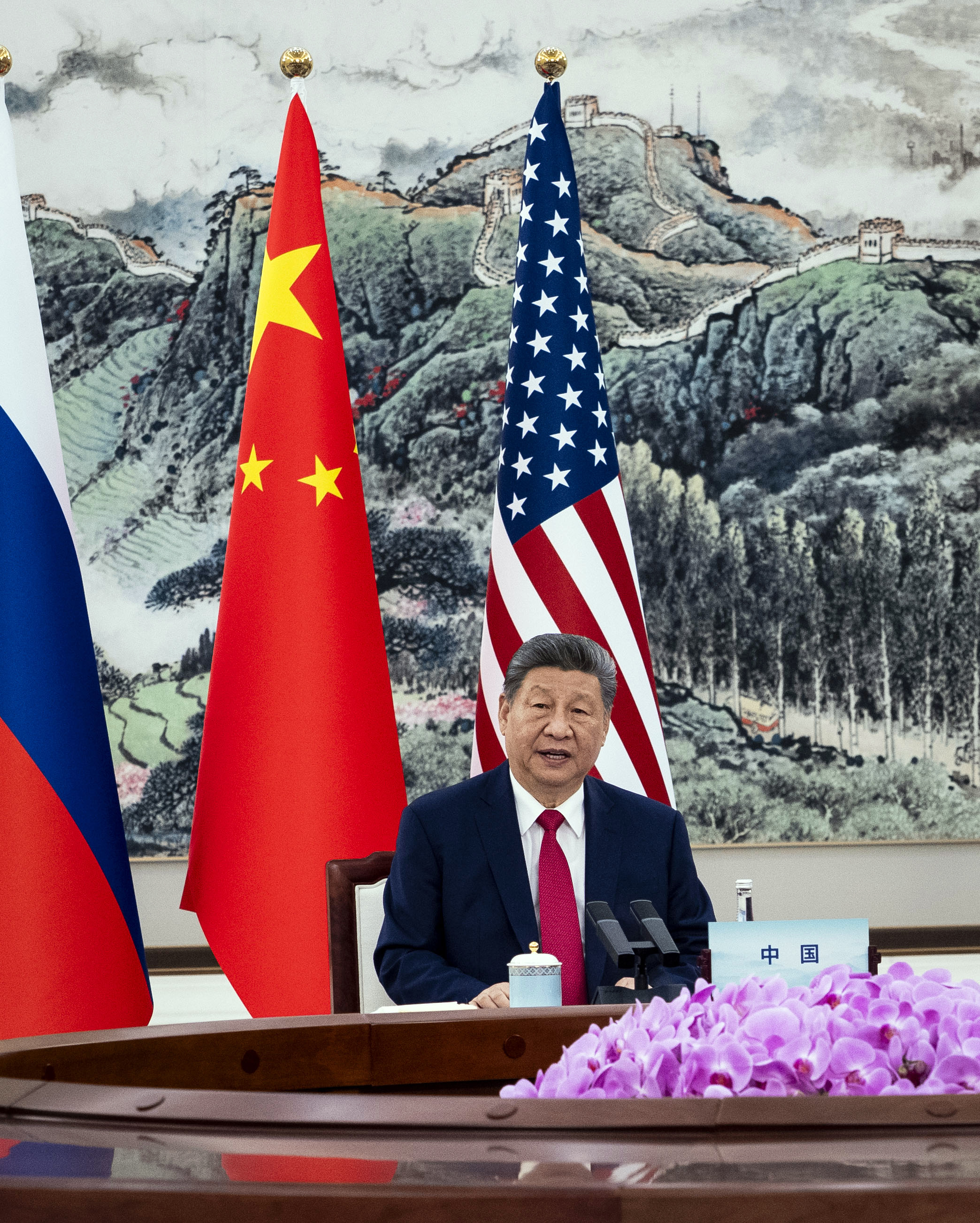
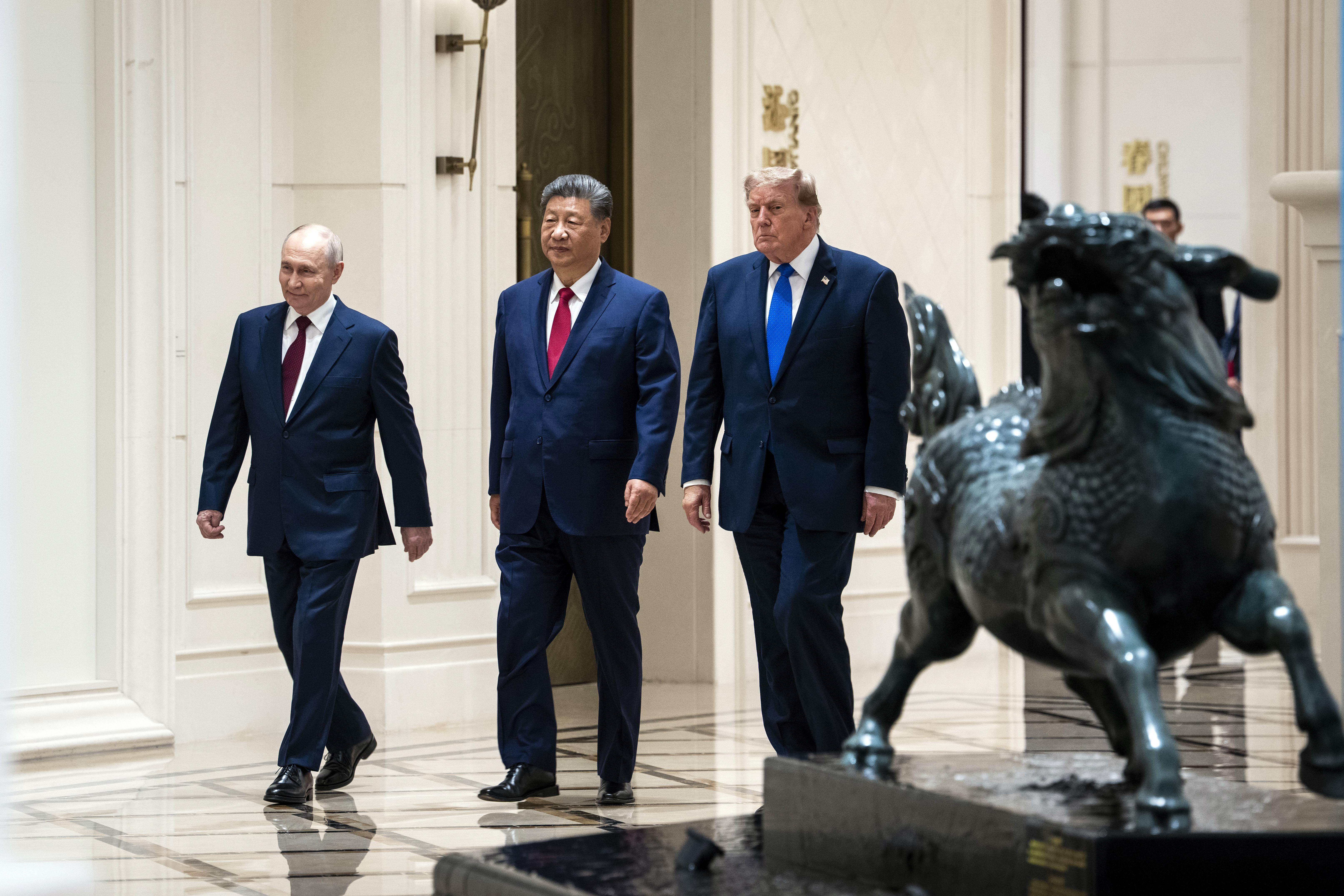
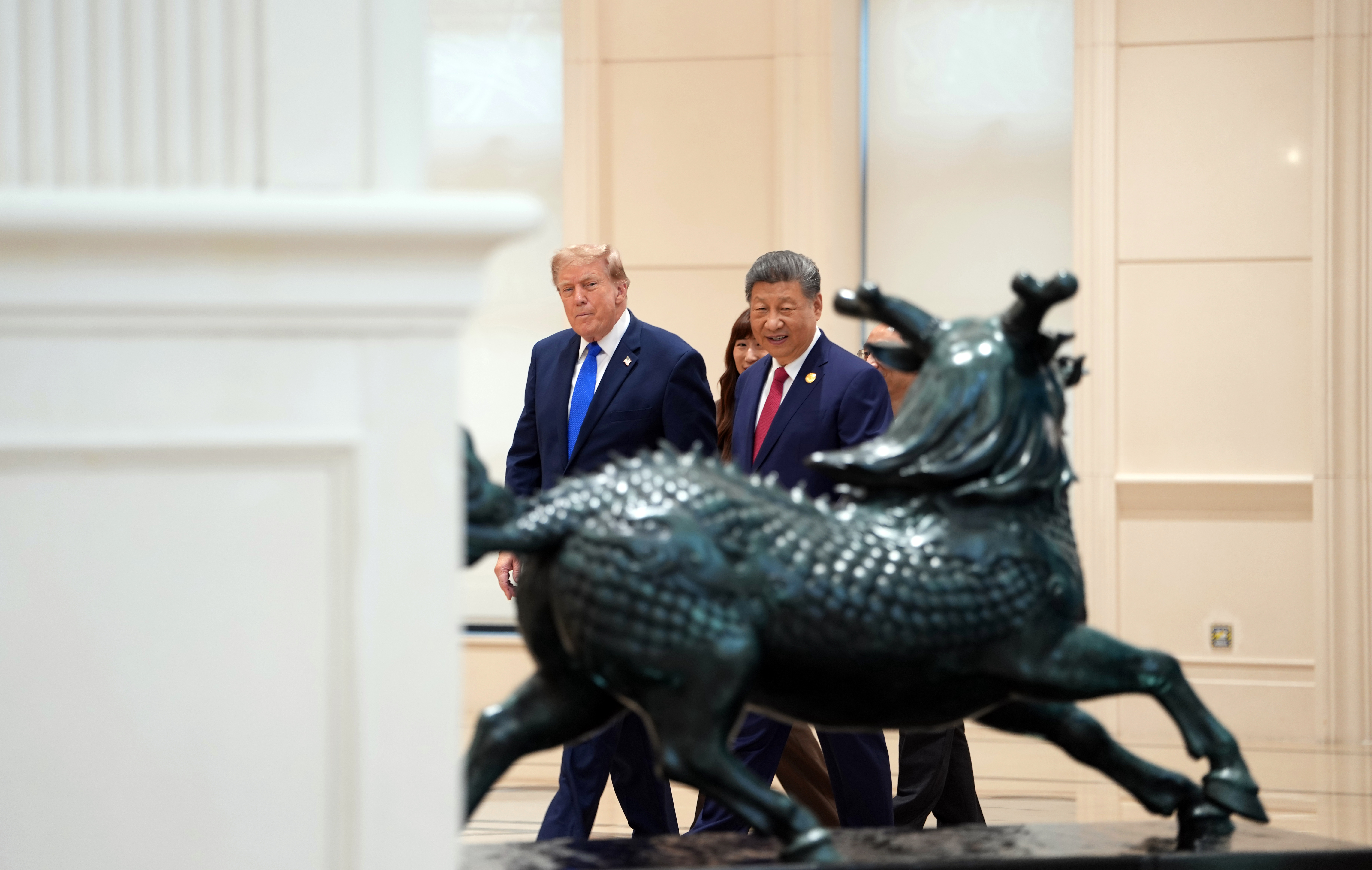
SHENZEN, China — President Donald Trump used his first-ever trilateral summit with Presidents Xi Jinping of China and Vladimir Putin of Russia on Thursday to say that their respective nations were “uniquely positioned to discuss how to reduce the number of nuclear weapons on earth.”
But after an 80-minute conversation at a lakeside villa in the city of Shenzhen, a Chinese technology hub, it was unclear whether the three leaders had agreed to return to the kind of arms control talks that for decades were a centerpiece of diplomacy among superpowers during the Cold War. On new threats, including artificial intelligence, the three leaders were largely silent.
Trump, who also met with Xi and Putin separately at the Asia-Pacific Economic Cooperation forum this week, appeared delighted to convene the world’s largest nuclear powers for a discussion about disarmament. But he did not come with a detailed plan for how to reduce the number of nuclear weapons, or outline a path to one.
Instead, Trump relished what amounted to a high-profile photo opportunity of the three leaders seated around a circular wooden table. For Trump, the main achievement seemed to be a mutual commitment to keep talking about peace — without taking meaningful steps toward it.
“Too often, past leaders avoided talking to nations with whom they had disagreements, and we feel the opposite,” Trump told Xi and Putin. “No peace was ever forged by declining opportunities for engagement and speech.”
After the summit, the leaders released a joint statement saying they had agreed to reform the United Nations, increase the production and supply of petroleum, oppose perceived abuses by the International Criminal Court against state officials, and continue their dialogue on reducing nuclear risks. “A nuclear war cannot be won and must never be fought,” the statement said.
While China, which has the fastest-growing nuclear arsenal on earth, agreed to participate in the three-way discussion of nuclear weapons, the leaders announced little concrete beyond agreeing to continue a dialogue on reducing nuclear risks. Xi has long been reluctant to agree to nuclear arms control because China’s arsenal remains a fraction the size of those belonging to Russia and the United States.
In the end, Trump’s whirlwind journey — two weeks after the Republican Party suffered a wipeout in the midterm elections and amid anxiety at home about widespread digital outages — amounted to a grand show of camaraderie.
As host of the tightly choreographed event, Xi flattered Trump and gave him an opportunity to ask for China’s assistance on matters ranging from ending global conflicts to spending more on U.S. agricultural goods. The summit also removed Putin from his status as a global pariah over his invasion of Ukraine, elevating him to a leader deserving of equal diplomatic footing.
But for all of the talk of peace, there was no announcement of breakthroughs in the talks the Trump administration is engaged in to end that conflict. Nor did Trump appear to dwell on finding a way out of the its war with Iran.
“We don’t need any help,” Trump said, when asked by a Fox News reporter before the summit whether he would seek assistance from the other leaders in ending a conflict of his own making. In fact, the help Trump could ask for would involve demanding that China and Russia stop assisting Iran: U.S. intelligence has concluded that both countries provided either technology or targeting information that likely helped the Iranians strike U.S. military bases in the Middle East.
On Fox News, Trump described the three-way conversation as a way to disrupt the growing “partnership without limits” that Xi and Putin say they have formed in recent years. Trump said he hoped to break up that alignment and turn it into a three-way conversation, rather than a partnership focused on countering American influence.
China and Russia’s alignment, Trump said, “should have never been allowed to happen.”
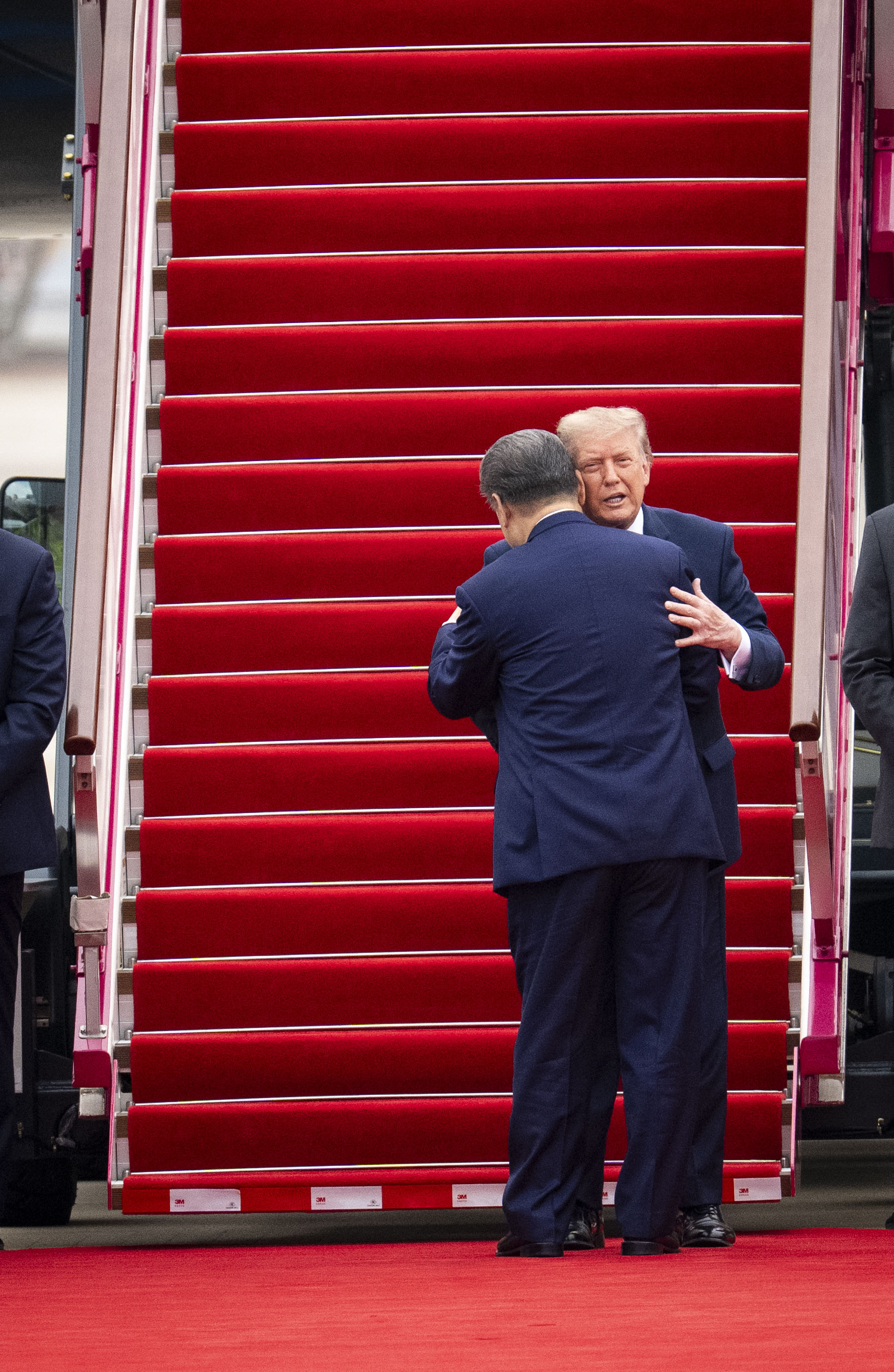
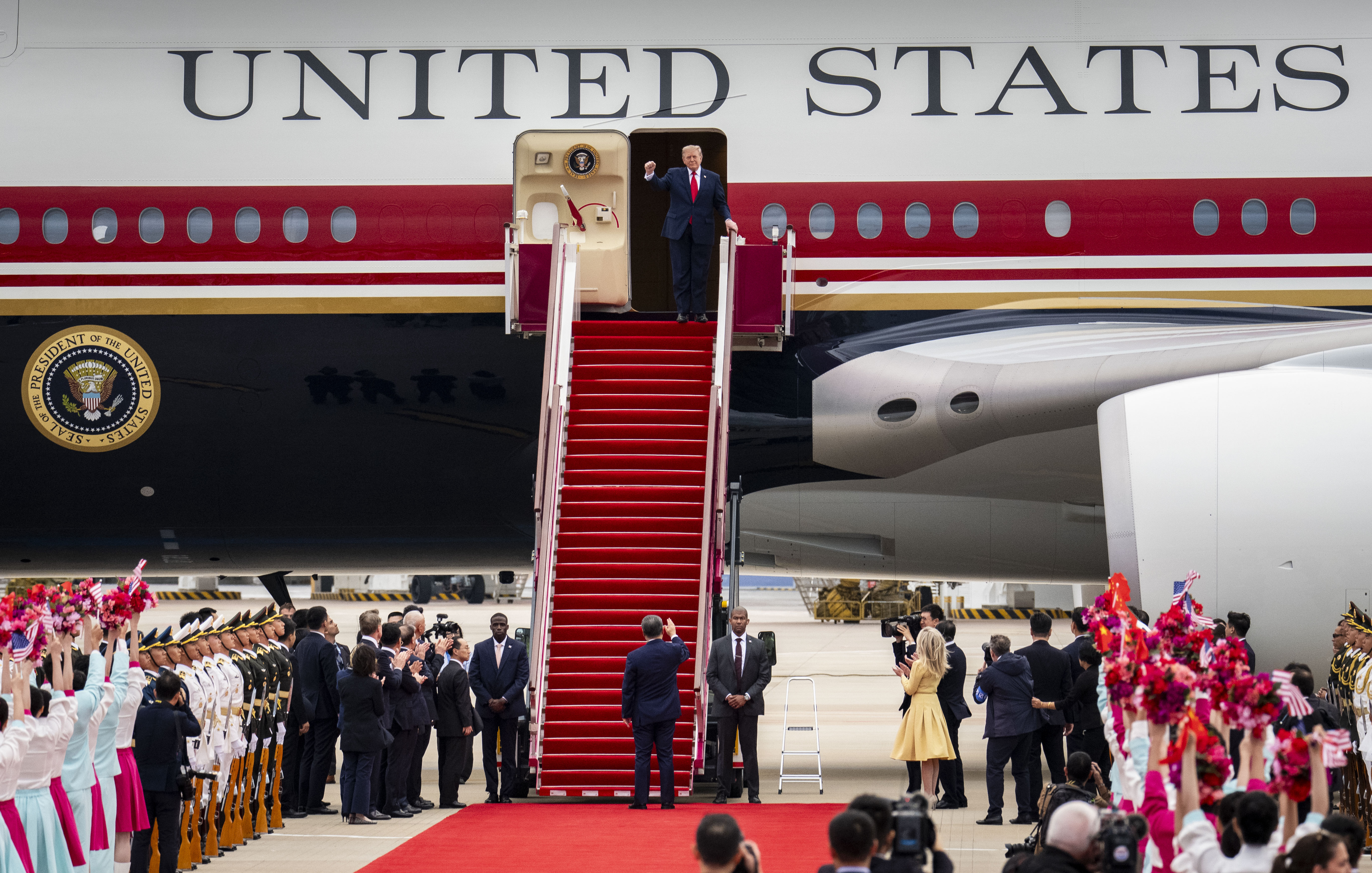
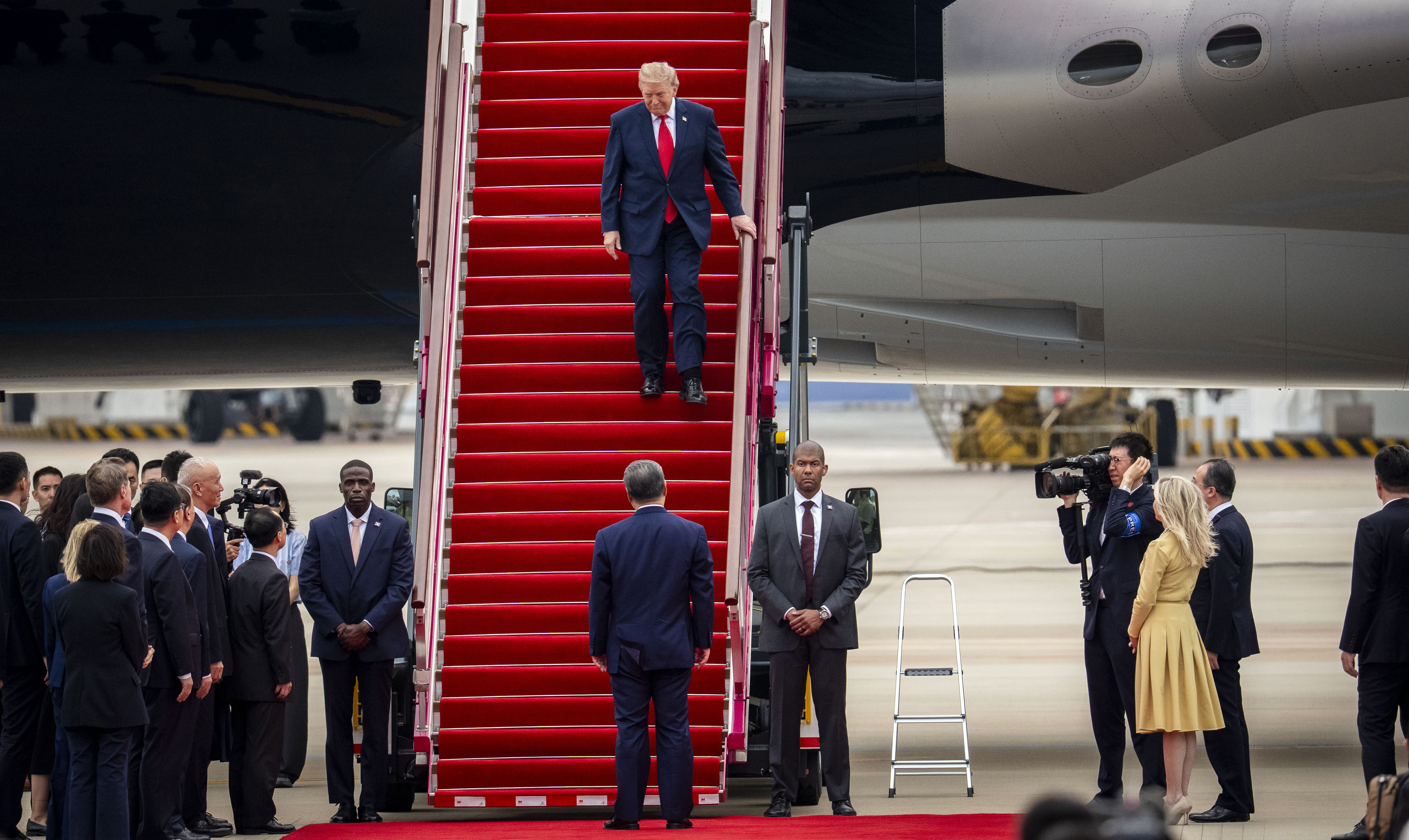
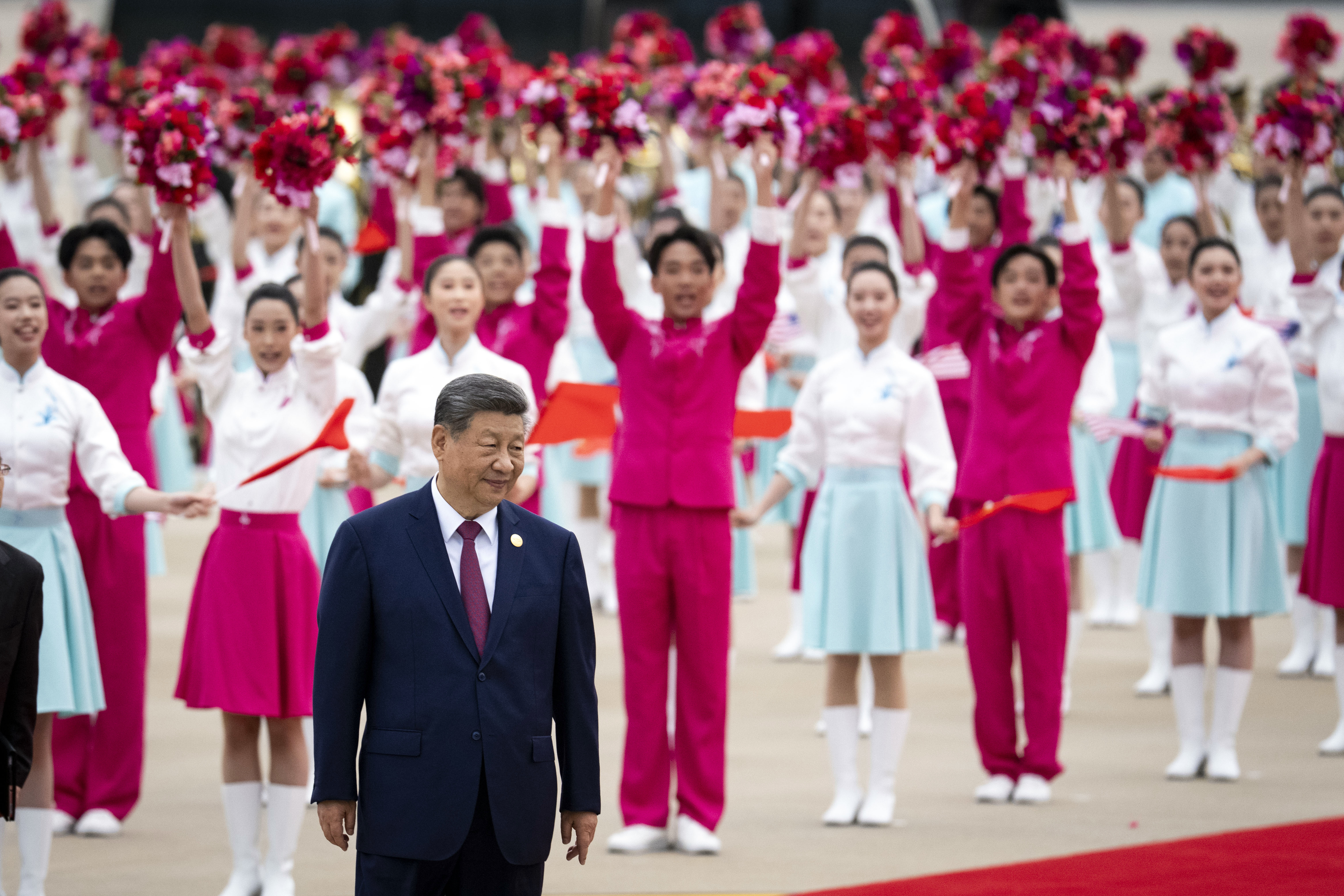
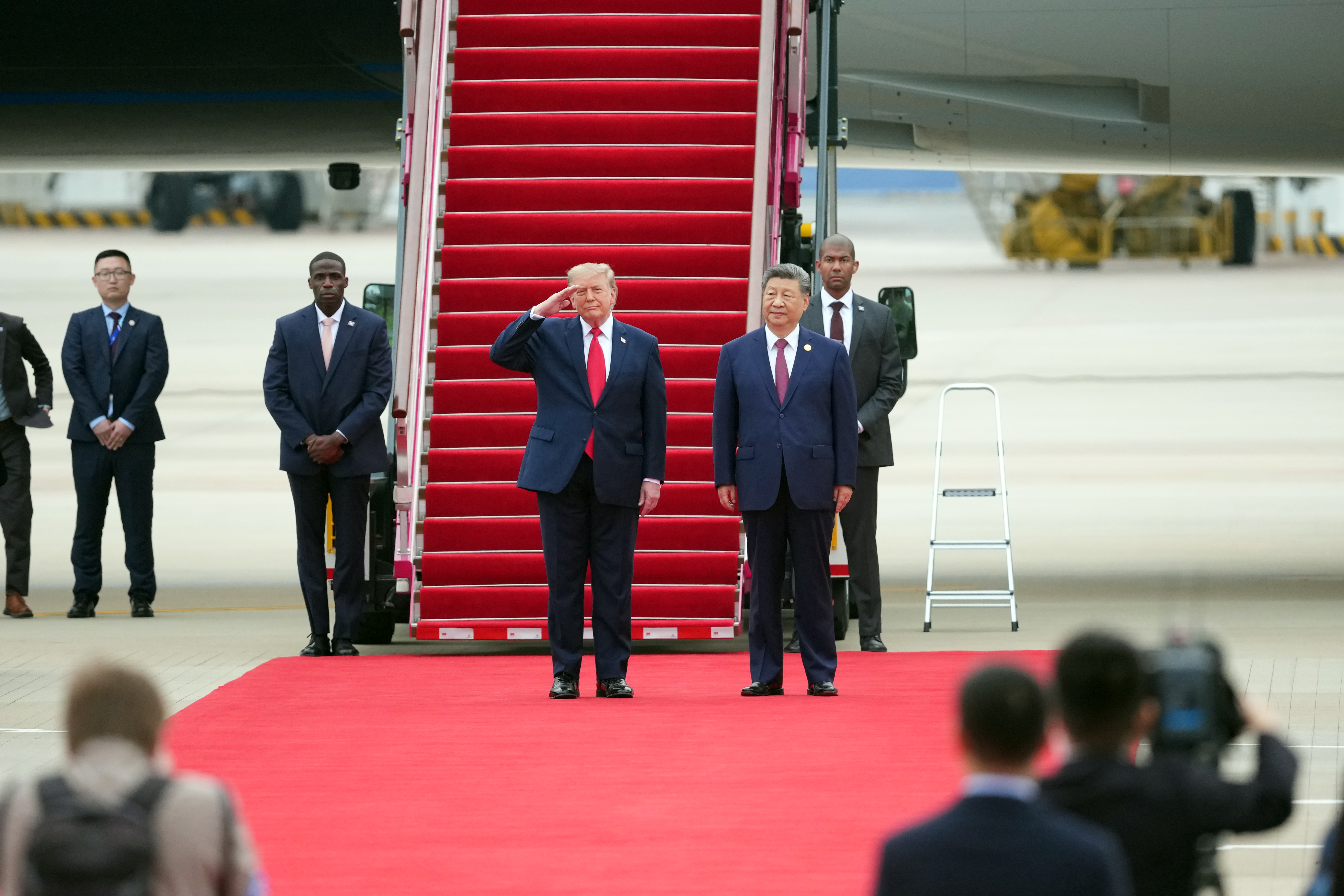
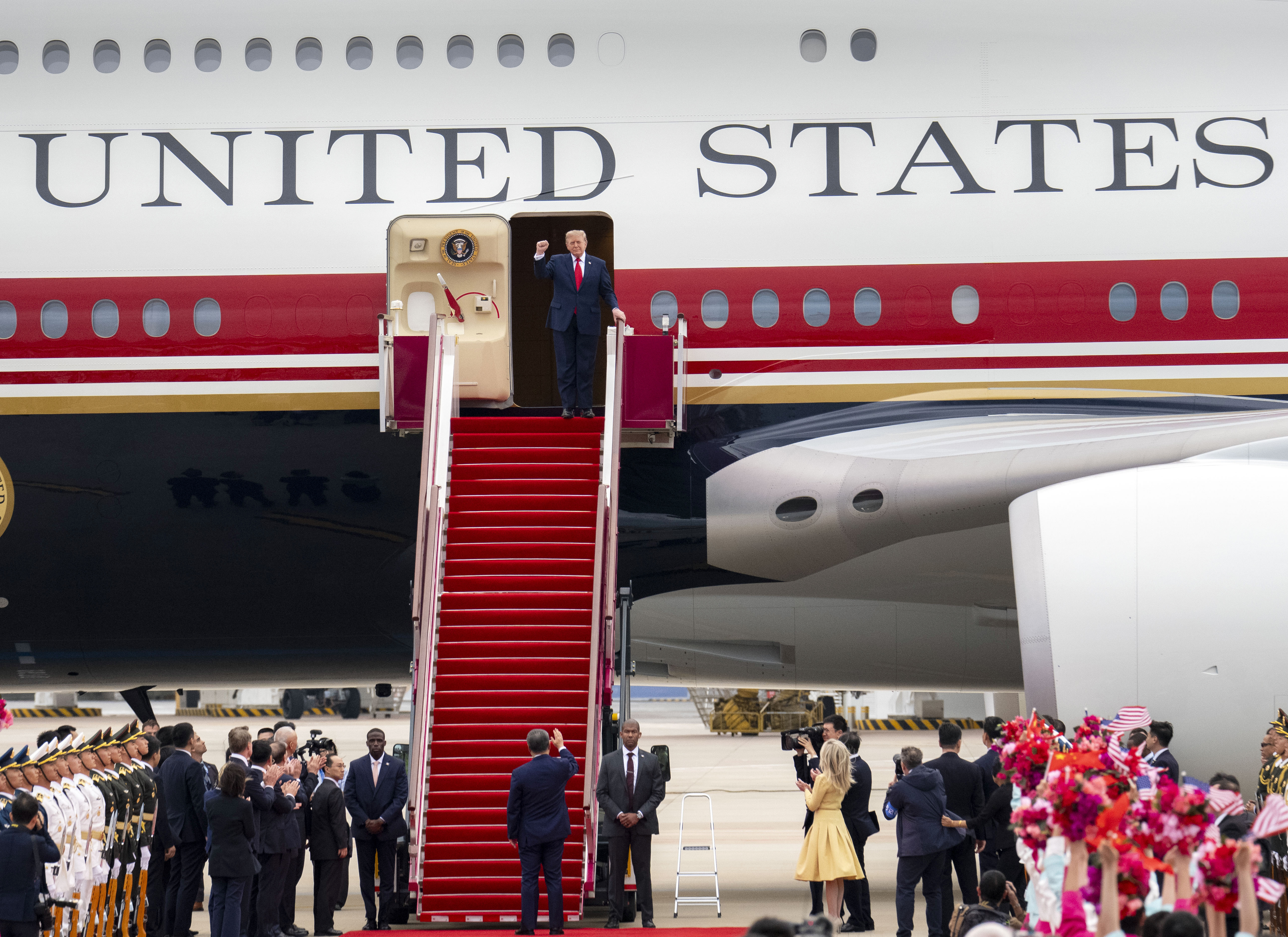
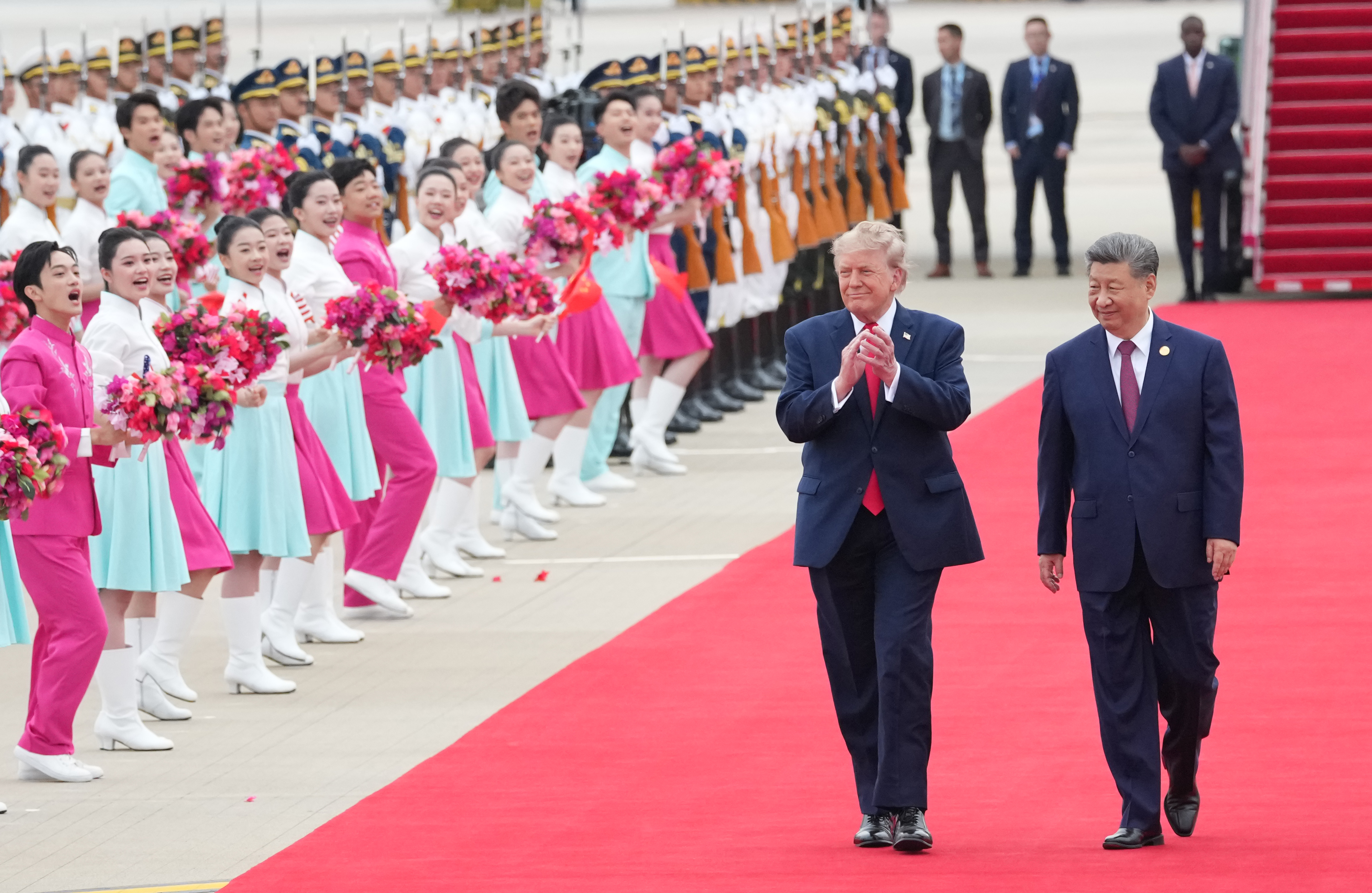
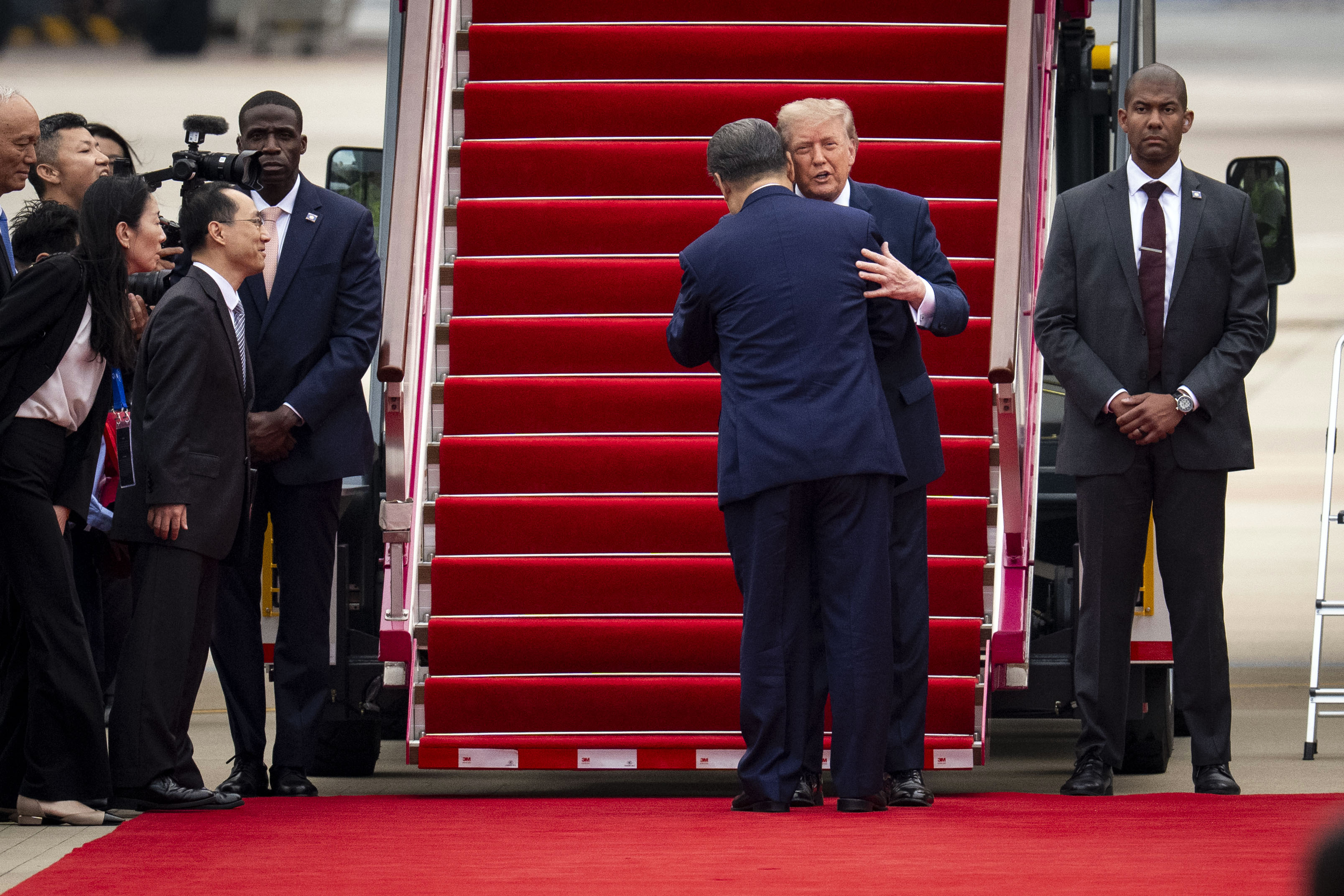
Seeking his own path into Xi’s good graces, Trump has held three meetings with the Chinese leader this year, with the goal of cooling a tit-for-tat trade war and of building up a personal relationship through mutual flattery. Trump traveled to Joint Base Andrews to welcome Xi to Washington in May, and Xi responded in kind when Trump arrived in Shenzhen on Wednesday, treating the president to a military exercise and a fleet of U.S. and Chinese flag-waving dancers in a flurry of pink, blue and white outfits.
In Shenzhen, the heart of China’s robotics, telecommunications, semiconductor and software industries, Trump did not visit the chief technological competitors to the United States, or see coffee-serving robots near the city’s center.
Still, he marveled over the ceremonial welcome and held it up as evidence of a warming bond, telling an interviewer that “one of the great presidents of China” had greeted him. “He’s never gone to the airport to meet somebody,” Trump said.
The president, who spends much of his time in the United States on bombastic appearances and incendiary social media posts, was on his best behavior alongside Xi. (He was his old self on Fox News before the summit, when he threatened to wipe out Iran should it attack the United States directly.)
Xi, for his part, said a much improved relationship between China and the United States in recent months was “the right way” for the two powers to “get along.” But he also warned that the key to keeping ties stable “lies in taking concrete actions to implement the consensus reached by the two heads of state.” The remarks came days after Washington moved to close a loophole on Chinese access to advanced AI chips.
As for Putin, the summit was his first encounter with Trump since the two men met in Alaska last year. That meeting was a diplomatic flop, and the war in Ukraine has intensified since then. The peace mechanism Trump advocated — a direct meeting between Putin and President Volodymyr Zelenskyy of Ukraine, moderated by Trump — has yet to materialize.
This time, White House officials were modest in their predictions. Expectations were set so low that White House officials who previewed the trip last week initially said Trump would not bring up the war in Ukraine at all, although he ultimately did.
In Shenzhen, Trump continued welcoming Russia back into the fold of great superpowers. He called Putin “my friend,” and insisted that all three leaders would like to see the war end quickly. The Russian leader reiterated after the meeting, however, that he would not be negotiating with Ukraine.
During the trilateral meeting, Xi and Putin embraced the idea of peaceful leadership, without making commitments that would be much of a burden to either of their countries. In his own remarks, Putin said their nations were “united not only by the status of being the victorious countries in World War II, but most importantly by the joint responsibility for maintaining international peace and security.”
And Xi mentioned a utopian goal that has pretty much fallen off the agenda of superpowers. He described nuclear weapons as a “sword of Damocles hanging over humanity” that should be eliminated. But Beijing has typically called on the United States to take the first steps in arms control, a demand that Trump seemed to acknowledge earlier in the day.
“For me, it’s a hard thing,” he told Fox News. “And it’s probably hard for them to do also.”
It has been done before, by Trump’s predecessors. Today, the United States and Russia each have slightly more than 5,000 nuclear warheads, and only 1,550 deployed under the New START treaty that expired earlier this year — down from tens of thousands on both sides during the Cold War.
China, however, was never a party to past nuclear reduction treaties, and it is now intent on building up to at least current Russian and U.S. levels.
Trump also said in Shenzen that he wanted to crack down on nuclear proliferation by smaller powers — his justification for attacking Iran — and restrain what he said were the excesses of “rogue” organizations like the International Criminal Court.
Putin is subject to an ICC arrest warrant over alleged war crimes in Ukraine. Nevertheless Trump welcomed the Russian leader in Alaska last year and extended an invitation to the Group of 20 summit next month in Florida. Putin told reporters after the meeting that he was unsure if he would attend.
One topic that went missing from each leader’s remarks was artificial intelligence, as China and the United States are locked in fierce competition over the new technology.
Trump did not answer a question, shouted by a Bloomberg News reporter at APEC earlier in the day, if the former CEO of Nvidia — a company that has been central to the AI boom — had been disloyal to the United States. The executive, Jensen Huang, resigned after he was found to have two extramarital relationships, including one with a woman who U.S. intelligence has determined is a Chinese asset.
The reporter who shouted the question was admonished by Chinese officials and barred from the trilateral meeting. Trump seemed blasé about the matter of espionage earlier in the day, telling Fox News that “we spy on them too.”
As the president basked in flattery from an authoritarian whose ironfisted leadership he has openly admired, he gently suggested that he had not received as much media coverage as he would have liked.
“It’s too bad the media couldn’t see some of it,” Trump said of his trip.
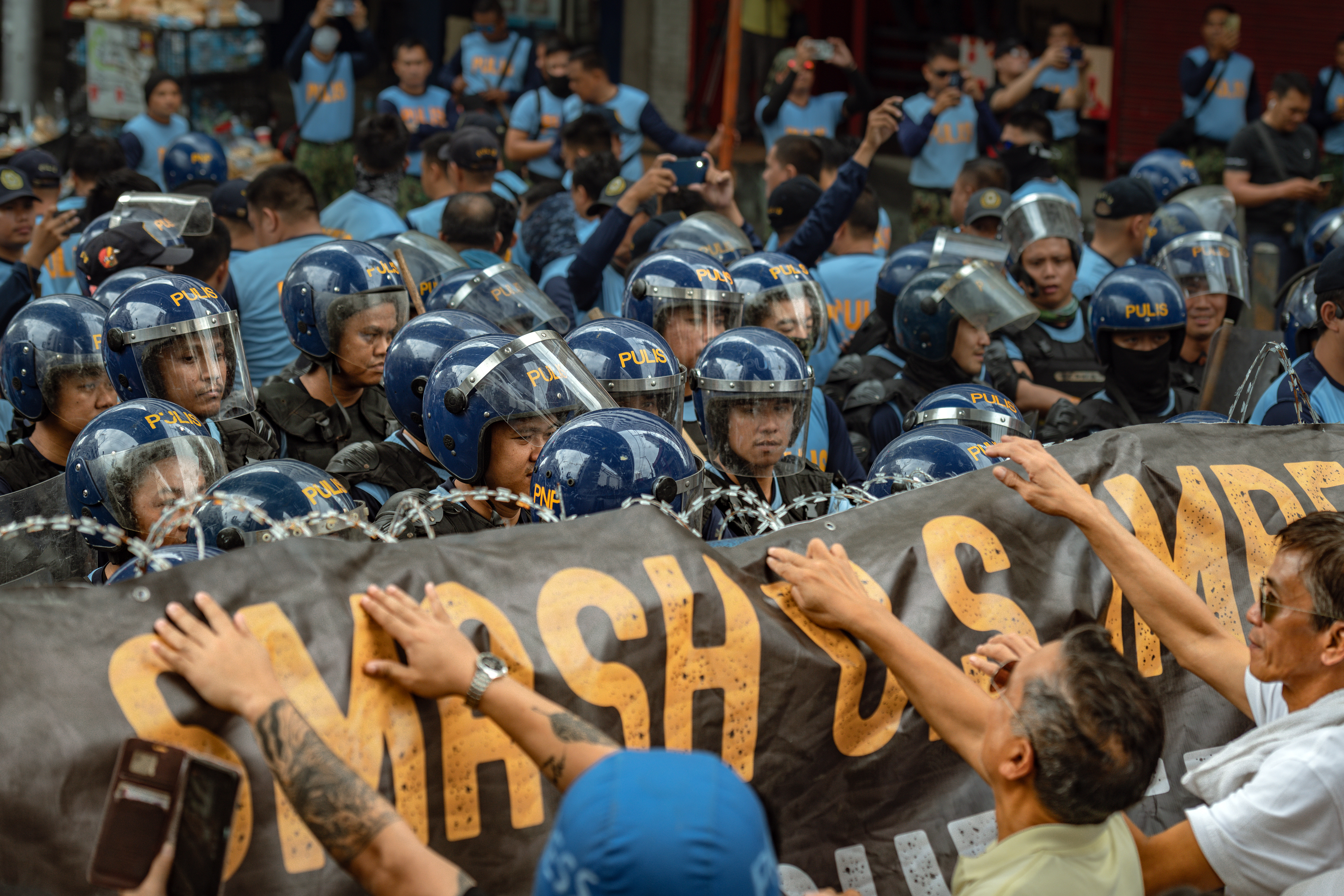
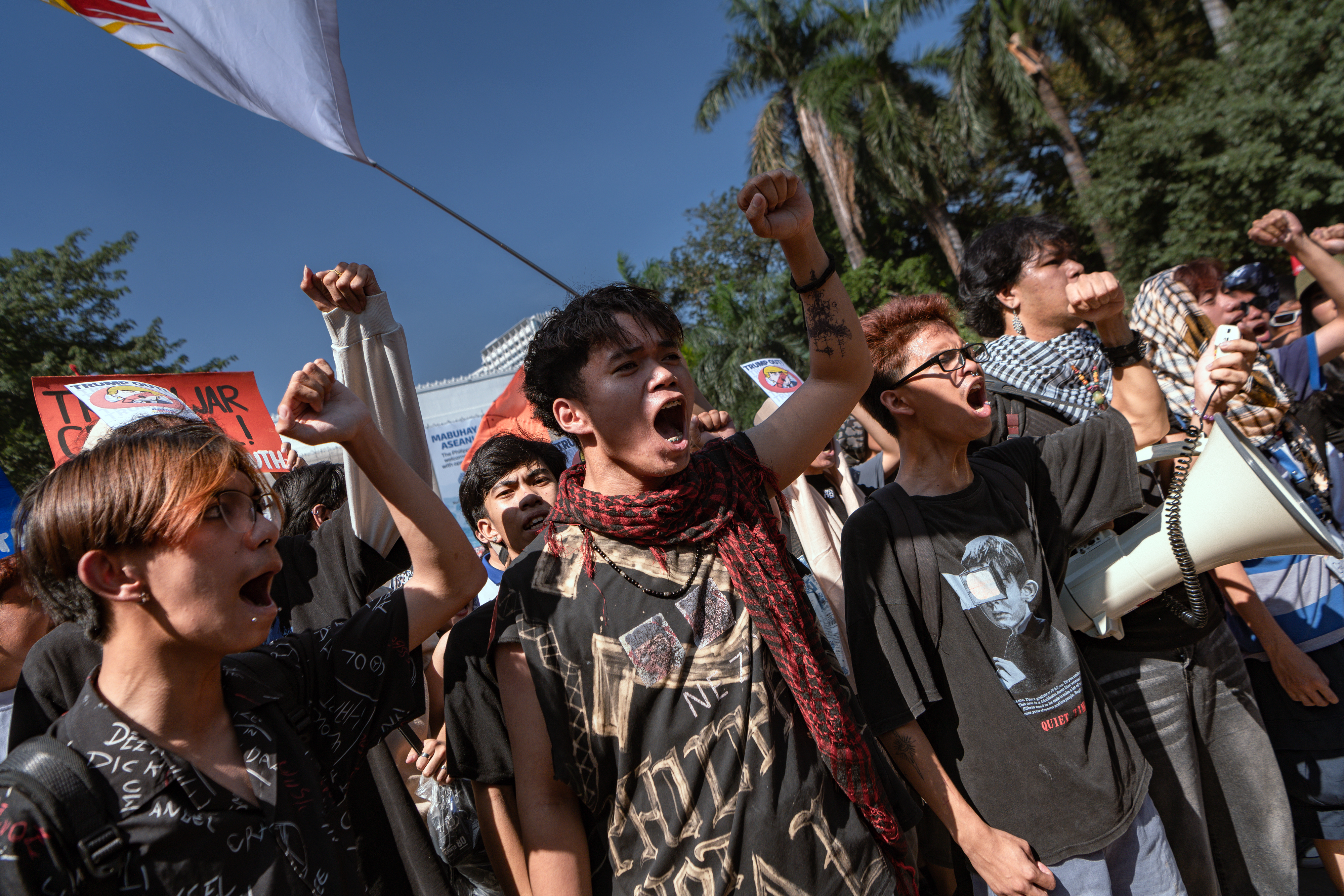
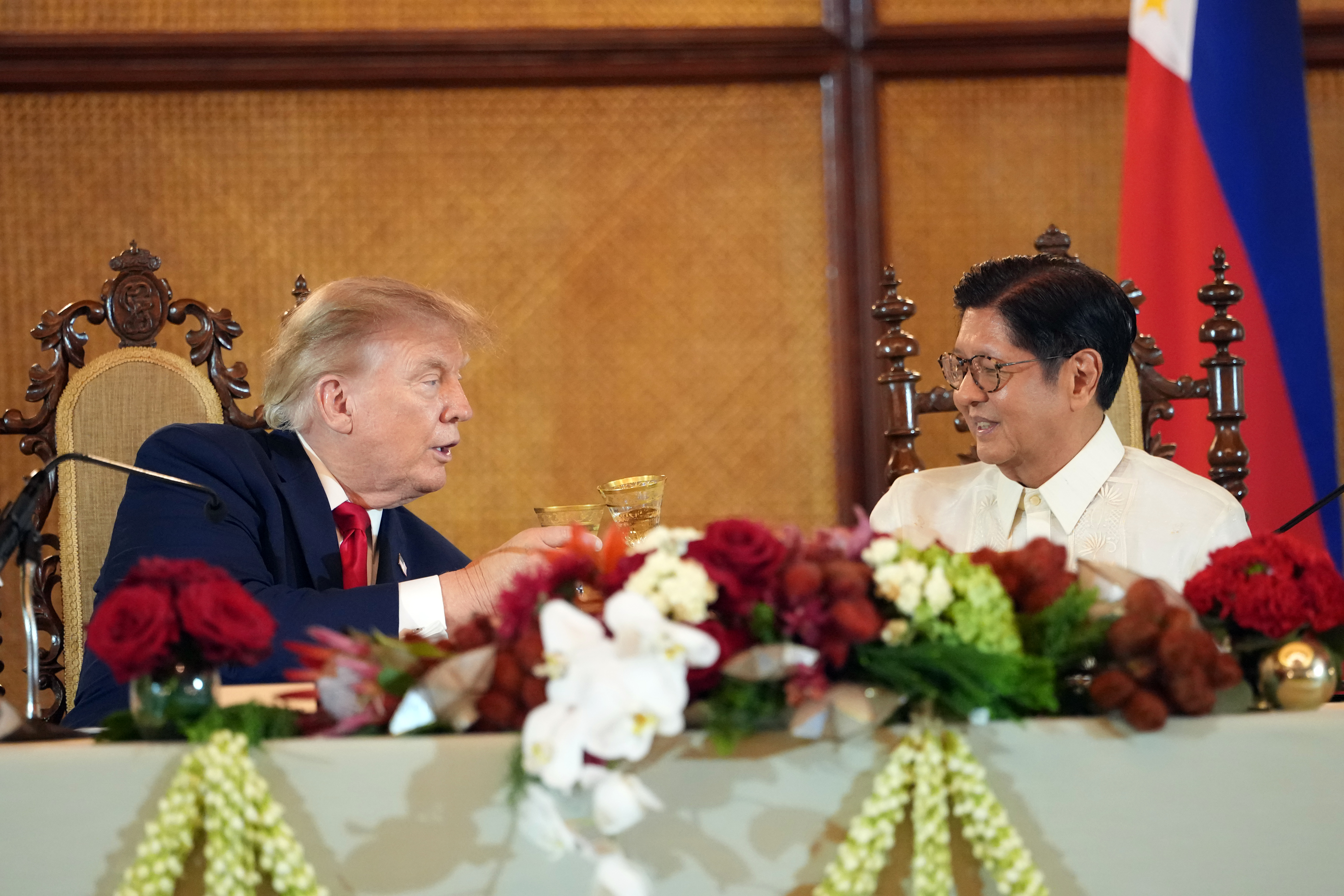
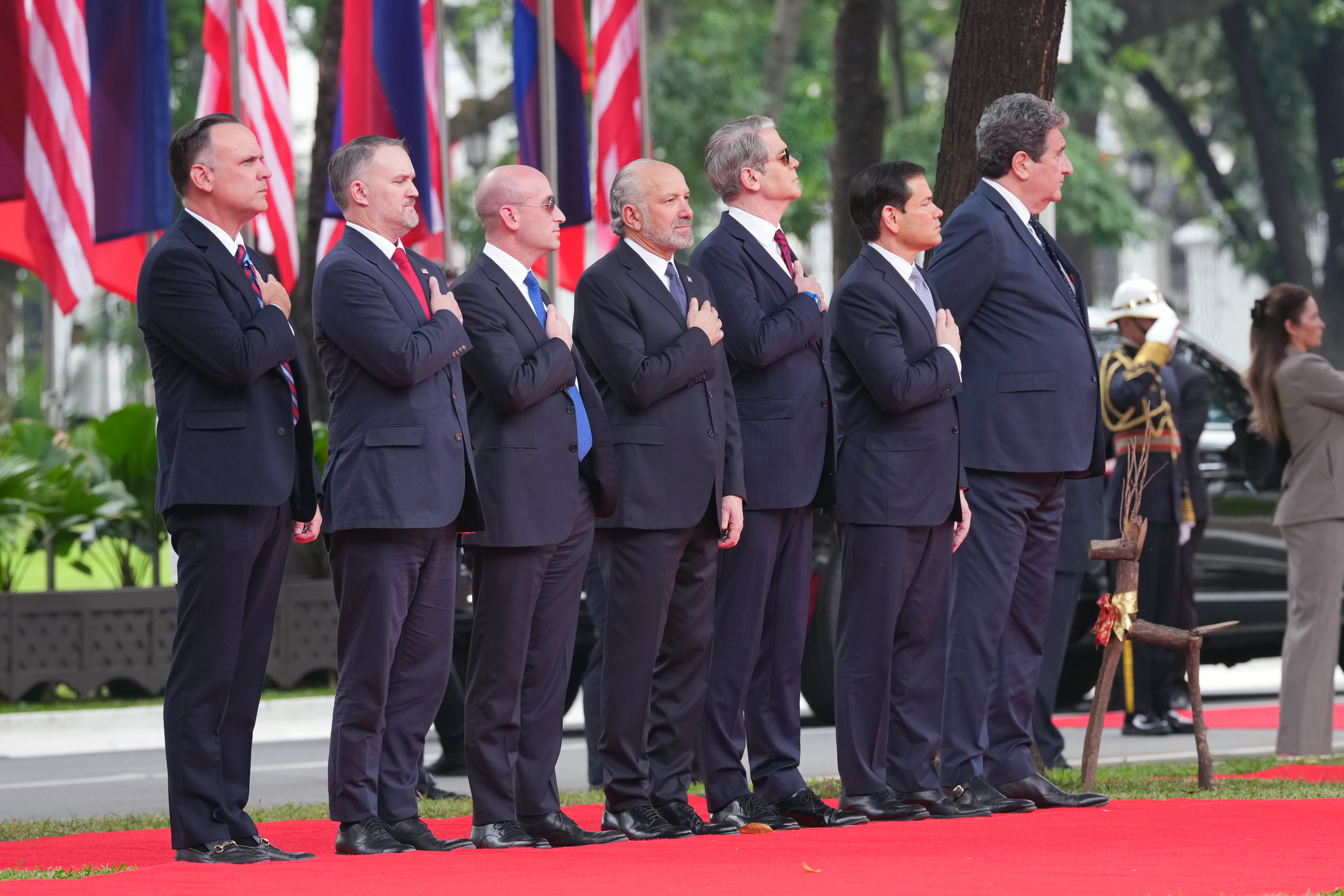
President Donald Trump, left, with President Xi Jinping of China before their bilateral meeting in Shenzhen, China, on Thursday, Nov. 19, 2026. Trump said that he would bring up the war in Ukraine at the first-ever meeting of leaders of Russia, China and the United States. (Doug Mills/The New York Times)DOUG MILLSFrom left: President Vladimir Putin of Russia, President Xi Jinping of China and President Donald Trump of the U.S. meet in Shenzhen, China, on Thursday, Nov. 19, 2026. Trump said that he would bring up the war in Ukraine at the first-ever meeting of leaders of Russia, China and the United States. (Doug Mills/The New York Times)DOUG MILLSPresident Donald Trump of the U.S. boards Air Force One after meeting withPresident Xi Jinping of China and President Vladimir Putin of Russia in Shenzhen, China, on Thursday, Nov. 19, 2026. Trump said before the meeting that he wanted to discuss nuclear weapons and the wars in Ukraine and Iran. But the three leaders appeared to refer to the topics only in vague terms. (Doug Mills/The New York Times)DOUG MILLSFrom left: President Vladimir Putin of Russia, President Donald Trump of the U.S. and President Xi Jinping of China meet in Shenzhen, China, on Thursday, Nov. 19, 2026. Trump said before the meeting that he wanted to discuss nuclear weapons and the wars in Ukraine and Iran. But the three leaders appeared to refer to the topics only in vague terms. (Doug Mills/The New York Times)DOUG MILLSFrom left: President Vladimir Putin of Russia, President Xi Jinping of China and President Donald Trump of the U.S. take their places for a group portrait in Shenzhen, China, on Thursday, Nov. 19, 2026. Trump said before the meeting that he wanted to discuss nuclear weapons and the wars in Ukraine and Iran. But the three leaders appeared to refer to the topics only in vague terms. (Doug Mills/The New York Times)DOUG MILLSPresident Donald Trump of the U.S., right, and President Xi Jinping of China during their trilateral meeting with President Vladimir Putin of Russia, not pictured, in Shenzhen, China, on Thursday, Nov. 19, 2026. Trump said before the meeting that he wanted to discuss nuclear weapons and the wars in Ukraine and Iran. But the three leaders appeared to refer to the topics only in vague terms. (Doug Mills/The New York Times)DOUG MILLSPresident Donald Trump, left, with President Xi Jinping of China before their bilateral meeting in Shenzhen, China, on Thursday, Nov. 19, 2026. Trump said that he would bring up the war in Ukraine at the first-ever meeting of leaders of Russia, China and the United States. (Doug Mills/The New York Times)DOUG MILLSPresident Donald Trump, left, with President Xi Jinping of China before their bilateral meeting in Shenzhen, China, on Thursday, Nov. 19, 2026. Trump said that he would bring up the war in Ukraine at the first-ever meeting of leaders of Russia, China and the United States. (Doug Mills/The New York Times)DOUG MILLSPresident Donald Trump of the U.S. speaks as he sits across the table from President Xi Jinping of China during their bilateral meeting in Shenzhen, China, on Thursday, Nov. 19, 2026. Trump said that he would bring up the war in Ukraine at the first-ever meeting of leaders of Russia, China and the United States. (Doug Mills/The New York Times)DOUG MILLSPresident Xi Jinping of China speaks during a trilateral meeting with President Donald Trump of the U.S. and President Vladimir Putin of Russia in Shenzhen, China, on Thursday, Nov. 19, 2026. Trump said that he would bring up the war in Ukraine at the first-ever meeting of leaders of Russia, China and the United States. (Doug Mills/The New York Times)DOUG MILLSPresident Vladimir Putin of Russia meets with President Xi Jinping of China and President Donald Trump of the U.S. in Shenzhen, China, on Thursday, Nov. 19, 2026. Trump said that he would bring up the war in Ukraine at the first-ever meeting of leaders of Russia, China and the United States. (Doug Mills/The New York Times)DOUG MILLSFrom left, President Vladimir Putin of Russia, President Xi Jinping of China; and President Donald Trump of the U.S. in Shenzhen, China, on Thursday, Nov. 19, 2026. Trump said that he would bring up the war in Ukraine at the first-ever meeting of leaders of Russia, China and the United States. (Doug Mills/The New York Times)DOUG MILLSPresident Donald Trump, left, with President Xi Jinping of China before their bilateral meeting in Shenzhen, China, on Thursday, Nov. 19, 2026. Trump said that he would bring up the war in Ukraine at the first-ever meeting of leaders of Russia, China and the United States. (Doug Mills/The New York Times)DOUG MILLSPresident Xi Jinping of China , center, speaks during a meeting with President Vladimir Putin of Russia, left, and President Donald Trump of the U.S. in Shenzhen, China, on Thursday, Nov. 19, 2026. Trump said that he would bring up the war in Ukraine at the first-ever meeting of leaders of Russia, China and the United States. (Doug Mills/The New York Times)DOUG MILLSPresident Donald Trump, left, with President Xi Jinping of China at their bilateral meeting in Shenzhen, China, on Thursday, Nov. 19, 2026. Trump said that he would bring up the war in Ukraine at the first-ever meeting of leaders of Russia, China and the United States. (Doug Mills/The New York Times)DOUG MILLSPresident Donald Trump of the U.S. meets with President Xi Jinping of China and President Vladimir Putin of Russia in Shenzhen, China, on Thursday, Nov. 19, 2026. Trump said that he would bring up the war in Ukraine at the first-ever meeting of leaders of Russia, China and the United States. (Doug Mills/The New York Times)DOUG MILLSPresident Donald Trump, right, poses for a group portrait with President Xi Jinping of China, center, and President Vladimir Putin of Russia before their meeting in Shenzhen, China, on Thursday, Nov. 19, 2026. Trump said that he would bring up the war in Ukraine at the first-ever meeting of leaders of Russia, China and the United States. (Doug Mills/The New York Times)DOUG MILLSPresident Donald Trump, right, poses for a group portrait with President Xi Jinping of China, center, and President Vladimir Putin of Russia before their meeting in Shenzhen, China, on Thursday, Nov. 19, 2026. Trump said that he would bring up the war in Ukraine at the first-ever meeting of leaders of Russia, China and the United States. (Doug Mills/The New York Times)DOUG MILLSTroops march in formation as President Donald Trump is welcomed upon his arrival at the airport in Shenzhen, China, on Wednesday, Nov. 18, 2026. (Doug Mills/The New York Times)DOUG MILLSPresident Donald Trump is embraced by Xi Jinping, the Chinese leader, upon his arrival at the airport in Shenzhen, China, on Wednesday, Nov. 18, 2026. Xi told Trump that he took the unusual move for a Chinese leader of greeting him at the airport because the American president had done the same for him when he visited the United States in September. “China is a nation of etiquette with a tradition of reciprocity,” Xi said, according to Chinese state media. (Doug Mills/The New York Times)DOUG MILLSRETRANSMISSION TO PROVIDE WIDER CROP AND ADDITIONAL CAPTION INFO — .President Donald Trump gestures as he arrives at the airport in Shenzhen, China, on Wednesday, Nov. 18, 2026. President Xi Jinping of China waves to Trump from the bottom of the stairs. Xi told Trump that he took the unusual move for a Chinese leader of greeting him at the airport because the American president had done the same for him when he visited the United States in September. “China is a nation of etiquette with a tradition of reciprocity,” Xi said, according to Chinese state media. (Doug Mills/The New York Times)DOUG MILLSProtesters in Manila, the Philippines, face off against police in riot gear as they denounce President Donald Trump’s visit and the U.S.-led Pax Silica initiative on Wednesday, Nov. 18, 2026. (Jes Aznar/The New York Times)JES AZNARXi Jinping, the Chinese leader, back to camera, waits to greet President Donald Trump upon his arrival at the airport in Shenzhen, China, on Wednesday, Nov. 18, 2026. It was a rare personal greeting by Xi before a summit they are expected to hold with President Vladimir Putin of Russia. (Doug Mills/The New York Times)DOUG MILLSProtesters in Manila, the Philippines, take to the streets to denounce President Donald Trump’s visit andthe U.S.-led Pax Silica initiative on Wednesday, Nov. 18, 2026. (Jes Aznar/The New York Times)JES AZNARPolice officers are deployed as protesters in Manila, the Philippines, take to the streets to denounce President Donald Trump’s visit and the U.S.-led Pax Silica initiative on Wednesday, Nov. 18, 2026. (Jes Aznar/The New York Times)JES AZNARPolice officers are deployed as protesters in Manila, the Philippines, take to the streets to denounce President Donald Trump’s visit and the U.S.-led Pax Silica initiative on Tuesday, Nov. 17, 2026. (Jes Aznar/The New York Times)JES AZNARProtesters in Manila, the Philippines, take to the streets to denounce President Donald Trump’s visit andthe U.S.-led Pax Silica initiative on Tuesday, Nov. 17, 2026. (Jes Aznar/The New York Times)JES AZNARSecretary of State Marco Rubio, who is accompanying President Donald Trump on his trip to Asia, departs after speaking to reporters in Manila, the Philippines, on Wednesday, Nov. 18, 2026. (Doug Mills/The New York Times)DOUG MILLSPresident Donald Trump, left, President President Ferdinand Marcos Jr. of the Philippines in Manila on Wednesday, Nov. 18, 2026. (Doug Mills/The New York Times)DOUG MILLSPresident Donald Trump, center, arrives for a meeting with President President Ferdinand Marcos Jr. of the Philippines in Manila on Wednesday, Nov. 18, 2026. Looking on are, from right: Deputy White House Chief of Staff Dan Scavino; White House Chief of Staff Stephen Miller; Treasury Secretary Scott Bessent; and Secretary of State Marco Rubio. (Doug Mills/The New York Times)DOUG MILLSPresident President Ferdinand Marcos Jr. of the Philippines, right, welcomes President Donald Trump to the presidential palace in Manila, the Philippines on Wednesday, Nov. 18, 2026. (Doug Mills/The New York Times)DOUG MILLSThe U.S. delegation during a welcome ceremony for President Donald Trump at the presidential palace in Manila, the Philippines on Wednesday, Nov. 18, 2026. From left: Deputy White House Chief of Staff Dan Scavino; U.S. Trade Representative Jamieson Greer; White House Chief of Staff Stephen Miller; Commerce Secretary Howard Lutnick; Treasury Secretary Scott Bessent; and Secretary of State Marco Rubio. (Doug Mills/The New York Times)DOUG MILLSXi Jinping, the Chinese leader, looks on during a welcome ceremony for President Donald Trump at the airport in Shenzhen, China, on Wednesday, Nov. 18, 2026. It was a rare personal greeting by Xi before a summit they are expected to hold with President Vladimir Putin of Russia. (Doug Mills/The New York Times)DOUG MILLSPresident Donald Trump salutes as he is welcomed by Xi Jinping, the Chinese leader, upon his arrival at the airport in Shenzhen, China, on Wednesday, Nov. 18, 2026. It was a rare personal greeting by Xi before a summit they are expected to hold with President Vladimir Putin of Russia. (Doug Mills/The New York Times)DOUG MILLSPresident Donald Trump gestures as he arrives at the airport in Shenzhen, China, on Wednesday, Nov. 18, 2026. (Doug Mills/The New York Times)DOUG MILLSA colorful flyover by military jets as President DOnald Trump is welcomed upon his arrival at the airport in Shenzhen, China, on Wednesday, Nov. 18, 2026. (Doug Mills/The New York Times)DOUG MILLSTroops march in formation as President DOnald Trump is welcomed upon his arrival at the airport in Shenzhen, China, on Wednesday, Nov. 18, 2026. (Doug Mills/The New York Times)DOUG MILLSPresident Donald Trump, left, is welcomed by Xi Jinping, the Chinese leader, upon his arrival at the airport in Shenzhen, China, on Wednesday, Nov. 18, 2026. It was a rare personal greeting by Xi before a summit they are expected to hold with President Vladimir Putin of Russia. (Doug Mills/The New York Times)DOUG MILLSPresident Donald Trump is embraced by Xi Jinping, the Chinese leader, upon his arrival at the airport in Shenzhen, China, on Wednesday, Nov. 18, 2026. It was a rare personal greeting by Xi before a summit they are expected to hold with President Vladimir Putin of Russia. (Doug Mills/The New York Times)DOUG MILLS
Caitlin Buttery used to spend a lot of time biking through Philadelphia to farmers markets for fresh, local, seasonal groceries. That became more challenging when she moved to the suburbs, with options farther apart and two young children.
So when Buttery drove past a yard sign asking members to sign on to support Kennett Community Grocer, she immediately sent in the $300 membership fee. Now, as board secretary to the cooperative, farm-stop grocery store, she and the leadership behind it are excited to bring a diverse collection of local offerings to the community.
“It’s somewhere I can stop, and it’s much easier, much less time than the five days a week I would spend grocery shopping before,” she said.
Caitlin Buttery, secretary of the Kennett Community Grocer’s leadership board, waiting to fill the shelves on Nov. 17.Steven M. Falk / For The Inquirer
Eight years in the making, Kennett Community Grocer is slated to open on Monday at 629 E. Cypress St. in Kennett Square, with local producers selling on consignment goods including fresh produce, fermented products, artisanal cheeses, grab-and-go food, pantry staples, andhandmade and small-batch artisan items. A majority of the products are from Chester County, or within about a 75-mile radius. To fill gaps for goods not found in the county (such as beans or maple syrup), staff purchase through a distributor that sells items from independent, small businesses.
The grocery store, which will be open 8 a.m. to 7 p.m. every day, is a co-op and “farm stop” model, giving members, who pay a one-time membership fee, a say in board leadership and what appears on shelves, plus discounts and access to private events and workshops. Anyone canshop, regardless of membership.
The co-op has about 550 members so far and is seeing more trickle in as the store prepares to open.
A “farm stop” works with local farmers, who set the prices and take home 70% of the proceeds (the rest pays nine staff members and keeps the lights on). Frequent flyers at Kennett Square Farmers Market will likely recognize some of the labels, as that is where the store’s leadership started when it began reaching out to producers.
“I stop at the farm stands when I can. But there’s only so many you can do,” said Stu Mundth, vice president of the board. “This is kind of bridging the gap where we can bring more local food to more people and really support everyone.”
Caitlin Buttery, secretary, left and Greg Gurev, board president, talk on Nov. 17 about the opening of Kennett Community Grocer.Steven M. Falk / For The Inquirer
Kennett Square and surrounding Kennett Township are exploding in population growth, but are still swaddled by farmland — not just the quintessential mushrooms, but dairy, vegetable, and row crops, too — making it a prime location to connect the town with the farmers nearby. Chester County, with its long agricultural history, recently welcomed another cooperative grocer, West Chester Cooperative. The model is seeing success in the region; Weavers Way Co-Op, based in Philadelphia, is relocating one of its stores to a bigger spot to accommodate a growing clientele.
On the ground, Rachel Sanchez, the general manager of the new co-op, has been tasked with finding producers to stock the shelves. Sanchez had a career working in natural food at Whole Foods and Harvest Market in Hockessin, Del.
“I quickly started to get that, No. 1, there is an abundance of food being made in our nearby area in our region, not only in Chester County … and the majority of those producers want to be in a retail space, and they want to be in an area where they don’t live, so that they can reach a wider audience,” she said.
From left to right, Greg Gurev, board president; Stu Mundth, vice president; and Caitlin Buttery, secretary. None of the three board members had a background in natural food before they began volunteering with Kennett Community Grocer, but they each came to it thanks to a passion for locally grown food.Steven M. Falk / For The Inquirer
More than 170 producershave signed on to sell their products through the grocer, with more expressing interest as opening day approaches, Sanchez said.
Edie Burkey, who served on the store’s board before leaving to found Friends of Kennett Food Co-Op as a nonprofit supporting organization, learned about Sanchez from a farmer while developing the store. Burkey knew Sanchez was the right pick immediately — a view reinforced by the array of goods on shelves by opening.
“We relied on our community coming together and making the recommendations,” Burkey said. “I’m so honored to be part of work that is truly working for the farmers and the producers in this area.”
None of the board members came from a background that prepared them to step into this work. But their passion for bringing an option to Kennett Square, and the wider community, drove them to it anyway.
Rachel Sanchez, general manager, has approached more than 100 providers about selling through the store.Steven M. Falk / For The Inquirer
“We really want high-quality local food. It’s hard to find really quality food that’s grown on good-quality soil,” said Greg Gurev, board president. “This is going to check all those boxes.”
Gurev envisions the space becoming a community builder, where the co-op will hold farmer meet-and-greets and workshops and educational programs geared toward different age levels. It will also work with Kennett High School’s readiness program, where student interns will get a first foray into the business world.
Before it even opened, the store had, in fact, already started to build community. From volunteering with the co-op, Buttery has seen familiar faces at borough events; she has even found out fellow volunteers are her neighbors through their co-op yard signs.
“It helped me build my community out here,” Buttery said. “I came out here not knowing anybody, and now it’s a lot of my social life.”
This suburban content is produced with support from the Leslie Miller and Richard Worley Foundation and The Lenfest Institute for Journalism. Editorial content is created independently of the project donors. Gifts to support The Inquirer’s high-impact journalism can be made at inquirer.com/donate. A list of Lenfest Institute donors can be found at lenfestinstitute.org/supporters.