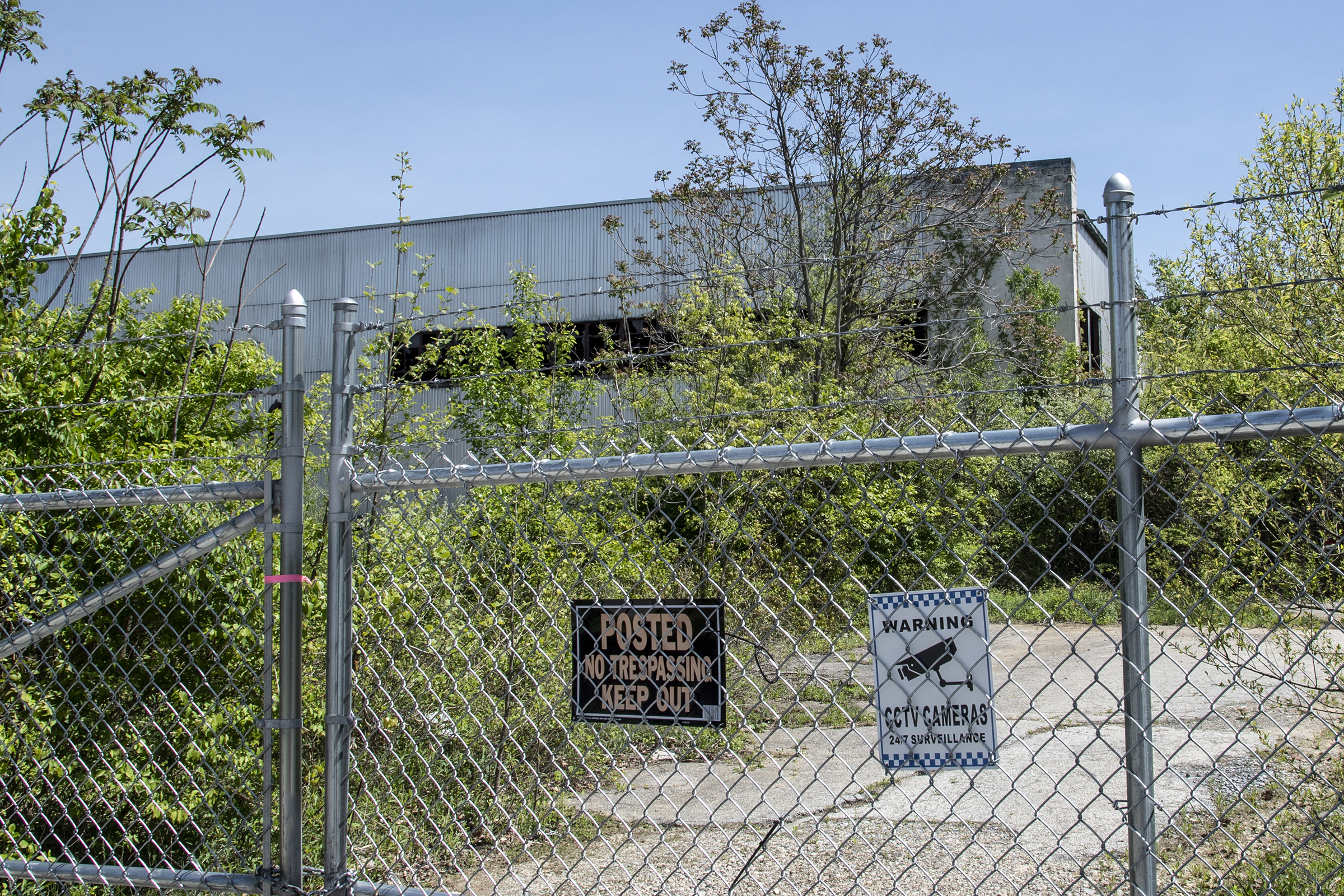
The Pennsylvania environmental agency wants to collect air samples in about two dozen properties near the contaminated Bishop Tube industrial site in East Whiteland Township this winter,after recent sampling of groundwater revealed a higher level of contamination near homes east of the property.
Previous sampling of 10 propertiesrevealed no risk, said Dustin Armstrong, the project officer for the Pennsylvania Department of Environmental Protection, which is overseeing the cleanup.
But “based upon the data that we just got in that pre-design investigation, we decided on some additional follow-up,” Armstrong said during a public meeting Thursday.
The meeting, the first since a settlement deal was reached with polluters of Bishop Tube, a 13.7-acre, vacant industrial site on Malin Road in Frazer, East Whiteland Township, covered the details of the agreement, and the recent findings of a pre-design investigation, a process that directs cleanup of contaminated sites.
The proposed 24-hour monitoring comes after a September report sampled groundwater and surface water between March and June 2026 around Bishop Tube and found higher concentrations of carcinogenic chemicals above residential standards to the east than expected.
The department wants to resample previous locations, as well as 14 additional properties on Fahnestock Road, Conestoga Road, Lancaster Avenue, and houses in the development neighboring Bishop Tube, along Village Way.
The department sent out survey forms for the air monitoring earlier this month, and has received half back so far, Armstrong said.
Under the agreement, which still needs a federal judge’s approval, the property’s owner Constitution Drive Partners would serve as the site remediator, using funds from the trust to clean up the site, which would be subject to DEP oversight and approval. Developer Brian O’Neill, president of Constitution Drive Partners,has owned the property since 2005 and wants to build homes there.
Remediation of the site could take several years, officials said Thursday.
At the meeting, residents worried over the terms of the settlement, and that there weren’t enough safeguards in place for the cleanup process.
“The fox should not be in charge of the health and safety of the hens,” resident Debra Mobile said. “I want to know how you are going to protect us.”
This suburban content is produced with support from the Leslie Miller and Richard Worley Foundation and The Lenfest Institute for Journalism. Editorial content is created independently of the project donors. Gifts to support The Inquirer’s high-impact journalism can be made at inquirer.com/donate. A list of Lenfest Institute donors can be found at lenfestinstitute.org/supporters.
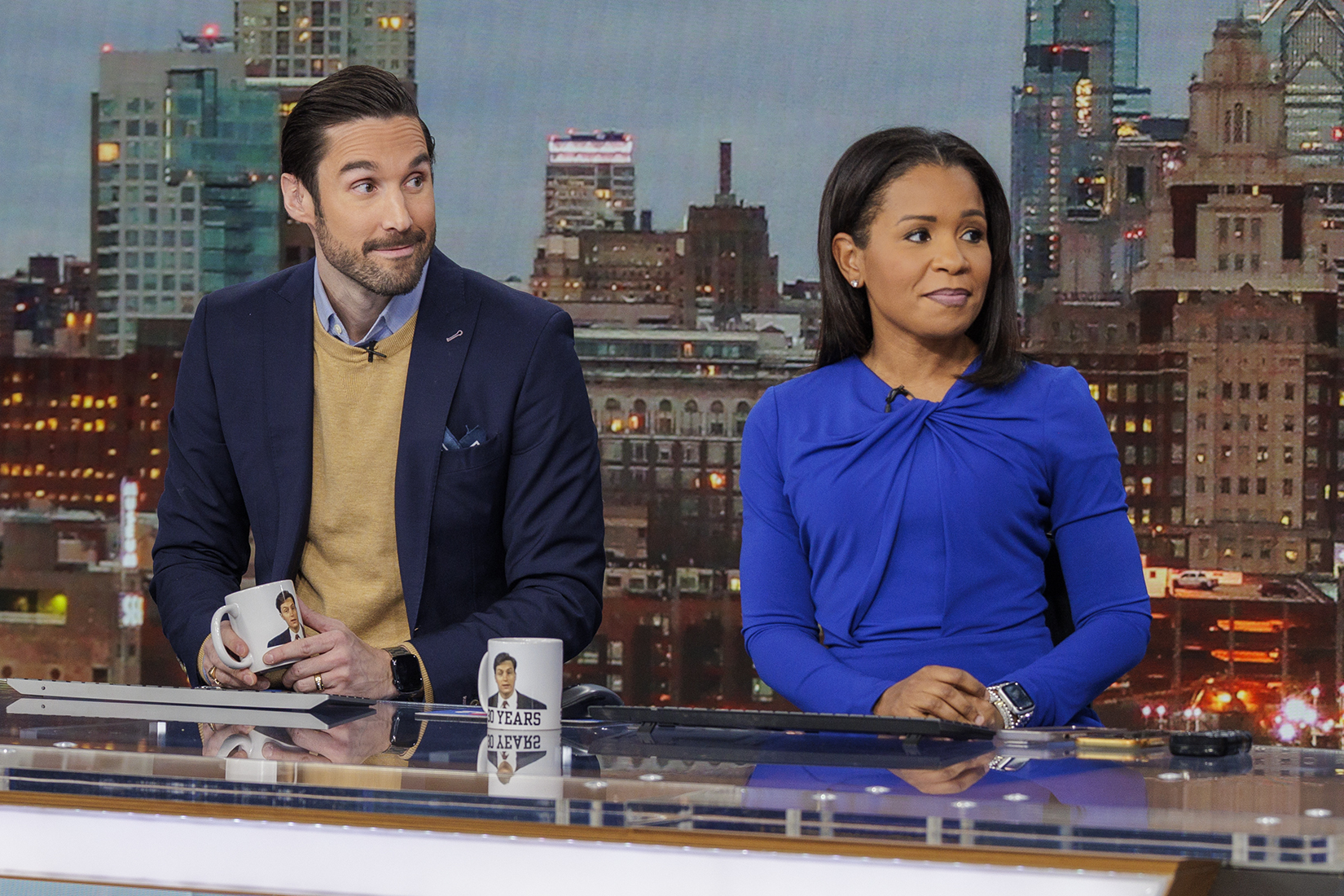
But from August through October, NBC10 drew more news viewers than 6abc among adults between the ages of 25 and 54 — a key advertiser demographic — during their 6 a.m. and 11 p.m. newscasts, according to Nielsen data.
It’s the first three-month win streak for NBC10 since at least 2010. 11 p.m. anchors Jacqueline London and Fred Shropshire have topped Rick Williams at 6abc in that demographic in seven of the past 13 months, according to NBC10 president and general manager Joel Davis.
6abc declined to comment.
NBC10’s 6 a.m. newscast, featuring Keith Jones and Erin Coleman, has seen its audience in the 25-to-54 demographic grow by more than 60% compared to last year, even though NBC’s Today show trails both ABC’s Good Morning America and Fox 29’s Good Day Philadelphia in the market and morning viewers tend to be more loyal to their chosen station.
6abc drew more viewers on every other newscast, including the 6 p.m. edition of Action News, which has nearly double the audience of its NBC10 counterpart in the 25-54 demographic. 6abc still draws more local news viewers overall than NBC10 and has three of Philadelphia’s most-watched shows — Jeopardy!,Wheel of Fortune, and ABC World News Tonight with David Muir.
Still, it’s a sign of progress under Davis, a local news veteran who has been running NBC’s three Philly networks — NBC10, Telemundo62, and NBC Sports Philadelphia — since last year.
“Three months of success is good, but it’s going to take time,” Davis said. “We expect there will be back and forth over the next several months.”
So how has NBC10 won over viewers? Davis said getting the right personalities in the correct time slots is part of it, but he credited the station’s decision to bump up weekday local news to eight hours a day.
Gone are daytime soap operas and syndicated shows. Outside of prime time, the station looks and feels more like a 24-hour news channel, adding 2 p.m. and 7:30 p.m. newscasts. NBC’s commitment to live sports in prime time certainly hasn’t hurt.
“Everything that succeeds in this day and age in television is live and local to some degree, whether it be news or sports,” Davis said.
NBC Sports Philadelphia is boosting NBC10’s growth, but questions linger
NBC Sports Philadelphia personalities Michael Barkann (left) and Ricky Bottalico. Yong Kim / Staff Photographer
Davis cited another reason for NBC10’s recent ratings success: leveraging NBC’s local sports TV rights, which include broadcasting Phillies, 76ers, and Flyers games.
Last summer, Davis asked for a list of the 100 most-viewed programs in the Philly TV market that year. About 70% were sports broadcasts on NBC Sports Philadelphia, largely dominated by Phillies games.
Thanks to the addition of LeBron James, Sixers games are drawing nearly 215,000 viewers per game on NBC Sports Philadelphia this season through Wednesday, up 150% compared to last season’s average, according to Nielsen numbers.
The interest extends to the station’s studio programming. Sixers Pregame Live is up more than 220% over last season, averaging over 50,000 viewers. Sixers Postgame Live is averaging nearly 80,000 viewers.
Before Davis took over, there was very little cross-promotion between the three stations. Now viewers regularly see NBC Sports Philadelphia personalities like Amy Fadool Kane on NBC10 promoting and discussing games and vice versa.
“When we run news promos in NBC Sports Philadelphia, we are getting a younger audience exposed to our news product,” Davis said.
Despite its success, a lot of uncertainty hangs over NBC Sports Philadelphia’s future.
Cord cutting has been tough on regional sports networks across the country, and NBC is down from nine of these such networksin 2012 to just four — Philly, Boston, San Francisco, and Northern California. NBC is also in the midst of massive change as parent company Comcast spins off NBCUniversal into a separate company, a move scheduled to be completed next year.
Add to that uncertainty plans by the NBA and MLB to launch their own in-market streaming service to offer local games, which could drive more fans to cut their cable subscriptions. Currently, fans in the Philly TV market can stream Phillies, Sixers, and Flyers games without a cable subscription using Peacock.
There have been rumblings NBC is looking to divest from its remaining regional sports networks as cord cutting continues, but in Philly any sale would be complicated by the fact the Phillies own 25% of the network as part of a 25-year, $2.5 billion deal that runs through 2041.
“While the deals may adjust over time as the industry changes,” Davis said, “I think there’s a firm understanding here that there’s great value in this particular market that it makes total sense to have this partnership in place.”
Back when the kids were younger, Shawn Needham always knew how to scope out the best spots at their track meets.
“The good spots to be when you needed a little extra push,” says his daughter Sarah Needham, 23.
A former Maryland State Trooper, and now a cop in Warwick Township — and a hall-of-fame track star at Holy Ghost Prep in Bensalem — Shawn Needham, now 59, raced home three hours after night shifts to make the kids’ running events. Worked overtime so he and his wife, Linda, could afford the league payments. Ate peanut and butter and jelly in the squad car so he could take the kids to Applebee’s after a race.
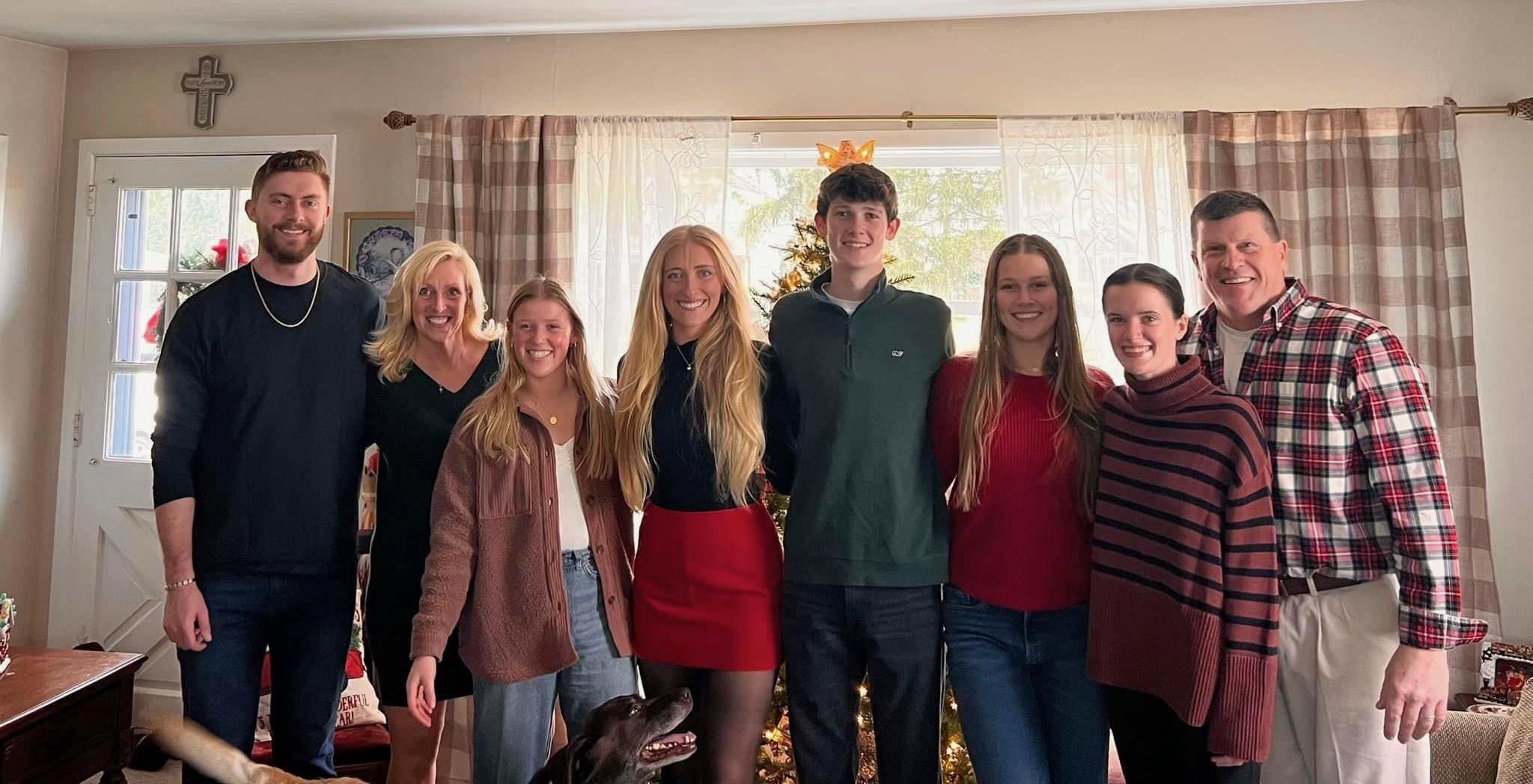
Needham Family (L. to R.): William Hoehne, Linda Needham, Grace Needham , Sabrina Hoehne , Christian Needham, Ella Needham, Sarah Needham, Shawn NeedhamCourtesy of Needham Family (Custom Credit)
“Anything broke he could fix,” said Sabrina Hoehne, who is 28, and Needham’s stepdaughter. “He spent all his money on our sports.”
But last November, Shawn Needham confronted a nightmare he couldn’t fix. Not alone, anyway. A life-altering diagnosis of cholangiocarcinoma, an aggressive cancer of the bile duct, which affects only about 8,000 Americans annually.
This weekend, five of Shawn Needham’s children — Hoehne, Sarah Needham, Grace Needham, Christian Needham, and Ella Needham — will run in the Philadelphia Half Marathon and Marathon to raise money for the Cholangiocarcinoma Foundation.
“We decided the best thing we could do is to raise some money for other families going through this and to support research into this rare disease,” said Sarah Needham. “So we decided we needed to run.”
Shawn Needham was visiting his daughter in Boston last October, when the stomach pain turned severe. Soon, he was jaundiced, and in the hospital. Weeks of tests provided few answers. Finally, doctors figured it out.
Notoriously difficult to detect — and often showing few symptoms until advanced stages — cholangiocarcinoma is responsible for only a tiny fraction of the nearly 2 million cancer diagnoses a year.
“Of course, I’m just like, “Well, all right, I guess, I got it,” said Shawn Needham. “I never look back. I just kind of keep going forward and trust in the doctors I have.”
Undergoing radiation and chemotherapy treatment at Penn, Shawn Needham is on the “National Liver Transplant Waiting List.” He’s also eligible for a living donor.
Shawn Needham knows exactly where he’ll be. He’s already scoped out a good spot — behind the Art Museum, where the runners loop around multiple times — and which will leave him time to race back to the finish line.
SHENZHEN, China — President Vladimir Putin of Russia stood shoulder to shoulder for the cameras with the leaders of the two global superpowers. He was publicly praised by one of them, President Donald Trump, as “my friend.” And he proclaimed, in between meetings with at least seven world leaders over two days, that efforts to isolate his nation had failed.
Putin emerged as the big winner after a meeting Thursday with Trump and Chinese leader Xi Jinping during a summit in Shenzhen, China. The Russian leader walked away with a symbolic triumph in his quarter-century battle to restore Russia’s place as a great power at the fulcrum of world affairs.
Appearing alongside Trump and Xi, the two leaders most responsible for helping him escape isolation since his invasion of Ukraine in 2022, Putin showed that he could be embraced by the powers that matter most without making any compromises on the war.
“It ends the isolation that at least the West tried to impose on him after the full-scale invasion,” said Angela Stent, a Russia expert and senior fellow at the American Enterprise Institute. “There he is. He is meeting with Xi and Trump, and so much for isolation and sanctions.”
The trilateral meeting — the first of its kind between the three countries — amounted largely to diplomatic theater that elevated Russia beyond its status. Russia lags the United States and China in economic clout, population size and most other major metrics of influence.
The big exception, apart from landmass and certain natural resources, is nuclear weapons. Russia retains the world’s largest arsenal, an inheritance from the Soviet Union, and Putin ensured that was not lost on any of the attendees.
Hours before Putin arrived at the Asia-Pacific Economic Cooperation summit, Russian strategic nuclear bombers landed in Vietnam for the first time since the Soviet era. In Shenzhen, a prominent pro-Putin commentator was filmed incredulously approaching the Russian officer carrying the “cheget,” the nuclear command-and-control device that travels everywhere with the Russian leader, and asking: “Is that the nuclear briefcase, the very one?”
Putin had not shown up in person for the annual APEC summit in nine years. The in-person event was canceled from 2019 to 2021. The United States, which played host in 2023, did not invite him because of the war in Ukraine, and an international warrant for his arrest over the transfer of Ukrainian children to Russia complicated visits to Peru and South Korea in 2024 and 2025.
But on Thursday, the Russian leader was granted a place on a red-carpeted stage with his American and Chinese counterparts, even as he has escalated his war against Ukraine, killing record numbers of Ukrainian civilians and playing hardball during the Trump administration’s renewed efforts to end the conflict.
During the meeting and afterward, the Russian leader and Trump railed against the International Criminal Court, which issued the arrest warrant for Putin. Trump called the institution, which his administration has punished with sanctions, an out-of-control “rogue globalist organization.”
While Russia basked in the diplomatic pomp and pageantry, Ukraine brought a reality check. Just hours before the trilateral meeting, Ukrainian forces for the third time in a week struck the bridge connecting Russia with Crimea, the peninsula that Putin illegally annexed from Ukraine in 2014.
Past American presidents have been wary of conferring legitimacy on autocrats actively opposing U.S. interests, but Trump agreed to the summit with Putin without forcing any prior commitments regarding Ukraine.
In a news conference afterward, Putin said he and Trump shared a common approach to “civilization values” and had a “similarity of views,” citing a recent discussion about democracy.
“What exactly is democracy? What is it?” Putin asked. “Is it the liberal order that certain circles have sought and are still attempting to impose on the entire world, fashioned according to their own blueprint? Is that democracy or is that a liberal attempt to monopolize power — in fact, liberal dictatorship?”
The formal statement that the three world leaders issued after their meeting made no mention of the conflict in Ukraine, though Putin and Trump discussed the topic in talks before the trilateral summit.
During his news conference, Putin said that, in response to the attacks on the Crimea bridge, he was ruling out any maritime or energy infrastructure truce with Ukraine, and would mete out a painful retaliation.
There had been few signs that such limited ceasefires were in the offing, anyway. At peace talks last week in Abu Dhabi, United Arab Emirates, led by Trump’s special envoys, Jared Kushner and Steve Witkoff, the Russian negotiating team reissued hard-line demands from five years before.
Putin said that, at the insistence of the United States, he had invited European officials to Russia “through diplomatic channels” to ascertain their position and decide if they should be included in talks. The negotiations up until now have included only the United States, Russia and Ukraine.
Ukraine and European nations have said repeatedly that they must be involved in any discussions about their security. In an interview with NBC News ahead of the summit, President Volodymyr Zelenskyy of Ukraine said that “big countries always think that they can make decisions about the future of all the world, but it’s a huge mistake, absolutely.”
Trump and Putin, however, appear to share the opinion that “there are only a few really serious players” in world affairs that matter, said Stent, the American Enterprise Institute fellow.
“Trump is obviously a completely different president,” she said. “He is happy to be seen with these authoritarian leaders. He really is not interested in being seen with American allies, either European or Asian.”
(BEGIN OPTIONAL TRIM.)
Asked whether Thursday’s summit amounted to a new Yalta — the World War II conference where Franklin D. Roosevelt, Winston Churchill and Josef Stalin brokered the fate of postwar Europe — Putin replied: “What was so wrong with Yalta?”
He said Yalta finalized the victory over Nazism and paved the way for the United Nations, skipping over how the negotiation set the stage for millions of Europeans to be swept behind the Iron Curtain.
(END OPTIONAL TRIM.)
For years, a leading raison d’être of Putin’s rule has been to reverse the decline of Russian power that came in the aftermath of the Soviet Union’s collapse, which he famously called “the greatest political catastrophe of the century.”
“We showed ourselves to be weak, and the weak get beaten,” Putin remarked in a 2004 speech after a terrorist attack at a school in Beslan. He seethed with disgust at how vulnerable Russia had become and set the wheels in motion to consolidate domestic political control.
Putin viewed Moscow’s loss of power as demeaning and humiliating, chafing at the way he was treated as a second-tier leader by American officials. For much of the 1990s and 2000s, U.S. leaders did not regard Moscow as a force to be reckoned with or feared in global affairs.
Over the years, the Russian leader tabulated the slights, growing more intent on ending what he has long called the “unipolar world,” his chosen term for a world he said was unfairly dominated by the United States. Those politics of grievance fueled his increasingly bold and deadly drive to restore Russian might.
Even after Thursday’s summit accorded him the trappings of a superpower leader, Putin spent part of his news conference saying he was not responsible for invading Ukraine, instead blaming prior Western elites.
“They didn’t give a damn about our opinion, because they believed that there was nothing left to negotiate with Russia. You just have to push,” Putin said during his news conference Thursday. “Well, they brought this pressure to the point of hostilities and war.”
For years, the United States saw occasional measles outbreaks, often after someone caught the virus abroad and brought it back with them. But those outbreaks didn’t last. This time, the virus has been continuously spreading for at least 12 months. That’s why the Pan American Health Organization announced Tuesday that the U.S. had lost its measles elimination status, which it had held since 2000.
James Campbell, chair of the American Academy of Pediatrics Committee on Infectious Diseases, called the reversal “a completely preventable tragedy.” As of Nov. 12, the Centers for Disease Control and Prevention had confirmed 5,412 measles cases in the U.S. this year — nearly twice as many as were reported in 2025 and the highest annual total since 1991. State health officials have reported at least 11 measles-related deaths this year, including a 7-month-old in New York earlier this month. On Wednesday, Pennsylvania announced its eighth measles-related death.
Measles is highly contagious and can cause serious illness at any age, but it’s especially dangerous for babies and young children, who are more likely to develop complications like pneumonia and encephalitis (inflammation of the brain). As cases continue to rise, health experts have warned that more children could end up in the hospital and some could die.
Babies are especially vulnerable because they usually can’t receive their first routine measles vaccine until they’re 12 to 15 months old. Pregnancy and certain medical conditions can also prevent people from receiving the vaccine.
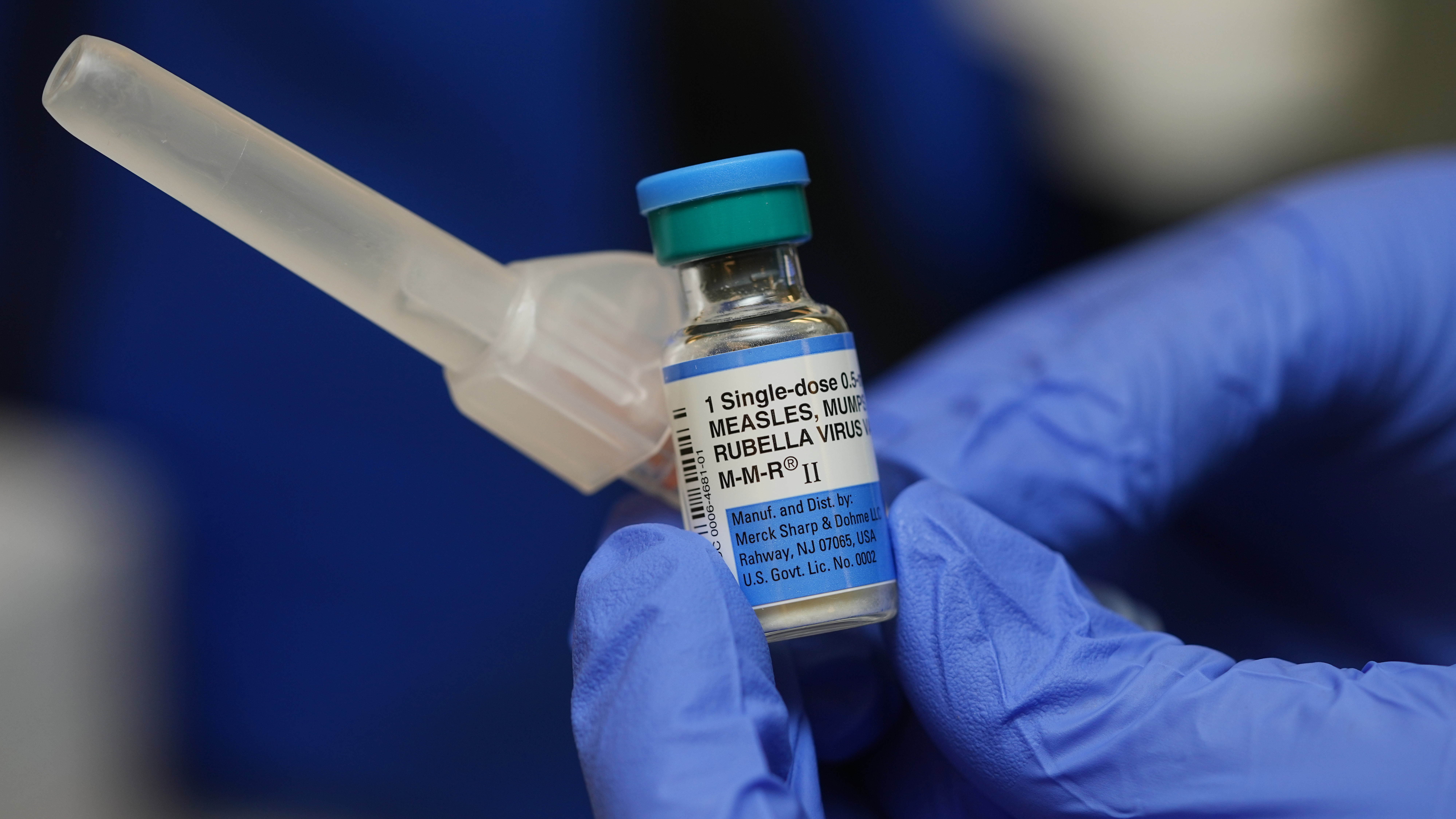
For everyone else, staying up-to-date on the measles, mumps and rubella (MMR) vaccine is the best way to protect against the virus. Two doses generally provide lifetime immunity, and most children in the U.S. receive both by kindergarten. Some adults who only received one dose may need a second.
Here’s what health experts want you to know about measles right now, including what to consider if you’re traveling for the holidays.
How to know if you’re protected
The MMR vaccine is highly effective and “one of the safest vaccines we have,” said John Swartzberg, clinical professor emeritus in the Infectious Diseases & Vaccinology Division at the University of California at Berkeley. If you’ve completed the two-dose series of MMR or MMRV (which also protects against chicken pox), you’re considered protected and don’t need a measles booster.
If you were born before 1957, you’re generally presumed to be immune because you were likely exposed to the disease as a child. You’re also considered immune if you’ve had a confirmed case of measles.
However, a small number (fewer than 5 percent) of adults vaccinated between 1963 and 1967 received an earlier, inactivated measles vaccine that was less effective. “Those persons might be at some slight risk of acquiring measles,” said William Schaffner, a professor of infectious diseases at the Vanderbilt University Medical Center. If you had a measles shot during those years and got that version or don’t know which one you got, the CDC recommends you get the current MMR vaccine if you can safely receive it.
If you’re unsure about your vaccination status and can’t find your records, your doctor can order a blood test to check for immunity or help you decide whether to get vaccinated. A just-in-case dose is safe, the CDC says, even if it turns out that you were protected.
What to do if you’ve been exposed
If you think you or your child may have been exposed to measles — say, one of you was around someone who tested positive or you got a notice from the health department — call your doctor right away to find out what to do next. And before heading to a doctor’s office or clinic, let the staff know you may have been exposed so they can protect others.
Depending on your age and whether you’re immune, your provider may suggest an MMR dose (within 72 hours of exposure) or immune globulin (within six days). Immune globulin is a medication that contains antibodies that can help prevent measles or make the illness less severe if you do get sick, Schaffner said.
If you aren’t immune, ask your doctor whether you should stay home and for how long. It’s important to follow their advice to keep the virus from spreading to others, including infants too young to get vaccinated.
If you know you haven’t been vaccinated, Schaffner urged getting the shot before you’re exposed. “Now’s the time to go to your health care provider,” he said.
What you shouldn’t do is just shrug your shoulders and think “measles isn’t that bad” and do nothing at all. About 1 in 5 unvaccinated people who get measles are hospitalized, according to the CDC. Research has found that measles can wipe out 11 to 73 percent of the antibodies children have developed against other infections, a phenomenon known as “immune amnesia” that can leave them more vulnerable to future illnesses.
Who might need a second or early dose
Some people may need to catch up on a missed MMR dose, and some children may need a shot earlier than usual. Here’s who falls into those groups.
Children who haven’t had both doses
Kids usually get their first MMR shot at 12 to 15 months old and their second at 4 to 6 years old. If they’ve missed a shot, ask their pediatrician about catching up. Children ages 1 to 4 who’ve received their first MMR dose but not their second may be able to get it early if they live in or are traveling to an area with a measles outbreak, Campbell said. The second dose should be given at least 28 days after the first.
Infants in outbreak areas
Babies 6 to 11 months old who are traveling internationally or who live in or are traveling to an area with a measles outbreak may need their first MMR shot earlier than normal — that is, before their first birthday. Ask their pediatrician whether an early dose is recommended. Infants who get that shot still need two more doses after they turn 1, noted Kisha Davis, president of the American Academy of Family Physicians.
Adults at higher risk
If you’ve had one MMR dose, you may need a second. For example, two doses are recommended for health care workers, international travelers and people in close contact with someone who’s immunocompromised, like someone undergoing cancer treatment or taking immunosuppressant medications. If you have HIV, ask your doctor if you can safely get the MMR vaccine and if you need another dose. A second shot may also be recommended if there’s a measles outbreak where you live.
What to know if you’re traveling soon
The current measles outbreaks are particularly concerning for holiday travelers who haven’t been vaccinated, including babies who are too young for the shot and people who can’t get it for medical reasons, such as pregnancy or a severely weakened immune system.
If you’re an adult who can’t get vaccinated, wearing a mask in crowded places like airports is “another layer of protection that can help,” said Schaffner, though “it’s not perfect.” A well-fitting N95 offers the strongest protection, but KN95 and KF94 masks can also help reduce exposure.
Again, for international travel, the CDC recommends an early MMR dose for babies. But infants under 6 months are too young to be vaccinated at all, and travel is particularly concerning for this age group, Swartzberg said.
If you have to travel with an infant, keep them away from sick people and don’t visit households where members are ill or unvaccinated, Campbell said. Making sure everyone who spends time around the infant is immune to measles can create a “cocoon around the baby,” he explained.
Until recently, “we wouldn’t walk around worrying about getting measles,” Swartzberg said. Now, “if you’re not immune to measles, the United States is a place you can get it.”
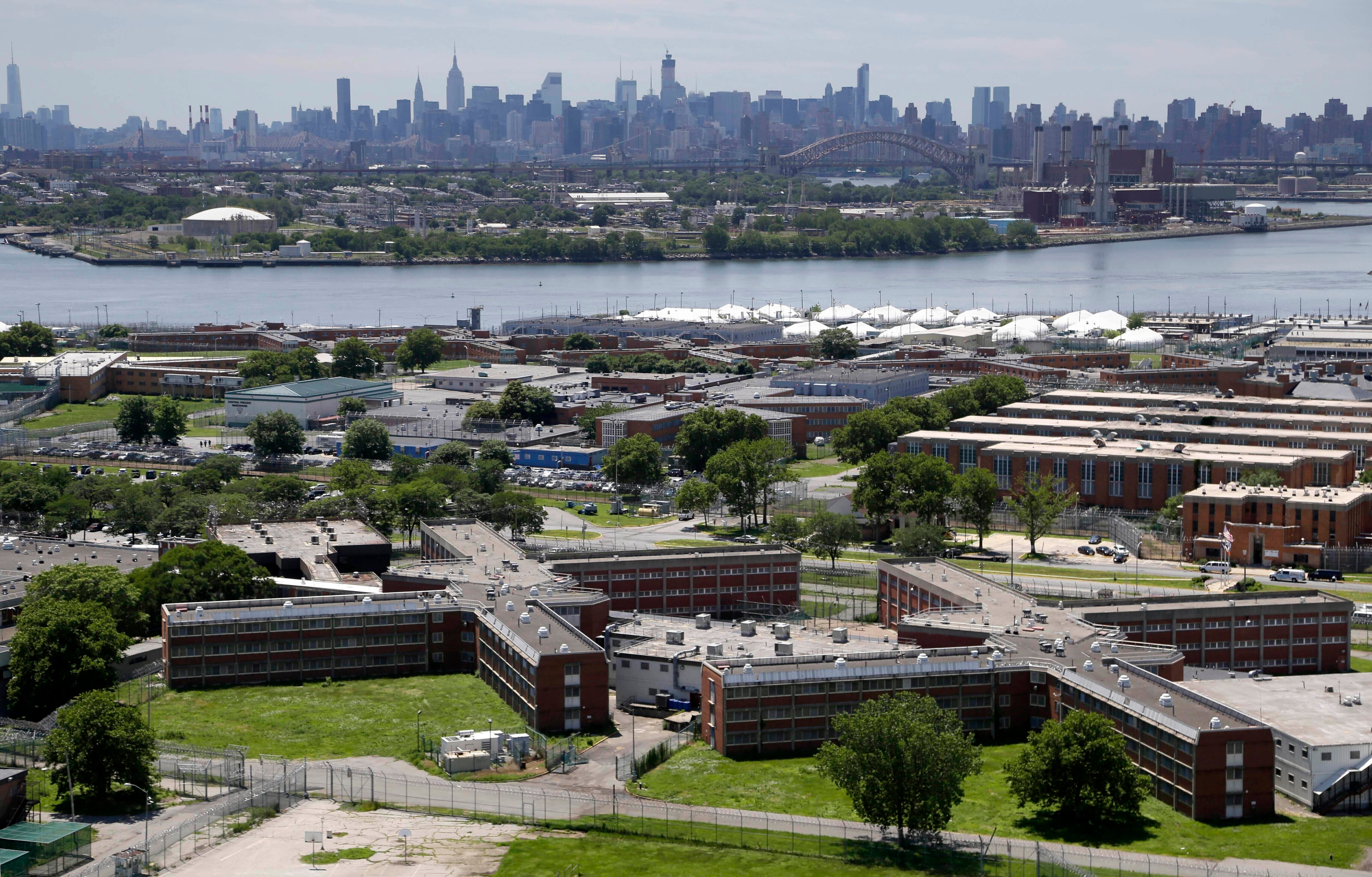
NEW YORK — New York City’s Rikers Island jail complex would close by 2032 under a sweeping plan announced Friday by Mayor Zohran Mamdani, whose strategy for finally shuttering the notorious facility hinges on substantially reducing the number of people kept behind bars.
The mayor, a Democrat, unveiled the plan as the city is all but certain to blow past a legal requirement to close Rikers and replace it with four smaller, more modern jails by 2027.
For years, Rikers Island has stood as a symbol of dysfunction, with the network of jails so plagued by violence and overcrowding that a federal judge, citing “abnormal and unacceptable” conditions, appointed an outside manager to restore order and implement reforms.
Mamdani has been a vocal proponent of closing Rikers, though the longstanding plan to build new jails has met fierce pushback, including from his predecessor, former Mayor Eric Adams, who opposed federal oversight and borough jails.
At a celebratory news conference at City Hall, Mamdani said the extended timeline was needed because of resistance from the previous administration, calling Rikers “a place we have long turned our eyes away from rather than confront head on.”
“The call to close Rikers has echoed across our city for decades. Work has begun to do so, then stopped, then started once again. What will make this chapter different is our commitment to see it through,” he said.
The Mamdani administration is proposing a new slate of diversion and supervised release programs, expanding housing and social services to prevent recidivism, along with restoring an online bail payment system and reducing case delays so people spend less time behind bars.
“Our nation has a very real mass incarceration problem,” the mayor said. “We are making a conscious decision to advance a new model of a criminal legal system in our city, one that takes on that problem head on.”
Instead of housing prisoners at Rikers — an island in the East River near LaGuardia Airport — the city will shift people to jails in the Bronx, Queens, Brooklyn, and Manhattan, as well as a handful of medical facilities for people who need healthcare or psychiatric treatment. The city also plans to reduce the number of beds for women, diverting them into community-based programs.
The borough jails are expected to open in Brooklyn in 2029; the Bronx and Queens in 2031; and then Manhattan in 2032, according to City Hall. The new deadlines require approval from the New York City Council.
Julie Menin, speaker of the City Council, praised the mayor’s plan at the news conference, saying that after years of delay “we are finally getting back on track.”
The City Council voted to close the jail complex in 2019 and replace it with newer jails located in the city’s boroughs by 2027. At the time, city officials had also called for shrinking the jail population to accommodate the closure, but ran into opposition from critics who argued doing so would mean more violent criminals on city streets.
The Senate on Thursday passed legislation to make energy projects, housing, roads and other infrastructure easier to build by weakening bedrock environmental laws that have often delayed construction for years. The effort, backed by more than a dozen Democratic senators and most Republicans, has been billed as a bid to make American life more affordable and lower electricity prices.
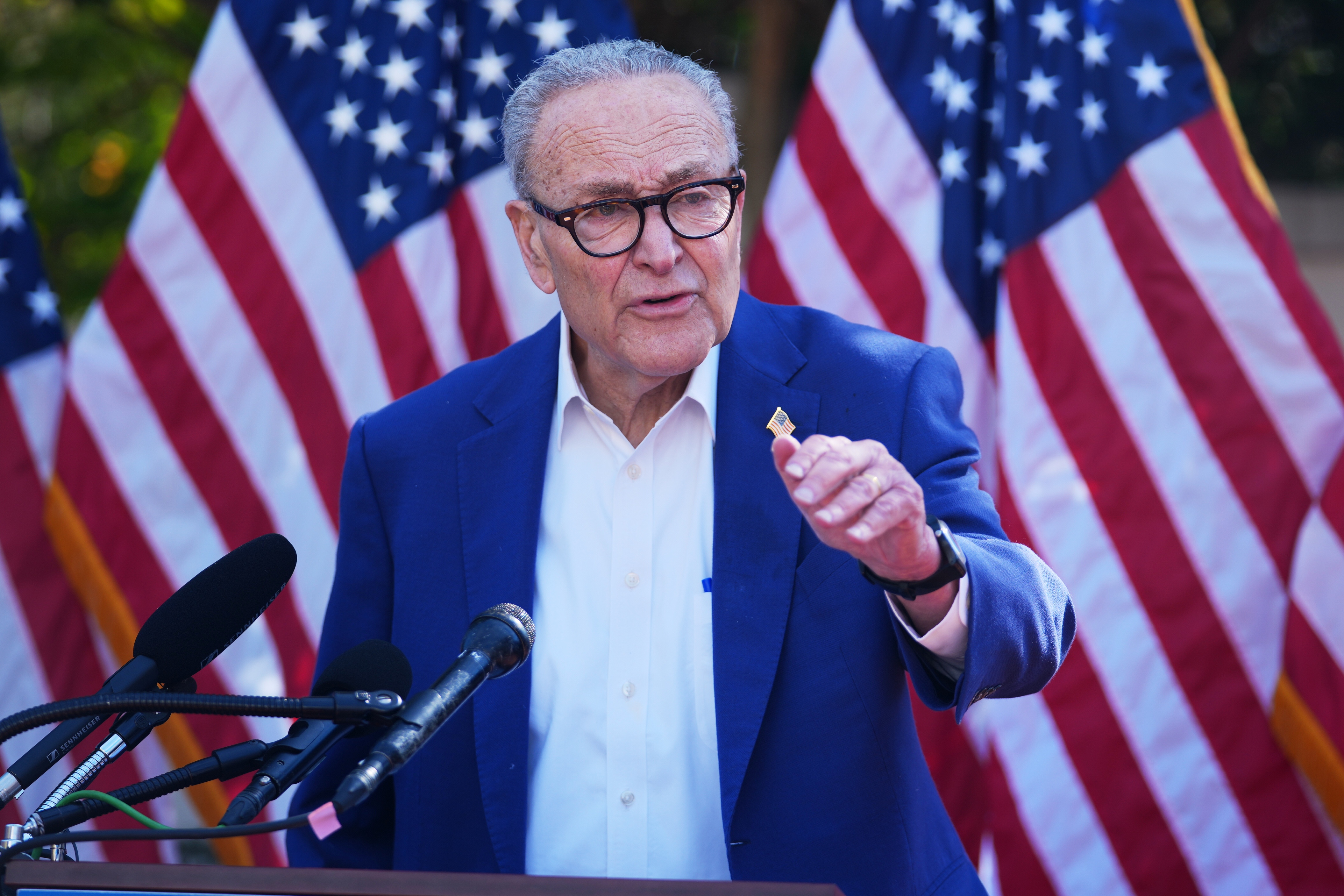
The Bipartisan American Affordability and Jobs Act (BAAJA) passed 62-33. Fourteen Democrats voted for it, including Senate Minority Leader Chuck Schumer (New York), as well as Sen. Angus King (I-Maine), who caucuses with Democrats. Two Republicans, Sens. Josh Hawley (Missouri) and Mike Rounds (South Dakota), voted against it.
It now moves to the House for consideration, where some Democrats have indicated they plan to support the bill. That could ease its passage in the chamber, where Republicans hold only a two-vote majority.
The bill has divided the environmental community and Democrats. Some say the bill will mean more renewable energy is built and plugged into the grid, advancing the fight against climate change by helping to fix a broken and slow permitting system. Opponents, however, say it opens the floodgates to more oil pipelines and natural gas power plants, while making it easier to build in areas of pristine wilderness or sacred Native American sites.
“If you’re going to get a lot more clean and some more fossil, you have just got to figure out, is that a good trade-off? Is that a good balance?” said John Podesta, who was climate envoy under President Joe Biden.
The bill’s supporters say it will boost clean energy by ensuring that long-distance transmission lines can be built to carry wind, solar and geothermal power from where it is produced to dense population centers. The lack of those high-powered lines has slowed progress on deploying renewable power and raised electricity prices in recent years.
Longtime Senate climate hawks Sheldon Whitehouse (D-Rhode Island) and Martin Heinrich (D-New Mexico) sponsored the bill, arguing that it will speed the energy transition.
“If we can create an open, competitive, level playing field, clean is cheap and cheap wins in the marketplace,” Heinrich told reporters this month.
Oregon Democratic senators Jeff Merkley and Ron Wyden emerged as prominent critics of the bill. Wyden proposed an amendment to ban data centers on public land, accusing Republicans of being too afraid to take a floor vote on the proposal at a time when Americans are overwhelming opposed to data centers.
Merkley criticized a lack of open debate on the bill and blocked consideration of a package of amendments to protest other amendments not getting a vote.
“It is pretty damn outrageous and offensive that this bill has never had a hearing in the House or Senate,” he said on the Senate floor Wednesday.
Hawley, one of two Republicans who voted against the bill, argued it would hurt farmers, whose land infrastructure like transmission lines and pipelines often crosses.
“Legislation that threatens to take farmers’ land is legislation I won’t support,” Hawley said in a statement. “This bill is stuffed with giveaways to data centers and industry at the expense of farmers.”
Many prominent environment groups, including Earthjustice, reject the proposal on the grounds it will weaken key environmental laws.
“For groups who are predominantly thinking about clean energy, this is a package that does so many of the things that all of us have been lobbying for over the years,” said Abigail Dillen, president of Earthjustice. “The question is, with all the other things this bill does — is the bill still doing more good than harm?”
According to modeling from Rhodium Group, a research firm, the bill has the potential to lower U.S. carbon emissions by around 3 percent by 2040 and lower household utility bills by $50 to $78 per year. The legislation would accelerate renewables deployment and the export of liquefied natural gas. However, its report noted, it also has the possibility of keeping emissions close to status quo.
Supporters say the bill will lower energy prices by boosting all energy projects. Chad Whiteman, vice president for environmental and regulatory affairs at the U.S. Chamber of Commerce, said in an interview that voters called firmly in the midterm elections for greater affordability. “How are you going to address affordability except to be able to provide more energy and release some of those bottlenecks?” he added.
Proponents also argue that many prospective fossil fuel projects would get built anyway.
Podesta said in weighing the gains for renewables versus for fossil fuels, the trade-off is probably “worth it.”
The bill also demands that data centers pay for any new power facilities that must be built to meet their demand, as well as power lines that connect that energy to the grid. Voters have become increasingly angry about the impact of data centers on electricity prices and on their local environments.
The bill would alter several environmental laws originally passed in the 1970s. It would limit states’ and tribes’ ability to veto or place conditions on projects under the Clean Water Act and reduce protections for wetlands. And it would reduce the need for consultation with state and tribal historic preservation offices before approving projects that could affect significant cultural or tribal sites.
Under the Endangered Species Act, the bill gives more responsibilities to states, which may not have the ability or desire to carry out the law, and potentially allows courts to ignore emerging research when evaluating species protection.
If the bill is enacted, projects will be allowed to move forward even if they violate the National Environmental Policy Act (NEPA), a law designed to make permitting decisions thorough and transparent. Under current law, completing the NEPA’s review process often takes years, and violations can lead to projects being paused indefinitely or losing their permits.
The bill is aimed at ensuring neutrality by accelerating permits for fossil fuels and renewables equally. “We are not dictating here what gets built; we are simply protecting the ability to build,” said Sen. John Barrasso (Wyoming), the No. 2 Senate Republican, on the chamber’s floor Wednesday.
But some advocates also worry President Donald Trump will not carry out provisions.
Trump said last week that the bill had the administration’s backing “100 percent,” and the White House issued an official statement of support. But he also said he would not approve wind turbines, even though the bill demands he do so, and has aggressively favored fossil fuels in his first two years back in office.
The bill now heads to the House.
Senate Majority Leader John Thune (R-South Dakota) said the bill would have an easier road to Trump’s desk if the House passes it without making changes.
“If it were to go over there and then come back over here, I can’t predict what would happen,” Thune told reporters Thursday. “So hopefully there will be the critical mass there to move it.”
The region is mourning the loss of Xavier Taylor, the 12-year-old athlete from Maple Shade who died after he was struck in the head by a baseball before one of his games.
And Mount Laurel’s mayor made it clear that he is not a fan of the idea of implementing an outright data center ban, referring to the practice that other towns have adopted as “all theater.”
Plus, Low Cut Connie’s Adam Weiner and the Ben Vaughn Quintet are set to perform tonight, and more news of the day.
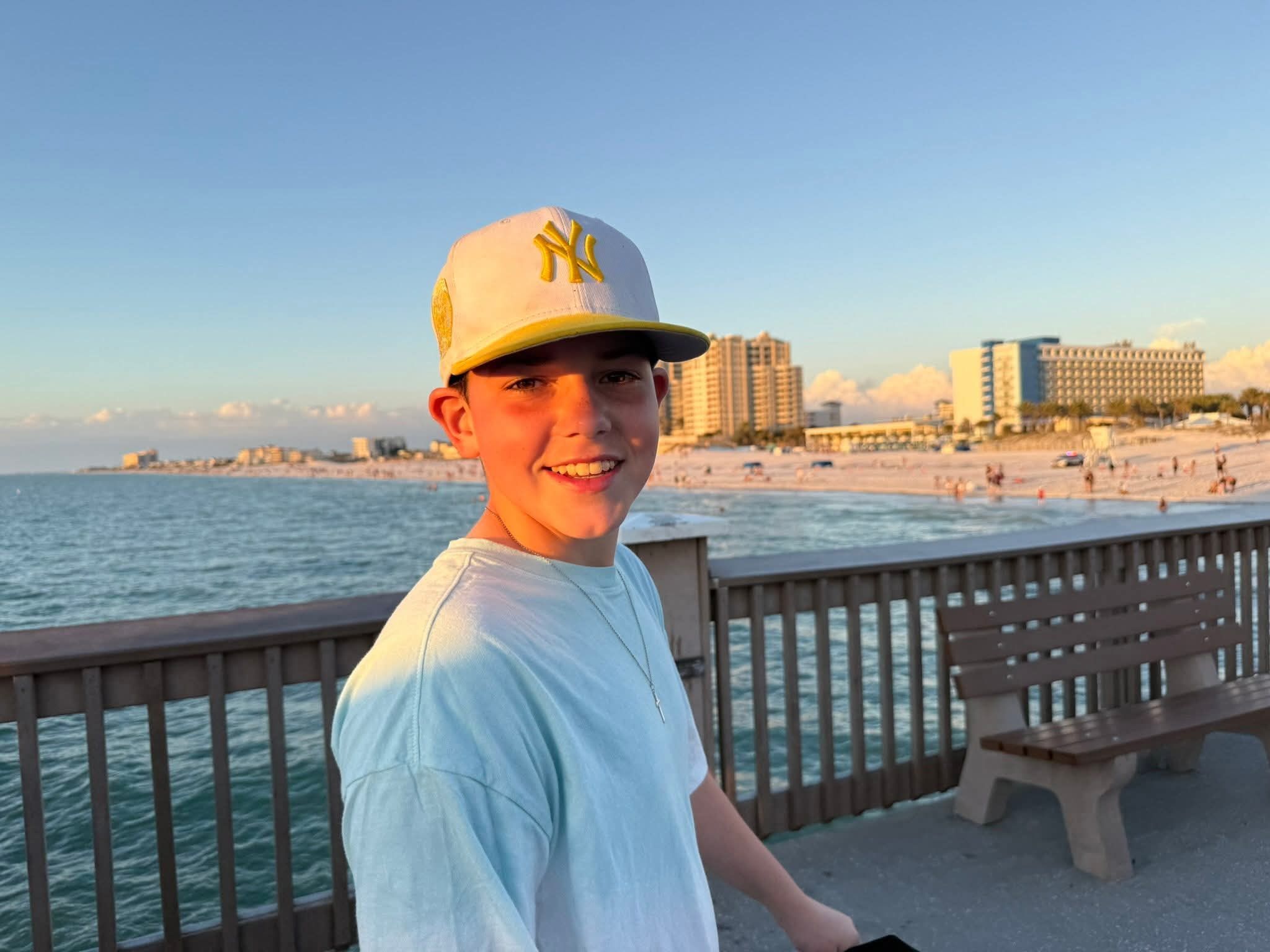
Xavier Taylor died Wednesday after spending five months in the hospital, roughly a week before his 13th birthday.
His community in Maple Shade and throughout the region has shown support in the form of prayer vigils, yard signs, and T-shirts sporting his name and jersey number. The Ben Franklin Bridge was lit blue for him in June and professional baseball players posted videos about him.
After his death, his community is sharing the stories that reflect his impact. Loved ones told The Inquirer that Xavier was known as a talented player bursting with energy and who knew extensive baseball trivia. He enjoyed making people laugh, too.
The township is inviting residents to illuminate their homes blue through Nov. 27 in his honor.
Mount Laurel Mayor Stephen Steglik seems to be firm in his stance against data center bans.
When residents pushed for council members to support a ban of any future development of the facilities during a Monday evening township meeting, he warned about ramifications. In particular, he raised the alarm about a potentially expensive lawsuit.
Nearby Cherry Hill passed a prohibition in July. Meanwhile, Monroe Township is in an ongoing legal fight with a developer in federal court after it denied its bid for a center and passed a ban.
“Why anyone would tell you your township can specifically ban an industry is beyond me,” Steglik said. “Personally, I think that’s irresponsible with rhetoric, and that’s not my brand of politics or my kind of leadership.”
So far, there haven’t been any proposals for data centers in Mount Laurel.
Police are warning South Jersey businesses to be alert for someone using fake $20 bills after an alleged incident in Washington Township, where someone used counterfeit money to purchase a $400 gift card at a Wawa to pay for online sports betting earlier this month, per NBC10.
The Delaware River Port Authority commissioners approved a five-year capital program Wednesday which means there will be $807.2 million intended for infrastructure work for the four bridges and PATCO, Philly Voice reports.
When Low Cut Connie and the Ben Vaughn Quintet perform tonight at Union Transfer, it’ll be the first time Adam Weiner and Ben Vaughn will share a stage in Philly. The two South Jersey natives, Weiner from Cherry Hill and Vaughn from Mount Ephraim, are both protégés of Jerry “The Geator” Blavat.”
Washington Township High School senior quarterback Jalen Parker at practice Wednesday. He will compete in the NJSIAA Group 5 semifinal Friday night. Tom Gralish / Staff Photographer
And that’s all I have for you this morning. Enjoy your weekend. 😎
By submitting your written, visual, and/or audio contributions, you agree to The Inquirer’s Terms of Use, including the grant of rights in Section 10.
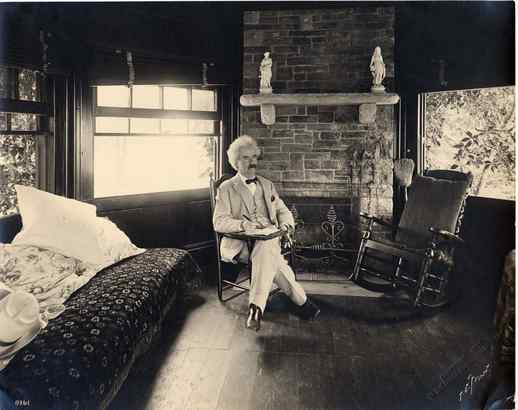
Before rising into a national icon, Mark Twain was an Inquirer.
Samuel Langhorne Clemens started working for newspapers at the ripe age of 12, prematurely entering the workforce in the late 1840s following the untimely death of his father.
Clemens’ journey started in his home state, at the Missouri Courier, where he worked as a printer’s apprentice before serving as a typesetter and editorial assistant for the Western Union paper, owned by his brother Orion.
He would then pass through St. Louis, en route to New York and Philadelphia.
Now, he wasn’t in Philadelphia for long. But considering he is one of the United States’ most famous writers, it counts as street cred: We knew him before he was cool.
The newspaperman
In the early 1900s, the man now known as Twain set about writing his life story.
His method of doing so was as odd as it was revolutionary: “Start it at no particular time of your life; wander at your free will all over your life.”
The celebrated author instructed his next of kin to wait until 100 years after his death to publish the story in full. So on Nov. 15, 2010, the University of California Press published the first of three rather robust volumes that together constitute the stream-of-consciousness-style Autobiography of Mark Twain — retaining its signature chaotic prose just as the author had intended.
In that first volume, Twain looked back at his brief time working as a substitute typesetter for The Inquirer in 1853-54, when he was all of 17 years old.
His role was to help set the printing plates. Back then, each letter and each punctuation mark from every article had to be individually set in metal before the plates could start stamping out broadsheets.
But his remarks in the book were brief: “By and by I went to Philadelphia and worked there some months as a ‘sub’ on the Inquirer and the Public Ledger.”
And heleft out the best part.
The Philadelphian
While working for The Inquirer, Clemens wrote a letter to his brother, in which he revealed an astute and accurate preference.
“Unlike New York,” he wrote, “I like this Philadelphia amazingly, and the people in it.”
He added:“I will try to write for the paper occasionally, but I fear my letters will be very uninteresting, for this incessant night work dulls one’s ideas amazingly. … I believe I am the only person in the Inquirer office that does not drink.”
Despite his ambition, the byline Samuel Clemens would never appear in print.
In the subsequent 50 years, though, Mark Twain’s prose would grace the newspaper’s pages in the form of reprinted excerpts from his essays and speeches.
But by then most of the country had joined the bandwagon.
Think you know your news? There’s only one way to find out. Welcome back to our weekly News Quiz — a quick way to see if your reading habits are sinking in and to put your local news knowledge to the test.
Question 1 of 10
The new Philadelphia edition of Monopoly features a bunch of local landmarks, including the Reading Terminal Market and SEPTA. Which cheesesteak spot is included?
CorrectIncorrect. XX% of other readers got this question right.
The game’s food squares include the Philly Pretzel Factory, Rita’s Water Ice, and Geno’s Steaks.
Question 2 of 10
Buzz Bissinger, Inquirer alum and author of Friday Night Lights, recently weighed in on Nvidia founder Jensen Huang’s choices. He considers himself an expert on this particular subject matter:
CorrectIncorrect. XX% of other readers got this question right.
Bissinger, who went viral 13 years ago for an essay in GQ about his Gucci addiction and penchant for leather jackets, considers himself an expert on the clothing article. He actually thinks Huang’s collection could go further.
story continues after advertisement
Question 3 of 10
Brass Monkey, an area pop-up, is working on opening an inaugural brick-and-mortar space in Point Breeze. What is Brass Monkey best known for?
CorrectIncorrect. XX% of other readers got this question right.
Brass Monkey Bread, owned by Zach Posnan, is best known for its sourdough goods, including bread, babka, muffins, bagels, and tomato pie. The new space will be located at 20th and Dickinson.
Question 4 of 10
Employees at this Callowhill business went on a planned single-day strike Tuesday seeking their first union contract:
CorrectIncorrect. XX% of other readers got this question right.
Workers have been organizing for years at Movement climbing gym locations across the country with more than 500 employees across 10 locations represented by Workers United. Employees of the Callowhill gym unionized in 2023 and have been negotiating for a first contract as far back as June 2024. But a spokesperson said the Callowhill location management has not been acting in good faith, leading to the strike.
story continues after advertisement
Question 5 of 10
Jason Kelce is back on the saxophone. The former Eagles center picked up the horn again during ESPN’s Monday Night Countdown and sat in with the Baltimore Ravens’ Marching Ravens as a guest. What song did they play together?
CorrectIncorrect. XX% of other readers got this question right.
It was “In the Air Tonight,” commemorating Phil Collins’ induction into the Rock & Roll Hall of Fame over the weekend.
Question 6 of 10
Kareem Edouard assembled an all-Black creative team to adapt Jason Reynolds' Stuntboy into an animated series exploring childhood anxiety and highlighting more Black characters in children’s TV shows. Edouard is an assistant professor at this school:
CorrectIncorrect. XX% of other readers got this question right.
Edouard moved to Philadelphia in 2018, and is now an assistant professor at Drexel University. He said he was tired of seeing “flat representation” of Black characters in children's shows. He decided to make Stuntboy: The Animated Series to help.
Question 7 of 10
Comedian Shane Gillis has responded following backlash to his opening monologue on Saturday Night Live last month. How many times has the Mechanicsburg, Pa., native hosted SNL?
CorrectIncorrect. XX% of other readers got this question right.
It was Gillis’ third time hosting Saturday Night Live. He graduated from West Chester University and cut his teeth in Philadelphia’s comedy scene.
Question 8 of 10
Pianist and composer Dave Palmer scored the movie I Play Rocky using all Philly musicians. He’s new to living in Philly. What housewarming gift did War on Drugs drummer Charlie Hall bring Palmer when he and his family moved here?
CorrectIncorrect. XX% of other readers got this question right.
Palmer and Hall were connected by an industry friend. They’d never met in person, but the day the Palmers arrived in town in June 2025, Hall showed up at their door with a box of cookies as a welcome gift.
Question 9 of 10
Community members in Flourtown want Phil Dougherty to get his job back after he was fired. Where did he work?
CorrectIncorrect. XX% of other readers got this question right.
Dougherty is known to community members at Wawa Phil. He had worked at the same Flourtown location since 2005 until he was recently fired. Then, the community came together, protesting the company’s decision and hoping to overturn it.
Question 10 of 10
Kalshi, the prediction market company, has been DMing some Philadelphia restaurants on Instagram, encouraging them to place bets on the following:
CorrectIncorrect. XX% of other readers got this question right.
A bakery, deli, and a BYOB all received messages from Kalshi’s verified Instagram account that asked if they would consider trading on the Eagles-Giants matchup. The Birds went on to lose that match.
Your Results
You have skipped .
You scored XX out of 10.
The average reader scored XX out of 10
Seems like you’ve been skimming more than reading there, buddy. There’s always next week.
You’ve read some articles (or made some educated guesses) but we wouldn’t come to you first for our local news recaps. Better luck next week!
Do you work here? You’re a local news stan with the latest updates on Philly happenings. Your friends definitely ask you for summaries on what’s going on and it shows.