
Category: News

  • Abington is voting on a surveillance system to replace Flock this week

    Abington is voting on a surveillance system to replace Flock this week

    Abington Township commissioners are set to vote Thursday on a contract to replace the police department’s controversial Flock Safety surveillance system.

    The new, five-year contract with Axon Enterprise would cost $6,576.50 per year and includes two cameras with accessories, installation fees, two licenses for Axon’s automated license plate recognition tool, and warranties for accidental damage or vandalism.

    Both Flock and Axon systems aim to store photos of every vehicle that passes their cameras, along with the plate number and other details, for a set period of time. The systems also allow police to search camera data from other jurisdictions, which Abington police say helps solve crimes.

    But Flock’s network design and vulnerabilities are leading Abington police to let their Flock contracts expire over data security concerns after the department’s searches on the company’s nationwide network leaked, along with searches by other police departments across the country.

    “Flock had told us before that we own the data. Somehow, that turned out not to be the case,” Lt. Joe Blei said Monday.

    Abington police will still have access to Flock’s network until the township’s second Flock contract expires in 2028, Blei said, and Abington cannot terminate it early. Its other contract expired this month.

    “It’s the terms and conditions,” Blei said. “We can’t get out of it.”

    Blei said the department fulfilled The Inquirer’s request for Abington’s Flock contracts last week, but the newspaper still had not received those records from the township by Monday. The township’s Right-to-Know officer did not return calls and emails.

    The Axon cameras are set to arrive in mid-September, if approved, and access to Axon’s ALPR tool would begin on Oct. 15, according to the pending contract.

    How Abington plans to use new ALPR cameras

    The new Axon camera system, known as Axon Outpost, would not connect to Flock’s network. That is part of the appeal, Blei said: “Axon has a much clearer structure for how that data continues to belong to us.”

    Axon puts more limits on data sharing so that Abington’s data are not duplicated in the systems of law enforcement agencies that Abington shares information with, Blei said. One of the ways that Abington’s Flock data had leaked was through records requests to police in other states.

    The new cameras would also integrate well with the department’s existing Axon technology, officers wrote in an agenda memo for Thursday’s commissioners’ meeting.

    Although the Outpost system has a livestream feature, Abington police will not be monitoring feeds in real time, Blei said. Instead, police will search data associated with a specific criminal investigation, as the department has done with Flock.

    The department would check officers’ Axon searches randomly, Blei said, and Abington is considering instituting scheduled audits in addition to the random checks.

    Oversight is critical, Abington officer says

    Police departments in New York, Arizona, and Colorado in recent months have begun swapping Flock for Axon, a company that already supplies body cameras and Tasers for many departments.

    But civil liberties groups have continued to raise concerns that without adequate regulation, other systems like Axon still present privacy risks.

    Abington will prevent overreach by continuing to log, audit, and limit the department’s searches, Blei said.

    “We are not doing generalized surveillance,” he said. “We are only accessing information for very specific reasons.”

    The American Civil Liberties Union has criticized the data retention settings on some ALPR systems because of how much information long-term storage could reveal about private citizens, and recommends a 48-hour cap for mass data retention.

    Abington police are about to implement a data retention limit of 30 days, Blei said, for data that are not being used in a criminal investigation.

    While storing large quantities of accurate information has raised concerns, collecting erroneous data has also caused problems: An analysis by a California police department found that alerts Flock sent their officers in 2023 and 2024 about vehicles that were stolen or used in a crime were wrong more than 70% of the time.

    Faulty ALPR readings can lead to unrelated cars getting flagged repeatedly, as happened in the California department. In Florida, a woman spent almost two weeks in jail this year after a Flock camera wrongly tied her car to a fatal hit-and-run.

    Abington does not yet have accuracy data from Axon, Blei said, but township police would not act on a camera notification without manually checking the photo of the plate themselves.

    “These cameras are not probable cause for us,” Blei said.

    This suburban content is produced with support from the Leslie Miller and Richard Worley Foundation and The Lenfest Institute for Journalism. Editorial content is created independently of the project donors. Gifts to support The Inquirer’s high-impact journalism can be made at inquirer.com/donate. A list of Lenfest Institute donors can be found at lenfestinstitute.org/supporters.

  • Trump administration proposes $103,000 fee for H-1B visas after legal setback

    Trump administration proposes $103,000 fee for H-1B visas after legal setback

    The Trump administration plans to charge employers seeking skilled foreign workers through the H-1B visa program a $103,265 fee, a proposed regulation posted on Monday says.

    Revenue from the fee would be used to run the legal immigration system, the document says, including funding for federal immigration courts and U.S. Immigration and Customs Enforcement.

    President Donald Trump’s administration argues that the H-1B program has been used to take jobs away from Americans and that the current system fails to prioritize the most exceptional foreign workers. Trump tried to implement a similar $100,000 fee last year through a presidential proclamation, but it was invalidated by a federal judge in June.

    The H-1B program, created by Congress in 1990, provides employers with visas for 65,000 skilled foreign workers annually, with another 20,000 visas available for workers with advanced degrees from U.S. universities.

    The proposed regulation contends the new fee would make employers “less likely to hire an H-1B worker over a qualified and highly-skilled American.” The regulation cites a working paper in the National Bureau of Economic Research that found H-1B workers made, on average, about 15% less than American counterparts.

    In the June ruling against the fee, U.S. District Judge Leo T. Sorokin of Massachusetts said the president unilaterally imposed an illegal tax, bypassing Congress, and failed to consider the impact of his actions on sectors experiencing labor shortages that rely on the H-1B program to hire physicians, nurses, and teachers.

    The Trump administration appealed the ruling to the U.S. Court of Appeals for the 1st Circuit and requested it be paused pending the appeal, but the request was denied in late July.

    The new proposed regulation, which was set to formally publish in the Federal Register on Tuesday, seeks to carve a different legal path by proposing to use the fees to offset the cost of running the immigration system. It exempts some groups, such as most U.S. colleges, universities, and nonprofit hospitals affiliated with academic institutions. But unlike last year’s proposal, it would apply to many people who already reside in the United States, not just those submitting petitions from abroad.

    “This makes it much broader,” said Jeremy Neufeld, director of immigration policy at the Institute for Progress, a nonpartisan think tank.

    The proposed rule would restrict a major pathway for foreign guest workers that is widely used by Silicon Valley tech companies, among other businesses. Industry critics say that the fee would diminish the United States’ competitive edge against China, India, and other countries in a variety of research and tech industries, as well as harm a number of industries that depend on foreign professionals.

    “This is again an illegal tax,” said Charles Kuck, who practices immigration law in Atlanta.

    Amazon has received the most H-1B visas in recent years, with more than 9,300 approved petitions in fiscal year 2026 through June 30, according to U.S. Citizenship and Immigration Services data.

    Other top users of the H-1B program in 2026 have been India-based IT and outsourcing companies Tata Consultancy Services and Infosys, followed by American tech companies Apple and Microsoft.

    Neufeld said expanding the fee requirement to applicants already in the United States could lead to a significant reduction in the number of H-1B petitions that companies request.

    “I would be very surprised if even large companies pay this fee for many of their H-1Bs,” he said.

    Sorokin’s decision to strike down Trump’s original $100,000 H-1B visa fee came in response to a lawsuit from 20 states, led by California and Massachusetts.

    The U.S. Chamber of Commerce and an association of top research universities in a separate lawsuit last year criticized Trump’s earlier fee, saying H-1B workers fill critical jobs in the medical, manufacturing, and technology fields.

    The federal judge in that case sided with the Trump administration in December, leading the Chamber of Commerce and university association to appeal.

    The administration estimates the new proposed regulation would generate an estimated $8.8 billion annually.

    Nearly $3 billion would go to the federal immigration courts and be used to support more than 8,400 hires, including immigration court judges.

    ICE, already funded to historic levels, would receive roughly $1 billion to pay for vetting of immigration applications and the administration of the student visa program, the proposed regulation says.

    It says U.S. Citizenship and Immigration Services would use the money to offset $3 billion in existing costs, and several other agencies involved in immigration processing would also receive funds.

    The public will have 30 days to comment on the new proposed regulation following its publication to the Federal Register on Tuesday, the proposal says. It can take months or even years to finalize regulations.

    U.S. Citizenship and Immigration Services generally does not refund filing fees, including when a visa petition is denied. The proposed regulation does not address whether the new $103,265 fee would be refundable, and the agency did not respond to a request for comment.

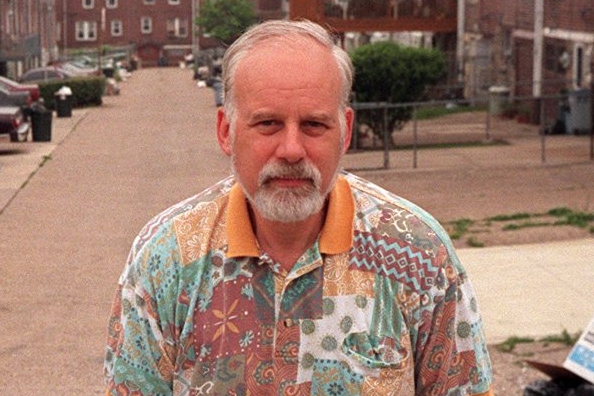
  • Ron Avery, retired Daily News reporter and Philadelphia historian, has died at 85

    Ron Avery, retired Daily News reporter and Philadelphia historian, has died at 85

    Ron Avery, 85, of Philadelphia, retired eclectic reporter and columnist for the Daily News, Philadelphia historian, volunteer city tour guide, author, high school history teacher, veteran, and canoe enthusiast, died Sunday, Aug. 2, of complications from amyotrophic lateral sclerosis at his home in East Falls.

    Reared in Fairmount, Mr. Avery graduated from Thomas Edison High School and earned a bachelor’s degree in history at Pennsylvania State University. He was assigned to the ship newspaper in the Navy after college, found a creative niche in journalism, and went on to work for more than 30 years at the Associated Press, the Bucks County Courier Times, the Courier-Post in South Jersey, and the Daily News.

    He wrote for the Daily News as a correspondent in 1981, joined the staff in 1982, and, until his retirement in 2000, wrote thousands of stories about crime, casinos, war orphans, historic houses, the MOVE bombing, local notables, and other subjects. His columns, “Poor Ronald’s Almanac” and “One of Us,” hammered away at local issues and featured everyday people doing exceptional things.

    “He covered every nook and cranny of the city,” said his son Serge. “That burning curiosity sustained him till his last days.”

    He wrote three books about Philadelphia, including A Concise History of Philadelphia in 1999. He produced a series of video guides he called the Urban Explorer for local TV in 2004 and posted blogs about the city from 2017 to 2019 on a website called Philadelphia Cracks Me Up.

    “Like all cities,” he said in a 1995 Daily News column, “Philadelphia is honeycombed with hidden spaces and forgotten places.” In a 1997 review of his book, City of Brotherly Mayhem: Philadelphia Crimes and Criminals, The Inquirer’s Thomas Brady said: “The book … is decidedly a fun read.”

    Alex Strang, his director on the Urban Explorer videos, called Mr. Avery an “unforgettable legend” and “a walking encyclopedia of the city’s history and eccentricities” in a Facebook tribute. Other former colleagues said he was “a clever journalist” and “a true Philadelphian.”

    Longtime Daily News colleague Robin Palley said on Facebook: “He had an amazing knack of finding quirky people with fascinating skills or habits and making them come to life on our pages.”

    Mr. Avery (left) mans a Salvation Army donation kettle in 1999.Steven M. Falk / Staff Photographer

    Before the Daily News, Mr. Avery wrote news and feature stories for the Courier-Post in the 1970s, and the Courier Times and the AP in the 1960s. He moved to Israel for six months in 1972 but returned to work for the Courier-Post in 1973.

    He also wrote freelance pieces for the Hidden City Daily, PhillyHistory.org, UShistory.org, and op-eds later for The Inquirer and Daily News. He served in the Navy from 1964 to 1966, joined the Philadelphia Canoe Club later, and led water trips in the New Jersey Pine Barrens and elsewhere.

    Knowledgeable, energetic, and naturally affable, he was a tireless promoter and volunteer guide in Philadelphia. He led walking tours throughout the city for students, civic groups, and other organizations, and his explanatory video tours featured cobblestone alleys, urban gardens, museums, statues, and other features of city life.

    He was a stickler for details and historical accuracy, and he helped spur City Council to pass an ordinance in 2008 to educate and certify paid Center City tour guides. “They score high as Philadelphia ambassadors of good will,” he said in a 1995 column about uneducated guides, “but as historians they often flunk out.”

    Mr. Avery wrote a column for the Courier-Post in 1974.Newspapers.com

    Ronald Avery was born June 10, 1941, in Strawberry Mansion. He joined the Boy Scouts, earned his bachelor’s degree at Penn State in 1963, and taught history at Bensalem High School for a year.

    He was a boxer in college and, mesmerized by the sport, later worked as a referee for amateur matches.

    He met Suzet Habif in Israel in 1967, and they married in 1968. They had sons Serge and Ben, and lived for years in a rowhouse in Oxford Circle.

    Mr. Avery cared for his wife during her long illness in the 1980s and ’90s. She died in 1993.

    Mr. Avery liked to hang out with Benjamin Franklin and other historic figures. Alex Strang

    He lived later in Pennsport and East Falls, was diagnosed with ALS in 2015, and proudly outlived its average life expectancy of 18 months by nearly a decade. “He defied that diagnosis and did not let it define him,” his son Serge said. “He always said he had a lot to live for.”

    Mr. Avery was an avid reader and street photographer. He liked poetry, wrote limericks on birthday cards, and posted hundreds of his photos on flickr.com. One of his photos won a contest and was displayed at the airport.

    He enjoyed jazz and jokes, led the prayers at family gatherings, and gave Yiddish quizzes to his two grandsons. He shared favorite recipes with Daily News colleagues and whipped up memorable homemade soups, especially white bean.

    “I’ll greatly miss his endless anecdotes about all things Philadelphia,” said his daughter-in-law, Rebecca Houlding, “the stories about the local criminals, and his love of his family and friends.”

    Mr. Avery wrote about his life in Northeast Philadelphia for the Daily News in 1997.Alejandro A. Alvarez / Staff Photographer

    His son Serge said: “He loved chasing the stories from the back alleys and driveways, highlighting the working people of our town.”

    In addition to his sons, daughter-in-law, and grandsons, Mr. Avery is survived by other relatives. A sister died earlier.

    Services were held earlier.

    Donations in his name may be made to Paralyzed Veterans of America, Box 758589, Topeka, Kan. 66675; and the Hebrew Immigrant Aid Society, Box 8688, Philadelphia, Pa. 19101.

    Mr. Avery “loved chasing the stories from the back alleys and driveways, highlighting the working people of our town,” his son Serge said.Alex Strang
  • A man who tried to hire a hit man to kill a rival was sentenced to more than 15 years in prison

    A man who tried to hire a hit man to kill a rival was sentenced to more than 15 years in prison

    Not long after Xin Guang-Go’s skill game business in North Philadelphia collapsed — a development that led to tension between him and his onetime business partner — Guang-Go decided he wanted his former colleague to die.

    To follow through on his threat, Guang-Go sought to hire a hit man — supplying the man with his target’s address, pictures of his intended victim’s car and home, as well as a cash deposit and a tip about where his rival might be storing about $100,000 in a safe.

    Guang-Go said the hit man could keep that money as long as the murder was carried out. And he also asked that his target’s girlfriend be killed in the process. For both killings, Guang-Go was willing to pay $30,000.

    But unknown to Guang-Go, the hit man he tried to hire was working as a confidential informant for the Bureau of Alcohol, Tobacco, Firearms, and Explosives. Guang-Go was arrested before either of his victims was harmed.

    In federal court Monday, Guang-Go, 48, of Plymouth, N.C., was ordered to serve more than 15 years in prison for seeking to carry out his scheme — a plot that U.S. District Judge Harvey Bartle III said was one of the most serious crimes a person could commit.

    “It’s totally unacceptable to settle a business dispute by entering into a contract to have your opponent murdered,” Bartle said.

    Guang-Go apologized, saying he had been consumed by impulses he now recognizes were wrong.

    It was “as if there was evil in my heart,” he said through an interpreter. “Evil was controlling my brain.”

    Neither of Guang-Go’s victims appeared in court Monday. Assistant U.S. Attorney Amanda McCool said both remain traumatized by his attempt on their lives.

    She said Guang-Go was not simply an unlucky or bumbling criminal who made a deal with the wrong source. He fully intended for his victims to die, she said — and in court documents, prosecutors said he had asked his would-be hired killer to provide photographic proof that the victims had been slain.

    “This is not some one-off of the defendant, that [he] ran into someone who suggested” the plot, McCool said. “Throughout the course of a week, he made multiple proactive steps to further his plan.”

    Guang-Go — who pleaded guilty this spring to murder-for-hire offenses — said that he had brought shame to his entire family through his actions, and that he regretted his prison sentence would take him away from his children and his aging mother.

    In addition to ordering Guang-Go to 188 months behind bars, Bartle imposed a three-year term of supervised release.

    Guang-Go, a native of China and a legal permanent resident of the United States, is likely to be deported whenever his term of incarceration is finished.

  • Firefighters are trying to stop a fast-moving Nevada wildfire from spreading to homes in Reno

    Firefighters are trying to stop a fast-moving Nevada wildfire from spreading to homes in Reno

    RENO, Nevada — A wildfire that mushroomed over the weekend in the Sierra Nevada foothills spread perilously close to neighborhoods in Reno, Nev., forcing authorities to urge more than 90,000 residents to leave their homes.

    The out-of-control fire has already burned some homes, but there’s concern that shifting winds could push the flames into newly developed and densely packed neighborhoods in Nevada’s largest city outside of metro Las Vegas.

    Schools across Washoe County were closed Monday because of the evacuations and to keep roads clear for emergency crews. Nevada’s governor declared a state of emergency in the county and mobilized the National Guard to help with aerial firefighting and protecting evacuated neighborhoods northwest of downtown Reno.

    At a roadblock in one neighborhood, residents expressed frustration Monday that they could not get back into their homes.

    “There’s no fire here! Why are the National Guard here?” a driver yelled.

    Authorities said late Sunday that the Hawk Fire had stayed in its footprint and firefighters were extinguishing hotspots while working to keep the fire from jumping a main highway and reaching homes and businesses. There was zero containment.

    The fire began Saturday and grew to more than 23 square miles on Sunday. It’s the third large wildfire in the rugged terrain north of Reno in the past two weeks — all caused by human activity, according to fire officials. They haven’t said whether the Hawk Fire was intentionally set or accidental.

    Reno, home to about 280,000 people, is known for its casinos and as a gateway to nearby Lake Tahoe, North America’s largest alpine lake and a popular vacation destination. It’s also about 120 miles southwest of Nevada’s Black Rock Desert, site of the annual Burning Man festival, which begins Aug. 30.

    At least six people — three first responders and three civilians — have been injured by the fire.

    Videos posted on social media showed the smoldering ruins of homes and cars, with only a scorched basketball hoop still standing.

    Many residents had little time to evacuate after the fire exploded in size.

    “Honestly, I thought it was like in a movie,” said Ruby Delatorre, who got back from a concert only to find her home in the evacuation zone. She returned Sunday to walk to her home and get a few more possessions.

    “I literally want to cry and go back for all my stuff. I just got what I thought I needed,” Delatorre said.

    Some who spotted the smoke on Saturday thought it was from another wildfire that has been burning the past two weeks.

    Teresa Lenshyn, who is among the evacuees, said being forced to leave was chaotic and stressful. “You don’t know if the winds are going to shift and it’s going to get worse,” she said.

    Much of Nevada’s western edge is under an increased risk of wildfires this week because of high winds and low relative humidity, the National Interagency Fire Center said. The National Weather Service says the region will see warm, dry, and breezy conditions, and that critical fire weather conditions are possible in the week’s later half.

    Extremely dry conditions across the American West have sparked a rash of wildfires this summer. Fires in eastern Washington state forced the evacuation of 60,000 people in the Spokane area in early August.

    Nationwide, there have been more than 50,000 wildfires — the most over the past 10 years covering the same time period, according to the national fire center.

  • Leaked memo shows how U.S. aims to weaken global limits on plastic pollution

    Leaked memo shows how U.S. aims to weaken global limits on plastic pollution

    The United States has doubled down on its opposition to plastic production limits in global treaty talks, according to a diplomatic memo reviewed by the Washington Post, pushing to create a broad loophole to disregard the treaty on national security grounds.

    A year after the Trump administration worked with other major oil-producing nations to block strict plastic pollution limits, leading to a failed U.N. conference in Geneva, environmentalists and other observers argue this same group is helping steer negotiations toward a weaker agreement.

    Involving delegates from nearly 180 countries, the talks have reached a critical point after four years. Global plastic pollution has ballooned to more than 57 million tons per year, and a coalition of dozens of countries — including most members of the European Union and many from Africa and Latin America — say this waste will become overwhelming unless the world imposes meaningful restrictions soon.

    The leaked document, which a foreign diplomat confirmed was circulated this summer to governments involved in negotiations, calls for a “pragmatic” treaty that includes a provision allowing for countries to take any measures they consider necessary to protect national security.

    The memo, which emphasizes the need for waste management and private sector investment, argues any agreement must not undermine national security, critical infrastructure, or supply chains. It warns restricting plastics and chemicals could limit access to defense-related products such as weapons materials and protective gear.

    The overwhelming majority of plastic is made from chemicals derived from petroleum or other fossil fuels, and the Trump administration has pushed to expand oil and gas drilling and domestic production. Negotiators under Trump have become far more vocal in opposing binding limits on plastic production, compared with a more conciliatory tone under President Joe Biden.

    The negotiating position also reflects a broader administration strategy of citing national security concerns to promote fossil fuels, such as when it declared a national energy emergency last year, blocked the development of wind farms, and exempted oil and gas firms from Endangered Species Act requirements in the Gulf of Mexico.

    The State Department said in an email that it generally does not comment on “purported” U.S. diplomatic communications.

    “The United States seeks to negotiate an agreement that all countries can join and implement as an outcome that will be most effective in reducing plastic pollution,” the department said, adding the treaty should not interfere with military readiness or critical national-security applications.

    It said the administration backed “common-sense” measures to reduce plastic pollution while rejecting proposals that would “damage the American economy, drive inflation, and restrict consumer choice.”

    Andreas Bjelland Eriksen, Norway’s minister of climate and the environment, said the memo was “in line with what the US has communicated” during recent negotiations.

    “We do not share the view that restricting specific plastic items that contribute to plastic pollution would pose a threat to economic growth,” Eriksen said, adding that in countries that have imposed limits on plastic pollution, “new and improved business solutions emerge.”

    “The treaty must lead to real changes to tackle plastic pollution; if not, there is no point having it,” Eriksen added.

    Barirega Akankwasah, executive director of Uganda’s National Environment Management Authority, defended the U.S.’s right to advance its views: “International law must reflect the needs and aspirations of negotiating countries and international law can only succeed based on national implementation, which in turn is a reflection of national capabilities and circumstances.”

    The dispute comes after what experts described as a sharp shift in the U.S. position under the Trump administration. Youngman, a legal and policy specialist at advocacy group Environmental Investigation Agency, said the U.S. under the Biden administration was open to provisions reducing plastic production, even though it did not support a global cap.

    But the U.S. has since vocally opposed limits on production and sought to narrow the treaty’s scope, including through new language invoking national security.

    Alexandra Harrington, an international legal expert, said the U.S. was not acting alone and had “come back in as a disrupter” in the talks.

    Harrington, also the chairperson of the International Union for Conservation of Nature’s plastic pollution task force, added the U.S. proposal went far beyond the narrow military exemptions sometimes found in environmental treaties, and appeared aimed more at shielding economic and petrochemical interests than addressing a specific plastics-related defense risk.

    “I think for them the national security argument is convenient, it’s useful,” she said.

    The memo was circulated in the months before treaty chairperson Julio Cordano published a new “Aid to Negotiations” document earlier this month. The text, intended to steer governments toward a final agreement, has also been criticized by environmental groups and some legal experts for creating a system based on national pledges rather than binding global controls.

    Cordano did not respond to a request for comment.

    Harrington said the chairperson’s new text was “very clearly” bending toward the agenda of countries seeking a less ambitious treaty, like the U.S.

    She pointed to the removal of trade provisions that would have regulated the cross-border movement of plastics, from polymers and products sold abroad to plastic waste shipped for disposal or recycling. Harrington said trade rules are a standard feature of major pollution treaties.

    Stewart Harris, managing director for global affairs at the American Chemistry Council, said the administration’s position is largely aligned with the plastic industry’s.

    Harris, whose trade group represents plastics manufacturers, said hard limits on plastic production will raise product costs for lower income people globally without significantly reducing plastic waste. Roughly 2.7 billion people globally do not have access to proper collection for their plastic waste and addressing that and recycling would go further to reducing pollution, he said.

    ACC is lobbying for individual countries to set their own action plans for tackling plastic pollution, such as setting national rather than global targets for how much recycled content plastic should contain.

    Harris said ACC has not taken a position on the national security exemption, but that such provisions were common in global environmental agreements.

    “That tells me that the United States is very serious about negotiating an agreement it can join,” he said. “They wouldn’t be even considering those details if it was not serious about joining.”

    Even if negotiators reach a deal, the United States would only join the treaty if the Senate ratifies it by a two-thirds majority vote, a difficult bar to clear in an extremely polarized Congress.

    While formal talks will resume next spring, informal negotiations resumed in late June, nearly a year after governments failed to produce a final agreement amid disputes over whether the treaty should include limits on plastic production and binding restrictions on chemicals. Many countries rejected the then-chairperson’s draft as too weak to serve as the basis for a deal.

    Youngman said the new document weakens last year’s text further by removing proposed reporting requirements on how much plastic countries produce and consume, and by replacing stronger legal terms such as “shall” with weaker language such as “should.” Even its most ambitious options, she said, would fall short of the mandate to end plastic pollution.

    “We didn’t think it was possible,” she said, “but we keep on digging ourselves even lower.”

    Heads of delegations are due to meet in Bangkok at the end of September, where governments are expected to discuss “bridging proposals,” compromise language intended to address the treaty’s most contentious issues.

  • Trump’s school voucher program could become a public school cash machine

    Trump’s school voucher program could become a public school cash machine

    Forget student fun runs, PTA bake sales, and Saturday morning car washes.

    The future of public-school fundraising may soon look more like a payroll deduction. Or perhaps door-to-door campaigns each tax season asking filers to earmark donations to support nearby public schools.

    When President Donald Trump’s tax overhaul known as the One Big Beautiful Bill last year created the first national school-voucher-style program to help families pay for private schools or homeschool costs, it allowed public schools to benefit as well. According to U.S. Treasury guidelines released in June, the program allows specific nonprofits to collect donations that people direct from their federal taxes for a vast array of public school costs, such as transportation or tutoring.

    Sara Hazel, president of the Denver Public Schools Foundation, the fundraising arm for Colorado’s largest school district, is among a small but growing number of district leaders who have said they plan to take advantage of the financial opportunity. She said she plans to tell potential donors, “Do you want that money going to the IRS or going to local kids?”

    The program doesn’t officially start until the new year, but its resemblance to private-school vouchers has inspired opponents of school choice to line up against it. Still, supporters and even cautious critics say the Republican-backed initiative could mean a financial boon for public schools.

    The program works like this: Taxpayers can contribute up to $1,700 to what’s known as a scholarship-granting organization and receive a credit on their federal income taxes. It’s a dollar-for-dollar credit, meaning every pledged dollar reduces what an individual owes to the Internal Revenue Service by the same amount.

    These new intermediaries could be formed by an array of nonprofits, including public-school foundations, with approval from their state. The scholarship-granting organization would then pass on the money to private school and homeschool applicants in the form of scholarships — or to school districts so they could cover certain services for student applicants.

    Marguerite Roza, a school finance expert, has advised school districts — many of which have bandaged their slashed budgets by shuttering campuses or issuing pink slips — that they can’t afford to ignore this new source of funding. “Any time there’s an available revenue source, generally we don’t see districts saying, ‘No thank you,’” said Roza, director of the Edunomics Lab at Georgetown University.

    States must opt into the program, and so far, 30 states have done so. Now it’s up to individual school district leaders in those states to decide if they want to try to tap into the money.

    School finance experts suggest the scholarships could help districts access funding comparable to 3% of their entire budget. But tapping into this unexpected revenue risks political backlash and logistical headaches. Governors and superintendents may face fierce resistance from teachers unions, which in many states have portrayed the new program as a Trojan horse for the expansion of vouchers in education because it also allows money to be funneled to families to pay for private school.

    Some opponents also raise concerns about creating a new funding system that could favor school districts with a ready pool of wealthy donors over those in low-income communities where few residents may owe enough in federal taxes to contribute to the scholarships.

    “In low-income areas, you’re going to find it’s not easy for school districts to raise this money,” said Thomas Toch, director of the think tank FutureEd at Georgetown University.

    He said he worried that the inclusion of public school districts in the legislation was little more than a ploy, a shrewd political strategy to further school choice in states otherwise unlikely to support it.

    “It was designed to make the case that this program can support the public sector in order to win support in blue states,” Toch said.

    The mechanics of the tax credit scholarships represent a dramatic departure from how the federal government supports schools.

    The money for the scholarships never flows through federal Department of Education coffers, entirely bypassing Congress and its spending decisions.

    Treasury regulators will soon issue formal rules to set additional guardrails for the program. But the law suggests the scholarships could be used to cover an expansive list of expenses that public schools often struggle to fund including costs such as field trips, textbooks, or support services.

    The inclusion of public schools now places some governors, superintendents, and school boards in a new dilemma: Do they choose to tap into a Trump-backed program that could boost their bottom line, or leave the tax-credit cash on the table for others to claim?

    “The reality is this program exists, and if there are dollars on the table that can go to our children and families, I don’t understand the purpose of not trying to do everything we possibly can,” said Justin Dayhoff, chief financial officer for Nevada’s Clark County School District, which includes Las Vegas.

    His district, like many around the country, is strapped for cash as health insurance and other costs increase and fewer students enroll in public school due to population decline. Enrollment in Clark County — the nation’s fifth-largest district — has dwindled by more than 35,000 students, or 11%, since before the pandemic, and it laid off five dozen staff ahead of this new school year.

    How big a financial difference the voucher-style program would make for school districts remains to be seen.

    Some school finance experts expect soliciting donations could be as simple as districts partnering with employers to enroll their workers in the tax credit program, perhaps as another form in their regular HR paperwork. (Many employers already partner with nonprofits like United Way to collect pretax donations from paychecks.)

    Roza, of Georgetown, estimated a district could bring in about $200 per student by enrolling its own employees into the program. Convincing major companies to do the same — directing proceeds to nonprofits supporting students who attend local public schools — could push that figure higher. City and county governments might participate as well.

    “Local employers are an absolutely critical piece of this puzzle,” said Hazel, with the Denver Public Schools Foundation.

    Her organization hasn’t officially approached any of its corporate partners yet about enrolling their employees in the tax credit program. (Past donors to the foundation have included Chevron, the Colorado Rockies, and United Airlines.) But Hazel’s already thinking about whether Denver Public Schools will have to compete with other Colorado districts attempting to woo the same business leaders.

    “We’re the largest school district in Colorado, so we already have an advantage,” Hazel said. “But how can we go to a company and say, ‘Your employees must choose between all these great school districts?’”

    But her new fundraising plans will come with steep operational hurdles.

    Under the new law, at least 90% of all donations to scholarship-granting organizations like Hazel’s must go directly to student scholarships, leaving relatively little to cover marketing, staff, annual independent audits, and payment processing. Fees already take 4% of each credit card transaction, Hazel said.

    Yet even as she awaits further clarity from Treasury on how organizations can collect donations, she’s imagining what the money could mean for Denver schools.

    “My dream is I can give every second grader a tutor and we get everyone to grade-level reading and math,” Hazel said. “There are things like that are so scalable and would support every student.”

  • Two dead in weekend shootings, even as city’s homicide decline continues

    Two dead in weekend shootings, even as city’s homicide decline continues

    Two men were killed in separate shootings over the weekend in Philadelphia, police said, adding to the homicide toll in the city even as it continues to see a sharp decline in deadly violence.

    The killings occurred within hours of each other late Saturday and early Sunday. Investigators have not publicly identified the victims or released a motive in either shooting. No arrests have been made.

    Police continue to investigate, said Officer Shawn Ritchie, a police spokesperson.

    The first shooting was reported shortly before midnight Saturday near Wakeling and Jackson Streets in the Frankford section of Northeast Philadelphia. Responding officers found a 64-year-old man with a gunshot wound to the face, police said.

    He was pronounced dead at the scene.

    Officers detained a 39-year-old man for questioning and recovered two handguns at the scene, police said. The man had not been charged as of Monday afternoon, according to police.

    Several hours later, shortly after 5 a.m., officers were called to the 3200 block of Kensington Avenue for a report of a person with a gun. When they arrived, police said, they found a 35-year-old man with multiple gunshot wounds to his back, chest, and right leg.

    The man was taken to Temple University Hospital, where he was pronounced dead, police said.

    The Kensington shooting occurred along a stretch of the avenue that has long been associated with the city’s open-air drug trade, but police have not said whether the killing was connected to any activity in the area.

    Despite the two weekend killings, Philadelphia’s homicide total remains significantly lower than in recent years. By the same time last year, the city had recorded 146 homicides, and 176 in 2024, according to police data. As of Sunday, the data show, the city has logged 117 homicides this year.

    Both shootings remain under investigation, police said. Anyone with information about either killing is asked to contact the police department’s tip line at 215-686-8477 (TIPS). A reward of up to $20,000 is available for information leading to an arrest and conviction, police said.

  • Masked men used an AR-15-style rifle to rob three people in Center City this weekend, police say

    Masked men used an AR-15-style rifle to rob three people in Center City this weekend, police say

    Masked men armed with handguns and what appeared to be an AR-15-style rifle robbed three men early Sunday morning in Center City, forcing at least one of the victims to his knees at gunpoint, according to police.

    The victims — ages 27, 35, and 36 — were talking on the sidewalk around 3 a.m. on the 1500 block of Locust Street when three robbers stepped out of a gray Hyundai sedan and demanded the men’s belongings, said 9th District Capt. Anthony Ganard.

    Two of the men complied, police said, but the third resisted, and one of the robbers hit him in the face with a handgun. He was taken to an area hospital with injuries that were not life-threatening, Ganard said.

    The assailants took cell phones, watches, car keys, wallets, driver’s licenses, and cash, police said.

    No arrests have been made.

    Surveillance video reviewed by investigators shows one of the victims on his knees on the sidewalk as two of the robbers pointed guns — including what appeared to be an assault rifle — at his head. The video shows the victim handing over cash and the watch on his right wrist before the robbers ran back toward the Hyundai, Ganard said.

    “It’s always concerning, any type of robbery involving a firearm, [but] especially when you have a high-powered-style firearm,” Ganard said at a news conference Monday.

    Police believe a fourth man acted as the getaway driver and remained in the Hyundai during the robbery.

    The Hyundai had been circling the area for about three hours before the robbery, Ganard said. It was unclear Monday whether the men were targeted or victims of a random crime, he added.

    The sedan, which police recovered early Monday morning, had been stolen from Cheltenham Township on Wednesday, Ganard said. He declined to say where the car was found.

    Detectives are examining the vehicle for evidence and searching for additional surveillance footage that may have captured the robbery. Investigators have not linked the men to any other similar robberies, Ganard said.

    The investigation remains active, police said.

    Anyone with information is encouraged to contact investigators at the department’s tip line, 215-686-8477 (TIPS).

  • Farmers struggle to get basic services from depleted Agriculture Department

    Farmers struggle to get basic services from depleted Agriculture Department

    WASHINGTON — Mary and Zachariah Ben, farmers in New Mexico, believed they were on the verge of buying the property of their dreams last fall: 47 acres, with enough cropland to grow heirloom corn and a processing facility to expand their organic baby food business.

    But the low-interest loan they secured from the Agriculture Department to make the purchase in Aztec, N.M., was on hold for months, first during the government shutdown that lasted until mid-November and then as federal workers left the agency in droves. Only half a dozen loan specialists who could help process their claims remained in the entire state, the couple learned, leaving them in limbo indefinitely and the seller impatient to know whether the agreement would ever go through.

    Zachariah Ben, who along with his children is a member of the Navajo Nation, ultimately turned to private lenders instead, and the family absorbed more than $200,000 in interest as a result. “At least we got the land because we could have also lost that, and we would have if we had to wait” on the Agriculture Department, Mary Ben said.

    The experience of the Bens, whose aim of providing organic and shelf-stable options for young children appears to align with some of the Trump administration’s stated goals, is not unique. Across the country, farmers and rural residents describe struggling to obtain the basic services the Agriculture Department is meant to offer, including loans and grants, technical assistance, and financing for housing and utilities. Sharp attrition under the Trump administration, largely through voluntary resignations and dismissals by the Department of Government Efficiency, have left many of the Agriculture Department’s local offices with skeletal staffing — and, in some counties, with no one at all.

    The ripple effects of the Agriculture Department’s depleted workforce illustrate how the Trump administration’s mission of shrinking the federal bureaucracy has undercut a competing priority: delivering for farmers, a core political constituency. Strained government resources also risk posing additional challenges for a farm economy that administration officials have described as “dire,” increasing barriers to entry for new farmers who need more assistance, impeding assistance to producers already facing tough economic conditions, and hampering basic services and government aid in the most remote and poorest places.

    “All these practical things that make the wheels go around in a community were facilitated by USDA, and it was with staff who knew how to navigate and had the trust of the local community,” Sen. Pete Welch of Vermont, the top Democrat on the Senate subcommittee on rural development, said in an interview. “It’s something that was working, was working well, and was very cost-efficient. And now it is being demolished.”

    Trump administration officials have defended the staffing cuts as voluntary and necessary to trim a bloated agency.

    “We don’t have the money in our budget to pay for all of the employees that were hired in the prior administration,” Stephen Vaden, the deputy secretary of agriculture, said in a congressional hearing in July. He emphasized that the reductions were “voluntary decisions made by individual employees who chose, with the information that the agency provided to them, to seek a new career elsewhere.”

    Overall, more than 20,000 workers out of more than 110,000 left the Agriculture Department through the first half of 2025, according to an inspector general report. Recently obtained data showed that the Farm Service Agency, a division whose approval the Bens sought in applying for a low-interest loan, has no staff left in dozens of counties across the country, forcing farmers to travel long distances for assistance or to simply give up. Among divisions that directly work with farmers and aid rural residents, the percentage of departures is even higher.

    The Agriculture Department said that it currently had about 93,000 employees after hiring more workers this year, and that it believed staffing levels were adequate as “services and supports have become more targeted and efficient” through planned technological improvements.

    Still, its plans to fundamentally overhaul the agency, as well as funding cuts proposed by President Donald Trump’s latest budget, are likely to deepen difficulties for farmers and rural communities.

    Already, the agency is moving more than half of its staff in the Washington region out of the nation’s capital, a move that is all but certain to further thin the ranks of the agency. Such losses will affect the department’s ability to finance home loans, carry out agricultural research, and service farmers, according to federal workers, farm groups, and rural lenders. (Unions and farm organizations have mounted a legal challenge to that plan.)

    Likewise, Trump’s budget for the next fiscal year proposes a nearly $5 billion cut to the Agriculture Department, essentially eliminating programs for beginning farmers, conservation, and rural aid.

    Some of the steepest cuts have fallen on a part of the Agriculture Department responsible for improving the economy and infrastructure in rural communities, leading to long delays in aid for residents and charities alike.

    The subagency, known as Rural Development, has lost about 1,700 workers, or more than a third of its staff, since the Trump administration took office.

    In New Mexico, questions directed at the agency often languish for weeks, as do approvals of key documents, with emails and queries bouncing among staff members scattered across the state and in Washington, said Lorenzo Alba Jr., the executive director of Casa de Peregrinos, an anti-hunger charity in the area.

    After receiving a grant from the Rural Development section at the end of the Biden administration to build a food pantry in Hatch, N.M., the charity is still waiting for $300,000 in federal funding. For now, Casa de Peregrinos has cobbled together other sources of financing to set up and operate a makeshift pantry with limited hours and food varieties, despite no refrigeration or air-conditioning.

    “Our pantry should have been up and running, fully renovated by now,” Alba said. He added that the delays had led costs to balloon to $600,000 from $475,000, money the charity could have used to buy more food and serve more families.

    “I quit blaming the USDA on this because I didn’t know what they were going through,” he said. “Now I do.”

    It is unclear whether staffing cuts have been a factor, but in the last year the subagency has also financed far fewer loans and grants. As of mid-August, with a little more than a month left in the 2026 fiscal year, the agency has approved nearly 52,000 investments worth $15.8 billion. In comparison, in the past three fiscal years, the agency made between 63,000 and 74,000 investments totaling $24 billion to $40 billion annually.

    Another crucial service the department offers — helping producers carry out sustainable farming practices through its Natural Resources Conservation Service — has lost more than 2,700 workers, or nearly one-fourth of its staff, forcing farmers to miss contract deadlines and turn to expensive private consultants for advice.

    In central Nebraska, Clay Govier, who farms corn and soybeans on 3,500 acres in Broken Bow, described the cascading effect of 50% staffing cuts at his local conservation agency. The technician he had worked with took a buyout at the start of the Trump administration. Now, Govier and his family coordinate with someone who travels between two counties to survey different farms.

    Though the technician is knowledgeable, “he’s stretched very thin because if he needs a signature, he has to drive to our farm and then he drives back or we have to drive to him, and it just burns up an entire morning to get some basic paperwork done,” Govier said.

    As a result, the office is missing more details and overlooking crucial steps to verifying the farmers’ practices these days, leading to delays in the contract cycle and payments.

    “Farming is an art and a science,” he said. “It’s so different for every operation, every state, every region, so you need local NRCS staff that understand their region and how to implement these programs.”

    In southwestern Pennsylvania, Amanda Butterfield worked with the conservation service for nearly a decade, first to restore roughly 180 acres of strip-mined land in Meyersdale into pasture for a herd of beef cattle. After her technician shared anecdotes about burnout and long working hours, Butterfield turned instead to private consultants who work for agribusinesses. But that advice often comes at a steeper cost, like the expectation of buying certain products.

    Butterfield also added that staffing turnover at her local Farm Service Agency had led to errors and inefficiencies: A new worker hired to replace an employee who had left asked her husband to report crop acreage, unaware that the ranch did not grow crops at all.

    “We’ve completely lost a whole group of experts within our communities across the United States that can no longer help and support us,” she said.

    This article originally appeared in the New York Times.