Category: News

  • Classes are too big, and students don’t have enough resources, staff say at a “rally for Temple’s future”

    Classes are too big, and students don’t have enough resources, staff say at a “rally for Temple’s future”

    Waving signs and chanting, more than 100 Temple University students and employees rallied Wednesday to protest cuts across the university and health system.

    “Who makes Temple work? We make Temple work!” they shouted.

    Temple eliminated 236 positions and laid off 40 workers this summer.The university raised tuition 3.4% this year. President John Fry said at the time the decision was necessary to close a budget gap as Temple — like colleges nationwide — copes with enrollment declines amid a shrinking pool of applicants and federal policy changes that resulted in lower numbers of international students.

    The cuts have gone too far, said Jeffrey Doshna, president of the Temple Association of University Professionals, one of several unions that organized the “Rally for Temple’s Future” in advance of a university trustees meeting.

    With austerity measure after austerity measure, “is there any wonder that we have a student retention problem?” Doshna told a cheering crowd. “There aren’t enough advisers for students to get appointments. There aren’t enough librarians and library staff to help students complete their research projects. There aren’t enough staff, faculty, so that students can get the classes that they need.”

    Del Doktor, a faculty union official, said those who rallied are the real heart of Temple.

    Del Doktor, Assistant Professor of Music Theory and Elected Council Member of TAUP, holding a sign and rallying for safe staffing, transparency, and accountability at Temple University on Wednesday, Oct. 14, 2026, in Philadelphia, Pa.Tyger Williams / Staff Photographer

    “We believe in its promise, its mission to provide affordable but quality education, and we know that these austerity measures, unfairly distributed, prohibit us from doing our job,” Doktor said. “I just want to do my job.”

    Before the group marched around Sullivan Hall, where the board meets, a coalition of Temple unions presented demands, including increased staffing levels at the university and throughout the health system, open meetings to discuss budget matters, and a third-party public performance review of the current Temple leadership team.

    Several politicians showed up to support the staff and students’ rally. City Councilmember Nicolas O’Rourke said he understood the need to make tough financial decisions, but he is “disgusted” by the cuts.

    “A demand for safe and responsible staffing across the university and health system is just common sense,” O’Rourke said.
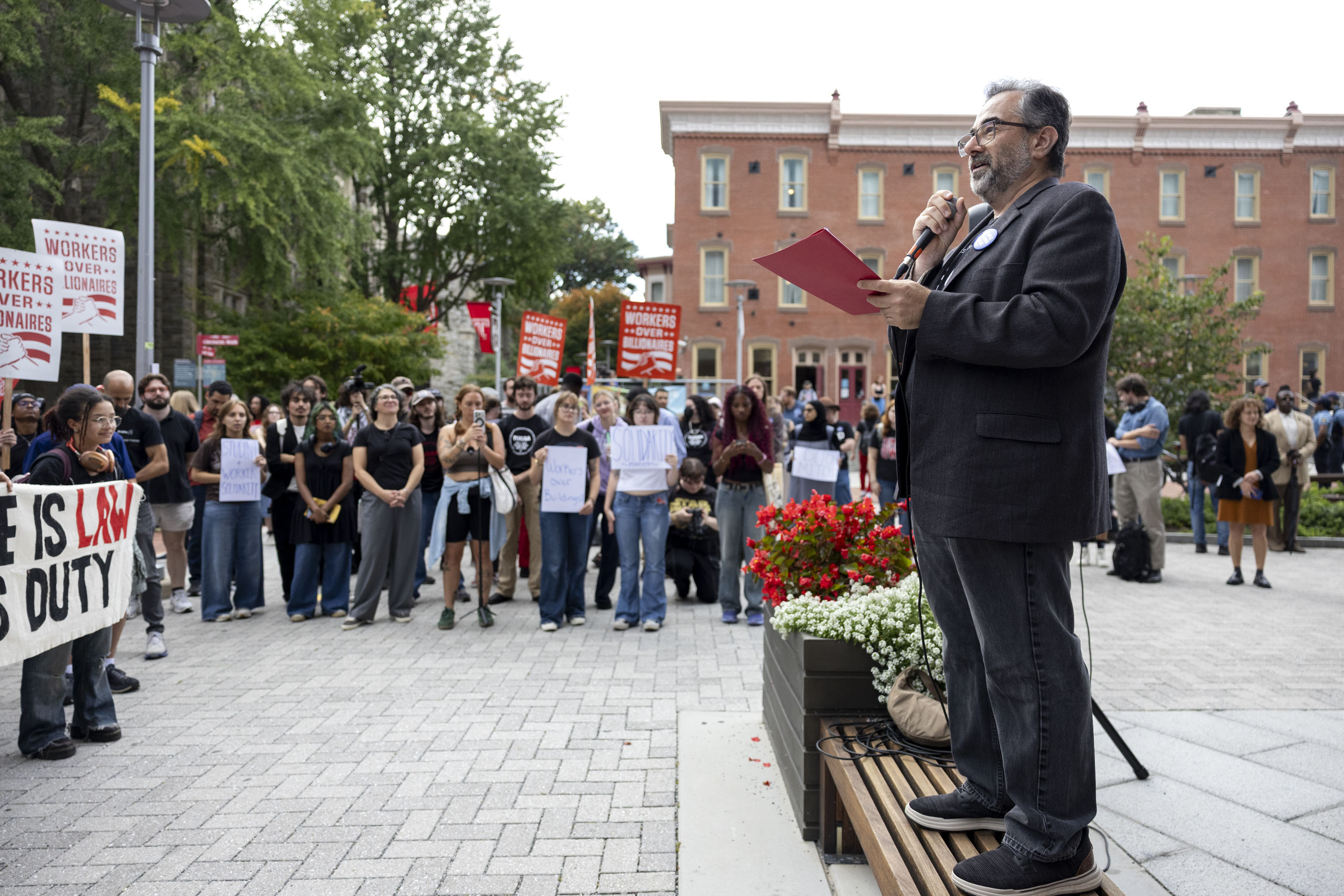

    Jeff Dothan, Temple Faculty Member in the Tyler School of Art and Architecture, speaks during the rally for safe staffing, transparency, and accountability at Temple University on Wednesday, Oct. 14, 2026, in Philadelphia, Pa.Tyger Williams / Staff Photographer
    Robert Harris, Legislative Director of the American Federation of State, speaks during the rally for safe staffing, transparency, and accountability at Temple University on Wednesday, Oct. 14, 2026, in Philadelphia, Pa.Tyger Williams / Staff Photographer

    In a statement issued late Wednesday afternoon, the university said it “welcomes peaceful demonstrations like what we saw today,” noting a commitment to “open communication and engagement with our university community while we navigate the current financial challenges.”

    In June, Temple asked its schools, colleges, and administrative units to cut a total of $60 million to help offset a $85 million projected budget gap.

    “We will continue to provide information and opportunities for meaningful engagement as we continue to plan for Temple’s future,” the university statement continued.

    Later, at the board of trustees meeting, officials were expected to move to collapse Temple’s School of Theater, Film and Media Arts and fold the programs into other schools. The Department of Theater would move into the Boyer College of Music and Dance, and the Department of Film and Media Arts would move into the Klein College of Media and Communication. Under the plan, the School of Theater, Film and Media Arts would cease to exist on July 1, 2027.

    “This realignment reflects the fast-changing landscape of the media and entertainment industries and ensures that our graduates are best positioned to thrive,” the university said in a statement.

    “It is important to emphasize that for this year and next, all of the academic programs in TFMA will continue as usual. Any future curricular changes will be guided by faculty and administrators in the two colleges for implementation in 2028-29 and beyond.”


  • How the man accused of killing a Philly police officer got a city job despite his criminal history

    How the man accused of killing a Philly police officer got a city job despite his criminal history

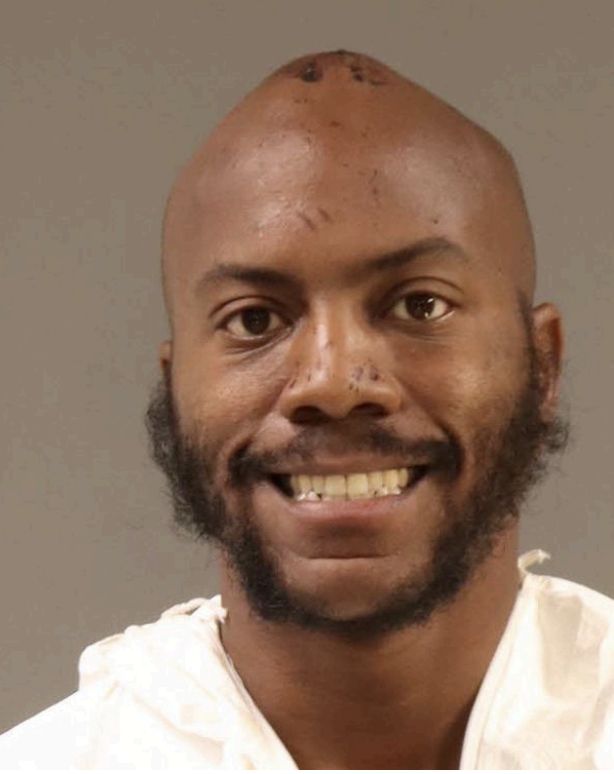
    Eric Lewis, the city employee accused of ambushing Philadelphia police officers with a shotgun on Saturday and fatally shooting Officer Shane Seiber, had a criminal history that included a 2015 gun-related conviction and a homicide charge for which he was acquitted.

    Despite that, the city hired Lewis in May 2024 to work a $47,000-per-year job with the water department as a trades helper. His hiring has raised questions about how a person with a criminal background who allegedly went on to shoot at police officers could have been employed by the city.

    But according to officials in Mayor Cherelle L. Parker’s administration, the city was barred from considering Lewis’ most serious previous criminal allegations under its relatively strict laws that govern when and how employers can weigh an applicant’s criminal history.

    That includes a homicide charge stemming from a 2019 killing in which Lewis was later acquitted. The murder case has become the subject of intense public scrutiny, with District Attorney Larry Krasner alleging that police botched the investigation.

    Under local law, the city is prohibited from considering charges that did not result in a conviction while making hiring decisions.

    The city also could not deny Lewis employment based on a 2015 conviction on misdemeanor charges of simple assault and carrying a firearm in public. That conviction, which resulted in a sentence of probation, took place more than seven years before Lewis was hired, putting it outside the window when the city could consider such a record in making hiring decisions.

    A moment of silence is held for fallen Philadelphia Police Officer Shane Seiber before the game between the Carolina Hurricanes and the Philadelphia Flyers at Xfinity Mobile Arena on Sunday.Isaiah Vazquez / For The Inquirer

    Candi Jones, the city’s chief human resources officer, said in an interview Wednesday that a criminal record does not automatically disqualify someone from employment.

    But Jones said the most recent crime Lewis is alleged to have perpetrated — killing Seiber and wounding another officer — is “abhorrent.”

    “As an employer, the city’s focus is on supporting our employees and their families who are victims of this terrible crime, as we grieve together,” she said, adding: “The safety of city employees and the public is and will always be a fundamental priority.”

    The city in 2011 first passed the Fair Chance Hiring Law, commonly known as the “ban the box” law, which required that most employers in Philadelphia remove questions on job applications about criminal backgrounds.

    In 2016, the city strengthened the law to ban employers from asking job applicants about criminal history until after they made a conditional offer of employment. That amendment also limited employers from considering any criminal convictions more than seven years old.

    Philadelphia City Council again amended the law last year to shorten the window for considering misdemeanor convictions to four years. That took effect well after Lewis was hired.

    Proponents said prohibiting employment discrimination based on criminal history ensures job opportunities for the thousands of people in Philadelphia with conviction and arrest records. Critics have said the law places high burdens on private employers and poses safety risks.

    Jones said the city stands by its practice.

    “As an employer, we do engage in inclusive employment practices [and] we do provide employment opportunities to formerly incarcerated individuals,” she said.

    Eric Lewis, charged with murder in the shooting death of police officer Shane Seiber, is shown in a Philadelphia Police Department photo.Philadelphia Police Department

    Jones said Lewis went through the city’s typical hiring process for civil service employees, who make up the majority of the more than 29,000 members of the city workforce. The city’s website describes the job of trades helper as an entry-level position that involves assisting a more experienced worker with equipment maintenance and repairs.

    According to Jones, Lewis submitted an application, was placed on an eligibility list for the job, participated in an interview, and was subject to a background check.

    In making its hiring decision, the city likely would have been able to consider one low-level conviction that fell within the seven-year look-back window that was in place when Lewis applied.

    Lewis was charged in July 2018 with simple assault and recklessly endangering another person after police said he punched a woman in the face, according to the affidavit of probable cause for his arrest.

    He later pleaded guilty in Municipal Court to disorderly conduct, a third-degree misdemeanor, by engaging in fighting, according to court records. He was sentenced to one year of probation.

    Jones said the city’s pre-employment screenings are designed to ensure that an applicant is reviewed on an individual basis.

    She said the nature of convictions is considered, as well as their relevance to the position and the risk they pose. For example, she said, applicants for public safety jobs may receive more scrutiny, and child welfare laws dictate background check procedures for workers who interact with children.

    In addition to being barred from considering older criminal convictions, employers are prohibited from inquiring about a job applicant’s previous arrests or charges that are no longer pending and did not result in a conviction.

    In 2023, Lewis stood trial for murder in the 2019 shooting death of Christopher Williams.

    That case has since drawn fresh scrutiny after The Inquirer reported that Lewis was acquitted by a judge who was so concerned about the weakness of the police investigation in the case that he contacted the department’s internal affairs bureau.

    On Tuesday, Krasner accused police of mishandling the case, and he said one officer who dated Lewis’ sister gave fabricated information to investigators, something he characterized as potentially “criminal.”

    Sgt. Eric Gripp, a police spokesperson, said that the department was reviewing the case, but that its focus is on supporting the families of the officers involved in the shooting and those grieving the loss of Seiber.

  • Former Burlington County Times site will be redeveloped with 129 townhomes

    Former Burlington County Times site will be redeveloped with 129 townhomes

    Willingboro officials approved plans Tuesday to build 129 townhomes on a roughly 12-acre lot that was once home to the Burlington County Times newsroom.

    The now-vacant property served as the newspaper’s headquarters for 50 years before the company moved to a new office in 2018. Two years later, the building was demolished to make way for redevelopment.

    Developers want to build 20 buildings on the site at 4284 Route 130 to accommodate the new units: 18 three-story buildings and two two-story buildings designed for accessibility, each 30 feet apart, according to the plans.

    The three-bedroom townhomes will each have private driveways, and 115 units will also have attached one-car garages.

    Seven townhomes will be deed-restricted for low and moderate-income families, according to Damien Del Duca, an attorney representing Willingboro Townhomes AMS Dev LLC, the project’s developer.

    The plans also include four community common areas and 170 newly planted trees throughout the property.

    The township granted preliminary approval for the project’s design and site plan in August after previously adopting a redevelopment plan for the unused property in 2025.

    The site is currently owned by Langhorne-based Levittown Times Corp., according to state property tax records.

    The Burlington County Times was originally named the Levittown Times, a reference to the brief period when the township was named Levittown.

    The newspaper changed names after a 1963 referendum reestablished the township as Willingboro.

    Calkins Media owned the Burlington County Times and several Bucks County newspapers for decades until the company was acquired by New Media Investment Group Inc. as part of a multi-newspaper deal for $17.5 million in 2017.

  • Miranda Cosgrove, Ali Wong, and Edi Patterson are all coming to the sixth season of ‘Abbott Elementary’

    Miranda Cosgrove, Ali Wong, and Edi Patterson are all coming to the sixth season of ‘Abbott Elementary’

    Abbott Elementary is opening its fictional doors to a new cast of characters with last week’s premiere of its sixth season.

    Joining the main cast this season, which includes show creator and Philly native Quinta Brunson, are guest stars such as former Nickelodeon icon Miranda Cosgrove, comedian and author Ali Wong, and comedian and actor Edi Patterson, according to Deadline.

    Details on their Abbott characters and the episodes they’ll appear weren’t announced.

    The Emmy-winning Abbott has grown to be one of the most beloved network sitcoms, and its latest premiere brought on Philadelphia 76ers’ juggernauts Tyrese Maxey, VJ Edgecombe, and Jaylen Brown.

    Cosgrove, Wong, and Patterson will enter Abbott Elementary as the main cast goes through major changes, with Tyler James Williams’ Gregory promoted to assistant principal and Lisa Ann Walter’s Melissa is coming into her own as the teachers’ union representative.

    Cosgrove is best known for her role in Nickelodeon’s Drake and Josh and as Carly in the same channel’s iCarly, about teens livestreaming in the aughts before Twitch became a global platform.

    The 33-year-old also produced the iCarly reboot with Paramount+ in 2021 and starred in Netflix’s The Wrong Paris, among other roles.

    Wong, a stand-up comedian known for her Netflix specials like Cobra Baby and 2024’s Single Lady, starred in and executive produced the Netflix and A24 dramedy Beef opposite Steven Yeun, for which she won an Emmy for outstanding lead actress for the show’s first season.

    Patterson is coming off the heels of a six-year stint in Danny McBride’s latest HBO comedy series, The Righteous Gemstones, in which she played the ambitious, word-slurring, and outrageous Judy Gemstone, who vies for control of the family megachurch alongside McBride, Adam DeVine, Walton Goggins, and John Goodman.

    Abbott airs on ABC on Wednesdays at 8:30 p.m. and streams on Hulu and Disney+ the next day.

  • House Democrats plan agenda for first 100 days if they sweep to power in midterm elections

    House Democrats plan agenda for first 100 days if they sweep to power in midterm elections

    WASHINGTON — House Democrats are preparing an ambitious 100-day agenda focused on delivering their campaign promises — making life more affordable and conducting vast oversight of the Trump administration — if the party seizes majority control in next month’s elections.

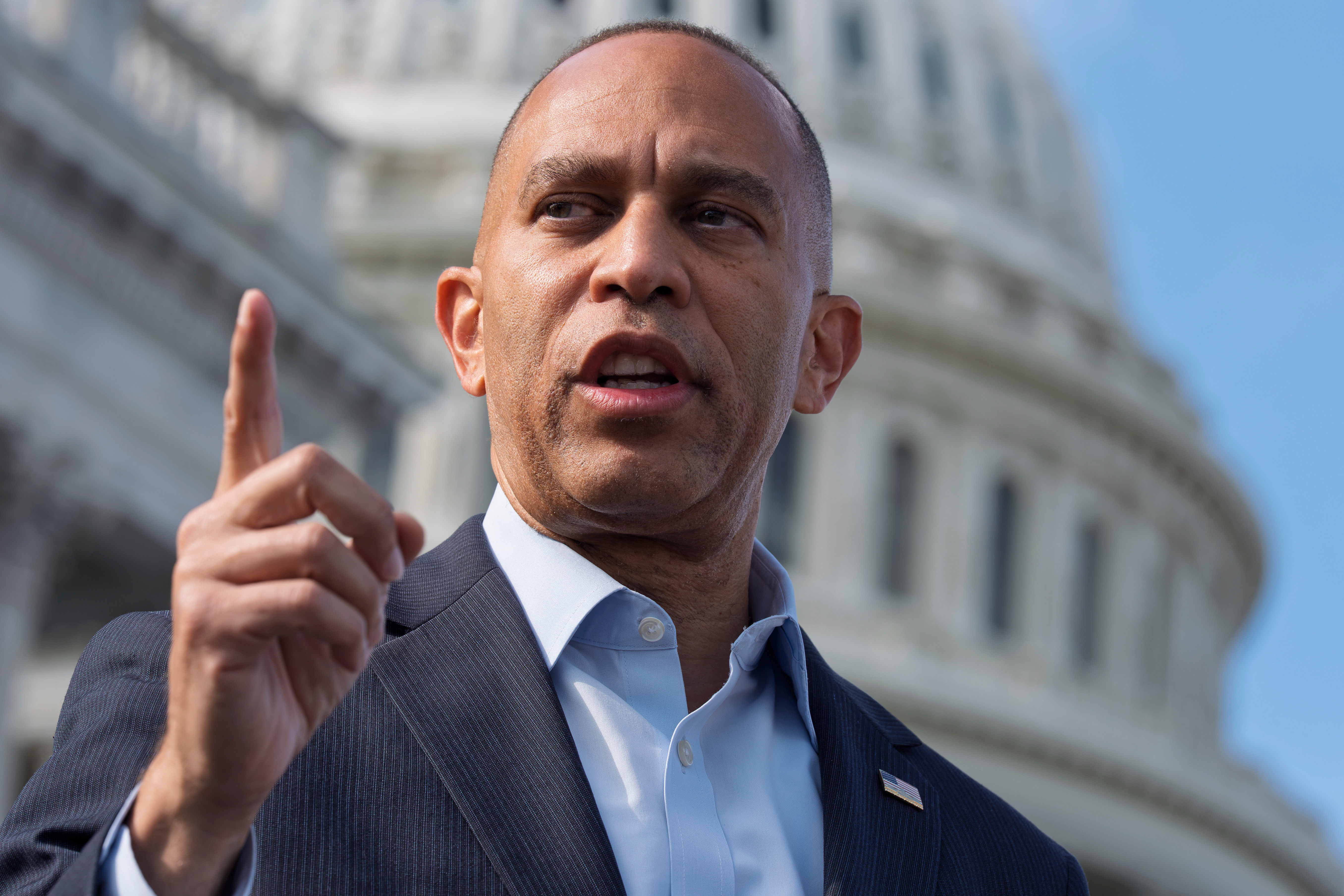
    Democratic leader Hakeem Jeffries, who is in line to become House speaker if the party wins power, said the Democrats will be united “right out of the gate” on reinstating Affordable Care Act tax breaks, reversing Republican Medicaid cuts, holding votes against the Iran war, and undoing President Donald Trump’s tariff regime.

    They expect to launch the agenda in the first 100 hours, once the new Congress is seated in January.

    “Fighting for an affordable America — that’s what unites Democrats all across the country,” Jeffries said recently at the party campaign headquarters in Washington.

    “That’s our commitment to the American people, because the cost of living is way too high and far too many people who are working hard, playing by the rules, can’t thrive and can barely survive — and are drowning — in the Trump economy.”

    It’s a hyper-focused agenda tapping into the voter sentiment that is driving much of the midterm election as Americans wrestle with affordability concerns and inflationary costs from the Iran war and other policies.

    The undertaking will also test the ability of the sprawling House Democrats to work together and avoid the chaotic divisions and disruptions that have hobbled Republicans under Speaker Mike Johnson’s leadership.

    Democrats have been out of power in the House since 2023. If Jeffries takes the helm, he would be the first Democratic speaker since Nancy Pelosi, leading a new generation of lawmakers that includes a handful of far-left candidates who are aligned with the Democratic Socialists of America.

    “The antidote to that is getting things done,” said Illinois Rep. Nikki Budzinski, who is poised to become chair of the New Democrat Coalition, the largest caucus within the House Democrats. She said the party is determined to show the American people that “Democrats know how to govern.”

    A Freedom Caucus of the far left?

    Rep. Greg Casar (D., Texas), the chairperson of the Congressional Progressive Caucus, said he is often asked if Democrats will be confronting their own version of the Freedom Caucus, referring to the far-right Republicans who often grind the House agenda to a halt.

    “It doesn’t work that way,” Casar told the Associated Press in an interview. “The Freedom Caucus breaks things. But if you’re a progressive, you want to pass things.”

    Leader Jeffries, Casar, and other Democrats have been in touch with the progressive candidates, many of whom are backed by the DSA as the party focuses on shared priorities.

    “This notion that because we’ll have new members somehow we’re going to be disjointed — not so,” said Louisiana Rep. Troy Carter, who hopes to become chair of the Congressional Black Caucus. “All those banking on that, save the popcorn for another day.”

    The Republicans, who are confronting an increasingly difficult election-year climate to hold onto their majority, portray Democrats as beholden to a far-left socialist agenda.

    If Republicans retain power, Johnson has said they would press on with what they have already accomplished alongside Trump, which has been an agenda focused on cutting taxes and federal spending.

    “What we would do in the next two years is exactly what we have been doing already,” Johnson said on CNBC’s Squawk Box, “and that is putting the conditions in place for a strong America again.”

    Fix healthcare, stop the war, end the tariffs – and investigate Trump

    Months ago, Jeffries launched five working groups to tackle the affordability agenda focused on healthcare, housing, groceries and goods, gas and utilities, and caregiving.

    Each group is headed by a progressive and a centrist Democrat — the healthcare working group, for example, is run by Rep. Alexandria Ocasio-Cortez of New York and Rep. Terri Sewell of Alabama — with the goal of striking common ground on draft policies that all House Democrats can support.

    At the same time, Jeffries has tasked the ranking Democrats on the House Oversight and Judiciary committees with preparing investigations. They are focused on Trump, his family, and his administration, as part of a sweeping anti-corruption agenda. Impeachment, Jeffries has said, is neither on nor off the table.

    “We need to lower the cost of groceries and gas. Two, we need to make healthcare affordable for every single American. Three, we’re going to hold the crooks accountable who’ve visited unprecedented corruption on the American people,” Jeffries said. “Beginning on day one.”

    Democrats plan to vote quickly to reinstate the healthcare tax credits for the Affordable Care Act, which expired in 2025, leaving millions of Americans confronting higher health insurance costs.

    Proposals are also ready to reverse the Medicaid cuts that Republicans put in place as part of their One Big Beautiful Bill of tax breaks and program cuts, including new work requirements for recipients.

    There are measures to reverse Trump’s tariffs as Congress works to claw back power from the White House.

    And Democrats, who have forced multiple votes on ending the Iran conflict, plan to pressure the Trump administration to end the military action by pushing forward more war powers resolutions.

    Much of the House Democrats’ agenda, if they regain power, would depend on the size of the majority. Details also depend on the Senate, and whether it flips to Democrats.

    “We cannot simply go back to the status quo,” said Usamah Andrabi, a spokesperson for Justice Democrats, an outside group that supports the far-left progressives.

    And Trump, at the White House, has ultimate say, with veto power at the stroke of a pen.

    “We’re going to do a lot and we’re going to be very busy,” Carter said. “We will not be able to fix everything overnight.”

  • Sally Rooney’s publisher withdraws her books from U.K. sale over support for Palestine Action

    Sally Rooney’s publisher withdraws her books from U.K. sale over support for Palestine Action

    LONDON — Irish novelist Sally Rooney said on Wednesday that her books are being withdrawn from sale in the United Kingdom because of her support for Palestine Action, a protest group the British government has outlawed as a terrorist organization.

    Her publisher, Faber, confirmed that the ban “has led to circumstances where Faber cannot pass on U.K. earnings to Sally Rooney for her work.”

    “To sell a writer’s work and not be able to pass on earnings is an unconscionable situation for a publisher. As such, and in full agreement with Sally, we have taken the decision that we can no longer supply her works in the U.K. in any format,” Faber said in a statement.

    Rooney said Faber’s decision to withdraw her books from sale in the U.K. was made “with my full agreement.”

    “I have made every effort to be honest with the public about my beliefs and intentions, and I am wholly prepared to accept the consequences,” she said in a statement.

    Rooney, 35, is the critically praised author of four novels: Conversations with Friends, Normal People, Beautiful World, Where Are You and Intermezzo. Her books have sold millions of copies, and both Conversations with Friends and Normal People were adapted for television by the BBC.

    A strong supporter of Palestinian causes, she wrote in The Irish Times in August 2025: “I too support Palestine Action. If this makes me a ‘supporter of terror’ under U.K. law, so be it.”

    She said she would use proceeds from her novels and TV fees to continue to support the group.

    Britain’s center-left Labour government outlawed Palestine Action after activists from the direct-action group broke into a Royal Air Force base in June 2025 to protest British military support for Israel’s military offensive in Gaza. The ban makes membership in or support for the group a crime punishable by up to 14 years in prison.

    More than 3,000 people have been arrested since the group was outlawed, including for holding signs declaring “I support Palestine Action.” More than 1,200 have been charged under the Terrorism Act, though none has yet been convicted.

    Civil liberties groups say the ban and subsequent arrests unjustifiably restrict the rights to protest and free speech.

    Lawyers for Palestine Action will ask the U.K. Supreme Court next month to overturn the ban. All cases involving people charged with breaching it have been put on hold pending the court’s ruling.

  • Woman charged with stabbing her 3-year-old son and husband to death at the Great Wolf Lodge in the Poconos

    Woman charged with stabbing her 3-year-old son and husband to death at the Great Wolf Lodge in the Poconos

    An extended family getaway at a popular Poconos water park took a dark turn Monday when a woman allegedly stabbed her husband and toddler to death in a guest room.

    According to an affidavit of probable cause, Metallica Rose Harrison of Towanda, Bradford County, called 911 from the Great Wolf Lodge in Monroe County around 3:13 p.m. Monday, claiming she “needed help dying and couldn’t find the vein in her neck.”

    When police arrived at the resort in Scotrun, Harrison was bleeding and told officers she “wanted to be with her husband and son,” the affidavit stated.

    Inside, police found her husband, Charles Harrison, dead from multiple stab wounds to the chest. Her son, identified only as T.H. in the affidavit, was also dead. The boy had been stabbed once in the chest.

    “Every day, I work so hard to be the best person, the best mother, the best wife,” Harrison allegedly told police. “It wasn’t supposed to end like this. I was supposed to have my happy family. That’s what I envisioned since I was a child.”

    Inside the room at the lodge, police found a large “butcher” knife and a smaller one, authorities said. Police also discovered a ”container” of blood, along with several “bottles” of medication “throughout the room.”

    Harrison, 27, was taken into custody and charged with two counts of homicide. According to Pennlive.com, Harrison was being hospitalized in police custody.

    Metallica Rose allegedly killed her husband and child inside a guest room at the Great Wolf Lodge in the Poconos.Courtesy of Harrison Pocono Township Police Dept

    During a news conference Tuesday, Monroe County District Attorney Michael Mancuso described the incident as a “violent domestic tragedy” and said figuring out Harrison’s motives was “one of the most perplexing questions.”

    The Harrisons, according to the affidavit, checked into the Great Wolf Lodge on Sept. 21 and extended their reservation to Oct. 13. Surveillance footage from the resort shows the entire family entering their room just before 7 p.m. Sunday. The surveillance also shows Metallica and Charles Harrison leaving the room, together, just before 11 p.m. that night — without their son — and going to the arcade, before returning about 40 minutes later.

    According to the New York Post, the Harrisons shared plenty of happy times on social media, including visits to indoor water parks.

  • In blistering ruling, judge says Trump’s golf plans spurred ‘breakneck’ tree removal

    In blistering ruling, judge says Trump’s golf plans spurred ‘breakneck’ tree removal

    The federal judge who halted work at the Washington golf course President Donald Trump plans to redevelop issued a sharply worded opinion Tuesday night arguing that officials raced to remove hundreds of trees because Trump wanted quick action on his project, not because the National Park Service suddenly decided to implement a years-old preservation plan.

    “The Court concludes, on this limited record, that government officials raced to undertake the [tree-management plan] because President Trump demands haste on his redesign, and not because of some newfound zeal to implement a small part of a seven-year-old” report, U.S. District Judge Ana C. Reyes wrote.

    The 21-page opinion formalized the temporary restraining order Reyes issued earlier Tuesday, barring the government from removing additional trees at East Potomac Golf Links through Oct. 26. The administration must also provide the court and plaintiffs, who are suing to block Trump’s project, three business days’ notice before making any irreversible change to a permanent feature of the historic public course.

    Reyes summarized her concerns about the project’s speed and lack of scrutiny in a blistering passage early in her ruling.

    “Breakneck speed to clear trees that posed no harm,” she wrote. “The reason? Disputed. The budget? Unclear. The environmental impact? Unstudied. The urgency? None. Next steps: bulldoze hundreds more.”

    The government has maintained that the recent work stems not from Trump’s proposed redesign but from a 2019 cultural-landscape report that recommended thinning vegetation and restoring the course’s historic links-style character.

    But Reyes rejected the notion that the cutting was unrelated to Trump’s plan to remake East Potomac into a championship-level course.

    “It is a coincidence, the Government seems to suggest, that [Department of the Interior] cut down hundreds of trees at the Course weeks after the President asked DOI to cut down trees at the Course,” Reyes wrote, “and not, say, any other time in the last seven years.”

    “That asks rather a lot of coincidence,” she added.

    The opinion followed an extraordinary hearing Monday in which Reyes repeatedly rebuked Justice Department lawyers for allowing the removals despite her warnings, saying the government had squandered the court’s trust and could no longer be relied upon to provide meaningful notice without a formal order.

    Reyes found that the DC Preservation League and two golfers challenging the project are likely to succeed on their claim that the Park Service violated the National Environmental Policy Act by failing to adequately study the work’s environmental consequences.

    The opinion traces how the tree-removal plan moved through the administration in five days last week. Interior Deputy Chief of Staff Gregory Wischer instructed a senior Park Service official Oct. 5 to implement recommendations from a 2019 cultural-landscape report “as soon as practical.” Acting NPS director Jessica Bowron approved the plan the following day.

    Three days later, on Friday, the government notified the court at 4:55 p.m. that work would begin the next morning. Though two Park Service officials testified Monday that there was no urgency to complete the cutting, by the end of Saturday crews had removed approximately 430 healthy, noninvasive trees. And government attorneys told the court nearly 300 more remain targeted.

    Reyes also focused on the Park Service’s compressed environmental review. The agency issued one document exempting the work from fuller analysis Friday, the day before cutting began. A second document was completed Sunday, after crews had removed roughly 200 more trees than the first review anticipated.

    Reyes contrasted the East Potomac process with a previous tree-removal project at Rock Creek Golf Course, where the Park Service spent six months preparing an environmental assessment exceeding 250 pages and a finding of no significant impact exceeding 300 pages.

    “Presumably that assessment of the forest did not miss half its trees,” Reyes wrote.

    The judge also ruled that the tree-management plan itself qualifies as final agency action subject to judicial review, even if Trump’s broader redesign remains conceptual. That finding allows the plaintiffs’ challenge to the tree plan to proceed without requiring Reyes to decide whether the larger golf course proposal is final.

    The Interior Department did not respond to a message seeking comment about the judge’s ruling. Attorneys for the plaintiffs hailed the temporary order while emphasizing that they will seek longer-lasting relief.

    “The administration has time and again tried to avoid the law in their mad rush toward converting a public recreation space to a high-end golf course, and today’s order will stop them from doing further irreparable harm to a precious public resource,” they said in a joint statement. “We are pleased that the court intervened and will prevent additional work while we seek more lasting relief.”

    On Wednesday, the plaintiffs asked Reyes to issue a preliminary injunction that would extend the prohibition on tree removal beyond Oct. 26 while the case proceeds. They argued that the tree cutting cannot be separated from Trump’s redesign because the 2019 report cited by the government calls for preserving Walter Travis’ historic layout, while Trump has tapped prominent golf architect Tom Fazio to design a course that would replace it. That tension, they said, undercuts the administration’s contention that the removals serve an independent purpose unrelated to the broader overhaul.

    Reyes is scheduled to hear testimony next Monday from Bowron and Wischer about how the plan developed and why officials moved so quickly. The temporary order will remain in effect while the court considers whether to issue a preliminary injunction.

  • Burlington’s Doane Academy is expanding with new facilities

    Burlington’s Doane Academy is expanding with new facilities

    Standing in the shadow of the Burlington-Bristol Bridge, the 189-year-old Doane Academy is expanding its footprint in Burlington City with a new athletic facility and auditorium.

    On the corner of Pearl and Ellis Streets, just a short walk from the Delaware River across from the private school’s main campus, a new $10.5 million building will include a field house, fitness center, and gymnasium. The existing gym, built in 1965 as part of the school’s primary cluster of buildings along the riverfront, will be converted into an auditorium.

    The independent Episcopal day school serves roughly 200 students from pre-K through 12th grade. Tuition varies based on grade level and program, ranging from $16,600 for pre-K to second grade to $25,700 for grades nine through 12 for the 2026-27 school year.

    Pre-construction work on site has already been completed, Doane Academy’s head of school, Erin Mayo, said in an email. Construction will begin when the school gets the final building permit from the city, Mayo said, with the goal of completing the athletic center in August 2027.

    Doane will then convert the former gym into an auditorium, a $1.6 million project it hopes to finish by early 2028, she said. A small portion of the auditorium conversion has already been completed: The gym’s locker-room area was reconfigured into a new instrumental music space in 2023, Mayo said.

    Doane Academy raised $6.4 million for the projects before the effort was bolstered by an $8 million gift from the Lee Rowan Foundation, the school announced Wednesday.

    “This gift is simply monumental,” Mayo said in a statement announcing the donation. “It enables us to make radical, long-desired strides for our students in their athletic and performing arts experiences. We are enduringly grateful to the Lee Rowan Foundation for its generosity and faith.”

    While the new facilities will primarily serve the school’s student body, Mayo said, Doane also plans to offer fitness center memberships and court rentals to the community.

  • Yvonne B. Haskins, longtime attorney, groundbreaking law enforcement official, and lifelong social welfare activist, has died at 88

    Yvonne B. Haskins, longtime attorney, groundbreaking law enforcement official, and lifelong social welfare activist, has died at 88

    Yvonne B. Haskins, 88, of Philadelphia, longtime real estate attorney, the first female regional director for what is now the Pennsylvania Commission on Crime and Delinquency, the first female district director of the Pennsylvania Board of Probation and Parole, the first female head of security at the University of Pennsylvania, and one of the first female Philadelphia police officers, died Tuesday, Sept. 29, of metastatic breast cancer at her home in Germantown.

    Mrs. Haskins was also the interim city attorney for Camden, a former manager of the old police community relations department of the Philadelphia Commission on Human Relations, and a tireless local community development and historic preservation activist.

    Born in Atlanta and reared in several small Georgia towns, Mrs. Haskins came to Philadelphia with her two sons in 1962. She worked briefly as a secretary and, on impulse, tested to be a Philadelphia police officer. To her surprise, she said later, she passed the exam and joined the police department in 1965.

    That job, she told department colleagues years later, kicked off her climb to nearly a dozen local leadership roles in law enforcement, government, education, and community development. She was especially focused on serving young people at every stop.

    “Young people need what we all need,” she told The Inquirer in 1992. “We all have to have hope, and we all have to have self-esteem.”

    Mrs. Haskins enjoyed tending neighborhood parks and working outside with others. Courtesy of the family

    Mrs. Haskins earned a law degree at Temple University night school in 1986, specialized in real estate law and community revitalization, and opened Haskins Law Firm with offices in Philadelphia and Camden. She became an outspoken expert on zoning, financial, and political issues, and was appointed by then-Camden Mayor Arnold Webster to serve as interim city attorney for 90 days in 1996.

    She had already spent much of 1994 writing most of Camden’s proposal for a multimillion-dollar community zoning federal grant. A fellow Camden community activist told The Inquirer in 1994: “She knows how to lay out a plan, get back to you, follow the rules, and play the game the way it’s supposed to be played.”

    While working for the police from 1965 to ’69, Mrs. Haskins earned a bachelor’s degree with honors and awards in social welfare at Temple in 1968. She was assigned to juvenile aid, human relations, and criminal justice planning for the police, and, as a liaison to the Philadelphia Commission on Human Relations, helped organize the city’s first police-community workshops.

    “I’m assigned to a police and community program,” she told The Inquirer in 1968. “The community to understand the police, the police to understand the community. Understanding. That’s really the whole thing, isn’t it?”

    Mrs. Haskins (second from left) appeared in a Philadelphia Police Department recruiting promotion in 1968.Philadelphia Police Department

    She joined the human relations commission full-time in 1969 and left for the Pennsylvania Commission on Crime and Delinquency in 1973. There, she oversaw a project budget of $100 million, funded the nascent local chapter of Women Organized Against Rape, and established a juvenile law project.

    As Philadelphia’s district director for the Pennsylvania Board of Probation and Parole from 1977 to ’87, she directed a $4 million budget and a staff of 175. She was also a community program planner for the Philadelphia School District, the first female head of security at Penn in 1973, and a senior business development officer for the Fannie Mae mortgage organization.

    In her beloved West Mount Airy and Germantown neighborhoods, Mrs. Haskins helped found the Germantown United Community Development Corp. She was executive director of the West Mount Airy Neighbors group, a board member of the Mount Airy Business Improvement District, and an active member of several other groups.

    “Our house was a hub of community activity,” said her daughter, Kristin Haskins Simms. Neighborhood colleagues recently renamed Trolley Car Park on Germantown Avenue after her and placed a plaque with her nickname, “Good Trouble,” on a nearby bench.

    Mrs. Haskins met her husband, Harold, through a mutual friend, and they married in 1969. Courtesy of the family

    Friends and colleagues called her a “giant,” a “tenacious fighter,” and the “perfect combination of passionate and effective” in online tributes. One said: “She made organizing fun.”

    She told The Inquirer in 2011: “Sooner or later, human beings figure things out.”

    Yvonne Rozlyn Blakeney was born Feb. 23, 1938. Her extended family was full of scholars, and she was enrolled in school when she was 3.

    She graduated as valedictorian of her high school at 15 and took premed classes and made the dean’s list for two years at Spelman College in Atlanta. She left Spelman after her sophomore year and married Walter Booker, and they had sons Russell and Randall.

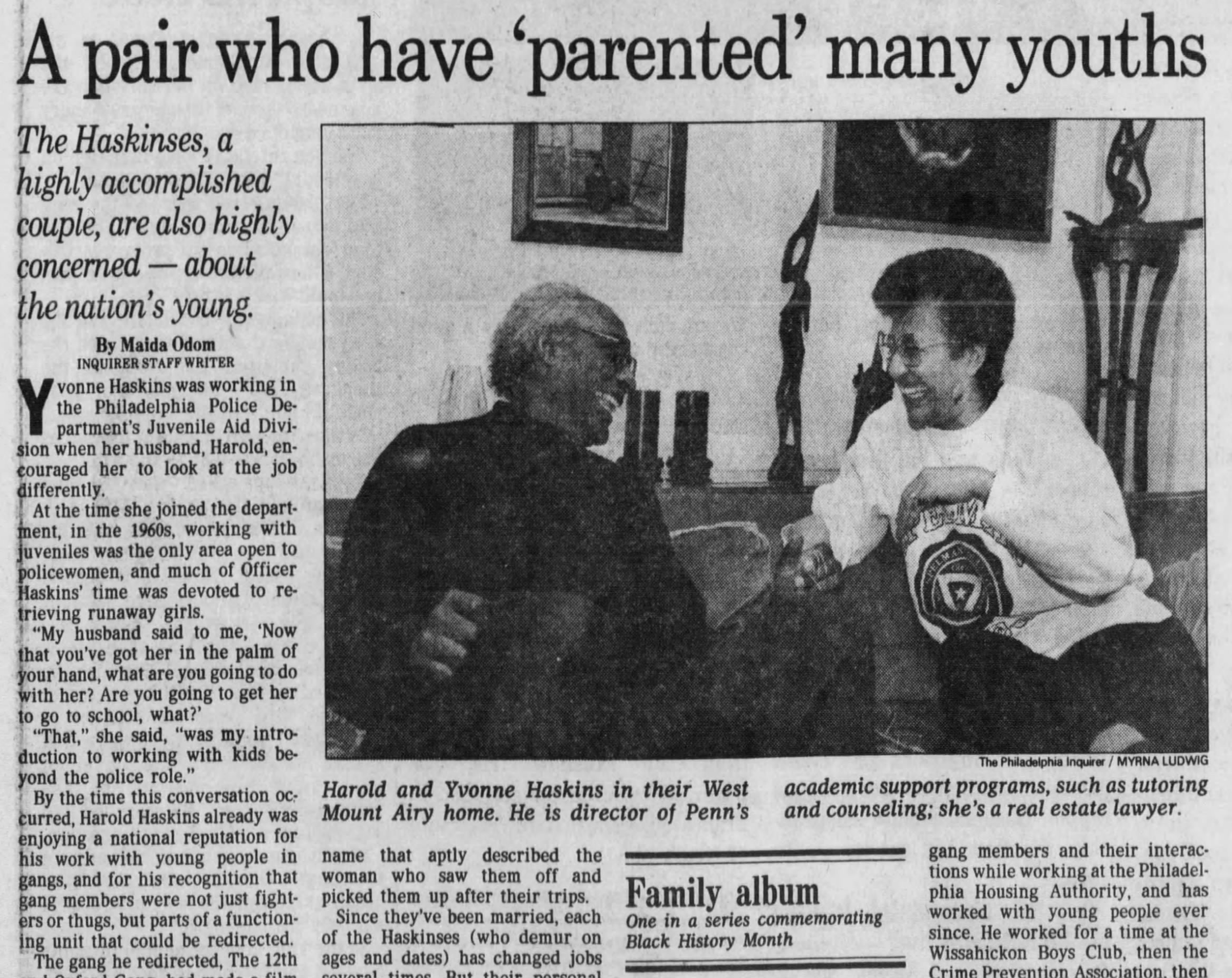
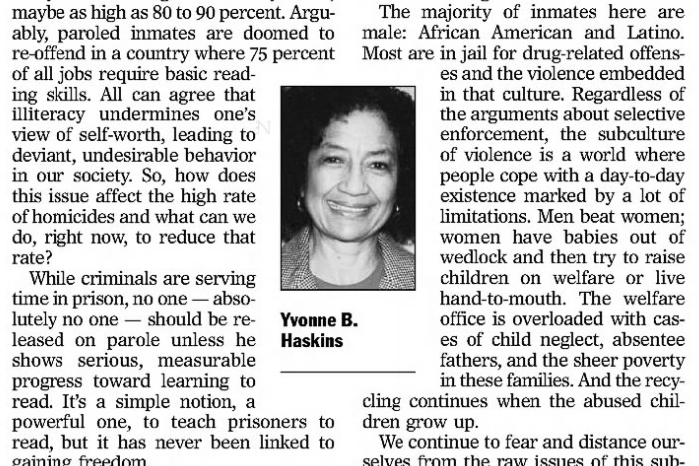
    Mrs. Haskins was featured in The Inquirer in 1992 (above) and 1994 (below).Newspapers.com

    They moved to Washington and, after a divorce, she moved to Philadelphia, where her parents lived.

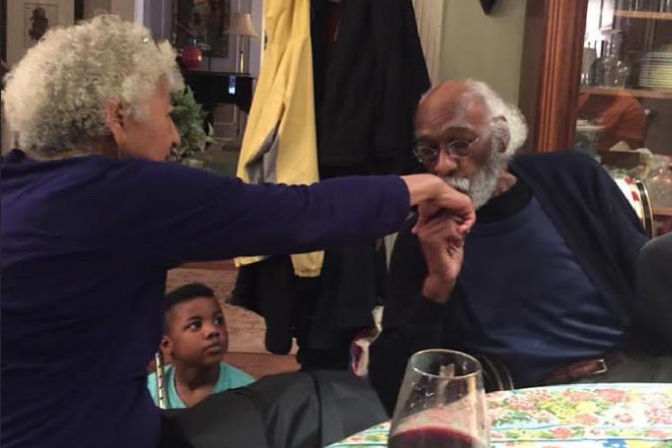
    She met Harold Haskins, also a social activist, through a mutual friend, and they married in 1969. They had a daughter, Kristin, and lived in West Mount Airy. Her husband died in 2020, and she moved to Germantown.

    Family and friends called Mrs. Haskins “Peachy” because of her Georgia roots. She played piano and enjoyed gardening and impressionist art.

    She lived for years with myeloma cancer and walked in many cancer research fundraisers. She never really retired and wrote about her 2024 breast cancer diagnosis on Facebook. “As much as I want to stay engaged and busy, I may not be able to do much,” she said. “Your understanding and keeping me in the loop of things will be much appreciated.”

    Mrs. Haskins graduated as valedictorian of her high school at 15.Courtesy of the family

    Her daughter said: “She didn’t believe in retirement. She wanted to do the work, stay engaged, fight for justice.”

    In addition to her daughter, Mrs. Haskins is survived by a grandson, a great-grandson, a brother, and other relatives. Her former husband and sons died earlier.

    Services are to be at 11 a.m. Saturday, Nov. 7, at First United Methodist Church of Germantown, 6001 Germantown Ave., Philadelphia, Pa. 19144.

    Donations in her name may be made to the American Cancer Society, Box 6704, Hagerstown, Md. 21741; First Union Methodist Church of Germantown, 6001 Germantown Ave., Philadelphia, Pa. 19144; and Salem Baptist Church of Abington, 2741 Woodland Rd., Abington, Pa. 19001.

    Mrs. Haskins wrote op-eds for The Inquirer and letters to the editor.Nespapers.com