Category: News

  • Fighting over Flock | Inquirer Greater Abington

    Fighting over Flock | Inquirer Greater Abington

    Hi, Greater Abington. 👋

    The Abington Township Police Department is ending its contracts with controversial surveillance company Flock Safety after data was leaked about searches from Abington — and Cheltenham, too. The township will decide Thursday whether to replace the Flock network with a five-year contract with Axon Enterprise, another surveillance vendor.

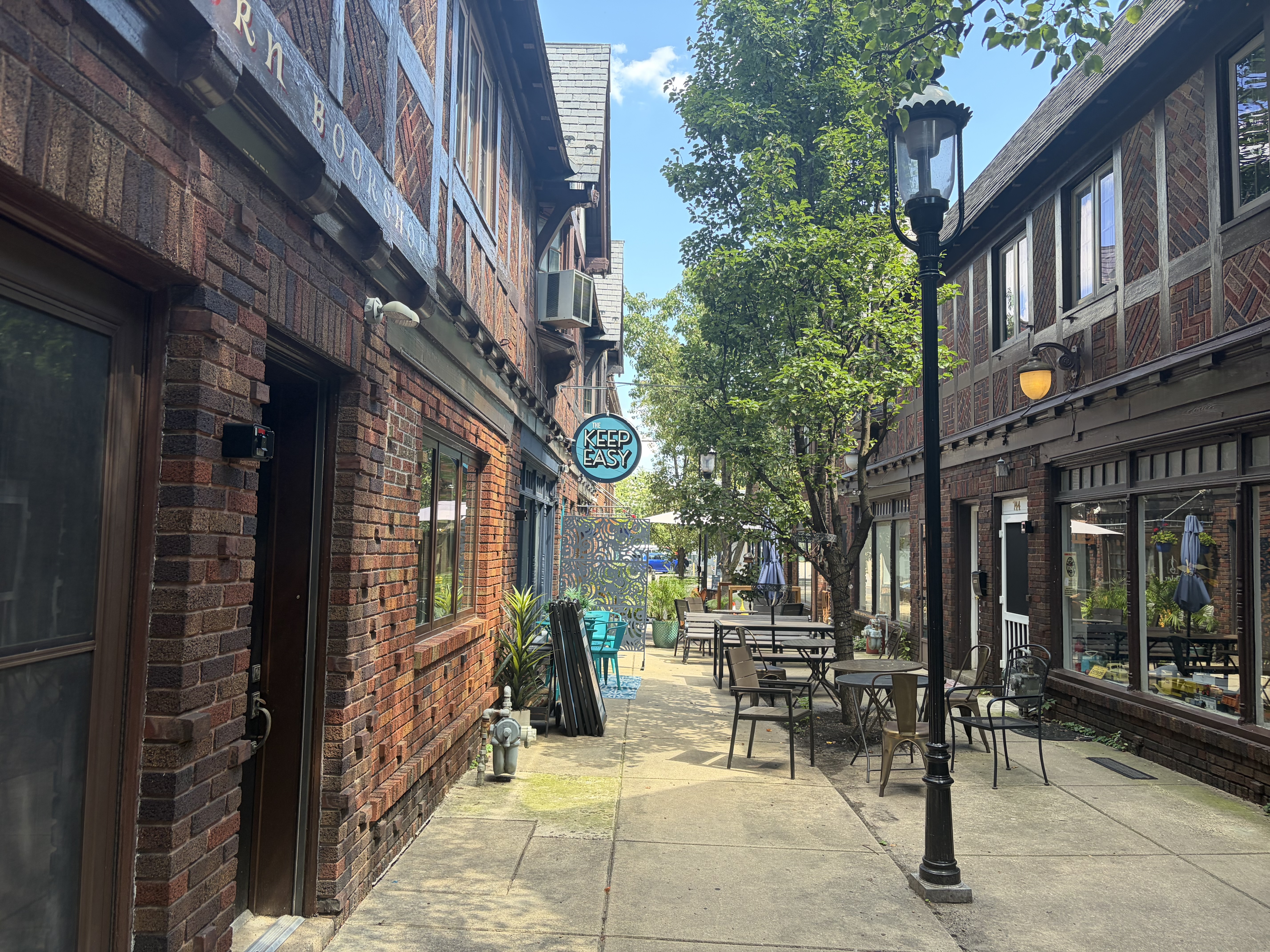
    Also this week, under-the-radar Jenkintown alley Yorkway Place is experiencing an unexpected business boom, and Willow Grove Park Mall is in the process of being sold to a group of New York-based buyers.

    — Laura Smythe (greaterabington@inquirer.com)

    P.S. We love hearing all of your questions about town! Submit any queries you might have about the region to Curious Greater Abington, and we’ll see if our journalists can dig up some answers to the local mysteries that keep you up at night.

    If someone forwarded you this email, sign up for free here.

    Abington to vote Thursday on Flock surveillance system replacement

    The Abington Township Police Department is ending its contracts with surveillance startup Flock Safety after thousands of its searches leaked to the public. Additional Flock searches went public from Cheltenham — where law enforcement doesn’t hold Flock contracts, but can access the national network through subscriptions held by local businesses.

    Flock cameras log license plates and vehicle features such as bumper stickers for every passing car, and employ AI to identify cars that often travel together. The network of public and private cameras enables police to search for vehicles by behavior rather than plate number.

    Now, as surveillance regulations face national scrutiny, Abington will vote Thursday on whether to replace Flock with a five-year contract with Axon Enterprise, another surveillance camera system.

    The Inquirer’s Jess Rohan breaks down the differences between Flock and Axon, as well as lingering privacy concerns around the potential replacement.

    💡 Community news

    • Yorkway Place, the secluded, 1930s Tudor-lined alley in the heart of Jenkintown, is experiencing a business renaissance thanks in part to a meadery there.
    • Cheltenham residents voiced concerns at last week’s commissioners’ meeting over their lack of input in the township’s Melrose pool project, which a private company is developing. New plans for the controversial $4.5 million mixed-use development indicate more than two dozen more houses than originally proposed.
    • A group of New York firms is buying the Willow Grove Park Mall. The pending deal is among the latest shakeups to greater Philadelphia’s 17 malls amid the retail sector’s 21st-century evolution.
    • SEPTA’s new bus network is officially here. Check out our tool to figure out how the system update will impact your next jaunt around the region.
    • A casino cleaner looking to support his daughter, a home health aide trying to pay rent, and a Philadelphia police officer were among recent plasma donors at the Wyncote location of B Positive Plasma, which is on track to see a record year as area residents try to make ends meet.
    • The fifth-annual Montco Jazz Fest will bring outdoor concerts to parks across the county next month, including in Wyncote.
    • A lane will be closed through Friday from 8 p.m. to 5 a.m. on Church Road between Township Line Road and Route 73 in Cheltenham Township for paving. During the same time frame, utility adjustments and milling will close a lane along Ashbourne Road, Montgomery Avenue, and Central Avenue between Washington Lane and Route 73, and again between 9 a.m. and 3 p.m.
    • Cheltenham police are advising residents to keep small pets indoors after multiple reports of an aggressive coyote in Wyncote. They also say to avoid the animal if seen.

    🏫 Schools briefing

    🍽️ On our plate

    • Fast-growing chain 7 Brew Coffee is seeking Montgomery County’s approval for two proposed locations: one in Wyncote at 1000 S. Easton Rd. and another in Willow Grove at 1130 Easton Rd.
    • Speaking of 7 Brew, investors in the food and beverage space are keen to pinpoint the next category that could rise to the level of popularity of the Arkansas-based coffee chain, and bagels might just check that box, The Inquirer’s Michael Klein writes. He takes a look at the “bagel boom” hitting greater Philadelphia as a PopUp Bagels franchisee scouts potential Montgomery County locations.
    • Rob Woloshin, owner of Manny’s Deli Stop in Willow Grove, talked to Klein about visiting Steve Stein’s Famous Deli — which closed in Northeast Philadelphia over the weekend after more than 60 years — as a child. The stalwart deli informed his own shop’s business model.

    🎳 Things to do

    💿 Best of the 2000s: Britney Spears, burning CDs, Juicy Couture tracksuits … If these aughts buzzwords piqued your interest, consider joining this trivia night for a dose of nostalgia. ⏰ Wednesday, Aug. 26, 7 p.m. 💵 Pay as you go 📍 King’s Corner Pub, Jenkintown

    🕵️ High Altitudes and High Stakes: Join this virtual discussion with thriller author Lucy Foley about her newest book, Murder at the Grand Alpine Hotel, which comes out next month and will revive Agatha Christie’s iconic Miss Marple character for the first (authorized) time in 50 years. ⏰ Thursday, Aug. 27, 2 p.m. 💵 Free 📍 Virtual, sign up via Abington Township Public Library

    🎶 So Good! The Neil Diamond Experience: Robert Neary, a Broadway, television, and film icon, performs a two-hour tribute to the Grammy-winning singer-songwriter. ⏰ Thursday, Aug. 27, 8 p.m. 💵 $41.71-$116.25 📍 Keswick Theatre, Glenside

    🍺 Battle of the Breweries: Sample “Cheltenham-inspired” beers from local breweries and cast your vote for the champion at this event, which is part of the Cheltenham Celebrates America 250 lineup. ⏰ Sunday, Aug. 30, 4 p.m. 💵 Pay as you go 📍 Gimbel Field, Elkins Park

    🏒 Philadelphia Flyers’ Community Caravan: Beloved mascot Gritty will make an appearance at the Jenkintown stop of the team’s 10th annual event, complete with giveaways and bites from local vendors. ⏰ Monday, Aug. 31, 5:30-7:30 p.m. 💵 Pay as you go 📍 Jenkintown Square

    🏡 On the market

    A versatile home with vaulted ceilings
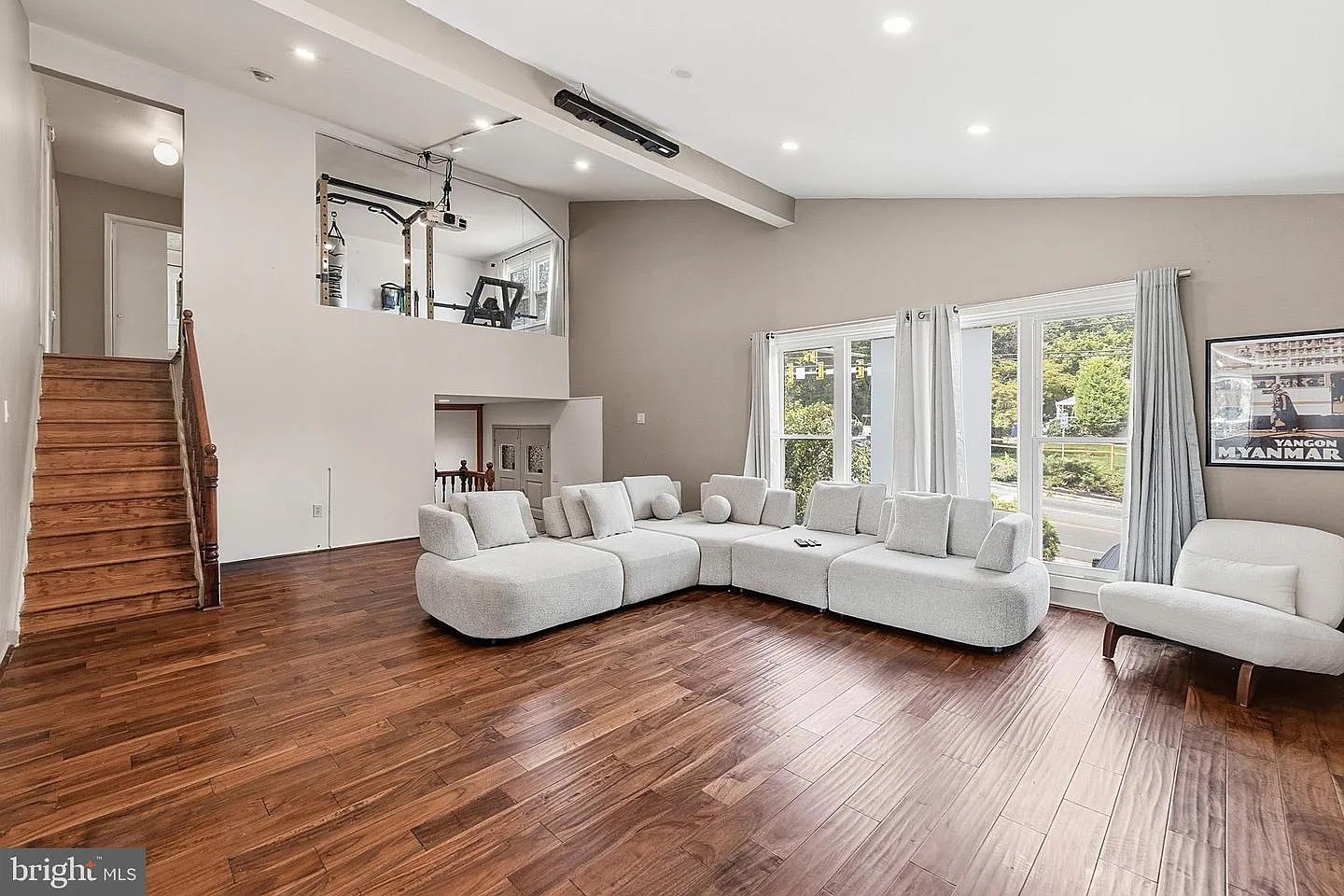
    Inside 3036 Susquehanna Rd., Abington, PA

    Five bedrooms plus a dedicated office space give space for options in this Abington abode, constructed in 1966. It features two full bathrooms, two half bathrooms, a loft-style gym complete with the equipment, and a four-vehicle driveway plus a garage. Vaulted ceilings in the kitchen and living room create an open feel, and out back, there’s s a covered lower deck.

    See more photos of the property here.

    Price: $600,000 | Size: 2,786 SF | Acreage: 0.29

    🗞️ What other Greater Abington residents are reading this week:

    By submitting your written, visual, and/or audio contributions, you agree to The Inquirer’s Terms of Use, including the grant of rights in Section 10.

    This suburban content is produced with support from the Leslie Miller and Richard Worley Foundation and The Lenfest Institute for Journalism. Editorial content is created independently of the project donors. Gifts to support The Inquirer’s high-impact journalism can be made at inquirer.com/donate. A list of Lenfest Institute donors can be found at lenfestinstitute.org/supporters.

  • A rare disease weakened his muscles. Plasma donors came to the rescue

    A rare disease weakened his muscles. Plasma donors came to the rescue

    When Richard Sperry’s right shoulder began to ache, the pharmaceutical executive thought he was overdoing it at the gym.

    “I was doing CrossFit at the time,” Sperry said. “I thought it was from doing things that I shouldn’t be doing in my mid-40s.”

    Then, almost overnight, the entire right side of his body was weak. He could not pick up a coffee mug, grasp a pen, or shave his face with his right hand. His wife had to help him button his dress shirts each morning.

    An orthopedic doctor sent him to a Philadelphia neurologist in late 2019. After a battery of tests, the neurologist diagnosed Sperry, then 45, with amyotrophic lateral sclerosis (ALS), or Lou Gehrig’s disease, a fatal nervous system disorder. The neurologist said he would die within three to five years. He went for another opinion, and a second neurologist concurred.

    In early 2020, Sperry traveled to the Mayo Clinic in Minnesota for a third opinion.

    “‘I’m gonna cut to the chase — I don’t think you have ALS,’” Sperry recounted the Mayo doctor saying, as his sister erupted in tears.

    Sperry actually had a rare autoimmune disease called multifocal motor neuropathy, or MMN. The doctor prescribed intravenous immunoglobulin therapy, a treatment made from the blood plasma of healthy donors. Immunoglobulin is an antibody found in plasma, the straw-colored liquid in blood.

    Once back home in Princeton, Sperry got infusions for five straight days, sitting about four hours each time. A few days after treatment ended, Sperry awoke and discovered he could move his right hand for the first time in more than a year, he said.

    “My wife and I were in bed bawling,” Sperry said. “It was like a wonder drug.”

    Sperry is one of millions of people worldwide who depend on plasma donations for their medical treatment. The U.S. — one of only a handful of countries where it is legal to pay donors for plasma — supplies more than 70% of the world’s plasma supply.

    Demand for plasma is growing as the global population ages, more people like Sperry are being diagnosed with chronic diseases, and new medical treatments that require plasma are discovered, research shows.

    The value of a liter of plasma rose from about $181 in March to $192 in June, likely because of increased demand, according to Georgetown University professor Peter Jaworski, who studies the global economics and ethics of the plasma industry.

    Sperry, 52, now works for GBS/CIDP Foundation International, a Conshohocken-based nonprofit that provides support to more than 30,000 people with MMN and two similar neurological disorders that can cause muscle weakness and paralysis: Guillain-Barré syndrome (GBS) and chronic inflammatory demyelinating polyneuropathy (CIDP).

    No cure exists for all three conditions, but symptoms are alleviated with regular infusions of plasma-based therapies.

    “It is life-changing for patients with rare and chronic diseases,” said Anita Brikman, president and chief executive of the Plasma Protein Therapeutics Association, a trade organization that represents donation centers in North America and Europe.

    Doctors are not exactly sure how it works on patients like Sperry, said Sami Khella, a Penn Medicine neurologist and clinical neurology professor at the University of Pennsylvania Perelman School of Medicine.

    But if Sperry does not get his medicine on time, he will “develop weakness almost right away,” said Khella, who sees Sperry as a patient.

    Sperry’s condition causes his immune system to attack his nerves. The immunoglobulin in plasma quells the attack, Khella explained.

    Every four weeks, Sperry receives 35 grams of immunoglobulin through infusions over two days. It takes hundreds of donors to make 35 grams, Khella said.

    Sperry, who is back doing CrossFit, said it feels “scary” to be dependent on plasma donations. When he sees people going in and out of donation centers, he said, he is enormously grateful.

    “It’s not like the drug manufacturer can just build another plant and make more pills,” Sperry said.

  • After six years of chaos in Philly Sheriff’s Office, Rochelle Bilal must answer to judges

    After six years of chaos in Philly Sheriff’s Office, Rochelle Bilal must answer to judges

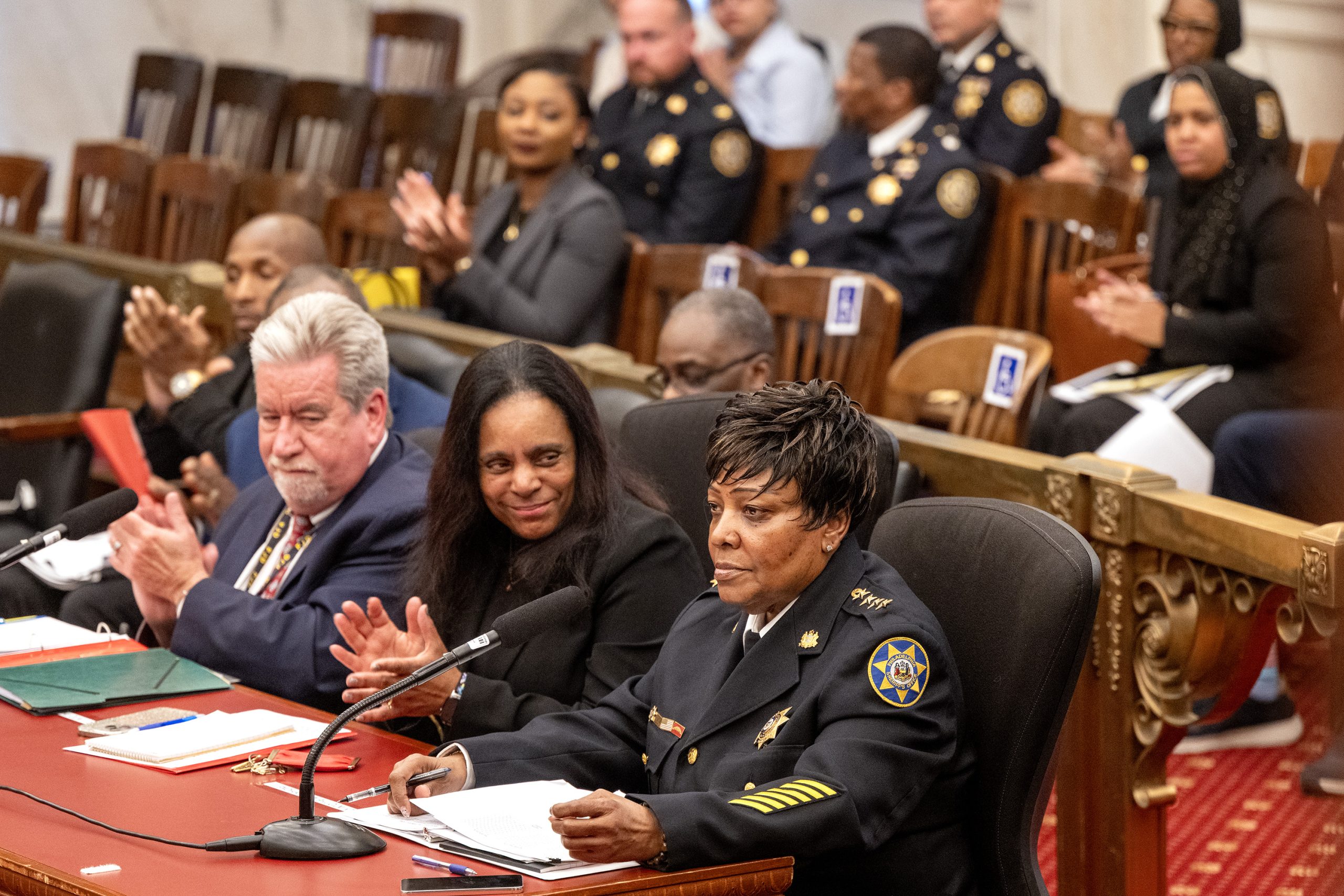
    Since being sworn-in as Philadelphia’s sheriff in January 2020, Rochelle Bilal has brought new levels of dysfunction to an office with a history of corruption and scandal going back to the mid-19th century.

    Tax revenue plummeted, court security incidents soared, and millions of dollars in public money have been diverted into an office slush fund.

    City Hall has ignored the mounting problems for the last six years. But this week Bilal must face a judge who could limit her ability to auction off foreclosed properties — arguably the office’s most important function.

    Bilal, a former police officer and self-described reformer, is due to appear Wednesday before Common Pleas Court Judge Paula Patrick to explain why the judge should not appoint a “special master” or some other expert to fix major delays in processing deeds after sheriff sales.

    Buyers have been waiting a year or longer after auction to receive their deeds, leaving the properties in a state of limbo that can invite squatters and contribute to blight. Without a deed, the foreclosed homes cannot be renovated, rented, or resold.

    The Inquirer first reported on that problem in July 2024. An analysis of more recent financial records shows that the office has also earned millions of dollars in interest from property auctions. That is because the proceeds of the sales are sitting for long periods in TD Bank accounts the Philadelphia Sheriff’s Office controls, rather than being used to quickly settle old tax and utility liens.

    Bilal’s office initially claimed the deed process was working as intended, saying through a spokesperson in 2024 that there was no “widespread delay” in recording deeds. With complaints continuing, she told City Council at an April budget hearing that it was the buyers who were responsible for the delays.

    Neither statement was true.

    In May, with buyers still petitioning the courts for their deeds, Judge Patrick, who is supervisor of the court’s commerce division, filed an order demanding that Bilal address the “ongoing harm” caused by the chronic backlog and submit extensive documentation pertaining to the handling of sheriff sales and related funds since she took office.

    The court order said Bilal’s office appears not to be “timely performing its essential, nondiscretionary, ministerial duties, which are mandated by law.”

    The sheriff snapped into action.

    Within 48 hours of Patrick’s court order, Bilal’s office processed 277 deeds — filing more paperwork in two days than it had in the prior three months.

    Sheriff Rochelle Bilal (right) is applauded as she testifies in City Council during a budget hearing in April. She claimed the deed-delay problem had been resolved.Tom Gralish / Staff Photographer

    Last month, the office filed a response to the court order providing a new explanation for the delays: Bilal didn’t know about them.

    Steven Wakefield, a newly hired attorney who serves as Bilal’s deputy undersheriff, blamed the problem on a former director of deeds who was “doing the work of multiple people” after the office switched software vendors in 2023, requiring some functions to be performed manually.

    “The former director did not inform the sheriff of the backlog,” Wakefield wrote in a certification filed with the court on July 13.

    The certification does not say when Bilal first became aware of the delays or why she remained in the dark while her then-undersheriff, Tariq El-Shabazz, was signing the deeds.

    In a recent op-ed in City & State Pennsylvania, Bilal wrote that she was making “practical, measurable improvements designed to increase transparency, accountability and customer service.”

    “I have never shied away from constructive scrutiny from the media, watchdog organizations and the public,” she wrote.

    She declined to answer questions for this article.

    An expensive problem

    Cleaning up the deed mess has not been cheap.

    Among thousand of pages of records Bilal’s staff submitted to the court last month is a check log showing that the office, beginning in March, paid more than $4.5 million from the proceeds of mortgage foreclosure sales to the Corporation Service Co., or CSC, a Utah-based financial services corporation.

    Check memos describe the payments, equivalent to more than 10% of the office’s annual budget, as “deed processing fees.”

    Wakefield’s certification to the court claimed that all deeds have been issued through June. He attributed the turnaround partially to new hires and the integration of the office’s Tyler Technologies software — a system that went live two years ago — but made no mention of the money paid to CSC.

    “There is no further backlog of deeds to be issued,” he wrote.

    Real estate agents, investors, and attorneys interviewed by The Inquirer in recent weeks said deeds are, in fact, being processed more quickly after the court order.

    But the backlog has not been fully cleared.

    “That is 100% incorrect,” Edward Levin, a real estate agent, said of Wakefield’s statement to the court.

    Levin, whose firm resells homes following mortgage foreclosures, is still waiting on a handful of deeds from sheriff sales that took place in late 2024 and early 2025. They are supposed to be transferred within 40 days of settlement under state law.

    Homes have fallen into disrepair in recent years because Bilal’s staff has taken so long to transfer the deeds. Levin does not know what to tell new buyers who are under contract to purchase the properties.

    “I go to the properties once a week and I have to hear complaints from neighbors,” said Levin, who has dealt with squatters, overgrown lawns, and broken windows. “The people living next door to these properties get screwed the most.”

    An unfinished construction site along 900 block of Emily Street in September 2024 shows what can happen when foreclosed properties remain between owners for long periods. New owners can’t take possession of properties after auction until the sheriff’s office processes the deeds.Alejandro A. Alvarez / Staff Photographer

    Mary Jo Potts, a foreclosure specialist at Elfant Wissahickon Realtors who resells those properties, said last week that she has seen a recent influx of deeds from the sheriff’s office.

    But Potts and other real estate agents are still dealing with another problem: The sheriff’s office is taking even longer to distribute the proceeds from auctions to settle tax and utility liens on the properties.

    Even with a deed in hand, the homes still cannot be resold without a clear title.

    “To me, that’s not getting any better,” Potts said.

    Financial records obtained by The Inquirer through a Right-to-Know request show that tens of millions of dollars began flowing into the sheriff’s coffers after auctions resumed for tax-delinquent properties in July 2024.

    But the money trickled out much more slowly.

    Twenty-two TD Bank checking accounts managed by the sheriff’s office contained a combined $39 million at the end of May 2024. By last August, that sum had swollen to $130 million.

    The majority flowed into a business account earmarked for money from mortgage foreclosure sales. The combined sums are so large, statements show the office generated more than $3 million in interest between 2024 and 2025.

    After all liens have been settled, any excess funds are owed to the former homeowner.

    David Denenberg, an attorney who seeks to collect those funds, said Bilal’s system for distributing the proceeds of sales is worse than ever. He questioned the propriety of the office generating millions of dollars in interest by holding onto the funds.

    “They’re making money on other people’s money,” Denenberg said. “They should be helping you, if you’re the purchaser or the one who lost their home. You shouldn’t have to flood the courts with this litigation.”

    David Bogdan, a probate attorney in Delaware County, said he spent nearly two years trying to obtain about $26,000 in excess funds from a 2022 mortgage-foreclosure sale. The money was owed to the estate of the former homeowner, who had died.

    “They just refused to pay,” Bogdan said. “There is no defense whatsoever. You have to return that money. It’s not yours.”

    Bogdan, who filed his claim in July 2024, said he contacted the office at least a half dozen times over more than a year, getting either no response or new excuses for the delay. He ended up having to hire a second attorney, Denenberg, to take the sheriff’s office to court.

    “They’re failing to do their basic duties,” said Bogdan, who in May finally received the funds owed to his clients. “It’s just torture dealing with them.”

    Among the other records Bilal submitted to the court in July is a list of about 16,000 unique properties that had been ordered to sheriff sale since Bilal took office, worth a combined $1.2 billion, based on city tax assessments.

    Only about 6,500 of those properties were ever successfully sold, according to the records, and many were repeatedly held back from the auction block, sometimes due to repayment or court orders, and sometimes for more opaque reasons.

    While the new filings shed some light on the scale of the sheriff’s real estate operations, they do not appear to be the full disclosure requested by the court, which included “a detailed accounting of all sales proceeds received and disbursed” by the sheriff from 2020 to now.

    None of the submitted records list any money distributed for sales later than 2023, and the sheets include numerous payments or credits that are missing dates or descriptions.

    Daniel Bernheim, the lawyer for a property group whose March lawsuit triggered the court order, said he has been unable to follow the money based on the records the office has provided so far.

    “It shouldn’t be like Where’s Waldo? It should be set forward clearly,” said Bernheim, who is also a township commissioner in Lower Merion. “I don’t know how you could function internally in the sheriff’s office if that information is not readily available.”

    Lauren Cristella, president and CEO of the good-government group Committee of 70, said the court should require new oversight.

    “The court should appoint a special master who will not just execute deeds but also process lien and utility payments so Philadelphians get what they’re owed without having to sue for it,” Cristella said.

    Bilal named ‘Hometown Hero’

    Both the Committee of 70 and the Pennsylvania Intergovernmental Cooperation Authority, Philadelphia’s fiscal watchdog, have called for the sheriff’s office to be abolished.

    In addition to the operational issues, Bilal has been mired in one mini-scandal after another since she took office: the cover-up of an inspector’s “stolen” city-leased vehicle; a bungled arrest of a suspect that led to a fatal accident; fake AI-generated headlines touting her performance; a top aide violating city ethics rules; an employee in the office who shot himself in the leg before a budget hearing.

    But despite that — and years of complaints from the public — both City Council and the mayor’s office have offered nearly universal praise for Bilal.

    “Give our sheriff a huge round of applause,” Mayor Cherelle L. Parker said during her first budget address in March 2024, as Bilal’s botched sheriff-sale contract with an online auction firm was costing the city and the school district an estimated $35 million in uncollected tax revenue.

    “I just want to thank you for your hard work and your dedication and working in partnership with members of Council and the city of Philadelphia,” Council President Kenyatta Johnson told Bilal at a budget hearing for her office the following month.

    By then, Bilal had been diverting millions of dollars in service-fee revenue — public money Philly’s Home Rule Charter says should be remitted to the city’s general fund — into an internal office account that is used for “discretionary” purchases, including $40,000 in branded merchandise, a $9,000 office mascot, and a $6,600 party at Chickie’s and Pete’s.

    “The city of Philadelphia works because you all work,” Councilmember Cindy Bass told Bilal at a budget hearing this April. It was at that hearing that Bilal falsely told Council that the problems with deeds had been fixed.

    Last week, the Phillies ushered Bilal onto the field at Citizens Bank Park and honored her as a “Hometown Hero.” She swung an honorary bat.

  • A woman disappears in the Delaware River after rescuing a girl

    A woman disappears in the Delaware River after rescuing a girl

    Authorities were searching for a woman who disappeared in the Delaware River after rescuing a girl Monday afternoon, according to Delran Township police and Burlington County officials.

    Delran police responded just after 3:50 p.m. to Burlington County’s Amico Island Park for two possible drowning victims, officials said.

    Officials gave the following account:

    Police were told that the woman entered the river to rescue a struggling juvenile girl.

    The woman pushed the girl toward the shore, where bystanders pulled her safely from the water.

    During the rescue, the woman went under the water and did not resurface.

    Officials said the search included personnel from the Delran Police Department, the Delran Fire Department, the Delran Emergency Squad, the New Jersey State Police, the Philadelphia Police Department, and the Camden County Dive Team, officials said.

  • Deportees who refused to exit a U.S. flight in Liberia are sent to Equatorial Guinea

    Deportees who refused to exit a U.S. flight in Liberia are sent to Equatorial Guinea

    DAKAR, Senegal — Six people who were deported by the United States to Liberia last week resisted getting off the plane and instead were sent to Equatorial Guinea, another ‌African nation that signed a third-country deportation agreement with the Trump administration, a person on the plane and a lawyer in contact with the six said Monday.

    Under a series of often secret agreements, the Trump administration has deported thousands of people to two dozen countries that aren’t their own as it pushes ahead with its immigration crackdown, advocates say. Immigration lawyers say the practice is being used as a legal loophole to indirectly return some asylum seekers to countries they fled.

    The group who refused to get off the plane in Liberia on Thursday include four Cuban men, a Brazilian man, and a Cameroonian woman, the person and lawyer said.

    A Honduran deportee aboard the flight said the group refused to disembark, saying Liberia was “not their country” and that they would face danger there. They were then separated from the others, he said. He spoke on condition of anonymity out of fear of reprisals.

    He said the other passengers got off in Liberia because they feared officers would force them.

    Meredyth Yoon, litigation director for Asian Americans Advancing Justice-Atlanta, said the deportees who resisted leaving the plane in Liberia were told they would be returned to the United States but instead were flown to Malabo city in Equatorial Guinea.

    “It was a really heartbreaking and chaotic scene when they arrived in Malabo on Thursday,” Yoon said.

    Some arrived in chains and in extreme distress, she said, including the Cameroonian woman and one of the Cuban men, who Yoon said has a large abdominal growth and uses a colostomy bag that must be drained regularly.

    There is no medical staff at the hotel in Equatorial Guinea where the six are being held, alongside around 40 other deported migrants, she added.

    Conditions at the hotel have worsened in recent months, Yoon said, with food sometimes withheld and guards accused of threatening, beating, and choking some of the migrants.

    Equatorial Guinea’s government did not immediately respond to a request seeking comment.

    Under an opaque $7.5 million deal with the Trump administration, Equatorial Guinea’s all-powerful president, Teodoro Obiang Nguema Mbasogo, has turned the hotel owned by his family into a prison for asylum seekers deported from the U.S.

  • Washington Post ordered to rehire fired columnist

    Washington Post ordered to rehire fired columnist

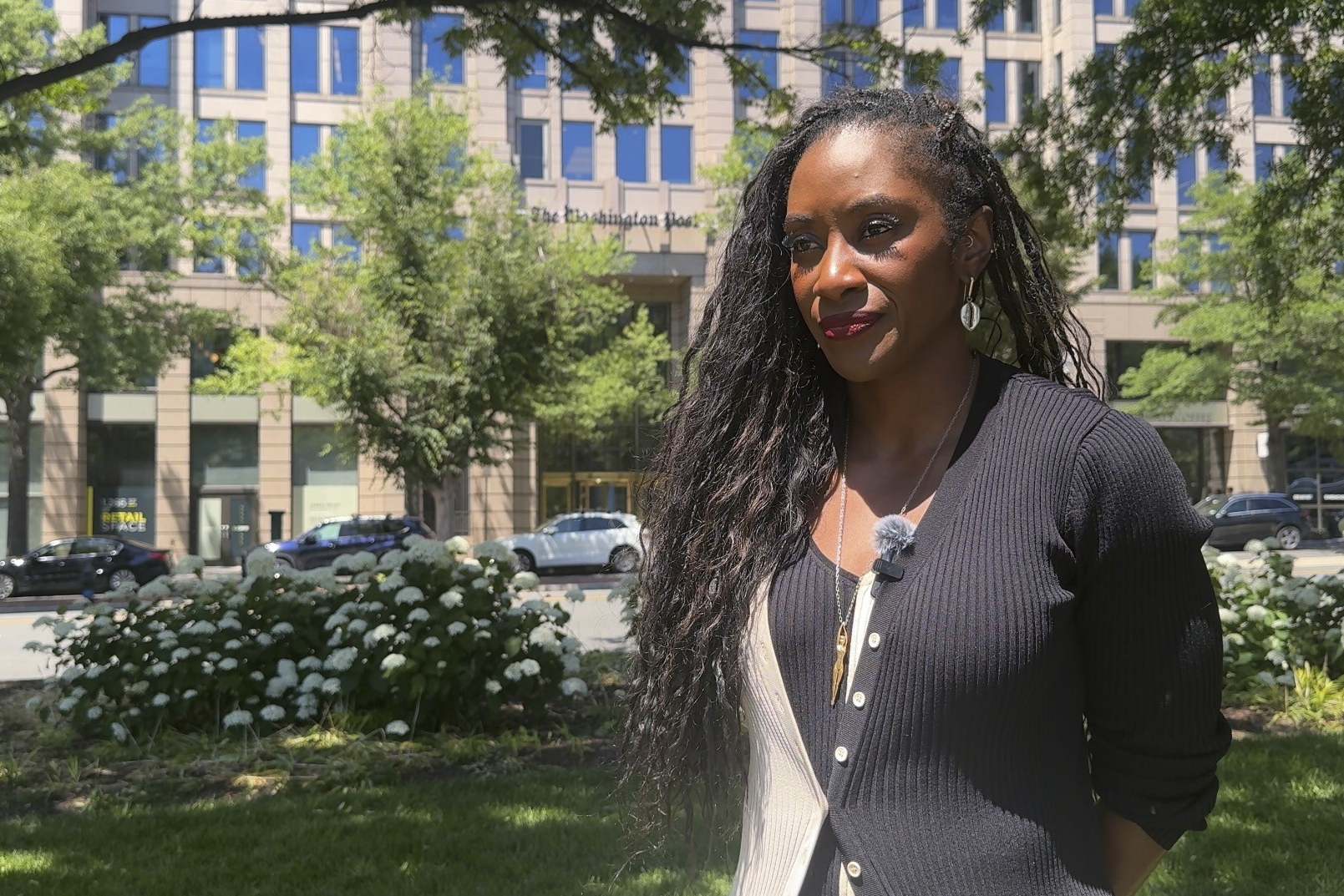
    A private arbitrator has ordered the Washington Post to rehire opinion columnist Karen Attiah, who was fired in September over her social media posts about the assassination of conservative activist Charlie Kirk. It also ordered the company to compensate her with back pay.

    Sarah Miller Espinosa, the arbitrator, said in a written decision Thursday that the Post “did not have good and sufficient cause” to terminate Attiah and “violated” its labor agreement, according to a copy of the decision shared with the New York Times by Attiah’s lawyers.

    “The Washington Post failed to establish the grievant engaged in gross misconduct,” Espinosa wrote.

    In a statement, Attiah said that she hoped the decision “sends a message to journalists and media institutions everywhere that freedom of expression is always worth fighting for.” She said that she was “willing to go back” to her work at the Post, which she called “one of the world’s most storied newspapers.”

    “This decision confirms what we’ve said from the start: I was doing my job as an opinion writer, and this was wrongful termination,” she said, adding that she was “relieved to finally have that record set straight”

    A spokesperson for the Post said the company respects the arbitration process and declined to comment further.

    The decision is the result of a yearlong fight between the Post and Attiah, who last year accused the company of violating its labor agreement and social media policy when it fired her for posts she said were within her purview as an opinion columnist. A clause in the agreement allows employees to submit disputes for arbitration.

    Arbitration is generally considered binding in most disputes, though courts have occasionally overturned decisions after courtroom findings of fraud or other improprieties. The Post’s labor agreement says arbitration is binding, though both the company and the employee retain their legal rights.

    The Washington Post said in its termination letter that Attiah’s posts about Kirk had harmed “the integrity” of the organization and violated standards requiring employees to use social media with civility and respect.

    Attiah’s remarks about Kirk’s assassination, which she posted to the social network Bluesky on Sept. 10, the day he was shot, responded to the outpouring of grief after the shooting. “Refusing to tear my clothes and smear ashes on my face in performative mourning for a white man that espoused violence is … not the same as violence,” Attiah wrote in one of the posts.

    The Post’s opinion section has been in flux since early last year, when Jeff Bezos, the newspaper’s owner, moved to reorient the section to focus on “personal liberties and free markets.” Some readers canceled their subscriptions and accused Bezos of attempting to curry favor with the Trump administration.

    Lawyers for the Washington Post and Attiah made their arguments before Espinosa in June during a hearing that included testimony from Attiah; Adam O’Neal, then the opinion editor at the Washington Post; and Wayne Connell, the company’s chief human resources officer. Attiah was represented by Democracy Defenders Action, a progressive nonprofit co-founded by the lawyer Norman Eisen, and by the Washington-Baltimore News Guild.

    In his testimony, O’Neal said he saw Attiah’s posts the morning after Kirk died and sent them to Connell, according to a transcript of the hearing obtained by the New York Times. “Karen’s social media feed yesterday and today is beyond the pale, completely unacceptable for someone associated with Opinions,” O’Neal wrote, according to the transcript.

    Soon after, O’Neal and Connell met with Will Lewis, then the CEO of the Washington Post, to discuss the posts, according to the transcript. They ultimately decided to fire Attiah.

    During her testimony, Attiah defended her social media posts, saying that they were part of her work for the Post, “commenting on our discourse on political violence,” Attiah said, according to the transcript.

    In a statement, Eisen called the decision “a landmark victory for one of our nation’s crusading journalists.”

    This article originally appeared in the New York Times.

  • U.S. military kills 2 people in attack on boat in Pacific

    U.S. military kills 2 people in attack on boat in Pacific

    WASHINGTON — The U.S. military killed two men in a strike against a boat in the eastern Pacific that it said was transporting narcotics, U.S. Southern Command announced early Monday. It was the first such strike by the military since June 21.

    The United States began a campaign of boat strikes last year in the run-up to the military operation that seized Nicolás Maduro, the president of Venezuela. The military has continued the operations in the Caribbean and the eastern Pacific, killing at least 223 people in 67 strikes that it said were involved in the narcotics trade.

    But narcotics experts say the boat strikes have failed to slow the smuggling of cocaine from South America to the United States. According to Brown University, the costs of the operation were at $4.7 billion as of March 31.

    Legal specialists also have said the strikes are illegal extrajudicial killings because the military is not permitted to deliberately target civilians — even suspected criminals — who do not pose an imminent threat of violence.

    Southern Command provided little detail about the strike that took place Sunday but noted that intelligence reports said the vessel was trafficking narcotics and traveling on a route used by drug smugglers.

    “Joint Task Force Western Hemisphere executed a lethal kinetic strike on a low-profile vessel operating along established narcotrafficking routes in the Eastern Pacific,” Southern Command said in a statement, referring to a new military unit set up to expand the Pentagon’s war against drugs in cooperation with regional allies.

    Gen. Francis L. Donovan, the head of Southern Command, said in the statement on social media announcing the strike: “When I ordered the establishment of Joint Task Force Western Hemisphere, it was precisely for this purpose: to accelerate, synchronize, and execute lethal actions against these destabilizing narco-terrorist networks.”

    Southern Command did not explain the two-month lull in strikes since an attack on a boat in the Caribbean killed eight people June 21. Military officials have attributed the pause at least in part to planes and other equipment being diverted to help victims of the recent earthquake in Venezuela.

    The Trump administration has in recent months stepped up its cooperation with allies across Latin America to combat the drug trade. It created the coalition, part of the regional Shield of the Americas alliance, and convened its first meeting in March.

    That month, Ecuador and the United States launched joint military operations against designated terrorist groups. In May, the Pentagon pressed Guatemala to agree to joint U.S. airstrikes and other military action inside its borders to target suspected drug groups.

    Defense Secretary Pete Hegseth said this month that Honduras and Colombia had also agreed to allow joint operations.

    This article originally appeared in the New York Times.

  • Supreme Court clears the way for Trump mail voting order in advance of midterms

    Supreme Court clears the way for Trump mail voting order in advance of midterms

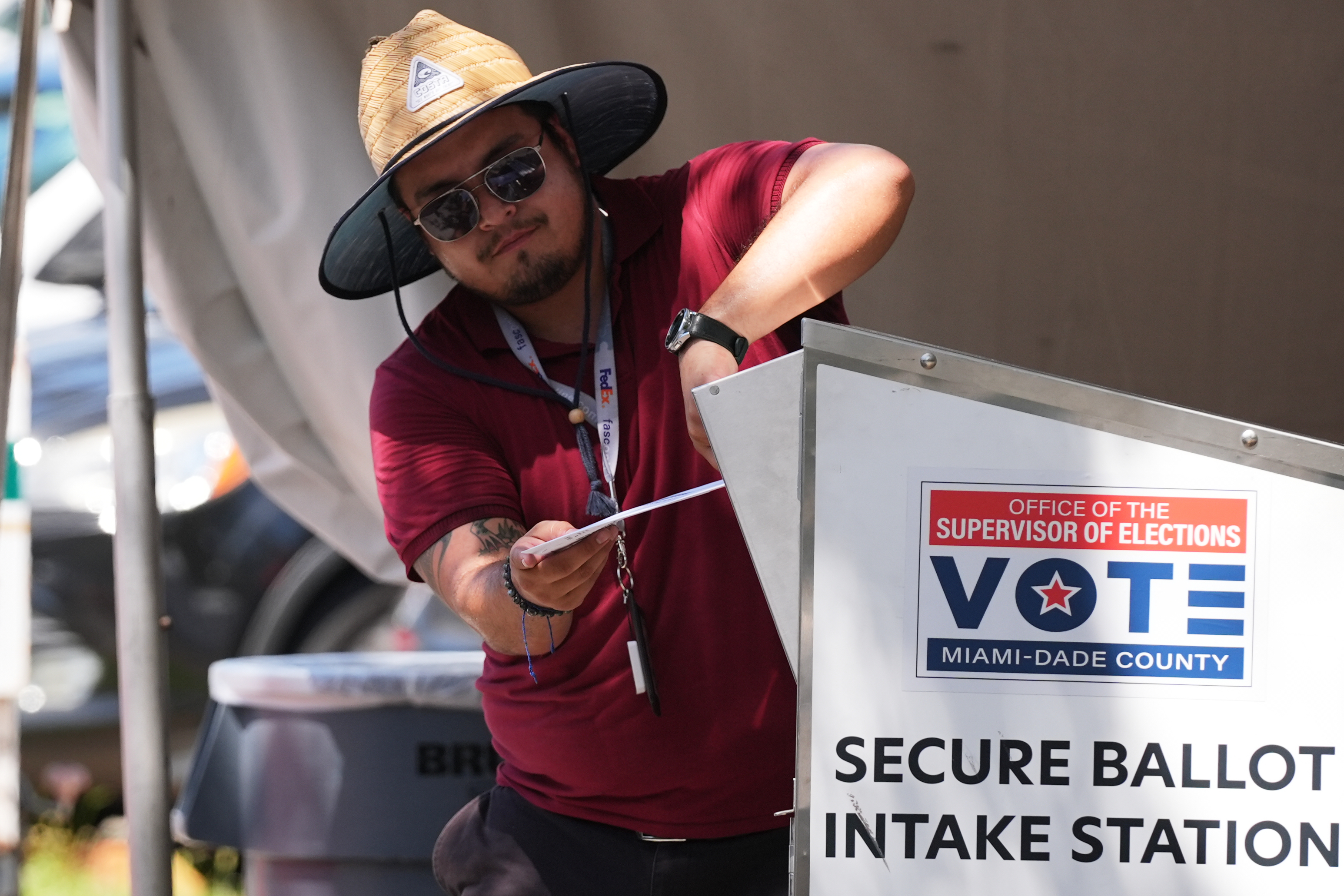
    WASHINGTON — The Supreme Court on Monday cleared the way for President Donald Trump to move ahead with his executive order restricting mail-in voting, though it remains unclear how much his administration can implement before the fast-approaching midterm elections.

    The decision appears to leave room for additional court challenges that could further slow Trump’s order. The U.S. Postal Service laid out how it would implement the order last week, but time is running short to impose major changes with some states beginning to send mail ballots to voters in just a few weeks.

    The Supreme Court’s three liberal-leaning justices dissented from the unsigned order.

    Mail balloting has long been a favorite target for Trump, who has claimed that it breeds fraud despite strong evidence to the contrary and his own use of the voting method.

    The case could be one of multiple voting-related challenges before the justices. The Justice Department had filed an emergency appeal asking the high court to allow work on implementing the changes before the midterms.

    Trump’s executive order, signed in March, calls on his administration to create lists of eligible voters and orders the U.S. Postal Service to deliver mail ballots only to people on those lists.

    Democratic officials in 23 states, including Pennsylvania, and the District of Columbia sued to block the order. They argued that the Constitution gives states and Congress the power to run elections, and Trump’s changes could lead to chaos and partisan abuse.

    “The consequences of allowing such transformative changes to take effect so close to this fall’s elections would be extreme,” attorneys for the states wrote. Dozens of state and local election officials weighed in, asking the justices to leave the order frozen while election preparations are already underway.

    In response to today’s ruling, Pennsylvania Gov. Shapiro posted on X:

    “Not so fast. Today’s SCOTUS decision does NOT deal with the substance of Trump’s unconstitutional Executive Order and does not mean his illegal attempt to restrict mail-in voting will go forward. Donald Trump does not run elections here in Pennsylvania — or in any state. We’ll see the Trump Administration in court. In the meantime, I’ll keep defending Pennsylvanians’ right to free, fair, and secure elections.”

    A judge in Massachusetts had blocked the plan for the midterm elections in those states. An appeals court upheld her decision. She later granted a second order blocking it nationwide.

    The Trump administration appealed to the Supreme Court on procedural grounds in late July, arguing that the states sued too soon. They also pointed to another ruling out of Washington, where a judge allowed Trump’s order to proceed. An appeals court backed that decision, while still leaving room for future court action if the changes are implemented.

    Federal attorneys argued that the Massachusetts order “blocks the government’s ability to finalize and implement the President’s proposed policies to promote election integrity for the upcoming federal elections in November.”

    A dozen Republican-leaning states supported the federal government in their own appeal before the high court, saying states would have input on the final voter lists.

    The Supreme Court has previously ruled against Trump-backed arguments on mail-in ballots, finding in June that states can count ballots that arrive after Election Day. That case was decided after full briefing and arguments, rather than on the court’s emergency docket.

    Trump has blamed mail voting — without credible evidence — for his loss to Democrat Joe Biden in 2020. He has promoted the proposed changes in his executive order as safeguards to keep non-U. S. citizens from voting.

    He’s also repeatedly pressed for the passage of the legislation that requires proof of citizenship to vote. Noncitizen voting has been shown to be rare, and is a felony that can be punishable by deportation.

    Using mail ballots has become increasingly popular with voters of both parties, with about 30% of all ballots cast that way during the 2024 presidential election, according to federal data. The process also is secure. A 2025 Brookings Institution study found only about four cases of fraud out of every 10 million mail ballots cast.

  • Delco school board member killed in South Jersey crash

    Delco school board member killed in South Jersey crash

    A Delaware County school board member was killed during the weekend in a vehicle crash in South Jersey, officials said Monday.

    Phillip Eastman, 68, was a longtime Springfield resident who recently retired from a 44-year career with Peco and Exelon, the Springfield School District said in a statement.

    “Phil tragically lost his life in a car accident this past weekend,” the district said.

    For nearly three decades, Eastman coached youth and high school ice hockey, including 17 years as the varsity head coach at Springfield High School, the district said.

    “While his teams enjoyed success on the ice, he considered mentoring student athletes and helping them develop teamwork, responsibility, perseverance, and other lifelong skills to be the most rewarding aspect of his coaching career,” the district said.

    “Phil and his wife, Maureen, raised their son and daughter in Springfield, where both attended Springfield schools and participated in high school athletics,” the district said.

    “His family’s enduring connection to Springfield schools was a primary motivation for his desire to serve on the School Board,” the district said.

    On Saturday around 8:30 a.m., Eastman was driving a Chevrolet SUV north on Route 55 in Vineland when his vehicle was struck by someone driving a Tesla heading in the opposite direction, said Trooper Caitlin Brennan of the New Jersey State Police.

    The Tesla was traveling south when it crossed over a grass median, hit a tree, and then entered the northbound side of Route 55, Brennan said.

    The driver of the Tesla and a passenger in Eastman’s SUV suffered injuries and were taken to an area hospital, Brennan said.

    The crash remains under investigation, she said.

    It was at least the second fatal accident on Route 55 this summer.

    In July, two women were killed and another injured in a one-vehicle crash in Deptford Township.

    In March 2025, three teenagers died in a crash in Elk Township.

  • The grand opening of this West Chester bookstore went exceptionally well. The owners had to close early after they almost sold out.

    The grand opening of this West Chester bookstore went exceptionally well. The owners had to close early after they almost sold out.

    Jessie Hilker and her father, Jeffrey, knew they had built some buzz and intrigue ahead of opening their West Chester fantasy bookshop, Leaves & Lore, this past weekend.

    But nothing could have prepared them for the hours-long line that wrapped around the building and left their shelves “pretty much barren.”

    “We’re a little, like, what just happened,” Jessie Hilker, 29, said.

    Leaves & Lore officially opened its doors Saturday at 118 N. High St., and the response was immense and instantaneous. The bookshop, which is themed around fantasy novels, had a line for six hours. It sold 600 orders on the first day. Jeffrey Hilker, 64, estimates about 1,500 people walked through.

    “I’m a pretty optimistic person, and I thought we would do well,” he said. “I just didn’t think it would be like this.”

    Though spotlighting fantasy and “romantasy,” the bookshop also sells genres like romance, dark romance, mystery/thriller, horror, and fiction, plus books for kids and teens.

    It also carries “bookish merch” like apparel, bookmarks, themed candles, stickers, and more. Customers can purchase a “book bouquet” — a book swaddled with flowers — or book the space for events (think birthdays or girls’ nights) and photography sessions (like engagement shots or bridal portraits).

    A sweet treat or freshly brewed coffee and tea are also on offer.

    By Saturday night, the shelves were nearly empty, Jessie Hilker said. On Sunday, she and her father had planned to open during normal hours, from 10 to 4 p.m., but had to close early because they had run so low on stock.

    “It’s definitely a passion project,” Jessie Hilker said. “I wanted to open a bookstore because I enjoy reading. So to see so many other people enjoy it, as much as I do, makes it very special.”

    Jessie Hilker is a lifelong reader. If she was punished for something as a child, she would get her books taken away, she said. Her dad had a hard time giving her enough books to read. During college, she fell out of the habit for a bit, but the fantasy genre sparked the love within her again.

    Leaves & Lore opened at 118 N. High St. in West Chester with enthusiastic success on Aug. 22. Lines wrapped around the building for hours.Photo courtesy of Robin Dayley

    She is not alone. “Romantasy,” a blend of romance and fantasy, has buoyed the publishing industry in recent years, selling millions of copies and generating hundreds of millions of dollars. You’ll see those novels, like A Court of Thorns and Roses or Fourth Wing and plenty more, on Leaves & Lore’s shelves. Traditional fantasy, alongside romance and dark romance, has also seen staggering success.

    Propelled in part by social media, like TikTok’s “BookTok” community, independent bookstores are also seeing a boost from the books’ popularity. Across the region, themed bookshops have done well; Philadelphia’s Cupid’s Bookshop, which is entirely dedicated to the romance genre, drew in hundreds when it opened last year.

    Fantasy is not exactly Jeffrey Hilker’s genre, but he and his daughter always wanted to open a business together. When it became clear that business would be a bookstore, he was down to see her vision through. They went to Europe, traveling across Scotland and the U.K. to peruse bookshops that they wanted to emulate.

    For about two years, they kept an eye on available spaces in West Chester. They knew that was where they wanted to be since they both live in the borough, and it felt like the right spot for such a shop.

    Leaves & Lore is fantasy-focused, and offers bookish apparel and merch, along with “book bouquets” and freshly brewed coffee.Photo courtesy of Robin Dayley

    Jessie Hilker wanted Leaves & Lore to feel like stepping inside a fantasy novel, with the space “Renaissance-inspired, very medieval.” She pictured bookcases that stretch floor to ceiling and a moving ladder; her father was “just trying to make it happen,” he said.

    They built up a following on social media. A peephole let passersby take a peek as the Hilkers brought Jessie’s vision to life, creating some in-person interest, they said.

    Still, their opening was unbelievable, Jessie Hilker said.

    But they plan to keep the momentum going. They have events scheduled for some forthcoming book releases in the fall, and an interest to partner with local authors on signings.

    Jessie Hilker said she was “ordering like crazy” to replenish the store’s stock, though there was enough supply left to fill the shelves to reopen Tuesday.

    “I wanted to just be a place where people feel like they can come and just escape for a little bit. Whether they come to study, whether they come to pick up a book … whether that’s picking up just their coffee for the day, I hope it’s just a place that many people feel like they are accepted and welcomed,” she said.

    This suburban content is produced with support from the Leslie Miller and Richard Worley Foundation and The Lenfest Institute for Journalism. Editorial content is created independently of the project donors. Gifts to support The Inquirer’s high-impact journalism can be made at inquirer.com/donate. A list of Lenfest Institute donors can be found at lenfestinstitute.org/supporters.