Category: News

  • Philly students head back to school

    Philly students head back to school

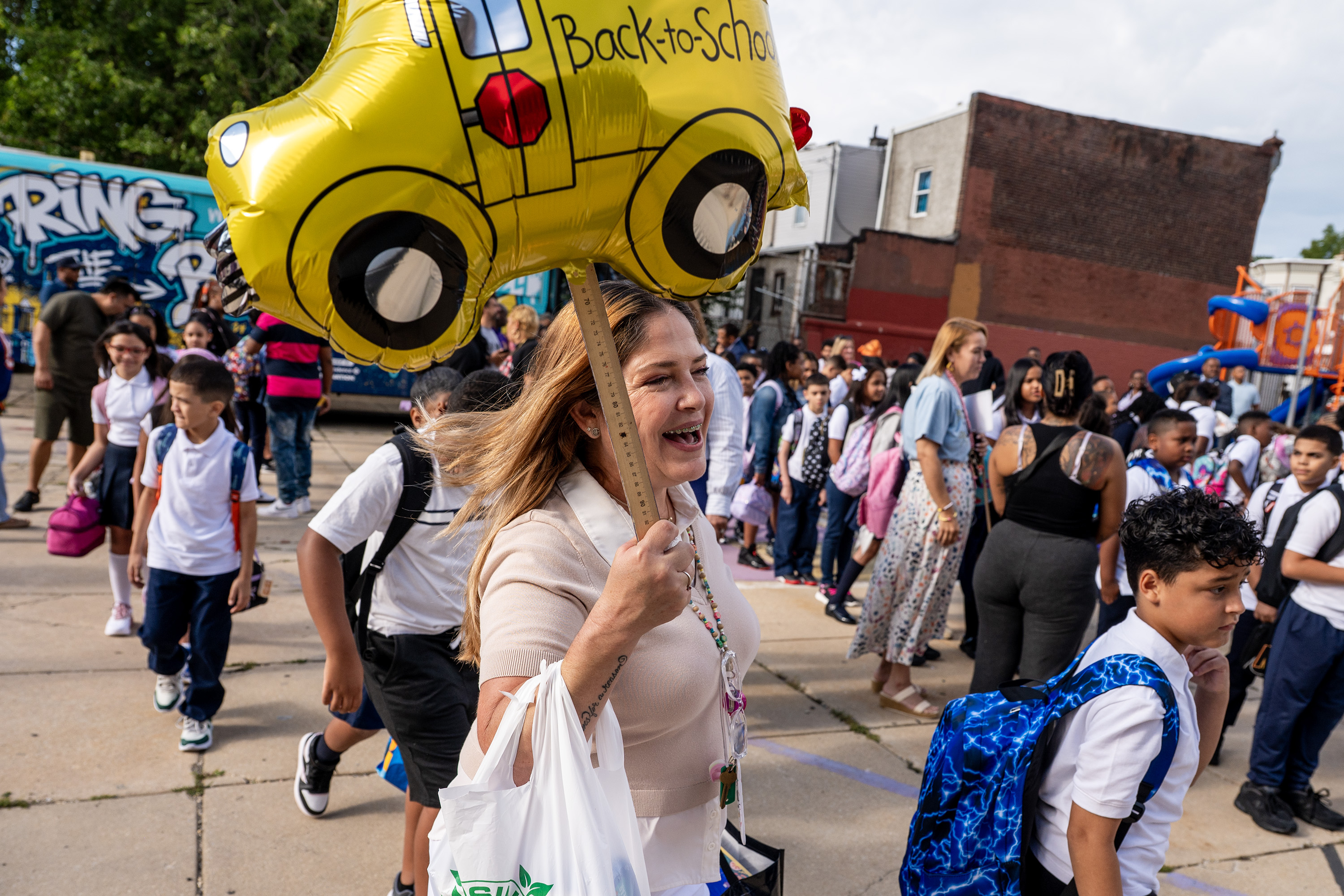
    Eighth graders tossed a football across the concrete schoolyard. A fourth grader broke into a dead run, intent on catching up with friends she hadn’t seen all summer. A teacher hugged a first grader with a shy smile and a giant pink backpack crammed with school supplies.

    The scene at Overbrook Elementary played out across the city Monday morning as most of the Philadelphia School District’s 113,000 students returned to class for the start of the 2026-27 school year. Kindergartners are due to begin classes Thursday.

    At McClure Elementary in Hunting Park, Superintendent Tony B. Watlington Sr. repeated at a news conference his overarching goal: for Philadelphia to become the fastest-improving big-city school district in the U.S.
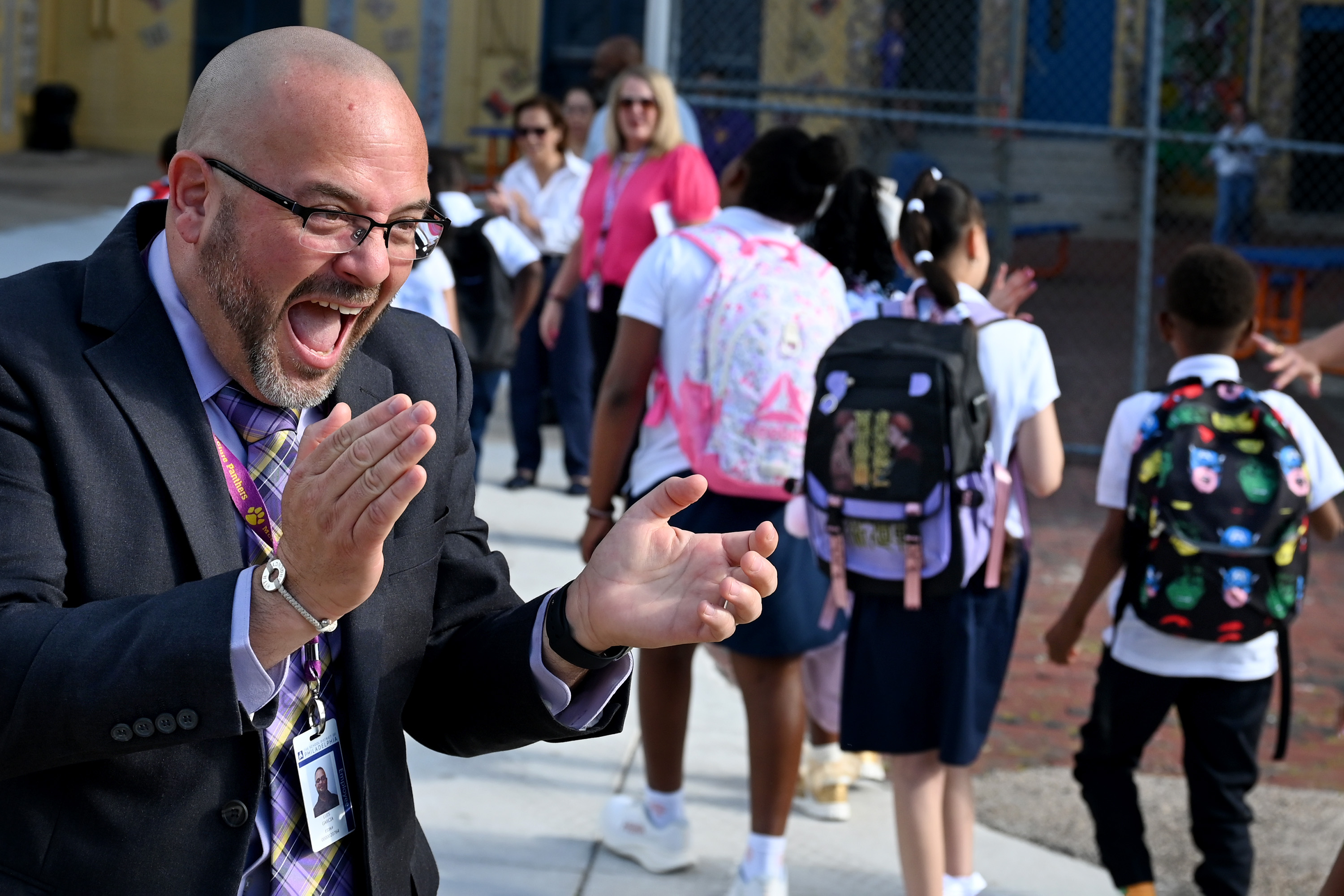
    McClure Elementary principal Luis Garcia greets students Monday, Aug. 24, 2026 before they head into class on the first day of school in the Philadelphia School District.Tom Gralish / Staff Photographer

    The district will “double down this year to continue to drive this fast improvement, and we won’t rest until all of our children are at grade level in reading and math,” Watlington said. According to 2024-25 state data, 34% of district students meet state standards in reading, and 23% in math. (More recent PSSAs, typically available to teachers and principals by now, have not been shared by Philadelphia leaders.)

    Reginald Streater, the school board president, said improving educational outcomes is also about creating generational value.

    “A student can walk through the doors, irrespective of their race, creed, class, gender, or shared ancestry, in our schools with a world of possibilities in front of them and leave those same doors with the knowledge, confidence, and opportunity to pursue the future they envision for themselves,” said Streater, father of two children in district schools, “armed with the tools to break the bonds of generational curses and barriers designed to keep them and their ancestors and their progeny in a perpetual state of servitude and second-class citizens.”

    Mayor Cherelle L. Parker was not present at the district’s first-day festivities, a rarity, but Debora Carrera, her chief education officer, touted Parker’s $48 million agreement that restored some of the 340 positions that otherwise would have been axed because of budget cuts.

    That was good news for Johnny Beauchamp, a single father and truck driver, who was dropping off his son for his first day at McClure.

    While Beauchamp said he is confident the city has addressed its budgetary concerns regarding staffing and school openings, he hopes to see some initiatives on school safety.

    “I’m actually more excited than he is. It’s his first day … and his bright future starts today,” Beauchamp said. “But my main concern nowadays is the safety, especially with guns and stuff like that. Also, making sure our schools are clean and sidewalks are clear of glass and other dangerous stuff where our kids are playing.”

    ‘Leave Overbrook alone’

    The first-day tone was upbeat, but a bit different, at Overbrook, one of the 17 buildings the school board voted in April to close as part of its $3 billion, 10-year facilities plan. Overbrook is set to shut its doors permanently in June.

    Overbrook is a small, high-performing school in a very old building: The school is celebrating its 120th anniversary this year. Its tight-knit community wraps its arms around Overbrook and has mounted a fierce fight to keep it open.

    “Leave Overbrook alone,” said Fahmee Shabazz, dad of an Overbrook fourth grader. “Please, somebody help us.”

    Teachers union and elected officials were on hand at Overbrook for a news conference to pledge continuing efforts to try. Multiple politicians have said they will keep the pressure up to remove Overbrook Elementary, Robeson High, and Lankenau High from the district’s closing list.
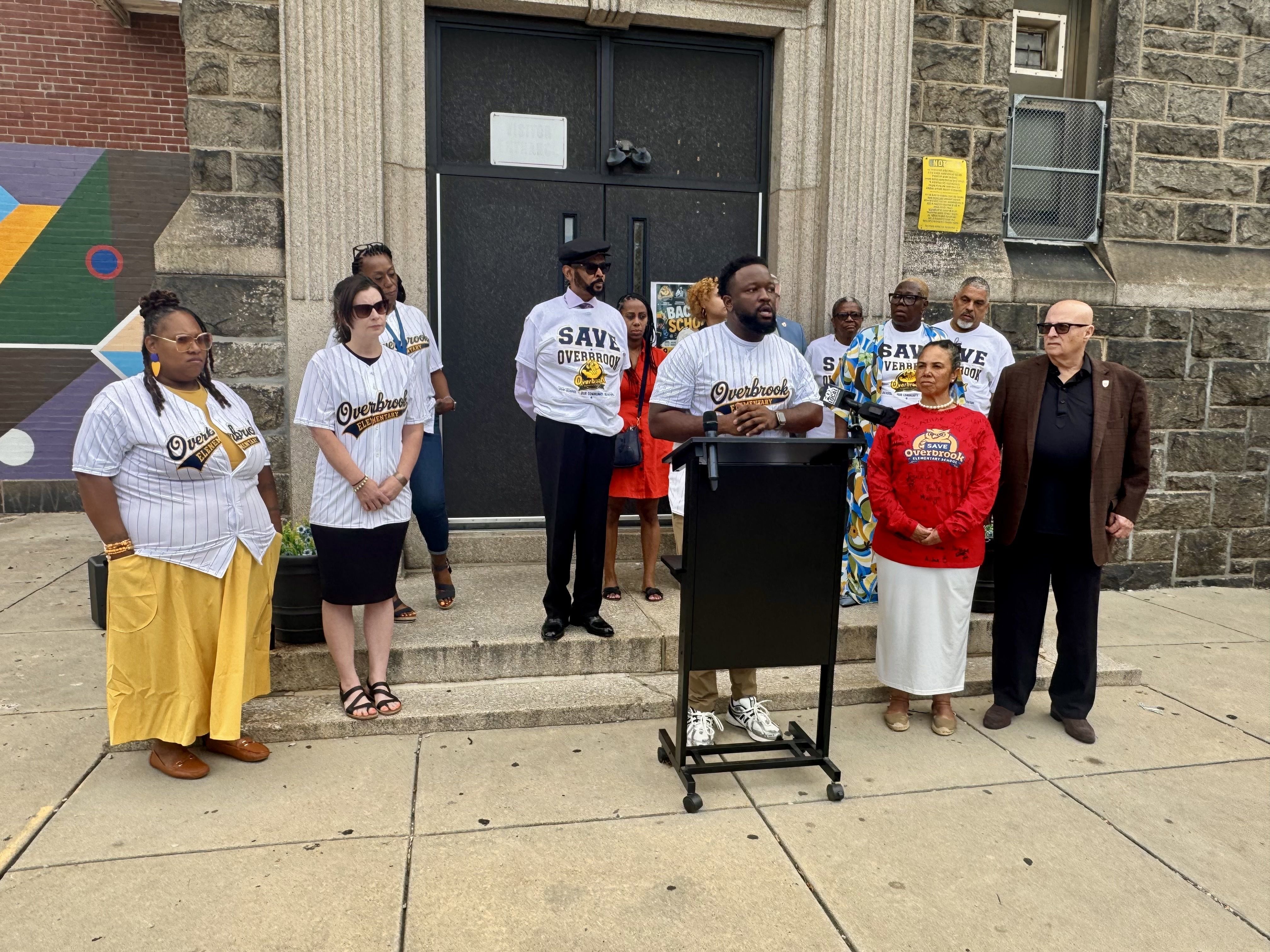
    Teachers, politicians and Philadelphia Federation of Teachers officials listen to Kenneth Glover, principal of Overbrook Elementary School, speak on the first day of the 2026-27 school year. Glover said the school, which is one of 17 Philadelphia schools slated to close, will focus on academics this year and let adults fight a battle to stave off closure.Kristen A. Graham / Staff

    “We cannot disrupt the good things that are happening here,” said State Sen. Vincent Hughes (D., Philadelphia), chair of the Senate Appropriations Committee.

    Hughes said action needs to happen in Harrisburg to help better fund schools. But he added: “We’re still going to fight for Overbrook Elementary and the schools like it, [which] deserve to stay open.”

    Last year, many Overbrook Elementary teachers used news of the school’s closing as an object lesson — in civics and the world around them — said Kenneth Glover, the school’s principal.

    “I’m so happy that it’s day one,” he said. “Like I tell my students all the time, each day is a fresh start, and this year is a fresh start. Last year, a lot of the focus was on adult issues, right, fighting to keep the school open. This year, I really want students to focus on academics … for us to just have a beautiful school year.”
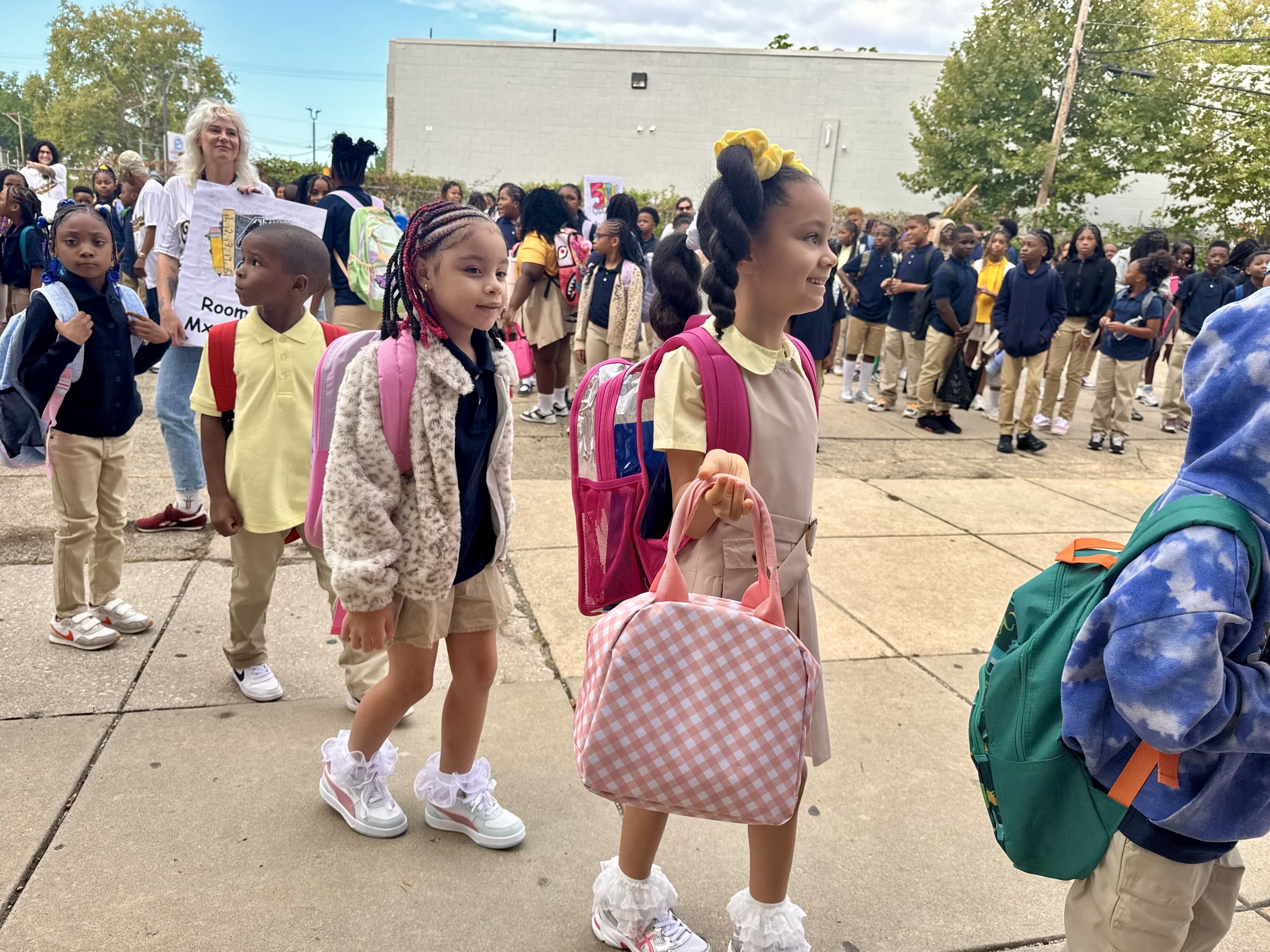
    Overbrook Elementary School students get ready to enter the building for the first day of the 2026-27 school year. It could be the 120-year-old school’s last first day, as it’s one of 17 schools the Philadelphia School District has slated to close.Kristen A. Graham / Staff

    While Glover said he still hoped the school could be kept open, he has begun to work with the district’s newly created transition office to plan for what comes next.

    Still, said Kathryn McQuade, Overbrook Elementary’s art teacher, the closure and the fight to prevent it are overshadowing the year for many.

    McQuade expressed frustration that the school board just spent $7 million on a four-year Center City lease for Constitution High when Overbrook and other schools have been tagged for closure.

    “Seven million could easily go towards … modernizing this building for the future,” McQuade said. “And that wouldn’t be a lease, that would be a one-time price tag.”

    Arthur Steinberg, president of the Philadelphia Federation of Teachers, said he “was hoping that when I came here today I’d be able to say, ‘Well, we saved Overbrook from the chopping block.’ Unfortunately, that is not the case. However, we have not given up the fight to keep Overbrook and every other school in the city open.”

    Steinberg said the PFT would release a plan this week that would give the district a path to keep all 17 schools open.

    Robin P. Cooper (upper right) watches as school and city official gather for a group photo outside the district bus. Cooper is president of Commonwealth Association of School Administrators (CASA). At far left is Superintendent Tony B. Watlington Sr. The bus, part of Mayor Cherelle L. Parker’s Neighborhood Community Action Centers, was to visit and rally at schools in every city council district.Tom Gralish / Staff Photographer
  • N.J. strikes 5,100 from voter rolls in wake of registration gaffe

    N.J. strikes 5,100 from voter rolls in wake of registration gaffe

    New Jersey officials have deleted 5,100 registered voters from state voter rolls and directed another 1,650 to county election officials for review, one month after Gov. Mikie Sherrill revealed that thousands of noncitizens may have registered to vote after interactions with the Motor Vehicle Commission.

    Sherrill announced the moves Wednesday, saying only about 340 of 6,600 erroneously registered to vote in 2023 and 2024 actually voted. She has blamed the problem on a software error by Idemia, the vendor that has managed driver’s license printing in New Jersey since 2010, and blasted former Gov. Phil Murphy’s administration for transparency and accountability failures. Idemia has denied responsibility for the problem, and Murphy has said he was unaware of it.

    Sherrill on Wednesday said state officials have worked around the clock to fix the issue and review state records “to preserve the integrity of our voter rolls, and ensure that our elections remain free and fair.”

    “I said we would conduct a thorough, complete, and fair investigation, and that is exactly what we are doing. Because that is what accountable government looks like,” she said in a statement. “My commitment to the people of New Jersey is to confront this issue with the urgency it deserves, so we have strong and fair elections.”

    Republicans, including those in the Trump administration, have criticized Sherrill for the voter registration debacle, saying it proves their claims that noncitizens have committed widespread voter fraud. On Wednesday Sherrill said the GOP’s “only interest has been in trying to use this issue for political gain.”

    Assemblyman Paul Kanitra (R-Ocean), one of the Republicans who have sharply criticized the Sherrill administration and Democrats on this issue, believes the number of noncitizens who have cast ballots could be far larger than state officials have admitted. Kanita told the New Jersey Monitor Wednesday that the governor has been less than fully transparent here by not specifying where and in what elections noncitizens have voted.

    “Governor Sherrill has over and over again minimized the harsh reality created by her own party members: Hundreds of noncitizens have voted in several elections in New Jersey,” he said, adding, “We need total and full cooperation of the Sherrill Administration right now. Anything less is a betrayal of the office of governor.”

    State officials took New Jersey’s voter registration system offline briefly so state election officials could copy and preserve it and then update it to remove or modify the status of people impacted, she said.

    That review drove the state to delete 5,100 of the improperly registered voters from voter rolls because officials could find no other proof of their eligibility to vote. State officials also changed the status of about 1,450 others to “rejected” pending further review, because they found separate voter registrations or other transactions in the system suggesting eligibility. County election officials have been tasked with verifying their eligibility and further amending their status after that review.

    Sherrill, who has previously said fewer than 400 of the wrongly registered people had actually cast ballots, put that number at 340 on Wednesday. An additional 220 voted but had previously been registered to vote or otherwise had made attestations in state systems suggesting they are eligible, Sherrill said. County officials also are reviewing that second batch of people, too, to verify eligibility.

    Sherrill said her administration has directed county officials to complete their reviews before voting begins in the upcoming general election. The state’s investigation remains ongoing, she added.

    This story originally appeared on New Jersey Monitor.

  • Phillies installed artificial turf at FDR Park field without environmental permit, record shows

    Phillies installed artificial turf at FDR Park field without environmental permit, record shows

    The Philadelphia Phillies installed artificial turf at Ashburn Field in FDR Park in July but still have not obtained a required state permit, according to Pennsylvania Department of Environmental Protection records.

    Major League Baseball and Phillies Charities Inc. held a ribbon-cutting for the renovated field, named after Hall of Famer Richie Ashburn, on July 10. It was part of festivities leading up to the MLB All-Star Game.

    The renovation of the decades-old field included removing natural grass in favor of a “high-performance synthetic turf system and upgraded drainage” at the five-acre complex, according to an MLB news release.

    However, documents from the Pennsylvania Department of Environmental Protection (DEP) show that the Phillies never obtained the required permit designed to address erosion control and stormwater release at the site.

    Under Pennsylvania law, anyone disturbing more than one acre of ground is required to obtain a permit for stormwater discharges before beginning the work and explain how the work will affect drainage going forward.

    DEP spokesperson Robyn Briggs said in an e-mailed statement that the agency is “currently reviewing the Phillies’ permit application and the compliance situation at the site. Because this matter is still under review, DEP cannot comment on whether any enforcement action or penalty will be taken.”

    The permit review is listed as “paused,” the statement said, because the DEP is still waiting for the Phillies to address outstanding issues.

    “Once the necessary information is received, DEP can continue its review,” the statement said.

    City approval?

    Bonnie Clark, a spokesperson for the Phillies, said in an e-mailed statement that “the recent upgrades to Richie Ashburn Field were undertaken in coordination with the city and relevant governmental agencies.”

    Clark said the city authorized the work to proceed while permit applications were in process so the upgraded field could host All-Star Week events.

    “We expect to obtain all necessary final approvals as early as next week,” Clark said.

    Clark did not specify who at the city, or what department, the Phillies were working with. City officials did not respond to requests for comment.

    When asked if this was proper procedure, Briggs reiterated that the DEP is “reviewing the compliance situation at the site” and noted the state law that requires the stormwater permit for construction-related earth disturbance.

    Typically, state law supersedes city authority.

    What is Ashburn Field?

    Ashburn Field was part of an investment MLB made in Philadelphia’s youth baseball community for the 1996 All-Star Game. The field, owned by Philadelphia as part of its park system, is managed by the Phillies. It is the first large turf field installed at FDR Park.

    MLB said the newly renovated field will serve about 8,000 participants in the Phillies Reviving Baseball in Inner Cities and Youth Academy programs, “while providing a weather-resistant playing surface in an area where rain often forces cancellations.”

    ‘Deficient’

    The Phillies notified the DEP they were applying for a permit on May 13.

    On May 27, the DEP sent a letter to the Phillies notifying the team that it needed additional information and logged 32 items that needed to be addressed, according to documents obtained by The Inquirer. That letter noted that final plan drawings had not been submitted, other drawings failed to include the project’s boundary, and not all water discharge areas were noted.

    A local engineering firm hired by the Phillies responded in June to each point.

    On July 7, the DEP sent another letter to the Phillies again noting technical deficiencies. And it sent another letter on July 24, about two weeks after the ribbon cutting, noting an outstanding deficiency and telling the Phillies to resubmit information in coordination with the Philadelphia Water Department.

    The permit is still listed as pending on the DEP website.

    The fight against artificial turf at FDR Park

    Adding artificial turf to Ashburn Field is the latest in a yearslong debate about changes to FDR Park.

    In 2019, the city’s parks and recreation department released a master plan to overhaul FDR Park, including the installation of 12 artificial turf fields in the footprint of a former golf course. (Those fields are separate from Ashburn Field.)

    The department said average rainfall left sections of the park unusable for days because of frequent flooding. Officials predicted that flooding would only worsen because of climate change and said artificial turf fields would provide better flood control. The plan would require cutting down dozens of trees.

    But that was pre-pandemic.

    As COVID restrictions shut down the world, the golf course returned to a wild state and became a beloved space by dog owners, hikers, and birders. They nicknamed the space “the Meadows.”

    Local opposition to the city’s plan grew, with critics objecting to the use of artificial turf amid natural lands. A grassroots group of South Philadelphians formed the Coalition to Save the Meadows, which has been vocal in its efforts to stop the park overhaul.

    At the same time, the fields drew support from youth athletic clubs.

    In March 2024, 11 South Philly residents filed suit calling for a stop on all work across FDR Park.

    In May, Orphans’ Court Judge Sheila Woods-Skipper denied the critics’ request to temporarily stop work on the park as the trial played out.

    In a recent social media post, the Coalition to Save the Meadows asked why the Phillies were allowed to move forward on Ashburn Field without the permit.

    “PA DEP regulations and permitting requirements exist for a reason: to protect our waterways, watershed, and the people and wildlife that depend on them,” the post read. “So how was this project allowed to move forward without a permit — and will there be consequences?”

    A legacy of artificial turf

    Although Citizens Bank Park, the home of the Phillies, has a natural grass field, the team is no stranger to artificial turf.

    The Inquirer reported in 2023 that six former members of the Phillies who played on the artificial turf field at the former Veterans Stadium died of brain cancer.

    The article noted that the death of former Phillie David West in 2022 came at a time when there was growing scientific concern about the perils of PFAS, known as “forever chemicals” because of their resistance to breaking down.

    PFAS were used to make the AstroTurf that was used at Veterans Stadium. The Vet opened in 1971 and was demolished in 2004.

    For Ashburn Field, the Phillies also installed AstroTurf. However, AstroTurf says on its website that it now uses a PFAS-free formula. A company news release on Ashburn Field said the infill for the new turf uses an organic material made from cork and olive.

  • Iran’s rial currency hits new record low as US prepares to announce more sanctions

    Iran’s rial currency hits new record low as US prepares to announce more sanctions

    TEHRAN, Iran — Iran’s currency hit a record low Monday as Washington prepared to announce new sanctions it said would add further pressure on an economy already battered by previous sanctions and a U.S. naval blockade.

    The rial dropped to 2.02 million to the U.S. dollar as trading opened on currency markets. Iran’s official Central Bank rate stood at around 1.5 million rial to the dollar, but the market rate is what most Iranians pay.

    The currency had already been under pressure before the U.S. and Israel attacked Iran on Feb. 28, as Iran faced double-digit inflation and negative growth, but has repeatedly hit new lows as nearly six months of war have taken an even greater toll.

    Iranians find daily staples increasingly unaffordable. Since the war began, rice is up some 60% and prices of beef are more than 150% higher. The International Monetary Fund forecasts that GDP will contract more than 5%.

    Still, economic pressure has not yet translated into political pressure. Iran retains a key strategic advantage: Its attacks and threats on ships in the Strait of Hormuz have brought traffic in the vital waterway to a near halt, damaging the world economy and heaping pressure on U.S. President Donald Trump ahead of congressional elections.

    The war, as a result, has devolved into a fight over who controls the strait, through which a fifth of the world’s traded oil transited before the conflict. Iran is now refusing to fully reopen it unless it can charge ships.

    Iran and Oman, which is on the opposite side of the strait, are reportedly in the final stages of agreeing upon a plan for joint management of the waterway. Oman’s foreign minister is set to visit Iran on Tuesday.

    In an attempt to break the impasse, Trump’s administration promised even stronger sanctions than those already in place would be announced Monday, including secondary sanctions on countries that continue to do business with Iran.

    “President Trump decimated Iran’s economy to a point where the rial has never been weaker and inflation has rarely been higher,” U.S. Treasury Secretary Scott Bessent wrote Sunday in an opinion piece in the Financial Times. “The regime’s final refuge now lies in the self-deception of fearful nations that still believe accommodating aggression can secure a durable peace.”

    Already last week, the United Arab Emirates announced that it was suspending all trade with Iran. The UAE has long been one of Iran’s largest trading partners and its biggest source of imports.

    Iranian Foreign Ministry spokesperson Esmail Baghaei told reporters in Tehran on Monday that “any escalation of this situation will undoubtedly bring about consequences.”

    “Our hands are not tied,” he added.

    Pakistan, which played a key role in brokering a 60-day ceasefire in June, sent a high-level delegation to Iran on Monday to discuss ending the war, the military said.

    In downtown Tehran, 73-year-old Sadegh Mahmoudi did not hold out hope for a resolution. He joined a line of about a dozen people to purchase U.S. dollars with his remaining savings to hedge against further declines.

    “There is no hope for a deal and peace,” he said.

  • European leaders join Zelenskyy in Kyiv for Ukraine’s Independence Day as Russian invasion pushes on

    European leaders join Zelenskyy in Kyiv for Ukraine’s Independence Day as Russian invasion pushes on

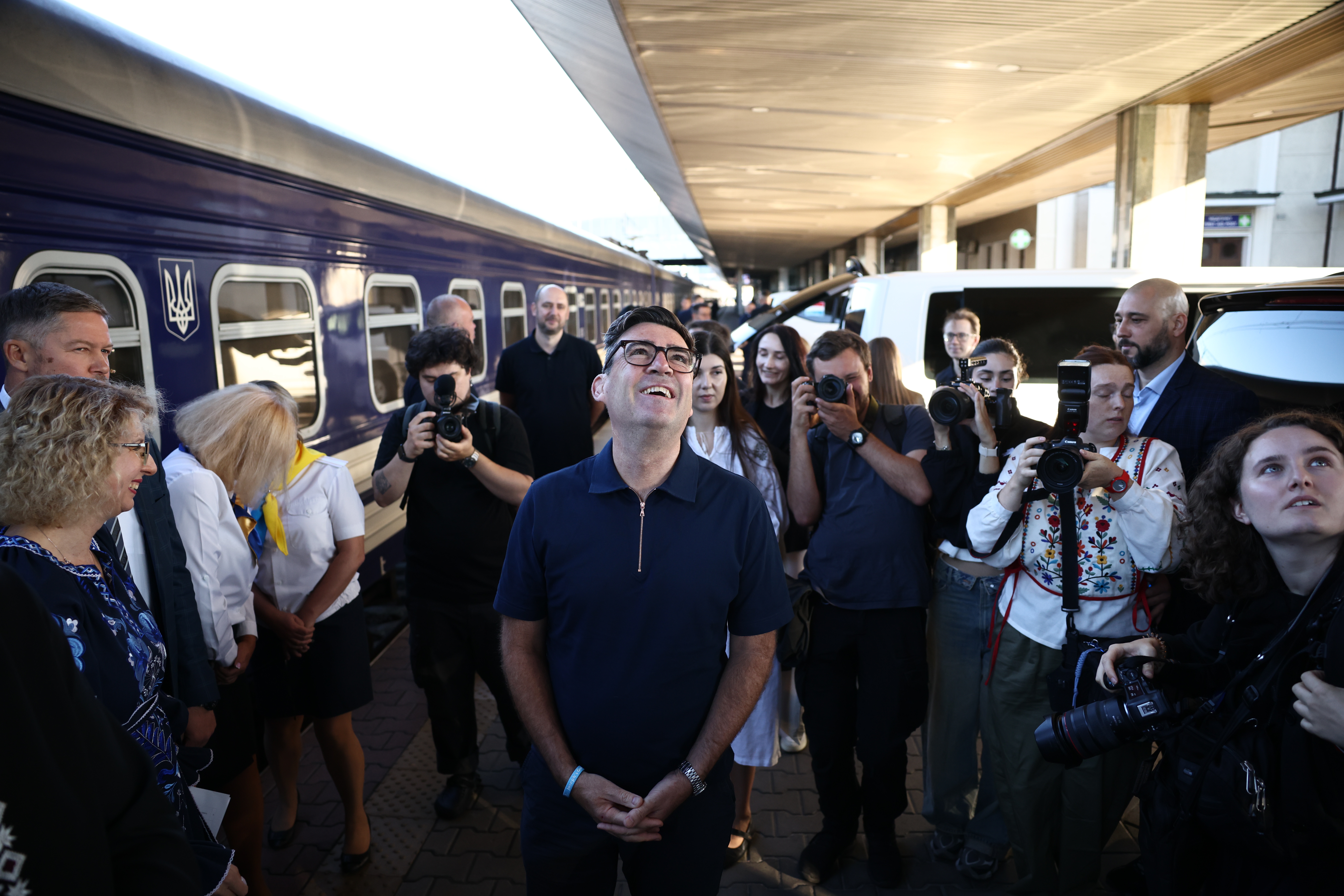
    KYIV, Ukraine — European leaders joined President Volodymyr Zelenskyy in Kyiv on Monday for official celebrations marking Ukraine’s Independence Day as Russia pushes on with its 4-year-old invasion of the country.

    One of President Vladimir Putin’s key goals in starting a war with Russia’s neighbor in February 2022 was to place Kyiv in Moscow’s orbit. Ukrainians voted overwhelmingly for independence in 1991.

    With no significant changes on the front line for months and no apparent progress after more than a year of U.S.-led peace efforts, the warring countries are locked in a spiral of escalating aerial attacks that are killing civilians and smashing infrastructure.

    EU leaders rally around Ukraine

    U.K. Prime Minister Andy Burnham, on his first overseas trip since taking office last month, on Monday joined almost a dozen other European leaders, as well as other dignitaries including European Council President Antonio Costa, in Kyiv.

    “For Ukraine, independence is not an abstract idea. We defended it against all odds,” Ukrainian Foreign Minister Andrii Sybiha said on social media. “In times like these, nations learn how important it is to have allies by your side.”

    Burnham was to co-chair a meeting of the so-called Coalition of the Willing group of countries helping Ukraine resist Russia’s onslaught, with the leaders of France and Germany expected to join online.

    The visiting leaders took to Kyiv pledges of further military and financial support. Burnham is expected to announce that the U.K. Government has agreed to allow defense company MBDA to release classified information relating to British components used in the SCALP long-range missile, according to his office. That would pave the way for France and Ukraine to advance plans for local production of the weapon in Ukraine.

    SCALP is the French version of the UK’s Storm Shadow missile, with both systems incorporating shared French and British technology.

    Ukraine has leaned heavily on NATO countries for help fighting Russia’s bigger army, although relations with the United States have been cooler under President Donald Trump.

    Russia, meanwhile, is getting help from North Korea and China.

    Both Russia and Ukraine are trying through long-range strikes to inflict economic pain, disrupt military supplies and erode public morale.

    Ukraine’s long-range drones have repeatedly hit facilities in Russia’s vital oil industry, causing fuel shortages, and have also engaged in a campaign against Russia’s largest online retailer Wildberries.

    Ukrainian strikes kill 3 teenagers

    Three teenagers were killed and six children were wounded in the southern Russian city of Krasnodar, Russia’s children’s rights ombudswoman Maria Lvova-Belova said Monday, as Ukraine attacked several warehouses of Ozon for the third straight day, according to officials and the company.

    Ozon is one of Russia’s major e-commerce retailers. The company said a large fire raged at an Ozon logistics facility in the suburbs of Krasnodar following the overnight attack.

    A drone also hit the grounds of an Ozon logistics center in the southern Russian region of Adygeya, regional governor Murat Kumpilov said, though the company said its Adygeya warehouse wasn’t damaged.

    In all, four Ozon premises appeared to have been targeted.

    Russia’s Defense Ministry said its air defenses overnight intercepted and destroyed 351 Ukrainian drones over eight Russian regions, as well as occupied Crimea and the waters of the Azov and the Black Seas.

    The ministry also said that its forces overnight continued to strike Ukrainian ports and vessels delivering cargo for the armed forces.

  • Trump’s school voucher program could become a public school cash machine

    Trump’s school voucher program could become a public school cash machine

    Forget student fun runs, PTA bake sales and Saturday morning car washes.

    The future of public-school fundraising may soon look more like a payroll deduction. Or perhaps door-to-door campaigns each tax season asking filers to earmark donations to support nearby public schools.

    When President Donald Trump’s tax overhaul known as the One Big Beautiful Bill last year created the first national school-voucher-style program to help families pay for private schools or home-school costs, it allowed public schools to benefit as well. According to U.S. Treasury guidelines released in June, the program allows specific nonprofits to collect donations that people direct from their federal taxes for a vast array of public school costs, such as transportation or tutoring.

    Sara Hazel, president of the Denver Public Schools Foundation, the fundraising arm for Colorado’s largest school district, is among a small but growing number of district leaders who have said they plan to take advantage of the financial opportunity. She said she plans to tell potential donors, “Do you want that money going to the IRS or going to local kids?”

    The program doesn’t officially start until the new year, but its resemblance to private-school vouchers has inspired opponents of school choice to line up against it. Still, supporters and even cautious critics say the Republican-backed initiative could mean a financial boon for public schools.

    The program works like this: Taxpayers can contribute up to $1,700 to what’s known as a scholarship-granting organization and receive a credit on their federal income taxes. It’s a dollar-for-dollar credit, meaning every pledged dollar reduces what an individual owes to the Internal Revenue Service by the same amount.

    These new intermediaries could be formed by an array of nonprofits, including public-school foundations, with approval from their state. The scholarship-granting organization would then pass on the money to private school and home-school applicants in the form of scholarships — or to school districts so they could cover certain services for student applicants.

    Marguerite Roza, a school finance expert, has advised school districts — many of which have bandaged their slashed budgets by shuttering campuses or issuing pink slips — that they can’t afford to ignore this new source of funding. “Any time there’s an available revenue source, generally we don’t see districts saying, ‘No thank you,’” said Roza, director of the Edunomics Lab at Georgetown University.

    States must opt into the program, and so far, 30 states have done so. Now it’s up to individual school district leaders in those states to decide if they want to try to tap into the money.

    School finance experts suggest the scholarships could help districts access funding comparable to 3 percent of their entire budget. But tapping into this unexpected revenue risks political backlash and logistical headaches. Governors and superintendents may face fierce resistance from teachers unions, which in many states have portrayed the new program as a Trojan horse for the expansion of vouchers in education because it also allows money to be funneled to families to pay for private school.

    Some opponents also raise concerns about creating a new funding system that could favor school districts with a ready pool of wealthy donors over those in low-income communities where few residents may owe enough in federal taxes to contribute to the scholarships.

    “In low-income areas, you’re going to find it’s not easy for school districts to raise this money,” said Thomas Toch, director of the think tank FutureEd at Georgetown University.

    He said he worried that the inclusion of public school districts in the legislation was little more than a ploy, a shrewd political strategy to further school choice in states otherwise unlikely to support it.

    “It was designed to make the case that this program can support the public sector in order to win support in blue states,” Toch said.

    The mechanics of the tax credit scholarships represent a dramatic departure from how the federal government supports schools.

    The money for the scholarships never flows through federal Department of Education coffers, entirely bypassing Congress and its spending decisions.

    Treasury regulators will soon issue formal rules to set additional guardrails for the program. But the law suggests the scholarships could be used to cover an expansive list of expenses that public schools often struggle to fund including costs such as field trips, textbooks or support services.

    The inclusion of public schools now places some governors, superintendents and school boards in a new dilemma: Do they choose to tap into a Trump-backed program that could boost their bottom line, or leave the tax-credit cash on the table for others to claim?

    “The reality is this program exists, and if there are dollars on the table that can go to our children and families, I don’t understand the purpose of not trying to do everything we possibly can,” said Justin Dayhoff, chief financial officer for Nevada’s Clark County School District, which includes Las Vegas.

    His district, like many around the country, is strapped for cash as health insurance and other costs increase and fewer students enroll in public school due to population decline. Enrollment in Clark County — the nation’s fifth-largest district — has dwindled by more than 35,000 students, or 11 percent, since before the pandemic and it laid off five dozen staff ahead of this new school year.

    How big a financial difference the voucher-style program would make for school districts remains to be seen.

    Some school finance experts expect soliciting donations could be as simple as districts partnering with employers to enroll their workers in the tax credit program, perhaps as another form in their regular HR paperwork. (Many employers already partner with nonprofits like United Way to collect pretax donations from paychecks.)

    Roza, of Georgetown, estimated a district could bring in about $200 per student by enrolling its own employees into the program. Convincing major companies to do the same — directing proceeds to nonprofits supporting students who attend local public schools — could push that figure higher. City and county governments might participate as well.

    “Local employers are an absolutely critical piece of this puzzle,” said Hazel, with the Denver Public Schools Foundation.

    Her organization hasn’t officially approached any of its corporate partners yet about enrolling their employees in the tax credit program. (Past donors to the foundation have included Chevron, the Colorado Rockies and United Airlines.) But Hazel’s already thinking about whether Denver Public Schools will have to compete with other Colorado districts attempting to woo the same business leaders.

    “We’re the largest school district in Colorado, so we already have an advantage,” Hazel said. “But how can we go to a company and say, ‘Your employees must choose between all these great school districts?’”

    But her new fundraising plans will come with steep operational hurdles.

    Under the new law, at least 90 percent of all donations to scholarship-granting organizations like Hazel’s must go directly to student scholarships, leaving relatively little to cover marketing, staff, annual independent audits and payment processing. Fees already take 4 percent of each credit card transaction, Hazel said.

    Yet even as she awaits further clarity from Treasury on how organizations can collect donations, she’s imagining what the money could mean for Denver schools.

    “My dream is I can give every second grader a tutor and we get everyone to grade-level reading and math,” Hazel said. “There are things like that that are so scalable and would support every student.”

    This story about the One Big Beautiful Bill was produced by the Hechinger Report, a nonprofit, independent news organization focused on inequality and innovation in education.

  • The midterms feel like 2006 all over again

    The midterms feel like 2006 all over again

    WASHINGTON — The war in the Middle East is increasingly unpopular. So is the president as his numbers dip perilously — a common development in the sixth year of a presidency. Congressional Republicans are embroiled in unsavory scandals. Americans are shelling out big bucks for gas while economic anxiety runs high.

    The grim backdrop for November’s midterm elections has created a steep challenge for Republicans and opportunities for Democrats that look much the same as those they encountered in 2006. Back then, congressional Republicans faced the voters at the midpoint of President George W. Bush’s second term, with the public roiled by the war in Iraq, high fuel prices and a series of ugly accusations against members of the GOP majority on Capitol Hill.

    “It is striking,” said Sen. Chuck Schumer of New York, the Democratic minority leader and chief architect of his party’s Senate campaign strategy this year and two decades ago. “The analogy is amazing.”

    The parallels are not perfect, since politics and campaigns have both changed radically over 20 years. But the comparisons are instructive, as officials in both parties stare down the final months of an election that will determine who controls Congress for the remainder of President Donald Trump’s term.

    “This is 2006 2.0,” said Rahm Emanuel, who in 2006 was an ambitious Democratic House member from Illinois and Schumer’s counterpart across the Capitol as the head of the Democratic Congressional Campaign Committee. “The similarities are eerie.”

    Emanuel and Schumer both have good reason to look back fondly on 2006, when Democrats triumphed in a blue wave.

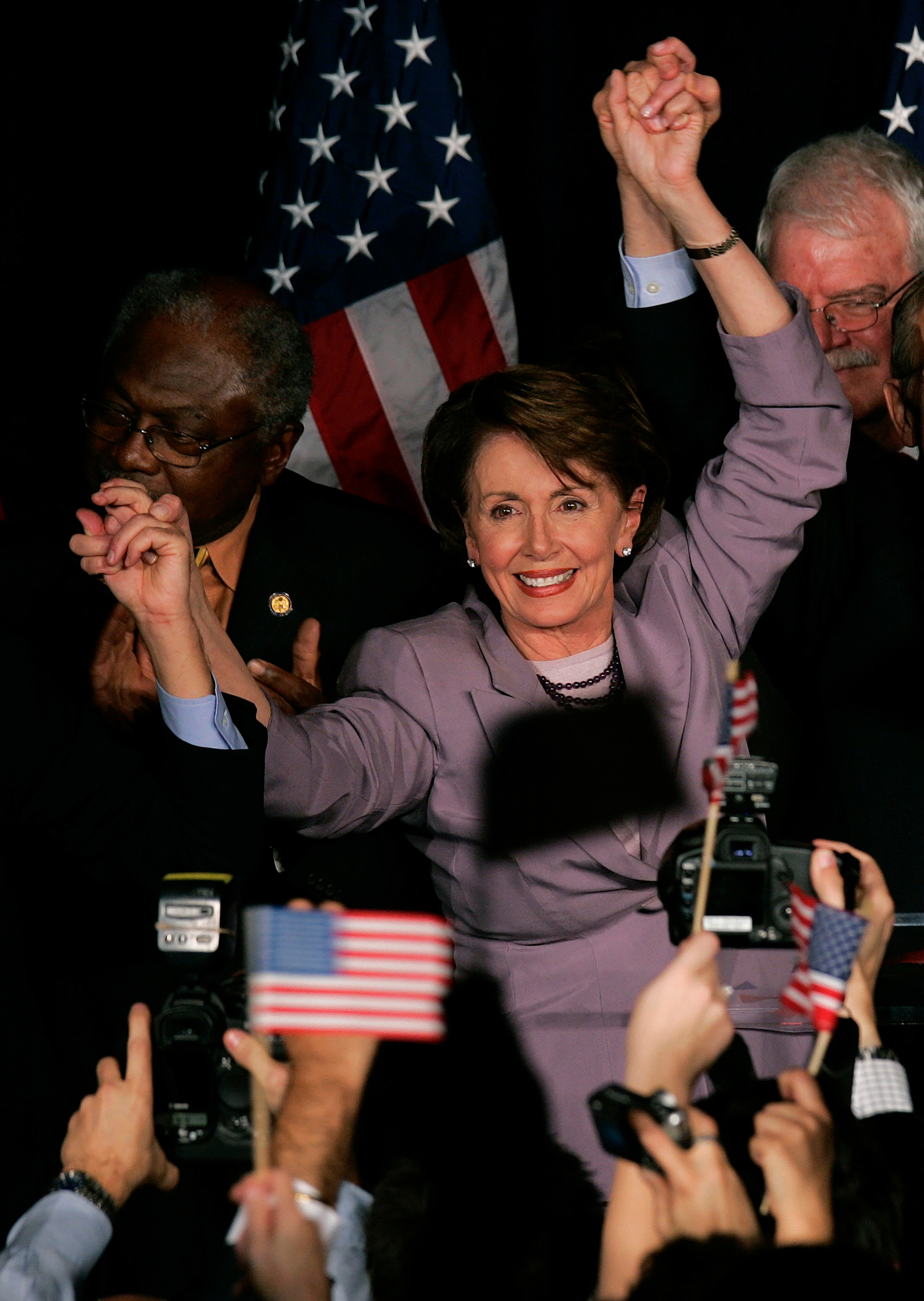
    Exceeding expectations that year, Democrats picked up six seats in the Senate, taking control of the chamber. In the House, where the Republican majority seemed to have exhausted itself after a dozen years, Democrats gained 31 seats and installed Nancy Pelosi, who is now retiring, as the first woman speaker. Bush, another victim of the six-year presidential itch, famously branded the outcome “a thumping.”

    This year, the Senate map is stacked against Democrats — they would need to win at least four Republican-held seats to take control, all but one of them in states that Trump won in 2024. And not all of the most competitive races have gone as party leaders had hoped. But Democrats have benefited from some political twists in places where they had not anticipated being competitive, such as in Texas, where Trump’s primary endorsement of the state’s attorney general, Ken Paxton, over Sen. John Cornyn, put that seat in play.

    The nonpartisan Cook Political Report on Thursday moved its ratings of the Texas and Iowa Senate races from leaning Republican to a toss up, underscoring the expanding battleground that Democrats would need in order to replicate 2006. Democrats say that they believe they are also increasingly competitive in other states carried by Trump two years ago, including Kansas.

    While clear similarities exist this year, significant differences are present as well — not the least of which is that Americans consume and process political content far differently than they did 20 years ago, with an emphasis on digital media rather than traditional television advertising.

    Other structural changes have taken place that could influence the results. The two parties this year engaged in a redistricting war that could help stem some of the House losses Republicans might have suffered in a midterm year that traditionally runs against those in power. Polarization runs deeper, making it harder to shake voters from their party identification. Trump’s hold on his base seems stronger than Bush’s was in 2006, though it is potentially weakening amid a backlash to the war with Iran.

    In the Senate and the House, the Democratic establishment did not get its preferred candidates through the primaries in some key races, including in Maine and Michigan. And the rise of far-left socialist candidates has Republicans seeing an opening to try to brand Democratic contenders across the country as part of a movement out of step with typical Americans.

    For those reasons and more, Republicans say the comparison between the two elections comes up short.

    “Democrats are running with a radically different party on a dramatically different map, and the fundamentals are stacked against them,” Mike Marinella, a spokesperson for the National Republican Congressional Committee, said in a statement. “Republicans have stronger candidates, a historic fundraising advantage and a more favorable battlefield, while Democrats are letting socialists hijack must-win races from Michigan to Colorado, Arizona, California and Maine.”

    In 2006, the war with Iraq was the central issue in the campaign as Americans soured on Bush’s handling of the conflict, particularly after his main justification for the invasion — the claim that Saddam Hussein had weapons of mass destruction — turned out to be false. Trump’s conflict with Iran has not gone on nearly as long, nor has it produced the same level of casualties. But Bush had significantly more support at the start. Public opposition helped drive approval numbers for the two presidents below 40%, a dangerous midterm level, as both wars also drove up fuel costs.

    Then as now, Democrats tried to capitalize on kitchen-table economic concerns with the potential to drive voters. In 2006, it was Bush’s proposal to privatize Social Security, which never came to pass. Now, it is the Republican-written law slashing Medicaid and other safety net programs to pay for large tax cuts, as well as the GOP’s decision to allow healthcare subsidies to expire, sending premiums soaring.

    “We found an issue early,” Schumer said, recalling 2006. “Rahm and I did Social Security. Now we found the costs issue, particularly led by healthcare.”

    Another undercurrent of the 2006 campaign has an equivalent today: the image of disturbing Republican misconduct. Twenty years ago, Democrats campaigned against a “culture of corruption,” pointing to a series of financial and sex scandals that led to resignations and jail time for a series of senior Republicans.

    Then, in September 2006, it was disclosed that Rep. Mark Foley, R-Fla., had sent sexually suggestive messages to male House pages, and that Republican leaders had failed to take action even when they had been alerted to his actions, putting a cloud over the party two months before the election.

    This year, Republicans have again had to contend with high-profile sexual misconduct accusations against multiple House members, though Democrats have had their own to deal with as well, a difference from 20 years ago.

    Top Democrats have sought to emphasize Republican conduct on Capitol Hill and in an administration in which the president, his family and his allies have faced scrutiny for profiteering. In an appearance on NBC’s “Meet the Press” this month, Rep. Hakeem Jeffries of New York, the Democratic leader, said a central element of the Democratic campaign agenda was “pushing back against the corruption that has been unleashed on the American people, and holding the crooks accountable beginning on day one in January of next year.”

    It is not clear whether it will all add up to a repeat of 2006. But Nathan Gonzales, editor of the nonpartisan Inside Elections, sees the potential for the factors working against Republicans building into a resounding voter backlash against the party in power, as they did two decades ago.

    “I remember 2006 when everything snowballed against Republicans,” Gonzales said. “Ordinarily unrelated events got lumped together under one umbrella. Everything was Bush’s fault. The war with Iraq and Mark Foley really had nothing to do with each other, but it cultivated an appetite for change. I could see that happening again.”

    This article originally appeared in The New York Times.

  • What’s so surprising about a Christian Democrat?

    What’s so surprising about a Christian Democrat?

    In early July, before the 250th anniversary of the nation’s founding, Texas Democrat James Talarico preached on the proper place of religion in politics. In his sermon, he argued for the importance of the separation of church and state while emphasizing that religion could still inform a person’s approach to and involvement in politics. He stressed how Christianity should shape the tone of one’s politics. Drawing on Jesus’ Parable of the Good Samaritan, Talarico claimed that loving one’s neighbor includes respecting people of different faiths.

    This message raised the ire of Talarico’s opponent, Ken Paxton, and many evangelicals have questioned the legitimacy of his faith. But he’s also earned the applause of a few Christian conservatives such as David French, who approvingly contrasted Talarico with MAGA Christian politicians.

    Talarico is not alone. There are currently a dozen ordained Christian ministers running for various public offices as Democrats, including Lutheran Pastor Sarah Trone Garriott (Iowa’s Third Congressional District), and United Methodist Pastor Adam Hamilton (Kansas-U.S. Senate).

    Many of these politicians, including Talarico, Trone Garriott, and Hamilton, have emphasized their religious faith not only as a part of their overall message, but they have situated their Christianity at the core of their identity. While there’s nothing “new” about Democratic politicians whose religious identity is central to their politics — this was common a century ago with progressives such as William Jennings Bryan and Barbara Jordan during the Civil Rights era (and still is quite common among African American politicians) — today’s candidates do represent a departure from the trend of the past four decades of Democratic Party politics.

    It hasn’t always been this way. Prior to the 1980s, candidates conversant in religion were common and unremarkable. At the time, evangelical and “mainline” Protestants were not aligned with political parties in the way they are today. As social scientist Ryan Burge has pointed out, in the 1970s most white evangelicals were Democrats and evangelicals helped elect “born again” Jimmy Carter in 1976 — the so-called “Year of the Evangelical.”

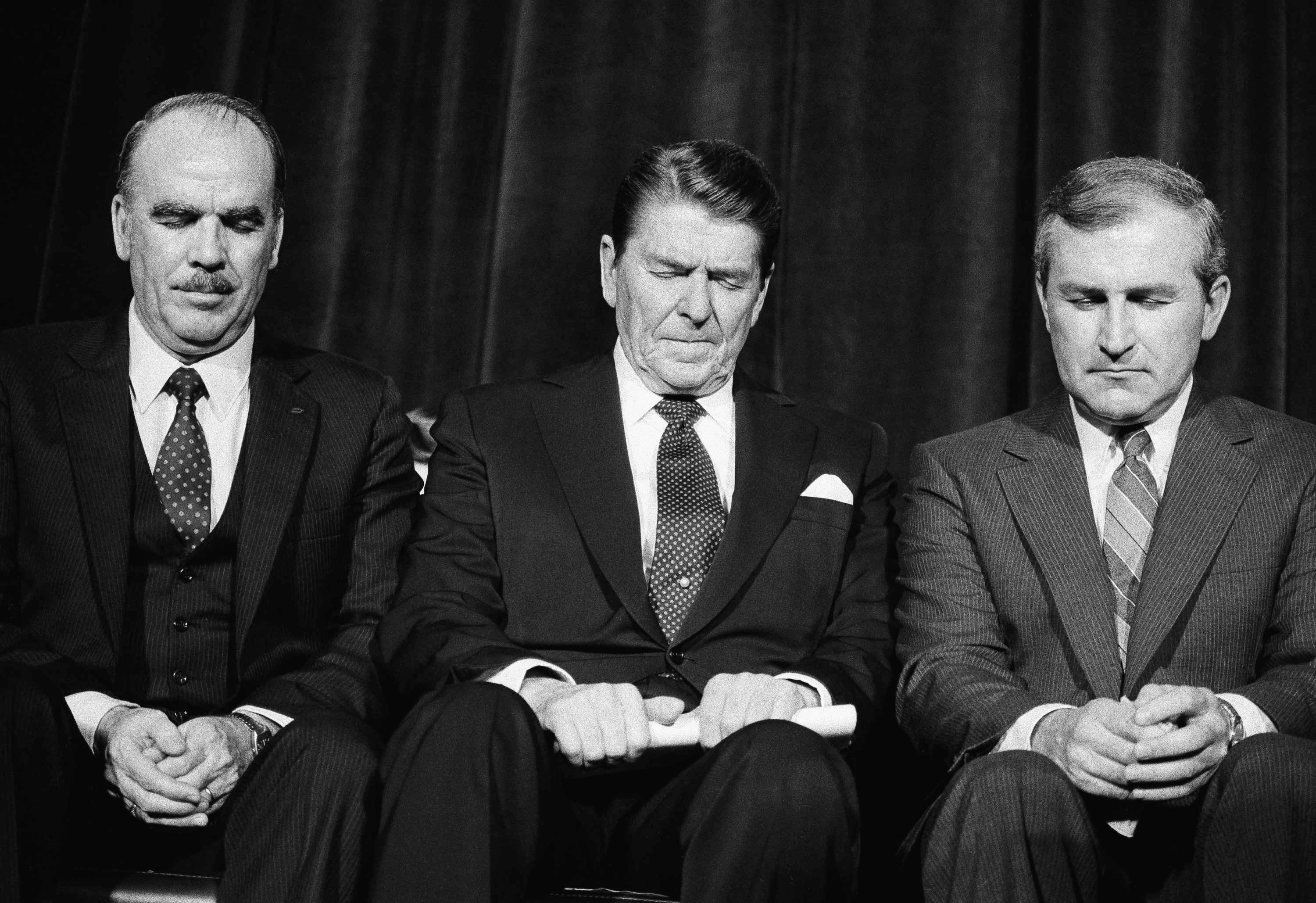
    President Ronald Reagan prays with National Association of Evangelicals President Arthur Gay, left, following his address to the organization’s convention asking for help in winning approval of a constitutional amendment permitting prayer in school in Columbus, Ohio, March 7, 1984.Barry Thumma

    But evangelicals’ rejection of Carter for reelection in 1980 signified an important shift for both parties. Explanations for white evangelicals’ turn away from Christian politicians like Carter and toward Ronald Reagan and the Republican Party — newly perceived as a reliably religious unit — usually point to several events in the 1970s.

    By 1972, the number of delegates at the Democratic National Convention identifying as agnostics, atheists, or people who almost never attended church had grown to 24% (compared to 5% of Americans who listed “no religion” on the General Social Survey.) These delegates helped to add progressive positions on women and gay rights into the party platform at a time when they were to the left of mainstream America’s sensibilities.

    Then in 1978, the IRS targeted mostly white private elementary and secondary schools, sometimes known as “segregation academies,” many of them religious, that had formed in response to desegregation, threatening their tax-exempt status unless they could demonstrate non-discrimination toward Black students. Additionally, by this time, the Supreme Court’s 1973 decision in Roe v. Wade began to galvanize evangelical activists in a space that had been historically dominated by Catholic priests and laypeople.

    Both of these issues came together in the 1980 election, the latter thanks in part to the attention Francis Schaeffer drew to the issue in his writings and speeches across America and the organizing of Jerry Falwell Sr.’s Moral Majority. Because of the growing number of Democrats who self-identified as atheist, agnostic, or non-church attending, white Democrats tended to cede the religious political ground to the new Religious Right, even though plenty of Democrats were religious. Over the next decade, this helped create a binary between a “religious traditionalist” Republican Party and a “secularist progressive” Democratic Party.

    The Rev. Jerry Falwell speaks at his Thomas Road Baptist Church in Lynchburg, Va., in a 1999 photo.

    Demographic trends over the next 40 years reinforced this shift. In 1975, 30% of Americans were part of the Protestant “mainline” (e.g. United Methodist, Evangelical Lutheran, Presbyterian USA, Episcopal Church, American Baptist, Disciples of Christ, and United Church of Christ). Today the mainline only accounts for between 9% and 13% of Americans. Theories for this decline abound, including loss of identity, aging congregations, poor retention of children as they grow into adulthood, controversies over sexuality, ordination of women and LGBTQ clergy, and same-sex marriage, which led to conservatives joining more evangelical churches.

    Over this same period, the number of Americans identifying as “unaffiliated” (the so-called “nones”) rose from 5% to nearly 30%.

    Factors driving this growth include people being more willing in a secularizing environment to admit they aren’t religious, young people who choose not to identify with any religion, and the general population becoming less religious over time. Democrats have enjoyed a decided advantage among the voting “nones” going all the way back to the 1984 election.

    For Black Americans, there has also been a more modest decline in affiliation with historically Black churches (e.g. National Baptist, Church of God in Christ, and AME Zion). Yet these churches have maintained a continued source of relevance for Black Protestants, playing a vital role in Black life as a source of social support, political organizing, community engagement, aid to the needy, and defense against racism and ethnic solidarity. Today, 53% of African Americans are still associated with historically Black Protestant churches, which probably accounts for the persistence over the past 40 years of progressive Black politicians with ministerial credentials.

    Meanwhile, evangelicals shifted from a slight majority favoring the Democratic Party before the 1980s toward a reliable core of the Republican Party, at a moment when their numbers were increasing. By the end of the 20th century, evangelicals grew to represent nearly 30% of all Americans, in part by having larger families, retaining their children in the church at higher rates, and maintaining cultural and theological distinctiveness.

    Collectively though, these trends meant the Democratic Party became less beholden to a religious demographic within its own constituency, and consequently, religiously-oriented politicians seemed less relevant to the Democratic Party.

    Made By History sponsors. FOR USE ON MADE BY HISTORY STORIES ONLY.Inquirer Staff

    The exception was the African American wing of the party, where Christianity remained central to most voters’ identities. Here, a political figure like U.S. Sen. Raphael Warnock (senior pastor of Ebenezer Baptist in Atlanta, a historically Black mainline church that Dr. Martin Luther King Sr. and Jr. pastored) is not exceptional. The Black church’s historic emphasis on social issues and inequality allowed for adherents’ continued support of Democratic candidates who were white and less religious, even as it did lead to some tension over progressive social goals, such as same-sex marriage.

    In fact, it was the emergence of a Black politician in 2004, then-Senate candidate Barack Obama, who helped call attention to the dearth of religiously-conversant Democratic politicians, arguing that his party needed to reengage religiously-affiliated voters. From 2004 to 2008, the Democratic Party emphasized outreach to religious voters in a concerted way. But after the 2008 election, and Obama’s win, this focus for the Democrats declined so much so that, by 2016, Michael Wear and others involved in rallying Democratic religious voters for Obama had become frustrated at the lack of dedicated outreach.

    So, does the emergence of Democratic politicians such as Talarico, Trone Garriott, and Hamilton signal a new shift on the order of what happened in the 1970s?

    It may be too early to tell.

    It may be, as Wheaton College Professor Esau McCaulley has argued, that the emergence of these politicians is linked to the backlash growing among Protestants tired of MAGA evangelicals defining what Christianity means in America today. Or, perhaps, these candidates are simply the culmination of a growing recognition within the Democratic Party of its need to reengage Christian voters.

    Regardless, it’s not an accident that the new crop of ordained Democratic candidates are located in regions of relative mainline Protestantism vibrancy in the Midwest and South.

    With the exception of Presbyterian Pastor Matt Schultz of Alaska, all 12 of the ordained candidates are running in Midwest or Southern states. Perhaps, politicians such as Talarico will succeed in reshaping how Christianity functions in the political space and reclaim a lost politics of religion within the Democratic Party. Time will tell if they are part of a new vanguard, or only a brief aberration.

    Joseph P. Slaughter is an associate professor of history and religion at Wesleyan University. His first book, “Faith in Markets: Christian Capitalism in the Early American Republic,” demonstrates how religious identities in the United States’ early decades influenced economic decision-making and the formation of the American capitalist system.

    Made by History takes readers beyond the headlines with articles written and edited by professional historians. Opinions expressed do not necessarily reflect the views of The Inquirer.

  • SEPTA drivers fear screaming riders and chaotic commutes as bus overhaul takes effect

    SEPTA drivers fear screaming riders and chaotic commutes as bus overhaul takes effect

    The lines are drawn, the maps are set, and on Sunday SEPTA began reconfiguring bus routes across the Philadelphia region.

    Bus operators say they worry passengers frustrated over changed routes that take them by surprise and unexpected delays will yell at, curse, or assault them. It has been a persistent problem in recent years.

    In some cases, riders accustomed to staying on one bus route will need to transfer to other buses or the subway and elevated trains. That increases the chances of missed connections and delays. And angry people.

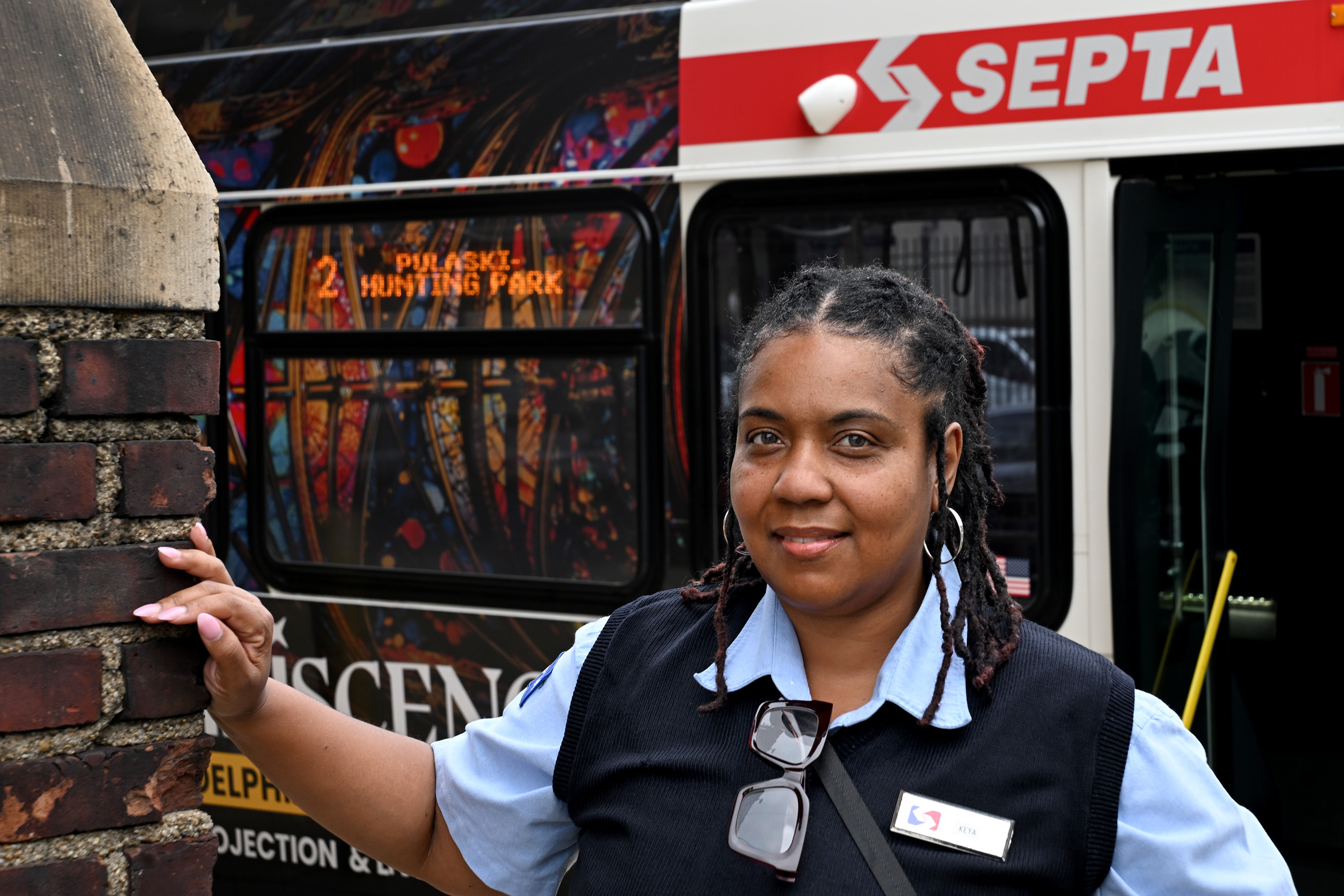
    “You’re upset because you had counted on the bus,” said Keya Sampson, 52, a bus driver for 12 years. “You have to be at this appointment or you’ve got to punch in on time.”

    She is sympathetic, even though delays are outside her control.

    “We’re going to end up in a tricky situation because we’re the face of SEPTA,” Sampson said. “They don’t have anybody else to scream at, unfortunately.”

    Vulnerable riders

    Carlos Guillen, who has worked for SEPTA for 19 years as an operator on buses and the Broad Street Line, noted that SEPTA advises Route 4 riders to take the B, SEPTA’s new name for the subway line, to avoid longer wait times.

    “I can see how it can impact elderly and those with disabilities, especially moving down the sidewalk — they’re not the smoothest thoroughfares,” said Guillen, a safety officer for Transport Workers Union Local 234.

    He noted a lack of ADA-accessible stations on the B north of City Hall.

    Longer term, some bus operators are concerned about the possibility they could be replaced in the future by autonomous driving technology.

    “Autonomously driven vehicles have no place in mass transit,” said Joe Coccio, secretary-treasurer of Local 234, which represents more than 5,000 SEPTA employees, including operators on buses, subways, and trolleys. “They’re flawed. They’re unpredictable.” He said they also can be hacked.

    SEPTA says it has no plans to use robot bus operators and is hiring human ones as fast as it can. But a spokesperson also said the authority wants to keep its options open.

    Most operators are anticipating some confused passengers at first, even though SEPTA has sent out teams to educate people about Phase 1 of the New Bus Network. Maps and cards illustrate the changes, translated into multiple languages.

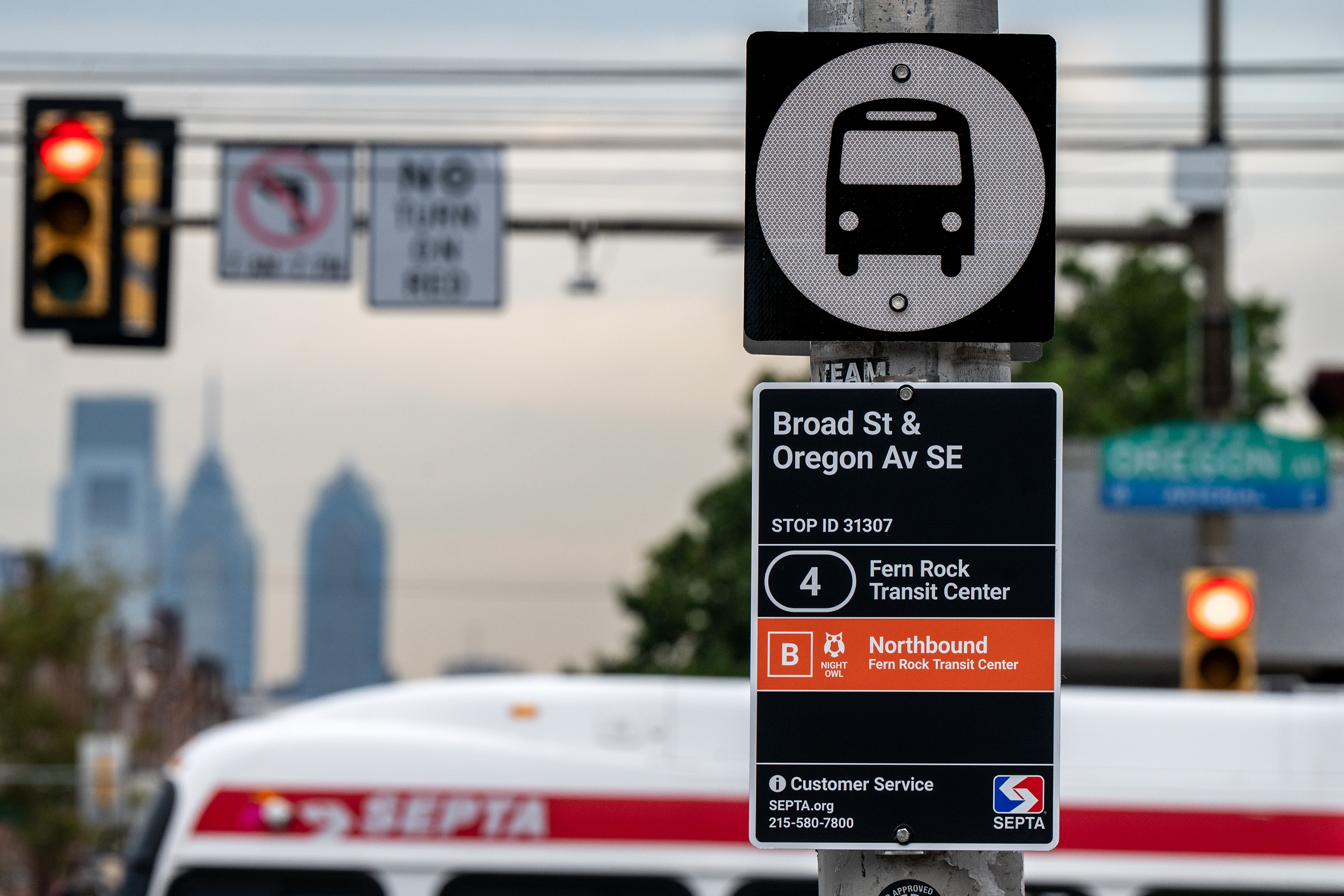
    New color-coded signage is part of SEPTA’s plan to communicate changes to bus routes that begin on Sunday. Tom Gralish / Staff Photographer

    Some people won’t get the message.

    “People right now don’t even read our destination signs to see if it’s the right bus,” said Ryan Stewart, who operates a Route 35 bus from the Midvale depot in Nicetown.

    What’s changing

    SEPTA has pushed for much of the last decade to streamline its bus network amid declining ridership that predated the pandemic. Planners found that slower travel times due in part to traffic delays and long, twisty routes made service less reliable and discouraged people from relying on buses.

    In the first wave of changes, 30 bus routes will be affected.

    Some routes with low ridership or that duplicate nearby service have been eliminated. Others have been extended. Some will run more frequently, others less frequently, based on analysis of demand. Two new routes have been added.

    The people who pilot the buses on Philadelphia’s narrow streets know that some small and overlooked issues could undercut the New Bus Network program’s goal of quicker, more efficient service.

    Sampson, for instance, has been driving the 63 for the summer. She will be back behind the wheel on Route 4, her regular run for the last four years, this week — as the changes begin.

    Route 4 will have fewer buses running. So SEPTA is deploying 60-foot articulated buses, which carry more passengers.

    SEPTA had been using 40-foot buses on the route, which has narrow streets and hairpin turns, especially in its northern reaches, where there is a longstanding detour that will not end until summer 2027. Operators think the longer buses will have trouble navigating the route.

    Operators have asked SEPTA to look at the issue. “If there’s nothing they can do, it’s going to be a nightmare,” Sampson said. “We’re going to get stuck.”

    She knows well the hard turn from Erie onto Rising Sun, an angled intersection with a pub that often has a beer truck parked on the curb. Only one articulated bus at a time can fit down that little stretch of Old York Road. And the church at 10th and Rockland Streets that has packed funerals, with cars parked to the corners.

    “How do you ask someone who’s grieving, ‘Hey, move your car’? … At the same time, we do need to make the turn, and it does need to be safe.”

    Time will tell

    Paul Pollard, a veteran bus operator on Route 61, said he spends precious minutes stuck in traffic on Main Street in Manayunk on his way north to Roxborough during morning peak hours, as parents drop students off at school.

    But the schedule assumes his bus can sail through.

    “I’ve had people get off my bus, walk two or three blocks down, and go into their job,” Pollard, 49, said. “I’m still sitting in traffic.”

    It is “virtually impossible” to meet the schedule safely, he said. The result: late buses and steamed customers.

    Time will tell if worries become reality, but operators know that they will bear the brunt of any outrage.

    “There’s nobody at SEPTA headquarters getting somebody throwing coffee on them, or spitting on them,” Pollard said.

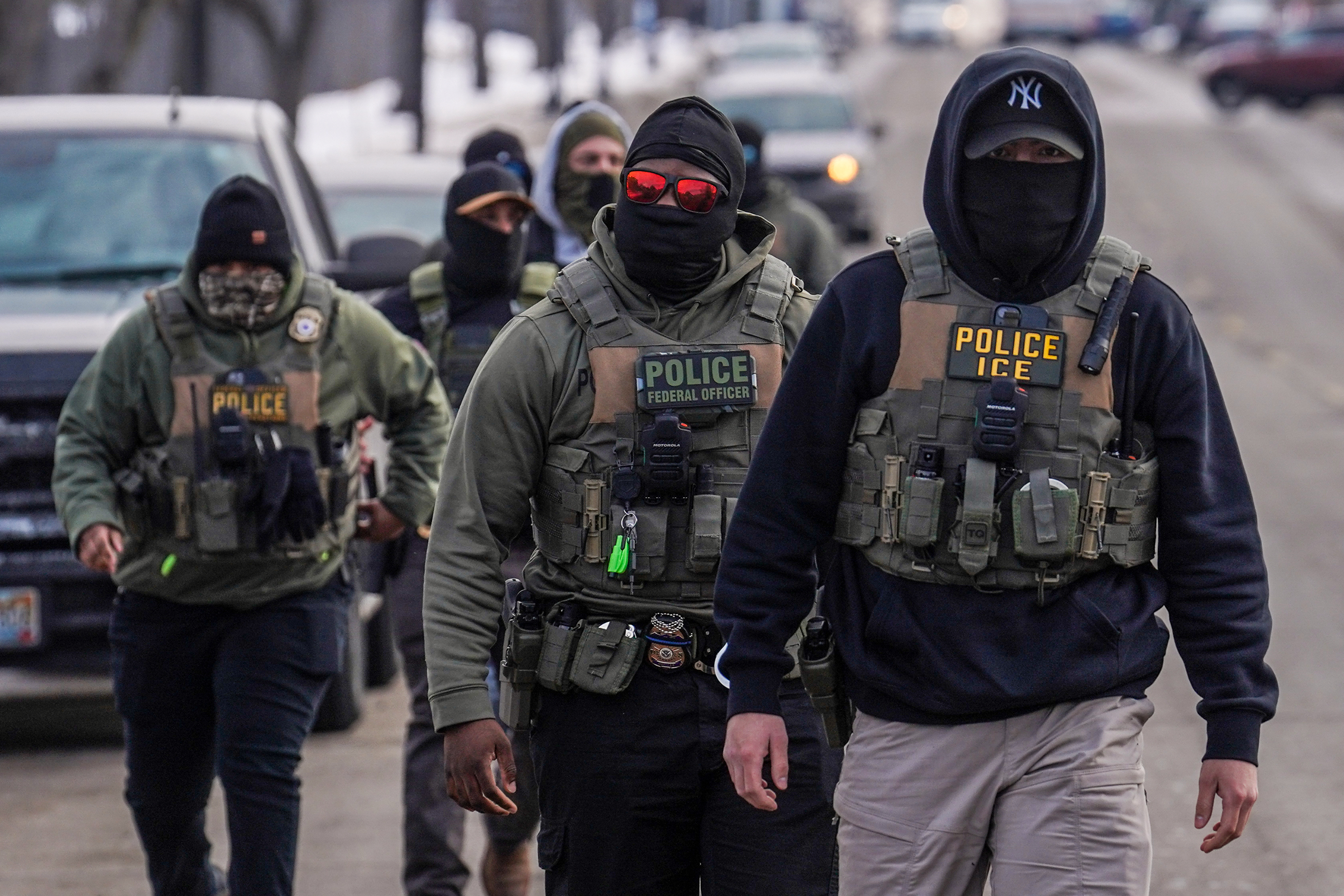
  • ICE inked a $9 million contract with a Montco firearms manufacturer — and is spending $17 million at Philly area businesses

    ICE inked a $9 million contract with a Montco firearms manufacturer — and is spending $17 million at Philly area businesses

    U.S. Immigration and Customs Enforcement has awarded more than $17 million in contracts, mostly to businesses, in the Philadelphia area since the start of President Donald Trump’s second term, with more than half of that money going to a firearms manufacturer in Montgomery County.

    The local data, compiled by The Appeal, highlights the Trump administration’s spending related to raids and enforcement operations as the agency carries out the president’s mass deportation agenda, including its purchases of weaponry.

    Geissele Automatics, a firearms manufacturer based in North Wales, has the largest and perhaps most consequential contract with ICE in the Philadelphia area.

    The company — which specializes in selling high-grade, AR-15-style semiautomatic weapons and parts to consumers, law enforcement agencies, and the military — entered a contract with ICE for nearly $9.1 million in September 2025, according to federal data.

    The payment was for the delivery of “precision long guns and accessories” to support ICE agents as well as the agency’s tactical programs, the data show. It’s unclear where the equipment is being used.

    Neither the company’s founder, Bill Geissele, nor a representative from the company’s sales team returned a request for comment.

    Nationwide, ICE and U.S. Customs and Border Protection has dramatically increased spending on firearms in Trump’s second term, according to a report earlier this year from U.S. Sen. Adam Schiff (D., Calif.), leading to outcry from Democratic officials and voters who say the agency has become a militarized force with little oversight or accountability.

    That outrage continued this month when Democrats voiced their opposition to ICE’s plan to provide ICE officers with electric shock gloves. Schiff’s oversight report, released earlier this year, called ICE and CBP’s contracts for weaponry a “misuse of taxpayer dollars to maximally arm federal immigration agents.”

    A spokesperson for Department of Homeland Security said in a statement that $17 million in contracts in the Philadelphia region is “simply not accurate” and “conflates nationwide ICE contracts” with spending in the area.

    “ICE contracts with vendors across the country to support its law enforcement mission. The existence of a federal contract, a vendor located in a particular region, or a nationwide contract vehicle does not mean that the full value of that contract was spent in Philadelphia,” the spokesperson said

    “Reporting should accurately distinguish between nationwide contract values, vendor locations, places of performance, and actual federal expenditures before presenting a misleading figure as fact,” they added.

    The details on the contracts come as residents and advocates in the Philadelphia region and nationwide are continuing to remain vigilant of ICE’s presence in their communities. Earlier this year, ICE struck deals to retrofit warehouses in Pennsylvania and New Jersey into mass detention centers before later backtracking after residents and leaders in both states voiced opposition.

    Bill Geissele — who hosts the manufacturer’s podcast Shots Fired in Anger —has donated to Republican elected officials in Pennsylvania, including U.S. Sen. Dave McCormick and U.S. Rep. Dan Meuser. Geissele’s contract, while not the company’s first with the federal government, is by far the most significant contract between the gun manufacturer and the federal agency on record.

    (function() {
    var l2 = function() {
    new pym.Parent(‘ice_contracts2’,
    ‘https://media.inquirer.com/storage/inquirer/projects/innovation/arcgis_iframe/ice_contracts2.html’);
    };
    if (typeof(pym) === ‘undefined’) {
    var h = document.getElementsByTagName(‘head’)[0],
    s = document.createElement(‘script’);
    s.type = ‘text/javascript’;
    s.src = ‘https://pym.nprapps.org/pym.v1.min.js’;
    s.onload = l2;
    h.appendChild(s);
    } else {
    l2();
    }
    })();

    In August 2024 for example, under former President Joe Biden’s administration, Geissele Automatics entered a $12,224 contract with ICE for equipment to support a “sniper sustainment” course, according to data compiled by The Appeal.

    By 2025, when Trump returned to the White House and significantly ramped up ICE operations nationwide, those contracts ballooned.

    On top of the $9.1 million contract that year, Geissele was paid $27,936 to provide training rifles and magazines for the agency’s Office of Firearms and Tactical Programs, as well as $16,544 for rifles and accessories required for testing and evaluation.

    ICE also took its spending across the river to Burlington County in New Jersey, where it awarded George J. Petronis Enterprises Inc., a gun shop, slightly more than $505,000 since the start of Trump’s second term for training ammunition and ink cartridges for 9mm training ammo to support ICE’s Office of Firearms and Tactical Programs in Fort Benning, Ga.

    George J. Petronis Enterprises Inc. did not return an email requesting comment.

    The Appeal’s dashboard also shows a contract for rental of a firing range between ICE and the county’s fire academy, located in Conshohocken, that has existed since at least 2021. But Montgomery County officials said Friday that the contract is with the broader Department of Homeland Security — which ICE is a part of — and not with the federal immigration enforcement agency directly.

    County Commissioner Jamila Winder, a Democrat, said that the academy is used by local, state, and federal agencies for law enforcement training but “this facility is not available for training for those engaged in immigration enforcement activities.”

    Other contracts highlighted by The Appeal dashboard may also be directly tied to DHS, instead of ICE.

    Earlier this year, Montgomery County’s Board of Commissioners passed a resolution restricting federal immigration enforcement from using county property or resources for noncriminal investigations.

    Other local contracts with ICE include a roughly $50,000 contract with the Philadelphia Parking Authority for rental spaces for 16 vehicles and more than $78,000 to Ricoh USA Inc., an office technology company headquartered in Chester County that was also used under the Biden administration. Coast2Coast Shredding LLC, which is headquartered in Montgomery County but shreds documents in California, received more than $94,000 from ICE.