Category: News

  • Joan M. Satterthwaite, talented tailor and seamstress, and longtime office administrator, has died at 92

    Joan M. Satterthwaite, talented tailor and seamstress, and longtime office administrator, has died at 92

    Joan M. Satterthwaite, 92, of Philadelphia, talented tailor and seamstress, longtime office administrator for the Mayor’s Commission on Aging, volunteer, and community caretaker, died Tuesday, Aug. 4, of sepsis at Jefferson Washington Township Hospital in Gloucester County.

    Adept at designing, constructing, fitting, and altering garments of all kinds, Ms. Satterthwaite worked at the Botany 500 factory at Broad Street and Lehigh Avenue, and for other clothing manufacturers in Philadelphia, for more than 20 years. She could do every job on the intricate clothing assembly line, her son Kevin said, and she did them fast and well.

    She joined the International Ladies’ Garment Workers’ Union in the 1950s and supplemented her weekday work by producing gowns, dresses, suits, and other clothing for family, friends, church choirs, wedding parties, and local businesses.

    She made Halloween costumes for her two sons when they were young and tailored suits when they were older. She designed a wedding dress for her daughter-in-law.

    She could duplicate many patterns by looking at them just once. Over the years, she collected eight sewing machines. “Her craftsmanship and attention to detail earned her the admiration and loyalty of countless clients,” her family said in a tribute.

    Her son Kevin said: “We would call her an entrepreneur today.”

    In the mid-1980s, Ms. Satterthwaite left garments and became certified in office administration and computer technology at the old Philadelphia School of Office Technologies. For a decade, she worked for the Joseph Shein Law Firm.

    She tried to retire in the mid-1990s. But she impressed officials at the Mayor’s Commission on Aging so much as a client that they recruited her as a receptionist and administrative assistant. She left that job in 2018, at 85.

    Ms. Satterthwaite reared her sons in Philadelphia. Courtesy of the family

    After that, she volunteered with veterans groups, was active in the community, and opened her home to anyone in need. “If someone asked for help,” her son Kevin said, “she was there.”

    Her family said: “Joan’s life was a testament to perseverance, faith, compassion, and determination. Her kindness, generosity, and genuine concern for others became hallmarks of a life well lived.”

    A friend said online: “Ms. Joan was the nicest person ever. … Her kind spirit reminded me of my grandmother.”

    Joan Marie Watts was born Dec. 28, 1933, in North Philadelphia. Her mother died when she was 2, and she was reared by her grandfather and his wife.
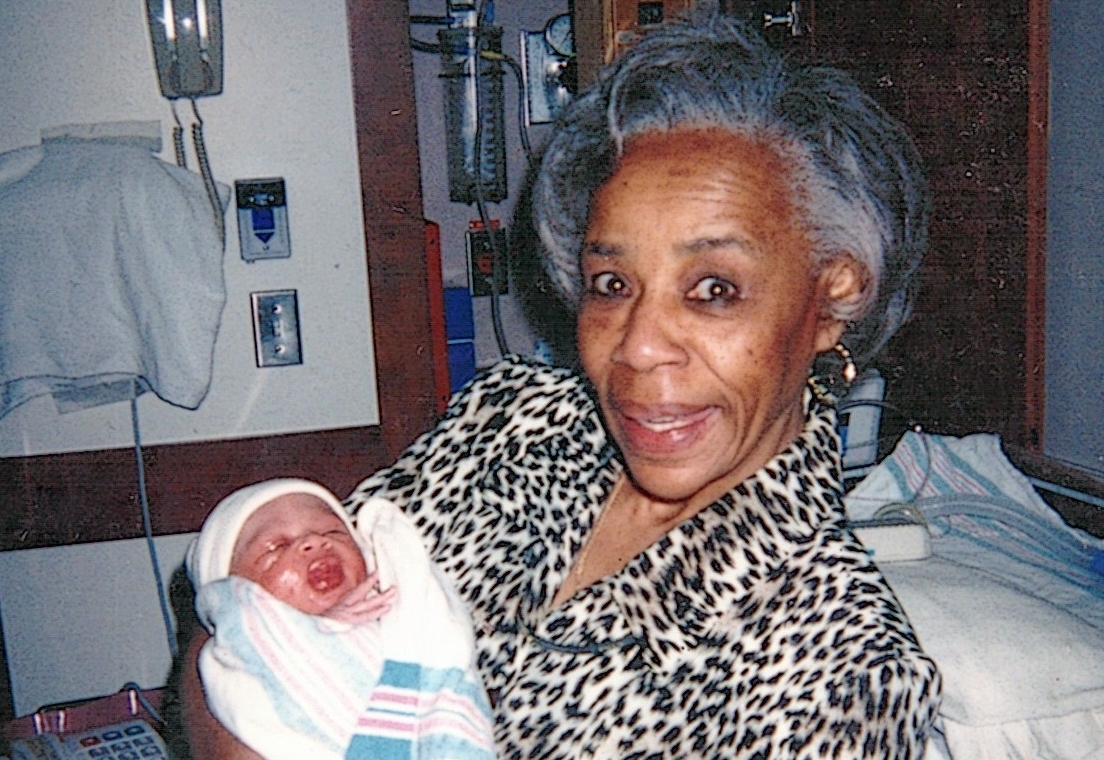
    Ms. Satterthwaite doted on her grandchildren.Courtesy of the family

    She studied tailoring and sewing at William Penn High School and graduated in 1952. She married Charles Satterthwaite in 1953, and they had sons Kevin and Eric. Her husband died earlier.

    Ms. Satterthwaite was a member of Triumph Baptist Church for more than 35 years, and she went to breakfast with others often after Sunday service. She had breakfast with her sons on Saturdays, bowled every week for 30 years, hosted memorable family gatherings on holidays, and pored over puzzle books when she was older to stay sharp.

    Her family noted her “warm heart, generous spirit, and love of people” in a tribute and said: “Her kindness, patience, and genuine concern for others left a lasting impression on all who knew her.”

    She doted on her family and told them often that education was a key to success. She lived in Nicetown and Logan, and most recently in Washington Township.

    Ms. Satterthwaite graduated from William Penn High School. Courtesy of the family

    Her son Eric praised her “unwavering belief that nothing in life was more important than family.” Her son Kevin said: “She was welcoming and warm. She liked being around people. Her life force kept her going.”

    In addition to her sons, Ms. Satterthwaite is survived by four grandchildren, two sisters, a brother, and other relatives. Two brothers died earlier.

    Services were held earlier.

    Donations in her name may be made to Triumph Baptist Church, 1648 W. Hunting Park Ave., Philadelphia, Pa. 19140.


    Ms. Satterthwaite bowled every week for decades. Courtesy of the family
  • Vanguard sells one of its Chester County offices for $17 million, but will stay put for now

    Vanguard sells one of its Chester County offices for $17 million, but will stay put for now

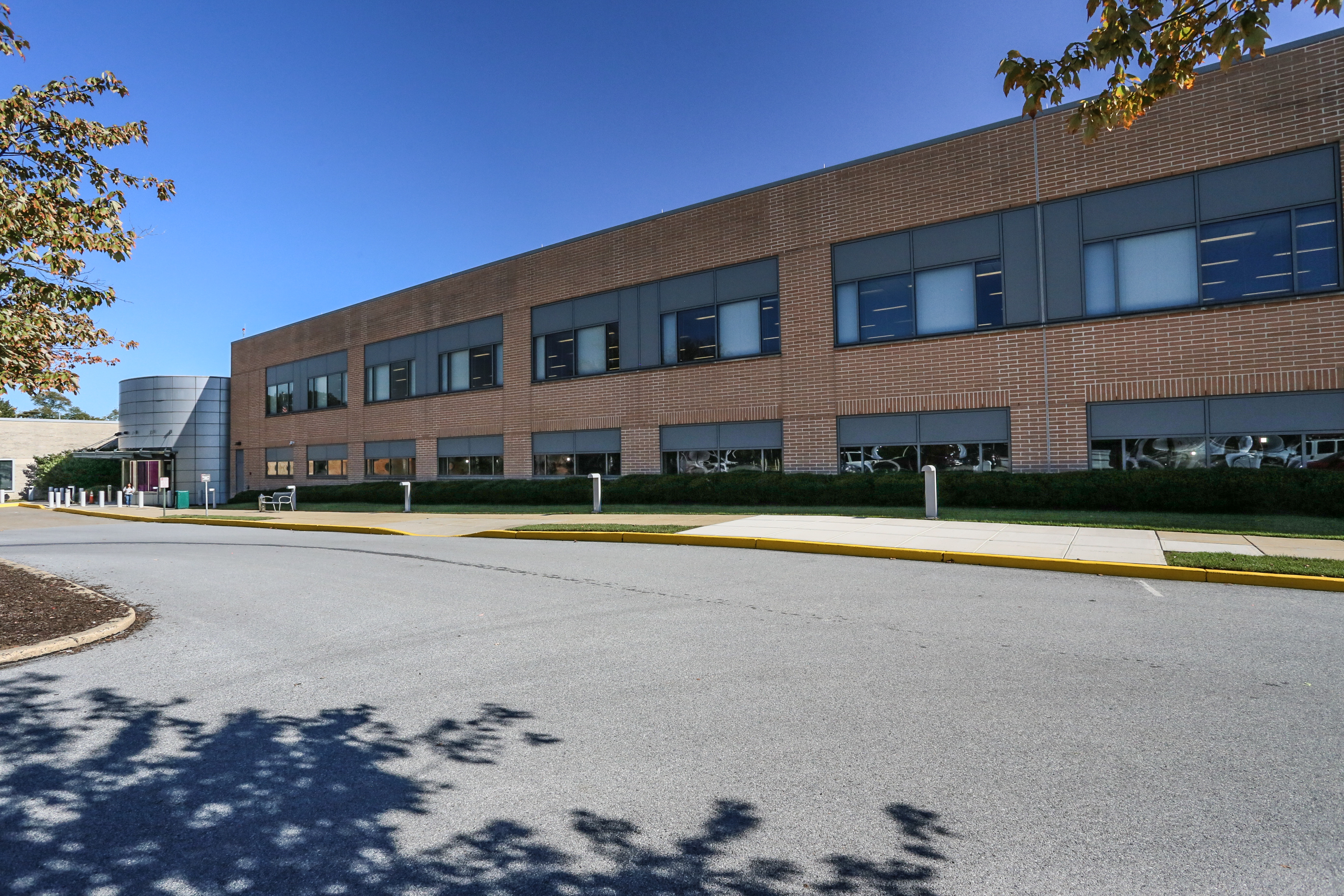
    Vanguard has sold a Tredyffrin Township office complex for $17 million — with no plans of moving out.

    Last month, the Malvern-based investment firm sold its 22-acre property at 1041 W. Valley Rd. to another Malvern-based company, E Kahn Development, according to Chester County property records.

    But Vanguard plans to continue leasing the 323,000-square-foot space, which sits just off U.S. Route 202, about eight miles from its main campus in Malvern. Hundreds of Vanguard IT employees work at the complex, called the Robert A. DiStefano (RAD) Technology Center.

    Vanguard’s RAD complex in Tredyffrin Township has been sold for $17 million, but Vanguard will continue to lease the space for its IT operations.Courtesy Vanguard

    The sale and lease-back “reflects Vanguard’s focus on providing work environments that support and inspire our crew as they remain focused on our end investors,” a company spokesperson said in a statement. “Vanguard crew will continue to work at the RAD Technology Center through at least 2028, and there are no immediate plans to move crew who work there today.”

    Eli Kahn, president and founder of E Kahn Development, said in an email that his company has “no immediate plans for the buildings.”

    Earlier this summer, Vanguard closed a leased office at 45 Liberty Blvd. in Malvern, moving employees there to the company’s 87-acre main campus.

    Vanguard employs about 20,000 employees, 12,000 of whom are based in Malvern. About 600 IT staffers work at RAD, Vanguard’s only complex with a Wayne address.

    The company is expanding its IT staff worldwide, including at a new office in India, but has said its U.S. workforce will not be impacted.

  • The US and Canada could pull back from an all-out trade war. It’s not clear that they will

    The US and Canada could pull back from an all-out trade war. It’s not clear that they will

    WASHINGTON — The U.S. and Canada have ramped up their trade war, hitting each other with steep new tit-for-tat tariffs. Despite the bravado coming from both sides of the border, though, analysts suspect the longtime allies will eventually strike a deal to end a conflict neither really wants.

    The prospects for compromise looked bleak Tuesday, with Canadian Prime Minister Mark Carney reacting to new 50% U.S. tariffs on certain Canadian goods by responding in kind on about $20 billion worth of American imports, including steel, dairy products, appliances and farm equipment.

    “You’re at war when you get attacked. We got attacked,” Carney, who came to power last year on the promise that he’d stand up to U.S. President Donald Trump, said over the weekend.

    Doug Ford, Ontario’s populist premier, told The Associated Press on Monday that he was ready to escalate even further by cutting off his province’s shipments of electricity and critical minerals to the United States.

    Soon after, Trump declared his intention to hammer the Canadian auto industry with another set of import taxes if the Canadians don’t “fall in line.”

    With the breakdown threatening to harm one of the world’s largest trading relationships and clouding efforts to renew the United States-Mexico-Canada Agreement that Trump negotiated during his first term, experts cautioned that there’s still time to pull back from the brink of an even bigger trade war.

    They’ve done it before. “If there is political will, there is an off ramp,” said former U.S. trade negotiator Wendy Cutler.

    ‘It’s not real until somebody walks away’

    U.S.-Canada trade talks typically get testy, said Christopher Sands, who heads the Center for U.S.-Canada Studies at Johns Hopkins University.

    The two neighbors have a long history of sparring over things like Canada’s protected dairy market and subsidized softwood lumber exports.

    “We’ve gone through this with Canadians before,” Sands said. “It’s almost like it’s not real until somebody walks away from the table. … I’m not panicked.”

    There are reasons to think something can be salvaged from the rubble of bilateral trade talks that collapsed Friday.

    First, the U.S. tariffs that Trump imposed Saturday cover just $20 billion worth — around 5% — of Canada’s exports to the United States and are unlikely to do much lasting economic damage. Oxford Economics reckons the trade conflict would reduce Canadian economic growth only slightly next year — from a previously forecast 1.6% to 1.4%. On Monday, U.S. Trade Representative Jamieson Greer even tried to downplay the trade rift as a “tempest in a teapot.”

    Moreover, Carney’s retaliatory tariffs wouldn’t take effect until Sept. 8. “That gives us this week. It gives us next week,” Sands said. “Time to take a breather and talk about how to avert” an all-out trade war.

    Despite Trump’s tough talk on Truth Social, his punitive auto tariffs wouldn’t kick in until Jan. 1 — well after the Nov. 3 midterm elections in which the president’s Republican Party is hoping to keep full control of Congress despite voter frustration with the high cost of living.

    So there’s at least enough time for the countries to find a stopgap solution.

    Cutler, now senior vice president at the Asia Society Policy Institute, suggested that the U.S. could tap an emissary that both countries trust to get talks back on track; she recalled that Trump’s son-in-law Jared Kushner helped negotiate the USMCA eight years ago.

    Canada would likely balk at a one-sided deal

    Cutler also noted that Trump suspended his global tariffs for months last year to allow U.S. trading partners to negotiate with him. Many did, including the European Union and Japan, and ended up agreeing to lopsided trade agreements to dodge the worst of Trump’s tariffs.

    Canadians, though, are in no mood for a Trump-friendly trade deal.

    The American president has enraged the Canadian public with inflammatory talk of making their country the 51st U.S. state. And on Tuesday, instead of trying to lower the temperature, he declared that he was considering changing the name of Lake Ontario to Lake America. He has also repeatedly hit Canada with tariffs and threats of them, including when he suggested he might punish Canada for wildfires that were blackening U.S. skies.

    “Fighting with Washington is hugely popular in Canada right now,” said Scott Lincicome of the Cato Institute, a Washington-based free-trade think tank. “Guys like Doug Ford — like him, love him or hate him — understand this is a political winner for them.”

    The latest U.S.-Canada conflagration flared up last month when Trump said he planned to hit Canada with 50% tariffs. He complained that Canada had been unfairly restricting U.S. exports of dairy, alcoholic beverages and autos. Trump set a deadline of Aug. 19 — last Wednesday — for the two countries to reach a deal and head off the tariffs.

    Because the Supreme Court struck down his biggest tariffs in February, the president turned this time to an obscure provision of a Depression-era trade law that gives him the power to impose tariffs of up to 50% on imports from countries that have discriminated against U.S. businesses. No investigation is required, nor is there any limit on how long the tariffs can last. But no president has ever imposed such tariffs before, so they are untested in court.

    ‘No choice’ but to walk away

    Last week, negotiators appeared to be close to resolving their differences. Less than two hours before levies were set to take effect, Trump announced a three-day reprieve, posting on social media that “Canada and the U.S.A., subject to the finalization of documents, have a DEAL!” Greer, the U.S. trade representative, later told CNBC that the United States had offered to cut in half existing 50% tariffs on Canadian steel and aluminum, and to sharply reduce levies on Canadian auto and softwood lumber imports.

    But it all fell apart Friday and the Canadians walked away, with Carney saying the Americans had sought “to destroy our major industries, including autos, steel and aluminum. … That was one of the main reasons we said no. It was a bad deal.” Carney also said that Washington viewed protections for French and Canadian culture — considered fundamental rights in Canada — as irritants to trade.

    Ford said he understood that late in the talks, Washington demanded veto power over trade deals Canada pursued with other countries, which would have violated Canadian sovereignty.

    Despite the differences, Cato’s Lincicome said, “both sides understand the economic consequences of some sort of a full-blown trade war.”

    The two countries last year did $880 billion worth of trade, according to the U.S. Commerce Department. Canada sends 72% of its exports to the United States. And U.S. communities along the border depend on Canadian electricity. American farmers need Canadian potash fertilizer. And U.S. refineries in the Midwest rely on imports from Alberta’s oil sands deposits.

    Then there’s U.S. politics. “Voters hate tariffs,” Lincicome said. “They associate them with higher cost of living, and (Trump has) got to be hearing from political folks that if he wants any chance of salvaging the midterms he can’t start a trade war with Canada.

    “My guess — and it’s only a guess — is that cooler heads do prevail somewhere in the next few weeks.”

  • How to avoid a Social Security cut? Lawmakers are floating ideas for what to do

    How to avoid a Social Security cut? Lawmakers are floating ideas for what to do

    WASHINGTON — With the few months they have left as senators, Democrat Dick Durbin and Republican Bill Cassidy have embarked on a mission to save tens of millions of Social Security beneficiaries from a projected 22% cut in their benefits, starting in just six years.

    It is one of the most perilous political efforts that a member of Congress can undertake, so it is telling that the push is being led by two lawmakers who have little to lose at this stage of their careers.

    “We’ve been at this six years, eight years. It’s incredible how long I’ve been at it,” Cassidy said. “But Durbin came up to me and he goes, ’Bill, I’m leaving the Senate soon. We need to take a ride at it.’”

    Their idea to extend Social Security’s solvency is one of a few that have been formally offered this Congress. None has gained much traction, but it is a start as more lawmakers weigh in on a problem that will likely confront the group of senators elected this fall as well as the next president. Pressure for action is sure to grow as 2032 draws closer.

    Senate bill seeks 50 years of Social Security solvency

    The measure that Durbin, D-Ill., and Cassidy, R-La., are pushing would not dictate an outcome, but instead set up a process for Congress to take action. It calls for the bipartisan Social Security Advisory Board to collect public input and submit draft legislation to Congress that would keep the program’s retirement trust fund solvent for at least 50 years.

    The resulting bill would then be introduced by the majority leaders of the Senate and House. If they do not want to go along, any member could sponsor the bill. It would then be referred to the two committees with jurisdiction over Social Security — the Senate Finance Committee and the House Ways and Means Committee.

    Both committees would have the chance to debate the bill and amend it if they wish. If not, the original bill drafted by the advisory board would be placed on the Senate and House calendars for consideration. Lawmakers could offer substitute proposals, with final votes after 100 hours of debate. Passage would require a three-fifths vote in the 100-member Senate and a simple majority in the 435-member House.

    Even though the bill does not prescribe a solution for replenishing Social Security, sponsors have struggled to win support. Cassidy voiced exasperation in a recent floor speech.

    “For some people, the time to do Social is never,” Cassidy said. “Don’t disturb Congress. They don’t want to take a tough vote. Even if that vote only sets up a process.”

    AARP has come out against the bill, saying that the effort amounts to “fast-tracking” Social Security changes through a process that limits what type of amendments are offered and sets arbitrary procedural deadlines.

    A different bill proposes an investment fund for older adults

    Separately, Cassidy has a proposal with Sen. Tim Kaine, D-Va., that calls for the creation of a $1.5 trillion fund that would be invested in stocks and other higher-risk assets over 75 years.

    The seed money would be financed by the Treasury Department through additional borrowing. At the end of the 75 years, the fund’s assets would be used to repay the Treasury for the seed money as well as the borrowing that would occur over those years to keep Social Security payments going out — now projected at about $26.6 trillion.

    Cassidy projects such an investment fund would earn enough to cover about two-thirds of that $26.6 trillion in borrowing, meaning other actions such as raising payroll taxes or cutting benefits would still be required to completely close the gap. But those tax increases or benefit cuts would be smaller than otherwise necessary without the investment fund.

    “The advantage of the ‘Save Our Seniors Fund’ is that it lessens your political battle,” Cassidy said.

    Debt watchdogs are worried.

    The Committee for a Responsible Federal Budget said “this is a dangerous, debt-funded gamble that would come with huge risks and costs.”

    Some propose lifting the payroll tax cap

    Sens. Elizabeth Warren, D-Mass., and Bernie Moreno, R-Ohio, do not agree on much, but they have joined forces in calling for lifting the cap on the Social Security payroll tax.

    Currently, the payroll tax that funds Social Security applies to a maximum of $184,500 in income. That means most people pay Social Security taxes on all of their income, but the wealthier do not.

    “Why should a middle-class nurse pay a larger share of her paycheck than a wealthy corporate lawyer?” the two senators wrote in The New York Times.

    But while the two promised forthcoming legislation on the matter, they have not filed it yet. Some conservative groups have forcefully pushed back on the idea, saying the tax increase would lead to lower wages and fewer jobs at businesses seeking to offset the additional tax burden.

    Eliminating the cap would generate more than $3.2 trillion for the trust fund over the course of a decade, according to the Peter G. Peterson Foundation, a nonpartisan debt watchdog.

    Others have called for lifting the cap, but only above a certain income threshold. For example, a bill from Sen. Sheldon Whitehouse, D-R.I., and Rep. Brendan Boyle, D-Pa., would apply the payroll tax to income above $400,000. The bill would require those making more than $400,000 to contribute more to Medicare.

    Others are calling for lifting the cap and increasing benefits

    Progressives in the House and Senate have sponsored a bill that would lift the payroll tax cap to cover all earnings above $250,000, including capital gains and dividends, and increase the tax that high earners must pay on investment gains.

    The bill would boost payments to Social Security beneficiaries by roughly $2,400 a year and increase the annual cost-of-living adjustment. The effort is being led by Sen. Bernie Sanders, a Vermont independent, and Rep. Val Hoyle, D-Ore. The House version has 39 cosponsors, all Democrats.

    In a recent letter to colleagues, Sanders said expanding benefits and requiring the wealthiest in the United States to pay the same percentage of their income into Social Security as tens of millions of working people is “how we extend Social Security’s solvency for generations to come. That is how the Democratic Party begins to regain the trust of the American people.”

  • Trump administration sends Saudi nuclear deal to Congress for review

    Trump administration sends Saudi nuclear deal to Congress for review

    WASHINGTON — The Trump administration has submitted to Congress a nuclear cooperation agreement with Saudi Arabia that could allow the kingdom to enrich its own fuel for nuclear reactors, according to two officials with firsthand knowledge of the transmission of the agreement.

    The accord, announced by the White House last month, would deepen ties between the United States and Saudi Arabia at a moment when the war with Iran has strained the relationship between the two countries. The 30-year agreement would give U.S. companies a central role in developing Saudi Arabia’s civilian nuclear infrastructure while largely shutting out foreign competitors.

    The submission formally begins a congressional review process required under Section 123 of the Atomic Energy Act, which gives such nuclear cooperation accords their shorthand name, “123 agreements.” Unlike treaties, they do not require approval by two-thirds of the Senate. Instead, the Senate Foreign Relations Committee and House Foreign Affairs Committee review the agreement during a period totaling 90 days that Congress is in continuous session. Unless Congress passes a joint resolution rejecting the agreement during that period, the accord can take effect without an affirmative vote by either chamber.

    The transmission of the agreement to Congress was reported earlier by The Wall Street Journal.

    The prospect that Saudi Arabia could enrich uranium — the technology at the center of the conflict with Iran — has drawn sharp opposition from some Democratic lawmakers and revived long-standing concerns about nuclear proliferation in the region.

    “This deal is the starting gun for a Middle East nuclear arms race,” Sens. Edward J. Markey of Massachusetts and Jeff Merkley of Oregon, along with Reps. John Garamendi of California and Donald S. Beyer Jr. of Virginia, wrote in an essay last month. The four Democrats contended that the agreement should require Saudi Arabia to forgo the production of weapons-grade uranium and accept the International Atomic Energy Agency’s most stringent inspection standards.

    “Congress must reject it,” they wrote.

    The lawmakers also said that President Donald Trump’s launching a war with Iran over the country’s nuclear ambitions while negotiating a nuclear agreement with Saudi Arabia was a fundamental contradiction to U.S. nuclear policy in the region. “That contradiction doesn’t make America stronger,” they wrote. “It makes American policy impossible to take seriously.”

    Energy Secretary Chris Wright and Prince Abdulaziz bin Salman, the Saudi energy minister, signed the agreement last month as part of a broader package of cooperation on civilian nuclear power. The two officials also signed what the administration described as a bilateral agreement on nuclear safeguards.

    This article originally appeared in The New York Times.

  • Graham, and Trump, triumph: Six takeaways from South Carolina’s Senate runoff

    Graham, and Trump, triumph: Six takeaways from South Carolina’s Senate runoff

    ROCK HILL, S.C. — Sen. Darline Graham won the Republican Senate nomination in South Carolina on Tuesday, relying on the strength of President Donald Trump’s political capital to overcome her inexperience as a first-time candidate for public office.

    Graham defeated Rep. Ralph Norman, a five-term member of Congress, in deeply red South Carolina after Trump did more to support her than he has for any other Republican candidate this year — out of apparent affection for her late brother, Lindsey Graham, who died last month.

    Her win showed the president’s continued ability to move Republican primary voters, especially when he goes all in on a race. His chosen candidates won a series of key primaries in the spring, but a few of his picks have more recently lost, putting the power of his endorsement in question. That he could lift Graham, who is poised to win a six-year Senate term after being virtually unknown six weeks ago, may have settled that question, for now.

    Trump’s pick also prevailed in Oklahoma’s Republican primary for governor, where Mike Mazzei, a former state lawmaker, defeated Gentner Drummond, the state’s attorney general. Mazzei was ahead by less than half of a percentage point when The Associated Press called the race.

    Here are six takeaways from Tuesday night’s primaries:

    Trump’s support faced a big test in South Carolina. He aced it.

    Trump won South Carolina by more than 18 percentage points in 2024. But twice in the past six months, candidates he endorsed have fallen in the state.

    Graham looked like she could become one of only a handful of Trump-backed Senate candidates to lose their primaries nationwide since 2017. She initially struggled to introduce herself to voters in the extraordinarily short campaign and flubbed a debate answer about national security.

    But on the campaign trail, she said, voters asked her about kitchen-table issues, not national security. And she wrapped her candidacy around her support for Trump and his for her. She will now face Dr. Annie Andrews, a pediatrician and the Democratic nominee, in the November general election, where Graham will be heavily favored.

    Trump-backed candidate prevailed in a tough fight in Oklahoma

    Mazzei, the president’s pick to succeed Oklahoma’s term-limited governor, Kevin Stitt, won the Republican nomination after a neck-and-neck race against Drummond, a former Air Force pilot who is in his first term as attorney general.

    Trump not only endorsed Mazzei but also went out of his way to attack Drummond during the campaign.

    “Everybody I know dislikes him,” Trump told supporters in a telephone rally for Mazzei on Monday.

    A key issue in the race was a $4 billion aluminum smelter project that has been a priority of Trump’s. Mazzei initially opposed it and then reversed his position. Drummond campaigned against it.

    Where Trump goes, his voters vote

    Trump rallied for Graham last Friday in Myrtle Beach, an area where the candidate who came in third place in the primary, Rep. Russell Fry, performed best. On Tuesday, Graham trounced Norman in Horry County, home to Myrtle Beach.

    Graham also did well across the eastern part of South Carolina, including in Charleston County, which had been a base of support for another rival, Mark Sanford, in the primary.

    When Trump’s allies send texts, his voters vote

    Trump’s super political action committee, MAGA Inc., spent more than $800,000 on the special primary runoff, nearly a third of the organization’s total spending in this election cycle. And South Carolina Republicans had the evidence on their cellphones: They said they received repeated text messages, including Tuesday, urging them to cast ballots for Graham.

    Republicans nationwide have fretted about MAGA Inc. not spending as quickly as some in the party would like to help vulnerable Republicans. The organization’s investment in South Carolina may not stop the grumbling, given the ongoing battle for control of Congress and the fact that the Senate seat was expected to stay in Republican hands regardless of who won the nomination. But it will allow MAGA Inc. to say that when it does enter a race, it does so decisively.

    Winning South Carolina’s most conservative region was not enough for Ralph Norman

    Norman performed best in the Upstate region of northwest South Carolina, which includes Greenville and Spartanburg and surrounds his congressional district. The area is rich in Republican voters who lifted him into second place in the crowded primary two weeks ago.

    But the rest of South Carolina went for Graham, leaving Norman without the broader support needed to win a two-way runoff. His supporters pinned much of their hopes Tuesday on Greenville County. But they were not enough.

    Norman told supporters in Rock Hill on Tuesday night that he “couldn’t have done anything different,” but he did lament that Trump took sides in the race.

    “He has that right,” he said, as his supporters booed. “He has that prerogative.”

    Lindsey Graham’s legacy didn’t sink his sister

    Graham, who was running for reelection when he died, won his Republican Senate primary in June with 56% of the vote. That was a low ceiling for a four-term incumbent, and one he reached only after he and his allies spent more than $18 million on the race. He had long struggled with some Republican voters who were skeptical of his past support for immigration reform and for Trump’s rivals in the 2016 presidential primary.

    When Darline Graham entered the race to succeed him, her ceiling was even lower: She was a first-time candidate known to voters only as the sister of a senator they had complicated feelings about. And many Republican voters said they disliked the perception of nepotism.

    Graham said she knew she had to earn voters’ support. She tried to break with her brother, saying she was more focused on domestic policy and would take a harder line on immigration.

    “I continue to miss Lindsey every day, and there is still a big hole in my heart,” she told supporters in Columbia, South Carolina, on Tuesday night. “But I know he’s looking down right now very proud of everyone in this room.”

    Time to brush up on foreign policy.

    This article originally appeared in The New York Times.

  • 🍩 Sugar rush incoming | Inquirer South Jersey

    🍩 Sugar rush incoming | Inquirer South Jersey

    Good morning, South Jersey. Expect another sunny day.

    Del Buono’s Pastry Shop in the former McMillan’s Bakery spot is finally open. We take a peek inside the sweet-peddling space, which underwent a down-to-the-studs renovation.

    And in somber news, the body of a Delran woman who helped rescue a drowning girl has been found.

    Plus, a Princeton man with a rare disease found hope in donated plasma, and more stories of the day.

    — Julie Zeglen (southjersey@inquirer.com)

    If someone forwarded you this email, sign up for free here.

    A sweet welcome in Haddon Township

    McMillan’s Bakery reigned for 86 years in Haddon Township before closing in spring 2025. Now, after hefty renovations and lots of hype, there’s a newcomer in the beloved sweet shop’s former Haddon Avenue location: Del Buono’s Pastry Shop.

    Starting this week, customers can pick up treats such as pizzelle, biscotti, and cream doughnuts reminiscent of the ones McMillan’s once sold. Del Buono’s is giving away 1,000 of the doughnuts this Saturday during its official grand opening event.

    The space is also home to cake shop DiBartolo’s Kakery, operated by a Food Network alumnus.

    “You’re really getting authentic, old-school baking in here,” Al DiBartolo said. “But with a modern twist.”

    The Inquirer’s Sarah Nicell has the details on Del Buono’s big plans as it honors the McMillan’s legacy.

    🍝 More local food news: An upscale Italian supermarket, Uncle Giuseppe’s, is moving into Moorestown. The New York-based chain expects to bring its fresh pasta, produce, and other goods to the East Gate Square complex in late 2027.

    Delaware River drowning

    The search for a Delran woman who disappeared into the Delaware River after aiding a struggling young swimmer on Monday afternoon came to a sad end yesterday.

    The body of Priscila Alvares Pereira Dos Santos, 33, was found off a beach at Amico Island Park in Riverside Tuesday morning, the Delran Township Police Department said.

    Reporter Lacey Latch has more on what we know about the incident.

    What to know today

    🧠 Trivia time

    Figure skater Isabeau Levito of Mount Laurel finished in what place at the 2026 Winter Olympics?

    A) Fourth

    B) Sixth

    C) 10th

    D) 12th

    Think you know? Check your answer.

    What we’re …

    🏠 Perusing: What kind of house can be bought with roughly $765,000 in Riverton’s housing market.

    💰 Comparing: Costs for vacations in Paris, in Hawaii, and down the Shore.

    🏀 Watching: Sixers’ Tyrese Maxey being gifted artwork that turns him into Spider-Man.

    🧩 Unscramble the anagram

    Hint: Longtime local journalist and Moorestown native

    CRICK MANIC OMEN

    Email us if you know the answer. We’ll select a reader at random to shout out here. Cheers to Ed Rivkin, who solved last Wednesday’s anagram: Kelly Ripa. Ripa has cohosted Live since 2001.

    🏡 On the market

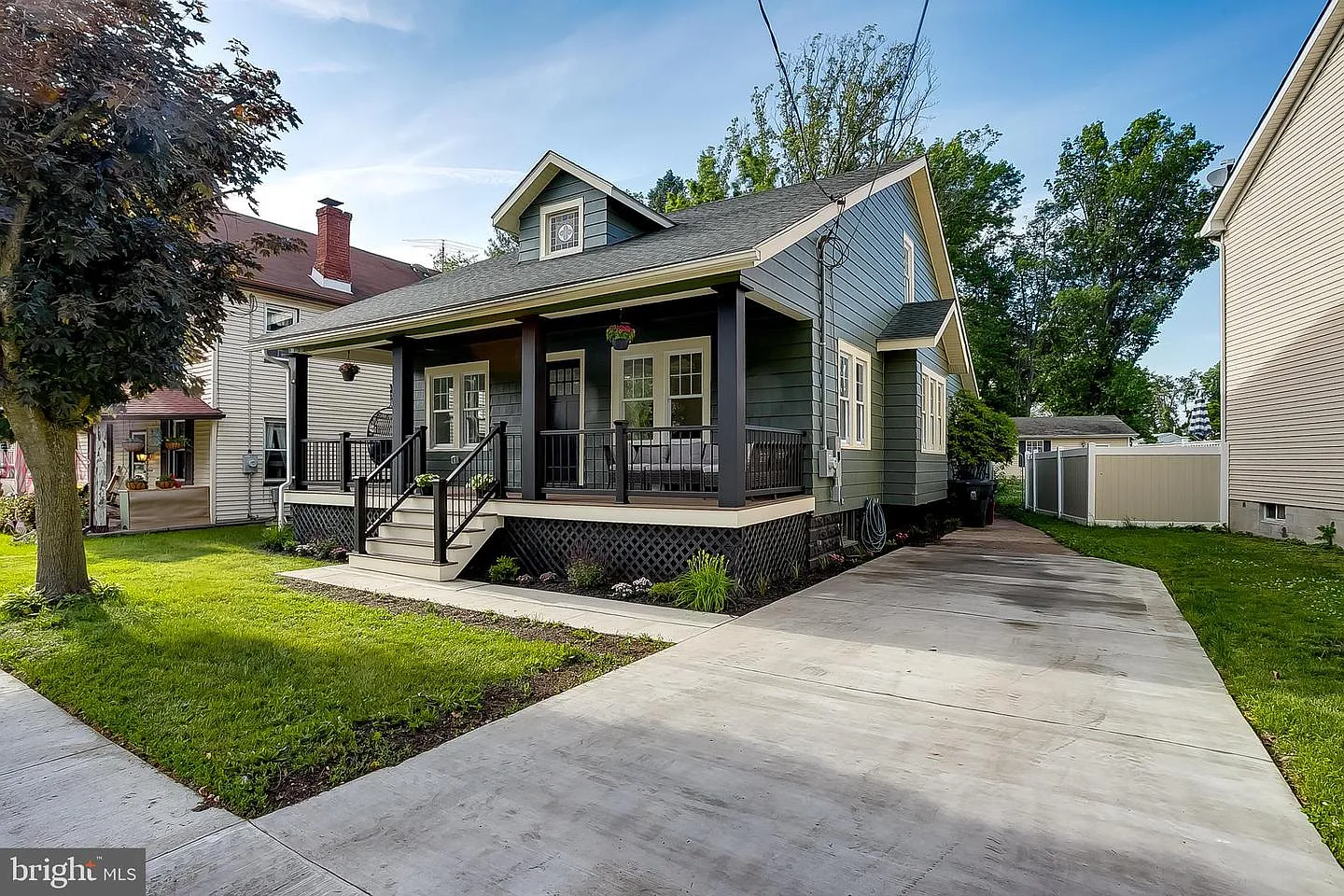
    Completely rebuilt home with a covered front porch

    This four-bedroom Burlington home’s highlights include a kitchen with quartz countertops, a large island, and stainless steel appliances. The other standout is the covered front porch with room for multiple pieces of outdoor furniture, like a porch swing or a rocking chair.

    See more photos of the property here.

    Price: $535,000 | Size: 2,200 SF | Acreage: O.2

    Have a great Wednesday, ya hear? More news to come tomorrow. See you then.

    By submitting your written, visual, and/or audio contributions, you agree to The Inquirer’s Terms of Use, including the grant of rights in Section 10.

  • A peek inside a 27-acre oasis for sale | Inquirer Chester County

    A peek inside a 27-acre oasis for sale | Inquirer Chester County

    Hi, Chester County! 👋

    A two-home, three-parcel property spanning 27 acres is for sale in Willistown Township. We take a look. Also this week, a new future for Rock Hill Farm is on the table, West Chester puts limits on new smoke shops, plus East Whiteland residents could expand the township’s board of supervisors.

    If someone forwarded you this email, sign up for free here.

    A sprawling three-property Willistown compound is for sale for nearly $9M

    Three Willistown Township properties that span a combined 27 acres and have two homes with their own pools are being privately listed for sale.

    Known as Sugartown Springs Farm, the properties include a 7,559-square-foot, four-bedroom main house that dates back to the mid-1700s. It has an in-ground pool and a pond.

    Another home, this one with six bedrooms and spanning over 6,000 square feet, also has its own pool. Elsewhere on the property, there’s a two-story timber-frame barn with a glass atrium that was once used as an art gallery for Andrew Wyeth’s paintings.

    Take a peek at all three.

    A new ‘best-case scenario’ proposal for Rock Hill Farm

    A larger swath of Rock Hill Farm could be preserved under a potential new deal between Willistown Township and the developer looking to build luxury homes on a portion of the 222-acre property.

    A proposed settlement agreement between the parties could see upward of 75% of the land put under a conservation easement, while decreasing the number of residential subdivisions, something one township supervisor called a “good ‘best-case scenario.’”

    The Inquirer’s Brooke Schultz fleshes out the details.

    📍 Countywide News

    💡 Community News

    🏫 Schools Briefing

    • Coatesville Area School District is partnering with Union Community Care to open the county’s first school-based community health center, which will offer year-round care, including physicals, medication management, and vaccines.
    • A handful of local football players, including from Malvern Prep, and Coatesville Area Senior, Downingtown East, and Owen J. Roberts High Schools, are among the ones to watch this season, according to coaches, scouts, and recruiting services.
    • Several Chester County schools earned high marks in the latest U.S. News & World Report rankings of the best public high schools in Pennsylvania. Downingtown STEM Academy took the top spot in the county, ranking second in the state, followed by Unionville High School (No. 10), Conestoga High School (No. 13), and Great Valley High School (No. 23). Downingtown STEM also ranked highly nationally, taking the No. 19 spot.

    🍽️ On our Plate

    🎳 Things to Do

    🍺 West Chester TAPS: Today is the last installment of the borough-wide happy hour for the season. ⏰ Wednesday, Aug. 26, 5-7 p.m. 💵 Pay as you go 📍 Throughout West Chester

    📚 Literary Festival: This inaugural event includes a ticketed community book exchange, local authors, vendors, crafts, and food trucks. ⏰ Saturday, Aug. 29, 10 a.m.-5 p.m. 💵 Pay as you go, $17.85 for the book exchange 📍 Downingtown Vintage

    🪕 Roots and Blues Fest: The Cris Jacobs Band headlines this third annual show. ⏰ Saturday, Aug. 29, 11 a.m. 💵 $40 in advance, $50 at the door, free for kids 12 and under 📍 Anson B. Nixon Park, Kennett Square

    🎶 Yesterday’s Gone: This Fleetwood Mac tribute will take place outdoors on a rooftop. ⏰ Saturday, Aug. 29, 7-9 p.m. 💵 $22 for children, $30 for adults 📍 Kennett parking garage roof

    🏡 On the Market

    A Birchrunville home with hidden themed rooms and a tree house-inspired porch

    The home has a separate wing for the primary suite and a tree house-inspired porch.Realtour Pilot | Courtesy of Sharon Dienno and Gary Mercer Sr./LPT Realty

    This four-bedroom Spring City home has an airy open-concept living area, complete with vaulted ceilings and walls of windows overlooking nature. But its living quarters set it apart — literally. A first floor primary suite is accessed via its own raised bridge, while there are two themed rooms downstairs, complete with a grotto. They’re located behind a hidden doorway and through a secret passage off a living area with a second kitchen. A fourth bedroom, a suite, is upstairs, along with office space. Out back, there’s a tree house-inspired porch off the deck. There’s an open house tomorrow from 5 to 7 p.m.

    See more photos of the property here.

    Price: $1.2M | Size: 6,154 SF | Acreage: 3.03

    🗞️ What other Chester County residents are reading this week:

    By submitting your written, visual, and/or audio contributions, you agree to The Inquirer’s Terms of Use, including the grant of rights in Section 10.

    This suburban content is produced with support from the Leslie Miller and Richard Worley Foundation and The Lenfest Institute for Journalism. Editorial content is created independently of the project donors. Gifts to support The Inquirer’s high-impact journalism can be made at inquirer.com/donate. A list of Lenfest Institute donors can be found at lenfestinstitute.org/supporters.

  • Township native stars as Bourdain | Inquirer Cherry Hill

    Township native stars as Bourdain | Inquirer Cherry Hill

    Hello, Cherry Hill! 👋

    It’s nice to see you again. Up-and-coming township native Dominic Sessa is portraying a young Anthony Bourdain in a newly released biopic.

    Also making headlines this week is the new state law banning the use of cell phones during the school day, a new food access program that buses Camden residents to Cherry Hill grocery stores, and disputed claims regarding the local Dick’s Sporting Goods’ outpost’s LeBron James jerseys.

    And as always: If someone forwarded you this email, sign up for free here.

    — Laura Smythe (cherryhill@inquirer.com)

    Cherry Hill native plays Anthony Bourdain in new Tony biopic

    Cherry Hill native Dominic Sessa returns to the silver screen in Tony, where he plays a 19-year-old Anthony Bourdain, years before he became an acclaimed chef, writer, and television personality.

    If you don’t recognize Sessa’s name from his Critics’ Choice Award-winning breakout role as a troubled prep school student in the 2023 comedic drama The Holdovers, perhaps you do from his ranking as one of Cherry Hill’s most-searched Wikipedia celebrities.

    In Tony, Sessa nails a young Bourdain’s “fascination with people who seem more authentic than he feels,” Inquirer food reporter Michael Klein writes in his review of the film, which was widely released last weekend.

    Check out the full article for a complete breakdown of Sessa’s latest performance, which taps into the “seductive outlaw kitchen culture” of “drugs, sex, appetite, [and] danger” that pulled in the culinary icon.

    💡 Community News

    • A new food access program spearheaded by a South Jersey pastor is transporting residents from the food desert of Camden to Cherry Hill, where they can better source fresh, affordable, and healthy food.
    • B Positive Plasma, a plasma donation center network that started in Cherry Hill and now operates a dozen locations across New Jersey, Pennsylvania, and Delaware, is on track to see a record year as area residents sell their blood plasma to try to make ends meet.
    • After a Cherry Hill resident’s dog got into a quarrel with a rabid skunk earlier this month, Camden County officials are advising residents to avoid direct contact with wildlife and other unfamiliar animals and to make sure pets are up to date on vaccinations.
    • A store manager of Cherry Hill’s Dick’s Sporting Goods disputed reports that the chain was placing official LeBron James Sixers jerseys behind the counter because of theft. 
    • Cherry Hill resident Megan Paier, a volunteer docent at the Philadelphia Zoo, helped bring viral French musician Plumes to serenade the site’s tortoises by DMing him on social media.
    • Meet Armand Perez, 70, who has served as caretaker at the quirky South Jersey children’s “oasis” Soupy Island for nearly three decades while simultaneously clocking 24 years at Cherry Hill Volvo.
    • Cherry Hill Mall owner Pennsylvania Real Estate Investment Trust is selling another of its greater Philadelphia holdings, Willow Grove Park Mall, to a partnership of New York firms. The pending deal is among the latest shakeups to the region’s 17 malls amid the retail sector’s 21st-century evolution.
    • As the global outdoor TV market steadily grows, Soccer Post Cherry Hill event manager Zach Kades shared his tips for selecting the right gear to get in on the trend.

    🏫 Schools Briefing

    • New Jersey’s nearly 600 public schools will implement a cell phone-free policy under a new state law this school year. Many will be catching up to Cherry Hill Public Schools, which voluntarily enacted its own cell phone ban two years ago — though this month, the district will vote on whether to amend its existing policy. Here’s what could change.
    • The 2026–27 academic year begins next Wednesday.

    🍽️ On our Plate

    • Cherry Hill remains a stalwart in local Jewish deli culture as another traditional Jewish delicatessen shutters in Philadelphia, The Inquirer’s Michael Klein notes.
    • Zushi Dozo has some of the best omakase in the state, according to a recent ranking from BestofNJ.com. While the East Marlton Pike eatery doesn’t offer traditional omakase, the outlet lauds its platter selections, including nigiri offerings.

    🎳 Things to Do

    🎶 Twilight Concert Series: The final concert of the season features the South Jersey Pops Orchestra. ⏰ Thursday, Aug. 27, 8 p.m. 💵 Free 📍 Cooper River Park Jack Curtis Stadium

    🛼 Endless Summer Glow Skate: This skate night is glow-themed. ⏰ Friday, Aug. 28, 6:30-9:30 p.m. 💵 $14 admission 📍 Hot Wheelz

    🍿 Night at the Museum: The library’s outdoor movie night features a screening of the 2006 Ben Stiller fantasy film. ⏰ Friday, Aug. 28, 7:30-10 p.m. (rain date: Aug. 29) 💵 Free 📍 Friendship Grove at the Cherry Hill Public Library

    🏡 On the Market

    An airy abode with a wine lover’s fridge

    214 State St. in Cherry Hill, New Jersey features an open-concept layout.

    This three-bedroom, three-full-bathroom house built in 1925 features an open-concept layout with oak flooring, a walk-in pantry with a dual-zone wine fridge, and a back deck. The Barlow neighborhood home, which is under contract, also includes a finished basement.

    See more photos of the home here.

    Price: $569,000 | Size: 3,519 SF | Acreage: 0.13

    🗞️ What other Cherry Hill residents are reading this week:

    By submitting your written, visual, and/or audio contributions, you agree to The Inquirer’s Terms of Use, including the grant of rights in Section 10.

    This suburban content is produced with support from the Leslie Miller and Richard Worley Foundation and The Lenfest Institute for Journalism. Editorial content is created independently of the project donors. Gifts to support The Inquirer’s high-impact journalism can be made at inquirer.com/donate. A list of Lenfest Institute donors can be found at lenfestinstitute.org/supporters.

  • Ragweed season is approaching its peak in Philly, and the rains likely gave it a boost

    Ragweed season is approaching its peak in Philly, and the rains likely gave it a boost

    The recent rain rally has been a boon to the Philadelphia region’s plant life, and, unfortunately for the legions of the allergic, the beneficiaries include the homely and ubiquitous tormentor commonly known as ragweed.

    It belongs to the plant family Ambrosia, from the Latin for “food of the gods.” One can only assume the gods did not have allergies.

    Estimates vary, and it’s not as though it is a census category, but in all likelihood several hundred thousand people in the region annually endure the slings and arrows of ragweed pollen, notorious for setting off episodes of sneezing and attendant dopiness.

    It also can induce coughing, wheezing, and chest discomforts, particularly among asthmatics, allergy experts warn.

    The season — the third in the equinox-to-equinox pollen trilogy, successor to the trees and grasses — typically begins modestly in early August, then intensifies late in the month and continues well into September. And this year sufferers may pay a price for the episodic drought-easing rains that have been watering the plants in the Mid-Atlantic region since mid-June.

    “Ragweed thrives on the nitrates in rainwater,” said Payel Gupta, an allergy, asthma, and immunology specialist based in New York City. The rains’ timing has coincided with “ragweed’s late-summer growth window,” she added, and the result likely will be “denser plants and higher pollen output.”

    As for precisely when the pollen will peak: “Every year is different,” said Donald Dvorin, who for more than 30 years was the Philly region’s official National Allergy Bureau pollen counter, “but the first week of September is most common.”

    In addition, with the planet’s temperatures increasing and first frosts taking their good old time, the seasons appear to be lasting a bit longer.

    The prime pollen flight hours are from 5 to 10 a.m.; effects can linger, however, as pollen can stick to clothing and find its way indoors via unwitting humans and pets.

    What is ragweed?

    Ragweed is a tooth-leaved plant that can grow in almost any environment, native to North America but spreading worldwide.

    For the allergenic, Dvorin said, the heavy hitters are the “short” ragweed (Ambrosia artemisiifolia), and the “giant” (Ambrosia trifida).

    A typical pollen grain is a mere 1/25,000th of an inch in diameter, but a single plant can generate a billion of them.

    While the plants live for only about a year, do they ever reproduce! Pollen has been found as far as 400 miles from the source, according to the Allergy and Asthma Network.

    New York City spent millions after World War II to eradicate ragweed in the city, a war it lost resoundingly. For one thing, the warriors discovered that about half the ragweed pollen in the five boroughs was commuting from elsewhere.

    The torments of ragweed

    Most people inhale ragweed pollen without incident, but for the allergic, the body interprets the pollen as an invader, and sneezes and other reactions are part of the immune response.

    For the sufferers, each season can be a little bit different, said Gupta, assistant clinical professor at the State University of New York and Mount Sinai Medical Center in Brooklyn.

    Severity would depend on “how many consecutive high-count days there are,” Gupta said. Exacerbating factors could be “viral infections or air pollution compounding irritation,” she said.

    In addition, some patients may be subject to “priming,” a particularly nasty season that might make some more susceptible to pollen discomforts the following year.

    And ragweed is nothing to just sneeze at, according to the International Ragweed Society, which is based in Switzerland and aims to promote ragweed research.

    In addition to a “socioeconomic burden due to rising healthcare costs” and “productivity losses,” the society states, the weed’s pervasiveness can endanger certain crops and natural habitats.

    How much ragweed is in the air?

    Unfortunately, that has become harder to know. Dvorin, an allergist who had practiced in Center City and Mount Laurel, stopped counting pollen last year, and that was symptomatic of a trend. The network has been shrinking.

    Gotcha! Donald Dvorin analyzing a pollen specimen. He stopped counting pollen last year, and the network has been shrinking.Jessica Griffin / Staff Photographer

    Traditionally, allergists such as Dvorin supplied daily counts on a voluntary basis as part of the National Allergy Bureau network. However, the analyses require expertise and time that allergists could devote to revenue-paying patients.

    Fewer doctors evidently have been willing to participate.

    The nearest allergy bureau counter who posts frequent counts is in the Washington area.

    The Asthma Center in Center City posts daily counts that are AI-generated, and while that technology shows tremendous potential, the allergy bureau has not yet approved any of the machines for official use, said Pamela E. Gabrish, the bureau’s program director.

    “There has actually been more backlash against using automated devices than ever,” she said.

    Advice for ragweed sufferers

    Day-to-day pollen volumes are difficult to predict, but expect the peak to arrive next week.

    It is a good bet that counts will be high on a warm, dry, and breezy day.

    This will be evident in the online pollen forecasts, but be aware that pollen is commuting on the chaotic whims of the atmosphere.

    In a study of five major cities, published in 2024, allergy experts concluded the accuracy of online pollen forecasts was “low.”

    Along with medications, here are a few suggestions from allergy professionals:

    • Limit time outdoors on dry, windy days.
    • When outside, wear a dust mask.
    • Inside, keep the windows closed.
    • Shower before going to bed.

    And hope for rain, within limits.