KATHMANDU, Nepal — The devastating flash floods in the Himalayan region swept so many people downstream that authorities in one Nepalese district have begun burying bodies in temporary graves before they can be identified, prompting accusations that Hindu funeral traditions are being ignored.
In south-central Nepal’s Chitwan district, the scale of the catastrophe was evident in some 250 bodies awaiting identification and the hastily dug trenches for their temporary burial following Wednesday’s catastrophic floods and mudslides, which killed at least 800 people and left more than 3,000 missing in Nepal and Tibet.
The bodies were carried hundreds of kilometers downstream by the Bhotekoshi River from the flood’s epicenter before being recovered in Chitwan.
Authorities carried out a temporary burial of about 100 victims on Saturday, officials said, as forensic teams struggled to cope. A convoy of vehicles carrying bodies entered a lush, forested area as an excavator dug a wide trench in the red earth while officials and media looked on.
Anil Thapa, a police inspector coordinating the handling of the bodies, said another 50 bodies were having DNA samples taken ahead of their likely burial Sunday.
Authorities preserve the DNA samples, photograph distinguishing facial features and record other identifying details, Thapa said. The bodies are assigned a reference number to help families claim them later.
Thapa said many of the bodies had remained submerged in floodwaters for about four days and were already decomposing by the time they were recovered.
Across the region, homes, vehicles, and farm tractors still lay partially buried in mud.
Limited forensic infrastructure and inadequate morgue capacity in the district further strained efforts to manage the overwhelming number of bodies recovered from the disaster, officials said.
High humidity and sweltering heat accelerated decomposition, compounding the challenges as health experts warned that leaving the remains exposed could increase the risk of disease.
Fresh landslides in the area on Sunday closed the main highway linking the capital city of Kathmandu and Chitwan, a day after it partially reopened, complicating efforts to move bodies and relief supplies.
As survivors grappled with the aftermath, criticism of the burials mounted. Some residents said the dead had waited days for their last rites and were denied dignity in death. Families still waiting to locate missing relatives and some public figures questioned whether authorities moved too quickly.
The issue is particularly sensitive in Nepal, a predominantly Hindu nation where the dead are traditionally cremated.
Ruby Chaudhary, who has two missing relatives, said the burials should not proceed without families’ consent.
“The dead deserve to be treated with dignity,” she said. “Our tradition is to cremate them on the riverbank, surrounded by their immediate family.”
A former prime minister, Baburam Bhattarai, said it was inappropriate to dispose of unidentified bodies before search and rescue operations were complete and without broader consultation with families of the missing.
If morgues were insufficient, authorities could have mobilized emergency resources to set up temporary morgues or secure cold storage facilities, he said in a social media post Saturday night.
Officials said the burials were a temporary measure necessitated by health concerns and limited capacity.
“People are worried that this could be a permanent burial, but it is only temporary management,” Thapa said. “If someone is able to verify the identity later using the available information, they can take back the body and perform the appropriate funeral rites.”
Amrit Bahadur Rai, Nepal’s foreign secretary, said the temporary burial of unidentified bodies was carried out in line with internationally accepted disaster-management protocols, including those of the International Committee of the Red Cross.
“Families can match records later, and will be allowed to exhume (the remains later) for necessary rituals,” Rai said at a news briefing in Kathmandu.
Russian airstrikes on civilian targets have destroyed shopping centers and food distribution warehouses across Ukraine, raising the specter of food shortages and price hikes as supermarkets in Kyiv and other cities struggle to keep their shelves stocked.
Moscow shifted tactics this month to focus on civilian targets, including shopping malls, after Ukrainian drones destroyed major e-commerce warehouses in Russia.
Russia initially bombed two distribution centers for Silpo, a major Ukrainian supermarket chain, and a main logistics center in Kyiv for Novus, another grocery and convenience store operator.
Shelves emptied of fresh produce, as well as dairy products including sour cream, yogurt, and cheese.
A wave of attacks in recent days has battered Kyiv and the surrounding region, hitting more warehouses and raising questions about how long retailers can keep stores stocked.
Some stores filled the empty space with kombucha and other surplus products, trying to minimize the sense of scarcity. The government, seeking to avoid public panic, has not issued any alerts.
The supermarkets, however, have warned customers of temporary disruptions. Silpo, for example, said: “Some goods will take longer to be delivered.”
“As of today, roughly speaking, 90% of food logistics operated by retail chains have been destroyed, but that doesn’t mean Ukrainians will be left without food,” the country’s agriculture minister, Taras Vysotskyi, told the Ukrinform news agency on Friday.
“There will be no threat of famine or a systemic physical shortage of food,” Vysotskyi said.
After 4½ years of full-scale war and a brutal winter that often left whole neighborhoods without heat or electricity, some Ukrainians were taking the food shortages in stride.
“I’m not worried because, first of all, it’s summer and we can buy whatever we need at farmers markets,” said Tata Verbetska, 39, a Kyiv resident. “Also, it’s not like everything is gone. In one supermarket, you’ll find one thing, at another supermarket, you’ll find something else you need. You just need to shop around more.”
Verbetska said items produced locally that typically aren’t warehoused, like bread and meat, were still available, while conserved foods and grains were in short supply. “There is almost no beer to be found,” she said.
On Friday evening, a Russian drone hit an ammunition depot in Myla, a village in the Bucha district west of the capital, triggering a massive explosion that killed 38 people in the surrounding residential area.
Explosions continued through the night and well into Saturday as more than 300 emergency workers tried to contain the disaster.
President Volodymyr Zelensky said Sunday that four people were still missing and at least 20 were injured.
About 130 houses were damaged, and a section of a nearby highway was closed as emergency crews searched for unexploded ordnance and struggled to extinguish fires that continued to burn nearby.
The Myla strike raised renewed concerns about ammunition depots and other military infrastructure being situated close to residential areas. Zelensky called that “unacceptable” and promised accountability for those responsible.
In early July, Russian forces similarly carried out a massive attack on the Kyiv region and hit an ammunition depot in Vyshneve, southwest of the capital, killing nine people.
More than 500 civilians were evacuated because of the risk of further detonations. And on Aug. 21, a Russian attack on military infrastructure in Kryvyi Rih killed 16 civilians and injured 130 others.
Following the Myla strike, the Defense Ministry ordered an audit of ammunition and weapons storage facilities, but the military’s general staff also sought to remind the public that Russia was primarily to blame.
In recent days, Russian strikes have repeatedly hit large shopping malls and other retail centers across Ukraine, including three Epicentr K big-box stores in the Zaporizhzhia region.
Similar stores in Sumy and Kryvyi Rih have been hit, as well, raising concerns that Russia is increasingly targeting large retail centers and their logistics networks to frighten and exhaust the civilian population.
Treasury Secretary Scott Bessent began the week vowing an “economic onslaught” against Iran and its trading partners in a fresh bid to end the war. By the week’s end, countries with ties to Tehran had so far shrugged off the threat and analysts were left underwhelmed by the U.S. actions.
China, which buys 90% of Iran’s oil, issued a defiant warning to Washington rather than back down. Iranian bank branches remained open in Dubai. At one Bank Melli branch in Abu Dhabi, staff were busy typing away and one employee explained that they were still open for business.
Commercial flights also continued between Iran and Turkey as well as Iran and the United Arab Emirates, which had promised last week to sever all trade and financial transactions with Tehran. Routes flying to Thailand and Azerbaijan, as well as multiple destinations in both Russia and China, remained unaffected.
As the week came to a close, the U.S. announced plans to sanction the UAE-based branches of Egypt’s Banque Misr. That fell well below expectations after Bessent’s warning that the world would see “a major announcement of a financial institution being sanctioned by the end of this week.”
“As the war passes the six-month mark, the public actions taken by the Treasury Department this week do not match the hype,” said Alex Zerden, a former U.S. Treasury official and founder of Capitol Peak Strategies.
“Operation Economic Outcast is a continuation of 47 years of restrictive economic measures against Iran but does not provide a clearer theory of economic or military victory in this current campaign,” Zerden said.
The Treasury Department didn’t respond to a request for comment on Friday.
Bessent’s threats — and the collective global shrug so far — underscore the Trump administration’s main conundrum as it seeks to sanction Iran into meeting its demands. Any effective sanctions campaign would need to hit China, a move that risks sparking retaliation and potentially massive global economic fallout. Anything less would add to Iran’s economic pain but not enough to budge its strategic calculus.
U.S. credibility is also at stake. Bessent repeatedly compared the U.S. response to the historic 1944 D-Day landings in Normandy, France — a coordinated land and air invasion aimed at toppling the Nazi regime. But the U.S. acted unilaterally with its latest move, pressuring other countries rather than working with them, and Bessent openly acknowledged that going too fast and too hard risked tanking the global financial system.
Further muddying the picture, Bessent also said the U.S. was engaged in “quiet diplomacy” to get its way. U.S. officials turned to counterparts in the U.K. asking for a statement of support, according to people familiar with the matter.
The Treasury chief was also expected to speak with fellow finance ministers this weekend at a Group of 20 gathering in Asheville, N.C. One of the biggest questions attendees will likely have for Bessent is whether the US is willing to hit a Chinese financial institution, according to Josh Lipsky, chairperson of international economics at the Atlantic Council.
The UAE, a key U.S. strategic ally, said earlier this month it would cut financial ties with Iran. But some flight and banking links with Tehran appear to continue, and the UAE’s government described its move in a statement to Bloomberg News as a “sovereign decision reflecting its strategic assessment of the national interest and the requirements of regional security.”
Asked on Thursday which countries the U.S. had approached so far, President Donald Trump responded, “About Iran? There’s not a lot to speak to. We don’t want to speak to them. We’re not looking to meet or anything.”
“You can’t unleash meaningful economic warfare on Iran while ignoring the one country that absorbs 90% of its oil exports,” said Leland Miller, the CEO of China Beige Book data platform and a commissioner on the U.S.-China Economic and Security Review Commission, which advises the U.S. Congress.
In the meantime, the U.S. appears no closer to ending the war that Trump launched alongside Israel in late February. Iran has endured decades of harsh sanctions and has recently faced a full U.S. Navy blockade of its ports that has dried up oil exports.
Officials in nations that have traditionally had strong economic links with Iran have not heard much from the U.S. this week. Turkey has not received any formal guidance from the U.S. on the restrictions and how they apply to Iran, according to people familiar with the matter. But they believe they’ll have adequate time to discuss and implement requirements once they are informed, they said.
The response from Pakistan indicated that even countries with close ties to the US are feeling little immediate pressure from the new campaign, at least so far.
While Islamabad has won praise from Trump for its mediation efforts to end the war, there was no indication that its overland trade with the Islamic Republic — such as in rice and mangoes — had slowed down. Pakistan’s Foreign Ministry spokesperson Tahir Andrabi told reporters this week that the country “is not obliged” to respond to unilateral sanctions.
“The idea Iran can be knocked out with this is risible — it’s not going to move the needle,” said Stephen Fallon, principal adviser at DBM Consulting. “It’s not possible to get a completely airtight seal on this thing. There are too many actors, and it’s too rewarding for the people involved.”
BOGOTÁ, Colombia — Many Venezuelans suspected that there was going to be a price to pay for President Donald Trump’s brazen capture of their autocratic leader, Nicolás Maduro, who was arrested by U.S. forces in January.
On Friday, that cost became clear when Trump announced that the U.S. would be taking majority control of a vast part of Venezuela’s oil reserves — national resources long considered by many in the country to be a birthright.
By Saturday, many Venezuelans were grappling with whether they were willing to pay that price. So far, the U.S. ouster of the autocrat has done little to change the country — Maduro’s successor, Delcy Rodríguez, remains in power, while millions of everyday Venezuelans remain in poverty, electricity blackouts continue to plague the nation, and no date has been set for an election.
The new deal could bring major investment. But many Venezuelans want overall economic and political change. The accord guarantees neither and could deepen the relationship between Trump and Rodríguez, further entrenching her in power.
In Valencia, about two hours from the capital of Caracas, José Leal, 68, a retired educator, said the $100 billion in promised U.S. investment sounded small compared to the 65 billion barrels Venezuela was giving up. But after decades under a repressive government, he was willing to put up with this deal — and hope that Trump would push for democratic change.
“Obviously, the United States comes out ahead, enormously so,” he said. But “the Americans hold the power,” he said, and without them “we won’t manage to break free from the socialism of Chávez and Maduro. Without them, we’ll remain trapped like Cuba, China, or North Korea.”
“It’s not that I love it or even like it,” he said of the deal. “I consider it a necessary evil. If we manage to escape this entire disaster — which we’ve endured for 27 years and the Cubans for 68 — if we manage to get out of this mess, then even though I don’t like it, it will be worth it.”
Others were not so optimistic. The Venezuelan government has a long history of doling out beneficial contracts to the wealthy and connected, known inside the country as “enfuchados” — people who are “plugged in” — while everyday Venezuelans suffer. Trump’s announcement on Friday included no mention of a democratic transition.
A meme began circulating in the region almost as soon as the deal was announced. “I want you to get rid of Chavismo,” says a cartoon Venezuelan man, referring to Maduro’s movement, “and leave us our oil.”
A cartoon Trump responds: “Take the oil and leave you with Chavismo, got it!”
Venezuela, home to some of the largest oil reserves in the world, nationalized those resources in the 1970s. Sovereign control over wells then became a core pillar of the ideology of the socialist government founded by former President Hugo Chávez.
Rodríguez’s decision to turn over much of that oil to the U.S. government represented an astounding about-face, one that few Venezuelans could have imagined before the January attack.
That turnaround was evident in a statement released by Rodríguez’s Socialist Party on Saturday, which said that “true to its historic commitment to national sovereignty,” the party was extending its full support for the deal and the decisions made by “Comrade Delcy Rodríguez.”
The irony of this was not lost on many Venezuelans. A government that once proudly thumbed its nose at Washington was now handing over the resources at the center of its identity.
Another meme circulating in Venezuela changed the logo of the national oil company, PDVSA, to PDUSA.
On social platform X, Rafael Ramírez, a Chávez loyalist and former head of PDVSA now living in exile, accused Rodríguez of “opening the doors to a new form of US colonialism.”
In Maracaibo, a Venezuelan city that anchors much of the country’s oil industry, Dario Nava, 67, a former PDVSA manager, said he opposed the deal and did not believe it would improve his life.
“The United States is going to manage our oil industry,” he said, “and sovereignty is lost there.”
In Caracas, Carlos Arenas, 24, a university student, said that he might be willing to cede some control of Venezuelan oil for economic improvement.
“If there were an economic benefit for the country that eventually translated into a better quality of life for Venezuelans, then yes, I would be willing,” he said. “But that doesn’t seem to be the case here — at least not initially.”
“Unfortunately, it doesn’t look like there will be a political change in Venezuela anytime soon,” he added. “Trump seems very comfortable with Delcy.”
Venezuela’s leading opposition figure, María Corina Machado, has in the past floated the idea of privatizing the oil sector. For years the idea was mocked by Rodríguez’s party. And it was so controversial that Machado did not make it a core part of her platform in a 2024 presidential election.
On Saturday, a prominent supporter of Machado, Walter Molina, said on X, “Venezuelans always knew that our freedom would come at a cost.”
“If that price is 65 billion barrels over the course of decades, so be it,” he said. “But let it be just that: the price of our freedom. Not the price we pay to keep a criminal tyranny in de facto power — only now kneeling before the United States.”
Several U.S. military leaders have advised Defense Secretary Pete Hegseth that prolonging large-scale operations against Iran is unsustainable and risks weakening their ability to confront threats elsewhere, including the U.S. homeland, according to people familiar with a recent assessment prepared for the Pentagon chief.
The warnings — detailed for Hegseth by the heads of the Army, Navy, and Air Force and the four-star commanders overseeing U.S. operations throughout Europe, Asia, and Latin America — appear in the Aug. 14 edition of the Secretary of Defense Orders Book (SDOB), these people said. They described the assessment to the Washington Post on the condition of anonymity because the document is classified.
The SDOB, typically produced twice monthly, outlines the worldwide availability of U.S. warships, aircraft, personnel, and weapons systems. It reflects the president’s priorities for the force, which are carried out by the defense secretary, and includes insights from the military’s top generals and admirals that inform the directives the Pentagon issues.
As President Donald Trump has pressured Tehran to reopen the Strait of Hormuz and accept several U.S. provisions for ending the stalemated conflict, he has been adamant that all options remain available to him — including further military action. Consequently, U.S. Central Command, the headquarters responsible for prosecuting the Iran war, has kept a force of more than 50,000 troops on alert for months in case the president orders additional attacks.
The Aug. 14 orders book directs some troops deployed in the Middle East to remain there through September and some others into 2027, said those familiar with the document. The prospect of extending those forces further compelled military leaders to voice their concern, these people said.
Leaders of the U.S. European Command, the U.S. Pacific Command, and the U.S. Southern Command, along with the Navy’s top admiral, responded with what is characterized in the SDOB as a “non-concur,” those familiar with the assessment said — meaning they disagree with the secretary’s order to extend their forces but will execute it nevertheless.
The geographic combatant commands overseeing U.S. operations in Europe, Asia, and Latin America have had their ships, aircraft, and other equipment pulled away to support the Iran conflict. This has limited their ability to conduct missions and ensure proper training, those familiar with the assessment said. The Navy, in particular, has had to stretch its capacity to keep up with wartime demands.
Army and Air Force leadership concurred with Hegseth’s desire to extend their deployed forces, but each emphasized that doing so would come with significant risk, these people said.
Overall, the tenor from the military leadership is that the ongoing Iran operation, having reached the six-month mark, has been “too much for too long,” said one person familiar with the assessment.
The military’s warning to Hegseth, which has not been previously reported, offers new insight into the administration’s dilemma as Trump seeks to end the conflict on terms favorable to the United States while Iran, cognizant of the war’s unpopularity with most Americans and its mounting toll on the U.S. arsenal, refuses to capitulate.
“Decisions regarding the scope and duration of specific force commitments to any Combatant Command are made based on the current threat assessment, strategic priorities established by the President, and the advice of the Chairman of the Joint Chiefs of Staff and Combatant Commanders,” Sean Parnell, a spokesperson for Hegseth, said in a statement to the Post.
The Pentagon “does not discuss internal operational processes,” including the Secretary of Defense Orders Book, “or specific concurrences, non-concurrences, or risk assessments provided by the Services or Combatant Commands during force allocation deliberations,” he added.
The Secretary of Defense Orders Book also is reviewed by Gen. Dan Caine, chairman of the Joint Chiefs of Staff. A spokesperson for the chairman declined to comment and referred questions to Hegseth’s office.
The orders book is one avenue for senior military leaders to surface resource concerns and provide Hegseth with assessments on how gaining or losing assets will impact their objectives.
It’s common for commanders to discuss risk, said the one person familiar with the recent assessment. But the outlook now is “more dire” overall, this person explained, adding that certain generals and admirals were more expansive and frank than is usual in telling Hegseth they disagreed with orders to keep providing equipment and personnel when the operation’s trajectory remains uncertain.
The top military officials at European Command and Southern Command each cautioned Hegseth that lending their ships and surveillance aircraft to Central Command has degraded their ability to fulfill homeland-defense obligations, said those familiar with the assessment.
Adm. Samuel Paparo, the chief of Pacific Command, disagreed with the level of support he was ordered to continually provide, including an aircraft carrier strike group and naval destroyers, those familiar with the assessment said.
A spokesperson for European Command declined to comment. Spokespeople for Southern Command and Pacific Command did not respond to requests for comment.
Adm. Daryl Caudle, the chief of Naval Operations, provided Hegseth with the dimmest picture, saying in the SDOB that the Navy cannot sustain its current level of support for the Iran conflict because there is no anticipated end date, those familiar with the assessment said.
The Navy has shouldered an extraordinary burden. It has been asked to supply dozens of vessels for the Iran campaign — first to take part in the U.S. assault and defend against Iranian counterattacks and, for several months since, to enforce Trump’s blockade of Iranian ports as he attempts to force open the Strait of Hormuz. Deployments for some vessels and crews have been extended by months.
Caudle conveyed to Hegseth that barely one-fourth of the Navy’s destroyer fleet is ready to deploy, a sharp decline from prewar levels, said those familiar with the assessment.
More broadly, the document says that the impact on ship maintenance, if demands imposed by the Iran operation continue unchanged, jeopardizes the fleet’s availability should other conflicts arise, people familiar with the assessment said.
A spokesperson for Caudle did not respond to a request for comment.
At a recent event in Norfolk, he talked about the deployment extensions, calling them “very challenging for our sailors.”
“I typically am not a big fan of extensions, and I push back hard on that, but the enemy gets a vote,” Caudle said, according to a transcript of his remarks provided by the Navy.
Although Army and Air Force leadership concurred with Hegseth’s current path for the Iran conflict, they conceded the challenges it has imposed, said those familiar with the assessment.
Elements of the Army’s 82nd Airborne Division, which in March mobilized 2,000 soldiers in response to the Iran war, will see their deployment extended to a year, Maj. Gen. Brandon R. Tegtmeier, the division commander, said in a letter dated Sunday.
The letter to the division community, reviewed by the Post, acknowledges the difficulty of the unknowns throughout the mobilization and that leaders “understand that a longer tour weighs heavily on every household, including our own.”
Those troops would be central to any ground invasion of Iran.
Deployments for units operating the Army’s Patriot air defense systems, which shoot down missiles and drones targeting U.S. bases, also are expected to be extended, said those familiar with the assessment.
A spokesperson for the Army did not respond to a request for comment.
The depletion of Patriot interceptors — as a result of the Iran war and previous donations to Ukraine — has limited the Trump administration’s ability to re-escalate the war, as Tehran retains the ability to successfully target U.S. facilities throughout the Middle East.
As the Post and others have reported previously, the Iran war also has drained U.S. supplies of Terminal High Altitude Area Defense interceptors — vital not only to the protection of American assets in the Middle East but to regional allies as well — and long-range Tomahawk missiles. About 25% of the Pentagon’s Reaper drone fleet has been lost, and U.S. bases there have sustained billions of dollars in damage.
The Trump administration has maintained that reports of munitions shortages are inaccurate.
Many of the Air Force units sent to the Middle East to conduct bombing runs and other around-the-clock operations also are slated to stay in the region into 2027, those familiar with the assessment said.
The Air Force declined to comment, citing the classification of the orders book.
A spokesperson for Central Command declined to comment and referred questions to Hegseth’s office.
The recent “non-concurs” from some uniformed leaders mark the latest warning from military leaders about the war.
As the Post and others reported previously, Caine advised the White House before hostilities began that the U.S. lacked sufficient munitions — and support from allies — to conduct an extended large-scale campaign.
More recently, Gen. Alexus Grynkewich, the head of European Command, privately warned the Pentagon that he lacked adequate naval forces to shield Israel and the U.S. homeland from missile attacks, as the Post reported this month.
In the Pacific, key U.S. allies have raised alarm that the Pentagon’s depletion of missiles and air defense interceptors leaves them vulnerable to China. The Navy’s only dedicated aircraft carrier in the Pacific, a linchpin of the military’s plan to deter Beijing, was sent to the Middle East to relieve another carrier that has been deployed for more than 300 days.
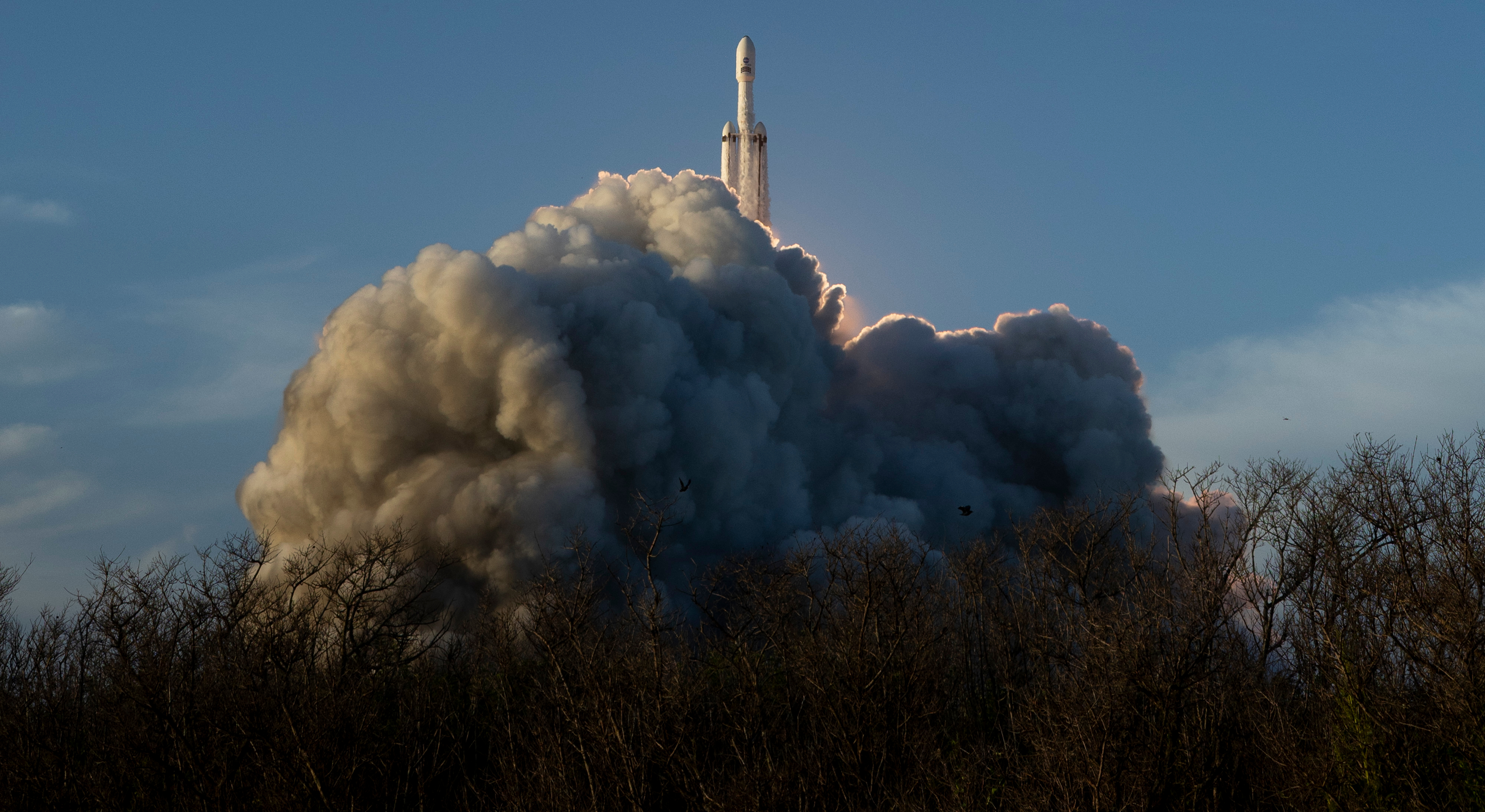
NASA’s Nancy Grace Roman telescope blasted off from near Cape Canaveral, Fla., on Sunday, sending a $4.3 billion project into space with the hope of answering some of the most profound questions in the universe.
It was NASA’s most ambitious telescope launch since the James Webb Space Telescope, which took off from Earth in 2021 after years of delays.
But in contrast to its predecessor, Roman ran relatively on budget and ahead of schedule, even after funding pressures and the pandemic threatened to throw a wrench in the project.
Named for NASA’s first chief astronomer, the Roman is a survey telescope, designed to look far and wide into cosmic time and the universe. Its field of view is big — about 100 times that of the Hubble Space Telescope. Among other observations, scientists hope it will help shed light on the unexplained force called dark energy that is responsible for the universe’s accelerating expansion and its ultimate fate.
At the launch, the major stages were all “nominal,” as NASA’s announcers put it — agency-speak for going as planned.
Down at the Kennedy Space Center, scientists, engineers, and other space enthusiasts gathered on a partly sunny morning to watch a SpaceX rocket rumble off the launchpad, carrying the telescope. It’ll take about three months to reach its distant orbit, 1 million miles out from Earth in the direction of Mars. (Hubble lives in a low Earth orbit about 350 miles up.) NASA hopes the first images could come at the beginning of 2027.
Roman will look for a phenomenon called cosmological redshift. As the universe expands, light wavelengths are stretched out as they travel long distances. (The same does not happen to objects with mass, like galaxies, because they’re being held together by gravity.) The longer the distance, the greater the stretching, which corresponds to the red and infrared end of the light spectrum.
Redshift carries important information when looking at distant cosmic objects. Light isn’t instantaneous; it has a finite speed, so the rays from a star in the sky visible today from Earth might have been emitted millions of years ago. When looking at the redshift of a galaxy or an exploding star even farther from Earth, Roman’s crisp infrared view should help scientists discern how far away it is — in effect dating how far back the telescope is peering in time.
“We will expect exquisite dark-energy measurements from Roman,” said Yun Wang, a researcher at the Infrared Processing and Analysis Center from the California Institute of Technology who worked on Roman and two of its predecessor projects. “It’s very exciting.”
The telescope will also hunt for traces of exoplanets, distant worlds that live outside our solar system. There are only about 6,500 known exoplanets, according to NASA’s data. But Roman could help spot as many as 100,000 new ones by picking up on faint signals, like a blip in a star’s brightness as a planet passes in front of it.
Scientists hope its wide field of view will also pick up on a rare event called microlensing that they hope will indicate the existence of small planets like Earth — maybe even ones that are potentially habitable.
Roman the astronomer was one of the agency’s first female executives and played a key role in securing funding for space projects such as Hubble — which made the observations that led to the discovery of dark energy in the first place.
Over the course of and after construction of the Roman telescope, engineers put it through a battery of tests to make sure it would survive various challenges of the launch and space. They shook it, simulating the vibrations of the launch, and blasted it with loud noise. They stuck it in a cold vacuum chamber for more than 60 days. And on Sunday, they counted down and let it go, to scan the skies for at least five years.
“In some ways, I could never believe that this moment would actually happen,” said Dominic Benford, the telescope’s program scientist, on the launch live stream. “And it is here, and far more beautiful than I could’ve anticipated.”
REYKJAVIK, Iceland — Iceland’s voters rejected restarting negotiations to join the European Union in a referendum that pitted concerns about geopolitical stability against keeping national control of Iceland’s prized fisheries, officials said Sunday.
Opponents defeated the measure by a margin of 52.8% to 47.2%, the National Electoral Commission said. The result puts the divisive issue to rest for now — more than a decade after a euroskeptic government ended EU talks that had begun after the 2008 financial crisis.
The vote Saturday was held in the shadow of repeated threats by U.S. President Donald Trump to take control of nearby Greenland. Although Iceland is a NATO member, supporters said European solidarity would provide greater protection if Trump ever made similar threats toward the volcanic island.
Iceland’s left-leaning coalition government, elected in 2024, moved up the EU referendum it had planned for next year after Trump mistakenly named Iceland four times while speaking about his designs on Greenland.
Voters faced a simple question
Prime Minister Kristrún Frostadóttir said she did not see the loss as a setback for her coalition government but as a win for democracy as more than 82% of the eligible 270,000 voters cast ballots. She said she would respect the result but would not rule out a future attempt to reopen the issue.
“Things happened in the past couple of years, though, that I could not have predicted,” she said. “But this government will not go forward with it. And something big has to change in the next 24 months for this to be at the top of the agenda.”
Guðrún Hafsteinsdóttir, leader of the opposition Independence Party who opposed the measure, said the result is a blow to the government but not European relations.
“The best way to heal the wounds is for the government to listen to the conclusion and put this path aside,” she told RUV, the national broadcaster. “Because we want to remain in close contact with the European Union, Europe, and as many other countries as possible, the nation is sending a clear message that we intend to steer that course ourselves.”
Voters faced a simple yes-or-no question: Should Iceland resume accession negotiations with the European Union?
The capital of Reykjavik was the only area in the island nation of 400,000 people where a majority supported the referendum.
The influential fishing industry led opposition to the referendum over fears the bloc’s common fisheries policy would open its waters to Spanish, Dutch, and other trawlers.
Iceland is already in the EU single market
Descendants of Vikings, Icelanders, who won their independence from Denmark in 1944, have lived off the sea for centuries, and fishing is central to their national identity. Iceland has a proud history of refusing to be pushed around by bigger and richer European nations, winning the so-called Cod Wars with Britain in the 1970s over the right to control its waters.
Opponents also rallied around the fact that Iceland already reaps benefits from being in the EU’s frictionless single market and the Schengen free-travel zone without the sovereignty compromises that come with full membership. They argued that Iceland’s voice would be muted in the large European Parliament and that it would be better off cutting its own trade deals, such as one with China.
Backers said EU membership would lower inflation and interest rates, and the euro would bring more stability than Iceland’s volatile króna currency. They said it was also in the nation’s interest to get closer to its European neighbors to tackle issues that don’t respect borders, such as climate change.
Other countries face a more difficult path to EU membership
If the proposal had been approved, it would have been a preliminary step to revive the lengthy negotiating process with the EU’s executive branch, the European Commission, to discuss areas from the economy to human rights. Voters would have needed to approve any negotiated deal.
The result is sure to disappoint many in the European Union. As a wealthy, stable, and democratic country with vast fishing grounds, Iceland could have joined the bloc relatively quickly. Croatia was the last country to join, in 2013.
Most of the other candidates waiting — including several countries in the Balkans, plus Moldova and conflict-torn Ukraine — must still undertake time-consuming reforms to bring their laws and standards into line with those of the EU.
Getting Iceland into Europe’s rich club, perhaps along with Montenegro and possibly Moldova, over the next two years could have helped to lay to rest the damage to the EU caused by the departure of Britain in 2020, even though London now appears willing to mend ties.
Voter Daniel Bjarkason, who opposed the measure, said Iceland should wait a decade or two before trying again to join the EU.
“For now we’re too divided and that’s not a good look,” he said. “It should be 70-30 Yes if we’re going to do it.”
Iran’s supreme leader called on Muslim countries to stand together against Israel and the United States, imploring them to “know your real enemy.”
U.S. broadcaster NBC said Israeli settlers attacked a team of its journalists in the occupied West Bank. A British activist faced deportation after Israeli settlers seized him and turned him over to police. And an Israeli airstrike in central Gaza killed at least two Palestinians, including a 3-year-old boy, hospital authorities said.
Here’s a look at the latest developments Sunday in the Iran war and the wider Middle East. Full coverage can be found here.
Iran’s supreme leader urges regional unity
Iran’s new supreme leader, Ayatollah Mojtaba Khamenei, urged Muslim cooperation and unity in a letter to religious leaders from Islamic countries attending a conference in Tehran, Iran’s official IRNA news agency reported.
Khamenei called the U.S. and Israel enemies of all Islamic nations. “My enduring and repeating advice to rulers of Islamic nations is to know your real enemy, understand its plans and confront it,” he wrote.
Six months after the U.S. and Israel attacked Iran, killing Khamenei’s father and other senior leaders, Khamenei has not been seen publicly.
The war has exposed deep divisions in the Muslim world after Iran struck targets in neighboring Gulf Arab countries and restricted movement through the Strait of Hormuz. Tehran has opposed the U.S. military presence in neighboring nations.
NBC says settlers attack journalists in West Bank
Settlers attacked an NBC crew in the central West Bank on Saturday as they were interviewing a Palestinian woman who said she’d been driven out of her house, the network said.
Correspondent Matt Bradley, two other crew members, and the woman were treated for injuries, NBC said, giving no details about them.
NBC shared footage showing masked settlers approaching the crew with sticks and beating their vehicles.
Israel’s military said it was “aware of reports of Palestinian injuries, including a Palestinian woman who sustained non-life-threatening injuries and was evacuated by the Red Crescent for medical treatment.” It did not comment on the attack on the NBC crew.
Prime Minister Benjamin Netanyahu issued a rare condemnation of the violence on Saturday, after a growing wave of violence by settlers in the West Bank. The Israeli leader has come under U.S. criticism for the attacks.
Settlers seized a British activist, lawyer says
Israeli settlers seized a British activist from a Palestinian village in the West Bank on Saturday and locked him in a shed before turning him over to police, his lawyer said Sunday.
Inbar Shaked Vardi said settlers held Finn Joughin for half an hour. Video showed two settlers, one armed, restraining Joughin and marching him away.
It was not clear what led to his capture. Settlers alleged he assaulted a child, which Vardi denied. Settlers pointed to a video where the activist uses his body in an apparent attempt to block a settler boy from passing through a fence. Vardi said the video shows he was trying to protect the village.
“Without any hearing, the police has decided to move him to deportation, which just shows that this entire case has been political in the first place,” Vardi said later, adding that Joughin would likely be deported Sunday night.
A spokesperson with the U.K. government’s Foreign, Commonwealth, and Development Office said embassy officials have raised the case with Israeli authorities and were seeking information.
Israeli strike kills 2 Palestinians in Gaza, including a child
An Israeli strike hit a group of people in the western part of Deir al-Balah, killing a 3-year-old and a man who Israel’s military called a Hamas operative.
The military in a statement identified the man as Hassam Osama Hussein Nasir. It said he had “posed an immediate threat,” without providing evidence.
Another Palestinian was wounded, according to Al-Aqsa Martyrs Hospital, which received the casualties.
The deaths were the latest in Gaza since a fragile October ceasefire deal attempted to halt more than two years of war between Israel and Hamas. Gaza’s Health Ministry says Israeli fire has killed at least 1,318 Palestinians since that truce.
On a cloudless afternoon in July, Nicole Sweeney was on a charter boat off the southeastern corner of Massachusetts’ Cape Cod, cruising through blue-green water as smooth as sea glass. Conditions were perfect for a dunk in the ocean, but swimming was resoundingly off the table.
That’s because if all went to plan, Sweeney would soon come face to face — or at least face to fin — with a great white shark.
“When I was a kid, sharks were not something we ever thought much about,” said Sweeney, 55, who has visited Cape Cod every summer since she was born. “Now you can’t go anywhere on the Cape without finding a coaster or a keychain or a mug with a shark fin on it.”
The onslaught of great white merch is more than mere leftovers from last summer’s 50th anniversary of Jaws.
Over the last several years, a resurgent seal population has turned Cape Cod into one of the world’s top seasonal hot spots for great white sharks. In summer and autumn, the stretch of ocean from the northern tip of the Outer Cape down past Chatham, on the Cape’s elbow, is now the best place on Earth to see great whites swimming — and hunting — close to shore.
Back on land, the specter of sharks is inescapable. Beyond the shark-bite ball caps and the “Respect the Locals” shark bumper stickers, ominous shark flags and menacing warning signs, along with “Stop the Bleed” kits, have become summer fixtures on the Outer Cape’s beaches.
Even so, the seasonal shark surges have seemingly done little to dampen overall enthusiasm for Cape Cod, where the median single-home sale price nearly doubled from 2019 to 2025 and hotel prices can top $2,000 a night during high season.
The sharks have, however, changed people’s behavior. Demand for swimming pools has spiked. Beachgoers now keep a close eye on the shark-tracking app Sharktivity. And shark-spotting tours regularly operate within striking distance of some of the Cape’s most popular beaches.
Greg Skomal, a marine biologist with the Massachusetts Division of Marine Fisheries and New England’s leading authority on white sharks (as scientists typically call great whites), has seen the shift in beachgoers’ habits from his shark-tagging trips up and down the coastline.
“We observe it from the research vessel,” Skomal said. “We don’t see the same number of people in the water at great distances from shorelines.”
From a conservation perspective, the sharks’ return to these waters is a success story, the result of the Marine Mammal Protection Act of 1972, which rescued the region’s gray seal population from the brink of extinction. (A 2017 study estimated Cape Cod’s gray seal count to be between 30,000 and 50,000, up from about 2,000 in 1994.)
The sharks soon followed, leading to increasingly frequent beach closures and, inevitably, run-ins with humans. In 2012, a bodysurfer was bitten by a white shark off a Truro beach. He survived, as did a swimmer who was bitten at a neighboring beach in 2018. But a month later, a 26-year-old boogie boarder was killed by a white shark at Newcomb Hollow Beach, in the town of Wellfleet — the first fatal shark attack in Massachusetts waters since 1936. Two years later, a white shark killed a swimmer off the coast of Maine.
Yet in recent years, Cape Cod’s tourist economy has grown to nearly $2.8 billion (up from nearly $2 billion in 2019 per the Cape Cod Chamber of Commerce), even as the U.S. National Park Service has recorded a drop in recreational visits to the Cape Cod National Seashore, a 40-mile stretch of coastline that includes six beaches frequented by white sharks.
Although the sharks may have pushed some beachgoers away, one thing is certain: They’re also luring people in.
Ten years ago, the world capital of white shark tourism was that other Cape at the bottom end of the Atlantic: Cape Town, South Africa, whose resident great white population had long supported an enormous cage-diving industry. But those sharks have since disappeared, possibly driven away by commercial overfishing or perhaps shark-liver-hungry orcas, the subject of an unsettled scientific debate. Guadalupe Island in Mexico, another white shark hot spot, had its shark tourism and cage-diving operations shut down in 2023 by the Mexican government, which cited practices in the industry that were putting sharks and humans at risk.
At the same time, Cape Cod’s star began to rise as a white shark ecotourism destination, specifically the town of Chatham, where shark seekers can choose from a growing number of private shark charters — generally costing north of $2,000 — that employ spotter planes to locate the animals, which passengers can then observe from the boat. (Cage diving, which typically involves chumming the water to attract sharks, is illegal in Massachusetts, though at least one Cape Cod outfitter runs shark cage-diving tours offshore in federal waters.)
And while you can still cage-dive with great whites off the remote Neptune Islands in South Australia and off the southern edge of New Zealand, those experiences require all-day or even multiday tours. Only on Cape Cod can you spend a morning observing white sharks in the wild and be back on the beach by lunchtime.
“The fact that we can go out and see them in a 2½-hour charter is incredibly unique,” said Hannah Leary, ecotourism coordinator for the Atlantic White Shark Conservancy, a research and education nonprofit in Chatham that operates the Sharktivity app. “We can just come out of the inlet and they’re all right there.”
Its “open boat” shark charters, which offer “a shared adventure with Cape Cod’s apex predator,” run several times a week and regularly sell out (at a slightly more accessible $530 per person, with up to six people sharing a boat). Lately, Leary said, she has noticed an uptick in international guests and travelers who’ve come to Cape Cod specifically to see great whites.
At Cape Cod’s surf shops, though, the sharks are old news.
On a recent Sunday morning, Pump House Surf Shop in Eastham, which sells $20 miniature lifeguard-spec shark flags and last month shared a winking social media post about sharks, was packed with shoppers. Across the street at the equally crowded Nauset Surf Shop, the oldest surf shop on the Cape, longtime owner Phil Clark said shark-deterrent products started flying off his shelves after 2018, but they’re not selling much anymore.
“Everybody is kind of used to it,” Clark said of the sharks’ presence. “They’re buying surfboards. The kids are taking surf lessons.” Indeed, Sugar Surf, an all-female surf school, is still holding classes at Marconi Beach in Wellfleet, where a white shark took a bite out of a stand-up paddleboard in 2017.
“It’s not the same business it was 30 years ago, but there’s still tons of business,” said Clark, who noted that boogie boards and skimboards have become his bestsellers. “People are still here, and they’re having fun and enjoying themselves.”
For Suzy Blake, co-head lifeguard of Wellfleet’s beaches, the shark risk is “part of our lives now as lifeguards and residents of the Outer Cape.” She and her team are now armed with an arsenal of shark-specific equipment and protocols, including tourniquets and “Stop the Bleed” training, as well as a direct linkup to real-time shark detector buoys, which send push alerts to the lifeguards when tagged sharks are in the area.
Later that afternoon, at Newcomb Hollow Beach, Lisa DonDiego sat on a beach blanket with a friend a few yards away from the lifeguard stand, looking out at the ocean.
“I understand the fear,” said DonDiego, 37, up from Philadelphia for her family’s annual summer pilgrimage to the Outer Cape. “And at the end of the day, I recognize that the ocean belongs to them. But I still want to come to Cape Cod.”
She said she consulted the town of Wellfleet’s shark updates and the Sharktivity app, which logs crowdsourced shark sighting data and any buoy pings by tagged sharks, to help make an informed decision about getting into the water. Quitting the Cape’s beaches altogether, though, is out of the question. “Basically nothing could keep us off the beach,” she said.
The next morning, the sun was shining, and Paul Bordé, a local real estate agent, was out for a joyride out of Chatham Harbor on his Boston Whaler, keeping his eyes peeled for “one of the big boys.”
“Sharks have changed behaviors and conversations more than they’ve changed demand,” Bordé said. A noticeable trend has been an increasing appetite for swimming pools; one Cape Cod pool builder even advertises “shark free swimming” on its trucks.
That said, nothing has shaped the Cape’s real estate market in recent years as much as the pandemic. And while the COVID-19-era buying frenzy has cooled a bit, Cape Cod is still a seller’s market. Even the swimming pool surge is part of a broader pandemic-era trend toward creating “backyard oases,” Bordé said, adding that heated pools in particular were allowing families to extend the outdoor season by several months.
As for the sharks, Bordé called them “magnificent,” though he said the closest he came to a sighting that morning was a tagged white shark named Tarly pinging a nearby detector buoy.
On the charter boat, Sweeney had better luck. Less than half an hour into her shark tour, she found herself tearing up. Five decades after watching her first Jacques Cousteau film with her father, kick-starting her enduring fascination with great whites, Sweeney was gazing down through clear, shallow water at a 10-to-12-foot male white shark.
This time, there was no need for a bigger boat.
“Just to be in that small boat, looking over the sides at this massive, powerful, beautiful animal,” she said. “It was awe-inspiring.”
Josh Greene is a rising left-wing social media star with his own podcast, nearly 800,000 followers, and access to politicians like Sen. Bernie Sanders of Vermont and Mayor Zohran Mamdani of New York.
He has used that platform to support dozens of progressive candidates in the midterm elections, ranging from low-profile, down-ballot contests to some of the nation’s marquee Democratic primaries. In camera-facing videos, Greene informs his followers of his preferences, calling some candidates “the most viable” and, in other cases, declaring that “this is the candidate for you.”
He does not always tell his viewers that he is being compensated for his support.
But records show that Greene, 26, has received money from at least seven politicians, or outside groups supporting them, in the current campaign cycle, including several congressional candidates in New York and a super political action committee linked to Abdul El-Sayed, the Senate nominee in Michigan. Tom Steyer, a former candidate for governor in California, paid him $21,500.
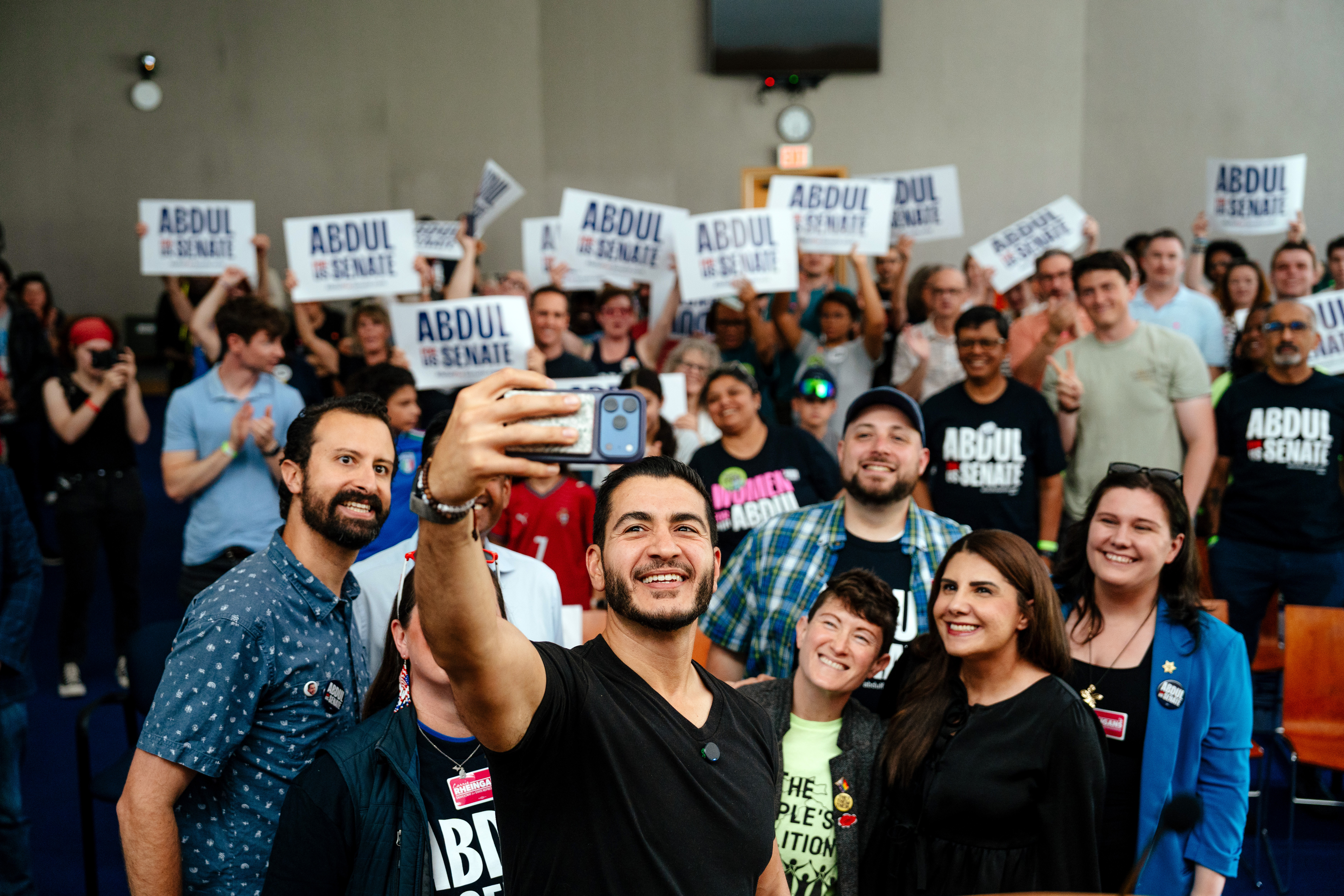
Abdul El-Sayed, the Democratic candidate for U.S. Senate in Michigan, who is trying to bring his party together after a divisive primary, at a June 28 campaign event in Ann Arbor, Mich.NICK HAGEN
Greene, who lives in Southern California and is best known by his handle @joshtheprogressive, is among a growing number of influencers who, at a moment when campaigns are increasingly willing to pay for online attention, appear willing to put their mouth where the money is.
As more people spend time scrolling on their phones, campaigns view these shows of support from influencers as a vital way to reach voters. They are also significantly less expensive than traditional advertising.
But unlike campaign mailers, billboards, and television spots, these messages fall into a legal gray area.
There are no federal regulations requiring disclosure of payments for political support on social media, and only a few states have such rules. That allows influencers, in most instances, to endorse candidates for a fee without ever disclosing those payments in their posts. Creators say some campaigns have even asked them to actively conceal the fact that they’re being compensated, making it impossible to know what’s genuine support — and what is pay-for-play.
In most cases, the only way a viewer would know an influencer is being paid would be to search a candidate’s campaign finance reports, as the New York Times did to discover the payments. Even then, such compensation is regularly obscured by funneling the payments through middlemen.
“It’s completely out of control,” said Suzanne Lambert, a progressive influencer and comedian with more than 1.3 million followers between TikTok and Instagram. She said that while she happily promotes candidates she likes, she has “never taken a cent” in exchange for an endorsement and worries that the practice distorts the democratic process. “People don’t know what’s real anymore,” she said.
Greene defended the idea of influencers getting paid for their work and noted that he accepts money only from candidates and campaigns that he would support anyway. “I turn down offers every single day because I’m not going to take money from anyplace if I don’t agree with it,” he said. (In the case of the Steyer campaign, Greene said he was initially critical but came to see him as the most viable candidate.)
Still, he suggested there was a need for straightforward and consistent rules on disclosure. “If anything, we do need more clear transparency laws so that creators like myself aren’t confused,” he said.
Coordinated networks
The phenomenon is bipartisan.
In June, Rep. Barry Moore of Alabama filed a complaint with the Federal Election Commission, alleging that at least eight social media accounts were being paid to attack his military record during the Republican primary. In April, a newspaper in Kentucky revealed what appeared to be a coordinated network of influencers boosting Nate Morris — at the time running in a Republican Senate primary — even though none acknowledged being paid for their efforts. Ken Paxton, the attorney general of Texas and the Republican nominee for Senate, benefited from a paid campaign on the social platform X when he was facing impeachment in the state several years ago.
But the question of paid influence has gained particular attention in recent months thanks to aggressive efforts by a handful of Democratic candidates to secure support from well-known influencers.
During California’s hard-fought primary this spring, Steyer’s campaign paid 17 influencers at least $5,000 apiece, including one, Carlos Eduardo Espina, who has over 14 million followers on TikTok and received a total of $400,000, campaign finance filings show.
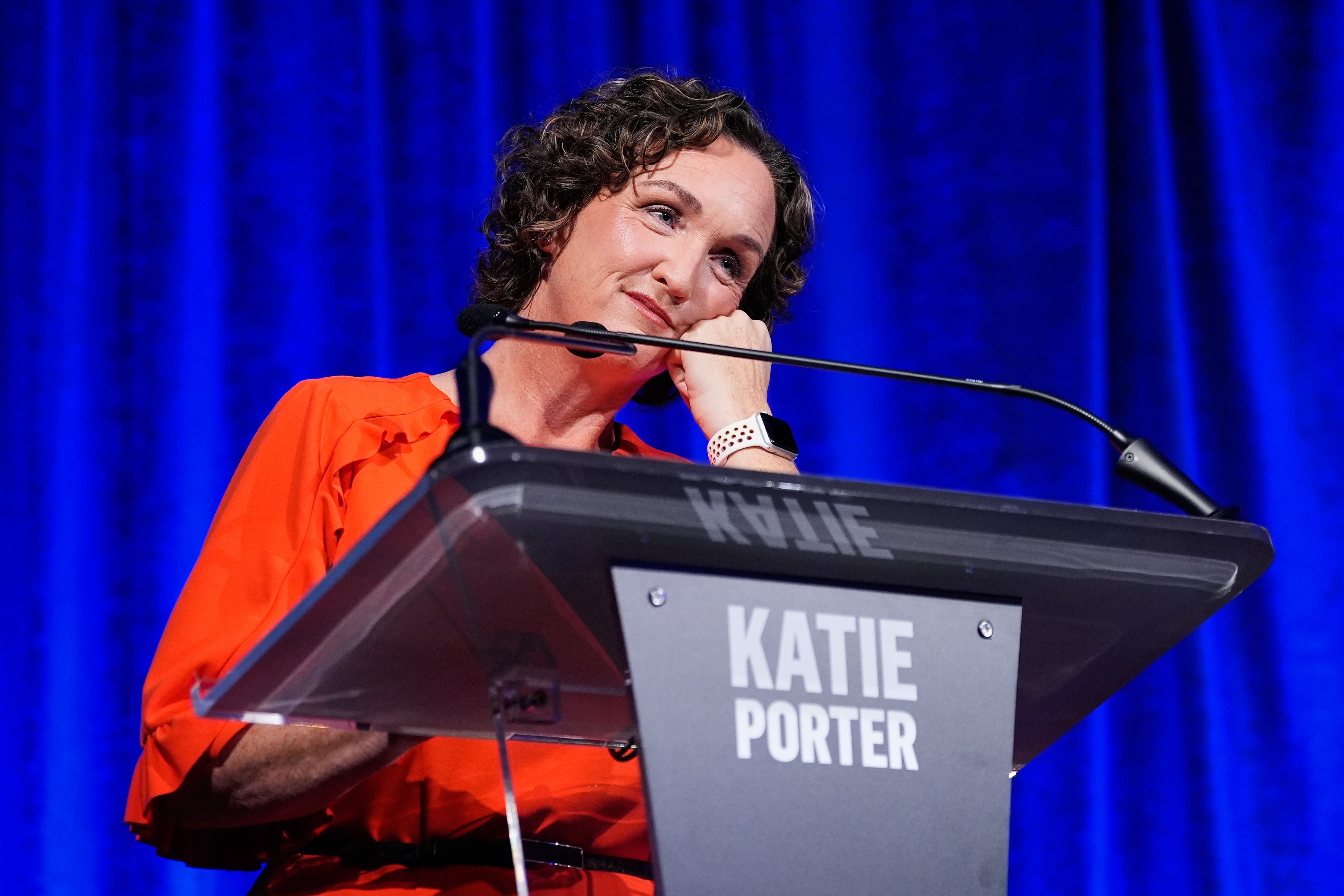
Katie Porter was one of several candidates to deploy paid influencers during the California gubernatorial primary in 2026.Godofredo A. Vásquez
Former Rep. Katie Porter, who also ran unsuccessfully for California governor, paid 12 influencers a total of $139,500. One of them, a lifestyle creator named Avery Cyrus with 9.5 million followers on TikTok, received $25,000 for what appeared to be a single post claiming “Katie Porter’s thing works.”
Cyrus’ post was deleted after the Times inquired about it. She did not respond to a request for comment made through the social media agency that represents her, UnderCurrent Media, but the firm’s CEO, Eric Bogard, said in an email that it “was not asked to oversee disclosure compliance, nor were we provided instructions concerning any required disclosures.”
Under California law, paid political posts on social media must be disclosed. A Times review found three posts supporting Porter on TikTok from influencers who were paid by her campaign that did not include any disclosures. In seven other instances, the disclosures could be found only after clicking through to a hidden section of TikTok for comments flagged “as potentially offensive or disturbing.”
Sander Jennings, an influencer based in Florida who was paid $22,000, said “the Porter campaign and I agreed to disclose the payment” in TikTok’s comments section in order to get around the site’s practice of removing paid political posts. He said he did not know why the disclosures ended up in the hidden section of the comments.
TikTok’s terms of service bar all paid political advertising, including “creators being compensated for making branded political content.” In an email, Porter said that “nothing was paid for and posted without review and coordination and compliance with all law.”
Other political efforts have employed a different strategy, contracting private firms that pay little-known content creators smaller sums to put out a large volume of posts. Those companies, known as user-generated content platforms, or UGCs, operate on the principle that carpet-bombing the internet with hundreds of nearly identical posts is more likely to generate viral content than paying one large influencer the same amount of money to make a single post.
This spring, a woman posted dozens of videos promoting Steyer in the California primary. Weeks later, she appeared in videos from a different account complaining about the cost of living “here in Michigan” and encouraging people to vote for Rep. Haley Stevens, El-Sayed’s primary opponent in the Senate race. Then she pivoted to a third account talking about affordability in Wisconsin.
Corporate records show that the woman, Paige Dunmeyer, actually lives in Kansas City, Mo., and is registered to work with a UGC company called SideShift. It’s not clear how much she was paid for her Michigan and Wisconsin videos, but she has earned more than $30,000 on SideShift for a variety of political and commercial campaigns, according to company records reviewed by the Times. Filings from Steyer’s campaign showed she received $1,320 for her efforts in that race. Dunmeyer did not respond to requests for comment.
A Times analysis found that at least 87 people registered to work with SideShift had made posts backing Steyer or Stevens, or participated in a third campaign to post video clips on TikTok supporting Rep. James Talarico, the Democratic Senate nominee from Texas. Most of the posts by those creators included no acknowledgment that money changed hands.
In a statement, SideShift said that it advised creators to follow applicable disclosure requirements, and called for more explicit laws governing how paid content is disclosed on social media.
“SideShift believes anyone can be a creator and that creators should get paid fairly for work they choose to do,” the company said.
In June, Kendall Boyle, a TikToker in Michigan with over 21,000 followers, was contacted by a social media marketing agency called Activate HQ offering her a paid opportunity to post videos about “how rising costs are affecting Michigan residents in real life.”
When she asked who was footing the bill, she was told it was Majority Forward, a dark money group linked to the Senate Majority PAC, a Democratic super PAC, email correspondence reviewed by the Times shows. Boyle said she was turned off by warnings in those emails from Activate HQ that “disclosure is not required and the paid partnership label will not be included in any posts” and also that Majority Forward “will not be mentioned” in her content.
“It was one of those things where something isn’t fitting right,” Boyle said.
In a statement, Majority Forward said the language in the email “explains disclosure requirements necessary under FEC rules, which were fully followed.”
Little regulation
Just four states have laws or regulations requiring influencers to disclose paid political messaging, but they apply only to state and local races, not federal contests. Although regulations for social media have been proposed multiple times to the FEC, it has never taken action. The Federal Trade Commission, which requires disclosure of paid commercial content on social media, makes an exception for political messaging.
Rep. Mark Takano (D., Calif.) introduced a bill in June that would require anyone paid by a candidate or political committee to clearly disclose that fact in the same way that traditional campaign materials are required to note such payments.
In an interview, Takano said he was inspired to draft the legislation after online sleuths revealed that numerous influencers had been making paid endorsements in the California governor’s race without proper disclosure, as required in that state.
“It’s unfair when an influencer is allowed to be silent or not transparent about money they’re taking from a candidate, making it seem like what they’re saying is authentic and not influenced by money,” he said.
Takano acknowledges that there are some potential loopholes in the bill. For instance: Campaigns often obscure payments to influencers by hiding them under layers of vendors and subvendors.
Porter, for example, hired Activate HQ for “influencer marketing services,” and it in turn paid 13 creators to bolster her campaign for governor. One of them, a political influencer in Los Angeles named Dash Dobrofsky, who also posted in support of Stevens in Michigan, received $15,500 from Porter’s campaign. Dobrofsky did not respond to a request for comment.
Steyer’s campaign, for its part, hired multiple digital strategy firms to manage social media, including one called Group Project, which hired a Los Angeles company, Gutsy Media, which paid Greene through UnderCurrent, which represents him.
Those payment chains are visible because California is one of a handful of states that require campaigns to report payments to subvendors. There is no such obligation for campaigns for federal office. “Every dollar spent by this campaign is publicly disclosed and available for anyone to see,” the Steyer campaign said in a statement.
‘Social media consulting’
State Rep. Chris Rabb at a July 28 event with U.S. Rep. Ro Khanna.Tom Gralish / Staff Photographer
Occasionally, campaigns or independent expenditure groups will reveal direct payments to influencers, such as the super PAC Freedom PA, which supported socialist candidate Chris Rabb’s successful bid to win a Pennsylvania House primary in May. It has disclosed payments to nearly 50 influencers for “social media consulting,” among them Greene, who received $750 and posted a video celebrating the candidate’s victory.
Other committees listing payments to Greene in federal filings employed less illuminating descriptions. Chuck Park, who unsuccessfully ran for Congress in New York’s Queens borough this year, listed a $300 disbursement to Greene as “staff salary.” Greene posted at least five videos promoting Park, none of which state that he had received payment.
Park, in an interview, said that Greene was in fact not employed by the campaign, but said that “our campaign absolutely leaned into new media” and that he spent time with Greene in Queens filming a series of videos.
Greene disclosed being paid on three of his posts about Steyer and told the Times that those videos were the only ones that he was specifically contracted by the Steyer campaign to produce. He said he didn’t receive compensation for prior posts about the candidate.
Greene has also supported Sen. Ed Markey (D., Mass.) in a competitive primary against Rep. Seth Moulton, and last month, he posted a video accusing Moulton of “posturing to be someone they really aren’t.” He posted a second video this month critiquing Moulton, this time for taking corporate political money.
Neither video includes disclosures, and FEC filings don’t show any payments to Greene related to Markey’s reelection bid. But a spokesperson for Commonwealth Together, a super PAC that is supporting Markey, said it had paid Greene $3,500 for “digital communications consulting” through his agency, UnderCurrent.
Greene, in a text message, acknowledged the payment to support Markey, saying he took it “because I believe he is by far the more progressive candidate in the race.”
The murkiness has left some in the political world uneasy. Last month Rynn Reed, the founder of Creator Congress, an organizing hub for influencers interested in politics, introduced a code of conduct for the group that would require creators to make clear when they’re paid, whether required by law or not.
“With no standards,” Reed said, “there’s going to be a race to the bottom.”