Category: Nation & World

  • Trump says U.S. has entered deal with Venezuela to take control of 65 billion barrels of oil reserves

    Trump says U.S. has entered deal with Venezuela to take control of 65 billion barrels of oil reserves

    WASHINGTON — President Donald Trump said Friday that his administration has entered a sweeping agreement with Venezuela that, if realized, could give the U.S. access to vast amounts of the South American country’s untapped oil reserves, at cost.

    Trump in a social media post announcing the agreement said it was negotiated by Secretary of State Marco Rubio, Defense Secretary Pete Hegseth, and Venezuela’s acting President Delcy Rodríguez.

    “The United States of America has just entered into an Agreement with the Country of Venezuela on, THE BIGGEST OIL DEAL IN WORLD HISTORY!” Trump wrote.

    Rodríguez’s government in a statement said the deal involves the development of 17 fields with a proven potential of 65 billion barrels. It said the agreement could draw $100 billion in investment into Venezuela’s oil industry and yield over $209 billion in taxes for Caracas.

    Rodríguez in a posting on Telegram predicted the deal “will have a significant impact on our nation’s revival.”

    The agreement allows for the United States to partner with an unnamed private operator in Venezuela to create a new private company to take hold of the reserves, according to a U.S. official familiar with the contours of the deal.

    The official, who was not authorized to comment publicly and spoke on the condition of anonymity, added that Rodríguez granted the company 100-year rights to develop the oil fields.

    The deal gives the United States 55% effective output of the new private company — including an ownership stake and rights to buy oil at cost. The company would be the second largest corporate holder of proven reserves after Saudi Aramco, according to the official.

    Trump is under pressure to show he’s lowering oil costs

    The announcement comes nearly nine months after the U.S. military at Trump’s direction carried out an operation to capture Venezuela’s then-President Nicolás Maduro and spirit him to the United States to face federal narcoterrorism and drug trafficking charges.

    Trump faces mounting pressure to address high gas prices as the war in Iran on Friday reached a six-month milestone with no conclusion in sight. The U.S. has tapped its strategic petroleum reserves, which in early August fell below 300 million barrels, down by more than 100 million barrels since the start of 2026.

    The U.S.-Israel war against Iran has led to a dramatic slowdown of Gulf oil moving through the Strait of Hormuz, which about 20% of the world petroleum passed through prior to the conflict.

    The average price of gas in the U.S. stood at about $4.09 a gallon on Friday, according to AAA. The average price was $3.21 at the same time last year.

    A significant drop in U.S. gas prices tied to the agreement should not be expected immediately. Experts have repeatedly warned that a substantial boost in Venezuelan oil production will not happen quickly as repairing and expanding infrastructure takes years and requires billions of dollars.

    Persuading big American oil companies to return the region could face headwinds given the political uncertainty and decades of badly damaged infrastructure.

    Days after the ouster of Maduro, Trump gathered oil executives at the White House and called on them to rush back into Venezuela. Executives expressed interest in the opportunity but there was also a measure of caution given their past experience in the country.

    Darren Woods, CEO of ExxonMobil, the largest U.S. oil company, said at that moment he saw the country as “uninvestable.”

    But Trump has insisted that his administration has brought a measure of stability to Venezuela.

    He has argued that Venezuela stole U.S. oil when former Venezuelan President Hugo Chávez moved decades ago to nationalize hundreds of foreign-owned assets, including those owned by American oil companies.

    Rodríguez, in one of her early moves after taking power, signed a law that opens the nation’s oil sector to privatization and reversed a bedrock tenet of the self-proclaimed socialist movement that has ruled the country for more than two decades.

    Rubio said on X that the agreement would usher in billions in private investment into Venezuela and lead to lower gas prices in the United States.

    “This deal is a huge win for both the American and Venezuelan people,” Rubio posted.

    The oil bought from the new company would go toward filling the U.S. strategic petroleum reserve and toward military use, according to the U.S. official.

    Venezuela has one of the largest oil reserves in the world, with an estimated 303 billion barrels of crude oil in the ground. That’s about 17% of the world’s supply, according to the U.S. Energy Information Administration.

    Unlike other parts of the world, where geologists have to search for untapped oil, the reserves under Venezuela’s soil are largely mapped and known, experts say. But because of dilapidated infrastructure, the country only produces about 1% of the world’s oil.

    Maduro remains jailed in the U.S. He has pleaded not guilty.
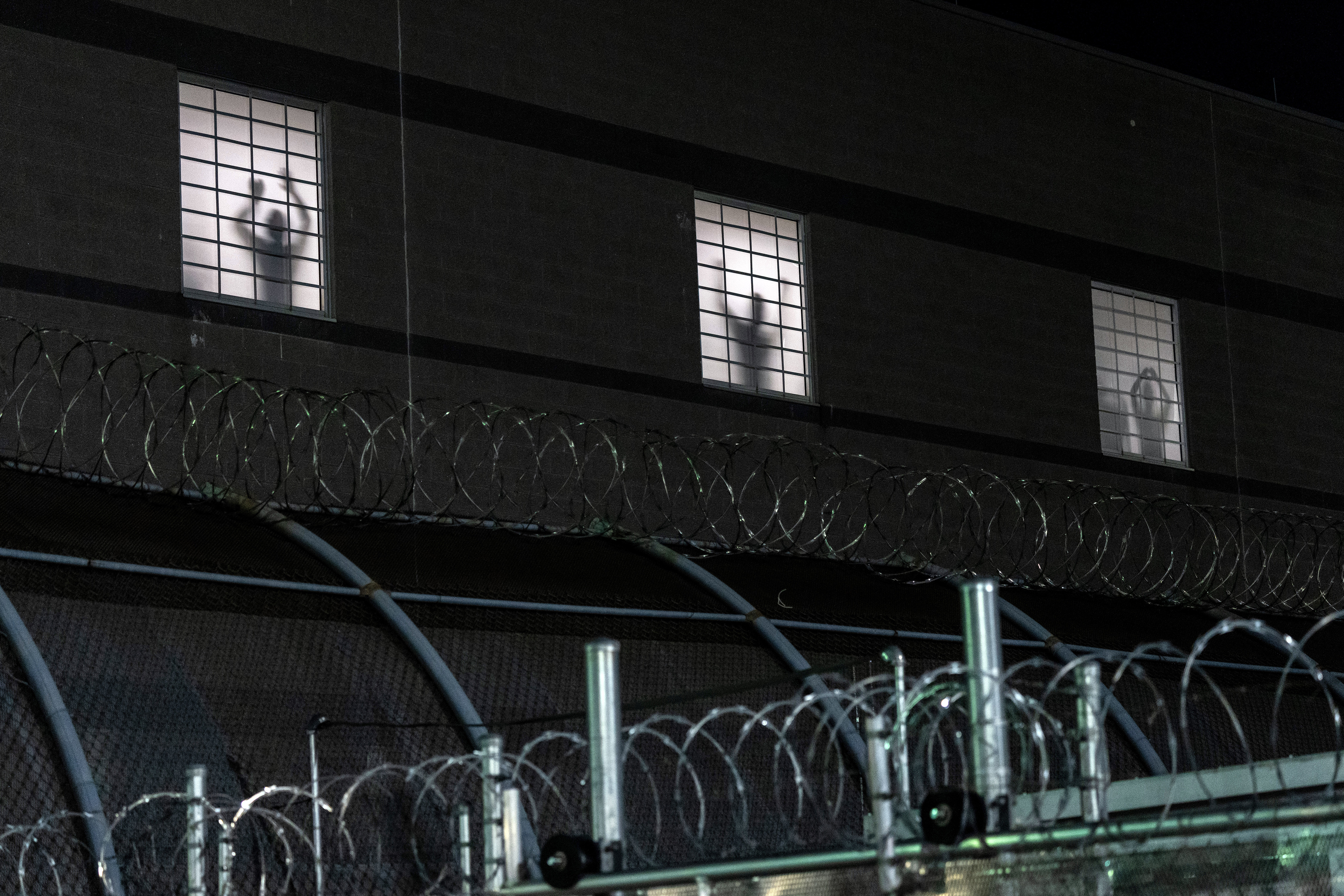
  • ICE’s policy to detain nearly all undocumented immigrants is unlawful, a Philly-based federal appeals court ruled

    ICE’s policy to detain nearly all undocumented immigrants is unlawful, a Philly-based federal appeals court ruled

    U.S. Immigration and Customs Enforcement’s controversial policy mandating detention for nearly all undocumented immigrants is unlawful, a split Philadelphia-based federal appeals court ruled Friday.

    In a 2-1 ruling, the U.S. Court of Appeals for the Third Circuit held that ICE violated the federal immigration law and the Fifth Amendment of the U.S. Constitution by holding undocumented immigrants who have been in the country for years in detention without a hearing. The policy, enacted last summer, has been a key part of efforts by President Donald Trump’s administration efforts to ramp up deportations across the country.

    The ruling will take immediate effect in Delaware, New Jersey, Pennsylvania, and the U.S. Virgin Islands.

    Undocumented immigrants who have lived in the United States for decades “are entitled to due process rights beyond those provided to noncitizens at the border,” Circuit Judge Patty Shwartz wrote in the majority opinion.

    The government has a legitimate interest in keeping dangerous noncitizens in custody, the judge said, but a “neutral decisionmaker” should make that assessment on a case-by-case basis — rather than a practice of detaining all undocumented immigrants indefinitely.

    Circuit Judge Theodore A. McKee, who was appointed by Bill Clinton, joined the opinion written by Schwartz, who was appointed by Barack Obama.

    In a dissent, Circuit Judge Jennifer L. Mascott said the ruling was inconsistent with federal immigration law.

    “A bond hearing focused on flight risk and dangerousness would generate irrelevant facts, not material to individual determinations,” wrote Mascott, who was appointed by Trump.

    The Justice Department disagrees with the ruling and believes its position will “ultimately be vindicated,” a spokesperson said in a statement.

    “This is a huge win for due process,” said Rachel Rutter, a lawyer and executive director of Project Libertad, a Phoenixville-based nonprofit that provides free legal and social services for migrant youths facing deportation. “The Third Circuit has joined a chorus of other circuit courts striking down the Trump administration’s inhumane practice of mandatory detention of people who have spent years building lives in the U.S.”

    The decision “reaffirms decades of case law stating that these people have the right to challenge their detention through a bond hearing,” Rutter said.

    Nine other circuit courts have issued rulings on mandatory detention, and seven found the policy unlawful. The Justice Department petitioned the Supreme Court in June, asking the high court to resolve a split it said was “disrupting the orderly administration of immigration law.”

    The mandatory detention policy was rolled out by the Trump administration last year, and has led to an avalanche of lawsuits by immigrants who challenged their incarceration and demanded a bond hearing.

    These requests, known as habeas corpus petitions, were rare not long ago, but since the policy change, they’ve dominated the docket in Philadelphia’s federal courthouse. More than 1,100 such petitions have been filed since September. Between 2020 and 2024, by contrast, only 11 such suits were filed.

    Philadelphia’s federal judges have granted these requests at near-universal rates, often chastising ICE for continuing the practice despite the overwhelming judicial pushback.

    The Third Circuit case involved two undocumented immigrants who have been in the United States for over a decade and were picked up by ICE after the mandatory detention policy took effect. Neither has a criminal history. Federal judges in Philadelphia ordered their release, finding their detention was unlawful.

    Christopher Casazza, a Philadelphia-based immigration lawyer who represented one of the immigrants at the center of the case, called the court’s decision a “great ruling that will help thousands of people.”

    The benefit for immigrants, he said, would come primarily in two forms: Anyone still being detained in the region after being arrested under the Trump administration policy can now apply for a bond hearing. And going forward, anyone who is arrested will be able to ask an immigration judge for bond.

    That doesn’t guarantee release, Casazza said, but it provides people the opportunity to make a case to an immigration judge, as had been the practice before the new policy took effect after Trump began his second term.

    “We’re going back to the rule of law that’s been the case for 30 years,” he said.

  • Ebola outbreak in eastern Congo spreads to 2 new health zones with a total of 60 areas now affected

    Ebola outbreak in eastern Congo spreads to 2 new health zones with a total of 60 areas now affected

    BUNIA, Congo — The fastest-growing Ebola outbreak in history has spread to two new health zones in eastern Congo, with a total of 60 now affected, according to the latest government figures published on Friday.

    The two new zones affected are Biena and Manguredjipa in Congo’s North Kivu province, where the case fatality rate is much higher than the overall rate of 48%, due in part to delayed response efforts, according to Congo’s Ministry of Health data.

    It said the outbreak has recorded 5,794 confirmed cases, including 2,786 deaths, as it is spreading at an unprecedented speed, faster than efforts to track and slow it.

    The outbreak is spreading under extremely difficult conditions, fueled by insecurity, displacement, a health workers’ strike, and intense population movements. The World Health Organization has said that it remains out of control and is on track to surpass the 2014-2016 West Africa Ebola outbreak, the deadliest on record, which killed more than 11,000 people, primarily in Guinea, Liberia, and Sierra Leone.

    Aid group Doctors Without Borders said on Friday it had opened a new treatment center in Beni in North Kivu to enable a faster response in what it said was one of the hardest-hit areas.

    While the large majority of cases are concentrated in northeastern Ituri province, North Kivu has an Ebola fatality rate of close to 69%, one of the highest in the country, according to the latest government figures.

    The new center “enables the rapid treatment of patients, strengthens contact tracing, and supports the health authorities in their efforts to contain the spread of the virus,” Doctors Without Borders said in a statement.

    On Thursday, Congo began vaccinating health workers and other front-line workers with the Ervebo vaccine that was effective in past Ebola outbreaks caused by a different, more common type called Zaire.

    Clinical trials are underway to find a licensed vaccine for the rare Bundibugyo virus that is causing the current outbreak and which has no approved vaccines or treatments.

    Although the current outbreak was declared in mid-May, officials believe it had been spreading since February. It has spread from three health zones to nearly 60, with most cases and deaths occurring outside the network of monitored contacts and within communities.

    Efforts to bring the outbreak under control — from limited public gatherings to social distancing and airport closures — have disrupted life in the six affected provinces, particularly Ituri, which has been ravaged by rebel violence.

    The government has introduced measures, including installing health and sanitary equipment at some locations, but advocacy groups say more needs to be done to build trust within the community.

    While neighboring Uganda declared itself free of Ebola last month, the risk of further cross-border spread remains, WHO said Wednesday.

    WHO expert Marie Roseline Belizaire said that the Central African Republic is now considered the country at highest risk of spillover, followed closely by South Sudan, as the outbreak in eastern Congo has expanded toward border areas.

  • Israeli strikes kill 5 in Gaza and 3 in West Bank

    Israeli strikes kill 5 in Gaza and 3 in West Bank

    Israeli airstrikes killed five people in Gaza and three in the West Bank on Friday, despite a fragile ceasefire brokered by the United States.

    Meanwhile, thousands of sailors remain stranded in the Persian Gulf by the Iran war, while Iran is touting an energy deal with Russia and the U.S. has imposed restrictions on a major Egyptian bank for its ties with Iran.

    Israeli strikes in Gaza kill 5

    Israeli strikes in Gaza have killed five people, local hospital officials said Friday.

    Two brothers and another relative died in a strike on the family’s home outside Khan Younis, officials at Nasser Hospital said. Two separate Israeli strikes killed one person each in Gaza City, according to health officials at Shifa hospital.

    Israel’s military confirmed the Gaza strikes but said it was not aware of the one in Khan Younis.

    The five deaths are among more than 1,300 Palestinians killed in airstrikes since an October ceasefire deal, Gaza health officials say.

    Attack kills 3 in Jenin

    Israel’s military said it killed three Palestinians in an airstrike in the West Bank city of Jenin on Friday, describing one of the dead as a Hamas operative and the two others as accomplices.

    The military identified one of the targets as Qais Bitawi who was alleged to be “involved in advancing significant terrorist activity.” The Palestinian Ministry of Health confirmed Bitawi had been killed, along with two others. Hamas condemned the strike as a “heinous crime.”

    Violence has escalated in the West Bank, where at least 87 Palestinians have been killed in attacks while three Israelis have been killed by Palestinians in 2026.

    Iranian leader bans actions undermining national unity

    Iran’s leader, Mojtaba Khamenei, on Friday declared that actions undermining national unity in the political, security, cultural, social, or economic spheres are prohibited.

    He warned that even measures with some support could ultimately be harmful if their broader social consequences are ignored.

    “Any statement that creates despair or weakens national and public motivation,” as well as what Khamenei called false divisions such as “war or negotiations,” “consensus or radicalism,” and “compromise or warmongering,” could damage the country.

    U.S. diplomats return to Mideast embassies

    American diplomats and some of their family members are beginning to return to U.S. embassies in the Middle East after many were ordered to leave their posts during the early days of the war with Iran.

    On Friday, the embassies in Doha, Qatar; Kuwait City, Kuwait; and Manama, Bahrain, announced they would allow some family members of diplomats to return.

    Similar measures were implemented earlier this week to all family members of U.S. government employees in Israel as well as those who are over 21 to Beirut, Lebanon.

    Iran’s president says negotiations between Iran and U.S. needed

    Iranian President Masoud Pezeshkian said Friday that neither Tehran nor Washington can achieve all of its demands and that negotiations are needed to bring stability and calm, state television reported.

    Pezeshkian said Iran would remain committed to the Islamabad memorandum if the United States upheld its own commitments under the agreement, adding that negotiations could then continue toward a broader resolution.

    He also criticized hard-liners inside Iran who oppose an agreement, favor continuing the war and argue that sanctions have had little effect on the country.

    Thousands of sailors stranded by Iran war

    The U.N.’s maritime agency said Friday that 19 seafarers have been killed and at least 6,000 remain stranded on hundreds of ships unable to leave the region since the start of the Iran war on Feb. 28.

    There have been at least 70 attacks on international shipping in the Persian Gulf, according to the International Maritime Organization.

    About 20% of the world’s traded oil and natural gas passed through the vital commercial waterway at the mouth of the Persian Gulf before the war.

    Iran and Russia look to revive energy deal

    Iran’s ambassador to Russia on Friday said the two countries are seeking to deepen links between their energy grids by reviving a plan that dates to 2022, according to Iranian state media.

    Umud Shokri, a fellow at George Mason University, said the plan calls for piping 55 billion cubic meters of Russian gas annually into Iran, via Azerbaijan.

    He said that would help Iran weather U.S. economic pressure by alleviating seasonal shortages of gas, though there are significant hurdles, as building out the infrastructure would be expensive and time-consuming.

    U.S. imposes restrictions on Egyptian bank

    The Trump administration is taking steps to limit an Egyptian bank’s operations in the United Arab Emirates.

    Banque Misr, Egypt’s second-largest bank, is accused of serving as an economic lifeline to Iran’s leadership. But under a new rule proposed by the U.S. Treasury, the bank’s Emirati branches would be severed from access to the U.S. financial system.

    The Central Bank of Egypt said the restrictions are limited to Banque Misr’s branches in the UAE and relate to dollar transfers only. No other Egyptian bank is affected.

    Iran objects to U.S. economic pressure

    Iran’s Foreign Ministry on Friday condemned a new round of U.S. economic measures against the country, calling them “economic terrorism” and saying Tehran would use all available means to counter them.

    The ministry said the sanctions violated international law and called on other countries to refrain from implementing them.

    Earlier this week, U.S. Treasury Secretary Scott Bessent vowed to fully sever Iran from the global economy and threatened countries that continue to do business with Iran with secondary sanctions.

    Finland to stop providing U.N. agency aid for Palestine

    Finland said it will not extend an agreement to provide humanitarian aid with the United Nations agency for Palestinian refugees, or UNRWA.

    Israel’s Foreign Ministry, which has accused the U.N. agency of being a “hotbed of terrorism,” welcomed the news. UNRWA did not immediately respond to a request for comment.

    Finland provided UNRWA with 5 million euros ($5.8 million) annually under a multiyear deal set to expire later this year. The country said aid to Palestinian territories would instead be provided through other channels, such as the U.N.’s World Food Programme.

    U.S. revokes visa of former Iraqi finance minister

    The Trump administration has revoked the U.S. visa of a former Iraqi finance minister who was honored in 2022 with an International Women of Courage award by the State Department.

    The department said Friday it had revoked the visa of Taif Sami Mohammed Al Shakarchi, who served as Iraq’s finance minister from 2022 until July and earlier this month when she was implicated by Iraqi authorities in a possible corruption scheme.

    The department said her visa was revoked after the FBI added her to its “terrorism watchlist.” It was not clear why she had been added to the watchlist but officials said she had left the United States before her visa was revoked.

  • Six months in, Iran’s regime stands, U.S. goals remain unmet

    Six months in, Iran’s regime stands, U.S. goals remain unmet

    BERLIN — It was supposed to be quick.

    Still, six months after the U.S. and Israel launched massive airstrikes on Iran, the conflict drags on. The Trump administration has replaced its military war with an economic one, but the result is likely to be no different, analysts said, with a lack of American clarity about goals, a decline in U.S. credibility, and a strategic defeat.

    One thing remains constant, however. The ordinary people of Iran are bearing the brunt of the war, victims of both the United States and their own leaders.

    On the first day of the war, Feb. 28, President Donald Trump promised Iranians that “the hour of your freedom is at hand.” Six months later, his administration is trying to impoverish them further, hoping against hope that they will revolt against a repressive, militarized regime and overthrow it.

    The Iranian leadership, increasingly dominated by military men, sees its own survival as the nation’s, and it considers the sacrifices of ordinary Iranians as a necessary act of patriotism and even martyrdom. It has been ever more ruthless in stamping out the slightest signs of dissent.

    It is hard to dress up what has clearly been a U.S. failure to bend Iran to its will, despite the might of the combined U.S. and Israeli militaries. Not only has the Islamic Republic survived, but it effectively controls the Strait of Hormuz. It has strengthened its influence in the region, with even the countries it was bombing a few months ago trying to reinvigorate ties with Iran.

    “The war has failed to deliver U.S. objectives,” said Sanam Vakil, the director of the Middle East and North Africa program at Chatham House.

    Suzanne Maloney, an Iran expert and head of foreign policy at the Brookings Institution, judged the war a failure. “We did a lot of damage to Iran, but they have come out stronger than before,” she said. Iran’s neighbors have decided they must find a modus operandi with an Islamic Republic that is not going away.

    U.S. credibility among allies has suffered along with Trump’s own reputation for avoiding costly, interminable wars in the Middle East and promoting “affordability” at home. And it has made his promise to liberate ordinary Iranians look hollow.

    “This war has really overtaken the Trump presidency,” Maloney said.

    The regime survives

    Operation Epic Fury began with a joint U.S.-Israeli surprise attack on Iran, which killed the supreme leader, Ayatollah Ali Khamenei, and many of his officials, while badly wounding his son and now successor, Mojtaba Khamenei.

    Weeks of intense bombing destroyed much of Iran’s air force and navy and badly damaged its missile program. But the population did not rise up and the leadership did not fracture.

    Iran’s military restored many of its missile launchers and attacked key U.S. allies in the region as well as U.S. bases, which were inadequately defended. It effectively shut down the Strait of Hormuz and caused global economic disruption.

    Several thousand Iranians, including children, have died — the numbers are hard to verify — and 18 U.S. service members.

    The original Operation Epic Fury has been replaced with what Treasury Secretary Scott Bessent on Monday announced as Operation Economic Outcast, designed to isolate Iran further and crash its badly damaged economy.

    “This is a sustained campaign to collapse every last option for Iran,” Bessent said. “The campaign we begin today will gather force with every day that follows, and it will not end until this regime stands alone.”

    Despite rhetorical flourishes about D-Day and the fall of the Berlin Wall, Bessent did not indicate how long this economic war will last, what instruments it will use, or what it aims to achieve.

    Is the U.S. goal once again the collapse of the regime? Or to force the opening of the Strait of Hormuz? Or to bring a more desperate Iran back to the negotiating table to reach a sustainable settlement of both the strait and Iran’s nuclear program?

    “There is no clear articulation of America’s goals,” said Esfandyar Batmanghelidj of the Bourse & Bazaar Foundation, a research organization based in London. “But if you don’t define behavior change, sanctions as coercion fail.”

    Iran, already the target of many thousands of sanctions, is considered unlikely to surrender because of a few more. More likely, analysts said, is that the country will respond in time by escalating its attacks on ships in the Persian Gulf and on U.S. allies, which could produce another round of U.S. bombing.

    Washington is betting it can achieve through intensified economic strangulation what six months of war could not, said Sina Toossi of the Center for International Policy, a Washington think tank.

    Washington is trying to do that by demanding international compliance even as its relations with much of the world grow more coercive and transactional, with more countries choosing to ignore Trump’s dictates.

    “The capacity to hurt Iran is clear,” Toossi said. “The path from pain to capitulation or collapse is not.”

    A risky stalemate

    With U.S. objectives unclear, the confusion is real in Iran, too, said Ali Vaez, the Iran project director for the International Crisis Group. They will wonder, he said: “Does the U.S. want to achieve collapse, capitulation, or compromise?”

    Given that Iran’s leaders see the effort to strangle them as another form of warfare, Vaez said, the new U.S. strategy has two risks. If it fails, the only option left is to return to military escalation. And if it works, it may lead Iran to escalate to break the U.S. naval blockade.

    “In either case, it won’t produce what the administration seems to want, which is to use sanctions as an alternative to war,” he said. “It’s more likely to be a prelude to another round of military warfare.”

    Iran’s public-facing leadership, including President Masoud Pezeshkian and Mohammad Bagher Ghalibaf, the parliamentary speaker, has been blunt about the economic imperatives to ending the war. They have warned of the consequences of hungry people and economic collapse.

    They nonetheless take a consistent line on negotiating with Washington, insisting on a return at minimum to the June Memorandum of Understanding, which Trump signed but now says is “over.” They also continue to negotiate with Oman about managing the strait in a way Washington is unlikely to accept.

    But no matter how much Iran concedes, there is a widespread mistrust that Trump will deliver on economic benefits and sanction relief. Despite the dire economy, the leadership appears united on retaining control of the strait.

    The supreme leader, Ayatollah Mojtaba Khamenei, is seen as closer to the Revolutionary Guard and less risk-averse than his father.

    Some wonder if Khamenei is even alive; he has not been seen in public and the last communiqué from his office was on Aug. 9.

    For the moment, the situation is relatively static, a sort of phony war, with neither side firing at each other and relatively loose blockades of the strait in both directions, allowing some oil to escape.

    The new strategy of enhanced economic strangulation has the benefit of being gradual and hard to monitor, lowering the temperature on the conflict, which may help Trump and the Republicans in the run-up to November’s midterm elections, while promising that victory, really, is just around the corner.

    But the stalemate is also risky, said Ellie Geranmayeh, an Iran expert with the European Council on Foreign Relations. “There is an increasing view in the White House that you can’t deal with this Islamic Republic,” she said. “It’s a dangerous moment, with both Tehran and D.C. concluding that no deal is possible with the other.”

    Jeremy Shapiro, a former State Department official now at the European Council on Foreign Relations, remains puzzled why Trump has not taken any of the available off-ramps to ending an enormously unpopular war at home. By pushing even more economic sanctions, he said, Trump officials “are pretending they’re still fighting instead of pretending that they’ve won” — or admitting that they’ve lost.

    As ever, Iran’s leadership won’t pay the cost, Shapiro said, it will be its people that do.

    This article originally appeared in the New York Times.

  • Trump administration looks to give a swath of Yosemite park to developer

    Trump administration looks to give a swath of Yosemite park to developer

    The Trump administration has proposed giving a small parcel of land in Yosemite National Park in California to a private developer, according to federal officials and documents reviewed by the New York Times.

    The potential deal, which has not yet been finalized, has alarmed conservationists and former federal officials, who say that Yosemite, the crown jewel of the nation’s park system, should be off-limits to development.

    The proposal, details of which were first reported by the news outlet NOTUS, calls for transferring a small parcel just inside the western boundaries of Yosemite to a Las Vegas-based company. That firm wants to build a road and develop two 40-acre parcels near the park, according to documents submitted to Congress this year and reviewed by the Times.

    In exchange, the company would purchase land of equivalent value, either near Yosemite or elsewhere in California, and hand it over to the National Park Service, the documents show.

    The company is controlled by Kingsbarn Realty Capital, a real estate private equity firm. The firm bought the parcels in 2024 for $4 million through a limited liability corporation called Sanctuary at Yosemite, property records show.

    “This is so ridiculous, it makes you sick,” said Don Neubacher, a former supervisor at Yosemite who is now on the executive council of the Coalition to Protect America’s National Parks, a nonprofit group. Neubacher said a similar proposal had been raised in the early 2000s by previous owners of the parcels and was rejected, first by the park service and later in court.

    The proposed swap would effectively provide Kingsbarn with a shortcut into the park.

    Aubrie Spady, a spokesperson for the Interior Department, the parent agency of the park service, said in a statement that no final decision had been made.

    “Any land exchange or access proposal involving National Park Service lands would be subject to all applicable federal laws, regulations, and Departmental policies, including required environmental review and public notification processes,” Spady said.

    The Interior Department notified Congress this year that it was considering paying for the exchange via the Land and Water Conservation Fund. The notification drew criticism from Democrats who said the fund was intended to pay for conservation programs on public lands.

    Sen. Adam Schiff (D., Calif.) in a statement Friday called Yosemite “one of California’s natural wonders.”

    “This administration appears hellbent on moving forward in the face of opposition from the public, Congress, and the courts,” he said. “But the only thing the administration cares about is whether there is money involved.”

    This article originally appeared in the New York Times.

  • Trump administration starts building border wall project in Arizona over tribe’s objections

    Trump administration starts building border wall project in Arizona over tribe’s objections

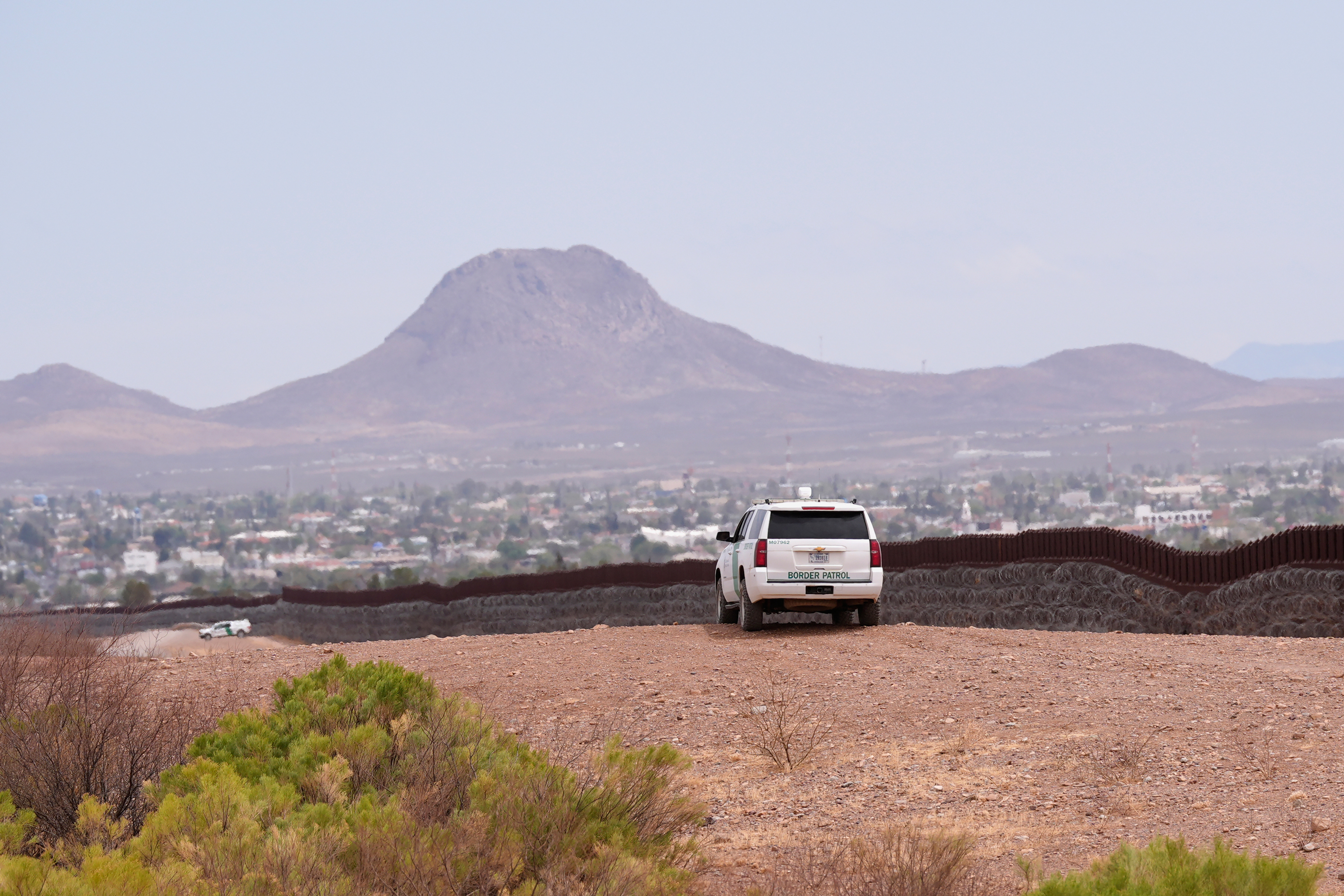
    PHOENIX — The Trump administration has begun work on a project to build a stretch of border wall in southern Arizona through part of a Native American tribe’s reservation, pushing ahead with one of its signature projects despite protests from the tribe.

    U.S. Customs and Border Protection says the area is a dangerous smuggling route and that building the wall will close a longstanding security gap. But members of the Tohono O’odham Nation, whose membership spans both sides of the U.S.-Mexico border, have accused the administration of trespassing and say the construction will damage land sacred to the tribe.

    The wall segment is part of a $46 billion effort by the Trump administration to fill the border with 30-foot-high steel bollard walls, vehicle barriers, and technology designed to stop undocumented immigration and smuggling.

    But as building efforts have ramped up, the administration has run into opposition from landowners, environmental groups, and Native American tribes who say construction is violating property rights and desecrating sacred Indigenous sites.

    The Tohono O’odham Nation said in a statement Tuesday that about 20 Customs and Border Protection officers, working with contractors, went onto the tribe’s land early that morning to begin construction.

    Drone videos published by nation officials show roughly 14 vehicles and an industrial drill at one of the sites.

    A federal judge permitted the government to move forward with construction earlier this month, but the tribe says the contractors are violating tribal codes and trespassing to access the border wall site.

    The Tohono O’odham Nation, which has 37,000 members including thousands who live in Mexico, sued the federal government in June in an attempt to block construction of the border wall. The tribe argued that the wall would cause “significant devastation” on the reservation, including the destruction of mountain peaks sacred to the tribe, and would alter boundaries of their nation.

    U.S. District Judge Richard Leon in Washington, D.C., an appointee of former President George W. Bush, ruled in favor of the government, noting that the border wall would be built on a 60-foot-wide buffer zone of federally owned land called the Roosevelt Reservation.

    “Defendants have not yet articulated plans to construct outside the Roosevelt Reservation,” the judge wrote in his opinion.

    The Tohono O’odham Nation said that even if construction were contained to the Roosevelt Reservation, driving onto tribal land to access the area still constitutes trespassing.

    “The contractors, who are on the Nation illegally, were accompanied by agents as they worked on three separate locations near the border with drill trucks to conduct soil sampling and other activities,” tribal officials said in a statement.

    The CBP agents were masked, armed, and set up a vehicle blockade to stop tribal police from removing the contractors, according to Tohono O’odham officials. The nation had set up “No Trespassing” signs before Tuesday.

    So far, no physical confrontations between police or members of the Tohono O’odham Nation have been reported.

    CBP defended the need for the wall in a statement Tuesday, saying the desert spanning the Tohono O’odham Nation is a corridor for drug smuggling.

    “The project will close one of the most dangerous smuggling and trafficking corridors on the Southwest border: remote desert that has facilitated decades of drug loads, migrant deaths, and cartel activity,” said CBP Commissioner Rodney Scott.

    Tribal officials said they’re exploring further legal actions in an effort to remove contractors.

    SLSCO Ltd., the Texas-based construction company building the section in Arizona, has secured over $390 million in funding from the Department of Homeland Security to build the border wall since 2023.

  • How ICE is arresting soaring numbers of immigrants with no criminal record

    How ICE is arresting soaring numbers of immigrants with no criminal record

    U.S. Immigration and Customs Enforcement is detaining more immigrants who do not have a criminal record than at any other point since President Donald Trump returned to the White House last year, according to newly released government data.

    Trump officials have consistently stated that their goal is to keep Americans safe by targeting enforcement against “the worst of the worst” — undocumented immigrants who have committed violent crimes or repeated offenses. The new data, however, shows that more than half of all the people ICE arrested in July did not have a criminal record, the highest single-month total since January 2025.

    The shift toward targeting more people with civil immigration violations but no criminal charges has helped ICE achieve record numbers of overall arrests. In all, federal authorities detained more than 49,000 migrants in July, the highest total during Trump’s second administration, according to a Washington Post analysis of government data. The ICE arrest data was made public by the Deportation Data Project, an outside group that obtained the material though a Freedom of Information Act lawsuit.

    Immigration lawyers and analysts said the numbers reflect the Department of Homeland Security’s evolving approach as officials rush to fulfill Trump’s goals for the mass deportation campaign and more people lose protections shielding them from removal. The administration has canceled temporary protected status for hundreds of thousands of immigrants who fled dangerous countries and also arrested people with pending asylum claims and green-card applications who were not previously a target for enforcement.

    “There is pressure on ICE to arrest more people and that leads them to stop trying to go after the worst of the worst and arrest the person who is easiest to locate on any given day,” said Julia Gelatt, an analyst at the Migration Policy Institute. “When Americans think of who they’d like to see ICE focus on, they think bad guys — murders and others serious criminals. They do not think about people who broke immigration laws and are otherwise law-abiding.”

    In an email response to questions from the Post, a DHS spokesperson said the information used for this story has “not been reviewed, audited, or given context” and said it is being used to “peddle a false narrative.” The spokesperson claimed that nearly 70% of the people ICE has arrested have criminal convictions or pending criminal charges, a figure the agency has cited repeatedly since last year.

    “Every single one of these individuals committed a crime when they came into this country illegally,” the spokesperson said.

    In fact, many of those detained entered the country legally, for example, on a visa that has since expired. Those individuals are generally facing civil immigration violations, not criminal charges, and they have increasingly become a focus of enforcement operations.

    ICE has steadily ramped up detentions since arrests dropped below 30,000 in February amid public outrage over the killings the previous month of two American citizens, Renée Good and Alex Pretti, by immigration officers in Minneapolis.

    Since then, the number of people being detained has risen each month, climbing to more than 42,500 in June and increasing again in July, the federal data shows.

    The jump coincides with a major expansion of DHS’ enforcement capabilities made possible after Congress last year approved more than $170 billion in additional funding. The administration has hired thousands of additional ICE and Border Patrol officers, purchased new surveillance technology, and added more immigrant detention facilities.

    The administration has also been expanding where and how it makes arrests. New partnerships with scores of local law enforcement agencies, many in conservative areas of the country, have allowed ICE to deputize officers and assist them in making immigration arrests.

    “The spikes are happening at airports and everywhere they can,” said Margy O’Herron, an expert on national security and immigration law at the Brennan Center for Justice. “They are canceling visas for people who apply for asylum, folks who had some protection from deportation before — people who the government knows who they are and knows where they live.”

    ICE has arrested more than half a million people since Trump returned to office, and nearly 40% do not have a criminal record. As of Aug. 6, ICE had detained more people without a criminal record this year than in all of 2025. The administration has also already exceeded the number of people ICE detained during all of President Joe Biden’s presidency, as well as Trump’s first term and President Barack Obama’s last.

    Art Arthur, a fellow at the Center for Immigration Studies, which advocates for stricter immigration controls, said the added resources at DHS have led to more arrests. He noted that Homeland Security Secretary Markwayne Mullin has increased efforts to persuade undocumented immigrants to voluntarily leave the country, including through cash stipends of $2,600.

    Immigrants would not be willing to take that offer if there was no legitimate threat of being arrested and deported, Arthur said.

    “You’re not going to get noncriminal aliens who have been here three years to leave unless there is a threat of enforcement,” he said.

    The killings of Good and Pretti in Minneapolis led to a sharp drop in public support for Trump’s deportation agenda. The backlash contributed to the president’s decision to install Mullin as Homeland Security secretary. He replaced Kristi L. Noem, whose leadership was marked by a spate of officer-involved shootings and large-scale ICE and Border Patrol raids in U.S. cities.

    Mullin has pursued what he characterized as a quieter approach that is focused less on showy displays of force.

    The White House has pressed DHS to arrest at least 2,000 migrants a day, a target ICE achieved on four days over the summer. On July 13, an ICE officer fatally shot Johan Sebastián Durán Guerrero, a 25-year-old Colombian immigrant, during a traffic stop in Biddeford, Maine.

    ICE has maintained a high pace of arrests since then, averaging nearly 1,500 detentions a day, the data shows.

    Democrats have assailed the administration’s approach, saying federal officers have terrorized immigrant communities, including children and the elderly. Maryland Gov. Wes Moore (D) said Tuesday that “a mere fraction” of more than 1,300 people detained by ICE in the past two weeks have criminal records.

    Moore said his state would work with the federal government to apprehend violent offenders. But he said the broad targeting of immigrants has undermined the economy and frayed trust between immigrant communities and law enforcement.

    “It does not make us safer,” Moore said in a statement.

    In six states, arrests of immigrants without criminal records have more than doubled thus far in 2026 compared to all of last year. The largest jump has come in Maine, where ICE arrested 125 people in 2025 and already has detained about 330 this year. Arrests in Alabama, Wyoming, Idaho, Mississippi, and Missouri also more than doubled.

    Arrests decreased in more than 20 states, with the largest decline coming in the District of Columbia. ICE surged operations in the nation’s capital last year and, all told, arrested 1,200 people without criminal records in 2025. This year, ICE has thus far arrested 72 such immigrants in the city.

  • ‘The sauna is hot and uncomfortable’: Vote on joining EU makes Iceland sweat

    ‘The sauna is hot and uncomfortable’: Vote on joining EU makes Iceland sweat

    TALKNAFJORDUR, Iceland — Gudlaug Bjornsdottir had warned her family. If the talk over the dinner table turned to Iceland’s coming referendum on opening talks to join the European Union, she would get up and leave.

    Polls show a starkly divided country heading into the vote Saturday. Many people have strong opinions about whether Iceland should maintain its hard-won independence or seek the stability and protections that would come with EU membership.

    So perhaps inevitably, despite Bjornsdottir’s admonitions, the dinner conversation in the tiny town of Talknafjordur one recent Friday eventually landed on the referendum. “I am leaving, like it or not,” Bjornsdottir stood and said, a wineglass still in her hand.

    Her family promised not to mention it again, and she returned to her seat.

    This exchange, in Iceland’s remote northwest, encapsulated an unusually heated debate in this proudly agreeable nation over what could be a watershed moment for its 400,000 people. If the vote passes, the country will start a yearslong process of EU accession negotiations. A second referendum, on whether to actually join the bloc, would be held once a deal was reached.

    Many Icelanders have spent months wrestling with how to speak with each other about the divisive choice.

    “It has become something of a ‘hot potato,’” Arni Ingolfsson, a 55-year-old program manager at a tech company, wrote in an email. He said he was avoiding talking to his co-workers and even a close relative about the issue.

    “It’s bombarding everyone, from every angle — everywhere,” said Lisa Margret Gunnarsdottir, 31, an advocate for Icelandic students. She said that there were extreme disagreements in her immediate family and that no one talked about anything else.

    “The sauna is hot and uncomfortable these days,” said Greta Gudjonsdottir, 57, who works in tourism. She said she had not yet decided how she would vote but just wanted the whole thing over with.

    With this vote, Icelanders are trying to figure out the best way forward in an increasingly precarious and divided world. For years, they had little reason to doubt that their country would remain safe, stable, and sovereign. Then NATO, to which Iceland has long entrusted its security, threatened to crack under pressure from President Donald Trump, while wars, climate change, and tariffs shook the global economy.

    Some “yes” voters say that Iceland should seek strength in numbers — and the financial stability of being part of one of the world’s biggest economic blocs — by moving toward joining the EU.

    Many opponents worry that membership in the bloc would cost Iceland its autonomy on several fronts. Icelanders are acutely aware that their country only gained full independence in 1944, after centuries of Norwegian and Danish rule.

    Fishing is widely seen as the biggest concern about EU membership, with many “no” voters worrying that joining the bloc could hurt this major industry.

    “It feels very existential, this debate,” said Eirikur Bergmann, a politics professor at Bifrost University in Iceland. “It’s really a fight over where Iceland belongs.”

    Of course, Iceland has had contentious times before.

    The 2008 global financial crisis hit the country particularly hard — its banks collapsed, and its currency plummeted. The strife led Iceland to explore EU membership, but that effort fizzled after its economy started to recover.

    Still, many Icelanders live with the memory of that economic precarity, which is animating the referendum debate for both sides. Some think joining the European economic bloc could help lower Iceland’s high inflation and interest rates, while others worry that it could burden the country with regulations that make it less nimble.

    Bjornsdottir and her husband, Thor Magnusson, who were having the recent family dinner in Talknafjordur, make their living off fish. He goes out alone on a boat. They work together to prepare the catch and sell the fish out of a glass house, which runs on the honor system.

    Like other Icelandic fishermen, they believe that staying out of the EU will give them more control over their own fate.

    The discourse over the referendum has become so heated that Margret Einarsdottir, a law professor at Reykjavik University, said she saw echoes of American-style polarization and misinformation in some of the ugliest corners of the domestic debate.

    “I’m sad about how much anger is in this discussion,” she said. Icelanders do not shy away from disagreement. But this feels different, she and other experts said.

    “We are not used to it,” Einarsdottir said.

    Others see things more positively, saying it is a good thing that Icelanders can disagree openly but cordially, and still keep their tight communal bonds.

    “It’s a lively debate, which is also a very healthy sign of democracy,” said Bjarni Mar Magnusson, a partner at a law firm, Polestar, and a former dean of the law faculty at Bifrost University.

    Hallgrimur Oddsson, the founder of Evropustraumar, an Icelandic think tank focused on relations with the EU, said that despite the acrimony, Icelanders still share the same values.

    “At the end of the day,” he added, “we can still talk to our neighbor.”

    This article originally appeared in the New York Times.

  • Judge issues new block on Trump’s sweeping restrictions on mail-in voting

    Judge issues new block on Trump’s sweeping restrictions on mail-in voting

    A federal judge in Massachusetts on Thursday once again blocked major pieces of the Trump administration’s plan to impose sweeping restrictions on mail-in voting for November’s elections, but the legal fight will continue.

    U.S. District Judge Indira Talwani issued a temporary restraining order halting parts of the effort that would bar the U.S. Postal Service from delivering mail-in ballots to voters not on a list of citizens created by federal agencies. It also requires mail-in ballot envelopes to have bar codes to thwart fraud.

    The judge’s move continues a week of intense legal action over the controversial executive order on mail-in voting issued by President Donald Trump. It is the subject of multiple legal challenges.

    Trump has claimed voting by noncitizens is rampant, while court records and independent studies have found it to be rare.

    Talwani said it would be impossible for many states to issue new envelopes for voting by mail, since some are supposed to send out ballots as early as next week. She also said the Trump administration had presented no evidence that noncitizen voting is a major issue.

    The League of Women Voters and other voting rights groups are challenging the administration’s initiative, saying the measure could inject chaos into pivotal races that will decide control of the House and Senate.

    Talwani echoed those concerns.

    “The USPS’s interest in correcting an unsubstantiated problem through likely unconstitutional means is dwarfed by the overwhelming risk of pervasive disenfranchisement of citizens who need access to mail ballots in order to vote,” Talwani wrote.

    The Associated Press reported that the White House plans to appeal the order.

    Spokesperson Lauren Bis said in statement Friday that the Trump administration will immediately appeal the order handed down late Thursday.

    In a separate challenge to the executive order brought by 23 states and the District of Columbia, the Supreme Court on Monday found the plaintiffs’ lawsuit was premature because the U.S. Postal Service had yet to issue final rules for how the order would be carried out.

    After those rules were finalized Wednesday, the states and D.C. filed a new lawsuit challenging the executive order.

    The injunction Talwani issued Thursday marked the second time she has blocked the executive order in the case brought by the voting rights groups. She lifted the earlier injunction after finding the Supreme Court’s logic applied to that case as well, but allowed the plaintiffs to ask for a new block.

    Ultimately, the issue could end up before the Supreme Court again, but even if the administration prevails it’s unclear whether there is enough time to implement the changes before November.

    Many states will begin sending out mail-in ballots by mid-September, and election administrators have said it would be exceedingly difficult to comply with the executive order in time for the fall contests since preparations have been going on for months.