Category: Nation & World

  • With U.S.-Iran talks stalled, diplomatic efforts expand to unlikely European players

    With U.S.-Iran talks stalled, diplomatic efforts expand to unlikely European players

    WASHINGTON — Faced with an increasingly bellicose Iran as talks to end the war have stalled, the Trump administration appears to be reaching out to a broader swath of countries that might be able to help pressure Tehran or ease its hardline position where traditional mediators have not succeeded so far.

    While discussions between Iran and Oman, as well as between Iran and Pakistan, Turkey, and Qatar, persist at an uneven and unpredictable pace, the U.S. administration quietly has expanded its outreach to include perhaps unlikely interlocutors in Europe.

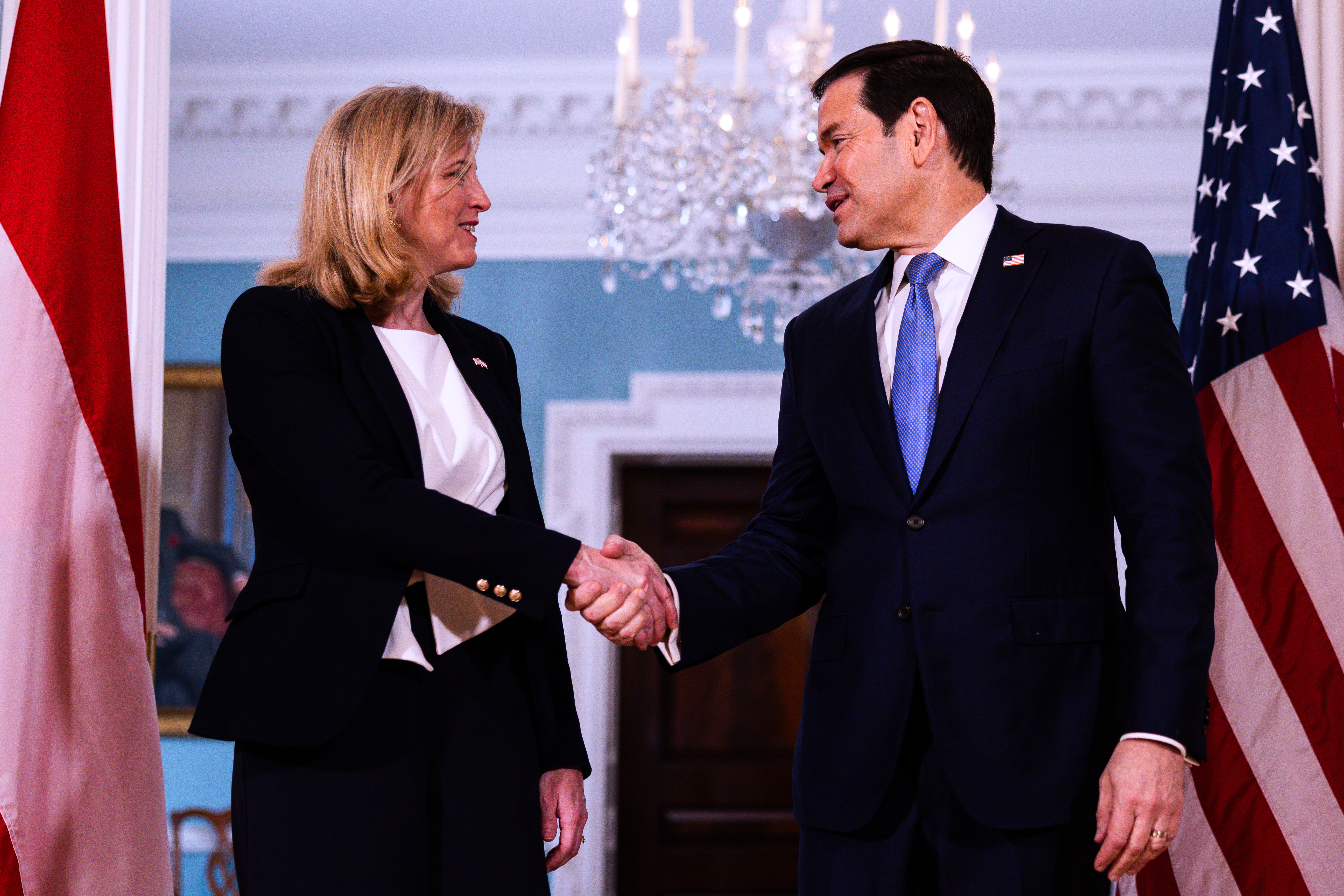
    Just this week, Secretary of State Marco Rubio met in person in Washington with the foreign minister of Austria on Tuesday and held a call with the foreign minister of Greece on Wednesday.

    Those interactions were not notable beyond the normal course of relations between the U.S. and two close European allies. The official State Department readouts of the discussions were bland and vague and did not mention Iran by name as a topic of conversation.

    But it then emerged that both foreign ministers — almost immediately after their talks with Rubio — spoke Thursday with Iranian Foreign Minister Abbas Araghchi.

    The apparent new tack to break the negotiation logjam comes as the U.S. and Iran are both pushing for control of the Strait of Hormuz, the crucial oil shipping corridor. President Donald Trump faces little wiggle room in his next steps as the economic fallout from the war and dwindling stockpiles of key weapons pose political problems for Republicans ahead of November’s midterm congressional elections.

    A desperate push is on to break the diplomatic logjam

    The entry by Austria and Greece is likely less of a formal mediation attempt, analysts say, and more reflective of a desperate push to halt the conflict because of the impact it has on an increasing number of countries, beyond those in the Middle East.

    “Everyone is just urging both sides to stop this reckless game of chicken,” said Ali Vaez, Iran project director at the International Crisis Group.

    It also shows how much Iran’s effective closure of the Strait of Hormuz has forced countries, which otherwise were neutral bystanders to the larger conflict, to exercise any diplomatic sway they may have on their Iranian and American counterparts to kick-start a lasting resolution.

    Mona Yacoubian, director of the Middle East Program at the Center for Strategic and International Studies, warned that any efforts by Greece, Austria, or any other nonmediating country could prove to be futile.

    “While the calls to both sides may entail encouraging both Iran and the U.S. back to the negotiating table, such efforts fall short of mediation, which is a very complex endeavor and requires trust to be built by the mediator with both sides,” Yacoubian said.

    She added that it’s not something that any country can “just jump into.”

    Rubio discussed Iran with his Austrian and Greek counterparts

    The State Department said Friday that it could not comment on the timing of calls by other countries’ foreign ministers and maintained that Rubio had made no requests of either to get in touch with Iran or pass messages to Araghchi.

    One European diplomat, who was briefed on the matter and spoke on condition of anonymity to detail sensitive diplomatic conversations, said the timing of the calls was not an accident.

    The State Department did allow, however, that Iran had been a topic of conversation in Rubio’s discussions, which occurred as Trump is facing serious political headwinds over a war for which he has offered shifting objectives.

    No longer purely about making Iran incapable of producing a nuclear weapon, the immediate goal has become reopening the Strait of Hormuz, where a fifth of the world’s oil usually passes through and which was open before the U.S. and Israel launched attacks on Iran on Feb. 28.

    “That’s goal number one: Keep oil and gas cheap for Americans all over our country,” Vice President JD Vance said in an interview Thursday on Fox News Channel. But he did not say anything about the strait being open and toll-free for transiting ships, as he had in the past.

    The second goal, Vance said, is to ensure that Iran will never get a nuclear weapon.

    The two European countries have key connections to war’s fallout

    Austria and Greece may not be obvious choices to assist on the Iran portfolio, but Vienna is home to the International Atomic Energy Agency, which will play a key role in any resolution to the Iran’s nuclear program, and hosted the final negotiations that resulted in the 2015 Iran nuclear deal. Greece is a major maritime nation in the Mediterranean and has significant shipping interests in the Strait of Hormuz and the Red Sea.

    In statements from the Austrian, Greek, and Iranian foreign ministries, it was clear that Iran had been a top topic in all of the conversations this week.

    The Greek foreign ministry said Foreign Minister George Gerapetritis had been briefed by Araghchi on “regional developments, and in particular on the ongoing talks regarding the Strait of Hormuz.” It said Gerapetritis “underlined the importance of freedom of navigation and maritime security.”

    The Austrian foreign ministry offered Austria’s services as a venue for further potential talks with Iran and said Foreign Minister Beate Meinl-Reisinger had stressed to Araghchi “the urgency of restoring stability in the region through serious diplomatic efforts.”

    “There can be no military solution,” it said. “A diplomatic solution remains possible. Our priority is to safeguard freedom of navigation through the Strait of Hormuz.”

    Iran’s foreign ministry, expectedly, took a different tack in explaining the calls.

    It said Friday that in Araghchi’s calls with his European counterparts they discussed “mechanisms for the future management of the Strait of Hormuz,” which he said had been disrupted by the “unlawful aggression by the United States and the Israeli regime against Iran.”

    In both calls, he accused the U.S. of violating the interim deal signed by both sides in June to end the immediate hostilities and begin broader talks to end the war.

  • American missionary kidnapped in Niger soon to be reunited with family

    American missionary kidnapped in Niger soon to be reunited with family

    A mission organization said on Friday that a pilot who was kidnapped while working for the group in the West African country of Niger last year was in “good health” after his release.

    The missionary pilot, Kevin Rideout, was seized from his home in Niamey, the capital of Niger, in October. A U.S. official said on Friday that Rideout had arrived at Ramstein Air Base in Germany and was undergoing medical evaluation. Like others in this article, the official spoke on condition of anonymity to discuss operational matters.

    Rideout’s organization, called Serving in Mission, said in a statement that he would soon be reunited with his loved ones.

    “We are grateful to confirm that our good friend and brother in Christ, Kevin Rideout, has been released,” the statement read. The mission noted that he was in “good health in the care of U.S. officials” and would soon be reunited with his wife, Krista; their four children; and his extended family.

    “Krista and the rest of Kevin’s family are profoundly grateful for the prayers offered on their behalf by people around the world throughout his captivity,” the statement added.

    Another U.S. official said on Thursday that Rideout’s release, which was earlier reported by the New York Times, was not the result of a military rescue operation but “by other means,” offering no further details.

    The official linked Rideout’s release to U.S. military pressure on the Islamic State in Nigeria, Niger’s southern neighbor, in recent months. In May, President Donald Trump said that American and Nigerian forces had killed Abu Bilal al-Minuki, a high-ranking Islamic State leader in Lake Chad, a region at the intersection of four countries, including Nigeria and Niger.

    The official said that raid had helped influence the kidnappers’ decision to release Rideout.

    How and where he was released were not yet clear, U.S. officials said earlier, and it was also unclear which group held him at the end of his captivity. Rideout’s release had been a major priority for the White House and for the military’s Africa Command.

    In May, French journalist and researcher Wassim Nasr, who has been monitoring jihadi groups in the area for several years, said that Rideout was being held in Ménaka, a region in Mali just over the border with Niger. That area is mostly controlled by a local branch of the Islamic State.

    For years, Mali and Niger have been battling insurgents affiliated with al-Qaida and the Islamic State. In April, al-Qaida-linked militants launched coordinated attacks across Mali, seizing a major city and killing the country’s defense minister.

    This article originally appeared in the New York Times.

  • Oil, hunters, and Dr. Phil: How a longshot project is shaking up Greenland

    Oil, hunters, and Dr. Phil: How a longshot project is shaking up Greenland

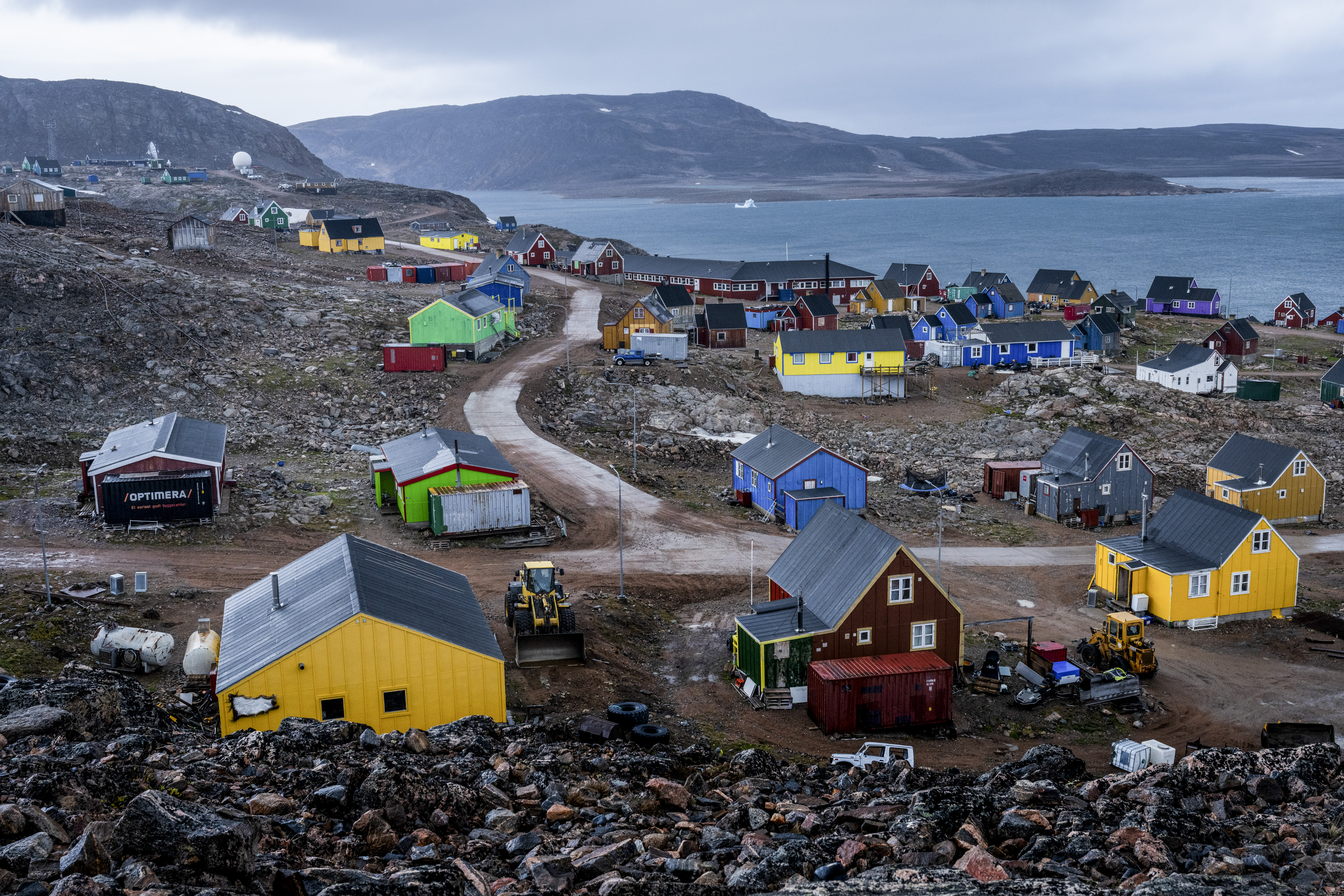
    LONDON — In one of the most remote towns on Earth, on the frozen crust of Greenland’s east coast, the American oilman made his pitch.

    Near to the very room where they were all sitting, he told a crowd of Greenlanders, could be as much as 13 billion barrels of oil. His company planned to drill two exploratory wells, and if it struck oil, it could be a major worldwide discovery bringing much-needed jobs, loads of tax money, and relief to world energy markets.

    The people who attended the meeting, which was held in June in an isolated town called Ittoqqortoormiit, had some questions.

    Why would Greenland get only 15% of the profit?

    What kind of chemicals would be used?

    And what about the musk ox? (Musk ox hunting is a big deal up there.)

    The meeting wrapped up with a lot of unhappy people filing out, according to a video of it that was shared with the New York Times, and a showdown over oil exploration has now joined the cloud of issues swirling over Greenland.

    The wildcat oil project is being pumped up by Dr. Phil McGraw, the TV personality known as Dr. Phil, and Gov. Jeff Landry of Louisiana, both powerful allies of President Donald Trump. It’s the latest push by the MAGA camp to close in on this gigantic Arctic island that Trump threatened to annex and remains a fixation of his.

    If the discovery is anything close to what the company says, and if it makes economic sense for major production — and those are two enormous ifs — this project could thrust Greenland into a radically different future, possibly as an Arctic petrostate.

    But it’s off to a bumpy start. After a wave of negative publicity, protests by Greenlanders, and a slipup by the project’s organizers who have a drilling license, Greenland’s authorities tapped the brakes. This week, the government pushed back the timeline for granting final approvals, saying that it’s unlikely any drilling would be authorized before 2028.

    The Texas-based firm leading the project, Greenland Energy Co., now says it will focus on drilling only one well, not two. And the delays are expected to cost millions. As a result, Greenland Energy’s share price has plummeted, trading at little more than a dollar, half its value from just days ago.

    A few years ago, Greenland declared it was suspending oil exploration. The Arctic is among the fastest-warming regions in the world, and the Greenlandic government felt it was wrong to contribute more fossil fuel pollution.

    But the oil prospectors in this case are operating with a valid license granted before the policy changed, according to documents reviewed by the New York Times. So Greenlandic officials, who have been trying to navigate the intense pressure Trump has put on them, find themselves in a tight spot.

    They are more than aware that if they reflexively block Americans from drilling, especially at a time when world events have squeezed the global oil supply, that could give Trump the pretext he needs to return to his threats to “get” Greenland, “one way or the other.” At the same time, there’s obvious resistance from ordinary Greenlanders and government officials to the project.

    “In a world where Donald Trump has pursued such a confrontational policy toward Greenland, you can’t help but be a little concerned,” said Mikkel Runge Olesen, a senior researcher at the Danish Institute for International Studies. “If you suddenly throw a major oil discovery into the mix, who knows what might happen.”

    For months, the United States, Greenland, and Denmark — the island’s former colonial master that still controls many of its affairs — have been locked in sticky negotiations over the island’s future. One key issue has been America’s access to Greenland’s natural resources.

    Ever since Trump set his sights on the island, Greenland has become a magnet for investors and allies chasing Arctic resource dreams. But oil has never been easy.

    Chevron and Shell prospected decades ago with no success. It’s incredibly expensive to build an oil industry from scratch in one of the most remote and inhospitable places on the planet. Most of Greenland is covered in ice. One major U.S. company, ARCO, decades ago sank today’s equivalent of $250 million — far more than the $80 million the current players have raised — into seismic studies in the same area, only to abandon the project in 1990.

    “There are so many red flags here,” said Naaja Nathanielsen, Greenland’s former minister of natural resources and now a representative in Denmark’s parliament. She said she hasn’t seen any hard data supporting the project’s tantalizing claims, adding, “I think they are selling hot air.”

    Not so, say the backers of the project, a joint venture between Greenland Energy, the small, publicly traded U.S. company that raised the money, and 80 Mile Plc, a British outfit that acquired the drilling licenses several years ago.

    Roderick McIllree, 80 Mile’s executive director and a board member of Greenland Energy, said this stretch of Greenland had the same geology as the North Sea oil fields, where European countries have extracted billions of barrels. And climate change is working in their favor, he said.

    Warming temperatures mean less ice clogging Greenland’s coast, making any oil discovered cheaper to export than it would have been decades ago, he said.

    One investor is the Citadel hedge fund, run by investment titan Ken Griffin, and the Trump administration fully supports the project.

    “Greenland could be exporting 2 million barrels of oil a day,” said Landry, Trump’s special envoy to Greenland, in a Fox News interview in May. He added, “Think about what kind of pressure that would relieve in the Straits of Hormuz.”

    Before the project is allowed to start, its plans, including a detailed environmental assessment, must be approved. But the organizers have been moving ahead anyway and recently carried out two disputed equipment transfers.

    First, they brought in a barge load of equipment from another part of Greenland on what authorities said was an expired permit. Jorgen Hammeken-Holm, the head of Greenland’s mineral resources department, called the move “naughty, naughty.”

    Then, a few days later, they unloaded another piece of heavy equipment without proper notification, authorities said.

    “We have the police and the military,” Hammeken-Holm warned. “They can assist in dealing with unlawful activities if necessary.”

    McIllree admitted, “We kind of fell down.” He said the company apologized to Greenlandic officials.

    The potentially oil-rich area, known as Jameson Land, is a highly protected environmental zone, an Arctic swampland of sorts, home to tenacious shrubs and musk ox, foxes and migrating birds like the pink-footed goose. The musk ox is prized for its meat and its fur, which is turned into a luxurious yarn.

    All this has attracted Dr. Phil, who did a recent 44-minute podcast on the project. He titled the episode “Frozen Gold,” and according to documents on Greenland Energy’s website, the company has established “a wide-ranging partnership” with him to make a six-episode series on “this modern-day treasure hunt.”

    His company did not respond to requests for comment about his involvement in the project. But on his podcast, Dr. Phil said he would soon head to the Arctic.

    “I’m going to have to mug a kitten and get some mittens because I’m going to go up there and see this firsthand,” he said.

    Ittoqqortoormiit (It-tok-kor-TOR-meet), population 329, is trying to make sense of what’s happening. This spring, members of the local council seemed ready to negotiate and drafted a list of things they wanted from the oil company: a heated community pool, new hunting cabins, and funding for residents to fly over Jameson Land in helicopters one last time before their hunting grounds were turned into an industrial site.

    But the public meeting in June changed the mood.

    McIllree conceded that the team that led the meeting didn’t show enough respect.

    “They forgot whose house they were in,” he said.

    Still, some residents support the project.

    Aage Uugi Pike Barselajsen, a construction worker, said in a telephone interview that Ittoqqortoormiit desperately needed jobs.

    “You have to think about the future and the money,” he explained. “Maybe Greenland could become like Dubai. That’s my dream.”

    This article originally appeared in he New York Times.

  • Russian drones kill a woman and 9-year-old son at home as Ukrainian civilian casualties surge

    Russian drones kill a woman and 9-year-old son at home as Ukrainian civilian casualties surge

    KYIV, Ukraine — Russian jet-powered drones struck a home in northern Ukraine on Friday, killing a 29-year-old woman and her 9-year-old son, officials said.

    The strike came a day after the United Nations said July was the deadliest month for Ukrainian civilians since the weeks following Moscow’s all-out invasion of its neighbor more than four years ago.

    At least 437 civilians were killed and 2,610 wounded last month, the U.N. monitoring mission in Kyiv said, as Russia escalated its bombing of Ukrainian towns and cities. That was 70% higher than in July last year and 30% up on June of this year.

    Overall, since Russia’s invasion on Feb. 24, 2022, U.N. human rights monitors say the war has killed at least 16,874 civilians, including 820 children, and wounded 51,273, including 3,126 children.

    “Every month this year the number of killed and injured civilians has increased. That trend accelerated sharply in July,” said Danielle Bell, head of the U.N. human rights monitoring mission in Kyiv. “The number of civilian casualties in July was the highest we documented in a single month since March 2022.”

    The Russian strike in northern Ukraine’s Sumy region early Friday also wounded four other people, including the dead boy’s father and grandmother, who were hospitalized with severe burns, the regional military administration chief Oleh Hryhorov said.

    Russia’s top diplomat says Moscow will intensify attacks

    Russian Foreign Minister Sergey Lavrov warned that Moscow is planning to escalate its strikes on Ukraine, even as U.S. diplomatic efforts to end the war are set to continue.

    “We will use much harsher methods to destroy everything that feeds Kyiv’s war machine from the West,” Lavrov said in an interview with Russian state TV broadcast Friday, referring to military aid Kyiv receives from abroad.

    Officials in Washington said last month that Steve Witkoff and Jared Kushner, President Donald Trump’s main envoys, would travel to Kyiv sometime in the future. No date for the trip is publicly known, as the U.S. focuses on the Iran war.

    President Volodymyr Zelensky has accepted an unconditional ceasefire demanded by Trump, but Putin has refused, demanding a comprehensive peace agreement first, and Lavrov said that position hasn’t changed.

    “We will only stop when there’s a long-term, reliable, and sustainable settlement,” he said.

    Russian glide bombs hit residential areas near front line

    In Ukraine’s eastern Donetsk region, a Russian glide bomb demolished six floors of a 10-story apartment block, killing one person and wounding 16 others, Zelensky said.

    Russia is launching around 220 glide bombs every day against settlements near the front line in eastern and southern Ukraine, Zelensky said in a social media post Friday.

    Russian forces crush settlements with the brute force of 3,000-pound glide bombs, artillery, missiles, and drones, then send in infantry units to attack the exposed defenders. The tactic has rendered many towns and villages uninhabitable.

    In addition, Russian forces struck two tugboats in the Black Sea that were escorting cargo ships carrying Western weapons for Ukraine, the Defense Ministry in Moscow said.

    It also said that its drones overnight hit the railway station in Ukraine’s southern port of Izmail that it said is used for transporting military cargo and fuel for the Ukrainian armed forces.

    In all, Russia attacked 12 Ukrainian regions overnight, wounding dozens of people, Zelensky said.

    Ukrainian drones strike a major port north of Moscow

    Ukrainian forces, meanwhile, extended their long-range strike campaign against Russian infrastructure, hitting the port of Ust-Luga in the Leningrad region north of Moscow and starting a brief fire, its governor Alexander Drozdenko said.

    Ust-Luga is one of Russia’s largest oil and gas export terminals, located more than 500 miles from Ukraine.

    It has been a frequent target of Ukrainian drone attacks this summer, as Kyiv seeks to undermine Russian oil exports that provide Moscow with vital revenue for its war effort.

    Ukraine also launched another attack on the premises of Wildberries, Russia’s biggest online retailer, which Kyiv says helps supply the Russian military.

    The attack damaged a wall of a Wildberries warehouse in the Tver region north of Moscow, the region’s acting governor, Vitaly Korolyov, said.

    Wildberries reported “insignificant damage” and said the goods stored at the site were not damaged.

    The Russian Defense Ministry said Friday its air defenses overnight intercepted 553 Ukrainian drones over 18 Russian regions, as well as occupied Crimea and the waters of the Azov and the Black seas.

    NATO warplanes shoot down a drone over Latvia

    NATO fighter jets shot down a drone that entered Latvian airspace in the early hours of Friday, the Latvian army and an official for the military alliance said.

    Latvian authorities did not say what the origin of the drone was, but said it had entered Latvia “as a result of Russian electromagnetic warfare.”

    Several drones have previously crossed the border into Latvia. Most of them are thought to be Ukrainian drones that strayed off course due to Russian electronic jamming.

    Two Italian Eurofighter jets were scrambled to tackle the drone and one of them shot it down, NATO spokesperson Allison Hart said.

    Two Turkish fighter jets were also deployed, she said.

    Residents in five municipalities in eastern Latvia were warned about the threat to airspace and told to take shelter.

    Another drone crashed in woodland in Romania 3.1 miles from the border with Ukraine, the NATO member’s Defense Ministry said Friday.

    Military radars did not detect the drone, which landed in eastern Tulcea County, because it was flying at a “very low” altitude, it said without providing details about the drone’s origin.

    The ministry said later that another drone was found Friday in the village of Plauru, also in Tulcea County, which is situated across the Danube River from Ukraine’s port of Izmail. A specialist team was deployed to the area, which was secured, it added.

  • Trump says record-setting Navy deployment to support Iran operations ‘not nearly long enough’

    Trump says record-setting Navy deployment to support Iran operations ‘not nearly long enough’

    WASHINGTON — President Donald Trump on Friday downplayed the toll on American sailors enduring a record-setting deployment of nearly nine months on the USS Abraham Lincoln as concerns escalated about mental health and supply issues aboard the aircraft carrier supporting U.S. operations against Iran.

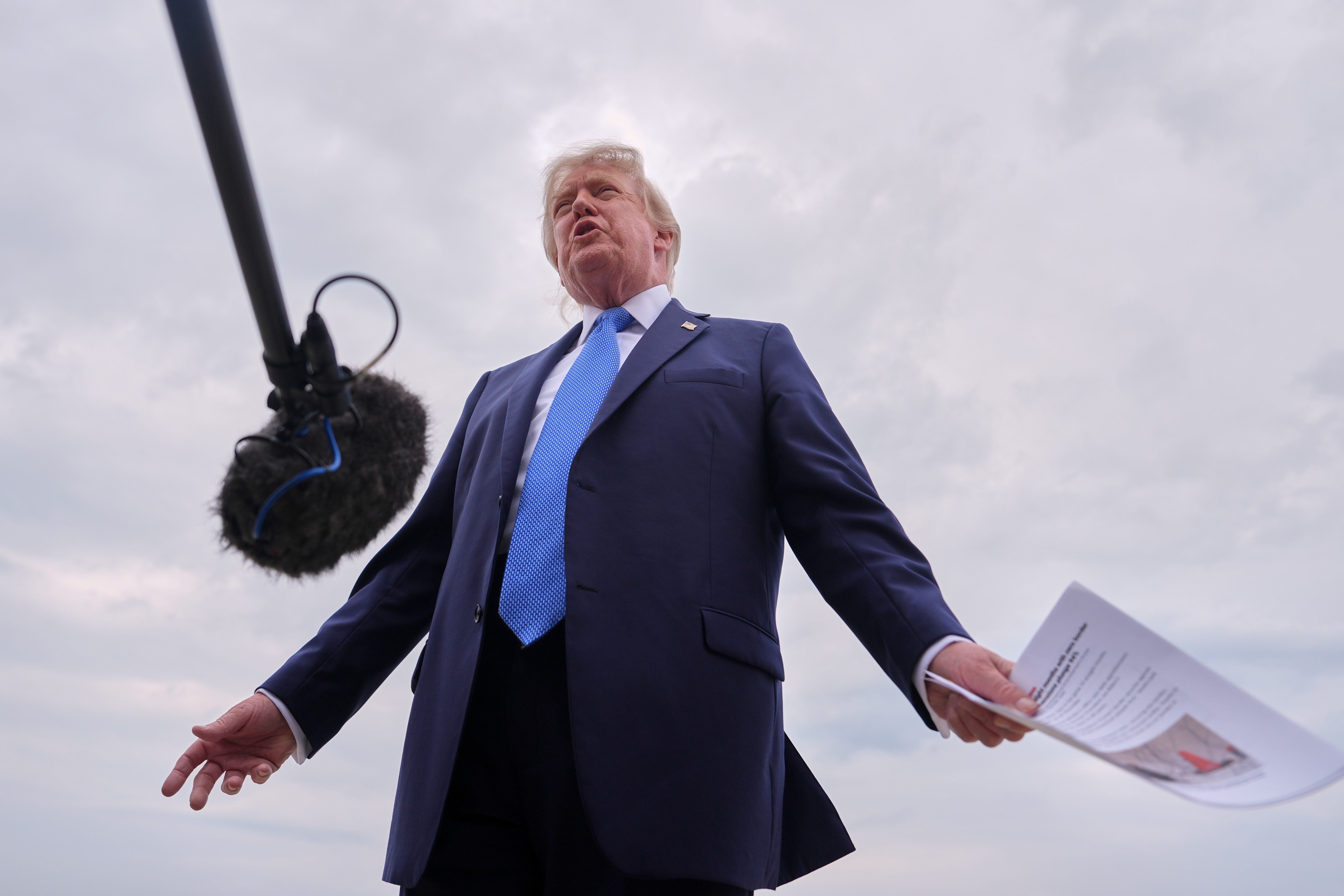
    In a brief exchange with reporters before flying to New York for an event to highlight falling violent crime rates across the U.S., Trump refuted that family members have raised concerns about the deployment’s length and even said that the more than 260-day deployment is “not nearly long enough.”

    “That ship is moving right now, or very shortly, and it’s being replaced with another very similar ship,” Trump said when asked about the lengthy deployment.

    The Lincoln has been supporting the U.S. war against Iran, and several Democratic lawmakers, including Sens. Richard Blumenthal of Connecticut and Ruben Gallego of Arizona, are pressing for accountability from the Pentagon over conditions aboard the carrier, which Defense Secretary Pete Hegseth on Thursday said were “completely misrepresented.”

    Rep. Jason Crow (D., Colo.), who served three tours in Iraq and Afghanistan with the 82nd Airborne Division and 75th Ranger Regiment before being elected, took to social media to criticize Trump’s comments, saying on X that “President Trump does not care about our servicemembers or their families.”

    Extended deployments of carriers during the Iran conflict have raised concerns about the impact on service members who are away from home for long periods as well as the increasing strain on the ship and its equipment.

    While hostilities between the U.S. and Iran have calmed in recent weeks, the Navy has reimposed a blockade on Iranian ports in the crucial Strait of Hormuz, and the Trump administration has offered no clarity on how it intends to wind down the war. Hegseth said that the U.S. military can maintain the blockage of Iranian ports “indefinitely.”

    Another aircraft carrier, the USS George Washington, left port in Da Nang, Vietnam, last week, and is expected to replace the USS Lincoln, one of two aircraft carriers currently deployed in the Middle East.

    After reports emerged that sailors on the Lincoln are struggling with mental health concerns, the Navy said it has “not observed an increase in suicidal ideations or attempts aboard the ship,” though officials have declined to provide data, citing operational security and patient privacy concerns.

    A Navy official said that a sailor aboard the Lincoln went overboard in early August but that the person was quickly recovered, treated by the ship’s medical department, and transferred off ship for follow-on care. The official would not say whether it was being considered a suicide attempt.

    U.S. Central Command, which oversees military operations in the Middle East, has also pushed back on reports about poor conditions.

  • With Trump’s Hamas deal in peril, Kushner set to visit Israel for Gaza talks

    With Trump’s Hamas deal in peril, Kushner set to visit Israel for Gaza talks

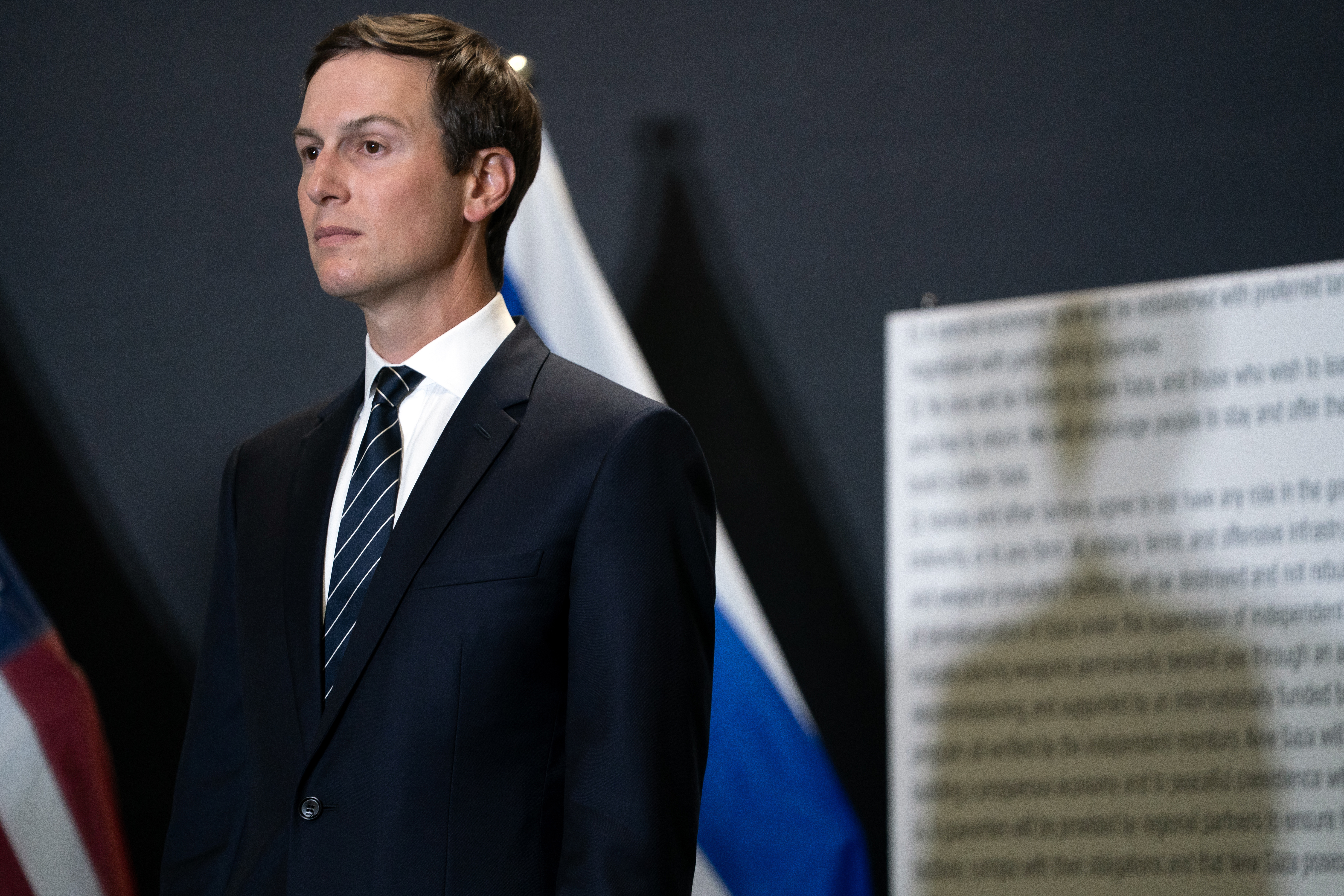
    TEL AVIV, Israel — Jared Kushner, President Donald Trump’s senior aide and son-in-law, is set to visit Israel early next week, according to four people familiar with the plans, days after the Israeli government rejected a U.S.-brokered disarmament deal with Hamas.

    Kushner is expected to meet with Israel’s prime minister, Benjamin Netanyahu, to discuss the Gaza Strip, the people said, speaking on condition of anonymity to divulge details about Kushner’s schedule.

    The deal, agreed to late last month between Trump’s Board of Peace and the militant group Hamas, called for the disarmament of Palestinian factions in Gaza and the withdrawal of Israeli forces there.

    The Board of Peace is a new international organization chaired by Trump that has focused on plans for governing and rebuilding Gaza. Kushner is a senior member of its executive board and was involved in ceasefire negotiations between Hamas and Israel.

    Netanyahu said Sunday that Israel rejected the deal, a move that was seen as an appeal to his right-wing voting base before national elections in October. Yet the prime minister also ordered the Israeli military to pause its strikes in Gaza, in an apparent effort to appease the Trump administration.

    For days after the announcement, the Israeli military conducted no airstrikes in Gaza, until Wednesday, when the military carried out a fresh attack, saying it was targeting Hamas militants. It conducted further attacks Thursday.

    Hamas officials have condemned the strikes, calling on mediating countries in the region to pressure Israel to halt them.

    Hamas remains in control of about half of Gaza, where most of its people live. The group said that among those killed by Israel this week was the head of the police force in the Gaza City area.

    Nickolay Mladenov, the Board of Peace’s high representative for Gaza and former United Nations envoy, will join Kushner in Israel, according to two of the people with knowledge of the visit. Mladenov has played a leading role in the negotiations with Hamas over disarmament, frequently meeting with officials from the group in Egypt.

    Kushner and Mladenov were also expected to visit Egypt next week to meet with regional mediators, according to two of the people.

    The deal with Hamas says that, as part of the disarmament process, Israel should first uphold its side of the ceasefire, which was agreed to in October last year. That includes halting airstrikes and allowing more aid into Gaza.

    The 15-point document leaves elements of the disarmament process vague, however. It calls for a “gradual, sequential, and time-bound manner” for decommissioning and storing heavy weapons, with an exact timetable still to be determined.

    It adds that, at the “end of the process,” the National Committee for the Administration of Gaza will “hold, control, or store weapons in Gaza.” The committee, a body of Palestinian technocrats, was assembled by the Board of Peace to take over governing Gaza under the board’s supervision.

    Many Israelis remain skeptical that Trump’s Board of Peace can successfully disarm Hamas. The group has long touted armed struggle against Israel as the core of its ideology, and members have said they regard disarmament as tantamount to surrender.

    This article originally appeared in The New York Times.

  • Lights, camera, action on the El. SEPTA police to star in a TV docuseries.

    Lights, camera, action on the El. SEPTA police to star in a TV docuseries.

    Film crews are hard to hide on the subway.

    SEPTA said a production company is making a TV docuseries for A&E on the work of the transit police, shadowing officers in Philadelphia as they patrol trains, buses, and streets.

    SEPTA riders posted a flurry of photographs, questions, and comments on social media platforms after sightings of TV crews.

    An email was sent to SEPTA employees last week explaining what’s behind filming they might see on the system.

    The documentary will ”offer viewers a unique perspective of SEPTA law enforcement, allowing the audience to get to know some of the men and women of SEPTA’s 200-plus strong police force,” the internal message said.

    Screenshot of a post on X of an internal email sent to SEPTA employees about the A&E documentary.X.com

    SEPTA says it looks forward to having the transit police being in the spotlight, noting their challenging job, a sharp drop in violent crime on the transit system, and a crackdown on fare evasion and anti-social behaviors like smoking in stations and on vehicles.

    The production company has editorial control but has SEPTA’s permission to embed with police units. The transportation authority says it is not receiving any compensation from the production.

    SEPTA senior press officer John Golden said the eventual series will not be so-called reality TV.

    “There is nothing scripted about this,” he said, and the action as crews follow officers is not staged. It also is not focused only on arrests or confrontations.

    The docuseries project was first reported Thursday by news site Philly Voice.

    Alastair Cook, cofounder and owner of Double Act Productions, emailed that he was traveling and not able to immediately discuss the show.

    The company, headquartered in the Brixton district of London, has produced dozens of documentaries and fact-based dramas for outlets like A&E, the BBC, National Geographic, and Discovery+.

    A representative for A&E Global Media did not respond to a request for comment.

  • DOJ files charges against woman accused of vandalizing World War II Memorial

    DOJ files charges against woman accused of vandalizing World War II Memorial

    The Justice Department filed two felony charges against the woman accused of vandalizing the World War II Memorial in Washington, according to court records.

    “Vandalizing our World War II Memorial is a despicable attack on a sacred monument honoring the Americans who fought and died for our freedom,” U.S. Attorney for D.C. Jeanine Pirro said in a statement announcing the charges on social media. “Those Americans include my father and grandfather.”

    On Thursday afternoon, part of the memorial on the National Mall was tagged with graffiti, and soapy bubbles overtook a fountain. Red graffiti spelled out “Clean hands dirty $” beneath the Atlantic Arch, and red and green paint was splattered on some of the granite stonework.

    Pirro said the woman suspected of vandalizing the memorial, Melissa L. Farris, was in custody. Two felony charges — depredation against U.S. property and destruction of veterans’ memorials — were filed against her, according to court records. Both charges carry a prison sentence of up to 10 years.

    Around 2 p.m. on Thursday, members of the U.S. Park Police and U.S. Park Rangers responded to a call about a disorderly person at the memorial, according to court records.

    On her Facebook account, Farris livestreamed herself at the memorial. In the video, she alternated between narrating her actions and getting emotional about the state of her life and of the country. She said she has autism and ADHD but that she was not suffering from psychosis.

    Farris also said that Thursday was her 41st birthday. Her current address is listed in Kentucky, according to public records.

    Later, Farris filmed herself dropping an item into the fountain near the Atlantic Arch. “Oops,” she said. Then, she shook spray-paint cans and livestreamed herself adding graffiti to the granite.

    “It was me. I’m doing it. I’m on camera,” she said.

    She said she was willing to be arrested because she wanted her day in court. The court filing said that as a ranger approached her at the Atlantic Pavilion, she fled.

    After spraying the graffiti, she said, “It’s time for a tea party, kids.”

    “This is democracy sometimes, guys,” she said as the livestream showed the fountain filling with bubbles. “And I didn’t have to shoot somebody. I didn’t have to go to war. I didn’t have to make choices that harmed another human being.”

    Shortly before 4 p.m., according to the court filing, Farris posted another video to Facebook, in which she said: “I was just allowed to deface Federal f—ing property, and nobody batted an eye, and that is very strange.”

    The Interior Department condemned the incident Thursday as an “utter disgrace” that “will not be tolerated.”

    The incident comes weeks after the White House blamed vandals for disturbing the nearby Reflecting Pool after President Donald Trump’s renovations quickly degraded, causing algae blooms and a peeling liner.

    Pirro eventually dropped the vandalism charges against four people and blamed the damage on flawed installation.

    In response, Trump said Pirro “folded like an umbrella.”

    “I just think she was totally wrong,” Trump told reporters earlier this month, noting that National Park Service employees had told authorities they saw vandals in action. He described problems with the contractor as “a couple of little things.”

    It’s unclear what material was used to create the bubbles in the fountain. Ryan Compton, owner of Domain Aquascapes in Northern Virginia, said adding standard bubbles to a fountain generally doesn’t cause system damage but is a “maintenance nightmare.” It requires draining, cleaning out, and rinsing the fountain and pump system.

    “That’s going to be a lot of man hours and work involved,” he said.

    Trump denounced the World War II Memorial vandalism in a Friday morning post on Truth Social.

    “THERE CAN BE NO GREATER INSULT TO THOSE AMERICAN HEROES WHO DIED IN WORLD WAR II,” Trump wrote. “First the Reflecting Pool, now this. We are on their trail! Where do these animals come from???”

    A preliminary estimate of the costs to clean and restore the memorial already exceeds $1,000, according to court records.

    The Washington Post was unable to immediately reach a representative of Farris for comment. Her sister declined to comment.

  • Trump signs memo authorizing private sector to launch cyberattacks

    Trump signs memo authorizing private sector to launch cyberattacks

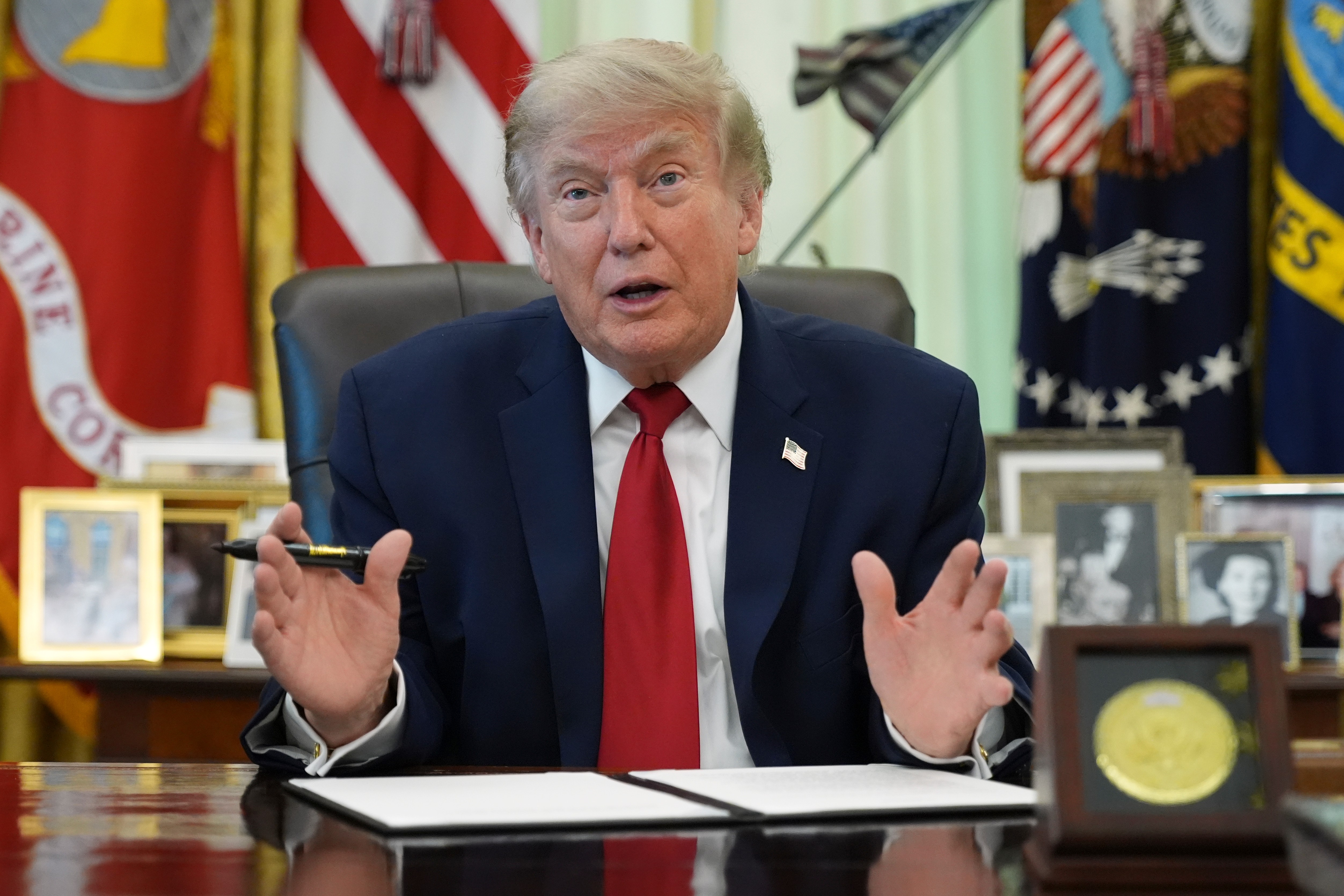
    President Donald Trump signed an order Wednesday authorizing select private companies to carry out government-sponsored cyberattacks against foreign criminal hacking groups — actions that have until now been the domain of U.S. national security agencies.

    The memorandum enables the government to contract with U.S. firms to hack into and disrupt overseas digital networks belonging to “cyber-enabled transnational criminal organizations.”

    The memo stipulates that the companies, under the supervision of the federal government, may breach computer systems to conduct surveillance and manipulate or destroy digital or physical infrastructure “controlled by information systems” but are barred from targeting foreign governments or taking actions that result in the “loss of life” or “serious injury.”

    The move marks a significant shift from the more restrained approach of previous administrations, which prohibited companies that suffered intrusions from “hacking back” into their attackers’ systems for fear of geopolitical blowback. Now the Trump administration wants to enlist the private sector to help take the fight to criminal hackers.

    “President Trump is unleashing every available tool to stop foreign-based organized criminal organizations that exploit Americans in cyberspace,” the White House said in a fact sheet accompanying the memo.

    Some analysts and industry executives hailed the move, saying it should help the government degrade foreign criminals’ abilities to hack Americans. “Cyberattacks are cheap to launch and expensive to defend against,” said Joe Lin, co-founder and CEO of a Northern Virginia startup that builds large-scale cyber offense platforms for the U.S. government. “The more we can disrupt adversaries at scale using vetted commercial partners, the less our adversaries will be able to attack the United States.”

    Other experts say it could pose legal and geopolitical risks for the federal government and the companies themselves.

    “What if a company carries out an operation against what it thinks is an Iranian or Russian criminal group, but that group is actually controlled, influenced, or protected by Tehran or Moscow?” said Matt Curtis, who served as White House senior director for cyber policy in the Biden administration.

    “Suddenly, what was intended as an operation against criminals could be viewed as a U.S.-authorized cyber operation against a nation-state actor … and potentially trigger retaliation or escalation,” he said.

    The memo establishes a national coordination center to be run jointly by the Justice Department and the Department of Homeland Security, which will vet participating companies. The firms could be fined up to $1 million for contract violations.

    The order raises questions about potential liability for companies under the Computer Fraud and Abuse Act, which makes it a federal crime to gain unauthorized access to internet-connected computers. If the company is acting as an agent of the U.S. government, it probably would not be bound by this law, some analysts say, but would still have to comply with Fourth Amendment protections requiring a warrant to hack into a domestic system. The order does not directly address this issue.

    The FBI’s top cyber official says the memo is an effort to normalize what is currently “ad hoc” collaboration between industry and government.

    Just last month, for instance, the FBI and Google disrupted a botnet used by hundreds of criminal and nation-state hackers who didn’t want their attacks traced back to Beijing, Tehran, and Moscow, and so routed them through at least 2 million proxy IP addresses to TV streaming boxes and home routers, FBI Assistant Director for Cyber Brett Leatherman said in an interview with the Washington Post.

    Armed with a court order, the FBI seized hundreds of proxy domains and Google disabled accounts on its own networks that the botnet was using to control the malware.

    The presidential memo, he said, is about “providing additional authority and capability” to “empower” U.S. industry in helping the government battle foreign cybercriminals.

    Leatherman pointed to the Chinese state-sponsored Salt Typhoon espionage hack, discovered in late 2024, which compromised several of the largest American telecommunications firms and targeted the cellphones of U.S. political figures, including then-presidential candidate Donald Trump and his running mate JD Vance. At least one Chinese company assisted the campaign and was punished by the Treasury Department last year, Leatherman said.

    China and Russia often leverage private companies to carry off hacks that provide a measure of state deniability.

    “They are industry people [in China] that are doing this,” Leatherman said, referring to Salt Typhoon. “If we don’t close the gaps … we’re going to continue to fall behind.”

    U.S. agencies such as the FBI, the military’s U.S. Cyber Command, and the National Security Agency may legally hack systems overseas. But private-sector companies do not have such independent authority.

    Jason Kikta, a former U.S. Cyber Command operator, said using contractors to perform government work “makes us no better than China and Iran,” where, he noted, industry has conducted ransomware operations, attacked U.S. banks, and carried out indiscriminate cyberspying operations.

    “The U.S. has fought against such abuses for years, and this now makes us look hypocritical,” said Kikta, now chief technology officer at Automox, a cybersecurity firm.

    Former military cyber lawyer Gary Corn noted that Cyber Command’s primary focus is on countering foreign nation-state threats — not criminals. The command lacks the numbers and resources to take on the criminal threat. So the administration’s move could help fill that “big gap,” said Corn, who was formerly the command’s top lawyer and now directs American University’s Technology, Law & Security Program.

    Former White House aide Curtis, now CEO of the cybersecurity firm 190 Intel, said private companies have tremendous technical capability, data, and speed. With the right guardrails, he said, “this could be a very effective way to disrupt criminal networks that are otherwise hard to reach.”

    Charlie “Tuna” Moore, a former deputy commander of U.S. Cyber Command, has long called for the government to team with the private sector in conducting cyber offense. “It’s the only way to scale quality and quantity to defend the nation,” said Moore, now a visiting professor at Vanderbilt.

    The memo contains a classified annex, which describes how the companies and law enforcement agencies will coordinate their actions with the military and intelligence agencies, a process known as “deconfliction.”

    Moore noted that the military and spy agencies have extensive deconfliction rules, and it will be “critical” to see how well thought-out the new process is, he said.

    “The overarching approach is very good,” he said. “The devil’s in the details.”

  • Luigi Mangione pleads guilty to federal stalking charges in the killing of UnitedHealthcare CEO

    Luigi Mangione pleads guilty to federal stalking charges in the killing of UnitedHealthcare CEO

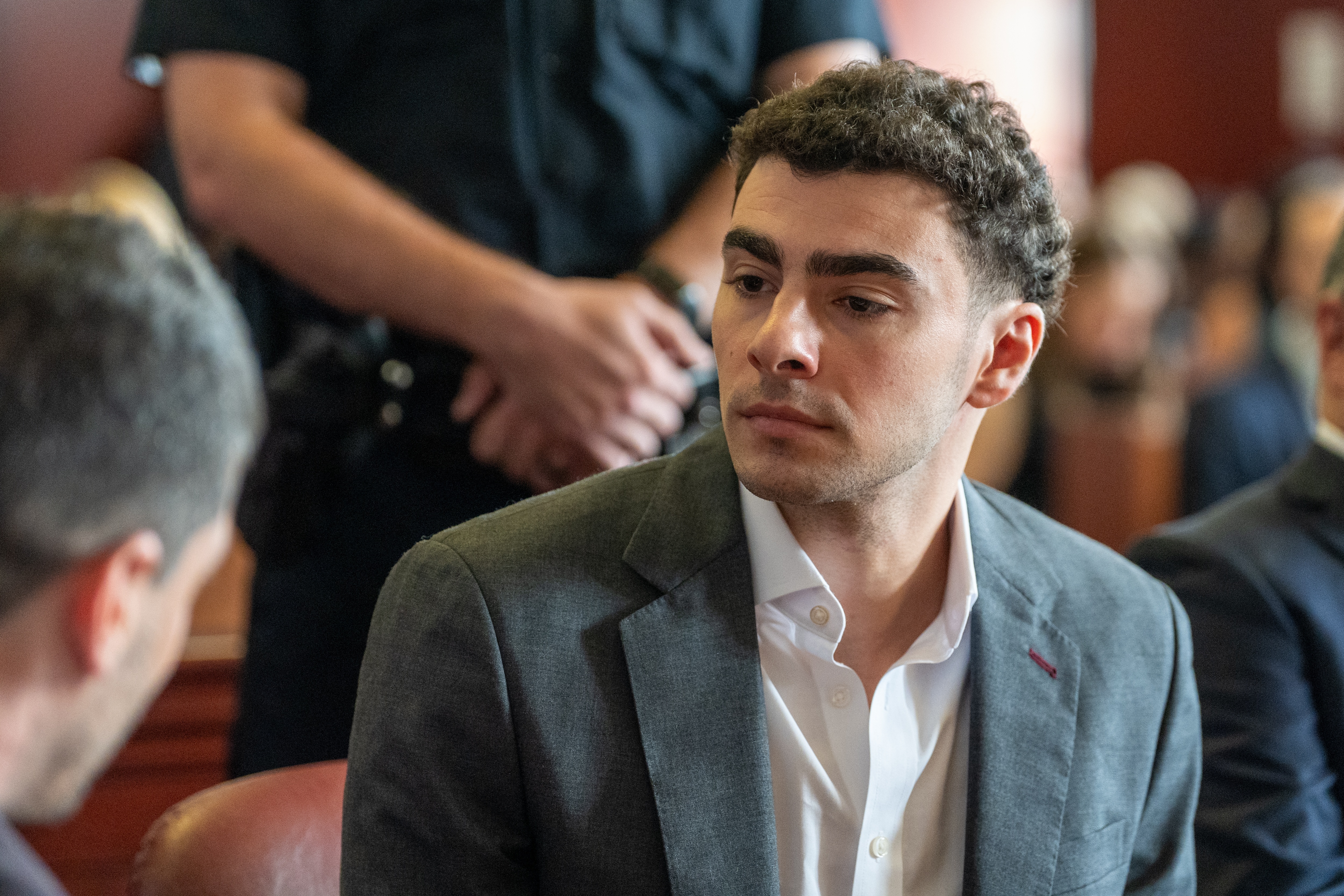
    NEW YORK — Luigi Mangione pleaded guilty on Friday to federal stalking charges in the killing of UnitedHealthcare CEO Brian Thompson, admitting matter-of-factly that he trailed the executive to an investor conference in 2024 and gunned him down on a New York City street.

    Mangione, 28, said he even used a ruse to glean information about the event, contacting the health insurance company ahead of time under the guise of being an investor at a multibillion-dollar firm.

    “On the morning of Dec. 4, 2024, I shot Mr. Thompson in Manhattan, and he died,” Mangione told the court as Thompson’s wife, Paulette, took several deep breaths and repeatedly wiped tears from her eyes. A supporter put an arm around the wife and held her tight.

    Mangione is set for sentencing Dec. 18. When U.S. District Judge Margaret M. Garnett asked whether he understood that he could spend the rest of his life in prison, Mangione answered neutrally: “Yes.”

    Mangione entered the plea at a hastily scheduled hearing in Manhattan federal court, resolving one of two cases against him in connection with Thompson’s death. Mangione’s lawyers could now seek to have his separate New York state murder case thrown out on double jeopardy grounds.

    Surveillance video of the ambush showed a masked gunman shooting Thompson, 50, from behind. Police say “delay,” “deny,” and “depose” were written on the ammunition, mimicking a phrase used to describe how insurers avoid paying claims. That detail — and revelations that Mangione’s private writings lambasted health insurers as greedy, according to authorities — made the case a fulcrum for debate about the industry and made Mangione a cause célèbre for some of its critics.

    Mangione told the court Friday that he pursued Thompson “after years of enduring severe pain from a broken back and navigating the obstacles of the health insurance system.”

    Mangione never was a UnitedHealthcare customer, according to police and the company. A University of Pennsylvania graduate from a wealthy Maryland family, he was arrested five days after the shooting, when he was spotted at a McDonald’s in Altoona, Pa. It’s about 230 miles west of Manhattan.

    Thompson led one of the United States’ largest health insurers, but he wasn’t well known outside the industry. Trained as an accountant, he had worked at parent company UnitedHealth Group Inc. for 20 years and became CEO of its insurance arm, UnitedHealthcare, in 2021. He and his wife had two sons, who were in high school when their father was killed.

    Both the federal and state cases could lead to a life prison sentence for Mangione. A federal judge earlier this year tossed out additional charges that could have exposed him to a potential death penalty.

    Mangione had complained about the prospect of two trials, telling a judge in February: “It’s the same trial twice. One plus one is two. Double jeopardy by any commonsense definition.”

    Under New York law, a state prosecution could potentially be barred if the federal case is resolved first.

    The state’s double jeopardy protections kick in if a jury has been sworn in a prior prosecution, such as a federal case, or if that prosecution ends in a guilty plea. Mangione’s cases involve different charges arising from the same course of conduct.

    In a letter last month, state prosecutors objected to the possibility of a guilty plea in the federal case wiping out the state case.

    Garnett has delivered some setbacks to the defense, including ruling in January that prosecutors could use items collected from Mangione’s backpack during his arrest as evidence against him.

    They included a 3D-printed pistol that investigators said matched the one used to kill Thompson and a notebook in which authorities say Mangione described his intent to kill an insurance executive.

    In June, Mangione’s lawyers said they would pursue a psychiatric defense in the state case but reversed course a day later. The defense, involving claims that he was suffering from extreme emotional disturbance at the time of the killing, isn’t allowed in federal court.