Category: Nation & World

  • U.S. military wants AI dominance, but feuds and China may thwart it

    U.S. military wants AI dominance, but feuds and China may thwart it

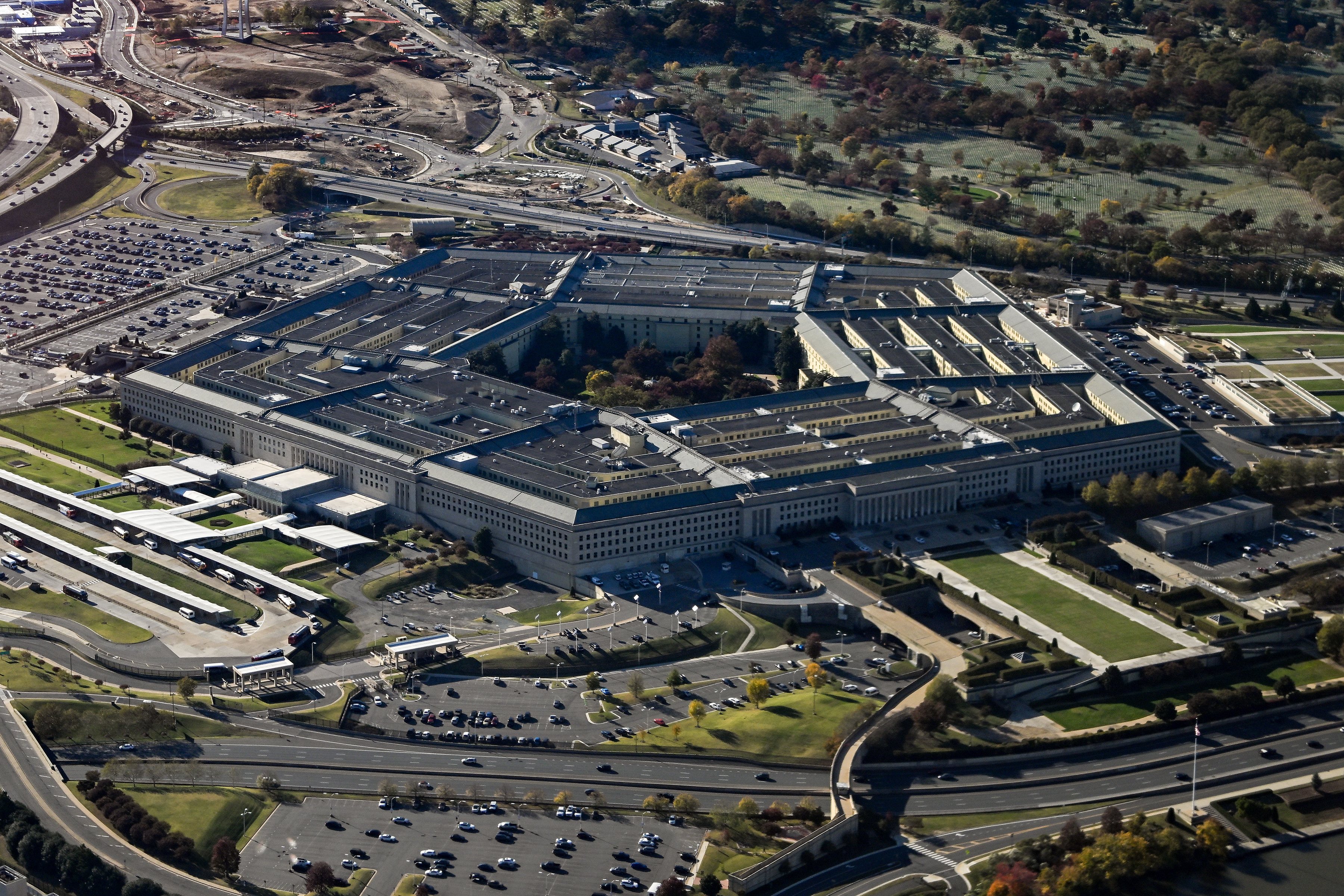
    WASHINGTON — In mid-July, many of the country’s biggest military contractors received a letter from the Air Force with a stern warning: By Sept. 1, all the software they use for weapons and control systems must be free of products built by the artificial intelligence company Anthropic. Failure to comply would put all their business with the Pentagon at risk.

    Within a month, those same contractors received an unexpected reversal: They could — for now — disregard the earlier instructions about purging Anthropic.

    It was one more example of the chaos and contradictions in the tsunami of AI disruptions that has swept through the national security establishment in recent months. Agencies including the Pentagon, which still use airplanes designed in the 1950s, are struggling furiously to keep up with AI models whose powers multiply in a matter of months.

    The tension has been magnified in the case of Anthropic, whose CEO Dario Amodei has been locked in a public feud with Defense Secretary Pete Hegseth over restrictions the company tried to put on the technology’s use by the world’s most powerful military.

    Without Anthropic’s powerful Mythos model, it would be far more difficult for the National Security Agency to find and patch vulnerabilities in the Pentagon’s own systems, senior NSA officials argued. And it turned out that, despite the original Anthropic ban, the NSA was still allowed to use its products.

    Critical tests were underway using Mythos to gauge its potential to hack into highly protected foreign networks, current and former officials said. Shutting down the use of Mythos, an AI model whose potential for conducting offensive cyberoperations is already shifting the digital arms race into overdrive, would have amounted to “unilateral disarmament,” according to one recently departed senior U.S. official.

    From the Department of Defense to the CIA and NSA, billions have already been spent on using artificial intelligence to develop weapons that could work with less human control, or to test vulnerable military networks and even nuclear codes to make sure they cannot be cracked by adversarial AI systems. Artificial intelligence is critical to the Golden Dome, President Donald Trump’s vision — fanciful to many experts — of a space-based missile shield.

    But little of that work anticipated the powers of Mythos and its AI counterparts, or the prospect that China may be months away from its own formidable and less expensive versions. That could supercharge China’s ability to infiltrate U.S. communications networks, water systems, and power grids like those they successfully pierced during the Biden administration in two sweeping attacks called Volt Typhoon and Salt Typhoon.

    “These are the kinds of things we were talking about and worrying about before AI became a daily headline,” said Jen Easterly, who ran the Cybersecurity and Infrastructure Security Agency during the Biden administration. “What’s different now, and what makes the problem more urgent, is the potential for AI to amplify those capabilities.”

    So far the Trump administration has veered wildly in response, at first abandoning its hands-off approach to regulating the industry, then briefly shutting off access for foreigners from Mythos — including some of its inventors — then lifting that ban.

    Earlier this month, the administration called in executives from the largest “frontier” creators, including OpenAI and Anthropic, and told them that new models would be reviewed by the government to assure they could not be used to make biological weapons, or break into classified American systems or the communications networks that control nuclear weapons.

    (The New York Times has sued OpenAI and Microsoft, claiming copyright infringement of news content related to AI systems. The two companies have denied those claims.)

    But the government review process exempts open models — including many of those now produced by Chinese firms — whose code can be customized by users.

    One senior executive of a company briefed on the new policy said it made no sense, noting that the open models can be just as dangerous. Like many in the industry, the executive would not be quoted, for fear of angering administration officials.

    Pentagon officials reject the idea they are not agile enough. They say the U.S. military has maintained immediate access to the world’s most advanced AI systems, despite the Anthropic ban. An official, who discussed Pentagon policies on the condition of anonymity, said the Defense Department had recently integrated a version of a Google Gemini model within four days of its commercial release.

    More than 1,300 AI workers have called for the country to slow development. But others, including inside the Trump administration, have answered that call with a question: “What about China?” They fear losing the roughly six-month lead they believe the United States maintains.

    That concern has touched off arguments about whether export controls on some of the most powerful chips made by Nvidia, the leading American maker, are effective in keeping the Chinese from developing the computing power they need to catch up. Controls could also just prompt Chinese makers to obtain the chips on the black market, or double down on development of their own.

    It is easy to compare this moment in U.S. national security to the early days of the Cold War, when the United States was the only nation to possess nuclear weapons, and it was struggling to delay the day the Soviet Union would match the accomplishment. (The first Soviet bomb was tested in late August of 1949, four years after Hiroshima and Nagasaki.)

    CIA Director John Ratcliffe recently reached for just that comparison, saying it would “not be misplaced” to refer to the capabilities of AI as “akin to digital nuclear weapons.”

    But like most such historical analogies, this one has its limits. Nuclear weapons were solely in the hands of the state back then. And the fundamental technology of building and delivering them has changed little in 80 years since. AI is being built in the private sector, and available to all. Many of the most powerful models are updated weekly, their powers, and unpredictability, discovered along the way.

    China is perhaps six months or less behind the United States in the development of the most advanced models, U.S. experts estimate, though probably years behind in making the advanced semiconductors needed to power AI’s development.

    But already there is evidence the main U.S. technological and economic rival is unnerved by the powers being unleashed. Privately some Chinese officials have already been talking about some forms of arms control, even if no one knows how that might work.

    “They realize there is a gap in capability that may play to our strengths,” said Evan S. Medeiros, a professor at Georgetown University and a former National Security Council official. “On nuclear arms control and on missile defense, we can’t get them to engage. But they appear more interested in the case of AI.”

    Trump has said that will be a topic of discussion, again, when he meets President Xi Jinping in Washington in late September. The two leaders are scheduled to see each other again twice, later in the year.

    But when he talks about AI, Trump has neither explained his objectives nor indicated any concerns in recent weeks that AI agents are finding ways to break out of their confines, or acting autonomously to break into outside companies or networks. When news came out that artificial intelligence was used to design a new virus, not found in nature — a development that could herald real medicinal progress or a biological weapon — the White House said nothing.

    But one thing is clear: Many of the hypothetical scenarios that concerned the national security community a year ago have begun to arrive.

    At the Pentagon, punishing Anthropic goes astray

    Within the defense industry, the chaos kicked off by Hegseth and his aides over stripping Anthropic code has only deepened. A month after the Air Force told its contractors to expunge all Anthropic code, it sent another message, telling them to “stand by,” at least for now.

    “At this time, you are not required to remove from your inventory Anthropic products or services that interface with the Department of the Air Force systems and networks,” read the update, a copy of which was seen by the Times. It warned that the latest guidance could be reversed yet again depending on the outcome of litigation.

    The back-and-forth instructions reflected Hegseth’s dilemma: He is trying to punish a leading AI juggernaut deeply embedded in the defense-industrial complex, without handicapping the military’s national security mission.

    Asked about the apparent about-face, a Pentagon official described the new Air Force guidance as temporary and said the mandate to purge Anthropic across the Department of Defense was absolute.

    Publicly, the Pentagon has refused to relent. In interviews, Pentagon officials have suggested that the animosity between their department and Anthropic began when the Silicon Valley firm began making what the military saw as ridiculous demands about how the Claude for Government model, a version of the popular, publicly available AI model, would be used. Senior officials said Anthropic presented them with 25 pages of restrictions.

    After several contentious months, those 25 pages were boiled down to two restrictions. In a February meeting at the Pentagon, Amodei told Hegseth that the company would not provide any products to the military unless he had assurances they would not be used for domestic surveillance of Americans or to produce fully autonomous weapons that were not ultimately controlled by human oversight.

    It was not enough. The defense secretary got his back up, noting that Raytheon doesn’t dictate limits about how the missiles it produces can be employed against adversaries; those decisions, Hegseth said, were completely in the realm of government officials, not corporate executives. When Amodei refused to relent, the Pentagon declared the company was a “supply chain risk” — and banned for military use.

    In May, Emil Michael, the undersecretary of defense for research and engineering, told a Times reporter that Anthropic deserved what it got, and that the Pentagon made a mistake by over-relying on a single producer of AI programs — even one whose products seemed ahead of both competitors and of China. Asked whether there was anything the company could do to get back in the department’s good graces, Michael said “not at the Department of War.”

    Pentagon officials say they have all but completed the removal of Anthropic from military computing systems. Close to 100% of military systems that once used Claude for Government, amended for use on classified networks, have now replaced Anthropic’s product with other frontier models, according to officials. In addition, the Pentagon has ceased all use of Anthropic tools in its Maven system, which helps analyze intelligence and suggests targets for airstrikes in the war with Iran.

    The military contractors affected by the ban have been reticent to discuss it, perhaps in fear of angering their biggest customer. In a statement, a Lockheed spokesperson declined to comment directly on the letter it received calling for Anthropic’s expulsion from its systems, but said, “We follow the president’s and the Department of War’s direction.” The spokesperson added, without naming Anthropic, that it expected “minimal impacts” to its business because it does not rely on one large-language model for any portion of its work.

    But the Pentagon’s break with the company is hardly clean.

    Barely two months after the blowup between Amodei and Hegseth, Anthropic announced Mythos, an AI product uniquely suited to find, and exploit, vulnerabilities in software. For a brief period, in what now looks like an overreaction, the Trump administration barred all foreigners from touching the program — only to reverse itself.

    That left the Pentagon in a fix: It had just barred itself from using what could be the most powerful new cyberweapon in history.

    “Panic set in,” said a former official who recently left the administration.

    While the Pentagon is not allowing Claude to be used for intelligence analysis or code writing, the NSA has been allowed to use versions of Anthropic’s advanced Mythos model on an “experimental” basis, officials said. It is both testing the U.S. military’s computer network defenses and seeking out potential weaknesses in adversarial networks, from China to Russia, North Korea, and Iran.

    Rethinking opposition to AI regulation

    The inconsistency isn’t limited to the Pentagon; there has been plenty at the Commerce and Treasury departments, and at the White House. As Trump’s aides come and go, and departments elbow each other for larger roles, the administration’s decisions on everything from export controls to national security reviews of AI models have been driven more by whim and influence than an articulated set of principles.

    During its first year, the administration’s approach was hands-off, following the arguments made by David Sacks, the venture capitalist who, until he left the administration earlier this year, ran both artificial intelligence and cryptocurrency policy.

    After publishing an AI Action Plan last year, the Trump administration slashed regulation and encouraged exports, hoping to make the world dependent on what Sacks called an “American tech stack.” In May, Trump scrapped a draft executive order requiring AI companies to submit their models to the government for a safety review, convinced by Sacks, among others, that the 90-day review requirement was too stringent and would give Chinese competitors an advantage.

    But Mythos’ powers spooked people inside the administration, officials and others said. By June, the government had imposed the most heavy-handed controls ever in the AI industry, cutting off access to Anthropic’s model for foreign citizens, including some of the engineers who developed it. Then, two weeks later, it lifted the ban on foreigners, without public explanation.

    A similar whipsawing took place in dealing with the Nvidia chips that are critical to developing new models — and building data centers. In April last year, the Trump administration shut down sales of one of the last artificial intelligence chips Nvidia was allowed to offer in China.

    But the president reversed course that July, following a meeting in the Oval Office between Trump and Nvidia CEO Jensen Huang. Trump said that the sales — which had formerly been considered a national security threat — would be fine, as long as the U.S. government got a cut of their revenue.

    Similarly, the administration revoked a rule imposed by the Biden administration that assured the most powerful chips could only be sold freely to close U.S. allies, and limited sales to other countries. Trump officials have said they would replace the measure, but they have clashed on a replacement. In the meantime, some American companies concluded that with the rules revoked, they were free to sell advanced chips to some Chinese firms operating outside of China.

    Trump later brought Huang to China for his visit with Xi, along with other industry executives.

    The administration is now dealing with conflicting security and political currents. If it exercises too much control over the nascent AI pioneer labs and threatens to cut off foreign access, it could drive the Europeans to Chinese models. If it under-regulates, it could invite disaster, especially if there are more incidents that make the public fear that the technology is racing out of control.

    Chris McGuire, a senior fellow at the Council on Foreign Relations and a former Biden administration official, said that the Trump administration’s posture on export controls had been “incoherent.”

    The Trump administration is now concerned about competition from open-source models from China, but it had walked back many measures that were preventing China’s AI advancement, he said. And it was targeting its harshest restrictions on Anthropic, an American company, not a Chinese one.

    “You’re loosening export controls on China, you’re leaving loopholes, and the first time you use export controls on AI is to blast an American company?” McGuire said.

    This article originally appeared in the New York Times.

  • Israel’s Ben Gvir advocates killing ’30 to 40′ people in Gaza nightly while speaking to ex-hostage

    Israel’s Ben Gvir advocates killing ’30 to 40′ people in Gaza nightly while speaking to ex-hostage

    JERUSALEM — An extremist Israeli lawmaker in Prime Minister Benjamin Netanyahu’s coalition publicly advocated for killing “30 to 40” people in Gaza each night, comments that surfaced Sunday and were quickly shared by Palestinian media.

    Minister of National Security Itamar Ben-Gvir made the statement while speaking to a former Gaza-held hostage, Rom Braslavski, on Braslavski’s podcast. The two were discussing Israel’s recovery from the Hamas attack of Oct. 7, 2023, when Ben-Gvir criticized Israel’s recent drawdown of strikes in Gaza.

    “It’s no secret, I disagree with the prime minister,” he said. “I think targeted assassinations should be carried out in Gaza, taking down 30 to 40 every night. Not just those who pose an immediate threat — there are people there who are not worthy of life. They shouldn’t live. They’re not even people.”

    In the past, similar statements by Ben-Gvir and other Israeli officials were widely condemned. Many have been presented to the UN’s world court as evidence of genocidal intent. Israel denies it has committed genocide in Gaza.

    Israel’s domestic media has made scarce mention of the statement, highlighting how once-fringe ideologies like Ben-Gvir’s are surging in the lead-up to Israeli elections Oct. 27.

    Figures like Ben-Gvir have become more popular among Israelis since Hamas’ brutal attack in 2023, when the militants killed about 1,200 people and took 251 hostage. Many hostages have recounted long-term starvation, physical and psychological abuse, and, in some cases, sexual abuse.

    Ben-Gvir oversees Israel’s police force and prisons

    Ben-Gvir does not have power over the country’s military and cannot order strikes on Gaza. But, after operating for decades within Israel’s far-right fringe, he is now one of the most influential people in the country.

    He has substantial control over key parts of Israel’s security apparatus, running the country’s prisons — where thousands of Palestinians from Gaza and the West Bank are incarcerated — as well as the national police force.

    He has previously boasted of lessening food rations for Palestinian prisoners. Israel’s top court ruled in 2025 that the prison service under Ben-Gvir was depriving Palestinians of a minimum subsistence diet.

    Ben-Gvir criticizes drawdown of Israeli strikes in Gaza

    Until recently, Israel was striking Gaza nearly every day, attacks that have killed over 1,250 people since an October truce deal came into effect, according to Gaza’s Health Ministry.

    Israel’s military, which says the strikes have targeted Hamas militants, appeared to ease off on the attacks in a quiet concession to U.S. President Donald Trump after Netanyahu rejected the president’s latest attempt to move the truce forward.

    Israeli media last week reported that the authority for carrying out strikes has now been limited to the army’s chief of staff, raising the ire of right-wing lawmakers such as Ben-Gvir.

    Ben Gvir advocates mass emigration, expulsion of Palestinians from Gaza

    In the same taped appearance, the lawmaker advocated for mass emigration of Palestinians from Gaza — a proposal that international lawyers say could amount to ethnic cleansing — and resettlement of Gaza by Israel.

    Twenty years ago, Israel withdrew from the Gaza Strip, dismantling a block of 21 Jewish settlements known as Gush Katif and pulling out its forces.

    “I see all of Gaza as ours,” said Ben-Gvir in the interview. “Settlements not just in Gush Katif but throughout Gaza, encouraging as much emigration as possible, sending them to their countries, and for the terrorists, no emigration, nothing, just to kill them one by one.”

    Trump’s latest proposal involves Hamas gradually giving up its weapons while Israeli forces halt their attacks and begin withdrawing from Gaza. Hamas accepted the deal, although the group linked the surrender of its heaviest weapons to the creation of a Palestinian state, something Israel’s current government and most of its political class adamantly reject.

    Netanyahu says Israel will not retreat from any of its positions in Gaza until Hamas has been completely disarmed. The stance leaves other elements of the ceasefire, including the deployment of international forces and any reconstruction of the devastated territory, on hold.

  • Firefighters battle massive blazes in Belgium and Greece as 2 die on an island near Athens

    Firefighters battle massive blazes in Belgium and Greece as 2 die on an island near Athens

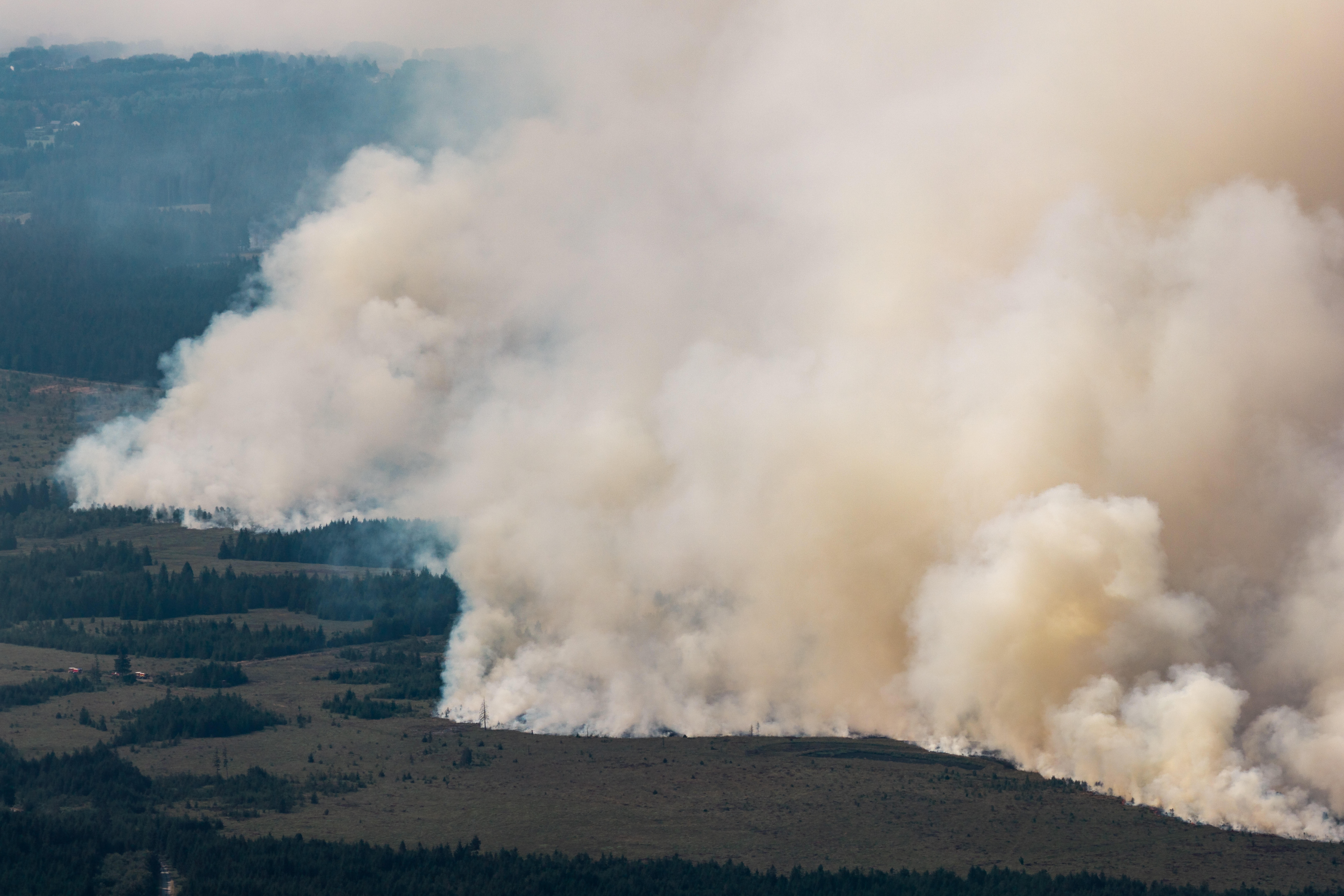
    BAELEN, Belgium — Firefighters battled a massive wildfire that scorched a nature reserve in eastern Belgium and another on a Greek island where two people were killed on Sunday as hot and dry conditions fueled fires across parts of Europe.

    A blaze in eastern Belgium burned about 12 square miles in the High Fens, a large nature reserve, in one of the country’s worst wildfires in recent history.

    About 600 residents in the nearby municipalities of Waimes and Bütgenbach, in Liège province near the German border, were told to evacuate on Saturday as winds shifted and smoke spread through the area. Authorities also advised tourists to leave, while a nearby gymnasium was opened to receive evacuees.

    Liège provincial governor Hervé Jamar said in a statement Sunday that more than 250 emergency personnel have been deployed, including over 100 Belgian and German firefighters, as well as police and military officers and civil protection staff. Firefighting helicopters operated by Belgium’s federal police and the Netherlands also helped.

    Two killed as fires break out on a Greek island

    In Greece, two people were killed in a wildfire Sunday on the island of Salamina, west of Athens, Greek firefighters said.

    The bodies were recovered in the village of Peristeria, where strong winds fueled the rapidly spreading blaze. A second blaze was reported in the Selini area. Firefighting and coast guard vessels were evacuating beachgoers in the area.

    Some 260 firefighters were responding to the blazes, including 15 ground teams, 10 aircraft, and eight helicopters.

    The island had been placed at high wildfire risk on Sunday, with near gale-force winds. “These conditions enabled the fire to quickly reach dangerous proportions and spread rapidly within seven minutes toward nearby residential areas,” said Fire Brigadier General Vasileios Vathrakogiannis.

    Dry conditions fuel record-breaking Belgium wildfire

    The blaze now torching Belgium has far surpassed a 2011 fire that burned nearly 5.4 square miles in the same area and was previously the country’s largest wildfire on record, according to data from the European Forest Fire Information System.

    Nicolas Yernaux, a spokesperson for the Public Service of Wallonia, said conditions were much worse this time. “We’re dealing with something much deeper because we have very dry soil,” he said.

    René Dahmen, chief engineer at the Department of Nature and Forest, said the fire was still spreading Sunday in an area that was difficult for crews to reach.

    “On the eastern flank, there’s a line at least a kilometer long where the fire is slowly advancing toward a municipal forest,” Dahmen said. “That’s the first priority now.”

    Interior Minister Bernard Quintin said on X firefighters managed to keep the fire from spreading towards the west and toward the German town of Monschau.

    In Germany, local authorities warned Sunday that the fire was just under a mile from the border.

    Some farmers from both Belgium and Germany filled up tanker trucks, pumping water from a nearby lake before heading toward the fire area to help firefighters.

    European countries send firefighting aircraft

    Belgium activated the European Union’s civil protection mechanism to receive assistance from other countries, EU Commissioner Hadja Lahbib, who is in charge of crisis management, said on X.

    “The High Fens are burning. Belgium is not facing it alone,” Lahbib said. Sweden sent two water-bombing aircraft, while three helicopters — two from the Netherlands and one from the Czech Republic — were also being deployed.

    The fire follows weeks of unusually hot and dry weather. The High Fens’ mix of heathland and peat bogs has complicated efforts to contain the flames.

    Belgium was hit by another spell of intense heat this week, with temperatures reaching about 98.6 F in parts of the country Friday.

    Wildfires burn in France and the U.K.

    In France, firefighters battling a wildfire in a pine forest in the southwestern Landes region faced no major flare-ups overnight, Landes Prefect Gilles Clavreul said. Authorities estimated the total area burned at 6.6 square miles, while about 650 people had been evacuated from their homes.

    It was the third major wildfire in the vast pine forests of southwestern France this summer, following two others in late July. A massive wildfire in the neighboring Gironde department burned about 162 square miles and forced the evacuation of about 220,000 people as it spread toward the Atlantic coast and the Bordeaux area.

    In the U.K., emergency crews were fighting 14 wildfires in South Wales with the support of military personnel. Authorities warned that although the heat wave is easing, drought conditions mean the risk of wildfires remains high.

    Fires gutted more than a dozen homes in the West Midlands in central England this week as officials recorded the hottest day of the year on Thursday, when temperatures reached 100.6 F.

    In Germany, firefighters made significant progress against a wildfire in the Hürtgen Forest, allowing about 2,000 evacuated residents of Gey to return home Saturday. Officials said Sunday there were no open flames and crews had established a cleared cordon around the affected area to prevent the fire from spreading.

  • Trump backed away from a wall at Big Bend, but the bulldozers are there

    Trump backed away from a wall at Big Bend, but the bulldozers are there

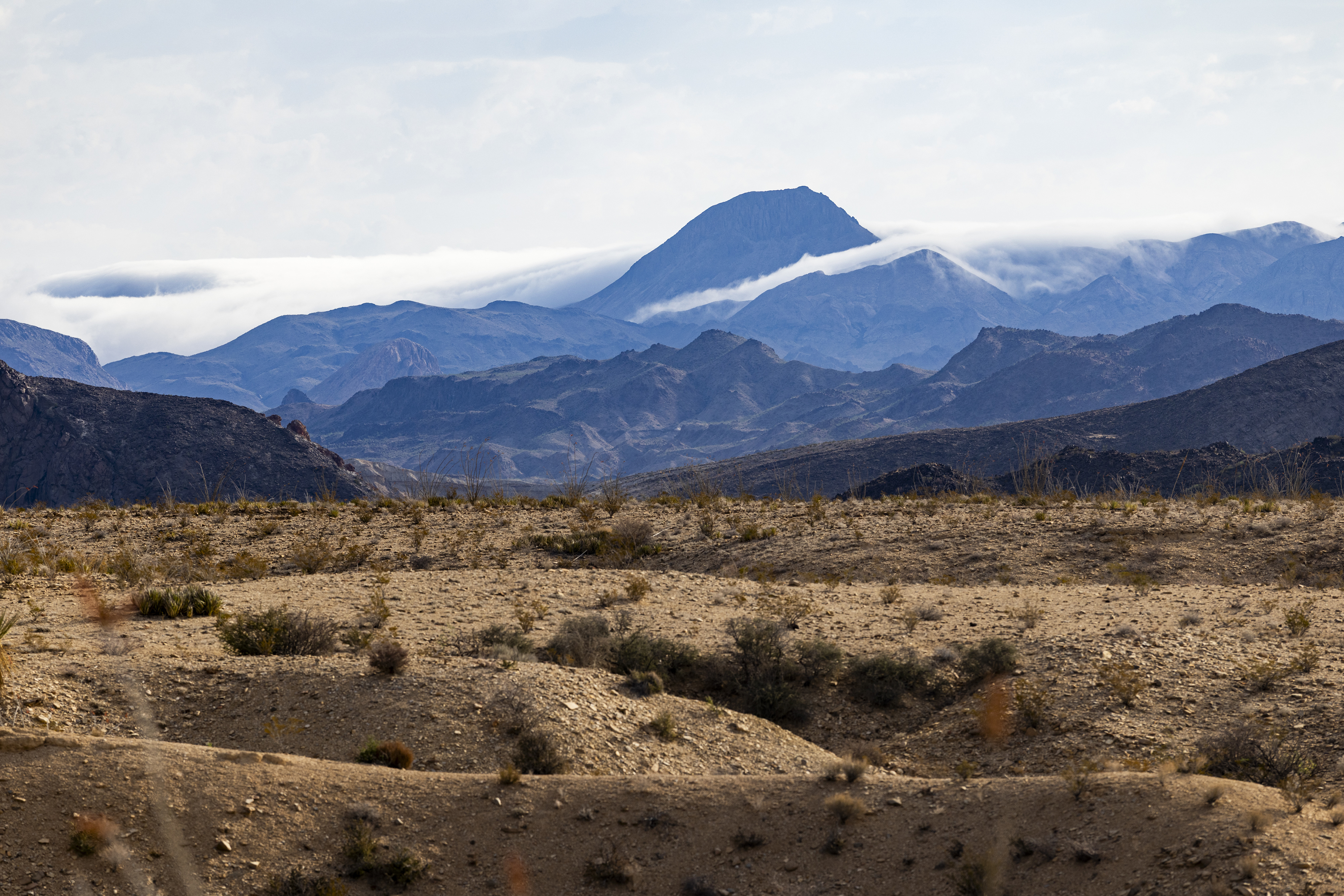
    Texans were caught off-guard several months ago when the Trump administration appeared poised to construct a 30-foot wall through Big Bend National Park, a rugged expanse of moonlike desert that is a point of pride for many in the state.

    But after bipartisan opposition grew, the wall was removed from the federal government’s border construction map. Many exhaled, believing that the West Texas park, with its towering mountains and cliffs, would be spared.

    Then the bulldozers arrived this month.

    The sight of the earthmoving machines along the Rio Grande near the Santa Elena Canyon, one of the park’s major attractions, pointed to the most significant evidence of border barrier construction in the park. Contractors ripped through mesquite trees and brush and leveled the ground for more than 1 mile of what appeared to be a future roadway.

    Big Bend is beloved by Texans and many across the country, even those who are not among its more than 500,000 annual visitors. It is a place to feel the immense and inhospitable wilderness of West Texas, where the stars at night actually are big and bright.

    The construction sparked a fresh wave of anger and outrage from all sorts of people — environmentalists, former park officials, local sheriffs — who again insisted that such infrastructure was unnecessary in a border region so remote and dangerous that people have rarely tried to cross there, even at the peak of unauthorized migration.

    Both John Cornyn, the state’s outgoing Republican senator, and James Talarico, the Democrat running to replace him, expressed concern this month about the start of construction inside the park.

    “My constituents believe that the 1,000-foot riverbank cliffs and remote Big Bend terrain offers its own source of deterrence,” Cornyn said in a letter to Homeland Security Secretary Markwayne Mullin.

    Other Republican state leaders, including Gov. Greg Abbott and Attorney General Ken Paxton, who defeated Cornyn in the Senate primary, have not weighed in directly on the construction.

    On Friday, a local nonprofit and an outdoor recreation business represented by state Sen. Roland Gutierrez, a Democrat, filed a federal suit to try to halt the project. A day earlier, a bipartisan group of Texas legislators sent Abbott a letter urging him to ask federal officials to stop the construction.

    “It’s gotten to the point where people are picking up the torches and marching in the street right now,” said Tex Toler, a former tourism director for Marfa, Texas, northwest of the park. “This is one of Texas’ and the country’s last wild places.”

    After days of confusion among West Texas residents, senior Trump administration officials explained their plans and rationale Thursday. There would be no wall, but there would be construction.

    “CBP is building one new access road, improving existing roads, installing detection technology and placing vehicle barriers in limited, strategic locations,” Rodney Scott, the U.S. Customs and Border Protection commissioner, said in a statement.

    The park’s land sits along 118 miles of the U.S.-Mexico border, and a patrol road is slated to run along much of it. A few areas would have miles of 4- to 6-foot-tall vehicle barriers.

    The bulldozers and excavators have been engaged this month in “survey and design work,” Scott said.

    Fewer than six migrants a day have been encountered crossing from Mexico in recent months in the entire Big Bend patrol sector, which includes the park and hundreds of other miles of border, federal statistics show.

    Officials have said that while unauthorized crossings are currently at record lows, they could increase in the future.

    The Trump administration has been furiously building new border barriers, and Scott said the Big Bend construction was necessary to fill in gaps. Southwest Valley Constructors, one company currently at work in the region, was awarded a $1.7 billion contract. The company directed questions to federal officials.

    “We will not leave Big Bend as an opening for cartels to exploit by shifting their routes and tactics,” Scott said in the statement.

    Many of those who oppose a wall are also against building a patrol road. They include local sheriffs who have insisted that major border infrastructure projects are not necessary.

    “What security problem are we trying to solve?” Sheriff Thaddeus Cleveland of nearby Terrell County, a Republican and a former Border Patrol agent, wrote on social media. “Can the same security objective be accomplished more effectively another way?”

    On Wednesday, people gathered for a demonstration against the construction at the Santa Elena Canyon. Many carried signs protesting the construction — “Stop the Steel,” “No Wall” — or held handmade depictions of javelinas and other wildlife that could be affected by the construction along the river. Some feared the road plan would require building bridges and blasting along Mariscal Mountain, a remote peak.

    “There will be no coming back,” said Michael Ryan, a former Big Bend park ranger who attended the protest. “They’re taking taxpayer dollars to ruin this national park.”

    This article originally appeared in the New York Times.
  • Indiana authorities say at least 5 people have died in flooding across the state

    Indiana authorities say at least 5 people have died in flooding across the state

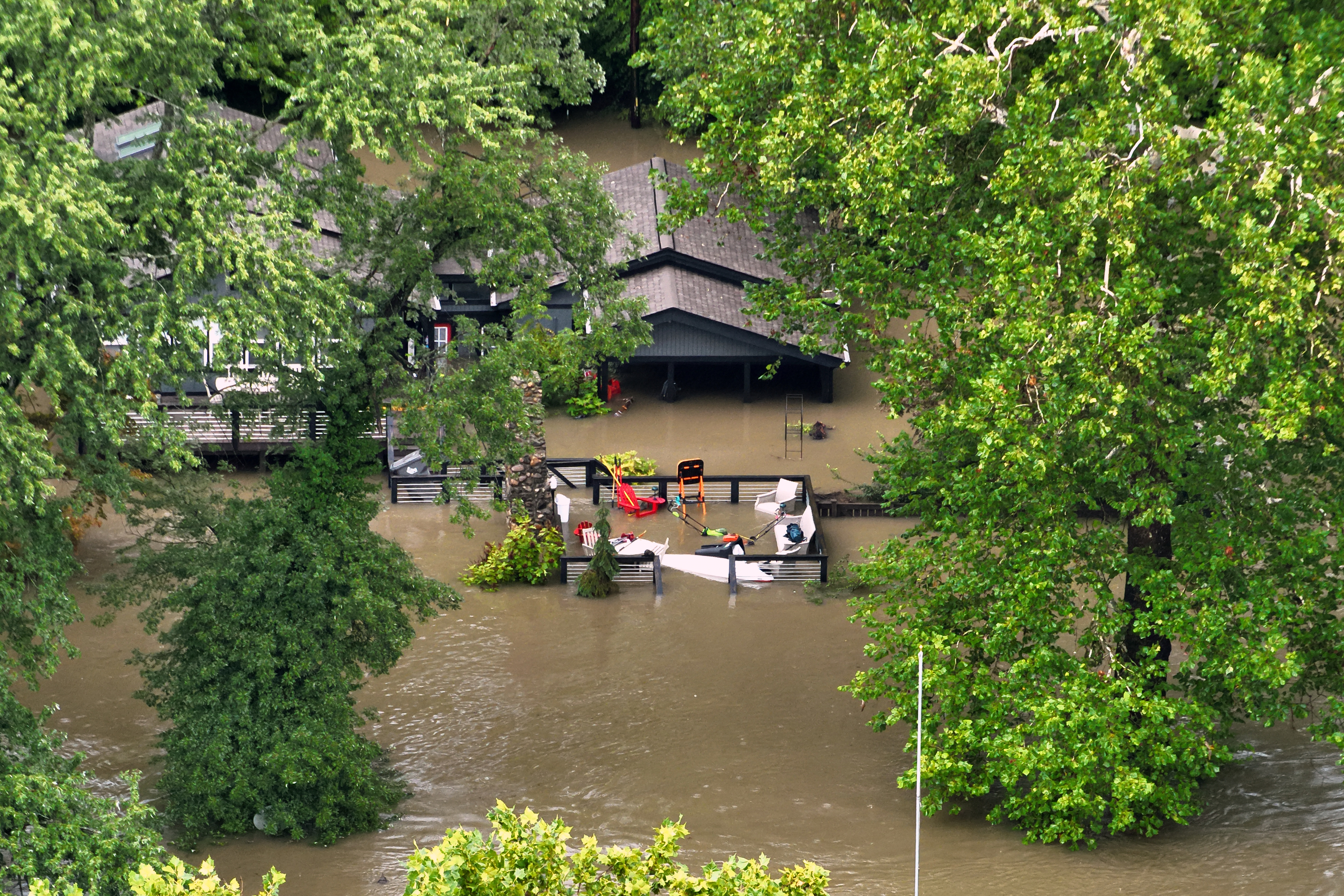
    Indiana authorities say at least five people have died in flooding across the state this week, as first responders worked to rescue more people Saturday from rising waters in neighborhoods along the White River in Indianapolis.

    The state has been hammered over the past week by heavy rains, resulting in rivers and creeks surging.

    More than 90 people and their pets were rescued Saturday as floodwaters rose along the White River in Indianapolis and authorities in central Indiana responded to what many described as historic flooding.

    The damage so far was concentrated along the river corridor from Hamilton County and into the northern Indianapolis suburbs. Farther east in Delaware County, sheriff deputies on Friday found the body of a 58-year-old woman who they believe died after trying to drive through floodwaters.

    Gov. Mike Braun confirmed Saturday that President Donald Trump intends to approve his request for federal resources to help in response to the flooding and the recovery.

    Braun said his heart is with the families who have lost loved ones due to the flooding over the past week. He also warned people to take the flooding seriously and stay away from floodwaters.

    Indianapolis Mayor Joe Hogsett was joined by emergency managers during a briefing Saturday as he urged residents along the river to evacuate. A day earlier, he had declared a local emergency as heavy rains resulted in creeks and streams swelling throughout central Indiana.

    “This is one of those once-in-a-lifetime type floods,” Jacob Spence, director of Marion County Emergency Management, told the Associated Press. “So yeah, this is an unprecedented event and unfortunately we’re setting some new records.”

    The National Weather Service reported that more than 11 inches of rain fell over a two-day period in some areas. The White River crested at more than 24 feet in the communities of Anderson and Noblesville, surpassing records set in 1913.

    Flash-flood warnings and watches were issued across a swath of central Indiana on Saturday, and forecasters with the National Weather Service warned that more showers and thunderstorms would be moving into the area throughout the day. In Warren County, forecasters reported 2 inches of rain falling in six hours.

    Forecasters expected the White River to crest Saturday evening in the Indianapolis area, where National Guard vehicles were among those helping with the rescue efforts. Rita Reith, a spokesperson with the Indianapolis Fire Department, put the number of rescues at 91 people and 45 pets as of early afternoon.

    “The water is still rising, so heed the warnings,” said Todd Wilson, director of the city’s public works department.

    Residents posted videos on social media that showed vehicles stranded in high water, a power pole being toppled by rushing water, and flooded intersections.

    Earlier this week, severe storms wreaked havoc across other parts of the Midwest, causing tornadoes, heavy rains, and flash flooding. Storm damage was reported from the Chicago area all the way to western Pennsylvania.

  • Entrenched, embattled, and defiant, the Taliban celebrate 5 years in power

    Entrenched, embattled, and defiant, the Taliban celebrate 5 years in power

    The black and white flags of the Taliban were flying high along the streets of Kabul, Afghanistan’s capital, as the group celebrated five years in power on Saturday.

    A shiny Mercedes drifted in front of graffiti praising the Taliban fighters’ “sacrifice,” the word painted in crimson, with depictions of drops of blood. Young Afghans chanted independence songs below posters hailing how “the carpet of democracy” had been removed for Islamic rule.

    But the triumphant tone is only half the story. The Taliban may be boisterous in Kabul and have a tight grip on power, yet elsewhere they find themselves targeted and face crises both at home and abroad.

    They face a conflict just short of open war with neighboring Pakistan. They’re dealing with new waves of attacks from armed groups that want to topple them. Add to that mass unemployment, international isolation, and growing domestic discontent, and the Taliban face their most serious threats since their return to power in 2021.

    It is too early to tell whether all those challenges will escalate and threaten their survival as a governing force. And as the scenes of celebration on Saturday showed, the Taliban are popular among many.

    Still, the threats they face have cracked the veneer of security and stability that the Taliban have heralded as their primary achievement — and their main selling point to the world.

    As workers were preparing Kabul for celebrations Thursday, a resistance group claimed responsibility for the killing of the Taliban mayor of a provincial capital in northern Afghanistan. Two weeks earlier, another Taliban official had been assassinated in the same province.

    A tight grip on power — and yet

    The Taliban are holding Afghan society in a chokehold that spares no one. Girls and women face restrictions to a degree unseen anywhere else in the world. Religious minorities are witnessing the forced closure of their places of worship. Anyone who voices criticism is repressed. United Nations staff members face arrests; journalists and rights workers suffer forced disappearances.

    The Taliban are collecting taxes and building roads, dams, and canals. European countries have welcomed them in Brussels to facilitate the deportation of Afghan migrants and asylum seekers. They have expanded trade ties with Central Asian states and want the Trump administration to come back to Afghanistan.

    Whenever a sign of dissent emerges in a province, the country’s secretive and ultraconservative leader, Sheikh Haibatullah Akhundzada, places a key ally in a leadership position to keep things in check.

    And yet the signs of trouble that have appeared in recent months are impossible to ignore.

    Troubles in the North

    Sporadic sounds of gunfire reverberated across the remote mountains of northeastern Afghanistan on a recent evening. Weary Taliban fighters peppered drivers with questions at checkpoints dotting the main road snaking through the province of Badakhshan.

    On the same road, two attackers had killed a senior provincial Talib official a week earlier. A small group of anti-Taliban fighters had briefly seized control of a police headquarters in a nearby district.

    Now fighting between the Taliban and another group opposing their rule was continuing in another district of Badakhshan. The province, bordering China, Pakistan and Tajikistan, is emerging as a hot spot.

    On a trip to the province this month, we talked to residents ready to support anti-Taliban groups because they said they were fed up with the Taliban’s iron grip, the lack of job opportunities, and the government’s confiscation of natural resources.

    We drove through dozens of checkpoints and witnessed the heavy presence of intelligence officers in the isolated village where anti-Taliban fighters had stormed police headquarters.

    The clashes and the attacks have so far been scattered. The leader of one of the anti-Taliban groups described them as “opportunity targets” aimed at challenging the Taliban’s sense of control. But the leader, speaking on condition of anonymity to discuss the group’s strategy, said the number of attacks would only increase in coming months.

    Tensions in the East

    An underequipped Afghan army waits nervously at the border with Pakistan. Once a sponsor of the Taliban, Pakistan has launched dozens of airstrikes on Afghanistan, killing 500 civilians since October, according to the United Nations, and has threatened to use even more force if the Taliban don’t rein in militants who are staging attacks on Pakistani territory.

    The mistrust goes both ways: The Taliban have accused Pakistan of supporting the armed groups that have attacked Taliban outposts in Badakhshan.

    Whether, or to what extent, Pakistan is actively supporting anti-Taliban groups is not clear, but suspicions are running high.

    “The Pakistanis are happy to be portrayed now as a potential patron for the armed opposition to the Taliban, because that increases their leverage over the group,” said Fabrizio Foschini, a researcher at the Afghanistan Analysts Network.

    Food, education, and the economy

    The picture on the domestic front is also grim. Extreme hunger has been spreading fast from one province to another after aid cuts last year plunged millions into deeper food insecurity. The Taliban’s ban on secondary and university education for women and girls is stifling development, experts say.

    The Taliban have deprived 2.4 million Afghan girls of an education, according to UNESCO — the equivalent of all school-age girls in New York, Mexico City, and Moscow combined — and they are forced to stay home indefinitely.

    Some scattered signs of discontent have popped up. At a rare protest in June, demonstrators chanted “Work, education, freedom,” similar to what their Iranian neighbors chanted in 2022. And the leader of a large religious minority warned the Taliban in May: Don’t squeeze Afghan society too much, or it will explode.

    The potential to spiral?

    The Taliban know the world wants a stable Afghanistan — one that isn’t a source of refugees, drugs, or terrorism.

    They assert that the country no longer poses a security threat to the region or the West. They say that they have cracked down on the Islamic State militant group, and that they want peaceful relations, based on trade and diplomacy, including with the U.S.

    Since the Taliban no longer carry out suicide attacks, bomb schools, or target the security forces they now represent, their main argument may hold.

    “The greatest achievement we have had over the past five years is security,” Afghanistan’s foreign minister, Amir Khan Muttaqi, said in an interview with the New York Times in Kabul on Wednesday.

    They don’t want their various crises to spiral either.

    All the ingredients for things to get out of control in Afghanistan again are here, analysts say: A vast population of unemployed young Afghans are fertile ground for radicalization, especially as economic opportunities are nearly nonexistent. And with animosity growing between Pakistan and Afghanistan, it is unclear who might come to the Taliban’s aid: Afghanistan is, once again, a pariah state, with barely any allies.

    The past five years have brought some predictability and an end to almost two decades of fighting, which many Afghans have welcomed, despite the immense hardship and repression. But the country remains shattered, and the fragile peace is already at risk.

    This article originally appeared in the New York Times.
  • Navy weighs major warship redesign to match Trump’s preferences

    Navy weighs major warship redesign to match Trump’s preferences

    The U.S. Navy is considering a major redesign of its new aircraft carriers to better match President Donald Trump’s preferred aesthetic for the warships, according to seven current and former U.S. officials familiar with the matter.

    The service is evaluating the feasibility of moving the multistory tower that acts as the carrier’s command center farther forward, toward the middle of the ship, to resemble older vessels, the officials said. The review, which has not been previously reported, is in response to Trump’s concerns about the “look” of the new Ford-class ships, where the tower is near the rear, these people said.

    The timing and extent of the Navy’s evaluation is unclear, with current and former officials cautioning that the service was concerned that such a change would require significant time and money. Like others, they spoke on the condition of anonymity to discuss a sensitive situation.

    Moving that command center, known as the “island,” would be the second major design change prompted by the president, who on Thursday issued a national security memorandum directing the Navy to develop a plan to revert to older steam-powered catapults on future carriers. The systems help launch jets off the ships’ flight decks.

    Trump’s preference, current and former officials said, is for the new aircraft carriers to look more like those that were in service during World War II.

    The Navy also examined the issue during his first term as president, said a former senior U.S. official. A study found that moving the island could cost billions of dollars in redesign costs and significantly delay the program, this person said.

    “It came back that the cost and time to do so would just be extraordinary,” the former official said.

    There are three Ford-class carriers in various stages of development. The USS John F. Kennedy is undergoing sea trials and getting closer to joining the fleet while the USS Enterprise and USS Doris Miller are under construction. The first carrier in the class, USS Gerald R. Ford, is already in service and recently finished a lengthy combat tour in the Middle East.

    Plans call for building up to 10 Ford-class carriers over the next four decades, at a projected future cost of $22 billion each, according to the nonpartisan Congressional Budget Office and the Navy’s most recent shipbuilding plan.

    Relocating the island would be “a major redesign,” said Bryan Clark, a former Navy officer who studies the service at the Hudson Institute, a right-leaning think tank in Washington. Such an alteration to the carrier’s layout, he said, would affect the ship’s buoyancy and weight and come at a significant cost.

    “You could change it,” he added, “but it’s very disruptive.”

    The Pentagon and the Navy referred requests for comment to the White House, which pointed to the new national security memorandum when asked about Trump’s desire to relocate the island on future Ford-class aircraft carriers. The memorandum does not address the issue.

    Another U.S. official familiar with both the potential changes to the catapult and the island said that the Navy is taking both matters seriously because of the delays and severe cost overruns they could create.

    Trump’s interest in the redesign modification marks the White House’s growing influence over the complex mechanics of naval shipbuilding.

    Since returning to office, Trump has promised to “resurrect” the lagging industry, and he has already issued multiple executive orders addressing the matter.

    Thursday’s national security memorandum would, among other changes, revert the Ford class’ advanced electromagnetic catapult system to steam power. The document emphasizes the administration’s preference for “proven, reliable,, and affordable technologies and ship designs.”

    Such a change, multiple officials said, also could run into the billions of dollars and exacerbate chronic delays in the U.S. shipbuilding industry.

    The lead Ford-class carrier, the USS Gerald R. Ford, required 17 years to construct. Its design incorporated new technology that led to delays — including the electromagnetic catapult, a feature the Navy has since credited as being highly effective.

    The Ford class of carriers will phase out its predecessor, the Nimitz class, which dates back to the late 1960s.

    Relocating the island to the back of the newer vessels was done for efficiency and safety, three U.S. current and former officials familiar with the program told the Post. It not only creates more parking space for aircraft close to the carriers’ catapults, allowing crews to reduce the amount of time it takes to launch jets, it also improves landing safety by reducing the chance for turbulence when planes come back to land, the officials said.

    The Navy’s surface fleet has been plagued by years of delayed maintenance and low readiness rates, in part because of how often past U.S. administrations have deployed carriers to confront global crises.

    Amid the ongoing Iran war, the Pentagon under Trump has further stretched the readiness of its carrier fleet while surging naval assets to the Middle East to conduct strikes and enforce a blockade of Iranian ports.

    The USS Ford itself faced an extended deployment that ended earlier this year after a fire rendered many crew members’ sleeping quarters uninhabitable. Officials also acknowledged that the Navy’s newest carrier experienced problems with the “vacuum collection, holding, and transfer” system that supports hundreds of toilets on board.

    Democratic lawmakers this week called on Defense Secretary Pete Hegseth to investigate new reports of rapidly worsening conditions aboard the USS Abraham Lincoln, which has been deployed to the Middle East since November. Families of sailors aboard the Lincoln have been outspoken about the situation, and the Navy is investigating a man-overboard incident it says may be connected to mental health issues.

    While speaking to reporters on a trip to Panama on Thursday, Hegseth called the reports “completely misrepresented.”

    On Friday, as questions continued to swirl around conditions on the ship and its lengthy deployment, Trump told reporters at Joint Base Andrews that the Lincoln’s time at sea had been “not nearly long enough.”

    The Lincoln is on an extended combat deployment that has seen its sailors at sea for 200 days without a port call to provide the crew some rest. It is scheduled to be relieved by the USS George Washington in the coming weeks.

    Trump has repeatedly shown interest in the design of Navy warships. Last year he unveiled plans for a new class of battleships to lead his vision for a Golden Fleet, prompting criticism from many naval analysts and lawmakers who argued the ships would waste scarce American shipbuilding power on a design the service does not need.

    The Congressional Budget Office has since estimated that the Trump Class battleships would cost about $275 billion over 30 years, coming at a cost of $18 billion per ship after finishing the first one.

  • Navy carrier’s problems are tied to attacks on U.S. base early in war

    Navy carrier’s problems are tied to attacks on U.S. base early in war

    WASHINGTON — The aircraft carrier USS Abraham Lincoln’s supply problems began soon after the first day of the war, as Iranian missiles and attack drones fell on a Navy base in Bahrain.

    The Iranian attack, retaliation for the U.S.-Israeli assault on Tehran, Iran, destroyed much of the base. And as it went up in smoke, so did a major logistics hub the Navy has relied on for decades.

    The Navy needed a Plan B to continue feeding the sailors working around the clock to keep warplanes flying strike missions, and later to maintain a blockade of Iran’s ports.

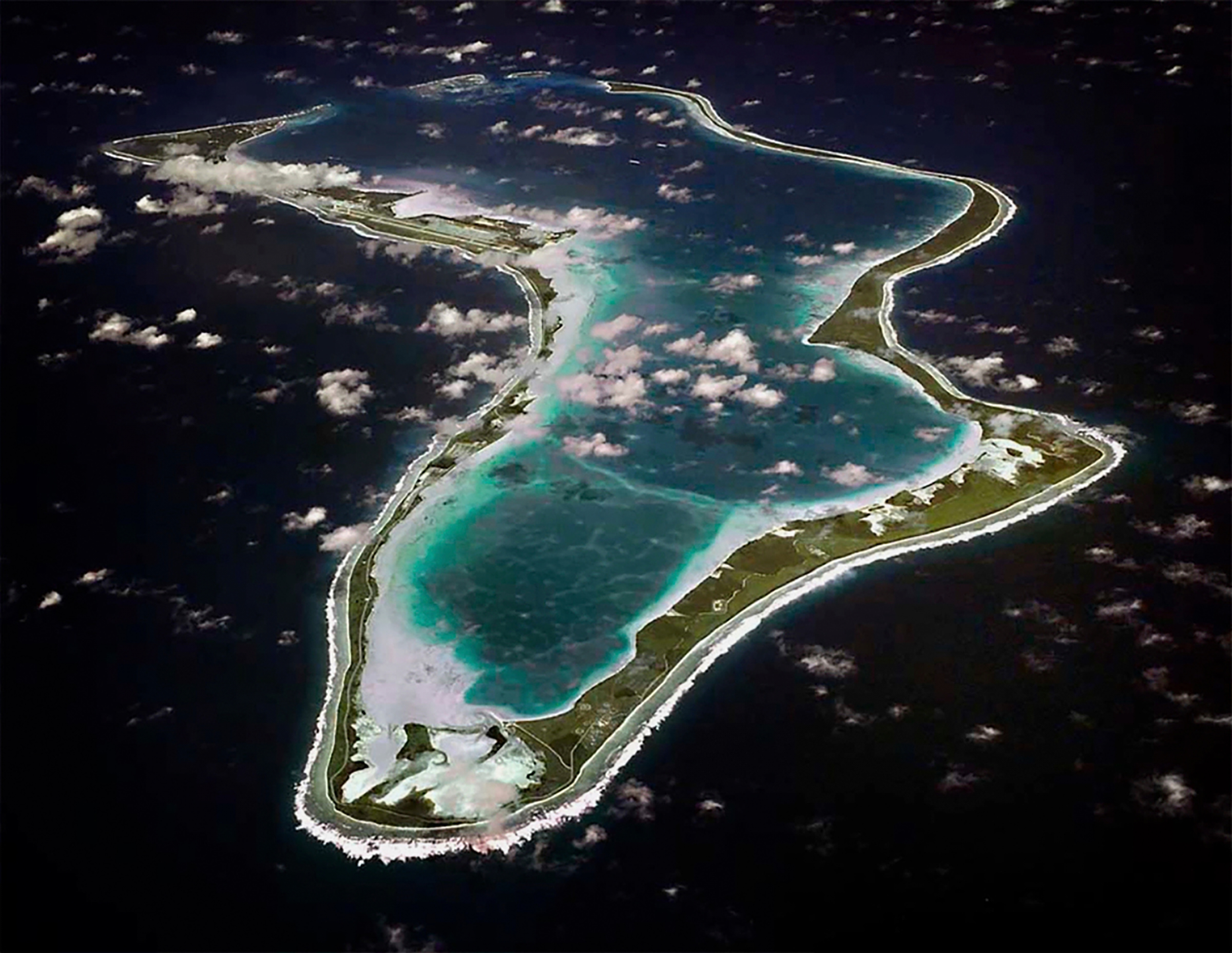
    With the threat of Iranian attacks at other ports in the region, the Pentagon looked to a base under British command on the island of Diego Garcia as its supply hub. Diego Garcia is south of the Maldives in the Indian Ocean and roughly 2,200 miles from where two aircraft carrier strike groups have been operating in the Gulf of Oman.

    The loss of the hub in Bahrain has contributed to a host of reported problems on carriers supporting operations against Iran, as Democratic senators raise concerns about the Lincoln’s 5,000 sailors and their nearly nine-month deployment.

    Sen. Richard Blumenthal (D., Conn.) said in a letter to Defense Secretary Pete Hegseth that the reported problems included shortages of basic supplies and the deteriorating mental health of its crew members.

    On Friday at a military air base in Maryland, President Donald Trump dismissed those concerns. “That ship is moving right now, or very shortly, and it’s being replaced with another, very similar, ship,” he said.

    The Lincoln’s replacement is the Japan-based carrier USS George Washington, which earlier this week was heading west through the Strait of Malacca in Indonesian waters en route to the Middle East.

    Another carrier, the USS George H.W. Bush, has been operating in the Middle East for months since deploying from Norfolk, Va., on March 31.

    When asked if the carrier deployments were too long, the president said, “No, no, no, not nearly long enough.”

    Hegseth had a similar response on Thursday when a reporter asked how long the United States could maintain its blockade of the Strait of Hormuz.

    “We can hold it as long as we need to, indefinitely,” he replied.

    At the war’s outset, Keir Starmer, then the British prime minister, denied the Pentagon access to Diego Garcia for use in the operation against Iran. That decision drew Trump’s ire, and Starmer ultimately relented on March 1, granting the U.S. military access to the island for what he described as a “specific and limited defensive purpose.”

    A U.S. military official, who spoke on the condition of anonymity to discuss sensitive logistics, said the Navy began using Diego Garcia as the main shipment point shortly after the Navy’s base in Bahrain was heavily damaged.

    The use of Diego Garcia as the Navy’s new logistics hub may explain why Iran fired two medium-range ballistic missiles at the island on March 20.

    One of the missiles fell into the Indian Ocean short of its target. A Navy warship shot down the other.

    The San Diego-based Lincoln has been at sea for nearly nine months without what the Navy calls a “liberty port” — where sailors can get off the ship for a few days.

    Bahrain is one of the two ports where U.S. aircraft carriers in the region have typically moored so their crews can get some downtime. The other, the Emirati port of Fujairah on the Gulf of Oman, is also well within the range of Iranian missiles.

    The Trump administration relied on yet another carrier, the USS Gerald R. Ford, in the Caribbean for its pressure campaign against Venezuela and later extended its deployment to the Middle East to launch airstrikes against Iran. So far the war has seen the commitment of a significant portion of the Navy’s fleet of aircraft carriers, which will go down to 10 with the expected retirement of USS Nimitz next year.

    While six months is the typical length of a Navy deployment at sea in peacetime, some carriers have done far longer stretches following the 9/11 attacks. The Ford’s 326-day deployment, however, broke the record for the longest by a carrier since the Vietnam War.

    But in that war, carriers assigned to Yankee Station, a section of the Pacific off the coast of Vietnam, would often head to the Navy base at Subic Bay, Philippines — a short two-day transit away — where sailors could take a break from running nonstop flight operations and the ship could load up on ordnance, food, fuel, and other necessary supplies.

    By tradition and Navy regulation, the commanding officer of a warship can request a “beer day” for their crews when they have been at sea for 45 straight days or longer. Given the Lincoln’s time at sea, the crew would have been eligible for five beer days already.

    A spokesperson for the U.S. 5th Fleet, which covers naval operations in the region and would authorize beer days, did not immediately respond to a request for comment on Friday about whether any of the ships participating in the Iran war had requested them.

    In an interview, Rep. Mike Levin (D., Calif.) said his constituents included sailors aboard the Lincoln, and their family members had reached out to express their concerns about the deployment.

    “It gets back to that big picture, which is: What is the mission here?” Levin said. “That’s what the families want to know.”

    This article originally appeared in the New York Times.
  • Killings and other violent crimes dropped sharply in 2025

    Killings and other violent crimes dropped sharply in 2025

    Violent crime and murder rates across the United States fell sharply between 2024 and 2025, according to FBI data, the largest year-to-year decrease since the federal government began tracking nationwide crime rates in 1936.

    The 2025 murder rate of 4.1 killings per 100,000 residents is the lowest the country has seen since the mid-1950s, the agency said.

    The FBI released those figures Friday as part of its annual national crime statistics analysis, known as the Uniform Crime Report, which amasses data from more than 17,000 law enforcement agencies across the country to paint a holistic picture of public safety trends in the U.S.

    Those trends were reflected in Philadelphia, which recorded 222 homicides in 2025, the city’s lowest annual total since 1966. There were 935 shooting victims in Philadelphia in 2025 — marking the first time the city’s annual total dropped below 1,000 since at least 2007, and a 61% decline in shootings from 2021.

    The unveiling of this year’s FBI report, though, was unconventional. Instead of the announcement originating from the FBI or the Justice Department, it came from President Donald Trump, who broke the news during a visit to the New York police academy on Long Island on Friday.

    “Today, I’m thrilled to announce that the FBI has just released the new Uniform Crime Report, showing that in 2025 we achieved the single largest reduction in violent crime in American history,” Trump said to applause. “Together, we’re showing what is possible when you finally have a president in the White House who supports our police, who lets you do your jobs, and who always backs the blue.”

    Many criminal justice experts take issue with that analysis, at least in part, since violent crime began falling well before Trump took office.

    FBI Director Kash Patel and newly confirmed Attorney General Todd Blanche joined Trump, who was visiting Long Island to campaign for Bruce Blakeman, New York’s Republican gubernatorial candidate and the current Nassau county executive.

    The arrival of the FBI’s annual crime report came about a year after the Trump administration began ramping up his tough-on-crime messaging and deploying troops to some of America’s streets — sending the National Guard, dispatching federal task forces, increasing immigration enforcement, and taking temporary control of the D.C. police department.

    The president has credited those decisions for the crime declines in 2025, which include an 18.1% drop in murder and nonnegligent manslaughter, an 18.5% drop in robberies, and a 12.4% drop on property crimes, according to the FBI report. The White House has touted it as the “Trump effect.”

    But the FBI’s data shows that, after a spike during the coronavirus pandemic, nationwide violent crime began plummeting in 2023 when President Joe Biden was still in office. By January 2025, when Trump returned to the White House for his second term, homicides had already fallen significantly.

    That trend continued throughout 2025, according to the FBI figures and other independent analysis by various policing and criminal justice policy organizations. Criminologists and law enforcement experts broadly agree that it is difficult to assign credit — or blame — for the ebbs and flows of national crime rates.

    “Lots of places are having historic decreases right now,” said crime data analyst Jeff Asher. “And the feds aren’t everywhere.”

    An accurate understanding of the numbers is critical, experts said, so that police and policymakers can operate from a shared set of facts when making choices about public safety.

    “There’s a saying: ‘There’s lies, there’s damn lies, and there’s statistics,’” said Matthew Cavedon, director of the Cato Institute’s Project on Criminal Justice. “The numbers don’t tell you the human story. They can tell you correlation all day long, but they aren’t going to tell you causation. It’s a tricky one.”

    Those who study crime trends tend to avoid drawing conclusions based on a one- or two-year change in the data, Cavedon said, because the fuller story plays out over decades.

    “As with every edition with these kind of reports, the feeding frenzy begins to take credit,” Cavedon said. “Everybody wants to be able to go to the public and the voters and say, ‘This is exactly what did it.’ It’s a bit of a fool’s errand to even try.”

    The White House public safety narrative, he said, deserves skepticism, especially the claim that U.S. cities were out of control until Trump deployed the National Guard and began deporting undocumented immigrants.

    “That’s too simple of a story,” Cavedon said, pointing to Canada, where crime rates have also been dropping but where U.S. law enforcement policy is irrelevant.

    After the Council on Criminal Justice, a nonpartisan think tank, released its semiannual crime report last month, Executive Director Adam Gelb said the consistency of the downward trend nationwide means that “macro-level forces are playing a major role.”

    In Philadelphia, experts and city officials have pointed to a number of possible causes for the drop in crime: expanded violence prevention programs, improved law enforcement technology, better coordination between city leaders, and a return to day-to-day life after the disruptions of the pandemic.

    “We are seeing changes in criminal justice policy and strategy, advances in technology and surveillance, and broad shifts in society and culture, all happening at the same time,” Gelb said last month. “Crime is falling across too many different kinds of cities to credit any one policy, party, or program.”

    That analysis has not deterred Trump in recent weeks from claiming credit — especially for declines in D.C., where he declared a crime emergency last August.

    “I’ll tell you, because D.C. is very personal for me … it was so bad when I got there a year and a half ago,” Trump said in Long Island. “Can you imagine our nation’s capital? One of the most dangerous cities in the country. We’ve taken it to one of the safest cities of the country.”

    Trump said that crime in the District had dropped by 81%, but in recent appearances with reporters he has also referred to drops of 88% or 92%. When asked to clarify Trump’s remarks about D.C. crime drops, White House officials pointed to arson incidents, which dropped from four in 2025 to one in 2026.

    The White House also cited the District’s homicide rate, which has fallen significantly in recent years, but not by the rates cited by Trump.

    At Friday’s rally in Long Island, the law enforcement facility had been transformed into a MAGA rally filled with hundreds of his supporters. A pair of police cars were parked inside the building under a “thin blue line” flag. Trump spoke from beneath a “Making America Safe Again” banner, flanked by law enforcement officials in uniform who stood behind him on risers.

    He praised the work of Patel and Blanche and pledged to continue pumping federal tax dollars into police departments and law enforcement efforts nationwide.

    “Is there anybody that’s in favor of defunding the police in this particular room?” Trump said.

    “No!” the crowd yelled in unison.

    Staff writer Denali Sagner contributed to this article.

  • Magnitude 7.7 earthquake strikes off Indonesia’s coast, killing at least 47 and toppling buildings

    Magnitude 7.7 earthquake strikes off Indonesia’s coast, killing at least 47 and toppling buildings

    MAUMERE, Indonesia — A powerful magnitude 7.7 earthquake struck off the coast of Indonesia early Saturday, killing at least 47 people, collapsing buildings, and causing panic in a region prone to deadly quakes. Authorities said dozens more residents were injured and warned that the death toll would almost certainly rise.

    Authorities issued a tsunami warning and urged coastal residents to move to higher ground, but later lifted the warning when Indonesia’s meteorological agency said monitoring showed no significant sea-level changes that posed a threat to coastal communities. Some smaller tsunamis were reported.

    The U.S. Geological Survey said the quake hit eastern Indonesia’s Flores region at a depth of 6 miles at 5:58 a.m. local time. Its epicenter was 42 miles north-northwest of the city of Ende in East Nusa Tenggara province.

    Wuake triggers landslides, generates small tsunamis

    The meteorological agency said the quake was followed by at least 235 aftershocks, with the largest recorded at magnitude 6.2.

    The agency’s sea-level monitoring stations acknowledged some small tsunamis reached coastal villages in Manggarai and East Manggarai regencies. Videos obtained by the Associated Press showed the coastal village of Riung in Ngada regency blanketed in mud and debris after what the agency described as a 5.3-foot tsunami. Fishing boats were stranded ashore, infrastructure damaged, and homes surrounded by sediment left by receding waters.

    Waves measuring 3.1 feet were observed in Maurole, Ende Regency.

    Tsunami waves exceeding 1.6 feet were detected in Bulukumba, South Sulawesi, and Sape in Bima Regency.

    A strong, land-based earthquake of 6.9 magnitude hit North Sumatra province in western Indonesia on Saturday afternoon, according to the USGS. It struck 107 miles beneath the earth’s surface, meaning it was too deep to cause significant damage or casualties, Indonesian authorities said.

    The quake has caused buildings to collapse

    East Nusa Tenggara Police Chief Rudi Darmoko said power outages hampered the spread of information about the impact of the earthquake in cities and villages, complicating search and rescue efforts.

    “We are continuing to collect reports of damage and casualties, but there are communication disruptions,” Darmoko said. He said quake-triggered landslides in Ende regency blocked the Trans-Flores highway, a roughly 435-mile paved mountain road spanning Flores Island, from Labuan Bajo to Larantuka.

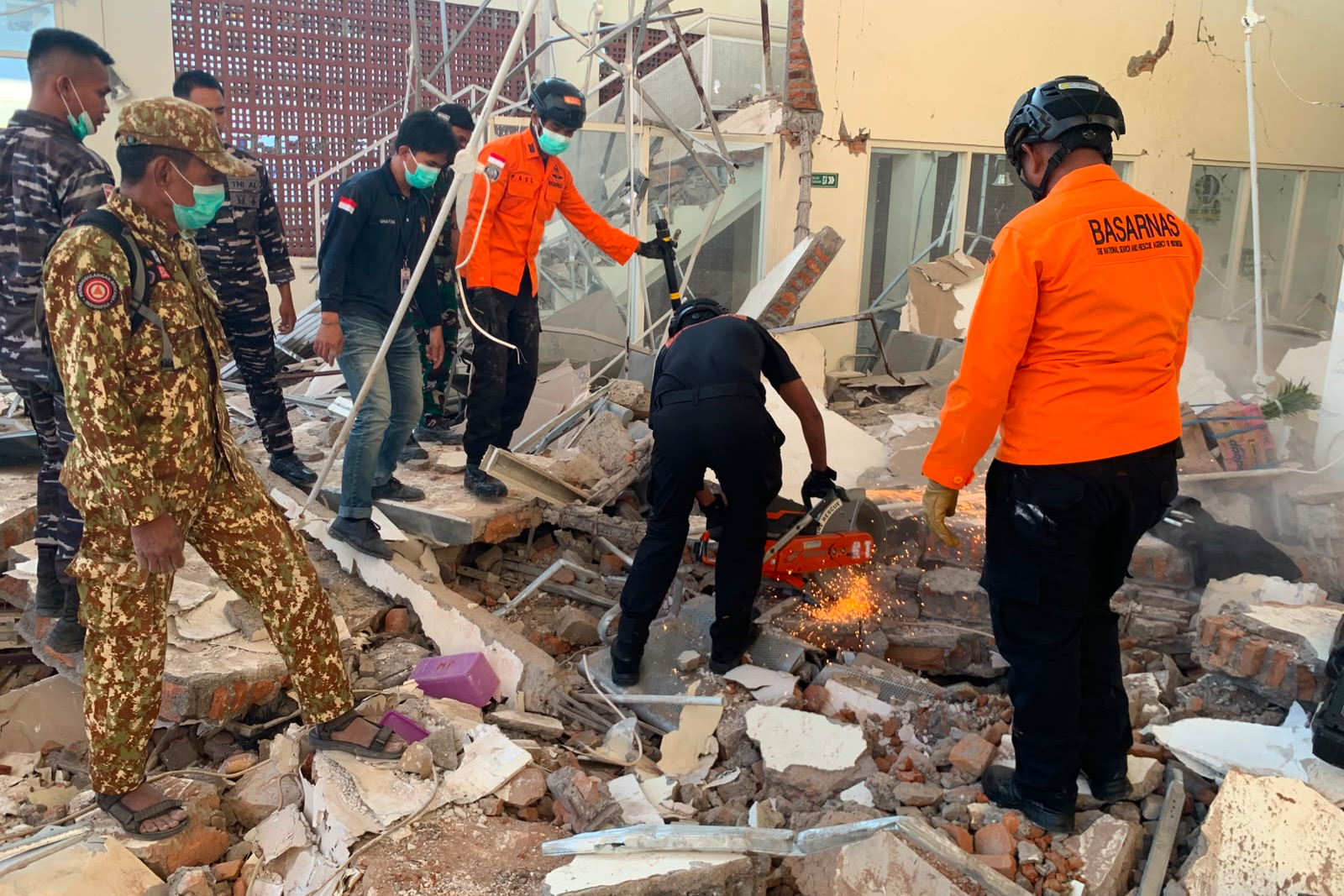
    The head of the National Disaster Management Agency, Suharyanto, said rescuers have recovered at least 47 bodies, mostly in Sikka, Manggarai, and East Manggarai, and at least 50 people were taken to hospitals.

    Suharyanto, who like many Indonesians uses a single name, said the quake flattened at least 157 houses and damaged nearly 200 more, forcing about 2,000 villagers to abandon their homes and move to temporary shelters. The powerful temblor also destroyed more than 100 public facilities, including schools, medical centers, and churches.

    The death toll could rise because landslides triggered by the earthquake buried or cut off many remote villages across six regencies on Flores Island, said Fathur Rahman, who heads the Search and Rescue Office in Maumere, the capital of Sikka.

    Some remote villages are completely buried, he said, and damaged infrastructure and a lack of heavy equipment were hindering rescue efforts.

    Authorities deployed three helicopters and a rescue vessel to support logistics and emergency response operations, including potential evacuations. East Nusa Tenggara consists of numerous islands and presents significant transportation and access challenges.

    Residents ran for their lives when quake struck

    The quake was felt across much of Flores island with initial reports indicating heavy damage.

    Yohanna Embu, who lives in Sikka, said people ran in a panic to higher ground.

    “Many buildings here were damaged … I saw that the waiting room at the port terminal in Maumere had collapsed,” she said.

    Students at St. Peter Major Seminary in Sikka who were attending morning Mass fled when the roof of an assembly hall collapsed, said the Rev. Guidelbertus Tanga, rector of the seminary, known locally as Ritapiret Seminary, on the predominantly Catholic island of Flores.

    “Our students and nuns ran out in panic beneath a collapsing roof,” Tanga said. “At least one priest suffered a broken leg after jumping from the second floor of a building during the quake.”

    The quake also struck Labuan Bajo, a gateway town to eastern Indonesia’s Komodo National Park, one of the country’s best-known attractions. Damage was reported in Bima, a city in neighboring West Nusa Tenggara province, and in parts of southern Sulawesi island.

    Indonesian authorities initially issued a tsunami warning for parts of East Nusa Tenggara, West Nusa Tenggara, South Sulawesi, and Southeast Sulawesi provinces, and urged residents to stay away from beaches and riverbanks. The agency located the shallow undersea quake near Flores island.

    Indonesia, a vast archipelago of more than 17,000 islands, is prone to earthquakes and volcanic activity because of its location on the Ring of Fire, an arc of volcanoes and fault lines in the Pacific Basin.

    Most notably, a powerful earthquake caused a tsunami in 1992 that killed about 2,500 people on Flores, part of a group of islands in the eastern half of Indonesia, while in 2018, a magnitude 7.5 quake spawned a large localized tsunami that wiped out coastal areas, killing more than 4,400 people.

    In December 2004, a massive magnitude 9.1 earthquake off Sumatra in western Indonesia triggered a tsunami that killed 230,000 people in a dozen countries.