Category: Nation & World

  • A man who stole $1 million in cryptocurrency was sentenced to seven years in prison

    A man who stole $1 million in cryptocurrency was sentenced to seven years in prison

    A 24-year-old Portuguese man was sentenced Monday to seven years in federal prison for stealing more than $1 million in cryptocurrency from unwitting victims, including a resident of Montgomery County — crimes prosecutors said the man committed while he was associated with an international cybercrime network.

    Ruben Filipe Gabriel Martins pleaded guilty last year to wire fraud and identity-theft charges for using sophisticated phishing tactics to obtain victims’ cryptocurrency account information, then stealing their investments.

    Prosecutors said Martins committed his fraud while he was part of a group called “the Com,” a global network of people who use technology to commit a variety of crimes across the world, including extortion, theft, and even incitements of violence.

    Last year, a teen who was associated with a subset of the Com made hoax active-shooter calls targeting Villanova University and other colleges, prosecutors have said, crimes that led to massive police responses and inspired widespread panic.

    Martins, meanwhile, was associated with a subset known as “CryptoChameleon,” a group that uses a variety of deceptive tactics to obtain account information from cryptocurrency holders. In Martin’s case, prosecutors said, he pretended to be a customer support representative for Coinbase, a cryptocurrency exchange, and told his victims he could offer support for their compromised accounts — tactics he used to get into the accounts and steal the victims’ funds.

    Martins then went on to transfer the proceeds into other cryptocurrencies, prosecutors said, and ultimately spent his ill-gotten gains on luxury goods, traveling, and gambling.

    His scheme began to unravel in 2024, when prosecutors said a man from Towamencin Township told police that more than $60,000 had been stolen out of his cryptocurrency account after he’d replied to text messages and calls about its security. Authorities were ultimately able to link that activity to Martins, who was born in Portugal and went on to live in Scotland.

    Martins’ lawyer said in court documents that Martins had never intended to become “a career criminal.” But after being raised in modest circumstances — including by working in a fish factory as a teenager — Martins was introduced to a host of wealthy benefactors due to his skill in online gaming, his lawyer said, and some of those people then flew him to Paris and recruited him to participate in their digital exploitation operation.

    In court Monday, Martins apologized for his actions, saying he was in debt when he committed his crimes and viewed the scheme as a way to make “really easy money.”

    “I made a mistake when I was really down,” he said, “and I’d just like to have another chance at life.”

    But U.S. District Judge Gerald J. Pappert said it was a significant understatement to describe the crimes as a “mistake ” — saying Martins had used his computer skills and desire for money to turn himself into a “dangerous” person who stopped only when he got caught.

    “Not one thing you did in two years was a mistake,” Pappert said. “You needed money. You saw what for you was an easy way to get a lot of money. … And I don’t know to what extent, if at all, you ever felt bad about it, because these people were all behind a computer, and you never had to look them in the eye.”

    One of Martins’ victims has seven children, Pappert noted, and others were intelligent people who lost significant portions of their life’s savings.

    Martins is expected to be deported to Portugal once he finishes his prison sentence. But Pappert said his victims may never get over the shame and financial hardship he caused them.

    “These were horrible crimes,” Pappert said. “None of these people deserved this.”

  • Kushner meets Netanyahu in effort to break logjam over Gaza

    Kushner meets Netanyahu in effort to break logjam over Gaza

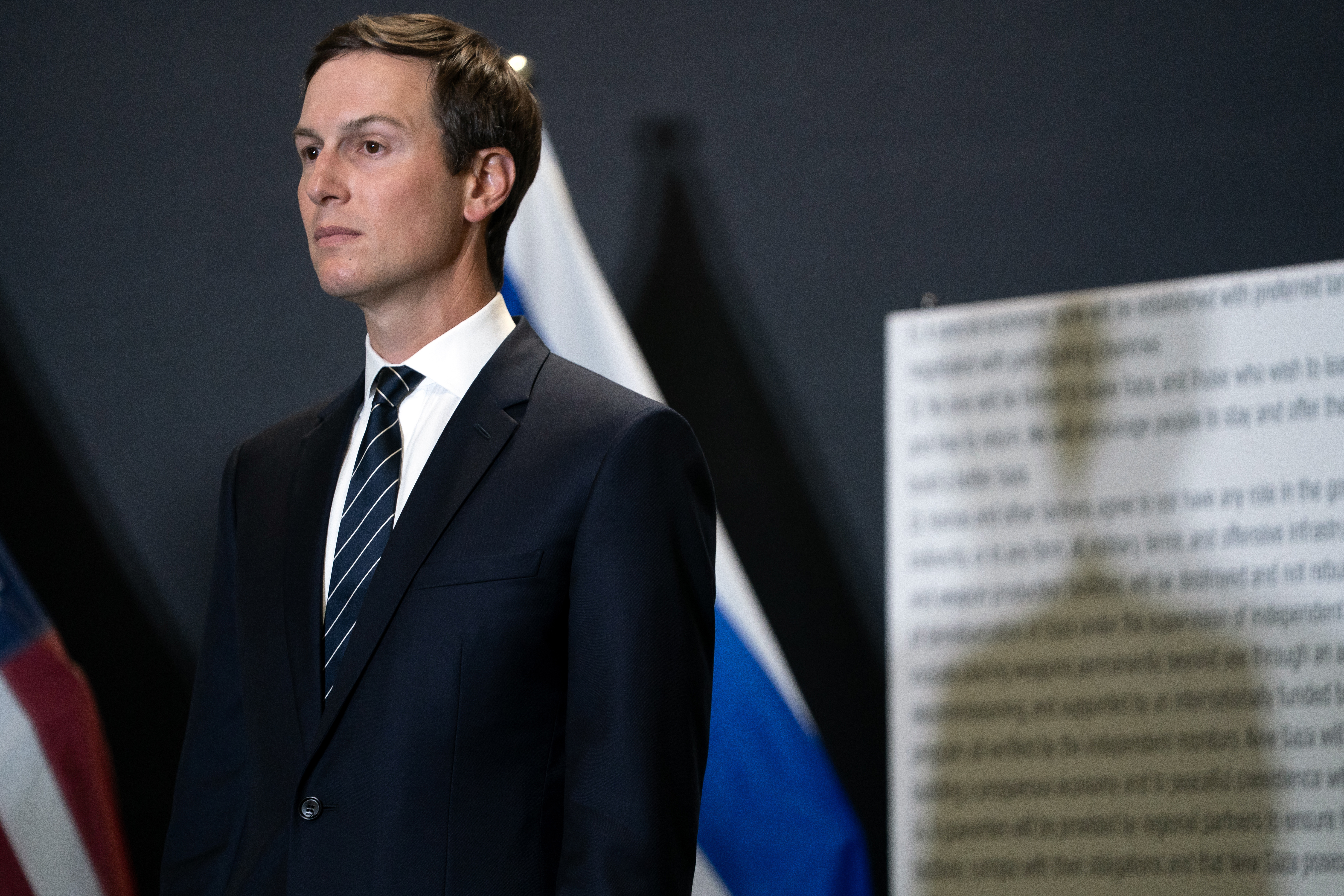
    JERUSALEM — Jared Kushner, President Donald Trump’s son-in-law and former White House adviser, was meeting with Prime Minister Benjamin Netanyahu of Israel in Jerusalem on Monday in an effort to break a logjam over Trump’s plan for the future of the war-ravaged Gaza Strip.

    The plan had been stalled for months over Hamas’ refusal to lay down its arms, as well as Israel’s frequent airstrikes and military operations beyond the withdrawal line it agreed to in the ceasefire reached in October 2025. Israel has also failed to meet its commitments to allow specified amounts of fuel and other necessities into Gaza.

    Trump’s announcement last month that his Board of Peace had secured Hamas’ agreement to disarm briefly raised hopes for progress. A 15-point “road map” that Hamas agreed to called for the militant group to lay down its weapons in a phased approach that would be matched by Israel withdrawing from parts of Gaza.

    But Netanyahu rejected the deal this month, insisting that Israel would not pull back within Gaza, let alone from Gaza, until Hamas had disarmed completely.

    Kushner and members of the Board of Peace flew to Israel for Monday’s meeting after holding talks with representatives of Hamas, including its political leader, Khalil al-Hayya, on Sunday in El-Alamein, Egypt.

    Hamas officials presented Kushner with a list of what they contended were Israel’s violations of the ceasefire, according to a Hamas official and two people briefed on the talks, and he promised to speak to Netanyahu about Israel upholding its end of the agreement.

    Kushner, in turn, asked the Hamas representatives to move ahead with disarmament, the two people said. But they replied that Israel first needed to keep its commitments under the ceasefire, and they warned that the road map they agreed to last month was not open for changes.

    The Board of Peace’s deal with Hamas says that, as part of the disarmament process, Israel should first uphold its side of the ceasefire. But political considerations are widely believed to be preventing Netanyahu from upholding all of Israel’s commitments under that deal.

    The Israeli leader faces a tough campaign for a new term in elections to be held Oct. 27, and his right-wing coalition is behind in the polls. Any concessions to Hamas or perceived softening of his posture toward Gaza could subject him to attacks from allies he considers vital.

    Political considerations are also important for the Board of Peace and for the Trump administration. With the U.S. midterm elections approaching in November and the anniversary of the ceasefire in early October, a failure to reach an agreement that could pave the way for reconstruction in Gaza could be highly embarrassing for the board, for the White House, and for its approach to the Middle East.

    This article originally appeared in the New York Times.

  • Supreme Court again rejects Trump’s appeal of $5 million E. Jean Carroll payment

    Supreme Court again rejects Trump’s appeal of $5 million E. Jean Carroll payment

    WASHINGTON — The Supreme Court for a second time refused a request by President Donald Trump to review a $5 million civil judgment against him after a jury found in 2023 that he had sexually abused and defamed writer E. Jean Carroll.

    The announcement Monday did not include the justices’ reasons, which is typical when the court issues routine orders. There were no noted dissents.

    Trump paid Carroll in July, a few days after the court initially turned away the president’s appeal. He also made a long-shot request to the justices that they reconsider, which the court formally declined Monday.

    The president has separately asked the Supreme Court to overturn a much larger award of $83.3 million that a jury ordered him to pay in 2024 for defaming Carroll in 2019, after she accused him of a decades-old rape. The justices are on summer recess and not expected to consider whether to take up that case until late September at the earliest.

    The request the justices dispatched Monday was always a long shot, since they rarely reconsider when asked. Still, it was another in a series of blows to the president’s efforts to contest Carroll’s claims and avoid the two separate monetary awards that juries have ordered him to pay related to Carroll’s allegations.

    In a statement, Trump’s legal team said: “The American people stand with President Trump as they demand an immediate end to all of the witch hunts, including the Democrat-funded travesty of the Carroll hoaxes. President Trump will keep winning against liberal lawfare, as he continues to focus on his mission to make America great again.”

    Carroll’s lawyer Roberta Kaplan said in a statement: “We are pleased that the United States Supreme Court has declined again to hear this case. As a result, the jury’s unanimous verdict that Donald Trump sexually assaulted and then defamed E. Jean Carroll is now final and cannot be challenged in any court.”

    The $5 million matter stems from a trial held in May 2023, when a federal jury in New York found the president liable for sexually abusing and defaming Carroll.

    The jury agreed that Carroll, a former magazine writer, had sufficiently shown that Trump sexually abused her in a dressing room of the Bergdorf Goodman department store when the two crossed paths in the 1990s. Further, the jury found that Trump had defamed Carroll by posting a statement on social media calling her case “a complete con job” and “a Hoax and a lie.” Throughout, Trump denied Carroll’s allegations.

    After that verdict, Trump appealed to the 2nd U.S. Circuit Court of Appeals, asserting, among other things, that the trial judge, Lewis A. Kaplan, erred by allowing certain evidence to be shown to the jury.

    In December 2024, a three-judge appeals court panel upheld the jury’s verdict, finding that Trump failed to show that the evidence had harmed his rights to a fair trial.

    Trump then asked the justices to weigh in and find that the trial court had erred.

    This article originally appeared in the New York Times.

  • Inside the gentle, careful work of restoring famous paintings of Lincoln

    Inside the gentle, careful work of restoring famous paintings of Lincoln

    Heather Smith stood before the tattered portrait of Abraham Lincoln, holding a fine-tipped sable brush and a small plastic palette smeared with dabs of conservation paint.

    Wearing special magnifying glasses, she peered at the edge of the unframed portrait where paint was missing and pieces of old canvas remained.

    Lincoln, shown in the portrait resting his chin on his right hand, seemed to be watching.

    “He’s been through a war of his own,” she said of the painting of the nation’s Civil War president. “It’s terrifying to think about.”

    The 6-foot-2-inch portrait of a contemplative Lincoln sitting in a chair was painted in 1887. Time has weathered it and pocked it with flaws: Its original canvas was removed, probably with a scalpel. The surface of the painting was abraded, perhaps with an iron. And spots dotted the portrait where the paint was gone.

    But the Baltimore art conservator, working for the Smithsonian’s National Portrait Gallery, which owns the painting, has now embarked on a months-long effort to restore the majestic portrait to its original look.

    The effort is part of the portrait gallery’s project to assess 110 of its presidential portraits and repair those in need. The work has been funded, in part, by a grant from Bank of America.

    Smith is the owner of Maryland Art Conservation, which is based in a former Baptist church in northern Baltimore.

    She has already worked on the gallery’s 1785 portrait of George Washington by English artist Robert Edge Pine. And she is scheduled to work on gallery portraits of presidents Theodore Roosevelt, Benjamin Harrison, Woodrow Wilson, and Dwight D. Eisenhower.

    She is also working on another Lincoln — known as the penny portrait, which resembles the image of Lincoln on the coin.

    But the large portrait of Lincoln seated is, perhaps, the most dramatic and well-known of the group. He is shown wearing a dark suit, white shirt and bow tie. He is leaning forward, his left hand gripping the arm of the chair, as if listening.

    The painting is too big to fit on an easel, Smith said, so it leans against a wall, flanked by two large windows. It was last on view at the portrait gallery in 2022.

    It is one of four similar Lincoln portraits painted by the prolific American artist George Peter Alexander Healy, said Mindy Farmer, a portrait gallery historian.

    “This has been an iconic work since it was created,” she said.

    Another version, painted in 1869 and once owned by Lincoln’s son, Robert, is in the White House, according to the White House Historical Association.

    The portraits are based on The Peacemakers, a painting Healy did in 1868 depicting Lincoln meeting with Lt. Gen. Ulysses S. Grant, Maj. Gen. William T. Sherman, and Rear Adm. David D. Porter near the end of the Civil War, according to the association’s website.

    The gallery’s 1887 portrait was commissioned by Lincoln’s longtime friend and political ally Elihu B. Washburne, who wanted it for his home, art historian Alba Campo Rosillo wrote in Smithsonian Magazine in 2021.

    Healy painted the portrait in the winter of 1887 in his studio in Paris, where he was living, Rosillo wrote.

    Washburne died in Chicago later that year, and the painting passed to his brother, William, who died in 1912.

    It was purchased in 1934 by the A. W. Mellon Educational and Charitable Trust. It was given to the National Gallery of Art in 1942 and transferred to the planned portrait gallery in Washington in 1965, according to the gallery. The gallery opened in 1968 with the Lincoln portrait on display.

    In the early 1940s, during conservation at a now-defunct gallery in New York, the painting underwent what Smith said was a radical treatment procedure.

    “I’ve never encountered this before,” she said in an interview in her conservation lab. “They put [it] face down, removed the canvas from the back of the paint layers, which is extremely unusual.”

    “They would have protected the front with something called a facing, which is paper glued to the front of the painting to keep everything intact, and then worked on the back,” she said.

    The old canvas was probably scraped away little by little, except for a small ridge along the edges of the painting, she said. “I would not be surprised if that is how some of the painting’s numerous tears and holes were inflicted.”

    The old canvas was replaced with a new backing, Smith said. The portrait also shows evidence of “abrasion,” where the paint has been worn down. What probably happened was that a prior conservator, assumably in the 1940s, used an iron to try to fix cracks in the paint surface, she said.

    “When they ironed them, they didn’t put anything protective between the iron and the painting,” she said. “And I’m guessing they just wore down the paint.”

    The painting’s last major conservation was in 1966, Smith said, and the portrait was in poor shape when she got it earlier this year.

    She has since removed dirt and old varnish and reattached bits of paint that were loose.

    She plans to soon begin comprehensive inpainting — adding paint to places where it’s missing. In her lab, she keeps books, paint brushes, picture frames, lighting equipment, jars of pigment, and a bed for her dog, Charity.

    Across the room from the large Lincoln portrait, his penny portrait rests on a table. The work on it requires using bits of cotton on the end of a bamboo skewer to clean off dirt and soot.

    The 1864 portrait, by the Boston artist William Willard, may have hung above someone’s fireplace, she said. The painting was given to the gallery in 1976 by Mr. and Mrs. David A. Morse, the gallery’s website says. It was last exhibited in 2009.

    Smith, a native of Westminster, Md., has been an art conservator for more than 20 years, taking over the business in the small wood-shingled church when her employer retired.

    She said she feels a sense of responsibility adding paint to damaged works of historic art.

    “Early in my career … I would have conversations with the artist — ‘I’m sorry this happened to your painting,’” she said. “Over time, you treat enough paintings, you’re more looking at it as the materials, you kind of break it down in your head to the raw materials.”

    She said that there is a sense of gravity to the work, a realization that the person restoring the art is part of its history.

    “Obviously, you want to do no harm but make it look as good as possible,” she said. “Eventually, you won’t see any damages any more and will focus on what we’re here to see.”

  • The Supreme Court again rebuffed Trump’s push to toss out the $5 million verdict in the E. Jean Carroll defamation case

    The Supreme Court again rebuffed Trump’s push to toss out the $5 million verdict in the E. Jean Carroll defamation case

    WASHINGTON — The Supreme Court on Monday again rebuffed President Donald Trump’s push to throw out a jury’s $5 million finding that he sexually abused the writer E. Jean Carroll at a New York City department store in the mid-1990s and later defamed her.

    The Republican president’s lawyers had asked the justices to reconsider their refusal to hear his appeal. The court denied Trump’s petition along with several others.

    It’s unusual — although not unheard of — for the court to grant such requests. Trump paid the judgment shortly after the court declined to take up his appeal in June.

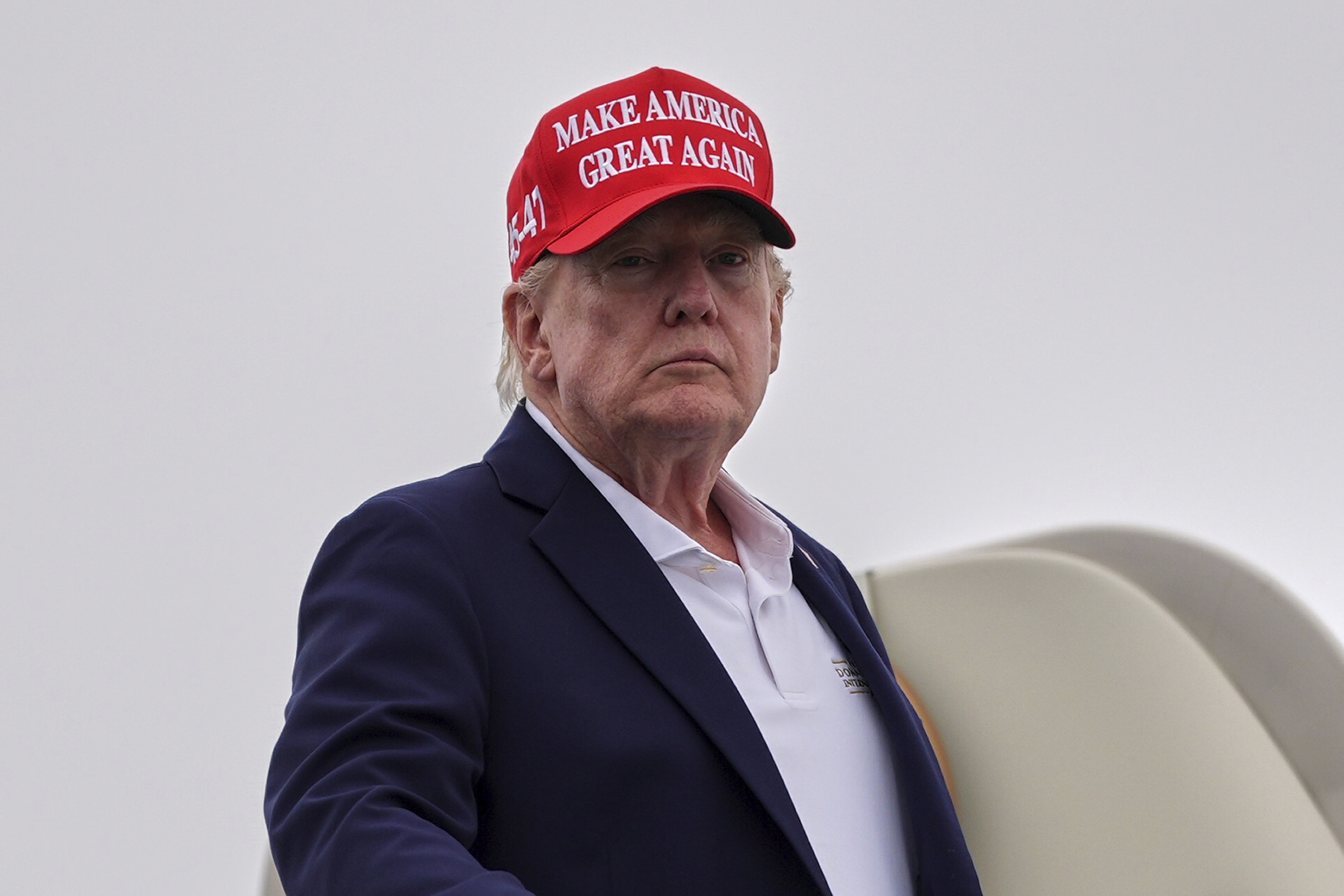
    President Donald Trump boards Air Force One on Sunday, Aug. 16, 2026, in Morristown, N.J. Julia Demaree Nikhinson

    Trump and the Justice Department are also asking the high court to toss out a second Carroll verdict totaling $83 million. They argue he’s immune from being sued over comments he made about her in 2019, when he was president. The court has not yet acted on that appeal.

    Carroll is a longtime advice columnist and former TV talk show host. She testified at a 2023 trial that Trump turned a friendly 1990s encounter into a violent attack in the dressing room at Bergdorf Goodman, a luxury retailer across the street from Trump Tower in Manhattan. The jury found Trump liable for defaming Carroll when he denied her allegation in 2022.

    Trump has denied any wrongdoing.

    The Associated Press does not identify people who say they have been sexually assaulted unless they come forward publicly, as Carroll has done.

  • Ukraine launches one of its largest aerial attacks of the war, killing at least 6 people in Russia

    Ukraine launches one of its largest aerial attacks of the war, killing at least 6 people in Russia

    Ukraine launched hundreds of drones across Russia on Sunday, killing at least six people in one of Kyiv’s largest aerial attacks of the war.

    Kyiv has stepped up its attacks on Russia this year, with long-range missiles and swarms of drones targeting military industries and energy facilities. It has also increasingly pummeled giant Wildberries depots, burning billions of dollars’ worth of merchandise belonging to the Russian online retail giant. Those attacks have brought the war home to the Russian public nearly 4½ years into Moscow’s full-scale invasion of Ukraine.

    Meanwhile, Ukraine also came under Russian attack, with drone strikes destroying homes and torching Kyiv’s landmark book market.

    Russia’s Ministry of Defense said it had destroyed 822 Ukrainian drones overnight. Some 600 drones were detected headed toward the Russian capital, Moscow Mayor Sergei Sobyanin said, with a third of those destroyed over the Moscow region itself.

    An 83-year-old man was killed after a Ukrainian drone hit a private home in the Moscow region, local Gov. Andrey Vorobyov said. He also confirmed that a Ukrainian attack had sparked a blaze at a Wildberries warehouse in the town of Podolsk.

    A drone attack targeted three towns in Russia’s southwestern Rostov region, killing five people, local Gov. Yury Slyusar said. The attack, with more than 150 drones, damaged several homes and a railway station and sparked a forest fire.

    Russian strikes kill 5 in Ukraine

    A Russian missile attack on Ukraine’s Kryvyi Rih killed two people and wounded 14 others, Ukrainian President Volodymyr Zelensky wrote on social media Sunday. He also said that one more person had been killed in the city of Sumy.

    ArcelorMittal Kryvyi Rih, Ukraine’s largest steel producer, confirmed that one of its sites had been hit in a missile attack and that operations had been partially suspended.

    Elsewhere, a man and a woman died when their home was hit by a Russian strike in Ukraine’s southern Zaporizhzhia region, said Ivan Fedorov, the head of the local military administration.

    Russian attacks also sparked fires throughout the Ukrainian capital, Kyiv, wounding six people. A blaze took hold at one of the city’s largest book markets, tearing through kiosks huddled close to the Pochaina metro station. Firefighters fought back the flames, which sent plumes of black smoke across the capital, and picked their way through rubble where the market’s crowded pavilions once stood.

    “Wherever the Russians can reach with their ballistic missiles, they strike civilian infrastructure,” Zelensky said.

    Russia’s Ministry of Defense said Sunday that it had targeted a metallurgical plant in Kryvyi Rih and several military-industrial sites in Kyiv, including a manufacturing facility for Ukraine’s Flamingo missiles.

    The domestically produced missiles are increasingly key to Ukraine’s long-range attacks on Russia, with Zelensky announcing Saturday that Kyiv had used the weapons to attack a rocket research and production center in Samara approximately 560 miles from the Ukrainian border.

    NATO jet downs drone in Romanian airspace

    Romania’s Ministry of National Defense said Sunday that a Spanish Air and Space Force F-18 fighter jet shot down a drone that had entered Romanian airspace.

    The drone’s entry into the NATO member’s airspace was detected by surveillance systems at 4:44 a.m., the ministry said, about 14.9 miles north of the eastern city of Galati near the border with neighboring Moldova. Moldova is a landlocked country between Ukraine and Romania.

    A Spanish F-18 aircraft that was performing air policing duties “made radar contact with the target and received engagement approval,” the ministry said. “The drone was safely shot down by the F-18 aircraft at 05:01.”

    The ministry later said that drone debris was also reported in the Black Sea around 10 a.m. on Sunday, about a mile from the coastal city of Constanta. Separately, another drone fragment was found on Sunday 1 nautical mile from Constanta.

    Romanian officials did not specify the drone’s origin.

    However, Moldova’s Ministry of Defense said Sunday that its Army surveillance systems had detected a Geran-type Shahed drone in Moldovan airspace, which entered from Ukraine and exited toward Romania.

    The spate of drone incidents comes weeks after Romanian pilots shot down three drones over three days as Russia intensified attacks against Ukraine near the border. Since Russia’s full-scale invasion of Ukraine, Romania has reported dozens of drone incidents, including some that have crashed and exploded on its territory.

    Acting Foreign Minister Oana Toiu said in a post on X that the Spanish deployment in Romania was scaled up “at the request of Romania and NATO to bolster the Eastern Flank following prior drone incidents,” and that it was Spain’s fourth such deployment.

  • Rescuers in Indonesia recover 6 more bodies in earthquake aftermath, raising death toll to 53

    Rescuers in Indonesia recover 6 more bodies in earthquake aftermath, raising death toll to 53

    RUTENG, Indonesia — Rescue teams in eastern Indonesia recovered six more bodies Sunday, a day after a magnitude 7.7 earthquake, raising the death toll to 53, authorities said, as thousands of displaced people spent the night outdoors in fear of aftershocks.

    Rescuers dug through debris looking for anyone buried beneath landslides triggered by the quake across six regencies on Flores, a predominantly Catholic island in the Muslim-majority country. They focused on three regencies that remained inaccessible: hardest-hit Manggarai, East Manggarai, and Nagekeo.

    “We have cleared most landslides and reopened roads to previously isolated villages, although communication disruptions and power outages continue to hamper search efforts,” said Fathur Rahman, head of the search-and-rescue office in Maumere, the capital of Sikka regency.

    The agency said more than 900 homes were destroyed and 450 more damaged in East Nusa Tenggara province, forcing about 5,000 people into temporary shelters. At least 241 homes were damaged in the Flores region alone, Muhari said.

    The quake occurred at a depth of 6 miles shortly before 6 a.m. Saturday, the U.S. Geological Survey said. Residents fled in panic as tsunami warnings were issued and later lifted.

    Authorities have since recorded at least 995 aftershocks, but only 46 were felt by residents, said Abdul Muhari, the National Disaster Management Agency’s chief for disaster prevention, adding that 135 people were injured.

    Many residents at Labuan Bajo, the gateway to Komodo National Park, one of Indonesia’s best-known tourist destinations, spent the night outside because of the aftershocks.

    “The shaking was terrifying, so intense that my house nearly collapsed,” said Anastasia Imad, a farmer, speaking from a makeshift green tent beside her damaged home. “We feared the aftershocks would bring it down on us while we slept.”

    Landslides blocked sections of the Trans-Flores Highway, a roughly 435-mile road linking communities across the mountainous island.

    Meanwhile, relief workers distributed rice, ready-to-eat meals, drinking water, blankets, and medicine, while emergency shelters were set up for displaced residents. Authorities said restoring electricity and communications, as well as delivering aid to remote villages isolated by landslides, were among the biggest challenges.

    Indonesia, an archipelago of more than 17,000 islands, is prone to earthquakes and volcanic eruptions because of its location on the Pacific Ring of Fire, a horseshoe-shaped arc of seismic faults and volcanoes.

    Flores has experienced some of the country’s deadliest disasters. A powerful earthquake and tsunami in 1992 killed about 2,500 people on the island.

    In 2018, a magnitude 7.5 earthquake triggered a tsunami on the island of Sulawesi that killed more than 4,400 people. In 2004, a magnitude 9.1 quake off Sumatra unleashed a tsunami that killed about 230,000 people in a dozen countries.

  • Frustration with Trump grows among U.S.’s Persian Gulf allies, officials say

    Frustration with Trump grows among U.S.’s Persian Gulf allies, officials say

    Frustration with Washington is growing in the Persian Gulf region, where U.S. allies are increasingly concerned that President Donald Trump is unable to manage the diplomacy necessary to secure peace with Iran, Arab and Western officials say.

    Trump in recent weeks has repeatedly issued threats against Iran, only to withdraw them, citing progress in talks. After months of conflict, and continuing missile and drone strikes by Iran and its proxies, three officials and a former U.S. diplomat told the Washington Post, the governments of Saudi Arabia, the United Arab Emirates, Qatar, Kuwait, and Bahrain are now united in their aggravation with the administration. Some have begun to debate the utility of continuing to host large U.S. military installations on their territory.

    “Trump started this war,” one Gulf official said, “and we are paying the price.” Like others in this article, he spoke on the condition of anonymity to discuss the sensitive subject. Anger with the United States, the official said, was at its highest point since the U.S. and Israel attacked Iran in February.

    The Gulf states continue to rely on Washington as a close security partner and major arms supplier, and Qatar and Bahrain host large U.S. bases. But the frustration is leading some states to consider new arrangements. These dynamics are unlikely in the near term to significantly reorder the region, analysts say, but some countries have begun to explore their options.

    A mutual defense agreement signed by Saudi Arabia, Turkey, and Pakistan last week was “a signal to the U.S.,” a senior European official said.

    The pact shows the three powerful Sunni Muslim states “are trying to diversify their security and defense partnerships,” said the official, who is in regular contact with Gulf leaders. “In their mind, the U.S. is not enough.”

    A White House official said Trump “has extraordinary relationships with all of our Gulf partners.”

    “The United States has been in regular contact with all of our regional allies since before Operation Epic Fury,” said the official, speaking on the condition of anonymity under rules set by the White House. “Iran is more isolated than ever before as a result of its terrorist actions.”

    Representatives of the Saudi, Emirati, Qatari, Kuwaiti, and Bahraini governments did not respond to requests for comment.

    “There has been frustration from the get-go,” said Firas Maksad, director for the Middle East and North Africa practice at the Eurasia Group. U.S. allies in the Persian Gulf, he said, feel they were “unnecessarily entangled” in a war that Trump is now struggling to resolve.

    Maksad, who has extensive contacts within Gulf leadership, said Trump’s Iran policy is often described in the region as “erratic” and “unpredictable.”

    Anna Jacobs, a fellow with the Arab Gulf States Institute in Washington, said there has been “diminished trust” of the U.S. since the start of the war. U.S. allies think the country’s “conduct in the region is making them less safe, not more safe,” she said.

    One Western diplomat in the region said these changes don’t amount to a significant shift in sentiment toward the United States. Even before the war with Iran, he said, U.S. forces in the region were not “enthusiastically” welcomed. “It was more something that was a necessary evil,” the diplomat said. “Now, the necessity of it is being put in question.”

    Saudi Arabia has come under particular pressure in recent weeks. In addition to attacks from Iran and Iran-backed groups in Iraq, the kingdom has been targeted by Iranian-aligned Houthis in Yemen.

    Houthi forces have repeatedly struck Saudi energy infrastructure and are attempting to shut down the Bab al-Mandab strait at the mouth of the Red Sea. Since Iran closed the Strait of Hormuz in the early days of the war, Saudi Arabia has depended on its Red Sea ports to export its oil.

    Attitudes toward the war among Gulf leaders have shifted. Oman has opposed the conflict from the outset, but Saudi Arabia, the UAE, and Bahrain have at times backed it.

    Emirati forces have conducted “numerous” strikes on Iranian territory in recent months, according to the Western diplomat, and Saudi forces have struck back at Iranian-backed groups attacking from Iraq.

    “At the beginning of the war, they were — I don’t want to say supportive — but honestly, they were not totally against the war,” the senior European official said. The thinking in Abu Dhabi and Riyadh, he said, was that a quick, definitive victory could prove beneficial.

    That began to shift in the lead-up to the first round of talks between Iran and the United States in April, the official said, when it became clear that not only would the Iranian regime not fall, but it would not reopen the Strait of Hormuz.

    In the months since, Trump’s inconsistency has alarmed the Gulf, said Bader Al-Saif, an assistant professor of history at Kuwait University.

    “Even before all this back and forth with Trump, there was no clear strategy,” said Al-Saif, a fellow of the Arab Gulf States Institute in Washington. He cited the Memorandum of Understanding between the United States and Iran in June.

    “The MOU was a joke,” he said. The agreement didn’t address the Gulf states’ top concerns, including Iran’s ballistic missile arsenal or Tehran’s support for proxy forces.

    “Those terms were not terms of our liking,” Al-Saif said, “and that’s why it died out sooner than later.”

    Trump, the White House official said, “has always been clear that his preference is diplomacy.

    “Unfortunately, Iran chose the path of violence by killing American troops, committing international acts of terrorism, and lashing out at its neighbors in the region — and the Commander-in-Chief ensured that they reaped the consequences of those decisions.”

    The Gulf states lack an immediately viable alternative to their decades-long security partnerships with the United States. As the conflict continues, the Gulf official said, their only choice is to double down on their alliances with Washington.

    “Whatever we do,” he said, “we cannot say no to the United States.”

    Douglas Silliman, a U.S. ambassador to Kuwait and Iraq under President Barack Obama and Trump, said he heard frustration with Washington on a recent visit to the region. But in recent weeks, he said, he is also hearing growing anger at Tehran for its continued attacks on infrastructure and refusal to reopen the Strait of Hormuz.

    Silliman, now the president of the Arab Gulf States Institute, described the feeling in the region as “kind of this odd contradiction of being mad at the United States for starting the war and being dependent upon the United States” for equipment, munitions, and intelligence.

    If the conflict continues, the economic pressure on the Gulf will grow. Even during peacetime, the region quiets over the summer, tourism slows, and residents hole up indoors to escape 100-degree days.

    But in autumn, temperatures fall and activity resumes. This year, the conferences, summits, festivals, and Formula One races that pack the calendar from October through December are all in limbo.

    Saudi Arabia’s 10th annual Future Investment Initiative Institute in late October, the “Davos in the Desert,” could be an early test of whether senior officials and top CEOs are willing to visit the region, the Western diplomat said.

    “They may tweak the theme” to acknowledge continued insecurity in the region, he said. “To postpone would send the wrong message.”

    Iran continues to launch drones and missiles against Kuwait, but in the capital, much of life has returned to normal, Al-Saif said. “We have been through worse,” he said, referring to the 1990 invasion by Iraq that triggered the Persian Gulf War. “We handled the occupation. We can handle this.”

    The security lockdown from the war’s earlier stage has been largely lifted. Businesses are open, traffic has returned to city streets, and Al-Saif has resumed teaching in person. But the conflict, he said, must not continue much longer.

    “A quick end is obviously something we want,” he said. “The Gulf War was much more straightforward than today.”
  • U.S., Canada race for deal to avert Trump’s threat of 50% tariffs

    U.S., Canada race for deal to avert Trump’s threat of 50% tariffs

    The United States and Canada are moving closer to a deal to avert the imposition of punitive 50% tariffs on such Canadian products as hockey sticks, wine, and cement, according to industry executives and trade specialists following the talks.

    Details remain fluid, and recent talks were contentious as both sides race to make a deal ahead of an early-Wednesday deadline. But the emerging accord could pair Canadian tariff concessions along with commitments on energy, defense, and critical minerals in return for the U.S. agreeing to shelve President Donald Trump’s new Section 338 tariffs and relax levies on steel and aluminum, according to those following the talks, who spoke on the condition of anonymity to discuss confidential deliberations.

    If a deal is reached, it is expected to provide momentum for the ongoing renegotiation of the North American trade deal reached in the president’s first term. An accord would also spare the administration one more legal battle over the president’s tariff powers.

    “I’m optimistic that there’ll be a resolution in full or in part that will stave off the Section 338 tariffs. That’s the trajectory we’re on,” said Dan Ujczo, a veteran trade attorney in Columbus, Ohio. “Both sides want a deal.”

    Trump’s Section 338 tariffs would apply to just 5% of the $382 billion worth of Canadian goods that the U.S. imported last year. But if they take effect as scheduled at 12:01 a.m. Wednesday, they could scupper hopes for preserving a unified North American trade bloc, industry executives said.

    The imposition of new tariffs, especially at a trade-chilling 50%, would exacerbate anti-U.S. sentiment in Canada, which is already raw after Trump’s repeated gibes about turning Canada into the 51st U.S. state. Prime Minister Mark Carney has said “all options are on the table” in terms of retaliation for any new U.S. actions.

    “You’ve now put the Canadian government, with these 338s, in a position where if we don’t do a comprehensive deal, we may just end up having to politically retaliate and we will be years away from having trade peace,” said Flavio Volpe, president of the Automotive Parts Manufacturers’ Association in Toronto.

    The once harmonious — and nearly tariff-free — relationship between the U.S. and its northern neighbor has witnessed a dizzying exchange of trade blows over the past year.

    Last month, the president invoked an untested provision of a 1930 law known as “Section 338” to threaten the new levies, saying Canada’s retaliation for his 2025 tariffs amounted to unwarranted “discrimination” against U.S. merchandise. U.S. officials also wanted to spur Canada to engage with the president’s demand to amend the 2020 U.S.-Mexico-Canada Agreement governing North American trade.

    Administration officials including Treasury Secretary Scott Bessent and Jamieson Greer, the president’s chief trade negotiator, took offense at Carney’s decision to retaliate last year, noting that only Canada and China responded to Trump’s “Liberation Day” tariffs.

    The Canadian government says it had every right to hit back after Trump raised barriers against its exports. Administration officials say the Canadian retaliation unjustly penalized three American industries — alcohol, autos, and dairy.

    Officials in most Canadian provinces including Ontario, the most populous, removed U.S. wines and spirits from government-run stores in March 2025 after Trump imposed tariffs on Canadian goods for what he said was a failure to prevent illicit fentanyl from entering the United States.

    Canada also imposed a 25% tariff on some U.S. autos in response to a similar move by Trump, fracturing an industry that routinely ships half-finished vehicles among the three North American nations before completing production.

    The president also complains that European cheeses enjoy preferential access to the Canadian market compared with similar American products shipped north.

    The current talks are aimed at averting what could prove to be a costly breakdown in trade and paving the way for the start of formal U.S.-Canada talks about refreshing USMCA.

    The U.S. began talking to Mexico months ago over possible changes to the North American trade deal that Trump negotiated during his first term. But no formal negotiations occurred with Ottawa. A deadline deal could change that.

    “Depending on the outcome, it’s either a confidence-building exercise that sets the stage for more progress on USMCA, or it’s another friction in the relationship that could spiral quickly,” said Jake Colvin, president of the National Foreign Trade Council, which represents companies such as Caterpillar, Coca-Cola, and Oracle.

    Carney has said that he wants a full settlement, not just a limited deal. Negotiators are trying to strike a balance between what Trump wants and what Canada’s domestic politics will swallow, the industry executives said.

    Along with tariffs, the two sides are discussing cooperation on energy and defense issues, including Canadian participation in Trump’s “Golden Dome” missile shield and purchases of F-35 fighter aircraft. The U.S. also wants to secure access to Canadian supplies of critical minerals, which could help reduce its dependence on China.

    A key goal for Canada is getting the U.S. to reduce its 25% national security tariffs on steel and aluminum. These Section 232 measures, named for a provision in a 1962 trade law, could become a mix of tariffs and import quotas.

    Canada could pocket a politically salient win in the form of lower tariffs on its lumber exports to the U.S. Under a routine annual Commerce Department review of antidumping duties, those long-standing taxes could drop by around 10 percentage points, executives said.

    Though Canada and the United States have long been close friends and allies, the cross-border friction has become a staple of the Trump era. Earlier this month, Trump lambasted Canadian leaders as “nasty” in a Las Vegas speech. Carney responded by applying the adjective to the two nations’ trade relationship.

    Permanently higher tariffs resulting from the collapse of USMCA would cost the U.S. economy $1 trillion over 10 years, according to an Oxford Economics study.

    “There’s a lot at stake. This isn’t theoretical. This has real-life ramifications for Americans and Canadians,” said Beth Burke, the head of the Canadian American Business Council, which sponsored the study.

  • Top U.S. commander visits aircraft carrier, discusses mental health issues

    Top U.S. commander visits aircraft carrier, discusses mental health issues

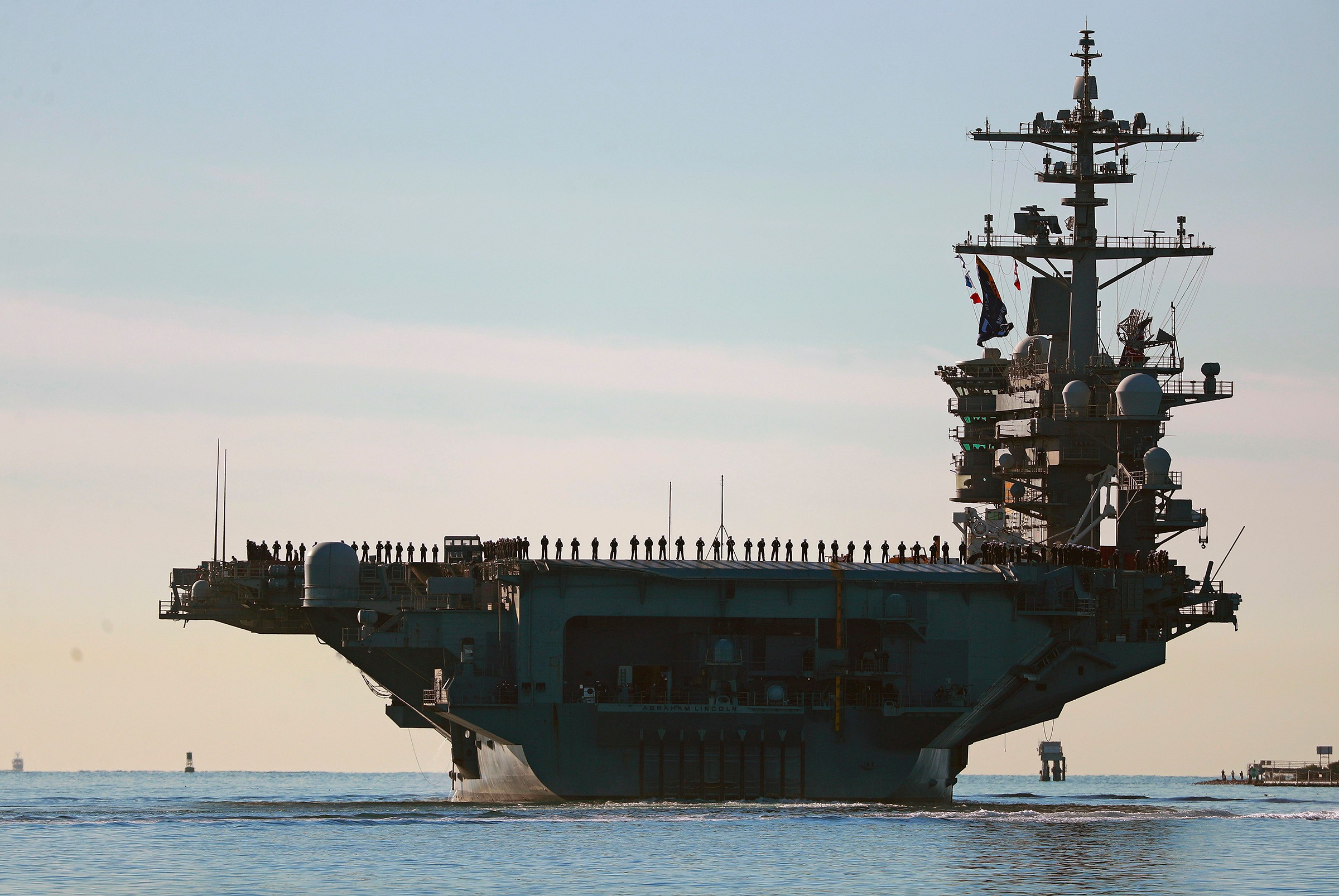
    The senior U.S. officer overseeing the war in Iran said addressing mental health concerns was a high priority for the military, days after reports emerged of burnout and poor conditions aboard USS Abraham Lincoln. But Adm. Brad Cooper also said some of the concerns that had surfaced were “old news.”

    Cooper, the head of U.S. Central Command, visited the USS Lincoln on Saturday during a Middle East tour. He called his time aboard the aircraft carrier “awe inspiring” and said he witnessed “camaraderie, teamwork, and resilience.”

    “This doesn’t mean that all is perfect,” the admiral said as he acknowledged that long stretches at sea are “uniquely challenging and tough.” He said mental health is “another aspect of individual health and requires our attention just like physical health and spiritual health.”

    The USS Lincoln’s deployment has stretched more than a month past its planned seven-month schedule. Senate Democrats have pressed military leaders on reports of food and supply shortages, water contamination, sewage problems, deteriorating morale, and attempted suicides on the ship.

    The Military Times reported last week that at least two sailors have attempted to jump overboard, with the wife of one sailor saying burnout caused her husband to try to jump.

    Defense Secretary Pete Hegseth downplayed the reports last week, saying the situation has been “completely misrepresented.” When asked Friday whether the deployment of the USS Lincoln had gone on too long, President Donald Trump dismissed that, saying it was “not nearly long enough.”

    Cooper, in a separate opinion piece Sunday in the Wall Street Journal, said that “issues related to food, hot water, and other concerns” were raised “months ago” and addressed by leadership.

    “What I found aboard the Lincoln is that many elements of those stories are old news,“ he said, referring to the issues of morale and ”operational tempo.“

    U.S. officials have confirmed that the USS Abraham Lincoln would return home soon as part of a planned rotation. The Pacific-based aircraft carrier USS George Washington is expected to replace it

    Acting Navy Secretary Hung Cao said in a statement Friday that the crew has been deployed in a combat zone for more than 200 days, carried out 10,000 sorties, and dropped 1.5 million pounds of ordnance.

    It is “also true,” Cao said, that “a small number of mental health cases” were treated with no loss of life and “meal plans were adjusted when fresh resupply was unavailable.” Calls home were also limited when the operational threat was too high, he said.

    While emphasizing that mental health is a “leadership priority” for the senior officers aboard the Lincoln, Cooper said that of the Navy’s 11 active aircraft carriers, “the Lincoln currently has among the lowest number of cases related to mental health.”

    Adm. Mike Mullen, former chair of the Joint Chiefs of Staff, told ABC’s This Week on Sunday that he spoke with Cooper after his visit and said the news that the crew members were coming home had boosted their morale.

    Mullen on ABC News said the reports of the ship’s conditions “were certainly of great concern” but that military officials are “working these issues hard.”

    “I also believe the truth probably lies somewhere in the middle,” he said.