Category: Nation & World

  • Trump asks Supreme Court to let White House ballroom construction continue during appeal

    Trump asks Supreme Court to let White House ballroom construction continue during appeal

    WASHINGTON — President Donald Trump’s administration on Friday asked the U.S. Supreme Court to allow the White House to continue construction on its $400 million ballroom project while it appeals a lower court’s order to halt the work.

    Trump’s solicitor general petitioned the high court to suspend last week’s decision by a three-judge panel from the U.S. Court of Appeals for the District of Columbia Circuit.

    The divided panel ruled last week Trump must stop the White House ballroom’s construction because Congress has not approved the project. The panel’s majority said Trump doesn’t have the unilateral authority to build a 90,000-square-foot ballroom where the White House’s East Wing stood before he ordered its demolition last fall.

    The lower court suspended its own ruling for two weeks to give Trump’s Republican administration time to appeal to the Supreme Court. Solicitor General D. John Sauer asked the Supreme Court to rule on its stay petition before the appeals court panel’s decision takes effect on Aug. 21.

    “This case involves an extraordinary and unlawful injunction that will halt the ongoing construction of the integrated military complex, including a totally secure ballroom space, at the East Wing of the White House, which is vitally required by national security,” Sauer wrote.

    The lower court’s 2-1 decision upheld an order to pause aboveground construction on the project, siding with historic preservationists who sued to stop construction of the ballroom.

    “Whether or not a massive ballroom should be constructed is for Congress to decide and is not a matter for Executive self-help,” wrote the majority’s two judges, both appointed by Democratic presidents.

    A third judge disagreed, finding that the preservationist group that challenged the project had no legal right to sue.

    “The district court elevated the aesthetic displeasure of a single passerby over the government’s security interests in the ballroom,” wrote Judge Neomi Rao, who was appointed by Trump.

    The Trump administration argues that the president, not Congress or the courts, has unimpeded authority to renovate the White House. The current state of the project, essentially an open construction site, makes it harder to protect the White House, the Justice Department contends.

    The administration also says the National Trust for Historic Preservation does not have the legal right, or standing, to sue over the ballroom, which is part of Trump’s plans to quickly remake Washington. The solicitor general said the ballroom project “should be a matter for the President and the political process, not construction-by-injunction.”

    During an appeals court hearing in early June, an administration lawyer defended a broad view of presidential control over iconic public facilities. The government could bulldoze the Statue of Liberty and the White House, Justice Department lawyer Yaakov Roth said in response to a hypothetical question, and the descendants of immigrants who came through Ellis Island and the enslaved people who built the White House would not have standing to sue.

    The D.C. Circuit panel upheld a ruling by U.S. District Judge Richard Leon, who was nominated by Republican President George W. Bush. Leon concluded that a pause wouldn’t jeopardize national security. He also exempted any construction work that is necessary for the safety and security of the White House.

    The ballroom has been under construction for 10 months. The administration says the work is roughly 65% finished.

    “Given those developments, the injunction promises chaos in service of nothing,” Sauer wrote.

  • Homeland Security paid $464M for airplanes, then it parked them

    Homeland Security paid $464M for airplanes, then it parked them

    WASHINGTON — Starting last fall, the Department of Homeland Security spent $464 million on a no-bid contract to buy 10 used airplanes from a firm in northern Virginia.

    That was an enormous price tag, but the department said it had no time to consider other offers. The planes were needed urgently for deportation flights.

    But since then, the department has barely used this new fleet — for deportations, or anything else.

    Three of the aircraft are luxury business jets. Just months after acquiring them, the department sought to loan or lease two to other agencies, including one for the use of FBI Director Kash Patel, according to a letter to the department sent Wednesday by top Democrats on the Senate Appropriations Committee.

    The other seven are older Boeing 737 passenger jets, which the government has left parked at an airport in Lake Charles, La., for months at a time. An internal government document, obtained by the New York Times, said the agency did not have the staff necessary to operate them.

    The acquisitions were part of a surge of rushed contracts handed out recently by the Homeland Security Department, which has repeatedly used the need for “urgency” to bypass regular contracting procedures. The idled planes highlight the risks of that approach. The agency rushed headlong to spend nearly half a billion dollars, only to end up with planes it did not fly.

    The contract also illuminated a broader trend within the second Trump administration: no-bid contracts awarded to people with connections to Trump or his cabinet secretaries. The company that received this contract, Daedalus Aviation Corp., is led by a chairperson who had donated to a political committee supporting the previous Homeland Security secretary, Kristi Noem.

    The department’s Immigration and Customs Enforcement agency has long outsourced its deportation flights by chartering planes from private companies. It also uses military and Coast Guard aircraft. Because of that, former immigration officials said, there seemed to be little need for the department to take on the expense of buying and maintaining a significant number of its own aircraft.

    “If you asked me to write a list of the things ICE needed to increase the number of deportations, buying its own fleet of airplanes would absolutely not make the top 10,” said John Sandweg, a former acting director of ICE during the Obama administration.

    In a written statement, the Homeland Security Department sought to shift responsibility for the contract to Noem. President Donald Trump fired her in March, and appointed Markwayne Mullin, a Republican senator from Oklahoma, as secretary.

    “The contract for Daedalus was made and approved by department leadership before Secretary Mullin was sworn in,” the department said in a statement. The agency said it “reserves the right to adjust course in an environment with evolving requirements and demands.”

    A spokesperson for Noem sought to place the responsibility on Mullin instead, saying the purchase was “finalized” under his leadership.

    Contracting records show that the size of the contract increased by $303 million on the day that Mullin was sworn in as secretary.

    The agency said that the idle 737 passenger jets had been undergoing maintenance checks, and that there were plans for two of them to begin deportation flights later this month.

    The situation with the planes was reminiscent of the department’s about-face on a plan to acquire warehouses to hold detainees. The department spent heavily on those when Noem was secretary, but reversed itself just months later under Mullin. The department is now giving away or selling seven warehouses that it bought for more than $700 million.

    A letter sent to the department Wednesday by Democratic Sens. Patty Murray of Washington and Christopher Murphy of Connecticut, who sit on the Senate Appropriations Committee, said Homeland Security officials had already conceded to the committee that most of the planes would not be used for deportations.

    “The American people deserve a full accounting of this gross misuse of their tax dollars,” the letter, which was reviewed by the Times, said.

    The senators asked for details about the purchase price of each plane and how they would be used.

    Federal law generally requires government agencies to seek competing bids before awarding a contract, to ensure taxpayers get the best deal. But the department sidestepped that requirement for the planes contract, by invoking an exemption for cases of “unusual and compelling urgency.”

    That exemption can be used only when delaying the contract would result in “serious injury, financial or other,” to the government. Historically, it has been used during natural disasters, war, and the coronavirus pandemic.

    The department declined to answer questions about what serious injury it was trying to prevent. Contracting regulations require agencies to publish the rationales for no-bid contracts, but the department refused to release this one, saying it “would compromise national security or create other security risks.”

    The department has invoked the urgency exemption to justify more than $29 billion in spending across about 500 contracts awarded during Trump’s second term, according to an analysis of federal data by the Times. Much of that total came from border wall spending. Urgency claims were also used to justify projects like the $220 million in media contracts awarded to firms tied to Noem and her allies, scrutiny over which contributed to her ouster.

    The exemption accounts for nearly two-thirds of the $34 billion that the department has spent on contracts signed in 2026. That’s up sharply from past years. In 2025, the figure was about one-quarter. In 2024, it was less than 1%.

    No other major agency has used the exemption for urgency as frequently as Homeland Security, even in an administration that has turned to no-bid contracts repeatedly — for event planning, fountain repair, and the troubled makeover of the Lincoln Memorial Reflecting Pool.

    Lorna Tedder, a retired contracting expert who spent more than three decades at the Defense Department, said that, “Some things truly are urgent — people are going to die if you don’t do this.” But if agencies claim the exemption all the time, “it will eventually be abused.”

    The contract for the planes was first awarded in late November. At the time, the government was already paying other contractors hundreds of millions to operate a network of charter flights called “ICE Air.”

    The immigration agency has chartered about 25,800 flights in Trump’s second term, shuttling immigrants between detention centers domestically and deporting them abroad, mainly to Latin America and the Caribbean, according to the ICE Flight Monitor tracking project at Human Rights First, a nonprofit advocacy group. The department sometimes has 25 or more planes in the air in a day, according to the nonprofit’s tracking.

    But at the time, the Homeland Security Department said it still needed its own planes.

    Last fall, Tricia McLaughlin, a department spokesperson, told the Washington Post that purchasing the planes would allow “ICE to operate more effectively, including by using more efficient flight patterns.” McLaughlin has since left the agency. The department did not respond directly to a question asking about her comments.

    Daedalus, the Arlington, Virginia-based company the government hired to find the planes, had not previously held a federal contract. However, a company spokesperson said it had worked as a subcontractor to other companies evacuating Afghans who had done work for the U.S. government.

    Daedalus’ chair is William Walters, a doctor who until 2021 led a State Department office that evacuated Americans from outbreaks of Ebola, COVID-19, and other crises. In 2024, after leaving government, Walters donated $10,000 to a political committee connected to Noem, then the governor of South Dakota.

    Last year, with Noem in charge, the agency gave a separate company run by Walters a contract worth nearly $700 million to encourage immigrants to leave the U.S. voluntarily.

    A Daedalus spokesperson said that Walters was unaware that the political committee was tied to Noem.

    Daedalus declined to say how much each of the 10 planes had cost, or what its profit margin was for acting, essentially, as a broker. It provided a written statement that it was proud to provide “the best value to the American taxpayer.”

    One of the planes is a Boeing 737 luxury jet, now painted in the color scheme of Trump’s new Air Force One. Two others are smaller Gulfstream business jets, each seating about 14 people.

    Those planes flew only sporadically after the agency acquired them, according to flight records from airplanes.live, an independent flight tracking service. And the department soon moved to jettison two of them to other agencies, according to the account from Senate Democrats and the internal document reviewed by the Times.

    One of the luxury jets “has already been leased to the FBI for 12 months to support director Patel’s travel — despite the fact that the FBI already has its own jets to support the director’s travel,” the Senate Democrats wrote.

    The FBI confirmed that it is using one of the Gulfstream jets, saying it was paying the Homeland Security Department significantly less than it had paid a private company to lease a similar plane and that the aircraft was being used to support a range of agency operations, in addition to Patel’s travel.

    The Homeland Security Department also wanted to lend the larger Boeing luxury jet to the Pentagon, according to the senators’ letter and the internal document. But a Pentagon spokesperson said no agreement had been signed.

    One Gulfstream jet will remain with Homeland Security, for the use of its top leaders, according to the letter.

    The other 737s seemed more suited for deportation flights. Flight records show they had been in active use by Avelo Airlines, a low-cost carrier that also flew charter flights for ICE.

    But when the government bought them, it parked them.

    Daedalus said that two were used briefly to evacuate Americans from the Middle East at the outbreak of the Iran war in early March.

    Senate Democrats said they were told by Homeland Security staff that four of the 737s were no longer expected to fly detained immigrants. The senators said the department said it would use them to fly members of Congress on overseas trips, a job now handled by commercial carriers or military aircraft.

    For the long term, the agency said it needs a contractor to provide crews and mechanics to operate its new fleet. A recent solicitation said that contract would start next summer.

    This article originally appeared in The New York Times.

  • Kids keep getting hurt and killed on e-bikes. Should parents be held responsible?

    Kids keep getting hurt and killed on e-bikes. Should parents be held responsible?

    NEW YORK — As traumatic injuries and deaths surge among children involved in crashes on e-bikes and other electrified vehicles, one California prosecutor is cracking down by pursuing criminal charges against some of the young riders’ parents.

    It is just one way officials across the country are trying to tackle the growing issue, while families navigate a patchwork of local laws and guidance on what kind of souped-up cycles and scooters are safe or even legal for their kids to ride.

    New York City’s mayor recently sent cease-and-desist notices to dozens of online retailers for selling products marketed as “e-bikes” that aren’t street legal after a 17-year-old died in a crash on an illicit vehicle. In neighboring New Jersey, new regulations require e-bike riders to be at least 15 and obtain a license and vehicle registration.

    But do the measures hit the mark? Cycling advocates worry regulations might be too broad — demonizing low-powered e-bikes instead of speedier motos — while some parents question whether localized, piecemeal strategies are enough.

    Monica Stafford, a San Francisco-area mother whose teen daughter fractured her skull falling off an e-bike, said officials are “missing the mark” if they’re seeking to lay the blame solely on parents. The San Rafael resident said a unified, national set of rules is needed.

    “We’re in a total Wild West of laws,” Stafford said. “Being for common sense laws doesn’t mean that you’re against e-bikes, just like you can be for cars but not think that it’s safe to put keys in the hands of a 10-year-old.”

    E-bike injuries disproportionately impact children, experts say

    The two-wheeled machines have become nearly ubiquitous in recent years, from packs of teens zipping around California beach towns to the army of delivery drivers dodging traffic on the congested streets of Manhattan.

    Hospital visits for injuries from e-bike, e-scooter and other motorized rides have, as expected, soared as they have grown in popularity, study after study has shown. But researchers stress that the more concerning trends are the severity of the injuries and the fact that they’re especially pronounced among children.

    “The big takeaway is that people are generally more severely injured than they would be if they were on a traditional, pedal bicycle,” said Dr. John Austin, a doctor at the University of California San Diego School of Medicine who led a recently published statewide study. “Overall, these patients tend to be younger, they tend to be unhelmeted and, in turn, be more severely injured.”

    Recent youth deaths prompt officials to take action

    Most e-bikes are classified as nonmotorized vehicles akin to traditional bicycles under federal law, meaning riders don’t need a license, insurance or to even wear a helmet. Most states, though, have enacted additional requirements for higher powered machines, including minimum age and helmet requirements.

    In New York City, the death of the 17-year-old just steps from City Hall has spurred renewed debate about the bikes. Gabriel Nacato had been riding a vehicle advertised as an “e-bike” but wasn’t legal on city streets.

    Earlier this month, Mayor Zohran Mamdani warned more than 40 online retailers, including Amazon, Walmart and Target, that they could face fines of up to $2,000 for each sale of an e-bike that exceeds city regulations.

    New York state requires riders of all forms of e-bikes to be at least 16, and New York City imposes additional restrictions, including a 15 mph speed limit. California, in contrast, has no statewide minimum age for lower-powered bikes, though riders must be at least 16 to use e-bikes that can go up to 28 mph.

    New Jersey and Illinois are among the states that have enacted statewide regulations recently, and Massachusetts is weighing measures. Meanwhile, Florida Gov. Ron DeSantis in June vetoed a 10 mph speed limit and other e-bike regulations, saying the measures would lead to “enhanced surveillance” of citizens.

    Other jurisdictions seek to hold parents accountable

    In Southern California, Orange County District Attorney Todd Spitzer says his office has more than two dozen open investigations against parents after launching a new unit focused on e-bike and e-motorcycle cases involving children.

    The office has already brought charges against four, including the mother of a 14-year-old boy accused of killing an elderly pedestrian while riding an e-motorcycle.

    That mother’s attorney declined to comment, but Mitchell Krems, the lawyer for another parent, dismissed the charges against his client as “absurd,” suggesting his client was being made a “scapegoat.”

    Richard Eyssallenne pleaded not guilty to child endangerment charges after prosecutors say he bought his 12-year-old son an e-motorcycle and helped him illegally modify it to make it go faster. The boy ran through a red light and was injured by a car.

    Other jurisdictions have also taken steps to hold parents liable. In Ohio, a Columbus suburb recently issued new e-bike rules making it clear that parents who knowingly allow their children to break the rules are subject to the same penalties as the rider.

    Cycling advocates blame electronic motorcycles

    PeopleForBikes, a national bicycle advocacy group that tracks state e-bike regulations, stressed that many of the problematic vehicles are actually electronic motorcycles with heavy frames, sturdy tires and sizable motors that are falsely marketed as e-bikes.

    Lower-powered and pedal-assisted e-bikes have been used safely for decades on U.S. streets and are key to reducing society’s reliance on cars, advocates argue.

    “Many of the dangerous behaviors people cite — running red lights, riding on sidewalks, not wearing helmets — are already illegal,” added Chloé Lauer, executive director of the San Diego County Bike Coalition. “We’d rather see those laws enforced than add new restrictions that limit mobility for kids who are riding responsibly.”

    Anya Dalal, a San Francisco-area high school senior who has been advocating for better safety measures, believes the problem requires multiple solutions, including setting age limits.

    “It should be a mix of parental accountability, accountability from the manufacturers and retailers and also education for kids to understand e-bike laws and road rules,” said the 17-year-old Hillsborough resident.

    Sharon Franke, a San Diego-area mother, agreed, though she said the first step starts at home, with parents doing their research, accompanying their children on rides and reinforcing safety once they set off on their own.

    “We want them to have fun, but we also want them to come back safe and we don’t want them to hurt anybody,” she said as her 15- and 12-year-old sons prepared to attend a safety training last weekend. “How do you balance all of it? It’s just overwhelming right now.”

  • Hurricane warning is issued for the Big Island of Hawaii as Tropical Storm Lala approaches

    Hurricane warning is issued for the Big Island of Hawaii as Tropical Storm Lala approaches

    HONOLULU — Tropical Storm Lala formed Thursday in the Pacific Ocean and is expected to become a hurricane while approaching the Big Island of Hawaii, where it could bring heavy rain and flooding this weekend, forecasters said.

    The storm is forecast to bring rain to the Hawaiian Islands starting late Friday as well as high winds and dangerous surf, the National Hurricane Center said.

    A hurricane warning is in effect for Hawaii County and a tropical storm watch is in place for Maui County including the islands of Maui, Lanai, Molokai and Kahoolawe, forecasters said.

    Lala was about 455 miles east-southeast of Hilo, Hawaii, and about 670 miles east-southeast of Honolulu with maximum sustained winds of 60 mph while moving west-northwest, the Miami-based center said.

    Lala is forecast to strengthen into a hurricane as it approaches the Big Island. It’s expected to be near the island Saturday. A hurricane warning means hurricane conditions are expected, and it is typically issued 36 hours before potential tropical-storm-force winds.

    The system could bring rainfall totals of 8 inches to a foot across Maui and the Big Island, with as much as 25 inches possible across the Big Island, forecasters said. That could produce life-threatening flooding and mudslides, the center said.

    Also in the Pacific, Tropical Storm Hernan formed Thursday but wasn’t threatening land and was weakening while moving south.

    Hernan was about 1,505 miles west-southwest of the southern tip of the Baja California peninsula of Mexico with maximum sustained winds around 40 mph, the center said.

    In the Atlantic Ocean, former Tropical Storm Cristobal weakened and degenerated into a post-tropical remnant low on Thursday, the center said. It was about 500 miles west of the Azores and didn’t threaten land.

  • American missionary kidnapped in Niger said to be released from captivity

    American missionary kidnapped in Niger said to be released from captivity

    Kevin Rideout, an American missionary pilot who was seized in Niger last fall, is in U.S. custody and on his way to the United States, two U.S. officials said on Thursday.

    The release of Rideout, a 50-year-old pilot who was kidnapped in October outside his home in Niger’s capital, Niamey, while working with an evangelical group, has been a priority for the White House and the military’s Africa Command since his abduction.

    Details of how and precisely where Rideout was released were unclear late Thursday, said the two officials, who spoke on the condition of anonymity to discuss operational matters. It was also unclear which terrorist or criminal group held Rideout at the end of his captivity, as he may have been moved recently, one of the two officials said.

    Rideout was in FBI custody and in good health based on proof-of-live images that were provided to U.S. officials in the past 48 hours, one of the officials said.

    The White House and Pentagon did not respond immediately to requests for comment late Thursday.

    Rideout had been working in Niger as a Christian missionary for 19 years. He was also a pilot for Serving in Mission, an organization based in Charlotte, North Carolina, that describes itself as a “global mission family serving in 70 countries” with a focus on outreach to communities with few Christians.

    In the past year, the U.S. military has been helping neighboring Nigeria with training and surveillance in its fight against jihadis. Nigeria also allowed the United States to fly surveillance missions from its bases, in part to try to locate Rideout.

    In December, the United States carried out missile strikes in northwestern Nigeria that President Donald Trump said targeted Islamic State group fighters. That operation was in coordination with the Nigerian military, the Pentagon said at the time.

    Thousands of Christians and Muslims have been killed in Nigeria in land disputes, sectarian violence and terrorism, which Christian activists and Republican lawmakers in the United States have viewed as the persecution of Christians. There is no clear evidence to show that Christians are attacked more frequently than any other religious group in Nigeria, analysts say.

    In May, U.S. and Nigerian forces killed Abu Bilal al-Minuki, one of the Islamic State group’s highest-ranking leaders, in an operation in Nigeria.

    U.S. officials said that al-Minuki oversaw the Islamic State group’s global operations, media, recruitment and finances. In that position, the officials said, al-Minuki was directly involved in plots like the kidnapping of Rideout.

    This article originally appeared in The New York Times.
  • How Washington learned to pressure Iran without war

    How Washington learned to pressure Iran without war

    Since Israel and the United States bombed Iran’s nuclear facilities in June 2025, President Donald Trump has vacillated between war, sanctions, and diplomatic negotiations in order to thwart Iran’s nuclear capabilities. Trump opened his second term by signing National Security Presidential Memorandum 2, which imposed maximum pressure on Iran as multiple rounds of indirect talks continued. In February, the U.S. and Israel struck Iran again, this time killing Supreme Leader Ali Khamenei and targeting nuclear and military infrastructure.

    No U.S. missiles over the decades had ever directly struck the Iranian mainland itself.

    A ceasefire followed within days, but subsequent fighting and failed attempts at diplomacy have made it impossible to sustain.

    It is unsurprising that the Trump administration is struggling to reach a deal on nuclear proliferation with Iran that matches the scope of the 2015 Joint Comprehensive Plan of Action (JCPOA), more commonly called the Iran nuclear deal. President Barack Obama’s negotiators secured not just Iran’s cooperation but also Russia’s, China’s, and Europe’s to effectively and broadly secure U.N. Security Council authorization and policy. In return for JCPOA-related sanctions relief, Iran reduced its enriched-uranium stockpile by 98%, capped enrichment at 3.67%, and accepted expanded atomic monitoring.

    Over the past three and a half decades, American presidents have created a system to pressure Iran that works through relationships with everyone but Iran.

    Sanctions let presidents extract cooperation, concessions, and leverage on a variety of issues from other nations and corporations in the process. War extracts nothing from anyone but Iran.

    The system of selective pressure against Iran took shape during the 1990s. After the Cold War came to a close, the George H.W. Bush and Bill Clinton administrations worked with Congress to forge a range of options short of war for handling Iran. American sanctions traditionally traced a simple logic: punish whoever sold Tehran weapons and the means to build them.

    The first measures focused on proliferation. In the aftermath of the Iran-Iraq War, Congress worried that Tehran was rebuilding its military by acquiring sophisticated weapons and dual-use technology abroad. The 1992 Iran-Iraq Arms Non-Proliferation Act, signed by President Bush, made it U.S. policy to oppose transfers that could contribute to Iranian acquisition of chemical, biological, or nuclear weapons.

    This law continued a convention of giving Washington a way to penalize weapons transfers without going to war, but its limits soon became apparent. Weapons sanctions could harm suppliers after the transfer, but they did not necessarily deprive Tehran of the money to purchase the technology or expertise in the first place.

    By 1996, Congress went after ordinary trade. Congress and President Clinton increasingly viewed Iran’s energy sector as the financial bedrock that allowed Tehran to fund the actions Washington sought to deter. Rather than solely punish whoever supplied Iran with weapons, Congress sought to limit the revenue and investment.

    The Iran and Libya Sanctions Act (ILSA) threatened any foreign company with complete exclusion from American credit, export licenses, and government contracts if it invested more than $40 million in Iran’s oil and gas sector — regardless of whether the company did anything weapons-related.

    For the first time, ordinary commerce with Iran became a foreign relations trigger with the United States. The leverage was not a naval blockade, but access to the American economy itself.

    The Russian-American relationship led to the testing and development of these new mechanisms. Washington and Moscow had three main issues over Iran: nuclear reactor technology and training, a multibillion-dollar natural gas field, and missiles.

    The two governments did not have identical agendas. Americans wanted to prevent Iran from acquiring nuclear weapon expertise and missile technology, while also maintaining its relationship with Russia. Russians wanted to preserve valuable commercial and strategic ties with Tehran, including nuclear and energy contracts, without sacrificing its relationship with the United States.

    They both aligned on a functional U.S.-Russian relationship with some limits on proliferation, but differed sharply over how much Russian cooperation with Iran was acceptable.

    Nuclear reactors, gas, and missiles all received different political treatments. Classic diplomatic negotiations led to Russian President Boris Yeltsin agreeing to remove the uranium enrichment feature from Russia’s contract, even though the Bushehr reactor’s sale was legal under international law. As a light-water plant under International Atomic Energy Agency safeguards, it fell under the long-standing international nonproliferation treaty, leaving the United States unable to block the sale but still able to negotiate parts.

    When Russia’s state-owned natural gas company Gazprom, alongside other international companies, sought a contract to develop the South Pars gas field, the largest natural gas field in the world, it put ILSA to its first real test. The $2 billion project involved several state-owned energy companies: France’s Total, Russia’s Gazprom, and Malaysia’s Petronas.

    In response, Clinton issued a waiver for the international gas companies investing in Iranian energy. The administration pointed specifically to increased cooperation from the European Union on counterterrorism and nonproliferation to issue the waiver.

    While the United States never formally used ILSA to sanction a company during this period, the atmosphere could then help the Clinton administration to negotiate with Russia on missile concessions.

    Deputy Secretary of State Strobe Talbott captured the strategy in a sentence: “In a sense we are linking the two [missiles and energy], and in another sense we are not.” The vagueness was deliberate and useful for the differences in agendas on both sides.

    Talbott pressed Russian Foreign Minister Yevgeny Primakov to blacklist Sanam, the Iranian missile entity attempting to acquire the technology, and the Russians did. Russia enacted new laws to pursue weapons and nuclear proliferation crimes, while increasing arrests and coordination between the FBI and Russia’s Federal Security Service. Clinton’s veto and the related tools gave American negotiators something to offer and Russia something to gain.

    These policies helped the American-Russian relationship endure. Every waiver, every delay, every selectively enforced sanction since 1992 had been less a negotiation with Iran than a negotiation with someone else about Iran.

    Waiving petroleum sanctions became the unspoken rule for the next 12 years. Until 2010, no American administration ever sanctioned a foreign company for investing in Iran’s energy sector.

    The ILSA was renamed the Iran Sanctions Act (ISA) and expanded under the Comprehensive Iran Sanctions, Accountability, and Divestment Act in 2010 (CISADA); the Iran Freedom and Counter-Proliferation Act of 2012 (IFCA) toughened the consequences even more. These later acts added stricter enforcement measures and sanctioned major non-Western oil providers from China, Belarus, and Venezuela, while a special rule exempted allied companies in exchange for promises to halt investments.

    By 2015, Washington could bargain with a sanctions system far broader than the ILSA. The JCPOA, or the Iran nuclear deal, either waived portions or removed designated Iranian institutions from the ISA, CISADA, and IFCA. The relief was substantial and conditional: Foreign firms and nations could again partake in specified oil, banking, shipping, and investment transactions with Iran while the underlying American statutes remained available if the bargain collapsed.

    Made By History sponsorsInquirer Staff

    Meanwhile, sanctions tied to terrorism, human rights abuses, and ballistic missiles continued.

    Discretion applied to war, as well. Bush considered strikes and held back for more nuclear enrichment proof. Obama rejected the military option as a matter of philosophy by arguing that war would buy less than diplomacy and cost the international coalition to enforce sanctions. Trump himself, in his first term, ordered a strike and called it off 10 minutes before execution, and Joe Biden sought to de-escalate. These four administrations had varying rationales and scenarios, but all were aligned in keeping force as a reserve option.

    In his second term, Trump had access to the same policy options, including specific sanctions on industry sectors, supply-chain options laws, and relational pressure.

    The lesson? A mix of pressure and exemption — not blanket coercion — worked. It allowed American presidents to lean hard on some part of a foreign nation’s relationship with Iran while tolerating others. Even the JCPOA, for all the criticism it drew, followed this strategy: it converted decades of accumulated third-party pressure into a deal. War trades a system built on the compliance of others for a strike that compels nothing from anyone but Iran itself.

    Holly Harris is a doctoral candidate in history at Southern Methodist University, where she studies the collapse of the post-Cold War security relationship between the United States and Russia.

    Made By History takes readers beyond the headlines with articles written and edited by professional historians. Opinions expressed do not necessarily reflect the views of The Inquirer.

  • Concerns grow over conditions on Navy carrier

    Concerns grow over conditions on Navy carrier

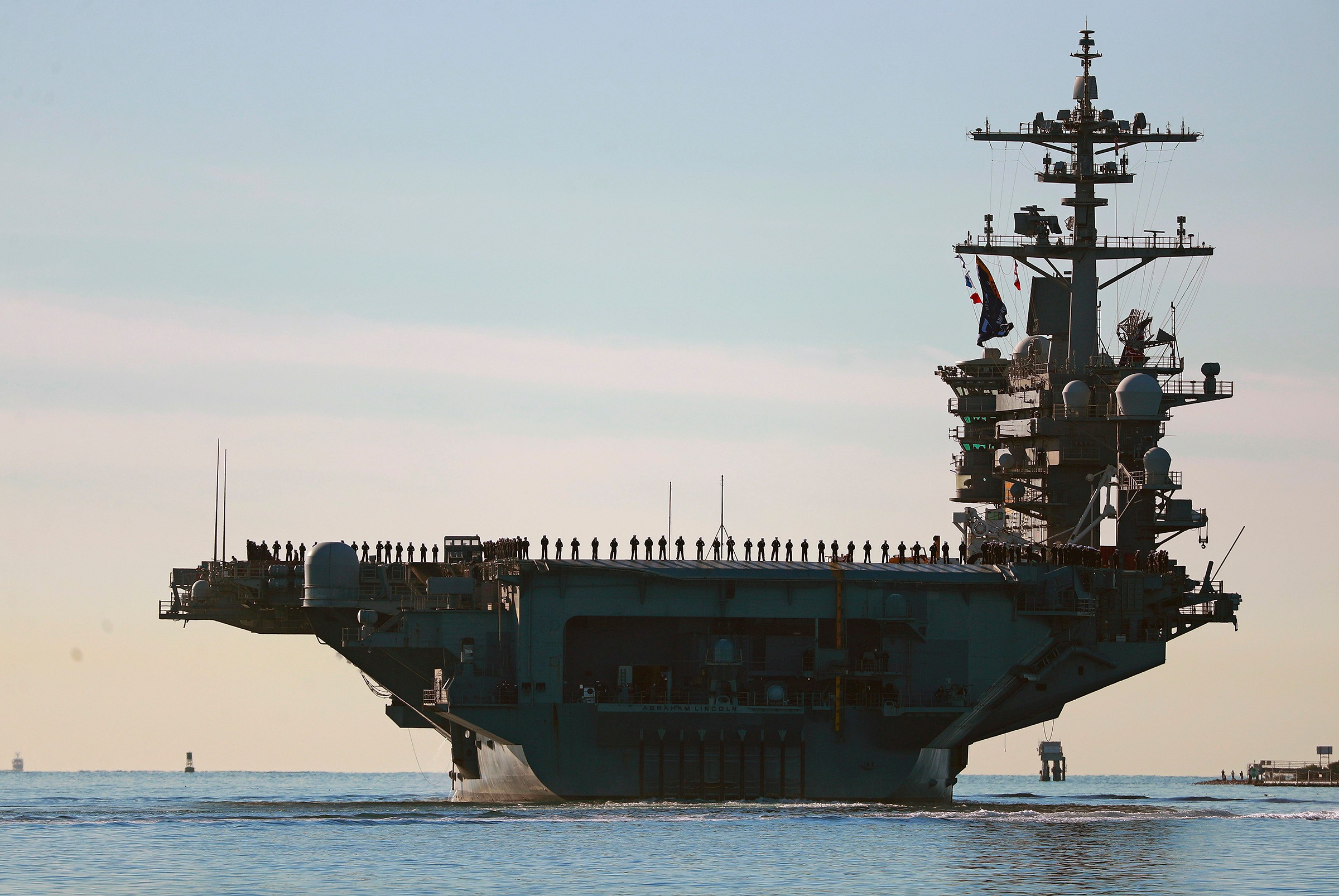
    WASHINGTON — Democratic senators have begun raising concerns about the extended deployment of the USS Abraham Lincoln, amid reports about poor living conditions and a lack of downtime for the crew after more than 8½ months at sea.

    The Lincoln, a San Diego-based aircraft carrier with a crew of about 5,000 sailors, is supporting U.S. operations in the Middle East against Iran.

    In a letter to Defense Secretary Pete Hegseth and Hung Cao, the acting Navy secretary, Sen. Richard Blumenthal (D., Conn.) described a list of reported problems on the ship.

    “There have been widespread reports of shortages of basic supplies, water contamination, plumbing issues, deteriorating mental health, deck safety concerns, and disruptions in the mail system, which have caused many care packages in route to the ship to be lost in transit for months,” he wrote about the problems, many of which were reported earlier by Navy Times and Stars and Stripes.

    Blumenthal added that the Trump administration had kept aircraft carriers at sea far longer than usual during its pressure campaign against Venezuela and its war with Iran.

    Sen. Ruben Gallego (D., Ariz.) said in a social media post Wednesday that he was requesting an overnight visit to the Lincoln for a bipartisan delegation of lawmakers.

    “Unlike Donald Trump, I’ve seen active duty,” said Gallego, who served in combat as a Marine. “The way he’s treating our service members as he carries out this illegal war is not just disgusting; it’s dangerous.”

    The Navy is sending the aircraft carrier George Washington to the Middle East to relieve the Lincoln, according to a U.S. official who spoke on the condition of anonymity because they were not authorized to speak publicly about ship schedules.

    “We ​make sure every ship, every crew, every captain has everything we can provide ​them at every single moment,” Hegseth told reporters ​during a visit to Panama on Thursday, according to Reuters. “Some deployments are longer than others, and I have more respect and gratitude for those sailors than anybody. What they do in ​those high seas in those austere conditions with less port calls — it’s incredible.”

    A second carrier, the USS George H.W. Bush deployed on March 31 and is already operating in the Middle East.

    The Navy’s newest carrier, the USS Gerald R. Ford, was deployed for 326 days before it returned home in May, breaking the record for the longest carrier deployment since the Vietnam War.

    The Ford deployed from Norfolk, Va., on June 24, 2025, and was operating in the Mediterranean when it was redirected to the Caribbean in October as part of the force that captured President Nicolás Maduro of Venezuela. In February the ship was sent to the Middle East as part of a buildup of U.S. military forces in the region that launched the war against Iran late that month.

    During its deployment, the ship suffered a fire and food shortages along with mechanical problems.

    The longer warship deployments are, the more they wear on people and equipment alike. When in constant operation, gear often begins to break or become inoperable if replacement parts are not readily available. And the nonstop cycle can take a toll on morale.

    Keeping warships out for extended periods often also creates other issues, such as upending plans that keep ships in certain parts of the globe for strategic reasons, along with interrupting shipyard maintenance schedules that are developed years in advance.

    “The Navy has a lot of flexibility to react to contingency operations, but as those deployments get extended and demand more underway time outside of normal schedules, readiness and maintenance suffer,” Mike Franken, a retired Navy vice admiral, said in an interview. “We just don’t have the ability to recover from that quickly. It will take years.”

    The Lincoln itself had to fend off attacks from Iran during the early phase of the war.

    “Iran shot hundreds and hundreds of missiles and one-way attack drones at our aircraft carrier,” Hegseth told reporters at the Pentagon on April 8. “Every single one of those shots, easily shot down miles and miles away from the Abe Lincoln.”

    The Lincoln has also helped enforce the U.S. blockade of Iranian ports, which initially ran from April 13 until a ceasefire agreement was announced in mid-June, and then resumed on July 15.

    During the first blockade, U.S. Central Command, which directs military operations across the Middle East, said its forces disabled nine “noncompliant” vessels through gunfire and missile attacks, and had “redirected” 135 ships that ultimately complied with the blockade order.

    In the second blockade, there appear to have been fewer U.S. attacks on merchant ships. In its most recent update on Aug. 9, Central Command said it had redirected 55 commercial vessels, disabled two, and boarded two to “ensure compliance” since the blockade was reinstated.

    When the Lincoln’s relief will arrive is unclear, but the George Washington recently passed through the Strait of Malacca — a major transit route through the Pacific Ocean in Indonesian waters — heading west, according to a second U.S. official who spoke on the condition of anonymity to discuss warship movements.

    With the Navy’s limited numbers of aircraft carriers being routinely pushed months beyond their scheduled deployments, Franken said, it will begin to limit their availability for combat operations in the future.

    “I guarantee you that the first two years of the Trump administration will definitely affect the next two years of the Trump administration,” he said.

    This article originally appeared in The New York Times.

  • U.S. investigated left-leaning groups during Minnesota immigration crackdown

    U.S. investigated left-leaning groups during Minnesota immigration crackdown

    Four days after Alex Pretti was fatally shot while filming officers taking part in the Trump administration’s immigration crackdown in Minnesota, the Homeland Security Department quietly opened an investigation at its office in St. Paul.

    The target was not the Border Patrol agents who had killed Pretti, a 37-year-old government nurse, in late January. Instead, it was several left-leaning political organizations — labor unions, a climate change group, socialist collectives — that investigators believed had provided help and money to what they described as the “violent opportunists and agitators” on the street, according to newly released government documents.

    As part of their inquiry, the documents show, Homeland Security officials used an array of invasive tactics during the first half of this year to gather information on many groups and individuals who were never accused of crimes, crossing the line that has traditionally stood between investigating criminal activity and political dissent.

    In one instance, officials used administrative subpoenas to obtain more than three years of financial records from the Sunrise Movement, an environmental action group, and a labor union, the Communications Workers of America. That time frame went well beyond the civil unrest in Minnesota, which was prompted by the deployment of thousands of immigration agents to the state during the winter.

    In another, investigators scrutinized three years’ worth of wire transfers made by the nation’s biggest healthcare workers union, the Service Employees International Union, in what they referred to as an inquiry into “domestic terrorist financing.”

    The documents further detailed an expansive covert surveillance operation in which undercover agents spied on protesters and organizers at meetings held online, as well as in libraries, parks, and churches, taking down not only what they said, but also their names and sometimes license plate numbers. The undercover agents also infiltrated group chats on Signal, listening as activists discussed coming demonstrations and their political opinions.

    So far, none of the organizations targeted by the Homeland Security inquiry, conducted with the U.S. attorney’s office in Minnesota, have faced charges. And yet, as the investigation moved forward, prosecutors showed grand jurors a PowerPoint slide asserting that 18 groups — including the AFL-CIO, the country’s largest federation of labor unions — were part of a conspiracy to impede the work of immigration officers in Minnesota.

    Ultimately, that supposed conspiracy led in June to the indictment of 15 people accused of interfering with law enforcement agents as members of the far-left movement known as antifa.

    The Homeland Security Department did not respond to a message seeking comment. A spokesperson for the U.S. attorney’s office in Minnesota declined to answer questions about the investigative tactics.

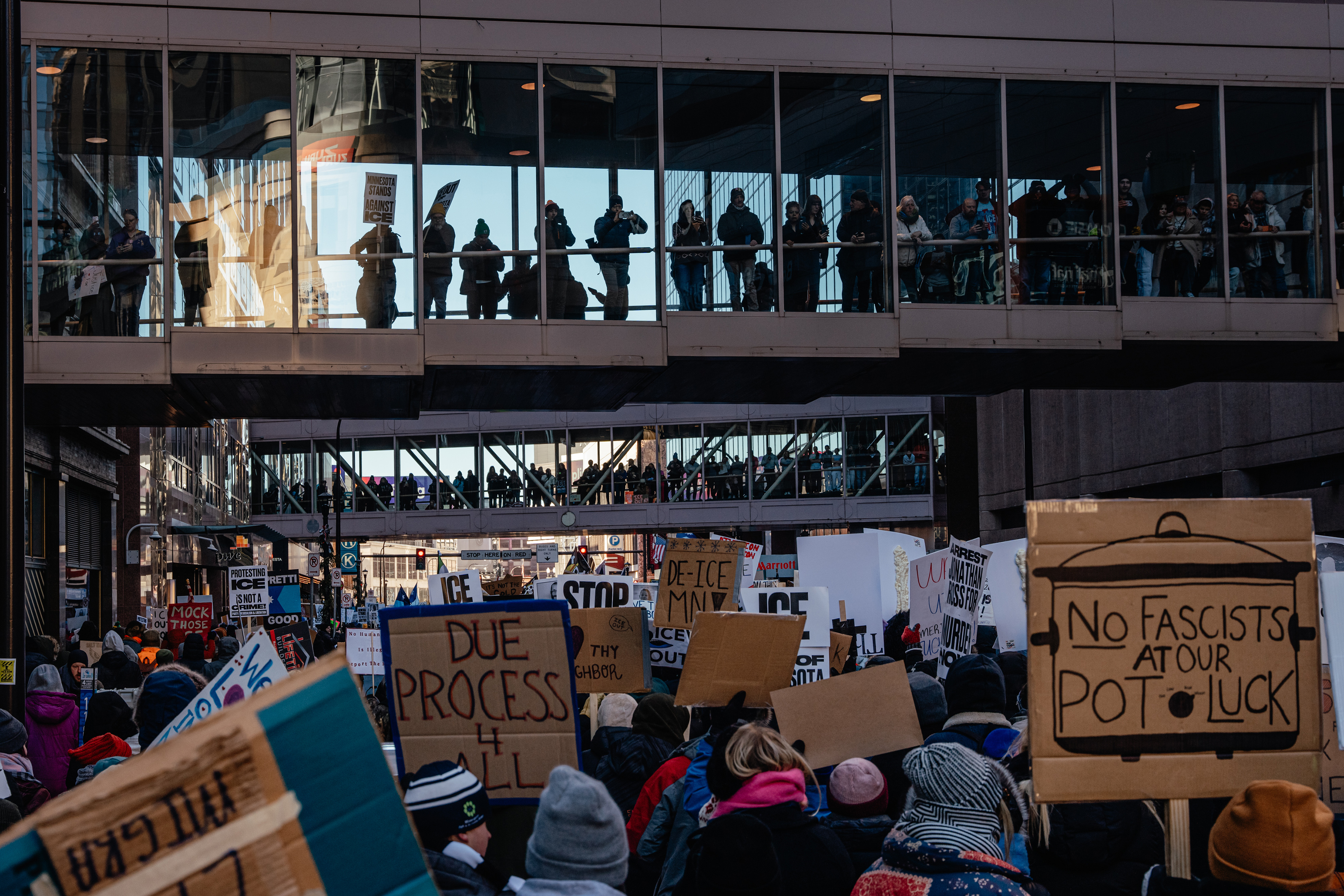
    By its own account, the institutional left in Minnesota, especially the labor movement, played a central role in bringing out hundreds of thousands of people to march in protest of President Donald Trump’s immigration crackdown in the state. But the demonstrations — and corresponding efforts to monitor the movements of Immigration and Customs Enforcement agents — were largely undertaken by ordinary residents, most of whom have said they were committed to peaceful resistance.

    “While federal agents repeatedly broke the law, ordinary people exercised their First Amendment rights to protect their neighbors,” said Aru Shiney-Ajay, the executive director of the Sunrise Movement. “The Trump administration is now trying to intimidate individuals and organizations who opposed his agenda.”

    Some of the 15 people charged in the so-called antifa case did, in fact, belong to some of the unions and political organizations that faced scrutiny over several months during the spring and winter. But the newly released documents, which were disclosed as part of a motion asking for more details about the criminal inquiry, suggest that investigators used those tenuous connections to take a deep dive into the inner workings of the groups.

    Kevin Riach, the lawyer who filed the motion, in U.S. District Court in Minnesota, wrote that the Homeland Security investigation into the interference with federal agents “extended far beyond any potential threat to law enforcement safety.”

    “It concluded, with no evidence (but obvious political animus),” he wrote, “that numerous Twin Cities unions and nonprofit organizations were involved in a widespread conspiracy,” adding that “it surveilled and surreptitiously gathered financial records generated by these organizations despite the lack of any connection between those organizations and criminal conduct.”

    The investigation in some ways called to mind Cointelpro, the intrusive counterintelligence program that the FBI ran against leftist groups from the 1950s to the 1970s under the leadership of the bureau’s director, J. Edgar Hoover.

    The Minnesota surveillance reports in particular documented what largely appeared to be political activity protected by the First Amendment. They showed how undercover agents embedded themselves in a “noise protest” outside a hotel where immigration agents were staying and took down notes at other gatherings as demonstrators brainstormed ideas on how to protest the surge of officers who descended on Minnesota late last year.

    Former federal prosecutors questioned why Homeland Security officials took the lead in a case that would typically be overseen by the FBI. Others said that the broad use of subpoenas targeting labor unions and other groups was unusual and concerning, especially if it turns out there was no evidence that the organizations were breaking the law.

    “The government’s power to investigate is extraordinary, and with that power comes a responsibility to exercise care and restraint,” said Harry Jacobs, who resigned as the chief of the criminal division at the U.S. attorney’s office in Minnesota in January in protest over the Trump administration’s handling of the killing of Renee Good.

    “An investigation should begin with a legitimate basis to suspect criminal conduct, not with a chosen institution or group,” Jacobs added. “Prosecutors must follow the facts and the law wherever they lead, rather than select a target and work backwards to build a case.”

    Several of the groups that were targeted in the inquiry, known as Operation Puppet Master, and in a follow-up investigation called Project Whipple Shield, declined to comment. (Whipple Shield is a reference to the Whipple Building, which served as a hub of the immigration operation.)

    When Daniel N. Rosen, the top federal prosecutor in Minnesota, announced the indictment of the 15 purported antifa members two months ago, he chose his words carefully, insisting that the defendants had been charged only because each of them had “violently opposed” federal agents taking part in the Trump administration’s immigration agenda.

    “Be assured,” he told reporters, “the Department of Justice and my U.S. attorney’s office has and will distinguish between lawful protest and criminal conduct.”

    But what Rosen did not disclose that day was that the charges filed against the 15 defendants stemmed from a sprawling investigation. Its tentacles had touched the lives of scores of ordinary people — teachers, veterans, union members — who in many instances had gotten together to do little more than discuss monitoring ICE agents or abolishing ICE altogether.

    The case in St. Paul, like others against ICE protesters, arose from a sweeping directive issued last year by Trump known as National Security Presidential Memo 7. The memo ordered a whole-of-government approach to stem what officials have described as a rising tide of left-wing political violence.

    But former prosecutors and civil rights lawyers have criticized it for encouraging aggressive investigations and prosecutions of groups and people on the left for activities typically protected by free speech laws.

    In drafting their indictment, prosecutors under Rosen focused on an organization called Direct Action Minnesota, or DAMN, an umbrella group that describes itself as a “decentralized coalition of working-class people engaged in various forms of community defense against the current federal occupation” in Minnesota. Prosecutors said that the group trained its members in how to use shields against law enforcement officers, conduct surveillance, plan events, and mount “rapid mass mobilization” against actions by ICE officers.

    The indictment details some behavior by protesters with ties to DAMN that clearly seems violent or obstructive.

    For example, prosecutors said that on Jan. 23, demonstrators who had gathered at the Whipple Building threw ice blocks at law enforcement vehicles. They also formed a blockade, boxing federal agents into one area near the federal building. Weeks later, prosecutors added, some of the defendants put debris in a road outside the building, trying to block access to it.

    But the indictment also notes that the defendants often relied on information gleaned from group chats whose members tracked and monitored vehicles going to and from the Whipple Building — behavior that is not necessarily illegal. Indeed, the federal judge overseeing the case, Katherine M. Menendez, has already issued an order in a separate civil proceeding saying that protesters cannot be arrested simply for following federal agents in their vehicles.

    Nonetheless, some groups that organized and ran the group chats were targeted by the surveillance operation and later identified in the prosecutors’ grand jury presentation as being part of the conspiracy to interfere with ICE agents. Other members of the alleged conspiracy were said to include the local chapters of the SEIU and the Democratic Socialists of America, a state teachers union — and even the Grease Pit, a small bike shop in Minneapolis.

    In his motion, Riach described how federal agents took down the license plate numbers of people who attended a protest at a church in Roseville, Minn., and used that information to obtain their names. The agents then searched social media for images of the people, compiling an “intel work-up” that included detailed personal information about them.

    “None of these individuals did anything other than engage in protected First Amendment speech in a church meeting room,” Riach wrote. “Yet now their personal information is memorialized in a DHS dossier.”

    This article originally appeared in The New York Times.

  • In the Reflecting Pool saga, the National Park Service’s mission is tested by Trump’s demands

    In the Reflecting Pool saga, the National Park Service’s mission is tested by Trump’s demands

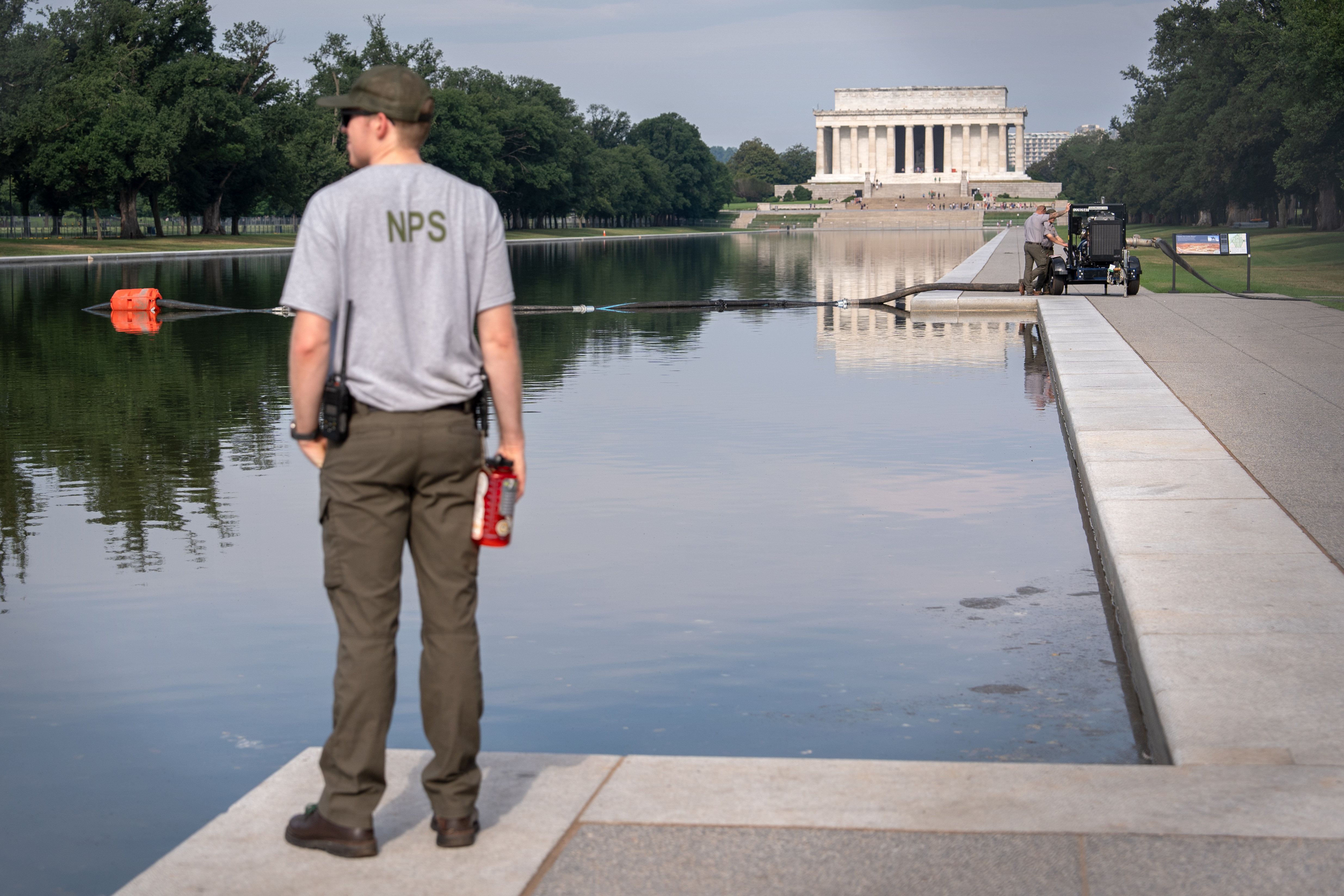
    WASHINGTON— President Donald Trump’s botched repairs at the Lincoln Memorial Reflecting Pool have landed the National Park Service in a tight spot, forced to serve the public while managing controversial demands by the Republican president.

    The beloved federal agency, its iconic park rangers, and other employees have been navigating a new reality under Trump, from orders to revise exhibits at parks and other sites to the demolition of important structures under its stewardship, such as the White House’s East Wing, to arresting visitors for alleged vandalism at the pool.

    Critics say the monthslong Reflecting Pool saga and other demands by Trump risk undermining the integrity of a federal agency that has long been held in high esteem by the American public.

    “Never — not once in decades — have I witnessed such systematic degradation, disrespect, and dismantling of the National Park Service as I see today under the thumb of President Donald Trump and Interior Secretary Doug Burgum,” said Bill Wade, a former park ranger and superintendent.

    Wade, who now serves as executive director of the Association of National Park Rangers, wrote an op-ed for the Denver Post lamenting what he called the Trump administration’s “assault on the people, the mission and the values that have made the National Park Service one of America’s most valued institutions.”

    The park service has been at the center of some of Trump’s most contentious actions during his second term. An executive order targeted funding and demanded reviews at national parks and other sites that Trump said advanced “divisive narratives” and “improper ideology,” resulting in changes to some exhibits on slavery or climate change.

    The president has also ordered sweeping changes to historical monuments and buildings in Washington that fall under NPS’ purview, including the creation of a White House ballroom and a 250-foot-tall memorial arch. The agency meanwhile has lost at least one-quarter of its permanent workforce since Trump began his second term, through layoffs, forced retirements, and resignations.

    Park service employees “are being politicized and drawn into the absurdities and corruption of this administration” on a regular basis, said California Rep. Jared Huffman, the top Democrat on the House Natural Resources Committee. He cited the pool project, the proposed arch, and the executive order on exhibit materials.

    The ongoing political assault on the agency “is unlike anything we’ve seen in this country, and it makes life miserable at agencies like the National Park Service,” Huffman said.

    Reflecting Pool saga continues

    Trump launched repairs at the Reflecting Pool earlier this year, hoping to address longstanding problems at the iconic site ahead of the America 250 celebrations. But the $16 million project faced immediate problems, including peeling blue sealant and a fierce return of green algae.

    Trump blamed the sealant issues on vandalism without providing evidence, and felony charges were brought against a former Olympic canoeist, David Hearn, after he was accused of vandalizing the pool.

    The U.S. Park Police, a unit of the National Park Service, arrested Hearn, who denied wrongdoing and said he briefly touched a chunk of the coating.

    Charges against Hearn were dropped on July 31 after prosecutors acknowledged that damage was caused by a bungled installation rather than vandalism.

    The advice and counsel of career officials and rangers — instantly recognizable by their signature flat hats and green-and-gray uniforms — has been ignored or pushed aside as Trump and Burgum make decisions regarding the failed pool repair, according to an Interior Department employee who was not authorized to discuss internal discussions and spoke on the condition of anonymity.

    “It’s tragic,” said Ed Stierli, vice president of government affairs at the National Parks Conservation Association, another advocacy group. “The whole thing is a master class in how not to go about a public rehabilitation project.”

    In the days since the dismissal of the charges, Trump has continued to lean on NPS in his repeated claims that vandals damaged the pool’s lining.

    “A National Park Service career employee, a highly credible witness, saw David Hearn … in broad daylight vandalize the Reflecting Pool by ‘violently’ ripping and tugging at the Pool’s somewhat delicate coating,” Trump posted Aug. 9 on his Truth Social site. Hearn’s legal team said Trump “is continuing to attack an innocent man.”

    Stierli, of the parks conservation group, called Trump’s reference to the unnamed park employee an example of the awkward position agency workers now face under Trump and Burgum, who has publicly backed Trump’s claims about vandalism at the pool.

    “I think the public understands that unfortunately, you have the president of the United States directly driving decisions, both here in Washington and around the country,” Stierli said. The park service — and especially its career staff — “has very little control over this,” he added.

    The White House and the Interior Department did not directly respond to requests for comment on the park service. The White House defended the pool project, saying Trump “promised to make D.C. safe and beautiful, and he’s delivering.”

    “For years, the Reflecting Pool sat neglected, plagued with algae, and leaking millions of gallons of water,” the White House said in a statement. “Fixing it was common sense.”

    Park service morale is at its lowest point, a former official says

    Wade, the former park superintendent, called the pool repair “a comedy of errors” and “a continuation of the incompetence” shown by the Trump administration.

    “Most people realize the NPS is under the gun and can’t do much about it, even though they’d like to,″ he said, adding that morale at the agency is at the lowest point he can remember.

    Edicts from Washington have made clear that speaking honestly about what is going on could cost staffers their jobs, Wade said. “There’s a very strong fear among employees at NPS,″ he said in an interview. “It’s very frustrating for them, as you can imagine.”

    Trump’s proposed memorial arch has faced some pushback. A recent report by park service staff warned that the proposed gilded arch could disrupt the historical significance of dozens of sites around its planned location near the Lincoln Memorial.

    The arch, which last month received initial approval from a key federal commission, would impact the “integrity” of dozens of historical properties because it would change “character-defining visual and spatial relationships” between them, the report said.

    Americans view the National Park Service favorably

    The park service is popular with Americans. About three-quarters of U.S. adults — including similar shares of Democrats and Republicans — have a favorable opinion of the agency, according to Pew Research Center polling from 2025. Only about 1 in 10 have a negative impression, and about 15% are unsure.

    A Washington Post/Ipsos poll from July found that about two-thirds of Americans say they are “dissatisfied” or “upset” about Trump’s Washington area projects, including construction of a new ballroom at the White House, painting the Reflecting Pool, and building his triumphal arch. Republicans are more likely to be “enthusiastic” or “satisfied” with the projects.

    About one-quarter of U.S. adults say Trump’s goal is to “make Washington more beautiful,” while about half say he has a “different goal.” In an open-ended question, many respondents speculated that Trump wants to glorify himself or leave his mark.

    The pool and other recent controversies including the exhibit reviews jeopardize the agency’s credibility, Wade said.

    “Whether interpreting the Civil War, discussing climate science, or describing the complex stories of Indigenous people, rangers have sought to present evidence, not political ideology,’’ he said. ”That is now being lost.”

  • Poland says it thwarted a Russian plot to kill an American citizen in Warsaw

    Poland says it thwarted a Russian plot to kill an American citizen in Warsaw

    WARSAW — A Russian plan to kill a Ukrainian American citizen in Warsaw was thwarted by Poland before it could be carried out, the Polish prime minister said Thursday, adding it was the first time that “someone on the order of Russia” sought to attack a U.S. citizen on the territory of another NATO country.

    Western officials have previously warned that Russia stepped up a campaign of targeted killings since President Vladimir Putin’s 2022 invasion of Ukraine, saying they have disrupted several plots across Europe. But Polish Prime Minister Donald Tusk said this incident was unprecedented.

    The suspect, who was allegedly recruited by Russia’s secret services, was detained by Polish authorities on Aug. 7. He will be held in custody for three months, the Warsaw police said in a statement.

    The American Ukrainian citizen “was uncomfortable for the Putin regime,” Tusk said in a news conference, without elaborating.

    The operation was carried out in cooperation with U.S. services, said Tomasz Siemoniak, Poland’s minister overseeing intelligence services. He said the targeted victim was a U.S. citizen “of Ukrainian origin.” Officials did not immediately provide further details.

    The Russian Foreign Ministry did not immediately respond to a request for comment.

    The U.S. State Department said it was aware of the reports but said it had no additional information.

    Western countries believe Russia seeks to undermine Ukraine’s allies

    Russia has long been accused of targeting its enemies abroad, including by using rare poisons. But intelligence officials previously told the Associated Press that Russia’s security services are now more brazen in their choice of targets, going after Russian activists and foreign supporters of Ukraine as well as military defectors.

    “We must assume that the Putin regime will try to eliminate people who are inconvenient for various reasons, in various places around the world,” Tusk said on Thursday. He said that Poland and others must be prepared to counter such actions.

    Western officials see the campaign as connected to Russia’s broader efforts to undermine European countries that support Ukraine. The AP has mapped about 200 acts of sabotage, arson, and other disruption across Europe since the start of the war that officials have linked to Russia. President Vladimir Putin told the AP in June that Russia is not waging a sabotage campaign against Europe.

    In 2006, British authorities accused Russia of being behind the killing of former FSB officer Alexander Litvinenko in London with radioactive polonium. The U.K. also blames Russia for the attempted killing of former Russian military intelligence officer Sergei Skripal in Salisbury in 2018 with the nerve agent Novichok.

    German authorities said Russia organized the 2019 killing of Zelimkhan Khangoshvili, a former Chechen rebel commander who was shot in a Berlin park by Vadim Krasikov, a hitman who was later greeted by Putin after he was exchanged in a spy swap.

    In June, a Russian artist who was critical of Putin was shot and killed at close range near his home in eastern Poland. Tusk said at the time that the killing of Robert Kuzovkov, known by the pseudonym Semyon Skrepetsky, had the hallmarks of a political assassination. He suggested it was possible Russia was behind it but Polish officials have not yet attributed it to Moscow.

    Last year French officials disrupted a plot which they believe was aimed at killing Vladimir Osechkin, a Russian exile who lives under police protection and works to help military defectors flee Putin’s war. Lithuanian officials also disrupted a plot last year to kill a Lithuanian supporter of Ukraine and another against a Russian activist. Officials in Germany have similarly broken up two plots: one to target the head of a German weapons company supplying Ukraine, the other against a Ukrainian military official.

    Polish authorities arrested a man in 2024 in what they said was a plot to assassinate Ukrainian President Volodymyr Zelensky. That year, a Russian helicopter pilot who defected was killed in Spain — with Russian operatives the prime suspects.

    “This campaign is not by accident or chance,” a senior European intelligence official previously told the AP. “There is political authorization.”