Category: Nation & World

  • White House directed Patel to oversee investigation involving Times reporting

    White House directed Patel to oversee investigation involving Times reporting

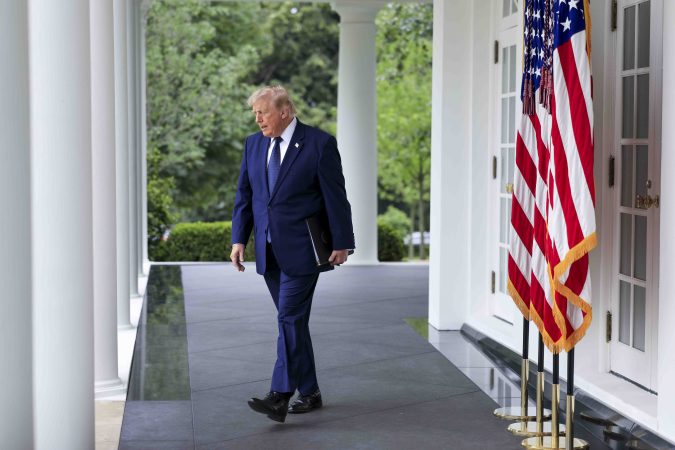
    WASHINGTON — The White House directed FBI Director Kash Patel to oversee a leak investigation into reporting by the New York Times about security issues with the new Air Force One, leading to a flurry of subpoenas to several Times reporters Friday night, according to people with knowledge of the situation.

    Patel scuttled a planned trip to Chicago and spent roughly eight hours at the White House on Friday, running the investigation from there rather than FBI headquarters — a major departure from historical practice. Patel also briefed senior administration officials on the investigation, two people said. The people spoke on the condition of anonymity to describe sensitive internal discussions.

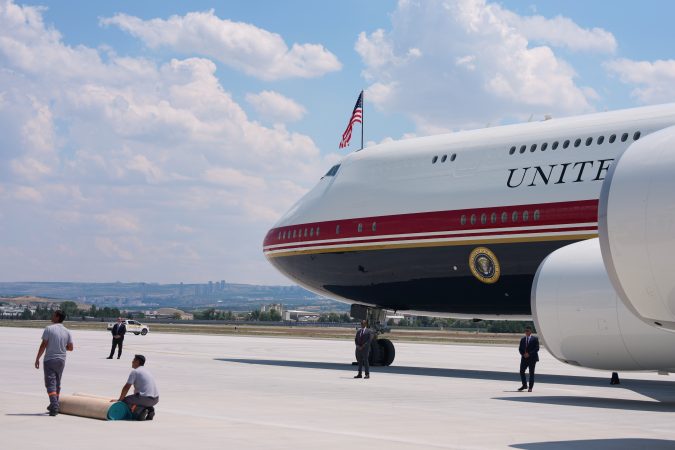
    The White House’s deep involvement in the case came after officials said President Donald Trump was enraged about the coverage of the Qatari-donated plane, which the Times reported Thursday lacks the same defensive countermeasures of the previous Air Force One.

    Trump flew on the new jet to a NATO meeting in Turkey this past week but was forced to change to the old plane when he departed because of Secret Service concerns, as the Times reported Wednesday.

    Patel’s role in the investigation, in close coordination with top administration officials, reflects a further dismantling of the wall that had separated the White House and the FBI in previous administrations. The government’s effort to immediately seek information from journalists, when such cases are typically centered first on identifying potential internal wrongdoing by officials, comes as the Trump administration has intensified pressure on news organizations.

    In response to a request for comment, Steven Cheung, the White House communications director, said, “President Trump is laser focused on helping the American people and keeping them safe. That will always be his priority.”

    Emily Covington, director of the Justice Department’s Office of Public Affairs, sought to downplay the unusual nature of the subpoenas, some of which were delivered late Friday directly to the doors of the reporters’ homes.

    “Every administration has addressed the crime of leaking national security information,” she said in a statement. “To the extent that we have to investigate breaches of national security, that’s something that we will continue to do.”

    She added: “To be clear, reporters are not the targets. Those leaking classified information are.”

    Ben Williamson, an FBI spokesperson, said in a statement: “Director Patel and White House officials agreed to meet on Friday at the White House to brief an ongoing matter. While we would not comment further, other speculative reporting regarding the nature of the meeting is absolutely false.”

    One person briefed on the conversations said that Patel had his own concerns about the type of information publicly disclosed about the plane. Another person said that Patel went to the White House of his own volition to oversee the investigation.

    Trump had sought the rapid retrofitting of the Qatari-donated 747 after he learned that two new Boeing planes that were supposed to replace the aging ones used as presidential aircraft would be delayed for years.

    Trump has basked in the luxury of the new plane, which is more than a decade old but has the kind of opulent furnishings the president prefers. He has repeatedly described the Qatari jet as cost free to the United States. But in reality, hundreds of millions of taxpayer dollars were spent to upgrade its security systems. Officials have said that he plans to take the plane with him as a donation to his presidential library when he leaves office.

    While Trump has said the Qatari plane was upgraded with the necessary security “bells and whistles,” the Times reported Thursday that it lacks the defensive countermeasures that were security features of the old model, including its advanced antimissile capabilities.

    Experts said the absence of the capabilities creates a potential risk when Air Force One is flying overseas, not only for the president but for the large entourage of White House staff members, Secret Service officials, journalists, and guests who fly aboard.

    After the Secret Service urged him to fly the old Air Force One out of Ankara, Turkey, Trump announced that he was making a swap in aircraft. In a post on social media, he claimed that he was taking the older plane to the United Kingdom for “old time’s sake” and that he wanted to show the new jet to U.S. troops on a military base there.

    Once he landed at Mildenhall Air Force Base in England, he walked from the older plane to the Qatari-donated jet, which transported him back to the United States.

    When the Times and other news organizations began reporting this past week on the security issues with the new plane, the president was livid, according to an official with knowledge of his comments who was not authorized to discuss the matter publicly.

    Before the Times’ first article was published, a senior official at the FBI contacted a reporter and a senior editor to ask that the article be held, calling it an issue of national security. The FBI official declined to explain the security issue. The official also asked the Times to disclose its sources for the article. The newspaper refused to do so.

    On Friday, after Patel left the White House, he posted a message on social media confirming that he had been there, and said that “the fake news will find out why soon.”

    That night, 48 hours after the Times had published the first article on the new plane, its reporters were served with subpoenas demanding that they provide evidence before a grand jury Wednesday.

    In a statement, David McCraw, the Times’ top newsroom lawyer, said: “This brazen act should be seen as nothing more than an attempt to prevent the public from knowing what is happening in their country by intimidating journalists from doing their jobs.”

    The rapid escalation of the case is a sharp departure from past national security leak investigations. Typically, officials first seek to establish how many people have had access to the information that was made public. Depending on the size of that group, prosecutors then attempt to determine ways to eliminate potential suspects from the list. In past leak cases, such efforts have often been abandoned if the pool of potential leakers is simply too large to scrutinize.

    Historically, the Justice Department has sought to subpoena reporters only as a last resort after other reasonable options have been exhausted.

    The Trump administration has pushed for a number of leak investigations, several of which have been conducted by federal prosecutors in the Eastern District of Virginia. Those efforts, which included subpoenas to reporters from the Wall Street Journal and the Washington Post, foundered in the face of resistance from a federal judge, according to multiple people familiar with the matter. Federal prosecutors withdrew them last month.

    The subpoenas issued to Times reporters Friday were from a different jurisdiction, the Southern District of New York, and were sought by Jay Clayton, the U.S. attorney in Manhattan, who was recently nominated by Trump to serve as the director of national intelligence.

    The subpoenas seek the reporters’ testimony on the same day Clayton is set to face a Senate confirmation hearing for his new post. The same day, Todd Blanche, the acting attorney general, is set to take part in a confirmation hearing to serve as attorney general on a permanent basis.

    This article originally appeared in the New York Times.
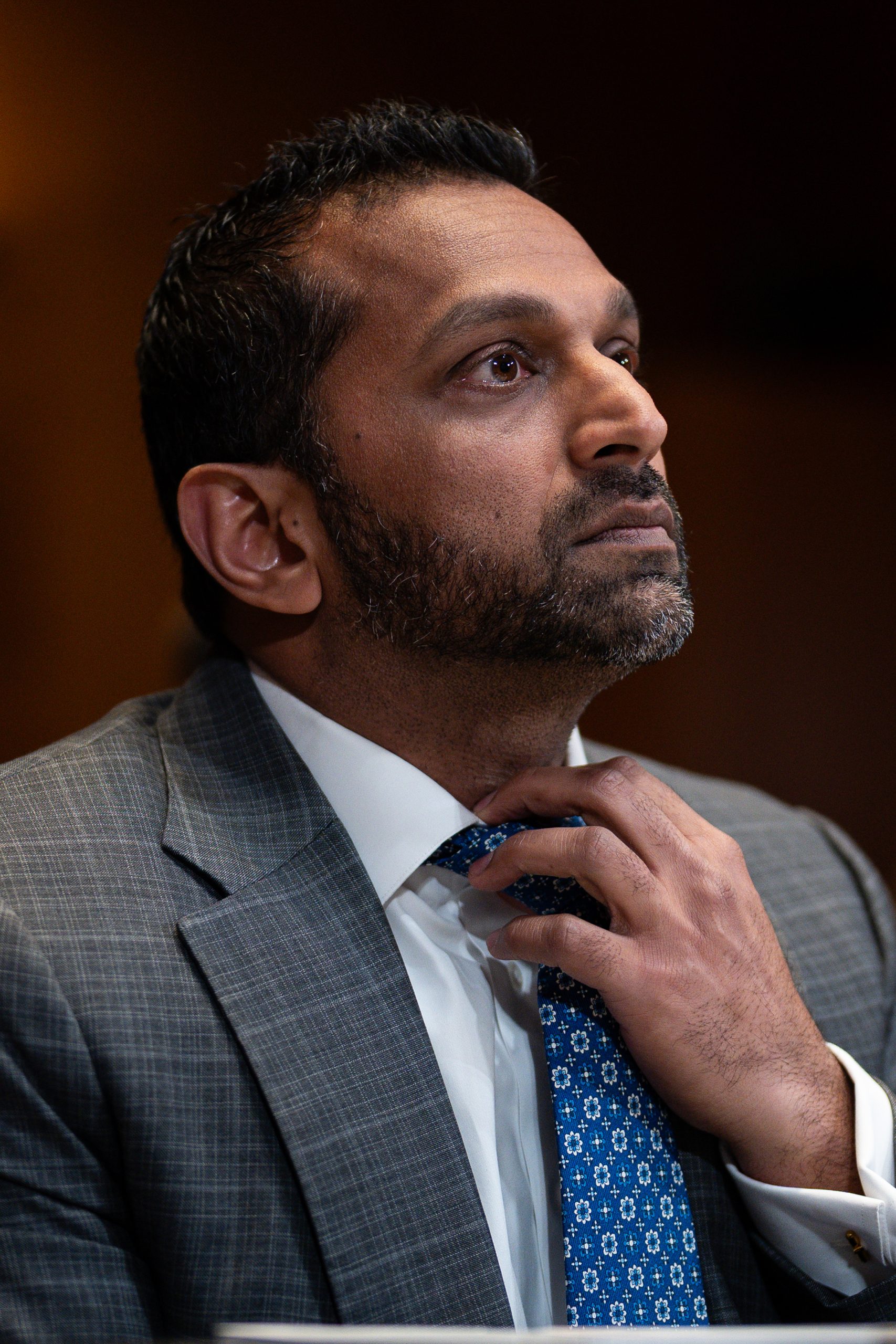
    FILE — FBI Director Kash Patel on Capitol Hill in Washington, on May 12, 2026. The White House directed Kash Patel, the F.B.I. director, to oversee a leak investigation into reporting by The New York Times about security issues with the new Air Force One, leading to a flurry of subpoenas to several Times reporters Friday night, according to people with knowledge of the situation. (Tierney L. Cross/The New York Times)TIERNEY L. CROSS
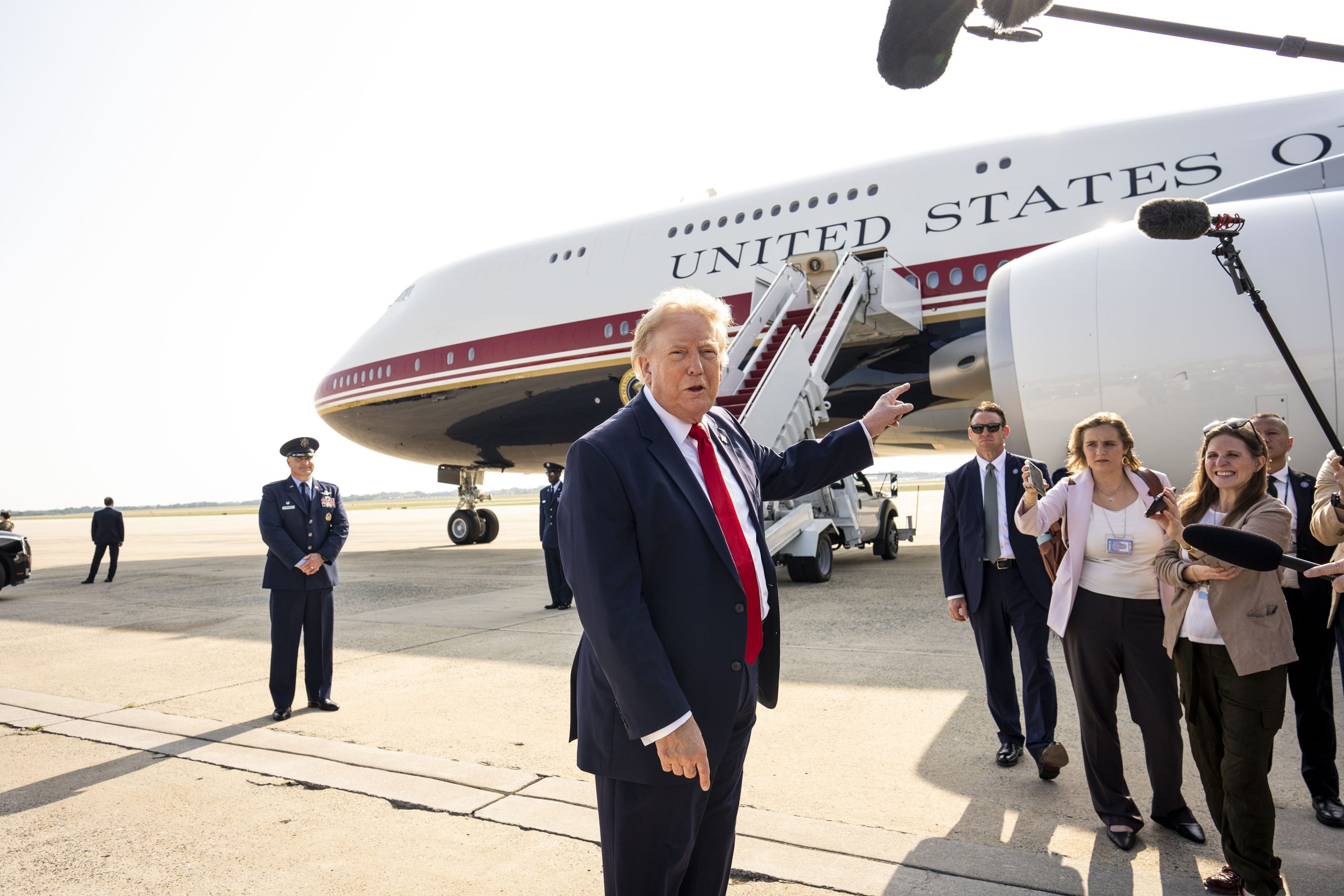
    FILE — President Donald Trump prepares to board the new Air Force One at Joint Base Andrews, Md., Wednesday, July, 1 2026. The Trump administration issued subpoenas on Friday to several journalists for The New York Times, after the news outlet reported this week on security concerns involving President Trump’s new Qatari-donated Air Force One. (Doug Mills/The New York Times)DOUG MILLS
  • Sen. Lindsey Graham, Trump critic turned ally and foreign policy hawk, dies after a brief illness

    Sen. Lindsey Graham, Trump critic turned ally and foreign policy hawk, dies after a brief illness

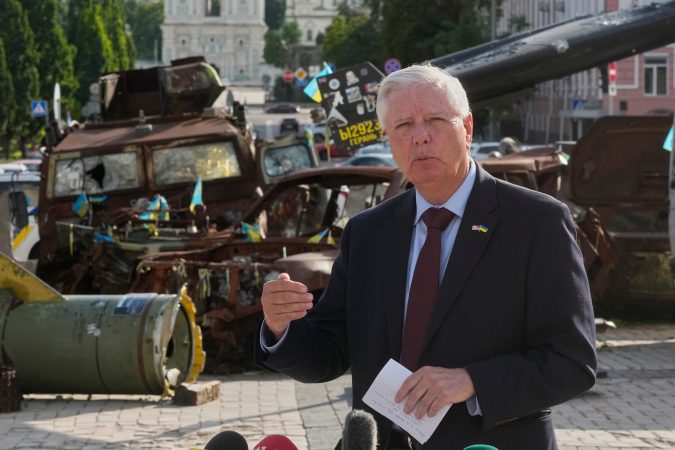
    Sen. Lindsey Graham, a longtime Republican lawmaker from South Carolina who went from being one of Donald Trump’s harshest critics to positioning himself in the front ranks of the president’s most deferential supporters, died Saturday. He was 71.

    The senator had a remarkable political trajectory that included election to the House in the 1994 Republican takeover, a high-profile role as an impeachment manager against President Bill Clinton, a Senate career featuring foreign policy hawkishness and bipartisan collegiality, and a prominent position as a confidant of President Donald Trump who epitomized Trump’s capture of the Republican Party.

    On Sunday, the Associated Press reported that a statement from Sen. Graham’s office said the Medical Examiner of the District of Columbia’s preliminary findings are the senator died of aortic dissection due to arteriosclerotic cardiovascular disease. That is an aorta rupture stemming from hardening of Sen. Graham’s arteries. A final report will be issued later.

    Over his more than three decades in the House and the Senate, Sen. Graham became nationally known because of a near-constant presence in the news media, where his folksy manner and talent for a good quote put a soft edge on his sometimes hard-line views. On Sunday, he was scheduled to have made what would have been his 64th appearance on NBC’s Meet the Press, following his return from a trip to Ukraine.

    The senator also had a talent for winning elections despite regular attacks from the right and the left. Last month, Sen. Graham won the South Carolina Republican nomination over five challengers in his pursuit of a fifth Senate term, avoiding what many had anticipated would be a runoff and placing him on a glide path to reelection in his deeply Republican home state.

    In celebrating his primary win, Sen. Graham paid tribute to Trump, whom he had in 2016 called “a nut job” unfit to be commander in chief. “I want to thank the big guy, God. Trump comes later. Mr. President, you’re not far behind God, but we’re going to start with him,” he said in the June speech.

    Although Sen. Graham was criticized throughout his political career as a shape-shifter and attention-seeking opportunist, there were some areas in which he was steadfast. Among them was his advocacy of a hawkish foreign policy, often as an ally of Sen. John McCain (R., Ariz.), a longtime friend.

    Sen. Graham championed using the U.S. military and government money to support global allies and confront foreign adversaries, supporting the wars in Iraq and Afghanistan and condemning the withdrawal of troops from both countries.

    Sen. Graham had also pushed both the Biden and Trump administration to provide greater support for Ukraine in its fight against Russia’s invasion. A staunch ally of Israel, Sen. Graham had pressed Trump toward war with Iran and warned him against making a premature deal.

    Israeli Prime Minister Benjamin Netanyahu, speaking Sunday morning on Fox News, praised Sen. Graham as “a great friend” to Israel. “He was absolutely clear. He didn’t bend to fashion, the winds of fashion. He knew who the good guys were, and he knew who the bad guys were. He never confused the two,” Netanyahu said.

    In a social media post written in the predawn hours Sunday, Trump also lauded Sen. Graham — among the few who managed to make it into the president’s good graces after having denounced him — as “one of the greatest people and Senators I have ever known” and “a true American Patriot.”

    A childhood growing up behind a bar

    Lindsey Olin Graham was born on July 9, 1955, in Central, S.C., a town in Pickens County that gets its name for being the midway point of a rail line between Charlotte and Atlanta.

    The future senator grew up in the rooms behind the Sanitary Cafe, a pool hall, restaurant, bar, and liquor store owned by his parents, Millie and Florence James “F.J.” Graham. While his father, also known as “Dude,” tended bar for the millworker clientele, the son racked balls and answered phones.

    He would later say jokingly that he learned everything he really needed to know about politics there, often having to tell a wife who called looking for her husband, “He says he’s not here.”

    The first member of his family to attend college, Sen. Graham set his sights on a military career, joining the ROTC at the University of South Carolina, although a bad ear and his dismal math scores got in the way of his ambition to become a pilot.

    He was still a student when his plans for the future suffered a bigger disruption. His parents died within two years of each other, leaving him to provide for his 13-year-old sister, Darline, who went to live with an aunt and uncle with Sen. Graham as her guardian. After graduating from law school, Sen. Graham legally adopted her, so that she would be eligible for his military benefits.

    “You assume everything’s going to be like Ozzie and Harriet — that doesn’t mean it’s going to turn out that way,” he told the Washington Post in 1998. “So here I’ve got a teenager on my hands. She’s turned out great in spite of me. I was probably a nut. I never let her date. I smelled her clothes if she smoked. I listened in on her phone calls. I was probably pressing too hard, just ’cause I felt such responsibility for her.”

    For her part, Darline Graham Nordone would later describe Sen. Graham as “a brother, a father, and a mother rolled into one.” She survives Sen. Graham, who never married.

    As a newly minted lawyer in 1981, Sen. Graham joined the Air Force’s Judge Advocate General staff, spending four years as a prosecutor and defense attorney in Europe. His defense of an Air Force pilot accused of marijuana use brought him national attention when he was featured in a CBS 60 Minutes report on the Air Force’s faulty drug-testing procedures.

    Upon leaving active duty in 1989, Sen. Graham returned to South Carolina and entered politics. After two years in the state legislature, he was elected to the U.S. House in the Republican wave of 1994, when the GOP recaptured the House after decades in the wilderness.

    The junior member of the House Judiciary Committee enjoyed a star turn as a House manager in Clinton’s 1999 impeachment trial in the Senate chamber. “Where I come from,” he drawled as he described a phone call the president had made to White House intern Monica Lewinsky, “You call somebody at 2:30 in the morning, you’re up to no good.”

    Meanwhile, his military career had continued. He was a member of the South Carolina Air National Guard, called to active duty stateside during the 1991 Persian Gulf War. He joined the U.S. Air Force Reserves in 1995, retiring 20 years later as a colonel. During that time, he did numerous stints in Iraq and Afghanistan, and was the first sitting member of the Senate in decades to do military duty in a combat zone.

    Sen. Graham’s growing celebrity helped propel him when a South Carolina Senate seat opened up in 2002 with the retirement of 100-year-old Strom Thurmond. Sen. Graham won it, in what became the most expensive Senate race in state history.

    Once in the Senate, Sen. Graham became known for working across the aisle and developed a friendship with then-Sen. Hillary Clinton (D., N.Y.) — an unlikely one, given his recent history as one of her husband’s impeachment managers. The two traveled together frequently and co-sponsored legislation.

    Sen. Graham’s independent reputation was boosted by his closeness to McCain, whose presidential candidacy he supported during the bitter 2000 South Carolina GOP primary against the eventual winner, George W. Bush. McCain, the ultimate political maverick and one who shared Sen. Graham’s interventionist foreign policy views, referred to his colleague as “my illegitimate son.”

    As a result, Sen. Graham, like McCain, periodically found himself at odds with the Bush administration. When a scandal broke over torture allegations at Abu Ghraib, a prison run by the U.S. military in Iraq, he demanded accountability up the chain of command. “What are we fighting for?” Sen. Graham asked at a hearing. “To be like Saddam Hussein?”

    On Sunday, Bush issued a statement lauding Sen. Graham as “a knowledgeable Senator who understood how the world works and how important America’s international engagement is to resist tyranny.”

    Hillary Clinton, the Democrats’ 2016 presidential nominee, would later express dismay over Sen. Graham’s transformation during the Trump era. In 2019, she told radio host Howard Stern that he had been someone she “admired and liked enormously” before he became a devotee of Trump, whose bullying, name-calling approach to politics was abhorred by Democrats.

    “I saw him as somebody who, you know, had been working to try to figure out what he believed and how he could do things,” Clinton said. “It’s like he had a brain snatch, you know?”

    From Trump antagonist to Trump loyalist

    In 2015, Sen. Graham announced what would become a quixotic campaign for president.

    Outside of his views on foreign policy, he was seen as a moderate Republican. A year before, he had survived an effort by the tea party movement and right-wing commentators to force him out of office. They branded him “Flimsy Lindsey” and “Grahamnesty” over such apostasies as working with Democrats on climate change and immigration, where he supported widening a path to citizenship for undocumented people.

    “I want to be president to protect our nation that we all love so much from all threats foreign and domestic,” Sen. Graham said in announcing his candidacy. “So, get ready. I know I’m ready.”

    He and Trump, who was running his first and ultimately victorious presidential campaign, clashed often on the debate stage, and Trump at one point gave out Sen. Graham’s personal cellphone number on television, after Sen. Graham called him a “jackass.” As it turned out, the senator was the wrong candidate for the moment in a party that was turning toward Trump’s brand of nativist populism. Sen. Graham left the race in December 2015, before the first votes were cast.

    He subsequently endorsed former Florida governor Jeb Bush and, later, Sen. Ted Cruz (R., Texas), only to see their campaigns go down in flames against Trump.

    Once Trump was in office, Sen. Graham’s began cozying up to the new president, looking past Trump’s demeaning of the Vietnam heroism of Sen. Graham’s friend and idol McCain, who had been a prisoner of war for 5½ years and was diagnosed with deadly brain cancer in 2017.

    Sen. Graham insisted his evolution on Trump was based on acceptance, not opportunism. “I said he was a xenophobic, race-baiting religious bigot,” he told CBS News in 2018. “I ran out of adjectives. Well, the American people spoke, and they rejected my analysis.”

    He and Trump bonded over golf outings, and Sen. Graham constantly fed the president’s famous appetite for flattery.

    “I think Lindsey likes the president a lot more than he thought he would,” Steve Largent, a former congressman and confidant of Sen. Graham, told New York Magazine in 2018. “I think Lindsey feels a little bit like the adult in the room, speaking with the president. … There’s something about, I’m not going to say innocence, but the president’s affability as well as his naiveté that Lindsey is drawn to.”

    Sen. Graham wavered after the Jan. 6, 2021, riot at the U.S. Capitol by Trump supporters seeking to overturn the result of the 2020 presidential election, after Trump did little to stop the violence.

    “Trump and I, we’ve had a hell of a journey — I hate it to end this way. Oh my God, I hate it. From my point of view, he’s been a consequential president, but today … all I can say is count me out. Enough is enough,” Sen. Graham said at the time.

    Still, Sen. Graham did not join seven other Republican senators the following month in voting to convict Trump of inciting an insurrection after he was impeached by the House.

    With the resurrection of Trump’s political career during the 2024 election cycle, Sen. Graham quickly made his way back into the fold. Last month, with his primary approaching, the senator made his pitch to South Carolina voters by noting that he had Trump’s endorsement: “If you want somebody who can go to Washington to help him, I’m your best choice.”

  • U.S. Rep. Ro Khanna says he was detained by Israeli military and settlers in the West Bank

    U.S. Rep. Ro Khanna says he was detained by Israeli military and settlers in the West Bank

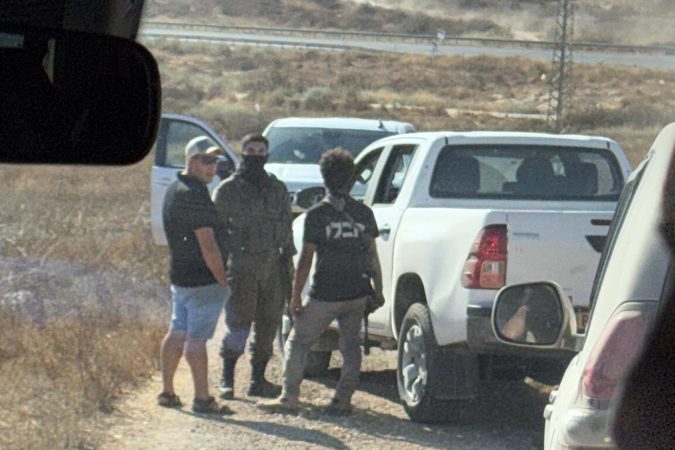
    U.S. Rep. Ro Khanna said Saturday that he was detained by settlers and the Israeli military in the occupied West Bank and released only after calls to the American Embassy in Jerusalem. The Israeli Defense Forces denied detaining any visitors in the incident, the latest example of escalating political tensions involving Israel and its ally’s Democratic Party.

    A representative for Khanna, a California Democrat who is an outspoken progressive, said the confrontation occurred Wednesday in the middle of a three-day tour of the West Bank. As the congressman visited a Palestinian village that had been abandoned after settler attacks, masked men with guns stopped his group and refused to let them leave.

    The New York Times said the incident was witnessed by one of its photographers. Khanna’s office said it occurred in the town of Khirbet Zanuta.

    Khanna said that when Israeli soldiers arrived he was dispirited to see them interact in a friendly manner with their captors and also block the exit for the congressman’s party. Not until the U.S. Embassy and Israeli police were called was Khanna’s group allowed to proceed.

    “If this can happen to an American member of Congress, imagine what life is like for Palestinians who have no smartphones, no security, and no national platform,” Khanna, who is exploring a presidential bid in 2028, said in a fundraising email he sent out shortly after his post Saturday about the incident.

    In a statement, the IDF said it received a report of Israeli citizens blocking foreign nationals and media in Khirbet Zanuta.

    “Upon receiving the report, IDF troops were dispatched to the scene, quickly dispersed the Israeli civilians, and reopened the blocked road,” the military said in a statement. “The IDF soldiers operating in the area did not take part in blocking the road.”

    Democratic politicians from the United States have stepped up their criticism of Israel amid a sharp turn against the country by the party’s voters. This week, former Chicago Mayor Rahm Emanuel, whose father was born in Jerusalem and fought in Israel’s war of independence, gave a blistering speech in Tel Aviv in which he said Israel has become a “territorial pariah.” Emanuel also is a potential White House contender.

    In a recent survey by the Associated Press-NORC Center for Public Affairs Research, about 58% of Democrats said the U.S. is “too supportive” of Israelis.

    Also Saturday, the Israeli military said it detained four suspects who were attacking foreign journalists traveling to Sinjil, another West Bank community. The assailants blocked the journalists’ vehicle and damaged it and were armed with clubs and knives, according to the military’s statement.

    CNN reported that it had a team among the journalists who were attacked. The network said the journalists were there to cover the one-year anniversary of the killing of a Palestinian-American man who was beaten to death by Israeli settlers.

  • Trump tried to block Canada’s bridge to Detroit from opening, but it will open anyway

    Trump tried to block Canada’s bridge to Detroit from opening, but it will open anyway

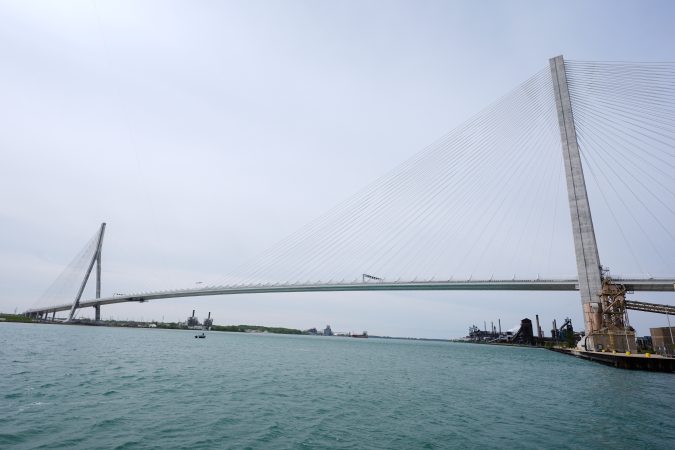
    OTTAWA, Ontario — Despite the best efforts of President Donald Trump, the Gordie Howe International Bridge spanning Detroit and Windsor, Ontario, will open on July 27, the government of Canada announced on Friday evening.

    The soaring 6.4 billion Canadian-dollar ($4.5 billion) structure has reshaped the skylines of the two border cities, between which roughly $300 million in trade flows each day. It is also precisely the kind of large infrastructure project Prime Minister Mark Carney has championed as a bulwark against the economic damage caused by Trump’s trade war with Canada.

    Two senior officials in the United States said the two countries reached a deal on Thursday about how tolls would be distributed, allowing the bridge to finally open.

    The bridge was largely finished early this year, nearly 13 years after Canada and Michigan signed an agreement that allowed construction to begin — a timeline stretched by pandemic-related delays.

    In February, Trump said in a rambling social media post that he intended to block the bridge’s opening. A ceremony scheduled for early June was called off after invitations had already gone out, and the Trump administration spent the months that followed his first post offering shifting explanations for the president’s opposition.

    Trump’s initial post came hours after Matthew Moroun, the billionaire scion of the family that has owned the Ambassador Bridge upstream from the Gordie Howe Bridge since 1979, met in Washington with Commerce Secretary Howard Lutnick, the New York Times reported. Less than a month before that meeting, Moroun had donated $1 million to a super political action committee supporting the president.

    Trump’s early objections included a desire to punish Canada for what he described as its exploitation of the American economy and its renewed trade ties with China. He also falsely claimed that no American workers or steel had been used in the bridge’s construction.

    Then Pete Hoekstra, the United States ambassador to Canada, indicated that the Trump administration was upset about the toll arrangement worked out by Canada and Michigan in 2012.

    Canada bore the full cost of construction, and the bridge is jointly owned by Canada and Michigan. Under the original agreement, once tolls recover the construction costs, perhaps 50 years from now, the two governments would split any revenue not needed for maintenance and operations.

    Hoekstra, who also falsely claimed that it was a “hoax” that Canada paid for the bridge, later suggested that the United States was looking for a way for Michigan to see revenue from the bridge sooner.

    Under the new agreement, the Canadian official said, half of the tolls will go into a regional economic development fund for the first 15 years of operation. A U.S. official said the money will be collected by the United States government and the development fund will only be available to Americans. The United States will also have to approve toll increases beyond 10%, a U.S. official said. Previously, tolls were to be managed by an authority composed of representatives of Canada and Michigan.

    Michigan’s government was initially cool to the federal intervention on tolls, though its position has since softened.

    “It’s good for Michigan workers and it’s good for Michigan’s auto industry,” Stacey LaRouche, the press secretary for Gov. Gretchen Whitmer, said in a statement last month. “This project has been a tremendous example of bipartisan and international cooperation.”

    On Friday, Whitmer welcomed the end of the saga.

    “The Gordie Howe International Bridge has always been a great deal for our state,” she said in a statement. “I’m proud to have fought for its opening and congratulate my partners who have worked on this issue alongside me for years.”

    The Morouns, who made their fortune largely through trucking before expanding into real estate, have long been unpopular on both sides of the border. In Detroit, many of their decaying landmark properties became unwelcome symbols of the city’s struggles.

    In Windsor, the Ambassador Bridge is a notoriously bad neighbor. At times, poor maintenance caused pieces of the bridge to crash to the ground. The bridge company further tarnished its reputation when it bought a swath of a neighborhood in preparation for its unfulfilled new bridge. The houses were boarded up and left to rot.

    For a critical trade crossing, the Ambassador Bridge is oddly disconnected from expressways. The long lines of trucks traveling to and from it are forced into a gear-griding slog along a city road lined with traffic lights.

    Fare hikes on the Ambassador Bridge have prompted large numbers of commercial drivers to detour and cross on a Canadian government-owned bridge about 100 miles to the north between Port Huron, Mich., and Sarnia, Ontario.

    This article originally appeared in the New York Times.
  • Trump, ending decades of protection, opens wild habitats to drilling and mining

    Trump, ending decades of protection, opens wild habitats to drilling and mining

    The Trump administration on Friday moved to open the habitats of imperiled animals to farming, drilling, mining, real estate development, and other activities in what environmentalists characterized as the most severe erosion of protections for wildlife in half a century.

    It did so by recasting a single word: “harm.”

    For more than 50 years, the federal government has used a broader definition of harm to animals under the Endangered Species Act, a bedrock environmental law. It included any significant “modification or degradation” of habitat that kills or injures animals by impairing their ability to eat, shelter, or breed.

    The Supreme Court upheld this interpretation in 1995, ruling against property owners who argued that harm should only mean directly killing or injuring an endangered animal.

    But on Friday, the Interior Department and the Commerce Department announced a final rule that rescinded this long-standing interpretation. Under the rule, destroying an endangered species’ nest or habitat would no longer be considered illegal.

    The change could open the door for fossil fuel companies, agricultural interests, land developers, and others to disturb or destroy the habitats of vulnerable species. Many species are already running out of places to live, and the new rule is likely to add extreme pressure, experts said.

    Earthjustice, an environmental law firm, said it planned a legal challenge. But if the case were to reach the current Supreme Court, its conservative supermajority could enshrine the change, preventing future administrations from reversing it, said Karrigan Börk, an environmental law professor at University of California Davis.

    The move on Friday was the latest in a series of extraordinary efforts by the Trump administration to weaken environmental regulations designed to fight climate change and prevent species extinction. In March, a panel of administration officials voted to exempt oil and gas drilling in the Gulf of Mexico from measures to protect endangered whales and other imperiled species.

    In a news release, the Interior and Commerce departments said they were taking action to restore the Endangered Species Act to its original intent. They argued that in recent years, environmentalists and Democratic administrations had weaponized the act to block drilling and other development nationwide.

    “For years, federal agencies abused the ESA to obstruct lawful land use and burden American families and businesses,” Interior Secretary Doug Burgum said in a statement. “That approach turned routine activity into a regulatory trap, drove up costs that impacted people’s lives, and expanded federal authority beyond what Congress intended.”

    The National Mining Association, a trade association, applauded the announcement.

    “Our industry is absolutely committed to the conservation and recovery of threatened and endangered species — and their habitats — but the definition of ‘harm’ has long been abused to serve as a punitive obstacle impeding critical projects,” Tawny Bridgeford, the group’s general counsel and senior vice president, said in a statement.

    Legal scholars said the government was acting without conducting scientific research into the impact of the change, a step that would typically precede a move of this kind.

    The change is “undermining the fundamental purpose of the Endangered Species Act,” said Lynn Scarlett, who served as deputy interior secretary under President George W. Bush.

    Habitat modification or degradation caused by human activity is often the main reason that species face extinction. An intergovernmental body of leading scientists has found it to be the top driver of biodiversity loss worldwide.

    Modifying habitats can easily harm individual animals without intentionally or immediately killing or injuring them, said Gary Frazer, who oversaw the U.S. Fish and Wildlife Service’s endangered species program for two decades before retiring in 2025.

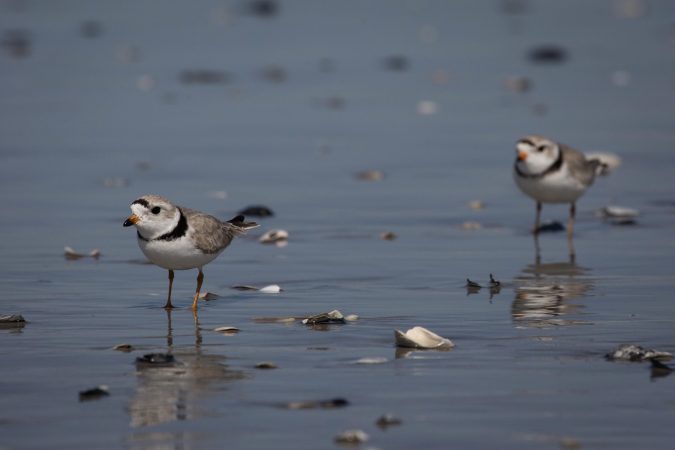
    Piping plovers, for instance, need undisturbed beaches to nest and raise their young. They return to the same sites year after year but only occupy them in the spring and summer. During winter, when the birds have migrated south, a property owner could develop a beach without immediately hurting any individual piping plovers. But come spring, the returning plovers would find themselves without a place to feed, nest and raise their chicks.

    Or take red-cockaded woodpeckers, which are not migratory but require mature pine trees to hollow out the cavities where extended families roost. Even if a timber company or developer cut down those trees without causing direct injury to any birds, they could not survive without other unoccupied old trees.

    Amphibians like California tiger salamanders begin their lives in seasonal ponds but move into upland burrows after metamorphosis. If a pond were drained during the summer, the salamanders that returned to the spot would not have the water they need to produce the next generation.

    “We are at the precipice of losing 50 years of progress in the protection of America’s wildlife, because we know that the challenges for most animals are not that they’re getting shot,” said Justin Pidot, a professor of environmental law at the University of Arizona who served as general counsel at the White House Council on Environmental Quality during the Biden administration.

    After the rule was proposed last year, it triggered roughly 220,000 public comments. About 99% were against the change, according to an analysis by the New York Times that used artificial intelligence.

    Among those asking the administration to reconsider were state wildlife agencies in some Republican-governed states.

    “Threatened and endangered species are entirely dependent on healthy habitats,” wrote Bruce Kreft, chief of the conservation and communications division of the North Dakota Game and Fish Department. The proposed change, he said, “would have dire consequences.”

    Ted Will, who was the director of the Georgia Department of Natural Resources Wildlife Resources Division at the time, wrote that “the greatest threat to the vast majority of species of greatest conservation need in Georgia, whether federally listed or not, is habitat loss.”

    Attorneys general from 16 states — including Arizona, California, Illinois, and New York — said the rationale for the change was “arbitrary, capricious, an abuse of discretion and contrary to law.”

    Those supporting the change included industries affected by habitat restrictions. Oil and gas trade groups including the American Petroleum Institute wrote that harm must involve a direct injury to a particular animal.

    But the vast majority of commenters appeared to be individuals, often begging the government to reconsider.

    “Everyone knows a species cannot live without its habitat,” wrote Ashleigh Smith of Port Angeles, Wash.

    Environmental lawyers and activists said that projects are rarely blocked because of habitat restrictions. More often, individuals or companies have to create “habitat conservation plans,” which describe the expected effects on endangered species and detail steps that will be taken to minimize them, they said.

    With the change, people and governments will still need permits for actions that would, say, crush or bury endangered animals, but not for felling a tree or polluting a river that the animal relies on, said Jane Davenport, a senior attorney with Defenders of Wildlife, a conservation group. That means landowners would take fewer measures to protect endangered species, and also contribute less to offsetting their actions by helping the species elsewhere.

    “A lot of our endangered species are on the edge,” Börk said. “If you lose that species, it is gone.”

    This article originally appeared in the New York Times.
  • Minnesota school faces threats after Trump posts clip of Somali kindergartners

    Minnesota school faces threats after Trump posts clip of Somali kindergartners

    Hateful emails and phone calls targeted a Minnesota school serving Somali families after President Donald Trump shared a video of its kindergartners on Truth Social this week, an episode that many Somali Americans see as an escalation of a sustained campaign of political and rhetorical attacks during Trump’s second term, community leaders said.

    On Wednesday, Trump reposted a video from a kindergarten graduation ceremony at Gateway STEM Academy, a K-8 charter school in St. Paul. In the clip, children wearing blue graduation gowns, including girls wearing hijabs beneath their mortarboards, sing in Somali as they celebrate the end of the school year.

    Trump amplified another user’s caption: “Every girl is in a hijab … in kindergarten.”

    The faces of the young children were clearly visible in the video shared with Trump’s 12.9 million followers. Members of the Somali community said that exposure could open the door to attacks on some of the community’s most vulnerable members. The replies to Trump’s post quickly filled with anti-Muslim invective, including one user who called the children “future terrorists.”

    For many Minnesotans of Somali descent, the post was the latest salvo in a monthslong campaign in which Trump has repeatedly singled them out while his administration has mounted an aggressive immigration and law enforcement operation in the Twin Cities.

    “The first term of Donald Trump was a cakewalk compared to this,” said Suleiman Adan, deputy executive director of the Council on American-Islamic Relations’ Minnesota chapter. “In the first term, you saw attacks on equality, belonging, and justice. In the second term, it’s an attack on basic human dignity. Right now, the crosshairs are on the Somali community.”

    Adan said he and other advocates had been in contact with officials at the school, who told them they have been contending with hateful emails, phone calls, and social media posts.

    Reached Friday, the White House did not directly address questions about the president’s decision to share the video, the harassment the school says followed, or concerns about posting identifiable children to millions of followers.

    “President Trump is right,” White House spokesperson Abigail Jackson said. “Aliens who come to our country, complain about how much they hate America, fail to contribute to our economy, rip off Americans, and refuse to assimilate into our society should not be here.”

    The ceremony featured in Trump’s post took place on the last day of school for the rising first-graders, who have not been back to the building since, Adan said.

    The school is mulling safety measures for when classes restart. The incident has also increased concern around Saturday schools that teach Somali language and culture.

    Gateway STEM Academy’s parent handbook describes the school as a STEM-focused charter that seeks to “embrace” students’ cultural backgrounds and encourages family participation in cultural celebrations, while emphasizing academic rigor, attendance, and discipline. It also offers Arabic among its electives alongside science, technology, and math programming.

    The video featured in the social media post began as a recording of an ordinary school celebration before ricocheting through the online right. The song, in Somali, is benign: it speaks of the pride of being a student, the joy of reaching a milestone, and hopes for continued success, said Malika Dahir, the executive director of Reviving the Islamic Sisterhood for Empowerment.

    Members of the Somali community routinely stream milestone moments for friends and relatives who live in other countries or states, Dahir added.

    “There isn’t a graduation or a wedding that isn’t livestreamed,” she said. “We share these online, because family members are all over the world. It’s a way to share momentous occasions. To feel like now these moments might be weaponized, there’s just a sense of loss, like our joy has been stolen.”

    The video was circulated by End Wokeness, an influential conservative social media account, with a caption drawing attention to the girls’ hijabs. Trump reposted the clip, first without explanation and later with the account’s caption attached.

    The post was consistent with Trump’s frequent use of Truth Social to share racially charged, often inflammatory, imagery. Earlier this year, his account posted a video depicting Barack and Michelle Obama as apes, which was deleted after bipartisan condemnation. He later shared a doctored image of the Obamas beside a graffiti-covered Air Force One bearing “BLM” and Arabic writing.

    Minnesota is home to roughly 80,000 people of Somali descent, the largest Somali community in the United States. Trump has repeatedly singled out Somali immigrants during his second term, seizing on a series of sprawling fraud investigations involving state and federal social-service programs. Many of those charged are Somali or Somali American.

    The largest fraud allegation centered on a nonprofit whose operators and affiliates were accused of diverting about $250 million from a federally funded child-nutrition program. Federal prosecutors have also brought separate cases involving programs intended to provide housing assistance to vulnerable adults and therapy for children with autism. Prosecutors say defendants used some of the money to buy cars, real estate, and other personal luxuries.

    Trump has used the scandals to justify large-scale federal intervention in Minnesota, dispatching thousands of immigration officers to the Twin Cities in an operation that extended well beyond the people accused of fraud. The deployment prompted weeks of protests and confrontations between agents and residents.

    During the operation, federal officers fatally shot Renée Good and Alex Pretti, both 37-year-old U.S. citizens, in separate encounters that were captured on video and became flash points in the national debate over Trump’s immigration crackdown.

    The administration subsequently changed leadership of the operation and began drawing down the federal presence. In February, border czar Tom Homan announced that 700 officers would leave Minnesota, although he attributed the withdrawal to increased cooperation from state and local authorities rather than directly to the shootings.

  • Trump and Iran’s supreme leader trade threats as mediators try to save their crumbling deal

    Trump and Iran’s supreme leader trade threats as mediators try to save their crumbling deal

    DUBAI, United Arab Emirates — U.S. and Iranian leaders traded threats on Saturday as the interim deal to end the war buckled under crossfire in the Middle East and efforts continued to keep talks going.

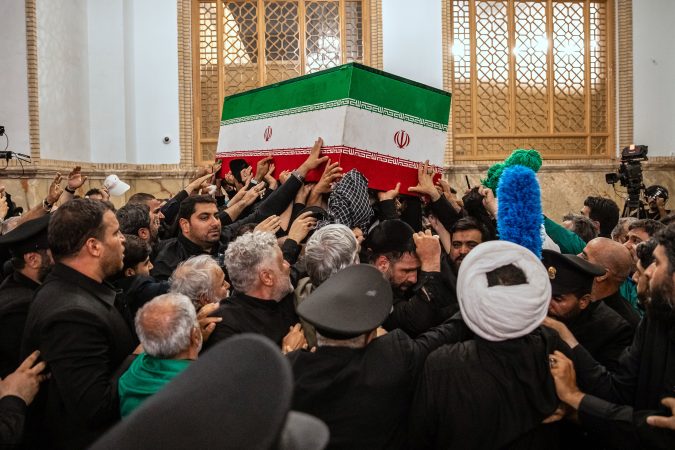
    President Donald Trump overnight made threats on social media of further missile attacks against Iran, after the funeral of Supreme Leader Ayatollah Ali Khamenei saw open calls for the U.S. leader’s killing. Senior U.S. officials demanded that Iran make a public statement saying the Strait of Hormuz is open and ships won’t be attacked.

    Later, Iranian Supreme Leader Mojtaba Khamenei vowed that Iranians would continue to avenge his father’s death. Such revenge “is the will of our nation and must certainly be carried out,” he said in remarks carried by state television. He still has not been seen publicly since the war began on Feb. 28 with strikes that killed his father.

    Tehran has insisted that the strait remain under its control and that it be allowed to charge ships moving through it, a stance it took after the war began.

    The exchange of threats followed days of U.S. airstrikes targeting Iran, sparked by Iran’s attacks on three ships in the strait, and Iranian retaliatory fire targeting Arab nations in the region.

    Trump has declared the ceasefire over but said the U.S. would continue negotiations. Iranian Foreign Minister Abbas Araghchi on Saturday traveled to Oman, located on the other side of the strait, for more talks, a day after Qatari mediators met with officials in Tehran.

    Trump says he responded to threats to kill him

    A thousand “missiles are Locked and Loaded and aimed at the Islamic Republic of Iran, with thousands more to immediately follow, should the Iranian Government act on its threat,” Trump wrote on his website.

    He said he was responding to threats “to assassinate, or attempt to assassinate” him. During Khamenei’s funeral, mourners held posters or banners calling for Trump to be killed along with Israeli Prime Minister Benjamin Netanyahu. Iran buried Khamenei, 86, this week.

    Trump added that the U.S. military would “completely decimate and destroy all areas of Iran — PRAISE BE TO ALLAH!”

    Trump has repeatedly invoked the name of God in Arabic, and threatened to destroy Iran’s very civilization. The Council on American-Islamic Relations, an advocacy group, has criticized Trump’s “deranged mocking of Islam.”

    Iran accuses Washington of violating the interim deal

    Iran’s foreign minister accused the U.S. of violating the interim deal by ending waivers allowing Iran to sell crude oil on the open market in U.S. dollars. Washington ended them in response to the attacks on ships in the strait.

    “Reality check: There can only be mutual compliance,” Araghchi wrote on X.

    He was scheduled to meet with his counterpart in Oman. Turkish Foreign Minister Hakan Fidan told his country’s state broadcaster, TRT, that he believed “a solution can be reached” this weekend between Iran and Oman.

    The U.S. urges mariners to travel through the strait on a southern route, through Oman’s territorial waters. Iran has said the strait must be under its sole control and that vessels should begin paying fees to Tehran. The world for decades has considered it an international waterway.

    About a fifth of all traded oil and natural gas passed through it before the war began. Iran’s grip on the strait during the war led to a global energy crisis, though oil prices have sharply dropped since wartime highs of $120 a barrel.

    Tehran’s diplomat at the United Nations said on Friday that any activity in the strait, including its opening or demining operations, “rests exclusively with Iran.”

    U.S. officials accuse hard-liners of trying to sabotage deal

    U.S. officials, speaking on condition of anonymity about the current situation with Iran, said the resumption of strikes this week came after what they described as a rogue faction of Iranian hard-liners tried to sabotage the ceasefire.

    However, Iran has insisted its theocracy is unified under the new supreme leader.

    After the U.S. wrapped up its latest strikes on Thursday, more attacks reportedly hit Iran, raising questions about who else may be targeting the Islamic Republic.

    Israel didn’t claim them, meaning the Gulf Arab states may have launched them, likely as a means to deter Iran from attacking them again. Iran on Thursday retaliated for U.S. strikes by targeting Bahrain, Jordan, Kuwait, and Qatar.

    The strikes in Iran over two days killed at least 17 people and wounded 115 others, Iranian Health Ministry spokesperson Hossein Kermanpour said.

    U.S. says nuclear deal will require Iran to turn over enriched uranium

    The U.S. officials told journalists the U.S. would never reach a nuclear deal with Iran if it does not first stop its attacks on ships in the strait.

    They also said any deal on Iran’s nuclear program would require Tehran to turn over its stockpile of highly enriched uranium. That’s something Iran has repeatedly refused.

    If the U.S. doesn’t reach a deal with Iran to turn over the material, it has military options to ensure that it remains buried underground forever, the officials said. They did not detail them.

    The uranium, enriched to near weapons-grade levels, is believed to be at nuclear sites the U.S. bombed in 2025. Iran long has insisted its nuclear program is peaceful, though the International Atomic Energy Agency has said the Islamic Republic is the world’s only country to enrich uranium so highly without a weapons program.

  • Times journalists subpoenaed as Trump escalates pressure on media

    Times journalists subpoenaed as Trump escalates pressure on media

    The Trump administration issued subpoenas Friday to several journalists for the New York Times, after the news outlet reported this week on security concerns involving President Donald Trump’s new Qatari-donated Air Force One.

    The subpoenas — which seek to force the reporters to testify before a federal grand jury in New York on Wednesday — were an extraordinary escalation in Trump’s efforts to threaten and intimidate independent news organizations.

    In some cases, the subpoenas were delivered by federal agents who showed up at reporters’ homes.

    The Times denounced the administration’s actions.

    “The appearance of federal law enforcement agents on the doorstep of news reporters should shock the conscience of any American who believes in the Constitution and the press freedom it protects,” David McCraw, the Times’ top newsroom lawyer, said in a statement Friday evening.

    “Our journalists report the facts and advance the American public’s right to know how their government is operating and their taxpayer dollars are being used,” McCraw wrote. “This brazen act should be seen as nothing more than an attempt to prevent the public from knowing what is happening in their country by intimidating journalists from doing their jobs.”

    The subpoenas contain few specifics, asking only that the journalists testify “in regard to an alleged violation of federal criminal law.” They were issued by Jay Clayton, the U.S. attorney in Manhattan. Clayton, who leads one of the country’s most prominent law enforcement offices, was recently nominated by Trump to serve as director of national intelligence.

    Representatives for the White House and the U.S. attorney in Manhattan did not immediately respond to inquiries Friday evening.

    The Times journalists who received subpoenas included Julian E. Barnes, Eric Lipton, Tyler Pager, and Eric Schmitt, who reported Wednesday that Trump had departed Turkey on the old Air Force One as a security precaution at the urging of the Secret Service. On Thursday, the Times reported that the new Air Force One, a Qatari-donated Boeing 747-8, lacked some of the advanced security features of the older aircraft, including anti-missile capabilities. Both articles cited sources who spoke on the condition of anonymity to discuss sensitive security issues.

    Before the Wednesday article was published, a senior official at the FBI contacted the Times to ask that the article be held, calling it an issue of national security, according to a person familiar with the conversation. The FBI official spoke with a reporter and a senior editor in the Times’ Washington bureau; the official declined to explain the security issue when asked. (A spokesperson for the Times, Charlie Stadtlander, confirmed the account.)

    Trump has long been a harsh critic of the news media. But in his second term in office, he has moved aggressively to use the immense powers of the federal government in his efforts to attack the press.

    Earlier this year, the Justice Department sought to compel testimony from journalists at the Wall Street Journal and the Washington Post. The Justice Department withdrew the subpoenas after both news organizations fought back in sealed filings.

    Both Democratic and Republican administrations have initiated leak investigations into the disclosure of classified information. But subpoenas aimed at journalists are not common, and First Amendment advocates say they can chill the work of news gathering.

    In January, FBI agents took the rare step of searching the home of a Washington Post reporter, Hannah Natanson, as part of an investigation into a government contractor’s handling of classified material. The agents seized phones, laptops, and a smartwatch after executing a search warrant. Natanson had spent months speaking with government employees while reporting on the Trump administration’s efforts to shrink the federal workforce.

    The Times is a party to several lawsuits involving Trump and his administration.

    The president sued the Times last year, accusing it of defaming him, disparaging his reputation, and seeking to undermine his 2024 candidacy.

    In December, the Times sued the Defense Department after it imposed restrictions on reporters who cover the military. The company sued again after the agency reduced reporters’ physical access to the Pentagon.

    In May, the Equal Employment Opportunity Commission sued the Times, accusing it of employment discrimination. On Friday, the Times filed a counterclaim, saying the lawsuit was an act of retaliation for its coverage of the Trump presidency and a violation of its First Amendment rights.

    This article originally appeared in the New York Times.
  • Royal rapprochement: Harry and Meghan pay a rare visit to the king and queen

    Royal rapprochement: Harry and Meghan pay a rare visit to the king and queen

    In a step toward mending one of the world’s most-followed family feuds, Prince Harry, his wife, Meghan, and their two children met for the first time in years with Harry’s father, King Charles III, and Queen Camilla, Buckingham Palace said on Friday.

    The meeting answered questions that had been swirling all week about a potential reunion between the British king and his estranged second son. In 2020, Harry and his American-born wife, Meghan, renounced their royal titles and moved to the United States.

    Friday’s visit was a sign of a detente between Harry and his father. Harry had not returned to Britain with his family since Queen Elizabeth II’s Platinum Jubilee in June 2022. Harry had visited his father in Britain by himself last fall.

    The visit this week, officially to promote Harry’s charity competition for military veterans, had been shrouded in confusion, as efforts to mend family relations appeared to exacerbate them instead. Rifts emerged over where the family would stay and who would pay for their security.

    The prince has been embroiled in a yearslong battle with British authorities since they ruled that he and Meghan, after stepping down from royal duties, no longer qualified for publicly financed protection in Britain.

    Harry, 41, who arrived in Britain on Monday evening, lives in California with Meghan, 44, and their children, Archie and Lilibet. It was the first time in several years that Charles, 77, and his grandchildren, aged 7 and 5, met in person.

    Buckingham Palace said there would be no images released of the family visit at Highgrove House, a country estate that is one of the king and queen’s residences.

    Harry and his brother, William, had spent considerable time at Highgrove House, in the Cotswolds region west of London, when they were children. If offers a measure of privacy, far from the eyes of the London-based press corps. Earlier in the week, Harry’s team said that Meghan and the couple’s children, who were originally planning to accompany Harry for the whole visit, would not be going to London, citing security concerns.

    Highgrove House is also located nearer to Birmingham, where Harry had taken part earlier on Friday in an event to begin a countdown to the Invictus Games, a competition he founded for wounded veterans, which is due to be held in Birmingham in 2027. He played pickleball, took part in wheelchair rugby, and gave an interview to a British news outlet, speaking glowingly of his wife and children.

    The meeting with his father was a decidedly more private affair. The palace confirmed the meeting only after it had taken place.

    The reunion came shortly after a judge in Britain ruled against Harry and other celebrities earlier this week in a lawsuit that accused the publisher of the Daily Mail of targeting them with unlawful information gathering.

    The prince’s legal battles against the tabloid press marked a departure from the royal family’s tradition of ignoring unfavorable press coverage. Harry and Meghan have been open about their differences with the rest of the family, including in an Oprah interview, a tell-all memoir, and a documentary, even as they repeatedly voiced a need for privacy.

    This article originally appeared in the New York Times.
  • The Bayeux Tapestry is at the British Museum after a secret journey from France

    The Bayeux Tapestry is at the British Museum after a secret journey from France

    LONDON — After almost 1,000 years, the Bayeux Tapestry is back on English soil.

    In scenes like a heist movie in reverse, the priceless medieval artwork was spirited into the British Museum on Friday in the dead of night, after a high-tech, tight-security operation where any slip-up could have spelled disaster.

    On loan from its home in France, the tapestry will go on display at the London museum from Sept. 10 until July 2027. It’s a public homecoming for a vivid visual record of the 1066 Norman invasion, the last successful conquest of England.

    The tapestry’s arrival in London has been widely anticipated, but due to security concerns all details of when and how it would arrive were kept under wraps.

    “It feels extraordinary that after so much work and planning and care and thought that it’s actually happening,” British Museum director Nicholas Cullinan said as he waited outside the museum in the dark.

    “It’s the first time in 1,000 years that such an important piece of British — French too — history is going to be on these shores,” he said. “It’s incredibly exciting.”

    The 230-foot tapestry was folded accordion-style in a climate-controlled case that was placed inside a shock-absorbing cradle. That went into a truck that crossed from France on a vehicle shuttle train through the Channel Tunnel.

    After an 11-hour, 350-mile trip, escorted by police, the truck backed slowly into a loading bay at the museum, where workers gingerly eased the container, the size of a small car, to the ground. Museum staff and British and French diplomats who had been watching in hushed silence broke into applause.

    The priceless cargo will spend several days acclimatizing before it is carefully unpacked and unfolded for an exhibition that the museum expects to be one of the most popular in its 267-year history. Some 100,000 tickets were sold in their first day on sale this month.

    “It was like trying to get tickets to Glastonbury,” Cullinan said. “I don’t take for granted that people care that much about a 1,000-year-old embroidery. I think that’s an amazing thing.”

    Tapestry is a symbol of Anglo-French relations

    Stitched in wool thread on linen fabric — technically an embroidery, rather than a tapestry — the artwork depicts events leading up to the Battle of Hastings in October 1066, when William, Duke of Normandy, defeated King Harold’s Anglo-Saxon army. The invasion ended Saxon rule, made William the Conqueror the first Norman king of England and bound Britain and France more closely together.

    Historians believe the tapestry was commissioned by Bishop Odo of Bayeux, William’s half brother, and was probably sewn by women in England — possibly nuns — before being taken across the Channel. It has spent most of the last millennium in the town of Bayeux in northwest France, apart from two short periods at the Louvre in Paris.

    The tapestry symbolizes the sometimes fractious, intertwined histories of France and Britain, and securing the loan was a high-stakes diplomatic mission. It was announced during a state visit to the U.K. by French President Emmanuel Macron in July 2025.

    The loan coincides with renovations at the museum in Bayeux that houses it.

    In return, the British Museum will loan treasures from the Sutton Hoo hoard — artifacts from a 7th-century Anglo Saxon ship burial — and other items to museums in Normandy.

    Macron said in an article for Friday’s Times of London that “our two countries are not merely lending each other artworks: they are sharing the great narratives of European history’s origins.”

    Retired British diplomat Peter Ricketts, who helped cement the deal as the U.K.’s special envoy for the tapestry, said, “It’s an extraordinary mark of friendship and confidence in the U.K. to entrust this object to us for a year.”

    “Macron, when he offered us the tapestry, I think he understood that it would have far more impact in the U.K. than it does in France, because it’s more fundamental to our national story,” he said. “Everybody (in Britain) knows 1066.”

    It’s a vivid record of 11th-century life and death

    The tapestry features more than 620 people and 737 animals and tells its story in 58 scenes brimming with vivid and sometimes gory detail. There are scenes of hand-to-hand combat, mutilated bodies, and the unlucky Harold, felled by an arrow through his eye.

    “It has an emotional richness that is really difficult to get from written sources,” said Millie Horton-Insch, project curator for the British Museum exhibition. “It just brings people closer to this history than any other object can. It’s not the same as reading a text. You are looking at something that was handled by the people who lived through it and felt compelled to record these events in this way.”

    She said the document’s survival for 10 centuries despite myriad dangers — “moths, mice, mold, damp, fire” — is miraculous, and may be partly due to its humble materials.

    “It’s not really made of any blingy fabric,” she said. “It’s not gold, it’s not silver. There wasn’t the same temptation to cut it up and make it into vestments or repurpose it for anything.”

    Some French cultural figures opposed the loan, arguing that moving the tapestry was too risky. Cullinan said the expert teams went to great lengths to ensure its safety, including making two trial runs of the journey to show it would not cause the fragile item too much stress.

    “Such care has gone into it. I can’t think of a level of care for any other museum loan,” he said.

    He said he understands why there are concerns.

    “The tapestry arouses great interest and passion,” he said. “Which is a wonderful thing.”