Category: Nation & World

  • ICE shot and killed motorist in Maine. Advocates say he’s a 26-year-old man from Colombia

    ICE shot and killed motorist in Maine. Advocates say he’s a 26-year-old man from Colombia

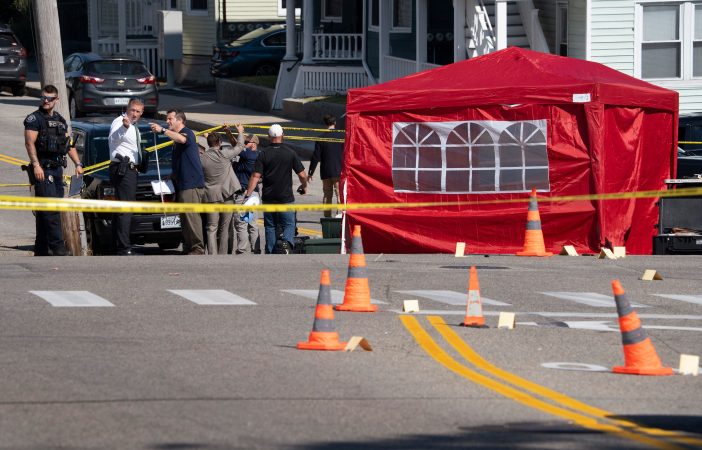
    BIDDEFORD, Maine — The motorist killed by ICE officers in a Maine shooting Monday was not the target of the warrant the officers were executing, Sen. Angus King said Homeland Security Secretary Mullin told him.

    It’s the second time in a week that U.S. Immigration and Customs Enforcement agents have used deadly force and at least the ninth since President Donald Trump began his immigration crackdown.

    Immigrant rights groups identified the man who was killed as a 26-year-old native of Colombia.

    King, an independent senator from Maine, said Mullin told him the officer opened fire after the man tried to use his vehicle as a weapon against officers in Biddeford, a coastal city roughly 15 miles southwest of Portland.

    “He was in a vehicle — pulled out in the vehicle, and the term the secretary used was ‘weaponized’ the vehicle and was shot by an ICE agent,” King said.

    King had initially said Mullin told him the man was the target of a deportation effort. Mullin later called King with new information he had received, a spokesperson for the senator said.

    The Maine attorney general’s office, which is investigating along with the FBI and other agencies, said initial statements suggest the motorist was trying to flee in the direction of the agent. The man was the target of an enforcement operation related to a final order of removal, the office said, and the agent who killed him has been placed on leave.

    Messages seeking comment were left for ICE and the Maine Department of Public Safety.

    Man was authorized to work in U.S., advocates say

    The advocacy groups Maine Immigrants’ Rights Coalition and Presente! said the man who was killed was authorized to work in the U.S. and had a Social Security number. After the shooting, his family contacted the Immigrants’ Rights Coalition, executive director Mufalo Chitam said.

    “It’s a young family and he was leaving to go to work,” Chitam told the Associated Press. The family, she said, isn’t ready to speak publicly about the shooting.

    Mary Hayes, who lives close to where the shooting happened, said the man lived nearby with his wife and daughter.

    “I watched a wife fall to her knees looking at her husband’s dead body on the ground,” Hayes told the AP as she held a piece of cardboard with “No ICE Stop ICE” written on it. “I watched a little girl crying with a little pink backpack on because she’s never going to see her father again.”

    The Colombian Embassy told the AP in an emailed statement that it is in contact with U.S. authorities and “working to formally confirm the individual’s identity and nationality.”

    Security video but no body-worn camera footage

    Cory Poulin, whose family runs a laundromat near the scene, told the AP that security cameras at the business captured footage of the man’s car rolling into the intersection after shots were fired. Other images from the scene showed the car going in circles and bullet holes in its windshield.

    “Two ICE members ran to the intersection and another ICE member in a Ford SUV went into the intersection to stop the car from rolling,” he said. “I don’t know for a fact, but I don’t believe he was alive when the car started rolling.”

    He said Maine State Police asked that he not release the footage publicly.

    The agents involved in the shooting didn’t have body-worn cameras, King said.

    “The question is, what did he do with his vehicle,” King said. “Were officers threatened? Were the threats rising to the level that justified deadly force?

    “That’s what this investigation is all about and I certainly intend to stay after it to do everything I can to be sure the investigation is as transparent and thorough as possible.”

    Anti-ICE protesters gather near scene

    Dozens of demonstrators critical of ICE and President Donald Trump’s ongoing immigration crackdown gathered in Biddeford within hours of the shooting.

    Amy Goodman, who is from nearby Wells, arrived with a sign that said “Stop Killing Us” and directed it toward police working at the scene.

    “Sadly, it’s something we’re seeing a whole lot more often lately, and I’m mad about it,” said Goodman, who was wearing a shirt that said “ICE is best when crushed.”

    “It’s heartbreaking and I wanted to show up,” Goodman’s friend, Molly Zucker of Cape Neddick, said as she held a sign reading, “No human being is illegal.”

    Police blocked access to the shooting scene, which is in a neighborhood of mostly multifamily homes, churches, and businesses near downtown. Several protesters stood nearby, with some holding signs condemning ICE’s presence in the community and state.

    “We are grieving, we are furious, and we will not allow his death to be treated as routine or inevitable,” Chitam said. “How much more harm must our communities endure before those with the power to act acknowledge that this has gone too far?”

    A recent uptick in Trump’s immigration crackdown

    The fatal shooting in Maine was at least the ninth death from an encounter with federal immigration officials since the start of the Trump administration’s immigration crackdown and the second in a week, following the killing of a Houston man.

    The reported shooting comes amid a newly intensified push by the Trump administration to carry out its mass deportations agenda. During the five-day period at the end of June, ICE arrested more than 10,000 people. The figures indicate that while the administration is no longer cracking down on individual cities, the arrests continue and are surging.

    “More than anything else, I want to know, ‘Why are you in Maine?’” Rep. Chellie Pingree (D., Maine) said in a video posted on social media.

    Maine Secretary of State Shenna Bellows, a Democrat running for Senate, wrote on X: “It’s time to get ICE off our streets.”

    Hundreds of Maine ICE arrests since Trump’s return

    ICE had a significant presence in Maine earlier this year, which prompted several protests.

    The Homeland Security Department named the operation “Catch of the Day,” an apparent play on Maine’s seafood industry, just as it has done for other enforcement surges, like “Metro Surge” in Minnesota and “Midway Blitz” in Chicago.

    Immigration officials said in late January that they had ceased “enhanced operations” in Maine after hundreds of arrests.

    A Homeland Security spokesperson said at the time that some Maine arrests were of people “convicted of horrific crimes” including aggravated assault and endangering the welfare of a child.

    Court records show that while some had felony convictions, others had unresolved immigration proceedings or had been arrested but never convicted of a crime.

    ICE arrested 546 people in Maine between the start of Trump’s second term and March 11, 2026, the most recent data available, according to ICE arrest data provided to the University of California, Berkeley Deportation Data Project and analyzed by the AP. About 45% of those arrested had criminal backgrounds. During the equivalent 416-day period before Trump took office, roughly 69% of those arrested had criminal backgrounds, the data show.

    The Trump administration’s immigration crackdowns were widely condemned last winter after the killings of Alex Pretti and Renee Good in Minnesota.

    Last week, an ICE officer fatally shot 52-year-old Salgado Araujo, of Houston, after he was pursued by federal agents driving unmarked vehicles while he was taking his construction crew to their latest job site.

  • Prosecutors went to prison to ask the prisoners how to fight crime

    Prosecutors went to prison to ask the prisoners how to fight crime

    Except for the portraits of Jesus, the chapel in California’s oldest prison is reminiscent of a high school gymnasium, with cinder block walls and a high, narrow strip of windows. On a recent day, it was the venue for an unusual six-hour event in which the people in prison had a chance to talk to the people who put them there.

    About 60 men in dusky blue work shirts — referred to as “inside people” — congregated with about 20 people in darker business attire — “outside people,” a contingent of district attorneys and their staff members.

    It was the first time that Erik Nasarenko, the district attorney for Ventura County, had visited a prison in his 18 years as a prosecutor. Gripping and grinning, he worked the crowd. “What high school did you go to?” he asked one inmate, who was from Long Beach.

    “Wilson,” the man said, affably. “For one day. Then I went to juvenile hall.”

    Prosecutors rarely visit prisons, and even more rarely converse at length with people doing hard time. This was the second annual such meeting convened by Brooke Jenkins, the top prosecutor in San Francisco, who said that both sides stood to gain from the experience.

    Prosecutors could ask prisoners for ideas about what interventions might have prevented their younger selves from committing crimes. And prisoners could tell their stories of redemption to the very officials who might review their requests for parole or a shortened sentence.

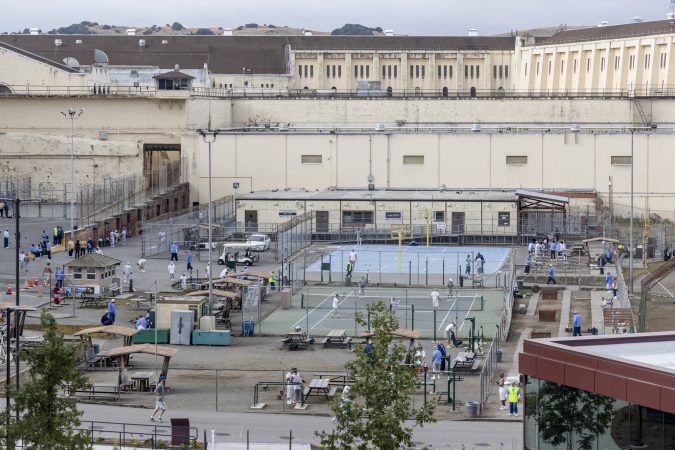
    The location itself, on a stretch of Bay Area waterfront, was a draw for the outside people. Once the infamous home of California’s death chamber, the prison has undergone a rebrand. Three years ago, its name was changed from the San Quentin State Prison to the San Quentin Rehabilitation Center, where prisoners have access to therapeutic and job training programs and can work on the hit podcast Ear Hustle; on the San Quentin News, which is distributed at prisons around the state; or in a soon-to-open cafe.

    Prosecutor visits to San Quentin began in 2012 with George Gascón, Jenkins’ predecessor. Understanding the rehabilitation process helped prosecutors make better decisions, Gascón said then. For her part, Jenkins has supported proposals by San Quentin prisoners to ensure that the money they pay to the courts goes to crime victims first — before fines and fees — and for single-occupancy cells, to make prisoners safer and more productive. The first idea became state law; the latter passed in the state Assembly last year.

    After bagels and coffee, a microphone was passed around the chapel for introductions. The chief prosecutor for Merced County turned out to be seated between a man convicted of carjacking and another convicted of murder; the acting district attorney for Yolo County was rubbing elbows with a former police officer who had kidnapped and raped women, and a man who had killed his own son.

    Many of the residents had worked their way from rougher institutions to San Quentin, where they are encouraged to come to terms with the harm they had caused. Several mentioned their victims by name and made a point of saying they had been “rightfully convicted.”

    The day’s chosen moderator, an inside person, invited everyone in the room to take two deep breaths, in unison. “We just heard a lot of accountability,” he said, “and I really believe in self care.”

    State prison officials permitted the New York Times to observe the event on the condition that prisoners not be identified, except for a handful who were selected to give interviews.

    After a panel discussion, the outside people were given a tour of a new learning complex with floor-to-ceiling windows and benches fashioned from gargantuan wooden beams.

    Stephen Wagstaffe, the district attorney of San Mateo County, who has been a prosecutor for 49 years, was attending for the second time.

    “In California at large, I’m one that would be described as one of the public safety, law-and-order, harsh types. I fully acknowledge that’s what I am,” he said. But, he added, “This is spectacular. This is what we ought to be doing.”

    Wagstaffe said he did not approve of recent changes to California law that allowed prisoners to seek relief from sentences that can exceed 100 years, even in crimes where no lives were lost.

    But he had made one adjustment since his last visit, he said. “I went back to my office and I put in a rule that nobody in my office can request a three-digit sentence without my review and approval.”

    He gestured toward a San Quentin resident. “I see people like this gentleman and I think, ‘You know, he doesn’t have to die here.’”

    For the next two hours, the inmates and the prosecutors gathered in smaller sessions that one DA described as “inmate-led focus groups.” Among the topics: the difficulty of determining when a prisoner is truly rehabilitated, whether prosecutors could hire people with the “lived experience” of having done time, ways to expand prisoner mentoring of at-risk youth, and how to get hip-hop songs, recorded by prisoners and aimed at deglamorizing violence, into the hands of DJs. Prosecutors asked what might have kept the inmates from committing crimes in the first place.

    “To be honest, I don’t know if I could have told anything to my younger self to stop the journey that I was on,” said Ryan Pagan, who was serving 77 years for a murder he committed as a teenager. Now, he makes podcasts and documentary films. People had tried to scare him straight, he said, but he did not listen. “I feel like I needed prison.”

    Jenkins protested. “That makes me feel hopeless,” she said.

    Another inmate, Jason Jenkins, said it might have helped if someone had been around to cultivate his talent for basketball. But his mother had gone to prison for dealing drugs when he was 5, and his father had been shot and killed by police. “No one ever showed up to my basketball games,” he said.

    And Taiosisi Matangi, who regularly speaks to high school students as part of a San Quentin mentorship program, said it was more important to listen to kids than to scare them.

    If he could talk to his younger self, he would say that the abuse he experienced as a child was not his fault.

    “But,” he would add, “we can do something to get you out of there and stop thinking that violence is OK.”

    This article originally appeared in the New York Times.

    Inmates show a film made through the filmmaker training program at the San Quentin Rehabilitation Center in San Quentin, Calif., May 29, 2026. What might stop kids from committing crimes? A group of district attorneys went to San Quentin, once one of California’s most infamous prisons, to ask the inmates for advice. (Rachel Bujalski/The New York Times)RACHEL BUJALSKI
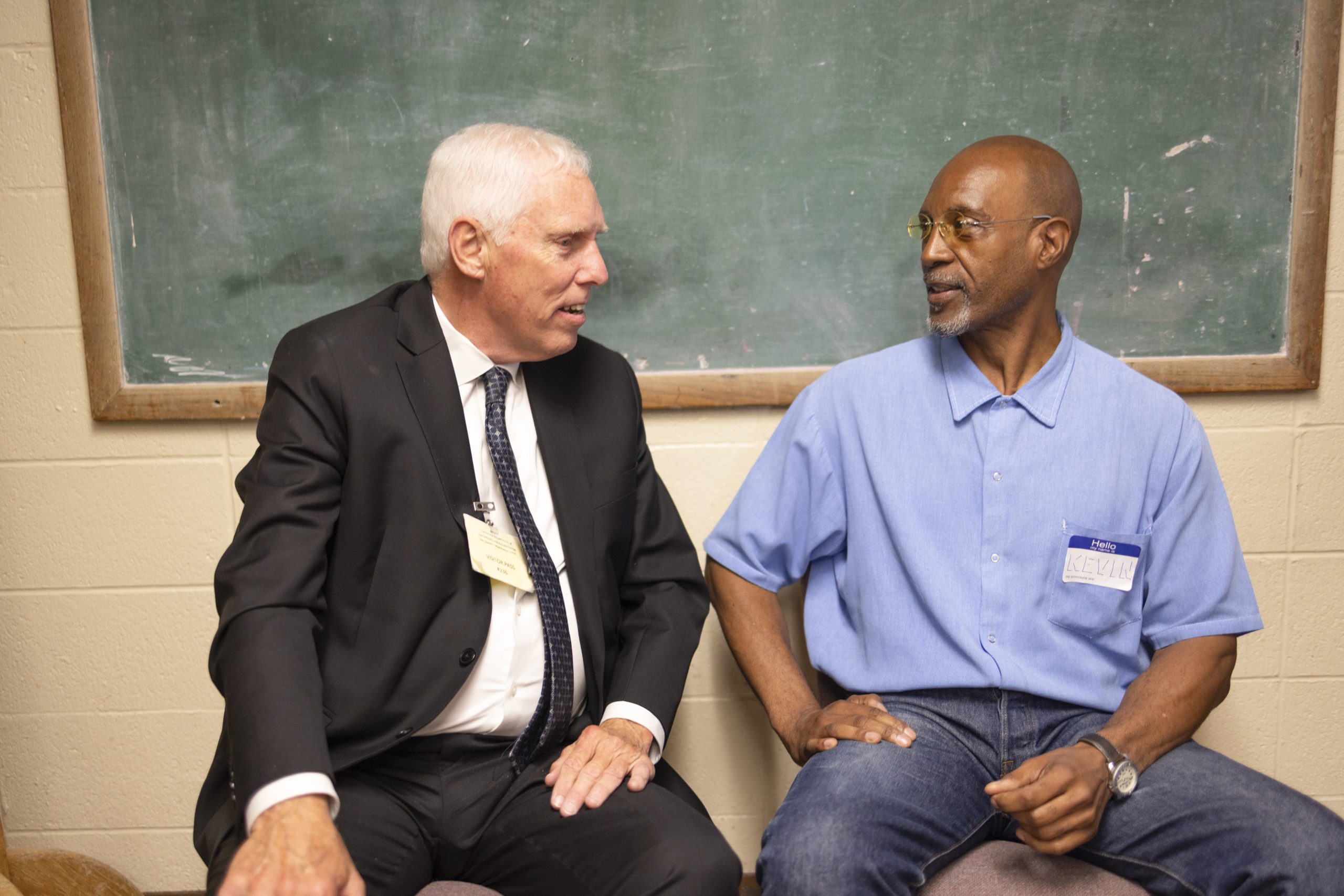
    Stephen Wagstaffe, the district attorney of San Mateo County, speaks with Kevin Sawyer, an inmate at the San Quentin Rehabilitation Center in San Quentin, Calif., May 29, 2026. What might stop kids from committing crimes? A group of district attorneys went to San Quentin, once one of California’s most infamous prisons, to ask the inmates for advice. (Rachel Bujalski/The New York Times)RACHEL BUJALSKI
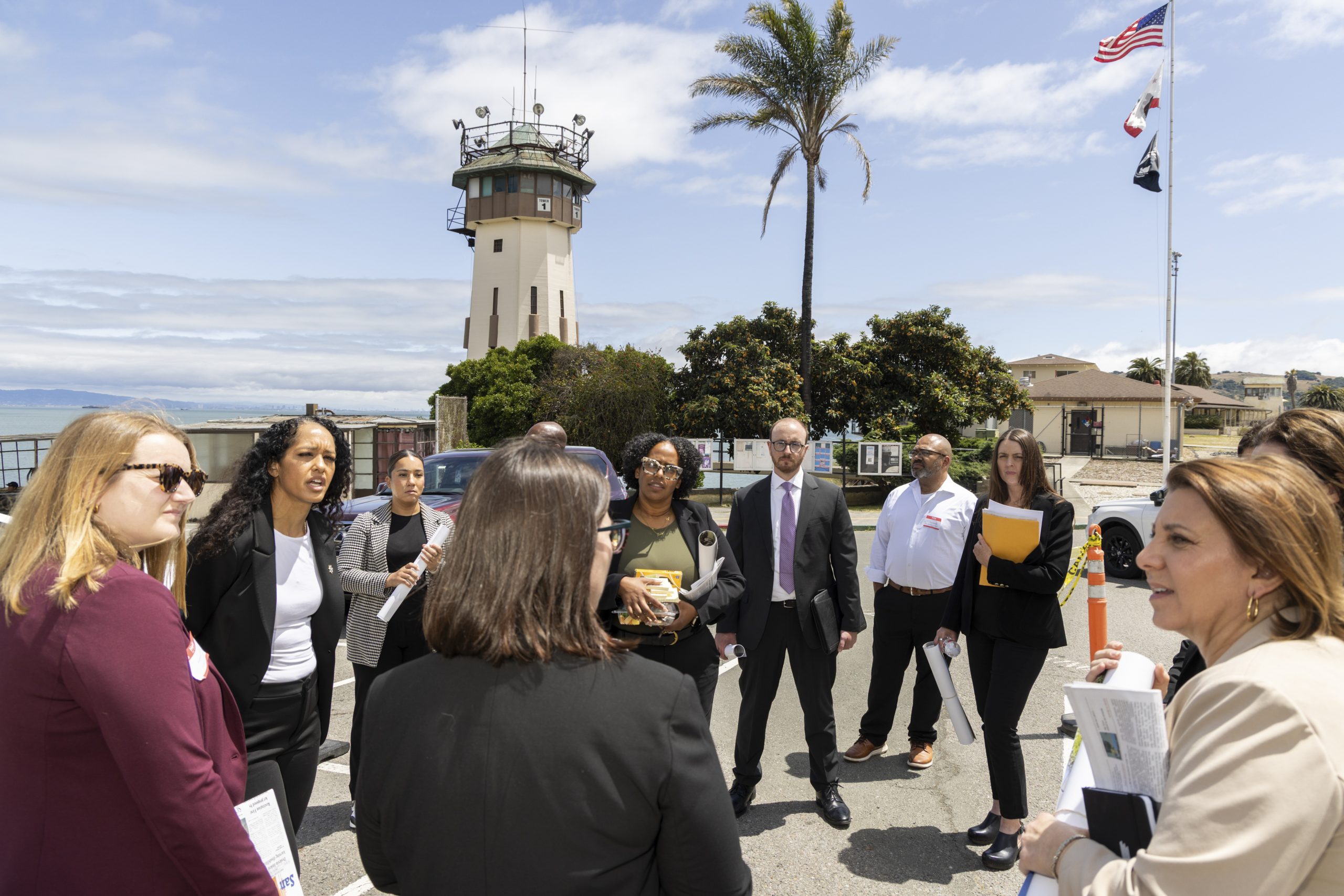
    District attorneys gather after meeting the inmates at the San Quentin Rehabilitation Center in San Quentin, Calif., May 29, 2026. What might stop kids from committing crimes? A group of district attorneys went to San Quentin, once one of California’s most infamous prisons, to ask the inmates for advice. (Rachel Bujalski/The New York Times)RACHEL BUJALSKI
    Nathan Hochman, the Los Angeles district attorney, speaks with inmates at the San Quentin Rehabilitation Center in San Quentin, Calif., May 29, 2026. What might stop kids from committing crimes? A group of district attorneys went to San Quentin, once one of California’s most infamous prisons, to ask the inmates for advice. (Rachel Bujalski/The New York Times)RACHEL BUJALSKI
    Brooke Jenkins, the top prosecutor in San Francisco, is interviewed by inmates for The San Quentin News at the San Quentin Rehabilitation Center in San Quentin, Calif., May 29, 2026. What might stop kids from committing crimes? A group of district attorneys went to San Quentin, once one of California’s most infamous prisons, to ask the inmates for advice. (Rachel Bujalski/The New York Times)RACHEL BUJALSKI
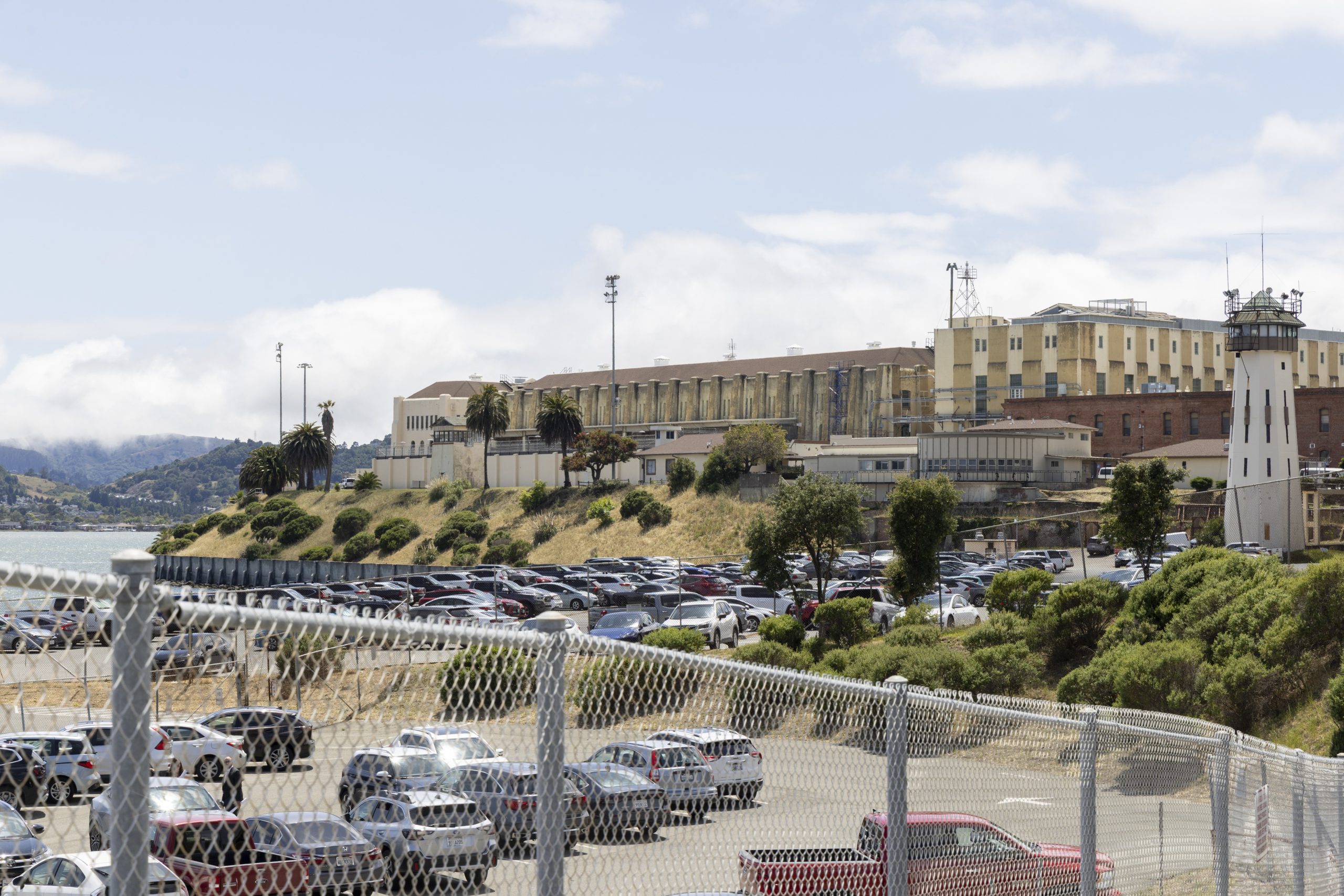
    A general view of the San Quentin Rehabilitation Center in San Quentin, Calif., May 29, 2026. Inmates at San Quentin have access to self-help and job training programs. (Rachel Bujalski/The New York Times)RACHEL BUJALSKI
  • Trump says US will blockade Iran in the Strait of Hormuz and will charge ships for safe passage

    Trump says US will blockade Iran in the Strait of Hormuz and will charge ships for safe passage

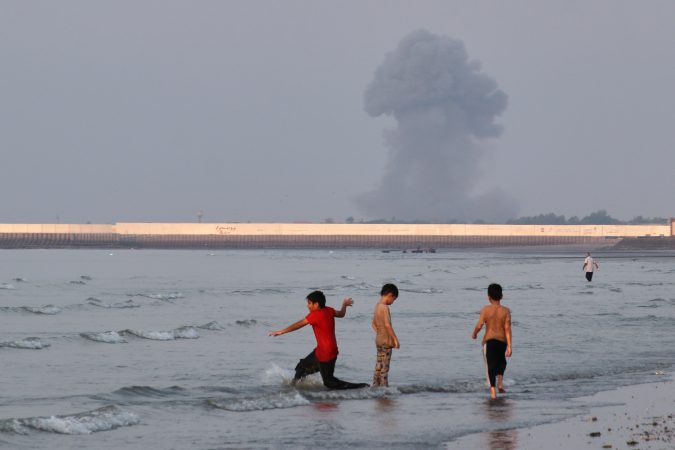
    DUBAI, United Arab Emirates — U.S. President Donald Trump says the United States is “reinstating” a blockade on Iran in the Strait of Hormuz and will charge ships for safe passage.

    He made the announcement in a post on social media Monday, after another exchange of fire between the United States and Iran over the critical waterway.

    A fifth of the world’s oil and gas passed through the strait before Iran asserted control over it after the start of the war.

    The United States and Iran each asserted Monday they controlled the Strait of Hormuz after a weekend of attacks across the Middle East, further threatening any diplomacy to end the war.

    The latest exchange was sparked by an Iranian attack on a container ship on Sunday in the Strait of Hormuz. Iran has asserted control over the critical waterway for international oil and gas since the United States and Israel started the war on Feb. 28.

    Iran says it has the right to manage traffic through the strait and potentially charge fees in accordance with an interim peace deal reached last month. The U.S. and others dispute that, citing international law on freedom of navigation, and the American military has tried to establish an alternative route outside of Iranian control.

    Calling into Fox News on Monday, U.S. President Donald Trump said, “we’re taking over the Strait.” Trump also said that “everything was agreed to” in an 11-hour meeting Sunday, but that Iranian negotiators had called back later and suggested changes. He did not elaborate.

    Iran and the U.S. are nearly halfway through the 60-day period in which they were supposed to negotiate a permanent end to the war and an agreement on Iran’s disputed nuclear program. Instead, a series of attacks over the strait have raised fears of a return to all-out war and further disruption to the global economy.

    Oil prices jumped nearly 5% on Monday before falling back. U.S. benchmark crude, which had risen to nearly $120 a barrel at the height of the war, was trading at around $72.92. Markets were mixed.

    US says it has struck dozens of targets in Iran

    The U.S. military said it struck dozens of sites in the strikes Monday, including air defense systems, radar sites, missile and drone equipment, and small boats. It said Iran does not control the Strait of Hormuz.

    The European Union’s top diplomat, Kaja Kallas, called for the strait to be open, as it was before the war. “Freedom of navigation has to be respected,” she said.

    Mohammed Mokhber, an adviser to Iran’s supreme leader, wrote that Tehran would fight for the strait.

    “We defend it so that in the future, for the passage of our ships, we are not forced to pay tribute to the enemy!” he wrote on X. “Retreating from this vital matter has no place in the mind of any friend of Iran.”

    Iran’s paramilitary Revolutionary Guard, a key power center in the country’s theocracy that controls its ballistic missile arsenal, said the Strait of Hormuz is “our territory, and we will not allow a rogue and child-killing army from the other side of the world to continue its illegal interference in it.”

    U.S.-allied Arab states report another wave of attacks

    Missile alert sirens sounded three times Monday in Bahrain, home to the U.S. Navy’s 5th Fleet, and Kuwait said it was intercepting hostile fire. There was no immediate word on damage in either country.

    In Jordan, the kingdom’s military said it shot down four Iranian missiles in an incident that “resulted in zero casualties or material damage.” Jordan also hosts U.S. military forces and aircraft.

    In Iran, authorities reported attacks in Hormozgan, Khuzestan and Markazi provinces and said at least two people were killed, according to state-run IRNA news agency. Semiofficial Iranian media also reported strikes in the eastern Sistan and Baluchestan province, which is on a coast of the Gulf of Oman.

    The attacks continued hours after the U.S. ended its strikes — again raising the possibility of Gulf Arab states retaliating against Iran. There were unclaimed attacks on Iran on Thursday.

    A base belonging to the armed wing of an Iranian Kurdish opposition group based in Iraq’s semiautonomous Kurdistan region came under drone attack on Monday, according to Rebaz Sharifi, a local commander. There were no immediate details on casualties or damage.

    No group immediately claimed responsibility. Iran supports a number of powerful militias in Iraq.

    Fighting focuses on the status of the strait

    Early on Sunday, the U.S. military said it hit some 140 targets, including missile and drone launch sites, ammunition dumps and communication equipment — a far-heavier set of attacks than in two previous rounds of strikes in the last week.

    Iran retaliated by attacking nations in the region hosting U.S. military forces.

    Sunday’s attacks stretched to Bahrain, Kuwait, Qatar, Jordan and even Oman — which shares the strait with Iran. Oman, which long has been an interlocutor between Tehran and the West, summoned an Iranian diplomat to criticize the attack.

    Iran’s chokehold on the strait has loosened as the U.S. military supports vessels moving along a southern route hugging the coastline of Oman. That new route has angered Iran, which has launched repeated attacks on ships using it.

    Traffic through the Oman route dropped over the weekend “to minimal levels, indicating that operators continue to prioritize perceived security over more direct transit options,” the ship-tracking website MarineTraffic.com said.

    Iran’s Foreign Ministry spokesperson Esmail Baghaei blamed Washington for the chaos gripping the region.

    “Considering the memorandum of understanding’s fourteen clauses, the Americans have, in this brief period, in one way or another, slaughtered its various components,” Baghaei told journalists Monday.

    Baghaei also said Iran wouldn’t agree to visits by the International Atomic Energy Agency to nuclear sites the U.S. bombed in 2025, where Tehran’s stockpile of highly enriched uranium is believed to be entombed.

    Trump suggested last week that the interim deal in the war was “over.” But mediators, including Pakistan, Qatar and Egypt, have continued efforts to reach a final agreement to end the war.

    A regional official involved in mediation, speaking on condition of anonymity to discuss the sensitive talks, said efforts to shore up the ceasefire continued Sunday. Pakistan said its foreign minister spoke by phone with Iran’s top diplomat and urged “de-escalation” on both sides.

  • McConnell says a fall led to his hospitalization, breaking weeks of silence about health condition

    McConnell says a fall led to his hospitalization, breaking weeks of silence about health condition

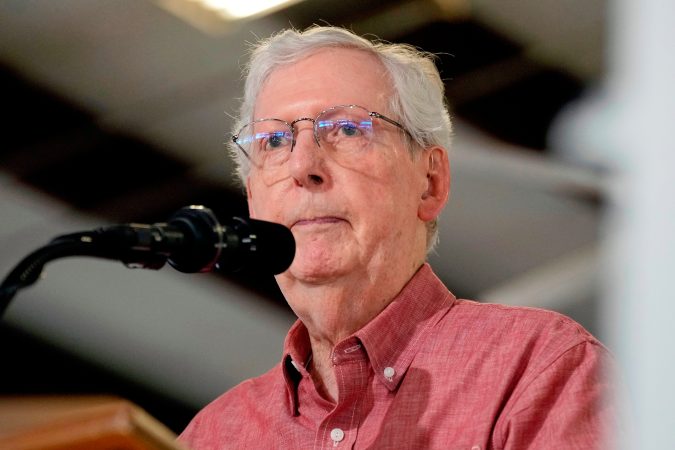
    WASHINGTON — Sen. Mitch McConnell on Sunday revealed for the first time that a fall led to his hospitalization, breaking the silence about his condition after weeks of mounting speculation about the Kentucky Republican’s health.

    McConnell, 84, said in a statement that he has undergone a battery of tests as doctors try to determine what led to his fall. He explained the long silence about his condition by saying that “folks of my generation often hesitate to share the vulnerability that comes with growing older.”

    “Even in the public eye, I feel that same instinct — I can’t help it,” he said.

    McConnell said he is now in a rehabilitation center and will not be returning to the Senate “quite yet.” He said he continues to work with his staff on Senate business in the meantime.

    The statement included a smiling picture of the senator with his wife, Elaine Chao, a tacit response to speculation online that McConnell had died or was incapacitated.

    It comes following his hospitalization on June 14. McConnell’s office for weeks provided little information, insisting only that he was “receiving excellent care” and recovering. As his hospital stay grew longer, speculation mounted about his condition. It grew so intense that Kentucky’s Democratic Gov. Andy Beshear took the extraordinary step of asking that McConnell update the public about his health in a “transparent manner.”

  • What videos show about ICE’s pursuit of immigrant’s van before Houston shooting

    What videos show about ICE’s pursuit of immigrant’s van before Houston shooting

    Videos that capture the minutes leading up to and immediately after an Immigration and Customs Enforcement agent fatally shot an undocumented Mexican immigrant in Houston early Tuesday morning show agents aggressively following a white work van and then approaching the vehicle on foot.

    Security camera footage from nearby businesses and residences, obtained and analyzed by the Washington Post, provides a nearly continuous, six-minute-long view of Lorenzo Salgado Araujo’s van as he is pursued by federal agents. But the agents were not wearing body cameras, and the videos do not clearly capture the moment an ICE agent fires his gun shortly before 7 a.m. local time — a finding that may complicate any investigation into whether ICE personnel were justified in using deadly force against Salgado Araujo.

    The Department of Homeland Security released a statement hours after the deadly shooting saying that Salgado Araujo, 52, had rammed an ICE vehicle and “weaponized” his white work van “in an attempt to run over” a federal immigration officer. DHS did not identify the officer or say how many times he fired but said he did so in “self-defense.”

    The videos show federal officers in two unmarked SUVs following him closely, at one point cutting off his van and driving on the wrong side of the street toward it. The videos do not appear to show Salgado Araujo ramming a vehicle, but at times, the van and the SUVs are partially obscured from camera view by buildings and trees.

    A DHS spokesperson said the department’s Office of the Inspector General is investigating the agent-involved shooting, and the FBI is investigating “the potential assault on a federal law enforcement officer.” The agency did not comment on the Post’s attempt to confirm the timeline of events.

    Harris County District Attorney Sean Teare said the county was collecting surveillance footage and witness testimony to determine what happened.

    The videos could provide key evidence to corroborate what transpired. The officers involved in the incident had not been issued body cameras and were not wearing them, according to a DHS spokesperson. Surveillance footage and witness recordings have become key in several shootings over the past year involving federal immigration officers, and in some instances have directly contradicted statements by DHS.

    Unlike the shootings of Renée Good and Alex Pretti, two U.S. citizens killed by immigration officers in January, no video recorded by witnesses has emerged so far of Salgado Araujo’s killing.

    In a statement Friday, the agency said the officers who followed Salgado Araujo‘s van had seen two similar vehicles weeks earlier on the property of a person suspected of being in the United States illegally. DHS said officers were on their way to that person’s residence when they saw Salgado Araujo’s van. Rep. Sylvia Garcia (D., Texas), who represents the district where the shooting took place, said in a TV interview Thursday that an ICE official told her that Salgado Araujo was not the person sought by agents.

    Around 5:50 a.m., surveillance video from outside Salgado Araujo’s home shows him getting into his white van and beginning the drive to work. At some point, he picks up the other three men.

    An hour later, the van is captured by a camera as it heads south on Highway 90, driving about 50 mph, according to the Post’s calculations. Two black, unmarked SUVs appear to be in pursuit.

    His white van makes an abrupt turn onto another street, followed by one of the two SUVs.

    The SUV sticks close to the van, pulling up alongside it. Seconds later, the SUV cuts off the van, and Salgado Araujo veers to the left.

    Meanwhile, a second unmarked SUV enters Canal Street and drives onto the wrong side of the road toward the van, which backs up as the SUV approaches. It is not clear in the video whether the van makes contact with either SUV at this point.

    The van then drives forward, going back the way it came.

    As the van drives slowly away from the SUVs, at least three officers are seen pursuing on foot. It is not clear how close the van came to the officers as it turned, but the Post’s analysis indicates at least one officer was close to the passenger side of the van.

    The van rolls less than 200 feet before pulling off to the side. Within seconds, several officers converge on the van. Officers pull out at least one person from the passenger side and put handcuffs on them.

    Aftermath video of the scene shows Salgado Araujo on the ground by the driver’s side. Two officers are next to him, one kneeling. They appear to be checking on Salgado Araujo, who is visibly distressed.

    According to his family, he had been shot in the abdomen. He later died of his injuries.

    The three men who were in the van with Salgado Araujo said a federal officer fired at them almost immediately after exiting his vehicle and that at no point did Salgado Araujo veer in his direction. All three men were arrested and are in immigration detention.

    DHS characterized Salgado Araujo as an “illegal alien” from Mexico, but his son told the Post that his father was doing what he could to legalize his status in the U.S.

    Salgado Araujo’s death marks the first fatal shooting involving ICE agents since Good and Pretti were killed in separate incidents in Minneapolis in January during an enforcement surge in that city.

  • Before Reflecting Pool, algae contractor had troubled project on a trash-infested river

    Before Reflecting Pool, algae contractor had troubled project on a trash-infested river

    A year before Greenwater Services got a $1.7 million contract to clean the algae-infected Reflecting Pool, it had received another no-bid government contract to deploy at the trash-plagued Tijuana River.

    Greenwater, which is owned by a Trump donor, was hired to treat sewage in the Tijuana River with its “nanobubble technology,” a system that injects ozone into water. But the monthlong water purification pilot to evaluate the technology was cut short last October when a storm flooded the river’s banks. The remnants of machinery were washed into the border river, with diesel leaking along the way, frustrating scientists and environmentalists at federal agencies who had questioned internally whether the company’s project would work in a flood-prone area.

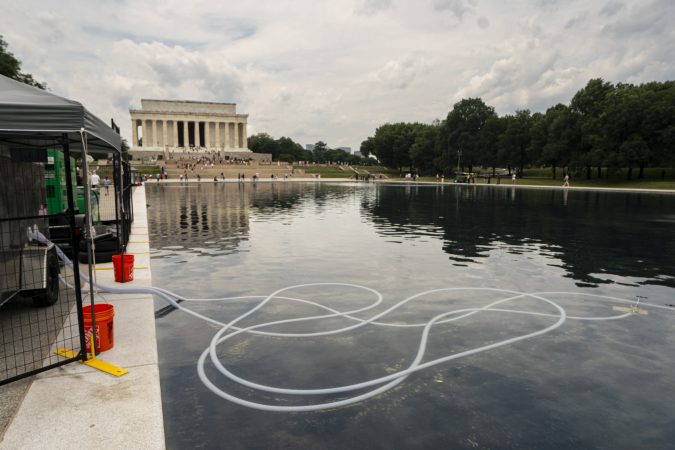
    Eight months later, the company brought its equipment to clean up a mess at the Reflecting Pool in Washington. In April, as part of his effort to remake the nation’s capital city ahead of America’s 250th birthday, President Donald Trump drained the pool at the base of the Lincoln Memorial to add a new coating to the bottom that would make the water shine “American flag blue.” But a week after the $14 million renovation was finished in June, an outbreak of algae floated along the water’s surface, hiding the new blue coating under a thick, mossy shade of green. Algae had long been a problem for the pool, but a Washington Post analysis of satellite data found that the post-renovation bloom was the worst outbreak dating back at least five years.

    The Department of Interior gave Greenwater and its nanobubble technology an expedited, no-bid contract to clean up the muck, even though other companies had expressed interest in the work to the National Park Service. Administration officials cited an urgent need to solve the problem before the 250th celebrations, and said they didn’t have time to allow companies to compete for the bid, according to a federal contracting document.

    Greenwater, founded in 2019 in Ohio, is owned by J.J. Cafaro Investment, according to the contracting documents it filed with the government. J.J. Cafaro is an heir to an Ohio-based mall development company and a Republican donor who has given about $350,000 to Trump-related political committees and owns a $16 million mansion down the road from Mar-a-Lago. He said he considers the president “a friend,” and Trump once described Cafaro as “a man who made a lot of money in Cleveland, does a good job and a fantastic man.” Cafaro has denied his relationship with Trump played a role in securing Greenwater’s contract for the Reflecting Pool.

    Chas Antinone Jr., Greenwater’s president and chief operating officer, has said the company has been expanding on the use of its technology, mostly in small bodies of water under 100 acres — such as a free demo to Trump’s Bedminster resort in 2024, Antinone told the San Diego Union-Tribune. The manager of Trump National Golf Club Bedminster brought Greenwater into conversations with the Interior Department about cleaning the Reflecting Pool, the New York Times reported.

    In total, the federal government has paid Greenwater $2.8 million between the Tijuana River and Reflecting Pool contracts.

    Company spokesperson Erin Kramer said Cafaro is not involved in the company’s day-to-day operations, and she shared research showing the technology has cleaned algae in studies. (Cafaro did not respond to requests for comment.)

    “Private demonstrations, self-funded projects, research partnerships, and public-agency work are ways new environmental technology moves from research to adoption,” Kramer said in response to questions about the Bedminster demo.

    Asked about the Bedminster connections, the Interior Department press office emailed a statement saying the White House was not involved in the selection process for any contract.

    Since the Times reported last month on his company’s no-bid contract, Cafaro has become a sort of bogeyman for liberals online. On Monday, the Democratic National Committee’s rapid response X account shared a photo of Cafaro along with news that the Interior Department planned to use the same contractor that installed the liner to repair the pool, even though Cafaro doesn’t own or operate that company.

    That photo featured Cafaro posing with former Real Housewives of Orange County star Kelly Dodd. But Dodd later posted a video clarifying that she merely posed with him because “he looked a little peculiar, and I liked his whole [get up]” but she only met him once at an event in Palm Beach, where she also saw Trump.

    “This has gone viral. I don’t know why I got lumped in with this guy,” she said. “I can safely tell you I don’t know this man.”

    ‘Hope it doesn’t rain’

    Flowing along the U.S.-Mexico border and discharging into the Pacific Ocean, the Tijuana River has been plagued by untreated wastewater, sewage, and debris dating back decades.

    The U.S. International Boundary and Water Commission gave a no-bid contract for Greenwater last year, initially offering more than $2 million for a pilot that would encompass 120 days of work. Officials said there was an “urgent need to assess the effectiveness of this technology in addressing the public health threat” and that “the technology is proprietary and not in use by any other company.”

    Until permanent infrastructure to address the pollution problems is in place, officials must “think creatively and evaluate every credible tool that can bring relief to affected Americans now,” Frank Fisher, an IBWC spokesperson, said in a statement to the Post.

    After Greenwater secured the project but before work got underway, career scientists exchanged emails asking about the initial $2 million cost and the feasibility of the project. Environmental Protection Agency staff who were consulting IBWC questioned their plans.

    “Wow. $2.4m for 90 days?” Thomas Konner, an environmental engineer for the EPA, wrote to IBWC and EPA officials on July 1.

    “Hope it doesn’t rain on their parade!” he followed up on Aug. 25.

    Months before, another scientist questioned the approach and called it a “Sisyphean task” — and forecast the storm. “I really don’t think the ozone will do any good unless you are able to ozonate the entire flow, but that’s based on my gut feeling and nothing else,” Douglas Liden, then an environmental engineer with the EPA, wrote to colleagues. “I also think the first storm will wash out any equipment you install, just as it did in Nogales, AZ.”

    Phillip Musegaas, executive director of the nonprofit San Diego Coastkeeper, which obtained the emails through a Freedom of Information Act request, said local groups have long hoped for a solution to one of the nation’s worst environmental disasters, which has sickened residents, closed beaches, and contaminated the air and water. Greenwater was supposed to take the nanobubble technology to the noxious hot spot — Saturn Boulevard — where the pungent water foams, an IBWC official wrote in the emails planning the project. But the company’s pilot was cut short by the storm and it never went to Saturn.

    Debris from the equipment washed into a barrier set up to collect trash along the river, according to photos shared with Voice of San Diego.

    “We were skeptical about it, but we wanted to see if it would work properly,” Musegaas said. “The fact that the whole project ended early because they let the equipment get washed away was pretty frustrating.” The company later acknowledged that the nanobubble machines could not operate continuously as intended because trash floating in the river clogged the machines.

    The company also said, in a report to the government about that pilot, that its machines hadn’t been affected by a previous rainstorm. The night of the next big storm, Greenwater said, it moved the machines to “a higher elevation” because of rising water levels, but “an unexpected flooding event occurred” that “carried large quantities of trash and debris that inundated and damaged” the machines. The company then said it shut the project down because of “safety concerns and site conditions.” The IBWC said in a December news release, citing the Greenwater report, that the project was “successfully completed” and the “technology has the capability to kill bacteria and eliminate odors associated with sewage.”

    Heather Raymond, the water quality director for Ohio State University’s College of Food, Agricultural, and Environmental Sciences, has tested Greenwater Service’s technology for years. Raymond, who does not work for the company nor on the Reflecting Pool and the Tijuana River projects, said the technology showed promise in trials when her team tested it in large tanks in controlled settings where algae levels were reduced, and small lakes where they saw some improvements in the local advisories for toxin levels.

    “There’s still a lot to learn in scaling this up in the water quality conditions and amount of treatment needed to be successful,” Raymond said.

    In the case of the Reflecting Pool, workers from the National Park Service used hydrogen peroxide and vacuuming to clear the algae in addition to the temporary units. Greenwater also said it had temporary units running by June 7, but the units were taken offline on June 12. Within 24 hours, an algae bloom developed, and the units returned. The company has since installed a permanent system in the Reflecting Pool’s pipes and said the water has cleared even though green sediment remains at the bottom.

    This week, the Reflecting Pool has been fenced off following the Fourth of July fireworks display, and Interior Secretary Doug Burgum said the workers will drain the pool and repair the peeling coating.

    The nanobubble technology has been turned off ahead of the draining, a person familiar with the plan said, speaking on the condition of anonymity out of fear of retaliation. By the middle of the week, the pool appeared green and murky, its bottom invisible under the mossy shade.

  • Ukraine’s prime minister steps down as Zelensky announces government reshuffle

    Ukraine’s prime minister steps down as Zelensky announces government reshuffle

    KYIV, Ukraine — Ukrainian Prime Minister Yulia Svyrydenko stepped down on Sunday as President Volodymyr Zelensky announced fresh changes to Ukraine’s government, saying he had offered a new and important position to the former premier.

    Zelensky, who has remained in office under martial law because wartime elections are prohibited, has periodically reshuffled his government in an effort to bring fresh momentum to his administration.

    Svyrydenko, who has served as Ukraine’s economy minister, was named prime minister in July 2025 at the age of 39 after playing a lead role in securing a mineral agreement between Ukraine and the United States, seen as an important way of tying U.S. interests to Ukraine’s security.

    In a statement on social media, Svyrydenko said she was “proud to have had the honor of leading the government during one of the most difficult periods in Ukraine’s modern history.” She also said she had discussed “next steps” with Zelensky, but did not provide further details.

    “I remain ready to serve the Ukrainian state and carry out every task aimed at strengthening Ukraine’s position, defending our national interests and bringing a just peace closer,” she said.

    Zelensky announced her resignation in a post saying that Ukraine was “changing its political strategy.” He also said he had offered Svyrydenko the opportunity to lead “a new, important area” in Ukraine’s relations with a key international partner.

    “Each priority area of foreign policy will be assigned to a specific person with substantial experience who is capable of implementing what we agree on at the leaders’ level and what the Ukrainian people expect,” Zelensky said, describing the impending reshuffle.

    The Ukrainian leader also said there would be changes among the top ranks of Ukraine’s law enforcement agencies.

    Zelensky met with a series of senior officials following the announcement, including Energy Minister Denys Shmyhal, Interior Minister Ihor Klymenko, and Defense Minister Mykhailo Fedorov.

    The overhaul, which Zelensky has yet to explain in detail, would be the fourth major reorganization of his government since the start of Russia’s full-scale invasion.

    Ukraine continues strikes against Russian oil sites

    Elsewhere, a Ukrainian attack in southwest Russia killed one person and wounded three more, local officials said Sunday, as Kyiv’s forces continued to bombard Russia’s oil facilities.

    The head of Russia’s Samara region, Gov. Vyacheslav Fedorishchev, said that a child was among the injured. He also said that residential homes and apartment buildings were damaged in the strike, as well as an unspecified “industrial site.”

    Russian media outlets reported that the attack’s target was the region’s Syzran Oil Refinery, with many sharing images that appeared to show plumes of black smoke rising over the site. The refinery, which is owned by oil and gas giant Rosneft and sits some 500 miles east of the border, has been a repeated target for Kyiv’s forces.

    Meanwhile the governor of Russia’s Rostov region, Yuri Slyusar, said that a tanker had been damaged in a drone attack in the Azov-Black Sea maritime canal. The tanker was empty and there is no threat of an oil spill, Slyusar said.

    Ukraine’s drone strikes on oil refineries and other infrastructure across Russia have triggered a widespread fuel crisis with gasoline shortages and rationing in multiple regions and motorists waiting for hours to fill their tanks. Moscow has responded by intensifying its bombardment on Kyiv and other cities, exposing Ukraine’s vulnerability to ballistic missile strikes.

    Zelensky has described the strikes on Russia’s energy infrastructure as part of Kyiv’s campaign of “long-range sanctions” carried out in response to Moscow’s refusal to halt its four-year invasion of its neighbor.

    Meanwhile, Russia’s Ministry of Defense said Sunday that it had attacked the ports of Odesa and Chornomorsk in Ukraine’s Odesa region. Ukrainian officials have not yet commented on the claims.

  • Iran reports new attacks on military targets on its largest island near the Strait of Hormuz

    Iran reports new attacks on military targets on its largest island near the Strait of Hormuz

    DUBAI, United Arab Emirates — The United States attacked Iran on Sunday over an Iranian strike on a container ship in the Strait of Hormuz that set it ablaze and left a crew member missing. Iran responded with attacks on countries including Bahrain, Kuwait, Qatar, Jordan, and Oman — the nation on the other side of the strait that Tehran has pressed to join in managing shipping traffic.

    The U.S. struck again later Sunday. Iran’s state-run IRNA news agency cited the governor of Qeshm island near the strait as saying projectiles had been fired at military targets, with no casualties. IRNA said explosions were also heard in the coastal city of Bandar Abbas and Hajiabad city to the north.

    A U.S. official, speaking on condition of anonymity because they were not authorized to publicly discuss military operations, said a few strikes were conducted on missile and air defense systems, as well as small boats of the paramilitary Revolutionary Guard at a couple of locations around the strait to further degrade Iran’s ability to attack commercial shipping.

    Iran and the U.S. are nearly at the midway point of the 60-day period of their interim deal aimed at reaching a permanent end to the war. The strait, a key route for the global supply of oil and natural gas and long considered an international waterway, has become a sticking point in negotiations that seem in danger of collapse.

    The United Nations secretary-general, António Guterres, was “deeply concerned by the serious escalation,” according to a statement.

    Iran says the strait is closed and the U.S. disagrees

    The U.S. military’s Central Command said earlier Sunday that it hit some 140 targets, including missile and drone launch sites, ammunition dumps, communication equipment, and other sites. It said the attacks, heavier than in recent days, would weaken Iran’s ability to threaten shipping.

    “We bombed the hell out of them last night,” President Donald Trump told NBC’s Meet the Press.

    Semiofficial Iranian news agencies reported that a navy officer was killed. Iran retaliated by attacking nations in the region hosting U.S. military forces, while insisting it alone must control the strait and potentially charge vessels for traveling through it.

    “The era of one-sided deals is OVER,” Mohammad Bagher Qalibaf, the speaker of Iran’s parliament and a main negotiator, wrote. “We told you: keep your word or pay the price. Reality is knocking.”

    The U.S. has launched three rounds of airstrikes targeting Iran in the last week over Iranian attacks on ships heading through the strait using a route off Oman, seeking to avoid the Islamic Republic’s territorial waters.

    The U.S. military and Trump asserted that the strait remained open Sunday. Iran said it was closed until calm is restored, and Tehran would consider targeting “additional enemy bases in the region” if it faced more attacks.

    The U.S. military said over 140 ships had transited the strait over the past week. A multinational body overseen by the U.S. Navy said traffic continued “at reduced levels” off both Oman and Iran. It said nearly 140 vessels transited daily before the war.

    About a fifth of all traded oil and natural gas passed through the strait before the war began. Iran’s grip on it led to a global energy crisis, though oil prices have sharply dropped since wartime highs of $120 a barrel.

    Oman summons Iranian envoy to protest attack

    Missile alerts sounded across several Gulf Arab countries.

    Qatar’s military said it intercepted incoming Iranian fire, with explosions heard in the neighboring United Arab Emirates. Three people, including a child, were wounded as a result of shrapnel from the interception of Iranian attacks, Qatar’s Interior Ministry said, giving no further details on their condition.

    Missile alerts sounded in Bahrain, an island kingdom in the Persian Gulf that is home to the U.S. Navy’s 5th Fleet.

    Kuwait’s Defense Ministry said three “land border posts” in the north and an offshore drilling platform of the Kuwait Oil Company were damaged, with one platform worker wounded.

    A day after Oman and Iran held talks on the strait, the Omani state news agency said drones struck sites in an area on the waterway.

    Oman summoned the Iranian ambassador to protest the strikes, the first such move since the war began, calling Iran’s acts “irresponsible.”

    Three Iranian missiles struck areas across Jordan, causing minor damage but no injuries, Jordan’s state news agency reported.

    Sirens also sounded in the UAE, but the government said missiles did not cross into its territory.

    Iranian strike on ship harms Indian crew

    A Cyprus-flagged container ship was hit by Iran and suffered “significant engine room damage,” the U.S. Central Command said.

    Oman’s maritime authority said it rescued 23 crew members but one was missing. India’s Ministry of External Affairs called him an Indian national and it was working with Oman to locate him.

    The United Kingdom Maritime Trade Operations center, overseen by the British military, said the ship had been moving along Oman’s shoreline.

    Iran’s paramilitary Revolutionary Guard said multiple vessels “disregarded our warnings” and ignored instructions to follow what it called an approved route. One “was struck by a warning shot and brought to a stop.”

    Iranian state media later reported U.S. strikes across the country, including southern Iran in the province closest to the strait and military sites in a province near Tehran.

    Attacks followed more diplomatic talks about the strait

    The strait sits in Iran and Oman’s territorial waters. Oman on Saturday said it and Iran agreed to continue discussing the strait “at the technical and political levels.”

    Trump suggested last week that the interim deal on the war was “over.” But mediators, including Pakistan, Qatar, and Egypt, have continued efforts to reach an agreement. A regional official involved in mediation, speaking on condition of anonymity to discuss talks, said efforts to shore up the ceasefire continued Sunday. Pakistan said its foreign minister spoke by phone with Iran’s top diplomat and urged “de-escalation” on both sides.

    Iran’s new supreme leader, unseen since the war began, on Saturday vowed in his first statement since the funeral of his father, Ayatollah Ali Khamenei, that Iranians would avenge his killing in the war’s opening strikes on Feb. 28.

    Such revenge “is the will of our nation and must certainly be carried out,” Supreme Leader Ayatollah Mojtaba Khamenei said in a statement carried on state television.

  • Whistleblowers accuse Kennedy Center of contracting flaws under Trump

    Whistleblowers accuse Kennedy Center of contracting flaws under Trump

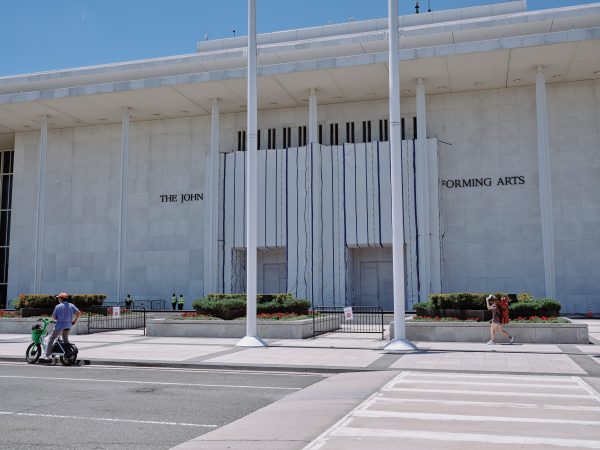
    As the John F. Kennedy Center for the Performing Arts prepares for major renovations, former project managers there have sent Congress internal documents that they say show how the institution bypassed government contracting norms in work carried out under President Donald Trump.

    The documents — sent to a Senate and a House committee last month by lawyers for unidentified clients referred to as whistleblowers — detail how vendors were selected for work without competitive bidding under rationales that are depicted as flawed.

    In one case, a center official described a company chosen for flooring work as the “only identified firm on the mid-Atlantic seaboard that maintains a fully vertically integrated model, vital for acoustic continuity, architectural uniformity, and operational agility.”

    In a letter to the committees, lawyers for the former project managers say their clients question whether the business, located in South Carolina, was the only one available that was qualified to do the flooring work.

    The letter says the center’s decision to skip bidding in another case was designed to help meet deadlines important to the president, such as the Kennedy Center Honors in December, which he hosted.

    “Renovations were rushed to meet the deadlines driven by the president’s desire to host official events at the center,” the letter says. “Federal contracting laws and regulations were ignored.”

    A statement from the Kennedy Center defended its practices, saying that the institution operates with rigorous financial oversight and that the assertions by the whistleblowers that contracting standards had been bypassed were incorrect.

    “As America’s cultural center, the institution makes every decision guided by responsible stewardship and an unwavering commitment to its patrons and the nation it proudly serves,” Roma Daravi, a spokesperson, said in a statement. “We remain fully committed to transparency and to delivering the critical improvements that will preserve this institution for generations to come.”

    Liz Huston, a White House spokesperson, responded to the allegations by accusing past management of allowing the center to fall into disrepair.

    “President Trump did what Democrats wouldn’t,” she said in a statement. “After decades of neglect, he committed the bold leadership and proper resources to fix the Kennedy Center and start the renovations of the finest performing arts facility in the world.”

    Trump, a developer by trade, has taken an intense interest in remaking the center, helping to secure $257 million from Congress last year for renovations. In one case cited in the letter, a new bathroom floor in one of the center’s three presidential boxes was ordered torn up last year and redone after the White House complained about the beige color of the tiles. (The email’s subject line was “tile emergency,” alongside a red siren emoji.)

    “This is a big undertaking for my department to remove the floor tile that was just installed,” the Kennedy Center’s operations and maintenance director replied in a March 2025 email, noting that the beige tiles had been approved by a White House designer.

    In a response email, a White House official confirmed the directive to replace the beige tile with white. (The work was unrelated to the South Carolina flooring company.)

    The center said in a statement that the changes were a standard design adjustment that caused “zero unnecessary burden on the taxpayer.”

    The White House decided to remodel the presidential boxes days after Trump took over as chairperson of the center’s board, according to the documents sent to Congress. The plans included gold plumbing fixtures in the bathrooms, gold covers for electric outlets, marble baseboards, and the tile flooring paid for by the White House, with much of the labor provided by the center.

    The 82-page submission to Congress was made under a law designed to protect federal employees who disclose allegations of wrongdoing from retaliation. The lawyers who sent it, David Seide and Dana Gold, work for a nonprofit that represents government whistleblowers.

    Sen. Sheldon Whitehouse (D., R.I.), the top Democrat on the Environment and Public Works Committee, which received the submission, wrote to the Kennedy Center on Thursday demanding information related to the renovations. Whitehouse, an ex officio member of the center’s board, said the submission raised “serious questions” about whether public funds were being spent properly.

    Nothing in the submission suggests that the firms selected without bidding have any personal ties to Trump or his family, or that the vendors played any role in the decision-making process under which work was awarded.

    Reached by phone, Kent Rogerson, who runs the South Carolina flooring company, declined to comment, citing a nondisclosure agreement.

    Although the Kennedy Center is run as a nonprofit, it has, like Smithsonian museums, traditionally followed federal contracting rules because its building is federal property. But the documents include a new policy, adopted in November, that states the center was exempt from federal rules and replaces them with new procedures.

    Compared with federal contracting regulations, the new policy relaxes the requirements under which sole-source contracts can be awarded, according to several government procurement experts, by adding to the rationales for when it is permissible. Under the policy, contracts can be awarded without bidding when “circumstances beyond the center’s control require an immediate award” or “the requirement is unique or has a compelling business interest.”

    The center said in its statement that it had confirmed with the Office of Management and Budget that, as an independent entity, it was not bound by federal contracting regulations and that it had updated its procurement policy to be both fair and agile when making renovations.

    Trump announced that the center would be shuttered for two years for the project, starting around Independence Day. But a federal judge temporarily blocked the closure after finding that the center’s board, composed largely of the president’s aides and allies, had not properly scrutinized his plan before approving it. The White House statement on Friday accused the judge of being “radical” and allowing the center to remain in disrepair.

    Kennedy Center officials have described renovations to address problems such as water leaks and outdated equipment as urgently needed. The president has said the work would elevate a “dilapidated” building to the “highest level of Success, Beauty, and Grandeur.”

    The administration’s contracting practices have been under scrutiny. The Lincoln Memorial Reflecting Pool project, for example, has been carried out through multiple no-bid contracts. To exempt the project from competitive bidding, administration officials said it needed to be finished in time for the country’s 250th birthday celebrations.

    One contract cited by the former Kennedy Center managers was valued at $4.4 million and awarded last fall for work that included painting the building’s exterior gold columns. Trump has taken issue with their “fake gold color,” and internal documents said they should be repainted white before the Kennedy Center Honors.

    The painting was done by Cypress Painting Systems, a company in Maryland that has done work under prior administrations. But lawyers for the former project managers reported that the work began before any contract had been awarded.

    The contract was later awarded, they said, to a company that primarily works as a furniture dealership, Washington Office Interiors, which used Cypress as its subcontractor.

    The interiors company had been hired through a Small Business Administration program that enables “socially and economically disadvantaged” companies to receive sole-source contracts in some settings. Whitehouse, in his letter, said it appeared that the contract was configured this way because Cypress did not have the same certification that would enable it to receive a sole-source contract through that program.

    In its statement, the Kennedy Center said the contractual arrangement had fully complied with all Small Business Administration guidelines.

    Barbara Barry, who runs Washington Office Interiors, said in an email that she was not authorized to discuss the contract but that her company had been providing construction and furniture services to federal agencies since long before Trump was elected.

    Robin Mertz, president of Cypress Painting, deferred questions to the Kennedy Center.

    Cypress Painting also installed Trump’s name on the building’s marble facade, under a separate arrangement. The name was removed in June by order of a federal judge, and the center is in the process of appealing.

    Matt Floca, the center’s executive director, has denied that the columns were painted simply to satisfy the president. He has said that the center’s leaders had long wanted to address structural degradation and “mismatched paint jobs,” and that hiring subcontractors is standard practice.

    “This is not just a random action,” Floca testified at a court hearing this year. “It was something that we had been planning for before this leadership was in place.”

    Floca has also attested to the special qualifications of Low Country Flooring of Pawleys Island, S.C., the flooring company that was selected without competition to provide services to the Kennedy Center for five years, according to the documents provided to the committees.

    The purchase agreement, not a formal contract, outlined work worth up to $8 million in restoring and replacing hardwood flooring.

    The business has assisted on high-profile projects in Washington, including work on the Supreme Court and the Andrew W. Mellon Auditorium near the National Mall, a federal building used for galas and conferences.

    The center said that the company was selected after what it described as exhaustive market research and that it was capable of purchasing directly from timber mills to avoid markups on materials.

    Last year, on a trip to Washington before the company was selected, its representatives posted photos of themselves and Trump at the Kennedy Center on Facebook.

    In one photo, Jamie Lambert, who helps run the company, is shown praying with Trump inside the center’s concert hall. His colleague, Rogerson, commented on the image online.

    “He asked,” Rogerson wrote, “and the president said of course.”

    This article originally appeared in the New York Times.

  • Judge ends Jan. 6 case against Proud Boys with warning about Trump pardons

    Judge ends Jan. 6 case against Proud Boys with warning about Trump pardons

    A federal judge on Friday night granted the Justice Department’s request to dismiss the seditious-conspiracy case against four top members of the Proud Boys who led a violent mob into the U.S. Capitol on Jan. 6, 2021.

    But in his ruling, U.S. District Judge Timothy J. Kelly gave a stark warning about President Donald Trump’s efforts to lift penalties against those who instigated and carried out the storming of the Capitol. The attack — by the mob seeking to overturn Trump’s loss to Joe Biden in the 2020 election — left more than 140 police officers injured and caused an estimated $3 million in damage.

    The judge indicated he was wiping out the Proud Boys’ charges — against Ethan Nordean; Joseph Biggs; Zachary Rehl, former leader of the Philadelphia Proud Boys; and Dominic Pezzola — under protest, saying legal precedents left him no choice but to accede to the request by the Trump administration’s prosecutors.

    “As the Court has said many times, the attack on the Capitol on January 6, 2021 was a perilous event,” wrote Kelly, who is a Trump appointee.

    “It was an attack on people, including police officers, many of whom were injured. It was an attack on a coordinate branch of government — Congress — that the Founders saw fit to give a place of primacy in Article I of the Constitution. And it was an attack on the Constitution’s mechanism to facilitate the peaceful transfer of power from one president to the next.”

    The Jan. 6 riot followed a rally where Trump repeated his false claims that he won the 2020 election. As rioters rampaged through the Capitol, lawmakers were forced to evacuate, delaying the certification of Biden’s victory for hours.

    Friday’s ruling wipes out some of the most serious criminal charges from the riot, cementing Trump’s bid to unravel the largest Justice Department investigation in U.S. history.

    Trump pardoned nearly all the rioters — more than 1,500 — who were charged by the Justice Department in the wake of Jan. 6. But that blanket pardon, issued on the president’s first day in office last year, did not extend to about a dozen leaders and prominent members of two extremist groups behind the violence, the Proud Boys and the Oath Keepers.

    Those defendants were convicted of carrying out a seditious conspiracy against the United States or related offenses. Trump initially commuted their prison terms, stopping short of a full pardon. But this year, while those cases were being appealed, Justice Department officials filed legal papers to vacate the convictions altogether.

    The D.C. Circuit federal appeals court granted that request in May. U.S. Attorney Jeanine Pirro, a Trump ally who serves as the top federal prosecutor in D.C., then filed motions to dismiss the underlying charges in U.S. district court.

    Kelly said in his opinion on the Proud Boys case that judges are constrained to dismiss charges once prosecutors ask to drop them.

    Under Supreme Court precedent, prosecutors have “exclusive authority and absolute discretion to decide whether to prosecute a case,” and they may drop charges “in the interests of justice” even after defendants have been convicted.

    The moves by the Justice Department were unusual — prosecutors rarely ask to throw out guilty verdicts — and Pirro’s office initially did not give detailed reasons for scrapping the highest-profile cases related to the Jan. 6 attack.

    In a brief court filing, a prosecutor in Pirro’s office wrote only that the government “has determined in its prosecutorial discretion that dismissal of this criminal case is in the interests of justice.”

    Proud Boys leader Enrique Tarrio separately had his conviction vacated and charges dismissed last year, also at the Justice Department’s request. Tarrio, who had been convicted of organizing members of his group, was not present at the Capitol on Jan. 6.

    Pezzola was acquitted at trial of the seditious conspiracy charge but convicted of assaulting a police officer and other offenses from the riot.

    “We took the worst they threw at us the raids, the solitary, the lies and we stood tall,” Tarrio posted on X after the ruling was issued Friday night. “Trump dropped the pardons and now the rest is crumbling. Justice is SERVED!”

    Before dismissing the set of charges against the Oath Keepers, U.S. District Judge Amit P. Mehta, an appointee of President Barack Obama, asked Pirro’s office to supply detailed reasons for its request. Mehta has not yet issued a ruling on the Oath Keepers’ charges.

    A prosecutor, G.A. Massucco-LaTaif, said Trump’s blanket pardon proclamation also directed the Justice Department to drop all pending charges stemming from the Jan. 6 attack. Prosecutors can no longer put any Jan. 6 defendants on trial and judges cannot effectively impose any prison time, he wrote in a court filing, because the presidential proclamation would immediately kick in to prevent those outcomes.

    “In any event, the public’s interest in a trial of these defendants has already fully vested,” Massucco-LaTaif wrote. “This Court presided over two public trials of the charges in this indictment. … Dismissal of these cases with prejudice will not erase this public record.”

    The president and top officials in his administration have moved aggressively to recast and minimize the threat posed by the mob of Trump supporters on Jan. 6.

    Earlier this year, the Justice Department acknowledged that it had deleted reams of news releases it had posted online, which detailed the prosecutions of those charged in the riot.

    The Washington Post identified several webpages that led to error messages, including news releases about the arrest and conviction of Tarrio and other rioters whose convictions were undone by Pirro. The Justice Department said in a social media post that it was erasing what it considered “partisan propaganda.”

    “We are proud to reverse the DOJ’s weaponization under the Biden administration,” the department posted on its rapid-response account on X. “We will do everything in our power to make whole those who were persecuted for political purposes. This includes stripping DOJ’s website of partisan propaganda.”

    Copies of hundreds of those news releases, which had been hosted on the website of the U.S. attorney’s office for D.C., have been archived by an independent website, the Internet Archive’s Wayback Machine.

    A spokesperson for Pirro did not say who ordered the deletions or how many releases were affected, referring questions to Justice Department headquarters. A searchable database of all charges and convictions stemming from the Jan. 6 investigation was taken offline by the Justice Department last year.

    Pirro has denounced political violence in other cases, such as the incident this year in which a lone gunman allegedly tried to assassinate Trump during the White House correspondents’ dinner, but routinely declines to take questions about the Jan. 6 riot at her public appearances.

    She has also pursued Trump’s perceived political foes with shaky allegations of misconduct, including then-Federal Reserve Chair Jerome H. Powell as well as six Democratic lawmakers who angered the president by posting a video on social media reminding U.S. service members that they could refuse illegal military commands. A grand jury refused to indict the six Democrats, and Pirro closed the investigation into Powell after failing to find evidence of a crime.

    In addition to the pardons, commutations, and court filings seeking to dismiss cases, Trump appointees have fired many of the FBI officials and prosecutors who investigated the attack.

    The Justice Department has also taken steps to vacate the conviction of Stephen K. Bannon, a former Trump adviser who was convicted of contempt of Congress for defying a subpoena related to Jan. 6. And the department has stopped defending a similar conviction for Peter Navarro, a top trade adviser to the president who is appealing his case.

    The Trump administration had announced plans for a $1.776 billion fund to provide payments to people who claim they were unfairly targeted by law enforcement, and dozens of Jan. 6 rioters said they intended to apply for a cut of the money. The payments would have been funded by taxpayers, raising bipartisan concerns in Congress. A federal judge issued an injunction blocking the “Anti-Weaponization Fund” from being established, and Trump administration officials have said that effort is dead.

    In dismissing the Proud Boys’ seditious conspiracy charges, Kelly invoked remarks from President Ronald Reagan’s first inaugural address in 1981 describing the peaceful transfer of power as a miracle of self-governance.

    “President Trump’s views about the prosecution of those who attacked the U.S. Capitol on January 6 — whether those views are based on fact or fiction — are well known, as is his intention to extend clemency to them through the Executive Order,” Kelly wrote in the opinion.

    “Moving forward, if this Nation’s experiment in self-government is to last another 250 years, the American people — no matter their partisan preferences — will have to act together to preserve, protect and defend that miracle through our constitutional framework,” he wrote.