Category: Nation & World

  • What we know about the ICE shooting in Maine

    What we know about the ICE shooting in Maine

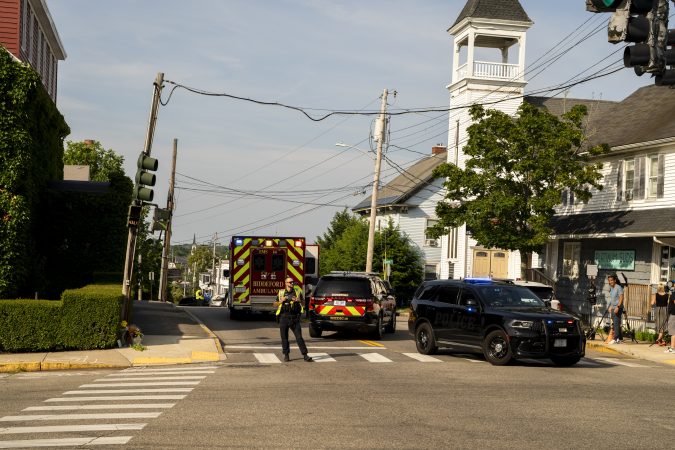
    An Immigration and Customs Enforcement agent shot and killed a man in a vehicle on Monday morning in Biddeford, Maine. It was the second fatal episode in a week, as the Trump administration continues its immigration crackdown, and the latest in a string of encounters between agents and people in cars.

    The man was identified as Joan Sebastian Guerrero, according to Matthew Felling, a spokesperson for Sen. Angus King, I-Maine.

    The Homeland Security Department said in a statement Monday that ICE agents had been monitoring what they believed to be the residence of someone who was in the country illegally and for whom they had a removal order.

    It was unclear from the department’s statement whether Guerrero was the person agents had been seeking.

    Video recorded early Monday and posted to social media showed agents surrounding a body next to a car with bullet holes in the windshield.

    “I heard agony,” said Mary Hayes, a local resident, who said she saw a screaming woman on her knees, next to a young girl. “I heard a howl that came from your soul, that your whole life had just changed and it was never going to be the same.”

    Here’s what we know:

    Witnesses heard gunfire early Monday morning

    On Monday morning, agents tried to stop a vehicle that had departed from the residence they were monitoring, DHS said in its statement, which came nearly 12 hours after the shooting.

    “The vehicle attempted to flee the scene and, fearing for public safety, an officer discharged his weapon,” the statement continued. The driver was struck and died from his injuries.

    In a separate communication received by some members of Congress, the department used more pointed language, saying the driver had “weaponized his vehicle toward law enforcement.”

    As of Monday evening, no video evidence confirming the government’s version of events had emerged.

    People who live nearby reported hearing gunfire at an intersection at around 7:15 a.m. Several reported seeing a body on the ground next to a car.

    Rep. Chellie Pingree, a Democrat who represents the area, said in a phone interview Monday that “we have gotten reports that ICE officers shot through a car window, and the individual in the car was killed.”

    Immigration officials have said little about the victim

    Though King’s office named Guerrero as the victim, the DHS statement did not.

    Three advocacy groups released information about the victim in the shooting but did not name Guerrero. In a joint statement, the Maine Immigrants’ Rights Coalition and Presente! Maine, identified him as a 26-year-old Colombian man. A third group said he had a partner and a young child. The source of the advocates’ information was unclear, and could not be immediately confirmed with authorities.

    The Colombian Embassy said in a statement Monday that it was assisting the family of a Colombian national who had died in Biddeford. The embassy said it was also requesting information from DHS “regarding the circumstances surrounding this lamentable death.”

    King said Monday that he had spoken with Markwayne Mullin, the homeland security secretary. King said that Mullin had told him that the man had been the target of an arrest warrant “based upon his immigration status.”

    But Felling said later that Mullin called the senator again and told him the driver had not been the target of any warrant. “He said they were looking for someone, essentially, and the person they shot was not the person they were looking for,” Felling said.

    Officials are demanding a full investigation

    Gov. Janet Mills, a Democrat, said in a statement that the State Police and other agencies were consulting with federal officials to “determine the facts of what occurred this morning.”

    Sen. Susan Collins, R-Maine, called for a “full and impartial investigation.”

    “We will get answers, but we do not have them yet,” said Biddeford Mayor Liam LaFountain, who also pushed for an investigation.

    This is the second death in a week involving an ICE agent firing into a vehicle

    Amid a national surge in immigration enforcement, a federal agent last week shot and killed another individual in a vehicle: Lorenzo Salgado Araujo, a Mexican man who died after a traffic stop in Houston.

    Salgado Araujo, a construction worker and father of three who had lived in the country for more than 30 years without legal status, was not the initial target of the officers who pursued his vehicle, according to immigration officials.

    The Houston and Maine killings add to a growing list of encounters between immigration agents and people in vehicles.

    About 20 people have been shot at in their cars, some of them fatally. Federal officials have in several cases claimed that the agents’ actions were justified because their lives had been endangered by “weaponized” vehicles. Witnesses of the Houston shooting said that Salgado Araujo had not used his vehicle as a weapon.

    As in the shooting of Salgado Araujo, it appeared that federal agents were not wearing body cameras Monday, King said. So “we have no video evidence of what occurred in this case,” he added.

    Immigration arrests are on the rise nationwide

    Daily arrests of immigrants in the United States doubled in the last week of June and have continued to increase, signaling a reinvigoration of the president’s crackdown after a spring slowdown.

    Immigrants make up about 5% of Maine’s population and have helped prop up the state’s economy, hampered by its aging population. Over the years, Maine has welcomed waves of refugees fleeing conflict in the Middle East and several African countries.

    In January, ICE detained hundreds of immigrants in the state during an enforcement surge the agency called “Operation Catch of the Day” — a reference to Maine’s commercial seafood industry.

    Now, locals say agents have returned, making frequent appearances in Biddeford in recent months. Biddeford, a working-class city of roughly 22,000, contains a growing community of Latin American immigrants.

    Talla Fall, who is originally from Senegal, lives near where the shooting took place Monday. ICE agents have been in the neighborhood “every day, every week,” he said.

    This article originally appeared in The New York Times.
  • New York to impose the country’s first statewide moratorium on data centers

    New York to impose the country’s first statewide moratorium on data centers

    NEW YORK — No large data centers can be built in New York for up to a year as the state creates rules to protect the environment and its energy grid from the power-hungry facilities fueling artificial intelligence.

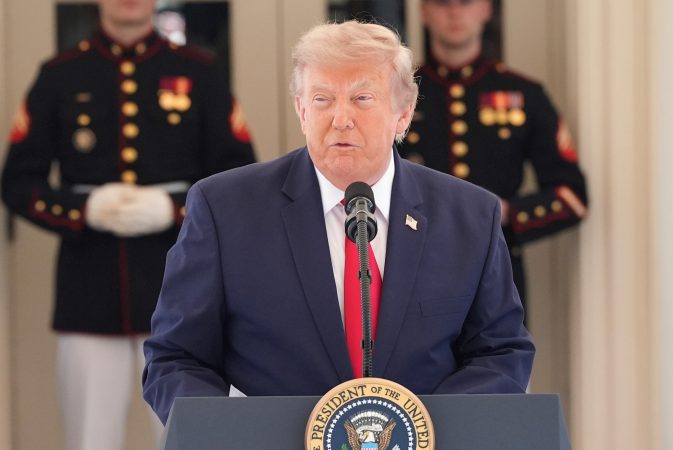
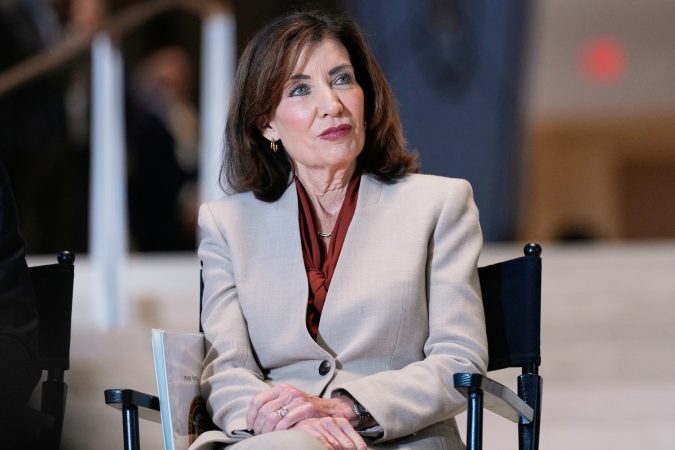
    Gov. Kathy Hochul signed an executive order Tuesday imposing the country’s first statewide moratorium on hyperscale data centers, which house thousands of computer servers and require massive amounts of energy and a steady supply of water to keep cool.

    The move pushes the state into a raging debate over how to regulate the AI industry, as concerns over rising electric bills and environmental risks collide with a desire to stimulate local economies and foster the U.S. tech sector.

    “The bottom line is that progress shouldn’t arrive with a higher utility bill, deleted water supply, or noise pollution, so we have no choice but to address these challenges created by these massive facilities,” Hochul said at a celebratory signing ceremony in Brooklyn.

    President Donald Trump has warned states not to slap regulations on the AI industry, echoing tech companies in arguing such moves hamper job growth and cede ground to China in a race to lead in the rapidly growing field.

    Earlier this year, Maine seemed poised to establish a similar moratorium. But the measure was vetoed by Democratic Gov. Janet Mills because it would have blocked a proposed data center in a town that has struggled after a mill closed.

    Moratoriums have been proposed in at least a dozen states but have not gotten far, though some counties and municipalities have imposed their own temporary bans.

    New York’s executive order pauses state permitting for new large data centers and directs state regulators to create standards that address environmental impacts, energy demand, water usage, and other factors, the governor’s office said.

    The decision in New York also carries political significance for Hochul’s reelection campaign and the state’s tight congressional races this fall, as Democrats move to address affordability concerns over high utility bills. In addition, the governor this year softened New York’s ambitious goals to reduce greenhouse gases, citing rising energy costs for consumers.

    Hochul’s Republican opponent in the governor’s race, Nassau County Executive Bruce Blakeman, opposes a statewide moratorium and says local governments should be allowed to strike deals with tech companies for data center projects that promise enough economic benefits.

    In a statement Tuesday, Blakeman said the governor “doesn’t work with local governments and business leaders to figure out how to get things done,” while pledging to “modernize our economy to bring costs down and create good jobs.”

    The state Legislature this year approved its own moratorium bill, but Hochul’s office described the legislation as complex and said it needed additional work. Instead, the governor opted for an executive order that would take effect immediately.

    State Sen. Kristen Gonzalez, a Democrat who sponsored the legislation, joined the governor during the signing ceremony. “If Big Tech is coming onto our turf, it should be on our terms,” she said.

    New York, at this stage, has not been a destination for the largest hyperscale data centers.

  • Judge says Trump IRS lawsuit was filed for ‘improper purpose,’ refers lawyer for possible discipline

    Judge says Trump IRS lawsuit was filed for ‘improper purpose,’ refers lawyer for possible discipline

    WASHINGTON — President Donald Trump’s lawsuit against the Internal Revenue Service over his leaked tax returns was filed for an “improper purpose,” a judge said Monday in a scathing decision that referred one of his lawyers for potential disciplinary action and characterized the $10 billion complaint as an exercise in self-dealing.

    U.S. District Judge Kathleen Williams accused Trump and his lawyers of having manipulated the court system when he sued a federal agency under his control, bypassing a requirement that parties in a lawsuit must have adverse interests and laying the groundwork for a settlement that granted him immunity from tax audits and created a fund to compensate allies of the president who say they were unjustly persecuted.

    The judge stopped short of explicitly voiding the deal shielding Trump from tax scrutiny but said the government cannot claim that the agreement was the result of a legitimate legal process.

    “Whether Executive Branch actors can privately agree to give themselves and their former clients blanket immunities and billions of dollars in tax monies for legally undefined grievances was never an issue advanced to this Court,” said Williams, an appointee of President Barack Obama. “The question is whether the Parties could do so by claiming to be adverse and engaging the legitimacy of a court proceeding. The answer is a resounding ‘no.’”

    Ruling comes just ahead of key confirmation hearing

    Though the practical impacts of the ruling may be limited since the lawsuit was withdrawn months ago and the administration had already abandoned the $1.776 billion Anti-Weaponization Fund that came out of it, the order nonetheless amounts to a scathing rebuke and tees up a politically uncomfortable line of questioning for Acting Attorney General Todd Blanche as faces the Senate Judiciary Committee for his confirmation hearing on Wednesday.

    “The nature of the suit itself and the conduct of the Parties and counsel from its filing make plain that this was an attempt to use the Court to provide some legitimacy to an agreement to confer immunity to people and entities affiliated with the President and to earmark billions of dollars from American taxpayers to redress grievances not defined in the law,” Williams wrote in her ruling.

    She added: “The President may be the functional ‘dominus litus’ of the Executive Branch, but as a party to a civil suit, he, as well as all the parties and lawyers before a court, are bound by the rules. Ensuring that our courts are used only for the express purpose created by the Constitution is the obligation of every judge and an obligation that this Court must discharge in light of the matter before it.”

    The suit against the IRS and Treasury Department in January accused the federal agencies of a failure to prevent a leak of the president’s tax information to news outlets between 2018 and 2020.

    In May, however, the administration announced that it was settling the case and creating a fund to compensate people who believe they’ve been mistreated by the criminal justice system. The fund was quickly shelved amid bipartisan backlash, though the Trump administration has said it intends to proceed with a separate element of the deal affording Trump and family members protection from audits.

    From the start, the judge had appeared skeptical of the complaint and assigned a group of attorneys to determine whether there was a conflict in the case since, as sitting president, Trump was suing “entities whose decisions are subject to his direction.”

    Even after the settlement was revealed, she directed Trump attorneys to lay out their positions on whether the parties in the case were truly adverse to each other, whether the settlement was premised on fraud, and whether the case should be reopened.

    She made clear in her ruling that she was not satisfied by the lawyers’ answers.

    “After a review of the record, and the Parties’ statements, the Court declines to adopt or accept the credulous exercise of divorcing President Trump’s current job title from an understanding of what happened here,” she wrote.

    Ruling also raises the possibility of disciplinary actions

    The judge referred Trump attorney Alejandro Brito, who filed the case, for possible disciplinary action before the state bar in Florida and said another lawyer, Daniel Epstein, will not be granted permission to file within the Southern District of Florida for up to a year.

    A spokesperson for the Trump legal team responded to a request seeking comment from Brito with a statement that blamed the IRS for allowing his tax returns to be leaked.

    The judge also ordered that her ruling be sent to the state bars in New York and the District of Columbia, where ethics complaints have been filed against Blanche and Associate Attorney General Stanley Woodward.

    Williams pointed to Blanche’s congressional testimony in early June in which he revealed that the anti-weaponization fund was no longer moving forward. Though nothing had been filed in court, Blanche appeared confident in his testimony that he “could speak for, and bind, both sides of this matter,” Williams said.

    “Acting Attorney General Blanche’s apparent capacity to speak for both Plaintiffs and Defendants, sign a ‘settlement’ document on behalf of all Parties to this action, and then repudiate part of that agreement, demonstrates that there was only one party whose interests were being represented throughout this case,” the judge wrote.

    The judge also raised ethical concerns about Blanche and Woodward’s involvement in the settlement given Blanche’s past representation of Trump as well as Woodward’s previous defense of Jan. 6 defendants and a co-defendant in Trump’s classified documents case.

    “Instead of either recusing because of their previous representations or vigorously defending this lawsuit as required to do so by DOJ policies and procedures, these lawyers agreed to a ‘settlement’ involving a staggering amount of money potentially benefitting former clients,” she said.

    Blanche denied in a CNN interview last spring that he had come up with the settlement terms, saying, “The president has outside counsel, and their counsel, the Department of Justice, not me.”

  • U.S. attacks Iran and Tehran retaliates across the Middle East as both vie for control of strait

    U.S. attacks Iran and Tehran retaliates across the Middle East as both vie for control of strait

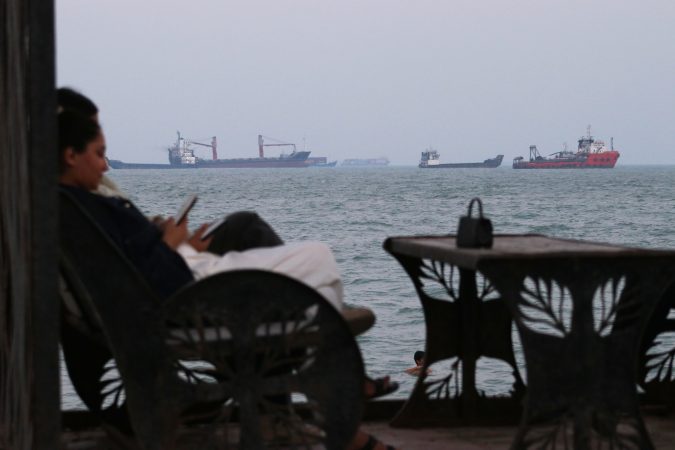
    DUBAI, United Arab Emirates — The U.S. launched strikes on Iran early Tuesday morning, hours after President Donald Trump said Washington is “reinstating” a blockade on Iran in the Strait of Hormuz. Trump separately suggested the United States will charge other ships for safe passage, upending hundreds of years of American policy supporting freedom of navigation across the globe.

    Iran responded with attacks targeting Bahrain, Jordan and two tankers associated with the United Arab Emirates traveling through the strait, killing one mariner and wounding eight others. The Emirates threatened to retaliate against Iran, potentially drawing the nation home to Abu Dhabi and Dubai back into fighting with Tehran.

    The attacks come as Iran and the U.S. both vie for control of the strait through which a fifth of all traded crude oil and natural gas once passed in peacetime. The price of benchmark Brent crude oil rose to a one-month high of over $84 in trading early Tuesday, still well below the nearly $120 reached at the height of the war but threatening to make costs everywhere higher.

    Trump insists strait will be open

    The U.S. military’s Central Command said it struck areas around Abu Musa, Bandar Abbas, Bushehr, Chahbahar, Jask and Konarak, targeting Iranian “coastal defense systems, missile and drone sites and maritime capabilities.” Iran acknowledged strikes around those areas, but provided no immediate casualty or damage assessments.

    “These strikes will continue imposing a heavy cost on Iranian forces and degrade their ability to attack innocent civilians and commercial shipping in the Strait of Hormuz,” the U.S. military said.

    Moments after the military announced the new strikes, Trump called it “another major attack.”

    “We’re hitting them very hard. And it’ll continue, and we’ll see what happens,” he told reporters in the Oval Office. “We’re knocking out all of their offensive capability and we’re controlling the straits. We’re putting the blockade back.”

    Trump also provided new details on his administration doing an about-face and suggesting it will charge tolls for ships going through the strait, after previously suggesting that it wouldn’t.

    “We’re protecting a very rich portion of the world,” he said. “We’re spending money. And so, what we’ve done is, we are going to be reimbursed for protection.”

    It’s a change in U.S. policy that, until now, said the strait should remain open to all without tolls — as it was before the U.S. and Israel attacked Iran on Feb. 28. Any attempt by the U.S. or Iran to charge fees would violate global norms on freedom of navigation and raise tensions, likely causing further economic disruption far beyond the region.

    The U.S. Navy has fought for freedom of navigation on the seas since the Barbary Wars and the War of 1812.

    Attacks resume across the Mideast

    The United Arab Emirates’ Defense Ministry said early Tuesday that Iran attacked two tankers in the Strait of Hormuz, killing one mariner and wounding eight others.

    The Emirati Defense Ministry said Iran launched two cruise missiles at the tankers Mombasa and Al Bahiyah.

    The attacks set both tankers ablaze, though the fires were extinguished.

    Iran’s paramilitary Revolutionary Guard claimed the attack on the tankers, saying the vessels “ignored repeated warnings.”

    “They chose to pass through a minefield and were subsequently targeted and disabled,” the Guard said.

    Bahrain also came under renewed attack early Tuesday morning as Iran retaliated over the latest round of U.S. airstrikes. Bahrain sounded its missile alert sirens twice, urging the public to seek shelter. There was no word on any damage or casualties from the attack.

    The Emirati Defense Ministry said the attack on the tankers killed one Indian national and wounded six Indians and two Ukrainians.

    “The UAE reserves its full right to respond to this escalation and to take all necessary measures to protect its territory, its citizens and residents,” the Defense Ministry added.

    The Emirates used similar language before launching attacks against Iran during the war. Fighter jets could be heard overheard Tuesday morning in Dubai.

    The U.S. Embassy in Abu Dhabi and the U.S. Consulate in Dubai alerted Americans early Tuesday that consular appointments had been canceled through Wednesday “due to the regional security situation.”

    Jordan’s military said it intercepted four missiles from Iran, according to a statement carried by the kingdom’s state-run Petra news agency. Jordan hosts U.S. forces and has come under attack by Tehran in recent days.

    Trump says Iran failed a test

    Earlier Monday, Trump told conservative radio host Hugh Hewitt that the agreement reached last month was “built to test” Iran, adding that “when you’re dealing with sleazebags (agreements) don’t mean much.”

    “They didn’t honor the test,” the president said.

    Iran asserts it has the right to manage traffic through the strait and potentially charge fees in accordance with the interim peace deal. The U.S. has disputed that.

    The American military and the United Nations’ International Maritime Organization have tried to establish a route through the strait along the coast of Oman that would be outside of Iranian control. Iran has attacked ships using that route, saying the U.S. is violating the interim peace deal. The U.S. has attacked Iran in response, drawing Iranian attacks on U.S.-allied Arab states.

    Exchanges of fire in recent days had already cast further doubt on the interim peace deal. Washington had lifted a blockade it imposed in mid-April as part of that deal, which also called for the strait to be fully reopened.

    “We are reinstating the THE IRANIAN BLOCKADE,” Trump said on social media. “All other countries will have fair and open use of the Strait.”

    The president said the U.S. would be “reimbursed” by 20% of the value of cargo to help cover “any and all costs necessary to do the job of providing safety and security.”

    The U.S. military said it will resume its blockade of Iranian ports at midnight local Wednesday in Dubai.

  • People killed in Bangkok music bar fire were found trapped in windowless bathrooms

    People killed in Bangkok music bar fire were found trapped in windowless bathrooms

    BANGKOK — Most of the people who were killed in a huge fire in a Bangkok music bar were found trapped in windowless bathrooms where they may have sought to escape the flames that claimed at least 27 lives, authorities said Monday as investigations began.

    The blaze at the Rong Beer Na Ladprao bar was the city’s deadliest in 17 years. It broke out late Sunday in a northern part of the Thai capital, and firefighters needed half an hour to bring it under control. The fire left 25 people hospitalized in critical condition, city officials said.

    Bangkok Gov. Chadchart Sittipunt said most of the deaths were caused by smoke inhalation.

    By daybreak Monday, the site had been cordoned off as dozens of forensic officers sought clues about what caused the fire. The bar’s street-facing windows were blown out, and debris littered the sidewalk, including charred television sets, speakers, and an electric guitar. Associated Press journalists looking through the shattered windows could see empty beer bottles still sitting atop burned tables.

    The bar, which in Thai calls itself a brewery or beer hall, claimed to accommodate as many as 600 customers. It was not clear how many were present Sunday night.

    According to Bangkok’s Erawan emergency services center, 73 people were hurt. The Bangkok city government said there were 28 dead, one more than Erawan’s tally.

    The dead were trapped in bathrooms

    National Police Chief Kittharath Punpetch said most of the dead were found trapped in windowless bathrooms near one of the rear exits, where they may have sought shelter from the flames.

    He said the exit was not used, and people may have been blocked from reaching it by a table set up in a hall to sell candy, or because it was too dark to find the way out.

    Access to another exit near the kitchen might also have been narrowed by shelving units and lockers, said Kittharath, who visited the scene Monday. There were signs that at least some of the exit doors might have been locked, he added.

    Investigators focused on the ceiling above a performance stage, where they found materials that may have been used as decorative elements, he said. Police will examine whether flammable materials were used in the interior and how electrical wiring was installed across the ceiling.

    Prime Minister Anutin Charnvirakul told reporters that a musician who was performing at the bar told him he saw smoke coming out of a circuit breaker near the stage before the power went out. Then an explosion was heard, and thick smoke quickly filled the place.

    Video posted on social media showed people fleeing as flames shot out of the single-story building and black smoke billowed into the sky.

    Buddhist monks pray for the dead

    Several Buddhist monks visited the site Monday to pray for the victims, while nurses handed out face masks to help protect people from lingering smoke and fumes from the building.

    A registration site was set up to gather information from relatives looking for loved ones.

    Singer Sukanya Wongwongwai said she was performing nearby when she heard about the fire and rushed to the scene because several of her band mates were performing at the bar. She said one of them died, three were hospitalized, and one had not been located. Her band later announced on Facebook that the missing member was also found hospitalized.

    “From what I heard from people who were inside when the fire started, everything went dark. The power was out, and there was smoke everywhere, so they couldn’t locate other people,” she said.

    In a statement posted on Facebook, the bar offered apologies and condolences and said it was cooperating with investigators. It said the bar’s owner suffered serious injuries and was in an intensive care unit.

    Mourning family members identify the dead

    Family members gathered at Bangkok’s Institute of Forensic Medicine to identify the dead.

    Keo Oudone Poungpany, 24, was at the institute to identify his younger brother’s body. Both of the brothers, migrant workers from neighboring Laos, were working as bar employees when the fire broke out.

    Poungpany said he was using a restroom outside the bar when the fire began.

    He described walking back toward the bar and encountering dozens of people running away from the flames and hearing loud noises.

    From the outside the bar, he began shouting for his brother. “The heat was unbearable, I couldn’t get back in,” he said.

    “For now, I want to bring my younger brother’s body back home,” Poungpany said. “I want to bring him home to my parents. My parents are waiting for their kids to come back together, but now one is gone.”

    In 2022, 14 people were killed by a fire at a music bar in the eastern part of the country. And more than a decade before that, 67 people were killed and more than 200 injured in a fire during a Jan. 1, 2009, New Year’s Eve celebration at the Santika nightclub in Thailand’s capital. That blaze was apparently sparked by an indoor fireworks display.

  • Ukraine and 9 other countries announce a coalition to protect Europe from ballistic missiles

    Ukraine and 9 other countries announce a coalition to protect Europe from ballistic missiles

    PARIS — Ukraine and nine other countries announced Monday they were forming a coalition to protect Europe from ballistic missiles, utilizing Kyiv’s experience in fighting Russia’s full-scale invasion for over four years.

    “Our goal is to build a shared ballistic missile defense capability for Europe,” the 10 nations said in a statement in Paris at talks with Ukrainian President Volodymyr Zelensky.

    He was asking two dozen leaders for help in developing measures against Russia’s missile attacks that have pummeled his country and made the rest of Europe wary of Moscow’s wider ambitions on the continent.

    Zelensky and the leaders of Denmark, France, Germany, Italy, the Netherlands, Norway, Spain, Sweden, and the United Kingdom said they recognized “the growing threat posed by ballistic missiles,” which are harder to stop than cruise missiles or drones.

    “We believe that protecting Europe requires a comprehensive solution, in the form of an integrated missile defense architecture, to deter and neutralize future missile threats,” the statement said. “We recognize Ukraine’s unique experience, gained through its defense against the war of aggression waged by Russia.”

    The statement gave no time frame for setting up the defense system and said the plan remained open to other countries.

    Putin shows no sign Russia is backing down

    Russian President Vladimir Putin was unyielding, vowing Monday emphatic retaliation to Kyiv’s recent long-range attacks on refineries, tankers, and terminals that have caused widespread fuel shortages.

    “Wherever they attempt to strike Russian territory, we will respond in kind, but our strikes will be several times more powerful,” Putin told a meeting with pro-Kremlin activists.

    European foreign ministers were meeting separately in Brussels where they discussed Ukraine’s needs and Russia’s threats to the continent.

    Zelensky is keen to accelerate efforts with European countries to develop its air defenses ahead of winter, when Russia usually intensifies its attacks to deny Ukrainians electricity, heat, and water.

    Ukrainian officials were in Paris to present a proposed Anti-Ballistic Program and meet with government leaders, national security advisers, and defense companies who might take part, Zelensky said.

    U.S. President Donald Trump’s pledge last week to give Ukraine a license to produce Patriot air defense systems to counter the ballistic missiles could mark a major breakthrough for Kyiv. However, experts and Ukrainian officials warn that turning the idea into reality would probably take years. It was unclear how quickly a European system could be built.

    Ukraine wants to push Putin into negotiations

    Kyiv and its European backers want to press home Ukraine’s recent successes and compel Putin to negotiate an end to the fighting, although Moscow has shown no willingness to compromise despite peace efforts by the Trump administration.

    Kremlin spokesperson Dmitry Peskov said Moscow will closely follow the Paris meeting but dismissed its aspirations.

    “This is a coalition of warmongers,” Peskov said. “They are driven by the profound delusion that it’s possible to inflict a strategic defeat on our country, so this is a coalition of the deluded, a coalition of those who incite the war.”

    Ukraine’s advances in drone technology have given it an edge recently, analysts and Western officials say. Its strikes on supply routes behind the front have robbed the Russian army of momentum and made its progress slow and costly, they say.

    Ukraine says it hit 105 Russian vessels in 8 days

    Ukrainian forces struck 105 Russian vessels in the Sea of Azov next to the Crimean Peninsula between July 6-13, said Robert Brovdi, commander of Ukraine’s Unmanned Systems Forces.

    The vessels included tankers, dry cargo ships, a ferry, and tugboats, Brovdi said on the Telegram messaging app.

    The campaign is part of a broader Ukrainian effort to isolate the Crimean Peninsula, which is enduring its worst fuel crisis since it was illegally annexed by Moscow in 2014, and disrupt Russian logistics. Crimea is a key rear base for Russian forces occupying parts of southern Ukraine.

    It was not possible to independently verify the claims, and Russian officials made no immediate comment.

    European leaders demonstrate their commitment to Kyiv

    The Paris meeting of the so-called Coalition of the Willing, which brings together more than 30 countries and about 25 heads of state and government, appeared to be a demonstration of a long-term commitment to Ukraine and a warning to Russia, as Moscow tests Europe’s resilience.

    Zelenskyy’s trip to the French capital followed the death of U.S. Sen. Lindsey Graham (R., S.C.), one of Kyiv’s staunchest supporters in Washington. Lawmaker Oleksandr Merezhko called Graham “the closest link between Ukraine, our president, and Trump.”

    The trip also comes amid a major reshuffle of Zelensky’s government that saw Prime Minister Yulia Svyrydenko step down Sunday.

    French Foreign Minister Jean-Noël Barrot said he would summon the Russian ambassador to France and impose sanctions against Russian hackers. He told BFMTV-RMC that the issue is about “a vast cyber campaign aimed at sabotage and espionage, carried out by Russia in about 10 European countries.”

    Ukraine’s neighbors have also felt the war’s impact.

    In the latest incident, a drone launched during Russian overnight attacks on Ukraine’s Odesa region crashed and exploded on Moldova’s territory, Moldova’s Ministry of Foreign Affairs said Monday. It said the incident was “serious and unacceptable.”

    Ukraine fires over 300 drones toward Moscow

    Ukraine has aimed at targets deep inside Russia with its domestically developed long-range drones and missiles.

    Russian air defenses downed 350 Ukrainian drones heading toward Moscow since late Sunday, including 50 near the capital, its Mayor Sergei Sobyanin said.

    Moscow regional Gov. Andrei Vorobyov said 81 Ukrainian drones were downed overnight, adding that three people were killed and three were injured by the attack in the Pionersky settlement in the western part of the Moscow region.

    The Ukrainian air force, meanwhile, said Russia launched 134 long-range strike drones and three guided aviation missiles at Ukraine.

    A strike on port infrastructure in Ukraine’s Odesa region set fire to a docked merchant vessel carrying fertilizer under the flag of Togo, killing five crew members and wounding 10, said regional military administration head Oleh Kiper.

    Russia says it thwarted a major Ukraine drone operation

    Russia’s Federal Security Service said it had thwarted a Ukrainian plan for a drone attack on the Ukrainka air base in the far eastern Amur region and the Shagol air base in the Chelyabinsk region in the southern Urals.

    Small drones were smuggled into Russia’s Bryansk region using air balloons and bigger transport drones, then taken by car near the air bases by Ukrainian agents, who were arrested, the security service said.

    A covert Ukrainian operation a year ago, dubbed Operation Spiderweb, destroyed or damaged nearly a third of Moscow’s strategic bomber fleet with drones carried secretly into Russia, according to Ukrainian officials.

  • U.K. police rearrest the suspect in Ann Widdecombe killing on terrorism suspicion

    U.K. police rearrest the suspect in Ann Widdecombe killing on terrorism suspicion

    LONDON — The killing of former British politician Ann Widdecombe is being investigated as a terrorist act, police said Monday.

    A 28-year-old man in custody on suspicion of murder was rearrested on suspicion of commission, preparation, or instigation of acts of terrorism, Counter Terrorism Policing South East said.

    Devon and Cornwall Police originally said the killing was not believed to be a terror-related crime and there was nothing to suggest it was politically motivated.

    “We now have new information and evidence that means Counter Terrorism Policing is now leading the investigation,” the head of National Counter Terrorism Policing, Laurence Taylor, said. “We are pursuing multiple lines of inquiry to establish the motivation for this attack.”

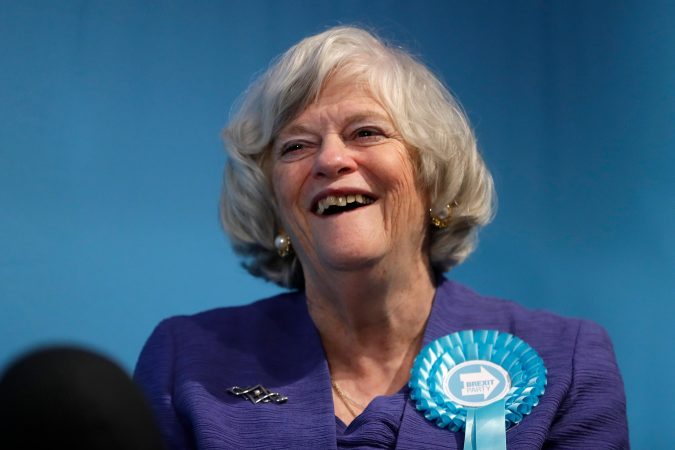
    Widdecombe, 78, a former member of Parliament, was found dead last week in her isolated rural home in a southwest England village. Police did not disclose a cause of death, saying only that she had sustained “serious injuries.”

    The death sent shock waves through British politics, where Widdecombe had been a prominent voice for decades, known for her robust personality and socially conservative views opposing abortion and the expansion of LGBTQ+ rights.

    The suspect, who has not been named because he hasn’t been charged, was arrested Saturday in South Yorkshire county in northern England, more than 200 miles from the village of Haytor on the edge of Dartmoor National Park, where Widdecombe was found dead Thursday.

    Police said they believe Widdecombe was attacked at around 12:30 p.m. on Wednesday. Concerns were raised for her after she failed to appear for a scheduled TV interview on Wednesday afternoon.

    Widdecombe was a lawmaker in the House of Commons from 1987 to 2010, serving in roles including prisons minister in Prime Minister John Major’s 1990s Conservative government.

    Widdecombe found fame after leaving Parliament as a contestant on the reality television shows Strictly Come Dancing and Celebrity Big Brother.

    She later joined the Brexit Party, briefly serving as a member of the European Parliament before Britain left the European Union in 2020. Most recently, she joined the anti-immigration Reform UK party, often appearing in the media as a spokesperson.

    Friends and colleagues contrasted her pugnacious political statements with her personal kindness and good humor.

  • EU rallies $1 billion in pledges for Gaza’s recovery

    EU rallies $1 billion in pledges for Gaza’s recovery

    BRUSSELS — The European Union has coordinated efforts to raise 900 million euros ($1 billion) in pledges of aid for Gaza’s rebuilding following two years of Israeli bombardment that left much of the Palestinian enclave in ruins, a senior EU official said Monday.

    How much of the money will be delivered, and when reconstruction of Gaza can begin, is unclear. The ceasefire between Israel and the Hamas militant group that took effect in October is effectively stalled.

    European Commissioner for the Mediterranean Dubravka Šuica announced the fund after a meeting in Brussels of the Palestine Donors Group, which includes EU and Middle East nations along with international organizations and financial institutions.

    “The ceasefire in Gaza remains fragile, and the situation on the ground for civilians is not getting better,” Šuica said. She said the money will move through “trusted partners” but didn’t give details.

    Few places in the Palestinian territory of over 2 million people have been left unscathed, and the United Nations, World Bank, and EU estimate that reconstruction will cost $70 billion.

    The U.N. has said Gaza has more than 60 million tons of rubble, enough to fill nearly 3,000 container ships. It will take over seven years to clear, with additional time for demining.

    The meeting also brought together Nickolay Mladenov, the head of the Board of Peace set up by U.S. President Donald Trump to lead Gaza’s reconstruction; Trump’s son-in-law, Jared Kushner; Ali Shaath, the head of the new Palestinian committee meant to administer Gaza’s daily affairs but still unable to enter; and Palestinian Authority Prime Minister Mohammad Mustafa.

    Mladenov has made clear that the next steps in implementing the ceasefire are stalled over the difficult issue of disarming Hamas militants in Gaza.

    “We are investing not only in the Palestinian future but also in the regional stability, shared security, and just and lasting peace for everyone together,” Mustafa said, calling for “a resilient, sovereign, contiguous, and viable Palestinian state” — something Israel’s current government has opposed.

    The Palestinian Authority seeks a role in Gaza’s reconstruction, but the U.S. 20-point plan only makes a reference to the possibility of a future Palestinian state.

    Meanwhile, EU ministers discuss the West Bank

    Separately, top diplomats from the 27-nation EU debated how to respond to increased Israeli settler violence in the occupied West Bank.

    The bloc’s executive, the European Commission, has tabled options including cutting off trade with Israeli settlements in the territory.

    Nations like Ireland and Spain are calling for forceful action. The Czech Republic, Germany, and others alongside the commission are more cautious, seeking to apply incremental pressure. Some nations have signaled they would veto sanctions.

    Do sanctions “have a meaningful impact or not? What role could they play as a political message, and would this be escalatory in a wrong direction?” said Bulgarian Foreign Minister Velislava Petrova-Chamova.

    The EU’s foreign policy chief, Kaja Kallas, said the European Council’s legal service had found that severing trade ties with Israeli settlements in the West Bank — not technically sanctions — would require a majority vote and not total unanimity from bloc members.

    Luxembourg’s Foreign Minister Xavier Bettel said a clear majority in the EU agrees on severing commercial ties with the settlements. He dismissed arguments that tough action would boost Israeli Prime Minister Benjamin Netanyahu’s chances in an election in October: “I hope that now it’s time for decisions.”

  • Fire in Fontainebleau forest near Paris triggers evacuations; 10 still missing in Spanish wildfire

    Fire in Fontainebleau forest near Paris triggers evacuations; 10 still missing in Spanish wildfire

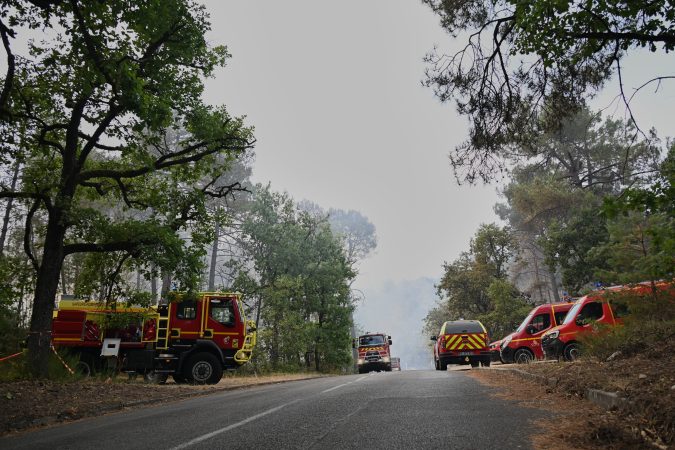
    FONTAINEBLEAU, France — A fire raging in the historic and much-visited Fontainebleau forest south of Paris on Monday prompted evacuations of some residential neighborhoods and disrupted train and highway traffic.

    It was among several wildfires in western Europe as the region bakes under its third red-alert heat wave this year.

    In Spain, 10 people were still unaccounted for Monday from a fire that ripped through a remote southern expatriate community last week, killing 13 people in one of the country’s deadliest blazes.

    The Fontainebleau forest fire is unusual for its proximity to the French capital — about 42 miles away. The region hosts the Fontainebleau Chateau favored by Napoleon and is popular with visitors from Paris and beyond.

    French President Emmanuel Macron said all necessary means were being deployed to fight the fire of ″exceptional scale.”

    Two water-dumping planes were deployed over the area along with hundreds of firefighters, regional fire service spokesperson Paul Laurain told public broadcaster France-Info.

    The head of the regional administration, Pierre Ory, told French media that an investigation is underway and that arson was being considered a possibility.

    A new fire has broken out in another section of the forest, Ory said. The initial fire is still not contained and was continuing to spread at a moderate rate.

    “Winds are turning, which is significantly complicating the work of the firefighters,” he said.

    Trains to and from the bustling Gare de Lyon train station were disrupted late Sunday but were returning to normal Monday morning. A section of the busy A6 highway leading southeast of Paris was shut down because of fire risk.

    Large fires in southern France have already scorched thousands of acres since last week, disrupting the Tour de France cycling race and stretching firefighting resources.

    France is experiencing the peak of its third heat wave of the summer, with temperatures surpassing 104 degrees Fahrenheit across western and central areas and around 98 F in Paris.

    Spain reeling from deadly wildfire

    A 93-year-old British national died Sunday in a hospital from injuries sustained in the Los Gallardos wildfire, elevating the death toll to 13.

    Spanish Prime Minister Pedro Sánchez was expected to visit the site of the fire on Monday. Regional authorities said the blaze was contained Sunday after affecting some 27 square miles of forest and farmland — larger than the size of Manhattan.

    Spain is experiencing extreme heat, which combined with wind and little rainfall is creating the ideal conditions for small wildfires to grow unchecked.

    Europe is the world’s fastest-warming continent, with temperatures increasing twice as fast as the global average since the 1980s, according to the European Union’s Copernicus Climate Change Service.

    Homes evacuated in U.K. due to fires

    In the U.K., people were evacuated from several dozen rural homes in north Wales after a wildfire broke out across a mountainside on Sunday, British media reported.

    Wildfires also burned in several locations across England as another heat wave — the third this year — brought hot, sunny and dry conditions.

    The Met Office said record heat waves since May have led to 2026 becoming the first year to record temperatures of 95 F or higher on six separate days. That broke the previous record set in 1976 and 2020, when five days were recorded with such temperatures.

    Natural England’s fire severity index has put much of England at “very high” risk of wildfires, with some areas in southern England and the Midlands at “exceptional” risk.

  • Minnesota prosecutors obtain long withheld evidence in investigation into protest shooting deaths

    Minnesota prosecutors obtain long withheld evidence in investigation into protest shooting deaths

    Minnesota prosecutors announced Monday that they have obtained key evidence in their ongoing investigations into the fatal shootings of Renee Good and Alex Pretti during pitched protests against a federal immigration enforcement crackdown in the state earlier this year.

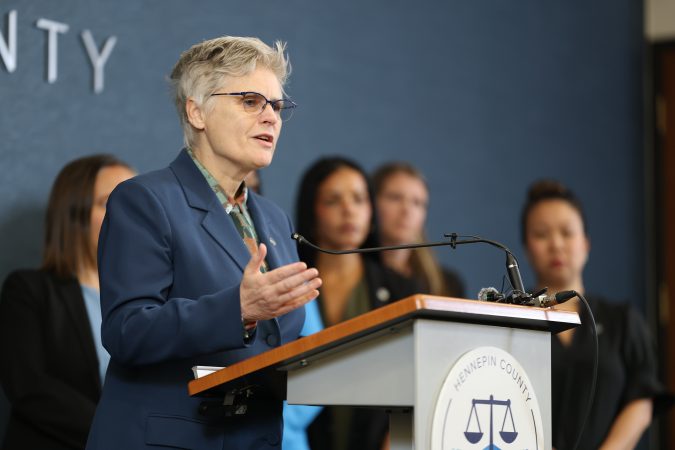
    “Through the cooperation of our federal partners we have obtained the hard drives of previously withheld evidence in the killings of Renee Good and Alex Pretti and the shooting of Julio Sosa-Celis,” Hennepin County Attorney Mary Moriarty said. “We have also obtained some of the physical evidence that was previously withheld, including Renee Good’s car.”

    Statements, police body camera video, and other evidence had previously been withheld by federal officials in the killings.

    She said state and local investigators now also have in their possession Good’s damaged car.

    Good, a 37-year-old mother of three, was shot and killed in her car while leaving an anti-immigration enforcement protest in Minneapolis on Jan. 7 as U.S. Immigration and Customs Enforcement agents surged through the region.

    Her death and that of Pretti, a 37-year-old intensive care nurse shot and killed by federal officers just weeks later during a Jan. 24 protest, sparked outrage across the country and calls to rein in immigration enforcement.

    “The wonderful thing now is we have all the evidence,” Moriarty said.

    Investigators are going through all the evidence, including hard drives with statements, hours of video recorded by body-worn cameras, and the car Good was driving, Moriarty said.

    “We need transparency. We need cooperation. Our community needs it,” she said. “Our democracy requires it.”

    At the end of June, Minnesota Attorney General Keith Ellison and Moriarty asked a federal judge to push out the deadlines in their lawsuit against the U.S. Department of Justice because they said they were in the midst of recently reinitiated “ongoing discussions” with the FBI about information sharing.

    Those ongoing discussions with the FBI about information sharing are likely to affect Minnesota’s request for summary judgment in the case, Ellison and Moriarty wrote in their motion to the court.

    The attorneys representing the federal government signed onto the motion.

    Ellison said he remains “deeply troubled that the federal government spent more than half a year attempting to conceal this evidence from state investigators.”

    “It should never have taken this long for Minnesota law enforcement to gain access to the federal government’s evidence,” he said in a statement. “I hope that this is the beginning of a major course correction on the part of the federal government.”

    There have been at least eight deaths since the Trump administration’s immigration enforcement campaign began last year, but nobody has been charged in connection with them.

    A Minneapolis resident, Julio Cesar Sosa-Celis, was also shot and injured in his home while ICE agents were in pursuit of another man.

    In May, Christian Castro, an ICE agent, was arrested and charged with assault as well as falsely reporting a crime in connection with that Jan. 14 nonfatal shooting.

    Prosecutors say Castro, 52, fired through a home’s front door and shot Sosa-Celis in the thigh.

    In April, Gregory Donnell Morgan Jr., another ICE agent, was charged with pointing his gun at a motorist and passenger on a Minneapolis highway.

    Prosecutors said at the time it was the first criminal case against a federal officer involved in the Minnesota immigration crackdown.

    On Monday, ICE was involved in a fatal shooting in Maine, according to state House Speaker Ryan Fecteau, a Democrat.

    Details of what transpired in Biddeford, a coastal city of about 23,000 people roughly 15 miles southwest of Portland, remained unclear.

    Last week, an ICE agent in Houston fatally shot a Mexican national who had lived in the U.S. for decades as the homebuilder drove his construction crew to a job site.

    The federal Department of Homeland Security, which oversees ICE, has acknowledged officers were looking for someone else when they attempted to stop Lorenzo Salgado Araujo’s vehicle. The agency maintains Salgado Araujo rammed an ICE vehicle, prompting an officer to open fire in self-defense.