Category: Nation & World

  • Man partly sucked out of broken window on flight from Greece was pulled back by fellow passengers

    Man partly sucked out of broken window on flight from Greece was pulled back by fellow passengers

    THESSALONIKI, Greece — A man who was partially sucked out of a dislodged window on a flight from Greece to Germany on Friday was pulled back inside the aircraft by fellow passengers.

    The 61-year-old passenger suffered neck and shoulder injuries and friction burns, according to a Greek hospital official who spoke on condition of anonymity because they were not authorized to speak publicly to the media.

    The incident happened on a morning flight from the northern Greek city of Thessaloniki to Memmingen, near Munich, which was operated by Ryanair subsidiary Malta Air. Ryanair, Europe’s largest budget carrier, said in a statement the flight “returned to Thessaloniki shortly after take off when a passenger window dislodged in-flight.”

    Passengers told Greek media that they heard a loud bang, oxygen masks dropped and the plane began to lose altitude.

    One passenger, identified only as Christina, told Thessaloniki radio that some passengers panicked and screamed and that one passenger was partially sucked out of the window.

    “His whole head, neck, shoulders” were pulled out of the window, she said, adding that those seated near him pulled him back in.

    “Most people had fallen asleep, we had closed our eyes. We heard a sound, I’d describe it like a tire bursting … but very loud,” she said. “We knew straight away we lost pressure because we lost altitude. … Screams, shrieks, shouting.”

    The plane landed normally and passengers returned to the terminal, and one passenger requested and received medical assistance on the ground in Thessaloniki, the airline said in a statement. A replacement aircraft was later provided to fly the passengers to Germany.

    The National Transportation Safety Board, the U.S. federal agency that investigates aviation accidents and other major transportation incidents, said it was notified that the flight turned back because of “a right engine issue and cabin decompression.”

    The agency said it is standing by to assist in the investigation, which will be led by the Aircraft Accident and Incident Investigation Committee of the Republic of North Macedonia.

    The aircraft was a Boeing 737-800, which can seat up to 189 passengers. The narrow-body plane was delivered new to Ryanair in 2008, according to flight-tracking site Flightradar24.

    Flight records show that the aircraft climbed past 15,000 feet about six minutes after departure and then immediately descended to about 6,000 feet “to burn fuel for 30 minutes” before returning to Thessaloniki about an hour after taking off, Flightradar24 said.

  • Police in the U.K. arrest a suspect in the killing of former Parliament member Ann Widdecombe

    Police in the U.K. arrest a suspect in the killing of former Parliament member Ann Widdecombe

    LONDON — British police on Friday arrested a 26-year-old man on suspicion of murder in the killing of Ann Widdecombe, a former British member of Parliament and reality TV contestant.

    Widdecombe, 78, was found dead on Thursday in her Haytor Vale home on the edge of Dartmoor National Park in southwest England after sustaining what police said were “serious injuries.”

    The killing was not believed to be an act of terror and there was no information to suggest it was politically motivated, Devon and Cornwall Police Assistant Chief Constable Matt Longman said.

    Longman did not discuss a possible motive but said the suspect was in custody as the investigation continues.

    “This is really shocking news, and my thoughts, I think all of our thoughts, will be with the family and friends of Ann Widdecombe at this awful time,” Prime Minister Keir Starmer said. “Ann was a distinguished politician over many, many years with many achievements, and it’s a huge, huge loss.”

    Widdecombe found fame after leaving Parliament as a contestant on the Strictly Come Dancing and Celebrity Big Brother reality television shows. She later joined the Brexit Party and became a spokesperson for the anti-immigration Reform UK party.

    She served in the House of Commons as an MP from 1987 to 2010 and was known for socially conservative views, opposing abortion rights and expansion of LGBTQ rights.

    Starmer said the security of lawmakers was “of the utmost importance” as he urged people to rise above political differences.

    Security has been tightened for politicians after the murders of two serving members of Parliament in the past decade. Labour lawmaker Jo Cox was shot and stabbed in 2016 by a far-right extremist, and Conservative David Amess was stabbed in 2021 by an attacker inspired by the Islamic State group.

    Nigel Farage, leader of Reform, said he was deeply upset over Widdecombe’s death and noted that “things have become even more dangerous” for people in public life.

    Former Prime Minister Boris Johnson called Widdecombe a “heroic Brexiteer and a great speaker who could move Tory audiences to such ecstasy that she was a very hard act to follow.”

    The management company that represented her after she left politics said her life and career were driven by strong Christian values and a commitment to public service.

    “She loved the cut and thrust of political debate and, 16 years after leaving Parliament, was still actively campaigning for Reform UK and offering forthright views on the hot topics of the day,” Cloud9 Management said.

    “As Ann once said…‘we get one go this side of eternity, one go. Life is not a dress rehearsal, you take opportunities that you like and you go for it, that’s my philosophy’.”

  • Defense tries to sow doubt about evidence in Charlie Kirk’s killing

    Defense tries to sow doubt about evidence in Charlie Kirk’s killing

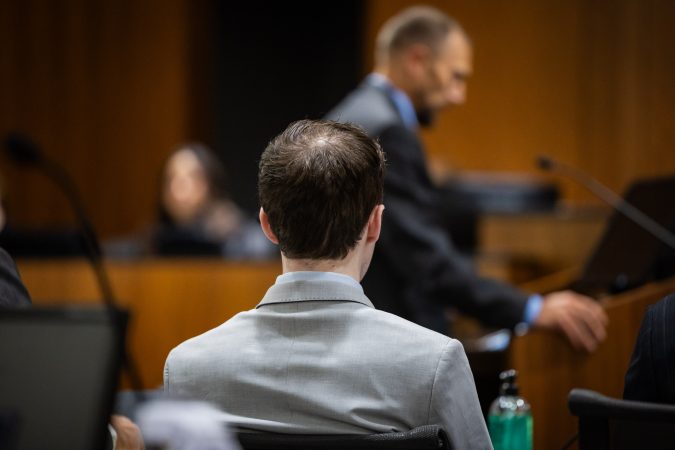
    PROVO, Utah — Lawyers for the man accused of killing conservative activist Charlie Kirk tried to sow doubt about the case Friday, while a prosecutor countered that authorities had “overwhelming” evidence including DNA tests and apparent confessions by defendant Tyler Robinson.

    Judge Tony Graf will decide if the case should advance to a trial after closing arguments from the two sides scheduled for Sept. 1.

    Kirk, 31, was killed as he spoke to a crowd of thousands at Utah Valley University on Sept. 10. Robinson is charged with aggravated murder and could face the death penalty.

    Friday’s hearing brought an emotional moment for Kirk’s family, when the court played a surveillance video that prosecutors said showed Robinson on the rooftop where he allegedly fired a single bullet that hit Kirk in the neck.

    Kirk’s widow, Erika, watched intently as a person said to be Robinson ran across the roof. When the figure dropped to a crawl near the roof’s edge, Erika Kirk turned and embraced Charlie Kirk’s mother, Kathryn, who was crying. They held each other and looked away until the video was almost over.

    Defense questions reliability of evidence

    Prosecutors this week presented testimony from a former roommate who said the 23-year-old defendant expressed remorse for the shooting before turning himself in. Lawyers from the Utah County Attorney’s Office also offered DNA analysis that investigators said linked Robinson to both the suspected murder weapon and a tool he allegedly used to etch messages onto bullet cartridges.

    Robinson’s team did not offer any alternative theories for who is responsible for Kirk’s death. But one of his attorneys, Michael Burt, repeatedly questioned the reliability of DNA tests and other evidence cited by prosecutors.

    Burt used testimony Friday from a government DNA analyst to highlight the limitations of such tests. He noted that government policies don’t allow analysts to say that DNA evidence is “infallible” or that it has a “zero error rate.” He also indicated it’s possible for DNA to be transported by a third party.

    “If you had a lot of DNA on your hand, we shook hands and I went to pick up an exhibit, a gun, and I touched the trigger of it, your DNA could be on that trigger, right?” Burt asked Caitlin Oliver, a forensic biologist with the Bureau of Alcohol, Tobacco, Firearms, and Explosives.

    “It is possible. Yes,” Oliver replied.

    Experts say the science behind DNA testing is sound.

    Chief Deputy Utah County Attorney Chad Grunander questioned the relevance of bringing in Oliver as a witness. He suggested prosecutors already had met the burden of proof needed to advance the case to trial.

    “Your honor’s heard four days of testimony now. The evidence is overwhelming. It’s devastating,” Grunander said.

    Kirk family thanks supporters

    Robinson has not entered a plea. He turned himself in a day after the fatal shooting of Kirk, a close ally of President Donald Trump credited with helping galvanize young voters for the Republican in the 2024 election.

    Kirk’s family released a statement shortly after court ended, expressing gratitude for the support and prayers offered to them. They said the preliminary hearing “marks an important step forward in the pursuit of justice for Charlie.”

    “As difficult as these last few days have been, it brings our family comfort to know that the world has witnessed the overwhelming evidence of what occurred to Charlie that day,” the statement said.

    The video that prosecutors said showed Robinson allegedly running across the roof at Utah Valley University was played for the court gallery at the request of Kirk’s family. Portions of the recording were zoomed in to better show the figure on the roof, and red circles were added to some images. An unaltered version of that video was shown earlier.

    Prosecutors also aired portions of a recorded interview with Robinson’s roommate, Lance Twiggs, who was Robinson’s romantic partner. The day after Kirk was shot in the neck, Robinson allegedly told Twiggs “he wishes he hadn’t done it,” a recording played in court revealed.

    Later that same day — and only about an hour before turning himself in — Robinson posted “it was me at UVU yesterday,” in a chat room on the Discord social media platform, according to investigators and messages shown by prosecutors.

    Defense attorneys unsuccessfully fought the public release of the statements from Twiggs and the chat room messages. They argued prosecutors would characterize the material as a confession, undermining Robinson’s right to a fair trial.

    Roommate: Robinson never talked about Kirk

    Prosecutors contend the shooting endangered others at Kirk’s campus event — an aggravating circumstance that could make the crime punishable by death under Utah law. Robinson faces possible sentence enhancements based on claims by prosecutors that he targeted Kirk because of his political views.

    Twiggs said in the April interview with prosecutors and investigators that Robinson sometimes talked about politics, including Trump. But Twiggs said he never heard Robinson talk about Kirk before the shooting. The defendant also did not talk much about gender issues or LGBTQ rights, Twiggs said.

    The weeklong preliminary hearing attracted intense media coverage and spectators who have angled for one of the 14 seats in the courtroom that are reserved for the public.

    People have lined up early — sometimes sleeping there overnight — in hopes of getting in.

  • Trump plan would fence Pennsylvania Avenue outside White House

    Trump plan would fence Pennsylvania Avenue outside White House

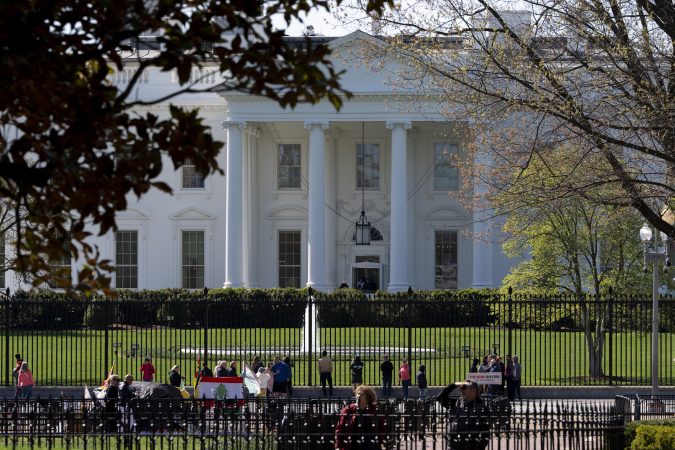
    The Trump administration plans to erect new fences on the ends of Pennsylvania Avenue NW outside the White House, the latest effort to boost presidential security, according to three people who spoke on the condition of anonymity because they were not authorized to publicly discuss the plans.

    The White House and Secret Service would be able to close the new fences, planned where Pennsylvania Avenue intersects 15th and 17th streets NW, and prevent pedestrian access in front of the White House if they determine there are security risks, the people said.

    The White House has long relied on temporary barriers, staffed by Secret Service personnel, to shut down Pennsylvania Avenue to pedestrians. Secret Service officials have previously suggested building permanent fences on Pennsylvania Avenue, but faced resistance from past administrations over the perception of restricting public access to the White House, the people said.

    Asked about the planned fencing, a White House official said that conversations about improving campus security were ongoing and that any proposed projects would go through a review process.

    The National Capital Planning Commission and the Commission of Fine Arts, a pair of federal agencies that oversee design matters related to construction projects in the capital region, have historically reviewed major changes to the White House and its grounds. That process often can stretch months or years, although the commissions — which are now led by Trump allies — have rushed several of the president’s projects.

    The Secret Service referred questions to the White House.

    The Trump administration also plans to build new permanent fencing around Lafayette Square, the public park across from the White House mansion, the Washington Post previously reported.

    Trump officials and the Secret Service have conducted additional reviews of presidential security risks after an April shooting at the White House correspondents’ dinner, the third time in less than two years that Trump found himself under the threat of gunfire.

    The stretch of Pennsylvania Avenue in front of the White House — which offers the closest view of the building for pedestrians — has long drawn visitors from around the world. The space has also been used by protesters for a wide array of political causes.

    Several organizations, such as the Smithsonian American Art Museum’s Renwick Gallery and the Milken Center for Advancing the American Dream, are also located on Pennsylvania Avenue outside the White House. Spokespeople for the Renwick Gallery and the Milken Center did not respond to questions about whether their organizations had been briefed on the planned fences and the effect on their workforce.

    Past administrations have considered a range of efforts to boost security around the White House grounds, including building more and higher fencing.

    President Bill Clinton in 1995 shut down Pennsylvania Avenue in front of the White House to cars, turning a long-standing road into a pedestrian thoroughfare.

    “It should be seen as a responsible security step necessary to preserve our freedom, not part of a long-term restriction of our freedom,” Clinton said in a radio address announcing the change.

    Officials in the early 2000s repaved the stretch of Pennsylvania Avenue and made other changes to make it more pedestrian-friendly, an effort overseen by then-first lady Laura Bush. The project also included building new security booths and bollards that remain in use today.

    Michael McGill, a former General Services Administration official who served on the commission at the time, said he was concerned that new fencing around the White House and the Secret Service’s push for security measures would lead to Pennsylvania Avenue being wrongly shut down for pedestrians.

    “This would mean that residents and tourists alike would be unable to see the White House from any reasonable distance, especially if Trump plants more trees in the Park,” McGill wrote in an email Thursday, alluding to the president’s separate plan to plant 47 trees in Lafayette Square.

    Reflecting Pool being drained again

    Elsewhere in Washington, the Associated Press reports, crews are again draining the Lincoln Memorial Reflecting Pool as Trump’s problem-plagued efforts to revamp the waterway push well past his initial goal of having it ready by July 4 to mark the nation’s 250th birthday.

    The president at first suggested his renovations would last a century. But, within weeks of the project originally reaching completion last month, the water was beset by an algae bloom and pieces of the new coating appeared to be peeling off the bottom.

    Trump has blamed the peeling on vandals, though critics allege it’s from shoddy repair work.

    Interior Secretary Doug Burgum, whose agency oversees the National Park Service, told conservative podcaster Katie Miller in an interview released earlier this week that the new round of draining was planned. He also said that the water might still contain debris from an extensive Independence Day fireworks display over the National Mall.

    “Drain the water, clean up the fireworks stuff,” Burgum told Miller, who is the wife of deputy White House chief of staff Stephen Miller. “Repair the vandalism that was done. Fill it back up again.”

  • Patriot missile deal and Trump’s praise for Zelensky put pressure on Russia

    Patriot missile deal and Trump’s praise for Zelensky put pressure on Russia

    The U.S. agreement this week to allow Ukraine to produce Patriot missiles and President Donald Trump’s praise for President Volodymyr Zelensky are leading the Kremlin to recalibrate its message on the war.

    The Kremlin has downplayed the developments but says they will make a peaceful resolution more difficult.

    Dmitry Peskov, the spokesperson for Russian President Vladimir Putin, accused Ukraine on Friday of being “unwilling” to engage in a peace process, while Moscow remains open to ending the war through diplomacy. He reiterated that Putin was open to scheduling another phone call with Trump.

    The Kremlin has, in fact, repeatedly rejected Zelensky’s offers to meet with Putin and rejected his calls for a full ceasefire.

    “One must give credit to Zelensky’s diplomacy,” the Russian political scientist Vladimir Pastukhov wrote Friday on Telegram. “Ukraine managed to reconfigure the anti-Russian alliance into a new alignment — one far more advantageous for itself and increasingly threatening to Russia.”

    Zelensky, Trump told reporters Wednesday at the NATO summit in Ankara, Turkey, has “done an amazing job.” It was a dramatic departure from Trump’s comments during his first year back in office, when he accused the Ukrainian leader of ingratitude for U.S. help and “gambling with World War III.”

    “We’re going to give a license to you to make Patriot missiles,” Trump said Wednesday. “That’s pretty cool. This way, you can’t complain that we’re not giving them enough. I said, ‘Make them yourself.’ We haven’t informed the company of that yet, but that’ll work out all right.”

    The Patriot missiles, long sought by Kyiv, are among the few Western weapons capable of shooting down the ballistic missiles Russia is increasingly firing at Ukrainian cities.

    Secretary of State Marco Rubio, speaking alongside Trump, said Russia was finding it harder to defend its own skies. He expressed hope the deal would “create the space now to negotiate the end of this war.”

    “It’s an escalation,” Trump added, “but it’s also an escalation that can help lead to an end.”

    Peskov, in response, said the Kremlin does not “see an escalation” but said there were “certain misconceptions within the White House administration … regarding the idea that escalation and military pressure can help pave the way for a peaceful settlement.”

    He called this “a flawed judgment” and warned it might cause what Russia calls its “special military operation” in Ukraine to go on longer.

    “It will result in our having to establish a larger security zone — a larger buffer zone,” he said. “Consequently, stoking tensions and taking actions that drive escalation will in no way contribute to the peace process.”

    Peskov downplayed the Patriot deal.

    “Yes, it is an obvious fact that the U.S. is continuing full-scale deliveries of weaponry and military technology to Ukraine — we are aware of this,” he said. “At the same time, however, there is a certain duality in the United States’ position: Unlike the Europeans, the U.S. maintains a desire to facilitate a move toward a peace process.”

    Russia, which invaded Ukraine, has pressed maximalist demands on Kyiv, including the surrender of territory its forces have not captured. The Kremlin has invited Zelensky to come to Moscow, while the Ukrainian leader has dismissed the offer as a stalling tactic.

    “The Kremlin appears to be struggling to adjust its narrative line in response to the Trump administration’s recent denial of Russian negotiating tactics and acknowledgment of Ukrainian battlefield successes,” the Washington-based Institute for the Study of War said in a recent analysis.

    Pastukhov, who is based in London, said Zelensky had “succeeded in altering — not so much the ‘reality on the ground’ that Putin is so fond of citing, but rather the West’s perception of that reality.”

    “Now,” he said, “it is Putin who must rack his brains over how to present the ‘realities on the ground’ in a more favorable light.”

    While the U.S. deal is a diplomatic win for Zelensky, military analysts warn it won’t address Ukraine’s immediate needs. Russia is firing ballistic missiles at Ukrainian cities almost daily. Given strict U.S. technology controls and the complexity of the missile systems, full-scale production is likely years away.

    Zelensky thanked the United States for the “positive decision.”

    “President Trump has repeatedly emphasized that only two or three countries in the world are currently capable of producing Patriots because the others are not technologically ready,” he told reporters Friday. “The United States has recognized Ukraine as a country that is ready to do this.”

    Now, he said, his teams need to work out a timeline to set up production. “The sooner we reach an agreement, the sooner we’ll be able to produce Patriots.”

  • Assigning FEMA staff to immigration enforcement hurt disaster work, House report says

    The Department of Homeland Security misused Federal Emergency Management Agency resources when it diverted dozens of staff to help with immigration enforcement, says a new report by a group of House Democrats shared first with the Washington Post. The lawmakers describe the deployments as an example of how the Trump administration has hindered FEMA’s ability to properly prepare for and respond to disasters.

    Beginning last summer, the Trump administration reassigned FEMA personnel to immigration enforcement roles that were largely outside the scope of emergency and disaster work for long stretches of time when the agency was grappling with extensive cuts and leadership changes, according to the report from Democrats on the House Transportation subcommittee on economic development, public buildings, and emergency management. The probe was based on interviews with 15 current and former FEMA employees and disaster and immigration policy experts.

    “Overall, the Administration’s sweeping immigration agenda has used FEMA resources and personnel to aid in carrying out large-scale immigration enforcement operations, distracting the agency from its statutorily required responsibilities, jeopardizing its workforce levels and expertise, and reducing its ability to respond to disasters and aid survivors,” the report said.

    To assess the probe’s findings, the Post separately reviewed previously unreported documents from the Government Accountability Office related to the report, and spoke with two current FEMA employees with direct knowledge of the agency’s immigration deployments, as well as four former senior FEMA officials and two federal officials who specialize in homeland security.

    Two current and former FEMA officials interviewed said some of the lawmakers’ findings were mischaracterized, because DHS has called on FEMA personnel and specialized teams to support immigration work in the past. They did, however, agree with the report’s conclusion that FEMA’s primary mission “has been measurably undermined by DHS’ policy goals surrounding border security.”

    DHS and FEMA did not provide a comment to the Post by the time of publication.

    The Post reported in August that DHS began to move dozens of FEMA staffers to help immigration agencies with vetting and onboarding new hires, as well as other administrative work. The lawmakers’ report, as well as separate interviews with six current and former federal officials and documents from GAO reviewed by the Post, reveal in greater detail how involved FEMA was with immigration initiatives for nearly a year.

    At the time, some FEMA leaders raised concerns about the legality of using disaster-funded resources for this kind of work, according to one former senior official with direct knowledge of the situation who, like others interviewed for this story, spoke on the condition of anonymity because they were not authorized to speak publicly about FEMA’s immigration work.

    But “they still were sent over,” the former official said.

    FEMA employees worked in detention centers, including in Minneapolis, where protesters surrounded one staffer en route to an Immigration and Customs Enforcement facility, according to witness accounts summarized in the report. FEMA human resources staffers reviewed applications and issued job offers for the surge of new immigration enforcement officers, according to details the agency sent to GAO in connection to the probe and reviewed by the Post.

    “ICE could not have done this work without FEMA,” a former agency official who specialized in national incident management and homeland security, and who had field experience at a Texas detention facility, told lawmakers for the report. “ICE is good at law enforcement, but operations, strategy, and the big picture — FEMA created that structure for them, building the plan and the operation toward the mission end-goal.”

    The influx of immigration work consumed FEMA’s hiring and administration capacity and delayed its ability to process some work, even as disaster staffers were losing their contracts, according to the report. A current FEMA official with knowledge of the situation also described the strain on that department.

    “Basically all human resourcing actions ground to a halt,” the official said. “We couldn’t process even simple things like annual salary adjustments for current staff on time.”

    FEMA helped oversee a group of civilians who volunteered with the Defense Department for immigration enforcement, and whose duties included planning support for arrests, raids, and patrols, and “managing the physical flow of detained noncitizens from arrest to deportation,” according to one GAO document. The current FEMA official similarly described how staffers managed that workforce.

    Because the agency can quickly coordinate resources and logistics, previous administrations have tapped FEMA to support or lead complex missions outside its usual scope. That has included processing the entry of refugees; helping shelter, transport, and provide medical support to migrants; or leading the nation’s coronavirus pandemic response.

    Still, five current and former agency officials described a stark difference in how this administration has deployed FEMA — not for humanitarian work, as had happened in the past, but for coordinating and supporting mass immigration raids, arrests, and deportations across the United States. Former FEMA leaders said this administration’s use of the agency sets a new precedent.

    “I’ve spent almost two decades in emergency management, including leading FEMA. The agency has always faced resource constraints and competing pressures. That’s not new,” said Pete Gaynor, who ran FEMA during President Donald Trump’s first term and oversaw the agency’s coronavirus operation. “What these findings describe, however, raises serious questions that deserve honest answers.”

    Chris Currie, GAO’s director for emergency management issues, said that while FEMA has been asked to do a wide range of tasks outside disaster response and recovery, he was not aware of any previous situation in which FEMA personnel were reassigned to other agencies for the purpose of hiring employees for those agencies.

    Other aspects of the reassignments also raised questions, he said.

    “A valid question is to what extent were they making decisions in the hiring of those candidates? Were they involved in interviews? Were they making qualitative decisions about their ability to perform the function?” Currie asked. “But given the number of ICE officers hired in the last year, it’s clear that DHS needed additional help.”

    The reassignments came as FEMA was mired in internal upheaval.

    Since January 2025, FEMA has lost about 30% of its staff — about 5,000 people, according to the probe — a number higher than previously reported. The losses reflect cuts by the Trump administration, voluntary departures, and involuntary reassignments, the report notes. FEMA has also lacked a Senate-confirmed leader since Trump returned to office last year.

    FEMA has long had a workforce problem, Currie said. Even before the latest Trump administration took over, numerous GAO reports over the years identified staffing issues that contributed to prolonged disaster recoveries, he said.

    “So it’s concerning anytime I see resources redirected away from FEMA,” he said. “Because they have struggled for so long.”

    In May, FEMA told Currie’s office that starting in August 2025, DHS reassigned about 125 people from its security and human resources offices. Earlier that year, 41 FEMA employees volunteered to help DHS at the southern border as part of an internal immigration enforcement mission.

    DHS offered in some cases to renew the expiring contracts of disaster-specific workers if they raised their hands for immigration assignments, according to the lawmakers’ report. Some of these workers, known as CORE, or Cadre of On-Call Response/Recovery Employees, were dismissed en masse last winter, only to then be rehired months later when new FEMA leaders came in.

    In response to questions from GAO, FEMA said DHS instructed the agency to permanently reassign two staffers to ICE. One person declined and chose to voluntarily transition out of DHS. The other initially accepted but resigned before their start date.

    Many FEMA employees stayed in their immigration roles for periods “far exceeding prior administrative practice,” the report found, including for longer than 120 days, which former FEMA administrator Deanne Criswell said was a timeline the agency’s Office of Chief Counsel developed years ago. Some assignments lasted more than 200 days, which Criswell said is concerning because “these employees are hired under special hiring authority to be used to support disaster response and recovery.”

    FEMA told GAO in writing that all details should have ended in May.

    One current FEMA official with knowledge of the situation said that FEMA’s new leaders were winding down the agency’s involvement in immigration support “so we can pivot to our core mission and focus on hurricane season.”

    The lawmakers’ investigation includes other examples of how the Trump administration has hindered FEMA’s ability to coordinate large-scale disaster response efforts.

    During the disastrous Texas floods that killed at least 137 people last July, internal documents included in the report note that lapsed contracts for call centers, which were not renewed by then-Homeland Security Secretary Kristi L. Noem, kept hundreds of disaster survivors waiting in exceptionally long call lines. Emails show how FEMA had warned about the lapse and was trying to work around it, all while processing 60,000 disaster survivor caseloads.

    Rep. Greg Stanton (Ariz.), the subcommittee’s ranking Democrat who led the report, said in an interview that federal law put in place due to failures after Hurricane Katrina was meant to protect FEMA from “politics getting in the way of delivering disaster response.”

    “I’m very angry about what I learned,” he said. “I think the American people will be pretty shocked and disappointed that the United States is not focused on natural disaster preparation and response, that a third of [FEMA] employees are gone, and some that are left are being used for other purposes, especially supporting an agency that has an ungodly amount of increased resources.”

    The lawmakers lay out recommendations that call for strengthening the autonomy and oversight of FEMA. Those include a call to make FEMA an independent, Cabinet-level agency — which has previously been a bipartisan push — and a suggestion that DHS reimburse the disaster agency for its immigration work.


  • 90 percent of U.S. adults have this syndrome — but most have never heard of it

    90 percent of U.S. adults have this syndrome — but most have never heard of it

    Susan Gilchrist, a preventive cardiologist and epidemiologist, sees patients all the time at the University of North Carolina Cardiovascular-Kidney-Metabolic (CKM) Syndrome Clinic who don’t know what CKM is and are not sure why they’re in her clinic.

    It’s not surprising — CKM syndrome was only recently coined, in 2023, by the American Heart Association (AHA). And roughly 9 in 10 U.S. adults — about the same number of people estimated to have it — have never heard of it.

    CKM syndrome is not one disease but rather “a broad disorder that recognizes the overlap between cardiovascular, kidney and metabolic conditions such as diabetes and obesity,” said Muthiah Vaduganathan, a cardiologist at Brigham and Women’s Hospital who has conducted landmark studies on CKM syndrome. Doctors have long known that people often have more than one of these conditions at once. CKM syndrome reflects a newer understanding that the very same factors — specifically, extra weight, high blood pressure, high blood sugar, abnormal cholesterol and reduced kidney function — can contribute to the onset and progression of all three types of disease, Vaduganathan said.

    The good news is that a similar set of therapies can be used to manage conditions across the CKM triangle, Vaduganathan said.

    How does CKM syndrome start and progress?

    Researchers have defined CKM syndrome as a four-stage continuum, reflecting how symptoms and risk factors progressively pile up, raising the likelihood of a heart event or kidney failure.

    • Stage 1: Includes people with extra fat tissue — defined as a body mass index (BMI) of 25 or higher, or a waist circumference of 88 centimeters or greater in women and 102 centimeters or greater in men — and those with “dysfunctional” fat tissue, who may not have a larger body but show signs of poor glucose tolerance, like prediabetes. Because BMI can’t distinguish lean body mass from fat, it can misclassify short or muscular people as overweight, which is why Gilchrist said experts often use it in tandem with the other metrics here to pinpoint those who fall in this risk bucket.
    • Stage 2: Includes people with metabolic risk factors that often flow from extra fat tissue, like high blood levels of a type of fat called triglycerides, high blood pressure, metabolic syndrome (a cluster of symptoms that can include either of the previous two, as well as a large waist, poor cholesterol and high blood sugar), diabetes or chronic kidney disease. At this stage, people still tend to be asymptomatic, Vaduganathan said. Getting categorized requires bloodwork, usually done at a routine physical.
    • Stage 3: Includes those from prior stages who’ve developed presymptomatic heart disease, such as atherosclerosis or heart failure, and those with very high-risk CKD or a risk greater than 20 percent of a heart event in the next 10 years, based on the AHA’s PREVENT calculator. Since the disease might still be silent at this point, a person would be classified when their doctor orders screenings based on the above risk factors.
    • Stage 4: Includes people from the above stages who’ve been diagnosed with a stroke, heart failure, coronary heart disease, peripheral artery disease or atrial fibrillation. This stage, which can occur with kidney disease (stage 4b) or without (stage 4a), covers the most severe outcomes of CKM syndrome and brings a high risk of future heart events, too.

    This framework has helped Gilchrist explain to patients why weight matters for health: Carrying extra weight alone does not equate to disease — but it may put you on a path toward it. A large waist circumference and high blood sugar, in particular, are signs of what Gilchrist called “metabolically dangerous” fat. It releases inflammatory proteins into the blood and can rev up your body’s “fight or flight” stress state, she said.

    That combination can raise blood pressure and levels of certain fats in the blood, and make cells resistant to insulin (which helps with sugar uptake), dumping even more sugar in the blood. Both high blood sugar and high blood pressure can damage the tiny blood vessels feeding the kidneys, harming their ability to filter waste and extra fluid, said Joshua Joseph, an endocrinologist at the Ohio State University Wexner Medical Center. The fluid backup increases blood volume, straining the heart and further raising blood pressure, Joseph said, setting off a downward spiral toward heart events and kidney failure.

    Why is CKM syndrome becoming a more common diagnosis?

    The CKM framework was only formalized in 2023, and the physician guidelines for identifying and managing it, in June 2026, so the syndrome is just now gaining recognition.

    CKM syndrome affects 90 percent of Americans because it’s broadly defined to capture everyone on the continuum from those who might feel well but have early metabolic risk factors, to those with full-fledged heart disease. “It doesn’t mean that 90 percent of Americans require treatment,” Vaduganathan said. The goal isn’t to overmedicalize but to push prevention: “It’s more that 90 percent of Americans should be aware that they are at least at risk for progression of one or more of these conditions — metabolic, kidney or heart — and that early lifestyle management can help.”

    Gilchrist pointed out that the guidelines even describe a “Stage 0,” which includes the other 10 percent of Americans. They may not technically have the syndrome but are still at risk for developing it if they don’t actively subscribe to a healthy lifestyle, she said.

    So much of the American public falls between Stage 1 and Stage 4 CKM syndrome because of our typical lifestyle behaviors, said Joseph. “We live in a 24-hours-a-day society where we may struggle to eat healthy foods, be physically active and get enough sleep,” he said. Roughly 20 percent of U.S. adults also use tobacco products, he added, which ratchets up risk, too.

    But our behaviors also occur in the context of our environments, Joseph pointed out. You might live in a rural area without easy access to a grocery store or in a city lacking green spaces or other safe areas to go out and be active. Or maybe your home is surrounded by factories that pump pollutants into the air. “Both the environmental foundation and the lifestyle behaviors are levers we’re trying to move,” Joseph said.

    What are the treatments for CKM syndrome?

    At early stages, treatment centers on lifestyle interventions. For instance, “we know that a Mediterranean-style diet can not only help mitigate blood pressure and blood sugar, but has also been shown to reduce long-term cardiovascular risk,” Joseph said. Beyond diet, the AHA guidelines for CKM syndrome also note being physically active, avoiding nicotine products and getting quality sleep plus, in people with extra weight, behavioral weight loss programs led by clinicians.

    A handful of long-used medications are also still recommended to tackle specific risk factors and diseases in people at higher stages — for example, metformin to lower blood sugar, statins to combat high cholesterol and angiotensin-converting enzyme (ACE) inhibitors to control blood pressure.

    But the biggest focus for people across the CKM spectrum is on new medications with broader effects across organs, the experts said. For instance, glucagon-like peptides (GLP-1s) can help with weight and lower blood sugar by slowing down digestion, which has been shown to benefit the heart and kidneys. Then there’s sodium-glucose cotransporter 2 (SGLT2) inhibitors, which help you urinate out sugar and are also proven to reduce heart failure admissions and stabilize kidney function, Joseph said. And nonsteroidal mineralocorticoid receptor antagonists (nsMRAs) can limit fluid backup in the kidneys with upstream benefits for the heart.

    We’re in such a “great era of medicine,” Gilchrist said, because we don’t just have drugs that lower one risk factor. With the CKM framework, we can find people at risk, she said, and “we can offer medicines that may actually help them stay out of the hospital and live longer.”

  • New York construction scare highlights the challenges of converting offices into housing

    New York construction scare highlights the challenges of converting offices into housing

    NEW YORK — When two steel columns buckled this week inside the former Pfizer headquarters in midtown Manhattan, the scare prompted evacuations and halted work on one of the nation’s largest office-to-apartment conversions.

    It also highlighted the complex engineering behind adaptive reuse projects, which have become increasingly popular as officials try to tackle a nationwide housing shortage by transforming offices that have sat underused since the COVID-19 pandemic.

    The plans call for turning two office buildings — one built in 1909, the other in the 1960s — into about 1,600 apartments by adding more than a dozen stories atop the older structure and redesigning and expanding the other. The buckling occurred on the 21st floor of the newer structure, and crews have installed temporary supports as officials investigate.

    Engineering experts said the conversion project is complex and poses many challenges, which include making sure older buildings can safely support new loads and carving up office floors to accommodate residential living.

    But none said the high-profile setback should make people doubt the ability of engineers to complete such projects.

    “I don’t think it really brings into question our understanding of how to do something like this,” said Ben Schafer, a structural engineering professor at Johns Hopkins University.

    How do you build a new tower on top of an old one?

    On its website highlighting the midtown project, adaptive reuse firm Collaborative Construction Management says the nine-story building from 1909 will be “threaded through” with a new addition of about 30 stories of poured concrete.

    Schafer, who is not involved with the undertaking, said the likely approach is to have the century-old building continue to carry its own weight while building a new structural system to support additions.

    “My interpretation would be that they’re going to leave that building carrying its own load, and they’re just going to poke holes in it so that they can take the load from the building that they’ve put above it and bring it all the way down to the foundation,” Schafer said.

    Schafer said construction on the other tower presents a different challenge: punching holes in the existing floor plate to bring light into apartments, while also ensuring that the steel frame can support the newly added loads.

    City officials have not determined what caused the columns to buckle. But both Schafer and Emily Guglielmo, a San Francisco-based structural engineer, believe the failure likely resulted from the added load.

    Spokespersons for MetroLoft, the project developer, didn’t respond to requests for comment Thursday. But Nathan Berman, the firm’s founder, acknowledged in an interview with The Wall Street Journal that the added weight from widening the top 15 or so floors of the building likely caused the damage.

    Guglielmo thinks that either the original design assumptions were misunderstood, something went wrong during the design or construction process, or construction crews overloaded or weakened the structure.

    Adding stories to existing buildings is common in dense urban areas where land is scarce, she said, but it requires reviewing original construction documents and inspecting the building before determining how additional floors will affect the structure.

    “In cities and towns that don’t have that available geography, you’re going to see a lot more of this type of a design where there’s an adaptive reuse to an existing building,” Guglielmo said.

    Why not just create a new building from scratch?

    To many structural engineers, demolition should occur only as a last resort.

    “Tearing buildings down is a terrible waste,” Schafer said, pointing out that buildings and the construction sector are responsible for about 40% of the world’s energy-related carbon emissions. “From a sustainability standpoint, that’s a disaster.”

    Beyond the environmental costs, demolishing and hauling away the remnants of huge buildings is especially expensive in dense cities such as New York.

    If an existing structure can safely be reused, engineers generally prefer that.

    James LaFave, a structural engineering professor at the University of Illinois, said a steel-framed building from the 1960s, like the former Pfizer structure, would typically be a “very good” starting point for a conversion.

    Does the scare in New York call into question other adaptive reuse projects?

    In recent years, officials across the country have embraced office-to-housing conversions as a potential lifeline for downtown business districts that have struggled since the pandemic.

    New York, especially, has embraced this push, as officials have made zoning changes and enacted tax incentives to spur housing production. A report from the New York City comptroller’s office last year noted there are 44 adaptive reuse projects in the city that, as of early 2025, had either been completed, were underway or could move forward.

    Pfizer moved out of the building in 2023 after opening a new office near Penn Station, leaving the property vacant. Construction on the property began in 2024.

    Joshua Harris, director of Fordham University’s Real Estate Institute, said office-to-residential conversions are a key part of solving the housing shortages in New York and other cities, even if they come with risk.

    “In a certain sense, it’s not terribly surprising that this happened, and we should have a little bit of grace,” he said. “These are very, very complicated surgical procedures being done to very old buildings.”

    “This is part of the reality of fixing the housing crisis,” Harris continued. “Things like this can happen. It doesn’t look as complex as putting a rocket into space, but, in a real estate sense, construction in an environment like Manhattan on 42nd Street and Second Avenue is very complex.”

    Guglielmo, the California engineer, said a combination of building codes, inspections and experienced construction crews makes failures like this rare.

    “We’re very fortunate here in the United States that we are not seeing these types of failures on a day-to-day basis,” she said. “We’re privileged to have really robust building codes that explain to us as engineers how to do our designs in a way that’s safe.”

    Still, Harris said it is likely a gut check for the industry, as office conversions transform once sleepy business districts across the city into 24/7 neighborhoods, like parts of Wall Street in recent years.

    “If this building has a problem, all the other projects that have been sort of greenlit, they’re going to want to review to make sure that it’s not something similar,” Harris said.

  • Mysterious airstrikes target Iran after US attacks, raising questions of who launched them

    Mysterious airstrikes target Iran after US attacks, raising questions of who launched them

    DUBAI, United Arab Emirates — A series of mysterious, unclaimed airstrikes that hit Iran after the U.S. said it finished its attacks have again raised questions of who else may be targeting the Islamic Republic.

    The strikes Thursday, just as Iran prepared to bury the late Supreme Leader Ayatollah Ali Khamenei, hit areas across southern Iran. The country’s theocracy hasn’t directly blamed anyone for the strikes, though one lawmaker issued a warning to the United Arab Emirates over allegedly providing support to the United States in its campaign against Iran.

    Gulf Arab states, which repeatedly have been targeted by Iran since the war began Feb. 28, did not immediately respond to requests for comment Friday over the strikes. The attacks come as they and the U.S. insist the Strait of Hormuz must be open and free to ships to transit. Iran insists the strait, through which about a fifth of all oil and natural gas passes, must now be under its sole control and that vessels should begin to pay fees to Tehran — even though the world for decades has considered it an international waterway.

    Iran’s grip on the strait during the conflict led to an global energy crisis, though oil prices have sharply dropped since wartime highs of $120 a barrel.

    Israel, which took part in the Iran war, also has not claimed any recent attacks on Iran.

    Unclaimed strikes came after US ended its attacks

    The U.S. military’s Central Command said Thursday around 6:30 a.m. local Iran time that it had concluded a round of strikes that saw some 90 targets hit. Shortly after that, Iranian news outlets and state media reported a series of airstrikes and explosions targeting the country’s Bushehr and Sistan and Baluchestan provinces, the cities of Ahvaz and Chabahar and other areas.

    Central Command did not respond to a request for comment over the additional strikes.

    Iran responded to the strikes Thursday by launching a wider volley of attacks across the Mideast, targeting Bahrain, Jordan, Kuwait and Qatar. Missile alert sirens sounded in the four countries, sending people to seek shelter. One person was reportedly hurt in Kuwait as air defense systems targeted the incoming fire across the region.

    The leader of the UAE, Sheikh Mohammed bin Zayed Al Nahyan, traveled to Kuwait immediately after the Iranian attack for a meeting with the small, oil-rich nation’s ruling emir. Gulf Arab countries also held calls with Qatar’s foreign minister, who has been deeply involved along with Pakistan in mediating talks between Iran and the U.S. over the interim deal now in place to halt the return of open warfare.

    During the Iran war, officials say both Saudi Arabia and the UAE launched airstrikes targeting Iran, after Tehran struck energy sites in their countries.

    Israel, which under Prime Minister Benjamin Netanyahu has engaged in an intense campaign against Iran, has not attacked the Islamic Republic since June. Israel also broadly immediately claims its attacks on Iran.

    Israel’s government said Netanyahu spoke with Trump on Thursday night, with Trump updating Netanyahu “on American moves in the Gulf.”

    Israel Katz, Israel’s defense minister, also renewed threats that his nation stood ready to confront Iran if needed.

    The Israel military “is on alert and ready to renew the campaign, to reestablish aerial superiority, and to carry out a blue-white (Israeli) strike in Iran to remove threats, even for a third time,” Katz told a military ceremony. “If we will have to return, we will return with even greater force.”

    Iran keeps up its threats

    On Friday, Iranian state media quoted Esmail Kousari, a member of the Iranian parliament’s national security committee and a former commander in the paramilitary Revolutionary Guard, as warning the UAE would “pay the price for its cooperation with the United States.” He accused the Emirates of having a “behind-the-scenes” role in the recent U.S. attacks.

    Iran repeatedly accused Gulf Arab states of actively supporting the U.S. war effort, something they denied during the war. The U.S. since the 1991 Gulf War has maintained a broad footprint of military bases across the Gulf Arab states, including in Bahrain, which is home to the U.S. Navy’s 5th Fleet headquarters.

    Meanwhile, Iran insists it must be the sole controller of the Strait of Hormuz. But the U.S. is continuing to urge mariners to travel on a southern route through Oman’s territorial waters to avoid Iran.

    The Joint Maritime Information Center, a multinational body overseen by the U.S. Navy, issued a new advisory Friday urging ships to travel that route. A similar message for ships to use that route sparked an Iranian attack on Tuesday that saw three vessels hit.

    “Notwithstanding recent unprovoked attacks on merchant vessels, mariners are reminded that the southern route of the (strait) has been expanded and remains available for all traffic,” the maritime center said.

  • Do metals found in tampons pose a health risk? A new FDA study provides an answer.

    Do metals found in tampons pose a health risk? A new FDA study provides an answer.

    A new study from the U.S. Food and Drug Administration detected heavy metals, including lead and arsenic, in popular tampon brands, but not enough to raise health concerns.

    “While trace metals are present in tampons, the amount released during use is too small to cause harm,” the agency announced this week.

    The Inquirer spoke with Robyn Faye, an OB-GYN at Jefferson Abington Hospital, about what prompted the FDA study, what women should know about it, and the latest trends in menstrual products.

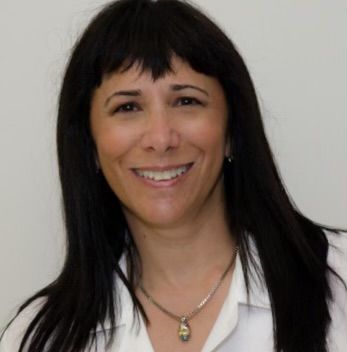
    Robyn Faye, a gynecologist at Jefferson Abington Hospital, specializes in menopause and sexual health.Courtesy of Robyn Faye

    What triggered worry about metals in tampons?

    A 2024 study by the University of California, Berkeley raised alarms after finding trace amounts of 16 metals — arsenic, cadmium, lead, mercury, nickel — in more than a dozen different tampon unnamed brands.

    The study found lead concentrations were higher in non-organic tampons, while arsenic was higher in organic tampons.

    Tampons are made with cotton, rayon, or both. Researchers believe cotton can absorb metals from water, soil, or industrial contaminants near fields. Some metal might get added to tampons during manufacturing.

    Metals have been linked to increased risk of dementia, cancer, kidney damage, and cardiovascular and neurological harm.

    The Berkeley study had a major shortcoming, however. It showed that metals exist inside raw tampon materials, but it did not test whether they leach out or get absorbed into the body, and if so, how much.

    “Obviously, there was a concern about what the exposure would be to women using these tampons,” Faye said. “So they needed to look into the potential toxicological risk.”

    What did the new FDA study find?

    The FDA-led study, recently published in the journal Toxicological Sciences, tested 11 tampon products from six different brands sold in the United States. It did not name the brands, nor test any scented tampons.

    The agency regulates tampons as “medical devices.”

    While FDA scientists detected 19 metals at trace levels in tampons, they found “negligible toxicological concern.”

    “The levels of metals released from tampons are not expected to result in adverse health effects,” the study concluded.

    Scientists created a “worst-case” exposure, using a testing method that extracted as much metal out of the fibers as possible, under circumstances far more intensive than normal tampon use.

    “They exaggerated the risk,” said Faye, who did not work on the study. “So the real-world exposure is probably even lower.”

    The bottom line, she said, is tampons are safe to use.

    What concerns do your patients have about tampons?

    Faye said older women still worry about “toxic shock syndrome,” a rare bacterial infection caused from an open cut or vaginal wound. Many women still mistakenly believe it is a common risk from wearing a tampon too long.

    Most younger patients, however, don’t use tampons.

    They prefer reusable menstrual cups, special absorbent underwear, or insertable discs, because they are environmentally friendly.

    “The trend in the younger women population is actually throwing out their tampons,” Faye said. “It’s interesting that the FDA is now doing a study on tampons when fewer girls are using them.”