Category: Nation & World

  • Iran security chief threatens neighbors against economic measures

    Iran security chief threatens neighbors against economic measures

    The new leader of Iran’s top security body is threatening neighbors against joining new U.S. efforts to squeeze Tehran’s economy. Egypt is trying to revive Iran-U.S. negotiations. And Iraq and Iran say Tehran has helped some ships carrying Iraqi oil to transit the Strait of Hormuz. France and Saudi Arabia are expected to discuss plans to bypass the waterway.

    Meanwhile, Israel has carried out strikes in Syria and in Gaza.

    Iran’s new top security adviser issues threats

    The hard-line new leader of Iran’s Supreme National Security Council threatened Tehran’s neighbors against joining the new U.S. effort to hurt Iran’s economy, and accused the United States of increasing global nuclear insecurity with months of war.

    “If (Trump) wants to do something, we will retaliate in a seismic manner,” he said in an interview with the state broadcaster that aired Saturday.

    Mohsen Rezaei was named this month as part of senior appointments widely seen as hardening Tehran’s political and military stance. His interview with IRIB is his most extensive public statement since then.

    Rezaei said Iran would target oil-shipping routes out of the Persian Gulf — alternatives to the Strait of Hormuz — if neighbors join what he described as the economic war against Iran. Those neighbors would be considered enemies and “we will target their interests,” he said.

    U.S. President Donald Trump in the past week has vowed to increase Iran’s pain by imposing an “unprecedented” level of economic warfare and isolation. Iran has lived under sanctions for years.

    Rezaei said discussions with Oman, located on the other side of the strait, over management of it were ongoing, and said fees would be imposed. Iran asserted control over what was seen as an international waterway shortly after the U.S. and Israel attacked on Feb. 28.

    Rezaei also vowed to make changes to Iran’s diplomacy and bring new capabilities to what he called the next war. He warned the U.S. against sending more military personnel to the region, and said the U.S. had increased nuclear insecurity because countries see that participating in international monitoring efforts, as Iran has done, is no protection against attack.

    Egypt tries to revive U.S.-Iran negotiations

    The top diplomats for Egypt and Iran discussed efforts to bring Tehran and Washington back to the negotiating table to settle the war, Egypt’s foreign ministry said.

    Iranian Foreign Minister Abbas Araghchi and Egyptian counterpart Badr Abdelatty also discussed the Iranian-Omani talks, the ministry said.

    Araghchi briefed Egypt’s foreign minister about “Iran’s view of ongoing developments, the course of negotiations and their challenges,” the ministry said, without elaborating. Araghchi confirmed the call. Separately, Araghchi said he had a call with Pakistan’s army chief, Field Marshal Asim Munir,

    Iran and Iraq say some Iraqi oil is facilitated through the strait

    The governments of Iraq and Iran said Tehran has helped some ships carrying Iraqi oil to transit the Strait of Hormuz, a key waterway for global oil, natural gas, and other supplies, but there were few details.

    “There is facilitation for some ships carrying Iraqi oil in the Strait of Hormuz,” Iraqi President Nizar Amidi said in comments published Saturday by the state-run news agency, adding that Iraq doesn’t have a national carrier for transporting oil.

    Iran’s state-run IRNA news agency said a number of Iraqi oil tankers have been permitted to transit. It was not clear how many or what Iran might have received in return.

    Syria says an Israeli drone strikes inside a village

    An Israeli drone strike on a vehicle wounded one person on Saturday in the southwestern Syrian village of Beit Jin, according to the Syrian state news agency SANA. Syria’s foreign ministry said several civilians were injured and called the strike a flagrant violation of the country’s sovereignty.

    The Israeli military said it targeted a “terrorist who advanced terror attacks in final stages of preparation,” without elaborating. It wasn’t immediately clear if it was the same strike.

    Israel has carried out hundreds of airstrikes around Syria after the ouster of former President Bashar Assad in late 2024, mainly destroying army assets to keep them out of the hands of his successors.

    Messages differ on the Golan Heights

    In an interview on Friday with Mario Nawfal, a Lebanese-Australian entrepreneur, U.S. Ambassador Tom Barrack said Israel “still” occupies the Golan Heights in violation of U.N. resolutions.

    Israeli Defense Minister Israel Katz on Saturday in a statement called Barrack’s remarks “full of inaccuracies and positions that contradict Trump’s own position.”

    Israel captured the Golan Heights from Syria in the 1967 war and annexed it in 1981. The U.N. considers the territory occupied Syrian land. But in March 2019, Trump signed a proclamation recognizing Israeli sovereignty over the Golan Heights, reversing decades of U.S. policy.

    French president, Saudi crown prince will meet

    French President Emmanuel Macron and Saudi Crown Prince Mohammed bin Salman are expected to discuss plans to develop alternative routes to the Strait of Hormuz during the Saudi leader’s two-day visit to Paris that starts on Sunday, according to officials in the presidency who weren’t authorized to be publicly named.

    Proposals include increasing trade through Omani ports outside of the Persian Gulf, expanding or doubling pipelines in Saudi Arabia and elsewhere, and developing new rail links, the officials said.

    France and Saudi Arabia have formed a task force on energy and logistics connections between the Middle East and Europe that is scheduled to meet at the ministerial level Monday. The officials said the work would focus on identifying the most strategic projects, securing financing, and establishing roles for French companies.

    An Israeli strike in Gaza kills 1 Palestinian

    An Israeli strike on the backyard of a house in central Gaza killed one Palestinian and wounded another Saturday, according to health officials at Al-Aqsa Martyrs hospital.

    Israel’s military said it targeted Sharif al-Hasanat, a Hamas commander who “advanced terror attacks and took part in efforts to restore Hamas’ underground infrastructure.” Days earlier, a U.S. negotiator reportedly asked Israel to draw down attacks while seeking to make progress on the ceasefire.


  • Trump urges court to reject BBC’s bid to secure records from his family in defamation case

    Trump urges court to reject BBC’s bid to secure records from his family in defamation case

    WASHINGTON — President Donald Trump has urged a federal judge to reject the BBC’s request for the court’s help in securing testimony and documents from three family members in response to his $10 billion defamation lawsuit against the British broadcaster.

    The BBC is trying to gain “politically-driven leverage” over Trump by serving subpoenas on daughter Ivanka Trump, son-in-law Jared Kushner and son Donald Trump Jr., personal lawyers for the Republican president argued in a court filing Friday.

    U.S. District Judge Jeffrey Kuntz in Miami did not immediately rule on the dispute.

    Kuntz, who was nominated to the bench by Trump, inherited the president’s lawsuit from another judge less than a week ago. Court filings did not immediately specify a reason for the case’s reassignment. The previous judge has set a February trial date.

    In May, a process server working for the BBC tried to serve subpoenas on Ivanka Trump and Kushner at their residence but encountered Secret Service agents who said they were not authorized to accept it, according to the president’s lawyers. They said the process server also visited Trump Tower in New York several days later in a failed attempt to serve Donald Trump Jr.

    In a court filing last week, the broadcaster asked for the court’s permission to serve subpoenas on Trump’s family members by certified mail instead of in person.

    Trump’s lawsuit, filed in December, accuses the BBC of deceptively editing portions of the speech that he delivered near the White House on Jan. 6, 2021, when a mob of his supporters attacked the Capitol to try to stop Congress from certifying Democrat Joe Biden’s victory over Trump. The suit claims the BBC spliced together separate parts of Trump’s speech to intentionally misrepresent what he said.

    The lawsuit alleges the BBC aired its documentary a week before the 2024 presidential election in “a brazen attempt to interfere in and influence” the outcome to Trump’s detriment.

    “The relief that the BBC’s Motion seeks cannot be segregated from the politically charged discovery campaign that it is based on, and which has already been ruled as improperly overbroad by this Court,” Trump’s lawyers wrote.

    The BBC has apologized to Trump for the misleading edit, but it denies defaming him.

  • TikTok settles with U.S. over child privacy concerns for $400 million

    TikTok settles with U.S. over child privacy concerns for $400 million

    WASHINGTON — TikTok on Friday reached a $400 million settlement in a lawsuit brought by the Justice Department that accused the company of illegally gathering children’s information.

    The 2024 suit, filed under the Biden administration, claimed that TikTok had gathered data from users under the age of 13 without parental permission. The suit accused TikTok of knowingly allowing children to create accounts and of failing to honor parents’ requests to delete their children’s accounts.

    TikTok violated federal privacy law along with a 2019 agreement with the government in which the app promised to take steps to protect children’s privacy, according to the government.

    Under the settlement announced Friday, TikTok will pay $300 million. The Justice Department also asked the court to eliminate the 2019 agreement, after which TikTok would pay the government an additional $100 million, according to a Justice Department news release.

    The settlement is the latest by the Trump administration, as it takes a softer approach toward ongoing government litigation against several major companies.

    In March, the Justice Department settled a lawsuit that accused Live Nation, the owner of Ticketmaster, of illegally maintaining a monopoly. The government also reached a settlement last year that allowed the technology company Hewlett Packard Enterprise to buy a rival, Juniper Networks, over the objection of some state attorneys general.

    The settlement between TikTok and the government also marks the latest win for the popular short-video app under the second Trump administration.

    During President Donald Trump’s first term, he signed an executive order to force the app’s Chinese owner, ByteDance, to sell it. But TikTok successfully sued to block that ban. In 2024, former President Joe Biden signed a law that would ban the app unless it was sold to a non-Chinese owner.

    After Trump returned to office, he repeatedly delayed enforcement of that law. In January, ByteDance announced that it had reached a deal, hammered out with the U.S. government, that spun off its American operations to a group of non-Chinese investors.

    Stanley E. Woodward Jr., an associate attorney general, called the settlement “a major victory for American children and parents” in a statement. A spokesperson for the U.S. version of TikTok did not immediately respond to a request for comment.

    This article originally appeared in the New York Times.

  • Federal judge vacates Trump policy that suspended processing of immigration visas from 75 countries

    Federal judge vacates Trump policy that suspended processing of immigration visas from 75 countries

    A federal judge in New York has vacated a Trump administration policy that suspended the processing of visas from 75 countries, including Afghanistan, Iran, Russia, and Somalia, whose nationals the Trump administration deemed likely to require public assistance in the United States.

    U.S. District Judge Jeannette Vargas, an appointee of former President Joe Biden, set aside the policy Friday as “contrary to law and in excess of statutory authority.”

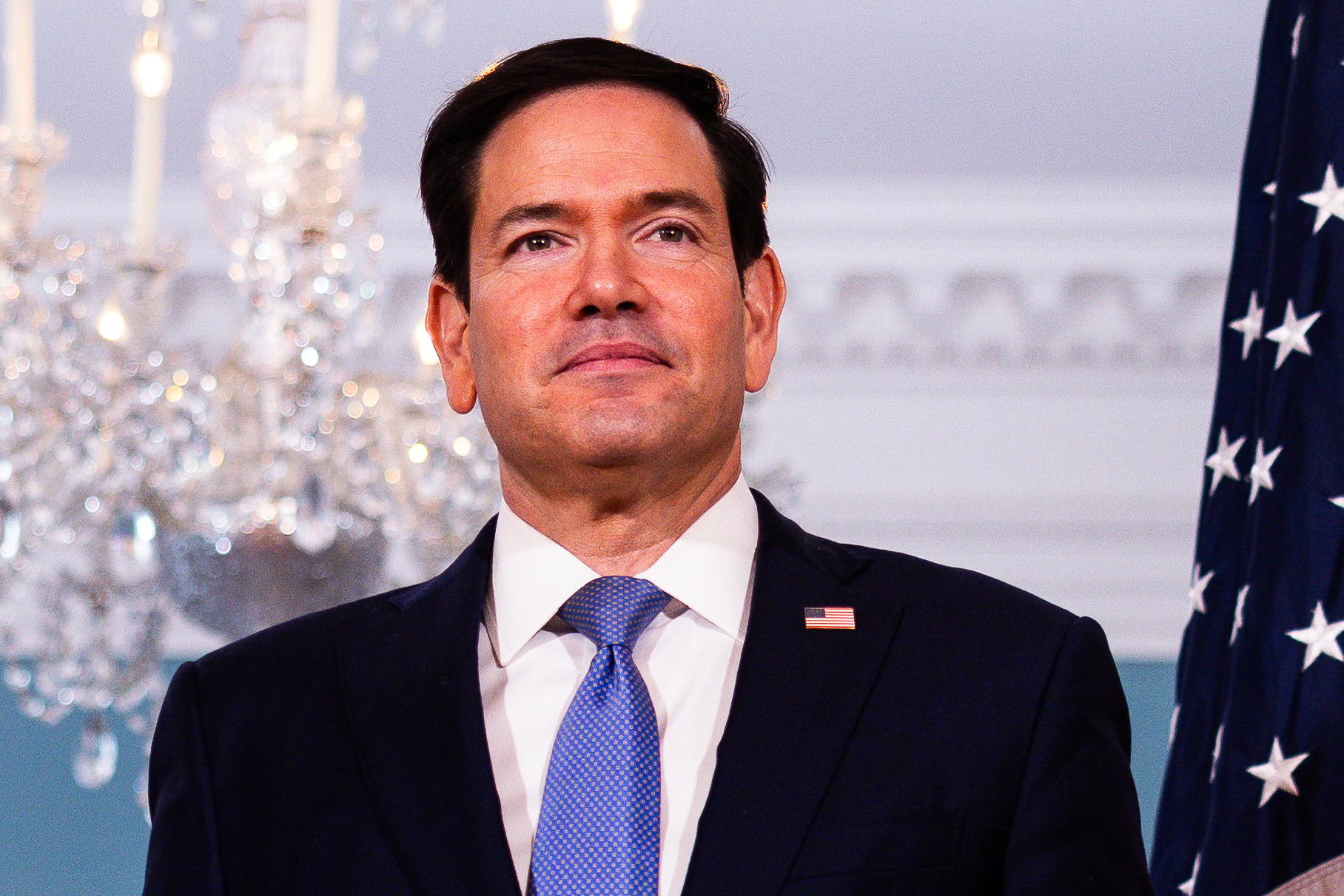
    Secretary of State Marco Rubio exceeded his authority by issuing the policy, which “runs afoul” of the Immigration and Nationality Act by mandating “the refusal of visas to eligible applicants without any basis in law,” the judge ruled.

    Judge says power lies with consular officers

    Vargas said the policy also undermines the congressional requirement that puts consular officers at the forefront of any visa decision.

    “Congress imbued these officers with exclusive authority and discretion to determine if an immigrant is eligible for a visa based upon review of specific and detailed criteria set forth in the statute,” she wrote. “The Policy, which categorically prohibits the issuance of immigrant visas based upon the nationality of the applicant, represents a direct abrogation of this statutory scheme.”

    The policy was challenged by two nonprofit organizations along with 11 individuals, including six whose family members had been refused visas. The remaining five are outside the country and had filed “employment-based petitions” to come to the United States.

    Advocates say keeping families apart is cruel

    “We welcome this ruling because, at its heart, this case is about keeping families together,” said Anna Gallagher, the executive director of CLINIC, a national nonprofit that provides training, resources, and support to a network of immigration legal service providers and was one of the plaintiffs.

    “Catholic social teaching calls us to uphold the dignity of every person and recognize the family as the foundation of society,” she said in a statement. “This decision affirms both those values and the rule of law, allowing families to once again move forward toward reunification.”

    Another plaintiff is African Communities Together, a Harlem-based nonprofit. One of its leaders called the ruling “a tremendous victory for the rule of law.”

    “This unlawful and racist ban caused immeasurable harm, cruelly keeping families and loved ones apart,” Diana Konate, deputy executive director for policy and advocacy, said in a statement. “Today, we are elated to tell our community members: this ban is no more.”

    Trump expands his anti-immigration agenda

    President Donald Trump has imposed a growing list of immigration and travel bans mostly for people from Africa, Asia, and Latin America. The State Department said Saturday that the Trump administration is “protecting the American people by upholding the highest standards of screening and vetting of visa applicants,” and that it would not comment on pending litigation.

    At the time the policy was issued, the State Department said it had instructed consular officers to halt immigrant visa applications from the 75 countries in accordance with a broader order in November that tightened rules around potential immigrants who might become “public charges.” Relying on Council of Economic Advisers data, the State Department said that more than 30% of households with immigrants from these countries received some form of public assistance.

    A separate notice sent to all U.S. embassies and consulates said that non-immigrant visa applicants also should be “fully vetted and screened” for the possibility that they might seek public benefits in the United States.

    The cable, a copy of which was obtained by the Associated Press, noted several times that the applicant must prove they won’t apply for public benefits while in the U.S., and that consular officers who suspect the applicant might apply should require them to fill out a form proving their financial bona fides.

    The ruling is the latest example of the courts upending Trump’s immigration agenda. In June, a federal judge struck down a Trump administration policy that made it harder for immigrants from dozens of countries to enter and stay in America — affecting elements like asylum, work permits, green cards, and citizenship applications. That judge said the policy threw countless immigrants’ lives “into indeterminate legal limbo,” and accused the U.S. Citizenship and Immigration Services of ignoring the law.

  • Canada will impose retaliatory tariffs on U.S. goods beginning Sept. 8 as trade negotiations collapse

    Canada will impose retaliatory tariffs on U.S. goods beginning Sept. 8 as trade negotiations collapse

    WASHINGTON — The United States imposed 50% tariffs on $20 billion worth of Canadian products early Saturday, and Canada said it would retaliate beginning Sept. 8 after last-ditch negotiations failed to resolve the latest strain in relations between the historic allies.

    President Donald Trump’s import taxes will hit about 5% of what Canada ships to the United States every year, including products ranging from hockey sticks to tongue depressors.

    Carney said, “in the coming days, we will release the details of these new tariff measures, which will come into force the Tuesday after Labor Day.” The dollar-for-dollar retaliation would target steel, dairy, appliances, agricultural equipment, pulp and paper, and electronics, he said from Ottawa.

    He disclosed that Canada had been willing to drop remaining retaliatory tariffs on steel, aluminum, and autos if the United States substantially lowered its own, and to encourage provinces to restore U.S. alcohol sales. But he said Washington’s final demands went too far, saying, “They asked too much and offered too little,” Carney said.

    Trump’s top trade negotiator, Jamieson Greer, said the Republican administration was offering to cut tariffs on steel, autos, and lumber, “things that are sensitive for them. And they’ve always had the best deal, and they still would have an even better deal, but they didn’t want that,” he told Fox & Friends Weekend.

    He added: “We’re moving forward with measures that respond to Canadian retaliation.”

    The moves also call into question the future of a North American trade agreement covering the United States, Canada, and Mexico that is crucial to industry in all three countries.

    Carney said the U.S. added last-minute terms that would have reduced tariff relief for Canadian-made vehicles, restricted Canada’s ability to strike trade deals with other countries, and weakened protections for language, culture, and sovereignty. He said such demands were “unacceptable.”

    But Greer, the U.S. trade representative, said that after a year of retaliation by its longtime ally, “We’ve said enough, and so we’ve taken countermeasures. Our interest is in protecting American workers and protecting American supply chains.”

    No further talks are planned.

    The breakdown in negotiations marked a sharp reversal from two days earlier, when officials from the two countries sounded as if they were headed toward a compromise.

    Carney said Ottawa would “hit back” with targeted tariff protection for industries exposed to the new U.S. duties, including some steel products.

    Ontario Premier Doug Ford, who leads Canada’s most populous province, backed Carney’s response, saying the prime minister had his “full support” for retaliation “tariff for tariff, dollar for dollar” and that “everything needs to be on the table.”

    A typically cooperative alliance goes sour

    The political impact will likely be even bigger than the economic fallout. The countries sold each other $880 billion worth of goods and services last year.

    The tariffs were initially supposed to kick in at 12:01 a.m. Wednesday. Trump extended the deadline for three days to allow talks to continue, but the countries could not reach an agreement in time.

    The U.S. and Canada have wrangled for decades over trade, poking each other over sore spots such as Canadian softwood lumber imports and U.S. access to Canada’s protected dairy market.

    Somehow, they still managed to remain friends, allies, and trading partners. Canadian soldiers fought alongside Americans in Afghanistan after 9/11. The 5,525-mile U.S.-Canada border is undefended, and nearly 330,000 people and $2 billion worth of goods cross it every day; 800,000 Canadians live in the United States.

    Trump’s approach to dealing with Canada marks an extraordinary departure from the traditionally cooperative relationship between the two countries. Trump has imposed tariffs on Canadian goods in a push to bring manufacturing back to the United States and made inflammatory comments about turning Canada into America’s 51st state.

    Carney said Canada had recognized that “America has changed” and that the two countries would “not return to our old relationship.”

    Canadians and Americans are frustrated

    The Canadian public is fed up. A petition to expel U.S. Ambassador Pete Hoekstra, a Trump ally, has collected nearly 248,000 signatures since July 21. It accuses the former Republican congressman from Michigan of having “normalized’’ Trump’s talk of annexing Canada, among other things.

    The two countries had good reasons to find a compromise.

    Nearly 72% of Canada’s goods exports last year went to the United States. The Trump administration might be wary of imposing new tariffs — paid by U.S. importers who try to pass along the cost to consumers via higher prices — before the November midterm elections. American voters are already frustrated with the high cost of living.

    “Canada likely wanted further sector-specific relief than the U.S. was willing to offer, or Canada’s concessions did not go far enough,’’ said Ryan Majerus, a partner at King & Spalding and a former U.S. trade official. ”Either way, I think both sides will be under immense pressure in the coming days to still find an off-ramp. But if Canada has agreed to also impose tariffs, the off-ramp may be even harder to find.”

    Candace Laing, president and CEO of the Canadian Chamber of Commerce, called the tariffs “a body blow to North American competitiveness” and warned they would raise costs for Americans while threatening Canadian customers, investment, and small businesses.

    Trump has turned to Depression-era trade penalties

    Trump has made tariffs the centerpiece of his second-term economic agenda. Last year, he imposed double-digit import taxes on almost every country, justifying them by declaring the long-standing U.S. trade deficit a national emergency. The Supreme Court in February ruled that he had overstepped his authority. The justices struck down the trade penalties and set the stage for the federal government to pay refunds to importers.

    So Trump has looked for other legal authority to justify tariffs.

    To punish Canada, he reached back to the Great Depression, invoking Section 338 of the Tariff Act of 1930 to threaten 50% tariffs on products that account for about 5% of Canadian exports to the United States.

    Nearly a century ago, with the U.S. and world economies in collapse, Congress passed the 1930 tariff law, imposing taxes on imports from around the world. Known as the Smoot-Hawley tariffs after their congressional sponsors, they are notorious among economists and historians for limiting world commerce and making the Great Depression worse.

    Section 338, which has never been used before to impose tariffs, authorizes the president to slap import taxes of up to 50% on imports from countries that have discriminated against U.S. businesses. No investigation is required to justify the levies. Nor is there any limit on how long they can stay in place.

    The rift comes as the United States, Mexico, and Canada are trying to renew a trade agreement that Trump negotiated in his first term and once praised as a triumph. The United States has begun formal talks with Mexico over revamping the US-Mexico-Canada Agreement, known as USMCA. But talks with Canada have not begun and escalating trade conflict casts doubt on whether they will.

    “Canada told the Americans in advance that if these tariffs landed, it would stop negotiating and retaliate,’’ said Barry Appleton, senior fellow at the Center for International Law at New York Law School. ”The American trade representative said publicly he would not tolerate retaliation. Both sides have now committed themselves in public, which is how escalation stops being a choice.’’

  • Mark Zuckerberg buys an Irish castle

    Mark Zuckerberg buys an Irish castle

    For two centuries, Strancally Castle’s towers and parapets have overlooked a bend in the Blackwater River and a swath of Irish land as it passed from one wealthy family to the next.

    It now joins the holdings of Mark Zuckerberg, one of the 21st century’s most prominent landowners, along with a place on an artificial island in Miami Beach, a large house in Washington, and compounds in California and Hawaii.

    A spokesperson for Zuckerberg, the 42-year-old billionaire CEO of Meta, confirmed this week that he had bought the castle, a Gothic-style estate in Waterford County, a region of southeastern Ireland with about 130,000 people. The castle was built around 1830 and renovated in the early 2000s.

    The purchase does not appear to be listed in Ireland’s ​property price register. The Irish Times, which reported the news Thursday, estimated that the estate could be worth $23 million to $35 million.

    Around the middle of the 19th century, the estate was valued at 61 pounds, according to an entry about the castle in a University of Galway archive of landed estates that also mentions it contained an art collection and a library.

    “Mark and his family look forward to caring for this historic home and visiting when traveling to Ireland,” said Brian Baker, the spokesperson for Zuckerberg.

    The castle was built for a former member of Parliament, John Keily, according to Ireland’s National Built Heritage Service, which describes the building as both “muscular” and “dour.”

    The estate has never left private hands, leaving the public to glimpse its interior only in historical archives. An entry about Keily on “The History of Parliament” website says the house was designed “on a lavish scale; it took a brisk walk of 4½ minutes to reach the dining room from the kitchen.”

    The castle was most recently owned by Michael Alen-Buckley, the chairperson of the investment firm RAB Capital, and his wife, Giancarla Alen-Buckley, a member of the family behind the luxury Rocco Forte Hotels group.

    “We leave our home of twenty-five years fondly and are grateful for the opportunity we have been given to save and restore Strancally Castle,” the couple said in a statement. “We are delighted that Mark and his family intend to build on our stewardship by continuing to invest in maintaining and enhancing the property and grounds as their home.”

    It is not clear how much time Zuckerberg or his family (he has three daughters with his wife, Priscilla Chan) will spend in Ireland, but his company has a significant presence there.

    Like many major U.S. companies, Meta uses an office in Dublin as its European headquarters, and about 1,500 employees work there. Ireland has become a hub for multinational corporations, both for its relatively low corporate income tax rate — 15% for big companies — and its history of allowing corporations to shift profits out of the country into places like Bermuda, Grand Cayman, and the Isle of Man.

    Ireland’s status as a base for several technological giants has made it a key player in enforcing European Union regulations and, increasingly, a center of protest against the companies and their data centers.

    Asked for comment about Zuckerberg’s purchase, the Waterford City and County Council extolled the area’s attractions — wild coastlines and mountains, picturesque festivals and towns — and the history of the county and city.

    “Founded by the Vikings in 914 AD, Waterford is Ireland’s Oldest City that has been shaped by centuries of history and today it is evident that the county’s remarkable architecture keeps its past vividly present,” the council said in an email.

    “We hope that Mr. Zuckerberg and his family fully enjoy all that Waterford has to offer.”

    This article originally appeared in the New York Times.

  • ICE begins deporting Haitians who lost TPS back to homeland

    ICE begins deporting Haitians who lost TPS back to homeland

    The first deportation flight to Haiti since the Trump administration ended humanitarian protections for 350,000 people living in the United States landed Thursday in the Caribbean nation, and activists say immigration arrests are beginning to ramp up.

    The flight carrying 170 people, ranging in age from 19 to 71, landed in Cap-Haitien, on the northern coast of Haiti. Commercial flights from the U.S. have been blocked from landing in the Caribbean nation’s primary airport in the capital of Port-au-Prince due to gang activity and reports of aircraft being struck by gunfire.

    The federal government has been sending deportees back to Haiti on monthly flights, but Thursday’s removal was among the largest that community leaders said they had seen during the second Trump administration.

    Many of the passengers had been detained by U.S. Immigration and Customs Enforcement in the last three weeks, and at least one had recently lost temporary protected status, according to Guerline Jozef of the Haitian Bridge Alliance.

    “People are losing TPS status and losing their asylum cases,” she said. “It’s become easier and easier to be taken and deported.”

    The Department of Homeland Security did not respond to questions about the deportation flight.

    For months, Haitians have been bracing for ICE to begin making arrests en masse, although the new enforcement push has unfolded slowly and quietly so far.

    DHS has placed ankle monitors on Haitians who have lost their protected status. Arrests have also been made in communities home to large numbers of people from the violence-ridden Caribbean nation.

    The U.S. Supreme Court cleared the way for the Trump administration to end humanitarian protections for Haitians in June, and in early August a federal judge took the final step in allowing the Trump administration to terminate the benefit for Haitians.

    On Thursday, community leaders in Springfield, Ohio, said ICE arrested a well-known Christian pastor, Joubert Adrien. He was driving home when officers boxed in his vehicle at a gas station, the activists said. He had recently lost TPS, according to Vilés Dorsainvil of the Haitian Support Center.

    The arrest has sent chills through Adrien’s congregation and the larger Haitian community, Dorsainvil added.

    ICE officers have also been spotted making arrests over the last week in Springfield outside grocery stores and after traffic stops. Local residents and clergy members have been protesting the arrests, and a legal advocacy organization has been trying to help those detained.

    Many Haitians in Springfield are now wondering if they will be the next to get arrested, community leaders said.

    Springfield became a focal point during President Donald Trump’s 2024 campaign after he falsely claimed that Haitian residents there were killing and eating their neighbors’ pets.

    The city includes a large number of the country’s middle class who worked as physicians, judges, and in other professions in Haiti, Dorsainvil said. They moved to Ohio after the country was plunged into chaos following the 2021 assassination of the country’s then-president, he said.

    “That’s why they left Haiti,” said Dorsainvil, himself a former TPS holder. “They were not looking for work. They left because they were at risk.”

    But in Springfield they have worked factory jobs, filled healthcare vacancies, continued their university studies, and started businesses. Now, instead of using their skills to benefit U.S. communities, Dorsainvil said, they face the possibility of being sent back to a place where they recently had urgent reasons to flee.

    Dorsainvil said he is fielding dozens of calls each day from terrified neighbors who tell of ICE visits to their homes. He heard from a woman on Thursday who couldn’t find her husband on ICE’s detainee locator website and was panicking, believing that he could be on the deportation flight.

    Deportees from the U.S. are especially vulnerable to kidnapping, extortion, and murder once they land in Haiti, Jozef said. Criminals think they have been given money by the Trump administration to self-deport or have savings from their time stateside, he said.

    U.S. military personnel who served in Haiti recently testified in Congress on the country’s gang crisis and characterized the nation as a conflict zone.

    Top Haitian government security officials have been kidnapped by armed groups. More than 1.4 million Haitians have been internally displaced and much of the population is going hungry.

    “This isn’t a country where anyone should be deported right now,” said Savi Arvey of Human Rights First, an advocacy group tracking deportation flights. “We are gravely concerned this administration seems poised to intentionally take legal status from people in service of its mass deportation campaign and intentionally and knowingly deporting people to danger.”

  • Palestinian teenager killed after Israeli settlers enter West Bank village

    Palestinian teenager killed after Israeli settlers enter West Bank village

    TEL AVIV, Israel — A Palestinian teenager was killed Friday after Israeli settlers entered a village near the West Bank city of Hebron, local officials said, the latest in a surge of violence in the territory that has drawn international condemnation.

    The rising settler violence against Palestinians in recent weeks has presented a mounting challenge for Israel’s military. It is responsible for maintaining law and order in the territory but has been hesitant to take forceful action against settlers.

    The Health Ministry of the Palestinian Authority identified the victim as 17-year-old Kareem Shlaldeh. Palestinian and Israeli authorities offered differing accounts of events Friday.

    Saad Shlaldeh, the mayor of the village, called Sair, said a large group of settlers had attacked the village around 10 a.m., killing one person and setting fire to property.

    “These people are thugs and more,” he said in a phone interview, adding that his account was based on conversations with witnesses.

    The Israeli military said soldiers were sent to the area of Sair following a report of Palestinians throwing rocks at Israeli civilians. The military added that the Israelis “were present in the area without advanced authorization.”

    The statement said a “security official” had opened fire, causing “Palestinian casualties,” without clarifying whether the shooter was a soldier. Israeli civilians were also wounded in the incident, the statement added.

    The events that led up to the settlers entering the village also remain unclear. Shlaldeh said he had no knowledge of Palestinians throwing rocks when asked about the Israeli military’s account.

    Nabil Tharawa, 61, a resident of the area, said a second Palestinian was wounded and transferred to a hospital in Hebron. Khalid al-Sharif, an official at Ahli Hospital in Hebron, said a wounded person from Sair was brought to the emergency room.

    The violence Friday came as tensions in the West Bank were running high after the Israeli government published a tender for the construction of houses in a West Bank settlement near Jerusalem. The project is referred to as E1.

    Over the past day, 11 nations, including France, Canada, and Britain, issued a joined statement condemning Israel for the move. They said it “will undermine the prospect of the two-state solution by driving a wedge through the West Bank and harming the territorial contiguity of the Palestinian Territories.”

    Much of the international community regards the West Bank as being a core part of any future Palestinian state.

    For roughly two decades, the E1 plan wound its way through a bureaucratic Israeli zoning process. But intense international opposition, including from the Obama and Biden administrations, had mostly kept the project dormant.

    That changed under the current Israeli government, the most right-wing in Israel’s history.

    Ed Miliband, Britain’s foreign secretary, said the publication of the tender was “unacceptable and destructive” in a post on social media.

    Gideon Saar, Israel’s foreign minister, fired back at Miliband, asserting that “the Jewish people have the right to live throughout the Land of Israel,” an apparent reference to all the land between the Mediterranean Sea and the Jordan River.

    This article originally appeared in the New York Times.

  • Cuba says U.S. sanctions are blocking its efforts to open the economy to private investment

    Cuba says U.S. sanctions are blocking its efforts to open the economy to private investment

    UNITED NATIONS — The United States has demanded that Cuba open up to private investment, and Cuba has passed sweeping reforms to encourage just that. So Cuba’s U.N. ambassador says he wants to know why Washington keeps piling on sanctions that stymie the very economic opening it has sought for decades.

    Ambassador Ernesto Soberón Guzmán, in an interview this week with the Associated Press, directed his question to U.S. Secretary of State Marco Rubio, the main architect of the Trump administration’s Cuba policy:

    “What are you afraid of? If you are so convinced that the Cuban government is an incompetent government, why do you need to implement almost every two weeks new sanctions?”

    The U.S. State Department responded to a request for comment with a quote from Rubio saying new sanctions will continue to be announced every couple of weeks to close off “escape valves that they’re trying to create in every mechanism.”

    Then on Thursday, the U.S. imposed more economic penalties on Cuban industries, targeting state-owned mining, metal, and construction companies.

    Cuba has been pushed to the brink by an oil blockade imposed by the United States in January on top of a decades-old embargo, coupled with the escalating sanctions. The moves by President Donald Trump’s administration, meant to put pressure on the government by depriving it of funding, have worsened already debilitating blackouts, cut workers off from public transport, crippled infrastructure, and deepened shortages in medicine and food in the Caribbean island nation.

    Guzmán said the sanctions are the main obstacle to Cuba opening up its economy. He said the impact of the U.S. measures — specifically the shortage of electricity and lack of fuel to run a business or travel — has turned off investors and tourists, a major source of Cuba’s income.

    Some companies have pulled out of Cuba, including the Spanish hotel chain Meliá, which relied on tourist revenue and cited “significant operational, legal, economic, and financial difficulties” in explaining its decision to leave.

    ”Literally, the United States has done everything imaginable to try to prevent foreign investors,” said William LeoGrande, a professor at American University and a leading expert on U.S.-Cuba relations. ”When they say, `Well, we want to see Cuba open up to foreign investment,’ they’re being disingenuous. … It’s not possible for them to succeed without some kind of sanctions relief.”

    The goal of Trump’s Republican administration, he said, is “not just to open up Cuba economically but to overthrow the Cuban government — to change the nature of the Cuban political system.”

    Cuba announces major economic shift

    John Kavulich, president of the U.S.-Cuba Trade and Economic Council, said Cuba had to make changes when it lost its economic lifeline with the U.S. ouster in January of Venezuelan leader Nicolás Maduro.

    “The result is the Cuban government in the last eight months made more commercial, economic, and financial changes to the country than they have as a group since the revolution,” he said.

    Nonetheless, the Trump administration keeps ratcheting up sanctions, putting more pressure on Cuba, which is responding by making more changes, Kavulich said.

    “But from our standpoint, there are two parts missing: One is Cuba implementing by regulation everything that it’s announced, and secondly, the Trump administration allowing U.S. companies to have more access to the Cuban marketplace while these changes are underway,” he said.

    The changes announced by Cuban President Miguel Díaz-Canel in June aim to significantly shift Cuba’s economy and industry, which have been strictly controlled by the socialist government since the 1959 revolution.

    They include more space for private businesses, imports and exports without the state as an intermediary, free hiring of personnel, authorization for private banks, investment by Cubans abroad, and opportunities for fast-food chains to establish themselves on the island.

    Guzmán said there are opportunities for investments in real estate, solar farms, and energy to help ease the country’s electricity shortage, as well as in marinas and the tourism industry.

    Christopher Hernandez-Roy, acting director of the Americas program at the Center for Strategic and International Studies, recalled that the last economic opening under President Barack Obama’s Democratic administration “was later throttled by the Cubans themselves, who feared that the opening went too far and appeared to threaten political control.”

    Today, he said, it appears the Cubans really do want economic reforms and outside investment. Díaz-Canel’s economic reforms are not impossible, but U.S. sanctions “significantly constrain their prospects for success,” Hernandez-Roy said.

    He noted the irony that U.S. pressure ”is helping push the Cubans toward greater economic liberalization out of necessity, while simultaneously limiting the resources and access necessary for those reforms to actually improve the economy.”

    Rubio says Cuba’s leaders ‘don’t know what they’re doing’

    In late June, after the reforms were announced, the U.S. slapped sanctions on five state companies, three linked to a business conglomerate run by Cuba’s Revolutionary Armed Forces. Best known as GAESA, it is believed to command nearly 40% of Cuba’s gross domestic product.

    Rubio, a former U.S. senator from Florida whose parents were born in Cuba, did not appear to be impressed by the newly announced economic changes. He last month called Cuba “a failed state” with “a bad economic model.” He said Cuba’s leaders “don’t know what they’re doing” and “don’t know how to fix their economy.”

    “I think the challenge that Cuba has faced for the last 15 years is they want to somewhat improve their economy, but they’re afraid that if they improve it too much they’ll lose political control over people,” he said.

    The United States is prepared “to do what we can do to effectuate a positive change in Cuba because it directly impacts our national security” since it is only 90 miles from the U.S. mainland, Rubio said. “And we want Cuba to be prosperous. We want Cuba to be free.”

    The Cuban ambassador said implementing the economic changes would be far easier without the sanctions, if American companies were involved in Cuba and if trade between the two countries was possible.

    He said the good news is that talks are taking place between the United States and Cuba. He declined to give details of what he called “very sensitive conversations.”

    “But the point here is that even when Cuba is changing a lot,” Guzmán said, “the U.S. government keeps the same policy of aggression towards the Cuban people.”

  • Pentagon fires Stars and Stripes leaders who criticized DOD’s interference

    Pentagon fires Stars and Stripes leaders who criticized DOD’s interference

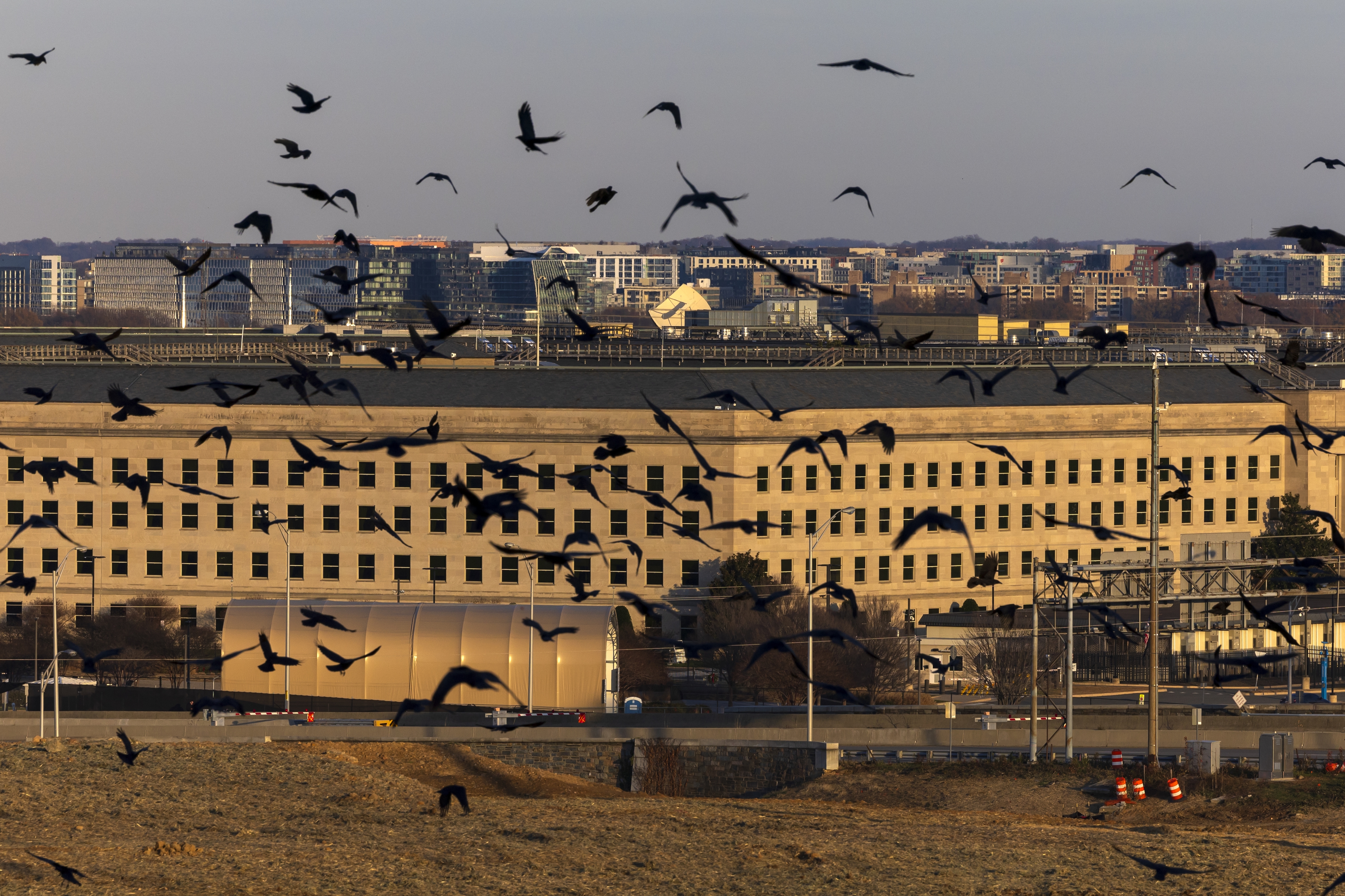
    The Pentagon on Friday fired the publisher and the editor in chief of Stars and Stripes, the military newspaper funded by the Department of Defense that has long enjoyed editorial independence from the government, according to the publication’s outgoing editor in chief.

    The Defense Department sent a separation notice to publisher Max Lederer, who announced his retirement this week, telling staff in a parting note he had disagreed with decisions from Pentagon top brass.

    Under Defense Secretary Pete Hegseth, the publication’s independence has come under threat during the second Trump administration as top Pentagon leaders have derided the newspaper as “woke.”

    Erik Slavin, the editor in chief, said he and reporter Lara Korte also received separation notices Friday.

    Slavin said he and Korte were fired for participating in a CBS News interview, during which he said any hypothetical censorship of the military newspaper would cross a red line.

    “I stand by the principle that Stars and Stripes should remain independent for service members,” Slavin said in a Friday interview with the Washington Post.

    In the interview with CBS’ Sunday Morning, Korte discussed the increasingly tense relationship between the publication and the DOD. “I am working for Stars and Stripes. Not for the Pentagon,” she said. “Not for any administration. Not for any policymaker. I am here to cover the military community.”

    “I consider it a great privilege to live alongside members of the military and share their stories,” Korte wrote in a Friday statement. “These firings are a shame for the institution and service members, who swore to defend the Constitution and deserve the right to a free and independent press.”

    Lederer did not immediately respond to a request for comment.

    The Pentagon confirmed the firings and said the three employees have a five-day period to appeal. They declined to offer further comment.

    In April, the Pentagon fired the Stars and Stripes ombudsman, a role charged by Congress with safeguarding the paper’s editorial independence.