The letters that follow Robin Cogan’s name represent some of healthcare’s most impressive achievements. NCSN, nationally certified school nurse. FNASN, fellow of the National Academy of School Nursing. FAAN, fellow of the American Academy of Nursing. Also, RN and MEd.
Then there are the awards. Two-time President’s Award winner from the National Association of School Nurses. The 2017 Population Health Hero Award from the New Jersey Department of Health. The Johnson & Johnson 2017 School Nurse of the Year. And many more.
Robin Cogan joined the Camden City School District as a school nurse in 2001 after training earlier as an art therapist and spending 14 years as a psychiatric clinical nurse and corporate health services manager. It was with the school district and its students, families, and staff where she really found her groove.
For nearly three decades, Robin Cogan championed school safety and population healthcare, and advocated tirelessly for school nurses everywhere. Her website, blog, frequent podcast appearances, and wide-ranging institutional activism gave voice to school nursing stories, and combated gun violence and other pressing problems.
On May 10, Robin Cogan blogged: “The profession is better, and so are countless children, because of the relentless, brilliant nurses who choose school nursing year after year.”
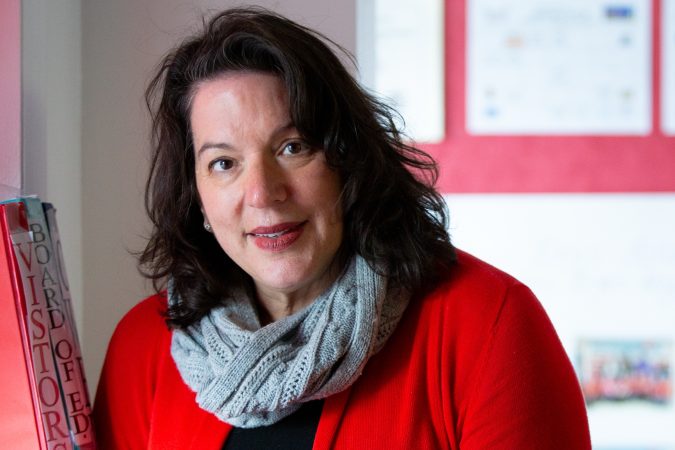
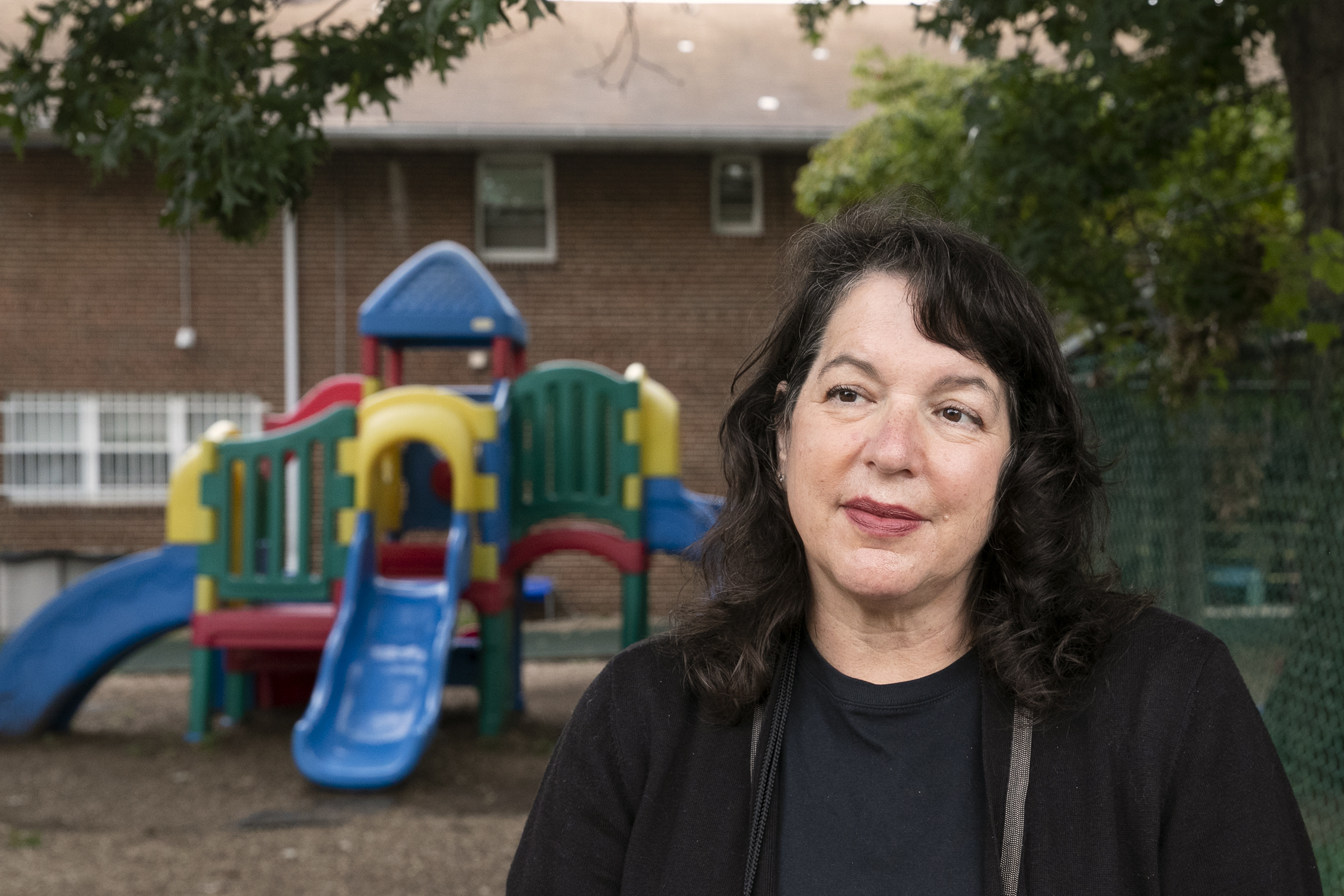
Mrs. Cogan became a school nurse in Camden in 2001.Heather Khalifa / Staff Photographer
On Thursday, June 11, Robin Cogan died of cancer at Cooper University Hospital in Camden. She was 65.
“Robin dedicated her life to caring for others,” Pamela K. Clark, president of the Camden Education Association, said in a tribute. “Her work extended far beyond the walls of our schools, leaving a lasting impact on the profession she loved.”
Born in Philadelphia, Mrs. Cogan graduated from Cherry Hill West High School in 1978 and earned a bachelor’s degree in art therapy and psychology in 1982 at what is now the College of New Jersey in Trenton. She gained her nursing credentials at the Helene Fuld College of Nursing in New York and Rowan University, and earned a master’s degree in clinical, counseling, and applied psychology at Wilmington University in Delaware in 2009.
As a school nurse in Camden, she oversaw more than 900 students from preschool through eighth grade at Cooper’s Poynt School and, most recently, more than 400 students at three preschools. She took temperatures, counseled worried parents, and personally helped thousands of people weather the COVID-19 pandemic.
“She influenced policy, championed health equity, elevated the role of school nurses,” a colleague said on Facebook, “and reminded us that one person truly can create ripples that become waves.”
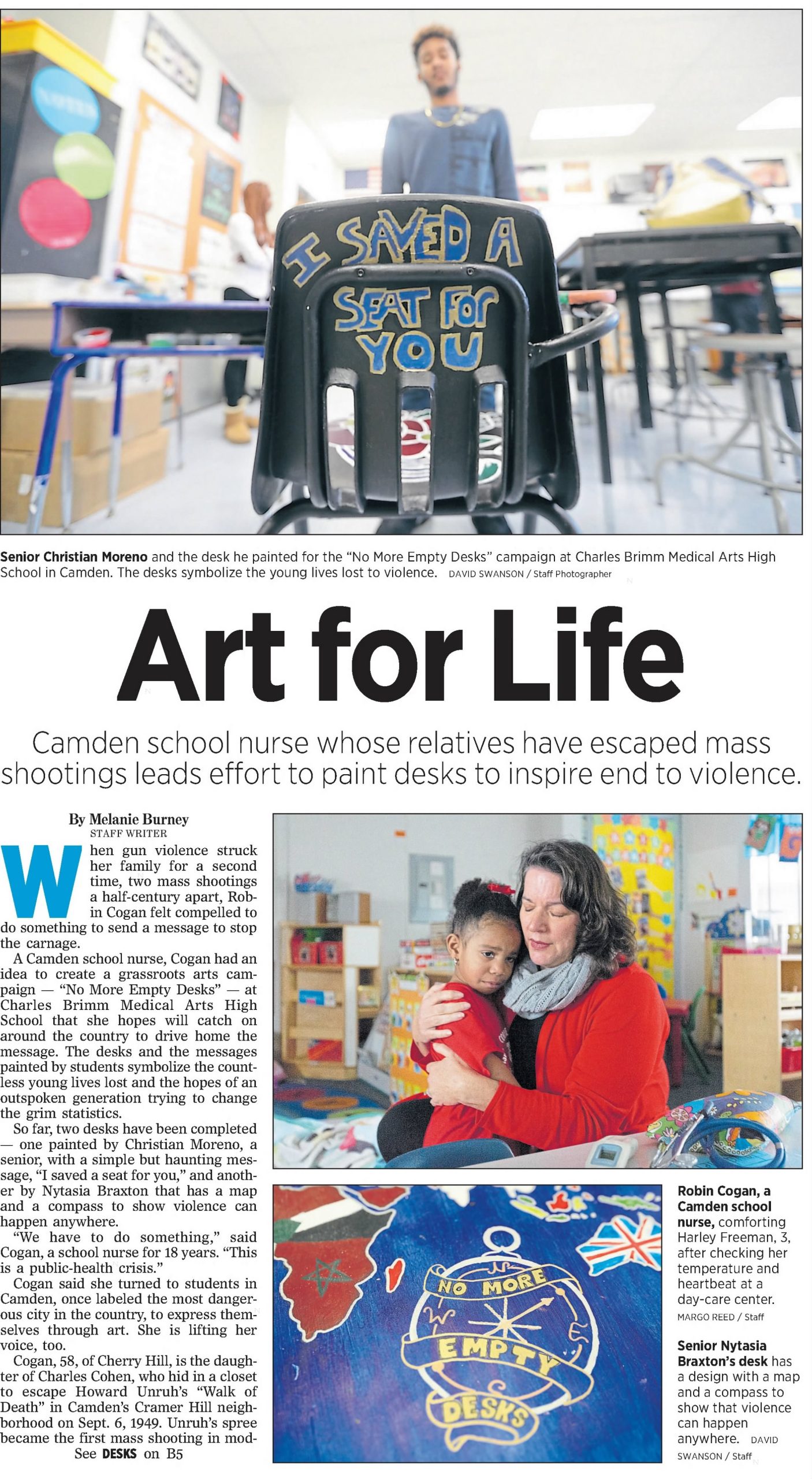
The Inquirer published this story and photos about Mrs. Cogan’s art program in 2019.Newspapers.com
She was featured in The Inquirer and other publications, and appeared on TV and radio programs and podcasts. She focused on “shared values” to connect people, she said often, and posted the motto for her Relentless Nurse website on the homepage: “Be relentless in your practice whatever it is.”
Robin Michelle Cohen was born June 28, 1960. She met Ed Cogan in college, and they married in 1984, lived in Trenton and Cherry Hill, and had twin daughters Allie and Jill.
Mrs. Cogan was driven to address gun violence, she said, after her father survived a mass murder in Camden in 1949, and her niece survived the 2018 mass shooting at Marjory Stoneman Douglas High School in Florida. “I hope my legacy is helping solve this crisis,” she told The Inquirer in 2022. “Don’t we owe that to our kids?”
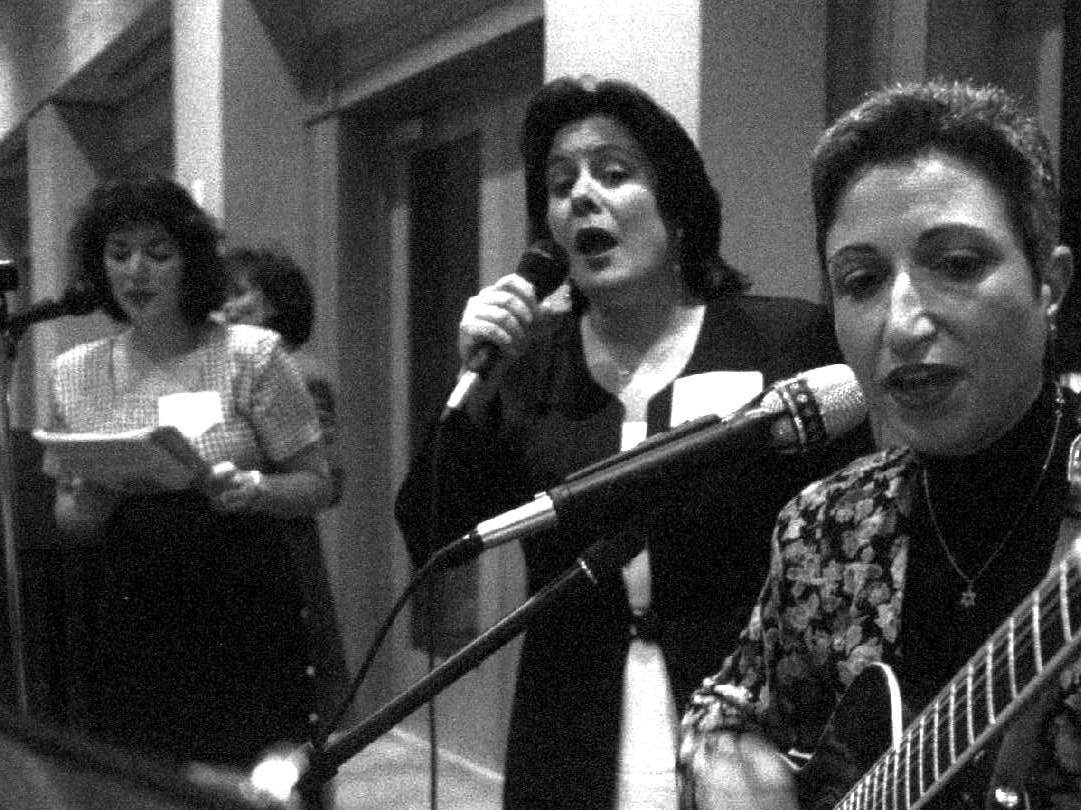
This photo of Mrs. Cogan (left) and others at the old Temple Emanuel in Cherry Hill appeared in The Inquirer in 1996.Elizabeth Robertson / Staff Photographer
She was a talented painter and designed a popular pin that she and a friend sold in a home-based spiritual jewelry and art business. She loved nature and 1970s folk music. She enjoyed hosting Thanksgiving dinners and visiting the Jersey Shore. She was one-time president of the old Temple Emanuel Sisterhood in Cherry Hill.
“She was a helper,” said her daughter Allie. “She was good at relationships and never really turned off her working mind.”
In addition to her husband and daughters, Mrs. Cogan is survived by a granddaughter, Nora, a nephew, Matthew, sisters Lori and Merri, and other relatives.
Private services were held earlier. A celebration of her life is to be held later.
Officials, environmental health advocates, and skin care industry groups are expressing hope that the Food and Drug Administration’s approval of a sunscreen ingredient on June 9 — after consideration for two decades, and global use for nearly as long — will help restore Americans’ wavering faith in sunscreen.
“Bemotrizinol has been used safely in Europe for decades,” Health and Human Services Secretary Robert F. Kennedy Jr. said in the announcement about the approval. “FDA’s action will increase competition and consumer confidence in sunscreen products.”
Nonprofits that advocate for health, such as the Environmental Working Group, and the skin care industry alike had lobbied for approval of the ingredient, which makes sunscreens sheerer and lighter on the skin than many available American options while blocking a wider spectrum of ultraviolet rays that can cause premature aging and skin cancer.
The newly approved sunscreen filter will allow companies to reformulate sunscreens to address consumers’ concerns, said Carl D’Ruiz, a senior manager at DSM-Firmenich, a Swiss maker of sunscreen chemicals that applied for the FDA approval. In addition to allowing companies to offer what the FDA calls safe and effective formulations, he said, the approval will allow sunscreens that are more like sought-after South Korean brands to be sold in the U.S. by autumn.
Confidence in U.S. sunscreen has faltered on two fronts: among those concerned about what’s in the sunscreens they use and those who believe sun exposure is healthy. But will the new ingredient win the trust of Make America Healthy Again skeptics and Gen Zers intentionally tanning? RFK Jr., strikingly bronzed, has helped stoke this confusion by pledging in 2024 to fight what he called the FDA’s “war on public health” and “aggressive suppression” of sunshine. Under his leadership, the FDA backed away from a plan in March to ban people under 18 from using tanning beds.
All this matters because 1 in 5 people will develop skin cancer by age 70 in the United States. It is the most common cancer in the nation, where about 3.3 million people are diagnosed each year with basal and squamous cell carcinomas.
D’Ruiz said he thinks bemotrizinol, also known as BEMT, will change the dynamic. “People will talk more positively about sunscreens,” he said.
In the U.S., new sunscreen chemicals are regulated as over-the-counter drugs like aspirin or cough syrup rather than as cosmetics, as in Japan and the European Union. That means they face more elaborate testing and safety protocols, such as animal testing that runs afoul of EU laws, which is why the approval process for bemotrizinol took nearly two decades, D’Ruiz said.
What’s “generally recognized as safe and effective,” otherwise known as “GRASE” in FDA-speak, is at the center of the American sunscreen debate. Bemotrizinol joins zinc oxide and titanium dioxide on the FDA’s GRASE list.
That could help rebuild trust, said Alexa Friedman, an environmental epidemiologist at the Environmental Working Group, a nonprofit that researches the ingredients in consumer products.
“It has strong safety data,” Friedman said. “The documents submitted to the FDA to achieve ‘generally recognized as safe and effective’ include tests of irritation, sensitization to allergies, two-year animal studies for carcinogenicity, and reproductive health.”
Phillies fan Theresa Krallinger, of North Wales, Pa. applies sunscreen before the Phillies play the Reds at Citizens Bank Park in Philadelphia on Sunday, July 6, 2025.David Maialetti / Staff Photographer
The approval will also give consumers access to sunscreens that don’t leave as much of a white cast, she said, which makes some people hesitant to use mineral sunscreens such as zinc oxide and titanium dioxide.
Bemotrizinol’s approval won’t change the possibility of several chemicals with unclear safety profiles being added to sunscreens.
In 2019, the FDA said there was insufficient data to support a positive “generally recognized as safe and effective” determination for 12 commonly used sunscreen chemicals.
The concerns emerged after the FDA published a study that said some sunscreen ingredients had been found in humans’ bloodstreams. Though the industry has since phased out several of those chemicals lacking GRASE status, four are still widely used: avobenzone, homosalate, octisalate, and octinoxate.
“The European Union had recently concluded that homosalate was not safe at concentrations that they were using and recommended a very low percentage — which was effectively a ban,” Friedman said. “The U.K. also issued a safety evaluation.”
Octisalate and octinoxate have been associated with disruption of the endocrine system, and octinoxate was banned for sale in Hawaii due to concerns that it harms marine life and bleaches coral reefs.
Avobenzone breaks down when exposed to light, making it less effective, Friedman said, and has been associated with allergic reactions.
Mark Mitchnick, a pediatrician who invented transparent zinc oxide, which is known under the brand Z-Cote, said bemotrizinol will give chemists a new tool to make sunscreens that people will want to wear.
“It’s a good UVA block,” he said. “It gives us good flexibility. In my mind, it allows you to make really good products without using avobenzone, which I think has a lot of baggage.”
Most of the UV rays people are exposed to are UVA rays that can penetrate the middle layer of the skin and cause up to 90% of skin aging, along with a smaller amount of UVB rays, which are responsible for sunburns. Ultraviolet radiation falls on the electromagnetic spectrum between X-rays and visible light.
Mitchnick said major companies have used chemical filters because they work better on a per-pound basis compared with mineral sunscreens made with zinc oxide and titanium dioxide. “That’s why hybrids are great — you get the best of both worlds.” He said he expects companies, including his own, to release hybrid products containing bemotrizinol and zinc oxide later this year.
J. Frank Nash, a senior director and research fellow at Procter & Gamble, said skepticism about sunscreen is unfortunate because properly formulated sunscreens do an excellent job blocking solar UV, “which we know is responsible for skin cancers and aging.”
He worries the industry has contributed to the trust gap by adding unapproved UV filters, called boosters, to mineral sunscreens, to raise sun protection factor ratings, or SPF. This leads consumers to wonder what’s in the products they’re buying.
Still, in Australia, where bemotrizinol has been used in sunscreens for years, a recall scandal over ineffective products shows that even when regulators allow lauded UV filters, bad actors can taint a whole industry.
“People are not shunning sunscreen because they have stopped believing UV is dangerous,” said Joseph Mizikovsky, a director of the Australian Sunscreen Council. “They are shunning it because they have lost trust in what is in the bottle.”
He applauds the FDA’s transparency with American consumers about the lack of safety data for filters without GRASE status, and FDA’s insistence on mandatory microbial testing of products.
But he said the FDA could do more to rebuild trust in sunscreens.
“My view is the FDA should move faster to ban filters that are missing safety data, and the public should focus on physical protection — shade, clothing, hats, sunglasses — with sunscreen as the last layer, not the first.”
KFF Health News is a national newsroom that produces in-depth journalism about health issues and is one of the core operating programs at KFF — the independent source for health policy research, polling, and journalism.
Main Line Health is adding a 108-bed patient pavilion to its Paoli Hospital campus as part of a push to expand its capacity in Chester and Montgomery Counties, the nonprofit health system announced Tuesday.
The building, expected to cost between $220 million and $240 million, is scheduled to open in early 2029. The project will expand Paoli’s capacity by more than 40%.
Patient rooms will occupy three of five floors. They will be convertible from standard hospital rooms into rooms for intensive care. One floor will be used for diagnostics, such as radiology and perinatal testing. The roof will have a landing pad for helicopters.
Beyond Paoli, Main Line is adding to its outpatient capacity in Downingtown, where a large facility that has township approval will include surgical care. The health system also has shared an early-stage proposal for outpatient offices in the Collegeville area, while it considers building there what would be its fifth hospital in Philadelphia’s western suburbs.
“While many communities face declining access to care, Main Line Health is moving forward with optimism, investing in this region’s future and reaffirming our commitment to exceptional care where people live and work,” Main Line CEO Ed Jimenez said in the announcement.
Paoli hospital currently has 261 licensed beds and employs nearly 1,400 people, according to Main Line. The hospital had 53,000 emergency department visits in the year that ended June 30, 2025. Main Line Health completed its last major expansion of Paoli Hospital in 2009, doubling the facility’s size.
Like other Philadelphia-area health systems, Main Line has experienced tough times financially since the pandemic, which led to broadly higher costs in healthcare. In the nine months that ended March 31, Main Line had a $214,000 operating profit on $2.1 billion in revenue.
More Main Line projects
Separately, about 12 miles west of Paoli Hospital, in Downingtown, Main Line plans to open a large outpatient facility next summer. Main Line Health Downingtown, at the intersection of Lloyd and Manor Avenues, willcost $150 million and include a surgery center and substantial imaging capabilities.
Incentral Montgomery County, as well, Main Line recently made a presentation to the Upper Providence Township Board of Supervisors about a major development in an area where the health system has seen substantial growth.
The long term could see Main Line builda 108-bed hospital, but more immediately itneeds to add outpatient office space in the Collegeville area, Main Line said.
Half of the nonprofit health systems in Southeastern Pennsylvania had operating losses in the first nine months of fiscal 2026, the systems’ latest reports to municipal bond investors showed.
All had strong revenue growth, with the exceptions of Redeemer Health and Tower Health, the two smallest systems by revenue. The gains at Jefferson Health and Penn Medicine benefited from acquisitions in fiscal 2025.
The reports are not perfectly comparable because of variations in accounting practices.
For example, Jefferson, Main Line Health, and ChristianaCare changed their depreciation rates, which reduced their expenses relative to competitors. Jefferson includes investment income in its revenue, boosting its results.
Here’s a summary in order of revenue, from the region’slargest to smallest systems:
Jefferson Healthhad a $252.6 million operating loss, which it attributed to severe winter weather, restructuring costs related to layoffs, and shortfalls in insurance reimbursement. Total revenue was just shy of $13 billion, up from $11.6 billion last year, which included only eight months of results from Lehigh Valley Health Network.
Children’s Hospital of Philadelphia had a $271 million operating profit in the first nine months of fiscal 2026, up from $195.8 million the year before. Total revenue rose 9% to $4.1 billion from $3.7 billion, thanks to strong gains in payments for hospital patients and unspecified other operating revenue.
Temple University Health System had an operating loss of $9.9 million, recovering largely from a $50.5 million loss in the first half of fiscal 2026. In the same period a year ago, Temple had a $10.9 million operating loss. The health system’s revenue was $2.6 billion, up from $2.3 billion last year.
Main LineHealth reported a small operating profit of $214,000, following a winter quarter setback. The four-hospital nonprofit system recorded an $8.5 million loss in the three months that ended March 31. Severe winter weather reduced patient visits, and the health system increased its reserves for medical malpractice expenses.
Tower Health swung to a small operating loss of $3.6 million. During the same period a year ago, Tower had a $4.2 million operating profit. Revenue increased 1.6% to $1.6 billion.
Steep losses continued at Redeemer Health, which reported a $29 million operating loss, compared to a $33 million loss last year. Redeemer’s total revenue rose by less than 1%, to $332 million. Redeemer owns Holy Redeemer Hospital, a 239-bed facility in Abington Township, Montgomery County, not far from Jefferson Abington Hospital.
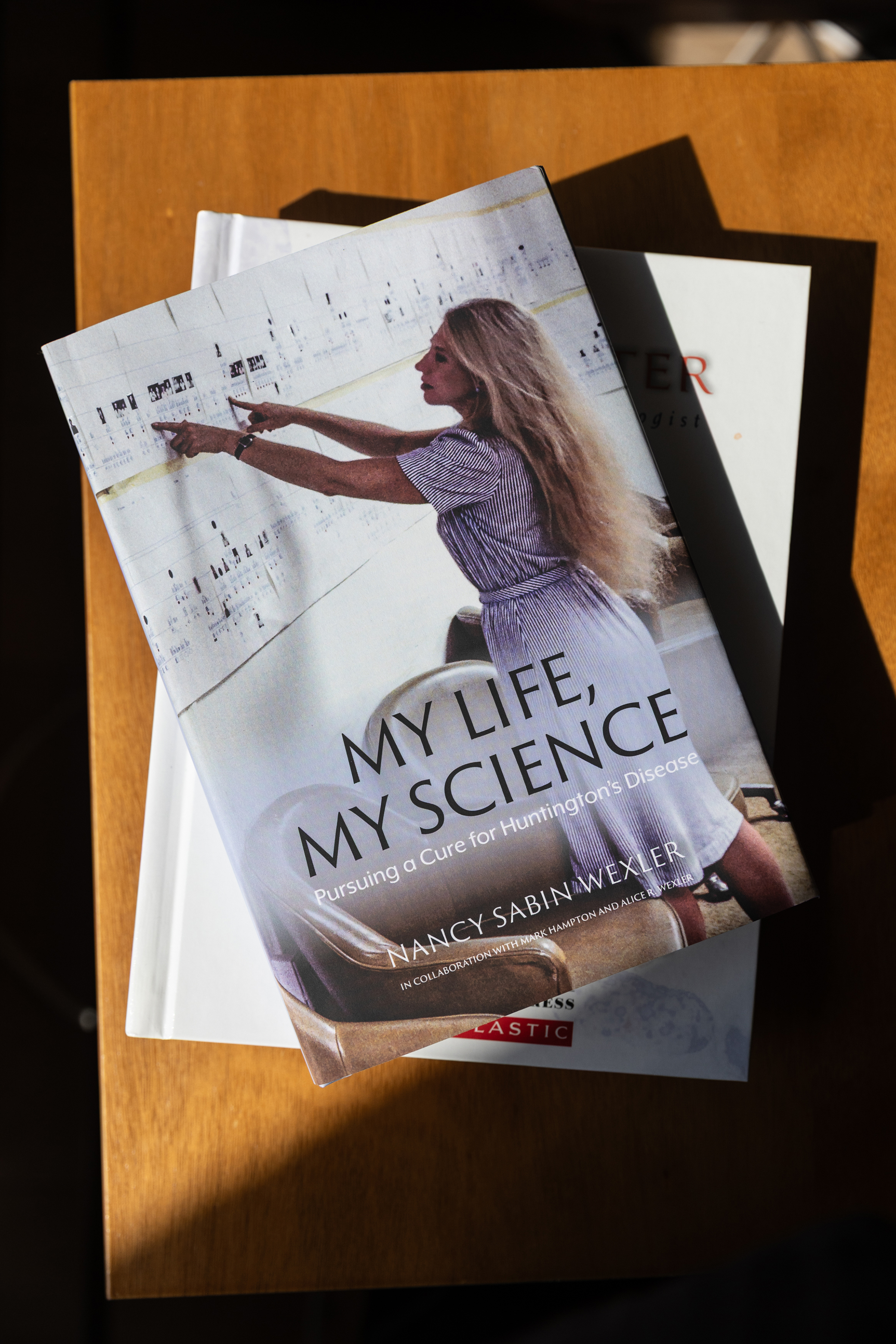
On my second visit with Nancy Wexler at her Manhattan apartment, she had a gift for me. It was a copy of her newly published memoir, My Life, My Science: Pursuing a Cure for Huntington’s Disease.
It had been signed with a stamp of her signature — she isn’t able to sign it herself. Nor could she rise from her brown faux-leather recliner to greet me — she can’t get up unassisted. Speaking requires effort. She can manage at most a few badly slurred words or phrases or, with great difficulty, a short sentence.
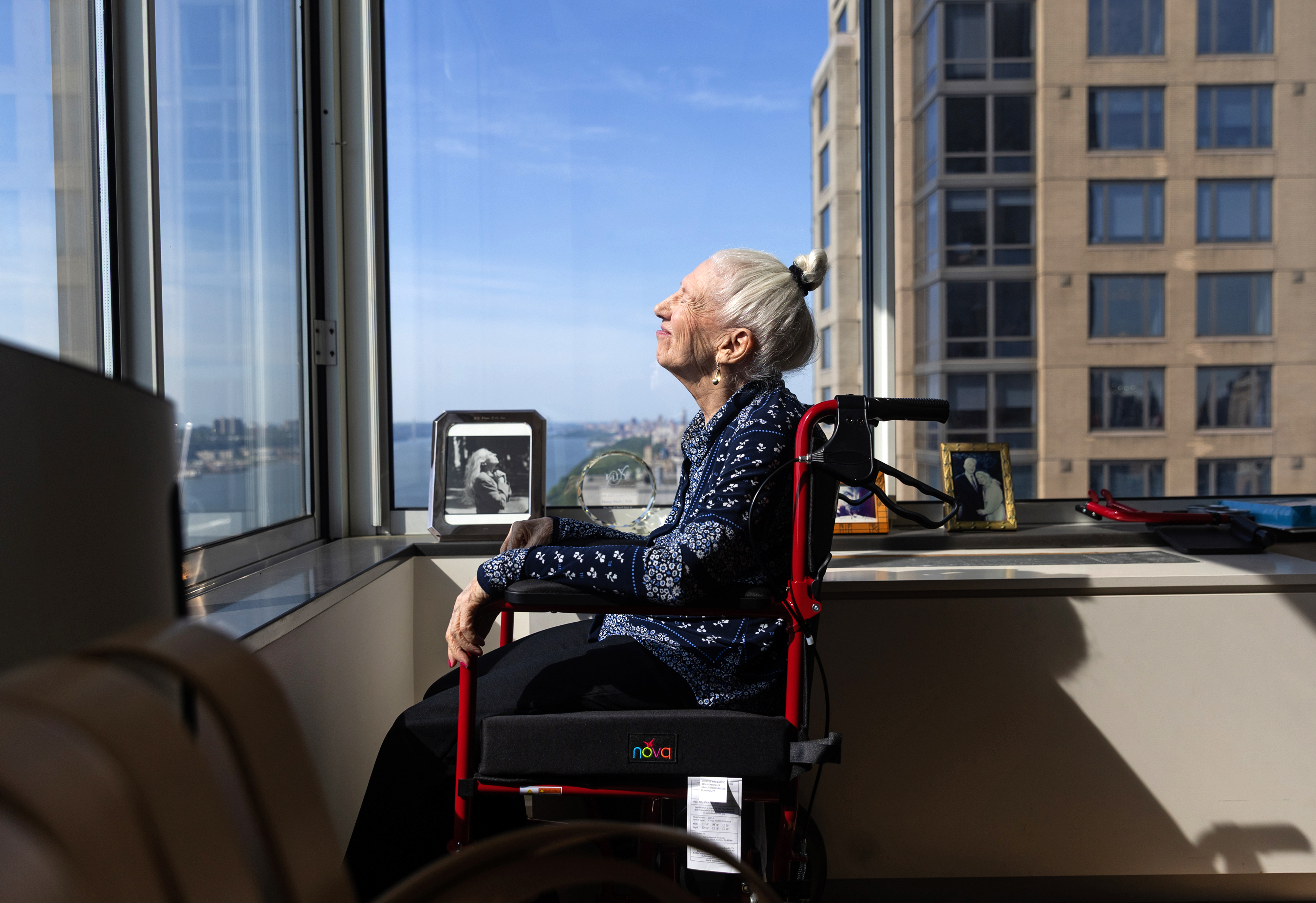
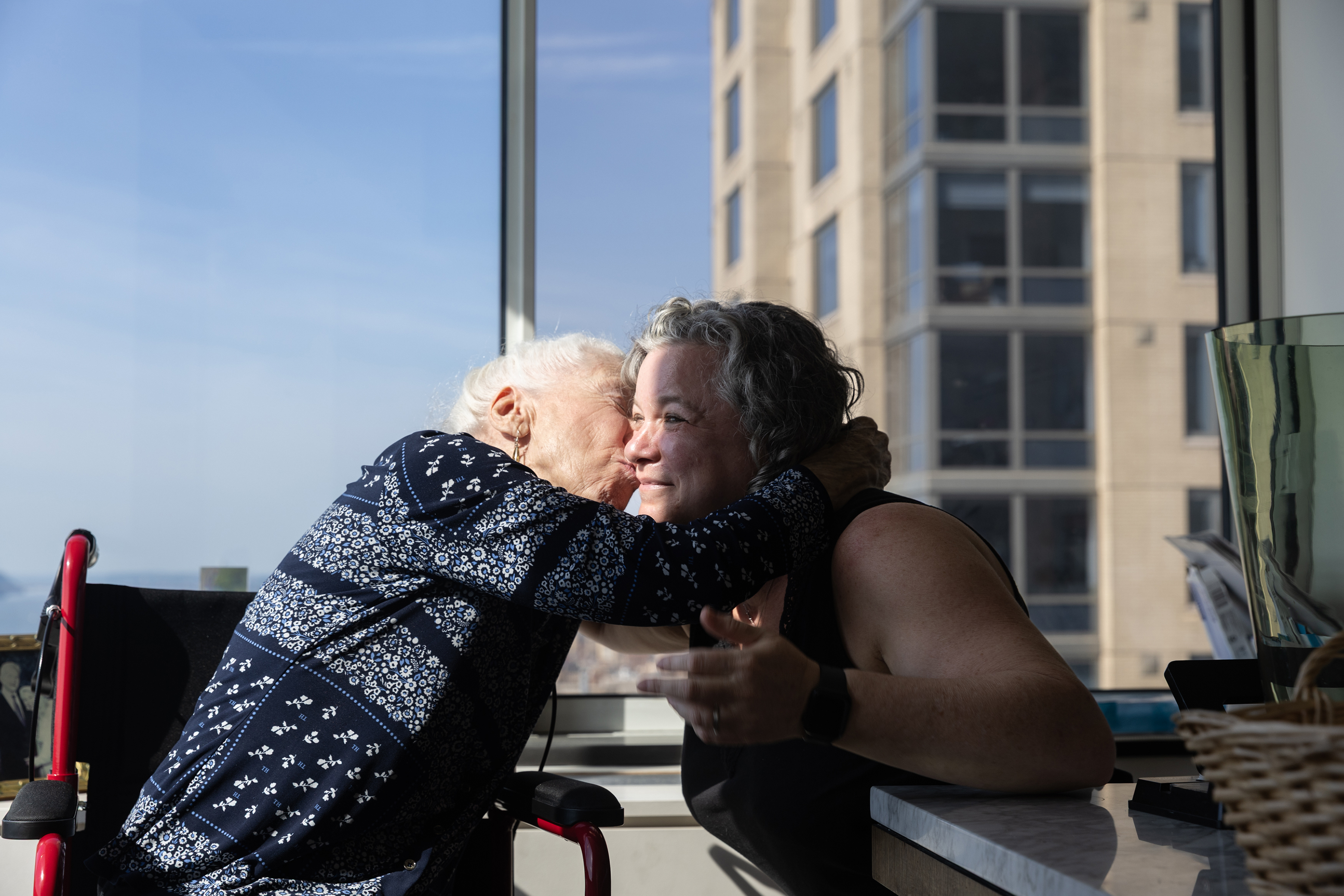
On that bright windy afternoon, Nancy and her sister, Alice Wexler, sat side by side in recliners, their backs to windows that offered a stunning view of the Hudson River far below. Alice lives in California, but she visits Nancy every other month.
At age 80, Nancy Wexler has Huntington’s disease, a dreaded brain disease that destroys a person’s ability to control movements. There is no treatment. There is no cure.
The disease is inherited: Nancy’s grandfather, three uncles, and mother had it. Alice, however, does not: If a parent has Huntington’s, each child has a 50% chance of getting it. Their mother attempted suicide, a path that others with the disease have chosen, but ultimately died from Huntington’s.
Nancy is not just any Huntington’s disease patient. For decades, she led a research effort in a remote area of Venezuela that found the gene responsible for Huntington’s. That work yielded a blood test that enable at-risk people to find out if they are destined to get the disease. In honor of this work, Nancy has garnered numerous accolades and prizes, including a Lasker award, among the most prestigious in science. She devoted her life to understanding what it’s like to be at risk for Huntington’s disease, what it’s like to have it.
What she did not know, though, was that she would get it herself. After helping lead the crucial research that allowed those at risk to find out if they would contract this terrible disease, Nancy chose not to be tested.
Now that the disease has progressed long past the point where she can keep contributing to the fight against Huntington’s, it is natural to wonder: How would her life and research have been different had she made the other choice? If your fate is sealed, is it better or worse to know?
Nancy Wexler can no longer sign her own name or get up unassisted.Jackie Molloy
Huntington’s disease was first described in a paper published in 1872 by an American doctor, George Huntington. It affects an estimated 41,000 people in the United States. Symptoms start slowly, with clumsiness or a stumbling walk; patients are often thought to be drunk as they stagger down a street. As years go by, patients become plagued by constant involuntary movements.
Huntington described the misery in unsparing detail: “If the patient attempt to protrude the tongue it is accomplished with a great deal of difficulty and uncertainty,” he wrote. “The hands are kept rolling — first the palms upward, and then the backs. The shoulders are shrugged, and the feet and legs kept in perpetual motion; the toes are turned in, and then everted; one foot is thrown across the other, and then suddenly withdrawn, and, in short, every conceivable attitude and expression is assumed, and so varied and irregular are the motions gone through with, that a complete description of them would be impossible.”
Patients and family members, Huntington added, spoke of the disease “with a kind of horror.”
Nancy’s acquaintance with that horror began in 1968. After graduating from Radcliffe College, she was in Europe on Fulbright fellowship when she was called home to learn her mother had the disease.
She had grown up in luxury in Pacific Palisades, Calif. — her father, Milton Wexler, was a psychoanalyst to Hollywood stars. Her mother, Leonore, had a master’s degree in zoology from Columbia University and a teaching certificate, but did not work. She did, however, have a secret that she kept from her children and even from her husband: Leonore’s father had Huntington’s disease.
Leonore didn’t mention it even when her three brothers — Nancy’s uncles — started exhibiting the telltale signs: clumsiness, a stumbling walk, sudden jerky movements.
Nancy Wexler’s memoir, “My Life, My Science” on a table in her apartment.Jackie Molloy
When his wife’s slide into the disease could no longer be denied, Milton called both sisters home and sat them down in his bedroom. The 50-50 chance now hung over both of them, too. He gave them some advice they never forgot: Don’t waste your life.
Alice decided to ignore Huntington’s and her own risk. “I didn’t want to have anything to do with it,” she told me. She became a historian.
Nancy had a different reaction. She would make Huntington’s the focus of her life, getting a Ph.D. in clinical psychology from the University of Michigan. Her thesis subject: the experiences of people with Huntington’s, and of those at risk for getting it. She thought of that choice as a way of coping with her situation. She wrote that it was a version of something the American Psychiatric Association called implosion theory — “a technique used in behavior therapy where the client is flooded with experiences believed to be relevant to the client’s fear.”
“I could talk about Huntington’s without seeming selfish and whiny,” she explained. “I could talk about how people felt in the context of helping them.”
Nancy’s father started a chapter of the Committee to Combat Huntington’s Disease, or CCHD, which later became the Huntington’s Disease Foundation. Its express goal was to find the Huntington’s disease gene and search for a cure. Nancy started a chapter in Michigan and also worked with her father in California.
Her first job, at age 29, was at the New School for Social Research in New York where she continued her studies of Huntington’s sufferers and those at risk. But she never told her academic colleagues about her own risk. Her work, she later wrote, “taught me how a genetic condition such as HD can shape the ways people see and react to you.”
She added: “I also learned the high emotional costs of keeping it hidden.”
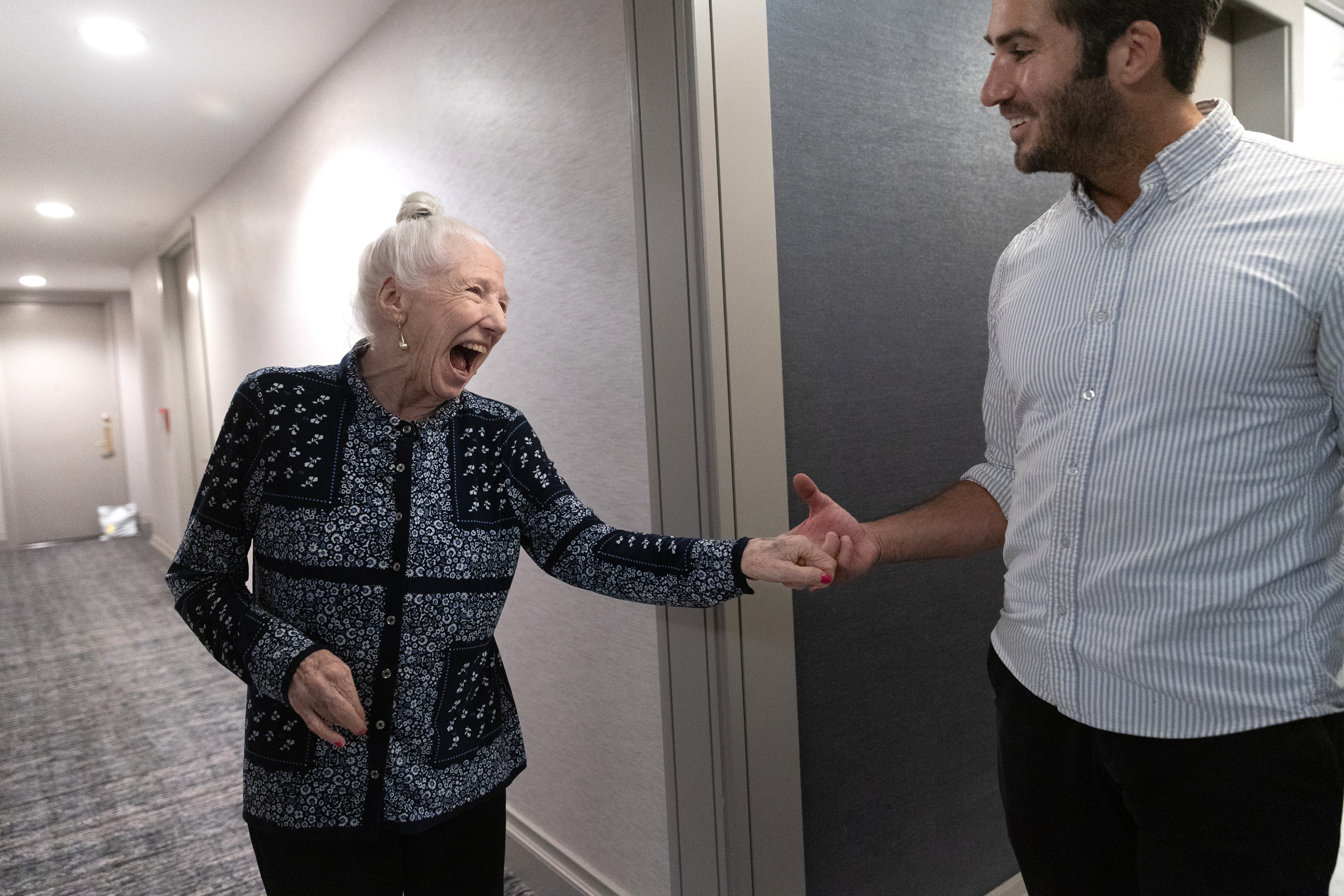
Nancy Wexler works with her physical therapist, Sean Conroy, who visits three times a week.Jackie Molloy
On frequent trips to California, Nancy was also helping her father lead the Huntington Disease Foundation. The group’s gatherings couldn’t be further from the staid scientific meetings that are the main staple of academic life. There were no traditional talks, no slides. Instead, Nancy and her father invited creative scientists — who may or may not have ever thought about Huntington’s before — to brainstorm about ways to find the gene, scrawling their ideas on a whiteboard. The meetings always included a Huntington’s patient, or the family member of a patient, so the scientists could understand what was a stake.
Back in New York, as part of her social science work, Nancy held hearings with Huntington’s disease families and people who worked with them, including social workers, neurologists, insurance representatives, police, teachers, nurses and other public officials.
What she heard was all too familiar. She had, she wrote, experienced almost everything the families had told her: “the stigma and silence surrounding Huntington’s; the ignorance of most doctors about the disease, including about the hereditary pattern; the denial on the part of family members who knew about the disease but refused to discuss it; the fear and anxiety suffered by those at risk waiting for years to see if symptoms would emerge; the anxiety that should a predictive test be developed, it could reveal future onset but do nothing to forestall or prevent it; the divisions within families over how to respond to the illness; the sense of belonging to a tainted lineage; the shame and embarrassment about relatives with the symptoms; the tremendous financial burden of care; and the sense that there was nowhere to go for help.”
As part of her research, Nancy asked people who had Huntington’s in their families whether they would have a test for the gene if one were developed. Two-thirds said yes.
Nancy thought she’d want to be tested too.
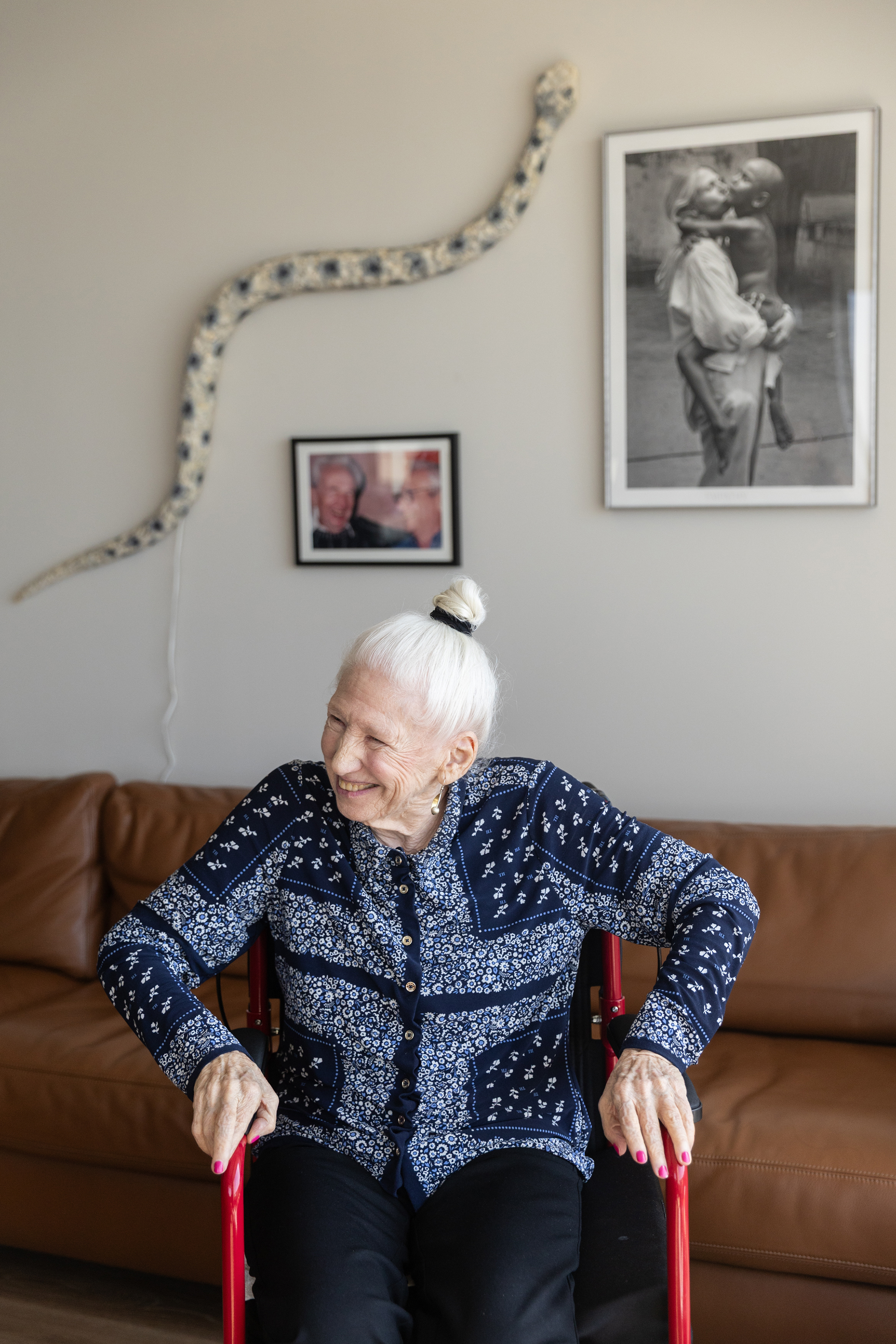
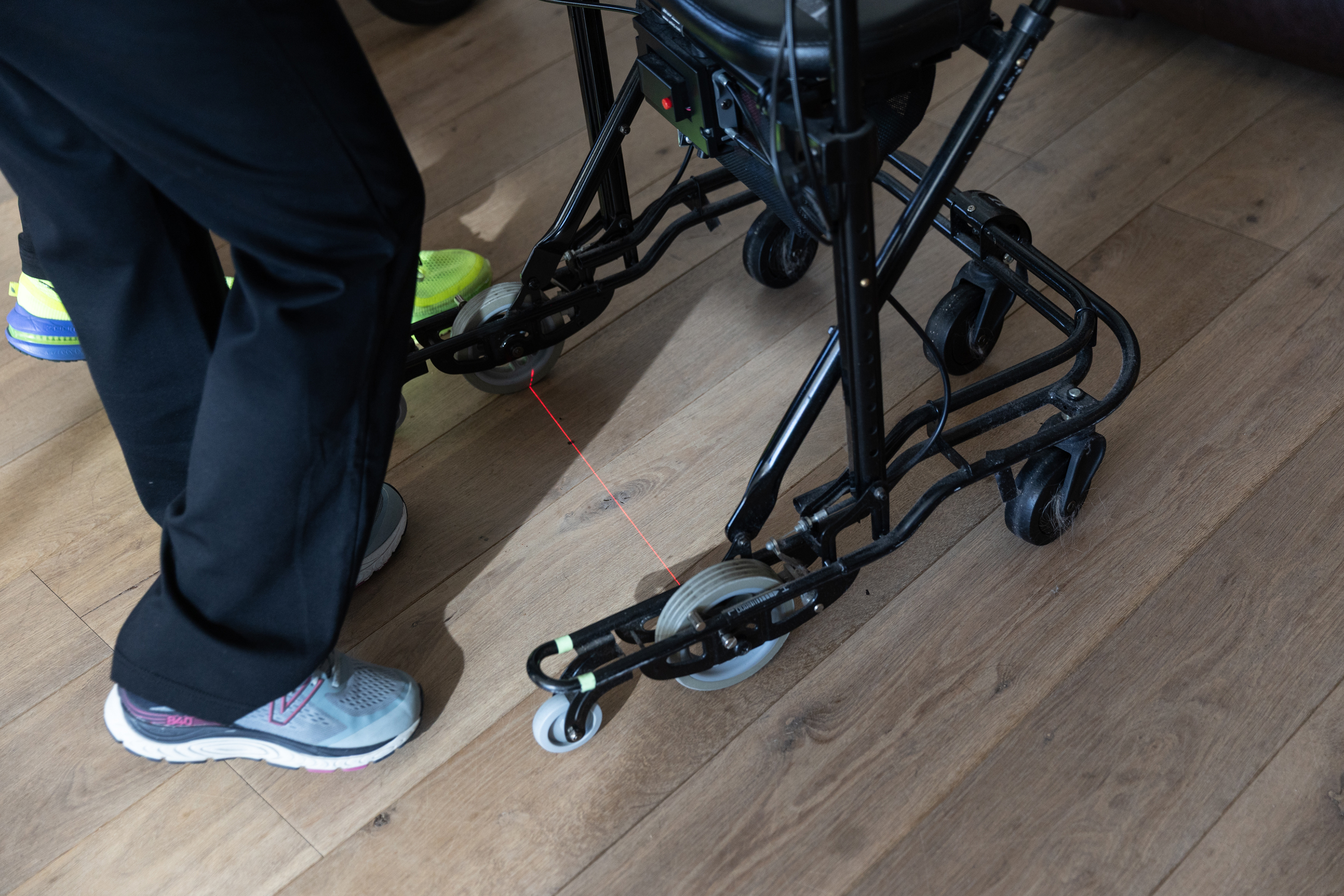
Nancy Wexler’s walker has visual laser cues, multiple wheels, and weights to keep steady. Jackie Molloy
The search for the gene began in earnest in 1980, focusing on three communities around Lake Maracaibo, Venezuela, that had the greatest prevalence of Huntington’s disease in the world. The researchers traced the disease there to one woman, Maria Conception, who lived in the area early in the 19th century. Maria apparently had Huntington’s disease, and passed it on to generations of descendants who called it El Mal.
Huntington’s was so feared that the residents of those communities had been isolated and ostracized. They ended up intermarrying, increasing the likelihood that the gene would be passed on.
Nancy led the research team, returning to Venezuela regularly for 22 years and collecting more than 4,000 blood samples from Venezuelans. She cared deeply for them, and even helped establish a nursing home for Huntington’s patients.
Three years after the gene search in Venezuela began, that question — would you want to be tested? — was no longer hypothetical. The researchers found a marker, like a flag on DNA, that was present only when someone had the Huntington’s gene. It wasn’t the actual gene — that would come later — but it could be used to tell people if they had the gene.
The decision to be tested, though, turned out to be a more difficult one than it might seem. Is it better to know you are doomed, or to hope you are not?
In Nancy’s doctoral thesis, she had cautioned that when a test became available, many who thought they’d want it would change their minds. She hadn’t realized that she would be one of them.
Huntington’s is one of just a handful of diseases — others include early onset Alzheimer’s, as well as some prion diseases — in which a positive genetic test takes away all hope of escaping your fate. With other genetic diseases, a test can only signal a likelihood, not a certainty, that a person will get the disease. In both cases, people often opt not to be tested. In colon cancer, for example, a recent national study found that only 3.7% of those with a mutation that increases risk actually had the genetic test.
The phenomenon of avoidance is so common that IVF clinics offer a special test to couples at risk for a hereditary disease: examining each embryo for the disease gene and implanting only those that don’t have it, without informing the prospective parents about the result.
In her book, Nancy explains that she had been too cavalier about the idea of testing before there was actually a test.
“I realized I hadn’t thought through all the ramifications, both psychological and social, of what a positive test might mean in my life,” Nancy wrote, adding: “I wasn’t sure I could live with the foreknowledge that one day the dreaded symptoms would emerge. I preferred to meet the devil when he was on my doorstep.”
Alice had a similar reason for declining the test. “How would I live with a positive test result?” she asked herself. “I thought the idea of ambiguity, uncertainty, was kind of appealing. I thought I could live with that.”
And, she told me, “once you have that knowledge you can’t take it back.”
In 1996, after Nancy’s research effort helped find the gene, Alice began noticing little abnormal movements in her sister.
Nancy was just 51, two years younger than her mother had been when a police officer saw her weaving as she walked down a street and accused her of being drunk.
But Nancy denied anything was wrong. She had an active life; she felt fine. She met her partner, Herbert Pardes, a psychiatrist and executive vice-chair of New York-Presbyterian Hospital, late but had a happy relationship. (He died in 2024.)
Yet friends and colleagues started asking Nancy if she had Huntington’s, watching her closely. She was furious and upset. How dare they try to diagnose her? They weren’t her doctors.
Nonetheless, Nancy was startled to see herself in videos making sudden jerky movements. She hadn’t realized she was doing that.
She worried about impulsive behavior — telling Alice that she couldn’t seem to stop buying things she couldn’t afford. (Impulsivity is a hallmark of Huntington’s.)
By 2015 she had lost a lot of weight, as is typical in Huntington’s, because of the constant involuntary movement. And she was unsteady when she walked.
Finally, in 2019, there was a clinical trial of an experimental Huntington’s drug. Nancy wanted to participate — but she would have to have a Huntington’s diagnosis to do so.
She asked a neurologist, Linda Lewis, to tell her the truth. Did she have Huntington’s?
“Yes, Nancy, you do,” Lewis said.
She was too old for the trial, but the researchers were willing to make an exception for her. Before she could start taking the drug, the trial was halted: It was making people worse.
There remains no treatment for Huntington’s disease.
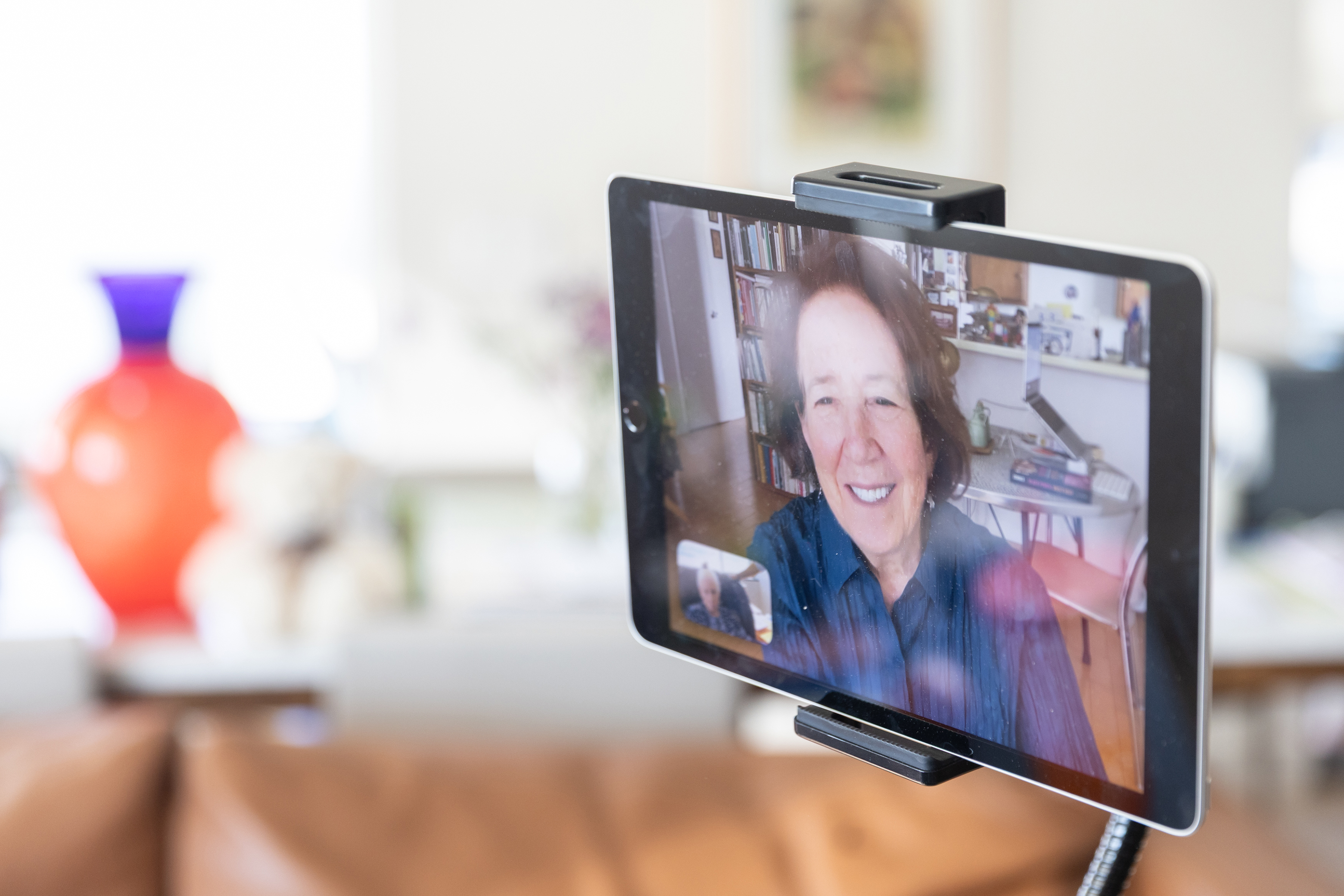
Nancy Wexler has a video chat with her sister, Alice, who does not have Huntington’s.Jackie Molloy
Now, in retrospect,I asked Nancy and Alice, would it have been better to have had had the test?
The answer, for each, is a resounding no. Neither lives a life of regret.
As Alice sees it, testing does not resolve the big questions. “While the test was marketed as a choice between certainty and uncertainty, for me it always seemed more a choice between one form of uncertainty — will I get Huntington’s? And another — when will I get Huntington’s?” she said.
After all that uncertainty, Alice escaped the family disease. I asked whether she felt survivor’s guilt. “More than guilt, I feel the injustice of it,” she replied. “How unfair it is that she has Huntington’s and I don’t. Just cruel arbitrary luck of the draw.”
The only reason she might have wanted to be tested, Alice said, was so that, if she did not have the gene, she could have biological children. She had not wanted to take a chance on passing the gene on to another generation. But she was in her mid-40s when a test was available — too late for her.
Nancy’s answer was briefer, but succinct: “The predictive test would not have helped. It would have been too threatening,” she said, struggling to get the words out.
Nancy, too, longed for children. She tried the in vitro fertilization method that allowed her to avoid knowing if any embryos were affected. But she did not succeed in having a baby.
Now, being cared for by full-time assistants, confined to her apartment, unable to feed or bathe herself, robbed of her charismatic personality by her struggles to speak, I asked what life is like for her.
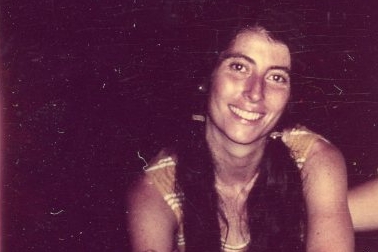
As a young nurse in Philadelphia, Phyllis Taylor met dying people desperate for hospice care. So she did it.
She met people in prison desperate for a healthcare advocate and an empathetic chaplain. So she did that, too.
In 1963, she met Sarah Baker and her family as they struggled to live as the first Black family in Folcroft, Delaware County. The Bakers were desperate for fearless allies to help fend off months of racism and violence. She also did that.
For nearly her whole life, Phyllis Taylor championed peace, justice, and human rights, and helped people who were desperate. She got arrested for civil disobedience, cofounded and directed several nonprofit social service programs, and, with her husband, Richard, helped establish Witness for Peace in Nicaragua, and the Movement for a New Society in Philadelphia.
She fed the hungry at St. Vincent de Paul Church, befriended immigrants and refugees with the New Sanctuary Movement, and comforted children and families at St. Christopher’s Hospital for Children. “Her entire life was about giving,” her son Dan said. “She refused to be someone who watched injustice and did nothing.”
On Thursday, June 4, Phyllis Taylor died of endometrial cancer at KeystoneCare Hospice in Wyndmoor. She was 84.
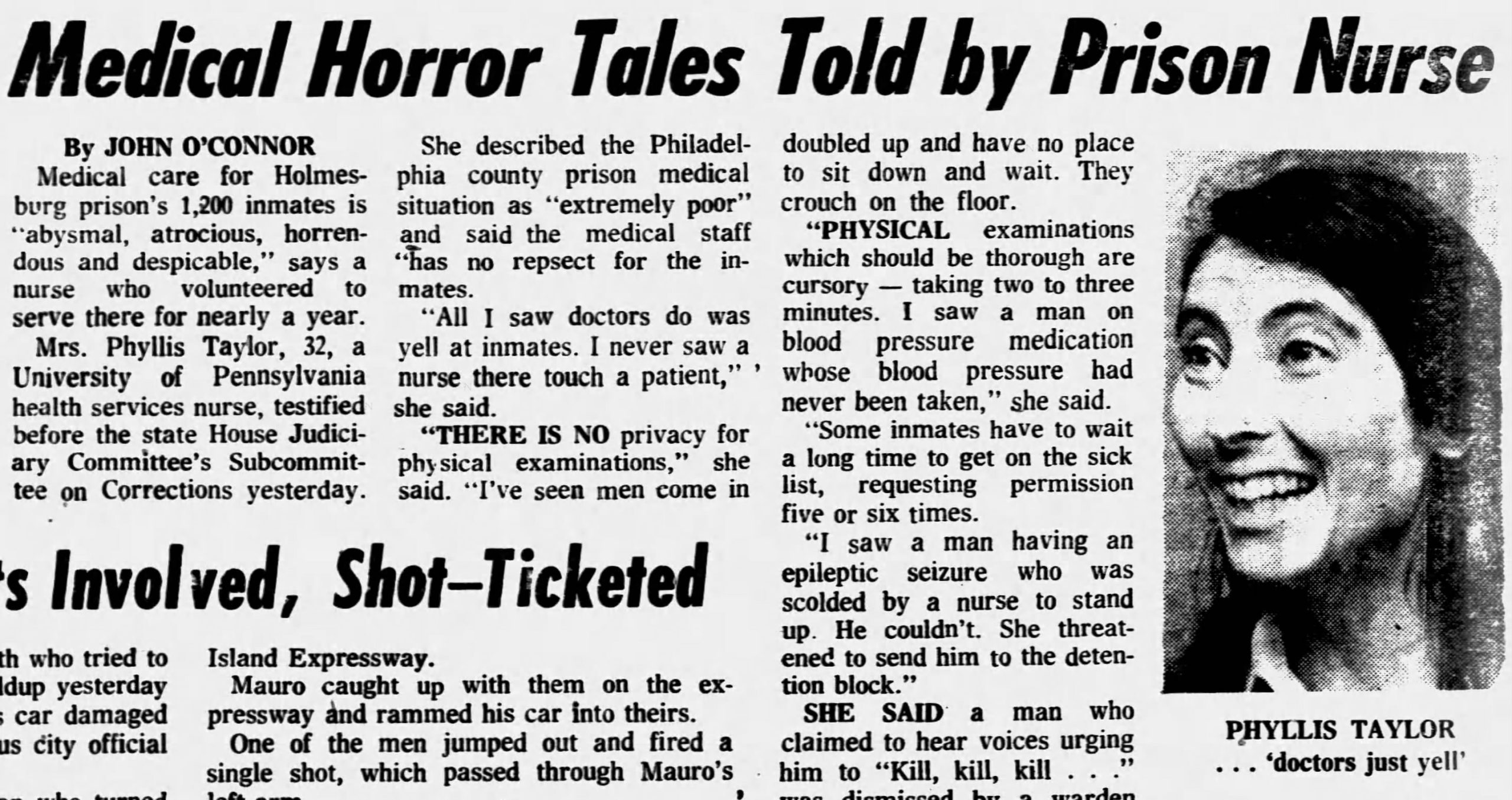
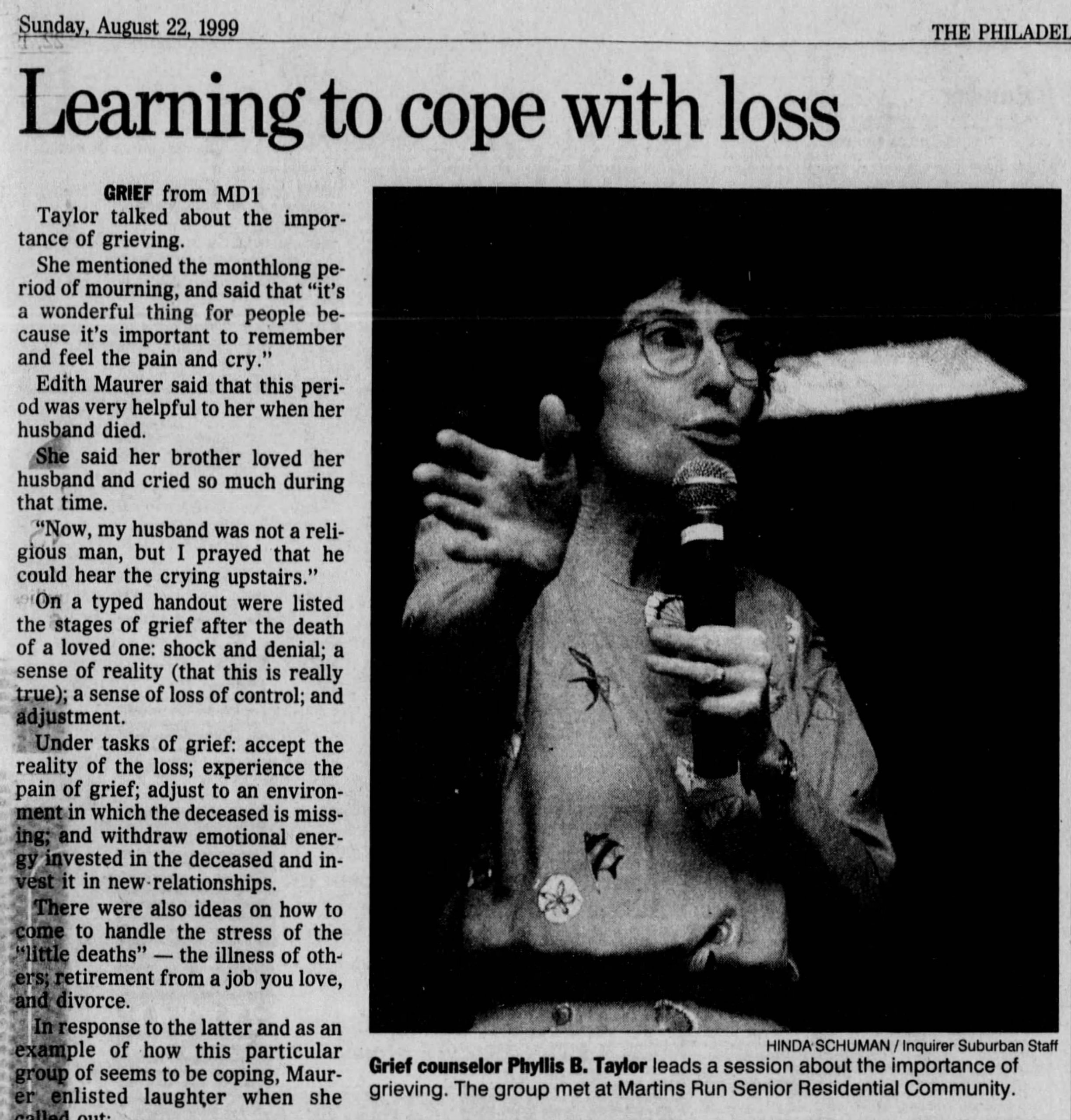
The Daily News published this story about Mrs. Taylor in 1973.Newspapers.com
“I really love what I do,” Mrs. Taylor told the Pennsylvania Prison Society in 2025. “I get the satisfaction of being able to journey with somebody, to let them know that they are not abandoned and alone.”
Born in Brooklyn, N.Y., Mrs. Taylor earned a bachelor’s degree at what is now Arcadia University in 1963. After nursing school, she became a volunteer nurse and then a consultant for the University of Pennsylvania health services at Holmesburg Prison and elsewhere.
She became senior counselor of hospice service for the new Death and Dying Program at Albert Einstein Medical Center’s Northern Division in 1978, and taught classes about death and grief, counseled parents whose babies had died, and comforted patients with terminal illnesses.
Mrs. Taylor graduated from what was then known as Beaver College in 1963. It is Arcadia University now. Courtesy of the family
She was featured in a 1980 story in the Sunday Inquirer called “The Gift of a Good Death” and said that her own health scares motivated her to embrace nursing. The horrors of the Holocaust, she said, compelled her to human rights activism, and the deaths of a friend, her brother, and her father moved her to hospice work.
“It makes me happy to give someone the gift of a good death,” she told The Inquirer.
Mrs. Taylor was also an enterostomal therapy nurse, head of the AIDS committee at the Philadelphia College of Osteopathic Medicine medical center, and director of education at the old Hospice of Delaware Valley. She wrote research articles for journals and letters to the editor, appeared on local TV and radio shows, and lectured often at conferences and seminars about death, grief, and medical and financial ethics. She never retired.
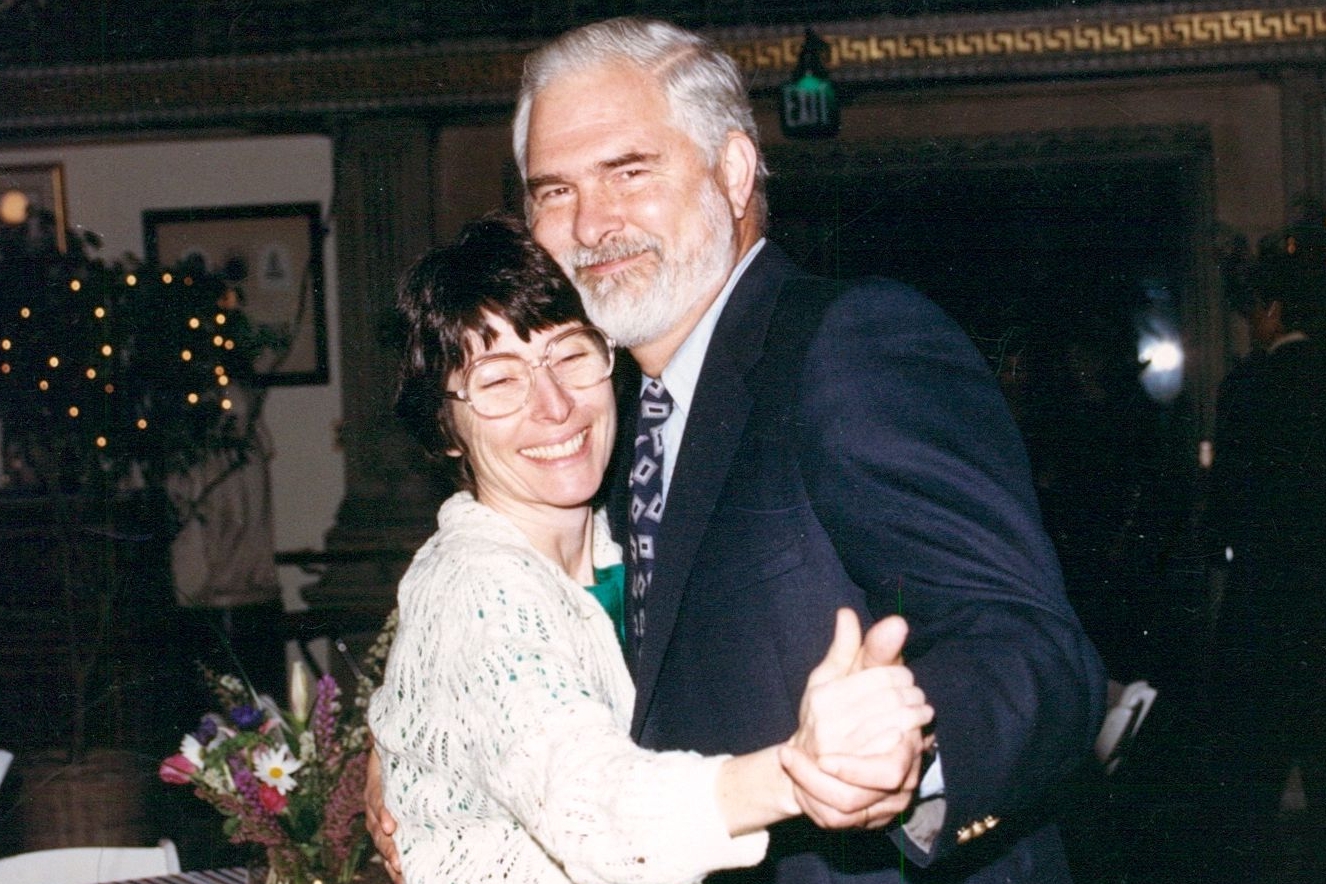
Mrs. Taylor and her husband, Richard, traveled the world together fighting for peace, justice, and human rights. Courtesy of the family
She went on Freedom Rides to integrate buses in the South and moved in temporarily with the Bakers as they sought to integrate Folcroft in the 1960s. In the 1970s, she demonstrated against the Vietnam War and America’s involvement in Iran and elsewhere.
In the 1980s, she taught civil disobedience classes and protested violence at the border between Nicaragua and Honduras. In the 1990s and beyond, she volunteered to protect Muslims and Arabs from reprisals after the Sept. 11 attacks, traveled the world to decry pollution and unfair housing practices, and volunteered with Amnesty International and Planned Parenthood.
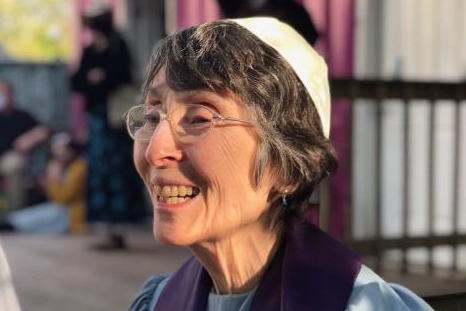
She earned credentials as a chaplain and volunteered for decades with the Pennsylvania Prison Society to counsel and advocate for crime victims and prisoner rights. She was featured in the 2016 documentary Blockade, named the Prison Society’s Volunteer of the Year in 2022, and honored at Arcadia’s 2025 Women Who Lead Forum.
As a chaplain, Mrs. Taylor officiated at weddings and funerals, and advocated for prison reform.Courtesy of the family
“She felt a deep unwavering need to dedicate all her waking time to marginalized populations,” her son said. “Someone called her a merging of Ruth Bader Ginsburg and Mother Teresa.”
Phyllis Claire Brody was born Aug. 10, 1941. She grew up Jewish in Lawrence, N.Y., and joined a Quaker meeting after she moved to Philadelphia.
She met fellow peace activist Richard Taylor at a civil rights event in 1962, and they married in 1963 and lived in Germantown, Mount Airy, and West Philadelphia. They reared their son, Dan, and daughter, Deborah, and welcomed Blessing Mtshali and other children and families into their home for extended stays. Her husband died in 2024.
Mrs. Taylor and her husband liked to hike and canoe. She lived with lupus and mailed handmade birthday cards to family and friends year after year.
“What a life well lived,” her son said.
In addition to her children, Mrs. Taylor is survived by her sisters, Margaret Noonan and Audrey Randolph, many grandchildren and great-grandchildren, and other relatives. A brother died earlier.
Mrs. Taylor stands with her son Dan in 2017.Handout
A celebration of her life is to be held at 2 p.m. Sunday, Sept. 20, at Germantown Monthly Meeting, 47 W. Coulter St., Philadelphia, Pa. 19144.
Inside Philadelphia’s new RNA manufacturing hub, scientists are working to create vaccines for fish, precision pesticides, and treatments to protect plants from extreme heat.
The recently launched biofoundry at the University of Pennsylvania aims to expand biotechnological capabilities in the United States, funded by an $18 million federal grant. The National Science Foundation has invested infive such facilities nationally, each focused on a specific biological material.
The term foundry traditionally refers to a factory where metal is melted and shaped into desired forms. Expanding the concept, Penn’s NSF AIRFoundry now offers a one-stop facility for designing and building RNA technology.
All products under development involve ribonucleic acid, or RNA, a key molecule in living cells. Some consider it the cousin of the better-known molecule, DNA. Both can carry the genetic instructions for life.
The facility opened in March at One uCity Square in University City. It builds upon Penn’s success with the 2023 Nobel Prize-winning development of an mRNA platform that led to the first COVID-19 vaccine.
“We need to democratize this technology,” said Daeyeon Lee, a Pennprofessor of chemical and biomolecular engineering who serves as the foundry’s director.
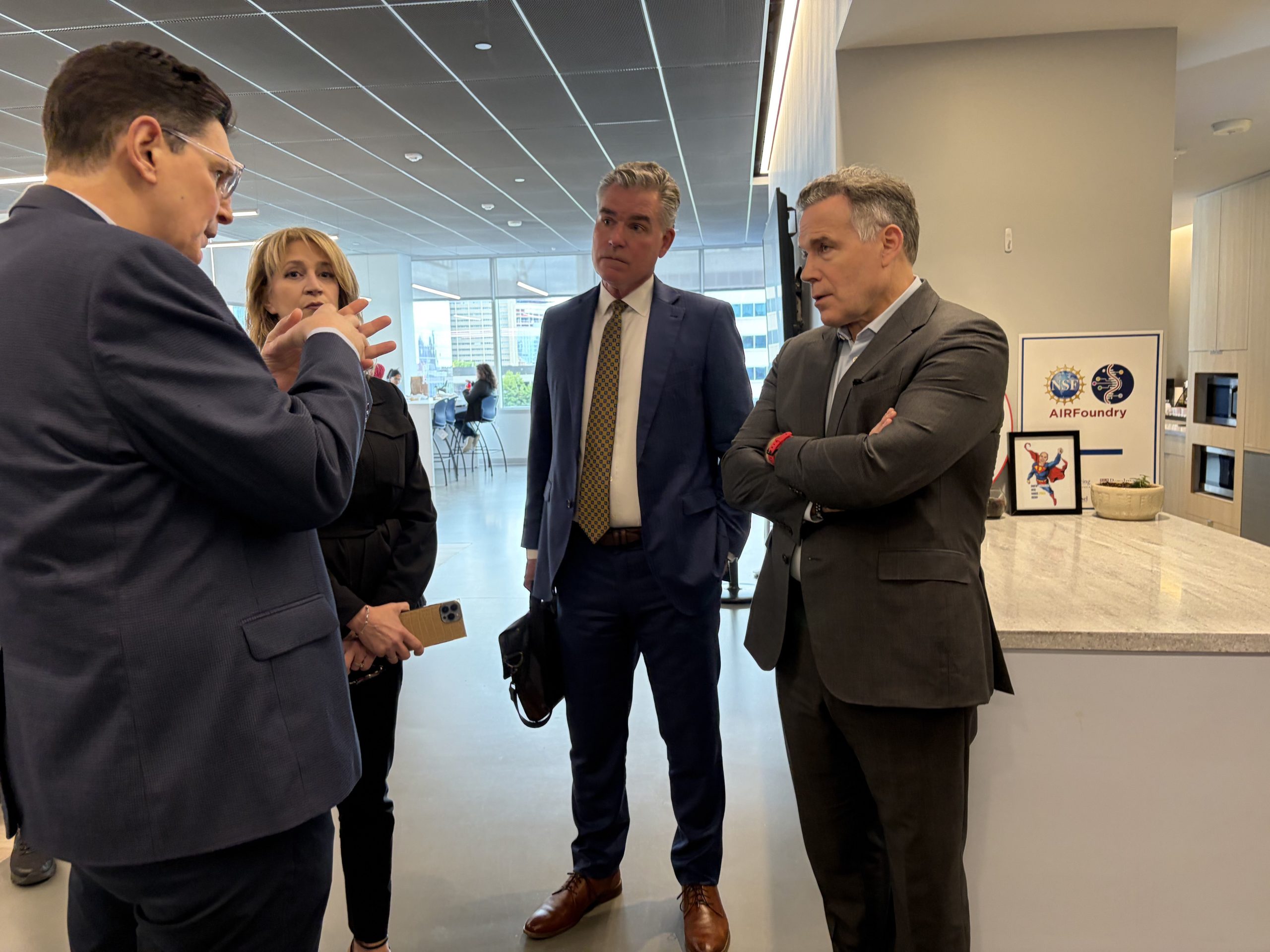
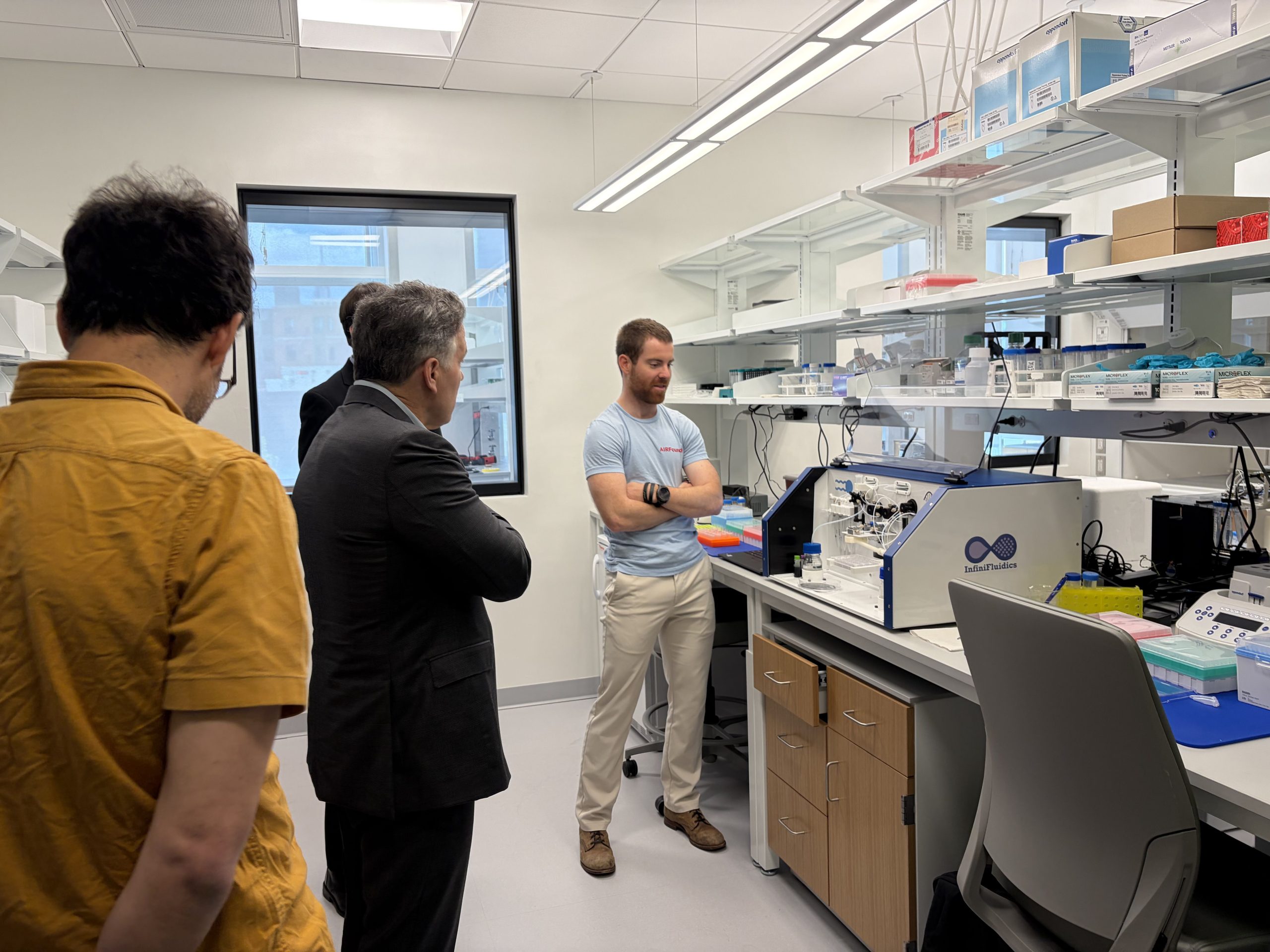
Penn Engineering professor George Pappas speaks with Sen. Dave McCormick about the AIRFoundry.Kayla Yup / Staff
AIRFoundry stands for Artificial Intelligence-driven RNA BioFoundry. Scientists hope AI will help them automate aspects of the design and manufacturing process, serving as a resource for researchers and commercial companies across the world.
A longtime anti-vaccine activist, Kennedy has claimed the technology is unsafe and ineffective, despite scientific evidence finding the vaccines to be highly safe and beneficial.
Now the foundry seeks to expand RNA’s applications in healthcare, agriculture and beyond.
Lee compared the technology to a hammer — good for certain things, but not everything.
“Our students and postdocs that get trained right now are going to be sort of the first generation of people to think about RNA as a tool for whatever problem they’re trying to solve,” Lee said.
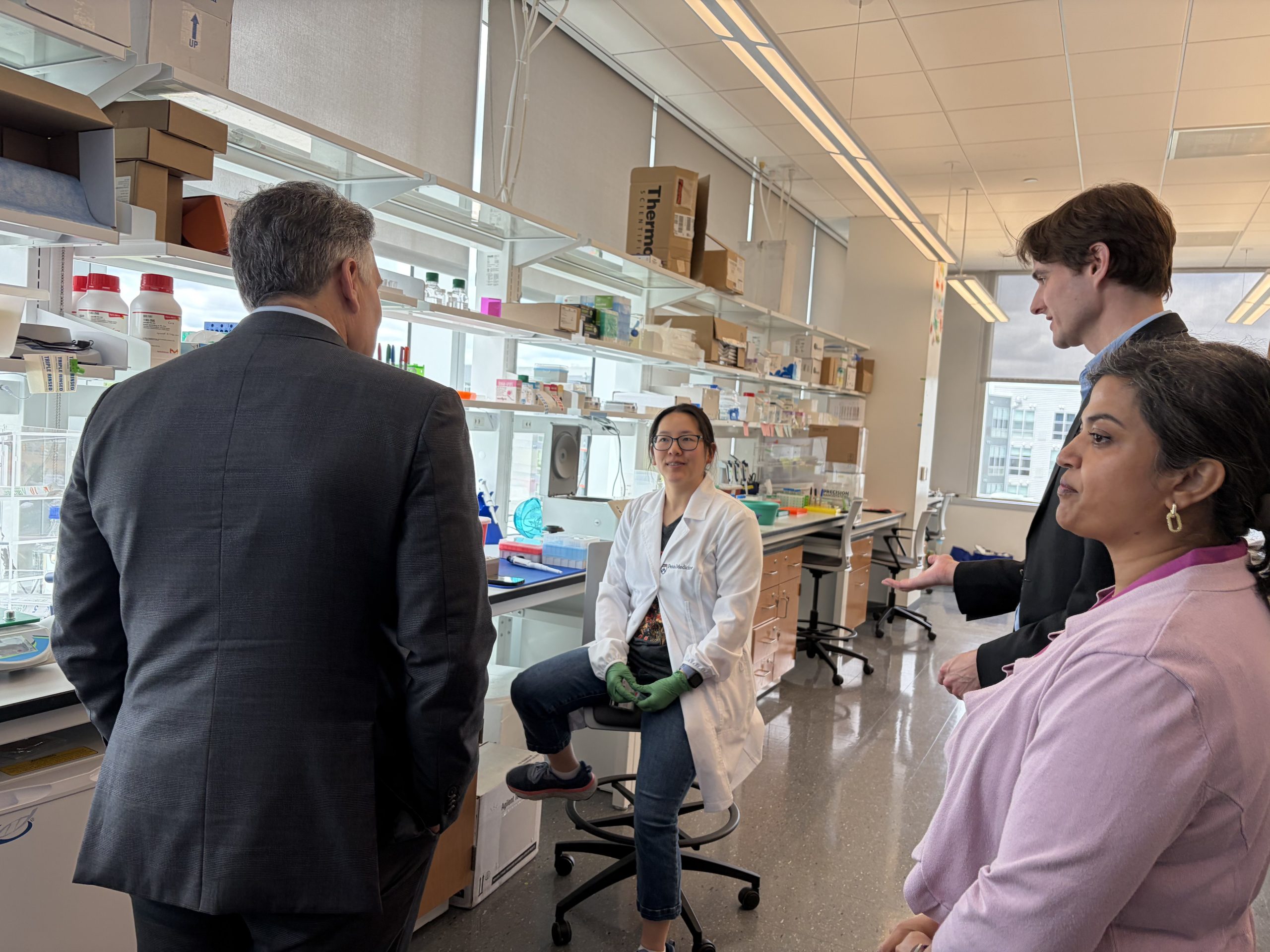
An AIRFoundry scientist describes her work in the facility.Kayla Yup / Staff
A foundry for RNA
In themRNA COVID-19 vaccines, injected mRNA provides the instructions for cells to build a harmless fragment of the viral protein. That trains the body to recognize and fight a future infection.
Compared to traditional vaccines that use live or inactivated pathogens, mRNA vaccines can be produced more rapidly — useful in a pandemic.
One of the Nobel laureates behind that effort, Pennscientist Drew Weissman, has operated a smaller scale version of the facility, mainly to make mRNA for his lab and collaborators. The foundry’s launch marked an expansion beyond Penn.
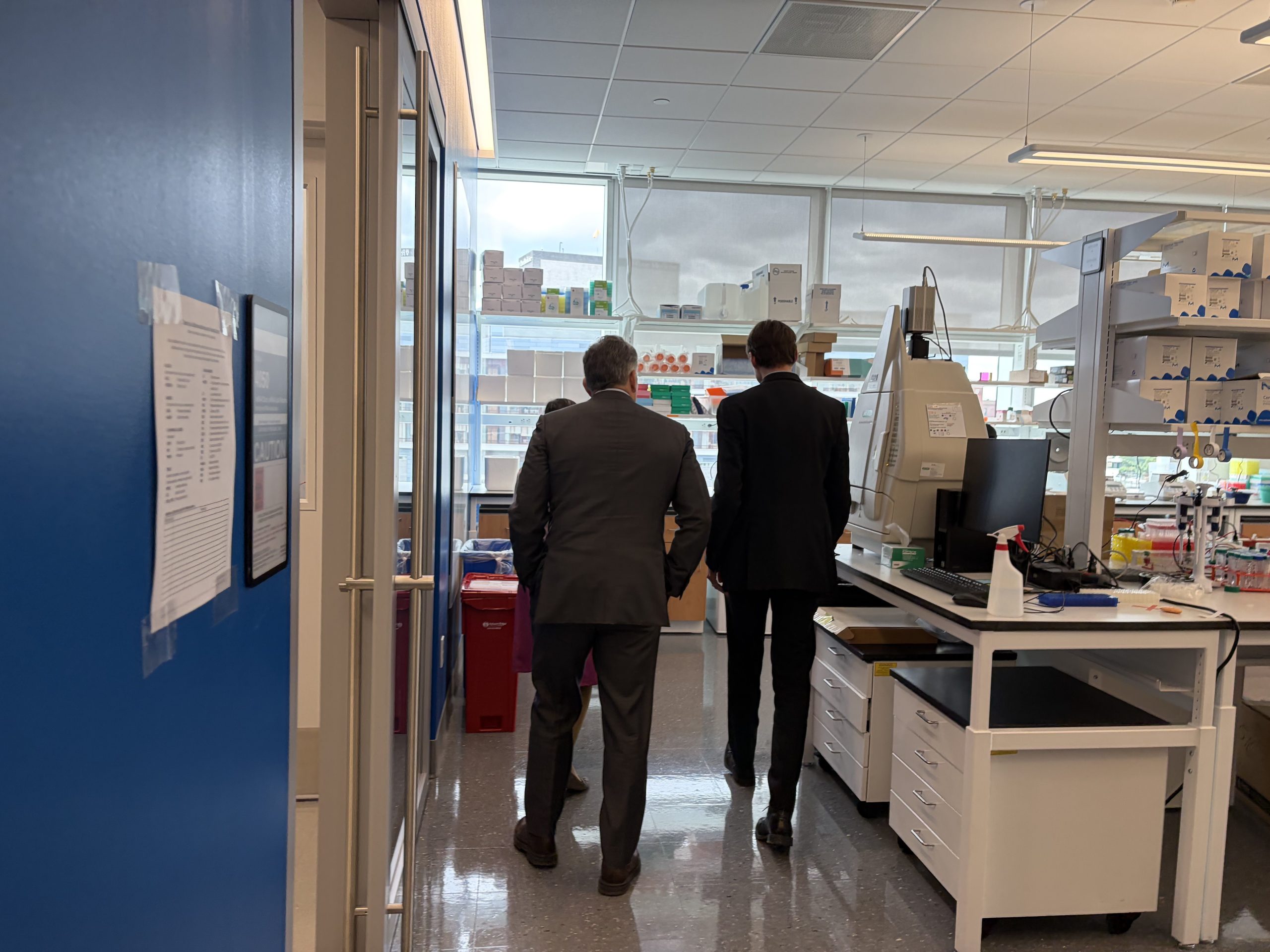
Its sterile instruments and busy lab benches were on display last month as students and faculty walked through the manufacturing process.
“It takes special facilities and skills to make RNA and associated materials,” Lee said.
Owen Land, an engineer at Infinifluidics (a Penn spinout), spoke about a device used to automate part of the process of creating liquid nanoparticles (a delivery vehicle for RNA).Kayla Yup / Staff
So far, Penn’s facility has operated on a “fee-for-service” basis, where collaborators request a specific RNA technology and the foundry builds it.
But its scientists hope to incorporate AI to help with synthesizing all the current knowledge, best practices and databases.
They also want to reach a point where users can come to the physical facility and use the instruments themselves.
Sen. McCormick toured the AIRFoundry in May.Kayla Yup / Staff
The federal grant, which started in September 2024, supports the foundry for six years. Lee hopes it will eventually become self-sustaining through the services they provide.
Projects underway includeworking on vaccines to keep fish healthy.
Another collaboratoris developing ways to deliver RNA into plants to benefit the agriculture industry. For example, designing RNA molecules that carry instructions for producing a heat shock protein could protect plants from high temperatures. The plant would produce the protein and theoretically have greater resilience against extreme heat.
The molecule degrades over time, making its effects temporary. So if used during the summer months, the RNA could be gone by the time harvest rolls around.
This transient quality could also make RNA useful for pest control, in lieu of chemical-based pesticides, Lee said.
“We want to interact with everyone that’s interested in using RNA technology,” he said.
Many parents and guardians find that as soon as their child starts daycare, they seem to be sick constantly. Whether that is a runny nose, sore throat, or lingering cough, there always seems to be something. They may be sent home from daycare due to fussiness or fever, and just when it seems they have turned the corner, they develop a new cough and the cycle continues. It can seem like there might be something wrong with the child’s immune system.
The truth is, frequent illness in daycare is something to be expected – and may actually help a child build immunity. Children in daycare may experience eight to 12 illnesses per year. After all, kids who share toys and surfaces share viruses, too.
Runny noses that do not fully go away, lingering cough, or temporary appetite changes are to be expected in a child with a viral illness.
A runny nose is the way the body flushes out germs. Even after the infection improves, the lining of the nose may still be irritated, which is why you may still see this symptom after your child seems better.
Additionally, the airways remain sensitive after an illness, and that means coughs can linger for several weeks after a cold. When the body is fighting a virus, that focus can suppress appetite, though that should improve within three to five days of the onset of illness.
How daycare can build your child’s immune system
Exposure to common viruses helps the immune system learn and grow stronger over time. Early childhood illnesses can:
Help build protection against future infections;
Lead to fewer missed days of school later in childhood;
Support the development of a stronger immune system.
When should you check in with your doctor?
Usually normal: frequent colds, mild lingering coughs, reduced appetite during illness, short periods of fatigue;
Check in with your pediatrician if: your child is not growing well, infections are unusually severe, and symptoms linger for more than 4 weeks without any signs of improvement or change.
What is “supportive care”?
Often, the pediatrician will let you know that we treat these viral infections with supportive care, which simply means helping the body recover while the illness runs its course.
Supportive care includes:
Hydration: fluids help to prevent dehydration and keep the mucus thin, so it is easier for the body to clear;
Rest: Sleep supports the immune system as it fights the infection;
Hand hygiene: Washing hands helps prevent the spread of viruses to others.
The bottom line:
Frequent illness in children who use daycare can feel overwhelming, but it is a normal part of early childhood. Over time, children exposed to common viruses build stronger immunity and experience fewer infections than those who don’t encounter typical childhood ailments.
If you have any concerns, stay connected to your child’s pediatrician, as they can provide reassurance and guidance. Staying up to date with vaccines, including the flu shot, may not mean your child never gets sick, but vaccines are proven to reduce the severity of illnesses and prevent hospitalizations.
Renee Bruce is a second year pediatric resident and Hayley Goldner is a pediatrician in the adolescent medicine department at Nemours Children’s Hospital, Delaware.
Andy L. was a 19-year-old philosophy student at the University of Southampton, in England, when he first experienced a general malaise that left him with persistent headaches and feeling like he had a constant hangover.
A visit to the university’s health clinic yielded a normal blood test; the doctor suggested Andy’s ailments were due to a bumpy transition to university life.
But even after another normal blood test nine months later, the malaise continued. Then anxiety set in. After a panic attack, Andy returned to the doctor, who was now more emphatic that the problem was psychological. Andy was not convinced. After graduation, he hitchhiked from Britain to Ethiopia, a trip that gave him confidence he could function even as his health deteriorated.
At age 25 he began experiencing jabbing pain in his bladder after urinating. A physician said it was probably a mild urinary tract infection or, perhaps, a bladder spasm. Drink plenty of water, the doctor advised.
The following year, Andy awoke with pain in his perineum, the area that extends from the base of the scrotum to the anus, and he felt a lump deep in the tissue. His general practitioner sent him to a urologist, who diagnosed Andy with “atypical Peyronie’s disease,” a condition where plaques — sometimes painful — form in the deeper tissues under the skin of the penis, causing it to bend during erections.
The diagnosis came as a relief at the time: “I thought: ‘Oh, good, something they can give a name to,” said Andy, who spoke on the condition of partial anonymity given the sensitive nature of his medical condition.
That relief would not last. Follow-up tests over the years involved MRIs using Caverject, a drug injection into the penis that induces an erection so clinicians can assess vascular function and more clearly view the anatomy.
“It was an unpleasant experience,” Andy said. “Walking around the hospital and then in the MRI machine for 45 minutes with an erection.”
Still, the test ruled out cancer. But Andy knew his various symptoms did not fully align with Peyronie’s, partly because his pain was constant.
That was just the start of Andy’s medical odyssey — a sometimes surreal quest that led him to more than 100 doctor appointments that included urologists, gastroenterologists, psychologists, and rheumatologists. He also saw an andrologist focusing on men’s reproductive health, sexual function, and urology problems.
His physical symptoms — and extensive medical research — left him certain something biological was wrong. But the medical establishment often disagreed, leaving him questioning his own sanity and wondering if he was doomed to a life of unrelenting pain even while building a successful career and family.
“I have the feeling that I am made up of two people traveling in different directions,” he wrote in his journal. “The person who feels ill and alone, and the person with some momentum behind them.”
Constant pain
Despite the pain, Andy’s life went on. He worked as a software engineer at the BBC, where he met his future wife. The couple had three children. During this period, from about 2004 to 2010, Andy said he experienced perineal pain “all the time.”
It grew so intolerable that Andy asked his doctor about the viability of cutting out the aching lumps in his perineum. His doctor strongly advised against it.
In 2010, he saw yet another urologist. This doctor’s note described Andy’s “constant pain … which feels like someone is pulling … his penis with a wire.” In response, the urologist told Andy it was time to stop fixating on his condition.
“I strongly reassured him he does not have a serious medical condition, i.e. cancer, however, clearly he has a debilitating problem because he is very preoccupied with it,” the doctor wrote, adding that Andy had “a phenotype for chronic pain.” Finally, the doctor suggested a book on alternative healing called Teach Us to Sit Still — which, the clinician noted, he had never read.
Further demoralized, Andy did not see another specialist for five years. He began running, which offered distraction, and threw himself into work, including leading a digital consultancy and building an analytics business with his brother. He started drinking wine every night to sleep.
In 2014, he sold his analytics company and, with new private medical insurance, “embarked on another fruitless expedition” for a diagnosis. He also tried a range of treatments — various antidepressants, psychotherapy, beta-blockers, acupuncture, and a pain clinic — with little or no success. He saw a new urologist who said his condition “can’t be Peyronie’s,” but additional specialists could not find anything conclusive.
Andy grew so weary of feeling ill with no explanation he remembers thinking, “How long can I go on?”
A simple question
Then Andy began losing weight — about 14 pounds in a few months — and experienced intermittent diarrhea. He was referred to Tom Creed, a consultant gastroenterologist in Bristol.
Creed said it was clear Andy had been “traumatized” both by his painful symptoms and his experience in the medical system. “Nobody was really listening to him, and it struck me from the get-go that this was a genuine story, and he was really struggling,” Creed said.
Creed ordered a colonoscopy, which he described as “very unexciting” until the end, when a bit of low-grade inflammation in the rectum caught his eye.
“I thought, ‘it doesn’t look quite right,’” so he removed a tissue sample for biopsy. The pathologist identified something curious: a granuloma in the rectum — a foreign body surrounded by inflammatory cells.
That’s when Creed asked Andy a question no doctor ever had: “Have you traveled anywhere exotic?”
It turned out he had: nearly 30 years ago Andy spent a gap year teaching in Tanzania, where he washed and swam every day in Lake Tanganyika.
“That was the moment the penny dropped for me,” Creed said. He remembered something from medical school and, thinking it was a long shot, sent the tissue off for another test and ordered blood work to look for antibodies that could confirm a rare condition he had never seen in a patient.
Results validated Creed’s hunch: Andy had been suffering from schistosomiasis, a disease caused by parasitic worms, for nearly three decades.
“Suddenly [there was] a unifying diagnosis,” Creed said.
Schistosomiasis is a “neglected tropical disease,” according to the World Health Organization, most prevalent in sub-Saharan Africa, where parasitic worms live in certain freshwater snails that inhabit lakes and rivers. The worms infect people by burrowing into human skin as larvae, then traveling through veins into the bloodstream. There, they pair up, migrate to the liver, bowels, or bladder, and adult females start pumping out eggs — hundreds of them — which can lodge in various organ tissues, triggering an immune response. Humans pee or poop the eggs back into the water, where the cycle begins again.
Andy had urogenital schistosomiasis, said one of his doctors, Mike Brown, a consultant physician at the Hospital for Tropical Diseases in London. In this disease, worms can take a “wrong turn” and wind up in the genital tract, where they can get trapped in the tissue and cause the kind of pelvic pain Andy experienced, Brown said. If left untreated, the eggs continue to penetrate the tissue lining, causing inflammation and scarring that can result in kidney failure, bladder cancer, and infertility in women. Brown said that adult worms can survive for 30 years or more and continue to produce inflammation-triggering eggs.
When Andy got the phone call confirming the diagnosis, he was stunned. At 47 years old, he could finally see the path of his illness. He remembered a diagnosis of malaria in 1993 while he was living in Tanzania and spiked a 102 degree fever. The malaria test was negative, but the doctor insisted, “What else could it be?” This, Andy now believes, was most likely the acute phase of schistosomiasis.
“When Creed called, he thought he was giving me bad news, but I was over the moon,” Andy said. “Having a diagnosis overruled any feeling of unease about the parasites living inside of me.”
Following treatment with the drug praziquantel, the high level of antibodies in Andy’s blood decreased. “It’s an easy parasite to kill with the drugs,” said Brown, the tropical disease doctor. But even though the worms are dead, eggs already in the tissue remain and can cause ongoing problems.
For Andy, now 51 and a tech consultant living with his family in Bristol, that means continued pelvic pain and a higher risk of bladder cancer, among other issues. But his headaches and malaise are gone, and he gained back the weight he had lost. “In terms of hardship, this all pales in comparison to battling against the misapprehension that I was suffering from an imaginary condition.”
These days, Andy just wants to raise awareness about the disease to prevent others from suffering.
“What happened to me happens to countless people in Africa,” he said.
Indeed, the WHO estimates that more than 93% of people requiring treatment for the illness live in Africa.
“Hundreds of thousands die every year, often from organ failure or bladder cancer. Many more are subjected to chronic illness,” Andy said.
“But despite its prevalence,” he said, “schistosomiasis is a disease that most people in the developed world have never heard of.”
Rachel Zimmerman is a journalist and writer based in Cambridge, Massachusetts. Her book “Us, After: A Memoir of Love and Suicide” was published in 2024.
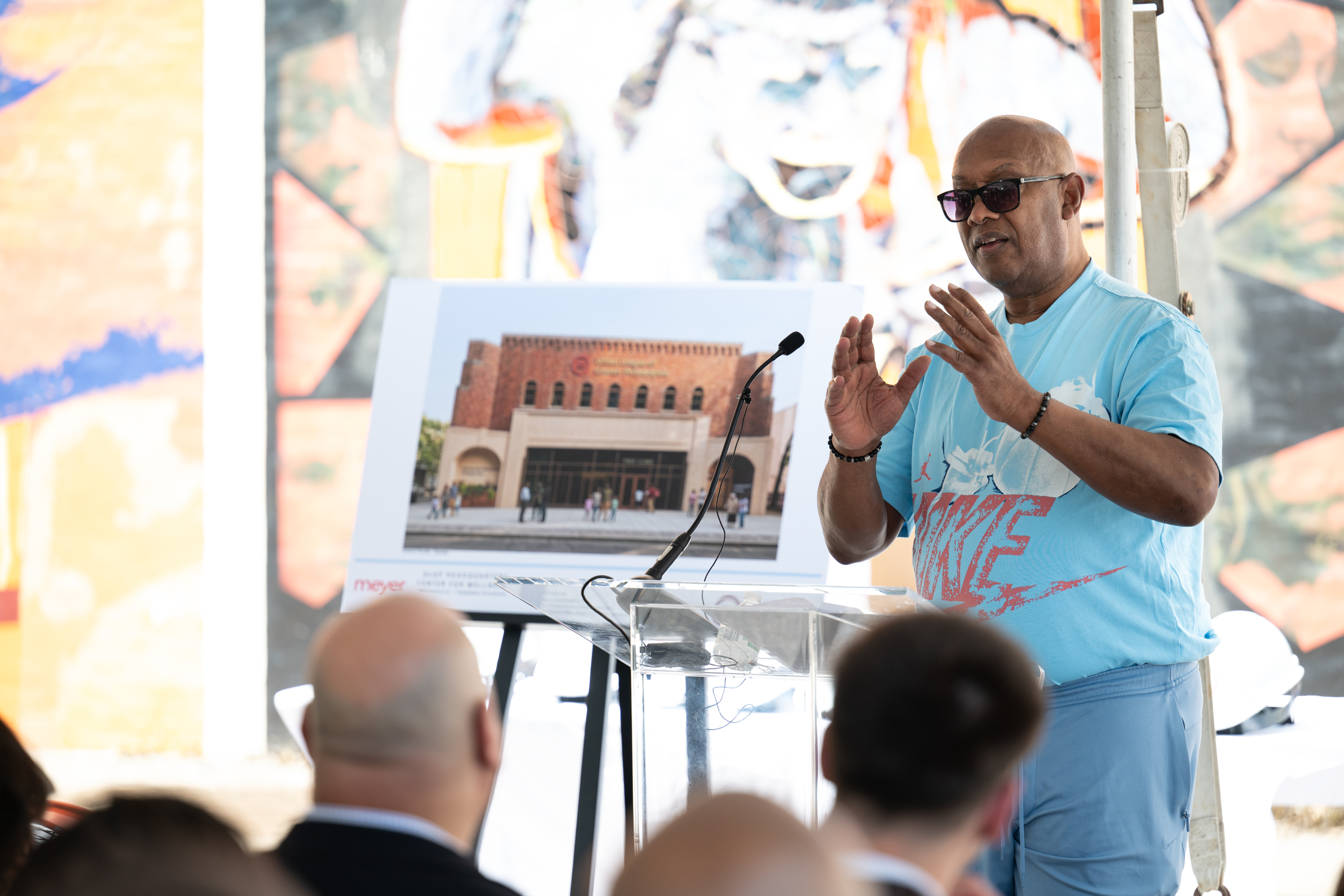
The Urban League of Greater Philadelphia is opening a free clinic in West Philadelphia for people without health insurance. The $8 million Center for Well-Being will also offer workforce development, housing, and other services, Urban League officials announced Friday.
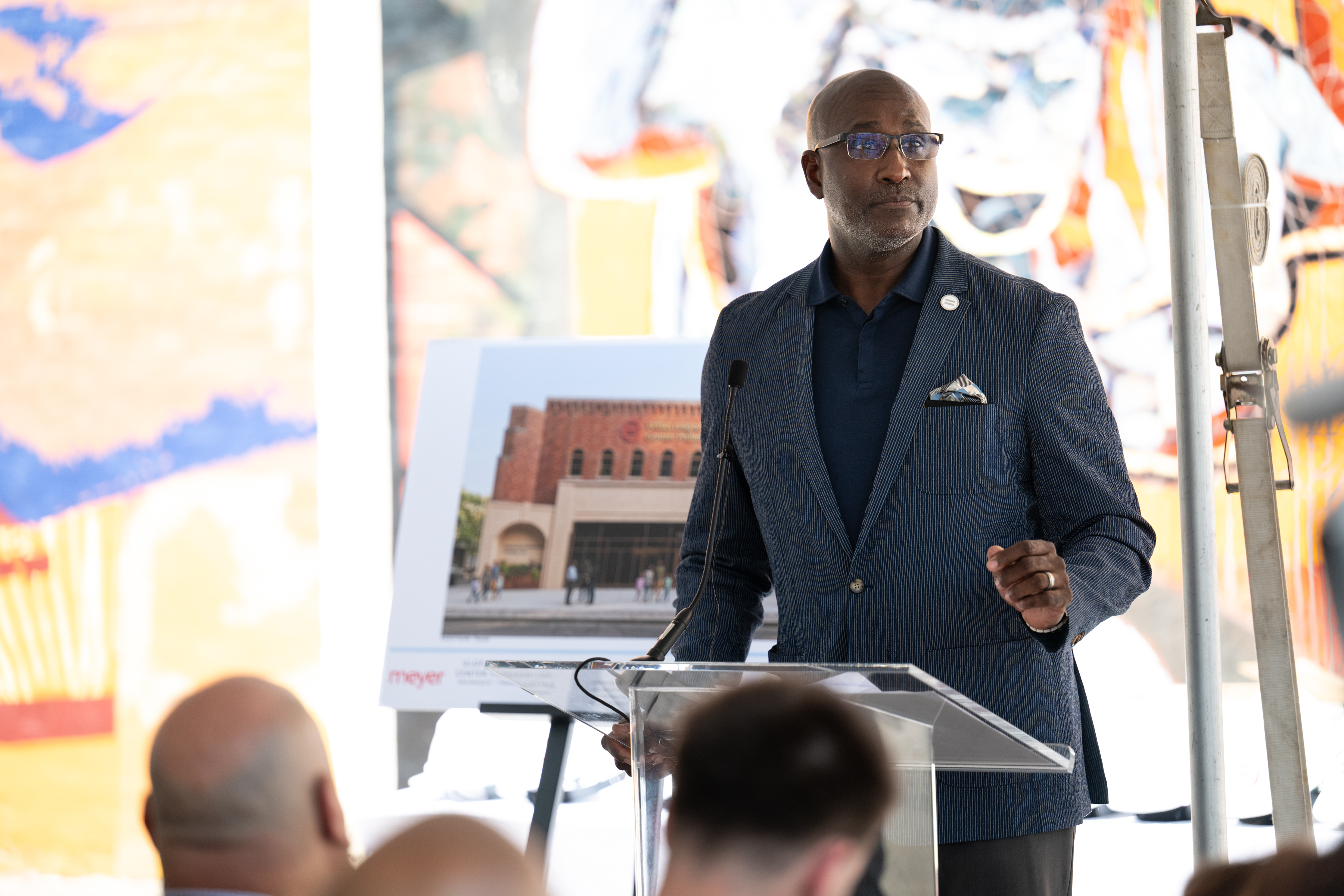
The clinic will be open to all Philadelphia residents and expects to serve residents of eastern Delaware County as well, Urban League president Darrin W. Anderson Sr. saidat Friday’s kickoff event.
“Across Philadelphia, too many residents continue to face barriers to good health, economic mobility, stable housing, quality jobs, and the resources needed to thrive. These challenges are deeply interconnected and require more than isolated solutions. They require a comprehensive community center approach,” Anderson said.
The Urban League acquired the building in March for $1.6 million — attracted by the proximity to the Market-Frankford El and its parking lot, both of which make the building accessible to people outside the immediate neighborhood. With internal demolition about half finished, the center is expected to open in the first quarter of next year.
U.S. Rep. Dwight Evans secured $1.2 million in seed money for the Urban League of Philadelphia’s Center for Well-Being in West Philadelphia. He spoke Friday at an event announcing the project.Erin Blewett / For The Inquirer
The center — in a former Mercy Hospital of Philadelphia building — will employ around 30 people when it is fully operational, said Chetan Panda, vice president of community and economic impact for the Urban League.
The hires for the 4,500-square-foot clinic with eight exam rooms will include a medical director this fall, he said.
The project’s funding comes from a federal tax credit program designed to encourage private investment in economically distressed neighborhoods.
Finanta, a nonprofit Community Development Financial Institution and credit union in Philadelphia, arranged the financing.
Three years ago, U.S. Rep. Dwight Evans, a Philadelphia Democrat retiring at the end of his current term,secured $1.2 million in seed money for the project.
The role of free clinics
The Urban League modeled its free clinic on those in Cherry Hill, Phoenixville, and West Chester. The city’s numerous free primary care clinics are only open periodically, as opposed to being open daily.
Philadelphia has 110,000 people without insurance, according to Panda. Many of them earn too much to qualify for Medicaid, yet don’t have access to insurance through their jobs. Their jobs pay too poorly for themto afford insurance on the state’s Affordable Care Act exchange, Panda said in an interview Thursday.
The clinic will refer people who have Medicaid, Medicare, or private insurance to the federal health clinic closest to them. In West Philadelphia, that could be Spectrum or PHMC at the former Mercy Hospital of Philadelphia.
Urban League of Greater Philadelphia officials, politicians, and other supporters sign a beam that will be used in the the refurbishing of the the Urban League’s planned Center for Well-Being.Erin Blewett / For The Inquirer
Federal clinics, known as federally qualified heath centers, have a sliding payment scale for people who don’t have insurance. “We see that a lot of uninsured people forgo care at the FQHCs because they don’t want to pay the sliding scale. That’s a cost burden,” Panda said
When they need care, they often seek it in high-cost emergency departments, he said.
Free clinics rely on nearby hospitals for some of their staff and for donated services, such as X-rays and other diagnostic tests. Penn Medicine will support the new clinic in West Philadelphia, just as it does existing federal health centers, said Richard Wender, Penn’s chair of family medicine, who was at Friday’s event.
Correction: This story has been updated to correct Chetan Panda’s title to vice president, and with the correct name of Community Volunteers in Medicine in Chester County.