Category: Health

  • Rural Health Transformation Fund leaves gaping hole in finances at Pa.’s Geisinger Health

    Rural Health Transformation Fund leaves gaping hole in finances at Pa.’s Geisinger Health

    Geisinger Health expects to lose more than $180 million in revenue next year when deep cuts to Medicaid start impacting the nonprofit health system with 10 hospitals in a largely rural stretch of central and northeastern Pennsylvania.

    The Rural Health Transformation Program — meant to soften the blows from the cuts imposed by Congress under Republican’s so-called “One Big, Beautiful Bill Act” or H.R. 1 — offers limited relief. Geisinger expects to collect $6.7 million of the $193 million allotted to Pennsylvania.

    “It’s given us some money for some critical infrastructure that we need,” such as a CT scanner or an MRI machine for hospitals that serve rural counties, CEO Terry Gilliland said in an interview last month.

    But much of the money being distributed through the Rural Health Transformation Program, or RHTP, isn’t going to help rural hospitals because it wasn’t designed to do that. No more than 15% of the funding can be used to reimburse providers for healthcare services.

    That has left Geisinger, which is owned by California-based Kaiser Health, in a tough spot: “H.R. 1 is taking a big old chunk out of our hide, and there’s just no way for RHTP to fill the hole,” he said.

    Nationally, $911 billion in Medicaid cuts are anticipated over a decade, with $137 billion is expected to come from rural areas, according to KFF, a nonprofit that researches health policy. KFF’s analysis did not provide state estimates for rural losses.

    The Rural Health Transformation Fund totals $50 billion over five years. Pennsylvania would receive $965 million if it were to get the same amount each year as it did this year. Philadelphia-area health systems haven’t received money from the fund yet, but could participate in the future through projects that benefit rural Pennsylvania.

    Where the money is going

    The rural health fund is an incomplete response to the revenue hole created by H.R. 1, said Katherine Hempstead, a senior policy officer at the Robert Wood Johnson Foundation, a Princeton-based philanthropy focused on healthcare advocacy and research.

    “It is mostly targeted to upstream projects designed to make rural healthcare more efficient in the long run. They may or may not be successful,” she said.

    So far, Pennsylvania has provided a breakdown of how it is spending the first $42.2 million of its first year award.

    All but $2 million went to technology and infrastructure projects, including critical needs like new roofs, HVAC systems, elevator repairs, and the repair of a collapsed sewer line.

    On the technology side, new imaging equipment was popular in the first funding round.

    With $3.7 million from that round, Geisinger got a new X-ray machine for its Bloomsburg hospital, new CT units for Jersey Shore and Lewisburg hospitals, and an upgraded compounding pharmacy for its flagship hospital in Danville.

    Geisinger applied for $3 million from a forthcoming second round and plans to use the money for a special EMS vehicle, transport vans for senior care, telehealth equipment, and other capital equipment, if it is approved.

    In addition to technology and infrastructure, Pennsylvania is focusing the rural funding on workforce development, maternal health services, behavioral health services, aging and access, and emergency medical services and transportation.

    Geisinger’s approach to filling its financial hole

    Geisinger’s estimated $180 million revenue loss next year has three main drivers. They are limits on how much federal money the state can generate through provider taxes, changes to the supplemental payments for hospitals with large numbers of Medicaid patients, and an increase in the uninsured population caused by new Medicaid enrollment rules.

    In 2025, Geisinger had about $10 billion in revenue. That’s up from $7.7 billion in 2023, that last full year before it became part of Risant Health, a new nonprofit created by Kaiser in 2023 to acquire community health systems.

    Already this year, Geisinger has seen a $10 million a month increase in charity care and bad debt write-offs, Gilliland said, which he attributed to people not being able to afford individual Affordable Care Act plans after the enhanced tax subsidies expired.

    Geisinger also expects a $47 million loss of revenue from the federal 340b drug discount program.

    “How many more of these hits can I take? The answer is not very many,” Gilliland said.

    The health system is focused on becoming more efficient.

    “There’s some optimism that says we could find some way to have artificial intelligence do some of the tasks that we typically throw humans at,” Gilliland said.

    He hopes to avoid want layoffs, given that Geisinger is often the largest employer in its communities.

    “I’d really like to figure out ways to fill the hole without having people lose their jobs because that has a much more devastating impact on the local economy,” he said.
  • Pa. measles outbreak grows past 800 cases; House Democrats press CDC on omitted deaths

    Pa. measles outbreak grows past 800 cases; House Democrats press CDC on omitted deaths

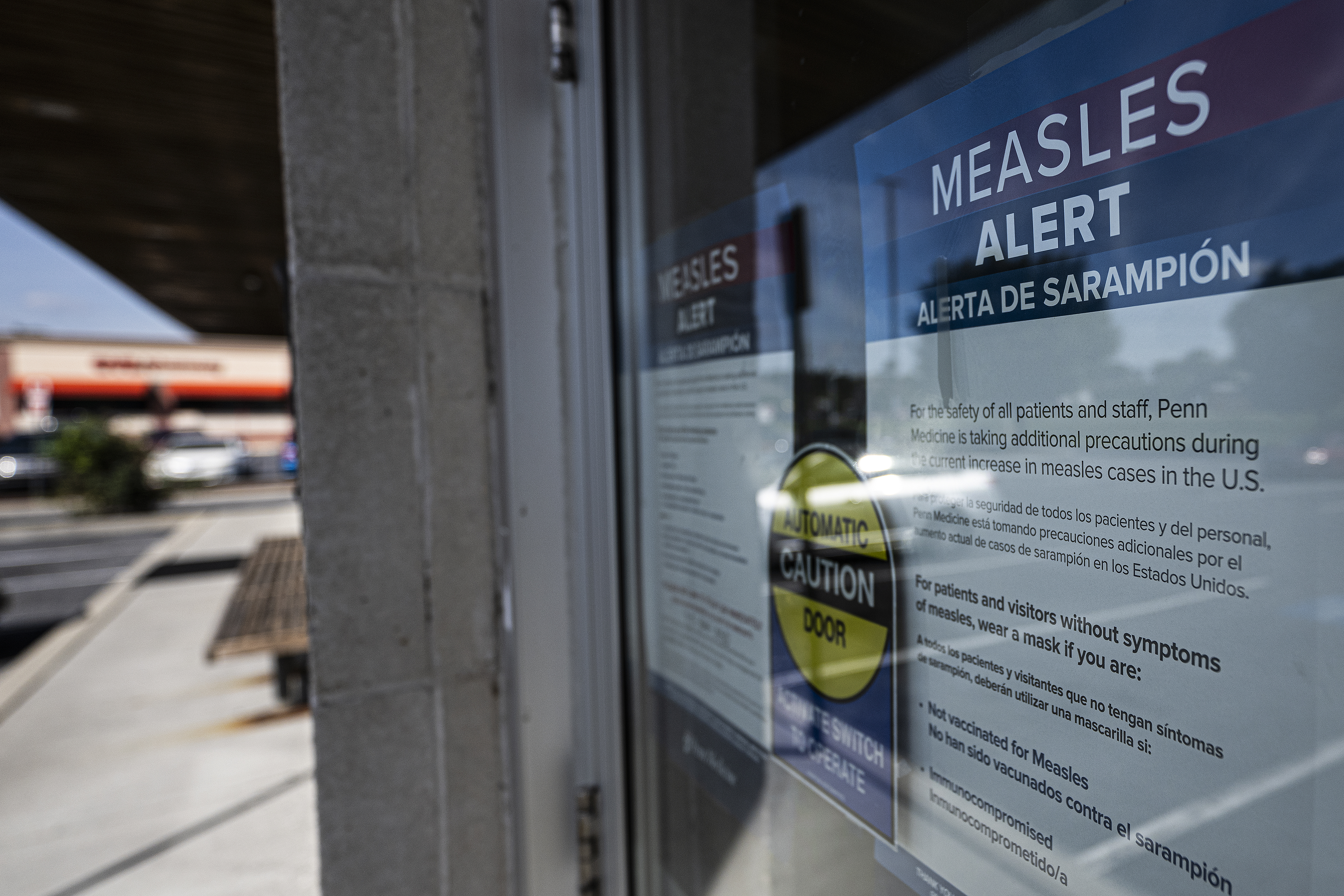
    Pennsylvania’s largest measles outbreak in three decades, currently the largest in the country, passed another sobering milestone on Wednesday: State health officials reported that more than 800 people have contracted the highly contagious disease so far this year.

    The latest case counts show an increase of 111 measles cases in the last week, bringing the total to 835 people with known infections. Physicians and local health officials say this is likely an undercount, with many cases going unreported.

    Chester County logged 12 new cases in the last week, bringing its total cases to 78. The outbreak in the suburban Philadelphia county is now the state’s third largest, having more than tripled in size since early August.

    Chester is the only county in the Philadelphia region with cases in the current outbreak, which began in April. Montgomery County reported three cases in a separate outbreak earlier this winter.

    All but a few have been in unvaccinated people.

    Statewide, children under 18 make up nearly a third of the confirmed cases, and about one in five reported cases have required hospitalization.

    The state reported four rare “breakthrough” cases of measles in vaccinated people earlier this month.

    More than half of Pennsylvania’s 67 counties have now reported at least one measles case.

    Lancaster County, with 342 cases, has the highest case counts in the state, followed by Mifflin County, which has reported 94 cases.

    State officials have reported four measles-associated deaths, all affecting people who were unvaccinated and confirmed to have measles infections.

    The deceased include two infants from Amish families in Lancaster County, an 18-year-old in Mifflin County who died from a serious neurological complication of measles, and a 40-year-old woman in Jefferson County with severe respiratory conditions.

    But state and federal officials have clashed over how to characterize the deaths, with the Lancaster County coroner saying he did not believe measles caused one of the deaths.

    The state considers all four “measles-associated deaths,” meaning deaths that occur within 30 days of symptom onset in a person with clinical evidence of infection and a positive laboratory test for measles, and who did not die of another unrelated cause, like a car crash.

    The Centers for Disease Control and Prevention for weeks omitted these deaths from its public tracking of the toll of measles outbreaks nationally, under the leadership of President Donald Trump’s Health and Human Services secretary, Robert F. Kennedy Jr., a longtime anti-vaccine activist. Kennedy at one point suggested that Shapiro’s administration had “fabricated” the deaths in Lancaster County.

    The CDC updated its dashboard on Wednesday to note one measles-related death in the country, without further explanation.

    In a statement, an HHS spokesperson said that the National Center for Health Statistics received a report of a measles-related death from “a state.” The center verified that the death occurred and that measles was the underlying cause of death, and the CDC website was subsequently updated, the department said without specifying which state the death occurred in.

    On its website, the agency says it is still reviewing death data and developing a new standard definition of a measles-associated death.

    The state has maintained all four deaths fit its definition for a measles-associated death.

    House Democrats ask for a briefing

    New Jersey Rep. Frank Pallone said Wednesday he is still waiting for a response to a letter he sent last week as the top Democrat on the U.S. House committee that oversees healthcare, looking for answers about the CDC’s characterization of the death.

    In the letter, Pallone asked for CDC director Erica Schwartz to brief committee Democrats on her “extraordinary decision” to omit the measles-associated deaths from the agency’s measles data dashboard.

    The letter noted news reports that showed the dashboard had briefly included two measles-associated deaths in Pennsylvania before they were removed from the website.

    Health and Human Services representatives did not immediately return a request for comment on the letter.

    “I think this is the ultimate hypocrisy on the part of the secretary,” Pallone said. “He promised radical transparency, every day during his confirmation hearings. I think now what we’re getting is the opposite, which is a cover-up.”

    Pallone said he was concerned that Kennedy’s anti-vaccine rhetoric has contributed to rising measles cases across the country, and worried that the agency, at Kennedy’s behest, is trying to redefine measles deaths to dodge blame for the rise in cases.

    “What Pennsylvania did was the traditional scientific criteria for deaths from measles,” Pallone said. “What [is the CDC] trying to do? Change that? Based on what?”

  • Sen. Dave McCormick calls for increased NIH funding, breaking with Trump in Washington Post piece

    Sen. Dave McCormick calls for increased NIH funding, breaking with Trump in Washington Post piece

    U.S. Sen. Dave McCormick called for doubling the National Institutes of Health budget and prioritizing “merit-based science” in a Washington Post opinion piece published Wednesday.

    The column emphasized the Pennsylvania Republican’s disagreement with decisions made under President Donald Trump’s administration over the last year and a half that have disrupted billions in scientific funding, prompting lawsuits and court reversals in certain cases.

    “I’m a Republican senator. America needs more science, not less,” read the headline on McCormick’s column.

    He opened with a reference to KJ Muldoon, a Philadelphia-area child whose life was saved by a personalized gene-editing therapy. NIH funding helped researchers at Children’s Hospital of Philadelphia and the University of Pennsylvania develop the treatment. This work represents how federal investment can drive breakthroughs in American medicine, McCormick noted.

    “Meanwhile, the U.S. is underinvesting in discovery,” he wrote, highlighting how the NIH budget has declined by more than 10% since 2003, adjusting for inflation.

    Though McCormick has largely supported Trump’s agenda, he has repeatedly pushed back on cuts to research funding.

    His office last week publicized a letter authored alongside Sen. John Fetterman (D., Pa.) in which the senators issued a bipartisan call for the federal government to explain recent cuts to healthcare research grants affecting Pennsylvania.

    CHOP and Penn are among the institutions that had to shut down programs after the Agency for Healthcare Research and Quality stopped funding more than 100 grants nationwide, totaling hundreds of millions of dollars, in July.

    In his commentary, McCormick cited examples of NIH funding “saving lives and lowering the cost of disease.” Although less than 1% of federal spending goes toward NIH research, he said, the investment delivers outsized returns.

    The nation’s leadership in scientific innovation could slip if federal funding continues to fall, he added.

    “Conservatives should recognize that basic research, like national security, is a public good that private capital rarely funds,” he wrote.

    At the same time, he echoed some of the Trump administration’s criticisms of research funding, which it says overemphasizes diversity, equity, and inclusion.

    The federal government has canceled nearly 1,400 grants midstream, many due to language referencing diversity, he said.

    In the Philadelphia area, research on LGBTQ+ health and health disparities — how social factors like race, income, and living conditions affect health — has been particularly targeted by cuts.

    “While some of these grants deserved to be canceled, some were legitimate research with buzzwords inserted to get approval from the Biden administration,” McCormick wrote.

    A federal judge had ruled that some of the cuts targeting diversity-related grants were unlawful and discriminatory, after researchers and institutions pushed back through lawsuits.

    McCormick said he has urged the government to let scientists revise their applications to continue their work, rather than wasting the investment in those canceled grants.

    He also called for the government to double the NIH’s $48 billion budget within five years, rather than cut it by nearly 40% as the Office of Management and Budget had proposed last year. The proposed cuts were rejected.

    “If we dare, KJ’s story can be the beginning of a new golden age of American science,” he concluded in the op-ed.

  • Highmark reached an agreement to keep Rothman Orthopaedics in network after Oct. 1

    Highmark reached an agreement to keep Rothman Orthopaedics in network after Oct. 1

    Highmark reached an agreement to keep Rothman Orthopaedics in network for Pennsylvania customers of Highmark Blue Shield plans and federal employee health programs after Oct. 1, the two companies said Wednesday.

    The Pittsburgh-based insurer had issued a termination notice over the summer, alleging that about a half-dozen Rothman surgeons were abusing a federal process designed to protect patients from unforeseen out-of-network bills.

    The dispute centered on the use of out-of-network physician assistants by Rothman surgeons who do not have residents or fellows working for them and need help treating patients.

    Highmark said that the practice violated a contract that took effect at the beginning of last year and that the use of arbitration under the federal No Surprises Act generated extraordinarily large payments for the physician assistants.

    The physician assistants worked for separate company that Rothman, a practice, had no control over, a Rothman official said earlier this month.

  • Charles P. Baker III, celebrated cofounder of Baker Industries for the ‘least employable,’ has died at 101

    Charles P. Baker III, celebrated cofounder of Baker Industries for the ‘least employable,’ has died at 101

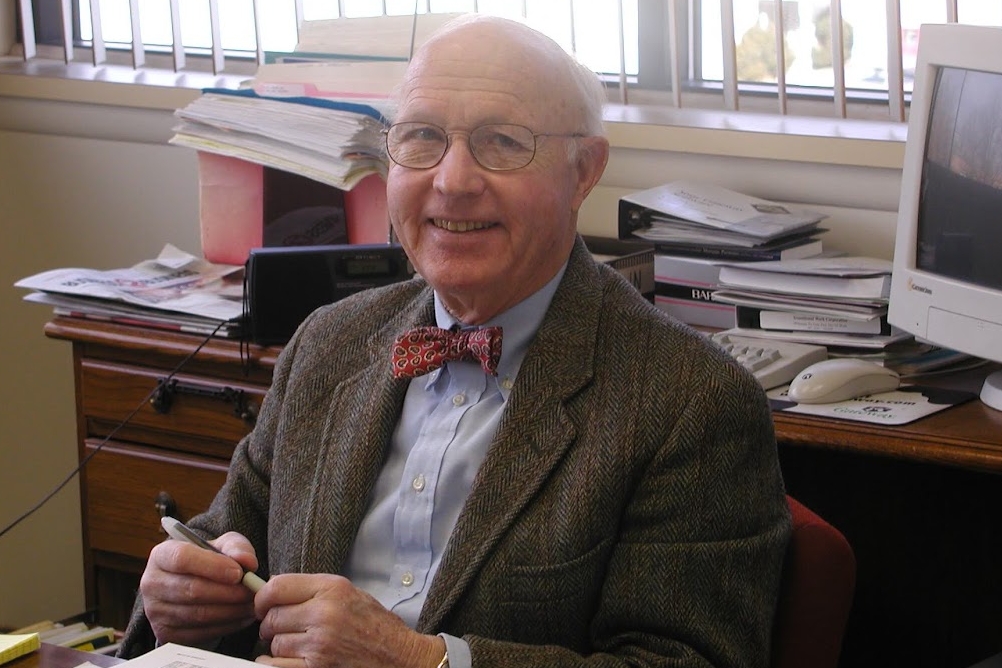
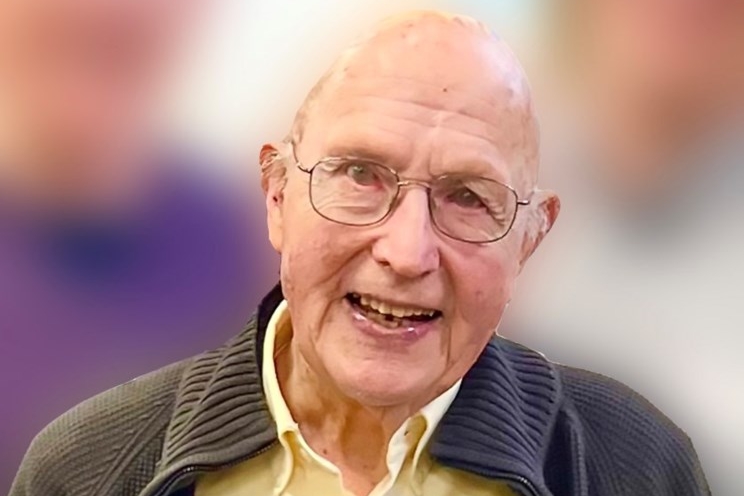
    Charles P. Baker III, 101, formerly of Radnor, celebrated cofounder of Baker Industries, longtime workplace for the “least employable,” former owner of the C.P. Baker & Co. chemical firm, Army veteran, national squash champion, mentor, and volunteer, died Wednesday, Sept. 16, of congestive heart failure at HarborChase assisted living community in Wilmington.

    Born in Philadelphia, Mr. Baker grew up in the old Colonial Hotel at 11th and Spruce Streets in Washington Square West. He and his wife, Louise, founded Baker Industries in 1980, and the workforce development nonprofit has hired, trained, and mentored more than 12,500 workers with physical and intellectual disabilities, substance use disorders, recent periods of incarceration, and housing insecurity who could not find jobs elsewhere.

    Their own son, Justin, lives with epilepsy and, when he could not find suitable employment years ago, Mr. Baker and his wife started their own two-person mail order packaging firm in their Strafford garage. Their son was their first hire.

    “We decided, if we’re going to start something like this, let’s go for the people who need it the most,” Mr. Baker told The Inquirer in 1998, “the ones who are least employable.”

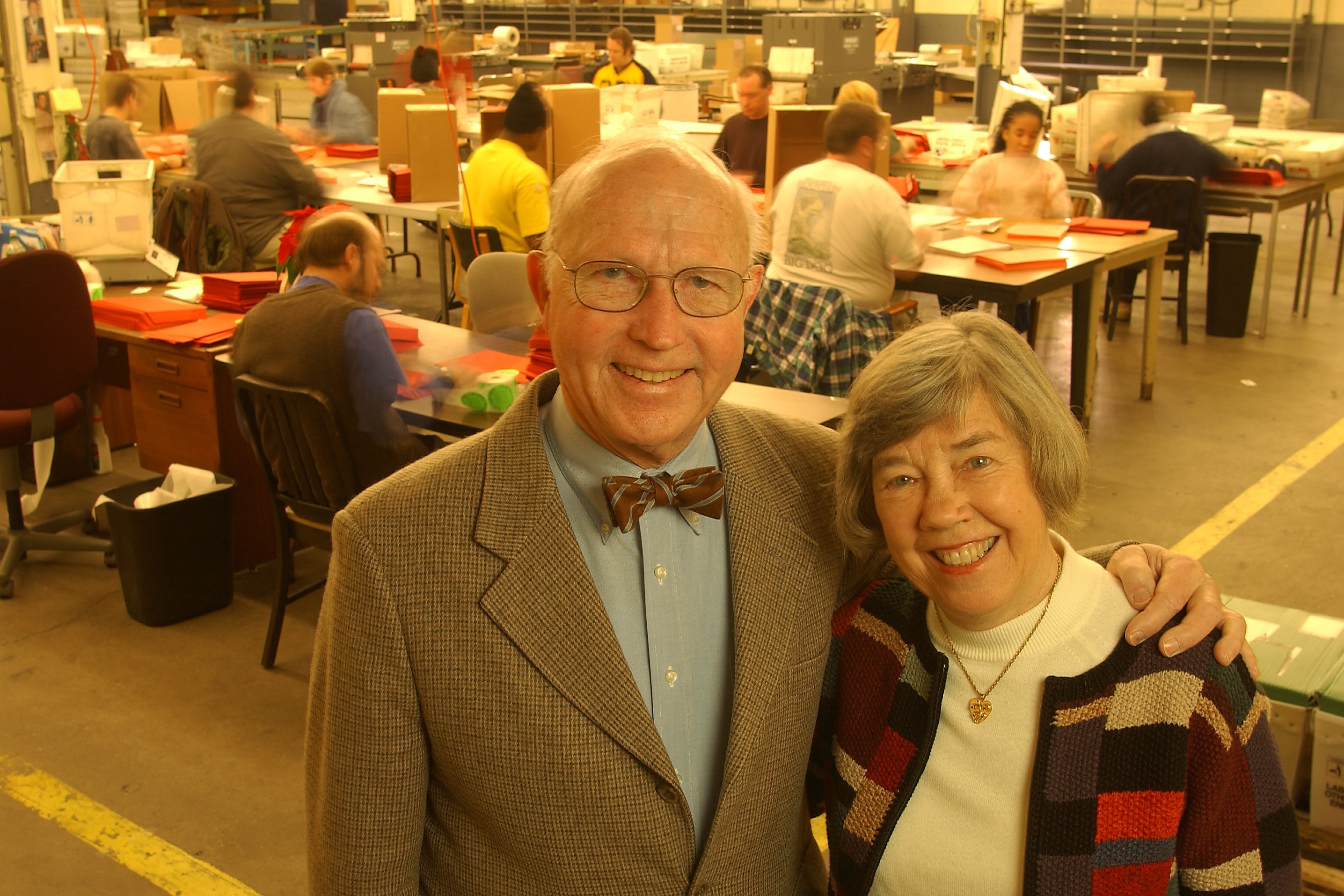
    Mr. Baker and his wife, Louise, stand inside their Baker Industries building in Malvern in 2003. Michael Bryant / Staff Photographer

    For nearly five decades, Baker Industries has contracted light industrial and office work from hundreds of businesses, and operated facilities in Philadelphia, Malvern, and elsewhere. Employees are paid an hourly wage, offered additional training, and encouraged to attend workshops, social events, and support group meetings.

    The company motto is “providing a steppingstone to regular employment,” and many workers have moved on to higher-paying jobs elsewhere. “We have a philosophy of work as rehabilitation,” Mr. Baker told the Daily News in 1988. “The goal is to show these people they can do a whale of a lot more than they think they can do.”

    Mr. Baker served as the unpaid president at Baker Industries until 2002 and then on the board of directors. In the 1950s, he assumed control of his family’s small chemical company, C.P. Baker & Co., and he expanded it before selling it in 1980.

    “Charlie and Weezie Baker believed there is healing in work,” colleagues at Baker Industries said in a Facebook tribute on his 101st birthday in June. “Not just jobs. Work. Showing up. Being part of something. Contributing alongside others.”

    Mr. Baker played many roles at Baker Industries.Baker Industries

    Turk Thacher, vice board chair at Baker Industries, said: “Charlie was beloved. He was kind to everybody.”

    Mr. Baker, his wife, and their company were featured often on TV shows, and in The Inquirer, the Daily News, and other publications. They won many awards for their community service and innovative business model.

    “I was grateful to have their guidance,” Nic Watson, president of Baker Industries, said, “and we will follow their example for years to come.”

    In 1991, the company was named an inspirational Point of Light by President George H.W. Bush. In 2004, Mr. Baker and his wife earned the legacy award for “community generosity” from the Chester County Community Foundation.

    “They went above and beyond their own self-interest,” a foundation official told The Inquirer then.

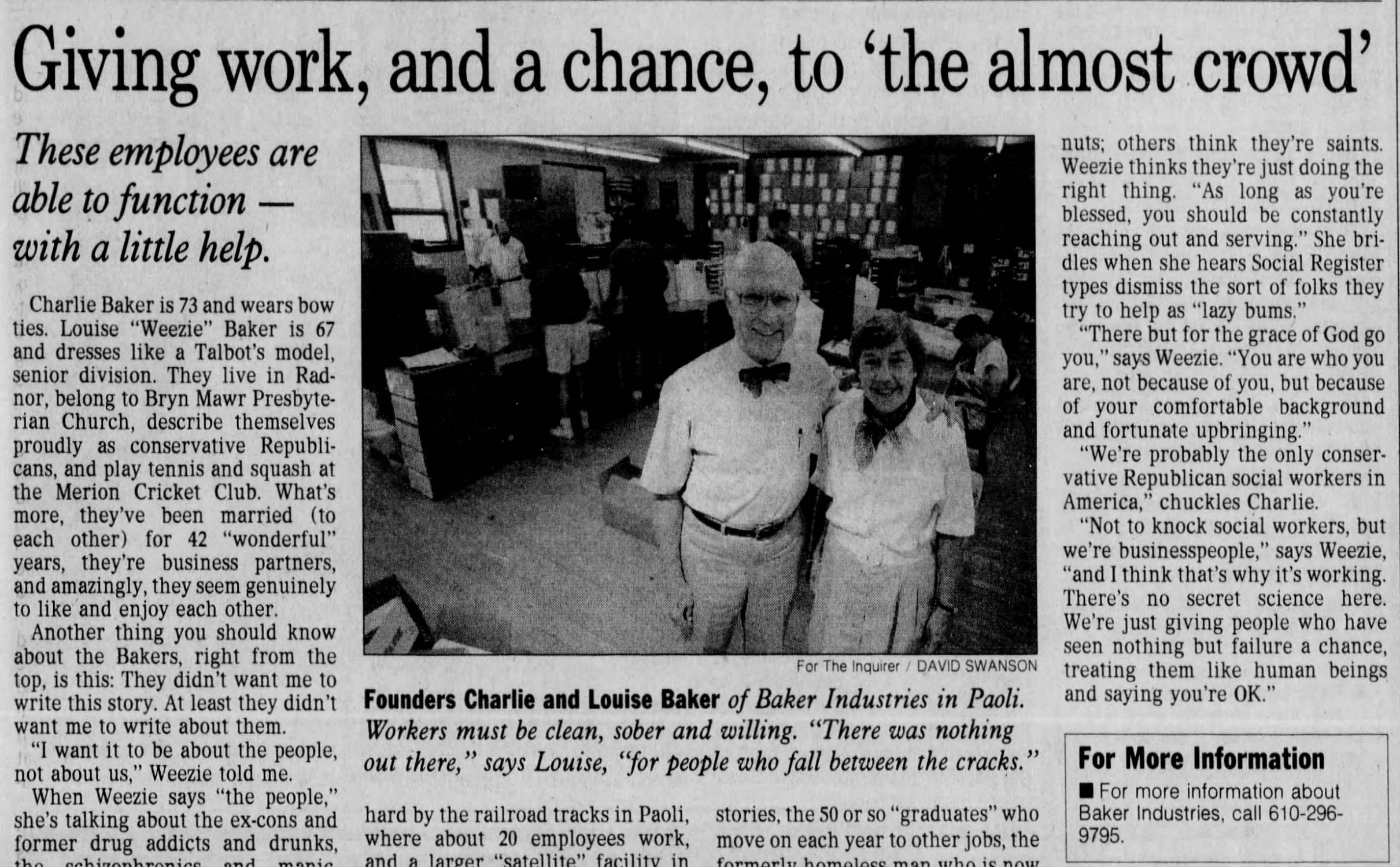
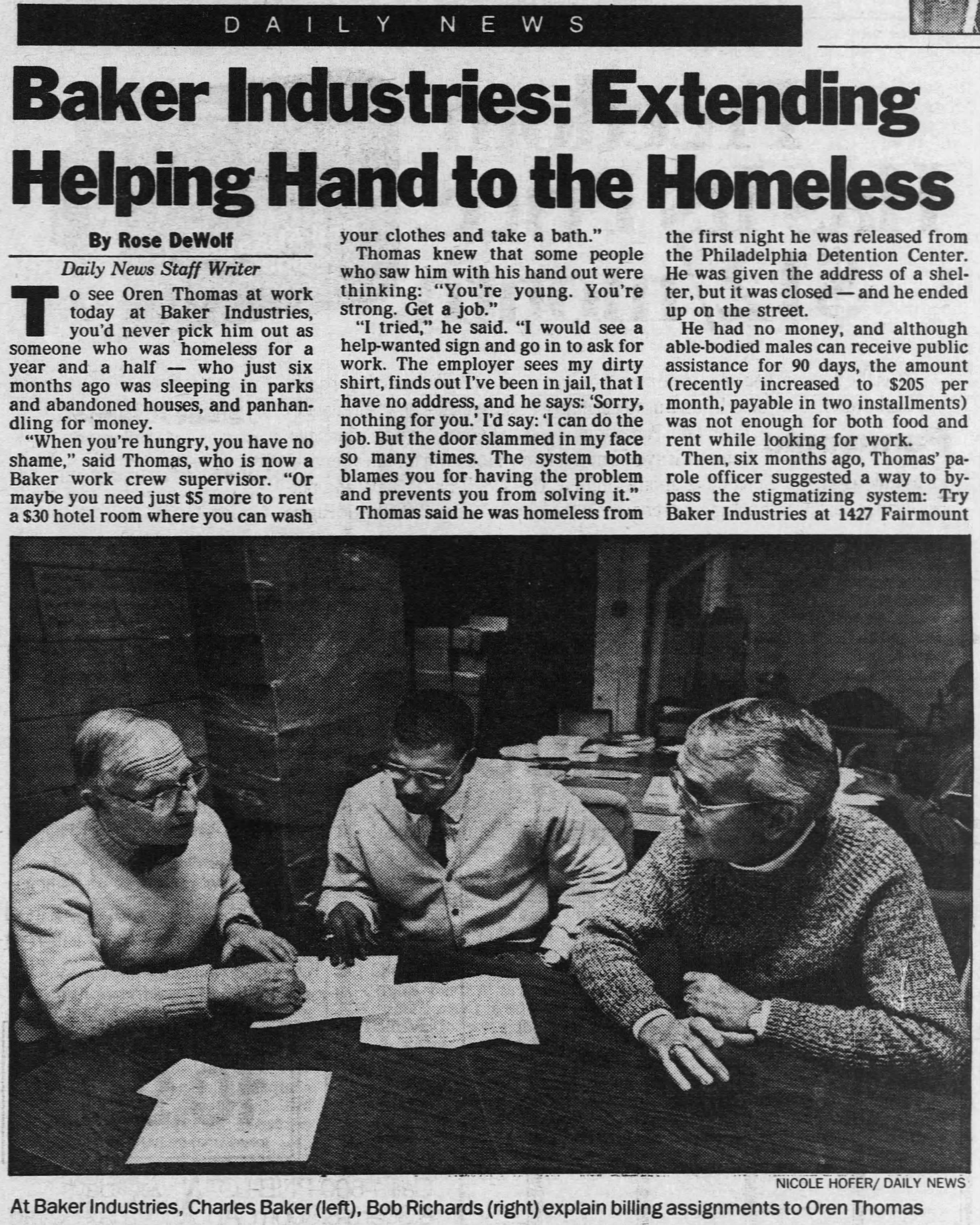
    This photo and article about Mr. Baker were published in The Inquirer in 1998.Newspapers.com

    Away from work, Mr. Baker was an avid squash player, skier, and sailor. He won the U.S. national hardball singles squash championship six times in the 80-and-older division from 2006 to 2016, skied into his 70s, sailed into his 80s, and played squash and tennis at the Merion Cricket Club until recently.

    He graduated from the U.S. Military Academy in 1946 and served more than seven years in the Army. He was stationed in Europe and rose to captain. His family called him a “relentlessly joyful spirit” in a tribute and said: “The world was a better place for his presence.”

    Charles Pitman Baker III was born June 24, 1925, in Philadelphia. His father, Charles Jr., was manager at the old Colonial Hotel, and Mr. Baker told stories of dropping water balloons on passing pedestrians from windows when he was very young and spending summers at the beach and on boats with the Ocean City Yacht Club.

    He was a star squash player at the Haverford School and known by classmates as “the Arm,” his 1943 senior yearbook said, “because of the vicious way he wields a racket.” His mother died when he was 11.

    This photo and article about Mr. Baker (left) appeared in the Daily News in 1990.Newspapers.,com

    He met Louise Wilhelm while water-skiing in Ocean City, and they married in 1955, and had sons Charles IV and Justin and a daughter, Sandra. His wife died in 2025.

    Mr. Baker and his wife attended Wayne Presbyterian Church, and he was known for his bow ties and wide smiles. He was funny, his daughter said, and liked to sing show tunes anytime anywhere, and write corny poems on birthday cards.

    “He was a wonderful dad who loved his family,” his daughter said. His family said in a tribute: “His legacy of service, humor, and kindness will live on for many generations to come.”

    His wife told The Inquirer in 2004: “Charlie has a kind heart.”

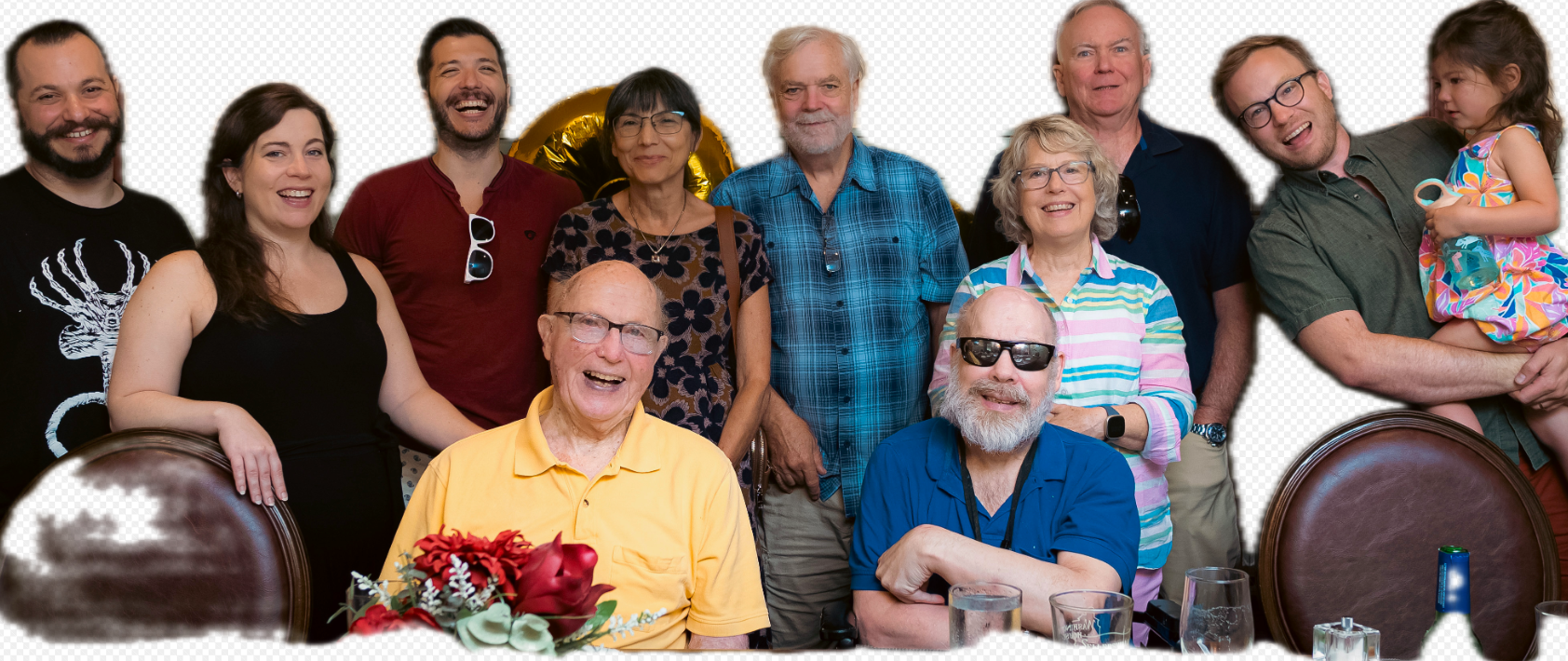
    Mr. Baker (front left) celebrated his 100st birthday in June 2025 with his family.Courtesy of the family

    In addition to his children, Mr. Baker is survived by four grandchildren, five great-grandchildren, and other relatives. Two sisters died earlier.

    Visitation with the family is to be from 10 to 11 a.m. Saturday, Oct. 17, at Wayne Presbyterian Church, 125 E. Lancaster Ave., Wayne, Pa. 19087. A celebration of his life is to follow. Bow ties are optional but encouraged, the family said.

    Donations in his name may be made to Baker Industries, 184 Pennsylvania Ave., Malvern, Pa. 19355.

    His wife told The Inquirer in 2004: “Charlie has a kind heart.”Baker Industries
  • What endlessly searching for a job can do to your mind

    What endlessly searching for a job can do to your mind

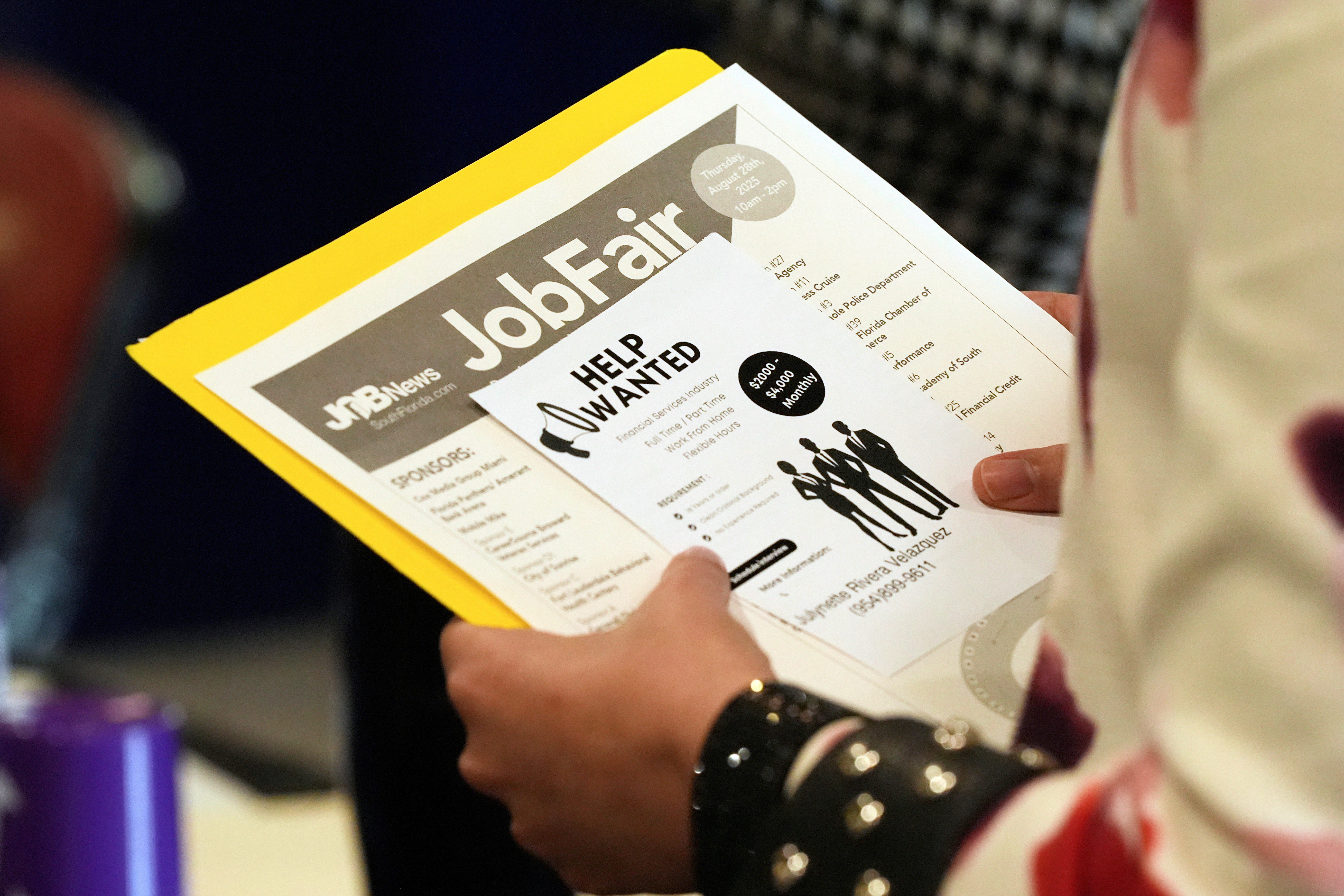
    A prolonged job search doesn’t just sap job seekers of time, money and energy — for many, the hunt takes a devastating toll on their mental health.

    Although unemployment rates in the United States have been historically low, the Bureau of Labor Statistics reports that more than a quarter of jobless people qualify as “long-term unemployed,” meaning they have been hunting for 27 weeks or more.

    And unfortunately for many out-of-work Americans, that probably isn’t changing any time soon. For every open role in 2026 there are twice as many applicants as there would be for similar roles in 2022, according to a recent study from LinkedIn Research. All of this is contributing to an overwhelming sense of discouragement among job seekers — and many of them are struggling to hold on to hope.

    Contemplating the ‘black hole’

    Mythili Sampathkumar, a 44-year-old writing and communications professional, has spent months polishing her résumé, filling out forms, and preparing cover letters. But she said she hasn’t been landing the sort of interviews that might lead to a full-time job.

    “You’re just talking to a black hole,” she said. “You feel like you’re floating in space, untethered from the spacecraft.”

    In the current job market, the problem often doesn’t have anything to do with the merits of a particular applicant, said Washington-based career counselor Amanda Langer. But still, every rejection or nonanswer can be taken as a personal referendum on your skills and worth, she said.

    “A prolonged job search isn’t simply a logistical challenge,” she said. “It erodes a person’s confidence over time and their sense of agency, along with their financial security, obviously.”

    Studies show unemployment is linked to the development of mental disorders, including anxiety and depression. Long-term job seekers describe heightened stress and exhaustion, which can make the everyday work of a job hunt feel even more burdensome, said Mindy Shoss, professor of industrial and organizational psychology at the University of Central Florida.

    “Ghost job” postings, AI interviewers, and a lack of in-person connection do little to help. So much of a person’s sense of self comes from their profession, their work, and how they spend their days, Shoss said. Watching résumés and cover letters disappear into a hiring portal does little to replenish that same well.

    Getting off the screen

    Because long-term joblessness can exacerbate underlying mental health conditions and even lead to some people developing serious problems, support from mental health professionals is key, and sometimes required.

    A peer group of other jobseekers can also help normalize the difficulty of a long-term job hunt and restore some optimism, Langer said. “Sometimes having that feedback from others helps people realize and have those ‘aha!’ moments of ‘OK, I look at this person and this person is super great, really skilled and really qualified, but they’re having a hard time too.’”

    Sampathkumar started working with a career coach, which she said has been hugely helpful. She also launched a personal newsletter and has been limiting the time she spends on LinkedIn and other social media.

    “There is no one to actually be angry at, right?” she said. “It’s a weird frustration. Whatever is happening is happening.”

  • Double-digit rate hikes for Pennie health plans coming in 2027

    Double-digit rate hikes for Pennie health plans coming in 2027

    People who buy health insurance through Pennsylvania’s Affordable Care Act marketplace, Pennie, can expect double-digit rate increases next year.

    The Pennsylvania Insurance Department has finalized an average rate increase of 16% for Pennie health plans sold to individuals and families. Premiums for small business plans will go up an average of 10%.

    “We understand that these rate increases are rough on Pennsylvania families and businesses, and we fought insurers for every savings we could reasonably assert,” Pennsylvania Insurance Commissioner Michael Humphreys said Friday in a statement.

    Insurers had requested an average rate increase of 17% for individual plans and 11% for small-business plans.

    The rate increases reflect rising healthcare and prescription drug costs, Humphreys said. Federal Medicaid cuts and the loss of a key financial incentive program for ACA plans are expected to continue driving up the number of people who are uninsured, raising costs across the healthcare system and contributing to higher insurance prices.

    Insurers are required by law to spend 80% of the money they collect through premiums on healthcare for members.

    New Jersey’s Department of Banking and Insurance has not released 2027 rates for the state’s ACA marketplace, Get Covered New Jersey.

    Pennie cost pressures

    The 2027 rate increases follow massive price hikes in ACA marketplaces this year, after Congress failed to extend a critical financial incentive program. The cost of a Pennie health plan more than doubled for many in 2026, and at least 177,000 people have dropped coverage as a result.

    Before their elimination, the so-called enhanced premium tax credits ensured that no one paid more than 8.5% of their income on an ACA premium. The credits had been renewed annually since being introduced in 2021, but expired at the beginning of last year after Republicans refused to approve them for another year.

    Patient advocates said they are concerned that another price hike will make insurance unaffordable for even more people. Representatives of Affordable Healthcare for PA, a coalition of patients, community members, and advocates, said they would push to make insurance affordability and the expired tax credit program a central issue in the upcoming midterm elections.

    “This is a five-alarm fire,” said Alisha Hoffman-Mirilovich, a coalition member and executive director of Action Together NEPA, a nonprofit that advocates for progressive healthcare policies.

    “You don’t need to be an economist to understand that when health insurance costs skyrocket while wages remain stagnant, people are going to suffer in very real ways,” she said.

    Pennie executive director Devon Trolley urged people currently insured through Pennie to review their coverage during fall open enrollment. Prices vary depending on age, income level, and geography.

    Income-based tax credits remain available as part of the ACA for people earning up to 400% of the federal poverty level — about $62,600 a year for an individual or $128,600 for a family of four.

    Pennie’s open enrollment runs Nov. 1 through Jan. 15. For coverage that starts Jan. 1, people should sign up or make changes by Dec. 15.

    Get Covered New Jersey will remain open for 2027 enrollment through the end of January.

  • The Garces Foundation is changing its name and expanding to Kennett Square

    The Garces Foundation is changing its name and expanding to Kennett Square

    Olivia Ponce left her native Mexico for South Philly in 2001, with a young daughter and no extended family; she strongly felt the lack of a support system.

    Putting her own health and personal growth on the back burner to give her child a better life, she worked unceasingly in the restaurant industry for more than a decade. A phone number on a light pole offering English classes changed her life.

    The digits belonged to the Garces Foundation, created in 2012 by Ecuadorian American chef Jose Garces and Cuban dentist Beatriz Garces after the death of a friend who had avoided seeking medical care out of fear of deportation.

    Since then, the organization has helped Philadelphians from 26 countries in 12 languages, providing access to English classes, free healthcare, and support as they adapt to their new home, regardless of insurance or immigration status.

    Now, to honor its communal sentiment, the foundation has changed its name from Garces Foundation to Comunidad Garces, beginning Tuesday.

    As the organization approaches its quinceañera, the new name is just one change. The agency is expanding its free community health days from Philly to Kennett Square, where more than 28% of the population is foreign-born.

    For Beatriz Garces, the new name responds to the way people have already come to see the organization: as a community.

    “We felt like, given everything the community is going through at this moment, it was even more important to evolve the name to something that really feels welcoming to all immigrants,” she said.

    Although the word comunidad is Spanish for community, Beatriz Garces said, the sentiment and their doors are open to people from all walks of life.

    For years, Comunidad Garces has been holding Community Health Days about every other month in Philly to make medical and dental care free and accessible for people who otherwise would not have it.

    Since 2021, the foundation has treated about 5,000 people through medical assistance and the dental program, Beatriz Garces said.

    Colon and prostate cancer screenings are now available, as well as mammograms through Penn Medicine’s mobile mammography program.

    Now, these services will expand to Kennett Square in partnership with Laurel Dental of West Grove.

    “It’s the first time we expanded beyond Philadelphia,” Jose Garces said. The first Kennett Square community health day was held Saturday.

    “Just on our first day, we discovered five abnormalities in women through our mammogram screening and were able to pass them on to Penn Medicine to continue their evaluation, so day one already making an impact.”

    In the last two years, Comunidad Garces has been expanding to adapt to the needs of a growing immigrant community living through challenging times, Beatriz Garces said.

    Since 2025, the foundation has also offered digital literacy classes, even providing computers so folks can enroll in the program.

    Ponce herself learned English, got her GED certificate, discovered and treated her prediabetes, and found a support system through the organization.

    “Immigration always leaves pain in us, but there is something about the power and resistance we find through this community,” Ponce said. At the South Philadelphia-headquartered foundation, “it feels like you are loved, like there is this family vibe.”

    Most recently, Ponce was hired as a case manager at the foundation. She now helps community members find housing, employment, and schools and manage their healthcare visits.

    The expansion to Kennett Square is, in part, a way to make sure immigrants have access to what they need to build their new lives in the United States, Beatriz Garces said.

    As the name change unfolds, Jose Garces hopes the community feels more included and welcome.

    “Our name is changing, but the world remains the same,” he said. “Comunidad means community, and that means our door is open to everybody.”

  • What to know about COVID vaccines — and whether you need one this fall

    What to know about COVID vaccines — and whether you need one this fall

    If you haven’t given much thought to COVID-19 lately, that’s understandable. The impact of the coronavirus has “substantially diminished” since the early pandemic years, said William Schaffner, a professor of infectious diseases at the Vanderbilt University Medical Center. As a result, “people are perhaps less attentive to COVID.”

    That’s probably due in part to the fact that most people have had some prior protective exposure to COVID-19, either through vaccination, infection or both. But COVID-19 “hasn’t gone away,” said Schaffner. “It’s still apt to produce serious illness.”

    Previous years have seen increases of COVID-19 activity in late summer as well as winter, and cases are starting to ramp up this year, especially in certain parts of the country, said Thomas Russo, chief of infectious disease in the department of medicine at the Jacobs School of Medicine and Biomedical Sciences at the University at Buffalo. “COVID-19 is certainly coming,” he said.

    Vaccination remains the best way to decrease the likelihood of severe outcomes from the virus, as well as protect those around you who might be at higher risk.

    In late August, the Food and Drug Administration approved updated COVID-19 vaccine formulations that target the variants currently circulating around the country. But there hasn’t been new federal guidance this year on who should get the vaccine. Last year’s recommendations have been thrown into legal limbo after a federal judge ruled that Health Secretary Robert F. Kennedy Jr. improperly reconstituted an influential advisory panel. Instead, major medical groups have banded together to release their own recommendations.

    Here, answers to questions you may have about getting the COVID-19 vaccine this year.

    Who should get a COVID shot

    The FDA approved the updated COVID-19 vaccines for people with at least one underlying condition placing them at higher risk for severe COVID-19 — such as people with cancer, a chronic disease (like diabetes or HIV) or a weakened immune system — as well as all adults age 65 and older.

    This differs from what major medical societies have said previously and are now recommending. The American Academy of Pediatrics, the American Academy of Family Physicians and the American College of Obstetricians and Gynecologists suggest the vaccines for most people, including healthy adults ages 18 to 64 and healthy children ages 2 to 18, if their parents want them to get one.

    While many experts stress that anyone can and should get a COVID-19 vaccine, “the risk of developing severe disease is variable depending on the individual,” said Russo, meaning vaccination is especially critical for higher risk groups. Those include people age 65 and older, children under 2 years old, children between the ages of 2 and 18 years in certain high-risk groups, people with underlying conditions and those who are immunocompromised, and pregnant women.

    What healthy people should know

    If you’re an adult under 65 and don’t have an underlying health condition, you may think you don’t need an updated COVID-19 vaccine. But healthy people can still be hospitalized because of COVID-19 or have severe outcomes. “The other thing that the vaccine does is it helps prevent long COVID, and that could be a devastating problem,” said John Swartzberg, a clinical professor emeritus in the division of infectious diseases and vaccinology at the University of California’s School of Public Health.

    A healthy person may also live, work or be around someone at high risk of severe disease. “Getting vaccination would be beneficial because you’re less likely to be infected, or if you do get infected, you’re going to shed lower levels of the virus,” said Russo, “so you’ll be indirectly protecting those individuals.”

    Schaffner added that medical professional societies will continue to recommend comprehensive COVID-19 vaccination for nearly everyone, including adults age 19 to 64 who are otherwise healthy. “Vaccine acceptance of both COVID and flu vaccines slipped last year, and we are hoping to reverse that trend this year.”

    How effective is the updated vaccine?

    The FDA recommended that the newest formulation target the XFG variant, which currently has the widest circulation.

    As for how effective this newest formulation will be? “We never really know how well it’s going to perform until it’s been used by millions and millions of people,” said Schaffner. However, preliminary data suggests it should be “very active” against this XFG strain, noted Swartzberg.

    Like the flu shot, COVID-19 vaccines are updated annually after monitoring of the circulating variants in the United States. While there’s no guarantee you won’t get sick at all, you can feel reassured that the vaccine helps prevent severe disease, said Schaffner.

    A study published in JAMA last year found that the 2024-2025 vaccine formulation offered 45.1% effectiveness against emergency department visits and 57.5% effectiveness against hospitalization or death.

    More recently, a study on the effectiveness of the 2025-2026 COVID-19 vaccines found that the Pfizer and Moderna vaccines provided between 48.3% and 59.3% protection against hospitalization for adults over age 65.

    In addition to reducing the severity of COVID-19 infection, the vaccine may prevent you from getting infected. That same 2025 JAMA study found that the 2024-2025 COVID-19 vaccine provided 44.7% protection against infection four weeks after vaccination. This was similar to the level of protection provided by the previous formulation, the authors said.

    The best time to get a COVID shot

    It takes a week or two to develop maximum antibody levels from a COVID-19 booster, said Russo, and a little longer if you’ve never been vaccinated before. “Ideally, you want to get that close to the winter respiratory virus season when we see a lot of cases and your likelihood of getting infected increases,” he said.

    Medical experts generally recommend COVID-19 vaccination toward the end of September and during October. “Then the protection will be sufficient to stretch out through most of the winter,” said Schaffner.

    It’s safe to get your annual flu vaccine at the same time as your COVID-19 shot.

    Where you can get a COVID-19 vaccine

    “Year in and year out, the substantial majority of COVID vaccines have been given out in pharmacies,” said Schaffner. Doctor’s offices or health clinics can also supply COVID-19 vaccines, though you might want to confirm that your provider has them in stock, he said.

    Children, however, are “somewhat of a unique case,” noted Russo, “because depending on the age of the child and the state, the pharmacist can’t vaccinate them.” Some states have age restrictions for COVID-19 vaccines: Maine, for example, allows pharmacists to vaccinate anyone ages 3 and up against COVID-19, while you must be at least 18 to get a COVID-19 vaccine from a pharmacist in Iowa.

    If your child can’t get vaccinated at a pharmacy, you may need to ask their pediatrician.

    Many insurers have indicated that they will continue to cover COVID-19 vaccinations, said Schaffner, though check with your insurance provider to be sure. You can also use the HHS.gov Health Center Finder to look up federally funded health centers near you that don’t require insurance and may offer sliding fees based on income. However, there have been questions about when COVID shots will be available that are typically offered through a federal program providing vaccines to children who are uninsured, underinsured or on Medicaid.

    Like last year, “there will be confusion about who ought to receive COVID vaccines this fall” and whether they will be covered by your health insurance company, said Schaffner. “That was the case last year, and we hope that it will work that way again this fall and winter.”

  • Look up 100 top-paid employees at nonprofit health systems in the Philadelphia region in 2024

    Look up 100 top-paid employees at nonprofit health systems in the Philadelphia region in 2024

    Pay and benefits typically account for more than half the total costs in hospital systems at a time when healthcare costs are rising sharply in the Philadelphia region and nationally.

    Local nonprofit health systems reported compensation ranging from $1.2 million to $3.7 million in 2024 for the 100 highest-paid employees listed in their most recent federal nonprofit tax returns. The ranking excludes system CEOs.

    Meanwhile, employers are expecting insurance increases approaching 10% for the coming year, according to several national surveys by benefits consultants. Experts cite increased use of healthcare services, widespread use of expensive specialty drugs, and rising hospital prices as key factors leading to overall rising benefit costs.

    Clinicians accounted for 60 spots in The Inquirer’s top 100 ranking, which is based on compensation reported in dozens of 990 tax forms from Philadelphia-area hospitals, affiliated physician groups, and other related entities.

    Highly specialized neurosurgeons accounted for the highest number of top-paid clinicians, followed by cardiac and cardiothoracic surgeons and orthopedic surgeons.

    Chief financial officers and chief operating officers were well represented in the management ranks.

    The region’s largest health system also claimed its highest-paid non-CEO, Jefferson Health president and physician Baligh R. Yehia. His $3.7 million in compensation also topped that of all but two CEOs, as disclosed in a previous Inquirer analysis.

    Thomas Jefferson University, which is Jefferson Health’s parent entity, had 30 executives and physicians in The Inquirer’s top 100. The Jefferson group includes four executives who left during or before 2024, but not salaries reported through the Lehigh Valley Health Network, which Jefferson acquired in August of that year.

    Children’s Hospital of Philadelphia had the second-largest number of employees in the top 100, with 18, including surgeons and numerous top executives, such as CFO, general counsel, and head of human resources.

    Virtua was third, with nine employees, mainly surgeons.

    Across the region, 176 nonprofit health system employees received at least $1 million in total compensation in 2024. That amounts to one in five employees in The Inquirer’s database of more than 800 people.

    IRS rules require nonprofits to report compensation for officers, highest-paid employees, and employees with a certain level of responsibility.

    (function(){function e(){window.addEventListener(`message`,function(e){if(e.data[`datawrapper-height`]!==void 0){var t=document.querySelectorAll(`iframe`);for(var n in e.data[`datawrapper-height`])for(var r=0,i;i=t[r];r++)if(i.contentWindow===e.source){var a=e.data[`datawrapper-height`][n]+`px`;i.style.height=a}}})}e()})();