Category: Health

  • July in Philly has become 4.4 degrees hotter since 1940 on average. Nights are even warmer.

    July in Philly has become 4.4 degrees hotter since 1940 on average. Nights are even warmer.

    Philadelphians sweated through Julys in the 1940s, brooding over World War II as temperatures averaged in the mid-to-upper 70s, including nighttime lows.

    Today, as the city prepares to mark the nation’s 250th anniversary, they swelter under average July temperatures of around 80 degrees — and those nighttimes have gotten warmer.

    Over the past 85 years, Julys in Philadelphia are running on average 4.4 degrees warmer than in 1940, based on an analysis of historical weather data. That translates to an increase of about 0.52 degrees per decade.

    (function(){function e(){window.addEventListener(`message`,function(e){if(e.data[`datawrapper-height`]!==void 0){var t=document.querySelectorAll(`iframe`);for(var n in e.data[`datawrapper-height`])for(var r=0,i;i=t[r];r++)if(i.contentWindow===e.source){var a=e.data[`datawrapper-height`][n]+`px`;i.style.height=a}}})}e()})();

    Nights are even toastier, showing a rise of 4.8 degrees over the same time period.

    (function(){function e(){window.addEventListener(`message`,function(e){if(e.data[`datawrapper-height`]!==void 0){var t=document.querySelectorAll(`iframe`);for(var n in e.data[`datawrapper-height`])for(var r=0,i;i=t[r];r++)if(i.contentWindow===e.source){var a=e.data[`datawrapper-height`][n]+`px`;i.style.height=a}}})}e()})();

    “Science shows that while summer heat is nothing new, climate change is pushing it beyond what we’ve experienced in the past,” Zachary Labe, a climate scientist at the nonprofit Climate Central, said in an email.

    The Inquirer used 1940 as a base year in its analysis because it is the oldest year for consistent records at Philadelphia International Airport. The data from the National Oceanic and Atmospheric Administration’s Regional Climate Centers ends at July 2025.

    The data does not include this July, which could set records.

    105 degrees possible

    The National Weather has issued an extreme heat warning with possible record highs starting Thursday and heading into the July 4 weekend.

    And Philadelphia has declared a heat emergency, activating the city’s pioneering heat-response system.

    High temperatures Thursday, Friday, and Independence Day are all forecast to top 100 degrees and threaten daily records. The current record highs for those dates are 103 degrees for Thursday, 104 for Friday, and 103 for the Fourth.

    The record-warmest lows are 82, 77, and 79 for those days respectively, according to data from the National Weather Service’s Mount Holly office.

    The weather service says dangerously hot conditions with heat index values between 100 and 110 degrees are expected each day. Very warm low temperatures in the mid-70s to the low 80s at night won’t offer much relief, the office noted.

    When combined, multiple days of such high temperatures and humidity will exacerbate impacts, say those meteorologists. The hottest conditions are expected Thursday through Friday.

    Climate change

    Although it’s difficult to pin any single heat wave to climate change, the majority of climate scientists say the burning of fossil fuels has led to ever-increasing amounts of heat-trapping greenhouse gases in the atmosphere and transformed the climate.

    The Princeton-based Climate Center says human activities have warmed the planet by about 1.2°C (2.2°F) above pre-industrial levels. The Princeton-based organization of scientists says that since 1970, July has warmed in 94% of the 243 U.S. cities it studied. Temperatures for the month have risen by 2.6 degrees on average.

    “That includes hotter and more humid nights like those this week, which raise health risks because the body has less time to cool down and recover,” Labe said.

    A big impact on cities

    Excessive heat hits urban areas like Philadelphia hard, said Mathy Stanislaus, of the Philadelphia Climate Justice Collective.

    The collective is a partnership of the Mantua Civic Association, SEAMAAC, Esperanza, Overbrook Environmental Education Center, and the Environmental Collaboratory at Drexel University. Stanislaus is vice provost and executive director of The Environmental Collaboratory.

    In the most densely populated, least tree-lined parts of Philadelphia temperatures can soar 20 degrees higher than in greener, wealthier neighborhoods, he notes.

    That’s because of the heat island effect, which occurs when cities are significantly warmer than surrounding areas because of the lack of tree canopy combined with high concentrations of heat-absorbing pavement, dark roofs, and buildings.

    It’s something many people in the suburbs, or wealthier areas, might not think about, Stanislaus said.

    “I don’t think people realize the gravity of the circumstances for lower income urban communities who have an affordability crisis compounded by the heat crisis,” he said.

    Stanislaus said some households in the city don’t have air-conditioning, and those that do can face a choice as to whether they should use it or not.

    “Even if they have an AC, they may not be able to afford to actually run it,” he said.

    According to a report by the collective, Philadelphia households overall on average spend about 6.7% of their income on energy, but that the burden is much higher for Black and Hispanic households. The poor conditions of many homes because of their age contribute to the strain.

    Stanislaus says temperatures strain critical public and healthcare systems.

    He credits Philadelphia for its array of cooling centers, pools, and spraygrounds. But, he said, many residents are not aware of them or lack transportation. He’d like to see more money devoted to public awareness during heat waves.

    In addition, he said healthcare systems need more staff trained in heat-related care and education, as well as better tracking heat-related illnesses and deaths.

    There has been one death attributed to heat so far this year, according to data from the Philadelphia Department of Public Health. In the past two decades, the biggest number of deaths came in 2011 and 11 with 35. But the city has upped its response measurably since then and the number of deaths has trended down.

    Stanislaus believes heat-related deaths and illnesses are underreported.

    “There’s an urgency to heat,” Stanislaus said. “We need to meet the moment.”
  • 6 ways to shift your stress mindset to dial down daily anxiety

    6 ways to shift your stress mindset to dial down daily anxiety

    To deal with a stressful world, many of us try to avoid and reduce the stress. But what we believe about stress may have just as important a role in helping us deal with it.

    Psychologists call this our “stress mindset” — our belief that stress can debilitate us or enhance us and have positive consequences.

    Research from the past decade shows that these beliefs can affect our psychology and physiology; people who are more inclined to see the positives of stress are more likely to experience improved performance, boosted mood and, in fact, reduced stress.

    Importantly, you can change your stress mindset, experts say.

    “If somebody perceives that stress has benefits for them, they’re likely to engage in a stressful situation much more adaptively,” said Sarah Williams, a sport and performance psychologist and associate professor at the University of Birmingham in England.

    Having a stress-is-enhancing mindset is less about “Pollyannaish” positive thinking or toxic positivity and more about acknowledging that a stressful experience can “lend itself to growth, to opportunities,” said Alia Crum, an associate professor of psychology at Stanford University who first developed a psychological measure for stress mindsets in 2013.

    “So rather than trying to remove stresses and calm everybody down, it’s about trying to help people understand the benefits of when they feel stressed, what those responses can do for them, how they can fuel them to perform better,” Williams said.

    In other words, stress — and how we think about it — may actually help us thrive.

    What our mind does to stress

    The negative effects of stress are still real. Stress, especially if it is chronic, can cause physical and mental illnesses or premature aging.

    But the true nature of stress is more complex.

    “The body’s stress response was not designed to kill us,” Crum said. “It was designed evolutionarily to help our bodies, brains, and minds rise to the occasion and meet the challenges and threats that we are faced [with].”

    (When most people say “stress,” they are usually referring to “distress,” the negative side of stress. Eustress, by contrast, is what researchers consider motivating and energizing stress.)

    There are four ways that our mindsets change how stress affects us, Crum said.

    First, what we believe changes what we pay attention to. Believing that stress is inherently harmful can cause people to overly fixate on the bad and “freak out or check out” as a result, Crum said.

    Second, our stress mindset changes what we are motivated to do. When people believe stress can be enhancing, they are more likely to engage with it in appropriate ways.

    Third, what we believe changes our emotions. “Something I always tell people is often the detrimental thing is not the stress,” Williams said. “It’s the stressing about the stress.” Conversely, believing that stress is enhancing can boost positive emotions, research shows.

    And fourth, there is evidence that mindset can change our body’s physiological response to stress, including by decreasing levels of salivary cortisol, our body’s principal stress hormone.

    Research shows that having a more stress-is-enhancing mindset is linked to better mental health outcomes in the long run, including higher resilience, more optimism, and lower anxiety and depressive symptoms, Williams said.

    Crum said she has tested stress mindsets in different groups of people — students, athletes, workers — across different cultures, and, on average, all groups fell more on the stress-is-debilitating side of the scale.

    The one exception she has found? Candidates working to become Navy SEALs. “These are people who are literally choosing to go into one of the most stressful experiences, professions that exist on the planet,” Crum said. “So they must have a belief that stress can serve them.” (Nevertheless, Navy SEAL candidates who had greater stress-is-enhancing mindsets were more likely to persist through training, have faster obstacle course times, and have fewer negative evaluations from their peers or instructors.)

    This is not to say that the stressor, whether it’s a big job interview, getting an F on an exam, or a tough relationship conversation, is necessarily a good thing or something we enjoy.

    But the stressor is distinct from our experience of the stress.

    “You’re only stressed about things that matter to you,” Crum said. We should “welcome stress” because stress is “a sign that there’s something you care about.”

    Malleable mindsets

    Shifting stress mindsets — and reaping the benefits — is possible for anybody, even for those with the deepest struggles, researchers say.

    Early research found that presenting people with evidence of the benefits of stress could shift their mindset and confer psychological and physiological benefits.

    In a 2017 study published in the journal Anxiety, Stress, & Coping, Crum and her colleagues presented 113 participants with a three-minute video that emphasized either the enhancing or debilitating properties of stress. Afterward, participants took part in a mock job interview — a typically stressful activity — and received either positive or negative feedback.

    Participants who learned that stress is enhancing experienced more improvements to their positive emotions regardless of whether they were told they performed well or poorly. They also exhibited more cognitive flexibility, which is the ability to adapt our thinking and behavior to different contexts. Conversely, participants who learned that stress is debilitating had worse cognitive and emotional outcomes.

    But more recently, Crum and colleagues found that giving a more holistic perspective of stress and emphasizing the power of mindsets may be even more effective, according to a 2023 study in Journal of Experimental Psychology: General. This “metacognitive” approach improved self-reported physical health symptoms and work performance compared with people who were wait-listed for the training.

    And compared with participants who learned only about the positive benefits of stress, those who received the metacognitive approach were more able to maintain the stress-is-enhancing mindset even when presented with evidence of negative effects of stress a week or two later.

    People who can imagine themselves succeeding in a stressful situation may further shift their belief that stress can be enhancing, according to a 2023 study conducted by Williams and colleagues. “We’re almost training the brain to connect the responses to stress with that positive outcome,” Williams said.

    Researchers are careful to note that just because our stress mindset matters, it doesn’t mean it’s “all that matters,” Crum said. “It’s just one piece of the puzzle to help us live happier, healthier, more productive lives.”

    How to shift your stress mindset

    Here are steps experts say you can take to shift your stress mindset.

    Acknowledge the stress. Instead of denying it or trying to suppress it, say what is stressing you aloud. Notice your physiological responses — elevated heart rate, sweatier palms — and remind yourself that “this is my body preparing for me to perform,” Williams said.

    Welcome the stress. It is a sign that there’s something you care about, which can be focusing and energizing if you allow it to be.

    Use the stress response. Instead of expending effort and resources trying to avoid the stress, “utilize the narrowed focus, the increased arousal and energy that happens in the body in order to meet the goals that you have,” Crum said.

    Fuel your stress mindset. Think about a time in your life when you’ve excelled or grown the most. “Anytime you want to, you know, level up, there’s usually some stress involved,” Crum said. “So we just need to remember that is evidence to fuel and sustain the belief.”

    Try stress-mindset micropractices. Take moments to reflect on what stresses you have and what you care about most. This is something Crum says she does when she makes the transition going up the stairs into her workplace and again when returning home.

    Complement with other stress management strategies. More research needs to be done about what contexts and scenarios call for different approaches to stress, experts say. But strategies such as reframing negative experiences and slowing our breath also can help alleviate stress and improve mood.

  • Temple Hospital asks public for help identifying patient

    Temple Hospital asks public for help identifying patient

    Editor’s note: The patient has been identified, Temple officials said Wednesday afternoon.

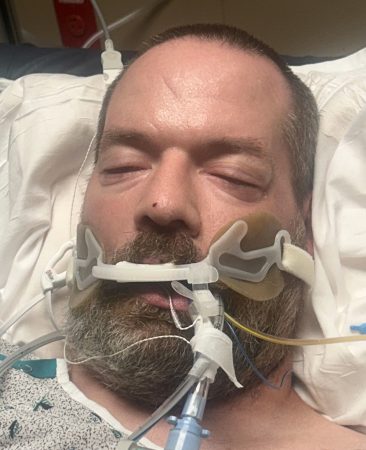
    Temple Health seeks help from the community identifying a patient at its main hospital in North Philadelphia.

    The health system on Wednesday released a photo of the patient, who appears to be in his 50s and was admitted to Temple University Hospital on June 8. It hopes to locate his friends and family.

    Anyone with information can call 215-707-2000.

  • Two measles cases reported in Chester County, widening spread in Southeastern Pennsylvania

    Two Chester County residents have been diagnosed with measles, local health officials said on Tuesday, the first cases reported in the Philadelphia region this summer.

    Pennsylvania has identified 88 measles cases so far this year, the highest case count in three decades and more than five times the cases reported in 2025.

    Chester is now the seventh Pennsylvania county with confirmed measles cases since April.

    Jeanne Franklin, the county’s public health director, said it was too early to tell whether the two adults’ cases were linked to a growing measles outbreak centered in Lancaster County, which borders Chester.

    Health workers in Chester County have conducted contact tracing regularly for months, speaking to about 100 people since the beginning of the year who had come into contact with someone with measles.

    “The process is working,” Franklin said. She added that the county is preparing to identify more cases as they continue contact tracing.

    The two Chester County residents with measles had initially sought care in Lancaster County, she said, and county officials were still working to determine their vaccination status.

    Earlier in June, Delaware County health officials announced they had detected measles in wastewater samples, meaning a person with measles — either a resident or a person passing through the county — had used a bathroom connected to the county’s public water supply.

    Since late April, officials have recorded 43 cases in Lancaster County, 20 in Lebanon County, six in Northumberland County, two each in Berks, Chester, and Dauphin Counties, and one in York County. (A winter outbreak saw 12 cases among Chester, Montgomery, and Lancaster Counties.)

    The current outbreak is spreading largely among people who are unvaccinated, state officials have said.

    The public health threat remains unpredictable in the Philadelphia metro area, where a recent Inquirer analysis found under-vaccinated pockets pose a rising risk to a region with higher overall vaccination rates.

    Franklin said her department is increasing public communications about the measles risk, and encouraging local health providers to vaccinate infants with a “dose zero” of the measles, mumps, and rubella shot.

    Typically, children receive an MMR dose at around 1 year old and before entering kindergarten. A “dose zero” is given at six months and provides additional protection before children receive two more doses of the vaccine.

    State officials last week also recommended that physicians in affected areas provide early measles vaccinations to infants and young children.

    Chester County officials are also working with the state to analyze school-level vaccination data to pinpoint at-risk communities, Franklin said.

    Overall, 94.5% of Chester County kindergarteners were vaccinated against measles in the 2024-2025 school year, the last for which data is available. That’s just below the 95% threshold required to prevent the spread of the virus.

    (function() {
    var l2 = function() {
    new pym.Parent(‘HE_MEASLES4.html’,
    ‘https://media.inquirer.com/storage/inquirer/projects/innovation/arcgis_iframe/HE_MEASLES4.html’);
    };
    if (typeof(pym) === ‘undefined’) {
    var h = document.getElementsByTagName(‘head’)[0],
    s = document.createElement(‘script’);
    s.type = ‘text/javascript’;
    s.src = ‘https://pym.nprapps.org/pym.v1.min.js’;
    s.onload = l2;
    h.appendChild(s);
    } else {
    l2();
    }
    })();

    Spread may be wider than cases reported

    Some providers in Lancaster County have said that they fear measles is spreading more widely than state officials have been able to track, either because patients don’t realize the importance of informing health officials about their condition or are avoiding providers.

    Chester County also is contending with uncertainty. Franklin said that some residents who have had contact with infected patients have told health workers that they’d rather not get tested for measles.

    “They say, ‘I don’t want to be tested. Let this run the course,’” she said.

    Contact tracers stress that they’re not judging that decision, she said. But the department emphasizes that they need residents to work with contact tracers, so other potentially exposed families can make informed decisions about their health.

    Franklin urged Chester County residents to check their vaccination records to ensure they are protected against measles, which can infect up to 90% of unvaccinated people exposed to the disease.

    If they can’t find their records, a primary care physician can order a test to determine whether they’re immune.

    Residents should also look out for symptoms of measles, including a fever, a cough, and a runny nose — similar to other respiratory diseases — that often emerge before patients develop a telltale rash.

    Several people sickened this summer have experienced severe illness and required hospitalization for serious electrolyte abnormalities and liver and kidney dysfunction, according to physicians in Lancaster County.

    “If you previously decided not to get a vaccine, this is the time to reconsider, based on what’s going on,” Franklin said. “The window to get a vaccine once you’ve been exposed is very small.”

  • Peter Grove, award-winning science educator and lifelong environmentalist, has died at 82

    Peter Grove, award-winning science educator and lifelong environmentalist, has died at 82

    Peter Grove, 82, of Narberth, longtime award-winning science teacher at Friends’ Central Lower School in Wynnewood, former executive director of the Norris Square Neighborhood Project in West Kensington, lifelong environmentalist and conservationist, prolific writer, lecturer, British Special Air Service Reserve veteran, mentor, and world traveler, died Wednesday, May 6, of age-associated decline at his home.

    Reared in rural Surrey, England, Mr. Grove arrived in Philadelphia in 1972 and spent the next 45 years teaching science, horticulture, and civic responsibility to students young and old. He also mentored other teachers and fellow naturalists, and created dozens of notable community gardens and wildlife habitats around the region.

    “Gardening,” he told The Inquirer in 1986, “is a real way to bring about change.”

    He earned bachelor’s and master’s degrees in English and education at the University of Pennsylvania in the 1970s, and joined the Friends’ Central Lower School faculty in 1987. Until his retirement in 2017, Mr. Grove taught thousands of preschool and elementary school-age students at Friends’ Central about gravity, butterflies, bees, birds, mold, trees, and other scientific wonders.

    He was a gifted young student of horticulture back at the old Surrey County Merrist Wood Farm Institute in the 1950s and ‘60s, and he dreamed up dozens of riveting scientific demonstrations for his students. They launched hot air balloons, waded in streams to study fungi, and traversed fields and woods on orienteering treasure hunts.

    They even pulled his car up a hill every year with a scientific pulley system. “He made learning come alive,” a colleague said in a tribute.

    Outside his brick-and-mortar classroom, Mr. Grove and generations of students landscaped much of Friends’ Central’s Lower School campus on Old Gulph Road. They designed fish ponds, a bird blind, a bridge, and flower and vegetable teaching gardens.

    In 1995, they collaborated with students at Overbrook School for the Blind to make a fragrance and texture garden for blind people. “This was great for our kids,” Mr. Grove told The Inquirer. “They’re all digging and working, and making new friends, and learning about a different kind of school.”

    Mr. Grove and his wife, Nancy Greene, scaled Mount Kenya in Africa.Courtesy of the family

    Before Friends’ Central, Mr. Grove taught second graders at the Miquon School in Montgomery County. He was also an adjunct science professor at Rosemont College in the 1990s, a summer camp science instructor for the Smithsonian Institution in Washington, D.C., in the early 2000s, and a science instructor for Penn’s Teach for America program from 2007 to 2010.

    In 1981, he became executive director of the Norris Square Neighborhood Project and supervised the building of a solar greenhouse in 1983 and the cleanup of Norris Square Park in 1985. “Everything we do here is slanted toward the neighborhood,” he told The Inquirer in 1983. “It’s all aimed at being able to produce something, do something, or find something.”

    He was also an award-winning lifetime honorary board member at the Riverbend Environmental Education Center in Gladwyne and onetime president of the Narbrook Park Improvement Association. During a sabbatical from teaching one year, he volunteered in Costa Rica to protect leatherback turtle eggs from poachers.

    He earned a lifetime achievement award from the Lower Merion Township Environmental Advisory Council, was a semifinalist for the National Science Teachers Association’s Teacher of the Year Award, and received more than a dozen other honors.

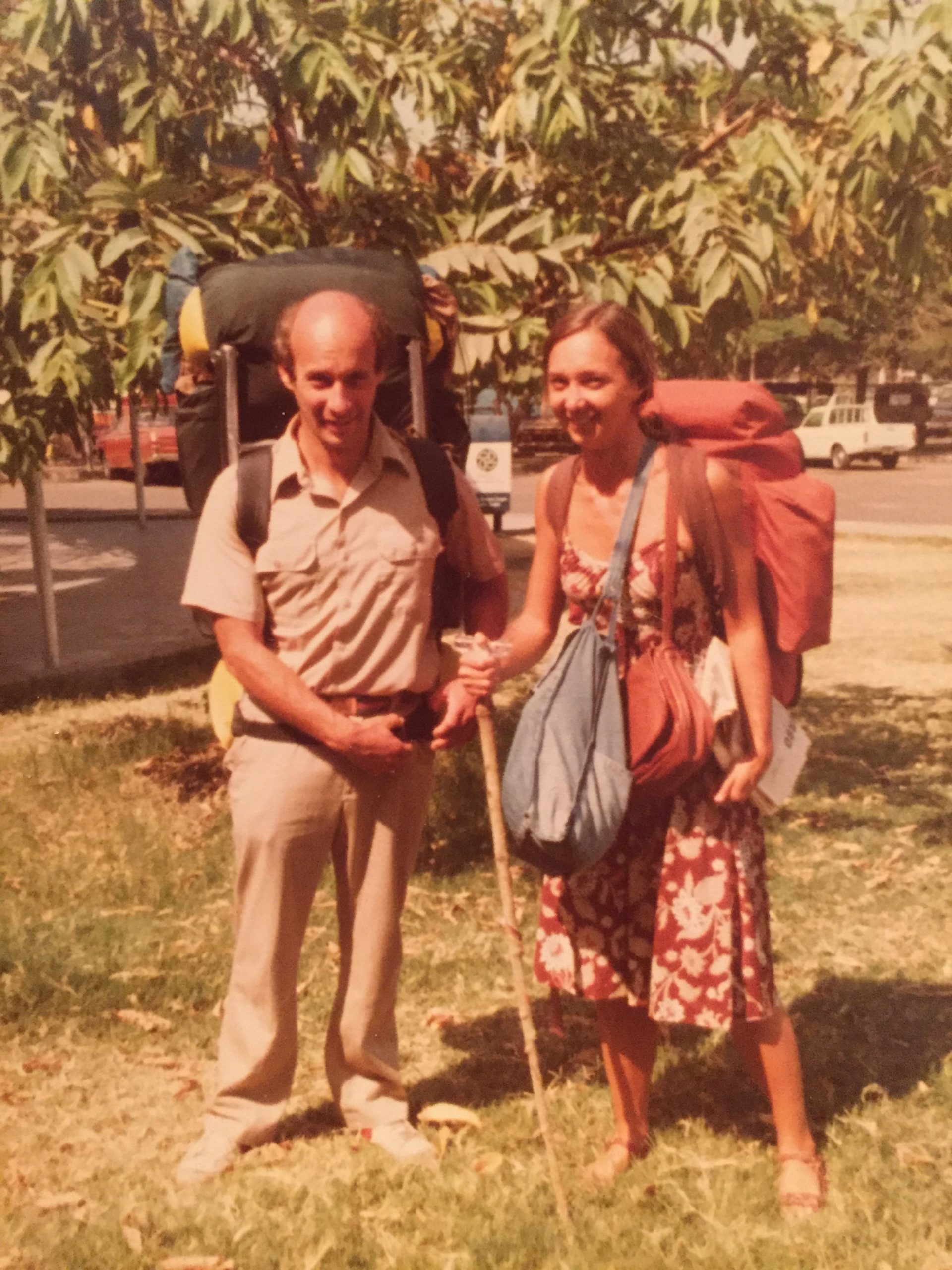
    Inspired by the 1956 film Around the World in 80 Days, he signed on with a Norwegian oil tanker in 1966, bicycled across North America, and returned to Europe on a Swedish oil tanker in 1968. He then hitchhiked to India, worked for two years on agricultural improvements for underserved communities, and met his future wife, Nancy Greene, a longtime Philadelphia resident.

    Amazingly, she was also inspired by Around the World in 80 Days and on her own global road trip. After India, Mr. Grove moved on to construction jobs in New Zealand and Australia. He finally settled in Philadelphia and married Greene in 1976.

    For the next 50 years, the two adventurers hiked trails in Borneo and New Zealand, and climbed Mount Kenya and Mount Kinabalu. “I was his biggest supporter,” his wife said.

    Born June 1, 1943, Peter Adrian Grove grew up in Send, a village about 28 miles southwest of London. He connected with nature as a boy, worked as a landscaper and carpenter in the early 1960s, and spent two years in the British Special Air Service Reserve.

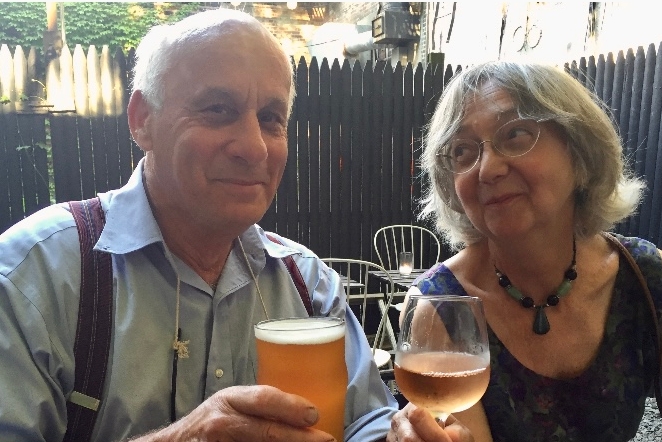
    Mr. Grove and his wife, Nancy Greene, traveled the world together for decades. Courtesy of the family

    He earned an associate’s degree in English and biology in 1974 at Montgomery County Community College, and his bachelor’s degree at Penn in 1976 and master’s degree there in 1977. He constantly wrote and recorded audio clips about his life and adventures, and he shared those tales enthusiastically in school and at public events.

    He and his wife had a son, Evan, and a daughter, Marian, and lived in Fitler Square and then Narberth. He doted on his children and grandchildren, and bonded with his dogs.

    Mr. Grove constantly whipped up candlelit gourmet dinners for his family. He was funny, everyone said, and he loved to sing, dance, and fish.

    He called himself a simple man despite his many achievements and lived with cancer for years. “He was,” his wife said, “quite simply one of a kind.”

    Mr. Grove met his wife, Nancy Greene, in India in 1968.Courtesy of the family

    In addition to his wife and children, Mr. Grove is survived by five grandchildren and other relatives. Two sisters died earlier.

    A celebration of his life is to be livestreamed on YouTube.com at 1 p.m., Saturday, Aug. 8, at Wayne Presbyterian Church, 125 E. Lancaster Ave., Wayne, Pa..

    Donations in his name may be made to Friends’ Central School, 228 Old Gulph Rd., Wynnewood, Pa. 19096; the Lower Merion Conservancy, 1301 Rose Glen Rd., Gladwyne, Pa. 19035; and Friends of the Earth, Box 7010, Merrifield, Va. 22116.

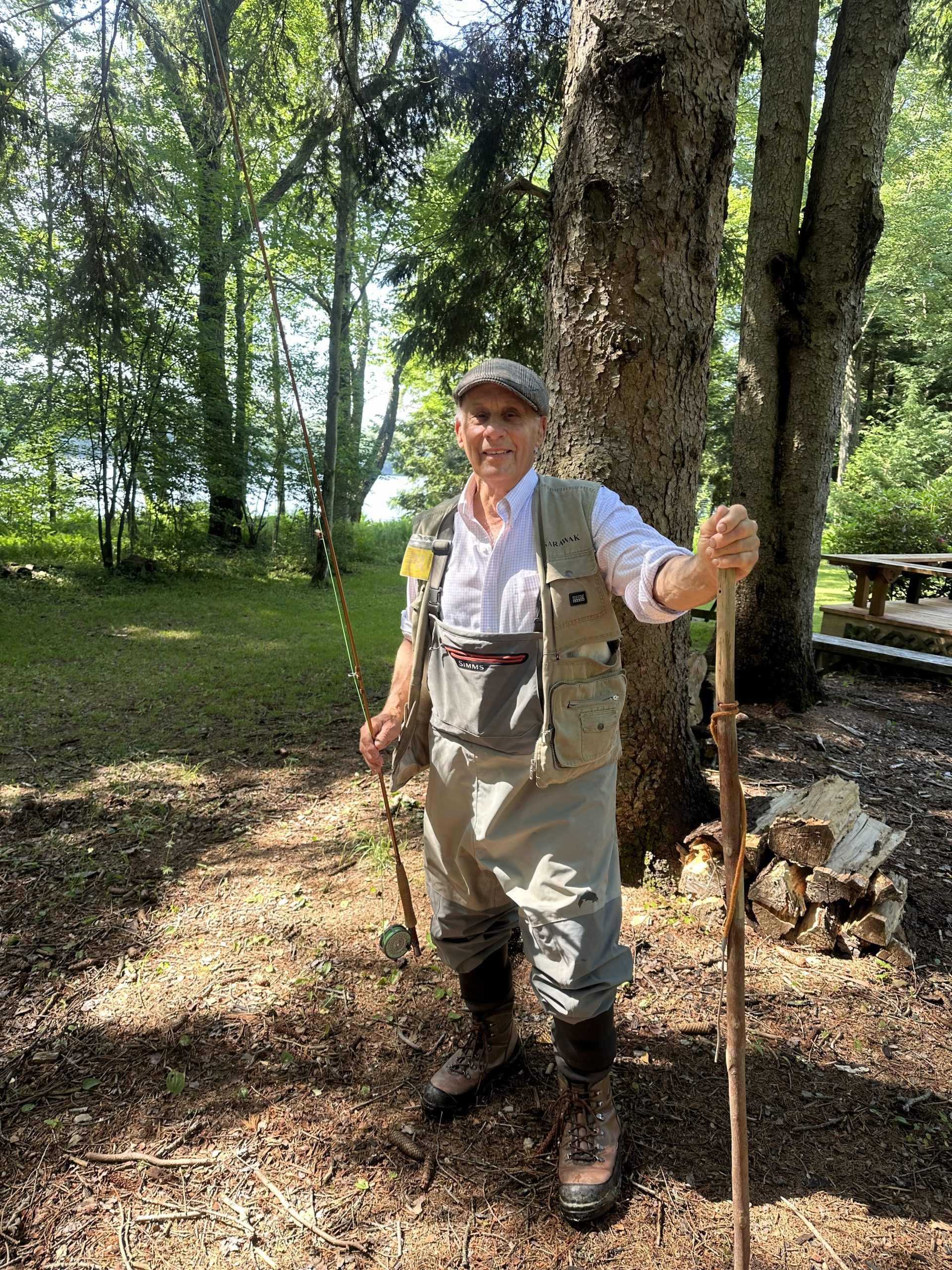
    Mr. Grove was an avid fisherman.Courtesy of the family
  • What to know about symptoms and treatment for dehydration and heat exhaustion

    What to know about symptoms and treatment for dehydration and heat exhaustion

    Brace yourselves, Philadelphians. It’s going to be a hot one out there.

    Staying healthy during the heat wave comes down to two basic things: drinking water and cooling down as much as possible.

    Here is what you need to know about heat-related illnesses:

    What are the signs of dehydration?

    Water serves critical functions in the body, including cooling it down, maintaining blood volume, and balancing electrolytes.

    Dehydration happens when individuals lose more water than they are taking in. Even though it could happen to anyone, dehydration poses a specific risk to children, elderly, and people with chronic illnesses.

    The signs of dehydration are dark-colored urine, less frequent urination, fatigue, confusion, and dizziness. With babies, parents should monitor diapers to ensure that they are continuing to provide urine.

    Untreated dehydration can contribute to heat exhaustion or heatstroke, reduced blood pressure, fainting, and seizures.

    What are the symptoms of heat exhaustion?

    As the body remains overheated, it will continue to sweat and further lose liquids. If individuals’ skin becomes cold and pale, they complain of dizziness and headaches, and seem tired or weak, these are all signs they might be suffering from heat exhaustion.

    At this stage, consider calling 911 if a person is vomiting, the symptoms get worse, or last longer than one hour.

    What are the symptoms of heatstroke?

    Heatstroke is when the body can no longer regulate its temperature. People may stop sweating and spike a fever. The cold, pale skin could turn hot and red. In addition to the fever, people may be confused, pass out, and vomit.

    If someone is vomiting, unable to drink, or losing consciousness, medical attention is likely needed in an emergency department. Medical staff there can cool the person down and provide intravenous fluids. If you suspect that someone is suffering heatstroke, call 911.

    How to prevent and treat dehydration, heat exhaustion, and heatstroke

    Water is your best friend during the heat wave. As much as possible, keep hydrated. Adequate water intake for adults is about 11 to 15 cups a day. While water is not the only hydrating drink, avoid caffeinated and alcoholic drinks, which can contribute to dehydration.

    Cooling down is also critical. Look for shade, avoid the sun, and when possible, stay inside air-conditioned buildings. This will help the body regulate heat and preserve liquid, especially during the hottest hours of the day in the afternoon.

    There are open splash parks and pools throughout the city where people can go to cool down, though if you spend time in the sun, be sure to put on sunscreen to avoid sunburns.

    For people who are dehydrated, get them to a shaded and cooler area and have them drink water. If at any point they lose consciousness, vomit, or are unable to drink, seek medical attention immediately.

    How to treat heat rash and cramps

    Two other potential unpleasant outcomes of heat are rashes and cramps.

    When sweat is trapped in the skin, a potentially itchy heat rash can appear. It can be in the form of small blisters to larger lumps. Heat rashes usually resolve without treatment when the body cools down. The CDC recommends keeping the rash dry and using baby powder to soothe itchiness. Go see a healthcare provider if the rash doesn’t go away within a few days, gets worse, or if you develop additional symptoms or are concerned that other health issues are involved.

    Heat cramps are involuntary muscle spasms that can occur due to fluid and electrolyte loss, which is common when exercising on a hot day. If you have heat cramps, stop any physical activity, move to a cool place, and drink water. A sports drink with electrolytes can also help.

    Seek medical attention if the heat cramps last longer than an hour or if you have a heart condition.

  • How to stay cool without air conditioning in Philly

    How to stay cool without air conditioning in Philly

    Summer in Philly is always hot.

    There are lots of air conditioned spaces you can go to for relief. Organizations like the Pennsylvania Department of Health have always recommended going to air-conditioned spaces — like a mall or library — to protect yourself from heat-related problems.

    “With extreme heat, it is always important to remain cool, possibly in air-conditioned atmospheres,” state health department of health press secretary Maggi Mumma said in 2020.

    There are, however, some things you can do at home to keep a little cooler if you are AC-less this summer. Here is what you need to know:

    How to cool your body down

    Let’s start with the basics: One key way to fight heat-related discomfort is to drink lots of cool water, which can both keep you hydrated and help cool you down. Sugary or alcoholic beverages can cause you to lose more body fluids. Dr. Joseph Teel, an associate professor of family medicine and community health at Penn Medicine, says you should drink water frequently.

    How much? There is no one-size-fits-all answer. How much you need to drink can vary if you have health conditions such as congestive heart failure, Teel says, or be exacerbated by your environment, level of exercise, and overall health. One tip: Don’t wait until you are thirsty to drink, the state health department says.

    When someone suffers heat exhaustion on a sports field, Teel says an ice bath can help bring down their temperature. You can take the same approach. A cold bath or shower, he says, can help but is not a permanent solution because “you can’t stay in the shower all summer.”

    You can use cool compresses, Mumma says, to help cool down. Making one is simple: Just wet a washcloth or towel in cold water, and put it on your body. Where should you put it? Some of the most effective areas, Teel says, are around your neck and on your groin, and if you’re at home, you can try using them with minimal clothing on to hit a few areas at once.

    You can step up that technique by using fans to make it an “evaporative process,” Teel says. “If we have water on our skin and it evaporates, it takes with it some heat,” he says. Put on your cold compress and use a fan to blow air across your skin, which Teel says can “cool you down a little faster than just a cold cloth itself.”

    Beating the heat in Love Park fountain, during a hot summer day in Philadelphia.JOSE F. MORENO / Staff Photographer

    How to cool down your house

    Use fans wisely. Fans can be one of the best ways to keep cool — but there are right and wrong ways to use them. The city, for example, says you should never use a fan with your windows closed, which can create an “oven effect” by circulating hot air inside your home.

    Fans can be more effective when the heat of the day is over, and you can open your windows to allow the cool night air in, Teel says. One of the best ways to create airflow is to put a box fan in an open window at one end of your space blowing air in, and another fan in a window blowing air out at the other end.

    And if your home has ceiling fans, make sure the blades are rotating counterclockwise during hot weather. That way, the fan will push air down into your space to create a breeze. (Many ceiling fans have a directional switch on their motor that controls the direction in which they spin.)

    There are more ways to keep your home cool.

    Think about when you use your appliances. The Pennsylvania Utility Commission, for example, says that you should wait to use any appliances that generate heat — such as dryers, dishwashers, and ovens — until after 7 p.m. to avoid heating up your home unnecessarily. Turning off other nonessential appliances and lights is also a good idea.

    Keep your blinds closed during the day. The sun, Teel says, can heat up your home faster, like a greenhouse. The PUC recommends spending time in rooms that are not hit with direct sunlight during the day.

    City pools were closed in 2020, but will reopen for the 2021 summer.TOM GRALISH / Staff Photographer

    If you’re going to buy an AC

    Window air conditioners are much cheaper and more convenient to install than central air, and if you can afford one, it may be a good time. However, there are some things to consider when buying a window unit.

    As Consumer Reports points out, you will want to get an AC that is appropriately sized for the room you are trying to cool. If it’s too small, it will have trouble cooling the room; if it’s too big, it will cool the room quickly but leave too much moisture behind. A good rule of thumb is for the unit to have 20 BTUs (British Thermal Units) of cooling power for every square foot of space in the room.

    And if you need help with utility costs this summer, funding from the Low Income Home Energy Assistance Program is available for qualified residents, a city spokesperson says.

    Think about when you go out

    The health department recommends staying indoors as much as possible and limiting exercise during the hottest parts of the day, Mumma says. However, if you have to go out, stay in the shade as much as possible and wear sunscreen, a ventilated hat, and sunglasses.

    If you need to go shopping, Teel says, “look ahead in the week, and pick a cooler day. Avoid the time when you will be subjected to midday heat.”

    At home, Teel says, wear as little clothing as possible. When out and about, consider using light-colored, loose-fitting clothes made of breathable, light materials like cotton that let air to circulate around you.

  • Two more Philly-area oral and maxillofacial surgery practices have joined a New Jersey group

    Two more Philly-area oral and maxillofacial surgery practices have joined a New Jersey group

    MAX Surgical Specialty Management, a private-equity backed company consolidating oral and maxillofacial surgery groups in the Northeastern U.S., has acquired two more practices in the Philadelphia area.

    The latest deal, announced Friday, gives the Hackensack, N.J., firm 12 surgeons at 12 locations in Pennsylvania. Surgeon Jason M. Auerbach founded MAX in 2022 with private-equity backing and entered Pennsylvania two years later.

    The two newly acquired practices have six offices in Bucks and Chester Counties.

    Oral and Maxillofacial Surgeons P.C. has three surgeons, and offices in Doylestown, Quakertown, Warminster, and Chalfont. Oral Associates of the Main Line has two surgeons and offices in Exton and Paoli.

    MAX did not disclose financial terms of the transactions.

    In addition to New Jersey and Pennsylvania, MAX has practices in Connecticut, New York, and Vermont. The company — a management services organization — is majority-owned by its physicians, Auerbach said.

    Oral and maxillofacial surgeons work at the crossroads of dentistry and medicine. Most have dental degrees, but some also have medical degrees. They remove wisdom teeth, install dental implants, repair facial traumas, and treat jaw injuries, among other services.

    North Jersey origins

    Auerbach founded Riverside Oral Surgery in Bergen County in 2007 and grew it to 12 locations before founding MAX with private equity partners. Part of his motivation was to create a home for independent physicians, Auerbach said in a May interview.

    The Philadelphia region still has a high concentration of independents, with strong patient demand. “It’s hard nowadays to be an independent oral-maxillofacial surgeon, in terms of the complexities in running a healthcare business,” Auerbach said.

    Robert Mogyoros, whose Greater Philadelphia Oral Surgery is in Elkins Park, said he valued his independence above all, but decided to look for a group to join after the business side had gotten too challenging.

    Physician groups get better prices from vendors, better deals with insurers, and have an upper hand in physician and employee recruitment, said Mogyoros, who became part of MAX last July.

    “What attracted me to MAX was that it’s doctor-driven and doctor-run,” he said in a May interview.

    Rothman and Kim Oral & Maxillofacial Surgery, with offices in Northeast Philadelphia and Cinnaminson, was MAX’s first acquisition in Southeastern Pennsylvania. That deal also happened last year when MAX announced that it had borrowed $77 million to support growth.

    When doctors sell their practices to MAX, they typically invest about 30% of the value into MAX, Auerbach said. MAX’s outside investors are MedEquity Capital near Boston, RF Investment Partners in New York, and Kian Capital in Charlotte, N.C.

    Editor’s note: This article was update to correct the year when MAX made its first Pennsylvania acquisition.

  • Medicare is about to cover GLP-1 drugs for weight loss. Here’s what to know.

    Medicare is about to cover GLP-1 drugs for weight loss. Here’s what to know.

    Beginning Wednesday, Medicare will cover GLP-1 drugs for weight loss for the first time, with patients responsible for a $50-a-month co-payment that makes it far cheaper than cash prices without insurance.

    The move will unleash a surge in prescriptions for patients 65 and older and younger people with disabilities who are covered by the government health insurance program.

    Generally, insurance coverage has been spotty for the revolutionary weight-loss drugs, largely because of the budget-busting impacts of high costs and huge demand. Coverage under Medicare, which covers 70 million Americans through the traditional insurance and privatized Medicare Advantage, will go a long way to plugging gaps.

    But there are important considerations under the Trump administration’s initiative. The coverage is temporary, set to expire at the end of 2027. It is not known whether, or how, Medicare will continue coverage after its 18-month pilot, which is called the Bridge program.

    “It’s certainly good news for Medicare beneficiaries who have been essentially shut out of the market for GLP-1s for weight loss if they wanted to use insurance coverage,” said Juliette Cubanski, vice president and director of Medicare policy at KFF, the nonprofit health care research organization. “However, it is a temporary program. It is not a permanent change in Medicare coverage.”

    Unless the coverage is extended, millions of patients who are expected to benefit will face a choice beginning in January 2028 of paying higher cash prices for the drugs or stopping taking them ― which, based on the current GLP-1s, would probably cause their weight to rebound.

    Additionally, coverage is not automatic. It is subject to preapproval under a process known as “prior authorization,” which can slow down access even for patients who qualify. The Centers for Medicare and Medicaid Services has outlined a process requiring multiple steps between providers and pharmacies and its insurance contractor for the project, Humana.

    “I think that is going to cause a bit of friction in the process,” Cubanski said.

    CMS said it expects preapprovals to take under 72 hours. Here are answers to essential questions about how the program will work.

    What drugs will be covered?

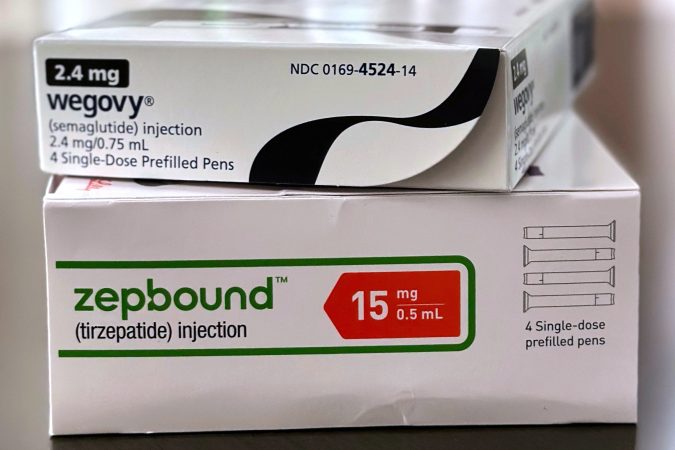
    Eli Lilly and Novo Nordisk, the manufacturers of brand-name GLP-1 drugs, are the suppliers through a deal with President Donald Trump’s administration. Eli Lilly’s weekly Zepbound injection and Foundayo daily tablet will be covered, as will Novo Nordisk’s Wegovy, both in weekly injection and daily pill form.

    “These treatments are a major medical advancement, but too many seniors are currently unable to access them due to high cost,” CMS Administrator Mehmet Oz said, announcing the plan last month.

    People taking Zepbound on average lost 21 percent of their body weight over 72 weeks in clinical trials. Wegovy injection patients lost 15 percent over 68 weeks, and Wegovy pill patients lost 13.4 percent after 64 weeks. Foundayo patients attained 11.1 percent weight loss over 72 weeks.

    Who qualifies?

    The government’s criteria for coverage is aimed at making sure beneficiaries whose health is at risk because of obesity get access through Medicare. Patients looking to lose weight for lifestyle or cosmetic reasons won’t qualify.

    The criteria is based on an individual’s “body mass index,” which is a calculation that takes into account height and weight. People will qualify if their BMI is equal to or greater than 35.

    Someone with a BMI of 30 or above will qualify if they also have one or more of these other health conditions that puts them at risk: heart failure, uncontrolled high blood pressure or kidney failure.

    A person can qualify with a BMI as low as 27 — which is considered overweight, not obese — if they also have prediabetes, a history of heart attack, a previous stroke or symptomatic peripheral artery disease.

    Crucially, even if someone’s BMI is below the threshold, if they started one of the weight-loss drugs before the CMS program started when they were within the qualifying range, they still will be covered.

    For example, if patient had a BMI of 38 when they began taking Zepbound, but are now at 31, they will still qualify for the benefit.

    Who handles prior authorization?

    Winning coverage approval could prove to be an ordeal, and doctors are bracing for bottlenecks — especially with a huge volume of prescriptions flooding the system starting Wednesday.

    “It’s going to be a lot all at once: the number of prescriptions, the paperwork, the prior authorizations, the work for the clinics, patients and pharmacies,” said Christopher Weber, medical director of bariatric services at Ascension Wisconsin and a board member of the Obesity Medicine Association.

    CMS is expecting prior authorization requests to be approved within 24 to 72 hours.

    “I would not be surprised if it’s substantially longer,” Weber said.

    The 18-month pilot is being operated outside the Medicare Part D drug benefit, so the private health insurance companies that offer Part D plans are not involved. Instead, the Centers for Medicare and Medicaid Services has selected Humana to serve as the central processing point for deciding coverage. Humana declined to comment.

    CMS said in response to questions that it is working to avoid delays.

    “CMS has disseminated educational materials and will provide ongoing support to pharmacies and providers on the Medicare GLP-1 Bridge to ensure that clinicians and pharmacies have the resources that they need to engage with beneficiaries,” the agency said.

    Why is this program temporary?

    Federal law prohibits Medicare from covering weight-loss drugs, so the Trump administration is doing it under its authority to conduct a temporary “demonstration” project.

    The relatively short-term nature of the benefit — called the Bridge program — is raising practical and policy questions.

    “When it expires, it is unclear how beneficiaries will access GLP-1 medications at an affordable price,” Stacie B. Dusetzina, a health policy professor at Vanderbilt University wrote in a New England Journal of Medicine article published Saturday. That raises the prospect, she said, that patients will stop taking the drugs and regain weight, which will lead to “poor clinical outcomes.”

    “The Bridge program could result in substantial additional governmental and beneficiary spending without providing longer-term health benefits,” she wrote.

    Will the co-payment apply to my Part D deductible?

    The $50-a-month co-payment cost will not count toward annual deductibles in Medicare Part D prescription drug plans, because the pilot program is separate from Part D. It also will not count toward the $2,100 Medicare out-of-pocket spending cap for drug coverage.

    The Trump administration had planned another pilot where Part D plans would have managed the coverage, but not enough of the private plans expressed interest, because they were concerned about exposure to unknown costs with the anticipated burst of new prescriptions, Cubanski said.

    “There is no evidence right now for making assumptions about how many additional beneficiaries will come into this market,” she said. “It left them with a lot of uncertainty.”

    What if I was already getting the drug for diabetes under Medicare?

    Patients who are already receiving Medicare coverage for one of the GLP-1 drugs for diabetes, cardiovascular disease and sleep apnea will continue to be covered by their Part D plan. They are not eligible to switch to the weight-loss pilot.

    How much will covering these drugs cost taxpayers?

    Eli Lilly and Novo Nordisk have agreed to sell the drugs to the government for $245 a month. That is in the middle of the range of what drug companies charge consumers without insurance, depending on dosage.

    The Centers for Medicare and Medicaid Services has not released estimates of the total numbers of patients expected to take advantage of the program, or the expected spending.

    Some clues are contained in a previous estimate released by the Biden administration, which proposed offering similar, long-term coverage in late 2024. It said the cost would be $25 billion over 10 years. That would equal $2.5 billion a year, which is likely to be a low estimate, given the explosion in national demand.

    The Congressional Budget Office estimated it could cost $35 billion over eight years, with 12 million newly eligible people in 2026. That estimate has more generous criteria than what Medicare has adopted.

    Medicare spending on the new breed of weight-loss drugs has been skyrocketing already, without weight-loss coverage, according to an analysis by KFF. It reached $27.5 billion in 2024, although that gross spending was reduced by up to 50 percent by manufacturer rebates.

    Cubanski estimated that weight-loss coverage could add another $4 billion to $5 billion a year to Medicare’s tab. “It’s essentially all additional spending by the federal government,” she said.

    Of course, the hope is that helping millions of Medicare beneficiaries lose weight will reduce diseases linked to obesity, ultimately lowering costs. But when those savings will be realized, and how large they might be, remains unknown. The CBO estimated the savings for a longer-term program at $1 billion a year by 2034, a small fraction of the new spending.

  • Could bees help relieve stress? A Temple researcher thinks so.

    Could bees help relieve stress? A Temple researcher thinks so.

    Dozens of bees crawled along the frame in Frances Ratay’s hands as she looked down at the colony in awe.

    The 70-year-old retiree from South Philadelphia ordinarily would avoid bees out of fear, but this spring she suited up for a study on therapeutic beekeeping at the Half Mad Honey apiary in the Navy Yard. Led by Temple University occupational therapy student Meghan Robertson, the project tested if beekeeping could improve mental health and well-being in older adults.

    Research has shown that exposure to nature can reduce stress and anxiety; however, less is known about the effects of beekeeping. Previous studies connecting the practice to improved well-being have been small and lacked quantitative data.

    Seeking to fill that gap, Robertson measured the mental health of 13 older adults (average age of 73) before and after a six-week beekeeping study. She found significant improvements in the average well-being, depression, and stress levels of the cohort immediately following the intervention.

    Her research is unpublished and has not yet been peer-reviewed. The limitations include the small sample size and lack of a control group or long-term data.

    The six sessions of the program taught participants about the structure of a beehive and the different roles in a colony.Ryan S. Brandenberg / Temple

    Ratay was among those who saw improvements in well-being, as her fear of bees transformed into a greater appreciation for nature.

    “It was really life-giving to me,” she said. “It makes me feel worthwhile.”

    Lessons from the bees

    Half Mad Honey founder Amelia Mraz started beekeeping as an undergraduate at Temple in 2016.

    At the time, she was at a low point in her own mental health, dealing with anxiety and depression. Beekeeping became a meditative practice.

    “Your worries just kind of melt away because you’re so immersed in the community of the bees,” Mraz said.

    She founded her Navy Yard-based apiary with the goal of bringing therapeutic experiences outside of the clinic into nature.

    Mraz offers beehive tours at Half Mad Honey that are designed to help participants practice stress reduction skills and mindfulness techniques.

    Partnering with Robertson for her research in senior citizens was a natural extension of that work.

    The study occurred at the Navy Yard-based Half Mad Honey.Ryan S. Brandenberg / Temple

    Together, they designed six weekly sessions where participants learned about the structure of a beehive, painted boxes for the bees, opened the hives to identify different roles in the colony, and tasted the honey.

    “They saw bees being born, they saw bees coming back with pollen on their legs, they saw the queen,” Mraz said.

    Ratay, who retired from her career as a biology teacher last year, enjoyed learning about how bees work together to maintain the well-being of the hive.

    Witnessing their interdependent nature boosted her own self-worth and feeling of belonging.

    “It made me realize that no role is less important than another,” she said.

    Robertson chose to study older adults specifically because they’re at an increased risk of experiencing mental health challenges due to loneliness, retirement, and major life changes, she said.

    She assessed the participants’ well-being on a scale of 0 to 100 using the World Health Organization-Five Well-Being Index. The mean score increased from 66.15 before the program to 75.38 after.

    The participants’ average depression score improved from mild to normal, while their average stress score decreased from moderate to normal.

    The study included 13 older adults.Ryan S. Brandenberg / Temple

    Ratay said the experience touched on her spirit of adventure and reminded her it’s never too late to try new things. She’s since returned to Half Mad Honey to help Mraz with the hives.

    “It not only buoys you up and gives you confidence, but it allows you to tackle the next fear,” she said.

    A small step forward

    Robertson’s next step, having recently graduated from her occupational therapy program, is to finish writing a paper detailing the research.

    Meanwhile, Mraz aims to continue developing therapeutic beekeeping programming, with the goal of bringing it to mental health organizations and expanding it beyond six weeks.

    Though the data is still preliminary and too small in scale to generalize beyond the study participants, Mraz is excited to have more quantitative evidence behind the practice.

    “It’s really my personal mission to share the joy, the relaxation, and the lessons of pollinators with folks,” she said.

    Amelia Mraz (left), Amanda Geraci (center), and chef Natasha Pham are near their Half Mad Honey’s hives in Philadelphia. They use their beehives for mental health therapy.JOSE F. MORENO / Staff Photographer

    Another participant, Deborah Rosan, struggled to find purpose outside of the house since she stopped working as a schoolteacher two years ago.

    The 70-year-old from Ardmore had felt isolated and anxious adjusting to life outside the classroom.

    Participating in the program reminded her that, “with conscious effort, I really do not need to experience the feelings of being superfluous and sidelined in culture just because I’m older,” she said.