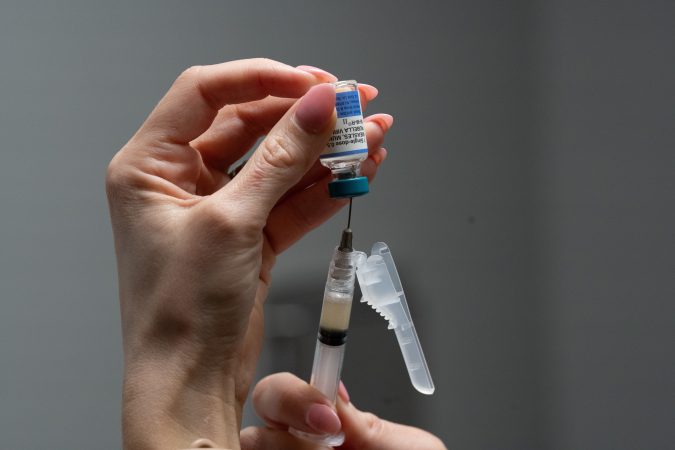
Chester County health officials confirmed two measles cases in residents this week as the highly contagious disease continues to spread in Southeastern and Central Pennsylvania.
The county has now seen four cases since late June, in addition to one case recorded this winter.
The newly reported cases bring Pennsylvania’s tally to 101 measles cases this year, more than six times the cases confirmed in 2025.
An ongoing outbreak centered in Lancaster County, where 52 residents have been sickened since April, is the state’s worst in three decades.
It’s unclear whether the cases in Chester County are connected to the Lancaster outbreak, said Nancy Sullivan, the supervisor of the disease investigation and surveillance program at the county health department.
The latest cases show the virus “is circulating in the community, particularly the western part of Chester County,” Sullivan said.
(function() {
var l2 = function() {
new pym.Parent(‘HE_MEASLES7.html’,
‘https://media.inquirer.com/storage/inquirer/projects/innovation/arcgis_iframe/HE_MEASLES7.html’);
};
if (typeof(pym) === ‘undefined’) {
var h = document.getElementsByTagName(‘head’)[0],
s = document.createElement(‘script’);
s.type = ‘text/javascript’;
s.src = ‘https://pym.nprapps.org/pym.v1.min.js’;
s.onload = l2;
h.appendChild(s);
} else {
l2();
}
})();
Health department staff in Chester County, which borders Lancaster County, have sought to contain the outbreak by conducting contact tracing for months.
But it can be tricky to link patients through their contacts to other confirmed cases.
“It’s difficult for some individuals to establish who they’ve been in contact with. Sometimes they’re unsure,” Sullivan said.
All of the patients infected in Chester County were either unvaccinated or could not prove that they were immune to the virus, which can infect up to 90% of unvaccinated people exposed to it.
Several patients this summer have been hospitalized for serious electrolyte abnormalities and liver and kidney dysfunction, physicians in Lancaster and Dauphin Counties have reported.
Sullivan said that no Chester County residents have required hospitalization so far. All had tested positive for measles after they sought treatment at local healthcare facilities, she said.
Symptoms of measles include a fever, a cough, and a runny nose — similar to other respiratory diseases — that often emerge before patients develop a telltale rash.
But the disease has no specific treatments and can cause serious complications.
County officials had begun preparing for a potential measles outbreak about two years ago, Sullivan said, developing a new software system that made it easier for health workers to track cases and analyze data on an outbreak.
The county is also increasing outreach to residents about the importance of vaccination.
“We’re continuing to push the message of vaccination, checking immunity, speaking to your provider about your potential risk to developing measles, making sure people know where they can get vaccinated,” Sullivan said.
Countywide, 94.5% of kindergarteners were vaccinated against measles in the 2024-2025 school year, the last for which data is available. That’s just below the 95% threshold that scientists consider necessary to prevent the spread of the virus.
The county and state health departments have started recommending that providers offer measles, mumps, and rubella vaccinations to infants at 6 months old.
Typically, children receive an MMR dose at around 1 year old and before entering kindergarten. Under the new recommendation, a “dose zero” is given at 6 months and provides additional protection before children receive two more doses of the vaccine.
Health officials in Philadelphia, to the east of Chester County, are also recommending the “dose zero” for infants whose parents plan travel to Chester County or any of the other seven counties with measles cases.
A new study from the U.S. Food and Drug Administration detected heavy metals, including lead and arsenic, in popular tampon brands, but not enough to raise health concerns.
“While trace metals are present in tampons, the amount released during use is too small to cause harm,” the agency announced this week.
The Inquirer spoke with Robyn Faye, an OB-GYN at Jefferson Abington Hospital, about what prompted the FDA study, what women should know about it, and the latest trends in menstrual products.
Robyn Faye, a gynecologist at Jefferson Abington Hospital, specializes in menopause and sexual health.Courtesy of Robyn Faye
The study found lead concentrations were higher in non-organic tampons, while arsenic was higher in organic tampons.
Tampons are made with cotton, rayon, or both. Researchers believe cotton can absorb metals from water, soil, or industrial contaminants near fields. Some metal might get added to tampons during manufacturing.
Metals have been linked to increased risk of dementia, cancer, kidney damage, and cardiovascular and neurological harm.
The Berkeleystudy had a major shortcoming, however. It showed that metals exist inside raw tampon materials, but it did not test whether they leach out or get absorbed into the body, and if so, how much.
“Obviously, there was a concern about what the exposure would be to women using these tampons,” Faye said. “So they needed to look into the potential toxicological risk.”
What did the new FDA study find?
The FDA-led study, recently published in the journal Toxicological Sciences, tested 11 tampon products from six different brands sold in the United States. It did not name the brands, nor test any scented tampons.
The agency regulates tampons as “medical devices.”
While FDA scientists detected 19 metals at trace levels in tampons, they found “negligible toxicological concern.”
“The levels of metals released from tampons are not expected to result in adverse health effects,” the study concluded.
Scientists created a “worst-case” exposure, using a testing method that extracted as much metal out of the fibers as possible, under circumstances far more intensive than normal tampon use.
“They exaggerated the risk,” said Faye, who did not work on the study. “So the real-world exposure is probably even lower.”
The bottom line, she said, is tampons are safe to use.
What concerns do your patients have about tampons?
Faye said older women still worry about “toxic shock syndrome,” a rare bacterial infection caused from an open cut or vaginal wound. Many women still mistakenly believe it is a common risk from wearing a tampon too long.
Most younger patients, however, don’t use tampons.
“The trend in the younger women population is actually throwing out their tampons,” Faye said. “It’s interesting that the FDA is now doing a study on tampons when fewer girls are using them.”
Rothman Orthopaedics plans to open three new surgery centers over the next year and keep adding doctors in its Philadelphia-area market, as the large physician-owned group refocuses growth efforts on its original territory.
“Our biggest priority in the near term is strengthening our core business here, in Southeastern Pennsylvania and New Jersey,” Rothman CEO Christian Ellison said. “We’re not gonna ignore opportunities. We’ll be opportunistic around things that make strategic sense.”
Rothman has seen more success after following the lure of fast population growth to Florida, where it opened offices in the Orlando area in 2020 in partnership with AdventHealth.
“Florida has been a big success, because we’ve had the partnership down there with Advent Health that’s been kind of mutually beneficial,” said Ellison, who became Rothman’s CEO last fall.
The Philadelphia draw
The practice headquartered in Center City already has 24 locations in the Greater Philadelphia market. That number includes facilities that Rothman operates in partnership with Jefferson Health, Main Line Health, AtlantiCare, and RWJ Barnabas.
Rothman located itsnewest office in West Chester, an area where Rothman had little market share, according to Ellison. He also sees opportunity in other parts of the Philadelphia region and contiguous markets.
To make that growth possible, Rothman is partway through an effort to hire 41 physicians by the end of this year. That represents a 20% increase and will bring Rothman’s total to 214 physicians, the company said.
The need for ambulatory surgery centers
Rothman is a partner in nine surgery centers in Pennsylvania and New Jersey and two surgical hospitals (Rothman Orthopaedic Specialty Hospital in Benslam and Physicians Care Surgical Hospital in Limerick).
Those outpatient facilities account for nearly two-thirds of Rothman’s surgeries. Even the surgical hospitals function primarily as ambulatory centers, Ellison said. The remaining third of surgeries takes place in acute-care hospitals.
“We are challenged for operating room capacity right now, both in the acute care hospitals, as well as in our ASCs, and so we feel like we need to bring more operating rooms online,” Ellison said.
What’s more, Medicare and private insurers want more procedures done in lower-cost surgery centers. In the future, insurers will pay the same price for an outpatient knee replacement whether its done in a hospital of freestanding surgery center, Ellison predicted.
Rothman hasn’t finalized locations for the new surgery centers, but Ellison said he expects two to be in Southeastern Pennsylvania and one in New Jersey. The centers will likely be in areas where Rothman has an established patient base.
The physician group prefers to open the new centers independently, as opposed to going through partnerships like it has historically. “We think we’re uniquely positioned to manage that patient experience in the surgical environment,” Ellison said.
You wake up to your 7 a.m. alarm feeling relatively refreshed and ready to tackle the day ahead. But when you check your smartwatch, you’re surprised to see a low sleep score staring back at you.
You start trying to remember the night before. Did you toss and turn more than you thought? Why is your watch telling you that you’re exhausted when you feel fine? When your head hits the pillow that night, you lie wide awake worrying about getting a good night’s sleep until the wee hours of the morning.
If this scenario feels familiar, you may have orthosomnia, a fixation on achieving “perfect” sleep, often fueled by sleep trackers, that tends to result in worse sleep.
“Orthosomnia is, at its core, a form of insomnia triggered by obsessive tracking of sleep data and the use of sleep wearables,” said Andrew Spector, a sleep medicine specialist at Duke Health in North Carolina. “It’s essentially trouble falling asleep for artificial reasons.”
Many people rely on technology to fix their problems, but as it turns out, in this situation, these gadgets may backfire. Read on to learn more about orthosomnia and what to do if you think you might have it.
What causes orthosomnia?
At the root of orthosomnia is the popularity and ubiquity of sleep trackers. And while they can be useful tools at times — for example, some can screen for signs of sleep apnea, such as breathing disturbances — they can interfere with your ability to listen to your body, according to Amy Morin, a Florida-based psychotherapist and author of The Mental Strength Playbook.
“Instead of thinking about how well rested you feel, you might look at an app or device to tell you if you’re getting enough sleep,” Morin said. Over time, this can undermine your trust in how you feel after a night of sleep and lead you to put too much weight on what a tracker says. “This can cause increased anxiety about sleep and can lead to more sleep problems,” she said.
For instance, you may start to depend on tech to tell you how you feel, as opposed to listening to your own body’s cues, according to Morin. People are impressionable, and if your wearable is telling you that you didn’t get enough sleep, you might start to convince yourself that you’re more tired than you actually are.
“You may start to feel sluggish. Then, you’ll act sluggish. Consequently, you’ll become sluggish,” Morin said. This may lead you to pass up an opportunity to do something later on in the day because you’ve allowed your tech to convince you that you’re too tired, she said.
Additionally, someone who wakes up feeling well rested but sees their sleep tracker telling them they woke up often during the night may spend all morning thinking about how they’re going to feel exhausted later, Morin said. They then may be so worried about getting adequate rest that, ironically, they can’t sleep when they try to wind down for the day, Morin explained.
Keep in mind that sleep trackers aren’t always accurate. These devices base their metrics on imperfect factors such as how much you moved during the night, Morin said. “That doesn’t always correlate to actual sleep time or sleep stages,” she said. “It’s important to know that these devices are just estimating how much sleep you got, and they’re not pinpointing your stages of sleep accurately.”
People with anxiety or perfectionism may be especially susceptible to orthosomnia, according to Morin. “They may want perfect sleep, and a tracking app may create stress that shows them not every night is going to be perfect,” Morin said.
How do you know if you have orthosomnia?
According to Spector, a telltale sign of orthosomnia is checking your sleep tracker immediately after you wake up and analyzing all the data.
“Your sleep tracker will give you a summary of your night. If you look at the summary and move on with your day, that’s fine,” Spector said. “But are you going minute by minute through the night and analyzing the little details of the report? That’s a red flag to me.”
Another indication of orthosomnia is not being able to get to sleep because you’re worried you won’t get a good sleep score that night, Spector said.
You may also start thinking about getting a good sleep score as your reason for wanting to sleep well as opposed to the actual benefits that come with adequate shut-eye — including improved mood, better focus, and reduced risk of health conditions such as heart disease, stroke, diabetes, and high blood pressure.
Tips to manage orthosomnia
There are a few ways to manage — and overcome — orthosomnia, according to experts:
Establish good sleep hygiene habits, like avoiding screen time before bed, creating a bedtime routine that helps you wind down and ensuring your room is dark and quiet, said Morin.
Focus on tuning into your body and recognizing when you need more rest and adjust your bedtime accordingly, according to Morin.
Recognize that your beliefs about sleep will greatly impact your performance, Morin said. If you assume a difficult night’s sleep will make it nearly impossible to function, you’ll have trouble functioning, she said. If, however, you believe you can still function just fine after a rough night, you’ll probably do much better.
Consider therapy if sleep becomes a source of anxiety that you can’t manage on your own, Spector said.
If you find yourself obsessing over your sleep data, try ditching your tracker for a month, Morin suggested. During that time, focus on good sleep hygiene and pay attention to how your body feels.
Once you can more confidently trust your body, you might decide to reintroduce wearable tech. Or, maybe you’ll realize you don’t really need it after all.
“Wearable tech is helpful if it gives you information you need to make the best health decisions. But it becomes a problem when it interferes with your ability to read your body’s cues,” Morin said. It’s unrealistic to expect perfect sleep every night, and accepting that might put your mind at ease just enough for you to drift off easily.
Q: I’m always tired. I try to prioritize sleep but always end up exhausted despite my best efforts. Why don’t I ever feel well rested?
A: For millions of people, poor sleep has become so normalized that they no longer recognize it as a potential medical issue. Feeling tired all the time gets blamed on stress. Freight train snoring becomes a family joke at the dinner table. Trying not to doze off during that weekly meeting means your job is boring.
These signs all point to a possible sleep disorder. Yet, most people push through and ignore them.
The Centers for Disease Control and Prevention and sleep researchers estimate that between 50 million and 70 million Americans have an active sleep disorder, and most people don’t know they do.
As a sleep specialist who primarily treats people with chronic insomnia, I can say with confidence that even common sleep disorders remain underrecognized, underdiagnosed, and undertreated.
Sleep disorders deserve medical attention — and often are highly treatable. Here are the most common (there are more than 80 clinical sleep disorders, by the way), and the signs you might have one.
Insomnia
Insomnia disorder is defined as difficulty falling asleep, staying asleep, or waking up too early at least three nights per week for at least three months. It causes real impairment in daily life.
Sleep onset insomnia is the inability to fall asleep within a reasonable time frame (30 minutes) after getting into bed, while sleep maintenance insomnia involves waking up during the night and having trouble returning to sleep (for 30 minutes or more) or waking up much earlier than desired.
Insomnia can be acute, lasting days to weeks, usually triggered by an identifiable stressor and often resolving on its own, or chronic, persisting three months or longer and typically requiring intervention.
Decades of epidemiological research suggests that 10 to 15% of the general population meets the criteria for chronic insomnia disorder, with higher rates among women, older adults, and people with co-occurring mental health conditions.
Additional signs of insomnia disorder:
Feeling exhausted, even after a full night of sleep
Regularly experiencing irritability, low mood, mood changes, difficulty concentrating or paying attention, or memory problems
Dread or anxiety as bedtime approaches
Feeling exhausted getting into bed, but the moment your head hits the pillow, you’re wide-awake (“tired but wired”).
The gold standard treatment is cognitive behavior therapy for insomnia, also known as CBT-I, though other forms of sleep therapy as well as certain medications may also be appropriate.
Obstructive sleep apnea
Obstructive sleep apnea is a medical condition in which the muscles in the throat relax during sleep, causing the airway to narrow or close entirely — which often manifests as snoring, though you don’t have to snore to have OSA. As the airway collapses, breathing stops — sometimes for a few seconds, sometimes longer — until the brain partially wakes the body to restore airflow. This cycle can repeat hundreds of times a night, fragmenting sleep so often that most people wake up exhausted.
OSA is estimated to affect more than 30 million Americans. Yet, according to multiple analyses, 80 to 90% of OSA cases in the United States go undiagnosed every year. Women are overwhelmingly underdiagnosed because their symptoms often present differently — fatigue, mood changes, insomnia, morning headaches — compared with men, who are more likely to snore loudly or gasp/choke.
I hear this all the time from women in my practice. They didn’t fit the typical OSA stereotype, and instead their symptoms were attributed to depression, thyroid problems, stress or another sleep disorder.
Additional signs of OSA:
Waking up with a dry mouth, sore throat, or headaches
Excessive daytime sleepiness
Waking frequently to use the bathroom during the night (known as nocturia; this happens when apneas strain the heart and the body releases more of a hormone that increases urination)
Difficulty concentrating, memory problems, or cognitive slowing
Increased irritability, mood changes, anxiety, or depression that don’t fully resolve with treatment
A history of chronic insomnia, particularly difficulty staying asleep
High blood pressure or cardiac issues that are difficult to control.
Sleep apnea is often treated with continuous positive airway pressure therapy, which involves wearing a breathing machine that keeps airways open while sleeping, though other therapies and even surgery may be helpful for some. Lifestyle changes, such as weight loss and avoiding alcohol use, could also help.
Restless legs syndrome
Restless legs syndrome, also known as Willis-Ekbom disease, is characterized by an irresistible urge to move the legs (and/or arms), usually accompanied by uncomfortable sensations: crawling, tingling, pulling, aching, burning, itching, or an indescribable inner restlessness.
Symptoms emerge or worsen at rest, and moving around, stretching, or walking usually brings temporary relief. It is deeply uncomfortable in a way that makes staying still feel impossible and falling asleep extraordinarily challenging.
Research published in the Journal of Global Health estimates that RLS affects between 7.2% and 11.5% of the general population, though data suggests it’s largely undiagnosed or not diagnosed until years after symptom onset.
Because RLS cannot be visually detected on standard tests, and the sensation is difficult to explain, it was long dismissed as psychological or simply as “growing pains.”
Additional signs of RLS:
Your bed partner complains that you kick or jerk your legs (and/or arms) repeatedly during sleep.
Excessive daytime sleepiness, mood changes, cognitive slowing, and increased anxiety or depression.
Antiseizure medications and prescription-strength iron supplements may help, as can treating other health conditions and lifestyle interventions such as regular exercise, eating well, avoiding stimulants, massage, compression wear, hot/cold packs, and magnesium supplementation.
Circadian rhythm sleep-wake disorders
Circadian rhythm sleep-wake disorders, or CRSWDs, occur when a person’s internal biological clock — which governs the timing of sleep, hormone release, body temperature, and dozens of other physiological functions — is misaligned with the external environment or the person’s desired sleep schedule. These are not disorders of sleep quality per se but of sleep timing.
This can result in a sleep-wake schedule that’s much different from typical social norms, whether that means you can’t fall asleep until extremely late at night no matter how early you try, or you get sleepy in the early evening and wake up very early in the morning.
A research review published in the Journal of Clinical Neurophysiology found that up to 3% of the adult population has a CRSWD, with rates reaching 7 to 16% among adolescents and young adults. The review also noted that CRSWDs are commonly misdiagnosed as other sleep disorders.
Additional signs of circadian rhythm disorders:
You identify as an “extreme night owl” or “extreme early bird.”
When allowed to sleep freely on vacation or nonwork days, you shift to a dramatically different schedule.
You work rotating shifts and struggle to sleep when you have the opportunity, despite feeling exhausted.
You have been told you have insomnia, but sleep medications or standard sleep hygiene advice have not helped.
Your “insomnia” or “fatigue” has never fully responded to treatment.
The best “treatment” is to adapt your lifestyle so you can sleep in your natural, biological sleep-wake window. When that’s not possible, circadian rhythm management (e.g., microdosing melatonin, bright light therapy) or behavioral strategies, such as CBT-I, may be appropriate.
What to do if you suspect a sleep disorder
If any of the signs described above sound familiar, and especially if they’ve been going on for more than a few weeks, the first step is to talk to your doctor and specifically ask about sleep disorders.
Don’t just say you’re tired or can’t sleep. Be specific: Describe when the problems occur, how long they’ve lasted, how they affect your daytime functioning and whether your bed partner has noticed anything unusual.
From there, your doctor may refer you to a sleep specialist (or you may need to ask directly for a referral), who can conduct a thorough sleep evaluation and, when appropriate, a sleep study. The list above is not exhaustive; other sleep disorders, such as narcolepsy and idiopathic hypersomnia, are less common but can also cause excessive daytime sleepiness despite your having logged plenty of hours in bed, and require proper diagnosis and treatment.
If you’ve been exhausted for months or years, and standard sleep hygiene advice hasn’t helped improve your sleep, you are not failing at sleep. Your sleep problems are probably not “just stress” or “just how you are,” and your exhaustion is not a badge of honor. Your sleep struggles deserve more attention.
Sarah Silverman, PsyD, is a sleep psychologist and behavioral sleep medicine specialist in private practice specializing in women’s sleep health and insomnia.
You might think spending more time relaxing would make you happier.
But recent research suggests that having more leisure time doesn’t necessarily make people more likely to rate their day as happy. The research, using data from the U.S. Census Bureau’s American Time Use Survey, shows that people were most satisfied with their days when they included an hour or two of socializing, physical exercise, and — surprisingly — up to six hours of work (though more work than this was linked to less happiness).
“It doesn’t mean leisure time is bad. It just means that we probably need to use it a little bit differently,” said Laurie Santos, a psychology professor at Yale University who wasn’t involved in the study, which was published earlier this year and analyzed how 15,000 Americans used their time across two nonconsecutive years.
In the survey, respondents reported “watching television and movies” was about 70% of their relaxation and leisure time.
Santos said that working — whether at a day job, or doing another effortful activity, especially if it involves connecting with other people — often makes us happier than being idle. In particular, she said, scrolling on our phones or binge-watching TV might be a recipe for loneliness.
Yet given the choice, people often choose the easier route, one of the many ways people tend to be misguided when predicting what will make them happy, she said.
Santos teaches the course “Psychology and the Good Life,” which became the most popular class on Yale’s campus when she first offered it in 2018. Nearly 1 in 4 students now enroll, which she said is a sign of how many young people are searching for research-backed strategies to help them feel better.
The paradox of happiness
One of the pitfalls of searching for happiness is that focusing on it too much can make contentment even more elusive.
Santos cited research from Iris Mauss at the University of California at Berkeley, which found that it’s hard to enjoy a happy moment if you’re too fixated on how happy you are.
“You know, I’m on vacation in this perfect spot and I’m asking, ‘Could this be better? Was this worth the money?’ And of course that doesn’t make the vacation feel all that great,” Santos said. “We tend to be kind of anxious about whether we’re feeling happy and that doesn’t feel good.“
The second problem is that we think that the perfect job or relationship or achievement will make us happier.
“Happiness is really less about our circumstances and more about our behaviors and our mindsets,” Santos said.
For people who are struggling with essentials like housing or food, changing their circumstances will make them happier, she said, but once basic needs are met, there are diminishing returns.
The problem with ‘good vibes only’
Being a happy person does not mean being happy all the time.
“A good flourishing life is going to involve some negative emotion,” Santos said.
Often it’s our reactions to our emotions that cause problems. For example, if you get an email that stresses you out and let that spill into your next interaction, you might snap at someone, then feel guilty.
Santos recommends recognizing what you’re feeling without adding too much meaning to it — or shaming yourself for feeling badly — what Santos calls “meta-emotions.”
On a vacation, for example, if a rainy day forces a change of plans and you find yourself getting frustrated, that can bring on meta-emotions. You might feel ashamed that you’re annoyed on vacation — Shouldn’t I just be enjoying it? Feeling grateful?
“It’s often those meta-emotions that are worse than the primary emotions that we initially feel,” Santos said. “It takes some work, but those meta-emotions are under your control.”
What actually makes people happier
There is a lot of research about what does make people feel better. In the scientific literature and in Santos’s own experience, these little tweaks work by subtly rewiring the brain.
A little bit of effort or challenge is better than pure ease. We tend to enjoy things more when they require a bit of work. If you have a free afternoon, you’re more likely to take pleasure in a hike outside rather than scrolling or watching TV alone.
Pretty much everything is better with a friend. Even if you’re just running errands, invite a friend, and look for opportunities for small moments of connection, like chatting with a clerk in a store rather than ordering things online.
Try a reframe. You’ve probably heard the advice to keep a gratitude journal, but if you can’t stick to writing things down every day, you can still do a quick reframe in a tough moment by asking yourself some questions.
“What’s one thing that I’m really grateful for in this moment? What’s one thing that I’m going to look back on tonight and think was good?” Santos asked. “Just that little change in our attention can be really powerful.”
A 2-month-old Bucks County infant was struggling to swallow and could hardly hold his head up.
He was diagnosed last month with infant botulism, a rare, potentially deadly infection that affects the nervous system and can lead to paralysis.
The family and their lawyer believe the baby, now recovering at home, ingested the bacteria that causes the infection from an infant formula subsequently recalled by its manufacturer, Nara Organics, over contamination concerns.
Federal legislation proposed this spring could protect babies by requiring formula manufacturers to test for more pathogens. The bill, HR 7867, is awaiting hearings in the House Committee on Energy and Commerce.
“I want responsible manufacturers, responsible industry partners, who say we know there is a risk of this and we’re going to be ahead of the game,” said U.S. Rep. Madeleine Dean, a Montgomery County Democrat and cosponsor of the bill.
When asked for comment on the proposed legislation, Nara Organics pointed to safety protocols posted on its website saying the company exceeds the U.S. Food and Drug Administration’s current requirements.
The New York-based company said it voluntarily recalled all of its infant formula on June 13 “in an abundance of caution,” after the FDA and the Centers for Disease Control and Prevention reported three cases of infant botulism in babies who had consumed Nara formula.
As of July 6, a fourth case had been confirmed, and FDA testing identified the botulism-causing bacterium C botulinum in some of the company’s formula, according to an update posted on the company’s website.
Nara Organics did not comment directly on the proposed regulations. When asked for its position on the legislation, the Infant Nutrition Council of America, which represents manufacturers, said its members “share the goal of ensuring families have access to safe, high-quality infant formula.”
“Infant formula is among the most highly regulated foods in the United States, and INCA supports science-based, risk-based improvements that strengthen infant formula safety,” the organization said in a statement.
The push to bolster regulations comes several years after federal regulators and lawmakers started looking more closely at infant formula safety in 2022, when a massive recall for a non-botulism bacterial contamination left shelves bare for months.
But two recent infant botulism outbreaks linked to formula show the inadequacy of the steps that companies are already taking, said Bill Marler, a Seattle-based food safety lawyer who is representing Erica and Micky Goldfin, the Yardley couple whose son developed botulism after being fed Nara Organics formula.
“We need to do more to protect these kids,” Marler said.
A dangerous infection
Infant botulism occurs when babies ingest C botulinum in foods or dust and dirt particles. The bacteria’s spores colonize in the large intestine and release a toxin that affects the nervous system.
Symptoms include changes in facial expressions, such as smiling less, slow feeding, constipation, and low energy. Untreated, the toxin can spread and cause paralysis, making it hard for babies to breathe and eat.
Infants are at greatest risk of illness because their digestive systems are still developing and less able to fight off infection.
The Goldfins’ baby, identified by the initials W.G. in court records,spent two nights in the intensive care unit at the Children’s Hospital of Philadelphia, where he was treated with BabyBIG, the botulism antitoxin that is manufactured by the California Department of Public Health. The medication’s antibodies bind to the toxin and neutralize it, improving symptoms within 48 hours.
On June 6, he returned home, where he is feeding well again, and regaining movement in his arms and legs. He is receiving weekly physical therapy for developmental delays in his gross and fine motor skills, according to the lawsuit.
Testing challenges
Federal regulators began looking more closely at infant formula in 2022, after Abbott Nutrition issued a massive recall over concerns of non-botulism bacterial infections.
Abbott temporarily shut down one of the largest formula manufacturing plants in the country while it investigated the cause of the contamination, leaving families scrambling to find the formulas they relied on for their infants and medically fragile children.
Pinpointing the exact source of contaminants can be challenging.
The bacteria that causes botulism, for instance, could have been present in the Nara Organics’ powdered milk formula, in dust that settled on the packages during transportation, in the water used to mix it, or on the hands of those preparing the food, said Molly Potter, a senior clinical dietitian with Nemours Children’s Health in Delaware.
According to its website, Nara Organics tests its formulas throughout the manufacturing process, first testing raw ingredients, then during production, and again with the final product.
The tests the company uses include so-called sulfite-reducing clostridia (SRC) enumeration, which a leading international food-safety group recommends for identifying spores of the bacteria that causes infant botulism.
Researchers from IEH Laboratories & Consulting Group, a Washington-based firm that specializes in laboratory testing and analysis for the food industry, worked with ByHeart to analyze its infant formulas that had been linked to at least 28 cases of infant botulism this year and last.
A bottle of milk prepared from infant formula.Giulia Marchi
Improving safety
Dean said she hopes the proposed legislation will open up more conversation about how best to improve infant formula safety.
The bill tasks the FDA with developing a list of pathogens that formula companies should test for, and working with manufacturers to begin any tests they aren’t already doing.
The FDA would also set a schedule for how often manufacturers need to test for the new list of pathogens.
Under the legislation, companies would be required to report contamination results within a day, and retain records of positive test results.
Dean is among more than two dozen lawmakers to sign on as cosponsors. Rep. Jefferson Van Drew, who represents South Jersey’s 2nd District, is one of two Republican cosponsors.
Potter, the Nemours dietitian, said she hopes increased testing will help families feel more at ease.
In the meantime, parents can reduce the risk to their children by only purchasing formula from reputable stores, checking expiration dates, and storing powdered formula canisters properly. Caregivers should make sure to mix formula in clean equipment, and wash their hands before preparing and feeding it to a baby.
Jude Pare and his partner, Diane Tix, live in rural Minnesota until temperatures dip below freezing, when they take refuge in Arizona for the winter. While away, their mail is forwarded. But Pare, 77, said he didn’t receive any warning from his Medicare prescription drug plan that his $0 monthly premium was about to increase.
So he didn’t know he had a bill to pay. After he and Tix returned home to Minnesota in April, they got a letter from Wellcare, the insurer that provided his drug plan, saying his coverage had been terminated after three months of unpaid premiums totaling $28.80. Under Medicare’s rules, he can’t enroll in a plan again until the fall, for coverage beginning in 2027.
Pare takes Xarelto, a blood thinner that reduces his risk of strokes, blood clots, and pulmonary embolism. “He could bleed to death without it,” Tix said. A 90-day supply of the drug costs about $1,800 using a coupon from GoodRx, a discount drug website, she said.
Pare is among tens of thousands of Medicare beneficiaries who were on Wellcare’s Value Script drug plan who will likely go without prescription drug coverage for the rest of the year because they didn’t pay premiums for three months.
Next year, thousands more people in 32 states, including Pennsylvania and New Jersey, and Washington, D.C., who are enrolled in zero-premium drug plans from Wellcare and other insurance companies may find themselves in the same situation if their premiums go up and they don’t realize it, according to a KFF Health News analysis of drug plan data. Premiums and other changes for 2027 will be unveiled in September.
Going without medication can be life-threatening, especially for Medicare beneficiaries. Nearly 90% take one or more prescription drugs, according to the Centers for Disease Control and Prevention. Almost half live with four or more chronic health conditions that can cause functional or cognitive impairments.
Congress added prescription drug coverage to Medicare in 2003. But the coverage is administered by commercial insurance companies, which compete fiercely with one another for the business of about 56 million Medicare beneficiaries enrolled in drug plans.
Zero-dollar or very low monthly premiums have helped make Wellcare’s Value Script the best-selling stand-alone prescription drug plan in Medicare, with nearly 6 million customers across the U.S., according to government data. But in 26 states and Washington, D.C., some Value Script members who didn’t have to pay a premium last year were caught off guard by increases in 2026.
After a two-month grace period — which Wellcare extended to three — Medicare drug plans can drop customers who don’t pay their premiums, no matter how small the amount. Some members who lost their coverage in Nevada, for example, owed as little as $8.10 for three months, according to a KFF Health News analysis of Medicare drug plan data.
Wellcare terminated coverage for about 140,000 Value Script beneficiaries in April, according to a person with knowledge of the matter who was not authorized to speak publicly about it and feared reprisals at work for doing so. About 40,000 of the people who were dropped may be able to enroll in new coverage immediately because they have low incomes and receive financial assistance through a program Medicare calls “Extra Help.”
Multiple state officials said they had heard the same disenrollment figures, including Nevada’s insurance commissioner, Ned Gaines, who chairs the National Association of Insurance Commissioners’ senior issues task force; Rebecca Gouty, director of the State Health Insurance Assistance Program in West Virginia; and Tim Smolen, director of Washington state’s Statewide Health Insurance Benefits Advisors. The West Virginia and Washington initiatives are part of the federally funded State Health Insurance Assistance Program, or SHIP, which provides free, unbiased help navigating Medicare.
Surprise bills
The Centers for Medicare & Medicaid Services, which oversees Medicare drug plans, declined to provide the number of Value Script members who lost coverage due to unpaid premiums. “The agency does not publicly provide plan-specific disenrollment figures or state-level breakdowns related to the non-payment of premiums,” Christopher Krepich, a spokesperson, said in a written statement to KFF Health News.
Centene Corp., Wellcare’s parent company, also declined to provide disenrollment numbers.
“We recognize how disruptive a loss of coverage can be and are committed to helping members understand their options,” said Sarah Baiocchi, senior vice president for specialty and prescription drug plans at Centene. She acknowledged that “some members in our Value Script plan experienced a premium for the first time, or for the first time in several years.”
Baiocchi said all Value Script members received a CMS-required annual notice of changes in September, before the premium increases took effect.
A version of the booklet sent to members in two states and Washington, D.C., is 21 pages long. The new premium is mentioned on pages 3 and 8, along with changes to out-of-pocket costs and how to find updates on covered drugs and network pharmacies.
The company also informed members about 2026 premium changes through phone calls, text messages, regular mail, or email, Baiocchi said.
Wayne Bennett lost his Medicare drug coverage because he didn’t pay the premium, which was free last year but — without his knowing — went up this year. “Medicare should be doing something about this so that we can go ahead and get coverage now,” he says. (Wayne Bennett)Wayne Bennett
People who are dropped are not able to reenroll or join another drug plan until the start of the open enrollment period this fall for coverage beginning Jan. 1, unless they qualify for an exception, Krepich said. And because they will have gone without coverage for at least 63 days, they could be hit with a permanent late-enrollment penalty that increases every year for the rest of their lives.
“Medicare should be doing something about this so that we can go ahead and get coverage now,” said Wayne Bennett, 74, who lives in Durham, N.C.
In May, he found out that Wellcare had canceled his Value Script plan because he hadn’t paid his $3.60 monthly premiums. He takes nine prescription drugs to treat his blood pressure, glaucoma, chronic obstructive pulmonary disease, and other health problems. He filled most of his prescriptions — including several at no cost — before he lost coverage. He doesn’t know what he’ll have to pay when his supply runs out.
Gouty, the West Virginia program head, said many Medicare beneficiaries arrange for their monthly drug plan premium to be automatically deducted from their Social Security benefits, and that many likely thought that choice remained in place until they changed it.
“They didn’t realize that when the plan was a zero premium in 2025, that stopped the Social Security premium deduction and they would have had to reelect it for 2026,” Gouty said.
In other words, even if they mistakenly thought the premium was still zero, Medicare beneficiaries would have needed to somehow allow Social Security to make deductions — something the agency doesn’t do — or set up a payment plan through their bank or credit card in case payment was necessary.
“That sounds goofy,” Tix said.
Centene’s Baiocchi blamed the Social Security Administration for the problem: “We believe this was a key driver of non-payment disenrollments and subsequent complaints.”
Spokespeople for the agency referred questions about the matter to CMS.
Krepich said legal requirements for drug plan enrollment and disenrollment limit what CMS can do to help beneficiaries who lose coverage for not paying their premiums.
‘Pretty upset’
Now that Pare has no prescription drug coverage, his doctor replaced his blood thinner medication with a much less expensive drug that should be just as effective. Pare paid $111 for four other medications that used to be free under his Value Script plan. He hasn’t had to refill four more prescriptions yet and doesn’t know what they will cost, Tix said.
If Wellcare members knew about the premium increases, they could have set up direct billing or an automatic payment plan early this year before the payment grace period ended April 1. But they would have been able to fill prescriptions during the grace period, so if they didn’t see Wellcare’s notices, they likely assumed there was no problem with their coverage.
Bennett, the North Carolina man, said Wellcare used to send him text messages with health tips and reminders when it was time to pick up a prescription. He didn’t know his premium had increased from $0 to $3.60 until it was too late.
“I was pretty upset,” he said, when he called the company. “The premium wasn’t that much, and I was ready to pay it right off the bat. I had my credit card out ready to make the payment.”
The customer service representative wouldn’t let him pay because his coverage had been canceled, Bennett said.
Hoping to restore it, Bennett called Senior PharmAssist, a Durham nonprofit that advises Medicare beneficiaries and is one of more than 2,200 SHIP sites across the country. He was told he must wait until January to restart his drug coverage, said the group’s executive director, Gina Upchurch.
He doesn’t qualify for the “Extra Help” low-income subsidy or meet other CMS criteria for a special enrollment period, which would allow him to change drug plans during the year. CMS typically allows midyear switches for beneficiaries who, for example, move out of their plan’s service area, experience a natural disaster, or get help paying for drugs from a state program.
Senior PharmAssist was able to help one of its participants join another drug plan after she lost Value Script coverage because she is in North Carolina’s pharmacy assistance program for people with HIV/AIDS and has limited income, Upchurch said.
A further exception allows any Medicare beneficiary to enroll at any time in a drug plan that has earned five stars, the top grade in Medicare’s performance ratings. However, there are no five-star Medicare drug plans available to the general public. Only two insurers offer five-star plans, and only for retirees from certain employers. Their combined enrollment is about 8,700 as of June 1, according to the insurers.
But Upchurch, with more than two decades of Medicare expertise, doesn’t blame beneficiaries for not paying attention or for assuming Wellcare’s messages were bogus. Older adults are particularly vulnerable to identity theft and other scams and are often advised to ignore junk mail and calls from telemarketers.
Since Value Script members such as Bennett continued to get their prescriptions filled during the payment grace period, “why wouldn’t they think this was a scam?” Upchurch asked. “They are constantly bombarded by people selling them something that’s illegitimate or trying to scam them.”
KFF Health News is a national newsroom that produces in-depth journalism about health issues and is one of the core operating programs at KFF — the independent source for health policy research, polling, and journalism.
State and local health officials are tracking dozens of cases of an illness caused by an intestinal parasite with symptoms including “explosive” bowel movements.
Cyclosporiasis, caused by the parasite Cyclospora caytanensis, spreads through contaminated food and water.
Pennsylvania had recorded 28 cases this year as of last week, including 14 in Southeastern Pennsylvania. The state identified 40 cases in 2025.
People sometimes contract cyclosporiasis when traveling in tropical or subtropical regions of the world where Cyclospora is endemic, but outbreaks also occur in the United States.
Cases of cyclosporiasis can occur any time of year but tend to rise in the spring and summer months.
Nationwide, the Centers for Disease Control and Prevention’s website says ithas tracked 145 cases in 17 states between May 1 and June 16, including between 1 and 10 people sickened in both Pennsylvania and New Jersey during that time. All those cases were acquired in the United States.
The agency is also tracking an additional 45 cases reported in people who contracted the parasite while traveling outside the country.
Nationwide, 23 people have been hospitalized for cyclosporiasis since May 1.
The CDC warned that the true number of cyclosporiasis cases is likely higher, as some people recover without seeing a doctor or getting tested.
It is not typically life-threatening, state health officials said, but can last more than a month if not treated.
The CDC said it is working with state and local health departments around the country to learn how cyclosporiasis cases have spread, but there is no evidence that the 145 cases reported since May are linked.
“Investigations to identify potential clusters and potential sources of illness are ongoing,” the agency said.
Pennsylvanians experiencing symptoms of cyclosporiasis should call their doctors, state health officials said.
Unlike most states, Pennsylvania health providers are not required to report cyclosporiasis cases to health authorities, but the state health department still collects reports on confirmed cases and notifies federal health officials weekly.
Jefferson’s Joseph G. Cacchione ranked as the highest-paid CEO at the Philadelphia region’s nonprofit health systems in 2024, with total compensation of $7 million, according to The Inquirer’s annual review of public tax forms.
Madeline Bell at Children’s Hospital of Philadelphia collected $5.5 million in 2024, giving her the number two spot.
Both also were top earners in The Inquirer’s 2023 compensation analysis. Jefferson is the largest system based here, both by revenue and number of hospitals, with 33 stretching from South Jersey to near Scranton. CHOP is among the nation’s top-ranked children’s hospitals.
Janice Nevin at ChristianaCare joined the ranks of the top five. She received$3.5 million, about the same payas the region’s fourth highest earner,Al Maghezehe at Capital Health, which has a network of outpatient clinics in Bucks County and two hospitals in Mercer County. Maghezehe’s compensation stands out because Capital had by far the lowest revenue among the systems with the 10 highest-paid CEOs.
A couple of CEOs who left their positions before 2024 continued collecting long-term compensation, as is common in the industry.
Most notably, Jefferson’s former CEO Stephen K. Klasko collected just over $1 million in 2024. Heretired at the end of 2021, but remained an adviser through June 2022. The 2024 payment brought his total through 2024 to $48.7 millionfor 8½ years as CEO.
Lori Herndon left AtlantiCare in June 2023. Her compensation the following year was $1.3 million.
Here’s a look at the numbers from The Inquirer’s review of the latest 990 tax returns of 20 nonprofit health systems, covering 11 health systems with operations concentrated in Southeastern Pennsylvania, seven in South Jersey, and two in northern Delaware:
(function(){function e(){window.addEventListener(`message`,function(e){if(e.data[`datawrapper-height`]!==void 0){var t=document.querySelectorAll(`iframe`);for(var n in e.data[`datawrapper-height`])for(var r=0,i;i=t[r];r++)if(i.contentWindow===e.source){var a=e.data[`datawrapper-height`][n]+`px`;i.style.height=a}}})}e()})();