A Penn Medicine employee shuttle was struck by a car and knocked on its side early Friday morning in South Philadelphia, police said.
One passenger was initially in critical condition, but has since been upgraded to stable, Philadelphia police said.
The van was transporting 11 employees, plus the driver, the University of Pennsylvania Health System said. All were taken to hospitals for evaluation and treatment, Penn said, but other details on the passengers’ conditions was not provided.
The white Ford van was traveling east on Reed Street when a red Honda Civic Sport traveling south on South Christopher Columbus Boulevard struck the front driver’s side.
The impact caused the van to spin and tip onto the driver’s side, before stopping near train tracks in the road’s median.
The incident remains under investigation, police said.
Federal health officials said Thursday that a multistate outbreak of cyclosporiasis that has sickened thousands of people has been linked to shredded iceberg lettuce served at Taco Bell restaurants in five states, confirming key findings first reported by the Washington Post.
The Centers for Disease Control and Prevention and the Food and Drug Administration said traceback investigators identified a single supplier of iceberg lettuce from Mexico used at Taco Bell restaurants in Indiana, Kentucky, Michigan, Ohio, and West Virginia. In updates posted to the CDC webpage and FDA webpage late Thursday, officials urged consumers not to eat shredded iceberg lettuce from Taco Bell restaurants in those states while the investigation continues.
The agencies did not name a supplier. But two individuals familiar with the inquiry said investigators have identified Taylor Farms as the supplier of the shredded iceberg lettuce. The individuals spoke on the condition of anonymity to share details of the ongoing investigation.
The FDA is working directly with the supplier to determine if contaminated shredded iceberg lettuce went to other places, officials said. More than 1,644 sick people in this outbreak reported eating at Taco Bell locations in the five states, officials said.
“The investigation remains active, and additional states, restaurants, retailers, or products may be identified as more information becomes available,” said Emily Hilliard, a spokesperson for the Health and Human Services Department.
This summer’s outbreak of cyclosporiasis, among the largest such outbreaks in the United States, has been largely concentrated in southeastern Michigan, where more than 4,300 cases have been reported and at least 100 people have been hospitalized as of Thursday.
“The signal we have gotten is that there is a very high percentage of people who got sick at Taco Bell, and when investigators asked what their menu items were in common, lettuce came up frequently,” said one of the individuals. When the FDA asked the company where it sourced the lettuce from, it was Taylor Farms, not just for the Taco Bell stores in Michigan but also for restaurants in other states, the person said.
Taylor Farms describes itself as one of the leading global producers of salads and healthy fresh foods, with production facilities across the U.S., Canada, Mexico, and Western Europe. Taylor Farms did not immediately respond to a request for comment.
In a statement, Taco Bell Corp. said:
“Based on ongoing conversations with public health officials, and out of an abundance of caution, Taco Bell has taken immediate action to voluntarily remove potentially impacted lettuce from a supplier in select states. The affected ingredient from our supplier is being indefinitely removed from our supply chain nationwide and will be replaced within 24 hours in select states.”
Taco Bell Corp. added: “While no official advisory has been issued, we believe public health is a shared responsibility among restaurants, their suppliers, and authorities, and we are proud to have consistently acted quickly and proactively to protect our guests. Taco Bell has taken precautionary action, and we encourage all relevant restaurants, retailers, and foodservice operators to do the same.”
Authorities in Michigan, which has been hit the hardest and has reported hundreds of cases daily, have said leafy lettuce is the leading suspected source based on interviews with more than 1,000 patients.
Notices posted at some Detroit-area Taco Bell restaurants this month told customers the chain was “currently unable to sell Lettuce, Cilantro Onion, Pico de Gallo, and Guacamole due to a nationwide recall,” according to media reports.
Cases have been identified in at least 34 states, and confirmed illnesses could continue to increase through the end of August, officials said.
Earlier this week, after Michigan officials warned that lettuce could be a culprit, the International Fresh Produce Association criticized how public health officials were investigating the outbreak.
“Everything pointing to produce is based on recollections of patients, and even those recollections — based on what we hear — explain, at most, only half of the current cases,” said Max Teplitski, the association’s chief science officer.
“We need to be candid about the limits of the data being used here,” he added. “A parasite with a notoriously complex life cycle, Cyclospora can be hard to detect in the environment, and some of the methods for its detection have performed inconsistently.”
Nazareth Hospital was not cited by the Pennsylvania Department of Health for any safety violations between April 2025 and March of this year.
Located in northeast Philadelphia, the hospital is part of Trinity Health Mid-Atlantic.
Here’s a look at the publicly available details:
July 1, 2025: Inspectors came to investigate a complaint but found the hospital was in compliance. Complaint details are not made public when inspectors determine it was unfounded.
Feb. 18, 2026: Inspectors came to investigate a complaint but found the hospital was in compliance.
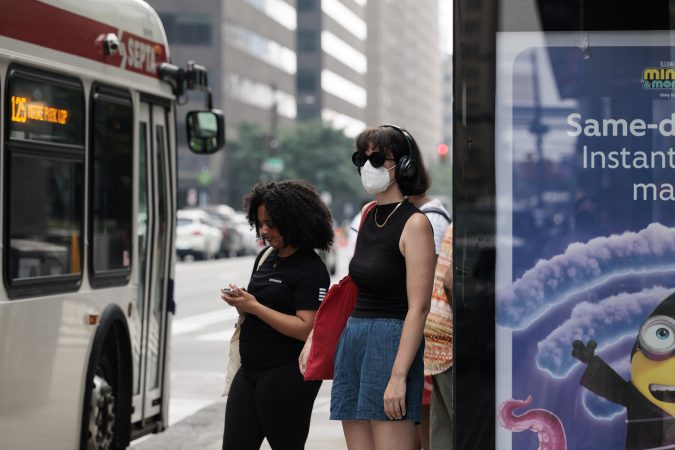
As Canada grapples with hundreds of active wildfires, the rest of North America is feeling the impact with air quality alerts.
In Philadelphia and elsewhere, the air quality score is considered unhealthy, particularly for the most sensitive people.
Whether you are planning to go out or stay home, here’s what three experts had to say about staying healthy and what precautions are needed:
What makes this smoke so toxic?
Exposure to this particular fire smoke is a serious matter due to “photochemical aging,” said Eric Balaban, a pulmonary and critical care fellow at Temple University.
As smoke travels, it interacts with oxygen, heat, and sunlight, creating a toxic profile that helps generate high levels of ground-level ozone and highly irritating aerosols, Balaban said.
Ground-level ozone is a pollutant that forms when nitrogen oxides and volatile organics emitted by vehicles, power plants, and industry react in sunlight, especially during hot days such as Thursday.
The pollutants aren’t the only problem.
The fine particulate matter within the smoke is small enough to cross from the lungs directly into the bloodstream, Balaban said, increasing the risk of heart attacks and strokes, in addition to causing acute chest tightness, shortness of breath, and dizziness in otherwise healthy people.
Who is at risk during the current unhealthy air quality?
Philly’s air quality score was in the red stage Thursday, according to the Philadelphia department of public health, meaning we are breathing air considered unhealthy. The state Department of Environmental Protection issued a code purple alert for Friday, the second-highest step on the U.S. Environmental Protection Agency’s color scale, which indicates “very unhealthy air.”
It is not the hazardous condition of the maroon level reached in Minnesota, where everyone is presumed to be impacted. But, for Ruth McDermott-Levy, a professor at Villanova University’s school of nursing, “all of us are at risk.”
The risks increase for those with preexisting conditions like chronic obstructive pulmonary disease, asthma, emphysema, and chronic bronchitis.
“Certainly there are groups of people at greater risk, from pregnant women, children, older people, and those with cardiac and respiratory illnesses. But we’re at an unhealthy level for everyone,” McDermott-Levy said.
Symptoms of poor air quality and sensitive populations
While most of the city is continuing daily life as normal, Michele Columbo, the allergy and immunology chief at Main Line Health, urged people to keep an eye on how their bodies react to the air quality.
People can experience “difficulty breathing, dry cough, wheezing, tightness in the chess, and even feel light headed because of [the added] high heat,” Columbo said.
Children in particular are at risk because they breathe faster than adults. And, pregnant people in the third trimester can already be experiencing difficulty breathing without the added contaminants to their lungs.
Adults 65 years or older, individuals with cardiovascular disease, asthma, and other respiratory issues can also be more affected.
What precautions to take if you go outside during unhealthy air levels?
Columbo cautioned people from staying outside for more than a couple of minutes at the time, and even encouraged rescheduling outdoor activities.
If you can’t avoid going outside, wear an N-95 mask, he said.
Traditional surgical face masks are not meant to keep out the kind of pollutant particles that fire brings. During the 2023 Canada wildfires, experts recommended KN95 and N95 masks as the best options.
Both Columbo and Balaban urged patients with preexisting conditions to make sure they have extra respiratory medications and inhalers on hand.
“Anybody with respiratory problems should seek medical advice because it is better to be proactive and inquire medical personnel before the respiratory problem might become potentially more serious,” Columbo said.
Should you take any precautions if staying inside?
Balaban recommends replacing the home air-conditioning filters to improve indoor air quality.
Is fire-related unhealthy air quality the new normal?
For McDermott-Levy, the newest round of wildfires from Canada, as well as the second heat dome to descend on the area in as many weeks, are a window into the future we might already be living in.
“This is climate change and we are living it,” she said.
Balaban encouraged the public to address the “root cause” of it through civic action.
“We have opportunities to mitigate and prevent these environmental catastrophes from happening, but it is something that we need to agree to do together,” he said.
Nineteen people have been hospitalized for measles since April in Pennsylvania, state health officials reported in a new online data dashboard launched this week to track the spread of the highly contagious disease.
Since April, an outbreak centered in Lancaster County has sickened 98 people — about a third of whom were under 18.
The virus is also circulating in western Chester County, on the border between the Philadelphia area’s suburbs and Lancaster in central Pennsylvania. The county reported two additional cases this week, bringing its total to six since the outbreak began.
The state has seen 110 cases this year, nearly seven times the caseload in 2025 and the largest case count in three decades. None of the patients sickened this year were fully vaccinated against the disease, state health officials said.
On the new dashboard, officials also highlighted ongoing vaccination efforts in affected counties, noting that this year state health workers have given out more than 600 doses of measles, mumps, and rubella vaccine in Lancaster County alone — more than three times the doses administered there in all of 2025.
Secretary of Health Debra Bogen said in a statement that the measles dashboard launched as part of ongoing efforts to “boost public access to information and provide transparency in our work to protect public health.”
After The Inquirer and the Pittsburgh Post-Gazette earlier this year published analyses on school-level vaccination data that were not readily available to the public, the state committed to publishing that information on its website. The data will be available by August, officials said.
New cases near Philadelphia
Lancaster County has been a particular hot spot for measles, with 59 cases reported since April.
Last month, Chester County became the first in the Philadelphia region to identify measles cases since the current outbreak began.
As of Thursday, six people in the county had been diagnosed, county officials said. A seventh case was reported earlier this year during a separate outbreak.
All of the cases in Chester County were identified after patients sought medical care, but none have been hospitalized, said Nancy Sullivan, supervisor of the county’s disease investigation and surveillance program.
Most of the patients in Chester County contracted measles — which can infect up to 90% of unvaccinated people exposed to the disease — because they lived with another measles patient, Sullivan said.
“Individuals in the household are incredibly high risk; it’s not surprising to me that most [cases] are household contacts,” Sullivan said.
The county has not identified cases contracted through “community transmission,” when a person in a public place like a library or supermarket exposes others to the disease.
Still, physicians working in Lancaster have said they believe the true number of measles cases in Pennsylvania is higher than reported.
With cases circulating in the western part of Chester County, on the border with Lancaster County, Sullivan also suspects more cases are going unreported.
“We’re looking for community transmission and trying to stop that as quickly as possible,” she said.
County officials have encouraged residents to ensure they are up-to-date on measles vaccinations, directing locals to clinics hosted by the state health department.
If they are not able to attend those, Sullivan said, health workers will point them to Chester County’s own vaccination clinic, or even drive to residents’ homes to vaccinate them.
The county is also in daily communication with Philadelphia regional health officials, who have been closely monitoring infectious diseases amid a full slate of high-profile summer events in the area.
The Food and Drug Administration approved a daily pill on Thursday that can lower cholesterol levels far below what can be achieved with statins, the cheap cholesterol-reducing pills.
The drug, enlicitide, whose brand name is Lipfendra, is made by the pharmaceutical company Merck. Clinical trials have shown that it can bring levels of LDL — the dangerous type of cholesterol — down to 50 or 60 or even lower. Adults not taking cholesterol-lowering drugs usually have levels above 100. It works by inhibiting a protein known as PCSK9.
New cholesterol guidelines issued by the American Heart Association and the American College of Cardiology say that people who have an above-average risk of heart attacks or strokes should get their LDL levels below 70. Those at high risk because, for example, they have had a heart attack, should get their LDL below 55.
Lipfendra’s list price will be $315 for a 30-day supply, and it will be available in a few weeks, said a Merck spokesperson, Julia Cunningham.
There are currently injectable drugs that work in the same way, but they are more expensive, with list prices of $500 to $600 a month or more. Insurers sometimes balk at paying, and some patients do not want injections. Only 1% of the 6 million eligible patients use the injected drugs. Yet a PCSK9 inhibitor can reduce the risk of heart attacks by 20% in high-risk patients.
Cardiologists not associated with Merck applauded the FDA approval and the drug’s price. The hope is that a pill that costs less than an injectable and is easier to take will allow many more patients to get their cholesterol levels under control.
“I’m thrilled,” said Christopher Cannon, a cardiologist at Brigham and Women’s Hospital in Boston who consults for several drug companies, but not Merck.
“This would make a big difference compared with the cost of injectable PCSK9 inhibitors,” said David Maron, a preventive cardiologist at Stanford.
Last November, Merck reported results from a 24-week clinical trial of Lipfendra, which involved 2,912 people. The drug lowered LDL levels by up to 60%. And there was no difference in side effects between the drug and a placebo.
Those results are the same as what has been seen with the injectable drugs.
In studies of the injectable drugs, blocking PCSK9 reduced the incidence of heart attacks, strokes and cardiovascular deaths 20% in high-risk people. Merck is conducting a study now to see if Lipfendra has the same effect. Dean Li, president of Merck Research Laboratories, said he is confident that it will.
Li said the company wants to make lowering cholesterol with Lipfendra as easy and convenient as it is with a statin. Primary care doctors can prescribe it — it does not have to be limited to cardiologists. And, he said, patients are used to taking daily pills. Most who are at risk for a heart attack already take at least a blood pressure pill, a statin and an aspirin.
It’s not clear yet whether companies making injectable PCSK9 inhibitors will lower their prices to compete.
Speeding in your car to work, to pick up your children from school, or go from one errand to the next not only wastes money in gas and sends harmful emissions into the air, it barely saves you time, new research says.
It is something to think about as gas prices stay elevated throughout the summer months and add pain to day-to-day driving and seasonal road tripping.
Instead, abiding by posted speed limits can save U.S. drivers millions of dollars at the gas pump and eliminate millions of gallons of fuel each day, according to a study published Thursday in the Nature journal Communications Sustainability. That is fuel that, when burned, emits planet-warming gases into the atmosphere. To top it all off, changing driving habits wouldn’t even add a full minute to a driver’s commute.
University of Minnesota researchers analyzed 120 million vehicle trips across the United States from four Wednesdays in 2021 using driving data on national road networks, speed limits and U.S. Geological Survey elevation data. The analysis included roads with speed limits of 45 mph and higher.
More than 43% of the studied trips included at least one instance of speeding, and drivers spent nearly 12% of their driving time going faster than the speed limit.
They found that if drivers of light-duty, conventional internal combustion engine vehicles actually drove at posted speed limits, it could save an average of $22 million, based on fuel costs at the time, 6.7 million gallons of fuel, and 57,000 metric tons of carbon dioxide every day. The researchers said that is comparable to taking about 5.5 million passenger vehicles off the road.
And while drivers say that speeding saves them precious time, researchers found that is not really the case. With an average daily driving distance of 28.6 miles, driving at or below the posted limit corresponds only to about 54 seconds longer per day.
“If your goal is to shave one minute off your time, then you’ve got to drive fast. If your objective is to get to your destination safely and to save fuel, then you might drive slower than the speed limit,” said William Northrop, mechanical engineering professor at the University of Minnesota and study co-author.
The research considered battery-electric vehicle efficiency only in California given the level of EV adoption in the U.S. at that time. Based on the California modeling, “We find that driving slower is beneficial for EVs as well,” he said.
Interestingly, the study found differences among states. Nevada saw elevated speeding prevalence as well as high speed excess. There was high speeding prevalence in Florida, Georgia, and North Carolina, though those states did not necessarily exhibit high speed excess. Montana, Wyoming, Idaho, and South Dakota showed both low speeding prevalence and speed excess.
The cost of faster driving today
Driving faster increases a vehicle’s energy use and the emissions from its engine, as well as reduces efficiency. Vehicle engines have become increasingly more efficient over the past several decades even as vehicles have gotten bigger and more powerful. But speed limits have also climbed since the Emergency Highway Energy Conservation Act was implemented, which mandated 55 mph national speed limits amid the 1970s energy crisis.
Accounting for the average cost of gas today and more vehicle miles traveled, that increases to roughly $26 million and 7.2 million gallons of fuel that Americans collectively could save each day this year just by not putting the pedal to the metal.
One limitation of the research is that slower driving could impact traffic patterns, which could play a role in efficiency.
However, it is especially timely as U.S. drivers remain price-sensitive to volatile gas prices as the war in Iran has sent the cost for a gallon of fuel above $4 this year. Experts have said there are a number of ways to improve one’s gas mileage, including something as simple as slowing down. Less fuel needing to be purchased because of better efficiency could influence oil market demand, which in turn could impact pricing.
Rob Middleton, associate research scientist of mechanical engineering at the University of Michigan who was not involved in the research, said the study was well-done. But he also noted that the fuel saved from driving more slowly still only represents a fraction of daily gasoline consumption in the U.S., which is about 375 million gallons daily.
“It’s a big number, but it’s a small fraction,” Middleton said. “This is a ‘freebie’ in that it doesn’t really cost anyone anything to do.”
“The market penetration of selling EVs is still small, so we still need fuel, we still need ICE [internal combustion engine] vehicles, we’re still going to have them for a very long time,” he added. “Things that we can do to either make the new ones better or to improve our fuel supply, we need to do.”
Some of the country’s biggest football stars have brought back a decade-old internet trend where people douse themselves in ice water to raise money for research into amyotrophic lateral sclerosis, a neurodegenerative disease known as ALS.
Former Tennessee Titans running back Chris Johnson put ALS and the Ice Bucket Challenge back in the spotlight in late June when he announced his diagnosis on “Good Morning America.”
“Years ago, the ALS Ice Bucket Challenge united millions of people around the world around one cause and helped change the fight against this disease,” Johnson wrote on social media after his announcement. “Today, I’m asking you to help me do it again.”
It was a callback to the original challenge, which raised over $100 million for ALS research when it originated in 2014, and is now described as one of the more notable success stories in an age of social media-driven activism.
More than a decade later, experts say that windfall transformed ALS research by drawing more scholars into the field and powering breakthroughs in ALS diagnosis and care. They hope a revival of the trend might do the same as researchers continue to hunt for a cure.
“We can do so much more now than we could then,” said Eva Feldman, a professor of neurology and director of the Scott Pranger ALS Center at the University of Michigan.
The simple premise of the Ice Bucket Challenge in 2014, to film yourself getting an icy splash, make a donation and nominate three friends to do the same, was primed to spread across the internet and came as Facebook debuted hashtags and “trending” topic lists to boost viral videos. Celebrities, politicians and around 17 million people participated in the trend, according to the ALS Association.
“It brought extreme recognition to the disease,” Feldman said.
The swell of attention and funding from the Ice Bucket Challenge “spawned a generation of young investigators” who were newly drawn into ALS research, said Nicholas Maragakis, a professor of neurology at Johns Hopkins University.
Experts said among the biggest breakthroughs in the past decade include the identification of over a dozen genes associated with ALS.
Mutations in genes can cause cells to produce abnormal proteins that damage neurons and can lead to ALS, and identifying which genes carry these mutations has helped scientists understand the disease. New treatments for ALS include drugs that target these faulty genes.
“Many of the genes we’ve identified are directly related to [funding from] the Ice Bucket Challenge,” said Calaneet Balas, the CEO and president of the ALS Association.
Other areas where ALS research has progressed include the use of stem cells to model the behavior of neurons to better understand how they deteriorate, and the identification of more biomarkers, such as chemicals in blood or spinal fluid, associated with ALS.
Those indicators can allow doctors to gauge the presence or severity of ALS in a patient, which has helped with diagnosing patients as well as evaluating the effectiveness of drugs in clinical trials.
“We understand the disease much better than we did in 2014,” Maragakis said.
The quality of care for ALS patients has also increased by “light-years,” Balas said. Research into brain implants has allowed some people with ALS to communicate, work and even reclaim their voices. Johnson gave his GMA interview using a device that uses recordings of his voice to synthesize speech, according to the program.
“To be able to do all of that did not exist 10 years ago,” Balas said.
The ALS Association says more work will be needed. A study last year funded by the ALS Association that analyzed a region of Italy projected that ALS prevalence could increase in the U.S. by around 16 percent from 2024 to 2040 — to an estimated total of around 42,000 cases — as the country’s population ages and ALS patients live longer.
Further funds raised could go toward larger-scale studies on risk factors of ALS and ways to make the disease more livable, Feldman said.
A cure for ALS may not be imminent, and there “won’t be one silver bullet,” Balas said. But she added that she is optimistic about making ALS livable with further advancements in patient care and treatment.
The internet has changed in the years since the Ice Bucket Challenge’s heyday. But even if this revival does not eclipse the original challenge, Balas said it is reminding the public about ALS, and the power of a bit of viral goodwill.
“I think it’s wonderful to have the resurgence, whether it matches what happened in 2014 or not,” Balas said.
If you’ve been to the beach with kids, you know it can become an instant playground.
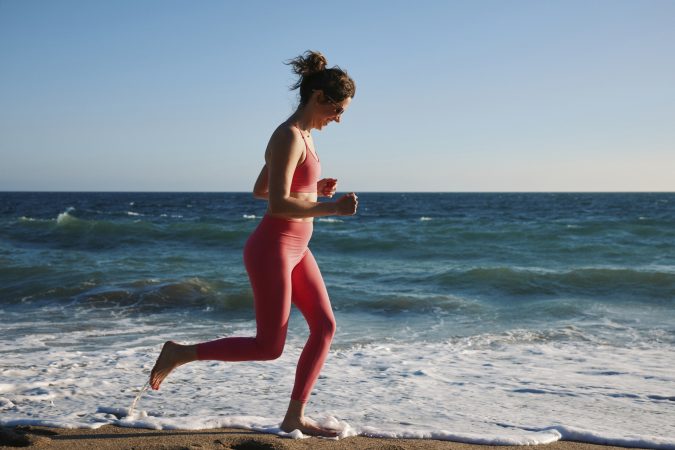
The beach can be a playground for adults, too, and allow you to move in new and different ways, which can bring fitness benefits you can’t usually get in a gym. The soft sand, wide-open spaces and splashing waves all lend themselves to movement, even when the sun is blazing.
When you’re navigating seashells and seagulls, “you have to be a little bit more playful, and really present,” said Erin Sampson, a yoga instructor who trains aspiring teachers in Costa Rica and Colorado.
Compared with exercising on a hard, even surface indoors or even at a park, exercising on sand works your muscles differently, helping to build lower-body strength and improve stability and balance, said Josh Goldman, a sports medicine specialist and team physician for UCLA Athletics.
And moving in nature and environments that inspire awe can reduce stress and may even lower blood pressure.
We asked coaches and experts in exercise science how to get the most out of moving on the sand.
Beach workouts can be short
The environment may be serene, but exercising on the beach will most likely feel hard: Because sand is less stable than a gym floor or even a trail, your body has to exert more force and energy to walk, run or jump compared with working out on firmer ground, Goldman said.
Your feet, ankles, hip, and core muscles also have to work harder to provide stability and balance during both propulsive workouts and body-weight exercises like yoga.
While exercising on sand puts less impact on your joints, the softer the surface, the more challenging any movement becomes, he said. In response, your cardiovascular system will have to work harder to power the same exercise than it would on a firmer and more even surface.
Soccer and running coaches with access to beaches often have their athletes practice on sand precisely because it is harder, Goldman said.
But don’t let this scare you: These extra demands on your body mean that you can get a great workout in less time, said Heather Jeffcoat, a physical therapist in Los Angeles. If you can perform well on sand, competing on firmer surfaces may feel like a breeze.
If you usually work out at the gym or on firmer surfaces, Jeffcoat recommended starting by doing roughly 25 to 30% of what you would typically do when exercising on the beach, to avoid injury and overexertion. For example, if you typically run 3 miles, run about a mile and see how you feel the next day. She also recommended starting on the firmest part of the shoreline, close to the water.
A similar principle applies to yoga and body-weight training: Easing into these exercises and even starting with less challenging versions of movements you typically do inside can help build the strength and mind-body connection to reap the most benefits. So if you typically do 15 pushups, aim for about five on sand.
If you have regular access to a beach, you can gradually increase the duration and intensity of your beach workouts as your body adapts, she said.
Moving in nature and environments that inspire awe can reduce stress and may even lower blood pressure.Amanda Friedman
They can build mental resilience
When you take a workout out of the gym and onto the beach, you are opening it up to many more unknowns. There’s the heat and humidity that come with any outdoor workout, but also the possibility of sand on your legs, wildlife and, if you’re on vacation, new terrain.
It’s not clean or controlled, but that’s the point, Sampson said. The challenge becomes staying focused despite the distractions, and adapting as the ground literally shifts beneath you.
“It’s the ultimate physical metaphor,” she said, adding that learning to move through obstacles like these can build mental toughness.
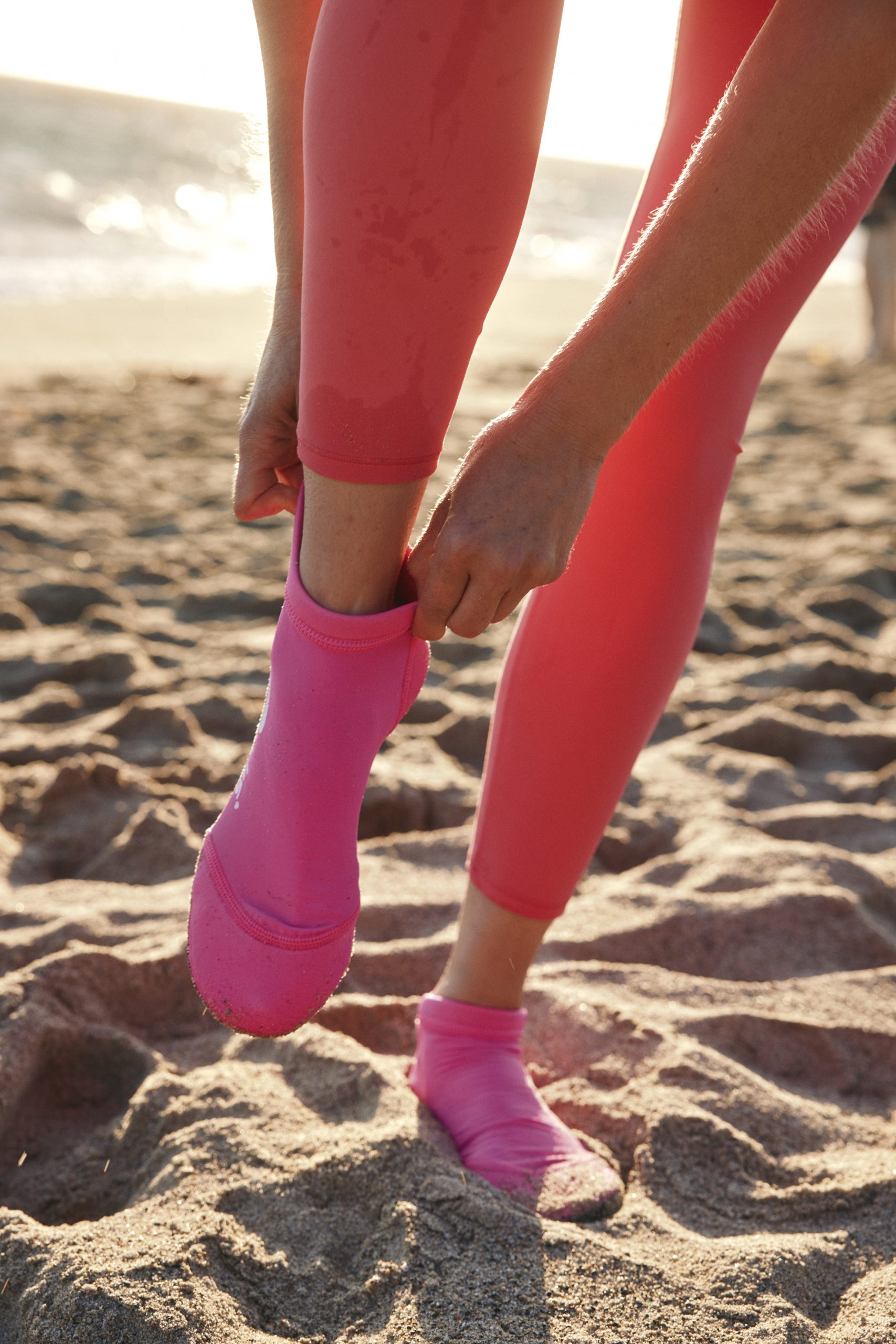
Sand socks can help to protect your feet from heat.Amanda Friedman
They require a few precautions
Of course, with all of these additional challenges, you’ll get the most from a beach workout if you come prepared, the experts said.
Before exercising on the beach, think about your footwear, Jeffcoat said. Walking, running or jumping barefoot can help strengthen your feet and contribute to ankle and leg stability. Sand socks, which beach volleyball players and other athletes sometimes wear while training, can help to protect your feet from heat.
But if you typically wear orthotics or very supportive shoes while training, doing the same activity barefoot could put you at risk for injury. Jeffcoat recommended starting in sneakers and potentially testing out short bouts of barefoot movement to build strength and stability.
You should also hydrate before, during and after exercising on the beach, rather than relying on when you feel thirsty, said Cedric Bryant, an exercise physiologist and CEO of American Council on Exercise. You will be exposed to direct sunlight on the beach, along with heat reflected off the sand and water, even on cloudy days, he said, which can put you at risk for overheating and dehydration.
For all of these reasons, the experts recommended wearing sunscreen, a hat, sunglasses, and moisture-wicking clothing. Sampson typically tells her yoga students to wear close-fitting clothing. “The tighter your clothes are, the less sand you’re gonna have going down or up or around them,” she said.
A swimsuit also works: When you’re done exercising, you can run into the ocean for an all-natural cold plunge.
Monell Chemical Senses Center is relocating to a new facility in University Cityto expand its operations and evolve its science, officials announced Wednesday.
The nonprofit research institute dedicated to studying taste and smell signed a 20-year lease at One uCity Square, a 13-story research hub, that will include more than $30 million worth of new infrastructure and facility improvements.
The new location at 25 N. 38th Street is a roughly seven-minute walk from the current home at 3500 Market St., where Monell has resided since 1971.
Monell plans to finish moving into the new space in early 2027.
“We’re just at capacity. We don’t have the facilities that are going to push us forward into the future,” said Benjamin Smith, Monell’s executive director and president.
The move has been a long time coming, as the center’s more than 150 scientists and staff have outgrown its space over the last 50-plus years.
For example, more scientists have wanted to use newer research methods, such as organoids — miniature versions of organs grown in the lab, he said. However, the current building has limited cell culture space and imaging capabilities.
“Our people are excited because we’re moving to facilities that are going to help them do more of the work that they want to do,” Smith said.
Benjamin Smith is the executive director and president of Monell.Courtesy of Monell Chemical Senses Center
More shared space, room for growth
The new space, which spans 64,000-square feet across three floors, is technically smaller than Monell’s current building. However, the design will allow for more efficient use of lab space.
The modern facility has an open layout filled with shared spaces, “as opposed to the old sort of academic lab where you were in one corner of a basement or one corner of a building and you locked your door,” Smith said.
He hopes this will encourage collaborations and interactions between scientists. That includes both within Monell and with other groups in the building.
Its neighbors within One uCity will include Dispatch Bio, Century Therapeutics, Penn NSF AIRFoundry, among other research and biotech companies. The office building opened in 2023 and is now roughly 90% occupied.
Monell’s iconic “Face Fragment” sculpture, perched outside its current building, will move, too. The giant nose and mouth will be featured at the front of the One uCity building, looking out at the lawn.
“We’re making sure that we don’t lose that legacy,” Smith said. “We take our culture and we move it into the new building and we grow it.”