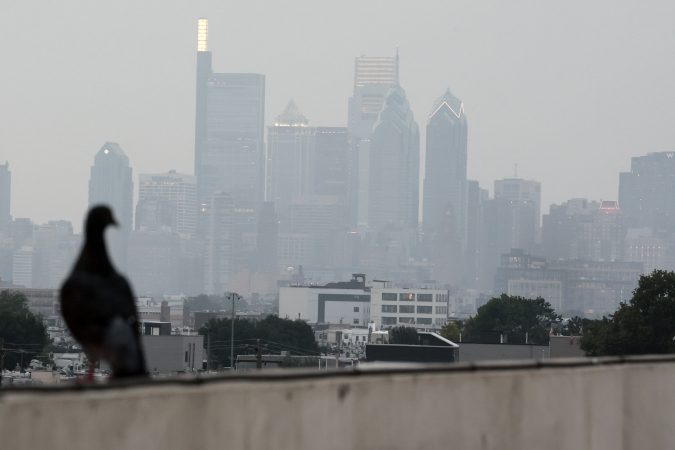
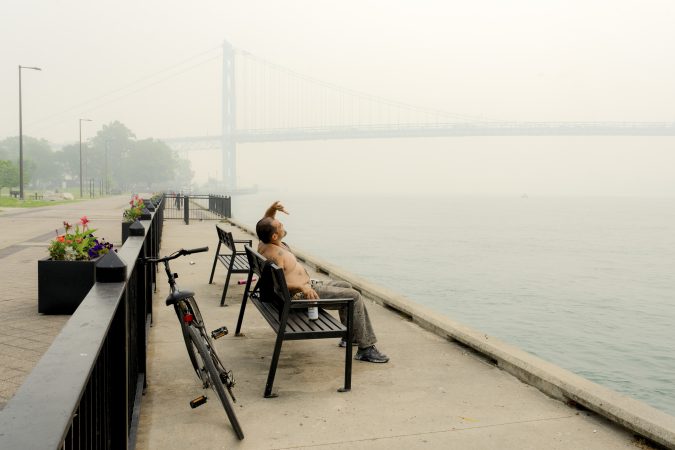
Waking up to hazy skies and an eerily orange sun can feel more like a scene from an apocalyptic science fiction movie than reality. Yet, Philadelphians did just that earlier this month.
Smoke from the Canadian wildfires has made its way to the East Coast and, along with it, an Air Quality Index, or AQI, reading that came close to 300 across the region. For context, when the AQI reaches over 50 it can affect folks with asthma and other respiratory illnesses. The general public will start experiencing symptoms and negative health impacts when the AQI hits 150. An AQI in our area of 300 is as uncommon as it is dangerous.
This isn’t the first time Philadelphians have contended with the impacts of wildfire smoke during the summer months, but what’s occurred this month stands out from summers past. The last time the AQI reached similar levels was during a series of fires in Quebec in June 2023, with the AQI soaring over 400.
For East Coasters, this is a relatively new and infrequent phenomenon, but the West Coast has been contending with real life impacts of wildfires for much longer. I experienced them for the first time while living in the Bay Area. I was there in September 2020, on the day when the smoke was so thick it blocked out the sun, making the afternoon look like the middle of the night. The thought of that day still haunts me.
In the aftermath, I felt scared, frustrated, and filled with dread. When I eventually found the words to describe the experience, it was like a light bulb went off. The gauzy skies finally made the abstract concept of “climate change” into something very, very tangible and undeniable. It’s hard to deny that we’re in the midst of a climate crisis when the crisis shows up on your doorstep.
There’s a term for this awareness of and emotional response to the environment in dire crisis — “climate grief.” In the coming days, Philadelphians may experience this grief firsthand for the first time. Climate grief manifests itself differently for everyone, and feelings of anger, hopelessness, dejectedness, and even confusion are all totally normal. What’s important is how we navigate these feelings, both as individuals and a community.
There are small things we can do to protect ourselves and our family when the AQI hits triple digits. We can try to limit our exposure to bad air quality, but let’s be realistic — we all have jobs or classes to go to, kids to pick up, or errands that can’t wait.
Wearing an N95 mask is the best way to protect your health, along with the health of your kids and even pets.
You can join an environmental and community advocacy organization, like Philly Thrive, to fight back against harmful policies and corporations.
You can also reach out to your elected officials in the state and federal government and demand that they prioritize laws that protect our health and environment.
As the smoke clears, please don’t let the memory slip away or give up on fighting for our community. As a city, we’re gritty, steadfast fighters and we do not easily forget being wronged. Now is the time to act, show up for the environment, and show the world what Philadelphia is really made of.
Erin Fitzgerald is a native Philadelphian who currently works as a communications strategist and environmental advocate.
Resident physicians at Temple University Health System and Thomas Jefferson University Hospitals have ratified their first contracts with their health systems after having voted to unionize last year.
The 2,200 Temple and Jefferson residents organized with the Committee of Interns and Residents, affiliated with the Service Employees International Union, and are among the 86% of Philadelphia resident physicians who have joined a union in the last several years.
The contracts were ratified July 1 and announced Thursday.
The new contracts include “substantial” raises and “greater investment in resident education,” the union said Thursday in a news release.
In addition, residents at different hospitals in the same health systems will now receive similar salaries, the union said.
Residents at Jefferson Einstein Hospital will be paid the same as other Jefferson residents, and those at Temple’s Chestnut Hill Hospital will “achieve near pay parity” with residents at Temple University Hospital and Fox Chase Cancer Center by the second year of their contract, the union said.
Resident physicians and fellows have completed their medical degrees and spend three to seven years training in a clinical specialty, working up to 80-hour weeks for, on average, $61,000 a year. That’s a lower salary than other professionals who require special training, like flight attendants and electricians.
Union members said their new contracts would help them afford living expenses as they train. Many live paycheck to paycheck, and some take on debt to get by, Linda Li, a resident physician at Chestnut Hill Hospital, said in a statement.
“I’m incredibly proud that we stood together and won a contract that will make a material difference in our lives and for residents who come after us,” she said.
In a statement, a Jefferson spokesperson said: “We look forward to moving ahead together in support of the patients we serve.”
A Temple spokesperson said the contract “appropriately supports our residents and Temple Health and preserves our ability to provide our patients with the high-quality care they deserve.”
“We take great pride in the skill and compassion our Residents and Fellows demonstrate in caring for our patients, and in their tireless dedication to the pursuit of knowledge,” the spokesperson wrote in an email. “We remain committed to a positive working relationship which supports the finest and most rewarding physician training experience for them.”
Philadelphia-area physicians have been part of a wave of unionization efforts for years. Residents at Penn Medicine signed their first contract in 2024, just before roughly 3,000 residents at Temple, Jefferson, Children’s Hospital of Philadelphia, and Delaware’s ChristianaCare began a unionization push. ChristianaCare’s attending physicians are also unionized and signed their first contract earlier this summer.
Adrian Kase, a resident physician in physical medicine and rehabilitation at Jefferson, said in a statement that she and fellow residents were inspired by unionization efforts at Penn.
“We saw how residents at Penn were able to raise the bar for physician training and patient care by organizing and winning their first contract, and we’re thrilled to build on what they achieved,” Kase said.
While CHOP’s medical residents ultimately voted against unionizing, residents at the other health systems opted to organize with the Committee of Interns and Residents. ChristianaCare residents are still negotiating their first contract.
This isn’t just a bad year for measles. It looks to be the start of a bad era. Confirmed measles cases just hit a 35-year high, and it’s only July. Together with last year, the number of cases has exceeded the combined total over the previous 25 years. The vast majority of cases stem from domestic outbreaks fueled by low rates of vaccination—and rates are declining.
For the first time in a quarter century, the U.S. no longer meets a main criterion for having eliminated measles as a public health threat. That status hinges on sporadic outbreaks fizzling out within a year. Utah’s outbreak has lasted for longer, since June 2025.
Nearly 400 people have been hospitalized with measles in the U.S. this year and last, three people have died, and at least three suffered brain swelling with lingering symptoms.
This month, the Centers for Disease Control and Prevention is set to finalize a comprehensive study of the nation’s measles situation, examining data from January 2025 through June 2026.
“I don’t think we could say with a straight face that there hasn’t been transmission over the past 12 months,” said a CDC scientist with knowledge of the agency’s measles report. (KFF Health News agreed not to name the researcher, who is concerned about retaliation.) The researcher said a national committee of measles specialists will review the CDC’s internal report, which then goes to the Pan American Health Organization, a group that evaluates the measles elimination status of countries throughout North, South, and Central America, and the Caribbean.
PAHO will make its decisions at an annual meeting this fall, but scientists say the writing is on the wall. “The assessment for elimination isn’t until November, but that is a scheduling issue, basically,” said Anne Schuchat, who led the CDC’s immunization and respiratory disease group from 2006 to 2015.
“It’s just so sad, because some people will get brutally ill,” she said of measles’ return. “This is a wake-up call.”
Pediatricians in Utah have been on the front lines as measles and other vaccine-preventable ailments have returned to the U.S. In interviews with KFF Health News, six doctors shared insights on this new era of vaccine hesitancy — and what could be done to turn the situation around.
The conversations have been edited for clarity.
On unvaccinated children hospitalized with measles complications
Emilie Morris, a hospital pediatrician in Salt Lake County and Utah County: When children come in, they’re often bent over. We call it tripoding, which is particular to upper respiratory infections and airway swelling. They have a rash — viruses cause rashes all the time — but in this context, the kid is hunched over, mouth open, drooling, crying, maybe not even producing tears, because they’re so dehydrated. Really labored breathing, kind of tugging in their belly, tugging between their ribs. Their eyes look kind of glazed over. It’s like they’re seeing through you.
Nathan Money, a hospital pediatrician in Salt Lake County and Utah County in Utah, says it’s “heartbreaking” to see children with measles struggling to breathe. (Amy Maxmen/KFF Health News) Amy Maxmen/KFF Health News
Nathan Money, a hospital pediatrician in Salt Lake County and Utah County: If the child has a fever or trouble breathing, and they’re unvaccinated, I have to be way more aggressive from a medical standpoint, because they are at higher risk of having life-threatening illnesses. I have to do more blood work, or lumbar punctures to rule out meningitis. I have to do things which are painful, and it’s traumatic for the families.
I tell them, “Because your child doesn’t have vaccines, I have to be more worried about conditions like sepsis or meningitis, so therefore I need to do more workup.” The last thing I want to do is miss something. These are parents who love their children. They always tell me, “Do what you need to do to make sure my child is safe.”
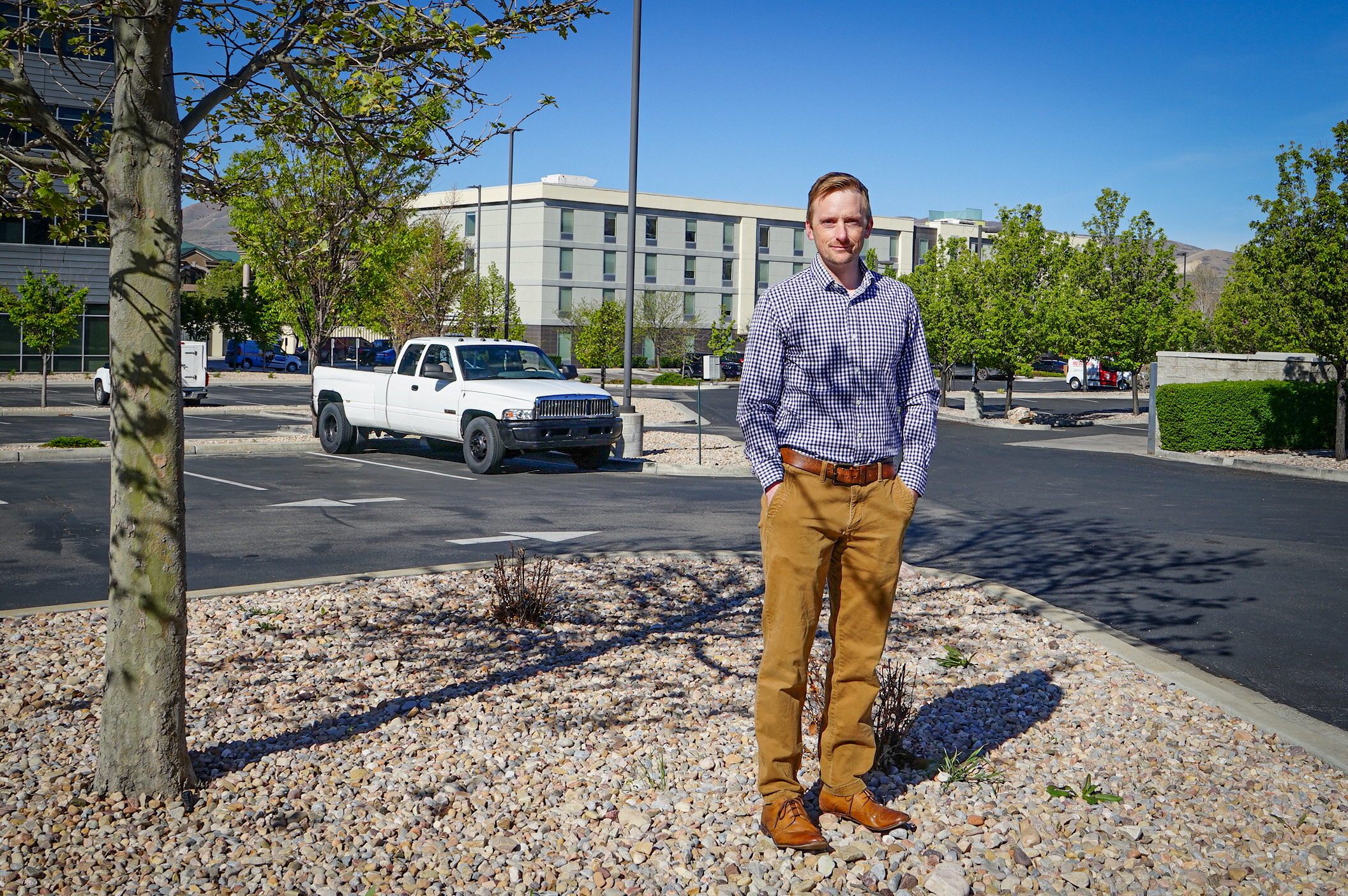
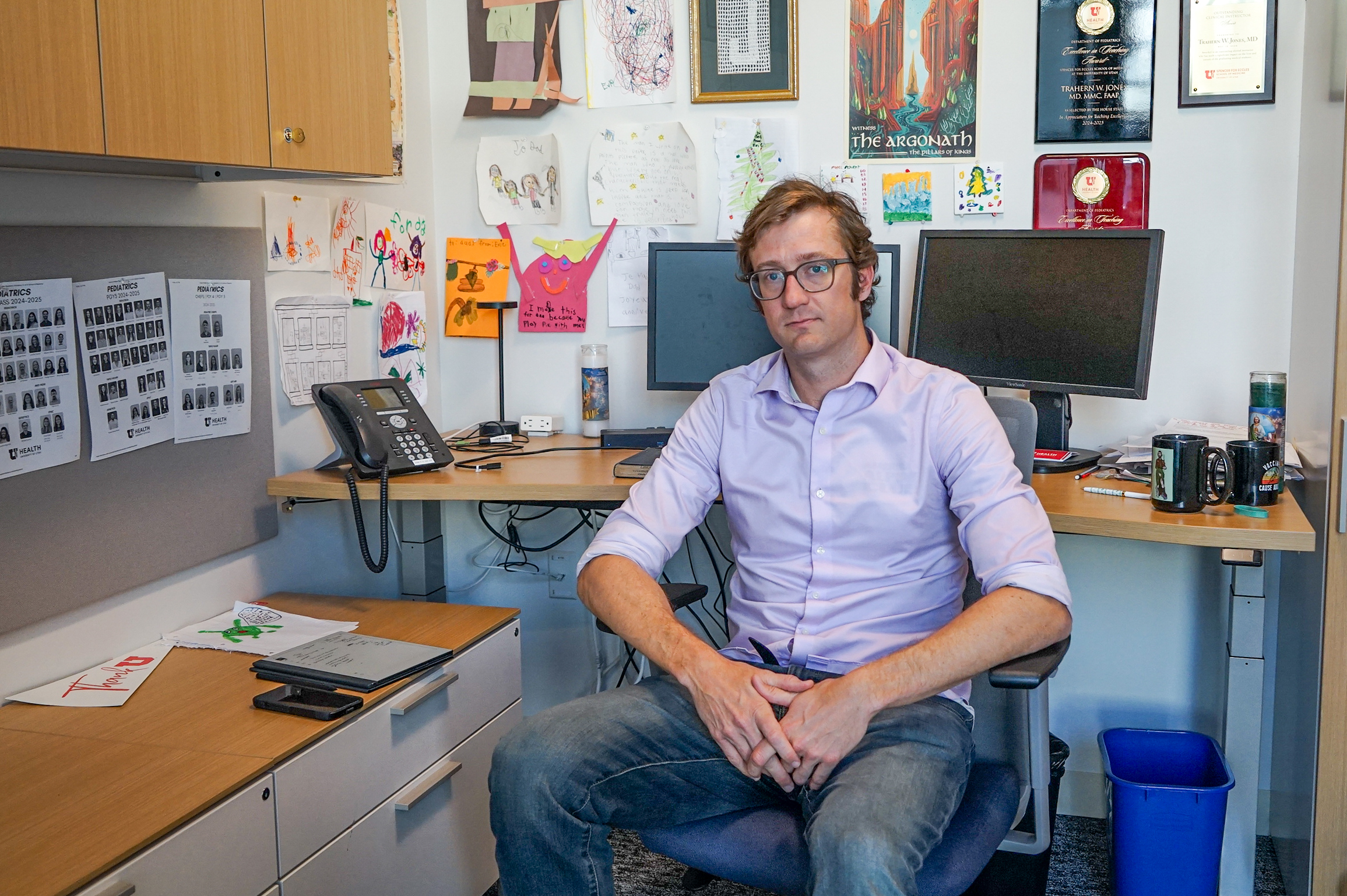
Trahern W. Jones, a pediatric infectious disease specialist based in Salt Lake County, Utah, says parents are often surprised by how severe measles can be. (Amy Maxmen/KFF
Health News)Amy Maxmen/KFF Health News
On treating unvaccinated children hospitalized for measles
Trahern W. Jones, a pediatric infectious disease specialist based in Salt Lake City: So I’m coming into a room and just hearing the most awful barking cough, just a cough and a high-pitch stridor as the child is trying to breathe. And he’s just coughing so hard it just makes you feel short of breath. He looks like he’s been beaten down for days, but he can’t rest, because the cough keeps him awake.
The parents tell me they’re not anti-vaccine, but in the past, somebody they know had a reaction to a vaccine — or something they thought was a reaction to a vaccine — and so they paused vaccines when the child was a baby. They were planning to catch up later.
In another case, the parent was stunned by how awful it was. I asked them what they knew about measles before their child was sick, and they said the only person who’d ever taught them anything about measles was their grandmother who had taken care of her kids with measles ages ago. That’s something I’ve heard from other parents. It’s such an awful illness. Even the best possible course is going to be one of the worst diseases most children ever go through.
There are multiple facets to it. Physically, the child has been beat down for multiple days by this virus. The parents don’t get to sleep, because they’re nursing their child. Then there’s the emotional component because the parent is regretting not getting the vaccine, not realizing how bad this was, and then feeling deeply ashamed, trying to reconcile with family members who are really upset at them for not getting their child vaccinated.
Morris: One child was from a family that was uninsured because they didn’t feel that they would need to use the medical system. They were faced with the high burden of cost of our healthcare system. The cost was playing into the parents’ decision on whether or not their child should receive necessary medical care. I said something like: “Please don’t go home. Your child needs oxygen. She has pneumonia. We will figure out a way to pay for this, because we acknowledge what we do is expensive.”
On top of that, the parent had several other children in the home who weren’t vaccinated. It was past the period where we could intervene with vaccines to try to prevent infection, so then our recommendation was to quarantine their children at home for 21 days: “Don’t interact with anybody else in your community. Don’t go to the grocery store, even with a mask. Please take this seriously.”
It takes time for parents to understand the level of concern I have, even when their child is physically ill in the hospital requiring ongoing care. It’s pretty indicative of the breakdown of trust between physicians and families. I say, “This is the gravity or severity of your child’s situation and how serious we need to be about protecting other people.”
It’s frustrating. How can I make people understand I have a very genuine concern for their child? And I know they share that concern, but maybe it’s not the same degree of concern, because they don’t understand the illness and how severe it can become.
Money: It’s heartbreaking to see these children struggling to survive when measles could have been easily prevented by a safe mechanism that is readily available and well studied. These are well-meaning parents who love their children, who have gotten bad information from federal leadership or from online sources. The saddest part to me is when I am caring for a child and the parent says, “I didn’t know that this could get so bad.”
Tim Duffy, a pediatrician in Salt Lake County, Utah, says many parents are concerned about incorrect claims about vaccines seen on social media. (Amy Maxmen/KFF Health
News)Amy Maxmen/KFF Health News
On conversations with parents who don’t vaccinate their children
Tim Duffy, a pediatrician in Salt Lake County: A lot of families aren’t aggressively anti-vax, but they’re hesitant. Younger parents who grew up in the digital age have done their research — “research” in quotation marks — for months. And they keep getting confirmation of their concerns on social media. They think they’re doing what’s best for their child.
I’ve told families: “You could do nothing I say as a pediatrician. You could sleep your child on their stomach. You could not put them in a car seat or, when they’re older, not use seat belts. You could do nothing I say, and for your individual child, they will probably be OK. But from my standpoint, where I’m taking care of thousands of kids, within a system that takes care of hundreds of thousands of kids, we will have bad outcomes. These children will show up at our facilities, and it’s so sad.”
Pediatrician in southern Utah whom KFF Health News agreed not to name, because of concerns about harassment after being targeted by anti-vaccine activists in the past: A lot of parents are concerned about autism. I’ve told them that I’d be very concerned if there was any evidence that what we’re doing is causing autism. But if vaccines were causing autism, we should see more cases of autism in vaccinated kids compared to unvaccinated kids, and we’re just not seeing that.
I’ve also had families who say they want to be natural, or that they’re concerned about what is in the shots. A frequently asked question is: “Did you vaccinate your children?” I say that knowing what I know, I’m confident giving this to my kids. They’re all vaccinated.
On the influence of politics on vaccine hesitancy
Jones: Vaccines have become a political football. That wasn’t true 20 years ago. But now it’s used to drive a wedge between groups of people, which is unfortunate. Vaccines are one of the main reasons why we don’t have to worry about losing our kids.
Southern Utah pediatrician: People don’t know who to believe. If politics comes up, I tell parents that my messaging on vaccines is not politically motivated. When parents ask about changes to the vaccine schedule, I’m transparent. [In January, the Department of Health and Human Services controversially recommended reducing the number of vaccines given to children. A few months later, a federal judge blocked those changes.]
I’ve said there was a process for the approval of immunizations through ACIP [the Advisory Committee on Immunization Practices], which is made up of scientists, public health experts, and doctors, and all those people were let go, and a new panel was selected. A couple of individuals changed the recommendation outside of the time-tested, evidence-based process for evaluating vaccines. That raises concerns for me as a doctor. I tell parents that the American Academy of Pediatrics, the American Academy of Family Physicians, and several other professional organizations have issued statements saying that these changes are not based on evidence.
Ellie Brownstein, a pediatrician in Salt Lake County and president-elect of the Utah chapter of the American Academy of Pediatrics: I avoid talking about politics, but what’s being said has added another layer to our work. One family asked me about changes to vaccine recommendations, so instead of just telling them what immunizations are due, I talk with them about why physicians and researchers have followed a different schedule for years, about the reasoning and the science behind it. I explain that I trust these experts over someone without a lot of experience.
Money: People are not vaccinated, because they’ve lost trust in the medical community. They’re placing trust elsewhere. Rebuilding trust is a complicated process, but it comes from consistent messaging at every level, from the pediatrician to local health departments to community leaders, city leadership, district leadership, religious leadership, educational leadership.
We need consistent messaging from state leadership, which has been pretty absent. I want to see commercials on TV about the safety of the MMR [measles, mumps, and rubella] vaccine and the dangers of the measles, sponsored by my state leadership. I’d like to see this on billboards and in schools, in public buildings and grocery stores. I want to go to a sports event and see messages about the measles and the MMR vaccine. Right now, people have to go out of their way to find information from reputable sources.
We also need policy changes to support vaccination. This train is going in the wrong direction, and it can feel like a helpless situation, because we’re just not seeing the public messaging and leadership that’s needed to turn this around.
Advice on talking with parents who don’t vaccinate their children
Jones: Approach them with as much compassion as you possibly can. Ask open-ended questions to learn about their experiences that led them to have these concerns. I think it’s really important to not come down on them, citing facts and figures and pointing to guidelines on why they need to get their kids vaccinated. But try to direct their attention to the fact that you’re a real person with your own real experiences and knowledge. I point out to families that I have my own kids, and I would never recommend something for your kids that I wouldn’t do for mine.
Southern Utah pediatrician: I’ve learned that if you come down hard, you’re going to lose people who need care. My number one goal now is to build bridges and maintain a relationship with families, because that’s what’s going to allow me to convince some of them.
I approach people differently depending on where they are. Parents who are very skeptical or anti-vax will say no when I tell them their child is due for immunizations. I’ll say: “Fine. You guys get to choose. You’re the parents. But I’m curious to know what your reasoning is.” Sometimes they’re just like, “It’s something I’ve decided.” They don’t want to have a conversation.
It’s a good day if I can have a conversation with someone who doesn’t want to vaccinate, even if I don’t convince them. I try to help them think through things rather than shoving anything down their throat. When they’re done talking, I’ll ask, “Can I share my perspectives on this?” Some will say yes enthusiastically, and others will say yes because they’re being polite.
A lot of parents aren’t sure what to do, and those are the people I focus most of my time on. I focus our conversation on their specific concerns, and I’m open about specific side effects that different immunizations can have. For example, I’ll tell them that some children get a fever after a vaccine, which is OK. The fever is not harmful, but it can make babies feel crummy as their body is building up antibodies against viruses and bacteria.
Brownstein: I don’t like the idea of excluding unvaccinated kids from my practice. I know some do that. But what that does is it ends any future discussion. I can’t keep talking with parents about vaccines if I kick them out of my practice, and if these parents find like-minded doctors, this situation will get worse.
On being on the front lines of measles’ comeback in the U.S.
Money: I wish that people could see what I see. Everyone else sees what people post on Instagram. Or they think, “Someone I know had measles when they were a kid and they were fine.” But as a hospital-based pediatrician, I see what happens when things go poorly. I see what happens when children with measles aren’t able to breathe on their own, and they’re in a hospital bed with a cannula in their nose, struggling to breathe, an IV in their arm because they can’t drink on their own. And the child is terrified, and the parents are scared that their child might die.
It’s heartbreaking as a pediatrician and as a father to know that the entire situation could have been easily prevented.
Duffy: Even though parents say vaccination is their choice, I still feel personally responsible if something bad happens that’s preventable, because I feel like I didn’t say the right thing, I didn’t ask the right questions. Maybe I let it drop because of the look on a parent’s face.
Morris: Every pediatrician I know cares so deeply about what they do. Sometimes people forget that we are human beings practicing this discipline, and we bring all our concerns for our community into this space. I’m trying to navigate a lot of complex human emotions, like how it feels to hold grief with a family when something bad happens that was preventable — which is the worst situation, because you think, “Could I have done something differently?”
Jones: I think we’ll see more diseases start coming back that we thought we had gotten rid of. I think it’s going to take dramatic changes to actually prevent those outcomes. I’m not necessarily seeing those changes being done by those in power.
I think of that quote from The Lord of the Rings. It’s something like, you don’t get to choose the time that you’re born into, but you get to choose what you’re going to do about it. And if there’s any comfort that I have, it’s in knowing that there are right decisions to make and that I’m going to make them, and I’m going to help others make them, too.
KFF Health News is a national newsroom that produces in-depth journalism about health issues and is one of the core operating programs at KFF — the independent source for health policy research, polling, and journalism.
In July, Republican candidates in Michigan were lining up to excoriate Canada for the wildfire smoke wafting across the international border. “They MUST PAY and PUT OUT the fires!” wrote gubernatorial candidate John James on X, after declaring he would introduce legislation to impose sanctions on the neighbors to the north. Other politicians made similar claims about how they would deal with Canada. Meanwhile, Donald Trump moved to impose new tariffs on Canada in response.
Such political posturing shows little understanding of the actual situation. For example, it overlooks the fact that the scale and magnitude of these fires is surely linked to climate change, which the United States is arguably doing less to combat under the Trump administration than any other industrial nation in the world.
This is not the first time the two countries have dealt with cross-border air pollution. However, in the Great Lakes-St. Lawrence region historically, it was more often American emissions that were afflicting Canada.
By the mid-20th century, air pollution across the Michigan-Ontario border in the St. Clair-Detroit River corridor was raising significant concerns. At the request of both nations, the International Joint Commission (IJC), which had been created by the 1909 Boundary Waters Treaty, formed a joint St. Clair-Detroit Air Pollution Board in the 1960s to investigate the precise sources of air pollution in this region.
In a 1971 report, this board found that sulfur dioxide and particulate matter from Detroit’s auto and steel industries were crossing over to Windsor, Ontario. Along the St. Clair River, the joint board reported that Sarnia’s Chemical Valley south of the city, which had already developed into an enormous petrochemical complex that befouled both air and water, was the main pollution culprit. Certainly some of the poisons drifted into Michigan, though the board determined that the primary victims were in Ontario. The IJC duly recommended that the two federal governments create pollution boards and establish national air quality standards.
A similar dynamic played out in other transboundary air disputes between Ontario and adjoining U.S. states, with both sides (though more often the United States) found to be the culprit. Ontario Hydro built a large coal-fired power station at Atikokan in the northwest part of the province that threatened cherished recreational areas across the border, such as the Boundary Waters Canoe Area Wilderness in Minnesota. In another instance, the Reynolds aluminum smelter in Massena, N.Y., was accused of contaminating the nearby binational Mohawk community, including the parts in Canadian territory.
Over time, the air quality issues stemming from these specific sources mostly either fell off the public’s radar or became subsumed within wider debates about acid rain and national air quality agreements (such as the 1970 Clean Air Act). Indeed, by the 1980s acid rain dominated not only the Canada-U.S. environmental relationship, but general bilateral relations.
Acidified precipitation is created when sulfur and nitrogen oxides (SO2and NOx) emissions, often from coal plants, are transported through the atmosphere and transformed into sulfuric and nitric acids. This acid rain fell onto terrestrial and aquatic environments where it had a range of short- and long-term negative consequences. Melting acidic winter snows produce an “acid shock” in streams during the spring run-off, for example, which is predictably bad for aquatic species.
While both countries generated pollution that fell in the other’s territory, acid rain originating in the United States and descending to earth in Ontario was the biggest problem. Ongoing bilateral studies established that 70%-80% of it came from the United States. That acid rain affected cottage country north of Toronto — where many of the country’s elite have vacation homes — helps explain why this problem gained so much public traction.
But the two countries could not agree on solutions, such as the need for emission limitations and controls. As the primary contributor, the United States would have had to bear the brunt of any necessary changes, and the Reagan administration was ideologically opposed to any environmentally motivated regulations on economic activity. Washington stalled the talks, calling for more research.
The United States proved more amenable to addressing the problem after George H.W. Bush entered the White House in 1989. Negotiations began on what would emerge as the 1991 Canada-United States Air Quality Agreement (AQA), which permanently capped emissions at approximately 13.3 million tons by 2010 in the United States and 3.2 million tons in Canada. While the United States would not make any legal commitments to reduce emissions in Canadian territory, it did pledge to follow the requirements of its recently updated Clean Air Act, which reduced the emissions that created acid rain.
Made By History sponsorsInquirer Staff
Ultimately, the results of the 1991 Air Quality Agreement were mixed. SO2 emissions did go down by almost 70%. Granted, this decrease probably had more to do with domestic regulations and technological changes on both sides of the border. In the long run, neither country has fully followed through on its commitments.
The AQA also created a framework that could incorporate other air pollution issues, such as particulate matter and ozone. In that vein, Canada and the United States signed an “Ozone Annex” to the Air Quality Agreement in 2000. There was also a different type of ozone problem — the hole in the ozone layer — involving Canada and the United States; both were adherents to the 1987 Montreal Protocol on Substances that Deplete the Ozone Layer, considered by many to be the most successful global environmental treaty ever.
To be sure, the United States and Canada have had the world’s most consequential environmental and energy relationship over at least the last century. No two nations have exchanged resources and collectively modified ecosystems on the same scale — which, by extension, has created harmony in wider U.S.-Canada relations and established many important precedents for international environmental law and governance. Yet, both countries are also petro states and climate villains, with their societies and economies organized around deeply unsustainable industrial practices and consumption patterns.
The amity that has long characterized U.S.-Canada relations has been eroding with Trump at the helm. And this recent strife about transborder smoke is representative of the ways that breakdowns in U.S.-Canada environmental and energy relations can undermine the rest of the relationship.
Made By History takes readers beyond the headlines with articles written and edited by professional historians. Opinions expressed do not necessarily reflect the views of The Inquirer.
A Main Line psychiatrist has lost her medical license after a state investigation found she had sex with a young patient for years, all while prescribing him a revolving mix of up to 12 medications, including highly addictive psychotropic drugs, without proper evaluations.
Amy Mazza MacIntyre, a child, adolescent, and adult psychiatrist in Bryn Mawr, started treating a then-17-year-old cancer survivor in 2004 when he was a senior at Lower Merion High School.
MacIntyre first had sex with him in February 2011, when he was 24 years old. She stopped billing him for treatment around the same time, though she continued to take patient notes for another 2½ years. She continued prescribing him powerful psychiatric drugs while having sex with him through mid-2017, according to an investigation by the Pennsylvania State Board of Medicine.
The board revoked her medical license in May, finding she had engaged in sexual misconduct and inappropriate prescribing in violation of state medical licensing laws. She is appealing the disciplinary board’s decision, which followed lawsuits between MacIntyre and the patient, Justin Kopicki, in civil courts.
The board’s investigation — based partly on emails, texts, and voicemail messages that MacIntyre sent Kopicki — revealed that she gave him a $5,000 saxophone and a Cartier watch, hired him to work in her office, proposed marriage to him, told him she miscarried his baby, sent him naked selfies, and took him on trips, including to Turks and Caicos and Walt Disney World.
Kopicki, who is now 39, said in an interview that MacIntyre had “groomed” and manipulated him while prescribing “really large quantities” of stimulants and benzodiazepines, including “Xanax and Klonopin mixed together.”
“If I refused to go away on a trip with her, or I refused to see her, or I wanted to break up with her, she would refuse to prescribe antianxiety medications until I saw her again,” Kopicki said.
She also prescribed medications to his mother and father, although they were not her patients, the board found.
The board’s revocation order refers to Kopicki by his initials, but he gave The Inquirer permission to use his name.
MacIntyre, 52, did not return calls and emails from a reporter. Her lawyer, Gary Samms, said he advised her to decline comment.
“Dr. MacIntyre is an excellent, caring and compassionate physician,” Samms wrote in an email last week. “The board decision is being appealed to the Commonwealth Court where we believe we will be victorious.”
The board revoked her license on May 28 and ordered her to “immediately cease practicing medicine.”
“By engaging in a sexual relationship with a patient while continuing to prescribe medications without appropriate evaluation or oversight, [MacIntyre] compromised the safeguards that protect patients from harm and undermined confidence in the medical profession,” the board wrote in its revocation order.
A woman who answered the phone at MacIntyre’s Lancaster Avenue office late last week said she was still practicing but unavailable to speak with a reporter. MacIntyre did not reply to a voicemail message asking whether she was still treating patients. Samms did not reply to a follow-up email on the subject.
Earlier this month, the state board rejected her emergency request to staythe revocation of her licensepending her appeal. She plans to argue her case before a judge on Thursday, Commonwealth Court records show.
‘Shifting explanations’
MacIntyre admitted to sexual misconduct and violating medical licensing laws on three other counts: immoral and unprofessional conduct involving a patient; failure to maintain complete medical records; and fraudulent, reckless, or negligent practice.
During the disciplinary proceedings, MacIntyre had only disputed claims that she engaged inimproper prescribing. However, she argued for lighter discipline, such as probation, on all counts.
She testified at a state hearing last year that she had been fearful of Kopicki and felt “trapped.” She said the sex was not consensual, but coerced, and that she had feared for her safety and that of her family.
She said she had repeatedly tried to get a protection-from-abuse court order against the patient but did not qualify for one. (Such proceedings are not public record).
The board rejected her arguments, citing a lack of evidence to support her “claims of coercion,” “shifting explanations,” and inexcusable actions.
MacIntyrealso cited “personal stressors,” including “family losses, the birth of a child, and her mother’s decline due to early dementia,” the report states.
While treating Kopicki, she introduced him to her young daughter and was married, state and court records show.
After contact with Kopicki ended in 2017, she said, she went to therapy to address her “understanding of appropriate boundaries.”
She also limited her interactions with patients to mostly medication management rather than therapy. And she had not violated any regulations for the last decade, she said, arguing for less severe discipline.
Kopicki said he provided the state with “thousands of text messages,” dating back to 2011, showing she aggressively pursued him and used medication to control him.
“She put it in writing so it was extremely difficult for her to be like, `It was him. He’s the aggressor,’” Kopicki said.
Her lawyer,Samms, said he believed MacIntyre’s appeal of the board’s revocation order to the Commonwealth Court will prevail.
“There are numerous issues and contested facts that support the doctor’s position,” Samms wrote in an email, declining to comment further due to the appeal.
First treatment, then sex
Diagnosed with leukemia at age 4, Kopicki receivedchemotherapy treatments at Children’s Hospital of Philadelphia until age 7, when the cancer went into remission. In high school, he became depressed and anxious. His mother thought his mental health problems stemmed from his cancer historyand contacted CHOP, which referred the family to MacIntyre. Then 31, the psychiatrist was considered “relatable to a younger patient,” Kopicki said.
The board’s order described how her initial therapeutic care morphed into inappropriate sexual contact:
MacIntyre diagnosed Kopicki with anxiety and agoraphobia at his initial appointment in 2004. She thought he also might have obsessive-compulsive disorder. She started him on medication.
In 2010, his treatment sessions with MacIntyre “became focused on [Kopicki’s] sexual activity.”
In early 2011, Kopicki, then 24, expressed feelings for her in an email; the relationship seemed to be crossing professional lines. He was unsure if he should continue treatment with her.
MacIntyre, then 37, wrote him back, saying she “was sorry if he felt it was best not to meet” and to “let her know if he wanted to be back in touch.”
During a session a few days later, she told him she “wanted to climb on top on him” and did so, kissing him, the board’s order says.
They had sex for the first time at his father’s house in early February 2011, and she continued to formally treat him through June 2013, writing patient notes in his medical record, according to the board’s investigation.
She kept a log of medications she prescribed him through March 2014 and continued prescribing into 2017, the board found.
When Kopicki tried to cut ties with MacIntyre, he said in the interview, she would change or increase his medications, saying his “mood is out of control.”
“I trusted her,” he said. “When she was like, ‘You need X, Y, and Z medication,’ I put trust in her.”
Kopicki said she became very involved with his family, attending dinners and events, including his mother’s wedding in California. She also prescribed medications to his parents.
In spring 2017, MacIntyre showed up at Kopicki’s father’s house, yelling and demanding to speak with Kopicki. His father called 911, the board found.
Kopicki cut off all communication with MacIntyre in July 2017.
‘Not acceptable’
Kopicki said he first complained about MacIntyre to the state medical board in 2017, shortly before filing a medical malpractice lawsuit against her in Montgomery County Court.
His lawyers advised him not to cooperate with the state while the case was in litigation. The state dropped his complaint, he said.
MacIntyre settled the case with Kopicki in 2020 for an undisclosed amount.
After the settlement, Kopicki said, he again complained to the board in 2021.
Later that year, MacIntyre sued Kopicki in civil court for breaching a nondisclosure clause in their settlement agreement that prevented him from discussing her actions with authorities.
In January, a judge ordered Kopicki to pay MacIntyre $25,000 for violating the agreement, court records show.
Kopicki, who is now in law school in Oregon, said he intentionally violated the agreement “for the good of the public interest.”
“This is not acceptable and she needs to be held accountable,” Kopicki said.
As a resident training atWills Eye Hospital, George Spaeth was perplexed by a 7-year-old patient’s symptoms.
Her legs angled inward, her hair was straw-colored with an odd consistency, and she had intellectual disabilities.
She had come in for faulty vision caused by her lenses — the part of the eye that enables vision by focusing light — becoming loose. Spaeth’s job was to simply prepare her for surgery to remove her lenses.
Yet, he couldn’t help but fixate on the constellation of symptoms she presented with — and the unknown cause underlying them. Nothing in his medical texts fit her profile.
“She didn’t look like anything I’d ever seen before,” he said.
He asked nurses to collect her urine for testing, and discovered it was full of an amino acid called homocysteine.
In 1962, he diagnosed the little girl with a previously unknown rare metabolic disorder called homocystinuria (HCU) — making her one of the first patients in the United States to receive the diagnosis.
An Illinois-based nonprofit dedicated to the disease, HCU Network America, presented Spaeth this month with their HCU Hero Award for his significant contributions to the detectionand treatment of the disorder.
In the fall, the Chestnut Hill resident will also collect a leadership award from the Wills Eye Hospital Alumni Society and the Laureate Award from the American Academy of Ophthalmology.
The honors have giventhe 94-year-old ophthalmologist an opportunity to reflect on his decades-long career dedicated to research, finding the humanity in medicine, and emphasizing the importance of humility and curiosity.
“The most important thing that I think any person in any field can do is say I don’t know,” he said.
George Spaeth will be honored with a leadership award from the Wills Eye Hospital Alumni Society this fall.Courtesy of George Spaeth
Solving a mystery
When Spaeth told patients “I don’t know,” he tried to follow up with, “maybe we can find out.”
Through studying the biochemical pathways involved in HCU, he landed on a potential treatment: vitamin B6.
When his patient took it, the homocysteine levels in her urine dropped.
Spaeth was the first to publish on this finding, which led to an uptake in the vitamin’s usage, said HCU Network America emeritus director Margie McGlynn. It works in about 50% of patients with the disorder, and is still used today.
His work also helped spread awareness of the eye symptoms of the disorder, enabling earlier diagnoses.
McGlynn’s sister, who first presented with severe nearsightedness, was diagnosed with HCU in the 1960s by an ophthalmologist who had recently read about the condition in a medical journal.
“I firmly believe that it was Dr. Spaeth’s work and publication on this patient that made this ophthalmologist aware,” McGlynn said.
Spaeth wrote to schools for children with intellectual disabilities and asked if they had any children that fit the symptom profile.
When they sent urine samples, some came back positive for the disorder.
One of the children he diagnosed at Willowbrook State School in Staten Island ended up dying. The boy’s mother told Spaeth she also had a daughter who was 2 years old and seemingly fine.
“We better test your daughter,” Spaeth urged, given that the condition was inherited.
He examined the boy’s sister, tested her urine, and diagnosed her with HCU.
Spaeth started her on the vitamin treatment. Without it, she was likely to end up like her brother.
Decades later, he received a call from her mother.
“She was just admitted to medical school,” he recalled her saying.
Finding the humanity in medicine
Janine Tabas, vice chairman of the Wills Eye Alumni Society, said the society chose to honor him with their leadership award in recognition of his lifetime of accomplishments in patient care, teaching, and mentorship.Courtesy of George Spaeth
Growing up, Spaeth dreamed of becoming a poet or composer, “but I’m no Bach, and I’m no Mozart,” he said.
He studied history as an undergraduate at Yale University before pursuing medicine — the same profession as his father, renowned ophthalmologist Edmund Spaeth.
He found he loved connecting with his patients, through finding out what they loved, and what they feared.
“I was a great believer in putting my hand on the patient’s arm while I was talking to them and finding out who they were,” he said.
In his field, glaucoma, he would often see the same patient for two or three decades.
Spaeth operated on a 19-year-old college student suffering from severe headaches in 1969, and has stayed in touch with her ever since.
Over the years, he watched her grow up and marry a wonderful man. When he fell and broke his leg, she came to visit.
“I just think about what that means,” he said.
Spaeth stopped seeing patients in 2013 to spend time with his wife, Ann, whose breast cancer had returned and stopped responding to treatment. She died that year.
In the years since, Spaeth wrote and published a book for his late wife, Hope for Awareness, about “how lucky I was to be married to an amazing woman, and how unaware I was of how lucky [I was],” he said.
‘One of the forefathers’
Janine Tabas, vice chairman of the Wills Eye Alumni Society, described him as “one of the forefathers of glaucoma” and “an absolute gentleman.”
The society honored him with their leadership award in recognition of his lifetime of accomplishments in patient care, teaching, and mentorship, she said.
When Tabas was a first-year resident at Wills Eye in the 1990s, Spaeth served on the senior faculty. She was struck by his humility and the way he treated everyone as equals.
Spaeth invited her whole cohort to his home for dinner, where they sat on his living room floor together. He also asked her to play tennis, knowing that was one of her interests.
“I was a lowly resident,” Tabas recalled. “And here was the chairman of glaucoma. The guy whose name was on every book in the lobby.”
She has since continued Spaeth’s tradition of inviting the residents out to play tennis.
George Spaeth stopped seeing patients in 2013.Courtesy of George Spaeth
When asked why he thought he was being honored with awards this year, Spaeth pointed to the importance of having humanity and humility and not being “a real jerk.”
“Remember, the most important thing you can do is become a good person,” he said. “If you’re a good person, the likelihood is that you’ll have a good career.”
Medicare drug coverage premiums are expected to rise in 2027 after the Trump administration said Tuesday it would end a temporary subsidy that reduced monthly premiums by an average of $16.
But it’s not yet clear how much they’ll increase, or whether they will increase for all Medicare beneficiaries.
The loss of the subsidy does not translate directly to how much premiums will rise, because companies that sell Medicare Part D drug coverage take into account many factors when setting rates.
The cost to the government of the subsidy was $3.6 billion in 2026, according to KFF, a nonpartisan health policy organization. About 25 million people enrolled in Part D plans in 2026, up from 23 million two years ago.
“It’s certainly possible that without this enhanced financial support in place for 2027, some Medicare beneficiaries enrolled in [Part D plans] could face relatively steep premium increases for drug coverage next year,” said Juliette Cubanski, director of KFF’s program on Medicare policy.
Insurance companies received notice of the move late Tuesday and were examining the impact. Expected Medicare Part D rates for 2027 will be publicly announced in September.
“We are closely reviewing today’s announcement. At a time of sharply rising prescription drug costs, health plans are focused on keeping Part D coverage and benefits as affordable as possible for seniors,” said Chris Bond, spokesman for AHIP, the insurance industry’s Washington trade group.
The average estimated monthly Part D premium in 2026 was $34.50, according to the National Council on Aging. Part D premiums were already four times higher than the $8 average premium under Medicare Advantage, the privatized version of Medicare. Cubanski said higher Part D premiums in Part D in 2027 could accelerate beneficiary enrollment in the privatized plans.
The Department of Health and Human Services, which oversees the Center for Medicare and Medicaid Services, did not respond Tuesday night to a question about the amount of expected increases.
CMS said it ended the subsidy, which was intended to stabilize premiums after the agency made changes to the benefits, because “plan sponsors had sufficient experience” under the new program to support their cost assumptions.
UnitedHealthcare, which offers Part D plans, said loss of the subsidy was not unexpected. “We are committed to working with CMS, ensuring seniors have access to affordable prescription medicines,” UnitedHealthcare spokesman Eric Hausman said.
Imagine sitting down in a restaurant and having every item on the menu listed as “market price” — and not being able to learn exactly how much anything costs until after you’ve placed your order.
For restaurateurs, that kind of business model would probably put someone out of business.
For healthcare providers, it’s not only the norm, but it’s also one of the primary reasons so many Americans struggle with medical costs.
Healthcare may be the only entity in which a service is rendered without the user of that service knowing what it will cost them. As a retired physician, I’ve seen how this lack of price transparency can take many forms — all of which are harmful and unfair to consumers.
Facility fees are a prime example of lack of transparency. These are added costs charged by hospitals for services provided there. This information is rarely conveyed to patients, and most patients are unaware of them.
In one specific case, a patient was asked if he wanted his arthroscopic surgery to be done on a Wednesday or a Friday.
The difference was not simply a difference in dates. It was also a difference in locations, as the Wednesday procedure would be done at the hospital, while the Friday procedure would be done at an outpatient surgery center.
The difference in cost was approximately $11,000 because of the facility fees at the hospital. If the patient had a 50% coinsurance policy, they would have had to pay more than $5,000 extra if they chose Wednesday over Friday. How many patients know to ask about this potential added expense?
We must insist that these government mandates regarding price transparency be appropriately enforced. Furthermore, the ruling must be expanded to include any independent facility that provides any type of healthcare, such as a lab or imaging center. Patients have a right to know what things cost before they buy.
Government mandates regarding price transparency must be appropriately enforced, Mark Lopatin writes.Dreamstime / MCT
Facility fees must be removed to reduce the wide variability in costs at different types of facilities. Medicare has a policy in place to address neutral-site payments, but it only applies to certain services. This must be expanded to include all services and all insurers. Furthermore, this policy must be simplified and made readily available to patients in easy-to-understand language.
Hidden prices are also an issue in the pharmaceutical industry. The U.S. Department of Health and Human Services issued a ruling in 2019 requiring pharmaceutical companies to disclose costs in their direct-to-consumer ads.
Predictably, a lawsuit was filed by the pharmaceutical industry opposing this. The end result is that even today, pharmaceutical advertisements make only vague references to expected costs, and there are often multiple exclusions that make patients ineligible to get drugs at a reduced price.
One unique strategy to address some of the cost and transparency issues would be the increased use of direct primary care (DPC), which removes middlemen such as insurers and pharmacy benefit managers from the healthcare transaction.
Without middlemen taking their cut, patient costs come down. Patients who use DPC are able to get discounted posted rates on medications and testing, and they know in advance what their charges will be. Not surprisingly, the insurance lobby is opposed to this model because it restricts its control of the healthcare dollar.
Although affordability and price transparency are huge issues, we must keep in mind that there are many other variables that limit access to healthcare. Having insurance coverage does not eliminate long waits to see physicians or get imaging studies.
Delays can occur for a variety of reasons, such as physician shortages, administrative burdens, and increased patient demand. Efforts to address costs and clarity in prices unfortunately do not address these other issues.
Thus, as the midterms approach, we must consider all of the variables affecting access to healthcare. We repeatedly hear that healthcare is too expensive, but rarely do we hear anyone come up with any concrete strategies to lower healthcare costs.
Affordability is indeed a huge problem that must be addressed, but candidates must realize that access to healthcare is a much bigger issue. Addressing price transparency more strongly would be a good place to start any fixes.
Now all we need are legislators with the guts and determination to fight for patients against those who seek to exploit them for profit motives.
Mark Lopatin is a retired rheumatologist, a healthcare advocate, and the author of “Rheum for Improvement.” He speaks out regularly against forces that seek to compromise patient care in exchange for control of the healthcare dollar.
A prosecutor dropped felony rape and sexual assault charges against Philadelphia-area doctor John Smyth Michel on Tuesday after his accuser failed to appear at his criminal trial.
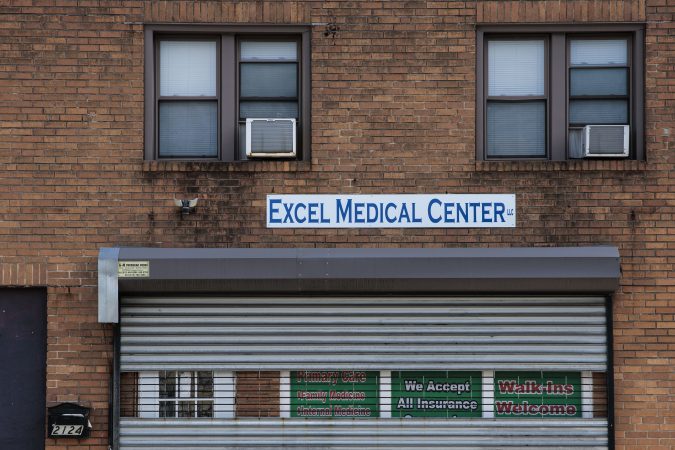
The woman’s testimony against Michel, the former medical director of Excel Medical Center, was key because the case lacked physical evidence. The then-38-year-old patient from Northeast Philadelphia had claimed Michel raped her during a 2024 office visit.
Michel’s criminal defense lawyer, Andrew Gay Jr., told jurors the sex was a “terrible” mistake but consensual.
“As terrible of a decision as it could have been for a physician to make,” Gay said during his opening statement Monday on the trial’s first day, “it was an entirely consensual act between two adults.”
Gay declined to comment on Michel’s behalf after Common Pleas Court Judge Chesley Lightsey dismissed the case at the prosecutor’s request.
“This case is done,” Lightsey declared before excusing the jury empaneled at the city’s Criminal Justice Center.
The stakes were high for the 56-year-old doctor from Jenkintown on two fronts: He faced up to 20 years in prison on the rape charge alone and loss of his medical license, if convicted.
Under state law, doctors convicted of sexual offenses are prohibited from being licensed and practicing medicine.
The Pennsylvania State Board of Osteopathic Medicine, which regulates and oversees licensure of osteopathic doctors like Michel, suspended his license last year after he apologized for having sex with a patient — a violation of state licensure laws. As of Tuesday, his license remained suspended, according to a state spokesperson.
Excel Medical Center, which Michel founded, is currently closed, Gay said. The center was composed of 12 locations in the Philadelphia region, with more than 200 employees and about 20,000 patients.
In a letter to the medical board last year, Michel described the October 2024sex with the patientas a “lapse in judgment” for which he is “profoundly contrite.”
“I fully acknowledge that I crossed a professional boundary,” Michel wrote to board members last year. “I recognize that boundaries are not only a legal and ethical obligation but a critical element of safe, respectful, and therapeutic care. I make no excuses for my actions.”
Claims of rape
The patient, identified in police records by the initials “D.R.,” had accused Michel of kissing her during a May 2024 exam at his East Mount Airy office on Stenton Avenue. She told him “no,” left the office, and did not report the kissing incident.
About five months later, she went to an appointment at Michel’s North Philadelphia office on West Diamond Street. During the Oct. 14, 2024, visit, she said, Michel raped her with such force that her head banged twice against the exam room wall. She pushed him off her and fell to the ground crying, according to criminal court records.
In early November 2024, she told her husband what had happened and subsequently filed a police report, records show.
Late last year, a second woman accused Michel of sexual abuse.The woman had worked for Michel as a medical assistant from 2015 to 2019 at his East Mount Airy office and at a location in Germantown on Chelten Avenue.
The former employee claimed that beginning in 2018, Michel touched her breasts over her clothing on multiple occasions while she was working in the office. He additionally groped her vagina over her clothing before she quit in 2019, according to a document filed in court last year by the Philadelphia District Attorney’s Office.
Prosecutors never charged him in connection with those accusations, but argued the former employee’s claims bolstered their patient rape case, given there were no witnesses. Gay, Michel’s lawyer, had declined to comment after the second woman came forward.
A no-show witness
In the patient’s case, Philadelphia police arrested Michel in February 2025 after prosecutors charged him with three felonies — rape, sexual assault, and involuntary deviate sexual intercourse — and two misdemeanors — indecent exposure and assault. He was released on bail.
Assistant District Attorney Allison Christian dropped all but the rape and sexual assault charges prior to the trial. Michel pleaded not guilty.
The former patient had been scheduled to testify on Tuesday morning. Christian told the judge that she had spoken with her the night before. She sounded “very emotional” and seemed to be having a “nervous breakdown,” but said she would testify, Christian said.
“I’ve been calling her since 8:15 a.m. this morning every 15 minutes,” Christian said. “I haven’t heard from her.
“I’m not going to issue a bench warrant for a rape victim,” she said before dropping the charges.
A path to practicing medicine
Prior to the patient’s accusations, Michel had no criminal complaints and no disciplinary history against his medical license, state records show.
Michel agreed to be disciplined by the board of osteopathic medicine for violating a state law prohibiting sexual misconduct, according to a June 2025 agreement.
The discipline included a $4,000 civil penalty and an indefinite suspension of his medical license for a minimum of 24 months, followed by probation, according to a spokesperson for the Pennsylvania Department of State, which oversees licensing boards.
While Michel is on probation, a chaperone must be physically present when he treats female patients and a separate monitor must oversee his practice. Michel also must complete in-person classes on physician-patient boundaries and 15 hours of continuing education on ethics, the disciplinary agreement says.
The state spokesperson on Tuesday said the board will reinstate Michel’s license to “non-suspended, probationary status” once he has met the agreement’s reinstatement conditions.
Insurers are asking for double-digit increases to health plans sold on Pennsylvania’s Affordable Care Act marketplace, Pennie, in 2027.
Insurers have requested an average increase of 17% for plans sold to individuals and families through Pennie. They are asking to raise the premium price of plans sold to small businesses by an average of 11.5%, according to rate requests released last week by the Pennsylvania Insurance Department.
The proposed rates are not final. A public comment period is open through Aug. 22, and insurance administrators expect to release final rates this fall.
Pennsylvania Insurance Commissioner Michael Humphreys said in a statement that the rates were “higher than we’d hoped.”
New Jersey has not released 2027 rate requests for its ACA marketplace, Get Covered NJ.
In their rate proposals, Pennsylvania insurers said they needed to charge more to account for the rising cost of medical services and prescription drugs, and a shift in who is buying health insurance and how sick they are. Insurers are required by law to spend 80% of the money they collect through premiums on healthcare for members.
“Addressing rising healthcare costs requires a shared commitment across the healthcare system, and we will continue working with providers and other partners to help keep quality care within reach for the people we serve,” Independence Blue Cross, which has proposed a 14% average premium increase, said in a statement.
The proposed increases for 2027 come on top of massive price hikes in ACA marketplaces this year, when a critical financial incentive program was eliminated. The cost of a Pennie health plan more than doubled for many in 2026 and 177,000 people have dropped coverage as a result.
Advocates worry that another price increase will cause even more people to drop coverage, which could further raise costs.
“If these proposed rates take effect, even more Pennsylvanians are likely to be priced out of coverage,” Antoinette Kraus, executive director of the Pennsylvania Health Access Network, which helps people enroll in coverage, said in a statement.
Rising costs and premium prices
A major factor that affects the cost of insurance is who the plan will cover — how healthy or sick they are, and how much the plan will need to spend on their care.
Healthy young adults who have few healthcare expenses typically help balance the higher cost of insuring older adults who may have multiple chronic conditions.
But young adults — many buying insurance on their own for the first time — can be highly sensitive to cost. They have been among those dropping out of ACA plans at the greatest rates after Congress failed to renew a financial incentive program that ensured no one paid more than 8.5% of their income on insurance.
About a third of adults who dropped out of Pennie health plans so far this year were under age 34, according to state data.
“They’re the ones looking at the cost and saying, ‘Well I’m pretty healthy right now, I’m going to take the gamble,’” said Devon Trolley, Pennie’s executive director.
People with ongoing medical needs are more likely to stick with their plan, despite cost increases.
Pennie’s 2027 enrollment period will run Nov. 1 through Jan. 15.
Lawmakers have not shown signs of bringing back the enhanced tax credits, which were introduced in 2021 and had been renewed annually since.
Income-based tax credits that are part of the ACA are still available. People remain eligible for these tax credits if they earn up to 400% of the federal poverty level — about $62,600 a year for an individual or $128,600 for a family of four.