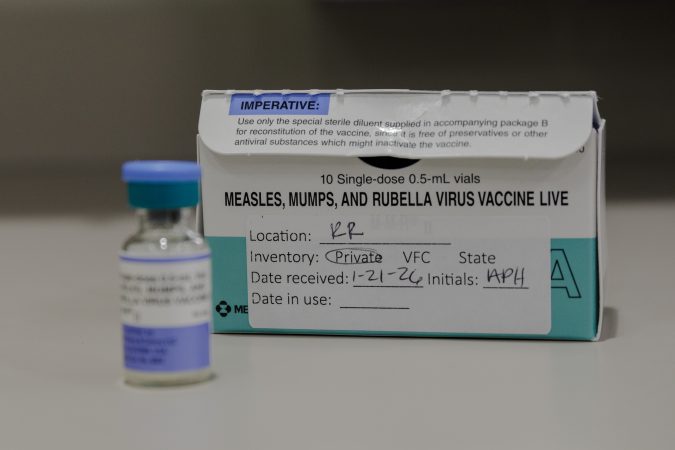
As Pennsylvania grapples with a measles outbreak that has sickened 130 residents, state health officials are recommending some parents vaccinate young children early to provide extra protection against the highly contagious disease.
Children as young as 6 months who live in or whose parents plan travel to affected counties should get a “dose zero” of the measles, mumps, and rubella shot, health officials said last month. Typically, children get their first measles shot at a year old.
Measles infects up to 90% of unvaccinated people who are exposed to it, and complications can be particularly serious for young children.
Here’s what you need to know about the “dose zero.”
What is the dose zero?
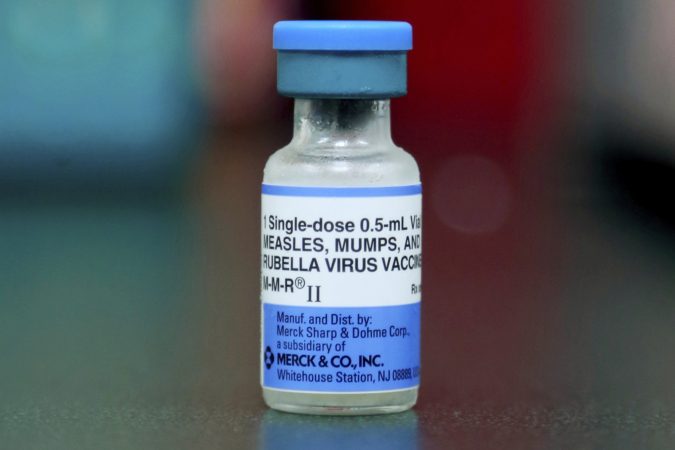
A “dose zero” MMR shot is an early vaccine given at 6 months old. Usually, a child receives the first MMR dose at 12 months old, then again between 4 and 6 years old.
Babies receive some antibodies from their mothers that can interfere with vaccines that contain weakened versions of a live virus, including the MMR vaccine, said Katie Lockwood, a Children’s Hospital of Philadelphia pediatrician.
Those antibodies mean that an MMR shot given before 12 months old can be slightly less effective at providing lasting immunity.
But a “dose zero” can still provide babies with some protection that’s especially crucial in an outbreak.
“What we see from that dose zero MMR is that you have some short-term protection that we believe will protect you during that period when you’re traveling to an outbreak area or internationally,” Lockwood said. (It’s long been recommended that parents opt for a dose zero if they’re planning to travel internationally with an infant.)
“But it’s not generating the same long-term immune response that we see when we give the routine vaccine at age 12 months.”
What happens after a dose zero?
Babies still need a second dose of the MMR vaccine at 12 months old to provide lasting protection against measles, Lockwood said.
Normally, kids then get their last MMR dose at around 4 to 6 years old. That dose is timed to protect children who may not have gotten vaccinated as babies—in school, they’re more at risk of contracting an infectious disease, Lockwood said.
But in an outbreak, the state health department recommends that children get their second dose earlier as well — as soon as 28 days after their first dose.
CHOP is now routinely recommending that children receive their final MMR dose at 15 months old. With 13 measles cases reported in Chester County since April, and 75 cases reported just to the west in Lancaster County, Philadelphia-area parents are close enough to the outbreak that many are opting in, she said.
“It’s still the parents’ decision. But there’s not really a downside to giving it early,” Lockwood said. “Especially with all of these cases, a lot of parents are reporting that it makes them feel more comfortable, knowing that their child is fully protected.”
How are area families reacting to the new recommendations?
Lockwood, who practices in Flourtown, Montgomery County, said she’s fielded “really thoughtful” questions from parents as they decide whether to vaccinate early.
“[They ask], ‘Why wasn’t this the standard the whole time?’” she said. “I always explain that it’s because measles wasn’t really around so we didn’t have to worry about it the way that we’re worrying about it now. Measles wasn’t a real threat to most children in their daily lives in the United States.”
Lockwood said that some parents who had opted to delay or forego MMR vaccinations have changed their minds in light of the outbreak.
“Chester County is really not very far away from most of my patients,” she said. “It does make it feel much more of a realistic threat to their child.”
Lockwood also tries to reassure parents who are still hesitant about vaccination.
“The MMR vaccine, because of some of the misinformation that has circulated around it for years, is one of the most studied vaccines,” she said. “For anyone who is worried about vaccine safety, this is really one with a wealth of safety data available. It’s been proven so many times to be safe and effective.”
Where can Pennsylvanians get vaccinated against measles?
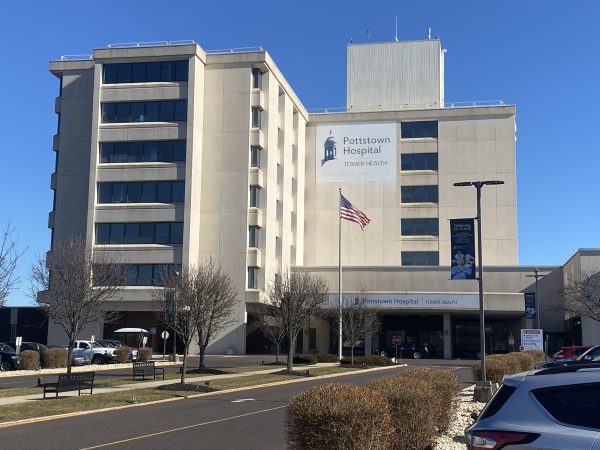
Tower Health is eliminating 160 jobs at Pottstown Hospital as part of an effort to bring staffing at the Montgomery County facility in line with lower patient volumes, the Berks County nonprofit announced Tuesday. The cuts amount to 22% of the workforce at Pottstown.
In addition to the job reductions — which are more than the 131 positions cut last year at Pottstown — Tower also plans “a multimillion-dollar investment” to expand the emergency department, enhance inpatient and outpatient behavioral health services, and update portions of the hospital, Tower said.
“These changes are designed to strengthen the hospital’s ability to serve local residents for generations to come by preserving access to the services patients need most, investing in the areas of greatest community need, and ensuring Pottstown Hospital remains a strong, sustainable community hospital for the future,” Tower said in a statement.
To expand behavioral health, Tower will convert some underused general-purpose hospital beds to inpatient behavioral health beds. The behavioral health total will rise to 52 from 28, an 86% increase. Pottstown has 213 licensed beds.
Tower did not provide a timeline for the changes but said it plans to hire 38 people to staff the expanded emergency department and behavioral health unit, which will have a separate entrance for the sake of patients’ privacy when they seek mental health services.
Another change at Pottstown involves the lease of an unspecified amount of space to Community Health & Dental Care, a federal health clinic that was formed in 2008 with funding from Pottstown Area Health and Wellness Foundation.
Unlike the restructuring Tower announced last fall at Pottstown, which included the closures of the combined intensive care/critical care unit, the Pottstown location of the McGlinn Cancer Institute, and the hospital’s endoscopy center, this round is not eliminating any services, Tower said.
In the nine months that ended March 31, Pottstown has 5,104 inpatients, down 9.7% from the same period the year before. Most of that decline came in the first three months of this year, after Tower’s service cuts, according to data shared with bondholders.
After last year’s layoffs, which included about 60 registered nurses represented by Pennsylvania Association of Staff Nurses & Allied Professionals, Pottstown employed about 700 people. Overall, Tower employs more than 10,000.
The union said it still has 200 Pottstown nurses in its ranks. “We have been in touch with hospital management to better understand the context for and impact of the proposed layoffs and to push hard for solutions that protect both patient care and the dedicated nurses who serve the Pottstown community,” a union spokesperson said.
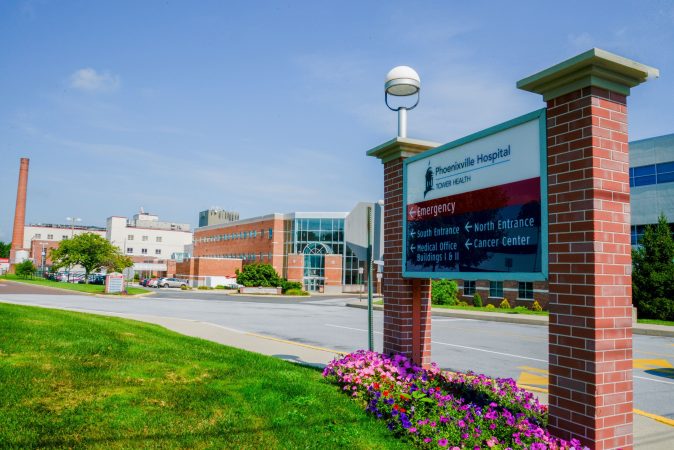
Tower’s anchor is Reading Hospital in West Reading, Pa. In additional to Pottstown, it owns Phoenixville Hospital, plus St. Christopher’s Hospital for Children in North Philadelphia in a 50-50 joint venture with Drexel University. Tower previously owned Brandywine, Jennersville, and Chestnut Hill Hospitals.
Tower recently announced that Jefferson Health, Nemours Children’s Health, and Temple University Health System are working on forming an alliance to support St. Chris clinically. Last week, Tower said that it had formed a clinical affiliation to expand advanced care in its markets.
George E. Norcross, longtime Cooper University Health Care board chair and political powerbroker, is donating $100 million to the South Jersey health system and its MD Anderson Cancer Center at Cooper, the nonprofit announced Tuesday.
The gift, in honor of Norcross’ parents, is Cooper’s largest and among the largest ever to a nonprofit health system in New Jersey. It comes at a time when Cooper’s financial condition is stronger than it has been in decades and as the nonprofit pursues a $3 billion expansion in Camden.
Cooper said it would add Norcross to its name but didn’t specify how.
“For more than 50 years, our family has been dedicated to Cooper, and we are so proud to make this contribution to ensure that Cooper and the thousands of talented, committed professionals who make a difference every day for the people of Camden and South Jersey can continue the important work of investing in their future and in Camden’s continued renaissance,” Norcross said in the announcement.
Norcross, chairman of insurance brokerage Conner Strong & Buckelew and a former owner of The Inquirer, was not available for an interview, a spokesperson said.
The money will be used for investments in Camdenand throughout Cooper’s South Jersey service area, which stretches to Cape May County since the acquisition of Cape Regional Health System two years ago. Priorities will be education and community programs that create jobs and training, Cooper said.
Cooper had $2.9 billion in revenue last year and $144 million in operating profit. In June 2025, Standard & Poor’s raised Cooper’s credit rate to A+, its highest level ever and a substantial turnaround for a system that was near bankruptcy 25 years ago. The system has more than 14,000 employees.
Deborah Heart & Lung Center received a $5 million gift in 2019, which it called its largest ever. The specialty hospital in Browns Mills received $4 million in 2024.
In Philadelphia, Comcast CEO Brian Roberts and his wife, Aileen, are giving Children’s Hospital of Philadelphia $125 million and will have their name on the nonprofit’s new $2.59 billion patient tower expected to open in late 2028, CHOP said last year. It was CHOP’s largest gift ever.
Also last year, Penn Medicine received a $120 million gift from Catherine and Anthony Clifton and renamed its new, $1.6 billion Pavilion at the Hospital of the University of Pennsylvania the Clifton Center for Medical Breakthroughs.
Norcross family ties to Cooper
The Norcross family has deep ties to Cooper starting with Norcross’ father, George E. Norcross Jr., a labor leader who was on the Cooper Hospital board from 1976 to 1983. He died in 1998.
Norcross III joined the Cooper board two years later and has been chair since 2006.
Norcross’ mother, Anne Carol Conner Norcross, gave birth to four sons — George, John, Donald, and Philip — at Cooper. She devoted years of her life to helping seniors and underserved Camden residents, Cooper said. She died in 2016.
Philip A. Norcross is vice chairman of Cooper’s board of directors and chairman of the Cooper Foundation. Alessandra “Lexie” Triem Norcross, George Norcross III’s daughter, is also on the Cooper Foundation board.
Cooper’s expansion
In addition to acquiring Cape Regional and embarking on a major expansion of its Camden campus, Cooper has been expanding its network of outpatient facilities in suburban South Jersey.
In June, Cooper said it plans to build a $300 million outpatient facility in Gloucester Township and expects to start seeing its first patients in specialties like cardiology, neurology, and oncology in 2029.
When Robert Barclay’s two daughters moved from Africa to live with him in Delaware County, getting them up-to-date on their vaccines was at the top of his list.
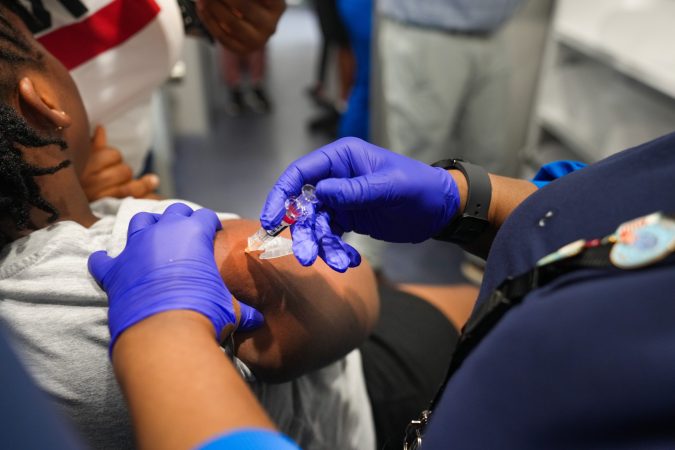
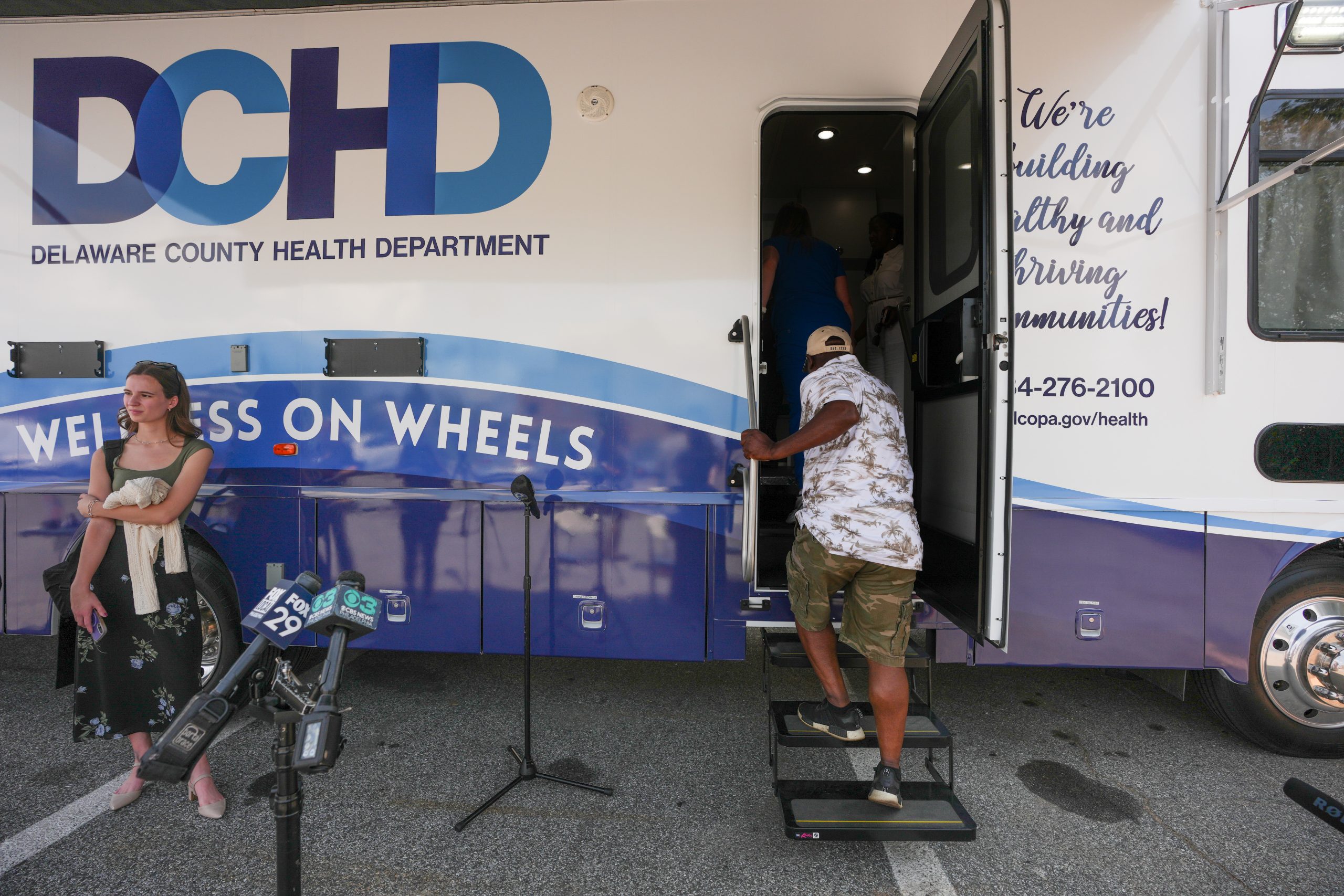
His daughters, 14-year-old Albertine and 20-year-old Ruth, were among the first clients at the Delaware County Health Department’s new mobile clinic, which launched earlier this summer. The sisters did not bring their vaccination paperwork when they moved here from Africa earlier this year.
On Monday, the 33-foot-long RV trailer was set up at Observatory Park in Upper Darby to mark the beginning of the county’s back-to-school vaccination campaign. As part of the campaign, the mobile clinic will make stops across the county to provide vaccines, physicals, and STI testing.
Encouraging families to vaccinate and hosting clinics in advance of a new school year is a time-honored tradition for health departments. But vaccination efforts have extra urgency this year: Measles cases have reached their highest rate in more than 30 years in Pennsylvania, with a total of 142 cases reported as of Monday.
The highly contagious virus has not yet been reported in Delaware County, but cases are mounting in Chester and Lancaster Counties, as well as in the state of Delaware.
At the same time, vaccination rates across the state are declining. And parts of Delaware County have among the lowest measles vaccination rates in Pennsylvania.
“We don’t have to have measles here,” said Lora Siegmann Werner, director of the Delaware County Health Department.
The key, she said, is boosting vaccination rates before the virus begins to spread locally.
“This is really only a matter of time,” Werner said Monday of the possibility that the current measles outbreak reaches Delaware County. “This is our window to prevent it.”
In Delaware County, 94.3% of kindergarten students had received the measles, mumps, and rubella vaccine in the 2024-25 school year — just below the “herd immunity” rate that scientists say is required to prevent the spread of the disease. But the Philadelphia region is dotted with schools with lower vaccination rates, pockets of vulnerability that put communities at higher risk for an outbreak.
Getting more children vaccinated is a complex and evolving public health challenge. In many cases families have access to vaccines, but do not want them.
About 740 families in the five-county Philadelphia region opted out of vaccination for religious reasons in 2024, a 76% increase over five years. An additional 568 families claimed philosophical exemptions in 2024, a 49% jump from 2019, according to an Inquirer analysis.
The measles vaccine is typically given in two doses: when children are 1 year old and before they enter kindergarten. Pennsylvania requires students be vaccinated to attend school, but also allows medical, religious, or philosophical exemptions, making it among the easiest places to opt out. Recently, state health officials have recommended parents vaccinate children early if they live in or plan to travel to counties where measles is circulating.
On Monday, the clinic vaccinated just three people, including 9-year-old Kayle. Her mother, Pearl, a nurse who declined to give her last name for privacy reasons, said she had heard about the mobile clinic from Delaware County’s health center, and had brought her daughter to get up-to-date on shots before starting fifth grade in the fall.
Robert Barclay heads into the mobile clinic behind his two daughters, who received follow-up vaccine doses during the clinic’s stop in Upper Darby on July 27. Jessica Griffin / Staff Photographer
Aside from directly providing shots, Werner hopes the clinic’s presence will put vaccination top of mind for families who see the RV parked in their neighborhood.
“We don’t need to be the ones doing it — we just want people to get vaccinated,” Werner said.
Barclay, who works in corrections in Delaware County, said the clinic’s spot at Observatory Park was a convenient place for his daughters to get their second doses of needed vaccineson Monday.
The sisters moved from Africa in the spring and did not have the paperwork needed to prove to their school that they had been vaccinated as younger children.
Barclay did not hesitate to get them scheduled for the necessary vaccines.
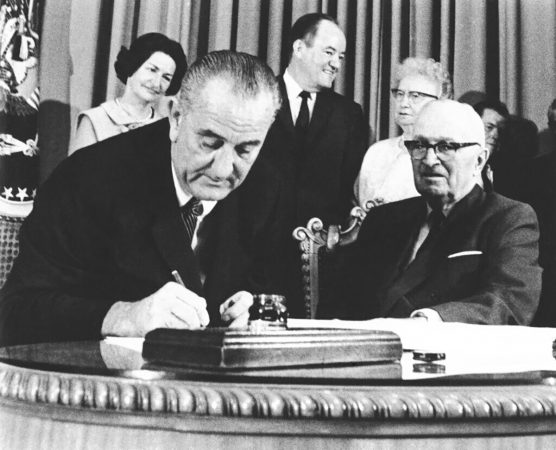
When Americans think of the seminal Civil Rights legislation of the 1960s, they think of laws like the 1964 Civil Rights Act and the 1965 Voting Rights Act. Yet, there is one piece of historic 1960s legislation that unleashed a powerful civil rights tool that rarely gets remembered as “civil rights” legislation: Medicare.
Hospitals desegregated — some almost overnight — worried that they would get cut off from Medicare funds. “White Only” signs came down, white-only facilities and segregated wards admitted patients without regard to race and Black clinicians received admitting privileges.
And yet, a racial healthcare crisis persists. Over the past two decades, Americans have made no progress in narrowing racial disparities in medical care, although we know more about them today thanever.
These disparities remain after accounting for other characteristics that influence health.
The history of Medicare, which turns 60 this year, offers a suggestion of how to rectify some of these problems. The desegregation of hospitals didn’t come when experts recognized that they were segregated, or even when courts declared such practices unlawful. Instead, the changes came when the government required hospitals to do better, verified compliance and withheld Medicare funding when they failed.
This transformation forged by Medicare was as unexpected as it was abrupt.
Hospitals, especially in the South, had been segregated before the Civil Rights Act. The federal government didn’t formally even document the practices and, in many cases, willfully ignored them.
Title VI of the 1964 Civil Rights Act aimed to address this problem. It prohibited discrimination in federally funded institutions. Medical school-affiliated hospital facilities, which received much of their funding from federal government training and research grants, quietly began taking steps toward integration. Yet, at all other facilities, passage of the law changed little.
Nationwide, but most dramatically in the South, Black patients continued to struggle to get care. Hospitals still hung “White” and “Colored” signs, separated patient records by race and shunted Black patients into basements or separate buildings, if they’d treat Black patients at all. Black women continued to give birth in dangerous conditions. Sometimes, while in labor, they had to solicit care from multiple white-only hospitals or facilities with limited beds for Black patients until one perhaps admitted them.
Civil rights organizations filed hundredsofTitle VIcomplaints. Yet, the federal government had no staff assigned to enforce compliance. As a result, the complaints accomplished very little.
There were also several other impediments preventing progress. While healthcare facilities had long received federal funds through programs like the Hill-Burton Act, which paid for the construction of segregated hospitals, mostly in the South, Washington could not easily claw back federal dollars that had already been distributed to hospitals. Further, Title VI had no built-in enforcement mechanism. The Johnson administration, which in its first two years had been consumed with passing and implementing an array of ambitious legislation like the Civil Rights Act and the Voting Rights Act, was faced with going after individual hospitals on a case-by-case basis.
Everything changed after Congress passed Medicare in 1965. Urged on by civil rights organizations, John Gardner, secretary of the Department of Health, Education, and Welfare (HEW), announced that to receive Medicare dollars, hospitals must comply with the Civil Rights Act. The new health insurance program covered 19 million seniors and promised to pay billions to healthcare facilities — but only if they complied. To Gardner, it was an unprecedented enforcement tool.
HEW devised a process for determining compliance. Federal workers would inspect facilities. Were patients admitted and assigned the first bed available, regardless of race? Did hospitals extend admitting privileges to Black doctors? Were there disparities between their patient population’s racial composition and that of their service area?
Made By History sponsors. FOR USE ON MADE BY HISTORY STORIES ONLY.Inquirer Staff
Hospitals clearly in compliance would receive Medicare dollars. Others clearly out of compliance would not.
Gardner did not have enough HEW staff to dispatch to inspect the nation’s 4,000 hospitals. So he put out a call for federal employees willing to volunteer in his department and conduct inspections. Over 1,000 came forward including tax accountants, veterinarians and scientists.
In April 1966, civil rights movement activists trained them. Some violations would be obvious. That included “whites only” signs above entrances, bathrooms and in cafeterias, racially separate medical records and infants segregated by race.
But trainers warned that hospital administrators might disguise a facility as integrated for the visit. Some did. One put a white administrator in a patient gown in a room with a Black patient. Another placed four comatose patients, each a different race, next to each other.
Doing the “HEW shuffle” of fixing signs and shifting a few patients was insufficient, the inspectors explained. Facilities needed to be race-blind.
The combination of a strict standard coupled with inspections worked.
In three months, nearly all hospitals ended formal segregation and had been Title VI-certified as Medicare providers. After July 1, hospitals that had not been certified as Title VI compliant — those that lagged transforming their facility or refused on principle to do so — could notprovide care for Medicare patients.
The lives of Black people in the South radically changed. Before the intervention Black infants below the Mason-Dixon line died at twice the rate of whites. By 1971, however, Black infant mortality halved, largely because they more readily received care for treatable conditions and their mothers had access to hospitals for the first time.
Yet, even as Medicare proved enormously successful in erasing formal segregation, racial stratification patterns remainedapparent in hospitals throughout the U.S., exacerbated by residential segregation and referral networks systems.
Ironically, we know this from Medicare itself. The program has long served as a tool for researchers to investigate disparities in healthcare: beneficiaries share a common insurance which makes it easier to isolate inequities.
And racial separation persists among Medicare patients. Black Medicare patients are disproportionately treated at hospitals with fewer resources and worse outcomes. In some hospitals, certain teams treatonly Black Medicare patients. Other teams treat only white ones.
Starting in 2003, Medicare Advantage expanded the enrollment of Medicare recipients in commercial insurance alternatives. In Medicare Advantage, the federal government pays insurance companies fixed amounts for each enrollee and the companies then manage benefits. These programs, separate and unequal, also expose racial double standards.
The 60th anniversary of Medicare should remind us that our greatest advance in health equity came from enforceable commitments to providing equal care, regardless of race. Racial disparities in healthcare can be eliminated if the federal government requires compliance — and then enforces it.
For hospitals and physicians in 1966, equal treatment suddenly became a condition of financial survival. The immediate gains Black patients received suggest that if the federal government required healthcare systems and insurers to make real, measurable progress toward addressing racial health disparity, it would produce immediate and significant gains once more.
The question is whether Americans — and their government — are willing to demand such accountability as they did 60 years ago?
David Barton Smith is emeritus professor of health management and policy at Temple University. He was the recipient of a Robert Wood Johnson Health Policy Research Investigator Award and is author of three books and numerous articles related to this topic.
Leila Morsy is an economic justice research fellow at the Legal Defense Fund Thurgood Marshall Institute and a senior lecturer at Flinders University. She is writing a book about the history of the exclusion of Black doctors and its contemporary consequences.
Made by History takes readers beyond the headlines with articles written and edited by professional historians. Opinions expressed do not necessarily reflect the views of The Inquirer.
Cyclosporiasis cases in Pennsylvania have been linked to a multistate outbreak of the intestinal illness spread by a parasite that causes “explosive” diarrhea, state and federal health officials said Friday.
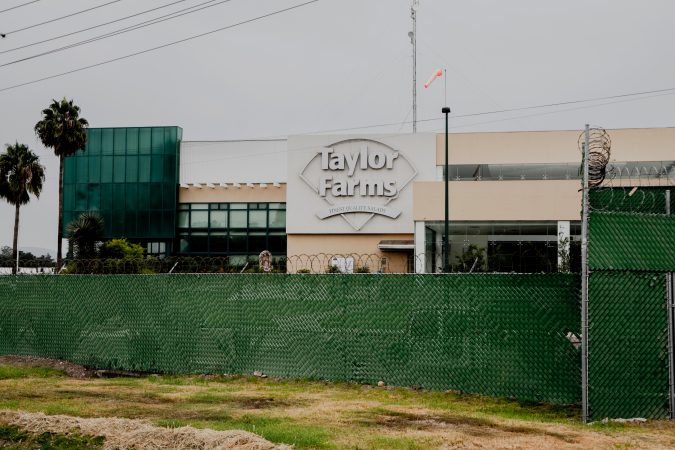
Earlier this month, the Centers for Disease Control and Prevention linked cyclosporiasis cases in five states to lettuce grown by Taylor Farms and sold at Taco Bell. Now, investigators say they’ve identified illnesses in nine states in people who ate at Taco Bell and later became sick.
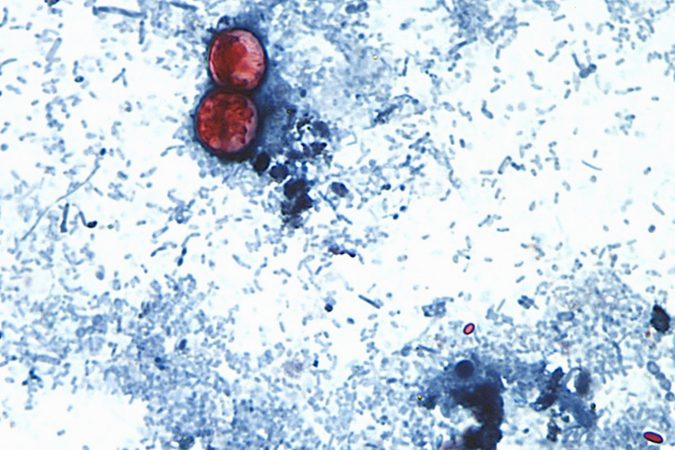
Cyclosporiasis is caused by a single-celled parasite, Cyclospora cayetanensis, that spreads through fecal material. It can infect a person’s gut after consuming food or water contaminated by feces, and in the past has spread through fresh produce like leafy greens.
The CDC has identified 1,947 people in Illinois, Indiana, Kansas, Kentucky, Michigan, Ohio, Oklahoma, Pennsylvania, and West Virginia who were infected with Cyclospora and reported eating at Taco Bell. At least 98 people have been hospitalized, the Food and Drug Administration said.
It’s likely that case counts are much higher than reported, the CDC says, because many people recover from cyclosporiasis without seeking medical care or getting tested.
Nationwide, the agency is tracking 4,173 confirmed cases of the illness and another 7,400 cases that haven’t been confirmed by lab testing, including many cases in Michigan and Ohio.
Pennsylvania health officials said they have confirmed 45 cases in the state so far this year and are monitoring three additional suspected cases. In all of 2025, the state saw 40 cyclosporiasis cases; Pennsylvania reported 87 cases in 2024.
State officials said “several” of this year’s cases have been linked to the multistate outbreak, but added their investigation is ongoing.
In New Jersey, health officials recorded 46 cases between May 1 and July 16. Cases typically rise in the late spring and summer months, and officials said last week that this year’s are in line with a typical year’s case count.
Both Pennsylvania and New Jersey were among the 27 states affected by a recall of lettuce sold by the California-based Taylor Farms.
Last weekend, a sample of Taylor Farms lettuce that wasn’t part of the recall, taken from a shipment at the U.S.’s southern border with Mexico, tested positive for Cyclospora. The results turned out to be a false positive.
They should wash items and surfaces that might have touched the lettuce with hot, soapy water, and avoid recalled lettuce at Taco Bell or other restaurants. Customers should ask restaurants about the source of their lettuce before ordering it.
Pennsylvania tallied more than two dozen new cases of measles inthe last week, including several in the Philadelphia region.
In Chester County, health officials confirmed 13 cases in the suburban Philadelphia county since April, with seven identified since Monday.
The rising counts come as the Centers for Disease Control and Prevention reported Friday that measles cases nationwide had surpassed all cases reported in 2025, the highest case count in 35 years.
In a growing Pennsylvania outbreak centered in Lancaster County, state health officials confirmed 14 new cases in the last week. The county has been at the center of two separate outbreaks this year and has reported 75 cases since April, when the current outbreak began.
So far this year, Pennsylvania has reported 139 cases of measles, more than eight times the number reported in 2025 and the highest case count in three decades. Twenty-five people have been hospitalized.
(function() {
var l2 = function() {
new pym.Parent(‘HE_MEASLES9.html’,
‘https://media.inquirer.com/storage/inquirer/projects/innovation/arcgis_iframe/HE_MEASLES9.html’);
};
if (typeof(pym) === ‘undefined’) {
var h = document.getElementsByTagName(‘head’)[0],
s = document.createElement(‘script’);
s.type = ‘text/javascript’;
s.src = ‘https://pym.nprapps.org/pym.v1.min.js’;
s.onload = l2;
h.appendChild(s);
} else {
l2();
}
})();
Working to track cases
In Chester County, the local health department has struggled to track cases in part because some exposed residents have refused to provide contact tracers with detailed information, said Jeanne Franklin, the county health director.
Some residents have not answered calls from the department, or have spoken to health workers only about their own family, not other contacts they might have had in the community. Others have simply hung up the phone, Franklin said.
“It does not allow us to paint the true picture. If they’re not talking to us, we’re assuming there’s a lot of cases unreported,” she said.
Public health workers ask residents who are reluctant to reveal information about their contacts to, at least, inform friends and relatives that they may have been exposed to measles, Franklin said.
She said Chester County residents who have tested positive for measles have mostly sought care in Lancaster County, which borders Chester County to the west.
But most measles patients are seeking treatment only when they become seriously ill, she said, and milder cases are likely going unreported.
“People aren’t going to freely get tested. They’re getting tested when their health has declined so much that they need medical assistance,” Franklin said.
Unvaccinated people in Plain communities, Christian denominations like the Amish and Mennonites, have been affected more than others in the county, but the outbreak is not contained to these communities, Franklin said.
Some members of Plain communities oppose vaccination, but opinions vary, and doctors in Lancaster, where Plain communities are heavily concentrated, have stressed that cases there are centered among unvaccinated people in general, not Plain residents.
No major religion expressly forbids vaccines. Yet the spread of misinformation about vaccine safety, rising for years, is increasingly amplified in federal policy discussions under Health and Human Services Secretary Robert F. Kennedy Jr., a longtime anti-vaccine activist.
Every measles case in the state this year was diagnosed in people who were not fully vaccinated against the highly contagious disease, which can infect up to 90% of unvaccinated people exposed to it.
The Pennsylvania Department of Health has administered nearly 2,000 measles vaccines in the last year.
Franklin said Chester County health workers are among those also stepping up vaccination efforts. Besides offering vaccinations at the county’s health clinics and working with community groups to host pop-up vaccine clinics, staffers are traveling to residents’ homes to vaccinate them, she said.
The department is seeing renewed interest in measles vaccination as the outbreak continues, Franklin added.
“If you decided or your parents decided a while ago not to get vaccinated for measles, that might have been OK then because the risk was low. In today’s situation, you should reassess your decision,” she said.
Tower Health and Jefferson Health announced Friday that they have formed a clinical affiliation that would expand access to advanced treatments in Tower’s markets northwest of Philadelphia.
The two nonprofit organizations said Jefferson is not acquiring Tower, which is the biggest healthcare provider in Berks County and also owns two hospitals in Chester and Montgomery Counties.
“Healthcare organizations today face unprecedented challenges, including inadequate reimbursement, rising costs, workforce shortages, and increasing competition,” Tower’s CEO Michael Stern said in an announcement to employees.
“History teaches us that when an organization is confronted by challenges on multiple fronts, success depends on finding the right ally — one that shares our values, respects our strengths, and is committed to the same mission,” Stern’s note said.
Jefferson said it routinely works with other health systems to provide high-level specialty care throughout the region it serves.
“As part of that commitment, we are working with Tower Health to enhance access to advanced tertiary and quaternary services, bringing more specialized expertise, innovative treatment options, and coordinated care closer to the communities we serve,” Jefferson said.
Details of the arrangement with Tower will worked out in the next few months.
Jefferson is also among the Philadelphia-area health systems exploring a clinical alliance to support financially struggling St. Christopher’s Hospital for Children, which Tower manages and owns in a 50-50 joint venture with Drexel University.
Turnabout for Tower
For Tower Health, the potential collaboration with Jefferson represents a turnabout from a decade ago when the system based in West Reading plotted a move into the Philadelphia market. Tower spent $423 million for theacquisition of five community hospitals in Southeastern Pennsylvania from Community Health Systems Inc. in 2017.
The idea then was that the health system’s anchor, Reading Hospital, would draw patients for the most advanced care to Berks County from the Philadelphia region. That deal led to massive losses as the anticipated patients didn’t materialize in Reading and then COVID-19 crushed health system finances nationwide.
Tower sold or closed three of the five acquired hospitals, but remains saddled with a huge debt load. The interest payments leave the system with little money left over to invest in the new facilities and services. Last year, Tower instituted significant service cuts and layoffs at Pottstown Hospital.
Jefferson has expanded through acquisitions from three hospitals to 33 since 2015. The most recent acquisition was Lehigh Valley Health Network two years ago, creating a network that stretches from South Jersey to near Scranton. The system has been losing money for years as management attempts to make the hospitals it acquired work as a financially sustainable system.
The Centers for Disease Control and Prevention has linked four additional states to a multistate cyclosporiasis outbreak traced to shredded iceberg lettuce sourced from central Mexico, according to two individuals familiar with the investigation.
The newly linked states — Illinois, Kansas, Oklahoma, and Pennsylvania — join Indiana, Kentucky, Michigan, Ohio, and West Virginia, and expand the nation’s largest known cyclosporiasis outbreak.
The addition of more states suggests investigators are beginning to connect thousands of illnesses scattered across the country, bringing them closer to reconstructing how a contaminated product or products moved through the food supply and whether additional restaurants, retailers, or distributors received the same products.
The patients in the four additional states may have gotten sick around the same time as the patients in the first five. But investigators may have needed more time to determine which illnesses were part of the same outbreak, one of the individuals said.
The latest development means federal investigators have now traced shredded iceberg lettuce served at Taco Bell restaurants in nine states to a single supplier in Mexico. Taylor Farms de Mexico says it has completed a voluntary recall of iceberg lettuce sourced and processed from central Mexico from the U.S. market.
Cyclospora infections have been reported in at least 41 states this year, but investigators are still working to determine how many are part of the nine-state outbreak linked to shredded iceberg lettuce supplied by Taylor Farms and served at Taco Bell restaurants and how many represent separate clusters or unrelated illnesses. The investigations include comparing patients’ food histories, laboratory findings, and supply-chain records.
In North Carolina, for example, state health officials have identified illnesses that do not appear to be linked to shredded iceberg lettuce served at Taco Bell restaurants. Instead, officials this week pointed to preliminary evidence suggesting parsley and cilantro as possible sources there. Parsley and, especially, cilantro have been implicated in previous U.S. cyclospora outbreaks.
“Those items do pop up frequently and that is not necessarily to say that’s proof that that’s the cause, but it’s one of those situations where if something keeps showing up repeatedly — a certain type of herb like parsley or cilantro or a certain type of vegetable like lettuce — we can start to think that that’s probably implicated or that may be implicated and that’s when we start collecting information on where was it purchased and that we can share with our partners … for a possible traceback,” Carl Williams, with the North Carolina state health department, said at a news conference earlier this week.
North Carolina data updated Tuesday show 561 cases have been reported since May 1, up from 307 a week earlier, according to the North Carolina Division of Public Health.
The Food and Drug Administration disclosed a new cyclospora outbreak that has sickened at least 72 people, according to an update posted to its website Wednesday. The FDA did not identify the location of the illnesses or the suspected food source.
Parsley and cilantro have not emerged as national signals in the broader federal investigation, underscoring how investigators are still sorting through multiple clusters of illnesses that may have different sources, the individual said.
Earlier this week the CDC more than doubled its national confirmed case count, adding more than 4,000 confirmed illnesses and acknowledging more than 7,400 additional reported illnesses still under review.
Even before Friday’s update, the confirmed domestic cases had already exceeded the total number of cyclosporiasis cases reported nationwide during all of 2025.
The increase does not mean thousands of people became sick in recent days. Cyclosporiasis reports typically lag because symptoms can take up to two weeks to appear, and testing and investigations often take weeks more.
In previous cyclospora outbreaks, sometimes one batch of contaminated product is mixed with uncontaminated product that subsequently becomes contaminated, or a piece of equipment causes the contamination.
The microscopic parasite is spread through human fecal contamination.
Food safety experts say contamination can often occur before harvest, when fresh produce is exposed to contaminated irrigation water or other water used in growing or processing. Flooding can heighten the risk by disrupting sanitation systems and washing contaminated water into fields or produce-growing areas.
Jefferson Health says ithas incurred nearly $100 million in financial losses this year because of policy changes by Independence Blue Cross in a lawsuit filed this week.
The lawsuit, submitted Wednesday in Philadelphia Court of Common Pleas, detailed five policy shifts — including two impacting when IBX pays higher inpatient rates for hospital stays — that Jefferson says amount to breaches of the current contract between the region’s largest health system and its largest insurer.
“IBX has attempted to use policy changes to — over time — effectively rewrite the contract” and pay less than agreed to in the contract, Jefferson’s lawsuit said.
The suit comes less than six months before its IBX contract expires Dec. 31, adding pressure to negotiations over a new deal. Jefferson said it cared for more than 300,000 people with IBX insurance last year.
In the last year, the nonprofit health system has shown its willingness to challenge major insurers at a time of increasing financial strain on both insurers and healthcare providers nationally.
IBX introduced a series of payment changes impacting both commercial and private Medicare plans this year as it faces intense pressure from employers to slow the growth of healthcare expenses and from the federal government, which is trying to trim spending in Medicare Advantage plans.
Independence declined in an email to comment on the claims in the lawsuit: “We value our provider partners, honor our contractual commitments with them, and regularly discuss any issues. It’s unfortunate that Jefferson chooses to do this in the public arena but if you’ve kept up with the news you can see this is typical of their playbook.”
A series of reimbursement shifts
The biggest financial impact came from IBX’s requirement, effective June 1, that certain procedures be performed in lower-cost freestanding ambulatory surgery centers, rather than in hospital outpatient departments, which often get paid twice as much for the same work.
Jefferson estimated damages from the ambulatory surgery center rule at $35.4 million.
Two policies affecting when IBX pays inpatient rates cost Jefferson a combined $35.5 million, according to the complaint.
Jefferson sued Aetna in April over a similar policy that reduces payments for Medicare Advantage plans if Aetna considers patients not sick enough to qualify for full payment.
The complaint says a policy that eliminated payment for hospital readmissions up to 30 days after discharge cost Jefferson $18.3 million. Since 2017, Penn Medicine has had a contract with IBX that does not pay Penn when patients return to the hospital within a month of being discharged.
Finally, Jefferson said IBX has failed to pay more than $7.2 million owed under a controversial federal drug discount program known as 340B.
“After trying to work directly with Independence Blue Cross to resolve these breaches of contract, we have been forced to take this action on behalf of our patients,” Jefferson’s vice president for payer relations, Allison Yudt, said in an email. “This action is the result of a pattern that has repeated itself time and again.”
IBX said in its statement that it “acts in the best interest of our customers and members and protects their access to high quality affordable care.”
Jefferson’s harder line with insurers
Jefferson has expanded through acquisitions from three hospitals to 33 since 2015. The most recent acquisition was Lehigh Valley Health Network two years ago, creating a network that stretches from South Jersey to near Scranton.
Amid significant losses in recent years, Jefferson has been taking an aggressive approach with insurers when it believes they are paying it less than contractually required.