Category: Health

  • How two deaths in a Pennsylvania measles outbreak led to a clash between Gov. Josh Shapiro and RFK Jr.

    How two deaths in a Pennsylvania measles outbreak led to a clash between Gov. Josh Shapiro and RFK Jr.

    Gov. Josh Shapiro came to the Philadelphia suburbs on Friday morning to announce a new investment in a local police department. But the first question he fielded at a news conference concerned the growing confusion and political intrigue surrounding his administration’s response to two deaths associated with the state’s spiraling measles outbreak.

    For the last three days, Shapiro, a Democrat, and Robert F. Kennedy Jr., the Republican heading the federal Department of Health and Human Services, have clashed over what the state has disclosed about the deaths and the consequences of Kennedy’s longtime anti-vaccination activism.

    By Friday, Shapiro wanted to bring the focus back to an outbreak that has grown to more than 400 cases so far this year, saying “getting into a back-and-forth with people online who are spewing irresponsible conspiracy theories” does not “serve the public interest.”

    But public health and communications experts say that the state’s initial refusal to share more information on the deaths created an environment in which anti-vaccination skeptics could spread their own narrative.

    State officials announced the deaths of two unvaccinated Lancaster County residents at a news conference Tuesday, calling the deaths “measles-associated.” Their ages, causes of death, or their medical histories were not disclosed by the governor or his health secretary.

    Within hours, other voices started filling the information vacuum. Lancaster County’s coroner told reporters that he had handled just one of the deaths. Coroner Stephen Diamantoni, a Republican elected official who is also a physician, said his office had examined a newborn who had tested positive for measles, but said the baby had not died from measles.

    Soon misinformation and innuendo were spreading online out of the seemingly contradictory and limited details being disclosed by state officials, the local coroner’s office, and federal health leaders — all with their own political affiliations at a time when the safety of the measles vaccine increasingly divides Democrats and Republicans.

    In response to the coroner’s statements, state health officials said they define a “measles-associated death” as one in which measles was present, even if measles is not identified as the immediate cause of death. Shapiro’s administration confirmed the newborn’s case was one of the two announced deaths, but offered no information on the second death.

    President Donald Trump’s health secretary, Kennedy, pounced on the missing details the next day to spread misinformation. He wrote on X that the deaths may have been “fabricated” by the Shapiro administration and said in a television interview that “they cannot find any measles deaths in Lancaster County.”

    Shapiro’s administration has called this inaccurate. Still, his administration has not revealed details of its medical review, beyond saying the state Department of Health’s epidemiology team had “thoroughly investigated.”

    By late week, the Centers for Disease Control and Prevention, which operates under HHS, posted on X that state health officials were not sharing “information relevant to the outbreak” as it worked “to clarify conflicting information from Pennsylvania officials about whether the two reported deaths were caused by measles.”

    State officials, including Shapiro, have repeatedly said the state is cooperating with the CDC.

    But Pennsylvania health officials could have shared information on the patients’ ages, causes of deaths, and reasons for being unvaccinated, said Paul Offit, a physician at the Children’s Hospital of Philadelphia who heads the hospital’s Vaccine Education Center and is a vocal critic of Kennedy.

    “It created fertile ground for conspiracy theories to thrive,” he said.

    In a statement, a Shapiro spokesperson said the governor understands the “desire for as much information as possible to be made public.”

    “However, when an individual dies, it is our legal responsibility to protect their right to privacy by maintaining patient confidentiality,” the statement said, noting this is critical to maintaining trust among communities statewide.

    In a highly politicized environment in which measles cases are rising — and vaccination rates dropping — public health experts say it’s imperative for health officials to communicate accurately and transparently.

    “You have to be transparent, be very clear about what you know, what you don’t know, what you’re trying to find out, and what questions are outstanding,” said Amesh Adalja, an infectious disease physician at the University of Pittsburgh Medical Center and a senior scholar at the Johns Hopkins Center for Health Security.

    A lack of information from the state, he said, “created an information vacuum with people very adept at using information vacuums to spread their message.”

    President Donald Trump holds a signed executive order about vaccines as Health and Human Services Secretary Robert F. Kennedy Jr. looks on Aug. 10 in the Oval Office of the White House. Jacquelyn Martin

    What’s known about the Lancaster County deaths

    Diamantoni said Friday that the baby died shortly after birth at a Lancaster County birthing center on Aug. 14.

    Postmortem testing of the baby’s lung tissue showed that the baby had an active measles infection acquired before birth, he said.

    He has not talked to the baby’s mother or the midwife who delivered the baby, and has not fully reviewed records from the birthing center where she gave birth, he said in interviews.

    He told the Pittsburgh Tribune-Review that measles was listed on the baby’s death certificate, in a section of the certificate that reports other ”conditions contributing to death but not resulting in the underlying cause.”

    He told the outlet that measles was included on the death certificate “to offer a broader view of the general health of the child.”

    Babies can become infected with measles in utero if the mother is infected with measles and develops a rash within 10 days of giving birth, Offit said.

    Diamantoni said a forensic pathologist in his office concluded the baby died of a ruptured spleen and cited trauma to the baby’s torso. He said he was unsure what had caused the trauma, and added that the baby’s spleen did not appear enlarged or infected.

    Offit said that measles can cause an enlarged spleen that is then more likely to rupture — including during birth — and that it’s often difficult to tell whether a spleen has become enlarged once it ruptures.

    A spleen also doesn’t have to become “massively” enlarged to rupture, he said: Measles can cause the spleen to become fragile, which also heightens the risk of rupture.

    In conversations with state health officials, Offit said he learned that the patients who died in Pennsylvania would not have died were they not infected with measles.

    He said the coroner should explain why the spleen ruptured, if it was not damaged from measles. Diamantoni said the office is still investigating the cause.

    The state has released no additional information on the second death, and Diamantoni said his office was not handling it. He said his chief deputy spoke to the department prior to Shapiro’s news conference Tuesday.

    “At no point was the Pennsylvania Department of Health told that this was not a measles-associated death,” a state spokesperson said on Friday. “The Shapiro Administration stands firmly by their comments on Tuesday.”

    Public health communications

    Pennsylvania’s health department has cited a state law prohibiting public access to death records, saying they cannot release more information on the deaths. Another state law requires the state to keep records of diseases confidential, except when it’s necessary to inform the public of the risk of communicable disease, a department spokesperson said in a statement.

    The department “works hard to build and maintain trust in communities all over the Commonwealth — which includes doing everything possible to keep people’s identities confidential,” the statement read.

    The department didn’t share information that could be used to “personally identify individuals or their grieving families” because “the circumstances of these individuals’ deaths do not change the Commonwealth’s response: Measles is a serious, highly contagious and preventable disease, and our focus remains on protecting Pennsylvanians, getting people vaccinated, and stopping the spread of this outbreak,” the spokesperson said.

    But the state could have been more transparent about how they characterize deaths in a measles outbreak, said Kathleen Hall Jamieson, director emerita of the Annenberg Public Policy Center at the University of Pennsylvania.

    People who are not trained in medicine may not understand the term “measles-associated,” for example, or how it differs from a cause of death, and state officials should have taken time at the news conference to explain what they meant by that term.

    “You have an obligation to make sure that people don’t mishear on something as fraught as this topic,” she said.

    Jamieson added that the political clashes around the deaths could overshadow a crucial point: A highly contagious disease is spreading in an under-vaccinated community, exposing children — including newborns unable to be vaccinated — to a serious illness.

    “If we miss that moment, then the public health community has failed,” she said.
  • Reed E. Pyeritz, pioneering medical geneticist and Penn professor emeritus, has died at 78

    Reed E. Pyeritz, pioneering medical geneticist and Penn professor emeritus, has died at 78

    Reed E. Pyeritz, 78, of Radnor, pioneering medical geneticist, cofounder of the Marfan Foundation and the American College of Medical Genetics and Genomics, professor emeritus of medicine and genetics at the University of Pennsylvania, author, mentor, veteran, and nationally ranked masters triathlete, died Monday, Aug. 10, of interstitial lung disease at Bryn Mawr Hospital.

    Dr. Pyeritz was a trailblazing expert on the diagnosis and treatment of Marfan syndrome and other inherited cardiovascular disorders. His 44 years of research and clinical work, from 1978 to 2022, advanced the understanding and management of the diseases, and extended the life expectancy of Marfan patients by 30 years.

    “So many of us in the community owe Reed so much,” Bert Medina, board chair of the Marfan Foundation, said in a tribute. “His legacy lives on in all of us, thanks to his dedication.”

    In an online tribute, a relative of former patients said: “Without this amazing doctor, I wouldn’t have my sister or dad. He changed the world for Marfan patients and their families.”

    Dr. Pyeritz joined the faculty at Penn in 2001 and spent more than 20 years treating patients, teaching students, doing landmark studies on the value and social implications of genetic testing, and championing patient-centered care. He was codirector of Penn’s research center on hereditary hemorrhagic telangiectasia, onetime chair of the faculty senate, and a fellow at the College of Physicians of Philadelphia and other medical associations.

    His “vision and scholarship fundamentally transformed the care of patients,” Nimesh D. Desai, director of the Penn Aorta Center, said on X.

    Before Penn, Dr. Pyeritz spent nine years in Pittsburgh with what is now the Allegheny Health Network and 17 years at the Johns Hopkins University School of Medicine in Baltimore. In 1991, his team at Hopkins discovered that mutations in the FBN1 gene cause Marfan syndrome and followed up with new regimens to treat it.

    He cofounded the Marfan Foundation in 1981 and the American College of Medical Genetics and Genomics in 1991. “It became clear that folks with Marfan syndrome could benefit by an organization that allowed them to communicate [and] to stimulate other physicians to become involved,” he said in a 2018 video interview.

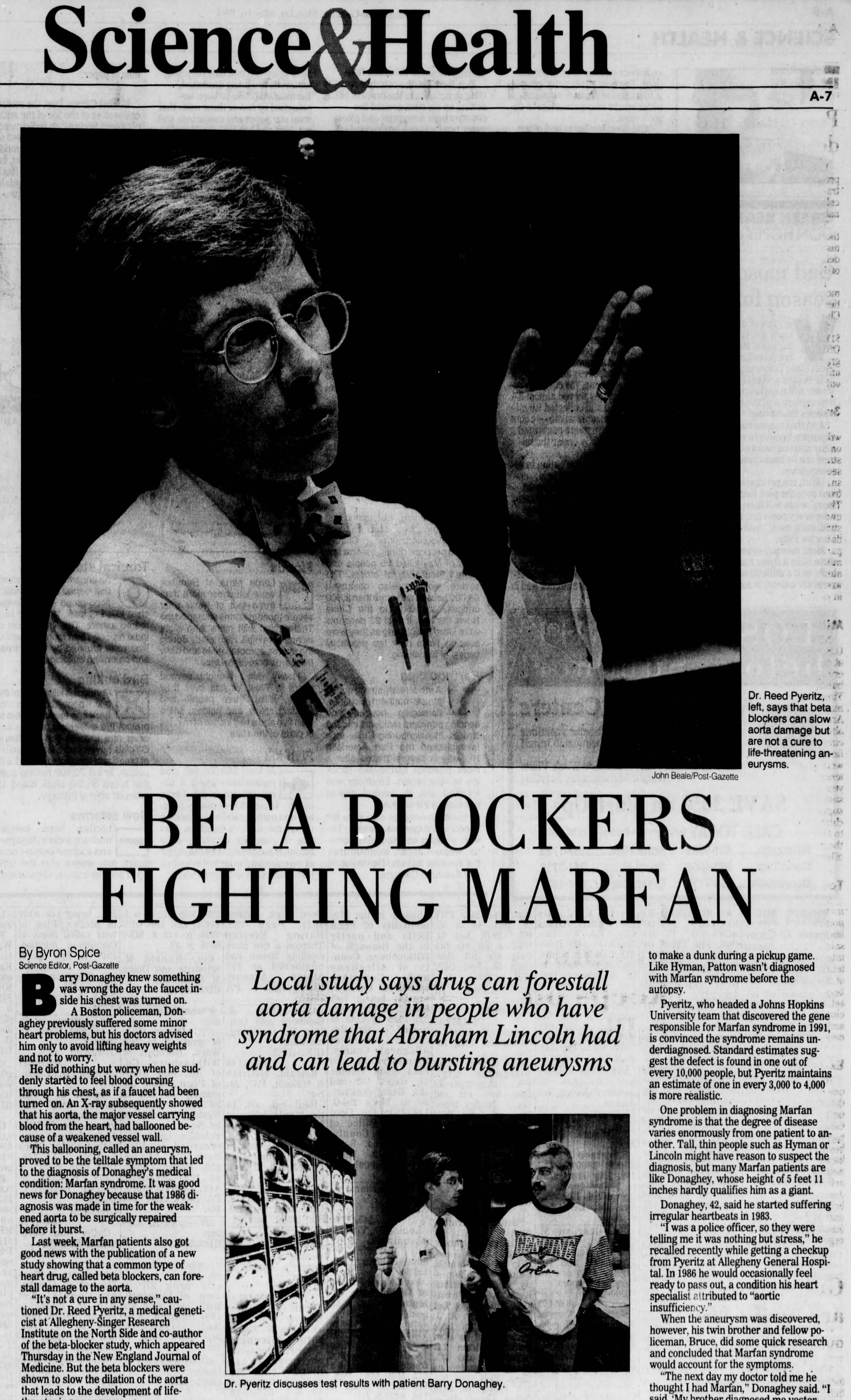
    This story and photos about Dr. Pyeritz appeared in the Pittsburgh Post-Gazette in 1994.Newspapers.com

    Colleagues, friends, and former patients called him “a phenomenal physician,” “a guiding light,” and “an extraordinarily reassuring presence” in online tributes. In 2018, he said: “The most gratifying thing is the fact that folks [with Marfan syndrome] are living their normal life expectancy.”

    Dianna Milewicz, chair of the John Ritter Foundation advisory board, noted his “excellence in clinical care, teaching, and research” on Facebook. Michael L. Weamer, president and CEO of the Marfan Foundation, called him “a true hero” and said his “impact on our community is immeasurable.”

    Dr. Pyeritz edited medical reference books and wrote The Marfan Syndrome and Uncertain Precision: Managing Health Care with Personalized Technologies. More than 700 of his research studies, reviews, and book chapters were published.

    He served 13 years in the Army Reserve Medical Corps and earned lifetime achievement awards from the Marfan Foundation, the American College of Medical Genetics and Genomics, and other groups.

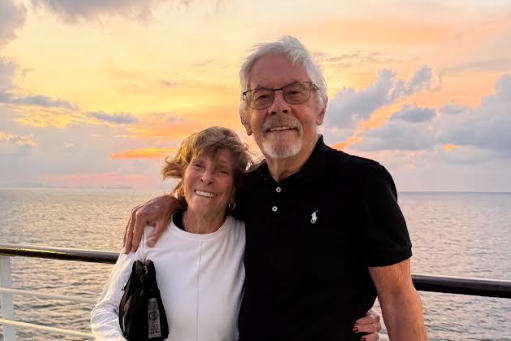
    Dr. Pyeritz and his wife, Jane Tumpson, married in 1972.Courtesy of the family

    On weekends, he did marathons and triathlons, and was part of a world record 100-man, 100-mile relay. His family said in a tribute: “He measured a successful life less by titles or awards than by what one gives, what one learns, whom one loves, and what one leaves behind in others.”

    Reed Edwin Pyeritz was born Nov. 2, 1947, in Pittsburgh. He was fascinated by science and space as a boy, and he built rockets in his backyard and performed scientific experiments in his bedroom.

    He earned a bachelor’s degree in chemistry at the University of Delaware in 1968, a master’s degree and doctorate in biological chemistry at Harvard University in 1972, and his medical degree at Harvard in 1975.

    He met Jane Tumpson in first grade, and they graduated together from Mount Lebanon High School near Pittsburgh in 1965. They reconnected on the tennis court a few years later, married in 1972, and had daughters Allyson and Abigail.

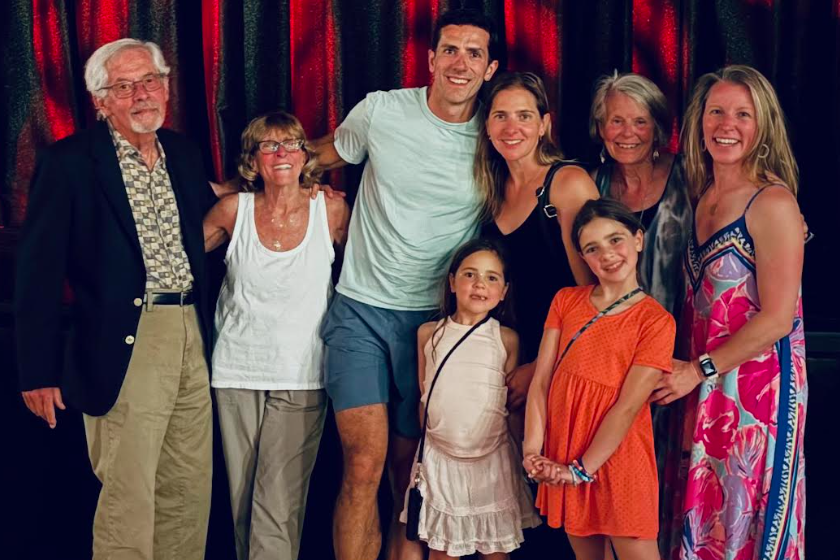
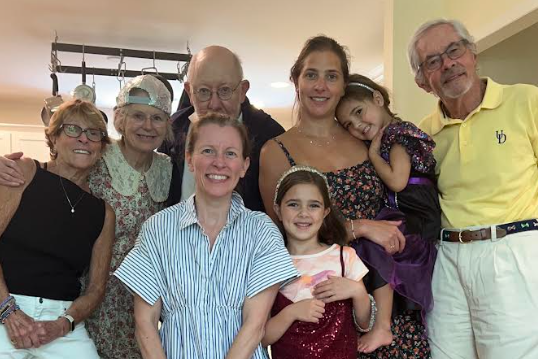
    Dr. Pyeritz, left in the top photo and right in the bottom photo, enjoyed time with his family.Courtesy of the family

    Dr. Pyeritz and his wife honeymooned on Mount Kilimanjaro in Africa and traveled the world together for years. In April, the whole family went to Spain.

    He liked to wear bow ties, build stone walls, watch the news, and spend time outside with his dogs. He followed the Pittsburgh pro sports teams closely and enjoyed Manhattans and chocolate milkshakes.

    “I will miss it all,” he told colleagues at Cure HHT when he retired a few years ago. “But I am certainly looking forward to spending time with my two granddaughters, Tallulah and Penelope.”

    His daughters said: “Ever an adventurer, he instilled in us the importance of making the most of every day, watching the sunrise or sunset, and cherishing the time you have.”

    His wife said: “He loved without exception and reservation.”

    In addition to his wife, daughters, and granddaughters, Dr. Pyeritz is survived by son-in-law Keith Hopkins and other relatives. A brother died earlier.

    A celebration of his life is to be held later.

    Donations in his name may be made to the Marfan Foundation, 22 Manhasset Ave., Port Washington, N.Y. 11050.

    Dr. Pyeritz “loved without exception and reservation,” his wife said.Courtesy of the family
  • What geriatric emergency departments do differently

    What geriatric emergency departments do differently

    It had been a rough few months. Cynthia Tompkins was hospitalized in May for osteomyelitis — a bone infection — then spent six weeks in a rehabilitation facility. “It was a struggle,” she said. “I didn’t bounce back too well.”

    Tompkins returned to her home in San Diego, but she was still taking antibiotics, along with a host of other drugs for diabetes, pain, and blood clots. The deaths of her husband the previous year and her closest friend more recently had sapped her spirits.

    In early July, a new symptom appeared: violent vomiting three times within about 24 hours. “I was so depleted,” she said. “I got weaker and weaker.” A friend who was visiting her called an ambulance.

    “It’s the last place you think you want to go, the ER,” said Tompkins, 75, a retired teacher and family program director. She anticipated spending hours on an uncomfortable stretcher in a chilly hallway. Arriving at the emergency department at UC San Diego Health in La Jolla early in the morning, “I was in a knot,” she said.

    But the place upended Tompkins’ expectations. Since 2022, this and every other adult ER in San Diego has been accredited as a geriatric emergency department, redesigned to address the specific risks and needs of older patients. It’s an approach, recent studies show, that can reduce hospital admissions and deaths among older adults and lower costs.

    “They took me right to a room,” Tompkins said. She was transferred to a gurney with a thicker mattress to prevent bedsores and given blankets. “I got an IV right away because I needed fluids,” she said.

    She was pleased that the small, curtained room, with sound-absorbing walls to lower the cacophony of emergency care, had a cushioned chair for her friend, who would stay with her, and a window looking out on trees.

    The window served a medical purpose, too. Patients “can see whether it’s day or night,” said Denise Valenzuela, the geriatric emergency nurse assigned to Tompkins. “It prevents delirium,” the sudden change in mental status that can arise in hospitalized older patients and increase dementia risk.

    Before long, “I just felt a calmness,” Tompkins said. “I felt, I’m where I need to be right now.”

    Since 2017, the American College of Emergency Physicians has accredited 624 such geriatric emergency departments across the United States, including 73 in Department of Veterans Affairs medical centers. “A fairly exponential rate of growth,” said Kevin Biese, the emergency doctor who directs the Geriatric Emergency Department Collaborative.

    Few of these units are restricted to older patients. Instead, like the ER in La Jolla, they serve all ages but incorporate senior-friendly practices and protocols in an environment aimed at staving off disorientation, falls, and other elder hazards. They’re classified from Level 1, for those fulfilling the highest number of criteria, to Level 3.

    Adults 75 and older visit the emergency room at a higher rate than any other age group except infants: 76 visits per 100 people in 2022. Yet standard emergency care “wasn’t correctly designed for the needs of older adults,” Biese said.

    The mission of a traditional ER is to speedily identify the central problem and either fix it or admit the patient to the hospital for ongoing care. “We ask, ‘What’s your chief complaint?’” Biese said. “You fell down the stairs and broke your leg.”

    Older patients rarely arrive with a single ailment, however. Like Tompkins, most contend with several chronic conditions, take multiple prescriptions, and need a variety of tests and assessments. Trained geriatric emergency teams focus not only on the broken leg but on determining what caused the fall, and how to prevent another one.

    “An emergency department doesn’t routinely screen for delirium” and cognitive impairment, said Ula Hwang, an emergency doctor and researcher at NYU Langone Health. “But it’s one of the first things geriatric emergency departments will do,” along with a careful review of all the patient’s medications.

    Geriatric ERs also try to counter sensory impairment, another contributor to delirium, by distributing reading glasses and sound-amplifying devices. They dim glaring lights and offer eye masks and earplugs to promote sleep. If Tompkins had forgotten her walker, the unit would have lent her one.

    These ERs also aim to address a rising concern in emergency departments: hours or even days spent “boarding,” when admitted patients wait for open beds before they can leave the ER.

    “Prolonged boarding has increased among older adults,” said Cameron Gettel, an emergency doctor and researcher at the Yale School of Medicine, referring to waits that last over three hours. He is a co-author of a study on the topic published in Health Affairs Scholar.

    Spending more time boarding isn’t merely uncomfortable or inconvenient. Researchers studied patients 75 and older in emergency departments across France. They found that those kept there overnight before moving to an inpatient ward had a higher in-hospital mortality rate (15.7%) than those admitted to a ward before midnight (11.1%). Overnight boarding was associated with more falls and infections, too.

    What geriatric emergency staffers prefer, however, is to help patients avoid hospitalization altogether. “Admission may not be the best thing for an older adult,” Hwang said. “It might be the worst.”

    Hospital patients, she said, are exposed to infections, staff errors, and the rapid deconditioning that accompanies days spent in bed. All pose a greater threat to older patients.

    Previous studies have found reduced admissions from geriatric emergency departments, but most of those studies involved one or two hospitals. Now, Hwang and her team have used nationwide data from the federal “Health and Retirement Study” and Medicare claims for nearly 4,600 adults age 65 or up, comparing those treated in geriatric emergency departments with a matched group seen in standard ERs.

    The differences were stark: Patients in the geriatric units had a 39% lower likelihood of hospital admission and a 38% reduction in mortality over 30 days. The geriatric ERs also saved Medicare up to about $3,000 a visit, according to an earlier study Hwang led.

    So having more than 600 accredited geriatric emergency departments nationwide represents both great strides and — in a country with more than 5,000 emergency departments — missed opportunities, Biese said.

    In the Philadelphia region, the VA medical centers in Philadelphia and Wilmington are accredited as geriatric ERs, as are Pennsylvania Hospital in Philadelphia, Cooper University Medical Center in Camden, Jefferson Lansdale Hospital, and Inspira Medical Center Mullica Hill, according to the American College of Emergency Physicians.

    “I’d encourage people to ask why their hospitals don’t have an accredited GED,” he added, referring to a geriatric emergency department. “We should demand that.”

    In La Jolla, Tompkins began feeling stronger. The intravenous fluids supplied anti-nausea medication and corrected the electrolyte abnormalities that her lab work revealed. She was able to sip water and juice and eat a few graham crackers.

    A battery of other screens and scans found no serious concerns. After completing a geriatric assessment, Valenzuela, the nurse, suspected Tompkins hadn’t been eating well and was taking medications on a mostly empty stomach.

    By about 6 p.m., Tompkins and her doctor agreed she could return home. She left the hospital with numbers to call for further help, and several staff members checked in by phone to see how she was doing.

    Better, was her answer. “They took care of the whole me and put me on the right track,” Tompkins said. “I’m progressing. It’s slow, but I’m OK.”

    The New Old Age is produced through a partnership with The New York Times.

    KFF Health News is a national newsroom that produces in-depth journalism about health issues and is one of the core operating programs at KFF — the independent source for health policy research, polling, and journalism.

  • The forecast for the Philly Cycling Classic’s return has light wind and little chance of rain

    The forecast for the Philly Cycling Classic’s return has light wind and little chance of rain

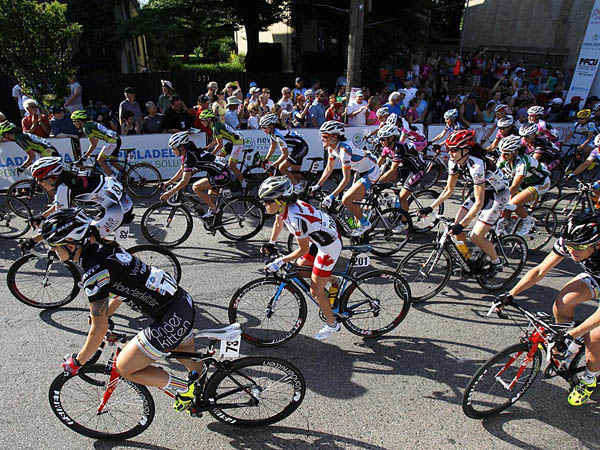
    What has been the summer of floods, thunder, and smoke is fortuitously poised for a shower of good fortune upon the reconvened Philadelphia Cycling Classic this weekend.

    “I would say it looks good Saturday and Sunday,” said Robert Oravec, a lead forecaster at the national Weather Prediction Center.

    The odds strongly argue in favor of the 212 cyclists completing their miles — 120 for the men, 62 for the women — without encountering a drop of rain, a fitting way to end the classic’s 10-year hiatus.

    What’s more, the winds should be light, forecasters say, on the order of 6 to 12 mph, from the north on Saturday, and southwest on Sunday.

    The forecasts for Saturday and Sunday

    For Saturday’s fan fest, which begins at 10 a.m. and ends at 5 p.m. near the Philadelphia Museum of Art, it should be sunny throughout, with temperatures in the low to mid-80s.

    For race day, it will be a shade steamier than Saturday, but not heat-wave level, said Matt Benz, senior meteorologist with AccuWeather Inc.

    Conditions are likely to be more comfortable in the morning during the women’s 62-mile race, which starts at 8:30. Temperature readings should be in the 70s, with heat indexes well below 90.

    The predicted heat index creeps past 90 during the men’s race, and expect some serious shirt-soaking during the scalings of the iconic Manayunk Wall and by the time the 120-mile course is completed.

    Benz said there is a way-outside chance of a shower near the end of the race, but the National Weather Service is listing the probability at under 10%.

    Given that on average Philly receives measurable rain once every three days, dry weekends are not the norm around here, especially this summer.

    Since June 1, officially Philadelphia has experienced only two weekends without measurable rain.

    The rain cups have been overflowing throughout the region, and Philadelphia’s totals for the last two months have been 133% of normal, according to the Middle Atlantic River Forecast Center.

    While both Chester County and all of New Jersey remained under state drought “warnings,” conditions have improved markedly in Philly and the seven neighboring counties, according to Thursday’s interagency U.S. Drought Monitor update.

    Parts of the region this week were classified as “abnormally dry,” the lowest drought designation on the monitor’s scale.

    But portions of Bucks and Montgomery Counties were labeled as completely drought-free.

    Showers are possible during the workweek as temperatures approach 90 and humidity increases, forecasters say.

    But fortunately for the cyclists, the rain gauges should be empty Saturday and Sunday.

  • A newborn baby was one of Pa.’s two measles-related deaths, state says as RFK Jr. questions whether they were ‘fabricated’

    A newborn baby was one of Pa.’s two measles-related deaths, state says as RFK Jr. questions whether they were ‘fabricated’

    A newborn baby from Lancaster County was among the two unvaccinated residents whose deaths were associated with measles, Pennsylvania health officials said Wednesday.

    The state disclosed the age of one of two Lancaster County residents whose measles-related deaths were announced Tuesday. Their deaths were the first in Pennsylvania in 35 years, and the first in the United States this year, tied to the highly contagious disease.

    As vaccination rates decline in the state, an outbreak that began in April this year has sickened more than 400 people in 29 counties — with the epicenter in Lancaster County, where nearly 200 individuals have tested positive for the viral disease. Local physicians and health officials say the true case count is likely much higher.

    The state initially declined to share any information about the deaths, citing privacy concerns, and no information has been released about the second Lancaster resident who died.

    The Pennsylvania Department of Health confirmed information about the newborn’s death on Wednesday only after the Lancaster County coroner publicly stated his office was investigating a newborn who had tested positive for measles and died from a ruptured spleen.

    Lancaster County Coroner Stephen Diamantoni, a physician, said the cause of death was not the measles. The newborn died shortly after birth from a laceration of the spleen. A postmortem test on the baby’s lung tissue showed that the child had a measles infection that was acquired before birth, he said in an interview.

    His description of the death, shared with reporters and a local county commissioner, contributed to a growing uproar on social media over the nature of the deaths and the state’s release of information.

    President Donald Trump’s secretary of health and human services, Robert F. Kennedy Jr., traded attacks with Gov. Josh Shapiro, a Democrat, on X over the deaths and the safety of the measles vaccine.

    In his own posts on X, as well as during a news conference Tuesday, the governor said Kennedy was spreading misinformation about vaccine safety and scaring parents; Kennedy replied that the governor was “gaslighting.”

    Late Wednesday, Kennedy went further in another X post. He accused Shapiro’s administration of potentially having “fabricated” the deaths, after saying in an interview on C-Span that “they cannot find any measles deaths in Lancaster County.”

    He said that Shapiro was not cooperating with the Centers for Disease Control and Prevention or the county in giving information on the deaths.

    Shapiro administration staff said the department has been in regular contact with the agency during the outbreak. Pennsylvania Health Secretary Debra Bogen said in a statement late Wednesday that she “sadly can confirm” two measles-associated deaths in Lancaster County.

    Measles deaths are rare. Most patients recover after mild illness, but the virus can cause pneumonia and brain swelling and kills about one to three patients in 1,000. The disease is so contagious that it can infect nine in 10 unvaccinated people.

    The Pennsylvania Department of Health explained that it reports deaths where measles are present as “measles-associated,” and it “may not be assessed by the medical examiner or coroner to be the immediate cause of death.”

    In Lancaster, the coroner’s office determined that the baby’s primary cause of death was a laceration of the spleen, Diamantoni said.

    Despite the baby’s positive measles test, the forensic pathologist who conducted the autopsy “did not feel it was related to measles,” Diamantoni added.

    His office is seeking to learn whether the baby’s mother had measles at the time of the baby’s birth.

    He said state health officials had not contacted him personally as of Wednesday about the two Lancaster County measles-associated deaths, but his chief deputy spoke to the department prior to Shapiro’s news conference Tuesday.

    Paul Offit, a national vaccine safety expert and physician at Children’s Hospital of Philadelphia, said news of the coroner’s investigation “doesn’t really give us more information” on the death.

    Children can acquire the disease after birth, or can be born with measles if their mother is infected and develops a rash within 10 days of giving birth, he said.

    Measles can cause an enlarged spleen, and birth can cause it to rupture, he said. After a spleen ruptures, Offit said, it is difficult to tell whether it had been enlarged, and he added that the coroner should provide an alternate explanation for the rupture if it had not been caused by measles.

    Diamantoni said the doctor who performed the baby’s autopsy did not note that the spleen was enlarged, and the office is still investigating the cause of the rupture.

    To prevent speculation, the state could release information about the patients’ age, vaccination status, and cause of death while still protecting their privacy, Offit said.

    In conversations with state health officials, he said, he learned that “these patients would not have died were it not for measles.”

    Anti-vaccination advocates “try and completely misdirect and say it really wasn’t measles. They try to do everything they can to distance themselves from it,” he said. “You’re making it a lot easier for them when you don’t give more information.”

    In her statement, Bogen said the department reported the deaths to the CDC on Tuesday morning and met with CDC staff on Wednesday afternoon to discuss the cases.

    “DOH’s Epidemiology team thoroughly investigated and verified both individuals tested positive for measles. The information was not reported to the public until the results of the epidemiological investigations were confirmed,” she said.

    She noted that state health officials are prohibited from releasing death certificate information except under limited circumstances that do not apply to this case.

    A county commissioner questions measles-associated deaths

    The clash over the deaths began within hours of Shapiro’s Tuesday news conference.

    Lancaster County Commissioner Josh Parsons, a Republican, shared the coroner’s account on Facebook, suggesting the state was spreading incorrect information on the deaths.

    In several posts, Parsons questioned whether the patients had died “OF measles or WITH measles” and suggested the state was spreading incorrect information on the deaths.

    “We have ZERO information that corroborates the idea that there were two measles deaths in Lancaster County,” he wrote in a post several hours before the state’s announcement. Later, he shared Kennedy’s remarks on C-Span.

    Parsons has not responded to several requests for comment from The Inquirer about the outbreak over the last several months.

    Democratic County Commissioner Alice Yoder, a registered nurse, said she has been unable to persuade him and the other county commissioner, Ray D’Agostino, a Republican, to post details about the measles outbreak or information encouraging vaccination on the county website.

    Yoder, who attended the Tuesday news conference, said at a Lancaster commissioners meeting Wednesday that she had no additional information on the recent deaths.

    Shapiro and Kennedy clash

    While announcing the deaths Tuesday, Shapiro blamed the federal government’s rhetoric around vaccination for confusing parents and leading to declining vaccination rates.

    The consequences, he said, were apparent in the deaths reported in Pennsylvania. He said he had told Kennedy as much in a recent phone call.

    Later that night, on X, Kennedy said that Shapiro had falsely accused him of spreading misinformation and that drops in the state’s high vaccination rates occurred mostly during President Joe Biden’s administration.

    Kennedy, a longtime anti-vaccine activist, has for years promoted false claims about vaccines.

    Replying to Kennedy on X, Shapiro said that he asked the secretary to help him encourage people to get vaccinated and “stop spreading misinformation.”

    The governor joined a lawsuit earlier this year against Kennedy’s department’s decision to scale back federal vaccine recommendations for children.

    Shapiro noted that Kennedy had visited Lancaster in 2021, during the Biden administration, and told a crowd there that measles could be cured by “chicken soup and vitamin A.”

    Measles has no specific treatments, and although vitamin A is sometimes given to severely ill patients, it cannot prevent the disease and is not a cure.

    Shapiro added that measles cases have increased in the United States and Pennsylvania under Kennedy’s watch.

    Editor’s note: This story has been updated to clarify that the newborn who died had a measles infection acquired before birth.

  • You want to join a clinical trial. Here’s what to know about the hurdles.

    You want to join a clinical trial. Here’s what to know about the hurdles.

    Connecting people with clinical trials is complicated — even if people identify a promising match, there’s a slew of potentially thorny factors, including geographic incompatibility, and financial and time considerations.

    Simply finding an appropriate trial can present an enormous hurdle. In a recent online survey of more than 2,000 adults, 71% of patients with chronic conditions said they would be likely to participate in a clinical trial if given the chance. But two-thirds said that their healthcare provider had never discussed clinical trials with them. According to one study using data from 2020, just 9% of adults reported ever being invited to participate in a clinical trial.

    Clinical trials are essential to the development of new and effective medical treatments. But gathering the real-world human data necessary to win Food and Drug Administration approval for drugs, devices, and other interventions can be an arduous task. By one estimate, up to 86% of clinical trials don’t meet their recruitment targets during the trial time frame.

    Getting people signed up isn’t the only challenge.

    “Recruitment is one thing — retention is another,” said Alan Balch, executive board chair at the Patient Advocate Foundation, which has a clinical trial search tool and maintains extensive educational materials online. “Every touchpoint is an opportunity for access and affordability to be a problem.”

    The need to improve patient participation in clinical trials is not a new concern, but it’s attracting new interest.

    In June, the Department of Health and Human Services announced an effort to streamline and enhance clinical research in the United States. It included a public request for information about whether to modify federal rules that currently deter some trial sponsors from paying clinical trial participants for expenses such as travel and lodging.

    In July, a group of nearly 200 patient advocacy and public health groups sent a letter to the Senate sponsors of the Clinical Trial Modernization Act, urging its passage. The bill would allow trial sponsors to cover trial participants’ medical costs, such as insurance deductibles and copays, and nonmedical expenses like travel and childcare. It would also exclude up to $2,000 in financial support for clinical trial participation from federal taxes, so people wouldn’t risk losing their eligibility for Medicaid or other income-based programs if they signed on.

    While these efforts to improve clinical trials and patient participation are ongoing, here are answers to some questions about how the system works now and what patients can do if they want to take part.

    Why be a guinea pig? Understand the facts

    In some trials, some participants are given a new drug or therapy that’s being investigated while others receive a placebo with no physical effect.

    But there are many types of clinical trials. Some test different drug combinations, for example. They can test medical devices, preventive measures such as vaccines, or lifestyle changes. Others test ways to screen for or diagnose medical conditions.

    For people with very serious illnesses, a clinical trial may offer the best hope for extending their life or improving their quality of life.

    “Cancer is often a fatal disease, and clinical trials offer an opportunity to try something that may or may not be better,” said Mark Fleury, the policy principal for emerging science at the American Cancer Society Cancer Action Network. “If you know the existing standard of care has an average survival of eight months, you want something with a better opportunity.”

    In addition, even if patients don’t receive the therapy being tested in the clinical trial, they are monitored closely throughout and receive the gold standard of care, which they might not receive elsewhere, patient advocates said.

    Some people decide to participate in trials to aid in advancing science.

    Jim Taylor’s wife, Geri, died of Alzheimer’s disease two years ago, more than a decade after her diagnosis in 2012. The couple became advocates for people with the disease, and Taylor is continuing that effort. He’s currently participating in three observational Alzheimer’s trials that are employing cognitive tests and scans to track how his brain is changing compared with the brains of people who’ve been diagnosed with the disease.

    “The reason I’ve done it is so I can explain to people, with some authenticness and experience, what a trial is like,” he said.

    Finding a clinical trial

    Despite widespread interest in clinical trial participation, most patients don’t know how to find one.

    They can’t necessarily count on their doctors for help. According to an online survey of just over 500 primary care physicians in March, sponsored by the Patient Advocate Foundation, even though 86% of respondents said they were somewhat or very likely to refer their patients to a trial, only 37% had ever done so. When doctors did discuss clinical trials with their patients, it was usually because they had asked about them (67%), they weren’t responding to standard treatment (65%), or their disease was progressing (55%).

    But for time-strapped doctors, identifying clinical trials for which patients might be eligible isn’t a simple task. A community oncologist, for example, would typically have to conduct a search using one of the available clinical trial search engines (clinicaltrials.gov is the most comprehensive), type in all the patient’s characteristics, look at the trials that might be appropriate, and call the site to ask whether the trial is still open, Fleury said.

    “And if they’re successful, what happens? They lose their patient,” he said.

    Patients may have an even tougher time searching for trials on their own. Some patient advocacy groups have in-person or online navigators that can help people identify trials they might be eligible for.

    The American Cancer Society has a clinical trial matching service, for example. Organizations such as the Arthritis Foundation and the National Multiple Sclerosis Society have information about disease-specific trials on their websites.

    If a hospital or health facility is part of a clinical trial, patients there are often best positioned to enroll. Patients can ask their doctor or the facility for more information.

    “Most recruitment for a trial happens at the site where the trial is happening,” Balch said.

    There’s a trial, but you can’t enroll

    Much of the clinical research in the U.S. is conducted at large, often urban, academic medical centers. It can be tough for patients to enroll in a trial at a site unless they live nearby or are already being treated there, according to clinical trial experts.

    To participate in a trial, people generally have to meet periodically with the researchers conducting it. They may also need to get regular blood draws or imaging, or to answer questionnaires to monitor their progress.

    “The number one barrier keeping patients out of trials is a lack of onsite clinical trials,” Fleury said.

    A 2019 study that examined 8,893 cancer patients’ participation in clinical trials found that more than half (55.6%) didn’t have an available trial for their type and stage of cancer at the medical facility where they were being treated. An additional 21.5% didn’t meet the eligibility criteria for an available trial.

    If a patient identifies a clinical trial at a viable location and wants to be considered, the patient should contact the trial recruiters directly and ask them, Balch said.

    “That’s just the beginning,” he said. Patients also need to find out whether they meet a trial’s eligibility requirements and whether it’s covered by insurance, and to consider how they’re going to pay for any medical or nonmedical costs.

    Recently there’s been a lot of interest in decentralized access to clinical trials, so patients could do at least some of the trial tasks at home or at their local cancer center, for example.

    “It’s not common yet,” Balch said. But if decentralization grows, he said, it will open up the opportunity to more patients — and more representative groups of patients.

    There’s a trial, but you can’t afford it

    If someone participates in a clinical trial, the trial sponsor picks up the tab for costs stemming directly from the trial, including the drug or device being investigated.

    In addition, under the Affordable Care Act, most commercial health plans are required to cover routine patient costs associated with participating in a clinical trial.

    But that doesn’t mean members won’t owe anything. They are generally still responsible for any deductibles, copays, or coinsurance amounts for the routine care that they receive during a clinical trial. And the ACA doesn’t require plans to have out-of-network benefits. That means if a clinical trial is sponsored by a provider that is out of someone’s provider network, the plan might not cover those costs.

    Medicare and Medicaid have similar requirements for coverage of routine clinical trial costs.

    For some patients, incidental expenses can put participation in a clinical trial out of financial reach. Participants may face costs for travel to the trial site, parking, lodging, childcare, or taking time off work.

    “There shouldn’t be an added set of concerns and disincentives around costs and financial toxicity,” said Wendy Selig, the founder and CEO of WSCollaborative, a healthcare consultancy. Selig is also the project lead for Equitable Access to Clinical Trials, which aims to eliminate incidental costs for patients in trials.

    Some trial sponsors pay for incidental expenses but might not make that clear up front to patients who are considering participating.

    Patients should take the initiative and ask, Selig said. “There may in fact be help, and you should take advantage of it if it’s available.”

    KFF Health News is a national newsroom that produces in-depth journalism about health issues and is one of the core operating programs at KFF — the independent source for health policy research, polling, and journalism.

  • Nemours Children’s Health to open Glen Mills urgent care Sept. 16

    Nemours Children’s Health to open Glen Mills urgent care Sept. 16

    Nemours Children’s Health is opening a new pediatric urgent care center in Glen Mills next month.

    The urgent care center, located at Nemours’ health facility at 101 Applied Bank Blvd. Suite 11 in Glen Mills will open daily beginning Sept. 16.

    The facility is intended for patients with medical needs that do not require treatment in an emergency department, such as upper respiratory illnesses, rashes, abdominal pain, pink eye, sports injuries, burns and bites.

    Nemours’ Glen Mills urgent care will offer basic laboratory and X-ray services.

  • Ragweed season is approaching its peak in Philly, and the rains likely gave it a boost

    Ragweed season is approaching its peak in Philly, and the rains likely gave it a boost

    The recent rain rally has been a boon to the Philadelphia region’s plant life, and, unfortunately for the legions of the allergic, the beneficiaries include the homely and ubiquitous tormentor commonly known as ragweed.

    It belongs to the plant family Ambrosia, from the Latin for “food of the gods.” One can only assume the gods did not have allergies.

    Estimates vary, and it’s not as though it is a census category, but in all likelihood several hundred thousand people in the region annually endure the slings and arrows of ragweed pollen, notorious for setting off episodes of sneezing and attendant dopiness.

    It also can induce coughing, wheezing, and chest discomforts, particularly among asthmatics, allergy experts warn.

    The season — the third in the equinox-to-equinox pollen trilogy, successor to the trees and grasses — typically begins modestly in early August, then intensifies late in the month and continues well into September. And this year sufferers may pay a price for the episodic drought-easing rains that have been watering the plants in the Mid-Atlantic region since mid-June.

    “Ragweed thrives on the nitrates in rainwater,” said Payel Gupta, an allergy, asthma, and immunology specialist based in New York City. The rains’ timing has coincided with “ragweed’s late-summer growth window,” she added, and the result likely will be “denser plants and higher pollen output.”

    As for precisely when the pollen will peak: “Every year is different,” said Donald Dvorin, who for more than 30 years was the Philly region’s official National Allergy Bureau pollen counter, “but the first week of September is most common.”

    In addition, with the planet’s temperatures increasing and first frosts taking their good old time, the seasons appear to be lasting a bit longer.

    The prime pollen flight hours are from 5 to 10 a.m.; effects can linger, however, as pollen can stick to clothing and find its way indoors via unwitting humans and pets.

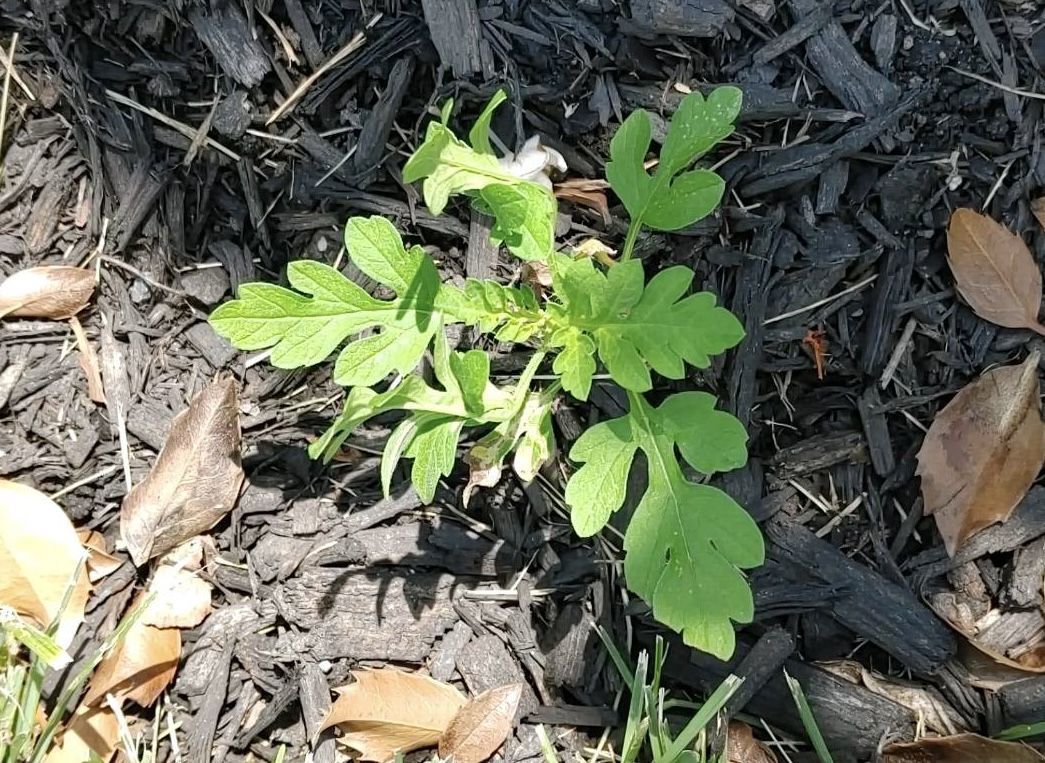
    What is ragweed?

    Ragweed is a tooth-leaved plant that can grow in almost any environment, native to North America but spreading worldwide.

    For the allergenic, Dvorin said, the heavy hitters are the “short” ragweed (Ambrosia artemisiifolia), and the “giant” (Ambrosia trifida).

    A typical pollen grain is a mere 1/25,000th of an inch in diameter, but a single plant can generate a billion of them.

    While the plants live for only about a year, do they ever reproduce! Pollen has been found as far as 400 miles from the source, according to the Allergy and Asthma Network.

    New York City spent millions after World War II to eradicate ragweed in the city, a war it lost resoundingly. For one thing, the warriors discovered that about half the ragweed pollen in the five boroughs was commuting from elsewhere.

    The torments of ragweed

    Most people inhale ragweed pollen without incident, but for the allergic, the body interprets the pollen as an invader, and sneezes and other reactions are part of the immune response.

    For the sufferers, each season can be a little bit different, said Gupta, assistant clinical professor at the State University of New York and Mount Sinai Medical Center in Brooklyn.

    Severity would depend on “how many consecutive high-count days there are,” Gupta said. Exacerbating factors could be “viral infections or air pollution compounding irritation,” she said.

    In addition, some patients may be subject to “priming,” a particularly nasty season that might make some more susceptible to pollen discomforts the following year.

    And ragweed is nothing to just sneeze at, according to the International Ragweed Society, which is based in Switzerland and aims to promote ragweed research.

    In addition to a “socioeconomic burden due to rising healthcare costs” and “productivity losses,” the society states, the weed’s pervasiveness can endanger certain crops and natural habitats.

    How much ragweed is in the air?

    Unfortunately, that has become harder to know. Dvorin, an allergist who had practiced in Center City and Mount Laurel, stopped counting pollen last year, and that was symptomatic of a trend. The network has been shrinking.

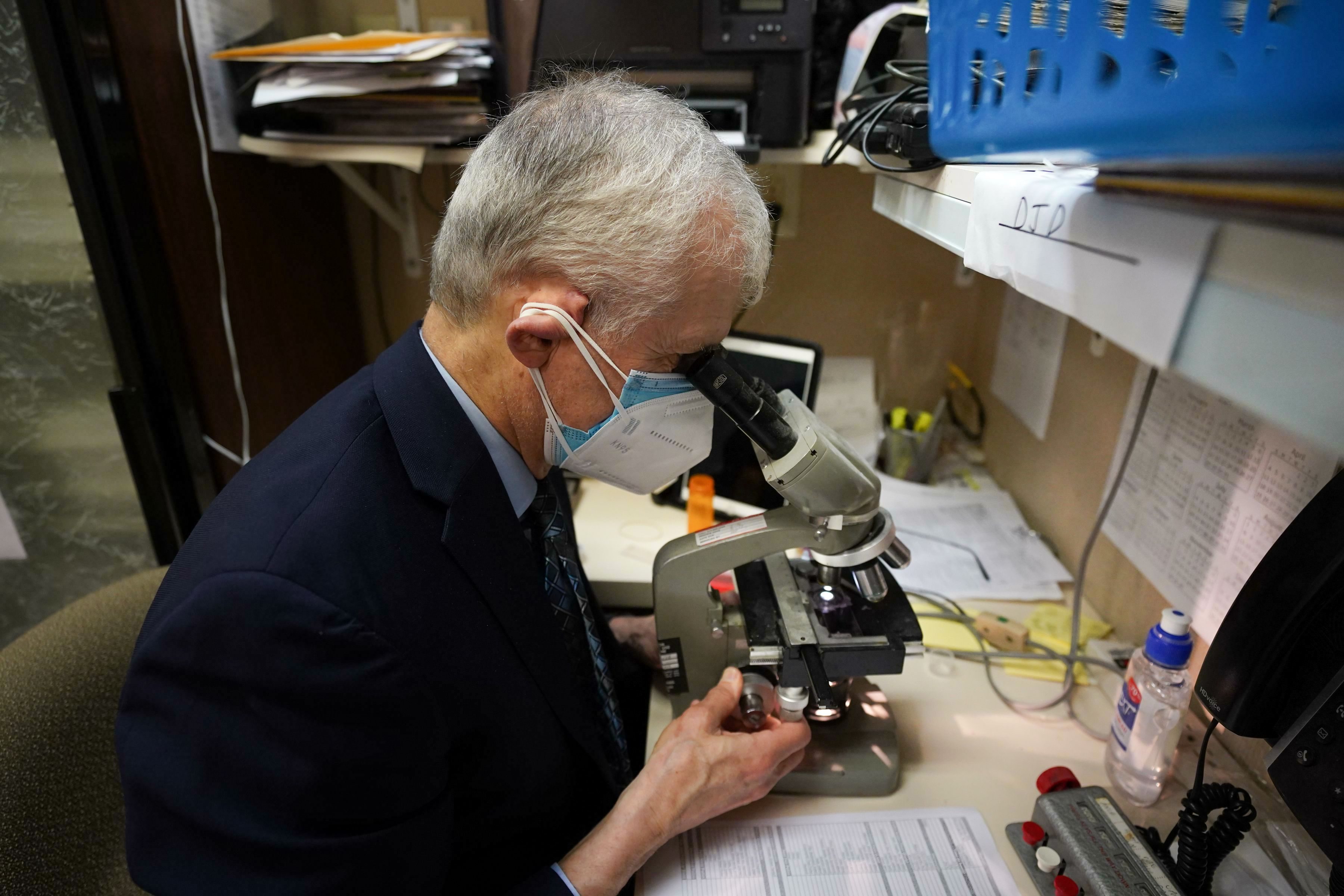
    Gotcha! Donald Dvorin analyzing a pollen specimen. He stopped counting pollen last year, and the network has been shrinking.Jessica Griffin / Staff Photographer

    Traditionally, allergists such as Dvorin supplied daily counts on a voluntary basis as part of the National Allergy Bureau network. However, the analyses require expertise and time that allergists could devote to revenue-paying patients.

    Fewer doctors evidently have been willing to participate.

    The nearest allergy bureau counter who posts frequent counts is in the Washington area.

    The Asthma Center in Center City posts daily counts that are AI-generated, and while that technology shows tremendous potential, the allergy bureau has not yet approved any of the machines for official use, said Pamela E. Gabrish, the bureau’s program director.

    “There has actually been more backlash against using automated devices than ever,” she said.

    Advice for ragweed sufferers

    Day-to-day pollen volumes are difficult to predict, but expect the peak to arrive next week.

    It is a good bet that counts will be high on a warm, dry, and breezy day.

    This will be evident in the online pollen forecasts, but be aware that pollen is commuting on the chaotic whims of the atmosphere.

    In a study of five major cities, published in 2024, allergy experts concluded the accuracy of online pollen forecasts was “low.”

    Along with medications, here are a few suggestions from allergy professionals:

    • Limit time outdoors on dry, windy days.
    • When outside, wear a dust mask.
    • Inside, keep the windows closed.
    • Shower before going to bed.

    And hope for rain, within limits.

  • New vaccination data show hundreds of Philly-area schools vulnerable to a measles outbreak

    New vaccination data show hundreds of Philly-area schools vulnerable to a measles outbreak

    Two years ago, every child in the kindergarten class at Eleanor Emlen Elementary in Mount Airy had vaccine protection against measles.

    A year later, the school’s kindergarten immunization rate had dropped to just 80%, putting students and the surrounding community at risk of an outbreak of the highly contagious disease.

    Emlen is among more than two dozen Philadelphia-area schools that saw double-digit declines in kindergarten immunization rates last school year — in many cases because parents are increasingly refusing vaccines.

    The affected schools span a diverse range of communities, from city neighborhoods like Mount Airy to the outlying suburbs. In Chester County, for example, a small private school in Downingtown saw its vaccination rates plunge by 20%.

    Even as countywide immunization levels remain relatively high, some 40% of kindergarten classrooms across the region became vulnerable to an outbreak during the 2025-26 school year, up from 33% the year prior, an Inquirer analysis of newly released state data found.

    (function(){function e(){window.addEventListener(`message`,function(e){if(e.data[`datawrapper-height`]!==void 0){var t=document.querySelectorAll(`iframe`);for(var n in e.data[`datawrapper-height`])for(var r=0,i;i=t[r];r++)if(i.contentWindow===e.source){var a=e.data[`datawrapper-height`][n]+`px`;i.style.height=a}}})}e()})();

    That means that at least 249 schools had vaccination rates below 95%, the level at which scientists say a population must be vaccinated to prevent the spread of measles, one of the most contagious diseases.

    Of these, 98 Philadelphia-area schools reported measles vaccination rates below 90%, presenting an even greater risk to students.

    A sharp increase in parents opting out of vaccination for religious or philosophical reasons continued to drive down vaccination rates; exemptions in this category rose by 15% in the latest two years for which data are available.

    (function(){function e(){window.addEventListener(`message`,function(e){if(e.data[`datawrapper-height`]!==void 0){var t=document.querySelectorAll(`iframe`);for(var n in e.data[`datawrapper-height`])for(var r=0,i;i=t[r];r++)if(i.contentWindow===e.source){var a=e.data[`datawrapper-height`][n]+`px`;i.style.height=a}}})}e()})();

    Pennsylvania is among a handful of states that allows parents to opt out of vaccine requirements for philosophical or religious reasons, often by simply signing a form.

    The health department published more granular, school-level vaccination data this summer for the first time, after reporting by The Inquirer and the Pittsburgh Post Gazette made this information public for the prior school year, exposing pockets of vulnerability within counties with overall high vaccination.

    The new data show the growing public health threat to the region from Pennsylvania’s growing measles outbreak, in which two people in Lancaster County have died, state officials reported Tuesday. They were the state’s first measles-related deaths in three decades.

    (function(){function e(){window.addEventListener(`message`,function(e){if(e.data[`datawrapper-height`]!==void 0){var t=document.querySelectorAll(`iframe`);for(var n in e.data[`datawrapper-height`])for(var r=0,i;i=t[r];r++)if(i.contentWindow===e.source){var a=e.data[`datawrapper-height`][n]+`px`;i.style.height=a}}})}e()})();

    So far, nearly 400 cases have been diagnosed, with nearly half in Lancaster County. The rapidly spreading outbreak is edging closer to densely populated Philadelphia. Chester County, just west of the city, has reported the second-highest number of cases in the state.

    At a news conference on the measles deaths Tuesday, Gov. Josh Shapiro stressed his concern about the rise in Pennsylvania parents opting out of vaccinations over the last 10 years.

    “It has dramatically reduced community immunity in different areas of our Commonwealth,” he said. “Today, we see the consequences of a lack of immunization.”

    The new school-level data on vaccines, he said, allow “everyone to see their school’s vaccination coverage and make informed decisions.” Lawmakers have also said they hope that having more access to data about their children’s schools will make families more aware of risks within their communities and encourage them to vaccinate their children.

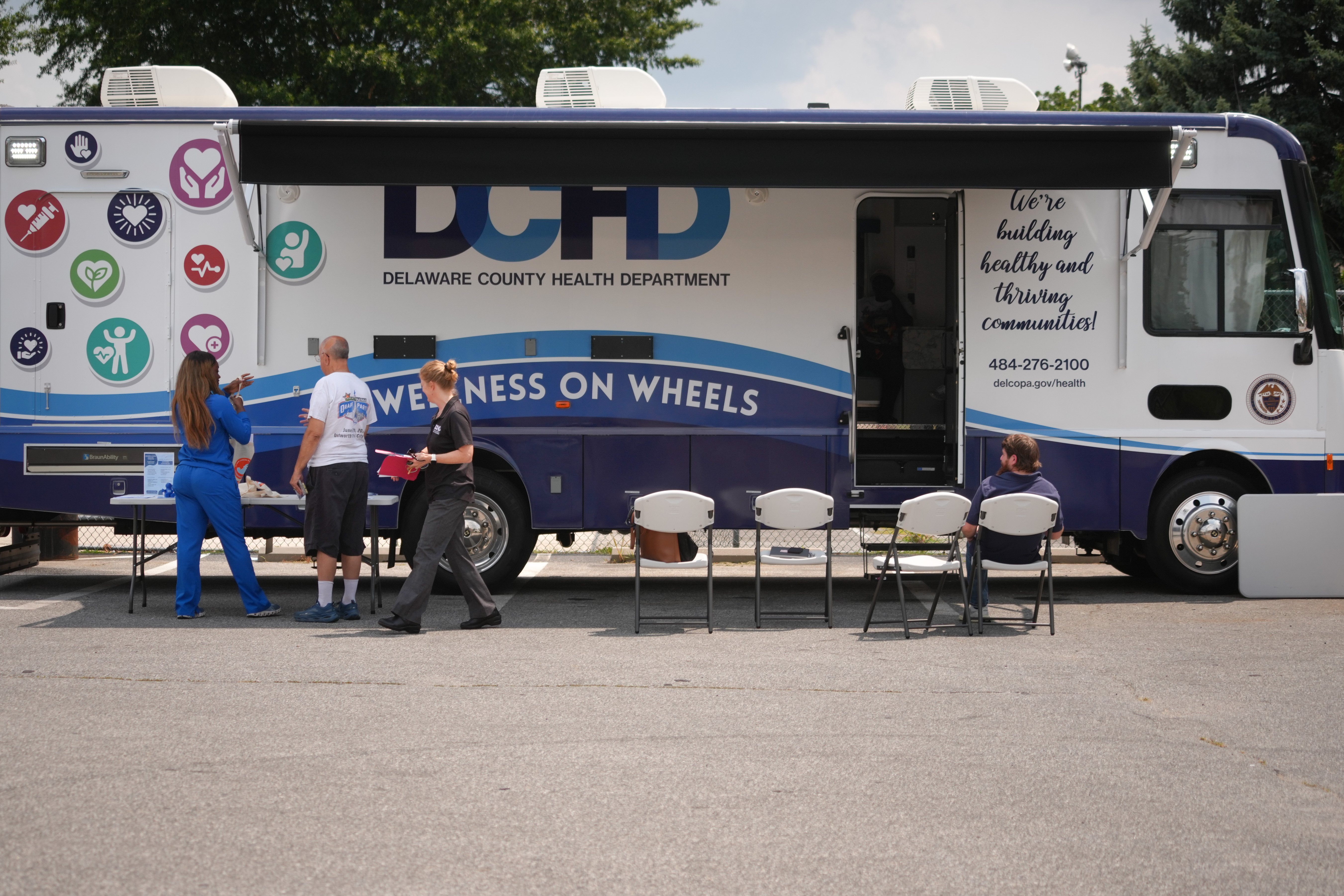
    Amid rising measles case counts and declining immunization rates, Delaware County’s health department launched an immunization campaign over the summer to encourage families to vaccinate.Jessica Griffin / Staff Photographer

    Emlen, which saw one of the steepest drops in protection, was one of 40 schools in the five-county region that reported 100% measles vaccination rates two years ago, only to drop below the 95% herd immunity threshold last year.

    Philadelphia school officials say the changes at Emlen likely reflect increasing hesitancy among parents to immunize their children against measles, mumps, and rubella (MMR) and other diseases. State records show that most unvaccinated kindergarteners at Emlen have philosophical or religious exemptions.

    Some fluctuations in kindergarten vaccination rates are typical from year to year, but the rise of anti-vaccine rhetoric in federal leadership appears to be exacerbating fears around vaccination, said Kendra McDow, a pediatrician who serves as the Philadelphia school district’s medical director.

    “What we’re seeing is reflective of what I believe are local and national trends,” McDow said. “Families are confused, and they want to do right by their children.”

    In the latest federal vaccine maneuver — opposed by the medical establishment, prominent Democrats, and Republican Sen. Bill Cassidy, a physician — President Donald Trump signed an executive order this month asking states to “consider updating” laws to require fewer vaccinations for schoolchildren without any medical justification. He also advocated for splitting the MMR vaccine into three separate shots — even though no separate measles, mumps, or rubella vaccines are licensed in the United States.

    The order came after a chaotic year in which Health and Human Services Secretary Robert F. Kennedy fired federal vaccination advisers and pushed to upend the federal vaccine schedule. Kennedy, a longtime anti-vaccine activist, has promoted false concerns that vaccinations can lead to autism.

    Families are faced with a barrage of misinformation about vaccines. Jessica Griffin / Staff Photographer

    With Pennsylvania now experiencing its largest measles outbreak in three decades, Kevin Ressler, a healthcare nonprofit leader in suburban Philadelphia who was raised in Lancaster County, worries that declining vaccine rates reflect increasing political polarization.

    “You don’t have to be a scientist to recognize that’s a problem,” said Ressler, the CEO of Alliance for Health Equity, a Coatesville nonprofit that works to improve access to health services. “A lot of this is rooted in whether we are able to hold trusted relationships.”

    Philly-area counties all at risk

    Philadelphia and its suburban counties overall remain well protected against measles, state officials say. The declines seen in the latest school year amount to less than 1% of all kindergarteners in each of the five counties in the area, an improvement from the drops that followed the COVID-19 pandemic.

    But even small drops can be significant given the contagiousness of measles, which can linger in the air for hours and infect nine in 10 unvaccinated people who come into contact with it.

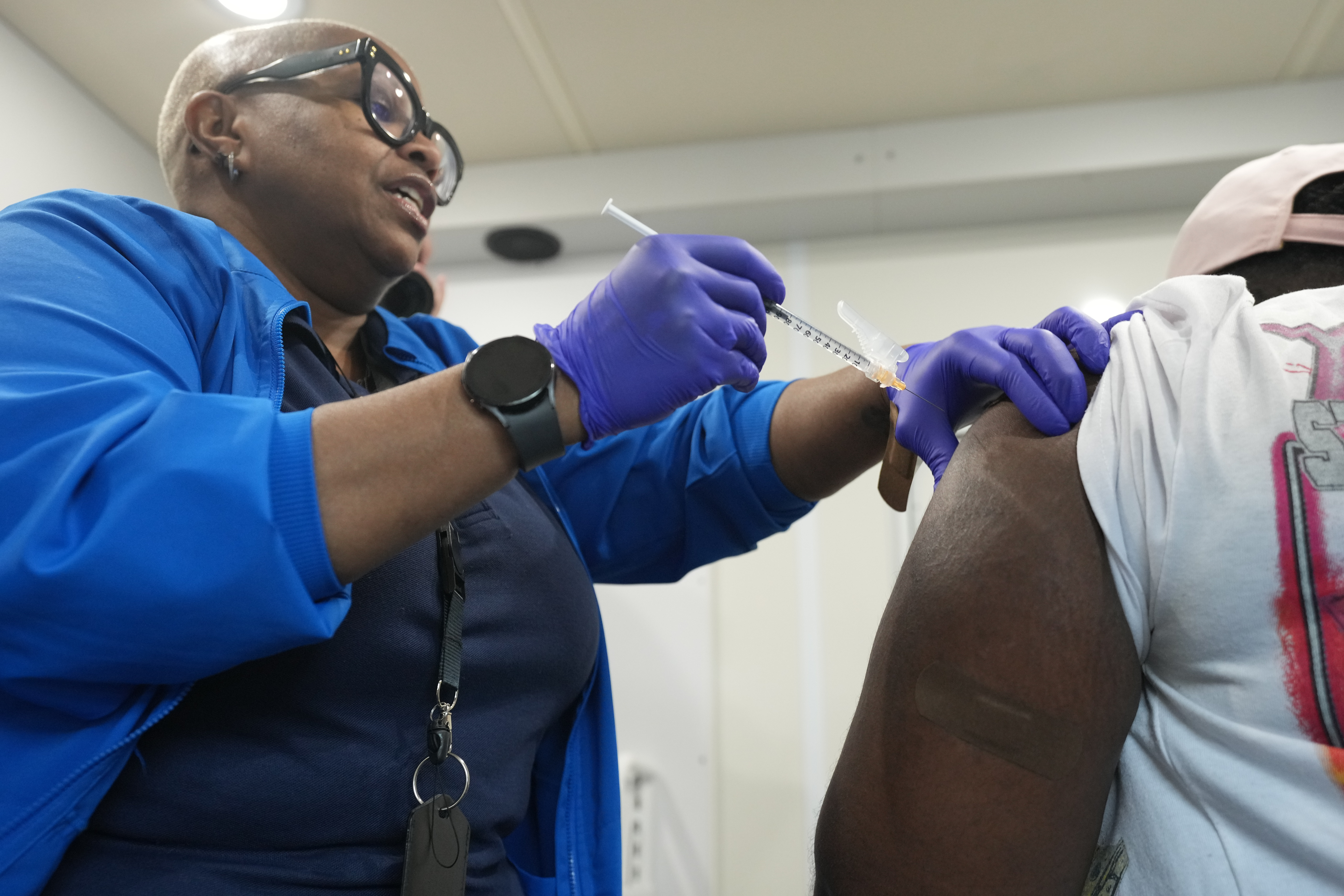
    Mia Williams, a registered nurse, vaccinates a client at Delaware County’s mobile clinic in Upper Darby in July. Jessica Griffin / Staff Photographer

    “The risk has definitely gone up because of lower vaccination numbers,” said Rene Najera, the director of public health at the College of Physicians of Philadelphia.

    Najera says slipping vaccination rates especially endanger vulnerable students and community members beyond the schools, like pregnant women, cancer patients, or babies too young to be vaccinated. Parents of high-risk children should speak with their pediatricians about the risks of attending a school with lower vaccination rates, he said.

    Last year marked the first time in more than 10 years that no Philadelphia-area county had reported measles vaccination rates above herd immunity.

    Bucks County had the lowest MMR vaccination rate for kindergartners, at 93.7%, down by more than a half a percentage point from the year before.

    Montgomery County, the only county in the Philadelphia region with kindergarten vaccination rates at herd immunity two years ago, slipped just below the threshold in 2025, to 94.8% vaccinated.

    About 94% of Delaware County and Philadelphia kindergarteners were vaccinated last school year.

    In Chester County, the only Philadelphia-area county to report cases in the current outbreak, vaccination rates for kindergartners have held steady at 94.5% for the last two school years. Some schools in the county reported steep drops in MMR coverage ahead of the current outbreak, which has seen 40 cases confirmed since June.

    At Windsor Christian Academy in Downingtown, only one in four kindergarteners were vaccinated last year at a school that exceeded the herd immunity threshold the year prior. About 14% of the class had religious exemptions for vaccination. School officials did not return a request for comment.

    Caln Elementary School in Thorndale saw measles vaccination rates drop from 100% to 74% in a year. Officials at the school declined to comment. (Caln closed at the end of last school year, and most of its students are transferring to the newly built Doe Run Elementary this year.)

    Jeanne Franklin, Chester County’s health director, said she is “moderately” concerned about the current measles outbreak, given that many of the county’s most populous public schools still have high vaccination rates.

    The school-level data improve the county’s ability to identify schools with lower vaccination rates.

    Chester County health officials talk to school nurses, principals, and other administrators before the start of every school year to remind them of what to do if they identify a case of measles.

    Under county policy, a single measles case in a school will mean all unvaccinated students and staff must stay home for 21 days.

    This year, conversations that are usually hypothetical have taken on more urgency.

    The health department has urged schools to take stock of who within their school is unvaccinated and develop a plan for how they will teach unvaccinated students who are sent home and staff classrooms of absent teachers.

    “You don’t own getting them vaccinated,” Franklin said she tells administrators. “But you have to think through these things.”

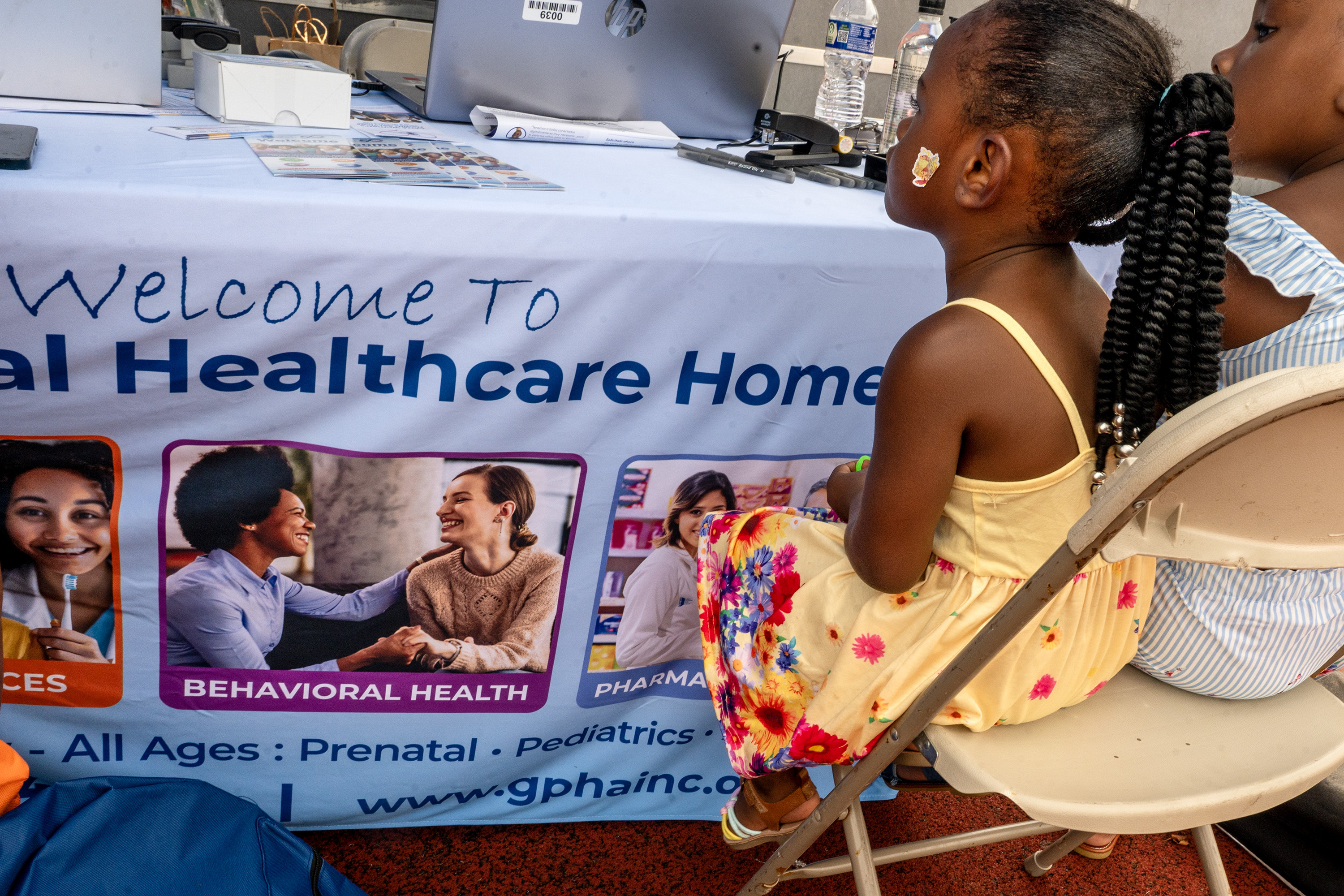
    Sisters A’zuri, 3, and A’Sara, 6, wait while their mother, Shania’ Jason, checks in at a vaccination clinic during the School District of Philadelphia’s sixth annual Back-To-School Bus Tour stop this month at Marcus Foster Memorial Stadium. Tom Gralish / Staff Photographer

    Philly schools on alert

    As the school district’s lead health officer, McDow worries about the threat of measles so close by, but believes concerted efforts in the city have kept vaccination rates “as high as they can be in this current climate.”

    She’s also monitoring Philadelphia schools where the state data show declining vaccination coverage. (The publicly available school-level data does not include classes with fewer than 20 students, for privacy reasons, or schools that did not report to the state. About 90% of schools statewide reported data in 2025.)

    In some cases, what looks like a decline can be explained by delays in data reporting due to administrative issues or staff absences. School vaccination records are reported to the state during the month of December.

    For example, Mantua’s Morton McMichael School reported a 50% drop in MMR vaccination coverage, initially going from nearly nine in 10 kindergarteners vaccinated to just over a third.

    But by the end of the 2025-2026 school year, records show 93% of McMichael kindergarteners were fully vaccinated against measles, district officials said, though the state data does not show the improvement.

    McDow worries about drops at other schools, from Mount Airy’s Emlen Elementary to North Philadelphia’s James Logan Elementary’s 18.5% decrease in vaccination rates, which are likely related to parents increasingly refusing vaccines.

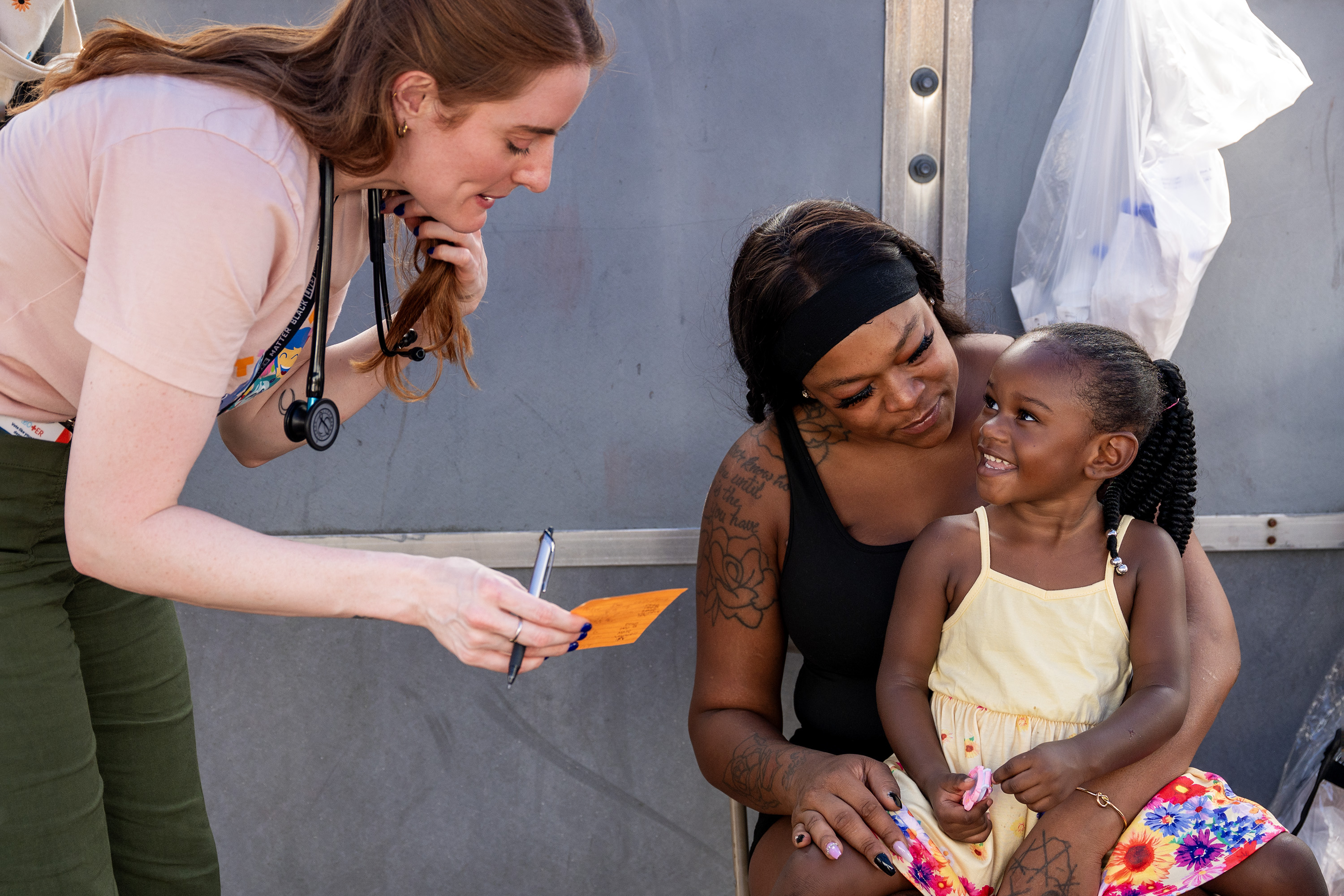
    Pediatrician Amanda Bernard (left) talks with Shania’ Jason and her daughter A’zuri, 3, at a vaccination clinic hosted by the Philadelphia School District this month at Marcus Foster Memorial Stadium.Tom Gralish / Staff Photographer

    The school district hosts vaccination clinics over the summer and during the school year, working with the city health department to target families with unvaccinated children and schools with low vaccination rates.

    The district also works to ensure vaccination clinics are accessible to working parents, organizing some on weekends or evenings.

    “We need to be talking to families and answering questions in transparent ways,” McDow said. “But we also need to be providing the opportunities for vaccination.”

    Some families line up for immunizations

    On a recent sweltering August afternoon, families lined up at a tent pitched on the football field at Marcus Foster Memorial Stadium in Olney, part of a back-to-school fair sponsored by the Philadelphia School District.

    “IMMUNIZATIONS,” read a flag waving in the breeze. Business was brisk all day.

    Some families who visited the tent were recent immigrants, getting caught up on vaccinations before their children started at their new schools.

    “We’re vaccinated, my husband and I, because our parents vaccinated us. And I’ll do the same for my children,” said Betty Bachene, who moved to Philadelphia from Paris this summer. Speaking in French, she said she’s never been afraid of vaccinating her children, but does fear the diseases vaccines prevent.

    Anaiya Burnham, a nurse, said she’d opted against getting COVID or flu shots for her two children, one of whom is entering kindergarten this year. But vaccinating them against measles was never a question.

    “I would really be curious to know why anyone would opt out of the MMR, given the research,” she said.

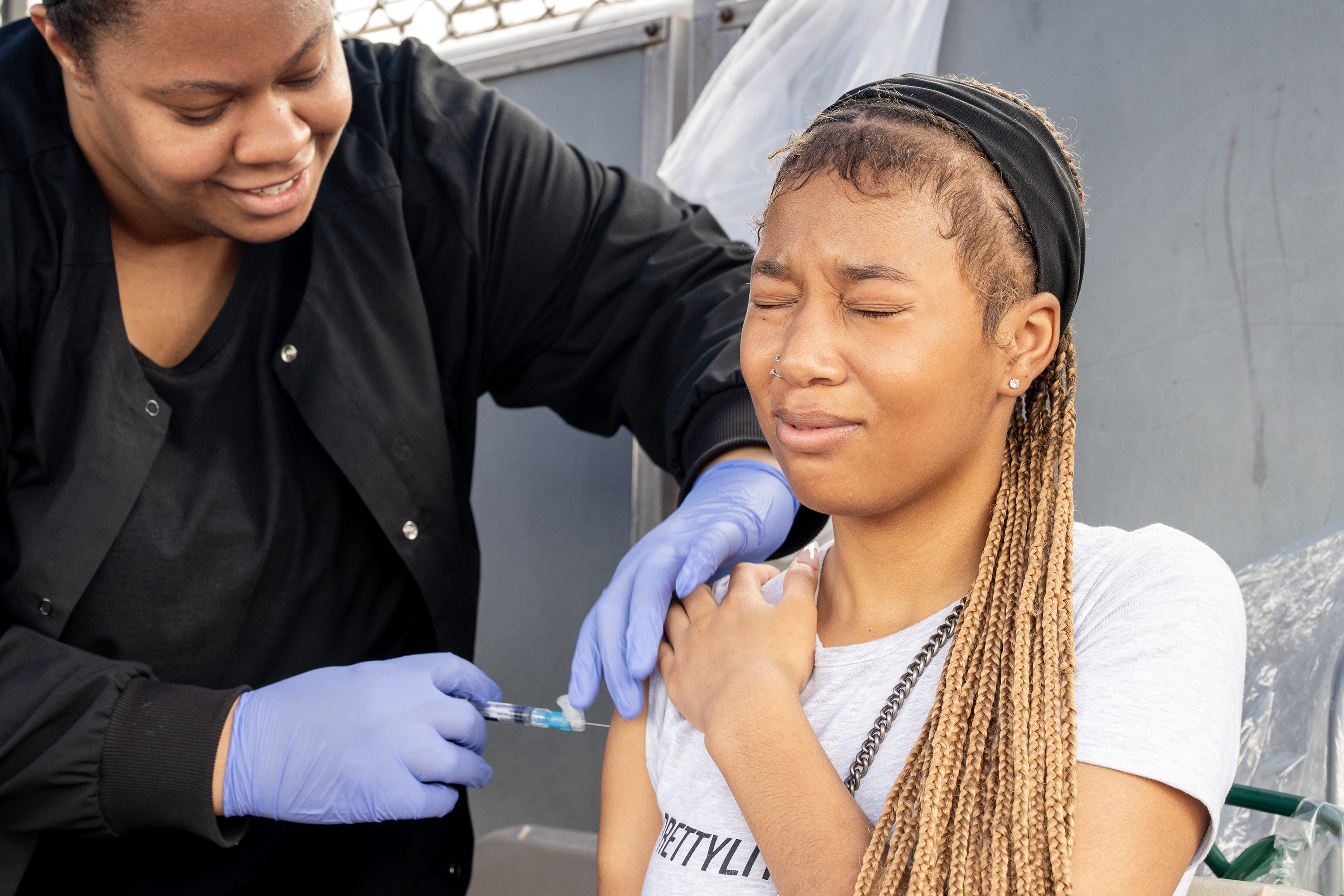
    Cianey Brown, 16, reacts and turns to her family after getting an immunization at a Philadelphia school district vaccination clinic this month at Marcus Foster Memorial Stadium. Tom Gralish / Staff Photographer

    Philadelphia parents face a number of different barriers that keep them from vaccinating children — and not all of them are related to vaccine hesitancy, said Amanda Bernard, a pediatrician with Greater Philadelphia Health Action, the clinic offering vaccinations at the event.

    Some lack transportation to get to a health center outside their neighborhood, or don’t speak English well enough to navigate the healthcare system, she noted.

    “I think that these sorts of events are really a way that we could combat that,” said Bernard, who has heightened her advocacy around vaccination as Pennsylvania’s measles outbreak has spread.

    “There’s almost a desperation in my education. I sometimes feel like I’m almost begging [families] to get it.”

    Editor’s note: This story has been updated to correct the name of James Logan Elementary in Philadelphia.

    (function(){function e(){window.addEventListener(`message`,function(e){if(e.data[`datawrapper-height`]!==void 0){var t=document.querySelectorAll(`iframe`);for(var n in e.data[`datawrapper-height`])for(var r=0,i;i=t[r];r++)if(i.contentWindow===e.source){var a=e.data[`datawrapper-height`][n]+`px`;i.style.height=a}}})}e()})();

  • Pennsylvania reports two measles deaths in Lancaster County, state’s first in three decades

    Pennsylvania reports two measles deaths in Lancaster County, state’s first in three decades

    State officials confirmed two deaths associated with measles Tuesday, marking the first fatalities involving the highly contagious disease in the state in 35 years and the only measles-related deaths reported nationally so far this year.

    Both were unvaccinated residents of Lancaster County, the center of a major measles outbreak that has sickened nearly 400 people this year. Officials did not release their ages or information about underlying health conditions. State officials define a “measles-associated death” as when “laboratory or epidemiologic evidence of measles is present, but the official cause of death is under investigation.”

    Gov. Josh Shapiro said the deaths reflected “the consequences of a lack of immunization” during a news conference at Lancaster General Health’s Women and Babies Hospital.

    “We hope, and we pray, that those deaths will be the last,” he said. He added: “This illness and death from measles is completely preventable.”

    He urged Pennsylvanians to get vaccinated against the disease, which can linger in the air for up to two hours and infect nine in 10 unvaccinated people exposed to it.

    State officials would not provide additional details about the two people or their families to protect their privacy.

    Most cases resolve after mild illness and a telltale rash, but measles can cause serious complications that include pneumonia and brain swelling. Lancaster physicians have treated patients with these symptoms in recent months.

    Nearly one in five of the people diagnosed with measles this year in Pennsylvania has been hospitalized. Deaths are rare, occurring in about one to three people in every 1,000 cases. Three people died of measles nationwide in 2025.

    Pennsylvania has reported the third-highest number of measles cases in the country for 2026, behind Utah and South Carolina, according to the Centers for Disease Control and Prevention’s latest data. The CDC’s website had recorded no other measles deaths this year as of last week.

    Shapiro said he had talked to U.S. Health and Human Services Secretary Robert F. Kennedy Jr., a prominent anti-vaccine activist, about the deaths.

    Shapiro, a Democrat who has opposed Kennedy’s efforts to upend federal vaccine policy, said federal officials were contributing to the spread of misinformation about measles vaccine safety that “in some cases isn’t driven by facts and by science.”

    “I was very, very blunt with him, and I made very clear that his actions and the rhetoric that’s coming from this administration are having a negative impact on communities across America, particularly right here in Pennsylvania,” he said.

    “There’s real-life consequences to spreading misinformation,” Shapiro said. “There’s real-life consequences to scaring people.”

    The state health department is working with CDC staff as they report testing and confirm measles cases, Shapiro administration representatives said.

    Kennedy had checked in Tuesday, asking if the state needed additional help, the governor’s representatives said. Shapiro told him the state “has what we need at this time,” they said.

    In a statement, HHS officials offered condolences to families and communities affected by the deaths and said they will “continue to follow Pennsylvania’s lead” with “resources to support the state’s response.”

    “The MMR vaccine provides the most effective protection against measles and helps prevent its spread,” a spokesperson said.

    In Pennsylvania, children made up about one-third of the 393 patients diagnosed with measles in two separate outbreaks so far this year, state officials say. None of the patients diagnosed with measles this year have been fully vaccinated.

    Shapiro noted that philosophical and religious exemptions for state-mandated vaccinations have tripled in the last decade. Pennsylvania has among the most permissive exemption laws in the country. “It’s dramatically reduced community immunity in different areas of our Commonwealth,” Shapiro said.

    Just under 88% of kindergarteners in Lancaster were vaccinated against measles in the 2025-2026 school year.

    The spreading outbreak may have some parents reevaluating. Shapiro said healthcare providers across the state have given out 35,000 doses of MMR vaccines in the last month; typically, they give out 25,000 in a month.

    A registered nurse vaccinates a client at a mobile clinic in Upper Darby in July as part of a campaign to encourage vaccination amid rising measles case counts and declining immunization rates.Jessica Griffin / Staff Photographer

    Grappling with an outbreak

    For months, Pennsylvania has grappled with a spiraling outbreak unprecedented since the early 1990s, when nine children died from the virus in Philadelphia.

    In the decades since, robust vaccination efforts effectively eradicated the disease in the United States. In recent years, Pennsylvania has seen only sporadic cases, and many physicians here have never treated measles cases before.

    Nearly half of the cases reported in Pennsylvania this year were diagnosed in Lancaster County residents, followed by Chester County with 41 cases as of Monday.

    And health officials have said they believe there are far more cases circulating than have been officially reported in a state that recorded a total of 16 measles cases all year in 2025.

    Delaware has reported 22 cases this year, the first time in a decade that measles has been diagnosed in state residents. New Jersey has confirmed just one case.

    So far, the bulk of Pennsylvania’s cases this year have been diagnosed in the summer months. With students now returning to classrooms, many physicians and health officials are concerned about increasing risks for spread.

    Overall, Pennsylvania reports high vaccination rates among school-age children, with about 93% of kindergarteners immunized against measles.

    Philadelphia-area counties, despite slight drops in vaccination rates in 2025, generally hover close to the 95% “herd immunity” threshold, the rate at which a population must be vaccinated to prevent the spread of the disease.

    But hundreds of schools across the state report vaccination rates below herd immunity, pockets of vulnerability in otherwise highly protected communities.

    At Tuesday’s news conference, state Secretary of Health Debra Bogen said the deaths will not change the department’s focus on increasing vaccination efforts and informing health providers and schools about the threat of measles.

    All schools received letters from the health department ahead of the school year informing administrators about how to spot measles and report cases.

    “We are in contact with school nurses across the state, so the schools are prepared and have all the tools they need. We will support them if there’s a case,” Bogen said.

    State officials said that the outbreak is not limited to religious communities in Lancaster County, home to a high population of Amish and Mennonite residents. Some members of the Christian denominations avoid vaccination, but attitudes vary.

    “Measles has now been traced to 28 different counties, counties that have really different makeups, both from a religious perspective and from a broader community perspective,” Shapiro said. “It would not be fair for anyone here to conclude that this is just a problem in a particular community.”

    Lancaster doctors and leaders have called on residents to get vaccinated to protect themselves and others, saying that helping neighbors is in keeping with the area’s spirit.

    “We show up for one another in times of need. We deliver meals. We support each other during times of illness. Vaccinations are another way we care for each other,” said Jeffrey Martin, the chair of Lancaster General Hospital’s Department of Community and Family Medicine.

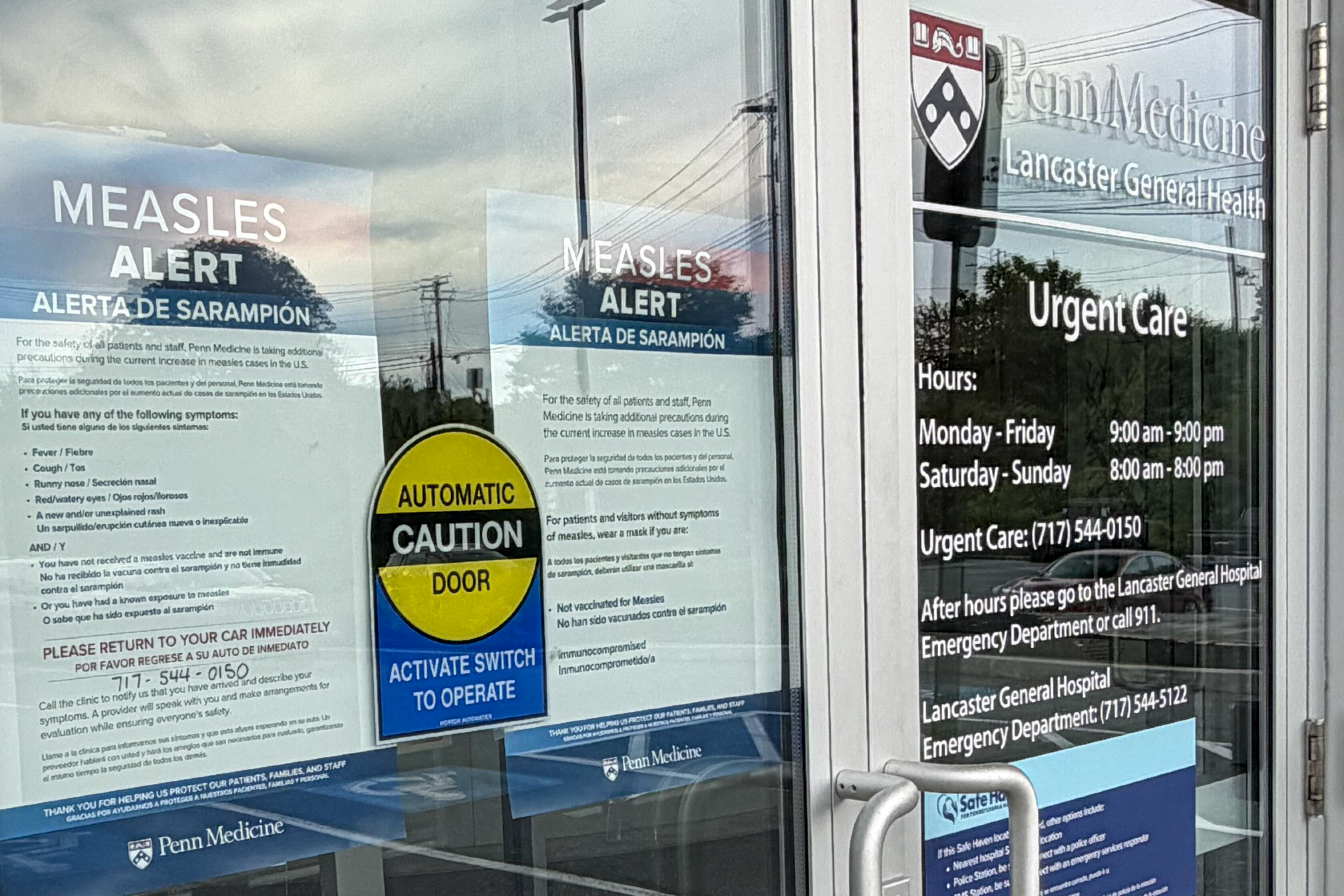
    Martin also urged Lancaster residents who suspect that they have measles to call ahead to hospitals or urgent cares before seeking help there, so staff can prepare to isolate them from other patients.

    “This simple step can significantly reduce the risk of spread,” he said.