Italian pinot grigio is one of the most popular imported wines in the U.S., but one result of that success has been a tarnished reputation that leads delicious examples like this one to be overlooked simply because they cost a few dollars more.
As white wine grapes go, pinot grigio is an odd duck on many levels. It is a grape of French origin that is better known by an Italian name. Its fruit is used for white-winemaking but consists of grapes that look dusky purple on the vine. Indeed, it is technically not a true “grape variety” in its own right in botanical terms, but rather a paler-skinned mutation of a prized red grape variety: pinot noir.
Pinot grigio was originally known as pinot gris and found its way from France to northern Italy by way of German-speaking regions in between. Known as grauer burgunder in Germany and Austria, it proved adept there at producing pleasant wines even when harvested before reaching full ripeness. Early harvests mitigate many of a grower’s risk factors, from bad weather to rot and disease, making brisk, lightweight pinot grigio a sensible crop in regions with short growing seasons and high humidity. These traits led to this grape’s widespread adoption in northeastern Italy, from the muggy plains surrounding Venice up into the alpine foothills of the Dolomites.
The best quality is found in subregions like Trentino, Alto Adige, and Friuli, as with this lovely wine grown near the Austrian border. Where cheaper pinot grigios can taste watery and bland, this crisp, clean dry wine features flavors of fresh yellow pears and ripe kiwi that bring us back for a second glass. It’s hard to beat as a food partner, shining with everything from shrimp cocktail to roasted chicken to sweet corn on the cob.
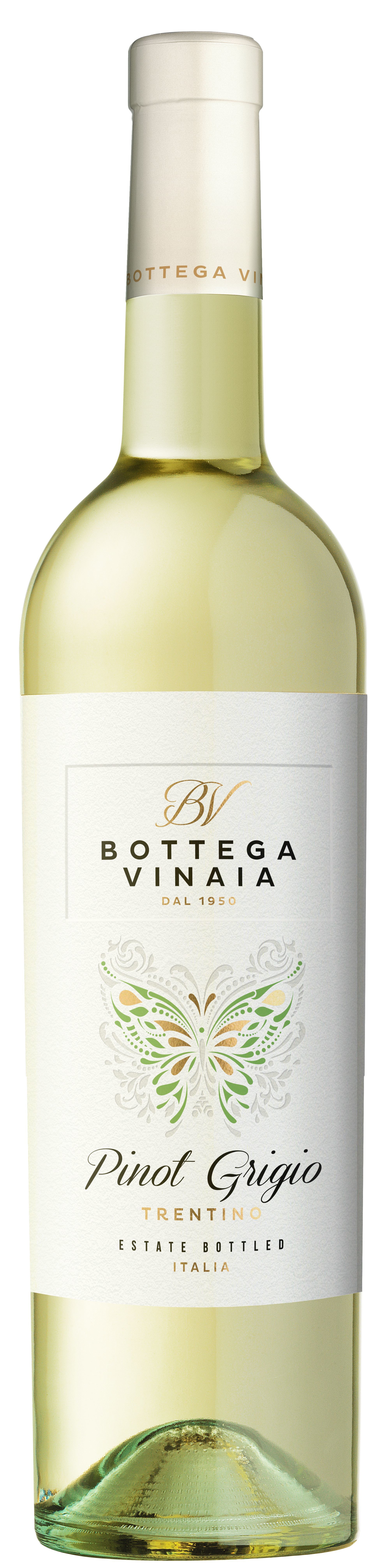
Bottega Vinaia Pinot GrigioCourtesy of Bottega Vinaia
Bottega Vinaia pinot grigio
Trentino, Italy; 12.5% ABV
PLCB Item #4097
On sale for $17.99 (regularly $19.99) through Aug. 31
Also available at the Original Canal’s Discount Liquor Outlet in Glassboro, N.J. ($15.99, canalsofglassboro.com)
One of the year’s more closely watched Main Line restaurant projects now has a name, a chef, and a clearer identity.
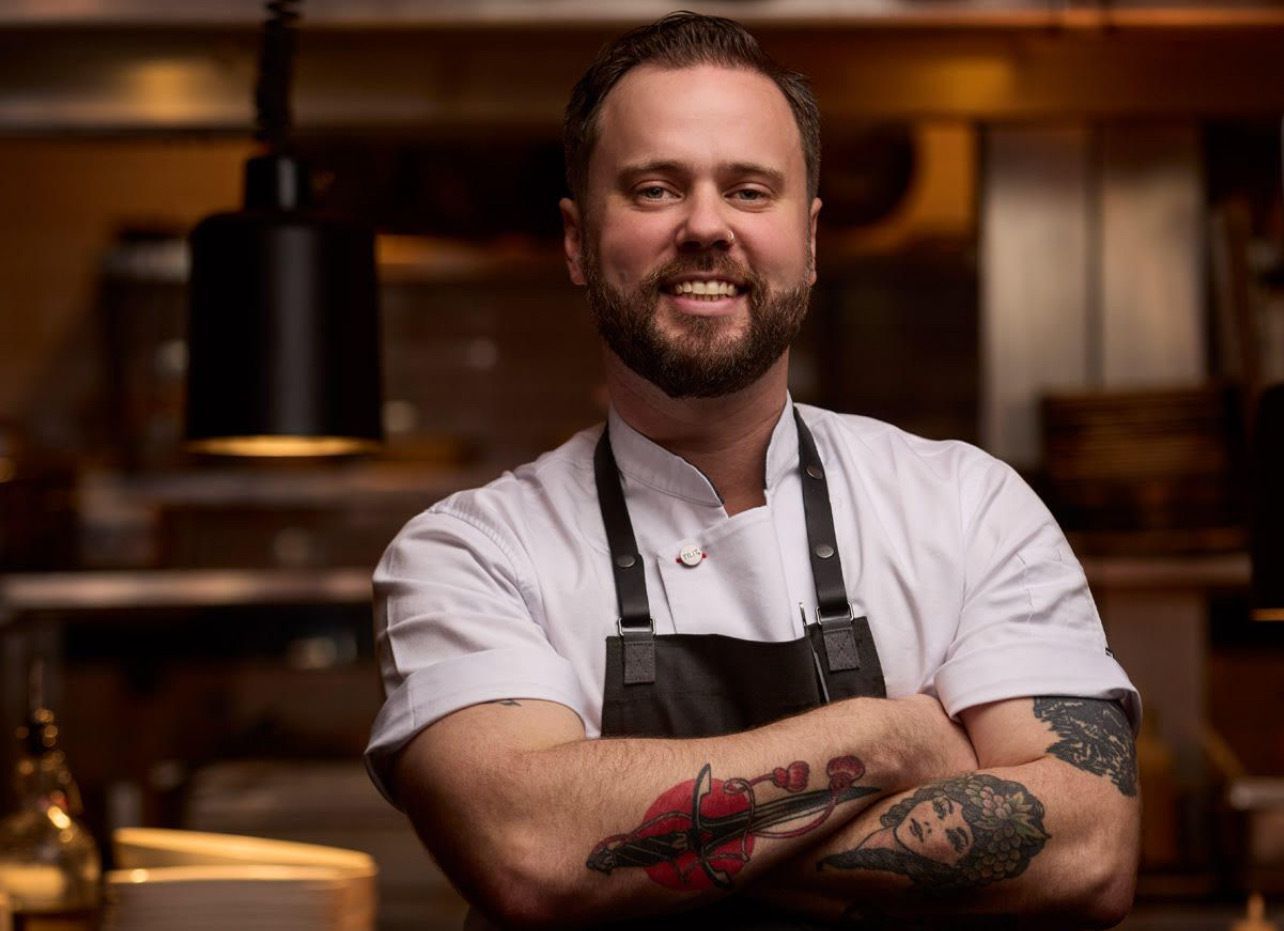
Old Friend, a contemporary American grill built around live-fire cooking, is targeting a late-fall opening in downtown Wayne with former Fork executive chef Sam Henzy leading the kitchen.
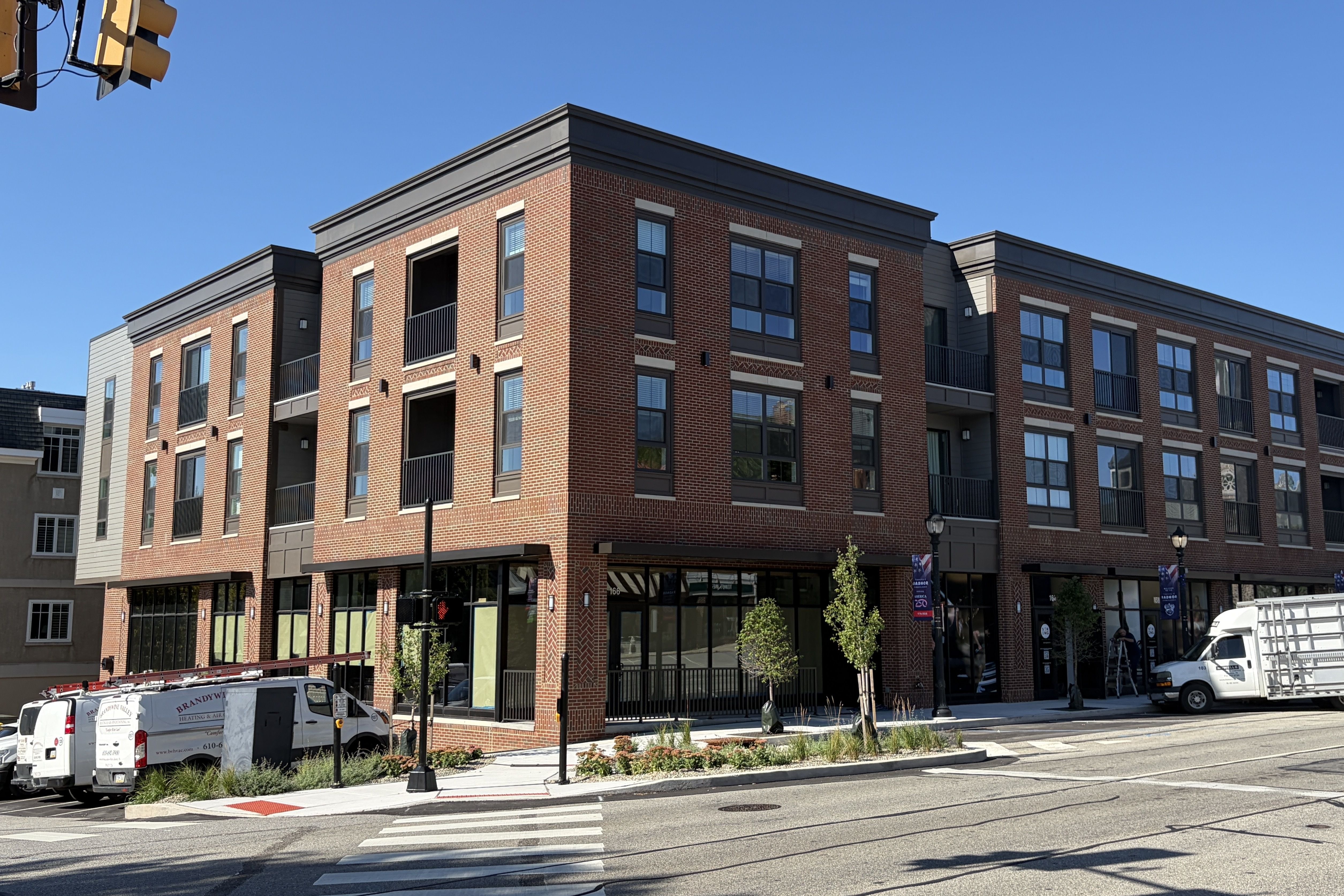
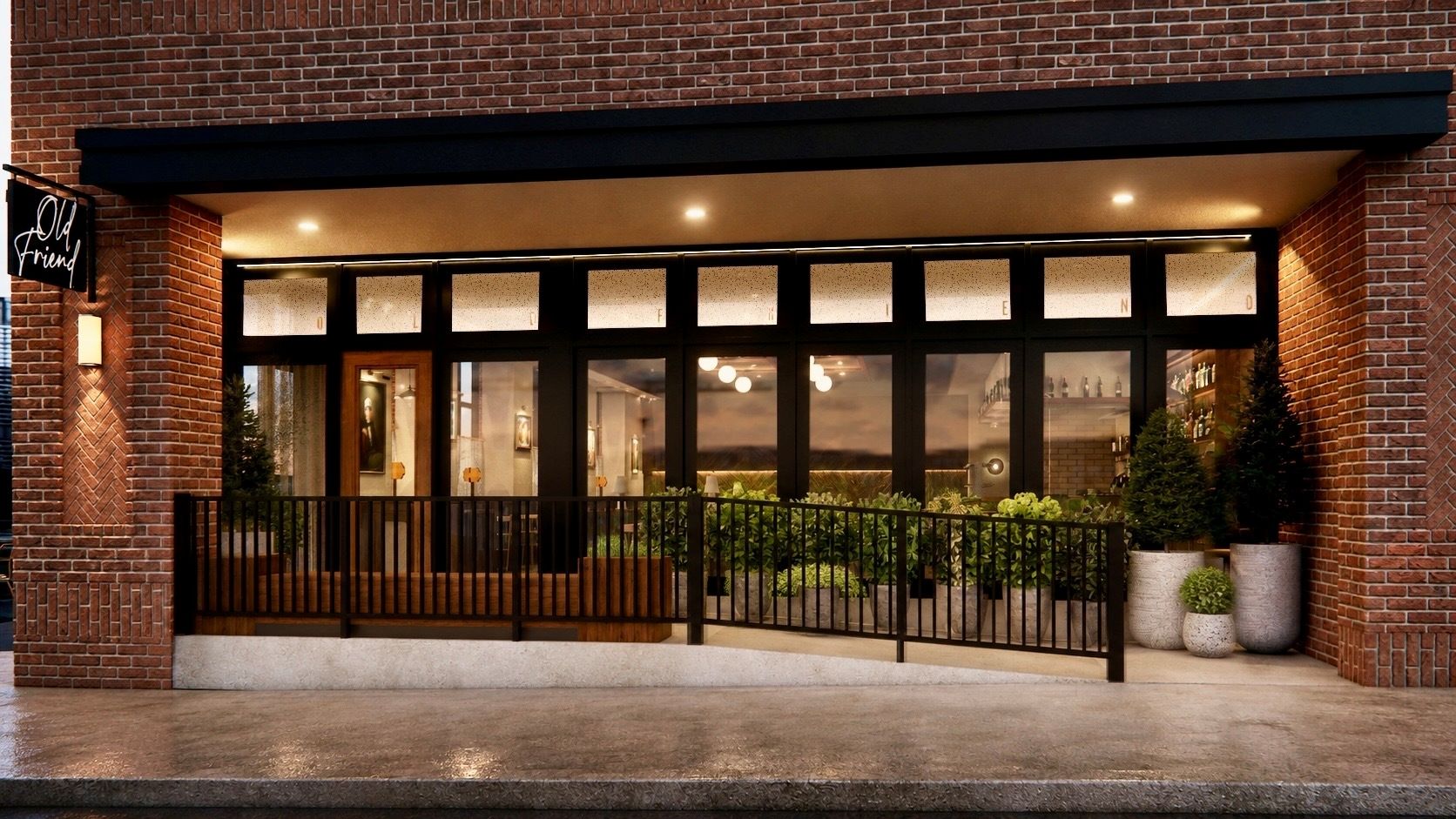
The 86-seat restaurant — 78 in the dining room and eight at the bar — will be at 166 E. Lancaster Ave., in a newly constructed ground-floor retail space at Lancaster and Louella Avenues that is part of the Apartments at Wayne Station. It is amid Wayne’s restaurant row, across from Maison Lotus and Rosalie, and just a few blocks from At the Table, White Dog Cafe, and the North Wayne Avenue dining strip.
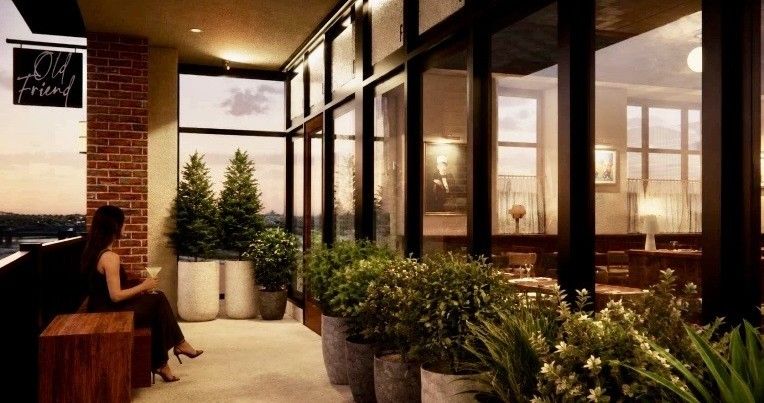
Rendering of Old Friend, 166 E. Lancaster Ave., Wayne.Stokes Architecture & DesignArchitectural rendering of the facade of Old Friend, 166 E. Lancaster Ave., Wayne.Stokes Architecture & Design
Old Friend is the creation of Larry Kagan and Chas McFeely, who met in 1984 at Welsh Valley Middle School and later attended Harriton High. McFeely, an advertising copywriter who lives in Alameda, Calif., has family ties to the Main Line and returns frequently.
Kagan, who works in financial services and is a partner in the Campus sports complex in Downingtown, offered the first public outline of the project at a March Radnor Township Board of Commissioners hearing for its liquor-license transfer, describing an unnamed grill restaurant “that’s going to have the soul of a steakhouse.”
Kagan told The Inquirer this week that the name “old friend” describes his relationship with McFeely: “It’s someone between friend and family — someone you can pick up at any time, you can be yourself.” The name, he said, also reflects the sort of relationship they hope to develop with customers.
Kagan acknowledges that neither he nor McFeely is a restaurateur. They brought in Stove & Co. chef-owner Joe Monnich as a consultant to develop the concept and assemble the operating team. Monnich will remain in a leadership role while continuing at Stove & Co., whose holdings include Stove & Tap and Joey Chops.
Sam Henzy in 2025, when he joined Fork as executive chef.Courtesy of Fork
The connection to Henzy came through Monnich. The two met at Morimoto when Henzy was about 20 and, as he puts it, “green as grass.”
“Joe was the first chef who pushed me really hard, but he did that great older-brother thing of pushing somebody while being there to answer questions,” Henzy said. “He really took me under his wing.”
They remained friends as Henzy built his career. He did not know the name of the Wayne restaurant until he recently visited the space with Monnich and the owners.
“When they told me it was going to be called Old Friend, it just made me smile,” Henzy said, “because that’s how I think of Joe.”
Henzy, who grew up in Delaware, is best known locally for his two years as executive chef at Fork in Old City. His resumé also includes Middle Child Clubhouse, Vernick Food & Drink, Noma in Copenhagen, and Quince and Angler in San Francisco.
Henzy’s experience with live-fire cooking began during a six-month internship at Noma. He remembers touring the cutting-edge restaurant and encountering a Josper charcoal grill set up in a makeshift shack out back.
“In that moment, I was like, ‘Oh, I’m taking that station,’” Henzy said.
He eventually did, spending the final three months of his internship on the Josper. Later, he sought out Vernick Food & Drink in part for its wood-burning oven. His most intensive live-fire experience came at Angler, where he was executive sous chef and the cooking line had no conventional stoves.
“It’s just fires,” Henzy said. “It’s fires everywhere you look.”
Old Friend will bring him back to that style of cooking. Its open kitchen will center on a charcoal-fired Josper combination grill and oven, which Kagan calls the restaurant’s “engine.”
Designed by Stokes Architecture & Design, the restaurant will feature reclaimed mushroom wood, an oak bar, and an open, firebrick-lined hearth that will put the Josper in view of the dining room.
Kagan calls Old Friend a contemporary American grill. The developing à la carte menu will move from small and medium plates to larger-format proteins intended for sharing. The wine list will be compact and closely matched to the food.
Fish — including some dry-aged fish — as well as poultry and other proteins will be cooked on the Josper. Henzy gained experience dry-aging fish at Angler and wants to explore the technique further at Old Friend.
“I think dry-aging fish is both an underused and a misunderstood technique,” he said.
Old Friend also represents a move away from what became Henzy’s signature at Fork. Pasta may appear on the menu, but it will not be a focus. At Fork, he said, its popularity “took on a life of its own,” sometimes overshadowing the rest of the menu.
“I’m really big on never resting on my laurels and taking on new challenges,” Henzy said.
After years away froma live fire-fueled kitchen, Henzy said, “I’ve really been itching to get back into the flames.”
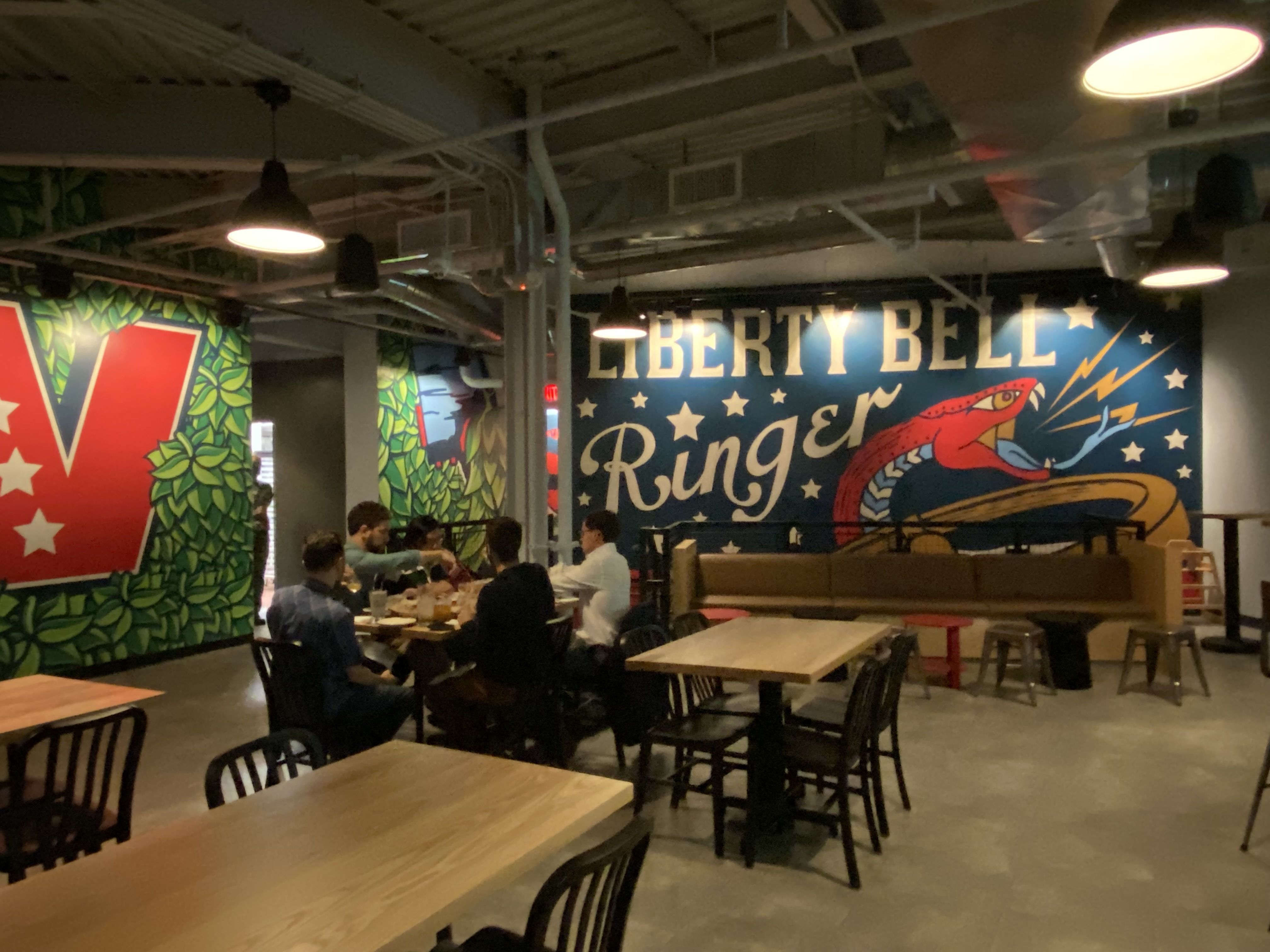
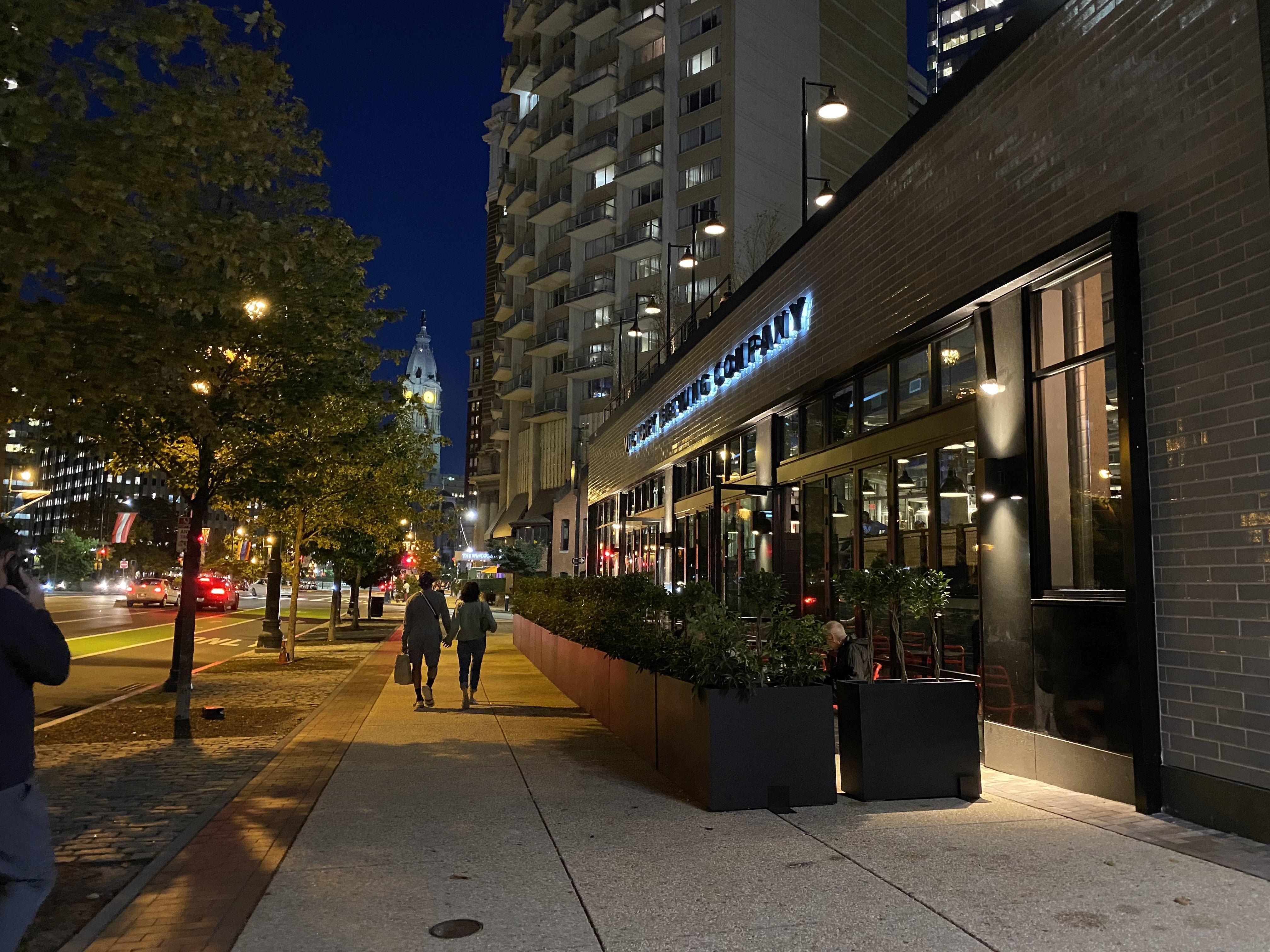
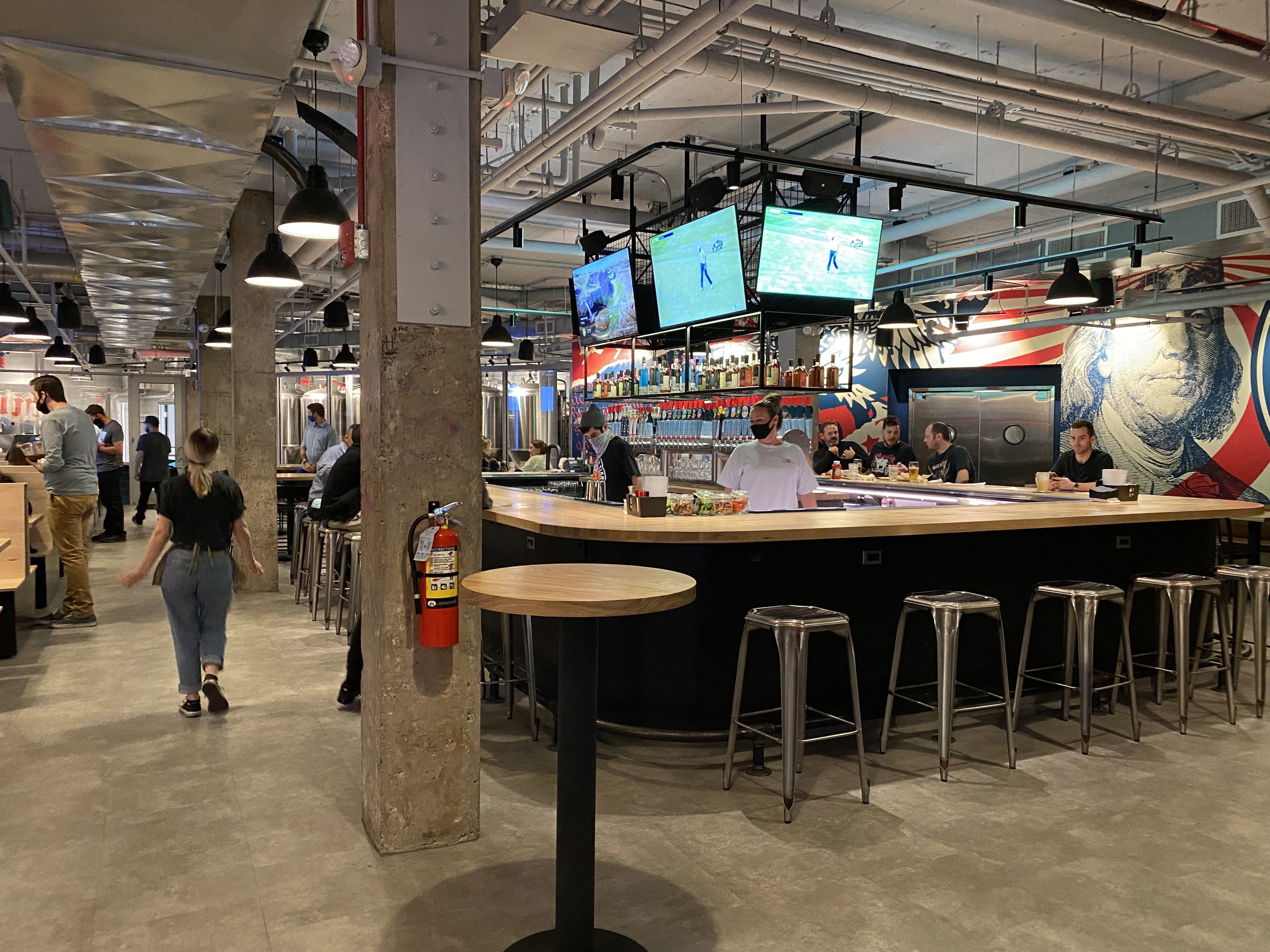
Victory Brewing Company’s Philadelphia taproom was ordered to cease operations over a series of “imminent health hazards” following a Department of Public Health inspection Tuesday.
The Downingtown-based brewery’s three-level bar at 1776 Benjamin Franklin Parkway was ordered to close at 3:20 p.m. Tuesday after a health inspector documented 26 health-code violations.
Among the findings: live roaches, flies, and mice in the first floor bar and prep areas alongside mouse droppings littered throughout the nearly 14,000-square-foot space.
Victory Brewing Co.’s taproom replaced the TGI Friday’s at 1776 Ben Franklin Parkway.Michael Klein / Staff
No soap was available at several sinks throughout the brewery at the time of the inspection, the report stated, and employees were observed working without washing their hands. Black specks and orange residue had accumulated inside the ice machine, while several soda guns were “not clean to sight,” the report said.
Victory Brewing must remain closed for at least 48 hours and cannot reopen until it pays a $315 fine and passes a new health inspection. The bar announced via Instagram that it would be closed Wednesday with plans to reopen Thursday.
“The cleanliness and safety of our taproom are of paramount importance to us. They are ingrained in our daily routines and reinforced by the professional partners we work with. We have always been in compliance with the health department since opening, which is why we take this week’s report extremely seriously,” Matt Reimold, the area operations manager for Victory Brewing, wrote in response to an Instagram comment asking about the closure. “We are taking immediate action to resolve all issues and will reopen only when they have been fully addressed.”
A pest control service is “on site” to address the vermin-related violations, Reinhold wrote. Victory Brewing has maintained regular pest control service throughout doing business, Reimold wrote in the comment.
Health inspections are typically viewed as snapshots in time and may not necessarily reflect an establishment’s day-to-day conditions. That hasn’t stopped at leastone corner of the internet from fixating on Victory Brewing’s violations — which, to some, feel like taproom sins.
The first floor bar at the center of Victory Brewing Co.’s Philadelphia taproom, which opened on the Benjamin Franklin Parkway in 2021.Michael Klein / Staff
“A brewery not cleaning their own lines. What a trip,” read one Reddit comment on a post about the cease operations order in the popular subreddit R/PhiladelphiaEats.
Cofounded in 1996 by Bill Covaleski and Ron Barchet in the old Pepperidge Farm factory in Downingtown, Victory Brewing has grow into a national craft beer brand known best for its IPAs and easy-drinking Golden Monkey tripel.
The brewery opened its sole Philadelphia location on the Parkway in 2021, and runs two other taprooms in region in Downingtown and Kennett Square. Those remain open.
Expand your horizons beyond beef franks with mustard: We scoured the city for the best dogs, whether served on a traditional buns or topped with bonito flakes and carrot salad. Check out our map of Philly’s tastiest hot dogs.
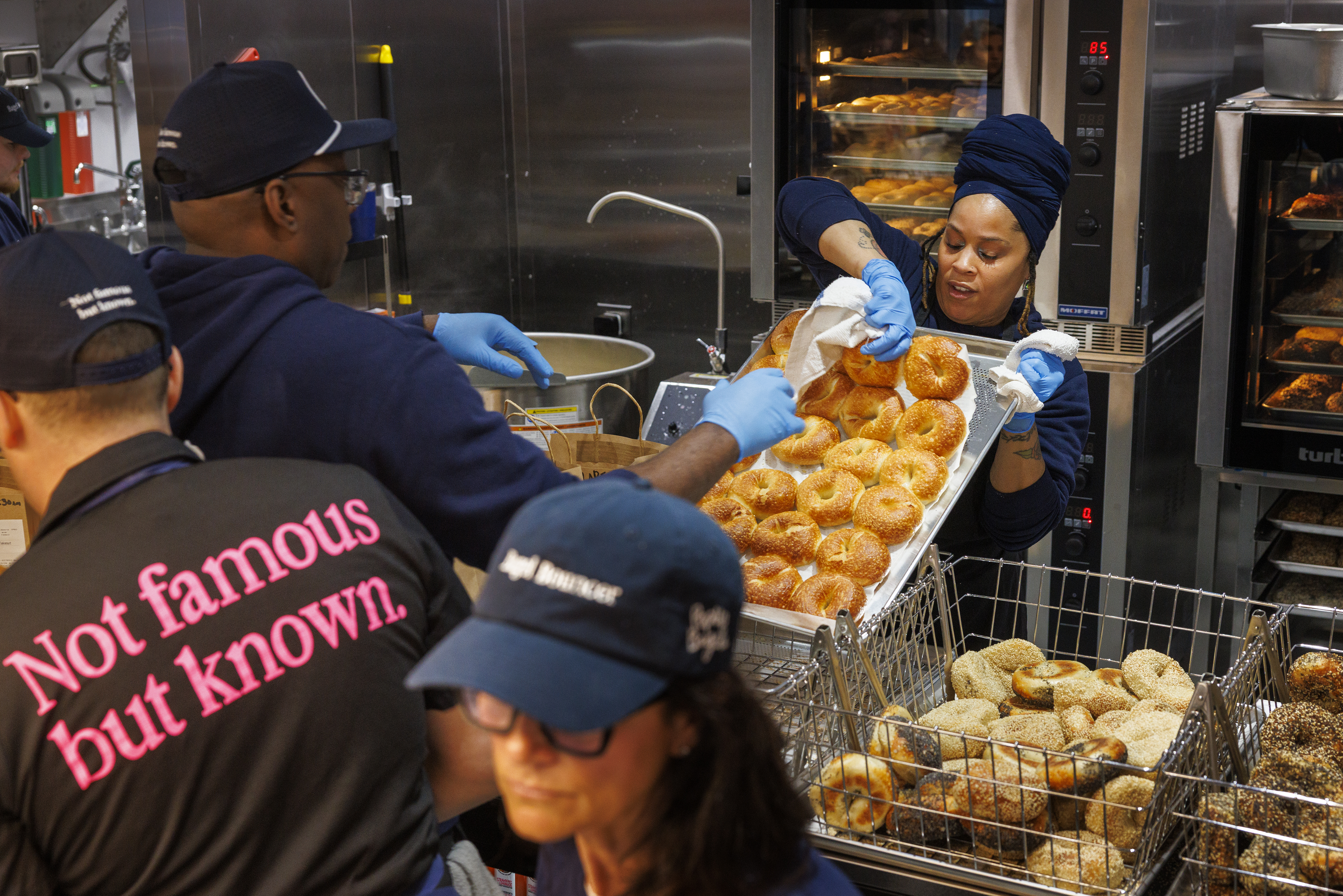
As a bevy of bagel shops — some locally launched, others private equity-backed — makes plan in the region, Mike talked to the experts about an obvious question: How many bagels can Philadelphia eat?
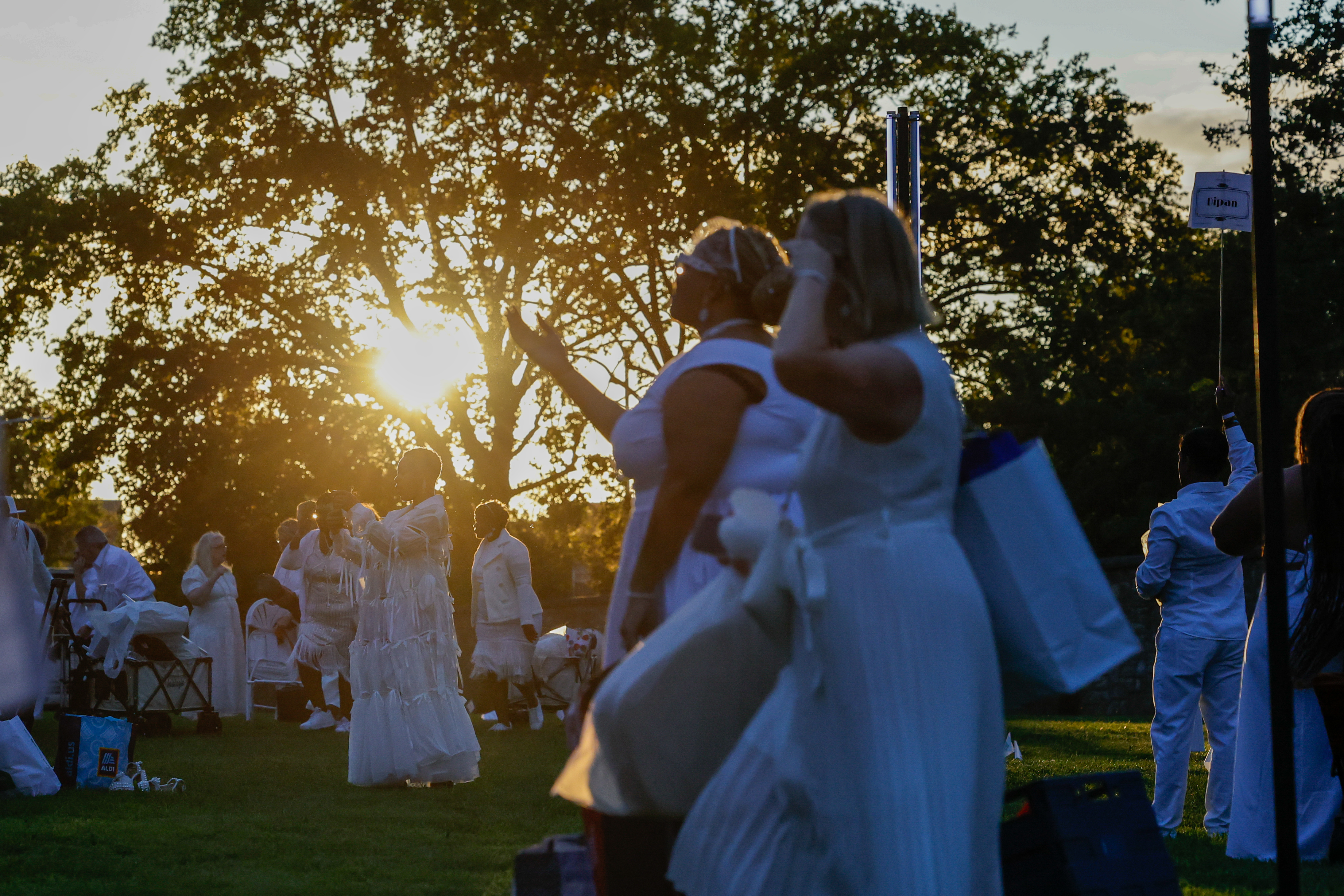
Thousands of would-be Dîner en Blanc participants did not get to haul their tables, chairs, and picnics to a secret location this year as it literally rained on their parade. They made the most of things, dining en blanc at homes, restaurants, and even a cigar bar.
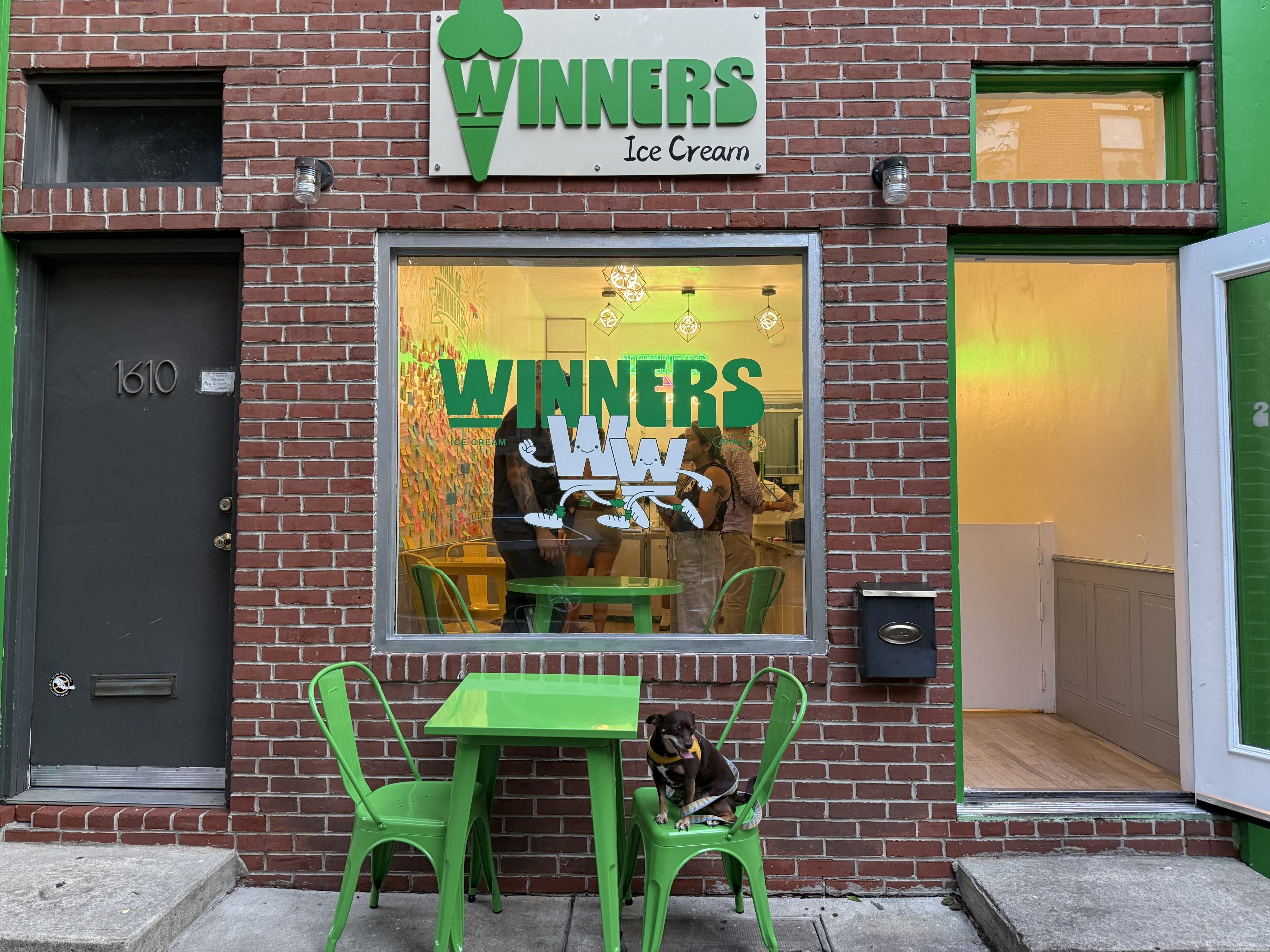
For years, Graduate Hospital residents had to dip into Rittenhouse or head south for treats, but a new wave of neighborhood businesses are selling everything from loaded baked potatoes and ice cream to matcha lattes and mousse cakes.
👩🍳 Graduate Hospital’s first restaurant week runs through Sunday, with participating restaurants offering three-course prix-fixe menus for $30 or $45 while continuing to serve regular menus. The lineup includes Banshee, L’Anima, Say She Ate, Chick’s, Château Rouge, La Sera Italiana, Old Towne & Sanna’s, Saigon Grace Cafe, and Sidecar Bar & Grille. Details/menus are here.
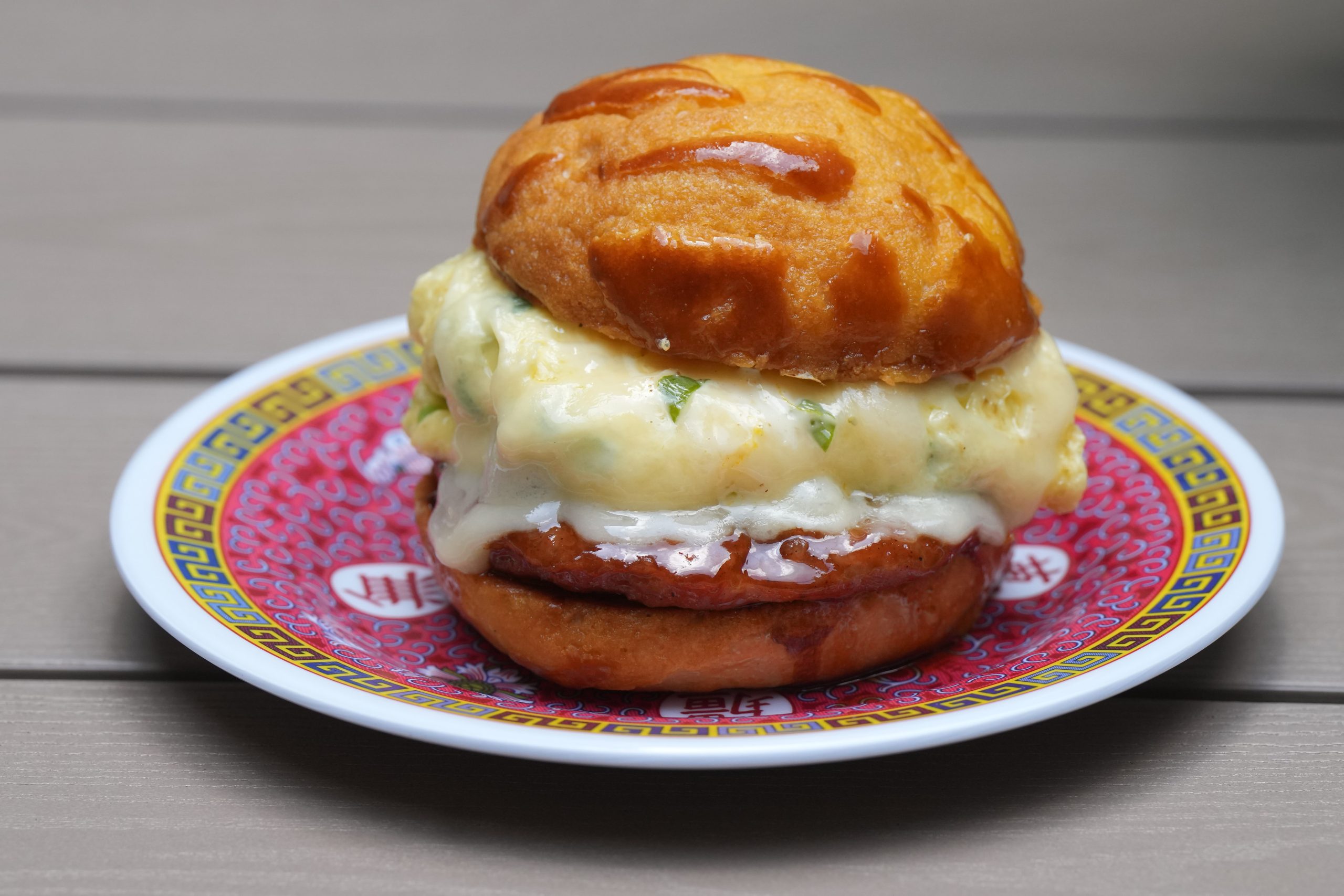
Beatrice Forman, a breakfast sandwich connoisseur, gets the warm and fuzzies from Chibanos’ Chino, which uses a Dodo Bakery bo lo bao as its bun. “It’s funny how a single sandwich can take me to so many places,” she wrote of its fluffy eggs, Swiss cheese, and char siu-style sausage patty.
Cantina La Martina is set to return to Kensington and debut in Brewerytown next month as it doubles down on its relationship with Human Robot Brewery, which is parting ways with sandwich maker N.A. Poe. The vendor shakeup, Beatrice reports, was precipitated in part by some untoward social media posts.
Scoops
Ms. Tootsie’s former building at 1312 South St., shuttered since the 2021 death of restaurateur KeVen Parker, will become the home of Nippy’s on South. Nikia Peterson, a nurse who frequented the swank soul-food destination, has bought the building and is installing what she said will be a polished spot offering an eclectic menu, with seafood towers, steaks, Asian and Caribbean dishes, and a full bar emphasizing happy hour and weekend brunch. “Nippy” was her late grandmother; a late-September opening is planned.
Mezzanine 1909 and the Slider Co. are moving toward spring openings at 2043 Frankford Ave., now that longstanding zoning issues have been settled. Will Johnson, partnered with Anesha Garrett, tells me that they envision a quick-service burger shop on the first floor, and — accessible through a “secret” door — a speakeasy-style, 40-seat cocktail bar upstairs serving nine small plates and nine cocktails with “intentional” service. It also will be a hub for their catering. Slider & Co. had two popups nearby last summer.
Briefly noted
Testa Rossa, the casual Italian-American concept from Fearless Restaurants, closed Sunday after 20 months in the Shoppes at Brinton Lake on Baltimore Pike in Glen Mills. “It never really resonated with the neighborhood,” said Fearless owner Marty Grims, adding that the company has offered Testa Rossa employees jobs at its other restaurants, including the White Dog Cafes and Rosalie. Fearless’ next project, a Southern Italian restaurant called Martini & Roz, is due to open in late fall at 523 W. Lancaster Ave. in Wayne.
❓Pop quiz
Which two restaurants made it onto Bon Appétit’s best new restaurants list?
There are ghosts rumbling through the rafters at Mr. Edison. And I’m not sure they’re happy.
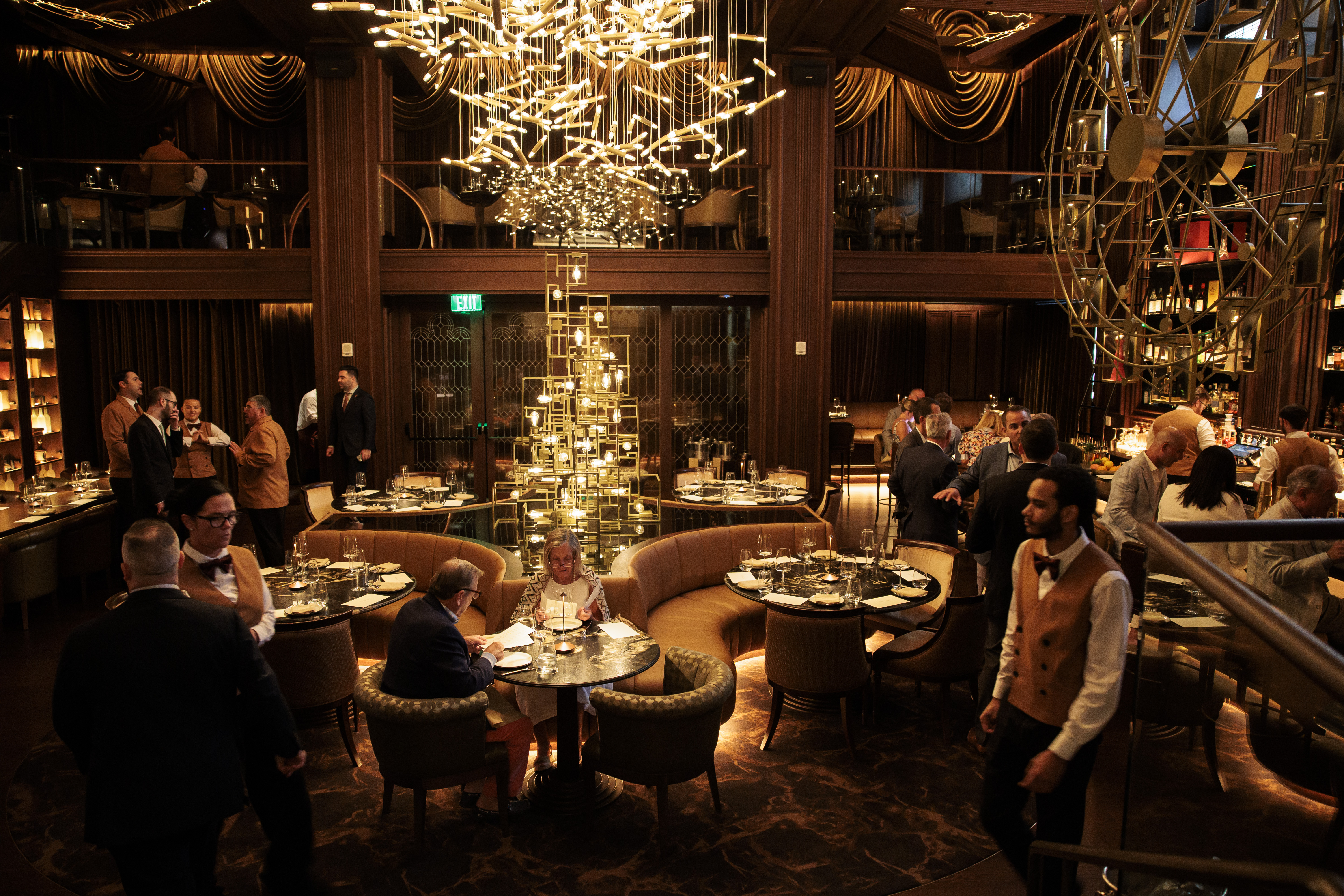
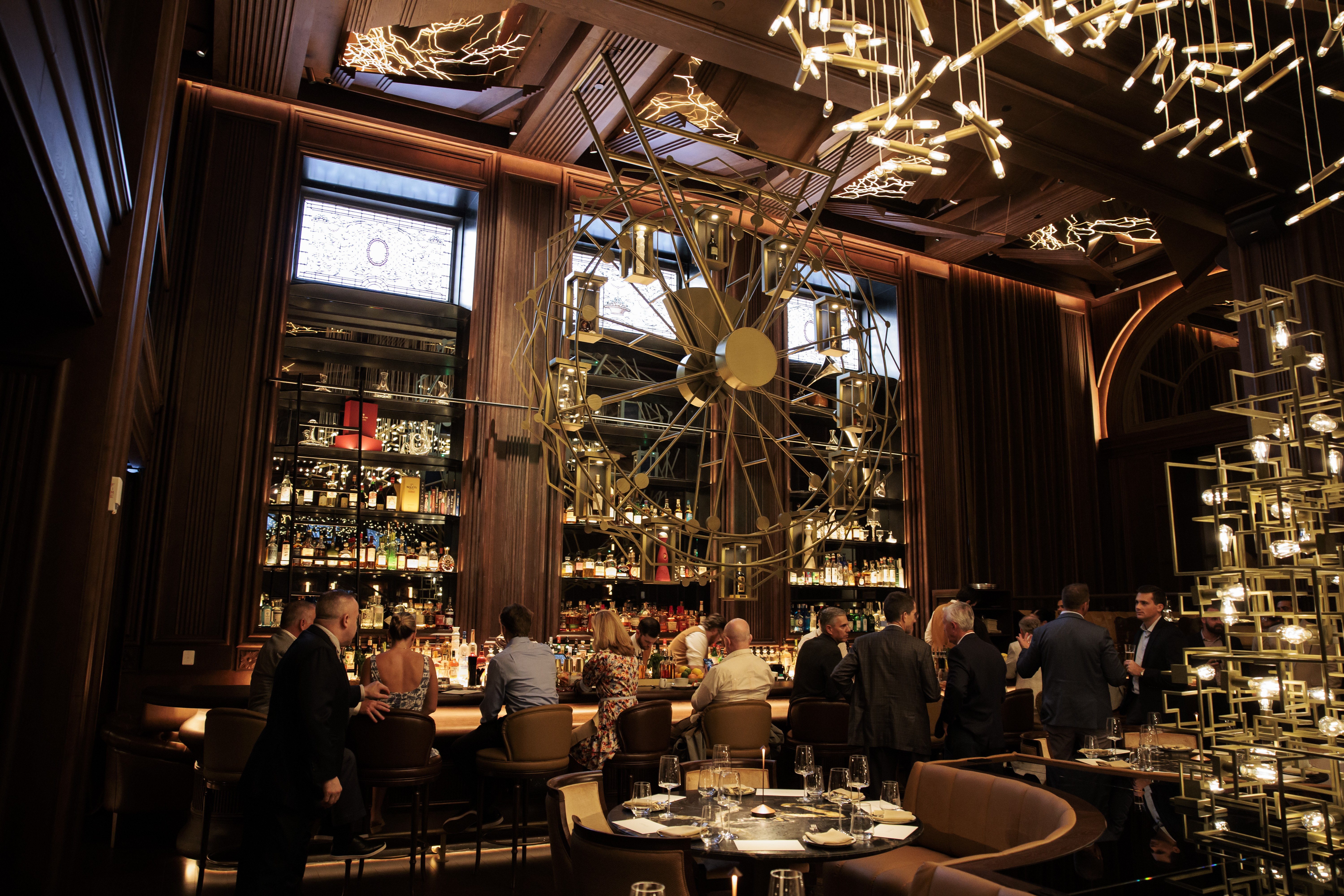
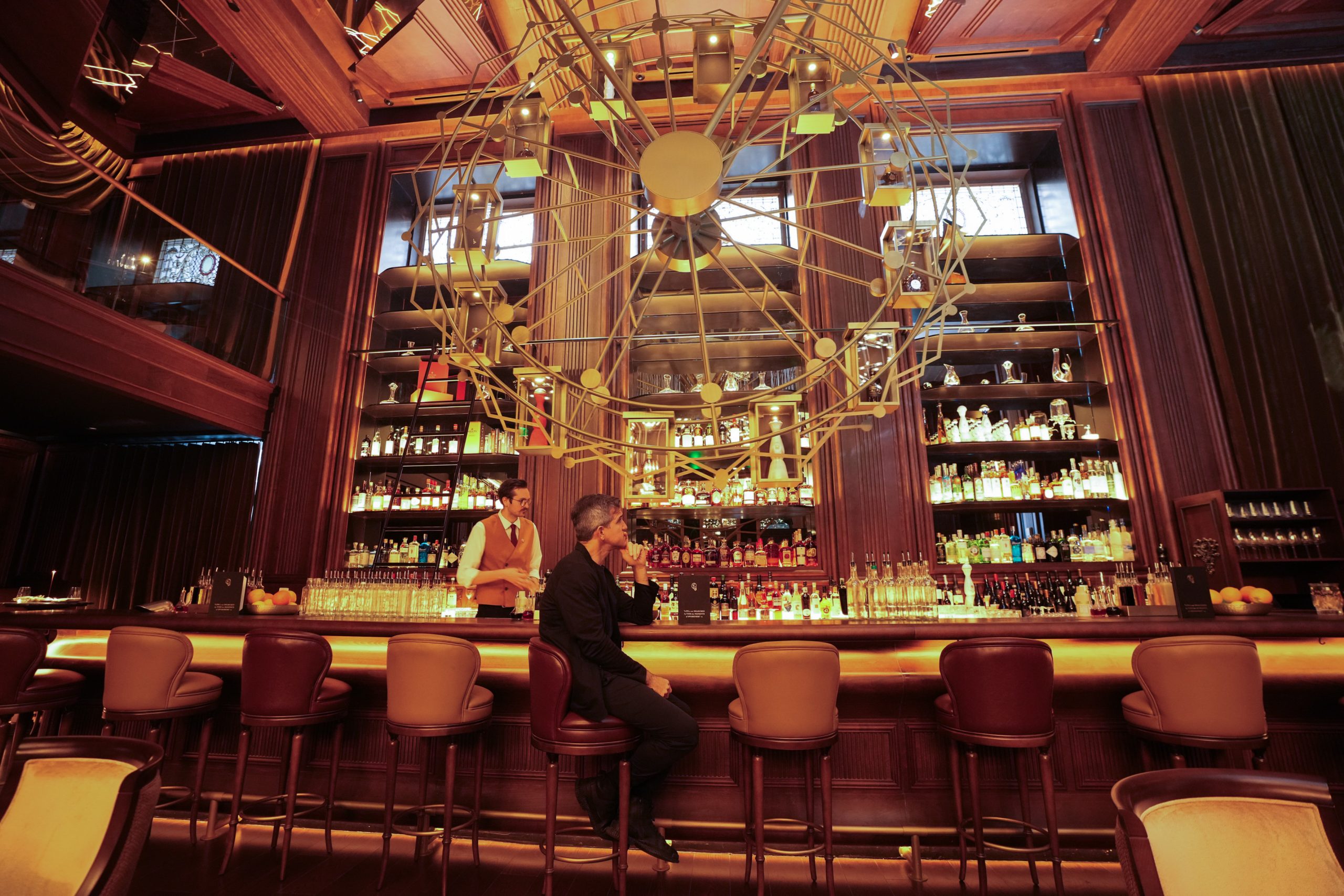
So much energy — both living and remembered —pulses through this dramatic two-story restaurant inside the landmark Bellevue hotel that, as we follow a hostess in what looks like silk pajamas up the long staircase to our table on the mezzanine, the ceiling panels appear to explode with a mirrored tableau of reflected lightning bolts. A chandelier of suspended Edison bulbs showers the plush booths below in a cascade of frozen sparks while a 12-foot brass Ferris wheel nearby cycles slowly over the bar, dangling some of the world’s most extravagant bottles of booze in its hydraulic glass cages.
Am I the target audience for a $350 pour of the Louis XIII “on rotation”? Definitely not. But Mr. Edison has obviously found them, given its guests supposedly go through a bottle a week of the famed cognac (which retails in Pennsylvania for $5,300).
The bar at Mr. Edison in the Bellevue Hotel on Tuesday, Aug. 18, 2026 in Philadelphia.Monica Herndon / Staff Photographer
This carnival of pomp and perpetual motion is overwhelming to take in all at once, along with a live jazz band playing to a crowd tightly cinched into formalwear and glittering jewels. The spirit of Thomas Edison, who in 1904 helped electrify this grand old hotel, would no doubt be moved by this namesake tribute from owner Jeffrey Chodorow, the pioneering restaurateur with a hand in more 60 restaurants, including China Grill and Asia de Cuba.
While those two stars of late 20th-century dining in New York (and Miami) were trendsetters for the eater-tainment fusion movement, Mr. Edison is a decidedly nostalgic throwback to a 1940s-style supper club. It’s built around updates to classic Philly foods, from fried oysters and chicken salad zapped with kimchi to more dutiful re-creations of cakes from Old Original Bookbinder’s and Frog.
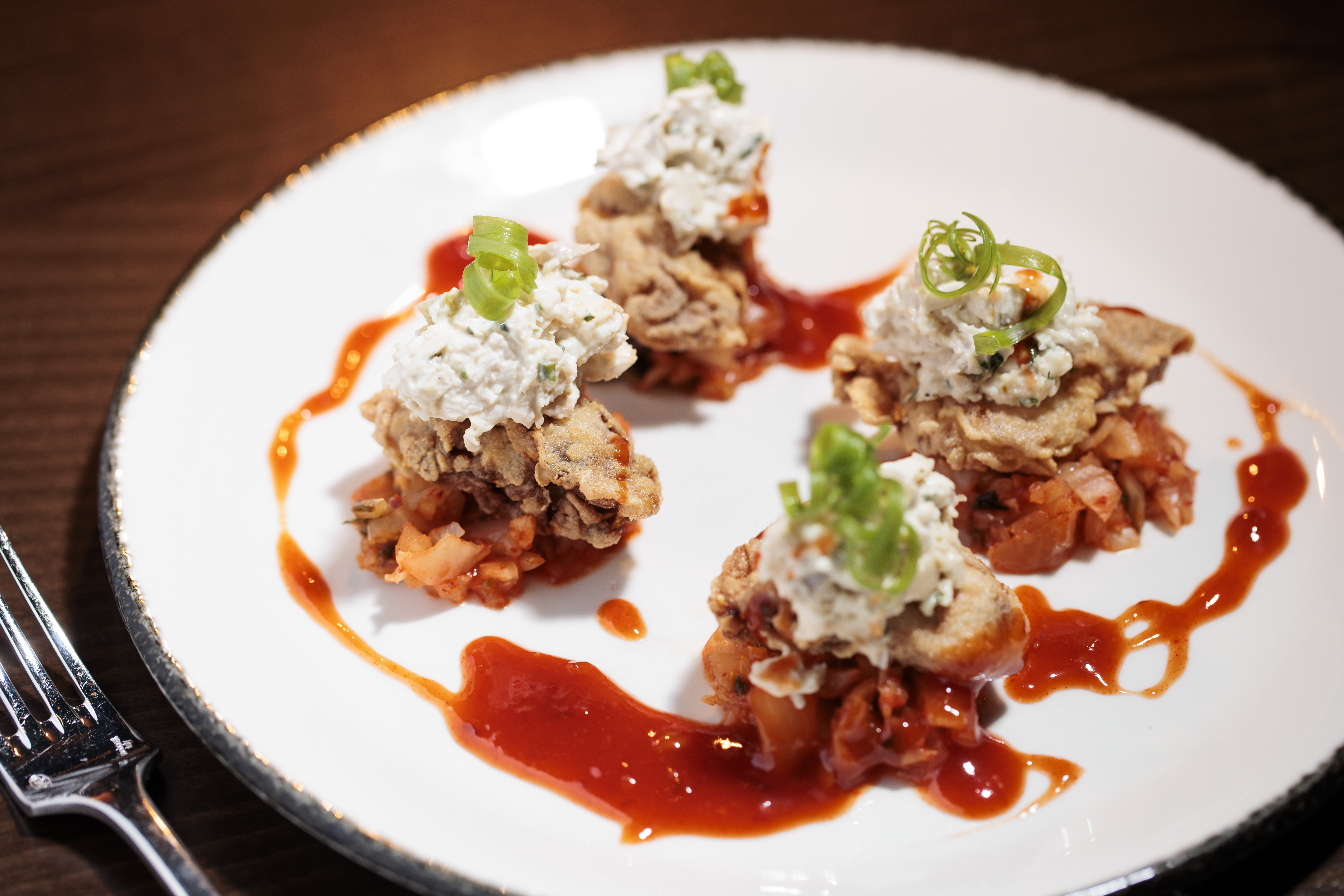
The Korean fried oysters at Mr. Edison in the Bellevue Hotel on Tuesday, Aug. 18, 2026 in Philadelphia.Monica Herndon / Staff Photographer
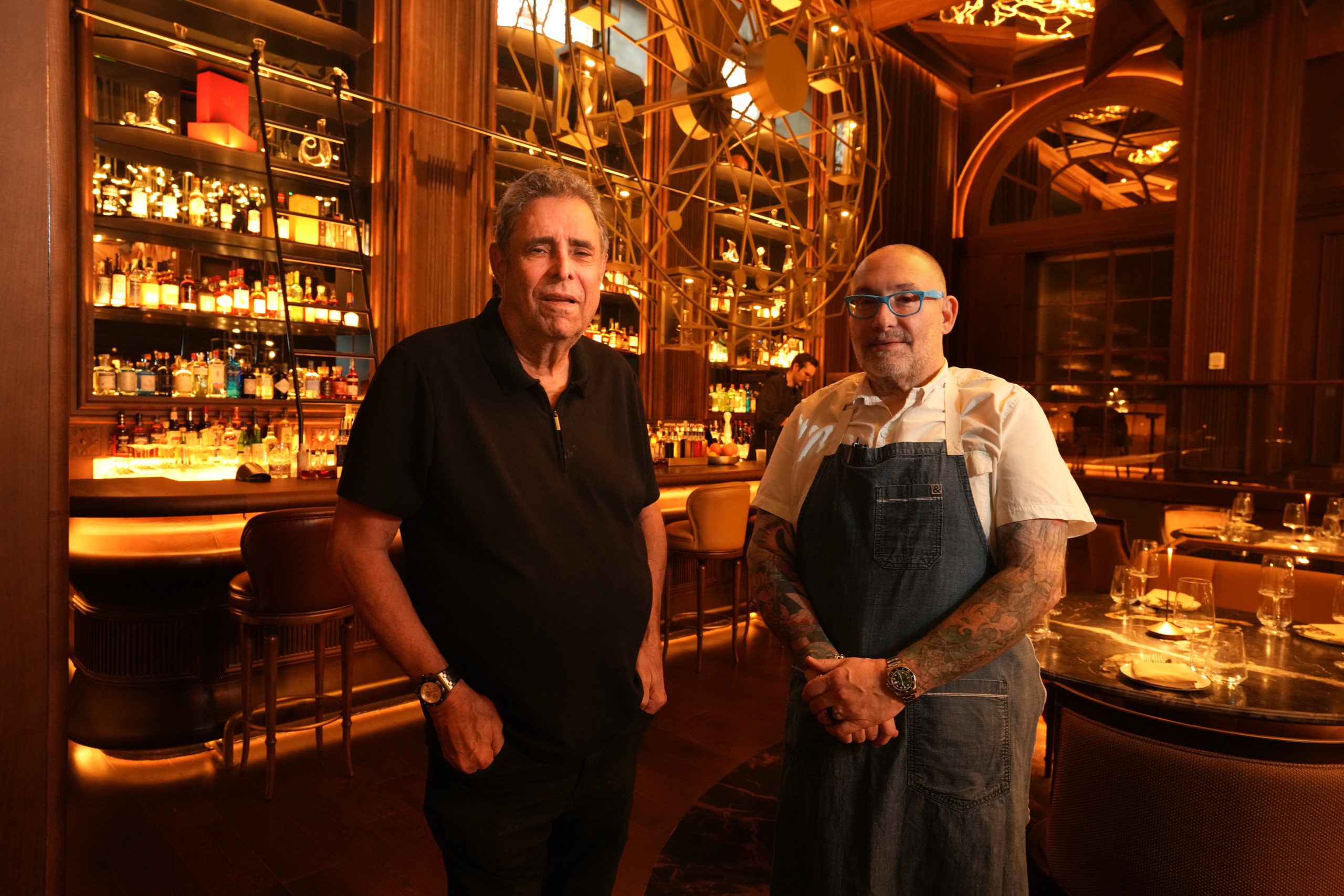
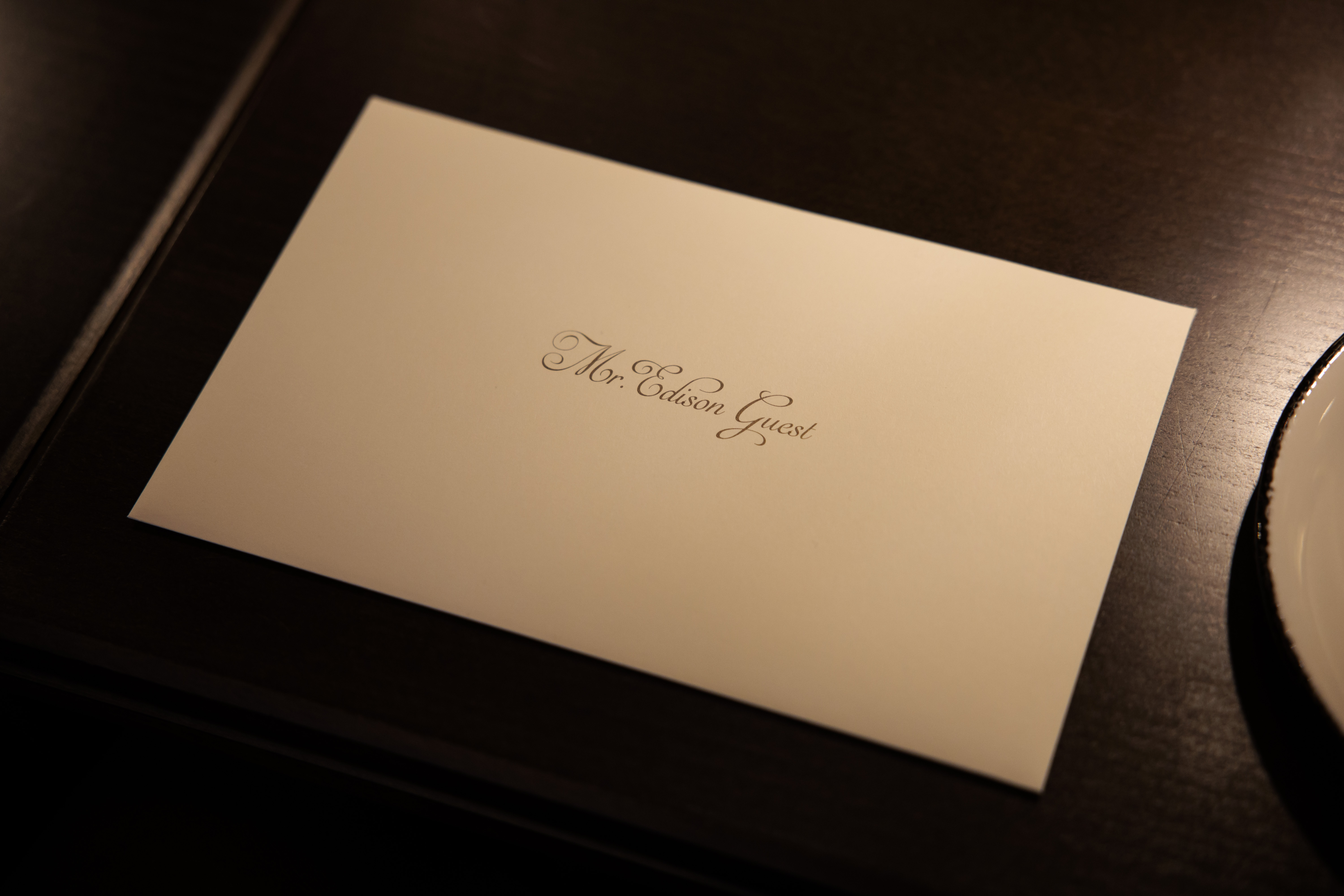
For Chodorow, 76, who studied at Wharton, Mr. Edison’s food is a love letter to legends of the 1970s restaurant renaissance, whichhe enjoyed while practicing law here in the early 1980s. Names like Le Bec-Fin, Le Panetière, and Jimmy’s Milan are invoked like wishful spells across the menus, which arrive tucked inside a souvenir envelope like wedding invitations. (Chodorow, not coincidentally, threw an elaborate engagement party for his wife at the Bellevue in 1982.)
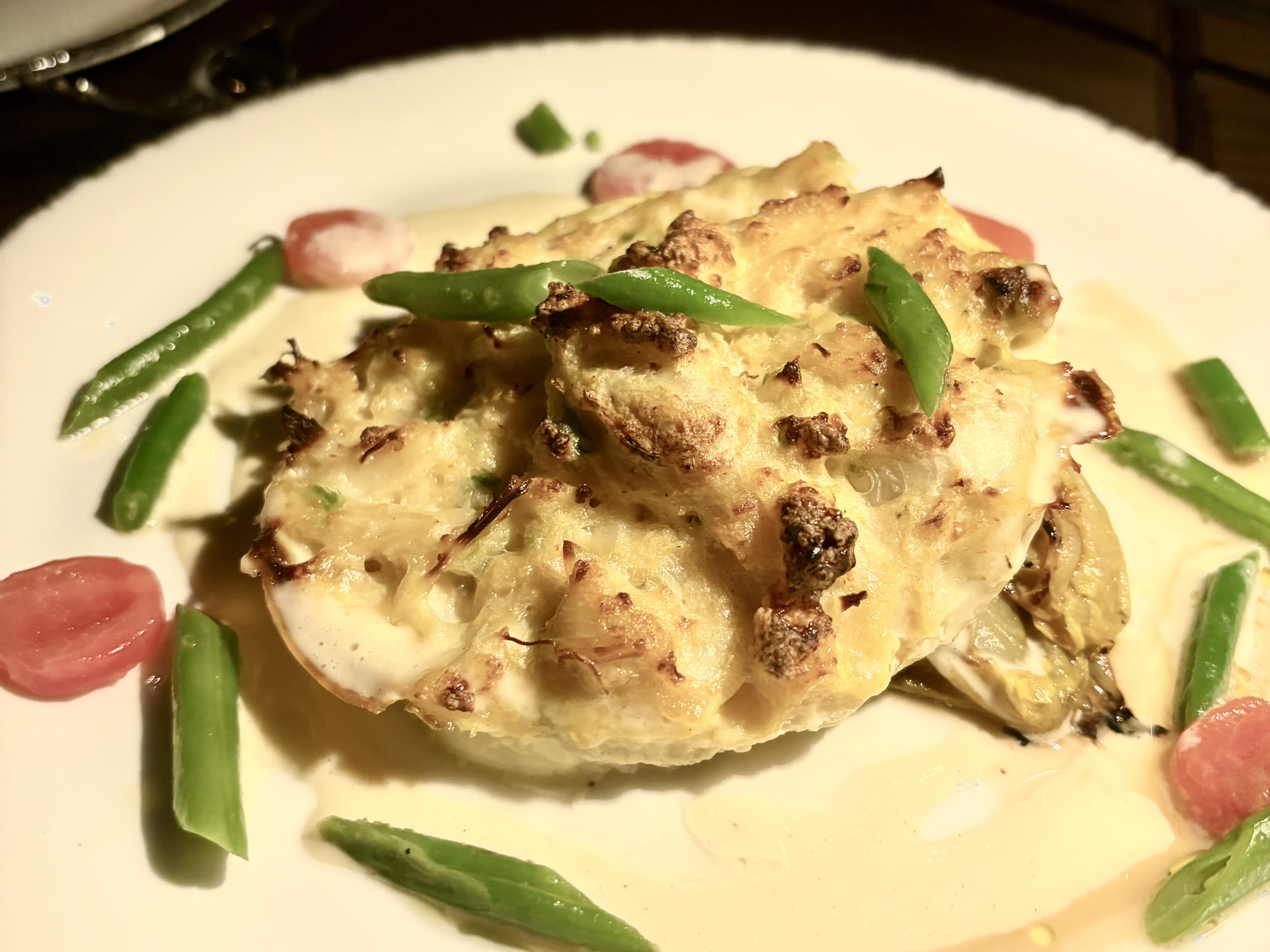
If the Ghosts of Philly Restaurants Past have indeed answered their summons, they might be frowning down on these plates with dismay. The galette de crabe “Le Bec-Fin,” known for its use of seafood mousse to produce a delicately puffy soufflé jeweled with sweet crab, arrived here so deflated and overcooked it tasted like a fishy frittata.
“Chef [Georges Perrier] would probably lock the doors and burn the place down,” replied one of Le Bec’s longtime former chefs after I texted him a picture of my gruesome galette.
Mr. Edison’s rendition of Le Bec-Fin’s crab galette is a far cry from the original.Craig LaBan / Staff
In fact, Mr. Edison’s culinary director, Matt Levin, 53, also cooked at Le Bec-Fin early in his career, which subsequently saw him burst onto the scene in the early 2000s at New Hope’s Moonlight and Lacroix at the Rittenhouse before going solo with Adsum and Square Peg, then eventually landing in the catering world. Most recently, he cooked at the Pineville Tavern in central Bucks County. While his recipe might be the same, Levin’s decision to jettison Perrier’s ring mold for a shallow panwas a fateful miscue. The galette evolved by my second meal into a soggy sponge, still not ideal for $45.
Fewer diners today recall Le Panetière, where Chodorow remembers first tasting Perrier’s food in the late 1960s. But anyone would realize upon one bite of this duck à l’orange tribute that the meaty breast, although still medium-rare, was inexplicably dry and as tough as a chew toy.
Jeffrey Chodorow (left) and chef Matt Levin, at Mr. Edison, the new restaurant at the Bellevue, in Philadelphia, on June 23, 2026.
If only I could have found the frequently absent captain overseeing our table on the mezzanine before the two-hour-plus mark of our glacially slow meal, when he finally asked us, too late and far too smugly, “Did that hit the spot?”
“Not very well,” I replied honestly with a detailed report, noting we’d hardly eaten this $90 sharing splurge as a result. He shrugged a faint reply, then handed us our bill with not even the slightest gesture of apology, though I was not surprised. He’d also forgotten so much as a candle for our dessert after we told him upon arrival (after he asked) that we were celebrating a birthday.
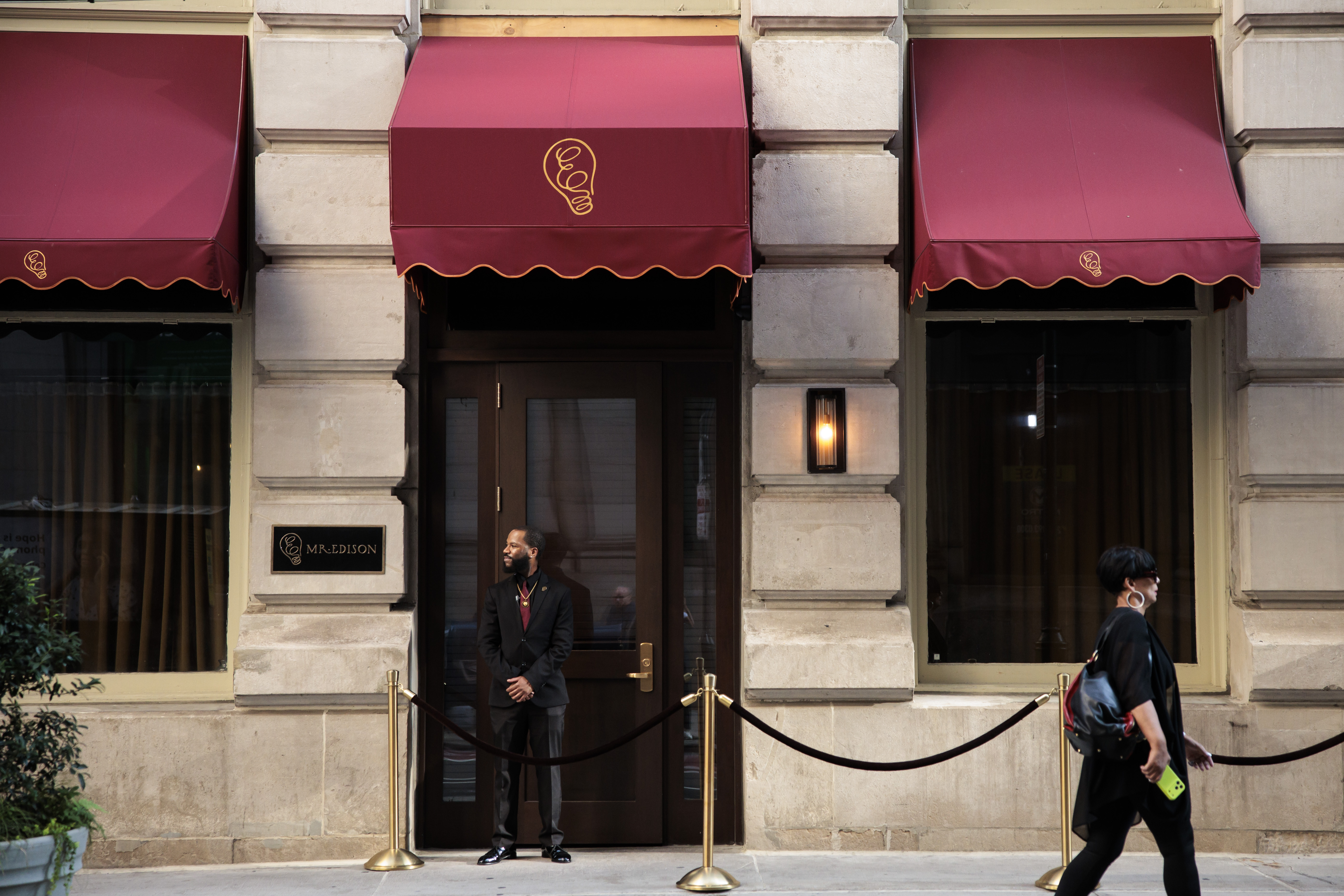
An envelope at each seat holds the menus at Mr. Edison in the Bellevue Hotel on Tuesday, Aug. 18, 2026 in Philadelphia.Monica Herndon / Staff PhotographerThe exterior of Mr. Edison in the Bellevue Hotel on Tuesday, Aug. 18, 2026 in Philadelphia.Monica Herndon / Staff Photographer
As a restaurant romantic, I value grand ambitions such as those that shaped Mr. Edison, a $10 million makeover of the former Polo store that recalls the showplace splendorof Walnut Street’s Restaurant Row in the late 1990s (Striped Bass, Susanna Foo, Brasserie Perrier) more than the DIY quirkiness of the restaurant renaissance that preceded it. It’s far preferable to the cookie-cutter chains that otherwise populate South Broad Street. But executing that ideal in a 133-seat room in 2026 — when, as chef Levin noted, people can make more working for food-delivery apps than actually cooking the food — is a challenge. With check averages of $120 (before tip and tax), no customer wants to hear excuses.
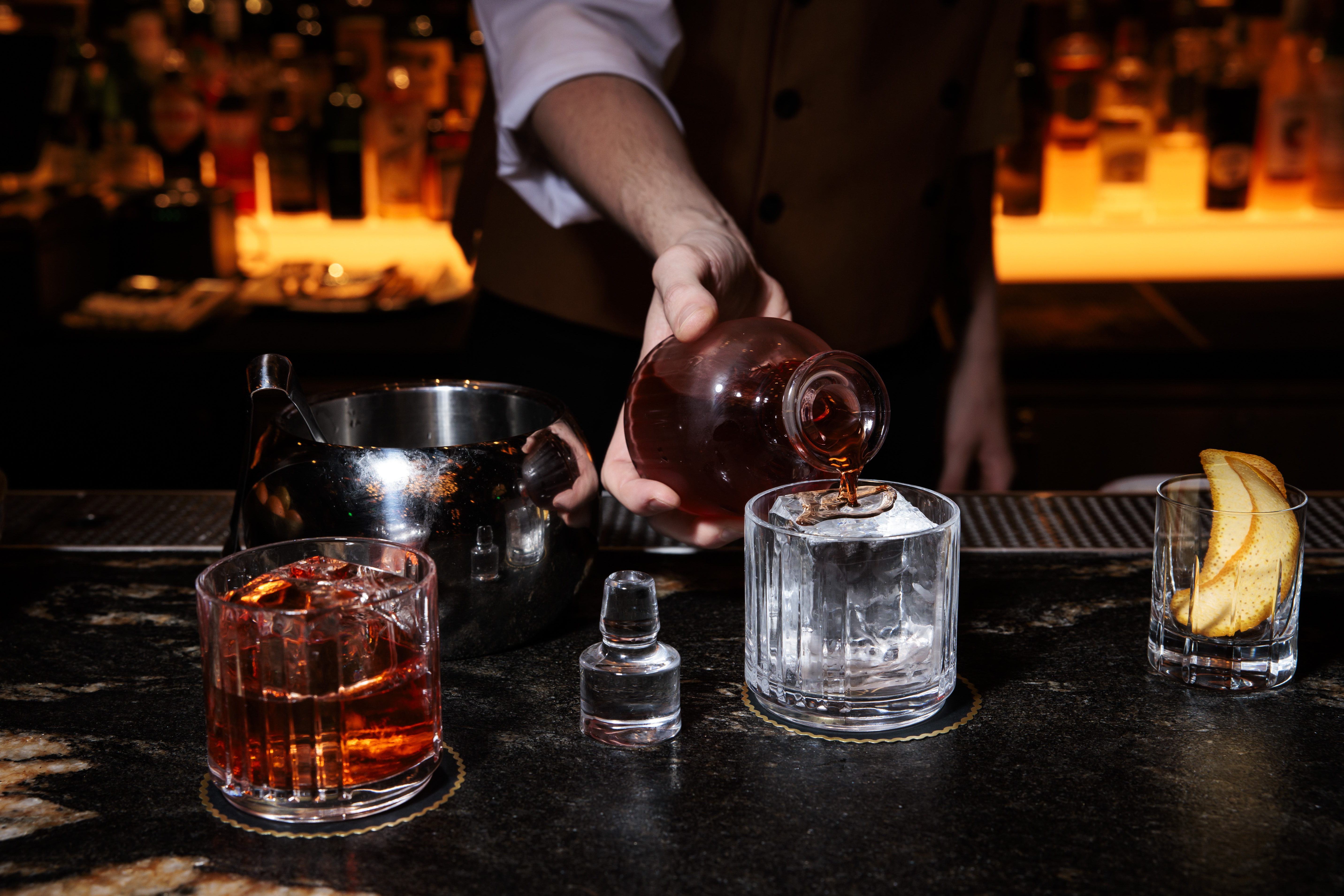
Improvement is within reach. We were seated at my following visit on the daisy wheel banquette that anchors the downstairs dining room, and the service there was much sharper. We had a perfect vantage to hear Drew Nugent & the Midnight Society swing onstage and to drink this bar’s outstanding cocktails, including the large carafe of a superb Negroni (this variation blending Cocchi di Torino and Punt e Mes) poured tableside over giant ice cubes. At $57 for the equivalent of three-plus cocktails, it’s one of Mr. Edison’s best values.
Bartender Michael Chukinas pours the tableside house Negroni at Mr. Edison in the Bellevue Hotel on Tuesday, Aug. 18, 2026 in Philadelphia.Monica Herndon / Staff Photographer
I’d definitely return for a seat at the titanium granite bar to enjoy the well-curated lineup of live music, sip other cocktail hits (the white coffee-infused Wizard or tropical 30 Minute Nap), and graze on some of the small plates.
The Korean fried oysters with kimchi and chicken salad was an intriguing riff on one of my favorite historical Philly food oddities, the spice and fermented funk of the cabbage cutting through the clubby richness. Waffle chips to scoop paddlefish caviar from fancy French onion dip was an accessible alternative to the far pricier sturgeon caviar service. The quail yolk-dotted beef tartare ringed by fried beef tendon puffs was irresistible, while a petite portion of seared filet mignon fanned over a creamy au poivre sauce with morels tapped another red-meat craving without the steakhouse clichés.
The Jimmy’s Milan salad — essentially crunchy lettuce tossed with bacon, big shrimp, hard-boiled eggs, and a zesty Russian-Italian hybrid dressing — is proof that some vintage pleasures don’t need to be reinvented to be appreciated. The restaurant’s $48 baked potato, stuffed with nearly half a pound of sweet lump crab au gratin, was the most memorable thing I ate at Mr. Edison, a super spud splurge that could hit yet another level with a $40 “blackout” addition of caviar.
A couple of the small plates fell short. A meaty flap of tuna carpaccio was not pounded thin enough. The corn-encrusted soft-shell crabs over mole verde were not soft enough, leaving me with a mouthful of shells.
Updating classics is a tricky prospect, and often Levin’s contemporary reworking drifted too far afield for its own good. The baked “Edison meets Rockefeller” oysters were so underdressed, with splashes of Mornay and fines herbes butter replacing the typically lush green puree, it lacked the indulgence to suit its name, even with a crispy nugget of guanciale. A $110 rendition of lobster Thermidor was not simply unrecognizable; without the full shell, into which it is typically stuffed and gratinéed, it was one-dimensional and boring.
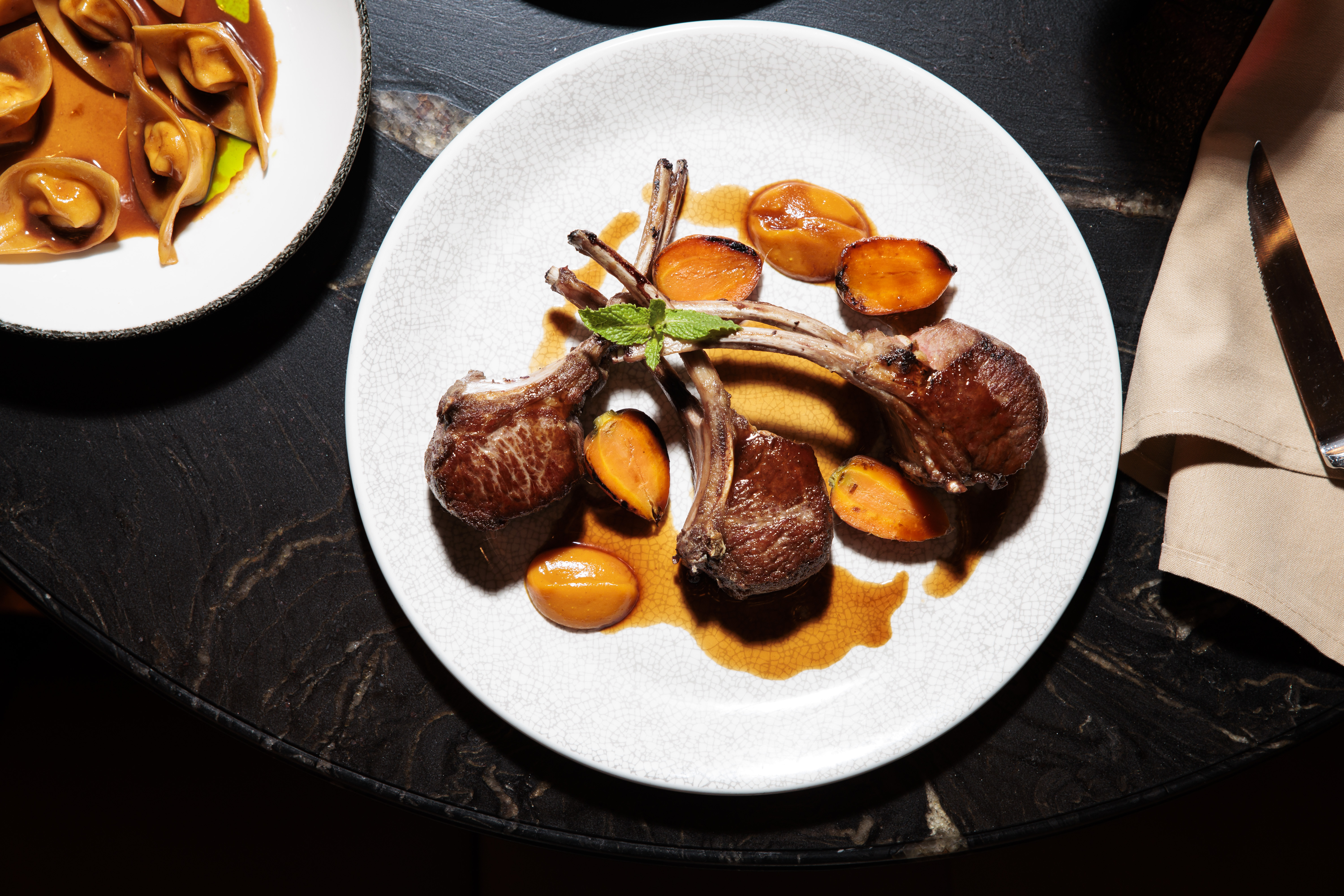
The grilled lamb chops spiced with vadouvan curry with Thumbelina carrots were the most satisfying of the “Grand Plates” for two, while the butterflied whole dorade over chimichurri and the buffalo milk ricotta ravioli were safe bets for the unadventurous.
The lamb chops at Mr. Edison in the Bellevue Hotel on Tuesday, Aug. 18, 2026 in Philadelphia.Monica Herndon / Staff Photographer
Too many other big dishes stumbled over the basics of seasoning — like a veal chop Milanese that cradled a handful of flaky salt atop its breaded crust. The brick chicken was so salty that my gums ached until the end of the meal.
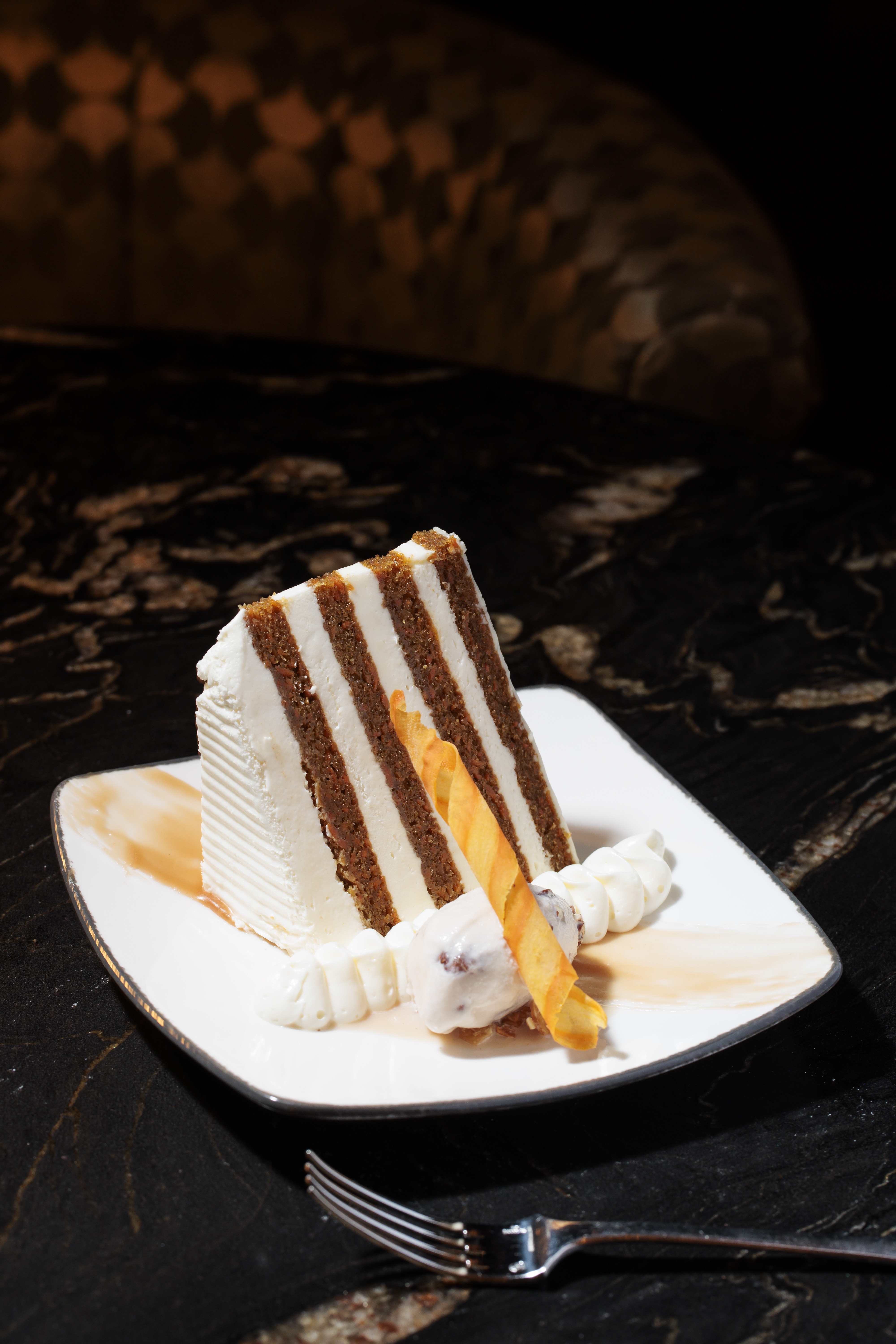
Tucked into the stuffiest far corner of the mezzanine behind the bar for this final visit, I’d hoped an old-fashioned dessert would offer enough sweetness to counter that salty bird. I considered one of the winners I’d already enjoyed at previous visits: a re-creation of the coconut cake from Old Original Bookbinder’s, a tasty nod to Frog’s legendary carrot cake with butter pecan ice cream, or the dense chocolate-and-peanut-butter tart.
I opted for the crème brûlée to keep it easy, only to find its caramel crust — ideally torched to order and still warm — was cold by the time it ascended to our second-floor perch beneath the lightning-bolt rafters. I looked down toward the bar’s Ferris wheel as it cycled up toward us and couldn’t help but imagine the Ghosts of Philly Restaurants Past riding along with those glass cages, so hopeful for their comeback moment. Rising then falling, again and again, they sent shrugs of disappointment in my direction as they rolled away.
The carrot cake at Mr. Edison at the Bellevue Hotel on Tuesday, Aug. 18, 2026 in Philadelphia.Monica Herndon / Staff Photographer
Mr. Edison
Dinner Sunday through Thursday, 5 to 11 p.m.; Friday and Saturday, until midnight.
Small plates, $19-$45; Sharing plates for two, $58-$115.
Fully wheelchair accessible to all parts of the restaurant, including two wheelchair accessible seats at the bar.
Gluten-free: At least half the menu is either gluten-free or can be modified, including items cooked in a gluten-free fryer.
Menu highlights: Caviar dip; Jimmy’s Milan salad; Korean fried oysters; filet au poivre; baked potato with crab gratin; buffalo ricotta ravioli; lamb chops; carrot cake.
Beverage program: Don’t let the ostentatious bling bottles on the Ferris wheel fool you. The bar is Mr. Edison’s strong suit, with well-crafted and thoughtful updates to classic ideas using modern techniques and quality ingredients. The tableside Negroni towers are worth it, along with other cocktail highlights. The wine list is more predictable.
Mr. Edison, the new restaurant at the Bellevue from Jeffrey Chodorow, in Philadelphia, June 23, 2026.
Fall is nearly here, and for fruit lovers, that means one thing: It’s apple-picking season.
In the Philly area, there are more than a few orchards where you can pick apples for peak autumnal fun. Whether you’re into the crisp, sweet taste of a Gala or the crunchy, tart Granny Smith, you’re sure to get your fill.
When does apple-picking season start?
The season begins at the end of August for most of Pennsylvania, with Ginger Golds and Honeycrisps available for picking, and typically lasts until mid-November, said Norman Schultz, farm manager at Linvilla Orchards.
Here are great orchards, in New Jersey and Pennsylvania, for your apple-picking adventures, complete with treats like apple cider doughnuts and apple pies to enjoy on site or take home.
Note: Due to freezing temperatures in the spring, this year’s apple availability will be limited, according to many farms on this list. Be sure to to confirm ripening dates and available varieties ahead of time.
Indian Orchards Farm
Stop by the farm stand to sign up for apple picking. This over 100-year-old farm in Media grows about 25 apple varieties, including Honeycrisp, Gala, and Smokehouse. Admission is $3.50 per person, then pay by the pound for what you pick, with buckets and bags offered. On weekends, get hayride and admission combo tickets for $12.
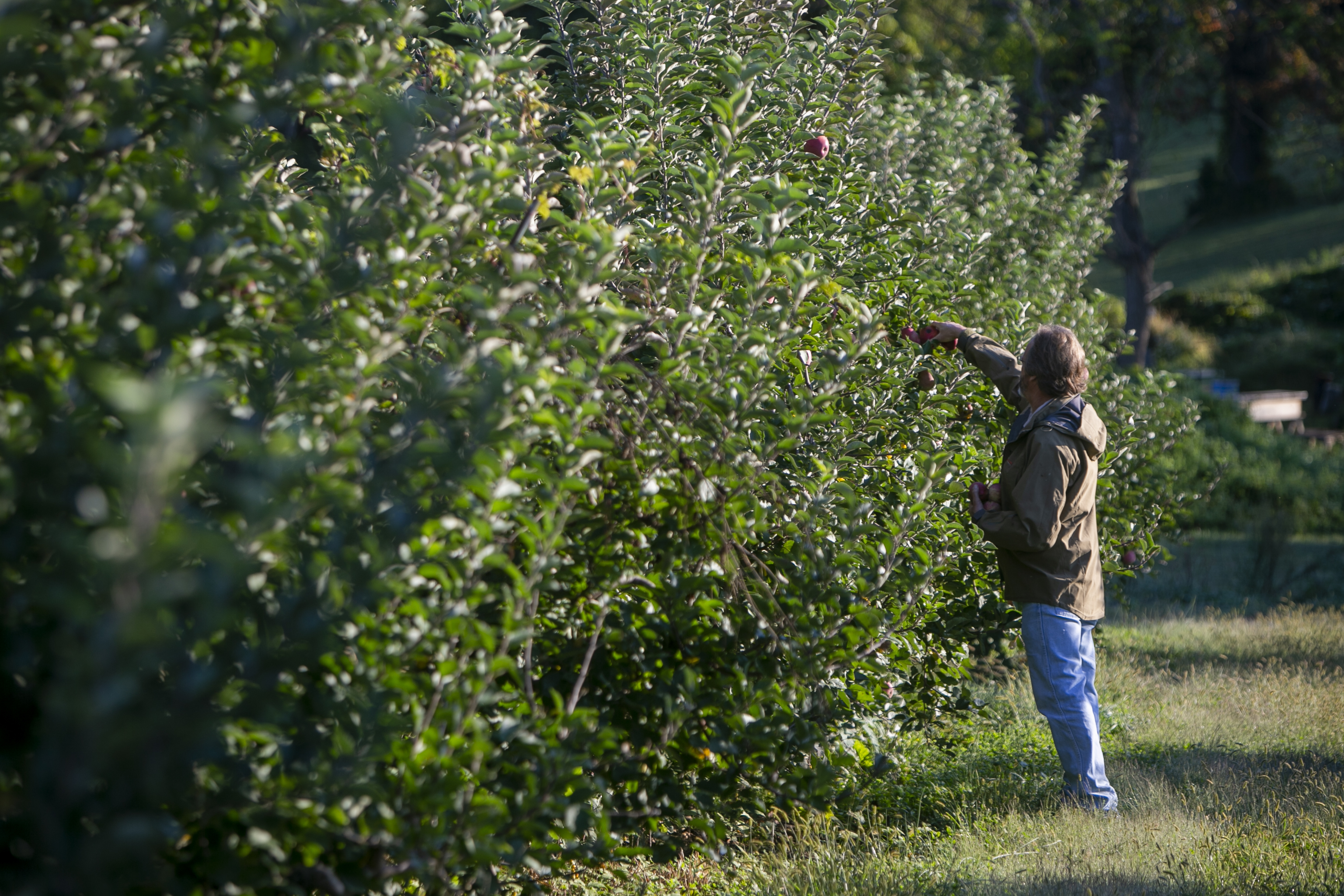
“Farmer Norm” Schultz among the Stayman apple trees at Linvilla Orchards, 137 W. Knowlton Road, Media, in 2020.ALEJANDRO A. ALVAREZ / Staff Photographer
Linvilla Orchards
This Delco orchard is a must visit, thanks to the 25 types of apples grown there throughout the season, like Crimson Crisp, McIntosh, and Jonagold. Fill a two-quart bag for $11 per person. Get tickets online. Linvilla also offers tons of baked goods, including fresh apple cider doughnuts — a seasonal favorite.
📍137 W. Knowlton Rd., Media, Pa. 19063, 🕑 PYO Monday to Sunday, 8 a.m. to 4 p.m., 📞 610-876-7116, 🌐 linvilla.com, 📷 @linvillaorchards
Styer Orchard
This Bucks County orchard will resume its pick-your-own apples this fall. Bring your own bag and purchase the fruit for $1.89 per pound.
This Chester County orchard typically offers pick-your-own apples through early November with over 40 varieties like Mutsu, Gala, and Pink Lady on hand. It’s best to call ahead or check Facebook to see what is available. Pricing for bags varies by size. It’s $3 per person (over 3 years old) to enter the field for picking. Highland Orchards’ farm market is known for its apple cider doughnuts.
📍1000 Marshallton-Thorndale Rd., West Chester, Pa. 19380, 🕑 PYO Tuesday to Friday 9 a.m. to 4 p.m., Saturday and Sunday 9 a.m. to 3 p.m., 📞 610-269-3494, 🌐 highlandorchards.net, 📷 @highlandorchardsinc
Terhune Orchards
Terhune’s pick-your-own apple orchard grows a plethora of varieties. Folks 4 years old and up must purchase bags for $10, $15, or $27 — no entrance fee required. A fall festival, filled with pony rides, live music, and other family fun, runs until the first week of November. Terhune also has an on-site winery and a bakery with apple cider doughnuts. Note: The farm store, winery, and festival events are at 330 Cold Soil Rd. Apple picking takes place at 13 Van Kirk Rd. and 330 Cold Soil Rd. Check the website to confirm location and availability.
📍 13 Van Kirk Rd., Princeton, N.J. 08540, 🕑 PYO Monday to Sunday, 9 a.m. to 5 p.m. (call the farm store during apple season) 📞 609-924-2310, 🌐 terhuneorchards.com, 📷 @terhuneorchards
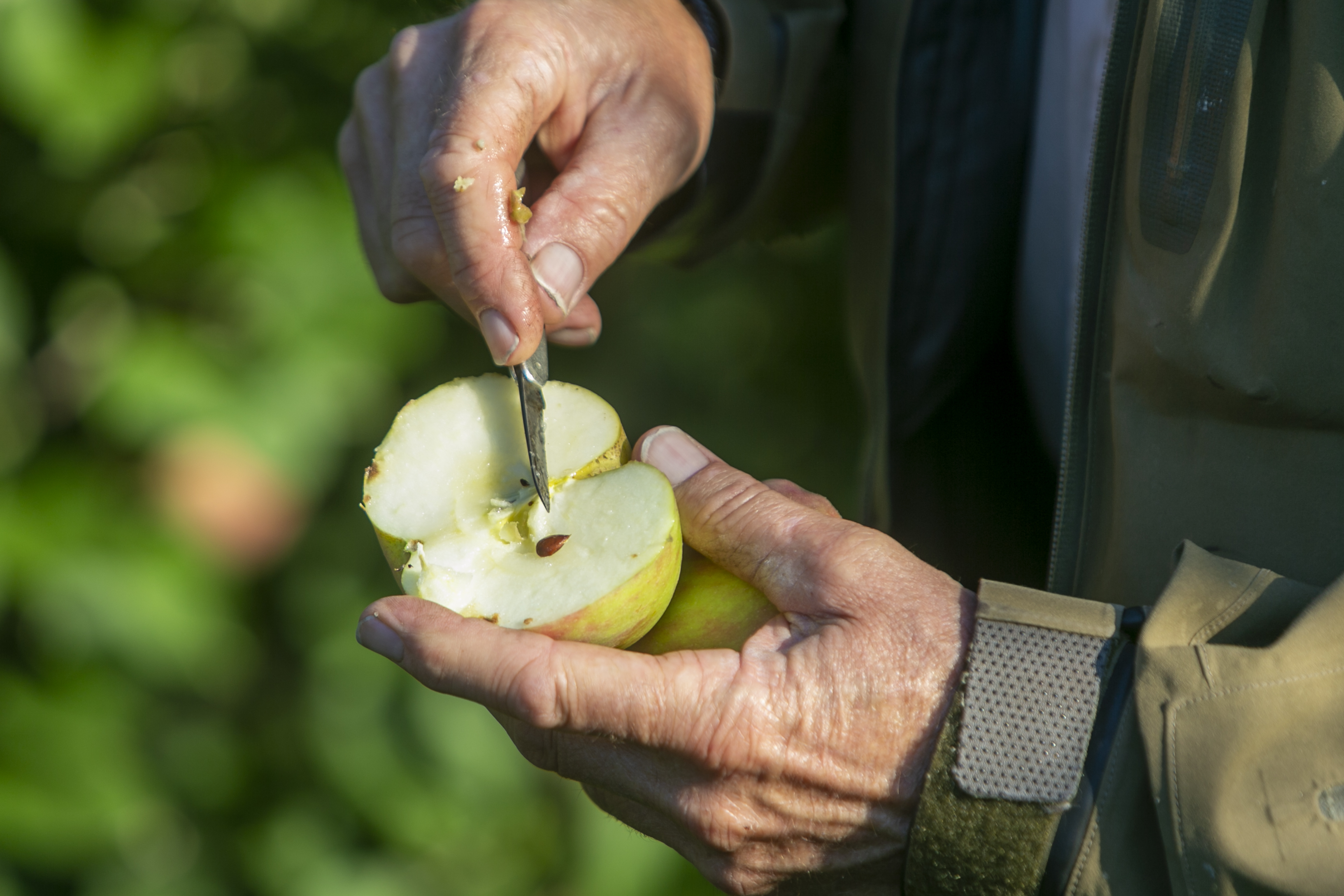
“Farmer Norm” Schultz cutting into a Stayman apple to look at the color of the seeds as a guide for when these can be picked at Linvilla Orchards, 137 W. Knowlton Road, Media, in 2020.Alejandro A. Alvarez / Staff Photographer
Solebury Orchards
Reservations are required for weekend apple picking at this Bucks County farm, where more than 30 varieties of apples are grown each season, according to its website. These include Pixie Crunch, Fuji, Jonathan, and Cortland, among others. Apples are priced by the pound for whatever you pick. Solebury’s farm market is an apple lover’s paradise thanks to its applesauce, apple butter, apple chips, fresh cider, cider doughnuts, and more, with mail order available for applesauce.
Weaver’s Orchard has some 18,000 apple trees on 35 acres of land and a wide selection of apples that include Honeycrisp, Crimson Crisp, Golden Delicious, and Jonagold. No reservations are required to pick-your-own apples, but you will need to use Weaver’s Orchard containers (starting at $29 — but prices may change) to hold your haul. Once you are done in the orchards, check out the market for everything from apple cider doughnuts to apple dumplings, as well as apple cider pressed on-site.
📍40 Fruit Lane, Morgantown, Pa., 🕑 PYO Monday to Thursday, 9 a.m. to 4:30 p.m., Friday 9 a.m. to 5:30 p.m., Saturday 8 a.m. to 3:30 p.m., 📞 610-856-7300, 🌐 weaversorchard.com, 📷 @weaversorchard
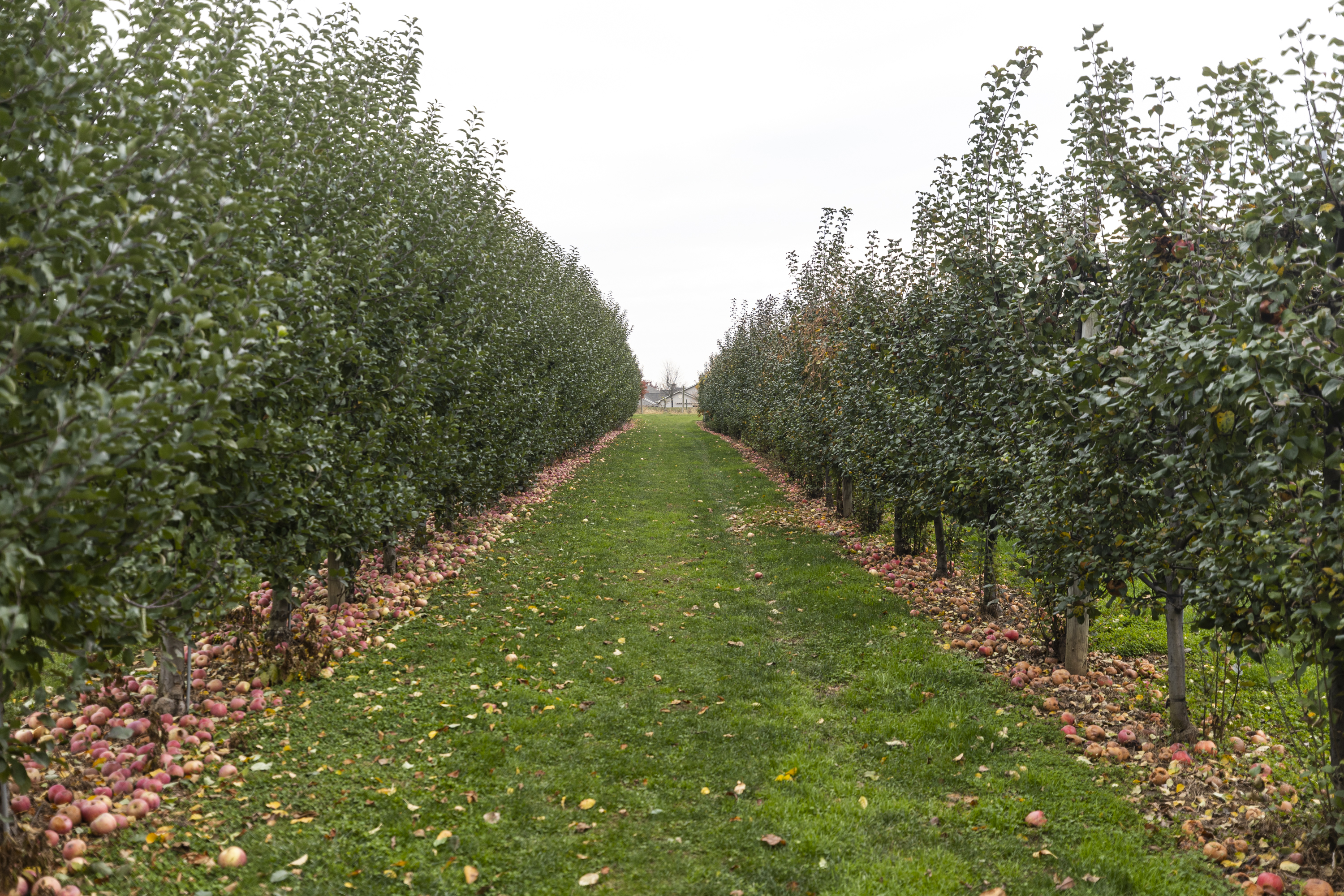
Apples lie on the ground as the pick-your-own season comes to an end and the transition to the winter season begins at Shady Brook Farms in Yardley in November 2023.Tyger Williams / Staff Photographer
Brecknock Orchard
Apple-picking season is expected to run into early November this year at Brecknock Orchard, where over 40 varieties of apples, including Gala, Golden and Red Delicious, Jonamac, and Cortland, are grown. If veggies are more your thing, you can pick your own from over 40 types of pumpkins, squash, and gourds. Brecknock’s farm market has tons of homemade items, like apple cider doughnuts, apple dumplings, and pumpkin rolls, plus apple cider and fruit slushies. The farm also has local delivery and curbside pickup. Check the website for updates on available produce for pick-your-own.
📍 390 Orchard Rd., Mohnton, Pa. 19540, 🕑 PYO Monday, Tuesday, Thursday, and Friday 8 a.m. to 7 p.m., Wednesday and Saturday 8 a.m. to 5 p.m. (through October), 📞 717-445-5704, 🌐 brecknockorchard.com, 📷 @brecknockorchard
Grim’s Orchard & Family Farms
A drive to Lehigh County takes you to this orchard, with its some 30,000 trees growing varieties like Premier Honeycrisp, Sweet Maia, Autumn Crisp, and Pixie Crunch. Each person 3 and up needs to buy at least a quarter-peck bag (about 2.5 pounds of produce) for $11 to enter the orchard. Larger sizes (up to 1/2 bushel for $52) are available, too. The Grim’s Fall Festival starts Labor Day weekend, featuring such activities as a corn maze and hayrides.
📍 9875 Schantz Rd., Breinigsville, Pa. 18031, 🕑 PYO Monday to Friday 10 a.m. to 6 p.m. (last picking bags sold at 5 p.m.), Saturday and Sunday, 10 a.m. to 7 p.m. (last picking bags sold at 5:30 p.m.), 📞 610-841-1417, 🌐 grimsorchard.com, 📷 @grimsorchard
Duffield’s Farm
Fill a bag of pick-your-own apples at this farm in Sewell, N.J. Then, take a hayride and enjoy an apple cider doughnut. A small bag (8 to 10 pounds) and a hayride combo ticket is $21; a large bag (18 to 20 pounds) and hayride is $36. Be sure to call ahead to confirm apple availability.
Food magazine Bon Appétit released its annual best new restaurants list on Monday, and it includes two Philadelphia restaurants.
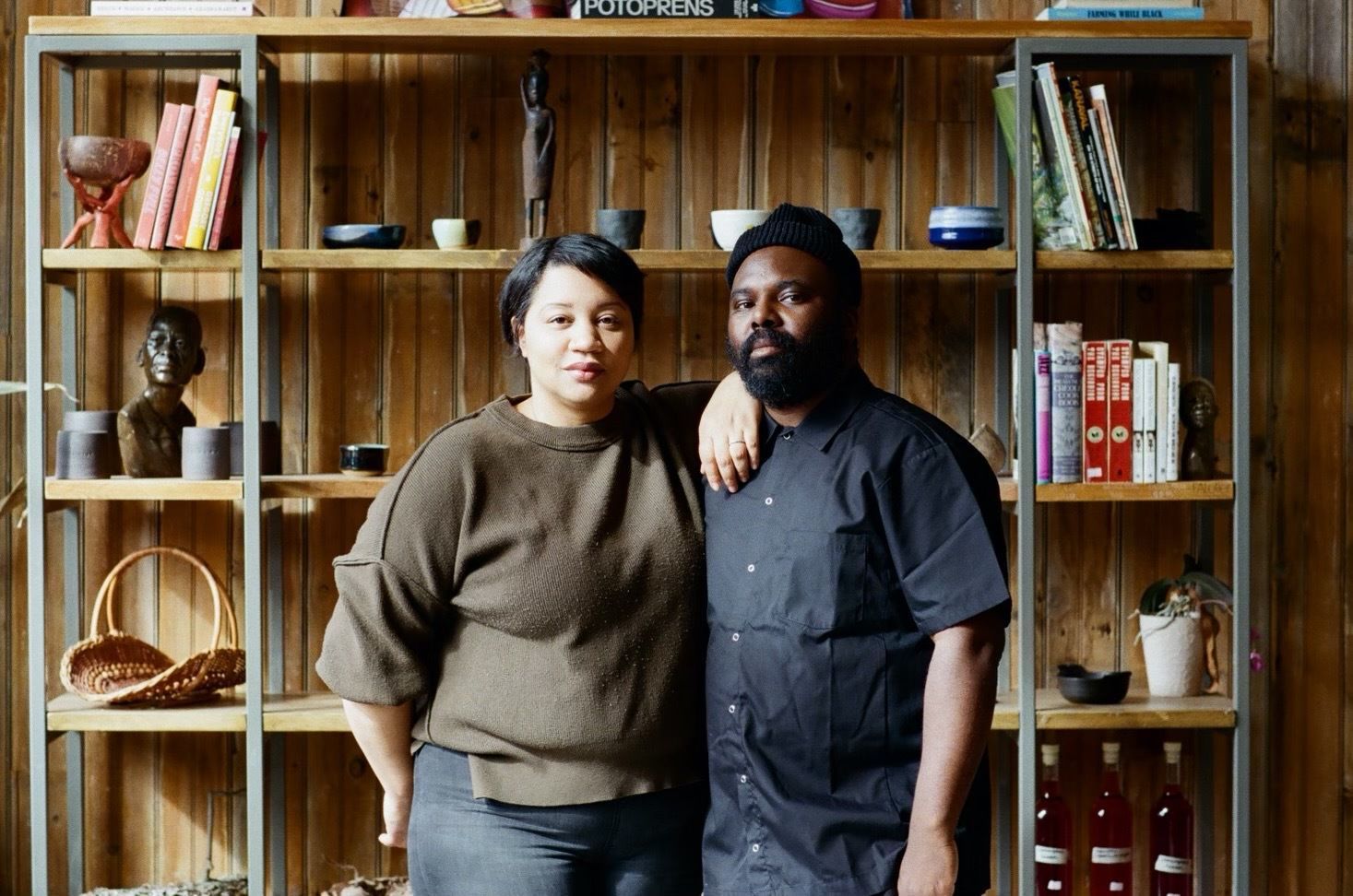
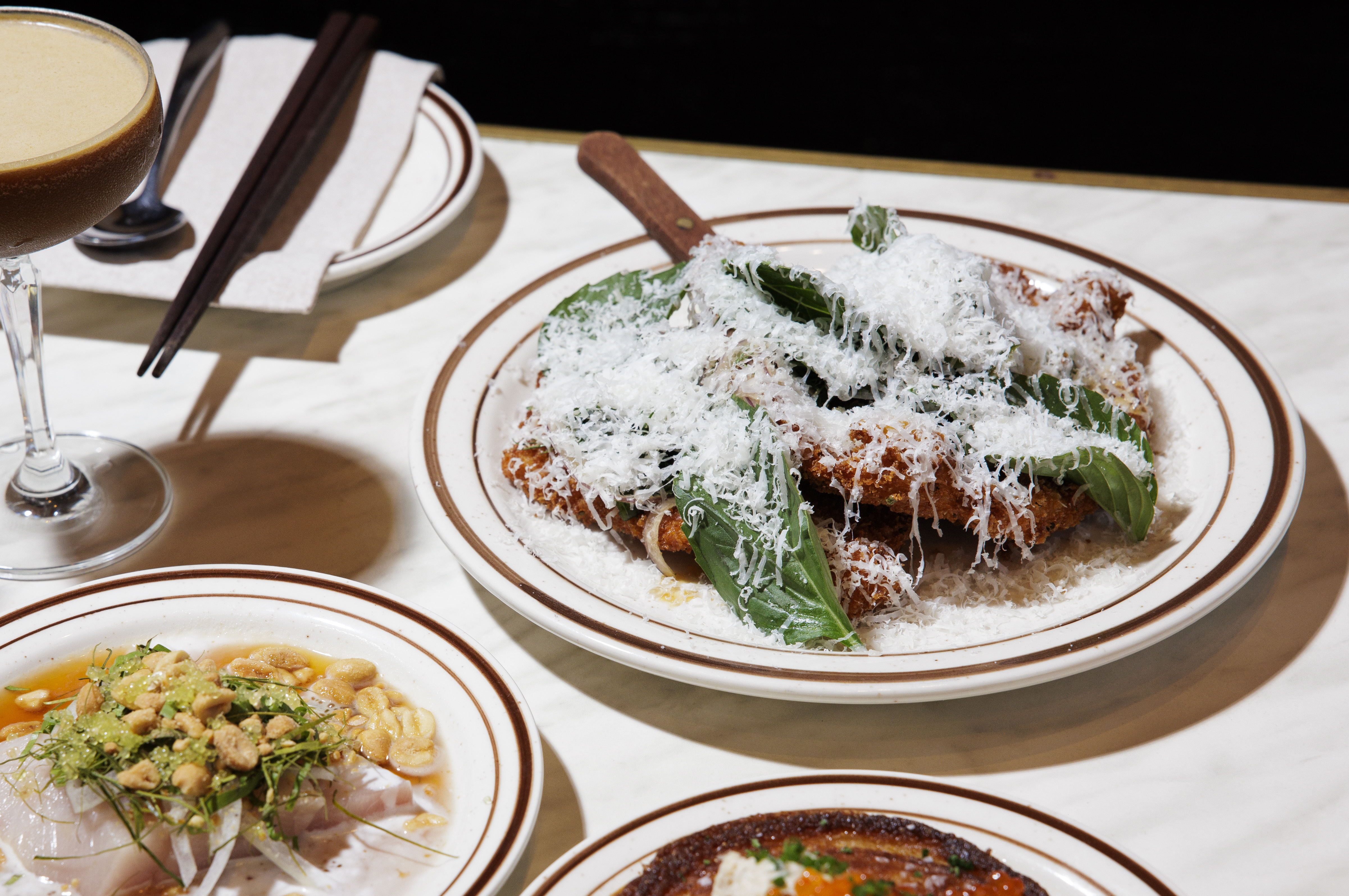
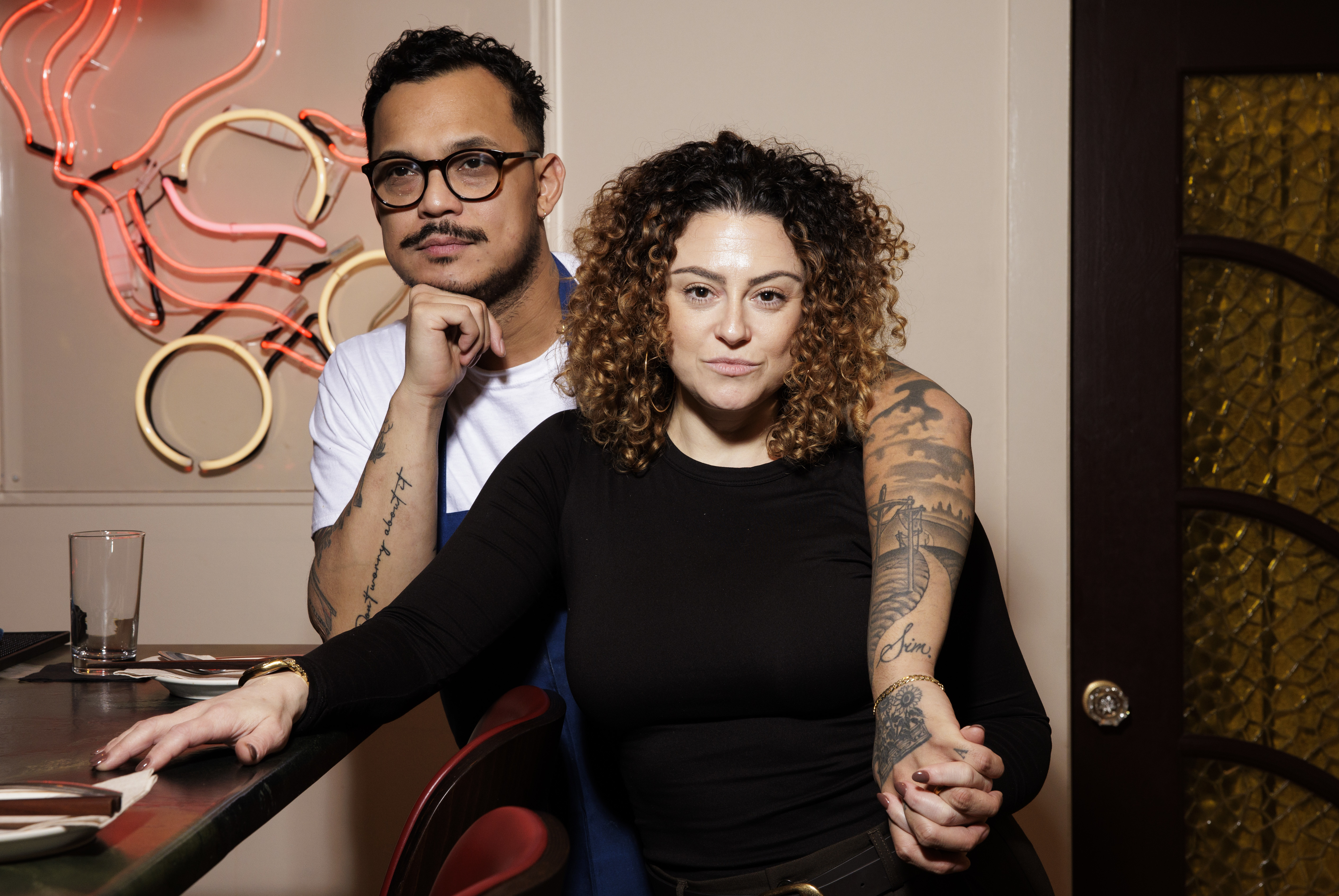
Honeysuckle, Omar Tate and Cybille St.Aude-Tate’s fine-dining restaurant in North Philadelphia, and Sao, Phila and Rachel Lorn’s East Passyunk oyster bar, were among the 19 establishments that made the cut.They joined restaurants in New York City, San Francisco, Chicago, Seattle, Nashville, and Birmingham, Ala., and more.
The unranked list defines new restaurants as those that opened between March 2025 and March 2026. Scouts visited restaurants in 43 U.S. cities and rated them according to seven criteria: flavor, technique, hospitality, ambiance, cultural significance, innovation, and sense of place.
To be considered the best, “a restaurant must serve dishes and drinks that are complete in terms of flavor and technique, from the pre-meal cocktails to dessert, like an album with no skips,” wrote Bon Appétit editor-in-chief (and former Inquirer food editor) Jamila Robinson.
Partners and chefs Cybille St.Aude-Tate and Omar Tate, who opened Honeysuckle at 611 N. Broad St. in April 2025.Clay Williams
Tate and St.Aude-Tate opened Honeysuckle at 611 N. Broad St. in April 2025. The restaurant’s five-course tasting menu evolved from the couple’s beloved West Philly café-market, Honeysuckle Provisions, which closed in 2024. The couple uses the menu to weave a dynamic and complex narrative about how the Black diaspora has shaped American food culture.
The Mawn Cutlet at Sao, the East Passyunk Avenue oyster bar from married restaurateurs Phila and Rachel Lorn.Monica Herndon / Staff Photographer
“Chefs Omar Tate and Cybille St.Aude-Tate deliver a showstopping walk through nostalgia, pop culture, Philadelphia, and Black American history through dishes that spark new reflection and conversation,” Robinson wrote of Honeysuckle.
Phila (left) and Rachel Lorn (right) own Cambodian noodle bar Mawn and oyster bar Sao. Bon Appétit has named Sao one of the country’s best new restaurants of 2026.Monica Herndon / Staff Photographer
Since the beginning of 2025, nearly a dozen bagel shops have opened or leased space in Philadelphia and its suburbs, bringing new locations from local operators as well as fast-growing out-of-town brands that see the region as fertile ground for expansion.
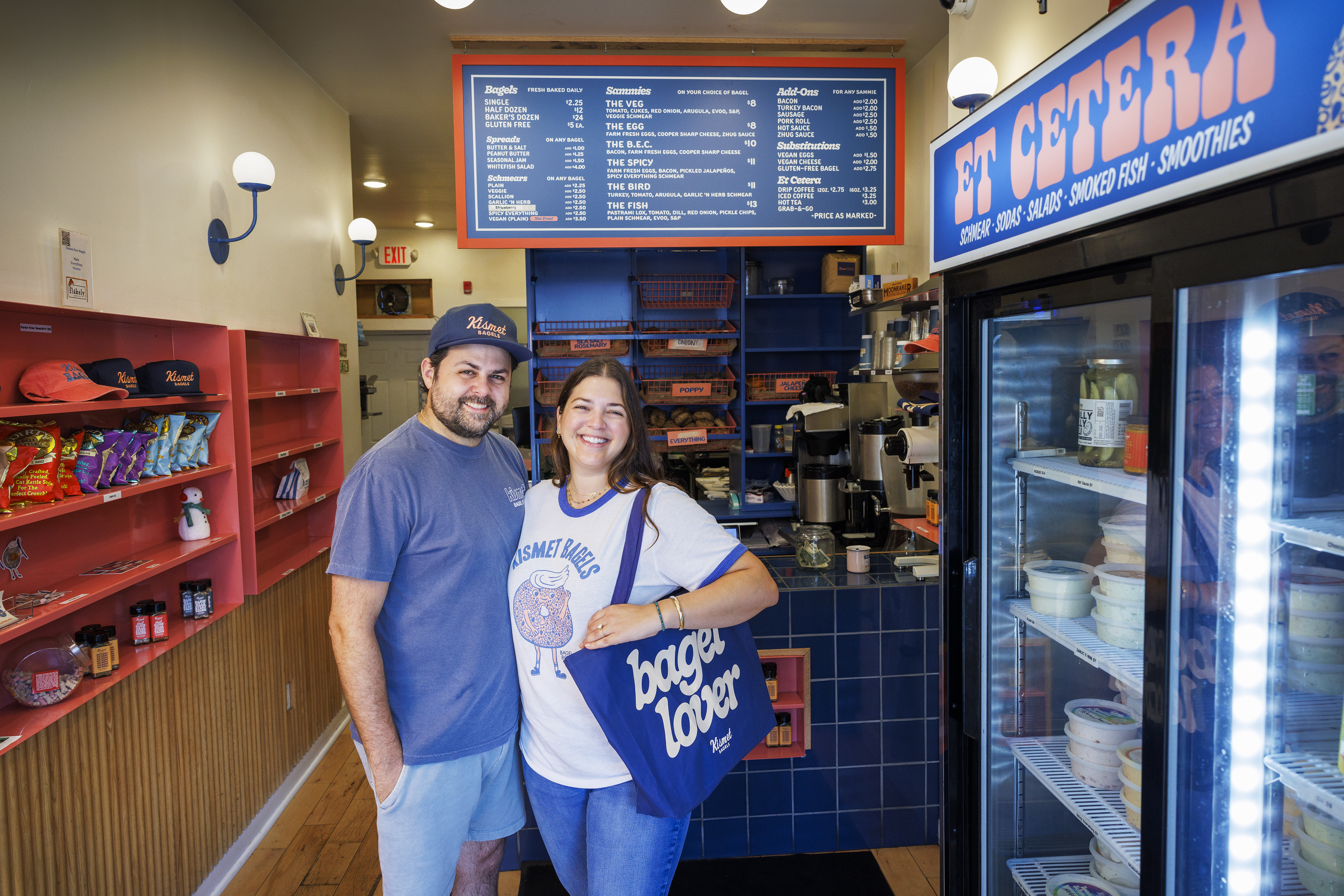
Jacob and Alexandra Cohen, owners of Kismet Bagels, at their location on Girard Avenue in Fishtown in 2024.Alejandro A. Alvarez / Staff Photographer
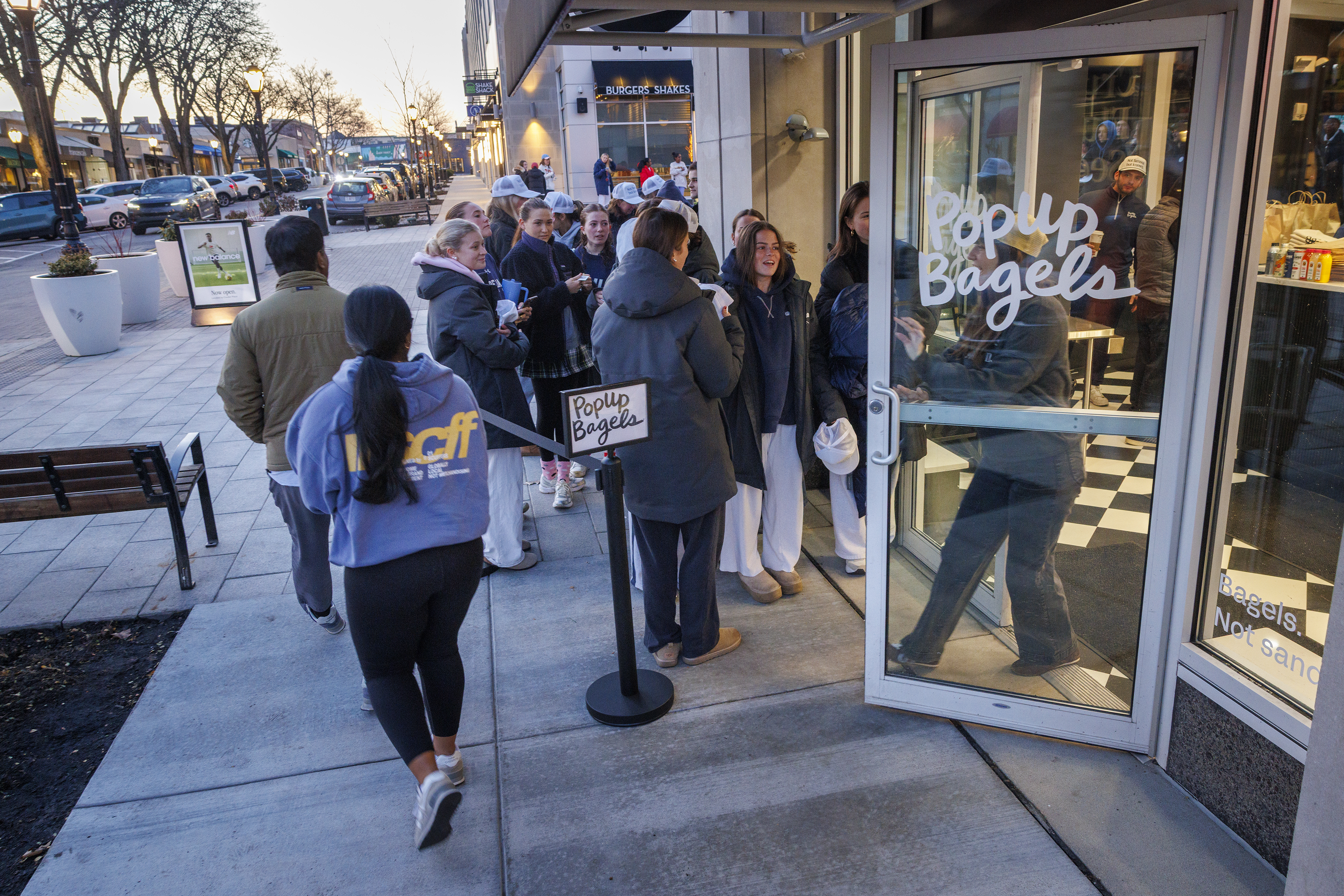
Kismet Bagels has opened its fourth and fifth shops, in Manayunk and Collingswood. Bart’s Bagels, which has shops in West Philadelphia and Bella Vista, recently expanded to the founders’ hometown of Bala Cynwyd. PopUp Bagels, the Connecticut-born chain that built a following on social media, made its local debut in Ardmore this spring and has signed a lease for a Rittenhouse shop as part of a larger regional expansion.
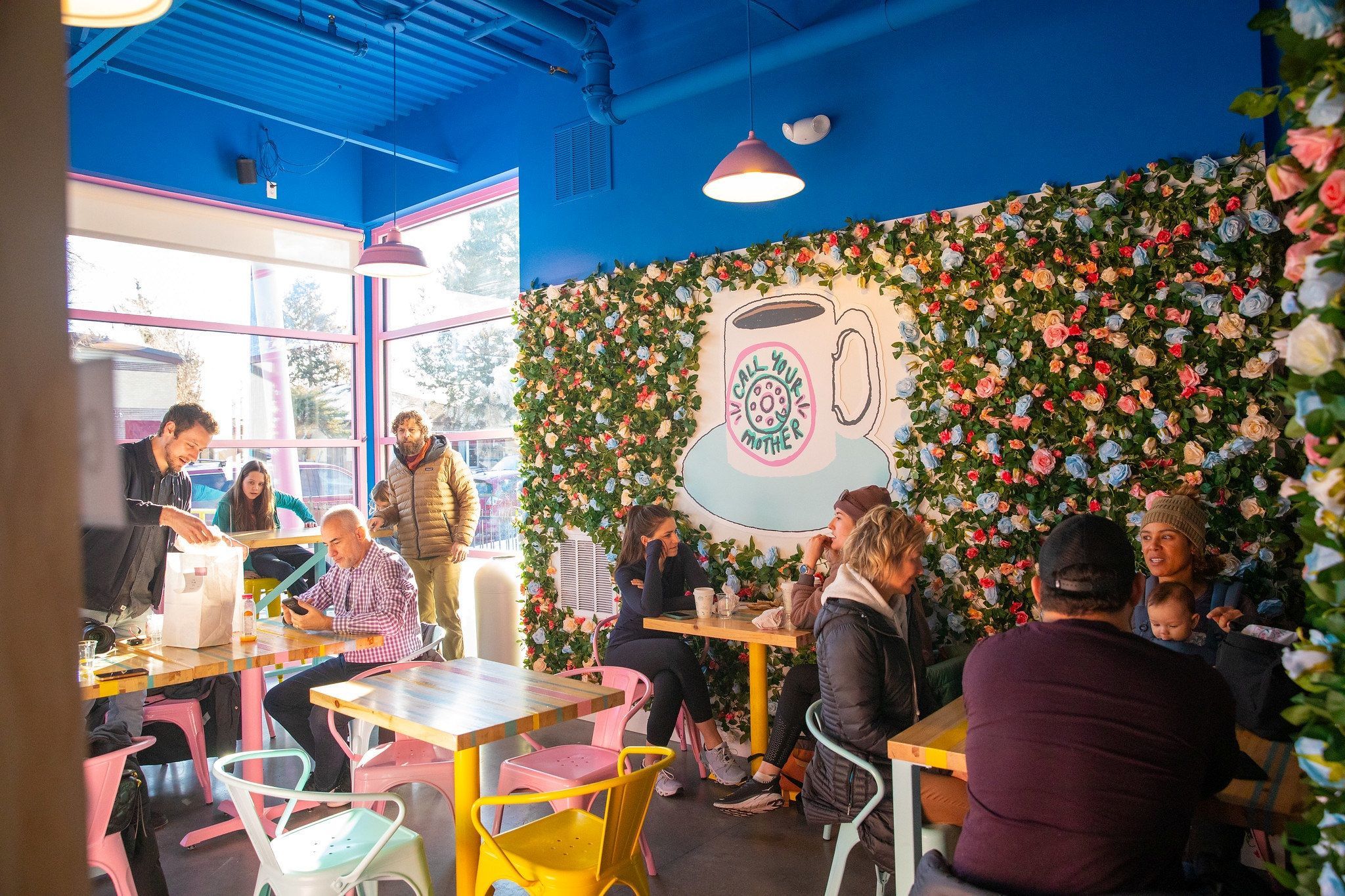
And Washington, D.C.-based Call Your Mother is preparing three soon-to-open Philadelphia locations — in Fishtown (due first), Rittenhouse, and Washington Square West — committing to all three before serving its first Philadelphia bagel.
Call Your Mother bagel sandwich shops have a subtropical feel.
That tally doesn’t include all of the stores that could follow. Florida-based Jeff’s Bagel Run has announced a 10-unit development agreement for Eastern and South Central Pennsylvania, while PopUp franchisee Brian Harrington is scouting additional territory in the Philadelphia suburbs.
All this raises an obvious question: How many bagels can Philadelphia eat?
Plenty, apparently — at least for now.
Jacob Cohen, who started Kismet six years ago with his wife, Alexandra, said the company has seen sales increase even as new bagel shops have entered the market. “I don’t think they’re just dividing the same customer base, because we’ve already had new shops open in Philadelphia and we haven’t seen a decrease in sales,” Cohen said.
But Cohen, who rapidly expanded Kismet before putting thebrakes on growth earlier this year, also sees a limit. “More is not always better,” he said. “I obviously don’t have a crystal ball, but I have a feeling that some of these private-equity bagel companies coming are going to learn that the hard way.”
Bagels are having a moment
Philadelphia is part of a much broader bagel boom. The U.S. bagel market generated an estimated $3.17 billion in revenue in 2025 and is projected to reach $4.51 billion by 2033, according to Grand View Research, a market-research firm. That represents annual growth of about 4.6%. Worldwide, the firm values the bagel market at $5.8 billion in 2025 and projects it will reach $8.6 billion by 2033.
Customers lining up for the grand opening of PopUp Bagels in Ardmore in March.Alejandro A. Alvarez / Staff Photographer
Mike Kostyo, vice president of Menu Matters, a Vermont-based food-industry consulting firm, sees the current surge as the convergence of several trends rather than the sudden discovery of a new food. Artisan baked goods have been rising in popularity for years, he said, after the pandemic produced a generation of home bakers and pop-ups experimenting with sourdough and bagels. At the same time, café culture and the rise of the “little treat” have made consumers more willing to spend on premium versions of everyday foods.
“At its core, the bagel has always been a blank canvas for lots of flavors and toppings,” Kostyo said. “But now, instead of sesame seeds, you see them topped with Flamin’ Hot Cheetos.”
The traditional formula — bagels by the dozen, cream cheese, lox, and coffee — also has evolved into something closer to a breakfast-and-lunch fast-casual restaurant.
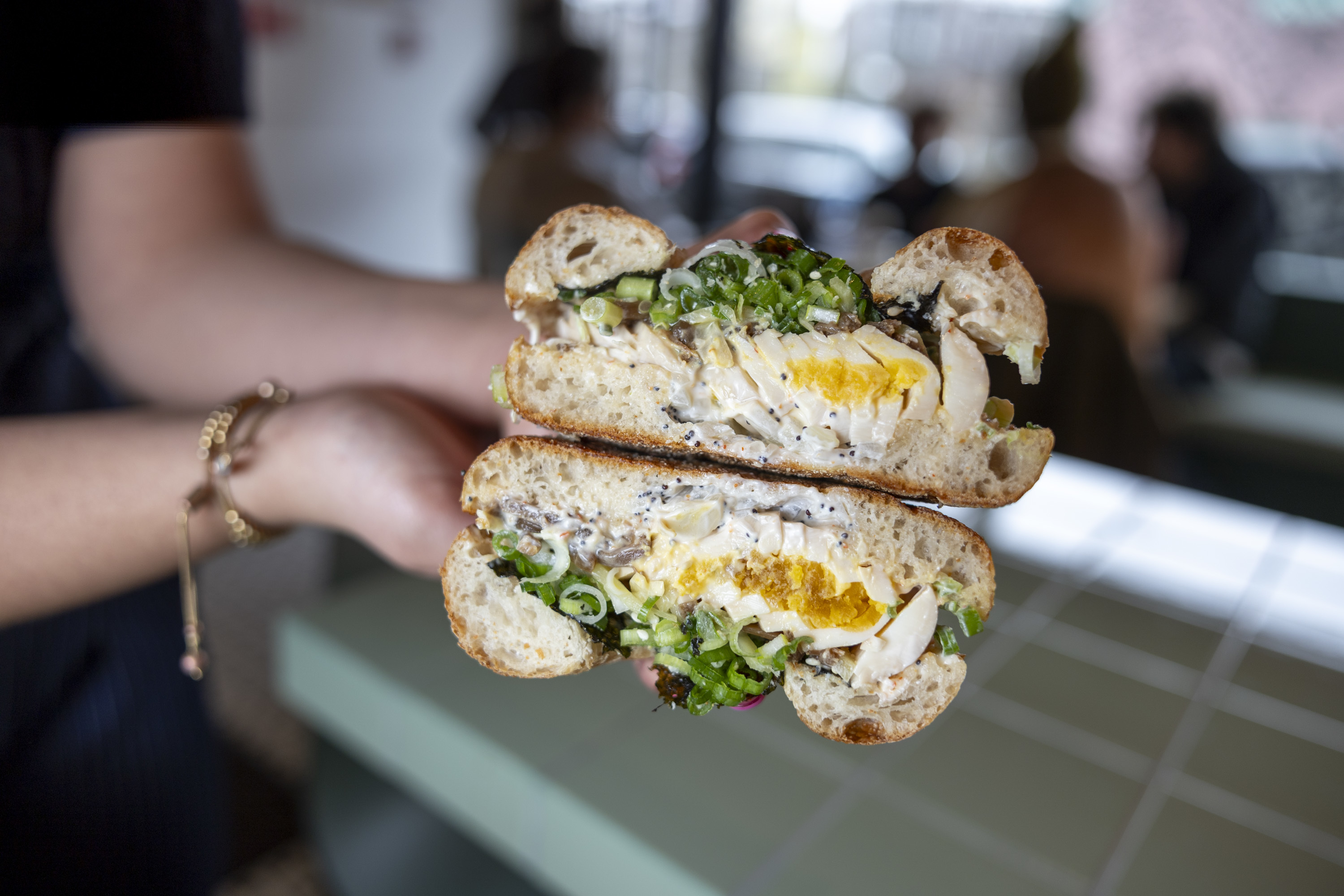
The Ramen Thing bagel sandwich from Cleo Bagels in West Philadelphia.Tyger Williams / Staff Photographer
Bagels become vehicles for egg sandwiches, smoked salmon, avocado, specialty cream cheeses, and elaborate combinations that can command substantially more than a plain bagel and schmear. And operators increasingly are looking beyond breakfast.
“The sandwich factor is so important,” Kostyo said. “You need something that you can sell across multiple occasions, not just to commuters in the morning.”
That versatility helps explain why investors have noticed.
“Investors are always looking for that next category that could blow up,” Kostyo said. “They want Call Your Mother or PopUp Bagels to be the next 7 Brew or Dutch Bros.”
From pandemic project to expansion vehicle
Some of the brands now expanding grew directly out of the pandemic.
The Cohens started Kismet as a pandemic project before turning it into a brick-and-mortar business and eventually growing to five locations — down from seven after the company shuttered a stand at Reading Terminal Market in 2025 and closed a shop in Ventnor earlier this year.
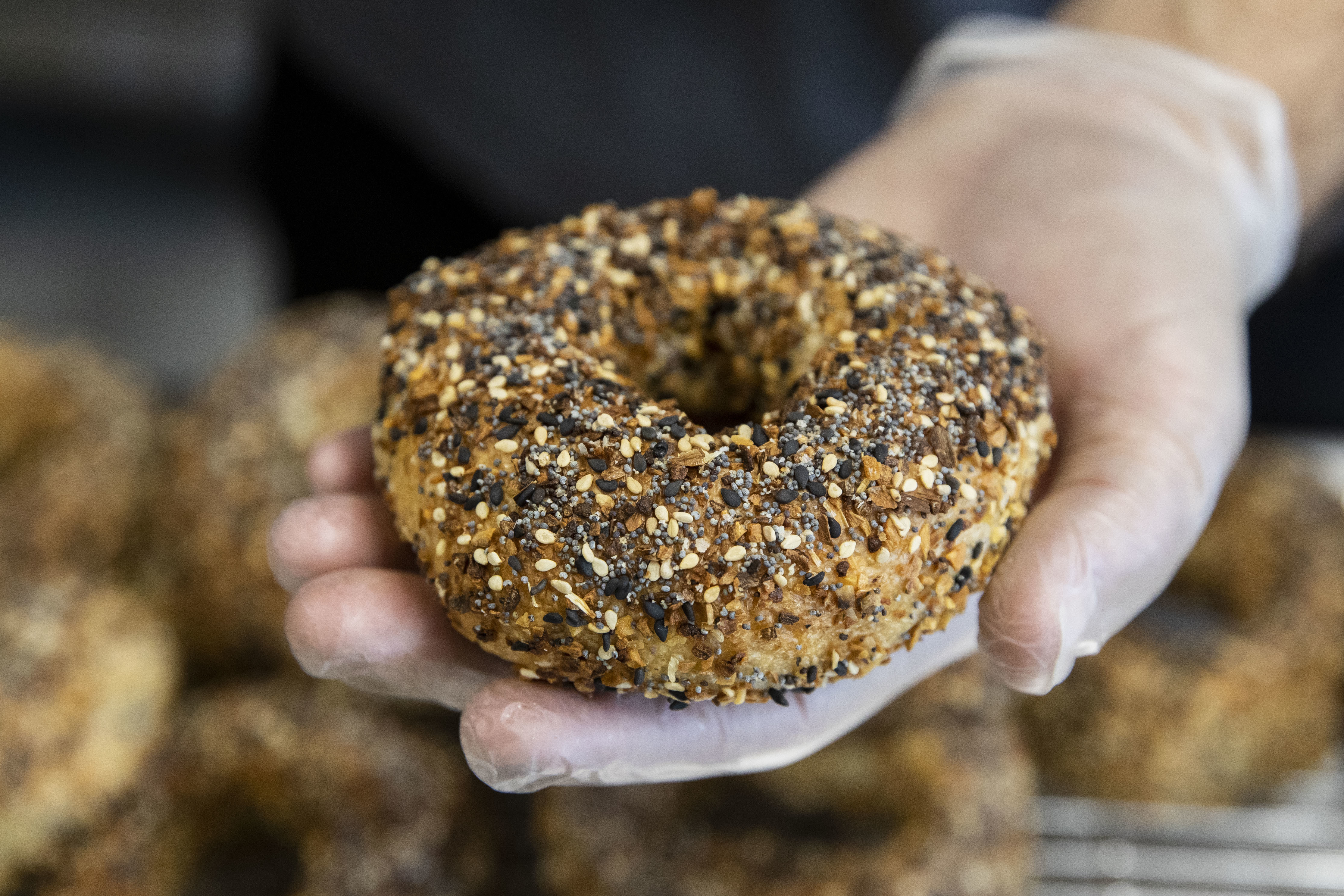
Jacob Cohen of Kismet Bagels holds an everything bagel.MONICA HERNDON / Staff Photographer
PopUp followed a similar trajectory. Founder Adam Goldberg began baking bagels at home during the pandemic and developed the idea into a business built around an unusually stripped-down concept: hot bagels and schmears, rather than the sprawling sandwich menus associated with many modern bagel shops.
Customers are encouraged to “grip, rip, and dip,” tearing apart the bagels and dipping them into containers of cream cheese.
The company’s first Philadelphia-area shop opened in the spring in Suburban Square in Ardmore. Harrington, the franchisee developing PopUp in this region, said sales have remained strong even through the summer.
“We anticipated a little bit of pullback with a lot of our core [teen] clientele getting jobs in Avalon and down the Shore, and with vacations and things like that,” Harrington said. “But it’s been very, very steady.”
In more than 25 years in the restaurant business, Harrington said, he has typically seen sales soften in late June, July, and early August. “We’ve not seen that,” he said.
PopUp has signed for the former Starbucks at 1709 Chestnut St. in Rittenhouse, as reported by the Philadelphia Business Journal. Harrington said he has a deal for a location in Lawrence Township, N.J., near Princeton, that is awaiting its permits. Another South Jersey deal is close, he said, and he sees additional potential in Montgomery County.
Despite the influx of bagel shops, Harrington said he believes PopUp occupies a somewhat different niche.
“We’re not making sandwiches,” he said. “So far, people have found us and enjoyed the way that we do it, and it doesn’t preclude them from going and getting a bacon, egg, and cheese somewhere else.”
Three stores before the first bagel
Call Your Mother is making an even larger initial bet on Philadelphia. Founded in Washington in 2018 by Andrew Dana and his wife, chef Daniela Moreira, the self-described “Jew-ish” deli has expanded beyond the Washington area as New York investment firm Invus acquired a majority stake in the company in January 2025.
Call Your Mother has signed three Philadelphia leases: 1500 Frankford Ave. in Fishtown, the former Metropolitan Bakery at 262 S. 19th St. near Rittenhouse Square, and 12th and Sansom Streets in Washington Square West. Dana said the decision to enter Philadelphia was considerably less scientific than the three-store commitment might suggest.
“My mom grew up there, my grandparents lived there, and I’ve been there so much visiting my friends,” Dana said. “I’ve been in Fishtown on a Sunday when it’s popping, and I’ve been in Rittenhouse Square when it’s super-crowded on the weekend and the market’s going. A lot of it is just gut and feel.”
Dana does not believe Philadelphia lacks good bagels. On a recent trip, he tried Bart’s and came away impressed.
“I think a lot of people are doing a great product in Philadelphia,” he said, “but there’s always room for a different bagel shop. At least I hope so.”
Dana also rejects the idea that taking investment inevitably leads to runaway growth or declining quality.
He described Invus as “patient capital” and said the investment agreement carries no requirement that Call Your Mother open a prescribed number of stores.
“We’re going to do what we can do while still keeping the quality of the food and the service top-notch,” Dana said. “And if that ever slips, we have the ability to hit the pause button.”
Local operators dig in
For some Philadelphia bagel operators, however, the arrival of heavily financed brands is cause for skepticism.
Cohen, at Kismet, is particularly wary.
“I think it’s the rare exception when private equity marries itself to a food brand and they continue to do good things,” he said. “I’d like to keep private equity out of bagels.”
He stressed that Kismet remains owned solely by him and Alexandra, financed through bank loans rather than outside investors.
David Fine, owner of Schmear Bagel Parlor, is also watching the expansion. Fine entered the business in 2013 with his Schmear It food truck and has since acquired the shops owned by Philly Bagels, giving the company eight locations in Philadelphia.
David Fine of Schmear with his son.Courtesy of David Fine
Fine said those stores have not appeared to steal business from one another.
He thinks part of the bagel’s appeal is almost mundane: It is familiar, relatively accessible, portable, and infinitely customizable.
“They’re comfort food at their very core, and they can really appeal to such a wide variety of customers,” he said.
He is less certain about the economics behind the rapid expansion of some competitors.
“The buildouts are expensive,” Fine said. “You have to be quite profitable for quite some time just to recoup that investment.”
Schmear is expanding, too, Fine said, renovating its original brick-and-mortar location at 36th and Market Streets. But he believes that being local gives the company an advantage as more national and regional shops arrive.
“There’s a keen allegiance to local brands,” Fine said.
Built for the feed
Bagels also have another quality particularly suited to the moment: They look good on a phone.
Kostyo points to the now-familiar image of a bagel sandwich sliced in half and held toward the camera, its fillings and schmear exposed.
“The visual factor is also so important in today’s social media age,” he said. “That picture … is the type of indulgent food that people go out of their way for today.”
The lines themselves become part of the marketing. A crowd outside a shop signals that the food is worth leaving home for, he said, while arguments over the proper density, crust, schmear, toppings, and even whether a respectable bagel can be made outside New York keep the category in the conversation.
“In the end, it’s all advertising and marketing,” Kostyo said.
But social media enthusiasm is fickle — witness the rise and fall of cookies and cupcakes — and Kostyo sees the flood of investment and expansion as carrying the seeds of an eventual shakeout.
“This is a pretty classic bubble where some of these brands that are doing a great job and really resonate with people will survive, but a lot will overexpand and shut down in the next few years,” he said.
Cohen, meanwhile, has decided not to test Kismet’s limits.
After years of opening shops, Kismet entered 2026 determined to improve what it already has rather than add more locations. The company is focusing on consistency, profitability, new products, employees, and customers, he said.
He is happy to see Philadelphia’s bagel culture growing and says he does not regard every new shop as a competitor. Years ago, Cohen recalled, Inquirer restaurant critic Craig LaBan told him that Philadelphia did not have enough bagels per capita.
“We might be starting to get there now,” Cohen said.
Several weeks ago, The Inquirer food desk deliberated on declaring a sandwich of the summer, after the New York Times designated Italian piadinas their pick for said title (a phenomenon that seems mostly confined to Brooklyn). Personally, I think the designation is pretty silly. Why?
The hot dog is the sandwich of the summer. It always has been, but it’s especially true now.
Hot dogs at Royal Tavern’s Dog Days of Summer special, held annually in July. (A few dogs remain on the menu in August.)Tom Gralish / Staff Photographer
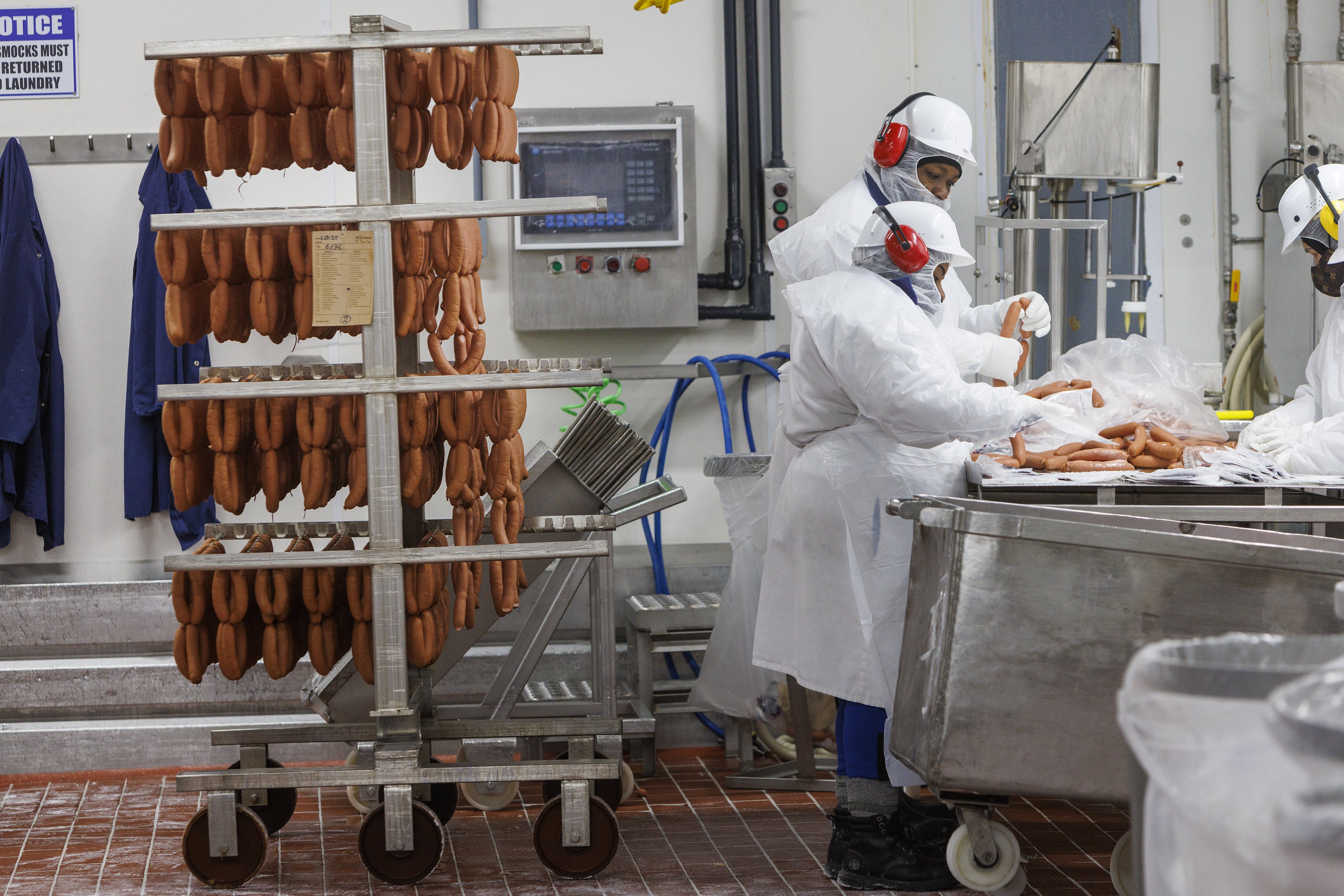
The boom times won’t necessarily end after Labor Day, but, for many people, hot dogs have a season, and it is summer. After all, nearly half of the 100 million hot dogs made annually by Dietz and Watson, Philly’s homegrown deli meat maker, are sold between May and August, according to Lauren Eni Canseco, Dietz’s vice president of brand strategy and fourth-generation family owner.
Food handlers packaging Black Forest Uncured Knockwurst at Dietz and Watson plant Philadelphia in 2025. Dietz and Watson produces and distributes deli meats, cheeses, and other specialty food products.Alejandro A. Alvarez / Staff Photographer
That the hot dog is the sandwich of the summer, here or anywhere, seems so obvious, it almost shouldn’t even need to be verbalized. It’s ballpark food, barbecue food — summer food.
The one major hitch? The enduring, irreconcilable debate over whether a hot dog is a sandwich. This is well-tread ground among hot dog enthusiasts, a subset of civilization that is fiercely opinionated and quite vociferous.
To give both sides of the argument equal air time, I asked several local glizzy authorities — makers, avid consumers, etc. — to weigh in. Is a hot dog a sandwich? Here’s what they said:
Craig LaBan, Inquirer restaurant critic: Technically, yes. As much as a hoagie, or hot roast beef, cheesesteak or cutlet can be a sandwich. You put sausage on a bun and call it a sandwich. Hot dog is a sausage, so …That is not to say hot doggery is the same thing as eating a peanut butter and jelly. … and it’s true hot dogs can absolutely exist on their own — in a pot of beans or Korean Army soup, baked into a croissant, wrapped in a blanket, in which cases they are not a sandwich. So … now that I rethink it, a hot dog is NOT a sandwich, but it can become one.
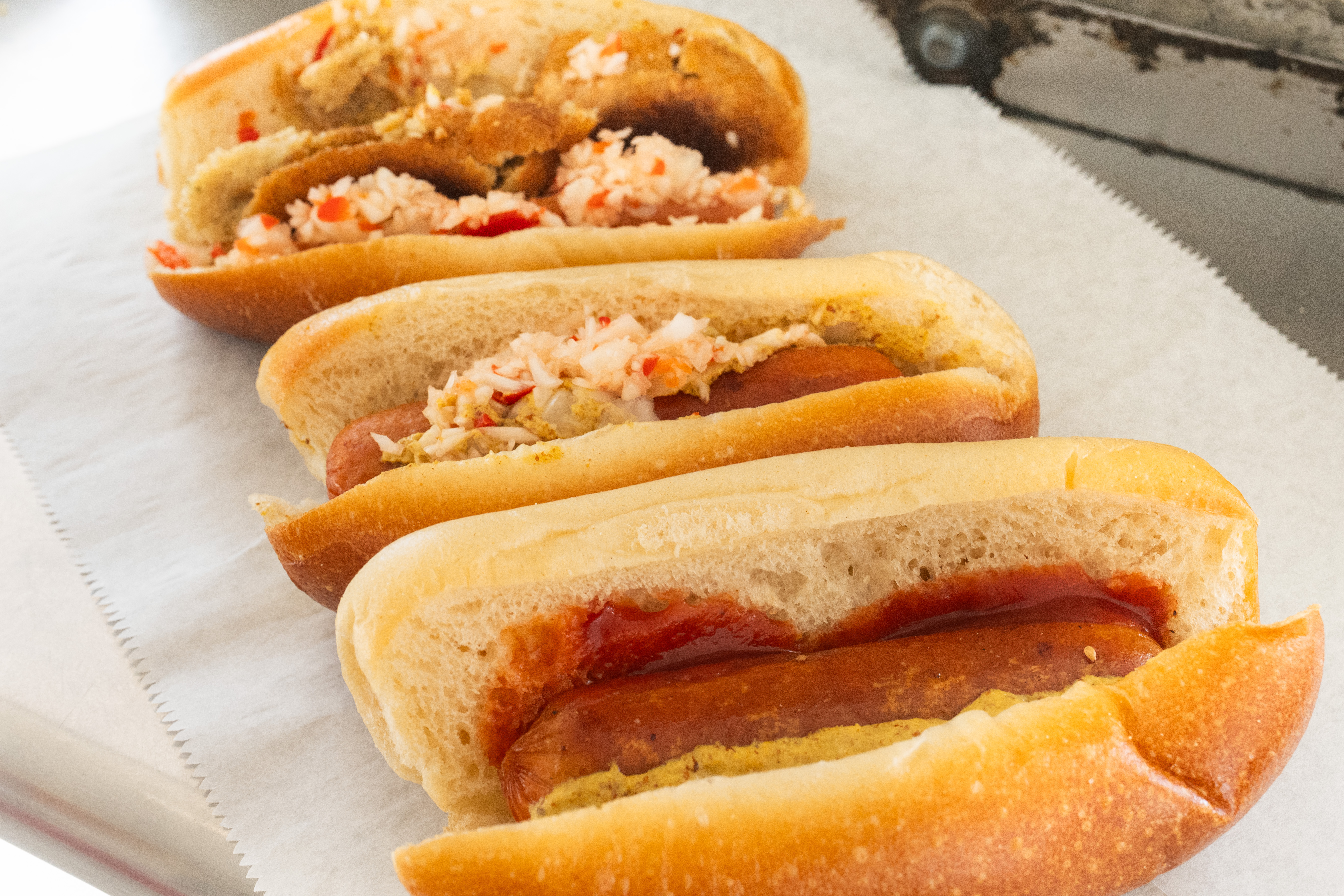
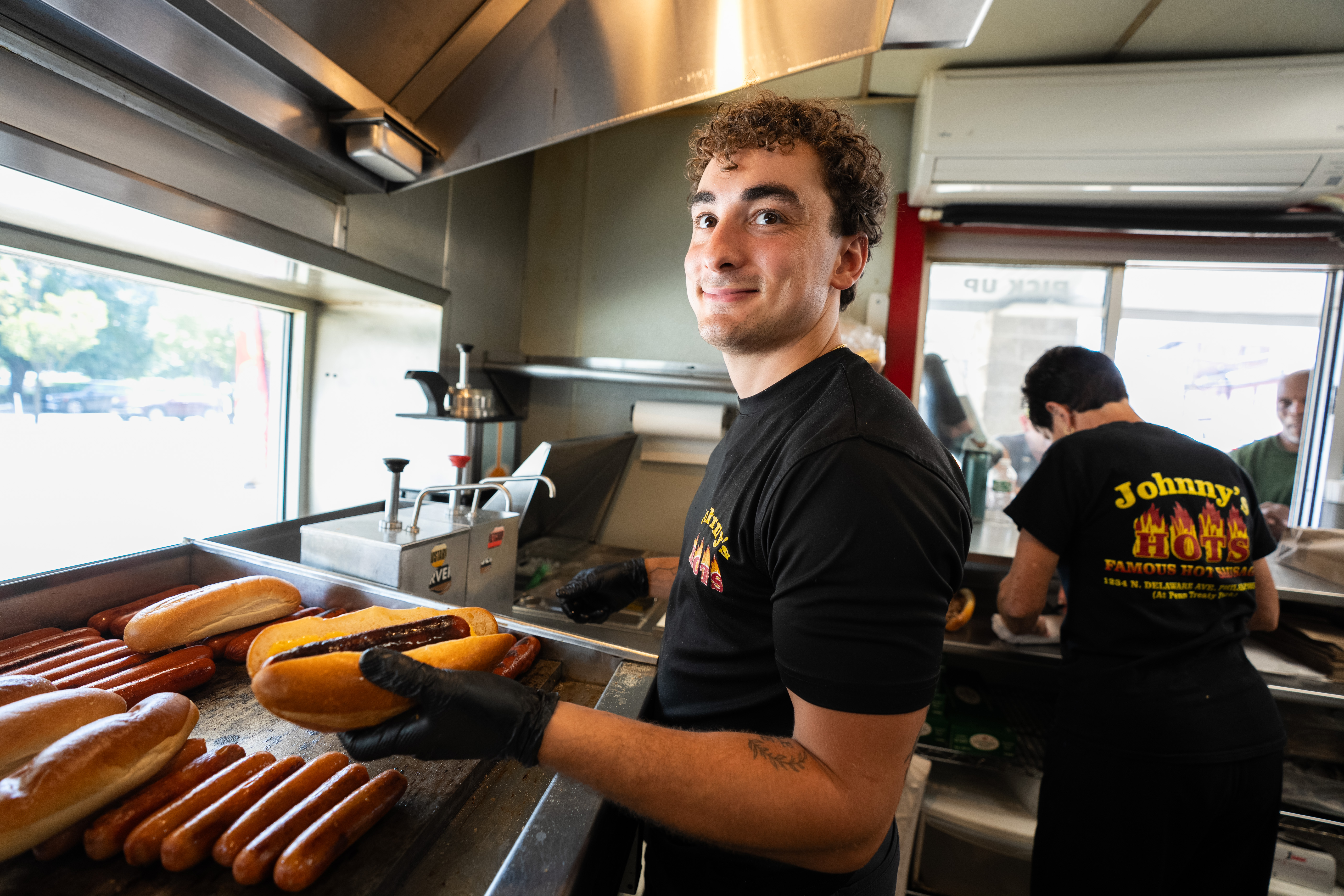
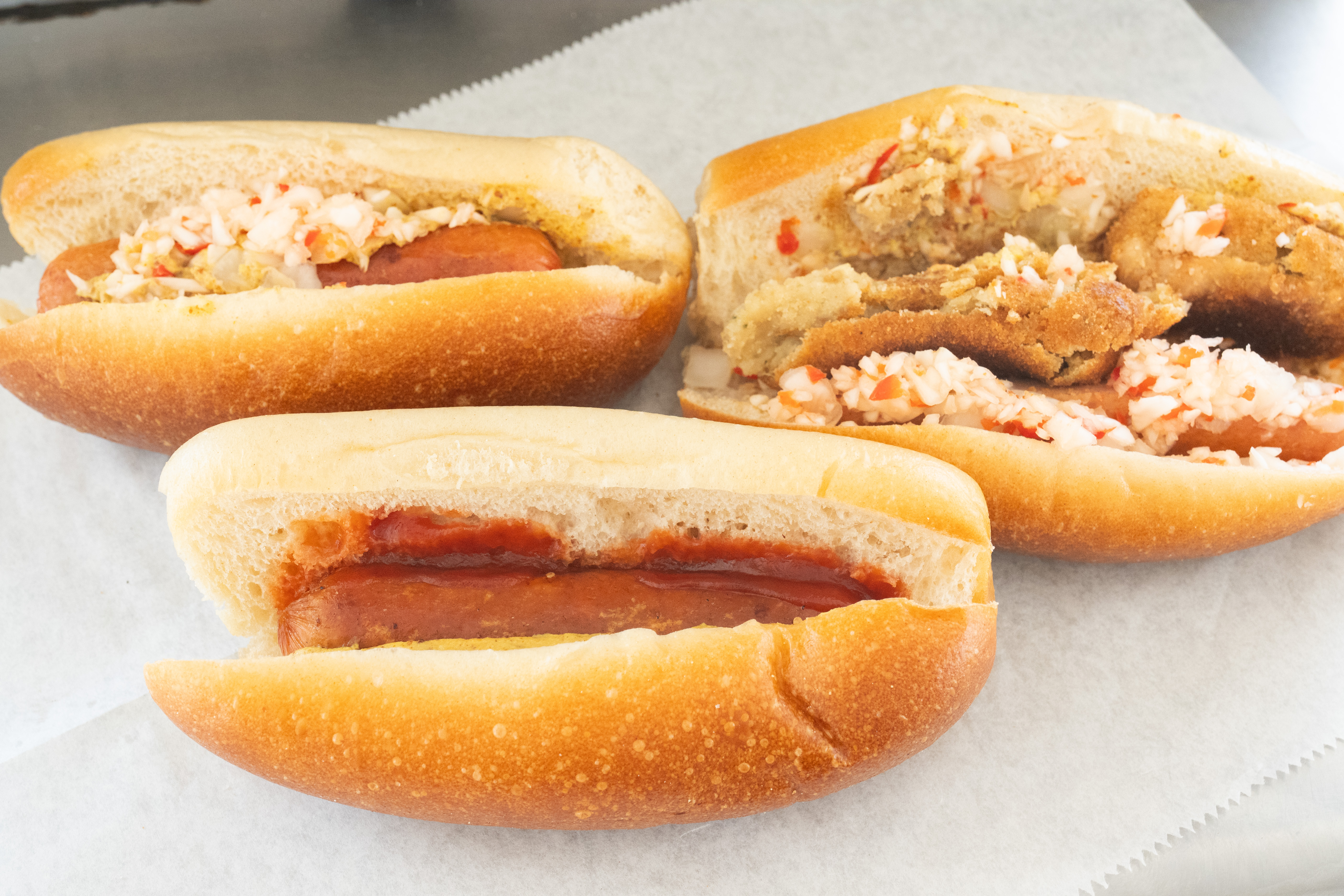
Standard hot dog with ketchup and mustard, hot dog with pepper hash, and hot dog with fish cake and pepper hash at Johnny’s Hots on Aug. 17.Jessica Griffin / Staff Photographer
Chris Barnes, owner of Lucky’s Last Chance: A hot dog is a hot dog! It’s unique and perfect and one of one. Anyone who says otherwise probably also likes ketchup on it.
Jen Zavala, owner of Juana Tamale: Yes, a finger sandwich.
Sandwiches are commonly considered a complete meal. One hot dog is a snack. You need two or three to make a meal.
Sandwiches are usually portable, packable. Something you can put in a Ziploc, bring for lunch, or save for later. This is not a pleasant or regular practice with hot dogs, they are designed to be eaten immediately.
Sandwiches are usually COLD, unless advertised as a “hot sandwich.” Hot dogs are almost NEVER served cold.
Hot dogs and sandwiches are best purchased from different sorts of vendors. You probably wouldn’t want a hoagie from your favorite Center City hot dog lunch cart; and you probably wouldn’t want a hot dog from your favorite Philadelphia deli (I’ve tried) — unless it was Famous 4th Street.
I’ve been painting and writing about hot dogs for almost 20 years. Poring over old articles, menus, going back to the early 1900s. Very rarely, or maybe even never, have I seen a hot dog historically referred to as a sandwich.
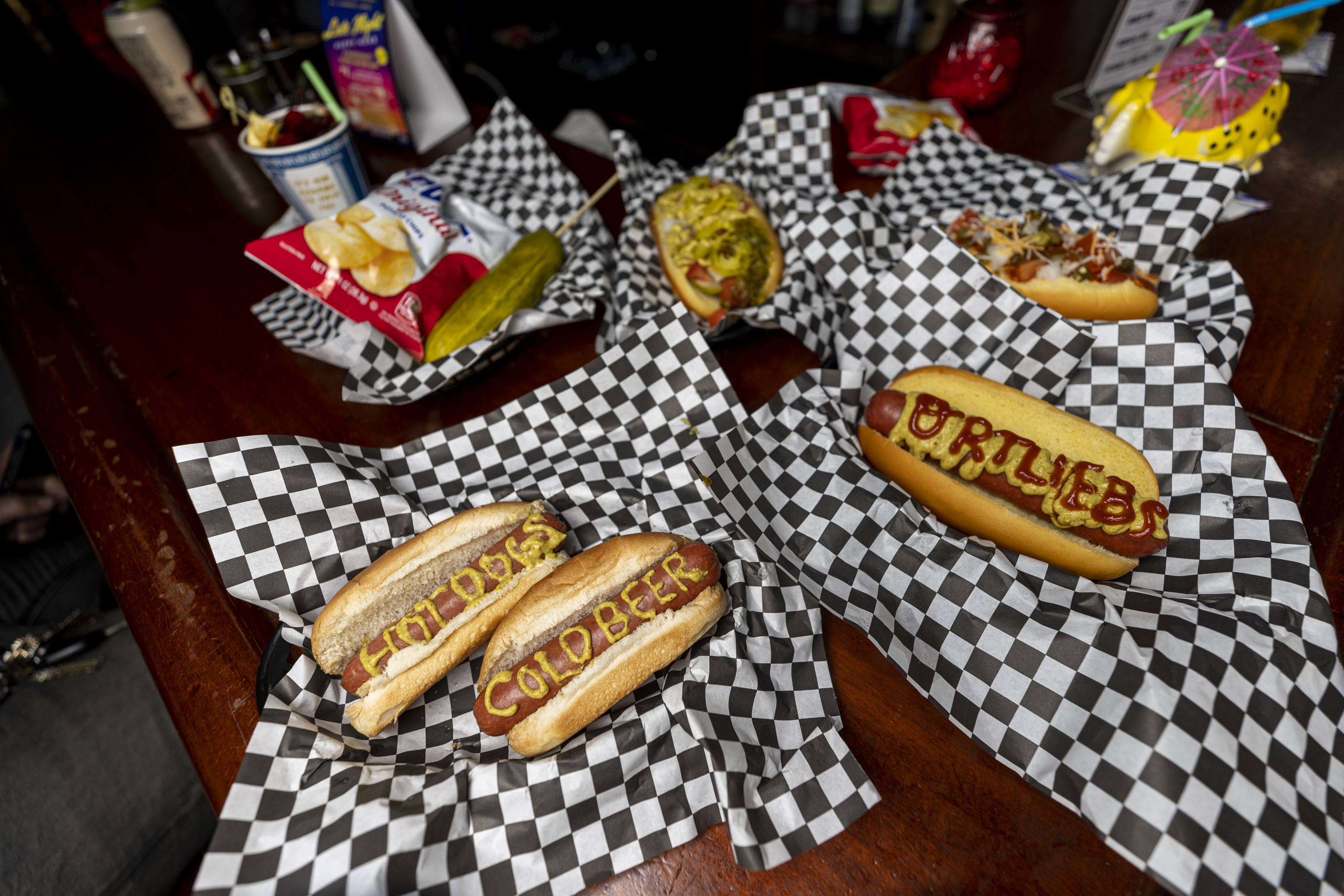
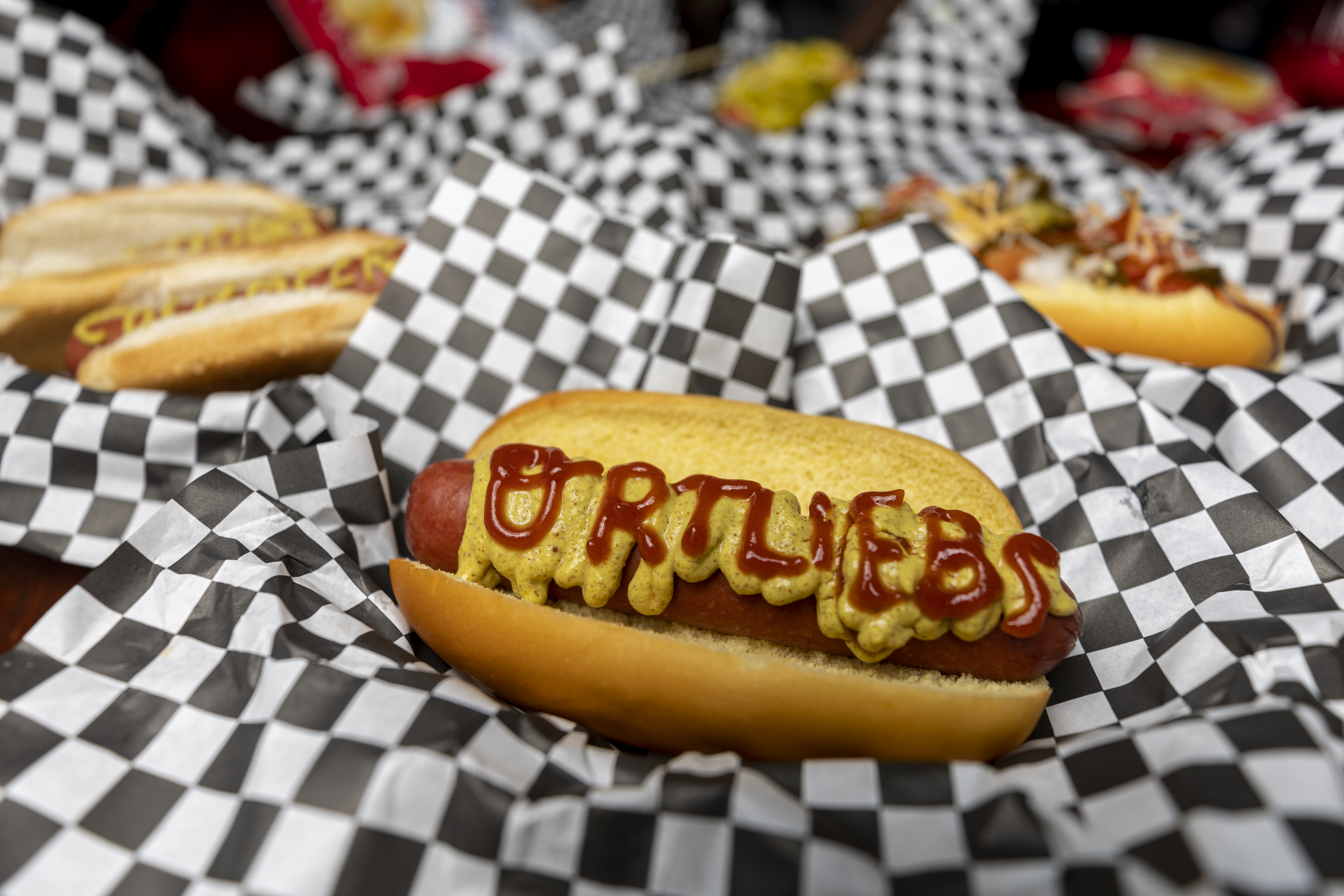
An assortment of classic hot dogs with mustard and ketchup writing at Ortlieb’s in Northern Liberties.Tyger Williams / Staff Photographer
Nic Macri, chef at Royal Tavern: Considering a hot dog is a hot dog without the bun, I am going to say no. I’ll tell you what is not a hot dog — a sausage in a hot dog roll!
Pierre Li Peters, aka @theehotdogsummer: A hot dog is not a sandwich because it’s an entirely different art form. A hot dog is a hot dog, even when it doesn’t look like the classic Nathan’s frank we all imagine. For example, a corn dog could be considered a part of the hot dog family but doesn’t really fit into the sandwich category … The beautiful thing about the hot dog community: It’s not limited in being classified as a sandwich; creativity flourishes due to unique characteristics shaped by the regions that enjoy them.
Lauren Eni Canseco, Dietz & Watson VP: A hot dog CAN be a sandwich, but it can also be an ingredient, an entree, or a snack! If it’s a high-quality, high-protein dog, the possibilities are endless.
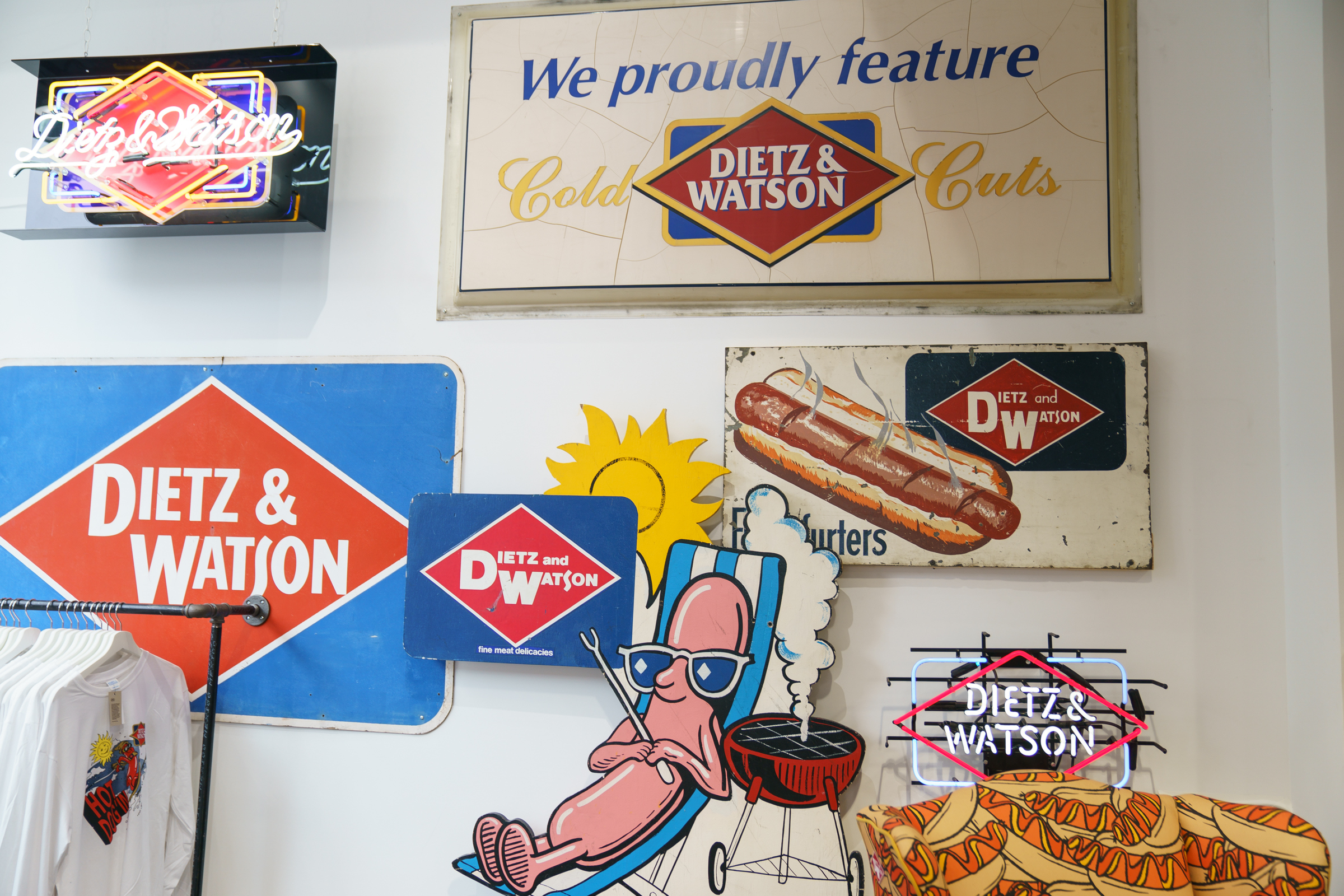
Retro wall decor at Dietz & Watson pop-up store at Fifth and South Streets in 2019.JESSICA GRIFFIN / Staff Photographer
Emilie Dormer, aka @glizzygirliez: In my heart, I don’t consider a hot dog a sandwich. A hot dog feels like its own category entirely. There’s something culturally distinct about it that gets lost when you simply call it a sandwich. That said, if you forced me to place it into one of the traditional food categories, I’d have to admit that yes, structurally, I guess that it probably qualifies as a sandwich. Bread, filling, handheld … the evidence is unfortunately there.
Ralph Stollenwerk, artist and hot dog illustrator: I think a hot dog is as much of a sandwich as a hoagie. Nobody officially calls it a “hoagie sandwich,” [just] as nobody calls it a “hot dog sandwich,” but it is meat held between bread. I’m calling it a sandwich, but I would NEVER call it a sandwich in public.
As for me, I pretty much agree with Stollenwerk. You can quibble with my headline, but the substance of the argument is undeniable: The hot dog is the sandwich of the summer, even if the “sandwich” is silent.
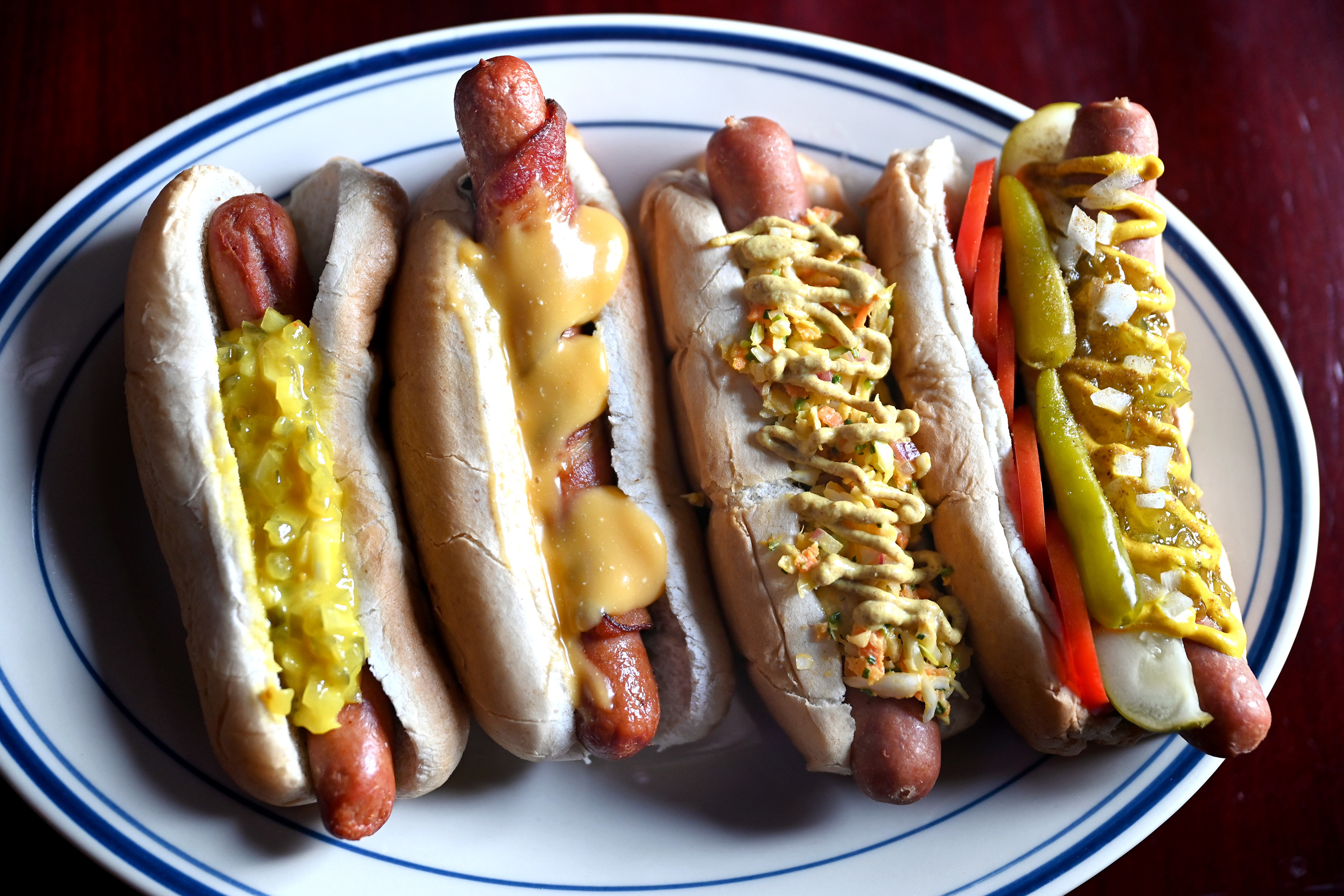
Summer may be nearing its end, but hot dogs aren’t going anywhere. Philly is deep in the throes of a hot dog era. Our inveterate cheesesteak-and-hoagie city hasbeen throughthem before, but what sets apart the current boom is that it’s not so much about standalone hot dog joints. Instead, dogs have nosed their way onto many menus where they once might have been out of place.
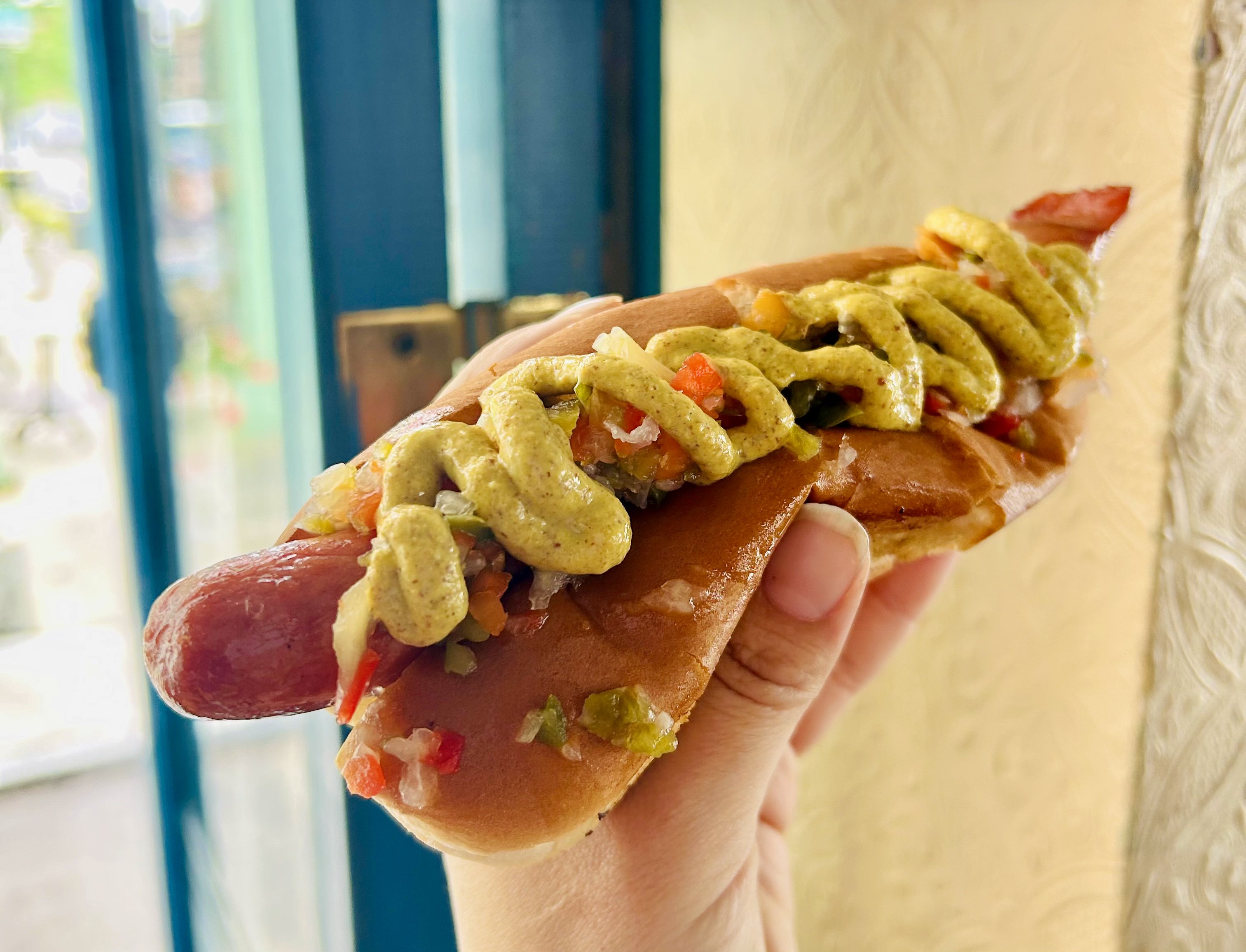
That’s a double-edged sword: Hot dog purists may want to avert their eyes. This list, which is focused on Philly proper, has some natural-casing-centric sweet spots for them, but we’ve also included spots that are bucking strict hot dog norms with croissant buns, bonito flakes, carrot salad, and pineapple salsa. Some even deploy the most divisive condiment of all: ketchup. — Jenn Ladd
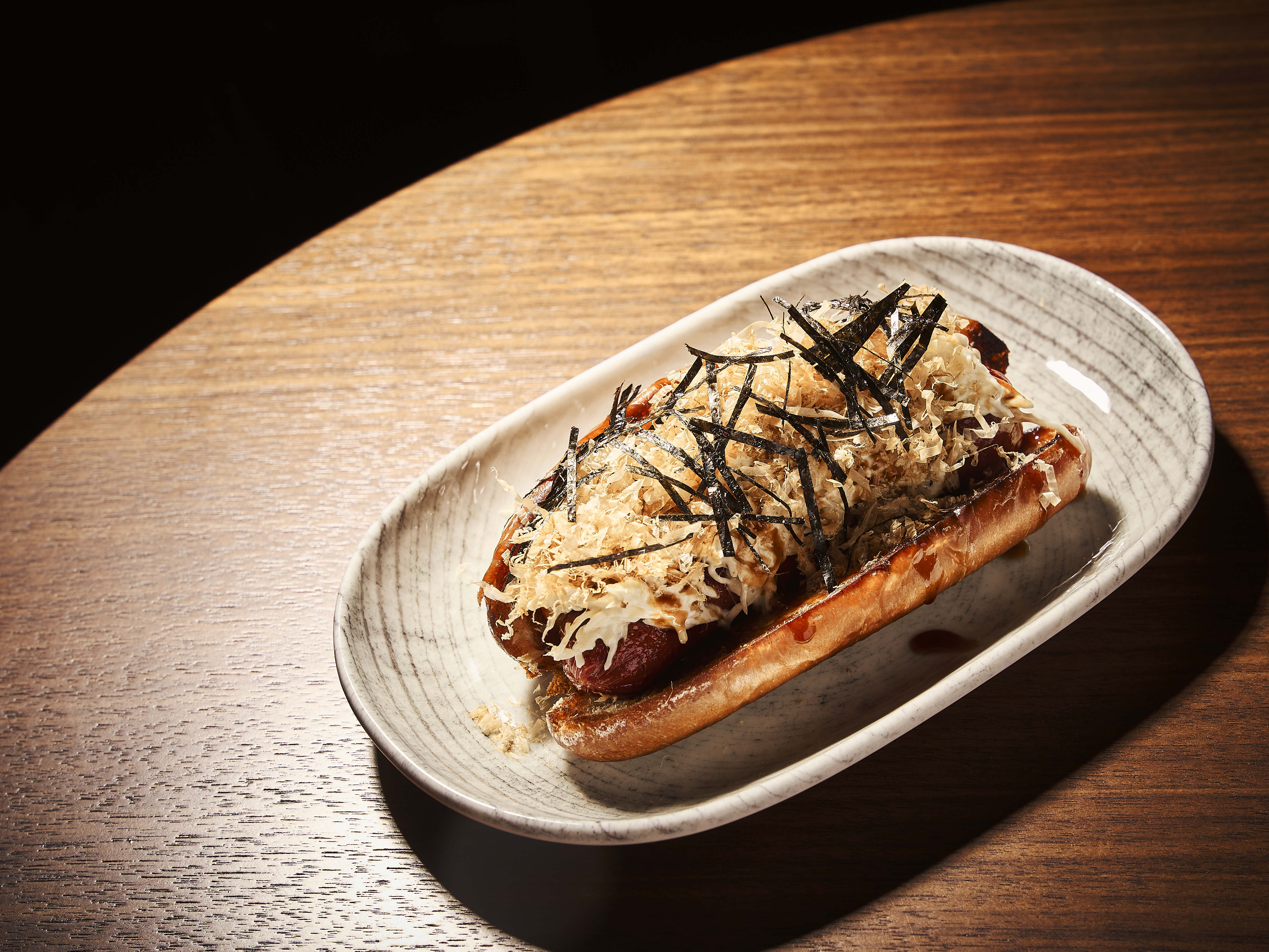
The Wagyu hot dog at Almanac in Old City, topped with tonkatsu sauce, Japanese slaw, bonito flakes, and nori.Stephen Recchia
Almanac
There’s something delightfully incongruous about pairing Almanac’s hot dog with one or two of its painstakingly crafted cocktails, often made from foraged ingredients and house-fermented elixirs. As bar snacks go, the Wagyu hot dog is a bit of an indulgence, but it hits all the notes of salty, fatty, sweet, and umami — the hallmarks of snacks you’d get at a konbini, or Japanese convenience store. The juicy sausage is tucked into a run-of-the-mill yet perfect split-top bun and topped with house-made tonkatsu sauce, a crunchy cabbage slaw, strips of nori, and bonito flakes. It’s a feat of layered textures and contrasting flavors, just as one would expect from one of Philly’s finest omakase chefs. — Kiki Aranita
Almanac, 310 Market St., Second Floor, 215-238-5757, almanacphilly.com
Texas Tommy from A.P.J. Texas Weiner (47 N. 13th St.)Craig LaBan
A.P.J. Texas Weiner
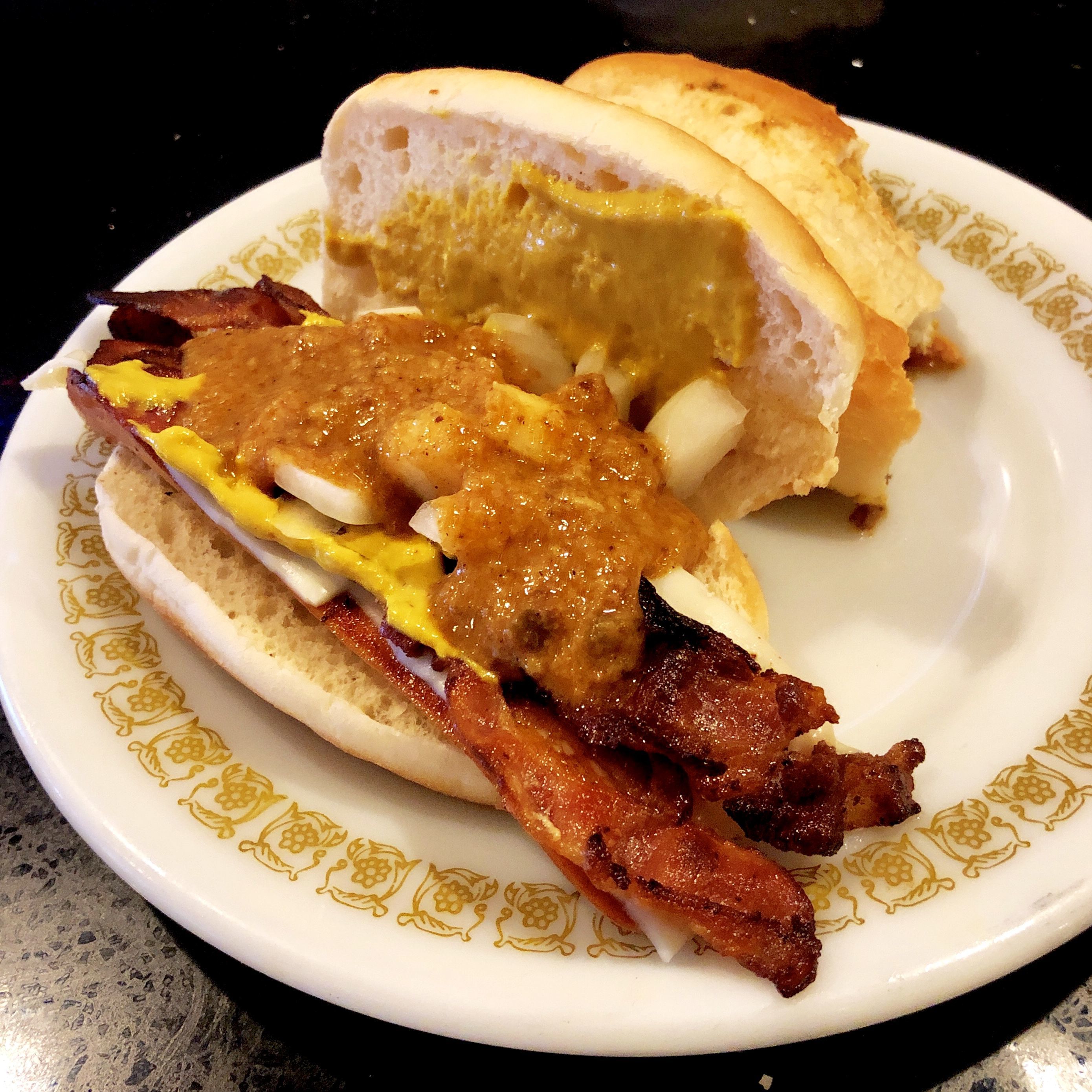
Time has largely forgotten A.P.J. Texas Weiner, a no-frills, old-school luncheonette squished between a bail bondsman’s office and an omakase restaurant on 13th Street just off Filbert, across from the Criminal Justice Center. Greek immigrants Andrew Kanakis, Paul Vasiliades, and John Halkedis opened the joint a century ago, joining an early-20th-century rush of so-called Texas wiener (as it’s usually spelled) joints around town. The “Texas” in a Texas wiener refers to the thin, mild chili perfumed by cinnamon and allspice that the cook spoons onto the grilled, split 5-to-a-pound beef hot dog before adding yellow mustard and chopped onions. In sum: the best $3 snack in Center City. You can dine in, though it’s primarily call-ahead (no apps!) or grab-and-go (from the sweetest counter woman, who won’t skimp on the napkins). — Michael Klein
47 N. 13th St., 215-665-8081
Café Tinto Fishtown
Café Tinto’s hot dogs are only available from 3 to 6 p.m. on weekdays at its buzzy new Fishtown location. The scarcity only adds to the mystique of chef Daniela Garcia’s Colombian-style beef hot dogs, which are all about perfecting the golden ratio of sweet, spicy, and crunchy. Served in soft, buttery house-baked rolls, Café Tinto’s happy hour dogs come topped with Garcia’stangy pineapple salsa and a layer of crushed classic Lays potato chips. There’s something deeply satisfying and oddly nostalgic about the crunch, which reminds me of when I’d stuff Doritos inside my salami sandwich on white bread in elementary school. Chips really do make everything better. — Beatrice Forman
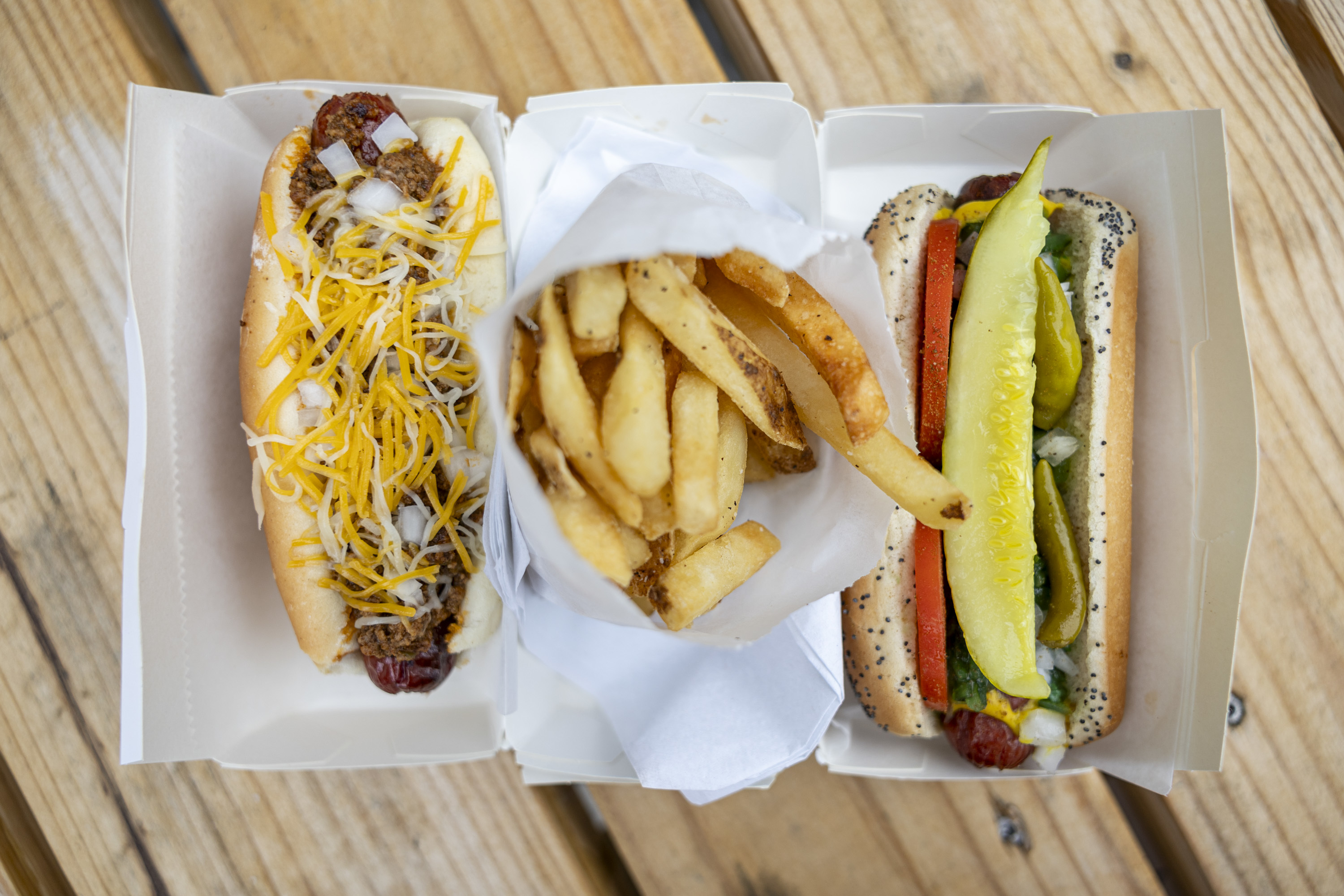
A Chili Cheese Dog and a Chicago Dog with a side of fries from Bad Nina’s grand opening outside Attic Brewing in Philadelphia on Wednesday, July 16, 2025.Tyger Williams / Staff Photographer
Bad Nina’s
In 2025, Attic Brewing owner and Chicago native Laura Lacy decided to capitalize on one of the most intuitive food pairings there is: beer and hot dogs. Lacy and her husband/co-owner, Todd, decked out a vibrant yellow-and-teal food truck that operates noon to dinnertime Friday through Sunday, serving up at least 12 dog variations, including a jalapeño popper dog, a cheeseburger dog, and a classic Chicago-style dog (mustard, relish, chopped white onion, sliced tomatoes, a dill pickle spear, celery salt, and pickled peppers). Bad Nina’s go-tos are Vienna Beef brand hot dogs and Cacia’s Bakery rolls, but there are also Impossible vegan dogs and gluten-free buns (and bratwurst if you’re dogged out). — Jenn Ladd
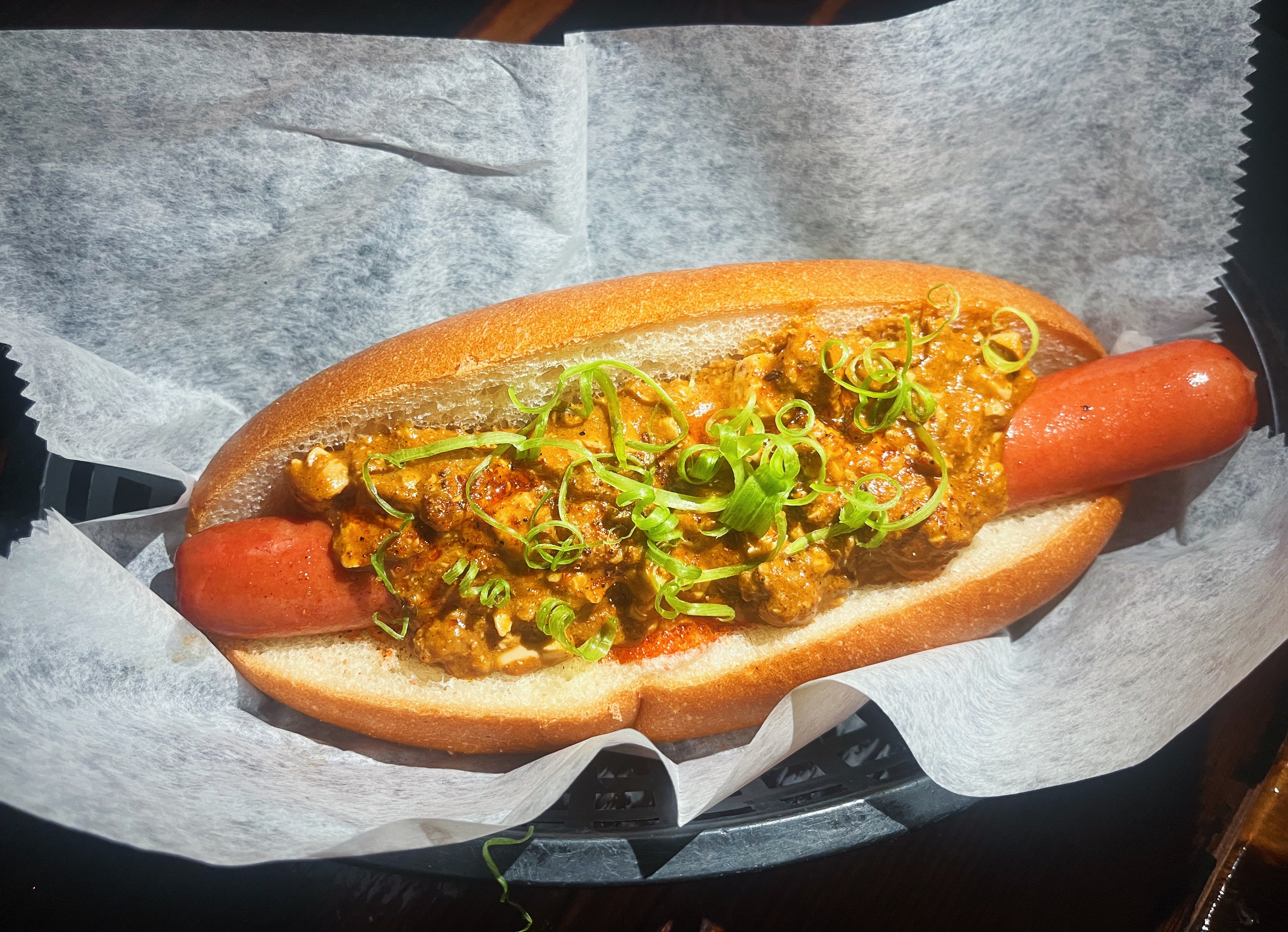
What’s more rock ’n‘ roll than a dive bar hot dog? A dive bar chili dog. Doom technically isn’t a dive, but it is a heavy metal bar with a just-messy-enough hot dog that some dare to call the best in Philly. Doom’s dog starts with a deep-fried, ripper-style beef frank in a split-top bun. Then, it gets topped with a tofu-and-pork Bolognese inspired by mapo tofu, the spicy Sichuan classic. Doom’s version is milder and smokier, transforming the sandwich into something akin to a sloppy joe with a touch of class. Not a drop of chili is to be wasted. We recommend scooping up the inevitable spillage with a side of fries. — B.F.
The mapo chili dog from Doom, a heavy metal bar at 421 N. Seventh St., is inspired by the popular Sichuan dish.Beatrice Forman / Staff
Famous 4th Street Delicatessen
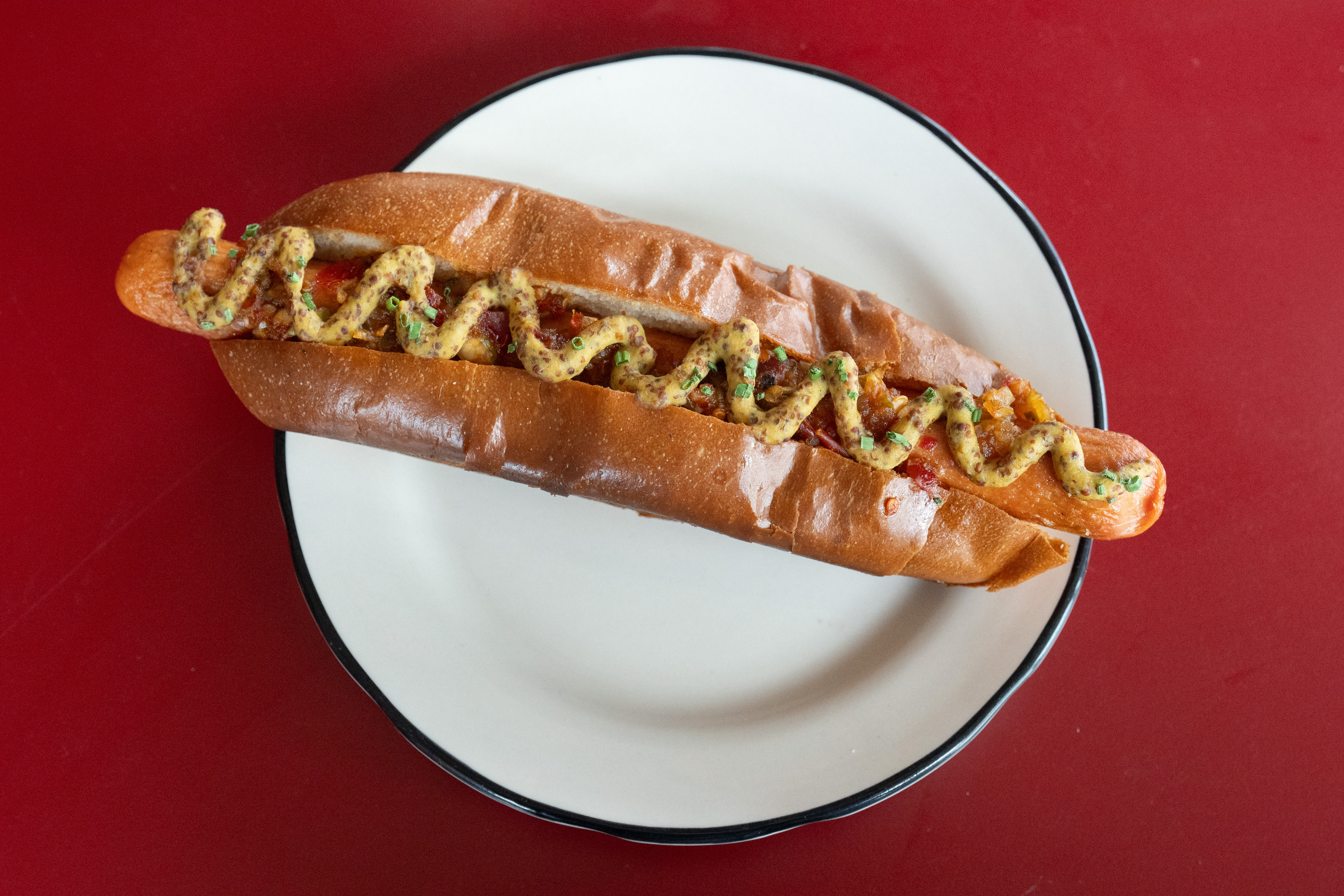
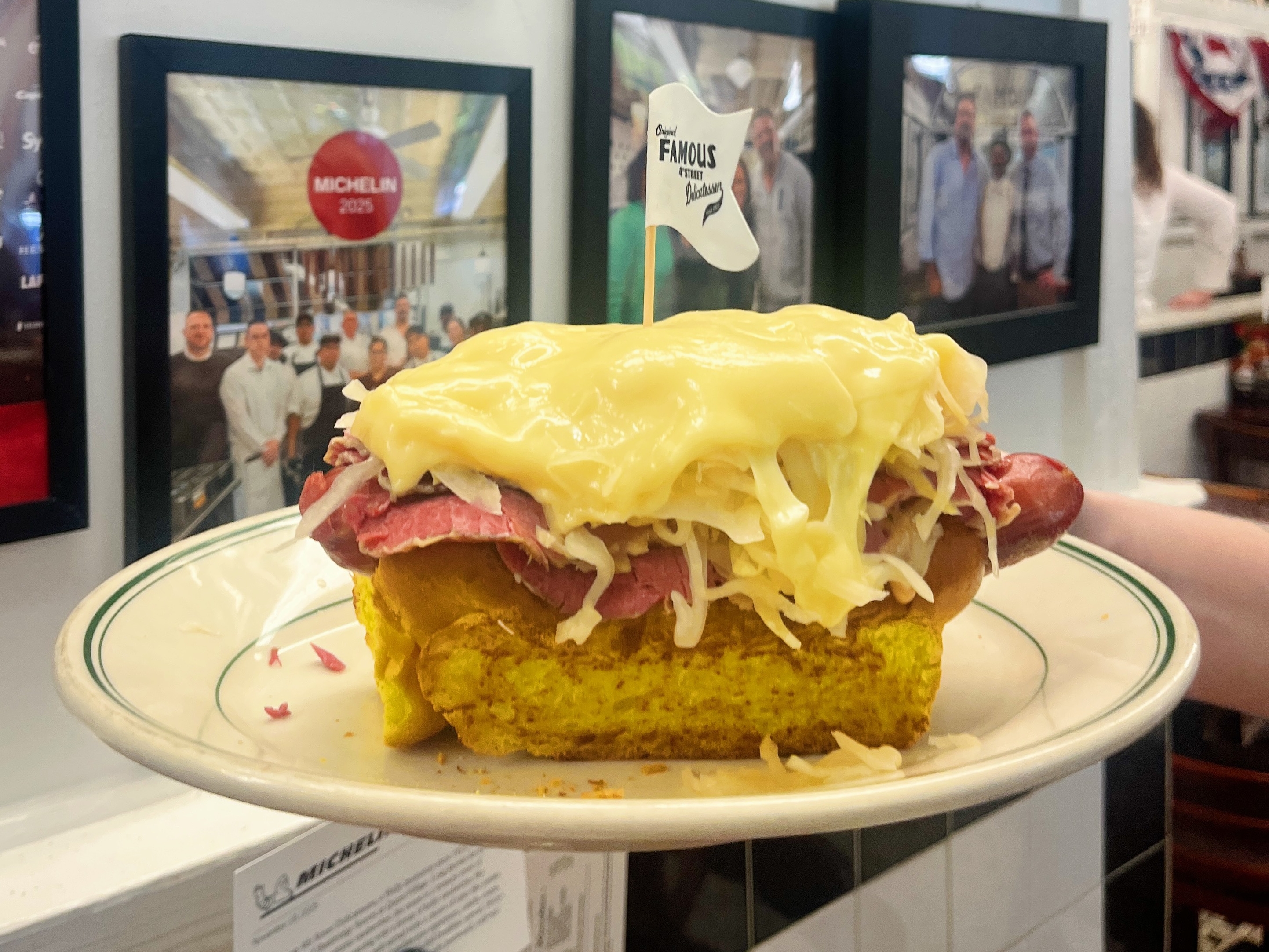
Famous 4th Street’s hot dogs are just how deli magnate Russ Cowan left them when he sold the joint in 2024 to Connecticut-based restaurateur Al Gamble: big and beefy. The Queen Villageinstitution still uses all-beef sausages for its traditional hot dogs and oversized pigs-in-a-blanket, and it still makes its challah buns in house. The only difference? The buns are now buttered and lightly toasted to mimic a Connecticut-style lobster roll, a change that Gamble said “tastes like childhood.” The deli’s classic hot dog is its bestseller, but the true showstopper is the hulking Reuben dog, which piles thin-cut pastrami, hot sauerkraut, and Russian dressing atop a 7-inch frankfurter. It’s just as filling as the sandwich it’s based on — and nearly half the price. — B.F.
The Reuben Dog at Famous 4th Street Delicatessen, 700 S. Fourth St.Beatrice Forman / Staff
Fox & Son
Reading Terminal Market has a certain “state fair” feel anyway, but a stop at this stand will make your day seem even more festive. Rebecca Foxman’s signature, crunchy hand-dipped corn dogs are made with corn batter, a boon to those who are sensitive to gluten. Choose pork-and-beef, all-beef, turkey, spicy pork, or a Beyond veggie dog, then stick with the classic or go fancy. Variations include chili-cheese-scallion, cheddar-jalapeño, and sweet-potato batter with chorizo and cilantro-lime sour cream. For a more lavish version, choose the Korean-style dog with mozzarella, sugar, ketchup, and mustard. — Michael Klein
Standard hot dog with ketchup and mustard front, hot dog with pepper hash back, and hot dog with fish cake and pepper hash at Johnny’s Hots, in Philadelphia, Aug. 17, 2026.Jessica Griffin / Staff Photographer
Johnny’s Hots
At 5:45 every weekday morning (and at 7:15 on Saturday), the window rolls up at this cash-only stand across from Penn Treaty Park. Ride-share drivers, truckers, and other hungry early birds start pulling up for grilled hot dogs and especially that old-time Philly combo of hot dogs and fish cakes, on soft buns. Johnny’s traces its roots to the 1950s, when Nunzio “John” Danze started serving waterfront workers from a lunch truck. The business later operated from a pier-side shack before moving to its current location on Delaware Avenue. The power move is the namesake spicy sausage, though the menu includes breakfast sandwiches as well as roast pork and cheesesteaks. — Michael Klein
The standard hot dog with ketchup and mustard, hot dog with pepper hash, and hot dog with fish cake and pepper hash at Johnny’s Hots on Aug. 17.Jessica Griffin / Staff Photographer
Juana Tamale
The only thing better than one hot dog is two hot dogs. Juana Tamale’s Jen Zavala serves her Sonoran-style hot dogs in pairs for $8, and prepares them just like they do in Northwest Mexico, where the street food originated before becoming Arizona’s glizzy of choice. A Sonoran dog comes wrapped in bacon and topped with refried pinto beans, Hatch chiles, red and green salsas, mustard, and mayo. Zavala’s one departure from a traditional Sonoran: She uses Amoroso’s Italian rolls instead of fluffy bolillo bread. The two have nearly the same texture, she said, and the Amoroso’s roll adds a touch of Philadelphia to a hot dog steeped in Southwestern spice. The Sonoran dog’s excess was a hard sell at first in Philly, Zavala said, but now, her East Passyunk Avenue Mexican restaurant sells between 200 and 300 a week. The more-is-more approach hits just right for those of us who view the hot dog as a prime vessel for toppings. — B.F.
Size matters at Columbus Boulevard’s newest waterfront tavern. Lucky Duck co-chef Sanil Shah claims the bar’s 10-inch wiener is likely the largest you can find in Philly — it pokes comically out the ends of its 6-inch Baker Street Bread roll. The tavern uses a smoky beef-and-pork blend from Reading-based Berks Packing Co. that has an audible snap with every bite. The toppings are simple — just brown mustard and a house-made hot honey-pepper relish that Shahsaid is loosely inspired by the packets of duck sauce that come with Chinese takeout. Bonus: Lucky Duck’s dogs are available until 1 a.m. on Fridays and Saturdays, just in case a late-night glizzy craving hits. — B.F.
501 N. Christopher Columbus Blvd., Suite 2003, 215-964-9345, luckyduckphl.com
A hot dog at Lucky Duck, Aug. 17.Jessica Griffin / Staff Photographer
Lucky’s Last Chance
When Chris Barnes added hot dogs to the Lucky’s Last Chance burger-centric menu six months after it opened its first location in Manayunk in 2011, he hoped to sell “maybe 50 hot dogs a week.” Now, Barnes estimates the shop goes through between 5,000 and 6,000 franks weekly across its four locations, in Queen Village, Manayunk, East Falls, and Ambler. At Lucky’s, Deitz and Watson franks (or Light Life veggie dogs) are the base for 12 variations that push the limits of the “is a hot dog a sandwich” debate. Take the Voodoo, layered with shredded chicken, American cheese, and onion strings. Feels like a sandwich to me. The bacon bits and BBQ sauce-topped Deadwood? A very meaty hot dog. The 1Up, with sautéed mushrooms, provolone, and garlic aioli, is somehow a secret third thing — a hot dog crossed with a French dip. Rich and warm, it resonates even in winter. — B.F.
848 S. Second St., 267-519-2080; 4421 Main St., 215-509-6005; 5154 Ridge Ave., 216-842-5836; 15 S. Ridge Ave., Ambler, 215-367-5881; luckyslastchance.com
Lucky’s Last Chance uses Dietz & Watson dogs and New England-style split-top rolls.Marisa DiSalvatore
Miller’s Twist
Lines often wrap around the edges of this legendary Reading Terminal Market vendor, whose tawny, traditionally knotted Amish-style pretzels are irresistible in their own right. So what’s not to love about that same supple, salt-studded dough wrapped around a hot dog, then baked to juicy perfection? Costco customers will be particularly enthused: The Miller family uses Kirkland brand for their regular and jumbo dogs. (Dietz & Watson supplies their spicy beef and jalapeño dogs.) Buy one with or without cheese, and be sure to spring for a dipping sauce, especially the hot-sweet mustard made by the owner’s Lancaster-based in-laws. (Note that Miller’s does not make Philly soft pretzels; for better or worse, ours are not buttery. If you want a hot dog wrapped in Philly pretzel dough, head to one of three Bernie’s Pretzels in Delco.) — J.L.
Chef Chance Anies’ Filipino riff on Outback Steakhouse is a great place to go for happy hour, and particularly welcoming to kids. One of the draws is the Jollidog: an all-beef dog with mayonnaise mixed with bangus (umami-rich tinned milkfish), sandwiched in a soft bun, and topped with atchara, or pickled green papaya. It’s a perfect snack with a glass of wine, or a great meal for a toddler. Mine ate it up and clamored for another, which we happily ordered. The hot dog is on the regular menu, too, and comes with fries for only a few bucks more at happy hour. — Margaret Eby
When we kids were extra-good and my mom was feeling extra-rich, my mom would buy bacon and American cheese for our usual hot dog nights. She’d pull out the stovetop griddle, split the dogs, wrap them in bacon, and make us each a Texas Tommy — draping a thin slice of American cheese over everything to melt on contact. For me, the smoky, crispy Tommy at the Nifty Fifty’s chain is the perfect throwback to ’60s indulgence, even if the cheese of choice for the pork-and-beef dogs here is Whiz. Get yours topped with chili and eat it with a knife and fork, and don’t forget to use your napkin, as the old luncheonette lady would have reminded you. — M.K.
2491 Grant Ave., 215-676-1950; 2700 S. 10th St., 267-719-1950; 2431 Aramingo Ave., 267-771-1950; 1140 Old York Rd., Abington, 267-833-1950; 503 S. Oxford Valley Rd., Fairless Hills, 267-571-1950; 1900 MacDade Blvd., Folsom, 610-583-1950; 3524 West Chester Pike, Newtown Square, 484-992-1950; 684 York Road, Warminster, 267-802-1950; 1365 Marrows Rd, Newark, Del., 302-742-1950; 4670 Route 42, Turnersville, 856-875-1950; niftyfiftys.com
A classic hot dog with Ortlieb’s written on it with mustard and ketchup, in Philadelphia on July 20, 2024.Tyger Williams / Staff PhotographerAn assortment of classic hot dogs with mustard and ketchup writing, Ortileb’s taco dog, a Chicago dog, and a pickle on a stick, at Ortlieb’s on July 20, 2024.Tyger Williams / Staff Photographer
Ortlieb’s
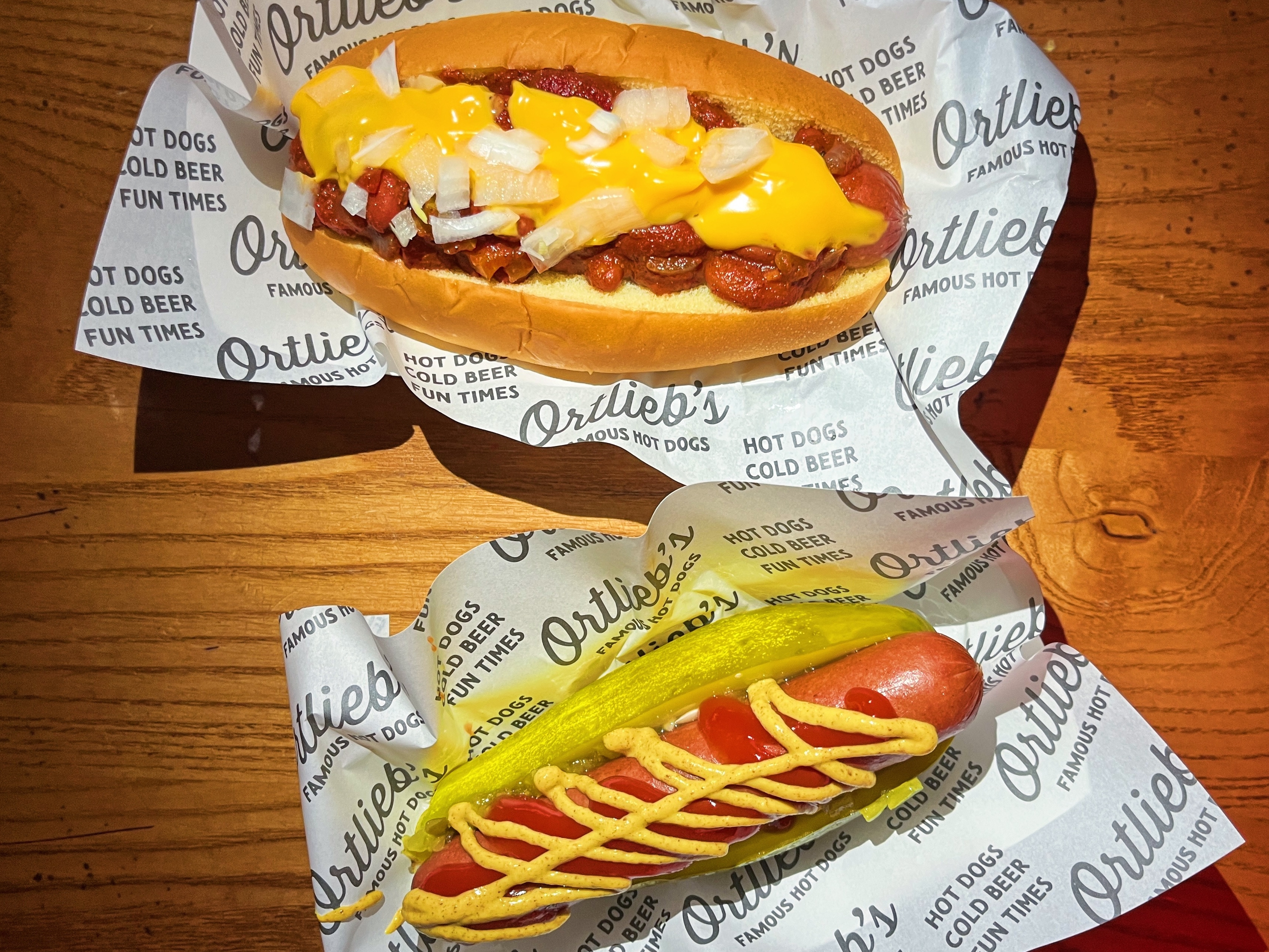
When Kyle Costill dedicated his Northern Liberties bar to the humble hot dog in 2024, “people were laughing at us,” Costill said. “Now, it’s like everybody is doing them.” Since then, Ortlieb’s has built a tiny empire out of no-frills dogs. Costill estimates the bar has sold 30,000 in the past two years thanks to a partnership with music venue Union Transfer and Port Richmond’s Green Rock Tavern, which sells Ortlieb’s-branded steamers behind the bar. The secret to their success is the wiener, a maple wood-smoked beef frank from Nevada-based brand Snap-o-Razzo, whose natural casing is so taut, the dog pops with each bite. (That feeling has inspired Costill to work on a proprietary Ortlieb’s dog that he intends to launch by the end of 2027.) Ortlieb’s has something for everyone: You can swap out a Snap-o-Razzos for a veggie dog, or top either with a vegan three-bean chili, courtesy of chef Alan Lichtestein of Haddonfield’s Little Hen. And pickle lovers will find a new obsession in the bar’s pickle dog, a hot dog cradled in an oddly sturdy half-sour spear. — B.F.
The chili cheese dog (top) and pickle dog (bottom) at Ortlieb’s in Northern Liberties are offered in both meat and vegan versions.Beatrice Forman / Staff
Perfect Together Restaurant & Cafe
Dilbar Nurivinova, the chef at this Bella Vista halal restaurant, grew up eating Uzbek super hot dogs at street food stands across her native Bukhara. So after nearly two decades living abroad, she was eager to recreate this overloaded wiener tribute to home at Perfect Together, the restaurant she opened last year on South Street with a menu that features foods from Uzbekistan and the Czech Republic, her previous place of residence. Nurivinova’s super dog begins with a smoky pink halal beef hot dog, then is piled high with so many fixings — garlicky shredded carrots, tangy beet salad, rice noodles, a hard-boiled egg, Nurivinova’s special sauce (a ketchup zingy with cumin and paprika), and copious gobs of mayo — that it is essentially an entire Uzbek picnic on a bun. Perhaps even better is the kofta variation she makes with a well-spiced kabob of minced beef. There are several other intriguing variations to be found in Uzbek Northeast Philly. — Craig LaBan
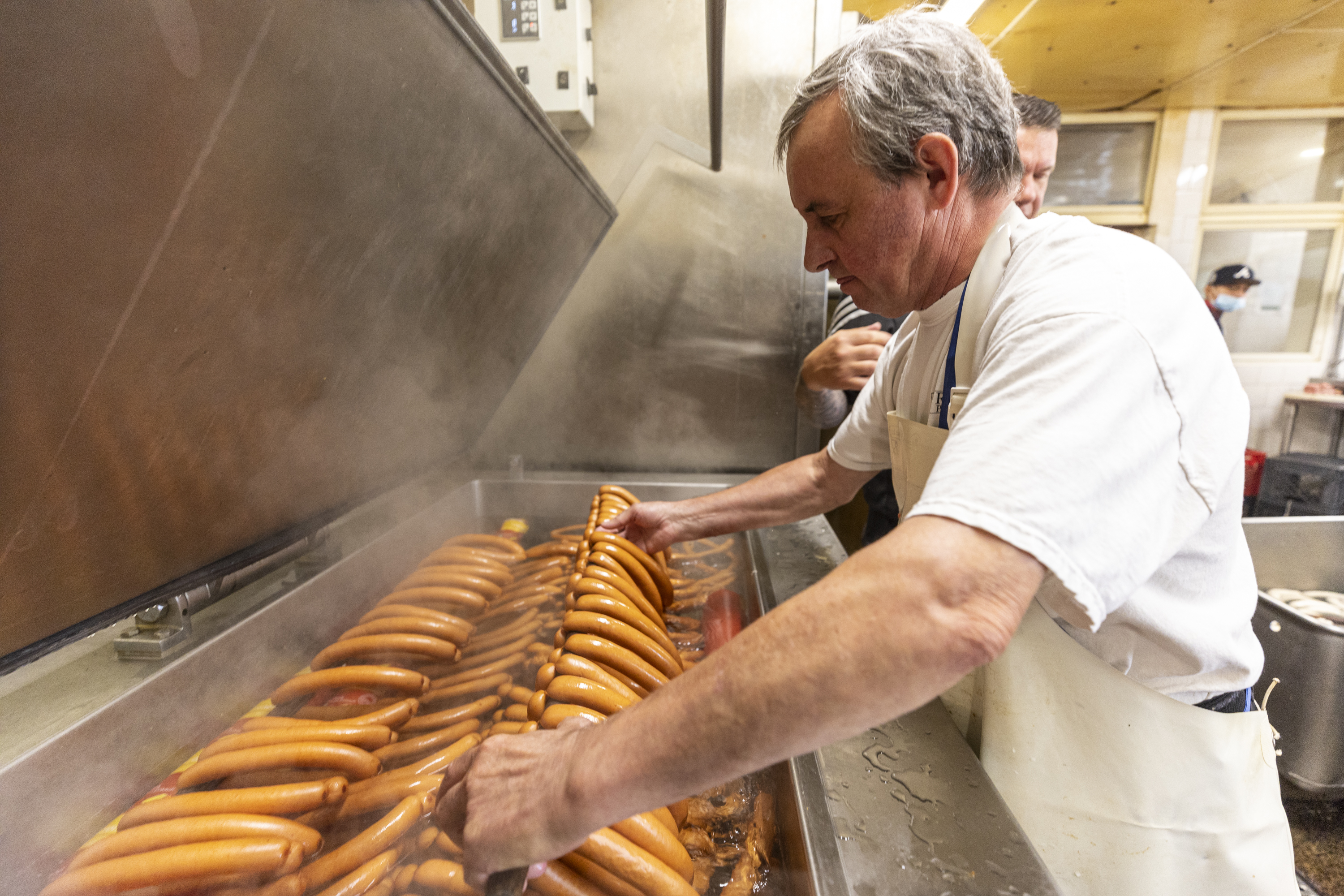
Don’t go to this 54-year-old Fox Chase institution expecting to walk out with a griddled hot dog on a bun. Rieker’s is a market — “German-food wonderland” is probably more accurate — and, particularly, a sausage specialist. The traditional wieners here are handmade in the back, where the staff grinds bull meatwith a blend of beef trimmings, pork butt, granulated onion, paprika, and garlic powder, then makes long links that go into the smokehouse for a hickory-scented steam. You can buy the skinny, snappy wieners by the pound, along with well over a dozen other sausage varieties, plus German potato salad, dried egg noodles, and much more. — J.L.
Alex Naumenko, a sausage maker, pulls wieners from a water bath at Rieker’s Meats in Philadelphia, on July 16, 2024.Tyger Williams / Staff Photographer
Second Daughter
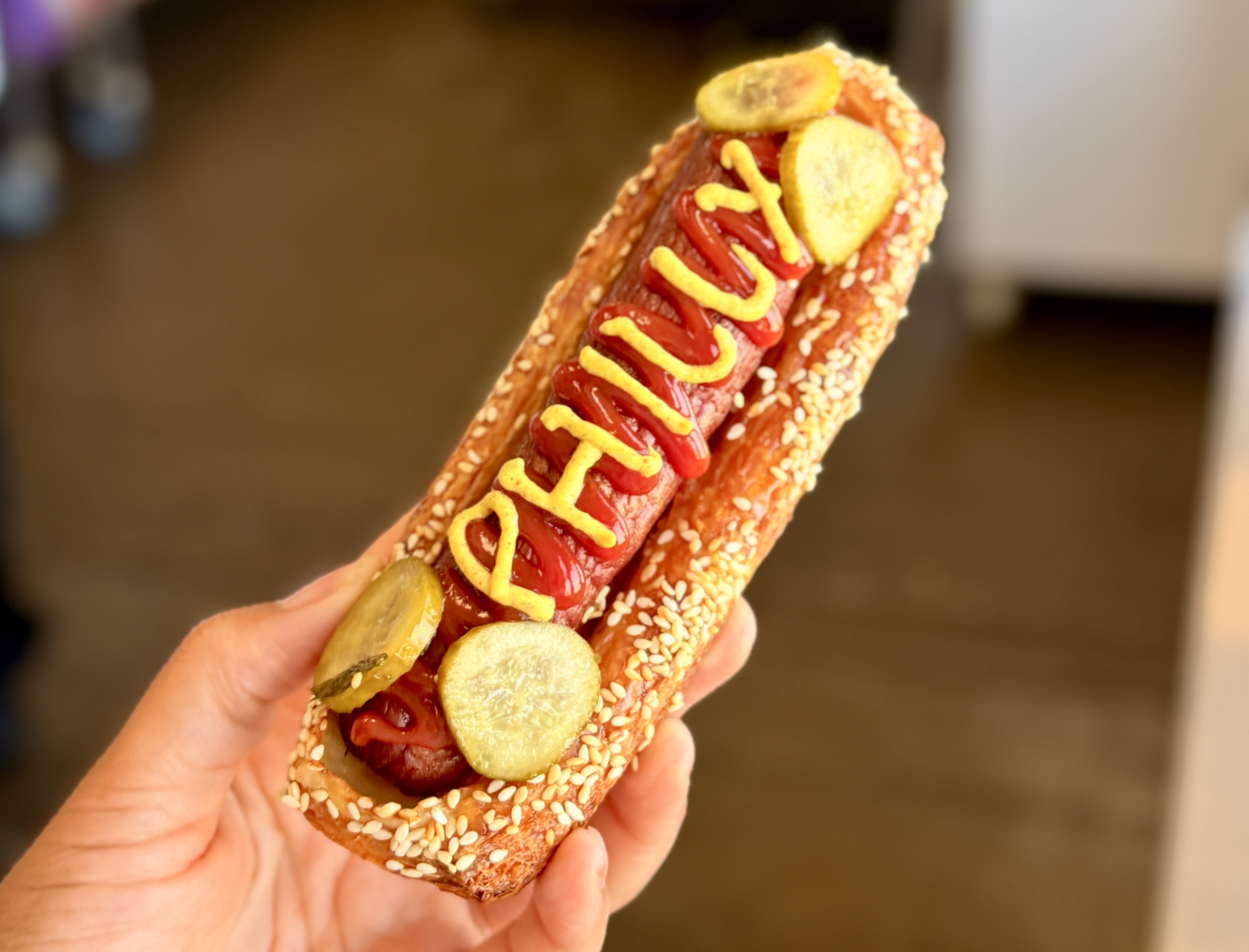
Is there an ordinary treat that Rhonda Saltzman can’t transform into a work of art? The creative genius behind Second Daughter bakes all-beef Nathan’s dogs in ultra-flaky, sesame-seeded croissant shells that give faint crunch to each savory bite. The Second Daughter crew tops the dogs with ketchup and spicy brown mustard squiggles and house-made pickle chips for tangy contrast. The only drawback: The dogs are so popular at both the fourth-floor Bok Building bakery and its Rittenhouse Farmers’ Market stand, they’ve been selling out around noon. On the bright side, Saltzman says they’re not going anywhere, even after summer ends. (Look out for specials like a sloppy joe dog and a baked bean-topped dog.) — J.L.
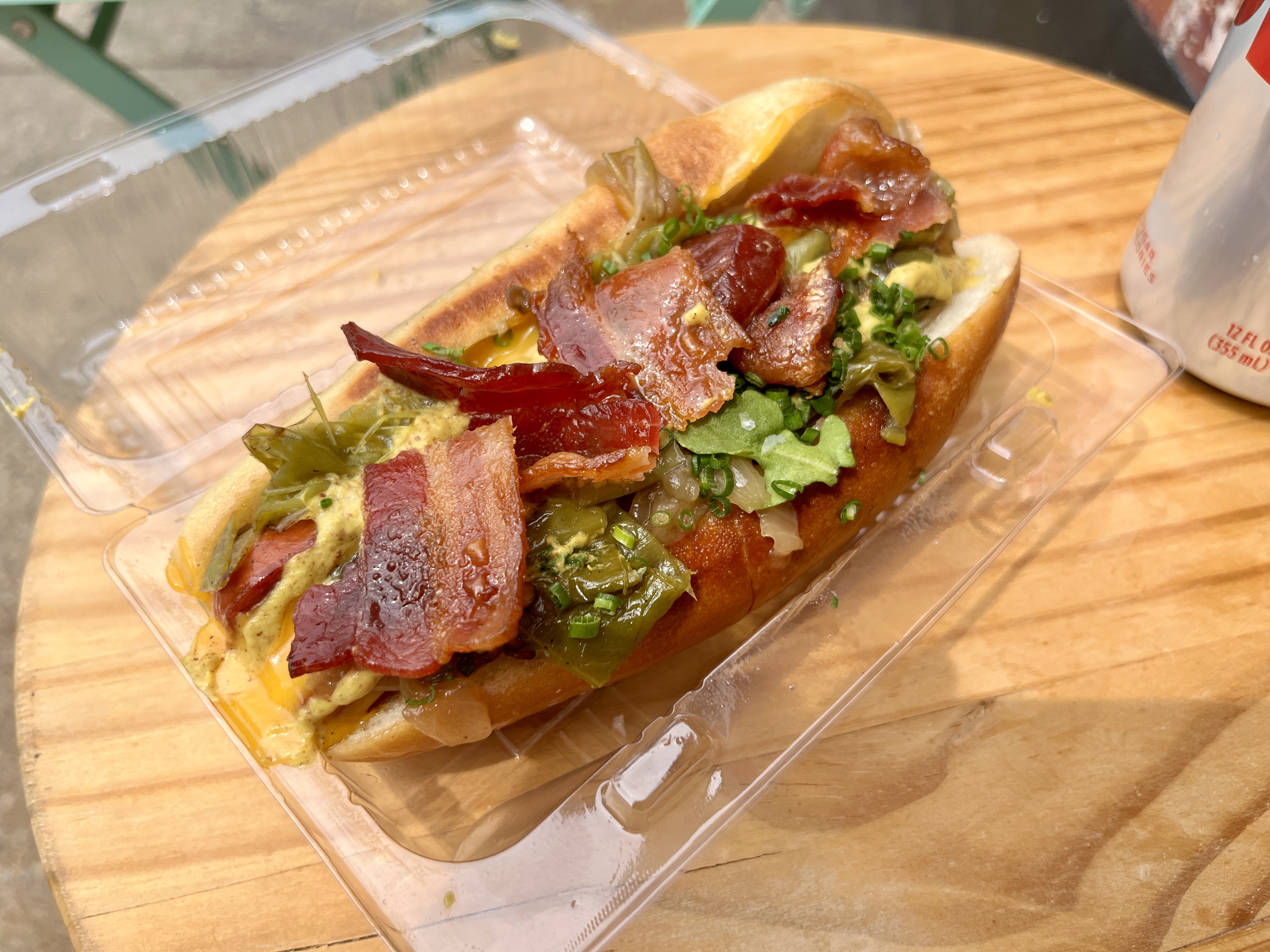
Essington native and Starr Restaurants alum Mark Gears runs a bustling breakfast and lunch takeout trade from this Kensington corner store, which has some bodega trappings, too. Need paper towels, dish soap, sugar, and spaghetti sauce? Gears has it. That pragmatic mindset led him to add hot dogs to his menu when he opened the shop in October. “Preopening, I went to Cacia’s [Bakery] to talk bread and saw these beautiful little fresh hot dog rolls. Said, how the hell can’t that be tasty,” Gears said. Smalls’ plump griddled all-beef hot dog, served on buns delivered fresh daily, will cost you less than a fiver, but it’s well worth springing for caramelized onions, roasted long hots, and crispy bacon toppings. — J.L.
A loaded hot dog (with roasted long hots, cheddar, bacon, spicy brown mustard, and caramelized onions) at Smalls’ Provisions in Kensington.Jenn Ladd / Staff
Sonnys Cocktail Joint
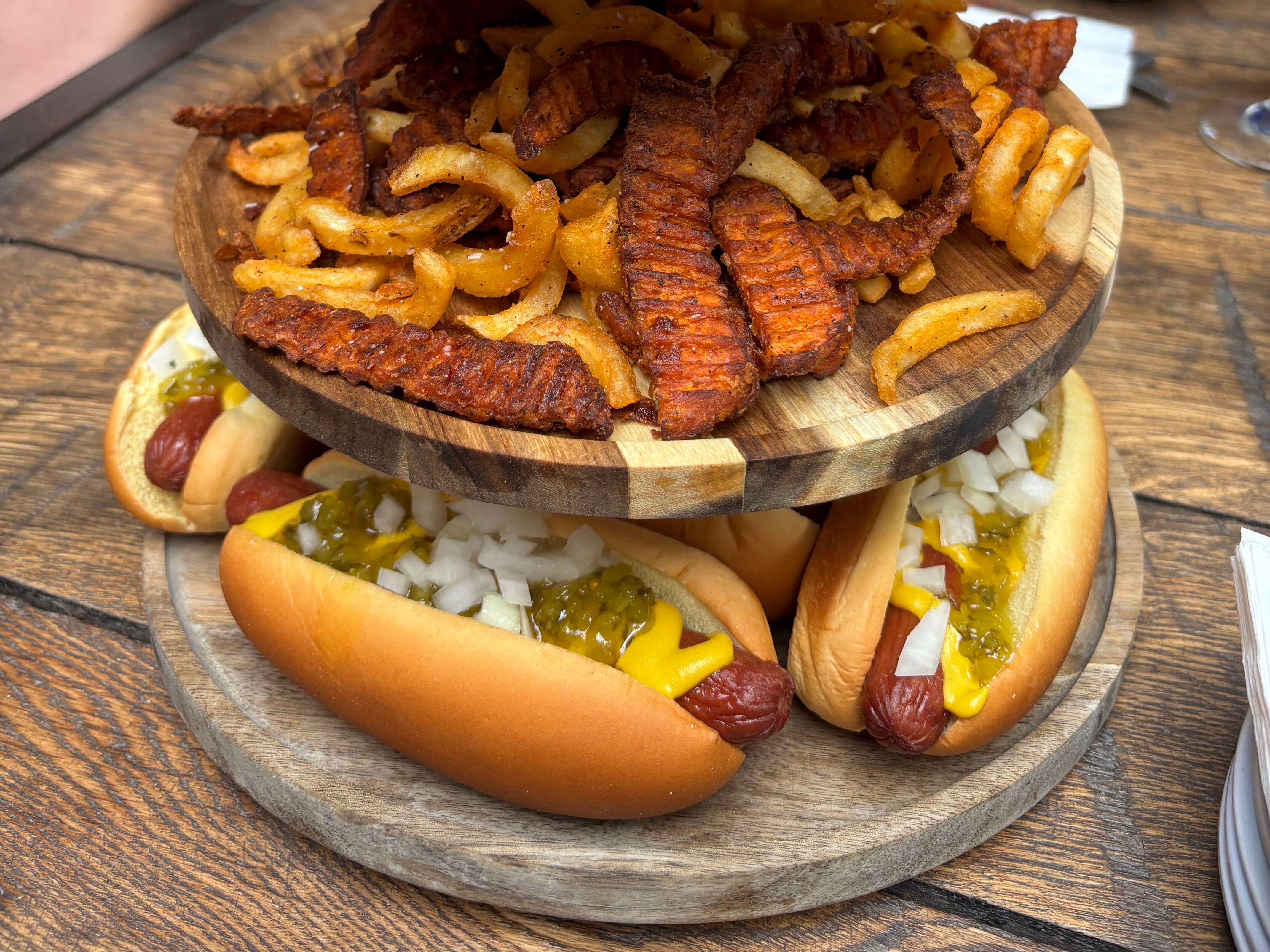
A single hot dog isn’t ideal for sharing. But at Sonnys Cocktail Joint, they’ve solved that particular issue with a hot dog tower, an inspired play on the seafood tower, that replaces oysters and shrimp with hot dogs, french fries (regular and sweet potato), and a top tier filled with little cups of ketchup, ranch, and a peperoncini aioli. A small tower comes with six hot dogs, a large fits 12. The hot dogs aren’t anything fancy — a standard-issue wiener with an array of condiments — but the format is whimsical, and it’s a perfect accompaniment for a couple of cocktails. — M.E.