Category: Food

  • The best thing Beatrice Forman ate this week: Birria ramen from a TikTok-famous taco empire

    The best thing Beatrice Forman ate this week: Birria ramen from a TikTok-famous taco empire

    The air is getting colder and the days are getting shorter, which means it’s my favorite time of year: soup season.

    The start of soup season is especially important, since it’s when I dedicate my days to scouting the best takeout bowls and cups for when I inevitably get too sick to make my own. Already, an early contender has emerged — beef birria ramen from La Catrachita, Carlos Gomez’s burgeoning taco empire.

    Gomez, 38, opened the original La Catrachita in 2021 as a food truck at Seventh and Snyder Streets, selling tacos and Honduran street food platters with his wife, Zeina Carolina Rodriquez. In five years, the couple has grown the business to four trucks, plus five storefronts across the Italian Market, Pennsport, Old City, North, and Northeast Philly. (The name is an homage to his wife, said Gomez, since catrachita, or “little Honduran girl,” is a term of endearment for women in Honduras.)

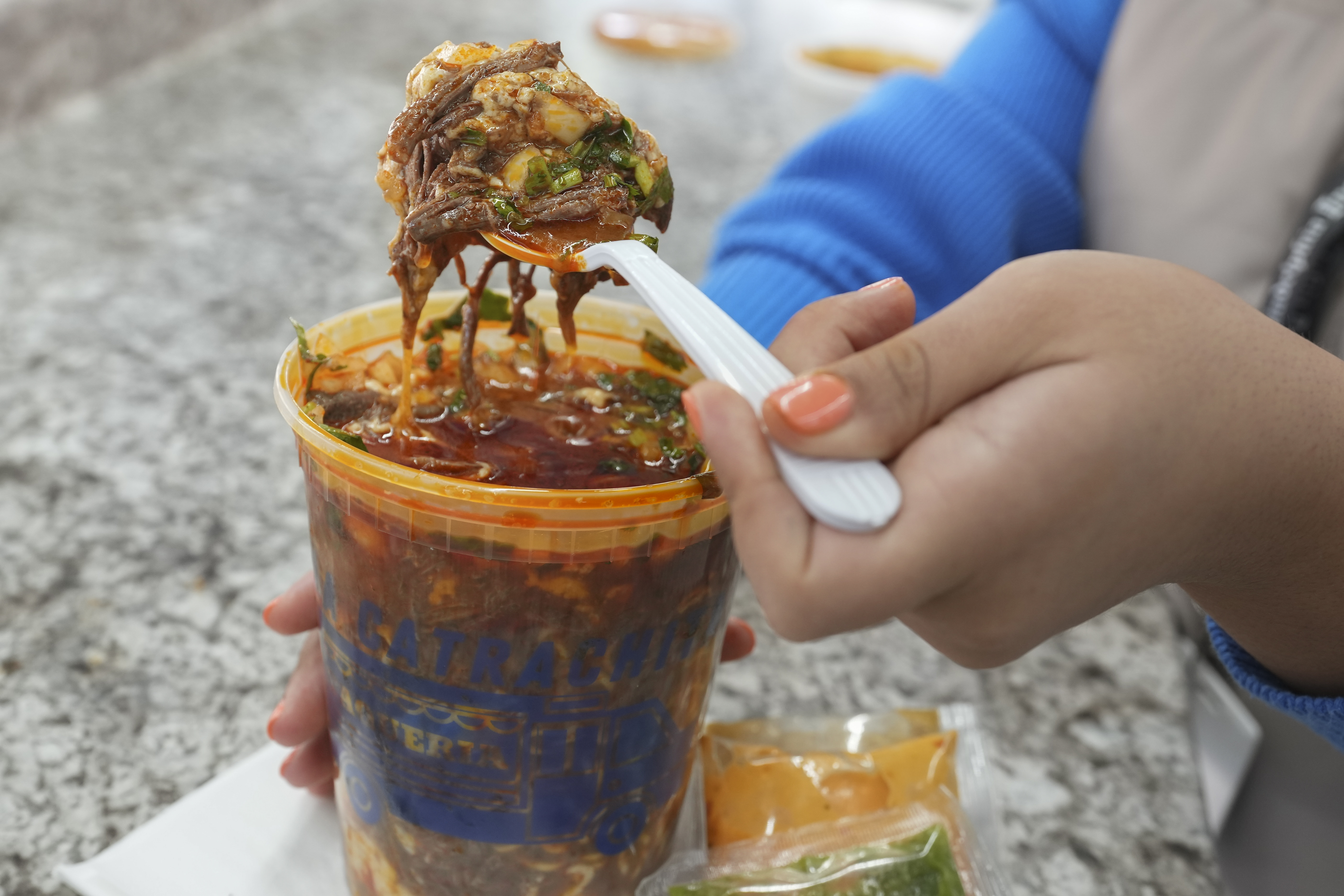
    Most of that growth, according to Gomez, can be attributed to social media, where La Catrachita has 364,000 followers combined between Instagram and TikTok. The restaurant frequently goes viral, thanks to videos of influencers digging into quarts of the restaurant’s birria ramen, lifting heaping spoonfuls of noodles and tender hunks of slow-cooked beef from its dark red broth.

    On a slow day, Gomez said a single La Catrachita location sells 100 quarts of the ramen, which cost $9.99 apiece. At that rate, it’s no wonder the soup is about as popular its taco counterpart.
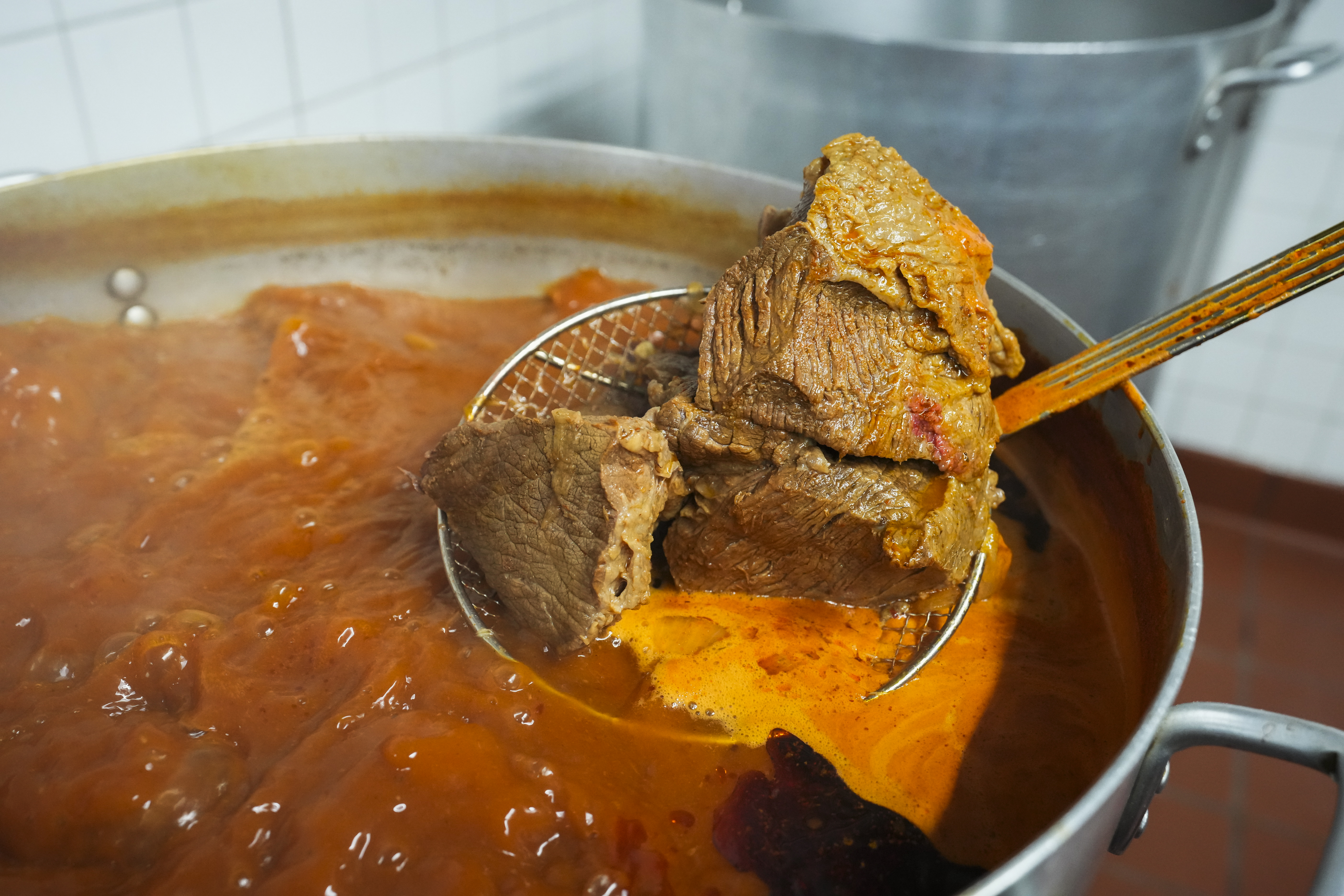
    La Catrachita’s beef birria simmers for at least four hours and is rich with guajillo chiles.Jessica Griffin / Staff Photographer

    Birria ramen isn’t so much Japanese-Mexican fusion as it is a way to reinvent the dish’s trademark guajillo chile-rich consommé as a main event. Birria started as a hearty goat soup in Jalisco, Mexico, where it originated in the 16th century as a way to deal with an overabundance of goats. It morphed during the 1950s, when chefs in Tijuana popularized making it with beef and serving it alongside tacos — a practice that’s become synonymous with the dish in the U.S., where the heavily spiced broth is best known as a something to dunk tacos or quesadillas in.

    The ramen version was created in 2015 by Antonio de Livier at the now-shuttered Mexico City chain Animo. The chile-laden noodle soup arrived in the U.S. by way of night markets in Los Angeles, spreading across the country, from New York to Oregon, with chefs serving their own iterations, often in novelty instant cups.
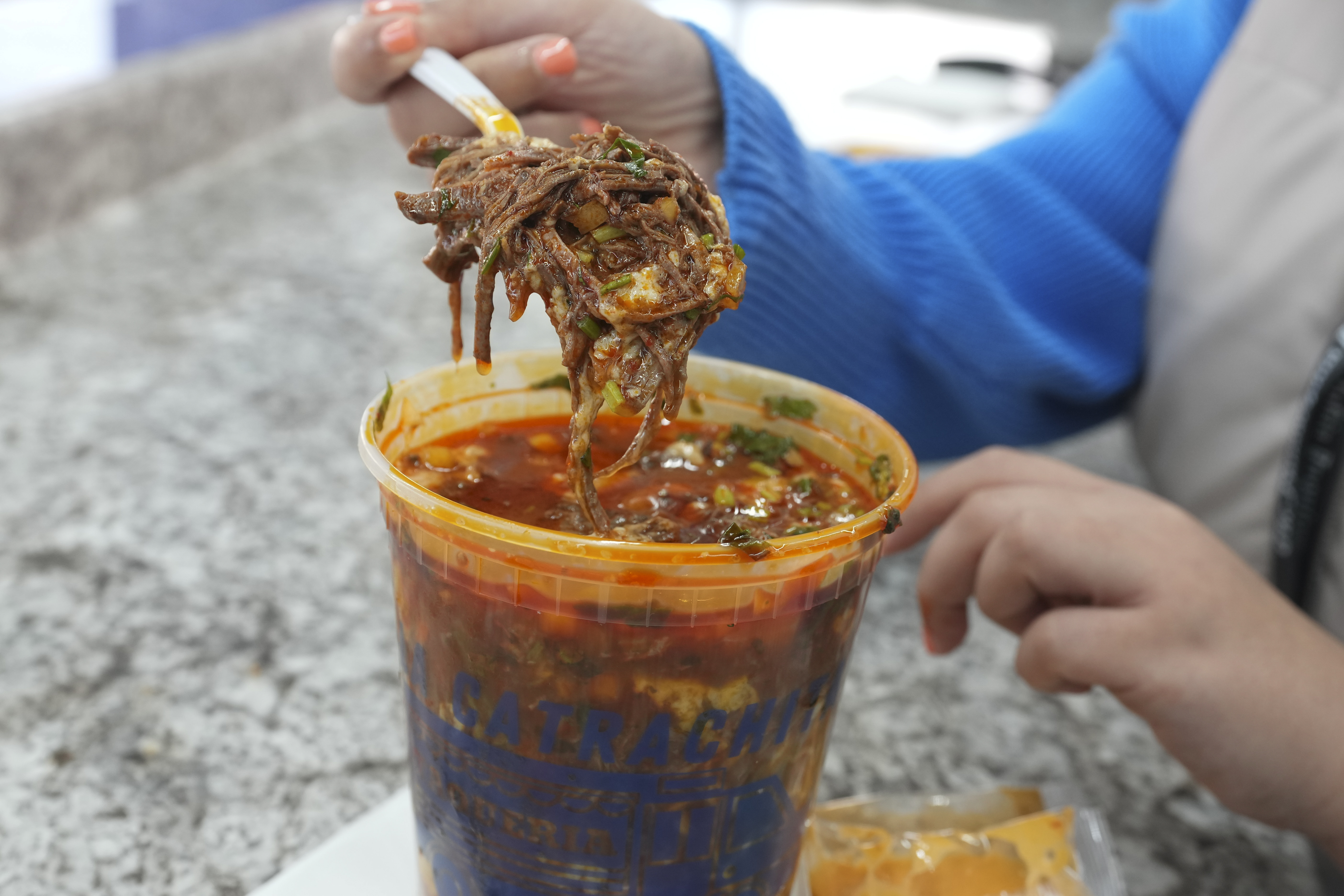
    Birria Ramen at La Catrachita sells for $9.99 per quart.Jessica Griffin / Staff Photographer

    At La Catrachita’s 24-hour location at 1201 S. Ninth St. in the Italian Market, a crock of beef birria simmers for at least four hours before it’s ready to be served, filling the air with the scent of garlic. Gomez adds his own touch in the form of melty mozzarella cheese, an ode to his past as a pizza shop owner.

    Somehow the cheese makes the soup even more comforting, like a cross between my two guiltiest sick-day pleasures: instant spicy cheddar ramen and a brisket deli sandwich. I’m convinced La Catrachita’s birria ramen helped me turn the corner on a recent weekslong cold.

    Entrepreneurship comes naturally to Gomez, who grew up in Estocuapa, a rural village that’s about a three hours outside Mexico City. On weekends, his mom and sister sell barbacoa tacos in town, refusing to stray from the traditional method of cooking the beef (wrapped in agave leaves, roasted in an underground pit overnight).
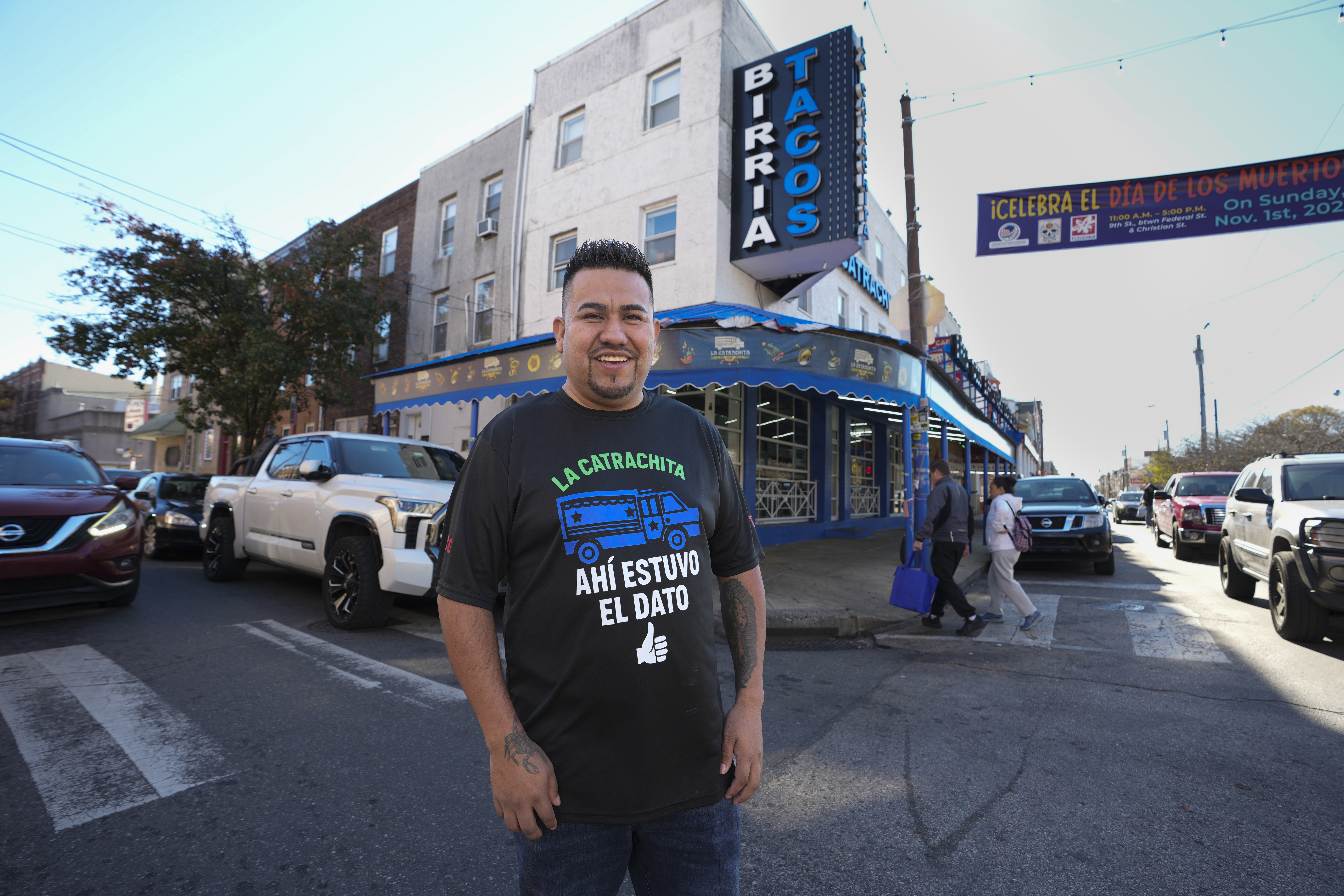
    Owner Carlos Gomez outside La Catrachita’s 24-hour location at 1201 S. Ninth St. The restaurant has five locations and four food trucks across Philadelphia.Jessica Griffin / Staff Photographer

    Gomez, meanwhile, sold everything from shaved ice to corn to support his family, leaving school at age 12 to work full-time. He immigrated to the U.S. in 2004 and eventually wound up in Philly, recruited to work at a now-defunct pizza shop. He went on to open a pizza shop of his own in 2010, and another, and another — 12 total businesses, including a barbershop, he said. All of them failed.

    “I started from the bottom 12 times,” Gomez said. “This time, I know where I want to go.”
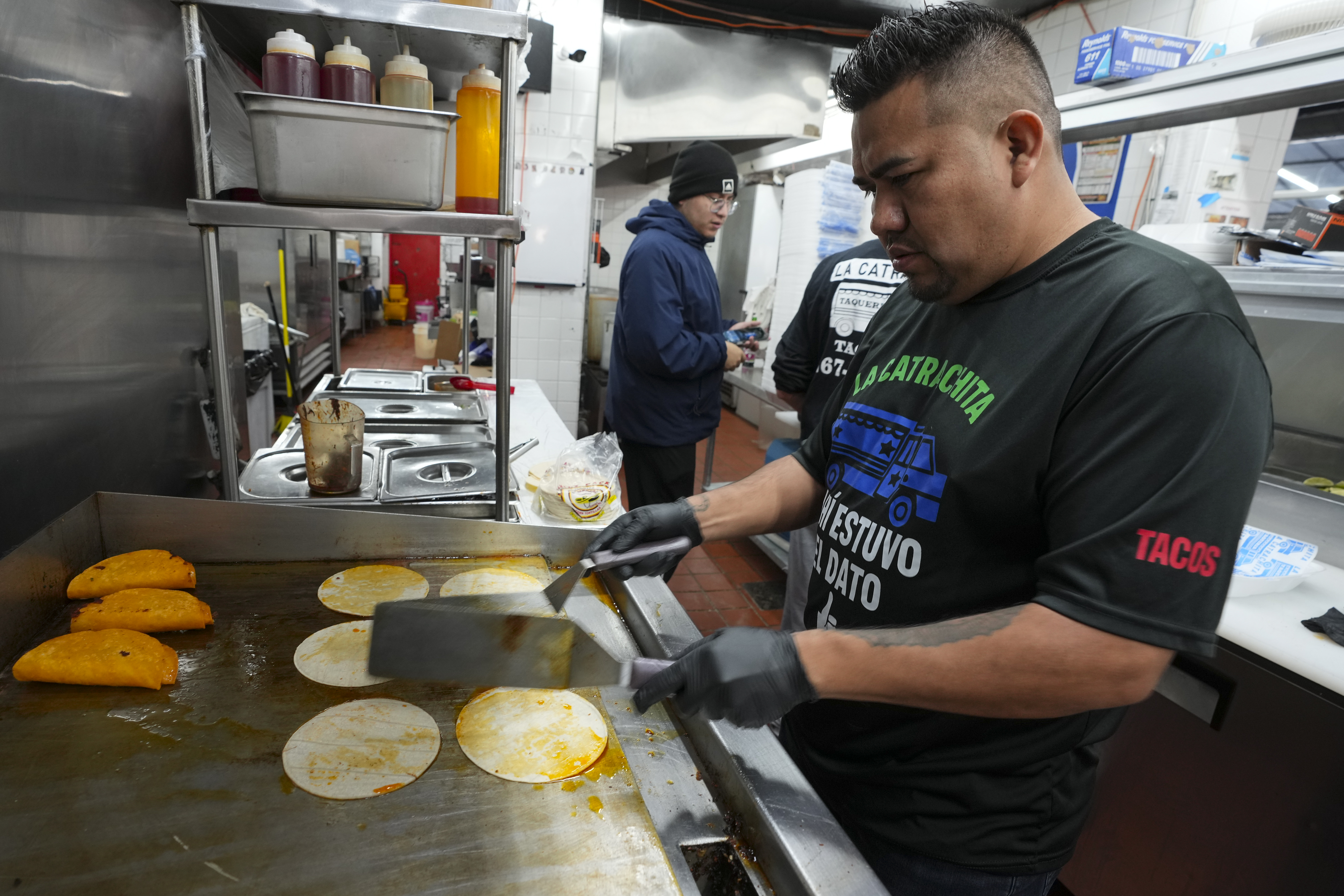
    Owner Carlos Gomez makes beef birria tacos at La Catrachita in the Italian Market.Jessica Griffin / Staff Photographer

    When he launched La Catrachita’s first truck in 2021, he deliberately avoided barbacoa because it would’ve been too difficult to make; good birria, Gomez said, is easier to replicate by comparison. The broth-dipped tacos proved to be truck’s most popular item, outpacing the Honduran specialties to the point where Gomez removed them from the menu.

    La Catrachita opened its first brick-and-mortar shop on Christopher Columbus Boulevard in 2022, followed by its Italian Market location in 2025. The remaining Old City, North, and Northeast Philly locations opened this year. Each location is open late, with a focus on fast takeout and delivery service — a holdover from his days in the pizza business.
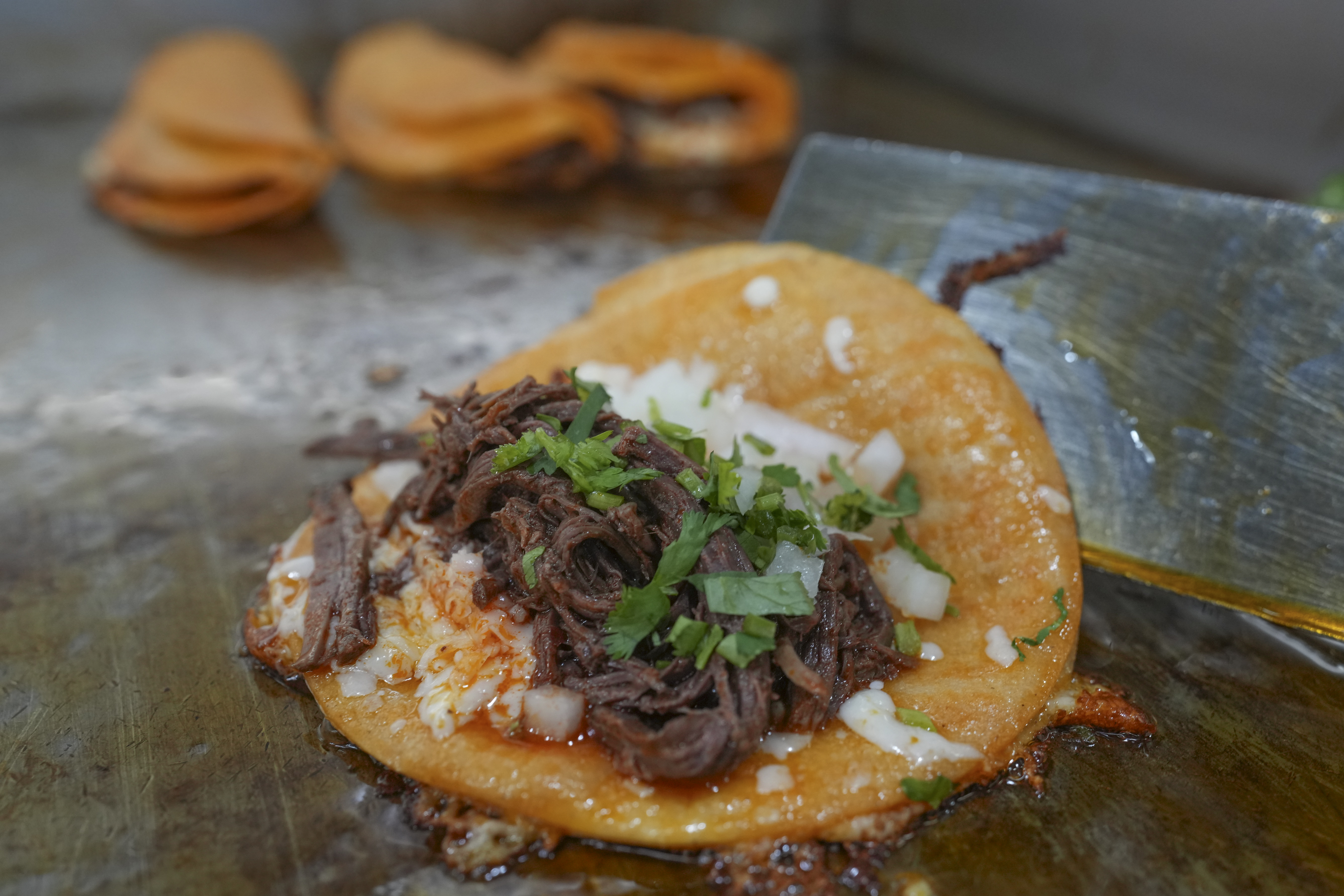
    Birria tacos at La Catrachita.Jessica Griffin / Staff Photographer

    “Back when I had the pizza store, we’d be open from 7 p.m. until 5 in the morning. If you can believe it, we’d get crazy busy after 2 a.m.,” said Gomez. “And even then, people were in rush. Everyone wants to eat best [food] as fast as possible.”

    La Catrachita, 1201 S. Ninth St., 267-876-7187; 1600 S. Christopher Columbus Blvd., 267-690-3537; 209 Chestnut St., 267-690-7130; 8016 Frankford Ave., 215-214-5253; 1449 N. Franklin St., 267-882-0421, catrachitafoodtruck.com
  • Americans are eating way less turkey than we used to

    Americans are eating way less turkey than we used to

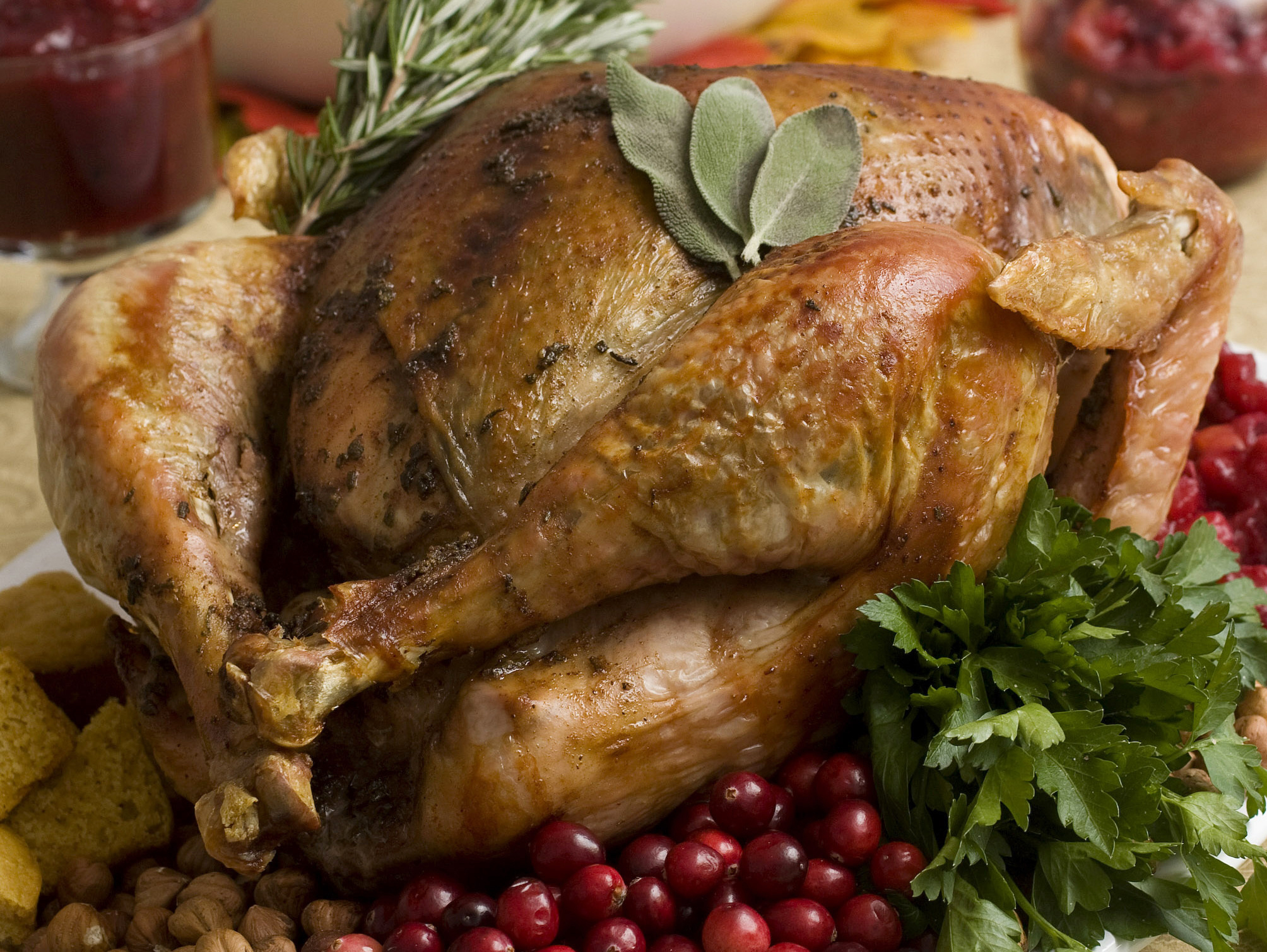
    One of the most quintessential American things is having roasted turkey on the table at a Thanksgiving feast. While that remains the norm, Americans are eating much less of this kind of poultry today than in the past. Annual consumption has fallen by more than 25% over the past three decades, while demand for chicken has soared.

    I’m a business school professor who has written about the economics of various holidays. I find turkeys fascinating, because even though I live in an urban area, a large group of wild turkeys has taken over my backyard.

    And I can offer several good explanations for the turkey slump.

    Receding since the late 1990s

    Domesticated turkeys, unlike their wild cousins, are a big business.

    More than $5 billion worth of the birds were sold in 2025. That’s no chicken feed.

    However, it’s the latest sign of the industry’s decline. U.S. consumers are drifting away from eating turkey. Back in 1995, the average American consumed 17.7 pounds of turkey each year. By 2025, consumption had fallen to just 13.2 pounds.

    While turkey consumption started to recede in the late 1990s, it began accelerating around 2008, when the Great Recession was underway. Occasionally, turkey production ticks upward a little, as happened in 2026 as demand for niche products like turkey jerky rose, but the long-term picture is one of steady decline.

    It’s not like Americans are eating less poultry overall. Chicken consumption has steadily grown during this turkey slump, rising about 50% from 69 pounds in 1995 to 104 pounds in 2025.

    In other words, we’re eating almost eight times more chicken than turkey. Well, at least the 95% of Americans who aren’t vegetarian or vegan are.

    More costly at every step in the supply chain

    Government agencies, researchers, and some pundits have identified two possible explanations for why Americans are eating less turkey.

    First: pocketbook concerns. Turkey often costs more than chicken, except when it goes on sale just before Thanksgiving.

    Over the past 25 years, wholesale turkey prices per pound averaged about 10% higher than chicken, according to U.S. Department of Agriculture data. That price, which is what big retailers typically pay, affects what you owe at checkout.

    For example, just before the 2026 Thanksgiving sales began, a Bell & Evans fresh whole turkey was going for $4.99 a pound, while a Bell & Evans fresh whole chicken cost $3.49 a pound at my local supermarket. That’s $1.50 a pound difference, which is significant in an economy where many people feel economically pinched.

    Nationally, you will see similar price differences, with fresh turkey being more expensive than fresh chicken.

    So, why is turkey pricier than chicken?

    Both turkeys and chickens are fed a diet of corn and soybeans. However, turkeys consume a higher percentage of soybeans. And soybeans currently cost about twice as much as corn.

    The latest data shows turkey feed costs are up almost 80%, without accounting for inflation, since 2000, while chicken feed costs have climbed only 60%.

    Too big for more families

    The second reason has to do with the size of today’s families.

    The typical Bell & Evans whole chicken my grocery store sells weighs approximately 4 pounds, while its fresh turkeys tend to range between 10 and 12 pounds.

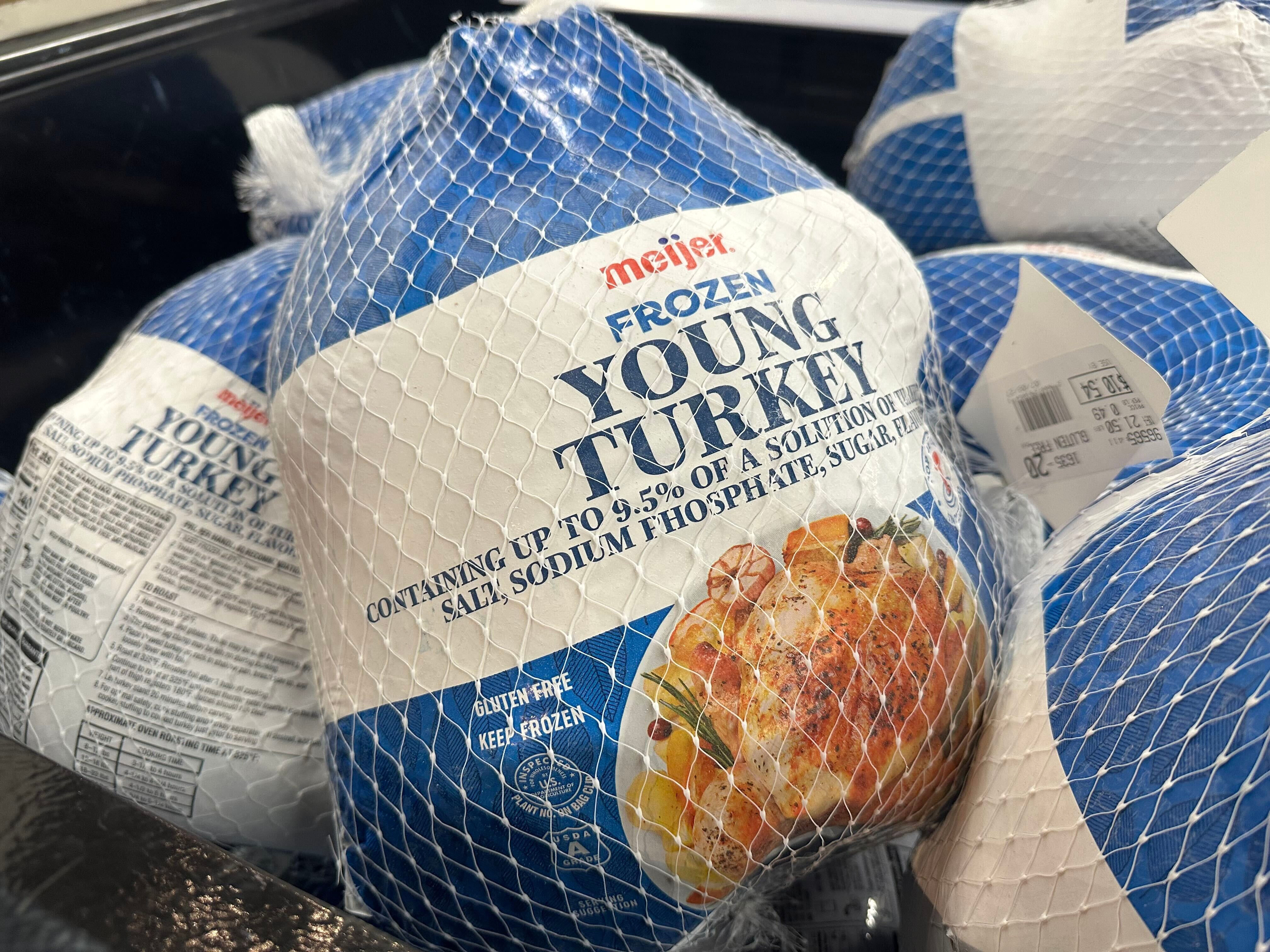
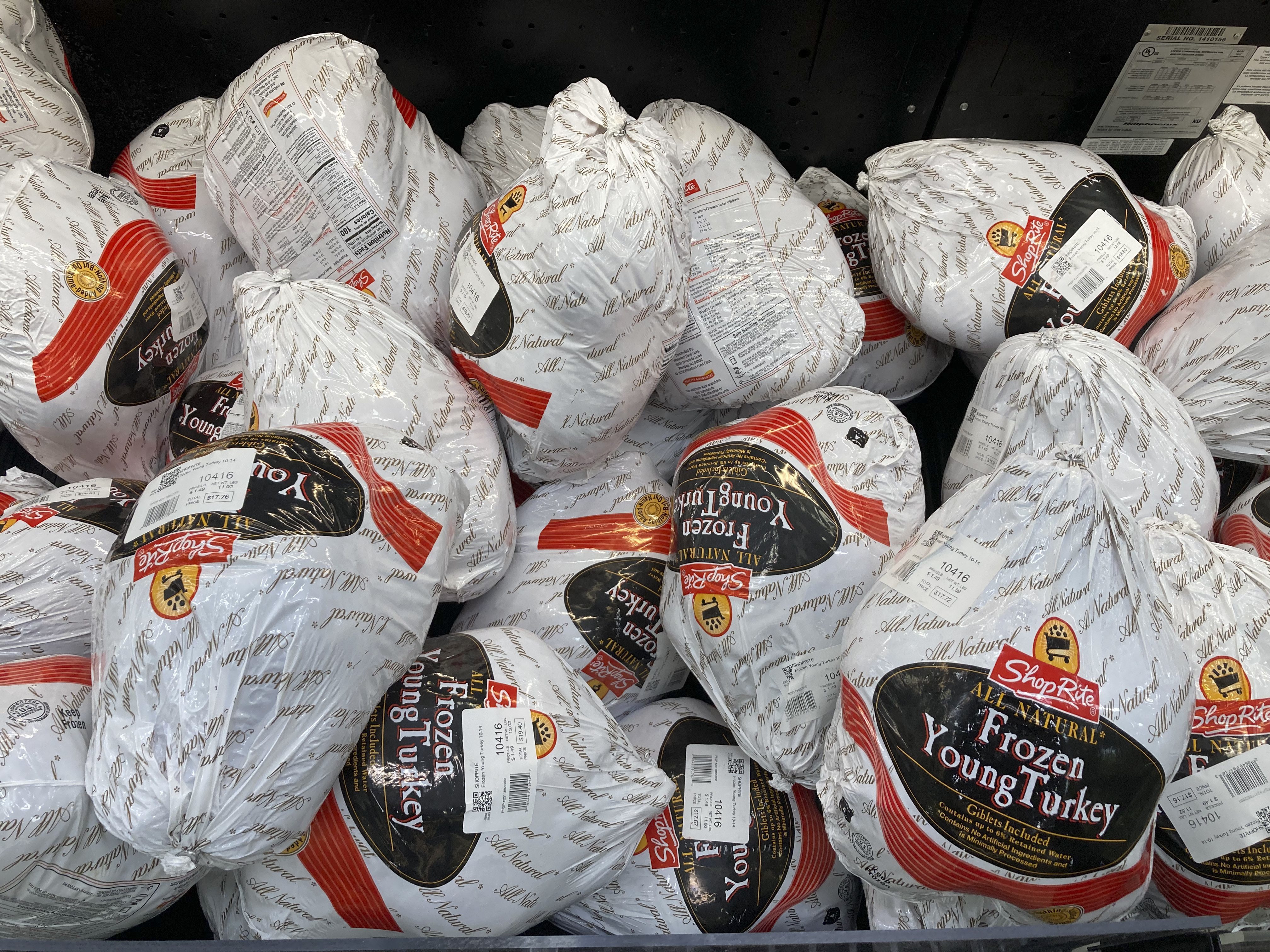
    Frozen turkeys are displayed at a ShopRite in Philadelphia in 2021.Matt Rourke / AP

    Big birds are handy if you have a lot of mouths to feed, but American families have shrunk over time. Today the average household includes only 2.5 people. The extra half-person does not represent children who are picky eaters or people who don’t like eating meat. It just means the typical family has between two and three people.

    That means cooking a 10-pound turkey results in 4 pounds of food per person, which is far more than almost anyone who is not a competitive food eater can consume.

    Cooking a 4-pound chicken, however, results in a more manageable 1.2 pounds of poultry per eater after getting rid of the bones, which make up about a quarter of a chicken. In simple terms, buying a whole chicken often results in one or two meals per person. Cooking a whole turkey often yields enough meat to produce meals for an entire week.

    There are two more factors to consider. First, a 10-pound turkey costs a lot more than a 4-pound chicken. A 10-pound fresh bird at $4.99 a pound sets you back almost $50, while a $3.49-per-pound chicken that weighs 4 pounds costs under $14.

    Last, bigger birds take longer to roast. Cooking a 10-pound turkey in an oven takes about three hours, while a 4-pound chicken takes about two. That extra hour is a big burden in an increasingly time-pressed society.

    In case you were wondering, the world record for eating a turkey is held by Joey Chestnut. He gobbled down 9.35 pounds of turkey off the bone in 10 minutes in 2014. Please do not try that at home.

    What about wild turkeys?

    If you need to save money on turkey this holiday season, you should consider buying a frozen one. They are much cheaper.

    But can you save even more by going turkey hunting?

    Given all the large wild turkeys roosting in my backyard, I looked into what it would take. I live in Massachusetts, where hunting wild turkeys before Thanksgiving is legal.

    For much of the fall, hunters are allowed to use only bows and arrows. Beyond needing to be a proficient archer, they also have to purchase a sporting license, a turkey permit, and an archery stamp for $95 each year.

    Having learned about that, I’m sticking to buying my turkeys in the supermarket.

    Jay L. Zagorsky is an associate professor of business at Boston University.

    This article is republished from The Conversation. Read the original article here.

    The Conversation

  • Soufiane at the Morris, facing challenges, is closing after less than six months

    Soufiane at the Morris, facing challenges, is closing after less than six months

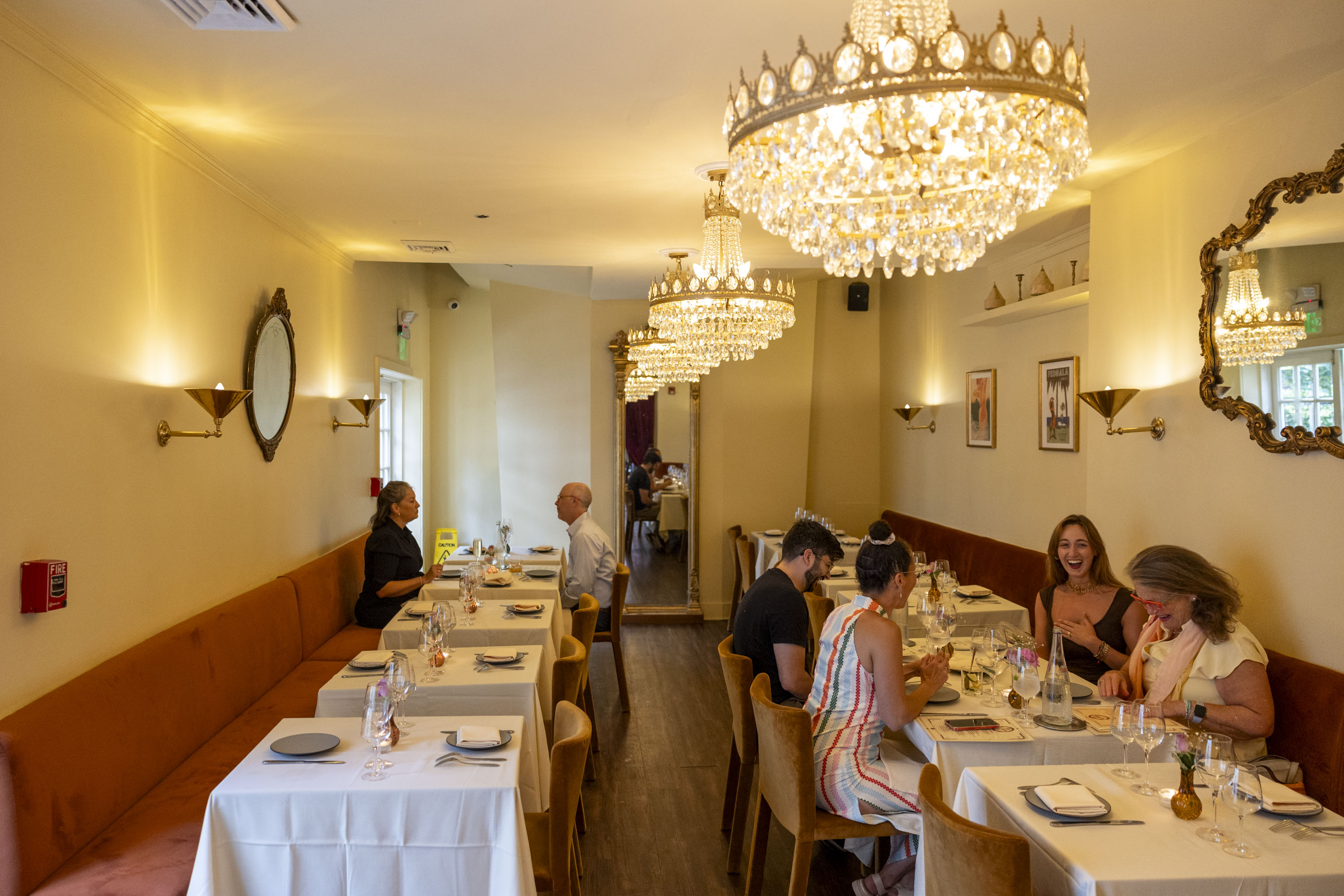
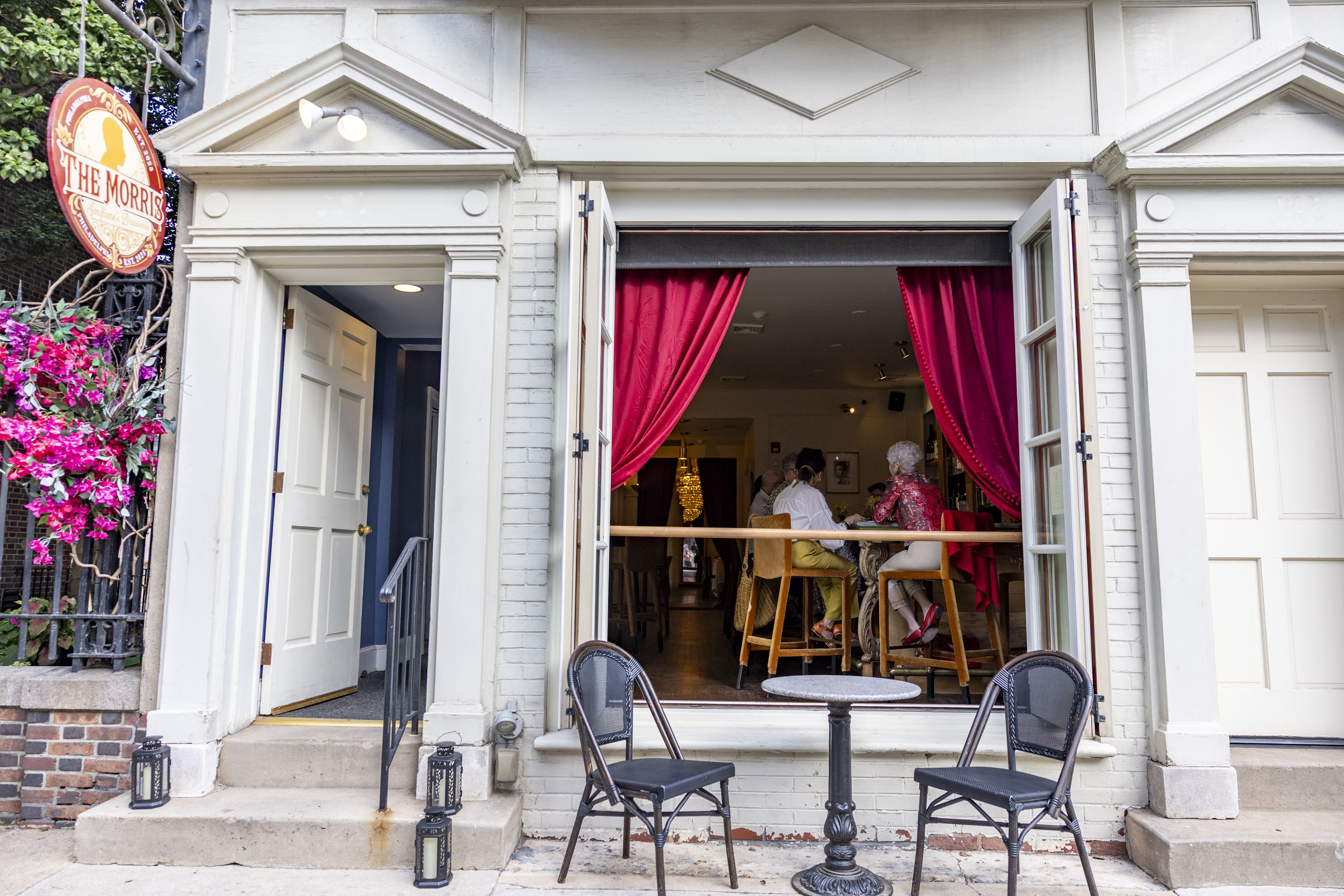
    Soufiane at the Morris, the ambitious French Moroccan restaurant that opened in June at the historic Morris House Hotel in Washington Square West, will close after dinner service Saturday, following months of financial difficulties that led to a staff walkout and an overhaul of its menu.

    Owner Soufiane Boutliliss announced the closing Friday on Instagram, thanking customers and employees and saying that his other restaurant, Sofi Corner Cafe on Locust Street, would remain open, along with its catering operation.

    “Sadly, despite our efforts, we could not overcome the financial and operational challenges that came with this adventure,” Boutliliss wrote. “The lessons have been difficult and deeply personal, but the beautiful memories we created together will stay with me forever.”

    Soufiane at the Morris, 225 S. Eighth St., includes a barroom, dining room, and outdoor dining.Tyger Williams / Staff Photographer

    The announcement comes four days after The Inquirer reported⁠ on an Oct. 3 walkout by staff, including executive chef Henry McGuigan, that was preceded by months of late and missing paychecks, dating back nearly to the restaurant’s June opening.

    After McGuigan’s departure, Boutliliss put himself in charge of the kitchen, removing much of the French menu in favor of dishes rooted in his Moroccan heritage. The restaurant began operating with a substantially smaller staff.

    Boutliliss and McGuigan offered widely differing accounts of the restaurant’s financial troubles, particularly over staffing decisions and labor costs. Former servers, bartenders, and kitchen workers described irregular payments and bounced checks.

    According to his payroll and payment records, no servers are owed wages, Boutliliss said.

    He acknowledged payroll delays and said administrative errors and excessive staffing had contributed to the problems. McGuigan disputed the owner’s characterization of labor costs and said Boutliliss had been involved in discussions about staffing.

    “Looking back, if I could do things differently,” Boutliliss said in a statement, “I would have been much more involved in the selection of our executive chef, and perhaps taken a more direct role in the kitchen myself, while maintaining a stronger focus on the overall management of the restaurant.”

    While it’s situated at the boutique Morris House Hotel, the restaurant at 225 S. Eighth St. operated independently and is not affiliated with the hotel. A representative of the hotel’s owner declined to comment.

    Soufiane at the Morris represented a considerable leap for Boutliliss, who entered Philadelphia’s restaurant scene in September 2023 with Sofi Corner, a small cafe with a French Moroccan menu. The new venture had a full bar and seating for 100 between its dining room and courtyard.

    Boutliliss said previously that Soufiane at the Morris’ financial troubles had depleted his savings. He said Friday that he planned no changes at Sofi Corner.

    “At the end of the day, I’m responsible for this restaurant, and I fully accept that responsibility,” Boutliliss said in his statement. “I’ve learned a great deal from this experience, and I know there are things I would have done differently. But we can’t change the past. What matters now is how we move forward. We roll up our sleeves, learn from our mistakes, and keep going. We’re part of this community, we care deeply about Philadelphia, and we believe we still have a lot to contribute to its dining scene.”

  • Want pizzas and chicken parm from South Philly’s newest shop? It had better be a Friday.

    Want pizzas and chicken parm from South Philly’s newest shop? It had better be a Friday.

    Anthony Borda never stopped making pizza, even after the second-generation restaurateur gave up his South Philadelphia pizza shop to become a buyer for a meat company.

    Borda continued tinkering with dough at home, where he has a tabletop spiral mixer. Neighbors kept asking when he was coming back.

    Early this month, they got an answer, as Borda revived his tiny takeout operation on the Tasker Street side of High Note Caffe, the Italian restaurant-turned-supper club owned by his father, Franco Borda, at 13th and Tasker Streets. It’s only open Friday nights and the occasional Saturday.

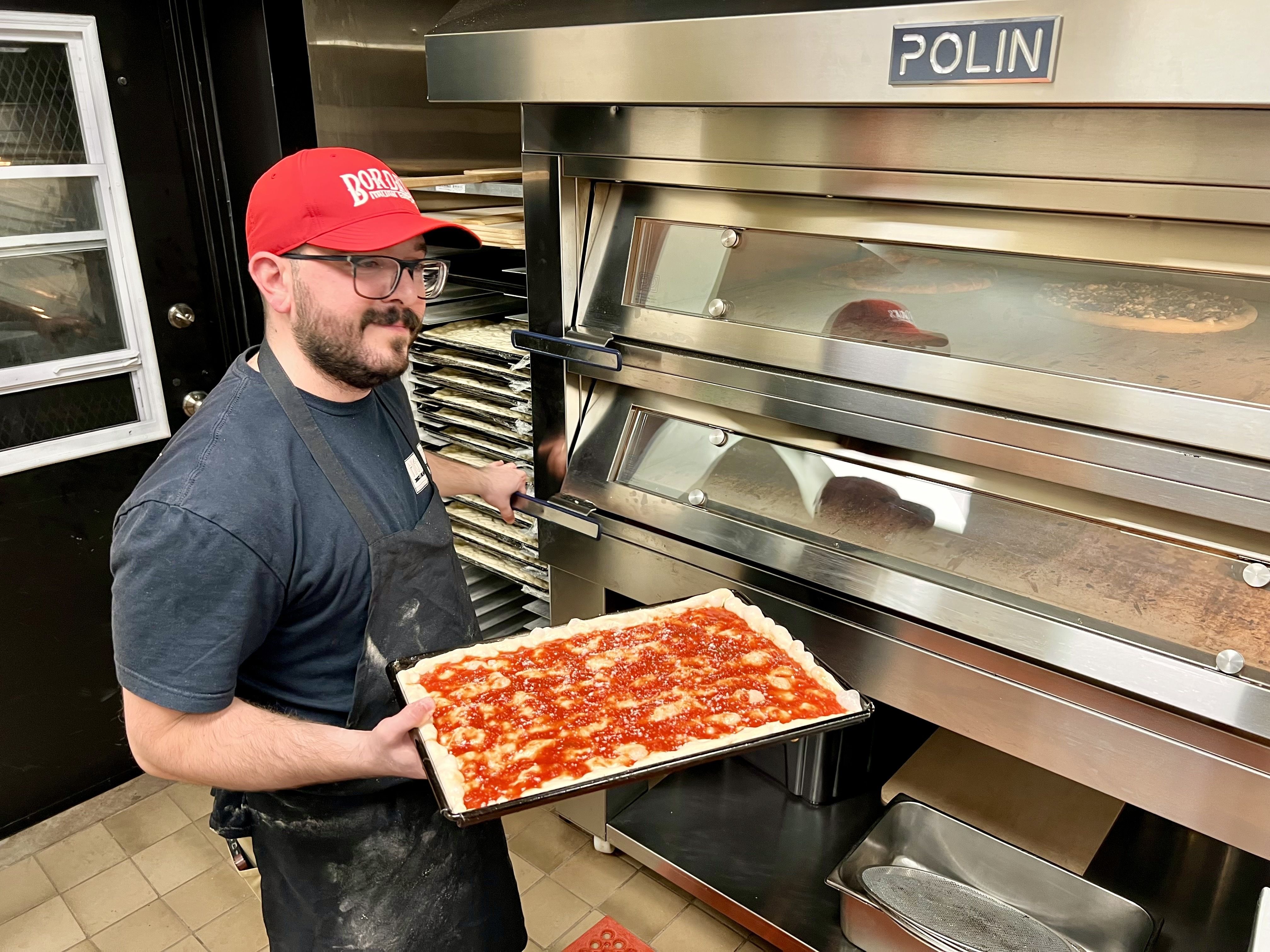
    Anthony Borda prepares to load a pizza into the oven at High Note Caffe.Michael Klein / Staff

    “I missed it,” said Borda, 32, who was in kindergarten when he started making pizzas alongside his father. “I always wanted to keep making pizza, and I always have, even at home.”

    In 2022, while the pandemic-idled High Note was undergoing renovations, Anthony opened Borda’s Italian Eats, specializing in pizza, stromboli, and sandwiches. He ran it for a couple of years before entering the corporate world.

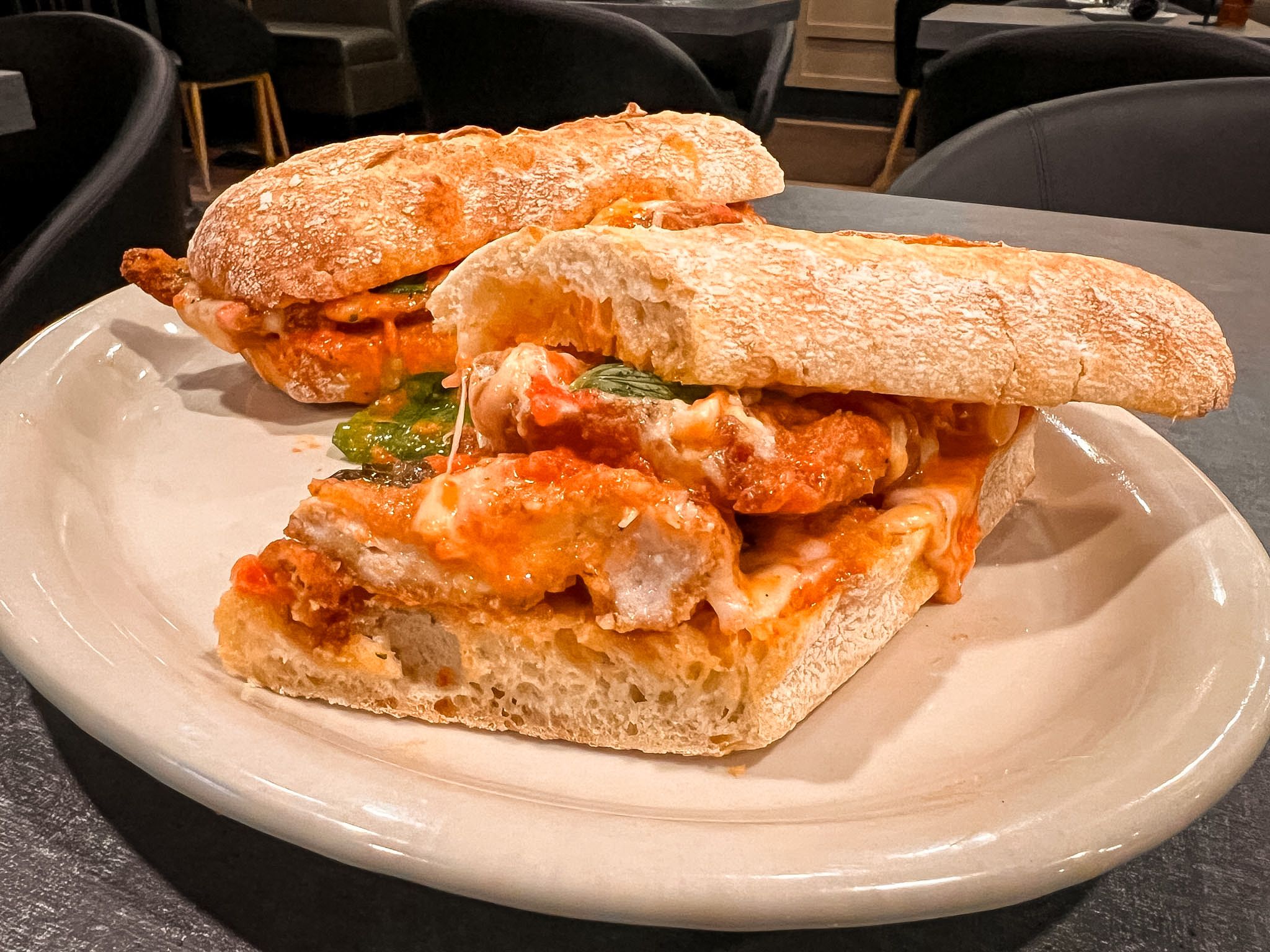
    Chicken parm sandwich on ciabatta at High Note Caffe.Michael Klein / Staff

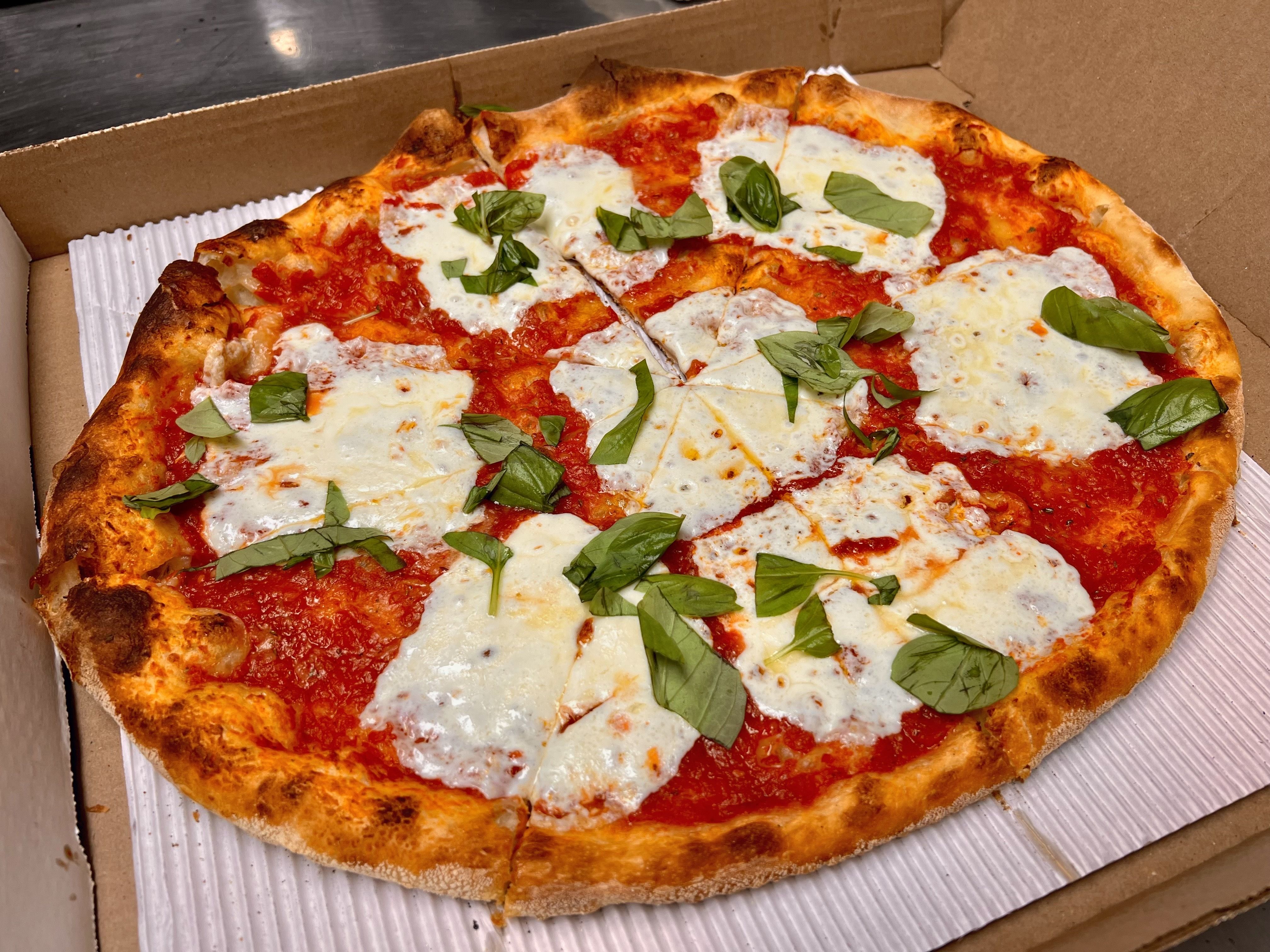
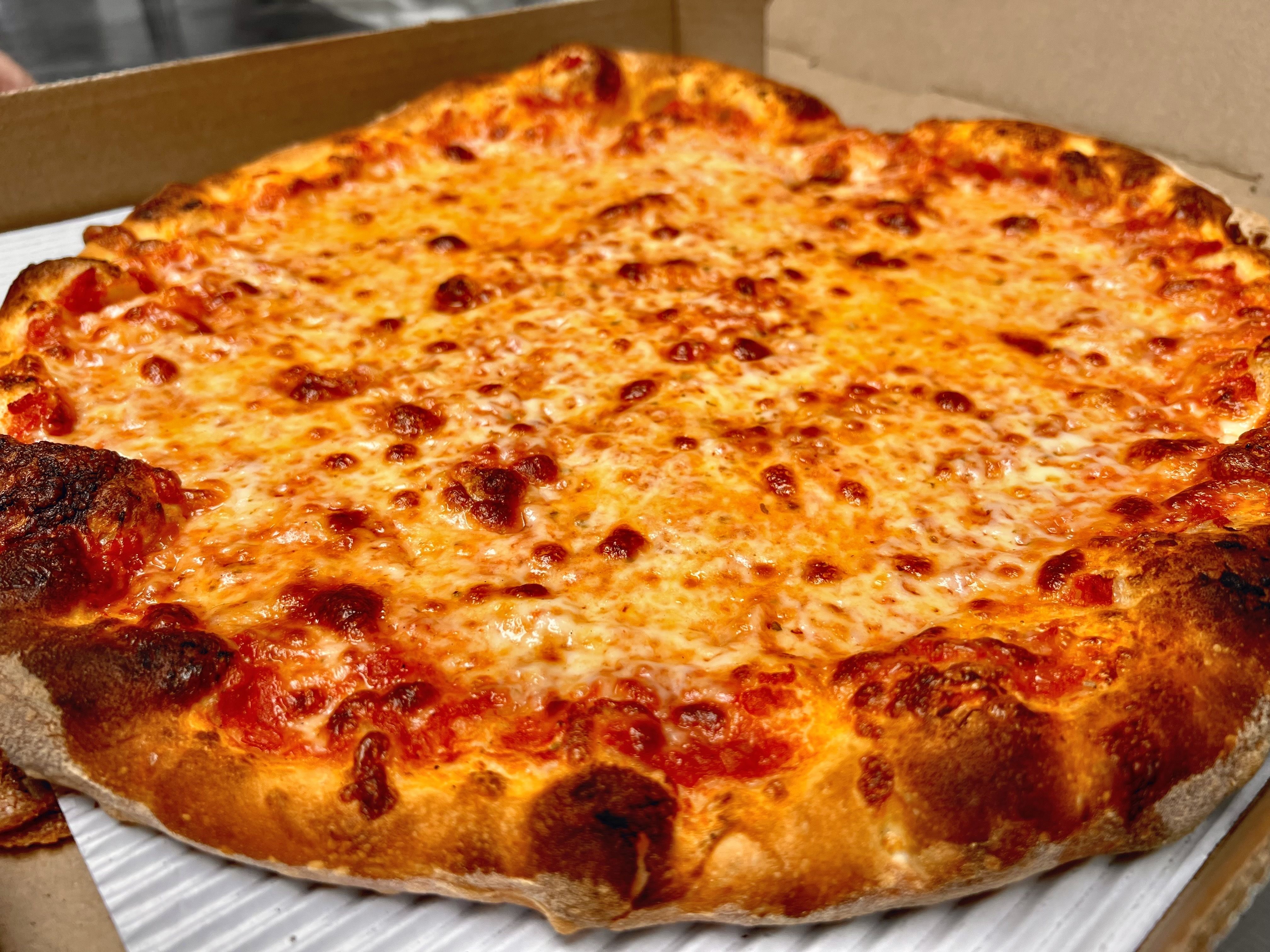
    This time, it’s a passion project. His high-hydration dough yields light, airy pizzas in 16-inch rounds and 12-by-18-inch half-sheet squares. He also offers cheesesteaks, meatballs, chicken parm sandwiches on ciabatta, fried cheese ravioli, and Italian dinners to go, including gnocchi in blush sauce and shrimp fra diavolo over spaghetti.

    The shop itself, down a half-level from the main restaurant and just off the kitchen, is just a small counter with a case displaying pizzas.

    Pizza making is a long tradition in the Borda family. Franco opened his first shop in 1982 at age 20, later teaming up with Louis Gentile at 13th and Tasker. Their first names gave rise to Francoluigi’s.

    In 1995, the partners expanded into an adjoining building, adding a dining room where Franco, an accomplished opera singer, would occasionally step away from the stove to belt out an aria.

    The cheese pizza at High Note Caffe.Michael Klein / Staff

    Last year, Franco completed High Note’s transformation into an intimate, old-fashioned supper club, hosting jazz musicians and other performers for ticketed shows.

    Like his son, he’s found a schedule that suits him: High Note typically books performers for just one or two Saturday nights per month.

    “We’ve been selling out left and right,” Franco Borda said. “It’s just better for me and everybody. It’s more private and you get to enjoy a whole night out for 25 bucks.”

    High Note Caffe, 1243 Tasker St. Takeout hours: 3:30-9:30 p.m. Friday and select Saturdays. Check hours on Instagram (instagram.com/high_note_caffe_pizza).

  • A veteran Philly chef plans to open his first restaurant in Kensington

    A veteran Philly chef plans to open his first restaurant in Kensington

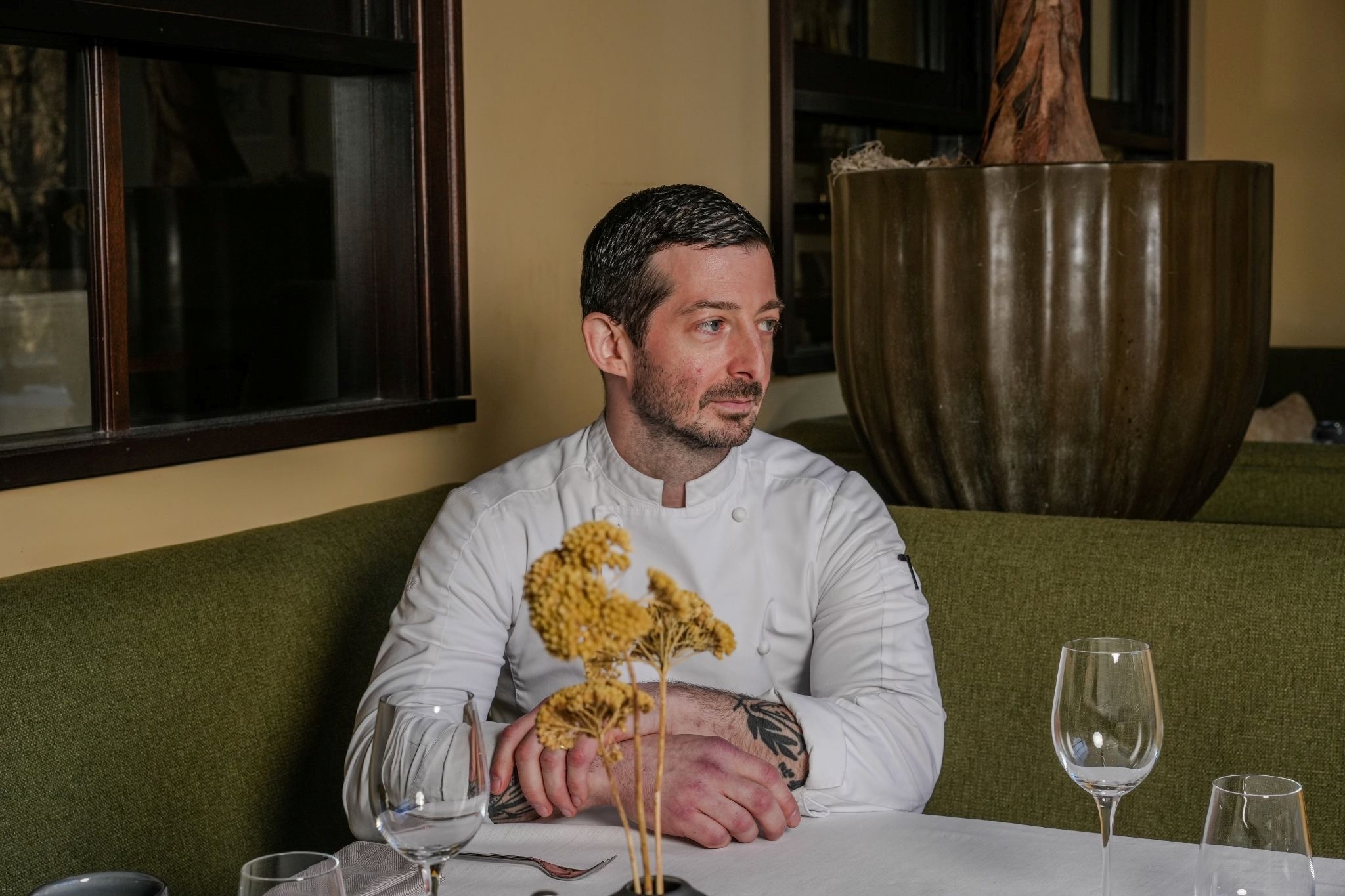
    Chef Eric Leveillee’s first kitchen job was motivated more by romance than a desire to cook.

    In 2010, Leveillee was grabbing a bite at El Camino Real in Northern Liberties when he noticed a server named Deva. He wanted to meet her, so he applied for a job in the kitchen.

    “I had no intention of cooking, really,” he said.

    Sixteen years later, the two are married, Leveillee has built a career in fine dining, and he is preparing to open his first restaurant of his own, just a few blocks from where it all began.

    Restaurant Campion, a 55-seater at 1701 N. Second St., on the ground floor of the Rally apartments in Kensington, is targeting a summer 2027 opening.

    Leveillee, 40, plans a menu that applies fine dining technique but is looser and more energetic.

    Leveillee plans two dining options: a tasting menu of seven to 10 courses, priced in the low $100s, and a smaller, frequently changing à la carte menu offering both small and larger plates. He hopes to keep the tasting experience to 90 minutes to two hours.

    The beverage program will emphasize natural wines and smaller producers, along with traditional, low-alcohol, and nonalcoholic cocktails.

    “The biggest thing I want to portray is that, yes, the food is going to be ambitious, but the environment will be very lively and exciting,” he said.

    Campion has been in development for nearly 2½ years, though Leveillee said he has wanted his own restaurant for more than a decade.

    “This restaurant is really mine,” he said. “It’s the first restaurant I’ve ever owned. It will probably be the first time I’m truly showing my food to Philadelphia.”

    He wants Campion to appeal beyond the special-occasion crowd, with prices and an atmosphere that encourage repeat visits.

    The design, by Ian Chapin of EDSEL and Scott Burroughs of This Land Studio, will be minimalist, providing warmth through texture and materials rather than elaborate furnishings.

    The centerpiece will be an open kitchen surrounded on three sides by a 20-seat U-shaped chef’s counter. The restaurant also will have a nine-seat bar and a separate 12-seat listening room, where guests can bring their own vinyl records or choose from the restaurant’s collection. Leveillee envisions using the room for private dinners.

    Leveillee grew up in Rhode Island and moved to Philadelphia at 17 to attend Temple University, where he studied economics. After El Camino, his restaurant career included Vernick Food & Drink, Whetstone Tavern, Marigold Kitchen, and Lacroix at the Rittenhouse Hotel.

    He remains culinary director of The DeBruce, a Catskills hotel and restaurant that was a 2024 James Beard Award semifinalist for outstanding restaurant. He also has been consulting at Waltz, the Italian restaurant in South Philadelphia’s Whitman neighborhood.

    He said Campion’s cooking will most closely resemble his work at The DeBruce, drawing on American ingredients and incorporating techniques and influences from various cuisines.

    For Leveillee, the neighborhood is part of the attraction. He said both good and difficult experiences in his life have occurred nearby, and opening Campion represents an opportunity to establish deeper roots in Philadelphia.

    After finishing up work at Waltz, he sometimes stops by the unfinished restaurant at night, standing alone in the space and considering what it will become.

    “It’s been a long road, and it’s a little surreal,” he said. “It’s something I always wanted to do, but I never imagined that I would actually get there.”

  • This Bordeaux wine skips the barrel — and is all the better for it

    This Bordeaux wine skips the barrel — and is all the better for it

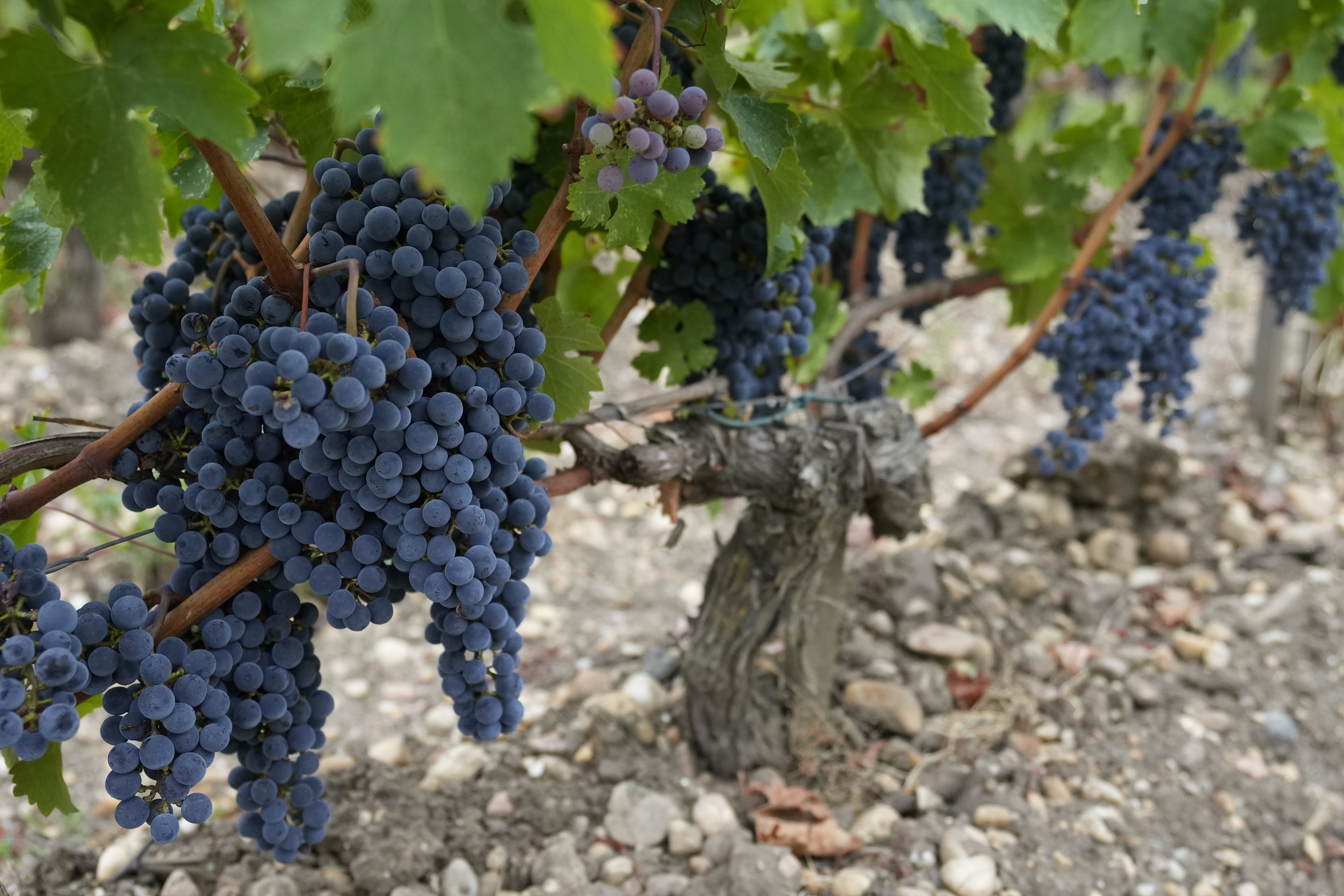
    To wine drinkers, Bordeaux is best known as the native home of both cabernet sauvignon and merlot grapes. Within the wine trade, however, it is more famous for pioneering the use of new oak as a flavor accent. But as lighter reds grow more popular, Bordelais vintners like this one are showing the world how to make their famous grapes in a brighter, cleaner, and refreshingly “unoaked” style.

    Bordeaux’s reputation for fine wines stretches back centuries. As a port city on France’s sparsely populated Atlantic coast, it is surrounded by forests of oak that are well-suited for barrel-making. That plentiful resource led winemakers to specialize in barrel-centric techniques, where aging wine in the newest barrels imparts a toasty flavor reminiscent of cognac. This practice adds notes of vanilla, coffee, and dessert spices to red wine in much the way that a rich sauce adds flavor complexity to roasted meats.

    But just as a sauce can mask the natural flavors of a dish, new oak can distract from the natural flavors of the grapes in wine. In today’s era, where the freshest tasting whites, rosés, and sparkling wines are all the rage, a global overreliance on French oak has become tiresome for many wine lovers — as if every dessert were being topped with the same pumpkin spice frosting.

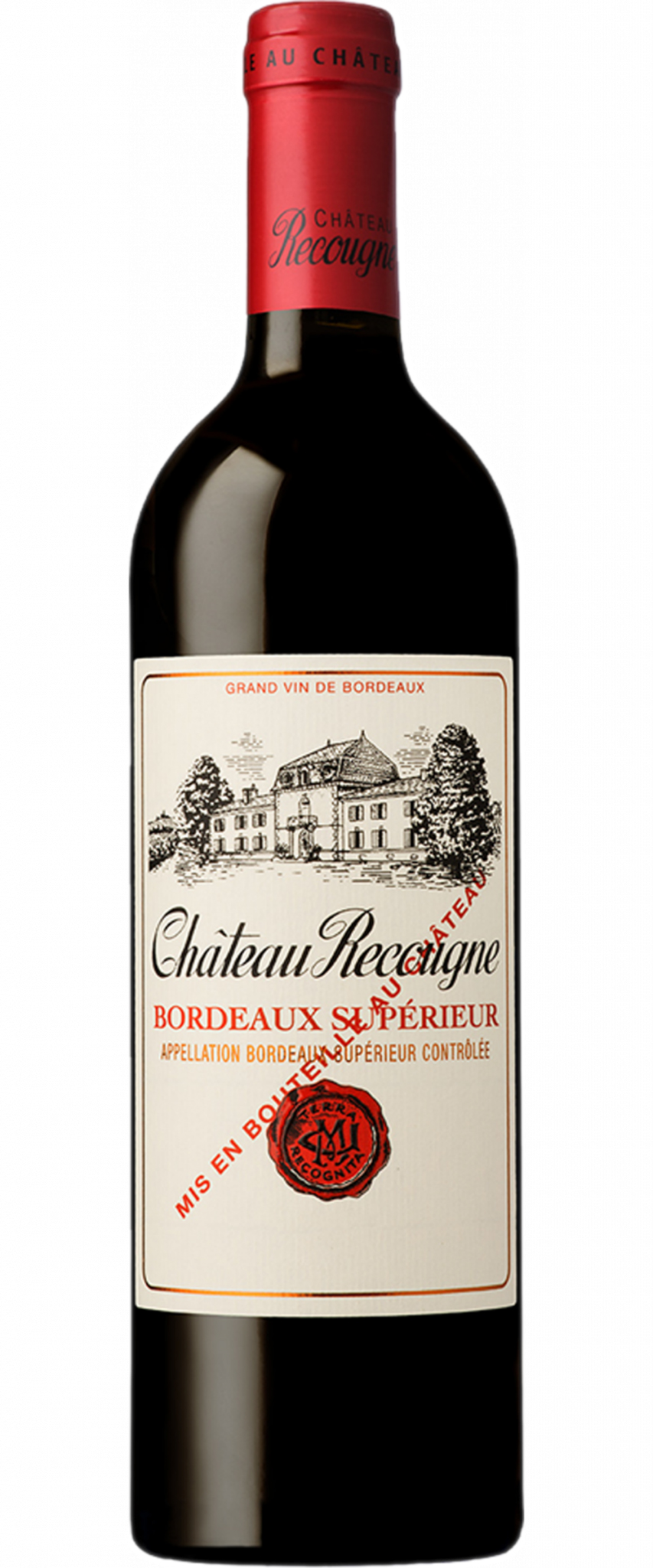
    That’s why it’s such a delightful surprise to find wines like this one coming from the Bordeaux region — the birthplace of over-oaked wine. This family-owned estate combines impeccable winemaking and excellent fruit to achieve an unadulterated taste of what Bordeaux can do au naturel. Brisk and dry, this merlot-based blend with small amounts of cabernet sauvignon and cabernet franc is dry, midweight, and 100% unoaked. It is loaded with flavors of tart red cherries and juicy black plums, with complex, woodsy accents that derive purely from the grape and the terroir itself, not from the wood of a barrel.

    Château Recougne Bordeaux SupérieurChâteau Recougne

    Château Recougne Bordeaux Supérieur

    Bordeaux, France; 13.5% ABV

    PLCB Item # 98104 — on sale for $16.69 through Nov. 29 (regularly $18.69)

    Also available at: WineWorks in Marlton, N.J. ($14.98; wineworksonline.com), Canal’s in Mt. Ephraim, N.J. ($15.99; mycanals.com), Wine Warehouse in Clementon, N.J. and Sicklerville, N.J. ($15.99; sicklerville.winewarehousenj.com, blackwood.winewarehousenj.com)

  • As the Rittenhouse Hotel undergoes a transformation, a young chef extends his big break

    As the Rittenhouse Hotel undergoes a transformation, a young chef extends his big break

    At 22, RJ Smith is on a roll: Freshly graduated from Drexel University, he’s extended his Ocho Supper Club operations at the Rittenhouse Hotel and is negotiating for a permanent restaurant of his own.

    Not bad for a chef who, less than three years ago, was serving elaborate tasting menus in his dorm room.

    Smith, whose Afro-Caribbean cooking has attracted national attention, says he is narrowing his search for his first restaurant. One space is near Rittenhouse Square, the other closer to East Passyunk. His target is 2027, though the opening will depend on construction.

    He envisions two versions of Ocho under one roof: a casual bar and à la carte dining area, alongside a more intimate space for tasting menus. The idea is to make his cooking available to diners who aren’t necessarily prepared to spend two hours at a special-occasion dinner.

    “There’s such a barrier to entry with tasting menus,” Smith said. “We’re trying to knock that down as much as we can.”

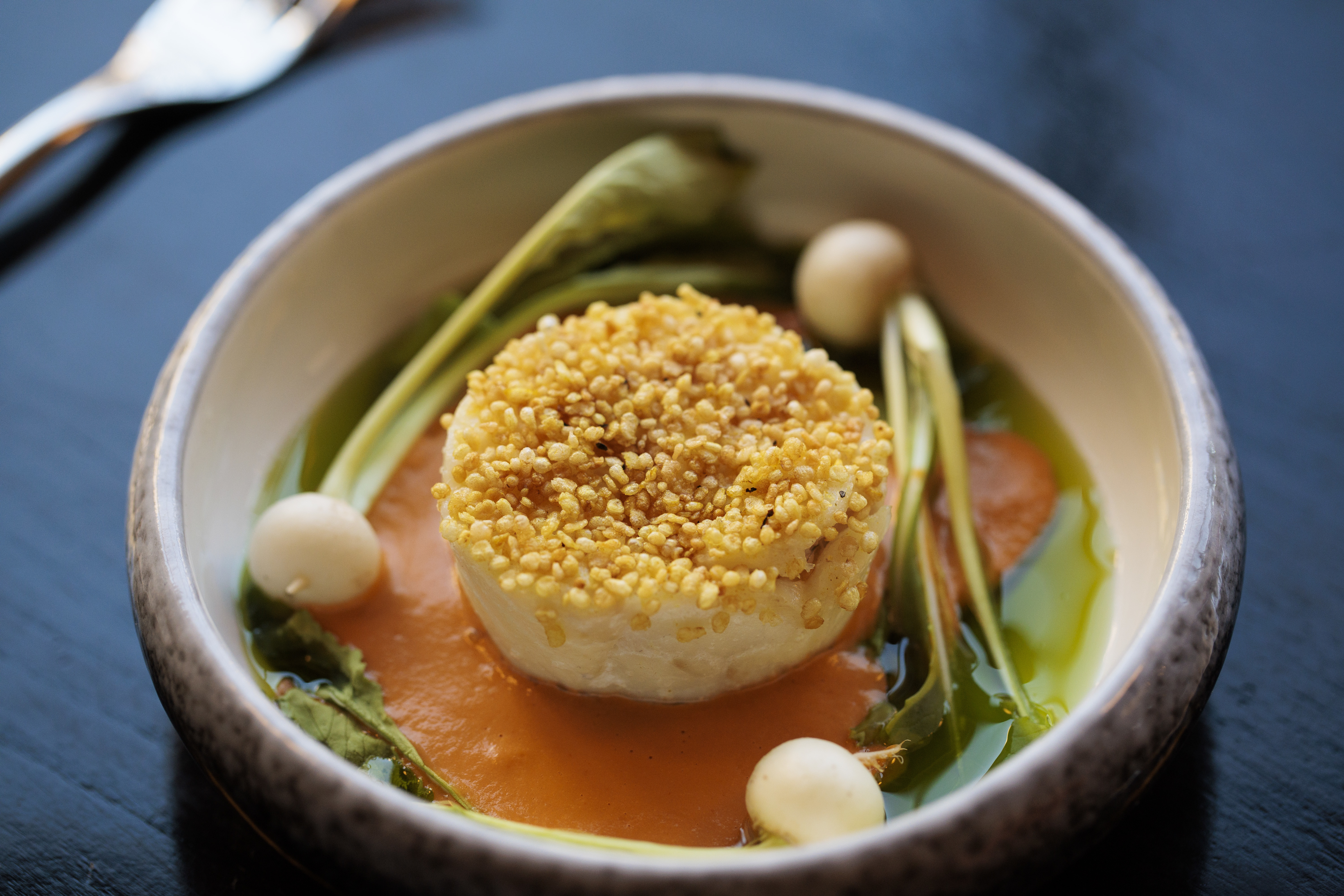
    The Atlantic cod from chef RJ Smith at the Rittenhouse Hotel, where Smith’s Ocho Supper Club has extended its run. Monica Herndon / Staff Photographer

    It’s the next step in a rapid progression for the Bay Area native, who started Ocho in April 2024 as a $35 dorm-room dinner, graduated to pop-ups, and in February 2026 moved into the Rittenhouse Hotel’s former Scarpetta restaurant for a six-month engagement. Smith has worked in a number of prestigious kitchens, including Californios in San Francisco, Core by Clare Smyth in London, and Provenance in Philadelphia. He was also recently part of the Inquirer Food Festival, paired up with chef Rich Landau of Vedge for a collaboration dish.

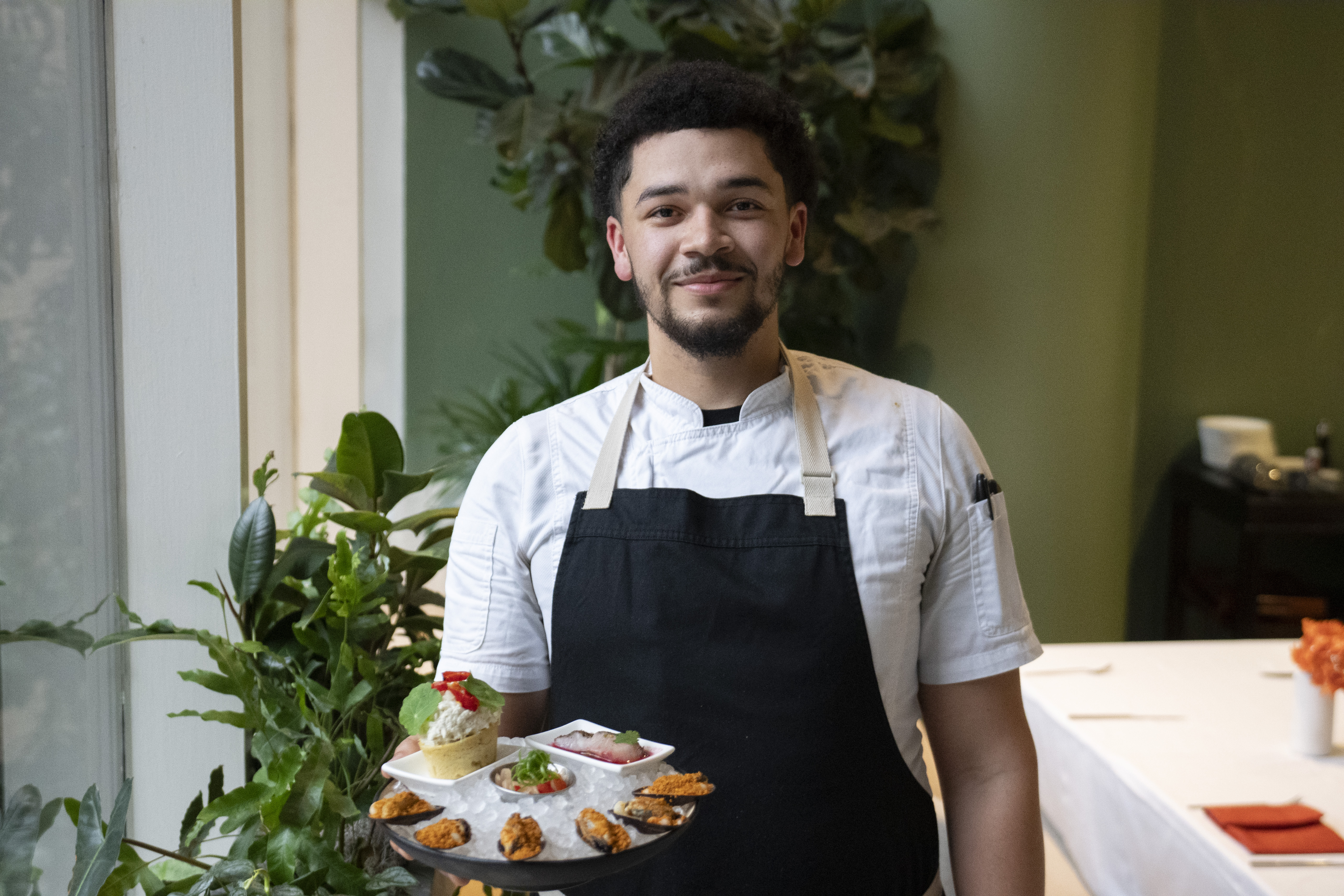
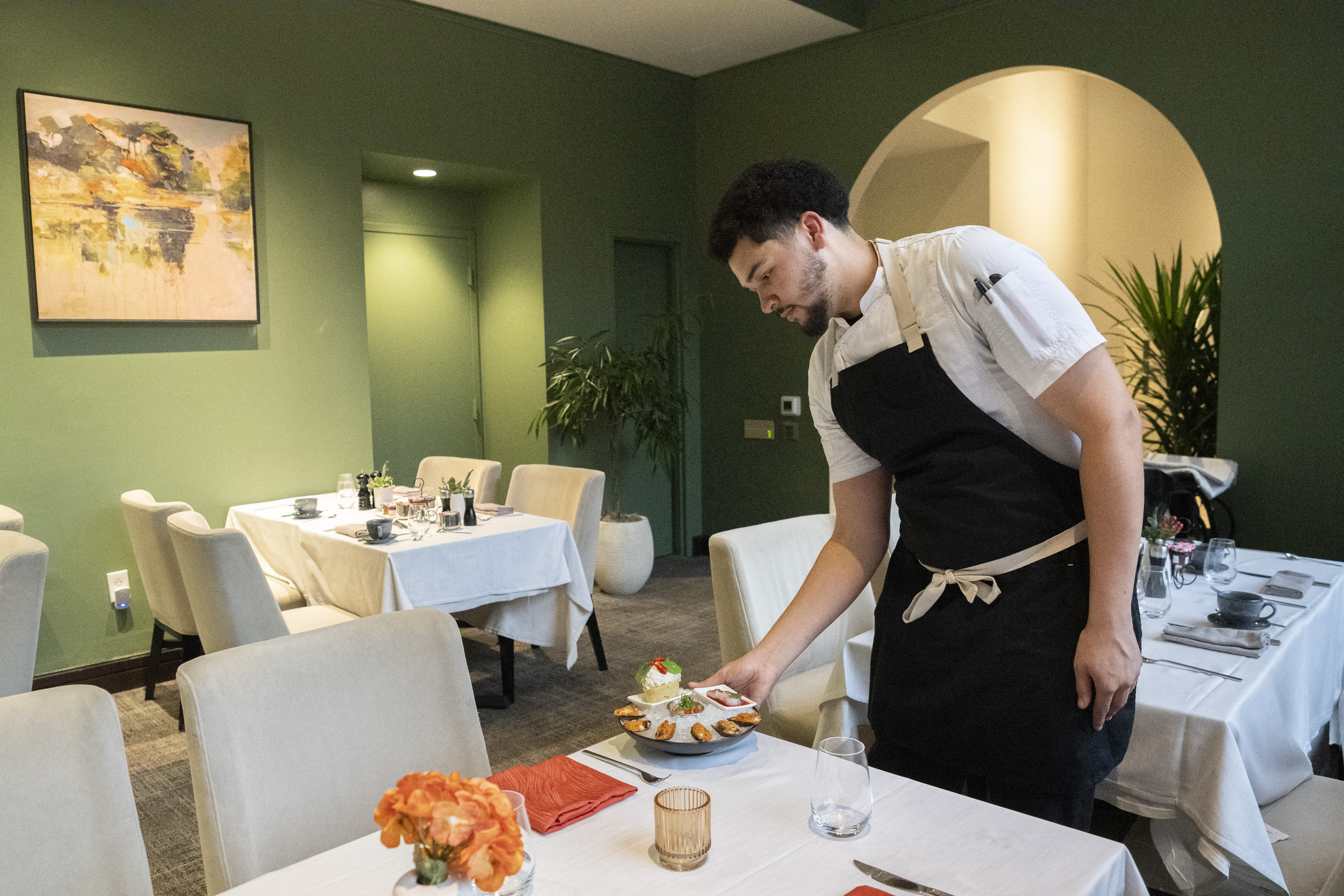
    Chef RJ Smith places a seafood plateau at the Rittenhouse.Jessica Griffin / Staff Photographer

    His time at the Rittenhouse was supposed to end over the summer, as the hotel prepared to convert the bilevel Scarpetta restaurant into the Ruxton, a steakhouse from Baltimore-based Atlas Restaurant Group.

    Instead, Smith and the hotel expanded their arrangement into what Smith calls “more of a culinary integration.”

    With the Scarpetta space now under construction, Ocho’s Caribbean-inspired à la carte menu is now available at Lacroix’s bar and through room service Fridays through Sundays; on select Sundays, Smith and his team take over the dining room for tasting menu dinners (eight courses for $160 or five for $100). Lacroix’s dining room, which overlooks Rittenhouse Square, is reset with Ocho’s tableware and flowers. “It’s honestly surprising how different the dining room looks in just an hour,” Smith said.

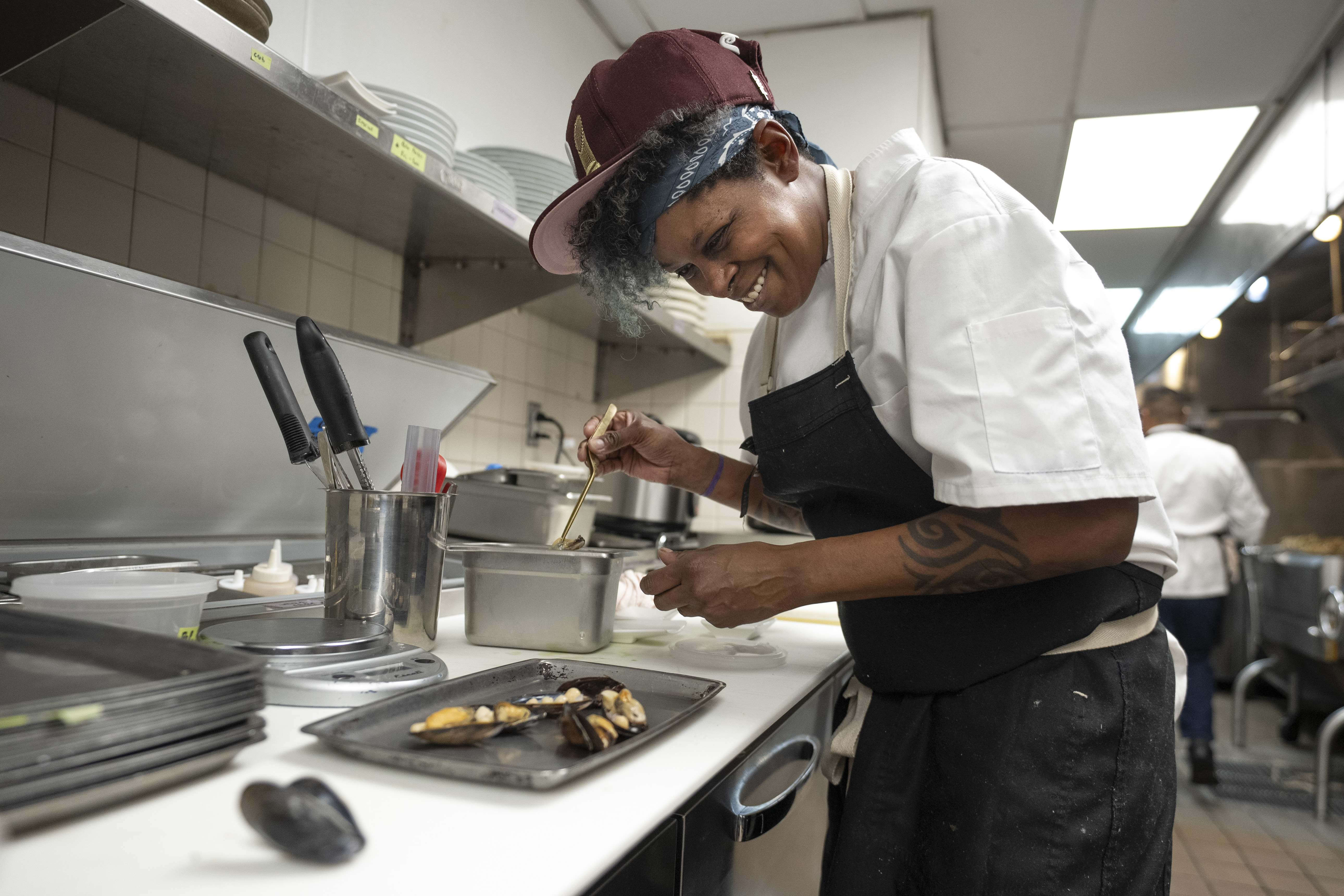
    Ocho sous chef Imani Williams prepares mussels for Ocho’s seafood plateau at Rittenhouse Hotel.Jessica Griffin / Staff Photographer

    The arrangement coincides with a major transformation of the Rittenhouse’s public spaces. The Library Bar closed Oct. 31, and the Mary Cassatt Tea Room served its final afternoon tea Nov. 15. The project — expected to take at least six months — will usher in the Ruxton and a new cocktail bar, among other changes.

    Lacroix will remain open throughout construction, and Smith’s Sunday dinners are scheduled through Dec. 20. The hotel has not announced Ocho’s plans beyond that date. “We’ve loved the partnership and are open to continuing to work together,” Rittenhouse managing director Gregg Skowronski said.

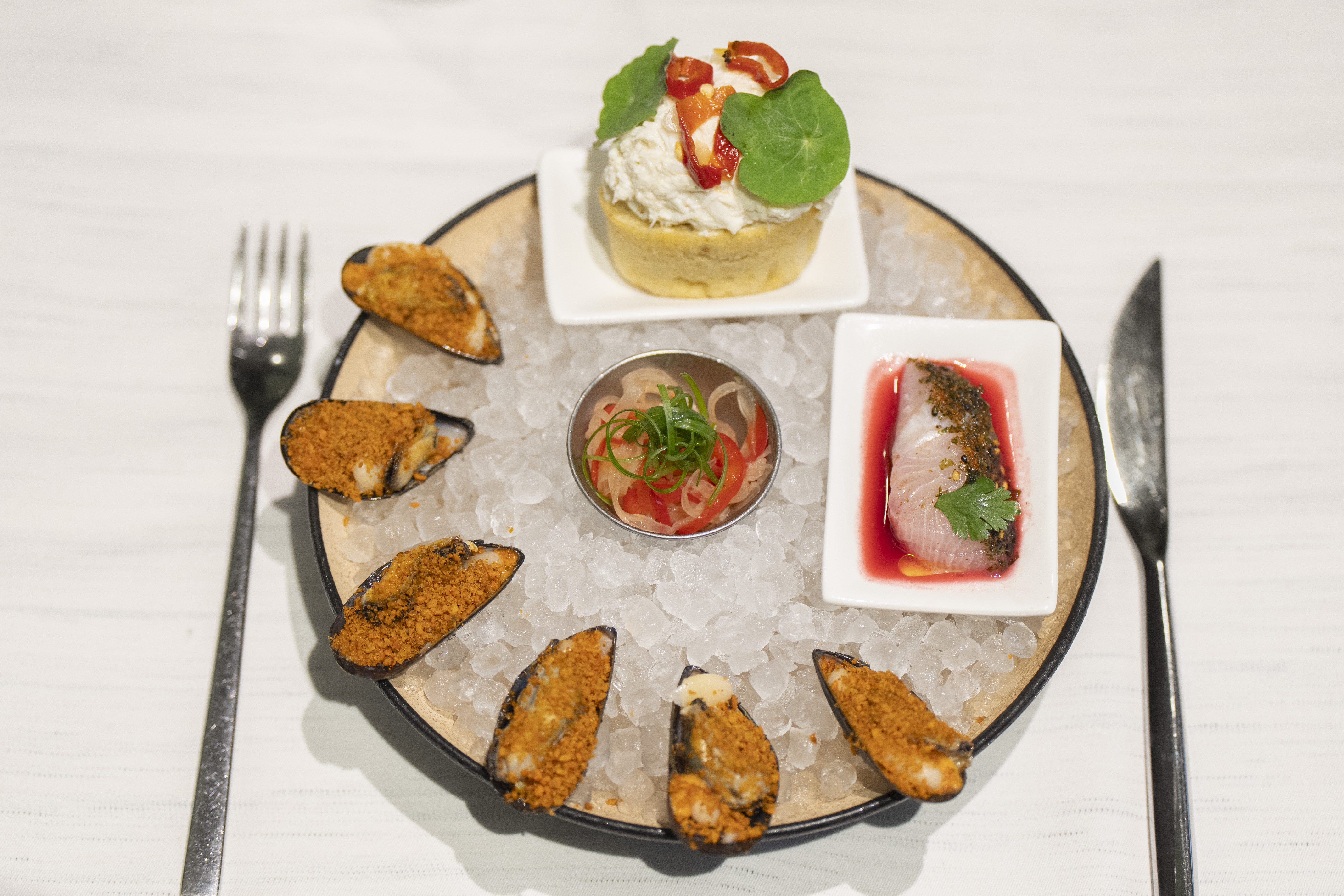
    The evolution of Ocho has also brought changes to the food. Smith’s seafood plateau, a riff on the French shellfish tower, includes mussels poached and dressed escovitch-style with Jamaican red pepper sauce, butter bean salad, and pepita crumble. There’s also Japanese sea bream in a strawberry-hibiscus aguachile, and soft plantain coco bread topped with peekytoe crab salad, Jimmy Nardello peppers, and preserved lemon.

    A seafood plateau from chef RJ Smith at the Rittenhouse Hotel.Jessica Griffin / Staff Photographer

    Another dish reworks the Jamaican festival, a fried cornmeal dough, by stuffing it with braised oxtail and glazing it with curried honey. A 12-ounce New York strip comes over plantain purée with a jerk-spiced beef reduction, accompanied by aromatic rice, escovitch pickles, pineapple chutney, and a tropical fruit-pepper sauce.

    The experience at the Rittenhouse is further preparing Smith for next steps. After building Ocho in borrowed spaces, he wants a place to call his own. “The natural evolution from here is to really find a home,” he said.

  • Americans will pay more for Thanksgiving dinners this year, Farm Bureau says

    Americans will pay more for Thanksgiving dinners this year, Farm Bureau says

    Record turkey prices and higher fuel costs could make Thanksgiving dinner more expensive this year, according to a survey released Wednesday.

    The American Farm Bureau Federation said the cost of an average Thanksgiving feast for 10 will rise 6% from last year to $58.63. The group tracks grocery prices using hundreds of volunteers in all 50 states and Puerto Rico.

    The Farm Bureau, which has been tracking Thanksgiving costs for 40 years, said it’s the first time since 2022 that Americans will see the price of the meal increase. The price hit a high of $64.05 in 2022.

    High diesel prices have made it more expensive for farmers to process and transport Thanksgiving staples like milk, dinner rolls, potatoes, frozen peas, and cranberries, the Farm Bureau said.

    And turkey prices have risen sharply as more Americans seek out protein even as the industry continues to recover from bird flu cases. The U.S. Department of Agriculture has forecast the wholesale price of a whole frozen turkey hen will average $1.76 per pound this year, up 29% from last year.

  • One of Philly’s favorite pop-up bakers is going brick-and-mortar in Point Breeze

    One of Philly’s favorite pop-up bakers is going brick-and-mortar in Point Breeze

    Northeast Philly native Zach Posnan was teaching middle-school math and science in Kensington when the pandemic hit. Along with everyone else, Posnan got swept up in the sourdough craze.

    Unlike everyone else, he never let go.

    “Since I was using ratios in my baking and also teaching ratios to sixth graders, I’d bring my computer to where I was rolling out dough and putting all the ingredients together and use baking in my examples,” he said.

    When restrictions lifted and in-person classes resumed, he started bringing his loaves to school and serving breakfast in class.

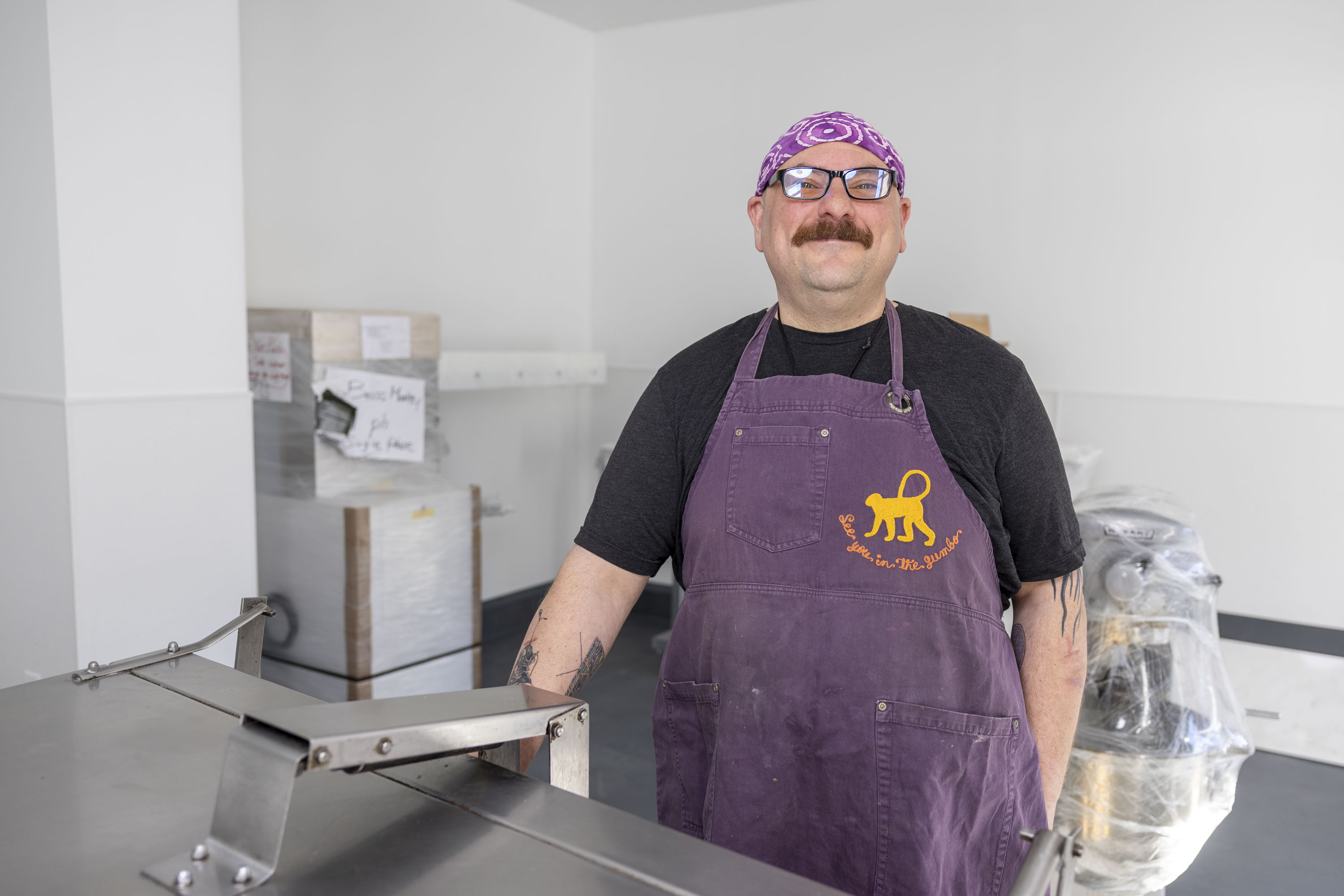
    Zach Posnan, Owner of Brass Monkey Bread, poses for a portrait in his new space where he will setup his bakery on Tuesday, Nov. 17, 2026, in Philadelphia, Pa.Tyger Williams / Staff Photographer

    This hobby eventually turned into a business: Brass Monkey Bread. For the last four years, Posnan, 45, has been one of Philly’s hardest-working pop-up bakers, setting up his bright purple-clothed table several days a week at cafes and markets all across town, including Breezy’s Deli and Market on Washington Avenue, Ellie and Bird Coffee in Port Richmond, Riverwards in Fishtown, Bodie in Fairmount, and several others. Posnan’s bagels, sourdough loaves, and tomato pies (easily some of the best in the city) sell out practically instantly.

    At last, that table is heading into retirement. Posnan has the keys to a brick-and-mortar bakery at 1439 S. 20th St. in Point Breeze, at 20th and Dickinson.

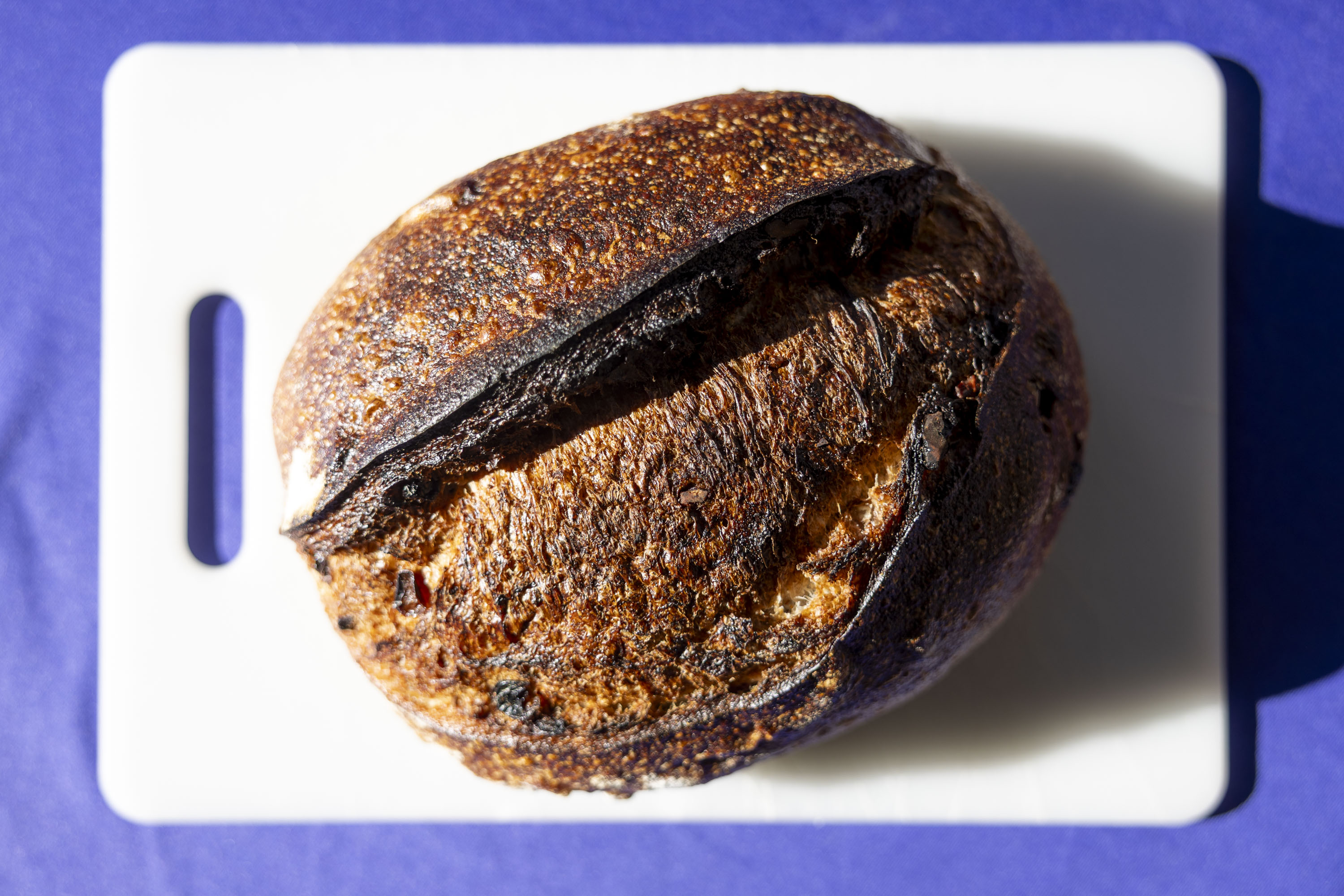
    The Cranberry and Walnut Sourdough made by Zach Psnan from Brass Monkey Bread on Tuesday, Nov. 17, 2026, in Philadelphia, Pa.Tyger Williams / Staff Photographer

    Posnan, who grew up in Elkins Park from age 7, moved to South Philly in 2009. Until recently, he was an award-winning teacher — he received a Lindback award for distinguished teachers in 2023 for his work at Conwell Middle School in Kensington.

    “I miss working with the kids, but I don’t miss all the other stuff,” he said, referencing bureaucratic challenges. “At some point, I will start doing classes at the bakery for both adults and kids.”

    Posnan signed the lease on Brass Monkey’s 1,400-square-foot space in March, but gutting the long-empty storefront — a former hoagie shop — was a long process. He received the keys last week and projects it will take six months to fully outfit the space.

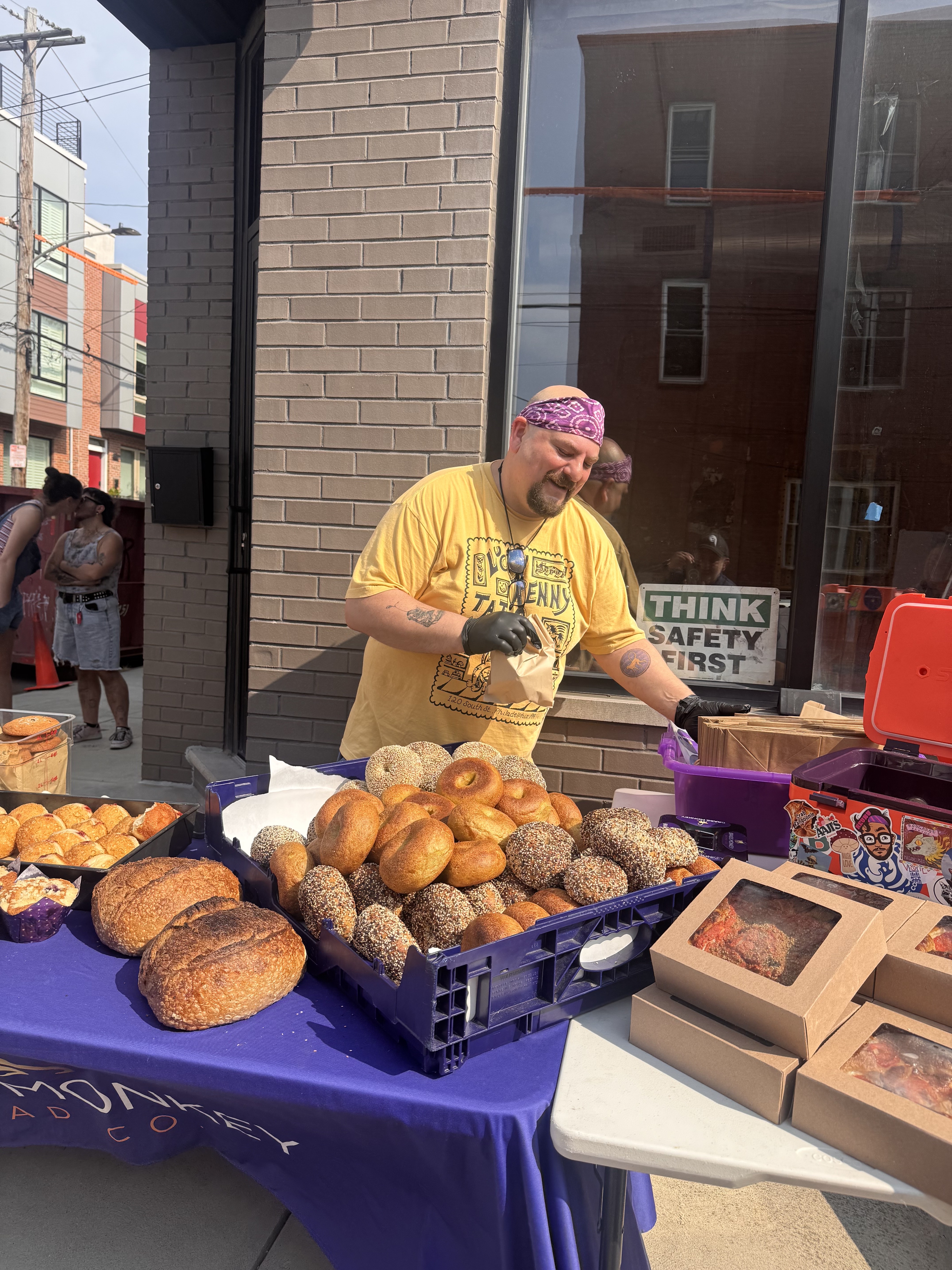
    Baker Zach Posnan at one of his pop ups.courtesy of Brass Monkey Bread

    Funding for the brick-and-mortar has come from two sources so far: a GoFundMe, and a Kickstarter-esque fundraiser that Posnan calls “100 Little Monkeys” for individuals who invest $1,000 to receive perks like merchandise and free breakfast for a year.

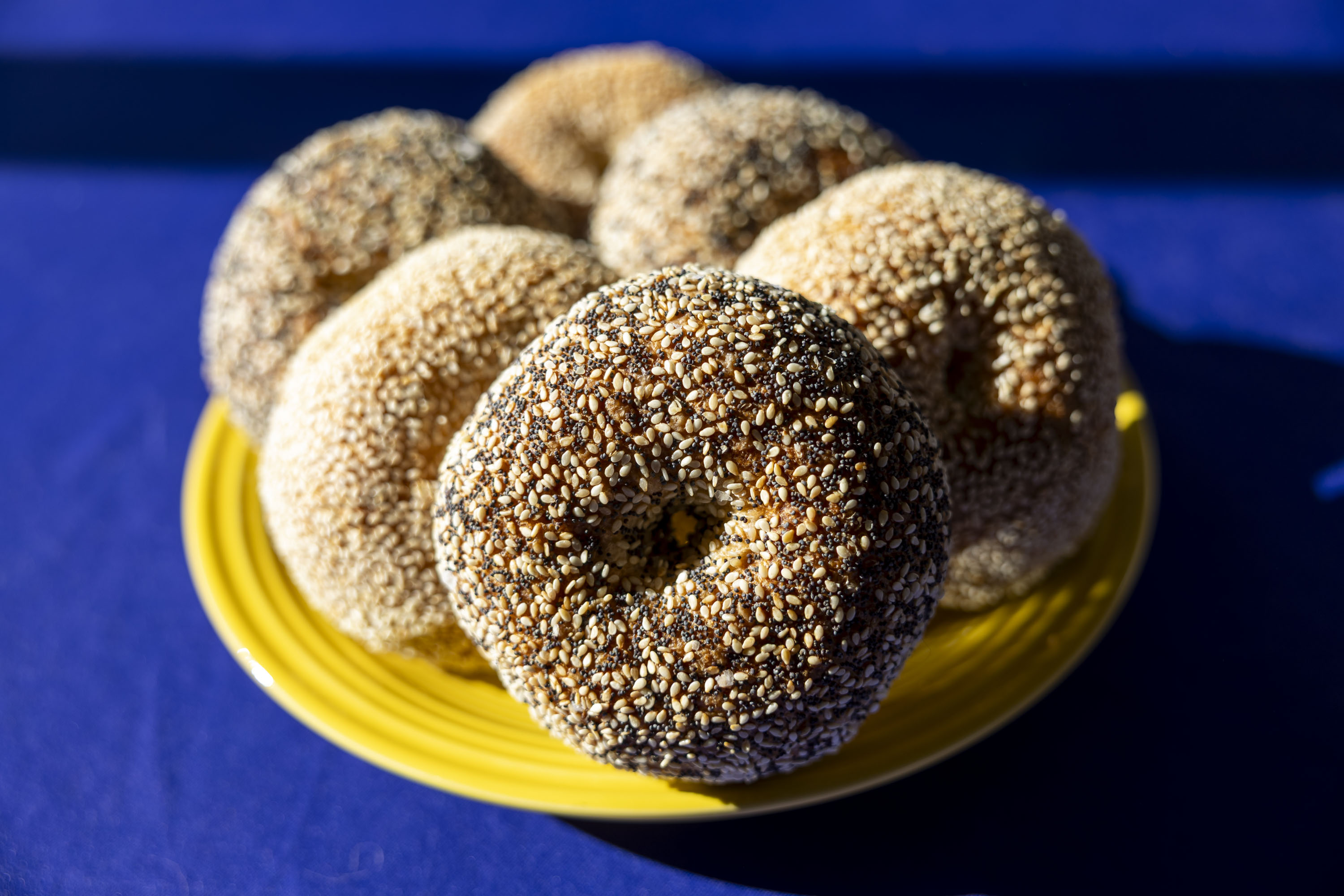
    He anticipates the future menu will include his tomato pie, sourdough loaves, soft pretzels, babka, muffins, and his distinct bagels, in flavors like curry and “something” — coated in sesame, poppy, and flaky salt. (“It’s not quite everything but it’s definitely not nothing,” he said.) There will also be a coffee program, sandwiches, and wholesale bread for restaurants.

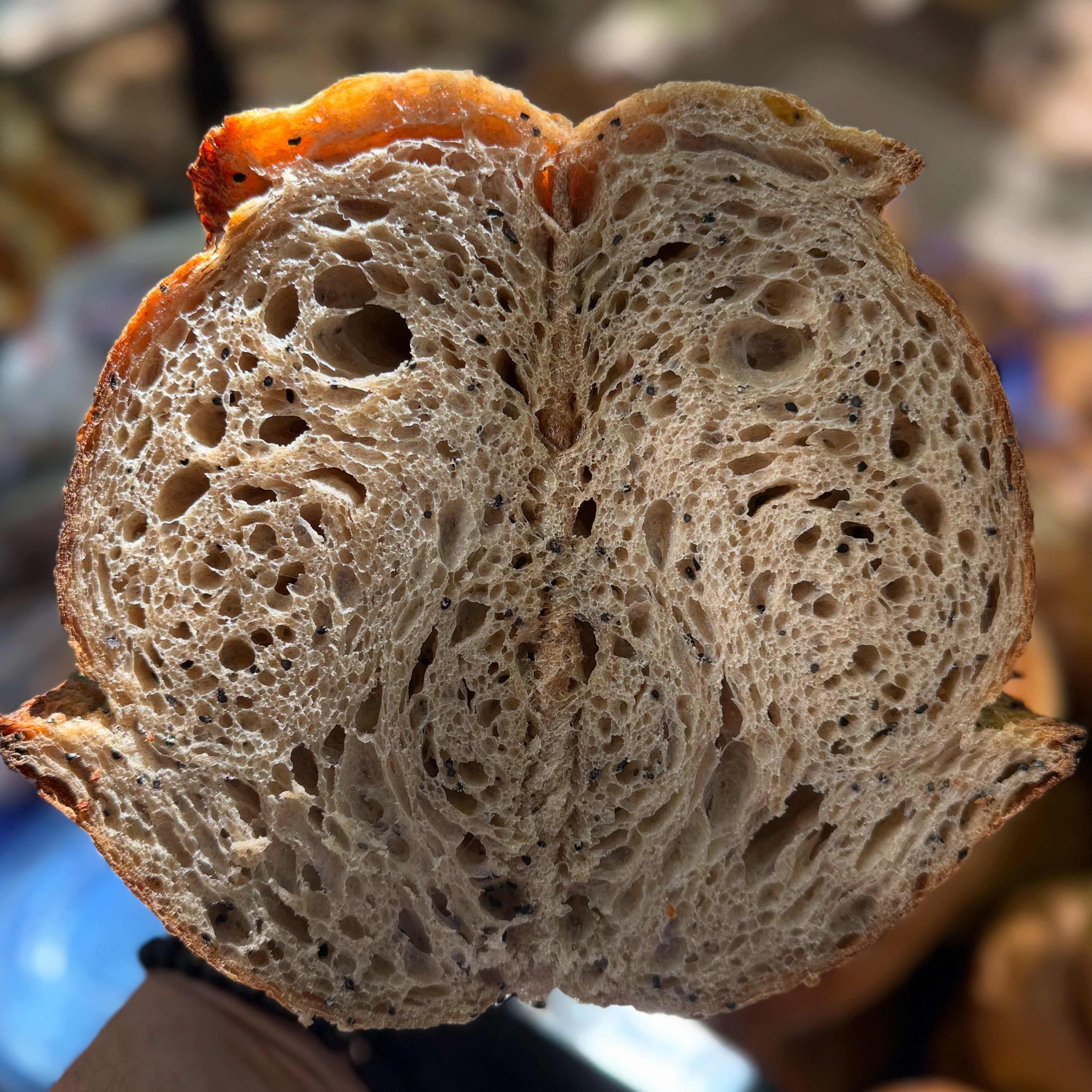
    The interior of a loaf of sourdough from Brass Monkey Bread.courtesy of Brass Monkey Bread

    Posnan hopes the bakery will become a community space. “I worked with the underserved in Philadelphia for eight years, and I’m going to do a lot of things there that I’m going to transfer here.”

    One such thing will be the hygiene closet he kept in his former classroom that was filled with “tampons, pads, deodorant, toothbrushes, toothpaste, cologne, and anything the kids might want or need for personal hygiene. It was there for the whole school,” he said. “They could just come in, take what they needed, and my only rule was that they could not disturb my class.”

    The bakery’s name comes from the expression, “cold enough to freeze the balls off a brass monkey” — something of an occupational hazard for Posnan, given he has spent most of the last few years vending outside.

    He will soon wind down his pop-up schedule to once a week as he works on the bakery. Which means, for a time, those crusty breads and airy, focaccia-like tomato pies will become even more rare.

  • Our guide to Thanksgiving | Let’s Eat

    Our guide to Thanksgiving | Let’s Eat

    We have you covered for Thanksgiving, whether you are cooking or you are not cooking.

    Also in this edition:

    • Restaurant turmoil: What’s going on at Soufiane at the Morris?
    • Bluefin tuna’s return: Once overfished, it’s coming back to sushi menus.
    • News: Fancy and not-so-fancy bars and new homes for Loretta’s and Tiffin. Read on!

    — Mike Klein

    If someone forwarded you this email, sign up for free here.

    Thanksgiving dining, in and out

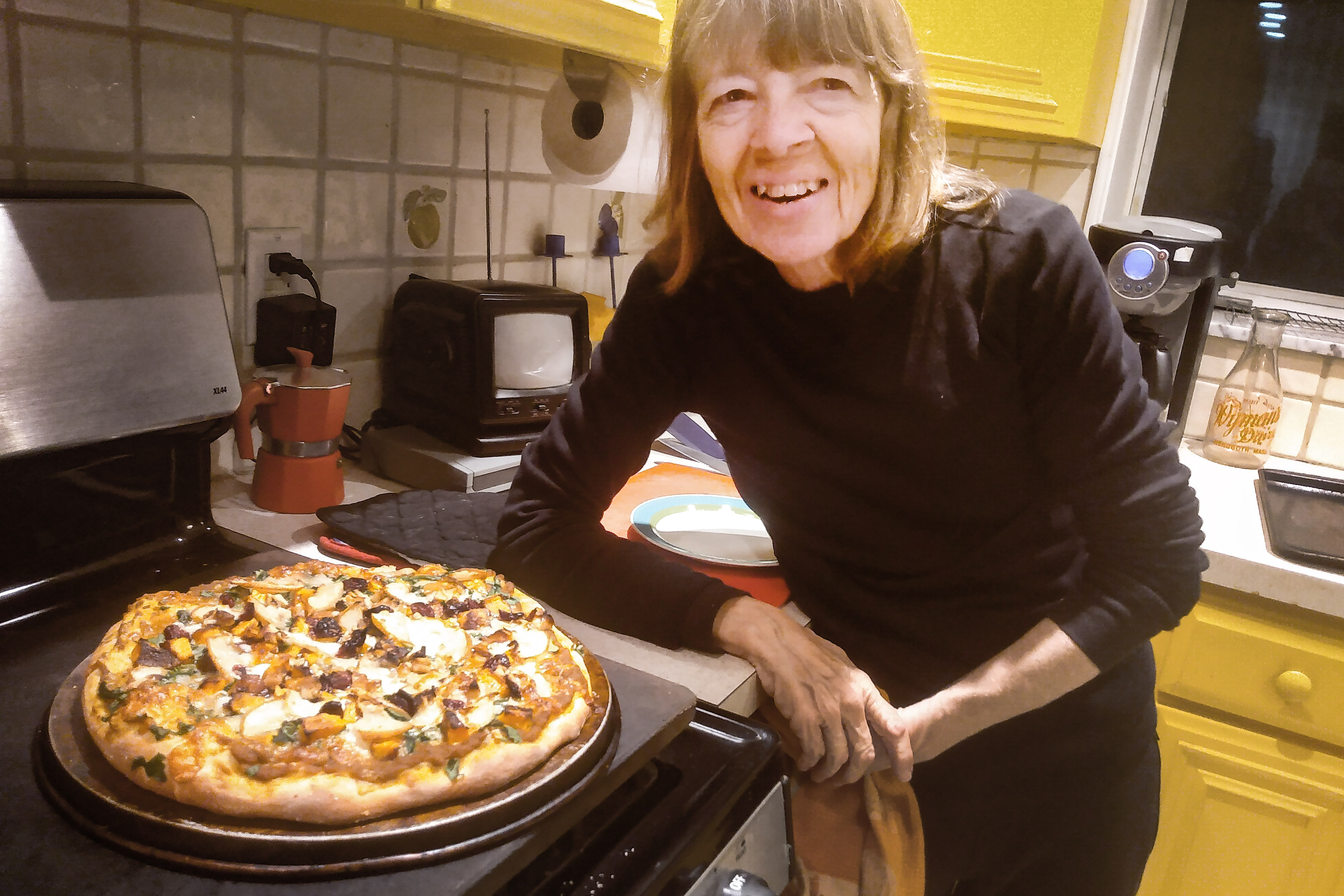
    🦃 Enough with the turkey, stuffing, and endless parade of side dishes! Philadelphia food writer Carolyn Wyman ditched the traditional Thanksgiving spread 20 years ago, and she’s not looking back. Her alternative: inventive, one-dish holiday meals that deliver the flavors of Thanksgiving without chaining you to the stove.

    🦃 And if you don’t even want to see the stove, Patrick Rapa offers 10 Philly-area spots doing the birdy work for an epic Thanksgiving dinner, whether you’re dining in or taking out.

    What happened at Soufiane?

    Less than five months after opening, Soufiane at the Morris has undergone a sweeping menu change following a staff walkout over allegedly unpaid wages. Accounts differ sharply over what went wrong behind the scenes.

    The return of bluefin tuna

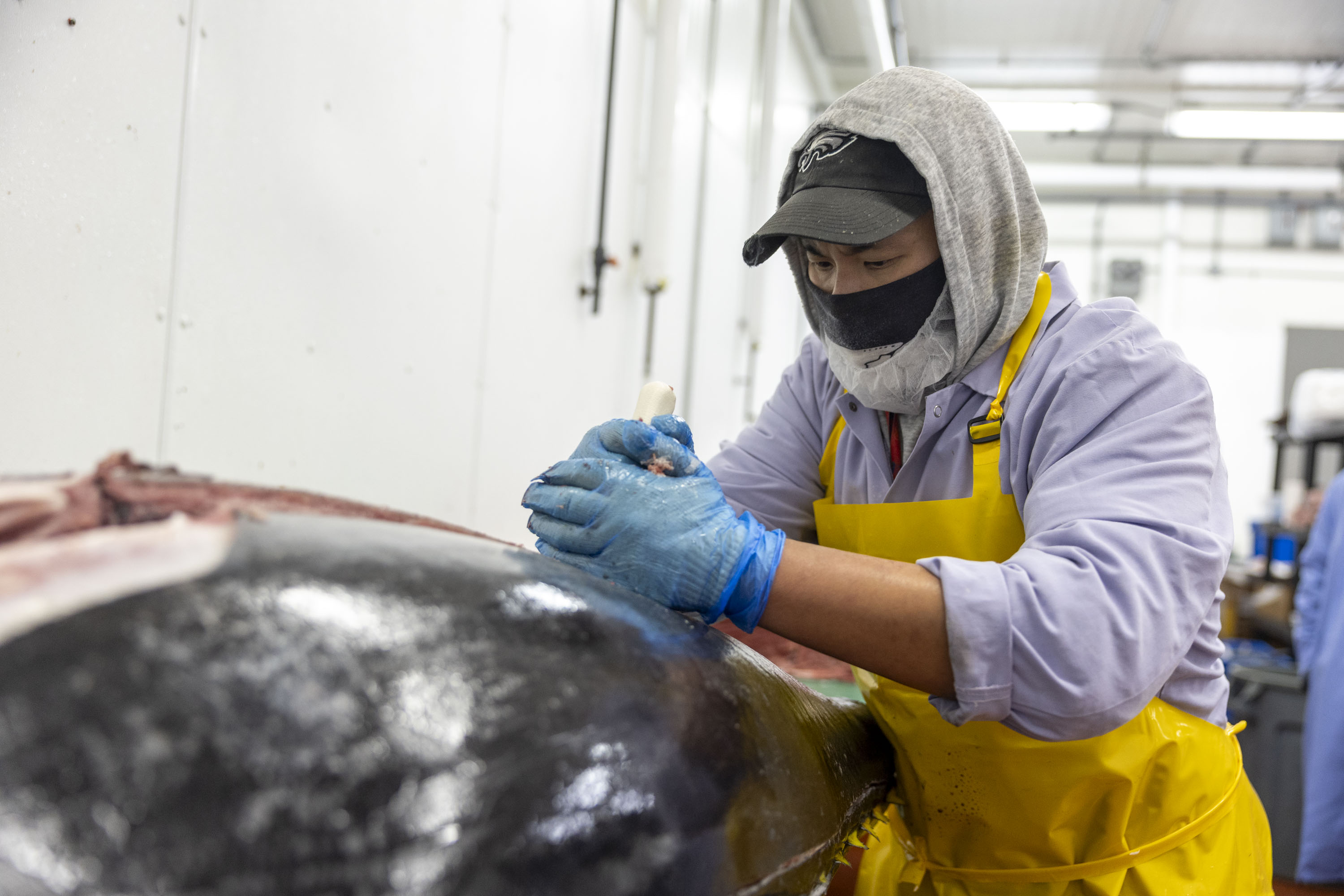
    Once so overfished that conservationists urged diners to avoid it, bluefin tuna has made a comeback and is turning up on sushi menus across Philadelphia. Kiki Aranita explores how conservation efforts helped revive the population, why chefs prize the fish, and what concerns remain about its sustainability.

    Food Fest recap

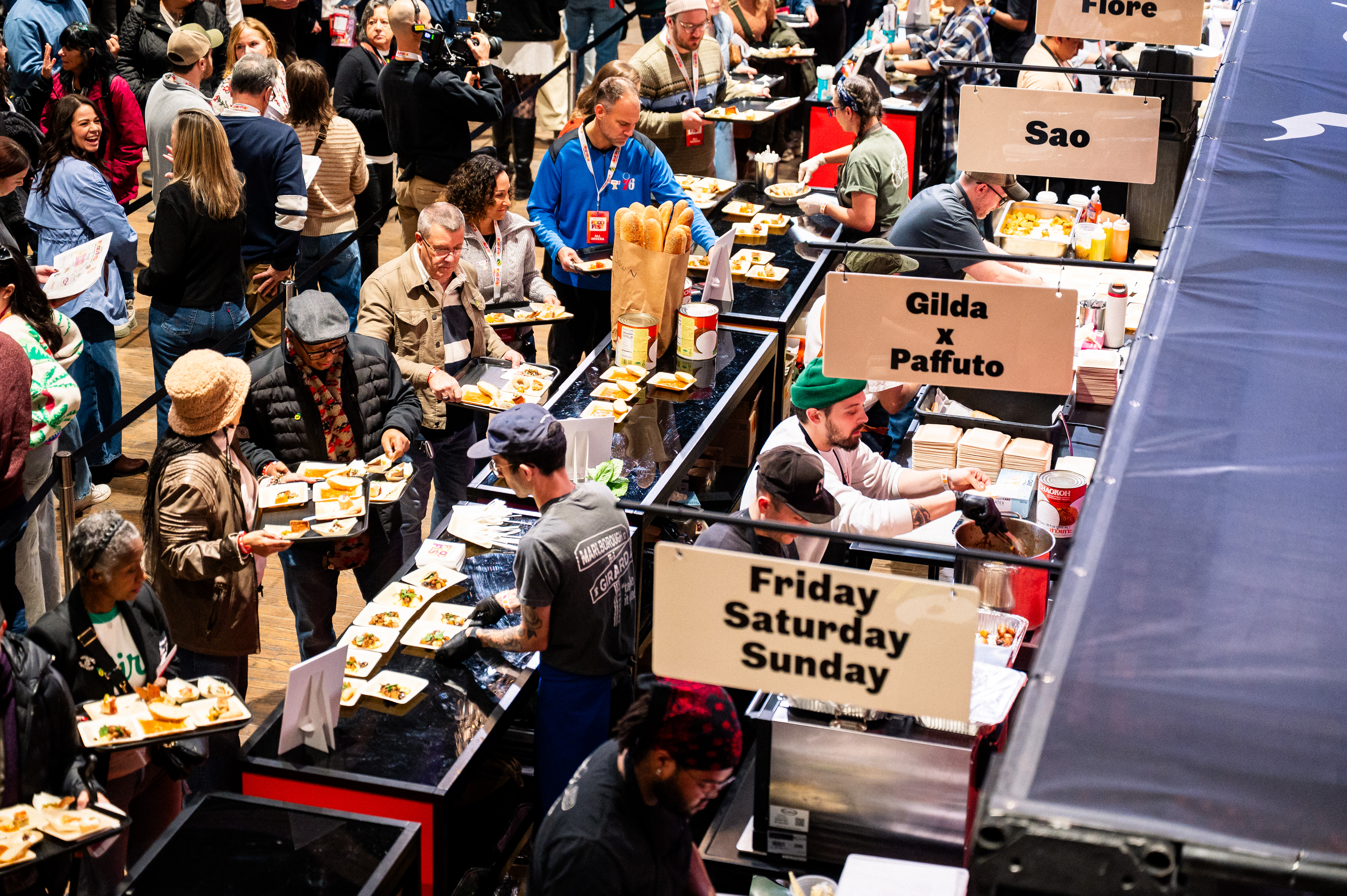
    Another Inquirer Food Festival is in the books, and if you were among the 1,500 attendees last Saturday at the Fillmore, you got a sampling of the region’s food scene, including delicious bites (here’s my colleague Abigail Covington’s favorites) and even a baking contest judged by drag queens.

    Pastries with personality

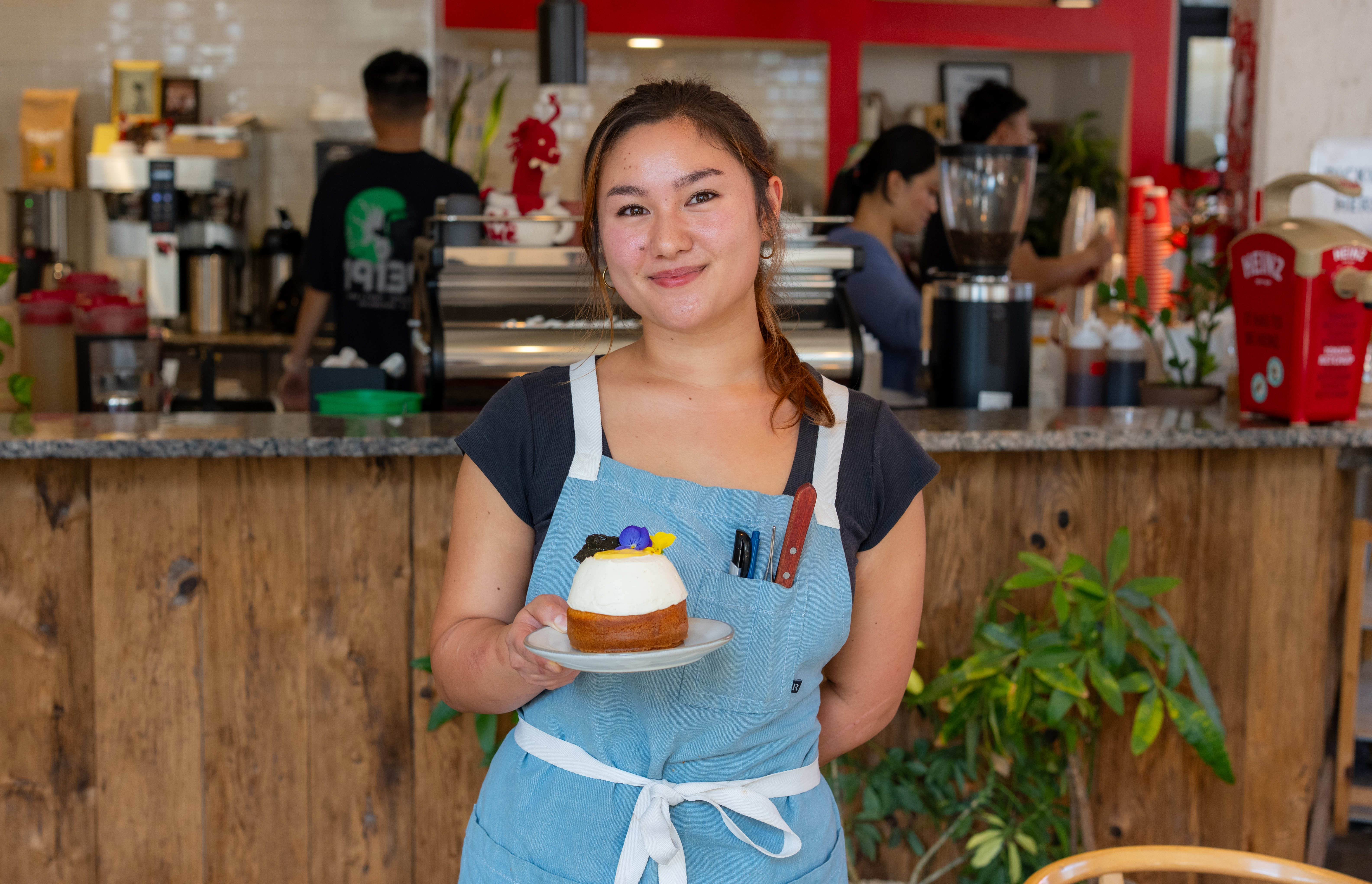
    At Càphê Roasters, pastry chef Zoe DeLay is turning out Vietnamese coffee brownies, kimchi jjigae hand pies, and kabocha squash cheesecake. Kiki Aranita explores her inventive take on Asian American flavors.

    The best things we ate last week

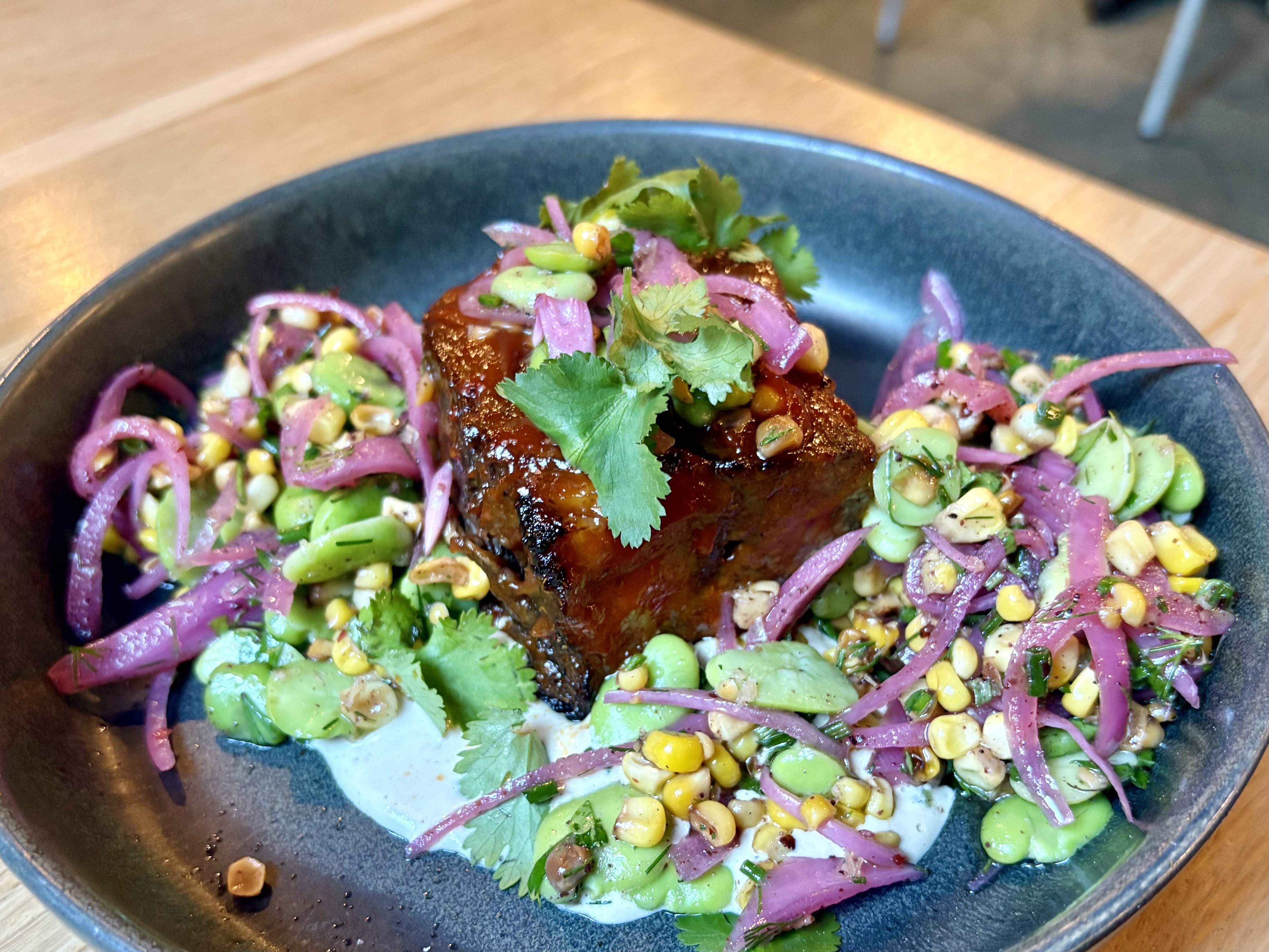
    Is beef shoulder the new short rib? Critic Craig LaBan says Dizengoff makes a compelling case with its meltingly tender, slow-braised shoulder, finished in a blazing-hot pita oven with a sweet-tart glaze.

    Scoop

    Loretta’s, the popular Head House Square bakery and coffee shop, is planning a second location at 2227 Grays Ferry Ave., right off 23rd and South Streets, with an opening targeted for Memorial Day weekend. Owner Kelsey Bush said she and business partner Zach Morris chose the former Mad Cat Brewtique space partly because of strong demand from customers west of Broad Street. Like the original Loretta’s, which opened two years ago, the new shop will emphasize takeout, with about 10 indoor seats. Pastries will continue to be produced at the company’s Bloomsday bakery, where Bush plans to expand the five-person baking staff to at least eight.

    Restaurant report

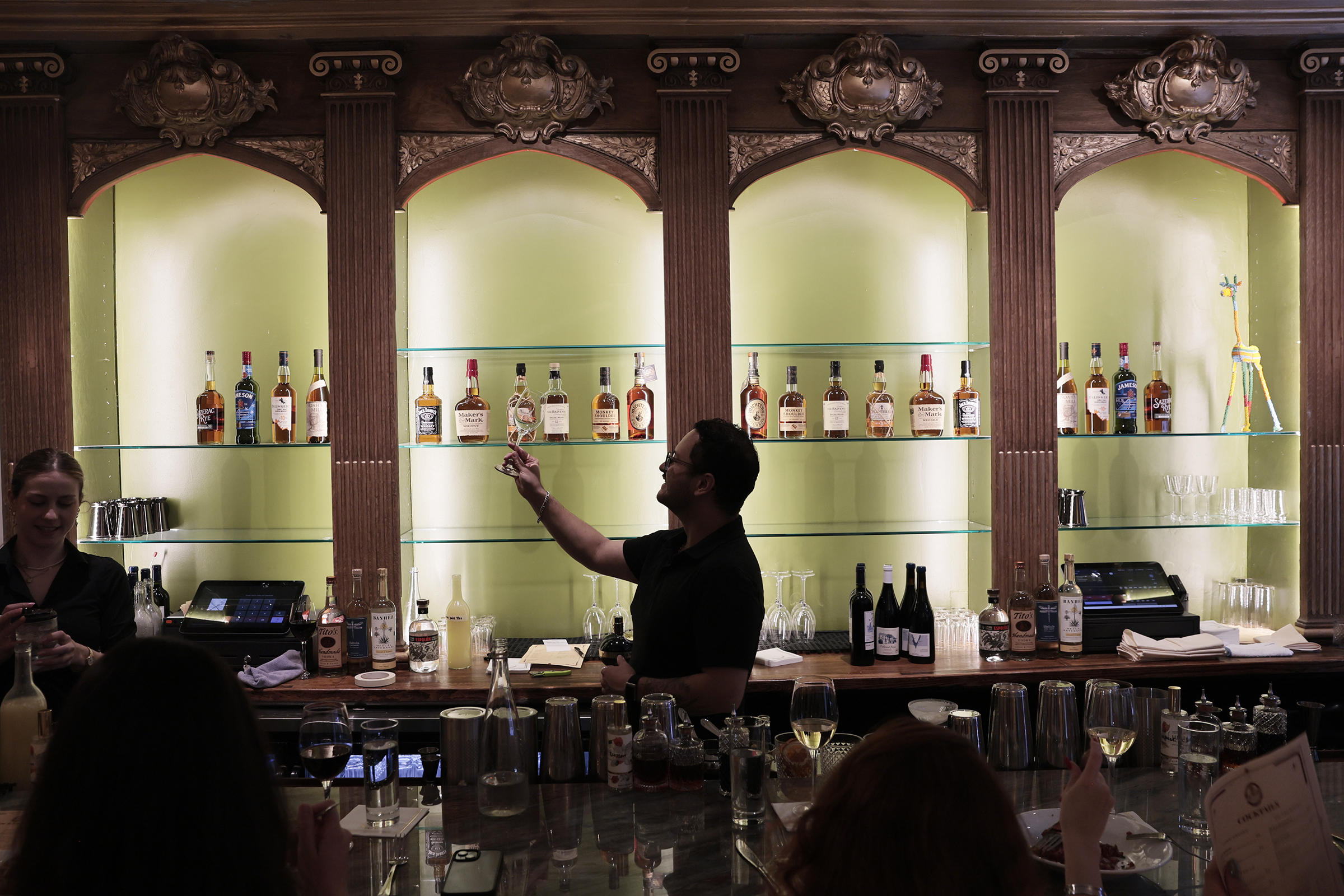
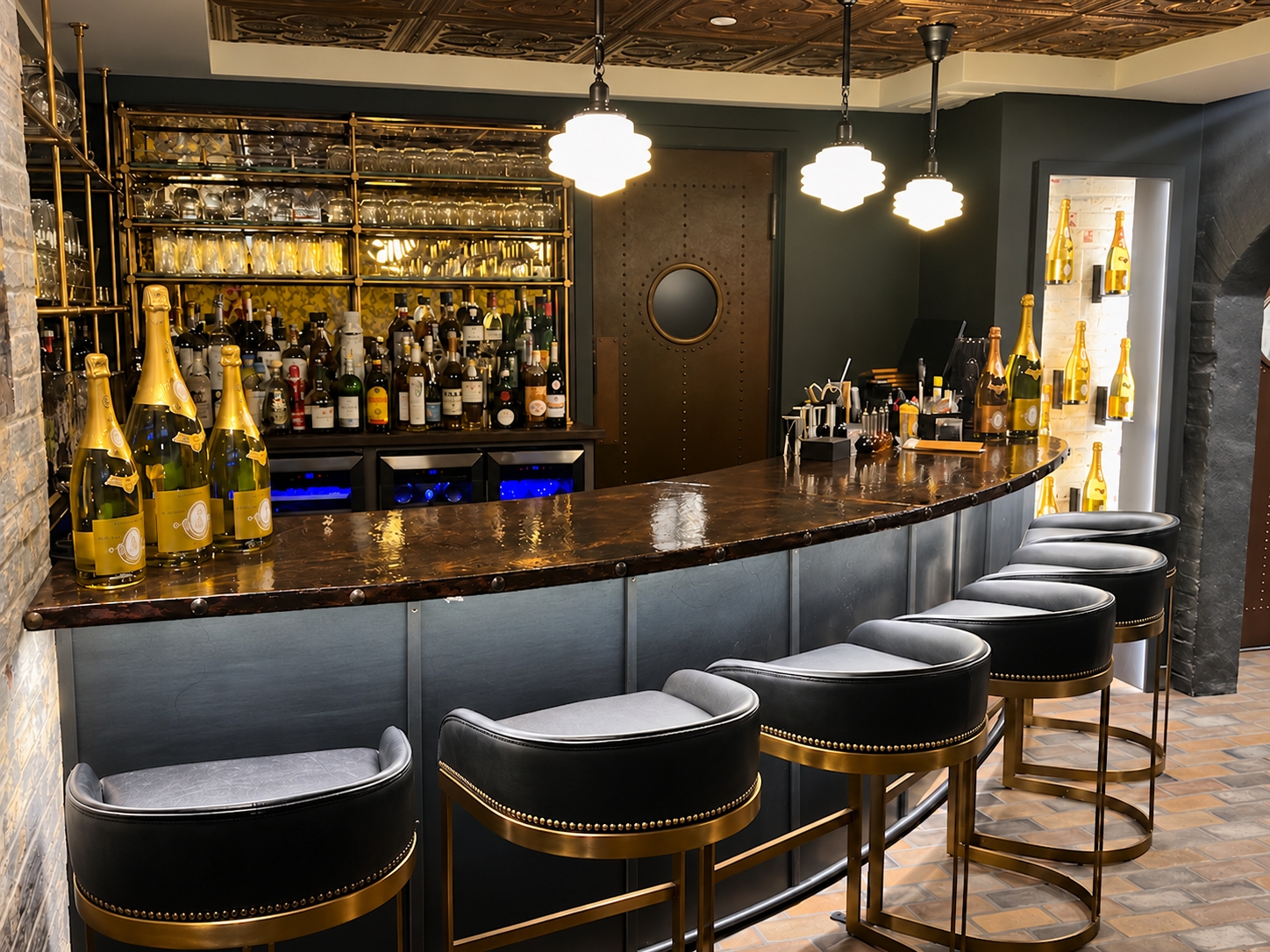
    Bar Caviar, tucked into Rittenhouse’s boutique Dwight D Hotel (256 S. 16th St.), has soft-opened with 14 Champagnes by the glass, ranging from $35 for Louis Roederer Collection 246 to $495 for the rare Salon. The lineup from hoteliers Ken and Vittoria Schutz spans blends, blanc de blancs, blanc de noirs, and rosés, mixing historic houses and independent growers. Labels include Chartogne-Taillet, Dom Pérignon, Cristal, and Jacques Selosse. There are also 18 still wines by the glass, from caviar-friendly Muscadet, Vouvray, and Riesling to Tignanello and Jean-Louis Chave Hermitage. Cocktails include martinis, Champagne drinks, and a series of drinks named after local rivers, a la the Delaware, made with housemade black-cherry wishniak cordial, and the Schuylkill, inspired by Fish House Punch. Caviar service, oysters, and cheese boards lead the opening menu; hot dishes will be added soon. Initial hours: 4-10 p.m. Tuesday-Saturday.

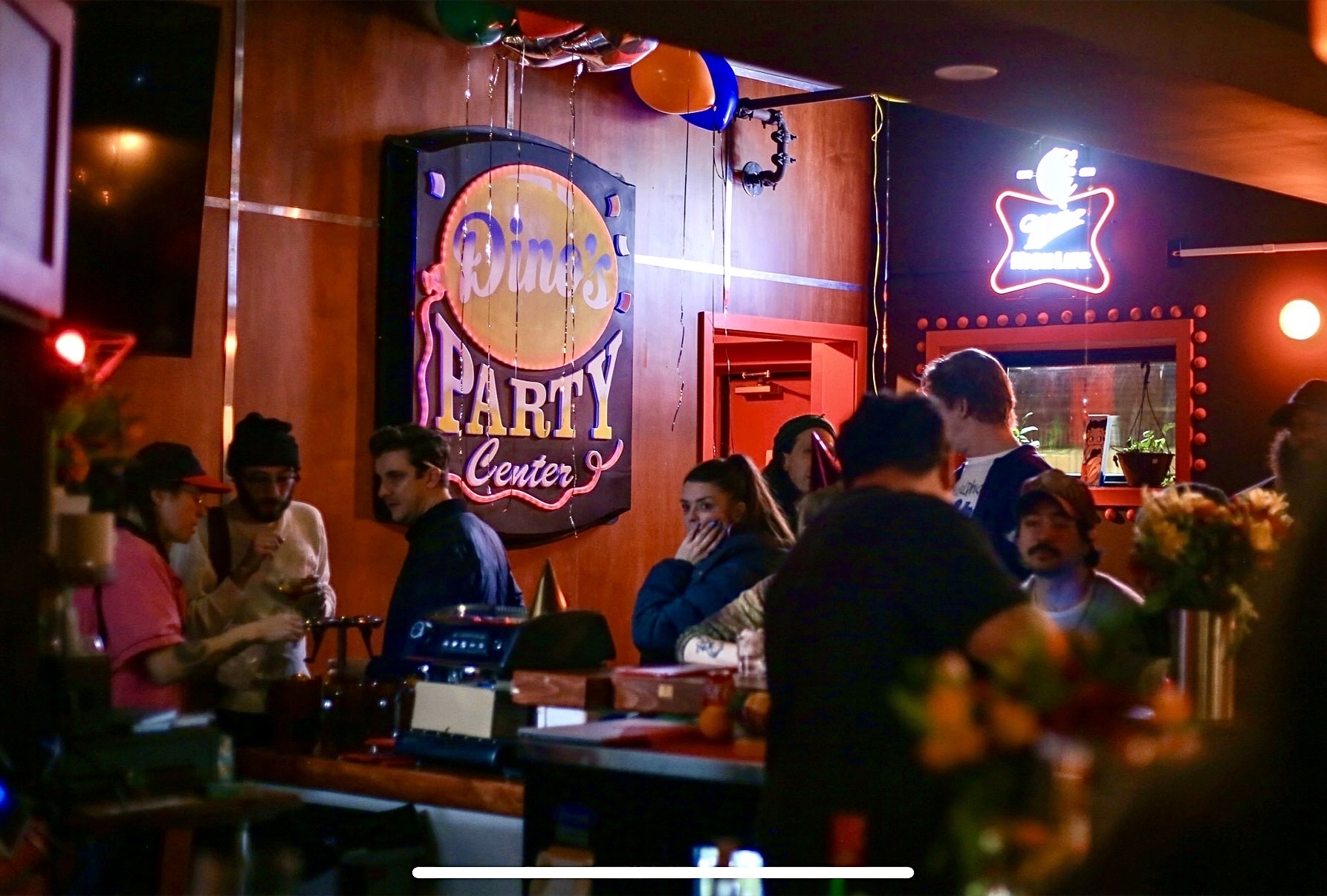
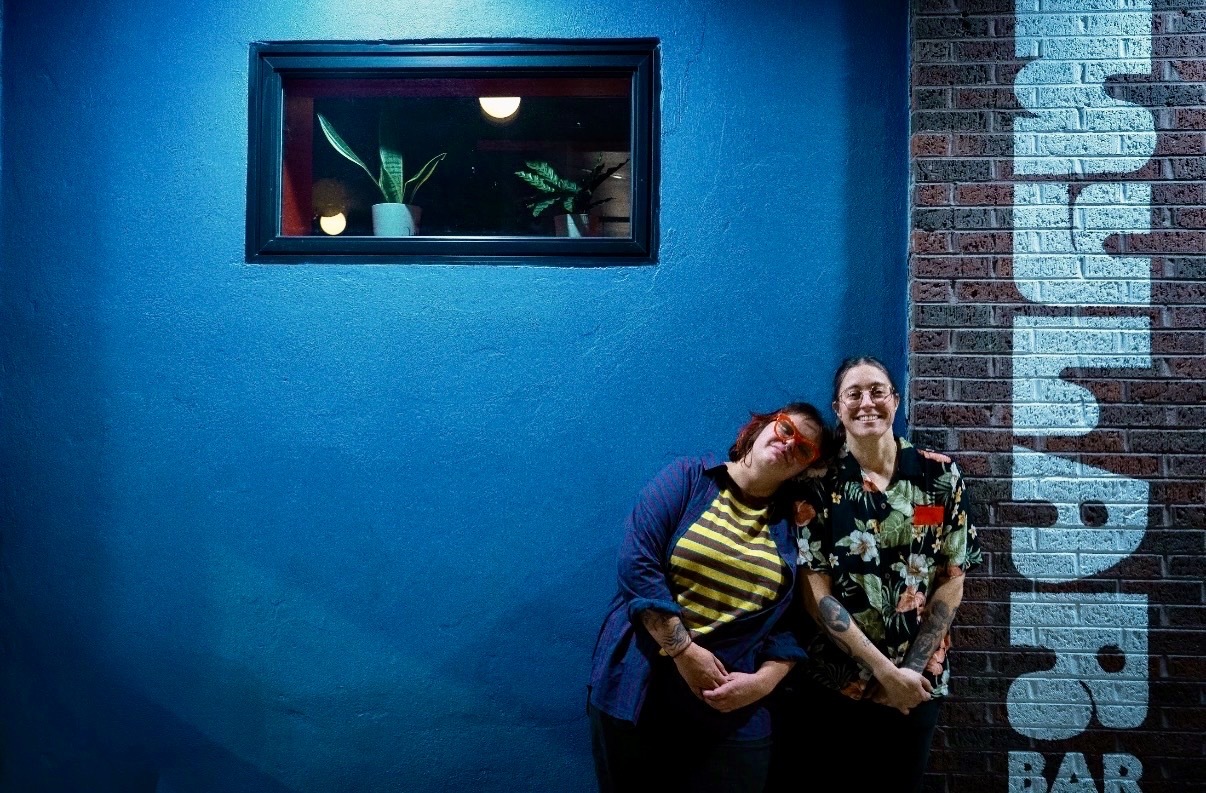
    Mylar Bar, a cocktail bar at Ninth and Morris inspired by the spirit of the previous longtime occupant (Dino’s Party Center), opens tomorrow after a two-year renovation. Owners and veteran bartenders Liv Arterbridge and Gina Piccari have filled the former party-supply store (which moved across the street) with nostalgic touches and an intentionally unserious atmosphere. Cocktails include a freezer martini, the spiced-yuzu Bitty Fuel, and Punch for Parties, a rum-based riff on the sherbet punch Arterbridge grew up drinking in Western Pennsylvania. Chef Colin White’s menu leans into party snacks, including pork belly pigs in a blanket, deviled eggs, shrimp cocktail, and housemade party mix, alongside larger plates such as a chicken cutlet. Open daily (1638 S. Ninth St.) from 5 p.m. to 2 a.m., with food until 1 a.m. That’s Arterbridge at left and Piccari at right in the photo below.

    Briefly noted

    Weavers Way’s Chestnut Hill location will move and expand, and the co-op is not going far — just two doors down, into the former Iron Hill Brewery. Big news: The hot bar will come back.

    EMei, the Sichuan favorite, has opened for takeout and delivery at the former Olde Bar/Bookbinder’s space at Second and Walnut Street. No date yet for dine-in service.

    Mei Mei … EMei… Mei Mei again! What’s in a restaurant name? Sometimes, confusion. There’s a new Chinatown restaurant with a familiar name.

    Sang Kee Peking Duck has opened a location in Gateway Shopping Center, just off Route 202 in Wayne, replacing R&G’s Ping Pong.

    Chicken Salad Chick, a fast-casual chain specializing in chicken salad, opens its second Pennsylvania location (after Allentown) today in Providence Town Center near Collegeville, replacing Z! Eats. Franchisees Amanda Furiato, Ryan Metz, and Drew Christy are offering opening-day promotions including free chicken salad for a year for the first 100 customers; opening is 10:30 a.m.

    BOTLD’s two-year-old location at 117 S. 13th St. in Washington Square West closed last Saturday. Owner Andrew Auwerda is prepping for a forthcoming seasonal pop-up of his bottle shop — which sells spirits that cannot be purchased elsewhere in Pennsylvania through a workaround to the state’s liquor laws — in King of Prussia Mall (start date TBD). BOTLD’s stores at 119 S. 18th St., where it’s paired with Tipsy Scoops, and its other holiday popup in Suburban Square in Ardmore remain.

    Riverwards Produce in Old City is partnered with Stina chef Bobby Saritsoglou and his wife, Christina Kallas Saritsoglou, on Bakla-Vibes, a baklava-inspired smoothie made with walnut milk, Greek yogurt, orange, cardamom, cinnamon, honey, banana, and avocado. Through Nov. 30, $1 from each sale at Riverwards’ Old City juice bar (146 N. Bread St.) will benefit Philly AIDS Thrift, which Kallas Saritsoglou co-founded.

    Haraz Coffee House’s Rittenhouse location (1822 Chestnut St.) soft-opened in late September. Grand opening will be Saturday with free drinks for the first 50 people between 2 and 3 p.m., half-price drinks from 3 to 4, and a free drink with a pastry purchase from 4 to 5 p.m.

    Main Line Market & Co., a specialty cheese and charcuterie shop from sisters-in-law Michelle and Allison Merrill, opens Saturday at 72 E. Lancaster Ave. in Paoli, after more than a year of renovations to the former Main Line Seafood Market. The shop will sell cheeses, meats, prepared charcuterie boards, pantry items, and gifts, and offer grazing tables and charcuterie carts for events.

    Schmear It brought home a medal at last weekend’s New York BagelFest. The mini-chain’s Philly long hot schmear (cream cheese, garlic-roasted long hots, and long hot pepper relish) won bronze in the “creative schmear” category.

    ❓Pop quiz

    One of Philadelphia’s top Italian restaurants recently expanded. Which one?

    A) Fiorella

    B) Dante & Luigi’s

    C) Vetri

    D) Borromini

    Find out if you know the answer.

    Ask Mike anything

    It looks like there’s been activity in the old Royal Indian restaurant in Rittenhouse. Any intel? — Bruce H.

    The location at 272 S. 20th St., between Heng Feng and Seafood Unlimited, will become a location of Tiffin, the Indian mainstay, in early December. Owner Munish Narula also reports that an opening of a franchise Tiffin location in St. Augustine, Florida, is due soon.

    📮 Have a question about food in Philly? Email your questions to me at mklein@inquirer.com for a chance to be featured in my newsletter.

    By submitting your written, visual, and/or audio contributions, you agree to The Inquirer’s Terms of Use, including the grant of rights in Section 10.