Category: Food

  • Manayunk landmark restaurant Jake’s will close this fall after nearly 40 years

    Manayunk landmark restaurant Jake’s will close this fall after nearly 40 years

    Restaurateur Bruce Cooper is big on dates. He opened Jake’s in Manayunk on Oct. 19, 1987 — Black Monday, the day the stock market crashed.

    He’ll close it on Oct. 19, 2026, the start of its 40th year on Main Street.

    In between was another financial crisis, an expansion that reflected changing tastes, a devastating flood, a pandemic — and nearly four decades in which Jake’s evolved along with Manayunk itself.

    Cooper, 72, is selling the side-by-side Main Street properties that house what is now Jake’s & Cooper’s Wine Bar. Before the final night, he plans to turn the wind-down into a reunion. Past employees will get a 50% discount on Sundays and Mondays, and the restaurant will extend its September restaurant week (Sept. 14-20) pricing through the final day. On Oct. 19, a party will empty the bar and kitchen, with proceeds going to a local charity.

    “I just wanted to get to [the start of] 40 years,” said Cooper. “I wanted to get out two years ago.”
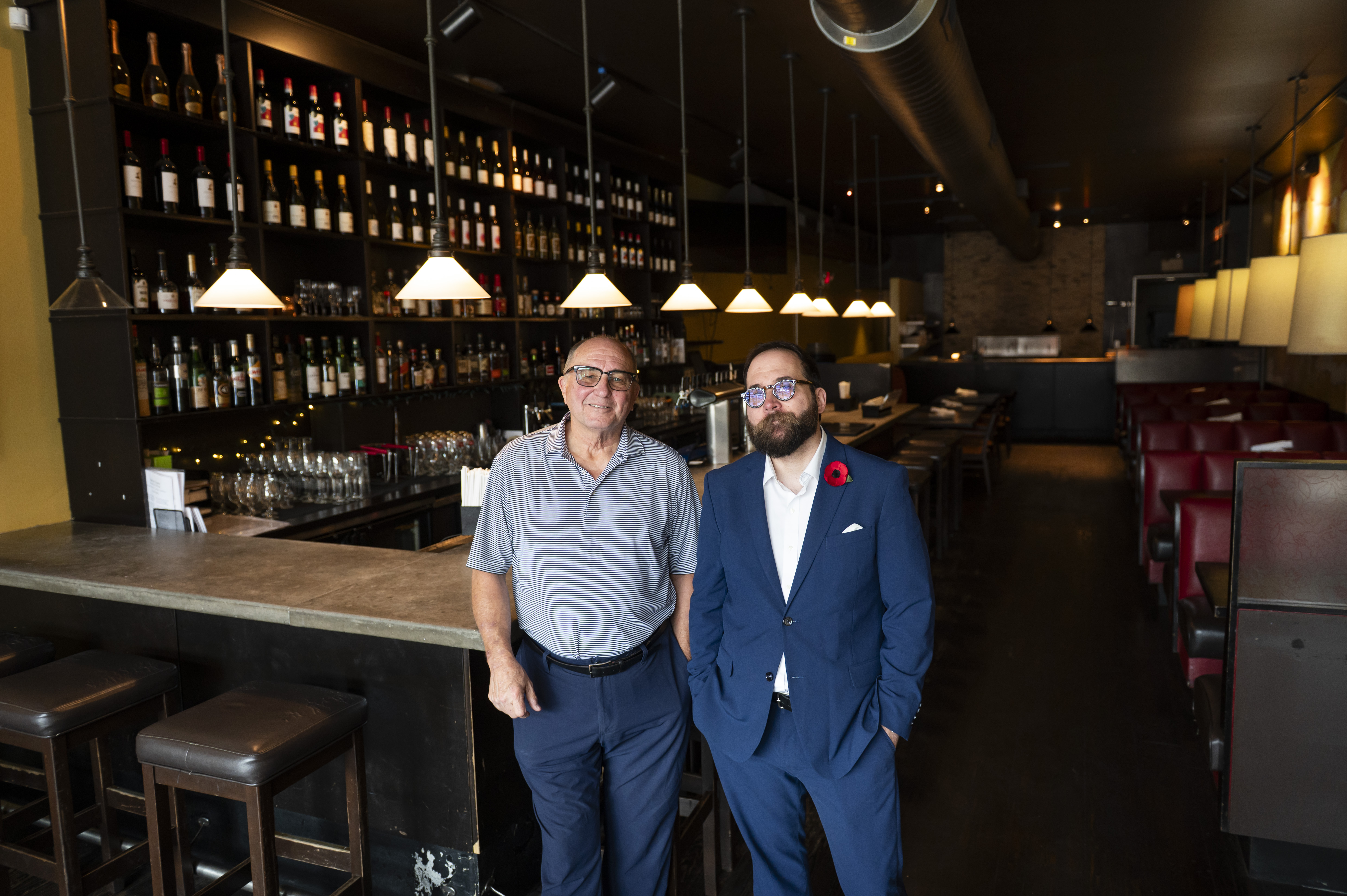
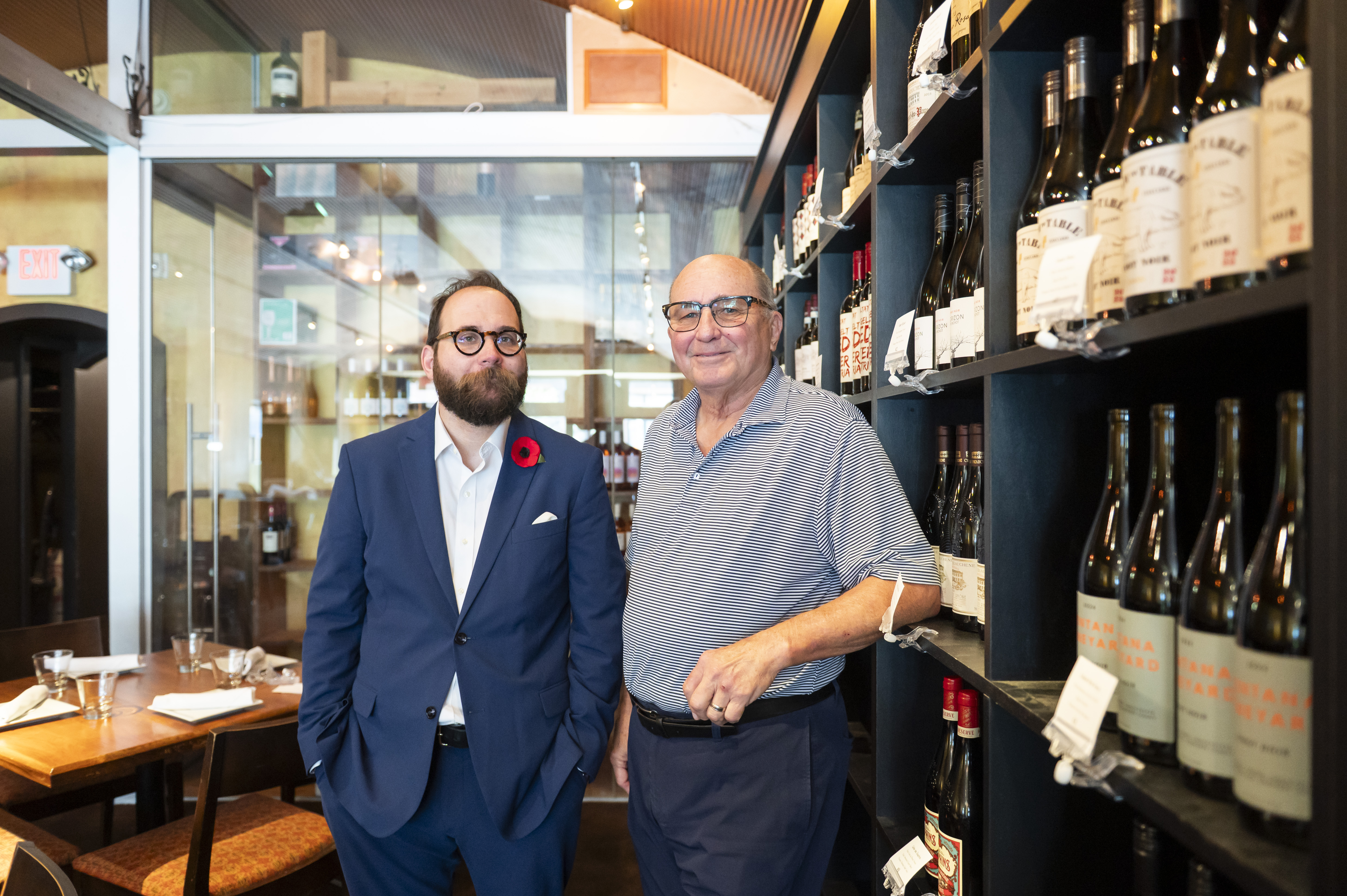
    Bruce Cooper with his son, Bruce Joseph Cooper II, inside the wine bar at Jake’s & Cooper’s Wine Bar.Allie Ippolito / For The Inquirer

    When Cooper arrived in Manayunk, Main Street hardly looked like the retail and restaurant district it would become.

    Cooper, a Culinary Institute of America graduate from Upstate New York, had spent a decade as executive chef at Lankenau Hospital before deciding that he wanted a restaurant of his own. He took business courses at Community College of Philadelphia and St. Joseph’s University and spent years looking at properties before a real estate agent showed him a former print shop in Manayunk in early 1987.

    Cooper didn’t commission traffic studies. While walking along Main Street, he noticed Jaguars and other expensive cars rolling up to a posh restaurant called Jamey’s, which had opened a year and a half before. Otherwise, as he remembers it, “there were practically tumbleweeds floating down the street. You could find parking on a Saturday.”

    That spring, Cooper bought 4365 Main St. and assembled a group of investors to open Jake’s, his then-wife Helena’s nickname.

    Jake’s was conspicuously ambitious: white tablecloths, contemporary artwork, an extensive wine list, and Cooper’s refined cooking, including pastas from scratch. Dishes included crab cakes with raspberry butter, scallops with red pepper and papaya sauces, and duck breast with tangerine sauce.

    The restaurant’s whimsical facade depicted an oversize table setting, with food spilling from a plate and wine pouring into a glass, surrounded by flowers, flatware, linen, and crystal — designed to suggest both fine dining and a sense of fun.
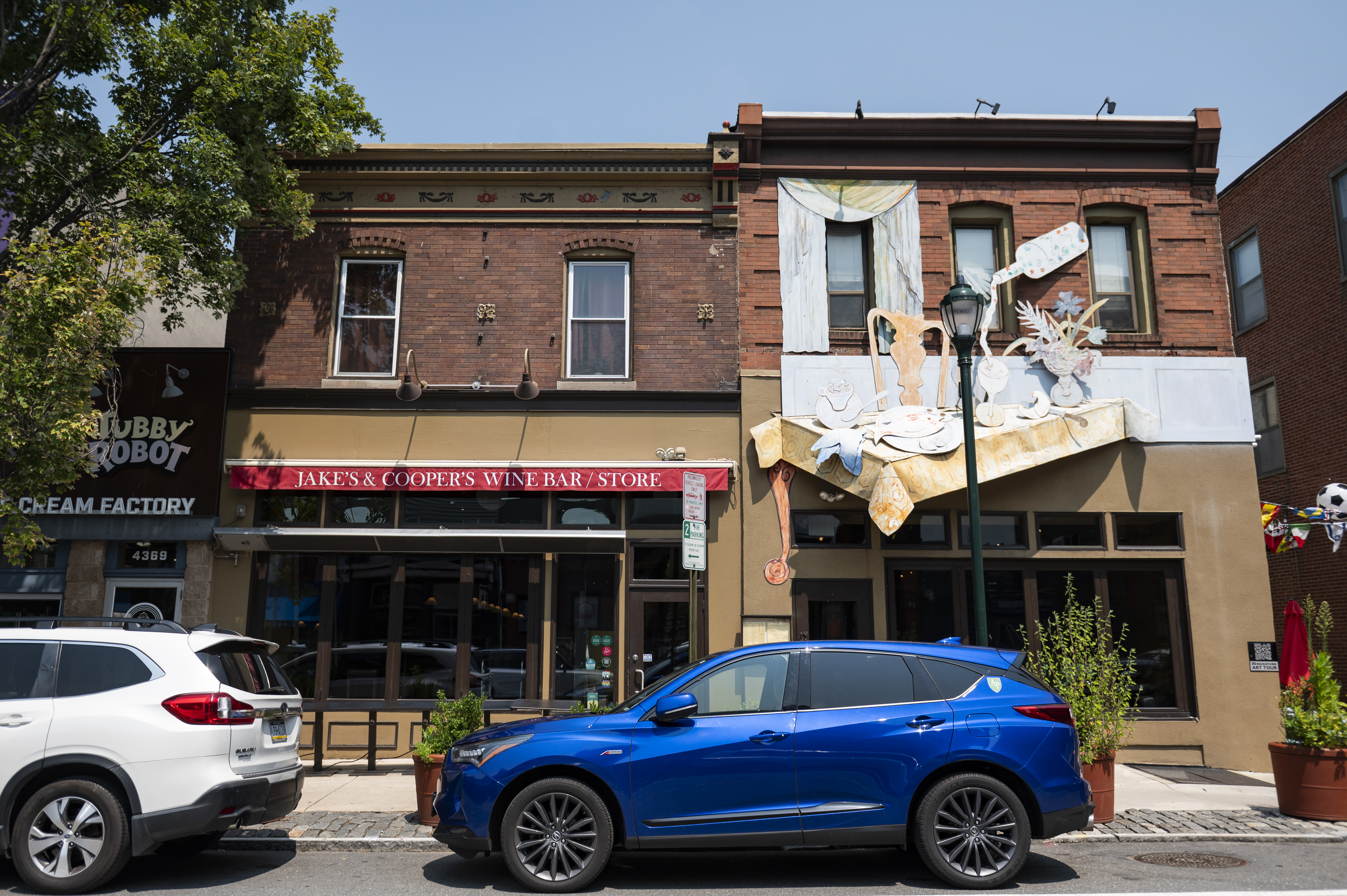
    The exterior of Jake’s & Cooper’s Wine Bar in Manayunk on Monday, Aug. 10, 2026. The bar is closing after 39 years.Allie Ippolito / For The Inquirer

    Many early customers came from the Main Line, crossing the Schuylkill over the Green Lane Bridge into the former mill town.

    Business grew quickly. When Cooper had put together his business plan, his accountant told him his projected sales were impossible for a 65-seat restaurant. Jake’s reached the projection in its second year, Cooper said.

    By the 1990s, Main Street was crowded with boutiques and similarly high-aiming restaurants like Sonoma and Kansas City Prime.

    In a 1998 review, Inquirer restaurant critic Craig LaBan described a room of cushioned banquettes, contemporary design, and a stylish but unstuffy clientele. He called out the veal dumplings with caramelized ginger, seared tuna with sticky rice, foie gras with grilled mango, and the barbecued salmon — a signature.
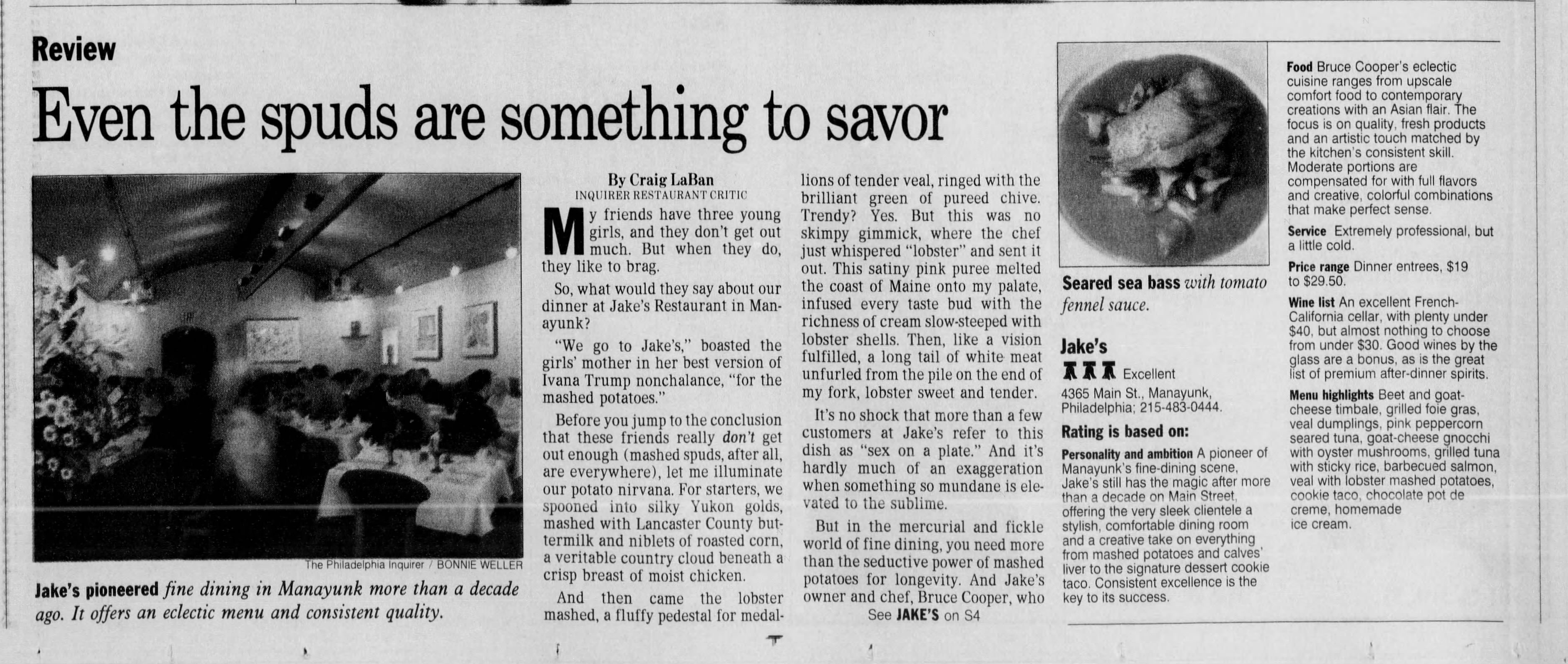
    Craig LaBan’s first review of Jake’s, from July 1998.Newspapers.com

    And then there were the mashed potatoes. One version paired Yukon gold potatoes with buttermilk and roasted corn. Another, served beneath medallions of veal, was infused with lobster and cream. Patrons, LaBan reported, had taken to calling the latter “sex on a plate.”

    LaBan awarded Jake’s three out of four Liberty Bells, the rating system he used at the time. “That’s when it really started to take off,” Cooper said.

    Manayunk’s overall success brought its own problems. Friction between residents and the expanding restaurant and bar scene in the late 1990s led then-City Councilmember Michael Nutter to push for a five-year moratorium on new restaurants in the district.
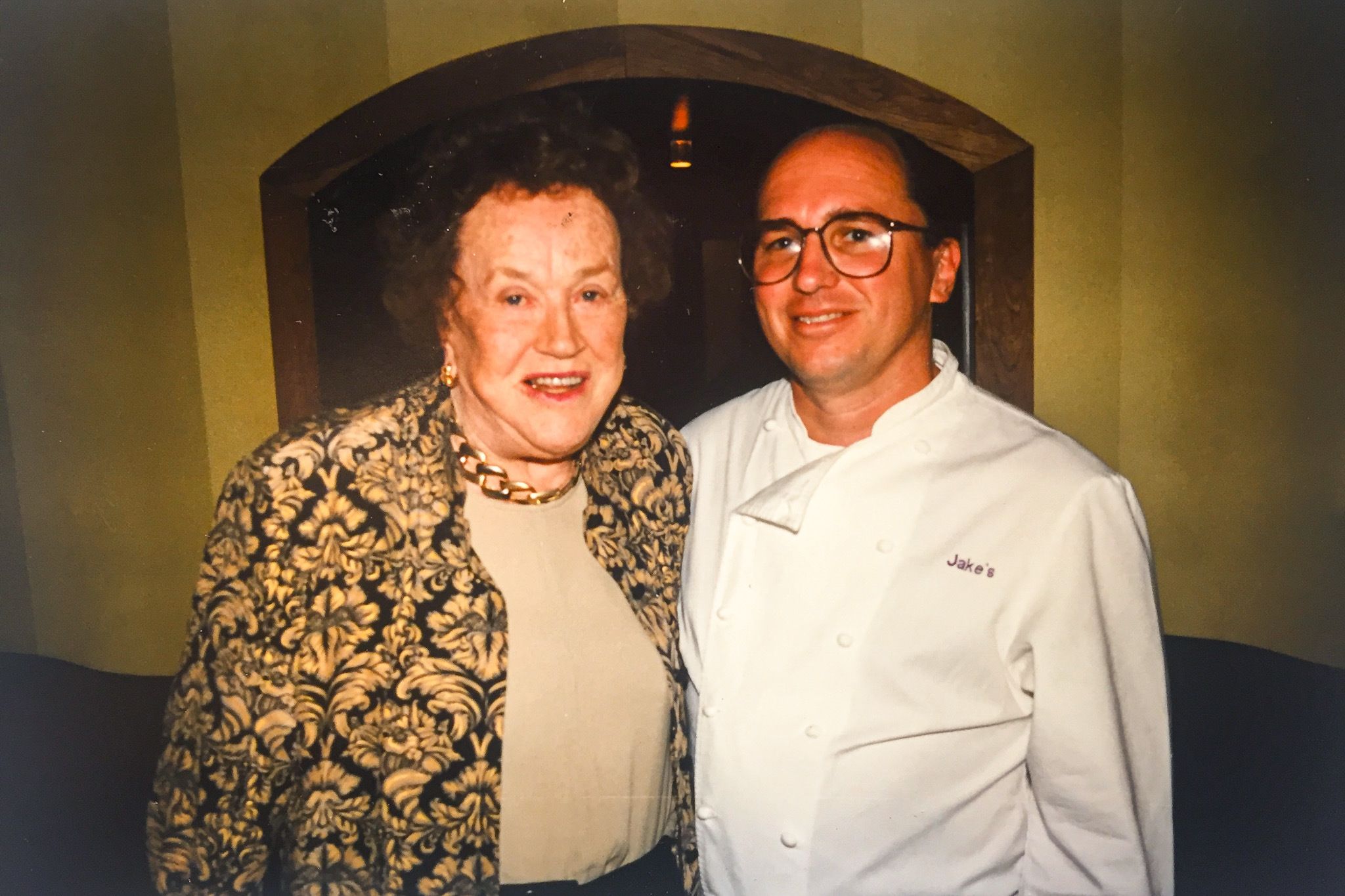
    Julia Child with Bruce Cooper at an event in 1996.Courtesy of Bruce Cooper

    Cooper, who later served as president of the Manayunk Development Corp., believes that the moratorium lasted too long and helped push Main Street toward nightlife. He later helped develop agreements among restaurateurs, landlords, the business association, and neighborhood groups that placed operating restrictions on new restaurants.

    Meanwhile, the style of dining that had made Jake’s successful was changing. White tablecloths were giving way to small-plate menus.

    Which leads to another consequential date: March 14, 2008, on the eve of another financial crisis, when Cooper bought the former clothing store next door at 4367 Main St. and opened Cooper’s Brick Oven Wine Bar. Cooper’s is a markedly different restaurant, drawing a younger crowd and serving pizza, small plates, craft beer, and less expensive wines.

    The dividing line quickly blurred, Cooper said. Customers at Cooper’s wanted food from Jake’s, and Jake’s customers wanted dishes from Cooper’s. The restaurants shared a kitchen, and Cooper eventually merged their menus and identities as Jake’s & Cooper’s Wine Bar.
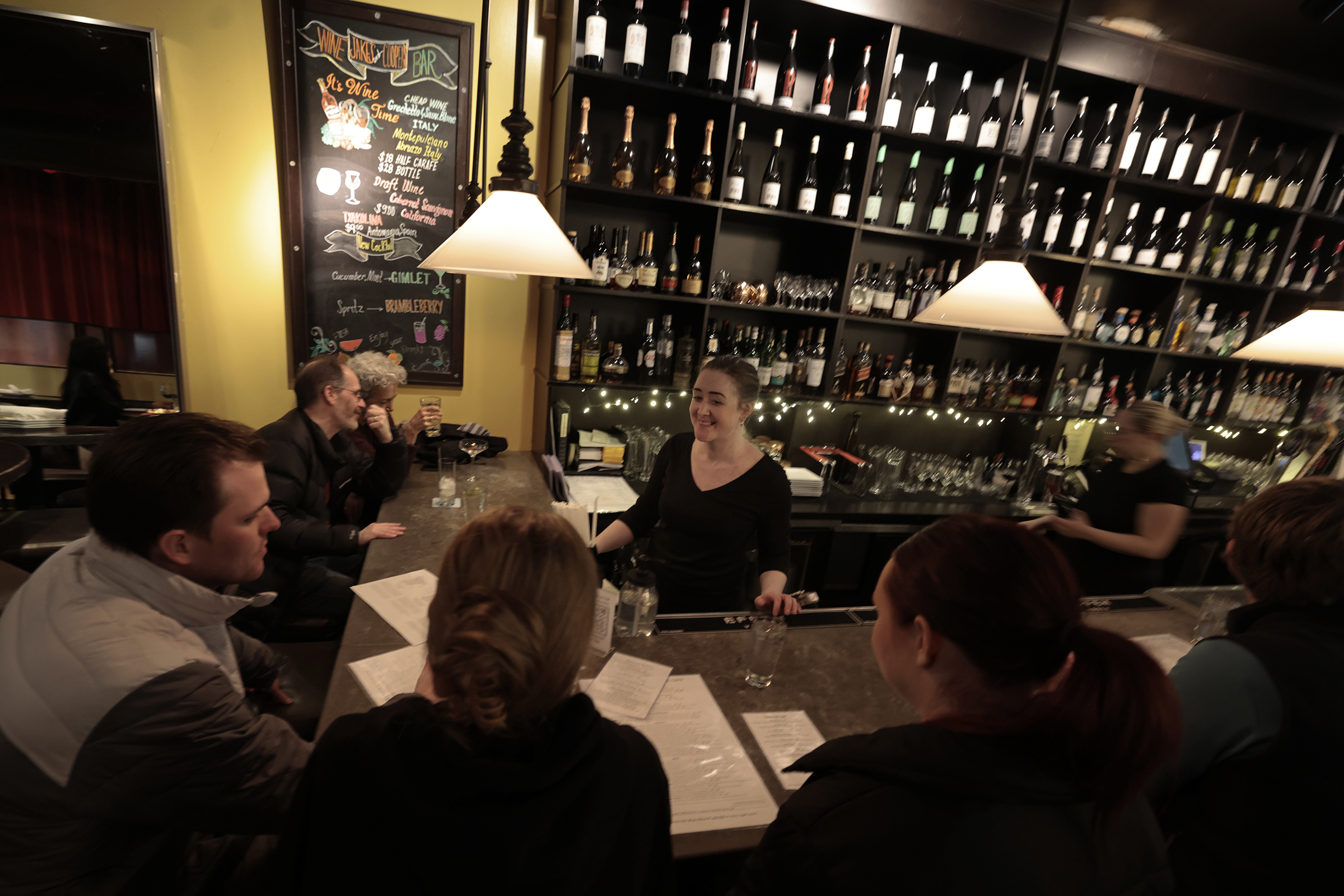
    Head bartender Carrie Hice chatting with patrons at Cooper’s Wine Bar in 2023.Elizabeth Robertson / Staff Photographer

    Then came July 17, 2016.

    Cooper got a middle-of-the-night phone call that a city water main had ruptured outside the restaurant, sending water through the building and destroying the kitchen and the apartments above. He gutted and rebuilt, with business-interruption insurance helping carry the restaurant through a six-month closure.

    The experience changed the way Cooper thought about the business.

    “When you stop a business and then restart it, there are people who had been coming every week, and then they stopped,” he said. “They got into another routine. They went elsewhere.”

    Even months after Jake’s reopened, Cooper said, customers would walk in surprised to discover it had reopened. “That’s when I started looking at things differently,” he said.

    Cooper considered selling, but a real estate adviser urged him to wait as residential development accelerated in Manayunk and Roxborough. Three years later came the pandemic. His extended time at home spoiled him, he said.
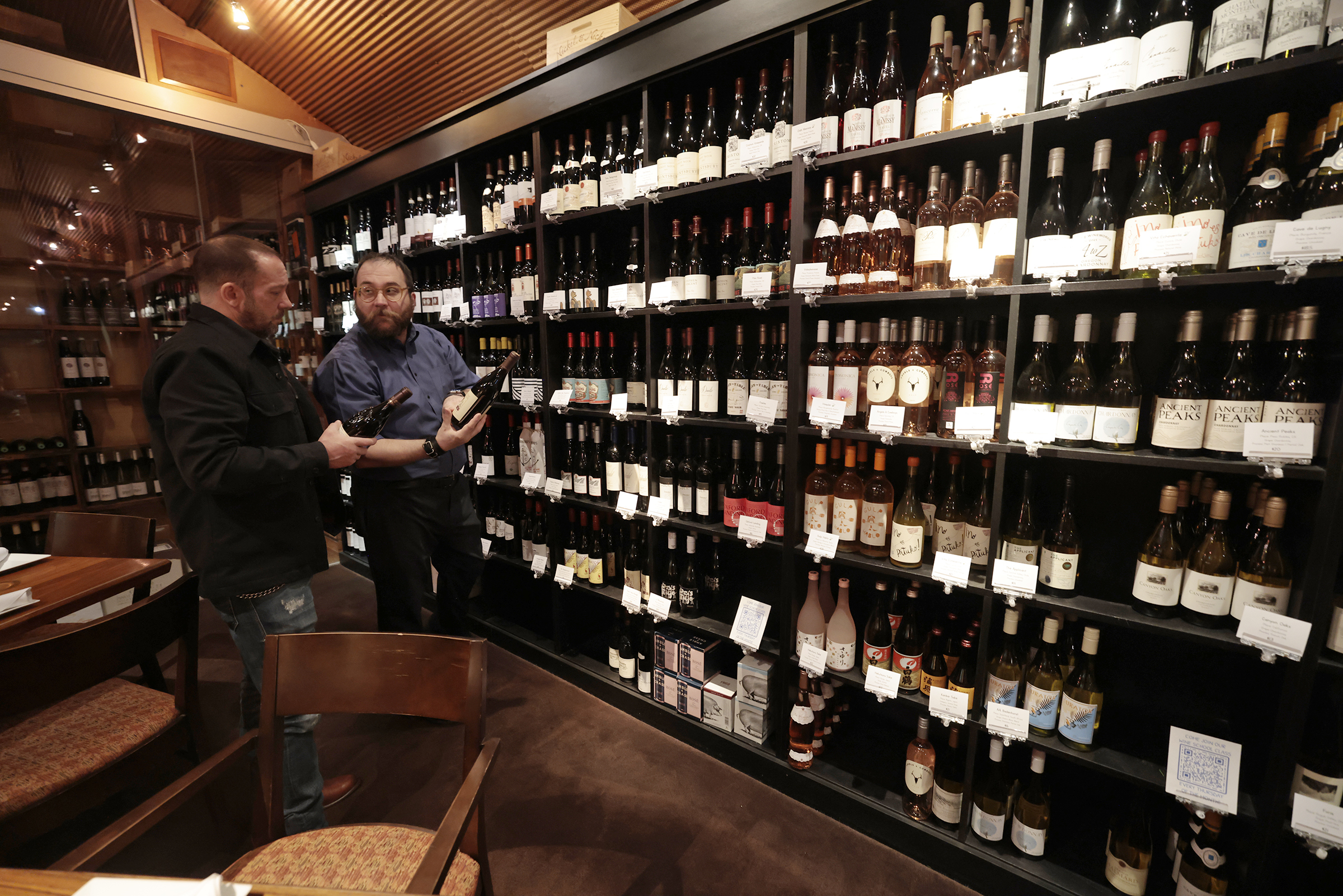
    Chris Campana (left), with help from Bruce Joseph Cooper II, choosing a wine from the wall in 2023.Elizabeth Robertson / Staff Photographer

    Three years ago, Cooper moved to Delaware. His son, Bruce Joseph Cooper II, 37, now manages the restaurant day to day, while the senior Cooper comes north once or twice a week to handle scheduling, wine orders, and other duties.

    In June, Cooper put the properties, including four upper-level apartments, on the market for an undisclosed asking price. Cooper said he wants a clean break rather than passing the restaurant to his son, though neither rules out working together on another project someday.

    The closing will end one of the longest remaining restaurant runs from the era that transformed Manayunk. Pitchers Pub (1987) and Zesty’s (1993) are still at it; U.S. Hotel Bar & Grill has been open irregularly since Bill Green, the former mayor and congressman, reopened it in 1986.

    For Cooper, that history encompasses more than the people who ate there. “When you look back, you think about the generations of customers — in a lot of cases, we’re talking about three generations,” he said. “But it’s not just the customers. It’s all the people behind the scenes: the banker, the produce person, all those people who helped you get through things.”
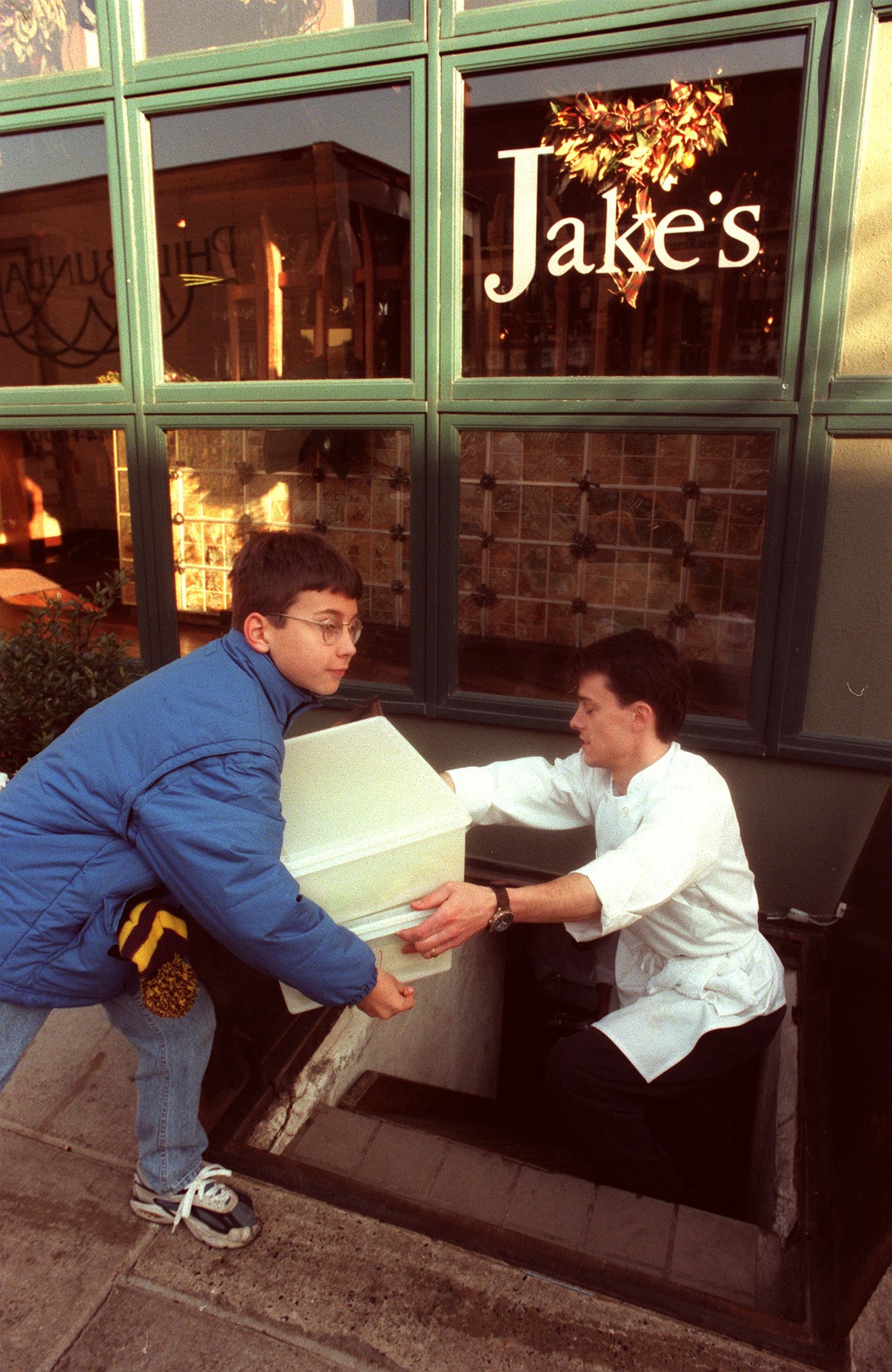
    Bruce Joseph Cooper II, then 11, helps chef Bill Murphy carry food from Jake’s basement to be loaded into a truck for a 1999 holiday dinner by Philabundance. Vicki Valerio / Staff Photographer

    Cooper’s son grew up at Jake’s, handing out cookies at holiday meals his father helped organize through North Light Community Center. He joined the restaurant full-time during the pandemic, starting as a food runner and eventually taking over management.

    Purveyors and other restaurateurs have approached Cooper Jr. with potential job offers, he said, and he would consider working with whoever buys the properties. He once imagined taking over Jake’s himself but is no longer certain that is what he wants.

    His father understands.

    The restaurant business, the senior Cooper said, demands long hours and constant attention. One lesson he would give a new restaurateur is the one that helped him survive both the flood and the pandemic: Own the real estate if you can.

    “If I didn’t own this real estate during COVID, I would have owed the landlord,” he said.

    Cooper has begun informally advising other restaurateurs about the economics of getting into, staying in, and getting out of the business. After nearly four decades, he said, he is ready to find out what comes next.

    His son thinks about Jake’s in more personal terms.

    “Even in my almost five years working as a manager here, I’ve seen kids go from being in the womb to toddlers, and they know me as Uncle Bruce,” the younger Cooper said. “That’s one of the greatest feelings in the world — being able to say, ‘I knew you before you were born, little one.’”
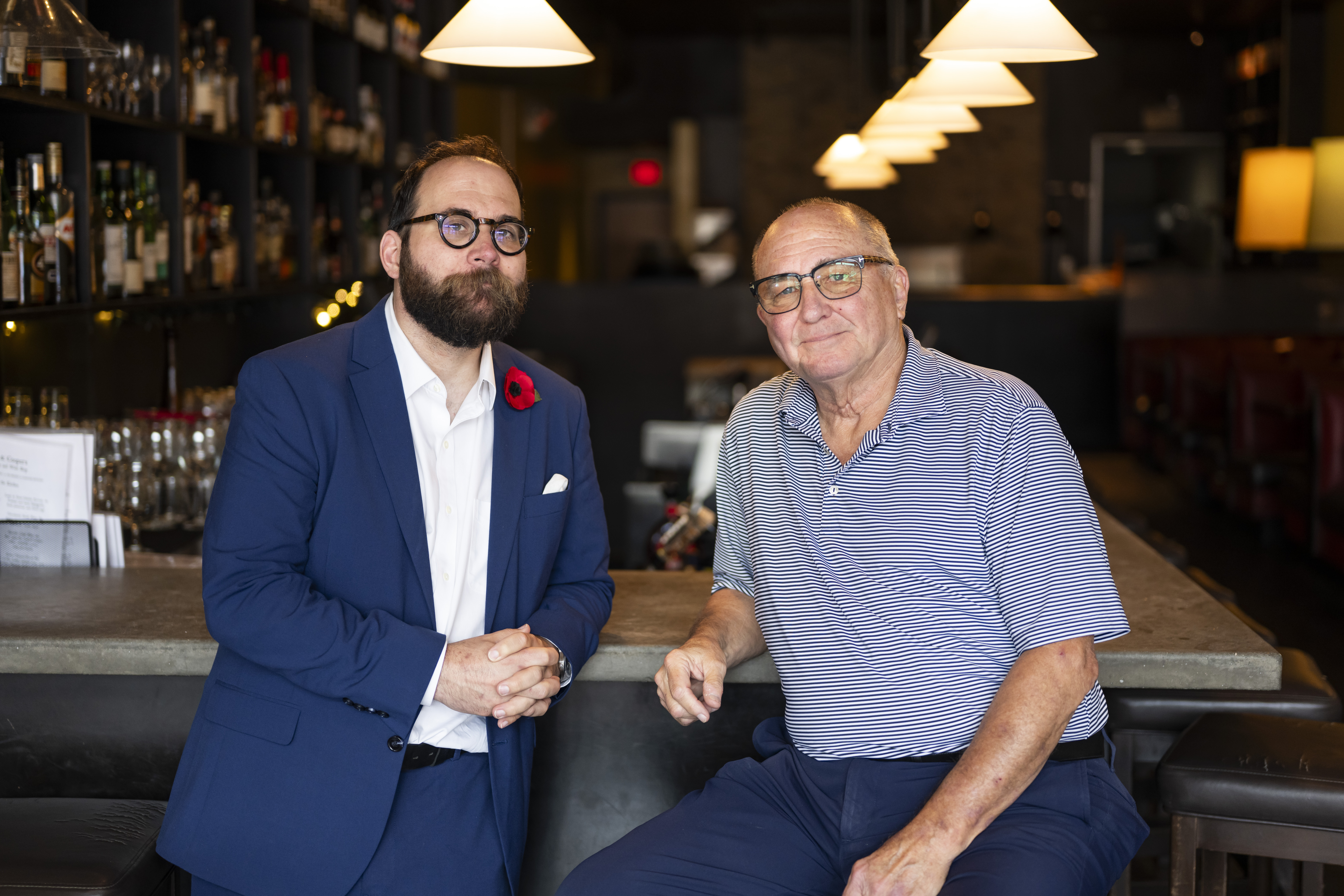
    Bruce Joseph Cooper II (left), general manager, and Bruce Cooper (right), owner, inside Jake’s & Cooper’s Wine Bar in Manayunk.Allie Ippolito / For The Inquirer
  • This Philly chef goes crabbing in Sea Isle City every year

    This Philly chef goes crabbing in Sea Isle City every year

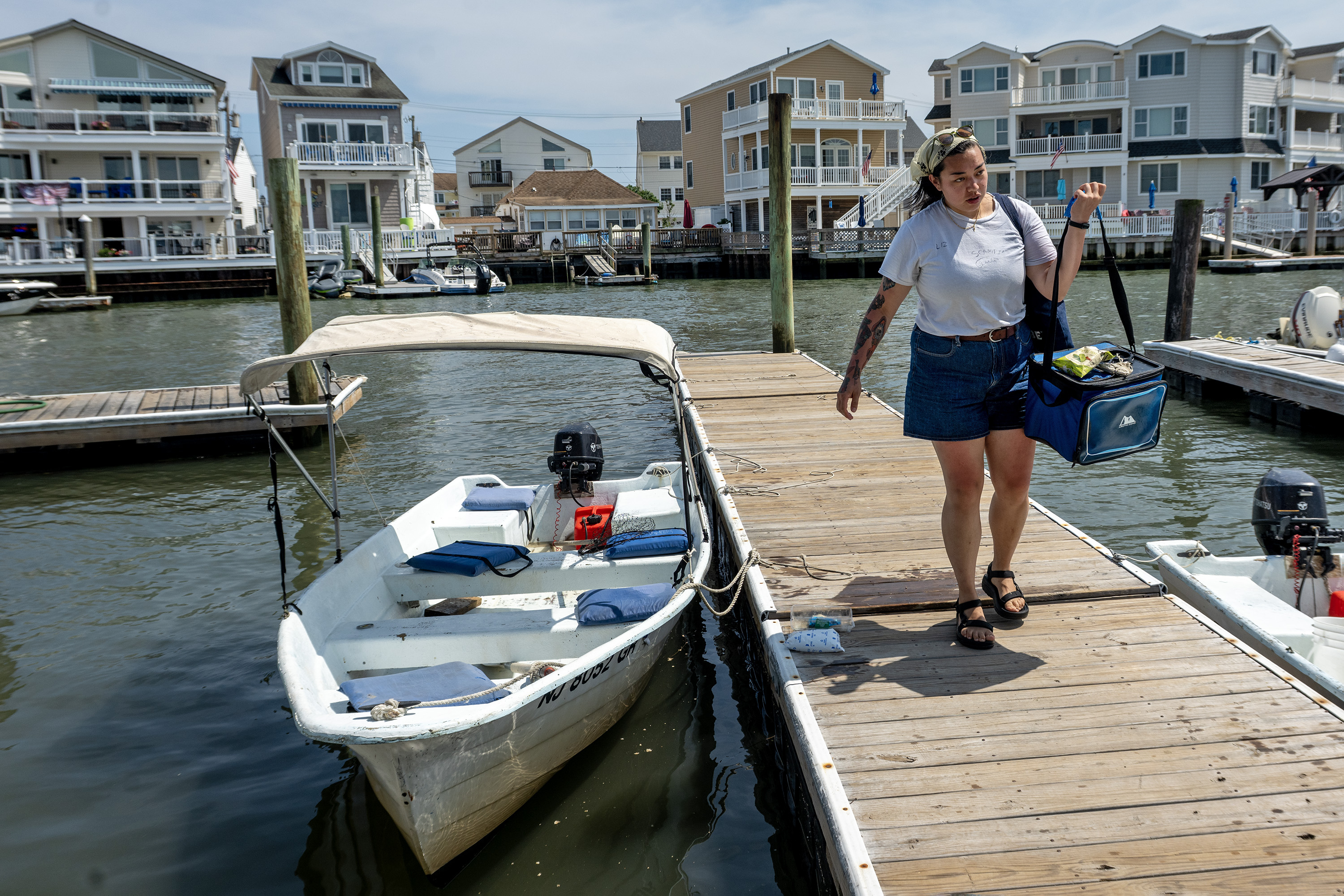
    Sitting on a skiff on the bay in Sea Isle City, chef Liz Grothe slowly pulled up a submerged string from the lapping waters while holding onto a half-eaten Wawa hoagie.

    On the string, a blue crab emerged, clinging to the severed fish head at the end of the bait holder, called a handline. The crustacean was too small for New Jersey’s recreational size minimum (3 inches long), Grothe and her companions determined. With a sigh, she dropped the crab back into the water.

    It was an hour into Grothe’s Sunday crabbing expedition, and her crew had already caught a handful of crabs.

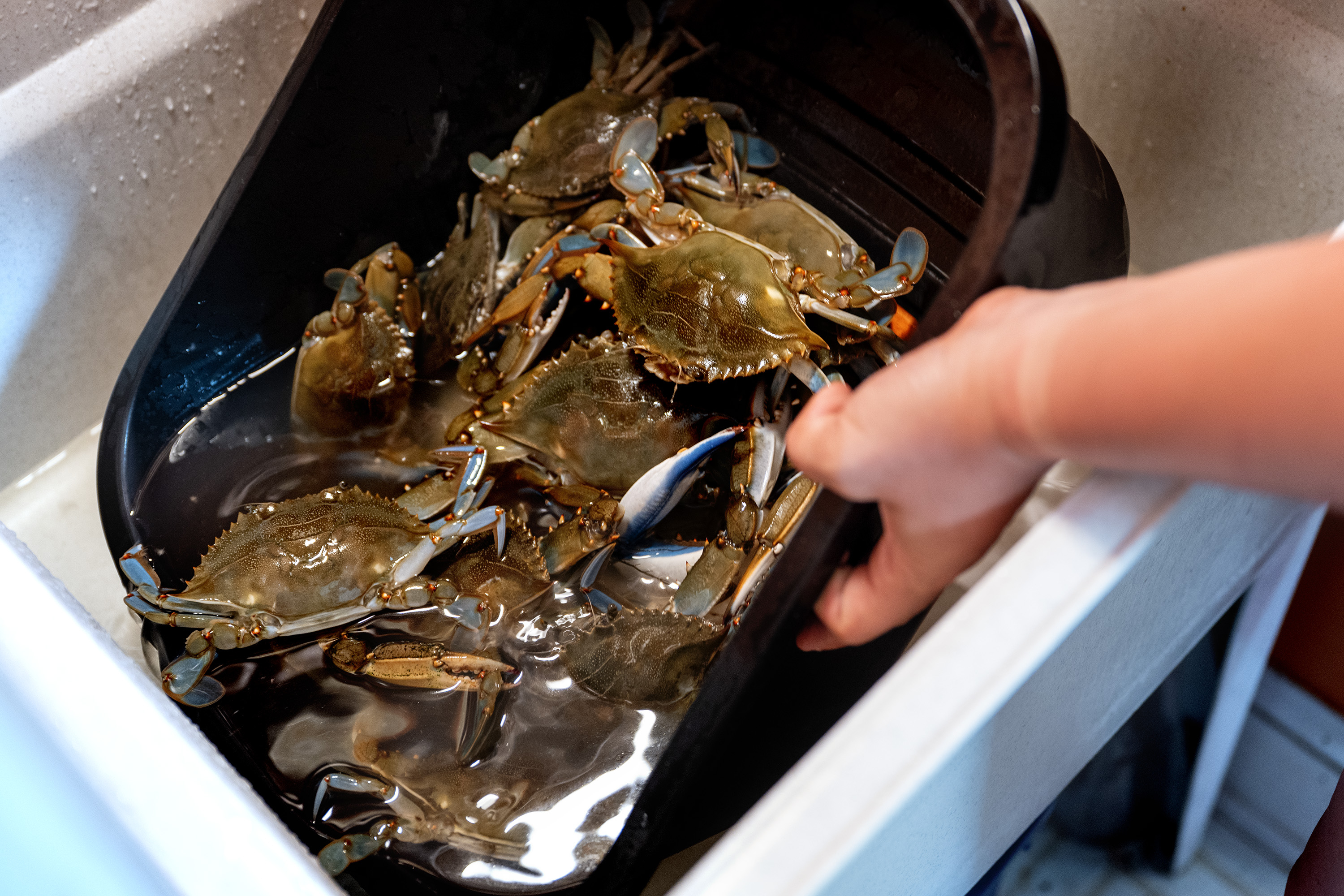
    Chef Liz Grothe washing the day’s catch of grabs in the laundry-room sink of her partner’s family home in West Cape May, Sunday, Aug. 2, 2026. Grothe spent the afternoon crabbing out of Sea Isle City and was making dinner for the family
    Tom Gralish / Staff Photographer

    With bright skies and calm waters that day, she rented two skiffs from Bay Breeze Marina with her partner, Jacob Lance, and Lance’s family to embark on her favorite Shore hobby: crabbing on the bay — and later, cooking up her catch in Cape May.

    “We get all our ‘beach’ time down the Shore at the bay,” Grothe, who owns the Italian-ish Queen Village restaurant Scampi, said. “[The bay] is more like Oklahoma-style waters, where it’s just a shallow lake rather than like the rough seas of the ocean. So this is more my speed.”

    Grothe grew up catching catfish in the creeks of Oklahoma. But it wasn’t until six or seven years ago that an ex-boyfriend introduced her to Sea Isle City’s bay and its crustaceous inhabitants. “He took me on his boys’ excursion, which was crabbing,” she said. “We broke up later — being the kind of girl I am, I stole it. I go to the same place they rented their boats; we do it in the same way I learned.”

    Grothe named her restaurant after a seafood dish, so it’s no surprise she has strong feelings about crabs, the scavengers of the sea. Don’t expect these to show up on her menu, though — they are for personal eating only. The once-a-summer hobby lets her “touch grass, so to speak, and have something to do that’s not the harrowing day-to-day that we deal with in the kitchen,” she said.

    Being close to water was always a priority for her family — Grothe’s mom is originally from the Philippines. Her interest in seafood, however, comes from the love of catching and cooking it. “Eating is just the secondary part of the fun,” she said.

    “I’m in it for the love of the game, not the catch,” she said, while tossing the handline back into the water.

    Bay Breeze Marina rents a boat for $109 for four hours, including gas, cushions, anchor, paddle, cutting board, and a net. The rental also offers a map of the best areas to catch the crabs. It was a no-brainer for Grothe and crew.

    Around 10:30 a.m., she and Lance took one boat, and Lance’s brother and sister-in-law hopped into their own. (Grothe and Lance’s boat didn’t have a bucket, so they improvised, throwing their crabs into a cooler.)

    For four hours, the crew tossed their baited handlines in various areas of the bay — deep waters, shallow areas, just off the coast — to catch as many crabs as they could. They found that chunky pieces of bait — like the trout head — were the best lures.

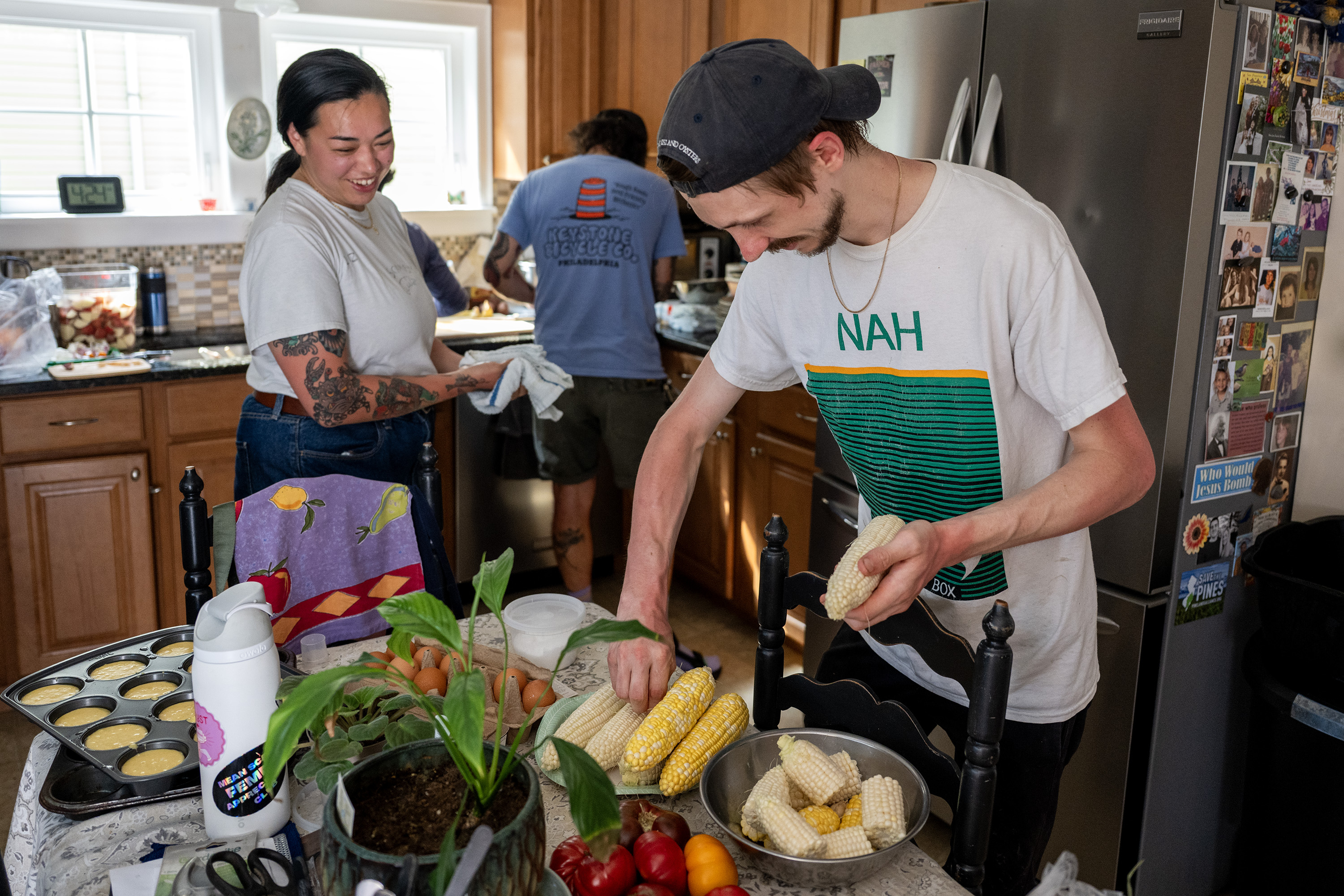
    Chef Liz Grothe (left) as her partner Jacob Lance preps the corn at his mother’s home in West Cape May, Sunday, Aug. 2, 2026. They spent the afternoon crabbing out of Sea Isle City and were making dinner for the family
    Tom Gralish / Staff Photographer

    “What kind of music do crabs like?” Lance asked the group. “They don’t seem to be digging country.”

    “Crabs are chaos; try house music,” Grothe said. “I could see them vibing to it.”

    But Daft Punk and Prince were the “certified crab bangers,” as Grothe put it.

    By the end of the excursion, the crew caught more than a dozen crabs of varying sizes. After docking their skiffs, Grothe assessed which crabs were too small to keep and dropped those back in the water.

    Left with 14 crabs, the crew decided to supplement their haul with other catch for a big boil. They stopped by the fish market at the Lobster House in Cape May to pick up mussels, shrimp, and clams before heading to Lance’s mom’s house in West Cape May, where the live crabs were washed and tossed into the boiling water.

    The key to cooking a crab boil, according to Grothe: a lot of Tony Chachere’s Creole Seasoning. “Maryland and up, people use Old Bay. But if you go south, those who know reach for Tony Chachere’s,” said Grothe, shaking a big container of it into a pot inside the Lances’ kitchen. “Tony is a saltier, spicier, better Old Bay,” Lance added.

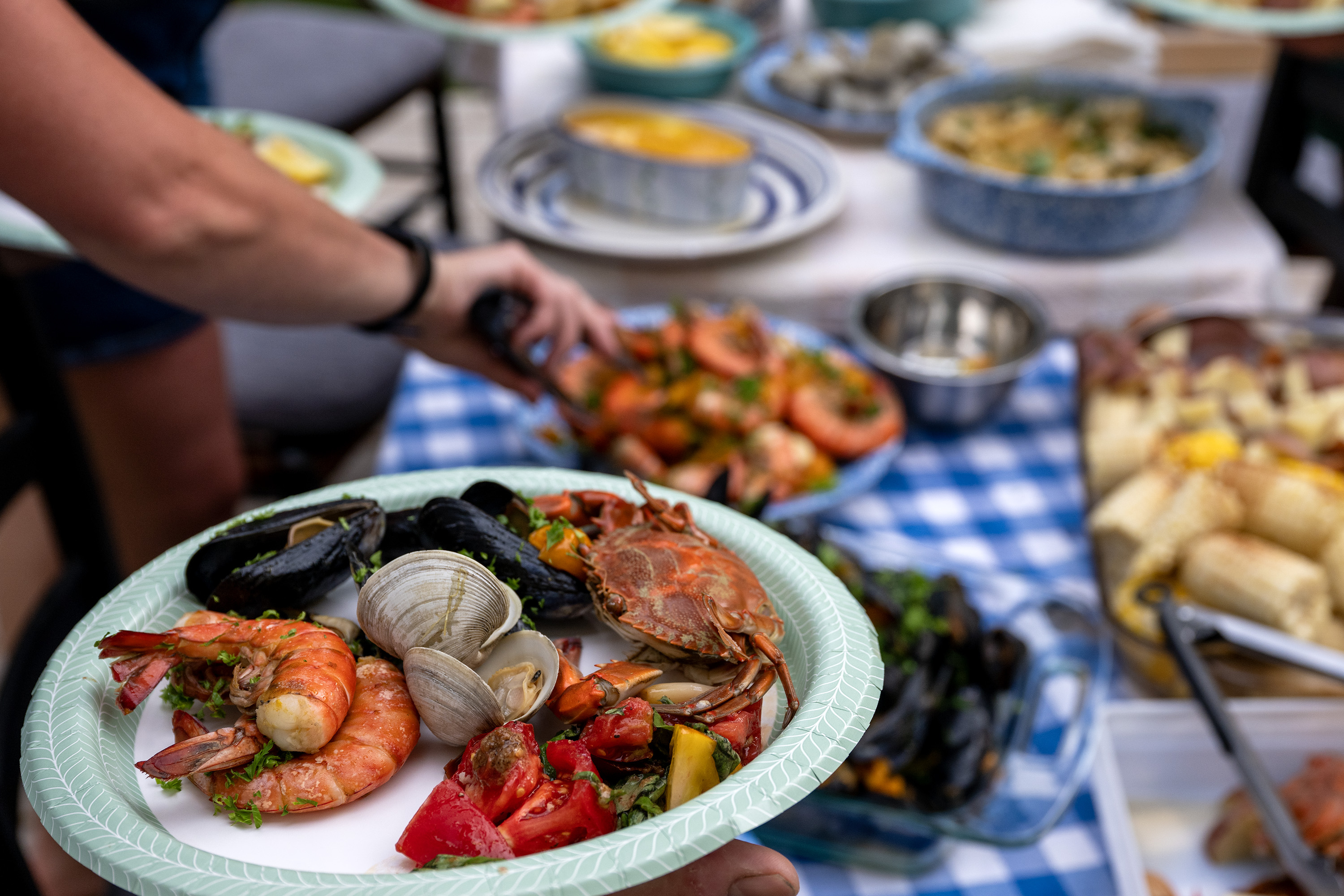
    Family members fill their plates at dinner by Liz Grothe, of Scampi, at her partner’s family home in West Cape May, Sunday, Aug. 2, 2026, after an afternoon crabbing out of Sea Isle City.Tom Gralish / Staff Photographer

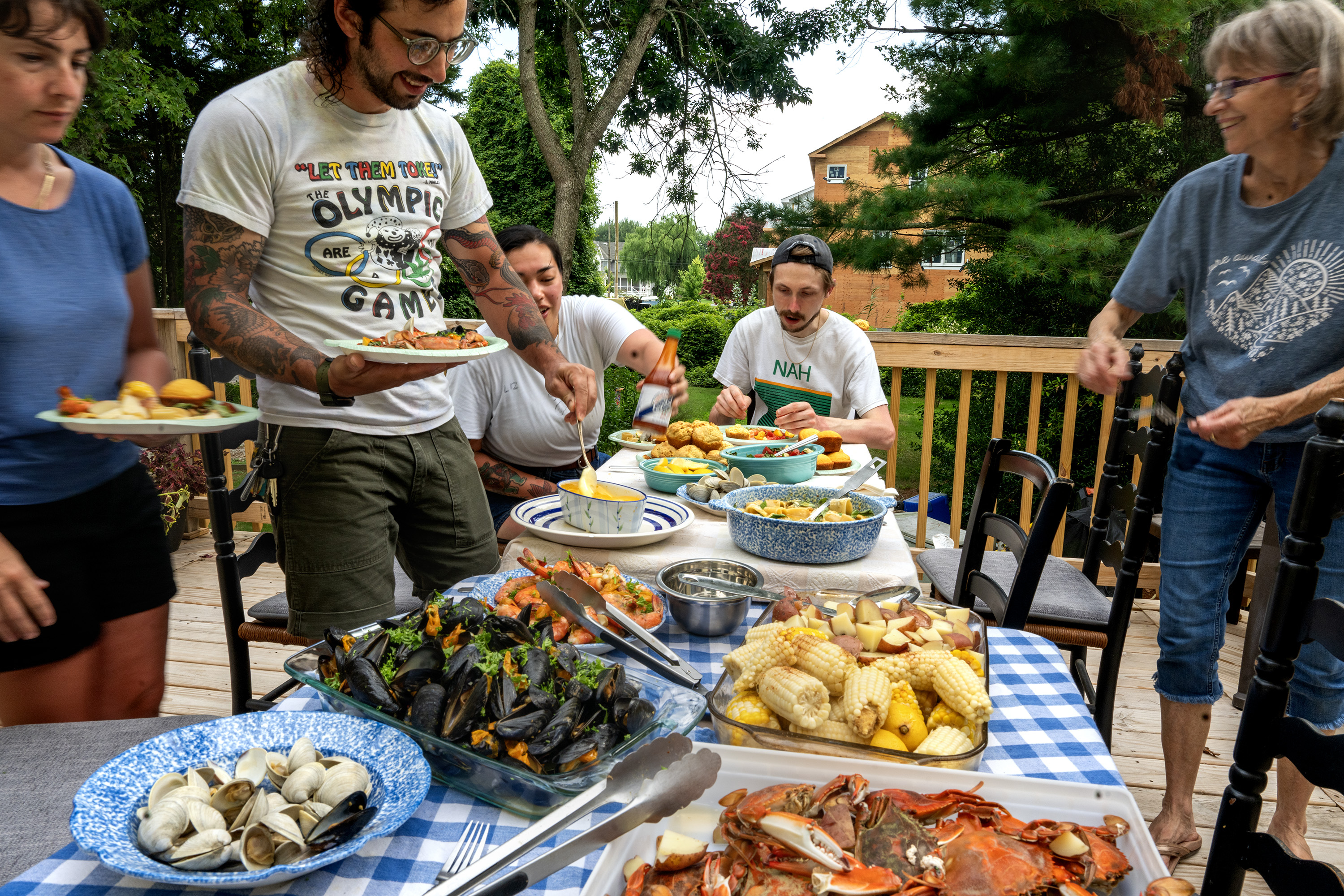
    By 5:30 p.m., the table was set with plates of steamed mussels, poached and steamed shrimp with a sungold tomato broth, calamarata pasta, boiled crabs and clams, gluten-free and regular cornbread, and tomato salad. The menu was prepared with leftover ingredients, including sungold tomatoes, basil, and butter from Scampi — “things that were going to go bad and that we had excess of, just a little something to share with the crew.”

    After an almost seven-hour expedition, Grothe and the Lances settled down on the backyard patio, cracking crabs and enjoying the fruits of their labor.

    “If you’re gonna go crabbing, that’s gonna be your activity for the day — you catch them, and then you gotta deal with them,” Grothe said.

    “Doing something that is very labor-intensive, sharing a part of me with other people that’s fun and interesting — even if it’s not the most industrious or profitable thing — is what I love about cooking,” Grothe added. “Just bringing the family together and showing them that I care via doing this stuff makes me feel good.”

    Chef Liz Grothe of Scampi (rear, center) and her partner Jacob Lance eat dinner at his mother’s house in West Cape May, Sunday, Aug. 2, 2026. At left are Lance’s brother and sister-in-law Shmem Rose and Zachary Rachelle, and on the right is his mother, Christina Johnson.Tom Gralish / Staff Photographer
  • The best thing Beatrice Forman ate this week: Breakfast at Chibanos

    I am a breakfast sandwich snob. I also love rules, which is why there’s rigorous criteria a sandwich needs to meet for me to even consider ordering it.

    Is it served on brioche, a bread that is entirely too soft for a greasy sandwich? Hard pass.

    Is there one of those dreaded rectangular egg patties, which are somehow always dry and a little cold in the center? Don’t even send it my way.

    Does it lack whimsy? Unless there’s some sort of intrigue — a fun condiment, fresh-baked bread, a flavor combo that gives a sense of perspective — I’ll just have eggs with a side of bacon and home fries, please.

    A lot of Philly’s breakfast sammies make the grade, but I’ve only ever fixated on one: the Chino at Chibanos, Washington Square West’s recently opened Chinese-Cuban sandwich shop at 1127 Pine St.

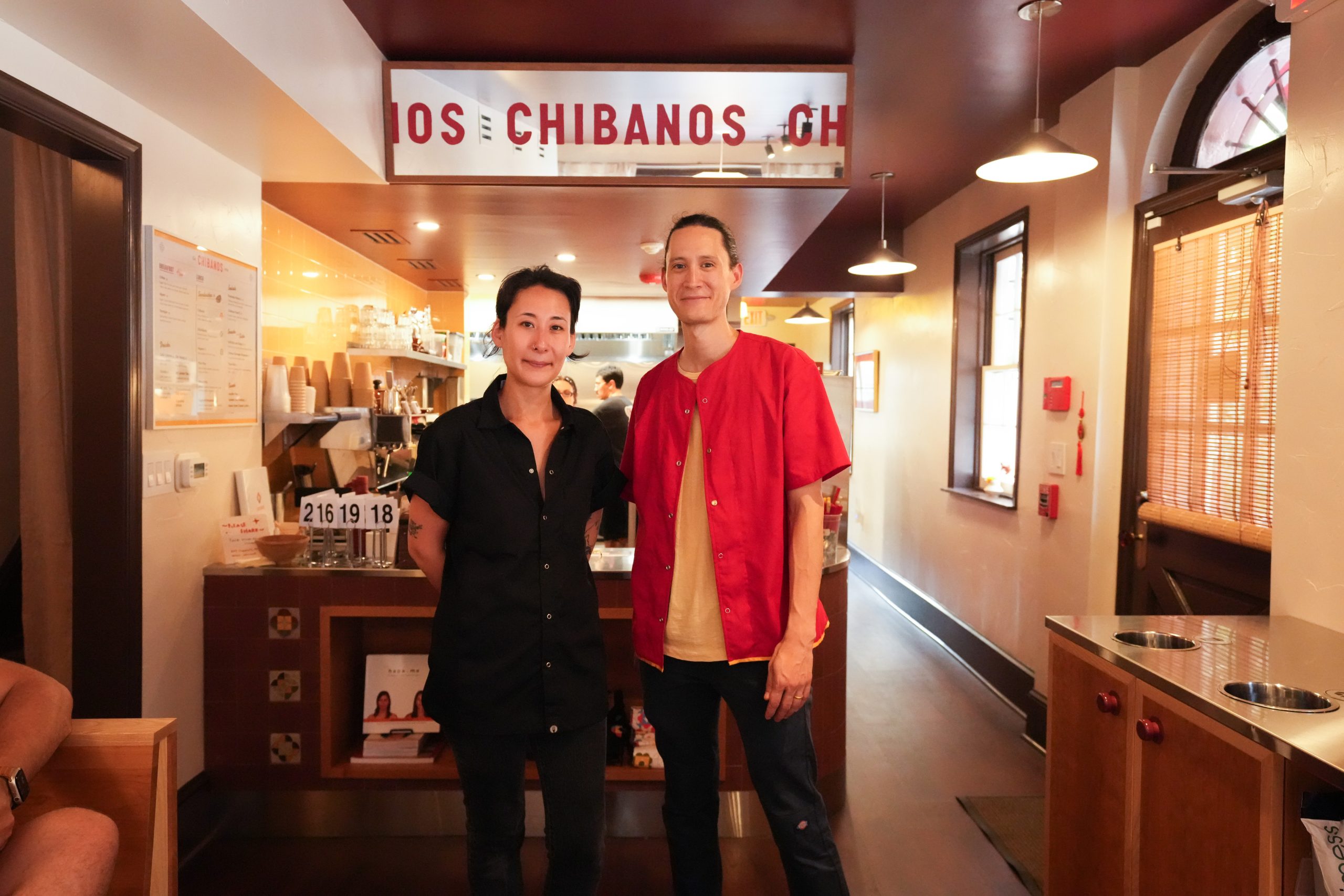
    Executive chef Aya Iwatani (left) and owner Evan Jaroff (right) inside Chibanos, their Cuban-Chinese sandwich shop that opened on July 1 at 1127 Pine St.

    The tight menu — eight sandwiches plus a handful of snacks — is an ode to owner Evan Fong Jaroff’s mother, Ana, a Chinese Cuban who immigrated to the U.S. from the island in the 1960s. Jaroff grew up watching her command their home kitchen in Lansdowne, where she’d serve traditional Southeast Chinese fish dishes alongside staple Cuban dishes like fried yucca, beef picadillo, and lechón (aka shredded and slow-roasted pork).

    “I don’t think of us as a Cuban restaurant. I don’t think of us as a Chinese restaurant,” Jaroff told me in July. “We’re our own thing.”

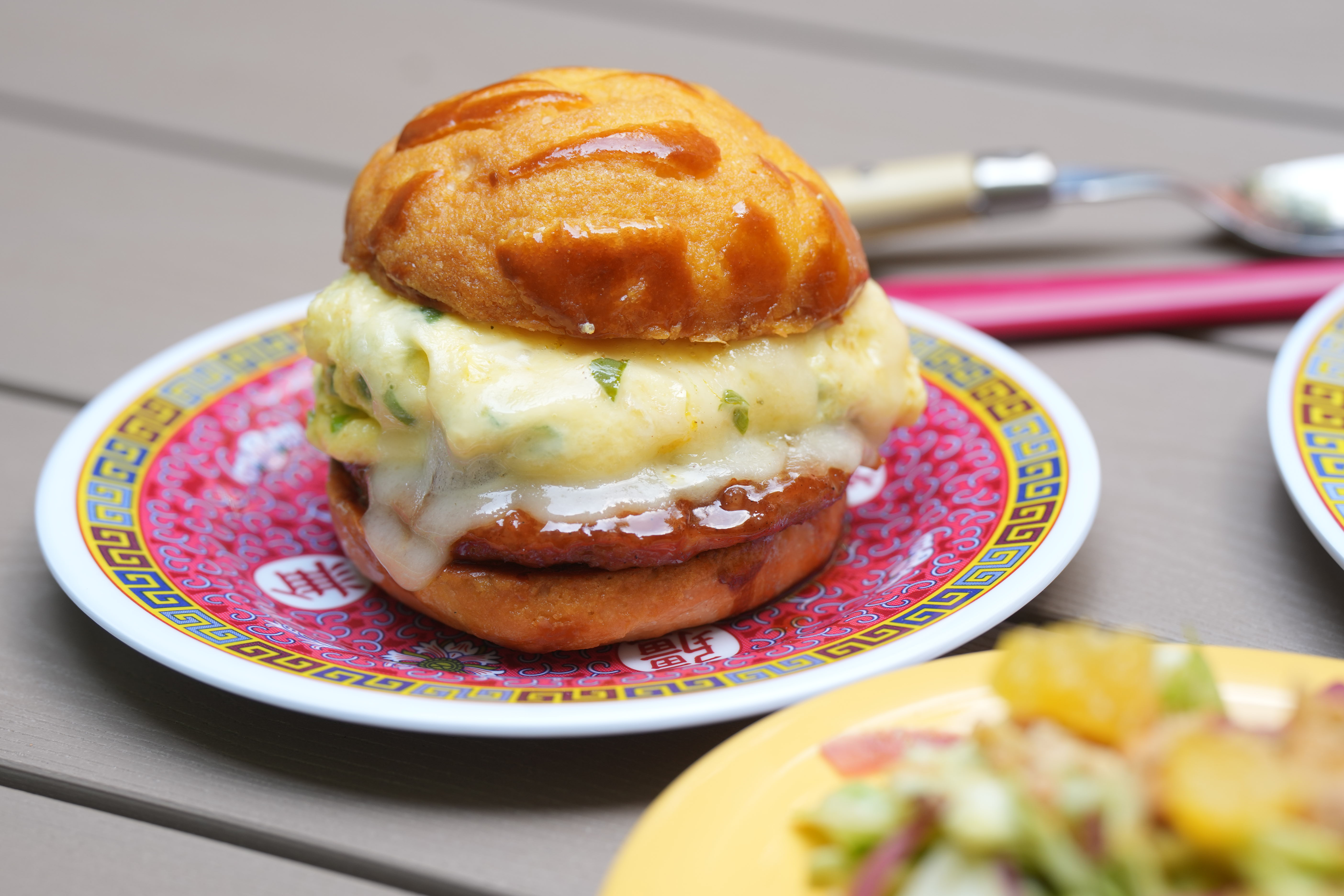
    Chibanos’ menu pulses with nostalgia. That’s especially true of the Chino, which packs fluffy eggs, melted Swiss cheese, and a sticky-sweet char siu-style sausage patty between a crackle-crusted bolo bao bun smeared with garlicky scallion mayo.

    The sandwich is an adult version of Jaroff’s favorite childhood breakfast: a steamed, custard-filled bao from pretty much any bakery in Chinatown.

    The Chino breakfast sandwich on a Dodo Bakery bolo bao at Chibanos, a Chinese-Cuban sandwich shop at 1127 Pine St.Jessica Griffin / Staff Photographer

    Developed in partnership with executive chef Aya Iwatani (formerly of Honeysuckle Provisions), the Chino is the perfect combo of sweet and savory. It conjured up my own memories of using sausages to sop up the leftover syrup from diner pancakes. The lightly sweet bao from Dodo Bakery — a Cantonese bread and sweets specialist in South Philly — is equally transportive. It reminds me of the oversized conchas that lined the pastry cases of the panaderias in the tiny Hudson River town I lived in as a teen.

    It’s funny how a single sandwich can take me to so many places. Perhaps I should add another question to my breakfast sandwich checklist: Does it make me feel warm and fuzzy?

    The Chino most certainly does.

  • Dîner en Blanc got canceled. Participants found ways to celebrate anyway

    Dîner en Blanc got canceled. Participants found ways to celebrate anyway

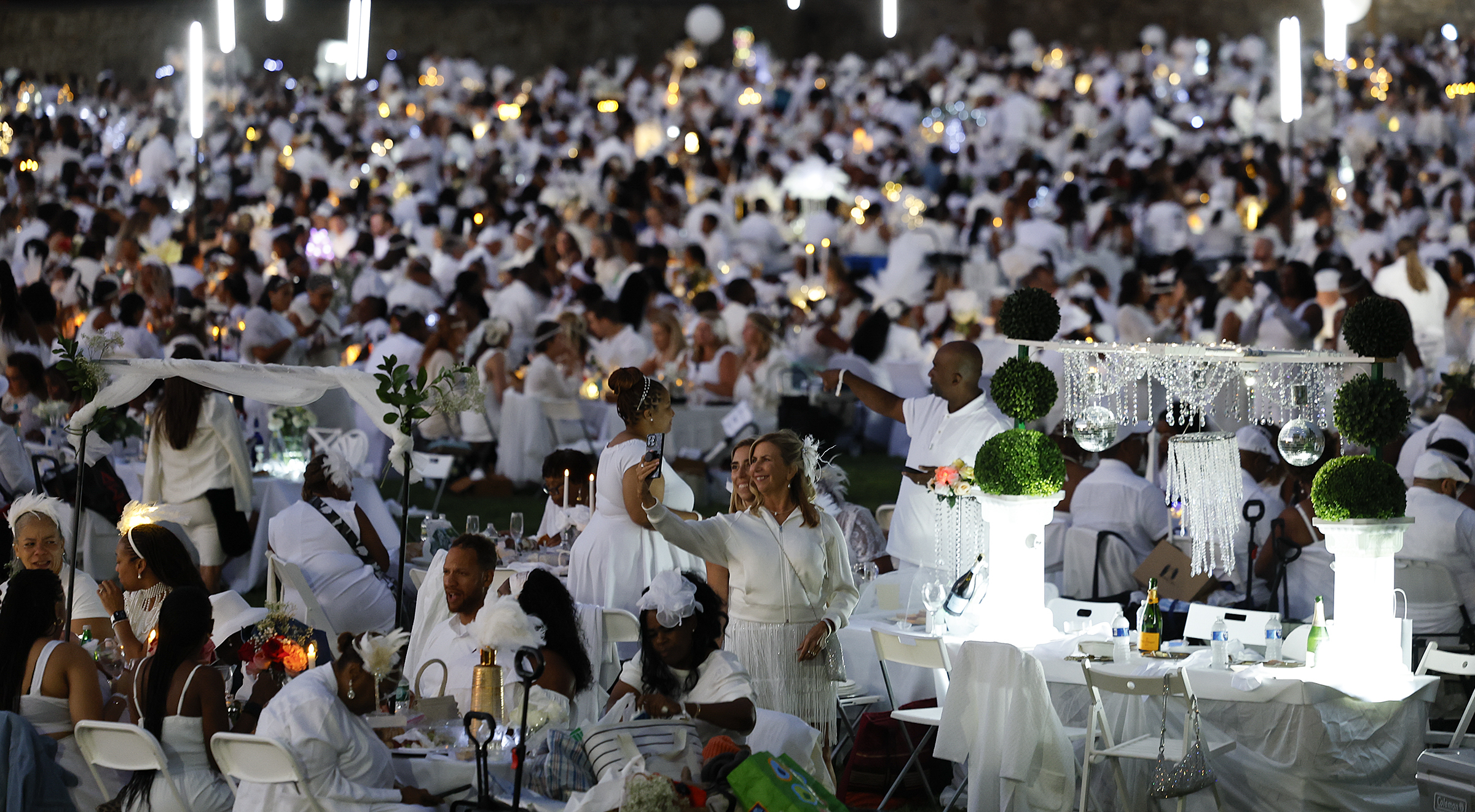
    When inclement weather prompted organizers to cancel Philly’s 14th annual Dîner en Blanc Thursday night, would-be revelers dealt with their disappointment and celebrated anyway.

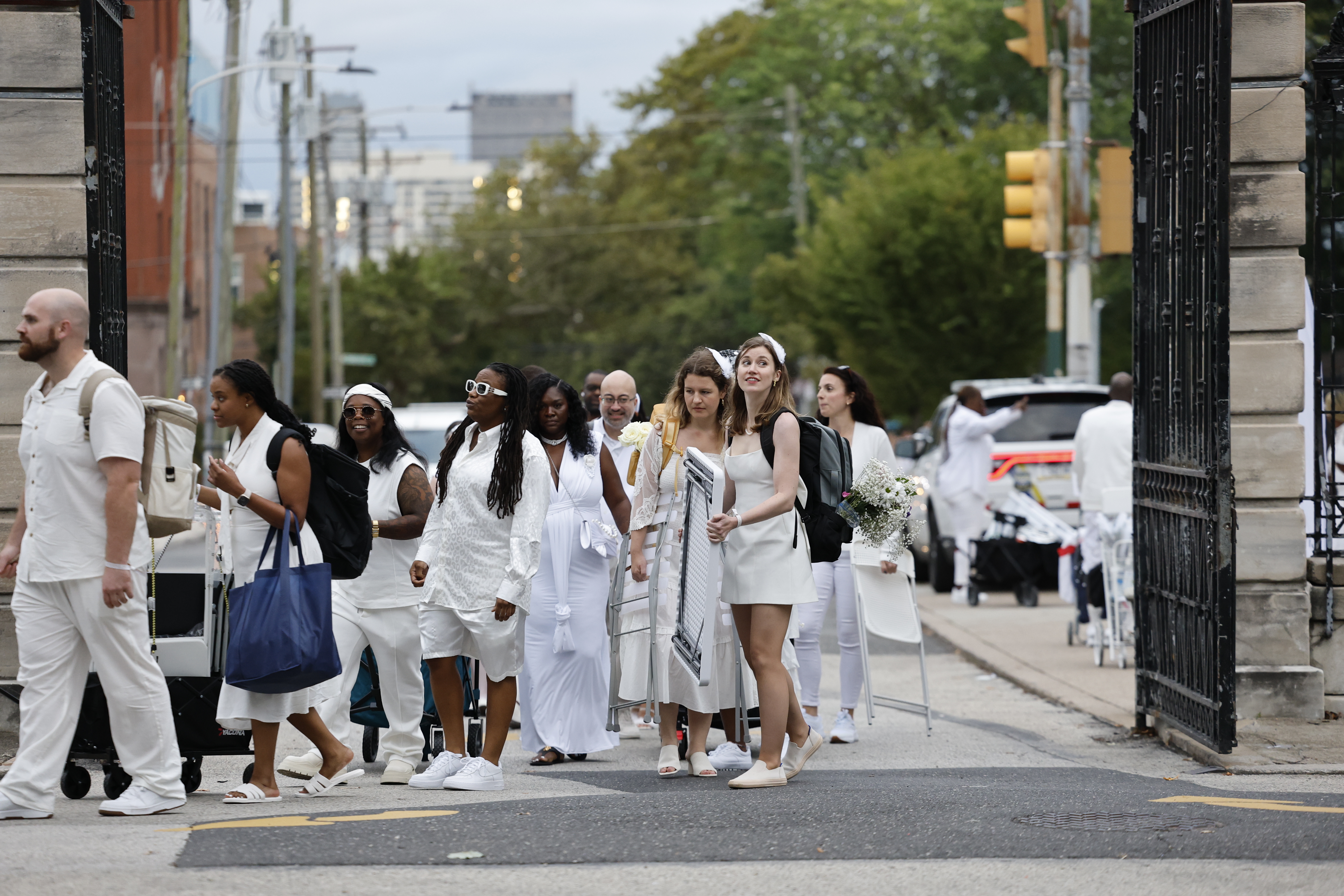
    Attendees paid $146 per couple to attend the picnic, which attracts thousands of people. Every year, they bring their own white chairs, tables, tablecloths, food, and drink to a secret location, revealed hours before the event. Last year’s event had 5,000 participants. This year’s Dîner en Blanc was sold out and the location had not yet been disclosed to participants.

    The Inquirer asked Dîner en Blanc representatives if participants would be refunded, or if the event would be rescheduled, but has not yet received a response.

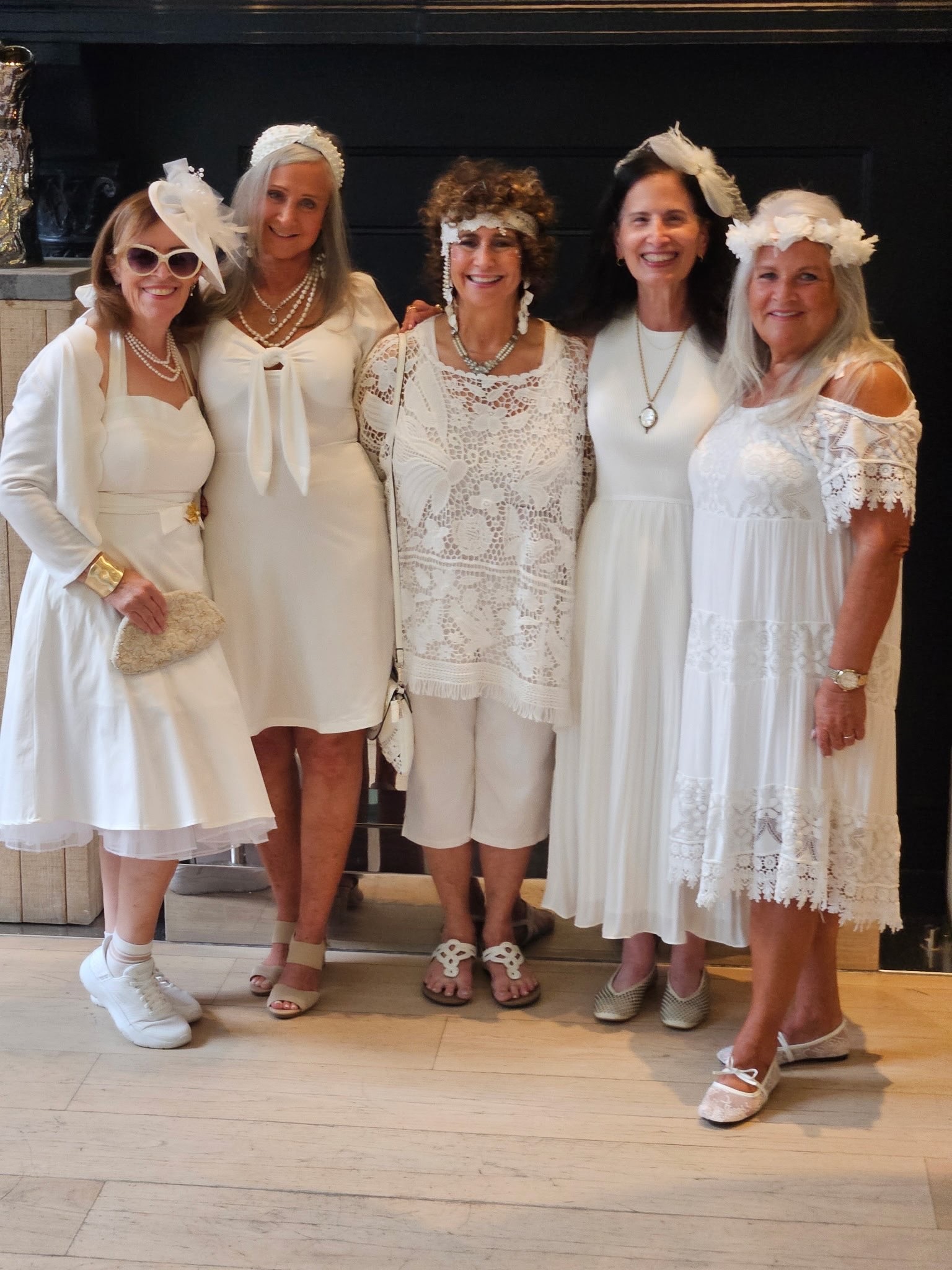
    Table leader Candy Rathsmill, who was set to lead 50 Dîner en Blanc attendees to the location, had already prepared for rainy weather, adjusting her outfit to include a poncho and white sneakers. But she and her friends still “dressed in our whites,” drank champagne, and dined at Spice Finch. “Many of my guests partied at hotels, others picked up the food they had ordered and celebrated at home with friends,” said Rathsmill.

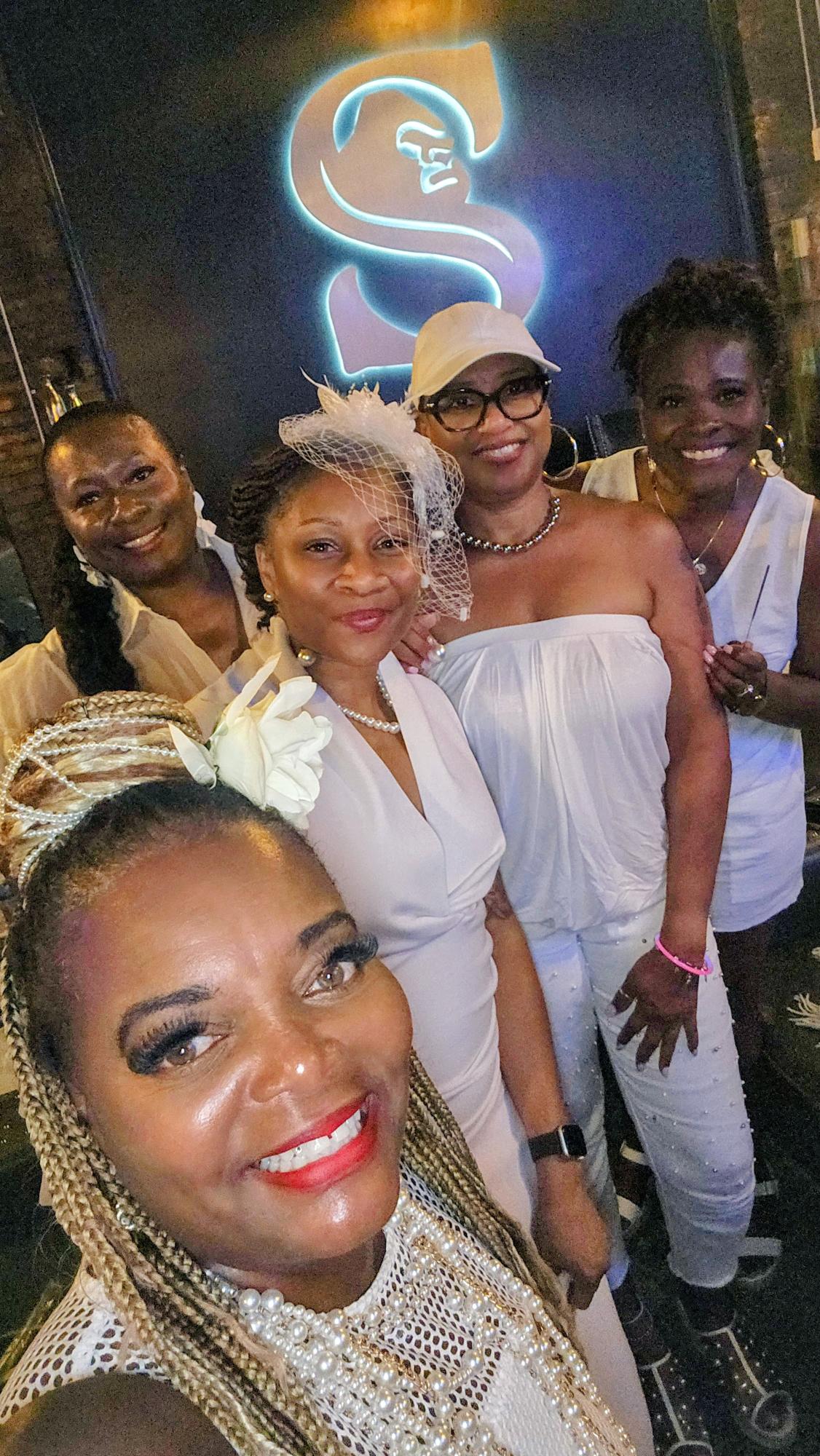
    Karen Barach, Carolyn Blatstein, Candy Rathsmill, Adelyn Brecher, and Jill Shefsky, still dressed up and celebrated Dîner en Blanc on their own, despite the annual picnic being canceled.courtesy of Candy Rathsmill

    “We made lemonade out of lemons,” she said.

    TV host and style expert Jen Su was already dressed for the occasion before the cancellation announcement was made shortly before 4 p.m. on Thursday. “My dress was from [the brand] Akira and it was styled by Soku Massimo. And my hair was done by [red-carpet hair stylist] Linnternational,” she lamented. “My hubby ended up cooking dinner for me and we wore our white outfits by candlelight and drank champagne.”

    “[We had] Sichuan spicy chicken and rice as the rain poured outside. It ended up being a beautiful Dîner en Blanc,” said Su.

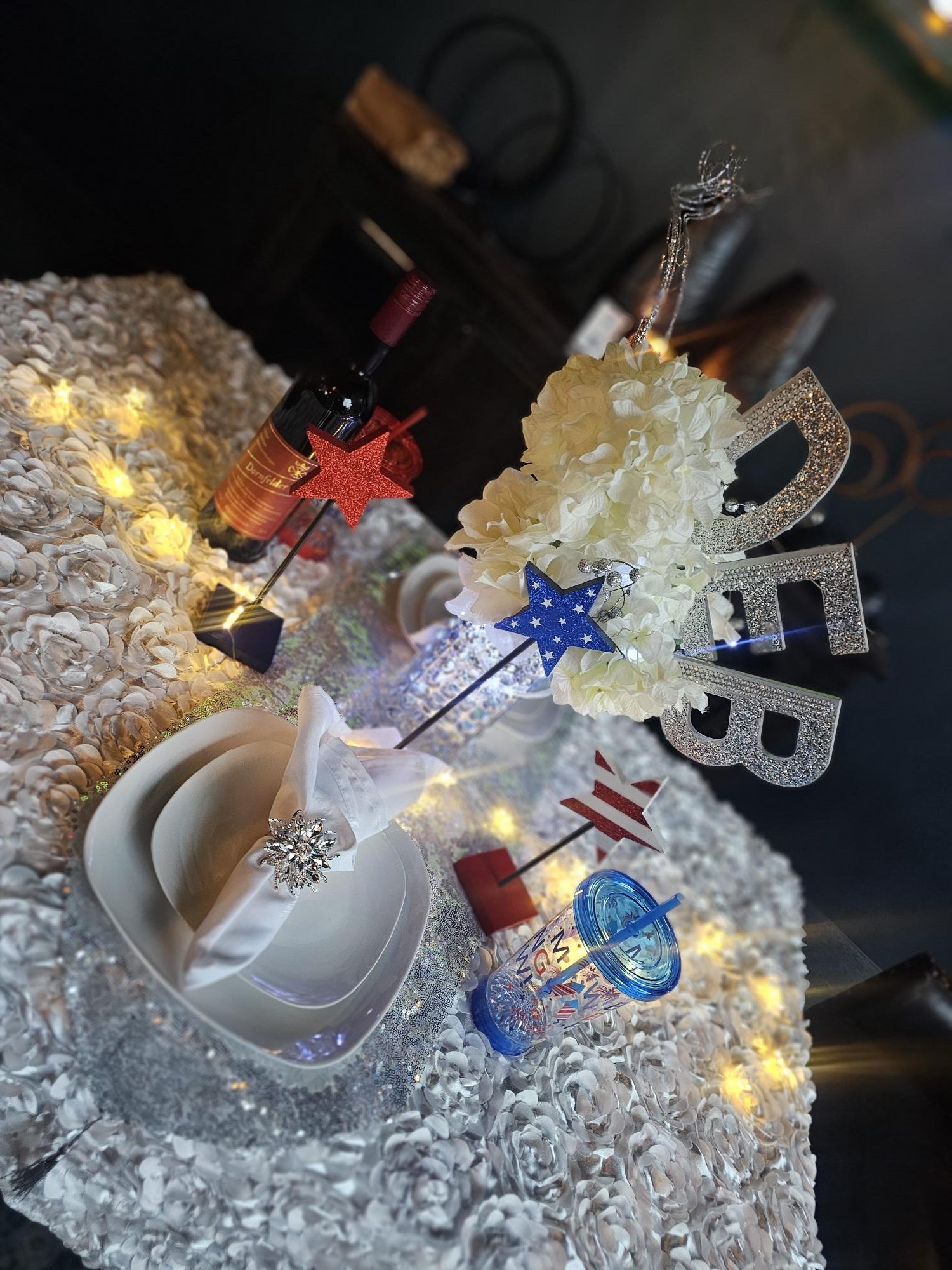
    Melissa Joyner, owner of Tangibles Salon & Beautique in Voorhees, and her friends also made the best of the situation. They were already dressed up and had packed their decor, so they headed to Smokin’ Silverbacks Cigar Lounge in Fishtown and set their tables up inside. ”Our Dîner en Blanc was born. From napkin-swinging to sparklers, good food, cigars, laughs, and unforgettable vibes, we had it all and we had a ball,“ said Joyner.

    Melissa Joyner, Malaika Guest, Jamel Lott, Marian Gordon, and Annetta Hall were already dressed up for Diner en Blanc, until the event was canceled and they rerouted to Smokin Silverbacks Cigar Lounge in Fishtown.Meliss
    Melissa Joyner’s impromptu Diner en Blanc table, set up inside a cigar lounge when the event was canceled.Meliss

    “The original plans may have been canceled, but the celebration definitely wasn’t. Sometimes the best memories come from the plans you never planned,” said Joyner.

    Meanwhile, Rathsmill is keeping the party going even longer and planning to meet up with members of her group today. “One of the best parts of Dîner en Blanc is making lifelong friends,” she said.

  • New openings fuel a little treat boom in Graduate Hospital

    New openings fuel a little treat boom in Graduate Hospital

    For years, Graduate Hospital — the Center City neighborhood roughly bounded by South Street and Washington Avenue, and Broad Street and the Schuylkill — has been sorely lacking in places to stop in for a snack, pastry, or ice cream cone.

    It didn’t seem to matter: Rittenhouse was so close that residents’ desires for little treats were generally met by walking a couple blocks north, where “little treats,” the culture of which has been surging worldwide, abound. On the 200 block of 20th Street alone, between Walnut and Spruce, you’ll find 1-900-Ice-Cream, which opened in 2022 and sees relentless lines down the block; All Aboard Candy, which opened last year and is one of two places you can buy adorable gummy candies; and Biederman’s, a seafood-centric “appetizing” shop that opened earlier this year.

    Now, Grad Hospital is seeing its own treat boom. In recent months, the neighborhood has seen an influx of treat sellers that shows no sign of stopping.

    The openings have been concentrated on South Street between 15th and 17th Streets, but other parts of the neighborhood are changing as well.

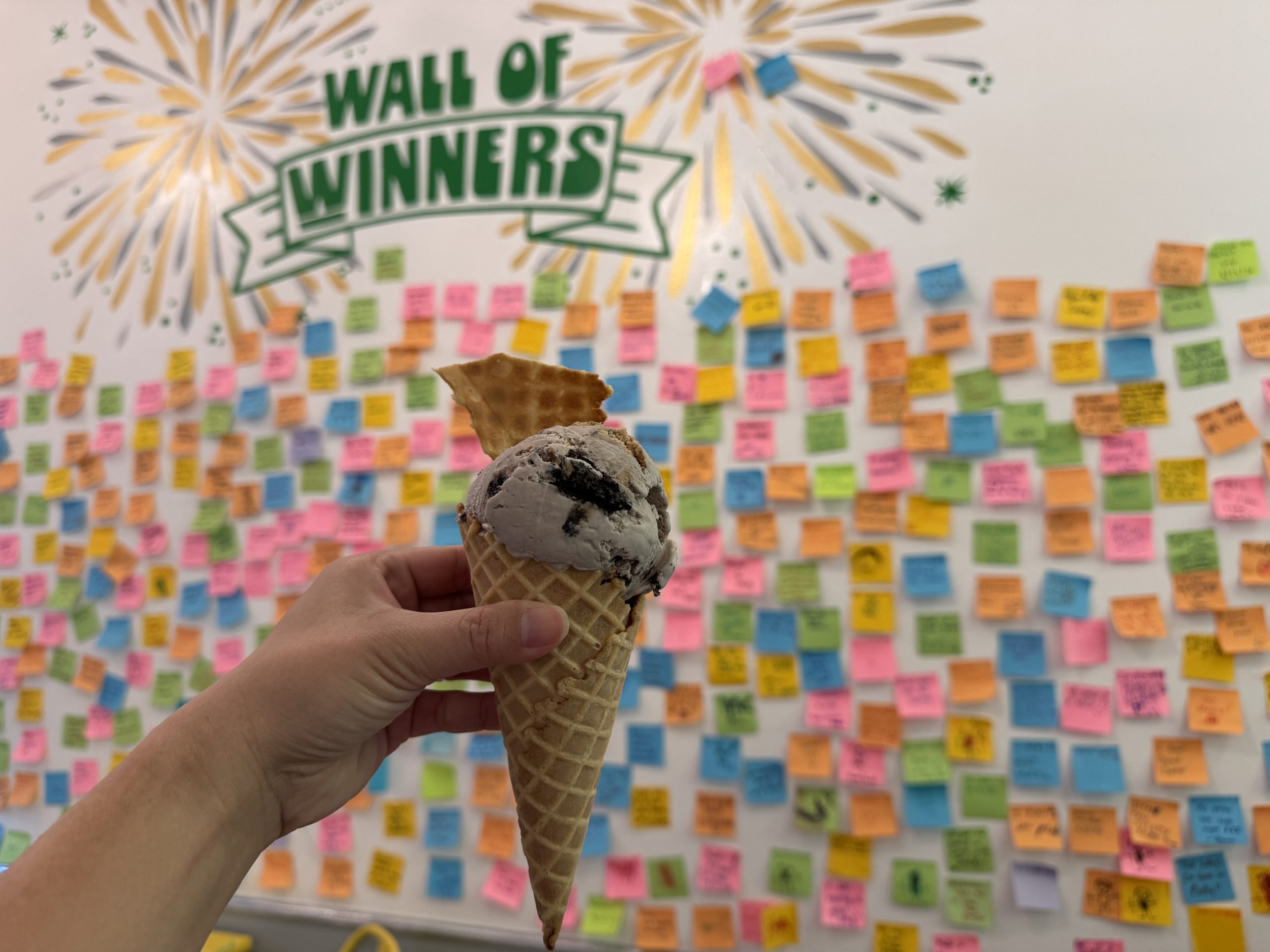
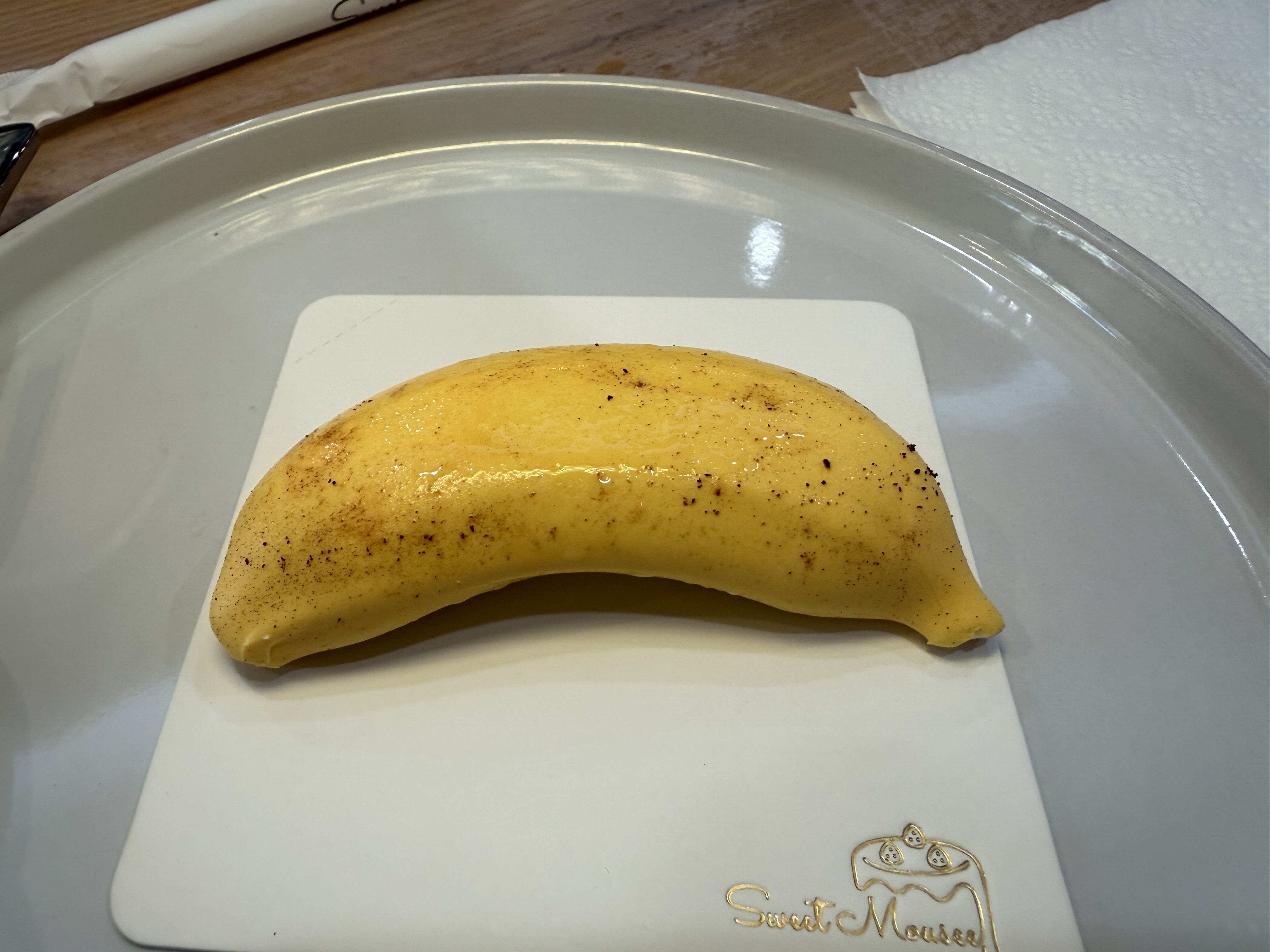
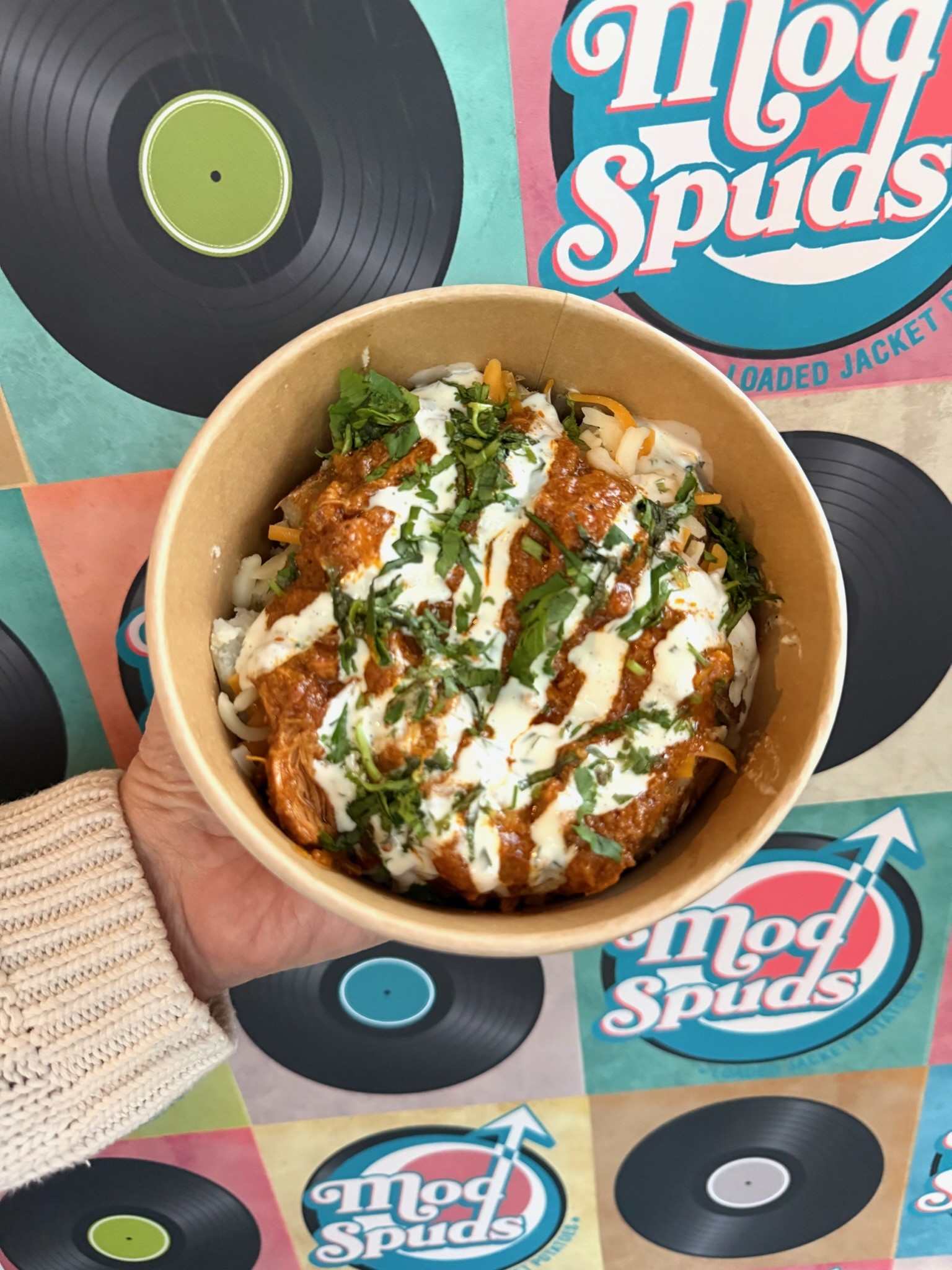
    Winners Ice Cream, Ange Branca’s jacket potato and creamsicle-driven operation Mod Spuds, Sandpiper Cafe (where you can get trendy matcha lattes), and Sweet Mousse (which sells even fancier beverages and mousse cakes) all opened within two blocks of one another on South Street between May and July this year. They are all Asian-owned — a notable aspect of little treat culture, as Asian flavors like matcha and ube have been extremely popular at little treat retailers. (Demand for both ingredients has been so high, both have seen global supply chain shortages.)

    The market for little treats, also known as treatonomics, is propelled by Gen Z but not at all restricted to that generation, as spending on “pick-me-ups” generally increases in recessions and in uncertain economic conditions, economists have found.

    Cookies and cream dream in a waffle cone at Winners Ice Cream in Graduate Hospital.

    The Grad Hospital boom is powered by nimble operators with no need for the ventilation systems required at most full-service restaurants. Thus, they are able to launch after footing comparatively light construction costs.

    “We’re two months in and it’s been awesome,” said Anh Nguyen, the owner of Winners. “Many are saying Grad Hospital needed an ice cream shop, so I’m happy we opened here.”

    Nguyen’s clientele consists mostly of neighborhood residents and families. He hopes to attract more customers from outside the area. “My aim is to win the block, then win the city. I love being the neighborhood ice cream parlor — somewhere for families to go celebrate and make memories.”

    Though Nguyen currently lives in Roxborough, he hopes to move. “I’ve fallen in love with Grad Hospital since being here and everyone I’ve met has been so welcoming and encouraging.”

    The dark chocolate banana mousse cake from Sweet Mousse in Graduate Hospital.Kiki Aranita / Staff /

    Little treats are massively impacting a neighborhood that, until this year, was stalled in gentrification. Once primarily home to working-class Black residents, Grad Hospital fell into disrepair when the manufacturing industry declined in Philadelphia. The neighborhood gentrified rapidly between the late 1990s and early 2010s due to city tax abatements and proximity to University City and Center City. According to a study by Pew Charitable Trusts, Graduate Hospital experienced the most dramatic changes in racial composition in Philadelphia in the early aughts: “[Graduate Hospital’s] total Black population fell from 7,793 in 2000 to 3,450 in 2014. During the same period, the number of white residents more than tripled in the neighborhood.”

    The wave of redevelopment, new construction, and gentrification brought comparatively few small businesses and restaurants. Unlike South Philly and Fishtown, Grad Hospital has no established restaurant corridor.

    A Malaysian spud from Mod Spuds.Courtesy of Mod Spuds

    “Mod Spuds [on the 1400 block of South Street] needed a place that is a fine balance between good traffic, neighborhood-y, and affordable,” said Branca, who said that the location was perfect despite (or even because of) being a “less desirable block.” Its limited kitchen space, which does not allow for an exhaust hood, kept her rent down. It was only after Mod Spuds opened that Branca realized she was right on Grad Hospital residents’ commute home from jobs in Center City.

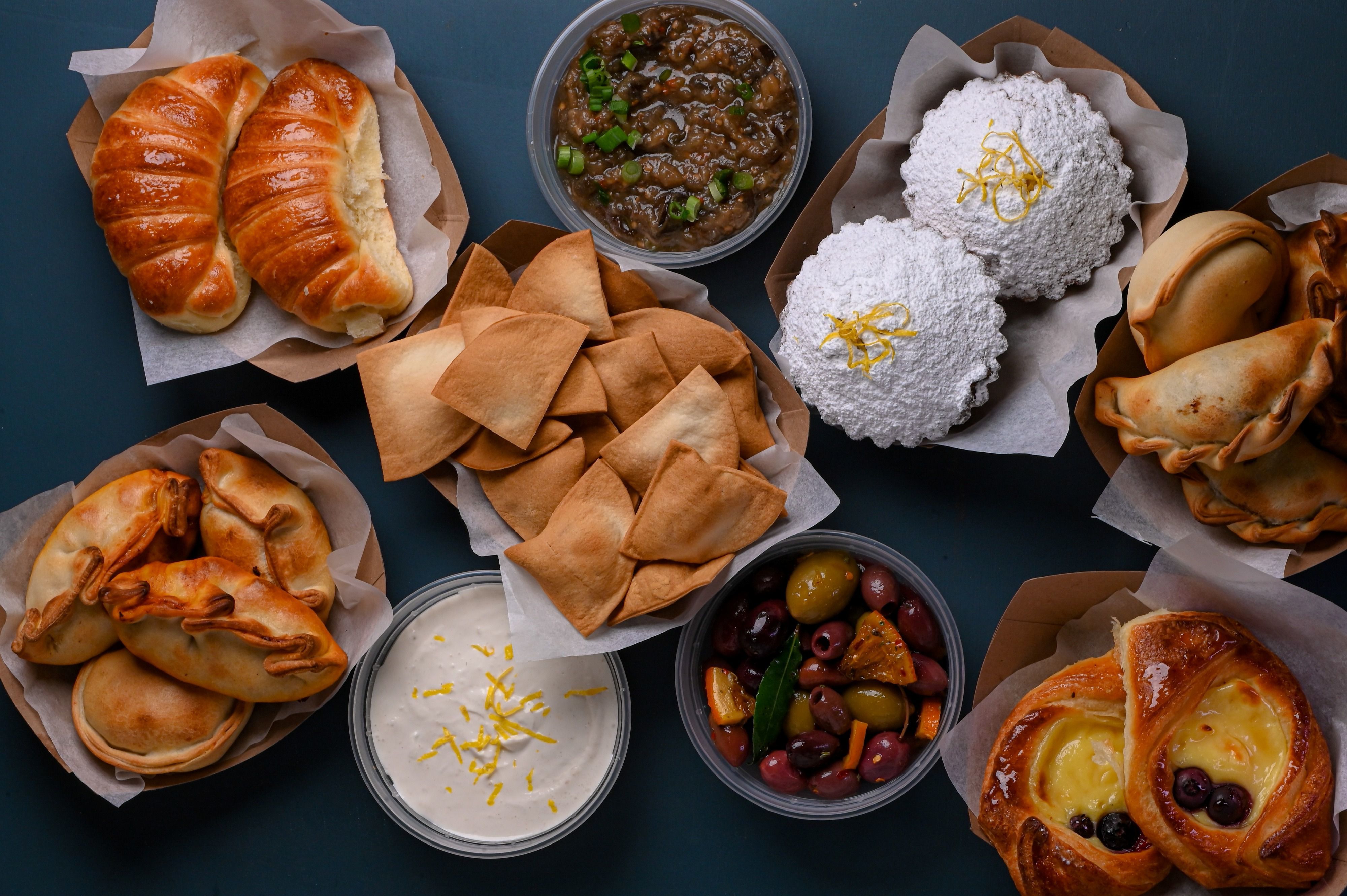
    The neighborhood has also beckoned “empanada queen” Jezabel Careaga, who had left as a business owner, but not as a resident, in 2018. Technically, Careaga’s original Argentine bakery, Jezabel’s, was in Fitler Square, but now she is reopening it at 617 S. 24th St., right on the cusp of Grad Hospital. Careaga’s empanadas and alfajores helped define Philly’s little treat scene long before the culture acquired its tagline.

    “Graduate Hospital has changed so much since I first came to this neighborhood, but what is really special to me is seeing the generations grow up here,” said Careaga, who has lived in the neighborhood since 2010. “It feels like I’m creating a little piece of the memory I had with my grandmother, right here in my own neighborhood.”

    Assorted dishes from Jezabel Careaga, including empanadas, medialunas, escabeche, ricotta cake, facturas, olive oil crackers and preserved lemon labneh.Lucas Careaga / Innprodev Agency

    The same children who would stop at her bakery after school are now grown up — some have even asked her for jobs. “And now I’m seeing them with children of their own, stopping by our bake sales with their little ones,” said Careaga. “It makes me so happy to think that the traditions we started years ago can continue with another generation.”

  • From New Jersey to Massachusetts, ‘Tony’ explores Anthony Bourdain’s parts unknown — and makes up a few

    From New Jersey to Massachusetts, ‘Tony’ explores Anthony Bourdain’s parts unknown — and makes up a few

    Anthony Bourdain spent much of his career telling audiences that the best way to understand a place was to resist the easy story about it.

    Tony, the new movie about his formative summers in Provincetown, Mass., might have taken that advice.

    Director Matt Johnson’s film is an affectionate, funny, atmospheric, and beautifully acted origin story about the future chef, writer, and television personality. Its smartest decision is to avoid trying to encompass Bourdain’s entire life, which ended with his suicide in 2018 at age 61.

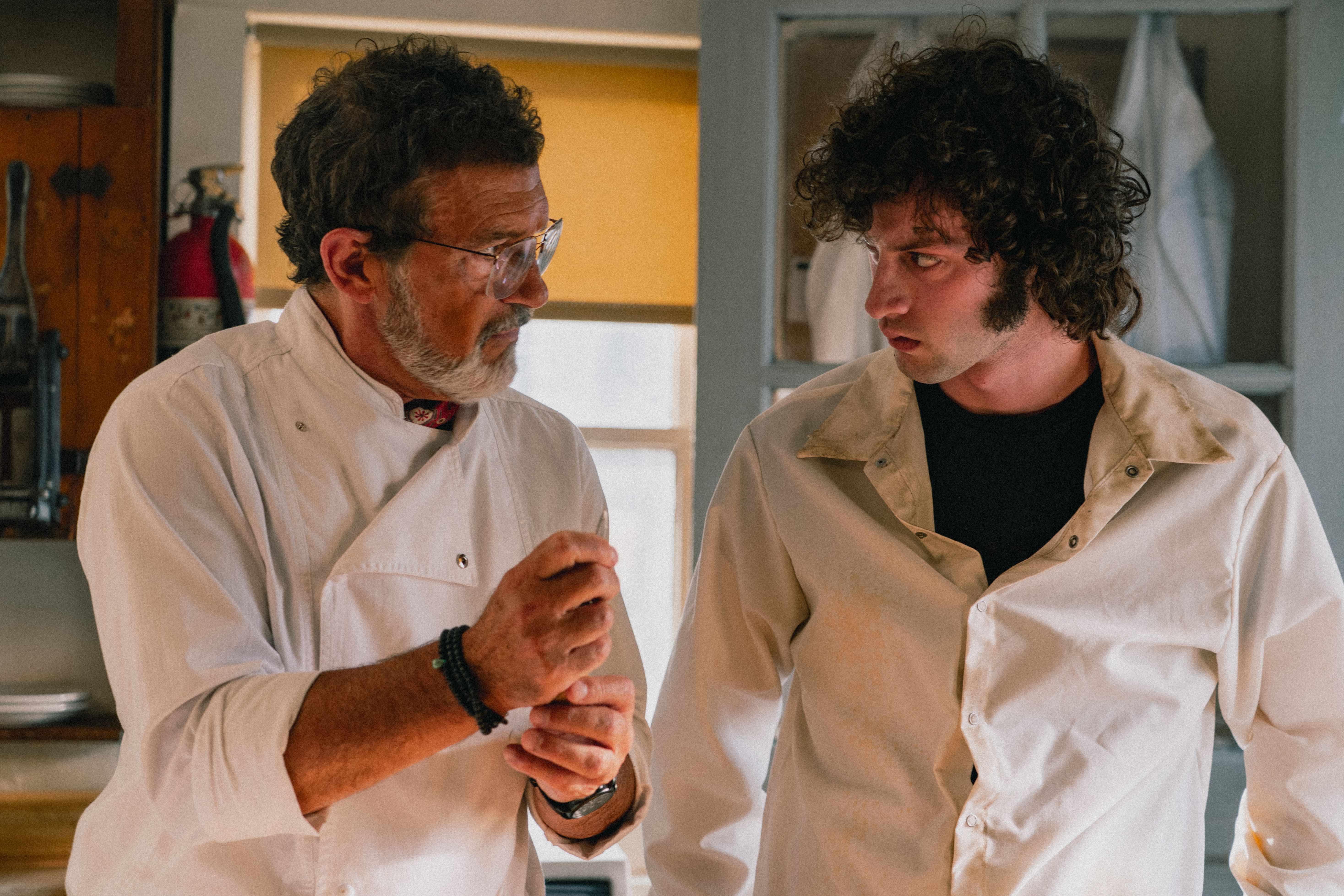
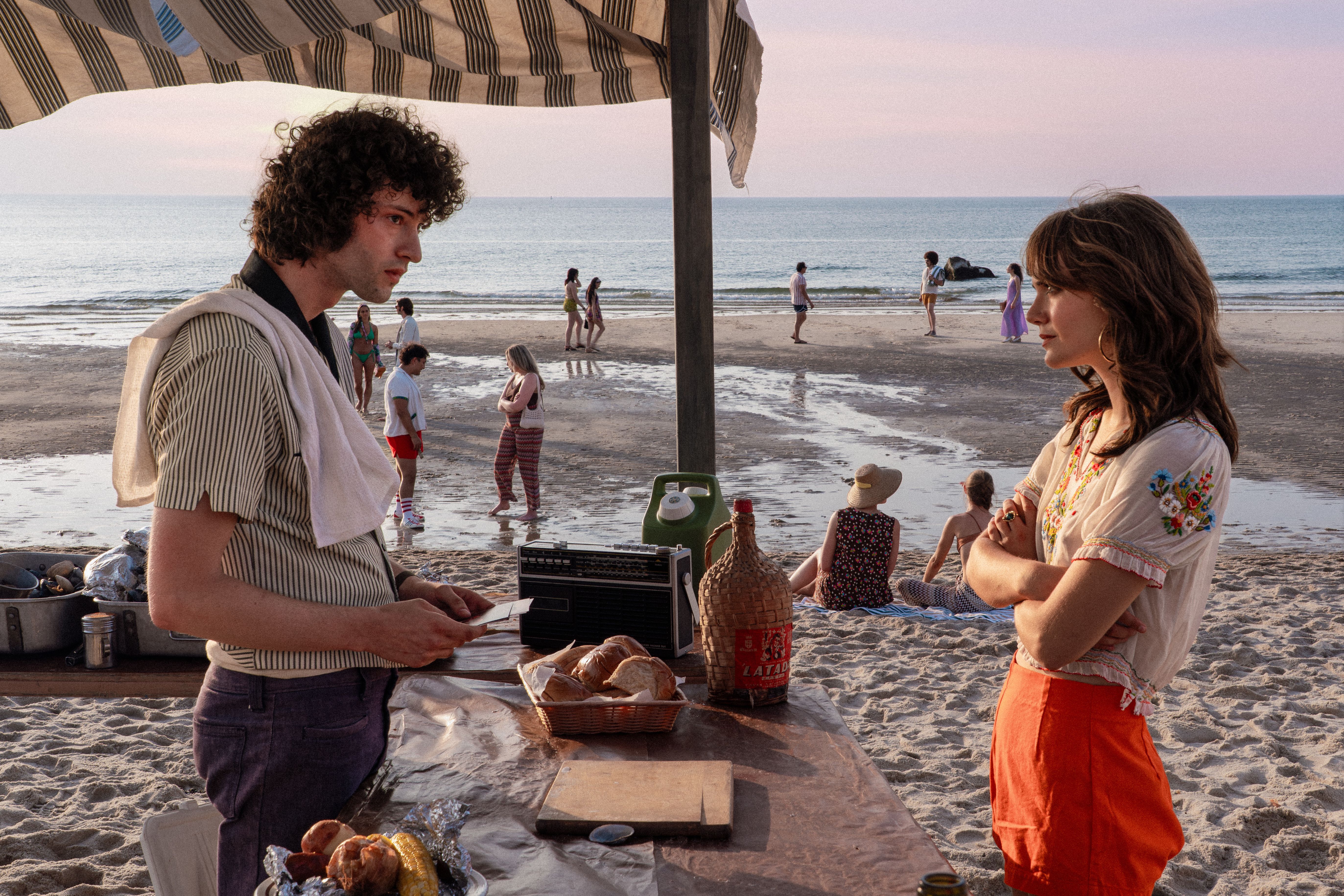
    Antonio Banderas (left) as a chef-mentor with Cherry Hill native Dominic Sessa as Anthony Bourdain in “Tony.”A24

    Instead, Tony concentrates on the period when a privileged, unhappy teenager from New Jersey stumbled into a restaurant kitchen and discovered a world more exciting than his own.

    The historical outline is true. The story Tony builds around it is considerably less so.

    Cherry Hill native Dominic Sessa, who made an impression in The Holdovers, plays Bourdain at 19: a Vassar student, would-be writer, romantic, poseur, and world-class pain in the a—. He arrives in Provincetown chasing both an idea of himself and Nancy Putkoski (Emilia Jones), his girlfriend and eventual first wife.

    Sessa wisely avoids a Bourdain impersonation. Rather than reproduce the familiar television cadence or Parts Unknown mannerisms, he gives us a young man who has not yet earned the persona he is trying on.

    Bourdain later described his younger self as spoiled, narcissistic, miserable, and self-destructive. Tony takes him at his word. This Tony is clever but not nearly as clever as he thinks, hungry for experience but desperate for other people to notice him having it.

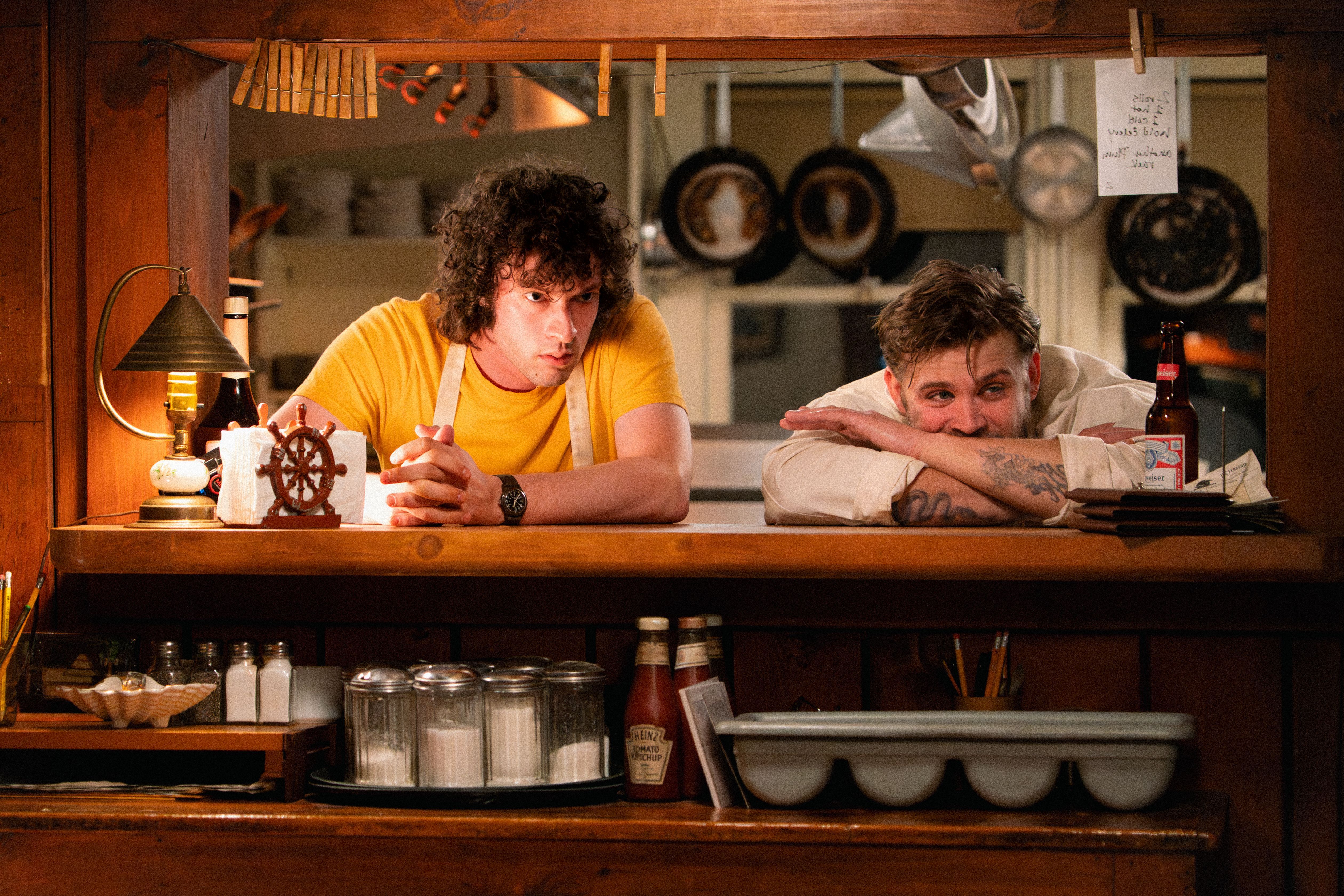
    The movie becomes much more interesting once he lands a job washing dishes at the Flagship, a waterfront seafood restaurant in Provincetown that Bourdain renamed the Dreadnaught in Kitchen Confidential.

    Here Johnson has something unusually valuable for a biopic: Bourdain’s own account of being seduced by the restaurant life.

    He remembered the Flagship cooks as pirates and gods, former hippies, drifters, and hard-living professionals who drank, swore, stole, screwed, and seemed afraid of nothing. To a sheltered young man searching for an identity, they represented an intoxicating alternative to his comfortable world.

    Cherry Hill native Dominic Sessa as Anthony Bourdain with Emilia Jones as Nancy, his girlfriend, in “Tony.”A24

    Tony is at its best capturing that attraction.

    The kitchen is hot, filthy, profane, sexually charged, and physically punishing. The cooks haze newcomer Tony, who starts in the dish pit and discovers he likes being useful, gradually working his way toward cooking.

    Sessa is especially good at conveying Tony’s fascination with people who seem more authentic than he feels.

    Leo Woodall plays Sal, a charismatic cook with the confidence, appetites, and recklessness Tony envies. Antonio Banderas supplies the opposite influence as Ciro, the restaurant’s chef-owner, a disciplined professional who sees something worth cultivating in the callow teenager.

    Both are effective characters. But neither should be mistaken for straightforward biography.

    That is the complication at the center of Tony.

    The movie draws from the opening sections of Bourdain’s 2000 memoir, Kitchen Confidential, and his later recollections in a 2014 Parts Unknown episode. With thin source material, Johnson and his cowriters have filled the gaps aggressively.

    Johnson has acknowledged that he compressed Bourdain’s several formative summers in Provincetown into one, set in 1975. Nancy was real and worked at Spiritus Pizza, a gathering place in Bourdain’s Provincetown years. The Flagship was real, and Bourdain began there as a dishwasher. His fascination with its swaggering cooks comes directly from his writing.

    Much of the rest is interpretation. Relationships are reshaped and characters are combined. Experiences Bourdain described retrospectively become revelations occurring in real time.

    That is hardly unusual for a biopic, and some of the inventions work.

    Nancy is not merely the girlfriend waiting to recognize the greatness everyone in the audience knows is coming. She is often the person least impressed by Tony’s performance of himself, and Jones gives her enough intelligence and independence to puncture his pretensions.

    Banderas brings a quiet dignity to a movie otherwise swimming in adolescent testosterone. But Ciro appears largely to be a composite created to give Bourdain something his own account of Provincetown did not provide so neatly: a moral mentor.

    Sal serves the opposite function. He represents the seductive outlaw kitchen culture Bourdain embraced — drugs, sex, appetite, danger — and its costs.

    The arrangement is dramatically efficient: two models of the man Tony might become.

    It is also awfully tidy.

    Bourdain’s relationship with restaurant culture was more complicated. The same world that gave him purpose also gave him permission to indulge some of his most destructive instincts. He understood that contradiction particularly well in middle age, when he returned to Provincetown for Parts Unknown and discussed his past with considerably less nostalgia.

    Tony occasionally seems reluctant to live with that ambiguity.

    Johnson, cinematographer Michael Bauman, and production designer Ryan Warren Smith compensate with a Provincetown rendered in a hazy mid-1970s glow. The movie moves languidly between the restaurant, Nancy, parties, beaches, and the community around him. At its best, it feels less like a conventional biopic than a memory of a summer whose significance became clear only later.

    Some of Bourdain’s later literary observations are handed to his teenage self, a familiar biopic trick that makes young geniuses sound suspiciously like their accomplished older selves.

    That is unfortunate because one of the interesting things about Bourdain’s story is how long it took him to become Anthony Bourdain.

    He did not emerge from Provincetown as the finished article. He still had the Culinary Institute of America, decades of restaurant work, addiction, failure, writing, celebrity, television, travel, and reinvention ahead of him.

    What Provincetown gave him was simpler: restaurants.

    Bourdain found satisfaction in washing dishes and learning to cook. He discovered a tribe whose confidence and camaraderie fascinated him and people whose lives bore little resemblance to his cushy upbringing. Eventually he recognized that cooking might offer something writing had not yet provided — a place to belong.

    Those facts are compelling enough without forcing them into a neat transformation.

    That is why Tony succeeds when it stops trying to show us the instant Anthony Bourdain became Anthony Bourdain. The more it simply observes a confused young man falling in love with restaurant life, the closer it gets to the truth.

    “Tony” is playing in theaters across the country.

  • Dîner en Blanc canceled due to severe weather forecast

    Dîner en Blanc canceled due to severe weather forecast

    Philadelphia’s 14th edition of Dîner en Blanc — the annual picnic where participants wear white and bring their own food, chairs, and tables to a surprise location announced just hours before the event — was set to take place Thursday night. But severe weather predicted for this evening changed those plans. This is the first time the event has ever been canceled.

    Dîner en Blanc organizers had sent an email update to ticketed participants this morning. According to the email, organizers “are closely monitoring the weather and are in active discussions with the city, venue, and weather services. We are carefully evaluating the conditions, and we will keep you posted as we learn more.”

    Before 4 p.m., they issued a statement on Instagram that read: “We are devastated to inform you that amid weather-related concerns and after discussions with the city, weather services, venue, and vendors, we will not be moving forward with tonight’s Dîner en Blanc Philadelphia 2026. The decision to cancel was not made lightly, as we know how much time, excitement, and effort go into this event on the guest side. The safety of our guests, volunteers, and vendors is of the utmost importance. The current weather forecast for lightning, high winds, flash flooding, hail, and tornado threat makes it impossible for us to proceed as planned.”

    Thursday’s forecast called for heavy rain and flash foods between 1 and 10 p.m.

    Dîner en Blanc has traditionally been a rain-or-shine event. “We’ve definitely partied through the rain!” said Kate Marlys, the PR representative for Philadelphia’s Dîner en Blanc.

    “The Navy Yard year [2015] had rain, and we were still able to continue with the event. The year we were at Boathouse Row [2019], there was a severe storm with lightning that came through during the event, and we did have to end the event early that year,” said Marlys, who said the forecast for Thursday night seemed more severe than in previous years.

    In the past, rain did not deter table leaders — who meet 50 other attendees apiece at predetermined locations throughout the city to help navigate setting up tables, then collect all trash and belongings at the end of the night — like Candy Rathsmill, 71, who has so far attended all but one of Philadelphia’s Dîner en Blanc occurrences.

    “Rain makes it uncomfortable but it brings a new dimension to the experience,” said Rathsmill. “When it rained at the Navy Yard, my plate filled up with water and I couldn’t eat my food, but this year I’m prepared.”

    She was planning on wearing white sneakers instead of sandals, and packing a poncho and a plastic tablecloth to layer on top of her white linen one. “It’s always fun to be soaking wet and wearing white,” she joked. “And I bring everything in white trash bags.”

    “Even when it rains, it’s a celebration of life. It’s the best party I’ve ever gone to.”

    Last year, Dîner en Blanc was held on the Girard College campus, with 5,000 people in attendance. Tickets, sold in pairs, cost $146 per couple.

  • Here’s the key to pairing red wine with barbecue

    Here’s the key to pairing red wine with barbecue

    With only a few weeks of peak barbecue season left and Labor Day weekend around the corner, there’s no better time to stock up on wines like this one that are equipped to handle a rack of ribs.

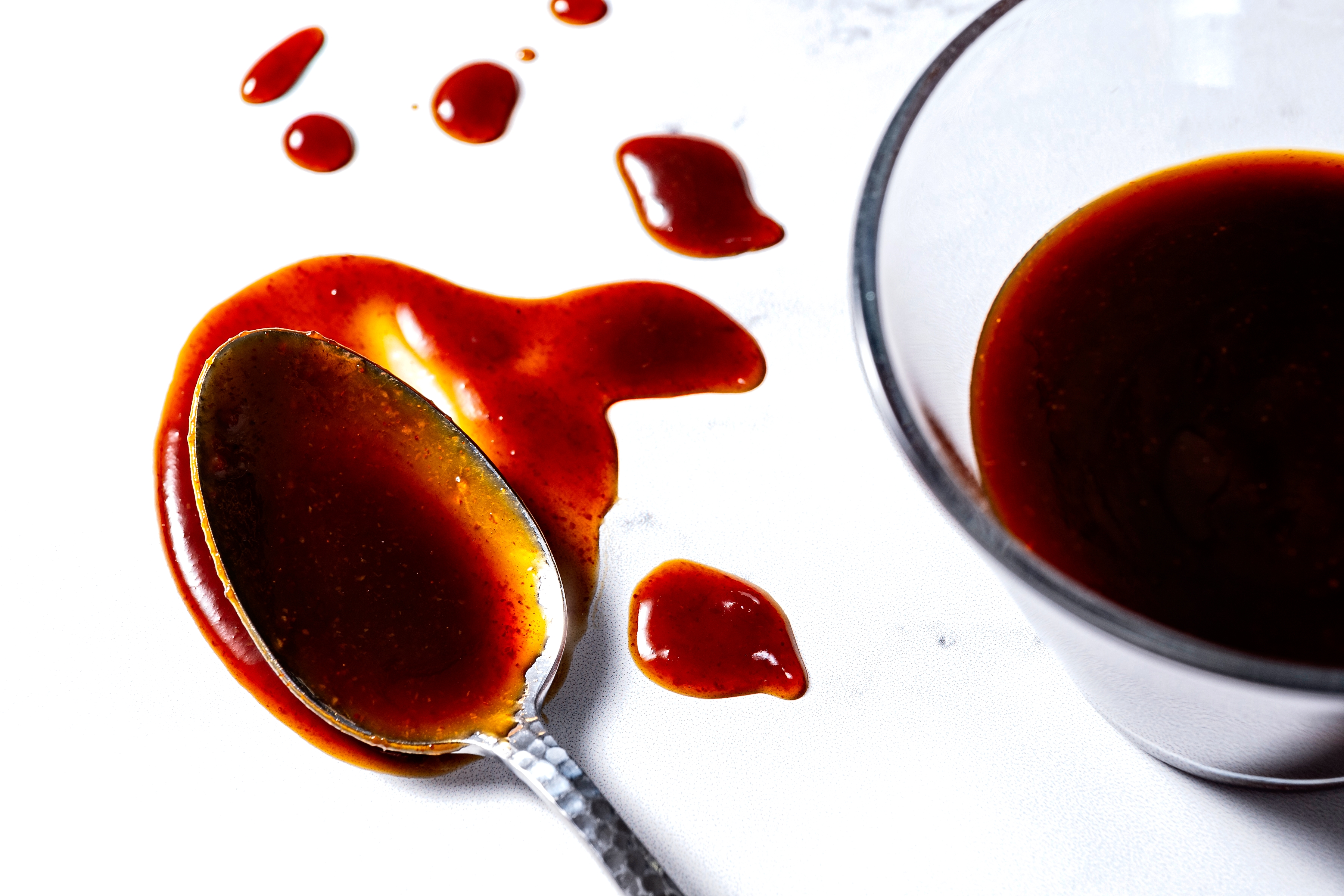
    Red wines and red meats go together so well that it’s tempting to think that anything goes as long as the colors match. If you’re a fan of leaner, drier reds from places like Italy or France, it’s helpful to know that they will not taste their best with barbecue sauce. With only a handful of fruity exceptions like valpolicella or Beaujolais, those combos are almost guaranteed to clash due to the ultra-dryness of most European classic reds and the sticky sweetness of most barbecue sauces.

    Red wines from the Americas or the southern hemisphere are better equipped for barbecued ribs, chicken, or even BBQ-flavored chips because they taste so much riper and register as sweeter, even when their actual sugar content is almost as low.

    Bold red blends from California are a great choice for barbecues because, in addition to tasting less dry and more fruit-forward, they align nicely in other dimensions as well. Most are quite intense in their concentration of flavor and almost all feature prominent oak flavors that harmonize with the smoky taste of barbecue sauce.

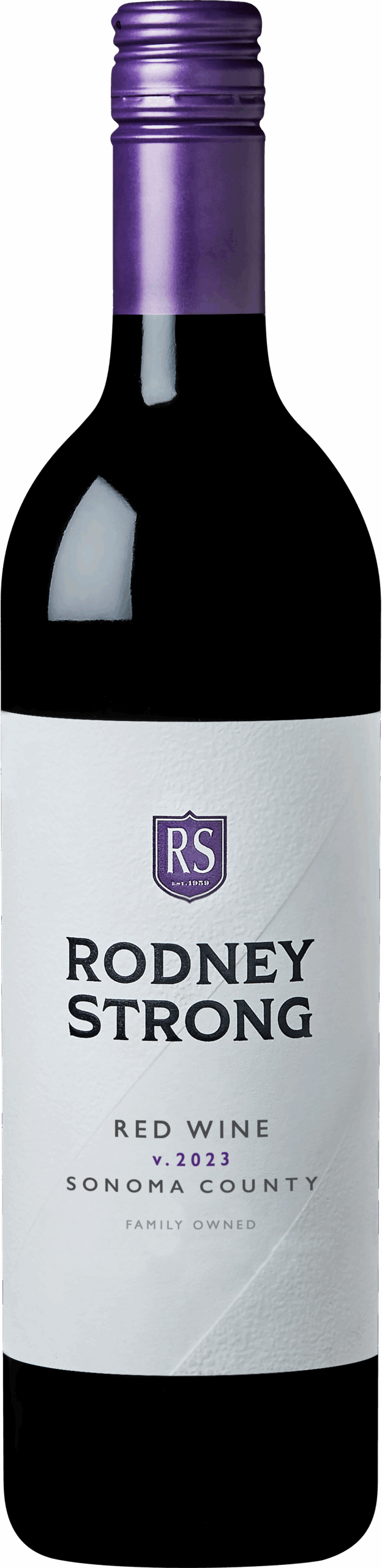
    Cheaper reds may acquire oaky flavor through the use of extracts or wood chips, but premium wines like this Sonoma red blend from Rodney Strong get their oak taste the old-fashioned way — by aging in newly toasted oak barrels. Here, grapes like merlot and cabernet sauvignon contribute a blackberry backbone while jammier malbec and zinfandel add a sweet black cherry component. The result is a robust blend that is juicy enough to handle ribs and all the other barbecue staples, but still dry enough for red wine lovers to sip on and enjoy by itself.

    Rodney Strong Red from Sonoma County.Rodney Strong

    Rodney Strong Red

    Sonoma County, California; 14.5% ABV

    PLCB Item #96511

    On sale for $18.99 through Aug. 31 (regularly $22.99)

    Also available at: Canal’s in Mt. Ephraim, N.J. ($15.49; mycanals.com), Hopewell Super Buy Rite in Pennington, N.J. ($15.49; buyrite.wine), Moorestown Super Buy Rite in Moorestown, N.J. ($15.99; moorestownbuyrite.com)

  • Small Idaho town absolutely not known for cheesesteaks will attempt to ‘unofficially’ beat Philly cheesesteak record

    Small Idaho town absolutely not known for cheesesteaks will attempt to ‘unofficially’ beat Philly cheesesteak record

    A restaurant group in Idaho is determined to reclaim what it insists was theirs to begin with: a world record involving cheesesteaks.

    On Sunday, Happy Day Restaurants — a company with a slate of eateries across the Gem State — is hosting an event where they’ll attempt to assemble the longest cheesesteak.

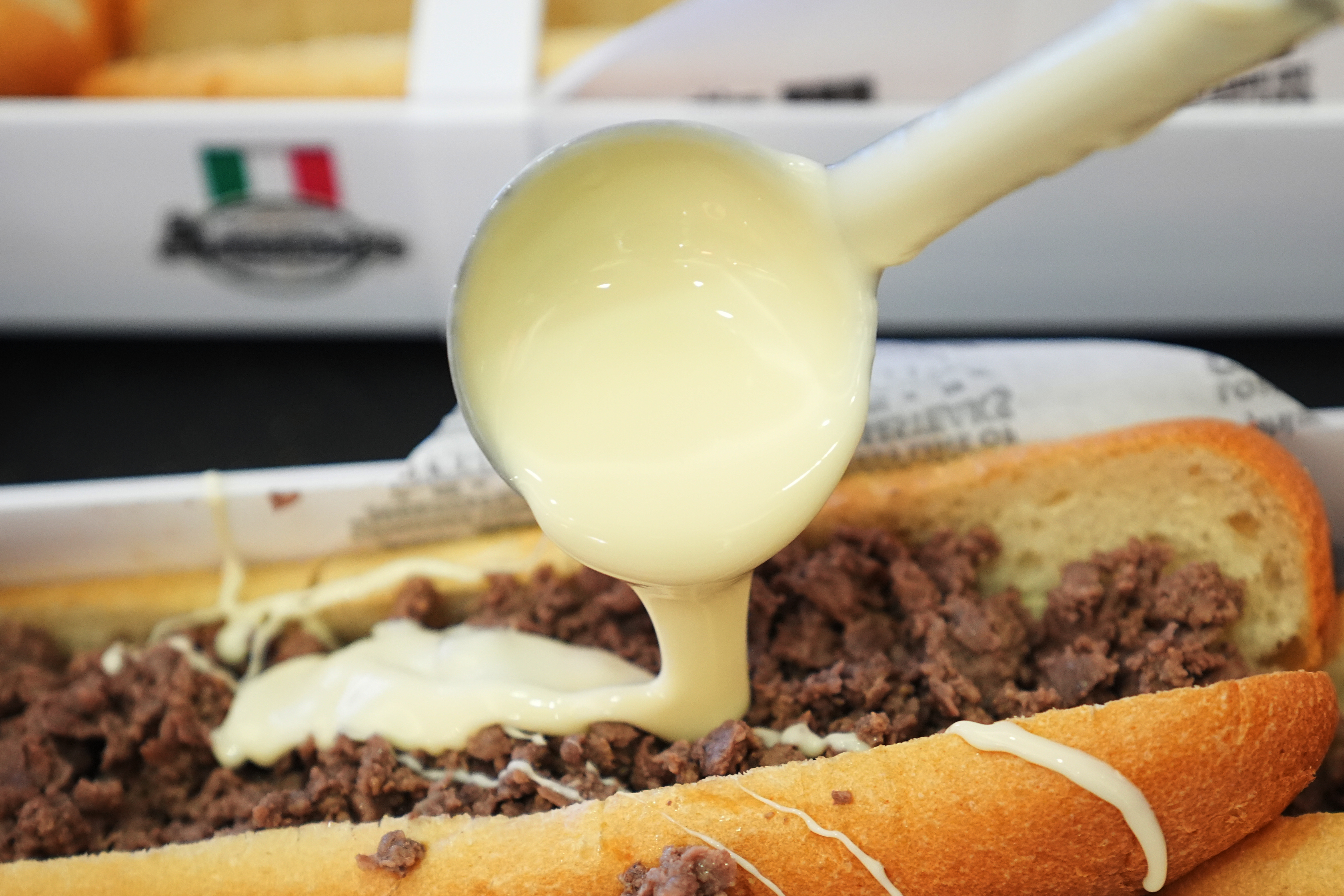
    It was only earlier this year that Philadelphia claimed that record with a massive event at Philadelphia International Airport, piling nearly 1,000 pounds of rib-eye atop Amoroso rolls as far as the eye could see.

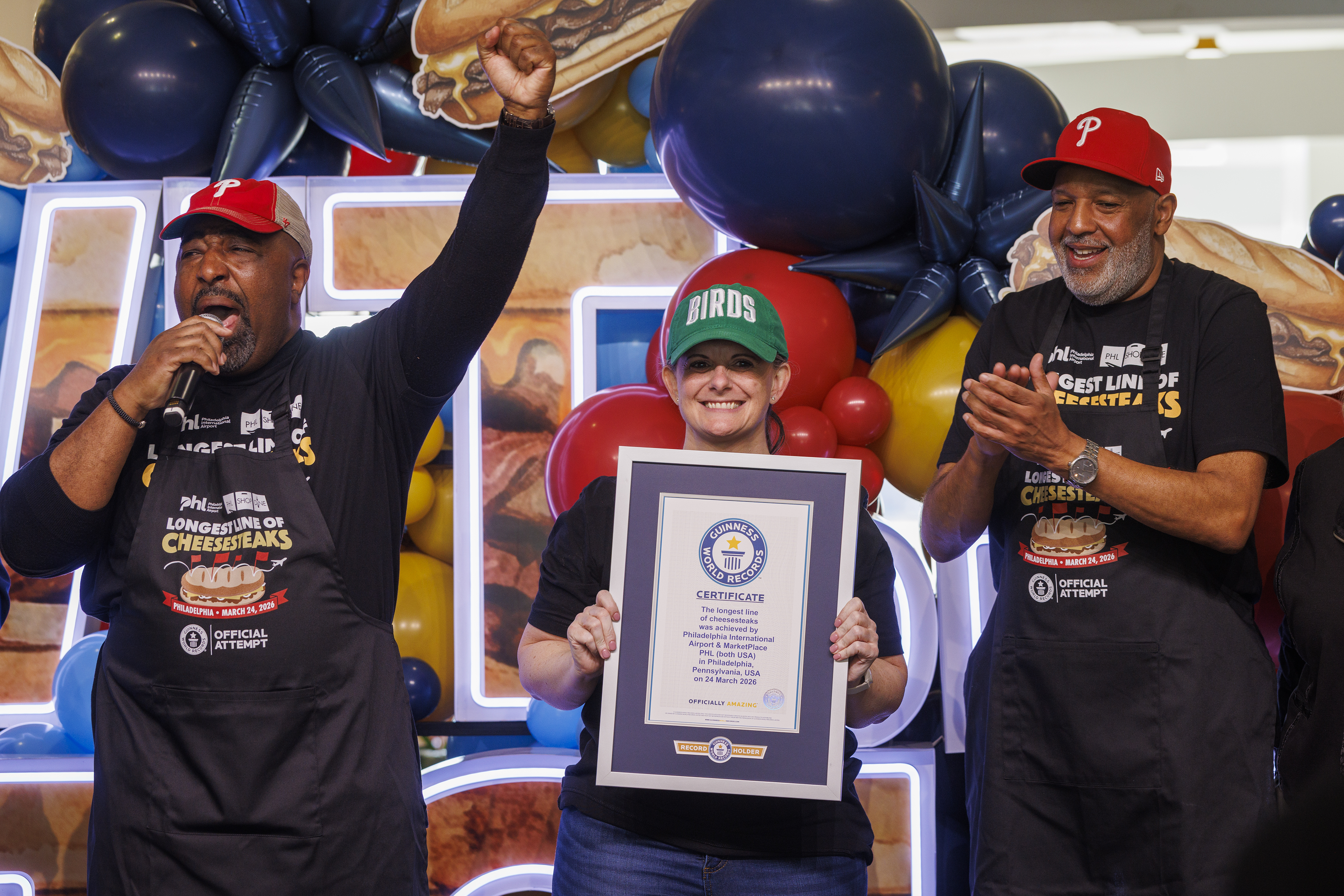
    Philly ended up setting an official Guinness World Record that fateful March day, with about 1,291 cheesesteaks stretching out about 1,271 feet. It’s worth noting that Philly’s cheesesteak line was the inaugural record for that category, according to a Guinness World Records adjudicator who spoke with The Inquirer.

    But, over the years, others have attempted unofficial cheesesteak records — including Idaho.

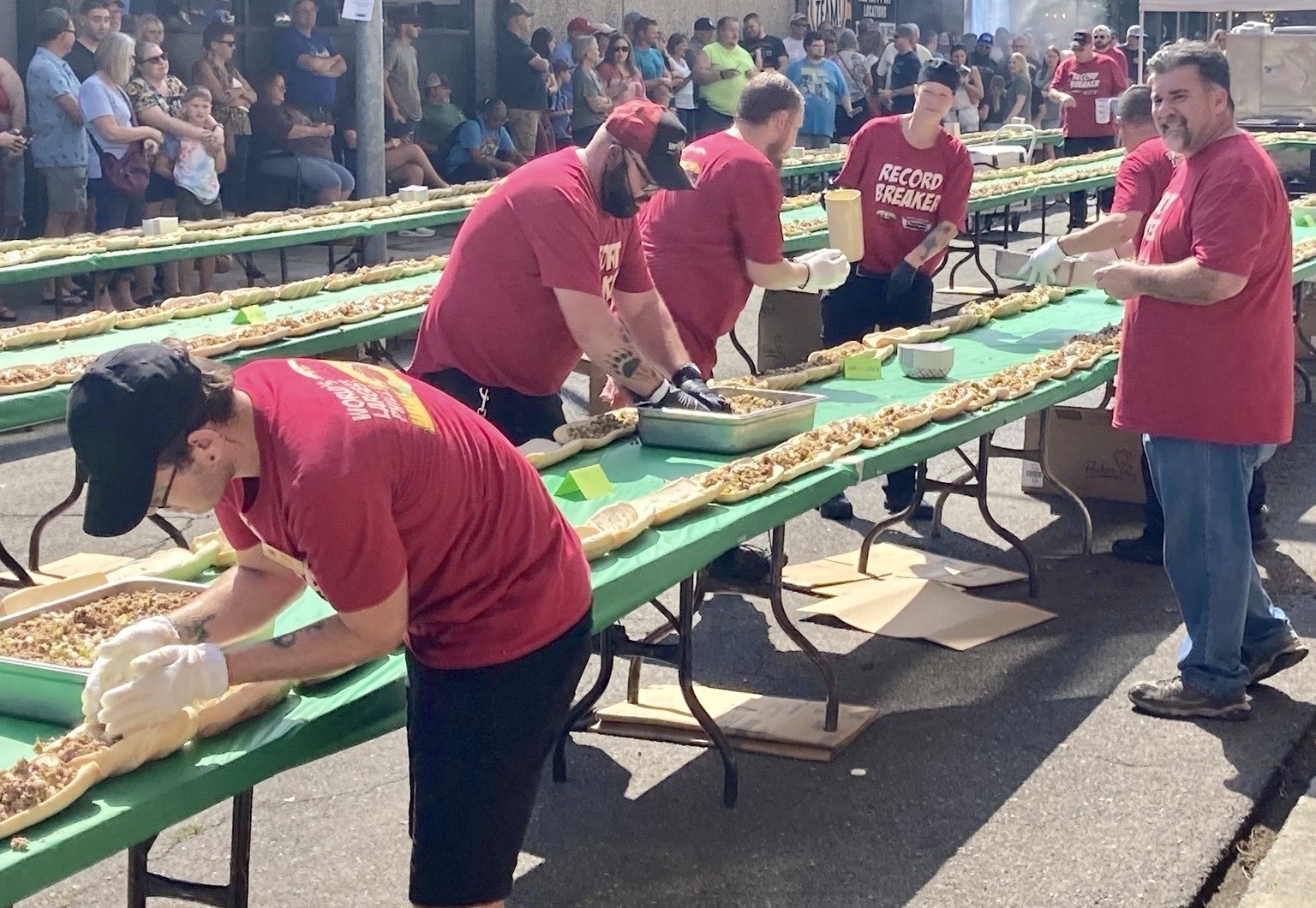
    Main Street Grill in Lewiston, Idaho, made a 700-foot cheesesteak on August 26, 2023. Until March, it held the unofficial world record for the longest cheesesteak.Frank Webster

    In 2023, the Main Street Grill in Lewiston, Idaho, (operated by Happy Day Restaurants) completed a 722-foot line of cheesesteaks as part of a fundraiser event for the regional Boys and Girls Club. Locals took bragging rights and observers (including The Inquirer) admitted at the time that the sandwich line appeared to be a record-holder. But it was all under “unofficial” terms.

    Now, let’s fast-forward to this week.

    The bad news: Lewiston, Idaho, is coming for Philly’s newly established “longest cheesesteak” world record. The good news: It’s still unofficial and the proceeds are going to charity — which is kind of hard to bash.

    According to a statement from Happy Day Restaurants, participants are aiming to break Philly’s record with an attempt of a 1,350-foot Philadelphia cheesesteak (notably, not called an Idaho or Lewiston cheesesteak).

    The event will again benefit the local Boys and Girls Club with $10 sandwich tickets. In 2023, the fundraiser raised more than $10,000 for the organization.

    This year’s attempt is also an effort to showcase local agriculture and food production infrastructure.

    All of the cheesesteak ingredients, from the beef and veggies (including — gasp — peppers!!!) to the rolls, are being sourced locally for Sunday’s installation.

    “It’s a demonstration of what our local food system can do,” the restaurant group said in a statement. “The hardest part of farming isn’t always growing the food. For small and medium-sized farms, one of the biggest challenges isn’t necessarily production. It’s finding someone who will reliably buy what they grow.”

    The Lewiston cheesesteak line will include:

    • 1,350 rolls with regenerative grain from Cottonwood, Idaho.
    • 720 pounds of beef processed at a local USDA butcher shop (a 50/50 blend of Idaho beef and supplemental supply, citing summer heat impacting processing capacity).
    • 275-plus pounds of onions and peppers grown regionally in Lewis-Clark Valley.
    • 64 gallons of “cheese sauce” (their words not ours).
    From left: Clarence LeJeune, Dana Krawchuk, marketing and guest experience manager for Marketplace PHL, and Mel Hannah, vice president and general manager of Marketplace PHL, with the award from Guinness World Records for a record-setting cheesesteak assembled at Philadelphia International Airport on Tuesday, March 24, 2026.Alejandro A. Alvarez / Staff Photographer

    Asked for comment on Lewiston’s attempt to break Philly’s record, PHL sends its regards.

    “As the first and current official Guinness World Record holder for ‘Longest Line of Cheesesteaks,’ MarketPlace PHL and the 18 restaurants serving cheesesteaks at Philadelphia International Airport send our very best wishes to Lewiston, Idaho,” Dana Krawchuk, MarketPlace PHL’s marketing manager who organized the airport’s spring record-breaker, said. “In partnership with all the Philly purveyors who supplied ingredients for 2026’s National Cheesesteak Day celebration honoring TSA workers at PHL and making Philly history … We just gotta ask the people of Lewiston, wit or witout?”

  • End of a restaurant era | Let’s Eat

    End of a restaurant era | Let’s Eat

    Nothing lasts forever, friends. Including your favorite restaurants.

    Also in this edition:

    — Mike Klein and Kiki Aranita

    If someone forwarded you this email, sign up for free here.

    End of a restaurant era

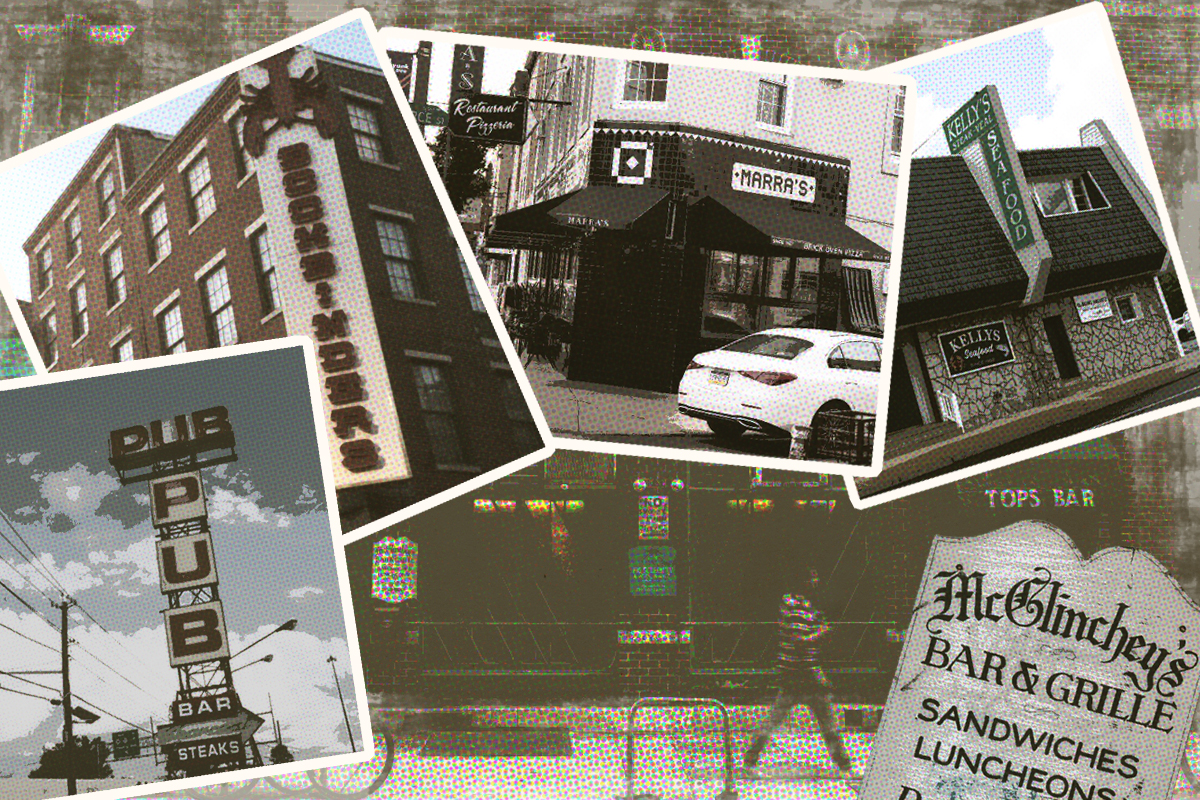
    Nothing is forever, especially restaurants. This summer, a rash of restaurants are hitting the market or closing altogether, including some longtime favorites. Here’s what’s going on.

    💔 Northeast Philly will lose its last Jewish deli this weekend. We visited Steve Stein’s Famous Deli for a final slice or two of corned beef.

    🍝 After being closed for six years, Mamma Maria’s is on the market, with its three adjoining buildings on East Passyunk Avenue and Jessup Street listed separately.

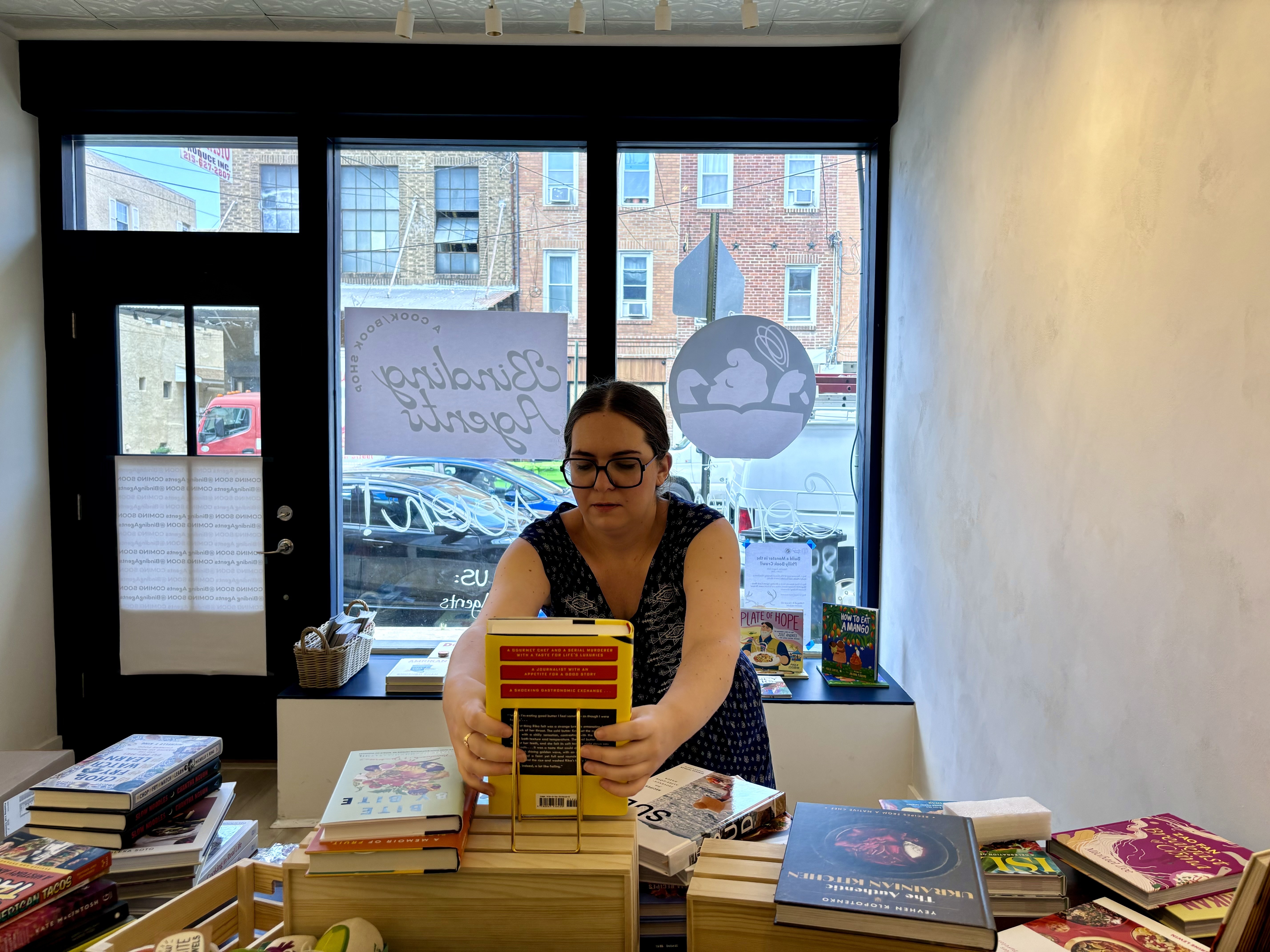
    A perfect day with Philly’s cookbook maven

    An ideal day for Binding Agents owner Catie Gainor involves pastries, pilates, happy hour, and of course, cookbooks.

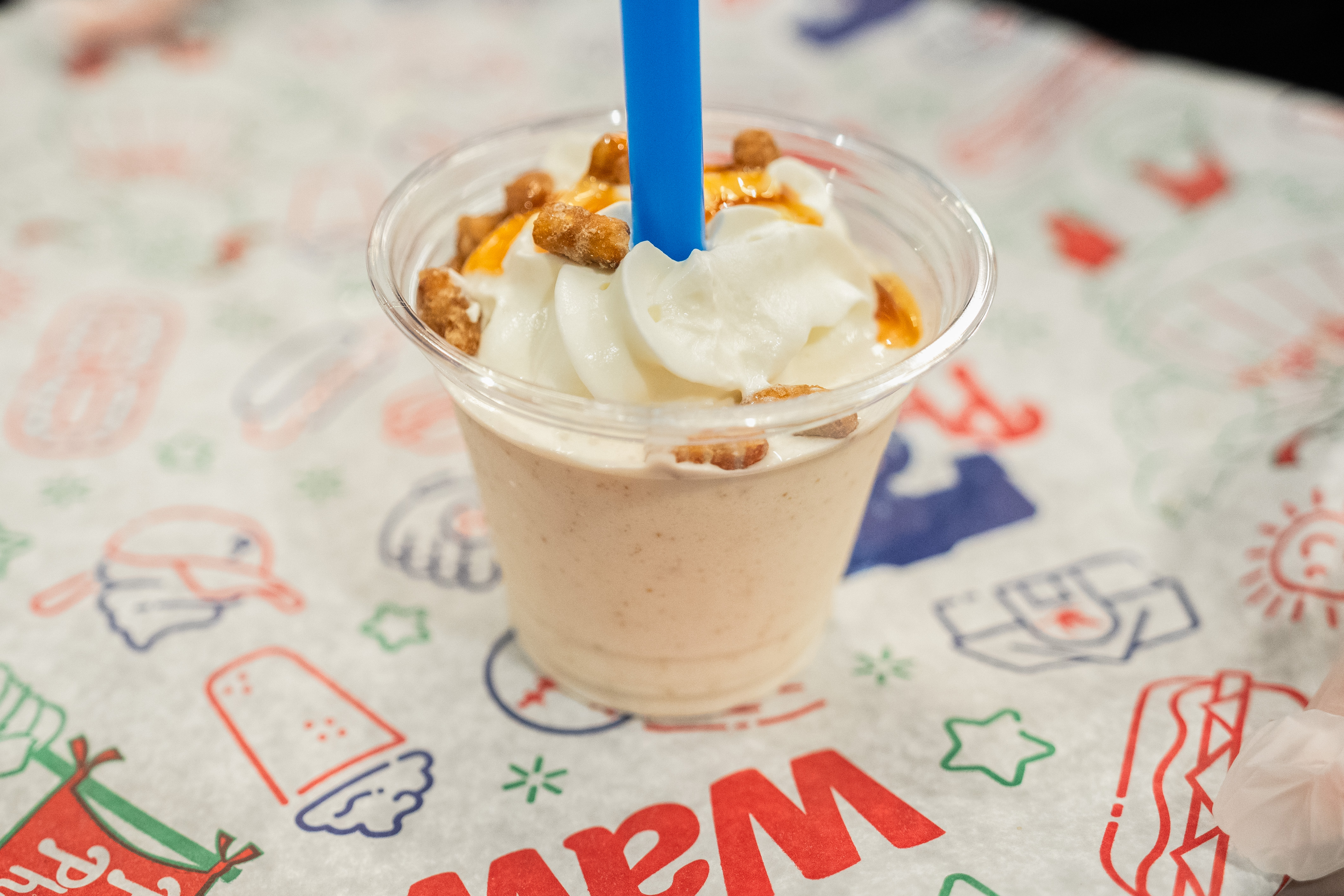
    Wawa debuts a Phanatic smoothie

    And interestingly, it’s not green. Stephanie Farr investigates the limited-edition Phanatic Caramel Curveball Cream Smoothie.

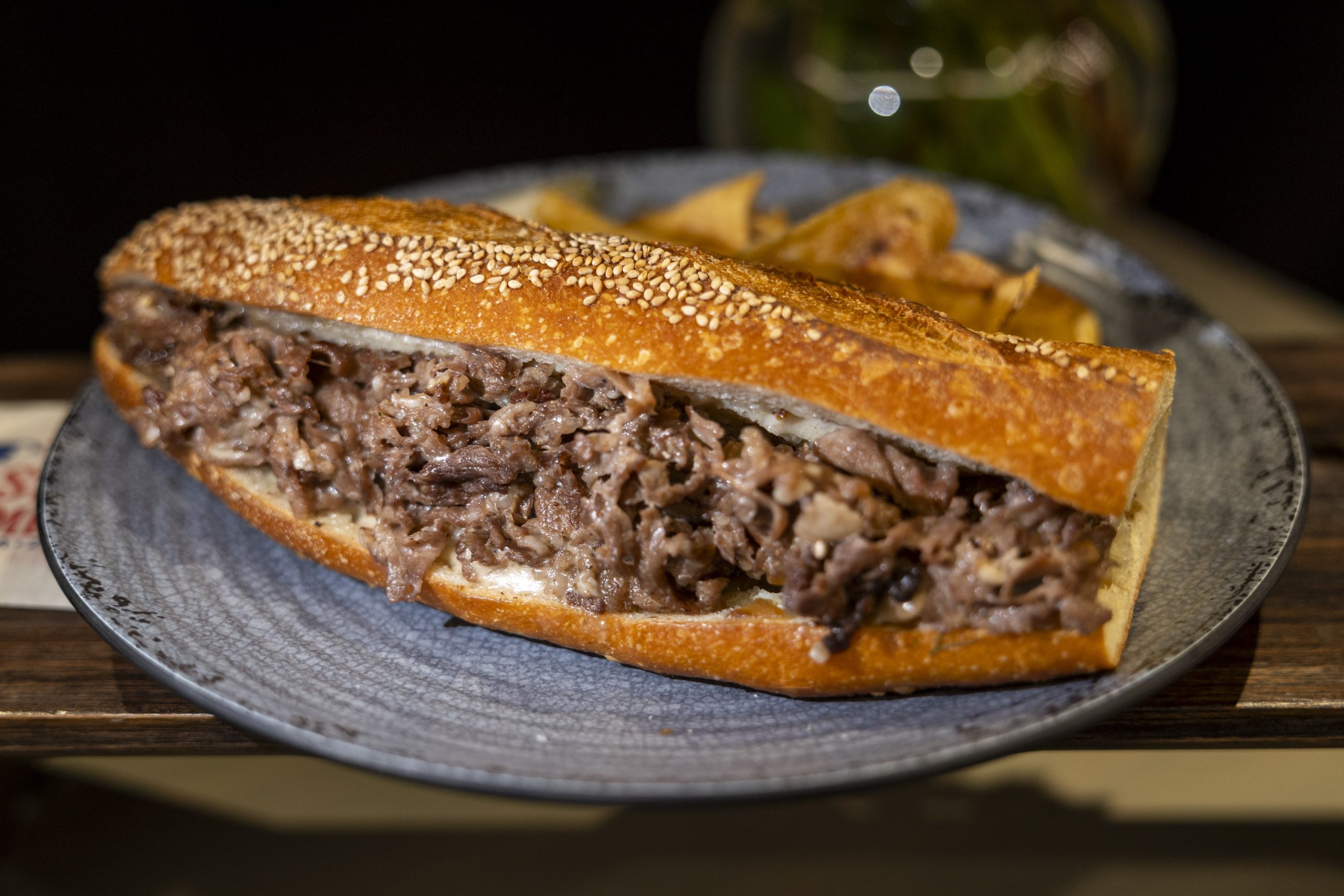
    Any cheesesteak will do, within reason

    Stephanie Farr and cheesesteak connoisseur Tommy Rowan debate where to take a visitor for a true Philly cheesesteak.

    The best thing Mike ate last week

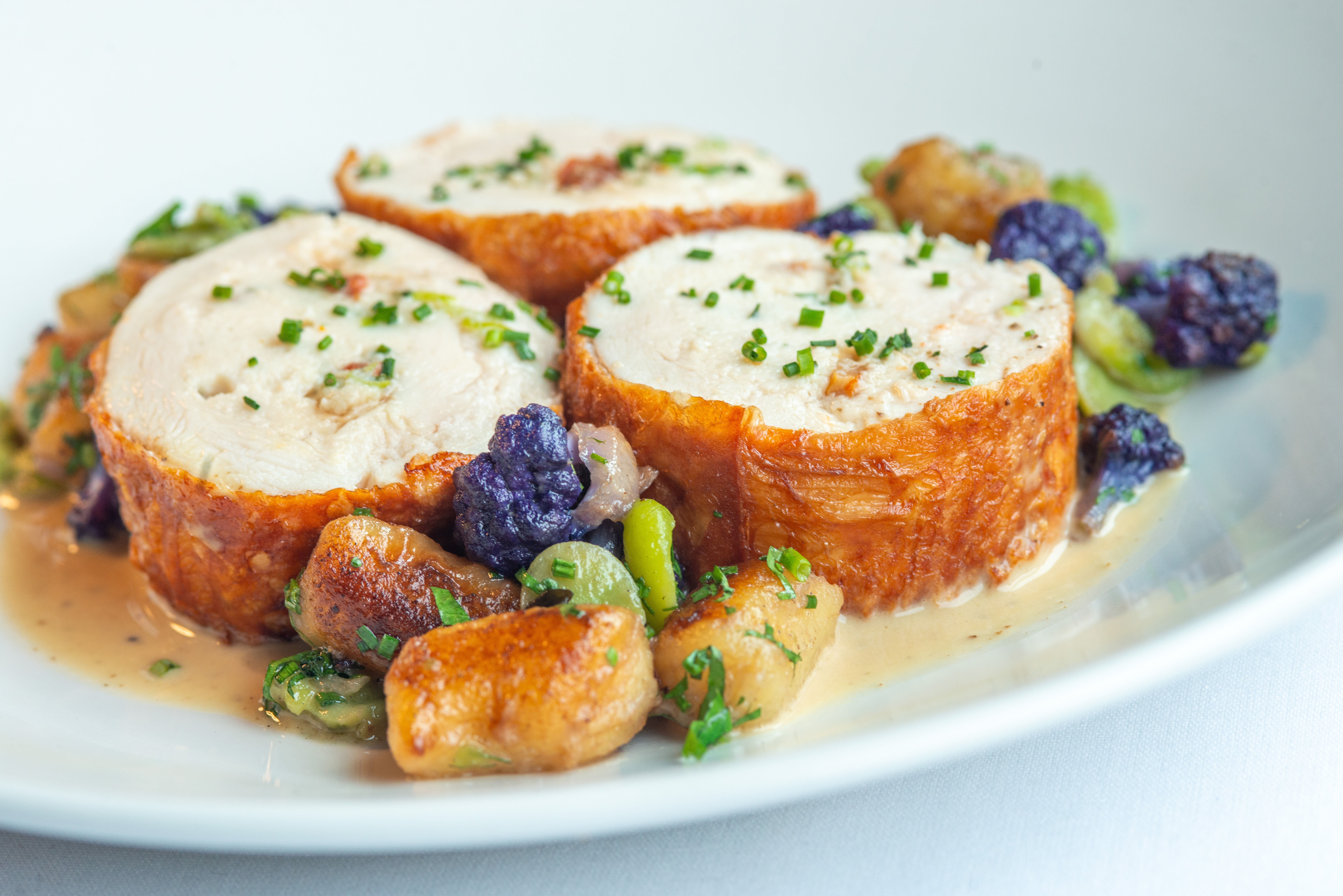
    Chicken from a restaurant that turns out steaks, chops, and house-made pasta? At Academy Grill, chef Jeffrey Power turns out a roulade that’s a throwback to his Le Bec-Fin days.

    Scoop

    Fairmount’s London Grill, which has sat dark at 23rd Street and Fairmount Avenue since closing in May 2019, is being readied for a new tenant, building owner Jack McDavid told Mike this week. The concept, bearing a new name, has not been nailed down. McDavid, who with a partner bought the property from longtime owners Michael McNally and Terry Berch McNally in 2019, said he was overseeing a rehab. There’s no timeline. In 1991, the McNallys took over the mid-19th-century building — then known simply as London — and helped turn Fairmount into a dining destination. McDavid himself is a Fairmount pioneer, as he founded Jack’s Firehouse down the street in 1989, two years after he opened Down Home Diner at Reading Terminal Market.

    Restaurant report

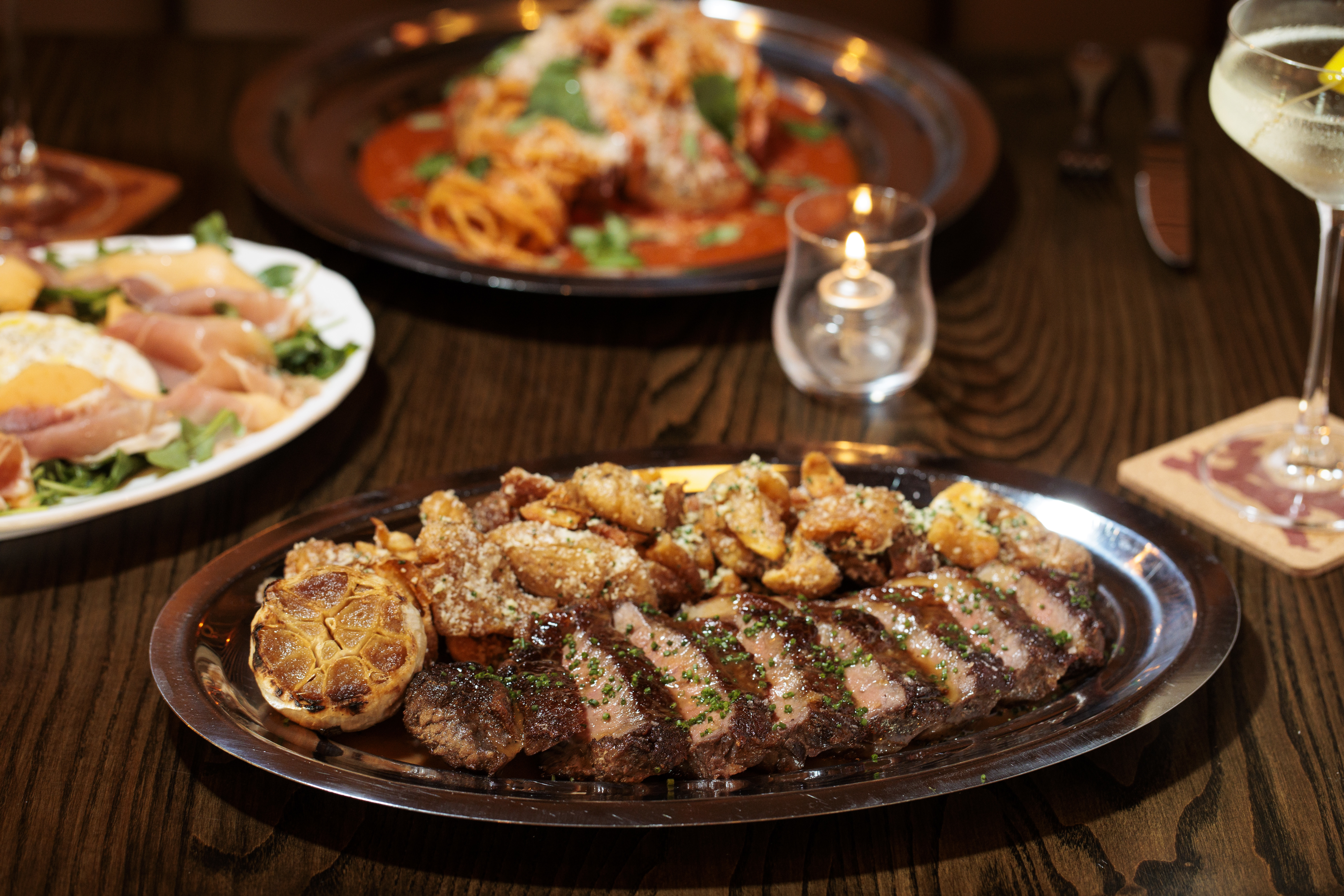
    What’s new can feel old. Craig LaBan finds South Philly nostalgia at Waltz, which opened five months ago at 2351 S. Front St. The menu was designed by Eric Leveillee, formerly of Lacroix at the Rittenhouse, and hits the right notes with sourdough pizzas, bouncy pastas, and a 14-ounce strip steak.

    Read Craig’s review of Waltz here.

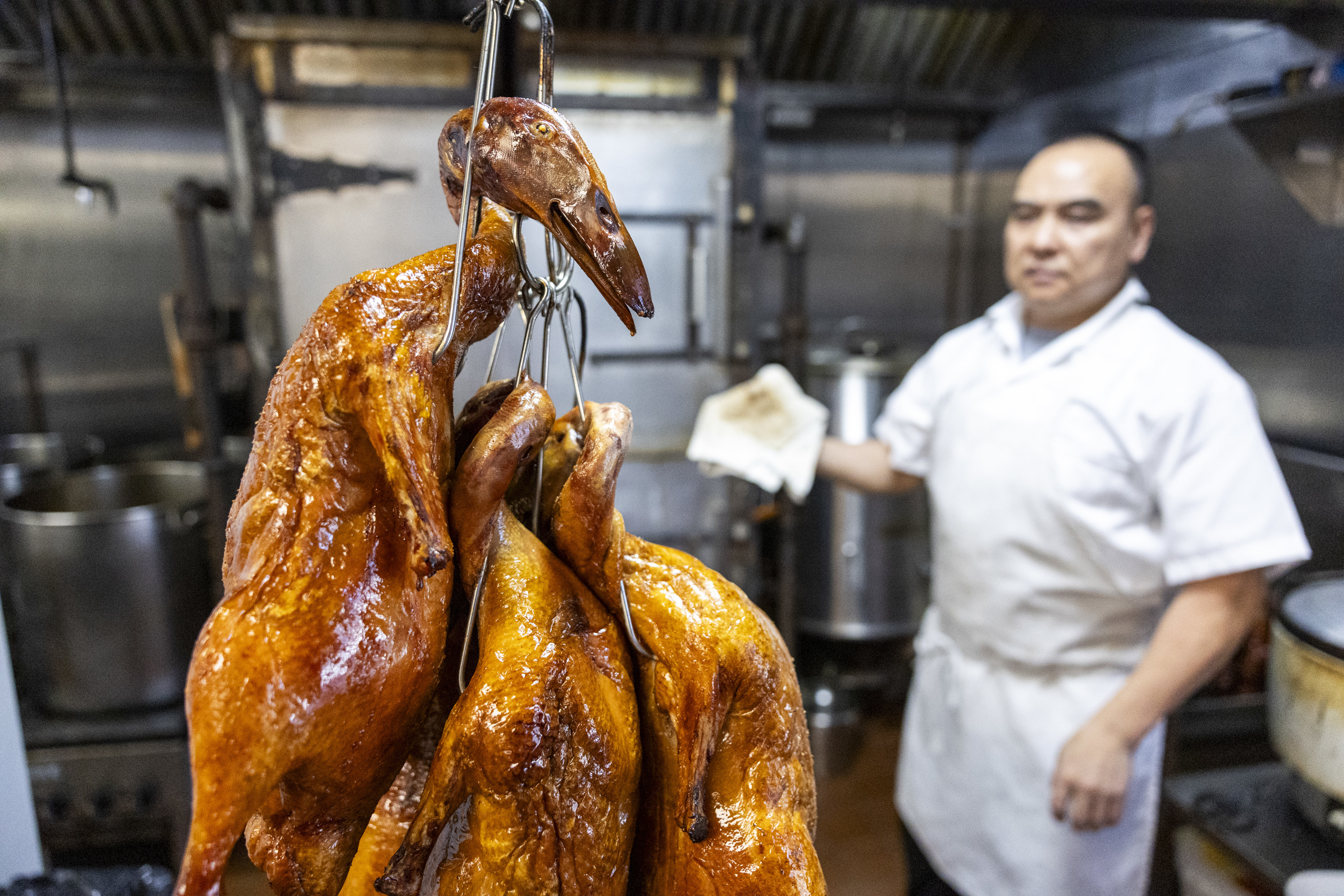
    Craig also found delicious nostalgia of a different sort at Chinatown’s Lau Kee, a specialist in both Peking- and Cantonese-style roast ducks. The owners hail from Fujian, a completely different province than that of their succulent ducks.

    Read Craig’s review of Lau Kee here.

    Briefly noted

    Bridget Foy’s will turn Headhouse Plaza (Second Street north of South) into four pickleball courts Thursday for its third annual tournament, timed to National Pickleball Day. The 4-to-8 p.m. event includes a hospitality-industry tournament, free open play, a live DJ, pickled snacks, prizes for the best-dressed duo, and cocktails. Day-of registration at Bridget Foy’s, 200 South St. Rain date: Aug. 27.

    Philadelphia Zoo’s Summer Ale Festival, postponed due to severe weather, returns Aug. 22 with more than 100 beers, ciders, seltzers, meads, spirits, nonalcoholic drinks, food trucks, and live music. Early admission is 6 to 10 p.m.; general admission is 7 to 10 p.m. Taps close at 9:30. Tickets, which include zoo admission, are $75-$99 for early admission, $65-$85 for general admission, $45 for nondrinkers. Tickets must be purchased in advance through the zoo; the event is rain or shine and 21-plus.

    Honeysuckle, the North Philadelphia restaurant from James Beard finalist chef couple Omar Tate and Cybille St.Aude-Tate and a regular on The 76, will launch Honeysuckle Midday on Sept. 17, offering a pay-what-you-can, three-course lunch service Wednesday through Friday, from 11 a.m. to 3 p.m. Diners can choose to pay $20, $35, or $55 for a menu that includes Blackcaesar salad, epis-roasted chicken, BBQ sweet potato, escovitch mussels, and beef and broccoli, followed by bean pie or water ice. Honeysuckle favorites including the Goat Bun, Fish Hoagie, and McDonald’s Money burger will be available for an additional charge. Tables are up on OpenTable.

    Cannonball Club, a sort of members-only car museum, will have food and a bar when it opens next month in Fishtown. Our auto columnist, Scott Sturgis, takes you inside.

    ❓Pop quiz

    Kiki says she has found the best chicken sandwich in Philly. Where is it from?

    A) Raising Cane’s

    B) Jollibee

    C) Dave’s Hot Chicken

    D) a corner store with a mysterious name

    Find out if you know the answer.

    📮 Have a question about food in Philly? Email your questions to Mike at mklein@inquirer.com for a chance to be featured in the newsletter.

    By submitting your written, visual, and/or audio contributions, you agree to The Inquirer’s Terms of Use, including the grant of rights in Section 10.