Category: Food

  • Chibanos, a Chinese-Cuban sandwich shop built on family recipes, opens in Washington Square West

    Chibanos, a Chinese-Cuban sandwich shop built on family recipes, opens in Washington Square West

    Washington Square West’s latest restaurant brings Chinese flavors to Cuban classics, from pressed sandwiches and fried yuca to flan and croquetas.

    Chibanos opened July 1 at 1127 Pine St., formerly Effie’s, with a menu that’s an ode to the food owner Evan Fong Jaroff grew up eating as a third-culture kid in the Philly suburbs. The restaurant’s name is shorthand for what Jaroff’s mother’s family were called growing up: “Chino Cubanos,” or Chinese Cubans.

    Jaroff’s mom, Ana, immigrated to the United States from Cuba in the 1960s after the Cuban Revolution. Food helped Jaroff make sense of and learn to appreciate his background as a mixed-race kid, he said.

    At their home in Lansdowne, the Jaroffs used “soy sauce like salt,” he said, and ate traditional Southeast Chinese fish dishes alongside rice and beans, yuca, plantains, and minced beef picadillo. On Nochebuena (aka Christmas Eve), his mom would present a plate of lechón, or slow-roasted pork, coated in a secret marinade. Leftovers would be used for sandwiches.
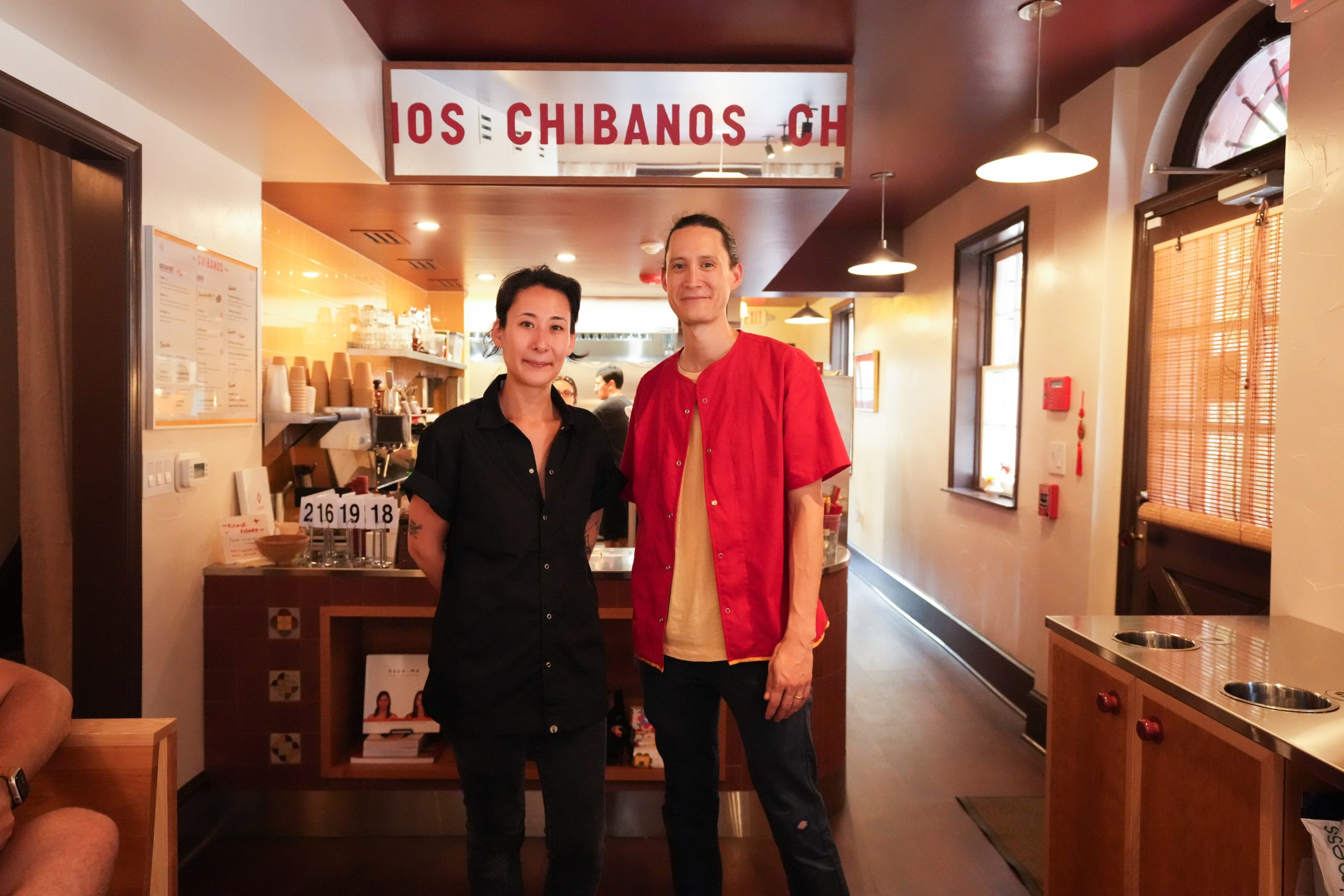
    Aya Iwatani (left) and Evan Jaroff inside Chibanos, their Cuban-Chinese sandwich shop that opened on July 1 at 1127 Pine St.Jessica Griffin / Staff Photographer

    “When you’re mixed race, you’re always compared to one or the other. When I lived on the East Coast, I was just Asian. When I lived on the West Coast, I was just white,” Jaroff, 39, said. “But I’m a whole person.”

    Reckoning with his racial identity was the catalyst for Chibanos, which Jaroff started as a pop-up in 2022 after leaving his finance career in London and moving back to Philly. Lacking culinary experience, he enlisted the help of chef Aya Iwatani, a Honeysuckle Provisions alum, to reinterpret his childhood memories into a set of sandwiches that felt authentically Chinese and Cuban, such as a Cubano stuffed with his mom’s famous pork and salted Chinese mustard greens, or jackfruit and tofu seasoned with a garlicky mojo.
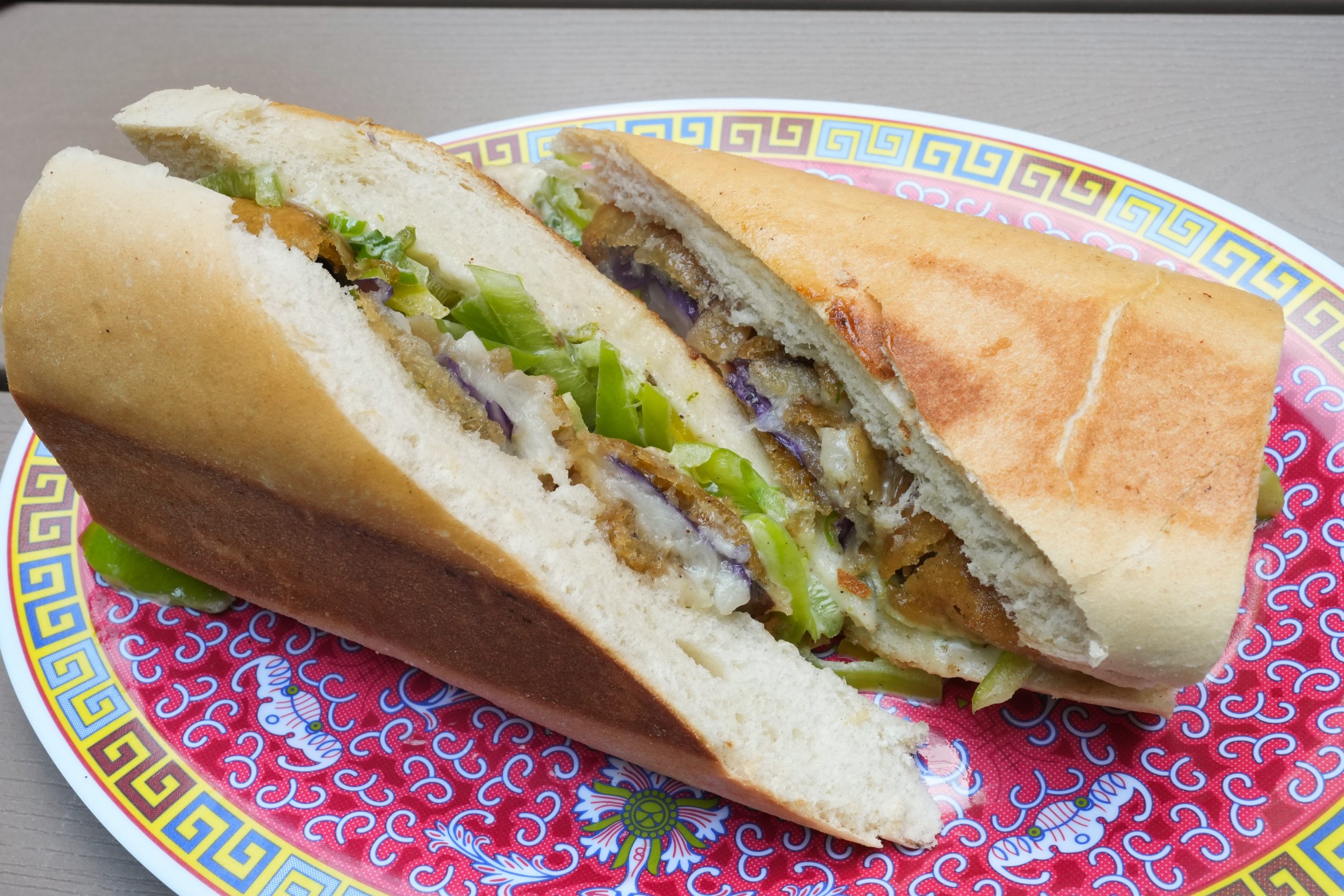
    The eggplant empanizado sandwich on a LeBus Bakery Cuban roll at Chibanos, owner Evan Jaroff’s Chinese-Cuban sandwich shop in Washington Square West.Jessica Griffin / Staff Photographer

    Successful takeovers at Solar Myth, Jiggy Coffee, and Forin were enough for Jaroff to go all-in on a brick and mortar. He purchased the building — once home to Effie’s, the beloved Greek BYOB that closed after 27 years — in August 2024.

    Jaroff said he was drawn to the 200-year-old rowhouse because its history gave it a lived-in feel.

    “I want people to say, ‘Oh, Chibanos? That place looks like it’s been there for 10 years,’” he said.

    Nearly two years after the sale, the 1,725-square-foot restaurant is now a casual sandwich shop-meets-cafe, with a revamped courtyard, communal seating, and a fresh paint job. The patio’s turquoise walls bear the names of Jaroff, his brother, and mom, spelled in Chinese characters.

    The space flows seamlessly from the counter-service storefront to the courtyard and a rear dining area that looks like a minimalistic tea room — all dark wood and conversational seating. Jaroff said the indoor-outdoor vibe is a nod to Cuba and Southern China, which have the same latitude and thus similar climates.
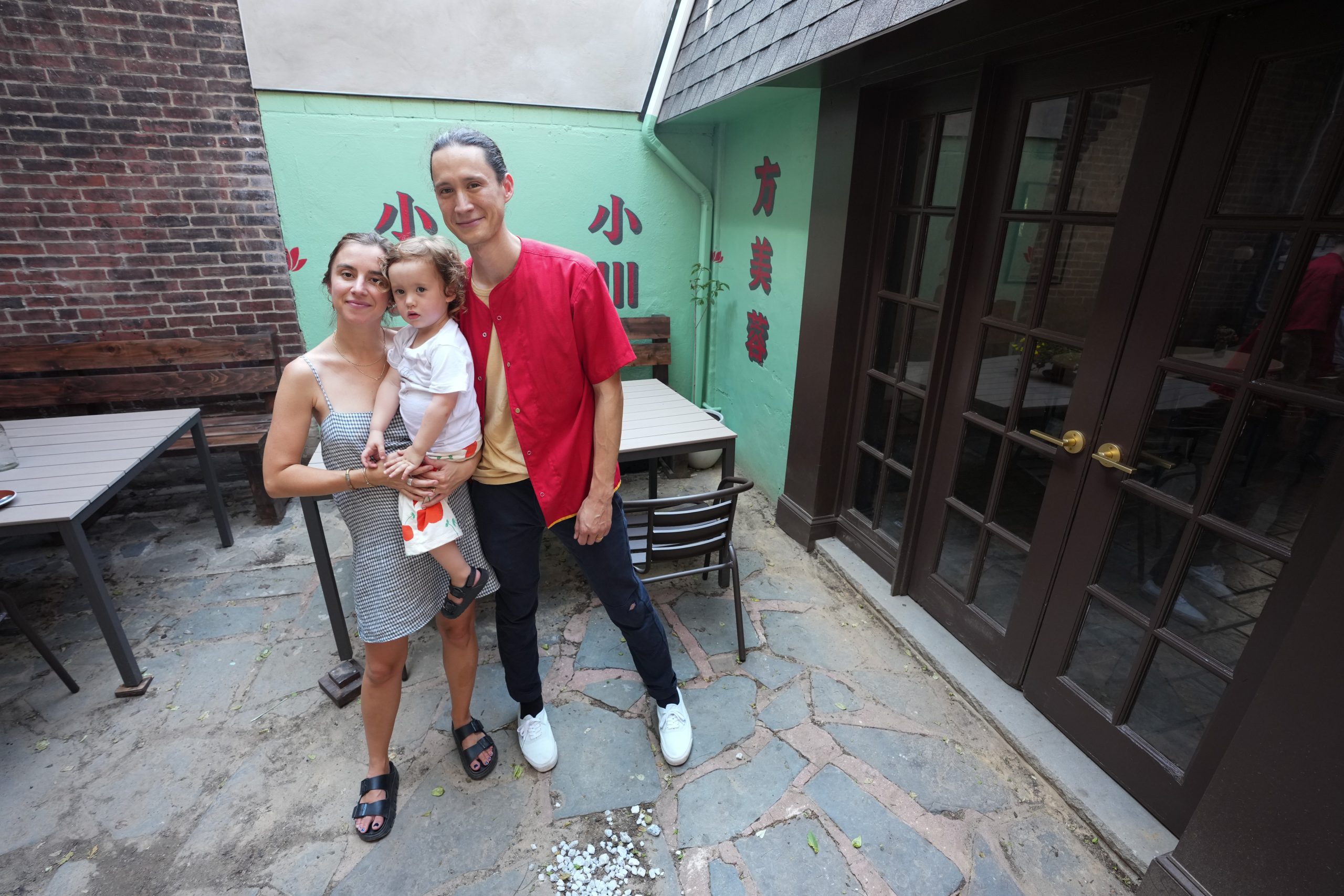
    Owner Evan Jaroff with his wife and son at Chibanos, his Chinese-Cuban sandwich shop. The menu pulls from recipes from Jaroff’s mom, a Chinese woman who was raised in Cuba.Jessica Griffin / Staff Photographer

    Chinese food done the Cuban way

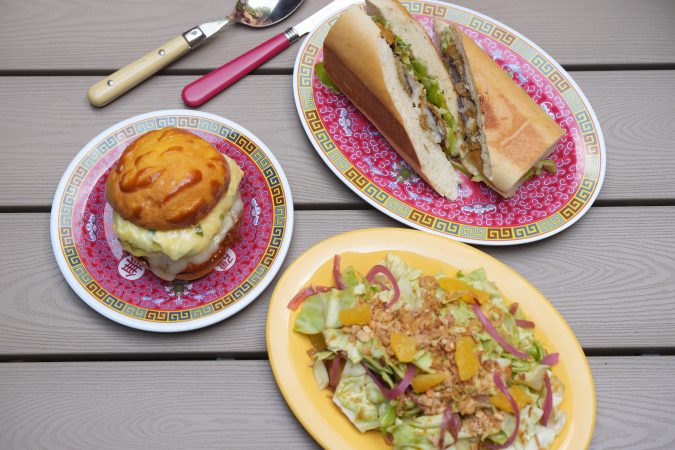
    The centerpiece of Chibanos’ menu is a lineup of six pressed sandwiches on LeBus’ Cuban loaves, which Iwatani — now Chibanos’ head chef — and Jaroff chose for its just-dense-enough texture after auditioning an array of ciabattas and hoagie rolls. The eggplant empanizado — layered with salt-and-pepper eggplant, pickled serrano peppers, and cubanelle scallion slaw — is a standout. So is the chibano, the restaurant’s namesake riff on a Cubano that uses Jaroff’s mom’s pork recipe.
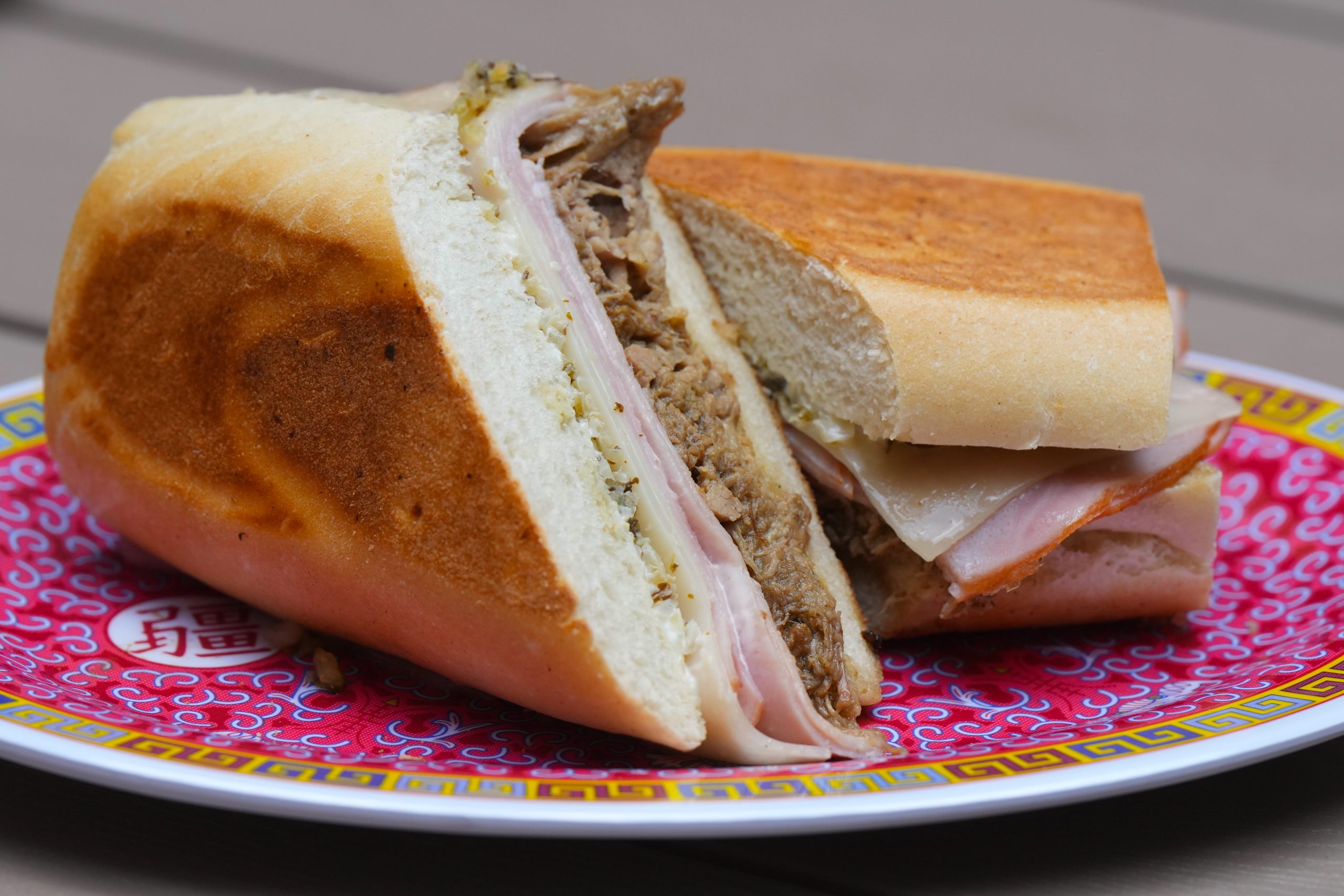
    The chibano, Chibanos’ version of a Cubano sandwich with roast pork, ham, Swiss cheese, mustard greens, and mayo.Jessica Griffin / Staff Photographer

    The key, Iwatani said, is the marinade, which took several tries to get Ana’s stamp of approval. “The first time, she was like, ‘It’s pretty good, but not quite there,’” Iwatani said. “You have to use sherry.”

    The rest of Chibanos’ menu was developed after its pop-up run. Hits include croquetas stuffed with slightly sweet Chinese sausage, fried yuca made for dipping in a sofrito-spiced ranch, and a surprisingly light jasmine tea-infused flan. There’s also the sweet-savory-salty Chino breakfast sandwich: Fluffy eggs and char siu-style sausage are stuffed between a mayo-slicked Dodo Bakery bolo bao. The buns allude to the custard-filled rolls from Chinatown Jaroff grew up eating for breakfast.
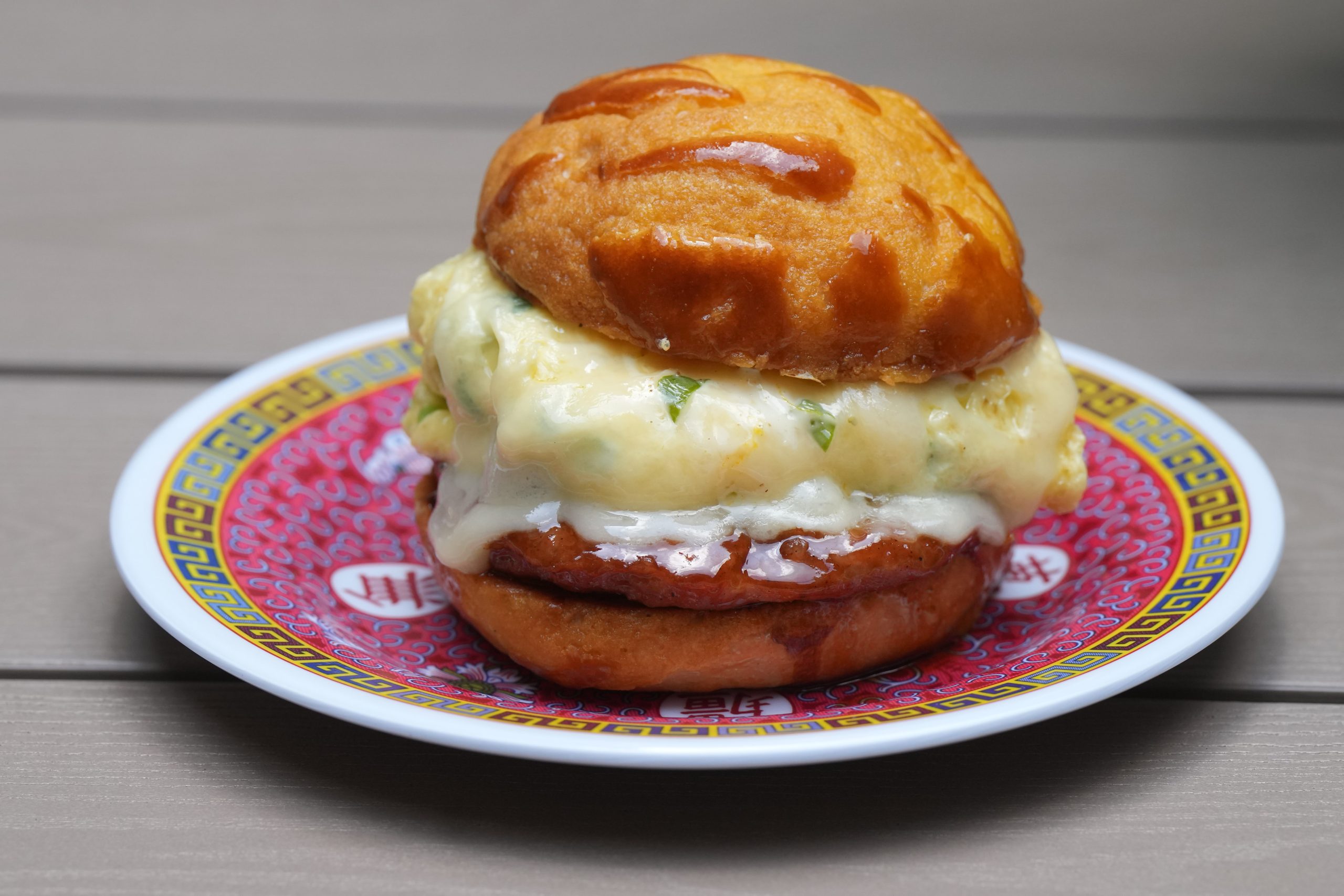
    The Chino breakfast sandwich on a Dodo Bakery bolo bao at Chibanos, a Chinese-Cuban sandwich shop at 1127 Pine St.Jessica Griffin / Staff Photographer

    Chibanos joins the dying tradition of Chino Latino cuisine, a genre that dominated New York City from the 1970s to 1990s as Chinese immigrants from Latin America settled in the U.S. to escape political instability. Chinese (lo mein, spare ribs, etc.) and Latin American (ropa vieja, pernil, etc.) staples sit column A-column B style on menus optimized for pairings at iconic restaurants like La Dinastia and the now-closed Caridad 78.

    Cuba historically had a vibrant Chinese culture. One of Latin America’s oldest Chinatowns was established in Havana in the 1920s by Chinese migrants and former indentured servants who opened restaurants that incorporated Caribbean ingredients into traditional Chinese recipes.
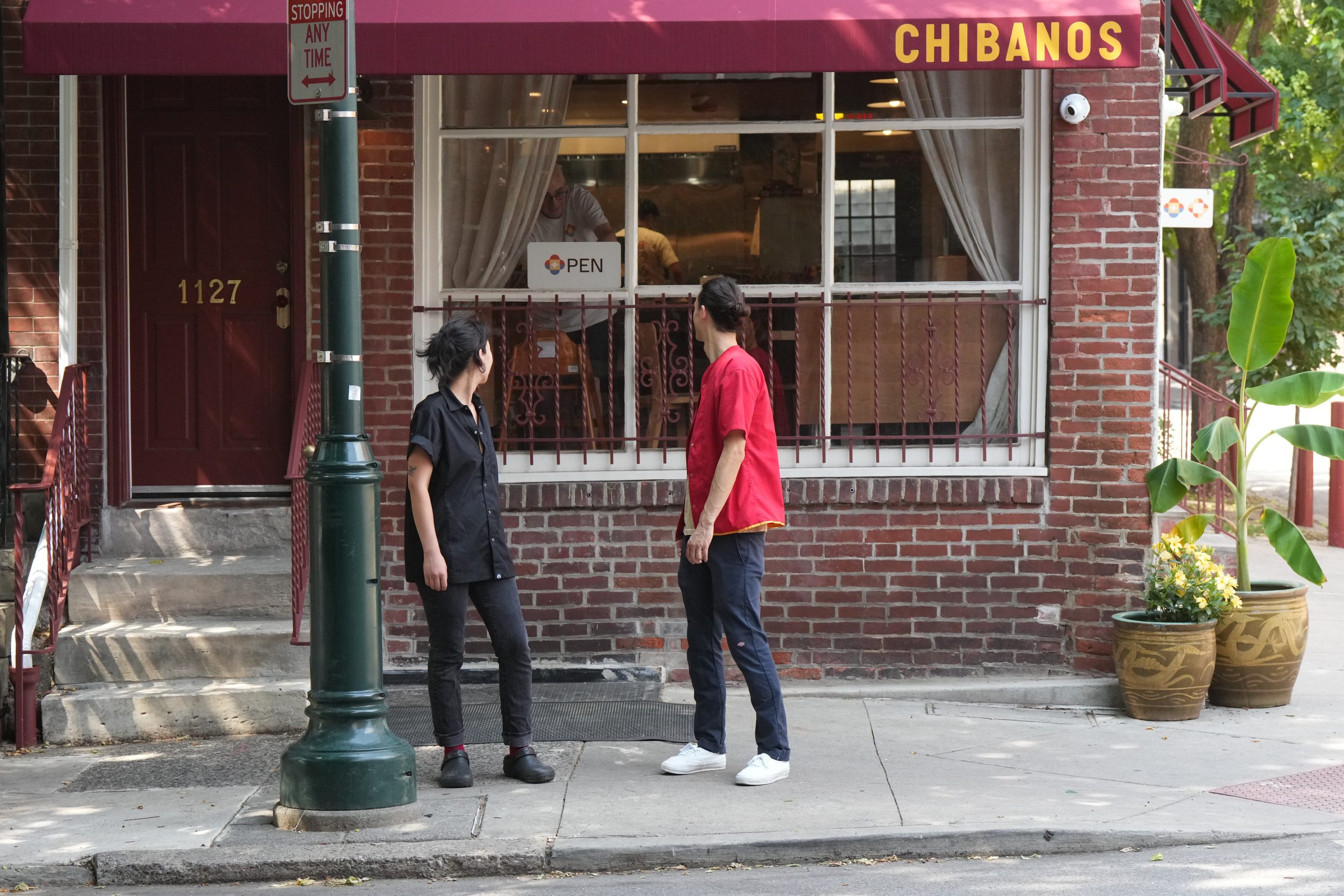
    Aya Iwatani (left) and Evan Jaroff outside Chibanos, their Cuban-Chinese sandwich shop that opened on July 1 at 1127 Pine St.Jessica Griffin / Staff Photographer

    Jaroff doesn’t view Chibanos as fusion but rather a tribute to the unique style of cooking he learned from his mom.

    “I don’t think of us as a Cuban restaurant. I don’t think of us as a Chinese restaurant,” he said. “Don’t put us in a box … We’re our own thing.”

    Chibanos, 1127 Pine St., chibanos.com. Hours: 8 a.m. to 3 p.m. Wednesday through Sunday.
  • ‘The Frog Commissary Cookbook’ remains a Philadelphia icon over 40 years after its debut

    ‘The Frog Commissary Cookbook’ remains a Philadelphia icon over 40 years after its debut

    Chef Justin Bacharach hadn’t read up on the history of 1710 Sansom St. before he opened dancerobot there in September. He knew it was previously a bottle shop with a deli, but was otherwise too busy to give it much thought.

    That changed just before opening night, when Bacharach’s business partner, chef Jesse Ito, brought in a copy of The Frog Commissary Cookbook. A regular at Royal Sushi gifted it to the James Beard Award-winning chef, telling Ito that dancerobot was once home to the Commissary, a legendary counter-service spot that was part of Philadelphia’s dining renaissance when it opened in 1977.

    The gift triggered an immediate reaction: “It was the first cookbook that I really put eyes on and paged through,” Bacharach, 35, said. His parents kept a copy in their Bucks County home, and his mother baked the book’s most famous recipe, an elaborate carrot cake, for special occasions.

    “This is fate,” Bacharach said. Now, more than 30 years after the Commissary closed, the cake is once again being served at the same Sansom Street address.

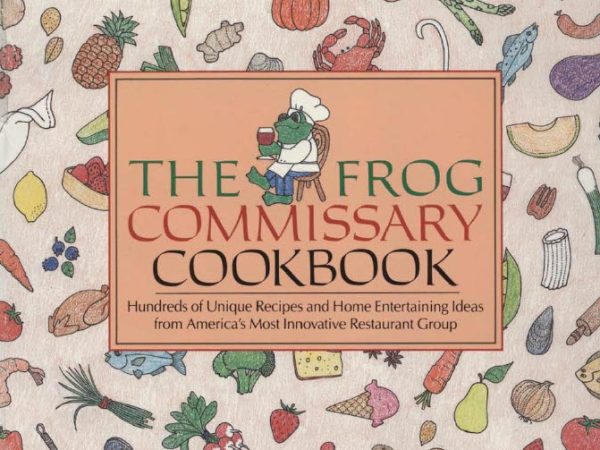
    Written by Steven Poses, Anne Clark, and Becky Roller, and published in 1985, The Frog Commissary Cookbook pulled together recipes from the Commissary, its innovative older sibling Frog, and Poses’ other restaurants. The peach-colored volume, peppered with Roller’s charming illustrations, quickly became a Philly staple. It taught home cooks and industry professionals alike how to entertain and introduced them to ingredients then unfamiliar to many Philadelphians, such as Sichuan peppercorns, Thai curry pastes, and good-quality balsamic vinegar.

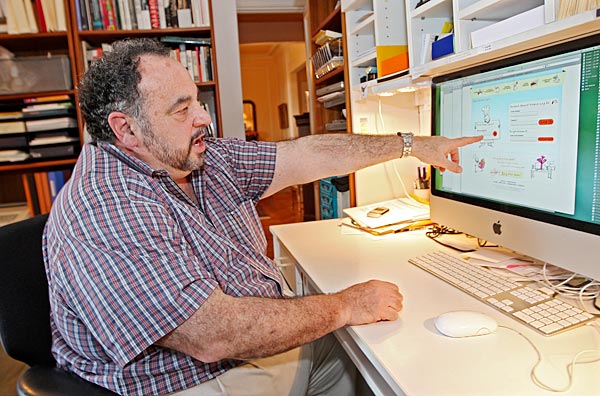
    Steve Poses, owner of the now-closed Frog and the Commissary, at work on his cookbook website in 2009. The restaurateur is a co-author of “The Frog Commissary Cookbook.”MICHAEL BRYANT / Staff Photographer

    Today, The Frog Commissary Cookbook remains an essential part of Philadelphia’s culinary fabric. But it still feels like a secret: beloved locally, yet relatively unknown elsewhere.

    “This was the book that everyone wanted because it was our book,” said Lexy Bloom, a Philadelphia native and editorial director at Knopf Cooks, a major cookbook publisher. It was Philly’s version of The Silver Palate Cookbook, the era’s national breakout cookbook. “Everybody had it; everybody cooked from it,” she said.

    The Frog Commissary Cookbook allowed home cooks to make recipes like the carrot cake and strawberry heart tarts that they knew and loved, but also had “this really interesting global palate that I think was unusual at the time and exciting to people,” Bloom said. “This book is so playful and experimental.”

    A post about the book in the 183,000-member Vintage Philadelphia Facebook group elicited nearly 1,000 comments. Some were about copies passed down through generations. Others described editions that were packed up as keepsakes. At least one was about a copy lost in a divorce and later replaced at an estate sale.

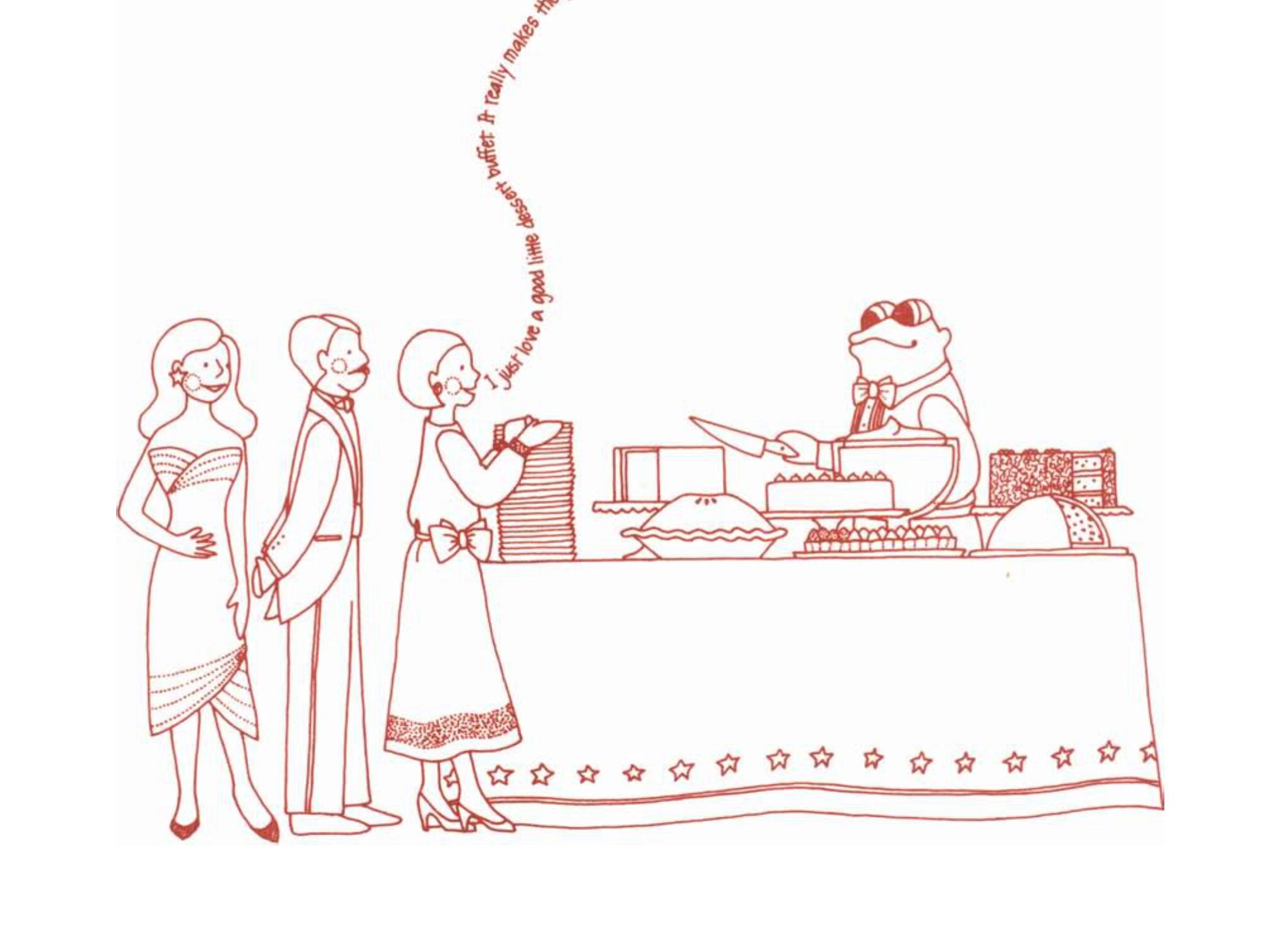
    An illustration by Rebecca Roller from “The Frog Commissary Cookbook,” which is still available in e-book form.Illustrations reprinted with permission by Doubleday, an imprint of Penguin Random House, LLC

    “Each tear and mark tells a story of countless delicious meals shared with family,” said one commenter with a tattered book. When it came out, another added, young women like her were “so excited to cook something that their mothers couldn’t.”

    Barb Cohan-Saavedra, who owned the longstanding French-Mexican restaurant Paloma, used to serve The Frog Commissary Cookbook’s cheesecake. “I now have 1,500+ cookbooks and this remains one of my favorites,” she wrote.

    (The book has also played an important part in this author’s life — particularly the sweet recipes, like the heart tarts developed by Clark, my unofficial culinary tutor and teacher at the Philadelphia School.)

    For help, just call

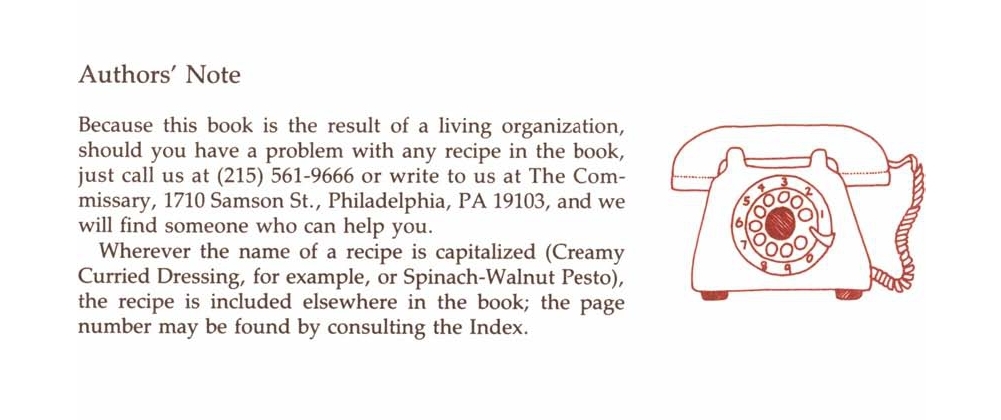
    The cookbook included a note in early editions: “Because this book is the result of a living organization, should you have a problem with any recipe in the book, just call us … or write to us,” it read. “We will find someone who can help you.”

    From the book’s 1985 publication until the Commissary’s 1994 closure, the restaurant received three to five calls a week from readers, Poses estimated in a recent interview. One of them was Nanci Schwartz Gilberg, 75, of Penn Valley, who called about making the book’s Champagne cream sauce for capelliniwith bay scallops for a party of 100. Wondering if she could prepare the dish ahead of time, she rang the restaurant. Someone there asked if she would like to speak to Poses.

    The authors’ note from “The Frog Commissary Cookbook” encouraged readers to call the restaurant directly if they had any questions.Illustrations reprinted with permission by Doubleday, an imprint of Penguin Random House, LLC.

    “Are you kidding? I would love it,” Schwartz Gilberg remembered responding. Poses recommended making the sauce á la minute. Schwartz Gilberg ultimately didn’t follow his advice, but the recipe worked anyway, she said.

    Answering questions was simply “part of the commitment we made,” Poses said. “It was part of the philosophy from the very beginning: ‘How can we help?’”

    The result struck “the note of a community cookbook,” explained Bloom, likening it to volumes published by churches and synagogues that were popular at the time. “It gives a great sense of how essential the Frog/Commissary was.”

    Even before the book came out, the restaurants’ staff would write down recipes for guests who asked. And while Frog and the Commissary closed in 1987 and 1994, respectively, Poses and Clark still field the occasional questions.

    A carrot cake — and a culture — endures

    Like its inspirations, The Frog Commissary captured a time when Philadelphia’s culinary scene started to push beyond steakhouses, red sauce joints, and fish houses to create its own version of New American food. Alongside Western recipes like country pâté and chicken with brandied mustard cream sauce were ones for Thai beef and Siamese chicken curries enriched with pastes that Thai kitchen staffers introduced to Poses.

    The book is also a time capsule of the 1980s, an era when corn oil was more common, salt was less important in desserts, and people weren’t debating over the term “fusion.”

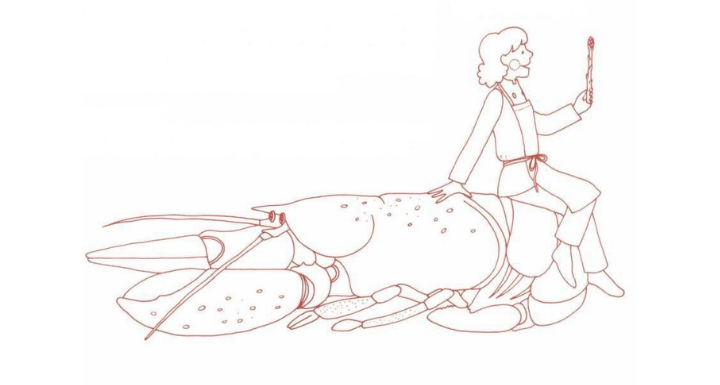
    An illustration by Rebecca Roller of a woman sitting on a lobster from “The Frog Commissary Cookbook.”Illustrations reprinted with permission by Doubleday, an imprint of Penguin Random House, LLC.

    The restaurants’ — and subsequently the book’s — recipes drew inspiration from the team’s travels and heritage, plus the Foods of the World series published by Time-Life. The staff would taste and discuss everything as a group. “We were not afraid to tweak it and make it ours,” Clark said. “If it didn’t taste good, it didn’t fly.”

    The Commissary and its accompanying market were a favorite of High Street Hospitality founder Ellen Yin. In some ways, they inspired her to open Fork and its erstwhile offshoot Fork: etc, she said. The book’s sidebars on setting up a bar and serving oysters taught her how to entertain.

    For a time, the book remained in the group’s cookbook library at the old High Street on Market. When staff needed ideas for canapés or instructions for making spring rolls, Yin would tell them to look through its pages. “These passed hors d’oeuvres are classic,” she said.

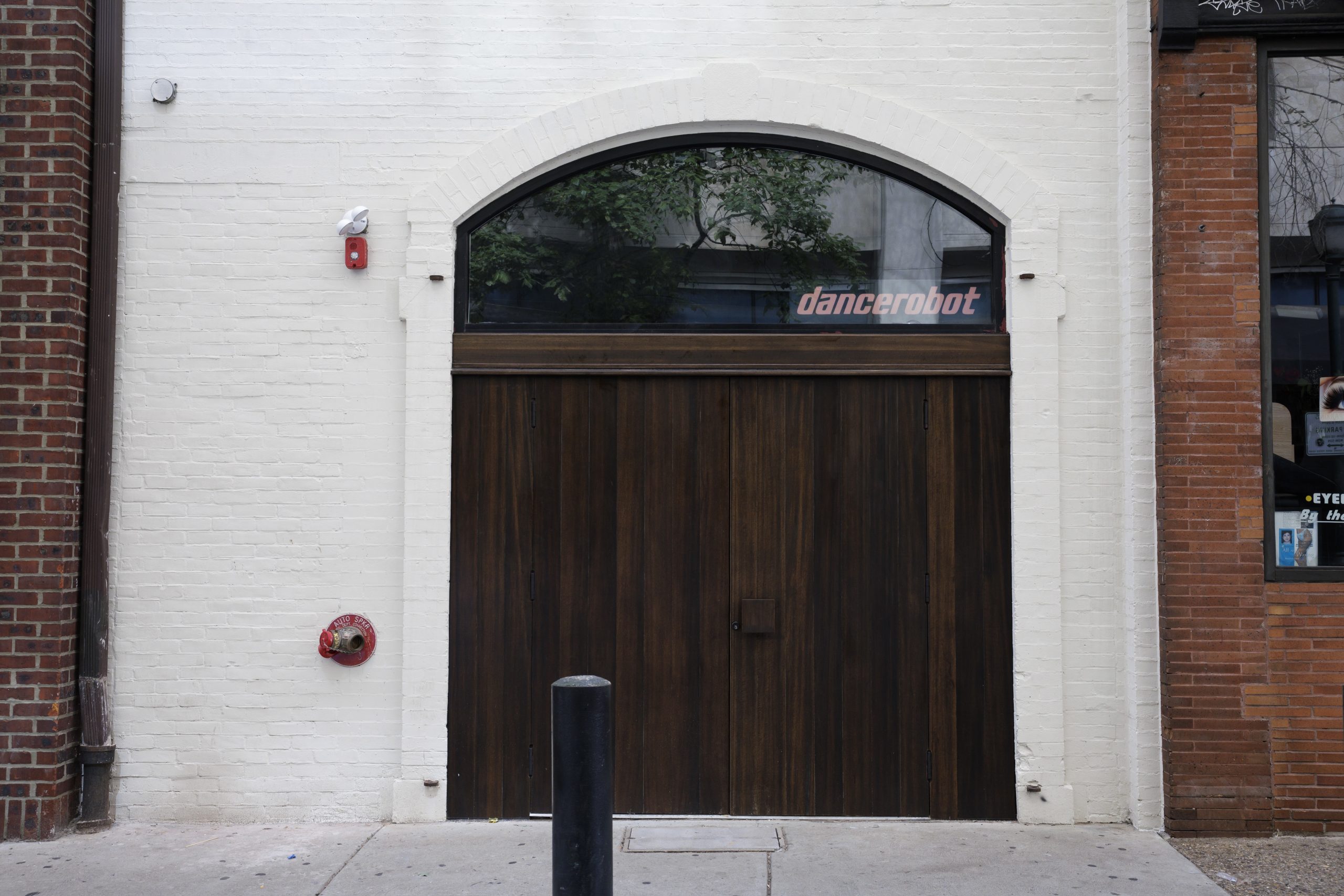
    The exterior of dancerobot at 1710 Sansom St., where Anne Clark’s carrot cake recipe from “The Frog Commissary Cookbook” is being served on Fridays and Saturdays.Monica Herndon / Staff Photographer

    Now out of print, the cookbook has staying power thanks to an e-book (including one available from the Free Library of Philadelphia) and a steady stream of copies that cycle through the city’s used bookstores. Many of its recipes — mushroom-barley soup, vegetarian chili with bulgur, and the chocolate chip fudge cake referred to as “killer cake” — are still home-cook staples.

    But, most of all, readers bake and reminisce about Clark’s carrot cake. At dancerobot, slices are available on Fridays and Saturdays, and may eventually become a permanent offering, Bacharach said.

    It’s a mostly faithful adaptation. When the restaurant’s pastry chef and baker, Sophie Wieber, tested the cake, Bacharach tasted something slightly new: “You did something different. I think I know what it is,” he said. It was more salt — Wieber’s only tweak — “and it was perfect.”

  • The Eagles and Phillies boost business more than the World Cup did, Philly bar owners say

    The Eagles and Phillies boost business more than the World Cup did, Philly bar owners say

    Philadelphia has been flush with tourists flocking here for the World Cup and the nation’s 250th, patronizing local restaurants, bars, and stadiums.

    And in the aftermath, bar owners are weighing the exact size of any World Cup sales boom, how it compares to an Eagles’ Super Bowl run, and whether Philadelphia truly is a 4 a.m. bar town as the state allowed some establishments to stay open later.

    One thing is clear: If the bar had TVs playing World Cup games, it had a chance at cashing in on fans eager to experience the game with others.

    Sports bars and tourism hot spots made out well

    Jason Evenchik’s Garage bars in Fishtown, Passyunk, and Rittenhouse saw “a nice bump in sales” throughout the World Cup, driving business up 30% to 40%, he said. Evenchik said the TV bars fared better than usual during what’s typically a summertime lull — and much better than when World Cup games were being broadcast from Qatar in 2022.

    Lucy’s Rittenhouse, a sports bar from FCM Hospitality’s Avram Hornik, also did well during the afternoon and evening games, especially when Team USA played, Hornik said. And it attracted patrons during its 2 a.m. to 4 a.m. shift, thanks to a Philadelphia 250 Permit, a temporary license that allows eligible bars to serve alcohol two hours past the city’s usual 2 a.m. closing time.

    “I don’t think it could have gone better,” Hornik said. FCM also operates the Center City nightclub Concourse, the family-friendly taproom Craft Hall, and riverside deck Morgan’s Pier, among other bars.

    “It was a mix of tourists. A lot of South Americans stayed out later because they’re used to places open late. Europeans we found like to camp out at a bar and stay for a while. There was also just a lot of Philadelphians who were happy to have some place to go and experience this moment,” Hornik said.

    Even bars without TVs like the decades-old Fergie’s Pub, nestled smack dab in Center City’s bar scene, saw a tourism boom, said owner Fergie Carey, attracting tourists to its authentic Irish experience. Carey even decided to open for the Fourth of July, when the bar usually closes, because there was so much foot traffic. But having no TVs can have repercussions.

    “The most people I’ve ever seen leave our pub because there are no TVs was on the Fourth of July,” Carey quipped.

    Evenchik and Hornik also saw lower engagement at some of their bars with little to no TVs or sports vibe, such as Evenchik’s Vintage wine bar, which he said suffered a 30% decline in sales during World Cup weeks. Hornik’s neighborhood restaurant and bars like Rosy’s Taco Bar or Harper’s Garden didn’t necessarily take a sales hit, but their private dinner party business “almost disappeared during the time of World Cup,” he said.

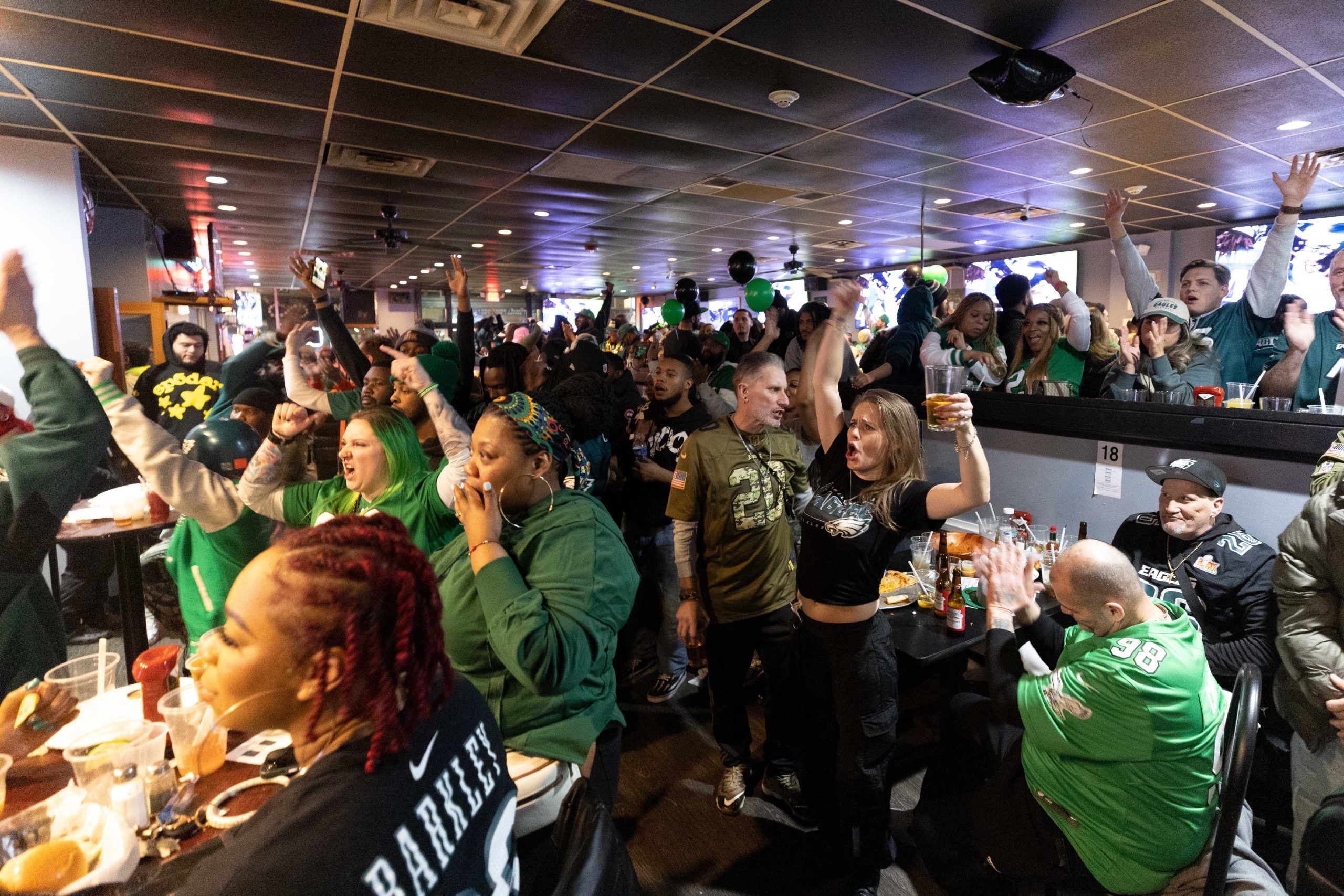
    Fans react to the Eagles play the Chiefs in the NFL Super Bowl LIX, in a bar near Frankford and Cottman Aves., Saturday, Feb. 8, 2025, in Philadelphia.Tyger Willliams / Staff Photographer

    The World Cup pales in comparison to a Super Bowl at Philly bars

    While the sports bars and hotter tourism areas saw a World Cup sales bump, bar owners say it was nothing compared to the revenue brought in from the Eagles going on a playoff-to-Super Bowl run, or the Phillies in the World Series.

    “I don’t think there’s anything that compares to Philly sports fans and their loyalty to our Philadelphia teams when they do well,” Hornik said.

    When a Philly sports team is doing well, Evenchik said, people seem more willing to go out and celebrate on the town.

    “In those times we see a bump in the sports bars, but also everywhere else, including restaurants, because everyone’s so joyous,” Evenchik said. “The World Cup doesn’t really get close to the Super Bowl madness.”

    At Philly’s oldest craft and woman-owned brewery, Dock Street, bartender Jessica Head and assistant general manager Abby Stover said they’ve been relishing the fervor of World Cup fans for every game, regardless of who is playing.

    “The World Cup finals are truly similar to us Philadelphia sports fans in their passion and how much they are willing to ride for their teams, but nothing can beat a good Eagles playoff run,” Stover said.

    “With an Eagles playoff run, we get the bursts during the games once a week, and the energy is undeniable. But the World Cup is really something so special,” Head said. “We’re so lucky we get to see that excitement every single day during the tournament.”

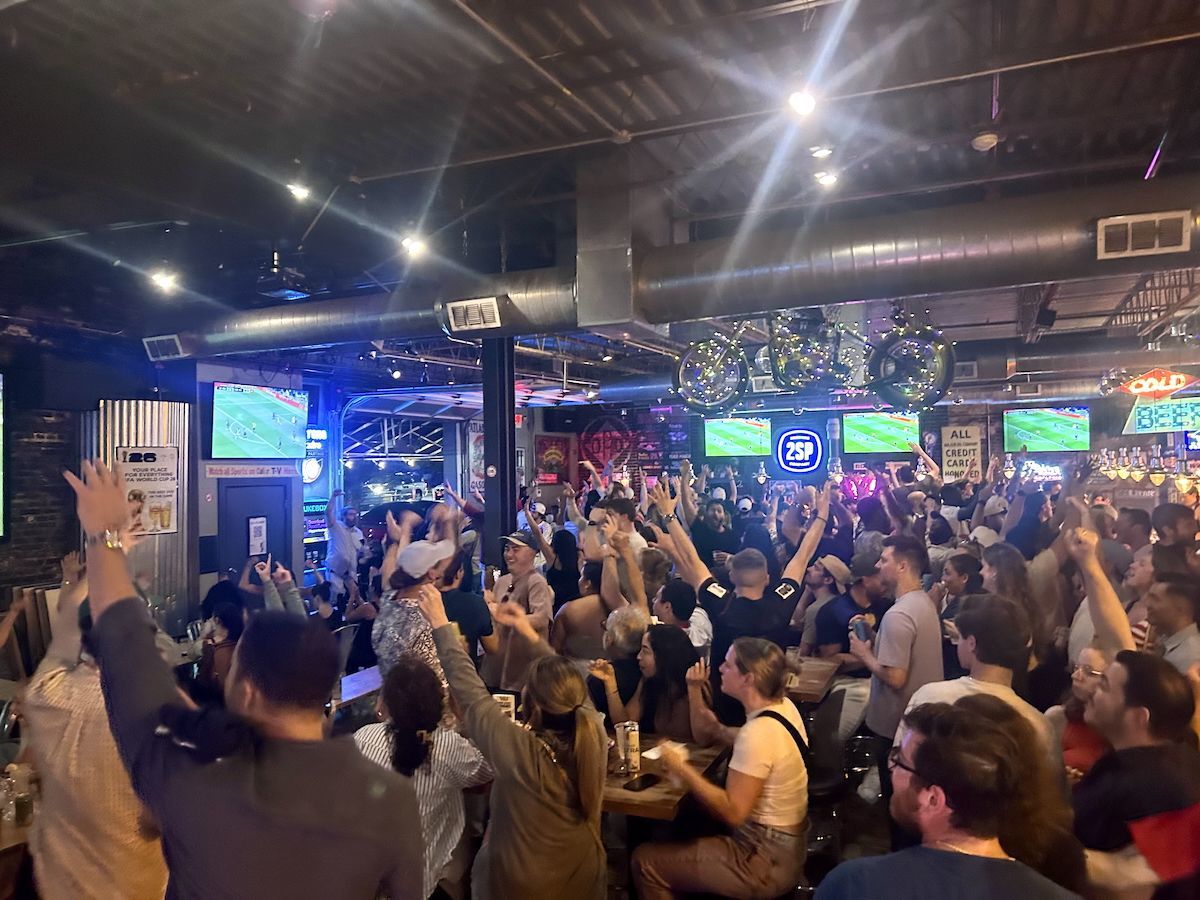
    Fans watch a Team USA match at the Fishtown sports bar, Garage, during the 2026 World Cup.(Courtesy of Jason Evenchik)

    4 a.m. bars in Philly aren’t as popular as believed

    Hornik applied for the Philadelphia 250 Permit at several of his bars.

    But only Lucy’s really enjoyed the benefits of 4 a.m. closing times. FCM’s other nightlife-oriented locations generally didn’t take advantage of their permits, Hornik said.

    While Hornik found success at Lucy’s, others have said the 4 a.m. party culture in Philadelphia just didn’t materialize.

    “I’ve spoken to a couple people who are involved in some of the bars that had a 4 a.m. license, and everyone kind of universally agreed that it cost a bit more than it was worth,” Evenchik said.

    The permit itself cost $500 to apply for, and another $250 for safety training from the city.

    Additionally, only a handful of the 104 World Cup matches were broadcast close to times near Philadelphia’s usual 2 a.m. closing time. “It didn’t really make sense because none of the games were really that late,” Evenchik said.

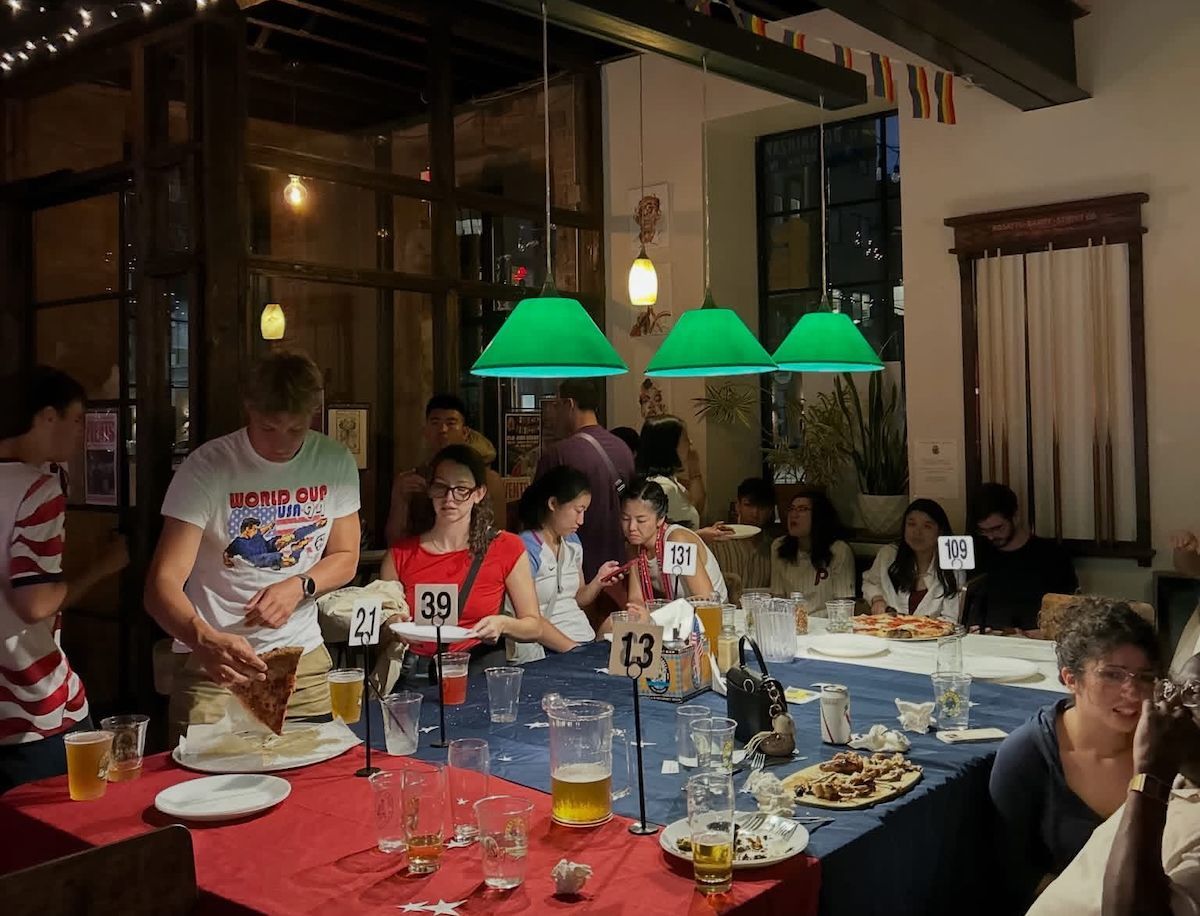
    World Cup fans share pizza and beer while watching matches at Dock Street South on Washington Avenue in South Philadelphia during the 2026 World Cup.(Courtesy of Renata Vesey)

    What lasts is the cultural exchange

    Neighborhood bars largely didn’t see a boom like Center City and established sports bars, but the World Cup did bring more business and, occasionally, international tourists, said Renata Vesey, creative director at Dock Street, which operates a brewery along Washington Avenue and a taproom in Fishtown.

    “When Côte d’Ivoire played, we got a big crew of Ivorians of all ages,” Vesey said. “It happened to be on a Sunday that we were also hosting a line-dancing event, so it was just such a random, cool mix of people and interests and vibes.”

    Bars were livelier and more crowded than usual, and Dock Street opened for a few games on Mondays, when it is normally closed, she said.

    Hornik’s neighborhood bars and restaurants like Rosy’s continued to draw their usual crowds as well. But what stands out to him is the role that Philadelphia bars and restaurants played in making the city one of the more memorable places to watch the World Cup, he said.

    “It’s not just our job to entertain them for one night, but to make them want to come back here,” Hornik said. “I think that Philadelphia did a great job of showing how great a city Philadelphia is.”

  • The best things we ate this week

    The best things we ate this week

    The Maddie J at the Biscuit Lady

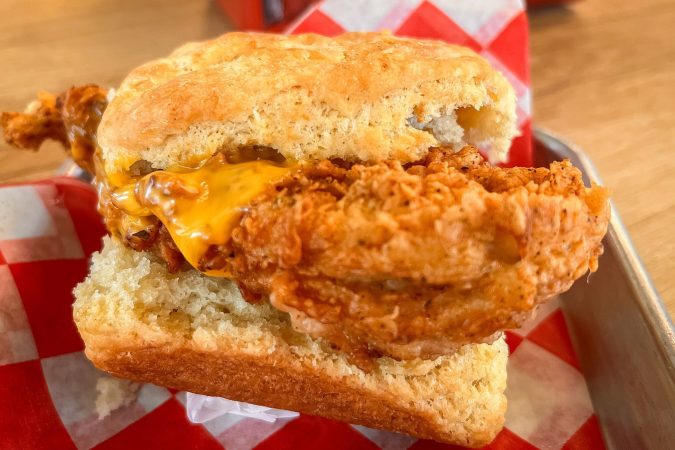
    Two great new moves by Tara Finder at the Biscuit Lady’s Plymouth Meeting location: later hours on weekends (till 8 p.m. for dine-in or takeout) and a chicken biscuit sandwich that’s only available after 2:30 p.m.. The Maddie J is 5 ounces of crispy fried chicken juiciness, a slice of American cheese, and a swipe of house Buffalo sauce. There’s a huge crunch and a zingy kick, but keep your plate handy because the light, flaky biscuit can barely contain all that goodness. It’s the perfect late-day counterpoint to morning specialties, such as the smash burger with bacon, fried egg, and jalapeño pimento cheese (Don’t Go Bacon My Heart) and the cheesesteak riff with ribeye, Cooper sharp, egg, and onion (the Stella). The Biscuit Lady, 115 Plymouth Rd., Plymouth Meeting, 484-243-6957, visitthebiscuitlady.com

    — Michael Klein

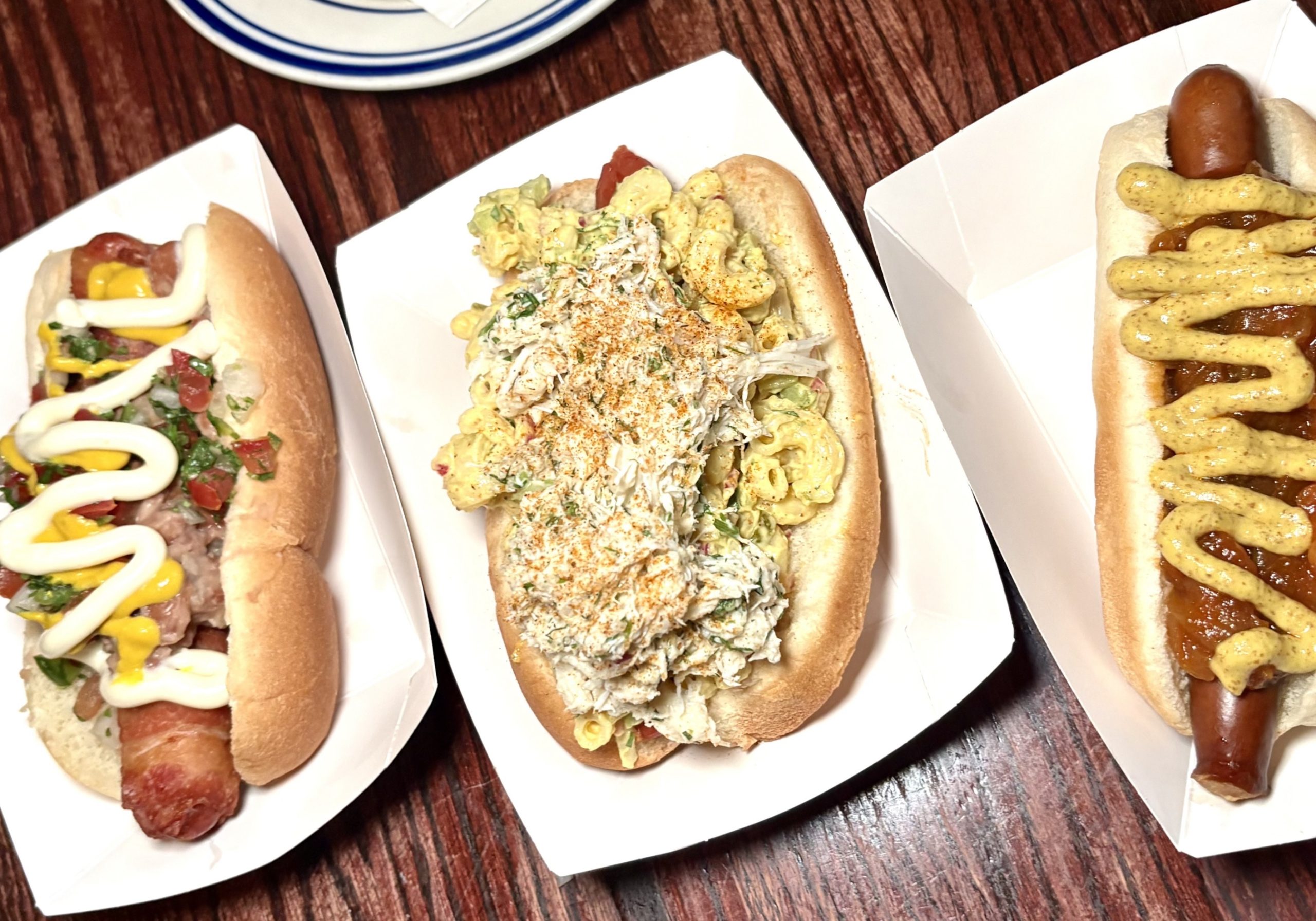
    Three weekly specials from Royal Tavern’s July-only hot dog menu. From left: a fried Diamondback Dog wrapped in bacon with salsa and beans, an Old Bay Bomber topped with Old Bay macaroni salad and crab, and Barrel It Up The Bronx topped with onion sauce and brown mustard.Craig LaBan / Staff

    Dog Days hot dog specials at Royal Tavern

    If you grew up in a hot dog culture like I did, devouring every Coney I could find in metro Detroit, the snap of the natural casing on Royal Tavern’s bespoke wieners is a flashback revelation. The Bella Vista bar’s third annual Dog Days of Summer event is in full throttle through the end of July, and they’re not serving skinless franks — the industrial norm — here. The taut-yet-delicate resistance on these artisanal links unleashes a savory rush of meaty juice, the pureed pork-beef blend harboring a balanced soupçon of coriander, garlic, and applewood smoke.

    Royal Tavern chef Nic Macri — whose butchery chops are still intact from his charcuterie run with La Divisa at Reading Terminal Market — began Dog Days two years ago as a labor of love to boost the bar’s typical summer doldrums. He ended up selling over 5,000 dogs that first July, then 7,000 in 2025, limiting it once again to the month due to the logistical challenge of transforming his small kitchen into a temporary frankfurter factory. This year, the restaurant aims to hit 10,000. To do so, Macri has turned to Happy Valley Meats to co-pack its proprietary recipe with responsibly-raised meats.

    But the creative challenge is still considerable: Four new preparations are unveiled every Monday for five weeks, pairing different techniques (steamed, chargrilled, fried, griddled) with an array of flavor toppings. No modifications allowed. I was charmed by the Baltimore-themed picnic of a dog last week topped with Old Bay macaroni salad and a scoop of fresh crab. But the purist in me kept returning to the Bronx-inspired steamer topped with saucy onions and brown mustard that still allowed that quality link to shine. There will be new cast of dogs next week themed to the World Cup, then a final quad dog bracket to bring it home, culminating in all 24 returning July 31 to celebrate a month of memorable wiener studies. The chef insists it will then be time to return to the fall programming of burgers, smoked beef, and fish sandwiches, no matter how much I plead our case: If Macri hasn’t turned Philly into a true hot dog town by then, no one can.

    Royal Tavern, 937 Passyunk Ave., 215-389-6694, royaltavern.com

    — Craig LaBan

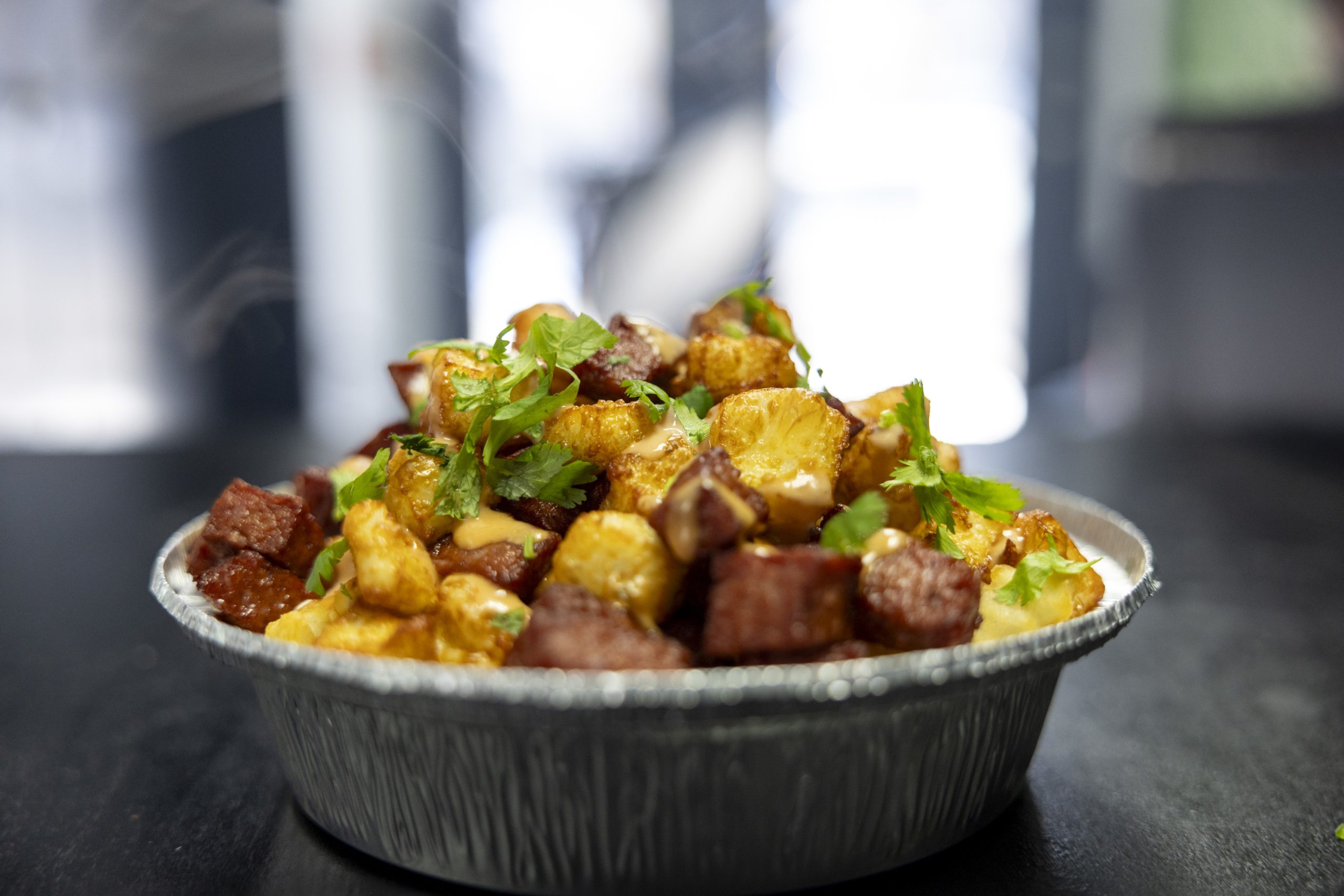
    Loaded fries at El Sazón R.D., 1030 N. Second St.Tyger Williams / Staff Photographer

    Loaded fries at El Sazón R.D.

    El Sazón R.D. in Northern Liberties only serves three things: smash burgers, empanadas, and fries — all with a Dominican twist. Luckily, it does them extremely well. The smash burgers have a crisp, lacy edge and come topped with queso de freir, a fried slab of slightly salty white cheese that elevates the sandwich from just a burger into something I’d wait in line for.

    The limited menu’s true hero, however, are the loaded fries. The dish is a decadent play on salchipapas — a street food ubiquitous across Latin America that combines fries with cut-up hot dog links — that comes with cubes of queso de freir and two hefty drizzles of tangy mayo-ketchup. The franks are juicy enough that they pop in your mouth, while cubing and frying the white cheese basically renders them into delectable cheese curds. Beware, though: These fries are very heavy, a meal in and of themselves that I often have to follow up with a nap. El Sazón R.D., 1030 N. Second St., 917-920-1316, elsazon-rd.com

    — Beatrice Forman

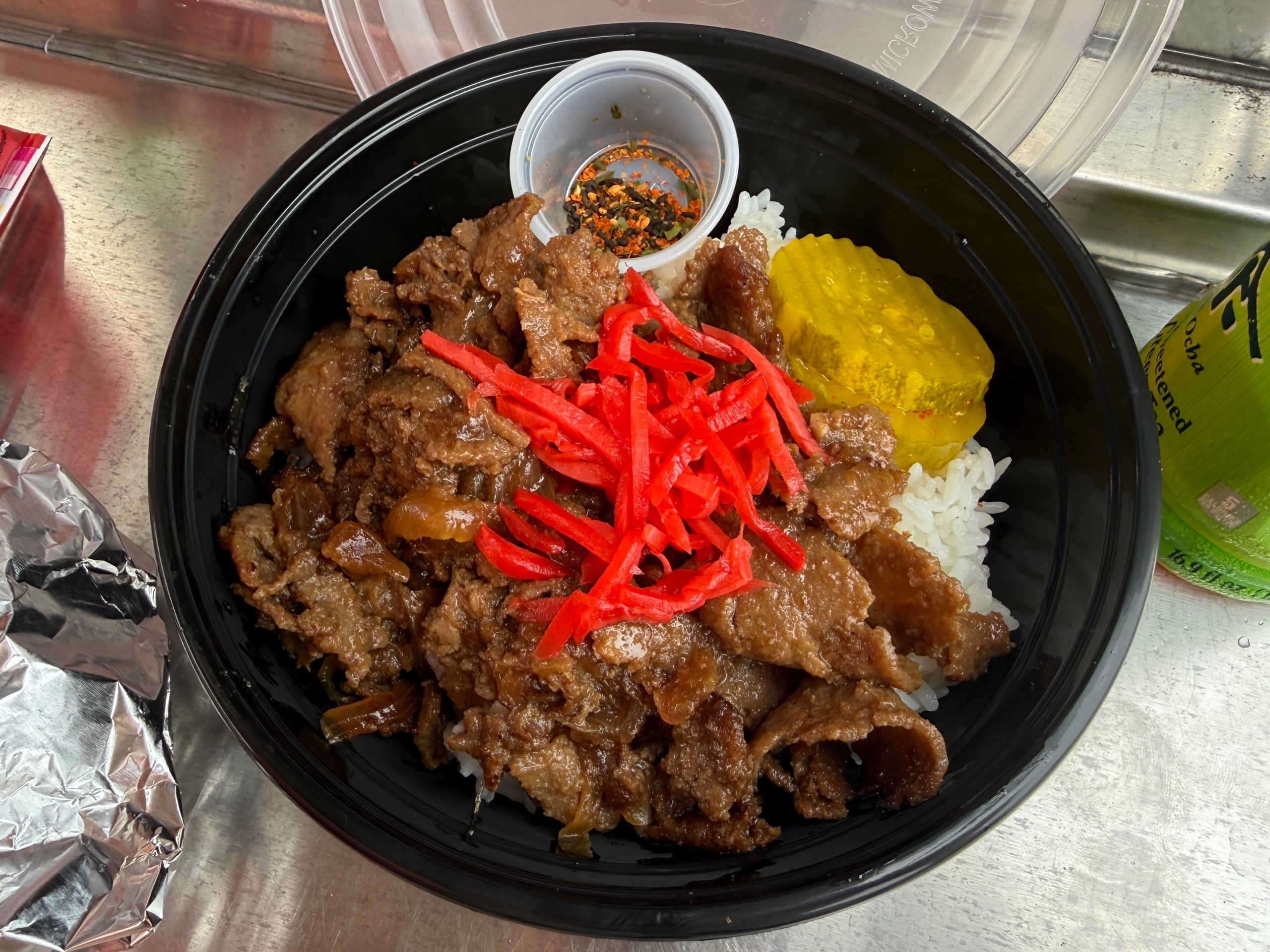
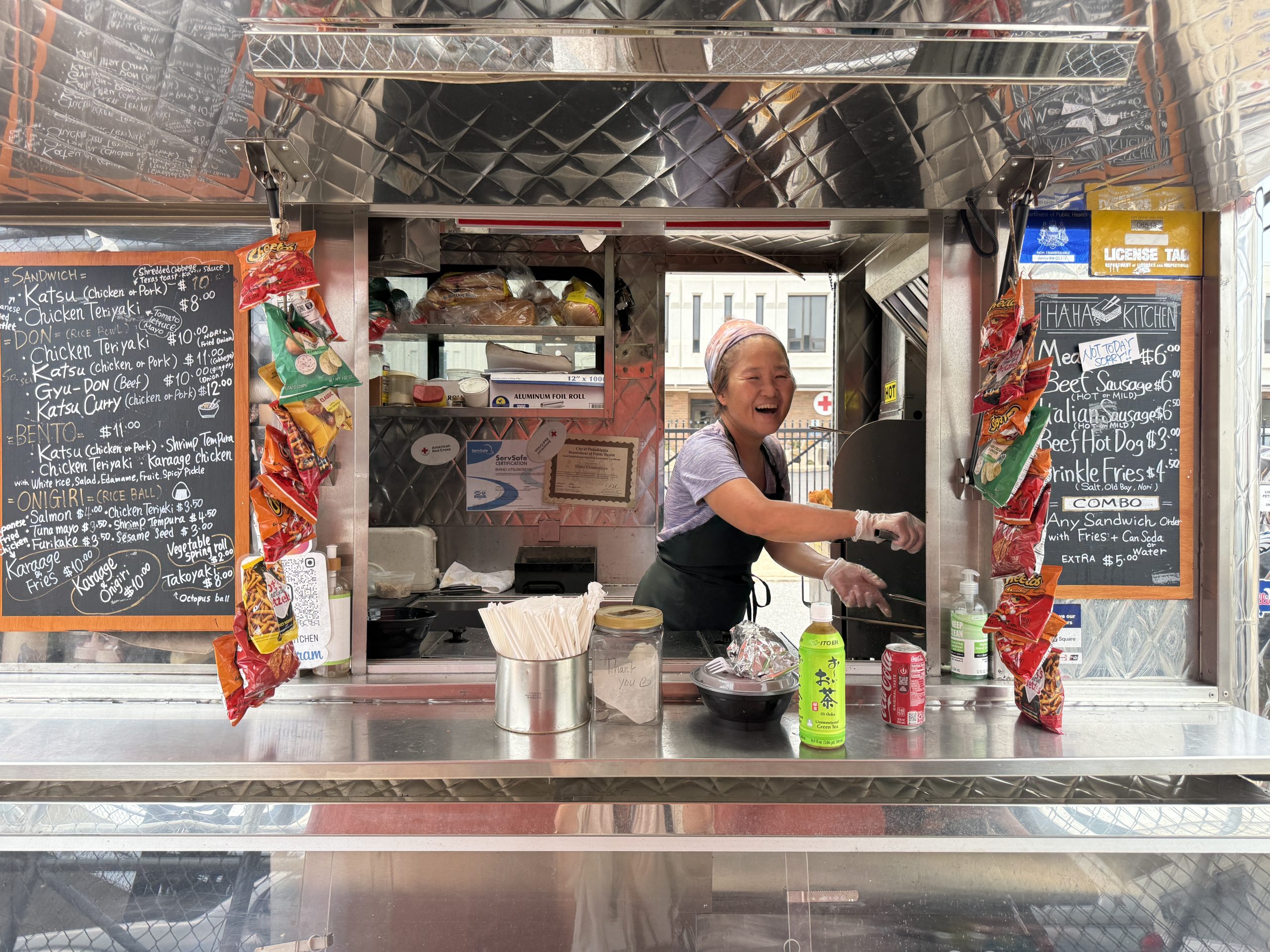
    Gyu-don at Haha’s Kitchen, a food cart that typically parks at 471 N. Seventh St. in Spring Garden.Kiki Aranita /

    Gyu-don at Haha’s Kitchen

    When Shikoku, Japan, native Shiho Utsunomiya first came to Philadelphia in 2000 and tried a Philly cheesesteak, she exclaimed, “This is a gyu-don! Well, the meat is anyway.” Eighteen years later, she began serving a chipsteak-based gyu-don at her food truck, Haha’s Kitchen (“Haha” means “mother” in Japanese), which typically parks in Spring Garden. The $10 bowl has tremendously tender beef, laced through with sweet, slow-cooked onions and decorated with a neon pink crown of pickled ginger. Served over steamed kokuho rice, it’s decadent and filling, and perhaps one of the best lunch deals in town.

    It’s also a marvel to watch Utsunomiya doing absolutely everything in the cart, from taking orders to preparing a large menu that encompasses American lunch standards like Italian sausage and hot dogs to chicken karaage, onigiri, and of course, this magnificent gyu-don. The best part of lunch may be witnessing how her cheerful but fierce independence comes to bear in the small kitchen. Utsunomiya worked at the now-closed Hikaru in between bearing and raising children, “but it’s very difficult to have kids and work in a restaurant kitchen,” she said. You should also grab one of the $3.50 tuna mayo onigiri for later. Generously sized and lovingly made, it tastes like a Japanese mother tucked it into your lunchbox. Haha’s Kitchen, 471 N. Seventh St., instagram.com/hahas_kitchen

    — Kiki Aranita

  • My coworker keeps calling Wawa ‘waWa’

    My coworker keeps calling Wawa ‘waWa’

    This week’s question (Have your own? Submit it here.):

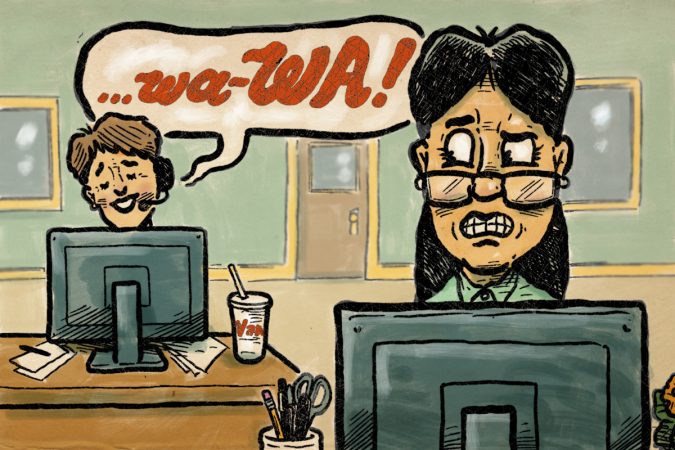
    My new-to-the-area coworker keeps calling Wawa “waWa” where she emphasizes the second syllable more than the first. The first time it happened, I just made sure to say it correctly so she’d get the hint. It didn’t work. The second time, I let it go. The third time, I told her the deal but was maybe too subtle because I didn’t want to seem rude. Now, she’s still saying it that way. And to be clear: she has no distinguishable accent. Do I say something more explicitly or has the time passed? I’m trying to help!

    Dugan Arnett, Life & Culture reporter

    First of all, I fear I’m not going to be much help on this one, because this is the best thing I’ve heard in months and I’m 1,000% going to be calling it “waWA” from now on. Infinitely more fun to say.

    Stephanie Farr, features columnist

    As someone who was a transplant many moons ago, I say to you, a recent Philly transplant, that is not going to go well.

    I’m not even sure how to pronounce that. The closest I’m coming up with similar is a-HA, like the second syllable is a surprise.

    Dugan Arnett

    Wa-WAH???

    Honestly, mispronouncing words to make them sound more fun is one of my favorite things. I’ve been calling her Lady guh-GAH for years.

    Are we sure the coworker isn’t doing this on purpose?

    Stephanie Farr

    I am married to someone who does that and it drives me bananas! I remember when we were dating I brought it up to my female coworkers, like “I don’t know if I can live with this guy mispronouncing and making up words on purpose. I’m an English major, damn it, and he’s not Shakespeare!” They told me if that was my biggest problem with the guy to get over it. I accepted it, but I have never gotten over it.

    So you make a good point that this person could be doing it on purpose. How do you pronounce Wawa?

    Dugan Arnett

    Well, from now on I’ll be pronouncing it “waWA.”

    I think you’re looking at this all wrong. This is an excellent quality in a partner, the greenest of flags. I’d like to have a beer with your husband so we can mispronounce a bunch of words together. Plus, he might very well be Shakespeare. We don’t know.

    As for the coworker, you’ve got to let her cook.

    Stephanie Farr

    He’s from Delco so he’s definitely not Shakespeare. Let me tell you and our reader a story. I moved to Philly from a land where hoagies were called subs. In my first few months here, I stopped at the deli counter of the Fresh Grocer in West Philly and ordered a “roast beef sub” and the worker behind the counter loudly and publicly shamed me in front of all the other waiting customers. “We don’t call it a sub ‘round here! What do we call it?” the employee asked the small crowd. “A hoagie!” they yelled at me. I never called it a sub again.

    Philadelphians will embarrass the hell out of you for word choice and pronunciation, but it’s almost always to save you further embarrassment down the road. So public shaming is one avenue the reader could take.

    Dugan Arnett

    That does sound like a rather sobering event. I suppose I can see wanting to spare someone that same indignity.

    I get the sense that this coworker might be immune to public shaming, though. She’s already been corrected three times and is still holding strong. I respect the dedication.

    Stephanie Farr

    Another method I might suggest to this person is to flood the newcomer with Wawa-related media, in which the word Wawa is properly pronounced. Maybe be like, “Hey did you ever see this Jason & Kylie Kelce Wawa commercial?” or “Have you heard the Hoagiefest playlist on Spotify?” Repetition could work, and over time it probably will. No matter how long you want to hold on to the correct or mispronunciation of a word, Philly’s hoagie mouth has a way of seeping in. I say this as someone who used to say water and now says wooder.

    Dugan Arnett

    Flood the zone. I like it.

    Stephanie Farr

    If this person really wants to help their new coworker, they should not only stress the correct pronunciation of Wawa, but also the correct pronunciation of ack-A-me.

    Dugan Arnett

    I just want everybody to get along. Is that too much to ask?

    Stephanie Farr

    In Philly, yes.

  • EMei owner leases Bookbinder’s space in Old City, his fourth landmark restaurant acquisition in a year

    EMei owner leases Bookbinder’s space in Old City, his fourth landmark restaurant acquisition in a year

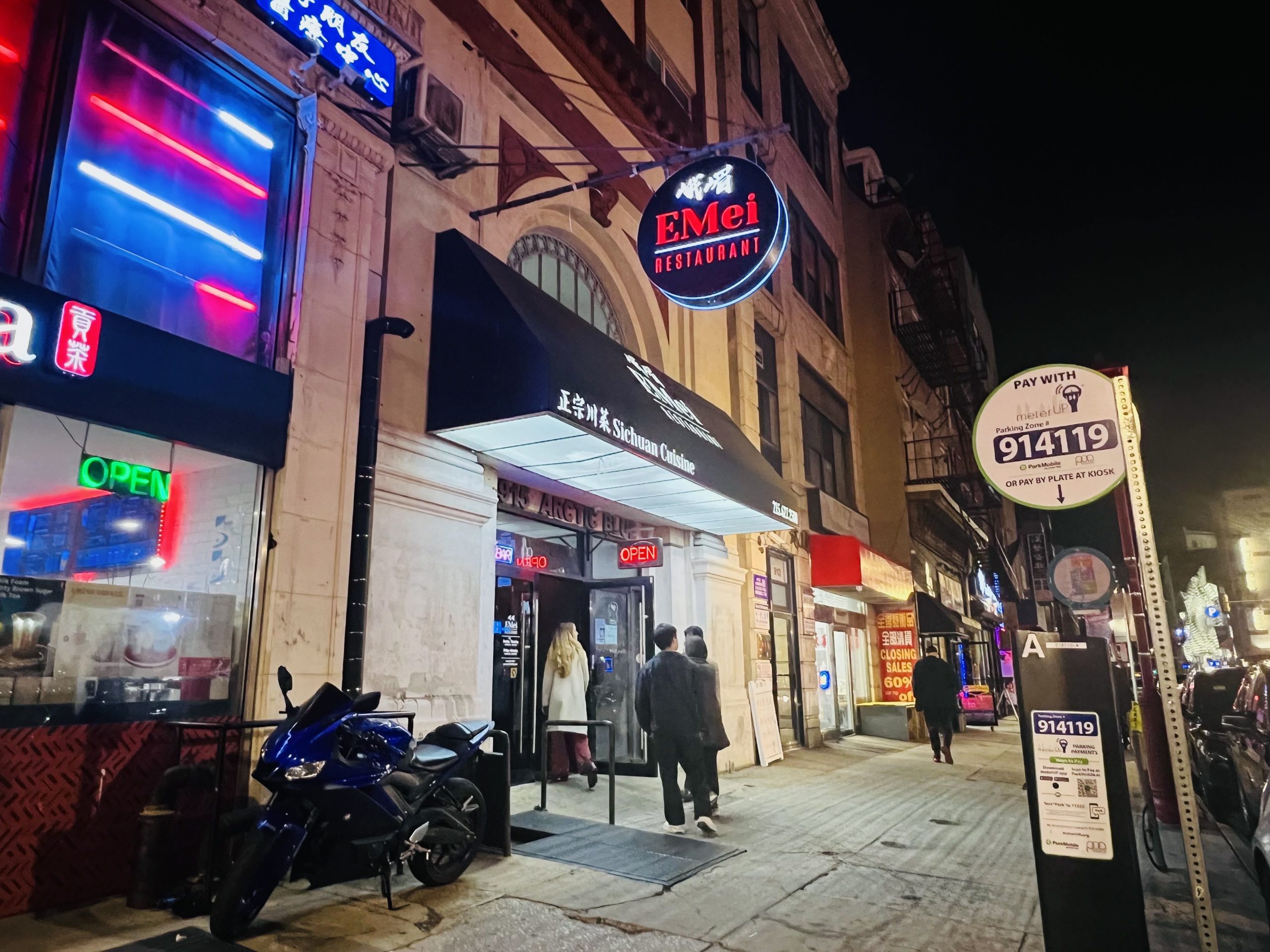
    Dan Tsao, the owner of the Chinatown Sichuan restaurant EMei, has leased the former Olde Bar at Second and Walnut Streets in Old City. It’s the fourth landmark restaurant property he has taken on in the Philadelphia area in the last year.

    The building, home to Old Original Bookbinder’s for generations before becoming Olde Bar in 2015, joins the former John Henry’s Pub in Ardmore, Marra’s in South Philadelphia, and Irish Pub in Rittenhouse in Tsao’s portfolio.

    Tsao said this deal marks the end of an expansion plan driven by the long lines and limited capacity of the basement kitchen at his restaurant at 915 Arch St. EMei is one of Philadelphia’s most acclaimed Chinese dining rooms, earning a spot on The Inquirer’s 76 list of essential restaurants in 2024.

    “People see Bookbinder’s as another restaurant,” Tsao said. “I see it as the large production kitchen we’ve been dreaming about. We’ve insisted on making everything from scratch — our chili oil, dumplings, egg rolls, scallion pancakes, sauces — you name it. We’ve never wanted to cut corners. This gives us the space to keep doing things the way we’ve always believed they should be done.”

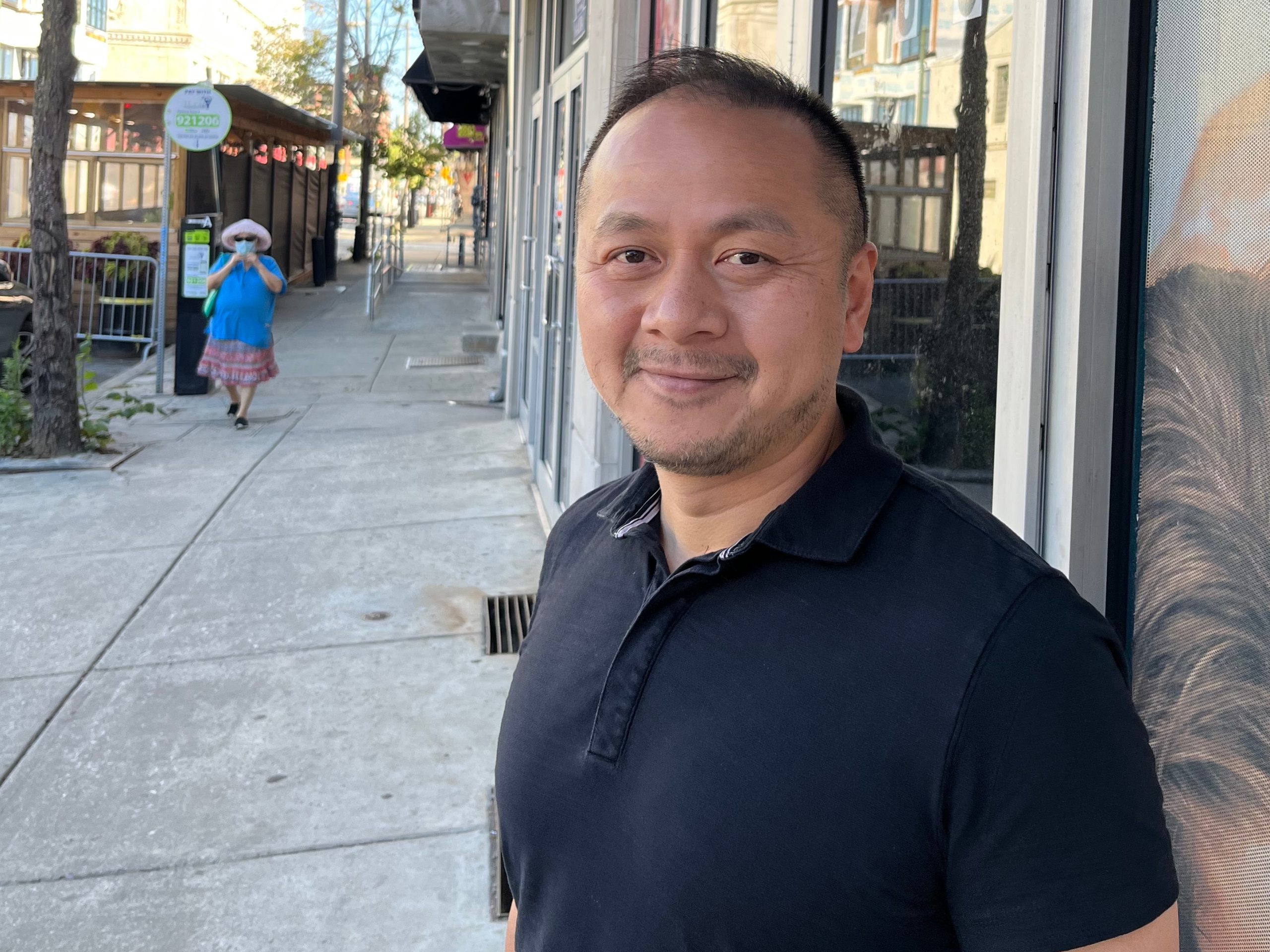
    Dan Tsao, publisher of Metro Chinese News and other publications, and owner of EMei, in 2022.Joseph N. DiStefano

    “From the outside, it may look like we’ve been on an acquisition spree, but that really wasn’t the goal,” Tsao told The Inquirer. “Our focus now is opening these locations one at a time and making sure each one succeeds before we think about anything else.”

    Each property will have a different role, Tsao said. The former John Henry’s, on Cricket Avenue, and Marra’s, on East Passyunk Avenue, are both destined to become future EMei restaurants. Old City will first serve as a commissary kitchen before adding a dining room, bar, and event venue, while the former Irish Pub — a mixed-use building spanning 2007-11 Walnut St. — is being developed as a broader hospitality concept rather than another EMei location.

    Tsao, who emigrated from China in the 1990s and graduated from Pennsylvania State University in 1999, owns EMei and nearby TingTing’s Cafe, along with New Mainstream Press, publisher of Metro Chinese Weekly and Metro Viet News. His mother-in-law, Jinwen Yu, and chef Yongcheng Zhao opened EMei in 2011; Tsao and his wife, TingTing, took over the business in 2019. (Zhao is still the chef.)

    Dan Tsao’s restaurant EMei at 915 Arch St. in Chinatown in 2025.Michael Klein

    Tsao said the acquisitions were never intended to happen simultaneously — several independent opportunities simply surfaced within a short period. “It may look like we’re expanding quickly, but internally we’re actually slowing down,” he said.

    “The way I look at these projects is that I’m buying them partly as a long-term real estate investor and partly as an owner-operator,” he said. “That gives us the flexibility to move at our own pace, take the time to figure out each space, and make sure we do it the right way instead of rushing to open.”

    A kitchen too good to pass up

    The Olde Bar/Bookbinder’s property is different from the others: Rather than purchase the condominium space outright, Tsao signed a lease with an option to buy. The Philadelphia Business Journal first reported EMei’s application for a liquor license at the address.

    The biggest draw wasn’t the stained glass and landmark dining rooms, decked out in late-19th-century furnishings — it was the kitchen. Spanning nearly half the ground floor, it includes five walk-in refrigerators and freezers and two 32-foot cooking lines beneath exhaust hoods, allowing Tsao to begin operations without the extensive demolition and rebuilding required at his other properties.

    “If not for the kitchen space, I would not consider it,” Tsao said. “It is very hard to find such a large kitchen in Center City.”

    The property, at 125 Walnut St., includes about 13,000 square feet on the ground floor, plus 5,000 square feet of basement storage. The first phase will be largely behind the scenes: Tsao plans to use the building as a commissary kitchen to relieve pressure on the Chinatown restaurant, while also running takeout and delivery as EMei Old City. Later, he expects to open a roughly 60-seat dining room and bar, followed by an event venue. He’s considering calling the overall complex the Bindery and the bar the Publisher Bar — nods to both the building’s Bookbinder heritage and his own nearly two decades in publishing.

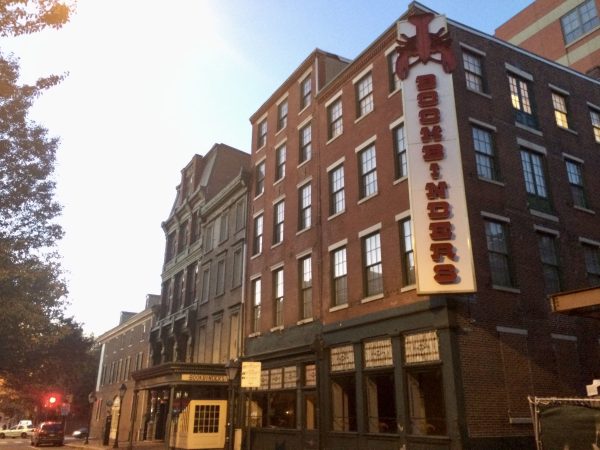
    The vertical neon Bookbinder’s sign on the east corner of the property “has to stay,” Tsao said.

    Work has begun at all four properties, but Tsao said they will open one at a time. Because the kitchen is largely intact, the Old City site may be the first of the new locations to begin limited operations, with dining and event spaces to follow as renovations continue in Ardmore, on Passyunk, and in Rittenhouse.

    A building with many lives

    Old Original Bookbinder’s traces its roots to an oyster saloon that Samuel Bookbinder opened in 1893 at 525 S. Fifth St. before moving to 125 Walnut St. in 1898. Over the next century, it became one of Philadelphia’s signature restaurants, drawing presidents, politicians, celebrities, and generations of diners for oysters, lobster, and its famed snapper soup. For many, it was their first ritzy dining experience in the days when people dressed up for dinner.

    It also spawned a crosstown rival after a family split. Bookbinders Seafood House opened in 1935 at 215 S. 15th St. and closed in 2003. It was later an Applebee’s, which ran from 2005 to 2020, and is now a music bar called Vinyl.

    After a major renovation and condominium conversion in the early 2000s, Bookbinder’s struggled financially and closed in 2009 amid bankruptcy. The Taxin family, who bought the original Bookbinder’s in 1945, still owns an Old Original Bookbinder’s restaurant in Richmond, Va., which opened in 1999.

    Chef Jose Garces revived the landmark in 2015 as the Olde Bar, preserving much of the historic architecture while reimagining it as a contemporary oyster house and cocktail bar.

    The restaurant filed for Chapter 11 bankruptcy protection in 2018 and later was acquired by investors. The restaurant closed for public dining in 2024 but continued as an events venue and served as headquarters for Garces Events, the catering company founded by Garces and owned by Compass Group USA. Compass closed both Garces Events and the Olde Bar last year.

  • South Philly’s newest cafe has a home-run breakfast sandwich and lines out the door

    South Philly’s newest cafe has a home-run breakfast sandwich and lines out the door

    All Jeremy Asch and Abby Armstrong wanted was a good breakfast sandwich close to their Point Breeze home.

    “At some point, you say, ‘Screw it, I’ll do it myself,’” Asch said. “If we want it, I’m sure somebody else wants it, too.”

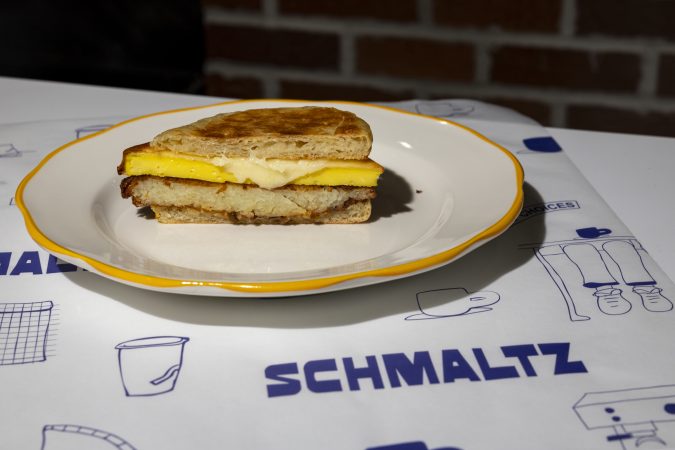
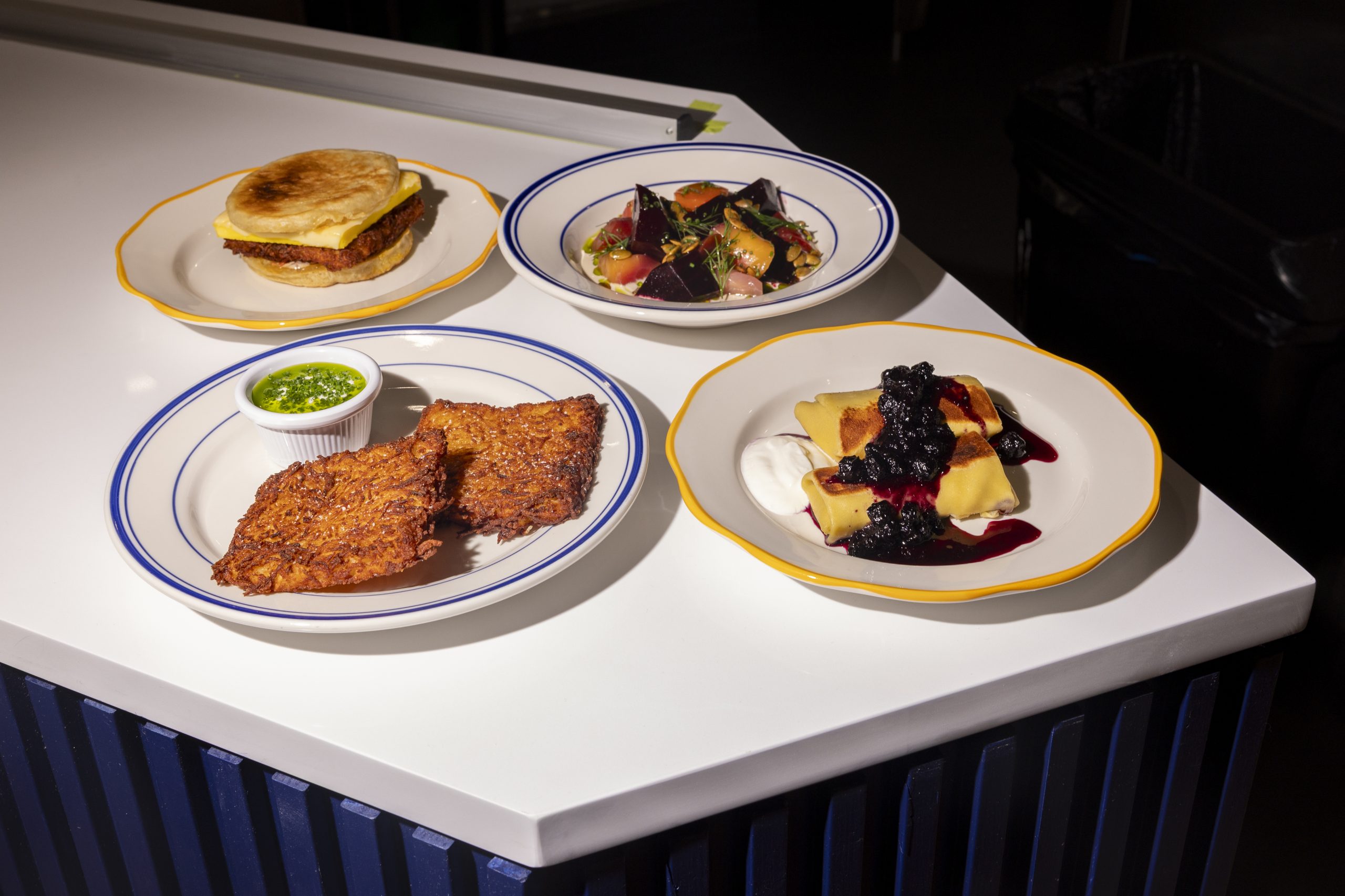
    The result is Schmaltz, a new breakfast-and-lunch café at 18th and Wharton Streets serving a deliberately tight menu of latkes, blintzes, and egg sandwiches on house-baked English muffins. Since opening earlier this month, it has drawn lines during its Friday-through-Monday service.

    Cheese blintzes, latkes, beet salad, and breakfast sandwich make up most of Schmaltz’s menu.Aidan T. Gallo / Staff Photographer

    The sandwich that Asch and chef Sam Chertock devised satisfies that craving with an oniony potato pancake perched atop a slow-baked egg, whose firm texture helps the sandwich hold together. Tallarico’s hoagie spread, blended with seasoned mayo, supplies a Philadelphia accent.

    “Are we breaking culinary boundaries? No,” Asch said. “It’s a latke on an egg-and-cheese sandwich.” Customers can also add gribenes — chicken-skin cracklings — and have the English muffin slathered with schmaltz, or rendered chicken fat.

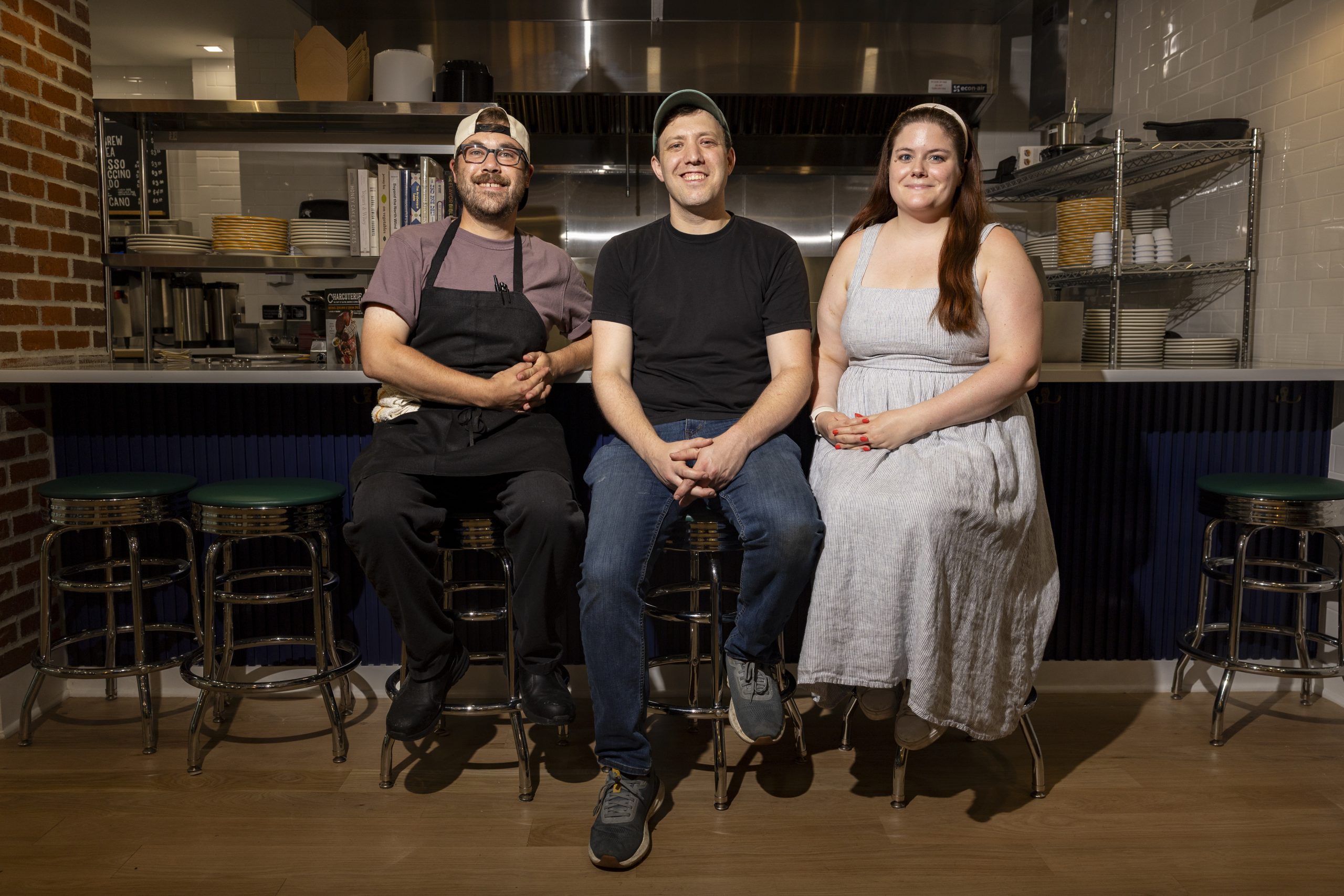
    Chef Sam Chertock (left) and owners Jeremy Asch and Abby Armstrong at Schmaltz’s kitchen counter.Aidan T. Gallo / Staff Photographer

    Schmaltz joins newer neighborhood arrivals including Little Susie’s Coffee & Pie and Hannah K Cafe. American Sardine Bar, which opened in 2011, is about two blocks north.

    The couple bought the building at 1300 S. 18th St. in 2023, creating a wide-open room with an espresso station and order counter, six stools facing the kitchen, six more along the window, table seating, and a small merchandise counter. The couple built a ramp leading toward the rear of the dining room, which toddlers have happily treated as a runway while their parents wait for food.

    The building previously housed the Pharmacy, a DIY music venue, art gallery, and coffee shop. Before that, it was the medical practice of Walter Lomax Jr., a pioneering Black physician.

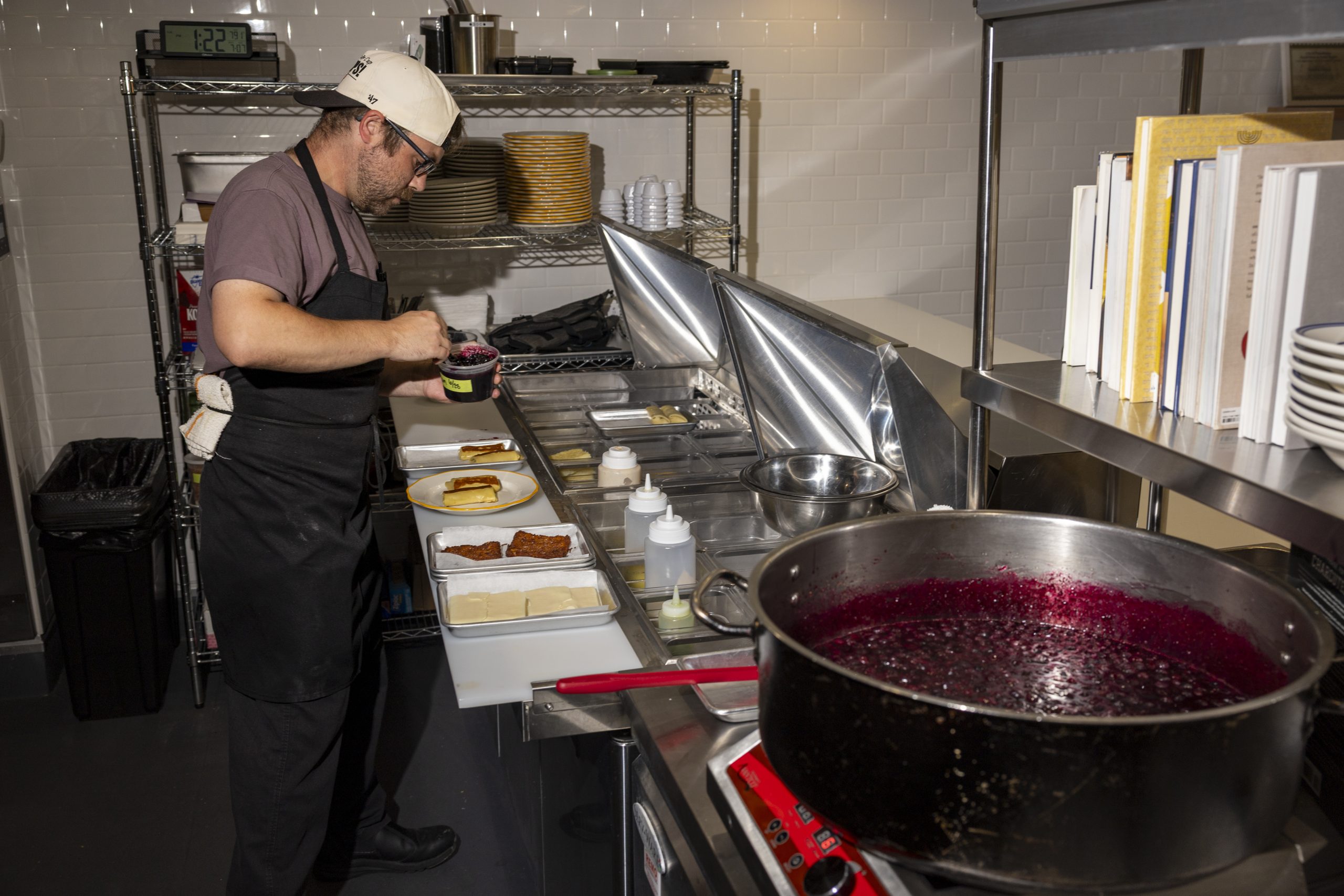
    Chef Sam Chertock works at Schmaltz. A pot of jam is on the stove as a side for the blintzes. Aidan T. Gallo / Staff Photographer

    That neighborhood accessibility is central to Schmaltz’s approach.

    It’s a casual counter, not a full-scale Jewish restaurant or deli, Asch said. The opening menu is deliberately small. Besides the signature sandwich, cheese blintzes, and latkes, there’s a roasted beet salad and a shawarma-spiced chicken salad sandwich on rye, plus coffee, cold brew, espresso drinks, teas, and soda.

    But no bagels.

    “I will die on this hill,” Asch said. “There’s a lot more to Jewish restaurants than the bagel.”

    Selling bagels, he said, can quickly define a restaurant, requiring staff and equipment to produce large quantities while pushing the rest of the menu into supporting roles. Schmaltz may eventually serve a locally made bagel as part of a specific dish, but Asch does not want it to become a bagel shop.

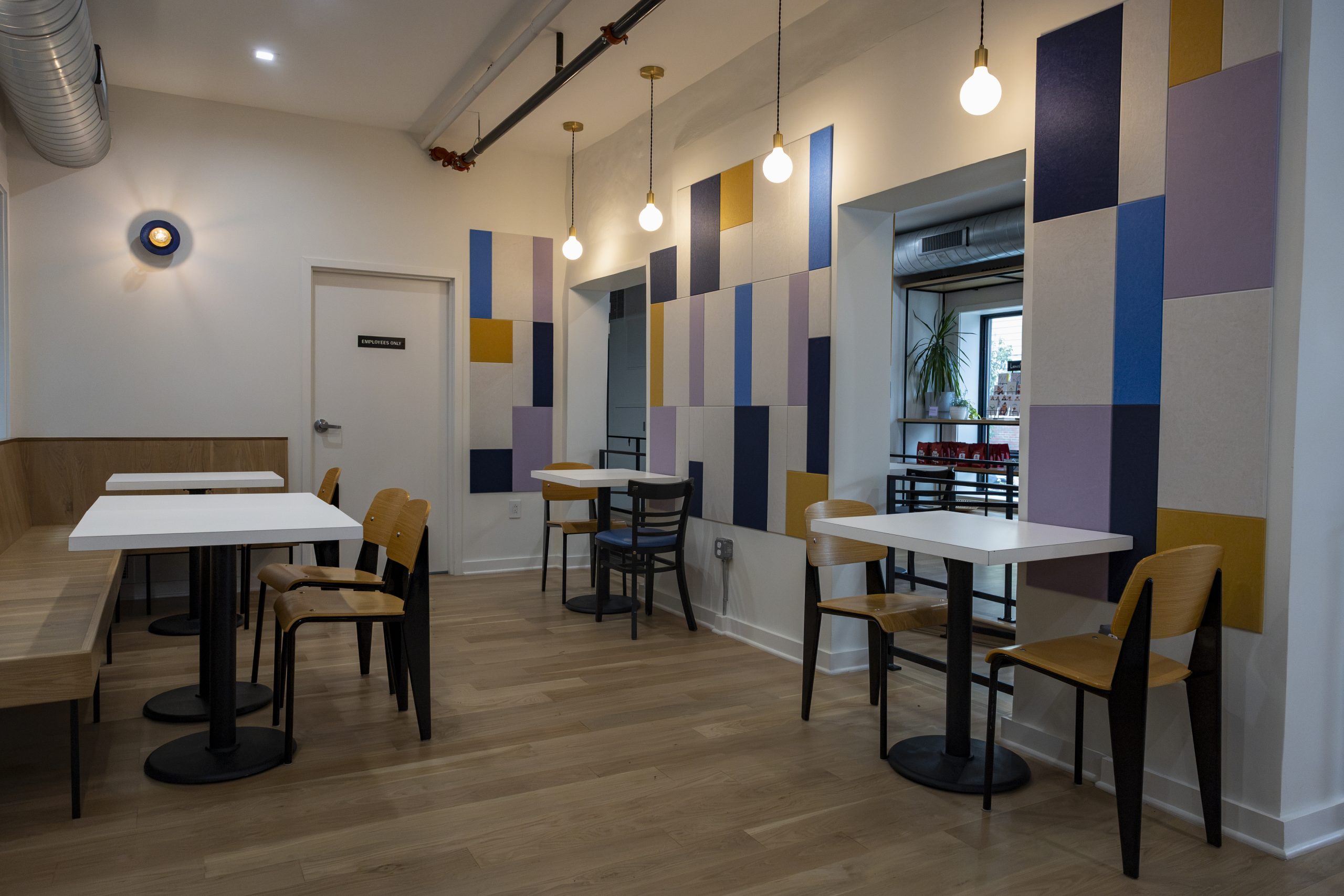
    Table seating at Schmaltz.Aidan T. Gallo / Staff Photographer

    Instead, the cooking draws broadly from the Ashkenazi and Eastern European food Asch and Chertock grew up eating. The blintzes, made from Asch’s recipe, are filled with lightly sweetened farmer’s cheese and served with Chertock’s jam.

    Asch, who grew up in Bryn Mawr and attended Episcopal Academy, did not initially plan a restaurant career. After graduating from Brandeis University, he returned to Philadelphia in 2015 and spent several years working in clinical research at Penn Medicine.

    Around the start of the pandemic, he left research and began cooking professionally, first at Grace Tavern. He later worked at Baology with Judy Ni and Andy Tessier before joining a.kitchen.

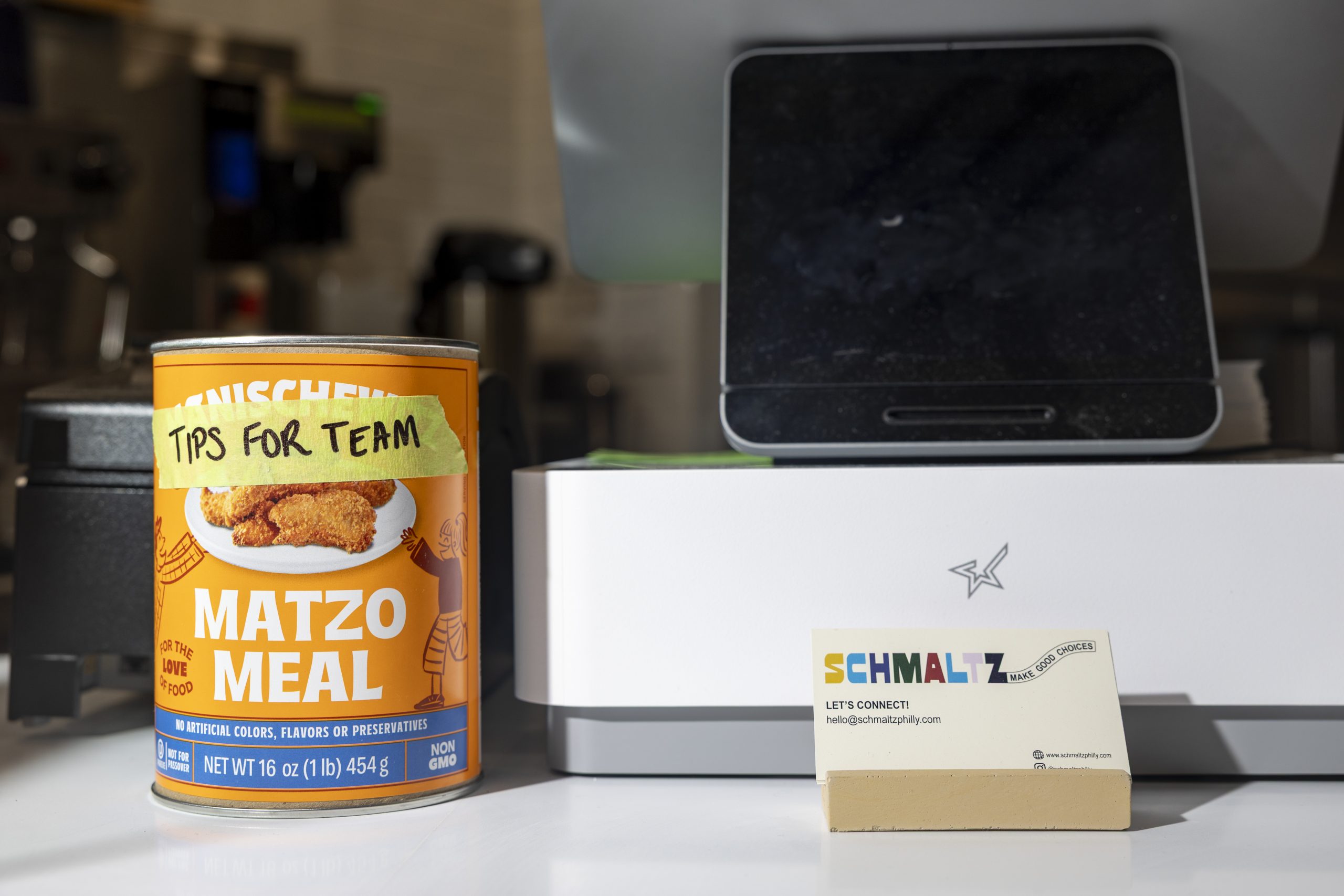
    The tip jar and business cards at Schmaltz.Aidan T. Gallo / Staff Photographer

    Ni and Tessier became mentors as Asch and Armstrong navigated zoning, vendors, construction, and the operational details that cannot be learned on the line.

    “They took a huge weight off my shoulders of that knowledge burden,” Asch said. “They’re the reason we were able to do this.”

    Armstrong, who grew up in Portland, Maine, studied theater at Brandeis before moving into investment and wealth management. She later earned an MBA at the Wharton School. Her work included chief-of-staff and operations roles, experience she likens to staging a complicated production.

    “How do we make this whole orchestra, this whole production, work?” she said.

    Chertock brings the deepest restaurant résumé of the trio. Trained as an architect at Syracuse University, he worked at a Lambertville firm while cooking nights at Charcoal BYOB in Yardley, his home town. He later joined the opening team at K’Far Cafe, worked his way up to sous chef, and went on to Zahav and Vernick Food & Drink.

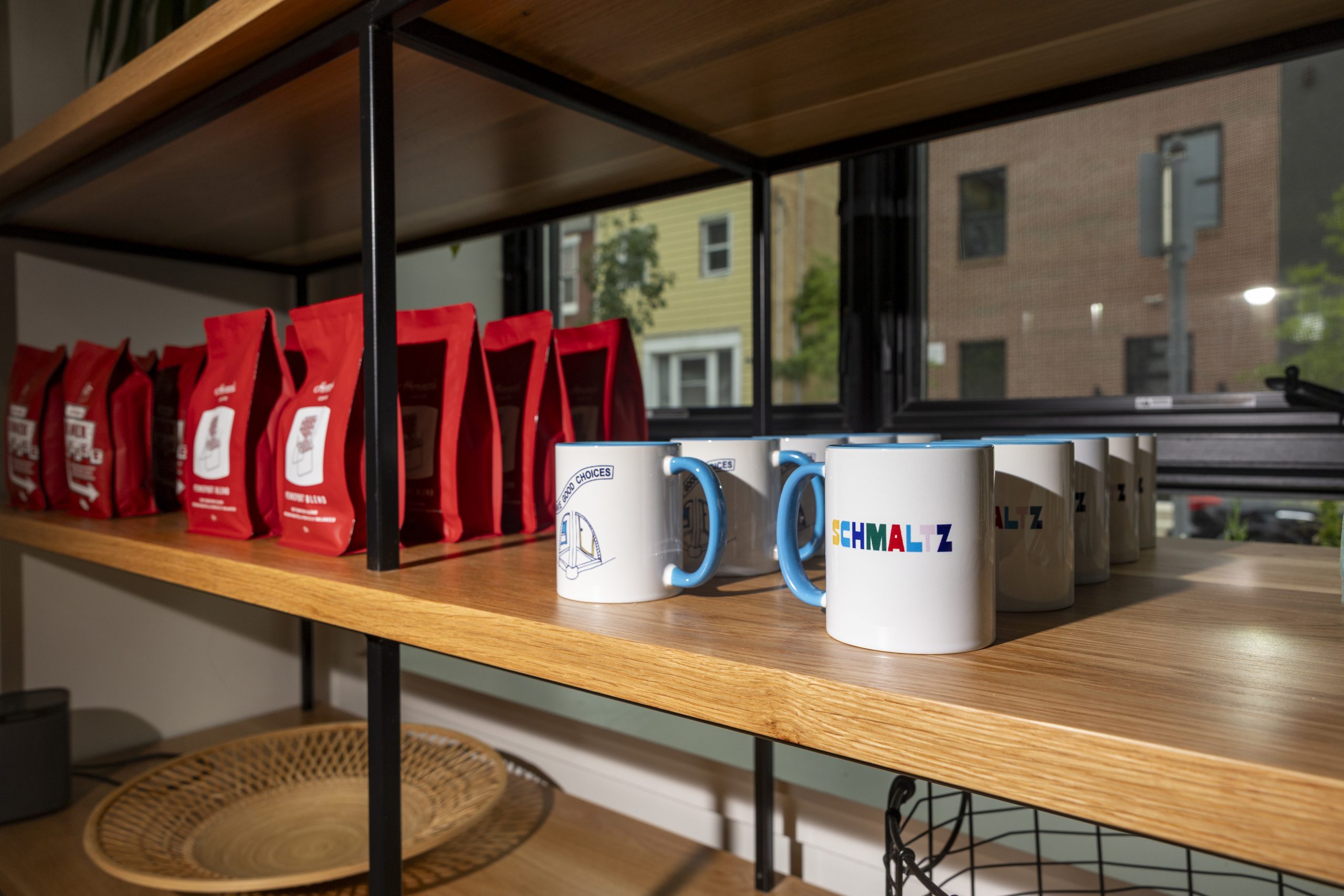
    Schmaltz merchandise has its own counter.Aidan T. Gallo / Staff Photographer

    He found Schmaltz almost by accident. Chertock, who once lived nearby, was biking through South Philadelphia when he noticed the restaurant name on the freshly painted building.

    “‘Schmaltz’ immediately caught my attention,” he said.

    Despite the term’s cultural focus, Asch said Schmaltz is neither kosher nor intended as a political statement. Asch said his parents worried that openly identifying the restaurant as Jewish might invite problems, but he said the response has been overwhelmingly supportive.

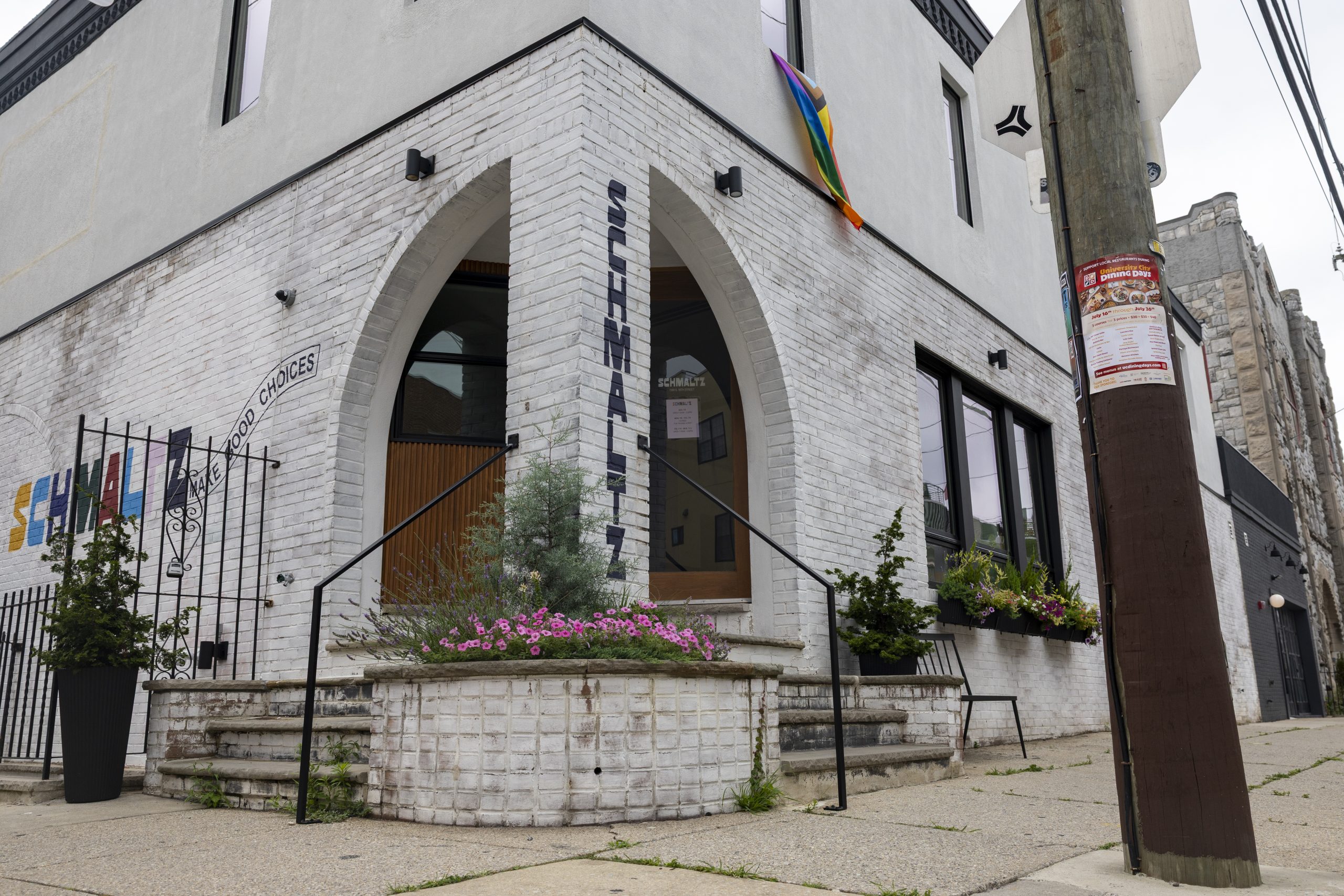
    Schmaltz at 18th and Wharton Streets.Aidan T. Gallo / Staff Photographer

    “We make food,” Asch said. “Maybe calling it Schmaltz is in itself a statement, but we can’t live in fear about what might happen.”

    For now, the more immediate challenge is keeping up with the crowd outside. Asch expects most regulars to come from within a few blocks rather than from Center City.

    That suits the couple, who bought the building with the idea of investing in the neighborhood where they live.

    “We want to nourish it,” Armstrong said. “We want to be a part of it.”

    Schmaltz, 1300 S. 18th St., schmaltzphilly.com. Opening hours: 7 a.m. to 2 p.m. Friday to Monday.
    A previous version of this article incorrectly described the ramp in the restaurant. The owners added it to comply with ADA requirements.

  • CDC, FDA link Taco Bell lettuce supplier to multistate cyclosporiasis outbreak

    CDC, FDA link Taco Bell lettuce supplier to multistate cyclosporiasis outbreak

    Federal health officials said Thursday that a multistate outbreak of cyclosporiasis that has sickened thousands of people has been linked to shredded iceberg lettuce served at Taco Bell restaurants in five states, confirming key findings first reported by the Washington Post.

    The Centers for Disease Control and Prevention and the Food and Drug Administration said traceback investigators identified a single supplier of iceberg lettuce from Mexico used at Taco Bell restaurants in Indiana, Kentucky, Michigan, Ohio, and West Virginia. In updates posted to the CDC webpage and FDA webpage late Thursday, officials urged consumers not to eat shredded iceberg lettuce from Taco Bell restaurants in those states while the investigation continues.

    The agencies did not name a supplier. But two individuals familiar with the inquiry said investigators have identified Taylor Farms as the supplier of the shredded iceberg lettuce. The individuals spoke on the condition of anonymity to share details of the ongoing investigation.

    The FDA is working directly with the supplier to determine if contaminated shredded iceberg lettuce went to other places, officials said. More than 1,644 sick people in this outbreak reported eating at Taco Bell locations in the five states, officials said.

    “The investigation remains active, and additional states, restaurants, retailers, or products may be identified as more information becomes available,” said Emily Hilliard, a spokesperson for the Health and Human Services Department.

    This summer’s outbreak of cyclosporiasis, among the largest such outbreaks in the United States, has been largely concentrated in southeastern Michigan, where more than 4,300 cases have been reported and at least 100 people have been hospitalized as of Thursday.
    “The signal we have gotten is that there is a very high percentage of people who got sick at Taco Bell, and when investigators asked what their menu items were in common, lettuce came up frequently,” said one of the individuals. When the FDA asked the company where it sourced the lettuce from, it was Taylor Farms, not just for the Taco Bell stores in Michigan but also for restaurants in other states, the person said.

    Taylor Farms describes itself as one of the leading global producers of salads and healthy fresh foods, with production facilities across the U.S., Canada, Mexico, and Western Europe. Taylor Farms did not immediately respond to a request for comment.

    In a statement, Taco Bell Corp. said:

    “Based on ongoing conversations with public health officials, and out of an abundance of caution, Taco Bell has taken immediate action to voluntarily remove potentially impacted lettuce from a supplier in select states. The affected ingredient from our supplier is being indefinitely removed from our supply chain nationwide and will be replaced within 24 hours in select states.”

    Taco Bell Corp. added: “While no official advisory has been issued, we believe public health is a shared responsibility among restaurants, their suppliers, and authorities, and we are proud to have consistently acted quickly and proactively to protect our guests. Taco Bell has taken precautionary action, and we encourage all relevant restaurants, retailers, and foodservice operators to do the same.”

    Authorities in Michigan, which has been hit the hardest and has reported hundreds of cases daily, have said leafy lettuce is the leading suspected source based on interviews with more than 1,000 patients.

    Notices posted at some Detroit-area Taco Bell restaurants this month told customers the chain was “currently unable to sell Lettuce, Cilantro Onion, Pico de Gallo, and Guacamole due to a nationwide recall,” according to media reports.

    Cases have been identified in at least 34 states, and confirmed illnesses could continue to increase through the end of August, officials said.

    Earlier this week, after Michigan officials warned that lettuce could be a culprit, the International Fresh Produce Association criticized how public health officials were investigating the outbreak.

    “Everything pointing to produce is based on recollections of patients, and even those recollections — based on what we hear — explain, at most, only half of the current cases,” said Max Teplitski, the association’s chief science officer.

    “We need to be candid about the limits of the data being used here,” he added. “A parasite with a notoriously complex life cycle, Cyclospora can be hard to detect in the environment, and some of the methods for its detection have performed inconsistently.”

  • Philly’s kitchen professionals endure one heat wave after another

    Philly’s kitchen professionals endure one heat wave after another

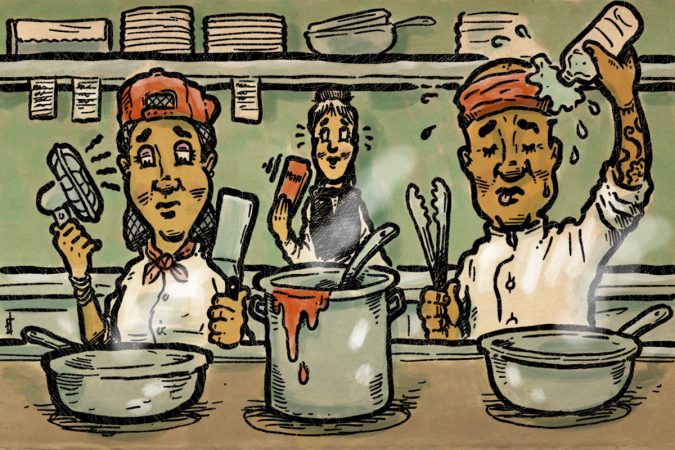
    Even on 100-degree days, Philly’s chefs and cooks are still in the kitchen. For the most part, they only call it quits when the food they’re making can’t take the heat.

    How do they make it through their stifling shifts? The answer comes down to preparedness, hydration, and lots of icy treats to lower body temps and boost morale.

    Restaurant kitchens can easily run 10 or 20 degrees higher than whatever the temperature is outside, abetted by hot fryers and stoves, plus wood-fired grills and ovens that hover around 500 degrees.

    The planning for heat waves starts long before the mercury rises. At Pizzata Pizzeria‘s South Philly location, recently added split-unit air conditioners and commercial kitchen fans have kept temperatures moderate. “They have been tremendously beneficial and helpful to our staff,” said owner Davide Lubrano Lavadera. “For our Rittenhouse spot, we didn’t have a chance to install these units, so we added an evaporative air cooler there.”

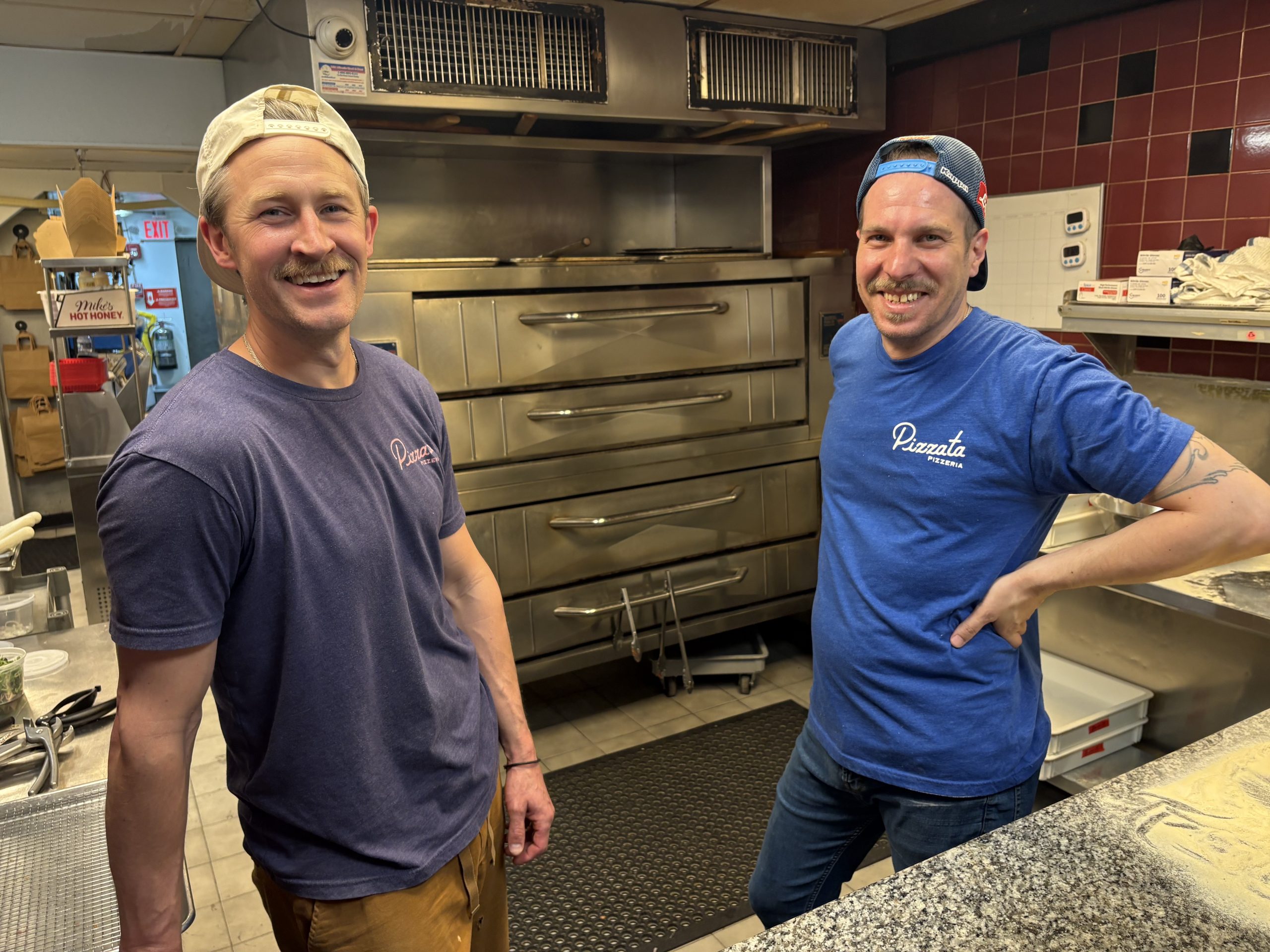
    Pizzata Pizzeria co-owners and chefs Vinny Gallagher and Davide Lubrano Lavadera pose in the kitchen of their original pizzeria location on 22nd Street near Fitler Square.Craig LaBan / Staff

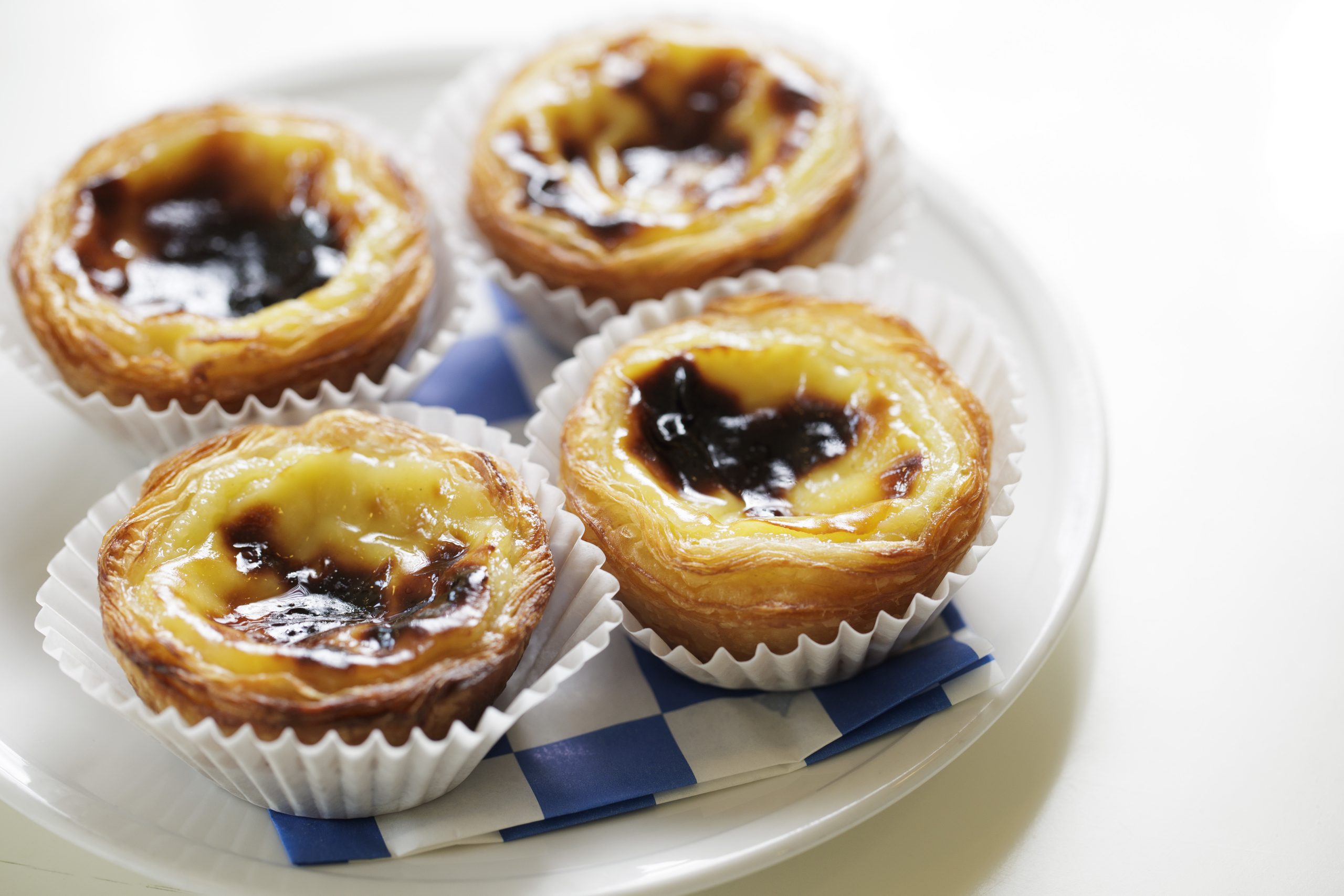
    Two weeks ago, when temperatures spiked over 100 degrees three days in a row, Gilda chef-owner Brian Mattera warned customers on social media that the cafe would close if the heat tipped above 120 degrees in the kitchen — besides being uncomfortable, it would compromise the cooking. The flaky, laminated dough for Gilda’s signature pastéis de nata is notoriously temperamental, Mattera said.

    “Our pastry chef, Sophia Fiorenza, is the star of the show. When she comes to me and says the temperature is one or two degrees up, she’s not being dramatic,” Mattera said. “The dough is tacky and difficult to work with. It’s unfortified and it can feel like papier mache.”

    When the kitchen temperature is too high, the dough expands and falls off the sheeter, the machine that folds the dough into its many layers. “We say the dough is angry with us,” Mattera said.

    The pastéis de nata at Gilda get harder to make in hot weather. Monica Herndon / Staff Photographer

    Even in Gilda’s diminutive space, with just six gas burners and a flat-top, Mattera needs five separate HVAC units to maintain the perfect temperature for the dough, around 70 degrees. They weren’t enough to keep the kitchen open during early July’s heat waves: Gilda’s crew called it a day when the temperature behind the line reached 137 degrees.

    When the heat’s that intense, Mattera has a trick. “I’ll get a deli container of ice water, bring it into the bathroom, pour it over my head, and go back on the line.”

    Chefs in nontraditional kitchens also battle the heat. Josh Broder owns Root to Fruit, a vegan meal-delivery service that operates out of the Culinary Collective commissary space in the Bridesburg neighborhood. “We’ve basically become professional heat dodgers. We start cooking earlier, pack our delivery bags like they’re headed to the Arctic with insulated bags and extra ice packs, and everyone’s usually carrying a water bottle in one hand and a spatula in the other,” he said.

    Shiho Utsonomiya, the chef operator of Haha’s Kitchen, rarely closes the tiny food cart she has operated at the corner of Seventh and Spring Garden Streets since 2018. But she was forced to break for a few days leading up to July 4 this year, when the heat became unbearable. She closed the cart Wednesday for the same reason.

    Shiho Utsunomiya in her food cart during a heat wave.Kiki Aranita / Staff

    “It’s been getting hotter every year,” she said. “Winter, I don’t mind! Minus 17 degrees, no problem. But the heat just kills me.” She’s surrounded by a burner, steam tables, a fryer, and rice cooker. She’s enhanced her setup this year with a rechargeable fan with a mister.

    Utsonomiya’s location has a significant benefit: free ice from her best customer. United Refrigeration’s offices are nearby and her cart is popular with their workers.

    Extreme heat also prompted Little Walter’s — where the wood-fired grill casts off 120-degree heat, according to chef-owner Michael Brenfleck — to close in early July. Brenfleck said reservations were light during the holiday weekend, but the same could not be said of the following Friday, when the restaurant was nearly fully booked. That presents a challenge in itself: The busier the restaurant, the hotter it is inside.

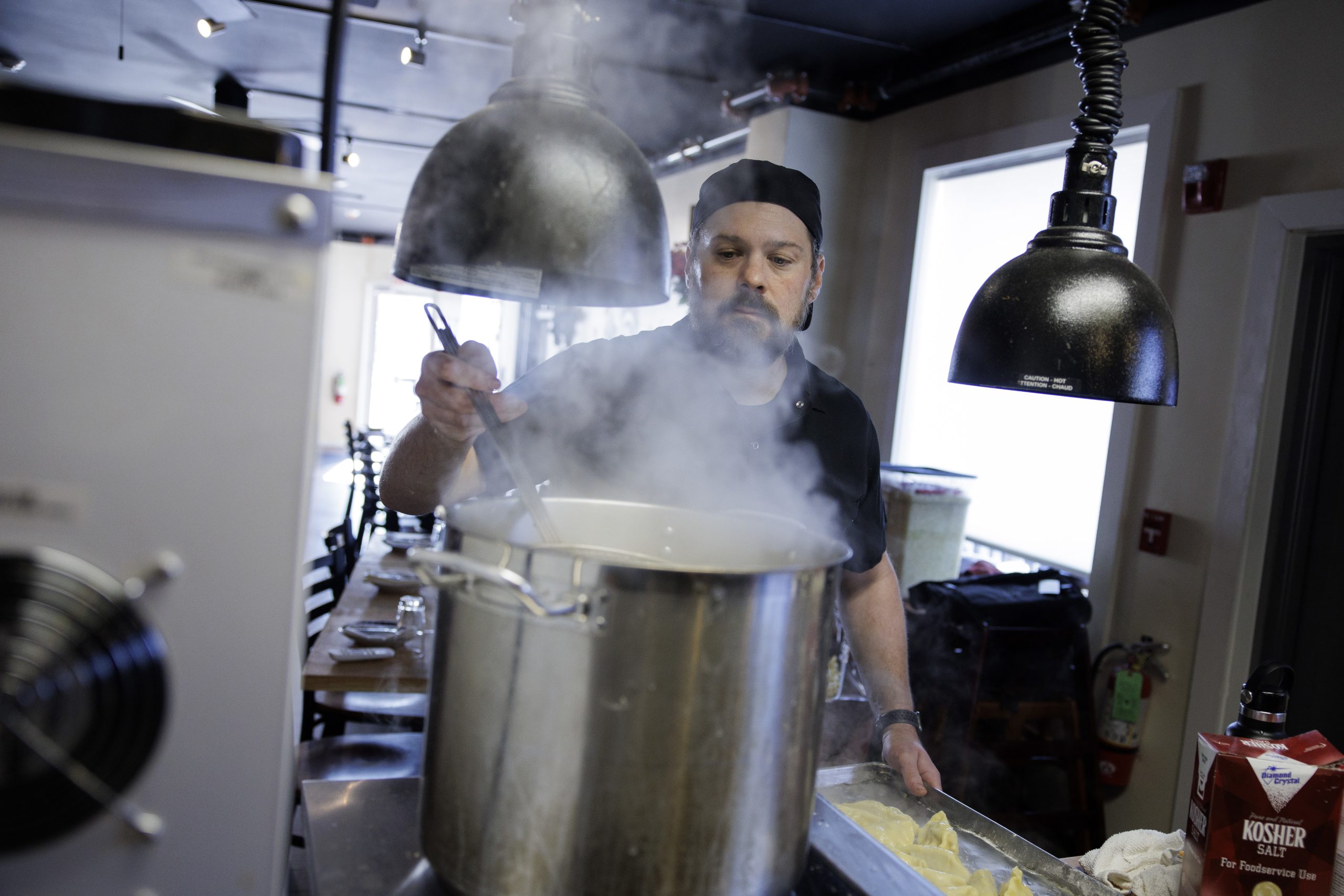
    Chef Michael Brenfleck cooks pierogi at Little Walter’s in Philadelphia on Wednesday, Sept. 4, 2024.Monica Herndon / Staff Photographer

    “Every person’s body radiates a certain number of BTUs, both in the kitchen and in the dining room,” said Brenfleck. His solution: “We’re going to put some cold specials on the menu, like a chilled pickle soup.”

    Brenfleck and Phila Lorn, the chef-owner of Sao and Mawn, were both amazed their respective staff endured the heat without complaint.

    “The real ones plan for these times and problem-solve,” Lorn said. “It amazes me to see my chefs in the kitchen crushing it. They’re eating popsicles, [mopping themselves with] cold wet towels, using Gatorade powder, but I swear to you, not one complaint from the back of house.”

    Liberty Kitchen staff trades tomato pie for soft serve on hot days. Monica Herndon / Staff Photographer

    Heat waves tend to foster community among restaurants — especially when there’s an ice cream shop involved. On the hottest days, the staff at Liberty Kitchen trades boxes of tomato pie with 1-900-ICE-CREAM, according to Liberty Kitchen chef Beau Neidhardt. “They’ll give us individual cups of soft serve for our staff. It’s very neighborly.”

    For many restaurant workers, it’s just part of the job.

    “We aren’t doing anything that needs to be applauded,” said Mattera. “At the end of the day, we’re all professionals. This is what we do. We can handle the heat.”

  • The internet’s toughest food critic loves Philly cheesesteaks

    The internet’s toughest food critic loves Philly cheesesteaks

    Few content creators have turned food criticism into entertainment quite like @ChefReactions.

    Instead of cooking on camera, the chef dissects viral recipe videos with professional-kitchen know-how, dry sarcasm, and the occasional compliment. His split-screen reactions have attracted more than 6 million followers across TikTok, Instagram, and YouTube over the last four years.

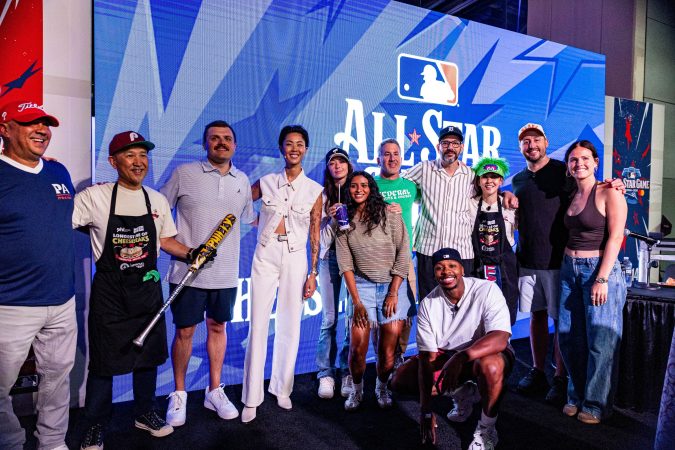
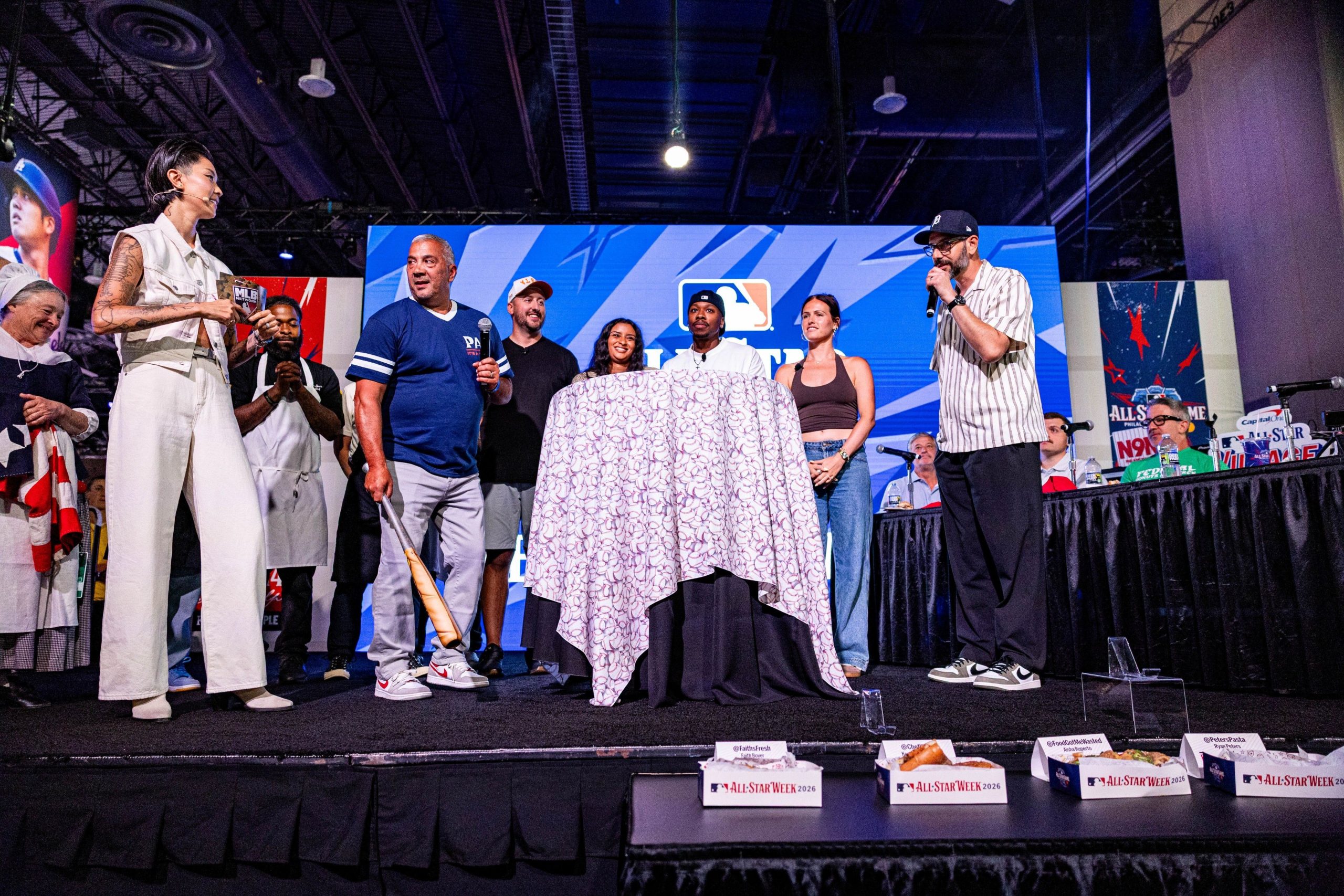
    Chefreactions (right) is introduced by host Kristen Kish (left) at the Cheesesteak Challenge on July 12, 2026, at All-Star Village.Courtesy of MLB

    This week, ChefReactions brought his famously deadpan commentary to Philadelphia, where Major League Baseball enlisted him to judge a cheesesteak competition during All-Star festivities.

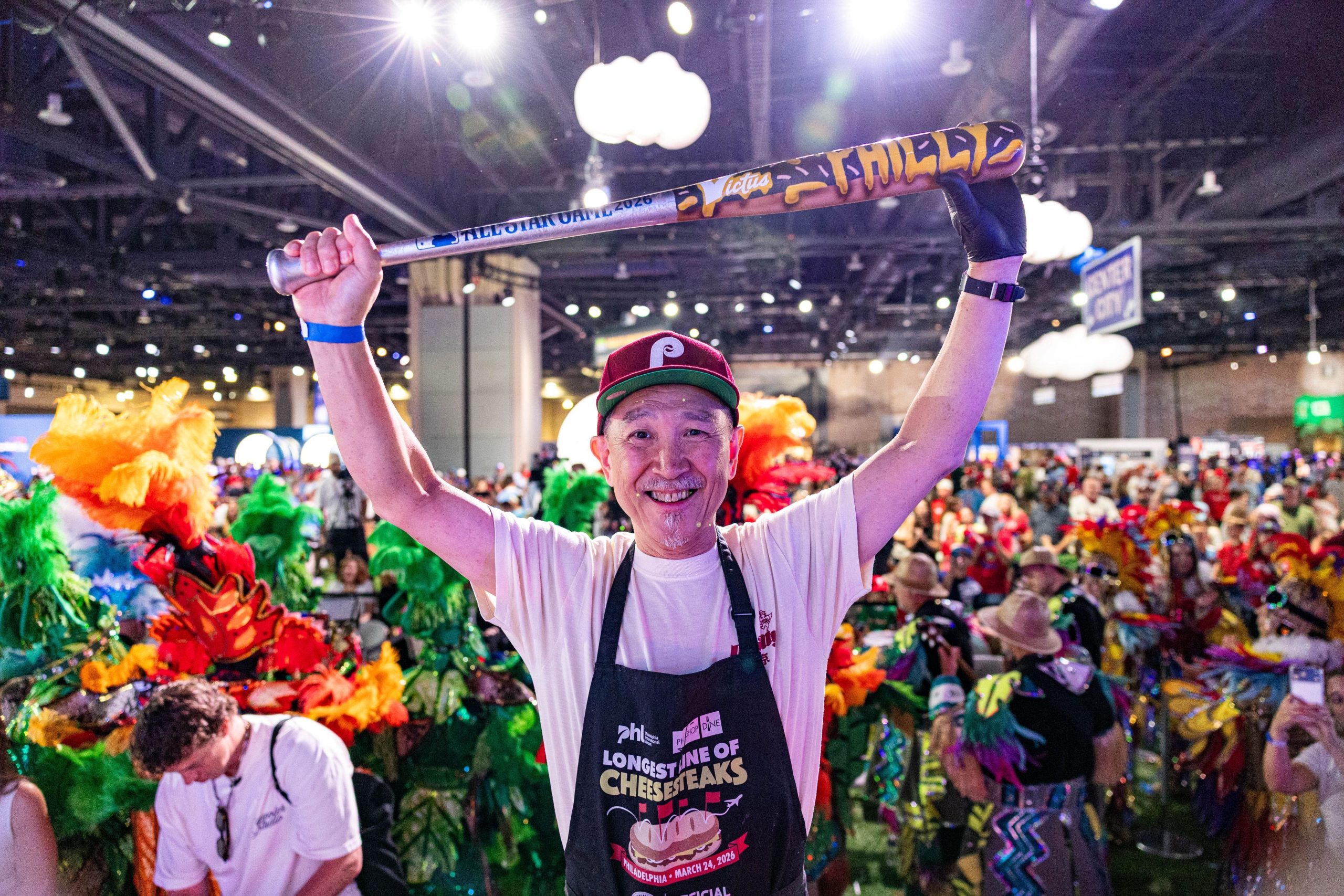
    ChefReactions joined chef Michael Solomonov, former Phillies pitcher Jamie Moyer, and fellow TikTok stars Dylan Reese of @shelbanddyl and chef Olivia Tiedemann of @livforpasta in awarding top honors to Kosuke Chujo, co-owner of Nihonbashi Philly in Tokyo, whose cheesesteaks have earned acclaim from Inquirer critic Craig LaBan.

    Chujo’s prize: a cheesesteak-shaped Victus bat.

    ChefReactions, who started making videos during his work breaks as a way to blow off steam, guards his real name about as closely as Coca-Cola guards its formula.

    Nihonbashi Philly owner Kosuke Chujo exults as the winner of the Cheesesteak Challenge at All-Star Village on July 12, 2026.Courtesy of MLB

    But he was game to answer a few questions about his obsession with baseball, his impressions of Philadelphia’s food scene, and whether he felt any pressure critiquing one of the city’s most iconic foods.

    Tell me about your new-found love of baseball. What started it?

    I liked baseball as a kid but it was never really my thing. As an adult, I worked in kitchens, mostly between the hours of 12 p.m. and whatever o’clock a.m. Midday double headers meant something different in my world. Fast-forward to me making videos on the internet, leaving the restaurants and caring for my grandma full-time and actually having some free time to figure out what I like that wasn’t in a restaurant.

    A year ago, I was on a plane to Iowa to shoot some content and I randomly decided to watch a baseball documentary on Netflix. Then another. When I got to my hotel room? Field of Dreams.

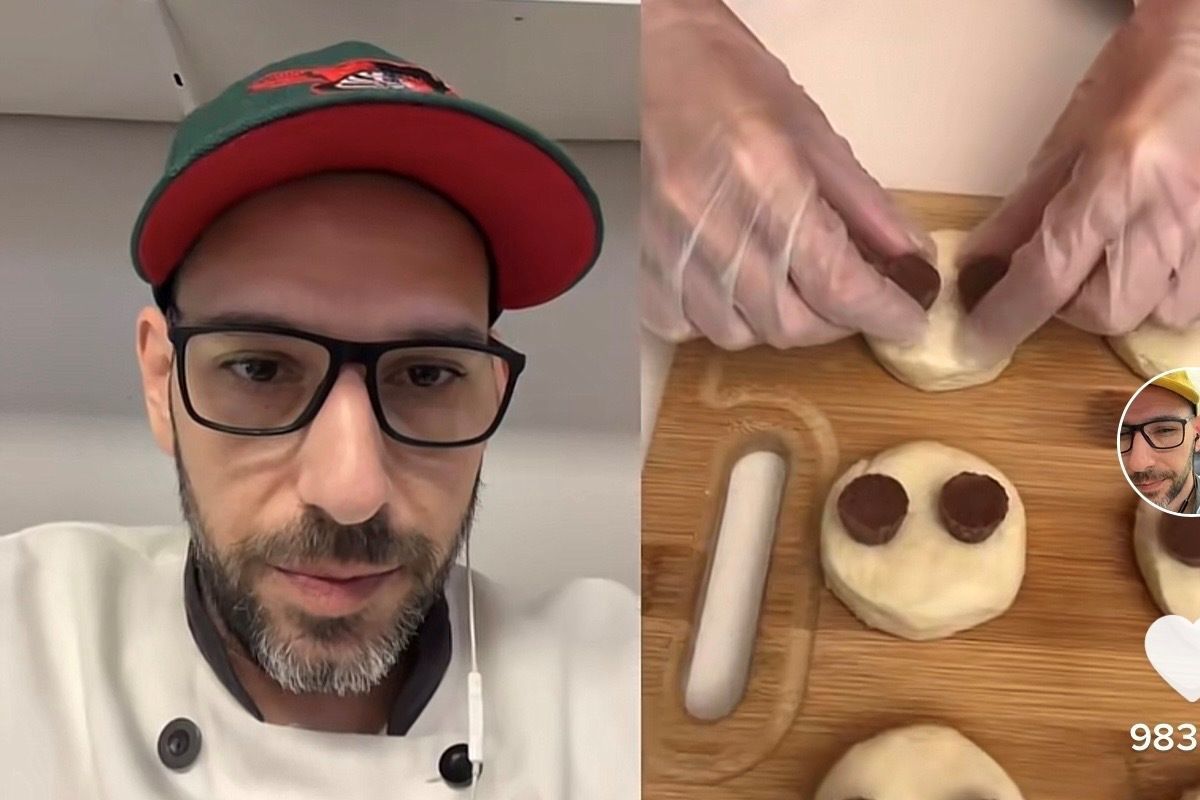
    The chef who calls himself @chefreactions, as he narrates a duet with a food video.Screenshot via TikTok

    During that trip, I met someone who had the literal Field of Dreams built in their backyard. It was serendipitous. I had also quit smoking cigs six months prior, so maybe I was looking for a new addiction.

    A year later, I’ve been to six ballparks (itching to see more), watched Ken Burns’ Baseball four times (not exaggerating), and consume baseball every day. It’s a big part of what little personality I have. I truly love it.
    What were the high points of your trip to Philly?

    The people, and the food.

    People that watch my videos online and meet me in public are usually very nice because they (typically) like my videos. I’m very lucky for that, and it wasn’t any different in Philly.

    What stood out to me was that it wasn’t just the people that recognized me as that guy from the internet [who were nice] — everyone was friendly, pleasantly sarcastic, and funny, and very proud of their city.

    @chefreactions #duet with @Li’l Judy Fun Fun nacho, nacho man #chef #chefreactions #fyp ♬ Civil and Ann – Li’l Judy Fun Fun

    It was cool to experience as a guest.

    The food is made with the same pride, and it shows through the flavors and vibrancy of the food culture. Everyone talks about cheesesteaks (which are fantastic, obviously) but Philly has a diverse and underrated food scene that I can’t wait to explore more of when I come back.

    You’ve built a huge following by giving honest reactions. Did you worry about criticizing an iconic regional food like the cheesesteak?

    I think the goal of MLB’s Cheesesteak Challenge was to allow creators to pay homage to the icon that is the cheesesteak by having some fun and cooking their interpretation of a Philly classic. To that end, I think they all did a great job of showcasing their food and their personalities. Cooking competitions are hard work. The judges had it easy. We just had to eat.

    I’ve gotten the impression that, in Philly, honesty earns you respect, and I’m very much the same way. I call it like I see it, and so does Philly.

    Also, what’s there to criticize about a cheesesteak?

    It’s got beef, cheese, bread and, in my case (wit) onions. It’s perfect. 10/10. I kinda want one right now.