Category: Food

  • Honeysuckle’s Omar Tate and Cybille St.Aude-Tate named best new chefs by Food & Wine

    Honeysuckle’s Omar Tate and Cybille St.Aude-Tate named best new chefs by Food & Wine

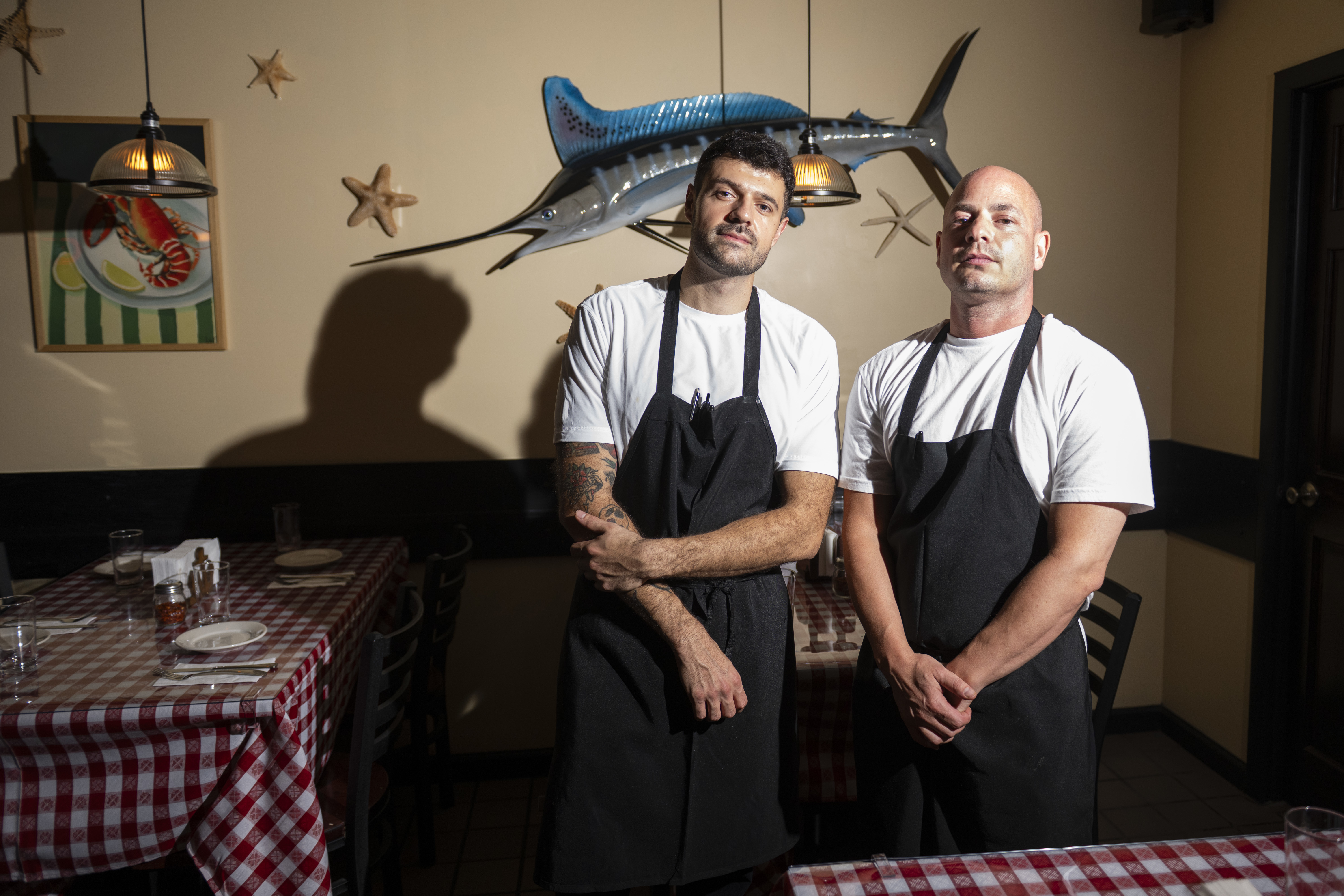
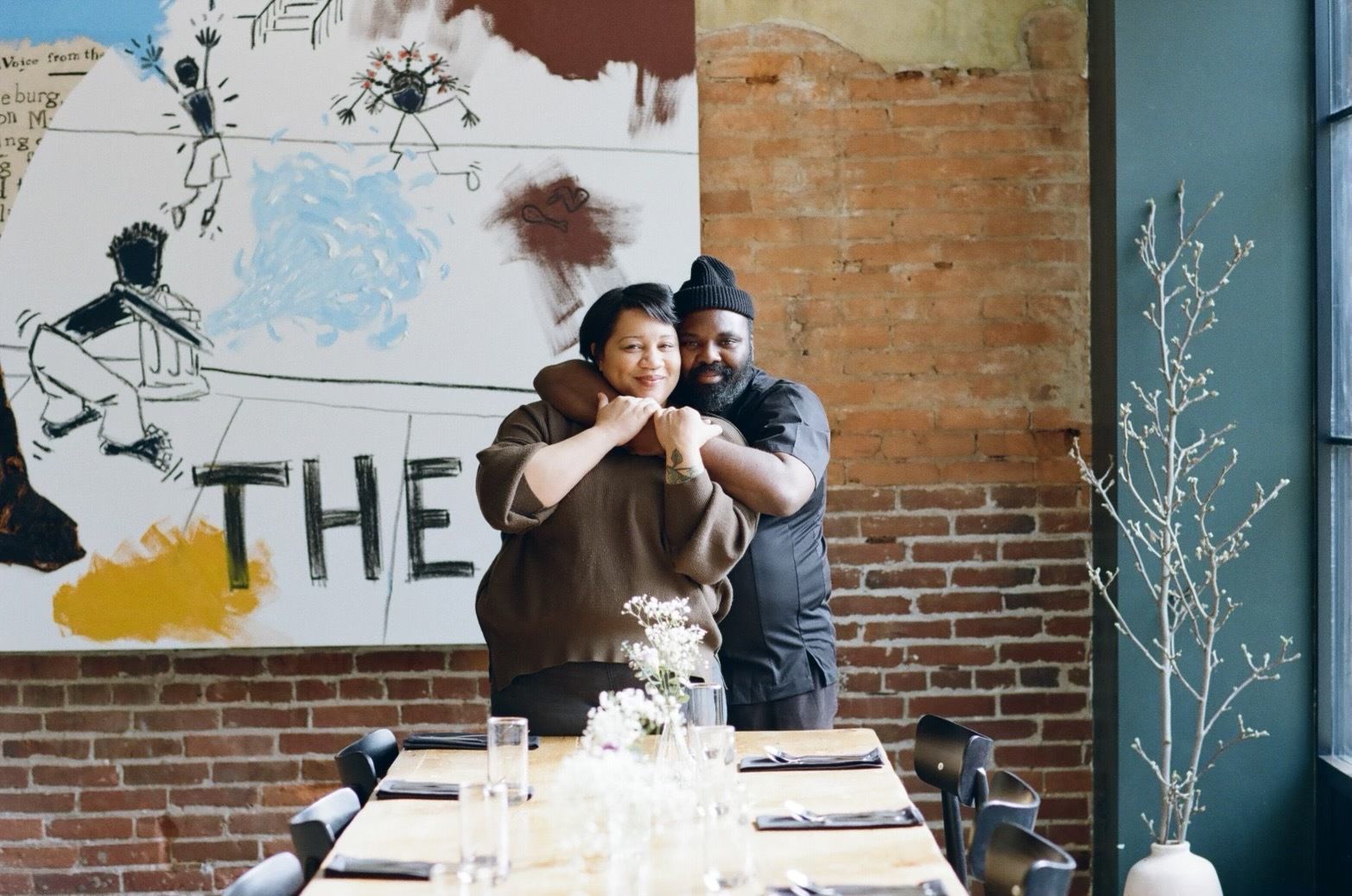
    Honeysuckle chef-owners Omar Tate and Cybille St.Aude-Tate have been named to Food & Wine’s annual Best New Chefs class, joining a prestigious list of Philadelphia talent who’ve shared the designation over the past 37 years.

    Though the Food & Wine list recognizes “rising talent at a pivotal moment in their careers,” the Tates have been lauded in Philly’s food scene for years.

    The couple have transformed Honeysuckle many times over the years; each iteration of the project has met significant acclaim. It started in New York City as a pop-up in 2017, then became a residency at Blue Hill at Stone Barns, followed by a brick-and-mortar provisions store and supper club in West Philly. In its current life, it’s a sprawling restaurant whose bar program and tasting menu Inquirer critic Craig LaBan has called “thought-provoking, original — and totally delicious.”

    The Tates are artists and storytellers — identities that are integrated in their roles as chefs and restaurateurs. In every iteration of Honeysuckle, they have celebrated the culture and foods of the Black American diaspora.

    Editorial director Melanie Hansche was particularly wowed by Honeysuckle’s McDonald’s Money burger: “As dinner unfolds, the couple show that they are wizards of surprise and delight,” Hansche writes. “Nowhere is that more evident than the McDonald’s Money burger, a ridiculous sandwich layered on slices of toasted shokupan, oozing with Cooper Sharp cheese, malt vinegar onions, and caviar remoulade, showered in gold leaf and shaved black truffles. It’s tangy, salty, sweet, and earthy and possibly the very best burger you’ll ever eat.”
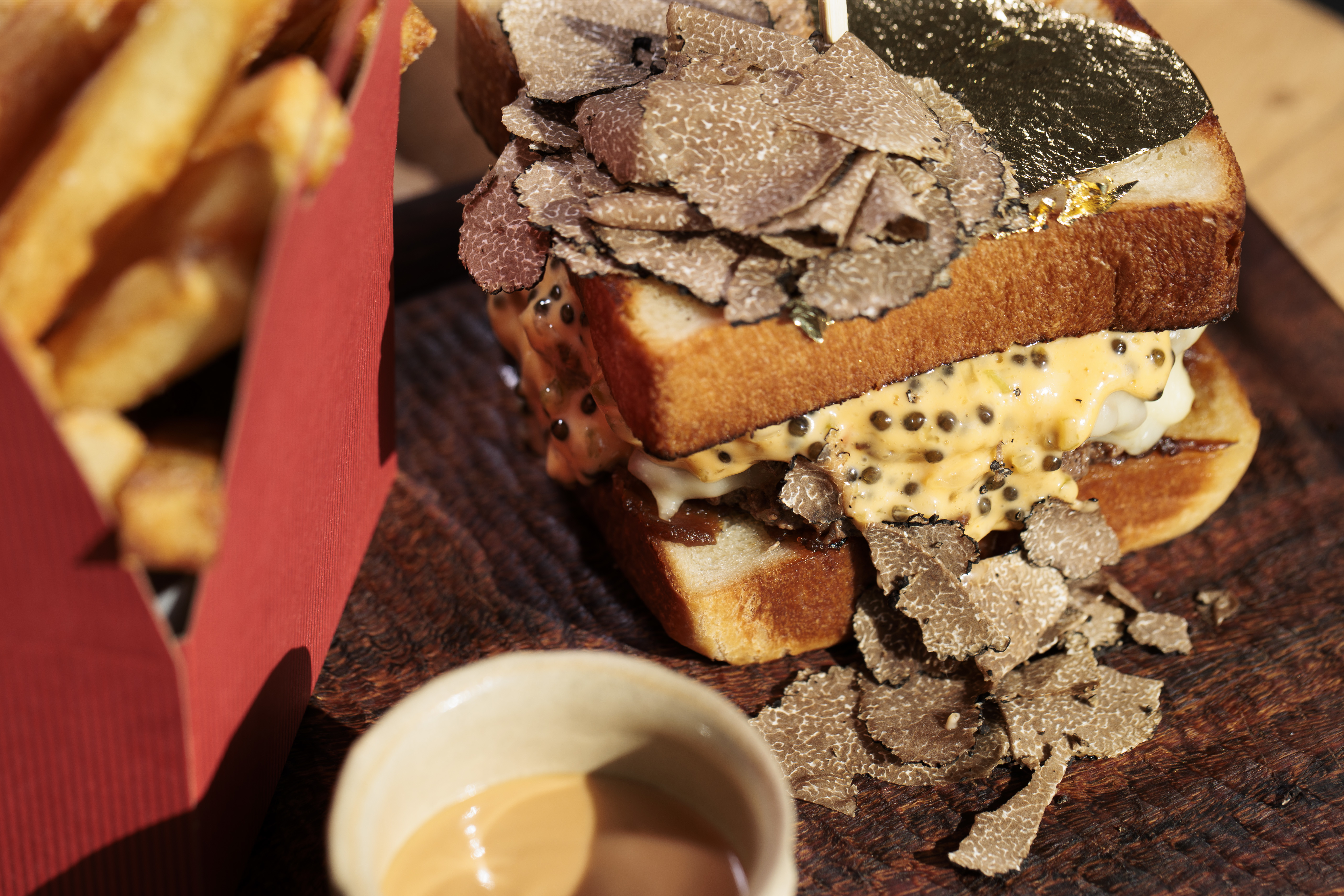
    The McDonald’s Money burger at Honeysuckle on Thursday, June 26, 2025 in Philadelphia.Monica Herndon / Staff Photographer

    The Tates are among 14 chefs from 10 restaurants across the country to make this year’s list. They arrived in New York on Monday to participate in programming around Best New Chefs, including panel discussions, a luncheon with other alumni, and a mentorship workshop. The awards ceremony is scheduled for Tuesday night. They’ll be back in Philly on Wednesday, in time for dinner service at Honeysuckle.

    They learned they had made the list back in March. “We’ve had to keep this secret for a long time,” said St.Aude-Tate. “And this win feels different. We’ve both been in the industry for a really long time but this puts us on a national stage in a different way.”

    The Tates join a long roster of Philadelphia chefs named to Food & Wine Best New Chefs, including Susanna Foo (1989), Marc Vetri (1999), Jim Burke (2008), Eli Kulp (2014), Emily Riddell (2022), and Amanda Shulman (2023), to name a handful.

    St.Aude-Tate grew up reading Food & Wine and looking up to other chefs who had been named Best New Chefs by the magazine. “I used them as barometers as who to look up to in the industry,” she said.

    Honeysuckle has been racking up consistent awards since its ambitious opening on North Broad in April 2025. Last month, it was named to Bon Appétit’s Best New Restaurants list (along with Sao, which is owned and operated by fellow Food & Wine Best New Chef alum Phila Lorn). The Tates were also named as James Beard Awards finalists in the Best Chef: Mid-Atlantic category earlier this year (they were semifinalists in 2024). Honeysuckle also appeared on The Inquirer’s 2025 edition of The 76.

    “After our first Beard nomination, we didn’t know what to expect and we got slammed at the restaurant. It was crazy. We fell on our faces. There was no coaching on what to expect,” said St.Aude-Tate, adding that the mentorship and coaching provided by Food & Wine even before the awards were officially announced are what set the Best New Chefs program apart from other awards-granting institutions. “We talked to other people who had been in this position to understand how to navigate this moment,” she said.

    St.Aude-Tate hopes to apply those lessons to her own business. “But we are most excited about being able to scream from the rooftops about what we’re doing,” said St.Aude-Tate.
  • Just one Philly restaurant hits the New York Times’  best restaurant list this year

    Just one Philly restaurant hits the New York Times’ best restaurant list this year

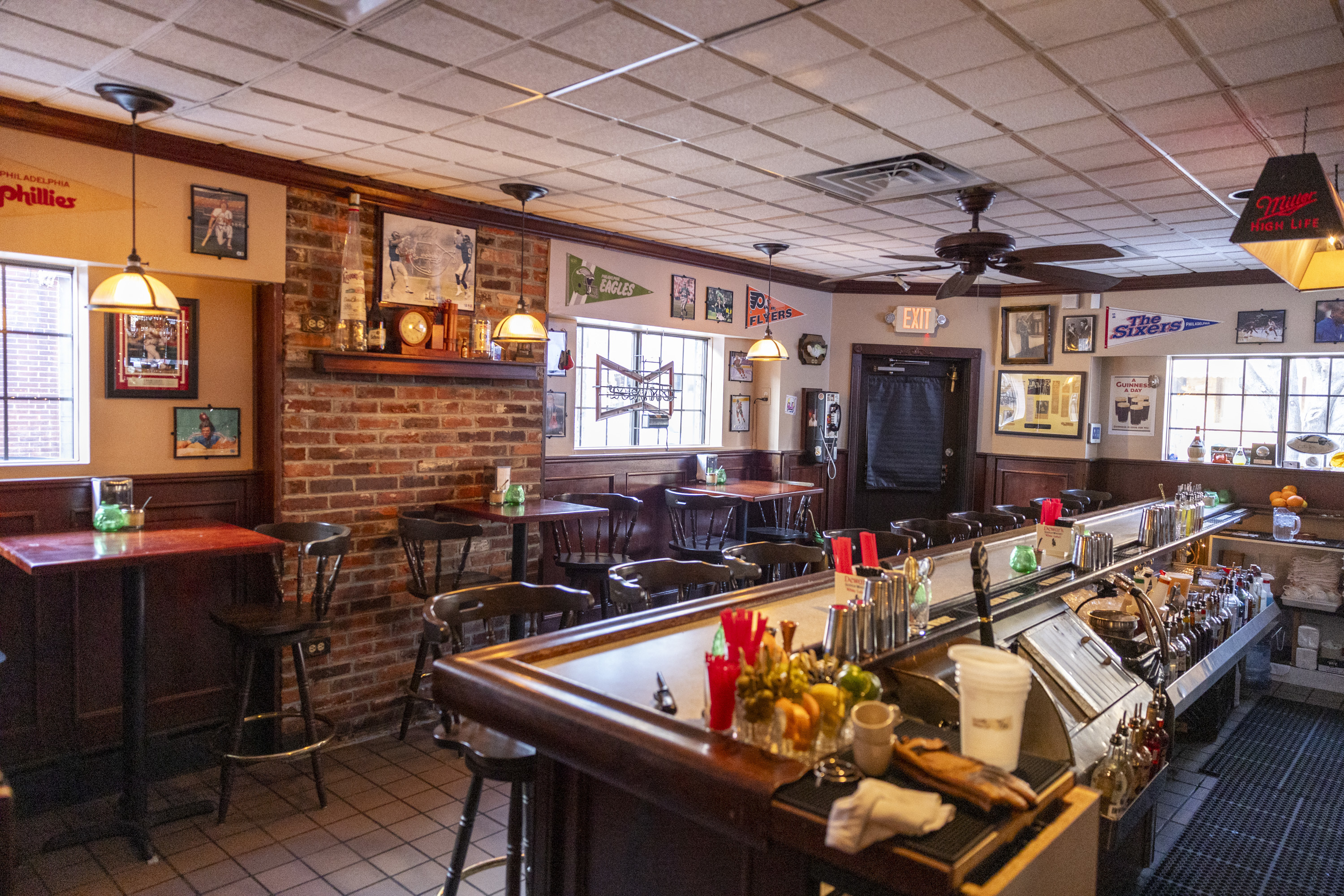
    Bomb Bomb Bar, the old-time South Philadelphia tavern revived last year by chef Joey Baldino, has been named to the New York Times’ 2026 list of the best restaurants in America — Philadelphia’s only entry this year.

    The city placed two restaurants — Mawn and Meetinghouse — on the list last year, Little Walter’s in 2024, and three — El Chingón, Kalaya, and My Loup — in 2023. Previous Philadelphia-area selections include Andiario, Gabriella’s Vietnam, Down North Pizza, Laser Wolf, and the now-closed Korshak Bagels.

    The front bar area of Bomb Bomb Bar.Tyger Williams / Staff Photographer

    The Times praised Baldino’s ability to bridge old-school and contemporary red-sauce Italian cooking, describing him as a “singular talent” in the genre.

    Baldino also owns Palizzi Social Club in Passyunk Square — itself a lovingly restored South Philly institution — and Zeppoli, a 35-seat BYOB in Collingswood.

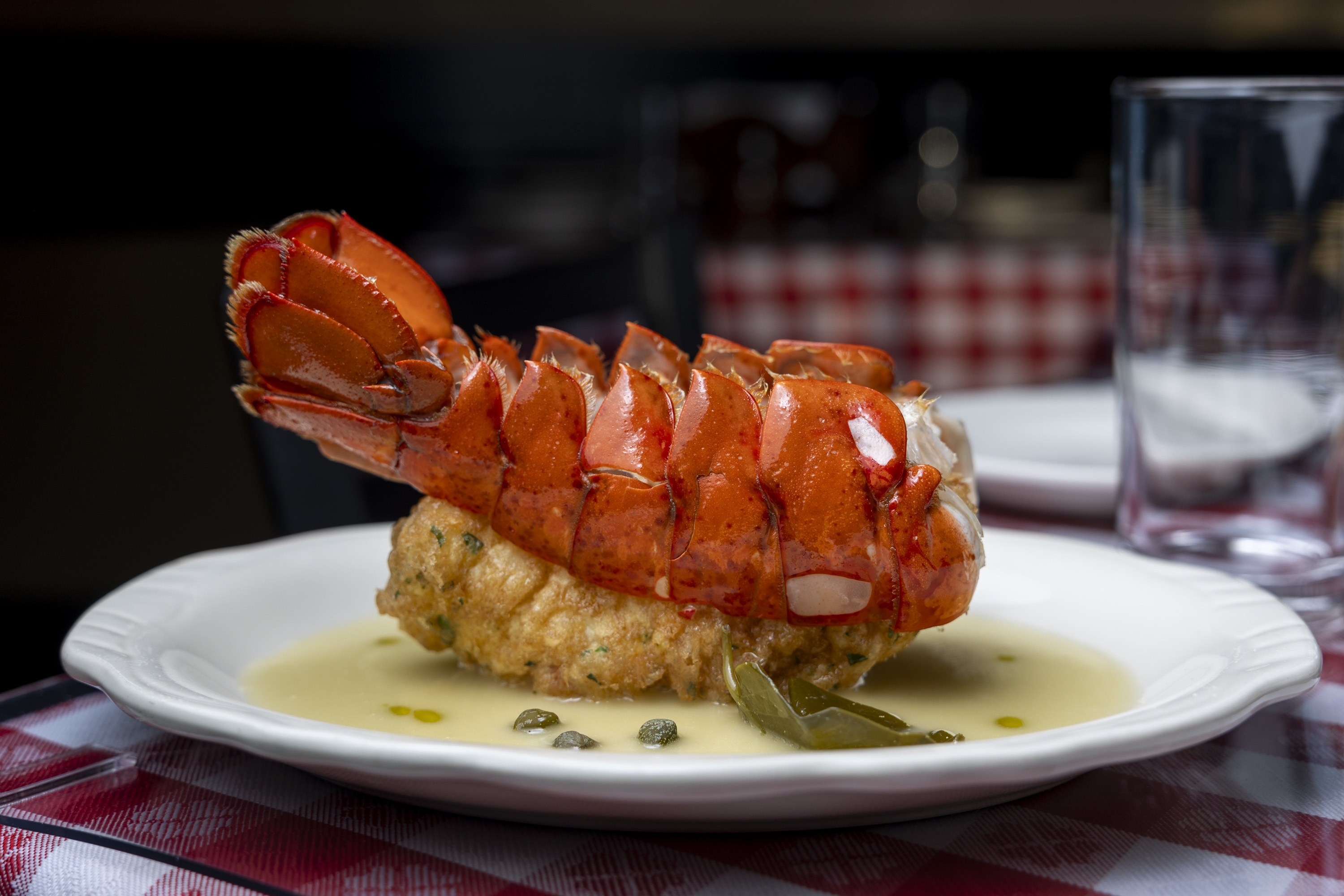
    Bomb Bomb still looks much like the Lower Moyamensing neighborhood bar it has long been, but the Times said its stuffed calamari, mussels fra diavolo, and lobster francese reveal the transformation. It called those dishes “as poetically reverent as a heartfelt eulogy” and summed up the experience as finding a remembered neighborhood joint “better than ever.”

    Bomb Bomb Bar owner Joey Baldino (right) with chef de cuisine Max Hachey in the dining room.Allie Ippolito / For The Inquirer

    That assessment echoes Inquirer critic Craig LaBan’s February review, in which he called Baldino “Italian South Philly’s culinary preservationist-in-chief” and praised him for retaining Bomb Bomb’s essential character while elevating its seafood cooking and drinks.

    Bomb Bomb’s rear dining room offers a $65 fixed-price menu, while the front bar is more casual. LaBan particularly admired the mussels fra diavolo — among the best versions he had eaten — along with the lobster francese, stuffed calamari, crab cakes, and black-ink spaghetti. Inquirer staffers later singled out Bomb Bomb’s crab cake and lobster shells among their best dishes of the week.

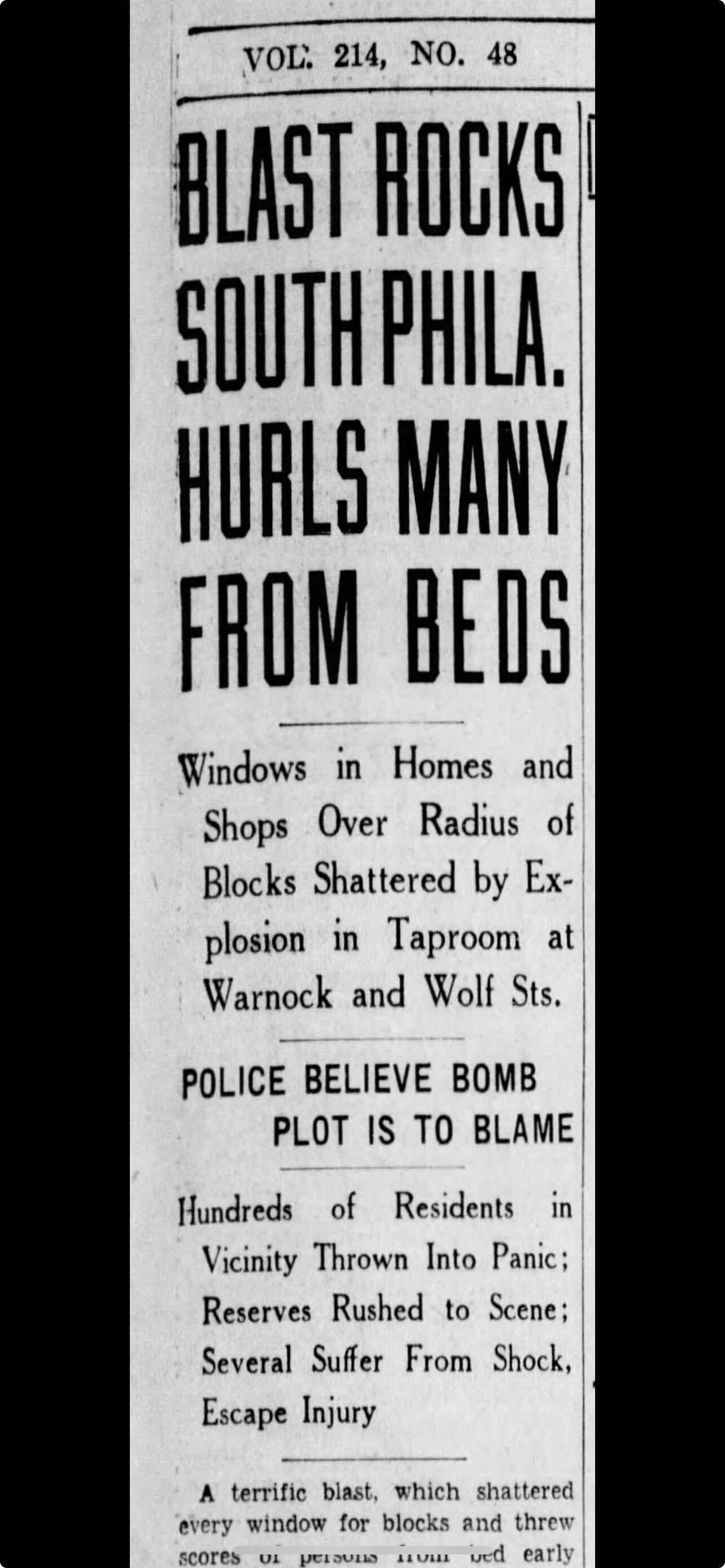
    The acclaim adds another chapter to a South Philly institution with an unusually colorful back story. As The Inquirer reported in 2024, it dates from 1936, when a chef left his job at a South Philadelphia bar and grill to work at Bob’s, a new bar at 1026 Wolf St. His former boss ordered him to return. When the chef refused, Bob’s was firebombed in the middle of the night. No one was injured, but the blast shattered windows and “rocked houses to their foundations,” as a news article reported.

    The Inquirer’s front-page story on Feb. 17, 1936, of a firebombing on the future site of Bomb Bomb Bar.Inquirer archives

    When the chef rebuffed his former boss again, a second bomb went off. This time, according to lore, the chef returned to his old job.

    By the time Frank Barbato Sr. bought Bob’s in 1951, everybody just called it the Bomb Bomb. Barbato began a 73-year family run built around seafood and red-gravy dishes and, later, barbecue, which was added to help the restaurant stand out. His son Frank Jr. and daughter-in-law, Deb, eventually took over.

    The couple retired in late 2024, and Baldino bought the business in early 2025. He reopened it that October after a deliberately restrained renovation.

    Reached by text Tuesday, Baldino called the Times recognition a “huge honor” and praised his staff, including chef de cuisine Max Hachey and manager Jack Kearney.

    “We may have been blown up twice but we’re still cranking out some great food,” he wrote, adding two bomb emojis.

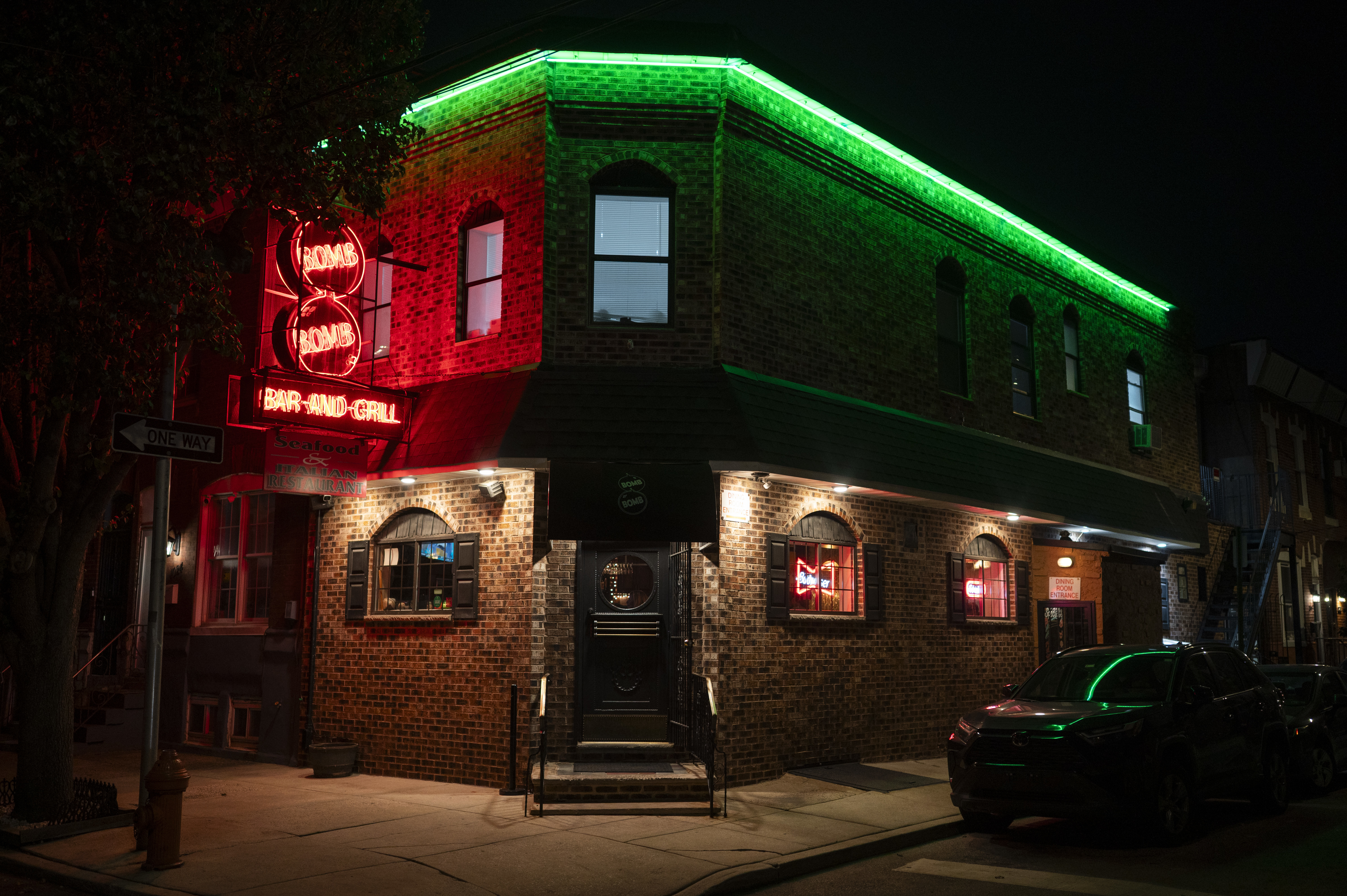
    Bomb Bomb Bar at Warnock and Wolf Streets in South Philadelphia.Allie Ippolito / For The Inquirer
  • The cult-favorite ceramic dinnerware from ‘The Bear’ holds a pop-up sale in Philly

    The cult-favorite ceramic dinnerware from ‘The Bear’ holds a pop-up sale in Philly

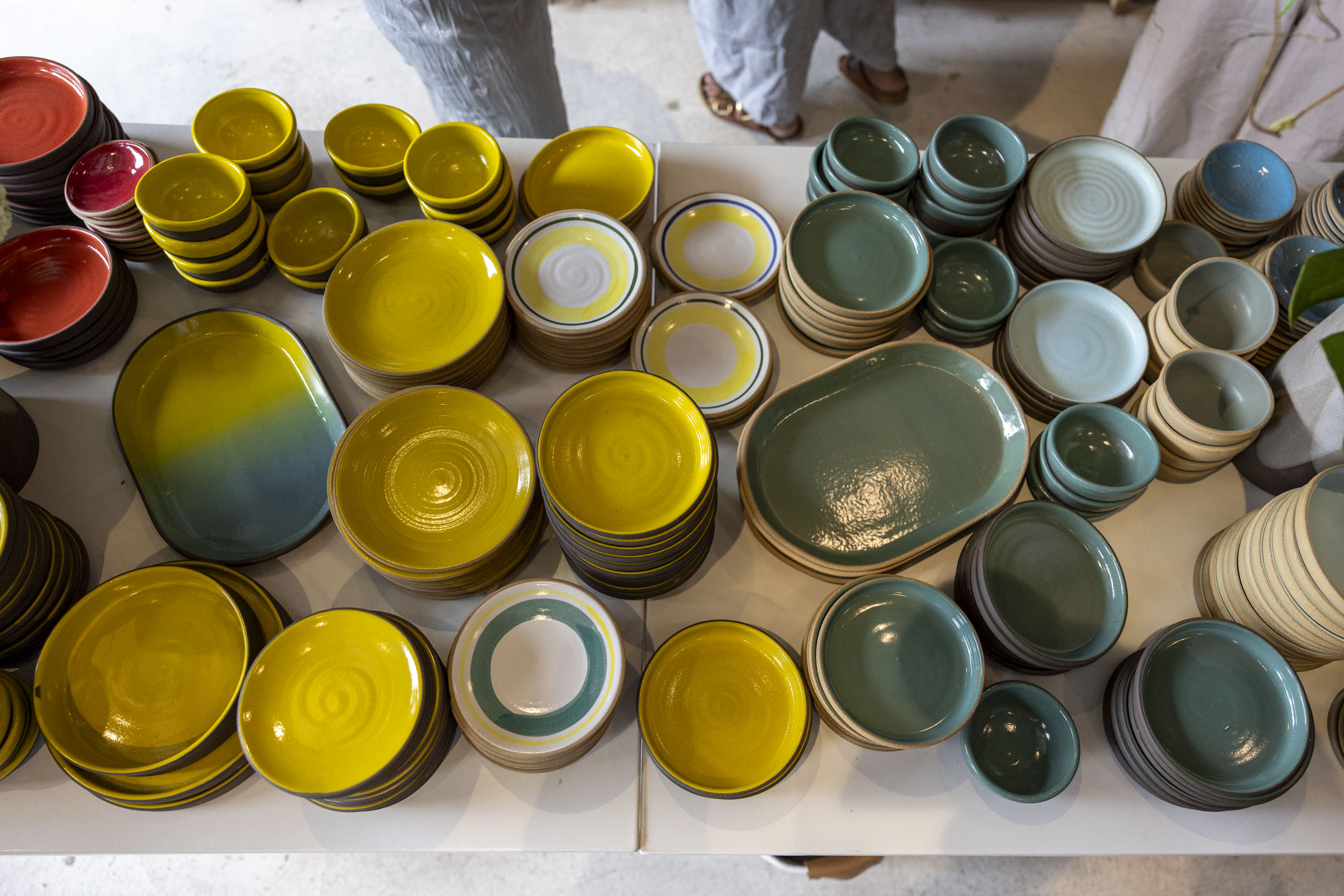
    On the first morning of the Jono Pandolfi dinnerware pop-up in Philly, a woman FaceTimed her best friend from the center of the studio, documenting the shelves of turquoise and yellow and persimmon salad plates. A man cradled a 4-ounce, birch white creamer made of toast-colored clay.

    Pandolfi is the designer behind the handmade plates and cups in some of Philly’s most well-regarded restaurants, including Southwark, River Twice, and Vetri Cucina.

    Based in North Jersey, Pandolfi started his eponymous company in 2004 and has since become famous in the (niche) world of high-end plateware. He crafted the espresso and cappuccino cups for Eleven Madison Park and recently designed five new shapes for chef Daniel Humm’s forthcoming West Village restaurant. (Usually, “I only release one new shape every few years,” he said.)

    Even Carmy on HBO’s The Bear uses Jono Pandolfi dinnerware.

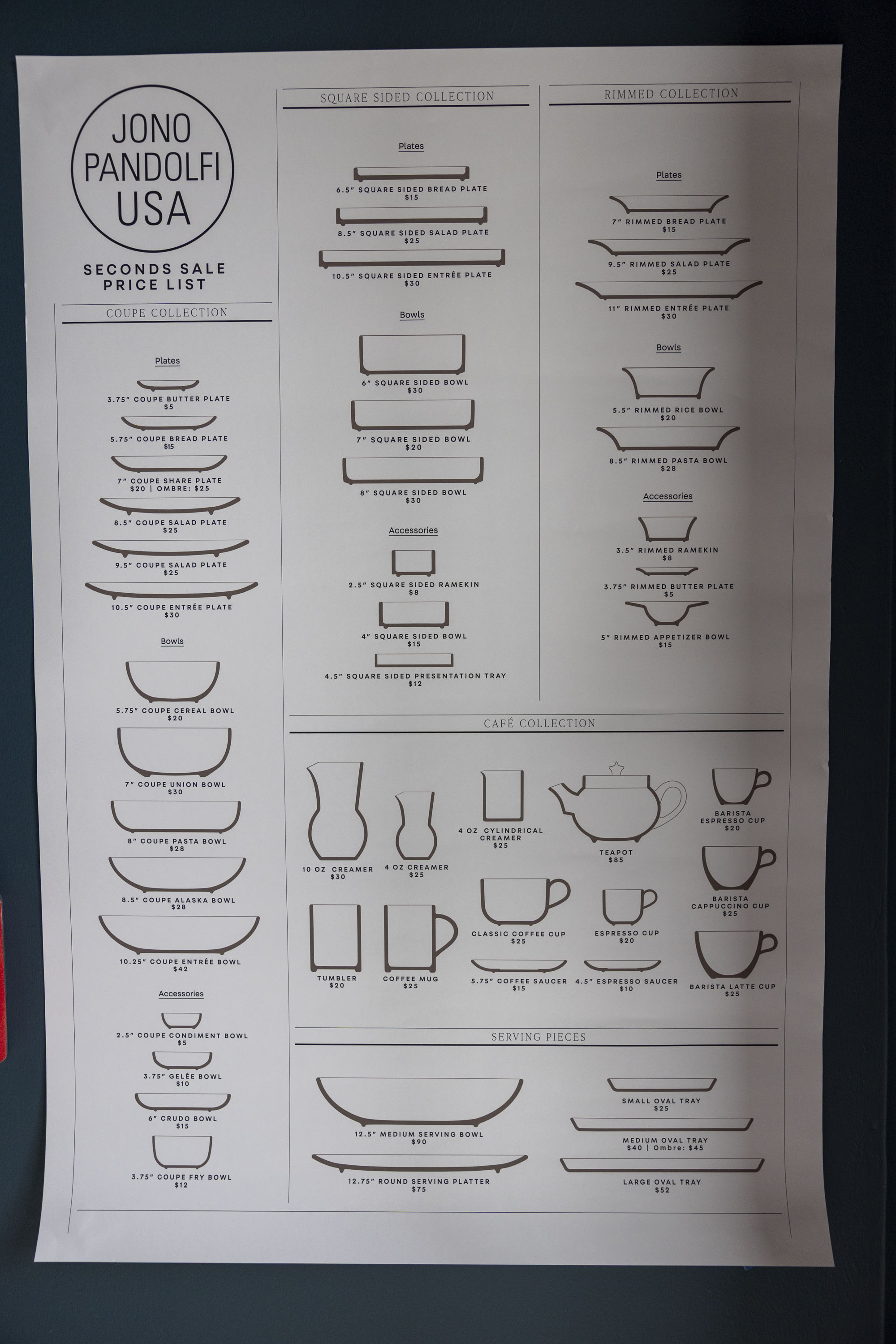
    A price list for the Philly pop-up. Tyger Williams / Staff Photographer

    The 10-day Philly pop-up, held at an Olde Kensington apartment complex, offers pieces at deep discounts. Some are overstock from restaurant orders or one-off commissions with special colors and shapes. Others are seconds, pottery with small cosmetic flaws. One of the best-selling pieces is the Alaska bowl — a “pasta-sized bowl,” as Pandolfi calls it — which normally sells for $57 and is on sale for $28.

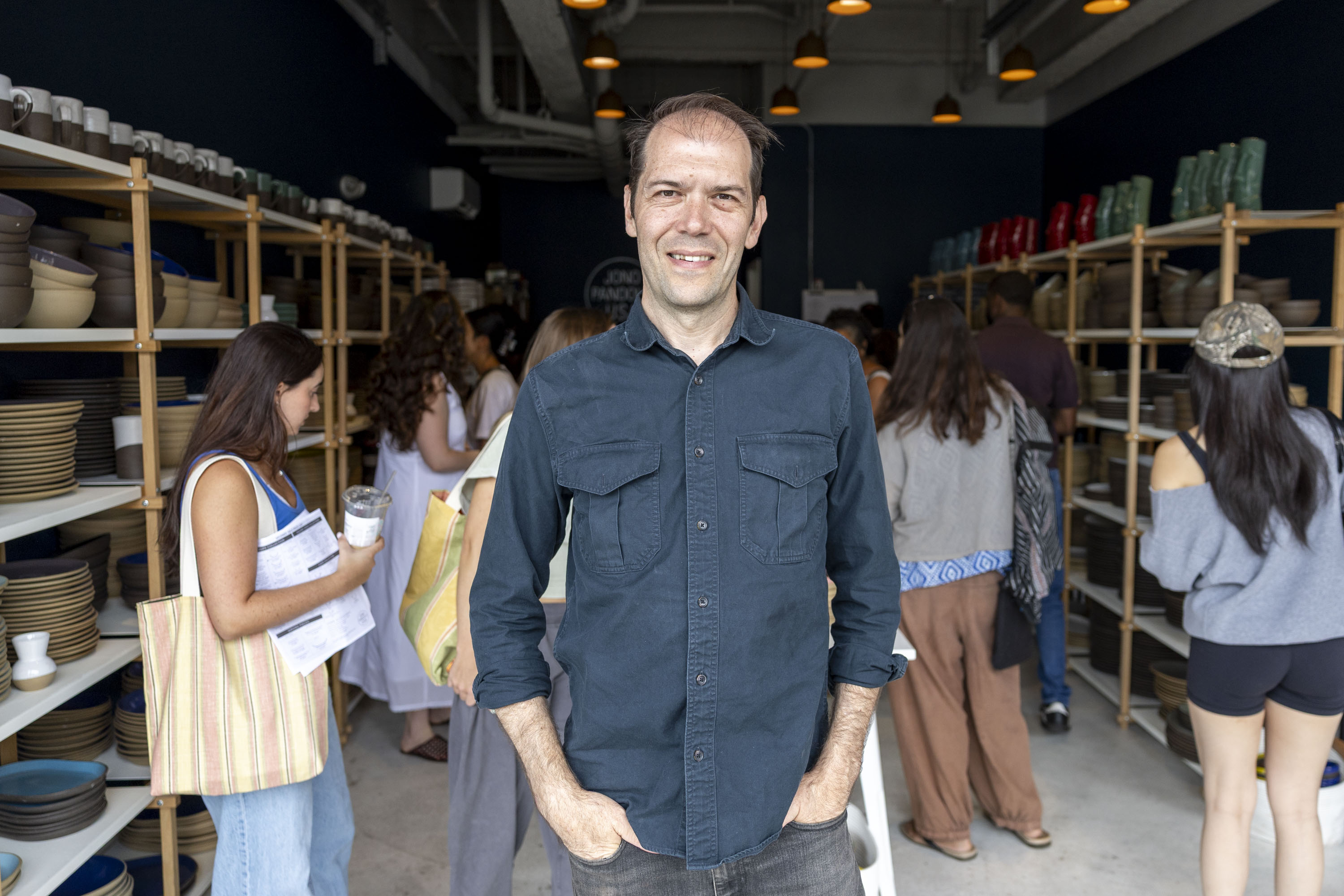
    “If you need to make 100 dinner plates for a customer, you have to probably fire 120,” Pandolfi, in black jeans and a magnetic name tag reading “Jono, Founder,” said in an interview at the Philly sale. The pop-ups are a way to sell off the extras. Some are stamped with the labels of the restaurants that originally commissioned them.

    Founder Jono Pandolfi poses for a portrait at his Philly pop-up. His dinnerware has become a cult favorite. Tyger Williams / Staff Photographer

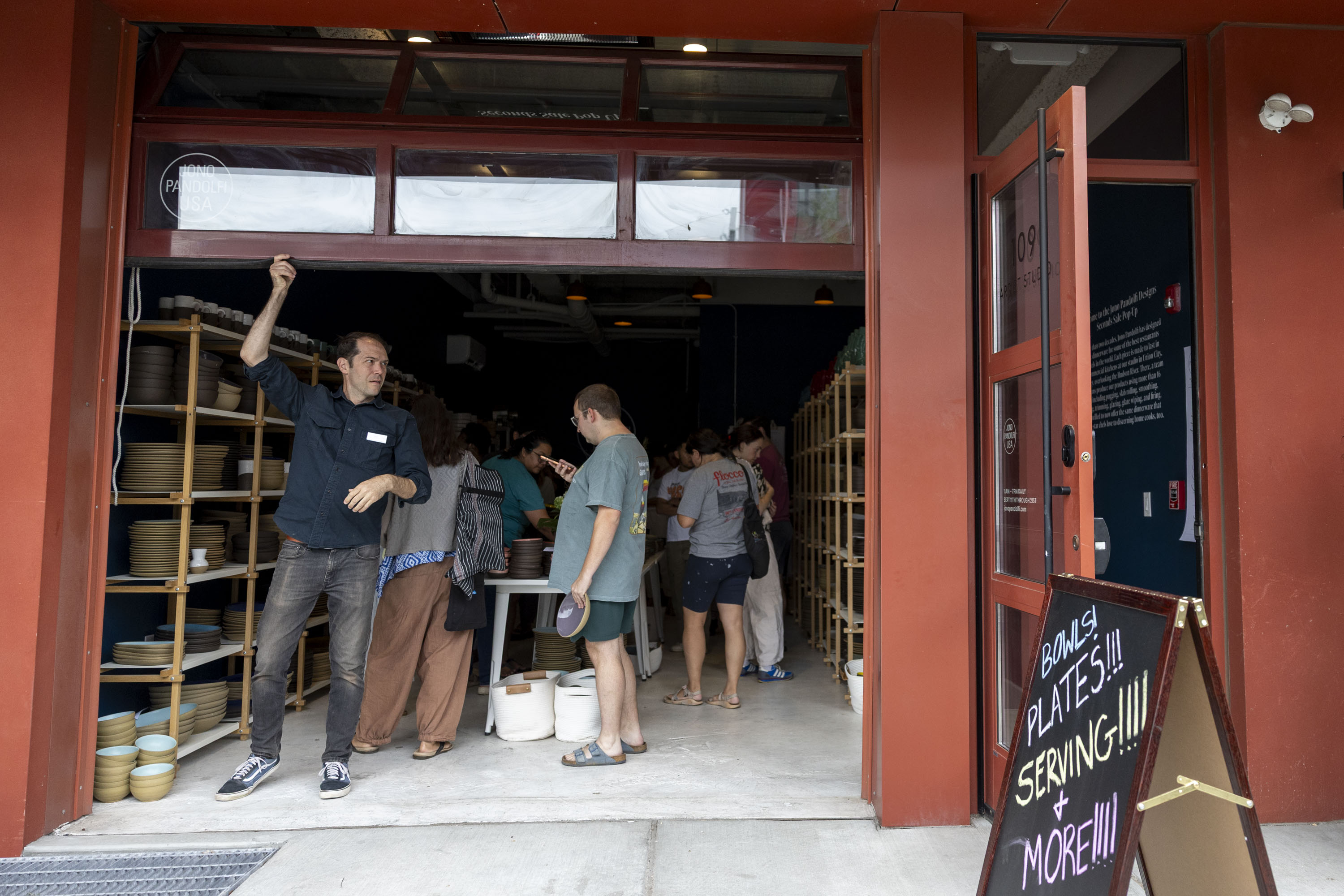
    The sale runs daily 11 a.m. to 7 p.m. through Sept. 21, at 1525 N. American St. Studio #109. Reservations are available online, though people can also just walk in.

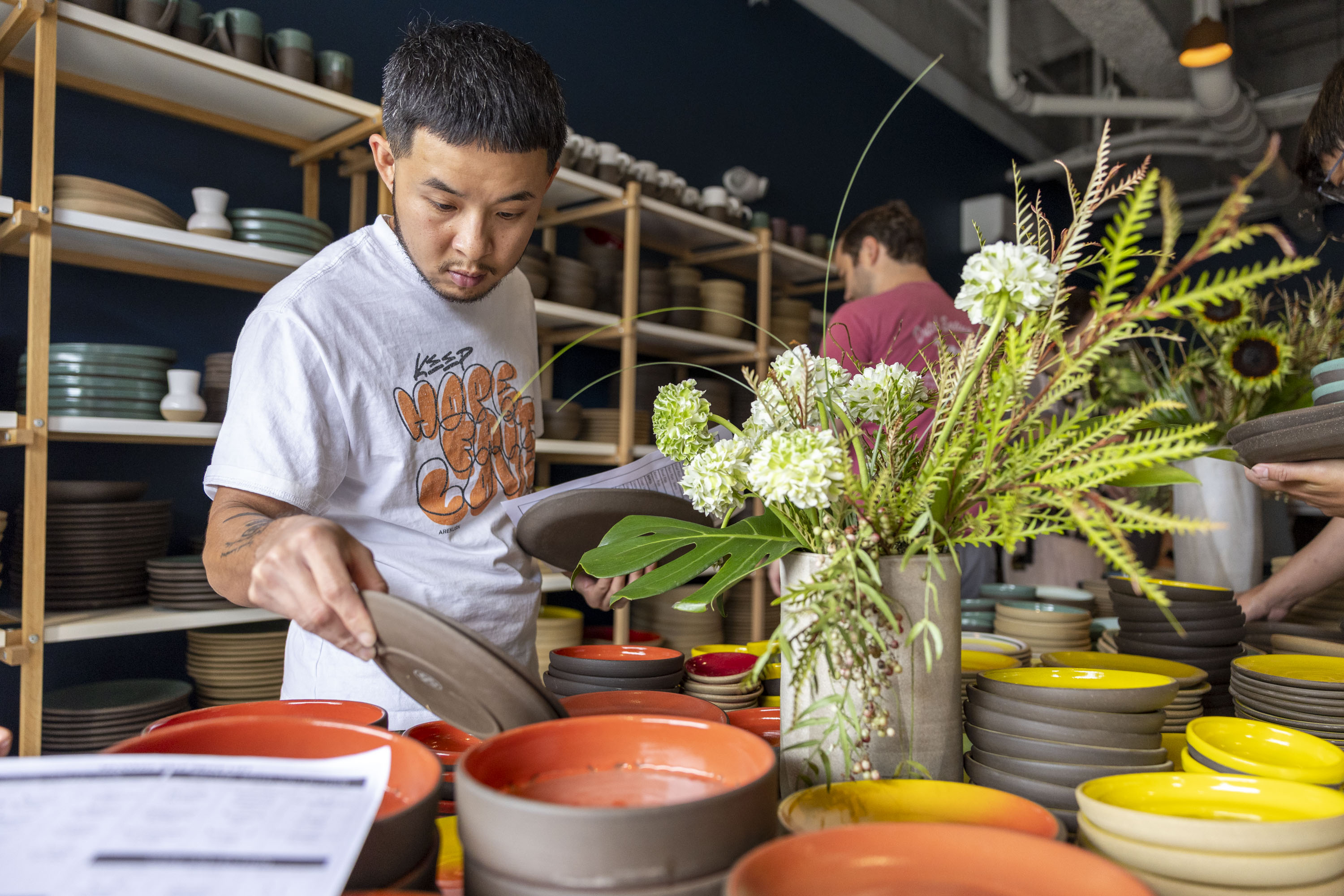
    The first day drew pottery enthusiasts and devoted home chefs, as well as fans of The Bear, from across the city. Customers pored over a crumpled seconds sale-price list on the main table, and the studio echoed with the gentle thunk of pottery being lifted, examined, and restacked.

    “I’m always looking for beautiful things to collect,” said Julia Jacob, 38, an interior designer living in South Philly. She is planning to host family in her new home for the first time this Thanksgiving and wanted clean white plates to make the food look good.

    One of Pandolfi’s golden rules is that his beautiful dinnerware cannot upstage beautiful food. He likes working within the confines of what chefs want from their dishes: They must be minimalist, durable, dishwasher-safe. The company churns out 1,000 such pieces a day from a studio in Union City, New Jersey.

    Alex Nguyen, of South Philly, examined a salad plate at the pop-up. Tyger Williams / Staff Photographer

    “It feels like you’re buying something that’s not made at Target,” said Soumya Dayananda, 50, an attorney who lives in Society Hill. She was considering salad plates in four colors, as well as turquoise dinner plates.

    Susan West, 41, carried a large serving tray, a medium serving tray, two bread plates, and three small bowls, all in vibrant yellow.

    “I don’t need anything,” she said. She couldn’t justify buying all new dinner plates — but these were for hosting. For cheese, for olives! She liked the rustic look of the pottery, and the way it lent itself to showing off unfussy food. She was almost ready to check out when she spotted a small red-and-green-banded plate on a shelf by the register.

    “I’m very tempted by this for Christmas cookies. But I’m like, that’s ridiculous.” She paused to consider the plate. “Should I get one? This is where I spiral.”
    The pop-up is being held at a 500-square-foot studio at 1525 N. American St.Tyger Williams / Staff Photographer

    Some customers returned multiple times in a single day.

    Catherine Pelletier, 60, a designer on the Main Line, had learned about Jono Pandolfi after researching the dinnerware on The Bear. She has since been to Pandolfi’s pop-ups in New Jersey and New York.

    She arrived at the Philly studio sale right when it opened, and bought serving platters and dip bowls for herself. Then she left. But her friend asked if it wasn’t too much trouble, could she return, and pick up a few things for her? So Pelletier came back and ended up purchasing serving trays and bowls for her friend as well.

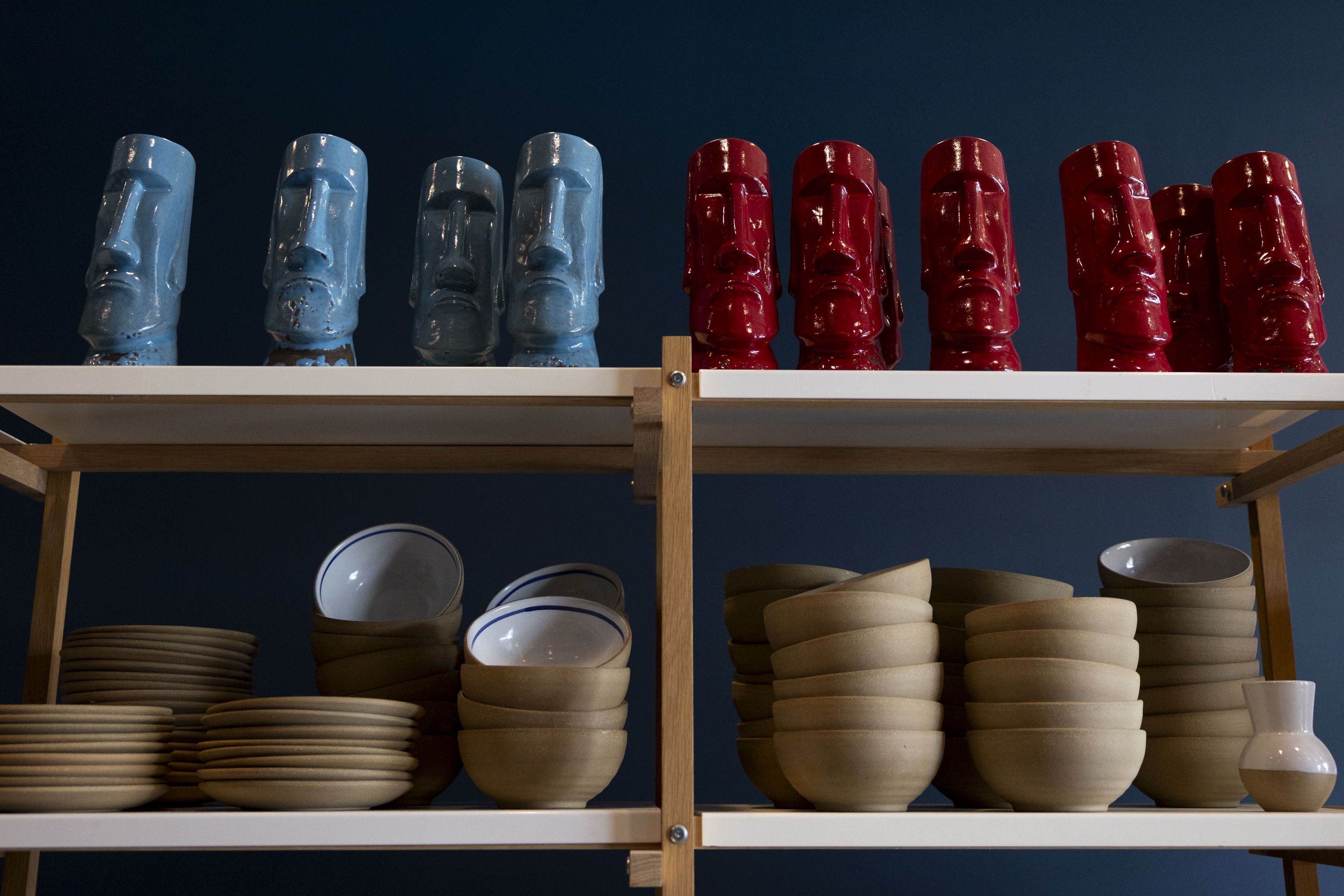
    The “tiki cups” on sale at the Philly pop-up. Tyger Williams / Staff Photographer

    Maryam Mahdavi, 64, and a collector of pottery, was eager to talk shop with Pandolfi, but she also recognized she had a lot to do. She had dragged her husband to the pop-up, and now he was enchanted by the shiny green tiki cup, a nearly foot-high mug with a face like an Easter Island statue. (“I don’t want that,” Mahdavi said, before magnanimously agreeing to buy it for her husband.)

    She stared down the studio’s central table, piled high with bread plates and pasta bowls and ramekins and square-sided salad plates originally designed for chef April Bloomfield’s Tosca Cafe in San Francisco. She had no more time for small talk.

    “Now,” she said, “I gotta focus.”

  • Fishtown’s latest sandwich spot is inside a car club

    Fishtown’s latest sandwich spot is inside a car club

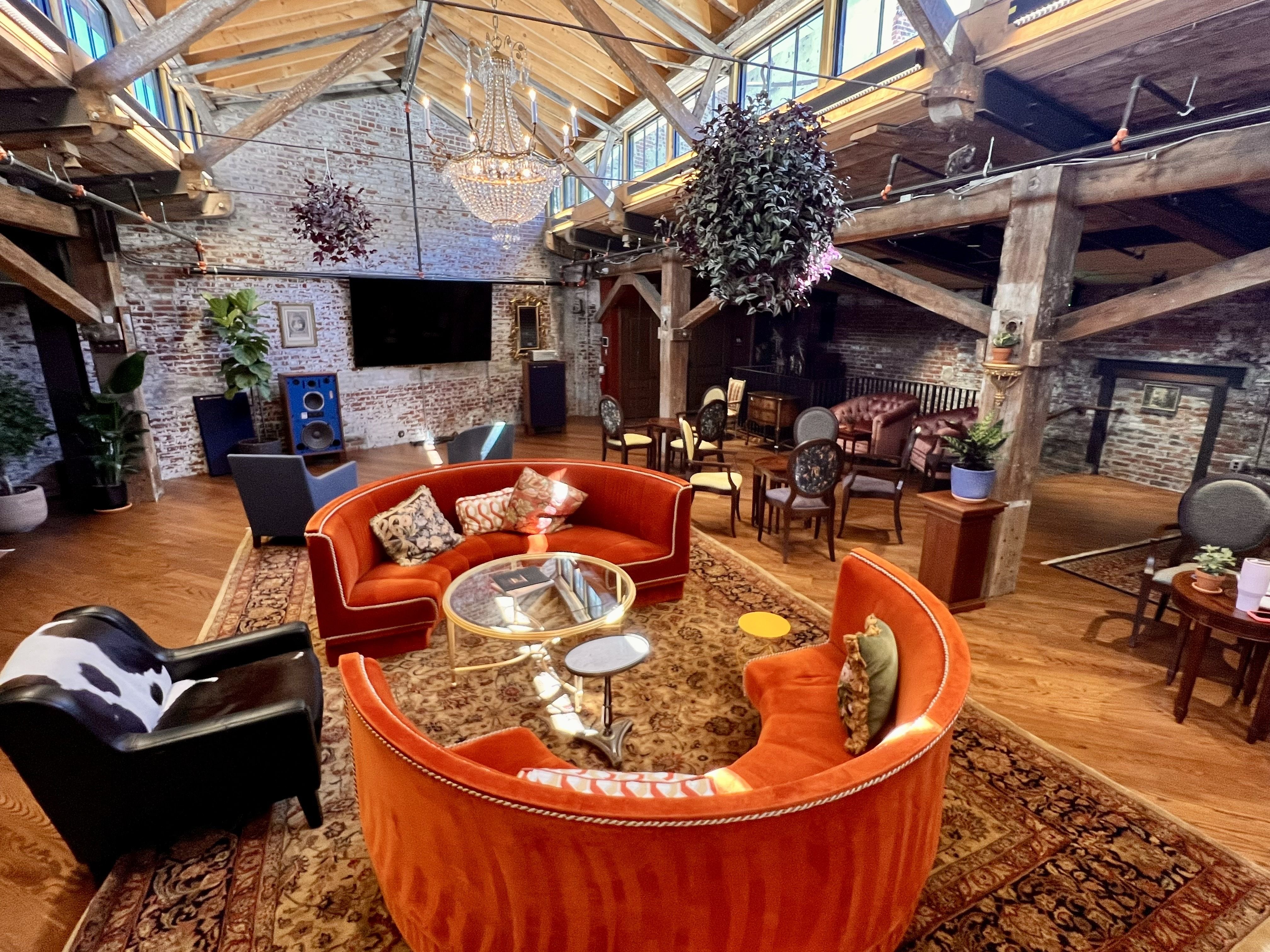
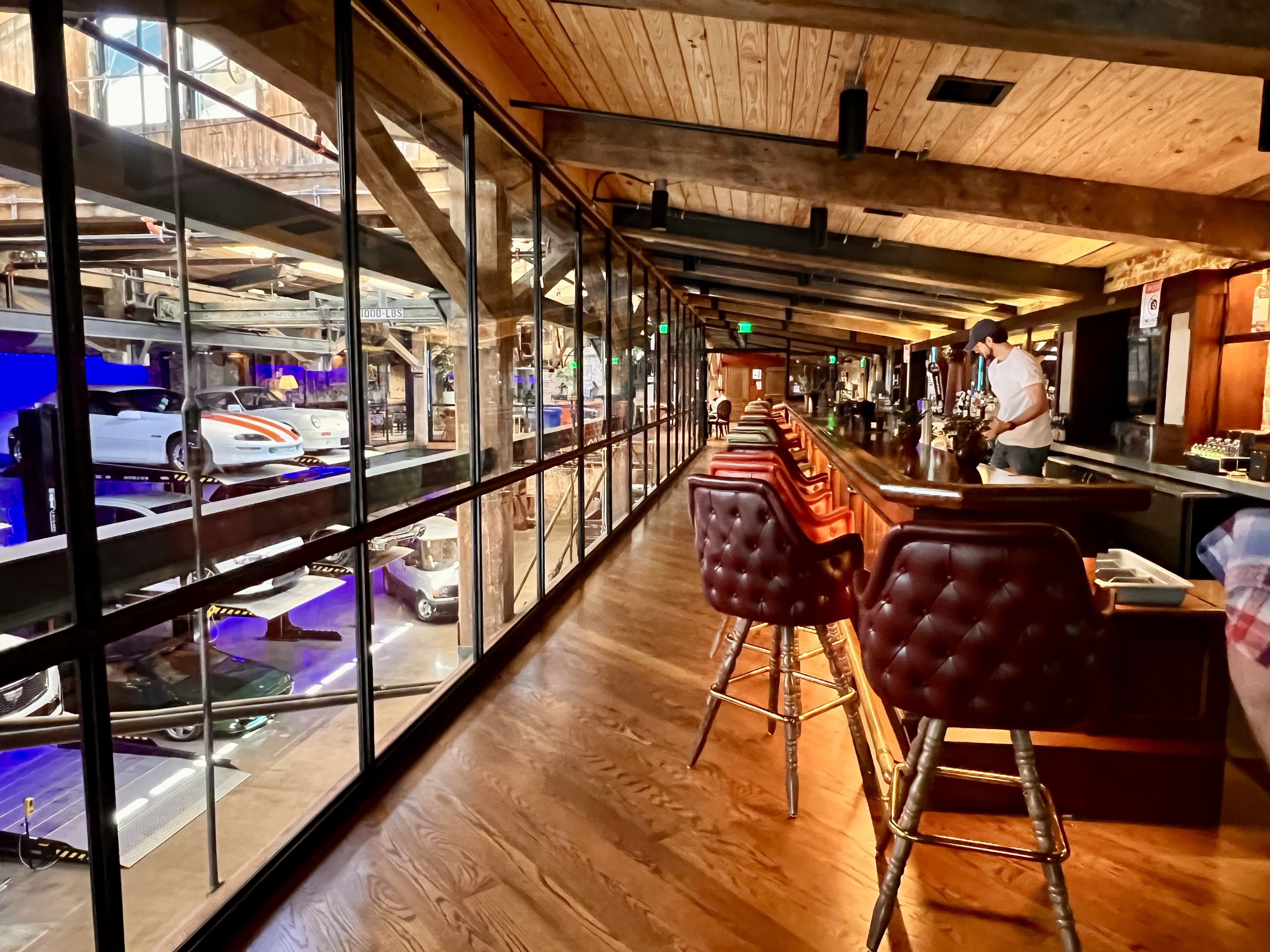
    The vintage and collectible cars stacked behind glass at Fishtown’s new Cannonball club may be the obvious attraction, but founder Chris Allen thinks people need another reason to stick around — and, more important, to come back.

    That’s where the focaccia sandwiches come in.

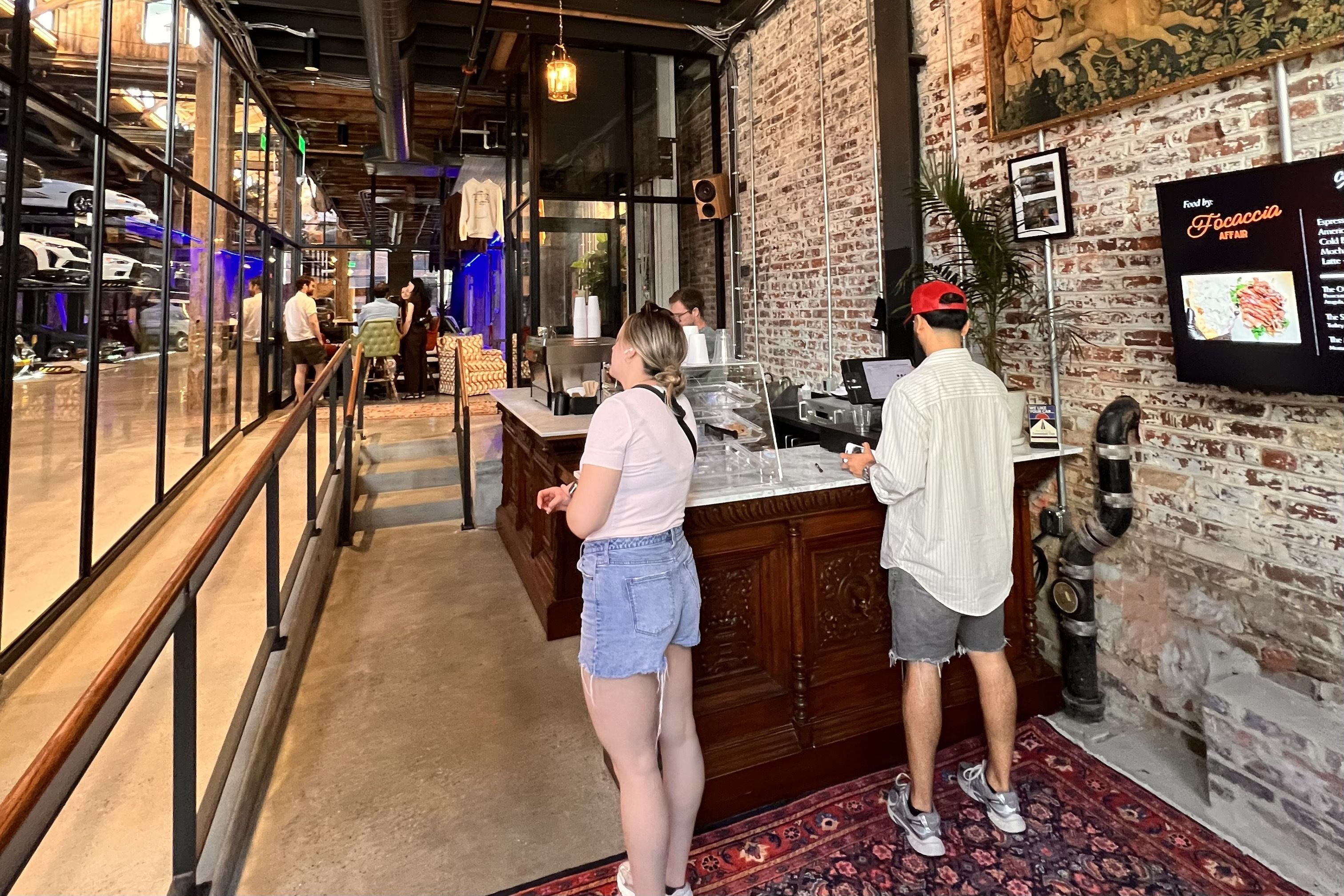
    Cannonball, the new private club for car enthusiasts near the Fillmore, has brought in Focaccia Affair — a fledgling business from Anthony Santucci and Gianluca Mazzarelli — to run its food operations. The club, housed in the sprawling former Morse Elevator Works at 1105 Frankford Ave., combines car storage with social and coworking space, a bar, and a public-facing cafe where you can gawk at classic cars through the window while sipping espresso.

    Focaccia Affair’s cafe at Cannonball serves walk-ins.Michael Klein / Staff

    The cafe, open to anyone, is where Santucci’s focaccia sandwiches take center stage. He’s offering two sandwiches, plus cookies and coffee, to start.

    Santucci, whose family operates Santucci’s Original Square Pizza, developed the bread after moving to San Diego before the pandemic. He had initially considered expanding his family’s pizza business there but began experimenting with focaccia as table bread and as a possible addition to the pizza operation.

    The experiment eventually became something else.

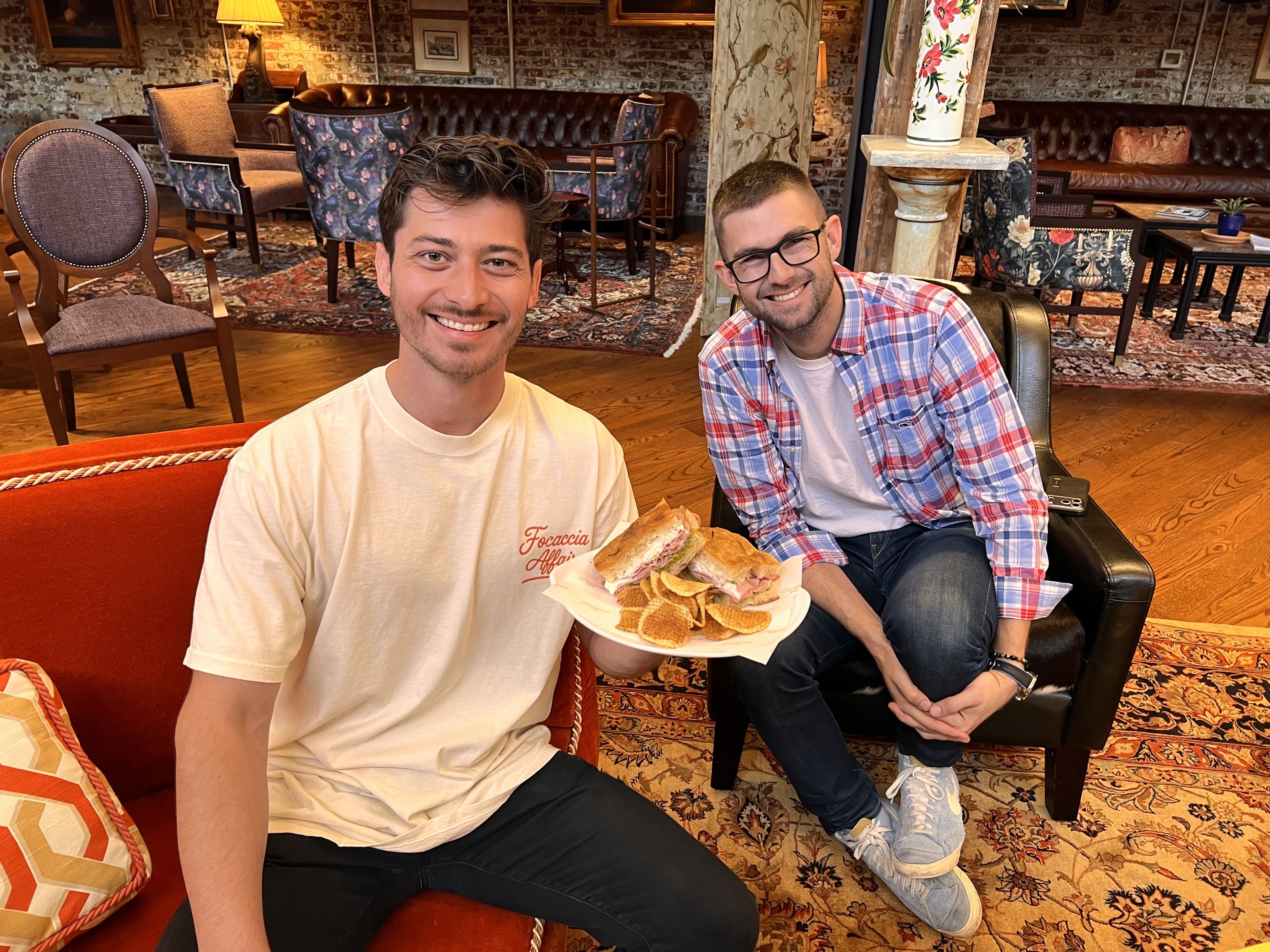
    Santucci and Mazzarelli, a former VIP manager at Barstool on Sansom Street, were friends whose common bonds include hockey and Italian food. After Santucci returned from a 2024 trip to Italy raving about a focaccia sandwich he had eaten, the two made one using the recipe he had been developing.

    Focaccia Affair’s Anthony Santucci (left) and Cannonball founder Christopher Allen in the mezzanine seating area.Michael Klein / Staff

    Focaccia Affair grew from there, although quietly. Santucci and Mazzarelli started testing the sandwiches over the last year through small catering orders and by dropping off food for restaurant staffs around Philadelphia.

    The business is now making its formal debut on two fronts: at Cannonball, where it’s open daily, and at Barstool Sansom Street in Washington Square West. The Barstool menu, which started Thursday, is more extensive than Cannonball’s: six focaccia sandwiches, crostini (on focaccia), burgers on brioche buns, salads, and appetizers.

    Santucci said the bread — which took months of development — is baked after a 48-hour cold fermentation. The result is focaccia with a crispy crust and fruity olive oil flavor. Its sturdy interior holds up to substantial fillings without turning the sandwich into a sloppy mess.

    Seating on the mezzanine at Cannonball, 1105 Frankford Ave.Michael Klein / Staff

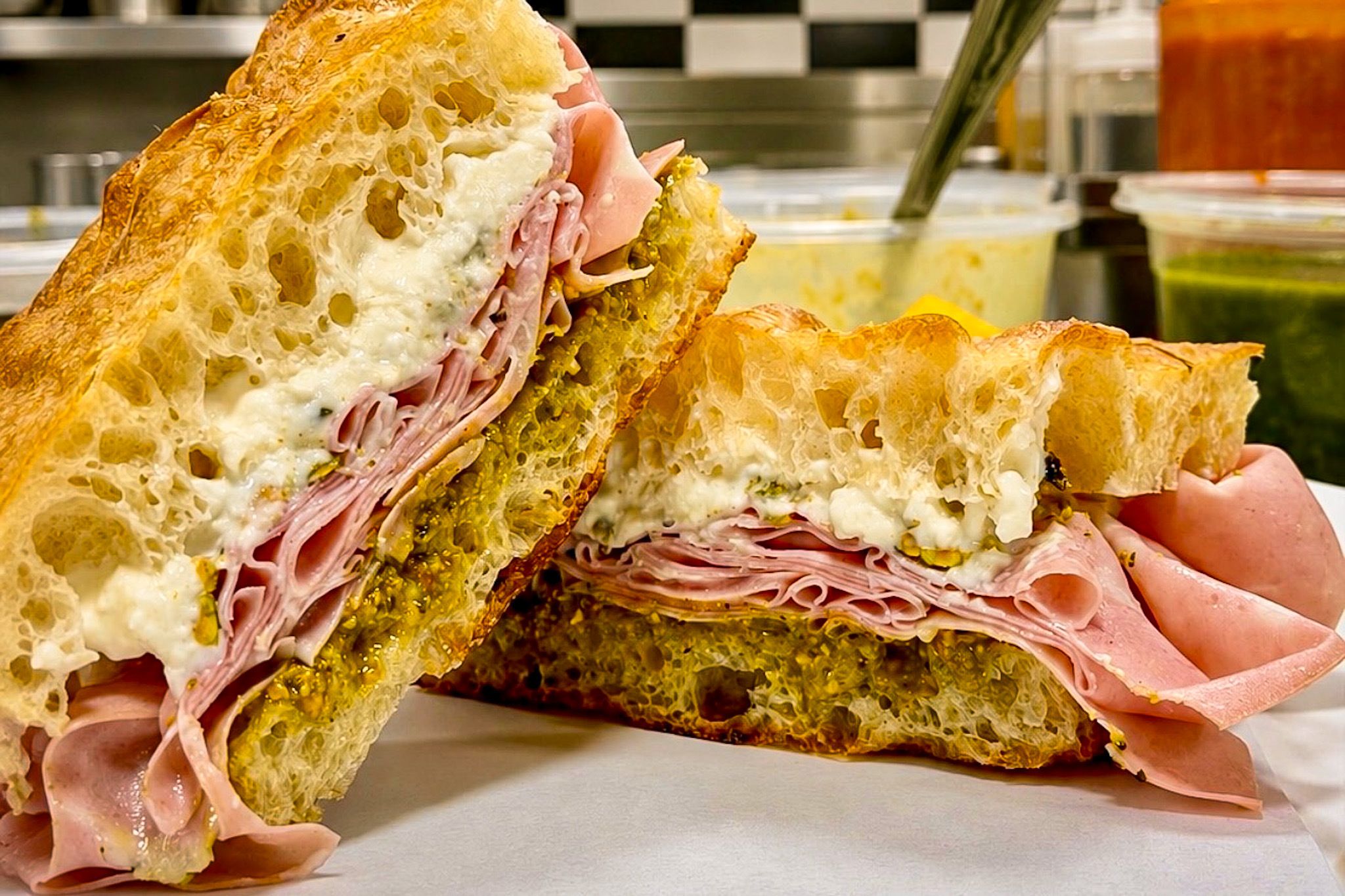
    Cannonball’s cafe will generally offer two or three focaccia sandwiches at a time, rotating them seasonally. Currently, the Muse combines mortadella and stracciatella, a pairing that puts the bread’s structure to good use. (It also survives a test that many sandwiches do not: refrigeration. Gently reheated in a toaster oven the next day, I found the bread just as good.) The Situationship layers sliced turkey, goat cheese, arugula, and fig jam between focaccia, the jam’s sweetness playing against the peppery greens and tangy cheese.

    Santucci has begun developing breakfast versions; the first combines soft-scrambled eggs and bacon with house-made Calabrian chile-infused hot honey. Pastries are being developed, too, including a pumpkin cinnamon roll with brown-butter icing.

    Cannonball’s members-only bar overlooks the car storage.Michael Klein / Staff

    Focaccia Affair also oversees food for Cannonball members and their guests upstairs. Dinner starts at 4 p.m. daily with a six- to eight-item menu modeled on Italian aperitivo culture: smaller dishes designed for sharing rather than conventional entrées. Fresh pastas and additional desserts are expected to join the menu in October.

    Allen said food was essential to his plan for Cannonball, because even a spectacular collection of automobiles has limits as a daily attraction.

    “You can visit the most amazing car collection in the world, but after 15 or 20 minutes, you want to sit down, have a coffee, and eat a sandwich,” he said. “Most of all, you want a reason to come back tomorrow.”

    Focaccia Affair, 1105 Frankford Ave., instagram.com/focaccia_affair. Hours: 6:30 a.m. to 3 p.m. weekdays; 8 a.m. until roughly 3:30 or 4 p.m. weekends.

  • Philly’s top Tibetan restaurant was set to expand to Montco. Then its building caught fire.

    Philly’s top Tibetan restaurant was set to expand to Montco. Then its building caught fire.

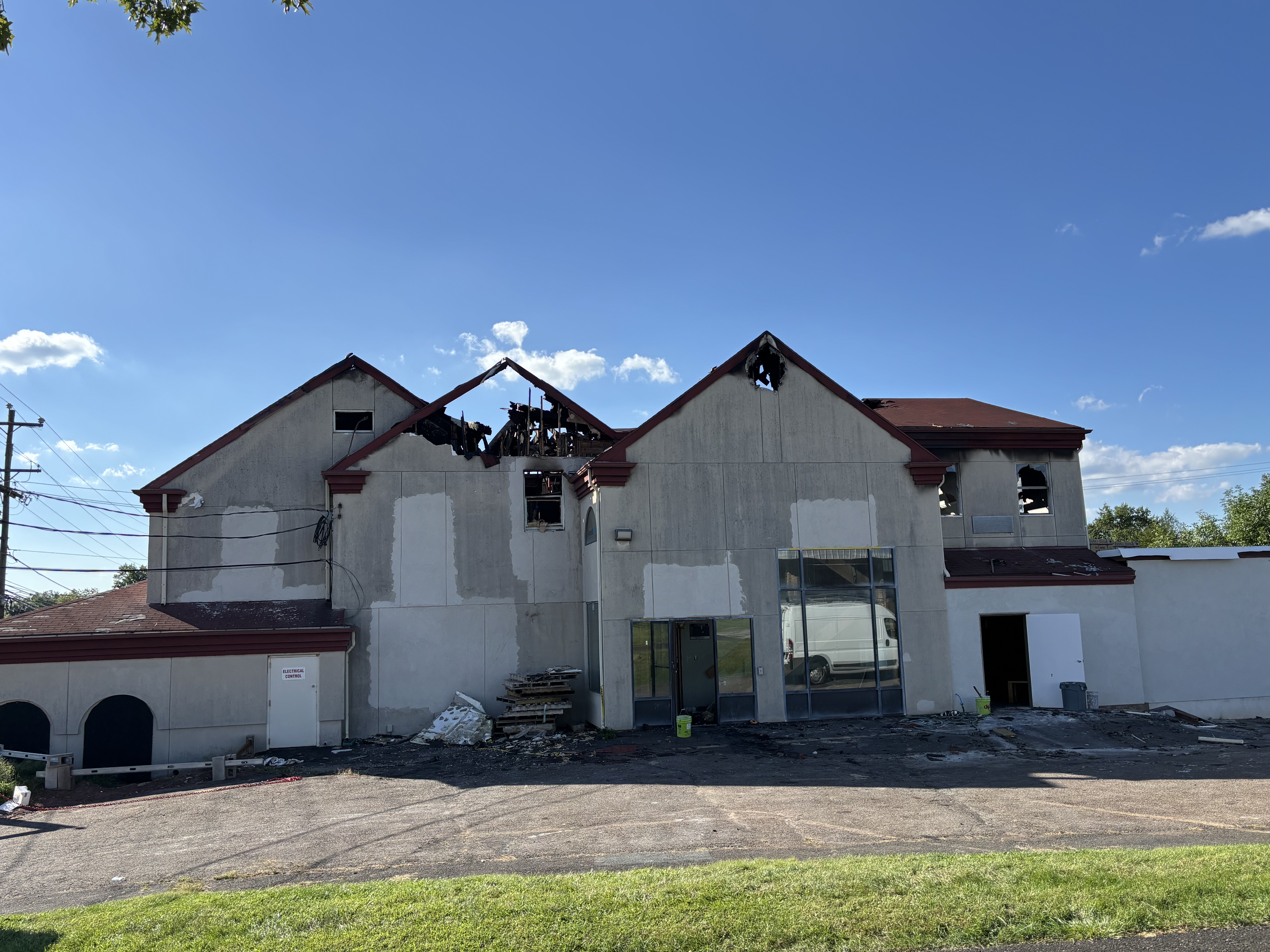
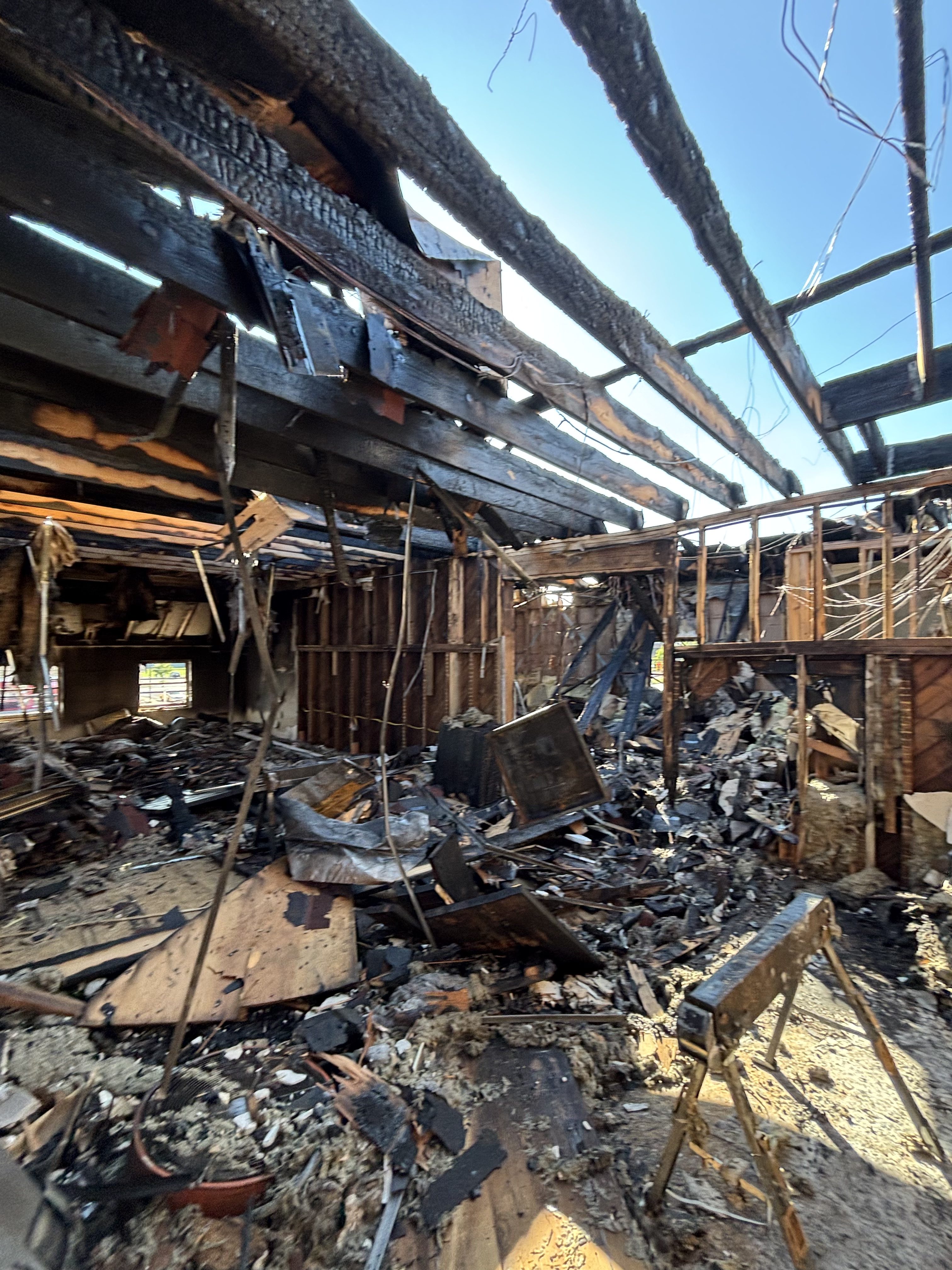
    The dining tables were already inside the East Norriton building where the owners of White Yak Restaurant planned a second location when a fire ripped through the roof earlier this month.

    Chef-owner Treley Parshingtsang’s husband, a contractor by trade, made the tables by hand. The couple was about six weeks from opening what would have been Montgomery County’s only Tibetan restaurant.

    “I have so many packages that my brother shipped all the way from Tibet for the decorations,” she said through tears.

    White Yak Restaurant’s Roxborough location has drawn a loyal following and critical acclaim for its spicy momo dumplings, hand-ripped noodles, and house-made sausage. It’s been a regular on The Inquirer’s 76 best restaurants in the region.

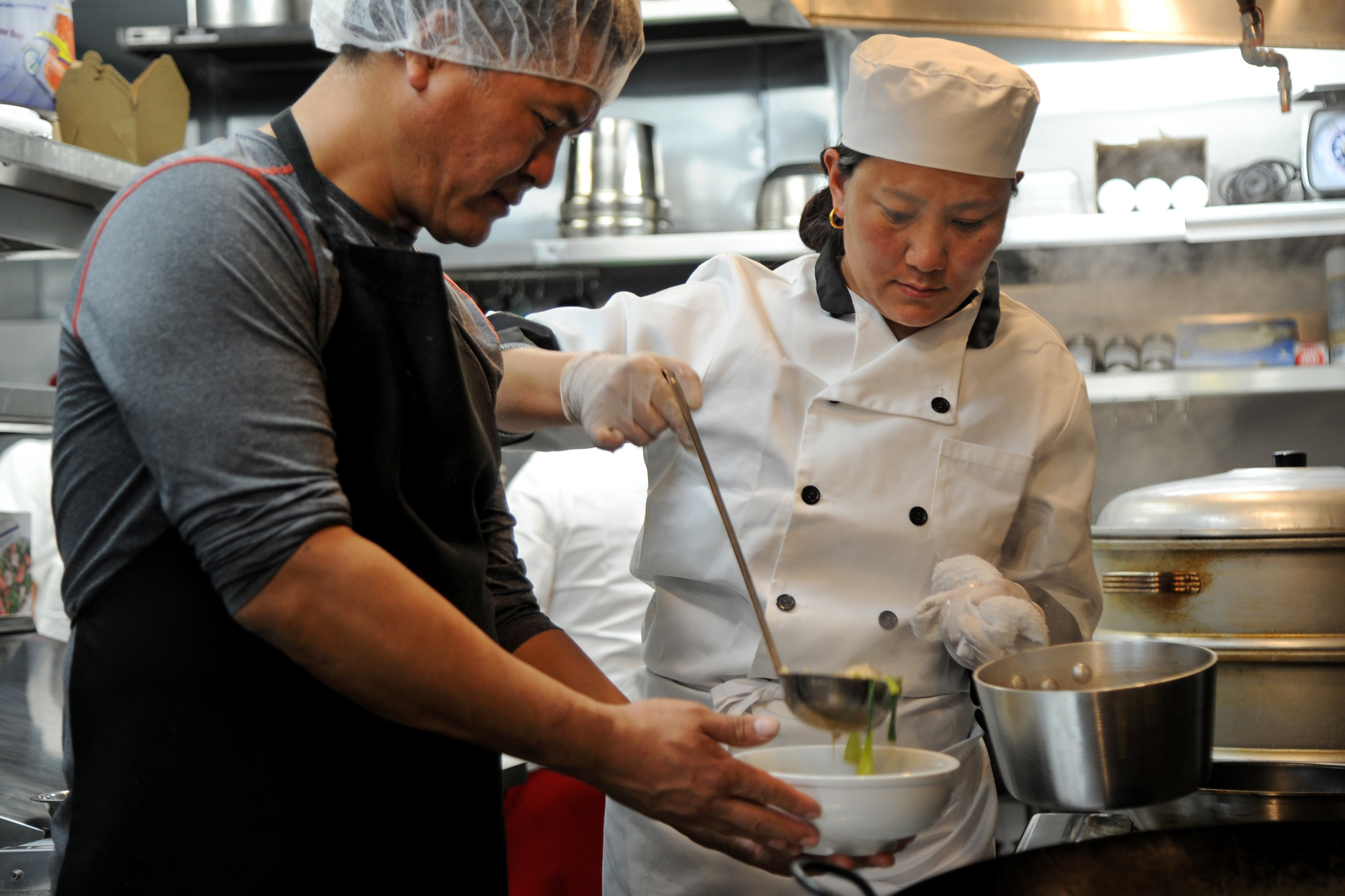
    Co-owners Tsering Parshingtsang (left) and Treley Parshingtsang spoon out Thenthuk soup with beef and hand-ripped noodles at White Yak, the Himalayan Tibetan restaurant in Roxborough Nov. 26, 2019.TOM GRALISH / Staff Photographer

    Opening the first restaurant, at 6118 Ridge Ave., took six and a half years of work, Parshingtsang said, and her family had been working on the East Norriton location for four. The couple bought the building in 2021, property records show.

    The fire broke out Sept. 5 at the 123 W. Germantown Pike building, White Yak Restaurant wrote on social media last week. Images show flames pouring from the roof of the 6,000-square-foot structure across from Friendly’s.

    Though insurance and fire inspectors have surveyed the damage, the cause of the fire is still unknown, Parshingtsang said in an interview. The electricity wasn’t turned on, and the doors were locked.

    The top floor of 123 W. Germantown Pike, razed by fire on Sept. 5, 2026.Tsering Parshingtsang

    Parshingtsang is hopeful they can save the basement and first floor, but she’s worried about the rain pouring in from the open roof.

    “That building is very special for us,” she said. “We have a lot of memories.”

    The news drew messages of support, including from Montgomery County Commissioner Neil Makhija.

    “[I] was so excited to welcome the White Yak Restaurant,” Makhija wrote on social media. “Their Roxborough restaurant is a favorite for our family.”

    It’s too early to tell when White Yak will be ready to resume expansion plans, Parshingtsang said, but her family wrote in a statement on the restaurant’s social media page that they’re determined to move forward: “The building may be gone, but our dream is not.”

    This suburban content is produced with support from the Leslie Miller and Richard Worley Foundation and The Lenfest Institute for Journalism. Editorial content is created independently of the project donors. Gifts to support The Inquirer’s high-impact journalism can be made at inquirer.com/donate. A list of Lenfest Institute donors can be found at lenfestinstitute.org/supporters.

  • Reading Terminal Market’s efforts to prevent food waste get the attention of the EPA

    Reading Terminal Market’s efforts to prevent food waste get the attention of the EPA

    The Reading Terminal Market is often bustling with voices, crowded aisles, and populated hallways. But on Monday, the real motion was behind the scenes, among the trash cans and scraps.

    After two years of diverting as much food waste from landfills as possible, the market has managed to keep 1,045,931 pounds of organic waste from the trash fields.

    A pilot program began in April 2024, through a partnership with the composting service Mother Compost, and 10 of the market’s sellers. Now, as part of the celebrations for the nation’s 250th, the Environmental Protection Agency’s Feed it Onward program is highlighting initiatives that ensure food resources are redistributed instead of wasted.

    EPA officials toured the market’s facilities on Monday, getting a behind-the-scenes look at how the composting and other recycling and reuse programs work.

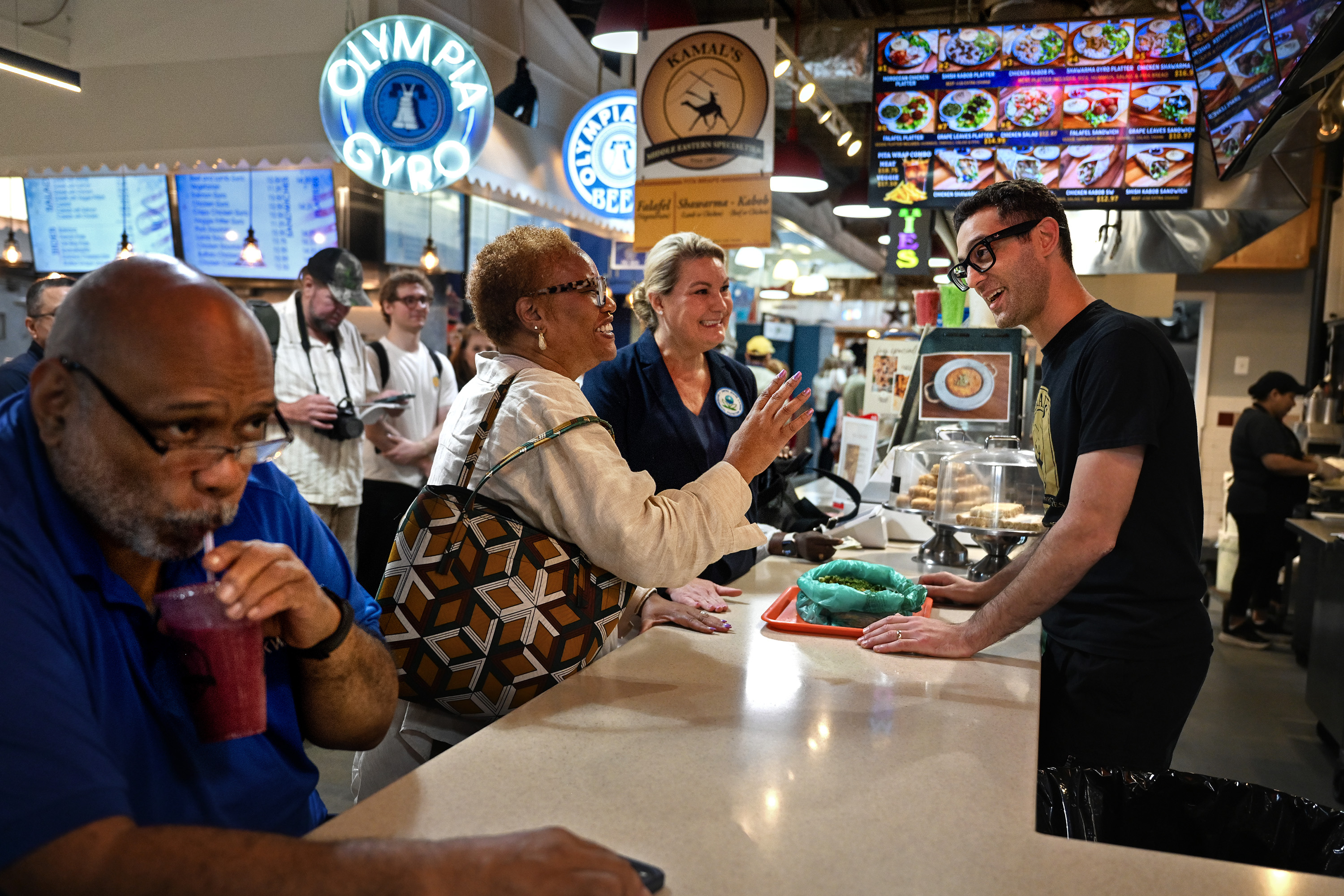
    “We are not just one organization championing for change, but more than 80 small, family-owned businesses under one roof who have the potential to make a difference,” said Annie Allman, Reading Terminal Market CEO and general manager.

    Kamal’s Middle Eastern Specialties is one of them. Its owner Adham Albarouki, has been in the market for 45 years and sees in the composting program a way for his juice bar to give back.

    “We produce about 15 to 30 pounds of waste per day. Being part of something a little bit bigger here we can contribute a lot more,” Albarouki said. “It’s something to give back to mother nature.”

    The process is easy, Albarouki said. He or his workers run the vegetables and fruits through juicers. The juice goes to the customers, while the peels, fiber, and leftover organics are taken to a merchants-only area.

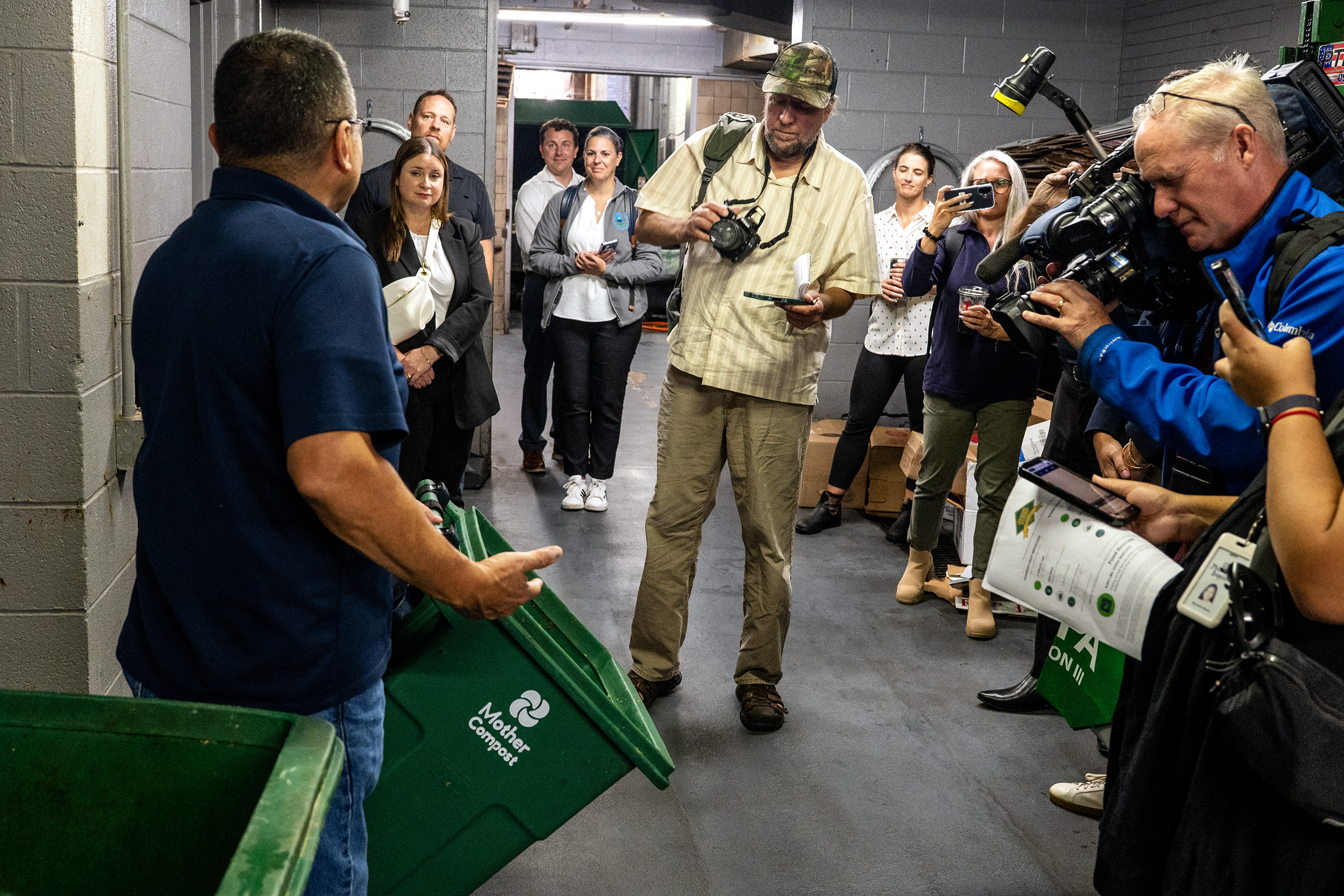
    Behind closed doors, 20 Mother Compost green trash cans are lined up, waiting to be fed scraps.

    Miguel Servellon (left), assistant general manager at Reading Terminal Market, gives merchants, EPA officers, and news media a behind-the-scenes tour of the market’s food waste diversion operations and sustainability programs on Monday. The green bins are from Mother Compost, a local, woman-owned pickup service, that composts organic materials to keep food scraps out of landfills and return their nutrients to local soils.Tom Gralish / Staff Photographer

    Miguel Servellon, the market’s assistant general manager, runs a tight machine to ensure the compost doesn’t get contaminated.

    On Monday morning the cement room smelled like orange peels, as one trash can had already been loaded with the citrusy scraps ahead of an early pick up, Servellon said.

    Fruit and vegetable peels, meat, eggs, cheese, milk, coffee grinds, and even fish all go inside the green containers.

    “The smell is not so inviting; occasionally it can be a challenge,” Servellon said.

    The organic waste is layered on top of each other.

    Mother Compost takes as much as 1,300 pounds of composting per pickup, which happen three times a week, Servellon said. The waste then goes to be repurposed at Linvilla Orchards, in Delaware County.

    But organic waste is not the only thing being recycled.

    At the other end of the room, two big gray containers sat full of vegetable oil waiting to be picked up by LifeCycle Renewables.

    Since 2022, the market has gathered 100,209 gallons of oil from sellers to be used as heating fuel in commercial buildings, Allman said.

    And since 2023, the nonprofit Sharing Excess has been working with the market’s sellers to redistribute surplus food.

    Earlier this year, Sharing Excess got its own fridge inside the market where sellers can deposit their donations to be redistributed in places with food insecurity.

    “We come by five days a week, and our driver weights them and tracks who donated each so we can give them their proper tax credit,” said Braden Walper, Sharing Excess retail rescue manager.

    The food goes to stock food pantries and provides as much as 100 meals a day for people experiencing food insecurity, Walper said.

    These Reading Terminal Market programs are crucial to inspire businesses across the region to reuse and recycle their food, said EPA Mid-Atlantic regional administrator Amy Van Blarcom-Lackey.

    “More than one million pounds diverted from landfills is an impressive milestone, but what really stands out to me is how the merchants made these practices part of their everyday operations,” Van Blarcom-Lackey said. “It’s important to continue because it’s good for the community and better for the environment.”

  • This off-the-menu butter chicken cheesesteak comes by way of Pakistan — and Northeast Philly

    This off-the-menu butter chicken cheesesteak comes by way of Pakistan — and Northeast Philly

    Butter chicken has taken an indirect route to South Street’s Pronto Pizza: from its roots in North India to a Pakistani family kitchen in Northeast Philadelphia, then into an Italian American pizza shop and, finally, onto a roll.

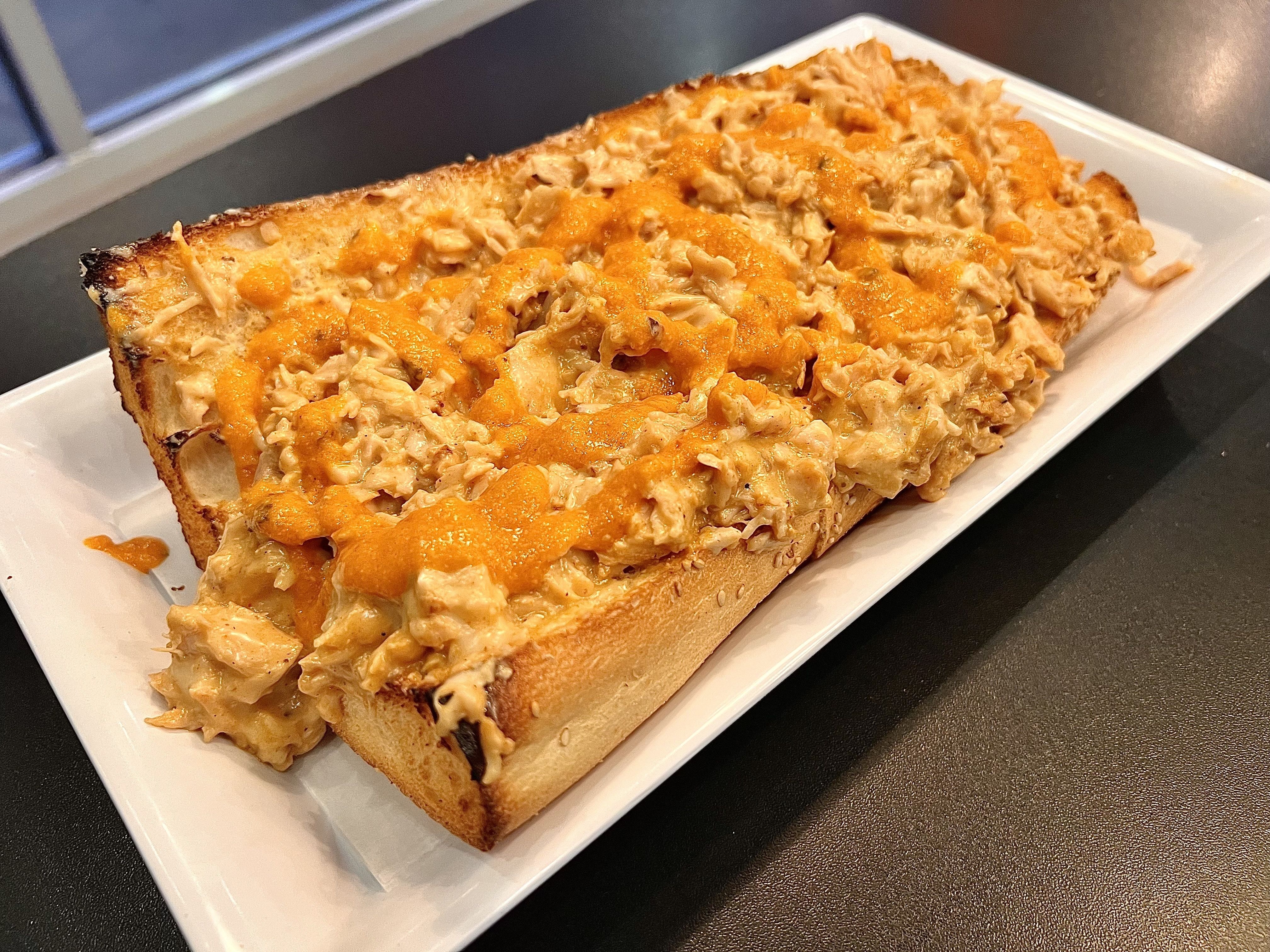
    At Pronto, just off Broad Street, it’s a secret menu item. Owner Umair Cheema tops chopped marinated chicken with Cooper Sharp and butter chicken sauce based on his mother Asma’s recipe. The $12 sandwich is Cheema’s addition to a citywide assortment of cheesesteak variations that includes versions made with oxtail and salmon.

    Cheema does not skimp. He lightly toasts the Liscio’s roll before adding nearly a pound of a mixture of chicken and melted cheese. Then comes a ladle or two of the rich butter sauce, which comes perilously close to gilding the lily.

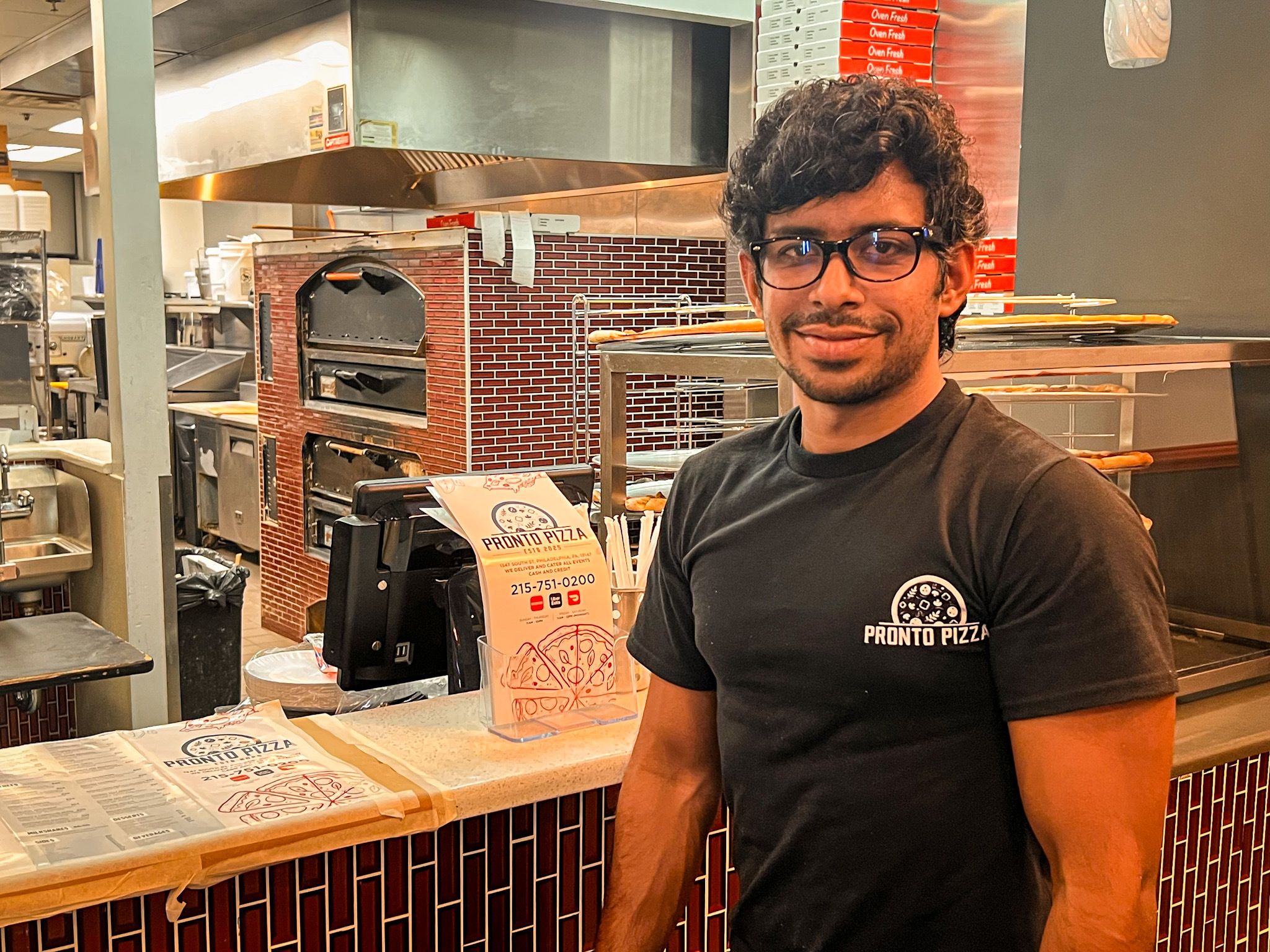
    Umair Cheema owns Pronto Pizza, 1347 South St., which previously was LaScala’s Pronto.Michael Klein / Staff

    Cheema, 28, had eaten plenty of butter chicken in Pakistan, but he credits his younger brother, Adil, with inspiring Pronto’s version. After the family moved to Northeast Philadelphia in 2019, Adil routinely asked their mother to cook for him.

    “One day my mom made butter chicken, and I was like, ‘Mom, this is outstanding. This is the kind of butter chicken I eat at restaurants,’” Cheema said.

    A staple entree on Indian restaurant menus in the United States, butter chicken typically features yogurt-marinated chicken in a mild, creamy tomato sauce seasoned with onions, garlic, and spices such as garam masala, turmeric, cumin, and coriander. The dish has proved adaptable to other formats. Chef Reuben Asaram, for example, has incorporated it into his Mexican-Indian “Reubychanga.”

    Pronto is also not the area’s only shop making a butter chicken cheesesteak. Double Down Kitchen at Ridge Hall in Ambler serves one alongside versions made with jerk chicken and bulgogi-marinated rib-eye.

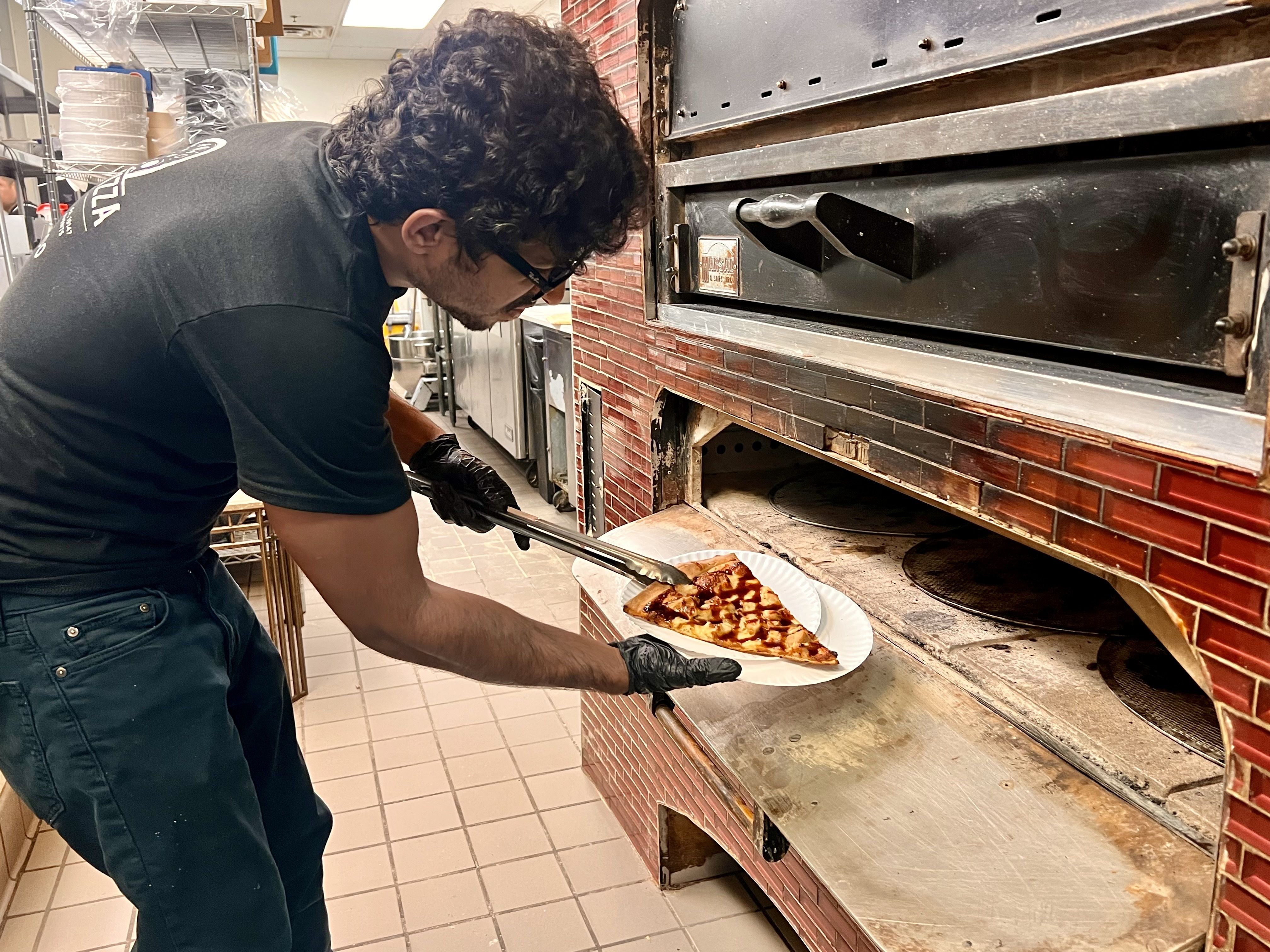
    Owner Umair Cheema pulls a slice of pizza from the oven at Pronto Pizza, 1347 South St.Michael Klein / Staff

    Cheema’s sandwich is part of his effort to broaden the menu at Pronto, which he bought from restaurateur Rob LaScala. He largely retained LaScala’s offerings of pizza, sandwiches, wings, pasta, meatballs, chicken Parmesan, and grilled salmon platters.

    Cheema had not expected to enter the pizza business. After arriving from Pakistan, where his father had worked as a banker, he took a job at Kabobeesh, his aunt’s West Philadelphia restaurant. His father was diagnosed with severe diabetes soon afterward, while his mother found warehouse work.

    “I took charge,” Cheema said. “I was like, ‘Let me deal with all of this now. It’s my time to handle this.’”

    His opportunity came when an uncle learned that Naz’s Pizza in Chester was for sale.

    “He called me and said, ‘Someone is really desperate. They want to sell their pizza shop. I know you have some money saved. If you really want to look into it, I’ll help you out, too.’”

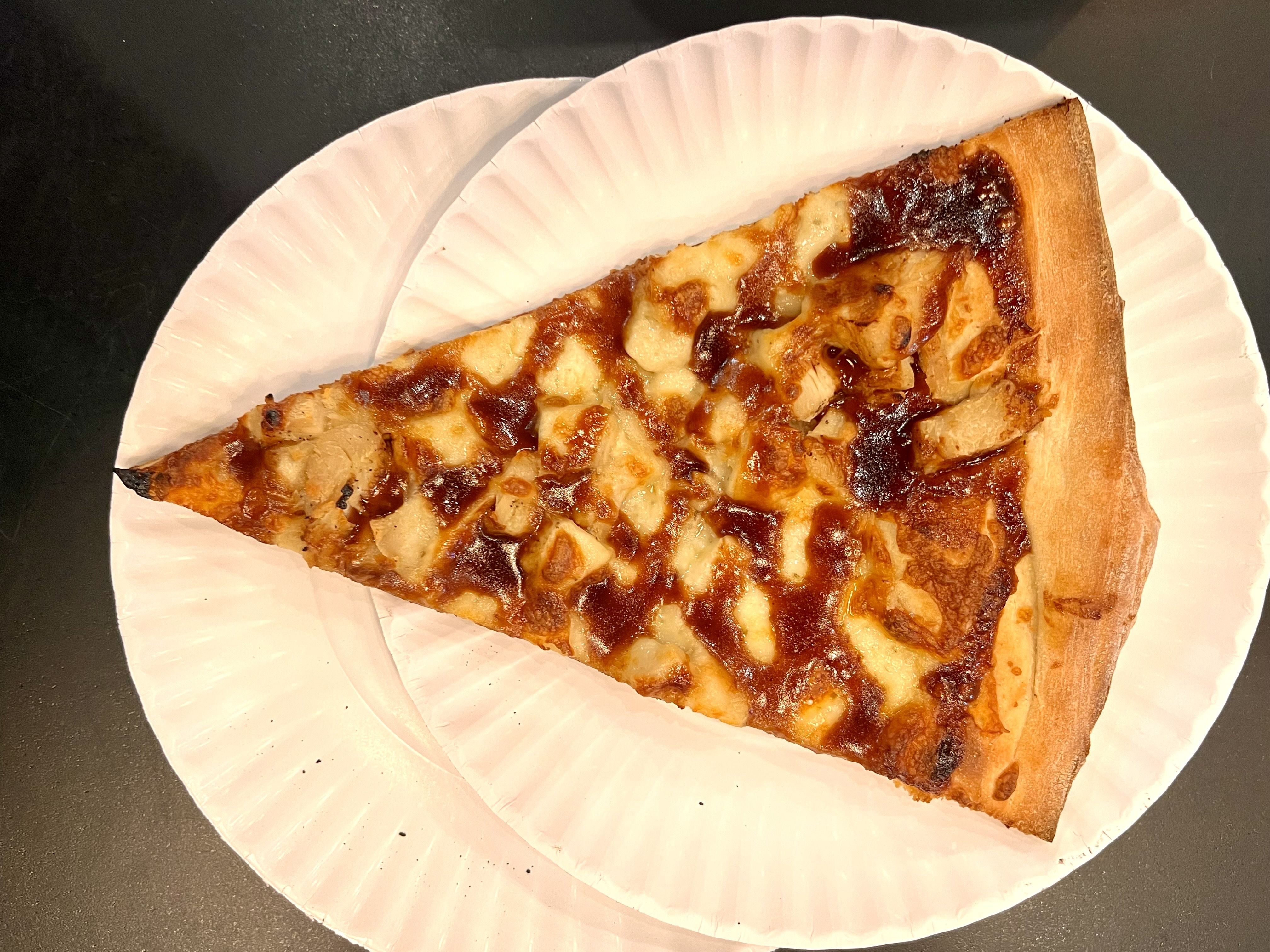
    Barbecue chicken pizza slice at Pronto Pizza, 1347 South St.Michael Klein / Staff

    Cheema drove to Chester the next day and arrived around 3 p.m., hardly primetime at most pizzerias. “I saw people coming in and the phones ringing,” he said. “That means a business is working. So I told my uncle, ‘Everything seems OK. They are short a couple of things, but we can fix it.’”

    Cheema and his uncle bought the shop, and Cheema said sales doubled within six months. They eventually expanded to six shops before dividing the business to pursue separate growth; Cheema sold off the Chester store. Besides the Pronto at 1347 South St., Cheema owns another Pronto in Torresdale, Holme Style Pizza near Holme Circle, and Old English Style Pizza in Olney.

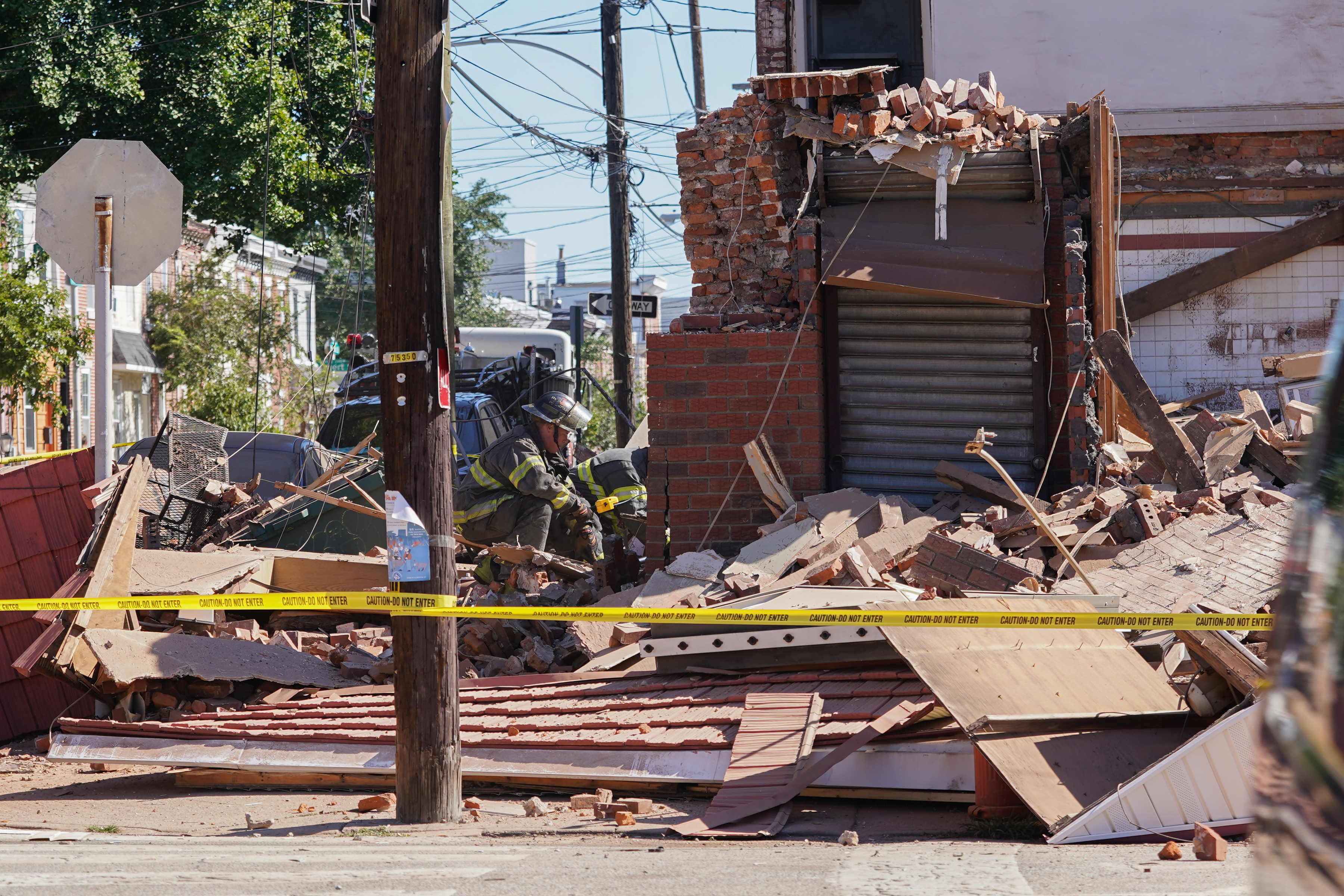
    His most serious setback came in September 2022, when the three-story East York Street building housing Key Pizza, his busiest shop, collapsed. “You couldn’t tell there had been a pizza shop there the night before,” Cheema said. Construction work next door was blamed.

    The roll-up door and some bricks are all that remained of Key Pizza at 2329 E. York St. after its collapse on Sept. 14, 2022.Jessica Griffin / Staff Photographer

    No injuries were reported, but he lost the business, and the resulting insurance litigation was resolved only recently, about 3½ years later, he said.

    Cheema does not plan to rebuild Key. He is focused instead on Pronto, its catering operation, and potential additional locations. The butter chicken cheesesteak gives him a way to integrate his family’s cooking into the kind of business in which he found his footing.

    “Everybody in Philly knows what a cheesesteak is, and there are so many good places out there already selling cheesesteaks that are famous for them,” he said. “But I wanted to do something different, and something that still relates to Philly.”

  • The best thing Mike Klein ate last week: Retro burgers and fries at one of Joe Biden’s go-to restaurants

    The best thing Mike Klein ate last week: Retro burgers and fries at one of Joe Biden’s go-to restaurants

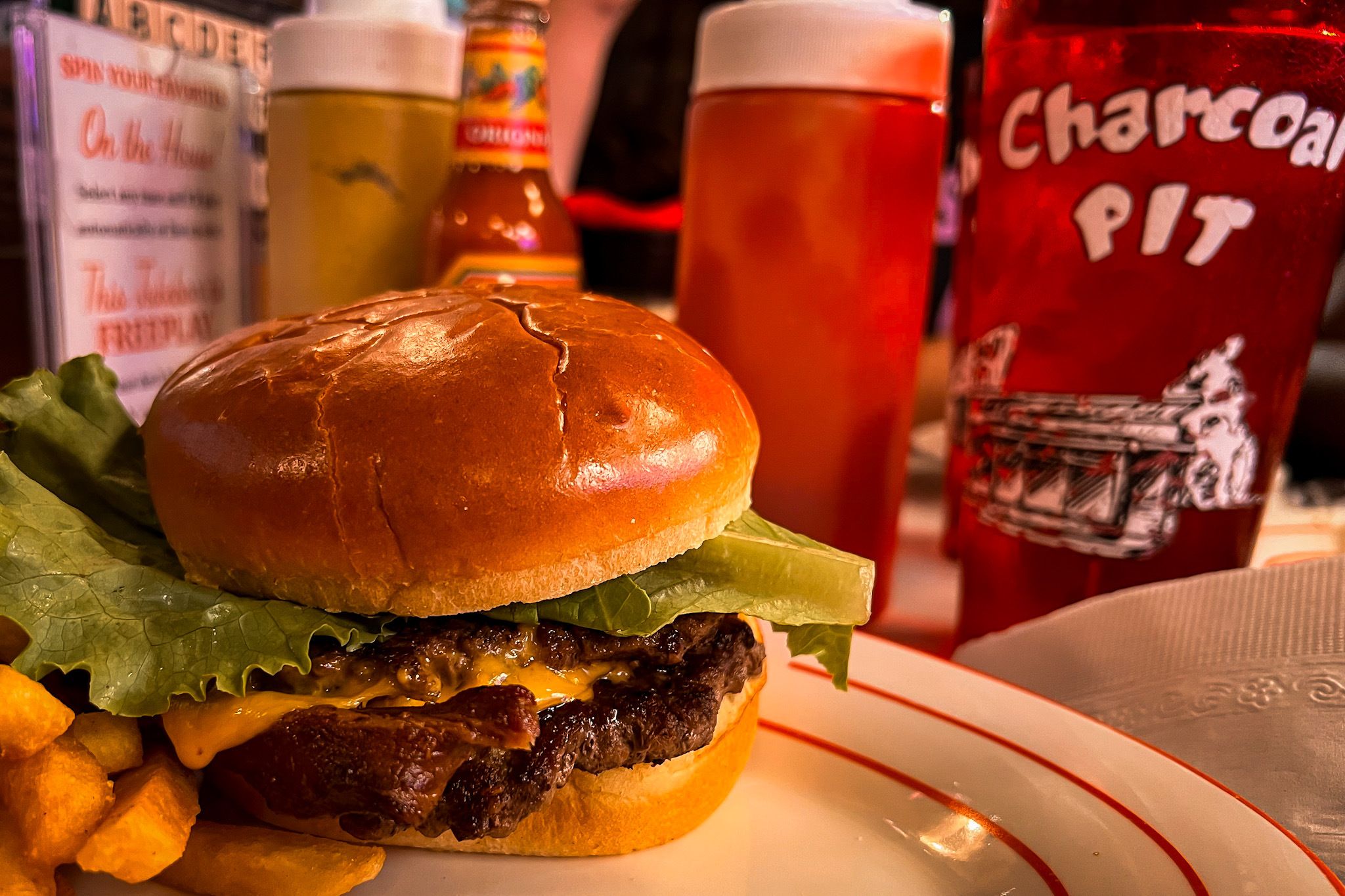
    The Charcoal Pit has been serving burgers on Concord Pike in Wilmington since the Happy Days of the Eisenhower administration, when a 4-ounce hamburger was considered a meal rather than an appetizer. (Funny how, in the GLP-1 era, that portion suddenly seems just about perfect.)

    This is honest food. The signature flame-broiled burger, ordered medium at my recent stop, arrived precisely that way — juicy and properly pink inside, speared by a charming retro toothpick helpfully confirming “medium.” The fries were similarly old-school: unevenly golden, crisp at the edges but softer through the middle.

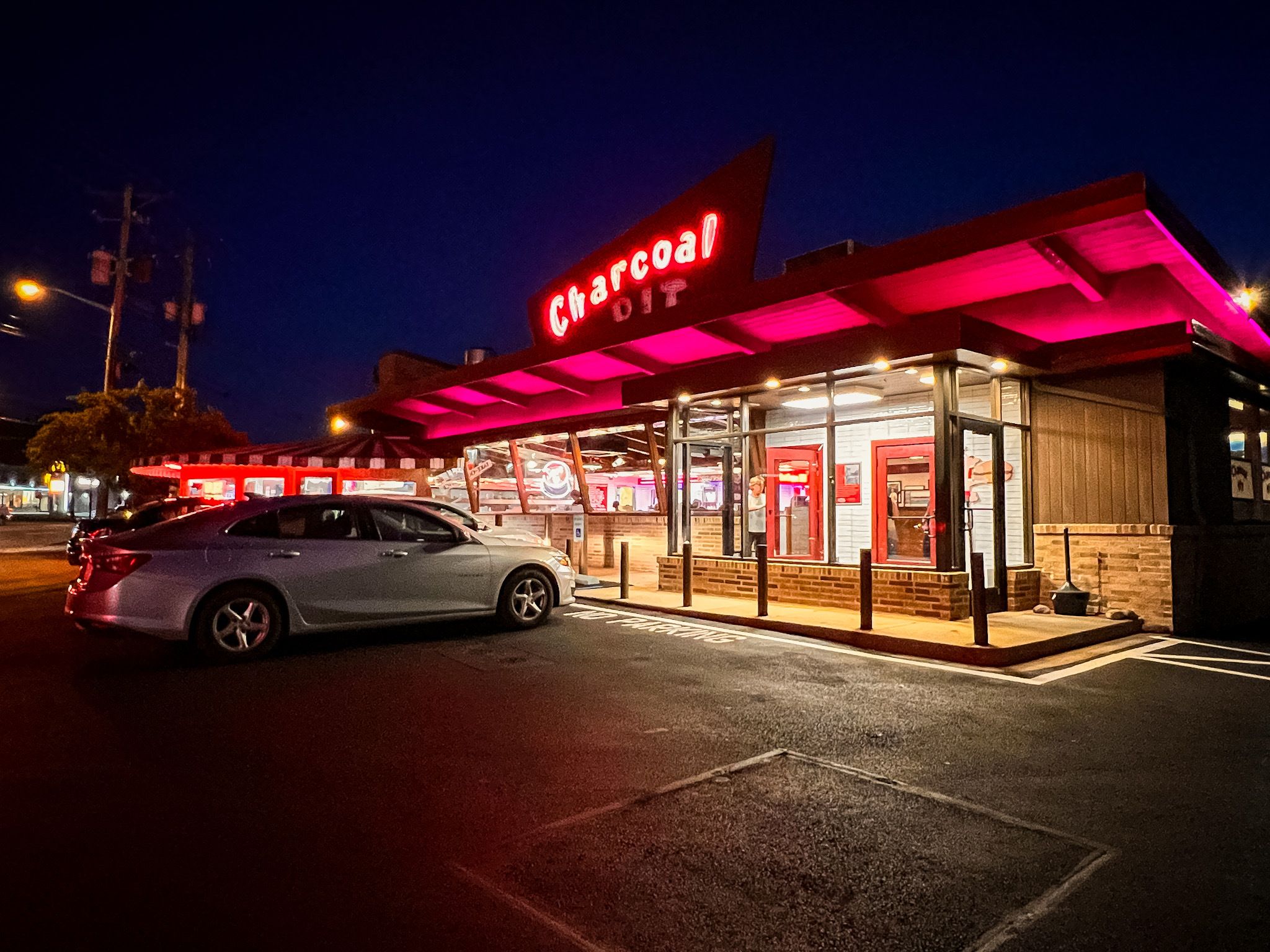
    Charcoal Pit, 2600 Concord Pike, Wilmington, on Sept. 6, 2026.Michael Klein / Staff

    Everybody heads to the Pit’s soda fountain, where we all skipped the idea of the 20-scoop “kitchen sink” sundae in favor of a more manageable three dips: Pistachio and peanut butter swirl are two winners.

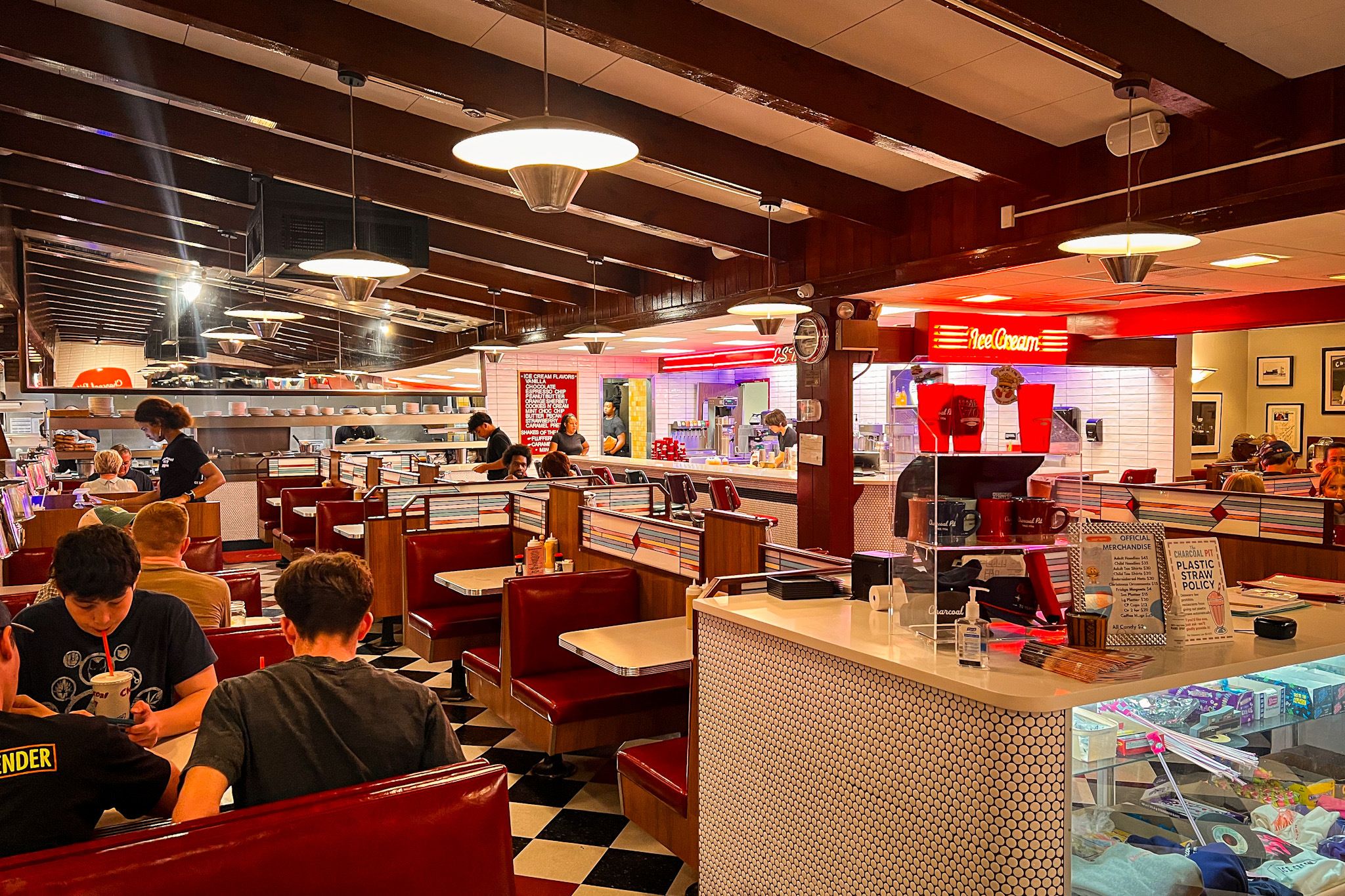
    Burgers, shakes, and sundaes never go out of style, and neither does this dining room. The Charcoal Pit looks less like a re-creation of a 1956 diner than one that never got the memo the 1950s ended.

    Despite renovations, enough survives that the nostalgia feels accumulated rather than contrived: red vinyl booths, a black-and-white checkerboard floor, saucer-shaped pendant lights, and mirrors multiplying the chrome stools and booths.

    Charcoal Pit, 2600 Concord Pike, Wilmington.Michael Klein / Staff

    One bit of history is more consequential. An oft-retold story holds that around 1960 or 1961, Joe Biden and several Archmere Academy football teammates walked out after the restaurant refused indoor service to their Black teammate, Frank Hutchins. Teammate Michael Fay later recalled Biden leading the walkout. As an adult, Biden frequented the Pit, stopping particularly for its butter pecan ice cream.

    And one practical tip survives from a more innocent part of the past: Always put the kids on the inside of the booth, so they can reach the free-play jukebox and flip through the 1950s hits.

    Charcoal Pit, 2600 Concord Pike, Wilmington, 302-478-2165, charcoalpit.net

  • South Philly is celebrating chiles en nogada season, but not for long

    South Philly is celebrating chiles en nogada season, but not for long

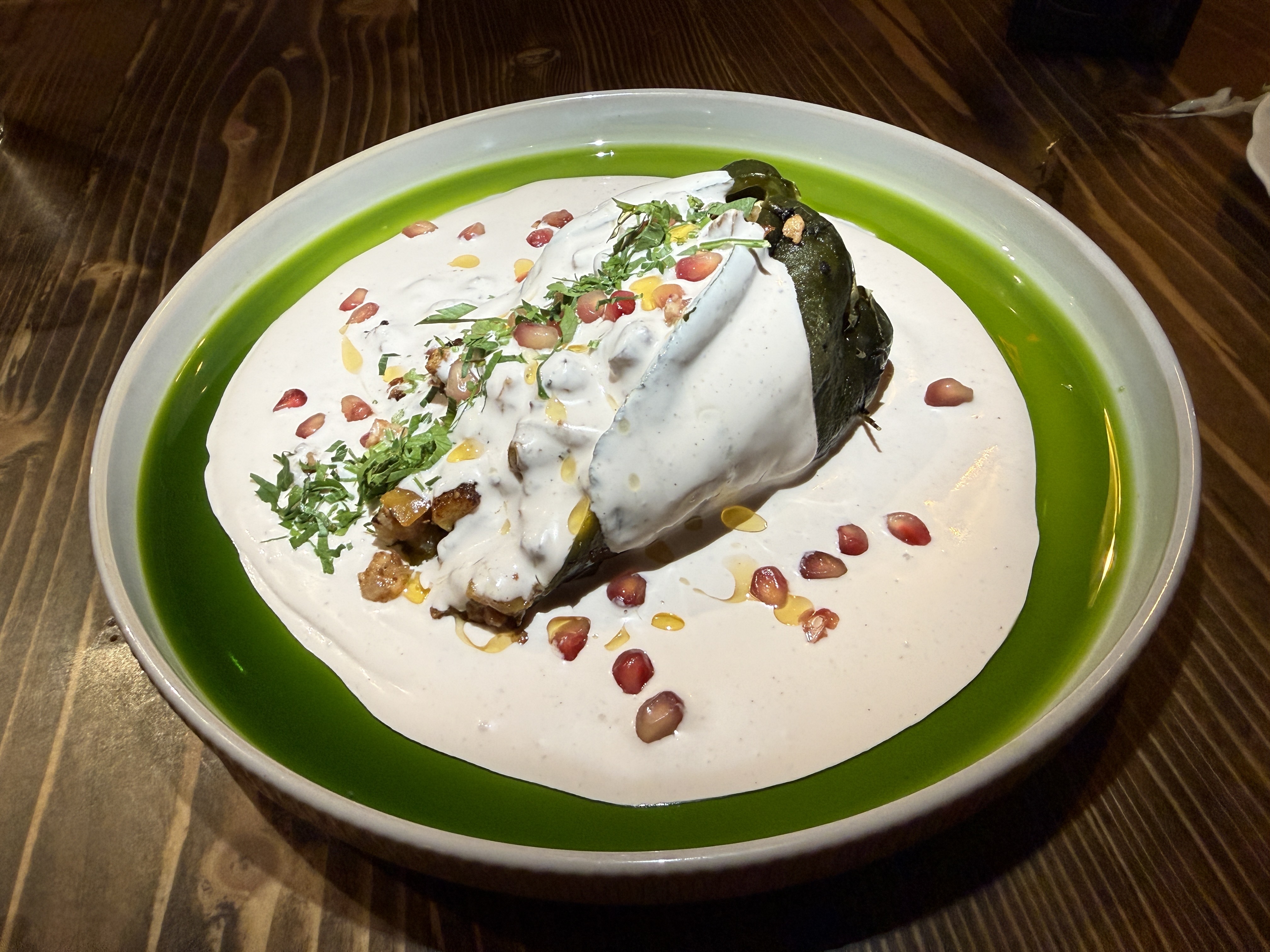
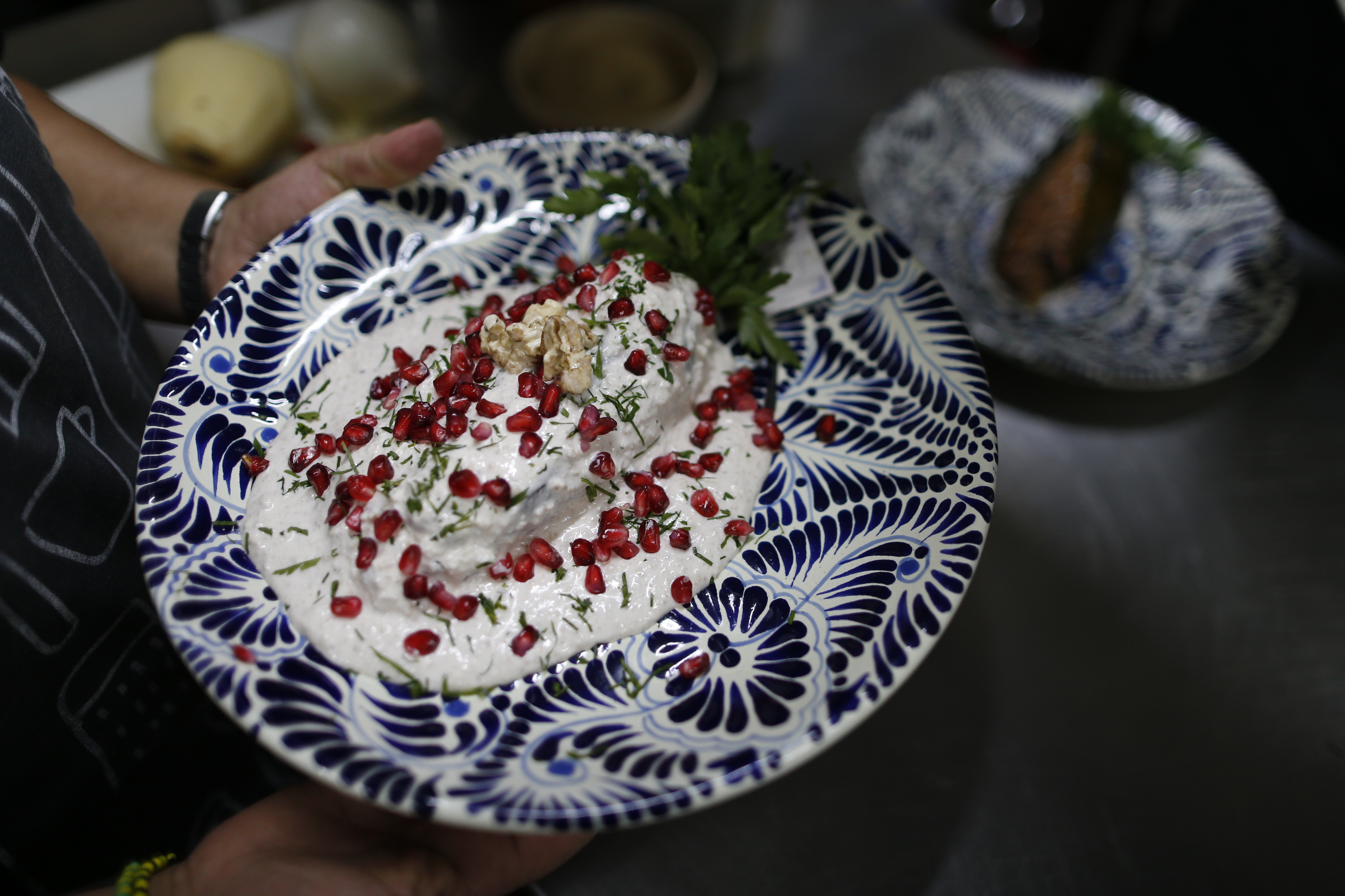
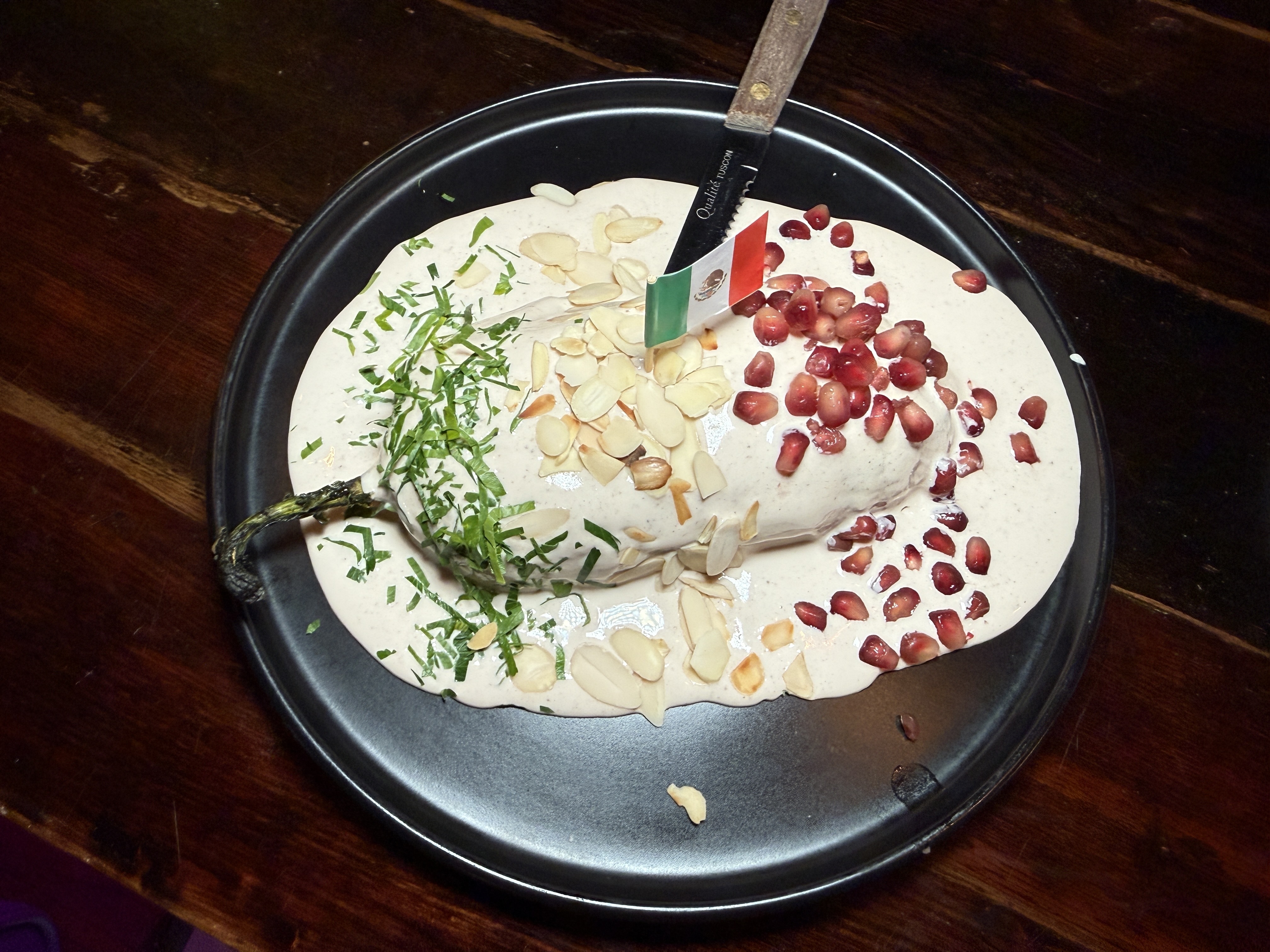
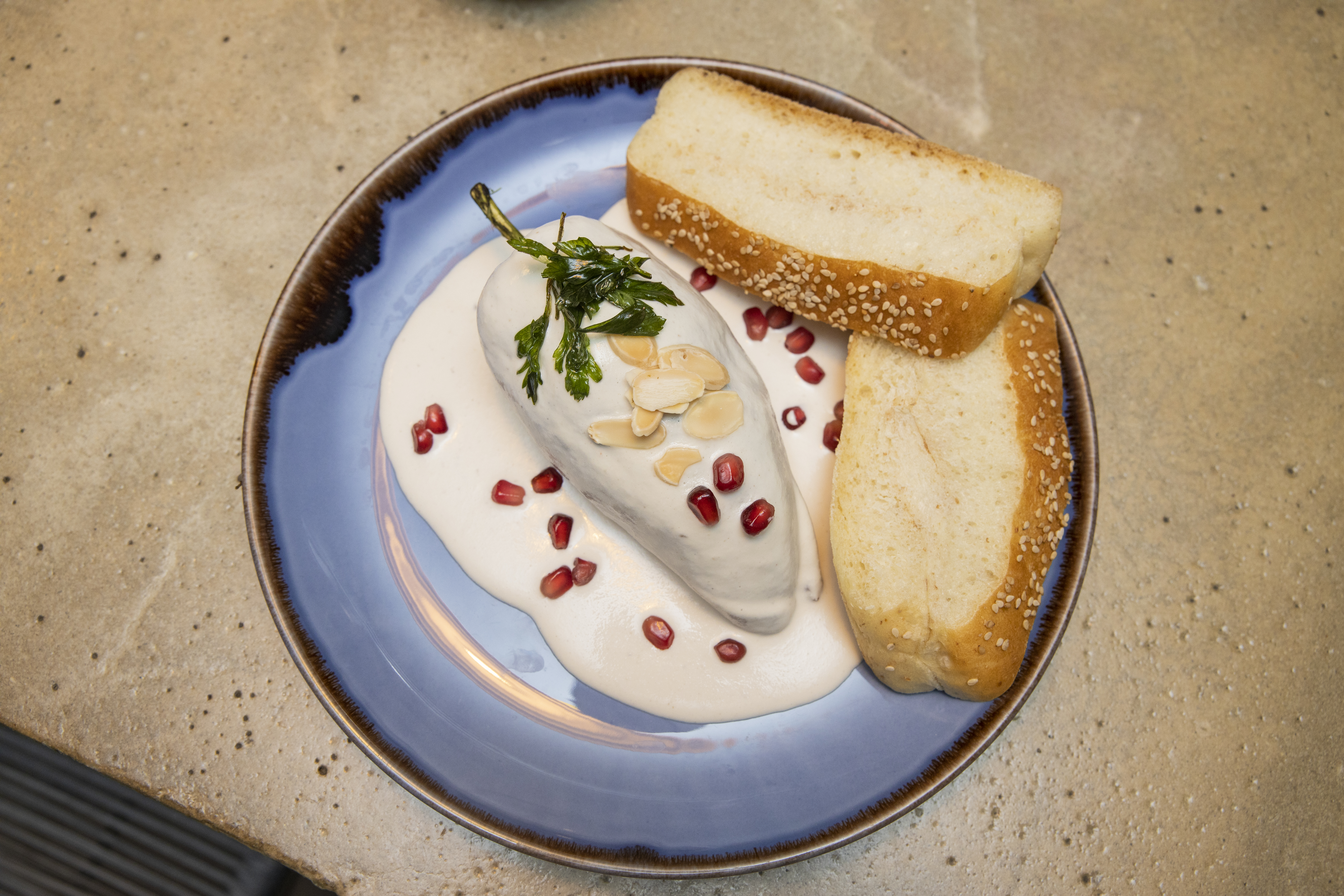
    Chiles en nogada, no matter who makes them, are visually arresting dishes. They’re distinctive for their colors: a base of a deep green poblano pepper, a blanket of creamy white walnut sauce (the titular nogada), traditional pops of red from fresh pomegranate seeds, and a sprinkling of more green from parsley. These components represent the colors of the Mexican flag. The poblano is stuffed with picadillo, a mix of ground meats and fruits that marry savory and sweet flavors and can often be time-consuming to prepare.

    Chiles en nogada season is fleeting, lasting just two to six weeks in late August and early September, when the dish’s main ingredients — poblanos and walnuts — are aligned and in season, along with the apples and peaches that are also at peak ripeness in Puebla, where the dish originated.

    In Mexico, chiles en nogada has become a national dish, treated with great reverence and ceremony. At fine-dining establishments in Mexico City, diners can select which poblano they’d like stuffed, just as one might select a fish from a tank to be cooked. But you don’t have to go to Mexico to eat it — there are several excellent versions found in Philadelphia.

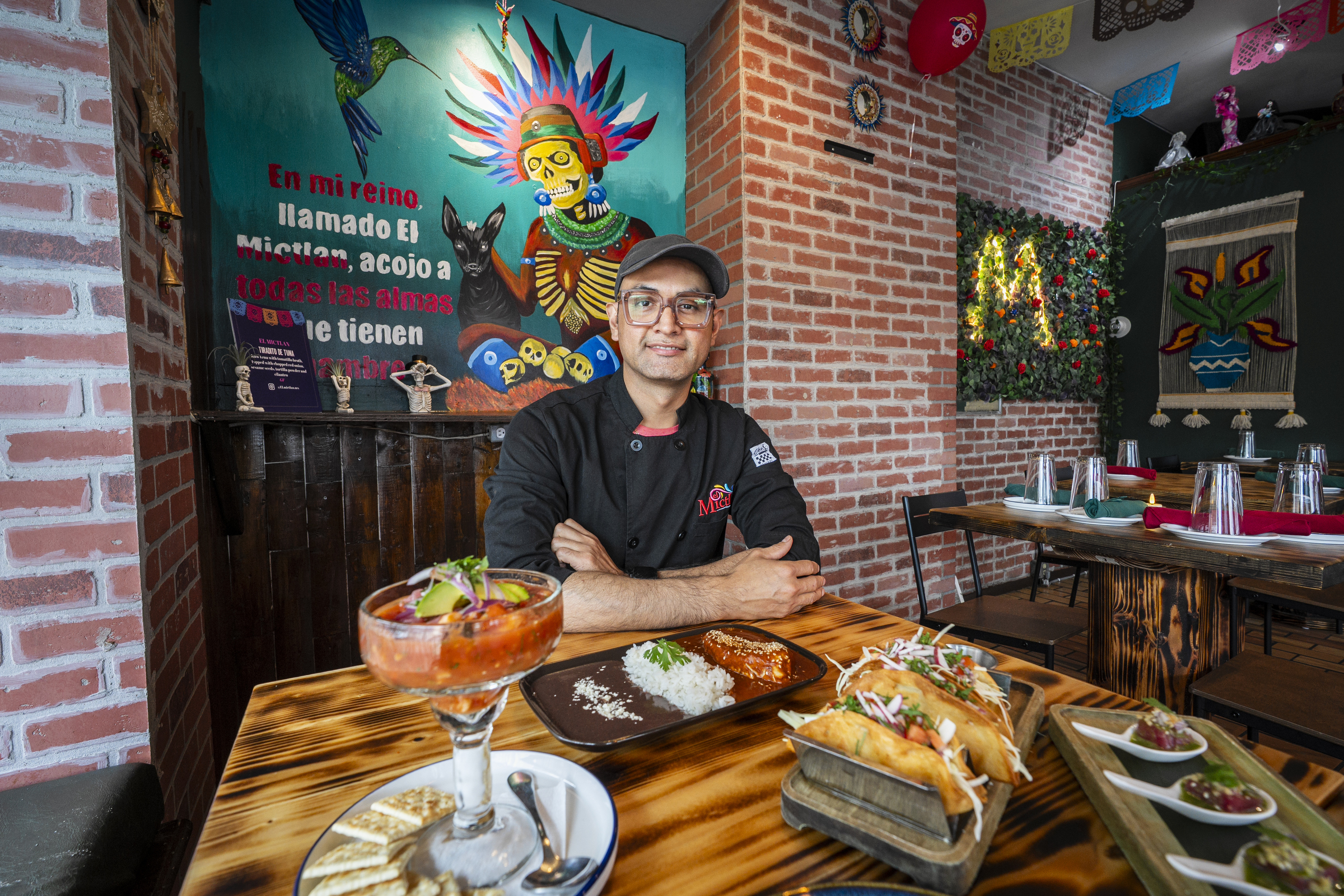
    Chelo Manzanarez, chef and owner at El Mictlan, where the menu brings a taste of Guerrero and Acapulco to South Philly.Jessica Griffin / Staff Photographer

    Chelo Manzanarez, the chef and owner of El Mictlan, which generally focuses on the food of Guerrero (the Mexican state located southwest of Puebla), has worked to make this fundamental Mexican dish his own.

    “It’s usually a sweet and heavy dish, but I’ve tried to make it more flavorful and more personal,” Manzanarez said of the chile en nogada at his South Philly BYOB at Beechwood and Snyder Streets.

    Manzanarez switched out beef in favor of a mix of pork and chicken, and he swapped raisins for dried dates. He seasons the picadillo with cinnamon, clove, and anise. He uses both green and red apples, “to get that contrast between sweet and sour.” He adds plantains and pineapples “for their tropical flavor.”

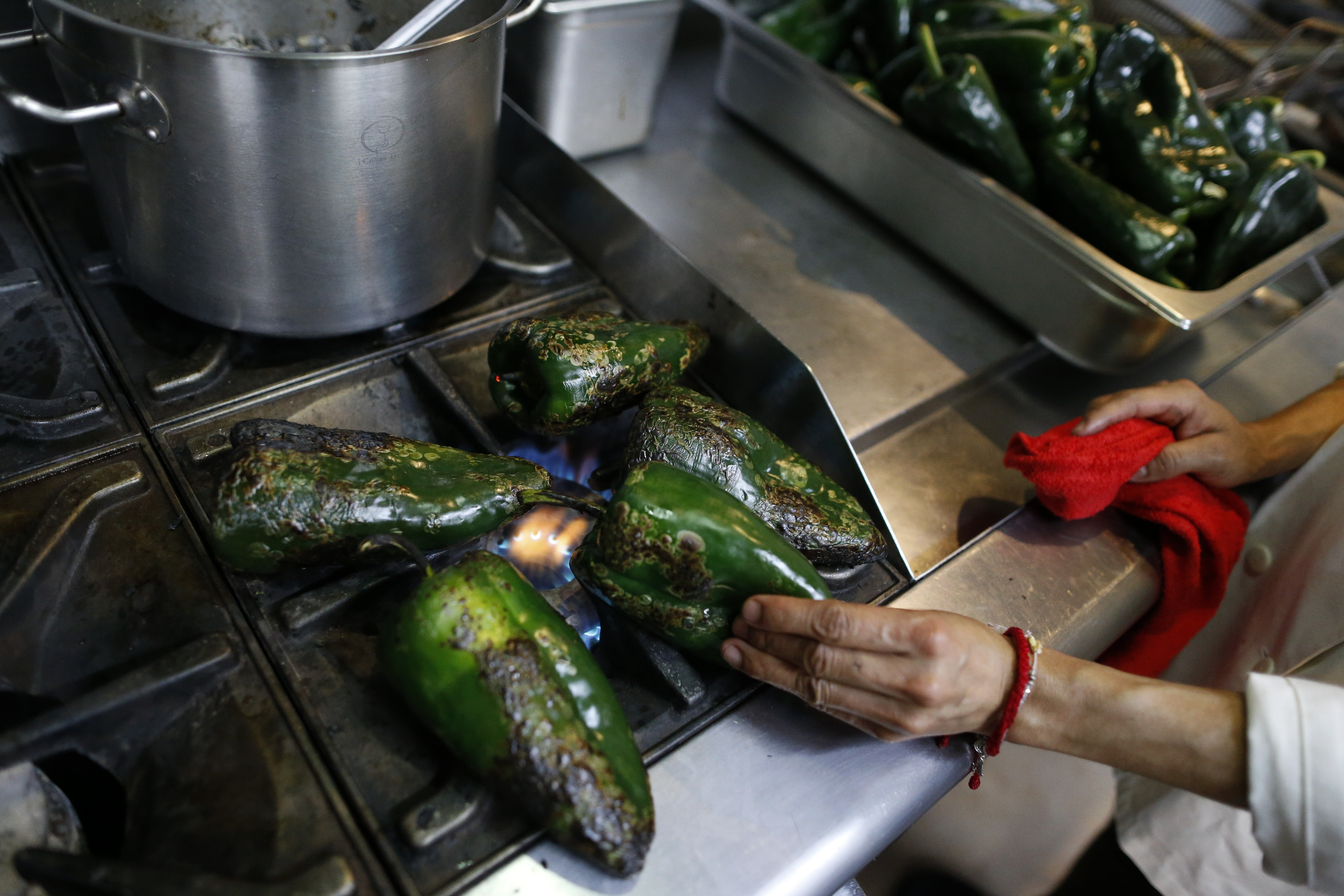
    Making his chile en nogada is truly a labor of love for Manzanarez. “I cook each fruit and vegetable individually and caramelize them separately. Most of the work comes from dicing everything very small.” After mixing all cooked components together for the filling, he still has to roast the peppers, which he does for three to four minutes on each side before letting them sweat in a plastic bag, making it easier to remove their skins. “It’s complicated — getting the poblanos to the right consistency so that they don’t lose their shape,” he said.

    For the white of the Mexican flag, Manzanarez eschews the traditional goat cheese, instead mixing cream cheese with queso fresco, walnuts, almonds, and a touch of milk. The result is creamy, luxurious, and not too rich.

    A plate of chiles en nogada at Testal restaurant in downtown Mexico City.Rebecca Blackwell

    Manzanarez finishes his chile en nogada with bright cilantro oil and red chili oil, doubling down on the colors as a deeper tribute to the Mexican flag.

    He first came up with his recipe while working at La Llorona, also in South Philly. It’s a dish customers ask for every year.

    A cook roasts poblano peppers on the stovetop in preparation for removing the skin, as kitchen staff make chiles en nogada at the Testal restaurant in downtown Mexico City in 2019. Rebecca Blackwell

    Restaurants traditionally stop serving chiles en nogada after Mexican Independence Day, on Sept. 16. “But now we celebrate Independence Day for the whole of September,” said Manzanarez, which is how long he plans on serving it at El Mictlan.

    More traditional iterations of the dish can also be found at La Llorona and El Chingon (usually only available at dinner).

    La Llorona serves a richer but very classic version with the roasted poblano battered in egg whites and gently sautéed before being blanketed in an especially rich and dense nogada. The pepper is stuffed with ground beef and pork, peaches, and apples. Its parsley, sliced almond, and pomegranate seed garnishes replicate the stripes of the Mexican flag precisely.

    The chile en nogada at La Llorona is stuffed with beef and pork and lightly battered in egg whites before being blanketed in nogada sauce.Kiki Aranita / Staff /

    The availability of chef Carlos Aparicio of El Chingon’s chile en nogada ($30) is entirely dependent on the fresh walnuts he flies in, one kilogram weekly, from his hometown of San Mateo Ozolco, located in the Calpan municipality of Puebla — the same municipality where, according to legend, chiles en nogada were first invented by Augustinian nuns. They created the dish in 1821 in honor of General Agustín de Iturbide, after he signed the treaty that recognized Mexico’s independence from Spain. He became the first emperor of Mexico, and the dish represents the colors of what was then the Mexican Army’s flag.

    The chile en nogada at El Chingon uses fresh walnuts flown in weekly from Puebla when they are in season.NaylaPolohovich

    “This year, [Puebla] had a lot of rain so the walnuts fell off the trees too soon,” said Aparicio. “They really have to be fresh, and we can’t preserve them. As soon as they get here, we wash and clean them and put them in milk immediately.” After their milk bath, the walnuts get mixed with goat cheese, cream cheese, cinnamon, and sugar.

    Aparicio’s chile en nogada is stuffed with beef, pork, and fruits, and garnished sparingly. Hewing to tradition, Aparicio’s serves it at room temperature.

    Aparicio is hoping that this year he will receive at least one or two more shipments of walnuts, which means he can serve chiles en nogada for one or two more weeks. (El Chingon sells about 12 to 15 per day when it is available.)

    Chiles en nogada season brings out the competitive nature in chefs and customers. “People will try to get every different chile en nogada in Philadelphia, make comparisons and [argue] about which one is the best,” said Manzanarez.

    You have one, maybe two weeks left to decide for yourself.

  • PHS Beer Garden in Manayunk to close permanently on Oct. 5

    PHS Beer Garden in Manayunk to close permanently on Oct. 5

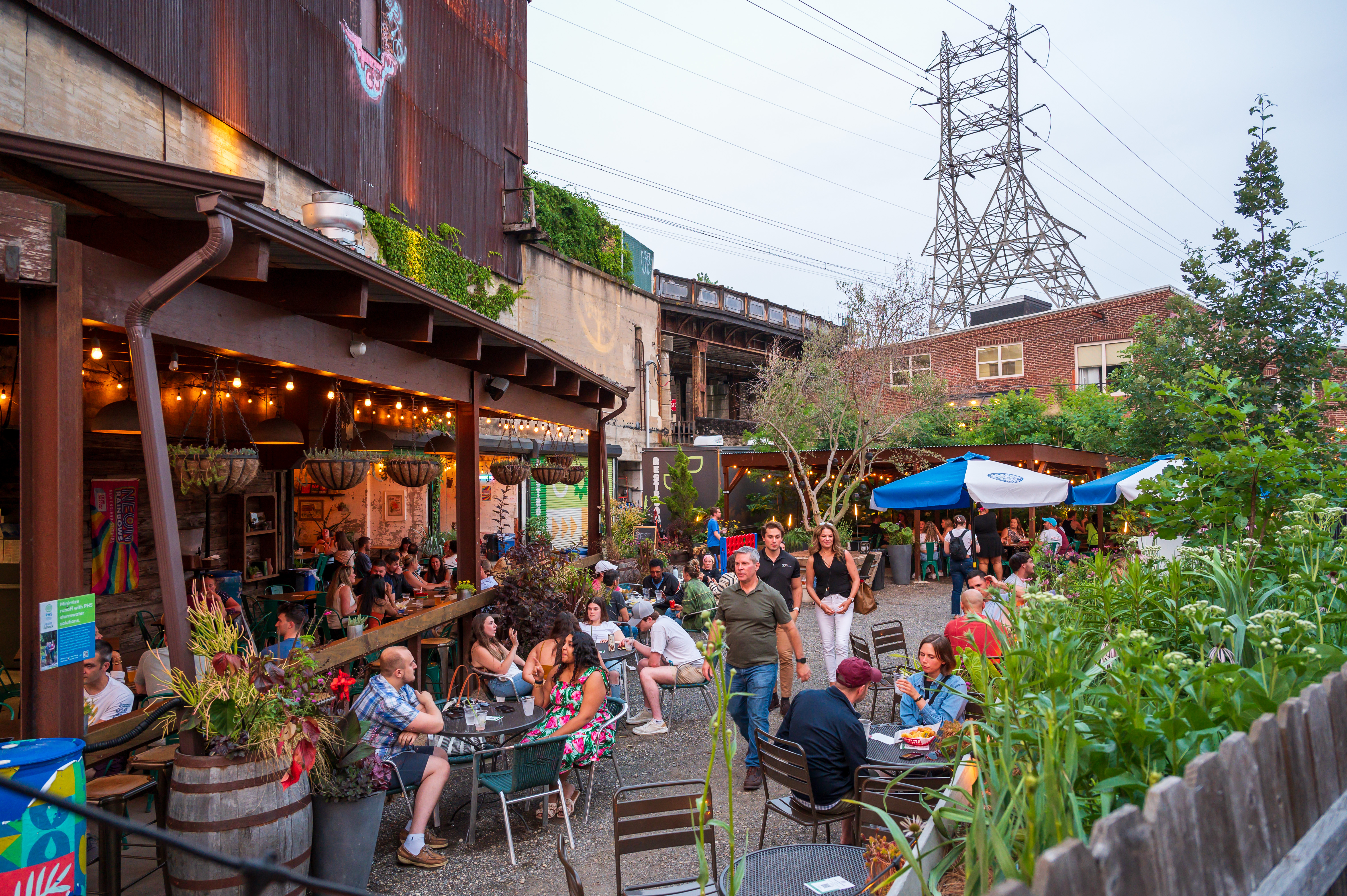
    The Pennsylvania Horticultural Society (PHS) announced Wednesday that its popular pop-up beer garden in Manayunk will close permanently Oct. 5.

    The property at 106 Jamestown Ave. is slated to become a six-story, 73-unit apartment building from local developer Dan Greenberg, although it faces community and political pushback.

    Its hearing before the city’s Zoning Board of Adjustment was postponed last month.

    “The day will serve as a celebration of PHS’s time in Manayunk and the many visitors, plant lovers, and community members who have made the garden a beloved gathering place over the years,” a PHS news release issued Wednesday said.

    “PHS invites the community to come together this fall to enjoy the garden, share memories, and celebrate the lasting impact of this special green space in Manayunk,” the release said.

    Since Greenberg’s plans were announced, community groups and neighbors have been pushing for the preservation of the public gathering space just off Main Street.

    But PHS has emphasized that its pop-up beer gardens are not intended to be permanent.

    The Manayunk location opened in 2020, while the site at 1438 South St. has been in operation since 2014.

    As development plans for 106 Jamestown have advanced, PHS has been searching for another location in the city to open a new beer garden.

    “Our team is actively assessing other potential sites and neighborhoods for future PHS Pop Up Gardens, but we don’t have a confirmed site to announce,” said Sin Gogolak, vice president of brand and communications for PHS.

    The new location will not necessarily be in Manayunk or Northwest Philadelphia. But Gogolak confirmed they are looking in the city limits.

    “PHS is grateful for the opportunity to have called Manayunk home for an extended period and is proud of what the garden has meant to the neighborhood,” PHS said in the news release.

    A new zoning board hearing has not been scheduled for the apartment building at 106 Jamestown Ave.

    The developer needs permission from the board to build apartments on land zoned for industrial and commercial uses and to build above the height limits set by the Main Street Manayunk zoning overlay.

    Feedback from City Council and neighborhood groups will be considered by the zoning board.

    “Fortunately for [Greenberg], he’s not finally purchased it yet because zoning is an essential part of the sale,” City Councilmember Curtis Jones Jr., who represents the area, said in an interview last month. The delay at the board “gives them the opportunity to talk to the community, but as it stands, I cannot support it.”