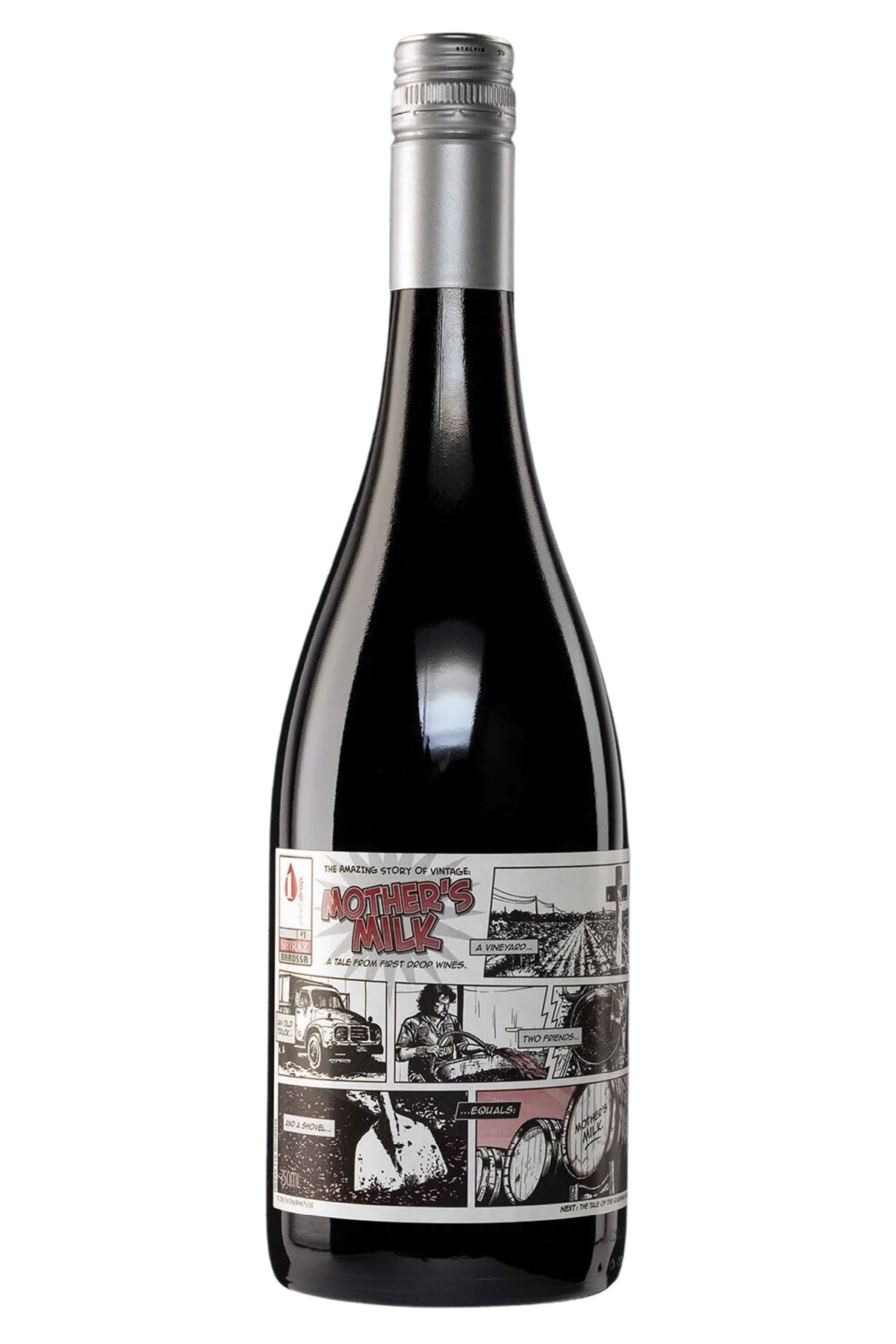
It’s a shame that fine independent wines from Australia have been so hard to find in recent years. The sole upside is that when one does find a bottle from a genuine independent, small-scale vintner like this one, the price tends to be more than fair for the quality of wine inside the bottle, making it tempting to stock up.
Sadly, the devaluation of Australian wines in the eyes of American buyers is largely driven by the runaway success of one single bargain brand: Yellow Tail makes gluggable, chuggable, sweetish wines that are so cheap and so popular that their proliferation of flavors and styles has more or less swallowed whole the Australian section of most liquor stores. In the process, an entire generation of wine shoppers has concluded that the only wines made Down Under must be plonk.
Australian wineries do make a stunning range of more ambitious wines as well, from soulful reds to bracing whites and everything in between. Where Australia’s bulk wines come from the continent’s hot and irrigated inland flats, this wine’s fruit is grown closer to the coast, near Adelaide. Here in the foothills of Barossa, vineyards with very different climate and terrain produce considerably less fruit per acre, but their berries are hyper-saturated in color, flavor, and aromatics, without tipping over into the cooked flavors of overripe grapes. This wine’s scent conjures fresh blackberries, cherry pie, and Chinese five-spice, making it an ideal partner for the heartier meats we cook toward the tail end of grilling season.
First Drop “Mother’s Milk” Barossa ShirazCourtesy of First Drop Wines
First Drop “Mother’s Milk” Shiraz
Barossa, Australia
14.5% ABV
PLCB Item #100033583
On sale for $17.99 through Oct. 4 (regularly $19.99)
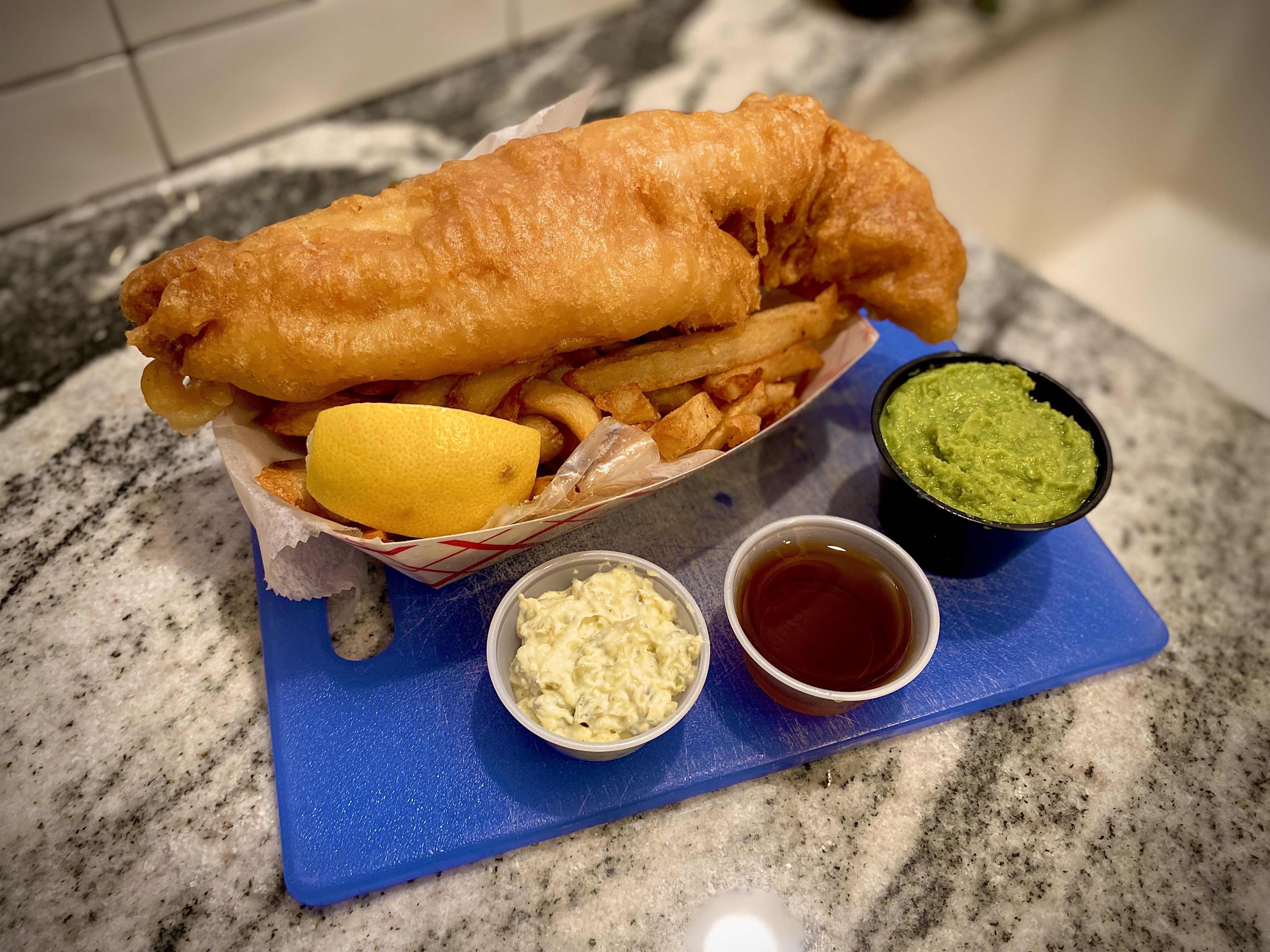
For the last eight years, Fridays at Stargazy on East Passyunk Avenue meant fish and chips, a weekly tribute to chef-owner Sam Jacobson’s East London roots.
That ended last month, when a city health inspection forced the English pie and mash shop to discontinue the special.
Stargazy had been cited twice in 2024 for operating its electric double countertop fryer without proper mechanical ventilation. But on Aug. 14, the Philadelphia Department of Public Health went further, citing the fryers as “unapproved” equipment and requiring Jacobson to submit plans for review before they could be used again. Translation: He’d need to install ventilation for his fryer if he wanted to continue slinging fish and chips.
The Friday fish and chips from Stargazy in 2021.Jenn Ladd / Staff
For restaurant owners, the consequences of an inspection can extend beyond whatever corrective action the city requires. Reports of closures, cease-operations orders, or serious violations — especially at popular restaurants — spread on social media, where the conversation often turns to claims that enforcement is unfair or not uniformly applied.
The health department disputes that contention, saying that there is no crackdown.
It’s in the process of rolling out a new Food Safety Inspection Guide, but while the format of the guide has been streamlined, the department said the underlying rules have not changed.
Inspections as a snapshot
Last month at Heavy Metal Sausage Co. in South Philadelphia, a health inspector ordered owners Patrick Alfiero and Melissa Pellegrino to remove the shop’s eight indoor seats and stop preparing food in the basement. Inspectors determined that neither activity was consistent with the establishment’s plan review, approved in 2022.
Heavy Metal had passed previous inspections, including one four months earlier, and its owners told The Inquirer the operation had not changed between the two visits.
Heavy Metal Sausage Co. owners Patrick Alfiero and Melissa Pellegrino preparing for a dinner in 2022.Yong Kim / Staff Photographer
Health officials interviewed this month said the differing outcomes illustrate a basic principle of the inspection system: Each inspection reflects only a snapshot of what an inspector observes.
During the April inspection, the department said, the inspector did not observe indoor dining or food preparation in the basement. On Aug. 21, both were taking place and could be cited.
More broadly, officials said, the absence of a citation during an earlier inspection should not be interpreted as approval of a practice.
Stargazy had been previously cited
At Stargazy, the record is different. The fryer had been cited before.
Jacobson was in England when the sanitarian — as the inspectors are known — arrived at Stargazy on the afternoon of Friday, Aug. 14. It was the same sanitarian who had cited the fryer during two inspections in 2024.
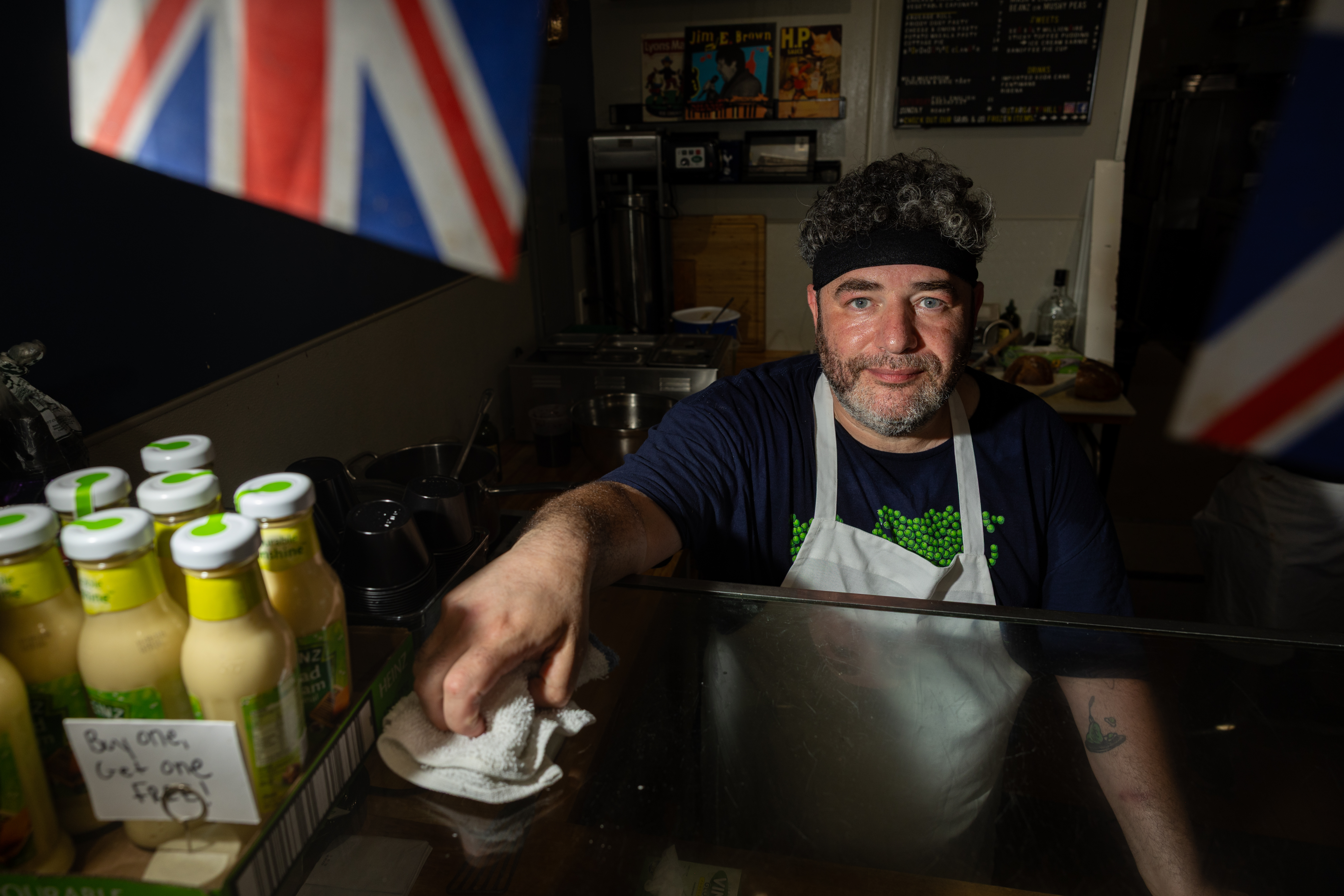
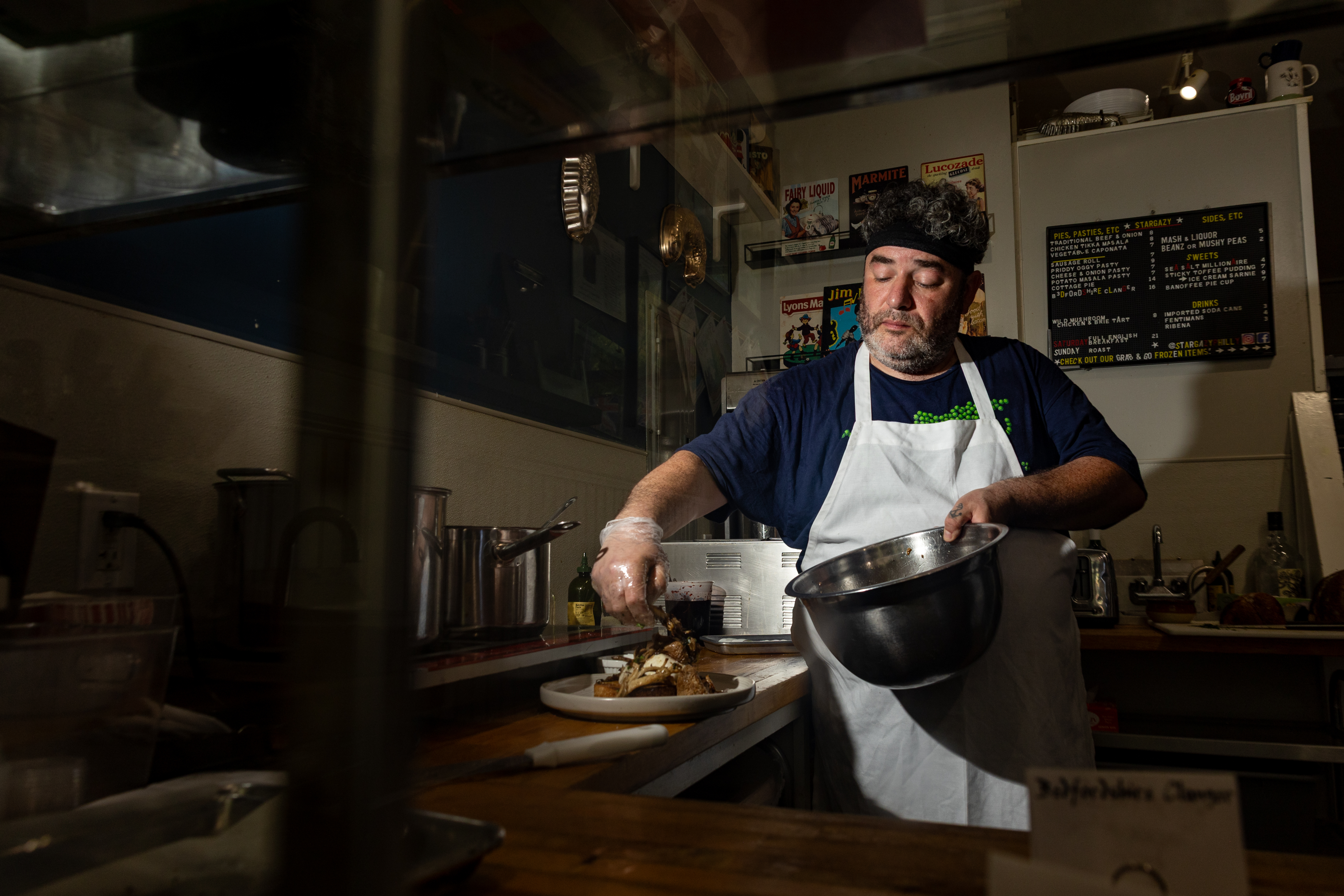
Owner Sam Jacobson cooking at Stargazy on Sept. 18, 2026. Aidan T. Gallo / Staff Photographer
“I did look back at sales reports for the day of the April 5, 2024, inspection and we had a good fish day — so the fryer was definitely on and in plain sight,” Jacobson said.
Jacobson acknowledges that the inspector told him in 2024 that the fryers were “not approved.” That point is noted on the reports. But Jacobson said he did not understand that to mean he had to stop using them.
The Health Department gave a different account to The Inquirer this month. Officials said Jacobson was verbally instructed in 2024 not to use the fryers because they lacked mechanical ventilation.
When the sanitarian found the same fryer still in use at its next inspection more than two years later, the department said, Jacobson was told to install mechanical ventilation, which would require a plan review — a lengthy process. This time, Jacobson removed the fryer in response. (Historically, the health department does not levy fines, preferring that businesses correct violations.)
Jacobson said Stargazy had never undergone a plan review when he opened in 2015 after taking over an existing bakery. He said a city employee advised him at the time to treat the opening as a change of ownership, and the restaurant passed its preopening inspection.
“We never did any alterations or construction before opening,” Jacobson said. “I simply took over the lease of an existing bakery, gave it a lick of paint and some other cosmetic touches, and opened up.”
Besides the fryer, he said the restaurant’s only substantive changes were moving the counter in 2019 to create more room in the dining room and installing a customer hand sink during the pandemic at the city’s direction.
Sanitarians have not received new instructions to interpret the code differently, the department said. The department said it has committed significant resources to uniformity training, intended to ensure that every inspector reviews the same conditions in the same way in all food businesses.
Supervisors and managers also review inspection reports, and sanitarians are not supposed to exercise individual discretion in deciding whether a condition violates the food code.
The new Food Safety Inspection Guide supports the department’s position that the underlying food-safety requirements are not new.
Deputy Health Commissioner Dawn Kiesewetter said the guide has been under development for six or seven months with the Mayor’s Office of Policy Planning and Delivery, the Commerce Department, and business and community groups. It grew out of Mayor Cherelle L. Parker’s PHL Open for Business initiative, launched in April 2024 to simplify city permitting, licensing, and other requirements for businesses.
Food businesses were an early focus. When Open for Business was announced, city officials said food businesses averaged nearly 24 government approval steps to open and operate. The administration subsequently developed multilingual food-safety materials and other guidance for operators.
The city aims to inspect every food establishment once a year but does not always meet that target, the department acknowledged. About 60 Health Department employees are authorized to inspect Philadelphia’s 10,427 food establishments, according to the department. Reinspections follow violations, while complaint inspections and investigations of possible foodborne illness take place as needed.
Staffing and complaint volume have remained relatively steady in recent years, officials said, while the number of food businesses remains below its pre-pandemic level.
When a repeat problem is ‘new’
Stargazy’s fryer was cited as a “new violation” in 2026, two years after its first citation. The department’s terminology on inspection reports can sometimes label a recurring violation as new. Health officials said that designation is automatically applied when more than a year has passed since the earlier violation.
Jacobson said it would not make financial sense for him to install the ventilation needed to resume frying. A permanent hood would require construction, he said, while a freestanding ventless system could cost more than $20,000.
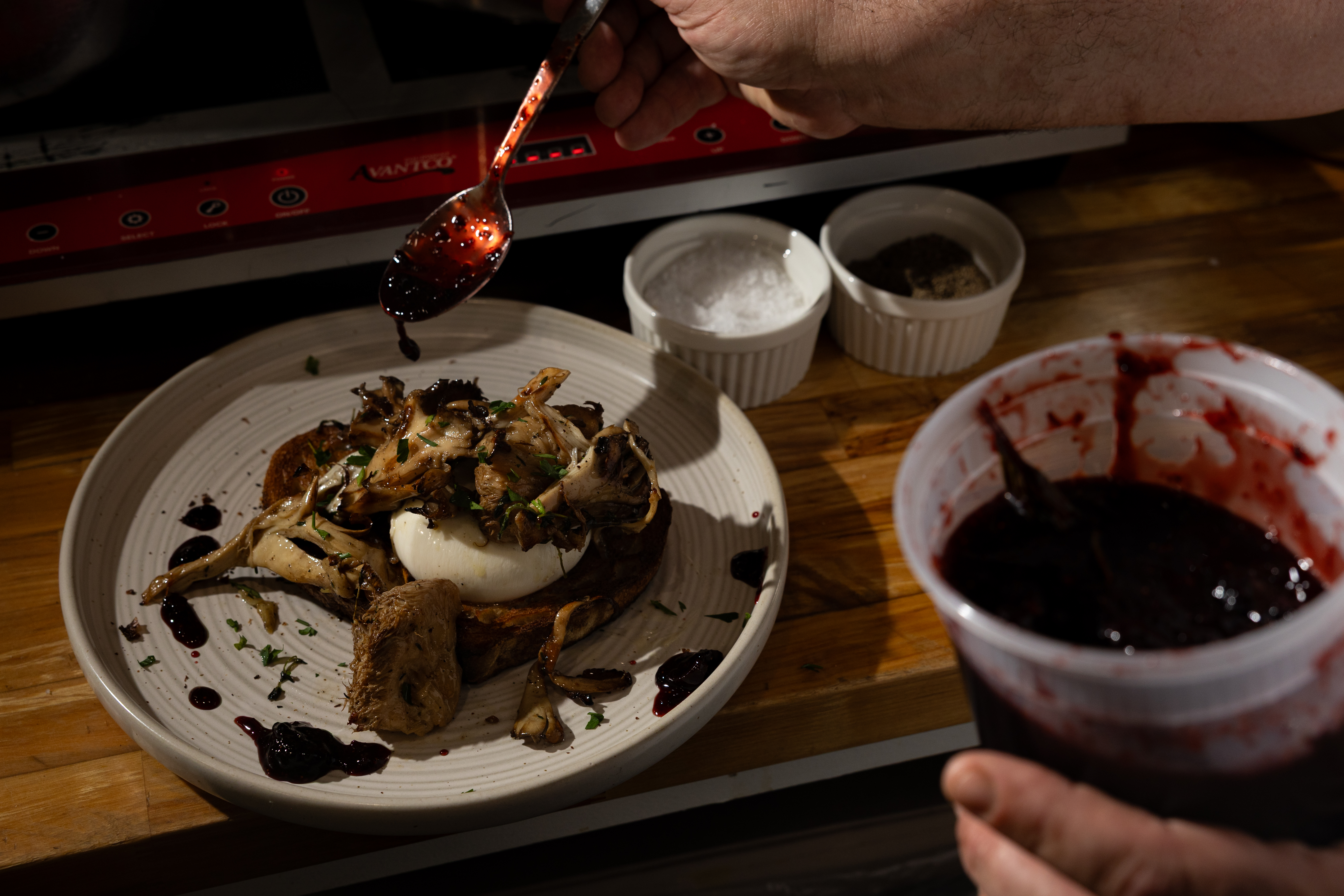
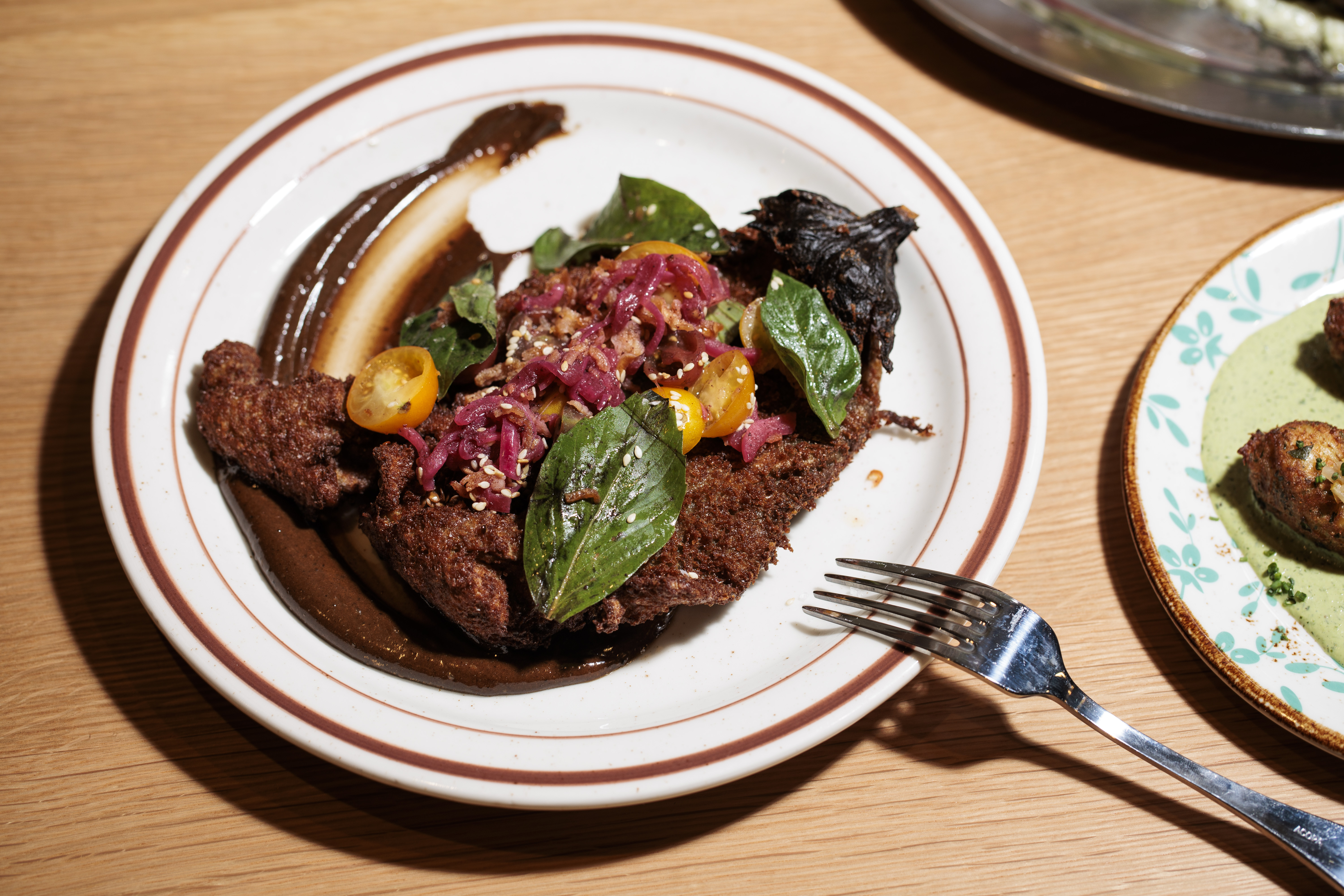
Stargazy owner Sam Jacobson adding blackberry and fig sauce to his wild mushroom burrata toast, a substitution for his fish fry.Aidan T. Gallo / Staff Photographer
Since removing the fryer, he is considering longer hours and fish-and-chips pop-ups elsewhere to replace some of the lost sales. On Fridays, he has been offering specials that do not require a fryer, including wild mushroom burrata toast.
The city says one purpose of the new guide is to reduce the likelihood of surprises during an inspection.
“The more they understand what they need to do, the more likely they’ll pass,” the Health Department said in a statement. “Our number one goal is to ensure that food businesses can stay open safely.”
“The suburbs are a really tough place to get attention,” pizzaiolo Roberto Carollo was telling Jenn Ladd at his shop, Spuntino, in Doylestown’s Main Street Marketplace. Jenn says his puffy, leopard-spotted Neapolitan pies are worth your time, wherever you may be.
Which got me to thinking about our recent pizza recommendations:
🍕 In Crust We Trust celebrates celebrates Black culture in Fishtown.
🍕 Waltz’s 800-degree wood-fired oven turns out tastiness in deep South Philly, per Craig LaBan.
🍕 Barclay Pies in Cherry Hill sets a new standard for gluten-free pizza in the Philly, Craig also writes.
🍕 Dave Portnoy of the influential One Bite Pizza Reviews visited at least five area pizza shops and seemed to like them all.
🍕 And there are more are on the way, including the Buttery in Northern Liberties, Alessandro’s Enoteca in Bryn Mawr, the Garden by Pieri Winery in Conshohocken, Martini & Roz in Wayne, and Pizzeria Cusumano in Collingswood. They’re among five dozen new restaurants due to open this fall.
Chef Ryo Igarashi, who’s cooked everywhere around here over the last 25 years, is behind Panco, a Japanese comfort-food takeout spot in West Passyunk. Cutlets are his calling card.
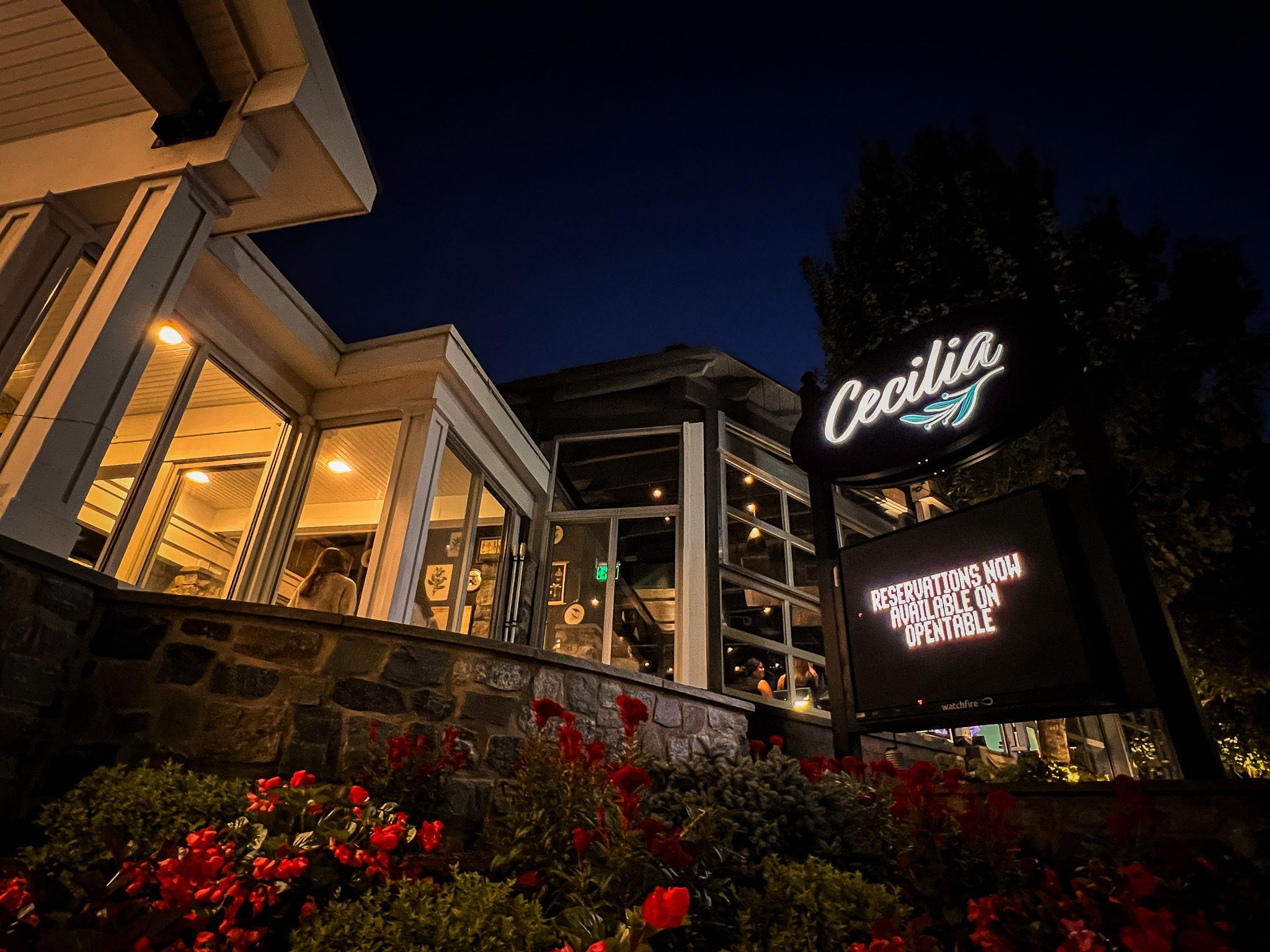
Cecilia, a sprawling, stylish restaurant from the team behind the Blue Bell Inn, is just days old in Bridgeport. It’s designed for locals as well as the greater Norristown/King of Prussia corridor.
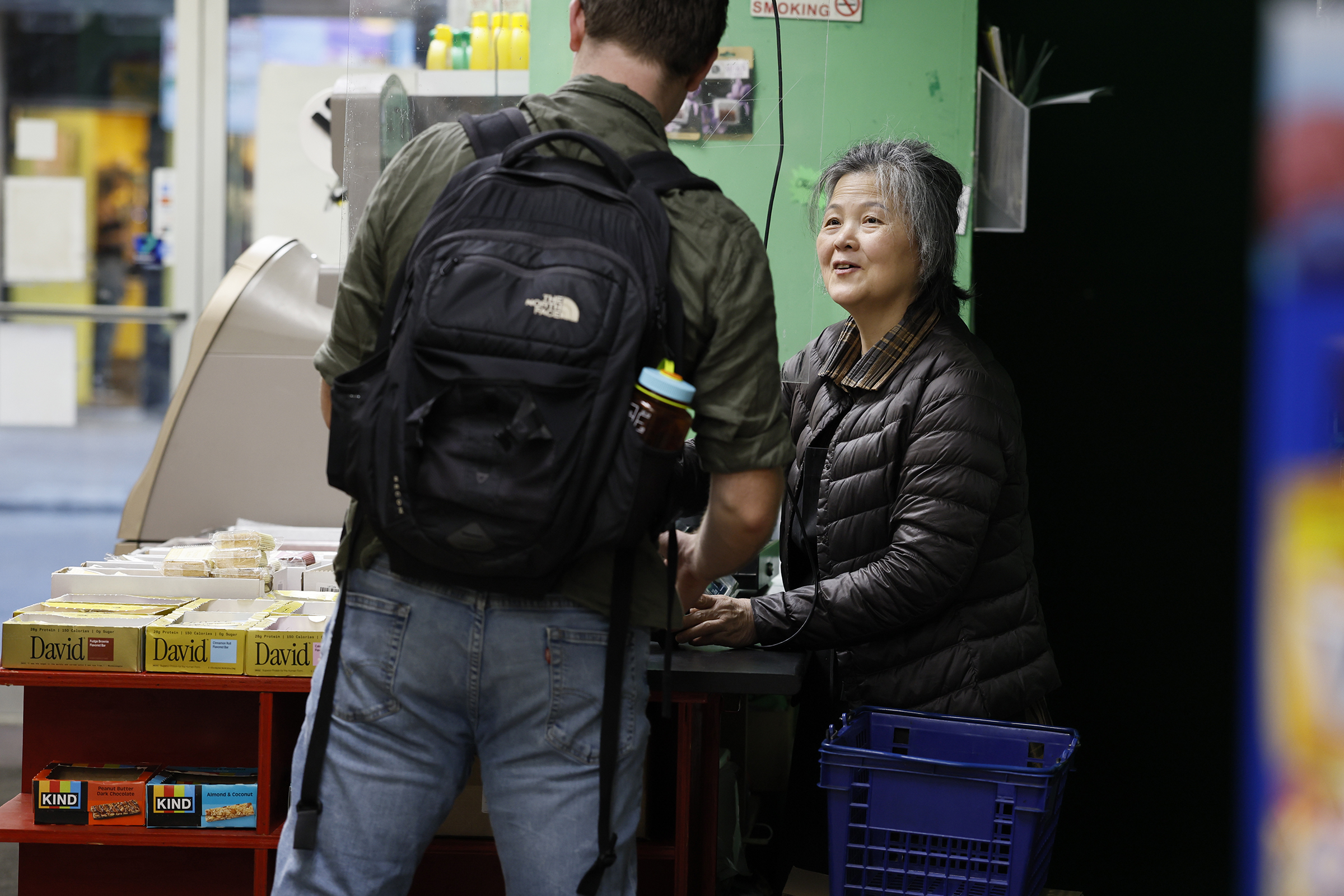
When Sue’s Produce Market in Rittenhouse shared word that it was struggling, the community jumped in to support. While I visited to report this story last week, a neighbor walked in and handed a $100 bill to owner “Tina” Shin. The GoFundMe is closing in on its $40,000 goal.
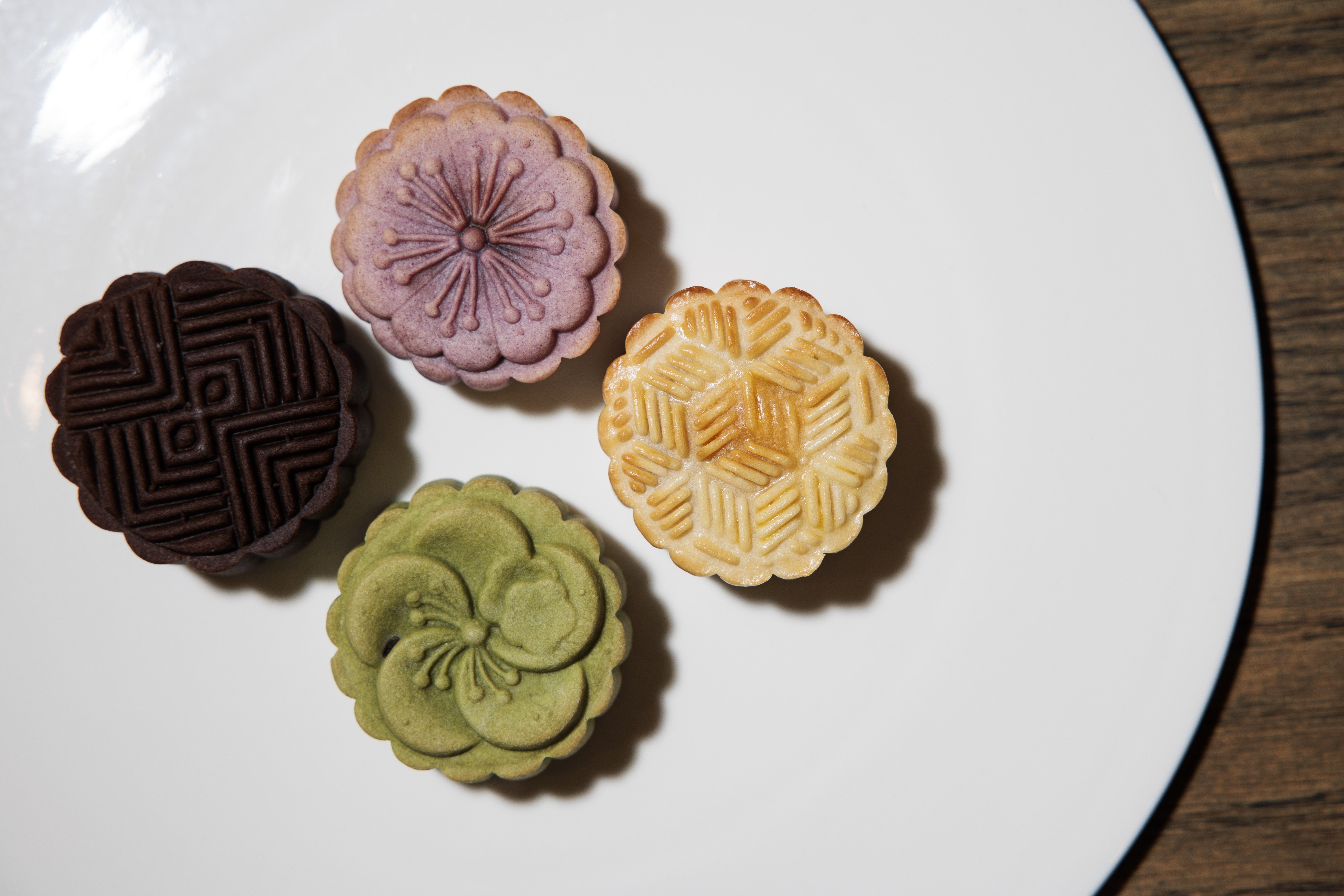
Mooncakes, but make them 2026: Kiki Aranita stopped at A La Mousse, where Anna Chen is giving the Mid-Autumn Festival staple a playful spin with Dubai chocolate, Hong Kong milk tea, purple sweet potato, and other decidedly nontraditional flavors.
Scoops
Scarlet on Pine will be a Euro-style cafe and wine bar coming to Washington Square West next spring. Beth DeBruyn recently bought the building at 1108 Pine St., which last housed an art gallery across from Louis I. Kahn Park. With about 50 seats, she plans to serve coffee, viennoiserie, and lunch during the day, then transition to wine-bar service at night. There’s also a brick rear patio. DeBruyn’s husband, Chris, who works in construction and has about 20 years of hospitality experience, is also involved. DeBruyn, 60, who has a public-finance background, was a stay-at-home mother who started her food career as an empty-nester. She trained at the Institute of Culinary Education in New York, did stints at Irwin’s, Dirt Candy, Rosemary, and High Street, and previously ran a cottage-baking business called Cakezilla. “When I left Rosemary, it happened to coincide with a time in my life when I could do something like this,” she said. “My dad passed away and left me some money, my kids were grown, and I had both the time and the resources to try to do something on my own.”
Esposito’s Porchetta in South Philadelphia is going hog wild: an expansion to their shop at 10th and Mountain Streets, yielding a walk-in sandwich shop next door in early 2027. Jules Esposito Jr., 38, said he’ll move porcine production into the adjoining former apartment building and convert the current shop to retail, where he’ll sell porchetta — the slow-roasted, Abruzzese-style boneless pork found at block parties — as well as roast beef sandwiches, meats by the pound, and a small selection of homemade and imported specialties. The business traces its roots to Esposito’s grandfather, Elia, himself a second-generation meat man who arrived from Italy in the early 1950s. In 1985, Esposito’s father, Jules Sr., bought the former bakery that became the shop. (The Espositos are cousins of A. Esposito Meats in the Italian Market.) “Everybody has always asked us to make sandwiches,” Esposito said, “and here we are.”
Restaurant report
Craig LaBan has long felt that Chestnut Hill’s dining scene was underperforming. Then he visited the bustling Blue Warbler, where the globe-hopping, meat-free menu may be just what the neighborhood needs.
Focaccia Affair, co-owned by a scion of the Santucci square-pizza family, is turning out sandwiches at Barstool Sansom, the Center City sports bar, as well as Fishtown’s Cannonball, where you can eat while gawking at classic cars.
P.J. Whelihan’s has opened in Pike Creek Shopping Center in Wilmington; it’s the Westmont, N.J.-based group’s first restaurant in Delaware and its 27th overall.
Briefly noted
Shay’s Steaks’ 2½-year run at 16th and Race Streets will end today with a food-and-beverage giveaway from 5-7 p.m. Scott DiClaudio, the judge whose wife is listed as the owner, said the shop expects to relocate nearby. Its departure settles an eviction case with its landlord at Franklin Tower Residences.
Fishtown Seafood x Hi-Lo Taco: Fishtown Seafood and Hi-Lo Taco will mark National Lobster Day with a lobster roll pop-up from 4-7 p.m. Friday at Hi-Lo Taco, 1109 Walnut St. Fishtown Seafood lobster rolls can be preordered in advance, with a limited number also available to walk-ins during the pop-up. The menu also includes Hi-Lo’s Tostilocos ceviche and mango margarita gelati.
Sixers legend Julius Erving will sign prepurchased bottles of American Harvest organic vodka at 2 p.m. Saturday at the Fine Wine & Good Spirits store in Ardmore Plaza. Bottles will go on sale when the store opens at 9 a.m., purchase is limited to two bottles per customer, and the PLCB says Dr. J will not sign any additional items.
Queen & Rook Fantasy Faire Block Party: Queen & Rook Game Cafe’s free Fantasy Faire takes over South Street between Front and Second Streets from noon to 8 p.m. Saturday. More than 40 fantasy and craft vendors will join sword-fighting and fire performances, quests, tarot readings, and other activities. Food and drink will include soft-pretzel swords and potion shots.
Lovat Square, the Chestnut Hill wine shop, will mark Sunday’s Chestnut Hill Fall for the Arts Festival from 11 a.m. to 6 p.m. with a lamb roast from Erdenheim Farms. Sandwiches will be served on Downtime Bakery rolls; a vegetarian option will pair roasted squash with house ricotta, pomegranate, pine nuts, and radicchio on Downtime focaccia. Other locals will be involved, including Human Robot pouring its Hallertau pilsner and Tmavy Czech-style dark lager, whileLocal Operator will handle fancy wines by the glass.
❓Pop quiz
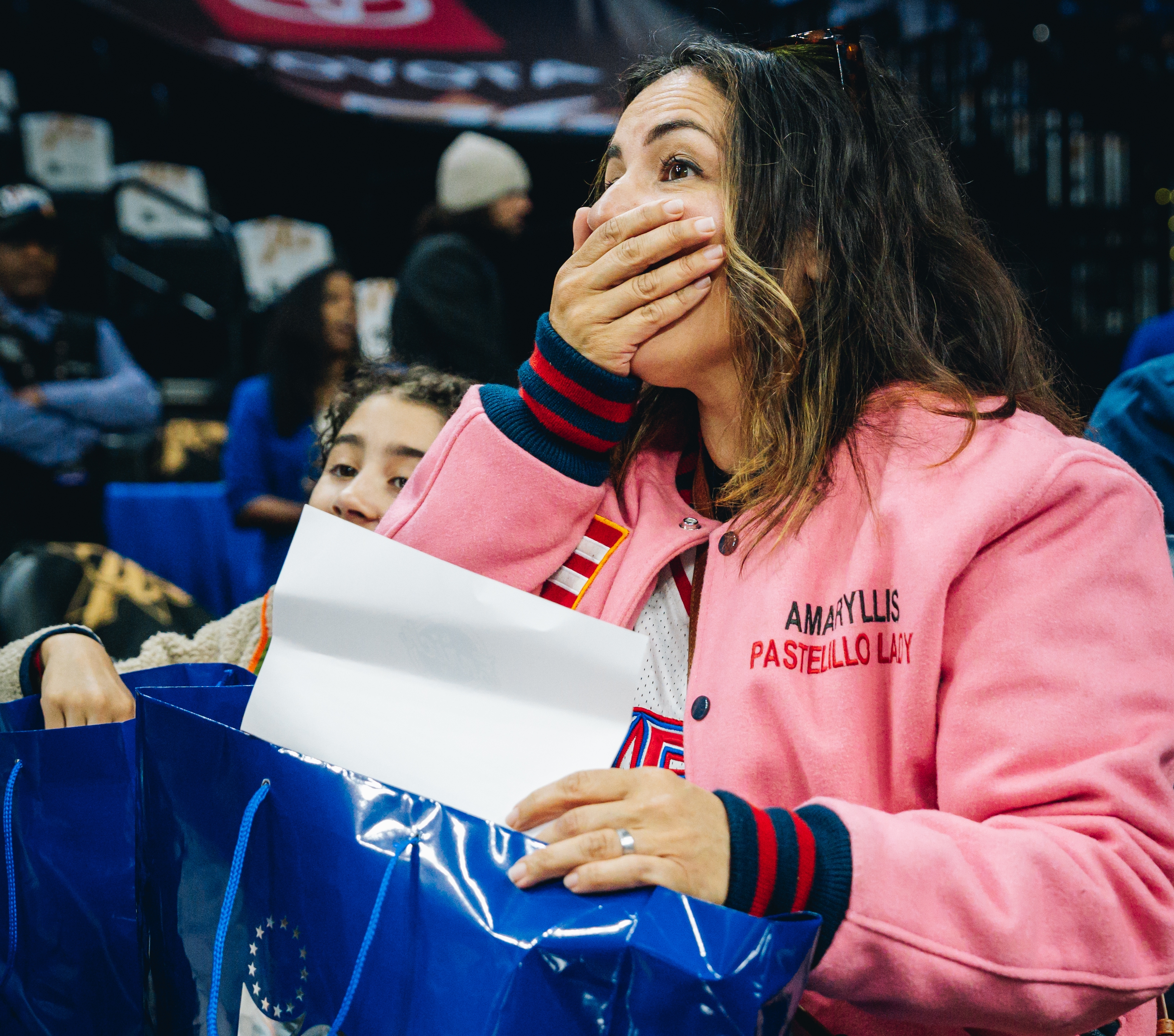
Amaryllis Rivera Nassar of Amy’s Pastelillos has won a partnership, valued at $250,000, with a Philadelphia sports team. Which?
I know that the Rittenhouse Hotel is getting a steakhouse next year. Where does that leave RJ Smith and his supper club? — Howard S.
Just as your question reached my inbox, I got word that Smith’s Ocho Supper Club residency is sticking around indefinitely at the Rittenhouse Hotel. The 22-year-old Drexel grad is offering his six-course, $160 Afro-Caribbean tasting menus at 5 and 8 p.m. on select Sundays in the Lacroix dining room. Sample dishes: Trinidad doubles, oxtail festivals, madai with hibiscus aguachile, mole negro, scallops, and lamb saddle. Ocho is also expanding beyond the tasting menu to include à la carte dishes downstairs at Bar 210, including escovitch mussels, crab tostadas, braised oxtails, jerk-spiced New York strip, and curry lamb, with several dishes also available through hotel room service. Atlas Restaurant Group, which owns Center City’s Loch Bar, is moving ahead with its planned 2027 opening of Ruxton steakhouse in the Rittenhouse’s former Scarpetta restaurant space.
📮 Have a question about food in Philly? Email your questions to me at mklein@inquirer.com for a chance to be featured in my newsletter.
By submitting your written, visual, and/or audio contributions, you agree to The Inquirer’s Terms of Use, including the grant of rights in Section 10.
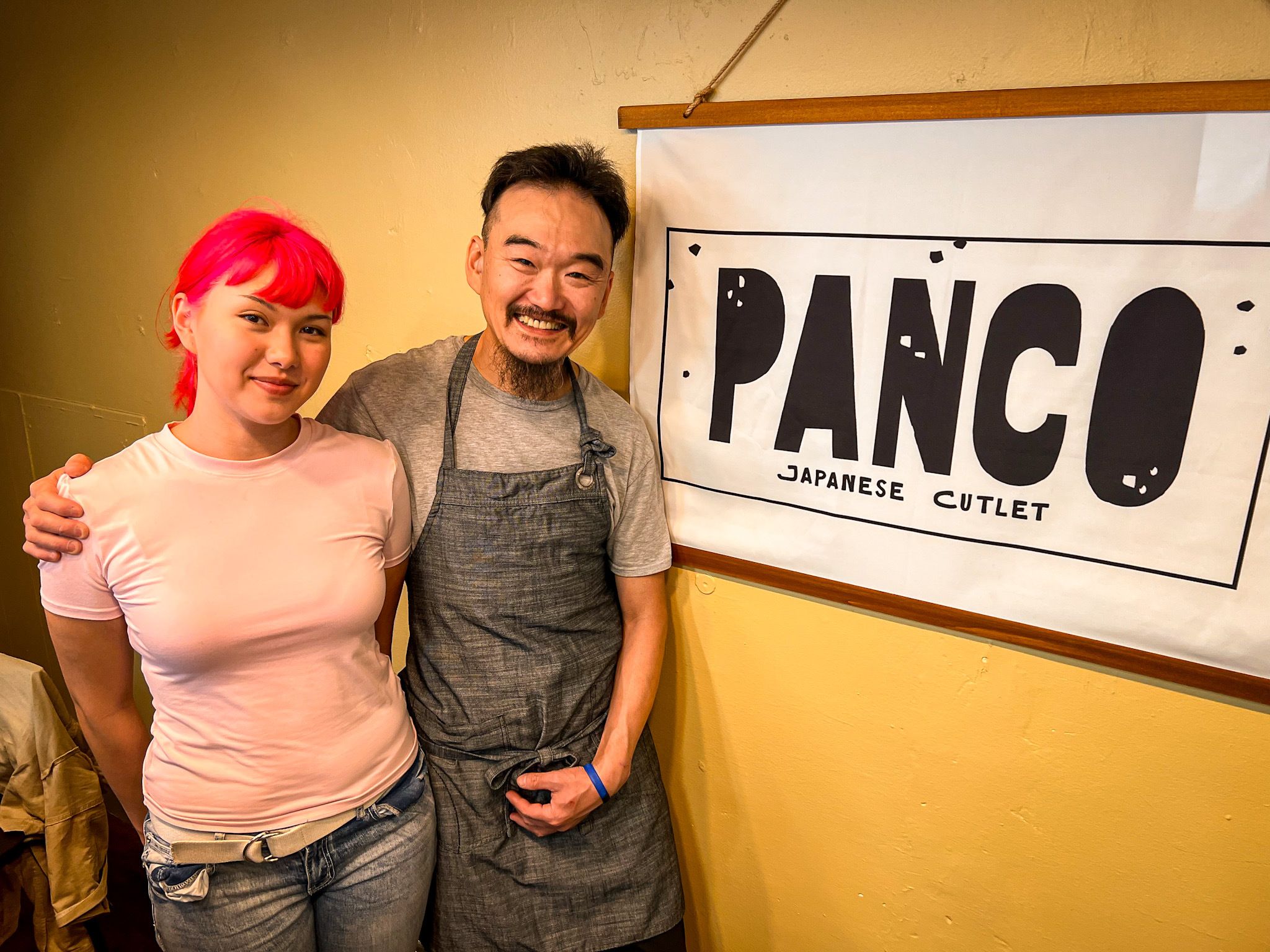
After 25 years in restaurant kitchens around Philadelphia, Ryo Igarashi was burned out. He left the business, started driving for Uber, and kept thinking about a different kind of restaurant: a tiny place he could largely run himself.
“In Japan, a one-man operation is a real thing,” he said. “You’ll have ramen shops and little places where one person basically runs everything.”
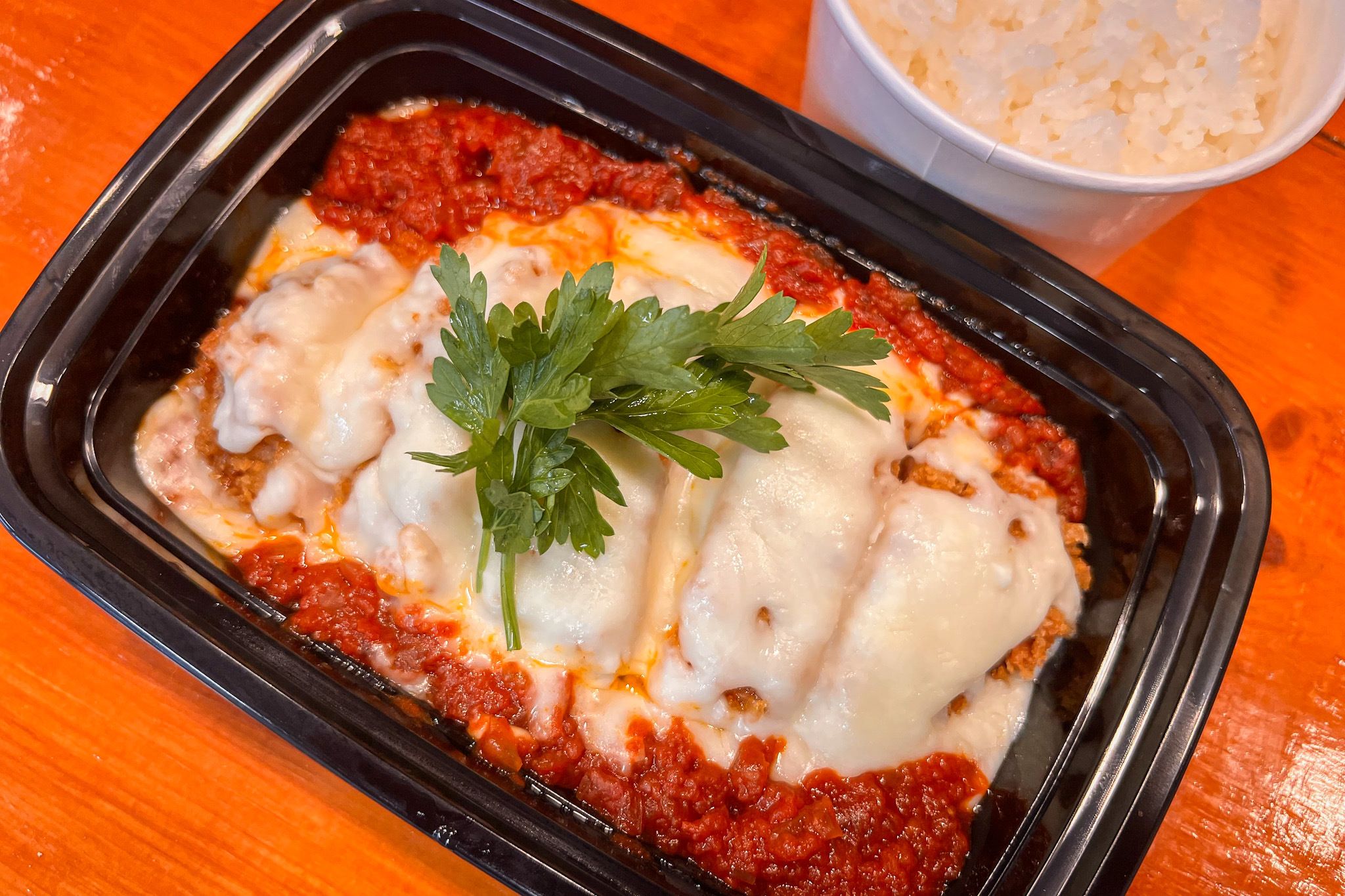
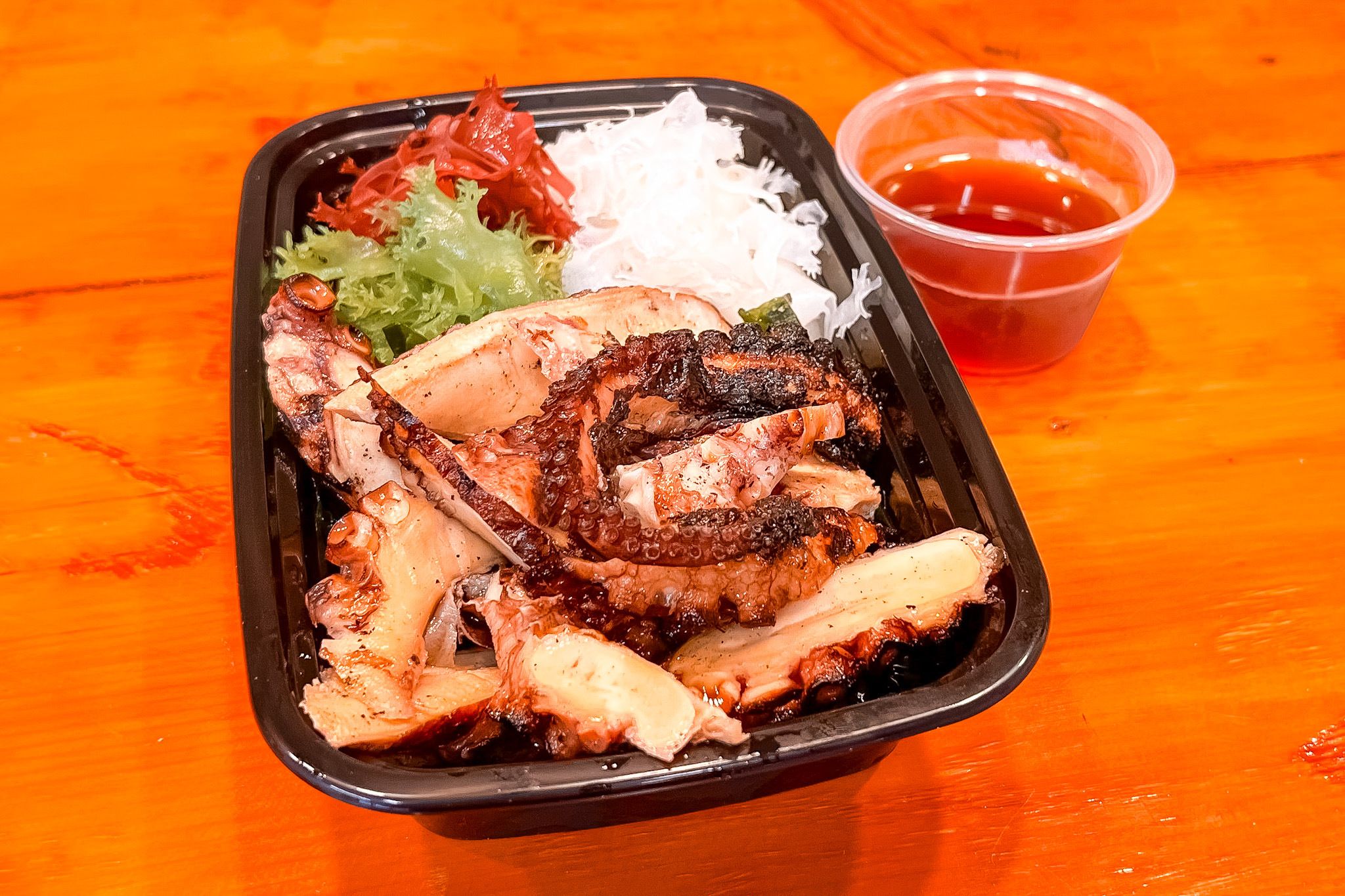
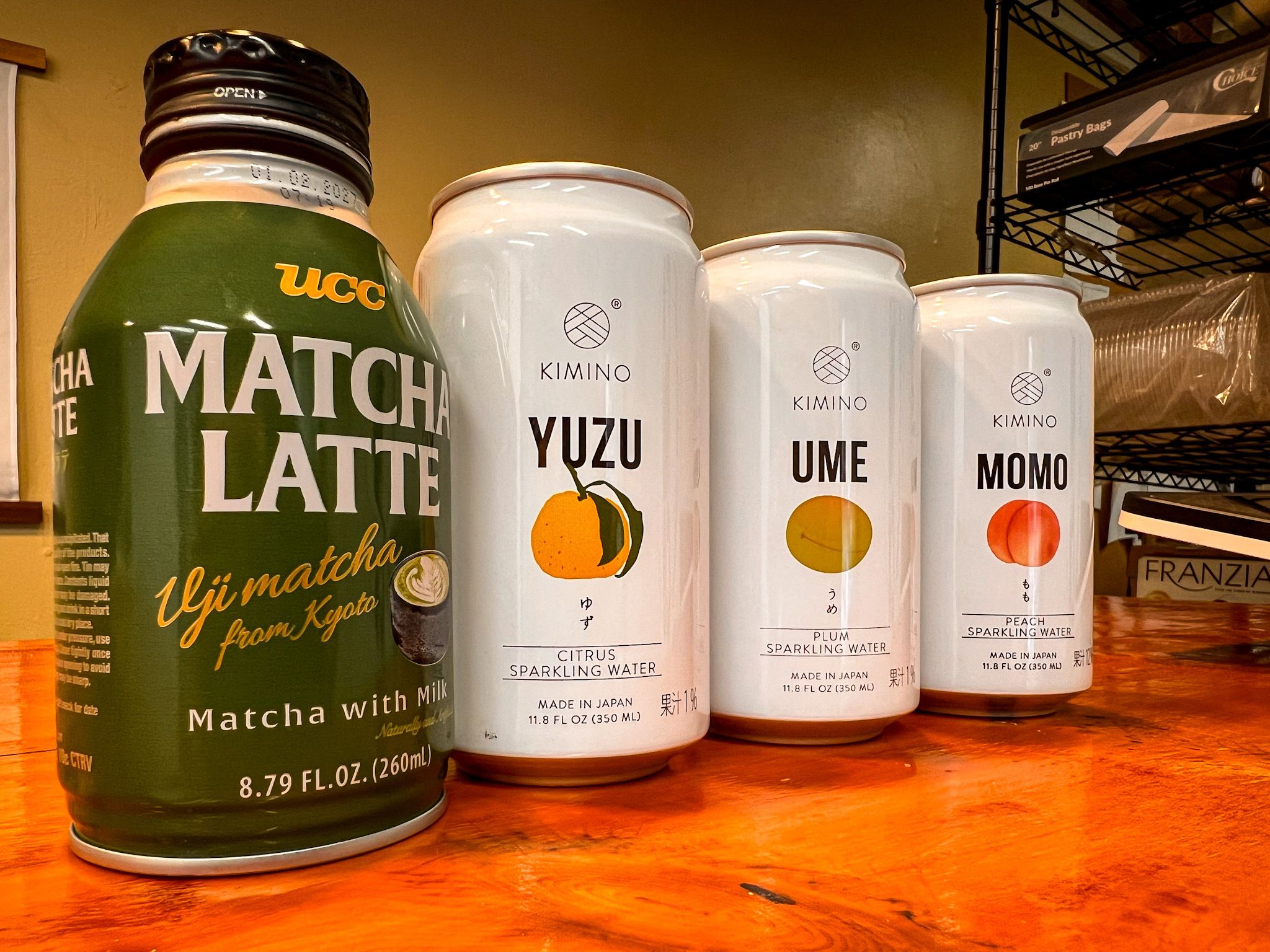
Katsu parmesan at Panco, 2300 S. Croskey St., on Sept. 20, 2026.Michael Klein / StaffKatsu curry at Panco, 2300 S. Croskey St., on Sept. 20, 2026.Michael Klein / StaffCrab cream croquettes at Panco, 2300 S. Croskey St., on Sept. 20, 2026.Michael Klein / StaffOctopus sunomono at Panco, 2300 S. Croskey St., on Sept. 20, 2026.Michael Klein / StaffChef Ryo Igarashi with his daughter, Maya, at Panco, 2300 S. Croskey St., on Sept. 20, 2026.Michael Klein / StaffBeverages at Panco, 2300 S. Croskey St., on Sept. 20, 2026.Michael Klein / Staff
That idea became Panco, the Japanese comfort-food takeout spot Igarashi soft-opened last weekend in West Passyunk. The kitchen is tiny, and the operation is deliberately lean, with his daughter, Maya, a high school senior, working the counter.
Igarashi wants to see what catches on from his yoshoku-style menu before expanding. “I don’t want to become that person who just keeps adding more and more because we can sell more,” he said. “I really want to test the market.”
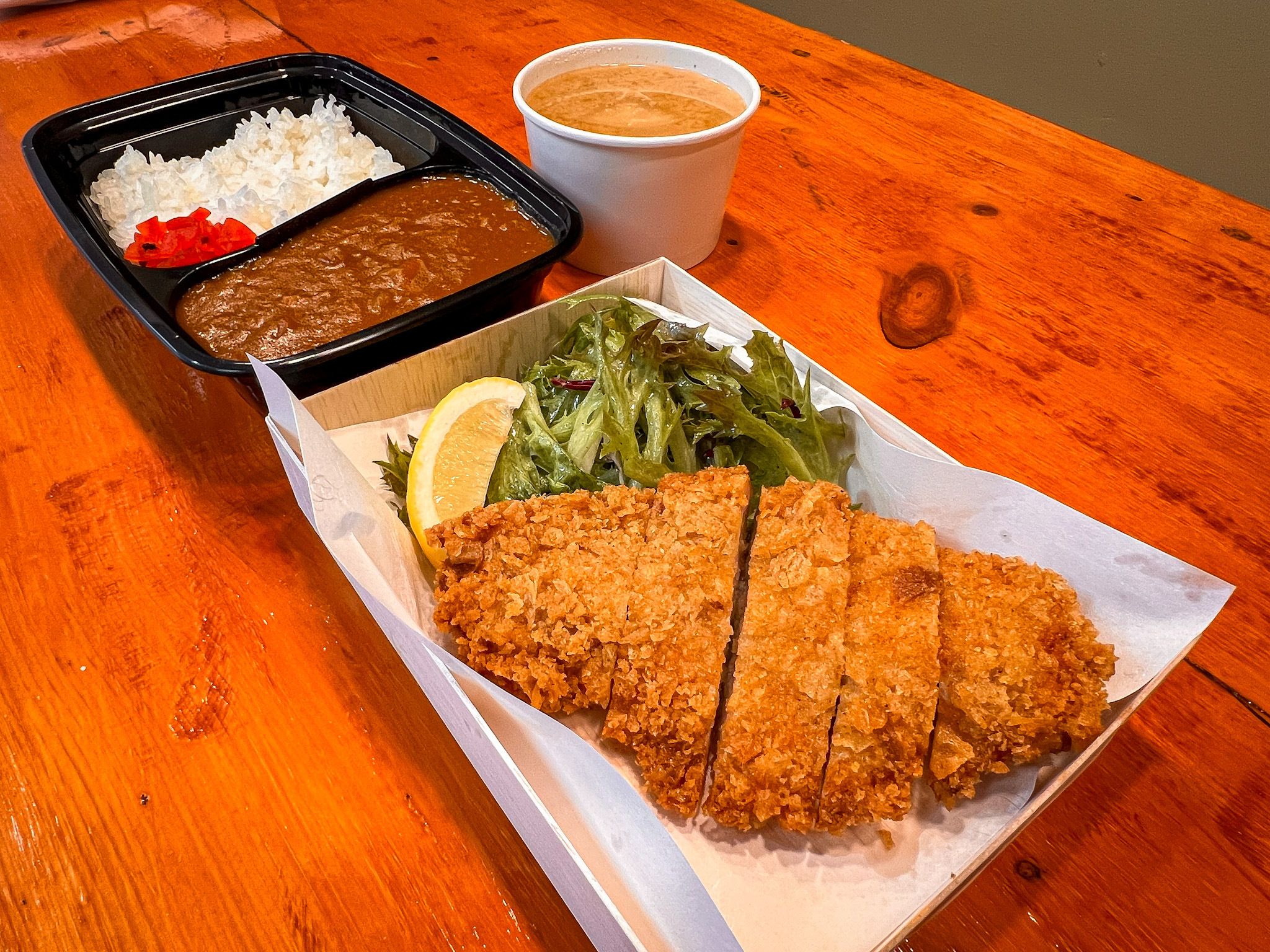
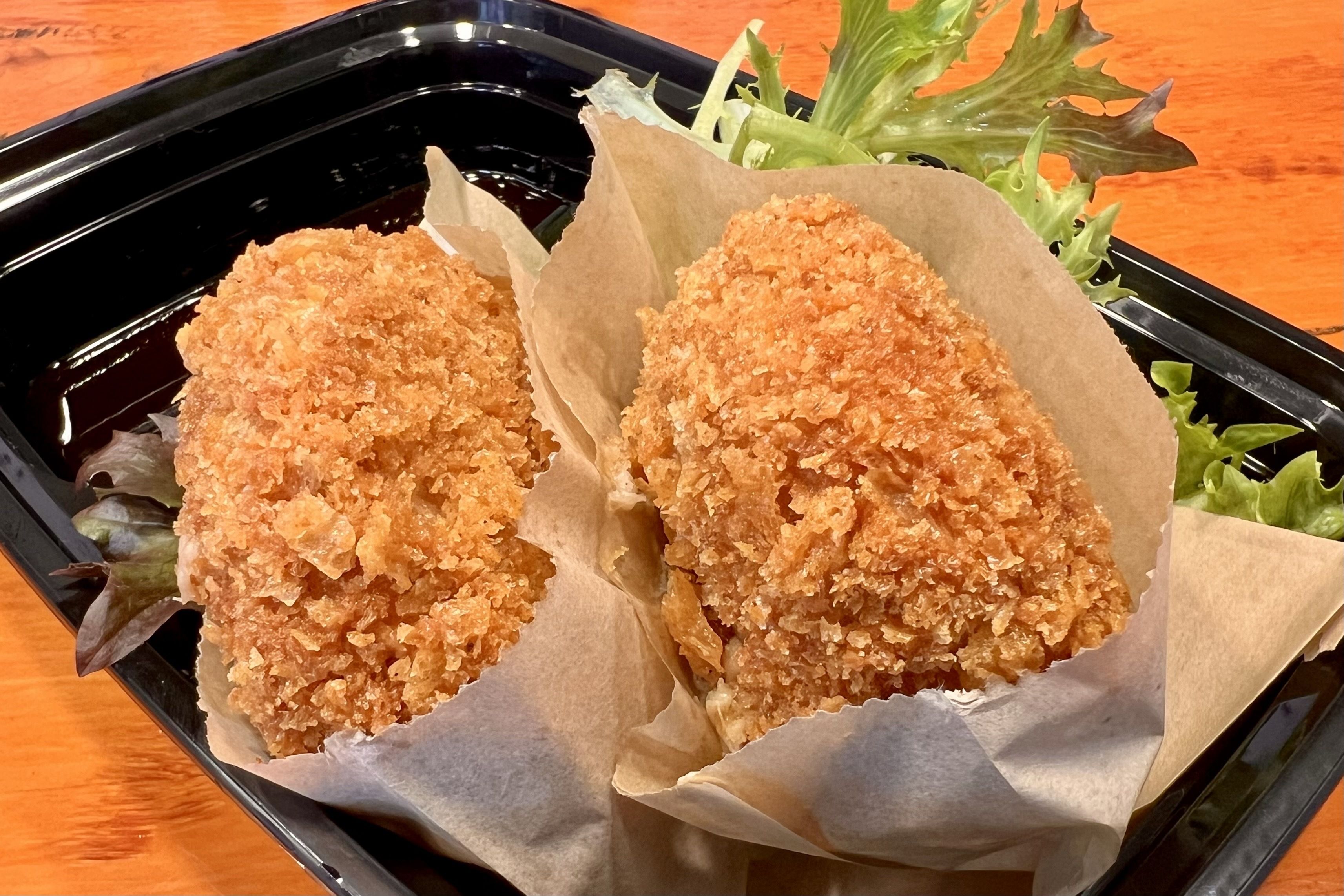
There’s cold octopus sunomono marinated in sanbaizu, fried jumbo shrimp, and crab cream croquettes with demi-glace to start. Then there’s katsu, Japan’s adaptation of the cutlet: At Panco, chicken, pork loin, or soy-marinated eggplant and tofu are breaded in house-made panko. Igarashi serves them plain, or as katsu curry, with vegetable miso, rice, and pickles; katsu-don, over eggs and rice; or katsu Parmesan, essentially a Japanese take on chicken parm. (This is South Philly, after all.) Mains top out at $22, while appetizers run about $10.
Katsu curry at Panco, 2300 S. Croskey St.Michael Klein / Staff
Dessert is flan with caramel, candied sourdough crumb, and Chantilly — essentially purin, Japanese pudding.
Panco had been in Igarashi’s head since the pandemic, but his restaurant career goes back to 2001. The Tokyo-born Igarashi moved from Seattle to Philadelphia and enrolled at Community College of Philadelphia. He knocked on the door at Hikaru in Queen Village looking for work, starting as a dishwasher before moving up in the kitchen.
His resumé eventually included Raw, Fuji Mountain, Distrito, Amada, Morimoto, and Laurel. At Distrito and Amada, he learned high-volume cooking; at Morimoto and Laurel, he moved further into technique and fine dining. His last major job was as executive sous chef at the thousand-seat Liberty Point on Penn’s Landing.
Panco is intentionally the opposite: small menu, small kitchen, small staff. Igarashi said he wants to bring the same deliberateness to a restaurant category that often gets the short shrift.
“In Japan, takeout food is a really well-established market,” he said. “I’m trying to bring some of that idea here.”
Every week, Amaryllis “Amy” Rivera-Nassar hand-shapes and deep-fries around 2,000 pastelillos at her Fishtown takeout joint, Amy’s Pastelillos.
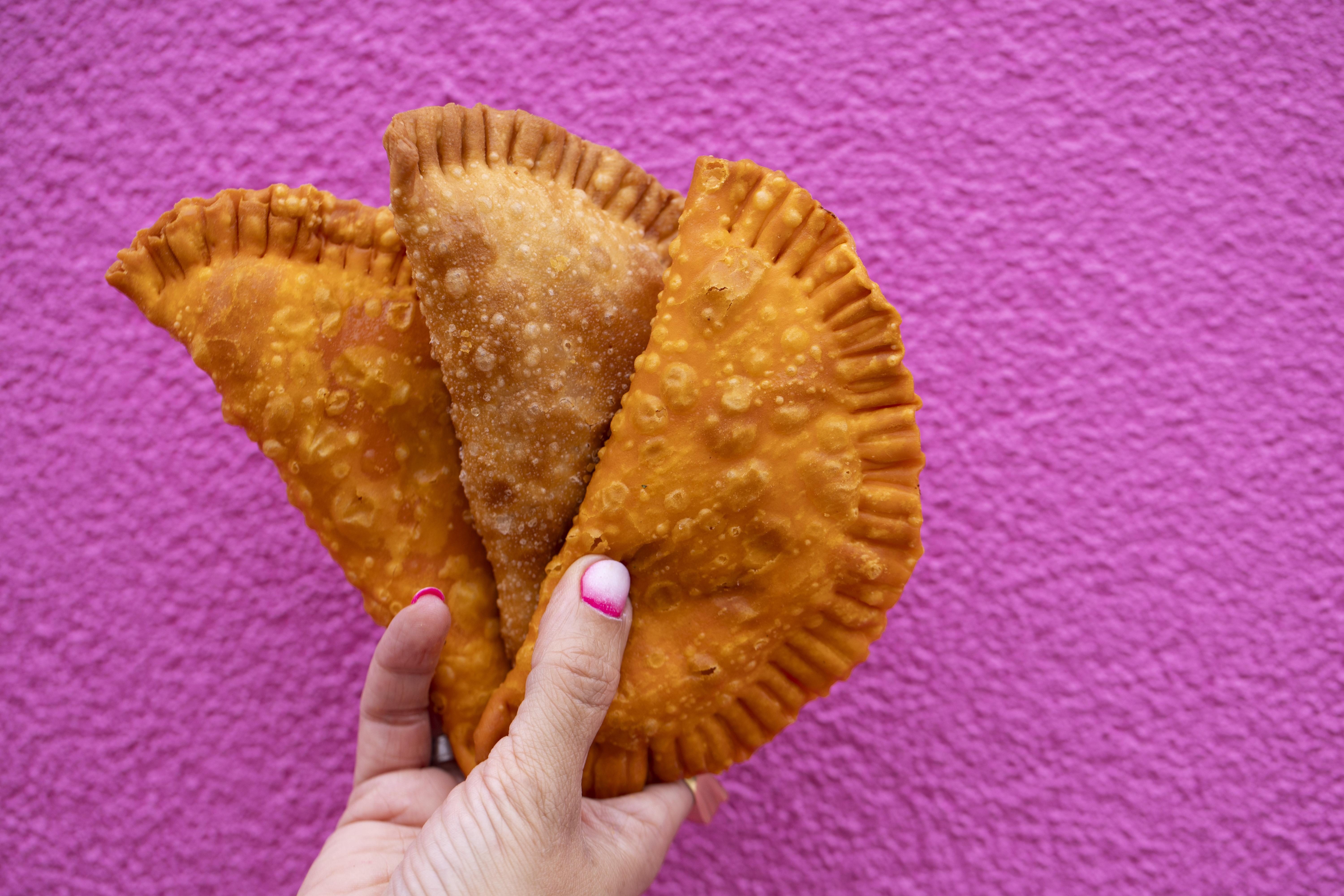
Rivera-Nassar opened the bright pink storefront at 2001 Memphis St. in 2024 after spending years as the neighborhood’s “pastelillo lady,” selling the Puerto Rican turnovers — filled with classic chicken stew, guava BBQ pork, and truffled mushrooms, among others — via pop-ups. But 2026 is the year things really started to click.
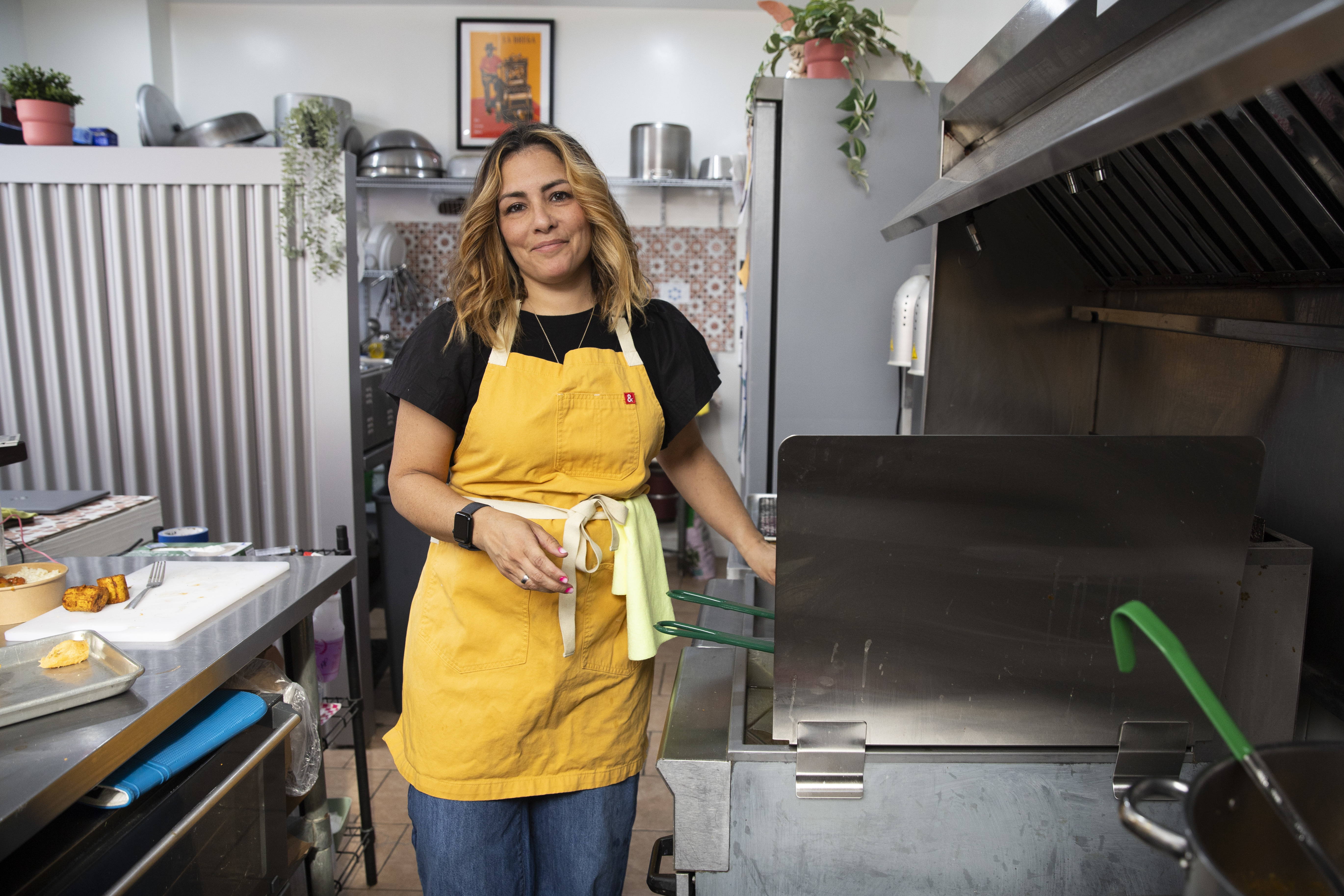
The only hitch: Rivera-Nassar says she’s running out of room to keep up. Her kitchen barely has enough space for two burners, two fries, a pair of fridges, and an oven.
“It’s like a little tiny shoebox. We do so much with so little,” Rivera-Nassar said.
Luckily, Rivera-Nassar now has a big team in her corner: This week, the Philadelphia 76ers and Bank of America announced that Amy’s Pastelillos won the Enrich Program competition, making the takeout shop an official Sixers partner for the upcoming NBA season.
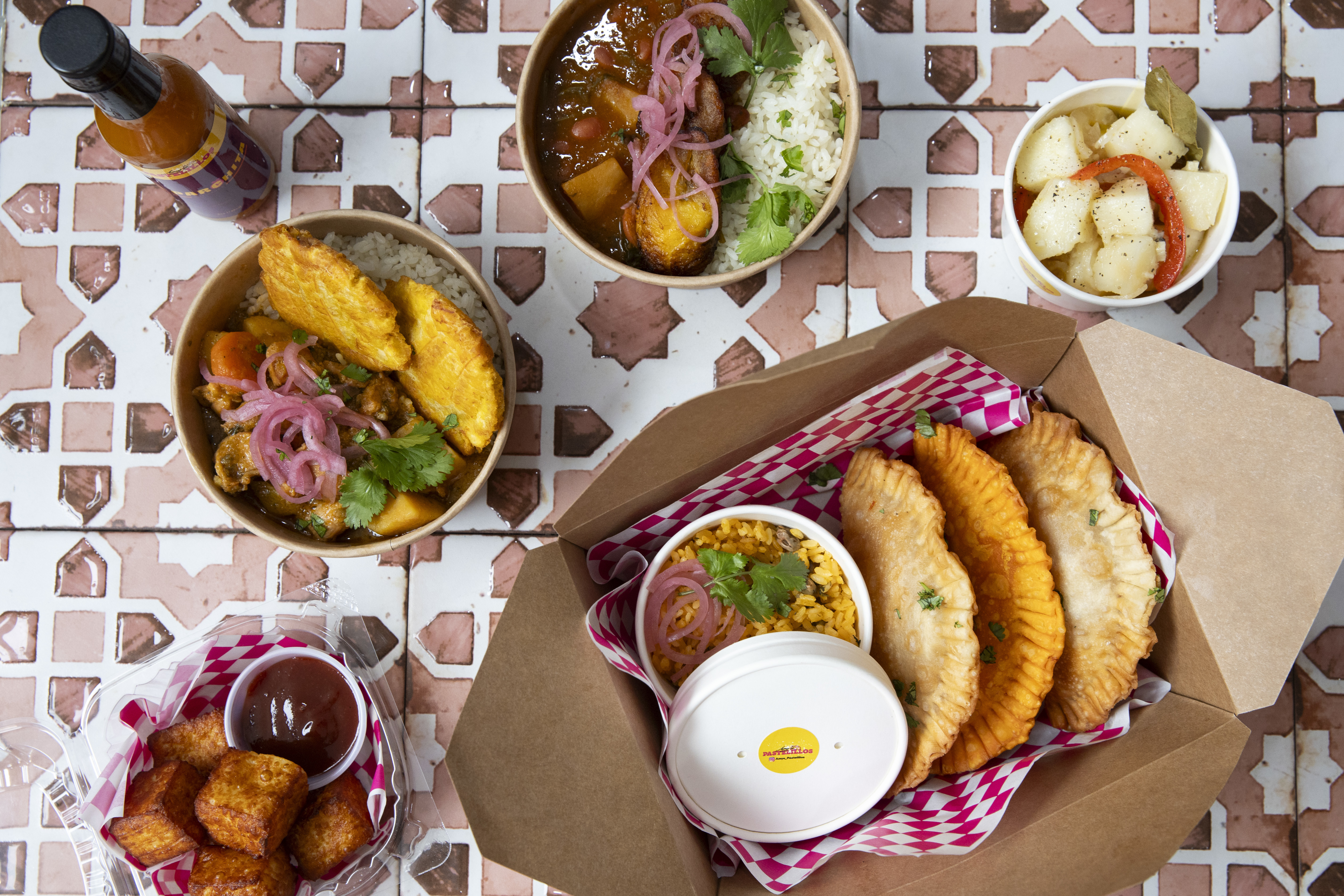
A spread of dishes including pastelillos at Amy’s Pastelillos, now an official partner of the Philadelphia 76ers for the 2026-27 NBA season.Monica Herndon / Staff Photographer
The prize package is valued at approximately $250,000, and includes a year of marketing support, business consulting, and strategic networking from both Bank of America and the Sixers. As an official partner, Amy’s Pastelillos brand will be promoted to 76ers fans through a mix of TV, social media, and radio ads, plus appearances.
The opportunity, Rivera-Nassar said, couldn’t have come at a better time.
“I had been spending all year trying to secure support and funding for my business, and had been getting constant ‘nos,’” she said. “I just can’t believe that we won.”
Amaryllis “Amy” Rivera-Nassar, owner of Amy’s Pastelillos, found out her business was an Enrich Program winner during Game 4 of the Sixers playoff series against the Boston Celtics at the Xfinity Mobile Arena.Courtesy Philadelphia 76ers
Bank of America and the Sixers started the Enrich Program during the 2020-21 basketball season as a way to uplift small, local, and underrepresented business owners in and around Philly. Previous winners include East Falls coffee shop Thunder Mug Cafe and the late Charisse McGill’s Lokal Artisan Foods, the brand behind the popular French toast bites stands previously located at Spruce Street Harbor Park and the Christmas Village.
The program is competitive: 175 businesses applied earlier this spring, a Sixers spokesperson said via email. After submitting an application detailing their growth plans, selected business owners must pitch Bank of America and Sixers executives. Enrich’s two other finalists, the Northern Liberties gift shop Laser Philly and the popular Kensington gelato shop Cloud Cups, also received $10,000 cash prizes.
“Amy’s story stood out to us,” the Sixers spokesperson said. “Her vision extends beyond the restaurant itself — she is passionate about creating a space where Philadelphians can experience and connect with Puerto Rican culture and community. That combination of entrepreneurial growth [and] cultural purpose … made Amy’s journey one we were excited to support.”
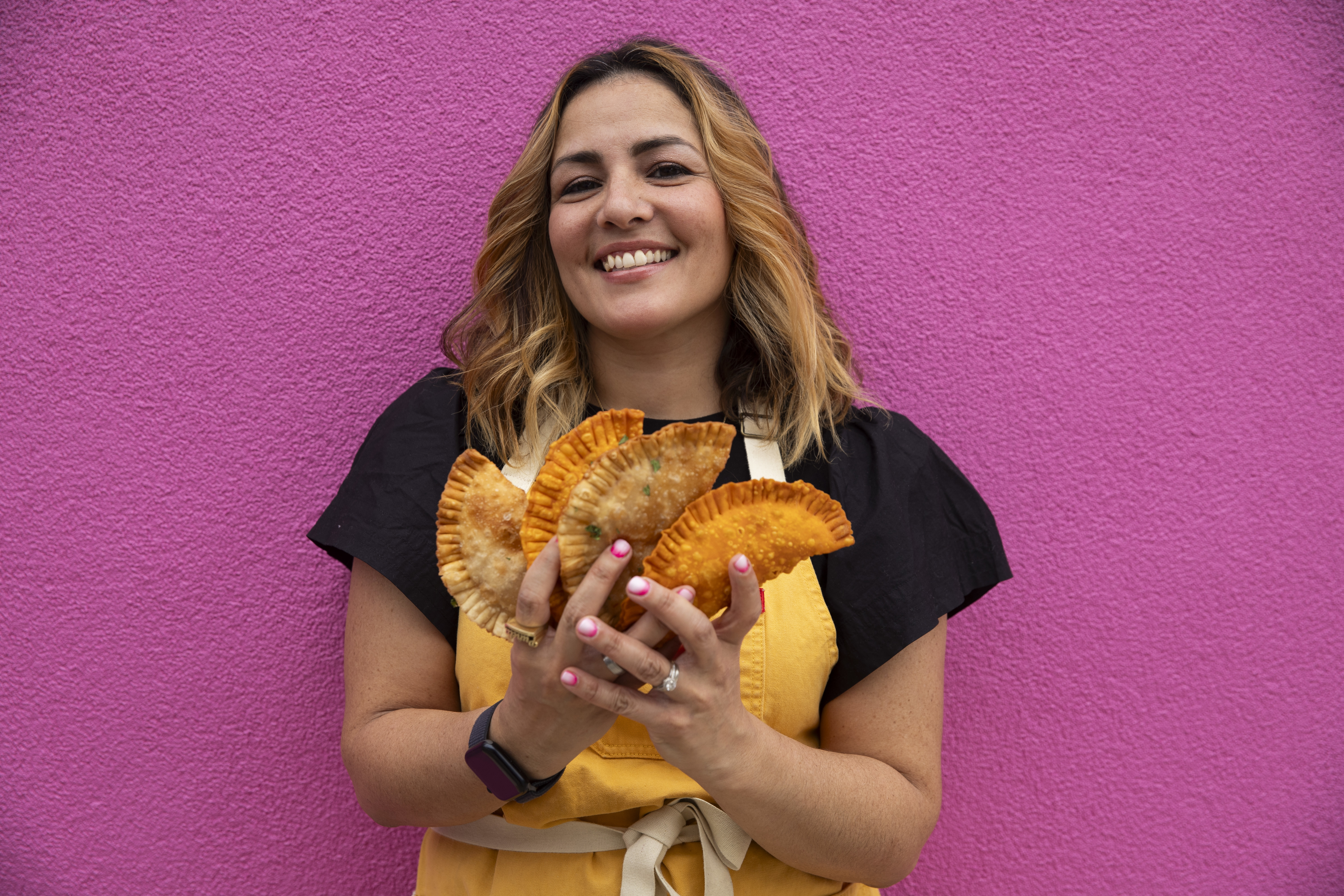
Amaryllis “Amy” Rivera-Nassar holds three pastelillos from the menu outside her restaurant, Amy’s Pastelillos. She estimates the storefront sells just under 2,000 Puerto Rican turnovers per week.Monica Herndon / Staff Photographer
“We did 700 pastelillos in two hours for just Super Bowl parties alone,” she said. “But the aftermath was super-exciting. A lot of people were like, ‘Oooh, Puerto Rican food’ and really wanted to explore the culture.”
Rivera-Nassar believes the support from Bank of America and the added visibility from the Sixers can help Amy’s expand to a larger off-site prep kitchen —even if she can’t bear to leave her bright pink storefront.
“I’m attached. It’s my baby,” she said,at the same time acknowledging that, space-wise,“we’ve hit our ceiling.”
Amaryllis “Amy” Rivera-Nassar works in the kitchen at Amy’s Pastelillos. Now an Enrich Program winner, Rivera-Nassar is hoping to expand to a larger, off-site prep facility.Monica Herndon / Staff Photographer
Rivera-Nassar is most excited to see her business’ name in lights inside the Xfinity Mobile Arena. She learned about winning the Enrich prize while sitting courtside with her 10-year-old daughter at Game 4 of the Sixers playoff series against the Boston Celtics.
“I was already overwhelmed by the fact that Tyrese Maxey and [V.J.] Edgecomb were right in front of us. And then the Sixers reps came out and congratulated me,” Rivera-Nassar said. “I was floored.”
Tiny Bridgeport, tucked off Route 202 between King of Prussia and Norristown, has long had its food landmarks. Since 1955, it’s been the home of Suzy-Jo Donuts and Franzone’s Pizzeria.
Now comes the polished Cecilia, which opened Monday in the former Taphouse 23, following an extensive renovation by Scott Dougherty and Bruce Goodman, whose holdings include Copper Crow in Horsham and the Blue Bell Inn in Blue Bell (featured in The Inquirer’s 2024 edition of The 76).
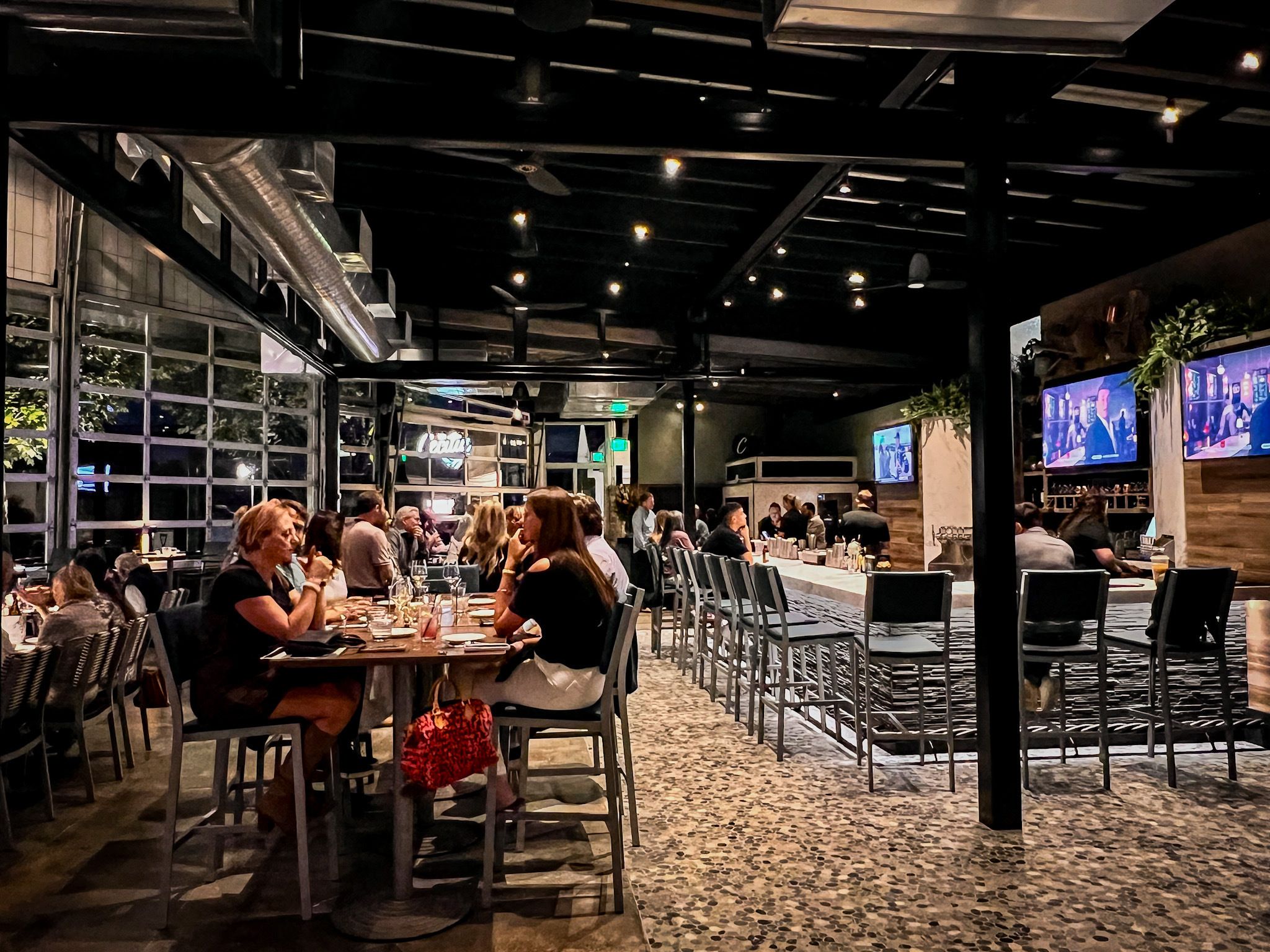
Lounge at Cecilia, 266 E. Fourth St., Bridgeport.Michael Klein / Staff
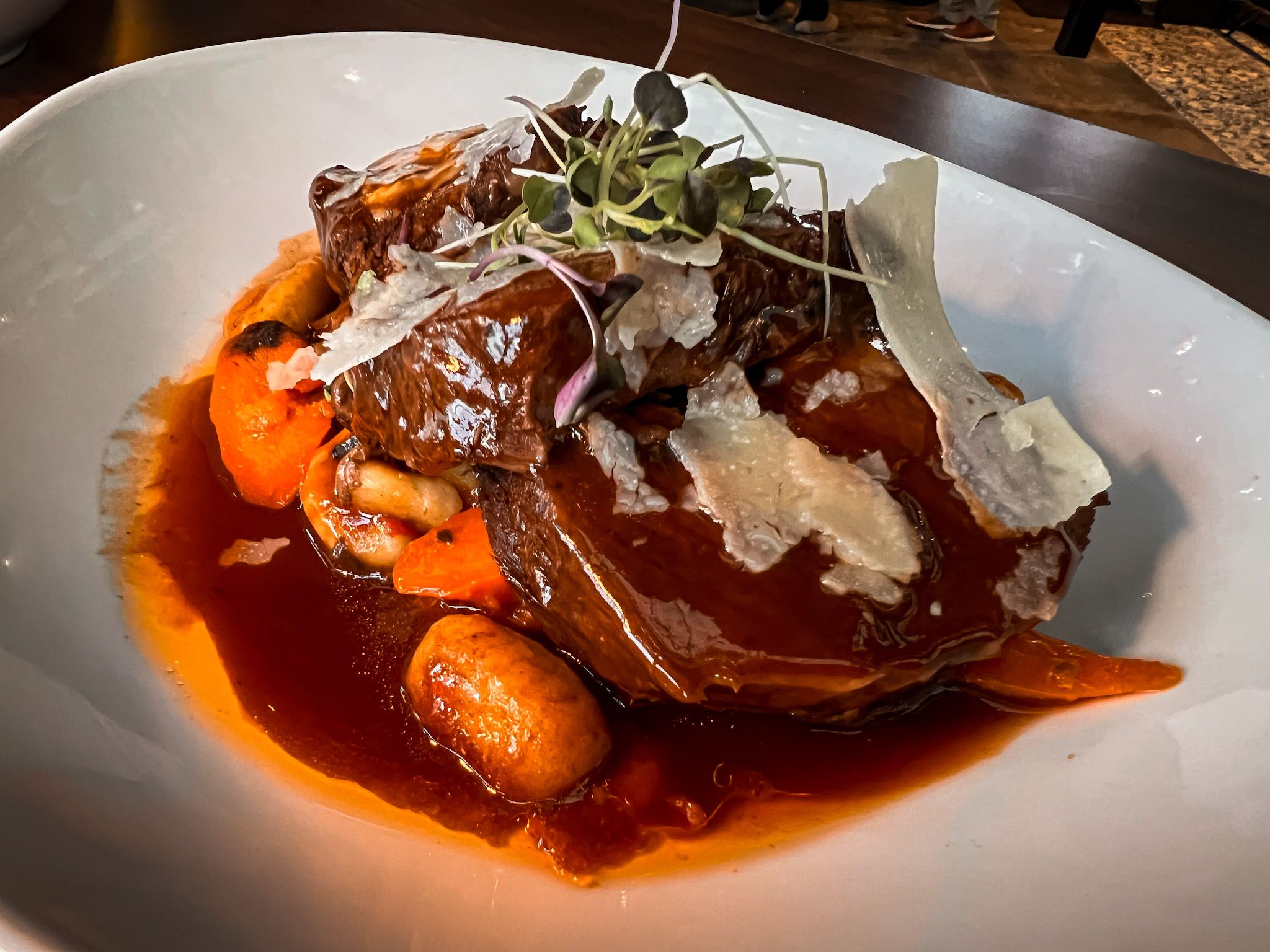
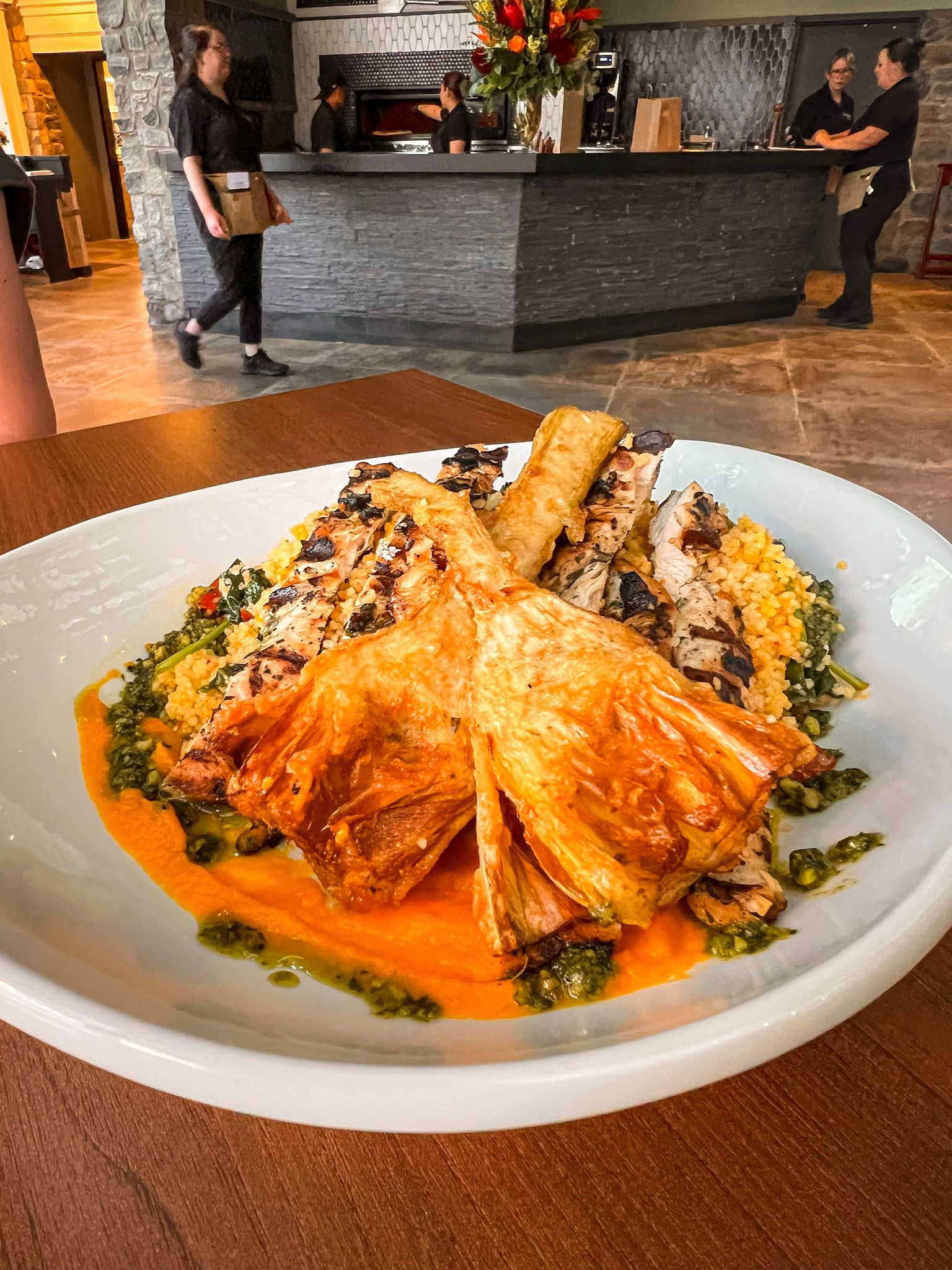
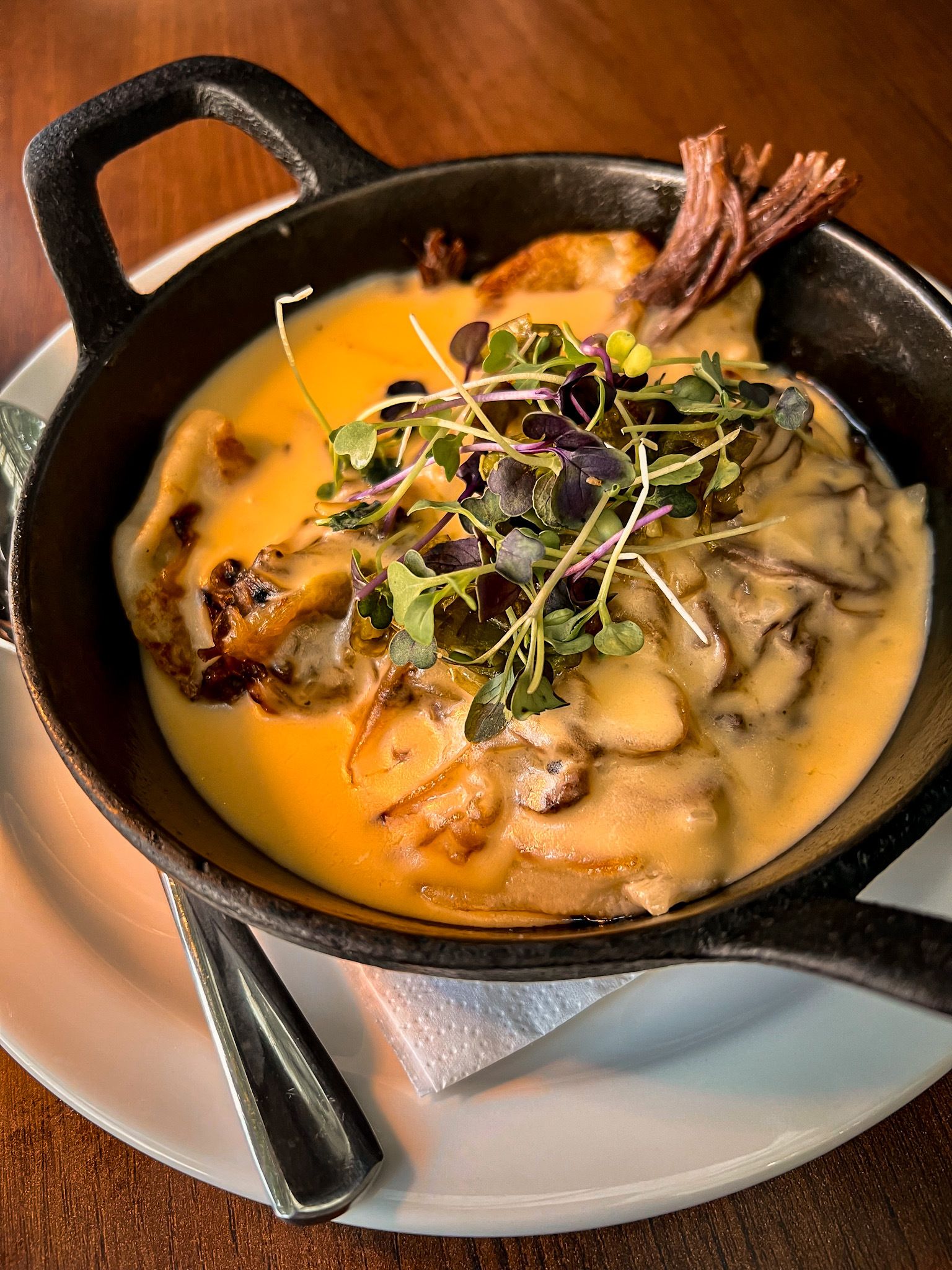
Chef Peter Sherba, the Blue Bell Inn veteran who oversees the group’s kitchens, created Cecilia’s contemporary American menu. Early favorites during weekend previews included a wagyu French dip sandwich; a tuna tataki appetizer, whose seared rare ahi slices are topped with avocado, ponzu, Fresno chilies, and compressed pineapple; pierogies from Ambler’s Pierogie Kitchen napped in braised short rib, Cooper Sharp sauce, caramelized onions, and roasted long hots; and two hearty, autumnal entrees: a beef bourguignon-style short rib called “Meat and Potato” (the potato here is gnocchi), as well as a 12-ounce apple cider-glazed pork chop over Yukon Gold mashed potatoes. There’s brick-oven pizza, too. Prices range from the high teens for appetizers to just over $30 for mains.
The roughly 300-seat restaurant represents a substantial makeover of Taphouse 23, which closed last year. Judi Goodman, who designs the restaurant group’s interiors, shrank the main bar by about 40%, making room for banquettes and lower dining tables. The partners also installed new lighting, wall coverings, furniture, artwork, TVs, and sound equipment.
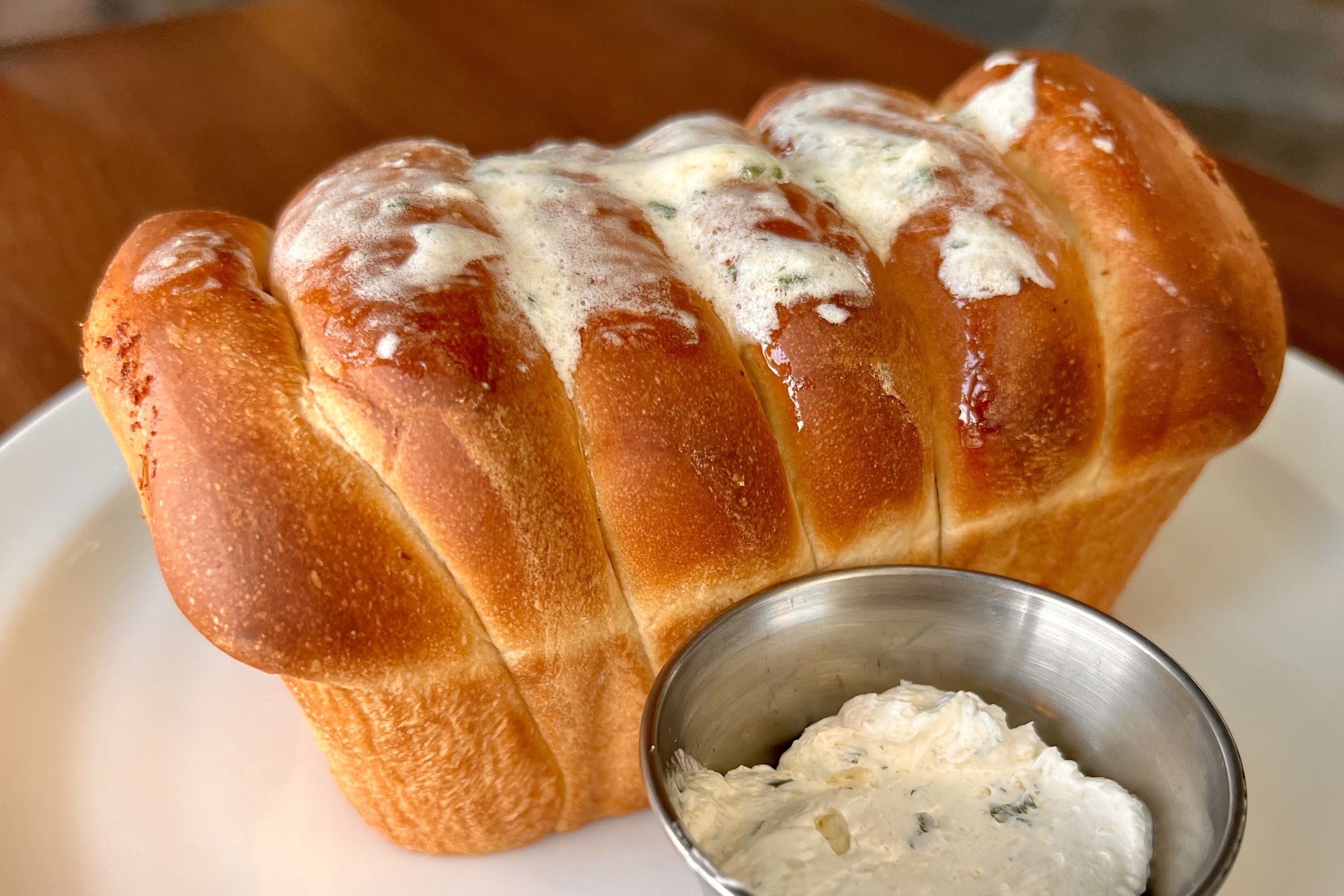
Cecilia, 266 E. Fourth St., Bridgeport, on Sept. 16, 2026.Michael Klein / StaffLounge at Cecilia, 266 E. Fourth St., Bridgeport, on Sept. 16, 2026.Michael Klein / StaffCouscous at Cecilia, 266 E. Fourth St., Bridgeport, on Sept. 16, 2026.Michael Klein / StaffGarlic and herb bread loaf with warm goat cheese pesto spread at Cecilia, 266 E. Fourth St., Bridgeport, on Sept. 16, 2026.Michael Klein / StaffPierogies with braised short rib and Cooper Sharp sauce at Cecilia, 266 E. Fourth St., Bridgeport, on Sept. 16, 2026.Michael Klein / Staff
An adjoining space has been transformed into what the owners call the Greenhouse, with garage doors that can open in warmer weather. The parking lots and landscaping also were redone.
Taphouse 23 opened in 2014 under Bridgeport businessman Gary Johnson — Judi Goodman’s brother — replacing a joint called the Point. After Johnson died in 2021, his family decided to ease out of the restaurant business, Dougherty said. Cecilia is named in tribute to the Johnson children’s mother.
Dougherty said Cecilia will aim to reach beyond Bridgeport to build its customer base, drawing from Blue Bell, King of Prussia, and Conshohocken — all 10 to 20 minutes away.
Cecilia, 266 E. Fourth St., Bridgeport. Hours: 11:30 a.m. to 9 p.m. Sunday to Thursday, 11:30 a.m. to 10 p.m. Friday and Saturday.
A line in Philadelphia’s zoning code conflates drag performances with strip clubs, topless bars, and other adult cabaret venues. It’s a definition that City Council hopes to change.
Councilmember Rue Landau introduced legislation on Thursday to remove references to “male or female impersonators” in a section of the zoning code that regulates “Adult Oriented Services.”
As currently written, Philadelphia defines an adult cabaret as a place that “features topless dancers, go-go dancers, exotic dancers, strippers, male or female impersonators or similar entertainers … dancing, performing or acting in a lewd, sexually erotic, exciting or stimulating manner.”
The distinction is similar to one found in a Tennessee law that prohibits so-called “adult cabarets” featuring “male or female impersonators” from being staged anywhere minors might see it. It also mirrors language used in similar drag bans struck down this year byjudges in Texas and Montana, and one currently up for consideration by the Idaho Senate.
If passed, Landau’s proposal would strike the provision regarding male and female impersonators.
The bill will first be considered by City Council’s Rules Committee. The legislation has the support of Mayor Cherelle L. Parker’s administration, Landau said, and has also been shared with her colleagues in City Council, who Landau described as “supportive.”
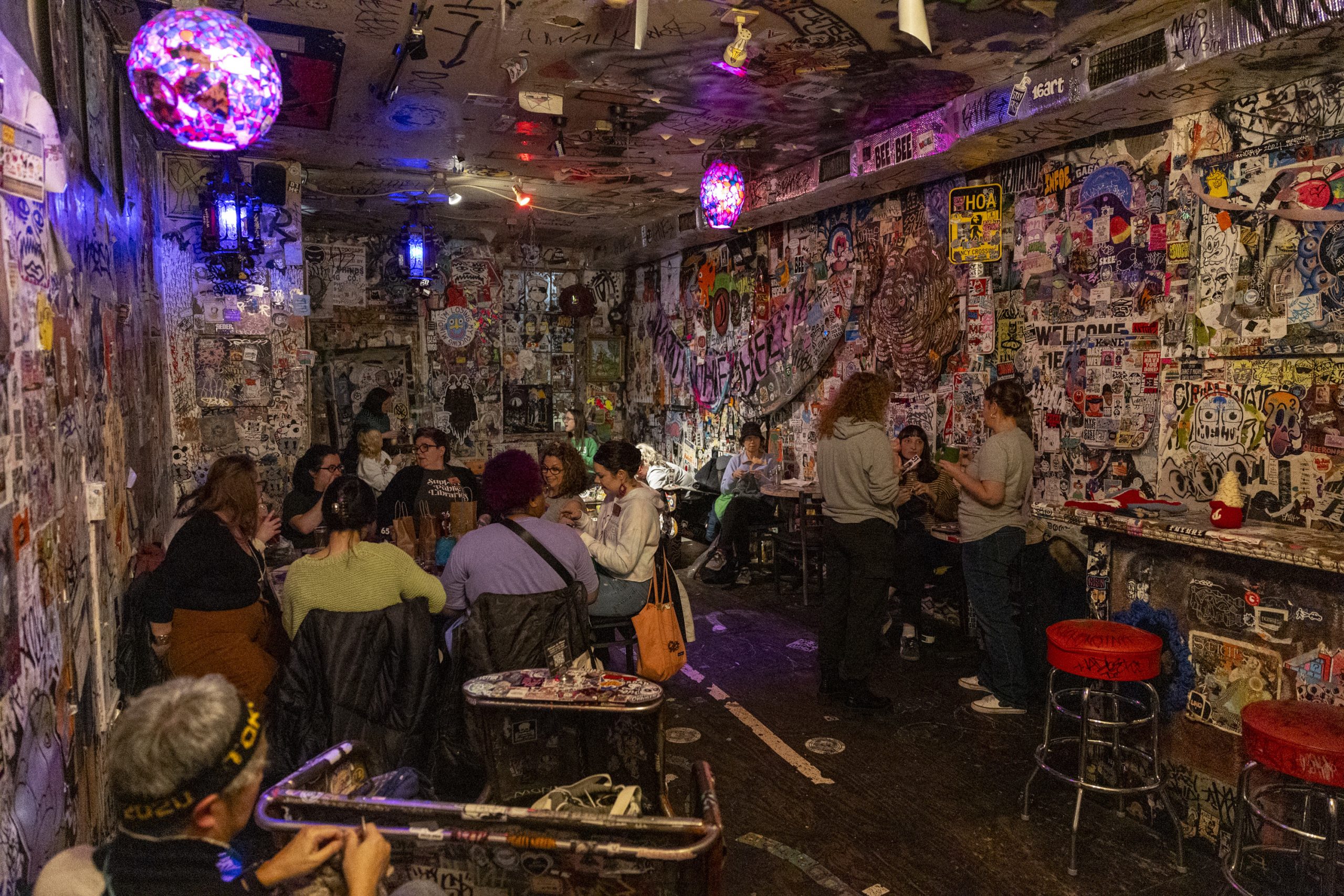
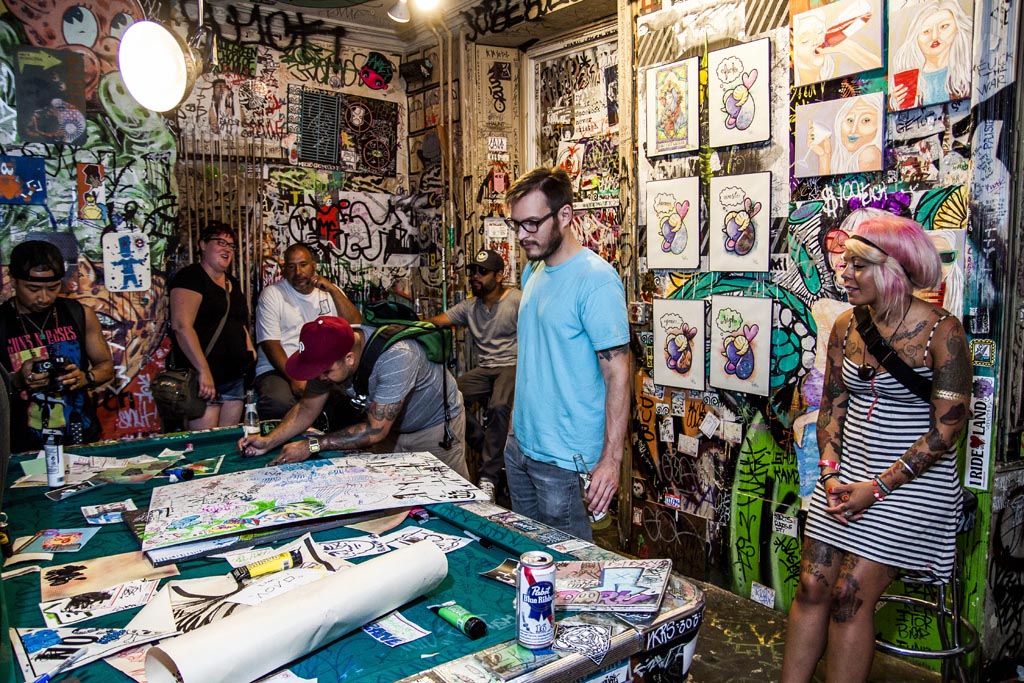
Landau’s bill is inspired by recent events at South Street bar Tattooed Mom, which has long been a go-to venue for Philly’s LGBTQ+ artists, and particularly drag performers, in part because it doesn’t charge acts.
A crowd fills Tattooed Mom. The popular South Street bar is unable to host events with music for the foreseeable future.
Tattooed Mom owner RobertPerry told The Inquirer Friday that he brought what he called the “offensive and troubling language” to the attention of Landau’s staff, but was not involved in drafting the legislation.
The incident “opened my eyes to actually reading the code and having conversations … I think the [language] is so antiquated that people don’t even realize it’s there,” Perry said. “We might have initially spurred the conversation, but Landau did all the heavy lifting.”
Perry was initially instructed to seek an adult cabaret permit in addition to a special assembly license for Tattooed Mom, he told the Philadelphia Gay News in July. That same month, an L&I spokesperson told Philly Voice that the permit — which traditionally governs businesses such as strip clubs and adult theaters — is required to host drag and burlesque events.
Perry now believes that his bar doesn’t need one upon further research, he said Friday.
Regardless,Landau said Tattooed Mom’s predicament was the spark for her proposal.“They were cited in violation of this provision simply because they had a drag performance happening,” she said. “We don’t want that happening in Philly … A lot of folks rely on drag performances for their livelihood, and we just want to keep supporting them.”
Landau is unaware of L&I citing other Philly venues for hosting drag or burlesque shows without a permit. “This is thankfully nothing that L&I is usually citing establishments” over, she said.
A crowd looks at art inside the South Street bar Tattooed Mom.
If passed, Landau’s legislation won’t green-light events with music at Tattooed Mom. All Philly establishments with an occupancy of 50 or more people that host music performances, dancing, or DJs are required to have a special assembly occupancy license, which costs $253 and must be renewed annually. To procure one, Tattooed Mom must first apply for a zoning exception.
The process involves holding a public meeting for community feedback followed by a separate hearing in front of the Zoning Board of Adjustment. As of March 2026, the wait time for a hearing is 180 days — or roughly six months — according to a manual from the City of Philadelphia.
Perry said he has yet to begin Tattooed Mom’s application.
“There never really was a Fishtown, government-wise. It was a localism,” explains Kenneth Milano, a Kensington-born historian and cofounder of the Kensington History Project. Perhaps this is why it’s hard to know exactly where Fishtown’s boundaries are.
“No one [in the old days] would ever call above York Street ‘Fishtown.’ That would have been sacrilege,” Milano said. “With the new folks, they don’t know. The [real estate agent] told them.”
story continues after advertisement
Decades of gentrification in the River Wards have blurred the lines as developers tagged their properties with the coveted Fishtown brand, even as they ventured into what were generally defined as sections of Kensington. (And which Kensington? East Kensington? Olde Kensington? South Kensington? How about Norris Square? And Olde Richmond? And Port Richmond?)
The argument is about more than what to call a few blocks: A neighborhood name can shape a place’s identity, its perceived desirability, and even how it is marketed and valued.
Click anywhere on the map to start drawing your Fishtown boundary
Milano said parish boundaries originally helped reinforce neighborhood identity. Milano, 67, has lived on York Street since age 5 and described the conventional Fishtown as a triangle bounded by Norris, Frankford, and the Delaware River.
The Inquirer’s map of neighborhoods agrees with Milano — although it’s worth mentioning that this map, used internally to help our reporting stay consistent, was created in the 1980s. The Milano-Inquirer definition is definitely conservative when compared to more recent attempts to set boundaries.
By contrast, Zillow’s Fishtown is nearly twice the size. The real estate website includes not only Front Street to the west, but also goes as far north as Lehigh Avenue.
Zillow maintains its own set of neighborhood boundaries “by reviewing sources such as city maps, the Census Bureau, and neighborhood associations,” Zillow spokesperson Briahna Healy said.
There’s some overlap between Zillow’s boundaries and the 19125 zip code. While residents might feel a strong attachment to the last five digits of their address, zip codes exist solely to help route mail. This makes it hard to use 19125’s scraggly borders to define Fishtown — especially when sections that reach that far north are Kensington by any definition.
Somewhere in the middle is the Fishtown Neighbors Association border — sticking with Front Street to the west but extending only as far as York Street to the north. These boundaries “go back about 20 years when FNA was a community organization that needed boundaries to help dictate what projects to work on,” said John Scott, current president of the FNA.
Their boundaries are a single piece in a jigsaw puzzle with surrounding neighboring associations. It explains why some streets are included and others aren’t. For example, the area between Front Street and Frankford Avenue is included because “if we didn’t include them, they would probably be stateless,” Scott said.
This also means that a lot of boundaries are largely codified because the FNA can’t expand without encroaching on neighboring associations — unless, that is, new streets are built, like those in the Northbank development on the Delaware. Now the FNA is about to adjust its boundaries for the first time in a quarter-century to encompass streets south of Schirra Lane.
If we look at all of these definitions at the same time, there is a clear overlap that we can safely call Fishtown.
However, much of the fringe is up for debate. Does Fishtown stop at Front or Frankford, for example? Is York the border, or is it Norris, or even Lehigh?
It’s time for some good, old-fashioned, boots-on-the-ground reporting.
A defining feature of Fishtown are the whimsical fish signs on house facades. Our theory: Surely a painted fish wouldn’t make sense in Kensington. We hit the streets and logged every house that had a fish sign.
Largely, the signs are contained to the FNA-defined borders. But we found a large pocket of signs east of York Street and even a few signs north of Frankford — although they are outnumbered by milk bottle signs to honor Kensington’s old Harbisons Dairy plant.
Fish signs are only one way to delineate Fishtown boundaries. We also looked at restaurants and what neighborhood they describe themselves as belonging to: Fishtown, Kensington, or unsure.
Fishtown has been known for its dining scene since Johnny Brenda’s established the beachhead in 2003. As development marched on, restaurateurs and dining guides followed the cue of developers and real estate agents: We’re in Fishtown.
Today, that’s not entirely the case, as even upscale restaurants are comfortable calling themselves Kensington, though they could claim Fishtown. At Fiore, chefs Ed Crochet and Justine MacNeil use East Kensington for their Italian restaurant north of the York Street roundabout. Directly across is Emilia, chef Greg Vernick’s popular new Italian spot, which doesn’t state its neighborhood in its marketing materials. Resy, its reservation booking platform, calls it Fishtown-East Kensington.
Seemingly everyone says Middle Child Clubhouse is in “Fishtown.” But by dint of its location on the west side of Front Street, it’s arguably in South/Olde Kensington. Yuhiro, a sushi restaurant on Susquehanna Avenue just west of Frankford, markets itself as Fishtown but it could be considered in Kensington.
Then there are the restaurants where it’s even more unclear because they list multiple neighborhoods, or none at all. For example, Picnic, on Martha Street, uses East Kensington in its Instagram bio but has used Fishtown in public relations campaigns. Where is Meetinghouse, a noted bar at Memphis and Cumberland Streets? Chef/co-owner Drew DiTomo thought for a moment: “Its parish is St. Anne’s and I quite like that.”
Finally, we decided to ask people in the gray areas a simple question: “Where are we?”
We found Matt Murphy and Kaitlin Dirkx at Hagert and Tulip Streets — south of Lehigh, north of York, still in 19125. “It’s kind of a curious pocket of the River Wards,” said Murphy, who emphatically called the area “Olde Richmond.” But, as Dirkx added, “they let me into the Fishtown Neighbors Facebook group. My address must have fallen in line.”
Mark Opdyke, who lives on a side street just west of Frankford Avenue near Norris, insisted that his side of Blair Street is in Fishtown. He pointed across the street toward the Blair Garden townhouses, built in 2018 and sold as “Fishtown,” chuckled, and called that side “Kensington.”
At Frankford and Dauphin, Nick Campione’s family has owned AC Auto Repairs for 70 years. Its facade boasts a mural proclaiming, “Welcome to the Neighborhood” with an inscription explicitly describing it as “Fishtown and East Kensington.” Campione won’t take sides: “This is the best of both worlds here.”
Finally, we caught up with Stephanie Goodman and Justin Frye on the west side of Frankford Avenue near Dauphin, in front of the Groove Hound, a doggie day care. Goodman called that stretch Fishtown, adding that it’s two blocks from the house she bought in 2018 across from Philadelphia Brewing Co., which proudly says it belongs to East Kensington. Though Goodman said the real estate agent advertised her block as Fishtown, Frye believes it’s in East Kensington. “Ten different people and 10 different answers,” he said.
So it’s now time for you to decide. Let us know where you think the boundaries of Fishtown are by drawing on the map.
Thanks for drawing your boundaries. Please reach out to interactives@inquirer.com and let us know why you believe these are the boundaries of Fishtown.
This is where the average reader submission currently lays.
Staff Contributors
Design, Development, and Reporting: Sam Morris
Reporting: Michael Klein
Sign Auditors: Sam Morris and Jasen Lo
Illustration: James Olstein
Editing: Charmaine Runes
Copy Editing: Brian Leighton
story continues after advertisement
Subscribe to The Philadelphia Inquirer
Our reporting is directly supported by reader subscriptions. If you want more journalism like this story, please subscribe today
// used for lite color theming and debug buttons only
$colors: (
“purple”: $color-purple,
“pink”: $color-pink,
“red”: $color-red,
“orange”: $color-orange,
“yellow”: $color-yellow,
“green”: $color-green,
“teal”: $color-teal,
“light-gray”: $color-light-gray,
“light-blue”: $color-light-blue,
“blue”: $color-blue,
“black”: $color-black,
“white”: $color-white
);
`;var Wn=tr();var Y=(i=null)=>{let u=Kt.split(`
`),r={};return u.forEach(e=>{let o=e.trim().match(/^$color-([w-]+):s*([^;]+);/);if(o){let s=o[1],n=o[2];r[s]=n}}),i&&r[i]?r[i]:r};var rr=(i,u=null,r=null)=>{r||(r=document.querySelector(“head”));let e=document.createElement(“script”);e.type=”text/javascript”,e.src=i,u&&(e.onload=u),r.appendChild(e)},Ve=()=>(window.PMNdataLayer?.[0]!==void 0&&window.PMNdataLayer[0])?.analytics?.user?.state===”Subscribed”,je=()=>{let u=(window.PMNdataLayer?.[0]!==void 0&&window.PMNdataLayer[0])?.analytics?.user?.state;return window.location.host.includes(“zzz-systest”)||window.location.host.includes(“pmn.arcpublishing.com”)||window.location.host.includes(“stage.fusion.inquirer.com”)||typeof u>”u”},or=()=>{let u=(window.PMNdataLayer?.[0]!==void 0&&window.PMNdataLayer[0])?.analytics?.user?.hasAdsFreeReading;return!!(u&&u==1)},Ae=()=>window.location.host.includes(“localhost”);var To=i=>{(i&&i.querySelector(“.js-loading”))?.setAttribute(“data-state”,”ready”)},Bo=i=>{(i&&i.querySelector(“.js-loading”))?.setAttribute(“data-state”,”loading”)},bo=(i,u)=>{(i&&i.querySelector(“.js-loading”))?.setAttribute(“data-state”,”error”),u&&targetModalErrorEl&&(targetModalErrorEl.textContent=u)},We={stop:i=>To(i),start:i=>Bo(i),error:(i,u)=>bo(i,u)};var ce=document.querySelector(“.js-map-tooltip”),Eo=()=>{ce.classList.remove(“is-hidden”)},Io=()=>{ce.classList.add(“is-hidden”)},ko=(i,u)=>{i&&u&&matchMedia(“(pointer:fine)”).matches?(ce.style.top=i+”px”,ce.style.left=u+”px”):(ce.style.top=””,ce.style.left=””)},Do=(i,u)=>{i==”pre”?ce.textContent=”Click to place the first point”:i==”mid”&&(u{window.addEventListener(“resize”,()=>{ct&&setTimeout(()=>{lr()},300)})},Vo=()=>{rr(“https://interactives.inquirer.com/storage/dependencies/maplibre/5.3.0/maplibre-gl.js”,()=>{let i=new zt;Le=window.maplibregl,Le.addProtocol(“pmtiles”,i.tile);let u=”https://interactives.inquirer.com/melish/1.3″,r=`${u}/north-america.pmtiles`,e=new Oe(r);i.add(e),e.getHeader().then(async()=>{let s=await(await fetch(`${u}/styles/neutral.json`)).json();R=new Le.Map({container:”map”,zoom:13,center:[-75.165222,39.952583],maxBounds:[[-128.362885,24.389629],[-58.886719,52.918839]],attributionControl:!1,interactive:!1,style:{…s,layers:[],sources:{openmaptiles:{type:”vector”,url:`pmtiles://${r}`}}}}),lr(),R.on(“load”,async()=>{for(let f of nr.features)Ko(f.properties.origin,f.geometry);Xo(),st(“people”,sr),st(“signs”,ar),st(“restaurants”,ir),Yo();let y=await(await fetch(“https://interactives.inquirer.com/lyon/2026-fishtown/average.json”)).json();Qo(“readers”,y);let a=R.getCanvas();We.stop(a.closest(“.js-map”)),ct=!0,pt&&ur(pt)}),document.querySelector(“.js-map”).addEventListener(“mousemove”,n=>{jo(n)}),document.querySelector(“.js-map”).addEventListener(“mouseout”,()=>{Wo()}),document.querySelector(“.js-map”).addEventListener(“click”,n=>{Go(n)})})})},lr=()=>{R.fitBounds([-75.14613425987851,39.95952387517457,-75.10908333009395,39.98791745377673],{duration:0})},jo=i=>{if(ve&&ie&&(ue.show(),ue.position(i.clientY,i.clientX),ie==”mid”)){let u=lt(i);xe.features[0].geometry.coordinates[1]=[u.lng,u.lat],R.getSource(“drawing-ghost”).setData(xe),R.setPaintProperty(“drawing-ghost”,”line-opacity”,.5)}},Wo=()=>{ue.hide()},No=()=>{let u=document.querySelector(“.js-map”).getBoundingClientRect().top;u{if(ve){if(ie==”pre”){let u=lt(i);Z.features[0].geometry.coordinates.push([u.lng,u.lat]),xe.features[0].geometry.coordinates[0]=[u.lng,u.lat],document.querySelector(“.js-map-start”).classList.remove(“is-hidden”),pr.setLngLat(u),document.querySelector(“.js-tool-buttons-reset”).disabled=!1,ie=”mid”}else if(ie==”mid”){let u=lt(i);Z.features[0].geometry.coordinates.push([u.lng,u.lat]),xe.features[0].geometry.coordinates[0]=[u.lng,u.lat]}i.target.classList.contains(“js-map-start”)&&Zo(),R.getSource(“drawing-user”).setData(Z),ue.update(ie,Z.features[0].geometry.coordinates.length),ue.show()}},Zo=()=>{ve=!1,ie=”end”;let i=Z.features[0].geometry.coordinates.length,u=Z.features[0].geometry.coordinates[0];Z.features[0].geometry.coordinates[i-1]=u,Z.features[0].geometry.type=”Polygon”,Z.features[0].geometry.coordinates=[Z.features[0].geometry.coordinates],R.getSource(“drawing-user”).setData(Z),R.setPaintProperty(“drawing-user-fill”,”fill-opacity”,.4),R.setPaintProperty(“drawing-ghost”,”line-opacity”,0),document.querySelector(“.js-map-start”).classList.add(“is-hidden”),document.querySelector(“.js-tool-buttons-submit”).disabled=!1},qo=()=>{ve=!0,ie=”pre”,ue.update(ie,0),Z.features[0].geometry.type=”LineString”,Z.features[0].geometry.coordinates=[],R.getSource(“drawing-user”).setData(Z),document.querySelector(“.js-tool-buttons-submit”).disabled=!0,R.setPaintProperty(“drawing-ghost”,”line-opacity”,0),R.setPaintProperty(“drawing-user-fill”,”fill-opacity”,0),document.querySelector(“.js-map-start”).classList.add(“is-hidden”)},lt=i=>{let u=document.querySelector(“.js-map”).getBoundingClientRect(),r=i.clientX-u.left,e=i.clientY-u.top;return R.unproject([r,e])},Jo=()=>{Jt.vote({coordinates:JSON.stringify(Z.features[0].geometry.coordinates[0])})},Ko=(i,u)=>{R.addSource(`boundary-${i}`,{type:”geojson”,data:u}),R.addLayer({id:`boundary-${i}-fill`,source:`boundary-${i}`,type:”fill”,paint:{“fill-color”:Y(“illo-red”),”fill-opacity”:0}}),R.addLayer({id:`boundary-${i}-line`,source:`boundary-${i}`,type:”line”,paint:{“line-color”:Y(“illo-red”),”line-width”:4,”line-opacity”:0}})},Qo=(i,u)=>{R.addSource(`drawing-${i}`,{type:”geojson”,data:u}),R.addLayer({id:`drawing-${i}-fill`,source:`drawing-${i}`,type:”fill”,paint:{“fill-color”:Y(“illo-yellow”),”fill-opacity”:0}}),R.addLayer({id:`drawing-${i}-line`,source:`drawing-${i}`,type:”line”,paint:{“line-color”:Y(“illo-yellow”),”line-width”:4,”line-opacity”:0}})},st=(i,u)=>{let r;window.innerWidth{let i=[{id:”tavern”,coordinates:[-75.13430336980068,39.9690688861316]},{id:”milk”,coordinates:[-75.13290465156766,39.98256059702009]},{id:”pier”,coordinates:[-75.11347715844,39.9714839528569]},{id:”wawa”,coordinates:[-75.11890594948434,39.977239248055895]},{id:”sulimays”,coordinates:[-75.12598489221865,39.971605275979115]},{id:”traffic”,coordinates:[-75.12754751235474,39.98145267435357]}];for(let u of i){let r=document.querySelector(`.js-map-icon[data-id=”${u.id}”]`);new Le.Marker({element:r}).setLngLat(u.coordinates).addTo(R)}},Xo=()=>{R.addSource(“roads”,{type:”geojson”,data:Ne}),R.addLayer({id:”roads”,source:”roads”,type:”symbol”,layout:{“symbol-placement”:”line-center”,”symbol-spacing”:100,”text-field”:”{name}”,”text-font”:[“grot10-regular”],”text-max-angle”:90,”text-pitch-alignment”:”viewport”,”text-rotation-alignment”:”map”,”text-size”:9,”text-transform”:”uppercase”},paint:{“text-color”:”#666″,”text-halo-color”:”#fff”,”text-halo-width”:2}}),cr()},_o=i=>{let u=Object.keys(R.getStyle().sources).filter(r=>r.includes(“boundary-“));for(let r of u){let e=r.includes(i)||i==”all”;R.setPaintProperty(`${r}-line`,”line-opacity”,e?1:0),R.setPaintProperty(`${r}-fill`,”fill-opacity”,e?.2:0)}},en=i=>{let u=Object.keys(R.getStyle().sources).filter(r=>r.includes(“drawing-“)&&!r.includes(“ghost”));for(let r of u){let e=r.includes(i);R.setPaintProperty(`${r}-line`,”line-opacity”,e?1:0),R.setPaintProperty(`${r}-fill`,”fill-opacity”,e?.2:0)}},tn=i=>{let u=Object.keys(R.getStyle().sources).filter(r=>r.includes(“points-“));for(let r of u){let e=r.includes(i);R.setPaintProperty(`${r}`,”circle-opacity”,e?1:0)}},rn=i=>{let u=document.querySelector(“.js-map”);i?u.classList.remove(“is-hiding-icons”):u.classList.add(“is-hiding-icons”)},cr=i=>{let u=JSON.parse(JSON.stringify(Ne.features));u=u.filter(r=>r.properties.defaultVisibility==”visible”),i&&(i=i.split(“,”).map(r=>r.trim()),i=Ne.features.filter(r=>i.includes(r.properties.name)),u=[…u,…i]),R.getSource(“roads”).setData({type:”FeatureCollection”,features:u})},ur=i=>{ct?(i={points:i?.points||null,boundary:i?.boundary||null,drawing:i?.drawing||null,icons:i?.icons||!1,roads:i?.roads||null},_o(i.boundary),en(i.drawing),tn(i.points),rn(i.icons),cr(i.roads)):pt=i},fe={init:()=>{Ho(),Vo()},update:i=>{ur(i)},startDrawing:()=>{ve=!0,ie=”pre”,No()},stopDrawing:()=>{ve=!1},resetDrawing:()=>{qo()},submitDrawing:()=>{Jo()}};var on=()=>{document.querySelector(“.js-tool-buttons-start”).addEventListener(“click”,()=>{pn()}),document.querySelectorAll(“.js-tool-buttons-skip”).forEach(i=>{i.addEventListener(“click”,()=>{fr(),sn(),yr()})}),document.querySelector(“.js-steps-step .js-tool-buttons”).addEventListener(“click”,()=>{nn()}),document.querySelector(“.js-tool-buttons-reset”).addEventListener(“click”,()=>{fe.resetDrawing()}),document.querySelector(“.js-tool-buttons-submit”).addEventListener(“click”,()=>{fe.submitDrawing(),fr(),an(),yr()})},nn=()=>{document.querySelector(“.js-steps-step .js-tool-buttons”).classList.add(“is-hidden”),document.querySelectorAll(“.js-steps-step .js-button”).forEach(i=>{i.disabled=!0})},fr=()=>{document.querySelectorAll(“.js-steps-step.is-hidden”).forEach(i=>{i.classList.remove(“is-hidden”)})},an=()=>{let i=document.querySelector(“.js-tool-buttons-start”).closest(“.js-steps-step”).querySelector(“.inno-p”);i.innerHTML=”This is where you think Fishtown’s borders are.”},sn=()=>{let i=document.querySelector(“.js-steps-step .js-tool-buttons”).closest(“.js-steps-step”),u=parseInt(i.dataset.step),r=document.querySelector(`.js-steps-step[data-step=”${u+1}”]`);r&&r.scrollIntoView({block:”center”})},pn=()=>{document.querySelector(“body”).classList.add(“is-tool-mode”),fe.startDrawing()},yr=()=>{document.querySelector(“body”).classList.remove(“is-tool-mode”),fe.stopDrawing()},mr={init:()=>{on()}};var ln=()=>{or()&&document.querySelectorAll(“.js-adbox”).forEach(u=>{u.classList.add(“is-hidden”)})},dr={init:()=>{ln()}};var me,gr,cn=()=>{me=document.getElementById(“js-inno-toast”)},un=i=>{if(!me)return;me.innerHTML=i,me.classList.add(“is-active”);let u=()=>{me.addEventListener(“transitionend”,fn,{once:!0}),me.classList.remove(“is-active”)};clearTimeout(gr),gr=setTimeout(u,5e3)},fn=()=>{me.innerHTML=””},de={init:()=>{cn()},showToast:un};var Ge,hr=!1,yn=async()=>new Promise(i=>{setTimeout(()=>{console.log(“simulating createShareLink for localhost”),i(“https://inquirer.com/interactives”),mn()},100)}),mn=()=>{let i=document.querySelector(“.js-gift-toast-receiver”);!i||!(i instanceof HTMLElement)||setTimeout(()=>{let u=i?.querySelector(“span”);u&&(u.innerHTML=”Gift link copied to clipboard“)},20)},dn=()=>{let i=window.services?.createShareLink;i&&(Ge=i),Ae()&&(Ge=yn),Ge&&hn()},gn=async i=>{let u=”text/plain”,r=async()=>{try{return await Ge(window.location.pathname)}catch{i.dataset.state=”error”,de.showToast(“Hmm, we couldn’t generate a gift link…”)}},e=new ClipboardItem({[u]:r()});await navigator.clipboard.write([e]).catch(o=>{console.log(o),de.showToast(“Couldn’t copy to clipboard, try again?”),i.dataset.state=”error”}),de.showToast(“Gift link copied to clipboard!”),i.dataset.state=”complete”},hn=()=>{document.querySelectorAll(“.js-gift”).forEach(u=>{(Ve()||Ae()||je())&&u.classList.add(“is-available”)}),document.querySelectorAll(“.js-gift-button”).forEach(u=>{u instanceof HTMLButtonElement&&u.addEventListener(“click”,()=>{u.classList.contains(“disabled”)||(u.dataset.state=”loading”,hr=!0,gn(u),setTimeout(()=>{u.dataset.state=”ready”},2e3))})});let i=document.querySelector(“.js-gift-toast-receiver”);!i||!(i instanceof HTMLElement)||vn(i)},vn=i=>{new MutationObserver(r=>{for(let e of r){let o=[…e.addedNodes].at(0);if(!(o instanceof HTMLElement))return;hr&&de.showToast(o.outerHTML)}}).observe(i,{subtree:!0,childList:!0})},vr={init:()=>{dn()}};var Te,xn=()=>{document.querySelectorAll(“.js-hover”).forEach(i=>{i.addEventListener(“click”,()=>{xr(i)}),i.addEventListener(“mouseenter”,()=>{xr(i)}),i.addEventListener(“mouseout”,()=>{Pr(i)})}),window.addEventListener(“scroll”,()=>{Te!==null&&Pn()})},Pn=()=>{(Te>window.scrollY+100||Te{Pr(i)})},xr=i=>{i.classList.add(“is-visible”),Te=window.scrollY},Pr=i=>{i.classList.remove(“is-visible”),Te=null},wr={init:()=>{xn()}};var Fr=1,ut=class{constructor(u){this.el=u,this.contentPosition=”default”,this.possibleSteps=new Array,this.currentStep=null,this.currentStepEl=null,this.offset=window.innerWidth>960?window.innerHeight*.6:window.innerHeight*.9,this.instanceOfSteps=Fr,Fr++,this.setPossibleSteps(),this.updateContent(),this.bindings()}setPossibleSteps(){this.el.querySelectorAll(“.js-steps-step”).forEach(u=>{u.dataset.step&&this.possibleSteps.push(u.dataset.step)})}bindings(){window.addEventListener(“scroll”,()=>{this.updateContent()}),window.addEventListener(“resize”,()=>{this.updateContent()})}updateContent(){this.updateCurrentStep()}updateCurrentStep(){let u;if(this.el.querySelectorAll(“.js-steps-step”).forEach((e,o)=>{e.getBoundingClientRect().top{let n=”is-“+o,y=”is-“+s;this.possibleSteps.indexOf(o){document.querySelectorAll(“.js-steps”).forEach(i=>{new ut(i)})}};var wn=(i,u,r)=>{document.querySelectorAll(“.js-subscribe”).forEach(e=>{e.classList.toggle(“is-unsubscribed”,!i),e.classList.toggle(“is-preview”,u),e.classList.toggle(“is-dev”,r)})},Cr={init:()=>{wn(Ve(),je(),Ae())}};var Fn=()=>{},Mr={init:()=>{Fn()}};var Ar={init:()=>{Mt.init?.(),mr.init?.(),dr.init?.(),vr.init?.(),wr.init?.(),We.init?.(),fe.init?.(),Sr.init?.(),Cr.init?.(),Mr.init?.(),de.init?.()}};var Sn=()=>{},Lr={init:()=>{Sn()}};var Cn=document.querySelector(“.js-inno”),Tr=()=>{Ar.init(),Lr.init()};Cn?Tr():new MutationObserver((u,r)=>{if(document.querySelector(“.js-inno”)){r.disconnect(),Tr();return}}).observe(document,{attributes:!0,childList:!0,subtree:!0});})();
/*! Bundled license information:
matter-js/build/matter.js:
(*!
* matter-js 0.20.0 by @liabru
* http://brm.io/matter-js/
* License MIT
*
* The MIT License (MIT)
*
* Copyright (c) Liam Brummitt and contributors.
*
* Permission is hereby granted, free of charge, to any person obtaining a copy
* of this software and associated documentation files (the “Software”), to deal
* in the Software without restriction, including without limitation the rights
* to use, copy, modify, merge, publish, distribute, sublicense, and/or sell
* copies of the Software, and to permit persons to whom the Software is
* furnished to do so, subject to the following conditions:
*
* The above copyright notice and this permission notice shall be included in
* all copies or substantial portions of the Software.
*
* THE SOFTWARE IS PROVIDED “AS IS”, WITHOUT WARRANTY OF ANY KIND, EXPRESS OR
* IMPLIED, INCLUDING BUT NOT LIMITED TO THE WARRANTIES OF MERCHANTABILITY,
* FITNESS FOR A PARTICULAR PURPOSE AND NONINFRINGEMENT. IN NO EVENT SHALL THE
* AUTHORS OR COPYRIGHT HOLDERS BE LIABLE FOR ANY CLAIM, DAMAGES OR OTHER
* LIABILITY, WHETHER IN AN ACTION OF CONTRACT, TORT OR OTHERWISE, ARISING FROM,
* OUT OF OR IN CONNECTION WITH THE SOFTWARE OR THE USE OR OTHER DEALINGS IN
* THE SOFTWARE.
*)
*/
It’s hard to lure downtown diners to Bucks County, and Roberto Carollo knows it.
Carollo’s wood-fired pizzeria inside Doylestown’s Main Street Marketplace, Spuntino, has a loyal, longstanding following, so much so that when the Washington Post analyzed 7.5 million nationwide Yelp reviews in 2023, it determined Spuntino to have the highest-rated Neapolitan pie in Pennsylvania.
“We’ve had a lot of love from the people that matter to us, but I still feel like the suburbs are a really tough place to get attention,” Carollo said. “We’ve been here 12 years, but even Doylestown residents are still finding out about us.”
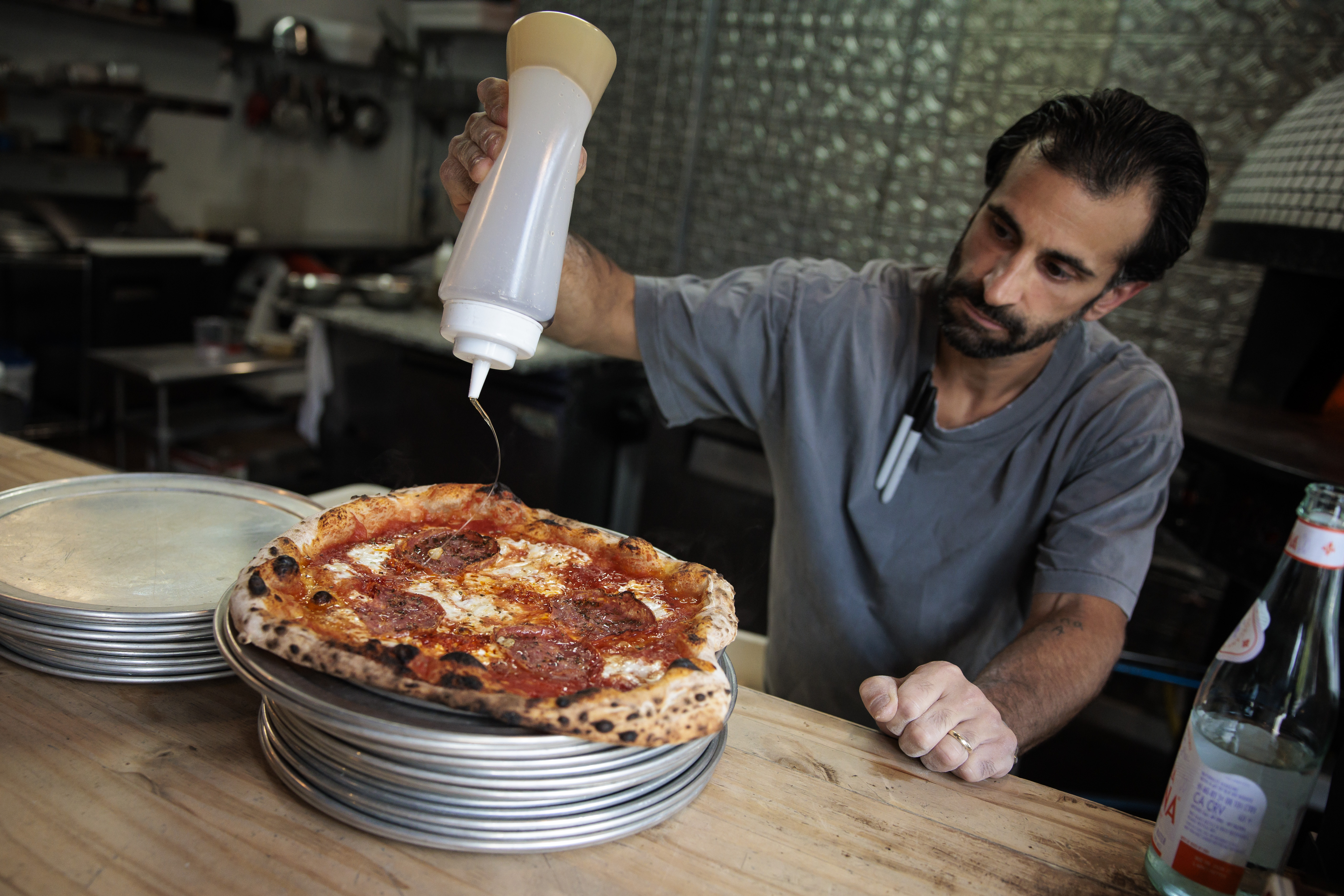
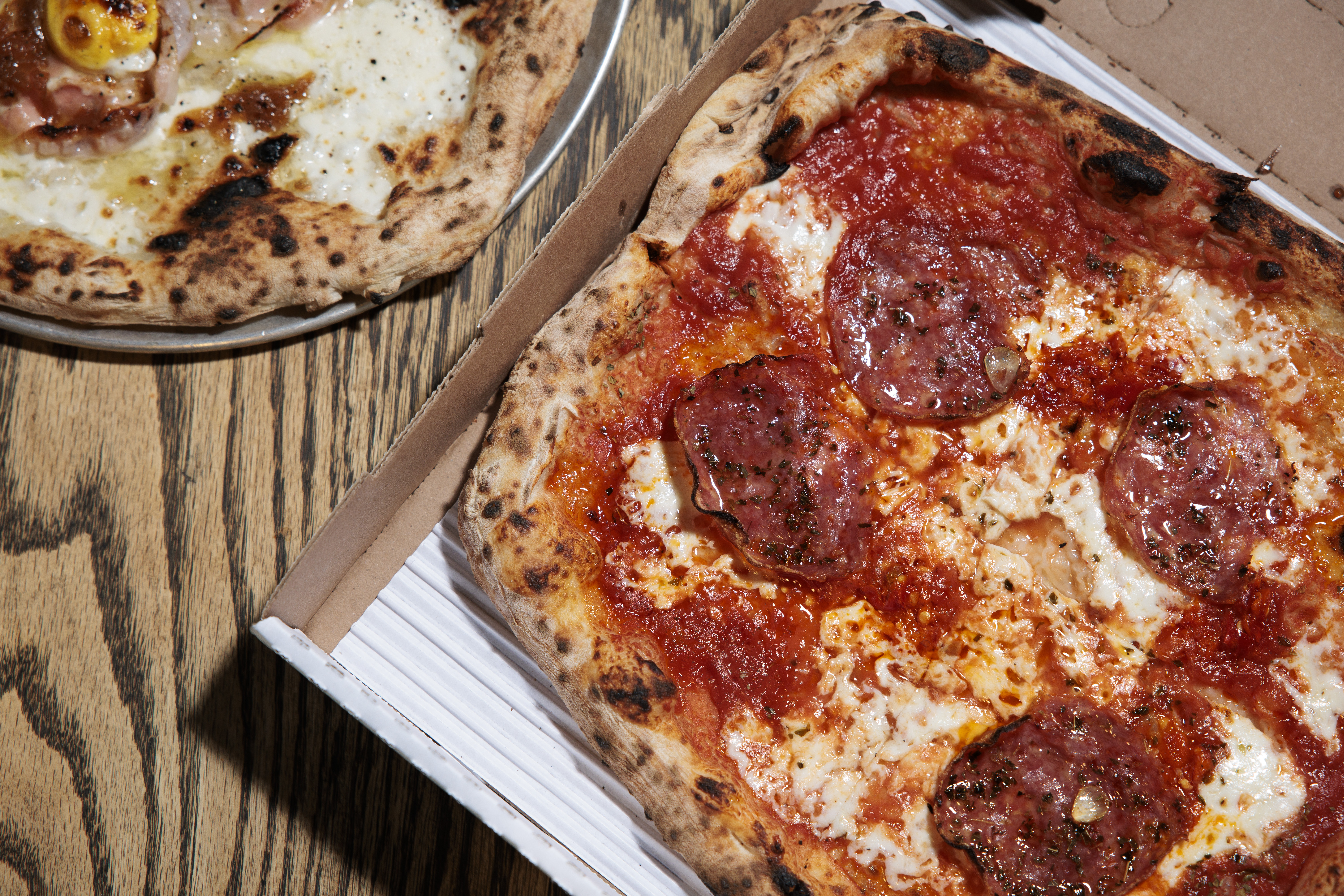
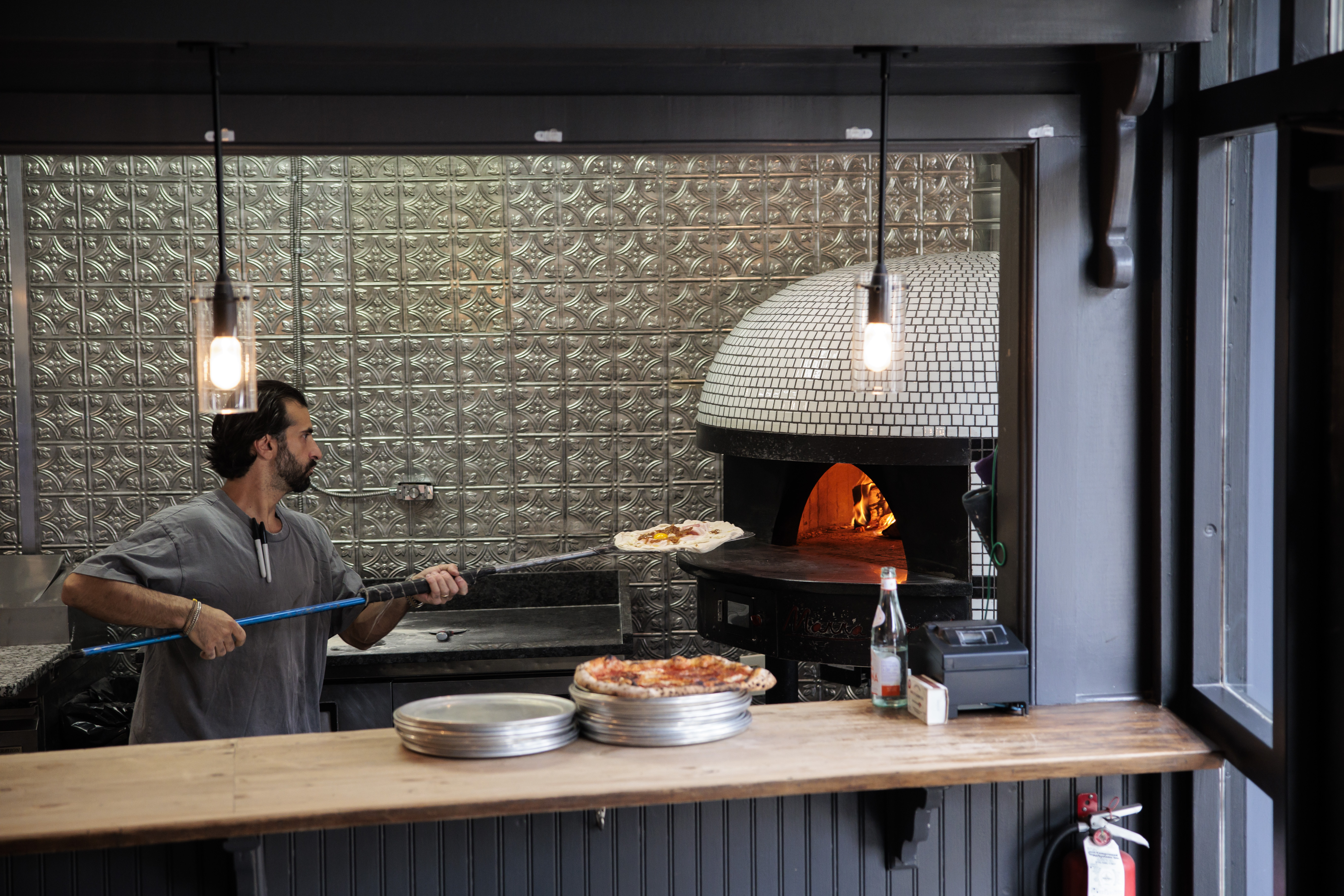
Roberto Carollo makes the Carbonara pizza at Spuntino on Monday, Aug. 31, 2026 in Doylestown, Pa.Monica Herndon / Staff Photographer
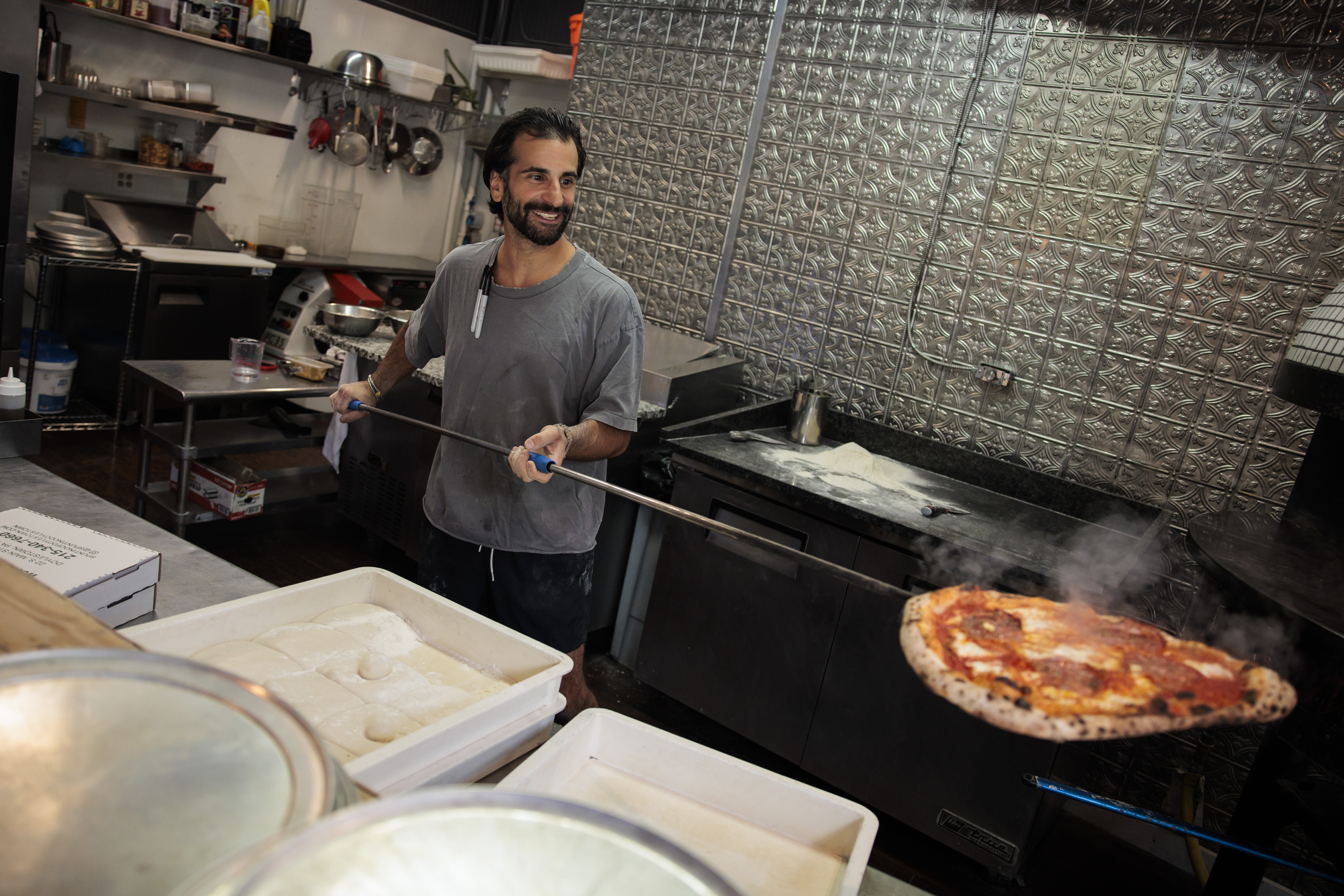
But Spuntino’s puffy, leopard-spotted pies are worth a trek from wherever you may be. Thin, chewy, and judiciously loaded, the pizzas are best eaten then and there, at one of the several tables Spuntino claims inside the market. (Takeout — and leftovers — are perfectly satisfying, too.)
Carollo opened Spuntino in Doylestown in 2014 with his brother Salvatore. (They also had a Northern Liberties location from 2015 to 2023. Carollo is now Spuntino’s sole owner.) The brothers are fourth-generation pizza makers, dating back to their Sicilian great-grandfather’s bakery days. They had grown up working in their father’s Philly-area neighborhood pizzerias — “your big 16-inch pies, hoagies, sandwiches,” Carollo said — but they hadn’t made Neapolitan pies before, and they had no experience with wood-fired ovens.
“We kind of just were going in on a prayer,” Carollo said. They had their work cut out for them with this exacting style of pizza. At Spuntino, a 250-gram ball of 48- to 72-hour fermented dough is stretched into a millimeters-thin 11-inch round, then covered with sauce, cheese, and toppings before being pitched into afiery 900-degree oven, where it cooks in about 90 seconds. The pizzaiolo needs to have an eagle eye. “Five or six seconds too long, and the pizza’s burned,” Carollo said.
Roberto Carollo pulls a Ronzio pizza from the oven at Spuntino on Monday, Aug. 31, 2026 in Doylestown, Pa.Monica Herndon / Staff Photographer
Evidently, his prayers were heard: Inquirer critic Craig LaBan named Spuntino among the suburbs’ best pizzas in 2017. Carollo said his chops have only gotten sharper since. “[The pizza] is so much better, and I think that’s natural, that’s normal. Anybody who has any profession — a major athlete — when they start at 18, they’re not as good, hopefully, as they are when they’re 25.”
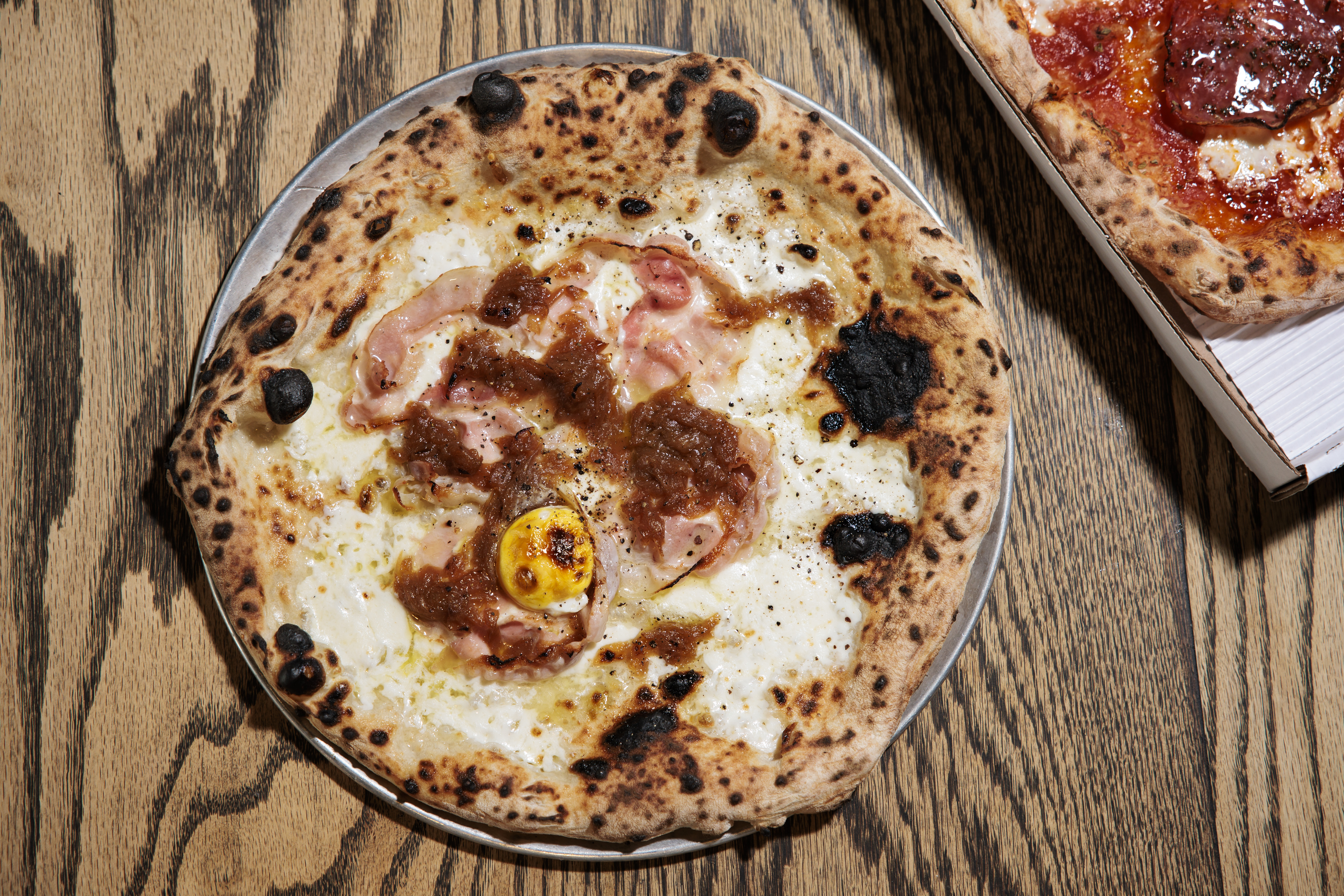
It’s hard to choose among the 23-pie menu, but Carollo always recommends setting a baseline with a Regina, with milled San Marzano tomatoes, Lioni buffalo mozzarella, fresh basil, and salty pecorino Romano. My family scarfed one of those down, but our favorites were the Ronzio — with the same tomatoes and mozzarella, plus thin-sliced soppressata, shaved garlic, Sicilian oregano, mild Calabrian chilies, and a drizzle of honey — and the Carbonara, a white pie with pancetta, caramelized onions, fresh mozz, pecorino, and an egg yolk that’s finished with black pepper and olive oil.
The Carbonara and Ronzio pizzas at Spuntino on Monday, Aug. 31, 2026 in Doylestown, Pa.Monica Herndon / Staff Photographer
We’ll be back for what Carollo considers his most underrated pizza — the Tonno, a red pie with Sicilian tuna and red onion — plus another spin through his fellow vendors in the family-friendly Main Street Marketplace, including Hops/Scotch and the Department of Note stationary store and boutique. Carollo makes a very good point, and Spuntino is proof: “There are a lot of places out in the suburbs that are making such amazing pizza.”
Spuntino, 22 S. Main St., Doylestown, 215-340-7660, spuntinowoodfiredpizzeria.com
When Michael Ham first began handing out samples of his company’s tea to Whole Foods shoppers in 2024, explaining that it was grown using regenerative farming on South Korea’s Jeju Island, he was often met with blank stares.
That didn’t last long. By the following year, “People were coming up saying, ‘Oh, you’re regenerative!’” says the co-founder and president of Westchester, N.Y.-based Wild Orchard Tea Co.
Regenerative agriculture, an approach to farming that aims to improve soil health through practices like reduced use of pesticides and plowing, is having a moment. Championed by the Make America Healthy Again (MAHA) movement and propelled by increasingly health-conscious consumers, regenerative products now generate some $2 billion a year in retail sales, and some in the industry are positioning the fast-growing category as the next organic.
Big food producers and retailers like Nestlé SA, PepsiCo Inc., General Mills Inc., and Walmart Inc. have made regenerative agriculture commitments, often as part ofenvironmental, social, and governance goals. And late last year agencies including the U.S. Department of Agriculture announced a $700 million pilot program to support regenerative agriculture projects on farms.
But unlike organic, regenerative agriculture is only lightly regulated at the federal level in the U.S. To earn U.S. Department of Agriculture organic certification, producers must comply with detailed federal standards, including strict rules about synthetic pesticides and fertilizers, and undergo annual inspections. There’s no such equivalent for regenerative agriculture, and many products can be labeled as regenerative without having to verify their claims.
With the boom have come increasingly pressing questions from within and outside of the industry about what the label actually means and concerns from advocates about consumers being misled, especially because regenerative products tend to be more expensive.
Nora Brown, a 47-year-old who works in international development in Washington, D.C., buys regenerative products when they’re available. She sees them as healthier for the environment and herself, especially since recovering from breast cancer.
But “I do have a fear of, we just love to label stuff for marketing. There’s pink washing, there’s greenwashing,” she said. “And I hope it doesn’t go the way of that.”
Certifying organizations like Regenerative Organic Certified (ROC) aim to bring more rigor to the space. Last year, dollar sales of ROC-labeled products grew faster than those labeled certified organic, fair trade, and non-GMO, according to the data provider SPINS. But across the broader landscape, regenerative agriculture standards can vary widely, differences that are not always evident to shoppers. As more of them encounter the label at grocery stores, experts worry that this variability could undermine the growing category.
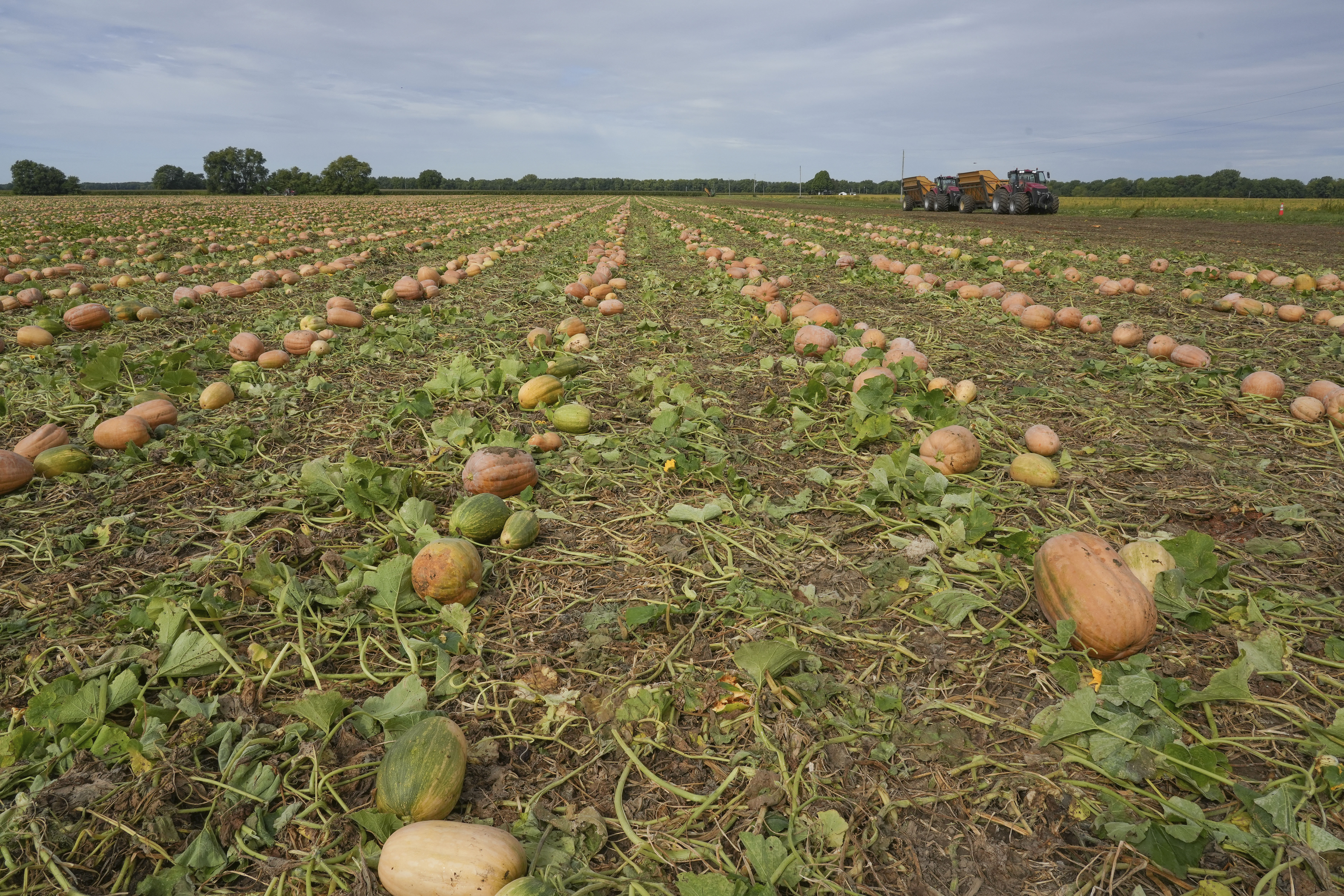
The term regenerative agriculture dates back to at least the 1980s, but it didn’t pick up steam until the 2010s. Backed in the early days by organic farming advocates, regenerative agriculture may also cut down or eliminate synthetic fertilizers and pesticides, but puts a sharper focus on soil health and biodiversity. Proponents say in some ways it’s a return to old-school practices, including rotating crops and using plants like hedgerows as a living fence around fields.
Advocates “started to use the term, ‘We’re regenerating our landscapes, we’re regenerating our farms, regenerating the ecosystem,’” said Gabe Brown, a retired farmer sometimes credited as the movement’s godfather, who co-founded and serves as a board member of a certification program called Regenified. “And now you hear the word regenerative everywhere. Before, the buzzword was sustainability.”
The term’s appeal has been rapidly expanding. With products from baby food to snacks, bath care, and pet food bearing the label, the regenerative agriculture category saw in-store retail dollar sales grow 10% over the last year and nearly 22% the year before, according to NielsenIQ data. Dairy is the largest category by dollar sales, and some of the fastest growth has been in regeneratively grown produce.
Advocates for regenerative agriculture say that it’s healthier for the planet and people. Among the environmental benefits they cite is that by deploying practices like no-till farming, which avoids plowing the land, and planting cover crops between growing seasons, farm soil can store more carbon. Other regenerative farming techniques include moving grazing animals around pasture to let the remaining portions recover, and planting trees and shrubs on working agricultural land next to crops or livestock. Experts, however, say that the climate change benefits may have been oversold.
A rancher opens up a new section of tall grass for his cattle to graze in Lufkin, Texas, in 2023. Moving grazing animals around pasture lets the remaining portions recover.David Goldman
The term regenerative has also been embraced by MAHA advocates, including Health and Human Services Secretary Robert Kennedy, Calley Means — an adviser to Kennedy — and Kelly Ryerson, who goes by the moniker “The Glyphosate Girl,” a reference to a widely-used herbicide that many in MAHA want to restrict.
“There was so much press that went around vaccines, but actually this is just as, if not more core to the issues that we really care about,” said Ryerson, who is co-executive director of the advocacy group American Regeneration.
MAHA supporters say food grown using regenerative agriculture has more nutrients and fewer chemicals and is therefore healthier, but those claims are challenging to evaluate, scientists say, including because regenerative practices aren’t applied evenly across farms.
Even as the U.S. government pushes to facilitate such practices, there is still little regulation for products bearing regenerative claims. Where federal oversight does exist, it remains limited: Meat and poultry sellers making claims like “raised using regenerative agriculture practices” have to submit documentation to the USDA’s Food Safety and Inspection Service, but critics note that it’s an honor system and third-party certification is recommended but not required.
The new federal pilot program, meanwhile, will offer technical assistance and financial support to implement regenerative practices and requires participants to test soil to track changes over time, but it does not include certification.
Some retailers are requiring certification or other proof for regenerative claims. Whole Foods, for example, has had such a policy in place since 2021, and so does the Seattle-based PCC Community Markets.
But even third-party certification programs vary widely in terms of what they measure, according to reports released this year by the European Alliance for Regenerative Agriculture and Friends of the Earth.
The Environmental Working Group, a health and agriculture-focused nonprofit, has warned consumers of “misleading” regenerative claims. While some labels, including ROC, indicate that food has been grown without synthetic fertilizers and pesticides and require farm audits, other certifications allow continued use of synthetic chemicals, don’t require audits, and don’t publicly disclose soil test results, the nonprofit said.
“Our biggest concern is that all of the momentum and buy-in and enthusiasm that’s been built around the term regenerative agriculture over the past number of years is frittered away because of greenwashing,” said Adam Kotin, managing director of the Soil & Climate Initiative, which offers its own certification.
For makers of these products, the biggest barrier might be their higher price tags and consumers’ lack of exposure.
Regenerative farming is still more expensive than conventional agriculture, with higher upfront costs, greater labor needs, and a lack of scale. And because grocers try to reach as many shoppers as possible, a pricey, regeneratively grown olive oil is unlikely to be the first or even the second one on the shelf.
At online grocer Thrive Market, for example, regenerative products such as coffee beans, coconut oil, muffin mix, and cans of sparkling green tea make up just 5% of the membership-only online platform’s offerings, and customers are 20 times more likely to filter for organic products than regenerative ones, said April Lane, chief merchandising officer.
“We’re starting to see more and more brands come out with regenerative options,” she said. “But it’s still much, much smaller than organic or non-GMO certifications or gluten-free.”
Though awareness of regenerative agriculture roughly doubled between 2023 and 2024, only 10% of U.S. consumers are actively seeking out such products, estimates Kristine Root, chief executive officer of Socha Branding, a strategy and growth marketing agency that works with natural, organic, and regenerative brands.
To expand that share, companies have to do more than just slap the word regenerative on the package, she said.
“It takes more than just putting a seal on the pack to get the support of a consumer,” Root said. Shoppers “will pay more if they understand the story behind it. But you have to do the work.”