Category: Education

  • Dolly Parton’s program provides free books for children in Philly region

    Dolly Parton’s program provides free books for children in Philly region

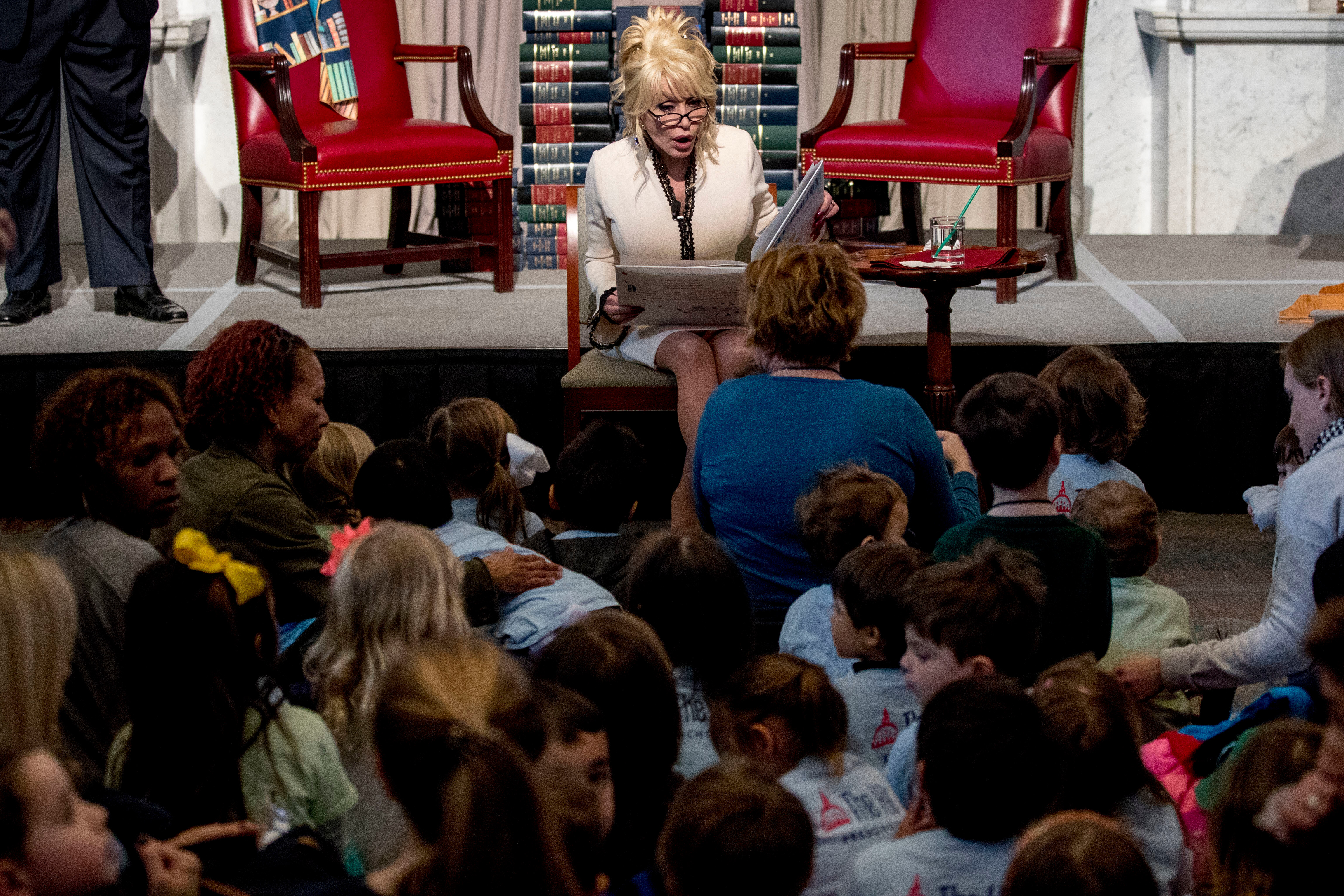
    Dolly Parton’s literacy program, Imagination Library, has provided nearly 800 children with free monthly books mailed to their homes in West Philadelphia.

    In Montgomery County, around 3,500 children have been served in the Norristown and Pottstown areas since 2023, thanks to Parton’s program.

    With the news of Parton’s death on Tuesday, there was sadness among the affiliates of her global effort to promote a love of reading among children, but they expected to continue the program and hopefully expand it in Pennsylvania.

    “We don’t anticipate any changes to the program,” said Jennifer Leith, executive director of the West Philadelphia Alliance for Children (WePAC).

    Imagination Library, which Parton started in 1995 in Tennessee, provides deeply discounted books that are mailed each month to any child in a given zip code whose parent or guardian applies to participate. Governments and nonprofits provide funding to cover the remaining costs of the program, which is available for children from birth to age 5.

    The Dollywood Foundation said in a recent fact sheet that it has delivered more than 300 million books to children in the United States, Canada, the United Kingdom, Australia, and Ireland.

    WePAC started with one zip code, 19104, in July 2024, then expanded to include four more zip codes in July 2025, Leith said.

    “In that time, literally thousands of books have been delivered to West Philadelphia children,” Leith said.

    “Anyone from any income level, from any background, can participate,” said Eliza Brumbaugh, executive director of the Literacy Council of Norristown, which helps to run the program, with assistance from the Justamere Foundation, in Montgomery County.

    Brumbaugh and others would like to see the program expanded statewide in Pennsylvania, similar to what has been done in Delaware.

    Dolly Parton performed at the Wilmington Public Library in Wilmington in 2022.JOSÉ F. MORENO / Staff Photographer

    Lawmakers have proposed legislation in Pennsylvania’s Senate and House to establish a statewide program similar to the Imagination Library.

    Leith said “it would be great” if Mayor Cherelle L. Parker or Gov. Josh Shapiro “decided to do this in honor of Dolly Parton’s legacy.”

    In Delaware County, The Community’s Foundation has provided books from the Imagination Library program to more than 140 children in Eddystone since 2024, said Dierdre Woody Konar, president of the nonprofit.

    “The Dolly Parton Imagination Library has shared with TCF and their other partners that they have prepared carefully for this day and for the future of the Imagination Library,” Konar said in an email Wednesday morning.

    “TCF is incredibly sad to hear of Dolly’s passing, and we look forward to continuing this important work,” Konar said.

    Foundations Inc., a national education nonprofit based in Mount Laurel, ran the first Imagination Library program in Philadelphia for five years, helping to provide books to children in North Philly’s 19133 zip code.

    “It was pretty much a book desert,” Casey Jones, executive director of marketing and communications for Foundations, said of the zip code before the program started.

    Through Parton’s program, Foundations was able to deliver around 27,000 books to children in that one zip code until the five-year commitment was completed at the end of 2025, said Rhonda H. Lauer, CEO and president of Foundations.

    Lauer met Parton when Foundations gave the legendary performer and philanthropist its 2020 “Champion of Children” award.

    “We went to Dollywood to present it to her in person,” Lauer recalled, saying she had several in-depth conversations with Parton about life and family and the program.

    In the end, Lauer said, “all she cared about was getting books in the hands of children.”

    People take phone photos as Dolly Parton performed at the Wilmington Public Library, in 2022. She promoted her Imagination Library, a free book gifting program for children.JOSÉ F. MORENO / Staff Photographer
  • Why colleges are cutting Black studies departments, majors, and classes

    Why colleges are cutting Black studies departments, majors, and classes

    U.S. colleges are increasingly slashing their African American studies and related programs, citing low enrollment and limited funding, at a time when the federal government is exerting intense pressure to end racial diversity efforts.

    Some academics blame politics, pointing out that Republicans and the Trump administration have taken aim at scholarships, admissions policies, and other efforts to boost diversity. At least a dozen schools, including private colleges and public flagship universities, have scaled back Black, African, or African American studies programs since Trump signed an executive order targeting diversity, equity, and inclusion programs, a Washington Post review found.

    “Politics is the engine, not a factor,” said Jafari Sinclaire Allen, director of the Institute for Research in African American Studies at Columbia University.

    Allen, whose institute has surveyed colleagues around the country, says the cuts are so deep that they could damage the pipeline for important research and training for new scholars for years to come.

    “They are not cutting at the fringe,” said Allen, who is also a professor of African American and African diaspora studies at Columbia. “They are striking the foundations.”

    Universities that have closed or merged African American studies units over the past two years include the University of Iowa, the University of Texas at Austin, and the University of Kansas.

    Others have eliminated or begun phasing out majors and degrees, including Kennesaw State University, the University of Toledo, and Indiana University at Bloomington. Several colleges have also trimmed classes, removed them from the core curriculum, or cut staff.

    Enrollment in the programs has been falling in recent years, data shows.

    For three straight years, students received fewer than 700 degrees in African American studies nationally, the lowest level in the last two decades, according to an analysis of federal data through 2025 by a researcher at the American Academy of Arts & Sciences. That’s despite the fact that the number of schools offering degree programs has gradually risen during the same span.

    “It is quite puzzling,” said Robert Townsend, director of humanities, arts, and culture programs at the academy, an honorary society and policy research center.

    Low enrollment has made the programs a target for cuts at some schools.

    Take the University of North Texas (UNT), which projected a $45 million shortfall for the fiscal year ending this month. The university blamed falling enrollment, especially among international graduate students, and cuts in state funding for instruction and operations.

    “UNT is facing a significant budget challenge,” the school said on its website.

    To help balance the budget, the school said it would close or consolidate a long list of programs, including undergraduate minors in Africana studies, Asian studies, Mexican American studies, LGBTQ studies, women’s and gender studies, and degrees related to linguistics.

    Some states have passed laws requiring schools to review and cull programs that yield few degrees. For instance, the University of Toledo cited such a law in Ohio when it suspended admissions to its bachelor’s program in Africana studies last year.

    And the University of Iowa noted that there were only nine students in the bachelor’s program for African American studies when it decided to eliminate the major. It also closed its African American studies program.

    But department chairs point out that the cuts are coming at a time when some states have also passed laws restricting courses focused on race or ethnicity.

    For instance, a Florida law enacted in 2023 bars core general education classes — select courses required for graduation — from teaching “identity politics.” A North Carolina law passed this year generally bars public universities from requiring courses “related to divisive concepts” involving race or gender. And Texas A&M canceled eight courses, citing new policies governing race and gender instruction. The canceled courses included “Introduction to Race and Ethnicity” and several courses focused on diversity.

    On the federal level, the Trump administration has attacked diversity, equity, and inclusion programs, arguing that they amount to race discrimination that violates civil rights laws. As part of the anti-DEI effort, the administration blocked many research grants related to race.

    The Education Department did not respond to a request for comment on the cuts to African American studies programs.

    Erica R. Edwards, chairperson of Black studies at Yale University, said such programs have become a target because “the field is unapologetic in its critiques of fascism, antiblackness, sexism and antitransness, and anti-immigration.”

    “Given the concerted attempts of our current administration and its allies to suppress history and silence truth, it comes as no surprise that Black Studies programs are facing challenges from the inside — cuts, intense scrutiny, censorship, and consolidation — as well as attacks from the outside,” Edwards wrote in an email to the Post.

    Some say the cuts are part of a broader ideological attack on the humanities.

    “Although conservative attacks on the humanities have recurred periodically over the past several decades, the present moment is markedly different in scale and coordination,” said the executive committee for the American Studies Association, a scholarly organization, in a recent public statement.

    Neetu Arnold, a policy analyst for the conservative Manhattan Institute, said the cuts are probably driven by low enrollment rather than politics. Still, Arnold said she believes that Black and African American studies departments have blurred the line between scholarship and advocacy.

    “It’s hypocritical for department chairs to deride the cuts as political when they’re the ones who have allowed their departments to become highly politicized hotbeds of scholar-activism,” Arnold said.

    To be sure, some cuts may be temporary. The University of Louisville in Kentucky paused admissions to three graduate programs, including its Pan-African studies Ph.D., because of tight funding. But a spokesperson said it is likely that admissions will reopen when more funding is available.

    And some universities said they are continuing to offer classes and fund research in the field, despite consolidation and other administrative cuts.

    Consider Northwestern University in Illinois. The school recently decided to move its African studies program from its research office to its provost’s office and eliminate two positions that supported the program. The move received national attention in part because the university says the program, founded in 1948, is the oldest of its kind in the United States.

    Despite the changes, a Northwestern spokesperson said the program will continue to conduct research, offer a certificate for graduate students, and sponsor both a major and minor for undergraduates.

    “None of that is changing — it will all continue,” said spokesperson Jon Yates. “To be clear: The program is not being downgraded.”

    Still, more cuts could be coming to African or African American studies programs across the country.

    For instance, the University of Georgia said it is evaluating whether to drop low-enrollment programs as part of a regular review.

    That includes its African American studies major.
  • A Rutgers University dean of research was charged with invasion of privacy

    A Rutgers University dean of research was charged with invasion of privacy

    A Rutgers University dean of research has been charged with invasion of privacy, the New Jersey attorney general announced Wednesday.

    Joshua Kohut, 51, who serves as the dean of research at the School of Environmental and Biological Sciences, is accused of using his mobile phone to record “upskirt” videos of people without their knowledge while working at the university, Attorney General Jennifer Davenport said. Davenport did not say how many victims there were, or whether they were students or coworkers.

    “An invasion of privacy like this is not just disturbing, it is also a criminal act. We will prosecute accordingly,” Davenport said.

    The attorney general’s office received a complaint regarding Kohut on June 14. He was observed on multiple occasions using his cell phone to record a person’s intimate parts underneath “her skirt,” according to the Office of Attorney General.

    A search warrant was executed Monday, and authorities seized five of Kohut’s devices. During a forensic review, one of the seized devices was found to contain “upskirt” videos of another person’s undergarments and “intimate parts,” according to the attorney general. Prosecutors did not disclose where the warrant was executed, how many videos were discovered, or over what time period they filmed.

    A Rutgers spokesperson said Kohut was banned from campus pending the outcome of the investigation, and the university placed him on administrative leave “after being informed of the extremely disturbing charges.”

    Kohut is facing a charge of fourth-degree invasion of privacy, which carries a prison sentence of up to 18 months and a fine of up to $10,000.

  • Lincoln University just sued Lower Oxford Township in federal court over event rules it says are unconstitutional and racially discriminatory

    Lincoln University just sued Lower Oxford Township in federal court over event rules it says are unconstitutional and racially discriminatory

    An event ordinance passed earlier this month by Lower Oxford Township unfairly targets Lincoln University and is unconstitutional and racially discriminatory, the historically Black school said in a federal lawsuit filed Tuesday.

    “The ordinance’s disparate negative impact on the Lincoln University community is the result of deliberate racial gerrymandering — or other illicit gerrymandering — by the Defendants,” the school’s lawyers argued in the complaint, filed in the U.S. District Court for the Eastern District.

    The suit notes that the township’s three supervisors are white and that the population of the township nestled in farm fields with about 5,000 residents is “overwhelmingly white” except for Lincoln’s community.

    The ordinance seeks to regulate events with more than 500 people, requires a permitting process, allows the township to revoke permits without a hearing for a violation, and threatens to prohibit an entity from applying for another permit for two years if a violation occurs. In the permit request, applicants will be asked to address security, parking and traffic impact, number of attendees, planned activities, and other elements. Violations will result in fines of up to $1,000, the ordinance states.

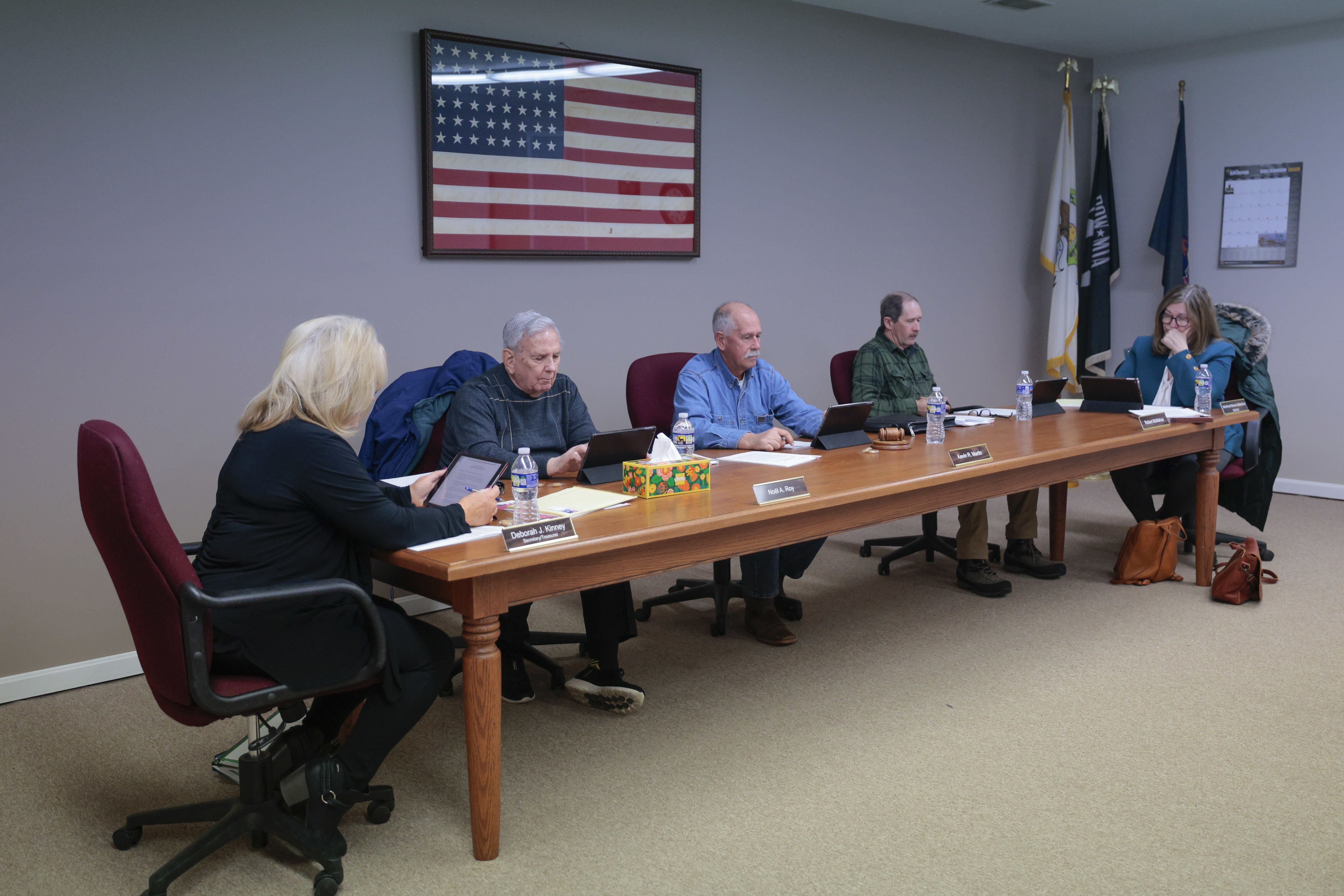
    Lower Oxford Township supervisors meet and discuss a potential event ordinance to address problems with large events held on Lincoln University’s campus, Monday, Dec. 8, 2025.Steven M. Falk / For The Inquirer

    The rural Chester County township began looking at enacting the ordinance following the shooting last October of seven people, one of whom died, on Lincoln’s campus during homecoming festivities. Township officials also had cited ongoing concerns about traffic, trash on neighbors’ lawns, and other disturbances, including crimes, during large events on the 422-acre campus, where 1,650 students are enrolled. The township previously had passed a parking ordinance in response to access issues created during large events at Lincoln.

    Deborah Kinney, township secretary/treasurer and codes enforcement officer, said Tuesday she had not been aware of the lawsuit until The Inquirer called. She declined immediate comment.

    Lincoln president Brenda A. Allen said the university is seeking to stop the township from depriving members of its community of their First Amendment rights to free speech, freedom of assembly, and freedom of religion. The ordinance, she said, is attempting to restrict the university from events that are essential to its academic mission.

    “Lower Oxford Township’s ordinance is a targeted, unconstitutional overreach that threatens the hallowed traditions ingrained in the university’s foundation,” Allen said in a statement Tuesday. “Lincoln University will remain on the front lines of protecting, defending, and advancing our community as we take this matter seriously.”

    In its ordinance, the township states that “activities associated with special events can constitute a hazard to the public’s health, safety and welfare and that these activities can also create a public nuisance when unregulated.”

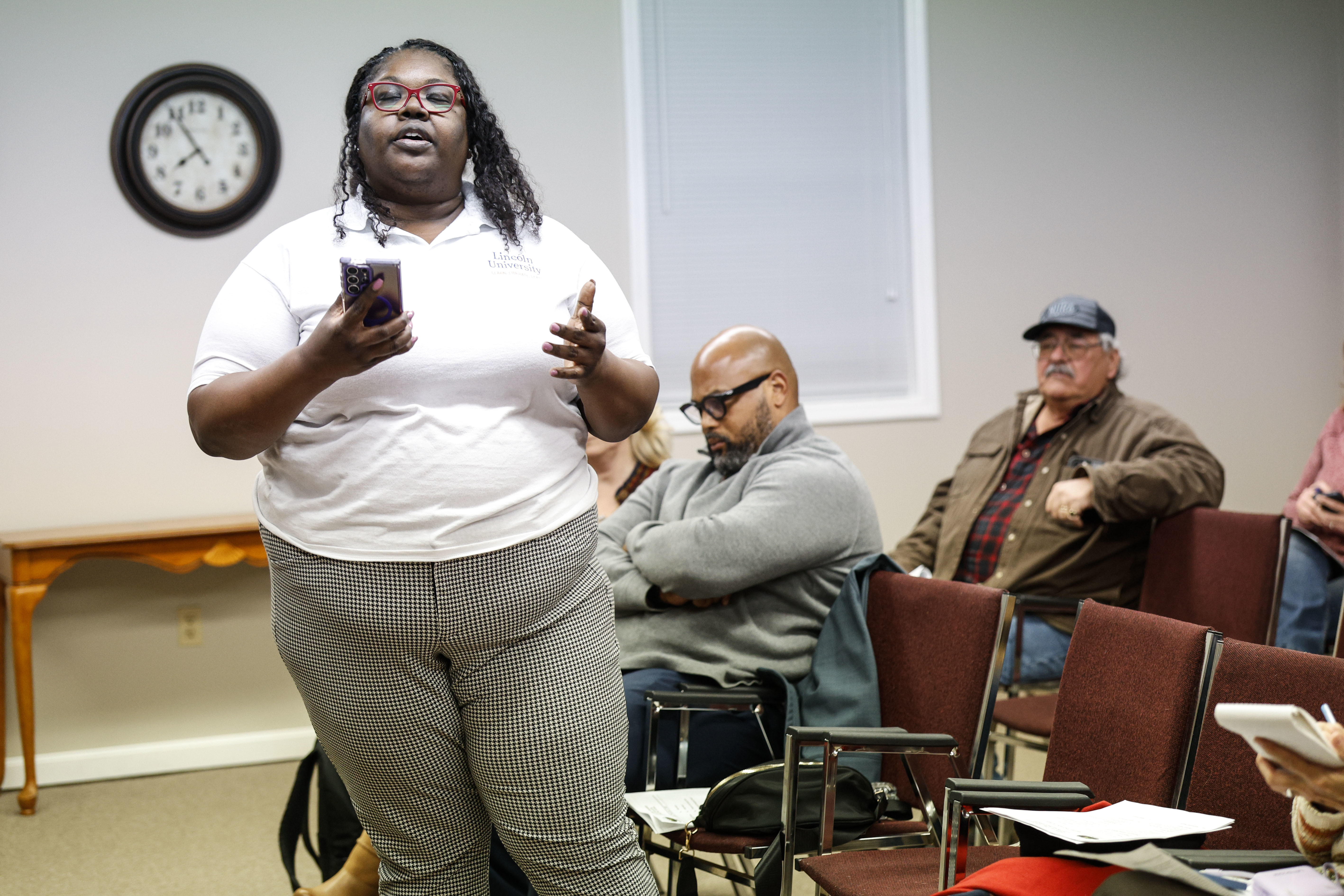
    Venus Boston, Lincoln general counsel, speaks to the Lower Oxford Township supervisors in December 2025 as they discuss a potential event ordinance to address issues with large events held on Lincoln University’s campus, Monday, Dec. 8, 2025.Steven M. Falk / For The Inquirer

    The township’s supervisors, the ordinance states, have “determined that the impact of special events that involve large numbers of attendees on roads and other infrastructure within the Township represents both a traffic hazard and an impediment to the delivery of emergency services to residents of the Township and therefore constitutes a nuisance.”

    The shootings that spurred the township to begin considering an ordinance occurred Oct. 25, when thousands gathered on campus for Lincoln’s homecoming. Emergency personnel had to use all-terrain vehicles to transport patients on stretchers because ambulances could not access the campus, given how many cars were parked around the venue, township officials said at the time.

    Investigators are on the scene outside Lincoln University’s International Cultural Center Sunday, Oct. 26, 2025, where one person was killed and several others were shot the night before during homecoming weekend celebrations.Tom Gralish / Staff Photographer

    While the ordinance applies to other township events, the school’s lawyers argue that it targets Lincoln and specifically names examples of special events subject to regulation as “College homecoming or other similar events, college, university or school commencement, graduation or baccalaureate.”

    “It was enacted by the township with the deliberate purpose and with the calculated effect of targeting Lincoln,” the school’s lawyers argued. “Specifically, the ordinance was enacted to interfere with Lincoln’s academic mission and with the speech and other academic activities of the Individual Plaintiffs and their academic colleagues.”

    The ordinance targets events with over 500 people “with the knowledge that the Lincoln University community is at all times several times in excess of that threshold” and “with the knowledge that very few — if any — of the events outside of Lincoln would exceed that threshold,” the lawyers said.

    The ordinance, the school’s lawyers argued, violates Lincoln’s constitutional rights by imposing restrictions on its speech and “its ability to serve as a marketplace of ideas.” The ordinance also violates the First Amendment right to assembly because it treats events of more than 500 people as a nuisance, the lawyers said. And the lawyers said it infringes on religious freedom by naming baccalaureates, which they said “in general — and baccalaureates at Lincoln in particular — are religious services.”

    They objected, too, that the township has sole discretion over whether an event is subject to the ordinance and over whether it should be permitted, and that no objective standards exist. And they disputed the township’s intention to require event holders to have liability insurance subject to approval by the township solicitor.

    “The ordinance also makes the sponsor of a special event liable for actions of people over whom it has no control,” the school’s lawyers argued.

    The ordinance states that the sponsor “shall be responsible to the township for damages sustained to township property caused by participants in the special event.”

    Founded in 1854, Lincoln is known as the first degree-granting historically Black university in the nation. The first presidents of both Nigeria and Ghana are Lincoln graduates, as are Philadelphia Mayor Cherelle L. Parker, former U.S. Supreme Court Justice Thurgood Marshall, and poet Langston Hughes.

    The school has received $45 million in gifts from philanthropist MacKenzie Scott, the ex-wife of Jeff Bezos. Allen, Lincoln’s president, who in 2020 had survived an internal battle to oust her and had her contract extended to 2030, was named a top leader of a historically Black college by a national nonprofit in 2021.

    Township officials had been expressing concerns about events at Lincoln for a while before the homecoming shootings brought renewed attention.

    In spring 2023, two women were shot and injured on Lincoln’s campus during its annual Spring Fling event. In 2022, a student was fatally stabbed by the sister of a student during a fight inside a dorm. During an on-campus dance in 2018, 15 students were taken to the hospital following a brawl in which a security officer was assaulted. In 2016, there was a robbery and shooting on Lincoln’s campus following homecoming. And in 2015, Lincoln tightened security after shots were fired in a dorm.

    At the homecoming last October, Ju’Juan Jeffers, 20, of Wilmington, was killed, and six others, ages 20 to 25, including a student, were also shot. Jeffers’ mother subsequently filed a lawsuit against the school, and three Wilmington men — William Sells, 20; Makaveli Valera, 19; and Karon Rollins, 17 — were charged with second-degree murder, conspiracy, and related crimes in connection with the shootings.

    “We have had meetings with people at Lincoln,” Township Supervisor Noel Roy said last December. “They’ve been somewhat reluctant to do what needs to be done to try and control the situation.”

    Allen at that time acknowledged that changes were needed around large events as well as better collaboration with the township.

    “We want to come together because we are a part of this community as well,” Venus Boston, Lincoln’s general counsel, said during a supervisors meeting last December.

    Before its Spring Fling in April, the university announced new safety plans for large events, including no outdoor events after dusk, screening guests, and allowing only one registered guest per student.

  • Paying parents to become influencers and other priorities for Philly schools superintendent in 2026-27

    Paying parents to become influencers and other priorities for Philly schools superintendent in 2026-27

    Philadelphia Superintendent Tony B. Watlington Sr. zigzagged the city Monday, visiting seven schools across the city to start the 2026-27 year.

    The late-summer weather was perfect, sunny but not sweltering — an important factor in a school system laden with old buildings, where extreme heat sometimes means about a quarter of the district’s 113,000-plus students cannot learn in person or at all,

    Watlington is hoping that the back-to-school weather was an omen.

    “The way we start is going to be the way that we roll, and the way we finished last year,” the superintendent said. “We started off really well.”

    Watlington sat down with The Inquirer on Tuesday to preview the 2026-27 school year. Here are five things to know from the conversation.

    Priorities for this school year

    Three priorities will drive his administration this year, Watlington said: academics, customer service, and family engagement.

    Though new data are not yet available, Watlington is leaning hard on a study released earlier this year that found Philadelphia School District students’ post-pandemic learning is tops among large urban school systems, according to research out of Harvard and Stanford Universities.

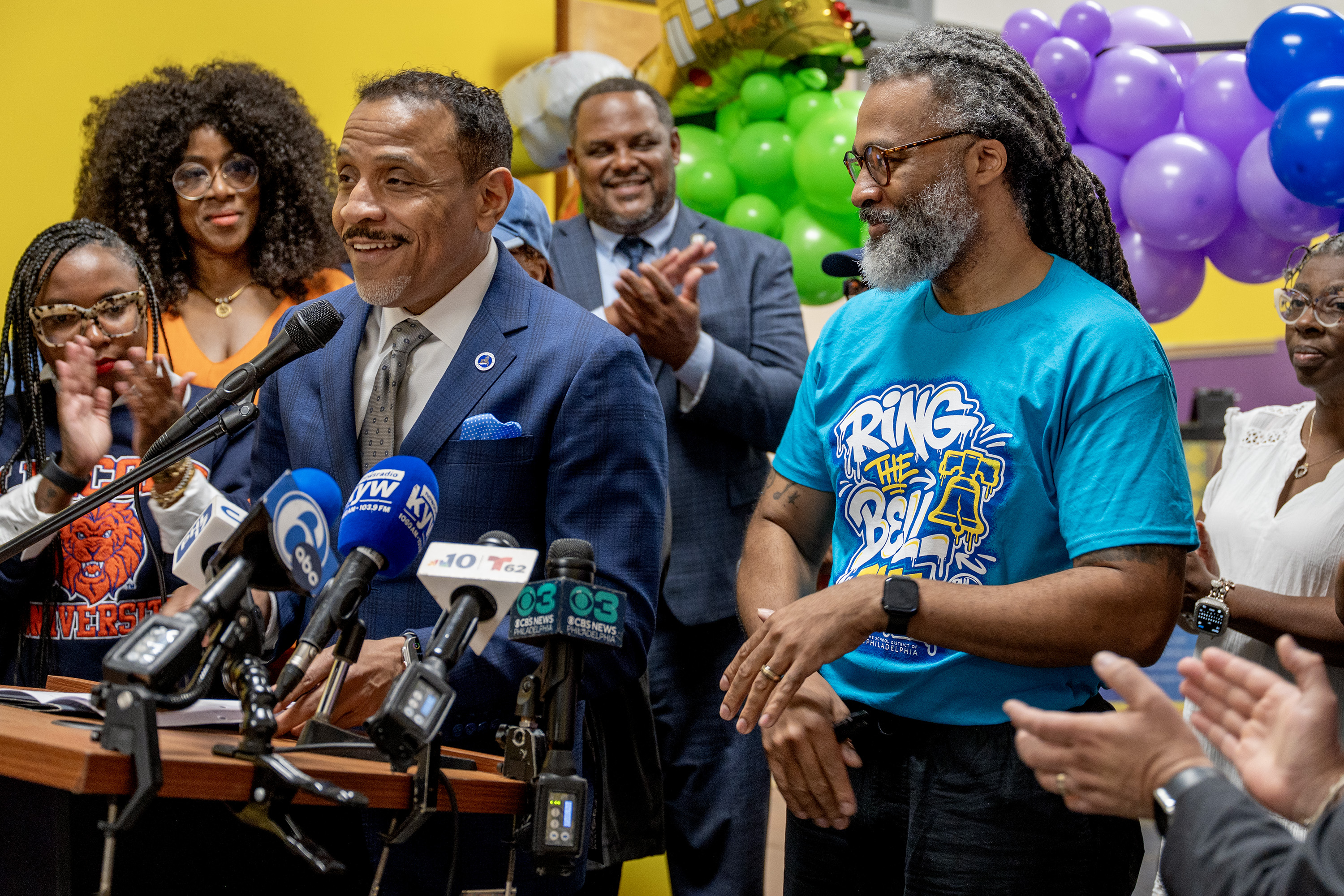
    Superintendent Tony B. Watlington Sr. (left) and district board president Reginald L. Streater (right) hold a press conference at McClure Elementary Monday, Aug. 24, 2026 on the first day of school in the Philadelphia School District. Behind them in center is Carlton Williams, just a week into his job as the City’s Philadelphia’s Managing Director (he started Aug. 17)Tom Gralish / Staff Photographer

    “We want people to stop and digest that for a moment,” Watlington said. “Because people will say, ‘Well, are the scores still too low?’ I’d say absolutely, yes, we’ve got a lot of work to do and it’s not acceptable that two out of three kids don’t read or perform on grade level in math, but we’re getting better faster than the 25 largest school districts, and that’s our goal to be the fastest-improving, so we’re well on our way,” Watlington said.

    “We believe it’s important for us to work with parents as equal partners because they are our children’s first teachers, and when we support our parents and families, our kids just do better in school,” he said.

    Some parents will be paid to help schools improve

    Watlington said this is the year the district will begin paying some parents to help schools reach their goals. He announced a plan to do so in 2023, when he first laid out his strategic plan, but this year it is finally happening.

    The Parent and Community Ambassador Program will provide small stipends to “key community members and parents who just have a level of influence and cachet that no teacher, principal, counselor, police officer, or superintendent has in communities,” Watlington said. “If we can figure out how to connect with some of these key community folks, it will do nothing but help us to improve student attendance in schools where there may be some tensions or poor communication between families and school staff.”

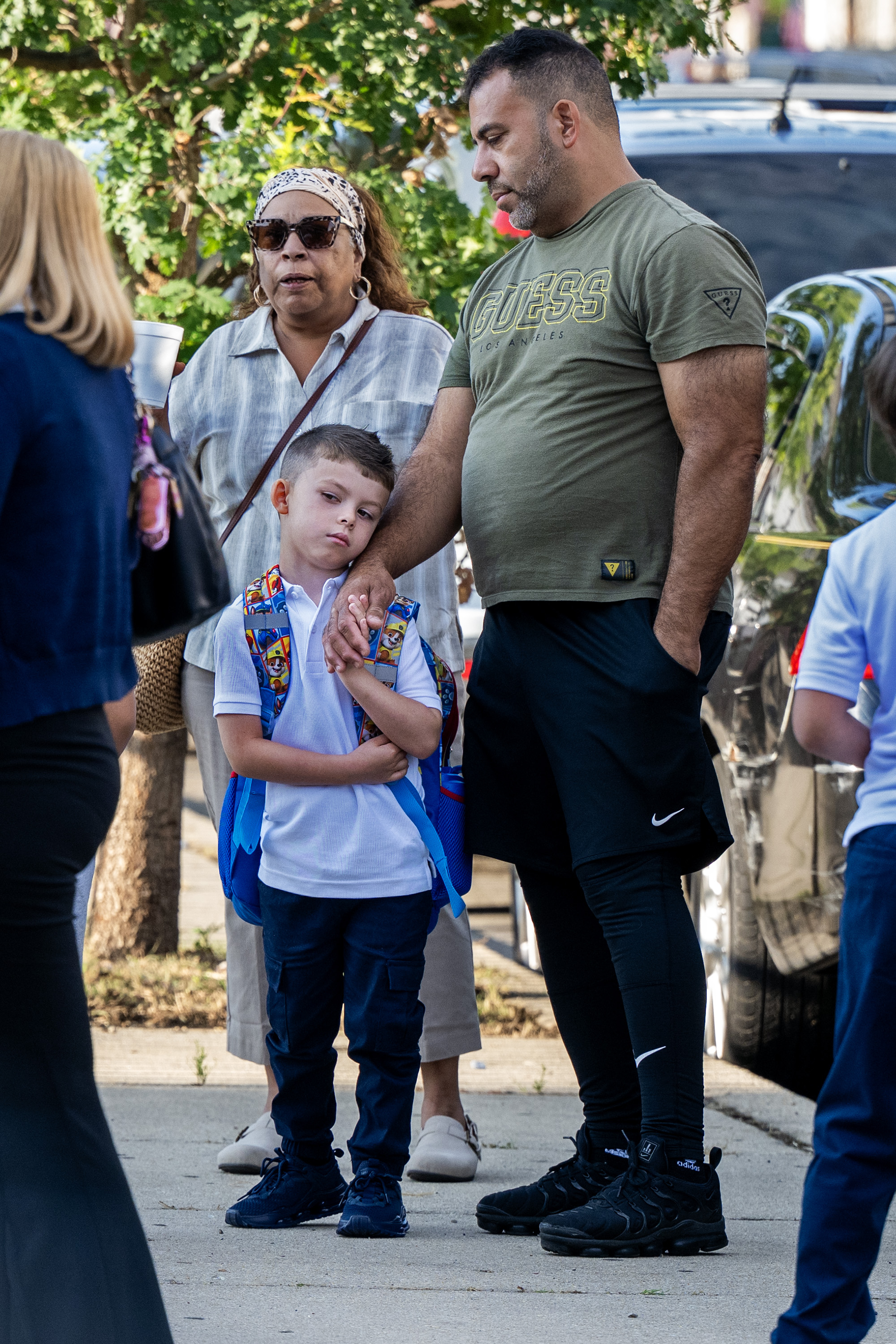
    Johnny Beauchamp (right) waits with his son Johnny (5, not a Jr.) as they arrive early at McClure Elementary Monday, Aug. 24, 2026 on the first day of school in the Philadelphia School District. Young Johnny is going into kindergarten and Beauchamp, a single father, took two days off from his work as a truck driver to make sure he could be there on “the start of the rest of his life.”Tom Gralish / Staff Photographer

    The aim, the superintendent said, is to address issues like homework completion, or family cooperation with key school initiatives.

    “We think that’s a pioneering effort,” Watlington said. “Families first in 2026-2027.”

    The program will begin as a pilot in a limited number of schools. Watlington did not provide details about how much ambassadors will be paid or how many schools will participate initially. He said details will be released soon.

    About those PSSA and Keystone scores

    There has been significant speculation around the release of state test scores. Pennsylvania released preliminary data to districts in the late spring, as it typically does, but Philadelphia has shared only limited student PSSA scores with select staff. Most Philly principals and teachers have not seen the scores, though other districts and schools have not withheld the data.

    Wuimarlyn Sanchez, (left) , 7, is greeted by a classmate outside McClure Elementary Monday, Aug. 24, 2026, starting as second graders on the first day of school in the Philadelphia School District.Tom Gralish / Staff Photographer

    The Pennsylvania Department of Education notified districts last week that statewide results, typically available to districts in late August or early September, would be delayed, though the release of the data to parents and the public does not typically happen until the fall.

    Philadelphia officials then suggested the state holdup was the reason for their own delay.

    Watlington said Tuesday that “we’re just going to wait for the official, verified data to come to us. We’re not trying to hide anything, but we need to get the verified data.”

    The superintendent suggested, however, that both statewide glitches in the administration of the test on the first day of PSSAs and the shift to online administration of exams, which research links to decline in student scores, will show an effect when the scores are finally made public.

    “My hunch is that, at the end of the day, online testing will have had some impact, but I don’t want to speculate on that across the Commonwealth of Pennsylvania,” Watlington said. “When the state verifies the data, we’ll release it immediately.”

    Some students were unable to access tests for up to 40 minutes on the first day PSSAs were administered.

    “All things being equal, I personally would like to be able to do over every single first-day test,” Watlington said. “That’s not really financially or time practical, but in an ideal world that would be my, my superintendent’s wish.”

    School selection’s still up in the air

    The district’s much-watched school selection process will open this year on Sept. 8 and close on Oct. 30. Watlington said its details are still being worked out, given the state score wrinkle.

    Pencils and crayons in the first grade classroom of teacher Lauren Cucinotta at Fanny Jackson Coppin Elementary are ready to write and color Tuesday, Aug. 18, 2026, as she prepares for the start of the School District of Philadelphia school year on Aug. 24.Tom Gralish / Staff Photographer

    Students who wish to gain admission to the system’s 37 criteria-based schools typically submit PSSA scores for consideration. Last week, district officials said they would not use PSSAs for school selection.

    Watlington said Tuesday that his team was “currently reviewing a number of options about how to handle the fact that we won’t have 2025-26 data in time for our school selection process. So we’re reviewing all of our options. I believe there was a thinking initially that we’d have students who have access to some special test — the Terra Nova, etc. We’ve not finalized a decision there yet, so we don’t want to get ahead of our skis just yet.”

    District size, and winning back kids to Philadelphia schools

    When Watlington talks about Philadelphia being one of the 10 largest school systems in the U.S., he is counting children enrolled in both traditional district schools and charters — all of which are supported by taxpayer dollars.

    Counted together, last year, the district had 113,735 students, and charters enrolled 64,469.

    The district’s enrollment grew for the first time in a decade in 2024-25, inching up by a little fewer than 2,000 students. It then lost 794 students last year, which Watlington attributes to a SEPTA strike at the beginning of the school year that caused a pronounced drop in student attendance and, he believes, caused some families to disenroll children from district schools.

    “It’s too soon to know exactly where our numbers will shake out, but my expectation and hope would be that we maintain the similar enrollment to last year,” Watlington said. “I expect this school district to grow over time, though.”

    Why? Watlington touted Masterman’s recent ranking by U.S. News & World Report as the nation’s No. 3 public high school in the country and the district’s academic gains.

    “We just need to tell that story,” Watlington said, “and go out and market ourselves to parents.”

  • How to reset your child’s sleep schedule for back-to-school season

    How to reset your child’s sleep schedule for back-to-school season

    NEW YORK — After a summer of vacations and late nights, it’s time to set those back-to-school alarms.

    A good night’s sleep helps students stay focused and attentive in class. Experts say it’s worth easing kids back into a routine with the start of a new school year.

    “We don’t say ‘ get good sleep ‘ just because,” said pediatrician Dr. Gabrina Dixon with Children’s National Hospital. “It really helps kids learn and it helps them function throughout the day.”

    The amount of sleep kids need changes as they age. Preschoolers should get up to 13 hours of sleep. Tweens need between nine and 12 hours. Teenagers do best with eight to 10 hours of shut-eye.

    Set an earlier bedtime

    Early bedtimes can slip through the cracks over the summer as kids stay up for sleepovers, movie marathons and long plane flights. To get back on track, experts recommend setting earlier bedtimes a week or two before the first day of school or gradually going to bed 15 to 30 minutes earlier each night.

    Don’t serve a heavy meal before bed and avoid TV or screen time two hours before sleep. Instead, work on relaxing activities to slow down, like showering and reading a story.

    “You’re trying to take the cognitive load off your mind,” said Dr. Nitun Verma, a spokesperson for the American Academy of Sleep Medicine. “It would be like if you’re driving, you’re slowly letting go of the gas pedal.”

    Parents can adjust their back-to-school plans based on what works best for their child. Nikkya Hargrove moves her twin daughters’ bedtimes up by 30 minutes the week before school starts.

    Sometimes, her kids will negotiate for a few extra minutes to stay up and read. Hargrove said those conversations are important as her children get older and advocate for themselves. If they stay up too late and don’t have the best morning, Hargrove said that can be a learning experience too.

    “If they’re groggy and they don’t like how they feel, then they know, ‘OK, I have to go to bed earlier,’” said Hargrove, an author and independent bookstore owner from Connecticut.

    In the morning, soaking in some daylight by sitting at a window or going outside can help train the brain to power up, Verma said.

    Squash back-to-school sleep anxiety

    Sleep quality matters just as much as duration. First-day jitters can make it hard to fall asleep no matter how early the bedtime.

    Dixon says parents can talk to their kids to find out what is making them anxious. Is it the first day at a new school? Is it a fear of making new friends? Then they might try a test run of stressful activities before school starts to make those tasks feel less scary — for example, by visiting the school or meeting classmates at an open house.

    The weeks leading up to school can be jam-packed and it’s not always possible to prep a routine in advance. But kids will adjust eventually, so sleep experts say parents should do what they can. After all, their kids aren’t the only ones adjusting to a new routine.

    “I always say, ‘Take a deep breath, it’ll be OK,’” Dixon said. “And just start that schedule.”

  • N.J. students will have to put down their cell phones this fall under new state law

    N.J. students will have to put down their cell phones this fall under new state law

    New Jersey students are going back to school with a new phone-free routine in September.

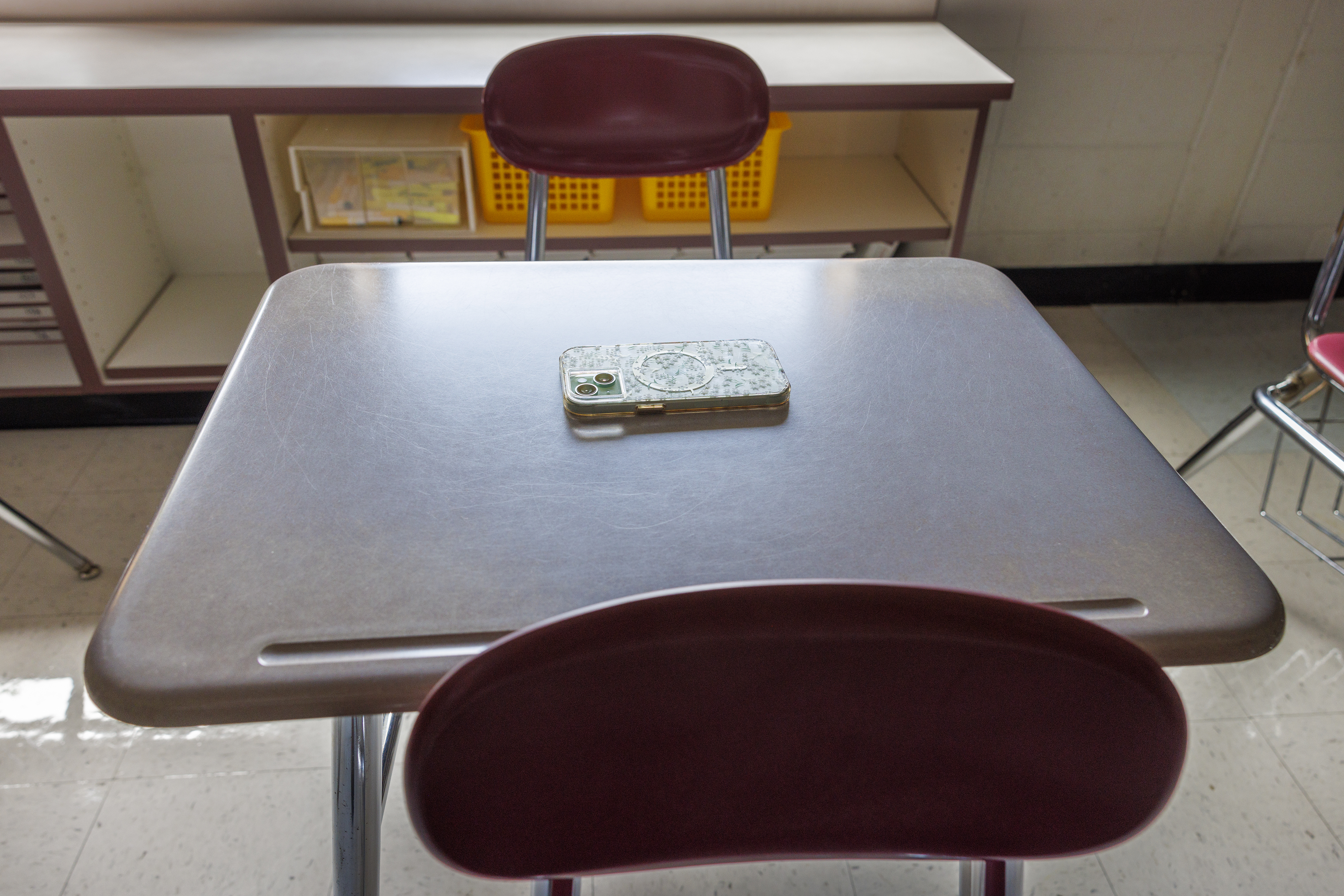
    Starting on the first day of classes, all K-12 students in public schools must power off and put away phones and most internet-enabled devices before the bell rings, with only a few exceptions.

    The new policy — signed into law in January by former Gov. Phil Murphy — puts New Jersey among a growing number of states including New York and Maryland that have passed measures to crack down on students using cell phones during the school day. (Pennsylvania has not passed a state law, though Gov. Josh Shapiro has signaled his support for such a policy and some districts have independently banned the devices in their schools.)

    Heartily endorsed by educators who believe it will ease classroom distractions, promote academic performance, and improve student mental health, New Jersey’s new rule marks a big change for students accustomed to having their cellphones and other devices nearby and checking them regularly — even during class.

    Some districts, such as Cherry Hill and Woodbury, have voluntarily implemented cell phone bans. Woodbury Superintendent Andrew Bell said most students embraced the restrictions and spend more time interacting with each other during breaks.

    “At this point, it’s simply part of our culture and daily routine,” Bell said of the cell-free policy, passed two years ago.

    The state left it to local school boards to determine how to implement the law at a district level, while complying with the guidelines. Because policies may vary, parents and students should check with their local district.

    Here’s what you need to know.

    How are districts implementing the policy?

    The law requires the state’s nearly 600 public school districts to adopt a policy banning the use of cell phones and other personal devices for the entire school day. The law allows some flexibility on enforcement and how the devices are stored.

    The state Department of Education issued guidelines this summer to help district set local policies. Some districts including Cherry Hill in Camden County and Washington Township in Gloucester County this month are voting on amending existing policies.

    Districts had to decide whether students would be required to store their phones in their lockers or bins, in locked pouches, or in their backpacks with their personal belongings. The devices must be powered off.

    The guidelines apply to all internet-enabled devices, typically smartphones, smartwatches, smart glasses, and ear buds, or any device that can access online content.

    Some districts have also included other communication devices like flip phones, two-way radios, and walkie-talkies. Some rules may vary, for age appropriateness, depending on grade level, too.

    What is bell-to-bell?

    Cherry Hill school board member Bridget Palmer explained the restriction this way at a recent board meeting: “The minute you walk in to the meeting, you leave.”

    The law restricts students from using their phones during lunch and study hall periods.

    Districts get to decide whether phones can be used before and after school on school grounds, on school buses, and during school-sponsored events, such as athletic events and extracurricular activities.

    “We’re not going to tell kids they can’t use their phones when they’re at Disney,” Washington Township Superintendent Eric Hibbs said at a board meeting. “We couldn’t enforce it anyway.”

    Districts must also provide parameters for how and when parents can contact their children during an emergency. Hibbs said Washington Township will have phones available in every office that a student can use, and is developing a way for parents to contact their child on a district-issued device.

    “A true emergency — all of this goes away,” Hibbs said. “No child will ever get in trouble for calling 911 for reporting an emergency.”

    Where will the phones be stored?

    The law lets the districts decide where the phones will be stored during the school day. The state provided some funding for districts to purchase locked Yondr pouches. Others are designating lockers or bins.

    Lianah Carruolo, 12, a seventh-grade student, unlocks her cell phone pouch outside the junior high entrance to Woodbury Junior/Senior High School on Friday, Sept 20, 2024. Alejandro A. Alvarez / Staff Photographer

    Cherry Hill’s amended policy would allow students to keep their phone in their personal belongings. It must be turned off, not just on vibrate or silent.

    “We prefer that you don’t bring it to school, but if you bring it to school, it has to be off and in your backpack or your locker for the duration of the day,” Palmer said.

    In Camden, the district’s new “off and away” policy says phones should be off and out of sight. They are permitted at a teacher’s discretion for instructional purposes. After a first offense, the phone will be confiscated and returned to the student at the end of the day; for subsequent offenses, the phone will be returned to a parent or guardian.

    In Washington Township, pre-K to fifth graders must store their phones in their backpacks, sixth to eighth graders must store theirs in their lockers, while high schoolers will be allowed to keep theirs in their backpacks.

    Hibbs said few high school students use their lockers so it was decided to allow them to keep their phones in their personal property. With about 2,100 students, the high school is among the largest in South Jersey.

    Are there any exceptions to the law?

    The law mandates exemptions for students with a disability or an Individual Education Plan (IEP) or 504 plan that stipulates the need for an internet-enabled device.

    The exemptions include students with a health plan, such as students with diabetes who need their phone to check glucose levels.

    There are also exemptions for students who use the cell phone for translation, or are the primary caregiver responsible for the well-being of a family member.

    School policies must also outline procedures for mobile devices that will be implemented in the event of an emergency, such as a lockdown.

    In the event of a family emergency, parents should contact the school office, and not the student directly, according to the guidelines.

    How will violations be handled?

    Districts are posting the new policy on district and school websites, in newsletters, and on social media sites to inform parents and students about the changes. They may also review it at back-to-school-nights, orientations, and training sessions for staff.

    The disciplinary action may vary, depending on the district, and typically begins with a warning that could escalate with additional violations. Districts must specify how a phone may be confiscated.

    Washington Township’s policy calls for progressive discipline, based on grade level. Administrators, not teachers, will be responsible for confiscating a phone if warranted.

    There are 10 possible “consequences” for high school students beginning with an administrative warning for the first two violations, Hibbs said.

    For additional violations, students will get a lunch detention and have their phone confiscated for three to four infractions, Hibbs said. Sanctions for additional violations include requiring a student to store the phone in a locker or main office, a two-day internal suspension, and a mandatory parental meeting.

    “It’s going to be a very big change, but we’re going to navigate it,” Hibbs told the board.

  • Delco school board member killed in South Jersey crash

    Delco school board member killed in South Jersey crash

    A Delaware County school board member was killed during the weekend in a vehicle crash in South Jersey, officials said Monday.

    Phillip Eastman, 68, was a longtime Springfield resident who recently retired from a 44-year career with Peco and Exelon, the Springfield School District said in a statement.

    “Phil tragically lost his life in a car accident this past weekend,” the district said.

    For nearly three decades, Eastman coached youth and high school ice hockey, including 17 years as the varsity head coach at Springfield High School, the district said.

    “While his teams enjoyed success on the ice, he considered mentoring student athletes and helping them develop teamwork, responsibility, perseverance, and other lifelong skills to be the most rewarding aspect of his coaching career,” the district said.

    “Phil and his wife, Maureen, raised their son and daughter in Springfield, where both attended Springfield schools and participated in high school athletics,” the district said.

    “His family’s enduring connection to Springfield schools was a primary motivation for his desire to serve on the School Board,” the district said.

    On Saturday around 8:30 a.m., Eastman was driving a Chevrolet SUV north on Route 55 in Vineland when his vehicle was struck by someone driving a Tesla heading in the opposite direction, said Trooper Caitlin Brennan of the New Jersey State Police.

    The Tesla was traveling south when it crossed over a grass median, hit a tree, and then entered the northbound side of Route 55, Brennan said.

    The driver of the Tesla and a passenger in Eastman’s SUV suffered injuries and were taken to an area hospital, Brennan said.

    The crash remains under investigation, she said.

    It was at least the second fatal accident on Route 55 this summer.

    In July, two women were killed and another injured in a one-vehicle crash in Deptford Township.

    In March 2025, three teenagers died in a crash in Elk Township.

  • Philly students head back to school

    Philly students head back to school

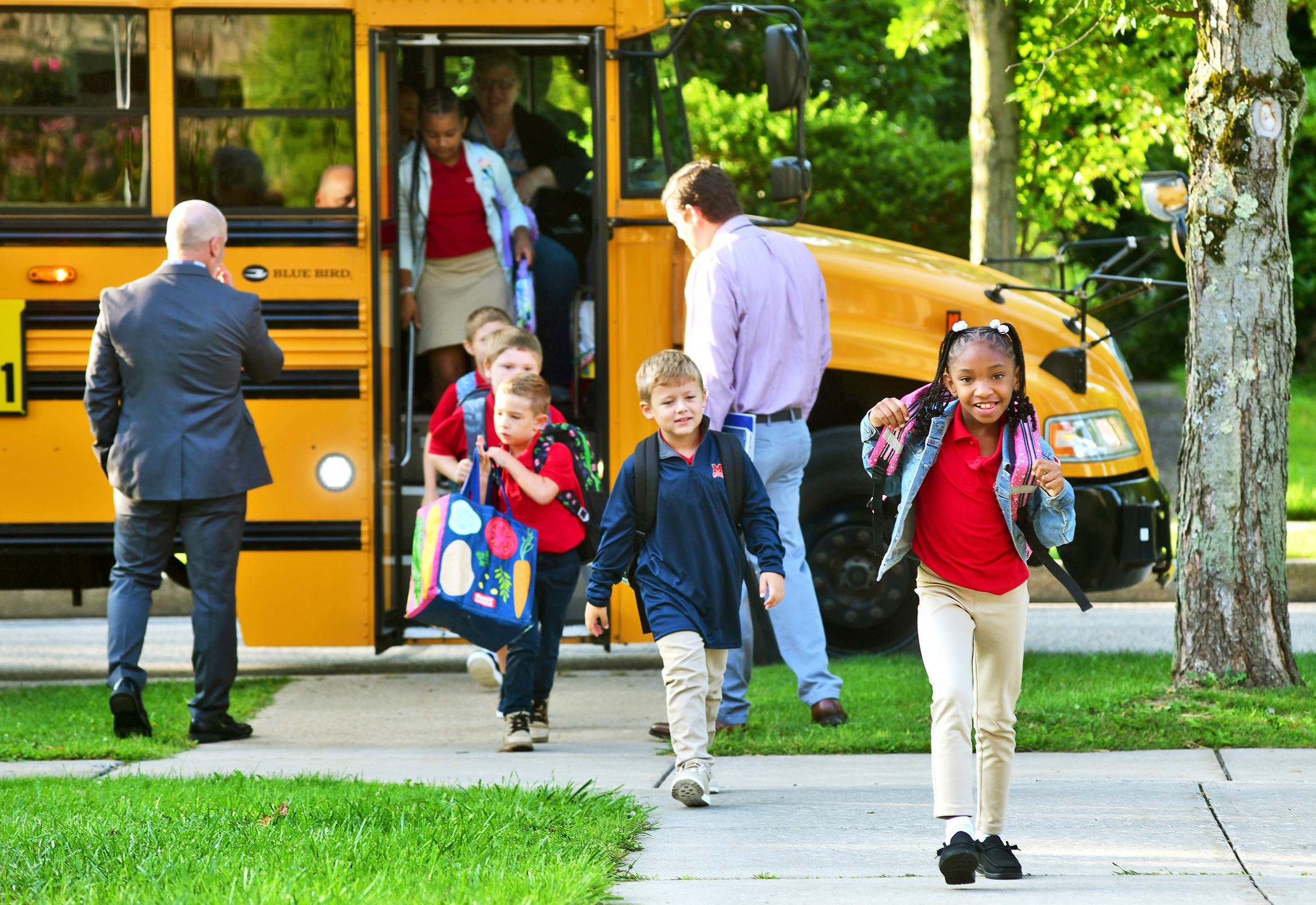
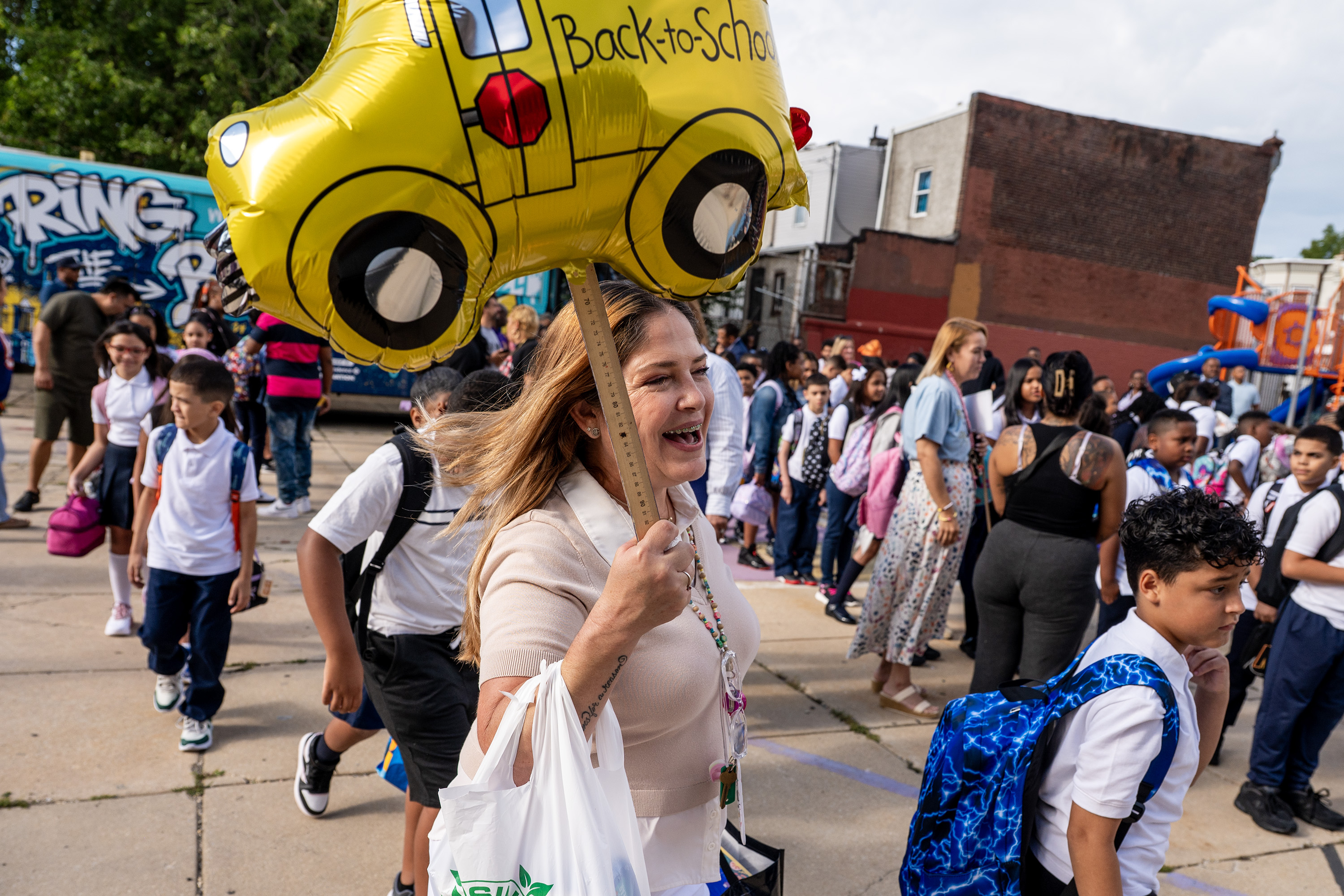
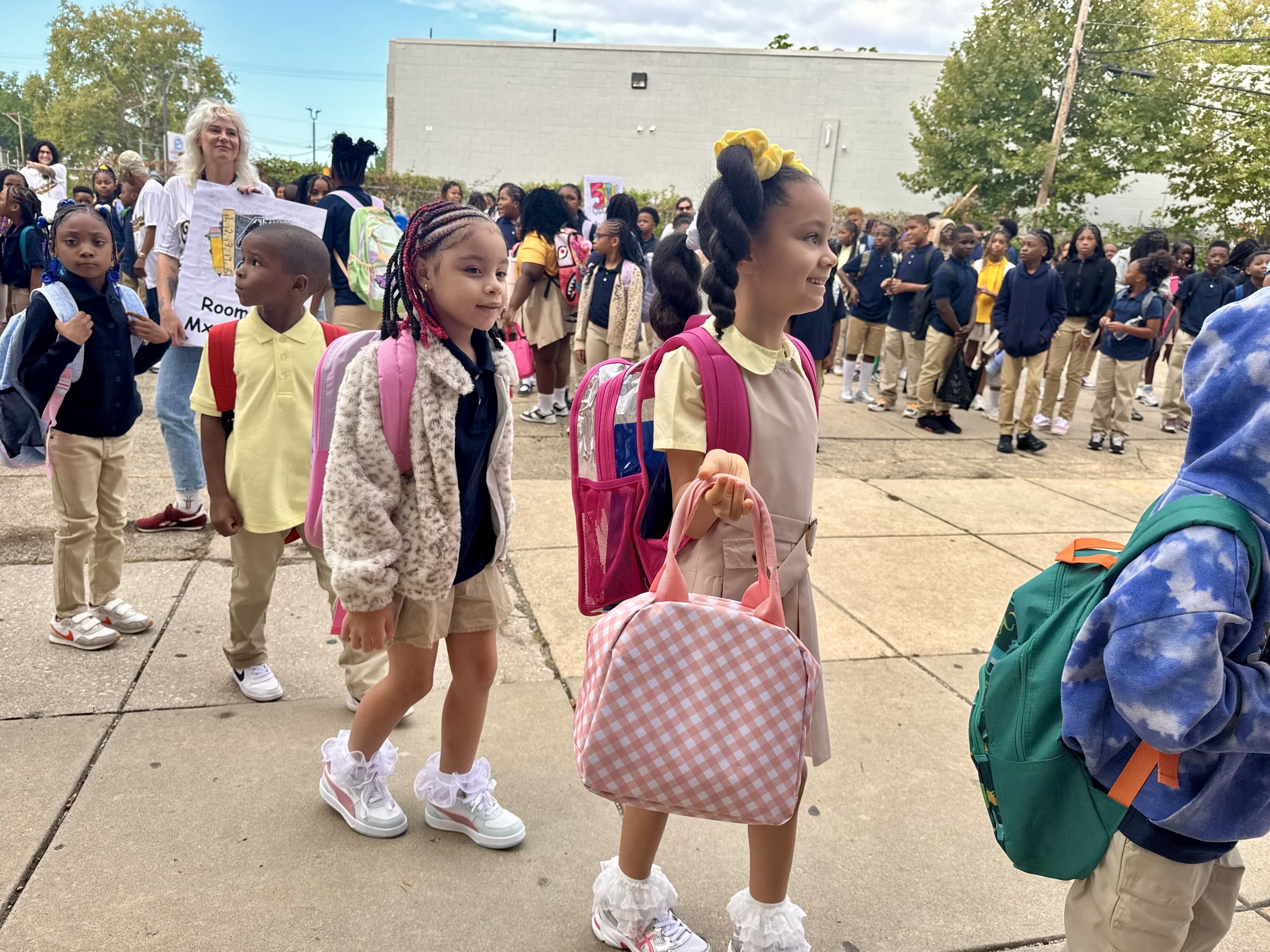
    Eighth graders tossed a football across the concrete schoolyard. A fourth grader broke into a dead run, intent on catching up with friends she hadn’t seen all summer. A teacher hugged a first grader with a shy smile and a giant pink backpack crammed with school supplies.

    The scene at Overbrook Elementary played out across the city Monday morning as most of the Philadelphia School District’s 113,000 students returned to class for the start of the 2026-27 school year. Kindergartners are due to begin classes Thursday.

    At McClure Elementary in Hunting Park, Superintendent Tony B. Watlington Sr. repeated at a news conference his overarching goal: for Philadelphia to become the fastest-improving big-city school district in the U.S.

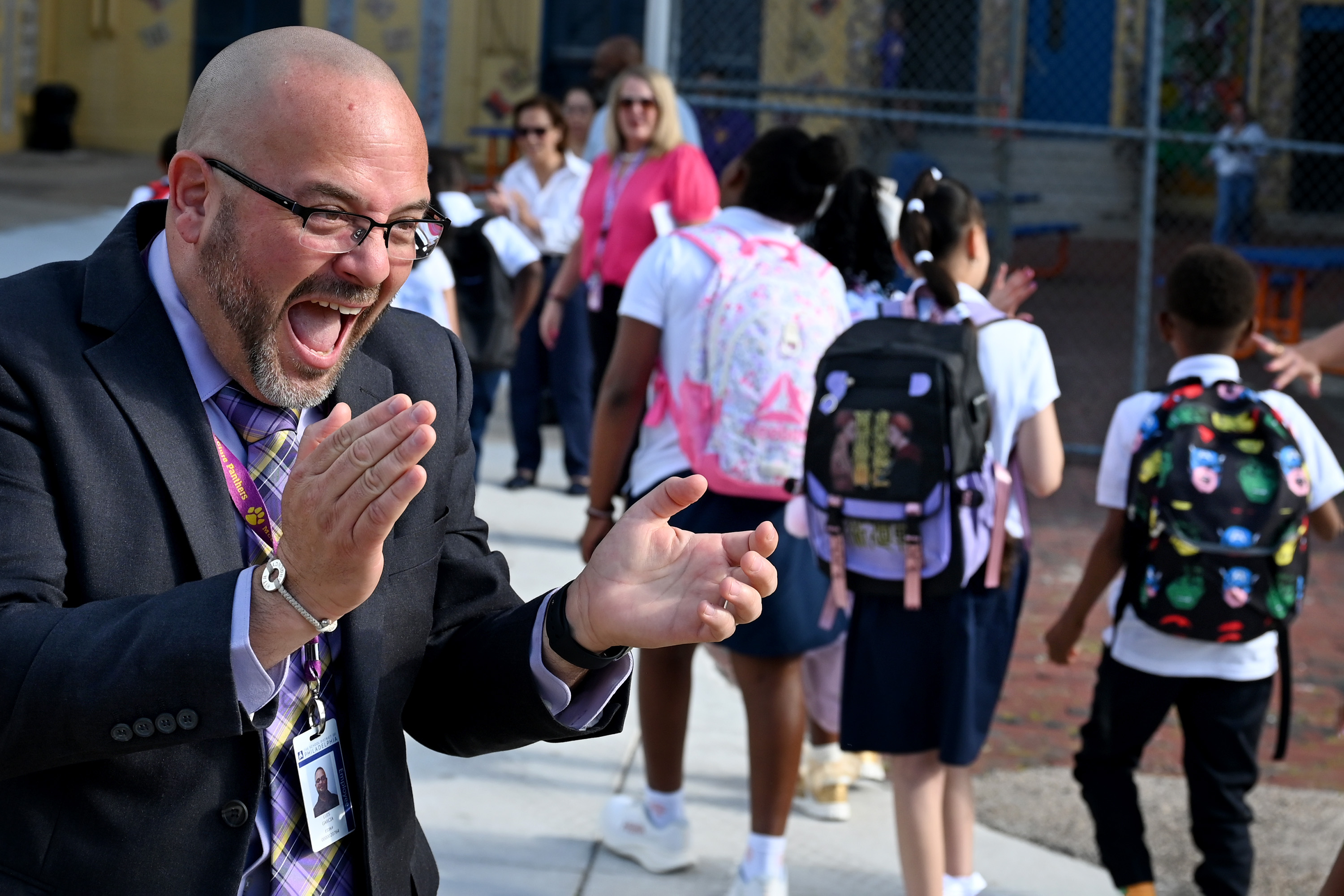
    McClure Elementary principal Luis Garcia greets students Monday, Aug. 24, 2026 before they head into class on the first day of school in the Philadelphia School District.Tom Gralish / Staff Photographer

    The district will “double down this year to continue to drive this fast improvement, and we won’t rest until all of our children are at grade level in reading and math,” Watlington said. According to 2024-25 state data, 34% of district students meet state standards in reading, and 23% in math. (More recent PSSAs, typically available to teachers and principals by now, have not been shared by Philadelphia leaders.)

    Reginald Streater, the school board president, said improving educational outcomes is also about creating generational value.

    “A student can walk through the doors, irrespective of their race, creed, class, gender, or shared ancestry, in our schools with a world of possibilities in front of them and leave those same doors with the knowledge, confidence, and opportunity to pursue the future they envision for themselves,” said Streater, father of two children in district schools, “armed with the tools to break the bonds of generational curses and barriers designed to keep them and their ancestors and their progeny in a perpetual state of servitude and second-class citizens.”

    Mayor Cherelle L. Parker was not present at the district’s first-day festivities, a rarity, but Debora Carrera, her chief education officer, touted Parker’s $48 million agreement that restored some of the 340 positions that otherwise would have been axed because of budget cuts.

    That was good news for Johnny Beauchamp, a single father and truck driver, who was dropping off his son for his first day at McClure.

    While Beauchamp said he is confident the city has addressed its budgetary concerns regarding staffing and school openings, he hopes to see some initiatives on school safety.

    “I’m actually more excited than he is. It’s his first day … and his bright future starts today,” Beauchamp said. “But my main concern nowadays is the safety, especially with guns and stuff like that. Also, making sure our schools are clean and sidewalks are clear of glass and other dangerous stuff where our kids are playing.”

    ‘Leave Overbrook alone’

    The first-day tone was upbeat, but a bit different, at Overbrook, one of the 17 buildings the school board voted in April to close as part of its $3 billion, 10-year facilities plan. Overbrook is set to shut its doors permanently in June.

    Overbrook is a small, high-performing school in a very old building: The school is celebrating its 120th anniversary this year. Its tight-knit community wraps its arms around Overbrook and has mounted a fierce fight to keep it open.

    “Leave Overbrook alone,” said Fahmee Shabazz, dad of an Overbrook fourth grader. “Please, somebody help us.”

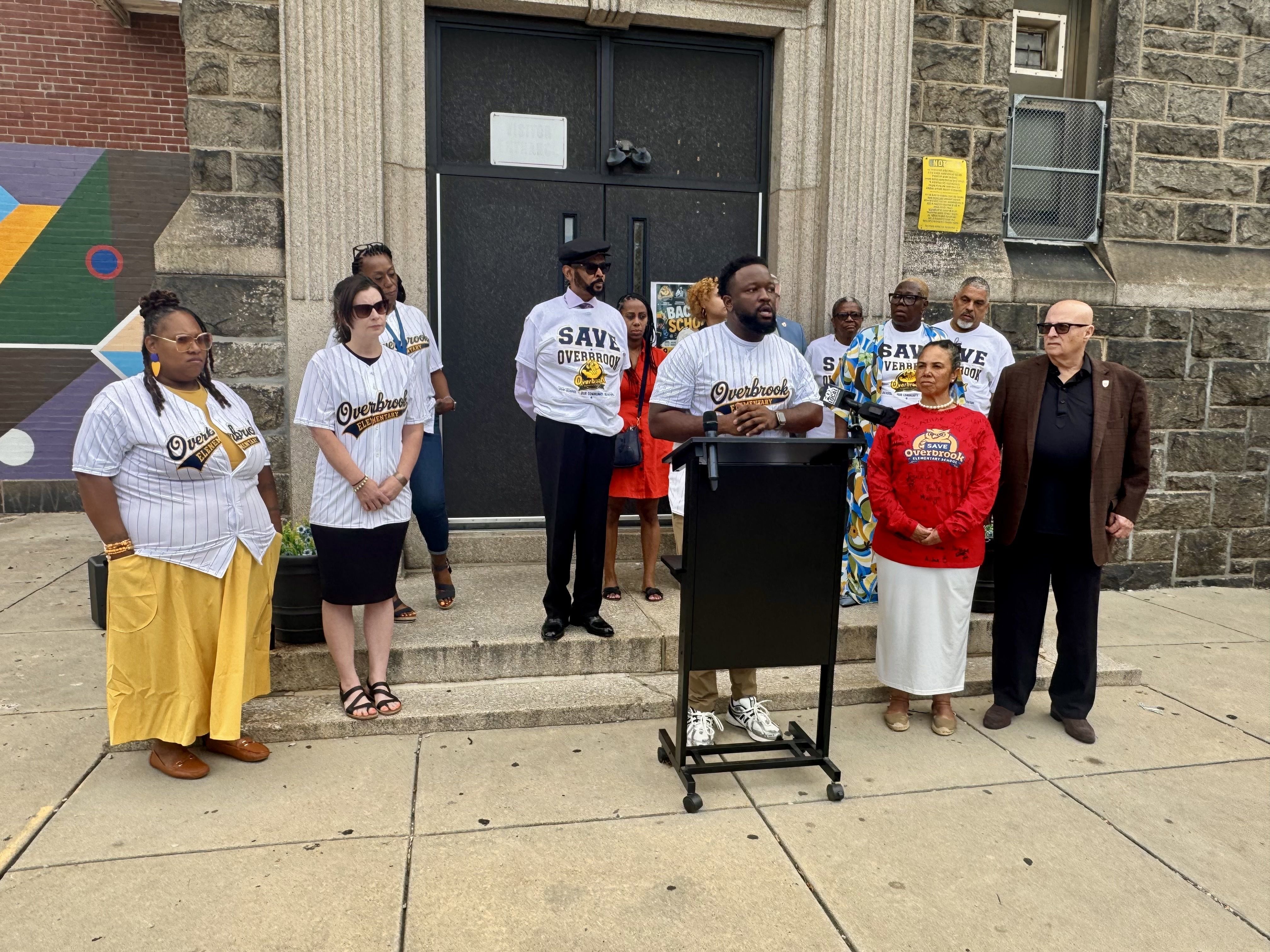
    Teachers union and elected officials were on hand at Overbrook for a news conference to pledge continuing efforts to try. Multiple politicians have said they will keep the pressure up to remove Overbrook Elementary, Robeson High, and Lankenau High from the district’s closing list.

    Teachers, politicians and Philadelphia Federation of Teachers officials listen to Kenneth Glover, principal of Overbrook Elementary School, speak on the first day of the 2026-27 school year. Glover said the school, which is one of 17 Philadelphia schools slated to close, will focus on academics this year and let adults fight a battle to stave off closure.Kristen A. Graham / Staff

    “We cannot disrupt the good things that are happening here,” said State Sen. Vincent Hughes (D., Philadelphia), chair of the Senate Appropriations Committee.

    Hughes said action needs to happen in Harrisburg to help better fund schools. But he added: “We’re still going to fight for Overbrook Elementary and the schools like it, [which] deserve to stay open.”

    Last year, many Overbrook Elementary teachers used news of the school’s closing as an object lesson — in civics and the world around them — said Kenneth Glover, the school’s principal.

    “I’m so happy that it’s day one,” he said. “Like I tell my students all the time, each day is a fresh start, and this year is a fresh start. Last year, a lot of the focus was on adult issues, right, fighting to keep the school open. This year, I really want students to focus on academics … for us to just have a beautiful school year.”

    Overbrook Elementary School students get ready to enter the building for the first day of the 2026-27 school year. It could be the 120-year-old school’s last first day, as it’s one of 17 schools the Philadelphia School District has slated to close.Kristen A. Graham / Staff

    While Glover said he still hoped the school could be kept open, he has begun to work with the district’s newly created transition office to plan for what comes next.

    Still, said Kathryn McQuade, Overbrook Elementary’s art teacher, the closure and the fight to prevent it are overshadowing the year for many.

    McQuade expressed frustration that the school board just spent $7 million on a four-year Center City lease for Constitution High when Overbrook and other schools have been tagged for closure.

    “Seven million could easily go towards … modernizing this building for the future,” McQuade said. “And that wouldn’t be a lease, that would be a one-time price tag.”

    Arthur Steinberg, president of the Philadelphia Federation of Teachers, said he “was hoping that when I came here today I’d be able to say, ‘Well, we saved Overbrook from the chopping block.’ Unfortunately, that is not the case. However, we have not given up the fight to keep Overbrook and every other school in the city open.”

    Steinberg said the PFT would release a plan this week that would give the district a path to keep all 17 schools open.

    Robin P. Cooper (upper right) watches as school and city official gather for a group photo outside the district bus. Cooper is president of Commonwealth Association of School Administrators (CASA). At far left is Superintendent Tony B. Watlington Sr. The bus, part of Mayor Cherelle L. Parker’s Neighborhood Community Action Centers, was to visit and rally at schools in every city council district.Tom Gralish / Staff Photographer
  • Philly kids are heading back to class Monday. Here are 4 things to know about the coming school year.

    Philly kids are heading back to class Monday. Here are 4 things to know about the coming school year.

    School begins Monday for about 113,000 Philadelphia School District students.

    Janis Butler, the interim principal of Fanny Jackson Coppin Elementary in South Philadelphia, has decades of experience in teaching and administration.

    But she is still thrilled at the prospect of personally welcoming back Coppin’s 500-plus students.

    “It’s a rah-rah, we’re back in business now,” Butler said.

    Here is what to know about the 2026-27 school year.

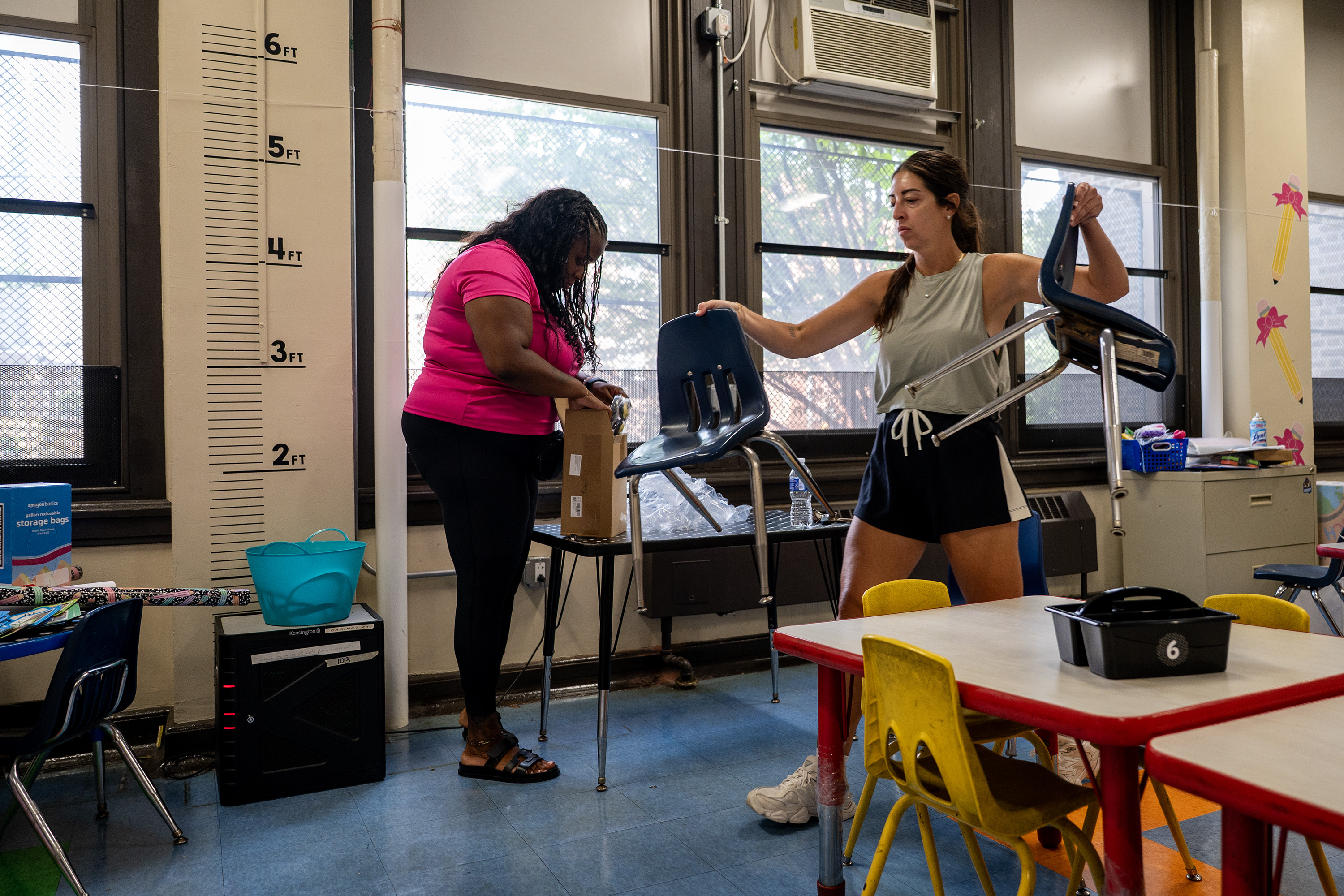
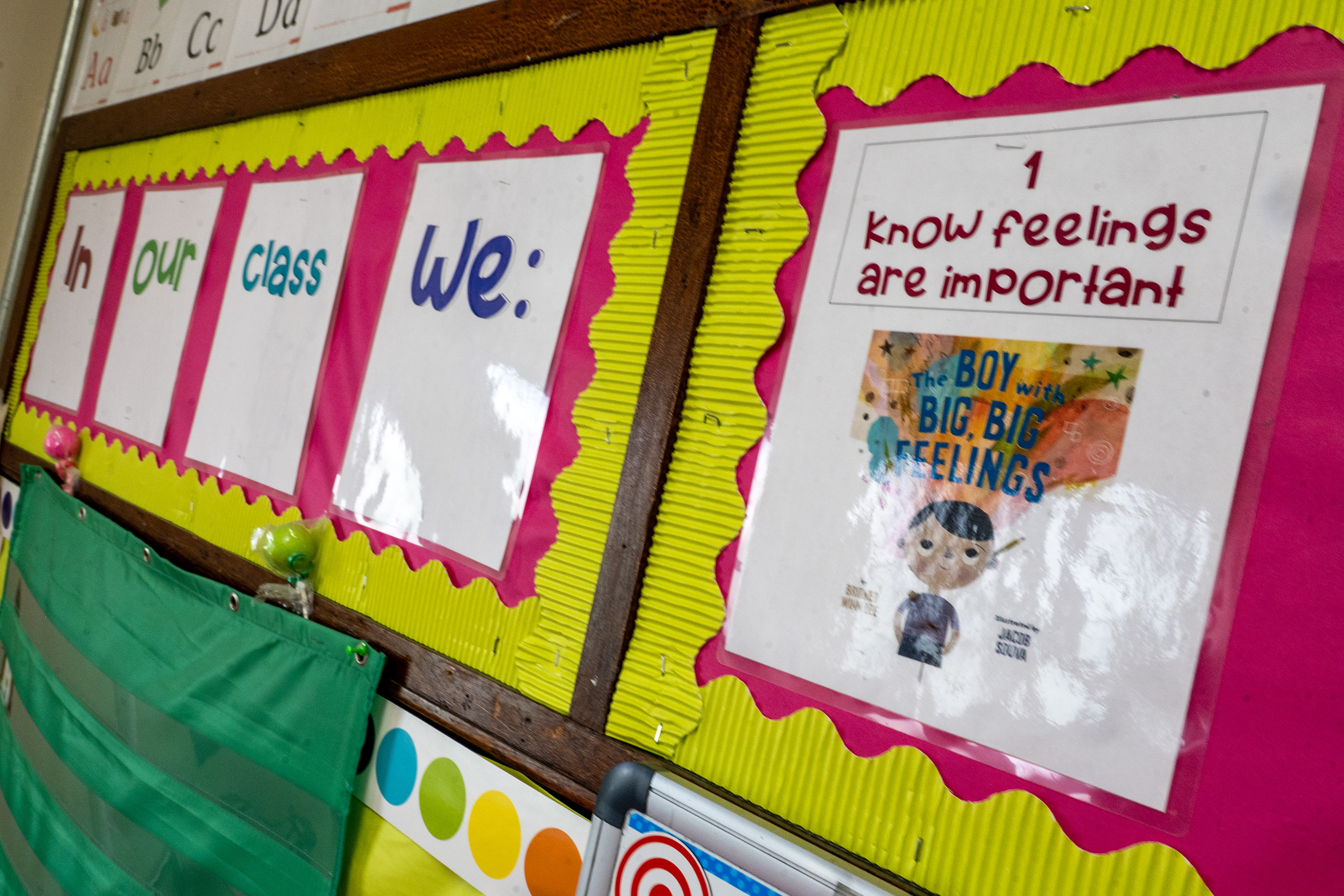
    Book cover posters highlight positive emotions in the second grade classroom of teacher Gabrielle DiCrosta at Fanny Jackson Coppin Elementary Tuesday, Aug. 18, 2026 ahead of the start of the school year on Aug. 24 for the School District of Philadelphia.Tom Gralish / Staff Photographer

    School is cool. (But 52 schools are not cool.)

    District leaders said in 2022 they aimed to have all district schools fully air-conditioned by 2027.

    But on the cusp of that cutoff, 52 schools remain inadequately cooled. That is likely to come into play as school starts in August, with weeks to go before temperatures cool down.

    The district’s extreme-weather protocol calls for schools that lack sufficient air-conditioning in classrooms and other learning spaces to dismiss early if temperatures are forecast to reach or go past 85 degrees by noon. The protocol mandates remote learning if temperatures are expected to hit 85 degrees by 9 a.m.

    That means an unequal experience for students across the system, with students in some schools not missing any instructional time when it’s hot, and those in a quarter of schools subject to interrupted schedules.

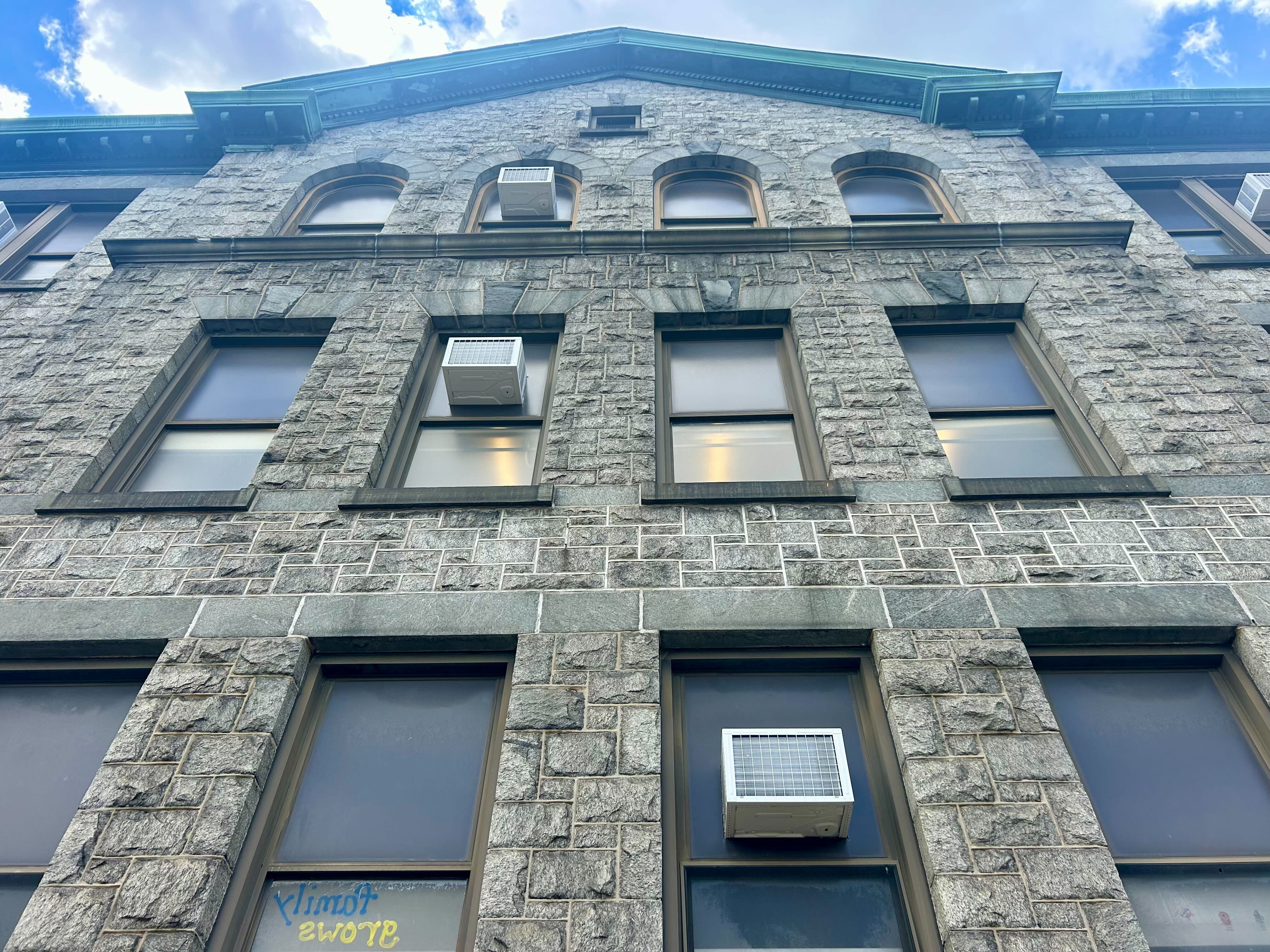
    Gloria Casarez Elementary School, in Kensington, got window units in all of its classrooms in 2024. As of the start of the 2026-27 school year, 52 schools still have no air conditioning.Kristen A. Graham / Staff

    The holdup in air-conditioning all district schools is not related to the cost of air-conditioning units, but rather upgrading old electrical systems in the 52 schools.

    Such upgrades are tricky. An HVAC project at Kensington High went awry this summer, triggering asbestos issues that forced students and staff to relocate for the rest of the calendar year.

    Farewell, half days

    The school board in March opted to cut all half days from the 2026-27 calendar, a move that Superintendent Tony B. Watlington Sr. would carry on “forevermore.”

    Watlington cited dips in student attendance around half days, and said they are inconvenient for parents who must scramble to plan for childcare around the irregular schedule.

    Eight half days had been previously scheduled for this year.

    This is the final year before some schools close, and others merge

    The school board voted in April to move forward with a $3 billion facilities plan that will close 17 schools and renovate 169.

    The first closures are expected at the end of the school year. That means that this is a planning year for 50 schools — those that are closing, beginning phaseouts, or receiving students in the 2027-28 school year.

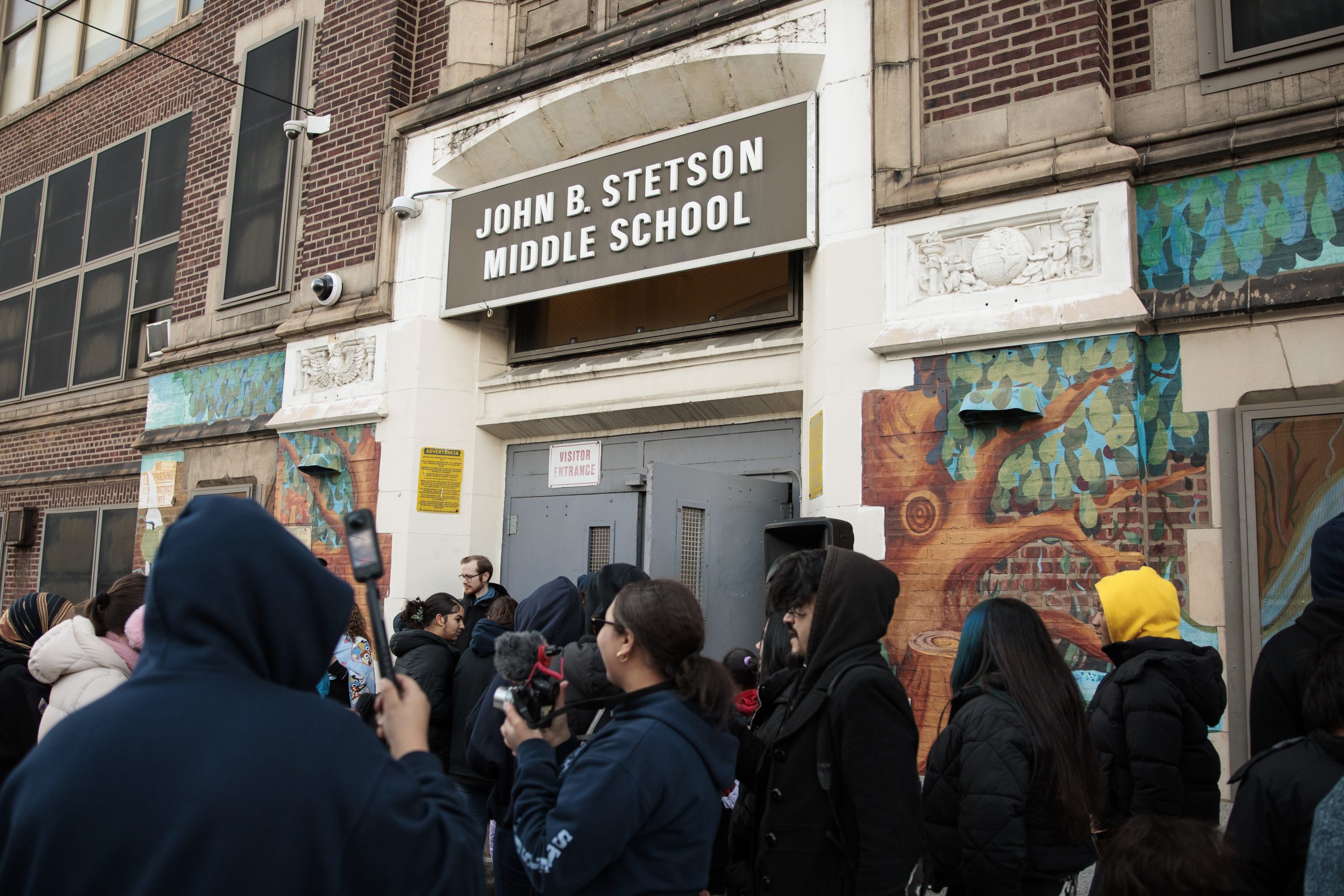
    Students, teachers and supporters rally before a community meeting at John B. Stetson Middle School in this February file photo. Stetson is one of 17 schools ordered closed by the Philadelphia school board.Monica Herndon / Staff Photographer

    The district is forming transition committees at those 50 schools, and will begin accepting applications Aug. 31 for roughly 20 spots on each transition committee.

    Plenty of administrative shifts have happened

    Watlington has made a number of changes at the top of his administration, some as a result of departures. Other leaders were given new roles or responsibilities.

    Among the changes are: a new chief of talent, Kristi Murphy Baldwin; a new deputy superintendent of academic services, Brenda Elliott; a new chief academic officer, Michael Farrell; and additional responsibilities for Nathalie Nérée, who becomes chief of special education, diverse learners, and wellness.

    Nyshawana Francis-Thompson has a new title: senior adviser for strategic initiatives and innovation.

    Jamina Clay-Dingle is now assistant superintendent of school management and organization.

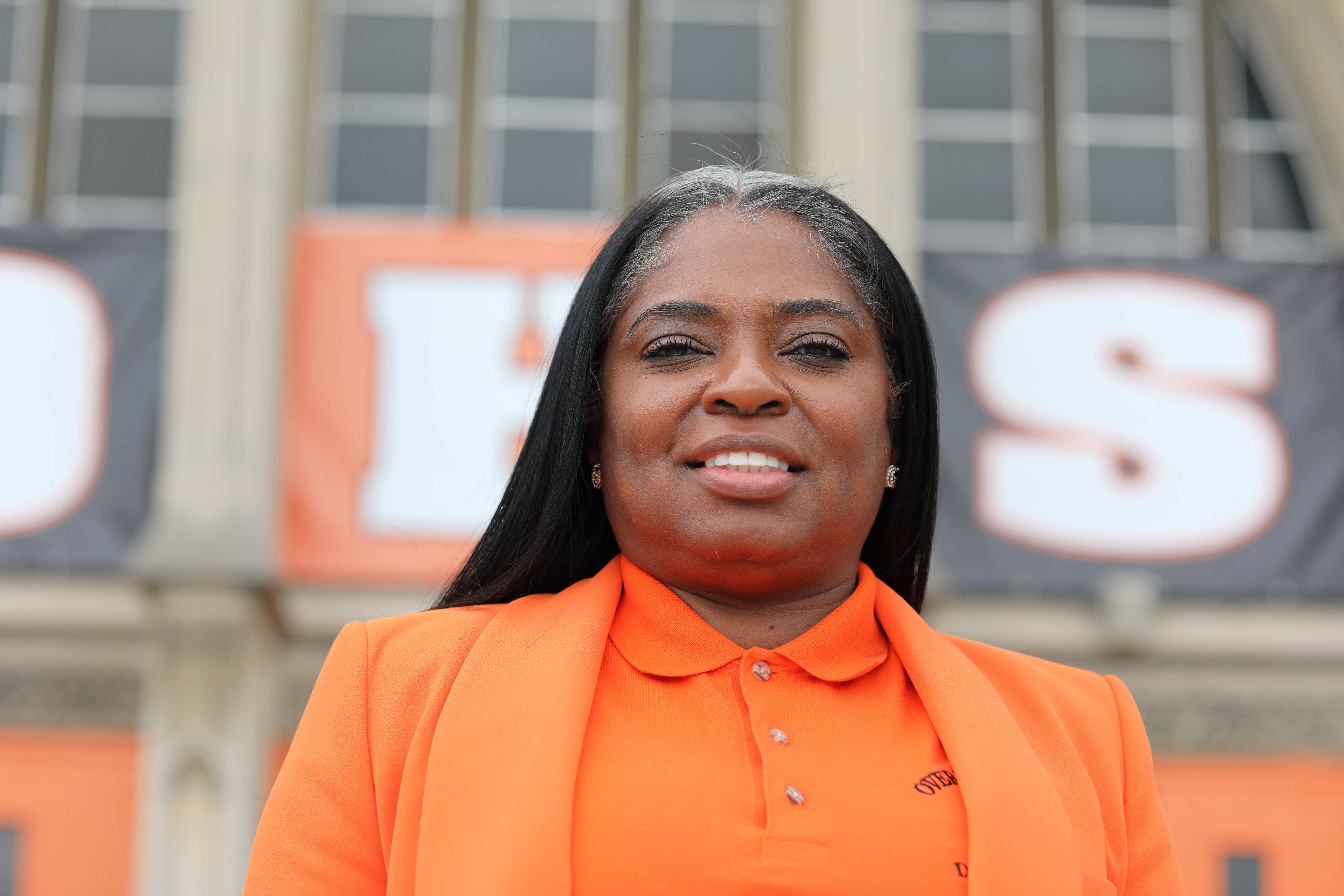
    Kahlila Johnson, a former principal of Overbrook High, is now an assistant superintendent responsible for a district learning network.Courtesy of the Philadelphia School District

    There are some new assistant superintendents for various learning networks around the city: Kelly Espinosa and Kahlila Johnson will serve full-time, and Wilfredo Ortiz and Lucy Feria on an interim basis.

    Noah Tennant is now associate superintendent for secondary schools, and Tomás Hanna is now associate superintendent for student life and school operations.

    A number of schools have new principals, too: Adaire Elementary, Amanda Strain; Bridesburg Elementary, Louis Depa; Clemente Middle School, Regina Barr; Edison High, Albert Sniezevage; Benjamin Franklin Elementary, Ryan Sullivan; Heston Elementary, Kamia Smith; Lawton Elementary, Michelle Todd-Coleman; Memphis Street Academy, Wayne Diggs; Northeast High, Andrew Lukov; Southwark Elementary, Mason Luksch Wilson; Bayard Taylor Elementary, Claire Charles; Tilden Middle School, Jessica Culp; Waring Elementary, Cathryn Anderson.