The Cheltenham school board on Tuesday appointed Chris McGinley as its interim superintendent, approving a contract for the veteran administrator through the end of the 2026-27 school year.
McGinley, who first came to Cheltenham as an assistant superintendent in 1999, led efforts in the district aimed at closing its achievement gap, and partnered with the University of Pennsylvania to establish the Center for Equity and Excellence, a regional consortium of school districts working to close their own gaps.
“At a time when the district is focused on rebuilding public trust and ensuring the safety of all students at all district schools, we believe that Dr. McGinley is uniquely qualified to lead our schools during the upcoming school year,” Cheltenham board president Leah Mulhearn said in a statement Tuesday night.
McGinley was approved unanimously at a special meeting Tuesday, according to district spokesperson Kevin Kaufman.
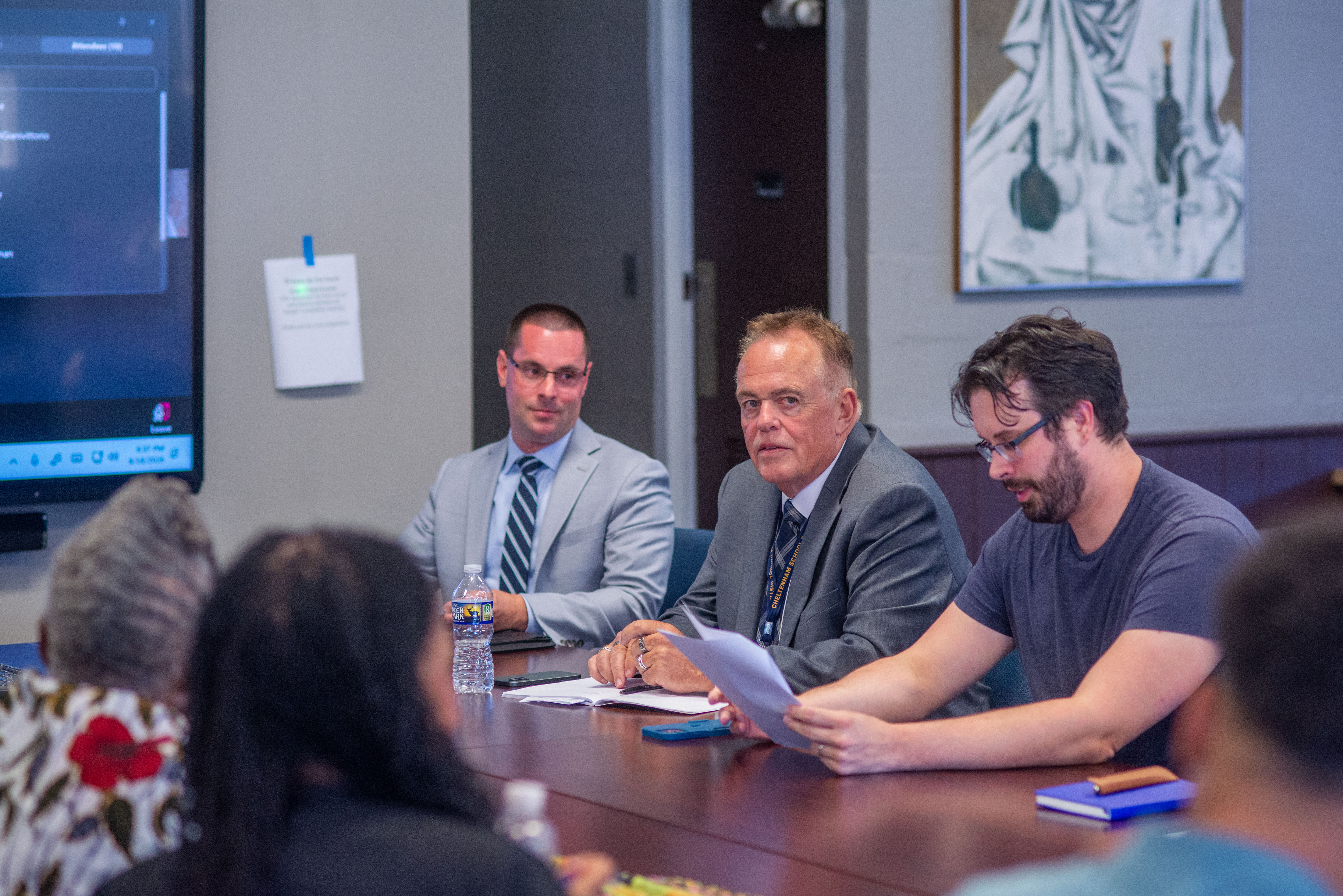
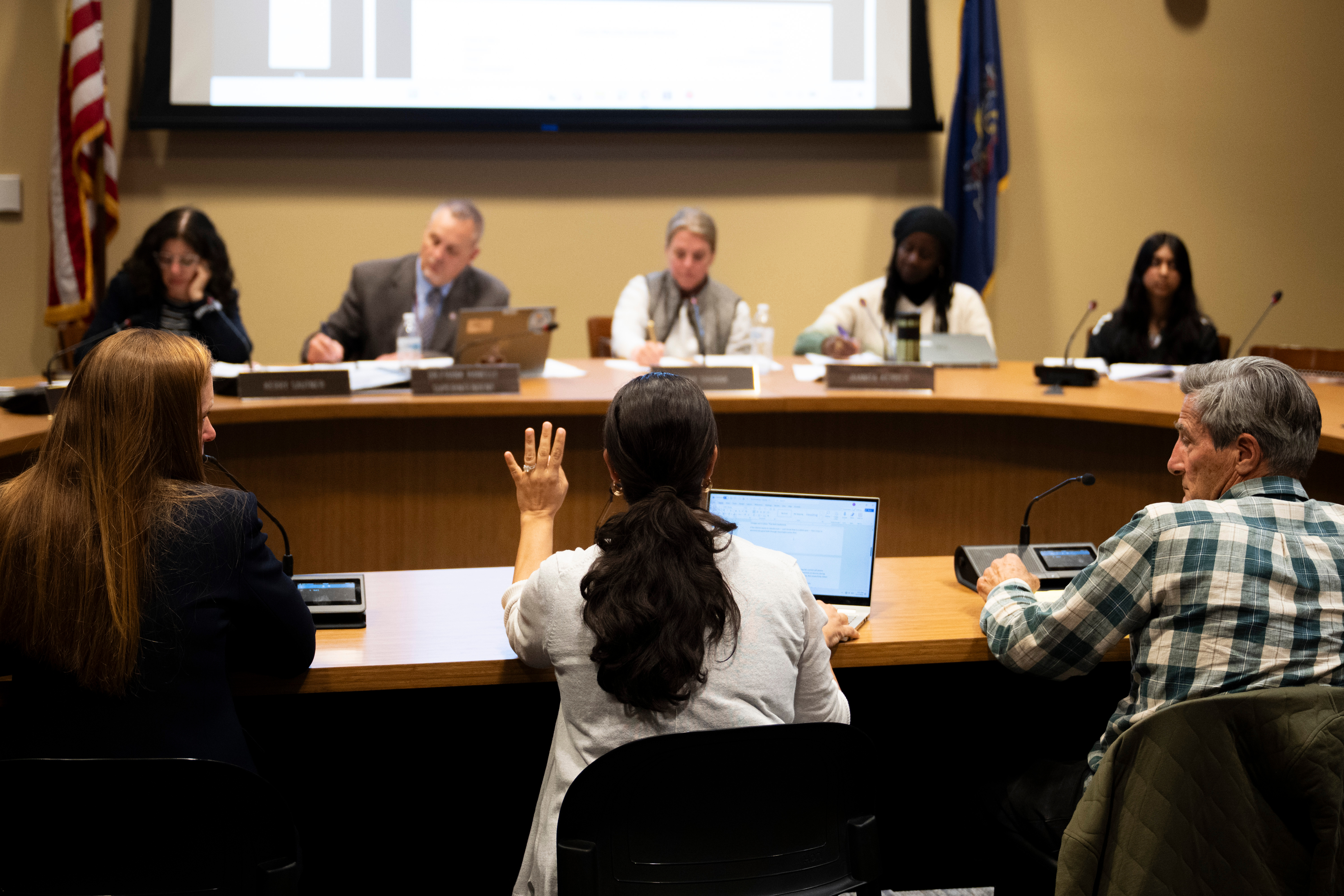
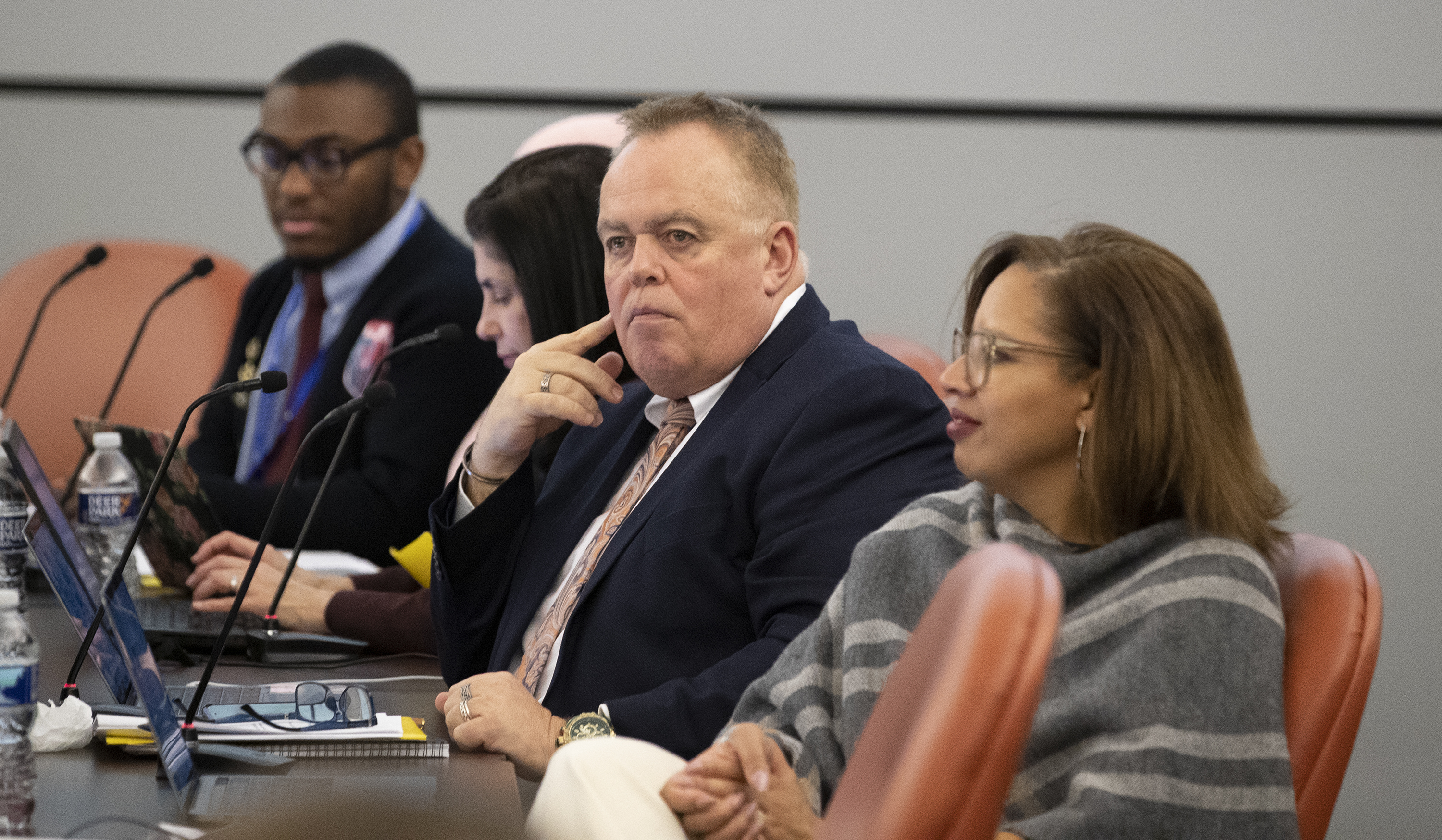
Chris McGinley, newly installed interim superintendent, speaks as solicitor Edward Diasio and board member Daniel Schultz listen Tuesday at the Cheltenham Administration Building in Elkins Park.William Thomas Cain / For The Inquirer
He will be paid $1,500 per business day “for time actually worked” under the contract approved by the board, which specifies that McGinley is not an employee and will not receive benefits.
Cheltenham has not said what it will pay Scriven, who had received a new five-year contract from the board in December. Kaufman said last week that a separation agreement would be negotiated and approved at a future board meeting.
McGinley served as assistant superintendent in Cheltenham from 1999 to 2003. He then became superintendent and led the district until 2006. Two years later, he was named superintendent in Lower Merion, where he worked until leaving to become a professor at Temple in 2014.
In 2017, McGinley was appointed by then-Philadelphia Mayor Jim Kenney to the School Reform Commission, a state-controlled governing body that oversaw the Philadelphia School District. When the SRC dissolved the following year, Kenney named McGinley to the new Philadelphia school board; he served until 2020.
He recently left Temple, where he had worked as policy, organizational, and leadership studies department chair in the university’s College of Education and Human Development.
McGinley began his career in Philadelphia as a special-education teacher, and worked in the district as an elementary and middle school principal, a regional superintendent, and an executive director of leadership development.
Kindergartners, first graders, and second graders in Lower Merion schools will no longer receive personal iPads and laptops, under a policy passed by the school board Monday scaling back on students’ technology use.
The policy — which also specifies that third and fourth graders will not bring computers home and limits fifth and sixth graders’ use of computers at lunch and between classes — follows backlash from parents who have been confronting the board since spring about the use of screens in schools. These parents fault the district for providing their kids with devices they say distract them in the classroom, expose them to dangerous content, and fail to help them learn.
“We heard legitimate concerns and undertook an unusually significant amount of time to really make substantial change,” Anna Shurak, the board’s policy committee chair, said at Monday’s meeting, noting that the district will also give teachers and parents new tools to monitor what kids are doing on their laptops.
“What we actually will see will be much different when students walk into school this fall,” Shurak said.
After parents shouted at the board during a meeting earlier this month, it went into recess and moved the meeting online — and announced late last week that Monday’s meeting would be online only, citing disruptions and “threatening comments posted on social media pages.” The district has banned two parents from school board meetings for a year.
“Over the past several months, Lower Merion school board members and our school district superintendent have been subject to threats, our meetings have sustained disruption over and over, and we have witnessed harassment during our public meetings,” board president Kerry Sautner said at the start of Monday’s meeting, adding that “our school team has had their home and families harassed.”
“This is unacceptable,” Sautner said.
District spokesperson Amy Buckman said that comments posted on the Facebook page for Pencils Over Pixels, the parent group pushing for less technology use, “included calls for both death and doxing of Lower Merion School District leadership.”
The comments “were viewable for approximately 48 hours (and maybe longer),” Buckman said in an email.
In a statement Monday, Pencils Over Pixels said it was “horrified by threatening, violent, or hateful comments directed at board members and district employees.” The group, which has enlisted a public relations firm to help promote its message and has gained national attention, said it did not believe the comments came from its members, and once it became aware of them, “we deleted and reported them.”
The controversy, it said, reflected why the parents have been pushing back on screens in school.
“What chance do children and teenagers have in this toxic digital environment while their brains, judgment, and emotional regulation are still developing?” the group said.
The district is strengthening its filtering system to block kids from inappropriate sites, and parents will be able to restrict what kids can access on their school-issued devices in their homes, Shurak said.
The new technology policy makes clear that “teachers and relationships are central to learning,” Shurak said. “Technology is a tool, not a substitute for instruction.”
Tech changes by grade level
The new policy ends Lower Merion’s practice of giving personal devices to kindergartners, first graders, and second graders.
In the classroom, any use of devices at those grade levels “shall be minimal, highly structured, and limited to specific educational purposes such as diagnostic testing, whole-class demonstration, visual display, or, if applicable, state testing preparation,” the policy says. (Pennsylvania’s standardized tests, which start in third grade, are required to be done online.)
In third and fourth grades, students will have “teacher-directed” access to devices that remain in the classroom, while starting in fifth and sixth grades, kids will be issued individual devices. But they will stay in classrooms unless parents want their kids to bring them home, according to the policy.
By seventh and eighth grades, kids may take their devices to and from school under the policy, though they will not be penalized for not completing any computer-based homework, district officials have said.
The policy describes giving students increased independence with devices to form “responsible digital habits,” preparing high schoolers for college and careers.
Theresa Doggett, a parent of three children in district elementary, middle, and high schools, said the district was making substantial changes.
Because of pushback from parents, “public narrative is making it sound like nothing’s being done,” said Doggett, an administrator at a charter school network in Philadelphia. With help from another parent, she wrote and circulated an open letter to support the board and administrators that read in part: “Enough is enough.”
“We cannot continue creating conditions in which talented educators and leaders spend disproportionate amounts of their time responding to conflict, personal attacks, and the demands of whichever voices are loudest rather than leading our schools,” the letter says, noting high turnover in Lower Merion’s superintendent job.
Questions about implementation
But in comments submitted via chat and read aloud by the district’s solicitor during Monday’s meeting, parents continued to question how the policy would play out in practice.
Some noted the lack of strict limits on screen time. Administrative rules accompanying the policy list guidelines for how much time students should “typically” spend on devices each day: less than 30 minutes for third and fourth grades, 60 minutes for fifth and sixth grades, 90 minutes for seventh and eighth grades, and 120 minutes for high school.
The rules also describe “allowing reasonable flexibility based on educational purpose.”
The policy “leaves devices in my 7-year-old’s classroom and sets no enforceable limit on how long she uses them,” said Akshaya Kumar, a lawyer who teaches at Columbia Law School. She also questioned a separate technology safety policy passed by the board Monday, noting it does not require the district to tell parents what it sees while monitoring student devices.
Michael Post, a physician with two children in the district, said he had “never seen a group of people so adamantly disregard what is happening in front of them.”
“The amount of research and data showing educational technology harms to our children are astronomical,” Post said. He called on the district to form an expert panel to advise it on technology use and “eliminate all technology for elementary and middle school.”
One parent expressed an opposite concern — wondering if children would still be able to take home Chromebooks to do accelerated math, and if her fourth grader would have the same chance to learn how to create PowerPoint presentations as her seventh-grade son.
“Our community does not have one perspective on technology,” Shurak said.
Summer break ended Monday for 9,000 Philadelphia School District teachers, counselors, nurses, and other school staff.
But instead of heading back to their own building, 90 Kensington High educators and support staff were rerouted to a school more than seven miles away — the former Austin Meehan Middle School in the Northeast — because of concerns over an HVAC project that led to damaged asbestos in the Kensington facility.
Staff and students are expected to remain at Meehan for the rest of the calendar year while an asbestos remediation project is completed.
Philadelphia Federation of Teachers officials expressed frustration Monday over the way the district initially handled the project, the inconvenience to staff and students, and the potential for further complications.
“People are angry,” said Arthur Steinberg, PFT president. “They’re upset.”
PFT staff were on hand Monday at Meehan, he said, answering staff questions: “Unfortunately for the staff and kids and the community, it’s going to be a chaotic year.”
‘It did not get followed’
The Kensington closure comes a year after the district was criminally charged over its past handling of asbestos management at city schools. After a yearslong secret probe, the school board signed off in June 2025 on a deferred prosecution agreement that comes with strict federal scrutiny of its environmental management.
Philadelphia was the first school district in the U.S. that faced criminal charges for environmental violations.
Steinberg and Jerry Roseman, the PFT’s longtime director of environmental science, said at a news conference Monday that the trouble at Kensington High traced back to mid-July.
Workers were installing a new heating and cooling system at Kensington, a 100-year-old school on East Cumberland Street, when a contractor inadvertently disturbed some asbestos.
The asbestos was then removed “in a non-regulated way by someone who’s not certified to remove asbestos,” Steinberg said. “They then traipsed it all over the building.”
Steinberg said the district initially told the PFT the damage was limited and could be completed in time for teachers to return to Kensington High by Monday.
“We thought that was unrealistic all along, and insisted that certain protocols be put in place before they decide to open,” Steinberg said. “Lo and behold, we get to maybe the end of last week. Guess what? It’s not going to open, you know, they don’t have time to abate the asbestos properly, clean it, test the air, and then complete the renovation that was going on.”
The district has agreed to remove all remaining asbestos inside the Kensington building, and developed a remediation plan in conjunction with Roseman, the PFT’s environmental expert, Steinberg said. It has also agreed to additional environmental oversight.
“In light of the publicity that they’ve received, they agreed to remove it all, which means it will be safer when folks go back in,” Steinberg said.
Asbestos, commonly used in building projects for most of the 20th century, is considered safe when undisturbed. But when it is damaged, asbestos can be toxic, releasing microscopic fibers that may cause lung disease and cancer.
Steinberg and Roseman said the Kensington mishap underscores an ongoing problem: The district has a vast stock of aging buildings, many of which have environmental issues.
“There was a plan” to deal with known areas of asbestos, Roseman said, and “it did not get followed.
A lack of proper oversight and management “is an ongoing problem,” Roseman said, “and as the [district’s $3 billion facilities master plan] gets put in place, this is one of our concerns.”
Naima DeBrest, a district spokesperson, said the Kensington situation differs from instances when schools have been closed because of observed asbestos damage.
“In this case, a third-party contractor is suspected of improperly removing asbestos containing material during demolition, which was being conducted in support of a school upgrade project,” DeBrest said in a statement. “The district immediately and transparently prioritized the health and safety of workers and stopped the project to assess the scope of the potential lapses. The subcontractor was removed from the job and has no other work with the district.”
‘A disruption for everybody’
José Lebrón, Kensington’s veteran principal, said in a letter sent to families this weekend that school and district staff have been “working around the clock to create a safe, vibrant, and welcoming space where our students can thrive from day one.”
Meehan is a closed district building often used to house school communities that need a temporary home.
Necessary educational materials are being brought from Kensington to Meehan, officials said, and when school opens next Monday, the district will provide shuttle service to Meehan.
For some staffers who had expected to drive to work in Kensington, commuting to the Northeast creates challenges around childcare, public transit, and commute times, Steinberg said.
“Make no mistake about it, it’s a disruption for everybody,” he said. “It’s not an ideal situation, to say the least.”
Oz Hill, the district’s deputy superintendent for operations, said in a letter to Kensington staff and families that “other options closer to Kensington were considered, but did not meet the space or accessibility needs for Kensington’s more than 400 students and 90 staff.”
Armed with signs that read “Just say no!” and buttons etched with “Save our community,” Middletown Township residents on Tuesday pushed back fiercely against a proposal to build a new school on open land behind Penncrest High School as negotiations between the Rose Tree Media School District and the township drag on into the fall.
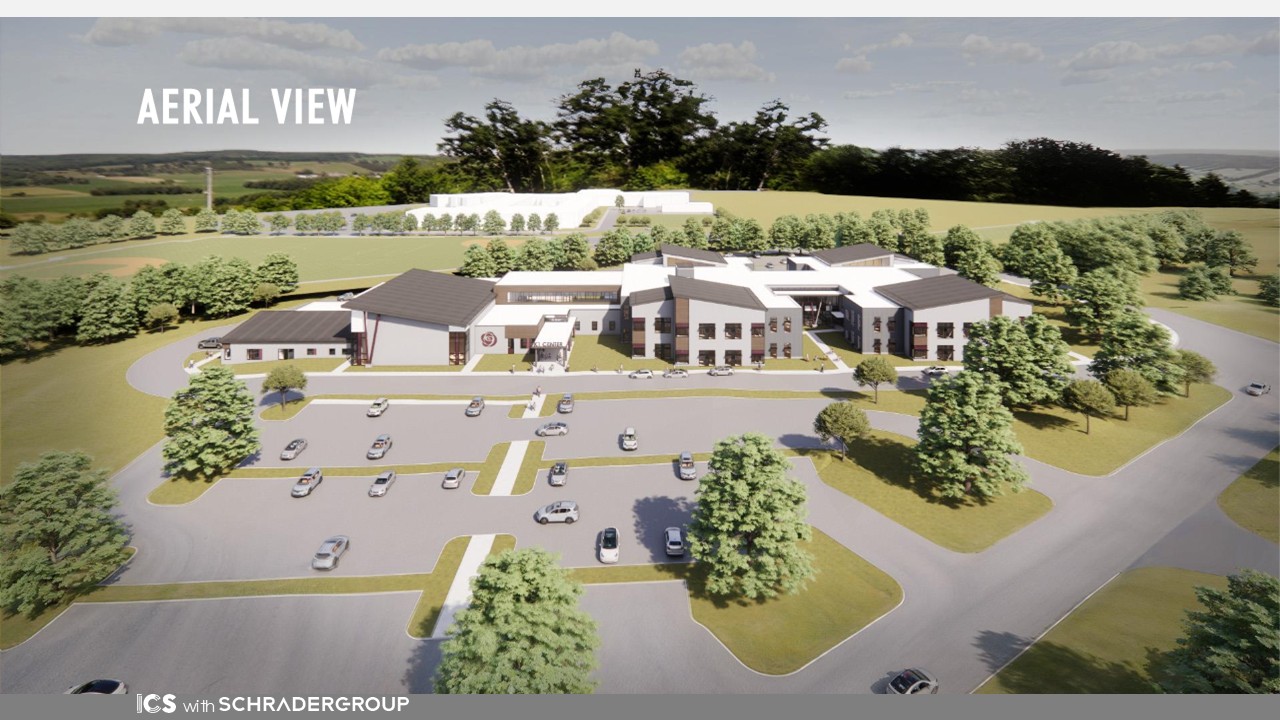
The Rose Tree Media School District, which serves families in Media borough and Edgmont, Middletown, and Upper Providence Townships, is proposing a new school for kindergarten and first grade students on an empty lot behind Penncrest High School. The district says the school will relieve overcrowding and allow Rose Tree Media to finally offer full-day kindergarten, bringing it up to par with neighboring schools.
Yet the proposal has not been welcomed by many neighbors in Middletown, who during nearly two hours of public comment on Tuesday raised concerns that the school would create dangerous driving conditions on key roadways, increase traffic, and burden taxpayers.
During the meeting, representatives from the school district presented traffic impact data to theplanning commission, an advisory board that will issue a recommendation to Middletown’s seven-membercouncil on whether the township should approve the project. The planning commission voted to postpone a recommendation voteuntil a later date, when the school district will be expected to provide more detailed traffic data.
The estimated cost for the school building is around $84 million, with an additional estimated $7.5 million for a proposed athletics addition. The realignment of Rose Tree Road will cost around $3.7 million, but is likely to be funded in part by grants.
The meeting was the latest development in a protracted process for the Rose Tree Media School District, which has been attempting, unsuccessfully, to build a new school for six years.
School officials say the district is overcrowded and unprepared for a wave of young students coming in the next decade.
The school district’s enrollment has risen steadily in the last 10 years, from 3,779 students in the 2015-16 school year to 4,319 in the 2025-26 year. Enrollment is expected to peak in 2032-33 with nearly 4,600 students. Student population growth has forced the district to adopt space-saving measures, including installing multiple modular classrooms.
!function(){“use strict”;window.addEventListener(“message”,function(a){if(void 0!==a.data[“datawrapper-height”]){var e=document.querySelectorAll(“iframe”);for(var t in a.data[“datawrapper-height”])for(var r,i=0;r=e[i];i++)if(r.contentWindow===a.source){var d=a.data[“datawrapper-height”][t]+”px”;r.style.height=d}}})}();
The new school would also allow the district to provide full-day kindergarten, officials say, as Rose Tree Media is one of the few remaining school districts in the region that only offers a half-day option.
During brief remarks at the beginning of the meeting, Rose Tree Media’s superintendent Joe Meloche said, “I think we all want the same thing ultimately, which is a plan that is safe, practical, and thatworks well for everyone.”
Yet dozens of Middletown residents, many of whom live in close proximity to the proposed school site, said they felt the project was misguided, poorly planned, and would add hazards to already congested roadways. Some recounted watching dangerous car accidents on the streets abutting the site. Others charged the district with failing to account for how many cars would be clogging roads during peak pickup and drop off times. Many said they disagreed with the concept of a K-1 center as a whole and asked the planning commission to require the district to come up with a different option.
“The site is too small, and student capacity is too great,” said resident Peter Wolf, who called the proposal “an oversized industrial project.”
Residents of Middletown Township line up to make public comment at an Aug. 11 meeting of the township’s planning commission. Dozens of residents spoke in opposition to a new K-1 school proposed by the Rose Tree Media School District.Denali Sagner
Resident Sally Turek said she agrees that the district needs full-day kindergarten, but that “there are definitely other, better options than this.”
“This is like planning for Disney World. We can’t afford Disney World. We don’t need Disney World,” Turek said. “This is not the right time to do this, nor the right place.”
A small contingent of parents spoke in favor of the proposal, describing the crowd as a vocal minority and saying that the residents who needed the school most, namely parents and their young children, were the very people who were unable to attend the evening meeting.
“The kids are here. They need a place to go, and this notion that we can move the fifth grade to the middle school does not solve the problem,” said Ron Peterson, parent of an elementary school student.
“Is this an ideal spot? Perhaps not,” Peterson said. “But there aren’t better spots available.”
The proposal in Middletown Township is Rose Tree Media’s second attempt to find a home for a new school. The school district proposed putting a new elementary school in Edgmont Township in 2023, a planthat was voted down by the township’s board of supervisors, who cited traffic and location concerns.
The planning commission will reconsider the proposal in September or October and has asked the school district to provide more detailed traffic data.
This suburban content is produced with support from the Leslie Miller and Richard Worley Foundation and The Lenfest Institute for Journalism. Editorial content is created independently of the project donors. Gifts to support The Inquirer’s high-impact journalism can be made at inquirer.com/donate. A list of Lenfest Institute donors can be found at lenfestinstitute.org/supporters.
Fourteen people have been charged in a cocaine trafficking case at Pennsylvania State University, the state attorney general’s office announced Monday.
The drug ring involved students’ purchasing large quantities of cocaine from Philadelphia and New York, cutting and packaging it at two fraternity houses, and distributing it to their classmates, prosecutors said.
The alleged ring was active from 2023 to 2024, when all but one of the defendants were students at Penn State. The other defendant is the father of one student, and he was charged with evidence tampering and hindering law enforcement’s investigation. At least four of those charged are still students at Penn State.
“This was a coordinated and highly profitable drug-trafficking crew revolving around two senior members of the fraternities, other fraternity brothers, and pledges,” said Attorney General Dave Sunday in a statement. “According to the evidence uncovered, cutting and packaging cocaine was, for some pledges, an indoctrination into the fraternities,”
The State College Police Department began investigating in September 2024, and used informants to purchase drugs on several occasions, according to a criminal complaint.
The two key suppliers for the group, Agostino Abbatiello, 24, and Thomas Robinson, 23, allegedly made regular trips to Philly and New York to acquire large quantities of cocaine. After Robinson was arrested, he told State College police he purchased cocaine from Abbatiello, including as much as one kilogram for $22,000 at a time, according to the complaint. Abbatiello eventually became known as the main dealer for cocaine on campus, it said.
The cocaine was packaged for distribution primarily at the off-campus Delta Upsilon and Sigma Chi fraternity houses, according to the complaint. Penn State has placed Delta Upsilon on interim suspension while the university’s Office of Student Accountability and Conflict Response investigates. Sigma Chi is not a registered student organization and receives no support from Penn State, the university said in a statement.
“We are horrified by these serious allegations against current and former students,” said Andrea Dowhower,Penn State’s vice president for student affairs. “Criminal activity, including hazing, such as this has no place at our institution, and we will cooperate with law enforcement in any way we can. We will continue to enhance our efforts around health and safety and hazing educational efforts for all our organizations.”
Abbatiello, Robinson, and threeother defendants are charged with felony conspiracy, possession with intention to manufacture or deliver a controlled substance, and other related charges. Eight defendants are charged with misdemeanor drug possession. Lawyers for Abbatiello and Robinson were not listed in court records.
Over the past decade, Penn State’s fraternities and their hazing rituals have been a source of campus misconduct and serious legal violations. In 2024, two fraternity leaders were sentenced to two to four months in prison for their role in the 2017 death of Timothy Piazza, a 19-year old Penn State student who died following a hazing incident while pledging Beta Theta Pi.
Piazza’s parents helped push for the successful passage of the federal “Stop Campus Hazing Act,” which requires institutions of higher education participating in federal student aid programs to report hazing incidents.
More recently, in April, Penn State suspended one fraternity for at least four years after it investigated reports of hazing. Since 2017, the university has fully suspended five fraternities, while four others are technically suspended by the university, but continue to operate with the support of their parent organizations.
An athletic director at a Mercer County school district has been charged with loitering and prowling after he leered into the bedroom window of his neighbor’s underage daughter, Plumstead Township Police say.
Winfield “Tripp” Becker, 48, was caught on a surveillance camera Aug. 6 looking into the window, according to the affidavit of probable cause for his arrest. The victim’s mother installed that camera after an unidentified man spent months knocking on the window at night and then “fleeing the area,” the document said.
Neither Becker nor his attorney, Thomas Logan, responded to requests for comment.
Becker lives one street over from the victim in Pipersville, according to court records, and is known to the girl and her family. He was charged via summons, and has a preliminary hearing scheduled for next month.
Becker is the athletic director at Hopewell Valley Regional School District, a district north of Trenton that serves about 3,400 students. In a letter sent to parents, Superintendent Rosetta Treece, without naming Becker, said a district employee was the subject of a criminal investigation, and had been suspended until the conclusion of that investigation.
Treece said the district was working to secure temporary staffing to fill the position.
Rebecca Foscolo acknowledges she was “extra spicy” at a Lower Merion school board meeting in June, when the board voted to repeal a policy that let parents like her opt their kids out of school-issued laptops and iPads.
Foscolo, who is part of a group of parents demanding that the affluent Montgomery County district scale back on screens, could not believe the board was moving ahead with the vote, after parents had pleaded for the option to say no to devices they said were imperiling their kids’ ability to learn.
“All these educated people are telling you you are doing something wrong, and you are sitting there and doing nothing,” Foscolo yelled at the board, while seated in a row in the Lower Merion High School auditorium.
Members of the district’s security came up to Foscolo, who left on her own.
Now she is no longer allowed to attend Lower Merion school board meetings in person, for a year.
After a second outburst during a board policy committee meeting on Aug. 3, Foscolo received a letter from the district’s solicitor, informing her she had violated Lower Merion’s civility policy.
A second parent in the Pencils Over Pixels group, David Smyth, said he had received a similar letter after the meeting.
In his Aug. 4 letter to Foscolo, Lower Merion solicitor Kenneth Roos wrote that at both the June 15 and Aug. 3 board meetings, she “displayed disruptive and bullying behavior, including yelling at school board members and administrators while they were conducting board business.” He said her conduct “contributed to the board needing to go into recess prior to the completion of each meeting.”
The district on Friday announced that its meeting on Monday night, when the board is expected to approve a new technology policy, would be virtual only “due to disruptions at two recent meetings,” as well as “threatening comments on social media pages.” It did not say what the social media comments were.
Foscolo, who shouted at the board that “the way you’re responding is ridiculous” after it cut off public comment on Aug. 3 before she had a chance to speak, accused the district of violating her constitutional rights.
“They’re basically just trying to bully me and silence me,” Foscolo said in an interview. She and Smyth were banned from attending school board meetings until June 30, 2027. They can watch meeting live streams and submit written comments, Roos said.
”While we would have preferred that everyone remained calm, and we recognize that the behavior may have been perceived as disruptive, we do not believe banning concerned community members from all future board meetings is an appropriate or productive response,” the group said in a statement.
In another statement, Pencils Over Pixels said it was “disappointed” by the decision to make Monday’s meeting virtual.
Any threatening comments “were not condoned by any member of this group and any threatening language is promptly removed,” the group said.
Is it legal?
First Amendment lawyers said the district’s actions in banning residents could be running afoul of their constitutional rights.
“Unless there’s a threat of violence, there’s really no basis” to ban someone from public meetings, said Sara Rose, deputy legal director of the ACLU of Pennsylvania. A person who is “truly disruptive” can be removed from a meeting, she said, and if the district referred the matter to prosecutors, a court could decide to ban the person.
“But the school district cannot unilaterally tell people they cannot attend future meetings,” Rose said, adding: “I haven’t found a single decision that says that’s permissible.”
The ACLU in November 2024 sued the Souderton Area School District after it banned two parents and a student from school properties, accusing them of threatening a school board member. The parents and student, who were part of a group of demonstrators protesting the board president, said they were wrongly accused, and the district lifted the ban in March 2025.
Melissa Melewsky, media law counsel at the Pennsylvania NewsMedia Association, questioned Lower Merion’s decision to end public comment after 45 minutes during its Aug. 3 policy committee meeting.
While governmentagencies are allowed to have guidelines for how long public comment can last, “there has to be flexibility,” Melewsky said. If there is not enough time to hear every person on a controversial issue, she said, agencies are supposed to schedule another meeting to finish the public comment, and “any proposed action has to be put off as well.”
Asked why the district believed its actions were legal, spokesperson Amy Buckman said that residents “were advised that intentionally disrupting a lawful meeting or the administration of a government function is a criminal offense in Pennsylvania.”
She noted the board’s policy for committee meetings includes a 45-minute time limit for public comment on agenda items, “unless extended by the board for special circumstances.”
Pencils Over Pixels said its members had been “assured by the board that the Aug. 3 meeting would be an opportunity to engage with the policy committee” and receive feedback to their questions about the district’s new technology policy.
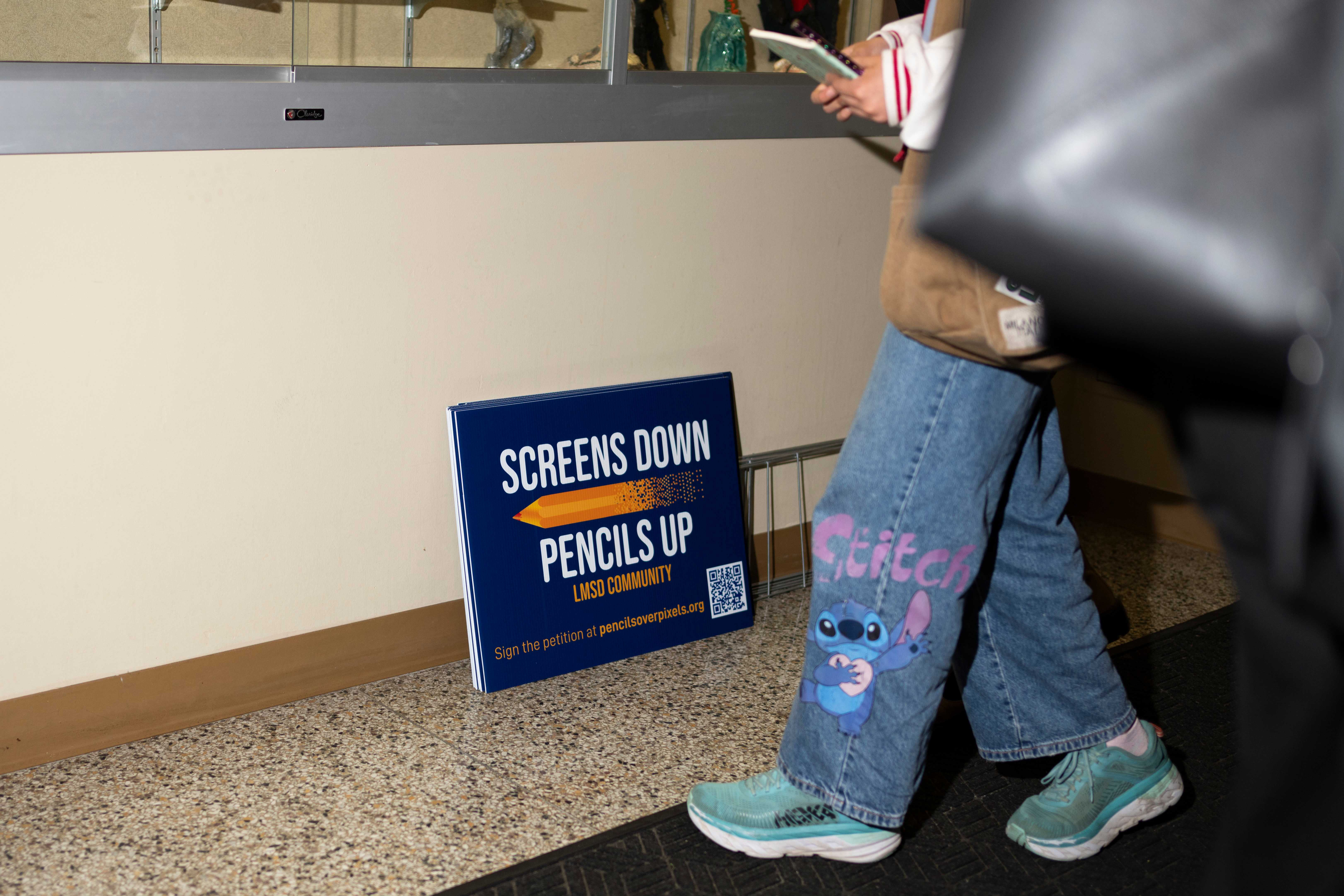
Signs reading, “Screens down, pencils up,” are seen a school board meeting at the Lower Merion School District Administration Building on Monday, May 11, 2026, in Ardmore, Pa. (AP Photo/Joe Lamberti)Joe Lamberti
While Pencils Over Pixels said it had urged its members to remain “calm and professional,” some “were rightfully upset that they were unable to engage in dialogue with the committee as promised,” the group said. “Unfortunately, their emotions governed their behavior.”
Frustrations around tech use
Lower Merion parents have been appearing before the board to complain about school technology use since the spring, describing kids focused on gaming or visiting inappropriate websites instead of doing schoolwork. Others have criticized the district’s use of educational technology programs as low quality, and say they do not want their kids doing reading and math on computers. Hundreds of parents signed a petition in favor of opting out of computers.
The district, which has said it is not possible to opt out of technology use, rescinded its policy allowing for that option and has been moving forward with a new version that places more limits on screens.
Under the policy, which the board is expected to vote on Monday, kindergartners and first and second graders will no longer be issued personal devices, while third and fourth graders will have personal logins to computers in the classroom. The policy includes new guidelines for screen time by grade, and district officials say there will also be new tools for teachers and parents to monitor kids’ internet usage.
Parents pushing for stricter limits have called for the district to release its contracts with educational technology companies and data on how long students are on screens during the school day.
They also want more say in how technology is used, including through the creation of a committee to review the district’s educational technology programs.
“They’ve not been really having good-faith personal conversations,” Smyth, who has a seventh and an eighth grader, said of the board.
Smyth, who went up to the microphone after the board said that public comment was over Aug. 3 and called on the board to answer how many speakers remained, said in an interview he was “only disruptive to insist on continuing public comment.”
Foscolo, who has a rising first grader and a 3-year-old, said that while she had previously addressed the board about the technology policy and had met with several board members, she had repeatedly asked to meet with the board’s president, Kerry Sautner, and the policy committee chair, Anna Shurak.
When Sautner responded, she told Foscolo to come to the Aug. 3 meeting, Foscolo said. She was frustrated she was not able to speak then.
To Foscolo, the board appears to be “placating” parents who have concerns about technology, rather than having genuine debate.
“You have a bunch of parents who want to help, and you’re like, ‘Don’t talk,’” she said.
Kensington High School students and staff are being relocated to the vacant Austin Meehan school building through the end of the calendar year, after an asbestos “concern” arose during an HVAC project, Philadelphia school district officials said.
While workers were installing a new heating and cooling system, “an asbestos inspector identified a concern about the demolition of the old system,” Oz Hill, the district’s deputy superintendent of operations, said in a letter to the high school community Thursday — a little more than a week before the new school year begins Aug. 24.
Hill said the district “immediately stopped the project and has been working cooperatively with the city’s Air Management Services and the Philadelphia Federation of Teachers while the building is thoroughly cleaned and air quality tests are conducted to show the space meets standards to be reopened.”
Arthur Steinberg, president of the PFT, said he was told that “a contractor broke into some space … disturbed some asbestos, and tracked it all over the building.”
“That essentially contaminated the entire building, by them moving around after the asbestos material was disturbed,” Steinberg said in an interview Friday.
Steinberg said the relocation to Austin Meehan, a vacant middle school in Northeast Philadelphia, would mean “turmoil.”
Austin Meehan, which closed in 2022, is more than seven miles away from Kensington High School.
In the message, Hill said the district had considered closer options, but they “did not meet the space or accessibility needs for Kensington’s more than 400 students and 90 staff.” He said “details about the schedule, transportation, and all logistics will be forthcoming.”
A district spokesperson did not immediately respond to a request for comment Friday.
Steinberg said the relocation “creates logistical nightmares for everybody,” with new commutes for staff and families.
“But it’s better than trying to make them occupy a building that’s contaminated with damaged asbestos,” Steinberg said. He said the PFT will be on site as Kensington staff report to Austin Meehan Monday to hear and address concerns.
The PFT also has an occupational hygienist at Kensington High School supervising the district’s work, to ensure the asbestos is properly cleaned up and tested, Steinberg said.
The union “will ensure that building is suitable for occupancy, or our members will not go back in,” he said.
Hill said the district “will also work to address other Kensington building needs, including maintenance repairs and the continued proactive removal of asbestos materials where we can minimize future risk of damage.”
“When Kensington students and staff return to the building in January, they will be welcomed back to a healthy, more comfortable space for learning,” Hill said.
Some Cheltenham families are anxious about the new school year that begins Aug. 31, because it feels like the last year, marked by uncertainty and pain for many, hasn’t ended.
After a 15-year-old football player was allegedly assaulted twice in the locker room last August and September, the community hung in limbo for months, with no punishments for anyone involved while district and county investigations rolled out.
Now, Cheltenham is heading into what would have been a fresh start just as a flurry of conclusions finally arrived: criminal charges for four coaches and six players, a grand jury report finding the district mishandled the assaults, and the superintendent’s resignation.
Five of those charged are set to appear at a preliminary hearing on Aug. 27.
“We are coming to school in the next three weeks. What is the plan for the morale of all the kids that have been affected?” Francis Brown, the parent of a senior, asked at a school board meeting this week. “Should the seniors expect to come and sit on the lawn for Senior Sunrise and see news cameras in their face?”
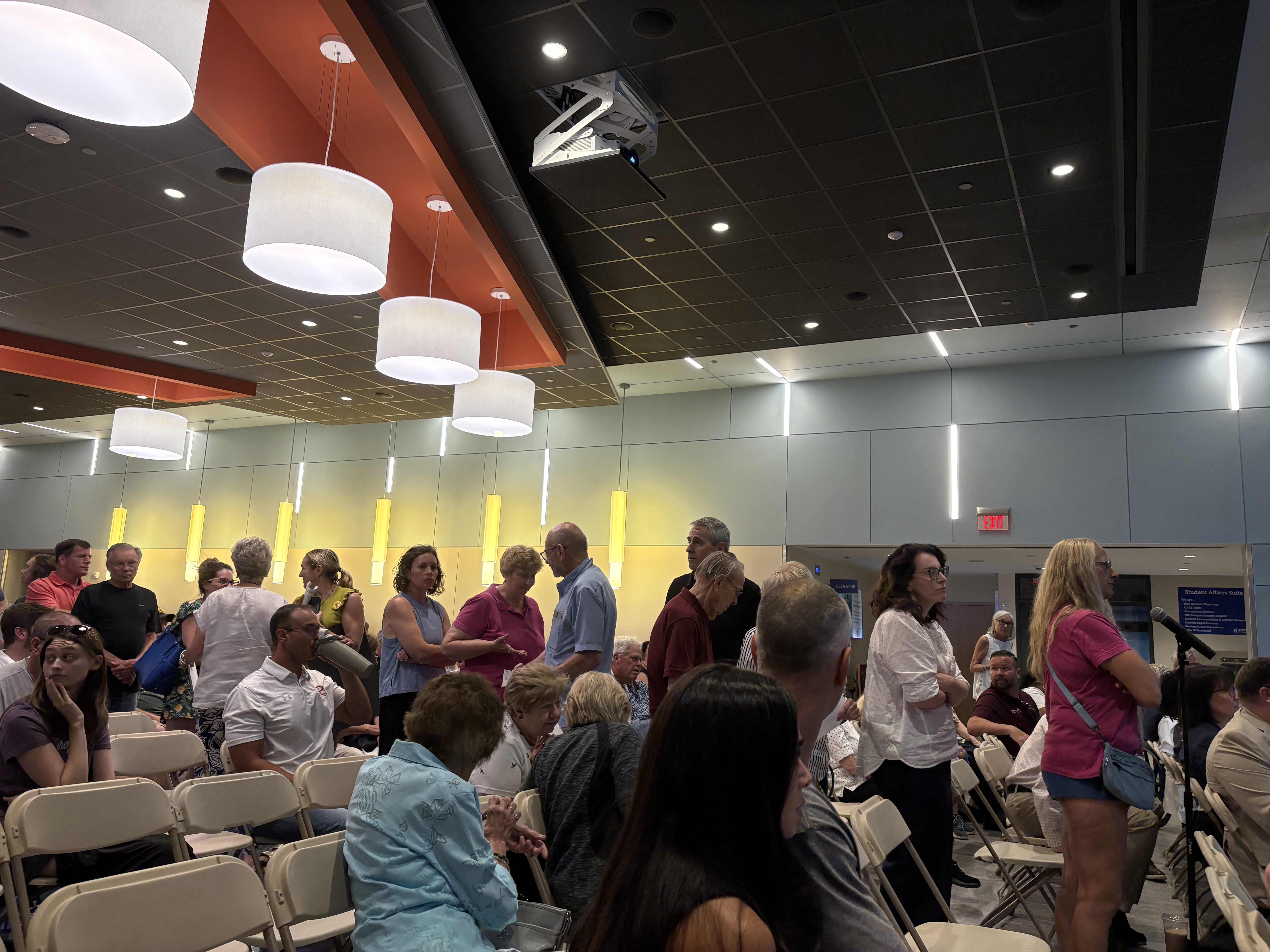
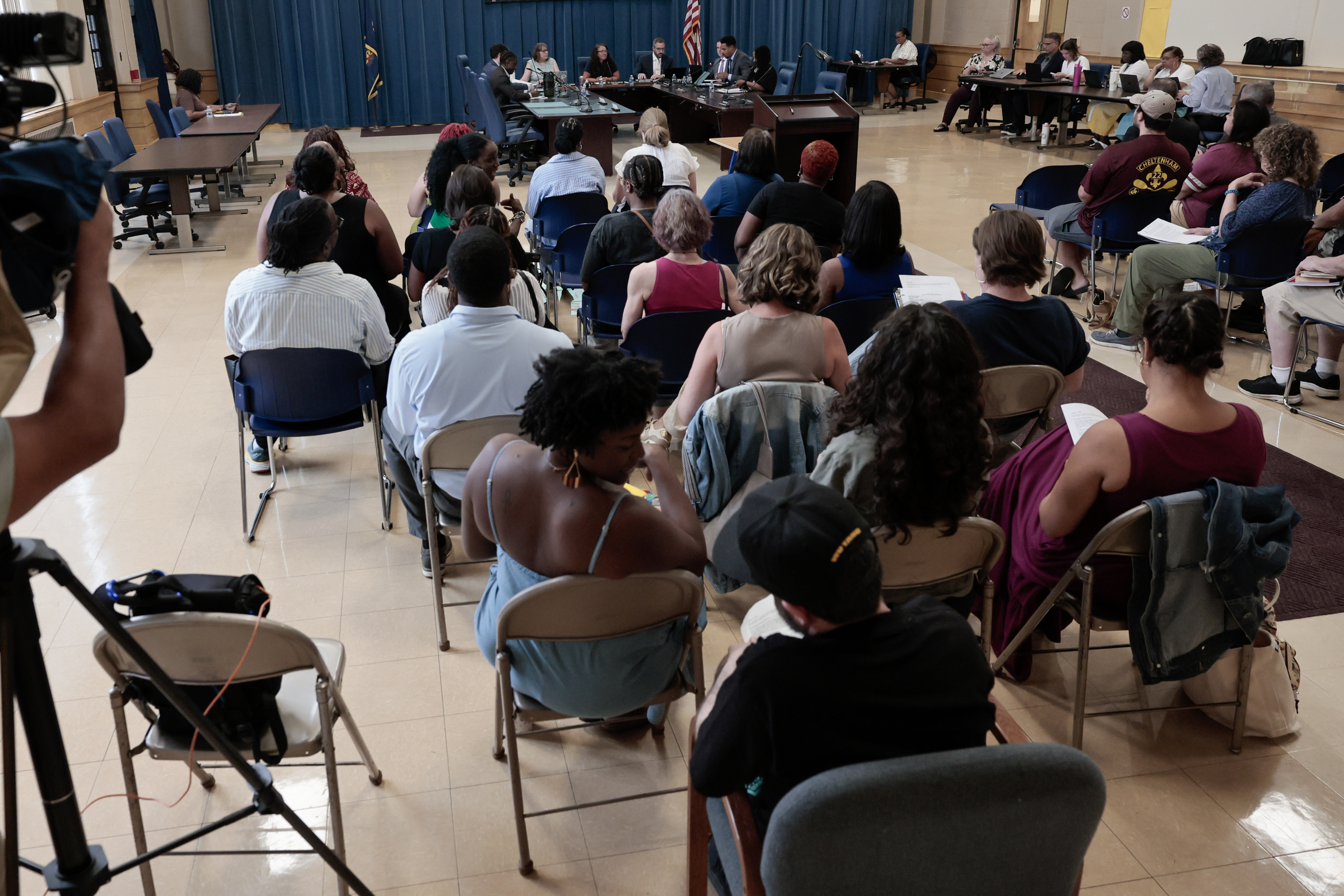
Some families are afraid to say they’re from Cheltenham, residents said at Tuesday’s board meeting, which was the first public forum for the school community since the charges were brought.
“Half our parents don’t want to wear anything that says Cheltenham on it, because they’re embarrassed,” Shelley Gaither, the president of Cheltenham Elementary’s parent-teacher association, said at the board meeting. “Because they get asked questions, they get looked down upon.”
And the interim superintendent Chris McGinley, whose selection was announced at the meeting, will lead an administration that many families say has repeatedly failed to address safety concerns across grade levels.
This year’s staff may include three people referred to the Montgomery County grand jury report as Employee #1, #2, and #3, one of whom texted about dissuading the victim’s mother from visiting the school. Texts also downplayed the assault allegations, according to the grand jury report.
The district has not answered questions about the status of the three employees.
Officials emailed parents on Aug. 13 that Vice Principal Mark Hoff — to whom the victim’s mother said she first reported the assault allegations — will be staying at the high school, instead of moving to Wyncote Elementary as planned, for continuity during a turbulent time.
The school board said Tuesday an outside attorney will be reviewing all safety policies and the board will review all sports programs in the district in the coming weeks.
The district has also enlisted the Bucks County Intermediate Unit to audit the human resources department, and Cheltenham is checking that all staff have current child abuse and criminal history clearances after the grand jury report found five of the coaches weren’t up to date last year.
But families are still worried what the school climate will be like in September.
“I asked [my kids] how they felt about going to school, and they’re nervous,” a member of the high school’s parent-teacher association said at the Tuesday meeting. “Not just for safety concerns, but for the environment of the school … My oldest said ‘I’m worried the teachers will be upset.’”
A coalition of parent groups presented a list of joint demands at the meeting that includes a town hall on school safety, first-day assemblies on sexual assault, hazing, and bullying by age group, and a community-wide survey assessing district leadership.
And the Saturday before schools starts, the Cheltenham African American Alliance plans to hold a “Together We Can Change Their Tomorrow” march at 8 a.m. from the administration building to the high school, president Ikysha Dearry announced Tuesday.
“We have to take back our power as people,” Dearry said. “We have kids who will be coming through these doors in the next two or three weeks.”
Staff writer Maddie Hanna contributed to this article.
This suburban content is produced with support from the Leslie Miller and Richard Worley Foundation and The Lenfest Institute for Journalism. Editorial content is created independently of the project donors. Gifts to support The Inquirer’s high-impact journalism can be made at inquirer.com/donate. A list of Lenfest Institute donors can be found at lenfestinstitute.org/supporters.
The board announced new leadership — with plans to appoint veteran educator Chris McGinley as interim superintendent — and an independent review of district policies, with recommendations to follow in 60 days.
But questions remain about how the board will respond to the district’s alleged mishandling of the situation, including by employees faulted in a grand jury report. Parents on Tuesday, including some who have alleged the district’s safety problems extend beyond the football program, voiced skepticism of the board’s promises.
The district will pay former Superintendent Brian Scriven, who resigned last week, as part of a separation agreement, according to a spokesperson, but terms have not been disclosed.
Here is what happens next as the board deals with the aftermath of the criminal charges announced two weeks ago, and the lack of confidence expressed by community members:
A former superintendent returns
The board said it plans to tap McGinley, a longtime educator who served as Cheltenham’s superintendent in the early 2000s, to lead the district following Scriven’s resignation.
McGinley, who more recently worked as an education professor at Temple University, will be appointed by the board at a special meeting Tuesday at 6:30 p.m., district spokesperson Kevin Kaufman said Thursday.
Chris McGinley, center, and Angela McIver, right, at a meeting of the Philadelphia Board of Education on Jan. 30, 2020.Charles Fox / Staff Photographer
McGinley, who began his education career as a teacher in Philadelphia, joined Cheltenham in 1999 as an assistant superintendent, where he oversaw efforts to address the district’s racial achievement gap. He then became Cheltenham superintendent, leaving the district in 2006 before becoming superintendent two years later in Lower Merion, which he led through 2014.
McGinley then served on the Philadelphia School Reform Commission, which oversaw the city’s schools while they were under state control. He was later named to the Philadelphia school board by former Mayor Jim Kenney, leaving the board in 2020.
McGinley could not be reached for comment Wednesday.
Scriven had received a new five-year contract in December. Kaufman said in an email Thursday that “the terms and conditions of Dr. Scriven’s separation agreement will be negotiated (in accordance with Dr. Scriven’s contract and applicable law) and approved publicly at a future meeting.”
An outside lawyer’s review
The board has enlisted Leigh Dalton, an education attorney based in York, Pa., with the Saxton & Stump firm, to review its policies and procedures and produce recommendations to the board in 60 days.
Board president Leah Mulhearn said Tuesday that the review would “include consideration of the grand jury’s findings and how to address them.”
None of those findings were discussed by the board Tuesday. In a scathing report accompanying the recommendation of criminal charges, the grand jury accused the district of “incompetence” while describing the actions of three employees at the high school.
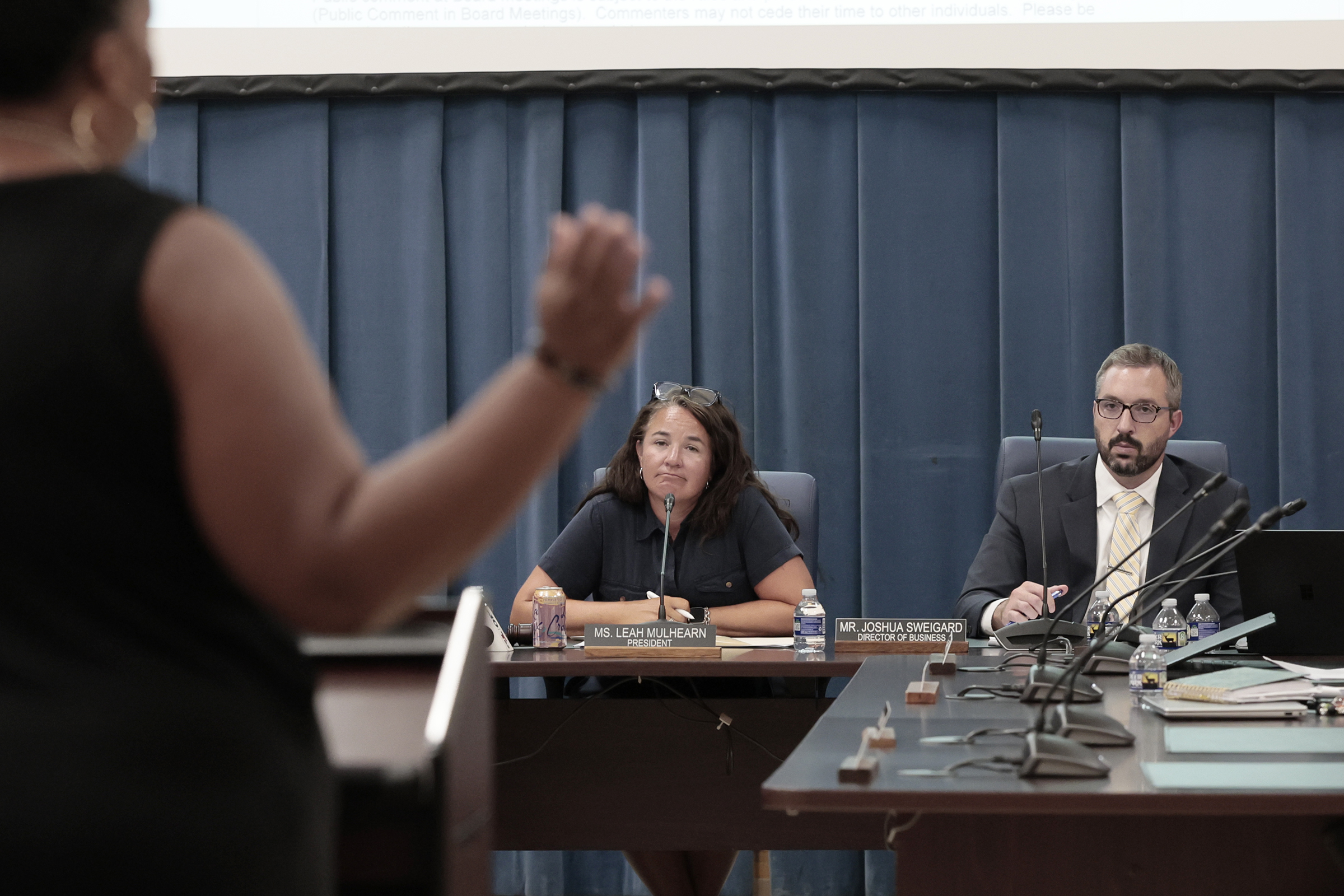
Taryn Knox (left) speaks to School Board President Leah Mulhearn and Director of Business Joshua Sweigard during the Cheltenham School Board meeting in Elkins Park on Tuesday, August 11, 2026. The school board was meeting for the first time since criminal charges against four football coaches and six players were announced, and since Brian Scriven resigned as superintendent. .Elizabeth Robertson / Staff Photographer
The trio — labeled in the report only as Employees #1, #2, and #3 — texted one another after the mother of the 15-year-old victim reported her son’s assault on Sept. 7. One said the student had a “chip on his shoulder” from not making varsity and said he had steered the mother away from coming to the high school in person.
The employees also indicated they trusted the head coach, Terence Tolbert, and did not believe the mother that Tolbert — who, along with three other coaches, has since been charged with conspiracy and endangering the welfare of a child — had instructed the victim not to tell his parents what had happened. The report said the district then included Tolbert in its investigation.
Asked about the status of the three employees, Kaufman said Thursday that the district “doesn’t comment on specific personnel matters.”
On Thursday, Cheltenham High School principal Benjamin Hammond informed families that Mark Hoff, who was vice principal at the high school last year but had been reassigned to Wyncote Elementary in July, would be returning to the high school this fall.
“Due to the heightened environment about student safety and culture, and acknowledging community concerns, the district has decided to continue Mark Hoff’s assignment as vice principal at Cheltenham High School,” Hammond said in a message to families, adding that Hoff would “provide stability this upcoming school year.”
“While communications between counsel are privileged, the board does intend to report out on the recommendations that she makes where appropriate,” Kaufman said.
Football is still canceled
The board will also be reviewing all athletic programs, “top to bottom,” Mulhearn said. And there is no timetable for when football, which the district already canceled in May, will resume.
“Football will not return until we address this, no matter how long it takes,” Mulhearn said.
Safety changes
Mulhearn said some safety changes were already underway. The district is “ensuring that all staff members have current criminal history and child abuse clearances on file,” she said. The grand jury report had said that at least five of the district’s football coaches last year were not up to date on clearances related to child abuse reporting requirements.
She also said the district was “communicating and reinforcing coach expectations and plans for improved locker-room supervision.” While there was an office in the football locker room, coaches did not use it last season, leaving players unsupervised, according to the grand jury report.
Cheltenham has “begun implementing” recommendations from an audit by the Center for Safe Schools, Mulhearn said. She also said the board had retained the Bucks County Intermediate Unit “to audit our human resources function.”
The Cheltenham school board meeting Tuesday, Aug. 11, 2026, in Elkins Park.Elizabeth Robertson / Staff Photographer
The criminal cases
Three coaches and the two players charged as adults by the Montgomery County District Attorney’s Office will face a district judge at a preliminary hearing scheduled for Aug. 27. (Ralph Burnley, the fourth coach charged, has not yet been arraigned in the case, and there is no indication he has hired an attorney. He did not respond to a request for comment.)
The four players charged as juveniles will face separate proceedings in juvenile court that are not open to the public.
At the preliminary hearing for the other defendants, prosecutors will present evidence to the judge to support the charges through witnesses. Defense attorneys will be given the opportunity to cross-examine those witnesses and make arguments to the judge for their clients’ innocence.
After the hearing, the judge will determine whether the prosecution has proved the validity of the charges and, if so, will send the cases to county court.
Staff writer Jess Rohan contributed to this article.