Category: Education

  • New Collingswood agreement opens playgrounds after school, grants $10.5 million to revamp athletic fields

    New Collingswood agreement opens playgrounds after school, grants $10.5 million to revamp athletic fields

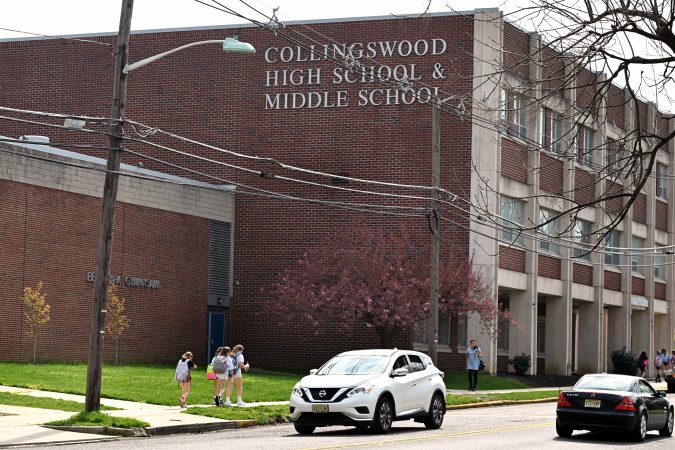
    A new agreement between the Collingswood Board of Education and Collingswood Borough approved this week will open the door for a $10.5 million renovation of the school district’s athletic complex.

    The three-person Collingswood Board of Commissioners voted in favor of the shared service agreement on June 17, and the 11-member Board of Education followed suit unanimously at its Monday meeting.

    The agreement aims to update the school district’s recreation spaces and give the borough more access to school properties formerly closed to nonstudents, including auditoriums, classrooms, and athletic fields.

    The public can now visit the district’s playgrounds and track facilities from 7 a.m. until dusk on days when students aren’t at school, including the summer months, weekends, and holidays. When school is back in session, those facilities will open when after-school activities end and close at dusk.

    The changes come just as the school district moves into its summer season, and months after the district announced that one of its elementary schools will not reopen next school year due to budget cuts.

    A new field, track, bleachers and more

    The $10.5 million renovation project for the athletic fields at Collingswood Middle and High School is financed by $15 million in bonded funds the borough authorized last spring for the redevelopment of fields and facilities in Collingswood.

    The new shared service agreement just lays out the formal framework for that collaboration and ensures the borough gets perks in return, like use of school property for July 4 celebrations and access to the new facilities.

    Amy Henderson Riley, one of Collingswood’s commissioners, said the agreement gives the spending a dual purpose.

    “When you work together, things can be kind of amazing. Everybody is being squeezed,” Henderson Riley said. “The word of the year is affordability.”

    The project proposal, presented in October at a community forum on Collingswood’s recent 310-page recreation master plan, has a long list of goals. The district wants to convert the current grass football field into a multisport artificial turf field and build a new eight-lane track, along with adding a grass softball field, a concessions building, new bathrooms, a 1,500-seat grandstand, a student press box, and more improvements.

    The firms involved so far include Remington & Vernick Engineers and Garrison Architects, Superintendent Fredrick McDowell said. A construction company won’t come on board until Collingswood and its school board publicize a bid package for construction work and review those bids at least 30 days later.

    McDowell said Wednesday the goal is to start the project as soon as possible, though there’s no timeline yet for when the project could begin or wrap up. Students will continue to use existing facilities in the meantime.

    A new grade school and park improvements

    The remaining $4.5 million in bonded funds from the borough will likely be split between improvements to Knight Park, a 70-acre green space in the middle of Collingswood, and the potential acquisition of a new upper grade school.

    The recreation presentation from October reported that $2.5 million of the $15 million bonded funds will go toward Knight Park upgrades.

    Henderson Riley said her fellow commissioner Jim Maley is overseeing the steering committee for the Knight Park project. Maley did not return requests for comment.

    The other $2 million could go to the acquisition of the former Good Shepherd Catholic School on Lees Avenue. The Collingswood School District has sought for years to convert Good Shepherd into an upper grade school building for fourth and fifth graders.

    Henderson Riley said there is currently no information to share on the status of acquiring Good Shepherd.

    The only way the school district could have afforded the athletic field renovations and these projects without collaboration with the borough is through a bond referendum, McDowell said, a vote at the ballot box to determine whether a school can borrow funds through the sale of bonds.

    In 2024, about 70% of Collingswood voters voted against a bond referendum that would have funded the athletic field redesign.

    It would have also closed two elementary schools and allowed the district to acquire Good Shepherd and convert it into an upper grade school. The referendum would’ve raised Collingswood residents’ property taxes, since that’s how bonds are paid back.

    One of those elementary schools, James Garfield Elementary, still closed due to budget cuts this week.
  • An educational program that helped uplift a million Pa. students is under attack

    An educational program that helped uplift a million Pa. students is under attack

    As president and chairman of a private school, we might seem out of place commenting on public policy. But recent state legislation that would undermine a vital Pennsylvania program — one that thousands of families and students depend on — compels us to speak up.

    Conversations about education often focus on learning loss and declining academic performance, but students at our school, Liguori Academy, are moving in the opposite direction. Our students often arrive several grade levels behind, but they quickly recover and often surpass their peers.

    And we have the numbers to back that up. This year, between 67% and 72% of our students, depending on grade level, demonstrated measurable growth in reading, gaining one and a half to more than two grade levels in a single school year. Many are now reading at a college level. In mathematics, between 58% and 74% of students also improved, with our ninth graders posting the strongest gains.

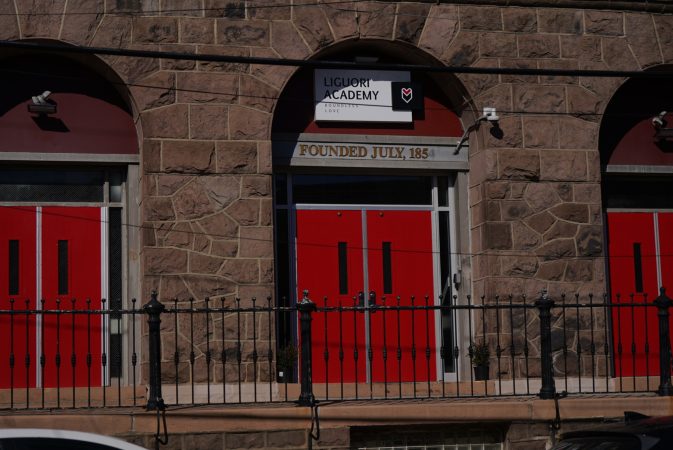
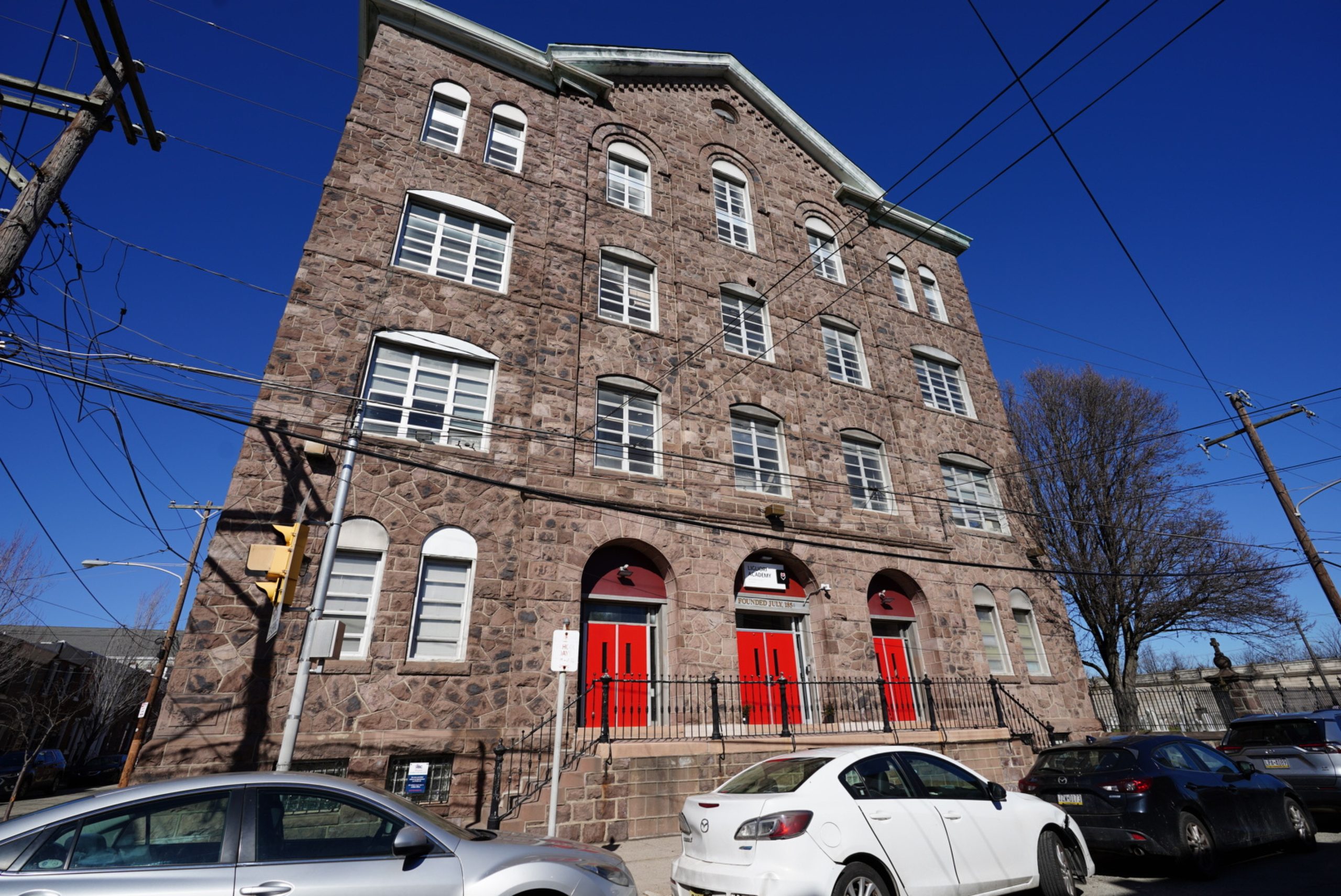
    Conversations about education often focus on learning loss and declining academic performance, but students at Liguori Academy are moving in the opposite direction, write Michael Marrone and Joseph Marano.Jessica Griffin / Staff Photographer

    Watching those students, who were so far behind academically, gain confidence, earn industry certifications, secure internships, and prepare for college and careers is a reminder of what is possible when students are given the support and opportunities they deserve.

    And what has made this educational growth possible? It’s simple, really: Pennsylvania’s Educational Improvement Tax Credit program.

    Unfortunately, state lawmakers may gut this life-changing program. The Pennsylvania House Education Committee passed legislation that would decimate the state’s wildly popular tax credit scholarship programs. Originally, House Bill 2632 proposed slashing $102 million from the Educational Improvement Tax Credit and robbing Pennsylvania kids of about 30,000 scholarships.

    A committee amended the bill to avoid the cuts, but the updated bill still cuts tax credit levels, eliminates supplemental scholarships, hamstrings student eligibility, and imposes onerous taxes and regulations on scholarship organizations.

    Critics of these programs — including many of the lawmakers sponsoring and supporting HB 2632 — will wrongly characterize this as a public vs. private issue. They claim the Educational Improvement Tax Credit “robs” funding from public education.

    But nothing could be further from the truth. Although it may appear like a line item in the state budget, the Educational Improvement Tax Credit doesn’t use public funds. Instead, it relies on donations to scholarship organizations and the donors who receive a tax credit for their charity. Without the generosity of these donors, the Educational Improvement Tax Credit wouldn’t exist. If it went away, so would the philanthropy that funds it.

    The timing of this bill is interesting, to say the very least. The Educational Improvement Tax Credit recently celebrated its 25th anniversary, having served more than 101,000 scholarships to kids across the state in conjunction with its partner program, the Opportunity Scholarship Tax Credit. Over their lifetime, these programs have awarded more than one million scholarships.

    Despite this volume, there aren’t enough scholarships to go around. Even after awarding a record-level number of scholarships last year, nearly 70,000 scholarships went unfulfilled. But this isn’t because the students weren’t eligible; rather, state-legislated caps limit the number of available scholarships.

    State lawmakers should take note: Pennsylvania families are demanding more, not fewer, scholarships.

    These scholarships change lives and fuel academic success. The Children’s Scholarship Fund Philadelphia, one of the largest scholarship organizations in Pennsylvania, commissioned a report showing scholarship recipients from both programs outperforming their public and private school peers academically.

    These scholarships provide equity for families struggling financially. The average household income for Liguori families, for example, is about $37,000, which is barely above the federal poverty line.

    None of this happens without the Educational Improvement Tax Credit.

    That is why what happened in Harrisburg recently should alarm every Pennsylvanian who believes every child — regardless of zip code or income — deserves a chance. This newly introduced legislation would take away much-needed scholarships not only from Liguori kids, but also from tens of thousands of Pennsylvania kids who worked hard to better themselves educationally.

    As school leaders, we understand and welcome accountability. If scholarship programs are going to continue, schools must be prepared to demonstrate strong academic outcomes, sound financial stewardship, and compliance with program requirements.

    But we have also seen the difference educational choice makes. We have watched students who arrived years behind their peers grow into young people ready for college and the workforce. That transformation is real — and the Educational Improvement Tax Credit made it possible.

    Pennsylvania should be building more doors like ours, not slamming them shut.

    Michael Marrone is the president and founder of Liguori Academy. Joseph Marano is chairman of the board of Liguori Academy.

  • Abington schools are reviewing security after a man charged with trying to rape a girl repeatedly entered the high school

    The Abington School District is reviewing security procedures after police charged a 25-year-old man with trying to rape a student who repeatedly let him into Abington Senior High School.

    Police charged Raeem Grange-Allen of Philadelphia on Friday with attempted rape by force and attempted statutory sexual assault, among other charges. The student, a 14-year-old girl, told police she had met Grange-Allen at the high school.

    Grange-Allen initially identified himself as a student and began communicating with the girl through text messages and social media, according to a police affidavit.

    Grange-Allen later asked the girl to let him into the school “and requested she perform oral sex on him behind a stairwell,” according to the affidavit. The girl told police she “saw him or let him into the school approximately three to four times.”

    In a message to families Tuesday, Abington Superintendent Jeffrey Fecher said the girl let Grange-Allen into the high school on two occasions in March, opening a back door during the school day.

    “Video footage shows he was wearing a hoodie and was able to briefly blend in as a student while moving in the hallways,” Fecher said.

    On March 27, Grange-Allen came to the girl’s home in Abington Township, where he held her down and attempted to rape her, according to the police affidavit. The girl screamed, and her mother caught Grange-Allen, according to the affidavit. The girl went to the police the next day.

    Fecher said there were “numerous unresolved questions about this man’s presence in the high school, as well as, where and when he initially encountered the victim.”

    The district is “launching a third-party internal investigation” and reviewing security protocols, Fecher said. While exterior doors are locked throughout the school day, “building occupants always have the ability to open them from the inside for evacuation purposes, as required by law,” he said.

    Fecher said the district would be working with the Montgomery County Department of School Safety “to determine whether additional security measures can be put in place.”

    “We share in the concern and shock that this information causes, and we are committed to addressing it effectively,” Fecher said.

    As of Wednesday, Grange-Allen was being held at the Montgomery County Correctional Facility on $250,000 cash bail.

  • The Spring-Ford school district is moving to fire a Spanish teacher supported by community members

    The Spring-Ford school district is moving to fire a Spanish teacher supported by community members

    The Spring-Ford Area School District is moving to fire an eighth-grade Spanish teacher over protests from parents and students who say she is being unfairly terminated.

    The school board voted Monday to approve a statement of charges surrounding the dismissal of an employee, who was not identified in board documents. The statement of charges was not made public, which is typical procedure for school district personnel matters.

    But numerous supporters of Jasmine Ewing, including her husband, spoke out at Monday’s meeting against the dismissal, describing “Señora Ewing” as a passionate and dedicated educator who had positively impacted their lives.

    They also urged the board not to fire her over what some characterized as false accusations.

    “What foundation are we setting for the kids to know that they can retaliate against a teacher who is trying to hold them accountable for extremely inappropriate actions?” said Miranda Dombrosky, a 2010 Spring-Ford graduate and district parent.

    Dombrosky, who described herself as a friend of Ewing’s, referred to a student who had “bragged about getting a teacher fired” and accused the district of punishing “an innocent teacher.”

    Tamika Jeter, a district parent who credited Ewing with fostering her son’s enthusiasm for learning Spanish, told the board “it would be a big mistake to let a small thing that was considered playful among students cause her to lose her job.”

    Erin Crew, a district spokesperson, said Tuesday that “out of respect for the students and families involved, and because this is an ongoing personnel matter, the district will not comment on matters related to an individual’s employment.”

    The resolution approved by the board Monday “authorizes moving forward with a statement of charges while providing all due process rights required by law,” Crew said.

    As a result of the board’s vote, Ewing plans to request a public evidentiary hearing, her husband, Brian Ewing, said at Monday’s meeting.

    Brian Ewing told the board that he and his wife had “statements and factual information that directly dispute these claims against Jasmine, and raise serious concerns about this process.”

    “If the district insists on dragging this forward, the public will see what was done, who did it, and why it never should have happened,” said Ewing, who said his wife was not present Monday because she was leading students on a trip to Costa Rica.

    At a school board meeting the week before, at which supporters also spoke on her behalf, Jasmine Ewing said it was “devastating to stand here facing termination” after devoting herself to her teaching career.

    As a Latina, she said, “Spanish has always meant something deeper to me,” and she viewed her job as not just an educator, but a “cultural ambassador.” She said the support shown by community members was a “legacy I will carry with pride for the rest of my life.”

    Some supporters told the board that Ewing was an asset to the district as a teacher of color, providing valuable representation.

    Former students like Sofia McClintock said Ewing had broadened their horizons through international trips she had led.

    “Teachers who truly care are not easy to replace,” McClintock said. “They are the teachers that students remember years after leaving their classrooms because of the difference that they made, and that is Señora Ewing for me.”

    While supporters of Ewing dominated the school board meetings Monday and last week, one former student spoke out against the teacher, accusing Ewing of participating in antisemitic bullying.

    The student, Kayla Woodman, who graduated from Spring-Ford earlier this month, said that when she had Ewing for Spanish in eighth grade, boys repeatedly harassed her for being Jewish, including through a “Heil” chant.

    Ewing, Woodman said, not only did not tell the boys to stop, but “joined in and laughed.”

    It was not clear whether Woodman’s accusations were connected to the reasons the district is now seeking to dismiss Ewing.

    Woodman, who described the experience as “some of the darkest times in my life,” said that she had been afraid to go to administrators and that her parents had had a private conversation with Ewing.

  • The Norristown school board plans to hire Delaware’s Superintendent of the Year

    The Norristown school board plans to hire Delaware’s Superintendent of the Year

    The Norristown school board plans to vote Monday to hire Delaware’s Superintendent of the Year as the district’s next leader.

    The board announced Sunday that it had selected Dorrell Green, the superintendent of the Red Clay Consolidated School District in New Castle County as its pick for superintendent.

    Green is expected to start as superintendent in the Norristown Area School District on July 20, under a five-year term with an initial salary of $270,000, according to an agenda for Monday’s meeting.

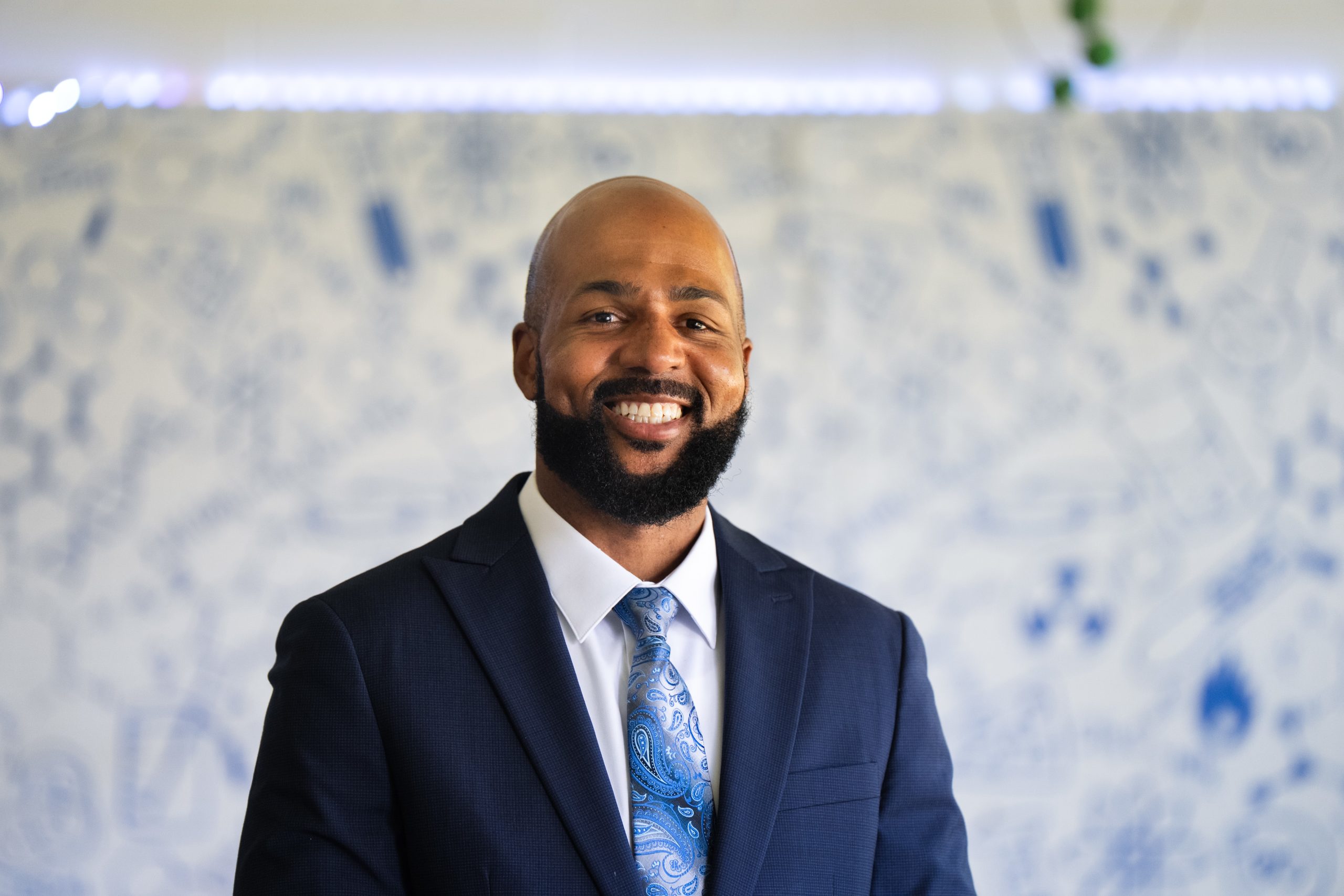
    Dorrell Green, the superintendent of the Red Clay Consolidated School District in New Castle County, Del., is to join Norristown Area School District as superintendent on July 20, 2026.Red Clay Consolidated School Dis

    Green’s selection comes after the board, which has a new majority after November’s school board elections, moved this spring to oust Superintendent Christopher Dormer, citing poor test scores. The board has since sparked controversy with other changes, including eliminating its DEI director.

    Throughout the superintendent search process, “our community made it clear that they were seeking a visionary leader who is committed to student achievement, educational excellence, and meaningful engagement with all stakeholders,” the board’s president, Jeremiah Lemke, said in a statement.

    He said Green’s “experience, leadership record, and commitment to serving diverse school communities” set him apart during a search process that was led by a consulting group and attracted 88 applicants.

    Green has worked in public education for more than 25 years, including as a teacher, principal, and assistant superintendent.

    In Red Clay, Delaware’s largest school district with 15,000 students, Green has served as superintendent since 2019. He expanded early childhood education during his tenure there and increased access to advanced course work, according to the Norristown board.

    Before that, Green was the first executive director of the Delaware Department of Education’s Office of Innovation and Improvement, an office created by former Delaware Gov. John Carney to support the state’s neediest schools.

    Green has a bachelor’s degree in elementary education and master’s degree in educational leadership from the University of Delaware. He has a doctoral degree in organizational leadership from Wilmington University.

  • How Haverford High’s national teacher of the year is coaching aspiring teachers, on topics from racism to connecting with students

    How Haverford High’s national teacher of the year is coaching aspiring teachers, on topics from racism to connecting with students

    As the newly appointed National Teacher of the Year, Haverford High School’s Leon Smith has been celebrated on television: from CBS Mornings and Good Morning America to the Kelly Clarkson Show.

    But as the lone Black teacher when he started teaching at Haverford 25 years ago, Smith got a different reception. He experienced racism, he told a group of young people interested in teaching, and if it weren’t for a Black vice principal that listened and supported him, he might not still be teaching today.

    “She would just be very honest with me, and be like, ‘First of all, you’re an excellent educator. … Keep being you. Somebody calls and says something crazy, I’m just hanging up,’” Smith told teaching fellows gathered in Germantown on Wednesday with Breakthrough of Greater Philadelphia, a nonprofit that trains aspiring teachers to lead enrichment programs for middle-school students.

    The event, sponsored by the Equitable Foundation, was just one of many for Smith during his yearlong stint as Teacher of the Year, a platform he was awarded in April by the Council of Chief State School Officers. In that role, he’s spending the year traveling the country to advocate for the teaching profession and growing its ranks.

    Smith, who teaches Advanced Placement U.S. History and Advanced Placement African American Studies at Haverford, spoke passionately to the fellows Wednesday about his motivation to be the teacher he didn’t have growing up, and the immense impact teachers can have on students’ lives — presenting the profession as a deeply rewarding opportunity to help kids recognize their talents.

    But he was also honest about the challenges. Fielding questions about his career from fellows gathered in an auditorium on the Germantown Friends School campus, Smith said he had struggled to find his way as a new teacher, staying up too late trying to perfect lessons.

    He described the sometimes lonely experience of being his predominantly white high school’s only Black teacher, and how he developed strategies to respond to racism, including learning when to walk away and when to speak out.

    He told fellows to find supportive colleagues and to be selective when they considered job offers.

    “Do your research. Make sure it’s a space that’s going to take care of you,” he said.

    Smith also described feeling self-conscious when he was younger about some of his lessons — worrying that students would say, “‘Oh, all he does is talk about Black history,’” Smith said. But he began hearing from students about how grateful they were to have learned about subjects that hadn’t been covered in other classes; an audit later identified African American studies as a class community members wanted to see added.

    ‘My why’

    His comments resonated with the teaching fellows, some of whom said they’re committed to careers in education.

    Dominique Sidae, a 23-year-old rising senior at Florida A&M University, is planning to become a special-education teacher. She said she was inspired by her appreciation for a teacher who helped her younger brothers, who have autism.

    Sidae said she is often the only Black person in teaching spaces. “It feels good to know this isn’t only happening to me,” she said. “You don’t really learn that in college.”

    Dominique Sidae, 23, a fellow with the Breakthrough of Greater Philadelphia, listens to a talk by Leon Smith last week.Jessica Griffin / Staff Photographer

    Miles Baldwin, an 18-year-old graduate of Harriton High School in Lower Merion, isn’t sure he wants to become a teacher. But he enjoyed working with students last summer in the Breakthrough program — “a lot of kids came in hating it, and left wanting more,” he said — and Smith’s pitch about being a mentor was compelling to him.

    “Honestly, yeah,” he said, when asked if hearing from Smith made him more interested in teaching.

    That’s part of the goal of Smith’s role as Teacher of the Year, as a dwindling pipeline has challenged recruitment efforts.

    Smith’s agenda this summer includes attending the National PTA Convention in Pittsburgh and giving a keynote speech at the Smithsonian’s National Education Summit. He also will be joining other state teachers of the year at Space Camp in Alabama and participating in professional development.

    But addressing the Breakthrough teaching fellows Wednesday “reminds me of my why,” Smith said in a brief interview. He said the fellows’ eagerness to ask questions “shows they want to be the best they can be,” and reflects qualities of good teachers: “You have to be curious, sometimes silent … often humbled,” Smith said.

    Leon Smith, a teacher at Haverford High School, was named National Teacher of the Year this spring.Jessica Griffin / Staff Photographer

    Teaching students to lead

    In a model lesson after his talk, Smith put some of those skills on display. He started by gathering the 34 fellows in a circle, asking them each to share their name and a brief story about it; the group periodically broke into laughter at humorous anecdotes.

    Smith then outlined the objectives for his lesson about assessing the credibility of sources. He passed out copies of a photo, asking fellows to silently write and then discuss in small groups whether it provided strong evidence of the Fukushima power plant explosion.

    “I always tell my students, you want to be a leader,” Smith said, encouraging fellows to stand by their analyses, even if others disagreed. He then called on people, asking them to explain their thinking while challenging some of their points.

    Leon Smith talks to fellows at Breakthrough Collaborative last week.Jessica Griffin / Staff Photographer

    Matt Greenawalt, co-dean of faculty for the Breakthrough summer program and a teacher at Germantown Friends — which supports Breakthrough — was planning to breakdown Smith’s approach for the fellows after the lesson. He noted how Smith was walking through the room, engaging with the fellows as they talked, and Smith’s ability to affirm and redirect them when an answer wasn’t on point.

    Smith’s visit came on day three of a two-week orientation for the fellows, before they would begin teaching students during Breakthrough’s six-week free summer program.

    While access to academics is key for the program’s students, many of whom come from Germantown, “a big piece of it too is having role models,” Greenawalt said.

    Smith told fellows that when the students arrived, “they’re going to just admire you so much.”

    “You’re going to be able to see the light inside of them, and sometimes it just takes someone else to notice, right? … They’ll just kind of be doing their work, and then as you get to know them, you’ll notice certain characteristics and you’ll just pour into it.”

    What really helps make a connection with kids, Smith said, is “just you being yourself.”

    “You walking in there and walking in your own life, and bringing your passion and all the reasons why you wanted to become a teacher,” he said. “Your students are going to feel that.”

  • Vineland schools are allowing teachers to wear jeans and dress more casually for the end of the school year

    Vineland schools are allowing teachers to wear jeans and dress more casually for the end of the school year

    Vineland’s public school teachers are having an easier time with the question of what to wear to work — at least for the final days of the school year.

    In a move to boost morale in the South Jersey school system and make teachers’ lives easier this spring during a hectic testing period, the district eased its dress policy to allow denim jeans until the end of the school year on June 25.

    Teachers love it and hope it will continue in September.

    “It’s one small way to make the world of work a little friendlier,” said Vineland Education Association president Louis Russo, a social studies teacher. “It’s one small thing off of their shoulders.”

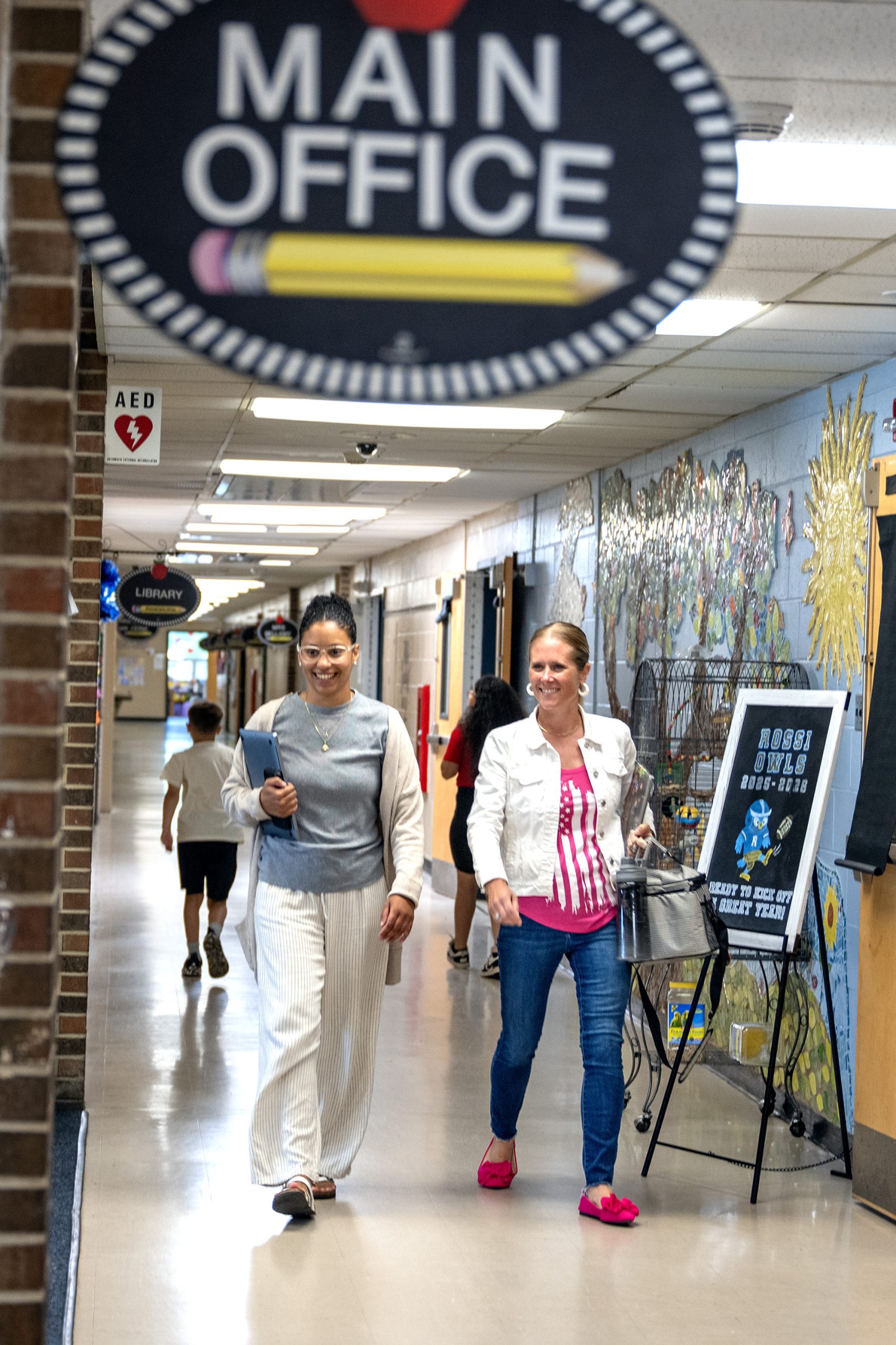
    Teachers Andrea Ruiz (left) and Elaine Petrini (right) at Rossi Elementary in Vineland on June 9. The teachers are allowed to wear jeans until the end of the school year.Tom Gralish / Staff Photographer

    School board president Cedric Holmes said the Cumberland County district notified employees when they returned from spring break in April that they could wear jeans any day of the week under a pilot program.

    Holmes said there had been rumblings among staff because the district — the largest in Cumberland County, with 11,000 students — had to extend the school year to make up snow days. Vineland‘s June 25 last day of school is among the latest in the region.

    The months following spring break are among the toughest with students undergoing standardized state testing, Holmes said. There are also end-of-the year field trips and outings when it makes sense to allow more relaxed clothing, he said.

    “It was important to the board that staff felt that we saw the stress of all of that of this as a practical way to give a morale boost for the end of the year,” Holmes said.

    Teachers typically dress a bit more formally for school. According to Vineland’s policy, female teachers must wear skirts, slacks, skorts, or dresses with blouses or sweaters, or school uniform. The skirt, skort, or dress should not exceed three inches above the knee.

    Male staffers can wear suits or slacks with jackets and ties, sweaters, school uniform, or sports or dress shirts. Deemed unacceptable for both are sneakers, flip-flops, bedroom slippers, combat boots, and work boots. There are exceptions for teachers attending field trips or who work in specialized areas such as health and physical education or arts.

    The district also has a uniform policy for students, but Holmes said that has been relaxed and the board also plans to reexamine that policy.

    New Jersey’s 600 school districts set their own policies for staff and students.

    Steve Baker, a spokesperson for the New Jersey Education Association, which represents 200,000 teachers and support staff, said the union supports the efforts in Vineland “to develop policies that help create a positive learning and working environment for students and staff.“

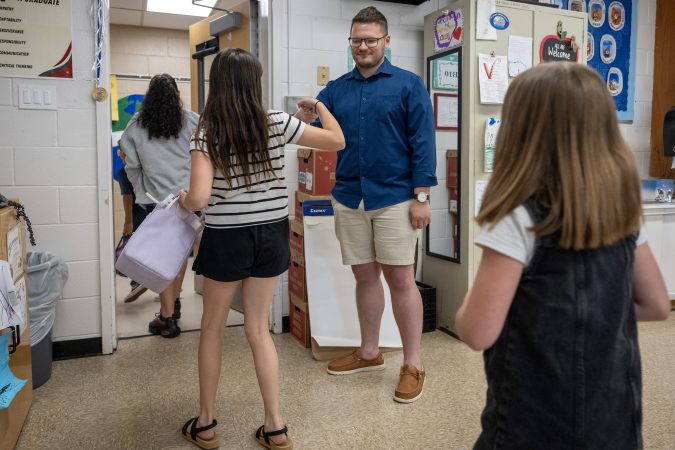
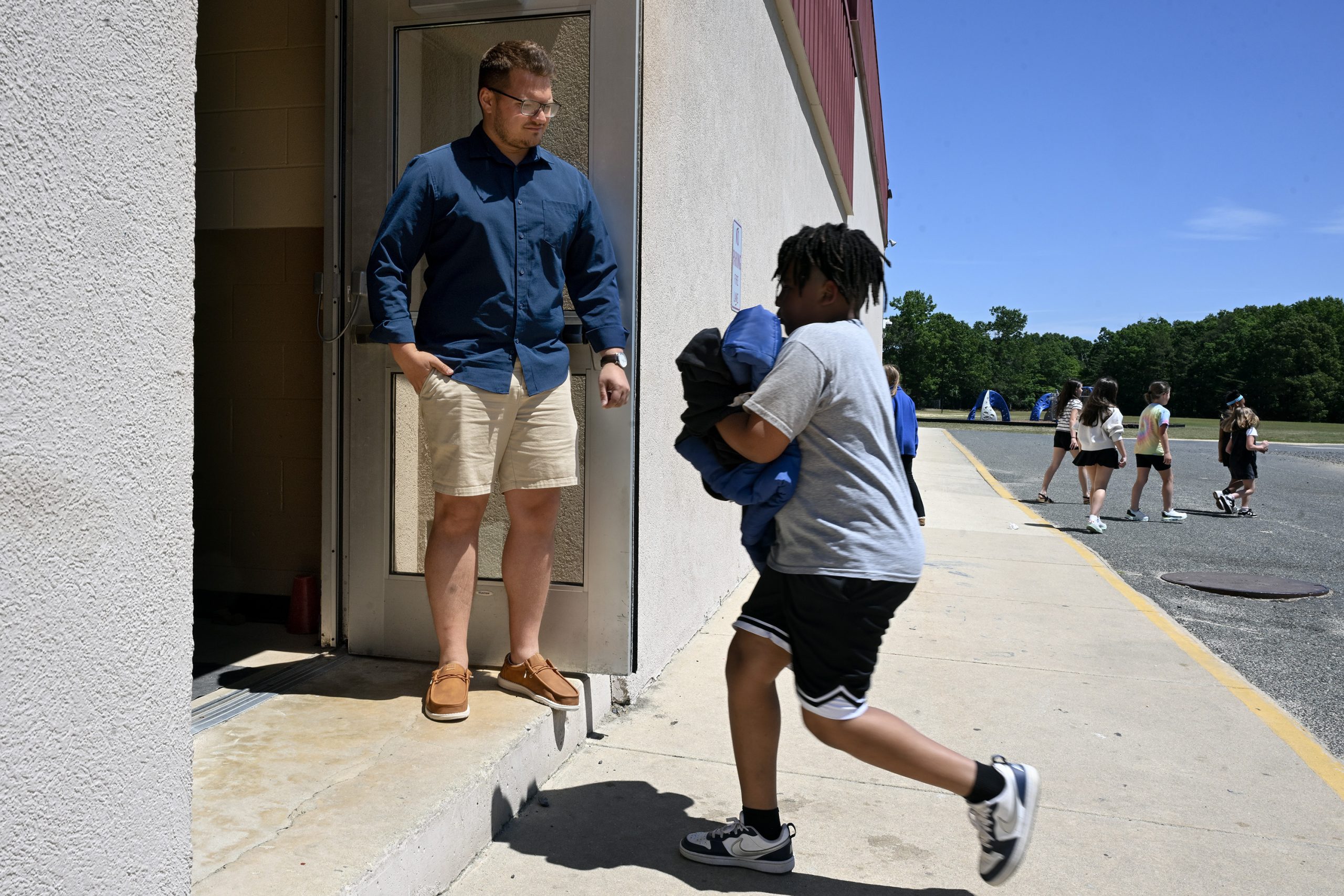
    On a busy morning last week at Anthony Rossi Elementary in Vineland, third-grade teacher Jeffrey Martine stood in front of the class dressed in khaki shorts, a button-down blue dress shirt, and slip-on loafers. As an added bonus, it was a dress-down day, which allowed teachers to wear casual attire beyond jeans.

    Jeffrey Martine, a teacher at Rossi Elementary in Vineland, greets a student at the school last week.Tom Gralish / Staff Photographer

    “If you do your job well, you have to be able to move,” Martine said. “I’m all about comfort.”

    Students in Martine’s gifted and talented class were spread around the room working on a project in small groups. Some sat at desks making posters, while others were stretched out on the floor.

    “I don’t think professionalism and comfort are mutually exclusive,” Martine said. “Teachers should be judged more on how they interact with their students than the pants they select.”

    Holmes acknowledged the dress code was outdated and revisions are needed. The board plans to review the changes implemented this spring and may allow teachers to wear jeans during the new school year, he said.

    “It was time for a change,” said Kaitlynn Rossi, a long-term substitute teacher. “People don’t dress like that.”

    Teacher dress codes have evolved nationally over the years, especially during the pandemic, when more casual attire was the norm.

    Based on responses from teachers around the world, the website We are Teachers in 2024 compiled a list of “16 Ridiculous Dress Code Rules for Teachers You Won’t Believe Are Real.” The list included prohibiting hats, capri pants, pants with pockets, UGGs, hoodies, or dark underwear.

    In Philadelphia, where classes ended last week, there is no system-wide dress code for staff. Arthur Steinberg, president of the Philadelphia Federation of Teachers, which represents about 14,000 teachers, counselors, nurses, secretaries, and other workers, said employee dress typically does not come up as an issue.

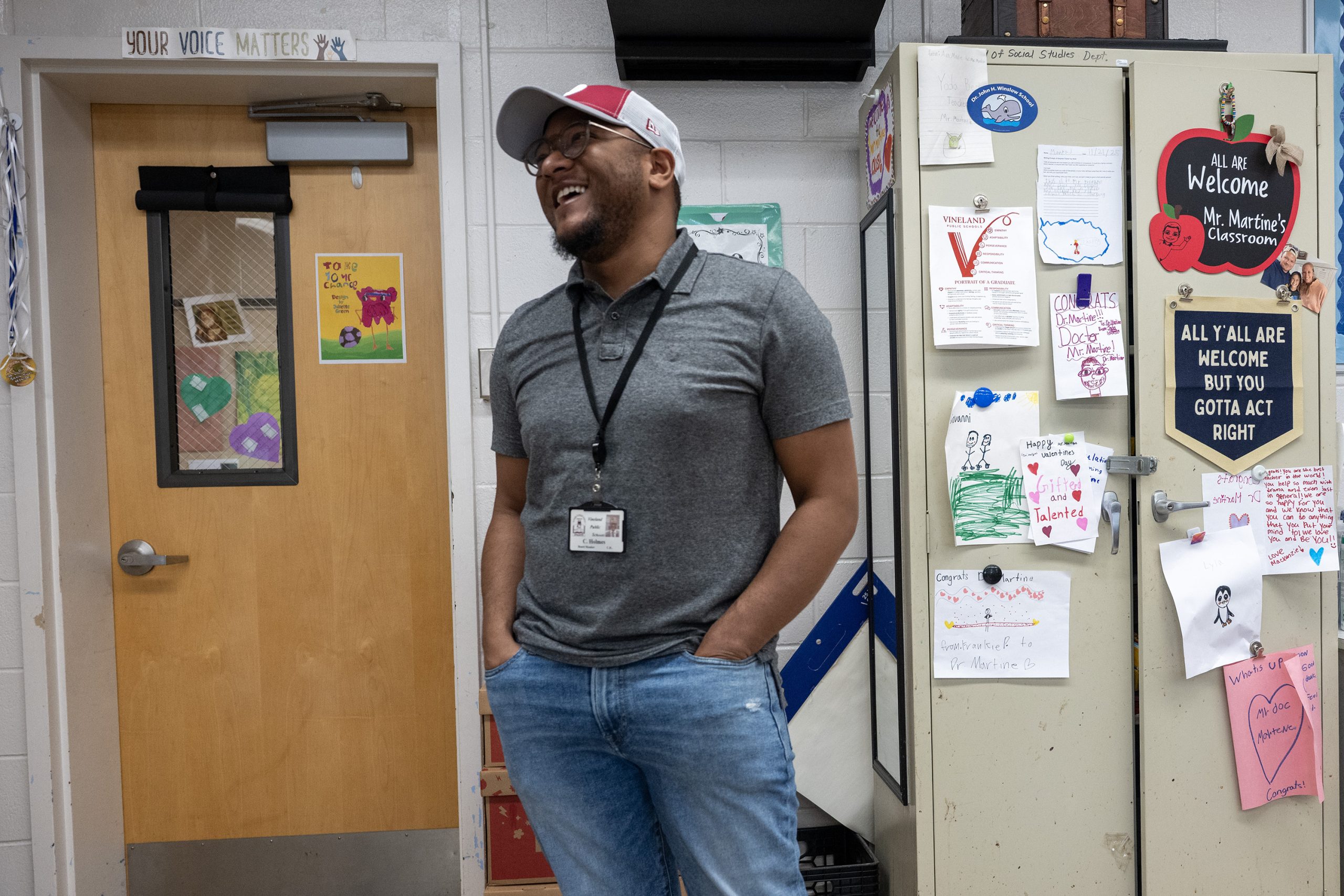
    School board president Cedric Holmes at Rossi Elementary in Vineland last week. Holmes said the teacher dress code policy was relaxed in an effort to improve morale at the end of the school year.Tom Gralish / Staff Photographer

    Holmes said teachers have responded well to the changes in Vineland and there have been few infractions, like torn or ripped jeans.

    Before Vineland implemented the pilot dress code, teachers were allowed to wear jeans only for special days. The schools sponsor fundraisers that allow teachers to pay $2 to wear jeans. Students are allowed to wear jeans on dress-down days determined by their school principal, and they do not have to pay.

    Fourth-grade teacher Andrea Ruiz said dressing more casually helps her students see her differently. A sign in her classroom says: “Be the best version of you.” She enjoys sitting with students on the carpet in her classroom or playing kickball on the playground.

    “We’re meeting them where they are,” said Ruiz, who was wearing a gray T-shirt and striped pants. “It’s definitely something different for us.”

    Teacher Kaitlynn Rossi with students at Rossi Elementary in Vineland last week.Tom Gralish / Staff Photographer

    Timothy Purnell, executive director of the New Jersey School Boards Association, said a decision as simple as allowing jeans can have an impact on the learning environment.

    “If jeans support a positive environment during testing, that’s a local call we respect,” Purnell said.

    Russo believes a less-stringent dress code will help attract and retain younger teachers amid a national teacher shortage. He wants them to still dress in a manner that gets respect from students.

    “We just have to find the right balance,” Russo said.

    Staff writer Kristen A. Graham contributed to this article.

  • The Philly school board voted to nonrenew a charter run by a veteran administrator

    The Philly school board voted to nonrenew a charter run by a veteran administrator

    The Philadelphia School Board voted Thursday to nonrenew a charter school run by a veteran former district administrator, pointing to poor test scores and operational problems.

    The board voted 8-0 to nonrenew Global Leadership Academy Southwest at Huey, a charter run by Naomi Johnson-Booker, who operates another GLA charter in West Philadelphia. Board member Whitney Jones abstained, citing personal reasons.

    Charter schools are publicly funded but independently managed. In Philadelphia, about one-third of public school students attend brick-and-mortar charters.

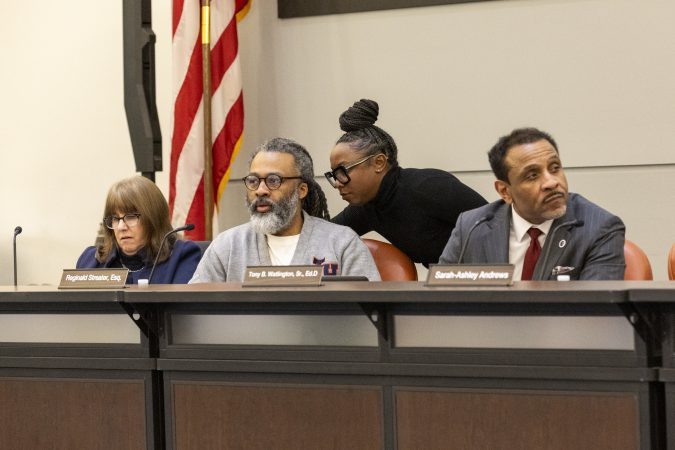
    “We have a responsibility that is clear … to protect every child’s right, civil right, to a high-quality public education,” said the board’s president, Reginald Streater. He noted that GLA Southwest, a K-8 enrolling close to 600 students at 52nd and Pine Streets, has posted poor academic performance, with only 7% of students scoring proficient or advanced in math on the Pennsylvania System of School Assessments in 2025.

    The school also has poor student attendance, and has not met district governance and financial standards, with conflicts of interest in counsel representation, insufficient cash on hand, and “questionable financial payment plans,” Streater said.

    Noting GLA Southwest’s status as a Renaissance school — a former district school handed over to charter management a decade ago as part of an initiative to turn around failing schools — Streater said it was the board’s obligation “to do everything we can to create seats or incentivize seats that truly support student achievement, and as a Renaissance school, to complete the turnaround.”

    The board’s vice president, Sarah-Ashley Andrews, said the fact that the charter didn’t meet academic, operational, or fiscal standards on the district’s evaluation was “a clear red flag.”

    The vote doesn’t mean GLA Southwest will close, but triggers public hearings on the school’s performance.

    Supporters of the charter said the school’s test scores weren’t a full reflection of its value to students and the community.

    Zenobia Story, the school’s principal, said students had been improving, with proficiency on the state’s English language arts tests growing from 9.6% in 2022 to 22.4% in preliminary 2026 results.

    The results tell “a story of progress, not stagnation,” and “a school community moving in the right direction,” Story said. “The response should not automatically be closure.”

    Nutina Martin, the school’s director of climate and culture, said the school had inherited “significant climate and safety challenges.” But she said it had transformed since it became a charter in 2016, when there were 147 out-of-school suspensions in a single school year, Martin said. Now, she said, there were fewer than 30.

    Streater said the charter’s nonrenewal hearings would give the school “an opportunity under oath with evidence” to support statements made by staff Thursday.

    The board pulled a planned vote to nonrenew Philadelphia Montessori Charter School, in light of a Common Pleas judge’s order Wednesday to delay the vote following a lawsuit brought by the charter.

    Philadelphia Montessori’s executive director, Amanda Wilson, said the board had “created needless uncertainty” for the school’s families and staff.

    Streater said the board was “simply trying to do our duty, in being responsible charter school authorizers” and fiscal stewards.

    Spending on SEPTA

    In other business, the school board agreed to spend up to $34 million on SEPTA fare cards for students in the 2026-27 school year. Officials estimate 62,000 district, charter, and parochial school students are eligible for free fare cards — but that money is reimbursed through a state transportation subsidy.

    SEPTA, with district cooperation, is warning students that they have to use those cards. It’s launching a crackdown on student fare evasion in the coming school year.

    Transit system officials, who said they’re losing an estimated $11 million annually on students not swiping their fare cards.

    Under the new fare diversion system, any student caught not swiping their card — technically a theft of service offense — will begin receiving formal warnings that will also be sent to transportation liaisons at their schools.

    After a student’s third warning, they would receive a theft of service citation and court referral.

    Money for technology and to fix a closing school

    The board also voted to spend $4.1 million on technology — an advanced Google system officials said was “foundational to the district’s educational and operational objectives” and GoGuardian, an internet-filtering service.

    The contract for both services lasts through 2029.

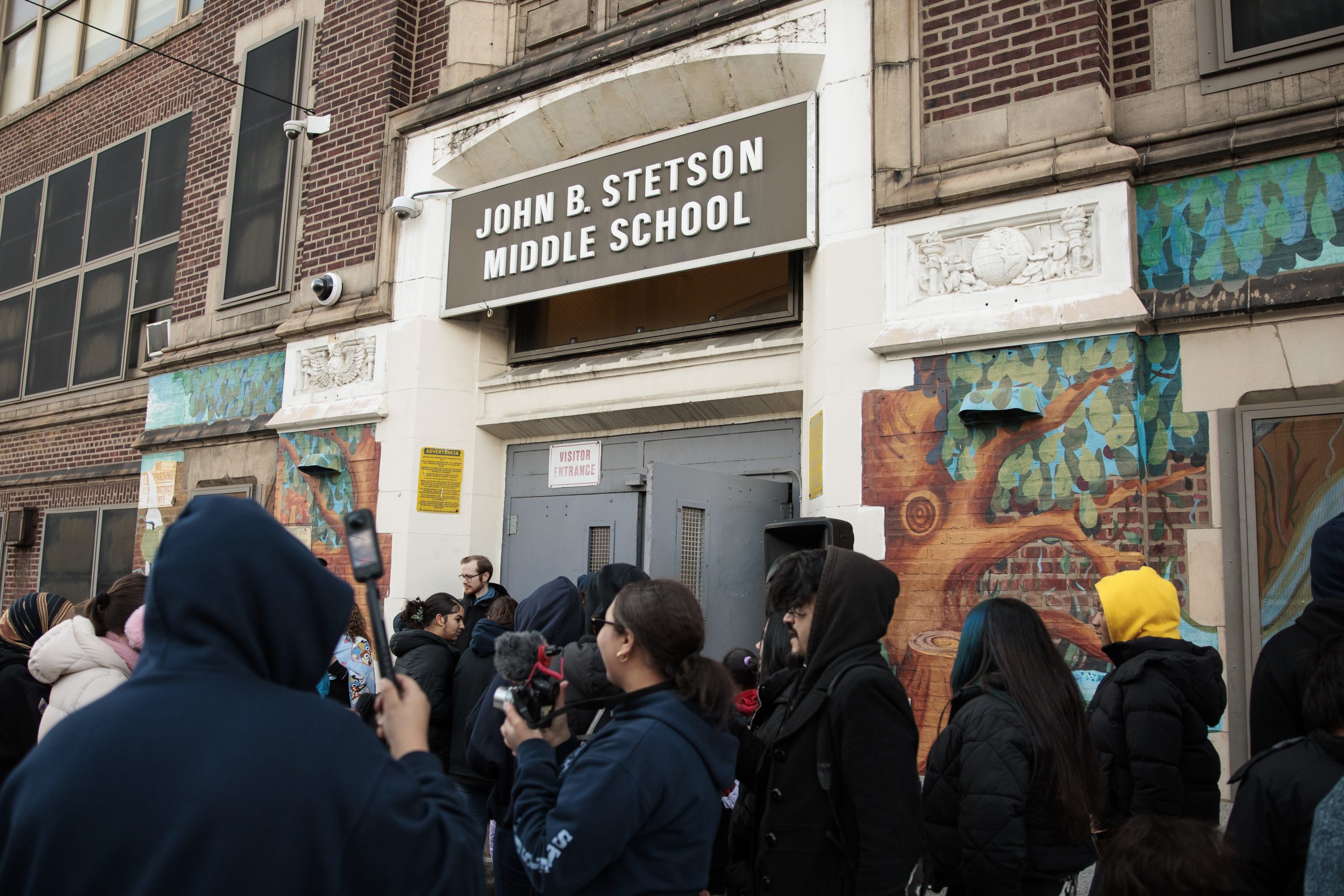
    Also approved was $3.4 million worth of repairs to John B. Stetson Middle School in Kensington, one of the 17 schools the board voted earlier this year to close.

    Students, teachers and supporters rally before a community meeting at John B. Stetson Middle School on Thursday, Feb. 12, 2026 in Philadelphia. Stetson is one of 20 Philly public schools facing closure.Monica Herndon / Staff Photographer

    Stetson is getting a new roof and masonry repairs, work that’s necessary, according to board documents, “to preserve and protect the building’s structural integrity and long-term functionality.”

    According to the facilities plan the board adopted in April, the school will begin phasing out grades, eventually closing in the 2029-30 school year. Stetson will remain in district hands, used as “swing space” — a place to house district students or programs that need a temporary spot to learn.

    Members of the Stetson community fought to keep their school open, objecting to the district’s years of neglect of their building.

    Some schools closed by the board are mostly empty; Stetson is about 60% full, but its building was judged to be in “unsatisfactory” condition.

    Memphis Street back to the district

    The board also moved to formally return a Port Richmond charter school back into its fold.

    Memphis Street Academy at J.P. Jones, a former district school run by the nonprofit American Paradigm since 2012, was ordered by a judge last year to surrender its charter after a long legal battle.

    The board first moved to close Memphis Street in 2022 after the school missed the mark on meeting conditions it had previously agreed to.

    To make the reabsorption of the school official, the board had to vote to report “Memphis Street Middle School” to the Pennsylvania Department of Education as a new district school opening in the fall. The school will serve students in grades 6 through 8; the current Memphis Street Academy also educates fifth graders.

    In its first go-round as a district school, the building was known as John Paul Jones Middle School.

  • A judge told the Philly school board it can’t vote to close a charter school Thursday

    A judge told the Philly school board it can’t vote to close a charter school Thursday

    A judge has blocked the Philadelphia school board from voting to close a charter school Thursday amid a legal fight over the school district’s treatment of charter schools.

    Common Pleas Court Judge Damaris Garcia had previously barred the district from moving forward with nonrenewal proceedings against Philadelphia Montessori Charter School, which in a lawsuit last month claimed the school system violates state charter law. But on Tuesday, the board appealed that decision and added votes on Philadelphia Montessori and Global Leadership Academy Southwest Charter School to its Thursday meeting agenda.

    Philadelphia Montessori filed an emergency motion Wednesday to stop the vote, and Garcia granted its request — ordering the board to delay its vote on the charter’s future.

    “It is further ordered and decreed that all actions related to the subject matter of the motion, including but not limited to the vote currently scheduled before the Board of Education of the School District of Philadelphia on June 18, 2026, are temporarily stayed pending further order of this court,” Garcia said in the order.

    It was not immediately clear what would happen Thursday. Wanda Odom, a spokesperson for the board, said it does not comment on litigation. Two charter votes, including on Philadelphia Montessori, remained on Thursday’s publicly posted agenda after the ruling was released.

    Philadelphia Montessori, a K-4 school in Southwest Philadelphia, sued the district in May, arguing that it should be barred from closing any charters due to “shifting standards, inconsistent methodologies, and procedures that do not provide fair notice or a neutral adjudicative structure.”

    The city’s charters, which are publicly funded but independently run and educate about one-third of Philadelphia public school students, have long argued they are subject to an unfair evaluation process.

    Following those complaints, the district is revising its evaluation framework; charter advocates have called on the board to pause renewal decisions until new standards are complete.

    District officials recommended nonrenewal for both Philadelphia Montessori and Global Leadership Southwest last month, citing significant academic concerns.

    Philadelphia Montessori, which enrolls about 250 students, lags similar schools and the district as a whole in academics, according to district officials. The charter has called the district’s assessment methodologies “flawed” and “unreliable.”

    In its emergency motion Wednesday, the charter accused district officials of a “transparent and deliberate tactic” in adding the nonrenewal vote 48 hours before Thursday’s meeting, despite Garcia’s earlier order on June 9.

    The district “waited until the last possible moment” to file its notice of appeal while also scheduling a vote on Philadelphia Montessori “that directly violates the court’s order,” the charter said in the filing. Garcia had previously scheduled a court hearing for July 27.

    If the board votes to start nonrenewal proceedings for Philadelphia Montessori on Thursday, it will cause “immediate and irreparable” harm, likely prompting families and teachers to leave the school even if a court later reverses the decision, the charter said in its filing.

  • What will Philly look like in 25 years? These kids wrote plays about the changes they want to see.

    What will Philly look like in 25 years? These kids wrote plays about the changes they want to see.

    Angel Okeke, a junior at the Academy at Palumbo in Philadelphia, wanted to make sense of the loss of her best friend’s brother to a tragedy spurred by gang violence.

    Isadora Pendygraft, an eighth grader at Welsh Valley Middle School in Narberth, felt pulled to explore how restorative justice could reshape the criminal court system.

    Avigail Wus, a junior at Pennsbury High in Fairless Hills, hoped to examine how the public, the media, and courts interact with survivors of sexual assault.

    They are among a group of students who spent nearly a year thinking, researching, and writing about changes they want to see in Philadelphia. This month, their work culminated in professional performances of their original plays.

    “It’s freaking amazing,” Okeke said.

    The possibility of performance

    The student work is part of What Now: 2026, a new arts festival marking the country’s Semiquincentennial. When the festival was in the planning stages, Madeline Charne, director of education and programs for Philadelphia Young Playwrights, said she knew youth voices ought to have a place.

    That is how PYP’s Civic Theater Project was born.

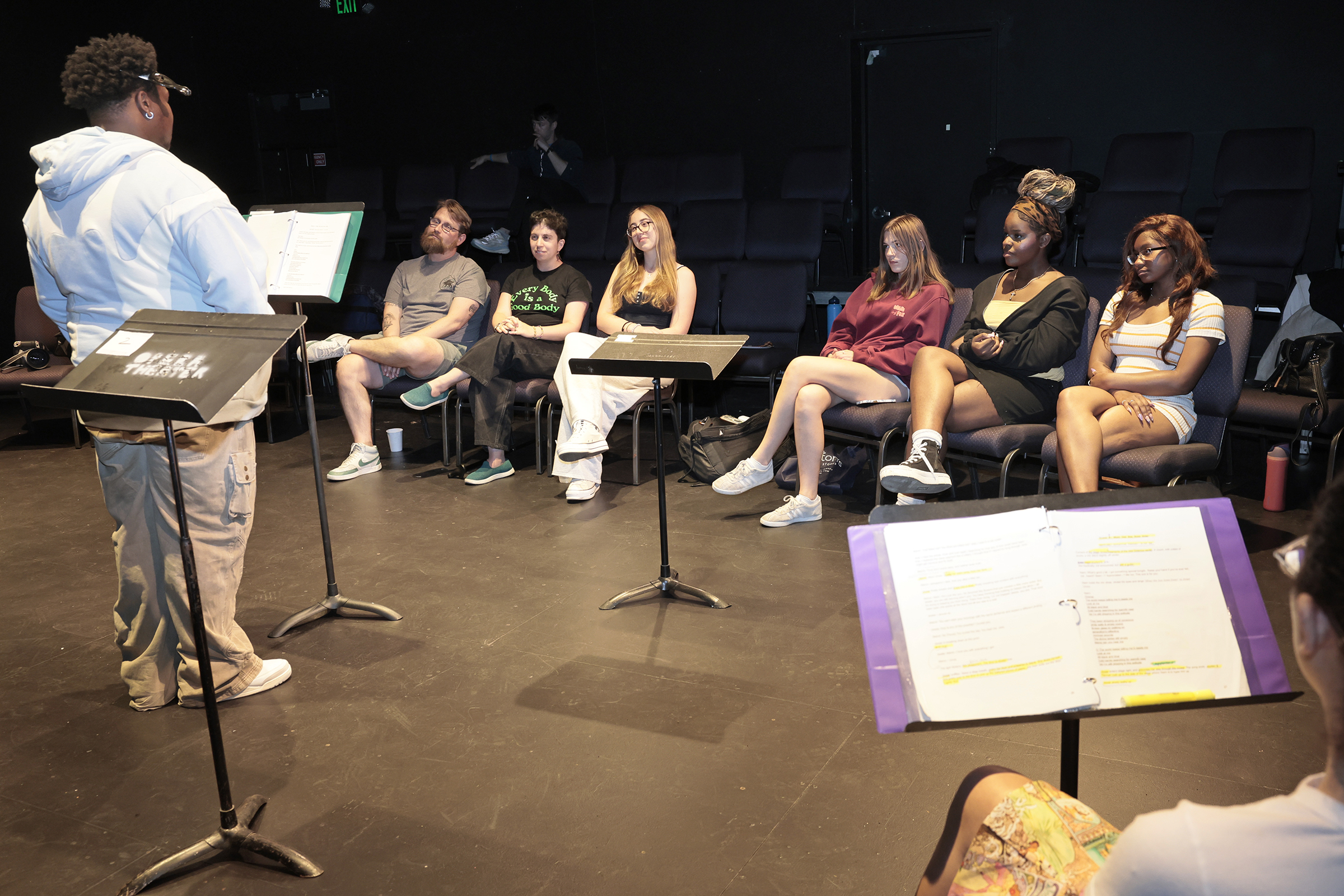
    (L-R) Actor Raymond Ingram rehearses as (seated) Palumbo civics teacher Charlie McGeehan, Philly Young Playrights director of education and programs Madeline Charne, students Abigail Wus, Isadora Pendygraft, Angel Okeke, and Harmonee Summers look on during rehearsal at the Drake Theater in Philadelphia earlier this month.Elizabeth Robertson / Staff Photographer

    Charne said she wanted students “thinking about how theater itself can create social change, not just be about social change.” She prompted students to imagine Philadelphia 25 years in the future, to dream about what should be changed, and to see their work as the beginning of that shift.

    “Creativity and art and performance — that’s what has the possibility to make people actually listen,” said Charlie McGeehan, a Philadelphia School District civics teacher who worked as a PYP teaching artist.

    Kids thought so, too. For every spot PYP had in the process, it received roughly five applicants. Eventually, five young people signed on: Okeke; Wus; Pendygraft; Harmonee’ Summers, who attends Springside Chestnut Hill Academy; and Maroua Benfadhla, a student at Science Leadership Academy.

    The young playwrights had to commit one day a week to their work — researching and refining ideas, interviewing change makers around the city, committing to their eventual topic, writing, editing, critiquing one another’s work, and even casting their plays.

    The works the five eventually produced were a revelation, McGeehan said — powerful, smart, and character driven. They were presented in staged readings at the Louis Bluver Theatre in Center City.

    The right rooms, the right resources

    On a sweltering Wednesday this month just before the students’ work debuted, they gathered at the theater for a final run-through.

    The playwrights sat in chairs, eyes fixed on the actors in front of them. The actors performed the plays without sets or costumes, just reading scripts on music stands and allowing the audience to take in the power of the young people’s words.

    The moment Summers first heard professional actors reading words she had written, it stopped her cold.

    “It is so cliche to say it’s magical, but it feels different when your words are literally jumping off the page‚” said Summers, whose play is called The Double K Show. It chronicles two young women’s rise to stardom and the effect substance use has on their lives, and was shaped by events Summers observed growing up in North Philadelphia and attending an elite private school.

    Part of the students’ process was finding resources that might help with the issues they tackled — from recovery and housing assistance organizations to groups that support survivors of sexual assault.

    (L-R) Actor Raymond Ingram rehearses as Palumbo civics teacher Charlie McGeehan, Philly Young Playrights director of education and programs Madeline Charne, students Abigail Wus, Isadora Pendygraft, Angel Okeke and Harmonee’ Summers look on during rehearsal at the Drake Theater in Philadelphia earlier this month.Elizabeth Robertson / Staff Photographer

    Pendygraft, whose mother, Letitia Stein, is an editor at The Inquirer, is a PYP veteran and the only middle schooler in the group. The playbill lists Pendygraft’s author name as Rut, a nickname. She said she was inspired by The 57 Bus, a book she had read about the ripple effects of a crime committed by one teenager against another.

    “The criminal court has a long history of being complicated and a little corrupt and biased,” Pendygraft said, but restorative justice — the theme of her play — would go a long way toward repairing harm.

    Wus said she used the motif of the Salem witch trials as “a critique about the way stories of sexual assault have been commodified into entertainment.” It was a powerful exercise in using her voice, she said, made stronger by the magic of real performers.

    “These actors, they’re the people you see on TV — they are so talented,” Wus said. “Hearing my words out loud has allowed me to make revisions to make my script feel more real. It’s probably one of the best writing experiences I’ve ever had.”

    Okeke, who wrote Echoes Beyond Shut Doors about the loss of Naim Castleberry, her best friend’s brother, said she struggled for a time with the idea that her ideas would go nowhere.

    “It felt very daunting to tackle such big issues. Often, I feel like I feel small as a young person in Philly. I have this doubt, ‘how much of an impact can I really make?’” Okeke said. But she powered through, with words — and the experience was transformative.

    “Us youth really have good things to say if we’re put in the right rooms with the right resources,” she said.