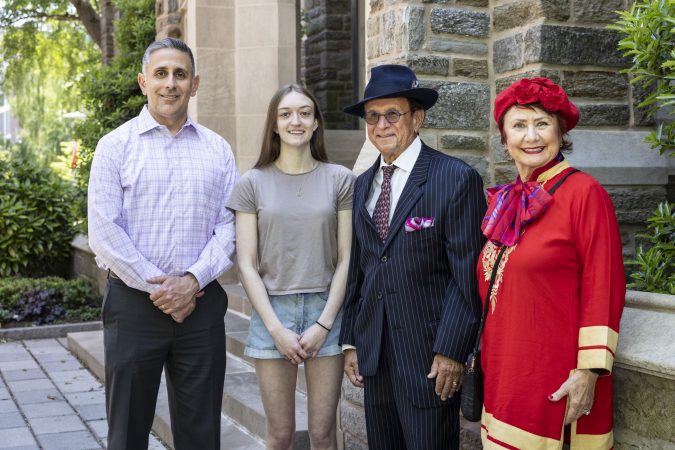
Category: Education

  • Conservative education warriors have reshaped GOP politics — even if their crusades often fail

    Conservative education warriors have reshaped GOP politics — even if their crusades often fail

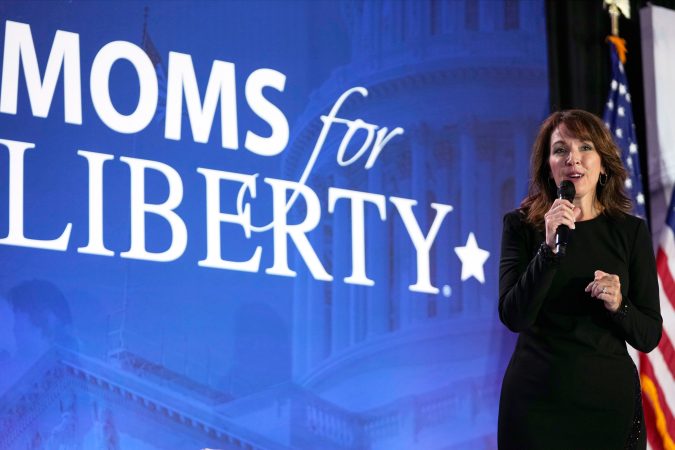
    Since its founding in 2021, the educational advocacy group Moms for Liberty has been mobilizing conservative mothers across the country against school curriculum they deem indoctrinating, un-American, anti-Christian, and antithetical to their understanding of family values.

    They’ve targeted books that explore LGBTQ+ themes, transgender athletes, and curriculum they deride as critical race theory or as too focused on diversity, equity, and inclusion. More broadly, they claim to be fighting to protect their parental rights to control what their children learn.

    Members of Moms for Liberty have earned seats on school boards, garnered national media attention, and infiltrated the highest levels of conservative policymaking. According to cofounder and CEO Tina Descovich, she has visited President Donald Trump’s White House more than a dozen times.

    Moms for Liberty has also made waves in the Philadelphia suburbs, especially in Bucks County, which boasted the largest leadership team of any chapter in the country by April 2025. At a Harrisburg-area event last October, Descovich said: “I am very familiar with Bucks County. Before I knew it existed, I knew the [Bucks County] Beacon existed because they were writing trash pieces about us.”

    Groups like Moms for Liberty have proved effective at making political noise — and even notching some policy wins, at least temporarily. Yet, the group is really just a continuation of a decades-long crusade by conservative white women to weaponize public education in the service of a right-wing agenda. While it has largely failed to transform American curriculum, this push has turned these women into key figures in Republican politics who have made fighting the culture wars a GOP priority.

    The modern conservative movement since World War II owes much of its success to the work of grassroots education warriors.

    These women proudly embraced traditional gender roles. They saw them as a marker of success because many women in their mothers’ generation had to work outside of the home to make ends meet in the Great Depression and wartime years.

    Even as some of these conservative women became full-time political activists, they claimed the mantle of traditional homemakers and mothers — which aroused charges of hypocrisy from critics. Yet, they argued that their advocacy work in the traditionally male world of politics and education policy was wholly consistent with traditional gender roles because protecting innocent children from worldly dangers was a natural role for women and mothers.

    At their kitchen tables and in PTA meetings across the country, these “suburban warriors” launched far-reaching campaigns against sex education, multicultural curriculum, and other aspects of schooling they deemed antithetical to traditional American values.

    In the 1970s and 1980s, as the political parties realigned, these conservative education warriors emerged as a crucial Republican constituency and a core part of the New Right coalition. These white women were galvanized by the recent gains of the Civil Rights Movement, the U.S. Supreme Court’s Roe v. Wade decision — which provided a right for women to have legal abortions under certain circumstances — and debates over the proposed Equal Rights Amendment to the U.S. Constitution, which they claimed (without evidence) would decimate the female homemaking role.

    These recent changes threatened to disrupt what the conservative women argued were divinely inspired gender roles, which were embodied by the “traditional” nuclear family of a working male breadwinner, a female homemaker, and kids. They feared that big government-backed forces might take away this ideal life, which many had only recently achieved.

    Increasingly, these women looked to public schools as the place to fight their crusade. Taxpayers funded the schools, and they were responsible for shaping the next generation of Americans outside of parental control.

    In 1974, the education wars burst onto the national stage in Kanawha County, W.Va., thanks to an ugly and violent struggle over school textbooks. The controversy began after Alice Moore, a 29-year-old mother and the lone woman on the county school board, objected to a newly adopted language arts curriculum she deemed indoctrinating, racially divisive, and steeped in “secular humanism.”

    This latter concept wasn’t new. It dated to the late 19th century, and argued that people could gain knowledge through reason, intellect, and logic rather than relying upon religious teaching.

    Yet in the 1970s conservatives thrust it into the spotlight, because they needed a fresh villain. Tried-and-true messaging on anti-communism had grown stale. But pushing secular humanism as the latest liberal conspiracy aligned with the New Right’s renewed focus on faith, family, and traditional gender roles, while energizing Christian conservatives.

    Moore and her allies saw secular humanism as increasingly influential in education — and as incredibly hostile to Christianity and their narrow definition of divinely inspired traditional family values. It further alarmed them because they saw secular humanism as teaching students to challenge their parents’ authority. Within a few years, the once obscure concept would become the New Right’s star bogeyman.
    Made By History sponsors. FOR USE ON MADE BY HISTORY STORIES ONLY.Inquirer Staff

    Throughout the fall of 1974, Moore read excerpts from the textbooks before the school board. She singled out Black nationalist Eldridge Cleaver, whose writings allegedly produced “racial hatred” toward white people. She also took issue with “dialectology,” a study of dialects that included lessons on African American vernacular — what she called “ghetto dialect” — that she believed to be antithetical to American speech.

    By October, the controversy had produced two shootings, dozens of arrests, and multiple rounds of bombings, boycotts, and school bus blockades.

    Moore’s crusade against secular humanism in West Virginia quickly caught the attention of national conservative organizations. The Heritage Foundation featured Kanawha County in its 1976 study, “Secular Humanism and the Schools: The Issue Whose Time Has Come.” Phyllis Schlafly — the country’s most famous anti-feminist at the time — jumped into the fray, claiming that public education promoted “a tolerance of violence, theft, adultery, obscenity, profanity, and blasphemy.”

    In part because organizations like the Heritage Foundation and Schlafly’s Eagle Forum highlighted Moore’s activism for like-minded conservative women, it inspired conservative mothers across the country to wage their own crusades against dirty textbooks. In the ensuing years, they launched repeated battles against seemingly subversive curriculum.

    In 1983, in rural East Tennessee, fundamentalist mother Vicki Frost waged her own legal battle against the Hawkins County school board after discovering objectionable material in her daughter’s reading textbook, including alleged depictions of telepathy, witchcraft, and black magic that violated her religious beliefs.

    In Mozert v. Hawkins County Board of Education — a case that became known as “Scopes II” because of Hawkins County’s proximity to the original Scopes trial — Frost and her fellow plaintiffs alleged that the school board’s policies violated the First Amendment’s free exercise clause. Their legal counsel came courtesy of Concerned Women for America, whose founder, Beverly LaHaye, took Frost on a national speaking tour to publicize the alleged dangers of modern textbooks. Although the plaintiffs lost their case on appeal, LaHaye deemed the case a “PR success” that “identified us as a friend of the family.”

    The result epitomized the outcome of the broader education wars. Fighting against offensive school curriculums turned many conservative women into key figures in the culture wars, with substantial reach and political impact. They quickly became politically astute grassroots organizers who leveraged their identities as white Christian homemakers and mothers to argue for an educational system rooted in Christianity, the traditional nuclear family, and American exceptionalism.

    The impact of these organizers, however, hasn’t necessarily come in the classroom. Most of Moore’s “dirty books” found their way into the Kanawha County curriculum. Frost and the plaintiffs in Hawkins County ultimately lost their case on appeal. In recent years, the majority of school board candidates backed by Moms for Liberty have similarly suffered defeat.

    Yet, these organizers have been able to mobilize thousands of culturally conservative women — particularly other white Christian mothers — and bring them into the Republican Party. Their involvement has driven the GOP to make the culture wars a key component of the party’s identity.

    These earlier crusaders also created a language that remains a staple of conservative critiques of public education to the present day. More than five decades after Moore’s war, conservative organizations continue to emphasize “parental rights,” “family values,” and “school choice” in their efforts to influence American education.

    When groups like Moms for Liberty claim public schools are indoctrinating children with “woke” ideologies such as critical race theory, they rely upon a well-established playbook that conservative women have drawn upon for more than half a century. Despite mixed results in America’s actual classrooms, their political activism has proved a tried-and-true means for both enflaming public opinion and solidifying the role of self-proclaimed traditional mothers and homemakers within modern conservatism.

    Allen Fletcher is a public historian and journal editor with research interests in Appalachia, gender, and the history of American education. His current book, “Building Schools, Building Communities: Appalachian Women and the Struggle for Educational Change,” is under contract with LSU Press.

    Made By History takes readers beyond the headlines with articles written and edited by professional historians. Opinions expressed do not necessarily reflect the views of The Inquirer.


  • Peter Grove, award-winning science educator and lifelong environmentalist, has died at 82

    Peter Grove, award-winning science educator and lifelong environmentalist, has died at 82

    Peter Grove, 82, of Narberth, longtime award-winning science teacher at Friends’ Central Lower School in Wynnewood, former executive director of the Norris Square Neighborhood Project in West Kensington, lifelong environmentalist and conservationist, prolific writer, lecturer, British Special Air Service Reserve veteran, mentor, and world traveler, died Wednesday, May 6, of age-associated decline at his home.

    Reared in rural Surrey, England, Mr. Grove arrived in Philadelphia in 1972 and spent the next 45 years teaching science, horticulture, and civic responsibility to students young and old. He also mentored other teachers and fellow naturalists, and created dozens of notable community gardens and wildlife habitats around the region.

    “Gardening,” he told The Inquirer in 1986, “is a real way to bring about change.”

    He earned bachelor’s and master’s degrees in English and education at the University of Pennsylvania in the 1970s, and joined the Friends’ Central Lower School faculty in 1987. Until his retirement in 2017, Mr. Grove taught thousands of preschool and elementary school-age students at Friends’ Central about gravity, butterflies, bees, birds, mold, trees, and other scientific wonders.

    He was a gifted young student of horticulture back at the old Surrey County Merrist Wood Farm Institute in the 1950s and ‘60s, and he dreamed up dozens of riveting scientific demonstrations for his students. They launched hot air balloons, waded in streams to study fungi, and traversed fields and woods on orienteering treasure hunts.

    They even pulled his car up a hill every year with a scientific pulley system. “He made learning come alive,” a colleague said in a tribute.

    Outside his brick-and-mortar classroom, Mr. Grove and generations of students landscaped much of Friends’ Central’s Lower School campus on Old Gulph Road. They designed fish ponds, a bird blind, a bridge, and flower and vegetable teaching gardens.

    In 1995, they collaborated with students at Overbrook School for the Blind to make a fragrance and texture garden for blind people. “This was great for our kids,” Mr. Grove told The Inquirer. “They’re all digging and working, and making new friends, and learning about a different kind of school.”

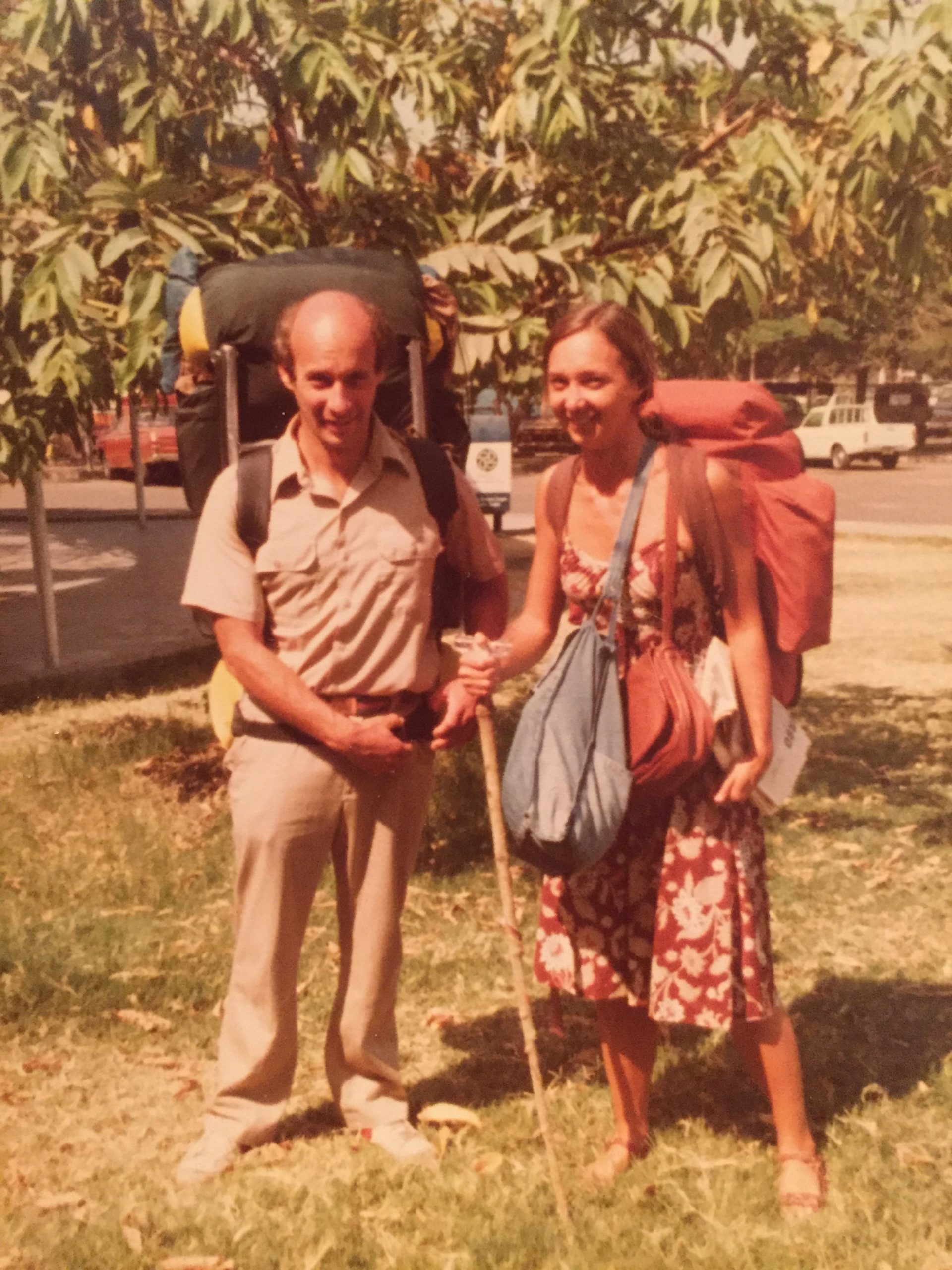
    Mr. Grove and his wife, Nancy Greene, scaled Mount Kenya in Africa.Courtesy of the family

    Before Friends’ Central, Mr. Grove taught second graders at the Miquon School in Montgomery County. He was also an adjunct science professor at Rosemont College in the 1990s, a summer camp science instructor for the Smithsonian Institution in Washington, D.C., in the early 2000s, and a science instructor for Penn’s Teach for America program from 2007 to 2010.

    In 1981, he became executive director of the Norris Square Neighborhood Project and supervised the building of a solar greenhouse in 1983 and the cleanup of Norris Square Park in 1985. “Everything we do here is slanted toward the neighborhood,” he told The Inquirer in 1983. “It’s all aimed at being able to produce something, do something, or find something.”

    He was also an award-winning lifetime honorary board member at the Riverbend Environmental Education Center in Gladwyne and onetime president of the Narbrook Park Improvement Association. During a sabbatical from teaching one year, he volunteered in Costa Rica to protect leatherback turtle eggs from poachers.

    He earned a lifetime achievement award from the Lower Merion Township Environmental Advisory Council, was a semifinalist for the National Science Teachers Association’s Teacher of the Year Award, and received more than a dozen other honors.

    Inspired by the 1956 film Around the World in 80 Days, he signed on with a Norwegian oil tanker in 1966, bicycled across North America, and returned to Europe on a Swedish oil tanker in 1968. He then hitchhiked to India, worked for two years on agricultural improvements for underserved communities, and met his future wife, Nancy Greene, a longtime Philadelphia resident.

    Amazingly, she was also inspired by Around the World in 80 Days and on her own global road trip. After India, Mr. Grove moved on to construction jobs in New Zealand and Australia. He finally settled in Philadelphia and married Greene in 1976.

    For the next 50 years, the two adventurers hiked trails in Borneo and New Zealand, and climbed Mount Kenya and Mount Kinabalu. “I was his biggest supporter,” his wife said.

    Born June 1, 1943, Peter Adrian Grove grew up in Send, a village about 28 miles southwest of London. He connected with nature as a boy, worked as a landscaper and carpenter in the early 1960s, and spent two years in the British Special Air Service Reserve.

    Mr. Grove and his wife, Nancy Greene, traveled the world together for decades. Courtesy of the family

    He earned an associate’s degree in English and biology in 1974 at Montgomery County Community College, and his bachelor’s degree at Penn in 1976 and master’s degree there in 1977. He constantly wrote and recorded audio clips about his life and adventures, and he shared those tales enthusiastically in school and at public events.

    He and his wife had a son, Evan, and a daughter, Marian, and lived in Fitler Square and then Narberth. He doted on his children and grandchildren, and bonded with his dogs.

    Mr. Grove constantly whipped up candlelit gourmet dinners for his family. He was funny, everyone said, and he loved to sing, dance, and fish.

    He called himself a simple man despite his many achievements and lived with cancer for years. “He was,” his wife said, “quite simply one of a kind.”

    Mr. Grove met his wife, Nancy Greene, in India in 1968.Courtesy of the family

    In addition to his wife and children, Mr. Grove is survived by five grandchildren and other relatives. Two sisters died earlier.

    A celebration of his life is to be livestreamed on YouTube.com at 1 p.m., Saturday, Aug. 8, at Wayne Presbyterian Church, 125 E. Lancaster Ave., Wayne, Pa..

    Donations in his name may be made to Friends’ Central School, 228 Old Gulph Rd., Wynnewood, Pa. 19096; the Lower Merion Conservancy, 1301 Rose Glen Rd., Gladwyne, Pa. 19035; and Friends of the Earth, Box 7010, Merrifield, Va. 22116.

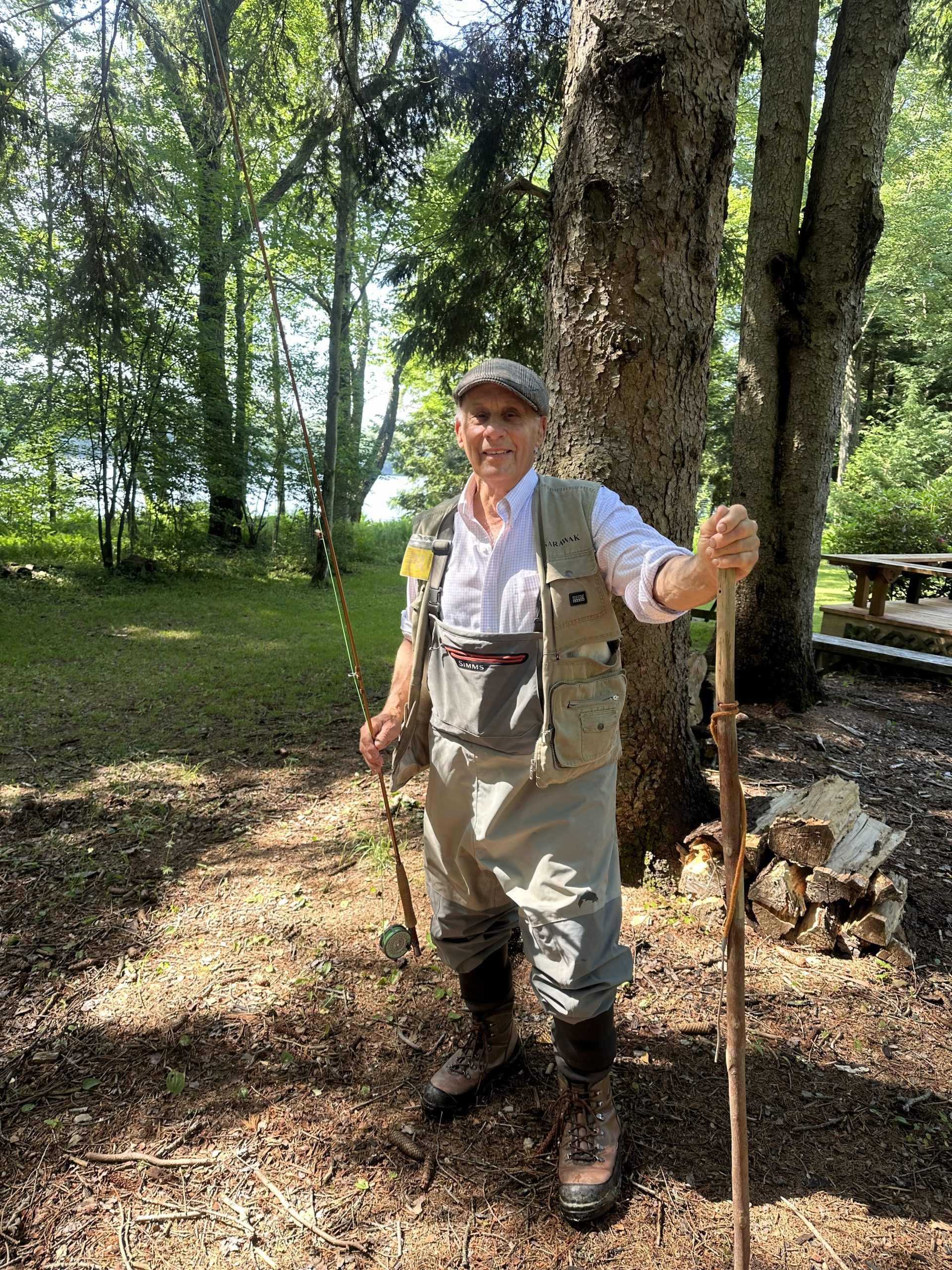
    Mr. Grove was an avid fisherman.Courtesy of the family
  • Florida shows how not to teach U.S. history on the republic’s 250th anniversary

    Florida shows how not to teach U.S. history on the republic’s 250th anniversary

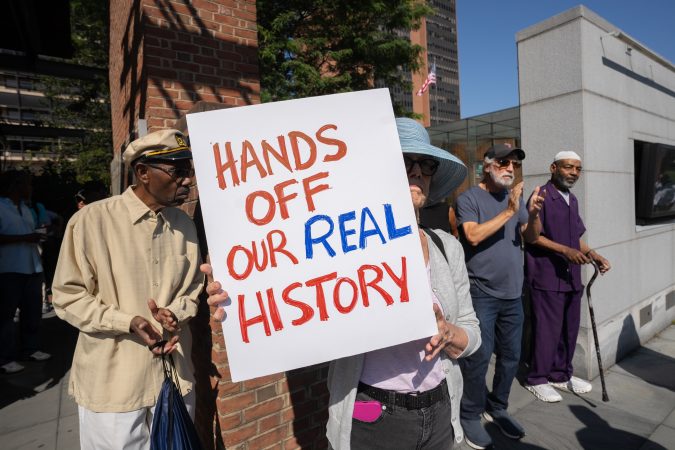
    The state of Florida recently released a new American history high school course with a conservative tilt. Troublingly, it glosses over the relationship between the founders and slavery—a topic that should in 2026 promote a rich understanding of the U.S. past, but one that has also been a subject of controversy, including in Philadelphia at the site of the President’s House. In fact, slavery was central to the economic growth and expansion of the young republic, so much so that it would take a long and brutal war to get rid of it. As Abraham Lincoln, dealing with slavery during the Civil War, put it: “Fellow-citizens, we cannot escape history.”

    On the 250th anniversary of the founding of the American republic, it bears repeating that the history of the United States is neither the linear, uninterrupted history of American exceptionalism that the Florida framework promotes nor is it solely an unremitting story of racism and reaction. Students benefit from learning about the brutality of slavery as well as the bravery of those ordinary Americans, men and women, Black and white, who resisted it. Emphasizing just one part of this equation is incomplete and bad history.

    The Florida course framework portrays the founding generation of American revolutionists as unanimously antislavery. The truth is more complex. While most of the northern founders like Benjamin Franklin, Alexander Hamilton, and John Jay lent the prestige of their names to abolition societies, most southern founders did not. Their actions reflected the reality on the ground. Between 1779-1804, northern states gradually abolished slavery. But southern slavery not only persisted but expanded considerably in the early American republic. If the founders were unanimous, what explains this divergence?

    While Jefferson and Madison professed to abhor slavery in their writings, like most southern enslavers they did not free their slaves. Jefferson made an exception for his own progeny, freeing select enslaved people. During his presidency, George Washington famously pursued his slave Ona Judge, who had escaped enslavement, with a relentless energy. However, New Hampshire authorities refused to render her back to the President—a signal of diverging attitudes and policies about slavery in the early republic.

    Washington did become the only prominent member of the so-called Virginia dynasty of Presidents to free his slaves on his death. It was a belated gesture. As the Black abolitionist Reverend Richard Allen noted in his eulogy of Washington in 1799, “he dared to do his duty, and wipe off the only stain with which man could ever reproach him.” While Washington was lauded as the Father of the Nation, few southern slaveholders followed his example, as Allen had hoped.

    The Florida history standards also present the U.S. Constitution, which was signed in 1787, ratified in 1788, and went into effect with the launch of the federal government in 1789, as an antislavery document rather than one that contained expedient compromises on the issue of slavery. One particularly egregious example of this relates to the three-fifths clause, which counted the enslaved population at a three-fifths proportion for representation and taxes. The Florida guidelines consider this an antislavery clause because the enslaved population was not counted fully. But this compromise led to southern domination over the federal government until Lincoln’s election as it gave the slave states disproportionate representation in Congress.

    The framers of the Constitution were careful not to use the words slavery and slaves in the fundamental legal document of the republic. Instead, they employed euphemisms such as “persons held to service” or “all other persons.” But that did not prevent contemporary abolitionists from bemoaning its fugitive slave clause, a part of the Constitution that gave southern laws of slavery extraterritoriality in the free states—an endless source of political friction between the states—and the continuation of the African slave trade, an execrable commerce whose tortures were well known then, until 1808.

    While Florida students under the new guidelines would learn about a debate among abolitionists like William Lloyd Garrison and Frederick Douglass on whether the Constitution was a proslavery or antislavery document, they would miss other important context. For example, the guidelines elide the equally important debate among abolitionists on the extent of the complicity of American churches in upholding slavery. Instead, abolition is framed as a Christian movement—with no mention of the schism over the issue of slavery leading to religious divisions that still exist today, including northern and southern Methodist and Baptist denominations.

    The framework also includes words of praise for proslavery theorist John C. Calhoun, a planter politician from South Carolina, as a constitutional thinker. Confederate generals like Robert E. Lee and Thomas “Stonewall” Jackson are portrayed as “honorable,” pious, and militarily skilled with little mention of their cause of human bondage, which Ulysses Grant called “one of the worst for which a people ever fought.” Mississippi’s “Declaration of the Immediate Causes which induce and justify Secession” clearly stated: “Our position is thoroughly identified with the institution of slavery — the greatest material interest of the world.”

    Indeed, Lee’s army enslaved free Black people in Pennsylvania while retreating from Gettysburg in 1863—not a very honorable thing to do and explicitly condemned in the Bible as man stealing. But this context is missing in the new Florida guidance.

    The histories of Reconstruction and the Progressive era are not particularly well understood by the public. The Florida guidelines portray Lincoln as being at odds with Radical Republicans who implemented Reconstruction. He wasn’t. It also casts Andrew Johnson as continuing his “lenient” policy to the south, a canard that Johnson assiduously promoted to oppose Reconstruction. In fact, before his death, Lincoln became the first U.S. President to endorse Black citizenship and male suffrage, the cornerstone of Reconstruction. Radicals such as Thaddeus Stevens and Charles Sumner as well as moderate Republicans like Lincoln championed the constitutional amendments and federal laws that comprised Reconstruction.

    Echoing a viewpoint espoused by white Southern elites at the time, Reconstruction gets short shrift and is deemed a failure in Florida’s new standards. Actually, the Reconstruction amendments and the first federal civil rights laws were tremendous achievements. We know the first 10 amendments to the Constitution as the “Bill of Rights” today because the author of the consequential Fourteenth Amendment that established national citizenship by birthright or naturalization, John Bingham, gave them that moniker and it eventually stuck. And Reconstruction didn’t fail; a systematic campaign of domestic racist terror in the south and reactionary judicial decisions by the United States Supreme Court overthrew it.

    The Jim Crow era that followed became a cautionary tale of how quickly and completely a country can lose its democracy and rights gained. But the Florida guidelines casts more than half a century of Jim Crow as a blip or aberration from a national history otherwise committed to democratic ideals.

    Students will be better prepared to be citizens of the republic when presented with differentiated historical narratives rather than having sanitized versions of the past served up to them. The Florida standards not only whitewash the past, they evoke an unchanging founding moment and pristine originalism—as though Americans in the founding era did not argue, debate, or change their thinking about slavery over time.

    Made By History sponsors. FOR USE ON MADE BY HISTORY STORIES ONLY.Inquirer Staff

    It also distorts how Americans continue to fight to expand—or curtail—access to rights and democracy more broadly. For instance, Progressive era reforms that included government regulation of the economy and working conditions are portrayed as “unbound by traditional constitutional restraints.”

    Most historians argue that our modern democracy was founded during Reconstruction, whose seeds later grew in the 20th century and were expanded by the Civil Rights revolution of the 1960s. But, as in previous eras, the fundamental questions remain contested and unsettled. That is both clear in the historical record and the foundational knowledge students must understand to continue to expand or improve our democracy today.

    Manisha Sinha is the Draper Chair in American History at the University of Connecticut and author most recently of The Rise and Fall of the Second American Republic: Reconstruction, 1860-1920.

    Made by History takes readers beyond the headlines with articles written and edited by professional historians. Opinions expressed do not necessarily reflect the views of The Inquirer.

  • 26 Philly students are tour guides pointing visitors around town this summer

    26 Philly students are tour guides pointing visitors around town this summer

    Philadelphia students are among the friendly faces welcoming the expected more than 1 million visitors to the city this summer.

    Youth from Ss. Neumann Goretti High School and Girard Academic Music Program are official staff greeting tourists and giving directions and Philly recommendations over six weeks.

    Planning for the huge undertaking of celebrating America’s 250th birthday in its birthplace began years ago, and Kathryn Ott Lovell, president and CEO of the Philadelphia Visitor Center Corporation, knew that she needed reinforcements.

    “It was going to be hard to scale our mission and reach as an organization, short of building a visitor center on every corner,” said Lovell.

    Enter the Phambassadors, a corps of 10,000 Philadelphians who volunteer to be a welcome wagon of sorts for the tourists arriving in town, some of whom were trained via a Philly-themed boot camp. Lovell, who “was born with this irrational love for Philly,” she said, arbitrarily picked the number 10,000, she said, hoping to attract that number of volunteers by the end of the year. The Philadelphia Visitor Center got there months ahead of schedule.

    And when Lovell heard that Neumann Goretti had launched a hospitality program, creating the Youth Phambassador corps felt like a natural extension, both as a way to expand the welcome wagon and a means to help develop the next generation of tourism and hospitality professionals.

    Lovell, Philadelphia’s former Parks and Recreation Commissioner, wanted to make it a paid opportunity, a city summer program with training and a stipend for participating students. Twenty Neumann Goretti students signed on, plus six students from GAMP, the South Philadelphia magnet school.

    Training was held this month for the 26 Youth Phambassadors to learn both soft skills and hard skills — customer service, visitor engagement, and even citizen diplomacy via the World Affairs Council.

    The Youth Phambassadors, who are working with an adult supervisor, are stationed both inside the Visitor Center at Sixth and Market Streets and around the historic district.

    The hope is to have the students show off the city, but also “that it’s a portal into the hospitality and tourism world for the kids as they have a really wonderful experience,” Lovell said.

  • Layoffs are ‘inevitable’ at Temple as school looks to cut $60 million, president says

    Layoffs are ‘inevitable’ at Temple as school looks to cut $60 million, president says

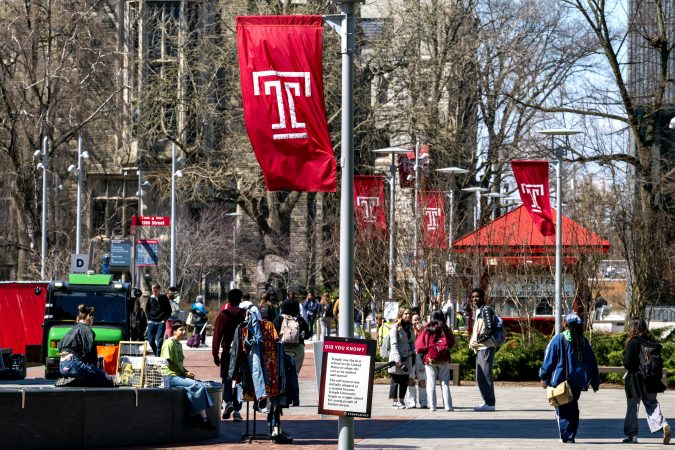
    Temple University has asked its schools, colleges, and administrative units to cut a total of $60 million to help offset a projected deficit for 2026-27.

    President John Fry shared the plan in a message to the campus community Friday and said a reduction in employees is “inevitable.”

    The message did not reveal how many layoffs the university is considering as it attempts to close the $85 million projected gap. The board of trustees’ executive committee is scheduled to meet next week to consider the proposed budget. The university’s current budget is $1.3 billion, excluding the health system.

    “Unfortunately, some reduction in force is inevitable, given that nearly 70% of Temple’s operating budget is spent on compensation and benefits,” Fry said in the message. “It is my promise that any employee’s separation from the university will be handled equitably and compassionately.”

    He noted that a faculty retirement incentive program this year drew 77 takers — 3% of full-time faculty — and will lessen the need for layoffs. Those faculty are scheduled to leave by the end of this month and their departures ultimately will save $15 million annually. The elimination of vacant faculty and staff positions also has helped, he said.

    Fry did not detail the cuts that are planned but said that colleges, schools, and administrative units each received a budget reduction target.

    Units were asked to make a 5% cut last year, but this year there is a range of percentages among schools, colleges, and administrative units, a university spokesperson said. The spokesperson declined to say how many layoffs will occur.

    Some potential cuts that have stirred discussion include a reduction in adjunct professors and a pause in doctoral student admissions by some programs.

    Jeffrey Doshna, president of the Temple Association of University Professionals, said Fry’s message seemed to address some of the issues the union has been raising, but said more information is needed, including how many people will lose their jobs and from what areas.

    “Hopefully, they will continue to respond to what we are calling for,” he said, including greater transparency, participation in decision-making, and no job cuts.

    Temple has been trying to cope with lost revenue from a precipitous slide in enrollment and uncertainty around federal funding. Fry has been warning since early April that the university “must act decisively and with a sense of urgency” to address the projected deficit. An internal Temple report obtained by The Inquirer in April said layoffs were coming.

    Last July, Temple laid off 50 employees, less than 1% of its workforce.

    Fry reported to the board of trustees last week that this year’s fall enrollment looks promising, with deposits by first-year undergraduate and transfer students up over last year at the same time.

    He said in his campus message that making the $60 million in cuts is “an important first step toward returning the university to a balanced budget over the next three years.”

    Fry acknowledged that the budget reductions “can create uncertainty and anxiety.” But he said the administration has attempted to be transparent and has held meetings with faculty senate, deans, and schools, colleges, and administrative units.

    “Navigating through this stark financial reality is not easy,” Fry said. “I recognize the difficulty of this present moment. We will emerge from this process stronger and on a more sustainable path moving forward.”

  • Three years ago, the school choice debate shut down Harrisburg. Now Democrats are ready to engage.

    Three years ago, the school choice debate shut down Harrisburg. Now Democrats are ready to engage.

    HARRISBURG — Three years after a bitter budget standoff over allowing state funding to be used for private school tuition, top Democrats in Harrisburg are ready to engage on school choice.

    Legislative action and comments from a top House Democrat this week expressing openness to a federal school-choice program marked a notable change from 2023, when a fight over school vouchers put Democratic lawmakers at odds with both Republicans and Gov. Josh Shapiro, a member of their own party.

    The shift comes as Shapiro, who has embraced school choice and is a likely 2028 presidential contender, faces a deadline to opt in to President Donald Trump’s new federal tax credit program.

    House Majority Leader Matt Bradford (D., Montgomery) said this week that some of the uses of Trump’s tax credits, which are opposed by the country’s largest teachers unions, are “intriguing.” And he noted he is proud of some money the state now pours into one of the tax credits to fund private-school scholarships for low-income families in low-achieving districts. Those comments from Bradford, a top leader in Harrisburg, suggested a public softening on an issue that was previously a non-starter for his party — and signaled the school-choice debate may once again factor into state budget negotiations.

    “For our members of our caucus who want to see alternatives for the poorest kids in the poorest schools, we’re being responsive to the needs of those constituents,” he said in an interview, referencing growing support for school choice among some House Democrats, particularly those from Philadelphia.

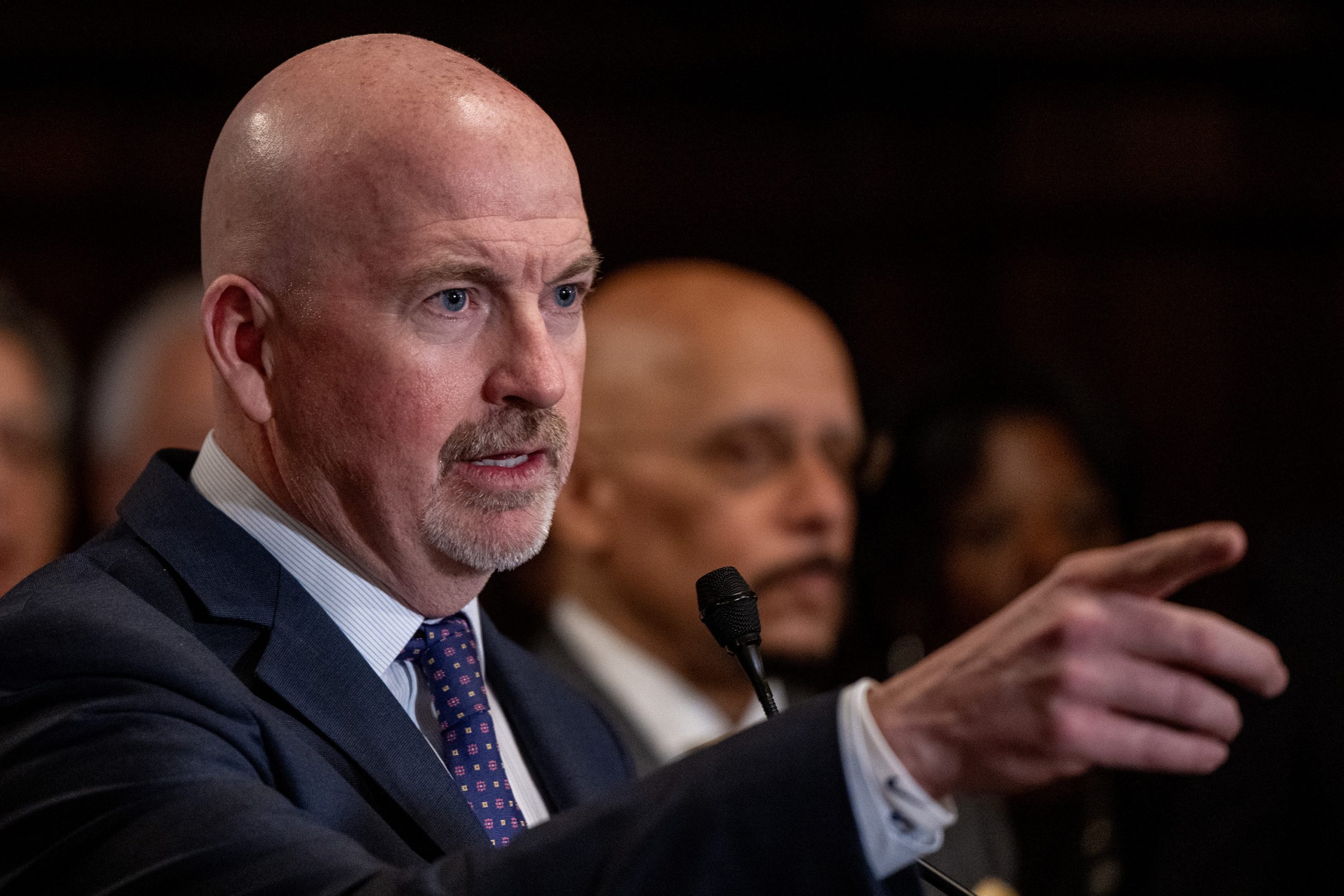
    State Rep. Matt Bradford (D., Montgomery County) during a press conference at the Capitol in Harrisburg Feb. 3, 2026.Tom Gralish / Staff Photographer

    The school-choice movement, a largely Republican-backed effort to allow public dollars to go to private schools, faces strong opposition from education advocates who say such programs can take money from public schools.

    And that debate is sure to continue. Bradford said more oversight — and an overall reform of the current tax credits — is needed to make sure the state tax dollars are actually reaching poor students.

    Earlier this week, House Democrats fast-tracked an overhaul to the state’s current $680 million school-choice tax-credit programs to require additional reporting from private schools in order to secure funding. The legislation is likely to face opposition in the GOP-led Senate, where Republicans on Thursday advanced a $25 million increase to the programs ahead of a June 30 deadline to pass a state budget.

    Senate Republicans called the tax credits a “priority for empowering parents,” while the Archdiocese of Philadelphia said the House bill would be “devastating” to local Catholic schools and lead to fewer scholarships for students.

    A spokesperson for Shapiro said his office is reviewing the House bill, and declined to comment on whether his position on school choice has changed. Shapiro, who has sent his own children to private school in Montgomery County, has previously said he supports school choice, including school vouchers.

    Shapiro has until the end of the year to decide whether to opt in to the federal program. But the signal of openness from Bradford, who is close with the governor, offers potential insight into his path forward.

    That program, enacted last year under Trump’s “One Big Beautiful Bill Act,” would offer federal tax credits to donors for giving to organizations that grant private school scholarships. Many GOP-led states have already signed on, while some Democratic governors have declined to participate.

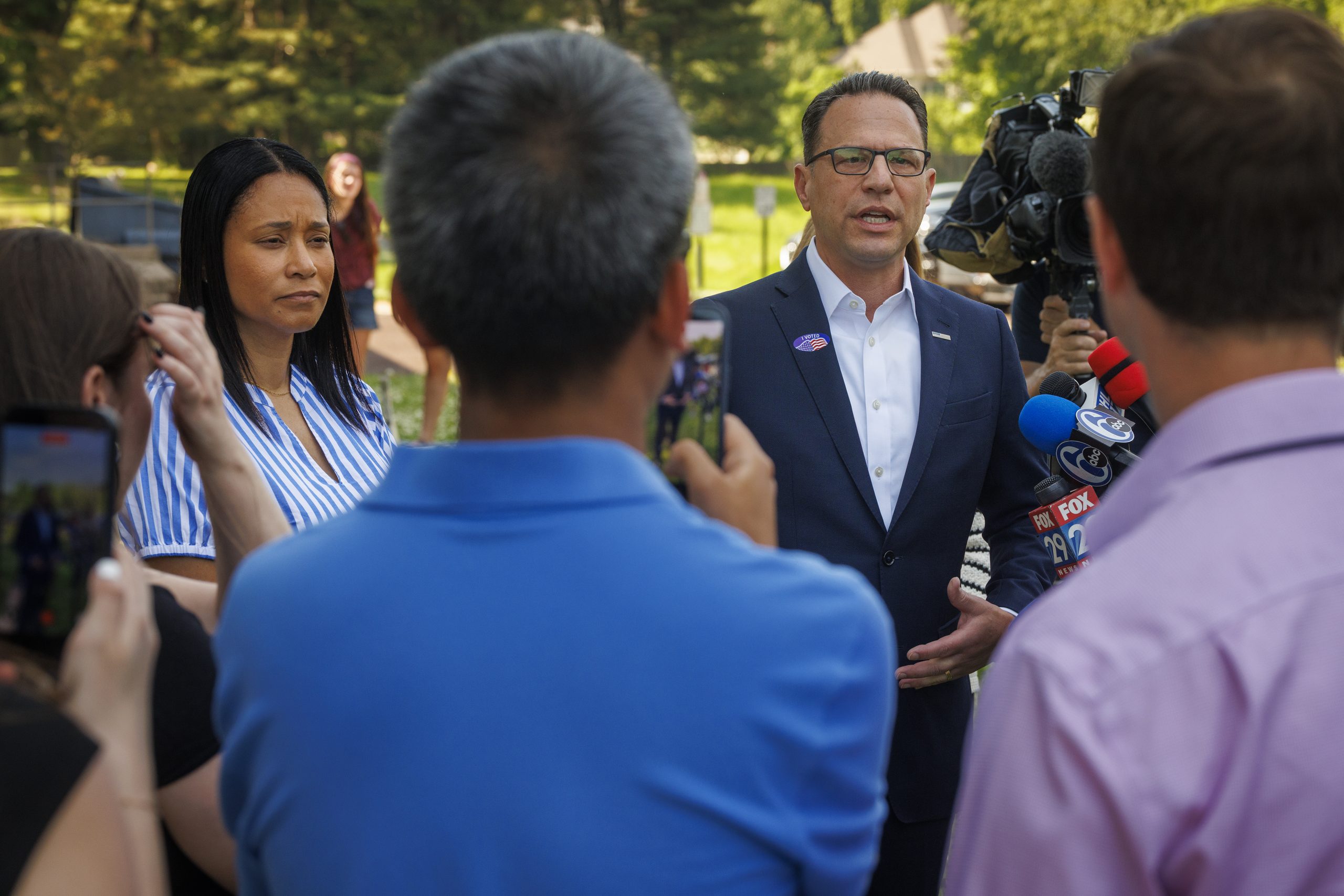
    Pennsylvania Governor Josh Shapiro taking questions from media on election day, Tuesday, May 19, 2026. He voted today at Rydal Elementary (West) 1231 Meetinghouse Road Rydal, PA. At left is Jamila H. Winder, Chair, Montgomery County Commissioners.Alejandro A. Alvarez / Staff Photographer

    Shapiro will also likely face questions about school choice on the campaign trail.

    He is running for reelection in November against Republican Treasurer Stacy Garrity. Garrity’s platform focuses, in part, on expanding school-choice options in Pennsylvania and she has the support of Commonwealth Partners, a political action committee largely funded by Pennsylvania’s richest man, Jeff Yass, which has poured money into supporting school choice.

    The issue will also likely surface a national stage if Shapiro enters the 2028 Democratic presidential primary race. His support for vouchers drew criticism from fellow Democrats in 2024, when he was a potential vice presidential nominee.

    Debate over state tax credits

    Pennsylvania does not have a direct school voucher program. Instead, the state sets aside $680 million each year for tax credits that allow businesses and individuals to write off charitable giving that supports private school scholarships.

    House Democratic support for those credits has quietly grown in recent years. In a June 2025 letter recently obtained by The Inquirer, 10 House Democrats, including five from Philadelphia and the head of the Pennsylvania Legislative Black Caucus, asked their leadership to expand a portion of the tax credits for students in the lowest-achieving school districts — revealing more Democratic support for the programs than was previously known.

    Public education advocates who oppose voucher programs say the state is funneling money to private schools with little accountability.

    “It’s just a pot of money that a bunch of people get, and nobody really knows where it goes or what happens to it,” said Susan Spicka, executive director of Education Voters PA.

    New requirements approved by the state legislature last year are set to take effect in November and will require scholarship organizations to report the dollar amount of each award, the recipient’s district of residence, and where they attend private school.

    The bill advanced by the House in a 105-97 vote this week would also require organizations to report each scholarship recipient’s income level — reducing the current limit to $144,000 for a family of four — and the amount of remaining tuition charged to a student. Advocates, including Spicka, called that information key to gauging whether scholarships are going to families who otherwise could afford private school.

    Bradford said he’s proud of the $110 million earmarked in existing state tax credits to provide additional money to kids attending schools where a majority of students are getting scholarships. House Democrats say their newest proposal would steer more money toward those students.

    But the proposed legislation — which would also reduce the tax credit donors could claim for some contributions, and require scholarship organizations to set 2% of funding aside for state oversight of the programs — drew swift backlash from private school advocates.

    Philadelphia Archbishop Nelson J. Pérez is “deeply concerned that this legislation would have a devastating impact,” said spokesperson Ken Gavin. “The clear intent is to lead to the dilution or elimination of the programs, which are vital.”

    Schools affiliated with the Philadelphia archdiocese educate nearly 44,000 students across 117 schools in the region, according to its website.

    Bradford, who is Catholic, said the Archdiocese’s response “missed the mark,” arguing that this legislative effort is trying to achieve a similar goal of serving students from poor families who attend the roughest schools.

    “I’m proud of my own Catholic faith. I love when my Catholic Church stands for those communities,” Bradford added. “No one should ever fear transparency, especially when you’re talking about three-quarters of a billion dollars of state tax dollars.”

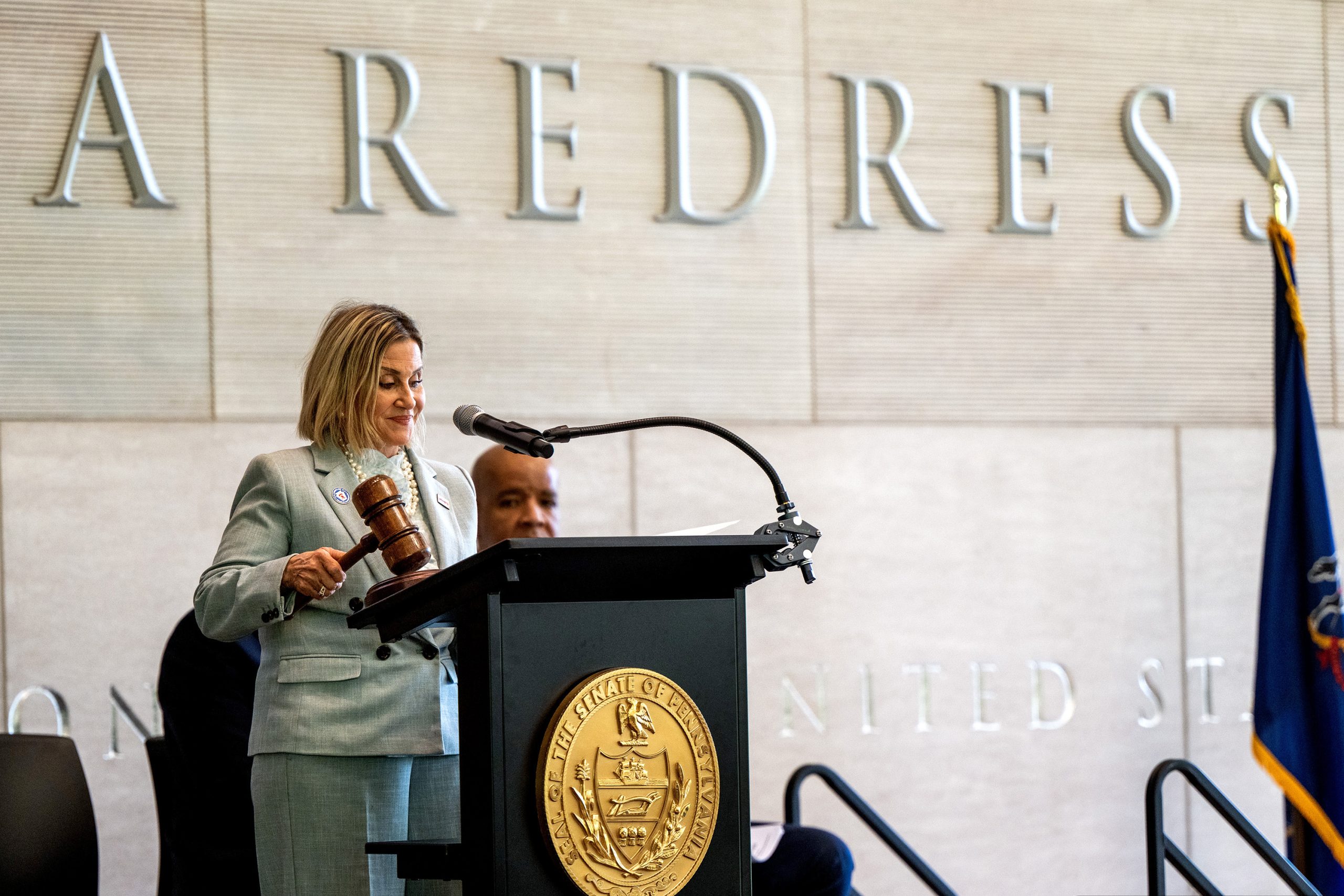
    President Pro Tempore Kim Ward gavels the opening as the Pennsylvania Senate hosts a ceremonial meeting at the National Constitution Center Tuesday, May 5, 2026. Tom Gralish / Staff Photographer

    Meanwhile, Senate Republicans on Thursday amended another House bill to increase the state’s current tax credit programs to $705 million.

    President Pro Tempore Kim Ward (R., Westmoreland), a staunch supporter of school vouchers, said in a statement that Bradford‘s attention to school choice is disingenuous, criticizing the House Democrats’ bill as “overly burdensome auditing requirements disguised as ‘transparency.’”

    The 2023 budget breakdown, where Shapiro ultimately vetoed the school voucher program he‘d helped draft with Senate Republicans because it couldn’t pass the Democratic-controlled House, continues to tarnish his relationships with top GOP leaders, including Ward. He and Ward have hardly spoken since.

    “While Senate Republicans have consistently advanced legislation to provide scholarships to disadvantaged students, the track record for Gov. Josh Shapiro and House Democrats has been nothing more than a case of whiplash as their words and actions rarely align,” Ward said. “To me, it seems like the support for school choice by the House Democrat Leadership is more of a façade as they continue to cater to political special interests.”

    Ward has also called for changes to Pennsylvania’s new public school funding system, which includes an adequacy formula that directs more money to the state’s poorest school districts, including Philadelphia.

    Bradford, in response, said he is open to conversation about accountability and transparency, but that debate needs to include private schools benefiting from taxpayer dollars.

    “We shouldn’t carve out any portion of our K-to-12 education,” Bradford added. “That conversation needs to be uniform.”

    A choice for states on Trump’s tax credits

    Shapiro has previously said he would wait for more details before making a decision on whether to participate in the new federal tax credit program. The U.S. Department of the Treasury earlier this month released additional details, including that it will allow individuals to receive up to $1,700 in credits for making donations to private school scholarships that can cover tuition, tutoring, and more. In Philadelphia, families making $368,100 annually, or 300% of the county’s gross median income, would be eligible to receive the scholarship.

    School-choice advocates say Pennsylvania taxpayers will be able to claim the credit regardless of whether Shapiro opts in. But in order for Pennsylvania schools and students to benefit, the governor needs to join.

    Shapiro’s press secretary Rosie Lapowsky said the governor appreciates the guidance, but continues to await information on “how this will affect use of our existing tax credits, how states will be expected to administer the program, and how eligibility will be determined.”

    Twenty-eight states have opted in to the program, most of which are led by Republicans. And Democrats are facing pressure to stay out of the program.

    In a letter sent to Democratic governors this week, American Federation of Teachers President Randi Weingarten and National Education Association President Becky Pringle called the program “a Trojan horse carrying near-universal K-12 private school vouchers into every state that participates.”

    So far, Democratic governors elsewhere have taken differing approaches to the program. New York Gov. Kathy Hochul has said her state will participate but is waiting for final guidance before officially signing on. Other governors like Minnesota Gov. Tim Walz and Oregon Gov. Tina Kotek have announced that their states will not participate. Democratic governors in Arizona and Wisconsin have vetoed legislative efforts to force their states to opt in, while governors’ similar vetoes in North Carolina and Kentucky were overridden by legislators.

    Bradford said it’s “an abomination” that funding for Trump’s program came from Republicans making other cuts to the federal budget, and emphasized that state Democrats remain committed to increasing public education funding.

    “Here in Pennsylvania,” he said, “we are a humble 102 [Democrats] in the Pennsylvania House and we are nimble and pragmatic.”

  • Haverford parents are worried about chatbots in classrooms after a vote to buy AI tools

    Haverford parents are worried about chatbots in classrooms after a vote to buy AI tools

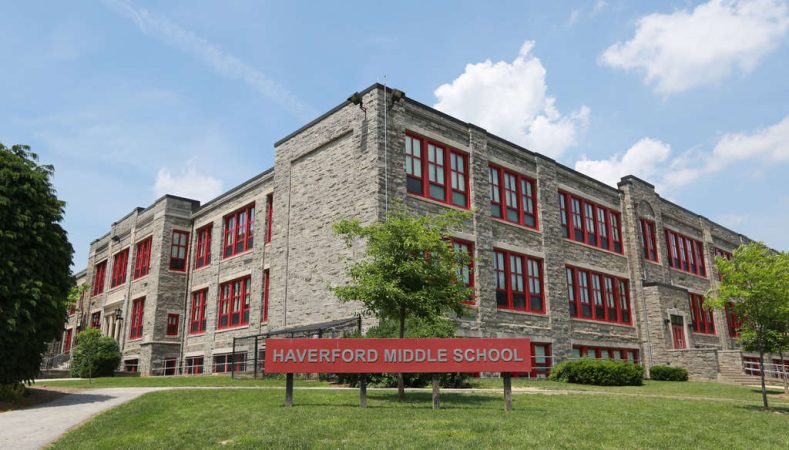
    A move by the Haverford Township School District to buy artificial intelligence tools for students and teachers has been met with protest from parents who fear the technology will erode learning.

    At a meeting last week, the Haverford school board voted 5-3 to approve contracts with School AI, which features AI “tutors,” and Brisk, which automates tasks for teachers, like developing quizzes and giving students feedback.

    While administrators said the tools wouldn’t supplant teaching and learning, critics said it was inevitable that AI would be used inappropriately — making it easier for kids to avoid work.

    “The idea of putting chatbots on computers — I don’t even care what age. I’m pretty disgusted by that,” said Christine Seewagen, a district parent of rising 12th and 7th graders.

    The district already struggles to manage technology in the classroom, said Seewagen, who said her older child has observed students run math questions through an AI tool on their phones. Her younger child, meanwhile, had a teacher who directed students to upload essays to an AI tool to get feedback, Seewagen said.

    “They’re just using AI, and not really being instructed on how to do it,” Seewagen said in an interview.

    Administrators said they were recommending buying AI tools in part because teachers are already using freely available versions, and they want to “eliminate free roaming around platforms,” Robert Anderson, the district’s technology director, said at the June 18 board meeting.

    Haverford’s superintendent, Matthew Hayes, said the School AI contract would “allow us to have a resource so that as we go through the process of the strategic plan and looking at all the implications down the line,” the district could begin teaching AI “thoughtfully, responsibly, ethically.”

    He added: “And also reducing screen time,” without providing further details.

    The controversy around AI in Haverford is the latest example of area parents pushing back on what they see as excessive and unchecked technology use in schools.

    In Lower Merion, parents have pushed to opt their kids out of district-assigned laptops or tablets; the district is planning changes to reduce usage for younger students, but has told parents they cannot opt out entirely. Parents in other districts are also raising concerns about too much Chromebook use.

    In Haverford, some parents said they were caught off guard by the proposal to adopt technology they felt posed risks to their kids.

    Patrick Burland, the parent of an incoming 10th grader and 6th grader, noted he’d had to sign numerous permission slips for his younger child to participate in end-of-year celebrations.

    “Apparently, sugar requires a signature, but cognitively rewiring her brain does not,” Burland told the board.

    Anderson said Haverford had been considering how to incorporate AI for years. He said the district sought feedback from teachers, including through an AI working group, before proposing the contracts.

    Board members who voted for the AI tools, meanwhile, said kids needed to learn how to use the technology responsibly.

    “Not acknowledging that it’s here … we don’t gain anything, right? We actually lose and we put ourselves farther behind because it’s not going anywhere,” said board member LaTonia Lee.

    But some raised questions about what the district was planning to do with the tools.

    Dave Schwartz, another board member, said he would support teaching kids about AI. But the district hasn’t said how it plans to do that, he said.

    “We’ve been talking very much in vague terms, and I can’t vote for something that I don’t understand,” Schwartz said.

    A district spokesperson did not respond to a question this week about examples of how School AI might be used.

    Board member Chris Shelton asked Anderson about criticism that the tool’s “historical figure” chatbots were giving students inaccurate information. (Last year, School AI acknowledged that responses from an Anne Frank character “didn’t provide critical historical details about the Nazis’ role in the Holocaust.”)

    Anderson called it “unfortunate” that the company had promoted the historical figures feature, but said the district “would have the option to potentially not use something like that.”

    John Flagler, a board member and English teacher, said he understood the burdens placed on teachers, “but I also believe there are lines that should not be crossed.”

    The suggestion that grading papers is a “menial task” that could be offloaded to AI “is an insult to both the teacher and the student,” Flagler said, calling grading essential to teachers learning about students.

    Administrators said Brisk wouldn’t be used for grading, but would provide “first-level feedback” — informing students they’re missing a topic sentence, for instance, said Meridith Herne, the district’s technology integration coordinator.

    “We insist that our teachers read it over and modify it so it’s in their own voice,” Herne said of Brisk’s feedback. Hayes said that 97 district teachers already use a free version of the tool.

    He said the tool was not meant to replace teachers.

    “That’s not my intent at all,” Hayes said, describing Brisk as “an option for individuals who want exposure to it.”

    He noted that the contracts with Brisk, for $22,260, and School AI, for $12,999, were each limited to one year.

    Teachers will be trained on the School AI platform, Anderson said; it will be up to them to decide whether they want to use it. He said the district envisions the platform being used in high school and “potentially” middle school, but isn’t planning for it to be used in elementary schools.

    Parents like Burland and Seewagen, who said like-minded parents have been organizing on social media, weren’t persuaded.

    “It does not feel like to me they have put any guardrails on,” Burland said in an interview. He questioned whether the district would have considered turning off School AI chatbots, for instance, had it not been asked at the board meeting.

    Seewagen said many parents who have learned about the AI plans aren’t happy.

    “It did not go under the radar,” she said.

  • Lotteries and other school equity reforms can have mixed results

    Lotteries and other school equity reforms can have mixed results

    As final grades post, lockers empty and end-of-year celebrations draw to a close, anxiety about the future looms. For many children in Philadelphia a lottery determined where they’ll head to school next year. The city is far from alone in adopting a practice that one online forum likened to “wading through some kind of toxic gas.” The goal, broadly speaking, is to ensure that any student anywhere can benefit from excellent schools despite entrenched housing segregation in many of America’s cities.

    Yet, despite the endorsement of the Nobel Prize committee, the question of whether these lotteries actually enhance equity is complicated.

    Consider the case of Washington D.C., where 76% of the public school system is Black and Hispanic, 43% of students are designated as “at risk” academically and 15% are English language learners. For more than a decade, the city has embraced what is called the “common lottery.” Families enter for a variety of reasons, including seeking a particular type of education—dual language immersion, or an arts-centric curriculum—or even looking for a school in close proximity to a caregiver’s workplace. For some students, the lottery has offered a ticket to a superior educational experience than the one at their neighborhood school. The history informing the adaptation of the common lottery, however, suggests that such a fix can both promote and evade equity, serving as a bandaid to old, not fully healed wounds.

    Over a half century ago, Washingtonians came together to rethink how place determined the quality of education. In 1967, local activist Julius Hobson successfully sued the superintendent of schools for discriminating against Black and poor public school children. Federal Judge J. Skelly Wright, who previously desegregated schools in New Orleans, ordered multiple remedies, including boundary revisions to foster racial and socioeconomic integration.

    To fulfill one of the court’s mandates, in February 1968, a group of 35 civic-minded residents from every section of the city formed a committee to redraw how the district set attendance boundaries. After several weeks of deliberation, the committee produced six maps and settled on two, one for junior high schools and one for high schools, to present to the board of education. On May 8, 1968, the nine-member board approved the changes, affecting approximately 9,000 of the District’s 146,000 students.

    Yet, the ink had barely dried on the new maps when the school board considered additional revisions to school assignments. Enrollment patterns explained some of the changes, such as long-awaited school construction to alleviate overcrowding. But other changes looked more like carving out loopholes, blurring the lines between families’ legitimate appeals and race and class biases.

    In July 1969, the school board laid out the list of reasons that might justify a student transferring from their assigned school to one outside of their assigned geographic boundary. They included “medical reasons,” “diplomatic requests” and “gross inconvenience to parents and/or family routine.”

    The board also unanimously approved shifting 21 students, 18 white and three Black, from Gordon Junior High, located in Georgetown, to Alice Deal Junior High in upper Northwest, a historically white and affluent area of the city. In 1970, Gordon Junior High was only 53% white, whereas Alice Deal was 60% white. School board member Albert Rosenfield proposed the change on behalf of his well-to-do, well-connected constituents. For Rosenfield, the city “must have a tax base,” and appeasing a few families, some with seats in Congress, could prevent their exit and help sustain the city’s coffers.

    Concerned white parents who believed the transfers “enhance[d] segregation” quickly sued the board, and the court agreed.

    Yet, the legal victory didn’t stop the school board from implementing quieter administrative measures which enabled parents to justify transferring their children to schools outside of their assigned boundaries to alleviate a purported burden. For the 1971-1972 school year, families submitted 700 appeals at the elementary school level and 1,639 for junior high and high school. The district approved 90% of transfer requests for elementary school students and over half of those coming from secondary students.

    And so, by the 1980s, even though the boundary changes were supposed to help equalize educational opportunities regardless of one’s address, a system of widespread exemptions had created had made that promise illusory for many families. For example, in the spring of 1983, a third of Alice Deal’s 987 students were from outside of the school’s geographic boundaries. Their families had successfully navigated the sysem, which now determined which students could get exemptions on a first come, first served basis. Parents could even claim that “curriculum offerings” necessitated a transfer. This approach to fairness spurred competition for entrance into some prestigious schools. In 1986, approximately 175 parents assembled overnight outside of district offices for a chance to claim a coveted spot in their school of choice.

    Over the next 40 years, families’ ability to navigate the public school system only grew more complicated: controversial school closures, expanding citywide (or magnet) school options and the emergence of charter schools all affected how students could pursue a public education. Recognizing the burden to families and school administrators, in 2014, D.C. Public Schools and most charter schools turned to a common lottery to streamline the application process. (That same year, the district also accepted recommendations for boundary revisions, the first since 1968.)

    The lottery was a well-intentioned step toward expanding educational opportunity—and it has worked for many families. For the 2026-2027 school year, 74% of the 20,987 families who tested their luck received good news: a chance to enroll at one of their selected schools. And in recent years, the district’s new Equitable Access option gives students who are “at-risk” academically a higher chance of success on lottery day.

    Of course, none of this matters for some families; indeed, according to the D.C. Policy Center, residents in the city’s Jackson-Reed High School feeder pattern were the least likely to use the lottery, opting instead to attend their in-boundary school assignment, or a private school. But for those who want, or need, the lottery, as the state superintendent remarks, it provides a chance to take advantage of “the strength of so many D.C. education programs and the meaningful learning experiences they create.”

    Made By History sponsors. FOR USE ON MADE BY HISTORY STORIES ONLY.Inquirer Staff

    Still, luck isn’t a guaranteed pathway to equity. The lottery made no matches for one quarter of this year’s applicants, who may or may not get off of waitlists.

    The good news is the district has witnessed the dividends of more systemic efforts to nurture students. In math, researchers recently crowned the nation’s capital first among 38 states for “academic recovery” following the Covid-19 pandemic; and the same goes for reading performance among 35 states. But the work continues. As the city prepares to search for new leadership over D.C. Public Schools, the district is still chasing pre-pandemic benchmarks, and despite evidence of progress, nationally, math (ranked 27th) and reading (ranked 45th) are two subjects ripe for growth.

    Philadelphia public schools, which also offers a lottery, is currently bracing for school closures and hundreds of teacher and staff cuts in response to a budget deficit. Lotteries can be useful additions to the equity landscape, but they can only do so much to reach the most vulnerable students.

    Erica Sterling is an assistant professor of history at the University of Virginia.

    Made by History takes readers beyond the headlines with articles written and edited by professional historians. Opinions expressed do not necessarily reflect the views of The Inquirer.
  • An Upper Darby student was honored at the White House for a proposal to use AI to fight human trafficking

    An Upper Darby student was honored at the White House for a proposal to use AI to fight human trafficking

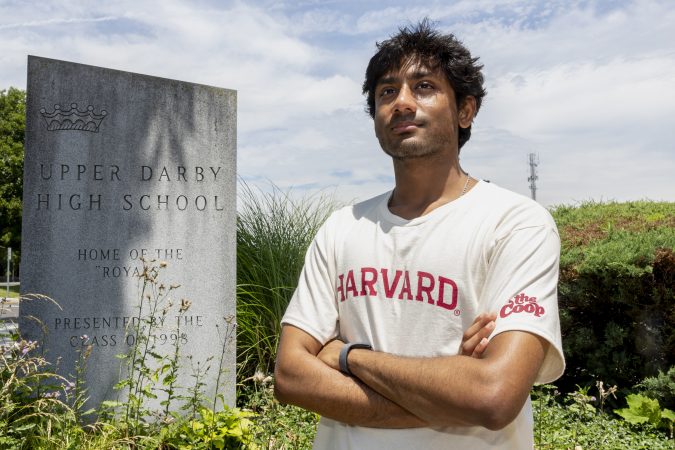
    As a student at Upper Darby High School, Khandakar Mahin was intrigued when the school installed a weapons detection system two years ago.

    Mahin, who was interested in the artificial intelligence behind the system, wrote email newsletters to the student body, describing how it worked.

    “I had fun doing that,” describing “how AI algorithms were working on a microscopic level,” Mahin said.

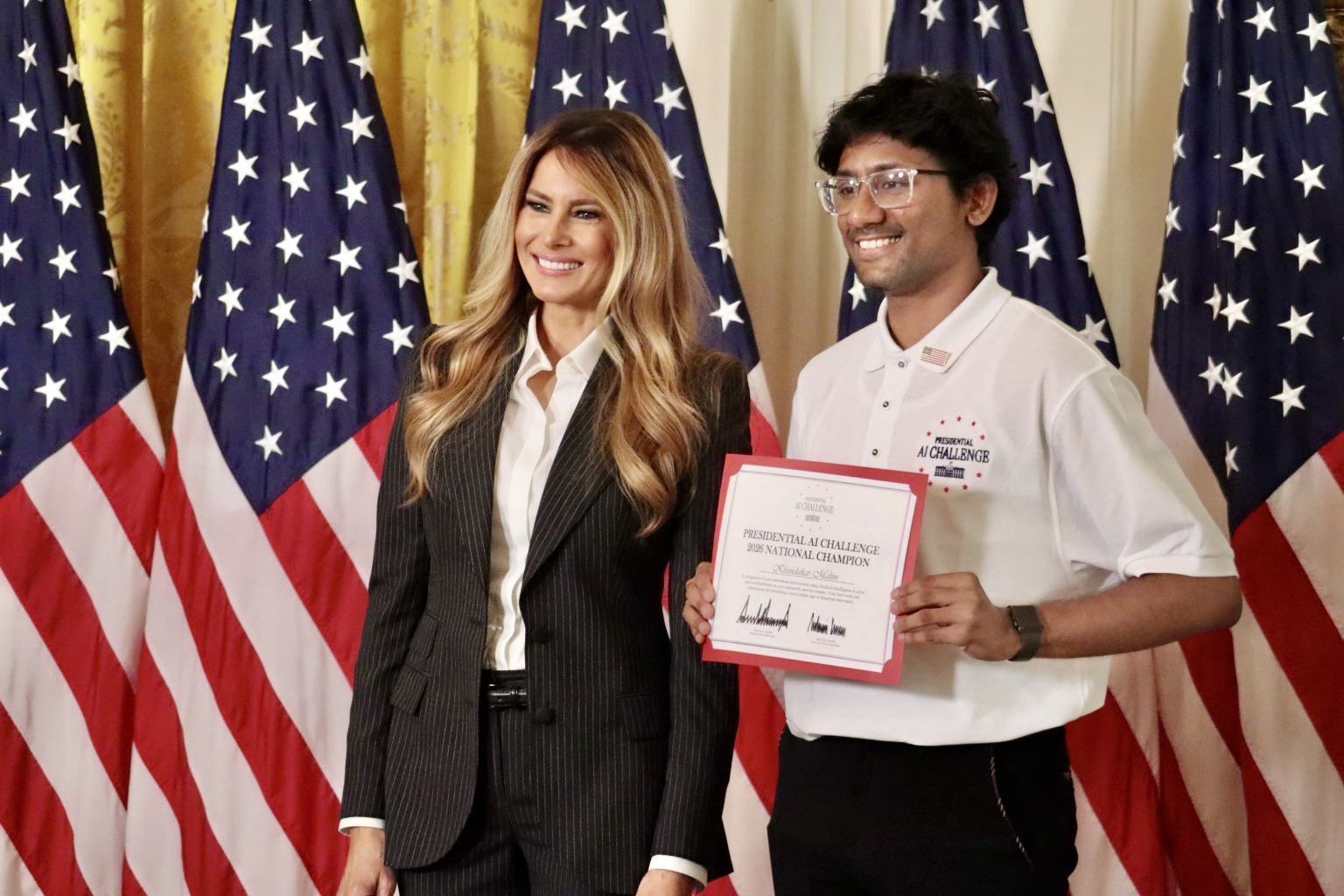
    Now an Upper Darby graduate, Mahin, 18, was honored at the White House earlier this month for a proposal he created for another use for AI: to combat human trafficking.

    First lady Melania Trump praised Mahin and the other five winning teams of the inaugural Presidential AI Challenge at a June 9 ceremony.

    “You saw AI’s potential and created ideas that will shape America’s future in many areas, including healthcare, nutrition, public safety, and beyond,” Trump told the winners, who were chosen from a field of 20,000.

    Upper Darby graduate Khandakar Mahin, right, poses for a picture with First Lady Melania Trump at a June 9 ceremony honoring Mahin and other winners of the Presidential AI Challenge.Courtesy of Khandakar Mahin

    Mahin — who said he got to see the Oval Office and “network with many different types of people” — won for a proposal to use computer vision to match photos from the dark web to a database of 64,000 hotels.

    The tool would identify details like carpet designs or headboard features in photos depicting trafficking, then match them to known hotels, using images scraped from the internet. Mahin created a framework and demonstration of the tool, and said his proposal included ideas for how it could be scaled to be used by law enforcement nationwide.

    The award, which Mahin said came with a $22,500 prize, was yet another achievement for Mahin, who will attend Harvard University this fall; he was also accepted to Yale and Princeton.

    While at Upper Darby High School, he took 16 Advanced Placement classes and won an array of awards and scholarships, including being selected for the Amazon Future Engineers and the Disney Dreamers Academy earlier this year.

    “This is a very bright kid who’s been looking into things like this for a long time,” said Dan McGarry, the superintendent of the Upper Darby School District.

    Mahin immigrated to the United States with family from Bangladesh 12 years ago and has attended Upper Darby schools since then.

    Mahin has been “heavily invested in being a contributor in a positive way to his school community,” McGarry said, noting that the recent graduate was involved in setting up local libraries. “It’s not just artificial intelligence. He’s also a good kid.”

    But Mahin has a particular interest in AI. Mahin, who recently served as a student representative on Upper Darby’s school board, was among a group of students who joined school leaders in meeting with company representatives about the weapons detection system.

    The students made a video about the system, which McGarry said was critical in getting student buy-in.

    The district also sends students to the Delaware County Intermediate Unit to share their perspectives; Mahin has addressed other superintendents about AI, “the good and the bad,” McGarry said.

    At Harvard, Mahin hopes to study political science and government with an aim toward creating “more ethical AI policies,” he said.

    Mahin, who has already participated in programs at Princeton and MIT, credits teachers in Upper Darby — not just in computer science and math, but English, he said — with teaching him “how to have the grit to do research.” His award-winning AI project was supervised by Roseann Burns, an Upper Darby teacher who McGarry said works with gifted students.

    Despite being an underfunded district, Upper Darby “has a lot of opportunities,” Mahin said. “As a student, you really have to seek out the opportunities if you really want it.”

    While Mahin may stand out for the level of recognition he has received, McGarry said Upper Darby has many “amazingly talented, bright” students.

    “That’s often overlooked, unfortunately,” McGarry said. He said Mahin “represents what I think makes this country great. … Every opportunity that was there, he took it.”

  • A gift to Temple will create the first endowed editor position at its student newspaper

    A gift to Temple will create the first endowed editor position at its student newspaper

    Jack Pinkowski relished his time as a photojournalist for Temple University’s student newspaper when he was enrolled there in the 1960s.

    And he always admired the work of his father, the late Edward Pinkowksi, an historian and author who founded a small newspaper in the Montgomery County borough of Bridgeport.

    This month, Pinkowski, a 1968 Temple grad, and his wife, Monica, gave Temple a $1.25 million gift, a portion of which will for the first time endow the editor-in-chief position for the Temple News, as well as increase other staff salaries and pay for some story-related travel and new equipment.

    Pinkowski said the need for journalists has never been more important, and he lamented the struggles print journalism has faced.

    “We hope to show it a lifeline, give it some support to encourage people to go into that as a field of endeavor,” said Pinkowski, 78, of Plantation, Fla. “This named editorship is a tribute to my father for starting a newspaper and having a lifetime as a critical mind that searched for facts and put them together and brought stories to the enjoyment of people.”

    Of the gift, $250,000 will be used to create an endowment for the student newspaper, and the remaining $1 million will fund scholarships of up to $10,000 per academic year for students to study at Temple’s Rome campus. Applicants must have knowledge of, coursework in, or a commitment to promoting Polish or Italian studies, history, or culture.

    The Pinkowskis made their money by investing in and managing real estate as well as through other careers.

    The couple both worked in businesses with global ties — Jack as an importer of furniture and Monica as an importer of gourmet foods to restaurants — and saw the merit in global study. They also both attended a study abroad program for adults at Temple Rome in 2024.

    Given the federal government’s policies affecting foreign students, Pinkowski said, he thought it was important to support the Rome campus so that students have an alternative way to attend an American university.

    Temple president John Fry said he especially likes that the gift is so personal and that it is widening access to students to participate in both studying on the Rome campus and working for the student newspaper.

    “These are two really important experiences that many students have to forgo, and I think the Pinkowskis are making both of those possible,” Fry said. “Its meaning and impact are significant.”

    The gift comes as the college prepares to close a record fundraising year, led by a record $55 million gift from alumnus Christopher Barnett in October and a large gift in April from alumna Jane Creamer Sullivan and her late husband, Thomas J. Sullivan, to start its new honors college.

    A boost for the Temple News

    John DiCarlo, managing director of student media and adviser to the Temple News, said its portion of the Pinkowski gift will be incredibly important in supporting the newspaper with a staff of 37, which last academic year ran on a $115,596 budget that largely covers salaries and print costs.

    Most of the costs were covered by the university, with the newspaper responsible for raising $23,500 through ad revenue and other means. If the publication exceeds that goal — which it did last year, raising over $29,000 — it can funnel the additional money back into operations, DiCarlo said.

    The new endowment, DiCarlo said, will bring in an additional $10,000 to $12,000 annually, depending on its earnings.

    Incoming senior Sienna Conaghan, 20, who will be the inaugural Edward Pinkowski Editor-in-Chief, said she is grateful for the funding, which will cover her approximate $5,400 salary. And she is glad that salaries for other staffers can get boosted, too.

    “We’re asking them to do full-time jobs on a college student’s budget and a college student’s schedule,” DiCarlo said. “It takes a lot out of them because they really care.”

    Conaghan, a journalism major from West Yellowstone, Mont., estimates that she spends about 30 hours a week on Temple News work. She freelanced freshman year, was assistant sports editor sophomore year, and worked as sports co-editor last year.

    The experience is more important than the paycheck, said Conaghan, who plans to pursue a career in sports journalism, but the money helps.

    “It has really been everything,” Conaghan said of her Temple News work. “I think I’ve learned so much from working at the Temple News, from how to be a journalist and also just how to be an adult and a person.”

    The Pinkowskis initially gave a gift to the Temple News in 2023 to help it reach a fundraising goal. The college wanted to be able to pay student journalists a little more because some were having to take on second jobs to generate more income, DiCarlo said. At that time, he said, he had no idea the couple would return with such a large gift three years later; it is the largest gift the Temple News has ever received.

    “Monica and I are avid readers and avid followers of print journalism,” said Jack Pinkowski, a graduate of Philadelphia’s Central High School.

    Pinkowski said his father decided to start the now-defunct Bridgeport South Side Press in 1950 because the community did not have a local paper. He also wrote history books about the local area, using skills he developed as a journalist, Pinkowski said.

    The Pinkowskis have had other career experience in addition to real estate and import businesses.

    He was a general contractor and wedding photographer early on and later spent 18 years as an associate professor of public administration at Nova Southeastern University’s school of business and entrepreneurship in Florida.

    And she was a flight attendant at one time and as a child grew up working in a family traveling carnival business in Missouri — which helped pay for her education at the University of Missouri-Kansas City.

    Jack Pinkowski said the common thread in their endeavors has been “inquisitiveness and intellectual curiosity and the ability to take something where there’s nothing and make something of it.”

    Both Temple officials and the Pinkowskis hope their gift will motivate others.

    “I do believe that other people pay attention to that, and it makes them say, well, maybe they can do something as well,” Jack Pinkowski said.