Category: Education

  • Penn president announces he will leave his job next summer

    Penn president announces he will leave his job next summer

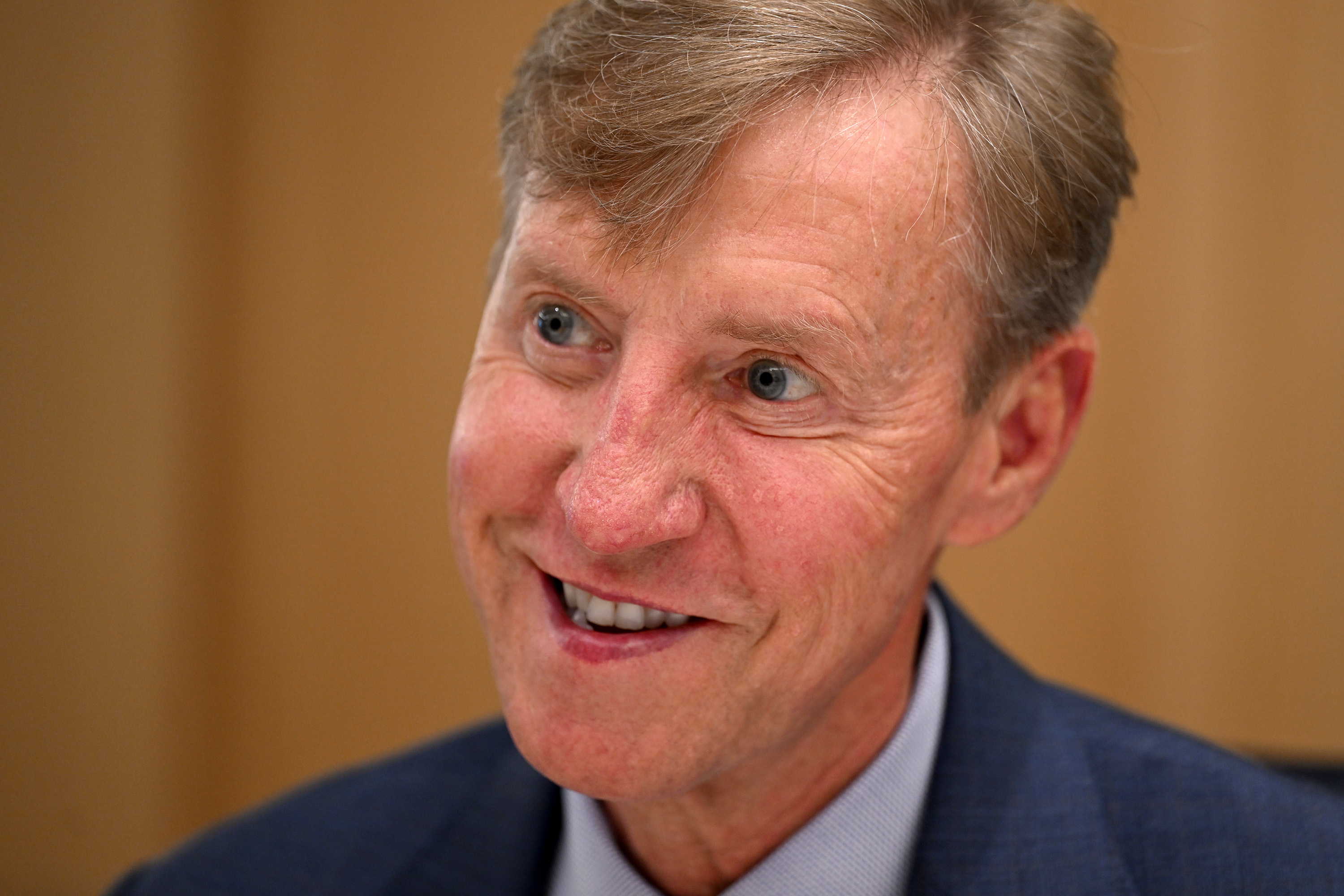
    University of Pennsylvania President J. Larry Jameson will conclude his presidency next June, he announced in an email to the Penn community Friday.

    “Although I greatly enjoyed serving as president, now is the right time for Penn to begin its next chapter under new leadership,” Jameson said in the email. “My goal was to help restore stability during unanticipated leadership transitions, refocus our community on Penn’s mission, and strengthen Penn for the future during a challenging time for higher education.”

    Those goals have been accomplished, he said.

    There was much speculation about whether Jameson — an endocrinologist who previously led Penn’s health system and medical school for more than 12 years — wanted or would be asked to remain in the seat beyond next year’s expiration of his current contract. Many have credited Jameson with steadying the school during a turbulent time, including as the school faced funding threats and increased scrutiny by President Donald Trump’s administration.

    His departure will leave the Ivy League school searching for a new leader during a time of uncertainty under Trump, who has targeted elite universities.

    Board chair Ramanan Raghavendran said he respected Jameson’s decision and the board will begin searching for the school’s next president in the fall.

    Jameson, 71, will have served in the top job at Penn just three-and-a-half years, one of its shorter presidential tenures. But he came into the job by circumstance rather than desire.

    Jameson took over in December 2023 during perhaps one of Penn’s greatest leadership upheavals. Former President Liz Magill had just resigned amid a bipartisan backlash over her testimony involving the school’s response to antisemitism complaints. He first was named interim president and then was elevated to the permanent post in March 2025.

    Jameson earned total compensation of more than $8 million in 2024, the most recent tax year available. That included $5.4 million in “reportable compensation” and more than $2.5 million in other compensation.

    “Dr. Jameson stepped in at a pivotal moment, and what he has accomplished in two-and-a-half years has been simply extraordinary,” Raghavendran said in a statement.

    Neither Raghavedran nor Jameson were available for interviews Friday, the university said.

    In his message, Jameson said “the momentum we have built will continue,” noting his intention to work over the next year on implementing the Penn Forward plan. The plan calls for everything from more transparent and predictable tuition and cost policies and improved student experience to more efficient operations, a focus on keeping Penn at the forefront of best uses of artificial intelligence, and a growing presence in the San Francisco Bay Area — where Wharton already has a campus.

    Penn also has some tough decisions ahead in his final year. During the spring semester, the school proposed new open expression guidelines that some on campus say are too restrictive and would chill free speech. The university is considering the feedback and plans to issue final guidelines next academic year.

    The university also is undergoing belt-tightening in anticipation of potential federal cuts and increased legal and insurance costs. Penn in January asked schools and centers to pare 4% from their budgets for the next fiscal year, on top of a 5% cut last year.

    Penn’s Graduate School of Education laid off several staff members last week as part of those cuts, according to The Daily Pennsylvanian, the student newspaper.

    Many at Penn speak highly of Jameson’s leadership, though some wish he had made a stronger defense against some Trump demands.

    “Even if this were a good time to search for a new president — and it decidedly is not — I cannot imagine Penn finding a more effective leader,“ Eric Feldman, faculty senate tri-chair and a law school professor, said last month. ”His deep knowledge of the medical school is a significant asset amid continuing pressures on federally funded research, and his extensive leadership experience, spanning decades, makes him uniquely well suited to guide the university through what are likely to be several more complex years.”

    During an interview with The Inquirer last month, Jameson explained his decision to resist the Trump administration on some things and negotiate on others.

    “My approach has been not just to complain,” Jameson said during his first interview as Penn’s president with a major media outlet, “but to say, ‘Well, here’s where we’re working together very effectively. Here’s where we’re not necessarily aligned, but let’s discuss how to move forward.’”

    Jameson was at the helm when Penn last summer struck an agreement with the White House over the prior participation of transgender swimmer Lia Thomas on the school’s swim team. The school agreed to adhere to the Trump administration’s definitions of sex, female, male, women, and men in regard to athletics, and send letters of apology to female athletes who felt aggrieved by Thomas’ participation on their team during the 2021-22 season.

    But he also was at the helm when Penn rejected a compact that would have given it preferential treatment for federal funding if it agreed to the Trump administration’s operational demands. The school also is actively fighting a demand by the Equal Employment Opportunity Commission to turn over lists of Jewish people on its campus for its investigation into alleged antisemitism at Penn. The agency sued Penn for not complying with its subpoena and a federal judge sided with the EEOC, but Penn is appealing the decision.

    Jameson said he gained new perspective in the presidential role, which “allowed me to learn each day from the people, ideas and achievements that define this university and its extraordinary breadth. …While my career has been in academic medicine, it has been illuminating to reacquaint myself with other fields, from poetry to political science, from finance to fine arts.”

    He said the university is on a positive trajectory.

    “Penn has tremendous momentum and is exceptionally well positioned for the future,” Jameson wrote.
  • Mayor Parker and City Council now have one year to figure out a way to bring in $216 million after reversing Philly school cuts, officials say

    Mayor Parker and City Council now have one year to figure out a way to bring in $216 million after reversing Philly school cuts, officials say

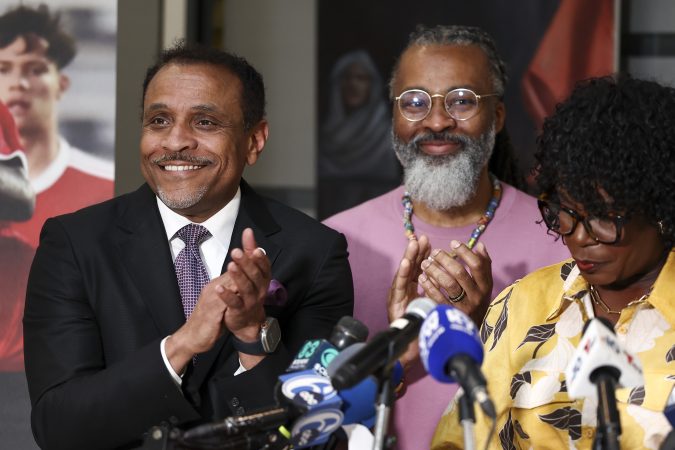
    Philadelphia School District officials and public education advocates were relieved Wednesday when Mayor Cherelle L. Parker announced she had reached a deal with City Council that will prevent 340 classroom positions from being eliminated amid the district’s funding woes.

    But as limited details about the agreement began to emerge Thursday, it became clear that the deal was less of a schools-funding program than a plan to figure one out over the next year — with the prospect of $216 million in city budget cuts taking effect if Parker and Council cannot eventually agree to adopt a new revenue stream.

    “Council President Kenyatta Johnson and I publicly committed to working together to find local, recurring, predictable, and dependable revenue sources for the School District of Philadelphia over the next year to ensure that we keep these critical positions,” Parker said Thursday during a city budget bill-signing ceremony. “That is our shared goal and our commitment.”

    But if Parker and Johnson do not make good on that commitment by July 1, 2027, the city will be on the hook for additional funding it has promised the school district between 2028 and 2031, including roughly $50 million in the first year of that time frame.

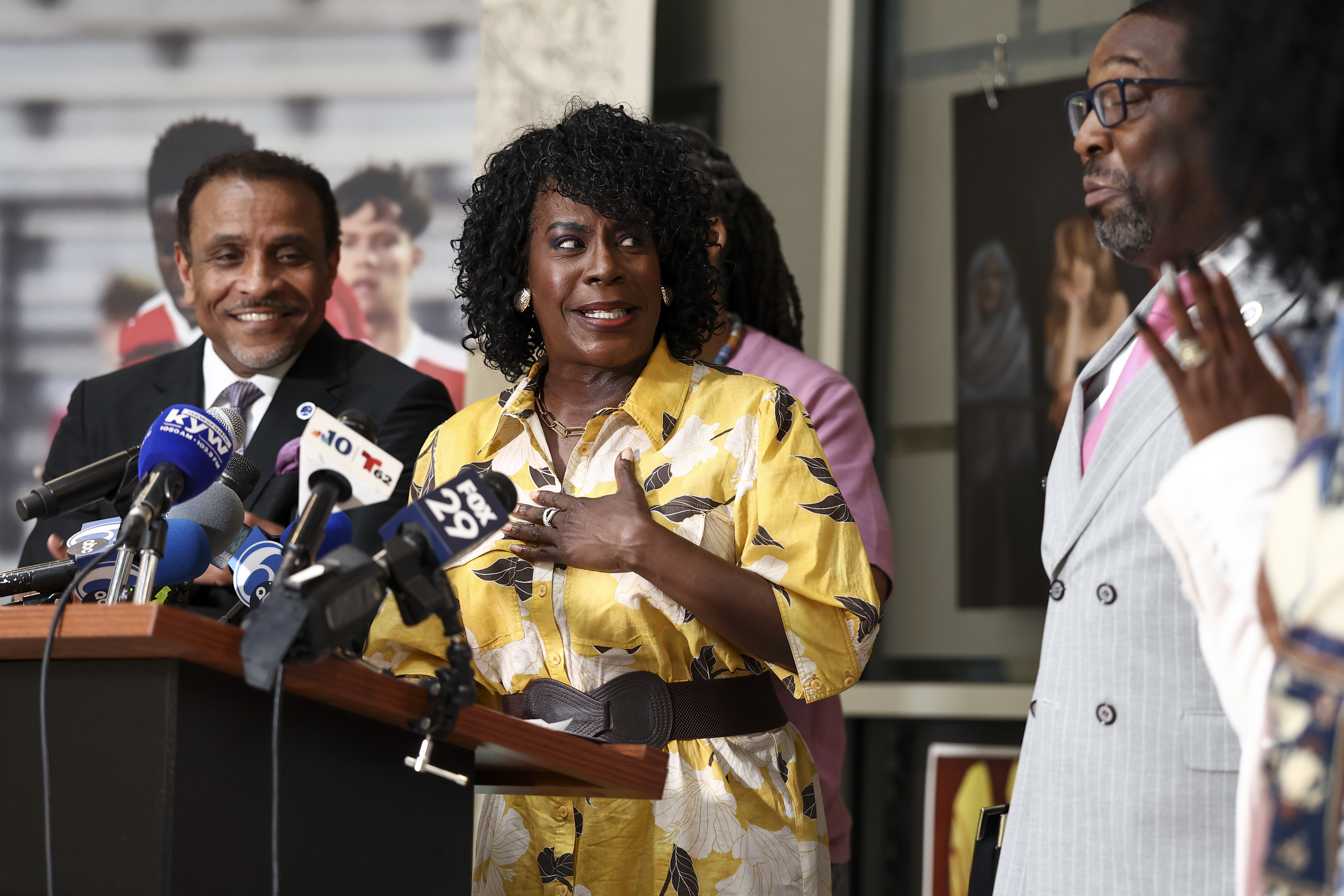
    Council President Kenyatta Johnson speaks during an announcement at the School District of Philadelphia Headquarters on Wednesday, June 10, 2026 in Philadelphia. Philadelphia School District officials will move to restore 340 classroom-based jobs that were slated to be cut, despite top district leaders saying last week that they did not have the recurring funding needed to keep the positions.Monica Herndon / Staff Photographer

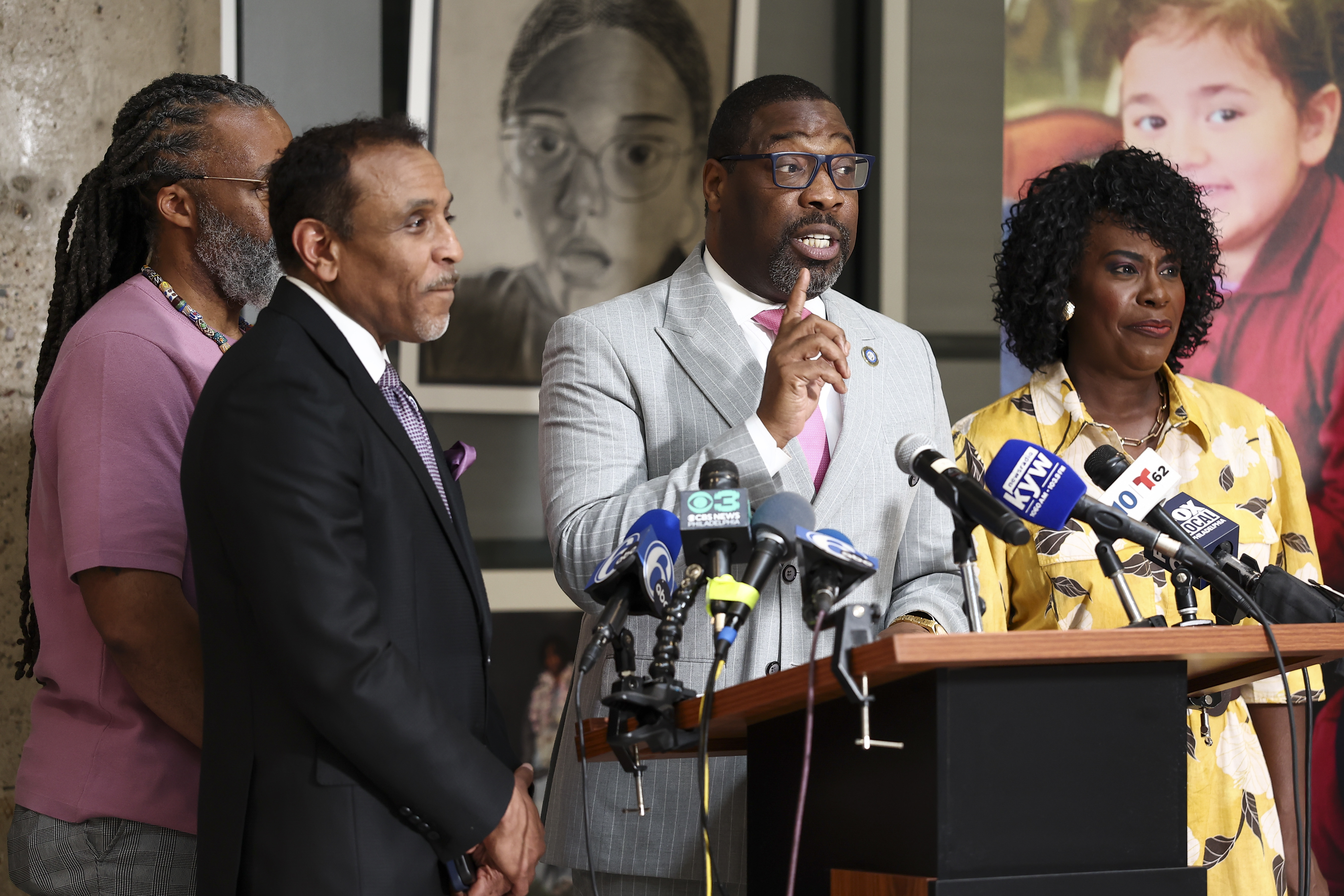
    Parker, Johnson, Superintendent Tony B. Watlington Sr., and school board president Reginald Streater triumphantly unveiled the agreement to stave off the planned job cuts Wednesday. That announcement followed days of suspense after Council last week refused to pass the mayor’s proposed $1-per-trip rideshare tax, which would have funded schools, and instead advanced a city budget with about $50 million from one-time cuts that would be sent to the district as a Band-Aid for its $300 million budget gap.

    Council’s move prompted Watlington, with Parker’s backing, to say the positions would still be eliminated without an explicit promise that the money would be recurring, rather than a one-time allocation.

    Officials said they worked “around the clock” between Council’s rejection of the rideshare tax and Wednesday’s announcement, which Johnson jubilantly hailed as “Christmas in June.”

    On Thursday, education advocates and labor leaders heaped praise on the administration for the deal.

    Several district principals said Thursday they do not yet have details about exactly how much they will get back in their budgets, or how the dominoes will fall once positions are restored.

    Watlington had school leaders build their 2026-27 budgets as if the cuts were happening, and many of the affected teachers, counselors, and climate staff secured new positions, some in the district and some outside the system. The restoration will undoubtedly cause vacancies elsewhere, months after other districts filled jobs for the fall.

    “The win is making sure that those 340 jobs, with teachers, will not be laid off, and they will not have to second-guess if next year they’re going to come back to work,” Johnson told reporters Thursday. “And I think ultimately we can talk about sometime the ‘how’ we get to a particular end. But it’s always the ‘why.’ … At the end of the day, all of our young people still can have a chance to get a quality education.”

    ‘Budget sequestration’ comes to Philly?

    The agreement between Parker and Johnson in some ways hearkens back to Congress’ 2011 “budget sequestration” debacle, when President Barack Obama, a Democrat, and House Speaker John Boehner (R., Ohio) agreed to severe across-the-board spending reductions that would take effect automatically if lawmakers and the White House failed to reach a “grand bargain” to restructure the federal budget.

    They never reached an agreement — and the sequestration cuts, once thought of as too painful to countenance, eventually became reality.

    Parker and Johnson are optimistic their arrangement for the school district and the city budget will not suffer a similar fate.

    The future city budget cuts will be reflected in the city’s five-year plan, which must be approved by a state oversight board each year but is not binding legislation like annual taxing and spending measures. That gives City Hall more wiggle room to figure out how to find the money officials have now promised the district than Obama and Boehner had.

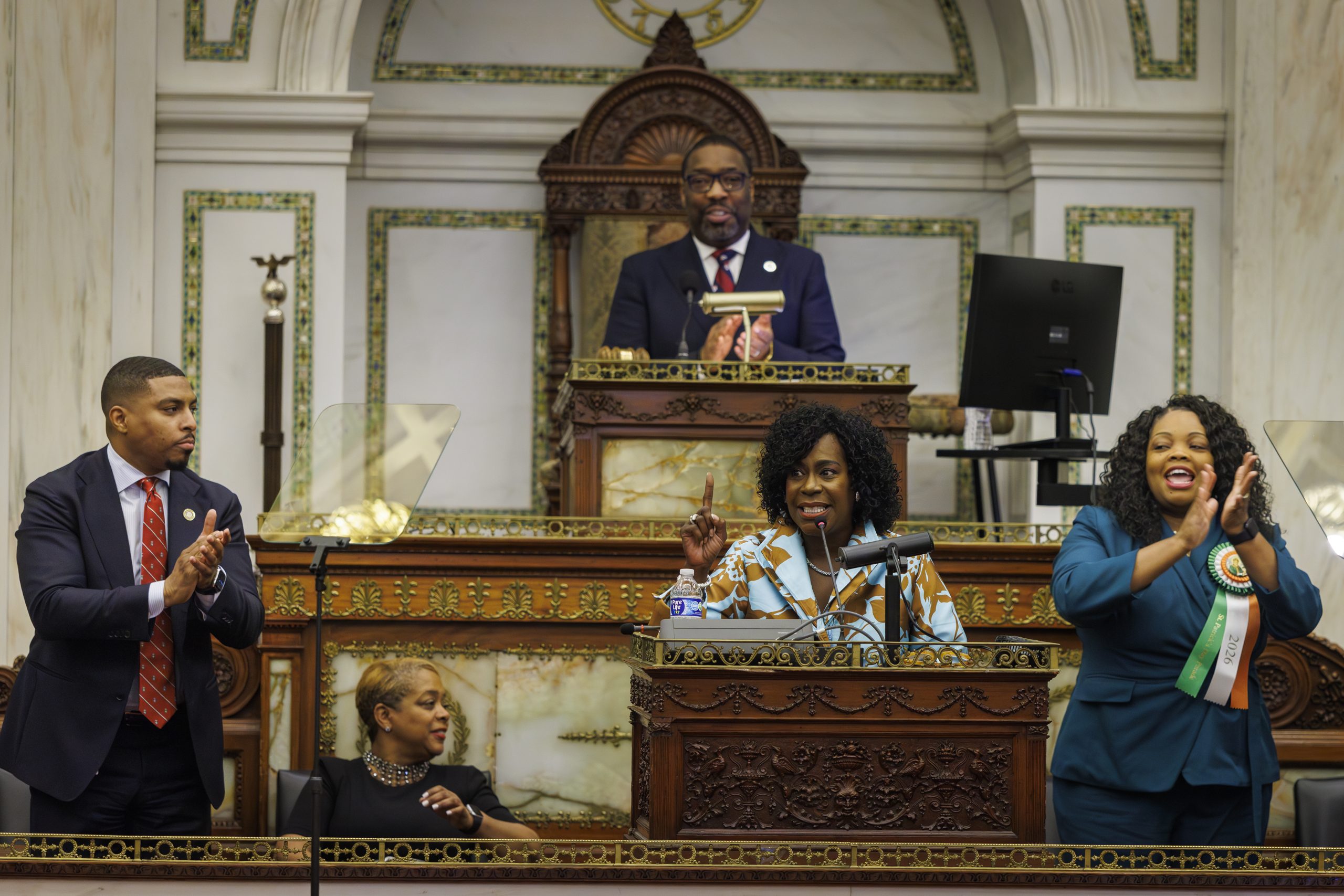
    Philadelphia Mayor Cherelle L. Parker is cheered by members of Philadelphia City Council at conclusion of the budget address, Thursday, March 12, 2026. From left are council members Nicholas O’Rourke, Cindy Bass and Katherine Gilmore Richardson. In background is council President Kenyatta Johnson. .Alejandro A. Alvarez / Staff Photographer

    Parker said her administration has already identified the cuts that will be reflected in the five-year plan when it is up for approval next month at the Pennsylvania Intergovernmental Cooperation Authority. But she has offered few specifics on what those potential cuts would entail.

    Parker said Thursday that the city could make up part of the difference by reducing future debt repayment obligations by reducing the size of planned city bond sales. She mentioned the city’s capital budget, which funds projects like repaving roads and renovating recreation centers, but did not say how much would be cut.

    And she said the city could halve its next borrowing related to her signature housing program, Housing Opportunities Made Easy. The city plans to take out a second tranche of $400 million in city bonds next year for H.O.M.E.; the potential cuts to free up money for schools could include taking only $200 million at that time, she said.

    “Where did we get the money from in future years?” Parker said Thursday. “In our five-year plan, we made cuts to very important programs associated with our capital budget and even our H.O.M.E. plan — but cuts that will never have to be realized once we all make good on that commitment to generate that approximately $50 million in new, predictable recurring revenue.”

    One complication in the negotiations to come is that Parker and all 17 Council members are up for reelection next year, and lawmakers are not eager to approve new taxes before voters head to the ballot box.

    The Democratic primary, which effectively decides almost all elections in Philadelphia due to the city’s deep-blue electorate, will be in May 2027. The next city budget, including all tax measures for the following fiscal year, must be enacted by the end of June 2027, leaving several weeks after the election for Council to potentially approve a new tax to provide money for the district next year.

    Philadelphia City Council members at City Hall in Philadelphia, Pa. on Thursday, June 11, 2026.Aidan T. Gallo / Staff Photographer

    Some possibilities do not involve new or increased taxes for residents. The city, for instance, could speed up its plans to increase the share of property tax revenue that is dedicated to the district. Currently, the district receives 56% of property tax revenue, while the city takes 44%.

    Additionally, Council last year approved a Parker proposal to enact 13 years of cuts to the business income and receipts tax and five years of reductions to wage tax. The city could generate more revenue by pausing those reductions.

    Parker said the agreement will allow Philadelphia to present a united front in Harrisburg as officials prepare to ask for more state funding for the city’s school district. State lawmakers in the past have pointed to disagreements among city leaders when rejecting requests for additional support.

    “This is the first time … in my lifetime that the city of Philadelphia, the administration, and the legislative branch, along with the superintendent of the School District of Philadelphia and the school board, will all travel [to Harrisburg] in unity, along with all of our union partners and all of our education advocates,” Parker said. “We can stand up when we arrive in Harrisburg and say … ‘Philadelphia’s homework is done.’”

    School advocates relieved

    Arthur Steinberg, president of the 14,000-member Philadelphia Federation of Teachers, said the news of Parker and Johnson’s agreement came just in time. Thursday was the last day of school for 114,000 district students; staff finish the school year Friday.

    “It was a very difficult year, and I’m glad that we’re able to tell them now that the positions that were cut due to this will be restored,” Steinberg said at a news conference Thursday morning outside Council chambers. “This means a lot to them. There’s stability over the summer. The communities will know who their teachers will be, and they’ll know where they’re going.”

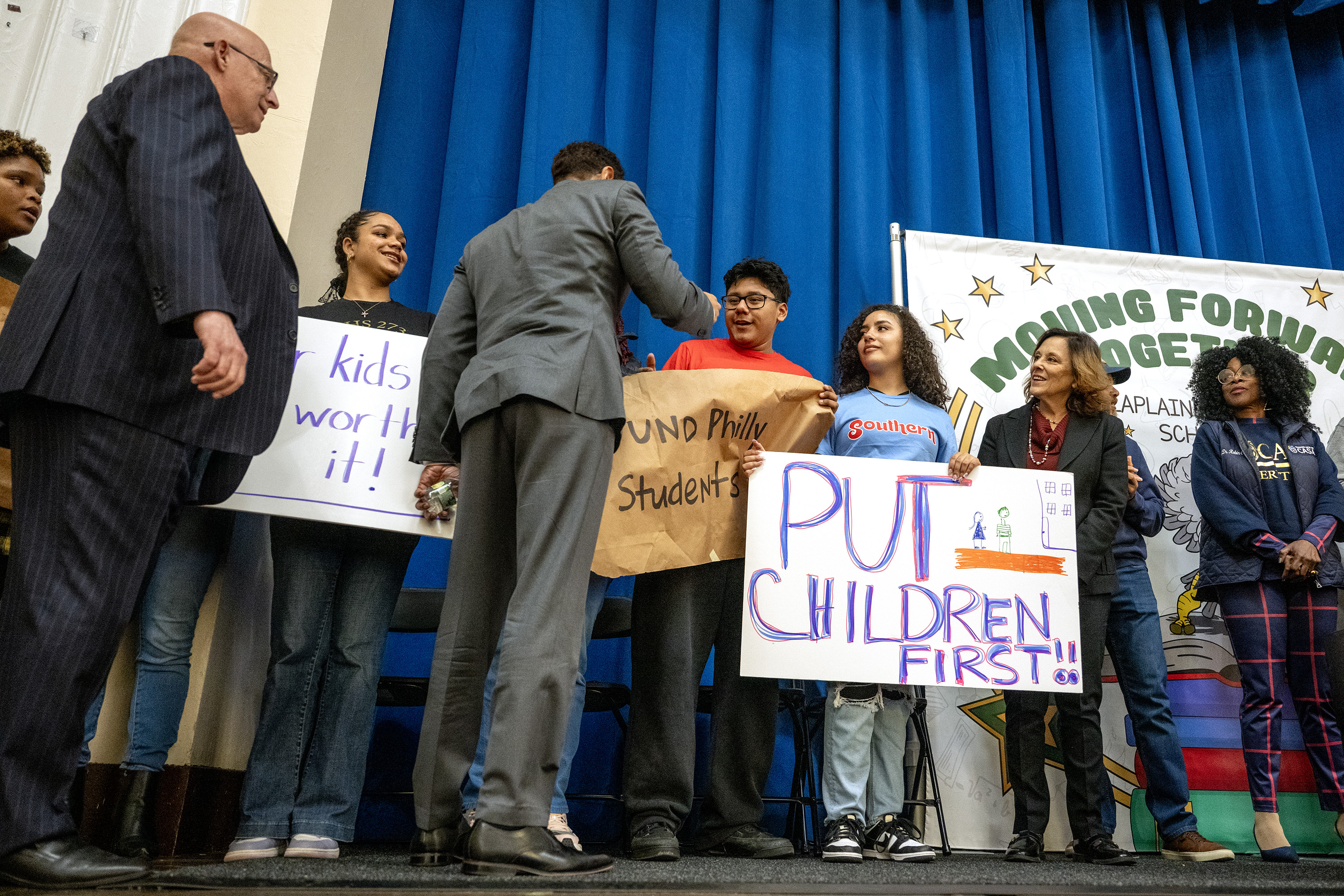
    Arthur G. Steinberg (left), president of the Philadelphia Association of Teachers, and school superintendent Tony B. Watlington, Sr. (right) greet students as they arrive onstage for Mayor Parker’s announcement March 23, 2026, of $1 rideshare tax proposal to fund city schools.Tom Gralish / Staff Photographer

    Tiffany Johnson Williams said she was thrilled that cuts at her child’s school — Nebinger Elementary in South Philadelphia — and others would be rolled back.

    “I am equally grateful to Mayor Parker, Superintendent Watlington, and the school board for coming back to the table and working collaboratively to reach the solution that restored our critical positions,” Williams said at the news conference. “As a parent and educator and a youth advocate, I know that stability matters.”

    Councilmember Isaiah Thomas, who has had a testy relationship with the district and school board over the last several months, suggested it was time to move forward cohesively to push for more funding elsewhere.

    “I think where we are at this moment is recognizing that as we come together as Philadelphians, our job now is to use our advocacy initiatives and our leverage to try to get even more resources from Harrisburg,” Thomas said.

    Staff writers Anna Orso and Jake Blumgart contributed to this article.

  • A Havertown native is giving historic $112.6 million to Drexel, months after his record gift to St. Joe’s Prep

    A Havertown native is giving historic $112.6 million to Drexel, months after his record gift to St. Joe’s Prep

    Drexel University has received a $112.6 million gift — the largest in its history by more than double — to establish its new college of engineering and computing, renovate space in two buildings to foster programs within it, and provide more scholarships.

    The gift comes from the Howley Foundation, a Cleveland-based philanthropic group whose mission, according to its website, is “to create social and economic mobility and improve lives” through “quality educational opportunities.”

    The foundation is headed by billionaire W. Nicholas “Nick” Howley, a 1975 Drexel graduate, his wife, Lorie, and their daughter Meg Howley, a 2010 Drexel graduate. Nick Howley, who got his degree in mechanical engineering, is the cofounder and board chairman of TransDigm Group Inc., a Cleveland-based aerospace parts manufacturer.

    The same foundation in April gave a $74 million gift to St. Joseph’s Preparatory School, also Howley’s alma mater, which school officials believe was the biggest donation ever given to a U.S. Catholic high school.

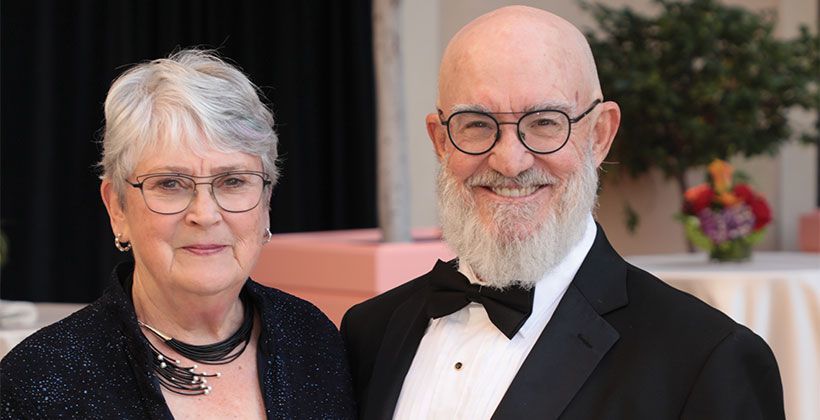
    W. Nicholas “Nick” Howley and his wife Lorie have given $112.6 million to Drexel University through their foundation.Courtesy of Drexel University

    The new school, which will be Drexel’s largest, will be named for the Howley family. It will be made up of the School of Engineering, School of Computer and Information Sciences, and School of Biomedical Engineering and Science, which merged earlier this year as part of a consolidation and academic overhaul.

    Drexel made the announcement Thursday morning, with commencement scheduled for later in the day at the West Philadelphia university. It was the first major gift to come to the university under president Antonio Merlo, who took over last July.

    Drexel’s previous largest gift, $50 million, came from Thomas R. Kline in 2014 to name its law school.

    “This investment is a powerful affirmation of Drexel’s strength and leadership in fields where innovation and impact are deeply intertwined,” Merlo said in a news release. “It will not only bring excitement and a new look to our campus, but it will also provide generations of students with access to state-of-the-art facilities, as well as set them on course for a transformational educational experience at Drexel.”

    The gift also comes as the university has been aiming to reduce a deficit, making some operational changes, and considering changing its relationship with the Academy of Natural Sciences. The school said in April it would end the year with a $20 million deficit. Drexel is projected to continue to run deficits through fiscal year 2028, according to a report from Moody’s, which downgraded the school’s rating earlier this year. And last fall, Drexel experienced a 19% drop in the size of its freshman class.

    But Merlo in a message to campus last week said the university has seen a 16% increase in students indicating they will attend next fall. And the university is preparing to launch its “renewed curriculum” and change to semester calendar.

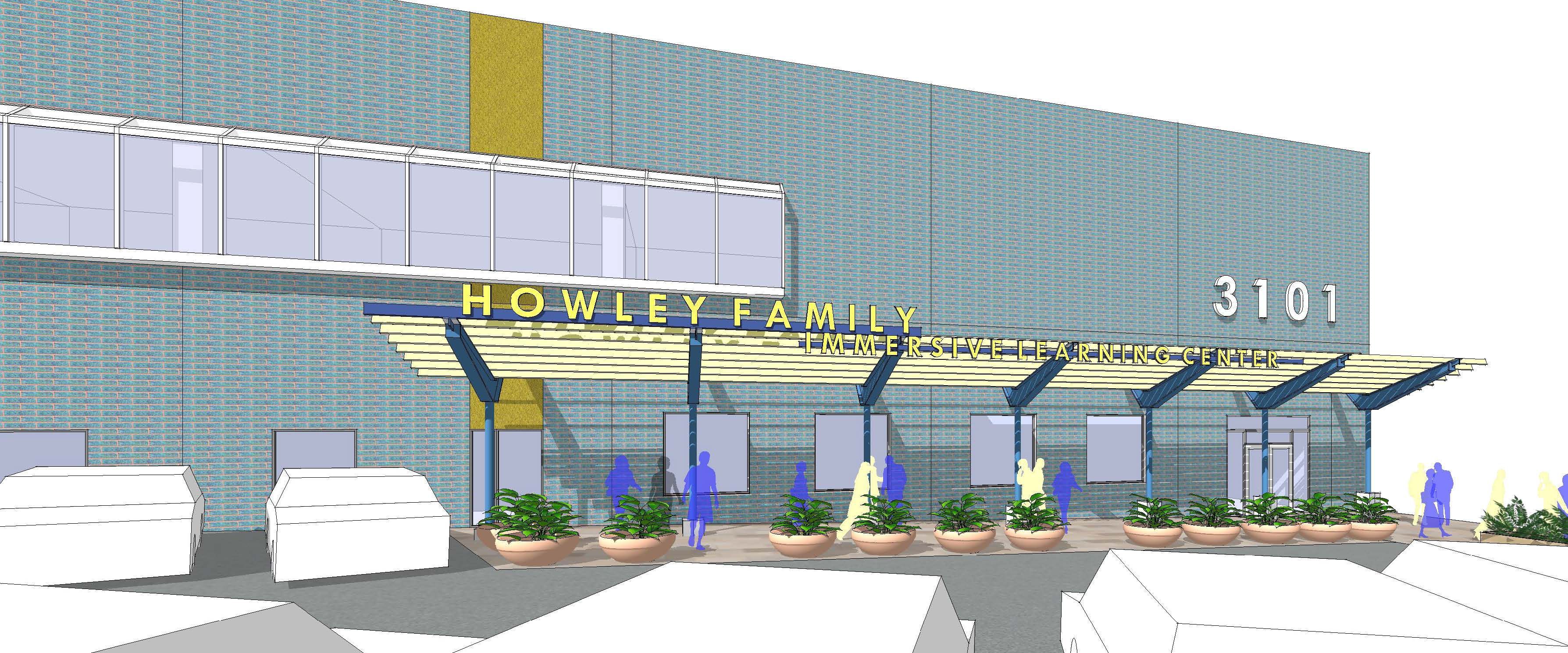
    A rendering the exterior of the Howley Family Immersive Learning Center at Drexel UniversityCourtesy of Drexel University

    “I am filled with optimism about what lies ahead for our students and our institution,” Merlo wrote.

    About $76 million of the Howleys’ gift will fund programs and scholarships for talented students from certain schools, primarily in Philadelphia and Cleveland, who enroll at Drexel, regardless of their financial circumstances.

    Roughy $36 million will fund about 55,000 square feet of classroom, lab, and other learning spaces in Drexel buildings along Market Street and JFK Boulevard. That includes more than 45,000 square feet in Drexel’s 3101 Market St. facility that will become the Howley Family Immersive Learning Center and include a robotics facility, a flight simulator, a jet engine lab, a soil and concrete analysis lab, and wet labs for chemical engineering, materials science, and cell and gene therapy education.

    The remaining 10,000 square feet will become the Walter N. Howley Jr. Innovation garage, named after Nick Howley’s father, who got his bachelor’s degree in commerce and engineering from Drexel in 1951. The space at 32nd and Market Streets will feature work in bays by engineering and computing student organizations, the school said. Students, the university said, will be able to build race cars, electric vehicles, and scale airplanes, as well as rockets, steel bridges, and concrete canoes to enter in national competitions.

    Construction will begin on both spaces in spring 2027, the school said.

    “I am proud to support Drexel’s mission as a global leader in experiential education,” Howley said in a news release. “The university’s model provides a true return on investment for all students who earn a Drexel degree and I believe it is the best way to encourage upward social and economic mobility.

    “The combination of its academic rigor and co-op program make Drexel’s a unique educational experience that goes farther than any other university in propelling its graduates toward their career objectives.”

    In addition to his role at TransDigm Group Inc., Howley, who grew up in Havertown and now lives in Ohio, is a founder and cochair of Perimeter Solutions, which provides industrial products and services in areas including firefighting materials, lubricant additives, electronic components, and medical devices. Howley, who also has an MBA from Harvard Business School and is a member of Drexel’s board of trustees, previously donated $15 million to Drexel for scholarships.

    Lorie Howley, who got her degrees in ornamental horticulture and communication arts from Cornell University, worked as an educator at Longwood Gardens for 15 years. She is cofounder of the Howley Foundation and is on its board of directors.

    The Howleys’ daughter Meg, who got a master’s degree in psychology from Drexel, is executive director for the foundation’s Philadelphia operations. She got her undergraduate degree in psychology from Hobart and William Smith Colleges, and a master’s in school psychology and educational specialist certification from Rowan University.

    Part of the gift will be used to create an endowment for the new college to help it attract students and faculty. The college will enroll about 5,000 students in more than 60 undergraduate and graduate degree programs, including its new undergraduate degree in artificial intelligence and machine learning.

  • Philly School District will not make 340 classroom job cuts after all, mayor announces

    Philly School District will not make 340 classroom job cuts after all, mayor announces

    Philadelphia School District officials are restoring 340 classroom-based jobs that were slated to be cut, despite top district leaders saying last week that they did not have the recurring funding needed to keep the positions.

    In a surprise, dramatic announcement late Wednesday, Mayor Cherelle L. Parker — flanked by Superintendent Tony B. Watlington Sr., school board president Reginald Streater, and Council President Kenyatta Johnson — said the city had identified enough money in the existing budget to stave off the cuts.

    “We have delivered for the School District of Philadelphia today,” Parker said. The mayor added that the city “made some tough decisions” to save the positions of 149 teachers, 130 climate staff, and 23 counselors.

    Parker and Johnson pledged $216 million over five years to keep funding the school workers.

    Officials said the $48 million in new money the city is providing for the 2026-27 school year is the floor, and not a one-time fix.

    The administration will look to new, recurring revenue sources in the future, Parker and Johnson said, but if those are not found, the money will come from the city’s capital spending and other areas the mayor said she would release Thursday.

    “Everything is on the table” for those new funding streams, Parker said, though she did say that raising property taxes was a nonstarter.

    Superintendent Tony B. Watlington Sr. speaks during an announcement at the School District of Philadelphia Headquarters on Wednesday, June 10, 2026 in Philadelphia. Philadelphia School District officials will move to restore 340 classroom-based jobs that were slated to be cut, despite top district leaders saying last week that they did not have the recurring funding needed to keep the positions.Monica Herndon / Staff Photographer

    The mood at district headquarters, where leaders gathered for a hastily arranged news conference, was positively jubilant.

    “It’s Christmas in June,” Johnson said. Thursday is the last day of school for district students, and Johnson said he was thrilled that teachers and staff “will have an opportunity to remain in the schools that will continue next year, in the years beyond, to support our young people.”

    “I can’t stop smiling,” Streater said.

    An about-face

    The move was an about-face from last week, when Watlington wrote in a letter to Council that the system — which is facing a longstanding $300 million structural deficit — could not restore the 340 positions “without a commitment to recurring and predictable funding over multiple years.”

    After that grim moment, Parker said, members of her team, Johnson’s office, and district officials worked “around the clock” to find a way to cobble funds together to save the jobs, which were imperiled amid a $300 million district budget deficit. City Council last week rejected Parker’s proposed $1-per-ride tax on rideshare services like Uber and Lyft, which she said would generate about $48 million a year in revenue for the district to cover the classroom cuts.

    Instead, legislators and the mayor’s administration agreed last week to use money in the existing budget to increase the city’s annual contribution to the school district by $48 million this year.

    Council members gave initial approval to that plan last week and are expected to take a final vote on the budget on Thursday.

    After Parker’s tax plan collapsed, she held a fiery news conference, casting one-time money for the city’s public schools as a Band-Aid and saying that the lawmakers did not “offer an alternative plan for recurring revenue.”

    “Our children deserve better. They deserve more,” Parker said. “We didn’t meet the moment here in the city of Philadelphia.”

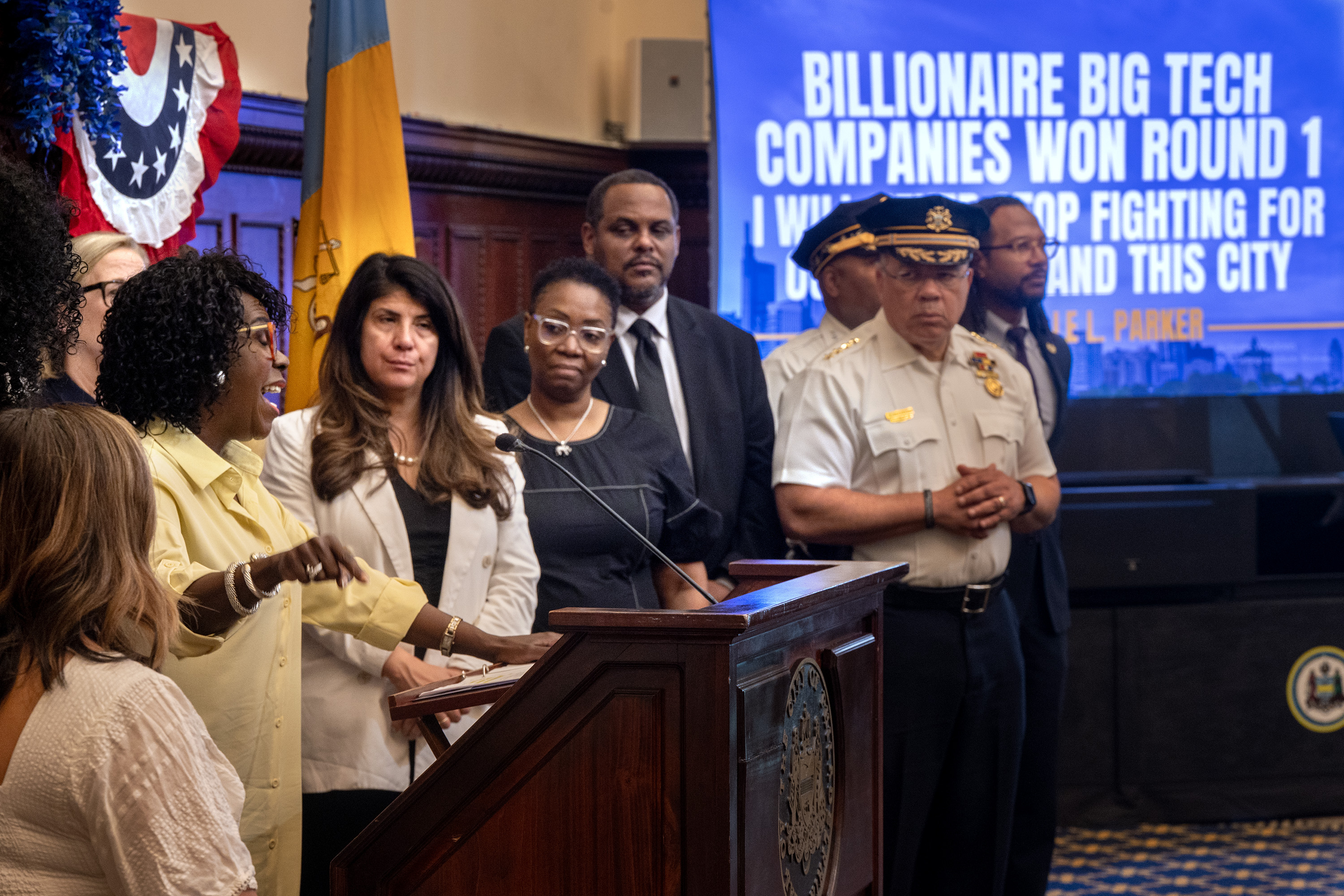
    “Billionaire big tech companies just won round one in this process,” says Mayor Cherelle L. Parker at City Hall Thursday, June 4, 2026 after City Council rejected most of her tax proposals for the city budget.Tom Gralish / Staff Photographer

    But Council members, already frustrated with the school board for voting in April to advance a plan to close 17 schools, were up in arms.

    Council leaders said that they had been under the impression that the school district would not make the job cuts if the city came through with an additional $48 million this year, regardless of whether the money came from a new tax or the city’s existing coffers.

    “We wouldn’t have gone to the lengths that we went to to come up to what we thought was an agreement with the administration for the district to then say that was not adequate,” Majority Leader Katherine Gilmore Richardson said in an interview Friday.

    The union that represents Philadelphia teachers and other schools advocates also implored Watlington to change course. Arthur Steinberg, president of the Philadelphia Federation of Teachers, said last week that it was “deplorable and really absurd” that the district was opting to move forward with staff cuts despite getting $48 million in new money from the city.

    No ‘tricky math’

    Parker on Wednesday said she did not regret waiting for a guarantee on paying for the positions going forward.

    “I don’t know how they do math in other cities, Mr. President, but I know here in the city of Philadelphia, we can’t have tricky math,” the mayor said, addressing Johnson. But, she said, “we were committed to ensuring that politics of any kind were not going to stand in the way of us doing what we’re supposed to do as elected representatives for the city, and that is delivering for our school district.”

    Mayor Cherelle L. Parker, Council President Kenyatta Johnson and Superintendent Tony B. Watlington Sr. arrive for an announcement at the School District of Philadelphia Headquarters on Wednesday, June 10, 2026 in Philadelphia. Philadelphia School District officials will move to restore 340 classroom-based jobs that were slated to be cut, despite top district leaders saying last week that they did not have the recurring funding needed to keep the positions.Monica Herndon / Staff Photographer

    The district must now shift immediately to figuring out how to restore the 340 positions. Schools built their budgets based on the cuts, and the teachers, counselors, and climate staff who believed their positions were ending either found new jobs or, in the cases of some, left the district altogether in what has been an especially chaotic school-hiring season.

    It was not immediately clear what would happen, logistically, with the positions, but Watlington said he would be delighted to figure it out with representatives of the Philadelphia Federation of Teachers and the principals union.

    “I can guarantee you’re going to work through all those issues,” Watlington said. “It’s not a problem.”

  • Philly can’t proceed with non-renewing a city charter school — for now

    Philly can’t proceed with non-renewing a city charter school — for now

    A judge has barred the Philadelphia School District from continuing nonrenewal proceedings against a city charter — for now.

    Philadelphia Common Pleas Court Judge Damaris Garcia ordered Tuesday that the school board cannot move forward with a nonrenewal vote for Philadelphia Montessori Charter, which sued the district last month. That vote would have been the first step on a road to possible closure.

    Garcia said the district was barred from “proceeding with charter nonrenewal proceedings against Philadelphia Montessori Charter School, pending further order of the court.”

    Garcia set a hearing on the matter for July 27.

    Philadelphia Montessori‘s lawsuit claims the district violated state charter law with “shifting standards, inconsistent methodologies, and procedures that do not provide fair notice or a neutral adjudicative structure.”

    Mark Seiberling, a lawyer for Philadelphia Montessori, had asked the court to prohibit action on any charter renewals and nonrenewals, not just Montessori’s.

    The legal dispute between the district and Philadelphia Montessori began after school board president Reginald Streater recently directed the district’s charter office to prepare notices of nonrenewal for Philadelphia Montessori and another charter, Global Leadership Academy Charter School Southwest at Huey. Streater and other members of the board had concerns about academics, operations, personnel, and finances at both schools.

    Votes have not been scheduled or taken for either school’s nonrenewal.

    A nonrenewal vote does not mean a school closes; it instead triggers a hearing, with witnesses and evidence. The hearing officer would then recommend renewal or nonrenewal, and the board would take another vote.

    The nonrenewal process, if triggered, typically takes at least a year, and schools remain open while it plays out.

    Philadelphia Montessori, on Island Avenue in Southwest Philadelphia, educates 250 students in grades K through 6.

    The school board had no comment.

  • These 52 Philly schools will dismiss early Thursday — the last day of school — because of heat

    These 52 Philly schools will dismiss early Thursday — the last day of school — because of heat

    Thursday is the last day of classes for the Philadelphia School District’s 216 schools.

    A quarter of them will dismiss early because of hot temperatures, officials announced Wednesday.

    Forecasters predict it could feel like 100 degrees on Thursday.

    “While the district has made significant progress toward ensuring our schools are adequately cooled in order to provide safe and comfortable learning environments, there are still a number of schools with inadequate cooling systems,“ Deputy Superintendent Oz Hill said in a letter to families and staff.

    The 52 schools, and early childhood programs located inside them, will all close early, and any after-school activities at those schools are canceled.

    Schools’ dismissal times vary based on their start times.

    While Thursday is district students’ last day of classes for the 2025-26 school year, staff are expected to report to work Friday.

    The schools that will dismiss early Thursday are:

    • AMY Northwest
    • Bache-Martin
    • Blaine
    • Building 21
    • Catharine
    • Comegys
    • Comly
    • Cooke
    • Crossan
    • Disston
    • Dunbar
    • Emlen
    • Fell
    • Fox Chase
    • Ben Franklin High
    • Girard
    • Harding
    • Henry
    • Hill-Freedman
    • Hopkinson
    • Houston
    • Howe
    • A.S. Jenks
    • J.S. Jenks
    • Lamberton
    • Lingelbach
    • Loesche
    • Ludlow
    • McCloskey
    • McClure
    • McMichael
    • Mitchell
    • J.H. Moore
    • MYA
    • Olney Elementary
    • Overbrook Elementary
    • Parkway West
    • Patterson
    • Rhawnhurst
    • Rowen
    • Roxborough
    • Sayre
    • Sharswood
    • Sheppard
    • South Philadelphia High
    • Spring Garden
    • Spruance
    • Sullivan
    • Tilden
    • The U School
    • Wagner
    • Martha Washington
  • Wallingford-Swarthmore may lay off teachers and increase class sizes amid tight budget outlook

    Wallingford-Swarthmore may lay off teachers and increase class sizes amid tight budget outlook

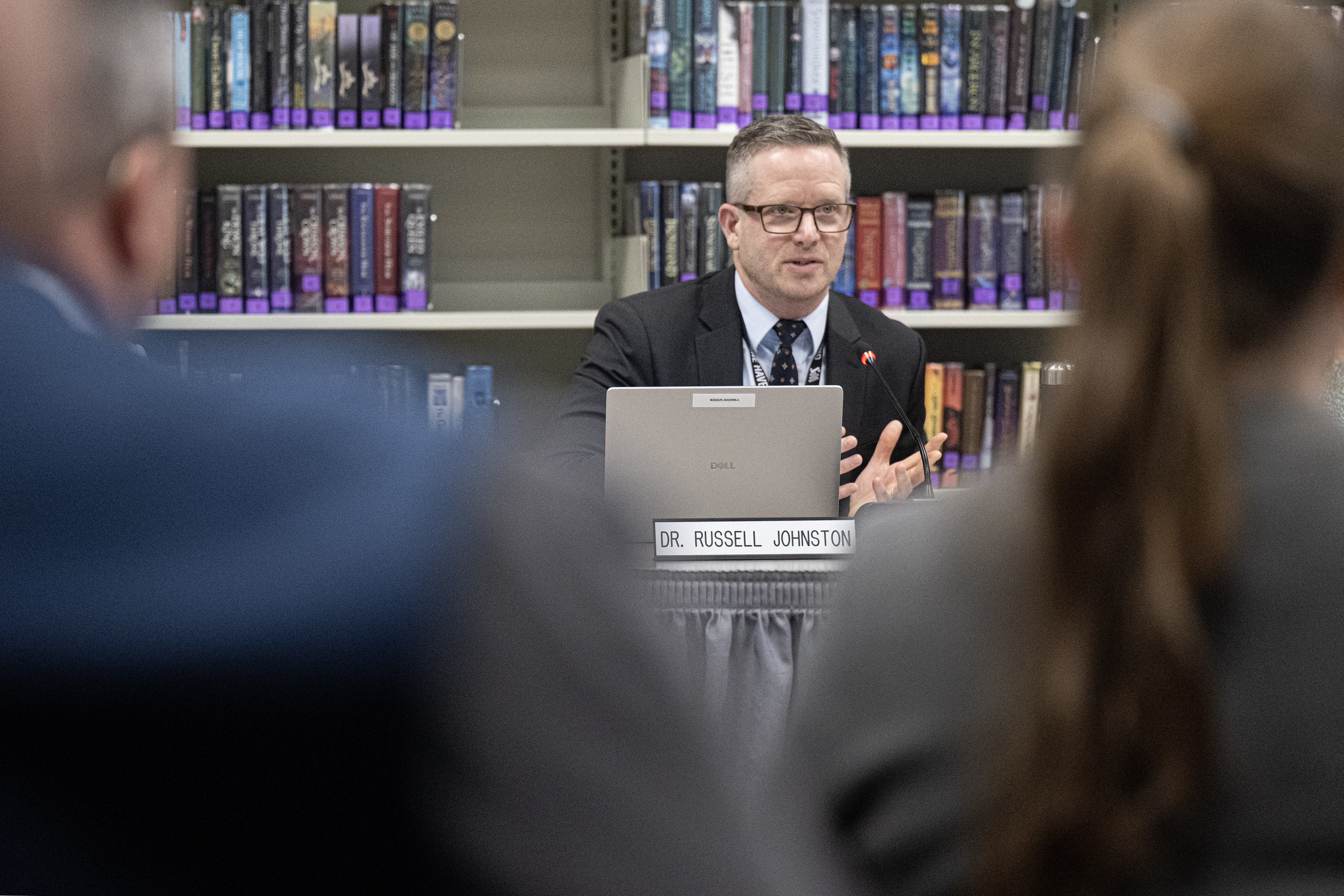
    The Wallingford-Swarthmore School District is planning to reevaluate class sizes next school year, and layoffs are a possibility if the district cannot trim its budget in other ways, its superintendent said at a meeting Tuesday.

    At a school board finance committee meeting, Russell Johnston said that with the district’s expenses projected to rise next year at double the rate of revenues, the district will have to continue to reduce staffing, even after implementing a reorganization plan this year that eliminated about 20 positions and losing four more through attrition.

    The district will also look at which classes have the smallest enrollments, Johnston said, and might “scale back” on certain offerings.

    Johnston said cuts would be necessary. Otherwise, Wallingford-Swarthmore would be on pace to use more than 30% of its reserves to balance the budget, he said.

    Here is what the superintendent said about possible cuts coming to the affluent district:

    Retirement incentives, attrition and layoffs

    District leaders have said Wallingford-Swarthmore cannot sustain its current staffing levels, which grew significantly in recent years.

    Of the projected $6 million growth in the district’s $106 million budget next year, nearly $4 million is coming from salaries and benefits for the district’s 541 employees, officials said.

    Laying out options for cutting those costs, Johnston — who became superintendent last year — said the district could offer staff an incentive to retire early, though he was not sure whether that would generate enough savings.

    The district will also evaluate whether it needs to fill positions that become vacant as someone retires or resigns, Johnston said.

    “If we do have to invoke layoffs,” Johnston said, the savings likely will not be as great as by reducing staff through attrition, because more junior and less costly employees will be laid off due to union seniority protections.

    Board members voiced concern about rising benefits costs in particular: Prescription costs for district employees are projected to grow by 50% next year, a $1.8 million increase.

    Johnston, who noted that benefits are part of a collective bargaining agreement that does not expire until 2028, said the district was in “ongoing dialogue” with its teachers union.

    Bigger class sizes, fewer offerings

    Johnston said the district would be looking “hard at class size and enrollment” as it tries to find areas to cut.

    While the district has an “amazing array” of offerings for students, it could ”perhaps scale back where we don’t have enrollment to justify that,” Johnston said.

    He did not offer specifics but said the district would perform a class size analysis at the start of the coming school year.

    Reduced capital projects

    District officials indicated Tuesday they intend to move forward with a reduced scope for the planned Strath Haven High School renovation — down from $99 million to less than $70 million — with a focus on fixes to keep the building “safe, warm, and dry,” and fewer interior renovations.

    The district will also look to cut back other aspects of its capital plan, which board members said would reduce a $1.5 million increase in debt service projected for next year.

    Parental concerns

    Some parents have started to raise concerns about the budget cuts.

    Lindsay Doyle, whose children attend Nether Providence Elementary, said she was dismayed to learn that class sizes at her children’s school would be increasing in fourth and fifth grades due to the district not filling two teaching positions.

    Doyle, who said class sizes would grow from about 20 students to 26 or 27, is worried that core instruction will suffer.

    “It’s no longer about administrative inefficiencies and discretionary spending,” Doyle said. “When I see we’re now cutting back on teachers, that’s when I’m like, red flag.”

  • Some Philly teachers say they’re pressured to pass students who rarely come to class or do work

    Some Philly teachers say they’re pressured to pass students who rarely come to class or do work

    Philadelphia School District students receive report cards on Thursday, the last day of the 2025-26 school year.

    But it’s an open secret that in many schools, it is nearly impossible to fail a student, according to interviews with two dozen teachers from schools across the city who say the district is making them give passing grades.

    Many teachers said they passed students who did little or no work, did not understand concepts being taught, or did not show up to class much. Most of the teachers interviewed requested anonymity for fear of reprisal.

    “There’s a bunch of kids in my class that have F’s in reading, and I’m probably going to pass them — I’ll bump it up to a D and call it a day,” one middle-grades teacher at a K-8 school said. “I don’t know of anyone who’s been able to keep anyone back, and we’re just setting kids up for failure.”

    On paper, Philadelphia students can fail courses, or be retained in a grade, so long as they are offered appropriate interventions and supports. Officially, the district, according to its policy, “is committed to excellence in student accomplishments and recognizes the contribution of a district wide promotion policy moving all schools to models of achievement.”

    But many teachers said that they were discouraged or forbidden by their principals from flunking students, or that they have given out failing grades that were overridden. Others said failing students was permitted if justified, but the administrative burden to rationalize failure, even for students who did not show up to school, is onerous or impossible.

    All of the teachers who spoke with The Inquirer said they fear for the long-term implications for students who are passed along without the skills they need to advance — especially in a city where so many students cope with the effects of poverty and trauma and a majority of students do not meet grade-level standards on state testing.

    Monique Braxton, district spokesperson, said the district’s policies “emphasize that student grades are meant to accurately reflect their academic performance and progress toward learning standards. Schools are required to provide and document appropriate interventions and progress monitoring when students encounter academic challenges. The district remains steadfast in its commitment to maintaining high expectations for students while ensuring they receive the necessary support to achieve success.”

    When did it start?

    The K-8 teacher, a veteran of district schools for three decades, said that at the beginning of her career, it was easier to give F’s or retain students who did not meet the learning standards. But, the teacher said, there has been a “subtle shift” since the early 2000s, the era of the federal No Child Left Behind Act.

    “When the pressure was on the schools to show promotions and graduation rates, and the district was so focused on showing data, it’s shifted grading, and now it’s a joke,” the teacher said.

    Philadelphia changed its grading policy in 2017, setting a 50 out of 100 as teachers’ grading floor and making it easier to pass. The minimum score for a D, once a 64, was changed to a 60.

    The rationale for the change, leaders said at the time, was standardizing grading procedures and preventing students from giving up if they perform poorly early in the year. Detractors of the policy shift said at the time they feared it would water down standards.

    The K-8 teacher, and others interviewed, emphasized that most Philadelphia students are bright and capable. But those who do not try because of complicated home lives or other reasons can skate by, they said.

    “We have a kid who’s done no work all year, and we’ve done everything, and they’re just going to push him forward,” the K-8 teacher said.

    The teacher also works in the service industry, and said the effects of passing students who have not earned passing grades is evident in that workplace.

    “We see people who don’t come to work on time, they can’t take orders, they can’t use a computer or figure things out, and this is why,” she said. “They’re not being held to standards for all their years in schools.”

    ‘Is there anything you can do to bump these up?’

    A second teacher said he has failed students who did not earn passing grades, though he has more latitude because he does not teach a major subject. But he absolutely understands why some teachers give 60s that should be F’s: With full course loads, teachers do not have time to document a pattern of contacting guardians, giving extra time for work, breaking down assignments, allowing extra credit, or extending deadlines.

    “Who has time to do that when you have 30 other kids?” the teacher said. “And the system is inherently causing laziness from teachers also, to just shut up, pass them, and you don’t get grief.”

    There is a ripple effect, he said.

    “I feel sorry for the good kids, the kids who struggle, do their work, and get a C. So I give them a B, a low A. They try,” he said.

    The district has posted academic improvement over the last several years. But district students’ academic achievement as measured by state tests remains low, with 33% of students meeting standards in reading and 25% in math.

    “The PSSA scores don’t match the grades kids are getting,” the second teacher said.

    The district’s four-year graduation rate has also risen. In 2024-25, it was up to 84%, from 69% in 2014-15.

    Grade inflation comes at the end of every year, said a third teacher, who works at a district high school.

    “There’s a push right after grades are due,” said the third teacher, who noted that administrators will say, “‘Is there anything you can do to bump these up?’”

    Grades are not changed for every student, but in some cases, administrators will “push [students] along because they want to see them graduate or pass,” the third teacher said. “There’s all this pressure from the district to increase the graduation rate — there are so many layers to it. I know that it happens in a lot of places. It’s not just our school. But this year, it was huge margins and huge numbers.”

    Administrators sometimes change the grades themselves, the third teacher said.

    In one instance, a student’s grade shot up with no explanation, the teacher said. “This student had a 50 yesterday. How did he have an 82 today? This was a student who didn’t turn in any additional work, and missed 63 of 84 classes,” the third teacher said.

    The third teacher said another student who was moved on without doing the work admitted it.

    “Even he was like, ‘Yeah, I didn’t deserve to pass, I don’t know how that happened. But I’m excited to graduate,’” the teacher said.

    The third teacher underscored that while the practice could be making the district’s numbers look better, it is not serving students.

    After graduation and not being held to standards, the teacher said, one former student “lost the first three jobs he had because he didn’t go to them. He had to learn that lesson in a much harder, more adult way, and he could have learned that in high school. I worry that when kids graduate and get into the workforce, it will impact the way they approach the goals they set for themselves and how they try to achieve those goals.”

    ‘The gap was huge’

    A fourth teacher who has worked in multiple types of schools in Philadelphia said the practice is not limited to the district.

    She most recently taught at a city charter and said some of her middle-grades students were at kindergarten reading and math levels.

    “The gap was huge,” the fourth teacher said. “The school’s explanation is that there’s a school-to-prison pipeline, and the older students are, the less likely they are to graduate. But they’re not meeting standards. The gaps are huge. It was very shocking to me how they would just pass the kids. I’m a parent, and I want my kids to be prepared properly.”

    A fifth teacher said that at her school, it is rare for students to be pushed along without doing work.

    “I can’t in good conscience pass anybody who doesn’t show up,” she said. “I think a lot of teachers around me also can do that. But I have also seen that teachers — maybe at a particular building, maybe those who work for a particular administrator — who say, ‘You know what, I’m not going to fight it.’”

    What is definitely not rare, the fifth teacher said, is giving students “a lot of different lifelines, a lot of different ways for them to pass,” whether it’s in-school credit recovery or summer school, “even when their trends of behavior and attendance and performance and engagement in the class suggest that they needed more time with that content.”

    A sixth teacher said his principal permits failure and retention, in rare cases, with significant documentation. There is some pressure to not fail students, but when needed, the teacher has been able to produce adequate paperwork to show failure was the last resort.

    But when deciding whether to pass or push through a student, “I ask myself whether holding them an extra year will make a significant difference,” the teacher said. One of the teacher’s students is bright but unmotivated and rarely completes work.

    “I don’t think that’s going to change with an extra year in the same grade, and therefore, I decided to pass him,” he said.

    Does he worry about the implications for the district writ large?

    “Honestly, I do think about it sometimes, but I’m just not sure there’s a right answer with the current situation,” the sixth teacher said. “I’m no policy expert, but I think for it to make sense on a larger scale we’d need significant cultural shift and policy changes.”

  • Reginald Streater: Philadelphia schools can use $50 million from City Council. But they still need a long-term funding solution.

    Reginald Streater: Philadelphia schools can use $50 million from City Council. But they still need a long-term funding solution.

    Amid the passionate debate about Philadelphia’s schools, one thing has been getting lost: No public school district wants a budget that requires changing people’s jobs. Behind every position is a person, a family, and years of service to students. Those decisions are difficult and are never made lightly.

    As caretakers of Philadelphia’s public schools, the Board of Education and the school district have a responsibility to look beyond this year’s budget. We have to make sure our schools remain financially stable and able to serve students not just this year, but for years to come. That is what good governance means.

    That is also why the district should stay the course with its planned reduction of some roles and the reassignment of teachers and staff, even after City Council approved a preliminary budget that includes a one-time $50 million funding increase.

    At first, that may seem confusing. If there is more money, why not keep every position? The answer is simple: One-time money should not be used to pay for permanent costs.

    A job is not a one-year expense. It comes with salary, benefits, retirement costs, and other ongoing expenses. If those costs are paid with money that exists for only one year, the district will face the same bills next year without the funds to cover them.

    Most families understand this idea. A one-time bonus at work might help pay for a new roof or replace an old refrigerator. But it would be foolish to use that bonus for a down payment on a car with a huge car note and no resources to pay it off.

    The author writes that the Board of Education is grateful for City Council’s $50 million boost — but won’t use it to fund permanent expenses.Jessica Griffin / Staff Photographer

    The same principle applies to the Board of Education and the school district. For too many years, difficult financial decisions have been delayed. Continuing to postpone them only makes the problem larger and harder to solve. Federal COVID-19 relief dollars did help the district avoid cuts, but that was a once-in-a-century time of crisis.

    That does not mean the additional funding lacks value, and we appreciate such support from City Council. It gives us a chance to address important needs that do not create permanent expenses. Those dollars can be used for building repairs, school safety improvements, technology upgrades, instructional materials, and managing staffing changes. Such spending would help improve schools today without creating a budget problem tomorrow.

    It is also important to understand what these staffing changes mean. The district’s goal is to move employees into positions where they are needed across the system whenever possible, keeping experienced staff and reducing disruption for students and schools.

    The Board of Education has a responsibility to protect the interests of both today’s and tomorrow’s students. Sometimes that means supporting new investments. Always it means advocating for more reliable funding from the city and the state. And at times it means making difficult decisions that protect the long-term financial health of the district, even when it appears there are easier choices.

    The reality is that Philadelphia’s students deserve a school system built on stable, dependable funding — not temporary fixes. One-time dollars can solve one-time problems. Permanent commitments require permanent funding.

    These decisions are not easy. But making responsible choices today is the best way to ensure our students have strong schools for years to come.

    Reginald L. Streater is the president of the Philadelphia Board of Education, to which he was elected in December 2022. He was appointed to the board in February 2021.

  • How some Philly students included a protest against looming budget cuts in their graduation ceremony

    How some Philly students included a protest against looming budget cuts in their graduation ceremony

    On the first day Olney High reopened as a traditional public school four years ago, 750 unregistered students showed up. Rosters had to be built on the spot. It took months for credits to be straightened out.

    Despite forbidding obstacles, Olney soared.

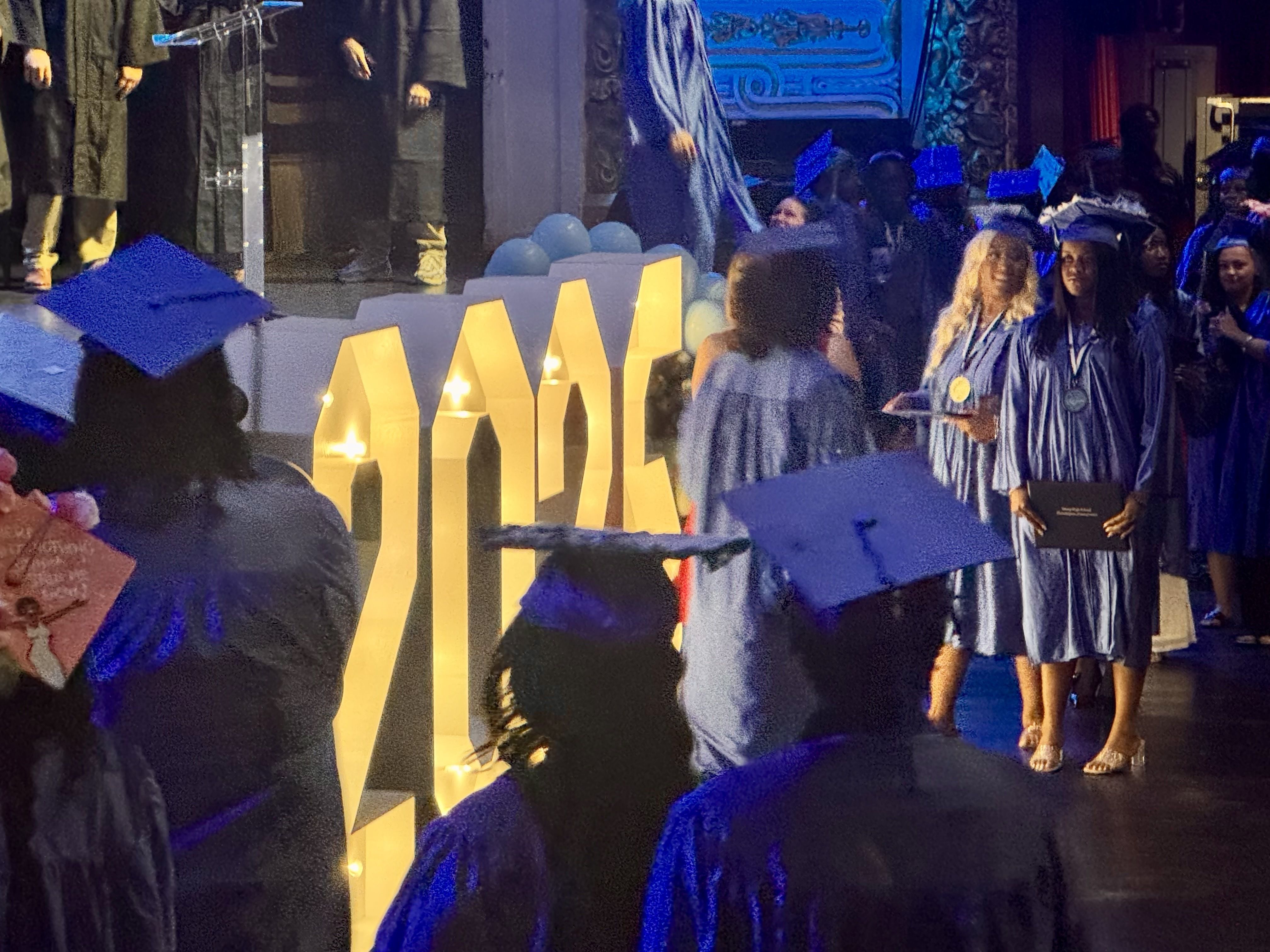
    On Tuesday, the first class that spent the entirety of its high school career at the “new” Olney graduated — with fanfare, joy, and a touch of wistfulness, as the school prepares for perhaps the deepest budget cuts in the Philadelphia School District next year.

    The looming budget cuts prompted a subtle graduation clapback.

    Valedictorian Iamdra Peguero was part of a small group that met with school board president Reginald Streater at the school Monday, imploring him to find a way to stop the budget cuts coming Olney’s way.

    With the district facing a $300 million budget gap, Superintendent Tony B. Watlington Sr. has ordered cuts at schools across the city.

    Olney received extra staff four years ago to address the complicated charter-to-district transition. Although it now enrolls nearly 1,000 students, officials have said they need to cut staff to balance the district’s budget.

    Peguero and others have expressed alarm about what losing 17 staff members, including 13 teachers and most of the faculty who teach classes in the college-prep track, would mean to Olney.

    Iamdra Peguero, Olney High class valedictorian, addresses the Olney High Class of 2026.Kristen A. Graham / Staff

    Last week, Olney staffers wrote Streater a letter asking him to consider slowing the budget cuts.

    “We applaud SDP for creating staffing and budgetary support for the transition beginning in 2022,” a group of eight Olney teachers wrote Streater. “These supports have helped make Olney’s transition an unprecedented success. We ask the district to extend this support, as the transition period is ongoing. We believe that a slow, planned adjustment to regular district staffing ratios over several years will allow us to sustain and build on the gains we have made.”

    The Olney teachers proposed that instead of losing 17 teachers all at once, officials cut a few teachers per year until 2032-33. If the school’s enrollment rises, the cuts can be avoided.

    Streater, who also spoke at the Olney graduation Tuesday, did not agree to the teachers’ proposal, but he said he was listening.

    “I had a glimpse yesterday, y’all, of the passionate students and teachers that walk these hallways, and they spoke with me about proposed school changes that they don’t agree with,” Streater said in his graduation speech. “I just want to affirm them right now, and say I appreciate their appeal for different options and their strong voices. It comes from a place and people they love. That’s what it means to be in this community.”

    Peguero, in her valedictory address, said she owed her success to her teachers, including many staff who are being transferred against their will because of the budget cuts.

    As she spoke, several students behind her unfurled signs: “A school is its people” and “Don’t rip away our teachers and counselors.” The audience applauded.

    “I want to think the teachers and staff that have supported my high school experience, especially the ones that won’t be here next year because of the ongoing school district force transfer. I speak on behalf of the class and say that we will miss you all.”

    ‘Restarted a school’

    Olney’s graduation was also a celebration of its return to the public school system.

    “All of us, four years ago, basically restarted a high school,” principal Michael Roth told students.

    Olney spent more than a decade as a charter school run by the nonprofit Aspira before it lost the charter for academic and other issues. Roth said he researched but could not find any other high school in the country that had reverted to become a traditional public school.

    Olney High students approach the stage on their way to receive diplomas Tuesday.Kristen A. Graham / Staff

    A committed administrative team and cohesive staff built myriad opportunities and paths for students, including career and technical education programs, industry certifications, routes into union jobs, a college-prep program, internships, clubs, and sports. The school now has 10 separate majors.

    There were moments, Roth said, when he questioned whether Olney, a traditional neighborhood Philadelphia high school — “not a magnet school, not a charter school, not a well-resourced suburban school” — could be great.

    “Class of 2026, you threw down a Victor Wembanyama-sized dunk,” Roth said. “You answered my question with a ‘Hell, yes!’”

    Ariel Lajara, an Olney High graduate and a Philadelphia assistant superintendent who was just named superintendent of the Vineland, N.J., school district, reminded the graduates in his keynote speech that the boundaries of their neighborhood are not the boundaries of their potential.

    “They don’t understand that when you have to work harder for your seat at the table, you don’t just want the seat,” Lajara said. “You want to rewrite the whole agenda.”

    There were also solemn moments. Honorary diplomas were given to the families of Marquise Saunders and Talik Bridges, Olney students who died as a result of gun violence in separate incidents in 2024.

    But there was plenty of joy, too — two students collected their diplomas holding their children. Some danced across the stage. At one point, someone screamed out, “That’s my sister!”