Category: Education

  • ‘I’m on this roller coaster’: Philly teachers and school staff are stuck in limbo despite promises to save hundreds of jobs

    ‘I’m on this roller coaster’: Philly teachers and school staff are stuck in limbo despite promises to save hundreds of jobs

    When a deal was struck to save 340 classroom-based jobs in the Philadelphia School District, Mayor Cherelle L. Parker and Superintendent Tony B. Watlington Sr. declared it “Christmas in June.”

    It’s July now, but manystaffers still don’t have clarity on exactly who’s allowed to come back to positions that were almost cut and how that affects vacancies system-wide.

    “It’s a mess, and it’s getting messier,” said Alison Andrawos, a teacher at Potter-Thomas Elementary in North Philadelphia who accepted a job in another district after learning this spring that her position would be cut and still doesn’t know whether it will be restored.

    Monique Braxton, the school district spokesperson, said the system is “moving forward with restoring the approximately 340 school-based positions approved in the revised budget,” but that staffing the positions is separate from restoring them.

    “We have been meeting with our union partners on implementation and are now working with principals on school staffing,” Braxton said in a statement. “All approved positions will be restored in the district’s budget system by Wednesday, July 9.”

    The complex process is causing additional uncertainty for teachers and staff members and prolonging an already tumultuous hiring season as the district deals with fallout from 17 forthcoming school closings and the back-and-forth over millions in cuts stemming from a $300 million district budget deficit.

    Watlington this spring directed school principals to build their 2026-27 budgets factoring in the cuts, including about $50 million in school-based trims and the elimination of 340 classroom jobs. Parker then proposed a $1-per-trip rideshare tax she said would cancel the classroom cuts, but City Council balked, and for a time, the position losses appeared inevitable.

    After a breakthrough with city officials on June 10 — after the district’s deadline to pass its 2026-27 spending plan — officials triumphantly said the cuts were off the table.

    But restoring the positions was always going to be complicated.

    Schools’ hiring timeline means that many of the teachers, counselors, and climate staff who were told they were going to be force-transferred because of the cuts sought and found new jobs over the past few months, either inside the district or elsewhere. Now, those workers either must rescind their acceptance of those new jobs or say “no thanks” to returning. Either way, that creates new vacancies in July, months after most schools have filled jobs and when many people are on vacation.

    “We haven’t heard whether our positions are going to be reinstated, we don’t know what positions are available, and we don’t know what we’re doing in a few short weeks,” said Andrawos, an English as a second language specialist who began teaching in Philadelphia schools in 1997.

    ‘I’m pretty sure I’m going to be leaving’

    Andrawos said she didn’t want to leave the city, but amid the worry of the past few months, she felt she had to explore jobs outside the district. Andrawos has been offered a position at a Delaware County school that comes with a raise and a shorter commute.

    “I’m pretty sure I’m going to be leaving the School District of Philadelphia because of this,” Andrawos said.

    She said the decision is tough — she’s forged real bonds with her students’ families, and has been fielding messages saying they hope she stays at Potter-Thomas.

    It’s not clear whether Andrawos’ position at Potter-Thomas, in North Philadelphia, will be restored because of the complicated way budgets are built, and the latitude principals have to shift positions based on school need and their own judgment calls.

    Jobs are filled in city schools two ways — first, by a process called site selection, where principals hire any candidate they choose for open positions. Once the site selection window closes, district staff without positions choose from among open jobs in seniority order. Site selection closed weeks ago; force transfers without jobs have had their hiring sessions pushed back multiple times so far, and are still waiting.

    Jane Roh, a spokesperson for the Philadelphia Federation of Teachers, said the union notified members June 19 that all positions cut due to the deficit would be restored; the PFT was told that district notifications to affected employees would immediately follow. So far, that has not happened.

    That leaves staff sweating and frustrated by a lack of answers, some said.

    A roller coaster

    One K-8 teacher, who asked that his name be withheld because he feared repercussions, was on the force transfer list because of budget cuts. With no notice that’s being walked back, he’s left with the possibility of having to get emergency certified to teach in another subject area, which would mean taking more courses.

    The uncertainty is tough, and the answer to every question posed to the district and the union so far has been, we don’t know yet.

    “For this whole summer, where teachers are supposed to have the space to reflect and rest and plan, we can’t do that to any degree,” the K-8 teacher said.

    A teacher at a district high school, who also asked to remain anonymous because her employment situation is not settled, is in a similar boat. When her position was cut because of the deficit, she site selected into a job at another district high school.

    The process has been frustrating, she said. She once got an email saying her transfer was canceled, but that turned out to be incorrect, though she never got official notice from the district about its error and had to make calls herself to figure it out.

    When Parker and Watlington made their good-news announcement, she had no idea what to make of it. She still doesn’t, the teacher said.

    “I’m on this roller coaster; I literally don’t know which school I’m going to work at in the fall,” said the high school teacher, who would be teaching different classes, depending on where she lands. “I want to prepare for the upcoming school year, and that’s impossible if you don’t know what you’re teaching.”

    Staff at Olney High, the district school perhaps most affected by budget cuts, have been pressuring the district, publicly and in private, to halt the losses planned for their school — Olney had been slated to give up 17 staffers.

    The school had been overstaffed four years ago as it navigated a complicated, unprecedented transition from a charter school back to a district school. It has soared, adding programs and opportunities and building a strong school culture; the community fears weathering steep staff cuts would jeopardize its progress.

    Sarah Apt, a longtime Olney teacher active in the pushback against cuts, said Wednesday that the school was told it’s getting back three of its 17 staffers.

    “We’re happy about that, but still fighting for more,” said Apt.

    Among those still in limbo is Eric Baker, an Olney English teacher who’s been struggling with the back and forth, and the possible implications for the school he’s come to love — the school recruited students for a college prep track that’s potentially losing most of its teachers, including Baker.

    “Because of this uncertainty, I’ve had to interview other places. I don’t know where I’m going to go. I would rather have the certainty of knowing where I’m going to work than having to deal with this,” said Baker. “It’s been frustrating.”


  • A record number of N.J. students are earning associate’s degrees with their high school diplomas. Meet three of them.

    A record number of N.J. students are earning associate’s degrees with their high school diplomas. Meet three of them.

    When Jasmine Thach began high school four years ago, she wanted to balance academics and extracurricular activities to pursue her college dreams.

    By sophomore year, Thach was enrolled in her first college course. She began taking as many as five classes a semester — enough credits to obtain an associate’s degree in May from Camden County College.

    Thach picked up her second diploma when she graduated in June as valedictorian from Camden County Technical Schools in Pennsauken.

    “I knew that I could do it,” said Thach, 18, of Pennsauken. “I didn’t know how lucky I was.”

    Thach is among a record group of 367 students enrolled in New Jersey’s 21 county vocational-technical schools who graduated with associate’s degrees this year while attending high school. That amounts to 30 more than the previous year, said Jackie Burke, executive director of the NJ Council of County Vocational-Technical Schools.

    “It’s a great outcome,” said Burke. “This is really an attractive option that more people are looking at.”

    Once considered an option mostly for students to pursue skilled trades, vocational-technical schools have become increasingly competitive and are attracting students who want a different pathway to college or careers.

    In a tough economy, the vocational-technical schools make it easier and more affordable for students to earn credit for college-level work. Many have partnerships with county colleges and other nearby two- and four-year colleges, Burke said.

    “It’s a reflection of students seeing the value of getting a head start,” Burke said. “This is really a way to save on those costs.”

    Of the 367 students graduating this year, 31 are from Camden County Technical Schools, which has campuses in Gloucester Township and Pennsauken. The Gloucester County Institute in Deptford has 17 graduates. Burlington County Institute of Technology has students who earned some credits, but none who obtained the full associate’s degree. Cumberland County Technical Education Center in Vineland had the second-highest in the state, with 60 graduates.

    For the 2024-25 school year, more than 35,000 students were enrolled in New Jersey’s county-vocational schools. The schools are selective; only about 12,000 of the nearly 30,000 who apply annually statewide are accepted.

    Students may study a wide range of disciplines, from traditional vocational fields like cosmetology and construction to engineering and health science.

    Under the Early College Associate Degree (ECAD) program, counselors work with students to meet their high school requirements while earning an associate’s degree and attending some of their classes on college campuses.

    In most cases students earn credits at a significantly reduced cost or free. Students can enter four-year colleges as sophomores or juniors, amounting to big savings in time and money.

    Here are the stories of a few of this year’s graduates:

    Jasmine Thach: Wanted to help fund college

    With two siblings already in college, Thach wanted to help ease the financial burdens for her parents. She volunteered as a tutor and participated in performing arts and the newspaper club, all while maintaining her grades.

    She graduated from Camden County College with an associate’s degree in liberal arts and sciences, and from Camden County Technical Schools in Pennsauken.

    In a nod to her Cambodian heritage, she learned to play the kong thom, a traditional Cambodian musical instrument consisting of gongs, and the violin. Every Sunday she travels with her family to Arlington, Va., to take lessons, part of their quest to preserve their culture.

    Jasmine Thach as she graduated from Camden County Technical Schools’ Pennsauken campus last month. Thach, who also received an associate’s degree from Camden County College, plans to attend Johns Hopkins University as a math major.Jose F. Moreno / Staff Photographer

    While her mother and sister learned traditional Cambodian dances, Jasmine discovered a passion for music. “I have two left feet,” she quipped.

    Jasmine received a full scholarship to attend Johns Hopkins University where she plans to major in applied math and statistics.

    She wants to become an actuary and eventually obtain a doctorate and become a college professor.

    “I’m very big on math,” she said.

    Yeheira Acosta: `I’m just really grateful’

    Education has become a family affair for Yeheira Acosta, with her parents and younger sister following in her footsteps to make a better life.

    She graduated in June from Cumberland County Technical Education Center in Vineland and picked up an associate’s degree in computer science from Rowan College of South Jersey.

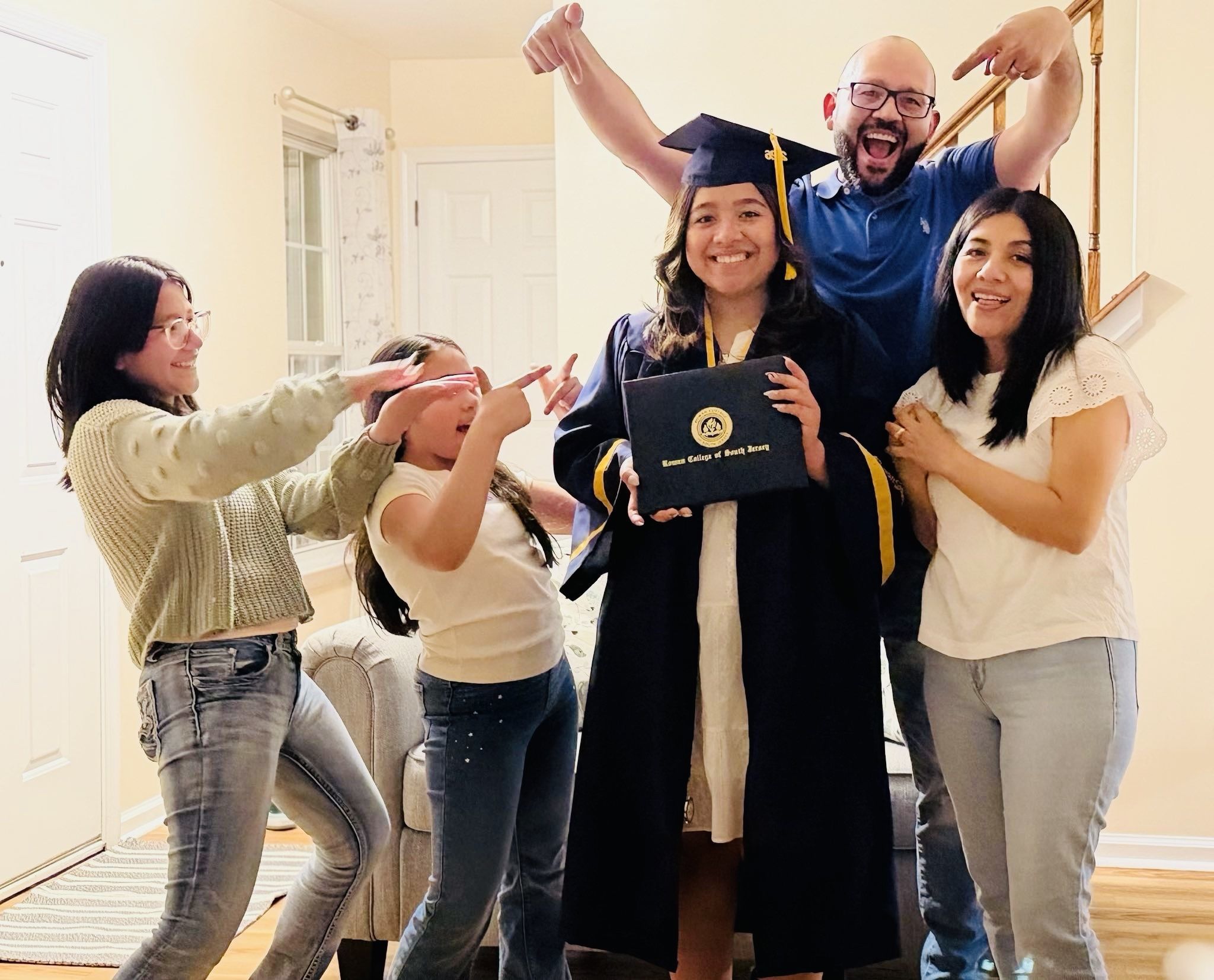
    Yeheira Acosta of Vineland, N.J., (third from left) shown with her family, graduated from Cumberland County Technical Education Center and obtained an associate’s degree in computer science from Rowan College of South Jersey. She plans to attend Vanderbilt University in the fall.Courtesy of Yeheira Acosta

    A first-generation college student, Acosta has inspired her family. A younger sister is also on track to earn an associate‘s degree while in high school. Her father recently enrolled in a DeVry University online cybersecurity program, and her mother is pursuing a GED.

    Acosta, 18, of Vineland, plans to study AI at Vanderbilt University, where she earned a full ride. A Yankees fan, she wants to work in the sports industry.

    Although she is excited about the next chapter, Acosta said she will miss her family and her church, the Life of Faith in Vineland, where she provides technical support.

    “I‘m just really grateful, not everyone has the same opportunity,” she said. “I don’t take it for granted.”

    Max Yeung: An aspiring lawyer

    The youngest of three siblings, Max Yeung has set his sights on becoming a personal injury lawyer and a public service advocate.

    He obtained an associate’s degree in prelaw from Rowan College of South Jersey in Sewell. Yeung said following a computer science track at the Gloucester County Institute of Technology and an internship he got along the way helped him realize that law is his passion.

    Yeung said he landed an internship at an Audubon law firm with assistance from a college professor. His top priority was completing as many credits as possible.

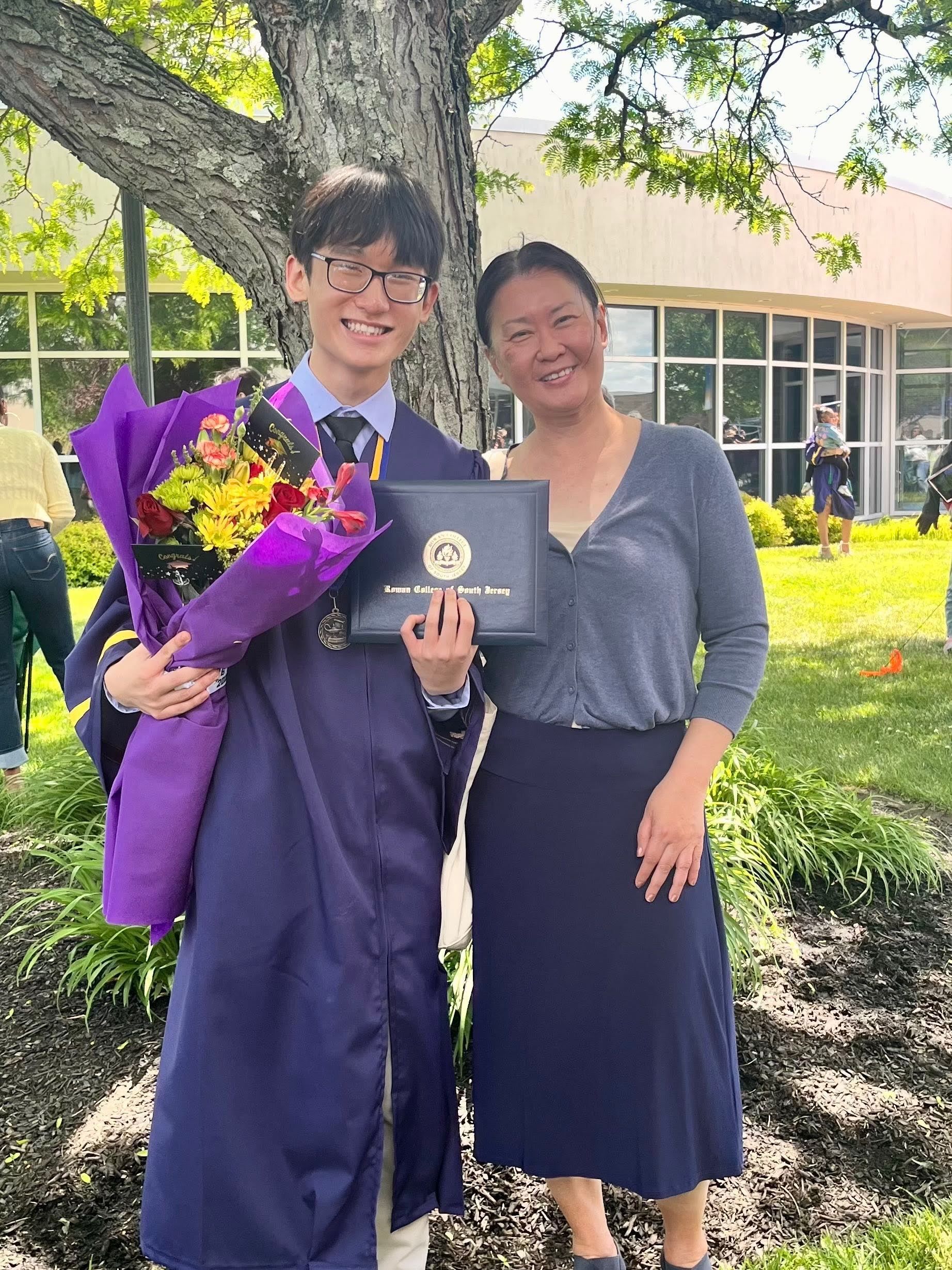
    Max Yeung, 17, of Sewell, poses with his mother, Li Khoo, after receiving an associate’s degree from Rowan College of South Jersey.Max Yeung

    At his high school, Yeung, 17, of Sewell, founded a nonpartisan civics group that registered students to vote. He was also president of the National Honor Society.

    “It was a lot of juggling. There were a lot of moments when I had to huddle down,” he said. “It helped me understand what the college environment looked like.”

    Yeung plans to attend Rowan University as a law justice major. Depending on how many credits transfer, he may graduate in a year or two and then hopes to attend Rutgers-Camden Law School.

  • Philly will close 17 schools and modernize 169. Meet the educator leading the transition.

    Philly will close 17 schools and modernize 169. Meet the educator leading the transition.

    Superintendent Tony B. Watlington Sr. has promised “white-glove treatment” for families and schools affected by a facilities master plan that will close 17 schools and modernize 169 over the next decade. And he appointed a Philadelphia School District veteran to lead the charge.

    Shakeera Warthen-Canty, formerly assistant superintendent of school operations and management, was recently named head of the new School Transition Office, tasked with implementing the $3 billion plan remaking schools across the city.

    Warthen-Canty and four other employees will work in the new office, which will also pull in as-needed help from departments across the district — school safety, transportation, student placement, facilities, and more.

    “We know that this is going to be a big task, but it’s going to be met,” said Warthen-Canty, who’s spent decades in the district as a teacher and principal. “We know there have been some challenges, but we want to make sure our communities and families know that we have a place where you can get answers.”

    Warthen-Canty officially assumed the new role Wednesday ahead of the 2026-27 school year, which Watlington has designated as a planning year for schools affected by closures and other major shifts.

    Experts in their communities

    Initially, the office will focus on schools closing, merging, and undergoing major renovations in the 2027-28 school year; other projects are slated to happen in subsequent years.

    Though much emphasis has been placed on the 17 closures, which were the subject of much pushback from the community and City Council, much of the office’s work will center on modernization projects, ranging from additions to painting projects and handicap accessibility work.

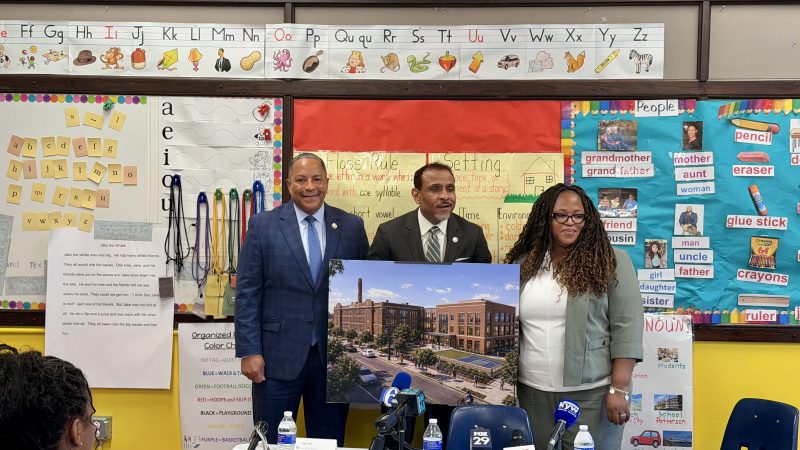
    Watlington announced the office’s formal launch at Patterson Elementary in Southwest Philadelphia, a school set to undergo a $45 million renovation as it grows from a K-4 to a K-8. It will take in some students from nearby Tilden Middle School, which is slated to close.

    The transition office will be key as the complex work moves along, said Warthen-Canty. Patterson is slated to get 13 additional classrooms, a new gym or cafeteria, and an elevator.

    “Some of the pieces of what that looks like, what elements need to be there, we need the Patterson team to work alongside of us,” she said.

    Folks on the ground “know their communities, they’re experts in their communities. And that’s a part of the planning,” she said.

    System-wide, how many projects can be completed and in what time frame is not assured.

    The district will allocate $1 billion of its capital budget over the next 10 years to complete some of the projects, but it’s also banking on $2 billion from philanthropic and state sources — money that’s not guaranteed.

    And while Warthen-Canty believes the facilities plan will ultimately expand opportunity and better position the district to advance students’ academics, she knows some of its transitions — particularly the closures — will be tough.

    “My heart goes out” to affected families and schools, Warthen-Canty said. “Even people that are being co-located or merging, those are major changes.”

    Part of the work, Warthen-Canty said, is going to be convincing families in schools where those major changes are happening that should they should remain in the district.

    In the case of the school system forcing families to leave their schools and go elsewhere, “we want to make sure that there’s extracurriculars in these schools they’re going to. We’re increasing the art and music,” Warthen-Canty said. “What are the resources we can put in place so that we’re ensuring that when the students get there that they’re going to have that well-rounded education, increased opportunities?”

  • The Roots and Philadelphia Boys Choir will perform at FIFA World Cup July 4th celebration

    The Roots and Philadelphia Boys Choir will perform at FIFA World Cup July 4th celebration

    Those attending the FIFA World Cup game at Philadelphia Stadium on July Fourth will be treated to more than just soccer.

    The Roots and the Philadelphia Boys Choir are among those who will perform at the event, marking both Independence Day and the 250th anniversary of the nation, according to a spokesperson for FIFA.

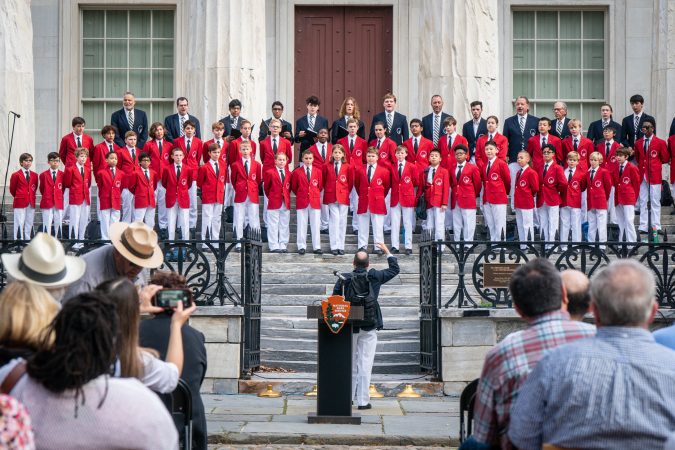
    Before the match, Tony Award-winner Idina Menzel will sing the national anthem, while the Philadelphia Boys Choir & Chorale will offer “America the Beautiful.” The Roots, a Grammy Award-winning hip-hop band founded in Philadelphia, also will perform.

    Miss Pennsylvania Stephanie Skinner will be on hand to join the celebration, and the VFA-11 and VFA-81 squadrons from Naval Air Station Oceana in Virginia Beach, Va., will do a flyover.

    At halftime, Grammy Award-winner DJ Jazzy Jeff will entertain the crowd.

    The Roots and DJ Jazzy Jeff are also slated to play the One Philly: Unity Concert for America on the Benjamin Franklin Parkway on Saturday night, which will be broadcast on NBC10.

  • Racist backlash roiled these high schoolers’ production of ‘1776.’ It strengthened their resolve.

    Racist backlash roiled these high schoolers’ production of ‘1776.’ It strengthened their resolve.

    Seventy-five Philadelphia students thought the stakes were high when they debuted 1776: The Musical in front of a crowd that included former President Joe Biden, former Pennsylvania Gov. Ed Rendell, and Mayor Cherelle L. Parker at Philadelphia’s High School for Creative and Performing Arts last week.

    Then came the hate — racist, bigoted comments on social media posts about the production, which was dreamed up by Rendell, who wanted students to learn about the “sacrifices and compromises” that went into building the nation as it celebrates its 250th birthday.

    Racially incendiary and antisemitic comments were made under social media photos of the diverse cast, which includes students of color and women playing the Founding Fathers as they debate forging a new nation and ultimately adopt the Declaration of Independence.

    Thomas Jefferson (played by Maxwell Henderson, left) and John Adams (played by Jackson Preisser, right) argue during a scene from the opening night of 1776: The Musical at the Philadelphia High School for Creative and Performing Arts on Wednesday, June 24, 2026.Elizabeth Robertson / Staff Photographer

    The comments, which have since been deleted, rattled some of the young actors’ families enough that over the weekend, one of the leads withdrew from the production over fears for his safety.

    The hatred was a low point — “completely dehumanizing,” said Wyatt Wynne, 17, who plays John Hancock.

    But it has galvanized the remaining students: actors, technicians, and musicians from public, private, and charter schools around the city.

    Growing up in North Philadelphia, Dhonte Hawkins-Durante, 16, said he was extra conscious of the importance of positive Black male role models. He was thrilled that a fellow Black actor was one of the play’s John Adams. (1776 is double cast, with two actors sharing most roles.)

    Losing a Black lead — especially because he was driven out by hate — was crushing, said Hawkins-Durante.

    “But instead of losing hope, I turned it into this motivation,” said Hawkins-Durante, a student at Mastery Charter-Lenfest. “If they’re not hating, we’re not doing anything right. It gave me more weight to carry, but the best weight.”

    Luciana Jean-Louis, 14, who plays Roger Sherman, a delegate from Connecticut, said the social media hate “broke my heart” and felt personal, she said.

    But it turned into a “way to empower myself, and a moment where I felt very proud of where we all come from.”

    Cast members posed with guests before opening night of 1776: The Musical at the Philadelphia High School for Creative and Performing Arts on Wednesday, June 24, 2026.Elizabeth Robertson / Staff Photographer

    Officials with Celebrating 1776!, the organization producing the play at CAPA and at other sites throughout the city through Aug. 15, condemned the posts in a statement.

    “Our production makes a deliberate and proud choice to present a diverse cast telling one of America’s most defining chapters,” the statement said. “The founding of this nation is rooted in human struggle, idealism, and ambition, and it deserves to be told by the full breadth of human talent. Our cast does exactly that, with exceptional skill and commitment.”

    ‘You constantly have to prove yourself’

    Suhaila Madison‘s first reaction to the hateful comments was fury, she said.

    “It really fried me,” said Madison, 15, who’s homeschooled. Madison is relatively new to the stage, and has fallen in love with the process, and with working with a group of students from different parts of the city, different backgrounds, different races. The blowback first felt like it was diminishing the story and the young people working hard to tell it.

    Then she gathered with her castmates and felt a new sense of purpose.

    Brooklyn Weaver, 17, a CAPA student, felt like she had a lot on her shoulders playing Thomas Jefferson. As a person of color, “you constantly have to prove yourself to these different people who might not support you being at this higher level,” she said.

    Seeing racist comments on social media isn’t especially shocking, Weaver said, but it hit differently when it targeted her castmates.

    “It gave me a different passion for the show,” said Weaver.

    That effect felt universal, she said.

    “Some people weren’t taking it as seriously before, but they are definitely taking it very seriously now,” Weaver said.

    And the show — which chronicles a fractious, imperfect but ultimately history-making Continental Congress wrestling with questions of liberty and freedom — also takes on a different meaning, Weaver said.

    “This is what America’s supposed to be: everyone in this land coming together to retell these stories of our forefathers,” she said.

    Shepherding a cast and crew of 75 youth, Phillip Brown, executive producer of Celebrating 1776!, was prepared for a lot of contingencies.

    But the social media vitriol, and having to replace a principal actor in less than a day, wasn’t on the list of things he was prepared for, Brown said.

    (Student Walddys Fernandez, who had played a more minor part, stepped up to take the John Adams role on very short notice, blowing the producing staff and cast away with his preparation and verve.)

    Former Mayor Ed Rendell meets cast members (from left) Abigail Adams (played by Chloe Chau), John Dickinson (played by Gregory Rist) and Ben Franklin (played by Jayden Duvene) during opening night of 1776: The Musical at the Philadelphia High School for Creative and Performing Arts on Wednesday, June 24, 2026.Elizabeth Robertson / Staff Photographer

    But helping the students process and heal what happened has been humbling and powerful, said Brown.

    “It created a wonderful kind of opportunity to really teach the students the power of art, theater, and how to use their voice,” said Brown. “When you’re doing something this powerful and provocative, people are going to have strong opinions. It was almost like this was the ire and the fuel that everyone needed to really dig in — they’re taking the anger that they feel about this situation, and they’re using it to strengthen their voice, not to soften it.”

    1776: The Musical runs Wednesdays through Sundays through Aug. 15 at CAPA, 901 S. Broad Street, Philadelphia. Performances are free through Sunday; tickets start at $11, with children’s admission free with a paid adult.

  • Bill Wine, Emmy Award-winning film and TV critic, and longtime La Salle professor, has died at 81

    Bill Wine, Emmy Award-winning film and TV critic, and longtime La Salle professor, has died at 81

    Bill Wine, 81, of Philadelphia, three-time Mid-Atlantic Emmy Award-winning film and TV critic, retired tenured associate professor of TV and film at La Salle University, onetime freelance TV critic for the Daily News, freelance writer, playwright, and popular lecturer, died Sunday, June 14, of complications from Parkinson’s disease at his home in Chestnut Hill.

    The son of two part-time amateur actors and a lifelong devotee of theater, film, TV, writing, and teaching, Mr. Wine was a film critic for WTXF-TV, Channel 29, for 12 years and KYW radio for 17 years. Known for his pithy, witty, and often acerbic reviews, and a breezy conversational style of writing, he worked at Channel 29 from 1990 to 2002 and KYW from 2001 to 2018.

    “Bill Wine was a character out of a Neil Simon comedy, more Oscar than Felix,” said Carrie Rickey, former Inquirer movie critic. “You didn’t have to wait long for the punchline.”

    Mr. Wine’s film reviews on Channel 29 were often funny and entertaining. Channel 29

    At Channel 29, Mr. Wine was nominated for eight regional Emmy Awards for commentary and writing, and won three. He appeared regularly on the station’s Ten O’Clock News, in primetime movie preview and review programs, and later on Mondays, Wednesdays, and Fridays on Good Day Philadelphia.

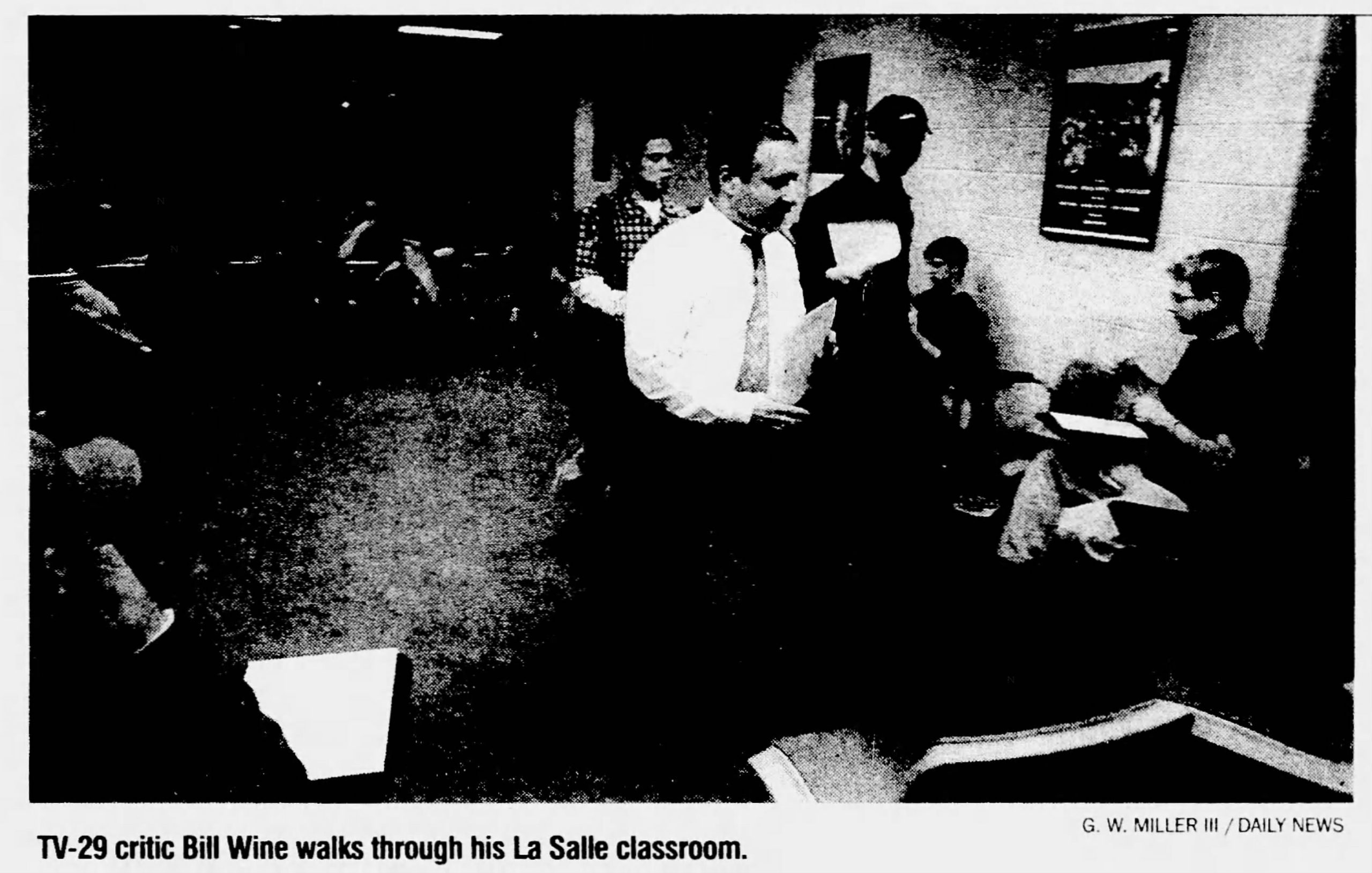
    By 1990, he had already written hundreds of freelance film reviews for the Daily News and Courier-Post, done radio reviews for WPEN, and taught a variety of classes about film and writing for a decade at La Salle. So, despite no previous TV experience, he was hired at Channel 29 over 60 other film critic applicants.

    “I had never been on TV, but I wasn’t nervous,” he told the Daily News in 2001, “because I had been standing in front of 100 students for 10 years.”

    Mr. Wine worked at at WTXF-TV, Channel 29, for 12 years.Courtesy of the family

    He started at KYW radio in 2001 and usually aired reviews and reports on Thursdays, Fridays, and Saturdays. Sometimes, he watched three movies in one day. He left Channel 29 in 2002 and KYW in 2018 only after both companies eliminated their local film critic position.

    “When I started [writing film reviews], it was before the internet,” he told The Inquirer in 2018. “A lot of people [now] feel like, ‘Who the heck is a movie critic to come on in a minute and to dismiss something that took hundreds of people and millions of dollars to create?’”

    In the 1970s and ‘80s, he wrote articles and reviewed films, TV shows, books, and plays for WPEN, The Inquirer, Courier-Post, Philadelphia Magazine, and other outlets. In 1975, he wrote dozens of freelance TV columns called “On the Air” for the Daily News.

    Mr. Wine wrote dozens of columns as a freelance TV critic for the Daily News in 1975.Newspapers.com

    He spent three years in California in the 1970s working on plays and film and TV scripts. He hobnobbed with famous writers, producers, and actors in Los Angeles, staged one of his own plays, and was a winning contestant on a new TV game show.

    He wrote 11 plays over the years, and several made it to the stage. “Now the people who disagree with my reviews can come and find out if I’m as dumb as they think I am,” he told The Inquirer in 2002.

    He aired reviews on WIP radio and lectured often at libraries, schools, community centers, theaters, and other venues about his favorite films, adapting books to film, and other topics. “He could be wickedly funny, especially when delivering a pan of a movie,” his family said in a tribute. “One of his favorite quotes was: ‘I had a bad seat. It was facing the screen.’”

    Mr. Wine was a prolific playwright who enjoyed table readings with family and friends. La Shina Clark / Staff Photographer

    Mr. Wine earned a bachelor’s degree in math at Drexel University and a master’s degree in communications at Temple University. He helped design La Salle’s nascent Communication Department in the 1980s, and school officials called him one of their “Founding Fathers.” He also taught briefly at Drexel, and came close to earning a doctorate at Temple.

    In 2001, he was featured in a Daily News story about “celebrity professors” and said: “You have to remind yourself that this is television, not the classroom. You mention, say, ‘film noir’ on TV, and you get a memo.”

    William David Wine was born June 21, 1944, in Germantown. He grew up in West Oak Lane and Cherry Hill, attended Central High School, and graduated from the old Cherry Hill High School.

    A story and this photo of Mr. Wine about his time as a professor at La Salle appeared in the Daily News in 2001.Newspapers.com

    As a boy, he devoured newspaper movie reviews and fell in love with film after seeing Alfred Hitchcock’s 1954 thriller Rear Window. He got positive reviews of his own freelance movie review when he was at Temple, and he knew then, he said later, that writing about movies was his creative niche.

    “The first time I saw my byline, I was hooked,” he told Drexel Magazine in 2016.

    He married Dina Lichtman, and they divorced later. He married Suzanne Monsalud in 1981, and they had daughters Simone and Paulina, and lived in Germantown, Wyncote, and Chestnut Hill.

    Mr. Wine and his wife, Suzanne, married in 1981.Courtesy of the family

    Together, Mr. Wine and his family traveled to Paris and London, and he and his wife honeymooned in Rio de Janeiro, Brazil. He doted on his daughters and sometimes took them to his La Salle classroom, the Channel 29 TV set, and movie screenings.

    Friends, former colleagues, and former students called him “a force of nature,” “smart and gifted,” and “a rare combination of kindness, professionalism, and humor.” His daughter Simone said: “His humor, warmth, and presence made life brighter.”

    Mr. Wine played tennis, third base on adult softball teams, and pickup basketball into his 70s. He followed the Phillies, 76ers, and Eagles closely, and hit tennis balls with Hall of Famer Rod Laver at a publicity event in Los Angeles.

    Mr. Wine and his family made memorable trips to Paris, London, and elsewhere. Courtesy of the family

    “He was a wonderful father and a dedicated teacher,” his wife said. “He was a real Philadelphian, and we complemented each other.”

    His daughter Paulina said: “Dad, I think you cracked the code. We’ll see you at the movies.”

    In addition to his wife and daughters, Mr. Wine is survived by three grandchildren, a sister, Marcia, and other relatives. A sister died earlier.

    A celebration of his life was held earlier.

    Donations in his name may be made to the Bill Wine Scriptwriting Award at La Salle University, 1900 W. Olney Ave., Philadelphia, Pa. 19141.

    Mr. Wine (second from left) enjoyed time with his family. Courtesy of the family
  • Here’s what Abington’s new middle school might look like

    Abington School District wants feedback on design plans for a middle school set to open as early as 2029.

    The new school, designed to house 2,200 students, will be built on existing district land. The current building, meanwhile, is slated for demolition, and sports fields will be rebuilt in a $285 million project that taxpayers approved in a rare, successful referendum last May.

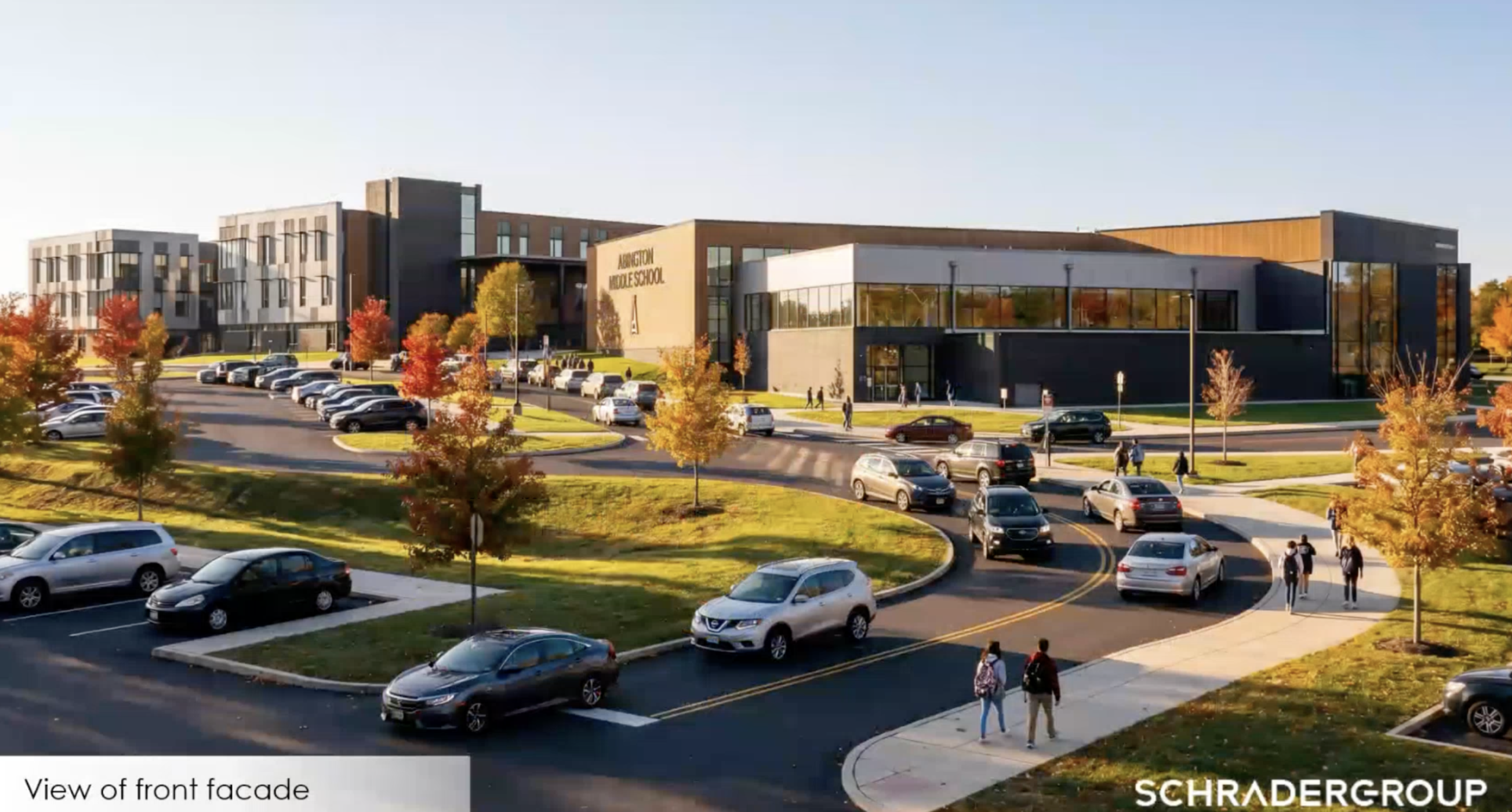
    The plan, as seen in a June presentation, includes more parking spaces, layouts for easier monitoring of classrooms and bathrooms, a class “pod” design, and flexible room sizes.

    Abington has extended the deadline for a community survey on the plan to July 10, district spokesperson Allie Artur said. The district will use the feedback to further refine the design.

    Abington School District shared design plans for a new middle school set to open as soon as 2029.Schraeder Group

    Design for new Abington middle school

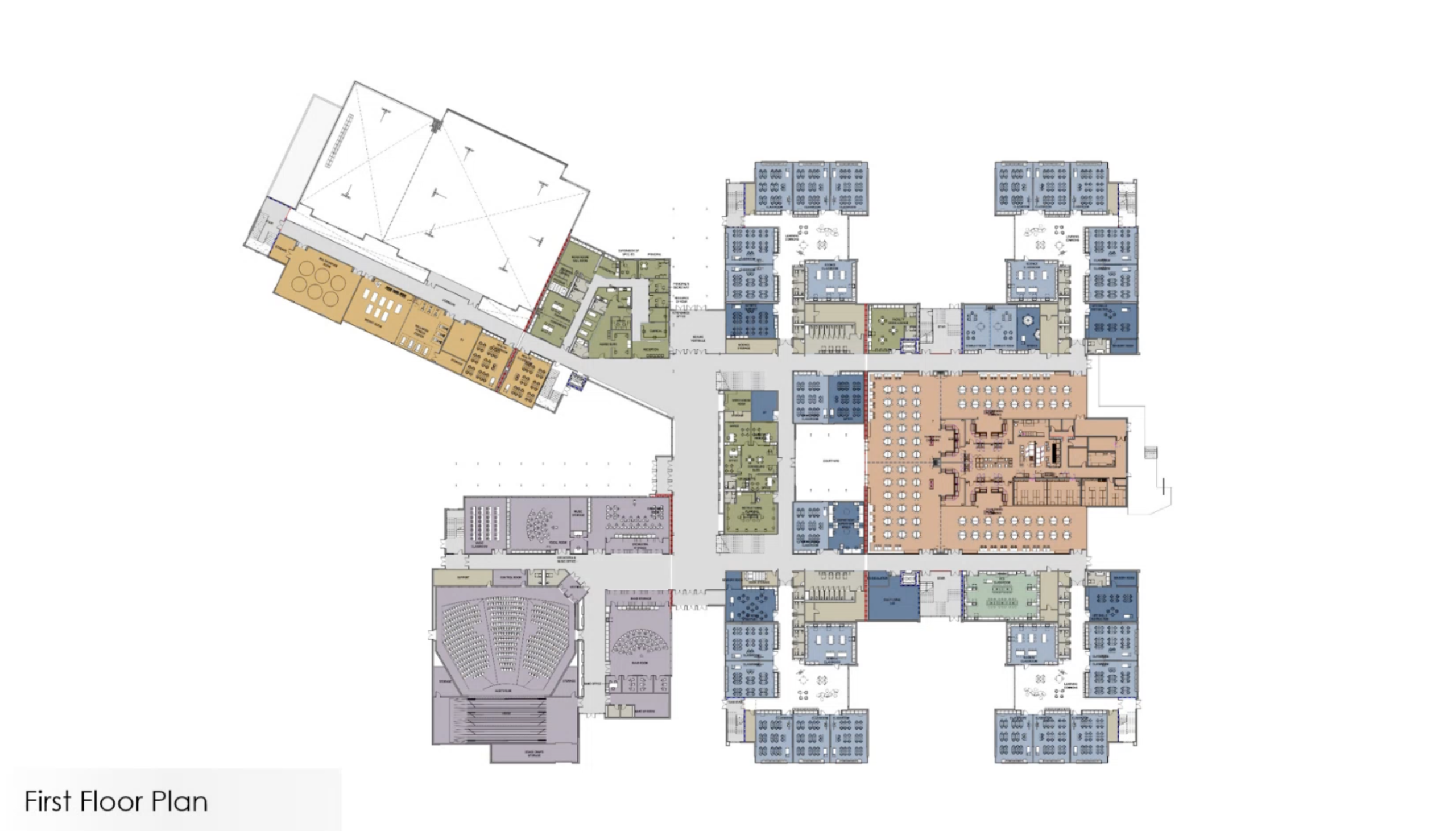
    The academic areas of the school would be divided into sets of classrooms and bathrooms to give students a home base within the larger building, said Ryan Murphy, a project manager from ICS, the facility planning consulting firm leading the design effort.

    Those classrooms would have windows that allow adults to look in from the hallway, but are too high to distract students sitting at desks.

    The planned bathrooms would have fully private stalls, with shared sink areas equipped with cameras.

    Several classrooms, along with the cafeteria and auditorium, would have partition options for changing the room sizes.

    Initial renderings for Abington’s new middle school show pods of classrooms and bathrooms organized around a central cafeteria, shown in peach.Schraeder Group

    New middle school adds parking, moves sports

    The design adds 79 more parking spaces than the current middle school has, Murphy said. The plans also retain a track around the football field.

    The new school is to be built on the current site of the tennis courts beside the district administration building.

    While some athletic spaces, including the soccer fields, won’t be touched during construction, the tennis courts won’t be rebuilt until the old school is demolished during the 2029–2030 school year, according to the project timeline.

    The district is working with the township on a plan to use Alverthorpe Park and other venues for tennis in the meantime, Artur said.

    The new building would also give spectators access to bathrooms during games, while keeping the rest of the school blocked off.

    Initial renderings for Abington’s middle school project show the planned site of the new building and athletic spaces.Schraeder Group

    Abington takes feedback on school design

    Murphy emphasized during the June presentation that the renderings are not the final product, as the district continues to seek feedback on the project.

    A district survey last winter found that residents wanted a safe, inclusive, and cost-effective middle school filled with natural light.

    The new survey on the initial building renderings asks residents for feedback on specific design elements, including safety features, the pickup and drop-off line, and parking.

    Residents had to approve the extra spending for the demolition and construction project, which will eventually cost the average taxpayer about $54 per month.

    The successful 2025 referendum — unusual in Pennsylvania — drew 17,579 voters and passed by a 411-vote margin.

    Opponents of the project argued that $285 million is too steep, and called for a slower process to allow residents more input in the renovation and construction options.

    Advocates said renovating the existing building would cost an estimated $206 million anyway, and that needed repairs alone would cost around $100 million and require debt.

    A tax calculator that allows property owners to estimate how much the project will add to their bill has been viewed more than 27,000 times, according to the website.

    This suburban content is produced with support from the Leslie Miller and Richard Worley Foundation and The Lenfest Institute for Journalism. Editorial content is created independently of the project donors. Gifts to support The Inquirer’s high-impact journalism can be made at inquirer.com/donate. A list of Lenfest Institute donors can be found at lenfestinstitute.org/supporters.

  • South Jersey school board again rejects $27K merit pay for its embattled superintendent

    South Jersey school board again rejects $27K merit pay for its embattled superintendent

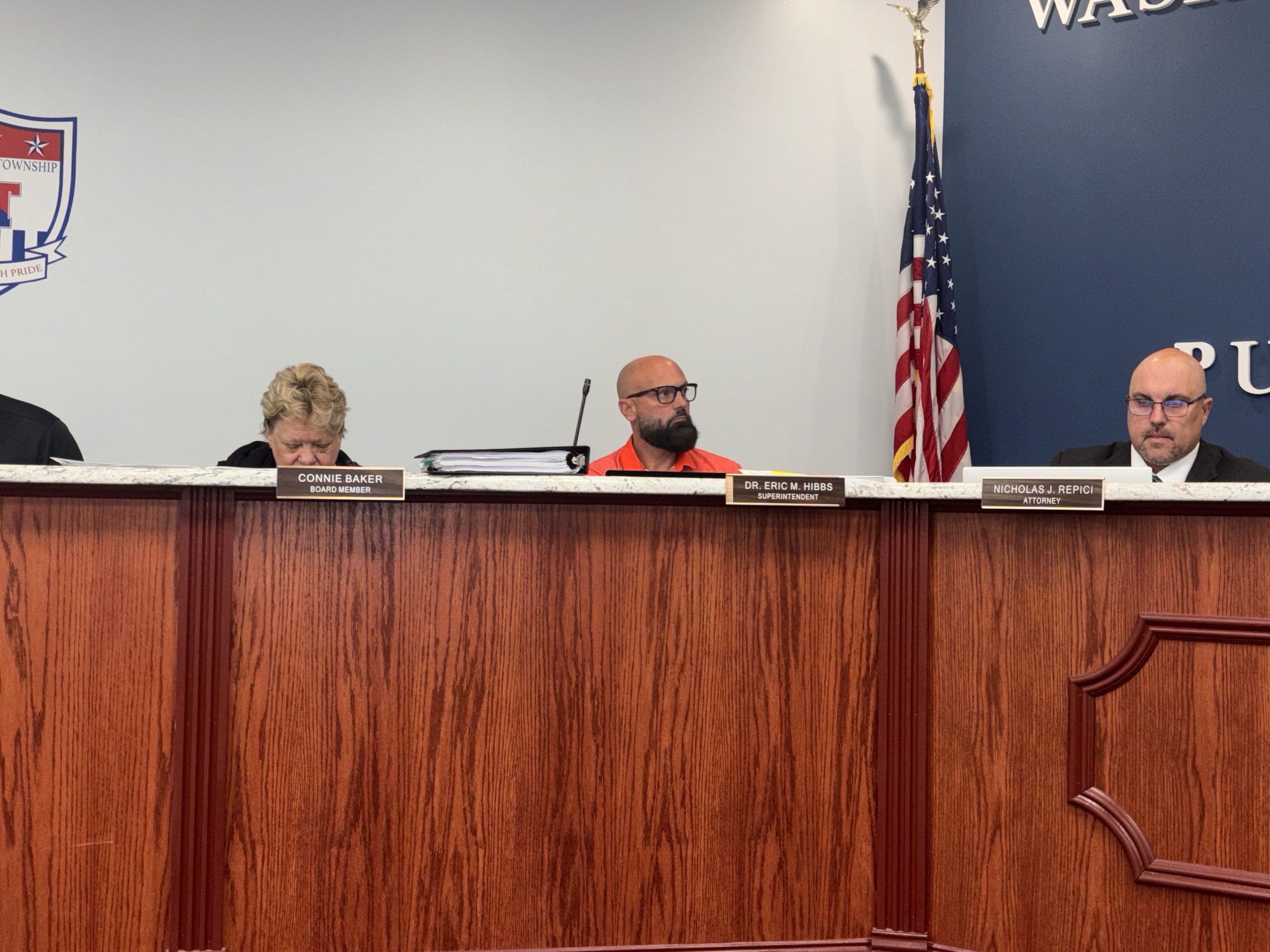
    Embattled Washington Township school Superintendent Eric Hibbs has lost another battle with the South Jersey school system to get $27,000 in merit pay.

    A motion to award Hibbs the bonus pay for performance failed by a 4-3 vote with two abstentions at a contentious meeting Tuesday night. Five favorable votes are needed for adoption.

    This was the third time since August that the nine-member board has not approved the merit pay, likely setting up another legal showdown between Hibbs and the board. He has a pending whistleblower lawsuit against several board members.

    Hibbs has said he had met four of the five goals approved by the board and listed with his contract for the 2024-25 school year. He earned $220,375 during the 2023-24 school year.

    The board voted on the request, with little public discussion. Hibbs did not comment at the meeting. He did not respond to a message seeking comment Wednesday.

    In order to vote, the board had to invoke a rarely used “doctrine of necessity” because it otherwise would not have a quorum. Six of nine members have a conflict of interest with Hibbs, whom they suspended last year until he was reinstated by a judge. The board remains roiled by infighting over its superintendent.

    Washington Township School Superintendent Eric Hibbs (middle) listens during a school board meeting Tuesday night.Melanie Burney

    Here’s what’s to know about the situation:

    Why is Hibbs seeking merit pay?

    Hibbs initially requested the merit pay last August, five months after he was suspended by the board with pay. He was reinstated in July after a judge found that the board had violated the Open Public Meetings Act when it suspended him.

    According to his contract, if he meets goals set by the board, Hibbs is entitled to an annual merit bonus of up to 14.99% of his salary. Hibbs is among the highest-paid school chiefs in South Jersey.

    Interim Executive Gloucester County Superintendent Robert Bumpus approved the merit pay, as required by state law. The board must also give its approval to disburse the funds.

    Tuesday’s motion also would have allowed Hibbs to carry over up to 20 unused vacation days in addition to receiving a $27,000 bonus.

    Hibbs has been superintendent in the Washington Township district since 2023. His contract runs through 2027.

    What were the merit goals?

    Hibbs’ goals, approved by a previous board, include completing Google training presentations, taking online professional development courses, and beefing up security processes.

    He received $25,000 in merit pay for similar goals for the 2023-24 school year, according to district records obtained by The Inquirer under N.J.’s Open Public Records Act.

    The merit pay has been an ongoing issue between Hibbs and the board and has escalated since last year. The dispute has raised questions about his fate when his contract expires. The board must notify Hibbs by December if his contract will not be renewed; otherwise, the contract automatically renews for four years.

    Why was the doctrine of necessity necessary?

    Six board members were deemed ineligible to discuss Hibbs’ employment because of conflicts, board solicitor Nicholas J. Repici said. They either have family members who work for the district or are named defendants in Hibbs’ lawsuit against the district, he said.

    The doctrine of necessity allowed the conflicted board members to participate in the vote. But they were barred from any deliberations in executive session or public discussions.

    Board vice president Terri Schechter chaired a special committee of the board members without conflicts that discussed the Hibbs matter. She brought forward the motion to approve the merit pay.

    “Any discussion?” Schechter asked.

    “We’re not allowed,” board member Julie Kozempel said. She abstained along with board President Pat Blome.

    A petition launched by a parent called for the board to invoke the doctrine and vote on Hibbs’ contract renewal. It asked those who “agree that the district needs a clean break and less expensive contract for its superintendent” to consider signing the petition, which a community member spoke about at the board meeting Tuesday night.

    What is the dispute between Hibbs and the board?

    A complaint filed by local union leaders against Hibbs with the New Jersey School Ethics Commission alleged that the superintendent provided preferential treatment to a board member’s relative by changing a failing grade in September 2023.

    The board suspended Hibbs and hired a conflict lawyer to investigate the allegations. Hibbs was eventually cleared of any wrongdoing.

    In his own ethics complaint, Hibbs accused Kozempel and board member Elayne Clancy of not following procedures when the board hired Insurance Consulting Services LLC in 2021, prior to his tenure as superintendent.

    Hibbs filed a whistleblower lawsuit in May 2025, alleging his suspension was in retaliation for raising questions about the insurance contract. He alleged that the selection procedure was “procedurally flawed.”

    His employment has remained a point of contention among school board members.

    Here are other takeaways from Tuesday’s meeting

    During public comment Tuesday, there were also emotional appeals to the board to reinstate three guidance counselor positions that were cut to help balance the budget for the 2026-27 school year.

    Several school nurses and a student also expressed concern that the district has reduced the workday for several nursing assistants in cost-saving moves. They cited health and equity concerns.

    Board members were surprised to learn that first-level French and German classes were being cut at the high school due to the budget. They were told that the classes would resume next year.

    Hibbs said the district, which enrolls about 7,200 students, faced a $10 million deficit for the upcoming school year. More cuts are likely in future years without additional revenue, he said.

    “This is the reality of where we are,” Hibbs said. “We have no other place to go.”

  • Immaculata University’s president will retire next year

    Immaculata University’s president will retire next year

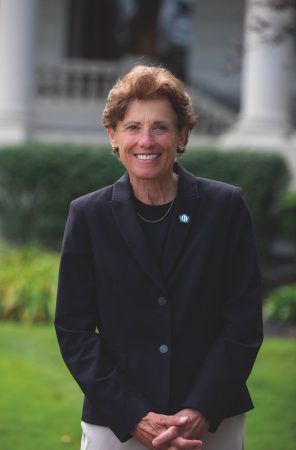
    Longtime Immaculata University president Barbara Lettiere said she will retire next summer, following a decade at the helm of the Catholic school.

    Lettiere, an Immaculata alumna, donor, and former board chair, was named the first lay president of the Chester County university in 2017.

    “The time has come in my life and the life of Immaculata for the next chapter,” Lettiere, 76, said in a statement. “I did not make this decision easily, and it comes with some very mixed emotions.”

    The university, which is affiliated with the congregation Sisters, Servants of the Immaculate Heart of Mary, enrolled nearly 2,800 students last academic year, and plans to do a national search for her replacement.

    “The board accepts her decision with deep gratitude for her outstanding leadership and dedicated service over the past ten years,” Peggy Behm, board chair, and Sister Mary Ellen Tennity, IHM’s general superior, said in a statement. “Her deep dedication to Immaculata, its students, faculty and staff, and her love for the mission of the IHM Congregation have left a lasting and meaningful impact on the University community.”

    Lettiere, a 1972 graduate, had previously served as vice president for finance and administration at Trinity Washington University.

  • The University of Valley Forge is warned it could lose accreditation

    The University of Valley Forge is warned it could lose accreditation

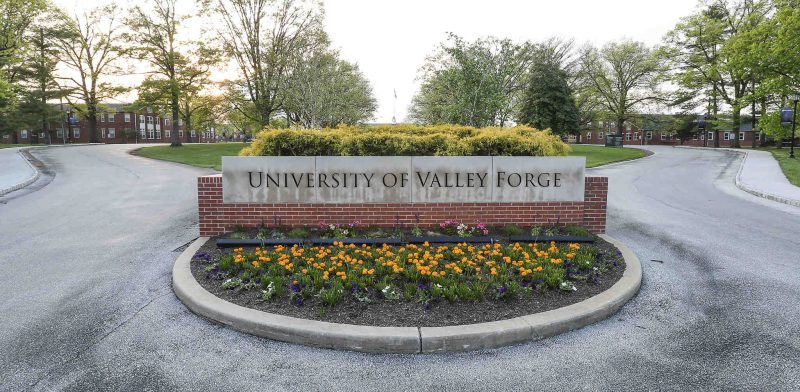
    The University of Valley Forge, a small Christian school that prepares students for leadership in the church and the world, has been given a serious warning that it is in danger of losing its accreditation.

    The Phoenixville-based college has until Sept. 1 to “show cause” to justify why it should not lose accreditation, according to the Middle States Commission on Higher Education, which posted the action on its website this week. Colleges need accreditation to keep their students eligible for federal aid.

    The “show cause” action is the most serious that the commission issues. Others include warning and probation.

    The commission cited “insufficient evidence that the institution is in compliance” with standards involving planning, resources, and institutional improvement, and governance, leadership, and administration.

    The university must document in its show-cause report “financial resources, funding base, and plans for financial development to support its educational purposes and programs and to ensure financial stability,” the commission said. The school also must provide information on long-range financial planning that includes “realistic enrollment projections and the assumptions on which they are based,” the commission said.

    The university did not immediately return a call for comment Wednesday, and when asked for the current enrollment, an employee said she was not permitted to disclose any information and hung up. The school enrolls 589 students, according to the National Center for Education Statistics.

    Under the action, the school is required to immediately notify its community of Middle States’ action.

    The university started in 1939 as the Eastern Bible Institute, which was aimed at training pastors, evangelists, missionaries and Christian educators, and lay workers, according to the school’s website. It became a college in 1975 and the University of Valley Forge in 2014. The university is part of an international network of Assemblies of God colleges and universities and offers more than 60 degree programs, according to its website.