Category: Education

  • Philly schools will get $157 million more in this year’s state budget. Gov. Josh Shapiro came to South Philly to tout the plan.

    Philly schools will get $157 million more in this year’s state budget. Gov. Josh Shapiro came to South Philly to tout the plan.

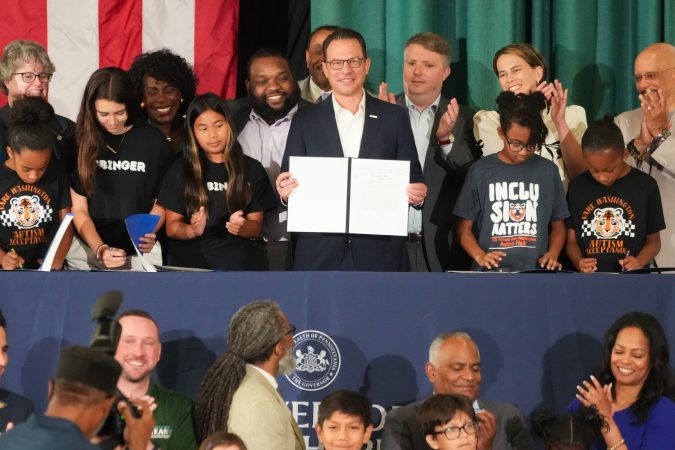
    Gov. Josh Shapiro on Tuesday visited Vare-Washington Elementary School in South Philadelphia to tout the $678 million in new education funding included in the state budget deal finalized over the weekend.

    The new education funding — including $565 million in “adequacy funding” to aid poorer districts — represented one of the most significant victories the first-term Democratic governor took home from the $50.8 billion state budget deal, which did not address lingering issues such as taxing so-called skill games and long-term funding for SEPTA and other public transit agencies.

    The Philadelphia School District will receive $137 million in adequacy funding and $20 million in other new funding. The district will also be able to compete for a share of $125 million set aside for school facilities projects.

    Philadelphia’s cash-strapped district, which entered this year with a $300 million structural budget deficit, still faces deep challenges. The school board this year approved a facilities plan to close 17 school buildings and renovate 169 more.

    “We’re driving this money out to the schools that need it most — school districts like Philadelphia, Norristown, Pottstown, and Allentown, and others in our region,” Shapiro said. “They were getting shortchanged, and now they’re getting the lion’s share of this new funding.”

    While it broke little new ground, this year’s state budget deal helped avoid another prolonged impasse involving Shapiro, the Democratic House, and the Republican Senate. Last year, lawmakers failed to reach a compromise until 135 days after the July 1 budget deadline, leaving school districts and local governments across the state in limbo for months.

    Lawmakers approved this year’s deal 12 days late.

    “I‘m one of the only governors in the country with a divided legislature, one of the only legislatures that has to negotiate with people on the other side who really have a very different view, who don’t think the way we do about investing in public education,” said Shapiro, who was joined by Mayor Cherelle L. Parker and numerous Philadelphia Democratic lawmakers. “We have all been clear that we would not get up from the table in Harrisburg until we fully funded public education, and we’ve done that.”
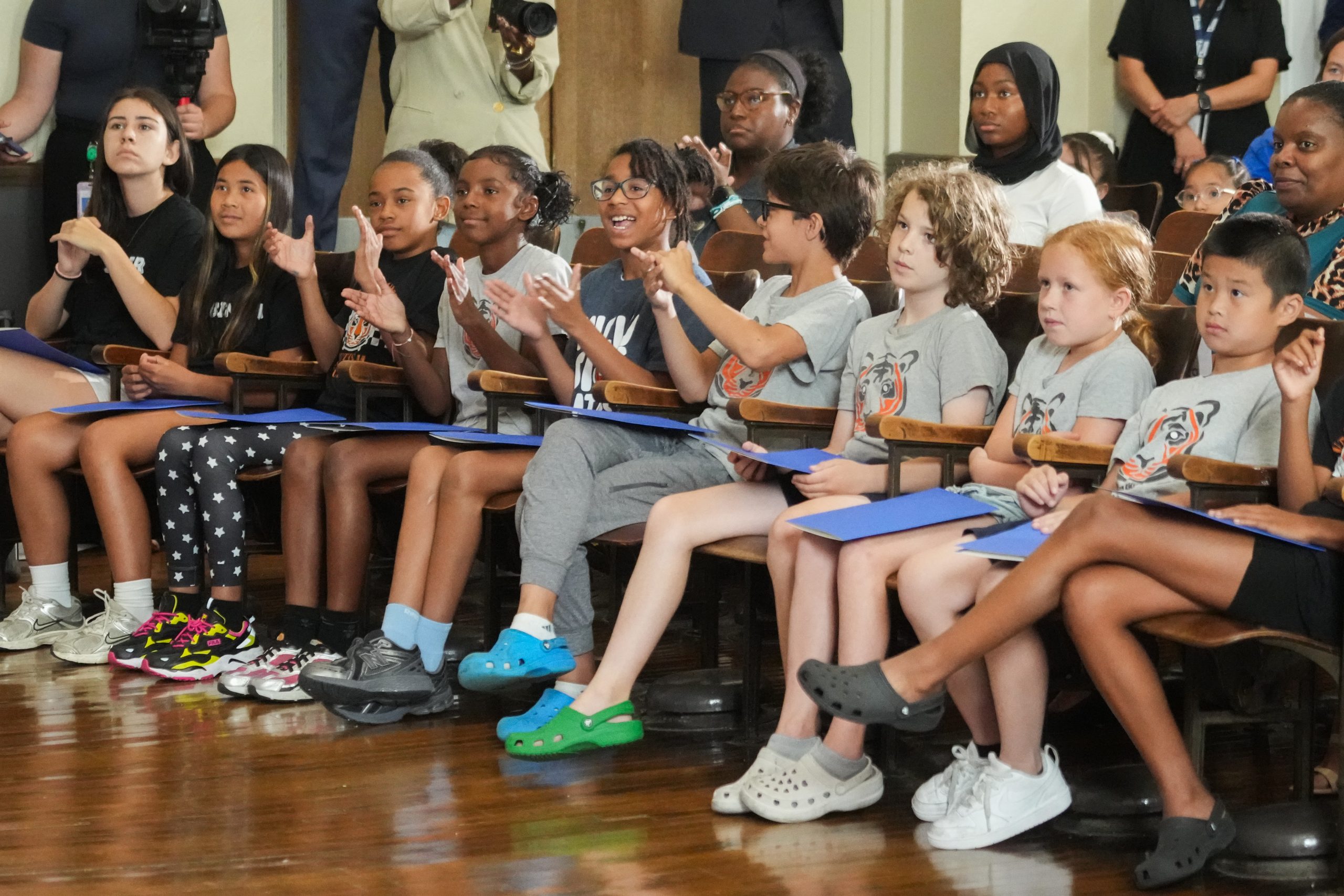
    Students applaud speakers at Vare-Washington Elementary School during an assembly highlighting the education investments included in the 2026-27 state budget in Philadelphia, Pa. on July 14, 2026.Jessica Griffin / Staff Photographer

    The new adequacy funding is the third infusion of money resulting from a formula lawmakers adopted in the wake of a 2023 Commonwealth Court ruling that said Pennsylvania’s former method of funding schools, which relied heavily on local property taxes, was unconstitutional.

    The formula calculated that a majority of Pennsylvania schools were underfunded, by a total of $4.5 billion. For the last three years, the state has given those schools an extra $565 million a year, filling about one-third of the gap. The state plans to fully address the shortfall by 2032.

    Advocates for underfunded districts, like Philadelphia’s, have credited the state for sticking with the plan, but have also said the money is flowing too slowly for struggling districts. Meanwhile, Republican lawmakers have challenged the increased funding for poorer districts, saying others are getting shortchanged by the new system.
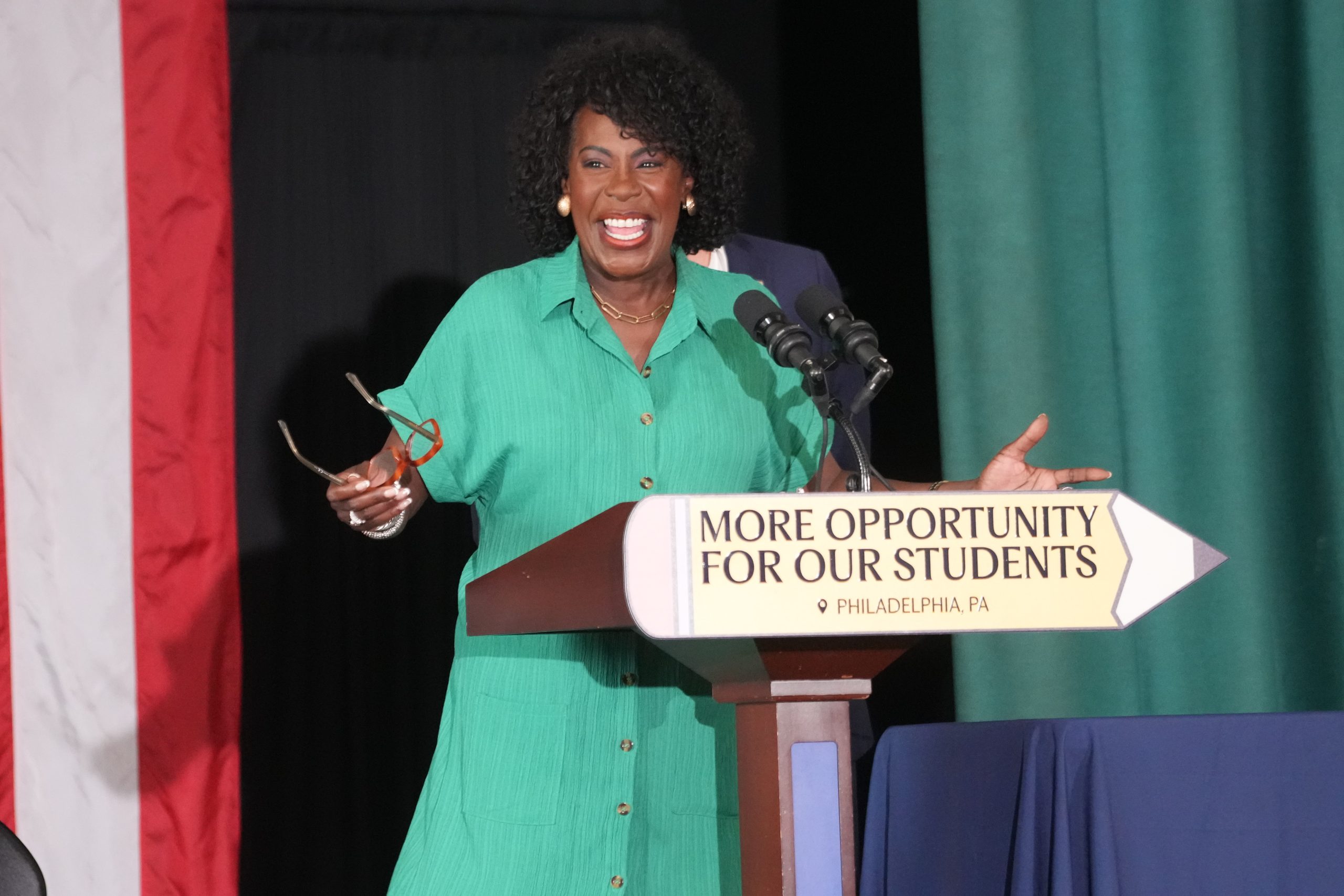
    Mayor Cherelle L. Parker speaks at Vare-Washington Elementary School to highlight the historic education investments included in the 2026-27 state budget, in Philadelphia, Pa. on July 14, 2026.Jessica Griffin / Staff Photographer

    Philadelphia’s school district, the only one in the state prohibited from raising its own revenue, relies on city and state lawmakers for its funding.

    Parker this year clashed with City Council over how to deliver roughly $50 million to the district to help close a budget gap that threatened to eliminate 340 classroom positions. Council ultimately rejected Parker’s proposal — to levy a $1-per-ride tax on rideshare services like Uber and Lyft — and instead pulled from one-time funding elsewhere in the budget while promising to find a new recurring revenue source for the district.

    “We have limited revenue-generating capacity in the city of Philadelphia,” Parker said Tuesday. “I wish I could tell you, as mayor, that we had all of the money that we needed to address problems, but that is not the case. Our city can’t be successful without a strong partnership from Harrisburg.”

    Parker thanked Shapiro and the city’s delegation to Harrisburg for “keeping your word” and delivering more education funding to Philadelphia from the state.

    Vare-Washington is one of 40 Philly schools included in Parker’s Extended Day/Extended Year initiative, which provides additional programming for students outside normal school hours.

    During her remarks, Parker led the students assembled at the event in several call-and-response chants, including, “Excellence matters — at Vare-Washington!”

    “I want to hear you say, ‘Thank you — Gov. Shapiro!’” Parker said in another chant. “‘Thank you — Harrisburg legislators!’”
  • Cheltenham, Gloucester Township schools under investigation as federal officials target sexual abuse by teachers

    Cheltenham, Gloucester Township schools under investigation as federal officials target sexual abuse by teachers

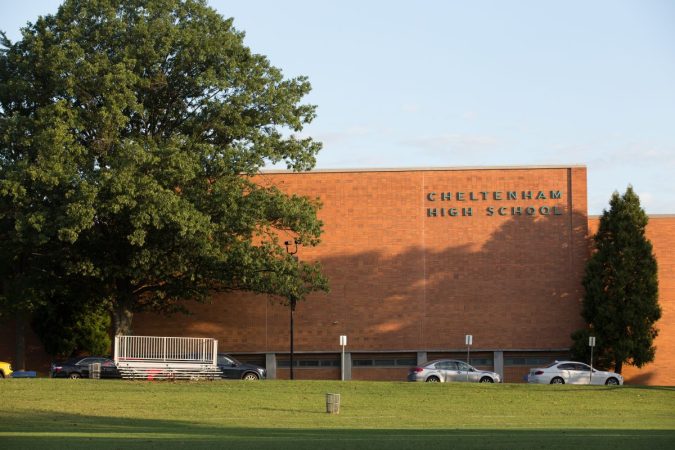
    The Cheltenham School District is being investigated by the U.S. Department of Education as federal officials target sexual misconduct by teachers that they say schools nationally have been too lax in addressing.

    Cheltenham is one of 20 public school districts under investigation by the DOE’s Office for Civil Rights based on responses the districts provided to a federal civil rights data collection survey in 2023-24, which “suggest that districts might not be addressing staff on student sexual misconduct appropriately,” the Education Department said in a statement Friday.

    The department did not specify which districts were under investigation, but Cheltenham informed community members of the probe Sunday.

    The Gloucester Township School District in Camden County is also under investigation, according to a list obtained by ProPublica. Officials in the district, which enrolls about 6,600 students, did not immediately respond to a request for comment Tuesday.

    The investigations were announced as part of a broader initiative by the Education Department “to protect students from adult sexual predators in schools,” with guidance sent to all school districts outlining federal legal requirements for responding to sexual harassment and abuse.

    In its statement Sunday, Cheltenham said it would cooperate fully with the Office for Civil Rights.

    “To be clear, the district is not aware of any instances where allegations of sexual assault or abuse by district employees have not been properly investigated and handled — for the 2023-2024 school year or any other year,” the district said in the statement.

    It was not clear what Cheltenham, a district of 4,100 students in Montgomery County, reported as part of the federal survey that triggered the investigation. The Education Department did not respond to questions Tuesday about the investigation.

    The department’s website indicates it collects data from school districts about offenses that occurred at schools, including documented incidents or allegations of sexual assaults by staff members, as well as the outcomes of sexual assault allegations — whether staff members were determined to be responsible, and whether they resigned, retired, or had duties reassigned before a final determination.

    Kevin Kaufman, a Cheltenham spokesperson, said the district was not aware of any assaults or alleged sexual assaults of students by district staff in the 2023-24 school year.

    In a “Dear Colleague” letter to school leaders Friday, U.S. Education Secretary Linda McMahon said there was a “a troubling and recurring pattern in schools across the nation of credible reports of sexual abuse and harassment by adults in positions of authority going uninvestigated, institutional cultures that protect employees over students, and administrative indifference that allows predatory conduct to fester.”

    The letter cited research from 2003 finding that close to 10% of eighth- to 11th-grade students had experienced sexual misconduct by an educator.

    It also pointed to a ProPublica report from May, finding that California had not revoked the professional licenses of at least 67 educators after school districts determined they had committed sexual misconduct.

    The letter told school leaders that the federal Elementary and Secondary Education Act conditions federal funding on rules that prohibit schools “from helping a school employee or contractor obtain a new position when there is knowledge or probable cause to believe that the individual engaged in sexual misconduct involving a student.”

    It also said Title IX requires schools “to respond appropriately and address claims of sexual harassment,” independently investigating claims even if it also reports them to law enforcement.

    “Institutions that fail to comply with federal law may face the loss of federal funding,” McMahon said in the letter. She said the department ”will fully enforce federal law and employ every resource at its disposal to protect children from sexual predators.”

    In its statement, the Education Department said the investigations into Cheltenham and other districts — which it did not name — “will determine if the districts have appropriate policies and procedures in place to ensure accurate data collection and reporting of these incidents occurs and if their handling of allegations of sexual harassment, including sexual assault by district employees, complies with federal law.”

    Cheltenham’s statement said the district has policies that prohibit sexual harassment and abuse “and outline the investigatory steps that the district will follow in the event that any such allegations are made.”

    Cheltenham and Gloucester Township are not the only local districts facing federal Office for Civil Rights probes. Earlier this year, the office announced that it was investigating the Great Valley School District for a policy allowing transgender girls to participate on girls’ sports teams.

  • Penn State, Temple to receive first installment in performance-based funding under state new budget

    Penn State, Temple to receive first installment in performance-based funding under state new budget

    Pennsylvania State University, Temple and the University of Pittsburgh will split $10 million in the state’s first allotment toward performance-based funding under the new budget.

    It’s the first time since the legislature passed the new performance-based formula last November that the three so-called state-related universities are receiving the funding in addition to the general appropriation they received last year. The formula considers overall enrollment, graduation rates, number of lower-income students as measured by those receiving federal Pell grants, students receiving degrees in high demand areas, and other factors.

    For Penn State, the new funding will amount to a little over $4 million, raising its general education subsidy to $246.1 million, the school said in a news release. The school said it was its first increase in state education funding since 2019.

    “This initial investment is an important first step that recognizes the essential role higher education plays in strengthening our commonwealth,” Penn State president Neeli Bendapudi said. “The metrics at the heart of this model align closely with Penn State’s mission and values.”

    Temple said it would receive a little over $2 million in performance-based funding, in addition to its $158.2 million general appropriation. The North Philadelphia-based university also is set to receive $500,000 for its “University College,” which helps adult and non-traditional students and lifelong learners pursue degrees. A university spokesperson said the money is for the school’s bachelor of general studies program.

    The performance-based funding grew out of a longstanding battle between the legislature and state-affiliated universities over transparency and accountability. State-related universities received hundreds of millions in state funding, yet have a quasi-public status exempting them from much of the state’s open records laws, a fact that has long been criticized by some legislators.

    Gov. Josh Shapiro, a Democrat, signed the $50.8 billion budget deal Sunday, applauding leaders from both parties for their work on the issue. He specifically highlighted House Minority Leader Jesse Topper (R., Bedford), who has led the charge to create the new performance-based funding model.

    “That’s something that leaders in Harrisburg have talked about for years and years and years, but we came together and we got it done,” Shapiro said during a news conference before signing the budget deal into law.

    Meanwhile, the system that oversees Pennsylvania’s 10 universities including West Chester and Cheyney will receive $626.1 million, up about $5 million over last year. The Pennsylvania State System of Higher Education had been seeking a $31 million or a 5% boost in order to roll back a 4.3% tuition increase its board approved last week.

    System spokesperson Kevin Hensil said Monday that the tuition increase would stay in place.

    In-state students, who make up the vast majority of the system, will pay $8,338 annually, up $344 from $7,994.

    The extra $5 million from the legislature, Hensil said, was “due to the expiration of funds related to a transfer workforce development partnership initiative” and would not impact the tuition increase.

    The budget also included $78 million for debt relief in the system, but Hensil said that also would not impact the tuition increase.

    “We are determining how it will be used, as we have in the past when such money was provided,” he said. “That analysis is underway.”

    By the state covering the PASSHE debt, Shapiro said it would enable the state’s 10 state-owned universities to “shift those dollars into more funding for our faculty, more funding for our students, and more funding for our academic programs.”

    In addition to West Chester and Cheyney, the other universities in the 83,005-student system include: Commonwealth, East Stroudsburg, Indiana, Kutztown, Lock Haven, Millersville, Penn West, and Shippensburg.

    Lincoln University, which also is a state-related school, is not included in the performance-based funding plan, but it received a $1.1 million boost.

    Funding for the state’s community colleges was held flat.

  • Temple University lost returning students at a high rate last year. This year, first-year students will see changes.

    Temple University lost returning students at a high rate last year. This year, first-year students will see changes.

    Temple University will make student retention a focus in the year ahead with new programming for the first-year student experience and other efforts in the works as it seeks to reverse troubling trends in enrollment and matriculation.

    Temple president John Fry and former interim provost David Boardman discussed the moves in an interview after the executive committee of the board of trustees approved a budget Wednesday that included a tuition increase and about 40 layoffs, the latest in a string of staff reduction efforts.

    “We really want to mitigate any issues that we have around retention and really improve the success of our students through their journey through Temple,” said Boardman, who remains dean of Temple’s College of Media and Communication and the university’s chief strategy officer.

    The move comes as the university copes with a slide in freshman retention. A decade ago, about 90% of freshmen returned for their sophomore year. By last fall, that percentage was 82%, and an internal Temple report that The Inquirer obtained in April showed there is concern the percentage will slip below 80% this fall.

    Temple experienced a 27% decline in its U.S. enrollment over the last eight years, and falling retention is part of the problem. The school lost an average of $200 million annually during that period, the internal report said.

    Employees from student affairs, enrollment management, and academic affairs have worked on the redesign of the first-year experience with support from the National Institute for Student Success, Fry said.

    “This work has helped us identify barriers and create a more coordinated approach to orientation, advising, communication, and student support,” he said in a message to the campus Wednesday.

    Boardman said the single biggest barrier is financial.

    “There’s a very strong correlation here between the financial pressures on students and their ability to persist and graduate,” he said.

    Academic success in the classroom early on is another, he said.

    “There’s … a very strong correlation between first-year, even first-semester, GPA and their ability to persist,” he said. “That is tied directly to these other sorts of strategies that we’ve been talking about in terms of making sure that students have the proper preparation when they go into the classroom and the proper support around them.”

    The new first-year experience is still under development, Boardman said.

    “It’s just a more coordinated approach to how we bring students on board, making sure that they have the right and ample advising even before they get here,” he said.

    Fry said the university is awaiting results from an audit by the institute, which began as a result of Temple’s involvement in the University Innovation Alliance, a national group aimed at graduating more students from low-income families. The results are expected in early to mid-fall, he said, which likely will kick off a university-wide discussion on retention.

    “That’s going to help us think about first-year experience, but many other topics beyond that regarding retention,” he said. “It’s going to be a real moment for us.”

    Several new leaders who will be integral to improving student retention are joining Temple this summer, he said. They include Evelyn Thimba as vice president for enrollment management; Elizabeth “Libby” Wentz as provost; and Heather Servaty-Seib as vice provost for undergraduate education. They will join Jodi Bailey Accavallo, vice president for student affairs, who has been working on the issue.

    The university also has aimed at improving its recruitment, admission, and support of transfer students, and that also has shown results, Boardman said. The university is using a more streamlined process for the transfer of credits, primarily from community colleges, he said.

    “In this enrollment cycle, our transfer enrollments are up almost 100% from the previous year,” he said.

  • Some Philly special-needs students are waiting hours this summer for buses that never come

    Some Philly special-needs students are waiting hours this summer for buses that never come

    Brent Rose and his 9-year-old son, Alexander, were ready for the bus on the first day of the program Alexander is attending at De Burgos Elementary in North Philadelphia this summer for kids with special needs.

    Alexander, who is on the autism spectrum, was told to be ready for the bus to pick him up at 8:08 a.m. But when it still had not come by 9:30, Rose’s wife drove their son from their home in Center City.

    The episode was not an anomaly. Three weeks into the Philadelphia School District’s extended school year program, Rose said that on more than half of the days, his son’s bus simply has not shown up.

    “It’s a huge inconvenience,” said Rose, who works for the IRS and has had to show up late or call out due to the problems. “You couldn’t just leave any 9-year-old out there and say good luck, but certainly not one on the spectrum, and say it’s going to be OK.”

    Rose said the district has directed him to call dispatch for First Student, the company that operates his son’s bus route.

    But often no one answers that line, Rose said, making it impossible to know whether a bus will eventually show up or not.

    A spokesperson for the school district said the district is aware that “some families have experienced transportation delays and service disruptions for the Extended School Year (ESY) programming,” which schools nationally are required to offer to students with disabilities at risk of regressing over the summer.

    “While the majority of routes are operating as scheduled, we recognize that some students have experienced significant delays, and we understand the impact this has had on families,” said the spokesperson, Naima DeBrest.

    DeBrest attributed the delays to “staffing and operational issues affecting a portion of the transportation services provided by First Student.” She said the district had been working with First Student “to improve reliability,” including by reassigning 10 of the company’s routes.

    Brenna Rudisill, a spokesperson for First Student, said the company recognized that “some families experienced transportation delays early in the program, and we apologize for the inconvenience and frustration that caused.” She said First Student had taken on additional routes after other vendors left the district.

    “Our team has been working every day to stabilize and improve service,” Rudisill said.

    For Rose, though, the issues have not resolved. On Thursday, after the bus was an hour and 20 minutes late, he called dispatch and was told a bus would arrive in half an hour. Rose did not see whether it eventually came; he had to pick up his wife from the hospital, taking his son with him.

    On an earlier occasion when he was able to reach the bus dispatch, Rose used his phone to Google Translate for another parent who did not speak English and was also waiting at the stop: “The bus isn’t coming.”

    Noting that First Student advertises an app with real-time updates on bus locations, Rose questioned why parents do not have access to that information.

    That way, “you could contact work before you’re really behind,” said Rose, who also has gotten calls from De Burgos some days telling him he needs to pick up his son because no bus will be coming.

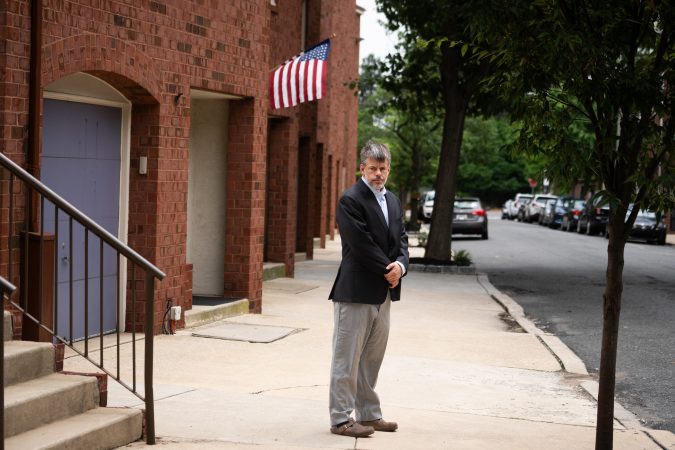
    Brent Rose stands at the bus stop where his nine-year-old son, who has autism, waits for the bus to travel to Philadelphia’s Extended School Year program for kids with special needs, in Philadelphia, July 10, 2026. The problem is that his bus often never shows up to take him there.Jessica Griffin / Staff Photographer

    DeBrest said the district is “in the early stages of implementing a new routing software system that will include a parent-facing application allowing families to track buses in real time.” In the meantime, she said, First Student has an automated text messaging service that can update parents.

    Rose said that, despite many calls to First Student and messages to the district about the buses, he was unaware of that service.

    He noted that the extended school year programming is not convenient for working parents: The day ends at 1:30, and it’s not easy to find aftercare for the rest of the afternoon.

    But he and his wife have rearranged their schedules and enrolled their son for the last three summers because they think the program is important for his progress, “and we think the teachers do a good job,” Rose said.

    When “the buses aren’t even doing what they’re supposed to do,” though, “it gets really frustrating,” Rose said.

  • Downingtown high school students were drinking while supervising a youth football camp, district says

    Downingtown high school students were drinking while supervising a youth football camp, district says

    Two Downingtown high school students admitted to drinking alcohol while supervising a football camp at Downingtown East High School last month, district officials said Friday.

    The students, who were minors, were removed from the Blue & Gold camp after the district learned about the incident June 18, said Downingtown spokesperson Jennifer Shealy.

    The camp, which ran from June 15-19 by the Downingtown East football team’s booster club with the help of high school volunteers, was open to students in first through ninth grades. The club did not immediately respond to a request for comment Friday.

    Shealy said an adult volunteer “partially responsible” for supervising the students was also removed from the camp.

    In a statement, district officials said that “district staff were present and overseeing camp operations at all times, ensuring that campers remained supervised and safe during the camp.”

    The district said in the statement that it had “addressed the matter promptly in accordance with district policies and Student Code of Conduct,” but couldn’t comment on specific allegations “or any disciplinary actions that may have occurred.”

    In a letter the district said was sent to parents of campers, Downingtown High School East principal Paul Hurley and athletic director Corey Sigle said they were “shocked and deeply disappointed” by those involved in the incident.

    “The trust placed in our students by younger campers, families, coaches, and community members makes this behavior especially disappointing,” Hurley and Sigle said in the letter.

    Hurley and Sigle also apologized “for not communicating the initial report immediately.” It wasn’t clear when the letter was sent.

    The students who admitted to drinking did not have drivers’ licenses and did not drive drunk, Shealy said.

  • Mount Laurel schools name longtime Cherry Hill educator Neil Burti as new superintendent

    Mount Laurel schools name longtime Cherry Hill educator Neil Burti as new superintendent

    Mount Laurel public schools will start the next academic year with a new leader at the helm.

    Neil Burti will take over as superintendent of schools starting Aug. 1, succeeding George Rafferty, who is retiring after leading the district for a decade.

    After an extensive search, “Dr. Burti distinguished himself as the candidate whose experience, leadership style, and vision best aligned with the needs of the Mount Laurel School District,” Danielle Stuffo, president of the Mount Laurel Board of Education, said in an email.

    Burti has more than 25 years of experience as an educator and administrator and is a longtime employee of the Cherry Hill Public Schools. While there, he served at all levels of leadership and was most recently the director of secondary education for the district.

    Earlier this year, Burti also stepped in to handle the principal responsibilities during the second half of the school year at Cherry Hill High School East following a period of administrative upheaval in the school district.

    The shake-up came after a lawsuit filed last September alleged that East’s former principal, alongside the Cherry Hill Board of Education and two other top administrators, subjected a former assistant principal to discrimination and retaliation.

    A new principal at East, John Cafagna, took over this month.

    “We are confident [Burti] will build upon the district’s many strengths, work collaboratively with our staff and community, and continue our focus on providing an exceptional educational experience for every student,” Stuffo said.

    Stuffo said the district’s goals will largely remain the same under new leadership.

    She acknowledged that the district will need to address increasing financial pressures, as Mount Laurel has not been spared from the budgetary challenges affecting school districts across New Jersey.

    Like other districts, Stuffo said, Mount Laurel will work to continuously improve student experience and outcomes while adapting to evolving educational needs — and doing so within an increasingly limited budget.

    “Fortunately, Mount Laurel is well positioned, with excellent staff and strong systems already in place. As Dr. Burti becomes familiar with the district, he will have the opportunity to evaluate our organizational structure and administrative leadership and, if appropriate, make recommendations to the Board for consideration,” she said in the email.

    Burti was named the 2024 New Jersey Secondary School Principal of the Year during his time leading Cherry Hill’s John A. Carusi Middle School.

    Burti holds a bachelor’s degree in movement studies and exercise science from East Stroudsburg University, a master’s degree in educational leadership from Temple University, and a doctorate in innovation and leadership from Wilmington University.

  • The state system that runs West Chester and 9 other Pa. colleges votes to raise tuition 4.3%

    The state system that runs West Chester and 9 other Pa. colleges votes to raise tuition 4.3%

    Students in the Pennsylvania State System of Higher Education will face a 4.3% tuition hike — the largest percentage increase in a decade — if the system does not get a boost in state funding.

    PASSHE’s board of governors voted unanimously Thursday on the plan, which would enact the tuition increase if the system does not receive a 5%, or $31 million, increase in its state appropriation, which currently stands at $625 million. Gov. Shapiro has proposed flat funding for the system, and budget negotiations are continuing.

    Tuition would rise to $8,338 annually, up $344 from $7,994.

    “We’re all disappointed to … have to make this motion,” board chair Cynthia Shapira said. “We hope we do get the increase.”

    The 10 universities in the system are Cheyney, West Chester, Commonwealth, East Stroudsburg, Indiana, Kutztown, Lock Haven, Millersville, Penn West, and Shippensburg. Collectively, they enrolled 83,005 students last academic year, when the system experienced its first enrollment increase in 15 years. About 90% of students are Pennsylvania residents.

    The vote to increase tuition came one day after Temple University approved a budget that increased tuition an average of 3.4% for next year.

    Rutgers University also on Thursday voted to increase tuition 3% for in-state and out-of-state students, which the school touted as its lowest increase in four years. Tuition for a typical in-state, full-time arts and sciences undergraduate will increase on average $448 for the year, rising from $14,933 to $15,381, the school said. Meals and housing on average will rise 4%, from $15,332 to $15,945.

    Earlier this year, the University of Pennsylvania increased its total costs by 3.8% for 2026-27. Pennsylvania State University, which approves tuition increases a year in advance, hiked tuition 2% for in-state students at University Park for 2026-27 and froze it for those attending Commonwealth campuses.

    The resolution approved by the PASSHE board calls for the increase to be rolled back “if sufficient funding in state appropriation is received.”

    System chancellor Christopher Fiorentino said the tuition increase would cover the $31 million gap if the system does not get the increase. The board of governors took the same action last year and did not roll back a 3.6% tuition hike because the state held its funding flat.

    “We’re still really the most affordable four-year option that’s out there,” Fiorentino said in an interview before the meeting, comparing PASSHE schools to state-related universities like Temple and Penn State where tuition is more than twice that amount.

    Until 2025, the system had kept tuition at the same rate for seven years; if it had enacted inflationary increases, tuition would be $1,800 higher now, Fiorentino said. Preceding the freeze, tuition hikes were 2.5% in 2016-17, 3.5% in 2017-18, and 3% in 2018-19.

    Fiorentino said he continues to make the system’s case to legislators for more funding.

    “Our graduates earn 65% more over their careers than people without college degrees, which is about a million dollars in lifetime earnings,” he said. “Ninety percent of our students are from Pennsylvania, and 80% of them take their first job in Pennsylvania after they graduate. Investing in the PASSHE system … is truly an investment in the workforce of the Commonwealth of Pennsylvania.”

    System to launch new ‘last dollar’ scholarships

    The system also announced that beginning in fall 2027, it would provide “last dollar” scholarships to all Pennsylvania students who receive federal Pell and state Pennsylvania Higher Education Assistance Agency grants. For many students from the lowest-income families, the grants cover full tuition, but some families in the middle range who receive smaller amounts of aid are still on the hook for part of the cost, the chancellor said.

    “They’re the ones that tend to get caught in a bind, and they’re the ones that we’ve been worried about,” he said. “We’re going to cover the balance of their tuition” and make sure they are not affected by future tuition increases.

    Fiorentino said he hopes that donors will want to contribute to the effort so the level of aid can be expanded.

    The new scholarship program, called the PASSHE Pledge, will not cover room and board or fees.

    He did not have an estimate of how many students would qualify, but said system officials have been worried about losing them. And that would add to the enrollment decline at a time when the system, like other colleges, already is challenged by a shrinking pool of available high school students.

    “We’re hoping this is going to increase our enrollment numbers,” Fiorentino said.

    It is too early to predict fall enrollment, he said, but some of the system’s 10 universities are doing better with deposits than last year, some the same, and some a little worse.

    “We’re cautiously optimistic that we’re going to be stable,” he said.

    The system is partnering with community colleges to streamline the transfer process and concentrating on bringing students with some college credits and no degree back into the system, he said.

    “We will continue to work hard to maintain and grow our enrollments,” he said.

  • Temple University will lay off employees and raise tuition for the second consecutive year

    Temple University will lay off employees and raise tuition for the second consecutive year

    Temple University approved a $1.3 billion operating budget Wednesday that includes an average 3.4% tuition hike for both in-state and out-of-state students and plans for about 40 layoffs.

    Both the average tuition increase — which is for undergraduate and graduate students — and the number of layoffs are smaller than those implemented last year. The university raised tuition an average of 3.6% in 2025 and laid off 50 employees.

    The layoffs, which will occur this week, constitute less than 1% of the university’s workforce. Temple officials did not elaborate on who was affected or which positions but said jobs across the university from senior levels to the operational ranks were considered. An effort was made to limit the impact on “student-facing” roles, said chief strategy officer and former interim provost David Boardman.

    “The decision-making overwhelmingly was made at the local level, at the schools, colleges, and administrative units,” said Boardman, who is also dean of Temple’s College of Media and Communication.

    Fry said last month that layoffs were “inevitable” as the university works to close a projected $85 million budget deficit for 2026-27. Temple, along with many peer institutions, faces enrollment declines and financial pressures as the available pool of high school students drops, public attitudes toward higher education change, and the number of international students declines following changes in federal policy.

    The budget, approved without public discussion by the executive committee of Temple’s board of trustees, includes a projected deficit of $25.5 million.

    “We have met our savings target, which is obviously imperative,” Fry said in an interview after the board meeting.

    Fry had asked schools, colleges, and administrative units to cut a total of $60 million, a significant portion of which was accomplished through the elimination of 236 positions, he said. That is on top of 190 positions that were eliminated last year.

    More than 80% of the positions cut this year came through voluntary retirements, including a faculty program that netted more than 70 takers, as well as resignations and the elimination of vacant positions. Layoffs accounted for the rest.

    “Implementing these targeted budget reductions and undertaking other organizational realignments is a critical first step toward returning the university to a balanced budget over the next three years,” Fry said in a message to the campus community.

    The university is working under a new budget model that will “allow us to better align our resources with our strategic plan,” Fry said.

    While the majority of the $60 million reduction was due to the position eliminations, schools, colleges, and administrative units are implementing other efficiencies. Some of the colleges, for example, have reduced doctoral student admissions, Boardman said.

    The university’s 27% decline in domestic enrollment since 2017 and increased financial aid costs have been the most significant factors causing the school’s budget pressures, Fry said. The loss of students has amounted to an average of more than $200 million in lost revenue annually, according to an internal Temple report obtained by The Inquirer in April.

    That report said the school anticipated falling below an 80% retention rate this fall.

    Temple’s U.S. enrollment stood at 29,503 last fall; projections for this fall are not yet available.

    But Fry said in his campus message that the school has received a record number of deposits for first-year enrollment compared with last year and that deposits from transfer students are up over last year.

    The school also plans to roll out a new “first-year experience” program to help improve the school’s freshman-to-sophomore retention rate, which fell from a high of 90% about a decade ago to 82% last fall.

    Employees from student affairs, enrollment management, and academic affairs have worked on the redesign with support from the National Institute for Student Success diagnostic, Fry said.

    “The teams have taken a comprehensive look at how students transition to Temple and identified where we can better support their success,” he said. “This work has helped us identify barriers and create a more coordinated approach to orientation, advising, communication, and student support.”

    The efforts already are having an impact. Because of changes to orientation, 3,268 first-year students were registered for the fall as of July 5, compared with 2,407 students the same time last year, Fry said.

    With the tuition increase, the new base rate for full-time students from Pennsylvania will rise to $20,376 annually and to $36,600 for out-of-state students. (Excluding Temple’s Japan campuses, 62% of students are Pennsylvania residents.) While the average increase is 3.4%, percentage increases fluctuate across Temple’s schools and majors, from a low of 2.9% to a high of 3.9%.

    Tuition increases are typical; the University of Pennsylvania increased its total costs by 3.8% for 2026-27. Pennsylvania State University, which approves tuition increases a year in advance, hiked tuition 2% for in-state students at University Park for 2026-27 and froze it for those attending Commonwealth campuses.

    At Temple, fees will rise $42, or 3.9%, to $1,098 annually. And room and board will increase 4%. Students in a typical double-occupancy room at Johnson and Hardwick residence hall with 12 meals per week will pay $15,094 for the year.

    Temple said it also would increase its financial aid budget by nearly 7% over last year, to $196.1 million, to help students with need afford the university.

    “We know that financial barriers can impact our students and prevent them from persisting,” David Marino, interim chief operating officer, said in a statement. “This year’s historic investment in financial aid is an investment in the success of our students.”

    Correction: This story was updated to correct the number of first-year students who registered during last year’s orientation, due to incorrect information from Temple.

  • Superintendent Watlington announces promotions and other changes in Philly schools’ administration

    Superintendent Watlington announces promotions and other changes in Philly schools’ administration

    Numerous changes are afoot in the Philadelphia School District, with Superintendent Tony B. Watlington Sr. promoting some staffers and shifting others around amid multiple departures from the system.

    The changes took effect July 1.

    Watlington, in an announcement sent to staff detailing the changes, said he was “confident this team will help us build on our momentum as we continue improving outcomes for students, strengthening support for our schools, and advancing our goal of becoming the fastest-improving large urban school district in the country.”

    The personnel shifts include:

    Brenda Elliott, who became interim deputy superintendent of academic services when Jermaine Dawson left Philadelphia to become Baltimore’s superintendent, got that job permanently.

    Elliott came to Philadelphia a year ago as associate superintendent of student life and innovation. She’s a former Tennessee state superintendent for school turnaround who has worked in a number of urban districts, including with Watlington in North Carolina.

    She also spent time as a teacher, principal, and officer in the U.S. Army.

    Tomás Hanna, who was associate superintendent for secondary schools, is now associate superintendent for student life and school operations.

    Noah Tennant, assistant superintendent for Learning Network 13, is keeping that job, but is also now interim associate superintendent for secondary schools while a search for a permanent administrator is completed.

    Michael Farrell is now chief academic officer. He had been chief learning officer. The new title combines two jobs: chief of curriculum and instruction and chief learning officer.

    Nathalie Nérée became chief of special education, diverse learners, and wellness. She had previously been chief of special education and diverse learners.

    Nyshawana Francis-Thompson, who was chief of curriculum and instruction, became senior adviser for strategic initiatives and innovation.

    Jamina Clay, who had been an assistant superintendent supervising a learning network, is now assistant superintendent of school management and organization.

    Kelly Espinosa, who has served as the principal of Fanny Jackson Coppin Elementary, is now interim assistant superintendent for Learning Network 4, replacing Clay. Janis Butler, a retired principal who often fills in as an interim principal in the district, will run Coppin.

    Two more retired educators are now serving as interim assistant superintendents — Wilfredo Ortiz for Learning Network 8 and Lucy Feria for Learning Network 9. Ortiz replaces Renato Lajara, who’s now superintendent in Bethlehem; Feria replaces Ariel Lajara, who left Philadelphia to run the Vineland school system in South Jersey.